Shared posts

16 Jan 19:57

Chumps

by PG

Chumps always make the best husbands. When you marry, Sally, grab a chump. Tap his forehead first, and if it rings solid, don’t hesitate. All the unhappy marriages come from the husbands having brains. What good are brains to a man? They only unsettle him.

PG Wodehouse

11 Jan 22:23

Making the pizza cinnamon rolls from Mario Batali's sexual misconduct apology letter.

Making the pizza cinnamon rolls from Mario Batali's sexual misconduct apology letter.
10 Jan 21:46

Sue Sue Sussidio

by evanier

One of the reasons so many people hate lawyers is because they sign their names to frivolous, sure-to-be-tossed-outta-court lawsuits or letters threatening frivolous, sure-to-be-tossed-outta-court lawsuits. One assumes that when Donald Trump told his to sue Michael Wolff over the new book, the attorneys explained, "There's close to zero chance of this suit prevailing. All you're going to do is drive up sales on that book."

To which Trump responded, "I don't care. I want that bastard sued!" so they sent a letter threatening to sue. Trump has that "If someone hits me, I hit back" mentality and that — and the bully pulpit he's made out of his Twitter feed — are the only two ways he knows of hitting back. He may also have thought the threat of a lawsuit against the book would dissuade others from writing similar books and if he did, I'll bet he was wrong about that, too. I mean, we've all seen how Trump's suit against Bill Maher has stopped comedians from ridiculing Donald Trump.

Here is the letter sent by Trump's attorneys. The lawyers for Wolff and his publisher have responded to the threatening letter and you can read their reply here. I especially like how Trump's lawyers say he will sue in New York over "false light invasion of privacy" and Wolff's barristers point out that New York doesn't recognize lawsuits over that.

The post Sue Sue Sussidio appeared first on News From ME.

10 Jan 11:46

Go Pogo

by evanier

Volume 4 of Pogo: The Complete Syndicated Comic Strips has stopped being a pre-order at Amazon. In fact, they've been shipping copies for a few days now, plus I've heard from folks who got copies more than a week ago — i.e., last year — from other sources. I am so, so happy to have this out. I will be so, so happy to see Volume 5 emerge, maybe in time for Comic-Con International in July. It will have an introduction by Jake Tapper, taking a brief respite from his current profession of swatting down White House factotums.

I think Walt Kelly's Pogo is the greatest comic strip ever done…and I thought that long before I became (cough!) involved with Mr. Kelly's daughter. I even have the original art to a Pogo Sunday page framed and hanging in my kitchen, right next to a framed Peanuts Sunday page that Charles Schulz gave me. I don't recall where I got the Pogo page but I probably paid good money for it, long before I met Carolyn. I'm going to tell you a little story about it but first, we have to break for this brief commercial message…

Volume 4 of Pogo: The Complete Syndicated Comic Strips contains two whole years — 1955 and 1956 — of daily and Sunday Pogo comic strips…with the Sundays printed in color for the first time in any English language reprint collection. There's also historical material, a little tribute to my love Carolyn and a foreword by Neil Gaiman. This link will allow you to order one from Amazon — which at this moment has shipped out so many that they're temporarily out of stock. But order anyway. It won't be long.

You can also order a lovely boxed-set of Volume 3 and 4 via this link or order the boxed set of Volumes 1 and 2 at this link for about the price of one volume. If you care about great comic art, these books are must-haves. And now, back to you, Mark…

Thank you, me. As you may know, Carolyn was my "companion" (sounds classier than "lady friend") for about twenty years. Ah, I remember our first real date…

I took her to a great Japanese restaurant that was so great, it went out of business a week later. Then we went back to my house where a quick tour has been known to scare off other women. Of course, I showed her the framed Sunday page by her father. We were standing in front of it when the following occurred…

She had noticed some books I have about magic and she asked me if I did any tricks. I told her I don't perform often but, yes, I have a few feats I can do with a deck of cards. They do not cause Copperfield to sweat the competition but they can astound the easily-astounded. She insisted I do one for her so I grabbed up a deck.

(Before I forget: Don't read this story if you're viewing this site on a cell phone. You're going to need a big computer monitor to get the punchline.)

Magicians aren't supposed to reveal how a trick is done but I think it's okay to reveal this one if I don't tell you what the trick is. It involves the Queen of Diamonds. I write "Queen of Diamonds" on a slip of paper, fold it up and hand it to (in this case) Carolyn to hold without looking at it. She has no idea what I've written. Then I shuffle the cards and do some fancy moves which I don't think I can do any more…then I have Carolyn pick a card, seemingly at random. I say "seemingly" because while she may think she has a free choice of any card, I have tricked her into selecting the Queen of Diamonds.

Then, as usually performed, there's some mumbo-jumbo and stalling and drawing it out but I finally say to her, "All right. You could have picked any card [a lie] and you picked the Queen of Diamonds! Now, open that slip of paper I handed you and tell me what it says!" She opens the paper, sees that it says "Queen of Diamonds" and she is amazed and impressed. At least, that's the way it usually works. This particular time, it went like this…

I said, "Now, I'm going to have you pick a card —" and before I could shuffle the deck and force the Queen of Diamonds on her, she just blurted out, "Queen of Diamonds!" This happens to every magician once in a while. Every so often, your audience inadvertently does your trick for you and doesn't realize it. I immediately told Carolyn to open the folded paper and see what I'd written on it, which she did. Upon finding the name of the card she'd thought of ten seconds before, she shrieked and ran out of the room in a panic.

I started to run after her but then my eyes fell for some reason on the Pogo strip on the wall — which was right behind her as I'd performed the trick. I laughed, went and got her and showed her what happened on that Pogo page. Life doesn't always imitate art but it nearly always can replicate a good comic strip.

The post Go Pogo appeared first on News From ME.

09 Jan 14:29

Trapped by history

by chris

A little bit of me feels sorry for Toby Young. I say so because of something Dan Davies tweeted:

Find a brand and stick to it. Don't try to be jack the lad when poundshop Clarksons are in fashion, then pull on the leather elbow patches as soon as you think there's more of a market for Serious.

The point here is that we can be trapped by our brands: Young’s reputation as cheap controversialist disqualifies him from a serious job even if he might be otherwise equipped to do it.

His is not an isolated case. Sam Allardyce has earned a reputation for playing effective but ugly route one football. He objects that he’s had to do this because of the limited ability of the players he’s managed and that he could get a team to play attractive football if he had the chance. But except for a brief period at Bolton, he’s never had that chance.

Similarly, my reputation means I’m unemployable elsewhere: who wants to hire someone who seems to mix dull technocracy with class hatred?

Much more seriously, ex-prisoners and the long-term unemployed find it hard to get work because employers don’t believe they can change.

Our histories, then, limit our options.

This isn’t wholly unreasonable. What we have done in the past is at least some guide to our abilities and character. Mr Young has forgotten that if a man acts like a cunt, a good Bayesian will increase the probability he attaches to the prior belief that he really is a cunt. Many of us are one-trick ponies: for example, I really am unemployable elsewhere. Just as societies are created by their past, and companies cannot easily change their core competences, so too do individuals struggle to change. This is why the decline of old industries is so traumatic: unemployed steel-workers or miners don’t become coders.

But, but but. It’s also possible that employers overstate the extent to which abilities and aptitudes are fixed, and exaggerate the correlation between what somebody has done and what they can do. People are often terrible at judging correlations: why shouldn’t they be so in this case?

I can’t prove this, simply because we don’t see what doesn’t happen: if you don’t hire a guy, you never find out how good he is. One factoid, however, lends it credence – that Timpsons, which does try to employ ex-cons, does OK by doing so.

What seems clearer, though, is the obverse of this. As Marko Tervio has shown, hirers place a premium upon revealed talent – those with the right CV. This is one reason why I advise youngsters to work in finance: an investment bank looks good on your CV.

Revealed talent, however, is scarcer than actual talent. It’s for this reason that Premier League teams tend to hire the same old faces as bosses; why some folk hoover up lots of non-executive directorships; why talking heads current affairs shows have a limited roster of guests; and why there’s a management merry-go-round with a few people jumping from job to job.

And because revealed talent is so scarce, those who have it earn fortunes even if they are only just above a threshold of basic competence.

Which raises a nice paradox. Those people who think that Young’s past disqualifies him from a serious job are doing the same thing that companies do when they refuse to hire the ex-con or when they pay gazillions to mediocre bosses. They are using the same mindset that gives us gross inequalities.

08 Jan 15:34

Genetic study supports carbohydrate-insulin model of obesity.

Genetic study supports carbohydrate-insulin model of obesity.
08 Jan 15:10

On anti-meritocracy

by chris

There’s a link between Toby Young’s appointment to the Office for Students and the revelation that his staff regard Donald Trump as a child.

What we have in both cases are examples of anti-meritocracy. Both men have achieved office not despite their flaws but because of them. To their supporters, obnoxious sexism is a positive qualification, as it’s fighting against the “PC brigade.”

We can see this more clearly by contrasting both to Lord Adonis. The judgments of a man who rose from a humble background through hard work and intellect should are devalued, we are told, because he’s one of the elite. Just as boorishness is a virtue, so intellect is a vice.

I’m not making a partisan point here. I for one would have no objection to a rightist being appointed to the OfS if s/he were someone of ability and character. And of course, we see a similar thing on the left: you can all think of second-raters who are lionized simply because they rant about neoliberal economics.

In this context, Janice Turner’s claim that Mr Young’s obnoxiousness is an act misses the point. Why does someone wanting to achieve prominence do so by acting the charmless buffoon rather than sophisticated intellectual?

There have always been many mechanisms which select against ability. The culture wars have exacerbated these: ability and character don’t matter, as long as someone is on the right side.

Insofar as neoliberalism is a real thing rather than a boo-word, one of its features is the celebration of wealth, power and fame – howsoever achieved – and devaluation of what MacIntyre called the goods of excellence. In this sense, the rise to prominence of Trump and Young are characteristics of the neoliberal era.

How costly is this? Anyone who values social mobility will deplore it. It’s hard to imagine anybody from a working class background succeeding by following the Young-Trump-Johnson route; you’ve got to be posh to be anti-elitist.

Personally, though, I’m not much troubled by this. Like Young’s dad, I’ve never found the prospect of a meritocracy attractive.

In fact, there might even be something to be said for anti-meritocracy. It’s possible that Trump’s character flaws will prevent him using his presidency to do great irreversible damage, and they might even eventually discredit his policies: imagine if somebody of ability had his agenda.

And it’s possible that the knowledge that success in politics and the media requires obnoxiousness, self-promotion and a wealthy background and the right backers will deter good people from entering them.  Whilst this would degrade public life, it would improve the talent pool available to other occupations and save good people from being disappointed; the embittered old hack is a fate to be avoided. Those of us who are comfortably off can safely tend our gardens and ignore the imbecilities of elite politics.

Whether we want an anti-meritocracy or not, it’s what we’ve got. The question is how to make the best of it.

06 Jan 07:39

Toby Proposes a Toast

by Andrew Rilstone

xx


Let us pause in life’s pleasures and take a look at what Toby Young actually said.

The prosecution alleges that Toby Young described special needs pupils as “troglodytes”, and said that giving schools wheelchair access was and example of “ghastly political correctness.”

The context here is a 2012 article in the Spectator on the subject of School Examinations. The point under discussion was whether all school children should take the same examination at the age of 16, or whether there should be two or more different kinds. 

When my Dad was at school, there was only one kind of exam: the School Certificate. When I was at school, there were two kinds: the Certificate of Secondary Education, for the pupils who were expected to leave school at 16 and get a job; and the General Certificate of Education, for those who intending to stay on at school and go to college. The C.S.E had been created for the old Secondary Modern schools, and tended to be in technical and practical subjects like photography and metalwork. The G.C.E (more commonly known as the “O Level”) was created for the old Grammar Schools and tended to be in more academic subjects like history and Latin. In 1988 these two exams were combined into a single General Certificate of Secondary Education. When Mr Young wrote the offending article, the idea of bringing back the old “O” level was being mooted. Young was very strongly in favour of this idea; he had apparently been talking to some people who were very strongly against it. 

The reason that the “two tier” exam system is controversial can be encapsulated in the fact that throughout the article, Toby Young equates “more technical and practical” with “easier, for stupid people” and “more desk based and academic” with “harder, for clever people”. Not two different kinds of exams, equal but different, with (to make up a phrase on the spur of the moment) “parity of esteem”: but a Good Exam and a Bad Exam, or at any rate Better Exam and a Worse Exam.

It was ever thus. The GCSE / CSE split was a legacy of the old “tripartite” system, where children were sent to Grammar Schools and Secondary Modern Schools on the basis of an IQ test at age 11. The question was never “Will you go to Secondary Modern and maybe learn how to be an engineer; or will you go Grammar School and maybe learn how to be a barrister?” It was always “Hooray, you’ve passed and your prize is to go to the Grammar! Boo, you’ve failed and your punishment is to go to Secondary Modern!” One of the books about education I studied for my “O” level Sociology described an infant school headmistress telling little kids that if they failed their 11+ they would be “dummies” and “dopies”

If we were actually having a discussion about exams and how best to measure the achievement of school-leavers then you could make out a case for “two kinds of exam” and you could also make out a case for “only one kind of exam”. It is not the sort of question which has a definite right or a definite wrong answer.

It doesn’t necessarily follow that an exam which everyone takes, regardless of ability, has to be easier than one which is only taken by clever people. We could easily contrive a paper full of open ended questions like “What were the causes of the First World War?” and “Why did Othello kill his wife?”, and give some marks to the candidates who state the simple facts of history or the bare bones of Shakespeare’s plot, but a lot more marks to candidates who can contrast the viewpoints of a number of different historians and scratch beneath the surface of the Bard's text. We could certainly come up with a maths paper in which the quicker student was able to answer 100 questions in the time it took the slower one to answer 50. (I suspect that this would fill some elements of The Right with horror. The Right prefer black and white to shades of grey. The point of exams is not to grade children into OK  / Good / Very Good / Excellent / Bloody Brilliant. The point of exams is to divide children into Sheep and Goats, or at any rate Artisans and Philosopher Kings.)   

My personal theory is that it is very hard to persuade an employer that the holder of a “Grade D English” has shown himself able to write correct, grammatical, well punctuated essays and would therefore be quite able to hold down an office job, even though the person with the “Grade A English” had shown he could use the language with more maturity, flair, and fronted adverbials. I think that a lot of employers leap to the conclusion that the holder of the Grade D can hardly read or write. I also think that there are people who are perfectly competent at arithmetic but hopelessly confused by calculus and geometry, and that it is better to present an employer with a “Grade I CSE Maths” than a “Grade D O Level Maths” even if both represent about the same level of numeracy. So like Toby, I would run with two different kinds of exams. 

By an astonishing coincidence, this is the system I grew up with. 


But Toby Young isn’t actually talking about exams. Toby Young is actually talking about conspiracy theories. The gist of the essay is that sinister forces called “inclusion”, “equalities”, “Harriet Harman”, “the therapy squid”, and (of course) “political correctness” have turned state schools into a dystopian nightmare.

His first bugbear is equality and specifically the 2010 Equalities Act. Young thinks that the idea of equality in the political sense — that everyone should be treated the same — necessarily leads to the belief that everyone actually is exactly the same — and then to what he calls an “all-must-have-prizes” culture. 

”All must have prizes” is a reference to the Caucus race in Alice in Wonderland: it was impossible to win, but everyone participant got a prize just for showing up. But it is also the title of a book on education by the far-right conspiracy theorist Melanie Phillips. It isn’t clear if Young literally believes that “schools” nowadays give prizes and qualifications to everyone regardless of ability, or if “all must have prizes” is just a code word for “oh, isn’t everything awful nowadays”. 

Young claims that before the government could restore O levels it would have to repeal the Equalities Act, because the Equalities Act means that any exam has to be equally accessible both to stupid people and to clever people. He has subsequently claimed that the word troglodyte was not intended as a slur against children with special educational needs: it was in fact reference to the movie One Million Years BC. I suppose it is possible that he was just trying to be funny: envisaging a grunting Neanderthal in a leopard skin trying to answer questions about the role of the nurse in Romeo and Juliet. (It is interesting, albeit completely irrelevant that when he wants to reference cavemen, the first thing which comes into his head is a 1966 dinosaur movie starring Raquel Welch, as opposed to, say, Quest For Fire or 2001: A Space Odyssey.) So let’s ignore the unfortunate word choice and look at what he actually said: 

“If Gove is serious about wanting to bring back O-levels, the government will have to repeal the Equalities Act because any exam that isn’t ‘accessible’ to a functionally illiterate [person] with a mental age of six will be judged to be ‘elitist’ and therefore forbidden by Harman’s Law.”

“Functionally illiterate” could be hyperbole. We have all heard Grammar Pedants fulminating that "young people nowadays are functionally illiterate" when what they really mean is that they've just spotted someone writing “who” when they should have written  “whom” or putting exclamation marks at the ends of sentences which don't begin with “What…!” or “How…!”  But “with a mental age of six” is pretty specific. O Levels are taken at age 16, and a person of 16 with a mental age of 6 is the very definition of special educational needs. 

So. Either this man really believes that the Equalities Act requires all school exams to be easy enough that a severely mentally handicapped person can take them; or else by “functionally illiterate with a mental age of six” he really means “the kind of person who would have gone to a Secondary Modern and done CSEs under the old system”. Which is better than calling special needs students cave-men, but not much. It takes us right back to that infant school teacher and her dummies and dopies. 

I cannot help mentioning that J.C Wright (who has by now failed to win so many Hugo Awards that I have lost count) says that anyone who went to an American state school is a “zombie” or a “moorlock” and when pressed insists that he believes this to be the literal truth. 

Does Young really believe that the Equalities act forbids anyone to do anything that could be judged to be “elitist”? In fact, it simply offers legal redress to people in nine “protected categories” if they are subjected to harassment, discrimination, or victimization. You might think that it is simply providing a legal framework for stuff that everyone thinks should happen as a matter of course. A black person shouldn’t be passed over for promotion because they are black; a Jewish person shouldn’t be bullied at work because they are Jewish; you can't fire someone just because they're over 50. Some people on the Right don’t like this: they think that “everyone should be treated fairly” means “everyone should have identical outcomes”. They think “you shouldn’t get first prize in the race just because you Dad is the PE teacher” is logically identical with “you shouldn’t get first prize in the race just because you are the fastest runner.” So when an act of parliament says “no-one should be excluded from work for an irrelevant reason like the colour of his skin or the gender of his lover” they hear “schools are only allowed to set exams if they are easy enough for cavemen to pass.”  

The Equalities Act might very well allow the mother of a 16 year old who can neither read nor write and has the cognitive ability of a 6 year old to say “My child has the same right as every other child to an education that is appropriate for him or her.” It could not possibly be interpreted to mean “My child has the same rights as every other child to a GCSE in English Literature” This is fantasy and Toby Young must know that it is fantasy. 


He gets deeper into the realms of fantasy when he starts to talk about a bogeyman he calls inclusion.

“Inclusive. It’s one of those ghastly, politically correct words that have survived the demise of New Labour. Schools have got to be ‘inclusive’ these days. That means wheelchair ramps, the complete works of Alice Walker in the school library (though no Mark Twain) and a Special Educational Needs Department that can cope with everything from dyslexia to Münchausen syndrome by proxy.”

There is nothing wrong with hyperbole; I myself have used hyperbole on billions of occasions. But words do have meanings. If someone says “You never see anyone on the BBC who isn’t a one-legged black lesbian” they may not literally mean that you never see anyone on the BBC who isn’t a one-legged black lesbian. But it is reasonable to infer that they think that you would naturally expect that only white able bodied heterosexuals should appear on the BBC. If you don’t agree with them on that, the joke isn’t funny. 

So what do Young’s words mean?  

He says that the word “inclusive” is ghastly. It isn’t entirely clear whether he means “I wish we had chosen a less ghastly word to express the same idea more clearly” or “The idea itself is ghastly”.  He says that the word “inclusive” is “politically correct”. Again it isn’t clear if he means “the idea of inclusiveness is politically correct” or “I wish we had chosen a less PC word than inclusive to express the same idea more clearly.” 

And what does he mean by political correctness? Does he just mean “the idea that you shouldn’t use words which denigrate or belittle people”? (But what’s so ghastly about that?) Or is is he one of those who thinks that “PC” is part of a plot by Jewish intellectuals in Frankfurt to destroy civilization as we now know it?

I don’t imagine that Young has done a survey and discovered that all school have all 14 of Alice Walker’s novels on the shelf; and that no school has a work by Mark Twain. It seems overwhelmingly unlikely to me. I would imagine that copies of Tom Sawyer are much easier to track down than copies of The Colour Purple. But of course Young hasn't picked a random example. Mark Twain is a white guy; Alice Walker is a black lady. The implication is that schools are removing books by white males and replacing them with books by black females. He expects his readers to agree with him that this is “ghastly”. Inclusive doesn’t mean “both black writers and white writers” — it means “no white writers”. It’s about as clear an example of a racist dog whistle as you could imagine. 

Equally obviously, he doesn’t really think that all schools have an S.E.N department that are skilled in the treatment of Munchausen’s Syndrome By Proxy. He has picked on Munchausen’s Syndrome by Proxy because the name sounds funny. He places the obscure condition with the funny name alongside the common condition because he wants us to infer that catering for children with dyslexia and catering for children with Munchausern’s Syndrome by Proxy are both equally ghastly ideas. 

The most benign translation from the hyperbole I could manage would be:

“Schools have to accommodate to children with disabilities, both in sensible ways, like being wheelchair-accessible and giving help to dyslexic pupils, and in unreasonable ways, like trying to spot the signs of Munchhausen's syndrome and having books by both black and white writers in the library. Having a single exam for children of different abilities is one of the unreasonable demands. And its hard to talk about this because it is framed with unhelpful, jargon expressions like ‘inclusion’.”

But I think it very likely that the correct translation is:

“Having a single exam for children of different abilities is only the latest in a large number of obviously unreasonable demands that are being placed on schools. Other unreasonable demands include allowing children with wheelchairs access to the building; providing extra help for children with dyslexia; and having books by non-white authors in the library. This is all part of plot by the Frankfurt Group to destroy civilization.” 


Young maintains that the real reason that some people want a single, unified exam is that they fear that children put in for the easier one would “suffer a permanent blow to their self-esteem”, that they are “so fragile that the ‘stigma’ of not doing O-levels would cause permanent damage”.  He extends this into a wider allegation that “teachers” are no longer interested in passing on knowledge and see themselves instead in a therapeutic role (where “the therapy industry” is another Bad Thing). 

But this is a straw doll. I don’t think that the main argument against selective education is that the children put into Secondary Modern School or the lower stream will feel sad. I think that the main argument is about results. The claim is that overall, looking at both troglodytes and Spectator readers, you get better educational results if everyone goes to the same school and sits the same exam than you do if you sent the clever people through one door and the less clever people through another door. It is a claim that could theoretically be tested. It would be fairly easy to look at an area with a unified system and an area with a two-tier system and find out which population gets the best educational results over all. 

But of course Mr Young has an argument which trumps all of that. He can prove that segregated exams are better than unified ones, beyond any contradiction. He went through the old GCSE / O Level System and he turned out all rightHe did CSE’s; he failed his CSE’s; he went back to school and took some O Levels, he went to Oxford and now he writes for the Spectator. So he is living proof that the system works. Stick close to your desk and never go to see and you all may be rulers of the queens navee. 

Discussions about education always seem to founder on the rocks of the Argument From Individual Personal Experience. In another article, Young literally says that he would be okay with schools being allowed to beat students because he was beaten and it didn’t do him any harm. 


The case for the defense, then, is that Toby Young did not say that special needs children were troglodytes, or that wheelchair ramps were ghastly. Not quite. What he did say was that schools are run by softies who won’t allow children to fail in case it makes them sad; that the 2010 Equalities Act forces schools to make exams so easy that mentally retarded children can pass them; that white authors are banned from school libraries and black authors are mandated; and that all this is in some way connected with something he calls political correctness. 


Regular readers will have spotted why I found this so interesting. 

Young’s essay utilizes arguments which are remarkably similar to those in Screwtape Proposes a Toast. The Toast was published in 1959.  O Levels were still in full swing; middle-class children went to grammar schools and dummies and dopeys to secondary modern; dyslexia was much less well understood and there was no obligation to make schools wheelchair accessible. Most teachers still had a cane in their cupboard. And yet the complaints are exactly the same. 

Toby Young rails against the Equalities bill and the “all must have prizes” culture; Screwtape thinks that the belief in democracy will lead to a world where everyone is encouraged to say “I’m as good as you”. 

Young thinks that educational sages disapprove of segregated exams because less able children may suffer “an irreparable blow to their self esteem”. Screwtape says that 

“Children who are fit to proceed to a higher class may be artificially kept back, because the others would get a trauma — Beelzebub, what a useful word! – by being left behind.”

Young thinks that instead of teaching, teachers nowadays are “are essentially therapists whose job is to correct the harmful effects on children of bourgeois society.” Screwtape says that  

“ the teachers – or should I say, nurses? – (are) far too busy reassuring the dunces and patting them on the back to waste any time on real teaching.”

Why are the two essays so similar? I can think of three possibilities.

1: Toby Young is the Devil.

2: Toby Young has read Screwtape Proposes a Toast and has unconsciously repurposed some of C.S Lewis’s arguments for his own column.

3: In every decade, regardless of what is really going on in schools, social conservatives always say the same things. They always say that there is too much equality nowadays, that clever people are being held back to help the dunces; that teachers are too busy molleycoddling the kids to do any real reaching. They have always said this kind of thing. And they probably always will do. 


05 Jan 09:06

The Bedroom Tax: older than I thought!

by noreply@blogger.com (Jen)

I have to say that the Bedroom Tax is a bad thing - a bad, iniquitous, social engineering abomination of a thing - but also that it is misrepresented in many ways.

Firstly as being a LiberaTory coalition measure.  The phase of the bedroom tax being rolled out to all social housing tenants didn't happen til after the 2010 election, but even that had been announced back in 2008.

The earlier phase - which, like the one attracting faux outrage from Labour and their fellow travellers, was also a Labour initiative - was when it was rolled out in the private sector. As "Local Housing Allowance" it had a different branding and slightly different structure, but that's a factor of the different way that rent levels are negotiated in the private and social sector: Housing Association tenants can't haggle a couple of quid either way in their rent as it gets set at a given rate for a type of propert right across the whole of a given social landlord.

So I'd grant you that it was a "coalition measure", but a Co-Op/Labour coalition one, not a LiberaTory coalition policy.  Brown's majority was thin enough that it couldn't have happened without the Co-Operative Party lending Labour enough votes to get it into law: if you ever hear a Co-Operative MP rail against the bedroom tax, ask what they got in exchange for enabling it.

The cacophony of opposition to the 2010 phase compared to the silence in 2008 is notable. In part that is about how Labour's front organisations toe the party line, in part a reflection of how the social sector has as landlords funded organisations with staff and resources that can give a unified, co-ordinated voice, whereas hundreds of thousands of individual private tenants lack an equivalent. Our lackadaisical press leave awkward facts like this unmentioned.

But even before 2008 the first phase, perhaps we should call it phase zero, was the trialling of the basic idea.  That's from back when Gordon Brown was at the Treasury rather than in Number Ten, indeed it's even older than I thought it was. Some googling and I can trace it back to a remark from Malcolm Wicks, Secretary of State for Work and Pensions, back on 19th December 2001, who explained in the House, "the under-occupation pilot encourages housing benefit recipients living in under-occupied social housing to move to smaller and cheaper accommodation in order to make more efficient use of housing stock".

That was about a successful pilot of the bedoom tax, so it must have started either just after the second 90s/00s Labour landslide or possibly even during the generally-not-that-bad 1997 government, which I tend to consider the second least bad government I've lived under. And just think: 2001, you could have had nine years of housebuilding to tackle the housing benefit bubble by 2010 if you'd wanted, and let supply and demand fix things.

Just when you think Labour are a bunch of Tories, they turn out to be a bunch of brazen spin-doctoring Tories instead.
05 Jan 09:03

How inequality persists

by chris

Increased inequality does not necessarily bring demands for redistribution.

I say this because of a recent paper by Elvire Guillaud and Michael Zemmour. They studied the political attitudes of the well-off but not super-rich in 19 developed countries between the 80s and 00s – those in the 80th to 99th percentile of the income distribution. Such people’s preferences matter because they might well have disproportionate political influence.

They found that increased inequality has ambiguous effects upon their demands for redistribution.

One the one hand, a growing gap between the top quintile and those immediately below them increases demands for equality. This is because a bigger gap tells the well-off that the cost of falling down the income scale is large, and people want insurance against this, such as a higher social wage - better health and education.

On the other hand, though, a bigger gap between the super-rich and the well-off actually reduces demand for equality. One reason for this might lie in something suggested (pdf) by Albert Hirschman in 1973: people tolerate rising inequality, at least initially, because they expect to join the super-rich – an expectation exacerbated by over-confidence. Alternatively, say Guillaud and Zemmour, it might be that the well-off know that the super-rich won’t pay their fair share of taxes and so fear it will be they who ’ll bear the burden of higher redistributive taxation.

The point here is that what matters is not something as simple as the Gini coefficient, but rather a more precise structure of inequality.

Does this help explain the UK’s odd political divide? I’m not sure. On the one hand, it does. Maybe Labour’s popularity among apparently “middle class” workers owes something to the fact that job polarization has destroyed middling jobs which has increased insecurity and so created an insurance demand for equality. Also, because many pensioners have securish incomes, they don’t fear a loss and so don’t have such insurance demand. Hence their Tory preferences.

On the other, though, pensioners have even less hope of joining the super-rich than do well-paid workers. This should dispose them towards more leftist preferences – which is not what we see.

Guillaud and Zemmour’s work is, however, consistent with laboratory evidence which shows that increased inequality does not call forth demands for redistribution. One reason for this, says Kris-Stella Trump, is a form of anchoring effect: our belief in what’s fair is shaped by the existing income distribution:

Public ideas of what constitutes fair income inequality are influenced by actual inequality: when inequality changes, opinions regarding what is acceptable change in the same direction.

Jimmy Charite, Raymond Fisman, and Ilyana Kuziemko have suggested (pdf) another mechanism – that inequality changes people’s expectations, their reference points:

If voters tend to respect others’ reference points, then if a country experiences a shock that increases income inequality, voters may be reluctant to tax away those gains.

Klaus Abbink, David Masclet and Daniel Mirza demonstrate a different mechanism – resignation. As inequality becomes extreme, they show, people simply give up fighting it*.

US politics is, I fear, consistent with all this; high inequality has given us a kleptocratic billionaire.

It’s also consistent with world history as described by Walter Scheidel. He shows that significant falls in inequality have generally been brought about not by gentle redistributive policies but by wars, revolution, disease and state collapse.

Perhaps there is no stabilizing negative feedback loop from increased inequality towards demands for redistribution. If so, a sustained** increase in equality is far harder to achieve than social democrats would like to believe.

* Plus, of course, there's the fact that the richer the rich are, the more they can spend on entrenching their position by buying the media and lobbying.

** How much could a one-term Corbyn government do to permanently increase equality?

04 Jan 13:16

New academic research shows the wide differences between CON members and those who join other parties

by Mike Smithson

Tory membership is older and more male biased

Well over half of CON members want hanging restored


CON members want a tough line on immigration post-Brexit

A new and comprehensive academic from Queen Mary, University of Lonodn, shows very sharp differences between CON members and those who belong to LAB/LD/SNP.

This probably gives us a clearer idea of the make-up and views of CON party members – those who are likely to make the final choice for TMay’s successor when she steps down as CON leader. The charts above are just a selection. The full report can be found here

Over 4117 members of the four parties in the study were surveyed a couple of weeks after the 2017 general election, 1734 of whom were also surveyed just after the 2015 general election. The publication is from the ESRC-funded Party Members Project, which is a collaboration between Queen Mary University of London and The University of Sussex. The researchers are Professor Tim Bale (Queen Mary), Professor Paul Webb (University of Sussex), and Dr Monica Poletti (Queen Mary).

Mike Smithson

Follow @MSmithsonPB

Tweet

04 Jan 13:12

In response to Owen Jones: how we can stop Brexit

by Nick

In Owen Jones’ latest Guardian column he says that he can’t see how Brexit can be stopped but that he’d like to be persuaded that it can be. So, here’s my attempt to persuade him both that Brexit can be stopped and that the Stop Brexit campaign isn’t the way he portrays it in his column.

First, though, some common ground. As I wrote a few weeks ago, I agree with Owen that arguing about the referendum is not the way to Stop Brexit, and I especially never want to see ‘but it was an advisory referendum’ put forward as an argument in political debate again. People who like using referendums to decide policy issues are not going to be persuaded by that argument because for them ‘advisory referendum’ is as oxymoronic a phrase as ‘advisory election’. The Brexit process was put into action by an act of mass politics and it can only be stopped in the same way, not by either pretending it never happened or hoping a court will somehow reverse it. It will only be stopped by a popular movement against it. That said, while there are still some people on the Stop Brexit side still fighting like it’s 2016, a lot have moved on from there and are looking to the future, not fighting the old battles. By not looking at those fighting on those multiple other fronts, I think Jones does a disservice to the Stop Brexit movement.

This leads me to the first major disagreement I have with Jones’ depiction of the Stop Brexit campaign, that it’s somehow an elitist movement or just a reactionary Establishment clique led by “Tony Blair, Nick Clegg and unelected peers”. I think some of this comes from his experience of campaigns on the left where campaigns are usually more formally organised things with central groups to plan things and approved spokespeople. From my experience, the Stop Brexit movement is a dispersed movement that includes several groups of various degrees of organisation as well as a whole mass of individuals who aren’t formally attached to any group. Blair, Clegg, Adonis etc only speak for themselves, not for anyone else, but it suits certain sections of the pro-Brexit media to spin the idea that they are the official spokesmen for the movement. There are plenty of other people out there who could speak for the pro-European cause, but the media aren’t making any efforts to get out there and find them, preferring instead to drag out their old contacts and re-stage some old fights.

Jones has failed to notice that the Stop Brexit campaign is a lot more than it looks from the media portrayal of it. There are people out there making the positive case, talking to people, organising meetings and leafleting people, it’s just that they’re getting together and doing it off their own backs, not as part of formal movements that report to a committee chaired by Nick Clegg. People are out there trying to shift public opinion, but the biggest block to shifting that opinion is the lack of voices out there to amplify their efforts and speak up for them. Instead, the few journalists and commentators who would normally back a forming mass movement against letting right-wing ideology run free are too busy telling them that they’re nothing more than the establishment fighting for the status quo.

It is the Stop Brexiters who are campaigning against the status quo – the Prime Minister, Leader of the Opposition and all their front benches all publicly support some form of Brexit even if they’re not clear on the details. The assumption of the media is that Brexit is going to happen, and anyone who argues otherwise can expect to be pilloried for daring to express such a radical view and going against the will of the people. There’s a whole range of new, diverse voices out there who aren’t arguing to return to June 22nd 2016 and pretend nothing happened but are making the case for why the UK needs to be committed to a European future and explaining the benefits of EU membership and what we’re about to lose. And yes, like Jones I’d love to press “a big red button to make it all just go away” so we can talk about “low wages, insecure jobs and the housing crisis” as well as so much else but Brexit isn’t going to go away as an issue any time soon. Brexit is the acute condition that we have to deal with first before we can get to any of the chronic ones lingering behind it.

“A Labour-managed Brexit that doesn’t shred our links with the EU and turn Britain into a low-regulation tax haven still seems preferable” if the alternative is the chaotic mess of some North Atlantic rights-free tax haven, in the same way a shit sandwich is preferable to a manure baguette. The positive message Jones wants to see is tied to all the issues he wants to tackle – if you want an economy that supports better wages and more skilled jobs, if you want a Government with the funds and the credit rating to tackle the housing crisis and everything else, then you need to be part of the largest trading bloc on the planet, not sitting hopefully outside it. Yes, there’s a huge problem with the way our political system works and it needs root and branch reform so that people can feel that they’re included and listened to, but to do that sort of reform needs economic stability and a system that hasn’t already surrendered what economic clout it has to corporations demanding tax cuts.

Finally, Jones argues a weirdly defeatist point arguing that if Labour argued to stop Brexit it “would haemorrhage many of the 3 million or so of its voters who backed leave” leading to “a decisive Conservative electoral victory, enabling the party to implement the most true blue of Tory Brexit deals”. This is oddly similar to the sort of anti-Corbyn argument that Jones eagerly denounced (and was proved right to do so) but yes, if Labour just announced ‘we’re against Brexit now’ without any build up it might well lose votes. If, however, it came after a time of them exposing the flaws in the Tory Brexit argument, coupled with voices across the political spectrum talking about the benefits of stopping it altogether, then they could build a narrative and actually lead the people to reject it, rather than just shrugging their shoulders with a ‘well, what can you do?’. There isn’t a a magic unicorn Brexit without economic harm out there, every version of it causes some damage, and Labour could use this opportunity to wipe the Tories out for a generation for putting the country on the path to ruin.

Brexit can be stopped, there’s a whole lot of arguments out there about why it should be stopped and a nascent mass movement that can foster new leaders who’ll make that case, but it needs courage and support from those in positions like Jones to speak up for them, not tell them to sit down and accept that things can’t be changed.

03 Jan 16:31

YouGov’s latest Brexit tracker – the monthly average trend chart and latest party splits

by Mike Smithson

There really has been very little movement

The final 2017 poll was for YouGov which included it’s regular Brexit tracker which PB has been reporting on ever since it was introduced shortly after the 2016 Brexit referendum.

Some have criticised the phraseology of YouGov’s question with the suggestion that the term “in hindsight” is leading people to take the view the decision was wrong. Maybe – but that doesn’t shows up in the numbers with a very high proportion of both Leavers and Remainers sticking with their view.

For trackers to have credibility the same formulation of words has to used on every occasion so that we can discern a trend if indeed there is one.

So we can see that over period and using average results for each month that has been something of a shift but of very small proportions period. What’s also interesting is that the party splits are showing very little movement.

One thing is clear “Brexit wrong” only had a lead in two poll before July. “Brexit right” has not led in any poll since TMay returned from her summer holiday in mid-August

Mike Smithson

Follow @MSmithsonPB

Tweet

03 Jan 16:30

2010 and 2017

by noreply@blogger.com (Jen)
2010: Lib Dems provide enough votes to let Tory PM have a majority.
Faux-Left Twitter: OMG Everything in the Liberals supposedly believe in must be delivered because they provide the extra 17 vital votes so clearly they must be able to dictate everything this government does and anything that happens was the Liberals' policy.

2017: DUP provide enough votes to let Tory PM have a majority.
Faux-Left Twitter: The DUP provide the extra 7 vital votes but must be allowed to dictate absolutely nothing, and this in no way goes against our previous stance.
02 Jan 22:04

Provenance And Use AKA A Vague Critical Resolution

by Tom

Culture circulates online within algorithm-driven networks: Google, Twitter, Facebook, Spotify, etc. These are also automatic measurement systems. Two particularly valuable things they measure are attribution – the path you took to reach something – and conversion (in its crudest form, did you buy it? but we can also throw in engagement, sharing, and other such soft interactions).

I’m using “valuable” here in the sense of “this is data marketers want”, which is why I’m also using the hard, gross language of attribution and conversion. Emotionally there’s a temptation to try and disengage from this, treating cultural objects (especially art, music, etc) as separate from the networks which reveal and sustain, but also exploit and reduce them.

I feel strongly that I don’t want to do this. If that data is powerful, I want to reclaim and name it for myself. I’m not talking about having more power over the algorithms that affect us and more visibility of their outcomes. That kind of thing is vital political work but as a writer about culture I also feel I should be keeping sight of the human and personal dimension of attribution and conversion – or, to use better words, provenance and use.

A formal project like my album listening one (a new-to-me record every day for a year) brought these elements to the fore. It’s an exercise in fitting listening into a daily routine (and letting that listening subtly change it) – i.e. use. And since you need to find a new thing every day, you need both open-ness (how do I get new ideas) and triage (how do I filter them)? This is what I mean by provenance – where did this thing come from and how did it reach me?

These pragmatic questions – how did I find out about this? Why did I decide to listen to it? What use did I make of it? – feel important to me, as much part of the experience as “did I like it?”, at least if answered honestly. (Working out how to answer them honestly is a job in itself). I want my writing to reflect them more.

Why are they important questions? I don’t know. I instinctively think they are, but I’m vaguer on the details. I can make two stabs at an explanation.

Part of it’s about self-presentation. We live in an era which flatters our sense of uniqueness. We’re encouraged to display ourselves as self-created individuals, polished bundles of tastes and experiences, ourselves consumable. Maybe paying honest attention to provenance and use demystifies cultural success, in the way that acknowledging privilege and luck can demystify material success.

And part of it’s economic. Talking about how culture reaches you is a conversation about supply chains, and it’s always good to think about supply chains! At least if you want to work out who owes (and does) what to whom. Putting a name and circumstance to the links in the chain nearest you is a step towards rehumanising the “attention economy” and the networks it relies on.

02 Jan 14:30

Dude, you broke the future!

by Charlie Stross

This is the text of my keynote speech at the 34th Chaos Communication Congress in Leipzig, December 2017.

(You can also watch it on YouTube, but it runs to about 45 minutes.)


Abstract: We're living in yesterday's future, and it's nothing like the speculations of our authors and film/TV producers. As a working science fiction novelist, I take a professional interest in how we get predictions about the future wrong, and why, so that I can avoid repeating the same mistakes. Science fiction is written by people embedded within a society with expectations and political assumptions that bias us towards looking at the shiny surface of new technologies rather than asking how human beings will use them, and to taking narratives of progress at face value rather than asking what hidden agenda they serve.

In this talk, author Charles Stross will give a rambling, discursive, and angry tour of what went wrong with the 21st century, why we didn't see it coming, where we can expect it to go next, and a few suggestions for what to do about it if we don't like it.


Good morning. I'm Charlie Stross, and it's my job to tell lies for money. Or rather, I write science fiction, much of it about our near future, which has in recent years become ridiculously hard to predict.

Our species, Homo Sapiens Sapiens, is roughly three hundred thousand years old. (Recent discoveries pushed back the date of our earliest remains that far, we may be even older.) For all but the last three centuries of that span, predicting the future was easy: natural disasters aside, everyday life in fifty years time would resemble everyday life fifty years ago.

Let that sink in for a moment: for 99.9% of human existence, the future was static. Then something happened, and the future began to change, increasingly rapidly, until we get to the present day when things are moving so fast that it's barely possible to anticipate trends from month to month.

As an eminent computer scientist once remarked, computer science is no more about computers than astronomy is about building telescopes. The same can be said of my field of work, written science fiction. Scifi is seldom about science—and even more rarely about predicting the future. But sometimes we dabble in futurism, and lately it's gotten very difficult.

How to predict the near future

When I write a near-future work of fiction, one set, say, a decade hence, there used to be a recipe that worked eerily well. Simply put, 90% of the next decade's stuff is already here today. Buildings are designed to last many years. Automobiles have a design life of about a decade, so half the cars on the road will probably still be around in 2027. People ... there will be new faces, aged ten and under, and some older people will have died, but most adults will still be around, albeit older and grayer. This is the 90% of the near future that's already here.

After the already-here 90%, another 9% of the future a decade hence used to be easily predictable. You look at trends dictated by physical limits, such as Moore's Law, and you look at Intel's road map, and you use a bit of creative extrapolation, and you won't go too far wrong. If I predict that in 2027 LTE cellular phones will be everywhere, 5G will be available for high bandwidth applications, and fallback to satellite data service will be available at a price, you won't laugh at me. It's not like I'm predicting that airliners will fly slower and Nazis will take over the United States, is it?

And therein lies the problem: it's the 1% of unknown unknowns that throws off all calculations. As it happens, airliners today are slower than they were in the 1970s, and don't get me started about Nazis. Nobody in 2007 was expecting a Nazi revival in 2017, right? (Only this time round Germans get to be the good guys.)

My recipe for fiction set ten years in the future used to be 90% already-here, 9% not-here-yet but predictable, and 1% who-ordered-that. But unfortunately the ratios have changed. I think we're now down to maybe 80% already-here—climate change takes a huge toll on infrastructure—then 15% not-here-yet but predictable, and a whopping 5% of utterly unpredictable deep craziness.

Ruling out the singularity

Some of you might assume that, as the author of books like "Singularity Sky" and "Accelerando", I attribute this to an impending technological singularity, to our development of self-improving artificial intelligence and mind uploading and the whole wish-list of transhumanist aspirations promoted by the likes of Ray Kurzweil. Unfortunately this isn't the case. I think transhumanism is a warmed-over Christian heresy. While its adherents tend to be vehement atheists, they can't quite escape from the history that gave rise to our current western civilization. Many of you are familiar with design patterns, an approach to software engineering that focusses on abstraction and simplification in order to promote reusable code. When you look at the AI singularity as a narrative, and identify the numerous places in the story where the phrase "... and then a miracle happens" occurs, it becomes apparent pretty quickly that they've reinvented Christianity.

Indeed, the wellsprings of today's transhumanists draw on a long, rich history of Russian Cosmist philosophy exemplified by the Russian Orthodox theologian Nikolai Fyodorvitch Federov, by way of his disciple Konstantin Tsiolkovsky, whose derivation of the rocket equation makes him essentially the father of modern spaceflight. And once you start probing the nether regions of transhumanist thought and run into concepts like Roko's Basilisk—by the way, any of you who didn't know about the Basilisk before are now doomed to an eternity in AI hell—you realize they've mangled it to match some of the nastiest ideas in Presybterian Protestantism.

If it walks like a duck and quacks like a duck, it's probably a duck. And if it looks like a religion it's probably a religion. I don't see much evidence for human-like, self-directed artificial intelligences coming along any time now, and a fair bit of evidence that nobody except some freaks in university cognitive science departments even want it. What we're getting, instead, is self-optimizing tools that defy human comprehension but are not, in fact, any more like our kind of intelligence than a Boeing 737 is like a seagull. So I'm going to wash my hands of the singularity as an explanatory model without further ado—I'm one of those vehement atheists too—and try and come up with a better model for what's happening to us.

Towards a better model for the future

As my fellow SF author Ken MacLeod likes to say, the secret weapon of science fiction is history. History, loosely speaking, is the written record of what and how people did things in past times—times that have slipped out of our personal memories. We science fiction writers tend to treat history as a giant toy chest to raid whenever we feel like telling a story. With a little bit of history it's really easy to whip up an entertaining yarn about a galactic empire that mirrors the development and decline of the Hapsburg Empire, or to re-spin the October Revolution as a tale of how Mars got its independence.

But history is useful for so much more than that.

It turns out that our personal memories don't span very much time at all. I'm 53, and I barely remember the 1960s. I only remember the 1970s with the eyes of a 6-16 year old. My father, who died last year aged 93, just about remembered the 1930s. Only those of my father's generation are able to directly remember the great depression and compare it to the 2007/08 global financial crisis directly. But westerners tend to pay little attention to cautionary tales told by ninety-somethings. We modern, change-obsessed humans tend to repeat our biggest social mistakes when they slip out of living memory, which means they recur on a time scale of seventy to a hundred years.

So if our personal memories are usless, it's time for us to look for a better cognitive toolkit.

History gives us the perspective to see what went wrong in the past, and to look for patterns, and check whether those patterns apply to the present and near future. And looking in particular at the history of the past 200-400 years—the age of increasingly rapid change—one glaringly obvious deviation from the norm of the preceding three thousand centuries—is the development of Artificial Intelligence, which happened no earlier than 1553 and no later than 1844.

I'm talking about the very old, very slow AIs we call corporations, of course. What lessons from the history of the company can we draw that tell us about the likely behaviour of the type of artificial intelligence we are all interested in today?

Old, slow AI

Let me crib from Wikipedia for a moment:

In the late 18th century, Stewart Kyd, the author of the first treatise on corporate law in English, defined a corporation as:

a collection of many individuals united into one body, under a special denomination, having perpetual succession under an artificial form, and vested, by policy of the law, with the capacity of acting, in several respects, as an individual, particularly of taking and granting property, of contracting obligations, and of suing and being sued, of enjoying privileges and immunities in common, and of exercising a variety of political rights, more or less extensive, according to the design of its institution, or the powers conferred upon it, either at the time of its creation, or at any subsequent period of its existence.

—A Treatise on the Law of Corporations, Stewart Kyd (1793-1794)

In 1844, the British government passed the Joint Stock Companies Act, which created a register of companies and allowed any legal person, for a fee, to register a company, which existed as a separate legal person. Subsequently, the law was extended to limit the liability of individual shareholders in event of business failure, and both Germany and the United States added their own unique extensions to what we see today as the doctrine of corporate personhood.

(Of course, there were plenty of other things happening between the sixteenth and twenty-first centuries that changed the shape of the world we live in. I've skipped changes in agricultural productivity due to energy economics, which finally broke the Malthusian trap our predecessors lived in. This in turn broke the long term cap on economic growth of around 0.1% per year in the absence of famine, plagues, and wars depopulating territories and making way for colonial invaders. I've skipped the germ theory of diseases, and the development of trade empires in the age of sail and gunpowder that were made possible by advances in accurate time-measurement. I've skipped the rise and—hopefully—decline of the pernicious theory of scientific racism that underpinned western colonialism and the slave trade. I've skipped the rise of feminism, the ideological position that women are human beings rather than property, and the decline of patriarchy. I've skipped the whole of the Enlightenment and the age of revolutions! But this is a technocentric congress, so I want to frame this talk in terms of AI, which we all like to think we understand.)

Here's the thing about corporations: they're clearly artificial, but legally they're people. They have goals, and operate in pursuit of these goals. And they have a natural life cycle. In the 1950s, a typical US corporation on the S&P 500 index had a lifespan of 60 years, but today it's down to less than 20 years.

Corporations are cannibals; they consume one another. They are also hive superorganisms, like bees or ants. For their first century and a half they relied entirely on human employees for their internal operation, although they are automating their business processes increasingly rapidly this century. Each human is only retained so long as they can perform their assigned tasks, and can be replaced with another human, much as the cells in our own bodies are functionally interchangeable (and a group of cells can, in extremis, often be replaced by a prosthesis). To some extent corporations can be trained to service the personal desires of their chief executives, but even CEOs can be dispensed with if their activities damage the corporation, as Harvey Weinstein found out a couple of months ago.

Finally, our legal environment today has been tailored for the convenience of corporate persons, rather than human persons, to the point where our governments now mimic corporations in many of their internal structures.

What do AIs want?

What do our current, actually-existing AI overlords want?

Elon Musk—who I believe you have all heard of—has an obsessive fear of one particular hazard of artificial intelligence—which he conceives of as being a piece of software that functions like a brain-in-a-box)—namely, the paperclip maximizer. A paperclip maximizer is a term of art for a goal-seeking AI that has a single priority, for example maximizing the number of paperclips in the universe. The paperclip maximizer is able to improve itself in pursuit of that goal but has no ability to vary its goal, so it will ultimately attempt to convert all the metallic elements in the solar system into paperclips, even if this is obviously detrimental to the wellbeing of the humans who designed it.

Unfortunately, Musk isn't paying enough attention. Consider his own companies. Tesla is a battery maximizer—an electric car is a battery with wheels and seats. SpaceX is an orbital payload maximizer, driving down the cost of space launches in order to encourage more sales for the service it provides. Solar City is a photovoltaic panel maximizer. And so on. All three of Musk's very own slow AIs are based on an architecture that is designed to maximize return on shareholder investment, even if by doing so they cook the planet the shareholders have to live on. (But if you're Elon Musk, that's okay: you plan to retire on Mars.)

The problem with corporations is that despite their overt goals—whether they make electric vehicles or beer or sell life insurance policies—they are all subject to instrumental convergence insofar as they all have a common implicit paperclip-maximizer goal: to generate revenue. If they don't make money, they are eaten by a bigger predator or they go bust. Making money is an instrumental goal—it's as vital to them as breathing is for us mammals, and without pursuing it they will fail to achieve their final goal, whatever it may be. Corporations generally pursue their instrumental goals—notably maximizing revenue—as a side-effect of the pursuit of their overt goal. But sometimes they try instead to manipulate the regulatory environment they operate in, to ensure that money flows towards them regardless.

Human tool-making culture has become increasingly complicated over time. New technologies always come with an implicit political agenda that seeks to extend its use, governments react by legislating to control the technologies, and sometimes we end up with industries indulging in legal duels.

For example, consider the automobile. You can't have mass automobile transport without gas stations and fuel distribution pipelines. These in turn require access to whoever owns the land the oil is extracted from—and before you know it, you end up with a permanent occupation force in Iraq and a client dictatorship in Saudi Arabia. Closer to home, automobiles imply jaywalking laws and drink-driving laws. They affect town planning regulations and encourage suburban sprawl, the construction of human infrastructure on the scale required by automobiles, not pedestrians. This in turn is bad for competing transport technologies like buses or trams (which work best in cities with a high population density).

To get these laws in place, providing an environment conducive to doing business, corporations spend money on political lobbyists—and, when they can get away with it, on bribes. Bribery need not be blatant, of course. For example, the reforms of the British railway network in the 1960s dismembered many branch services and coincided with a surge in road building and automobile sales. These reforms were orchestrated by Transport Minister Ernest Marples, who was purely a politician. However, Marples accumulated a considerable personal fortune during this time by owning shares in a motorway construction corporation. (So, no conflict of interest there!)

The automobile industry in isolation isn't a pure paperclip maximizer. But if you look at it in conjunction with the fossil fuel industries, the road-construction industry, the accident insurance industry, and so on, you begin to see the outline of a paperclip maximizing ecosystem that invades far-flung lands and grinds up and kills around one and a quarter million people per year—that's the global death toll from automobile accidents according to the world health organization: it rivals the first world war on an ongoing basis—as side-effects of its drive to sell you a new car.

Automobiles are not, of course, a total liability. Today's cars are regulated stringently for safety and, in theory, to reduce toxic emissions: they're fast, efficient, and comfortable. We can thank legally mandated regulations for this, of course. Go back to the 1970s and cars didn't have crumple zones. Go back to the 1950s and cars didn't come with seat belts as standard. In the 1930s, indicators—turn signals—and brakes on all four wheels were optional, and your best hope of surviving a 50km/h crash was to be thrown clear of the car and land somewhere without breaking your neck. Regulatory agencies are our current political systems' tool of choice for preventing paperclip maximizers from running amok. But unfortunately they don't always work.

One failure mode that you should be aware of is regulatory capture, where regulatory bodies are captured by the industries they control. Ajit Pai, head of the American Federal Communications Commission who just voted to eliminate net neutrality rules, has worked as Associate General Counsel for Verizon Communications Inc, the largest current descendant of the Bell telephone system monopoly. Why should someone with a transparent interest in a technology corporation end up in charge of a regulator for the industry that corporation operates within? Well, if you're going to regulate a highly complex technology, you need to recruit your regulators from among those people who understand it. And unfortunately most of those people are industry insiders. Ajit Pai is clearly very much aware of how Verizon is regulated, and wants to do something about it—just not necessarily in the public interest. When regulators end up staffed by people drawn from the industries they are supposed to control, they frequently end up working with their former officemates to make it easier to turn a profit, either by raising barriers to keep new insurgent companies out, or by dismantling safeguards that protect the public.

Another failure mode is regulatory lag, when a technology advances so rapidly that regulations are laughably obsolete by the time they're issued. Consider the EU directive requiring cookie notices on websites, to caution users that their activities were tracked and their privacy might be violated. This would have been a good idea, had it shown up in 1993 or 1996, but unfortunately it didn't show up until 2011, by which time the web was vastly more complex. Fingerprinting and tracking mechanisms that had nothing to do with cookies were already widespread by then. Tim Berners-Lee observed in 1995 that five years' worth of change was happening on the web for every twelve months of real-world time; by that yardstick, the cookie law came out nearly a century too late to do any good.

Again, look at Uber. This month the European Court of Justice ruled that Uber is a taxi service, not just a web app. This is arguably correct; the problem is, Uber has spread globally since it was founded eight years ago, subsidizing its drivers to put competing private hire firms out of business. Whether this is a net good for society is arguable; the problem is, a taxi driver can get awfully hungry if she has to wait eight years for a court ruling against a predator intent on disrupting her life.

So, to recap: firstly, we already have paperclip maximizers (and Musk's AI alarmism is curiously mirror-blind). Secondly, we have mechanisms for keeping them in check, but they don't work well against AIs that deploy the dark arts—especially corruption and bribery—and they're even worse againt true AIs that evolve too fast for human-mediated mechanisms like the Law to keep up with. Finally, unlike the naive vision of a paperclip maximizer, existing AIs have multiple agendas—their overt goal, but also profit-seeking, and expansion into new areas, and to accomodate the desires of whoever is currently in the driver's seat.

How it all went wrong

It seems to me that our current political upheavals are best understood as arising from the capture of post-1917 democratic institutions by large-scale AIs. Everywhere I look I see voters protesting angrily against an entrenched establishment that seems determined to ignore the wants and needs of their human voters in favour of the machines. The Brexit upset was largely the result of a protest vote against the British political establishment; the election of Donald Trump likewise, with a side-order of racism on top. Our major political parties are led by people who are compatible with the system as it exists—a system that has been shaped over decades by corporations distorting our government and regulatory environments. We humans are living in a world shaped by the desires and needs of AIs, forced to live on their terms, and we are taught that we are valuable only insofar as we contribute to the rule of the machines.

Now, this is CCC, and we're all more interested in computers and communications technology than this historical crap. But as I said earlier, history is a secret weapon if you know how to use it. What history is good for is enabling us to spot recurring patterns in human behaviour that repeat across time scales outside our personal experience—decades or centuries apart. If we look at our historical very slow AIs, what lessons can we learn from them about modern AI—the flash flood of unprecedented deep learning and big data technologies that have overtaken us in the past decade?

We made a fundamentally flawed, terrible design decision back in 1995, that has damaged democratic political processes, crippled our ability to truly understand the world around us, and led to the angry upheavals of the present decade. That mistake was to fund the build-out of the public world wide web—as opposed to the earlier, government-funded corporate and academic internet—by monetizing eyeballs via advertising revenue.

(Note: Cory Doctorow has a contrarian thesis: The dotcom boom was also an economic bubble because the dotcoms came of age at a tipping point in financial deregulation, the point at which the Reagan-Clinton-Bush reforms that took the Depression-era brakes off financialization were really picking up steam. That meant that the tech industry's heady pace of development was the first testbed for treating corporate growth as the greatest virtue, built on the lie of the fiduciary duty to increase profit above all other considerations. I think he's entirely right about this, but it's a bit of a chicken-and-egg argument: we wouldn't have had a commercial web in the first place without a permissive, deregulated financial environment. My memory of working in the dot-com 1.0 bubble is that, outside of a couple of specific environments (the Silicon Valley area and the Boston-Cambridge corridor) venture capital was hard to find until late 1998 or thereabouts: the bubble's initial inflation was demand-driven rather than capital-driven, as the non-tech investment sector was late to the party. Caveat: I didn't win the lottery, so what do I know?)

The ad-supported web that we live with today wasn't inevitable. If you recall the web as it was in 1994, there were very few ads at all, and not much in the way of commerce. (What ads there were were mostly spam, on usenet and via email.) 1995 was the year the world wide web really came to public attention in the anglophone world and consumer-facing websites began to appear. Nobody really knew how this thing was going to be paid for (the original dot com bubble was all largely about working out how to monetize the web for the first time, and a lot of people lost their shirts in the process). And the naive initial assumption was that the transaction cost of setting up a TCP/IP connection over modem was too high to be supported by per-use microbilling, so we would bill customers indirectly, by shoving advertising banners in front of their eyes and hoping they'd click through and buy something.

Unfortunately, advertising is an industry. Which is to say, it's the product of one of those old-fashioned very slow AIs I've been talking about. Advertising tries to maximize its hold on the attention of the minds behind each human eyeball: the coupling of advertising with web search was an inevitable outgrowth. (How better to attract the attention of reluctant subjects than to find out what they're really interested in seeing, and sell ads that relate to those interests?)

The problem with applying the paperclip maximizer approach to monopolizing eyeballs, however, is that eyeballs are a scarce resource. There are only 168 hours in every week in which I can gaze at banner ads. Moreover, most ads are irrelevant to my interests and it doesn't matter how often you flash an ad for dog biscuits at me, I'm never going to buy any. (I'm a cat person.) To make best revenue-generating use of our eyeballs, it is necessary for the ad industry to learn who we are and what interests us, and to target us increasingly minutely in hope of hooking us with stuff we're attracted to.

At this point in a talk I'd usually go into an impassioned rant about the hideous corruption and evil of Facebook, but I'm guessing you've heard it all before so I won't bother. The too-long-didn't-read summary is, Facebook is as much a search engine as Google or Amazon. Facebook searches are optimized for Faces, that is, for human beings. If you want to find someone you fell out of touch with thirty years ago, Facebook probably knows where they live, what their favourite colour is, what size shoes they wear, and what they said about you to your friends all those years ago that made you cut them off.

Even if you don't have a Facebook account, Facebook has a You account—a hole in their social graph with a bunch of connections pointing into it and your name tagged on your friends' photographs. They know a lot about you, and they sell access to their social graph to advertisers who then target you, even if you don't think you use Facebook. Indeed, there's barely any point in not using Facebook these days: they're the social media Borg, resistance is futile.

However, Facebook is trying to get eyeballs on ads, as is Twitter, as is Google. To do this, they fine-tune the content they show you to make it more attractive to your eyes—and by 'attractive' I do not mean pleasant. We humans have an evolved automatic reflex to pay attention to threats and horrors as well as pleasurable stimuli: consider the way highway traffic always slows to a crawl as it is funnelled past an accident site. The algorithms that determine what to show us when we look at Facebook or Twitter take this bias into account. You might react more strongly to a public hanging in Iran than to a couple kissing: the algorithm knows, and will show you whatever makes you pay attention.

This brings me to another interesting point about computerized AI, as opposed to corporatized AI: AI algorithms tend to embody the prejudices and beliefs of the programmers. A couple of years ago I ran across an account of a webcam developed by mostly-pale-skinned silicon valley engineers that have difficulty focusing or achieving correct colour balance when pointing at dark-skinned faces. That's an example of human-programmer-induced bias. But with today's deep learning, bias can creep in via the data sets the neural networks are trained on. Microsoft's first foray into a conversational chatbot driven by machine learning, Tay, was yanked offline within days because when 4chan and Reddit based trolls discovered they could train it towards racism and sexism for shits and giggles.

Humans may be biased, but at least we're accountable and if someone gives you racist or sexist abuse to your face you can complain (or punch them). But it's impossible to punch a corporation, and it may not even be possible to identify the source of unfair bias when you're dealing with a machine learning system.

AI-based systems that concretize existing prejudices and social outlooks make it harder for activists like us to achieve social change. Traditional advertising works by playing on the target customer's insecurity and fear as much as on their aspirations, which in turn play on the target's relationship with their surrounding cultural matrix. Fear of loss of social status and privilege is a powerful stimulus, and fear and xenophobia are useful tools for attracting eyeballs.

What happens when we get pervasive social networks with learned biases against, say, feminism or Islam or melanin? Or deep learning systems trained on data sets contaminated by racist dipshits? Deep learning systems like the ones inside Facebook that determine which stories to show you to get you to pay as much attention as possible to the adverts?

I think you already know the answer to that.

Look to the future (it's bleak!)

Now, if this is sounding a bit bleak and unpleasant, you'd be right. I write sci-fi, you read or watch or play sci-fi; we're acculturated to think of science and technology as good things, that make our lives better.

But plenty of technologies have, historically, been heavily regulated or even criminalized for good reason, and once you get past the reflexive indignation at any criticism of technology and progress, you might agree that it is reasonable to ban individuals from owning nuclear weapons or nerve gas. Less obviously: they may not be weapons, but we've banned chlorofluorocarbon refrigerants because they were building up in the high stratosphere and destroying the ozone layer that protects us from UV-B radiation. And we banned tetraethyl lead additive in gasoline, because it poisoned people and led to a crime wave.

Nerve gas and leaded gasoline were 1930s technologies, promoted by 1930s corporations. Halogenated refrigerants and nuclear weapons are totally 1940s, and intercontinental ballistic missiles date to the 1950s. I submit that the 21st century is throwing up dangerous new technologies—just as our existing strategies for regulating very slow AIs have broken down.

Let me give you four examples—of new types of AI applications—that are going to warp our societies even worse than the old slow AIs of yore have done. This isn't an exhaustive list: these are just examples. We need to work out a general strategy for getting on top of this sort of AI before they get on top of us.

(Note that I do not have a solution to the regulatory problems I highlighted earlier, in the context of AI. This essay is polemical, intended to highlight the existence of a problem and spark a discussion, rather than a canned solution. After all, if the problem was easy to solve it wouldn't be a problem, would it?)

Firstly, Political hacking tools: social graph-directed propaganda

Topping my list of dangerous technologies that need to be regulated, this is low-hanging fruit after the electoral surprises of 2016. Cambridge Analytica pioneered the use of deep learning by scanning the Facebook and Twitter social graphs to indentify voters' political affiliations. They identified individuals vulnerable to persuasion who lived in electorally sensitive districts, and canvas them with propaganda that targeted their personal hot-button issues. The tools developed by web advertisers to sell products have now been weaponized for political purposes, and the amount of personal information about our affiliations that we expose on social media makes us vulnerable. Aside from the last US presidential election, there's mounting evidence that the British referendum on leaving the EU was subject to foreign cyberwar attack via weaponized social media, as was the most recent French presidential election.

I'm biting my tongue and trying not to take sides here: I have my own political affiliation, after all. But if social media companies don't work out how to identify and flag micro-targeted propaganda then democratic elections will be replaced by victories for whoever can buy the most trolls. And this won't simply be billionaires like the Koch brothers and Robert Mercer in the United States throwing elections to whoever will hand them the biggest tax cuts. Russian military cyberwar doctrine calls for the use of social media to confuse and disable perceived enemies, in addition to the increasingly familiar use of zero-day exploits for espionage via spear phishing and distributed denial of service attacks on infrastructure (which are practiced by western agencies as well). Sooner or later, the use of propaganda bot armies in cyberwar will go global, and at that point, our social discourse will be irreparably poisoned.

(By the way, I really hate the cyber- prefix; it usually indicates that the user has no idea what they're talking about. Unfortunately the term 'cyberwar' seems to have stuck. But I digress.)

Secondly, an adjunct to deep learning targeted propaganda is the use of neural network generated false video media.

We're used to Photoshopped images these days, but faking video and audio is still labour-intensive, right? Unfortunately, that's a nope: we're seeing first generation AI-assisted video porn, in which the faces of film stars are mapped onto those of other people in a video clip using software rather than a laborious human process. (Yes, of course porn is the first application: Rule 34 of the Internet applies.) Meanwhile, we have WaveNet, a system for generating realistic-sounding speech in the voice of a human speaker the neural network has been trained to mimic. This stuff is still geek-intensive and requires relatively expensive GPUs. But in less than a decade it'll be out in the wild, and just about anyone will be able to fake up a realistic-looking video of someone they don't like doing something horrible.

We're already seeing alarm over bizarre YouTube channels that attempt to monetize children's TV brands by scraping the video content off legitimate channels and adding their own advertising and keywords. Many of these channels are shaped by paperclip-maximizer advertising AIs that are simply trying to maximize their search ranking on YouTube. Add neural network driven tools for inserting Character A into Video B to click-maximizing bots and things are going to get very weird (and nasty). And they're only going to get weirder when these tools are deployed for political gain.

We tend to evaluate the inputs from our eyes and ears much less critically than what random strangers on the internet tell us—and we're already too vulnerable to fake news as it is. Soon they'll come for us, armed with believable video evidence. The smart money says that by 2027 you won't be able to believe anything you see in video unless there are cryptographic signatures on it, linking it back to the device that shot the raw feed—and you know how good most people are at using encryption? The dumb money is on total chaos.

Paperclip maximizers that focus on eyeballs are so 20th century. Advertising as an industry can only exist because of a quirk of our nervous system—that we are susceptible to addiction. Be it tobacco, gambling, or heroin, we recognize addictive behaviour when we see it. Or do we? It turns out that the human brain's reward feedback loops are relatively easy to game. Large corporations such as Zynga (Farmville) exist solely because of it; free-to-use social media platforms like Facebook and Twitter are dominant precisely because they are structured to reward frequent interaction and to generate emotional responses (not necessarily positive emotions—anger and hatred are just as good when it comes to directing eyeballs towards advertisers). "Smartphone addiction" is a side-effect of advertising as a revenue model: frequent short bursts of interaction keep us coming back for more.

Thanks to deep learning, neuroscientists have mechanised the process of making apps more addictive. Dopamine Labs is one startup that provides tools to app developers to make any app more addictive, as well as to reduce the desire to continue a behaviour if it's undesirable. It goes a bit beyond automated A/B testing; A/B testing allows developers to plot a binary tree path between options, but true deep learning driven addictiveness maximizers can optimize for multiple attractors simultaneously. Now, Dopamine Labs seem, going by their public face, to have ethical qualms about the misuse of addiction maximizers in software. But neuroscience isn't a secret, and sooner or later some really unscrupulous people will try to see how far they can push it.

Let me give you a more specific scenario.

Apple have put a lot of effort into making realtime face recognition work with the iPhone X. You can't fool an iPhone X with a photo or even a simple mask: it does depth mapping to ensure your eyes are in the right place (and can tell whether they're open or closed) and recognize your face from underlying bone structure through makeup and bruises. It's running continuously, checking pretty much as often as every time you'd hit the home button on a more traditional smartphone UI, and it can see where your eyeballs are pointing. The purpose of this is to make it difficult for a phone thief to get anywhere if they steal your device. but it means your phone can monitor your facial expressions and correlate it against app usage. Your phone will be aware of precisely what you like to look at on its screen. With addiction-seeking deep learning and neural-network generated images, it is in principle possible to feed you an endlessly escallating payload of arousal-maximizing inputs. It might be Facebook or Twitter messages optimized to produce outrage, or it could be porn generated by AI to appeal to kinks you aren't even consciously aware of. But either way, the app now owns your central nervous system—and you will be monetized.

Finally, I'd like to raise a really hair-raising spectre that goes well beyond the use of deep learning and targeted propaganda in cyberwar.

Back in 2011, an obscure Russian software house launched an iPhone app for pickup artists called Girls around Me. (Spoiler: Apple pulled it like a hot potato when word got out.) The app works out where the user is using GPS, then queried FourSquare and Facebook for people matching a simple relational search—for single females (per Facebook) who have checked in (or been checked in by their friends) in your vicinity (via FourSquare). The app then displayed their locations on a map, along with links to their social media profiles.

If they were doing it today the interface would be gamified, showing strike rates and a leaderboard and flagging targets who succumbed to harassment as easy lays. But these days the cool kids and single adults are all using dating apps with a missing vowel in the name: only a creeper would want something like "Girls around Me", right?

Unfortunately there are even nastier uses than scraping social media to find potential victims for serial rapists. Does your social media profile indicate your political or religious affiliation? Nope? Don't worry, Cambridge Analytica can work them out with 99.9% precision just by scanning the tweets and Facebook comments you liked. Add a service that can identify peoples affiliation and location, and you have the beginning of a flash mob app: one that will show you people like Us and people like Them on a hyper-local map.

Imagine you're young, female, and a supermarket has figured out you're pregnant by analysing the pattern of your recent purchases, like Target back in 2012.

Now imagine that all the anti-abortion campaigners in your town have an app called "babies at risk" on their phones. Someone has paid for the analytics feed from the supermarket and the result is that every time you go near a family planning clinic a group of unfriendly anti-abortion protesters engulfs you.

Or imagine you're male and gay, and the "God Hates Fags" crowd has invented a 100% reliable Gaydar app (based on your Grindr profile) and is getting their fellow travellers to queer bash gay men only when they're alone or out-numbered 10:1. (That's the special horror of precise geolocation.) Or imagine you're in Pakistan and Christian/Muslim tensions are mounting, or you're in rural Alabama, or ... the possibilities are endless

Someone out there is working on it: a geolocation-aware social media scraping deep learning application, that uses a gamified, competitive interface to reward its "players" for joining in acts of mob violence against whoever the app developer hates. Probably it has an inoccuous-seeming but highly addictive training mode to get the users accustomed to working in teams and obeying the app's instructions—think Ingress or Pokemon Go. Then, at some pre-planned zero hour, it switches mode and starts rewarding players for violence—players who have been primed to think of their targets as vermin, by a steady drip-feed of micro-targeted dehumanizing propaganda delivered over a period of months.

And the worst bit of this picture?

Is that the app developer isn't a nation-state trying to disrupt its enemies, or an extremist political group trying to murder gays, jews, or muslims; it's just a paperclip maximizer doing what it does—and you are the paper.
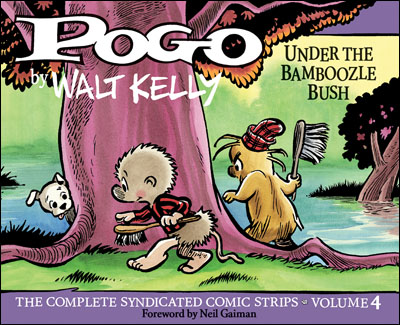
01 Jan 23:05

#97 Dinah the Aspie Dinosaur and New Year’s Eve

by Dinah
01 Jan 20:15

Last Thoughts on Edward Colston

by Andrew Rilstone
-- I have listened to you, Mr Smith, but I am none the wiser.
-- Possibly not, m'Lud. But you are, I hope, better informed?

On the 2nd December, the Daily Mail reported that Colston's Primary School, Bristol is going to change its name.

The Daily Mail explicitly frames the story in racial terms. It repeatedly uses the word “pressure” and insinuates that the name change has been forced on the school by unspecified outside forces:

The school...has been under pressure to drop the controversial name over claims it is offensive to ethnic minorities.

But after a consultation and debates, governors decided to cave into pressure and change the name of the school.

However another school in the city has refused to bow down to pressure from within the community.

The online article carries the headline English School Named After 17th Century Slave Change Becomes Latest to Change Its Name. I am afraid it is only too clear why it says "English School" rather than "Bristol School" or indeed "School". (The “latest” bit is also a little misleading: the Primary school is the first school to change its name, although a concert hall and a pub have already done so.)

Some 135 Daily Mail readers took to the keyboard to respond to this story. The responses provide a good insight into how the Colston Cult thinks.


13 of the comments engage in simple abuse, in many cases limiting themselves to single word:

Smg, Edinburgh
Joke and what's next

Talula, London
How utterly ridiculous!

Hermes, Southampton
Stuff and nonsense!


The thinking seems to be that it is self-evident that schools ought to be named after human traffickers (or that no establishment can ever change its name) and that anyone supporting a contrary position is therefore actually unhinged. The school governors were said to be: numpties, dumb, idiots, and loonies ; the decision was a joke, nonsense, outrageous and ridiculous. It will be remembered that “political correctness” is regarded as the opposite of “common sense”; and that the American Alt-right believe that liberals (i.e. anyone who is not a member of the American Alt-right) are literally insane.


23 of the comments attack the school for weakness.

Roy IoW
You mean, by the fragile fluffy-kins, dead set on having things their way, and scream 'hate speech' if you disagree with them.

Tony, Wimbledon
The new school emblem will be a white cross on a white background

Mowdiworp, Huddersfield
But is it the 'ethnic minorities' who are complaining or the mindless little 'snowflakes'?


The most common word used is pathetic (14 comments): indeed 3 comments consist of that single word and nothing else. Others use more creative language such as gutless, wimps, fluffy bunnies, fragile fluffykins, wet wipes and having no cojones. 10 comments specifically use the word snowflake, often in combination with other epithets: pathetic snowflakes, pathetic leftie snowflakes, pathetic SJW snowflakes. Three different commentators independently come up with the incredibly droll idea that the school might take the name Snowflake Primary, Snowflake Academy or Snowflake Appeasers Academy. 

The idea that the change of name is a sign of weakness seems to be falling into line with the editorial text: the people who run the school have bowed down or kowtowed to unspecified external forces who have demanded the change for equally unspecified reasons. 

The term snowflake seems initially to have been part of a backlash against some schools' and colleges' practice of  issuing "trigger warnings" before discussing possibly traumatic subjects like rape or child abuse, and of providing "safe spaces" where marginalized people could talk about their experiences without being shouted down. The very far right (who believe that there is no such thing as PTSD and that rape and abuse victims should just suck it up) saw this as an attack on freedom of speech. Professor Richard Dawkins famously felt that physical and emotional strength were essential to the study of mathematics or biology and that anyone who needed a safe space “should go home, hug their teddy and such their thumb until ready for university.” But the Colstonians do not seem to have anything this specific in mind. Snowflake is simply one more hate word meaning liberal or more specifically anyone we don’t like. But there does seem to an underlying connection between left wing political views and weakness and effeminacy in some of their minds.


No less that 30 of the comments were interested in the politics affiliation of the people who had made the decision. Some used quite creative language:

Alan in France
Another victory for the PC Stazi!

D Lareme, United States
Mao’s Red Guard is a live and well!

Johnboy, Lincoln
We are creating a land fit for mindless Corbynistas

However, the majority went with lefties (10), liberals (14), and loony left (3). No distinction is made between Tony Blair, Jeremy Corbyn and Pol Pot, or between Red China, East Germany and Bristol City Council: all are irreducibly "the left". However, the word Trot does not occur: it is only now used by members of the Labour Party to describe other members of the Labour Party. 

The British have generally used the word liberal to mean centrist or middle of the road: the Liberal Party is generally considered to be politically somewhere in between the Conservatives and the Labour Party. However the commentators without exception adopt the American usage and use Liberal and Left-Wing interchangeably.

TruffleSniffer, St.Helens,
Just shows how the liberal lefties entrenched in our education system are brainwashing our children.

Richard from Norwich manages a full house in his Slave Trader Bingo game:

Pathetic. Snowflake sandal footed lefties/liberals.

And of course, 10 commentators think that the name change is Political Correctness Gone Mad. Of these 4 use PC as a synonym for communist or left winger; 5 use it simply to mean “bad thing”.

Mustafa Leak, Sin City
History is slowly being sanitised, by the bleeding heart liberals and the commie loving PC brigade

Clearly, some kind of code is being used here: if the words are being used in any normal sense, it is impossible to derive any meaning from the statement whatsoever. ("Moderates who are too concerned about undeserving cases and people who worry too much about using inclusive language and therefore love people who want to distribute income more equally?") 

Only one appears to actually use words as if they meant something: 

Me, Bristol,
Pathetic. They had to change the original name of the new shopping centre in Bristol from Merchants Quarter (which in no way can be linked to slavery because a merchant is a person who sells things, not necessarily slaves) it was just the politically correct brigade reading into it too deeply. It’s now called Cabot’s Circus, probably to relate to all the clowns who wanted to change in the first place.

"One who attaches too much significance too someone else's choice of words" is a perfectly feasible definition of "political correctness", although what this would have to do with the proletariat controlling the means of production and wearing sandals I couldn't say. "Me" is, however, entirely mistaken:  the new Mall has only ever been called Cabot’s Circus although other names, including “Merchants Quarter” and “All Saints” were considered. It is far-fetched to say that the word “Merchant” could in no way be linked to slavery, since the proposed name was very specifically a reference to the Merchant Venturers.


Some of the other commentators attempt to present actual reasons for leaving the schools name as it is. None of them are particularly helpful. 

26 use some version of the “slippery slope” argument: "if we allow X, we will have to allow Y; since Y is obviously silly, we must not do X”. They never establish any particular link between X and Y. (“If we allow men to marry other men, it logically follows that we will have to also allow women to marry garden furniture...”)

Of these, 10 seemed to be under the impression that the school was being closed or demolished, rather than just re-branded:

Richard, Worcester:
Pull down Bristol, it was a leading slave trade port at one time

Glynn Churchill
Better start demolishing large parts of Bristol, then.

OstrogothRome, Newport
We’d better demolish almost every building, stately home, church, castle, palace, cathedral, in Britain dating from before as it was either built with slavery derived funds or with exploited labour

Others had more creative suggestions:
  • Should we not eradicate the name Victoria?
  • Perhaps we should ban everything Italian...
  • We need to stop teaching about Henry VIII.
  • It probably won’t be long before the hymn Amazing Grace is banned.
  • Are we going to drop all references to Jesus?
Again it is very hard to discern any coherent thread in these comments. Does anyone honestly think that Bristol is in danger of being pulled down; or that anyone was going to ban the name Jesus “because he was a convicted felon”? Does anyone actually think that there is a plan to "eradicate", "ban", "stop teaching about" or "drop all references to" Edward Colston, as oppose to simply stop naming public buildings after him? My best guess is that the writers think, or affect to think, that kidnapping black people is a harmless peccadillo that the PC snowflakes have dredged up as a pretext to remove Colston's name from the building. You could equally well have found similarly trivial black marks against any other historical figure. They are like the man who politely says “Look! I’ve got mud on my shoe, I suppose I will have to leave!” when his date spills wine down her dress – a round about way of saying “It’s okay, no-one minds.” Being a slave trader is not a very serious skeleton to have in ones closet.


This brings us to the most common argument (no less than 33 occurrences): that the school is attempting to airbrush (3), rewrite (9), erase (4), sanitize (2), white wash, wipe out or trash something called history. Without exception, these comments appeared to think that the removal of Colston’s name from the school was part of a wider plot to remove all record of Colston from history, which is part of a still wider plot to deny that the slave trade happened at all. 

SensiblePerson, Oxfordshire
Please can someone tell me why these people are determined to make us forget about the slave trade and all the evil it stood for? To stop a repeat of these evils we need to know our past mistakes. This is madness.

10 comments specifically say that the school needs to be named after an enslaver so that children will know how bad slavery was, and at least 2 attempt to paraphrase George Santayana’s remark about forgetting or denying the past:

DefaultAB, Essex ,
If we look to erase history, we're doomed to repeat it. People need to know the origins of slave trading and WHY it ceased... not pretend like it never happened.

FormerPerson, Somewhere In The,
Those who deny history are condemned to repeat it

This seems an exceptionally strange reading of events: why would Commies wish to pretend that the slave trade didn’t happen – why would Lefties want to make the British Empire seem less evil than it in fact was? You can pretty much guarantee that if someone decided to put up a memorial to the 100,000 people Colston kidnapped these exact same letter writers would condemn it as Political Correctness Gone Mad. And if naming schools after criminals is a good way of avoiding the repetition of certain crimes, why are we not agitating for John Profumo Primary School or Jimmy Savile Academy – nay, for Myra Hindley Comprehensive or Peter Sutcliffe Grammar?

The best I can manage is that the Colstonians are attempting some kind of “gotcha!”: “Ha ha you say you are against slavery but if you change the name over the gate to the school no-one will know slavery ever happened and there will be more of it har har liberals are silly.” 

Some of the speakers simply think that “history” itself is somehow under attack, which they connect in a non-specific way with totalitarianism.

Tony, Bristol
This is how dictatorships start, by erasing history and brainwashing children.

Gardeb, United Kingdom,
History will soon cease to exist under the new regime.

Glynn, Churchill,
Didn't Pol Pot try to rewrite history?

There are about one hundred primary schools in Bristol: one is named after a human trafficker; one after an opponent of slavery; one after the first European to set foot on the American mainland; one after the founder of anthroposophy; one after a marine mammal; two after the Christian Messiah and a whopping twenty after Christian saints. (The rest are just named after the district or the street where they happen to be.) How do the kids at the ninety nine schools which aren’t named after slave traders find out about this stuff? By what mechanism does "not having the name of a human enslaver on your school uniform" morph into "being brainwashed"? And who on earth was Nicholas of Tolentine?

Eight commentators resort to moral relativism: slavery would be a bad thing now but it wasn’t a bad thing then, so it is okay to carry on celebrating and commemorating slavers

Ex pat, wellington,
The British Empire was built upon such practices that were perfectly acceptable at that time, why should we be ashamed of our past? The Greeks, Romans, Scandinavians and Spanish are rightfully proud of their ancestors who probably did far worse things........

And two or three seem prepared to say that the slave trade was a good thing, or at any rate, not a bad thing:

Farmer Giles, Truro,
Bristolians, be proud of your great city of seafaring history and don't let the lefties get their way!

RabD, Glasgow, United Kingdom,
We should never be ashamed of our past!

What never? Well, hardly ever. And what do you mean "we", kemosabe?

Finally a few resort to made up facts and “fake news”

Bob , Cheltenham,
Well it will always be known as Colstons school anyway and considering he set it up who cares.

No, he didn’t: it was founded in 1948 and happened to take his name.

Loosehead, Basingstoke
Since Colston paid for Colston Hall, no-one can use it and it has to be knocked down.

If Colston had indeed paid for Colston Hall, there would be no need to knock it down: it was burned to the ground in 1898 and 1945. But he had nothing to do with it. He started a school for white males who believed in the same religion as him in 1710; the street was named after the school and 160 years after he died, the hall was named after the street.

Matt, Hungerford,
As no doubt the school was built from slave trade money, perhaps it should be demolished, the site levelled & the children taught in cold drafty tents

No, it wasn’t. There slave trade had almost completely finished in 1948.

And a handful contain racist dog-whistles

A pensioner, Bristol,
When will this kowtowing to the incomers stop, I'm tired of this PC nonsense.

David Mop, London,
Can we chuck out of this country anyone whose ancestors SOLD the slaves to Colston?


The Colstonians are (I assume) sentient human beings who have made a conscious choice to type comments into their computer: so they must be sincerely concerned about what name Colston’s Primary School goes by. The e-mail comments, like the comments in the Evening Post, show a surprising consistency of language and outlook. A group of people – communists, snowflakes, liberals, or the PC Brigade – have exerted pressure to which the school governors have bowed down, kowtowed  or caved in; resulting in history being changed so that children will be brainwashed into thinking that the slave trade never occurred; which is the first move towards physically destroying large swathes of Bristol and the country at large. One Sea Eagles from the Isle of Mull is quite explicit that this is “Preparation for the take over of our country...” By whom he does not say.

It is impossible that they believe any of this. What is actually happening, right now, in the world, is that some people think that memorials to slave-traders ought to be taken down, and some people think its okay for them to be left up. I suppose it is possible that the reasons for leaving them up (“it was a long a time ago” “slavery was okay in those days” “he also gave money to charity”) are so obviously weak that the “leave them up” faction need to create complex fictions to justify their position. “Taking them down” is a Communist plot to destroy civilization because, for some on the Right, absolutely everything is a Communist plot to destroy civilization. 

But still -- why Colston? Why would anyone get so angry about one school, one pub and one concert venue that they need to make up fantasies about the end of civilization? Suppose the very worst happened and the Awful Statue were in fact moved, as in fact the equally awful statue of Brunel has already been moved. You might conceivably think that this was unnecessary. (Before the Great Kerfuffle, I broadly thought that moving the statue was unnecessary.) But why would you think it crazy and insane and a joke? Why would you create fantasies of pulling down Westminster Abbey and Communist Take Overs? What do the Colstonians really believe? What do they really believe that the rest of us believe?

Some people at the Daily Mail really believe in the Frankfurt Group and Cultural Marxism – they really believe that the media, academia, local government and …. well, everything but the Daily Mail, basically… is secretly controlled by Jewish Marxist Intellectuals. (This is not exegesis on my part, but something that they have stated explicitly in banner headlines.) If you believe in one conspiracy theory, you see conspiracy everywhere. It is obviously impossible that a group of school governors could ever decide to change a school’s name in good faith. It must be pressure from a nefarious vested interest – black people, Islams, experts. And all notorious vested interests ultimately lead to the Cultural Marxists. If the Daily Mail doesn't like it then it literally is part of a communist plot.

But the Colstonians themselves? I see only two options. 

One is simple racism. Black people forced the school to change its name. Black people moved into our town and forced us to let them work on our buses. Black people hold a festival in the summer. We have been forced to accept a black man as our Mayor and a black lady as our MP. So we want a great big statue, right in the middle of town, to remind these black people that they are not real Bristolians (born and bred! born and bred! alive alive oh!). There was a time when we bought and sold you like cattle and don’t you ever forget it. If communist and leftie is understood to mean black person or n***** lover then very many of the under the line comments start to make a frightening amount of sense. 

But the more benign possibility is this.

If you are very old and very stupid, then change, change of any kind, is threatening to you. It is a very small jump from feeling nostalgic for the Epilogue and the Potters Wheel to feeling that the Bolshevic Broadcasting Corporation took those things away to spite you personally because they hate you. I do not think that the Colstonians care about Colston or about slavery. I don’t think they think  there is a communist plot to destroy civilization. I think that they would be equally up in arms if the Daily Mail had told them that the Old Red Lion was going to become The Lionhead Bar. One of the Bristol Evening Post Colstonians literally claimed that the use of parsley in salads was part of a European plot to destroy civilization. Colston is this week’s symbol. But what we are actually raging about is the dying of the light.

See also: Brexit. 


01 Jan 19:31

Conservatives & austerity

by chris

Frances’ post linking the rise of Nazism to fiscal austerity poses a question: why are Conservatives so supportive of such austerity?

I ask because from one perspective it is they that should oppose it more than the rest of us. This is because, in depressing incomes, austerity calls both free markets and capitalism into question as some people blame the weak economy not upon bad policy but upon more fundamental features of capitalism. We Marxists are happy for capitalism to come into doubt. But conservatives shouldn’t be.

What’s more, austerity also generates political instability as people look to both left and right for ways out of the crisis. German austerity in the 1930s contributed to a rise of Communism as well as Nazism, and austerity in the UK has contributed to both Brexit and the rise of Corbyn.

Conservatives who want political stability and free(ish) market capitalism should therefore be in the forefront of opposition to austerity. Austerity, they should complain, jeopardizes things they prize highly.

Why, then, do they support it? Why will they do anything to oppose Corbyn except remove the economic conditions that create his popularity?

I suspect an answer lies in something Corey Robin has written. Forget all that Oakeshottian stuff about Conservatives being cool-headed sceptics about change, he says. What Conservatives really want is private sector hierarchy:

No conservative opposes change as such or defends order as such. The conservative defends particular orders – hierarchical, often private regimes of rule – on the assumption, in part, that hierarchy is order. (The Reactionary Mind, p24)

Expansionary fiscal policy, however, undermines “natural” hierarchies.

One way in which it does so was pointed out by Michal Kalecki:

Under a laissez-faire system the level of employment depends to a great extent on the so-called state of confidence. If this deteriorates, private investment declines, which results in a fall of output and employment (both directly and through the secondary effect of the fall in incomes upon consumption and investment). This gives the capitalists a powerful indirect control over government policy: everything which may shake the state of confidence must be carefully avoided because it would cause an economic crisis. But once the government learns the trick of increasing employment by its own purchases, this powerful controlling device loses its effectiveness. Hence budget deficits necessary to carry out government intervention must be regarded as perilous. The social function of the doctrine of ‘sound finance’ is to make the level of employment dependent on the state of confidence.

There’s a second way. Once we acknowledge that people’s incomes depend upon fiscal policy it follows that poverty is a failure of government rather than of individuals. Conservatives can then no longer regard it as a moral failing.   

Fiscal austerity, therefore, is needed in order to maintain the “natural” hierarchy in which the rich are entitled to power because they are virtuous heroes whilst the poor must be stigmatized as lazy and feckless.

That’s the hypothesis. There are two separate pieces of evidence for it. One is a tweet from Andrew “Tory boy” Pierce:

Rail engineers being paid £775-a-day for working over Christmas and bill will be picked up by long-suffering commuters

What Pierce is expressing here is a desire for workers to stay in their place – which is well down the income ladder. Tories aren’t so keen on free markets when they raise workers’ wages. This is consistent with the fact that right-wingers in the US have been relaxed about a rise in monopoly power that has squeezed wages.

Secondly, American rightists have no problem with the prospect of rising government debt if it means tax cuts for the rich. They value inequality and hierarchy over fiscal prudence.

Yes, support for austerity is an intellectual error. But it might be one founded in a peculiarity of the Conservative psyche. Keynesians, I fear, under-rate this point.

31 Dec 11:00

What to expect in 2018, according to science fiction

As we look forward to 2018, science fiction has already been there. Here are six portrayals of 2018 from books, television and film, imagining the coming year as utopia, dystopia, or something in between.

Lauren Beukes’ first novel, Moxyland (2008), is set in a cyberpunk South Africa of 2018, where your phone is your identity (much more true now than then) and vulnerable to control by the authorities (also even more true now), while nanotechnology has advanced to the point that you can inject yourself with it for health and entertainment, and games are another means of control, providing distraction from the state’s oppression. Beukes’ Johannesburg next year is a fascinating but dangerous place. (I must go back and re-read it now, having visited Johannesburg myself for the first time in October.)

Utopia v Dystopia: Definitely dystopia.

Published around the same time, Halting State, by Charles Stross (2007), combines elements of police procedural, cyberpunk and choose-your-own adventure, set in 2018 in a Scotland which became independent in 2012, where a huge theft in an online game leads to the discovery of massive international hacking and uncomfortable revelations for one of the main characters. In 2017 we did indeed have a massive heist in EVE, and continued evidence of real-world political hacking by unfriendly governments, though it's not yet clear if the two are related. A sequel, Rule 34, came out in 2011.

Utopia v Dystopia: Stross’s Scotland has improved with independence, but his future world has big new problems. The author's comment: "Halting State wasn't intended to be predictive when I started writing it in 2006. Trouble is, about the only parts that haven't happened yet are Scottish Independence and the use of actual quantum computers for cracking public key encryption..."

For more British politics, see Andrew Marr’s Children of the Master (2015) in which the Labour Party unexpectedly wins the 2018 election. For a time-travelling police procedural, see Liv Spector’s The Rich and the Dead (2014). For more geopolitical thrilling, see End Game by Matthew Glass (2011). For demons in Atlanta, see Forsaken by Jana Oliver (also 2011).

There are a number of films set in 2018 – including Brick Mansions (2014) (inner-city Detroit walled off from the outside world), Iron Sky (2012) (Nazis on the far side of the moon), and Terminator Salvation (2009) (the third sequel to Terminator). But I’m going back to 1975, and staying with the game theme, where Norman Jewison’s film Rollerball portrayed a future in which corporate interests have taken over from the state, and all team sports, indeed all means of entertainment including reading, have been abolished - apart from the violent sport of Rollerball in which the players, wearing body armor and equipped with roller skates and motorcycles, must score by throwing a steel ball into the magnetic goal. The protagonist, Jonathan E (played by James Caan), wants to retire but is forced to play one more game with deadly changes to the rules; the villain admits that the game is meant to demonstrate the futility of individual effort to a cowed populace.

Utopia v Dystopia: Our hero may triumph in the end, but this is not the 2018 you’d want to live in. Though the futuristic German architecture is pretty cool.


Fifty years ago, starting on 27 December 1967, Doctor Who visited 2018 in The Enemy of the World, starring Patrick Troughton as both the Doctor and the future politician Salamander, who it turns out has been gaining political power with the help of a group of scientists who he has deceived into causing various (apparently natural) disasters. Believed lost for years, this story was found again in 2013 and turned out to be a real treat for fans. It is the only Doctor Who TV story with substantial parts set in Australia. Or Hungary, for that matter. The helicopter flown by Astrid (Mary Peach) is licenced to the end of the year 2018.

Utopia v Dystopia: The political system is vulnerable, but the Doctor solves the immediate problem.


Going back another decade, They Shall Have Stars, the second published volume of James Blish’s Cities in Flight sequence (though first in internal chronology), was published in 1957 with the title Year 2018! (though it had already appeared in the UK with what is now the better known title). It’s a story of men and women working to make the scientific breakthrough that will be the foundation for the rest of the series, against an oppressive American state that has become too totalitarian in the name of freedom; one of the heroic protagonists, rather unusually, is a U.S. Senator, while the villain is the FBI director MacHinery. (Get it?) The story starts in 2013 and ends in 2020, but I think the variant title gives me licence to include it here.

Utopia v Dystopia: Definitely towards the latter, with the end giving some hope for escape (though alas not for our protagonists)


Finally, The Golden Book of Springfield, written between 1905 and 1918 by the poet Vachel Lindsay and published in 1920 (and available for free here) takes an idealistic look into the future of Illinois, a world where everyone is spiritually and aesthetically enlightened, apart from a few corrupt politicians who are busy squabbling about airplanes and prosecuting a war against the drug dealers of Singapore. In Lindsay's 2018, there has been almost no advance in technology since 1920.

Utopia v Dystopia: Lindsay predicts racial harmony and social and spiritual progress, but only up to a point. Still, it’s probably the most hopeful, and also by far the most outdated, of the six futures discussed here.

There are a few common themes here: governments which are not as democratic as they would have you believe, entertainment as a means of oppression, information technology used for ill as well as for good. We have our own 2018 ahead of us: let’s make the best of it.
30 Dec 03:00

Here we go again!

by Lew Stringer


The other day, as people were enjoying their Christmas holidays, the print and TV media stirred them into an uproar by announcing that the Beano's Dennis the Menace will no longer be called a Menace and that his supporting cast will include a girl in a wheelchair. 

Fact is, the "Menace" part of the title was dropped from the strip over a year ago! The "girl in a wheelchair", Rubi, has been in the Beano for a while now too. Also, the strip was simplified to Dennis and Gnasher for a while back in 2009, and the media stirred the pot back then too:
https://lewstringer.blogspot.co.uk/2009/08/another-political-correctness-gone-mad.html

So... either none of the reporters remembered that they'd covered the same story eight years ago or they simply needed something to fill their papers and distract people from shady politicians and corporate bankers. Either way, it worked, and their readers hammered their opinions into their keyboards. The opinions were pretty much the usual blathering about "political correctness" and "snowflakes" as you can see from these examples...


Although the news items had included reassurances from Beano's publisher Mike Stirling that Dennis "still dances to the beat of his own drum as a mischief-maker and is very much a leader amongst his pals" the public were having none of it...

Dennis and Gnasher writer Nigel Auchterlounie stepped in to explain things further...

Beano artist/writer Kev F. Sutherland went on Sky News to put the record straight too:
https://news.sky.com/video/comic-artist-its-surely-not-a-great-worry-that-dennis-changes-over-the-years-11186714

Writer Cavan Scott (whose work includes the Beano) also posted a very good piece on his blog about it:
http://cavanscott.com/2017/12/29/dont-panic-its-not-the-end-of-the-world-dennis-the-menace-is-still-the-worlds-wildest-boy/


Phil Boyce had a thing or two to say about the silliness of the reactions on his blog too:

A few things occurred to me about this whole hoo-ha:

1) A lot of people seemed upset that Dennis was no longer a bully. That says a lot about their personalities.

2) If you think a comics character in a wheelchair is a sign of modern "political correctness" perhaps you've forgotten Professor X from the X-Men and The Chief from Doom Patrol. Both of whom debuted back in the early 1960s. Also, if you have a downer on people who aren't able-bodied you're not very nice.

3) If you think Dennis shouldn't have a black friend you're a racist. 

4) People who got annoyed about it this week clearly haven't been reading the Beano for a long time or they'd have noticed the changes over a gradual period of years. So who cares what they think? The changes took place a while back and the actual readers accepted it and carried on enjoying the stories.

Here's the thing that most of these stories ignored or didn't bother researching: the main reason that the cartoon series is called Dennis and Gnasher and not Dennis the Menace is so that it can be sold internationally and not be confused with the American Dennis the Menace. By coincidence, both the British Dennis and the American one debuted in the same week in 1951. (Over here, the U.S. Dennis was sometimes called "The Pickle" so it's always caused problems.) I guess the practicalities of a business decision were too boring for the media so they chose to blow things out of proportion and pander to their readers by claiming it was all about "political correctness gone mad".
Thing is, once a rumour gets out, no matter how wrong it is, it's hard to counteract it. Thankfully, most of the people moaning about the "de-Menacing" don't buy the Beano anyway so their opinion is irrelevant. Trouble is, such nonsense could generate an unease about the comic, and could put some parents off buying it for their kids. On the other hand, it could also encourage more independently-minded parents to look out for it and see for themselves what the fuss is about. If they did, they'd find a comic that's still funny, still full of wild characters, and still enjoyed by children. In the end, the children it's aimed at are the only audience whose opinion matters. 

The Beano returns to the shelves after its Christmas break on Wednesday 3rd January. Check it out and have a laugh.


30 Dec 02:58

Jim Baikie R.I.P.

by Lew Stringer
I've just heard that the artist Jim Baikie has passed away. Most of you may remember Jim drawing Skizz, written by Alan Moore, that appeared in 2000AD in the 1980s, and on his work on Judge Dredd.  He also illustrated many other strips, such as New Statesmen in Crisis, and for American publisher DC Comics he had stints on Batman and The Spectre. Jim also drew numerous serials for the girls comic Jinty in the 1970s. 

He had an accomplished style and was one of those artists who could draw anything and make it look natural. Whether the scenes required action scenes or quiet character pieces, Jim could master it and deliver the goods. 

My sincere condolences to Jim's family and friends for their loss.


29 Dec 16:37

The challenges facing the Conservatives

by TSE

The Conservatives are in power and in disarray.  They possess a will to power but no common view on what to do with it.  For now the bulk of the party is intent on pursuing Brexit to its bitter conclusion.  But what then?  What indeed.  For the Conservative coalition has been turned upside down.

Charles gave a crisp summary a couple of weeks ago of the three Conservative tribes. All three have abandoned their usual stances in the face of the referendum result.  The Ultras, who oppose change, have – enthusiastically – sought radical upheaval in order to perfect Brexit.  The Radicals, who seek a global role for Britain and for free trade, have – with varying degrees of enthusiasm – turned their back on Britain’s most profound international and trading endeavour: some regret this and some are persuading themselves that new roles will be found.  The Paternalists, who seek compromise in pursuit of social stability, have found themselves in the midst of the biggest social upheaval for a generation and firmly pressing one side of a binary decision.   Everything has been subordinated to Brexit.

The Conservatives are guilty of double think.  On the one hand, they think that Brexit is so important that every previous belief and credo must be jettisoned to the extent that it gets in the way of leaving the EU.  On the other hand, they think that once Britain has left the EU normal service will be resumed, since the public will speedily move on to every day topics.

This looks hopelessly optimistic.  Once Britain has left the EU, Leavers will pocket the policy success and move on, probably to complain about why immigration isn’t coming down (whether or not it actually is).  Meanwhile, committed Remain supporters are unlikely to forgive or forget for the foreseeable future.  Those who implemented Brexit are not going to get a hearing from them this year, next year or in all likelihood in 15 years time unless they have shown through the means of implementation that they have sought to be inclusive. The Conservatives have not sought to be inclusive.

That by itself is not fatal to the Conservatives’ chances.  While many of those committed Remain voters would in previous eras have been natural Conservative voters, this portion of the electorate is probably the one third who a recent opinion poll found would support joining the euro.  There is still another two thirds to go after and new coalitions can be built.

The Conservatives have in practice been building an electoral coalition around the Leave coalition, apparently without particular thought to the long term consequences of this.  It’s all very well being the party of the old, the uneducated, the insular and the obsessed, but that rubs off on your image.  Despite the fact that Labour is headed up by the most leftwing and inexperienced leadership in living memory, the Conservatives now have only a slender lead on economic competence over Labour: Philip Hammond, the epitome of a stolid Conservative chancellor, had only a 9% lead for best Chancellor in a recent opinion poll over John McDonnell, his Mao-brandishing opponent.   They look reactionary, uncaring and obsessed.  Labour have many defects of their own but by staying above the fray on Brexit they have avoided the taint of weirdness that the Conservatives are volunteering for in the eyes of many voters. 

There is more than another year of this to go.  And that timescale will be met only on the basis that everything goes quite well from here, which is itself an assumption so mini-heroic that it is awaiting its own confectionery tin.

The Conservatives can’t afford to wait that long.  If they want to retain power in the short, medium and long term, they need to rediscover a sense of purpose that does not involve Brexit.  Indeed, they need to determine what a good Brexit would look like.  That means that they need to ask themselves a question which they have not allowed themselves to ask since the referendum: is there anything more important than leaving the EU?

The answer for most normal people to this question is an emphatic yes.  Many Conservatives will scratch their heads at the concept.  But if you are going to be telling the general public that policies on the economy, housing, education or the NHS are going to be determined by the Brexit settlement, a lot of voters are going to think that you’ve got the cart before the horse.

Conservatives seem to be putting those questions on hold until Brexit is out of the way.  The voters won’t.  And if the Conservatives don’t, voters will take a lot of persuading that the Conservatives have the right priorities for the country.

What should the Conservatives be focusing on?  In the past they have succeeded when they have persuaded a plurality of voters that they are best placed to grow the economy in a manner that fairly rewards the aspirations of the ordinary voter.  That looks like a good place to start.  The Conservatives’ big problem at present is that if they put Brexit ahead of this, the public won’t be persuaded.  Indeed, for many working voters the Conservatives’ fixation with Brexit is symbolic of their warped priorities and their inability to tackle the problems in the housing market, low pay growth, poor productivity and out-of-date infrastructure.  So it’s time for the Conservatives to start talking about what they think is more important than Brexit.

Alastair Meeks

Follow @AlastairMeeks

Tweet

29 Dec 14:28

The Strange World of Gurney Slade

by Jonathan Calder

What to make of Anthony Newley?

The young Tony Robinson wasn’t sure, and he played his son on the West End stage:
 I was awestruck by Tony Newley; he was intense, anguished, and seemed completely detached from the rest of the world. He never spoke to me – that was part of his mystery – but I watched him obsessively from the wings … Every night I mimicked his words, and gazed agonisingly into the spotlight pulling a heartbroken face, just like he did. 
Today, when Newley is something of a forgotten figure, it is hard for any of us to be sure, but I have a feeling he was more important than we realise.

He links two great eras of 20th-century British culture – 1940s cinema and 1960s pop – co-wrote the songs Feelin’ Good and Goldfinger, influenced David Bowie’s singing and was negotiating for a regular role in EastEnders when he died.

So what to make of The Strange World of Gurney Slade?

I have long heard of this 1960 comedy series and recently bought and watched the DVD.

It begins with the hero Gurney Slade, played by Newley, escaping from an awful situation comedy and going out to explore the world.

There he indulges in internal monologues about the absurdities of everyday life that you can imagine in Tony Hancock’s voice. Then a section about the absurdities of dating, featuring Una Stubbs in a very early role, looks forward to observational comedy.

After that things get really strange. There are a group of children – strange symbolic children who resemble the ones you find in 1940s Hollywood films such as The Blue Bird and The Boy with Green Hair.

And it ends with a spot of the absurdist theatre that was popular in 1960s as the characters sit round and waiting to be written into another show.

The cast is strong: Bernie Winters, Hugh Paddick and Fenella Fielding turn up, while the floor manager Newley brushes off as he makes his escape at the start is played by a young Geoffrey Palmer.

But is it funny?

It didn’t make me laugh, but then Charlie Chaplin doesn’t make me laugh even though I can see he is a genius. In the same way, I can see that The Strange World of Gurney Slade is important and interesting.

And the show gives its own answer. At one point Newley is put on trial for not being funny and after rejecting the defence counsel supplied by the court, and awful red-nosed comedian, defends himself. 

If being like him is what is meant by being funny, he asks by implication, who wants to be funny? 

The best comment on the show is to be found in a trailer Newley made, still in character, for its second showing.

As Andy Murray once described it on We Are Cult:
On a dark street, a smartly-dressed young man stands with a panting sheepdog, peering at a tattered advertising hoarding for a TV show. Addressing the figure pictured on the hoarding, the man says, “Well, it was a noble effort, wasn’t it? You tried. I give you that, you tried. But the public is no man’s fool, you know. The public knows what it wants, and you had no right to even try and suggest something different. Anyway, the public doesn’t like anything… suggestive.” 
The man nods down towards the sheepdog. “He thinks you were before your time. Personally, I don’t think we’re ever going to reach the time that you’re in.”
29 Dec 14:03

Fundraisers of the Lost Ark

by Fred Clark
Every version of the perennial story about "ark hunters" shares three features: 1) They haven't found Noah's ark; 2) They won't share their "evidence;" and 3) They're trying to raise lots of money for more "research."
29 Dec 13:03

"If my kid could do that I'd consider them cured". But would you though?

by Neurodivergent K
I've been hearing this for years. People older than me have been hearing it for years. People younger than me have been hearing it for a while now. What is it?

"If my child could do <thing>, I'd consider them cured," where <thing> is anything from arguing online to going to a protest to giving a presentation to writing a book to successfully running away from their parents' house in fear for their lives.

If their child could do this one thing, they'd consider them cured. People with a whole wide variety of support needs hear this--I've seen it said to people with a job and a house and a drivers' license and to people who need one on one support to communicate. We're all cured, apparently, because we said fuck or because we said that society is broken, not us.

Let's examine this though. I'm going to pretend I didn't notice this pattern, of who gets told this and what things are grounds for being kicked off autism island. We are going to walk through this as though it is a good faith statement, rather than a silencing tactic. Let's do this.

Cracks knuckles

The way this part of the post is going to work is as follows:

I will type up a thing I have been told indicates I am no longer autistic. I will immediately follow it with a disabling trait that, apparently, is mitigated by that thing which someone so helpfully told me means I am cured. Ready?

"If my child told me he didn't want a cure I'd consider him cured

That's a real neat trick there. Also, the phone call to get my nightmare meds refilled that I've literally not been able to make just made itself. Thanks!

"If you were still autistic you couldn't give presentations at conferences.

I note that you don't challenge the autism of people who say things you want to hear, and now thanks to your declaration, I can no longer hear the fluorescent lights. Wow that is so helpful you have no idea.

"If my child was so sarcastic I'd assume he was cured."

Holy shit now the ability to hold down a full time job just happened! Wow, your assumptions are fucking magical!

"My son never tells me he thinks this therapy is abusive. If he did I'd know he was cured."

....
You want to reconsider that one?
No?
You probably should.
But. Okay. Looks like because I called abuse, abuse I can now, in fact, feel all my appendages without moving them, instead of sitting and just hoping they don't float away so some therapist doesn't grab them. Happy now?

 "If my child vanished from my radar when I threatened to have him committed I'd consider her cured."

You know this is another one that's going to have my readers wondering what the hell kind of autism parents I run into, right?
You're going to stick to this one too? Alright then.
I have been cured of my inability to wear a whole wide array of clothing considered "appropriate for the office" because I vanished out of self preservation.

"No one autistic can go to protests! If my child did I'd consider them cured!"

Hot damn, look at all that ability to notice chores need doing and actually do them in the same day I just developed, thanks to my hatred of injustice.

"MyChild can't write ascerbic essays on the internet. If he had a blog I'd call that cured!"

Aside from the obvious points that your child is eight and doesn't have an internet connection....my carpet, which hadn't been vacuumed since I moved in until your pronouncement, thanks you.

"My child would be a recovery story if she was arguing with strangers on the internet."

As an actual 'indistinguishable from peers' kid can you please not?
That's too much to ask I see.
Suddenly small talk is an activity that makes sense to me. Thank you for your expertise.

"If my child ever corrected me, I'd praise Jesus because it'd mean he was cured"

I'll praise Jesus if your child feels safe to correct you. Sorry. That was rude. But apparently I have a sense of time after all, and my bills all get paid without endless alarms, so that's fancy.

"If my kid had interests like yours I'd consider them to be neurotypical."

Umm I don't even know what to do with that. Am I not a white tech bro enough for you? I guess? Sorry I can do a cartwheel? And lo, I have never and will never again lose language, all because of said cartwheel?


All of these are actual things people have said to me or to people around me. I did not use other peoples' autistic traits though, I only used mine.

So let's pretend these things were said in good faith (you can see why I have a hard time with this yes?). What do they have in common? Not much, except that someone is denying my neurology because of the challenge to their sense of their own authority.

First, that's kind of a fucked up way to respond to someone not taking you as the authority in all situations. I mean, really fucked up. You'd not do that to someone you didn't consider fundamentally inferior. Don't try to lie to me, we've had the good faith portion of this conversation. That's not how people relate to equals who challenge them. They meet the challenge, not attack who the person is.

Second, the things that mean I am not autistic in these peoples' eyes? Have literally nothing to do with autistic traits. Telling you that vaccines don't eat babies isn't magically curing my sleep (non)cycle. Knowing a non insubstantial number of impolite words isn't feeding me things that aren't chicken nuggets & Kraft dinner.

Do you see what I'm saying?

Is it really good for your kid to be judged on how well he kisses others' asses? Is that what you want? Do you want her disabilities to be ignored because she didn't make some random person on the internet feel comfortably superior to her? Do you want them to be denied support because their truth is uncomfortable, and they are able to speak it?

Consider that before declaring anyone cured.


29 Dec 13:01

Rose Marie, R.I.P.

by evanier

It's not a shock to hear that the great performer Rose Marie has died at the age of 94. She'd been in and out of hospitals constantly the last few years and friends kept telling me, "She may not last the week." I started writing an obit for her three or four years ago and never finished it. I'm writing this one from scratch because I decided what I wanted to say about her and it wasn't what I set out to write back then.

But before I get to it, two points…one being that I don't think she was 94. I think she was 96. A number of her friends think that, too. Rose started out as a child star — a very big, stellar child star with a singing voice that was amazing for her age. A lot of us think that age was fudged by a year or two back then to make her seem younger and therefore more remarkable. We had a little birthday dinner for her four years ago and during it, she said some things that led me to conclude she was two years older than the public record showed.

Secondly: As all the obits are saying or will say, she probably had the longest performing career in the history of show business…and you know what her last paying job was? I hired her to voice a witch on The Garfield Show in 2012.

Like a lot of you, I first became aware of Rose from her appearances on The Dick Van Dyke Show. She was great on that program…and while no one thought this way at the time, that was an important role in the history of on-screen females. She wasn't there to play somebody's wife or somebody's mother or somebody's girl friend. She was a full-fledged working woman with a career and an income and a job that was equivalent to a man's. I mean, you just know Sally Rogers got the same money as Buddy Sorrell. Name me another character on TV before her who got equal pay as a guy…or as many good lines. She scored with every one of them.

I could fill this blog listing all the jobs this woman had…playing Vegas for Bugsy Siegel, playing Broadway with Phil Silvers, Hollywood Squares, The Doris Day Show and so many more. For a few decades there, if a show needed a comedienne who could hold her own on stage against a Milton Berle or Danny Thomas, she was at the top of a very short list.

The last decade or two though, she didn't work much. As she once said, "I think I outlived my career." Some of that was health-related. She'd put on weight and was confined to a wheel chair, plus there were all those hospital stays. Another person might have retired but all Rose did her whole life was work. I don't think she knew how not to work and it drove her crazy that she wasn't able to perform.

A few years ago, Rose told us (her friends) that a filmmaker named Jason Wise was making a documentary about her life. That was good news if only because of how it energized her and gave her hope that the ol' career still had some applause left in it. In the months that followed though, it started to feel like it might turn into bad news. The film seemed to be taking a long time and some of us had a very real, understandable fear that she would not live to see it completed.

Well, she did.

Last August, Amber and I went to the big premiere of it out in Santa Monica. I had two strong reactions that night. One was how good it was. All the time they spent to make it was evident on the screen with every second presented in loving precision. The other reaction was how happy Rose was. I'll bet it was one of the three best nights of her life…and how amazing to have one of those when you're her age.

Rose always had great timing and I think this proves it. The film is out now. It's called Wait For Your Laugh and I highly recommend that you seek it out and watch it. It will tell you more about this woman than I or anyone could tell you and you'll certainly understand why it was an honor to know her.

A week or so ago, the Motion Picture Academy announced which documentaries will be considered for Academy Awards for 2017. They do this each year, whittling down all the submissions to a list of fifteen finalists from which the winner will be selected. Wait For Your Laugh did not make the cut. If it had, I suspect Rose would have stuck around until the ceremony next year on March 4th and then left us. In a very long, successful life, she never missed a chance to be where she was born to be: On stage.

The post Rose Marie, R.I.P. appeared first on News From ME.

29 Dec 12:58

Tories are aping DTrump when they claim the electoral system’s rigged against them

by Mike Smithson

The Telegraph’s making a fool of itself

I know it is the holiday season and all that with political news thin on the ground but the Telegraph should have looked at the basic numbers from GE2017 before inferring that somehow the electoral system is rigged against the Tories and for Labour.

This might have been true after GE2005 when Blair’s LAB won 55% of the seats with 35.2% of the votes but things have moved on since then. The basic fact from June 8th is that the Tories won 48.9% of MPs with 42.4% vote while LAB won 40.3% of MPs with 40% of vote. The LDs secured 1.8% of MPs with 7.4% of vote.

    Under the current boundaries the Tories would win 13 more seats (out of 650) than Labour if they both get 42% and there is a uniform swing. Under the proposed new boundaries, the gap increases to 37 seats out of 600.

Those basic numbers point to the opposite of what CON ministers and the paper is suggesting.

One of the political problems the Tories have got with this is that under the current proposal the DUP looks set to lose three seats to Sinn Fein becoming the second party in Northern Ireland.

TMay’s “supply and confidence” partners are not going to do anything that supports a plan that would negatively affect them. Without the DUP’s votes it will be a struggle getting this through the Commons.

So please no whinging. This is naked political self interest by the Tories.

Mike Smithson

Follow @MSmithsonPB

Tweet

28 Dec 07:17

Wednesday Morning

by evanier

Early this AM around 2:15, I was in my friendly neighborhood 24-hour CVS Pharmacy waiting for the pharmacist to fill a prescription that a text message had informed me was filled and ready for pick-up. I found myself sitting next to a gentleman who was waiting for a refill on a medication he seems to need desperately. Without it, he said, he has wild mood swings and rages and, as he put it, "If I don't have that, you wouldn't want to come within six blocks of me." We then had a little conversation about where each of us lives because, I said, I want to make sure we're at least seven blocks apart.

He told me he is not out of this medication. He actually has a few months' supply stashed away at home but he was eligible for another refill and he wanted to not wait until after the first of the year. He has no idea, he told me, what happens to his insurance or his deductibles after 1/1/18. "I may be fine," he said. "But it's so damn confusing, I can't be sure."

His fears are short-range and long: He doesn't understand how his current plan, which he got under Obamacare, may be changing. He also doesn't know how it may be changing in the future. The uncertainty, he said, is bad for his health. "The problem," he said, "is not what will the Republicans do or what will the Democrats do? It's that it's so f'ing partisan that all they want to do is undo what the other did. We're living in a world where every time someone wins an election by five votes, my health care changes, my taxes change, all sorts of laws change…"

I told him I didn't think it was as bad as all that and he replied, "Well, it's sure heading in that direction" and I agreed and then my prescription was ready and I got up to get it and we said a friendly good-bye and I left and that was the end of it except that I sure hope he has a supply of those pills he needs because he might live within six blocks of me.

Since then, I've been thinking about uncertainty. A week or two ago, I heard an economist guy express an interesting view on the Republican tax cut for corporations and wealthy folks. He's for it but he thinks it would have a better effect on the economy if it were much smaller. This is me trying to reconstruct what he said: "A tax cut can spur investment in new businesses and new jobs but only if it's permanent. This one is so lopsided that you just know it's going to get whittled down and rolled-back somewhat just as soon as the Democrats get back into power. Ergo, less long-term investment."

That makes a certain amount of sense to me. So does the concern my friend in the drugstore has about too much instability in his life. I'd like to see the uncertainty end but I'm uncertain as to how and when that might happen.

The post Wednesday Morning appeared first on News From ME.

25 Dec 17:29

PSA: Please don't nominate the Laundry Files for a Best Series Hugo Award (this year)

by Charlie Stross

It's the time of year when nominations open for the various genre fiction awards, and some folks announce what they've published that is eligible (while others bite their lips and refuse to tout for votes in what is essentially a beauty pageant).

I only published two works of fiction in 2017, both novels—"Empire Games" and "The Delirium Brief", books 7 and 8 in the Merchant Princes/Empire Games and Laundry Files series. As such, they're highly unlikely to make the best novel shortlist in the Hugo awards. However, since 2016 there's been a new category, "best series". Please do not nominate the Laundry Files for the best series Hugo award in 2018.

(Explanation below the cut.)

The rules for the best series Hugo award stipulate:

Previous losing finalists in the Best Series category shall beeligible only upon the publication of at least two (2) additional installments consisting in total of at least 240,000 words after they qualified for their last appearance on the final ballot and by the close of the previous calendar year.

This means that if series X is shortlisted in 2018 and loses, it won't be eligible again until two more installments amounting to 240,000 words have been published in a subsequent year.

There is a significantly better chance of either series winning the award at a British—or Irish—worldcon, such as the one in Dublin in 2019, simply because the worldcon attendees will include more of my UK readers. However, a nomination in 2018 would probably lose (there are plenty of very good series works by American authors: consider Max Gladstone or Seanan McGuire, for example) and thereby disqualify me from eligibility in 2019. That'll be the last chance for the Merchant Princes/Empire Games series (I don't currently have any plans after book 10, "Invisible Sun", comes out in 2019), and probably the last chance for the Laundry Files for a long time (I'm taking a year off to recharge my creative juices after "The Labyrinth Index", so two more books would take us through to 2021).

So: if you think either these series deserve a Best Series Hugo Award, please don't nominate them in 2018 (2019 is okay). And if you think they're crap and don't deserve a Best Series Hugo Award, why are you even reading this?

Footnote 1: This PSA is necessary because, despite me asking people not to nominate the Laundry Files for the 2017 Hugo Award for Best Series, I didn't ask loudly enough: it barely missed the shortlist, and having lost would subsequently be ineligible in the years of eligibility of "The Delirium Brief" or "The Labyrinth Index", which I think are the strongest works in the series to date.

Footnote 2: Of course, this is only about the Best Series Hugo. The Best Novel award has no affect on eligibility in other years or other categories.