12 May 06:56
by Katherine A. Newhall, Maxim S. Shkarayev, Peter R. Kramer, Gregor Kovačič, and David Cai
Author(s): Katherine A. Newhall, Maxim S. Shkarayev, Peter R. Kramer, Gregor Kovačič, and David Cai
We study the synchronization of a stochastically driven, current-based, integrate-and-fire neuronal model on a preferential-attachment network with scale-free characteristics and high clustering. The synchrony is induced by cascading total firing events where every neuron in the network fires at the...
[Phys. Rev. E 91, 052806] Published Mon May 11, 2015
12 May 06:56
by Thomas K. DM. Peron, Peng Ji, Francisco A. Rodrigues, and Jürgen Kurths
Author(s): Thomas K. DM. Peron, Peng Ji, Francisco A. Rodrigues, and Jürgen Kurths
In this paper we analyze the second-order Kuramoto model in the presence of a positive correlation between the heterogeneity of the connections and the natural frequencies in scale-free networks. We numerically show that discontinuous transitions emerge not just in disassortative but also in strongl...
[Phys. Rev. E 91, 052805] Published Mon May 11, 2015
12 May 06:50
by Débora Torres, Matías A. Di Muro, Cristian E. La Rocca, Lidia A. Braunstein
Synchronization problems in complex networks are very often studied by
researchers due to its many applications to various fields such as
neurobiology, e-commerce and completion of tasks. In particular, Scale Free
networks with degree distribution $P(k)\sim k^{-\lambda}$, are widely used in
research since they are ubiquitous in nature and other real systems. In this
paper we focus on the surface relaxation growth model in Scale Free networks
with $2.5< \lambda <3$, and study the scaling behavior of the fluctuations, in
the steady state, with the system size $N$. We find a novel behavior of the
fluctuations characterized by a crossover between two regimes at a value of
$N=N^*$ that depends on $\lambda$: a logarithmic regime, found in previous
research, and a constant regime. We propose a function that describes this
crossover, which is in very good agreement with the simulations. We also find
that, for a system size above $N^{*}$, the fluctuations decrease with
$\lambda$, which means that the synchronization of the system improves as
$\lambda$ increases. We explain this crossover analyzing the role of the
network's heterogeneity produced by the system size $N$ and the exponent of the
degree distribution.
12 May 06:47
by Jernej Bodlaj and Vladimir Batagelj
Author(s): Jernej Bodlaj and Vladimir Batagelj
Hierarchical network clustering is an approach to find tightly and internally connected clusters (groups or communities) of nodes in a network based on its structure. Instead of nodes it is possible to cluster links of the network. The sets of nodes belonging to clusters of links can overlap. While ...
[Phys. Rev. E] Published Mon May 11, 2015
08 May 17:18
A classification of critical behavior is provided in systems for which the renormalization group
equations are control-parameter dependent. It describes phase transitions in networks with a
recursive, hierarchical structure but appears to apply also to a wider class of systems, such as
conformal field theories. Although these transitions generally do not exhibit universality, three
distinct regimes of characteristic critical behavior can be discerned that combine an unusual
mixture of finite- and infinite-order transitions. In the spirit of Landau's description of a phase
transition, the problem can be reduced to the local analysis of a cubic recursion equation, here,
for the renormalization group flow of some generalized coupling. Among other insights, this theory
explains the often-noted prevalence of the so-called inverted Berezinskii-Kosterlitz-Thouless
transitions in complex networks. As a demonstration, a one-parameter family of Ising models on
hierarchical networks is con...
08 May 17:12
by L. V. Gambuzza, M. Frasca and J. Gómez-Gardeñes
We study synchronization of N oscillators indirectly coupled through a medium which is inhomogeneous
and has its own dynamics. The system is formalized in terms of a multilayer network, where the top
layer is made of disconnected oscillators and the bottom one, modeling the medium, consists of
oscillators coupled according to a given topology. The different dynamics of the medium and the top
layer is accounted for by including a frequency mismatch between them. We show a novel regime of
synchronization as intra-layer coherence does not necessarily require inter-layer coherence. This
regime appears under mild conditions on the bottom layer: arbitrary topologies may be considered,
provided that they support synchronization of the oscillators of the medium. The existence of a
density-dependent threshold as in quorum-sensing phenomena is also demonstrated.
07 May 09:38
by Federico Battiston, Vincenzo Nicosia, Vito Latora
Efficient techniques to navigate networks with local information are
fundamental to sample large-scale online social systems and to retrieve
resources in peer-to-peer systems. Biased random walks, i.e. walks whose motion
is biased on properties of neighbouring nodes, have been largely exploited to
design smart local strategies to explore a network, for instance by
constructing maximally mixing trajectories or by allowing an almost uniform
sampling of the nodes. Here we introduce and study biased random walks on
multiplex networks, graphs where the nodes are related through different types
of links organised in distinct and interacting layers, and we provide
analytical solutions for their long-time properties, including the stationary
occupation probability distribution and the entropy rate. We focus on
degree-biased random walks and distinguish between two classes of walks, namely
those whose transition probability depends on a number of parameters which is
extensive in the number of layers, and those whose motion depends on
intrinsically multiplex properties of the neighbouring nodes. We analyse the
effect of the structure of the multiplex network on the steady-state behaviour
of the walkers, and we find that heterogeneous degree distributions as well as
the presence of inter-layer degree correlations and edge overlap determine the
extent to which a multiplex can be efficiently explored by a biased walk.
Finally we show that, in real-world multiplex transportation networks, the
trade-off between efficient navigation and resilience to link failure has
resulted into systems whose diffusion properties are qualitatively different
from those of appropriately randomised multiplex graphs. This fact suggests
that multiplexity is an important ingredient to include in the modelling of
real-world systems.
Donate to arXiv
06 May 15:36
by Rosen, Y., Louzoun, Y.
Vertices in networks often have external classifications. Vertices with similar classifications may have similar connection patterns in the network, even if they reside in remote regions of the network. We thus introduce a novel method for the detection of groups of non-adjacent vertices with similar classifications in networks through the similarity of measures on the network surrounding them. In the algorithm, vertices are characterized by a large set of structural properties of local and global scale, composing a network attributes vector for each vertex. This characterization is used to construct an affinity dual graph, where clustering is applied. When tested in several real-world networks with ground truth classifications, the groups detected by our algorithm had significantly more homogenous groups than those found by common community detection algorithms. The algorithm allows the clustering of non-adjacent vertices in remote network locations, as shown in two networks. When used in a supervised context, precise predictions of vertices content are accomplished.
05 May 15:15
by Antonio Politi and Michael Rosenblum
Author(s): Antonio Politi and Michael Rosenblum
A quantitative comparison of various classes of oscillators (integrate-and-fire, Winfree, and Kuramoto-Daido type) is performed in the weak-coupling limit for a fully connected network of identical units. An almost perfect agreement is found, with only tiny differences among the models. We also show...
[Phys. Rev. E 91, 042916] Published Wed Apr 29, 2015
04 May 08:59
by Patrick C. Staples, Elizabeth L. Ogburn, Jukka-Pekka Onnela
Whenever possible, the efficacy of a new treatment, such as a drug or
behavioral intervention, is investigated by randomly assigning some individuals
to a treatment condition and others to a control condition, and comparing the
outcomes between the two groups. Often, when the treatment aims to slow an
infectious disease, groups or clusters of individuals are assigned en masse to
each treatment arm. The structure of interactions within and between clusters
can reduce the power of the trial, i.e. the probability of correctly detecting
a real treatment effect. We investigate the relationships among power,
within-cluster structure, between-cluster mixing, and infectivity by simulating
an infectious process on a collection of clusters. We demonstrate that current
power calculations may be conservative for low levels of between-cluster
mixing, but failing to account for moderate or high amounts can result in
severely underpowered studies. Power also depends on within-cluster network
structure for certain kinds of infectious spreading. Infections that spread
opportunistically through very highly connected individuals have unpredictable
infectious breakouts, which makes it harder to distinguish between random
variation and real treatment effects. Our approach can be used before
conducting a trial to assess power using network information if it is
available, and we demonstrate how empirical data can inform the extent of
between-cluster mixing.
04 May 08:59
by Charo I. del Genio, Miguel Romance, Regino Criado, Stefano Boccaletti
We provide a rigorous solution to the problem of constructing a structural
evolution for a network of coupled identical dynamical units that switches
between specified topologies without constraints on their structure. The
evolution of the structure is determined indirectly, from a carefully built
transformation of the eigenvector matrices of the coupling Laplacians, which
are guaranteed to change smoothly in time. In turn, this allows to extend the
Master Stability Function formalism, which can be used to assess the stability
of a synchronized state. This approach is independent from the particular
topologies that the network visits, and is not restricted to commuting
structures. Also, it does not depend on the time scale of the evolution, which
can be faster than, comparable to, or even secular with respect to the the
dynamics of the units.
29 Apr 14:15
by Wei Chen, Zhiming Zheng, Xin Jiang and Raissa M D'Souza
Percolation transitions in networks, describing the formation of a macroscopic component, are
typically considered to be robust continuous transitions in random percolation. Yet, a class of
models with various rules of connecting edges were recently devised which can lead to discontinuous
transitions at percolation threshold. Here we study the Bohman?Frieze?Wormald process on scale-free
networks constructed via a modified configuration model. We show via numerical simulation that
multiple discontinuous transitions appear in the thermodynamic limit for the degree distribution
exponent ????[2, ? c ) with ? c???(2.3, 2.4). For ????( ? c , 5] this model undergoes a unique
discontinuous transition in the thermodynamic limit, but for any finite system a second
discontinuous transition occasionally appears at some point above percolation threshold due to the
aggregation of two existing giant components. F...
24 Apr 09:12
by Manlio De Domenico
Article
A challenging problem is to identify the most central agents in interconnected multilayer networks. Here, De Domenico et al . present a mathematical framework to calculate centrality in such networks—versatility—and rank nodes accordingly.
Nature Communications doi: 10.1038/ncomms7868
Authors: Manlio De Domenico, Albert Solé-Ribalta, Elisa Omodei, Sergio Gómez, Alex Arenas

24 Apr 09:04
by Manlio De Domenico
Article
Multilayer networks have been used to capture the structure of complex systems with different types of interactions, but often contain redundant information. Here, De Domenico et al . present a method based on quantum information, to identify the minimal configuration of layers to retain.
Nature Communications doi: 10.1038/ncomms7864
Authors: Manlio De Domenico, Vincenzo Nicosia, Alexandre Arenas, Vito Latora

23 Apr 08:33
by Heetae Kim, Sang Hoon Lee, Petter Holme
The synchrony of electric power systems is important in order to maintain
stable electricity supply. Recently, the measure basin stability was introduced
to quantify a node's ability to recover its synchronization when perturbed. In
this work, we focus on how basin stability depends on the coupling strength
between nodes. We use the Chilean power grid as a case study. In general, basin
stability goes from zero to one as coupling strength increases. However, this
transition does not happen at the same value for different nodes. By
understanding the transition for individual nodes, we can further characterize
their role in the power-transmission dynamics. We find that nodes with an
exceptionally large transition window also have a low community consistency. In
other words, they are hard to classify to one community when applying a
community detection algorithm. This also gives an efficient way to identify
nodes with a long transition window (which is computationally time consuming).
Finally, to corroborate these results, we present a stylized example network
with prescribed community structures that captures the mentioned
characteristics of basin stability transition and recreates our observations.
22 Apr 07:09
by Emanuele Cozzo, Guilherme Ferraz de Arruda, Francisco A. Rodrigues, Yamir Moreno
Multilayer networks represent systems in which there are several topological
levels each one representing one kind of interaction or interdependency between
the systems' elements. These networks have attracted a lot of attention
recently because their study allows considering different dynamical modes
concurrently. Here, we revise the main concepts and tools developed up to date.
Specifically, we focus on several metrics for multilayer network
characterization as well as on the spectral properties of the system, which
ultimately enable for the dynamical characterization of several critical
phenomena. The theoretical framework is also applied for description of
real-world multilayer systems.
22 Apr 07:08
by Thomas K. DM. Peron, Peng Ji, Francisco A. Rodrigues, Jürgen Kurths
In this paper we analyze the second-order Kuramoto model presenting a
positive correlation between the heterogeneity of the connections and the
natural frequencies in scale-free networks. We numerically show that
discontinuous transitions emerge not just in disassortative but also in
assortative networks, in contrast with the first-order model. We also find that
the effect of assortativity on network synchronization can be compensated by
adjusting the phase damping. Our results show that it is possible to control
collective behavior of damped Kuramoto oscillators by tuning the network
structure or by adjusting the dissipation related to the phases movement.
21 Apr 14:52
by Thomas Isele
Authors: Thomas Isele, Benedikt Hartung, Philipp Hövel and Eckehard Schöll.
The European Physical Journal B Vol. 88 , page 104
Published online: 20/4/2015
Keywords:
Statistical and Nonlinear Physics.

21 Apr 10:29
by Istvan Z. Kiss, Gergely Röst, Zsolt Vizi
In this letter, a generalization of pairwise models to non-Markovian
epidemics on networks is presented. For the case of infectious periods of fixed
length, the resulting pairwise model is a system of delay differential
equations (DDEs), which shows excellent agreement with results based on
explicit stochastic simulations of non-Markovian epidemics on networks.
Furthermore, we analytically compute a new R0-like threshold quantity and an
implicit analytical relation between this and the final epidemic size. In
addition we show that the pairwise model and the analytic calculations can be
generalized in terms of integro-differential equations to any distribution of
the infectious period, and we illustrate this by presenting a closed form
expression for the final epidemic size. By showing the rigorous mathematical
link between non-Markovian network epidemics and pairwise DDEs, we provide the
framework for a deeper and more rigorous understanding of the impact of
non-Markovian dynamics with explicit results for final epidemic size and
threshold quantities.
20 Apr 21:35
by Martin Golubitsky and Ian Stewart
We summarize some of the main results discovered over the past three decades concerning symmetric dynamical systems and networks of dynamical systems, with a focus on pattern formation. In both of these contexts, extra constraints on the dynamical system are imposed, and the generic phenomena can change. The main areas discussed are time-periodic states, mode interactions, and non-compact symmetry groups such as the Euclidean group. We consider both dynamics and bifurcations. We summarize applications of these ideas to pattern formation in a variety of physical and biological systems, and explain how the methods were motivated by transferring to new contexts René Thom's general viewpoint, one version of which became known as “catastrophe theory.” We emphasize the role of symmetry-breaking in the creation of patterns. Topics include equivariant Hopf bifurcation, which gives conditions for a periodic state to bifurcate from an equilibrium, and the H/K
theorem, which classifies the pairs of setwise and pointwise symmetries of periodic states in equivariant dynamics. We discuss mode interactions, which organize multiple bifurcations into a single degenerate bifurcation, and systems with non-compact symmetry groups, where new technical issues arise. We transfer many of the ideas to the context of networks of coupled dynamical systems, and interpret synchrony and phase relations in network dynamics as a type of pattern, in which space is discretized into finitely many nodes, while time remains continuous. We also describe a variety of applications including animal locomotion, Couette–Taylor flow, flames, the Belousov–Zhabotinskii reaction, binocular rivalry, and a nonlinear filter based on anomalous growth rates for the amplitude of periodic oscillations in a feed-forward network.
16 Apr 18:53
by Zachary P. Kilpatrick
Author(s): Zachary P. Kilpatrick
We demonstrate that waves in distinct layers of a neuronal network can become phase locked by common spatiotemporal noise. This phenomenon is studied for stationary bumps, traveling waves, and breathers. A weak noise expansion is used to derive an effective equation for the position of the wave in e...
[Phys. Rev. E 91, 040701] Published Thu Apr 16, 2015
16 Apr 15:18
by Louis M. Pecora and Thomas L. Carroll
We review some of the history and early work in the area of synchronization in chaotic systems. We start with our own discovery of the phenomenon, but go on to establish the historical timeline of this topic back to the earliest known paper. The topic of synchronization of chaotic systems has always been intriguing, since chaotic systems are known to resist synchronization because of their positive Lyapunov exponents. The convergence of the two systems to identical trajectories is a surprise. We show how people originally thought about this process and how the concept of synchronization changed over the years to a more geometric view using synchronization manifolds. We also show that building synchronizing systems leads naturally to engineering more complex systems whose constituents are chaotic, but which can be tuned to output various chaotic signals. We finally end up at a topic that is still in very active exploration today and that is synchronization of dynamical systems in networks of oscillators.
15 Apr 23:29
Author(s): Thomas K. DM. Peron, Peng Ji, Francisco A. Rodrigues, and Jürgen Kurths
In this paper we analyze the second-order Kuramoto model presenting a positive correlation between the heterogeneity of the connections and the natural frequencies in scale-free networks. We numerically show that discontinuous transitions emerge not just in disassortative but also in assortative net...
[Phys. Rev. E] Published Wed Apr 15, 2015
15 Apr 23:28
Author(s): Antonio Politi and Michael Rosenblum
A quantitative comparison of various classes of oscillators (integrate-and-fire, Winfree, and Kuramoto-Daido type) is performed in the weak-coupling limit for a fully connected network of identical units. An almost perfect agreement is found, with only tiny differences among the models. We also show...
[Phys. Rev. E] Published Wed Apr 15, 2015
14 Apr 16:07
by Mel MacMahon and Diego Garlaschelli
Author(s): Mel MacMahon and Diego Garlaschelli
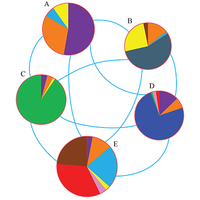
Identifying groups of highly correlated units in a complex system is a notoriously challenging task. A new technique that adapts tools from network theory solves this problem and is used to map the mesoscopic structure of various stock markets.
[Phys. Rev. X 5, 021006] Published Tue Apr 14, 2015
14 Apr 16:06
by Szabolcs Horvát, Éva Czabarka, and Zoltán Toroczkai
Author(s): Szabolcs Horvát, Éva Czabarka, and Zoltán Toroczkai
Based on Jaynes’s maximum entropy principle, exponential random graphs provide a family of principled models that allow the prediction of network properties as constrained by empirical data (observables). However, their use is often hindered by the degeneracy problem characterized by spontaneous sym...
[Phys. Rev. Lett. 114, 158701] Published Tue Apr 14, 2015
14 Apr 16:06
by Z. Forró, R. Woodard, and D. Sornette
Author(s): Z. Forró, R. Woodard, and D. Sornette
We show that the log-periodic power law singularity model (LPPLS), a mathematical embodiment of positive feedbacks between agents and of their hierarchical dynamical organization, has a significant predictive power in financial markets. We find that LPPLS-based strategies significantly outperform th...
[Phys. Rev. E 91, 042803] Published Tue Apr 14, 2015
13 Apr 11:04
by Gonzalo Travieso, Carlos Antonio Ruggiero, Odemir Martinez Bruno, Luciano da Fontoura Costa
Cloud computing has become an important means to speed up computing. One
problem influencing heavily the performance of such systems is the choice of
nodes as servers responsible for executing the users' tasks. In this article we
report how complex networks can be used to model such a problem. More
specifically, we investigate the performance of the processing respectively to
cloud systems underlain by Erdos-Renyi and Barabasi-Albert topology containing
two servers. Cloud networks involving two communities not necessarily of the
same size are also considered in our analysis. The performance of each
configuration is quantified in terms of two indices: the cost of communication
between the user and the nearest server, and the balance of the distribution of
tasks between the two servers. Regarding the latter index, the ER topology
provides better performance than the BA case for smaller average degrees and
opposite behavior for larger average degrees. With respect to the cost, smaller
values are found in the BA topology irrespective of the average degree. In
addition, we also verified that it is easier to find good servers in the ER
than in BA. Surprisingly, balance and cost are not too much affected by the
presence of communities. However, for a well-defined community network, we
found that it is important to assign each server to a different community so as
to achieve better performance.
13 Apr 00:13
Publication date: 24 May 2015
Source:Physics Reports, Volume 578
Author(s): Abbas Ali Saberi
Percolation is the simplest fundamental model in statistical mechanics that exhibits phase transitions signaled by the emergence of a giant connected component. Despite its very simple rules, percolation theory has successfully been applied to describe a large variety of natural, technological and social systems. Percolation models serve as important universality classes in critical phenomena characterized by a set of critical exponents which correspond to a rich fractal and scaling structure of their geometric features. We will first outline the basic features of the ordinary model. Over the years a variety of percolation models has been introduced some of which with completely different scaling and universal properties from the original model with either continuous or discontinuous transitions depending on the control parameter, dimensionality and the type of the underlying rules and networks. We will try to take a glimpse at a number of selective variations including Achlioptas process, half-restricted process and spanning cluster-avoiding process as examples of the so-called explosive percolation. We will also introduce non-self-averaging percolation and discuss correlated percolation and bootstrap percolation with special emphasis on their recent progress. Directed percolation process will be also discussed as a prototype of systems displaying a nonequilibrium phase transition into an absorbing state. In the past decade, after the invention of stochastic Löwner evolution (SLE) by Oded Schramm, two-dimensional (2D) percolation has become a central problem in probability theory leading to the two recent Fields medals. After a short review on SLE, we will provide an overview on existence of the scaling limit and conformal invariance of the critical percolation. We will also establish a connection with the magnetic models based on the percolation properties of the Fortuin–Kasteleyn and geometric spin clusters. As an application we will discuss how percolation theory leads to the reduction of the 3D criticality in a 3D Ising model to a 2D critical behavior. Another recent application is to apply percolation theory to study the properties of natural and artificial landscapes. We will review the statistical properties of the coastlines and watersheds and their relations with percolation. Their fractal structure and compatibility with the theory of SLE will also be discussed. The present mean sea level on Earth will be shown to coincide with the critical threshold in a percolation description of the global topography.
11 Apr 15:04
by Nirmal Punetha, Ramakrishna Ramaswamy, and Fatihcan M. Atay
Author(s): Nirmal Punetha, Ramakrishna Ramaswamy, and Fatihcan M. Atay
We study synchronization in bipartite networks of phase oscillators with general nonlinear coupling and distributed time delays. Phase-locked solutions are shown to arise, where the oscillators in each partition are perfectly synchronized among themselves but can have a phase difference with the oth...
[Phys. Rev. E 91, 042906] Published Fri Apr 10, 2015
