Jing Sun
Shared posts
Scientists identify rare evolutionary intermediates to understand the origin of eukaryotes
[ASAP] Aminal-Linked Covalent Organic Frameworks through Condensation of Secondary Amine with Aldehyde
[ASAP] Improving Photocatalysis for the Reduction of CO2 through Non-covalent Supramolecular Assembly

From Concept to Crystals via Prediction: Multi‐Component Organic Cage Pots by Social Self‐Sorting

From molecular structure to solid‐state assembly, a multi‐component self‐sorted organic cage pot is computationally predicted and then synthetically realized. The molecules were formed by the social self‐sorting of a tri‐topic aldehyde with both a tri‐topic amine and di‐topic amine, without using orthogonal reactivity or precursors of the same topicity.
Abstract
We describe the a priori computational prediction and realization of multi‐component cage pots, starting with molecular predictions based on candidate precursors through to crystal structure prediction and synthesis using robotic screening. The molecules were formed by the social self‐sorting of a tri‐topic aldehyde with both a tri‐topic amine and di‐topic amine, without using orthogonal reactivity or precursors of the same topicity. Crystal structure prediction suggested a rich polymorphic landscape, where there was an overall preference for chiral recognition to form heterochiral rather than homochiral packings, with heterochiral pairs being more likely to pack window‐to‐window to form two‐component capsules. These crystal packing preferences were then observed in experimental crystal structures.
Conjugated Carbon Cyclic Nanorings as Additives for Intrinsically Stretchable Semiconducting Polymers

Conjugated carbon cyclic nanoring compounds are used as molecular additives to enhance the stretchability of semiconducting polymers without compromising mobility. The additives are shown to significantly decrease long‐range crystalline order, while short‐range ordered aggregates are well‐maintained. Fully stretchable transistors fabricated with the newly established polymer semiconductor/molecular additive blend films exhibit improved mobility retention under strain and after repeated applied strain.
Abstract
Molecular additives are often used to enhance dynamic motion of polymeric chains, which subsequently alter the functional and physical properties of polymers. However, controlling the chain dynamics of semiconducting polymer thin films and understanding the fundamental mechanisms of such changes is a new area of research. Here, cycloparaphenylenes (CPPs) are used as conjugated molecular additives to tune the dynamic behaviors of diketopyrrolopyrrole‐based (DPP‐based) semiconducting polymers. It is observed that the addition of CPPs results in significant improvement in the stretchability of the DPP‐based polymers without adversely affecting their mobility, which arises from the enhanced polymer dynamic motion and reduced long‐range crystalline order. The polymer films retain their fiber‐like morphology and short‐range ordered aggregates, which leads to high mobility. Fully stretchable transistors are subsequently fabricated using CPP/semiconductor composites as active layers. These composites are observed to maintain high mobilities when strained and after repeated applied strains. Interestingly, CPPs are also observed to improve the contact resistance and charge transport of the fully stretchable transistors. ln summary, these results collectively indicate that controlling the dynamic motion of polymer semiconductors is proved to be an effective way to improve their stretchability.
Dynamic Fluid‐Like Graphene with Ultralow Frictional Molecular Bearing

Fluid‐like graphene shows macroscopic lubricity reaching a coefficient of friction of 0.01. The rigid 3D molecular interlocking groups (molecular bearing: triaminotriptycene, additive) create nanostructures by bonding (stabilizer: Meisenheimer complexation) to the 3,5‐dinitrophenyl‐functionalized graphene. Mechanical shearing converts these graphene composites into highly stable surface‐bound tribolayers with a coefficient of friction (COF) of ≈0.01.
Abstract
Fluid‐like sliding graphenes but with solid‐like out‐of‐plane compressive rigidity offer unique opportunities for achieving unusual physical and chemical properties for next‐generation interfacial technologies. Of particular interest in the present study are graphenes with specific chemical functionalization that can predictably promote adhesion and wetting to substrate and ultralow frictional sliding structures. Lubricity between stainless steel (SS) and diamond‐like carbon (DLC) is experimentally demonstrated with densely functionalized graphenes displaying dynamic intersheet bonds that mechanically transform into stable tribolayers. The macroscopic lubricity evolves through the formation of a thin film of an interconnected graphene matrix that provides a coefficient of friction (COF) of 0.01. Mechanical sliding generates complex folded graphene structures wherein equilibrated covalent chemical linkages impart rigidity and stability to the films examined in macroscopic friction tests. This new approach to frictional reduction has broad implications for manufacturing, transportation, and aerospace.
1,2‐Dithienyldicyanoethene‐Based, Visible‐Light‐Driven, Chiral Fluorescent Molecular Switch: Rewritable Multimodal Photonic Devices

Write away: A distinct 1,2‐dithienyldicyanoethene‐based light‐driven chiral fluorescent molecular switch that exhibits reversible trans to cis photoisomerization in both isotropic solvents and a liquid crystal medium, upon visible‐light irradiation, is accomplished. Optically rewritable multimodal liquid crystal photonic devices based on this switch are demonstrated. CPL=circularly polarized luminescence, CPR=circularly polarized reflection.
Abstract
Reported here is the first example of a 1,2‐dithienyldicyanoethene‐based visible‐light‐driven chiral fluorescent molecular switch that exhibits reversible trans to cis photoisomerization. The trans form in solution almost completely transforms into the cis form, accompanied by a 10‐fold decrease in its fluorescence intensity within 60 seconds when exposed to green light (520 nm). The reverse isomerization proceeds upon irradiation with blue light (405 nm). When doped into commercially available achiral liquid crystal hosts, this molecular switch efficiently induces luminescent helical superstructures, that is, a cholesteric phase. The intensity of the circularly polarized fluorescence as well as the selective reflection wavelength of the induced cholesteric phases can be reversibly tuned using visible light of two different wavelengths. Optically rewritable photonic devices using cholesteric films containing this molecular switch are described.
Modulating Guest Uptake in Core–Shell MOFs with Visible Light

Light opens and closes the gates to an inner porous storage compartment in azobenzene‐containing core–shell MOFs. Their photoswitchable outer shell controls cargo molecule uptake and release.
Abstract
A two‐component core–shell UiO‐68 type metal–organic framework (MOF) with a nonfunctionalized interior for efficient guest uptake and storage and a thin light‐responsive outer shell was prepared by initial solvothermal MOF synthesis followed by solvent‐assisted linker exchange. The bulky shell linker features two tetra‐ortho‐fluorinated azobenzene moieties to exploit their advantageous photoisomerization properties. The obtained perfect octahedral MOF single crystals can be switched repeatedly and with an unprecedented efficiency between E‐ and Z‐rich states using visible light only. Due to the high photoswitch density per pore of the shell layer, its steric demand and thus molecular uptake (and release) can be conveniently modulated upon green and blue light irradiation. Therefore, the “smart” shell acts as a light‐controlled kinetic barrier or “gate” for the diffusion of cargo molecules in and out of the MOF crystals.
Towards the online computer-aided design of catalytic pockets
Nature Chemistry, Published online: 02 September 2019; doi:10.1038/s41557-019-0319-5
The shape complementarity between the active site of a catalyst and a substrate influences how effectively a reaction can be catalysed. Computational tools can be used to visualize the shape around the active centre of a range of catalysts and the application of such approaches to rationalize the behaviour of known catalysts — and to design new ones — is discussed.[ASAP] Self-Assembled Fluorescent Pt(II) Metallacycles as Artificial Light-Harvesting Systems

Synthesis of Adenine Dinucleosides 2′,5′‐Bridged by Sulfur‐Containing Linkers as Bisubstrate SAM Analogues for Viral RNA 2′‐O‐Methyltransferases

A nucleosidic bisubstrate approach is developed to target 2′‐O‐RNA methyltransferases that catalyse the methylation of the 2′‐OH of the cap nucleoside N1 or internal adenosines of RNA substrate using S‐adenosyl methionine as the methyl donor. Bisubstrate analogues have been designed as a mimic of the transition state of the 2′‐O‐methylation on RNA with two adenosines connected by various sulfur atom‐containing linkers.
Viral RNA 2′‐O‐methyltransferases play a crucial role for luring the host cell innate antiviral response during a viral infection by catalyzing either the methylation of the 5′‐end RNA cap‐structure at 2′‐OH of nucleoside N1 or by inducing internal 2′‐O‐methylation of adenosines within RNA sequence using S‐adenosyl‐l‐methionine (SAM) as the methyl donor. Our goal is to synthesize bisubstrate SAM analogues mimicking the transition state of the 2′‐O‐methylation of the RNA in order to block viral 2′‐O‐methyltransferases and struggle against emerging viruses. Here we designed and synthesized five dinucleosides by connecting a 5′‐thioadenosine representing the SAM to the 2′‐OH of another adenosine unit mimicking the RNA substrate, via various sized sulfur‐containing linkers such as alkylthioether linkers, sulfoxide or sulfone derivatives, or a disulfide bond.
Carbon-nanotube computer scaled up
Nature, Published online: 28 August 2019; doi:10.1038/d41586-019-02519-2
Electronic devices that are based on carbon nanotubes have the potential to be more energy efficient than their silicon counterparts, but have been restricted in functionality. This limitation has now been overcome.Using DMF as Both a Catalyst and Cosolvent for the Regioselective Silylation of Polyols and Diols

DMF was discovered to be a good catalyst in the regioselective silylation of unprotected carbohydrates, although the silylation using DMF as a solvent has been a common method for more than 40 years. It has been demonstrated that a complex with a 1:1 ratio of the binding partners can be formed between TBSCl and DMF and has an association constant of 12/M, thus activating the silylation.
Highly regioselective silylation of primary hydroxyl groups of unprotected polyols and diols was obtained by the use of a mixed solvent of MeCN/DMF (10:1) in this study. DMF was discovered to be a good catalyst in this reaction, although the silylation using DMF as a solvent has been a common method for more than 40 years. The catalytic mechanism of DMF for the silylation was also proposed herein after intensive investigation of the reaction by NMR techniques. It has been demonstrated that a complex with a 1:1 ratio of the binding partners can be formed between TBSCl and DMF and has an association constant of 12/M, thus activating the silylation.
[ASAP] One-Step Synthesis of One-Dimensional Supramolecular Assemblies Composed of Helical Macromolecular Building Blocks

[ASAP] Semiconducting 2D Triazine-Cored Covalent Organic Frameworks with Unsubstituted Olefin Linkages

[ASAP] Sequence Programming with Dynamic Boronic Acid/Catechol Binary Codes

Sign Inversion in Photopharmacology: Incorporation of Cyclic Azobenzenes in Photoswitchable Potassium Channel Blockers and Openers

Substitution of standard azobenzenes with diazocines allows for the “sign‐inversion” of photopharmaceuticals, as demonstrated with a photoswitchable potassium channel blocker and an opener.
Abstract
Photopharmacology relies on ligands that change their pharmacodynamics upon photoisomerization. Many of these ligands are azobenzenes that are thermodynamically more stable in their elongated trans‐configuration. Often, they are biologically active in this form and lose activity upon irradiation and photoisomerization to their cis‐isomer. Recently, cyclic azobenzenes, so‐called diazocines, have emerged, which are thermodynamically more stable in their bent cis‐form. Incorporation of these switches into a variety of photopharmaceuticals could convert dark‐active ligands into dark‐inactive ligands, which is preferred in most biological applications. This “pharmacological sign‐inversion” is demonstrated for a photochromic blocker of voltage‐gated potassium channels, termed CAL, and a photochromic opener of G protein‐coupled inwardly rectifying potassium (GIRK) channels, termed CLOGO.
[ASAP] Advancing Solutions to the Carbohydrate Sequencing Challenge

[ASAP] Construction of Type III-C Rotaxane-Branched Dendrimers and Their Anion-Induced Dimension Modulation Feature

[ASAP] Interface-Dependent Aggregation-Induced Delayed Fluorescence in Bottlebrush Polymer Nanofibers

[ASAP] Controlling Polymer Composition in Organocatalyzed Photoredox Radical Ring-Opening Polymerization of Vinylcyclopropanes

[ASAP] Elucidating the Ordering in Self-Assembled Glycocalyx Mimicking Supramolecular Copolymers in Water

[ASAP] Resorcinarene Cavitand Polymers for the Remediation of Halomethanes and 1,4-Dioxane

[ASAP] Poly(oxime–ester) Vitrimers with Catalyst-Free Bond Exchange

For The First Time Ever, Scientists Have Made a Stable Ring of Pure Carbon
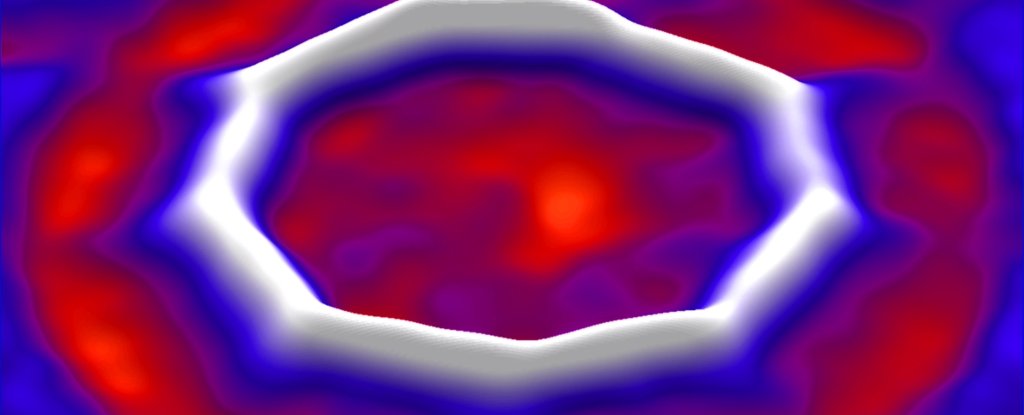
They've been trying for 50 years.
A Nanoemulsion with A Porphyrin Shell for Cancer Theranostics

Shell oil co.: A stable two‐component nanoemulsion with a porphyrin shell (NewPS) was created for multimodal cancer imaging, phototherapy, and imaging‐guided drug delivery.
Abstract
A nanoemulsion with a porphyrin shell (NewPS) was created by the self‐assembly of porphyrin salt around an oil core. The NewPS system has excellent colloidal stability, is amenable to different porphyrin salts and oils, and is capable of co‐loading with chemotherapeutics. The porphyrin salt shell enables porphyrin‐dependent optical tunability. The NewPS consisting of pyropheophorbide a mono‐salt has a porphyrin shell of ordered J‐aggregates, which produced a narrow, red‐shifted Q‐band with increased absorbance. Upon nanostructure dissociation, the fluorescence and photodynamic reactivity of the porphyrin monomers are restored. The spectrally distinct photoacoustic imaging (at 715 nm by intact NewPS) and fluorescence increase (at 671 nm by disrupted NewPS) allow the monitoring of NewPS accumulation and disruption in mice bearing KB tumors to guide effective photodynamic therapy. Substituting the oil core with Lipiodol affords additional CT contrast, whereas loading paclitaxel into NewPS facilitates drug delivery.
Photoswitchable Phase Separation and Oligonucleotide Trafficking in DNA Coacervate Microdroplets

Photoswitchable coacervation: Light‐responsive liquid–liquid phase separation involving DNA and an azobenzene cation is demonstrated. The reversible, photoswitchable disassembly and reassembly of coacervate microdroplets, under UV and blue light, respectively, is exploited to trigger the mixing and trafficking of oligonucleotides in binary populations of the droplets.
Abstract
Coacervate microdroplets produced by liquid–liquid phase separation have been used as synthetic protocells that mimic the dynamical organization of membrane‐free organelles in living systems. Achieving spatiotemporal control over droplet condensation and disassembly remains challenging. Herein, we describe the formation and photoswitchable behavior of light‐responsive coacervate droplets prepared from mixtures of double‐stranded DNA and an azobenzene cation. The droplets disassemble and reassemble under UV and blue light, respectively, due to azobenzene trans/cis photoisomerisation. Sequestration and release of captured oligonucleotides follow the dynamics of phase separation such that light‐activated transfer, mixing, hybridization, and trafficking of the oligonucleotides can be controlled in binary populations of the droplets. Our results open perspectives for the spatiotemporal control of DNA coacervates and provide a step towards the dynamic regulation of synthetic protocells.
Global Aromaticity and Antiaromaticity in Porphyrin Nanoring Anions

Negative isn't always bad: Reduction of a porphyrin nanoring by the addition of 4 or 6 electrons was found to result in global (anti)aromaticity (see picture), as revealed by 1H NMR spectroscopy and DFT calculations. Thus, the Hückel rules apply to huge macrocyclic anions, and the charge in these anions is fully delocalized.
Abstract
Doping, through oxidation or reduction, is often used to modify the properties of π‐conjugated oligomers. In most cases, the resulting charge distribution is difficult to determine. If the oligomer is cyclic and doping establishes global aromaticity or antiaromaticity, then it is certain that the charge is fully delocalized over the entire perimeter of the ring. Herein we show that reduction of a six‐porphyrin nanoring using decamethylcobaltocene results in global aromaticity (in the 6− state; [90 π]) and antiaromaticity (in the 4− state; [88 π]), consistent with the Hückel rules. Aromaticity is assigned by NMR spectroscopy and density‐functional theory calculations.
Catalytic Ammonia Oxidation to Dinitrogen by Hydrogen Atom Abstraction

Totally radical: A molecular Ru complex catalytically oxidizes NH3 to dinitrogen under ambient conditions. The cleavage of six N−H bonds and the formation of an N≡N bond was achieved by coupling H+ and e− transfers as net hydrogen atom abstraction (HAA) steps using the 2,4,6‐tri‐tert‐butylphenoxyl radical ( t Bu3ArO.) as the H atom acceptor, resulting in up to 10 turnovers.
Abstract
Catalysts for the oxidation of NH3 are critical for the utilization of NH3 as a large‐scale energy carrier. Molecular catalysts capable of oxidizing NH3 to N2 are rare. This report describes the use of [Cp*Ru(P tBu 2NPh 2)(15NH3)][BArF 4], (P tBu 2NPh 2=1,5‐di(phenylaza)‐3,7‐di(tert‐butylphospha)cyclooctane; ArF=3,5‐(CF3)2C6H3), to catalytically oxidize NH3 to dinitrogen under ambient conditions. The cleavage of six N−H bonds and the formation of an N≡N bond was achieved by coupling H+ and e− transfers as net hydrogen atom abstraction (HAA) steps using the 2,4,6‐tri‐tert‐butylphenoxyl radical ( t Bu3ArO.) as the H atom acceptor. Employing an excess of t Bu3ArO. under 1 atm of NH3 gas at 23 °C resulted in up to ten turnovers. Nitrogen isotopic (15N) labeling studies provide initial mechanistic information suggesting a monometallic pathway during the N⋅⋅⋅N bond‐forming step in the catalytic cycle.