dtramer
Shared posts
Will Trump face real consequences for his crimes? The answer will haunt America's future

“The Boss is Aware:” Trump Learned about Mike Flynn’s Conversations with Sergey Kislyak in Real Time
As I noted, John Ratcliffe has released the transcripts of at least some of the Flynn-Kislyak calls (Ric Grenell said that he didn’t have all transcripts, and there are certainly other transcripts, at least setting up the meeting at which Jared Kushner asked for a back channel). As I also noted, from the very beginning, Kislyak set up the calls with Flynn such that Russian and Trump were unified against the Democrats (though the common enemy referenced in the calls was ISIS).
But that’s not the most damning part of the transcripts.
As I have repeatedly noted, the Mueller Report is very coy about whether Mueller obtained evidence that Flynn spoke directly with Trump about his calls with Kislyak, going so far as to withhold details of the timeline of events on December 29 (Mueller cites Flynn’s call records, but we know from the Stone trial that he also got Trump’s call records, at least for the campaign period). According to the narrative Mueller laid out, the first time that Flynn claimed to remember discussing the conversation with Trump was on January 3, 2017.
On January 3, 2017, Flynn saw the President-Elect in person and thought they discussed the Russian reaction to the sanctions, but Flynn did not have a specific recollection of telling the President-Elect about the substance of his calls with Kislyak. 102
Flynn even claimed that he and Trump didn’t speak about the substance of the calls until February 6.
The week of February 6, Flynn had a one-on-one conversation with the President in the Oval Office about the negative media coverage of his contacts with Kislyak. I93 Flynn recalled that the President was upset and asked him for information on the conversations. 194 Flynn listed the specific dates on which he remembered speaking with Kislyak, but the President corrected one of the dates he listed. I95 The President asked Flynn what he and Kislyak discussed and Flynn responded that he might have talked about sanctions.I96
Flynn’s claimed uncertainty about whether he had discussed the sanctions call with Trump was a key part of Mueller’s analysis of whether Trump fired Jim Comey because Flynn had derogatory information on him.
As part of our investigation, we examined whether the President had a personal stake in the outcome of an investigation into Flynn-for example, whether the President was aware of Flynn’s communications with Kislyak close in time to when they occurred, such that the President knew that Flynn had lied to senior White House officials and that those lies had been passed on to the public. Some evidence suggests that the President knew about the existence and content of Flynn’s calls when they occurred, but the evidence is inconclusive and could not be relied upon to establish the President’s knowledge. In advance of Flynn’s initial call with Kislyak, the President attended a meeting where the sanctions were discussed and an advisor may have mentioned that Flynn was scheduled to talk to Kislyak. Flynn told McFarland about the substance of his calls with Kislyak and said they may have made a difference in Russia’s response, and Flynn recalled talking to Bannon in early January 2017 about how they had successfully “stopped the train on Russia’s response” to the sanctions. It would have been reasonable for Flynn to have wanted the President to know of his communications with Kislyak because Kislyak told Flynn his request had been received at the highest levels in Russia and that Russia had chosen not to retaliate in response to the request, and the President was pleased by the Russian response, calling it a ” [g]reat move.” And the President never said publicly or internally that Flynn had lied to him about the calls with Kislyak.
But McFarland did not recall providing the President-Elect with Flynn’s read-out of his calls with Kislyak, and Flynn does not have a specific recollection of telling the President-Elect directly about the calls. Bannon also said he did not recall hearing about the calls from Flynn. And in February 2017, the President asked Flynn what was discussed on the calls and whether he had lied to the Vice President, suggesting that he did not already know. Our investigation accordingly did not produce evidence that established that the President knew about Flynn’s discussions of sanctions before the Department of Justice notified the White House of those discussions in late January 2017.
But the transcript of Flynn’s December 31, 2016 call makes it clear that Mueller had proof that Flynn had talked with Trump about the Kislyak call, because Flynn told Kislyak that the “boss is aware” of the secure video conference that Kislyak wanted to set up immediately after Trump was inaugurated.
FLYNN: and, you know, we are not going to agree on everything, you know that, but, but I think that we have a lot of things in common. A lot. And we have to figure out how, how to achieve those things, you know and, and be smart about it and, uh, uh, keep the temperature down globally, as well as not just, you know, here, here in the United States and also over in, in Russia.
KISLYAK: yeah.
FLYNN: But globally l want to keep the temperature down and we can do this ifwe are smart about it.
KISLYAK: You’re absolutely right.
FLYNN: I haven’t gotten, I haven’t gotten a, uh, confirmation on the, on the, uh, secure VTC yet, but the, but the boss is aware and so please convey that. [my emphasis]
Flynn might claim that he only told Trump about the video conference and not sanctions (which wouldn’t be remotely credible, given that Flynn was the one who raised the sanctions, not Kislyak). He might claim that any conveyance of the details of the call went to Trump second-hand, perhaps through KT McFarland.
But whatever excuse Flynn would offer (remember, he has been asking for these transcripts since August, so it’s unclear how much of their content John Eisenberg, Reince Priebus, and Mike Pence shared with him in real time), his assurances to Kislyak, offered on December 31, that Trump knew of the request Kislyak had made on the December 29 call makes it quite clear that Flynn knew Trump had learned of the substance of the call via some means within 48 hours of that call.
And then told Mueller he had no idea whether he had shared that information.
The post “The Boss is Aware:” Trump Learned about Mike Flynn’s Conversations with Sergey Kislyak in Real Time appeared first on emptywheel.
Senstroke can make you a 21st century drummer — with no drums
Drummers hear all the jokes. What do you call a drummer with half a brain? Gifted. How is a drum solo like a sneeze? You know it's coming, but there's nothing you can do about it. What do you call a drummer that breaks up with his girlfriend? Homeless.
Drummers hear the jokes — and laugh. Because they know they’re the thumping heartbeat of any band. They’re the ones with loads of equipment. And they’re the ones making all that noise while practicing. Yet try to play almost any song without drums and the lack of propulsion and power is instantly palpable.
Drummers are essential. Now, users can join their ranks — and they don’t even need to buy a massive drum kit or rattle their walls to do it. Created by drummers, Senstroke by Redison is the first sensor device that can teach anyone to play the drums and even reproduce the drummer experience, all without any physical drum set.
Just attach the patented Senstroke sensors to a pair of drumsticks and your feet, connect via Bluetooth, and instantly you can turn any surface into a virtual drumhead. Using the impact of the drumsticks and your feet positioning, the sensors reproduce the exact sounds your chosen drum element would make through the Senstroke app.
Your legs, some cushions, a coffee table, they all become fair game as a drum surface while you refine your skills. And when you attach a pair of headphones, no one else even has to know you’re playing...well, except for all the arm flailing and sweat spatter, right?
In the app, you can record your playing, share it as a digital file, and improve your drumming with interactive lessons.
With this true-to-life drum simulator, users can move from beginner to expert drummer, all without any of the cost or hassle of real drums. Or just use it as the perfect tune-up when you can’t get behind a real kit.
This bundle, which includes the app, two sensors, two drumsticks, and a rubber pad for reducing the noise of stick hits, is only $189.99 right now.

Congratulations, Nobel Committee, You Just Gave the Literature Prize to a Genocide Apologist

Austrian author Peter Handke sits in the garden at his house in Chaville, France, on Oct. 10, 2019. Handke was awarded the 2019 Nobel Prize in literature.
Photo: Francois More/AP
Stockholm is more than 1,500 miles from Sarajevo, and the war in Bosnia was halted in 1995, so there’s a lot of time and distance between the Swedes who just chose the winner of the Nobel Prize in literature and the nasty war that happened in the heart of the Balkans a generation ago. But that’s no excuse for the decision to give this year’s prize to Peter Handke, who denies that a well-documented genocide was committed by Serbs against Muslims in Bosnia.
We live in perplexing times when the U.S. president saw “very fine people” among neo-Nazis who marched in Charlottesville, Virginia, and we have a television network that traffics in racism and conspiracy theories. Our world is being described in fraudulent ways, and history is being rewritten to suit these distorted narratives. The last thing we need, and the last thing I’d expect to happen, is for an intellectual honor as paramount as the Nobel Prize to go to a writer who embodies the prime intellectual diseases of our era. And let’s remember that the Nobel selection comes at a moment when violent white supremacists are singling out the 1990s Serbs as heroic avatars of what needs to be done in our world. It’s dumbfounding that the Nobel Committee would seize this moment to honor an Austrian writer who defends these war criminals and dissembles on their behalf.
What were they thinking?
I honestly don’t know where to begin with this whole thing. But let me start by making clear what I am not saying. I am not saying that we should not read Handke’s literary work. My objection is not a version of the age-old question of whether we should listen to Richard Wagner. Go ahead and listen to Wagner. Go ahead and read Handke. My point is this: It is one thing to read him — it is quite another to bestow upon him a prize that delivers a great amount of legitimacy to his entire body of work, not just the novels and plays that are most impeccable and nonpolitical.
Handke’s most famous political offense was attending the funeral of Serbian strongman Slobodan Miloševic, who died in prison awaiting a trial for genocide and war crimes. Handke had visited Miloševic during his detention in The Hague and made a short eulogy during his funeral in Požarevac, Serbia, in 2006. This followed many years of Handke writing about how the Serbs were misunderstood and were unfairly given the lion’s share of blame for the bloodshed that occurred during the breakup of the former Yugoslavia in the 1990s.
The controversy over Handke winning the Nobel Prize revolves around what he wrote in a series of essays in 1996 that were collected in a short book titled, “A Journey to the Rivers: Justice for Serbia.” His book, based on a brief trip he made to Serbia, complained that the media “relentlessly portray the Serbs as evil,” and Handke pretended to distance himself from the Serbian leader, writing that “I am with the Serbian people, not with Miloševic” — which turned out to be a strange thing for one of the few Westerners who attended Miloševic’s funeral to have written.
So what does Handke really believe, and is it so terrible? Handke distilled his views into a concise article he wrote for the French newspaper Liberation after his 1996 essays appeared. The article has gotten very little attention in the current discussion, and that’s unfortunate because it clearly demonstrates that he is a truther on the subject of the genocide in Bosnia. For instance, he wrote that it is wrong to talk of “concentration camps” in Bosnia.
“True, there were intolerable camps between 1992 and 1995 on the territories of the Yugoslav republics, especially in Bosnia,” he wrote. “But let’s stop automatically connecting these camps to the Serbs in Bosnia. There were also Croat camps and Muslim camps, and the crimes committed here and there are and will be judged at the Hague.”
Let me tell you something about the Serb camps in Bosnia that Handke, who never visited Bosnia during the war, does not admit: They were concentration camps. I visited them during the war, which I covered for the Washington Post. I talked with prisoners inside the camps, as well as survivors. The United Nations war crimes tribunal at The Hague sentenced Serbs to lengthy prison terms for the crimes committed there.
Let me tell you something else about Bosnia: The Muslims had nothing like those industrial-scale camps, where thousands of prisoners were brought in, tortured, and killed. The position that Handke adopts — everyone was doing it — is a dodge that would be funny if it weren’t so evil. Were some atrocities committed by Muslim troops? Yes, but equating a small number of random crimes with a systemic and massive number is a transparent form of deception and deflection. That’s what apologists do.
Handke, who lives in France, deepens that deception in his article for Liberation. When writing about Srebrenica, where several thousand Muslims were executed by Serb forces after they captured the enclave, he allows that what happened there was the most “abominable” massacre in the war, but he swiftly pivots to saying that we should also “listen to the survivors of Muslim massacres in numerous Serb villages around Srebrencia.” This is the same “all sides do it” canard, which equates the extremely few with the very many, and fails to acknowledge that this war was started by Serbs and Miloševic in particular.
Handke is full of it. The writer David Rieff, who has reported from Bosnia, took the time to read “A Journey to the Rivers” and issued this assessment of its author: “The truth is that he doesn’t know what he’s talking about. … He came to Serbia knowing nothing about its complicated politics and, to judge by the book, left knowing no more.”
There are lots of award-winning writers who have dumb ideas about politics and politicians, and write bad books from time to time. That’s not disqualifying for a Nobel Prize or a three-martini lunch with their editor. But that’s not what we’re talking about here. We’re talking about denying a genocide — turning history on its head, making perpetrators into heroes and victims into villains. And this particular history, of Christians killing Muslims for the supposed sake of defending their culture, is an important one to get right at a time of heightened discrimination of Muslims and other minorities in the U.S. and Western Europe.
The Swedish Academy’s response to the controversy is below pitiful. Confronted with the first wave of objections to its choice, the academy’s permanent secretary, Mats Malm, told the New York Times that Handke was chosen on literary and aesthetic grounds. “It is not in the Academy’s mandate to balance literary quality against political considerations,” Malm said.
This isn’t so far, in the excuse-making sweepstakes, from Ellen DeGeneres talking about what a nice man George W. Bush is (never mind the hundreds of thousands who were killed as a result of his decision to invade Iraq). Our world is a political world, as I hope Ellen and the Swedish Academy would appreciate. People with power and influence have a particular responsibility to connect their words and their hugs to the real world.
While Stockholm is a long distance from Bosnia, it is not so far from Norway, where in 2011 the terrorist Anders Breivik killed 77 people, many of them children at a summer camp. Breivik was obsessed with the Balkans and wrote a 1,500-page manifesto that frequently evoked and praised the Serb ultranationalists who were Miloševic’s puppets. Rising to the defense of Serbs who rampaged through Bosnia is not, in our culture today, a harmless act of ignorance that a prize-giving committee has no responsibility to wrestle with. These genocide-friendly sentiments feed into a wave of violence that afflicts us.
Peter Handke is entitled to believe what he wants to believe. He can lie and dissemble as much as he wishes. That is his right. But I simply can’t believe that the Swedish Academy has done what it has done. Their irresponsible decision evokes the idea of capitalists selling the rope to people that will be used to hang them. The aesthetes on the Nobel Committee have made a selection that will destroy their prize, as it should.
The post Congratulations, Nobel Committee, You Just Gave the Literature Prize to a Genocide Apologist appeared first on The Intercept.

How Donald Trump’s fixation on cutting aid to Puerto Rico exposes his purest bigotries

Com a prisão de Temer, Lava Jato mostra sua força contra o STF
A prisão preventiva de Michel Temer é arbitrária e ilegal. Não há uma única razão que a justifique. Ele não continua cometendo crimes, não está destruindo provas, não está intimidando testemunhas, não representa risco à ordem pública nem está tentando fugir. É mais uma afronta ao estado de direito promovido pelos integrantes da Lava Jato. Isso não significa que Temer seja inocente. Há indícios robustos na acusação e é bastante provável que ele seja condenado ao final do processo. Mas o pedido de prisão preventiva pedido pelo Ministério Público e autorizado pelo juiz Marcelo Bretas tem uma evidente motivação política. É a Lava Jato medindo forças com o STF.
Antes de entrar no mérito da questão, é preciso contextualizá-la. Ela vem na esteira dos acontecimentos das últimas semanas que intensificaram o conflito entre parte do STF e a Lava Jato. O que antes era apenas uma troca de farpas virou uma guerra declarada.
Quando o STF entendeu que casos de caixa 2 ligados a outros crimes são de competência da justiça eleitoral e decidiu dar um fim no fundo privado (e bilionário) que a turma da Lava Jato queria criar, a coisa desandou de vez. “Desqualificado”, “despreparado”, “covarde”, “gentalha”, “cretino” foram alguns dos adjetivos que Gilmar Mendes usou para se referir aos procuradores da Lava Jato. Afirmou ainda que o “combate à corrupção passou a dar lucro” e acusou a “fundação do Dallagnol” de ser uma tentativa oculta de criar um “fundo eleitoral”.
Inconformado com as decisões, Dallagnol anunciou que aquilo representaria o fim da força-tarefa: “Hoje, começou a se fechar a janela de combate à corrupção política que se abriu há cinco anos, no início da Lava Jato”. No dia seguinte, a Associação Nacional dos Procuradores da República convocou um ato de desagravo à Lava Jato, e lá estava Dallagnol chorando as pitangas: “Nunca houve tanta pressão sobre a Lava Jato como na última semana”.
O procurador continuou usando intensamente as redes sociais para insuflar a população contra a decisão dos ministros do Supremo. Alguns fãs mais fanáticos da Lava Jato, como Regina Duarte, chegaram a pedir o fechamento do STF. Para isso basta mandar “um cabo e um soldado”, não é mesmo?

Exaltada pela população e grande parte da imprensa, a Lava Jato não está acostumada a perder. Pela primeira vez ela se viu nas cordas com o STF colocando rédeas sobre a sua atuação. Como se sabe, ela não é mais uma mera operação policial. É um grupo político poderoso incrustado no MP, na PF e no judiciário que costuma atuar mais com uma agenda política debaixo do braço do que com a Constituição. Tudo isso se tornou ainda mais evidente quando Sergio Moro aceitou um cargo no governo Bolsonaro, que era o candidato preferido dos integrantes da força-tarefa. Imagino que a essa altura ninguém mais deve duvidar que a Lava Jato é simpática ao bolsonarismo. A alegria de Rosângela Moro e de Marcelo Bretas com a vitória de Bolsonaro não me deixam mentir.
A Lava Jato precisava sair das cordas, e nada como a prisão sem fundamento de um ex-presidente da República para demonstrar força. O caráter político da decisão está quase que declarado no despacho que autorizou pedido de prisão de Temer, Moreira Franco e outras 10 pessoas, entre prisões preventivas e temporárias. Logo no início do documento, sem medo de ser feliz, Bretas resolveu emitir opinião sobre um assunto que nada tem a ver com o despacho em questão. Ele usou o documento para mandar um recado para o STF, que abriu um inquérito para investigar ameaças e acusações — feitas inclusive por um procurador da Lava Jato — contra ministros da casa:
“Em primeiro lugar deve-se esclarecer que, nenhuma investigação deve ser inaugurada por autoridade judiciária, em respeito ao sistema penal acusatório consagrado em nosso texto constitucional (…) não é permitido aos magistrados afirmarem, ab initio, quais crimes merecem ser investigados e a respeito dos quais haveria elementos probatórios mínimos a justificar atuação ministerial e/ou policial. Essa “atividade judicial espontânea”, própria de sistemas inquisitoriais, com a devida vênia, é totalmente vedada a qualquer membro do Poder Judiciário brasileiro.”
O juiz usou o despacho que autoriza a prisão de Temer para passar um sabão em ministros de uma corte superior. É nesse nível que a disputa política chegou.
Bretas passou boa parte das 47 páginas enrolando e repetindo as acusações do Ministério Público, mas não foi capaz de apontar uma única razão concreta para a prisão preventiva de Michel Temer. Pareceu uma sentença. Mais uma vez, a Lava Jato passa o recado de que o cumprimento da lei não vale para ela.
O perfil autoritário, populista e midiático da operação se fez presente mais uma vez. Parte da imprensa já sabia que Temer seria preso naquela manhã. Ele estranhou a quantidade de jornalistas presentes em frente à sua casa antes da chegada dos policiais. Temer saiu de casa de carro e foi seguido por policiais, que o abordaram na rua vestindo uniformes camuflados e portando fuzis. Será que eles esperavam que um idoso pudesse resistir e trocar tiros? Ou será que eles queriam fornecer mais um espetáculo em que os heróis da nação estão prendendo mais um político corrupto?
O mesmo aconteceu na prisão do Coronel Lima, acusado de ser o testa de ferro de Michel Temer. A Globo News transmitiu ao vivo a chegada de policiais portando fuzis ao prédio do coronel. Pudemos ver de casa os policiais tocando o interfone e conversando com o porteiro. É a Lava Jato Show armada até os dentes para prender velhinhos acusados de crimes financeiros!
A prisão de Moreira Franco também foi cinematográfica. Enquanto era abordado pelos policiais, um deles filmava tudo. Alguém não identificado começa também a filmar e é repreendido pelos policiais: “Não, não, não. Só a polícia (pode filmar). É filme interno.” Poucas horas depois, o tal “filme interno” já estava circulando na imprensa.
A BandNews FM tem acesso a um vídeo que mostra o momento exato em que o ex-ministro Moreira Franco é preso ao deixar o aeroporto do Galeão. A gravação segue em anexo. pic.twitter.com/XzODaGRBtI
— Rádio BandNews FM (@radiobandnewsfm) 21 de março de 2019
Ao comentar a prisão de Temer, Bolsonaro fez o que se espera dele: falou bobagem. “O que levou a essa situação são os acordos políticos dizendo-se em nome da governabilidade. A governabilidade não se faz com esse tipo de acordo, no meu entender. Você faz nomeando pessoas sérias e competentes. Foi assim que eu fiz no meu governo”. Bolsonaro segue criminalizando o presidencialismo de coalizão, como se a divisão do poder com outros atores eleitos pelo povo fosse um ato corrupto em si. Integrantes da Lava Jato costumam falar as mesmas asneiras em entrevistas e nas redes socias. É um desvirtuamento total da democracia.
Ao nomear Moro, Bolsonaro trouxe a Lava Jato para dentro do governo. O populismo político e o populismo jurídico se uniram. O presidente deu carta branca para Sergio Moro, mas já entrou em atrito com ele em pouco tempo. A carta branca não era tão branca assim. O presidente e sua turma deveriam dormir de olhos abertos, ainda mais agora que estão com a popularidade em queda livre e com uma relação cada vez mais desgastada com o presidente da Câmara. Nós já vimos essa história antes. Desconfio que haja embutido na prisão de Temer também um recado ao Planalto. O lavajatismo é bolsonarista, mas tem força para se dissociar dele e alçar voo solo a qualquer momento. Eles têm o martelo de juiz numa mão, a chave da cadeia na outra e trabalham não de acordo com a letra fria da lei, mas — como diria Barroso — em “sintonia com sentimento social”.
The post Com a prisão de Temer, Lava Jato mostra sua força contra o STF appeared first on The Intercept.

In Blow to Democracy, Trump ends Requirement that CIA report Drone Strike Casualties
A US Predator drone armed with a missile stands on the tarmac of Kandahar military airport in Afghanistan
Washington, DC (AFP) – US President Donald Trump revoked a policy Wednesday that required the Central Intelligence Agency to account for civilian deaths from drone strikes.
The move reversed a two-year-old order by his predecessor Barack Obama, who came under pressure for greater transparency after sharply increasing the use of drones for targeted attacks in military and counterterrorism operations.
It could give the CIA greater latitude to conduct strikes as Trump increasingly relies on the spy agency, rather than the military, for lethal drone operations.
Rights groups immediately criticized the move, saying it reverses a hard-fought effort for transparency and accountability in drone strikes, which became central to US strategy in the wake of the September 11, 2001 Al-Qaeda attack on the United States.
“The Trump Administration’s action is an unnecessary and dangerous step backwards on transparency and accountability for the use of lethal force, and the civilian casualties they cause,” said Rita Siemion of Human Rights First.
Trump’s action rescinded the July 1, 2016 order by Obama requiring the US director of national intelligence to report annually the number of strikes taken against “terrorist targets” outside of active war zones, and give an assessment of combatant and civilian deaths that resulted.
Trump’s move though applied only to strikes by non-defense department agencies — the CIA, in effect.
It did not overturn requirements set by Congress for the Pentagon to account for civilian casualties in its operations.
Activists say the move could make the CIA even less accountable than in the past.
The agency took the lead role in drone strikes in post-9/11 counterterror activities, targeting Al-Qaeda and other extremists especially in Afghanistan, Pakistan and Yemen, with frequent reports of significant “collateral” civilian deaths.
Under pressure to rein in the scores of strikes annually, in 2016 Obama ordered tighter procedures for managing the strikes and reducing civilian casualties.
Around the same time he forced the CIA to slash its drone activities and put the military more in charge of them.
But after Trump took office in January 2017, the CIA’s drone attacks resumed, according to reports.
Its role could grow as US forces reduce their presence in Syria and Afghanistan.
Shannon Green, director of programs at the Center for Civilians in Conflict, called Trump’s order Wednesday “a blow to transparency.”
“While public reporting on the use of lethal force by all agencies is crucial, ensuring that all agencies are accountable for preventing civilian casualties and then responding to claims of harm is perhaps even more important,” she said.
© Agence France-Presse
Featured Photo: “A US Predator drone armed with a missile stands on the tarmac of Kandahar military airport in Afghanistan (AFP Photo/MASSOUD HOSSAINI)”
2018 was a year of alarming climate reports, but you wouldn’t know it watching TV news
Broadcast news coverage of climate change dropped a remarkable 45 percent last year despite growing evidence for, and alarm about, the existential threat it poses, according to a new study.
Climate coverage on nightly news programs and Sunday morning political shows on the major U.S. networks dropped from 260 minutes in 2017 to a mere 142 minutes in 2018, Media Matters reported Monday. And nearly one-third of all 2018 coverage (a full 46 minutes) came at year’s end, in a December 30 episode of NBC’s Meet The Press which was devoted to climate change.
This overall collapse in coverage came despite the fact 2018 was one of the biggest years for alarming climate reports and deadly warming-worsened disasters.
Last year, a major U.N. climate report warned that we need deep cuts in carbon pollution by 2030 to avoid catastrophe. The U.S. National Climate Assessment, meanwhile, warned that climate inaction will cost Americans $500 billion per year. There were also several massive extreme weather events linked to climate change — including California wildfires and two monster hurricanes — that killed nearly 250 people and caused almost $100 billion in damage.

And yet the networks continued to underreport the growing scientific evidence that climate change is worsening extreme weather. As Media Matters notes, “none of the networks’ news reports on the major hurricanes of 2018 even mentioned climate change.”
For its analysis, Media Matters looked at segments mentioning climate change on ABC, CBS, and NBC — plus Fox Broadcasting Co.’s syndicated show, Fox News Sunday.
Coverage was down sharply for ABC, CBS, and Fox. The only reason it wasn’t also down for NBC was the 46 minutes they spent in their end-of-year Meet The Press climate episode.

The networks aired a total of nine climate segments that included footage of Trump denying climate science, but, as Media Matters reports, only two of them actually “rebutted his comments by noting the scientific consensus around climate change.”
Equally worrisome was the lack of 2018 coverage of either solutions or responses to the problem. Fox News Sunday failed to mention solutions or responses in any of its five climate segments. And of the 75 climate segments that aired on ABC, CBS, and NBC in 2018, just 15 of them — one in five, or 20 percent — mentioned solutions. And four of those segments came in the December 30 episode of NBC’s Meet The Press.

We know from social science research that talking about solutions in addition to the problem more successfully engages the audience. When the media reports only about the threat of climate change or political inaction, that can drive public frustration and disengagement. But when the media focuses on the solution to the problem, it can “help build more positive public engagement,” as one 2015 study reported.
Clearly, 2019 is going to be a very different story when it comes to broadcast TV stories. We’ve already seen much more media coverage of the climate crisis — and a much greater focus on climate solutions.

For that we can partly thank Rep. Alexandria Ocasio-Cortez (D-NY) and the activism of young people who have brought to the national forefront the issue of climate change and all of its solutions in the form of the Green New Deal. Without that activism, the mainstream media would no doubt continue underreporting on the greatest preventable threat to our nation.


Ideas for an action coordination website
inspired by Inadequate equilibria, and following the 'KickStarter for Coordinated Action' sequence.
This is an idea-dump post for a website i thought of after reading Inadequate equilibria.
Today, tools like Facebook and twitter help us coordinate better and faster. but still, that is not enough to solve problems of "high-inadequacy" - where we're stuck in bad Nash equilibrium, and moving away from it demands many things to happen together.
The idea here is to take coordination much further, so we can solve as much of the game theory problems bound in moving to other Nash equilibria.
The goal is to allow 'Exoduses' from bad Nash equilibria, to better a Nash equilibria.
Note - none of this (at least as of writing this) is being worked on, nor are there currently plans to do so. Though, of course this doesn't mean there shouldn't be, or else i wouldn't have wrote the post :)
basic concept
big problems can't be solved by a single person. but sometimes even a large group of people who agree on the problem and the solution, and are even motivated to bring the change - can't do it. That is because some problems are more complicated than that.
one such complication is coordination problems - where "everyone is taking some action A, and we’d rather all be taking action B, but it’s bad if we don’t all move to B at the same time." or each individual wouldn't want to take action A unless he knows the rest do too.
solutions to coordination problems include common knowledge (Where all know the intentions of all actors) and pre-commitment. that's the site's goal.
Coordinated actions
Any user can become a coordinator/initiator by creating a coordinated action (CA), in order to solve some problem. Each CA gets its own page (similar to kickStarter). Any user (unless otherwise specified) can obligate to the action - and here's the catch - the commitment is to be realized if and only if a certain number of other users obligated the same. In KickStarter, we commit to pay, here we commit to take action.
Versatile coordination:
Since reality is very dynamic, a rigid structure will work for few situations and be less useful. So to allow a large array of projects, options for CAs should be versatile. I see it as an ongoing project that will develop next to the community's needs. think of how tesla is implementing features in dialog with their community's wishes. here are some examples of "contracts":
Basic: all of us obligate to some CA if X others do too.
milestones: many actions, listed on the same initiative, which are taken at different amounts of obligations. It is either required to obligate for all actions, or possible to obligate to specific actions only.
Obligation for obligation: a group or individual obligate for something, if a different group or individual obligate for the same or a different action (only one side can be an individual).
Please comment with more types that you can think of, it's very interesting.
further support
And sometimes just committing isn't enough for you, or you support the initiative but done that action (in cases of one time decisions, like going vegan, going zero-waste, getting rid of your car, etc...). So we want to give users a way to support further than just obligating. One example is an option for users would to donate money to the campaign, which will be used to further spread it, through some kind of advertising.
Communities
This is where it gets quite complex, but it has to. people don't want a thousand random humans around the world to something with them. they want people from their country, from their city, from their profession/hobby/Interest-area, from their social circle or organization.
That's where communities come in, the ideal is that for every real-world community you would be able to create a community on the site to resemble it, and that if people from that community are already on the site, they will find out that a new community they belong to has been opened, and will join. the reason is, so it's possible to coordinate action with and within certain communities.
When i first thought about how communities will work in practice it reminded me of set theory, but thinking about it more, it ended up merely resembling it (and probably breaks some of its laws). still, hopefully mentioning it helps to visualize.
the communities structure
There are many communities, it's easy and accessible to create new ones, or join existing ones (Unless said community has some requirements). any community is a sub and/or parent community of other communities. The goal is that the communities on the site will be able to reflect the communities in the real world.
some examples of communities: The earth (The parent of all communities until we colonies mars) and the user base*, all regions/continents, and all countries, are some that can be added per-launch. examples for user added communities: cities, EA, farmers is Israel, bus drivers in new York, vegans is the US, LessWrong, etc...
"that's a lot communities..", you say? "like, a ton of communities", yeah, that's true. but that's how it should be.
it might sound a bit like FB, but except the community grouping aspect, there are two more important differences. here we don't want two groups which are basically the same (Cause that's ineffective, if the real world community is divided between them on the site), and the user doesn't have to be aware of all the communities they're part of**, which may feel weird in a online platform, but that's how it is in real life.
Whenever a user joins a community he is suggested sub-communities he might fit in, and is automatically added to all parent communities, which he can manually exclude themselves from (I bet the set theoreticians winched). part of the account creation process would be spotting the user's communities (easy ones, for example, are countries and cities)
organizations
not only individual humans are "agents" in this world, but also some communities, like, corporations, non-profits, and any other goal oriented group. organizations will be able to create a community around themselves, but also act as a user on the site. this is important, cause some coordinated actions seek not only the cooperation of single humans, but of the groups they make. if vegans think of taking a coordinated action together, they want to know that the businesses and organizations they support will go with them too. some CAs will be relevant only for organizations, where it doesn't matter how many individuals commit to take some action, they have to have cooperation from their own group.
Motivation and verification
At least until all of our society is nice, educated and rational - We need two mechanisms, one that verifies who really cooperated and who defected, and a mechanism to discourage defecting, and encourage cooperation.
fulfillment verification
Verification is the much harder of the two. how do you verify that someone tried veganism for 28 days? how do you verify that someone has/hasn't posted certain types of posts to FB? Can you verify whether someone really voted third party? whether they went to work that day? Some stuff are easier to verify, but if we stuck only to actions that are easy to verify, this tool won't be very useful. It's a hard-shell to crack, but it needs cracking - ideas?
user verification
In this system it's important that we know user = person, even better if we know user = which person. It can also help with fulfillment verification. There are many ways to do it - Email, phone, face, PayPal(?), ID. it just needs to be. maybe not all users have to be verified, yet still possible for communities and CAs to require verification.
Motivation
given that we solved verification - motivation is simpler. a few options:
cooperator/defector score: users have a publicly displayed score that shows how they acted on their obligations.
Achievement badges: I envision something similar to khan academy's badges, but harder to get so they're more meaningful. an example of one "good to have: on average, you referred to each coordinated action you obligated to, at least 10 fulfilled obligations." You can display these badges on your profile to signal how awesome you are :)
putting your cash where your mouth is: for each CA, either there's a set amount or the initiator sets it, each user deposits cash against his cooperation - if he defects, he looses that money, if he cooperates, if he wins some extra money. This is a pretty much bound-to-work motivator (unless bill gates starts using this too), But i'd rather incorporate money as a last resort, If we find that we really need this extra motivator, since it makes everything more complicated. It also makes the verification task harder, since if people can use the site as a money-pump, they'll be more likely to look for a backdoor to exploit.
I believe this concept, if it was successfully realized, could bring great benefits to the world.
*yeah, both are all users, but i see reasons to differentiate, sorting wise - communities might have a counter feature of how many people in the real world community are registered to this online community, in the users it's a 100%, in the world.... you'd target different CAs to the user base and "the whole world". and, Sub community sorting is based on the real world, not the website, so the farmers of Israel are only part of the earth community and not the website's User Base. possible sub-communities are active users, contributors, etc...
**Hard to estimate exactly how much, but it's at least a few dozens and maybe more than a hundred
Discuss
Want Hate Speech? Look at the Israeli Government, not US Congresswomen
(Ma’an News Agency) – Immediately after Israeli Prime Minister Benjamin Netanyahu forged an alliance with the fringe political group, Otzma Yehudit (Jewish Power), a widespread outrage ensued.
The anger did not emanate only from the Center, Left and Arab parties, but from some in the Right as well. Even the pro-Israel lobby in the US, known for its hawkish political views, spoke out against the sinister union.“The views of Otzma Yehudit”, the American Israeli Public Affairs Committee (AIPAC) tweeted, “are reprehensible. They do not reflect the core values that are the very foundation of the State of Israel.”
But what if they do? And what if “Otzma Yehudit” is but a different political articulation of mainstream Israeli views, reflecting the very “core values” that even AIPAC has been blindly defending since its inception in 1953? Prior to the alliance between Netanyahu’s right-wing Likud party, Rafi Peretz’s far-right Jewish Home, and Otzma Yehudit, which was struck on February 20, Israel was hardly a liberal democracy that shunned racism and embraced political pluralism.
Indeed, it must be understood that the inclusion of Otzma Yehudit in Israel’s mainstream political scene is consistent with the moral corruption of Israeli politics as a whole.To protest the alliance between Netanyahu and the fanatical leaders of Otzma Yehudit is to suggest that mainstream Israeli politicians don’t represent the very chauvinistic, racist and violent ideals that the extremist party has championed since its formation in 2012.Otzma Yehudit was resurrected by the followers of Brooklyn-born Rabbi Meir Kahane, who has advocated the ethnic cleansing of Palestinians and has led his followers in many violent incursions against Palestinian Arab communities, in Israel and in the occupied Palestinian territories.
His Kach party, banned in Israel four years after its formation in 1984, was even then not rejected for its “racist policies” as many in the media are now suggesting. The party operated outside the confines of the Israeli government agenda, thus it was forced out, but its violent ideas persisted in the Knesset until this day. If racism against Palestinians was truly a Kach-championed political anomaly, how is one to explain the racist Nation-State law, which defines Israel as a “the nation-state of the Jewish people” – elevating everything Jewish and degrading everything Palestinian?
The law is hardly different from Otzma Yehudit’s own constitution, which defines Israel as a “Jewish state in its character, its national symbols and its legal values”, also defining Hebrew as Israel’s “only official language”.In fact, a careful reading of the party’s constitution and the text of the Nation-State law reveals astounding similarities.
This suggests that since the days of Meir Kahane, it is Israeli society that has drawn closer to the views of Jewish extremists, not the other way around.Indeed, Kahane was assassinated in 1990, but his ideas lived on, expanding along with Jewish settlements to finally capture mainstream imagination. The outrage against the Netanyahu-Otzma Yehudit alliance is likely motivated by a slight degree of fear that the ugly face of Zionism has been fully exposed to the world.As for AIPAC, it is clear that no amount of carefully-worded diplomatic language will suffice to explain why the Israeli government is to be populated by members of a party that has been listed as a terrorist organization by the US State Department since 1994.Netanyahu is desperate, and, as history has taught us, when the Israeli Prime Minister is in a political jam, he would stoop to any level to free himself.
In the last general elections in 2015, Netanyahu made a final appeal to his supporters. “Arab voters are heading to the polling stations in droves,” he said, resorting to his typical style of fear-mongering. Unsurprisingly, he won.Netanyahu is more desperate now than ever. His opponents in the Center are merging their parties in a new list, Kahol Lavan or “Blue and White”, which has the potential to unseat him on April 9.
Worse, the Israeli attorney general has resolved on February 28 to indict Netanyahu for “bribery and fraud”. A poll published the following day found that two-thirds of Israelis think that Netanyahu should resign if indicted.Netanyahu’s own opportunistic legacy is more than enough to explain his decision to reach out to Otzma Yehudit, but what is truly mind-boggling is the outrage at a political move that seems perfectly fit for Israel’s mainstream politics.
Even if Israel’s Central Election Committee resolves to bar Otzma Yehudit from participating in the upcoming elections, little will change in terms of the values and ideals the party stands for, principles that, in one way or another, also define Jewish Home, the New Right, the Likud and others.Otzma Yehudit’s platform calls for a war against the “enemies of Israel” that must “be total, without negotiations, without concessions and without compromises”.
But isn’t this essentially the same view of Ayelet Shaked, Minister of Justice in Netanyahu’s coalition, and now one of the leaders of the newly formed “New Right” party?In 2014, just before Israel unleashed its most destructive war on the besieged Gaza Strip, Shaked declared the need for a total war. “Not an operation, not a slow-moving one, not low-intensity, not controlled escalation … This is a war … This is a war between two people. Who is the enemy? The Palestinian people …”More than 2,139 Palestinians, mostly civilians, were killed in the Israeli war that followed her declaration, and over 11,000 were wounded.
Why the outrage, then, when the fringe party’s mission to “restore the sovereignty and ownership over the Temple Mount” – meaning, Al-Aqsa Mosque – is consistent with the views of most Israelis, religious and secular alike? Knesset members have made that call repeatedly, often from Al-Aqsa itself, while surrounded by scores of soldiers and armed Jewish settlers.As for the confiscation of Palestinian land and the expansion of illegal Jewish settlements, as Otzma Yehudit advocates, that, too, is a common ideal that most Israeli political groups, spanning the Right and Left, brazenly champion.
AIPAC is not only being hypocritical to suggest that Otzma Yehudit violates the “core values that are the very foundation of the State of Israel”, it is being purposely deceptive as well.In fact, Otzma Yehudit’s platform only reinforces the existing “core values” of Israel, the same values that AIPAC itself champions without the slightest regard for human rights, international law and the principles of true democratic values.
The views expressed in this article are the authors’ and do not necessarily reflect Ma’an News Agency’s or Informed Comment’s editorial policy.
———
Bonus video:
Haaretz: “Followers of the racist Rabbi Kahane might make it to the Knesset”
The real women of "The Favourite" included an 18th-century Warren Buffett
Galaxy S10 has an ultrasonic fingerprint scanner. Here's why you should care - CNET
The Galaxy S10's in-screen fingerprint scanner may look just like the one on the OnePlus 6T, but don't be fooled. Samsung's flagship Galaxy S10 and S10 Plus ...
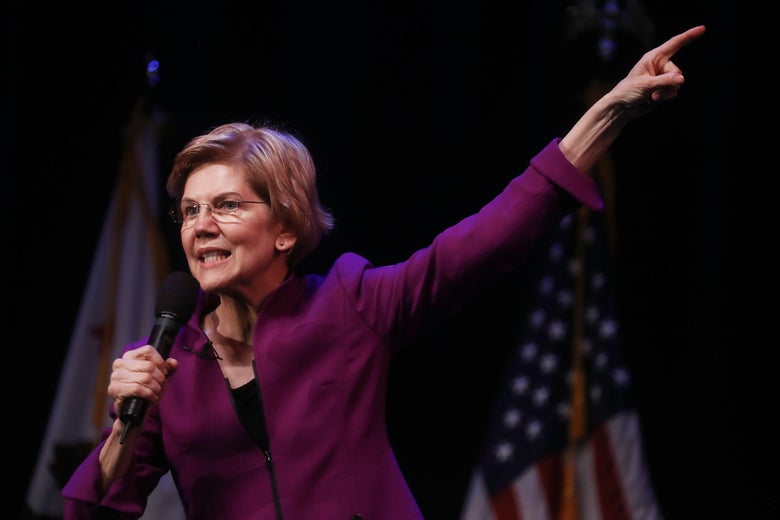
View full coverage on Google NewsElizabeth Warren Gets That Child Care Is Key to the Economy
POLL: How does Paul Ryan’s health care replacement compare to Obamacare?


FILE - In this Sept. 21, 2016 file photo, House Speaker Paul Ryan of Wis. speaks during a news conference on Capitol Hill in Washington. Republicans seem likely to keep their House majority in the Nov. 8 elections, though it’s expected to shrink. (AP Photo/Manuel Balce Ceneta, File) (Credit: AP)
Stephen Colbert’s best idea yet: Give police militarization an adorable makeover
