02 Nov 10:46
by Zengqi Huang, Xiaotian Hu, Cong Liu, Licheng Tan, Yiwang Chen
Abstract
Solar cells based on mixed organic–inorganic halide perovskites are promising photovoltaic technologies with low-cost and fantastic power conversion efficiency (PCE). Enhancing the nucleation and regulating the crystallization rate of perovskite films and improving the bendability of brittle hybrid grains are crucial to improving the photovoltaic performance of flexible perovskite solar cells (PVSCs). Here, a simple approach is first introduced for fabricating perovskite films with full coverage and larger crystalline size by incorporating the elastomer polyurethane (PU) into the perovskite precursor solution to both retard the crystallization rate and improve the bendability. Shiny, smooth perovskite films are obtained with compact, micrometer-sized crystalline grains that exhibit excellent photoelectric performances. The PVSCs fabricated by incorporating PU into the perovskite precursor offer an impressive PCE of 18.7% with almost no photocurrent hysteresis and excellent stability in ambient air. More importantly, the elastomer PU additive crosslinks the grain boundaries between neighboring perovskite crystals to form a PU network that effectively improves the bendability of the perovskite films.

Polyurethane (PU) has been used as an effective additive to optimize the performance of perovskite solar cells by retarding crystallization rate and enhancing grain size of perovskite crystals. More importantly, elastomer PU can effectively improve the bendability of perovskite films due to denseness and high elasticity created by crosslinking grain boundaries between neighboring perovskite crystals to form a PU network.
24 Oct 01:04
by Tzu-Pei Chen, Chung-Wei Lin, Shao-Sian Li, Yung-Han Tsai, Cheng-Yen Wen, Wendy Jessica Lin, Fei-Man Hsiao, Ya-Ping Chiu, Kazuhito Tsukagoshi, Minoru Osada, Takayoshi Sasaki, Chun-Wei Chen
Abstract
A novel atomic stacking transporting layer (ASTL) based on 2D atomic sheets of titania (Ti1−δO2) is demonstrated in organic–inorganic lead halide perovskite solar cells. The atomically thin ASTL of 2D titania, which is fabricated using a solution-processed self-assembly atomic layer-by-layer deposition technique, exhibits the unique features of high UV transparency and negligible (or very low) oxygen vacancies, making it a promising electron transporting material in the development of stable and high-performance perovskite solar cells. In particular, the solution-processable atomically thin ASTL of 2D titania atomic sheets shows superior inhibition of UV degradation of perovskite solar cell devices, compared to the conventional high-temperature sintered TiO2 counterpart, which usually causes the notorious instability of devices under UV irradiation. The discovery opens up a new dimension to utilize the 2D layered materials with a great variety of homostructrual or heterostructural atomic stacking architectures to be integrated with the fabrication of large-area photovoltaic or optoelectronic devices based on the solution processes.

The self-assembly atomic stacking transporting layer based on 2D titania atomic sheets exhibits unique advantages when used as an electron transporting layer for the development of stable and high-performance perovskite solar cells. The advantages are shown to include high UV transparency, negligible (or very low) oxygen vacancies, and solution processability.
24 Oct 01:04
by Mathias Uller Rothmann, Wei Li, Joanne Etheridge, Yi-Bing Cheng
Abstract
Organic-inorganic hybrid perovskite solar cells form a new type of thin film photovoltaic technology, which has achieved extraordinary improvements in power conversion efficiency in a relatively short time. To further improve the efficiency and stability of the perovskite solar cells, it is critical to understand and control the microstructure of both the functional materials and their interfaces. Much effort has already been made to understand the microstructure of perovskite solar cells and its influence on their performance. This has proved particularly challenging due to the fragile nature of the organic-inorganic perovskites and the consequent potential for generating artefacts through the application of the characterization methods themselves. In this progress report, an overview of some of the more commonly used characterization methods is given, their possible impact on the materials analyses is evaluated, and the latest developments in the understanding of the microstructure of perovskite solar cells are summarized. The heterogenic nature of the individual perovskite grains and the polycrystalline film as a whole is illustrated, the features and properties of the grain boundaries and the effect they can have on solar cell performance are described, and the interface characterization between the layers in the solar cell devices is discussed.

The microstructure of perovskite solar cells has been shown to have a large impact on their properties. In this progress report, some of the most important findings relating to how different microstructures influence the performance of perovskite solar cells are summarized, and the possible impact of different characterisation techniques on the results obtained from them are discussed.
24 Oct 01:03
by Tadanori Kurosawa, Xiaodan Gu, Kevin L. Gu, Yan Zhou, Hongping Yan, Cheng Wang, Ging-Ji Nathan Wang, Michael F. Toney, Zhenan Bao
Abstract
The introduction of oligomeric polystyrene (PS) side chains into the conjugated backbone is proven to enhance the processability and electronic properties of semiconducting polymers. Here, two series of donor and acceptor polymers are prepared with different molar percentages of PS side chains to elucidate the effect of their substitution arrangement on the all-polymer solar cell performance. The observed device performance is lower when the PS side chains are substituted on the donor polymer and higher when on the acceptor polymer, indicating a clear arrangement effect of the PS side chain. The incorporation of PS side chains to the acceptor polymer contributes to the decrease in phase separation domain size in the blend films. However, the reduced domain size was still an order of magnitude larger than the typical exciton diffusion length. A detailed morphological study together with the estimation of solubility parameter of the pristine PS, donor, and acceptor polymers reveals that the relative value of solubility parameter of each component dominantly contributes to the purity of the phase separated domain, which strongly impacts the amount of generated photocurrent and overall solar cell performance. This study provides an understanding of the design strategies to improve the all-polymer solar cells.

All-polymer solar cells consisting of polystyrene (PS) oligomer side chain attached donor and acceptor polymers are investigated to reveal the effect of PS side chain substituted arrangement. An increase in domain purity and decrease in domain size are observed when the PS side chain is attached to donor and acceptor polymers, respectively, which mainly results from the solubility parameter of the polymers.
Bin, ZZQ and 14 others like this
24 Oct 01:03
by Jiexuan Jiang, Qian Wang, Zhiwen Jin, Xisheng Zhang, Jie Lei, Haijun Bin, Zhi-Guo Zhang, Yongfang Li, Shengzhong (Frank) Liu
Abstract
Each component layer in a perovskite solar cell plays an important role in the cell performance. Here, a few types of polymers including representative p-type and n-type semiconductors, and a classical insulator, are chosen to dope into a perovskite film. The long-chain polymer helps to form a network among the perovskite crystalline grains, as witnessed by the improved film morphology and device stability. The dewetting process is greatly suppressed by the cross-linking effect of the polymer chains, thereby resulting in uniform perovskite films with large grain sizes. Moreover, it is found that the polymer-doped perovskite shows a reduced trap-state density, likely due to the polymer effectively passivating the perovskite grain surface. Meanwhile the doped polymer formed a bridge between grains for efficient charge transport. Using this approach, the solar cell efficiency is improved from 17.43% to as high as 19.19%, with a much improved stability. As it is not required for the polymer to have a strict energy level matching with the perovskite, in principle, one may use a variety of polymers for this type of device design.

The doping of polymer additives into MAPbI3 films is reported. This allows for enlarged MAPbI3 crystal grains by controlling the crystallization processes and decreased trap-state densities by passivating the MAPbI3 crystal grain boundaries. As a result, the device based on the formed continuous, few-defect, large MAPbI3 grains demonstrates improved efficiency from 17.43 to 19.19%, and relatively improved moisture stability.
ZZQ, Jun and 7 others like this
24 Oct 01:03
by Jin-Miao Wang, Zhao-Kui Wang, Meng Li, Cong-Cong Zhang, Lu-Lu Jiang, Ke-Hao Hu, Qing-Qing Ye, Liang-Sheng Liao
Abstract
Great efforts toward developing novel and efficient hole-transporting materials are needed to further improve the device efficiency and enhance the cell stability of perovskite solar cells (PSCs). The poor film conductivity and the low carrier mobility of organic small-molecule-based hole-transporting materials restrict their application in PSCs. This study develops an efficient and stable hole-transporting material, tetrafluorotetracyanoquinodimethane (F4-TCNQ)-doped copper phthalocyanine-3,4′,4′′,4′′′-tetra-sulfonated acid tetra sodium salt (TS-CuPc) via a solution process, in planar structure PSCs. The p-type-doped TS-CuPc film demonstrates improved film conductivity and hole mobility owing to the strong electron affinity of F4-TCNQ. By the F4-TCNQ tailoring, the composite film gives the highest occupied molecular orbital level as high as 5.3 eV, which is beneficial for hole extraction. In addition, the aqueous solution processed TS-CuPc:F4-TCNQ precursor is almost neutral with good stability for avoiding the electrode erosion. As a result, the fabricated PSCs employing TS-CuPc:F4-TCNQ as the hole-transporting material exhibit a power conversion efficiency of 16.14% in a p–i–n structure and 20.16% in an n–i–p structure, respectively. The developed organic small molecule of TS-CuPc provides the diversification of hole-transporting materials in planar PSCs.

p-Type-doped copper phthalocyanine-3,4′,4″,4″′-tetra-sulfonated acid tetra sodium salt (TS-CuPc) by tetrafluorotetracyanoquinodimethane (F4-TCNQ) with improved film conductivity and hole mobility is realized via a solution process. The composite film is used as a hole-transporting layer in both p–i–n structure and n–i–p structure devices. A champion n–i–p structure device with a power conversion efficiency of 20.16% is obtained.
24 Oct 01:02
by Zhenhua Yu, Linxing Zhang, Sen Tian, Fan Zhang, Bin Zhang, Fangfang Niu, Pengju Zeng, Junle Qu, Peter Neil Rudd, Jinsong Huang, Jiarong Lian
Abstract
Charge transport layers play an important role in determining the power conversion efficiencies (PCEs) of perovskite solar cells (PSCs). However, it has proven challenging to produce thin and compact charge transport layers via solution processing techniques. Herein, a hot substrate deposition method capable of improving the morphology of high-coverage hole-transport layers (HTLs) and electron-transport layers (ETLs) is reported. PSC devices using HTLs deposited on a hot substrate show improvement in the open-circuit voltage (Voc) from 1.041 to 1.070 V and the PCE from 17.00% to 18.01%. The overall device performance is then further enhanced with the hot substrate deposition of ETLs as the Voc and PCE reach 1.105 V and 19.16%, respectively. The improved performance can be explained by the decreased current leakage and series resistance, which are present in PSCs with rough and discontinuous HTLs and ETLs.

A hot-substrate deposition method contributes to the modification of both hole-transport layers and electron-transport layers with high coverage and uniform morphology. It is useful to reduce the current leakage and series resistance resulting from rough and discontinuous charge transport layers in perovskite solar cells. This strategy improves open-circuit voltage and power conversion efficiency of the device to 1.105 V and 19.16%, respectively.
24 Oct 01:02
by Efat Jokar, Zhong Yi Huang, Sudhakar Narra, Chi-Yung Wang, Vidya Kattoor, Chih-Chun Chung, Eric Wei-Guang Diau
Abstract
Reduced graphene oxides (rGO) are synthesized via reduction of GO with reducing agents as a hole-extraction layer for high-performance inverted planar heterojunction perovskite solar cells. The best efficiencies of power conversion (PCE) of these rGO cells exceed 16%, much greater than those made of GO and poly(3,4-ethenedioxythiophene):poly(styrenesulfonate) films. A flexible rGO device shows PCE 13.8% and maintains 70% of its initial performance over 150 bending cycles. It is found that the hole-extraction period is much smaller for the GO/methylammonium lead-iodide perovskite (PSK) film than for the other rGO/PSK films, which contradicts their device performances. Photoluminescence and transient photoelectric decays are measured and control experiments are performed to prove that the reduction of the oxygen-containing groups in GO significantly decreases the ability of hole extraction from PSK to rGO and also retards the charge recombination at the rGO/PSK interface. When the hole injection from PSK to GO occurs rapidly, hole propagation from GO to the indium-doped tin oxide (ITO) substrate becomes a bottleneck to overcome, which leads to a rapid charge recombination that decreases the performance of the GO device relative to the rGO device.

An anomalous charge-extraction behavior is observed for the graphene oxide (GO) film showing more rapid hole-extraction characteristic than that of the reduced graphene oxide (rGO) film, but the corresponding photovoltaic performances show an opposite trend. The rapid charge extraction in GO also leads to a rapid charge recombination so that the GO device shows poorer performance than the rGO device (13.8% vs 16.4%).
24 Oct 01:02
by Wentao Deng, Xinxing Liang, Peter S. Kubiak, Petra J. Cameron
Abstract
Organic–inorganic hybrid perovskite solar cells (PSC) are promising third-generation solar cells. They exhibit good power conversion efficiencies and in principle they can be fabricated with lower energy consumption than many more established technologies. To improve the efficiency and long-term stability of PSC, organic molecules are frequently used as “interlayers.” Interlayers are thin layers or monolayers of organic molecules that modify a specific interface in the solar cell. Here, the latest progress in the use of interlayers to optimize the performance of PSC is reviewed. Where appropriate interesting examples from the field of organic photovoltaics (OPV) are also presented as there are many similarities in the types of interlayers that are used in PSC and OPV. The review is organized into three parts. The first part focuses on why organic molecule interlayers improve the performance of the solar cells. The second section discusses commonly used molecular interlayers. In the last part, different approaches to make thin and uniform interlayers are discussed.

Small molecules are increasingly being used as interlayers in perovskite solar cells to modify band energy offsets at an interface, to improve the morphology of active layers, and to enhance the long-term stability of the devices. This article reviews recent advances in the use of molecular interlayers in perovskite cells and introduces relevant examples from the field of organic solar cells.
24 Oct 01:01
by Han-Hee Cho, Seonha Kim, Taesu Kim, Vijaya Gopalan Sree, Sung-Ho Jin, Felix Sunjoo Kim, Bumjoon J. Kim
Abstract
Designing polymers that facilitate exciton dissociation and charge transport is critical for the production of highly efficient all-polymer solar cells (all-PSCs). Here, the development of a new class of high-performance naphthalenediimide (NDI)-based polymers with large dipole moment change (Δµge) and delocalized lowest unoccupied molecular orbital (LUMO) as electron acceptors for all-PSCs is reported. A series of NDI-based copolymers incorporating electron-withdrawing cyanovinylene groups into the backbone (PNDITCVT-R) is designed and synthesized with 2-hexyldecyl (R = HD) and 2-octyldodecyl (R = OD) side chains. Density functional theory calculations reveal an enhancement in Δµge and delocalization of the LUMO upon the incorporation of cyanovinylene groups. All-PSCs fabricated from these new NDI-based polymer acceptors exhibit outstanding power conversion efficiencies (7.4%) and high fill factors (65%), which is attributed to efficient exciton dissociation, well-balanced charge transport, and suppressed monomolecular recombination. Morphological studies by grazing X-ray scattering and resonant soft X-ray scattering measurements show the blend films containing polymer donor and PNDITCVT-R acceptors to exhibit favorable face-on orientation and well-mixed morphology with small domain spacing (30–40 nm).

High-performance polymer acceptors with high electron mobility and large dipole moment difference are developed by introducing electron-withdrawing cyanovinylene groups into naphthalenediimide-based polymers. All-polymer solar cells fabricated using these new polymer acceptors exhibit outstanding power conversion efficiencies of up to 7.4% and high fill factors (65%) as a result of efficient exciton dissociation and enhanced charge transport.
Bin, ZZQ and 13 others like this
18 Oct 14:47
Energy Environ. Sci., 2017, 10,2383-2391
DOI: 10.1039/C7EE02048A, Paper
Yaoguang Rong, Yue Hu, Sandheep Ravishankar, Huawei Liu, Xiaomeng Hou, Yusong Sheng, Anyi Mei, Qifei Wang, Daiyu Li, Mi Xu, Juan Bisquert, Hongwei Han
The tunable hysteresis effect of perovskite solar cells clarifies the importance of the c-TiO2/perovskite interface, and provides significant insights towards the understanding of this rapidly developing photovoltaic technology.
The content of this RSS Feed (c) The Royal Society of Chemistry

18 Oct 14:47
Energy Environ. Sci., 2017, 10,2109-2116
DOI: 10.1039/C7EE01931A, Communication
Y. C. Kim, T.-Y. Yang, N. J. Jeon, J. Im, S. Jang, T. J. Shin, H.-W. Shin, S. Kim, E. Lee, S. Kim, J. H. Noh, S. I. Seok, J. Seo
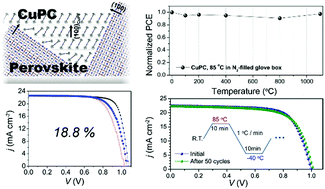
CuPC-applied perovskite solar cells show excellent long-term thermal stability which is attributed to the reliable interface and intrinsic heat-resistance of CuPC.
The content of this RSS Feed (c) The Royal Society of Chemistry

ZZQ, Jun and 6 others like this
18 Oct 14:47
Energy Environ. Sci., 2017, 10,2401-2410
DOI: 10.1039/C7EE01405H, Paper
Ya-Fang Qi, Dong-Xing Kou, Wen-Hui Zhou, Zheng-Ji Zhou, Qing-Wen Tian, Yue-Na Meng, Xin-Sheng Liu, Zu-Liang Du, Si-Xin Wu
We reveal a new approach for forming a Ag-graded absorber to overcome the large open-circuit voltage deficit in (Cu,Ag)2ZnSn(S,Se)4 solar cells.
The content of this RSS Feed (c) The Royal Society of Chemistry

10 Oct 02:52
by Trilok Singh, Tsutomu Miyasaka
Abstract
Perovskite solar cells have evolved to have compatible high efficiency and stability by employing mixed cation/halide type perovskite crystals as pinhole-free large grain absorbers. The cesium (Cs)–formamidium–methylammonium triple cation-based perovskite device fabricated in a glove box enables reproducible high-voltage performance. This study explores the method to reproduce stable and high power conversion efficiency (PCE) of a triple cation perovskite prepared using a one-step solution deposition and low-temperature annealing fully conducted in controlled ambient humidity conditions. Optimizing the perovskite grain size by Cs concentration and solution processes, a route is created to obtain highly uniform, pinhole-free large grain perovskite films that work with reproducible PCE up to 20.8% and high preservation stability without cell encapsulation for more than 18 weeks. This study further investigates the light intensity characteristics of open-circuit voltage (Voc) of small (5 × 5 mm2, PCE > 20%) and large (10 × 10 mm2, PCE of 18%) devices. Intensity dependence of Voc shows an ideality factor in the range of 1.7-1.9 for both devices, implying that the triple cation perovskite involves trap-assisted recombination loss at the hetero junction interfaces that influences Voc. Despite relatively high ideality factor, perovskite device is capable of supplying high power conversion efficiency under low light intensity (0.01 Sun) whereas maintaining Voc over 0.9 V.

The reproducible high performance of a triple-cation-based mixed halide perovskite cell fabricated by appropriate control of crystal growth and post-annealing under controlled relative humidity (R.H. < 25%) and in ambient air conditions is demonstrated. The device fabrication shows high yield in producing power conversion efficiencies up to 20.8% with a cell aperture size of 25 mm2.
09 Oct 01:00
by Jung Kyu Kim, Sung Uk Chai, Yoonjun Cho, Lili Cai, Sung June Kim, Sangwook Park, Jong Hyeok Park, Xiaolin Zheng
Abstract
Mesoporous TiO2 nanoparticle (NP) films are broadly used as electrodes in photoelectrochemical cells, dye-sensitized solar cells (DSSCs), and perovskite solar cells (PSCs). State-of-the-art mesoporous TiO2 NP films for these solar cells are fabricated by annealing TiO2 paste-coated fluorine-doped tin oxide glass in a box furnace at 500 °C for ≈30 min. Here, the use of a nontraditional reactor, i.e., flame, is reported for the high throughput and ultrafast annealing of TiO2 paste (≈1 min). This flame-annealing method, compared to conventional furnace annealing, exhibits three distinct benefits. First, flame removes polymeric binders in the initial TiO2 paste more completely because of its high temperature (≈1000 °C). Second, flame induces strong interconnections between TiO2 nanoparticles without affecting the underlying transparent conducting oxide substrate. Third, the flame-induced carbothermic reduction on the TiO2 surface facilitates charge injection from the dye/perovskite to TiO2. Consequently, when the flame-annealed mesoporous TiO2 film is used to fabricate DSSCs and PSCs, both exhibit enhanced charge transport and higher power conversion efficiencies than those fabricated using furnace-annealed TiO2 films. Finally, when the ultrafast flame-annealing method is combined with a fast dye-coating method to fabricate DSSC devices, its total fabrication time is reduced from over 3 h to ≈10 min.

Flame is an attractive alternative to the commonly used box furnace to form mesoporous TiO2 films. It demonstrates the advantages of significantly reduced processing time, better removal of organic impurities, and efficient connectivity. The energy state of the TiO2 is also modified by carbothermic reduction during the flame, facilitating efficient charge injection from the dye/perovskite to TiO2.
13 Sep 08:07
J. Mater. Chem. A, 2017, 5,21291-21299
DOI: 10.1039/C7TA06939A, Paper
Han-Hee Cho, Gibok Han, Robert Younts, Wonho Lee, Bhoj R. Gautam, Seungjin Lee, Changyeon Lee, Taesu Kim, Felix Sunjoo Kim, Kenan Gundogdu, Bumjoon J. Kim
We have developed a simple yet versatile approach for enhancing the performance of all-polymer solar cells (all-PSCs) using a highly crystalline small-molecular additive, 6,6[prime or minute]-dithiopheneisoindigo (DTI).
The content of this RSS Feed (c) The Royal Society of Chemistry
13 Sep 01:41
by Patricia S.C. Schulze, Alexander J. Bett, Kristina Winkler, Andreas Hinsch, Seunghun Lee, Simone Mastroianni, Laura E. Mundt, Markus Mundus, Uli Würfel, Stefan W. Glunz, Martin Hermle and Jan Christoph Goldschmidt

ACS Applied Materials & Interfaces
DOI: 10.1021/acsami.7b05718

13 Sep 01:06
by Quentin Arnoux, Anthony Boucly, Vincent Barth, Rabah Benbalagh, Albano Cossaro, Luca Floreano, Mathieu Silly, Fausto Sirotti, Etienne Derat, Stéphane Carniato, Fabrice Bournel, Jean-Jacques Gallet, Denis Fichou, Ludovic Tortech and François Rochet

ACS Applied Materials & Interfaces
DOI: 10.1021/acsami.7b06691

13 Sep 01:02
by Pankaj Yadav, M. Ibrahim Dar, Neha Arora, Essa A. Alharbi, Fabrizio Giordano, Shaik Mohammed Zakeeruddin, Michael Grätzel
Abstract
Perovskite solar cells (PSCs) based on cesium (Cs)- and rubidium (Rb)-containing perovskite films show highly reproducible performance; however, a fundamental understanding of these systems is still emerging. Herein, this study has systematically investigated the role of Cs and Rb cations in complete devices by examining the transport and recombination processes using current–voltage characteristics and impedance spectroscopy in the dark. As the credibility of these measurements depends on the performance of devices, this study has chosen two different PSCs, (MAFACs)Pb(IBr)3 (MA = CH3NH3+, FA = CH(NH2)2+) and (MAFACsRb)Pb(IBr)3, yielding impressive performances of 19.5% and 21.1%, respectively. From detailed studies, this study surmises that the confluence of the low trap-assisted charge-carrier recombination, low resistance offered to holes at the perovskite/2,2′,7,7′-tetrakis(N,N-di-p-methoxyphenylamine)-9,9-spirobifluorene interface with a low series resistance (Rs), and low capacitance leads to the realization of higher performance when an extra Rb cation is incorporated into the absorber films. This study provides a thorough understanding of the impact of inorganic cations on the properties and performance of highly efficient devices, and also highlights new strategies to fabricate efficient multiple-cation-based PSCs.

The confluence of low trap-assisted charge-carrier recombination, low resistance offered to holes at the perovskite/2,2′,7,7′-tetrakis(N,N-di-p-methoxyphenylamine)-9,9-spirobifluorene interface with a low series resistance (RS) and a lower value of charge storage, leads to the realization of higher photovoltaic performance when an extra cation (Rb) is incorporated into the perovskite films.
13 Sep 01:02
by Dario Di Carlo Rasi, Koen H. Hendriks, Martijn M. Wienk, René A. J. Janssen
Abstract
Triple-junction device architectures represent a promising strategy to highly efficient organic solar cells. Accurate characterization of such devices is challenging, especially with respect to determining the external quantum efficiency (EQE) of the individual subcells. The specific light bias conditions that are commonly used to determine the EQE of a subcell of interest cause an excess of charge generation in the two other subcells. This results in the build-up of an electric field over the subcell of interest, which enhances current generation and leads to an overestimation of the EQE. A new protocol, involving optical modeling, is developed to correctly measure the EQE of triple-junction organic solar cells. Apart from correcting for the build-up electric field, the effect of light intensity is considered with the help of representative single-junction cells. The short-circuit current density (JSC) determined from integration of the EQE with the AM1.5G solar spectrum differs by up to 10% between corrected and uncorrected protocols. The results are validated by comparing the EQE experimentally measured to the EQE calculated via optical-electronic modeling, obtaining an excellent agreement.

The external quantum efficiency of triple-junction cells is accurately measured following a new protocol that takes into account light bias and voltage bias. Integration of the external quantum efficiency to determine the short-circuit current density matches with the value under simulated AM1.5G illumination conditions and results in a power conversion efficiency of 9.77 ± 0.29%.
13 Sep 01:02
by Won Sik Yoon, Dong Won Kim, Min-Woo Choi, Jun-Mo Park, Soo Young Park
Abstract
Highly crystalline conjugated polymers represent a key material for producing high-performance thick-active-layer polymer solar cells (PSCs). However, despite their potential, a limited number of crystalline polymers are used in PSCs because of the lack of highly coplanar acceptor building blocks and insufficient light absorptivity (α < 105) of most donor (D)–acceptor (A)-type polymers. This study reports a series of novel 3,7-di(thiophen-2-yl)-1,5-naphthyridine-2,6-dione (NTDT) acceptor-based conjugated polymers, PNTDT-2T, PNTDT-TT, and PNTDT-2F2T, synthesized with 2,2′-bithiophene (2T), thieno[3,2-b]thiophene (TT), and 3,3′-difluoro-2,2′-bithiophene (2F2T) donor units, respectively. PNTDT-2F2T exhibits superior polymer crystallinity and a much higher absorption coefficient than those of PNTDT-2T or PNTDT-TT because of adequate matching between highly coplanar A (NTDT) and D (2F2T) building blocks. A bulk heterojunction solar cell based on PNTDT-2F2T exhibits a power conversion efficiency of up to 9.63%, with a high short circuit current of 18.80 mA cm−2 and fill factor of 0.70, when a thick active layer (>200 nm) is used, without postfabrication hot processing. The findings demonstrate that the polymer crystallinity and absorption coefficient can be effectively controlled by selecting appropriate D and A building blocks, and that NTDT is a novel and versatile A building block for highly efficient thick-active-layer PSCs.

A novel 1,5-naphthyridine-2,6-dione-based conjugated polymer is developed and applied as a donor in the active layers of efficient polymer solar cells. PNTDT-2F2T exhibits outstanding polymer crystallinity and absorption coefficient. A polymer solar cell device made using PNTDT-2F2T exhibits a high power conversion efficiency (9.63%) with a thick active layer (>200 nm).
13 Sep 01:02
by Junyi Wang, Shiliang Wang, Chunhui Duan, Fallon J. M. Colberts, Jiangquan Mai, Xi Liu, Xiao'e Jia, Xinhui Lu, René A. J. Janssen, Fei Huang, Yong Cao
Abstract
To advance polymer solar cells (PSCs) toward real-world applications, it is crucial to develop materials that are compatible with a low-cost large-scale manufacturing technology. In this context, a practically useful polymer should fulfill several critical requirements: the capability to provide high power conversion efficiencies (PCEs) via low-cost fabrication using environmentally friendly solvents under mild thermal conditions, resulting in an active layer that is thick enough to minimize defects in large-area films. Here, the development of new photovoltaic polymers is reported through rational molecular design to meet these requirements. Benzodithiophene (BDT)-difluorobenzoxadiazole (ffBX)-2-decyltetradecyl (DT), a wide-bandgap polymer based on ffBX and BDT emerges as the first example that fulfills the qualifications. When blended with a low-cost acceptor (C60-fullerene derivative), BDT-ffBX-DT produces a PCE of 9.4% at active layer thickness over 250 nm. BDT-ffBX-DT devices can be fabricated from nonhalogenated solvents at low processing temperature. The success of BDT-ffBX-DT originates from its appropriate electronic structure and charge transport characteristics, in combination with a favorable face-on orientation of the polymer backbone in blends, and the ability to form proper phase separation morphology with a fibrillar bicontinuous interpenetrating network in bulk-heterojunction films. With these characteristics, BDT-ffBX-DT represents a meaningful step toward future everyday applications of polymer solar cells.

Two new conjugated polymers based on difluorobenzoxadiazole bring real-world applications of polymer solar cells closer. They integrate multiple advantages including high power conversion efficiency built on low-cost acceptors, allowing thick active layers, and processability from green solvents under mild conditions. Particularly, benzodithiophene-difluorobenzoxadiazole-2-decyltetradecyl (BDT-ffBX-DT) is a champion in meeting a comprehensive list of prerequisites for future application of polymer solar cells.
13 Sep 01:02
by Xiaofeng Xu, Zhaojun Li, Wei Zhang, Xiangyi Meng, Xianshao Zou, Dario Di Carlo Rasi, Wei Ma, Arkady Yartsev, Mats R. Andersson, René A. J. Janssen, Ergang Wang
Abstract
In very recent years, growing efforts have been devoted to the development of all-polymer solar cells (all-PSCs). One of the advantages of all-PSCs over the fullerene-based PSCs is the versatile design of both donor and acceptor polymers which allows the optimization of energy levels to maximize the open-circuit voltage (Voc). However, there is no successful example of all-PSCs with both high Voc over 1 V and high power conversion efficiency (PCE) up to 8% reported so far. In this work, a combination of a donor polymer poly[4,8-bis(5-(2-octylthio)thiophen-2-yl)benzo[1,2-b:4,5-b′]dithiophene-2,6-diyl-alt-(5-(2-ethylhexyl)-4H-thieno[3,4-c]pyrrole-4,6(5H)-dione)-1,3-diyl] (PBDTS-TPD) with a low-lying highest occupied molecular orbital level and an acceptor polymer poly[[N,N′-bis(2-octyldodecyl)-naphthalene-1,4,5,8-bis(dicarboximide)-2,6-diyl]-alt-thiophene-2,5-diyl] (PNDI-T) with a high-lying lowest unoccupied molecular orbital level is used, realizing high-performance all-PSCs with simultaneously high Voc of 1.1 V and high PCE of 8.0%, and surpassing the performance of the corresponding PC71BM-based PSCs. The PBDTS-TPD:PNDI-T all-PSCs achieve a maximum internal quantum efficiency of 95% at 450 nm, which reveals that almost all the absorbed photons can be converted into free charges and collected by electrodes. This work demonstrates the advantages of all-PSCs by incorporating proper donor and acceptor polymers to boost both Voc and PCEs.

High-performance all-polymer solar cells with high Voc of 1.1 V and PCE of 8.0% are realized by incorporating a pair of the donor polymer poly[4,8-bis(5-(2-octylthio)thiophen-2-yl)benzo[1,2-b:4,5-b′]dithiophene-2,6-diyl-alt-(5-(2-ethylhexyl)-4H-thieno[3,4-c]pyrrole-4,6(5H)-dione)-1,3-diyl] and acceptor polymer poly[[N,N′-bis(2-octyldodecyl)-naphthalene-1,4,5,8-bis(dicarboximide)-2,6-diyl]-alt-thiophene-2,5-diyl]. The simultaneously high Voc and power conversion efficiency stem from the low photon energy loss and high internal quantum efficiency near unity.
11 Sep 02:13
by Luis K. Ono, Emilio J. Juarez-Perez and Yabing Qi

ACS Applied Materials & Interfaces
DOI: 10.1021/acsami.7b06001

11 Sep 02:01
J. Mater. Chem. C, 2017, 5,10947-10954
DOI: 10.1039/C7TC03774K, Paper
Qi Pan, Huicheng Hu, Yatao Zou, Min Chen, Linzhong Wu, Di Yang, Xiaolei Yuan, Jian Fan, Baoquan Sun, Qiao Zhang
A fast and efficient microwave-assisted strategy is developed to prepare high-quality CsPbX3 nanocrystals with controllable morphologies (nanoplate, nanocube, and nanorod).
The content of this RSS Feed (c) The Royal Society of Chemistry
11 Sep 01:59
Energy Environ. Sci., 2017, 10,2212-2221
DOI: 10.1039/C7EE01858D, Paper
Zhaojun Li, Xiaofeng Xu, Wei Zhang, Xiangyi Meng, Zewdneh Genene, Wei Ma, Wendimagegn Mammo, Arkady Yartsev, Mats R. Andersson, Rene A. J. Janssen, Ergang Wang
High-performance ternary all-polymer solar cells with outstanding efficiency of 9.0% are realized by incorporating two donor and one acceptor polymers with complementary absorption and proper energy level alignment.
The content of this RSS Feed (c) The Royal Society of Chemistry

11 Sep 00:46
by Meng-Lin Tsai, Ming-Yang Li, José Ramón Durán Retamal, Kai-Tak Lam, Yung-Chang Lin, Kazu Suenaga, Lih-Juann Chen, Gengchiau Liang, Lain-Jong Li, Jr-Hau He

An alloy-free 2D monolayer WSe2-MoS2 lateral p-n heterojunction solar cell is demonstrated to exhibit an extraordinary power conversion efficiency of 2.56%, with excellent omnidirectional light harvesting behavior, by Lih-Juann Chen, Jr-Hau He and co-workers in article number 1701168. Temperature-dependent characteristics are analyzed and the electrode spacing is optimized to achieve gate-tuning controllability and environmentindependent cell properties.
11 Sep 00:42
by Xiaotian Hu, Zengqi Huang, Xue Zhou, Pengwei Li, Yang Wang, Zhandong Huang, Meng Su, Wanjie Ren, Fengyu Li, Mingzhu Li, Yiwang Chen, Yanlin Song
Abstract
Dramatic advances in perovskite solar cells (PSCs) and the blossoming of wearable electronics have triggered tremendous demands for flexible solar-power sources. However, the fracturing of functional crystalline films and transmittance wastage from flexible substrates are critical challenges to approaching the high-performance PSCs with flexural endurance. In this work, a nanocellular scaffold is introduced to architect a mechanics buffer layer and optics resonant cavity. The nanocellular scaffold releases mechanical stresses during flexural experiences and significantly improves the crystalline quality of the perovskite films. The nanocellular optics resonant cavity optimizes light harvesting and charge transportation of devices. More importantly, these flexible PSCs, which demonstrate excellent performance and mechanical stability, are practically fabricated in modules as a wearable solar-power source. A power conversion efficiency of 12.32% for a flexible large-scale device (polyethylene terephthalate substrate, indium tin oxide-free, 1.01 cm2) is achieved. This ingenious flexible structure will enable a new approach for development of wearable electronics.

A nanocellular scaffold is introduced to construct a mechanics buffer layer and optics resonant cavity in a flexible perovskite solar cell. A power conversion efficiency of 12.32% is achieved with a flexible, large-scale device (polyethylene terephthalate substrate, indium tin oxide-free, 1.01 cm2). Moreover, the devices, which demonstrate excellent performance and mechanical stability, are practically fabricated in modules for a wearable solar-power source.
11 Sep 00:38
by Lin Hu, Tiefeng Liu, Jiashun Duan, Xiaoyi Ma, Congwu Ge, Youyu Jiang, Fei Qin, Sixing Xiong, Fangyuan Jiang, Bin Hu, Xike Gao, Yuanping Yi, Yinhua Zhou
Abstract
This study reports an effective amidine-type n-dopant of 1,8-Diazabicyclo[5.4.0]undec-7-ene (DBU) that can universally dope electron acceptors, including PC61BM, N2200, and ITIC, by mixing the dopant with the acceptors in organic solvents or exposing the acceptor films in the dopant vapor. The doping mechanism is due to its strong electron-donating property that is also confirmed via the chemical reduction of PEDOT:PSS (yielding color change). The DBU doping considerably increases the electrical conductivity and shifts the Fermi levels up of the PC61BM films. When the DBU-doped PC61BM is used as an electron-transporting layer in perovskite solar cells, the n-doping removes the “S-shape” of J–V characteristics, which leads to the fill factor enhancement from 0.54 to 0.76. Furthermore, the DBU doping can effectively lower the threshold voltage and enhance the electron mobility of PC61BM-based n-channel field-effect transistors. These results show that the DBU can be a promising n-dopant for solution-processed electronics.

An effective, solution-processed amidine-type n-dopant of 1,8-diazabicyclo[5.4.0]undec-7-ene (DBU), which can universally dope electron acceptor materials, including PC61BM, N2200, and ITIC, is reported. The DBU doping can enhance the performance of the perovskite solar cells and the electron mobility of the field-effect transistors.
11 Sep 00:36
by Qiang Luo, He Ma, Feng Hao, Qinzhi Hou, Jing Ren, Lili Wu, Zhibo Yao, Yu Zhou, Ning Wang, Kaili Jiang, Hong Lin, Zhanhu Guo
Abstract
Organolead halide perovskite solar cells (PSC) are arising as promising candidates for next-generation renewable energy conversion devices. Currently, inverted PSCs typically employ expensive organic semiconductor as electron transport material and thermally deposited metal as cathode (such as Ag, Au, or Al), which are incompatible with their large-scale production. Moreover, the use of metal cathode also limits the long-term device stability under normal operation conditions. Herein, a novel inverted PSC employs a SnO2-coated carbon nanotube (SnO2@CSCNT) film as cathode in both rigid and flexible substrates (substrate/NiO-perovskite/Al2O3-perovskite/SnO2@CSCNT-perovskite). Inverted PSCs with SnO2@CSCNT cathode exhibit considerable enhancement in photovoltaic performance in comparison with the devices without SnO2 coating owing to the significantly reduced charge recombination. As a result, a power conversion efficiency of 14.3% can be obtained on rigid substrates while the flexible ones achieve 10.5% efficiency. More importantly, SnO2@CSCNT-based inverted PSCs exhibit significantly improved stability compared to the standard inverted devices made with silver cathode, retaining over 88% of their original efficiencies after 550 h of full light soaking or thermal stress. The results indicate that SnO2@CSCNT is a promising cathode material for long-term device operation and pave the way toward realistic commercialization of flexible PSCs.

A novel, thermal- and photostable inverted perovskite solar cell is developed, employing a SnO2-coated carbon nanotube film as cathode (substrate/NiO-perovskite/Al2O3-perovskite/SnO 2@CSCNT-perovskite). The deposition of the electron-extracting SnO2 on the CSCNT cathode increases device efficiencies, eliminates device hysteresis, and suppresses charge combination. Solar cells fabricated with SnO2@CSCNT cathodes show power conversion efficiencies of 14.3 and 10.5% on rigid and flexible substrates, respectively.