I am new to Unreal Engine and am making a game. I have two people who are planned to have game editing access. How do I start making the game with them? I saw something on collaborative editing which seems complicated. I got logmein hamachi since it mentions being on the same internet or something. So what’s next?
It's my husband's birthday in late January. I'm trying to plan a romantic picnic, any recommendations on where to go? I'm not from the area but he grew up here so trying to figure out some good locations.
Any recommendations for people who can do a cute outdoor setup with a heater since it's also going to be cold then?
My moms Instagram was hacked and instagram is basically ignoring her. I wanna help my mom get her account back smh. Someone please help. Its been 3 weeks. So now i want to go to the location
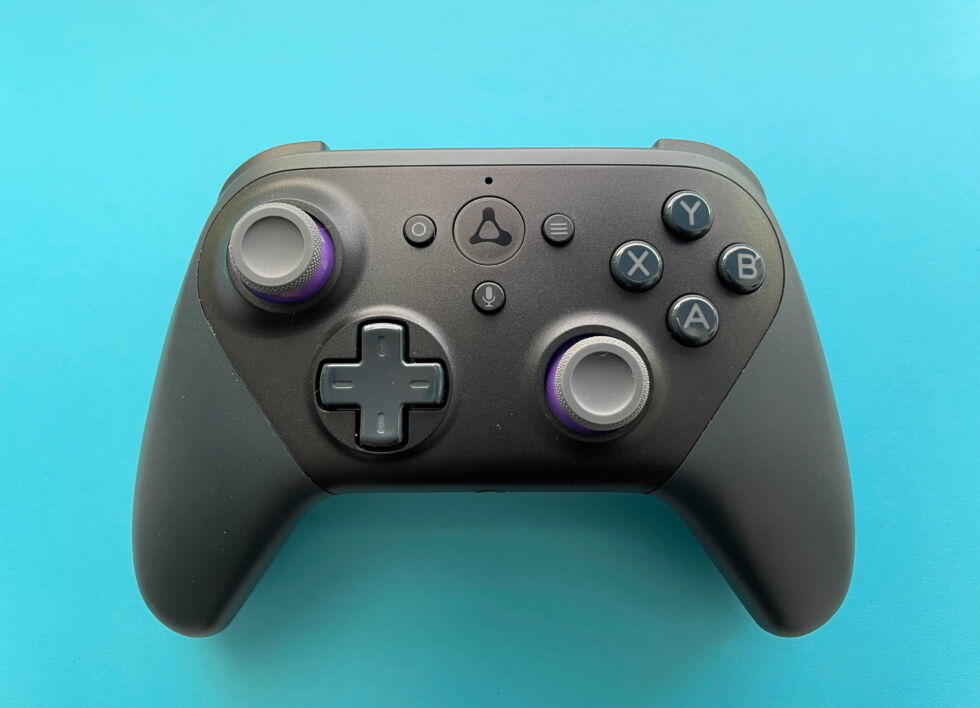
The official Luna Controller from Amazon. It's not required to access any of this week's new developments, but it directly connects to your router for the sake of quicker cloud-gaming response times. [credit:
Jeff Dunn ]
It has been a while since we've heard anything major from Luna, Amazon's game-streaming service that largely resembles Google Stadia, Xbox Game Streaming, and other cloud-based ways to stream video games from a server farm to your screen of choice. Today, Amazon breaks its recent streaming silence with a few new ways to get more players into Luna for less money.
The first move involves Amazon's massive Prime service, which is finally becoming an instant, free-with-your-subscription way to stream Luna games. Starting right now, paying Prime members can either load Luna's website or install the Luna app on any compatible device, sync a compatible gamepad, and play the entirety of four very solid video games: Resident Evil 7, Metro Exodus, Katamari Damacy Reroll, and Monster Boy and the Cursed Kingdom.
This access doesn't require signing up for a Luna free trial, and it doesn't pause any of these games after an arbitrary limit of hours or in-game progress. But there is a catch: the Prime access to these four games runs out in seven days, on September 15—at which point anyone who wants to keep playing those four games can formally sign up for the "Luna+" tier for $5.99/month (with a free seven-day trial, if you haven't claimed one of those yet). Before September 15, at least, no formal Luna sign-up is required.
Apple recently launched a $99 battery MagSafe Battery Pack that’s as convenient to use as it is expensive. Just slap it on the back of an iPhone and magnets will hold it in place while it uses wireless charging to refuel your phone’s battery. So far no Android phone maker has offered a similar magnetic […]
Sometimes all that’s required to build something interesting is to put the same old pieces together differently. [Sayantan Pal] did this for the humble RGB LED matrix, creating an extra-thin version by recessing WS2812b NeoPixel LEDs inside a PCB.
The popular WS2812B is 1.6 mm in height, which happens to be the most commonly used PCB thickness. Using EasyEDA, [Sayantan] designed a 8×8 matrix with modified WS2812B footprints. A slightly undersized cutout was added to create a friction-fit for the LEDs, and the pads were moved to the back side of the panel just outside the cutout, and their assignment were flipped. The PCB is assembled face down, and all the pads are soldered by hand. Unfortunately this creates rather large solder bridges which slightly increases the overall thickness of the panel, and is probably also unsuitable for production with conventional pick-and-place assembly.
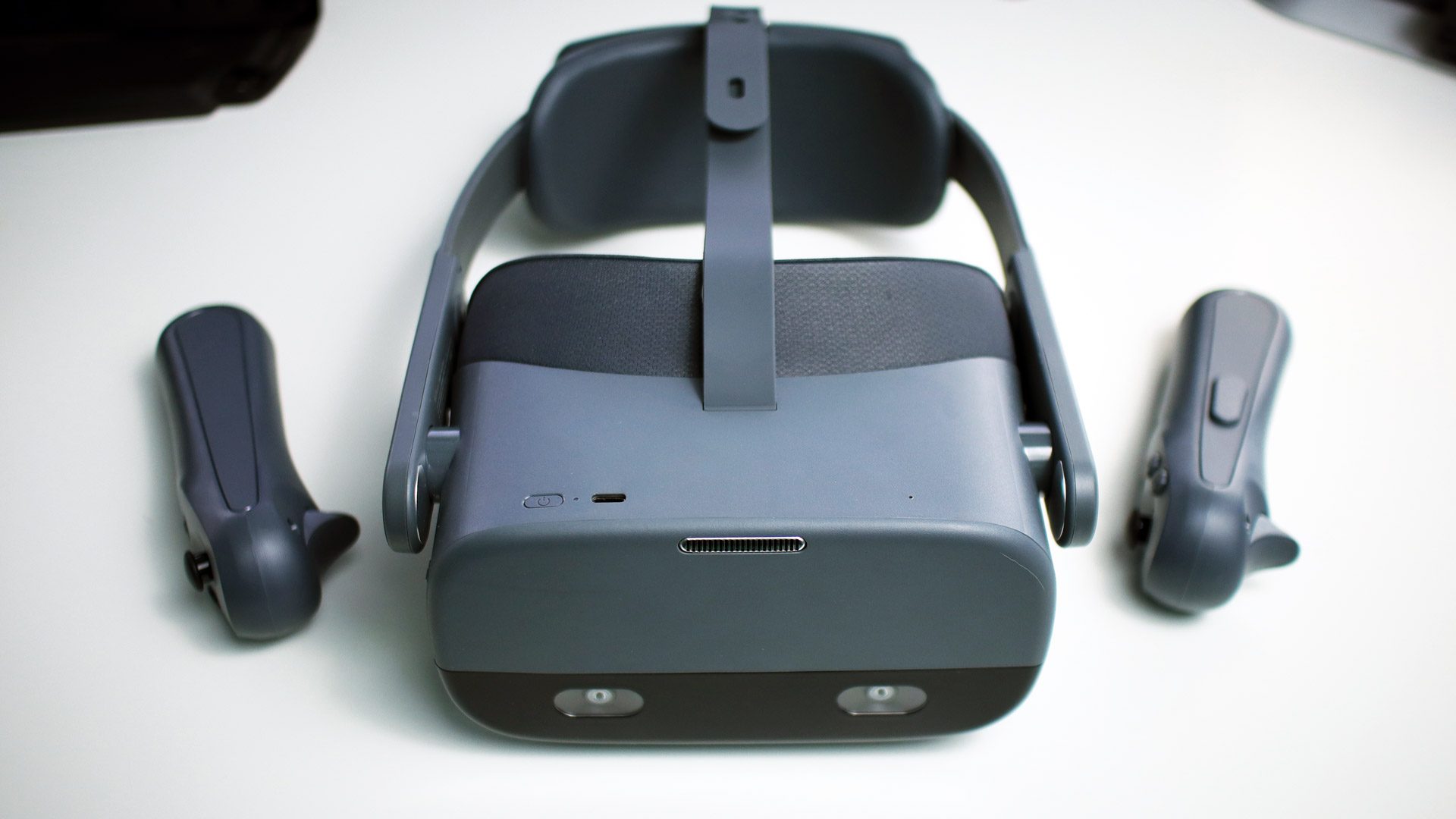
The Pico Neo 2 Eye is a standalone VR headset built for business. Going by the hardware specifications, it is an upgrade in many areas compared to the Oculus Quest. Plus, it has some unique features too, like electromagnetic tracking, wireless SteamVR streaming, and integrated eye-tracking. In this article, I share a summary of my first impressions.
Cas & Chary Present
Cas and Chary VR is a YouTube channel hosted by Netherland-based duo Casandra Vuong and Chary Keijzer who have been documenting their VR journeys since 2016. In partnership with the channel, Road to VR shares a curated selection of their content.
Pico’s latest VR headset is the Pico Neo 2. The company is mostly focused on the enterprise market, though consumers in Asia can buy the headsets for personal use also, hence the inclusion of wireless streaming of SteamVR content from a PC on the same network.
Hardware Specifications
There are two variants of the Pico Neo 2. Both have the same hardware specs, except the Pico Neo 2 Eye has integrated eye-tracking. The latter is the version I tested.
The Pico Neo 2 runs on Qualcomm Snapdragon 845 processor and has 6GB RAM. That’s a nice upgrade compared to Quest’s Snapdragon 835 and 4GB of RAM.
Image courtesy Cas & Chary VR
The display has a resolution of 3,840 × 2,160 total (1,920 × 2,160 per eye), which is beautiful and clear. For comparison, the Oculus Quest has a resolution of 2,880 x 1,600 total (1,440 x 1,600 per eye). The Neo 2 only has a single LCD panel though, while the Quest has dual OLED panels. This leads to greyer blacks and software-only IPD adjustment with a range of 55 to 71 mm. My IPD is around 59 mm, so it’s okay for me, but it does feel a little uneasy every time I put the headset on until my eyes get used to it. I prefer a physical IPD adjustment so that the lenses can be best aligned with my eyes.
The lenses and field of view aren’t much different when compared to the Quest. Both are fresnels and have a field of view of around 101 degrees.
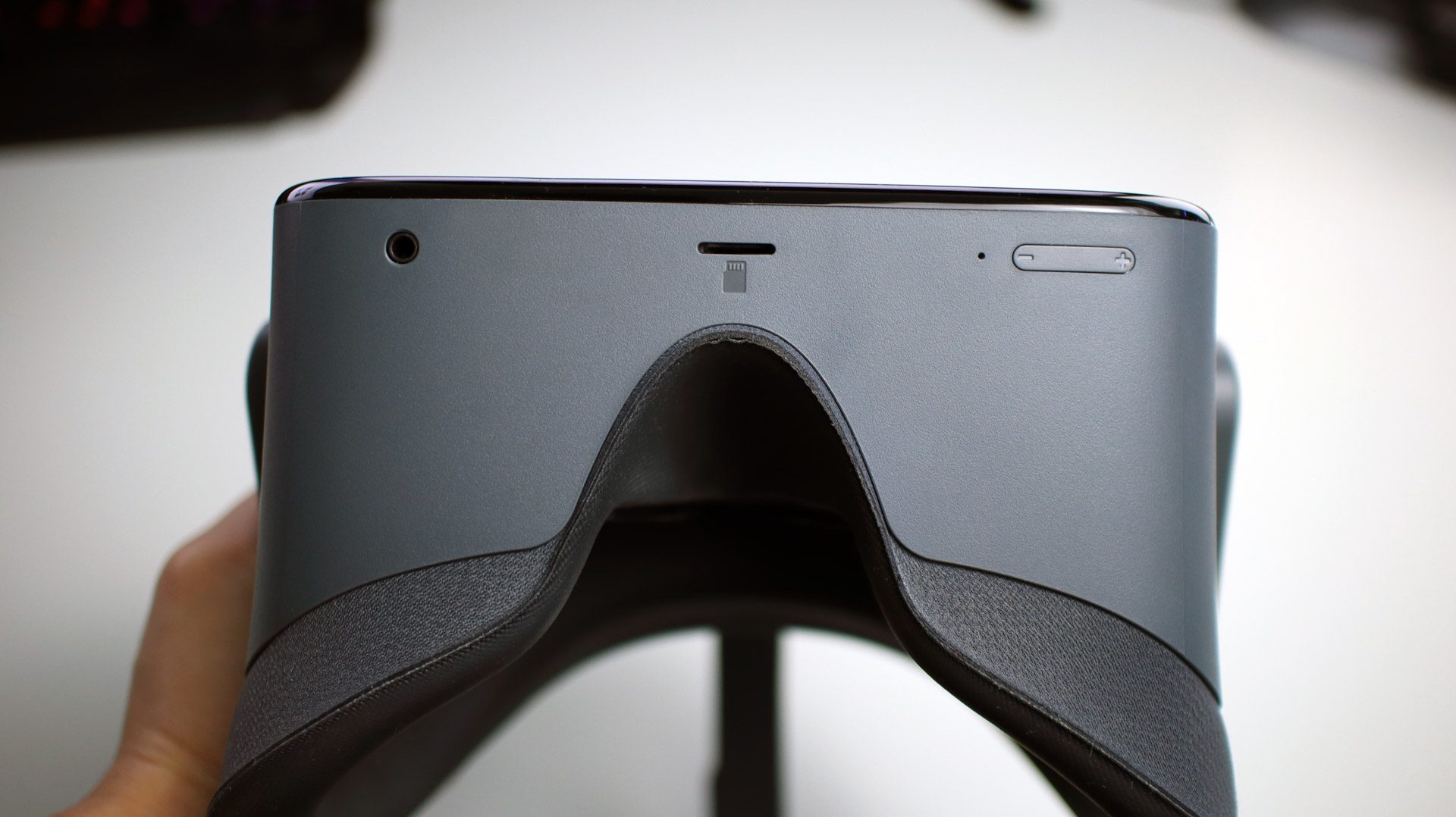
Like many other standalone headsets, hidden speakers are built into the headband. If you want to connect your own headphones you can use the 3.5mm audio jack or Bluetooth.
Image courtesy Cas & Chary VR
One feature I like about the Neo 2 over Quest is that it has a storage expansion slot on top of the headset. The Neo provides 128 GB on-board storage, but if needed, you can put in your own SD card for up to 256GB of extra storage.
As for battery life, I was able to get about two hours of playtime while recording at the same time.
Comfort
Image courtesy Cas & Chary VR
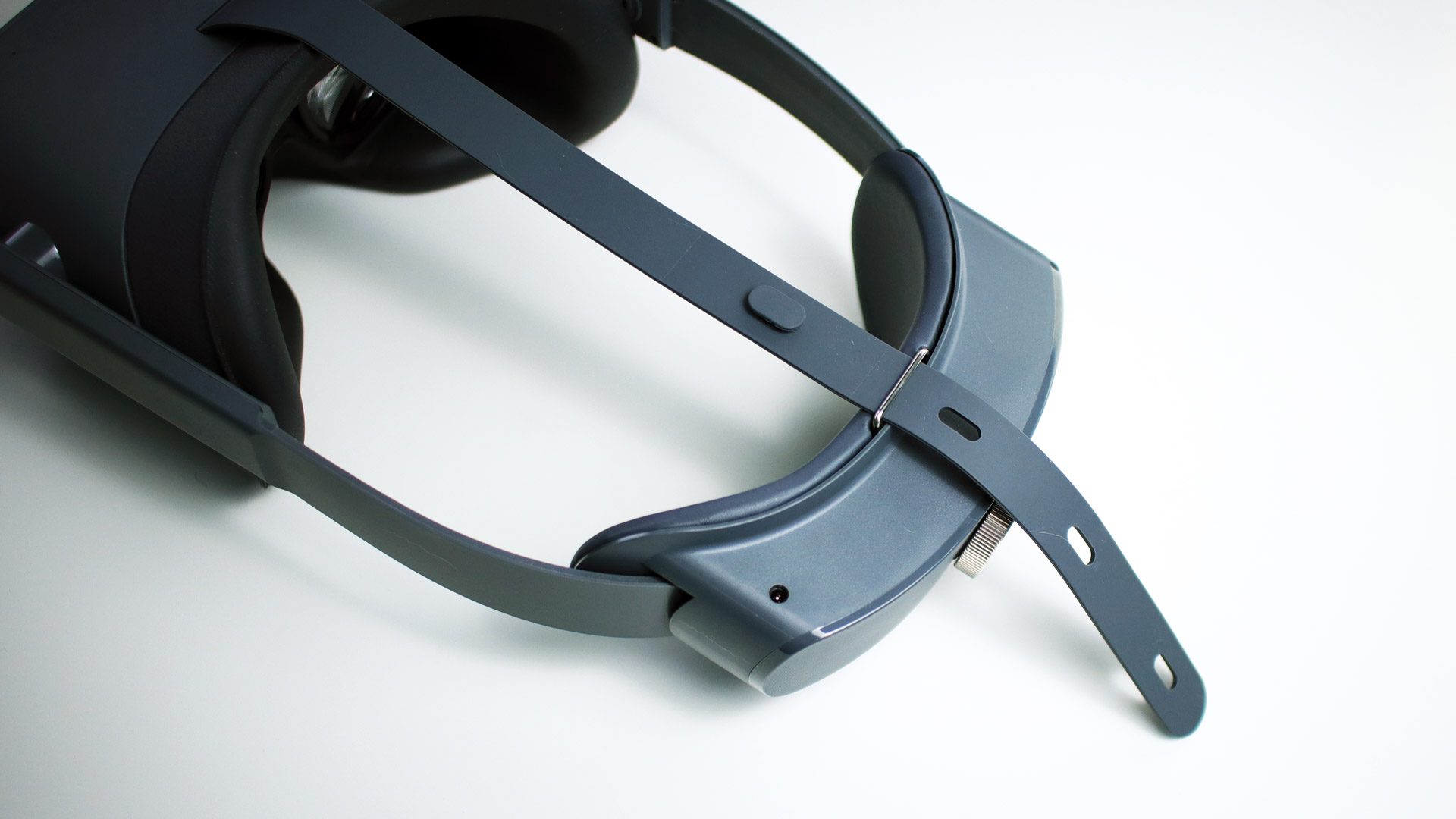
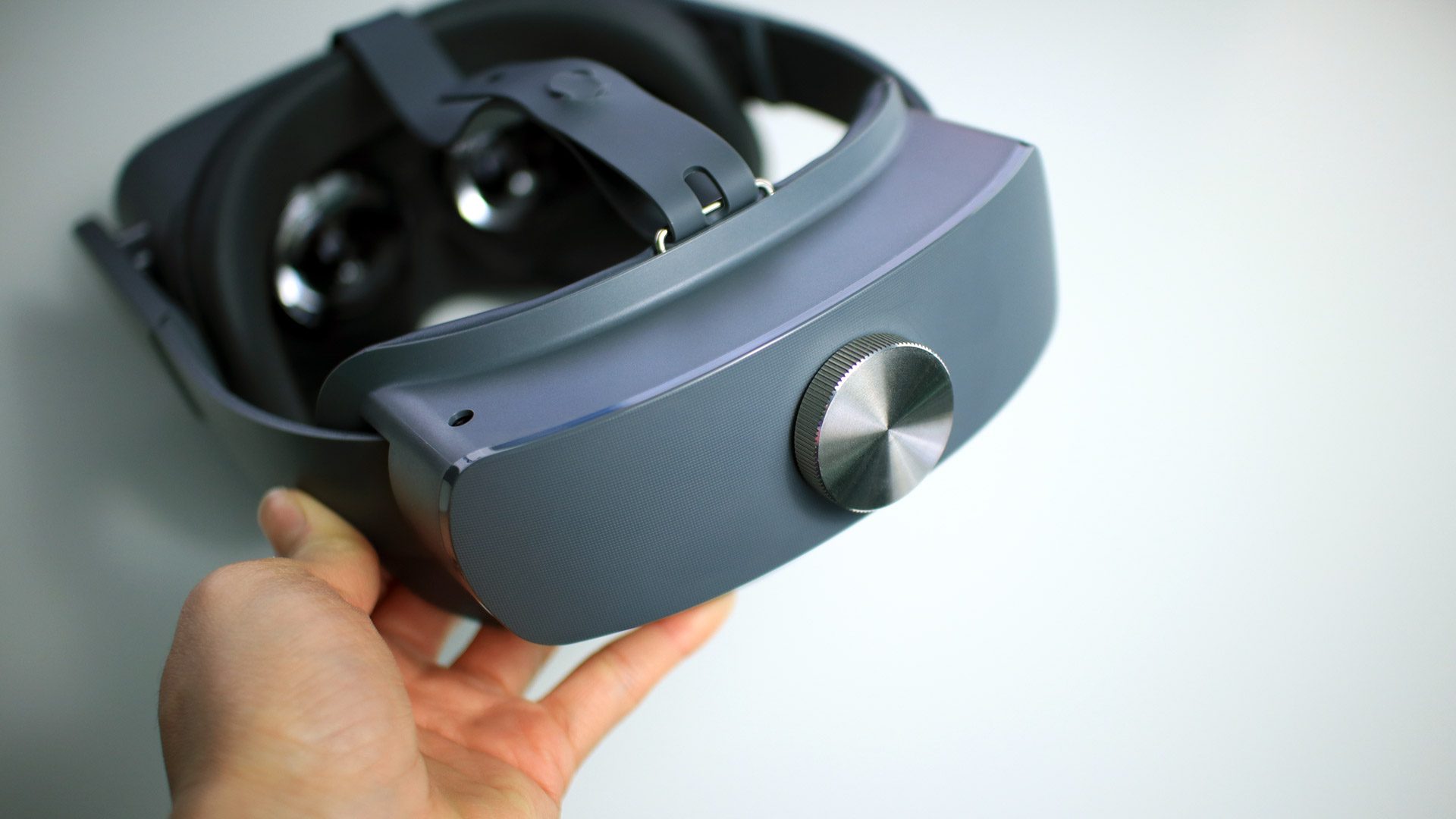
The Pico Neo 2 has an interesting head-strap design which doesn’t use Velcro. Instead, it provides you with three adjustment holes and a dial at the back to make the headset tighter.
Image courtesy Cas & Chary VR
The battery is housed at the back, which allows for better weight distribution, thereby improving comfort. The weight of the whole headset is 692 grams. This is a little heavier than the Oculus Quest, but because of the rear-placed battery, the Neo 2 is a lot more comfortable.
Tracking
Image courtesy Pico Interactive
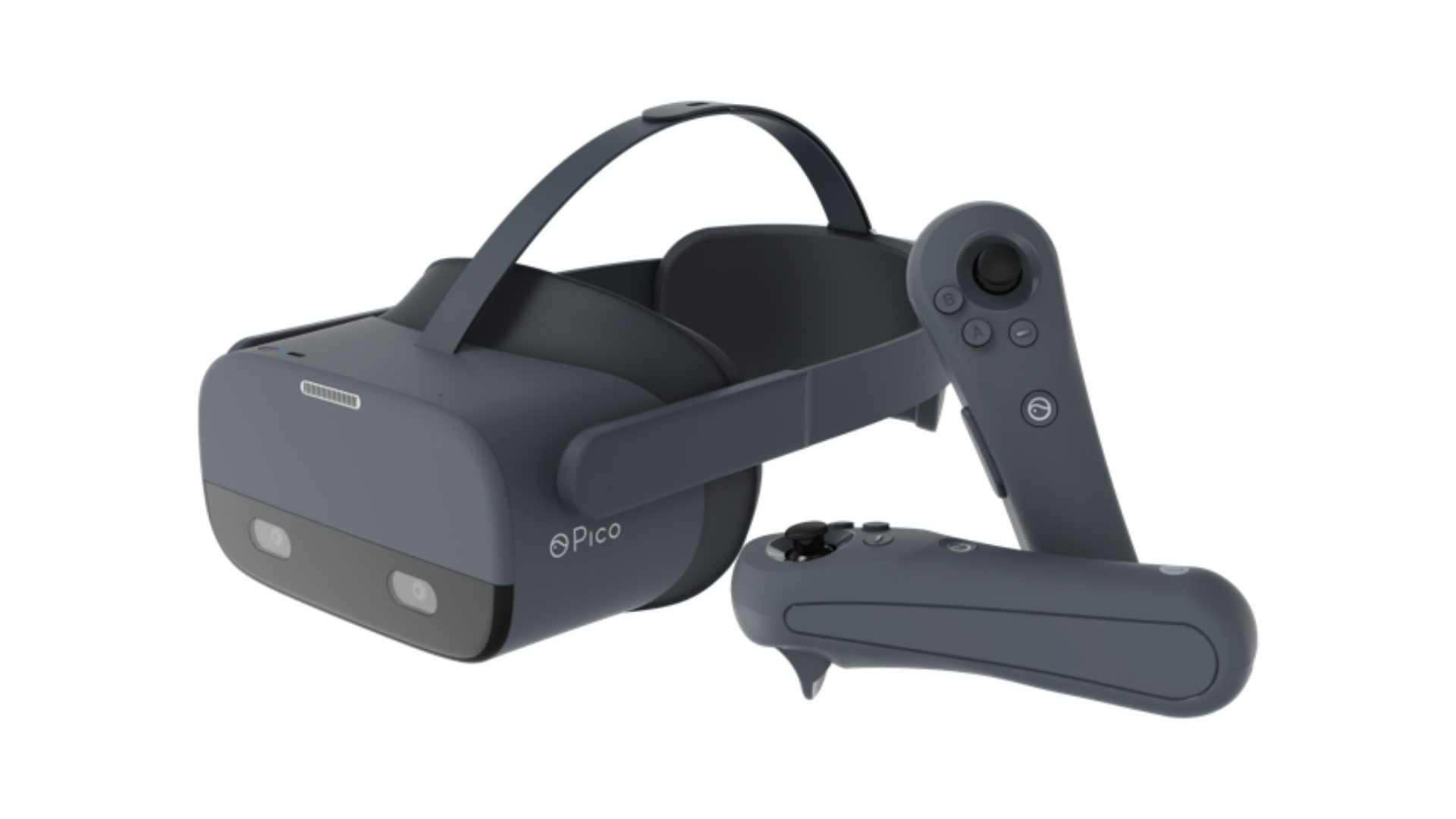
The Neo 2 only has two mono fisheye cameras at the front. Usually, you might get worried about controller tracking loss here, but the Neo 2 doesn’t use optical controller tracking like Quest.
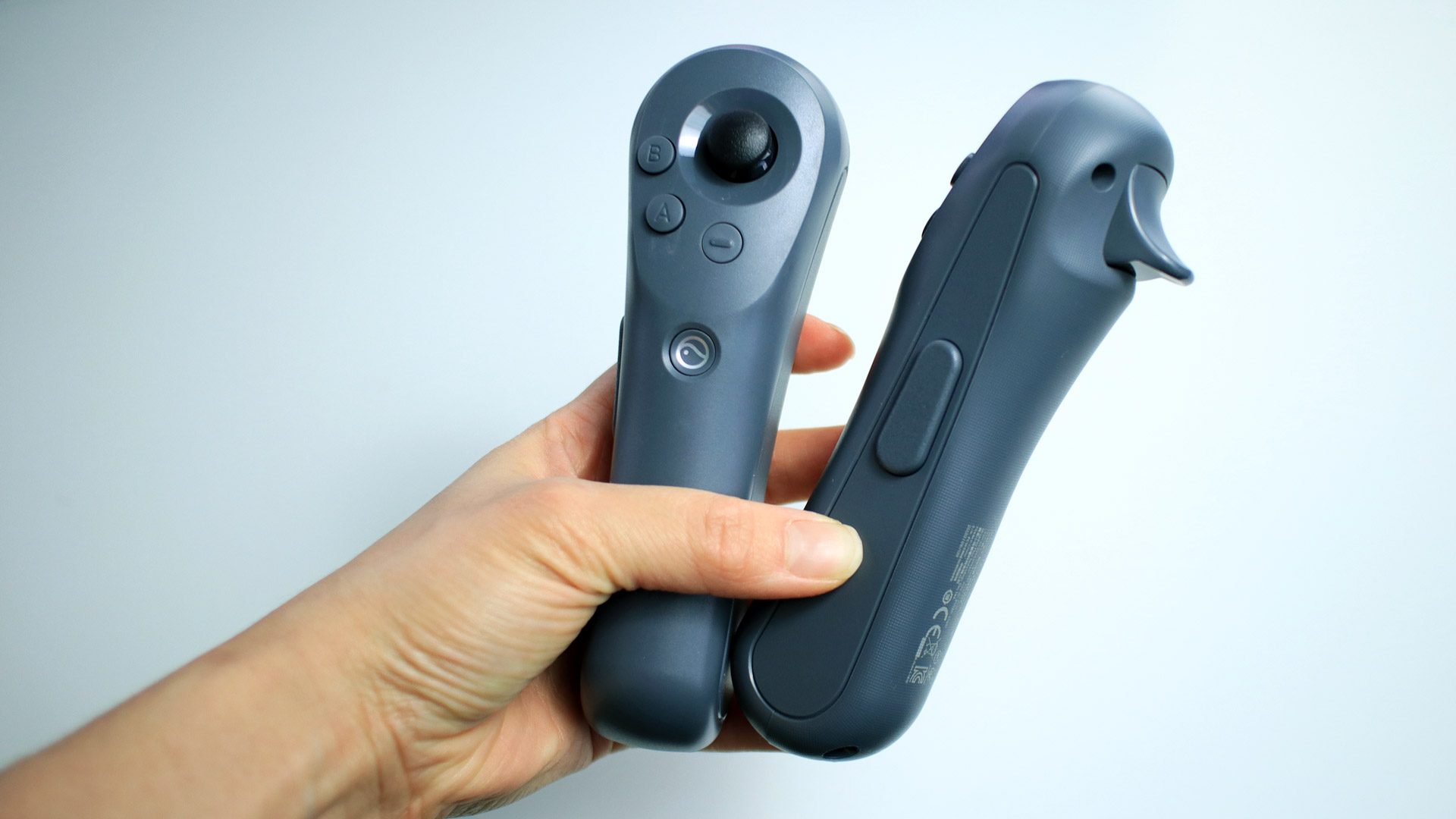
Instead, it uses electromagnetic controller tracking. Without going too techy, this allows for controller tracking without occlusion issues, and it works. I tested this busting some moves in OhShape.
Controllers
Image courtesy Cas & Chary VR
The controllers have a familiar button layout, with joysticks, A+B buttons, trigger, grip, and menu buttons. It has one additional button that functions as the ‘go back’ button in Pico’s software. These controllers are not the most ergonomic and don’t have any capacitive finger sensing, but they work relatively well for most games and apps.
Eye-Tracking
The Pico Neo 2 Eye has integrated eye-tracking by Tobii. This also enables dynamic foveated rendering, which leads to higher quality visuals without using more hardware resources. There were a few eye-tracking demos on the headset, and I found it works well, especially in a demo with a mirror where I was able to compare my avatar with eye-tracking enabled versus disabled. The avatar felt a lot more life-like when I had it on, which makes me feel like this would be a great addition to social VR.
Now, here’s the thing about the Pico headset, it’s primarily built for businesses and not for consumers. So as a consumer in the West, you will likely find content lacking. Even though the headset technically runs on Android, like Oculus Quest, you can’t just sideload Quest content unless developers specifically port their games for the headset. There doesn’t seem to be a lot of developer momentum on that front though, unless a lot more consumers buy the headset.
For now, I think the Pico Neo 2 is mostly interesting for developers who are looking to create apps for enterprise.
SteamVR Streaming
In addition to native VR content made for the headset, Pico Neo 2 also supports streaming SteamVR content from a VR ready PC. If you want to know more about that I did a dedicated video exploring the feature here:
– – — – –
The Pico Neo 2 is currently the most powerful 6DoF standalone headset out there, and I think that having specifications like leading resolution in a standalone headset and in such a small form factor with wireless content streaming is pretty impressive.
As a consumer, I think it is interesting to look at these specs as this could indicate what’s coming next in future standalone headsets.
Okay, I am pretty sure y’all know that by now, but that’s the theme of this post, so make like you’re just learning about it for the first time and put a surprised face on.
First, some context: Oaxaca is an incredible city that is rich with culture, tradition, and art. I love it, and I would highly recommend a visit there to just about anyone. However, my experience there taught me that there can come a time when you realize that you appreciate what a place has to offer, but that doesn’t necessarily mean that it’s “for you”.
Personally, I struggled there. Perhaps my biggest struggle was to make friends, and then beyond that was to get any kind of foothold, in terms of being able to blend in. Not like I expected that people would treat me as if I were a Oaxaca native. I’m a guera who speaks broken Spanish, who was living in a city with a large indigenous population. I’m no fool. All the same, I couldn’t quite find my place within the community. I always felt like I lived just beyond the perimeter.
I was beleaguered by frustration over the fact that my friends within Oaxaca became a community of seasonal residents from the United States and Canada. They are some of the kindest, most genuine, good-hearted people that I have ever had the pleasure of knowing. Still, I wanted that to be enough, and it wasn’t.
I moved to Mexico with the primary goal of improving my Spanish, and most of the work I did in that department was through book-learning, something that I very easily could have done back in the States.
Which is not to say I regret that time. I do not. The close relationships that I developed with my neighbors in Oaxaca, and the support that it gave me, helped me to come to terms with the fact that I wasn’t really getting much closer to where I wanted to be.
The trouble is, without Oaxacan friends or community, I was pretty isolated. And as a 5’10”, light-skinned woman in my 20’s, there was nothing I could do to keep from catching people’s attention. Attention that was about 90% innocuous, but 100% undesired.
I felt as if every time I left my apartment I must be carrying a neon sign with arrows pointed back in my direction, and in spite of all the eyes that rested upon me, I was alone. It was an uncomfortable way to live and resulted in me feeling insecure or uneasy a lot of the time. Which was hard, but confronting my own unease was harder. Owning that I did not fit in, in that environment, was not something I wanted to do.
Then I visited Mexico City and was blown away by how much more comfortable I felt here. Sure, it’s technically a more dangerous city, but being able to blend in with the masses feels fantastic to me. I love that Chilangos (Mexico City residents) speak to me with full confidence that I will understand them. Bigger than that, they do so with a purpose, seeing as most of the time they hardly notice me at all.
Plus, I love a big city. I love walking out on the street and seeing lots of young professionals hanging out, getting lunch together. I love how there are always people out walking their dogs in my neighborhood. I love the noise and activity. I love the buzz of it. Then, on perhaps a more superficial level, I love that I can afford to live in one of the coolest neighborhoods here. I cannot imagine how much I would need to pay to maintain this lifestyle in California. Using my best math: approximately a bazillion dollars a month.
At this point, I have been in Mexico City for nearly a month, and I love it. Sure, it hasn’t been perfect. I had my wallet stolen, which sucked.
Still, for a lot of people that would end their love affair with a city, but not for me. That shit can happen in any big city, and it does. Why would I hold the city responsible for the fact that a couple of professional thieves happened to prey upon me that day? All any of us can do is “live and learn”, and understand that sometimes bad things happen to good people, and it isn’t because the good people did anything “wrong”.
So now I’m living in a long-term hostel with a bunch of really cool people who are roughly around my own age. I have neighbors from Mexico, Argentina, France, Italy, England, and more. Everyone speaks to me in Spanish, and only a small few of them will sometimes clarify things for me in English. It is a great way to learn, and with people that I genuinely enjoy being around.
Living in Mexico, as an overall experience, has taught me a lot of things. One of the most important lessons for me is something we all “know”, but often struggle to apply: There’s no use spinning your wheels, trying the same thing, and hoping for a different result. There’s no shame in pivoting. It does not mean you failed. It means you succeeded at finding a new path.
Jason Hibbets writes An open source craft brewery in Saint Paul, Minnesota is taking open source beyond sharing recipes. The goal for Tin Whiskers Brewing Company is to "engage and give back to the community by sharing an inside look at opening and operating a craft brewery." In this interview with co-founder George Kellerman, we learn a little more about why the trio of hobbyists who started the brewing company took the path to becoming professional brewers and why they decided to be more open. "The brewery community was extremely helpful and open, so being open ourselves seemed like a great way to honor that," Kellerman said.