On Wednesday, Anthropic announced that its AI chatbot, Claude, will remain free of advertisements, drawing a sharp line between itself and rival OpenAI, which began testing ads in a low-cost tier of ChatGPT last month. The announcement comes alongside a Super Bowl ad campaign that mocks AI assistants that interrupt personal conversations with product pitches.
"There are many good places for advertising. A conversation with Claude is not one of them," Anthropic wrote in a blog post. The company argued that including ads in AI conversations would be "incompatible" with what it wants Claude to be: "a genuinely helpful assistant for work and for deep thinking."
The stance contrasts with OpenAI's January announcement that it would begin testing banner ads for free users and ChatGPT Go subscribers in the US. OpenAI said those ads would appear at the bottom of responses and would not influence the chatbot's actual answers. Paid subscribers on Plus, Pro, Business, and Enterprise tiers will not see ads on ChatGPT.
"The trust poet Seenu Ramasamy has in his readers creates such a rapport that he can lucidly communicate the most intricate feelings and responses he wants to share, whether it is from his life or his understanding of life in general. Choosing the poetic idiom directly from the native soil, Seenu Ramasamy's poems gives us the mystic feel of listening to a ritualist folk song sung with dithyrambic ecstasy. His love for classical Tamil Sangam poetry makes him write with ecological sensibility. Both his movies and poetry are authentic documents of Indian life.--Professor N. Elango, Postgraduate Department of English, The American College."--back cover.
On Sunday, OpenAI CEO Sam Altman offered two eye-catching predictions about the near-future of artificial intelligence. In a post titled "Reflections" on his personal blog, Altman wrote, "We are now confident we know how to build AGI as we have traditionally understood it." He added, "We believe that, in 2025, we may see the first AI agents 'join the workforce' and materially change the output of companies."
Both statements are notable coming from Altman, who has served as the leader of OpenAI during the rise of mainstream generative AI products such as ChatGPT. AI agents are the latest marketing trend in AI, allowing AI models to take action on a user's behalf. However, critics of the company and Altman immediately took aim at the statements on social media.
"We are now confident that we can spin bullshit at unprecedented levels, and get away with it," wrote frequent OpenAI critic Gary Marcus in response to Altman's post. "So we now aspire to aim beyond that, to hype in purest sense of that word. We love our products, but we are here for the glorious next rounds of funding. With infinite funding, we can control the universe."
Users in 48 US cities can now buy a new Hyundai car from a local dealership through Amazon. Just like buying a car from a dealership, inside Amazon Autos you can browse by make, model, trim, color and features. And! Finance options! Whee!
The interface also offers an instant valuation of your current vehicle’s trade-in value, then you just drop it off when you collect your new ride. Amazon even claims transparent pricing and says this will remove the need for haggling with a salesperson. (Surely, that’s part of the thrill?)
If you’re not up for a Hyundai, Amazon Autos will add more manufacturers, brands, cities and features in 2025.
YouTube Playables users can now play some of its games with other humans. It doesn’t extend to all YouTube Playables’ 100-plus games, however. Right now, multiplayer is available on two games, Ludo Club and Magic Tiles 3, on both desktop and mobile. Or, you could see what games Netflix has for free. Speaking of which…
As teased in the fall, the latest installment in the spatial puzzle series Monument Valley is available on Android and iOS, free if you’re a paying Netflix user. The levels, once again, have that M.C. Escher vibe, where paths and structures don’t follow the laws of physics. Monument Valley 3 will also be getting new content updates every season. In an interview, ustwo Games lead designer Emily Brown called them “Monument Valley snacks,” bite-sized additions to the standalone game.
OpenAI has laid out plans to become a for-profit company. In a blog post published on Friday, OpenAI’s board said it will replace the company’s existing structure with one that puts control into the hands of its for-profit arm.
Going into 2025, OpenAI plans to become a Public Benefit Corporation (PBC), which is a for-profit company meant to operate for the good of society. This division will “run and control OpenAI’s operations and business,” while OpenAI’s nonprofit will retain a stake in the business but lose its oversight role.
The nonprofit will operate separately with its own leadership team and staff “to pursue charitable initiatives in sectors such as health care, education, and science.” The board said the structure will allow OpenAI to “raise the necessary capital” to build toward artificial general intelligence while also creating “one of the best resourced non-profits in history.” OpenAI’s competitors, including Anthropic and Elon Musk’s xAI, also operate as PBCs.
Rumors about OpenAI’s transition into a for-profit company have been swirling for months as the company looks for ways to appeal to investors and raise money to keep its data-hungry AI models up and running. In September, Bloomberg reported that CEO Sam Altman would receive around a 7 percent equity stake as part of OpenAI’s plans to become a for-profit company, something Altman reportedly denied.
“The hundreds of billions of dollars that major companies are now investing into AI development show what it will really take for OpenAI to continue pursuing the mission,” the board wrote. “We once again need to raise more capital than we’d imagined. Investors want to back us but, at this scale of capital, need conventional equity and less structural bespokeness.”
Under the structure outlined by OpenAI’s board, the nonprofit would get shares in the PBC “at a fair valuation determined by independent financial advisors.” Concerns about keeping OpenAI’s nonprofit board in control boiled over last year, when its members ousted Altman but later reinstated him.
As part of its push toward adding generative AI to search, Google has introduced a new twist: video. Gemini will let you upload video that demonstrates an issue you're trying to resolve, then scour user forums and other areas of the internet to find a solution.
As an example, Google's Rose Yao talked onstage at I/O 2024 about a used turntable she bought and how she couldn't get the needle to sit on the record. Yao uploaded a video showing the issue, then Gemini quickly found an explainer describing how to balance the arm on that particular make and model.
Google
"Search is so much more than just words in a text box. Often the questions you have are about the things you see around you, including objects in motion," Google wrote. "Searching with video saves you the time and trouble of finding the right words to describe this issue, and you’ll get an AI Overview with steps and resources to troubleshoot."
If the video alone doesn't make it clear what you're trying to figure out, you can add text or draw arrows that point to the issue in question.
OpenAI just introduced ChatGPT 4o with the ability to interpret live video in real time, then describe a scene or even sing a song about it. Google, however, is taking a different tack with video by focusing on its Search product for now. Searching with video is coming to Search Labs US users in English to start with, but will expand to more regions over time, the company said.
Catch up on all the news from Google I/O 2024 right here!
This article originally appeared on Engadget at https://www.engadget.com/googles-gemini-will-search-your-videos-to-help-you-solve-problems-175235105.html?src=rss
“Data gravity” is a principle associated with the more familiar issue of platform or application vendor lock-in, but in the context of data.
Based on the amount of data or the “weight” of it, the analogy to the laws of gravity goes that the more data you have, the more data it will attract and pull applications, services and workflows into its orbit. The effects of it are heightened when trying to move data between vendors; however, problems may arise before then.
The Challenge for the Enterprise
Vendor lock-in has long been a play in the software industry to make it more difficult to switch to other software if you wish to move to another solution.
Typically enterprises are more susceptible to this due to large deployments, the complexity of their linked systems, time and costs associated with switching vendors, including the need to re-train staff. As a result, they are less likely to move to another data center, cloud provider, application provider or data access vendor.
As we move full steam into the era of big data, where devices are generating more data than ever, data gravity will become more of an issue. In fact, IDC forecasts that by 2025, approximately 175 zettabytes of data will be generated. Subsequently, vendor lock-in challenges will arise that need to be addressed.
Couchbase delivers Capella, the cloud database platform for modern applications. Capella enables developers and architects to quickly build the apps of the future and deliver always-on experiences to customers, on a mission to simplify how businesses develop, deploy and consume modern applications.
Learn More
The latest from Couchbase
Lock-In Cause and Effect
Not being able to migrate to the services of other vendors can happen for a number of reasons. It could be because of contractual obligations, but it is more likely to happen if the vendor technology is proprietary, making it less likely to be compatible with the systems of other vendors.
In response to that, the open source ecosystem has evolved over the last couple of decades to provide viable alternatives that allow organizations to benefit from the most freedom.
Lock-in can sometimes even happen by accident, where innovation becomes stagnant and better alternatives are not evaluated as they should be. For example, you could have a market-leading product with little or no competition that generates good revenue for a long time, so there is little incentive to modernize. Then out of nowhere, someone comes along with a new model that upends the market.
Regardless of how the situation arises, there are undeniably negative consequences to vendor lock-in. Let’s look at some of these from a data perspective.
Data compliance: Data laws are becoming more complex. There are a number of relatively new ones like General Data Protection Regulation (GDPR), the California Consumer Privacy Act (CCPA), and the Health Insurance Portability and Accountability Act (HIPAA), which continue to evolve. Furthermore, data sovereignty further complicates things — for instance, organizations working in China would need to use Alibaba, while those working in Russia would need to use Yandex. Not having control over your data means there’s more likelihood of a failure to comply that can lead to fines and service outages.
Increased costs: Not optimizing data on old infrastructure for new technology can lead to higher costs.
Less innovation and flexibility: Without the ability to adopt emerging technologies, new features and other business opportunities could be missed.
Security risks: Data breaches are all too common, and the chances of this happening are wider when you are on legacy architecture.
Some or all of these can lead to compounding reputational damage for the organization, resulting in a number of knock-on effects.
Breaking Out
Getting free of vendor lock-in should start with the contract, whether when entering a new one or renegotiating an existing one. Be sure to check the small print, ensure that it is possible to export it when you wish and in a format that is acceptable for your engineers. It should not be cost prohibitive.
Beware of being led to use additional vendor services that can over time increase your reliance on them and make it more difficult to move away. This is common for large cloud service providers (CSP) that might have additional services for database, analytics, monitoring and so on. Tight integration is an attractive prospect on the surface, but it might come back to bite you.
In addition, enterprises are adopting hybrid and multicloud strategies to avoid the data gravity trap. This can be a positive factor in choosing vendors who provide CSP-agnostic services (frequently open source) to benefit from the most freedom and to avoid vendor lock-in.
A good vendor spread should make your system more modular as it makes it easier to swap parts in and out. Beware, however, of having too much fragmentation, given the costs related to creating and maintaining integrations. In addition, working with vendors with large partner ecosystems can help reduce the risks of lock-in.
Couchbase: Multicloud Support and Data Access Made Easy
Choose a solution like Couchbase that will enable, not disable, your multicloud strategies. Many data solutions offer multiregional synchronization, sometimes across different cloud vendors.
Couchbase offers cross data-center replication (XDCR), which is a highly performant replication technology used to replicate data between Couchbase clusters. This is complementary to the intracluster replication. XDCR provides asynchronous replication and maintains data consistency across sites.
Don’t wait to audit your data stores. Factor regular app modernization reviews into your development processes at regular intervals. Avoiding being locked in a specific tech ecosystem will lead to operational agility, leading to opportunities to use vital innovations happening in your industry. Ultimately this will cause more business revenue and growth.
Learn more about Couchbase’s modern multicloud database here, and try Couchbase for yourself today with our free trial.
Creative Technology Middle East worked with INFiLED on a technically challenging build which required 500 sq m of LED to fit within a pentagon with seamless corners.
In today’s networks, a traditional subnet manager will recognize failed links and recalculate routes to avoid the problem, but this can take up to 5 seconds for 1,000 nodes and 30 seconds for clusters with 10,000 or more nodes—not fast enough to keep an application running seamlessly. The self-healing network capabilities of NVIDIA Quantum InfiniBand switches overcome link failures, enabling network recovery much faster than any other software-based solution.
Feature selection is the processing of choosing which inputs (or features) are necessary when creating and training a machine learning model. By discovering which features are the most important, less important features can be dropped as inputs. This has the effect of saving computational time, complexity, and memory.
However, this becomes even more important in embedded machine learning, where resources are scarce and a “feature” might mean an entire sensor. Dropping an entire sensor to achieve the same results can mean saving costs, board space, and power!
Feature selection is similar to dimensionality reduction where we try to reduce the number of values used as inputs to a machine learning model. Such techniques can reduce the computational complexity of the model. Ideally, we want to reduce the number of inputs while minimizing any accuracy loss that might occur.
While dimensionality reduction usually requires a transformation of the data (thus incurring some computational costs), feature selection allows us to determine which inputs we can drop altogether. This difficult part is figuring out which features are unimportant.
Feature selection is a wide (and still active) area of research that includes a large number of techniques. In the video, we focus on two techniques: Pearson correlation coefficient (PCC) for unsupervised feature selection and Least Absolute Shrinkage and Selection Operator (LASSO) for supervised feature selection.
Correlation simply looks at the relationship between each pair of input features. We can use scatter plots to visualize those relationships or calculate a “correlation strength” number, such as the PCC. The PCC only provides a relative indication of linear correlation; it does not take non-linear relationships into account.
On the other hand, we can use supervised feature selection techniques to train a model and examine which of the inputs were most important in the decision-making process within the model. LASSO relies on adding an L1 regularization term to the first layer of nodes and then examining the resultant weights of that first layer after training. Larger absolute values indicate higher importance in the decision-making process, and weights closer to 0 means that the weights were relatively unimportant.
Once we have figured out which features we want to keep, we can train the model again using just those features to ensure that we did not lose much accuracy. In the video, I apply these techniques to the perfect toast machine (https://youtu.be/meYZOXQo5mY) to eliminate two of the sensors to achieve the same results with fewer sensors!
The boombox was an important cultural icon of the 1980s and a way to spread both music and message. We're bringing it back with The World's Thinnest Boombox!
From the earliest coast-to-coast calls in 1914 and through the six decades that followed, not much changed from an infrastructure perspective. The pace picked up with the introduction of fiber-optic technology, and more recently, network functions virtualization (NFV), which aimed to move the network functions that were being run on purpose-built hardware to virtual machines (VMs).
And now, the rollout of 5G services presents carriers with both challenge and opportunity for dramatic transformation.
New service offerings will be possible that can open up entirely new lines of business. The challenge will be to meet this demand with the agility to spin up new services quickly to outpace the competition. Having the right infrastructure in place will be a key enabler for telecoms to move from “pipe” to “platform” — helping to lay the foundation to become a go-to platform for innovative, data-driven services.
While virtualization remains an important component of the 5G rollout, for this new challenge, cloud native — and containers — is the revolutionary way to go.
Sponsor Note
Portworx is the leading provider of persistent storage for containers and is used in production by healthcare, global manufacturing, and telecom members of the Fortune Global 500 and other great companies. Learn about Portworx solutions for Kubernetes storage, DCOS storage & more at portworx.com.
Read the latest from Portworx by Pure Storage
The VM Era
NFV was and is a transformative idea: Essentially that anything that can be done on a purpose-built box can also be done via VM on a commodity data center kit — servers, storage and networking gear.
Made possible by the rise of VMware and other hypervisors, NFV’s potential benefits include reduced costs and power consumption, the ability to easily share resources and rapidly scale services up or down, and hardware portability.
All of that is helpful for telecom providers as they build out new 5G networks. But challenges remain with purpose-built boxes designed to do one thing effectively on networks too large to be run manually, ranging from performance, migration and co-existence, management and automation and, of course, security and resilience.
Not all of these challenges are storage-related and many are being worked out. Carriers continue to move more 5G functionality into virtualized network functions (VNFs), but network rollouts take time and are still ongoing.
As part of this transformation, they need high-performance, reliable infrastructure that isn’t purpose-built. But “commodity hardware” doesn’t mean “it’s all the same.” It refers to hardware that supports open standards. In fact, the very real differences between storage vendors can be critical to the success or failure of an NFV project. Telecoms should seek out storage solutions that meet their key requirements for reliability, performance, automation and efficiency.
The Cloud Native Future
While virtualized network functions (VNFs) are currently transforming the telecom industry, the industry is taking another step forward with cloud native network functions (CNFs).
CNFs use containers, which is why you sometimes see CNFs referred to as Containerized Network Functions. At Pure, we prefer the term Cloud Native Network Function because cloud native isn’t really about where an application is deployed; it’s about how it’s deployed. Cloud native apps can live on bare metal in a data center, in a public cloud or anywhere else. Just as VNFs provided many benefits to telecom carriers, CNFs incorporate all those benefits and more.
CNFs help address some of the challenges that still exist when using virtualization and VNFs. CNFs offer:
Autoscaling — Containers can spawn more of themselves with little effort. You can spin up a new container every time some process needs one, and spin it down when it’s done. Kubernetes just handles it all via code, so no operator intervention is required. This is a huge win for massive telecom networks.
Support for DevOps — DevOps has revolutionized programming, allowing for continuous integration/continuous delivery (CI/CD). This means that carriers can deliver new functions, products and product updates much, much faster.
Incredible fault tolerance and fast restart — CNFs are based on microservices, which can greatly reduce the operational and security risk of massive failures. Containers can restart almost instantly and upgrades can be performed without downtime, allowing for automated, fast rollbacks if needed. If a container fails, the system automatically spawns a new one.
Monitoring and reporting — Given their scope, telecom networks are highly dependent on good monitoring and reporting. Fortunately, there are many tools in the Kubernetes world for doing so, starting with Kubernetes itself. Other tools include Prometheus for monitoring and Grafana for reporting and alerts.
Benefits abound when moving to CNFs, but while application developers love Kubernetes and containers, they present a challenge for infrastructure teams that aren’t used to them.
There is a wide scope of data management tasks needed: capacity management, data backup, disaster recovery, security, data migrations and more. Legacy methods don’t work because such methods aren’t container-aware (for example, a legacy backup tool won’t be able to rebuild a container environment successfully). A container native solution is needed to deliver these expected enterprise data services for container-based applications.
Is Your Infrastructure Team Ready to Handle the Shift?
For KPN, one of the largest telecommunications companies in the Netherlands and a customer of our Portworx division, the optimal platform is one that enables the best of two worlds: software that simplifies and streamlines processes while leaving plenty of room to configure and optimize individual clusters to match the specific needs of your own customers.
That’s an advantage when talking to decision makers in different industries. Whether serving a logistics customer, health care or transportation, when it comes to the performance of their information systems, everyone speaks the same language.
For the telecom industry, the road ahead leads to the cloud. CNFs are the next step in upgrading carrier networks — paving the way for carrier innovation that also makes their customers’ lives easier and everyone’s business more resilient and successful.
This animation shows the locations of some of the telescopes making up the EHT, as well as a representation of the long baselines between the telescopes.
The Meta Quest 2 (previously known as the Oculus Quest 2) is a feature-packed VR headset that’s gotten better with time. Whether you already own one, or plan to buy one at some point, here are some tips and accessory recommendations that should help you get more enjoyment out of the headset.
The CGInsider Podcast #2214: "What Are Some Of Your Favorite CGI Creatures?" In this week's podcast, TheCGBros answer this question, providing their insights and opinions in a lively discussion on the topic. For more information, please see the details and links below:
———————————————————— We really hope you enjoy watching this video! When you do, please hit the LIKE ✔️ SUB ✔️ SHARE ✔️ button as well as the bell symbol 🔔 so you'll be kept in the loop as new material is published on our channel! ———————————————————— Help support TheCGBros by purchasing our official Gear!! ►https://teespring.com/stores/cgb-gear ———————————————————— Thank You for SUBSCRIBING -►http://bit.ly/2c8Fl8u ———————————————————— Watch More CGI VFX Short Films HERE ►https://bit.ly/2MpDz7E ———————————————————— WANT TO GET FEATURED? If you’re a CGI ARTIST, SCHOOL, ANIMATOR, FILMMAKER, or STUDIO and would like your project showcased on TheCGBros simply apply here ►https://www.thecgbros.com/getstarted/ ———————————————————— WHO EXACTLY ARE THECGBROS? CLICK TO FIND OUT ►https://www.thecgbros.com/who/ ————————————————————
TheCGBros have permission to broadcast this video. If you believe this video should not be broadcast on our channel, please contact legal@thecgbros.com.
For any Copyright issues, please reach out to us first before filing a claim with YouTube. Send us a message or email detailing your concerns and we'll make sure the matter is resolved immediately.
I showed before the full process of sculpting Martin Luther King, now I'm showing a bit of the casting and finishing process in different colours! The sculptures are available for sale at my shop: etsy.com/ca/shop/JulianaLePine
 "The trust poet Seenu Ramasamy has in his readers creates such a rapport that he can lucidly communicate the most intricate feelings and responses he wants to share, whether it is from his life or his understanding of life in general. Choosing the poetic idiom directly from the native soil, Seenu Ramasamy's poems gives us the mystic feel of listening to a ritualist folk song sung with dithyrambic ecstasy. His love for classical Tamil Sangam poetry makes him write with ecological sensibility. Both his movies and poetry are authentic documents of Indian life.--Professor N. Elango, Postgraduate Department of English, The American College."--back cover.





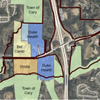 One of Cary’s few remaining large tracts of undeveloped land will become a massive destination center – if all goes as planned.


