22 Mar 17:38
by Grigory Tarnopolsky, Alex Jura Kruchkov, and Ashvin Vishwanath
Author(s): Grigory Tarnopolsky, Alex Jura Kruchkov, and Ashvin Vishwanath
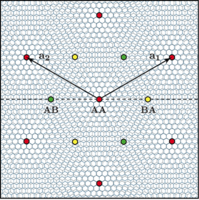
The angles at which flat bands emerge to produce superconductivity in twisted bilayer graphene are shown to be fundamentally connected to quantum Hall wave functions.
[Phys. Rev. Lett. 122, 106405] Published Fri Mar 15, 2019
19 Mar 17:08
by Brian Kiraly, Xiaolong Liu, Luqing Wang, Zhuhua Zhang, Andrew J. Mannix, Brandon L. Fisher, Boris I. Yakobson, Mark C. Hersam, Nathan P. Guisinger

ACS Nano
DOI: 10.1021/acsnano.8b09339

11 Mar 12:37
by Lujun Wang, Simon Zihlmann, Ming-Hao Liu, Péter Makk, Kenji Watanabe, Takashi Taniguchi, Andreas Baumgartner, Christian Schönenberger

Nano Letters
DOI: 10.1021/acs.nanolett.8b05061

11 Mar 12:00
by Rebeca Ribeiro-Palau, Shaowen Chen, Yihang Zeng, Kenji Watanabe, Takashi Taniguchi, James Hone, Cory R. Dean

Nano Letters
DOI: 10.1021/acs.nanolett.9b00351

04 Mar 13:33
by Junwei Chu, Yu Zhang, Yao Wen, Ruixi Qiao, Chunchun Wu, Peng He, Lei Yin, Ruiqing Cheng, Feng Wang, Zhenxing Wang, Jie Xiong, Yanrong Li, Jun He

Nano Letters
DOI: 10.1021/acs.nanolett.9b00386

22 Feb 13:14
by Chendong Zhang, Cong Wang, Feng Yang, Jing-Kai Huang, Lain-Jong Li, Wang Yao, Wei Ji, Chih-Kang Shih

ACS Nano
DOI: 10.1021/acsnano.8b07595

18 Jan 15:05
by Michael Ellner, Pablo Pou, Rubén Pérez

ACS Nano
DOI: 10.1021/acsnano.8b08209

16 Jan 09:47
by C. K. Safeer, Josep Ingla-Aynés, Franz Herling, José H. Garcia, Marc Vila, Nerea Ontoso, M. Reyes Calvo, Stephan Roche, Luis E. Hueso, Fèlix Casanova

Nano Letters
DOI: 10.1021/acs.nanolett.8b04368

15 Jan 13:50
by Fang Cheng, Zhixin Hu, Hai Xu, Yan Shao, Jie Su, Zhi Chen, Wei Ji, Kian Ping Loh

ACS Nano
DOI: 10.1021/acsnano.8b09054

10 Dec 17:41
Chem. Commun., 2018, Accepted Manuscript
DOI: 10.1039/C8CC08280D, Communication
Luis M Rodríguez, Javier Daniel Fuhr, Paloma Machaín, Hugo Ascolani, Magalí Lingenfelder, J. Esteban Gayone
We show that Sn atoms combined with organic ligands can be used to build 2D coordination networks on Au(111) surfaces.
The content of this RSS Feed (c) The Royal Society of Chemistry

10 Dec 13:10
by Mengxi Liu, Shichao Li, Jingyuan Zhou, Zeqi Zha, Jinliang Pan, Xin Li, Jin Zhang, Zhongfan Liu, Yuanchang Li, Xiaohui Qiu

ACS Nano
DOI: 10.1021/acsnano.8b07349

10 Dec 13:10
by Mihael A. Gerkman, Sapna Sinha, Jamie H. Warner, Grace G. D. Han

ACS Nano
DOI: 10.1021/acsnano.8b08441

07 Dec 17:22
by Andrey V. Matetskiy, Nikita V. Denisov, Andrey V. Zotov, Alexander A. Saranin

Nano Letters
DOI: 10.1021/acs.nanolett.8b04560

03 Dec 12:03
by A. Sabitova, R. Temirov, and F. S. Tautz
Author(s): A. Sabitova, R. Temirov, and F. S. Tautz
A modified scheme of scanning tunneling spectroscopy data analysis has been used to reconstruct the band structure of a strongly dispersive two-dimensional unoccupied electronic state located at the commensurate interface between a monolayer of 3,4,9,10-perylene-tetracarboxylic dianhydride (PTCDA) a...
[Phys. Rev. B 98, 205429] Published Thu Nov 29, 2018
29 Nov 14:46
by Hakseong Kim, Nicolas Leconte, Bheema L. Chittari, Kenji Watanabe, Takashi Taniguchi, Allan H. MacDonald, Jeil Jung, Suyong Jung

Nano Letters
DOI: 10.1021/acs.nanolett.8b03423

27 Nov 17:32
by Luigi Malavolti, Matteo Briganti, Max Hänze, Giulia Serrano, Irene Cimatti, Gregory McMurtrie, Edwige Otero, Philippe Ohresser, Federico Totti, Matteo Mannini, Roberta Sessoli, Sebastian Loth

Nano Letters
DOI: 10.1021/acs.nanolett.8b03921

20 Nov 14:04
by Jonathan Wyrick, Xiqiao Wang, Pradeep Namboodiri, Scott W. Schmucker, Ranjit V. Kashid, Richard M. Silver

Nano Letters
DOI: 10.1021/acs.nanolett.8b02919

19 Nov 10:32
by Fang Cheng
Two-dimensional tessellation by molecular tiles constructed from halogen–halogen and halogen–metal networks
Two-dimensional tessellation by molecular tiles constructed from halogen–halogen and halogen–metal networks, Published online: 19 November 2018; doi:10.1038/s41467-018-07323-6
Molecular tessellations of complex tilings are difficult to design and construct. Here, the authors show that molecular tessellations can be formed from a single building block that gives rise to two distinct supramolecular phases, whose self-similar subdomains serve as tiles in the periodic tessellations.

19 Nov 09:59
by Felix Bischoff,
Yuanqin He,
Alexander Riss,
Knud Seufert,
Willi Auwärter,
Johannes V. Barth

Interconnecting porphines and graphene nanoribbons: Porphine homocoupling and covalent attachment of porphines to graphene nanoribbons under atomically well‐defined on‐surface conditions was investigated by bond‐resolved scanning tunneling and atomic force microscopy. The thermally induced reactions on Ag(111) afford distinct coupling motifs, the relative abundance of which is associated with stepwise reaction mechanisms.
Abstract
The templated synthesis of porphyrin‐based oligomers and heterosystems is of considerable interest for materials with tunable electronic gaps, photovoltaics, or sensing device elements. In this work, temperature‐induced dehydrogenative coupling between unsubstituted free‐base porphine units and their attachment to graphene nanoribbons on a well‐defined Ag(111) support are scrutinized by bond‐resolved scanning probe microscopy techniques. The detailed inspection of covalently fused porphine dimers obtained by in vacuo on‐surface synthesis clearly reveals atomistic details of coupling motifs, whereby also putative reaction intermediates are identified. Moreover, the covalent attachment of porphines at preferred locations of atomically precise armchair‐type graphene nanoribbons is demonstrated.
12 Nov 14:38
by Ane Sarasola, Ana Barragán, Lucia Vitali

Journal of the American Chemical Society
DOI: 10.1021/jacs.8b10329

15 Oct 15:20
by Ignacio Piquero-Zulaica, Aran Garcia-Lekue, Luciano Colazzo, Claudio K. Krug, Mohammed S. G. Mohammed, Zakaria M. Abd El-Fattah, J. Michael Gottfried, Dimas G. de Oteyza, J. Enrique Ortega, Jorge Lobo-Checa

ACS Nano
DOI: 10.1021/acsnano.8b06536

04 Oct 17:08
by Tao Wang, Jianmin Huang, Haifeng Lv, Qitang Fan, Lin Feng, Zhijie Tao, Huanxin Ju, Xiaojun Wu, Steven L. Tait, Junfa Zhu

Journal of the American Chemical Society
DOI: 10.1021/jacs.8b08477

04 Oct 11:18
by Fabian Queck, Ondrej Krejcí, Philipp Scheuerer, Felix Bolland, Michal Otyepka, Pavel Jelínek, Jascha Repp

Journal of the American Chemical Society
DOI: 10.1021/jacs.8b06765

01 Oct 10:08
by KazunoriSugiyasu
,
TomoyaFukui
,
TakayukiUchihashi
,
NorihikoSasaki
,
HirokiWatanabe
,
MasayukiTakeuchi

Up to speed: The extraordinary spatiotemporal resolution of high‐speed AFM permitted visualization of the seeded growth and self‐repair of supramolecular polymers in real time, and scanning‐probe AFM permitted the site‐specific manipulation and functionalization of a molecular self‐assembly (see picture). This combination of bottom‐up and top‐down approaches at the molecular level should enable the targeted synthesis of functional nanoarchitectures.
Abstract
Despite recent advances in mechanistic understanding and controlled‐synthesis methodologies regarding synthetic supramolecular assemblies, it has remained challenging to capture the molecular‐level phenomena in real time, thus hindering further progress in this research field. In this study, we applied high‐speed atomic‐force microscopy (AFM), which has extraordinary spatiotemporal resolution (1 nm and sub‐100 ms), to capture dynamic events occurring during synthetic molecular self‐assembly. High‐speed AFM permitted the visualization of unique dynamic behavior, such as seeded growth and self‐repair in real time. Furthermore, scanning‐probe AFM permitted the site‐specific manipulation and functionalization of a molecular self‐assembly. This powerful combination of bottom‐up and top‐down approaches at the molecular level should enable targeted syntheses of unprecedented functional nanoarchitectures.
28 Sep 14:25
by Donglin Ma, Zhongqiu Fu, Xuelei Sui, Keke Bai, Jiabin Qiao, Chao Yan, Yu Zhang, Jingyi Hu, Qian Xiao, Xinrui Mao, Wenhui Duan, Lin He

ACS Nano
DOI: 10.1021/acsnano.8b04874

18 Sep 08:16
by Manuel Corva, Fatema Mohamed, Erika Tomsic, Zhijing Feng, Tomas Skala, Giovanni Comelli, Nicola Seriani, Maria Peressi, Erik Vesselli

ACS Nano
DOI: 10.1021/acsnano.8b05992

17 Sep 11:56
Phys. Chem. Chem. Phys., 2018, 20,25062-25068
DOI: 10.1039/C8CP05255G, Paper
Jan Kuliga, Liang Zhang, Michael Lepper, Dominik Lungerich, Helen Hölzel, Norbert Jux, Hans-Peter Steinrück, Hubertus Marbach
We investigated the metalation and coordination reactions of Co with 2H-5,15-bis(para-cyanophenyl)-10,20-bisphenylporphyrin (2HtransDCNPP) on a Ag(111) surface by scanning tunneling microscopy.
The content of this RSS Feed (c) The Royal Society of Chemistry

14 Sep 16:57
by Jia-Xin Yin
Giant and anisotropic many-body spin–orbit tunability in a strongly correlated kagome magnet
Giant and anisotropic many-body spin–orbit tunability in a strongly correlated kagome magnet, Published online: 12 September 2018; doi:10.1038/s41586-018-0502-7
The topological magnet Fe3Sn2 exhibits a giant nematic energy shift of a many-body electronic state, demonstrating anisotropic spin–orbit tunability.

10 Sep 15:25
by Marina Pivetta, Stefano Rusponi, and Harald Brune
Author(s): Marina Pivetta, Stefano Rusponi, and Harald Brune
We show that the moiré pattern of graphene on Ir(111) acts as efficient template for the self-assembly of well-ordered superlattices of single rare-earth adatoms. Using Sm and Dy as representative of early and late lanthanides, we observe that the array quality is determined by the deposition temper...
[Phys. Rev. B 98, 115417] Published Mon Sep 10, 2018
03 Sep 11:00
by Lei Fu, Debo Hu, Rafael G. Mendes, Mark H. Rümmeli, Qing Dai, Bin Wu, Lei Fu, Yunqi Liu

ACS Nano
DOI: 10.1021/acsnano.8b04540

