
Journal of the American Chemical Society
DOI: 10.1021/jacs.5c15272


The combination of azole compounds and oxiranes exhibits carbenoid reactivity at elevated temperatures, as demonstrated by the successful benzoin condensation of aromatic aldehydes. Using this catalytic system to polymerize bifunctional aldehyde/oxirane monomers yields thermosets with glass transition temperatures above 100°C.
The combination of azole compounds, such as 1-methylimidazole and oxiranes (e.g., phenyl glycidyl ether) gives carbenoid reactivity at elevated temperatures. Benzoin condensation was performed with 5 mol% azole and 10 mol% oxirane under air at temperatures of 70°C and above, achieving conversions of up to 85% of benzaldehyde and yields of up to 64% of benzoin. The lower benzoin yield is due to the formation of oxidative benzoin follow-up products under these reaction conditions. A variety of combinations of azole compounds and oxiranes have been shown to catalyze benzoin condensation. Thus, a modular, potentially inexpensive method of generating carbenoid reactivity has been revealed. The proposed mechanism for catalyst formation involves oxirane opening by, for example, 1-methylimidazole, which forms a zwitterionic methylimidazolium adduct with the oxirane. Then, the acidic proton in the 2-position of the imidazolium core is deprotonated by the zwitterion's alkoxide releasing the corresponding N-heterocyclic carbene (NHC). In addition to its primary function, surplus oxirane serves as a scavenger, removing acidic byproducts that are formed from the aldehyde through oxidative NHC catalysis. This property enables benzoin condensation without the exclusion of oxygen. The practical utility of this catalytic system was demonstrated by polymerizing simple bifunctional aldehyde/oxirane monomers—namely, 4-(2-oxiranylmethoxy)-benzaldehyde, 3-(2-oxiranylmethoxy)-benzaldehyde, and vanillin-based 2-methoxy-4-(2-oxiranylmethoxy)-benzaldehyde—using 5 mol% 1-methylimidazole in a solventless manner and without excluding air. The monomers polymerized via both the formyl and the oxirane groups, yielded thermosets with glass transition temperatures above 100°C.

Nature Synthesis, Published online: 09 December 2025; doi:10.1038/s44160-025-00962-w
Heck-type reactions with bismuth photocatalysts

Marnix van der KolkIk zou de lijnen nóg iets dikker doen


A photocatalytic formal hydrocarbamoylation reaction that employs a cyanate anion as the C1 source and provides N-acyl iminophosphorane products from activated alkenes is described. Mechanistic investigations suggest generation of a phosphoranyl radical by addition of the cyanate anion to a phosphine radical cation, which enables the delivery of the carbamoyl group across alkenes.
Catalytic methods that enable functionalization of alkenes with radical intermediates generated from common feedstock chemicals are valuable in synthetic chemistry. In this study, we disclose a photocatalytic formal hydrocarbamoylation strategy for preparation of N-acyl iminophosphorane products from activated alkenes through isocyanate-derived phosphoranyl radicals. Mechanistic investigations suggest generation of the phosphoranyl radical by addition of a cyanate anion to a phosphine radical cation and provide support for its reactivity through the isocyanate moiety. This redox-neutral method enables hydrofunctionalization of diverse alkenylarene and electron-deficient alkene substrates containing sensitive groups such as epoxide, unactivated alkene, amine, or electron-rich and electron-deficient heterocycles. The synthetic versatility of the N-acyl iminophosphorane functionality is demonstrated through one-step conversion to other valuable nitrogen-containing functional groups.


A general Ni-mediated (C)sp2 –(C)sp3 cross-coupling expedites access to 18F-radiopharmaceuticals, essential for positron emission tomography imaging and drug discovery. This late-stage diversification approach was implemented across three user-friendly automated protocols affording 18F-radiotracers in sufficient quantities for imaging. Tailored high-throughput experimentation rapidly discovers radiochemically applicable reaction conditions.
The development of 18F-labelled radiotracers is of vital importance for (pre)clinical positron emission tomography (PET) imaging and to guide drug discovery campaigns. State-of-the-art approaches often require labour-intensive preparation of highly functionalised radiolabelling precursors. This bottleneck impedes analogue generation for optimal imaging and exploration of radiochemical space. To this end, we disclose a nickel-mediated aryl (C)sp 2-(C)sp 3 cross-coupling with amine-derived alkyl 2,4,6-triphenylpyridinium salts as coupling partners amenable to radiosynthesis. The method was applied to primary and secondary 2,4,6-triphenylpyridinium salts in radiochemical conversion (RCC) up to 86% and a high-throughput experimentation (HTE) assay proved crucial for expedient ligand evaluation. A late-stage diversification case study from a sole precursor achieved six 18F-labelled GSK-3 kinase inhibitor analogues, one being prepared in up to gigabecquerel (GBq) quantities in a (semi)automated two-step protocol applied across three commercial radiosynthesis platforms.


Difluoromethoxyarenes were functionalized by deprotonation/electrophilic trapping of the OCF2H group. The inherent instability of the intermediate fluorinated carbanion was tamed by masking with a silyl group under in situ trapping conditions. The sensitive silyl derivative could be transformed without isolation by a 2nd in situ trapping under the action of fluoride, yielding valuable aryl difluoroalkyl ethers.
An unprecedented deprotonative functionalization of difluoromethoxylated compounds is described herein using a lithiated base under in situ trapping conditions. Aryl α,α-difluoroalkyl ethers could be obtained in a two-step process via difluoro(trimethylsilyl)methylated compounds without any intermediate purification. These new silylated scaffolds act as intermediates to mask the highly unstable difluorinated carbanion and to limit the formation of fluorocarbenes. Desilylative trapping with various electrophiles using a fluoride source gave rise to a library of new α,α-difluorinated ethers, which could be of particular interest in various fields such as life sciences or materials chemistry.

In this work, we use aryl boronic acids as halogen-atom transfer (XAT) agents for the activation of alkyl iodides. We apply this concept as part of a Giese alkylation, producing sp3-rich scaffolds under simple photoredox conditions. We also showcase the applicability of this XAT approach as part of a dual catalysis process for desaturation.
Halogen-atom transfer (XAT) is an important method for the generation of carbon radicals. Hence, the development of new XAT agents has emerged as an important research avenue in organic synthesis. Aryl radicals are particularly promising XAT agents but have witnessed limited application. Herein, we introduce a protocol that repurposes widely available aryl boronic acids as XAT agents for alkyl iodide activation. We exemplify this concept on a Giese reaction, constructing valuable, sp3-rich scaffolds. The reaction is highly efficient and tolerant of a variety of sensitive functional groups. Furthermore, we showcase the compatibility of our boronic acid XAT agents in processes based on the use of transition metals, like cobalt for desaturative purposes.
Nature, Published online: 02 December 2025; doi:10.1038/d41586-025-03924-6
Memes reveal threats to graduate-student mental health

In recent years, phosphinium radical cations (R3P. +) have been involved in an elegant approach to generate organic radicals via either nucleophilic trapping/fragmentation or via radical addition. A wide range of radicals, along with hydrogen atom (H-atom) equivalents, have been produced from their precursors by tapping these intriguing radical-cationic intermediates. An account of this recent development is documented in this manuscript.
Development of methods with newer strategies for organic radical generation has been a major thrust area of synthetic organic chemistry in the last decade and a half. Often, the radical generation is aided by photoirradiation or electrochemical activation. Phosphinium radical cations, accessed by single electron oxidation or hydrogen atom abstraction, have recently emerged as a unique tool to furnish a variety of organic radicals leading to diverse functional group installations, reductions, cyclization, rearrangements, etc. Herein, we provide an account for the working model of this chemistry and the recent progress of this elegant approach with exciting prospects in the future.
Marnix van der Kolkblue lobster jumpscare
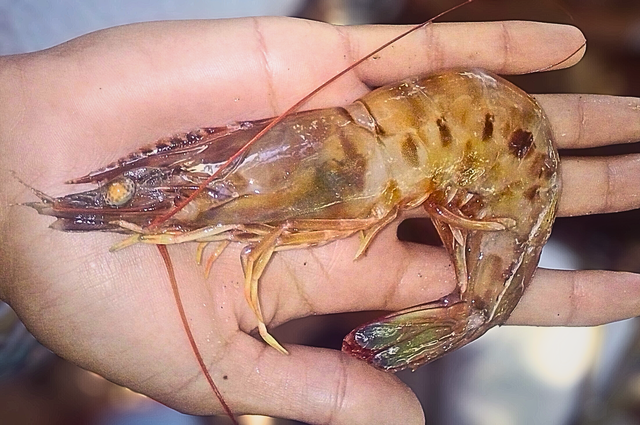 Genomic analyses of the pink shrimp Farfantepenaeus brasiliensis reveal two evolutionary lineages with distinct histories across the western Atlantic. The study shows how divergence can occur with ongoing gene flow, driven by subtle oceanographic and climatic processes shaping marine biodiversity.


Marnix van der KolkIets voor de ERC

Marnix van der KolkMirco z'n tinderprofielfoto precies

“I would have liked to have discovered ribozymes, the realization that RNA can be both information and catalyst is fascinating… If I could be any age, I would like to be exactly where I am now because despite the challenges, I'm finally building something that's truly mine…”
Find out more about Mirco Dindo in his Introducing… Profile.
Marnix van der Kolkthijss
 Open Access
   This article is licensed under a Creative Commons Attribution 3.0 Unported Licence.

