Marnix van der Kolk
Shared posts
Bulky phosphine ligands promote palladium-catalysed protodeboronation
[ASAP] Base-Promoted Nucleophilic Phosphorylation of Benzyl Fluorides via C(sp3)–F Cleavage

[ASAP] Solvent-Controlled, Atom-Economic, and Highly Regio- and Stereoselective Halo-Chalcogenations of Ynamides: Green Synthesis of Stereodefined Tetrasubstituted Alkenes Bearing Four Different Functional Groups
Marnix van der KolkGraphical abstract needs more info!!

[ASAP] Industrial and Laboratory Technologies for the Chemical Recycling of Plastic Waste

Automation in Electrifying Flow Organic Synthesis
“Soo cringe!” Aggressive group norms and conformity behavior in WhatsApp chats
 In an era where digital communication dominates the social interactions of adolescents and young adults, understanding the dynamics of these interactions is important. Our study explored how social norms within group chats influence expected cyber-aggressive behaviors.
[ASAP] Halogen Atom Transfer-Induced Homolysis of C–F Bonds by the Excited-State Boryl Radical
Marnix van der KolkThijsss

[ASAP] Techno-economic Analysis and Life Cycle Assessment of Biomass-Derived Polyhydroxyurethane and Nonisocyanate Polythiourethane Production and Reprocessing

‘Publish or Perish’ is now a card game — not just an academic’s life
Marnix van der KolkNieuwe lunchbreak game
Nature, Published online: 01 August 2024; doi:10.1038/d41586-024-02511-5
A player wins by racking up more citations than the competition, even if that means engaging in a little light plagiarism.Triggering inert desert sand toward a low-cost and efficient cocatalyst for photocatalytic hydrogen evolution reactions
Marnix van der KolkThere will be water on Arrakis!!!!!!

DOI: 10.1039/D4GC02895C, Paper
Desert sand (DS), an abundant but nuisance natural material, is successfully converted into an efficient supported cocatalyst for the photocatalytic H2 evolution reaction with excellent activity and stability.
The content of this RSS Feed (c) The Royal Society of Chemistry
Selective Nitrobenzene Reduction Catalyzed by Small and Monodisperse Triimidazotriazinylidene Carbene-Protected Gold Nanoparticles
Phytic acid derivatized lignin as a thermally stable and flame retardant material

DOI: 10.1039/D4GC03169E, Paper
A phosphorus-containing flame retardant was produced via reacting phytic acid and kraft lignin in water.
The content of this RSS Feed (c) The Royal Society of Chemistry
From C-F Activation to Catalytic Regioselective Double Hydrodefluorination of Pyridines with a Nickel Complex
[ASAP] A BN-Benzvalene
Marnix van der KolkThanks, I hate it

Molecular Electro(Photo)Catalysis: Triarylamine and Triarylimidazole Derivatives Mediated Oxidation Systems in Organic Electrosynthesis
Marnix van der Kolkfigures need more JPEG

Abstract
Organic electrosynthesis has become a green, efficient and sustainable alternative to traditional organic transformation for the redox reactions. In this connection, indirect electrolysis employing redox mediators is attaining increasing significance as it offers a chance to improve reaction selectivity and avoids the over-oxidation/reduction issues encountered in direct electrolysis. Triarylamines and triarylimidazoles, as representative organic molecular mediators, have attracted widespread attention in recent years due to the advantages of well-defined easy structural modification and tunable redox ability. Hence, in this minireview, the recent growth of triarylamine and triarylimidazole derivatives mediated electrochemical oxidation reactions were presented, highlighting the structural optimization, electrochemical performance and reaction mechanism of these organic mediators. Moreover, the photocatalytic and photoelectrocatalytic cases with these molecular mediators were also highlighted. To conclude, the current challenges and future prospects of this field are also discussed.
[ASAP] Valorization of Kraft Lignins from Different Poplar Genotypes as Vegetable Oil Structuring Agents via Electrospinning for Biolubricant Applications

Roles and expenses of self-care behaviours for tackling type 2 diabetes in developing countries
[ASAP] Cuphea as a Source of Fully Crop-Based Plasticizers for Poly(vinyl chloride)

Retraction Note: Metal free cross-dehydrogenative N-N coupling of primary amides with Lewis basic amines
Marnix van der KolkOoo vraag me af welke fout ze hebben gemaakt in hun analyse
[ASAP] Development of SF6 as a Formal Electrophilic Fluorinating Reagent for Photocatalyzed Oxidative Fluorination of Phosphine Oxides

Tungsten-based catalysts for lignin conversion: A review
Publication date: 1 December 2024
Source: Catalysis Today, Volume 442
Author(s): Qian Qiang, Huamei Yang, Wentao Su, Haiyan He, Shenglong Tian, Changzhi Li, Tao Zhang
[ASAP] Redox Reactions of Organic Molecules Using Rotating Magnetic Field and Metal Rods

From the Skies to the Scanner: Precision and Challenges in CT Scanning a Second World War Messerschmitt Me 163
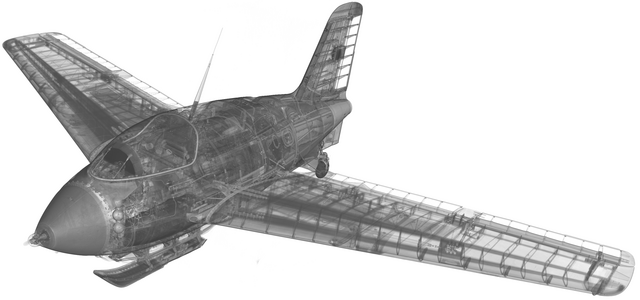 We explore the challenges and insights of segmenting and releasing selected annotated instance segmentation sub-volumes of a large-scale CT dataset of a historic aircraft. Discover our decision-making process, reasons for the release, and concerns about sharing this information publicly.
Turning lignin into a recyclable bioresource: transesterification vitrimers from lignins modified with ethylene carbonate

DOI: 10.1039/D4GC00567H, Paper
 Open Access
   This article is licensed under a Creative Commons Attribution 3.0 Unported Licence.
Transesterification-based vitrimers from lignins modified with ethylene carbonate, to turn lignins into a recyclable aromatic bioresource.
The content of this RSS Feed (c) The Royal Society of Chemistry
Pd-catalysed direct β-C(sp3)–H fluorination of aliphatic carboxylic acids
Nature Synthesis, Published online: 21 June 2024; doi:10.1038/s44160-024-00578-6
C–F bond formation using transition-metal catalysis is a challenge owing to the high energy barrier associated with reductive elimination. Now the direct β-C(sp3)–H fluorination of aliphatic carboxylic acids with a broad substrate scope is reported, using rational oxidant design to facilitate the reductive elimination step.Efficient ethylene electrosynthesis through C–O cleavage promoted by water dissociation
Nature Synthesis, Published online: 20 June 2024; doi:10.1038/s44160-024-00568-8
CO electroreduction is a promising carbonate-free approach to produce ethylene, but suffers from limited selectivity and low energy efficiency. By modifying copper with a strong electron acceptor, 7,7,8,8-tetracyanoquinodimethane, the water dissociation step is accelerated, leading to excellent ethylene selectivity and full-cell energy efficiency in CO electroreduction.The multifaceted role of water as an accelerator of the crosslinking reaction of isocyanate-free polyurethane net-works
Push and pull: how to measure the forces that sculpt embryos
Marnix van der Kolkpush pull methode werkt ook overal
Nature, Published online: 17 June 2024; doi:10.1038/d41586-024-02029-w
A steadily growing toolbox is giving researchers the ability to monitor and measure the physical forces that shape embryonic development.[ASAP] “AquaF” Building Blocks for Water-Compatible SN2 18F-Fluorination of Small-Molecule Radiotracers
