Shared posts

07 Oct 20:00

How Long Did It Take You to Unclench After Gravity?

by Jia Tolentino
Shainaf87

go see this movie. imax 3d. very very cool

by Jia Tolentino

Alfonso Cuarón's Gravity set a box office record ($55.6 million) this weekend. Did you see it? Has your nervous system recovered? At any point during the heart-stopping visuals of our planet as seen from cold black space, did you consider what it would be like to be right next to George Clooney all day, but with your bodies confined to the prison of an astronaut suit rather than naked in each other's arms as God intended? Did you hate the music at the end or were you into it? Maybe, like Neil deGrasse Tyson, you're not buying the hype? Talk to me; all I care about today is space. I, like Buzz Aldrin, loved the movie, although Buzz found certain things unrealistic:

We were probably not as lighthearted as Clooney and Sandra Bullock. We didn't tell too many jokes when people were in some position of jeopardy outside the spacecraft.

If you're interested in the making of the movie, this NYMag piece is a must. Cuarón and his team have been trying to execute this movie for years, and they eventually had to invent much of their own technology:

Webber and his team had designed what would become “Sandy’s Box”—a nine-foot cube in which Bullock would spend the majority of the shoot, on a soundstage in London, strapped to a rig. On its inside walls were 1.8 million individually controllable LED bulbs that essentially formed Jumbotron screens. Getting her in and out of the rig proved so time-consuming that Bullock chose to remain attached, alone, sometimes in full astronaut suit, between takes, where she listened to atmospheric, atonal music Cuarón had selected for her. She has referred to the experience as “lonely” and “isolating.”

Also, there is an animated version of Gravity floating around somewhere, and I would really like to see it:

From the storyboards they created a digitally animated version of the film, complete with digital versions of the characters. “It looks like a crude Pixar film,” Lubezki says, “and it was so beautiful that when I showed it to my daughter probably after a year of work, she thought that was the movie."

Lastly, Mother Jones talked to Catherine Coleman, the astronaut who advised Sandra Bullock for her role in the movie and is the only person to have ever brought a flute to space:

The dread and intensity of Gravity are (as you could guess) about the furthest thing from Coleman's experience. "I loved it up there," she says. "If it weren't for my family, I wouldn't have wanted to come home…There's so much to do, so much research to do."

15 Comments
06 Oct 06:09

The Creepy Beauty of China's Totally Uninhabited Cities

by Jill Harness

Around China, there are dozens of housing projects that were constructed during their housing boom and never totally completed. Some were left unfinished with walls half up and no windows installed while others were finished but never moved into. While this happened a little bit in the U.S. during the recession, China's empty locales are particularly striking because whole cities, including shopping malls and local attractions, are left empty, leaving the areas to look like they are sets for a new post-apocalyptic film.

These images seem to depict abandoned cities, but the reality is that a place must first be used in order to be abandoned. Most of China's ghost cities never even had residents to start with. While the photos of these places seem creepy, they are also strikingly beautiful in a way, showing what happens when overly-ambitious developers push through projects without any potential customers in line to buy their creations.

Check out more of these amazing images over at io9.

06 Oct 06:00

Photo


06 Oct 05:58

60 Newly Discovered Species in a Rainforest

by John Farrier

(Photo: Trond Larsen/Conservation International)

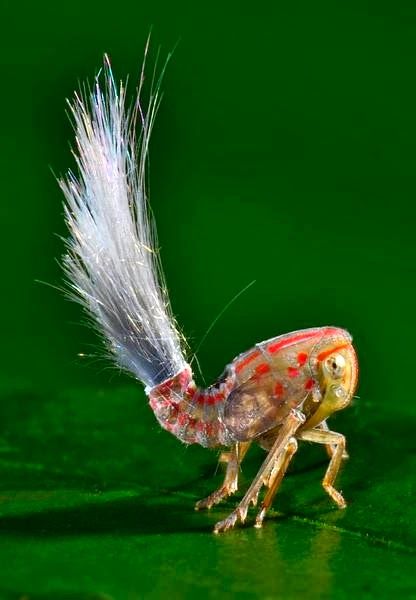
This is a juvenile planthopper. It's about 5 millimeters long. Many planthoppers secrete a waxy substance which forms into long strands. These strands, which can break off, may distract a predator while the insect escapes to safety.

This little critter is one of 60 species that Dr. Trond Larsen of Conservation International discovered during an expedition to a rainforest in southeastern Suriname. You can see more photos and a video from the expedition here.

-via TYWKIWDBI

04 Oct 18:26

Oprah curated the good life during unparalleled Chicago run

by Chris Jones
The news this week that Oprah Winfrey is likely to sell, or otherwise extricate herself from, some or all of her signature Harpo Studios on Chicago's Near West Side seemed to put the final period on Oprah, the Chicago years.    
04 Oct 15:51

rosslynst: headhunters


rosslynst:

headhunters

04 Oct 15:46

notsobro: A better shot of the progress


notsobro:

A better shot of the progress

04 Oct 15:46

Are They Really Snickerdoole Poppers Or Churro Bites?

by Jill Harness
Shainaf87

i need it now

Either way, these tasty sweets are super easy to make. Just a can of Grand's Biscuits, vanilla pudding, cinnamon sugar and oil. The basic concept involves just frying the dough, rolling them in the cinnamon sugar and then injected with tasty pudding. Impressively, one can of biscuits makes 32 bite-size treats. You can find the rest of the instructions over at Oh, Bite It!

04 Oct 15:19

Thirsting for turtle tears [Life Lines]

by Dr. Dolittle
Amazonian butterflies drinking turtle tears. Image from: Jeff Cremer / Perunature.com

Amazonian butterflies drinking turtle tears.
Image from: Jeff Cremer / Perunature.com

The Amazon region is notoriously deficient in sodium because of its large distance from the ocean and because the Andes mountains block the delivery of windblown minerals from the West. Some minerals travel from the east, but much of the air is cleaned by rain before the minerals can make it to the western region of the Amazon Basin.

sanewlnd (1)

So if you were a butterfly, where would you find a readily available source of salt in the Amazon? The answer is not very obvious, unless you look at the photo of a yellow-spotted river turtle (top). According to scientist Phil Torres, a graduate of Cornell University who conducts research at the Tambopata Research Center in Peru, the butterflies are attracted to the sodium in the turtle’s tears. The turtles obtain sufficient sodium from their diets, but the herbivorous butterflies must obtain it from other sources since plants are not a good source of sodium. This is reportedly the only region in which this phenomenon has been observed.

Other sources of salt for the Amazonian butterflies (that are not nearly as interesting or picturesque) include urine, river banks, puddles of water, and human sweat.

According to a quote from Live Science, Torres said: “Potentially, they could be getting other resources out of those eyeballs that we don’t even know about. Basically, we have to go start swabbing turtle eyeballs and see what we get.”

Source:

Live Science

04 Oct 15:09

Centipede venom blocks pain more effectively than morphine [Life Lines]

by Dr. Dolittle


800px-Scolopendra_subspinipes_mutilans_2

Image of a Chinese red-headed centipede from Wikimedia Commons.

Researchers from the Chinese Academy of Sciences and The University of Queensland have discovered a venom from centipedes capable of blocking pain more effectively than morphine!

According to the study authors, centipedes have appeared in the fossil records as far back as 430 million years. They are also one of the first land-dwelling creatures to use venom to incapacitate their prey as shown in the image above of a Chinese red-headed centipede (Scolopendra subspinipes mutilansis) snacking on a roach. The venom is secreted from a pore in the tip of their first set of legs that evolved into claws (forcipules).

Certain voltage-gated sodium channels (Nav1.7) are involved in the sensation of pain. In fact, people with mutated Nav1.7 channels are insensitive to pain.  In a new study published in the Proceedings of the National Academy of Sciences, USA this week, researchers purified a component of the venom that can specifically inhibit Nav1.7 sodium channels.  In the article, they describe it as “a highly selective inhibitor of Nav1.7 that is a more effective analgesic than morphine in rodent pain models.” Prior inhibitors of Nav1.7 channels have been less specific resulting in undesirable side effects. The good news about this new peptide is that it is more specific and according to the results of this study had no negative side effects on blood pressure, heart rate or motor function.

As exciting as these findings are, more studies will be required to determine the safety and efficacy of this new peptide in the treatment of pain in humans.

Source:

Yang S, Xiao Y, Kang D, Liu J, Li Y, Undheim EAB, Klint JK, Rong M, Lai R, King GF.Discovery of a selective NaV1.7 inhibitor from centipede venom with analgesic efficacy exceeding morphine in rodent pain models. Proceedings of the National Academy of Sciences, USA. Sept. 30, 2013. doi:10.1073/pnas.1306285110

04 Oct 15:06

Tea Tweet Of The Day

by Joe
03 Oct 21:59

Photo


03 Oct 21:27

Chicago Is A Great Theatre Town. What It Needs Is Producers

Chicago Reader 10/02/13
02 Oct 01:25

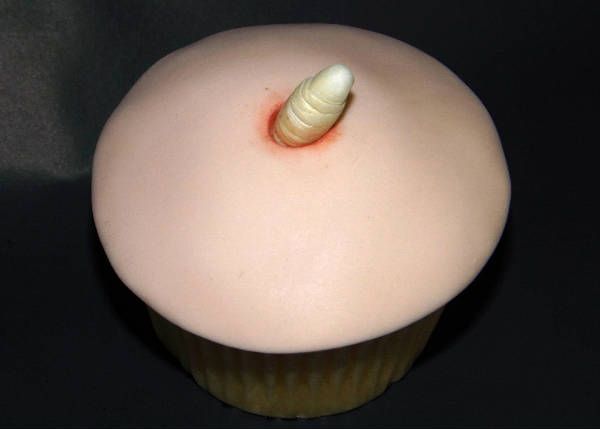
The World’s Grimmest Cupcakes

by Miss Cellania

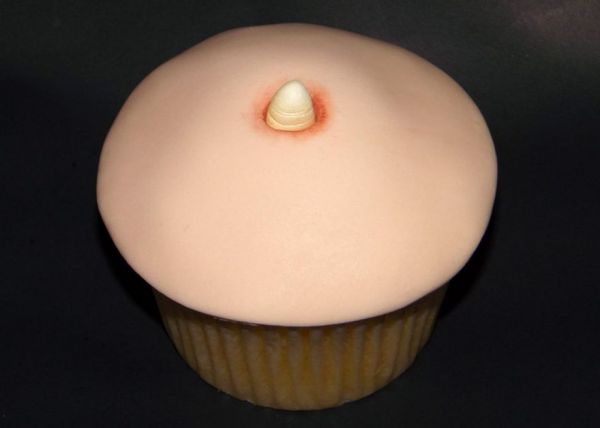
The cupcake you see here will be sold at the Eat Your Heart Out 2013 pop-up cake shop in London, England, open October 25-27. Food artists will be offering the world's most gruesome and delicious treats. These cupcakes are made by Twisted Fondant, a macabre division of Fantasy Fondant. What makes them so gruesome? The explanation may be a bit disturbing, visually, so if you are up for it, continue reading.


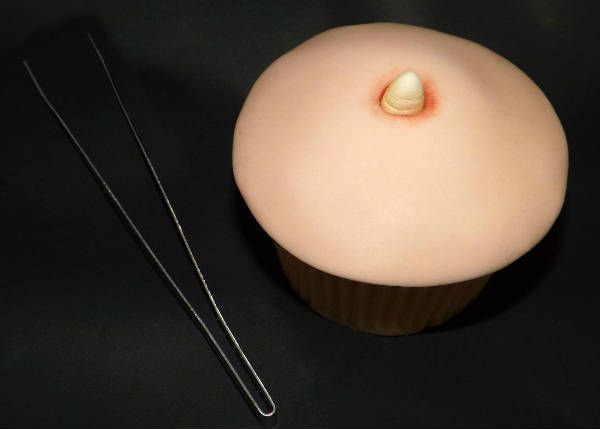
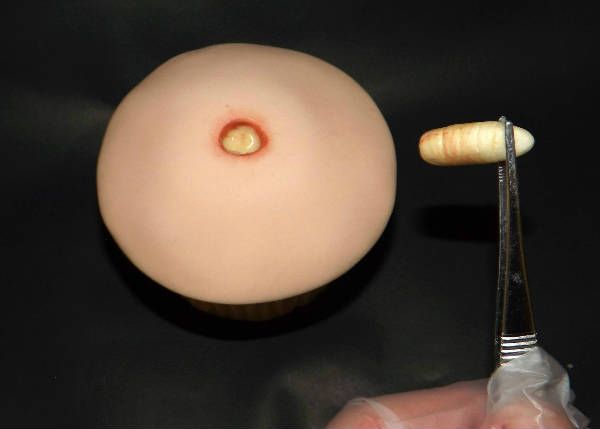
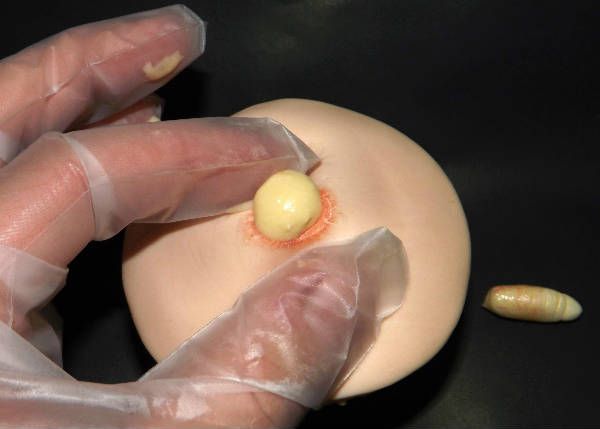
The name of these cupcakes is Mango Fly Larvae Removal cupcakes. Miss Cakehead calls them DIY Maggot Extraction cupcakes. They are served with a glove and a pair of tweezers so you can do the deed. Just keep reminding yourself that no matter what it looks like, this is all delicious cake and edible icing.

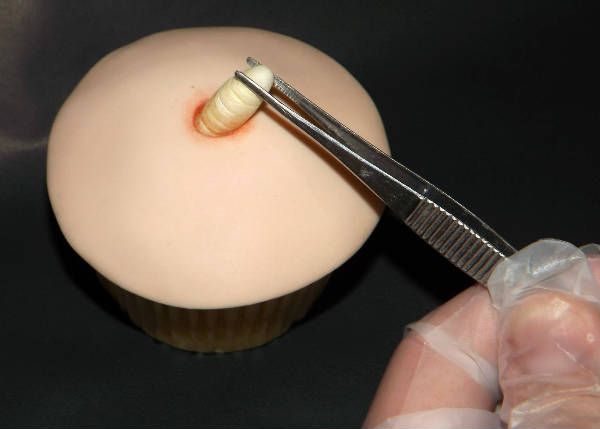
Gently pull that maggot out. Gently! You don't want it to tear apart!

It's almost out.

What a relief! The maggot is edible. Really.

Don't forget to squeeze out the pus. It's mango-flavored!

The Eat Your Heart Out 2013 cake shop food exhibition and sale will be October 25-27th. Macabre Liqueur Chocolates will also be offered at the event. Read more at Miss Cakehead's site.

01 Oct 21:47

'Disturbing the Spirits' by Ellen Jantzen

by cascade
01 Oct 21:15

Herbie Hancock takes a bow

by Howard Reich
Shainaf87

my man!

These are remarkable times for Herbie Hancock.
01 Oct 19:52

What’s New on Netflix Streaming This Month: October 2013

by Gilbert Cruz

At the beginning of every month, Netflix Streaming adds new movies and TV shows to its library. Here is a quick list of several that you might be interested in. (Some of these were added halfway through, or near the end of, September, but we're going to include them in ... More »


01 Oct 19:49

Water Drumming

by Alex Santoso

Wanna play the drum but don't got no, well, actual drums? That's not a problem for the women of the Baka people of Africa. As long as they've got the river, they've got drums:


Water drumming - via metafilter

Add yodels (by "yellis," Baka women yodellers) and forest harp (a "ngombi" made out of raphia palm) and you get beautiful Baka music. Like this one from the album "Baka in the Forest," from Orchéstre Baka Gbiné:

Live recording in the Cameroon rainforest by Martin Cradick of Baka Beyond, singing Topé malangui bodé, ma'anjo ayé ("Give me one bottle, I'm thirsty"):

01 Oct 18:55

Mishka from Sydney, Australia. Thanks Aishwarya Modur!


Mishka from Sydney, Australia. Thanks Aishwarya Modur!

01 Oct 18:52

Photo


01 Oct 18:46

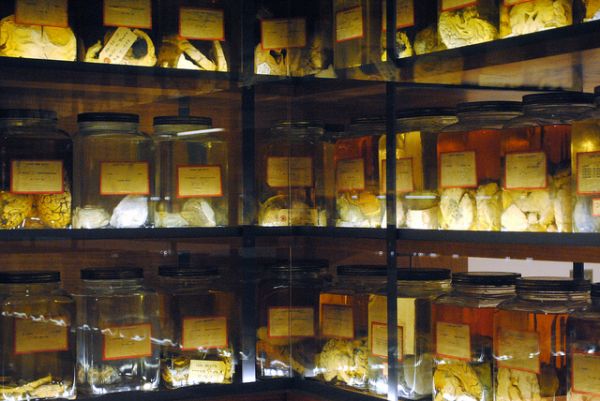
Connecticut's Brain and Tumor Collection

by Miss Cellania

The Cushing Center is in the basement of the medical school at Yale University in New Haven, Connecticut. Named after neurosurgeon Harvey Williams Cushing, the center is also known as the brain museum. Cushing began collecting and preserving brains and tumors in 1902, and kept them in his office. The huge collection was eventually sent to the basement, but in 1990, the school decided to display the brains to the public. Read more about the brains in the basement at mental_floss

(Image credit: Flickr user Pattie Belle Hastings)

01 Oct 17:49

Photo


01 Oct 16:25

Positions, interests, and empathy

by Andrew Taylor
A Line in the Sand

SOURCE: Flickr user Lars Plougmann

One of the basic elements of successful negotiation is a clear distinction between ‘positions’ and ‘interests’. Both sides of a negotiation have positions, of course — the terms they want or expect from an agreement (pay, benefits, ownership, control, rights, and such). Both sides also have interests, the underlying needs or goals that led them to those terms, either consciously or unconsciously. Positions tend to be binary, win-lose, zero-sum. Interests are usually not.

As Roger Fisher and William Uhry described it in their classic negotiation book Getting to Yes:

Behind opposed positions lie shared and compatible interests, as well as conflicting ones. We tend to assume that because the other side’s positions are opposed to ours, their interests must also be opposed. If we have an interest in defending ourselves, then they must want to attack us. If we have an interest in minimizing the rent, then their interest must be to maximize it. In many negotiations, however, a close examination of the underlying interests will reveal the existence of many more interests that are shared or compatible than ones that are opposed.

There are indications everywhere that important people have forgotten this essential distinction. Our nation’s elected officials and some major symphony orchestras, for example, are not only confusing their positions with their interests, but allowing their positions to trump their interests (and those of their constituents). Or, perhaps, their interests and the interests of those they represent are disastrously misaligned.

It’s tempting and easy to long for a simpler time, when leaders could argue but still find ways forward. But in truth, those times have been more cyclical than linear — appearing when leaders and their context aligned in productive ways. It’s also tempting to paint the whole system with a broad brush, when really only portions of it (admittedly large and obvious portions) are seemingly broken beyond repair.

Since I have some role to play in preparing a next generation of leaders, I’m going to focus my energy on empathy — the ability to understand and share the feelings of another. When your job is defined in service to any public trust, empathy is your ultimate competitive advantage.

01 Oct 15:52

Justin Bieber Made His Bodyguards Carry Him Up the Great Wall of China

by Callie Beusman

Justin Bieber Made His Bodyguards Carry Him Up the Great Wall of China

Gleeful elf king of Little Shit Kingdom Justin Bieber has just out-Biebered himself: the most devious imp to ever don a flat-rimmed baseball cap made his bodyguards carry him up the Great Wall of China. As an uncouth, wild-eyed barbarian who has been known to urinate upon images of other nation's former leaders, Justin Bieber is the exact type of person that the ancient Ming dynasty hoped to keep out.

Read more...


01 Oct 15:50

Brain Game: Ha Ha Ha

by Sandy Wood

Today's mentalfloss.com Brain Game Tuesday Test Time asks you to break down an eight-letter word, one letter at a time. Are you up for the challenge?

By removing one letter from the mix at each step,
and rearranging the other letters as necessary to form new words,
reduce the word "HECTARES" to the letter "A."

H E C T A R E S
_ _ _ _ _ _ _
_ _ _ _ _ _
_ _ _ _ _
_ _ _ _
_ _ _
_ _
A

Here is one SOLUTION. 
01 Oct 15:40

64 Square Feet: Writer Lived Inside Astor Place Cube in New York City

by Gregory Han

The Astor Place Cube, also known as the "The Cube" or by its official name "Alamo", is an iconic outdoor sculpture by artist Tony Rosenthal. Located at a busy intersection of Lafayette Street at 8th Street in New York City, it's hard to miss. But even local residents may be shocked to discover someone may have been living inside the 64 square foot steel cube...

READ MORE »


30 Sep 19:50

Nazi Bride School in the '30s: "Women must be the spiritual caregivers and the secret queens of our people"

by Jia Tolentino
by Jia Tolentino

Hairpin superpal Emily Greenhouse has a fascinating piece up at the New Yorker about the "Reichsbräuteschule, or Reich Bride School, set up by the Nazis 'to mould housewives out of office girls.'"

A villa was erected in 1937 on Schwanenwerder Island, on Berlin’s Wannsee Lake. In this pretend model household, young women—many of them teen-agers—would live in groups of twenty, spending six weeks, “preferably two months before their wedding day, to recuperate spiritually and physically, to forget the daily worries associated with their previous professions, to find the way and to feel the joy for their new lives as wives.” Scholtz-Klink further barred any woman with Jewish or gypsy heritage, physical disability, or mental illness from taking part. The course cost a hundred and thirty-five reichsmarks (six hundred and twenty-five dollars, in today’s cash), and covered everything from shopping and cooking to gardening and cocktail conversation, from home decorating to boot, dagger, and uniform scrubbing.

But expertise in craftsmanship and the culinary arts was not the essence of the school; it existed to drill Nazi dogma into “sustainers of the race,” those women who, under the Law for the Encouragement of Marriage, would be effectively bribed to produce babies. The course insisted that women “acquire special knowledge of race and genetics” and only when a woman had acquired such knowledge could she gain certificates of accomplishment (which were also found in the archive, embellished with the Germanic ‘Tree of Life’; a woman who did not comply was refused not only this certificate but also permission to marry). The course also entailed a commitment to Nazi doctrine until death, and a placement of faith in the Führer over religious faith: marriages had to be neo-pagan rituals officiated by party members, not in a church ordained by a cleric. Children had to be raised to worship not Jesus, but Hitler.

By 1940, there were nine bride schools in Berlin, and more throughout the country; they were operational until as late as 1944. (Photos from one Reichsbräuteschule are up here, and are fascinating: the pictures look like Pollyanna and the captions are all like, "The domestic homeliness of the school provides many hints for their own future households," ahhhh!) There are many more strangely juicy details in Greenhouse's piece, like the Nazi party's medals for German mothers: "Bronze went to eligible mothers with four or five children, silver for those with six or seven, and gold to those with eight or more Kinder."

Photo via whatsthatpicture/Flickr

[TNY]

6 Comments
30 Sep 14:50

Watch Arcade Fire’s 30-Minute Post-SNL Concert Special

by Jesse David Fox

Earlier in the month, we learned that NBC was going to air a 30-minute concert special after the premiere of SNL. Based on the promo, and their track record, we didn't know what to expect. The end result was surprisingly straightforward yet unsurprisingly delightful. Directed by Roman Coppola, it featured three ... More »


27 Sep 20:05

Photo


27 Sep 15:54

How to Make A Realistic Bone Fracture

by Jill Harness

Eeek, looks horrific right? Well, that's kind of the point! This Instructable makeup tutorial can help you make this creepy, monsterous bone fracture this Halloween. If you're wondering what it's made from, the bone is actually just three straws glued together and wrapped in latex -the rest is just usual Halloween makeup tricks.

Link