×You need to sign in to continue.
Pedro.A
Shared posts
08 Jul 17:27
As 50 melhores capas de livros de 2012 segundo a AIGA
A associação profissional de design norte-americana escolheu as melhores capas de livros de todo o mundo. Há David Byrne, Oliver Sacks, tipografia e outras especialidades
Pedro.Aragao likes this
01 Jul 23:18
Please collect all winter coats
by Richard Meier
(from a notice in the local drycleaners’ window)
In single file, they wait the summer out, clean, forgotten.
Housed with them, in the silence of their folds, a notion (autumn)
now unthinkable. Late August, light lengthens, goldens –
and so starts the reclaiming, coat by coat.
26 Jun 23:28
Nocturnes
by John
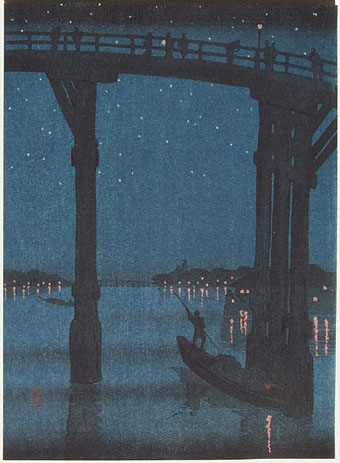
KOBAYASHI, Eijiro–”A High Bridge by Night”
The Night Scenes is a series of 21 woodcut prints by Japanese artists published by Hasegawa/Nishinomiya in the early 1900s. Gorgeous work, and apparently popular enough for the prints to have been reissued many times since. These examples are from a print-selling site with several extensive galleries of 20th-century Japanese prints.
The High Bridge at Night struck me for being remarkably similar to Whistler’s famous painting of Old Battersea Bridge, Nocturne: Blue and Gold (1872–75). Whistler, of course, developed his mature style through looking at Japanese prints, and the Tate’s note for his painting says it may have been derived from a Hiroshige print. The Hiroshige looks nothing like the High Bridge at Night, however; was the latter based on an earlier print which Whistler had seen, or is the High Bridge (which post-dates Whistler’s painting) an example of the Japanese stealing back some of their influence from the West?
(Thanks to Wood s Lot for the prints tip.)

ARAI, Yoshimune II–”A Ferry Boat”

KOBAYASHI, Eijiro–”A Pagoda by Moonlight”

SHODA, Koho–”A Country Scene (with Moon)”

ARAI, Yoshimune II–”Suma Beach in Moonlight”

SHODA, Koho–”Married Rocks”

SHODA, Koho–”Shrine Gate at Miyajima”

SHODA, Koho–”Moonlit Sea”
Previously on { feuilleton }
• Whistler’s Peacock Room revisited
Pedro.Aragao likes this
26 Jun 16:36
In the Frame: Private
by Tom Humberstone

Click to zoom into a larger image
Francisco.bernardes, Pedro.Aragao and -1 others like this
21 Jun 23:17
Evolución del arte en cafés
by Kirai
La moda de dibujar sobre la se ha extendido por todo el mundo y ya existe incluso un World Latte Art Championship donde normalmente ganan japones@s. La técnica está evolucionando al 3D y también hay expertos que están empezando a añadir colores (ver video al final del post).











Anotaciones relacionadas:
Via Global Voices


02 Jun 22:47


O zero e o infinito.
by Malomil

Esta história não tem política nem ideologia. Dela, ninguém sai bem: nem o comunismo da Alemanha de Leste, nem o capitalismo das farmacêuticas ocidentais. A notícia, que eu saiba, não chegou aos nossos jornais, mas posso estar enganado. O El País publicou-a e o Der Spiegel tem acompanhado o caso, com novas e cada vez mais graves revelações. Nunca me canso de aconselhar e, novamente, aqui vai: não percam a edição online em língua inglesa do Der Spiegel. Têm notícias sobre o caso aqui, aqui e aqui.

Do que se trata? Em poucas linhas, do seguinte: durante anos, cerca de 50 clínicas da República Democrática Alemã (RDA) colaboraram com multinacionais farmacêuticas, realizando mais de 600 testes. Os alemães de Leste foram usados como cobaias de testes de produtos que, devido às normas mais apertadas que vigoravam do lado de cá do Muro, não poderiam ser realizados na Europa ocidental. O rol das empresas implicadas é extenso e parece uma espécie de Alamanch Gothada indústria medicamentosa: Sandoz, Ciba-Geigy (agora, do grupo Novartis), Bayer, Pfizer, Schering, Boehringer (agora, do grupo Roche), Sandoz... Firmas alemãs, suíças e norte-americanas, com a cumplicidade das autoridades da RDA, fizeram testes em milhares de pessoas. Calcula-se que 50.000 seres humanos foram objecto de testes, muitas vezes com o envolvimento de médicos corruptos, segundo as notícias mais recentes. Por cada ensaio, os depauperados cofres da Alemanha comunista arrecadavam cerca de 450 mil euros. A Stasi, claro está, acompanhava a operação. O actual director do arquivo da antiga polícia política referiu há dias que a indústria farmacêutica “beneficiou das condições políticas autoritárias na RDA”. O pior do comunismo ao serviço do pior do capitalismo. Num caso e noutro, um denominador comum: o desprezo pela dignidade humana. Quimioterapia, antidepressivos, medicamentos para o coração, tudo foi testado, sem regras nem lei, na Alemanha de Leste. Várias pessoas morreram. De muitas não há sequer notícia do que lhes aconteceu, sendo difícil saber se morreram devido a estas experiências que revelam uma desumanidade arrepiante. Não irei entrar em pormenores macabros. Apenas uma história, entre tantas: em 1989, a Boehringer realizou tratamentos hormonais em, pelo menos, 30 bebés prematuros.
Somente um pedido: nada de histerias e, menos ainda, não se compare isto com as experiências médicas nazis. Por muito grave que este caso seja – e muito ainda há a revelar, já que as empresas se eximem a dar explicações… –, por muito grave que este caso seja, repito, não é minimamente comparável ao que fazia o dr. Mengele e tantos outros nos campos de extermínio do Holocausto.
Em todo o caso, e com serenidade, é impressionante ver como Ocidente e Oriente se souberam entender para tratarem juntos de um único interesse: o lucro, o ganho, o vil proveito. Mesmo que à custa de lesões irreversíveis ou até de mortes. Ao certo, não se sabe quantas mortes, mas algumas já foram determinadas. Passou-se tudo isto aqui ao lado, na Europa «civilizada», a quatro ou cinco horas de avião de distância de Lisboa, num tempo em que já éramos nascidos e crescidos. Aqui ao lado, com o Muro de permeio. Brutal.
António Araújo
30 May 12:43
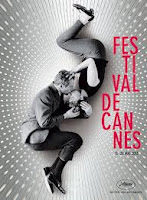
Cannes + Spielberg + Kechiche
by João Lopes
 |
| Abdellatif Kechiche e, ao fundo, Steven Spielberg CANNES, 26 de Maio de 2013 |
O palmarés de Cannes/2013, atribuído por um júri presidido por Steven Spielberg, foi uma lição de pedagogia cultural — este título foi publicado no Diário de Notícias, com o título 'O sexo dos anjos'.
Numa Europa cultural viciada em muitos preconceitos anti-americanos, o 66º Festival de Cannes não deixou de atrair novas versões de velhos lugares-comuns contra Steven Spielberg, este ano presidente do júri. Com uma ironia mais ou menos habilidosa, sugeriu-se que, afinal, o autor de A Lista de Schindler teria vindo à Côte d’Azur para, de uma maneira ou de outra, tratar dos seus “negócios”. Nada de novo: em 1975, defender um filme chamado Tubarão dava direito a ser acusado de perigosa aliança com o “imperialismo” (este ano, hélas!, Tubarão foi um dos clássicos exibidos nas sessões de cinema ao ar livre, na praia Macé).

Acontece que, com a cumplicidade dos seus magníficos colegas de júri, Spielberg rubricou uma belíssima prova de amor cinéfilo: por um lado, definindo um palmarés que espelha a fascinante pluralidade da selecção oficial (ficaram grandes filmes de fora, mas era inevitável); por outro lado, através da Palma de Ouro para La Vie d’Adèle, consagrando um objecto que, ao abordar uma história de amor entre duas mulheres, não vacila perante o rigor de um realismo muito francês cuja modernidade persiste. Daí que Spielberg tenha dito que a Palma ia, não para o realizador (tradicional consagrado), mas para “três artistas”: Kechiche e as suas duas admiráveis actrizes, Adèle Exarchopoulos e Léa Seydoux. Kechiche recordou, aliás, que este filme o levou descobrir uma juventude que quer e sabe “viver livremente, exprimir-se livremente e amar livremente”.
Como duas figuras angelicais, Adèle e Léa levam-nos a lidar com as máscaras que a sexualidade sempre envolve. Ou seja: numa Europa que todos os dias tolera a violência pornográfica do Big Brother e seus derivados, foi um cineasta de um pudor muito americano que nos veio ajudar a repensar a ética dos nossos olhares.
Pedro.Aragao likes this
27 May 22:22
The Rite of Spring reconstructed
by John
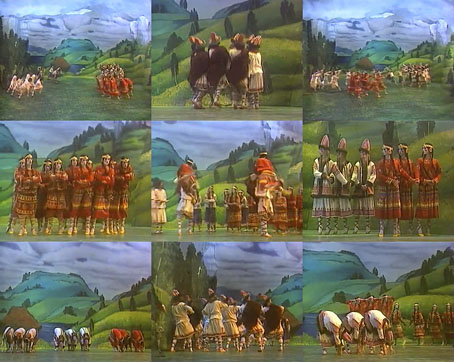
This week sees the centenary of the first performance by Diaghilev’s Ballets Russes of The Rite of Spring at the Théâtre des Champs-Élysées in Paris. Everyone is familiar with the details of that momentous occasion, and Stravinsky’s score is probably performed more frequently today than any of his other works. Less familiar is the nature of the ballet which caused so much outrage. A combination of the hectic schedule of the Ballets Russes and the loss of choreographer Nijinsky a few months later meant that the choreography was never properly transcribed. This caused problems for subsequent revivals, and the only reason we have an idea of the radical nature of the ballet is thanks to a decade of research by Millicent Hodson and Kenneth Archer, a pair of cultural archaeologists who’ve specialised in reviving ballets. Hodson and Archer scoured archives looking for details of Nicholas Roerich’s costumes, and also traced surviving members of the 1913 company in order to verify their choreographic researches.
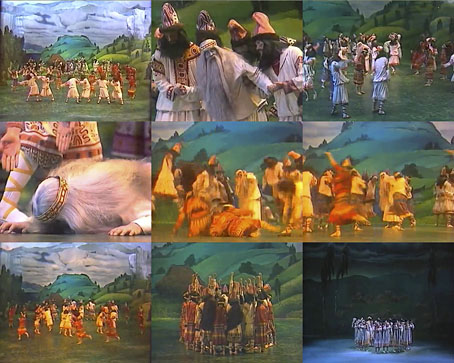
The performance here is a recording of the Joffrey Ballet’s staging of Hodson and Archer’s reconstruction from the late 1980s. I first saw this in 1989 and was aghast at how strange and savage the dancing is compared to classical ballet. Hodson and Archer have since amended some of the performance details but there’s more than enough in this staging to convey why the ballet was so threatening and disturbing to the audience in 1913. Even today, after decades of modern dance it looks surprisingly crude with its dancers stamping their way across the stage. I was also thrilled to see the restoration of Nicholas Roerich’s costumes and decor. In addition to giving the ballet its distinctive look, Roerich contributed the pagan dramaturgy, something that tends to be overlooked when so many big names are competing for attention. (There’s more about Roerich and his involvement with the Rite here.) I always enjoy the way Roerich provides a link between this favourite ballet and the writings of HP Lovecraft. I’ve no idea what Lovecraft would have made of The Rite of Spring but he had a lot of time for Roerich’s paintings, and refers to them in At the Mountains of Madness.
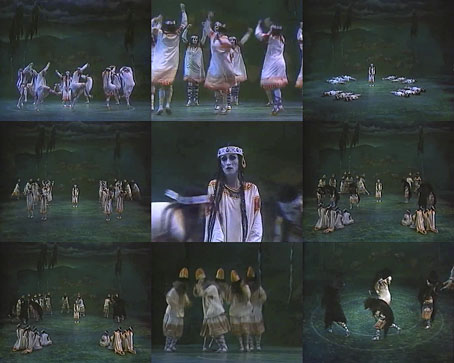
The recording linked here is annoyingly split into three parts (and the soundtrack is hissy mono) but if you’ve any interest in the original ballet it really needs to be seen.
• The Rite of Spring: part one | part two | part three
Previously on { feuilleton }
• Vaslav Nijinsky by Paul Iribe
• Diaghilev and the Ballets Russes
• Pamela Colman Smith’s Russian Ballet
• Le Sacre du Printemps
• Images of Nijinsky
Pedro.Aragao likes this
24 May 08:37
Some Thoughts On The Disruption Of Television
by Warren Ellis
From a recent story about Google Fiber entitled "Good news for Google Fiber: Broadcast TV audiences are cratering faster than ever":
Google Fiber and its ilk may be the final straw that will break the back of broadcast television. Once high-speed video downloading becomes widely available, instant access to VOD services will make them even more appealing…
…What makes this possible is the complete paralysis of the broadcast dinos. All the majors are frozen in terror, repeating old behavioral patterns that turned self-destructive years ago. NBC spent the annual defense budget of Mauritius to promote “Ready for Love,” a tired Bachelor clone. ABC is going to build its autumn slate on “Scandal”, “Revenge” and “Betrayal,” as well as a hasty spin-off of its fading “Once Upon a Time” franchise. ABC also handed Robin Williams a comeback vehicle. Sensing desperation, audiences are tuning out in disgust.
Not untrue, so far as it goes. And, without figures to hand so yeah pinch of salt, but I think the US network tv “hits” of last season, like REVOLUTION, would have been woeful cancellation fodder even four years ago. I don’t know that the hit on Robin Williams is especially called for: the man’s a giant, but I haven’t seen the pilot of the show in question and I haven’t completely forgiven him for PATCH ADAMS.
I’m kind of curious as to how it apparently took Google Fiber, in this writer’s estimation, to make Netflix irresistible. In the office here at home, I’ve got about 20 mbps down and Netflix fairly rips along. Perhaps we’re talking about a higher resolution stream or something.
I think it’s worth admitting, now, that “television” has become one of those legacy words, like “phone,” that we use to point at a thing, without really fully describing it. What do you mean, now, when you say “television”? HOUSE OF CARDS and HEMLOCK GROVE? HAUNTING MELISSA on the iPad? Serialised (periodical) narrative? Shot for a small screen? Maybe. It certainly doesn’t mean what it used to.
(And, obviously, I’m only talking about scripted tv there. You could make an argument that “pure” television is presentational, or “reality,” or documentary.)
The term is becoming protean. The scheduling of television has quickly become meaningless, and it’s hard to describe to kids of a certain culture how there was once a time when you had to watch tv shows when they were broadcast, in realtime, because you might never see them again. Time was, the BBC wiped their own tapes. Now a significant number of people watch most of their selected BBC output in a timeshifted manner through the iPlayer.
When Amazon start commissioning drama series to follow their comedy and kid’s slates, television is going to take a new turn. Not only are Amazon in a position to take chances, but they have possibly the best analysis in the world of what people watch and will pay money for. Just crunch down that DVD-box-set data by year and genre. Amazon could actually own genre drama television within eighteen months if they chose to, either by Nate-Silvering those numbers or simply by creating five times as many productive relationships with important creators than anyone else can.
Cable, both basic and premium, have gotten their whacks in, but the full-on “disruption” of American tv by deep-pocketed internet business is going to be really interesting, not least for what disrupts them.
Developing/not fully baked.
Pedro.Aragao, Jeff.brady4hs likes this
23 May 15:21
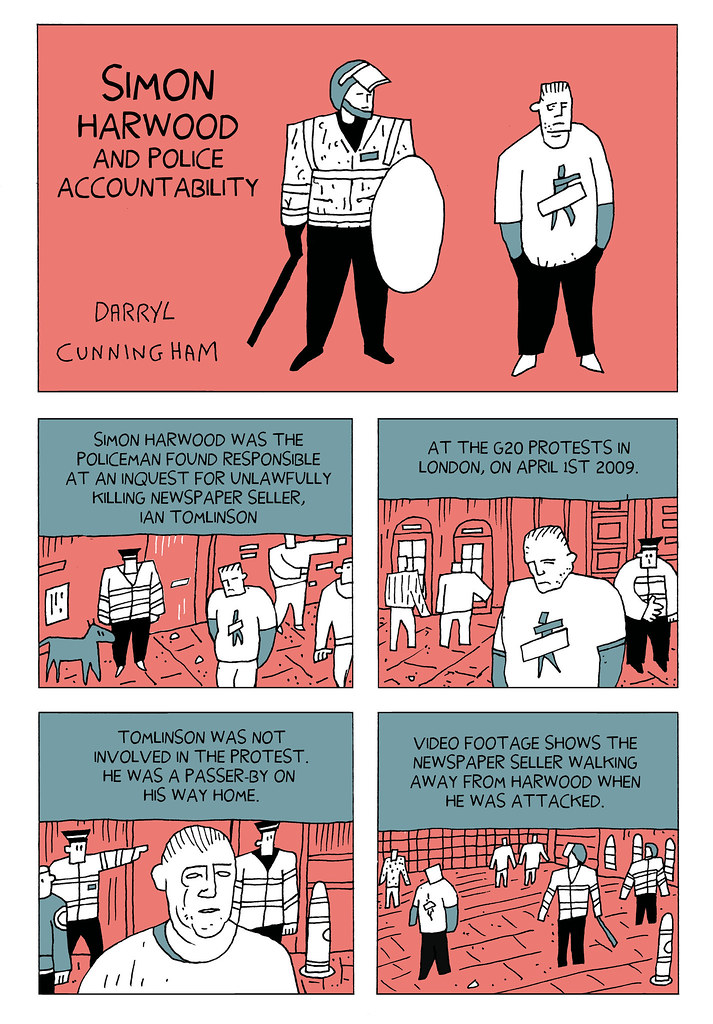
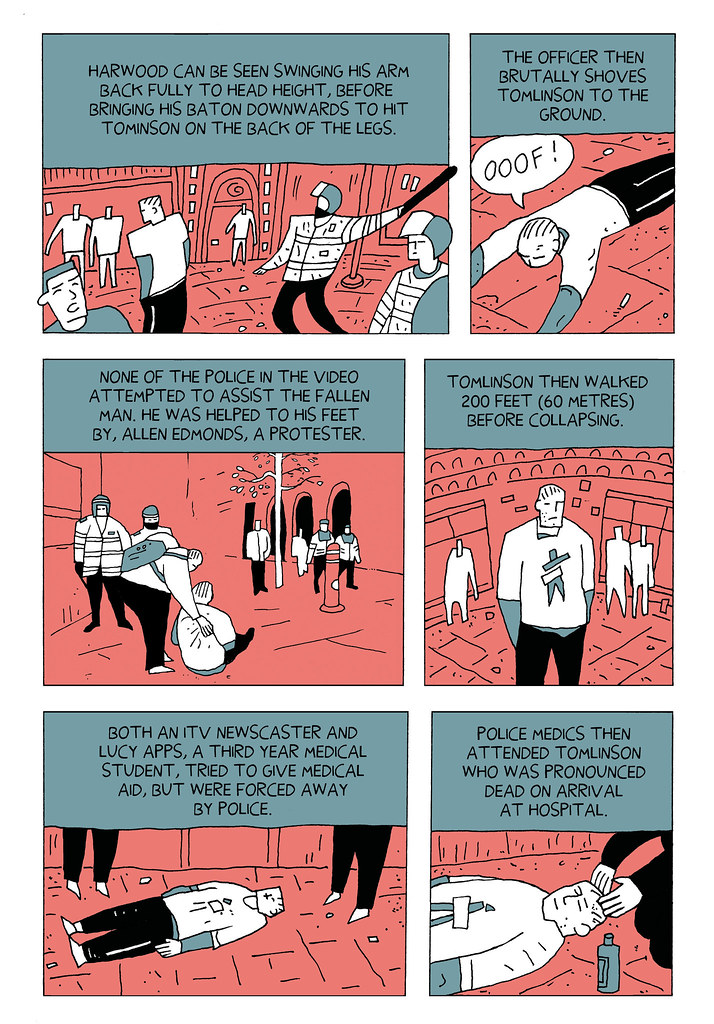
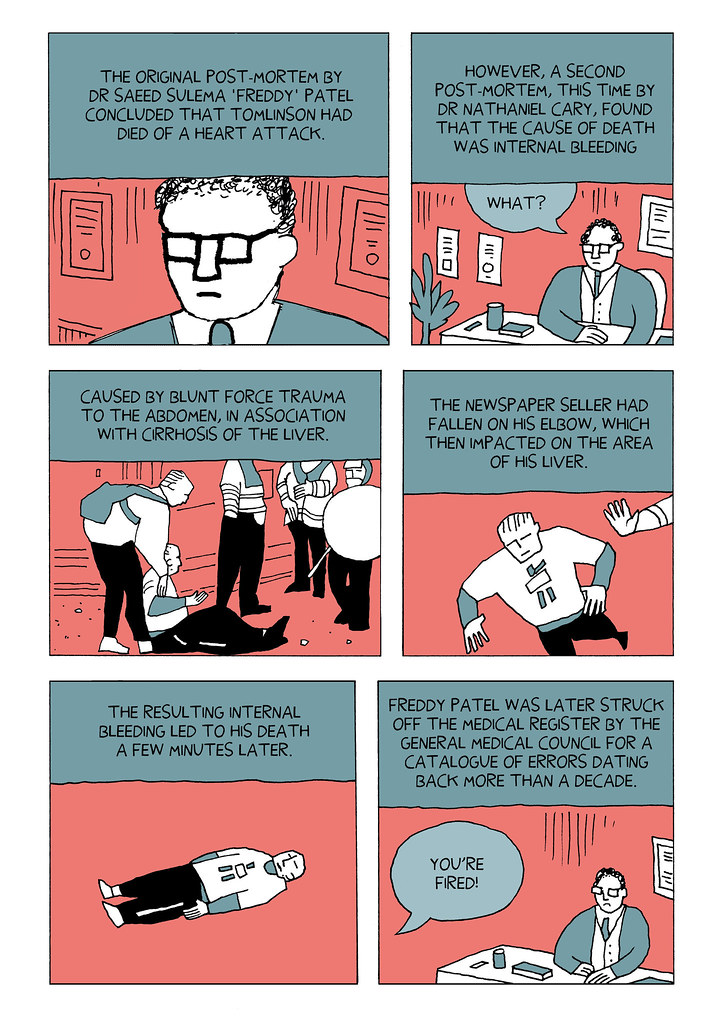
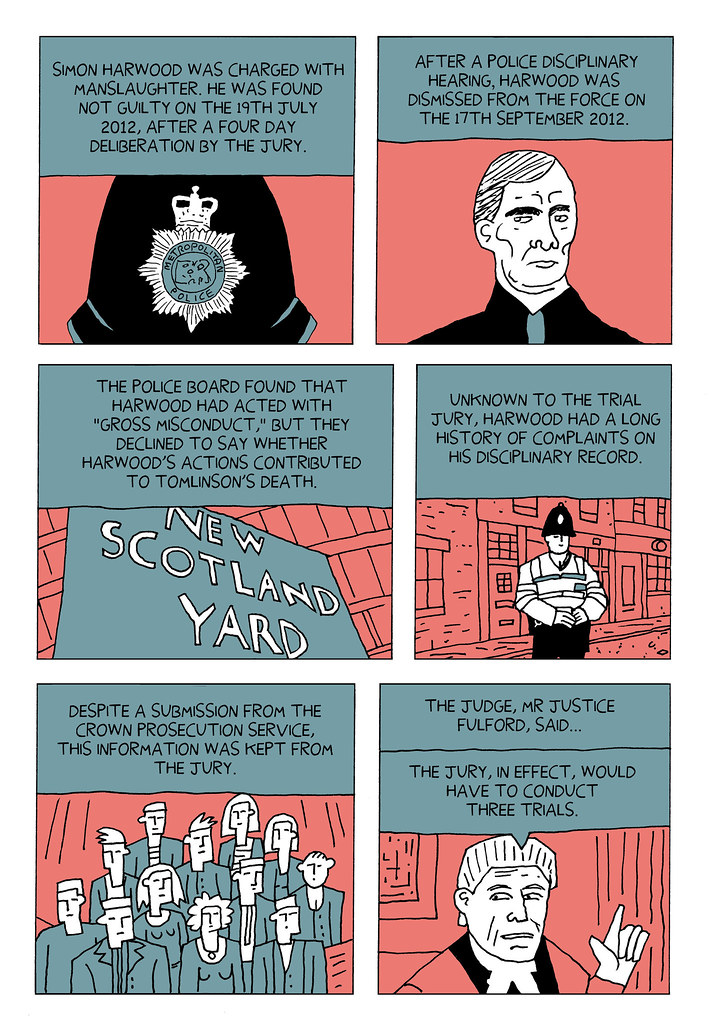
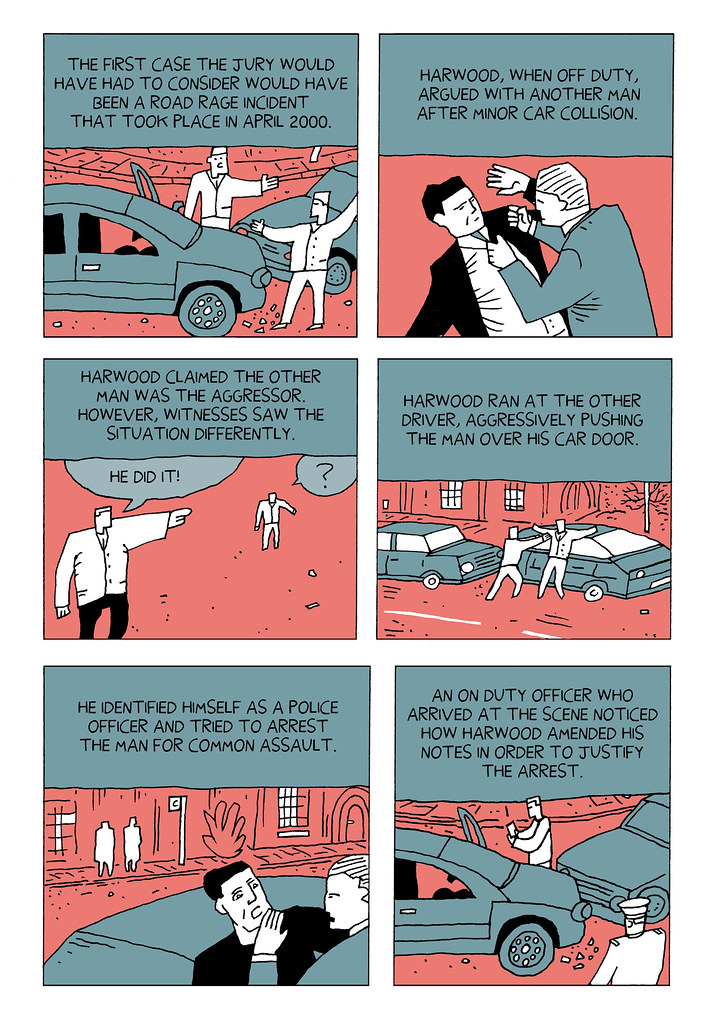



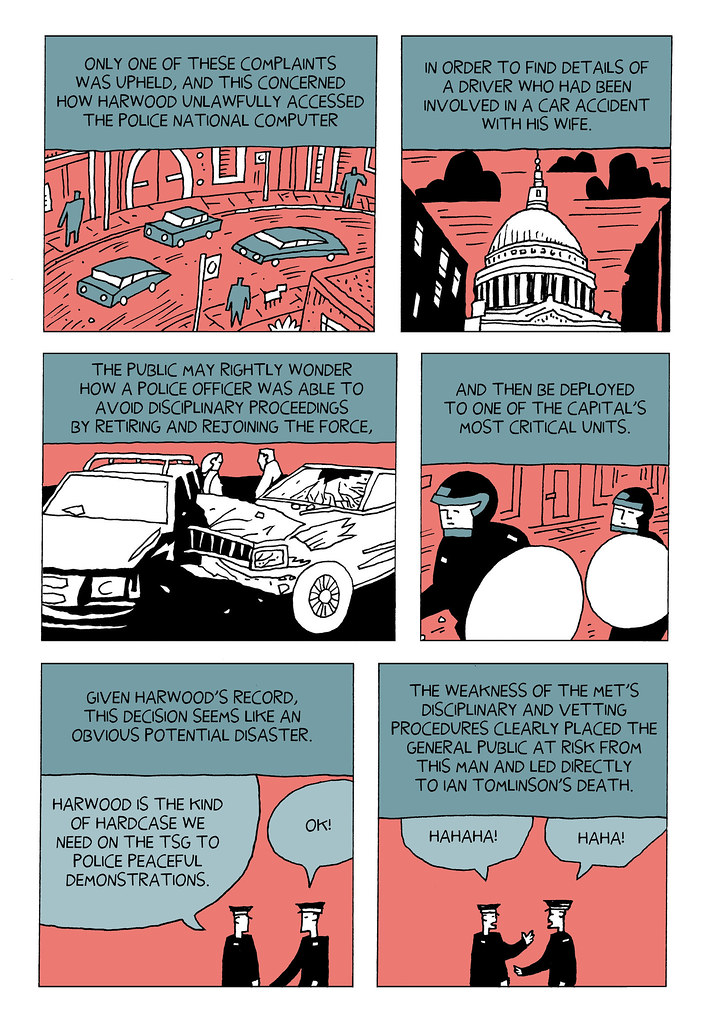
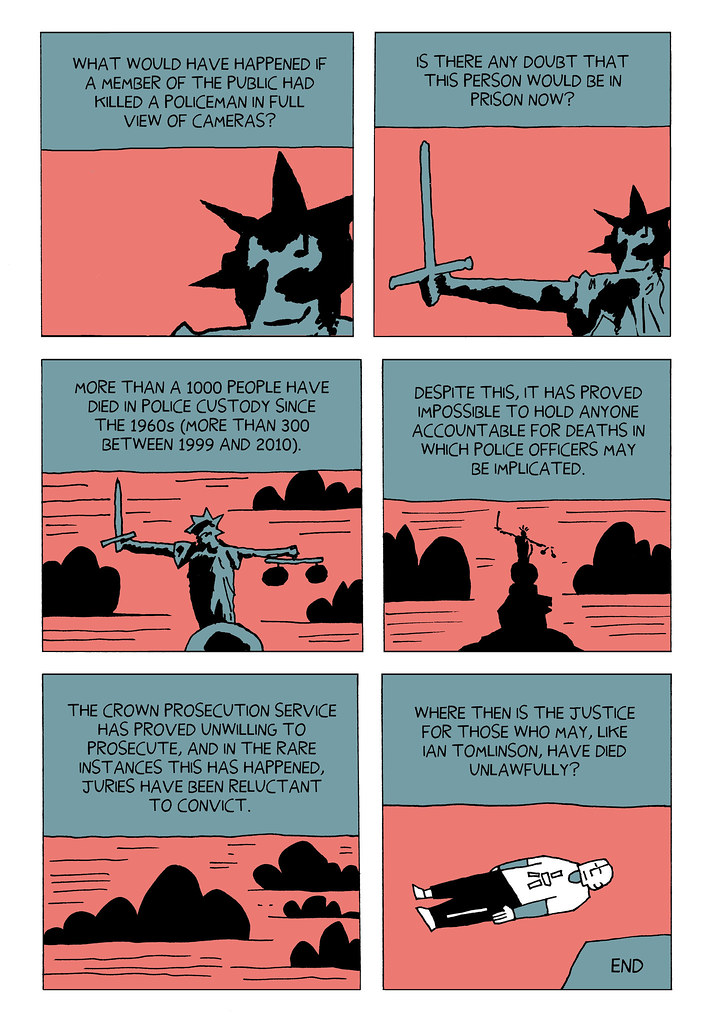 Want to help a struggling artist make more fine comic work? Then why not make use of the donote button (top left). I'd really appreciate it.
Simon Harwood and Police Acountability
by Darryl Cunningham
A ten page piece I wrote on the death of Ian Tomlinson for the much delayed issue of Solopsistic Pop 5, which editor Tom Humberstone has kindly allowed me to place here. Much of the information in the strip was taken from pieces written in the Guardian by Paul Lewis and Peter Walker. Many thanks to them.
Pedro.Aragao, Alfonso P and -1 others like this
No more posts. Check out what's trending.