Jakienle
Shared posts
Mike Isabella, Washington’s Restless Restaurateur

Review: Bar One Fourteen
 Parmesan-style cheese and edible flowers supplied by the Public Greens garden adorn the romaine salad, plated with a vinaigrette of pistachio and green garlic.Photo by Tony Valainis A woman walks into a bar. It’s dark. Very dark. David Lynch dark. She needs a minute to adjust to the opaque air of this snug, 16-seat room with black walls and dense velvet curtains, for her pupils to expand enough that she can finally make out the votive-lit faces of diners sipping from brass pineapples and Moroccan tea glasses while a soul-funk soundtrack plays softly—and all of this makes her wonder, in a spasm of insecurity, if she is in the right place and not accidentally crashing the party of someone much cooler than her. …View Original Post
Indianapolis Lands Le Creuset Outlet Store: Our Preview
 I went to church last night. And by church, I mean I went to the grand opening of the first Le Creuset Outlet Store in central Indiana. Home cooks believe in the power of the Dutch oven, and now you can get it nearby at a deep discount. Can I get an “Amen”? Le Creuset (French for “the crucible”) has been producing enameled cast-iron cookware since 1925 in the small town of Fresnoy-le-Grand in northern France. It combines the even heating of cast iron with the nearly effortless cleanup of enamel, and can be used on the stovetop and in the oven. The product is high-performing, but comes with a hefty price tag, which is why home cooks often talk about their favorite Le Creuset…View Original Post
Buffalo Trace Distillery Unearths “Bourbon Pompeii”
 Buffalo Trace DistilleryAmy Lynch Frankfort, Kentucky, always attracts a lot of tourists in September for Bourbon Heritage Month, but the Buffalo Trace Distillery now offers a particularly good reason to make the trip down I-65. While working on a restoration project a year ago, contractors struck a different kind of pay dirt than they were expecting on the National Historic Landmark grounds. The process of shoring up a vacant property foundation unearthed a handful of long-forgotten fermenting vats that had been covered sometime in the 1950s. Local historians investigated and soon confirmed the tank room was a remnant of one of the red-bricked campus’s earliest production facilities. This fall, the distillery began offering guided tours of the renovated space. Situated on the banks of the…View Original Post
Thieves use Paris catacombs to steal fine wine – report
Thieves who stole more than 250,000 euros worth of fine wine from a Paris apartment cellar exploited the French capital's vast underground tunnel network, according to French media reports.

Thieves knocked through a wall of the Paris catacombs to break into the luxury apartment’s cellar and steal an estimated 250,000 euros-worth of vintage wines, French media has reported police as saying.
There are an estimated six million people buried in the Paris catacombs, part of a vast underground tunnel network stretching for several miles underneath the French capital.
French media said that the thieves stole around 300 bottles of fine wine from the cellar of an apartment in the plush sixth arrondissement of Paris, near to the Le Jardin du Luxembourg. No specific wines were named.
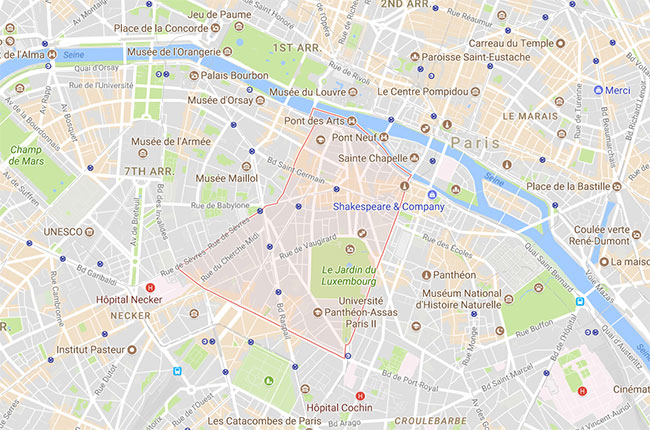
A map showing the sixth arrondissement of Paris. Image credit: Google Maps.
Paris police said that they were investigating how the theft took place.
Police speculated that such precision in the catacombs network would require significant research and planning by the culprits.
Earlier this summer, two teenagers were lost in the Paris catacombs for three days.
Only two kilometres of the network is open to the public. The gates are locked at night, yet groups are known to find ways into the tunnels to hold illicit parties.
Parisians began burying their dead underground in the 18th Century in response to overflowing graveyards.
Some of the estimated six million dead met their end at the guillotine during the French Revolution and subsequent Terror period at the end of 18th Century.
More articles like this:

Burglars steal Barolo worth hundreds of thousands of euros
One victim speaks to Decanter.com...

Video: Italian police arrest suspected wine and cheese gang
Police reveal details of 'Operation wine and cheese'...

Are higher fine wine prices motivating thieves?
A series of high-profile burglaries in the past two years suggest that wine cellars have joined banks, art galleries and…
The post Thieves use Paris catacombs to steal fine wine – report appeared first on Decanter.
Skull Session: Ohio State's Secret Weapon, the Must-Watch Matchup, and Behind the Hype Videos
JakienleCheck out that map at the end.

Do y'all smell that? It's the sensual, buttery smell of Marion, Ohio's Popcorn Festival. Easily the best festival America has to offer.
ICYMI:
- NFL upholds Ezekiel Elliott six-game suspension.
- Depth chart: Mike Weber and J.K. Dobbins listed as co-starters.
- AP Top 25: Buckeyes No. 2, Oklahoma No. 5.
- Ohio State to continue with five-man front, despite limited success vs. Indiana.
- Help put a life-size statue of Woody Hayes in his hometown of Newcomerstown, Ohio.
Word of the Day: Ubiquitous.
TATER MAYFIELD. Tate Martell went from Gatorade Offensive Player of the Year to bench warmer who won't play this year unless something goes horribly wrong. Such is life at Ohio State for a quarterback.
But Martell can still help his team, especially this week in preparing for Oklahoma Heisman contender Baker Mayfield.
Martell gives the team a luxury it lacked last season.
From cleveland.com:
"You want to tackle them so bad, and they take advantage of it," Holmes said. "I don't know how they do it. I remember one time I tackled Tate, and he spun out of it it."
[...]
While preparing for the Sooners last year, the Buckeyes didn't have a quarterback who could accurately simulate Mayfield's unpredictability. They had J.T. Barrett and Joe Burrow, who are mobile but don't run around in the backfield the way Mayfield does to extend a play. They had Dwayne Haskins, who'd rather stand tall in the face of pressure and deliver a well-thrown ball.
Mayfield likes to improvise. It's what makes him one of the most dangerous players in the country. He rode that unscripted style to top-five Heisman Trophy finishes the last two years.
Holmes went on to call Mayfield and Martell "twins."
Regardless, Ohio State prepared well enough for Mayfield without Martell's services last season. The extra preparation might not bode well for the Sooners.
MUST-SEE MATCHUP. Indiana offered a stiff test on the road. Oklahoma has even more talent. Here's the best matchup to watch, per CBS draft analyst Dane Brugler:
#Oklahoma QB Baker Mayfield and TE/IWR Mark Andrews are the best players at their respective positions that #OhioState will face in 2017.
— Dane Brugler (@dpbrugler) September 5, 2017
The Mayfield-to-Andrews connection is the key to OU pulling the upset in Columbus. LB Jerome Baker vs. Andrews will be a must-see match-up.
— Dane Brugler (@dpbrugler) September 5, 2017
I wish Ohio State played teams like Oklahoma every week. As fun as it is watching Jerome Baker pinwheel future middle managers, it will be more fun to watch him matchup with a guy as talented as Andrews:
Hoping Malik Harrison gets some snaps in coverage, too.
GLORY TO ALL. Ohio State produces the best hype reels in college football, whether it be in preparation of big games or summer practices.
The genius behind them is Zach Swartz, who confirms what we've long suspected: These videos are aimed at recruits, not fans.
From columbusmonthly.com:
[Ohio State new media director Zach] Swartz says the goal is to keep the clips “as real as possible.” Ultimately, their purpose is for recruiting, showing nervous high-schoolers that practice “isn’t going to be easy all the time.” But that doesn’t mean it’s all yelling and sweating.
Of course, the archives of footage come with “language and certain things” not meant for public consumption, and Swartz and his staff also have fun laughing at the lighter moments of practice, which they try to mix in.
And because not everyone at OSU can be a Heisman Trophy candidate, it’s important for the team to evenly distribute footage around the roster. “You don’t want to just shoot the stars,” Swartz says. “You want to shoot the grinders and the walk-ons and anybody who may need some motivation.”
Cool to see how they focus on everybody from walk-ons to star players. Ohio State needs them all to succeed.
SHAKE THE WORLD, CINCY. We're not Bearcat fans here, this much is known. But we will all ride the Bearcat bandwagon this week as it invades the hostile Faygo jungles due north.
Crazier things have happened than a Cincinnati upset in Michigan Stadium.
From cincinnati.com:
"I've got no doubt in my mind that we can go out and shock the world," senior running back Boone said Tuesday. "We're focused this week. Razor-sharp focus. We just want to come out and execute."
UC (1-0) is a 34 1/2-point underdog to the Wolverines (1-0), who jumped from No. 11 to No. 8 in this week's Associated Press Top 25 poll. The point spread jumped from 33 points Monday to 34 1/2 on Tuesday, with most of America expecting a cozy Michigan win. Except, of course, those who will don UC red-and-black Saturday.
Not sure Cincinnati has the offensive weapons to go blow for blow with Michigan, but it won't stop me from cheering for them nonetheless. It would be funnier than Baylor losing to something called "Liberty."
DID SOMEBODY SAY EMPIRE? Here is a sweet project that I hope continues through the season and ends with Ohio State staking an empire from coast to coast.
From r/cfb user nbingham196:
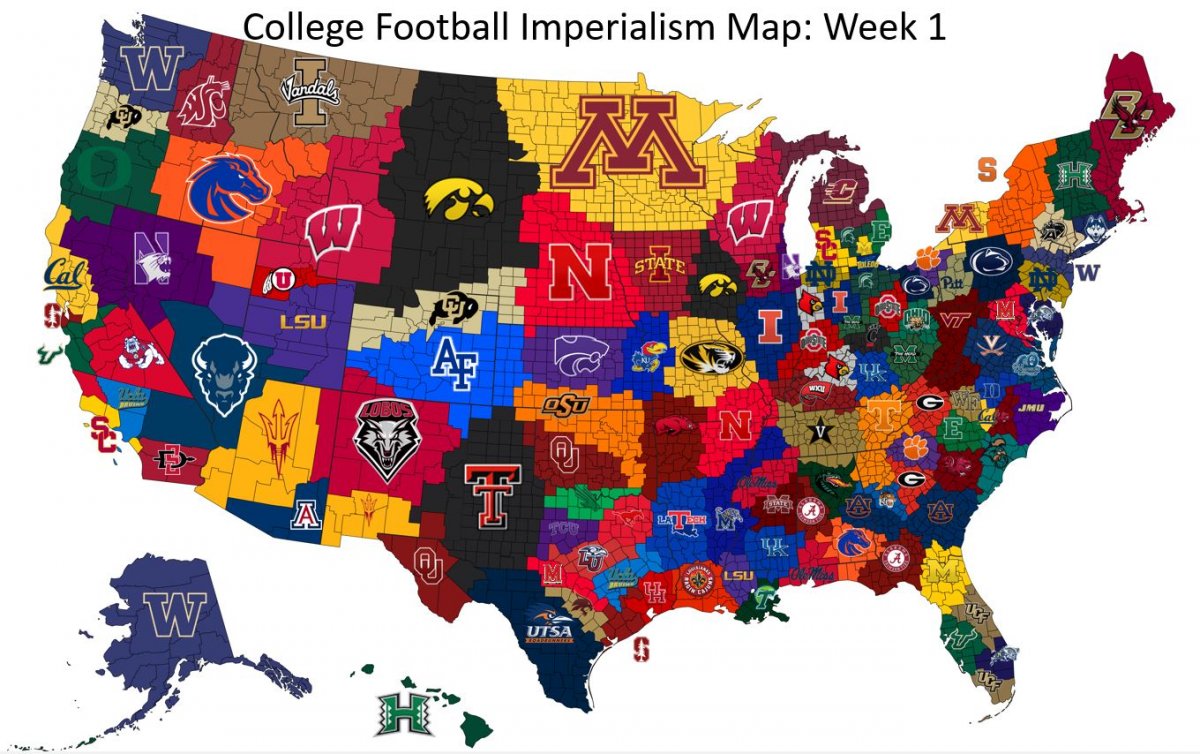
What if College Football games were actually battles for land? This map answers this question. The original map is my closest FBS team to every county, but if a team is beaten their land is taken by the team that beat them.
Teams will keep their land until beaten by another team and then all land will be passed to the new winner. For example Oregon State lost to Colorado State in week 0. Colorado State then lost to Colorado in week 1.
Therefore Colorado owns Colorado State's land and Oregon State's land. FCS were are not originally included, but can win their way on to the map like Howard, James Madison, Liberty, and Tennessee State did this week.
THOSE WMDs. The Chargers' Yunghoe Koo looks like an instant icon... Small dog, big heart... Where did it go wrong for Sebastian Telfair... Married to a mystery man... The golden age of Oprah.
Is IMA chief Venable visionary or misguided?

What’s in That Zern’s Hoagie from Hoagies & Hops?
 • The bread for Mazza’s sandwiches is sourced from South Jersey, boasting a slightly crisp crust and a soft crumb. • Mild Muenster provides an authentic old-world flavor. • Brown and yellow mustard seeds are soaked in chocolatey Pogue’s Run Porter from Flat12 Bierwerks (which houses the Hoagies & Hops sandwich counter) and then mixed with cinnamon and allspice. • Ring Bologna, a coarse-ground, lightly smoked combo of pork and beef, is brought in from Philly-based Dietz & Watson. • Hard-boiled eggs are dyed a rosy hue in brine from beets that Mazza pickles herself. • A crunchy toss of iceberg and some creamy mayo complete the Pennsylvania package. Hoagies & Hops, 414 N. Dorman St., 317-296-8430View Original Post
Eleven local groups float plans for redeveloping Old City Hall

City preservation officials sign off on $260M Bottleworks project

Phil Gulley: Indiana’s New Governor Is A Step Up
 In junior high, I was a Statehouse page for Lillian Parent, a state senator and our next-door neighbor, who pedaled her three-wheeled cycle around the block each evening with her dog perched in a wire basket. Parent was intelligent and upright. And since she was the only politician I knew, I assumed those virtues were common to all legislators, though was later disabused of that notion. To be fair, there were other bright lights at the Statehouse in those days, chief among them Doc Bowen, a gentleman from Bremen who managed to serve as our governor for eight years without once inviting a group of crackpots into his office to sign away the rights of gays. I avoided the Statehouse for several happy decades, then…View Original Post
Capturing the Birth of Rock ‘n’ Roll
Start Your Engines: Photography’s Romance with the Car
Short Order: Introducing 22nd Street Diner
 22nd Street Diner repurposed the interior of its predecessor, LongBranch. Fall Creek residents who bemoaned the closing of one of their precious few neighborhood dining options, LongBranch, in May didn’t have to wait long until they had another. And former Plow & Anchor executive chef John Herndon didn’t have long to explore other avenues for his creative talents before he was back on the line. LongBranch, Shoefly Public House’s late-2016 standout second effort, ran out of cash in May, just six months after opening, ending executive chef Adam Ditter’s run of General Tso’s sweetbreads, short-rib rice bowls, and Sunday Chinese buffets. But only a few weeks passed before plans were announced for Herndon, who was just then piloting his new food truck, Tongue N Cheek,…View Original Post
Swoon List: 22nd Street Diner, Caplinger’s, And More
 The hulking meatloaf biscuit with smoked cheddar sauce and tomato jam at 22nd Street Diner (2205 N. Delaware St., 317-602-6726) in the spot formerly occupied by LongBranch. Meatloaf biscuit at 22nd Street Diner Thinly sliced brisket piled inside a sandwich at Caplinger’s Fresh Catch (7460 N. Shadeland Ave., 317-288-7263; 15009 N. Gray Rd., Noblesville, 317-218-3221; 6685 Whitestown Pkwy., Whitestown, 317-769-0033). Sliced brisket at Caplinger’s The Mi Sate at Egg Roll #1 (4540 S. Emerson Ave., 317-787-2225), piled with spicy shrimp and sliced pork atop egg noodles, with plenty of fresh garnish added at the table. Spicy shrimp at pork over egg noodles at Egg Roll #1 A hunk of garlic bread adds some heft to Palomino’s (49 W. Maryland St.,317-974-0400) prawn scampi tossed in garlic butter and…View Original Post
The Pour: Aligoté, Burgundy’s Other White Grape, Makes Its Case
Entrepreneur a master of ‘creative renovation’

The Best American-Made Menswear
In our never-ending quest to reinvent American menswear, we’ve spent countless hours researching, purchasing and wearing the best garments made in this great country.
While many American clothing brands have shifted production to overseas markets where they can pay lower wages, a number of heritage brands have stayed committed to employing American craftsmen. This allows companies to oversee quality control on every unit produced, retain skilled workers by creating a community environment around their brand, and provide an opportunity for their employees to attain the ever-fleeting American dream.
At the end of the day, whether you care about the American worker or not, the real lesson here is that you simply cannot replicate the quality and craftsmanship that comes with more than 100 years of research, development and heritage behind it. We’re talking generations of blood, sweat and tears. This expertise becomes evident when you invest in a classic American garment – it not only lasts the test of time, it actually gets better with age (ultimately saving you time and money in the long run). That is exactly why we tapped into America’s oldest tailoring factory to produce our tailored garments – to combine our knowledge and insight into the online market with their decades of experience producing timeless American tailoring.
As my favorite basketball coach used to tell me: there is simply no replacement for practice and experience. Greatness takes time – along with a undying willingness to improve every day, every season, and every year.
With that said, here are some of our favorite American-made brands (to wear with AoS), highlighted by our own personal garments that have lasted the test of time.
Leather Jackets: Schott

Suede “Perfecto” Jacket by Schott, White USA Oxford & Sand Linen Trousers by Articles of Style
Originally Purchased: 2014
“The sons of a Russian immigrant, Irving and Jack Schott started making raincoats in a basement on the Lower East Side of Manhattan which were then sold by street peddlers door to door. Irving Schott’s leather jackets were lovingly branded with the name of his favorite cigar – the Perfecto. By the mid-twenties, Schott NYC was revolutionizing the way Americans dressed for the outdoors when they were the first to put a zipper on a jacket. Eager to innovate, it was no surprise that Irving Schott then set his sights on another American classic in the making – the motorcycle. In 1928, Irving Schott designed and produced the first leather motorcycle jacket. Retailing for $5.50 at a Long Island Harley Davidson distributor, the Perfecto was durable, rugged, and immediately embraced. To this new generation of “bikers,” the Perfecto was a symbol of the excitement, adventure and danger that fueled their fascination with motorcycles.” – Schott.com
Classic Headwear: Stetson

Brown Felt Hat by Stetson, Natural Guncheck Jacket & Sunrise Hairline Stripe Shirt by Articles of Style
Originally Purchased: 2011
“In 1870, less than a year after making his first ‘Boss of the Plains;, John B. Stetson purchases a building on the northern outskirts of Philadelphia, establishing what would become the largest hat factory in America. Stetson builds his legacy as a business innovator, steward of a company as concerned for the welfare of its employees as in its commercial output.” – Stetson.com
Canvas Luggage: Filson

Canvas Tote Bag by Filson, Navy “Summer Tweed” Houndstooth Jacket & White USA Oxford Shirt by Articles of Style
Originally Purchased: 2009
“The goods we quote must not be confounded with the cheap and vastly inferior grade with which the market is over-run. Such goods are not only useless for the purpose for which they are intended, but the person wearing them would be better off without them.” – Clinton C. Filson, 1914 catalog
Timeless Footwear: Allen Edmonds

Kenwood Penny Loafers by Allen Edmonds, White USA Oxford (designed with band collar), Heather Wool & Linen Vest & Trouser by Articles of Style
Originally Purchased: 2017
“Allen Edmonds has been handcrafting fine welted Made in the USA shoes since 1922. Today, we continue to follow the same 212-step manufacturing process invented by Elbert W. Allen and Bill “Pops” Edmonds when they opened their first factory on the shores of Lake Michigan in Wisconsin nearly a century ago.” – AllenEdmonds.com
Leather Goods: Frank Clegg

Chestnut Lock Briefcase by Frank Clegg x Dan Trepanier, Candy Stripe Oxford Shirt, Light Navy Essential Vest & Trouser by Articles of Style
Originally Purchased: 2012
“All Frank Clegg products are made in our Fall River, Massachusetts, workshop by a highly skilled team who share the pride of creating handmade products of unparalleled quality. We not only produce exceptional products, we also develop and design our goods in-house. Every bag, wallet and accessory has a story behind it.” – Frankcleggleatherworks.com
Ass-Kicking Boots: Wolverine

‘1000 Mile’ Boot by Wolverine, Brown Felt Hat by Stetson, Navy Knit Long Sleeve Polo by Reiss, Small Batch Burgundy Suit by Articles of Style
Originally Purchased: 2010
“G.A. Krause believed in the possibility of opportunity. He dreamed of owning a shoe company an tannery that employed his values and quality craftsmanship and incessant innovation. In 1883, he founded a small company with a handful of employees. By 1901, Krause organized the Rogue River Electric Light and Power Company to bring power to Rockford, Michigan, allowing him and his sons to build and operate a shoe factory. By 1903, they were making 300 pairs of shoes a day. Krause was a true revolutionary, later selling share of the company to its own employees, becoming one of the nation’s first profit sharing plans.” – Wolverine.com
The New Guys On The Block…

Denim Shirt by RRL, Bespoke Jeans by Red Cotton Denim, Brown Leather Jacket Vintage, Kenwood Penny Loafers by Allen Edmonds
In addition to heritage brands, their are a number of up-and-coming designers who are making some great products in America. When it comes to new designers, we only consider guys who are absolutely passionate about their product -borderline obsessed with the process of making things the right way. Two guys that come to mind are Camilo Love of Red Cotton Denim, and Alejandro Rodriguez of Beautiful Ful.
——————————
As a closing statement: just remember – every time you spend a dollar, on anything, you are supporting the people, practices and values of a brand (a group of people and machines). Our job is simply to pull back the curtain, your job is to make wise decisions on where to spend your hard-earned cash.
Thanks, as always, for reading.
Yours in style,
Dan Trepanier
Ask Me Anything: Neal Brown
 The tastemaker’s sense for what’s new and what’s next has led to two James Beard Award nominations and a string of ventures like Stella, Libertine, Pizzology, and the upcoming Ukiyo. Brown’s success, however, has come with a side dish of grief from foes (real and perceived) and friends like Peter Dunn (aka Pete the Planner), who conducted this interview/roast: Short of a few Yelp reviewers, most people in this city think you’re part of the solution to our food scene. But at some point, were you part of the problem? I think a lot of people would say I’m still part of the problem, if we’re being honest. Of course I was part of the problem very early in my cooking career. I did plenty…View Original Post
Restaurant Guide: 14 A-List Restaurants from TV Chefs Who Love Wine (Wine Spectator)
Vacant Butler-Tarkington firehouse poised for reuse as restaurant, bar

Memorial Day Grilling Recipe: Watermelon-Glazed Ribs with Chardonnay Wine Pairing (Wine Spectator)
Guest Post by Ryan Funk: Jane Jacobs in Mapleton-Fall Creek
Original post can be found here.
Jane Jacobs was a journalist and community activist who is now widely considered a patron saint of urban planning. Her most famous work, published in 1961, is The Death and Life of Great American Cities. I recently read the book and am reflecting on what it tells us about Mapleton-Fall Creek.
Jacobs wrote at a time when cities looked at historic neighborhoods as “cancers” that should be bulldozed and replaced with utopian garden cities: high-rises separated by expanses of grass. She fought New York City when it wanted to tear down much of Greenwich Village to build a freeway through Washington Square. Although she was a successful community organizer, she is best remembered for the enduring quality of her ideas about how to foster great urban places.
According to Jacobs, urban places work best when they have diversity of uses, and this requires four conditions:
- An area must have at least two primary mixed uses (for example, residences and offices) so that there are enough people around at all times of day and night to keep watch over the area.
- The layout of the streets must provide many different ways to move from point A to point B. This is accomplished by having short blocks. Blocks that are too long create stagnant, backwater places that are out of the way from other places in the neighborhood.
- There must be variety in the age of the buildings. If all of the buildings were built at the same time, they are likely to attract monotonous uses. Old, low-rent buildings are especially important because they provide opportunities for all kinds of people and enterprises that have a lot to contribute but otherwise could not afford to be in the area.
- You need density. High density can generate liveliness, safety, convenience, and interest. Low density can present opportunities for trouble to fester out of the public view.
I think Mapleton-Fall Creek has a lot of these conditions and, perhaps more importantly, is well-positioned to improve these conditions in the next decade. We are talking about the triangular portion of midtown Indianapolis formed by 38th Street, Meridian, and Fall Creek:
- It has 7,000 residents, but also many offices, schools, churches, and important commuter arteries. There are always people around.
- It was built to be walkable. The original street design revolved around streetcar lines and remains almost entirely intact today.
- Most of its buildings are old, and most of them are low-rent. But there is significant diversity in construction year, especially among the commercial properties.
- It is among the densest neighborhoods in Indianapolis, and has plenty of infill opportunities. And the planned Red Line will trace two of the three sides of the neighborhood, bringing with it transit-oriented development.
Jacobs’ ideas are too good to ignore, but we must be very cautious in trying to apply them to Mapleton-Fall Creek. This is not Greenwich Village and does not have the level of density Jacobs explored. The introduction of The Death and Life of Great American Cities explicitly warns that her observations about big cities should not be transferred to little cities. And a lot has changed since 1961. Many people work from home, online shopping and big box stores have displaced small retailers, security cameras are new “eyes on the street,” and cars have become even more important to American transportation. Still, Jacobs’ ideas are more respected than ever. They do not apply to Mapleton-Fall Creek “off the shelf,” but with a little adaptation they have a lot to say about what has made our neighborhood great, and how we can make it better.
There Are Lots Of Wrestlers In Hollywood, But Only Two Really Matter
Former pro wrestlers are dominating our movie screens this month. Dwayne Johnson is coming in hot in “The Fate of the Furious,” which came out in April, and we’ll get him in a starring role when “Baywatch” comes out May 25. He’s tag-teaming the start of the summer blockbuster season with Dave Bautista, who’s in “Guardians of the Galaxy Vol. 2.” This month will show the WWE star-making machine at its strongest, with its two current cultural contributions anchoring the beginning of the summer movie season.
Johnson is not only the planet’s primary predator of cod, he’s also the WWE’s most prominent contribution to the cinema, an icon of the big screen who transcended his already remarkable achievements in the ring to become a bona fide movie star (but that’s literally another story). But Bautista is right on his heels — he’s got a steady gig as the emotional heart of a slice of the Marvel Cinematic Universe, plus a role in the new “Blade Runner” — so it appears that the WWE may have a second superstar on the way. But even though Johnson and Bautista are racking up blockbusters and critical accolades, it’s incredibly hard to build a film career, even starting with wrestling’s boost. As for the general on-screen contributions of current and former wrestlers, well, they wind up with an extremely wide range of outcomes:

It’s no secret that the WWE loves when its personnel branch out into broader entertainment — just see the organization’s internal film studio or the acting lessons it gives to talent that gets film work — but many wrestlers are invited to Hollywood only to be typecast as strongmen and muscle. I pulled everyone listed in the laboriously maintained and notoriously thorough WWE personnel and alumni Wikipedia entries and checked each one to see if they had an IMDb link. Of the roughly 1,000 people associated with the organization, roughly half did. But of those, less than 50 had notable feature film work — often bit parts as tough guys and mooks — and after cross-checking those credits against Rotten Tomatoes and the box-office database The Numbers, I found that just over 20 wrestlers had substantial credits in feature films that were reviewed by critics or made it to theaters.
And of course, only one of these people is Dwayne “The Rock” Johnson, a man whose career achievements we could praise all day. He’s a legend in the flesh. But Bautista is right there with him when it comes to average film quality, and he’s catching up in terms of box-office take. Here are some of the busiest and best-known wrestlers from our data set, along with how their work has fared on the big screen:

It looks like Bautista is merely a metric ton of cod away from being able to stand tall with The Rock, while John Cena clearly still has some fish to fry.

Marsh bankruptcy documents show Sun Capital no longer in control
More Proof that Wine May Prevent Dementia (Wine Spectator)
Top rated natural wine – panel tasting
In a comprehensive and landmark tasting, Decanter’s expert panel blind tasted 122 natural wines from all corners of the globe. Here they each name their 10 favourites...
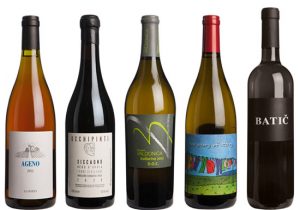
Natural wine is here to stay as a small but significant niche; the logical development of a back-to-the-roots movement that began with organic agriculture’s popularisation in the 1970s. It’s a term of convenience; two simple words to describe a complex, sprawling ideology that includes organic and biodynamic viticulture, minimal intervention in the winery, and sometimes radical views on sulphur dioxide.
Read our natural wine definition here.
For the full article, subscribe to Decanter magazine – available in print and digital.
Simon Woolf: “I was delighted at the overall high quality of winemaking evident, and the lack of obvious faults. While I’m a strong proponent of minimal intervention, organics and biodynamics, I’m no lover of excess brettanomyces, volatile acidity or unintended oxidation. Only two of 122 wines tasted had a hint of mousiness.”
Andrew Jefford: “It’s impossible to ignore the extent to which this line of experimental enquiry is stimulating and intriguing even ‘conventional’ producers, so I’m convinced we will see more wine made in this way in future; I’m also convinced that the success rate of natural wines will steadily improve.”
Sarah Jane Evans MW: “Given the often heated, divisive debate around these wines, I was pleased to find plenty to recommend, scoring 32 wines 90 points or more. My top wines were full of energy and freshness. I was hoping to assess the effects of the containers used for winemaking, however there were not enough concrete egg or amphora examples to draw conclusions.”
-
Concrete eggs in the winery – ask Decanter
-
Where brett in wine comes from – ask Decanter
-
Organic vs biodynamic – ask Decanter
Top rated natural wine:

La Stoppa, Emilia, Ageno, Emilia-Romagna, Italy, 2011
Who would have thought that a defiantly tannic orange wine made with 30 days of maceration would triumph in this tasting? Yet...
Gratavinum, Silvestris, Priorat, Mainland Spain, Spain, 2015
A nose of billowing primary fruit: rich plums with a floral back note, as if you can smell the blossom which brought the plums into...
Occhipinti, Terre Siciliane, Siccagno, Sicily, Italy, 2013
There is real fine fruited complexity here: fragrant cherry, plum and cranberry, with a furniture polish note too, which is very Italian...
Waterkloof, Circumstance Chardonnay, Stellenbosch, 2016
A green-silver in colour, this is graceful, fresh, poised and restrained. It is elegant with lots of grain, understated creaminess and light...
Château Combel-la-Serre, Les Peyres Levades, Cahors, 2014
A pure charmer from Cahors: lifted, fresh cherry-damson scents with an almost creamy amplitude to the fruit. Weighty and full in...
Alfredo Arribas, 4 Gotes, Priorat, Mainland Spain, 2015
Clean and fresh on the nose, but relatively unfocussed, though there is a sense of earthy, liquorice refinement. More in the offing than...
Pierre Morin, Sancerre, Loire, France, 2013
There are excellent aromas here: a lovely surge of refined cherry making it graceful, pure and enchanting. Smooth, lively and...
Frank Cornelissen, Terre Siciliane, Munjebel Va, 2014
Soft, raisiny fruits with a little musky grace and orange peel charm to them. The palate displays citrus peels and orange grove blossoms. I love the combination of...
Domaine Sainte-Croix, Carignan, Vin de France, 2013
Slightly dry, cardboard aromas clear to something more sherbet-like. It is an intense, dramatic, acidic and attractive...
Intellego, The Story of Harry, Swartland, South Africa, 2016
This has plenty of sweet intrigue. Lemon chiffon and crème anglaise - once again, a long way from the 'natural wine' cliché...
Mas del Périé, Amphore, Cahors, Southwest France, 2014
Sterling aromas with a lovely floral lift to the red fruits here. Lots of fragrant charm and purity. Vivid, fresh, lively, clean lines to this...
Valdonica, Maremma Toscana, Ballarino, Tuscany, Italy, 2012
Characterful dried apricot, hay and dried herbs combine with a wonderful waxiness that adds interest. An assertive but...
Domaine Lafran-Veyrolles, Bandol, Cuvée Spéciale, 2011
Subtle aromas of meat and red fruit at first, leading to fresh and lively notes of cream and vanilla. This has delicacy, complexity and...
Meinklang, Graupert, Austria, Austria, 2015
Succulent, perfumed red fruits with a tantalising melange of raspberry and spiced rhubarb. It has a luxuriant...
Sepp & Maria Muster, Gräfin, Steirerland, Austria, 2013
A light framed Sauvignon with a wonderful nuttiness and structure, herby aromatics and a very...
Vodopivec, Vitovska, Friuli-Venezia Giulia, Italy, 2010
Understated aromatics of jasmine and exotic fruits intermingle with baked apple and plum skin. It has fine tannins and an...
Foradori, Vigneti delle Dolomiti, Fontanasanta Manzoni
This is showing candied pears and jasmine flowers in a youthful, stylish way. It is light framed, but with persistence and...
Domaine des Cognettes, Muscadet Sèvre-et-Maine, Sur Lie,
Ripe and lively, this Muscadet is showing delicious pear slices and green melon with a complimentary...
Marc Kreydenweiss, Kastelberg, Grand Cru, Riesling, 2012
Delightful acidity gives way to pleasing sweetness and some waxy, spiced notes. It is gradually getting quite rubbery but...
Batič, Vipava Valley, Kakovostno, Angel, Primorska, 2011
A wine full of ripe, buttery, baked apple, ginger and caramel. There is not a whole lot of fruit but the texture is full...
Guerila, Vipava Valley, Pinela, Primorska, Slovenia, 2015
Perfumed wild strawberry exudes from the nose, with subtle notes of earth and spice. It has quite low...
Batič, Vipava Valley, Zaria, Primorska, Slovenia, 2009
This has a burnished apricot colour in the glass and is wafting smoky aromatics. It is a really interesting wine in an...
Le Due Terre, Colli Orientali del Friuli, Sacrisassi, 2014
This is brightly Italian in its acidity and dark fruit and finally gives an edge of bitterness. A rich warm palate, dense and with...
Reyneke, Organic Syrah, Stellenbosch, South Africa, 2015
A rich dense Syrah with white pepper and lemon juice. Charcoal and mocha undertones come through...
Terroir al Límit, Terra de Cuques, Priorat, 2014
A deep golden in colour with jasmine and roses on the nose. A full bodied wine that is fleshy and lively with...
Asensio Carcelén, 100x100 Monastrell, Jumilla, 2014
This has glorious mulberry aromas singing of hot Jumilla vineyards. It is supple, fleshy and powerfully fruity, with a line of tannin...
Cotar, Karst, Malvazija, Primorska, Slovenia, 2014
A brilliantly vivid attack starts us off, with darts of Seville orange. This really is a wine on steroids and shows...
Domaine de L'R, Chinon, Le Canal des Grands Pièces, 2015
There's a tart edge to this, like sour cherries or cranberries. Generally supple in the mouth with a light rasp of tannin. Not entirely...
Calabretta, Capuccio, Sicily, Italy, 2010
Gloriously aromatic, with red cherries and violets. It is positively bursting with cherry fruit and is super expressive, helped by...
Quartz Reef, Bendigo Estate Single Ferment Pinot Noir, 2015
Intensely aromatic! Roses, violet, raspberries spring to mind. It is full bodied and generously fruity whilst also being...
Andreas Gsellmann, Exempel Chardonnay, Weinland, 2015
Very fragrant for Chardonnay, this wine is flooded with citrus, lime and marmalade and ends...
The post Top rated natural wine – panel tasting appeared first on Decanter.
Let’s Rewatch Sally Yates Posterizing Ted Cruz
Jefford on Monday: Unpleasant wine, tipsy citizens
Andrew Jefford reads a recently published history of French wine...
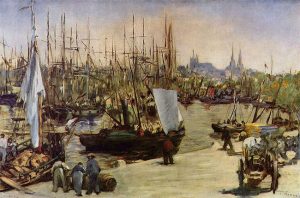
Indefatigable Ottowa-based historian Rod Phillips published (via the University of California Press) a new book last year, called French Wine – A History. I’m a fan of his fact-packed A Short History of Wine, published by Allen Lane/The Penguin Press in 2000 (and not so short either), so I’ve been greedily reading this new volume since I got hold of my copy. Even the greedy, here, must work slowly. If his book was a wine, you would say it was concentrated, dense and resonant – definitely worth keeping.
Phillips may not a storyteller, nor much given to grand theorising in the French style – but the nitty-gritty of social history is data accumulation, and here he is peerless. Not all of the data is footnoted (sometimes a shame) but, if it were, the footnotes might well be as long as the book itself. It’s a book to read for its unstoppable torrent of fascinating and often surprising details.
If you had to summarise its message, it might well be that the throughout much of the last 2,000 years in France, the French wine drunk by ordinary citizens was mostly unpleasant, and that many of those citizens were often, by necessity and seen with modern eyes, more or less tipsy. The book is, thus, a useful corrective those who hanker back to some lost golden age of ‘pure’ artisanal wine production, before ‘the chemical industry’ and ‘technology’ had corrupted the ‘natural goodness’ of fermented grape juice. That narrative is pure myth. Every professional French wine taster of past ages would be in rapture at the choice, quality, safety and healthfulness of wine we enjoy today, and would gleefully exchange their thin, sour, stinking and deviant slop for the dark, scented, pristine, rich and structured French wines you can now buy without difficulty more or less anywhere around the non-Muslim world. Here’s a small sample of what Phillips’ book will tell you.
Early years
French (or rather Gallic) wine consumption began thanks to Greek and then Roman intervention – enthusiastically: amphora fragments lying on the bottom of the river Saone suggest that early losses alone may account for between five and ten million litres of imported Greek wine, while in later Roman times around 12 million litres were shipped from Italy to Gaul every year. One of France’s two most prestigious early indigenous wines, the picatum made from the Allobrogica variety grown around Vienne, was resinated – so French wine most probably began as retsina.
The church took over where the Romans left off, and Phillips quotes figures which suggest that most monks drank a litre and a half of ale or wine a day in the early middle ages, while lay people drank more. Wine was much less strong then than it is now, but even at 8% or 9% that is more daily alcohol than I’d wish to ingest. Imagine, though, what it was like to live in a world where the purity of water could never be unthinkingly trusted. Bad wine was safer than dodgy water: that was one of the fundamental life lessons across Europe prior to the twentieth century. The side effects of alcohol just had to be endured.
The Middle Ages
Burgundy was one of France’s early prestige wines and the monks creamed off the best for themselves
Wine production in France expanded during the Middle Ages, despite retrenchment after the loss of a third of Europe’s citizenry during the Black Death (again try imagining a highly infectious, incurable disease killing almost 250 million Europeans today). Phillips emphasises, though, that French red wine as we might understand it was exceedingly rare prior to the C17, and that the dominant wine type in every French region during the Middle Ages was either white wine or ‘clairet’ – a kind of deep rosé made from field blends of light-skinned and dark-skinned varieties (the early C15 writer Olivier de Serres described its colour as “hyancinth tending to orange”). Such wines were harvested when the earliest-ripening varieties were more or less ripe, so it would certainly have included underripe fruit, and would no less certainly have been thin, sour and usually oxidised by our standards, and acetic once it had been kept too long. A sourer, weaker drink still called piquette was made by adding water to the lees and marc, and fermenting that.
Even luxury wine back then wouldn’t have won many Parker points. Burgundy was one of France’s early prestige wines and the monks creamed off the best for themselves – but the wine served for a treat on feast days at Cluny was warmed, and flavoured with honey, pepper and cinnamon.
The quantities consumed continued to astound by our standards. When the Duke of Lorraine went on the road in the late 1400s, he allowed for between two and three litres of wine per person per day for his staff. Chambermaids in the town of Vernines in the Auvergne drank a litre a day; soldiers on sentry duty (sentry duty!) at the Ch de Custines not far from Nancy were allotted just over two litres of wine a day each; and students at a papal school in Aix-en-Provence enjoyed half-a-litre a day each. Children of twelve or thirteen began work – and began to consume wine like working adults. Tipsy working fourteen-year-olds would have been a fact of medieval life.
Renaissance and Enlightenment France
Once the catastrophe of the Thirty Years War (which wrecked Alsace and much of Champagne and Burgundy) was over, the C17 saw French wine make great progress, initiating both its international reputation for quality and its long struggles with counterfeiters and passers-off. The fashionable sensation of sparkling wine production took form (Pepys was purchasing Champagne by 1679); high-quality French wine made an export stir (Pepys’ ‘Ho Bryan’ tasting note was jotted down in 1663); and the distilling revolution got underway (a million litres of brandy were exported from Sète in Languedoc in 1699). Consumption roared ahead. In February 1710, patients in the military hospital of Les Invalides in Paris managed somehow to get through 6.5 litres per day.
Yet it was only in the eighteenth century that some of the quality strategies which we take for granted (such as varietal plantings which allowed grapes to be picked at ideal ripeness) began to be instituted, and nefarious practices (like treating spoiled wine with lead to ‘sweeten’ it) questioned. Much ‘wine’, though, remained horrific in quality. In 1794, Phillips relates, the post-Revolutionary authorities in Paris analysed wine samples from 68 bars and taverns, and found that only eight of these could reasonably be described as wine. The quantities reaching the city in the late C18, though, equated to between two to three litres for every man, woman and child per week, and soared further when the revolutionary government abolished taxes on wine in 1791.
By 1808 France had 1.68 million ha of vineyards, more than double today’s total, and it reached 2.28 million ha by the eve of phylloxera. The writings of Jean-Antoine Chaptal (he of ‘chaptalisation’) and his collaborator Antoine-Alexis Cadet-de-Vaux are fascinatingly analysed by Phillips, and provide further evidence that wine for most at the end of the C18 were thin, weak, vinegary and oxidised when they weren’t actually toxic.
The Industrial Era
By the mid-C19, the Languedoc was producing around half of France’s wine: the ‘gros rouge’ which the workers of the early industrial revolution were encouraged to drink by the litre, as a kind of liquid food. Then came the often-described catastrophes of powdery mildew and phylloxera. Once grafting was accepted as a solution, France’s wine scene remained a catastrophic mess, since the ‘wine’ most drank was based at best on hybrids and crosses, and at worse on raisins, currants and refreshed marc which had been chaptalized (to raise alcohol) or plastered (to reduce acidity), and corrupted with additives like sulphuric acid, glycerine, a coal-tar dye called fuchsine, and even arsenic on occasion. When replanting with vinifera varieties eventually came, the variety of choice thoughout the south was often the mediocre though colossally productive Aramon. The result was overproduction and price collapse, followed by demonstrations and riots in Languedoc; meanwhile, early efforts to control fraud and move towards the appellation system were hastened by riots in Champagne.
Then came war. Phillips fascinatingly tracks what seem, by today’s standards, to be the ill-advised requirement that French soldiers should drink a minimum of half a litre of wine a day (raised to three-quarters of a litre by 1918, by which time the French army was requisitioning almost half the country’s wine production): it was considered (in the words of viticulture professor Pierre Viala) a “food of the first order”, meaning soldiers who had drunk wine were “less fatigued” and “had more energy”. This soldiers’ wine became known as pinard – often Père Pinard or St Pinard – and cited as a reason for the eventual triumph over German forces. The generous vintages of the 1920s and steadily increasing wine production in the French colony of Algeria meant that overproduction was soon once again problematic: French citizens were urged to drink ‘a barrel a year’ (over half a litre a day), and the French post office issued a Joan of Arc stamp in 1929 attached to a detachable sticker which read ‘Wine is a food’ – a medically backed, government campaign which continued throughout the 1930s.
The Modern Era
After many false starts, the appellation system as we know it today came into being in 1935 under the impetus of Joseph Capus, a visionary Bordeaux wine-grower who eventually become Minister of Agriculture and a senator; in reading Phillips’ book, it’s hard not to see this as the first unequivocally good piece of news for French wine since the end of the the Thirty Years’ War. What is beyond the scope of the book, of course, are the centuries of subtle qualitative improvements put into place by those working in the vineyards of France’s leading wine zones, and evident both to those in those regions and to the wine merchants servicing the needs initially of the aristocracy and, from the late eighteen century on, the urban bourgeoisie.
There were further setbacks for France during its part-occupation by German forces in the Second World War; with the killing winter frosts of February 1956; and then with the Algerian War of Independence (Algeria, as a part of France, was in effect the fourth largest wine-producing region in the world in 1960, as well as by far the world’s largest wine exporter at the time). Phillips claims that 50/50 blends of Algerian and Languedoc wine accounted for 40 per cent of what the French drank between the 1920s and the 1960s.
France’s modern wine world in effect comes into being in 1970, and the half century since then has been an enormously (if not unequivocally) happy time for French wine. The French themselves now drink far less than they did (even in 1980, 50 per cent of the French population drank wine daily; the figure is now closer to 10 per cent, with over 40 per cent never drinking wine at all).
The world, though, has embraced top-quality French wine with huge enthusiasm: the export price of French wine is now double the global average, and top Bordeaux, Burgundy, Rhône and Champagne producers have become rich beyond their forebears’ wildest dreams. The French wine we global consumers lap up is immeasurably better than that which most French drinkers have endured over the last 2,000 years, and can really only be compared to the sort of wine French aristocrats and the purple-robed church elite enjoyed in the past. We are, this excellent book teaches us, all aristocrats now.
More Andrew Jefford columns on Decanter.com:

Jefford on Monday: Marie Maria – a Madiran re-boot
An insurrection in southern France...

Jefford on Monday: Wine stories
Why don't wine writers tell more stories?

Jefford on Monday: The alpha and omega wine
Andrew Jefford recommends wines to try...

Jefford on Monday: Valpolicella Revealed
Andrew Jefford gets to know a fractious Italian champion....
The post Jefford on Monday: Unpleasant wine, tipsy citizens appeared first on Decanter.
ESPN made its priorities clear today

The Worldwide Leader had to make cuts somewhere. They got rid of the people they needed most.
Today was a sad day for sports journalism.
In recent weeks, there had been serious talk about another round of layoffs coming to ESPN. Today they happened, and over 100 people, including many on-air personalities, were cut. The grim full list is here, and it reads like the Game of Thrones “Red Wedding” episode. These aren’t just behind-the-scenes people; these are capital-J journalists who were very visible not just on ESPN dot com but also social media and were always doing national and local radio hits. Jayson Stark, who had been at ESPN for 17 years was one of the biggest names let go, along with Ed Werder.
These layoffs will affect people who like IU-related and other college sports content online. Eamonn Brennan is one name that’s especially familiar to IU fans - he’s a Hoosier alum and helped to found Inside the Hall almost a decade ago. In addition, excellent college hoops reporter Dana O’Neil was let go - she wrote this excellent article four years ago about the meaning of basketball in the Hoosier State. In addition, erstwhile ESPN college hoops presence Andy Katz was let go as part of the cuts.
College football coverage also took a huge hit today. Brett McMurphy, who has always been one of the most reliable college football reporters, learned he was being let go today. Brian Bennett, who covered Big Ten football for the network, also got the axe. As a result, the effect of these layoffs is huge of all of us who have used ESPN as a news source for years now.
It’s a tough day for those of us who enjoy sports writing and grew up with ESPN as a constant in our lives, like all of us on CQ staff did. So let’s clear a few things up.
First of all, cuts had to be made somewhere. ESPN gets so much its money through cable subscriber fees. Thanks to streaming options and other ways of getting information, cable subscriptions are going down nationwide. Companies like Comcast and Charter are hemorrhaging subscribers. At the same time, the Worldwide Leader is paying huge sums of money for the rights to live sporting events. For example, ESPN pays $190 million a year for rights to Big Ten games, and that’s only half the money the B1G gets for television. ESPN pays $1 billion almost $2 billion a year for Monday Night Football - and that’s only for 16 normally mediocre games as well as the bad Texans playoff game that no one wants to watch.
As a result, today’s move doesn’t have anything to do with “politics” at ESPN, as many have tried to claim today. This all boils down to economics, and not because ESPN - who once voluntarily hired Rush Limbaugh to talk about football - has some sort of liberal bias. Plus, Fox News and FS1 are losing cable subscribers at the same rate as ESPN as well, so this affects all channels.
But the real story behind these cuts are what ESPN has chosen to cut. They’ve gotten rid of veteran reporters like Werder, Stark, and O’Neil, but they’re also getting rid of some of their best younger, up-and-coming reporters. This includes Ethan Sherwood Strauss, who was the ESPN beat writer for the Warriors, a team that is the heavy favorite to win the NBA Finals and is in the midst of their playoff run right now. And god forbid you check out ESPN for hockey coverage, because all of those writers are gone too. There’s no rhyme or reason to the people who were let go.
What ESPN seems to basically be saying here is, if you aren’t a screaming hot take artist with an opinion that’s louder or more controversial than others, you’re in danger at the network. The abrupt closure of Grantland two years ago hinted at this, but today made it evident.
All in all, ESPN has made a clear decision that good journalism isn’t necessary for their bottom line. The hot sports take content that is pervasive across the internet extends to ESPN as well. For a network that’s ubiquitous in bars, gyms, barber shops, and pretty much any other public place with a television, it’s an incredibly short-sighted decision, but one they will have to live with. People will continue to cut cords, no matter what the content is on ESPN. The cuts were inevitable. But the network at least had a chance to prioritize good reporting over sports shouting. And in that aspect, it failed.