
Jakienle
Shared posts
22 May 20:38
What Are You Drinking?
Let the author and bartender Rosie Schaap make you a custom summer cocktail.


21 May 20:35
Grab-and-go meals on menu for Patachou owner
by solson@ibj.com
Local restaurateur and entrepreneur Martha Hoover wants to open kiosks offering healthy meals on the go in public places, including along the Monon Trail.
13 May 18:33
Tools to Maintain a Proper Menswear Wardrobe
by Alex Crawford
By popular request, we’re putting together a series on wardrobe maintenance and storage.
As the first installment, here’s some of the tools that I use to keep my personal wardrobe looking sharp and lasting long-term.
Feel free to chime in from your experience in the comments below.
Proper Suit/Jacket Hangers

One of the best things you can do for your tailored suits/jackets is hang them on a proper hanger, immediately after you remove them. By ‘proper hanger’ I mean something that fits the width of your jacket’s shoulders (hangers come in different sizes), and something thick enough to balance the weight of the jacket between the front and back panels.
I usually save on shirt hangers (simple dry cleaner wires do the trick), but try to keep all of my tailored jackets on full wooden hangers. I also prefer the velvet-trimmed trouser bar, as opposed to those that “squeeze” the trousers and ultimately create a wrinkle.
Cedar Shoe Trees

We’ve discussed these before. Check out our article How to Make Your Shoes Last a Lifetime.
Shoe Stretcher

Here’s one I’ve never mentioned. Years ago, back in my eBay hustling days, I was buying a lot of luxury European dress shoes. Up-selling some, keeping others. But they were often too narrow for my feet (this was before I realized that I have wide feet and need a size 11 “E”).
So I invested in this shoe stretcher. It’s fairly simple; insert into your shoe and twist to expand the split-toe. Leave over night(s), preferably with some leather ointment to promote healthy stretching. You can also move around the metal expansion to add a little extra room for any problem areas on your feet (blisters, bunions, etc). I’ve had great success with this thing, opening up some shoes that used to severally hurt my feet.
Spring Bar Tool

You may have noticed that I only have a couple watches (my go-to Montblanc is actually in the repair shop right now – post on that later) but I have many watch bands that I switch seasonally, or for specific outfits. With this spring bar tool, changing the band is very simple and easy.
Fuzz Buster

If you like vintage sweaters as much as I do, you probably have one of these de-linters. It’s like an electric razor for your sweaters, to keep the pilling under control.
Also, I’ve mentioned this in the past, never hang any of your knitwear. Sweaters will stretch-out and the hangers will leave impression marks. Fold and stack them neatly!
On-The-Go Express Shine

I have a proper shoe shine kit (something like this) but honestly I usually have my shoes shined professionally. I enjoy the experience, and the chit chat, and supporting a local working man. It’s also a great way to kill time at an airport…and I’m never going to do it as well as an experienced man in his groove.
Anyway, my traditional shine kit usually collects dust, and instead I often use this neutral “Express Shine” sponge before I step out. It doesn’t do much for the health or moisture of the leather, but it removes dirt and makes them shiny for a couple hours at least.
Suede Brush

Suede is a little more high-maintenance than smooth leather…but boy is it sexy. Funny how those are related…
If you scuff or spill on your suede shoes, simple give them a circular rub-down with a soft-bristled suede brush to bring back an even nap. It’s sort of the equivalent of a shoe shine for suede.
Garment Steamer

I have a proper iron and board, but honestly don’t use them very often either. I’ve gotten into the routine of having my button-down shirts professionally washed and pressed (I never do it as good as them, nor can I justify the time spent ironing). For pretty much everything else that doesn’t require dry-cleaning, this garment steamer is a life saver. It’s also quick and virtually fool-proof.
Shoe Horn

After undergoing hip surgery during my freshman year of college basketball, some days I have a hard time bending over to reach my shoes. I use this elongated metal shoe horn EVERY DAMN DAY. Wouldn’t want to live without this thing. It’s also good for the lifespan for your shoes (stop squishing into them and crushing up the heels).
What are some of your essential wardrobe maintenance tools/routines? Feel free to share in the comments below.
Yours in style,
TSBmen
Photography by Alex Crawford
09 May 20:13
The 10 Best Jens Lekman Songs
by Stereogum

The appeal of Swedish singer-songwriter Jens Lekman has often been described in terms of his apparent lack of appeal. His signature baritone is slightly nasal and far from classically accomplished, and his arrangements borrow recklessly from 20th century pop — both canonized and disreputable. In any given Jens Lekman song, you’re as likely to hear the influence of the classy baroque pop of Belle & Sebastian as you are the tacky glitz of rhinestone-era Glen Campbell. (On 2005′s Oh You’re So Silent Jens, Lekman samples both of them.)
09 May 16:20
National Law Firm Locating Office in Indy
A national law firm is opening an Indianapolis office. Quarles & Brady LLP says the downtown location will focus on health care, intellectual property and product liability. Also, a national practice will move from Washington D.C. to the Indianapolis office and be led by Linden Barber, the husband of WGU Indiana Chancellor Allison Barber.
07 May 18:28

Where do Big Ten graduates live? Could Columbus host a B1G Tournament?
by Matt Brown
With all this talk about markets and #brand, why don't we take a look at how B1G grads are distributed, and what that might mean for future tournament sites?
The discussion about the Big Ten's decision to move the 2017 Men's Basketball tournament to D.C. continues among fans, especially after Big Ten Commissioner Jim Delany reiterated his desire for the league to "live in two places", the midwest, and the East Coast. By now, you've probably read (or at least seen) lots of articles debating the merits of this strategy. That is not this post.
One point that has been continually mentioned in the debate over the various merits of event cities is the amount of Big Ten alumni in each metro region. Washington D.C. does, in fact, have tens of thousands of graduates of Big Ten schools, buoyed by the recent inclusion of Maryland. If the Big Ten decides to look at other cities in their footprint, like say, New York, are there other possible candidates with a bevy of Big Ten graduates? What schools might derive a particular advantage from each city? And could Columbus, or maybe Cleveland, emerge as a compromise site? Lori Schmidt asked Gene Smith about it, and this is what he said:
"I would be very open to working with the [Greater Columbus Sports Commission] or something of that nature to put a bid in to host the conference championship game in basketball," said Smith.
I mean hey, Columbus got the Big Ten Rugby Tournament, so it could happen, right? Right?! Well, let's look at some data.
Tracking alumni data by city is tricky and time consuming. One broad way to sample it is to use LinkedIn, which can calculate sort every user account of a current or former student at a school, and track it by metro. These numbers obviously undercount total figures (alumni who don't have LinkedIn accounts aren't represented), but they should also undercount the data by a similar proportion amongst member schools. A school that reports 400 alumni in a city probably doesn't actually have 8,000. This is good enough to show general trendlines, and where certain schools have more graduates than others.
Another quick caveat: LinkedIn tracks metro areas, not city limits. So if you have LinkedIn, and you live/work in Dublin, or Granville, or Lancaster, you're showing up as Columbus. If you're in Naperville or Rosemont, you're in Chicago, etc. For our purposes, that's fine.
Here is the data for Big Ten Schools, picked for cities in the rotation, and cities that may be of interest to Big Ten fans:
| School | Chicago | Indy | DC | New York | Columbus | Cleveland | Philly |
|---|---|---|---|---|---|---|---|
| Ohio State | 5,481 | 1,364 | 5,119 | 6,568 | 79,894 | 15,435 | 1,808 |
| Wisconsin | 17,669 | 620 | 4,816 | 9,275 | 488 | 632 | 1,320 |
| Illinois | 77,838 | 1,417 | 4,293 | 6,256 | 659 | 602 | 1,216 |
| Penn State | 3,167 | 529 | 16,110 | 25,109 | 1,087 | 1,633 | 47,262 |
| Purdue | 24,395 | 26,923 | 3,741 | 4,415 | 1,457 | 1,350 | 1,481 |
| Michigan State | 14,525 | 1,210 | 4,626 | 5,954 | 1,208 | 1,297 | 1,504 |
| Michigan | 14,167 | 925 | 8,856 | 17,855 | 974 | 1,537 | 2,346 |
| Indiana | 22,060 | 28,525 | 4,360 | 7,582 | 1,294 | 1,021 | 1,248 |
| Rutgers | 1,319 | 178 | 4,467 | 102,655 | 244 | 265 | 14,876 |
| Maryland | 1,590 | 264 | 74,158 | 14,712 | 358 | 389 | 4,556 |
| Iowa | 15,930 | 377 | 1,648 | 2,187 | 270 | 248 | 492 |
| Northwestern | 37,326 | 504 | 3,992 | 8,732 | 491 | 742 | 1,307 |
| Minnesota | 3,975 | 325 | 2,694 | 3,526 | 242 | 304 | 826 |
| Nebraska | 1,800 | 222 | 1,266 | 1,239 | 180 | 134 | 322 |
And your totals:
Chicago: 241,242
New York: 216,065
Washington D.C.: 140,146
Columbus: 88,842
Philadelphia: 80,564
Indianapolis: 63,383
Cleveland: 25,589
Okay, so what are some takeaways from all this?
1) On the surface, the alumni numbers of Columbus seem in the neighborhood needed for hosting contention. The problem is that almost all of these are Ohio State grads, which, as Lori herself noted in her article, could be seen as providing an undue competitive advantage – although it's not like Maryland's campus is all that unreasonably far from the Verizon Center.
Unlike Indianapolis, Columbus actually hosts a Big Ten team, and while it has a downtown arena district that's comparable to anything you'd find in Indy, it isn't quite as close to other schools. Ohio State fans would obviously be thrilled if Columbus somehow finagled one of these, but you shouldn't expect it.
2) Cleveland doesn't have many Big Ten grads (I'd guess it has less than a place like Detroit or the Twin Cities), is a little less reachable by car than Indianapolis, and, while many Ohioans are fond of the area, it may not even near the top of out of state folks' wish lists for travel destinations in March.
3) I would be shocked if the Big Ten doesn't make a play to add New York City into the rotation in the near future, given their overall goals, and the even larger number of Big Ten graduates. The tricky thing is to find a venue, since MSG is locked into the Big East longterm, and the Barclays Center has a contract with the ACC until 2018. I'd expect the Big Ten to make a play at locking down Brooklyn for 2019 or 2020 (and adding it into the rotation thereafter). Failing that, the Prudential Center in Newark is probably not impossible, but nowhere near as attractive of one and likely unrealistic.
4) The wild card might be Philadelphia, which has the same strong appeal to the eastern side of the conference, while also being in a bit more "neutral" location. I personally don't think this is as attractive as D.C. or NYC, given the somewhat smaller number of graduates and overall appeal, but I wouldn't be surprised if the Big Ten kicks the tires on using Philly as a venue for other events.
5) Perhaps the fanbase that complained the most online about the move to D.C. was Nebraska, and if you look at the numbers, you can see why they would be upset. Not only is Nebraska the farthest school from the East Coast, but they have the least alumni in those cities as well, and it isn't super close. Typically, after their home city and the major metros in their state, either Chicago, D.C. or NYC are the biggest centers for alumni for a Big Ten school. Per this data, Nebraska has more grads in Denver and Kansas City than Chicago, and D.C. is 10th, behind places like the Twin Cities, Phoenix, and the Bay Area. It's possible that Nebraska East Coast grads are substantially undercounted compared to their grads in places like Denver, but the point remains, they're unlikely to swamp the East Coast locations.
The counter argument, of course, is that Nebraska didn't travel that well to Indy or Chicago anyway. Since the league has not yet decided what to do about the 2017 Women's Basketball Tournament, perhaps the Big Ten could move one of the women's tournaments to Omaha.
Any surprises in the data? Questions? Think Columbus should host a basketball tournament? Let us know in the comments below.
05 May 15:47
State office seeks to block Indiana American Water rate hike
by dhuman@ibj.com
The Office of the Utility Consumer Counselor says a proposed rate hike by Indiana American Water Co. is unwarranted, and the company should actually lower existing rates.
Tifmurray likes this
02 May 20:45
Re-Invent Your Wardrobe: 20 Essential Menswear Pieces
by Alex Crawford
In a perfectly curated wardrobe, all of the pieces (well, almost all) should make sense together and be interchangeable. For example, each of the ties should work with each of the shirts, and each of the shirts should work with each of the trousers. In theory, you could get dressed in the dark.
I’ve touched on this point before, and by popular request from our readers who are in the process of re-inventing their closets, I decided to update my list of 20 essential items that can serve as the basis for any well-dressed mans wardrobe. Using only these 20 pieces you should be able to create dozens of different outfit combinations and be appropriately (and stylishly) dressed for just about any occasion.
Before you start stocking up, though, keep in mind that (as always) I recommend buying quality. Well-made clothing last longer and looks better every time you wear it, so it works harder for you and saves you money in the long run. These are all classic foundational items that you can wear for the next 10+ years, in my opinion. Think of them as investments. Investments in your appearance, your first impressions, your confidence, your sexlife, your career, etc. It might take you a couple years to build a high-quality, well-edited wardrobe. That’s okay. Menswear is a marathon, not a sprint.
I also included my top pick currently available online for each item. Price points are all relative to the individual, this is just a reference to items that I consider to be good values (there are no sponsorships or paid advertisements in this article whatsoever). For those going through body changes, it’s a good idea to wait until you stabilize at a weight that you are happy with, and can realistically maintain, before purchasing these staple pieces.
Lastly, don’t forget to bring new items to your tailor. Ask him what can be done and tell him how you want it to look; maybe even bring a TSB photo for reference. Remember it’s a one-time cost that will reap residual benefits.
So here we go. Here’s my 20 foundational pieces to build your wardrobe around.
————————————————–
1. Unstructured & Textured Navy Suit

A solid navy suit should be the foundation of your tailored wardrobe. If you find an unstructured one in a textured fabric – like this wool hopsack – it can serve as a go-to suit, blazer, or pair of trousers.
- This is your workhorse business suit. You can wear it three times in one week and nobody will even notice (the beauty of solid navy in the corporate world)
- Look for a fabric that is dark enough to wear in the evening (to a club, semi-formal event, etc.) to increase versatility.
- You can also consider using a slightly more blazer-friendly button (like these gunmetal versions) if you find yourself wearing it more often as a jacket.
- If you’ve been thinking about trying custom or bespoke, this is a great place to start. In which case I recommend my tailors at Michael Andrews Bespoke (mention TSBmen for a 10% discount)
- My pick online: midnight lightweight wool/cashmere suit by Suit Supply
2. Blazer with Texture and Pattern

A perfect sport coat, like a perfect pair of jeans, can be worn over and over again for a multitude of occasions.
- Look for something with some pattern and texture, in colors that have a little life but are still subtle enough to go with most of your wardrobe
- This is a great place to play with an interesting fabric blend, like this wool/linen/silk
- This jacket should work with your navy suit trousers, both jeans, and the chinos (as well as any of your shirts)
- My pick online: cotton/linen windowpane blazer by Hugo Boss
3. Dark Brown/Oxblood/Cordovan Wingtips

The quintessential dress shoe with just enough character for jeans on the weekend.
- Invest in something that you can have re-soled and re-crafted
- Remember the “Golden Rule of Footwear“
- My pick online: “Jefferson” wingtip oxfords by Allen Edmonds (pictured)
4. Brown Penny Loafers

The timeless everyday shoe that can be dressed up or down.
- Look for a classic penny shape with a round toe and a medium vamp
- I like medium brown – especially if you go burgundy on the wingtips
- My pick online: “Kenwood” penny loafers by Allen Edmonds
5. Suede Ankle Boots

You already know how I feel about sleek dress boots. In chocolate suede, these are as versatile as they are sexy.
- If you live in a rainy climate, you might want to consider going smooth leather
- There are several styles of ankle boots to chose from – chukkas, chelseas, Jodhpurs, etc.
- My pick online: “Ike” ankle boot in by Jack Erwin (pictured)
6. Black low-top leather Sneakers

I was going to go with white low-top sneakers, but they don’t work as well at night. Black looks harder, sharper and more sophisticated. It also works better with tailoredwear, in my opinion.
- Look for something clean, simple and well-made
- Avoid logos, stripes, colors, hardware, contrast soles, etc. The more stripped-down, the better.
- My pick online: “Achilles” low top leather sneakers by Common Projects
7. Neutral Trench or Mac

A rain coat that’s not strictly for the rain. Make sure it’s waterproof, neutral in color, and classic in design. Like this treated cotton military trench.
- Look for something just slim enough to fit over a suit/blazer, so it doesn’t look oversized over only a thin sweater
- The length should hit around mid-thigh for greatest versatility (long enough to cover the suit jacket/blazer, and short enough to wear casually with the jeans and loafers)
- My pick online: Belted trench by Brooks Brothers Black Fleece (pictured)
8. The Perfect Black Leather Jacket

If you chose properly, this will become your go-to piece for anything after sunset.
- Look for something trim fit and light in weight (it’s a jacket, not a coat)
- Keep the design details minimal. Go symmetrical with a classic collar and avoid any excessive hardware, zippers, biker padding, heavy linings, etc.
- My pick online: leather club jacket by Todd Snyder
9. Slim Dark Denim

No secret here. If you don’t have a go-to pair that fits perfectly, keep looking. You want a pair that you look fwd to wearing day in and day out, whether you’re dressed up or dressed down.
- Go slim straight (or slight taper). Avoid “skinny”.
- Try on as many brands as possible to find the best fit, then have them tailored after breaking them in.
- Wear them as much possible and enjoy the break-in process. Try to avoid washing them if possible.
- My pick online: “Kane” slim/straight jeans in RAW by JBrand (pictured)
10. Faded/Vintage Denim

As an alternative to the dark denim, look for something with a little more character and a little more Spring/Summer feel.
- Authentic distressing almost always looks better than factory distressing. Therefore, go vintage and then go to your tailor.
- Again, keep them slim and straight/tapered, but avoid anything that squeezes the thighs.
- My pick online: worn-wash selvedge jeans by Wallace & Barnes
11. Stone Grey Chinos
Pale grey chinos are as versatile as a pair of pants can get.
- Look for something flat front, slim fit, and wash them in the machine to give them a broken-in feel.
- They should be blank in color enough to work with virtually everything in your wardrobe.
- My pick online: “Medway” classic twill chinos by Reiss
12. Slim White Dress Shirt

Every guy should have at least one classic white dress shirt with a tailored fit and a strong collar.
- Keep it simple: no contrast fabrics, colored buttons holes, funky design details, etc.
- Go semi-spread or spread collar for greatest versatility (that oxford cloth button-down isn’t cut out for formal or semi-formal events)
- My pick online: “Jaron” slim-fit dress shirt by Hugo Boss
13. Check/Plaid Oxford

A check shirt (gingham, windowpane, tattersall, plaid, etc) can be a workhorse come Spring/Summer.
- Look for something with a pop of color that is still relatively neutral and has a light base (like this white/khaki/burgundy)
- Go with a button-down collar since you’ll often be wearing the shirt casually, but avoid anything overly “washed” with a flimsy collar since you want the option of wearing it with a tie/jacket.
- My pick online: windowpane oxford button-down shirt by Brooks Brothers Black Fleece
14. Chambray/Denim Shirt
The denim shirt is a staple because it can be dressed up or down – especially if it’s cut like a dress shirt with a sharp cutaway collar.
- Keep the fit trim and make sure the collar fits properly with a tie.
- Look for a solid light wash (without too much distressing). It should look like a dress shirt made of denim, rather than a casual shirt that isn’t meant to be worn with a tie.
- My pick online: Italian indigo denim shirt by Alara (pictured)
15. Tonal Pattern Henley

The henley is an essential layering piece. You can wear it on it’s own like a t-shirt, under a heavy shirt (like the denim above), or over a button-down (like the white dress shirt, see outfit #7 below).
- It should fit trim and hit right below the waistband
- A tonal block stripe is a perfect way to add a little pattern, without competing with other pieces
- Invest in a quality fabric (like this cashmere) and you’ll find yourself reaching for it time and time again.
- My pick online: silk blend henley pullover by RRL
16. Heather Grey Athletic Crewneck

Back to basics with this one. Wear it to the gym, wear it over a shirt, wear it under a blazer… You can pretty much wear it with anything.
- Look for medium grey fleece with a touch of heathering
- The open crewneck and raglan sleeve give it a sporty feel.
- Consider sizing down to get a trim fit – you want it to be fitted and sleek
- My pick online: the original crew by Levis (pictured)
17. Silk Knit Tie in Seasonal Color

Bring out a spring color that works with the rest of your wardrobe. Solid options are burnt orange, mustard yellow, and deep purple.
- Most knit ties are too thin (2″ on average) to tie a good knot. Look for one that’s a little wider, like this 3″ number.
- My pick online: 3″ silk knit tie by Brioni
18. Lightweight Scarf in Silk, Cotton, or Linen

Lightweight scarves are often overlooked. Therefore, a silk, linen, or cotton piece is an easy way to stand out from the crowd during the Spring/Summer months.
- Think color and pattern, but not overwhelming.
- Linen and cotton are probably a little easier to “pull off” than silk, which is a little more feminine, but also a little more suave.
- My pick online: paisley print cotton scarf by Polo Ralph Lauren
19. A Versatile “In-Between” Belt

The perfect belt is a cross between dressy and casual. This one, for example, is an O-ring belt (naturally leans casual) but cut in a fine suede leather (which leans a little more dressy). If I only had one belt, this would be it.
- Keep it narrow and sleek. Like 1-1.5″ narrow.
- Keep the hardware minimal, and preferably silver.
- My pick online: suede O-ring belt by Ralph Lauren
20. A Classic Felt Fedora

Last but not least, get yourself the classic gentleman’s finishing touch: the lightweight felt fedora.
- Avoid really short or “stingy” brims, look for something around 2.25-2.75″
- Go brown or dusty grey for most versatility
- Try on as many hats as possible to find one that looks natural with your head/face shape. You want to be comfortable wearing it.
- My pick online: rabbit fur felt hat by Christys’
20 Pieces, 10 Looks
1. All Business

2. Date Night

3. Casual Stroll

4. Nightclub All-Star

5. Business Casual

6. Spring Wedding/Semi-Formal

7. Cocktail Party Chic

8. Bar Hopping with the Boys

9. Serious Separates

10. Leisure Suited

What are your go-to wardrobe essentials?
Thanks for reading.
Yours in style,
TSBmen
Photography by Alex Crawford. Styling by Dan Trepanier.
02 May 20:40
Indianapolis Then and Now: The Ruskaup Grocery and Tavern / The Inventorialist, 715-717 Dorman Street
by Joan Hostetler
Were it not for strict rules forbidding commercial buildings in Woodruff Place in the 1870s, this grocery store might not have landed on Dorman Street. According to family legend, recent German immigrant Frederick Ruskaup wanted to build his grocery store […]
01 May 19:03
Obama Administration Names 55 Schools Facing Sex Assault Probe
by Jacob Gershman
U.S. Department of Education on Thursday released what it described as the "first comprehensive look" at which colleges and universities are under review by the government for their handling of sexual violence and harassment complaints.
30 Apr 15:47
Overlook at the Fairgrounds
by Kevin Kastner
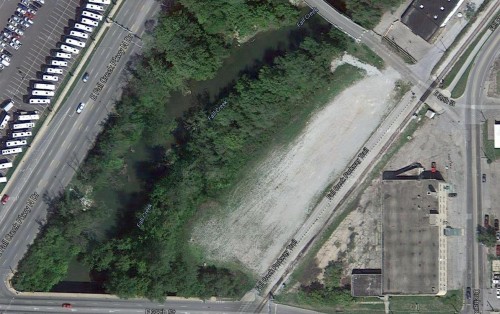
Last week, I had a chance to meet with Gary Hobbs and Wil Marquez, who are key figures behind the effort of transforming a former candy factory into a mixed-use building. Located to the east of Fall Creek along 38th Street, this looks to be an exciting project that will inject new life into the neighborhood.
The siteplan plans to take advantage of the building’s location next to the Fall Creek Trail and the State Fairgrounds. The building is located at the southeast corner of this aerial photo:

Image Credit: Google Maps
Some important details of the project include:
- Uses QAP tax credit dolars.
- Adding a 4th floor to the building.
- Interior and exterior restoration of Art Deco building.
- Planning on encouraging job training and leverage its proximity to the fairgrounds.
- A mix of affordable and market rate units.
- Green roof on the first floor section that can be accessed by residents.
- Encouraging health and wellness and include bike storage.
- New sidewalks
- Outlot commercial building along 38th Street is possible in the future.
Here are a few renderings that of the completed project. Note that construction permits have not yet been secured, but this should give a good idea of what is in store:


The site plan is linked here via pdf. The developer, Gary Hobbs from BWI, appears to be willing to listen to suggestions for making this project even better for the neighborhood from an urban planning perspective. I would love to see the sidewalk next to the building, and the parking lot a bit smaller, without the curb cut along 38th Street. And I believe there could be potential to add parallel parking along Orchard Avenue.
Regardless of any suggestions that may be taken into account, this project should be a major win for the neighborhood, and I will be happy to see this move forward.
25 Apr 17:19
Julian Center reopening counseling facility
by adavis@ibj.com
The facility closed last year in the wake of a budget shortfall. Officials now hope to better integrate counseling with services the center provides to victims of domestic violence and sexual abuse.
24 Apr 14:17
Fairgrounds officials pushing for coliseum sponsorship
by jnewman@ibj.com
The Fairgrounds Coliseum, which reopens Thursday after a $63 million renovation, is likely to receive a new name soon, an Indiana State Fair Commission spokesman said.
23 Apr 15:15
Tavern on the Green Sparkles Again
by By FLORENCE FABRICANT
After two years of restoration, the restaurant is set to reopen as a polished crown jewel in Central Park.
22 Apr 20:01
A Room with a View – Metropolitan Hall: Indianapolis’ First Theater
by Ryan Hamlett
While the Hilbert Circle and Indiana Repertory Theaters are the last remaining of what was a vast network of downtown theaters, neither can boast having been the city’s first. That distinction goes to Metropolitan Hall, once at the northeast corner […]
21 Apr 14:07
Chatham Tap crew buying ex-church for brewery, restaurant
by solson@ibj.com
JakienleSays bent rail is opening in May...?
The owners of two popular pubs on Massachusetts Avenue are delving into the trendy micro-brewery business with plans for a brewery and restaurant in a historic former church a few blocks away.
17 Apr 21:29
Gabriel García Márquez, Conjurer of Literary Magic, Dies at 87
by By JONATHAN KANDELL
Mr. García Márquez, a Colombian who received the Nobel Prize for Literature in 1982, wrote fiction rooted in a mythical Latin American landscape of his own creation.


17 Apr 15:30
Welcome to ‘Market East’
by Joe Smoker
Today, the City, behind Mayor Greg Ballard, announced a new downtown district which represents the culmination of years of work and a number of recent project announcements. Roughly bounded to the north by New York Street, to the south by the railroad tracks, to the west by Delaware Street and to the east by, well, East Street, Market East will provide a unique setting among Indy’s existing cultural districts.
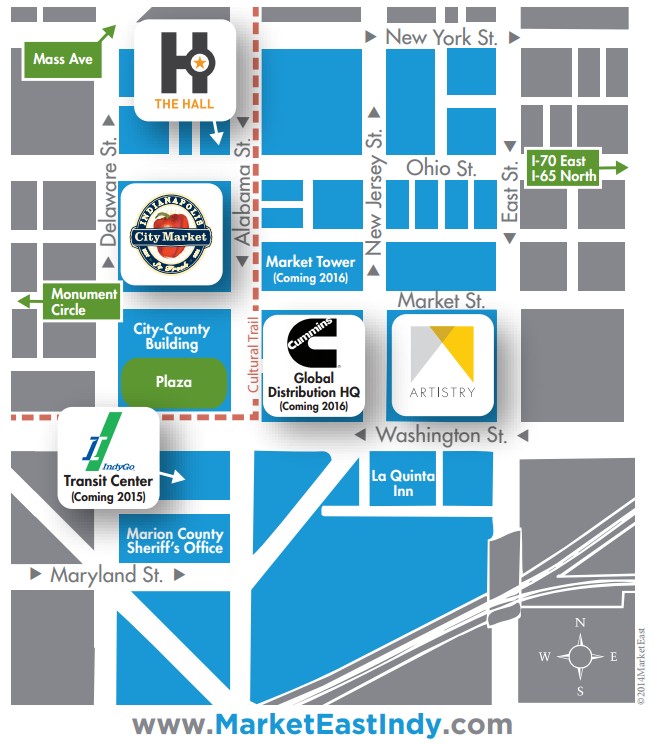
Unlike the existing cultural districts, Market East will feature a rare experience for Indy. The district will be among the largest collection of modern structures in downtown and will offer the most comprehensive version of the “live, work, play” philosophy. A combination of high-rise luxury living, revitalized and ambitious greenspace, the intersection of Indy’s transit network and even a fortune 500 company will be just steps from the very center of Downtown.
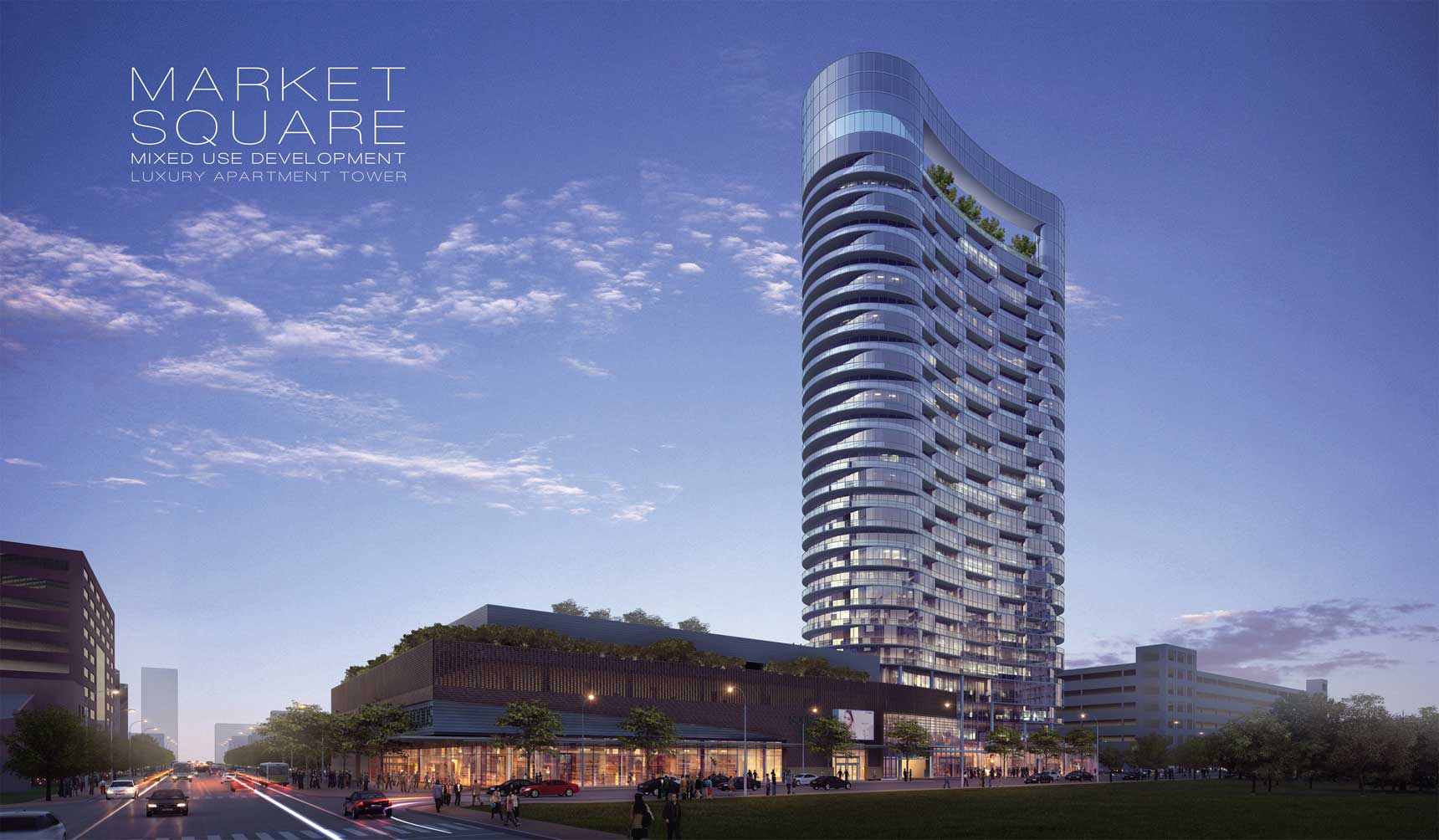 At the heart of this effort is the recently announced Market Tower, a 28-story luxury high-rise, which would be the most substantial change to the city’s skyline in years.
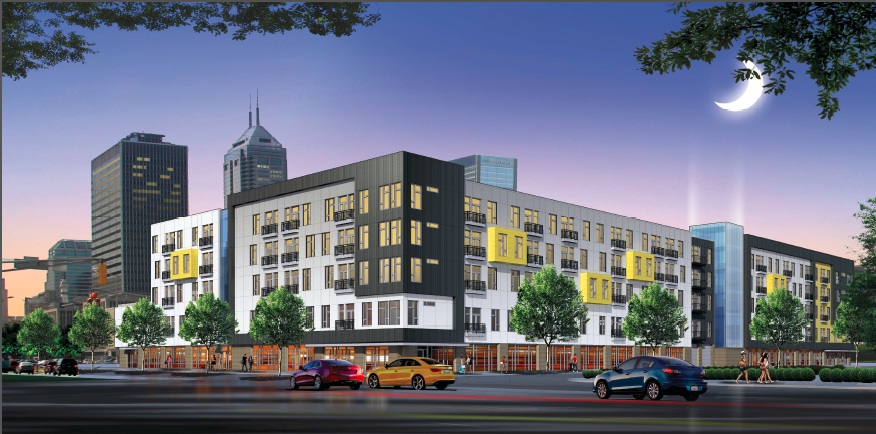
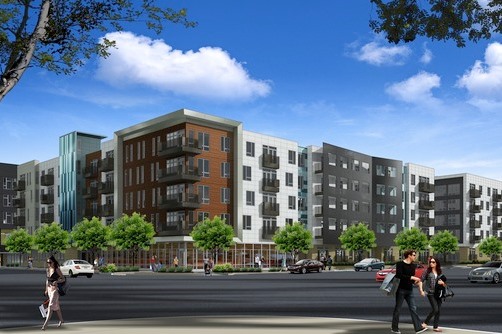
Other residential development includes Milhaus’ Artistry project, nearing completion, as well as the soon to be started Mentor and Muse (Artistry phase II).
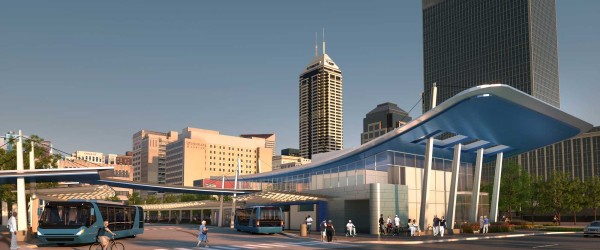
This past February, we finally saw plans for an integrated transit center for IndyGo. This modern structure will allow for a centralized location for bus transit, ticket purchases and offices.
 It was a surprise to many when the City announced plans for Cummins to consolidate their downtown offices into a new structure on the remaining Market Square Arena lots. While no plans have been released, we should all expect a structure fitting to the new district. I imagine most expect a building with some relative height and a mix of uses to compliment the Market Tower next door. All things considered, it should be nice to have a larger visual presence for such a notable company with a reputation for architectural quality and community relations.
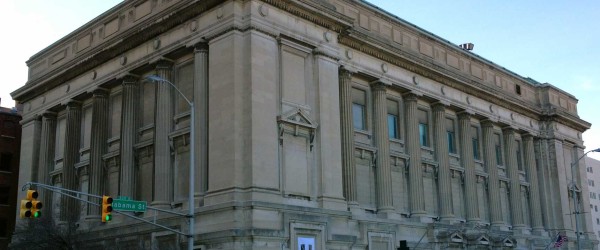
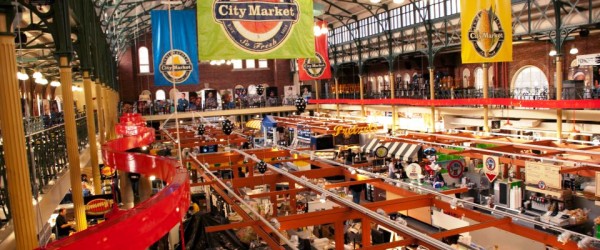 Two long time staples of the east side of downtown have seen major changes in recent years. Both the City Market and Old City Hall are in the midst of a major revitalization. City Market has been the beneficiary of new energy into downtown as well as becoming a hub for the City’s emerging bike culture while Old City Hall has temporarily been branded as ‘The Hall’ to foster the planning process and consolidation of the many plans that will form Plan 2020.
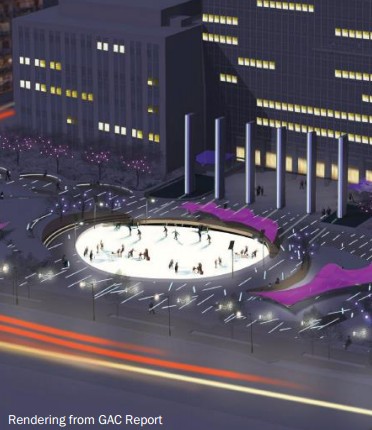
Even more energy will be thrown into Market East with the announcement of a design competition for the City-County Building Plaza. This public space, located south of the CCB, will be transformed from an unusable, hostile environment into a mix of art, interaction and relaxation.
It should be exciting to watch this district grow from what is a mix of municipal land and parking lots into a defining district of our generation. It is a rare opportunity for a city to have a prime area as large and as close to the center as we do with Market East. With a mix of modern, sustainable buildings and historic structures, Market East could be a game changer for the east side of downtown.
More info may be found at www.marketeastindy.com
Tifmurray likes this
15 Apr 17:36
Deca Financial to wind down after trustee opts for liquidation
by comalley@ibj.com
The Fishers debt collection agency had been forced into bankruptcy by creditors. On Monday, a judge approved a request to terminate the once-promising firm.
07 Apr 13:19

Let's talk about what Rutgers brings to Big Ten football in 2014
by Matt Brown
Oh yeah, they're joining the Big Ten next season. Let's check up on what Rutgers is doing.
So I was checking FBschedules this morning, doing some research, and I came across something disconcerting.

Whoa. Whoa. Whoa. What is this Rutgers business doing below Purdue? And for that matter, what's Purdue doing there?
The latter is a question that we won't be able to answer in one article, but we can tackle Rutgers. Despite the lamentations of the fans and the pleas of bloggers, Rutgers is happening, so we might as well get used to it, and start to take a look at our future new conference foe.
When I asked our newsroom for Rutgers related questions they wanted answered, is first one I got was, "Why is Rutgers?"
A noble and profound question indeed.

Hmm! Those are actually all good questions. Let's investigate. And by investigate, I mean google.
Why is Rutgers called Rutgers?
It wasn't originally called Rutgers. The school, which dates all the way back to 1766, was actually originally called Queens College. They renamed it to Rutgers in 1825, after a fellow named Henry Rutgers, who fought in the Revolutionary War and was a major benefactor to the school. It became Rutgers University in 1924, and a state university in the 1940s.
Why is Rutgers in the Pinstripe Bowl?
Let's not talk about that again. It upsets your father and makes your mother cry. Rutgers, we're not so much angry as we are disappointed.
Also, Rutgers went 6-6 in the regular season last year, getting their asses kicked by Cincinnati and even losing to something called a UConn. They did however, beat Arkansas, which wasn't very B1G of them. They then lost to Notre Dame in one of the most unwatchable bowl games of last season, maybe ever.
Why is Rutgers a good school?
Well, this is a bit of a subjective question, no? If you're the sort who cares about the US News College Rankings, Rutgers is currently 68th, just a few spots below Ohio State. They are an AAU school, and their average freshman ACT scores are in the 25-30 range. So that's pretty good, right? Yay, school.
Also, Rutgers football has enjoyed a very high APR (Academic Progress Rate) over the past few years, so I guess you could say the Scarlet Knights are leaders on the field, AND in the classroom.
Quick, let's cut to Jim Delaney:

Gross.
Why is Rutgers called Slutgers?
An interesting question!
*checks to make sure wife isn't home*
*opens up Incognito Mode*
*remembers this is a family website*
*punts on question*.
Tressel would be proud.
Why is Rutgers joining the Big Ten?
Oh, not this shit again.
Another question from the newsroom:
Why are Rutgers called the Scarlet Knights?
So that's actually a pretty cool nickname, if I do say so myself. However, it appears that wasn't the original name for their athletic teams. From the official Rutgers website:
Since its days when the school was officially known as Queen's College, the athletic teams were referred to as the Queensmen. Officially serving as the mascot figure for several football seasons beginning in 1925 was a giant, colorfully felt-covered, costumed representation of an earlier campus symbol, the "Chanticleer." Though a fighting bird of the kind which other colleges have found success, to some it bore the connotation of "chicken." It is also a little-known fact that the New Brunswick-based broadcast station, WCTC, which serves as the flagship station of Rutgers athletics, had its call letters derived from the word "ChanTiCleer." Chanticleer remained as the nickname for some 30 years.
In the early 1950's, in the hope of spurring both the all-around good athletic promise and RU fighting spirit, a campus-wide selection process changed the mascot to that of a Knight.
By 1955 , the Scarlet Knight had become the new Rutgers mascot.
Sure, if my school used to go by the Queensmen, or were named after a fancy chicken, I'd probably petition the student body for a vote, too. This information will be in no way ever used to make fun of Rutgers now or in the future.
What's going on right now with Rutgers spring practice?
That's a good question. Let's check in with On The Banks, which you should be incorporating into your B1G media diet no latter than July 1:
The QBs need a LOT of work. Perhaps it's a function of trying to get five or six guys practice reps, or maybe it has to do with normal early-spring rust, but all of the QBs were inconsistent. They all showed flashes of potential, but they were interrupted by lousy decisions and bad throws. Walk-on Sophomore Devin Ray (Bernards High School) may have been the most pleasant surprise - he throws a very nice ball with a lot of pop. Blake Rankin appeared to be the most fluid and mobile, but he struggled with accuracy. Perhaps most notable was what I did NOT see: Gary Nova's 33 games of experience did not noticeably set him apart from the pack. And the fans I spoke with were decidedly and uniformly anti-Nova, whatever that's worth.
Oh.
Gary Nova is your incumbent, but he didn't exactly set the world on fire last year (18 TDs, 14 INTs, 54% completion percentage), and he apparently hasn't distanced himself from Blake Rankin, Chris Laviano, Mike Bimonte, and walk-on Devin Ray. So, that's a concern.
I asked Twitter if they had any Rutgers related questions. This was their response:
Think I'm going to write about Rutgers today. Anybody have a Rutgers question they want answered?
— Matt Brown (@MattSBN) April 2, 2014
@MattSBN why does Rutgers exist— RossWB (@RossWB) April 2, 2014
That's a good question, Ross. Originally, it was created to be a house of higher learning for the students of New Jersey. Later, it evolved into a place for young Bruce Springsteen to play. Now, it's seems to exist primarily as a risky financial vehicle.
Another question:
@MattSBN Please don’t write about Rutgers? (That wasn’t a question, but I turned it into one so I could be heard.)
— chrismchaines (@chrismchaines) April 2, 2014
Thank you for your concern, Chris Haines, and for participating in our discussion on Twitter dot com.
Whoa, a real question:
@MattSBN How with the addition of Ralph Friedgen help the development of the QB position which has been a mess sense Mike Teel graduated?
— All Blue Everything (@BYUAllBlue) April 2, 2014
So this is perhaps the most interesting question surrounding Rutgers this offseason, especially given the tasty subplot about how the ghosts of Maryland coach past could haunt the Terps next season (James Franklin, as you may recall, was previously on Maryland's staff). Rutgers should have some playmakers at wideout, and return their top rushers from last season so if they're able to get some consistency from their QB, they have the potential to be intriguing on offense.
My gut is that Rutgers will be more interesting schematically, but given the really tough defenses they're going to see on their schedule (their Big Ten slate is *murder*), I'm not expecting dramatic fireworks this season. Perhaps the most interesting question is what happens to the Fridge if the Knights falter this season and Kyle Flood is fired.
Thank you for joining us to answer Rutgers questions. Let's do it again sometime. Or never.
04 Apr 17:48
Ind. Gov't. - Deer as livestock? What other farmer lets people pay to shoot his livestock for trophies?
by Marcia Oddi
This week the Indianapolis Star has been running Ryan Sabalow's lengthy and powerful, four-part series on the deer farming industry....
04 Apr 15:42


Census Bureau Releases Updated Population Estimates
by Aaron M. Renn
JakienleLooking at this, and the linked Richard Florida articles, tells me that Indianapolis is doing very well. First in the midwest in population growth and showing solid, good wage job growth. I'm certainly happy for my city.
Last week the Census Bureau released 2013 population estimates for counties and metro areas. There are three main takeaways I saw: 1) the increasing dominance of large metro areas 2) the continued move to the Sunbelt and 3) deceleration of the exurbanization rate.
For the dominance of large metros, Richard Florida wrote this up over at Atlantic Cities. Here’s his money chart:
Clearly not all large metros are booming. And there are definitely thriving smaller places as well. But in the current economy, there’s a minimum scale you need to really be a viable competitor. I put that at 1-1.5 million in regional population. If you’re smaller than that, as a general rule you need some unique competitive asset such as oil (Fargo), state capital (Des Moines), a major university (Lafayette, IN), or some such. These figures are just more evidence for why aligning state economic development strategies is the right move. Don’t fight the tape.
By the way, some commenters criticized Florida for not including larger size categories and not proving correlation between size and population growth. But I don’t see that as the argument. Rather, it’s about the minimum viable scale issue. There’s a threshold value you need to hit.
The continued regional population shift to the South, and to a somewhat lesser extent the West, was well-highlighted by Wendell Cox. This isn’t popular in urban circles, but just as with the above, we have to start with actual reality. There was some view that the Great Recession would pop a Sunbelt bubble, but it doesn’t seem to have happened. Even a place with no heritage as a business center like Phoenix is growing again.
On the exurban migration change, a lot of core metro counties did better than expected. For example, Hamilton County, Ohio (Cincinnati) is shown as physically adding more people than any other county in the metro area. This is a county that has lost about 120,000 people since it’s peak population. Urban Cincy has the complete roundup.
I generally say that we should operate off of gold standard data (the Census Bureau’s population estimates being one such source) without trying to attack it when it doesn’t say what we like. So I’m going to roll with the headline numbers on county populations for the time being. But I do want to point out that last decade the Census Bureau vastly over-estimated urban populations. (Did the Census miss people in some locations like New York? Undoubtedly. But it’s hard to argue that the Census couldn’t find 25% of the entire population of the city of Atlanta. Outside of a handful of locales like Queens, I think the idea of large scale miscounts is off base). This decade the Census, much like state DOTs and their highway forecasts, has continued to double down on a false trend line. That’s why I say they may be on track for another estimating fiasco.
I would certainly encourage localities to correlate these estimates with other important data sources, especially hard count data for building permits and school enrollment, plus abandoned housing estimates. Can you foot those numbers to other things that are going on in your city?
Here’s a rundown of the statistics. All of these are only looking at metro areas of more than one million people.
Top 10 regions for net domestic migration:
| Rank | Metro Area | 2011 | 2012 | 2013 | Total |
| 1 | Dallas-Fort Worth-Arlington, TX | 39,208 | 55,466 | 32,641 | 127,315 |
| 2 | Houston-The Woodlands-Sugar Land, TX | 22,547 | 38,789 | 55,620 | 116,956 |
| 3 | Austin-Round Rock, TX | 30,240 | 31,041 | 25,908 | 87,189 |
| 4 | Phoenix-Mesa-Scottsdale, AZ | 4,389 | 36,582 | 32,014 | 72,985 |
| 5 | Denver-Aurora-Lakewood, CO | 20,935 | 23,197 | 26,536 | 70,668 |
| 6 | San Antonio-New Braunfels, TX | 19,491 | 21,508 | 22,392 | 63,391 |
| 7 | Charlotte-Concord-Gastonia, NC-SC | 14,699 | 20,397 | 21,382 | 56,478 |
| 8 | Orlando-Kissimmee-Sanford, FL | 9,261 | 22,667 | 17,316 | 49,244 |
| 9 | Seattle-Tacoma-Bellevue, WA | 11,881 | 15,381 | 17,926 | 45,188 |
| 10 | Tampa-St. Petersburg-Clearwater, FL | 26,849 | 5,960 | 12,262 | 45,071 |
Top 10 Regions for Net International Migration:
| Rank | Metro Area | 2011 | 2012 | 2013 | Total |
| 1 | New York-Newark-Jersey City, NY-NJ-PA | 119,836 | 124,773 | 128,042 | 372,651 |
| 2 | Miami-Fort Lauderdale-West Palm Beach, FL | 48,925 | 51,367 | 52,706 | 152,998 |
| 3 | Los Angeles-Long Beach-Anaheim, CA | 47,305 | 47,998 | 49,798 | 145,101 |
| 4 | Washington-Arlington-Alexandria, DC-VA-MD-WV | 33,304 | 37,700 | 36,871 | 107,875 |
| 5 | Houston-The Woodlands-Sugar Land, TX | 24,597 | 24,716 | 25,504 | 74,817 |
| 6 | Boston-Cambridge-Newton, MA-NH | 22,447 | 23,793 | 24,116 | 70,356 |
| 7 | Chicago-Naperville-Elgin, IL-IN-WI | 21,989 | 23,406 | 23,646 | 69,041 |
| 8 | San Francisco-Oakland-Hayward, CA | 22,073 | 22,903 | 23,534 | 68,510 |
| 9 | Dallas-Fort Worth-Arlington, TX | 19,033 | 18,869 | 19,501 | 57,403 |
| 10 | Philadelphia-Camden-Wilmington, PA-NJ-DE-MD | 16,348 | 17,376 | 17,520 | 51,244 |
Here is a list of all large metro areas, ranked by percentage population change since July 1, 2010. Total population change is also included:
| Rank | Metro Area | 2010 | 2013 | Total Change | Pct Change |
| 1 | Austin-Round Rock, TX | 1,727,784 | 1,883,051 | 155,267 | 8.99% |
| 2 | Raleigh, NC | 1,137,351 | 1,214,516 | 77,165 | 6.78% |
| 3 | Houston-The Woodlands-Sugar Land, TX | 5,948,689 | 6,313,158 | 364,469 | 6.13% |
| 4 | Orlando-Kissimmee-Sanford, FL | 2,139,372 | 2,267,846 | 128,474 | 6.01% |
| 5 | San Antonio-New Braunfels, TX | 2,153,288 | 2,277,550 | 124,262 | 5.77% |
| 6 | Denver-Aurora-Lakewood, CO | 2,553,829 | 2,697,476 | 143,647 | 5.62% |
| 7 | Dallas-Fort Worth-Arlington, TX | 6,452,758 | 6,810,913 | 358,155 | 5.55% |
| 8 | Washington-Arlington-Alexandria, DC-VA-MD-WV | 5,664,789 | 5,949,859 | 285,070 | 5.03% |
| 9 | Charlotte-Concord-Gastonia, NC-SC | 2,223,635 | 2,335,358 | 111,723 | 5.02% |
| 10 | Oklahoma City, OK | 1,257,883 | 1,319,677 | 61,794 | 4.91% |
| 11 | Nashville-Davidson–Murfreesboro–Franklin, TN | 1,675,945 | 1,757,912 | 81,967 | 4.89% |
| 12 | Seattle-Tacoma-Bellevue, WA | 3,448,425 | 3,610,105 | 161,680 | 4.69% |
| 13 | Phoenix-Mesa-Scottsdale, AZ | 4,208,770 | 4,398,762 | 189,992 | 4.51% |
| 14 | Salt Lake City, UT | 1,091,452 | 1,140,483 | 49,031 | 4.49% |
| 15 | Miami-Fort Lauderdale-West Palm Beach, FL | 5,581,524 | 5,828,191 | 246,667 | 4.42% |
| 16 | San Jose-Sunnyvale-Santa Clara, CA | 1,842,076 | 1,919,641 | 77,565 | 4.21% |
| 17 | Atlanta-Sandy Springs-Roswell, GA | 5,304,197 | 5,522,942 | 218,745 | 4.12% |
| 18 | San Francisco-Oakland-Hayward, CA | 4,344,584 | 4,516,276 | 171,692 | 3.95% |
| 19 | Las Vegas-Henderson-Paradise, NV | 1,953,106 | 2,027,868 | 74,762 | 3.83% |
| 20 | New Orleans-Metairie, LA | 1,195,757 | 1,240,977 | 45,220 | 3.78% |
| 21 | Portland-Vancouver-Hillsboro, OR-WA | 2,232,177 | 2,314,554 | 82,377 | 3.69% |
| 22 | San Diego-Carlsbad, CA | 3,104,182 | 3,211,252 | 107,070 | 3.45% |
| 23 | Jacksonville, FL | 1,349,095 | 1,394,624 | 45,529 | 3.37% |
| 24 | Indianapolis-Carmel-Anderson, IN | 1,892,323 | 1,953,961 | 61,638 | 3.26% |
| 25 | Riverside-San Bernardino-Ontario, CA | 4,244,089 | 4,380,878 | 136,789 | 3.22% |
| 26 | Columbus, OH | 1,906,243 | 1,967,066 | 60,823 | 3.19% |
| 27 | Minneapolis-St. Paul-Bloomington, MN-WI | 3,355,167 | 3,459,146 | 103,979 | 3.10% |
| 28 | Richmond, VA | 1,210,015 | 1,245,764 | 35,749 | 2.95% |
| 29 | Tampa-St. Petersburg-Clearwater, FL | 2,788,961 | 2,870,569 | 81,608 | 2.93% |
| 30 | Sacramento–Roseville–Arden-Arcade, CA | 2,154,417 | 2,215,770 | 61,353 | 2.85% |
| 31 | Grand Rapids-Wyoming, MI | 989,196 | 1,016,603 | 27,407 | 2.77% |
| 32 | Boston-Cambridge-Newton, MA-NH | 4,564,054 | 4,684,299 | 120,245 | 2.63% |
| 33 | Los Angeles-Long Beach-Anaheim, CA | 12,844,070 | 13,131,431 | 287,361 | 2.24% |
| 34 | Baltimore-Columbia-Towson, MD | 2,715,312 | 2,770,738 | 55,426 | 2.04% |
| 35 | Kansas City, MO-KS | 2,013,691 | 2,054,473 | 40,782 | 2.03% |
| 36 | Louisville/Jefferson County, KY-IN | 1,237,851 | 1,262,261 | 24,410 | 1.97% |
| 37 | New York-Newark-Jersey City, NY-NJ-PA | 19,596,183 | 19,949,502 | 353,319 | 1.80% |
| 38 | Virginia Beach-Norfolk-Newport News, VA-NC | 1,680,120 | 1,707,369 | 27,249 | 1.62% |
| 39 | Memphis, TN-MS-AR | 1,326,595 | 1,341,746 | 15,151 | 1.14% |
| 40 | Philadelphia-Camden-Wilmington, PA-NJ-DE-MD | 5,971,397 | 6,034,678 | 63,281 | 1.06% |
| 41 | Birmingham-Hoover, AL | 1,129,096 | 1,140,300 | 11,204 | 0.99% |
| 42 | Cincinnati, OH-KY-IN | 2,117,344 | 2,137,406 | 20,062 | 0.95% |
| 43 | Milwaukee-Waukesha-West Allis, WI | 1,556,549 | 1,569,659 | 13,110 | 0.84% |
| 44 | Chicago-Naperville-Elgin, IL-IN-WI | 9,470,335 | 9,537,289 | 66,954 | 0.71% |
| 45 | St. Louis, MO-IL | 2,789,893 | 2,801,056 | 11,163 | 0.40% |
| 46 | Rochester, NY | 1,080,081 | 1,083,278 | 3,197 | 0.30% |
| 47 | Pittsburgh, PA | 2,356,658 | 2,360,867 | 4,209 | 0.18% |
| 48 | Providence-Warwick, RI-MA | 1,601,798 | 1,604,291 | 2,493 | 0.16% |
| 49 | Hartford-West Hartford-East Hartford, CT | 1,214,014 | 1,215,211 | 1,197 | 0.10% |
| 50 | Detroit-Warren-Dearborn, MI | 4,291,400 | 4,294,983 | 3,583 | 0.08% |
| 51 | Buffalo-Cheektowaga-Niagara Falls, NY | 1,135,314 | 1,134,115 | -1,199 | -0.11% |
| 52 | Cleveland-Elyria, OH | 2,075,690 | 2,064,725 | -10,965 | -0.53% |
 The Urban State of Mind: Meditations on the City is the first Urbanophile e-book, featuring provocative essays on the key issues facing our cities, including innovation, talent attraction and brain drain, global soft power, sustainability, economic development, and localism. Included are 28 carefully curated essays out of nearly 1,200 posts in the first seven years of the Urbanophile, plus 9 original pieces. It's great for anyone who cares about our cities.
Jakienle likes this
04 Apr 15:00
Ex-employee files harassment lawsuit against ChaCha
by dhuman@ibj.com
The suit alleges that the wife of company founder Scott Jones believed he was having an affair with the employee, and the firm didn't do enough to prevent the wife from confronting and threatening her at work.
03 Apr 14:07
WHAT DID YOU CALL ME?

I’LL SHOW YOU WHO’S A BITCH, MOTHERFUCKER!
Greendinos, Spider7 and 5 others like this
27 Mar 19:26
'Architecturally significant' Cummins HQ likely won't scrape downtown skyline
by solson@ibj.com
The engine maker's planned global distribution headquarters downtown will seem modest compared to a 28-story apartment complex slated for across Market Street, but the firm has a strong history of promoting breath-taking architecture.
21 Mar 14:57


Anthony Lee talks transfer process, calls IU “a front-runner”
by podcastonthebrink@gmail.com (Matt Dollinger, Justin Albers)
JakienleMan this guys would be an awesome addition between Williams and Vonleh (or in Vonleh's place if he leaves). I would project starting lineup as Yogi, Stan Robinson, Williams, Lee and Vonleh (if Vonleh leaves: Yogi, Stan, Troy, Etherington, Lee).
In the days since 6-foot-9 forward Anthony Lee announced his intention to transfer from Temple, he has been receiving interest from colleges across the nation. Off the top of his head, he could rattle off the names of schools: Louisville, Indiana, Oklahoma State, Minnesota, Purdue, Ohio State, Iowa State, Illinois, Northwestern, Florida State, USC, BYU, […]
The post Anthony Lee talks transfer process, calls IU “a front-runner” appeared first on Inside the Hall | Indiana Hoosiers Basketball News, Recruiting and Analysis.
18 Mar 19:32


Could Temple transfer Anthony Lee be a fit for IU?
by podcastonthebrink@gmail.com (Matt Dollinger, Justin Albers)
About a year ago, Christian Watford’s block in the round of 32 helped seal Indiana’s win over Temple as the Hoosiers advanced to the Sweet 16 for the second straight season. The Temple player Watford blocked, 6-foot-9 forward Anthony Lee, is now leaving that program and is one of the first significant graduate transfers to […]
The post Could Temple transfer Anthony Lee be a fit for IU? appeared first on Inside the Hall | Indiana Hoosiers Basketball News, Recruiting and Analysis.
18 Mar 18:06

Image via Columbus Underground
Trump Towers Chicago. Image via Medill New Service


The Persistence of Failed History: “White Infill” as the New “White Flight”? by Richey Piiparinen
by Aaron M. Renn
[ I've featured the work of Richey Piiparinen before. Described by the Cleveland Plain Dealer as a "trouble-making demographer", a recent study he and Jim Russell put out got quite a bit of attention. And it paid off for Richey, who's just been appointed a research fellow at Cleveland State University. He's being put in charge of the new Center for Population Dynamics there. Congrats to Richey. In his honor I'm running today's piece by him, which has been sitting in my posting queue for quite a while. Enjoy - Aaron. ]
Image via Columbus Underground
“There is a secret at the core of our nation. And those who dare expose it must be condemned, must be shamed, must be driven from polite society. But the truth stalks us like bad credit.” – Writer Ta-Nehisi Coates
***
With the recent Supreme Courts strike down of the 1965 Voting Rights Act, which was created to protect minority representation, the headline in the Huffington Post read “Back to 1964?” While some contend the title hyperbolic, the HuffPost lead, if not the strike down itself, reflects the reality of a country still tethered to its discriminatory past.
This reality is reflected in all facets of American society, including urbanism. Specifically, is the “back-to-the-city” movement destined to become 1968 inverted; that is, instead of “white flight” there’s “white infill”? If so, the so-called “game-changing” societal movement will be a process of switching out the window dressing, with the style du jour less lace curtains, more exposed brick.
While debatable, there appears to be a back-to-the-city trend, particularly the inner-core areas of America’s largest and most powerful cities. For instance, according to a recent report by the Census Bureau, Chicago’s core exhibited a 36% boom in its population from 2000 to 2010—a gain of nearly 50,000. Rounding out the top five core-growth gainers were the cities New York, Philadelphia, San Francisco, and Washington D.C. The report finds that, on average, “[T]he largest metro areas—those with 5.0 million or more population—experienced double-digit percentage growth within 2 miles of their largest city’s city hall…”
Who is moving into these “spiky” urban cores?
Whites largely. For example, much of Chicago’s core gains comes from the downtown zip code 60654, in which 11,499 (77%) of the area’s 14,868 incoming residents were white, and where the median family income is $151,000. Other zip codes in Chicago’s core share similar proportions of growth, such as 60605, with 70% of its 12,423 new residents being white. Contrast this with a 5% growth rate for blacks.
As well, according to research by the Thomas B. Fordham Institute examining the zip codes with the largest growth in the share of white population from 2000 to 2010, 15 of the top 50 were located in Philadelphia, New York, and Washington D.C. Philadelphia’s downtown zip code 19123 grew its population by nearly 40%, and its proportion of whites increased from 25% to almost 50%. In D.C., the growing core zip code of 20001 increased its white share from 6% to 33% in a mere 10 years. While in Brooklyn, the zip codes 11205 and 11206 showed similar growth dynamics, with overall gains of 15% and 18% respectively, and corresponding increases in the white share of approximately 30%. Also on the Institute’s list are zip codes in not-quite-global cities such as Chattanooga, Austin, Atlanta, St. Paul, Indianapolis, Tampa, and Portland, with the vast majority of the “whitening” areas located in, or besides, the downtown core.
Now, why does it matter if whites are leading the charge into those cores frequently championed as evidence of a new social order? After all, it is a step forward, right? Or, as urbanist Kaid Benfield recently wrote:
Inner cities are growing again. People of means, especially young people, want to be in cities today. While that carries its own set of challenges, I would submit that addressing the challenges of gentrification is a far better problem to have than coping with massive abandonment and rampant crime.
While that line of argument has merit, what’s missing is a deeper examination about those “people of means”. Specifically, a recent study out of Brandeis University showed the wealth gap between blacks and whites has nearly tripled over the past 25 years. That said, the people of means wanting to be in cities is largely the same people who always had means, and they are simply taking their means from one geography to the next; that is, from the suburban development to the urban enclave.

Of course many argue that infusing affluence into an area will create broad spillover effects. Tweeted urban planner Jeff Speck:
“A beautiful and vibrant downtown can be the rising tide that lifts all ships. #walkablecity”.
Yet there is little evidence of a “trickle down” effect within “rejuvenated” space. For instance, in his piece examining the aforementioned D.C. zip code of 20001, Dax-Devlon Ross writes:
In 2011 alone, condos accounted for 57 percent of total home sales (276), most at triple the 2000 median price. The zip code now boasts an Ann Taylor, a Brooks Brothers, an Urban Outfitters, enough bars to serve several university populations at once and a mind-boggling 10 Starbucks…
…What’s telling about the zip code’s “new build” makeover is that it did not move the poverty needle. The zip code’s poverty rate is exactly what it was in 1980, 1990 and 2000 — 28 percent — and the child poverty rate is nearly twice what it was in 1990 (45 percent).
In other words, such developmental strategy is a game of whack-a-mole in which the raison d’être for the mole won’t stop until real economic restructuring happens, or until equity truly starts entering into the lexicon of our shared language. Instead, we get the apologia of the status quo that is shifting the same affluence to the same pockets, switch out the spatial aesthetics of the parking lot for the parklet.
Trump Towers Chicago. Image via Medill New Service
That said, there is real doubt the country has the stomach for such discourse, let alone for policy that can affect the prioritization of human and community capital. From the article “Separate, Unequal, and Ignored”, the author suggests that “[r]acial segregation remains Chicago’s most fundamental problem”, and he questions why the issue remained muted during the recent mayor’s race. Answered Princeton sociologist Douglas Massey:
“[Segregation] is a very difficult and intractable problem. Politicians don’t like to face up to difficult and intractable problems, whatever their nature”.
Unfortunately for city proponents, this same inability to face the issue by leading urban thinkers is making the “new urbanism” movement look really old. Asked about the risk of racial and economic homogeneity at the hands of the “back-to-the-city” movement, Alan Ehrenhalt, author of “The Great Inversion and the Future of the American City”, answered this way:
I think you’re going to have class segregation no matter what you do. It would be nice to have people of all classes living right next to each other in gentrified downtowns. That’s probably not going to happen. It is true that a gentrified area tends to become less diverse. Cities can’t solve all problems.
No, cities can’t solve all problems. But neither should cities be used to make existing problems worse. Re-urbanism, or specifically the opportunities it creates for equitable reinvestment, should be respected for what it is: a chance to move forward from a divided, destructive past.
Yet such will take collective will and reflective honesty. Or the ability to look deep in the mirror at the American face and know that behind us is a persistence of failed history.
This post originally appeared in Richey Piiparinen’s blog on Jun 25, 2013.
The Urban State of Mind: Meditations on the City is the first Urbanophile e-book, featuring provocative essays on the key issues facing our cities, including innovation, talent attraction and brain drain, global soft power, sustainability, economic development, and localism. Included are 28 carefully curated essays out of nearly 1,200 posts in the first seven years of the Urbanophile, plus 9 original pieces. It's great for anyone who cares about our cities.
18 Mar 15:24
Downtown Indy Earns High Ranking
A national website has placed Indianapolis on its list of the Top 10 Best Downtown areas. Livability.com cites the city's architecture, lifestyle and downtown activities. In putting together the list, editors considered factors including vacancy rates, people moving into an area, income growth and unemployment.
17 Mar 16:13
Irsay arrest may bring NFL punishment, sharpen scrutiny on bowl bid
The drug-related arrest of Indianapolis Colts owner Jim Irsay could bring repercussions from the National Football League and might play a factor in the city's bid for the 2018 Super Bowl.