Jakienle
Shared posts
Gen Con wants more lodging options in Indy to fuel growth

Roundup: The Boiling, Jack's Pizza opening downtown; Metro Diner adding third outpost
Former funeral home on East 10th Street to become events center
On and Off Stage With Robin Williams
JakienleHis death is still heartbreaking to me. I love these pictures.
Former Indiana stars advance to Super 16, seek $2 Million prize in The Basketball Tournament

Jordan Hulls, Will Sheehey, and Christian Watford have again led Armored Athlete to TBT's Super 16
In its third year of existence, The Basketball Tournament continues to grow as it seeks to save us from the doldrums of the late-summer sports calendar. What started as a $500,000 winner-take-all tournament in 2014 doubled to $1 million last year and doubled again to $2 million this year. As the prize has increased, so too has the talent level of the competitors. The defending champs, Overseas Elite, boast a roster full of former college stars playing overseas (as the name would suggest). City of Gods boasts two former NBA Top 10 draft picks (much closer in ability to Darko than LeBron, but still). Even Mike Bibby and Jason Williams are playing on a team together.
Last year, Will Sheehey formed the Armored Athlete team with his former trainer, AJ Mahar. Sheehey brought along former Hoosier teammates Jordan Hulls and Christian Watford, and the trio led Armored Athlete to the Midwest Regional final before being eliminated. This year, Armored Athlete has returned to the Super 16 after probably the most dominating first weekend performance out of anyone in the tournament. As the seven seed in the Midwest, Armored Athlete employed lock-down defense to blow out Midwest Dream Team 92-60 and the Canton Bulldogs 101-72. Those scores don't necessarily do Armored Athlete's defensive dominance justice. TBT typically consists of free-flowing, up-and-down affairs (especially in the early rounds), so what Armored Athlete has done so far is very impressive. Sheehey led all scorers with 20 points in the first game before resting against the Bulldogs, and Hulls paced Armored Athlete with 12 points (4-5 3pt FG) and five assists against Canton. Watford is still trying to find his shot, but it's very promising that Armored Athlete has managed to shine despite his early struggles. Should the team break through and win this year's edition of TBT, Sheehey, Hulls, and Watford would have paydays of $150,000, $150,000, and $100,000, respectively.
Next up for Armored Athlete is a matchup with a team comprised of Marquette alumni, spearheaded by former Lakers Darius Johnson-Odom and Dwight Buycks. As the matchups become more competitive, the quality of coverage increases. Instead of internet feeds, the remainder of TBT games will be broadcast by the ESPN family of networks. You can catch Sheehey, Hulls, and Watford in action against the Golden Eagles Alumni on Friday at 7 PM EST on ESPN2.
Feds sue Anthem, Cigna to block $48B merger
Canadian bakery makes Brownsburg its U.S. headquarters
New report exposes Indy convention soft spots

Op-Ed Contributor: Jamie Dimon: Why We’re Giving Our Employees a Raise
Firm redeveloping ex-Coca-Cola plant faces daunting preservation challenges

Lessons Learned from Long-Term Privatizations
Is long term privatization of government assets in the form of leases or concessions a good idea?
The answer is not Yes or No but rather What and How.
Done right, long-term privatization can be a great thing to the public. But given the multi-decade nature of some of these deals, the risk of getting it wrong is high.
My new Manhattan Institute research paper The Lessons of Long-Term Privatizations: Why Chicago Got It Wrong and Indiana Got It Right looks at two privatization deals, the Chicago parking meter lease and the Indiana toll road lease, and draws lessons about the right kinds of assets to lease and the things you need to get right while leasing them.
I identify several flaws in the Chicago parking meter lease as compared to the Indiana Toll Road one, grouped into two categories:
- Things Chicago managed poorly in the transaction (how items). These include the public review process, the transition to the private vendor, squandering the proceeds, and impairing future revenue streams. None of these invalidates the idea of privatization, but rather are areas where governments need to focus to get it right.
- Reasons why parking meters are a bad kind of asset for long term leases (what items). These include regular, recurring compensation events and the dynamic and close interaction of on street parking with neighborhood health and other public policy considerations.
Note that I do not critique the amount of money Chicago got for leasing its parking meters. This is a debatable item at best.
I also do not criticize privatization of parking meter operations. Nobody cares who takes the quarters out of the meter.
Contrasting toll roads with parking meters, I created a matrix of characteristics to help determine whether or not an asset is a good candidate for privatization.
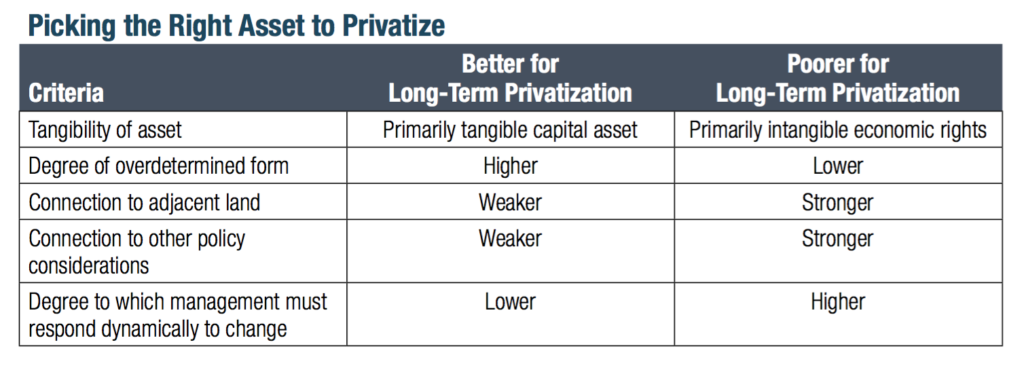
Items that would appear to be better candidates for long term privatizations would be toll roads and bridges, airports, ports, and hospitals.
Click through to read the entire report.
Greg Hinz at Crain’s Chicago Business kindly posted some of his thoughts about the study.
Beer magazine taps Koelschip as one of country's best bars
Piles of Dirty Secrets Behind a Model ‘Clean Coal’ Project
Election Update: Swing State Polls And National Polls Basically Say The Same Thing
Welcome to our first Election Update, FiveThirtyEight’s regular feature where we’ll, uh, update you about the presidential election. More specifically, we’ll use this column to look at the election through the lens of FiveThirtyEight’s forecasting models, which we launched last week.
If you read FiveThirtyEight in 2008 or 2012, you might remember that we used to update our forecasts once a day, usually in the late afternoon or early evening. Then we’d write a post like this one to accompany it. The timing meant our forecasts were often half a day behind as new polls came in.
So this year, we’ve switched over to running model updates as new data becomes available, sometimes several times per day. I won’t promise you that we’ll interrupt everything to run an update if an Idaho poll drops at 1 a.m., but this method should allow us to stay more up-to-date, especially during regular working hours.
We’ll still run these Election Update columns — a couple of times a week at first and, eventually, almost every weekday. However, their focus will often be more macro than micro — before Labor Day, it usually isn’t worth sweating individual polls. We’ll tend to focus on big-picture themes instead.
Here’s one theme that I expect us to revisit repeatedly, for instance: How are Hillary Clinton and Donald Trump polling in swing states relative to their national numbers?
This is a trickier question than you might think, in part because there’s more than one way to define “national numbers.” One way is to calculate an average of national polls. As of late Tuesday evening, for instance, Clinton led Trump by 5.3 percentage points in our adjusted average of national polls, according to our polls-only forecast. But go to the polls-only homepage, and you’ll find that the forecast has Clinton beating Trump by 6.3 percentage points instead. It’s not a huge discrepancy, but what accounts for the difference?
The reason is that our forecast models use both state and national polls to estimate where the national race stands. In fact, they put most of the emphasis on the state numbers. Historically, it’s been more accurate to take a “bottom-up” approach — first, forecast the vote in each state, then sum the numbers together — than to force everything to match the national numbers. (See the users guide to the forecast for the gory details on how the methodology works.)
So that means Clinton’s swing-state numbers must be really good, right? They’re pretty good — but not great, although she’s gotten some better numbers in the past week. Instead, her biggest comparative strength — and Trump’s biggest comparative weakness — comes from red states rather than swing states.
Here, for instance, are the numbers in red states, which I’ll define as every state that was more Republican-leaning than North Carolina in 2012. (Georgia, by this reckoning, is the bluest red state.) To keep things relatively simple, these figures show FiveThirtyEight’s unadjusted polling average in states where there’s been at least one poll since November, and compare it to President Obama’s result against Mitt Romney in 2012.
| STATE | 2012 MARGIN | FIVETHIRTYEIGHT UNADJUSTED POLLING AVERAGE, 2016 | SWING VERSUS 2012 |
|---|---|---|---|
| Utah | Romney +47.9 | Trump +3.0 | Clinton +44.9 |
| Oklahoma | Romney +33.5 | Trump +20.0 | Clinton +13.5 |
| Idaho | Romney +31.7 | Trump +17.0 | Clinton +14.7 |
| West Virginia | Romney +26.7 | Trump +28.9 | Trump +2.3 |
| Arkansas | Romney +23.7 | Trump +11.0 | Clinton +12.7 |
| Kansas | Romney +21.6 | Clinton +2.6 | Clinton +24.2 |
| Tennessee | Romney +20.4 | Trump +9.0 | Clinton +11.4 |
| Louisiana | Romney +17.2 | Trump +16.0 | Clinton +1.2 |
| Texas | Romney +15.8 | Trump +5.9 | Clinton +9.9 |
| Alaska | Romney +14.0 | Trump +5.2 | Clinton +8.8 |
| Montana | Romney +13.6 | Trump +21.4 | Trump +7.8 |
| Mississippi | Romney +11.5 | Trump +3.0 | Clinton +8.5 |
| South Carolina | Romney +10.5 | Trump +4.4 | Clinton +6.1 |
| Indiana | Romney +10.2 | Trump +7.5 | Clinton +2.7 |
| Missouri | Romney +9.4 | Trump +2.0 | Clinton +7.4 |
| Arizona | Romney +9.0 | Trump +0.1 | Clinton +8.9 |
| Georgia | Romney +7.8 | Trump +3.5 | Clinton +4.3 |
| Weighted average | Romney +16.0 | Trump +6.9 | Clinton +9.1 |
Romney won these states by an average of 16 percentage points in 2012, weighted by their turnout. By contrast, Trump leads them by an average of only 7 percentage points, a net swing of 9 points toward Clinton. She’s competitive in a few of these states, such as Georgia, Arizona and — more exotically — Utah and Kansas. If you saw polls from these states only, they’d be suggestive of a double-digit landslide against Trump.
In the swing states, however, the numbers look more like the final results from 2012, when Obama beat Romney by 3.7 percentage points nationally and by slightly more than that in the swing states. Clinton is outperforming Obama in Florida, North Carolina, Virginia, Wisconsin, Minnesota and Michigan. She’s underperforming him in Colorado, Nevada and New Mexico. And she’s running basically level with him in the other states, such as Ohio and Pennsylvania.
| STATE | 2012 MARGIN | FIVETHIRTYEIGHT UNADJUSTED POLLING AVERAGE, 2016 | SWING VERSUS 2012 |
|---|---|---|---|
| North Carolina | Romney +2.0 | Clinton +1.4 | Clinton +3.4 |
| Florida | Obama +0.9 | Clinton +4.6 | Clinton +3.7 |
| Ohio | Obama +3.0 | Clinton +3.2 | Clinton +0.2 |
| Virginia | Obama +3.9 | Clinton +5.7 | Clinton +1.8 |
| Colorado | Obama +5.4 | Clinton +0.7 | Trump +4.6 |
| Pennsylvania | Obama +5.4 | Clinton +6.1 | Clinton +0.7 |
| New Hampshire | Obama +5.6 | Clinton +5.3 | Trump +0.3 |
| Iowa | Obama +5.8 | Clinton +5.0 | Trump +0.8 |
| Nevada | Obama +6.7 | Trump +0.6 | Trump +7.3 |
| Wisconsin | Obama +6.9 | Clinton +9.6 | Clinton +2.7 |
| Minnesota | Obama +7.7 | Clinton +11.0 | Clinton +3.3 |
| Michigan | Obama +9.5 | Clinton +11.7 | Clinton +2.3 |
| New Mexico | Obama +10.1 | Clinton +8.0 | Trump +2.1 |
| Weighted average | Obama +4.2 | Clinton +5.6 | Clinton +1.4 |
You can get more detailed than this if you like — by noting, for instance, that the Virginia polls are fairly out of date, and that there isn’t very much polling at all in New Mexico, whereas we have lots of data about Florida. Our models have various ways to adjust for those considerations. But on average, both our fancy models and the comparatively simple analysis I’m conducting here get you to the same conclusion. Clinton is ahead by 5 or 6 percentage points in the swing states, close to where national polls have the race.
Finally, we have the blue states, which I define as everything bluer than New Mexico in 2012. (Oregon is the reddest blue state.) Clinton leads by 19.1 percentage points in those on average, so Trump is probably dreaming if he expects to put states such as California and New York into play. Still, that’s slightly behind the 21.5 percentage point advantage that Obama had on average in these states in 2012.
| STATE | 2012 MARGIN | FIVETHIRTYEIGHT UNADJUSTED POLLING AVERAGE, 2016 | SWING VERSUS 2012 |
|---|---|---|---|
| Oregon | Obama +12.1 | Clinton +6.4 | Trump +5.7 |
| Washington | Obama +14.8 | Clinton +12.0 | Trump +2.8 |
| Maine | Obama +15.3 | Clinton +7.5 | Trump +7.7 |
| Illinois | Obama +16.8 | Clinton +18.8 | Clinton +2.0 |
| Connecticut | Obama +17.3 | Clinton +6.0 | Trump +11.3 |
| New Jersey | Obama +17.7 | Clinton +11.4 | Trump +6.4 |
| California | Obama +23.1 | Clinton +19.8 | Trump +3.3 |
| Massachusetts | Obama +23.1 | Clinton +29.3 | Clinton +6.1 |
| Maryland | Obama +26.1 | Clinton +35.1 | Clinton +9.0 |
| New York | Obama +28.2 | Clinton +21.5 | Trump +6.7 |
| Weighted average | Obama +21.5 | Clinton +19.1 | Trump +2.4 |
All of this yields some slightly complicated conclusions. On the one hand, according to our models, Clinton’s state polls tell a stronger story for her than the national polls do. On the other hand, a lot of that advantage is concentrated in traditionally red states. If Trump underperforms in states such as Texas and Mississippi, that will hurt his position in the popular vote without compromising his Electoral College math — provided, of course, that he doesn’t actually lose them. Hence, our models conclude that Trump is more likely to win the Electoral College despite losing the popular vote than the other way around, although either possibility is unlikely.
Nonetheless, Trump’s overall position has improved slightly. He has a 22 percent chance to win the election according to the polls-only forecast, as compared with a 19 percent chance when we launched last Wednesday. And in polls-plus, which also accounts for economic conditions, his chances have improved to 29 percent from 26 percent.
As I mentioned earlier, Clinton has had some pretty good state polls over the past week. By contrast, Trump has gotten some comparatively good national polls. Our models put more emphasis on state polls than national polls, which would seem to work toward Clinton’s benefit in this case.
However, our models also put a lot of emphasis on the trend within individual polls — did Trump gain or lose ground in this week’s edition of the SurveyMonkey poll, for instance? The trends in national polls have been relatively favorable for Trump over the past few days; he has often gained a percentage point or two relative to where he stood in the previous edition of the same poll. By contrast, most of the new state polls were publishing data for the first time, so while they may have been pretty good for Clinton, they don’t tell us a lot about the trend.
I know it’s a lot of detail to take in; our models have a lot of checks and balances. Usually, they work to keep the forecast fairly stable from day to day, and the overall picture of the race isn’t much changed. The next several weeks could be more volatile, with the reaction to the FBI’s denunciation (but non-prosecution) of Clinton, the VP selections, and the party conventions all looming over the polls. More about those in the days ahead.
Check out our 2016 general election forecast.

Chicago’s Advantages
“Chicago sunrise 1” by Daniel Schwen – Own work. Licensed under CC BY-SA 4.0
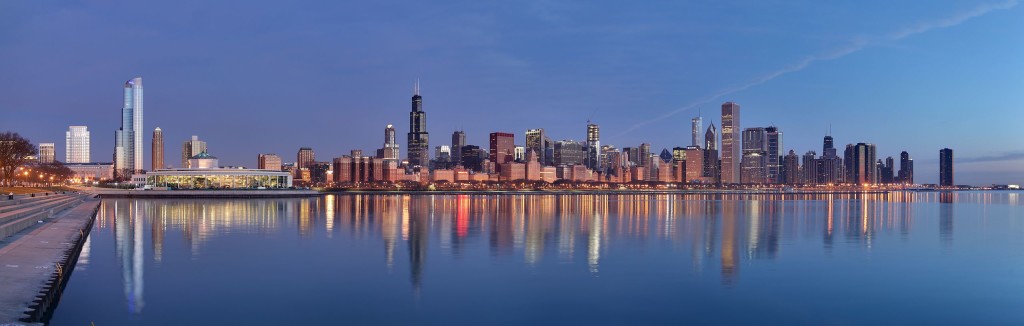
When I wrote that Chicago is the duck-billed platypus of American cities, I noted that there were a lot things about Chicago that were unique – both good and bad – putting it in a class of its own and making it hard to compare Chicago with other cities.
Today I want to put together a starter list of some of the positive distinguishing factors about Chicago. This doesn’t include things like a downtown construction boom because lots of places have one of those. If Chicago’s boom is big, well, it’s a big city. I only want to put something on the list if it is truly distinguishing, or perhaps something limited to only one or two other places.
I’ll create a starter list. Feel free to share yours in the comments, and if I see any ones I agree make the cut, I’ll promote them to the home page.
- Cheap – least expensive major urban center in America. A middle management level couple can afford a very nice condo in Chicago.
- Only globally important financial exchange in America outside NYC (the CME Group)
- Only full slate of globally renowned cultural institutions outside NYC
- Only large scale, transit oriented central business district outside NYC – and with a skyline to match
- Fantastic architecture
- Not only does Chicago have great skyline, it’s got great vistas of the skyline even from within the city (something missing in NYC inside Manhattan)
- It’s the alley capital of America
- Improv capital of the world, and one of only three major training locations for comedy in the US (with NYC and LA)
- Incredible lakefront park system
- Most car friendly urban big city in America (traffic is bad, but much of housing stock comes with a parking spot, and there are plenty of stores you can drive to – great for families)
There are probably some things like food and music scene were you can rate Chicago as in a league above most cities, but it’s tougher to make that case since you can get great food everywhere now, etc.
Share your thoughts in the comments because I don’t want to leave anything out.
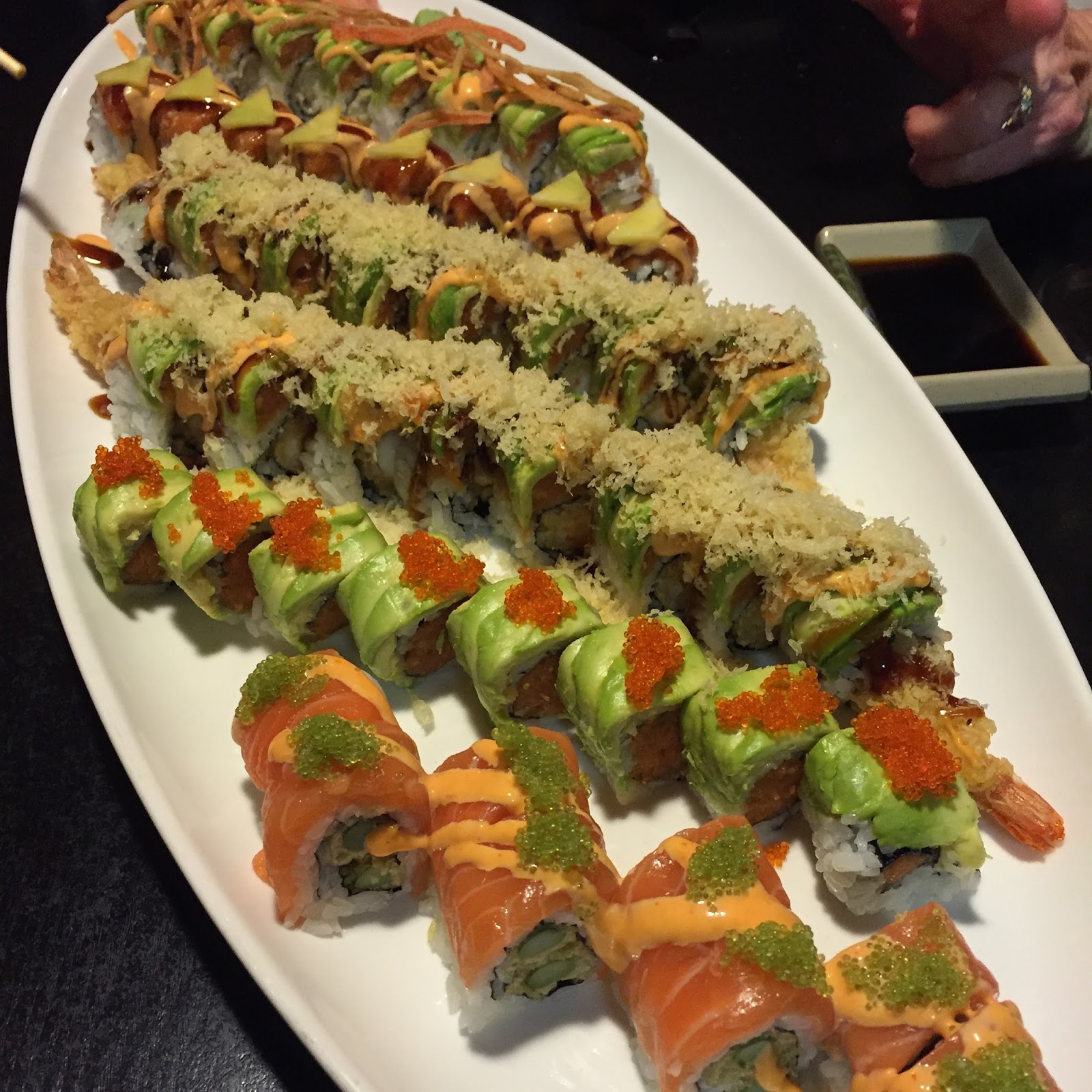
Sushi Bar - Revisit
The Weird World Of Expensive Wine
William Koch — yes, one of those Kochs — is giving a tour of his wine cellar when he asks the obvious question: “Did you see the wine bathroom?” he asked. “Wanna see it?”
It’s an opulent cellar, replete with Roman mosaics, a Guastavino-style ceiling and a Dionysian bust. The bathroom is, one can’t help but assume, where Koch and his guests unzip the flies of tailored Brioni suit pants and catch final glimpses of $1,000 bottles of Burgundy and Bordeaux, since metabolized and micturated.
But some of Koch’s bottles will now meet different ends. Koch gave a tour of the wine bathroom for a promotional video ahead of the sale of more than 20,000 bottles from his cellar, at Sotheby’s, in New York. The sale, which took place over three days last month, fetched $21.9 million, going down as one of the richest wine auctions in history.
I watched the sale’s final day unfold, fascinated — and a little dismayed — by the wines fetching these handsome sums, where they came from, and where they were going. Questions like that are sparks a FiveThirtyEight writer is obligated to kindle.
Off I went in search of data, and I found it in the form of a juicy, dense spreadsheet containing 140,000 wines from 10,000 producers in 33 countries, and their prices. The data was sent to me by Peter Krimmel, the CTO of Vinfolio, a fine wine retailer. It’s wide-ranging, assembled by the company using auction results from 12 major houses, including Sotheby’s, representing “the vast majority of the fine wine auction market.” For the 140,000 wines covered, it has data on the producer, year (the wine’s vintage), bottle size, region, subregion, American Viticultural Area (where applicable), color (red, white or rosé) and price.
After quaffing the data, what I found was a high-end wine market, and a blockbuster auction, with notes of geography, chemistry, economics, culture and thousands of years of history — with a detectable aroma of bullshit. Let’s have a taste.
France
“Starting in Bordeaux, with the Latour,” auctioneer Jamie Ritchie said, as he opened the Koch sale’s third and final day. Bids flew in via the telephone, the Sotheby’s website, and the floor of the auction room on New York’s Upper East Side. It was a good place to start the day — no place gives a better introduction to the history, and economics, of wine than France.
Château Latour, in Pauillac in southwestern France, traces its history back to 1331. It was a favorite of Thomas Jefferson’s. Koch had set out to collect a thorough “vertical” of the wine — owning at least one bottle of Latour from each of the past 100 years. Today, Latour sits at or near the apex of the some 7,000 producers in France’s Bordeaux wine region. It’s a storied region; the Romans were the first to cultivate vineyards there. Millennia later, it’s a useful place to show what almost any wine drinker knows: The older stuff is the pricey stuff.16

In Bordeaux, as almost anywhere else in the world of fine wine, wines get more expensive as they get older, and that effect accelerates the older the wine becomes.17 There’s a lot going on here — aging and its complex chemistry, market scarcity (people do sometimes drink the wine, after all), vintages perceived as particularly desirable or undesirable as a result of the weather, the scope of the data set.
The increasing value of older wines is an essentially universal phenomenon in the high-end auction market. But for the rich oenophile, old wines may not be such a bad deal. “Although old wines are expensive, I think they’re actually priced more reasonably than new wines,” Robin Goldstein, editor of “The Wine Trials,” told me in an email. “Old wines’ value is driven by their age-worthiness and verifiable storage history, which really does impact their taste, whereas new wines’ value is driven by critics’ rating scores and hyper-inflation in the high end of the market, neither of which correlates with taste.”
Leah Hammer, Vinfolio’s director of cellar acquisitions, echoed this idea. She told me that one reason older wine is expensive is because it was too good to drink right away. So, say 1960 was a bad year for Bordeaux wine because of weather. The bottles from that year would tend to get drunk right away, as the Bordeaux faithful consumed the swill they didn’t think was worth keeping. The best stuff — from 1961, say — was saved for later. Two effects — the aging of the wine and the selection of the good vintages — drive the price increase in the chart above.
The most expensive Bordeaux wine, on average, and one of the most expensive wines in the world, comes from a tiny little place called Château Le Pin. (Two double magnums of 1995 Le Pin were sold for a total of $30,000 at the Koch sale.) It sits on less than seven acres (less than four soccer fields) on Bordeaux’s Right Bank and produces just 5,000 to 6,000 bottles a year. A single bottle averages over $2,000. One other Right Bank producer, Petrus, a 12-minute drive from Le Pin, also cracks the four-figure average. (For those of us who can’t afford a bottle and would like to taste vicariously: Robert Parker, the influential wine critic, found flavors of lead pencil, roasted nuts, smoke, spice, fruitcake, black cherries, white chocolate, cola, kirsch and black raspberry in the 1995 Le Pin.)
| CHÂTEAU | AVERAGE PRICE |
|---|---|
| Le Pin | $2,035 |
| Petrus | 1,921 |
| Lafleur | 447 |
| Lafite-Rothschild | 432 |
| Ausone | 354 |
| Mouton-Rothschild | 315 |
| Margaux | 305 |
| Latour | 304 |
| Haut-Brion | 295 |
| Cheval Blanc | 289 |
| Pavie | 190 |
| L’Angelus | 188 |
| La Mission Haut-Brion | 185 |
| La Fleur-Petrus | 148 |
| Palmer | 143 |
Red wine in 750 ml bottles, since 1980 vintage
Source: Vinfolio
In addition to the scarcity of wine from a producer such as Le Pin, there is also a strict hierarchy of pedigree influencing prices in Bordeaux. In 1855, in preparation for the Universal Exhibition in Paris, a group of French courtiers, at the behest of Napoleon III, ranked the region’s wines — a sort of viticultural, Second Empire version of the U.S. News & World Report college rankings. Five châteaux — Lafite, Latour, Margaux, Haut-Brion and Mouton — are designated premiers crus, or first growths, the Ivy League of the 19th-century wine world. Fifty-three other producers are also ranked in categories ranging from deuxièmes crus (second growths) down to cinquièmes crus (fifth growths). This classification consisted of wines from the Médoc and Graves regions of Bordeaux, both on the Left Bank. (The Koch sale was heavily Francophile, with both first and second growth Bordeaux attracting heavy bidding.)
| CHATEAU | 1855 | NOW |
|---|---|---|
| Lafite Rothschild | 1 | 1 |
| Latour | 2 | 4 |
| Margaux | 3 | 3 |
| Haut-Brion | 4 | 5 |
| Mouton Rothschild | 5 | 2 |
| Rauzan-Ségla | 6 | 23 |
| Rauzan-Gassies | 7 | 85 |
| Léoville | 8 | 8 |
| Durfort-Vivens | 9 | 54 |
| Gruaud-Larose | 10 | 39 |
| Lascombes | 11 | 48 |
| Brane-Cantenac | 12 | 57 |
| Pichon Longueville | 13 | 11 |
| Ducru-Beaucaillou | 14 | 13 |
| Cos d’Estournel | 15 | 15 |
| Montrose | 16 | 17 |
Left Bank producers in 1855 compared to average prices over the past 20 years of vintages.
Source: Vinfolio
It’s remarkable how accurate — or how persistently self-fulfilling, or both — those classifications continue to be. In the table are the original 1855 rankings, compared with the average-price rankings of châteaux in those same subregions over the past 20 years of vintages. If the classification were redone with price as the guiding light, the five first growths, highlighted in the table, would remain exactly the same. There’s been more change when you move further down the list, but a handful of the second growths would remain just the same, too.
With age comes viticultural know-how, after all. “Over time, it starts getting harder and harder to screw up, because you’ve figured it out. You do it really well. You’ve built your reputation. You’ve built your reputation on the secondary market,” Hammer said.
All five of the first growth châteaux, and many of the second, were heavily represented at the Koch sale in New York.
Another famed wine-producing region in France is Burgundy, in the east. While Bordeaux is known for its Cabernet Sauvignon and Merlot reds, Burgundy is known for its Pinot Noir reds and Chardonnay whites. The two regions are the wine world’s “dueling colossi.” Data is unlikely to settle any matters of oenological taste, but it can provide dueling summaries. In this case, it reveals two wine regions that appear, quantitatively, quite similar: Ages and quantities sold at auction mirror each other closely, as does the price increase as the regions’ wines age.
But the psychophysiological effects are purported to be quite different. One region speaks to the super-ego, the other to the id. “Aspects of Bordeaux appeal to the aesthete, as Burgundy appeals to the sensualist,” Hugh Johnson wrote in “The World Atlas of Wine.”
California
Moving stateside: The Vinfolio data includes 2,345 California producers and nearly 43,000 wines. Relative to France — and to the Romans — the United States’ West Coast is a relative newcomer to the wine game.
There’s also a New World version of the Bordeaux-Burgundy rivalry in California: Napa versus Sonoma. The two regions are of fairly equal size and share a border. They’re also similar in age, getting their starts in the mid-19th century. The two stand out in an array of nine of California’s main wine-producing regions.18

| WINERY | AVERAGE PRICE |
|---|---|
| Screaming Eagle | $1,845 |
| Sine Qua Non | 774 |
| Harlan Estate | 463 |
| Schrader Cellars | 393 |
| Bryant Family Vineyard | 332 |
| Hundred Acre Vineyard | 323 |
| Colgin Cellars | 319 |
| Dana Estates | 307 |
| Sloan Estate | 295 |
| Marcassin | 265 |
| Abreu Vineyards | 265 |
| Opus One | 252 |
| Bond Estates | 221 |
| Verite Winery | 195 |
| Lokoya | 180 |
Red wine in 750 ml bottles, since 1980 vintage
Source: Vinfolio
But despite its junior status, California has scored major wine victories. In 1976, top French Bordeaux wines went up against top Californian Cabernet Sauvignon wines in a blind taste test that came to be known as the Judgment of Paris — an intercontinental, blue blood Pepsi Challenge. The Californians won in a rout.19
The most expensive bottle in California — from Screaming Eagle, in Napa, a so-called cult wine — rivals the average price of the most expensive in France. Like Le Pin, it’s a small winery, producing just a few thousand bottles each year. (Unlike Le Pin, it was absent from the Koch sale.)
“It’s sort of secretive. Not secretive in a bad way,” Hammer said of Screaming Eagle. “You couldn’t walk into a wine store and get it off the shelf. You couldn’t drive to the winery and purchase it. The only way to get it was to be on this very small mailing list.” (Screaming Eagle declined to comment for this article.)
And elsewhere
There’s lively viticulture outside of France and California, of course. Germany has its Riesling, Argentina its Malbec, Australia its Shiraz, and South Africa its Pinotage. The near-infinite combinations of soil, climate, botany, culture and method produce near-infinite expressions of wine. The Koch sale was French-centric with a smattering of California, but even the billionaire deigned to collect Pingus from Spain, Penfolds Grange from Australia and Bruno Giacosa from Italy. Lo! Time, fruit and money around the world, over the past century:20

But wait a second. Isn’t this all bullshit? A study has shown that tasters can’t even really tell the difference between a glass of red and a glass of white. Another study has shown that people don’t do better than a coin flip in guessing whether a wine is cheap or expensive. Another study has shown that people, unaware of a wine’s price, might actually enjoy more expensive wines less.
“We observe that people’s preferences in blind tastings are actually inversely correlated with price, i.e., on average, when they don’t know what they’re drinking, people prefer cheaper wines,” Goldstein said.
But maybe it’s not about the wine at all. Maybe you can actually taste the money. A 2008 paper found that telling people a wine cost more than it did resulted in more positive reviews from the drinkers. But, moreover, a higher faux price increased “blood-oxygen-level-dependent activity in medial orbitofrontal cortex, an area that is widely thought to encode for experienced pleasantness during experiential tasks.” More expensive wine may actually taste better, for literally no other reason than the price on its sticker.
But a historic producer and blockbuster auction sales aren’t necessary conditions for oenological enjoyment. Many, many wines are outside the database entirely. In eastern Iowa, for example, in a region now known as the Upper Mississippi River Valley Viticultural Area, just outside of Baldwin (population: 106), my uncle makes wine. Good wine. He makes it where my grandfather, and his grandfather before him, once farmed. Corn and cattle. The winemaking started as a hobby in the farmhouse basement — proto-homebrewers, my family. Grapes there aren’t the varietals with which most are likely familiar, your Cabernets and Pinots. They’re thicker-skinned, to withstand the harsh Midwest winters, and go by names like St. Croix, LaCrosse and Marechal Foch. My uncle’s bottles go for about $14. You won’t find it in any of the charts above. But we drink it. And we are happy.

Osteria Francescana Tops List of World’s 50 Best Restaurants
Trailblazing grocer exploring move to newer, larger space

Optimal Prime
The other day I bought a pair of Aviator sunglasses on Amazon and I got to thinking that my recent (say the past four months) Amazon.com order history could sort of serve as a mildy interesting father’s day gift guide. And because I don’t really love the idea of gift guides on their own, I figured an all Amazon Prime list could be an interesting experiment for ACL. So I pulled together a pretty solid little gifting run-down for guys based on a bunch of stuff I own and have ordered from Amazon.
Obviously there are a few classic Non-Amazon things I always think would make for a great gift for a dad on father’s day. A cashmere sweater is always something nice to receive as a gift because it’s frequently an indulgence that guys won’t buy for themselves. I’ve been wearing this S/S cashmere from J.Crew a lot recently and really like it. A Filson bag is another thing that is basically the perfect gift for every guy and should be considered always and forever. The Original Briefcase or the Medium Duffle are failsafe and I would predict a 99% gift-happiness success rate as a Father’s Day gift. It’s worth noting that we do work for Filson, full disclosure. No one pitched this for inclusion though, it’s just my own personal affection for Filson that got them here.
The lure of Amazon Prime is strong, and I find myself seduced by the ease and free shipping. So here are some of the things that I have purchased from Amazon recently which could could also be great for a Father’s Day gift — or just for you. Or maybe all you need is a chunky sweater and a White Russian?

Opinel No 8 Stainless Steel Folding Knife
These knives are classic and still made in France. They are also inexpensive, so when you accidentally bring one to the airport and have to jettison it you won’t be crushed. I tend to always have these around and like to give them away to friends as little gifts. Every guy likes a pocket knife and Opinel is a crowd pleaser.

There are almost literally a million portable Bluetooth speakers in the market, but these Bang & Olufsen speakers are really great on many levels. They sound awesome, have a decent amount of bass for something so small, and generally put out a really rich flow of audio. They also look nice and don’t make any annoying noises when they start-up or pair with your phone. I love to use it in the backyard or even in my cart when out on the golf course. The leather strap is also a nice touch.

Made in USA Deluxe Pizza Oven Kit for Kettle Grills
I’m a charcoal man. Gas grills just aren’t my thing. Unfortunately my wife knows what a Big Green Egg costs, so I’m not going to be able to just slip one of those things into the backyard without some serious sessions to convince her that a BGE is more important than a Restoration Hardware chaise lounge or the like. But the Weber Grill is an icon of American design and a great grill for the money. After taking the Roberta’s pizza making class (a good gift in its own right) in Brooklyn a few years back I became obsessed with homemade pizza. This grill-to-pizza-oven insert will make any Weber into the pizza making machine you always wanted. It’s a great little program to ratchet up the difficulty of making pizza at home. It will also make anyone using it look like a genius. (Side note: I get my 00 pizza flour on Amazon as well.)

Bowers & Wilkins P5 Headphones
Nice headphones are worth it in my book. I love the audio quality of these Bowers & Wilkins P5s and prefer the old school look over a lot of the newer headphones. At $279 they are spendy, but not obscene. So you don’t need to be fully insane / vigilant about losing them or ripping the cord apart or whatever. If the dad you are gifting is super into hi-res audio or is a full blown audiophile, maybe these aren’t right for him. But I would think most guys would dig these. Just remember this isn’t an audio forum — so any of you headphone nuts out there please refrain from freaking out about this choice and suggesting some $55,000 pair of headphones.

American Optical Original Pilot Eyewear 55mm Silver Frame with Bayonet Temples
Saw these at a retail store the other day for $120. Then I found them on Amazon for about $50 with free shipping. AO is a real Army Navy brand. They are still made in the U.S. and I love the plastic temples (which are like that so you can wear them with a helmet). My buddies (shout out to Jamie and Johnny) all wear these and swear by them. They aren’t the nicest sunglasses in the world, but they are different than what everyone else is wearing, the price is right and U.S. made is a bonus.

Bushnell Tour V3 Jolt Standard Edition Golf Laser Rangefinder
These rangefinders are really nice to have. They aren’t a necessity, but they make club selection much easier and can help you score a lot better — especially if your short game is questionable. That said, they are a bit of an indulgence and make a nice gift that anyone who plays golf even semi-frequently will put this to a lot of good use.

Coleman 54-Quart Steel-Belted Cooler
Along with the Weber, these coolers are classic Americana and everyone should own one. I know the Yeti is the perfect parallel to the Big Green Egg, but the Coleman is iconic and great for light duty at a cookout or by the pool.

Audio-Technica AT-LP120-USB Direct-Drive Professional Turntable in Silver
When we moved to Los Angeles I finally felt like I had the room to set up a proper record player program. I got this great Audio-Technica turntable and have been going crazy buying vintage and new vinyl (may I recommend Sturgill Simpson’s new album). Instead of buying a bunch of new speakers, I hooked the turntable to my Sonos system and can’t be more into what is happening music-wise at our house. A good record plus a double Play:5 + Soundbar + Sonos Sub combination in my den is deadly.

Other Odds & Ends
Everything from Anker. This company is the best when it comes to chargers and batteries for your phone and iPad. Lastly, the Native Union Night Cables are awesome and we have them all over the place.
An appreciation of Troy Williams, the avatar of basketball chaos and an Indiana Hoosier.

The enigmatic forward is headed for (hopefully) greener pastures, electing to ply his trade for cash and we at CQ thank him for his years of service.
Troy Williams arrived at Indiana University following the program's first Big Ten title in over a decade, but the soul of that team: two seniors and two early-entrants into the NBA, weren't around by the time he arrived. The 35th best player in his recruiting class, per 247Sports, was expected to pair up with Noah Vonleh and join returning stars Will Sheehey and Yogi Ferrell to make the 2013-14 season a reload, not a rebuild, for Tom Crean and the Hoosiers.
There were flashes of greatness, certainly, as a very young Indiana team tried to figure each other out. Ultimately, their inconsistency proved to be too prevalent to overcome, and they tumbled out of the postseason picture, managing only seven conference victories. Troy finished the season with an offensive rating of 100.1, as slightly above average as you can mathematically get.
From day one, Troy's career was stacked up to Victor Oladipo's. Fair or not, everything the freshman did was meticulously dissected and compared to the NBA's 2nd overall pick. It wasn't a difficult line to draw, two hyper-athletic wing players who were as earnest as they were raw, but it made it challenging to appreciate the differences. Troy didn't come to Indiana to be the next Oladipo, he came to build his own legacy.
And seek vigilante justice on any basketball rim he came across.
In his sophomore campaign, Troy raised his overall shooting percentage while shooting twice as many shots, along with his rebounding at both ends, increased his assist rate, and improved at the charity stripe by nearly 8%. His turnovers, a critique that would be brought up nearly every time he held a basketball for the duration of his career, were lowered by over 5%. This lead to a sophomore offensive rating of 112.8, a remarkable number for someone who only took thirteen three-pointers.
He had taken a big step forward in his maturation as a ball player, leading many to hope for an Oladipo-esque quantum leap in his junior campaign. While he didn't turn in a Player of the Year-quality year, he did manage to replicate being a key cog on the roster of an outright Big Ten Champion. He didn't do it with a smooth jumper and lockdown defense, instead he crashed the glass and turned every baseline in the conference into his own personal runway; doing with his two legs the kind of things most human beings would need a trampoline to accomplish.
Against arch rival Kentucky, with a trip to the Sweet Sixteen on the line, Troy Williams was about the only thing that worked against a lengthy Wildcats team early on. John Calipari's team worked hard to keep the ball out of Yogi Ferrell's hands and Tom Crean didn't hesitate to give the keys to Troy. The results, as they so often were with Troy, were spectacular in both directions. No Kentucky defender seemed prepared for his first step or his extra gear and he would get to the rim more effortlessly than anyone else in an Indiana uniform that day. That said, there was always a risk that he might not have the ball by the time he gets there, or that he would miss a dunk so thunderously that it would turn into a three-quarters court outlet pass to a streaking Wildcat going the other way.
But with 8:40 remaining in the game and the Hoosiers down a point, Troy would corral a Wildcat miss and glide down the court. At home, every person in a red shirt held their breath as he crossed the time line and received a screen from Thomas Bryant at the top of the key. At the three point line, Troy launched into his infamous top gear, crossed over a defender and launched up at the rim, kissing a reverse layup off the glass while getting fouled.
Indiana wouldn't trail the rest of the game. Troy would dish out assists on the next two buckets, just to show off.
While many want to talk about what your career at Indiana wasn't, let us all appreciate what it was. Of the top ten dunks from the past three years, Williams' entries probably occupy seven or eight spots. His errors often came as a product of trying to do something incredible. If I tried to cross a guy over and then reverse jam it in a seven-footer's face, I would snap both ankles in half while my kneecaps liquefied into gravy. The fact that Troy might lose the handle on the basketball a couple of times trying to make some college kid rethink his whole dang life isn't (and shouldn't be) enough to not try it at all.
So thank you, Troy Williams. Best of luck to whatever comes next, and God save any rims you come across.
Wines of The Times: Revisiting Godello, a Grape That Spain Has Rescued
The 10 Law Schools Students REALLY Want To Go To (2016)
Circle of innovation: Tech firms flock downtown

Review panel picks Hendricks’ $260M proposal for IPS property

New tenants help push Circle Centre to record profit in 2015

Indiana to host UNC in ACC/Big Ten Challenge

The defending Big Ten champions will host the ACC titleholders.
Jon Rothstein of CBSSports broke the news this evening that Indiana and UNC will face off in Assembly Hall this fall, in a rematch of last season's Sweet 16 game.
Indiana will host North Carolina in next season's ACC/Big Ten Challenge, sources told @CBSSports. #iubb
— Jon Rothstein (@JonRothstein) May 23, 2016
As you probably recall, the Hoosiers were blown out in that Sweet 16 game, against a UNC team that couldn't miss a shot that night. The Tar Heels would later go on to reach the final, where they lost to Villanova on a last-second three-pointer. However, IU will face a different Tar Heels team than the one they saw in Philly. From that team, star players Brice Johnson and Marcus Paige will be gone. Justin Jackson and Kennedy Meeks both tested the NBA Draft waters, but both will be coming back to Chapel Hill next season.
This game is a feather in IU's cap of an already loaded non-conference schedule, which also includes games against Kansas, Butler, and Louisville.
The last time IU and UNC faced off in the ACC/B1G challenge was four years ago, also in Assembly Hall. The Hoosiers lived up to their #1 ranking at the time, running UNC out of the gym by the score of 83-59.
Death of blogger Welsh officially ruled suicide
Elements in place to keep IMS under family ownership

Prominent local architect Woollen dies at 88
JakienleThis is so sad. Evans was an architectural giant in Indiana. His legacy will carry on through his great buildings.