Shared posts

31 Jan 01:33

What’s the story here? (LOC)

by nobody@flickr.com (The Library of Congress)

The Library of Congress posted a photo:

What’s the story here? (LOC)

Photos displaying on either side of this one in the Prints & Photographs Online Catalog may yield clues—view the neighboring photos: www.loc.gov/pictures/related/?&pk=hec2009015051&s...

Harris & Ewing,, photographer.

No caption

[ca. 1940]

1 negative : glass ; 4 x 5 in. or smaller

Notes:
Date based on date of negatives in same range.
Gift; Harris & Ewing, Inc. 1955.

Format: Glass negatives.

Rights Info: No known restrictions on publication.

Repository: Library of Congress, Prints and Photographs Division, Washington, D.C. 20540 USA, hdl.loc.gov/loc.pnp/pp.print

Part Of: Harris & Ewing Collection (Library of Congress)

Higher resolution image is available (Persistent URL): hdl.loc.gov/loc.pnp/hec.28354

Call Number: LC-H22-D- 8645

30 Jan 02:53

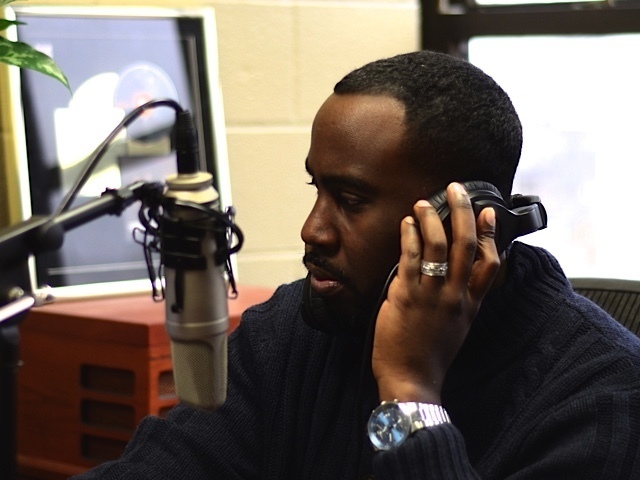
Challenging The Whiteness Of Public Radio

by Chenjerai Kumanyika

Challenging The Whiteness Of Public Radio

Chenjerai Kumanyika
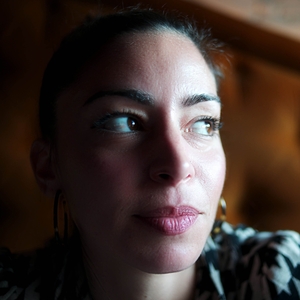
Chenjerai Kumanyika worries that having a

Chenjerai Kumanyika worries that having a "public radio" voice won't allow him to sound like himself.

Linda Tindal/Courtesy of Linda Tindal

Editor's Note: This essay originally appeared on Transom.org, with a shorter version published on BuzzFeed. Author Chenjerai Kumanyika will join Code Switch — along with African-American public radio journalists — in a Twitter chat Thursday moderated by lead blogger Gene Demby. Join Code Switch at 6:30 p.m. ET.

Follow the conversation using the hashtag #PubRadiovoice:

Chenjerai Kumanyika (@catchatweetdown) — assistant professor, Clemson University
Sam Sanders (@samsanders) — general assignment reporter, NPR
Celeste Headlee (@CelesteHeadelee) — host, Georgia Public Radio
Maxie Jackson (@Maxiewcpn) — station manager, WCPN
Joshua Johnson (@jejohnson322) — newscaster, KQED
Audie Cornish (@npraudie) — host, NPR's All Things Considered
A.C. Valdez (@ACVTweets) — senior producer, Latino USA


My piece was about a fisherman who manages the tuna club of Avalon. But while editing my script aloud, I realized I was also imagining another voice, one that sounded more white, saying my piece.

Without being directly told, people like me learn that our way of speaking isn't professional. And you start to imitate the standard or even hide the distinctive features of your own voice. This is one of the reasons that some of my black and brown friends refuse to listen to some of my favorite radio shows despite my most passionate efforts.

This really affected me as I was producing my Transom piece. Sometimes I speak in a voice I'm using right now, but as a hip-hop artist, I use a very different voice. Check out this verse I wrote right after I found out no one would be indicted for Eric Garner's death.

So the question is: How can I bring that kind of voice into my efforts as a radio producer, right? Now compare that to how I sounded on my first piece for the Transom workshop.

"Fisherman, with a capital 'f'." What does that even mean?

What bothers me most is the way I'm inhabiting my own personality. My voice sounds too high and all the rounded corners of slang are squared off. It's like I don't even recognize myself. Who am I? Just as an experiment, I re-recorded part of that piece to see how a relaxed, sort of less code-switched style of narration might sound.

I'm not sure how much more effective it is, but I feel better listening to it. My voice is calmer, but hopefully not boring. Overall, it's like I feel more centered and I sound more like myself rather than myself pretending to be a public radio host.

Of course, it's not just about what potential journalists face. It's also about the audience, and the mission of public radio. Different hosts with different voices tell different kinds of stories. And vocal styles communicate important dimensions of human experience.

What are we missing out on by not hearing the full range of those voices? Let me give you an example of what I'm talking about. My wife and I spent some time in Ferguson, Missouri from August and November 2014. I was standing on the block where Darren Wilson killed Michael Brown and I asked one young man why he thought there had been such an uprising in Ferguson.

He reminded me that Michael Brown's body had laid in the street for four and half hours before being picked up. Of course I had heard this before in the news but this young brother made me feel it. No one was there to translate. Instead, he carefully told the story his own way. I felt the weight of Michael Brown's body and the weight of so many other young lives in this young man's voice.

So what do we do? We really have to think about who is the public in "public media". The demographics of race and ethnicity are changing in the United States. The sound of public media must reflect that diversity. So get on it. It's time to make moves.

Copyright 2015 NPR. To see more, visit http://www.npr.org/.
27 Jan 16:37

Ms. Marvel fights evil of anti-Muslim bus ads in San Francisco

by Maya Dusenbery

The current Ms. Marvel is a New Jersey girl from a Pakistani family named Kamala Khan. When the character got her own series last year, she became the first Muslim superhero to star in a Marvel comic book. Now she’s fighting Islamophobia in the real world. 

Street Cred flagged these photos of Ms. Marvel’s image spreading messages of love pasted over offensive anti-Muslim ads that are peppering the San Francisco transit system thanks to blogger Pamela Geller’s American Freedom Defense Initiative. (h/t Bitch)

Ms Marvel with "calling all bigotry busters" text

"stap out racism"
"free speech isn't a license to spread hate"
"islamophobia hurts us all"
24 Jan 04:04

On the Street…Piazza VI Febbraio, Milan

by The Sartorialist

11515HBC9622web

23 Jan 05:27

On the Street…La Fortezza, Florence

by The Sartorialist

11415Curly6B2477Web

23 Jan 04:45

Valentino Fall/Winter 2015

by The Sartorialist

12215V4446web12215V4353web12215v4338web12215v431712215V4484web12215V4473web12215V32212215V432512215V4468web12215V4358web

21 Jan 04:23

Comic Liz Miele invents three new “feminist sex positions”

by Chloe Angyal

And they’re just… Just watch. NSFW, unless you work at Babeland.

Transcript below the jump. And if you want some real feminist sex tips, don’t miss our new series Fucking With Feministing.

Transcript:

I’m the oldest – I’m the second oldest of five kids, and I’m really close with all my siblings, but I’m especially close with my little brother Sam. My little brother Sam is about ten years younger than me, and the thing about Sam is, he’s only ever known me as a comedian. So, it kind of has shaped my life, being a comedian. I’m very honest, I’ve never told him a lie, and I always thought that was pretty cool about our relationship until pretty recently when I found out that we don’t have boundaries. And those are important. And this is how I found out. A couple months ago my younger brother and my younger sister were living together at the time, and I walked in on one of the weirder conversations for an older sister to walk in on. I walked in on my little brother telling my sister those funny sexual position jokes. Do you guys know what I’m talking about? They always have a title like The Rusty Trombone. It’s always something fucked up like “you come in her eye and it’s called The Pirate.” Shit like that. So this is the one I walked in on: it’s a dude fucking a girl from the back, then he leaves, and another guy starts fucking her, but the first dude goes in front of a mirror and waves to her, and it’s called The Poltergeist. And he’s laughing, and he’s laughing, and he’s like “isn’t that funny? You’re a comedian, isn’t that funny, that’s so funny?” I was like “nooooo.” I’ve been in a male-dominated field for 12 years and I’ve heard every fucked up thing you can do to a woman, and it’s always something that ruins her hair, and I’m not OK with it any more. I really care about my hair. So I decided as someone who travels the world and basically does spoken word that it’s my responsibility to spread feminist sexual positions. I have a lot of free time,  I came up with three. Position number one is a dude going down on a girl, she squirts in his face, he learns to respect women, it’s called The 19th Amendment. Position number two is a woman riding a dude, she gets him about 30% away from an orgasm, but then she gets up and leaves – it’s called The Equal Pay Act. Position number three is my favourite, it’s just a woman masturbating in a kitchen, a dude walks in sad – it’s called Make Your Own Dinner.

18 Jan 23:38

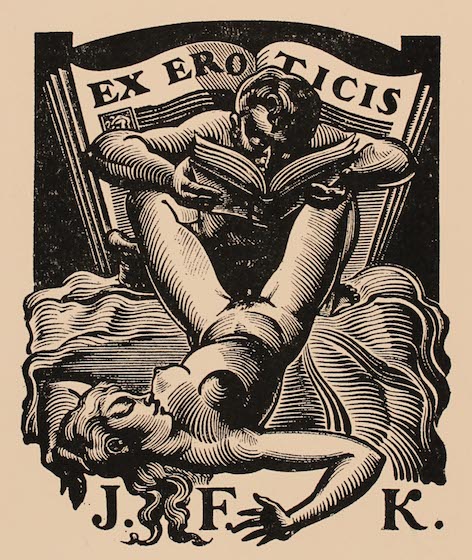
Ex Libris Eroticis

by Violet Blue

The Ex Erotica section on The Digital Exlibris Museum Project (Frederikshavn Art Museum & Exlibris Collection) is nothing short of amazing.

An exlibris (bookplate) is a mark of ownership which the owner of a book sticks into the inside of the cover. It is made by an artist who is commissioned by the owner to create according to his wishes and ideas a small graphic that bears the owner’s name and the word Exlibris.

(…) They have existed since Gutenberg’s invention of movable letters around 1500.

(…) The exlibris should clearly state the owner’s name and can allude to the personality by using motifs that illustrate the profession, hobbies or place of living. (art-exlibris.net/whatisexlibris)

Click through if you want to see larger sizes of these.


Content copyright © 2013 Violet Blue ® (R) permitted for use on tinynibbles.com only.
This tinynibbles.com feed is for personal, non-commercial use only and is held within federally registered trademark Violet Blue® (R).
The use of this feed on any website other than Violet Blue's Tiny Nibbles: Open Source Sex breaches copyright, violates U.S. Federal Trademark law, and the Federal Trademark Dilution Act. If this content is not in your news reader, it makes the page you are viewing copyright infringement, theft and trademark violation.
27 Dec 21:24

ICYMI 2014: Soccer Field Standoff Highlights Gentrification Tension

by Shereen Meraji

ICYMI 2014: Soccer Field Standoff Highlights Gentrification Tension

An argument about the use of a soccer field in San Francisco's Mission District pitted young Latino kids against tech workers in August.

This year, video of an argument over who got to play on a soccer field in San Francisco went viral, sparked a community protest and highlighted tensions about gentrification in a changing neighborhood.

It happened in mid-August when a pickup soccer game between mostly Latino teens in San Francisco's Mission District came to a premature end because the field had been rented out by adult tech workers. One of the pickup players recorded a video of the argument.

In the video, a pickup player asks the guys with the permit how long they've been in the neighborhood.

One says, "Over a year." Another says, "Who gives a s - - -? Who cares about the neighborhood?" One of the teens in the background says he's lived there all his life.

Then one of the kids suggests they play together, and a tech worker says he would love to, but can't. The field was reserved for a game between Airbnb and Dropbox employees, and they rented it for $27 through San Francisco's Recreation and Parks Department. This policy was created after the field's renovation a couple of years ago.

One of the men shows one of the pickup players a printed document with the payment information and asks him to read it.

"I know how to read," the pickup player says. "I'm an educated person. I also know that this field has always been a pickup field where you play seven on seven and wait your turn. You guys think that just because you have money you can buy the field and play."

At the end of the video, it's uncertain how things were resolved.

"Well, we just split the field in half, and we played in one half, and they played in another," says 16-year-old Hector Gomez, one of the pickup players that day.

Hector used to live with his grandparents in the neighborhood and remembers coming to the park when the field was concrete. He says back then it was mostly Latinos playing soccer there. He's noticed more adults reserving the field for organized games after the park was redone, and the field was upgraded to turf. He worries parks will become like the new restaurants, stores and apartments in the Mission: for people with money.

"There's some new apartments and my mom told me the price of them," Hector says. "I was like, 'Nobody in the Mission could afford those,' so I'm like, 'That's something special for them and not for us.' "

As more workers in the booming tech sector move in, rent prices in San Francisco keep rising. The median price for a one-bedroom apartment in the Mission, a historically working-class Latino neighborhood, is $3,200 a month. Compare that to $1,900 just three years ago.

Fifteen-year-old Hugo Vargas and his two sisters live in the Mission with their parents, who work in food service.

"Right now we're living in a studio," he says. "I mean, it's small. We're a family of five, and it's kind of hard for us to live and have our privacy."

Hugo was escaping that cramped studio when the argument on the soccer field took place in August. The video was posted to YouTube weeks later, but it didn't get much attention until Jack Morse, co-editor of the San Francisco culture blog the Uptown Almanac, linked to it in October.

Morse says someone sent the video anonymously, and he thought it was powerful enough to post without much commentary.

"The video in many ways is a perfect analogy for a lot of the gentrification and displacement that is currently happening in San Francisco," he says.

Views ticked up, and it was shared on Facebook and Twitter. Dropbox issued a formal apology, saying the company loved San Francisco, was grateful to call it home, and that the employees involved were embarrassed and sorry. Dropbox and Airbnb didn't make anyone available for comment on this story, but Dropbox is involved in a tutoring program for local teens, and it pledged half a million dollars to an area nonprofit that fights poverty.

Youth involved in the soccer field dispute speak during a rally at San Francisco City Hall in October.

A week after the video went viral, the San Francisco Latino Democratic Club organized a rally on the steps of the Civic Center and hundreds of people came out in support. Four of the teens also spoke with Phil Ginsburg, general manager of San Francisco's Recreation and Parks Department.

"They were like, 'This is where we socialize. This is where we exercise. This is how we make positive choices with our lives,' " Ginsburg says. " 'We love the game, and we love to play.' "

After listening to the youth, he eliminated the rental permit process for adults and agreed to turn on the lights on Sunday evening, so the kids could keep playing after dark.

"Look, this was a symbol of larger issues that simply played out in a park," Ginsburg says.

He says that you see arguments like this in public parks all the time, but the difference here is that San Francisco is changing fast, and as new residents move in, long-time residents feel pushed out.

"We have to figure out a way where we can still be welcoming to people, while making sure that the quality of life of people who have raised their families here for generations doesn't diminish," Ginsburg says.

The youth presented Ginsburg with a list of 10 demands, including better park patrol and safety, disclosure of financial investments made at city parks to ensure equity, and a follow-up meeting. Ginsburg says he's going to stop by Mission Playground and play pickup with them soon.

Hector says he's seen a couple of the tech guys come and play pickup recently, and there hasn't been a problem.

"That's what I love: diversity in our community," he says. "But when they give favor to one specific type of person, that's where it has to stop."

Hector says he's happy to share the field as long as everyone can agree on the rules and play by them.

Copyright 2015 NPR. To see more, visit http://www.npr.org/.
16 Dec 05:55

D'Angelo: "Sugah Daddy"

by Ryan Dombal

Front page photo by Greg Harris

One way to stay relevant after 14 years is by sticking to things that won't go away. There will always be men and women and sex and love and money—along with the endless tensions that follow. Money will cloud the godliness of man; love will screw-up money; sex will make love harder; men will love sex more than money; women will love money more than sex. The permutations are infinite.

Pop history knows this, and D'Angelo knows pop history: There was Mary Martin brushing away would-be suitors to the tune of Cole Porter on "My Heart Belongs to Daddy" in 1938; Ray Charles singing the praises of a well-heeled lady friend on "I Got a Woman" in 1954; Nina Simone pining for satisfaction on "I Want a Little Sugar in My Bowl" in 1967; a 13-year-old Michael Jackson wailing about wanting to "be your sugar daddy" even though he knew better in 1971; Prince and Nikki and corvettes in the '80s; all the way to Frank Ocean’s 2012 track "Pyramids", which sources the origins of destructive love and greed back to ancient Egypt.

On "Sugah Daddy", D'Angelo gleefully wraps himself up in this imperfect past. His voice flits from left to right and around, like he’s playing the confused horndog as well as the angel and devil on his shoulders. His solution to the problems of ids and super-egos involves something else that seems to stay through eras and ages: groove. Courtesy of D, longtime bassist Pino Palladino, 75-year-old living-legend drummer James Gadson, and some of the swingingest horns and handclaps since, well, Voodoo, the music of "Sugah Daddy" makes an amazing case for analog realness that could convert the most gleaming digiratti. But, as always, D isn’t forcing anything. He's doing his thing, laying in the cut. Human nature will be there.

11 Dec 00:13

Varanasi Micro-Trend: Long White Gloves for Bicycling

by The Sartorialist

111214BikeB7131Web

I love the speed, strength, and vitally you see in these young, mobile woman.


I’m very happy that I was able to document this beautiful expression considering I was usually sitting in the the back of a rickshaw, heading equally fast in the opposite direction.  (If you notice the eye angle of these shots is slightly different than past bicycle shots it’s because, in the rickshaw, I was usually sitting slightly higher than the subject.)

111314GlovesC6962Web111314GlovesC7040Web111314GlovesB7590Web111214GlovesB7139Web111314GlovesC7158Web

04 Dec 00:18

Notes From A Queer Engineer: Tear Gas, Tool Of The Police State

by Laura Mandanas
"While I in no way want to distract from the important conversations going on about anti-Black racism in America, I think it's also pertinent for us to deconstruct some of the tools and techniques being used by the police to maintain control. So today we're going to talk about tear gas."
03 Dec 05:25

Petite Noir: "Chess"

by Ian Cohen

Petite Noir is the project of South Africa native Yannick Ilunga, a singer/producer/multi-instrumentalist in the Prince model, who previously fronted the "misty-pop" electronic band Popskarr and collaborated with hip-hop artist Spoek Mathambo. It's a testament to the ever-broadening definition of "indie" that nothing about Petite Noir immediately stands out as extraordinary; in fact, the mesmeric, rangy "Chess" is pretty much state of the art in 2014.

And yet, even as the current vanguard has turned "indie" into an R&B and pop-based idiom, nearly all of its practitioners lack the technical vocal proficiency that often draws them to their frequently namechecked influences. Ilunga is not one of these people. Nearly two years after the promising introductory single "Till We Ghosts", " "Chess" has Petite Noir styling like a one-man TV on the Radio. Ilunga masters a vaporous falsetto, bellowing baritone, and a gritty midrange—"too much shit right here," he playfully adds during an otherwise plaintive verse.

It's probably not a self-serving boast; more likely a reference to the overwhelming deadlock between Ilunga and the object of his affection. Nothing is resolved or even clearly defined during the he said/she said of "Chess", as the gendered pronouns are deftly mixed and the misconduct left to the imagination. And therein lies the metaphor that gives "Chess" its title. Both parties are expecting love to be something simple as checkers, when it's always far more complicated than that.

28 Nov 06:09

On Ferguson, Riots and Human Limits

by jsmooth@hiphopmusic.com (Jay Smooth)
Ferguson didn't fail to protest peacefully. We failed their peaceful protests.
18 Nov 22:08

Jessica Pratt: "Back, Baby"

by Evan Minsker

It was 2007 when Jessica Pratt recorded a bunch of songs that would eventually appear on her self-titled 2012 album. At the time, she didn't have plans to actually release an album—that wouldn't happen until White Fence's Tim Presley somehow heard her record and was so moved that he started a label with the sole purpose of sharing it with the world. It seems logical that Pratt would have that effect on a person. She fingerpicks these gorgeous melodies on her guitar, and in an otherworldly voice, tells elemental, seemingly allegorical stories. "She has followed you from where dark water and fortune run," she sang on "Mother Big River".

On the first single from On Your Own Love Again, her Drag City debut, Pratt opens with another simple line, one with instantly familiar emotional heft: "Sometimes, I pray for the rain." It's the sort of thing that's likely been scrawled in teenagers' journals countless times, but there's a gentle, earnest quality to her voice that's perfectly suited to phrases like that one. With the nylon strings of her guitar ringing quietly in the background, it'd be easy for her to repeatedly invoke the elements for more loose imagery that's fraught with heartache. Instead, her story is incredibly specific: an undefined relationship that left her feeling hollow. "Your love was just a myth I devised," she admits, and even if there was something there to begin with, she can't go back. "And sometimes, I pray for the rain," she repeats.

18 Nov 22:07

Mourn: "Otitis"

by Philip Sherburne

Whatever you ascribe it to—osmosis, heredity, good ol' black magic—there's no denying that Mourn have an almost uncanny ability to channel a particular strain of 90s alt and indie rock: think early PJ Harvey, Slant Six, a more garagey Breeders. Not only does the group come from a pair of small, sleepy, middle-class towns some 30 minutes north of Barcelona—hardly a rock'n'roll hotbed—but frontwomen Jazz Rodríguez Bueno and Carla Pérez Vas and drummer Antonio Postius Echeverría are all just 18 years old. Bassist Leia Rodríguez Bueno, Jazz's younger sister, is just 15. True, Jazz and Leia's father is a career rock musician, but the band's scrappy, urgent sound stems directly from the kinds of punk and indie that are nowhere to be found in his project, the New Raemon.

But why worry where they got it from, when what they do with it is so engaging? "Otitis", the latest single from their just-released Captured Tracks debut, is a perfect example of what they do so well. (Like the rest of the album, it was recorded live in the studio, with minimal overdubbing.) Jazz and Carla's voices rise in fall in unison, both with each other and with their twinned guitar lines; Antonio lays into his drum kit like he'd like to knock it over, while Leia remains rock-steady, unshakable. There's a hint of Homestead jangle in the way their chords ring, and an even fainter hint of the White Stripes in their bent blue notes. The lyrics hint at frustrations nonspecific—"a burning ball inside its hole"—but the song's structured like a mantra for an uphill climb, huffing and puffing 'til there's nothing but blue skies and catharsis as far as the eye can see.

23 Oct 16:16

Nerd Couture: Dress Like Mr. Rogers, Be Like Mr. Rogers

by Ali
No one but no one can ever truly be Mr. Rogers except Mr. Rogers. That doesn't mean we can't all try to dress like Mr. Rogers. That doesn't mean we can't all strive to be like Mr. Rogers.
15 Oct 22:25

Sheer Mag: "What You Want"

by Evan Minsker

Sheer Mag's logo looks like the cover of an early hard rock record—all-caps font, jagged lettering. It seems appropriate, then, that at the outset of their 7" opener "What You Want", there's a guitar line with the same approximate structure as the central portion of Kiss' "Strutter". It's a fleeting-but-important moment—within the first few seconds of impact, they emphasize the "power" half of power pop. They bust out guitar solos that fly high. Their singer spits out words like, "What you want? What do you want me to do?," seemingly delivered more out of frustration than desperation. That tinge of anger—heard both in their vocals and their scuzzy junkyard guitar sound—is the perfect complement to "What You Want"'s swooning, power chord-driven melody. It's that ideal balance between sweet and sour. The track, one of four very good ones on their new 7", is an exciting introduction to this Philadelphia band.

15 Oct 18:43

After terrorist threat, feminist video game critic Anita Sarkeesian cancels lecture at Utah university

by Maya

5d6613f581e8ed513132d6044945e655

*Trigger warning*

Anita Sarkeesian of Feminist Frequency was scheduled to give a talk at Utah State University tonight. But she was forced to cancel after someone threatened to commit “the deadliest school shooting in American history” if the event went forward and the state’s conceal-and-carry law prevented the police from taking adequate security measures to address the threat. 

I think it’s worth showing the anonymous threat in full:

f43adaf9-0a46-46d6-9026-cc0f0acf8df0-1This threat is not at all unusual for Sarkeesian. She gets shit like all the time. Earlier this summer, death threats drove her out of her home briefly. Someone threatened to bomb the Game Developers Choice Awards if they honored her, but she went ahead with the event anyway. As Sarkeesian notes on Twitter, the only reason she canceled this time was that she’d requested pat downs or metal detectors but because of Utah’s open carry laws, police wouldn’t do firearm searches. And as #GamerGate continues, other women in the gaming community are facing similar harassment. Developers Brianna Wu and Zoe Quinn both fled their homes recently after receiving threats that included their home addresses.

We live in a world in which it’s considered normal that women who critique video games–VIDEO GAMES, for fuck’s sake–face regular threats to their life. As Amy Roth notes at Skepchick, we have a name for this: “This organized, dedicated, on-going, online harassment is terrorism directed at women in an attempt to silence them. And when women don’t shut-up, the threats escalate.” I’ll echo Sarkeesian: ”The whole game industry must stand up against the harassment of women.”

Maya DusenberyMaya Dusenbery is an Executive Director of Feministing.

23 Sep 05:16

Dreamtrak: "Contemporary"

by Patric Fallon

As far as dance music nostalgia is concerned, the mid-aughts are patently off limits. It was an era of excess, the debaucherous afterparty following DFA's and Modular's indie-dance explosion; everyone experimented with nu-rave and fidget house at least once back then, so it's no surprise we're a bit embarrassed in the harsh light of a new decade. Truthfully, though, the music wasn't all bad, and there are still producers filtering the mid-aughts' best assets into radiant nuggets of effective dancefloor fare. Londoner Dreamtrak does a bit of this on his latest single, "Contemporary", a rubbery tune largely built around one big synth patch and a simplistic beat that might as well be labeled Default Electro-House.

But "Contemporary" only continues to expand its palette, and gracefully so. There's a vibrant musicality that creeps into the mix, bringing to mind the cosmic-disco synthscapes of Lindstrøm retrofitted with Mylo's ebullient bassline from "Drop the Pressure". By no means is Dreamtrak attempting to revive dance music's awkwardly turnt up phase, but he does make quick work of capturing the qualities that made it a party worth attending in the first place.

16 Sep 05:48

Mr Twin Sister: "In the House of Yes"

by Philip Sherburne

Mr Twin Sister's reinvention continues apace on their new single, "In the House of Yes". The Long Island band's last album, 2011's In Heaven, shuttled between dream-state aesthetics inspired by Sofia Coppola and David Lynch—heck, it even borrowed its title from Eraserhead's theme song—but they still scanned as an indie-pop outfit, distinctly American and distinctly suburban. (Nothing wrong with that; so are Coppola and Lynch, in their own ways.) But somewhere between that album and gaining the prefix in front of their new name, the band formerly known as Twin Sister seems to have ventured abroad in search of a distinctly European kind of sophistication.

Last month, "Blush" channeled Sade via Portishead like some velvety Vogue editorial set on the banks of the Seine, and new single "In the House of Yes" flashes back to the sounds of the French touch at its most opulent. The song's swirling strings and flickering tendrils of guitar specifically invoke Alan Braxe and Ben Diamond's classic remix of Björk's "Alarm Call", while Andrea Estella's rounded vowels and oddly bitten diction even recall the Icelandic singer herself. But the song goes way beyond mere pastiche. The pneumatic pianos and wispy atmospherics also suggest Black Box as remixed by Vladislav Delay; it's slinky, seductive, and somehow timeless. "I'm in the mood/ To let the rhythm push me out of my head," Estella sings, locked in her room with a drink or three inside her—a paean to letting go and cutting loose. It'd be hard to find a sentiment less compatible with Puritans' fear of losing control.

04 Sep 14:50

Feministing Jamz Video of the week: Junglepussy’s “Nah”

by Verónica Bayetti Flores

our mudflap girl, jammin on her headphones

Feministing Jamz loves us some Junglepussy, so it was with baited breath that we were waiting for the release of her new video for “Nah.” It does not disappoint!

I’d just like to point out that she is LITERALLY SITTING ON A WHITE GIRL AND SUBVERTING BASIC ASS SHIT WHILE EATING ASPARAGUS, NBD.

Pero like…BRB I’m gonna go die now.

1bfea3e7449eff65a94e2e55a8b7acda-bpfullVerónica needs you to know that if you’re not following Junglepussy on Twitter you are seriously missing out.


04 Sep 05:19

The List of Rules For Women

by jsmooth@hiphopmusic.com (Jay Smooth)
Just a rant I posted to my Facebook page, but a few people requested I put it on Youtube as well. Warning, some offensive/misogynist language is used.
01 Sep 18:58

To Model Manhood, Immigrant Dads Draw From Two Worlds

by Hansi Lo Wang

To Model Manhood, Immigrant Dads Draw From Two Worlds

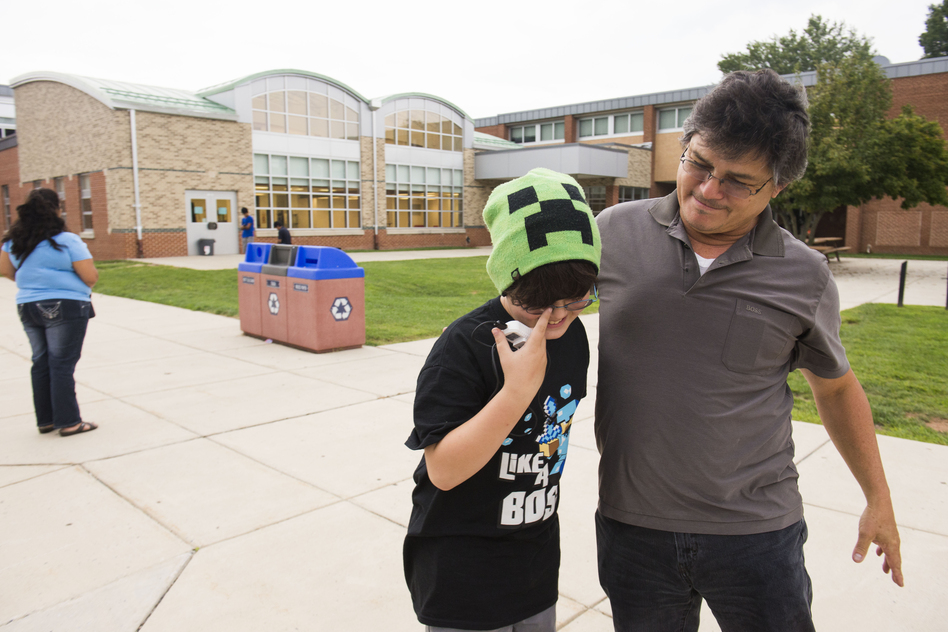
Lindolfo Carballo, an immigrant from El Salvador, meets his son, Raynel, outside school. In El Salvador, he says, families often

Lindolfo Carballo, an immigrant from El Salvador, meets his son, Raynel, outside school. In El Salvador, he says, families often "teach their boys one thing and their girls differently." He's trying to set a different example for his children.

Sarah Tilotta for NPR

Lindolfo Carballo knows there's a stereotype about men like him. He grew up in San Miguel, El Salvador, he says, in a male-dominant culture.

"I'm coming from a so-called 'machista' country, right? I mean, in this country, we all think that Latin America, in general, is where machismo is promoted," Carballo says.

In many families in Latin America, he adds, "parents — fathers and even mothers — teach their kids that men are to be served by their sisters."

But that wasn't what his parents taught him and his nine siblings, says Carballo, who lives in Silver Spring, Md., near Washington, D.C.

Carballo says many parents in Latin America teach their children that

Carballo says many parents in Latin America teach their children that "men are to be served by their sisters." He tries to model a different approach by sharing cooking and other household duties with his wife.

Sarah Tilotta for NPR

For immigrant men, life in the U.S. can be a transformative experience. But many immigrant fathers work hard to hold onto what it means to be a man in their native countries — while also rejecting more rigid gender roles that are sometimes the norm in their homelands.

That's what Carballo, now 52 and a father of a 10-year-old son and 1-year-old daughter, is trying to do.

As a teenager, he supported leftist revolutionaries in El Salvador's civil war, which, along with his parents' teachings, helped shape his egalitarian views about gender roles. After coming to America in 1990, he says, he's found that same machismo that defined mainstream culture in El Salvador here in America.

"I don't think it's a Latino thing," he says. "I think it's a family thing, where families teach their boys one thing and their girls differently."

Carballo, who works full time as a community organizer for an immigrant rights group, often makes door-to-door visits to immigrant families — sometimes meeting with husbands and wives together.

"I ask the woman a question, and it is the man answering the question for her," he explains. "They don't do it on purpose. But I think they feel it's normal for them because that's how they grew up."

Carballo says he's trying to model a different normal for his children by sharing household duties with his wife.

Carballo's wife, Carla Naranjo, and his son look on as he holds his 1-year-old daughter, Reina de la Paz. Her name means

Carballo's wife, Carla Naranjo, and his son look on as he holds his 1-year-old daughter, Reina de la Paz. Her name means "queen of peace" in Spanish.

Sarah Tilotta for NPR

"Doing dishes, it relaxes you," he says. "Doing some work at home, some people think that it's for women only. No, not true!"

Samuel Adewusi, a 54-year-old immigrant father of four living in D.C. agrees. Adewusi, a lawyer, was born in Lagos, Nigeria. His father had no formal schooling and worked as a carpenter. When his mother wasn't around, Adewusi says, his father would often cook and clean.

"The women usually make fun of him, and the men usually just pretend as if they didn't see him," he says. "It's like, 'Oh, leave that man alone! He's something else, you know.' "

Adewusi says his father taught him a man's true strength comes from his character.

"You don't have to fit yourself in any mold that people are trying to put you [in]," he says. "What is necessary to be done has to be done, without trying to say, 'Well, I am in this mold. Men are not supposed to cook.' But you are starving! And you are saying men are not supposed to cook? What kind of crap is that?"

After more than three decades living in the U.S., Adewusi has decided that there are some fundamental differences between Nigerian and American men.

Men holding hands platonically is "totally cool" in Nigeria, he says. But in America, Adewusi learned, it is taboo unless you're in a romantic relationship with another man. He recalls a former classmate in the U.S. who once told him, "Men don't do that! We don't touch each other. We don't hold each others' hands."

That's a shame, Adewusi says. "This doesn't let human beings live to their full extent. [Though] I don't mean to say, 'Well, all of us should go around and start singing 'Kumbaya,' and holding each others' hands.' "

Since moving to the U.S., Adewusi has traveled back to Nigeria occasionally to visit his family. One airport arrival was especially memorable.

"Everybody was there to welcome me and all that good stuff. And my younger brother tried to [hold] my hands. And I said, 'Ah! Don't do that! Don't touch me!' " he recalls with a laugh.

Adewusi says he eventually adjusted back to Nigerian culture during his visit, but the incident reminded him of the limits of being a so-called "man" in America.

Still, he says, he has seen a positive development for men in the U.S. since moving here. "Nowadays you see grown men actually hug each other."

This story was produced for broadcast by Marisa Peñaloza. You can find other stories from All Things Considered's series on what it means to be a man in America today here.

Copyright 2014 NPR. To see more, visit http://www.npr.org/.
29 Aug 19:47

A Photographer Captures The Often-Overlooked 'Aunty' Couture

by Tanvi Misra

A Photographer Captures The Often-Overlooked 'Aunty' Couture

by Tanvi Misra

"Ugh, she dresses like SUCH an aunty!" is usually not something you'd want to hear about your style, if you're South Asian.

An "aunty" or "aunty-ji" (depending on where you want to fall on the graph of respect and familiarity) is what you call a lady roughly around your mother's age. So, the family friend who has seen you grow up, your mom's co-worker, the lady next to you in the grocery line or the nosy neighbor whose questions about your love life you endure because she makes a killer biryani — they all qualify.

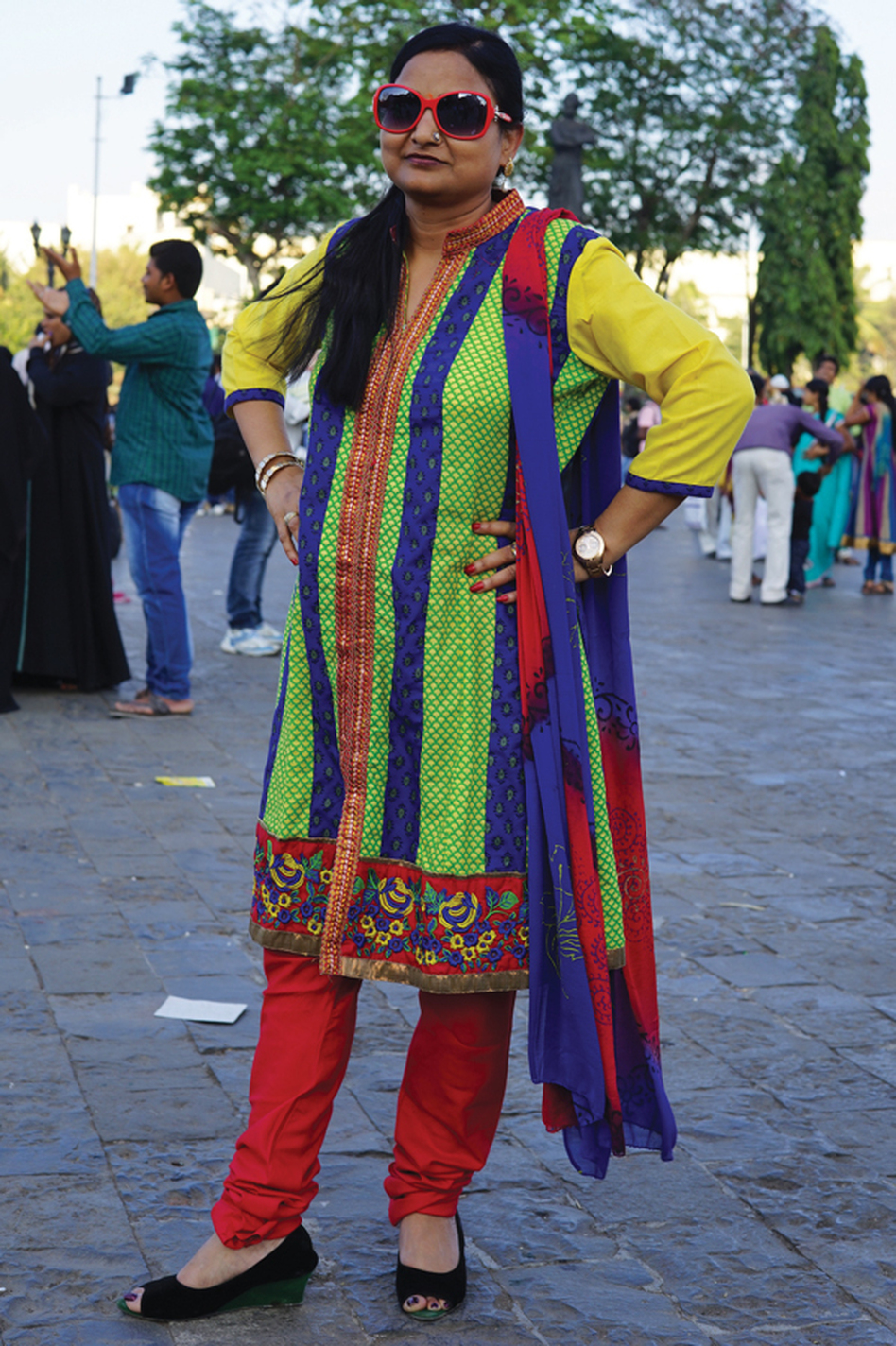
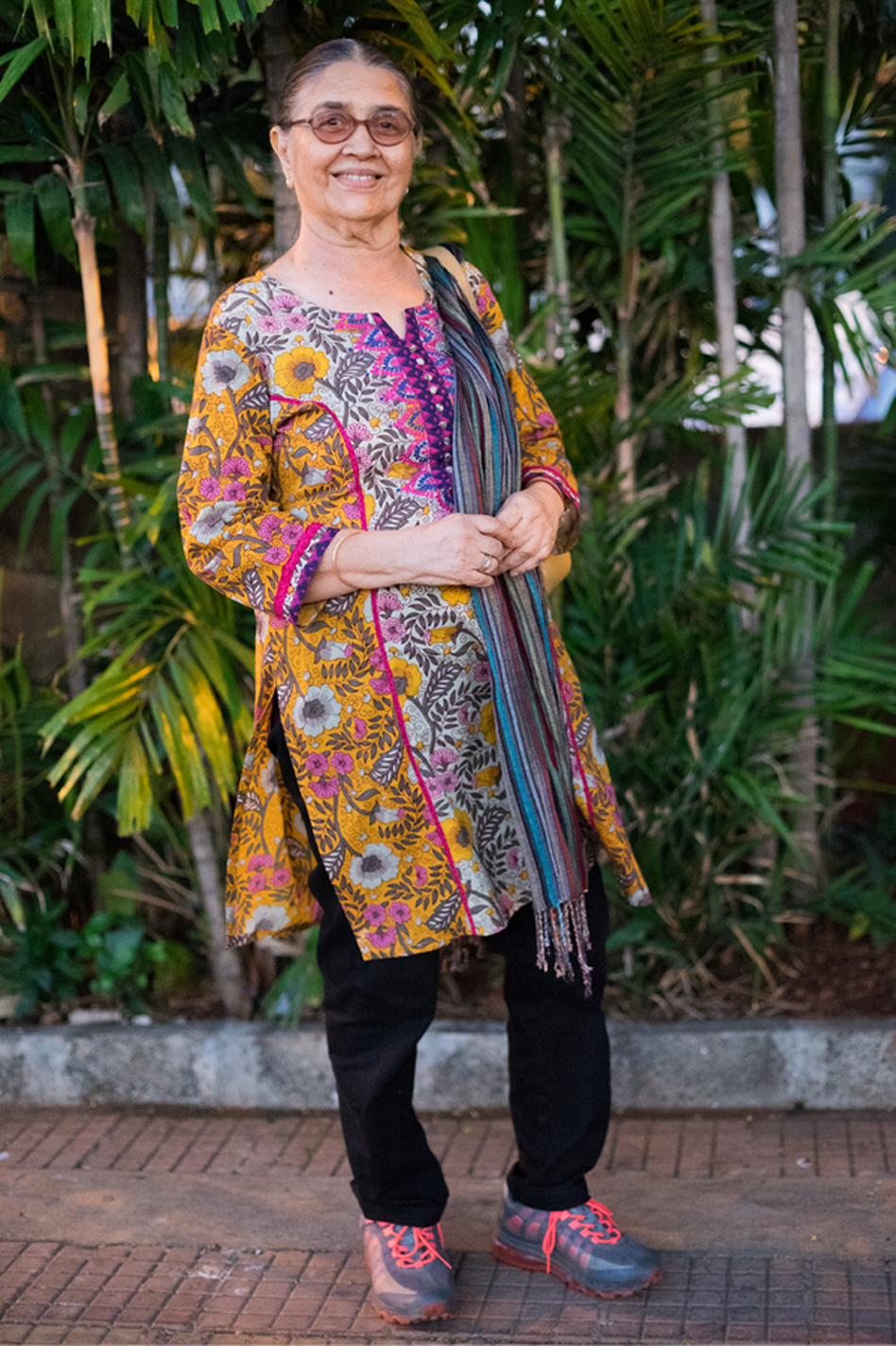
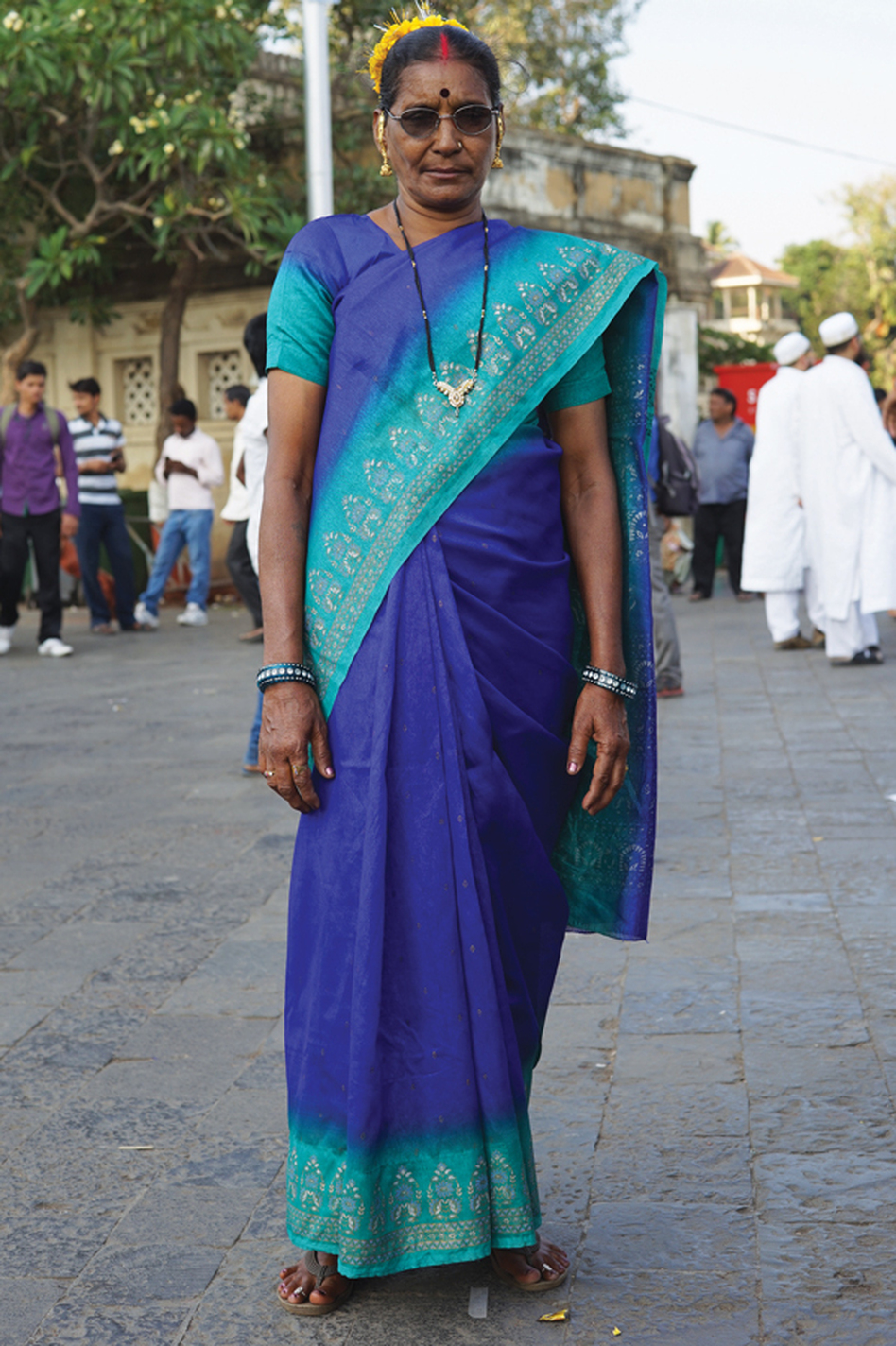
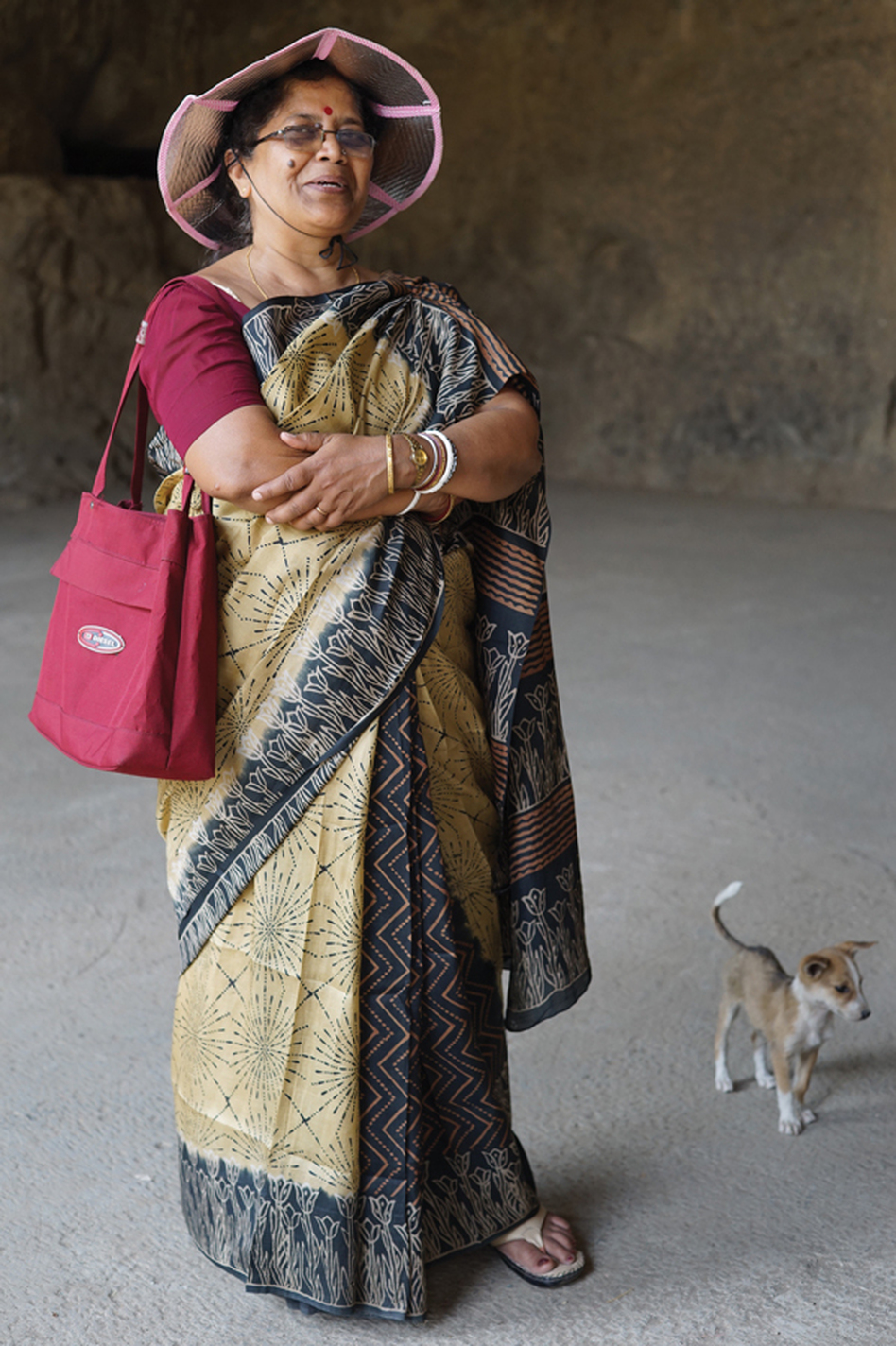
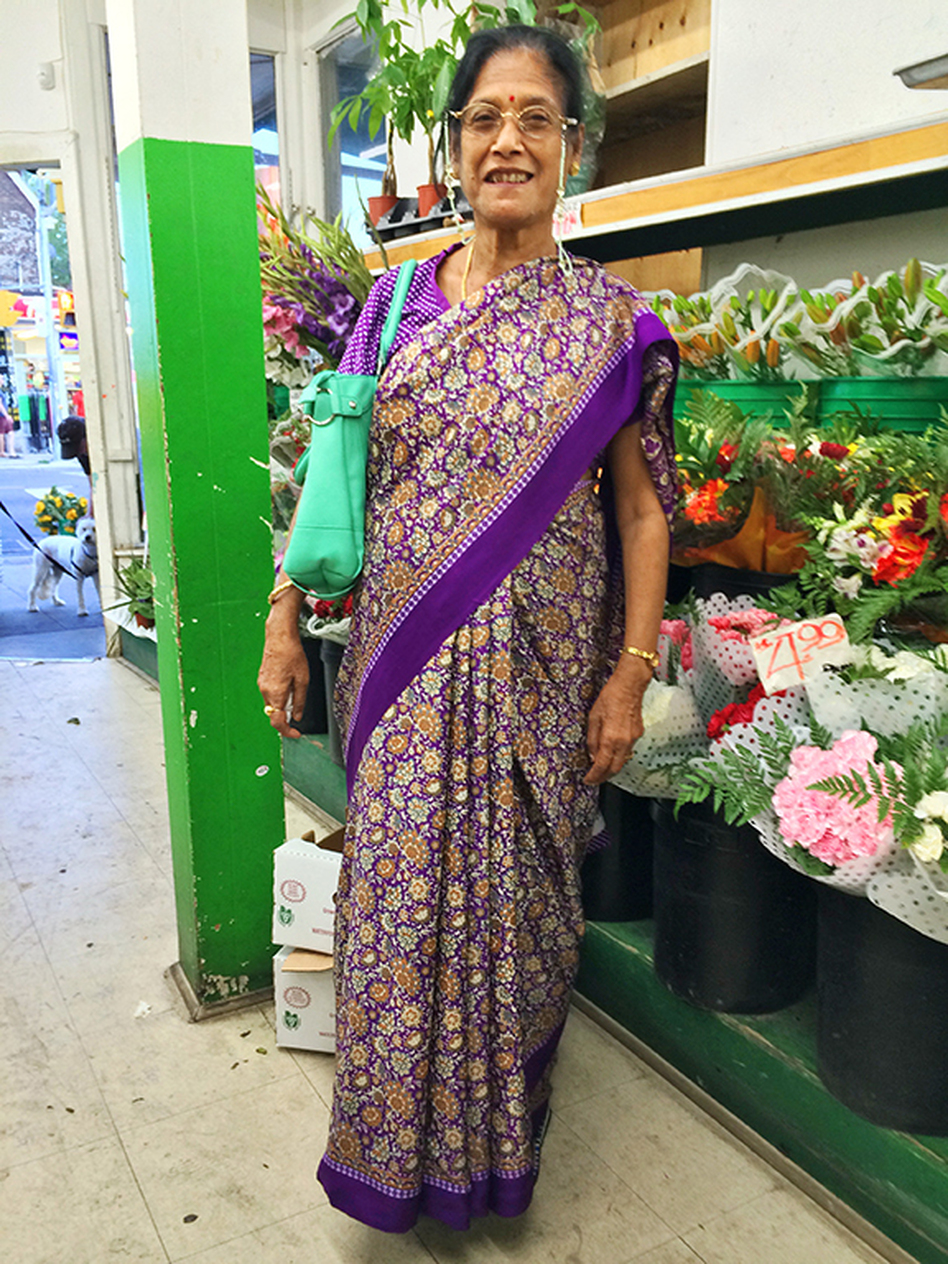
While the stereotype makes aunties famous only for food and unsolicited advice, their style — like this salwar-kurta and sneakers combo, a staple — has not always been in the spotlight. Until now.

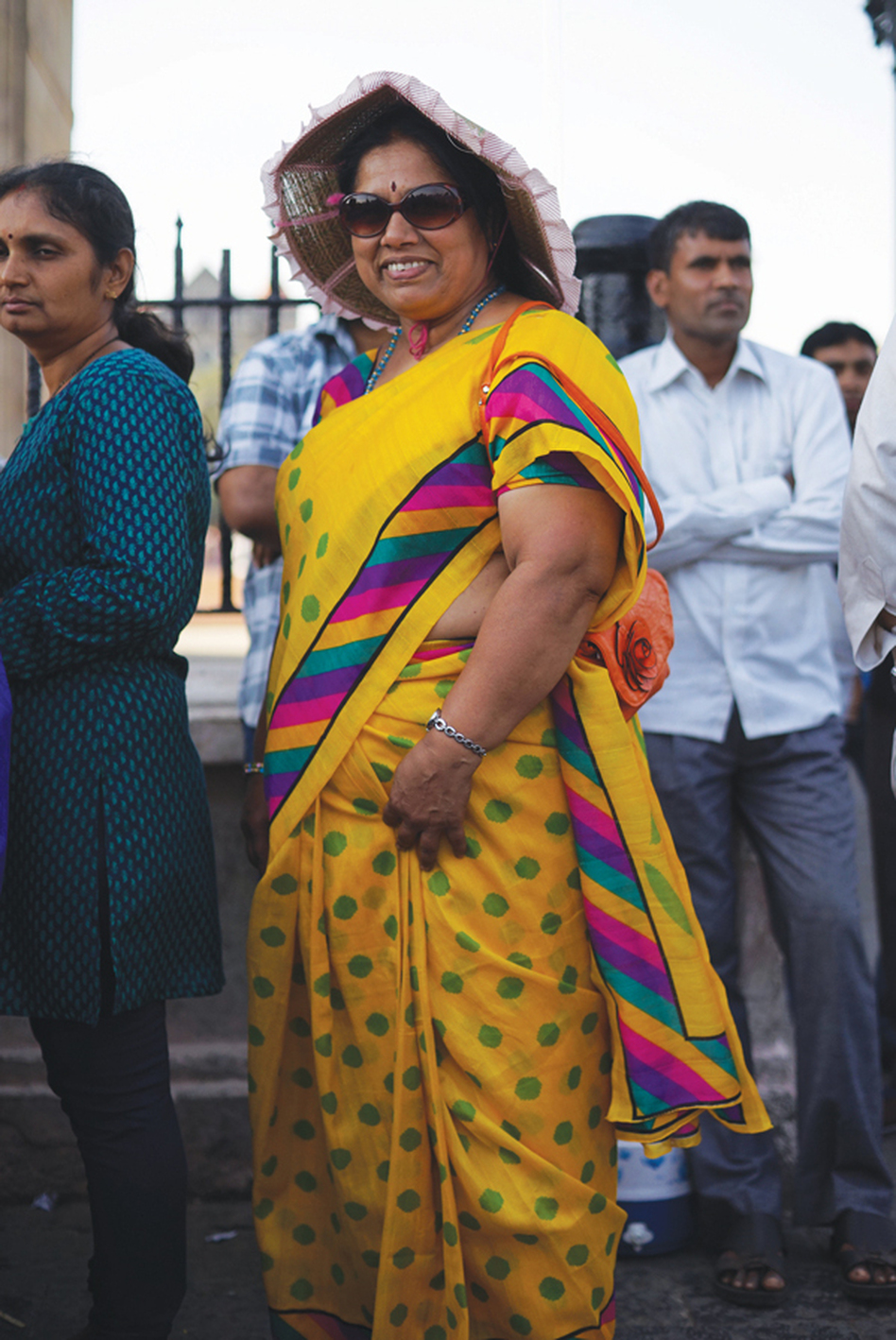
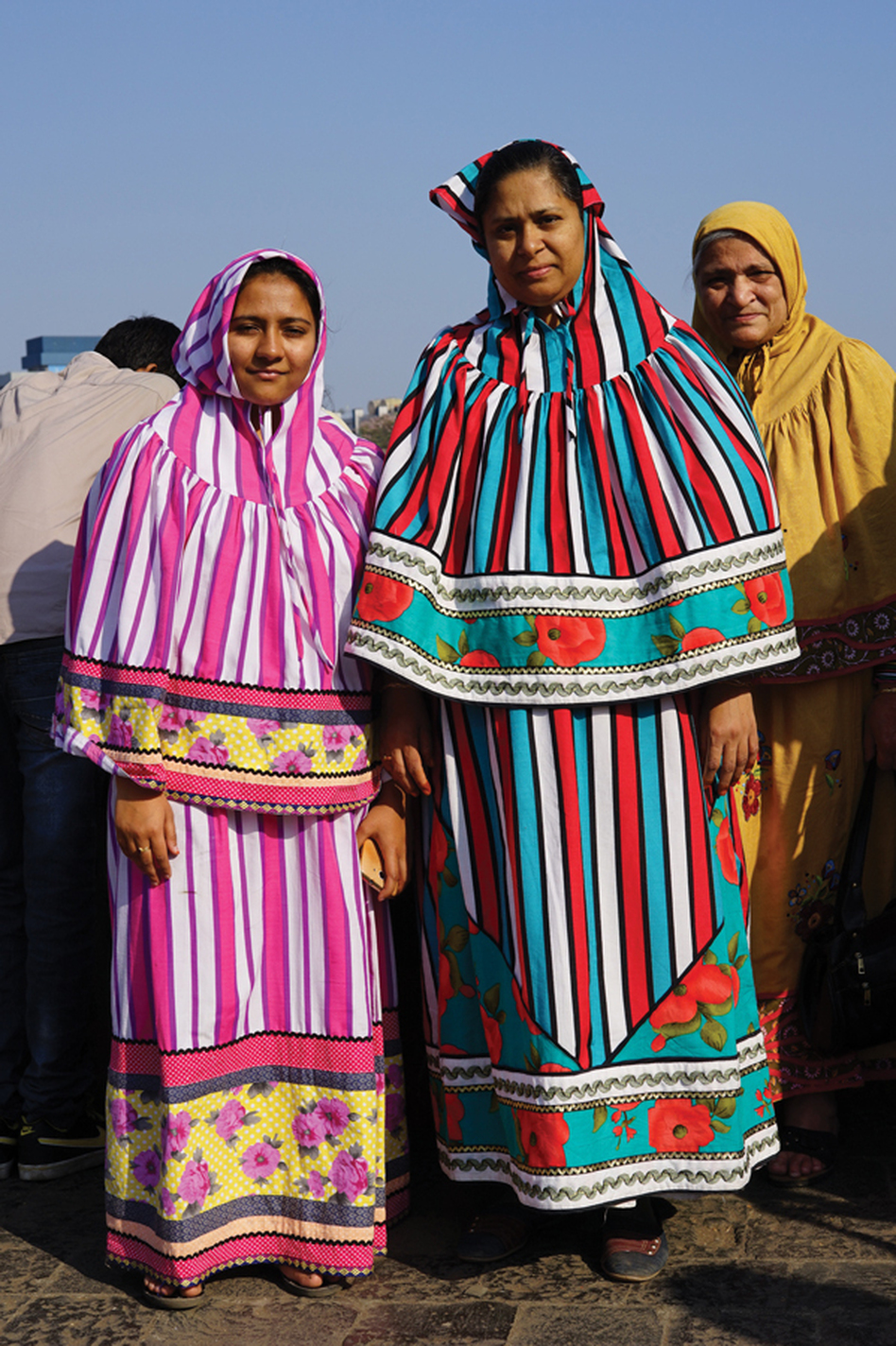
"Upping the Aunty" is a mixed-media art project started by Toronto-based artist Meera Sethi, who's trying to debunk this myth that aunties don't have swag. In the project's first phase, Sethi took photos of women in Mumbai and Toronto and posted them on her Tumblr and Instagram — kind of a street style series.

"You see such great, such interesting ways of putting things together," she says. "I wanted to capture that — the colors and the patterns and the accessories — the whole package."

For Sethi, the purpose is to question how we look at fashion — What makes something cool? What makes something worthy of attention? — and then start looking at "other markers of fashion and other notions of style."

The other goal behind the project was to pay homage to the aunties like the ones that surrounded Sethi while she was growing up in Toronto. They are "cultural figures," Sethi says, who have made many contributions to their societies and communities.

In fact, aunties permeated the lives of Sethi and her South Asian friends to such an extent that even when they weren't physically present, they would often pop up in conversations and jokes.

"[We would] engage in 'aunty-speak' — so, using maybe voices and phrases that our aunties have used — with each other, sort of, in jest," Sethi says.

Spurred by these conversations and a plethora of aunty-themed Internet memes and YouTube videos, Sethi started thinking about the cultural knowledge that gets passed on by aunties — especially in diaspora communities.

After a spell of linguistic "pun"-ditry determined the project's title, it all came together. The title isn't just ornamental though. Sethi literally intends to take the project to another level: She wants to collect more photos, have more conversations with aunties about their style and then paint portraits of them embellishing that style.

As she works toward these ambitions, Sethi relishes the individual connections she makes with her muses when she stops them for the picture.

"At first, they might be puzzled or surprised that I want to take their photo, but generally they're flattered," she says. "Some of them have told me I've made their day or given me a hug."

Copyright 2014 NPR. To see more, visit http://www.npr.org/.
22 Aug 05:17

TED: Jarrett J. Krosoczka: Why lunch ladies are heroes - Jarrett J. Krosoczka (2014)

by TEDTalks
Children’s book author Jarrett Krosoczka shares the origins of the Lunch Lady graphic novel series, in which undercover school heroes serve lunch…and justice! His new project, School Lunch Hero Day, reveals how cafeteria lunch staff provide more than food, and illustrates how powerful a thank you can be.
22 Aug 02:54

Shame Game: New Study Shows Stigma Sours Trans Relationships

by Mari Brighe
A new study in the Journal of Family Medicine investigates how stigmatization and discrimination affect the mental health and relationship quality of transgender women and their cisgender male partners.
22 Aug 02:20

Photo Essay: Malaysian Muslim women with and without their hijabs

by Syreeta

Mujeres Musulmanas

In my *spare* time (LOL), I edit the online literary magazine Union Station, which features fiction, poetry, nonfiction, and photo essays from emerging artists. One of my favorite essays is this one featuring Malaysian Muslim women with and without their hijabs by photographer Francisco Guerrero that we published in 2011. 

In the portrait session a few years back, the women shared with Guerrero their feelings about the hijab. Guerrero wrote then, “Most of these women treated the Hijab as part of their wardrobe, as a garment both charged with symbolic meaning and as a garment with practical applications. Fizzy chose to bring her prayer hijab that she wears in the mosque. On a daily basis, Fizzy chooses to not wear the hijab at all, instead usually opting for more casual clothes. The t-shirt she is wearing in the photograph is her own design, a montage of American sexy-chic machine gun images and the hijab. What most of these women wanted to express is that wearing the Hijab was mostly their personal choice and this would vary depending on the social context. One of the women explained it by comparing it to wearing one’s ‘Sunday best’ when going to church of more formal family occasions.”

Screen shot 2014-08-21 at 10.11.40 AM

Our editors were dazzled by these portraits. The power and agency these women communicated in the images were compelling and a worthy of reminder to check our biases. In a culture that still stigmatizes anyone who doesn’t conform to Westernized conventions, the images insist that we recognize the full humanity of Muslim women, and their right to express their faith and their culture anywhere.

Some Western nations, like France, have codified their biases by banning the veil. France’s ban cites a “‘moral responsibility’ to uphold traditional European values in the face of an increasingly visible Muslim population,” and essentially mandates assimilation, which is a slick kind of xenophobia. Jos wrote back in 2011, “It seems to me we have a lot easier seeing -isms in a cultural context different from our own, and a lot harder time seeing agency. To veil or not to veil is a question to be navigated by Muslim women – what kind of feminism supports the imposition of values and behaviors on women by a government?”

Screen shot 2014-08-21 at 10.10.08 AM

Katie points out the cognitive dissonance in France’s selective protection of the rights of its citizens: “So, according to the Court, ‘living together’ requires being able to see people’s faces. And, according to the Court, covering ones face violates the rights of individuals who, ‘might not wish to see, in places open to all, practices or attitudes which would fundamentally call into question the possibility of open interpersonal relationships, which, by virtue of an established consensus, formed an indispensable element of community life within the society in question.’” The court’s reasoning is incredibly convoluted, fearful at best and hypocritical at worst. It highlights a singularity in thinking and a lack of empathy and connection to women (or anyone) from different cultures.

Screen shot 2014-08-21 at 10.11.29 AM

When empathy wanes, I return to gazing at photographs. Susan Sontag once wrote, “All photographs are memento mori. To take a photograph is to participate in another person’s (or thing’s) mortality, vulnerability, mutability. Precisely by slicing out this moment and freezing it, all photographs testify to time’s relentless melt.” We’re living through incredible times, images are circulated at speeds we never before imagined, and while we’re overwhelmed with them as they often document a host of the world’s troubles, we need to sit still sometimes with images that remind us that we are human.

sm-bio Syreeta McFadden lives in the County of Kings.

08 Aug 03:03

'Boondocks' Creator Asks, 'What Would Black Jesus Do?'

by Neda Ulaby

'Boondocks' Creator Asks, 'What Would Black Jesus Do?'

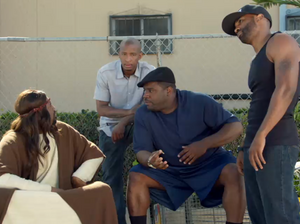
Black Jesus, a new show premiering Thursday on Adult Swim, is about, well, a black Jesus. Set in contemporary south Los Angeles, it presents a Jesus roaming around a neighborhood filled with liquor stores, mini-marts and people praying for help.

YouTube

The live-action show is the latest project from Aaron McGruder, who's best-known as the creator of the comic strip and cartoon The Boondocks. Black Jesus is a show designed to push buttons, and it has already caused consternation among some Christian groups.

But Yolanda Pierce of the Princeton Theological Seminary says the show raises some important theological questions. "If Jesus were to return, what would Jesus look like?" she asks. "What would Jesus do? And would we, those people who consider themselves as Christians, as I do, recognize Jesus if the historical Jesus is not the blond-haired, blue-eyed [man] of our usual stained-glass depictions?"

Pierce also says that the provocative setting — a Jesus who drinks 40s, curses and smokes weed — might also reflect the reality of people who could use some ministering. "Especially people at the margins, who may be using weed or who may be drinking as a way to soften the brutality of their everyday existence," she says. She says Jesus would preach to those whom Scripture calls "the least of these."

The theological questions are well and good, but the broad humor of Black Jesus does not entirely convince Juan Floyd-Thomas, who teaches African-American religion at Vanderbilt University's Divinity School.

"It's kind of ... jarring seeing this black Jesus with a long perm and dusty, tan robes walking through south-central LA," he says.

Black Jesus is the latest from Aaron McGruder, who created the politically charged comic strip and animated series The Boondocks.

Black Jesus is the latest from Aaron McGruder, who created the politically charged comic strip and animated series The Boondocks.

Adult Swim

Floyd-Thomas says he appreciates the way the first few episodes examine how Jesus might deal with police brutality, surveillance and contemporary racial strife. But he says the show, so far, is not as good as The Boondocks, which he says grappled with deep social questions.

Both Pierce and Floyd-Thomas say that the concept of a black Jesus is hardly new — it was a concept associated with black nationalism and explored on such TV shows as Good Times in the 1970s, and more recently by rappers like Kanye West and 2Pac.

Pierce says Jesus can withstand — even absorb — pop cultural interpretations. He was a hippie in the 1960s, and a culture warrior on South Park and in Mel Gibson's The Passion of the Christ. So, she says, it's not a stretch for Jesus on Adult Swim to turn cheap beer into fine cognac.

Floyd-Thomas says it never hurts for the question to be raised on screens, in bedrooms and living rooms outside church: What would Jesus do?

Copyright 2014 NPR. To see more, visit http://www.npr.org/.
03 Aug 01:14

“It’s hard for them to accept that I do abortions because I’m a Christian.”

by Maya
Willie Parker

(Photo credit: Maisie Crow/Esquire)

Esquire has a wonderful profile of Dr. Willie Parker, one of the two doctors who flies in from out-of-state to work at Mississippi’s sole embattled abortion clinic. Parker, whose decision to become an abortion provider is deeply rooted in his Christian faith, quit his obstetrics practice to do the procedures full-time after Dr. Tiller was assassinated five years ago. These days, he travels around the country providing abortion care in areas where access is most limited and is an eloquent advocate for reproductive justice

Many of these women come from hours away, one from a little town on the Kentucky border that’s a seven-hour drive. They don’t know much about Dr. Parker. They don’t know that he grew up a few hours away in Birmingham, the second youngest son of a single mother who raised six children on food stamps and welfare, so poor that he taught himself to read by a kerosene lamp and went to the bathroom in an outhouse; that he was born again in his teenage years and did a stint as a boy preacher in Baptist churches; that he became the first black student-body president of a mostly white high school, went on to Harvard and a distinguished career as a college professor and obstetrician who delivered thousands of babies and refused to do abortions. They certainly don’t know about the “come to Jesus” moment, as he pointedly describes it, when he decided to give up his fancy career to become an abortion provider. Or that, at fifty-one, having resigned a prestigious job as medical director of Planned Parenthood, he’s preparing to move back south and take over a circuit roughly similar—for safety reasons, he won’t be more specific—to the one traveled by Dr. David Gunn before an antiabortion fanatic assassinated him in 1993. Or that his name and home address have been published by an antiabortion Web site with the unmistakable intent of terrorizing doctors like him. Or that he receives threats that say, “You’ve been warned.” Or that he refuses to wear a bulletproof vest, because he doesn’t want to live in fear—”if I’m that anxious, they’ve already taken my life”—but owns a stun gun because a practical man has to take precautions. What they do know is this:

He is the doctor who is going to stop them from being pregnant.

The profile captures Dr. Parker’s motivation for doing this work and the great care and empathy he brings to it. It also offers a rare glimpse into what actually happens at an abortion clinic and shows the huge diversity among the stories of the dozens of women Dr. Parker helps each day. You should really read the rest here.