Shared posts

27 May 00:58

Neon Indian: "Annie"

by Ian Cohen

Contrary to prevailing beliefs, chillwave was very real and all but defined by the early Neon Indian singles "Deadbeat Summer", "Terminally Chill", and "Should've Taken Acid With You". But Alan Palomo was perhaps the least representative of its founding fathers—just about the only chillwaver who wasn't initially awful in a live setting, Palomo actually danced on stage, his mop of curls obscuring his deep-set eyes. He seemed to be embracing the possibility of rock stardom, and by 2011's Era Extraña, he linked his previous work with shoegaze and glam, wisely positioning chillwave within a lineage of sexy, drugged-up subgenres.

It's held up well, but Palomo appears eager to clarify and assert himself on "Annie", the presumptive first preview of LP3. While Psychic Chasms could've been the soundtrack of a lost weekend, Era Extraña was inspired by a breakup and meltdown in Finland, and it seems the past six years are a hangover that needs to end now. "Annie" is the most aggressive Neon Indian song to date—there's no give on its surface, and Palomo's voice is mixed loud and clear, the guitars filtered for crispness rather than blurred.

Still, this is Neon Indian, so the tropical thump has to be somewhat warped. This time, it's less Ariel Pink than Scritti Politti covering "La Isla Bonita", evoking forward-thinking 1980s pop artists rather than simply sounding 80s. And if you are feeling nostalgic for the summer of 2011, Neon Indian arrives just at the right time, as "Annie" is very much an electro-pop song for when temperatures grow more humid, our actions less responsible and the nights longer. But with every repetition of an anachronistic plea for a lost lover to "answer the machine," Palomo sounds as charmingly out of step with the modern bustle as he's always been.

22 May 03:19

Will Your Job Be Done By A Machine?

by Quoctrung Bui

Machines can do some surprising things. But what you really want to know is this: Will your job be around in the future?

We have the "definitive" guide.

What job is hardest for a robot to do? Mental health and substance abuse social workers (found under community and social services). This job has a 0.3 percent chance of being automated. That's because it's ranked high in cleverness, negotiation, and helping others. The job most likely to be done by a robot? Telemarketers. No surprise; it's already happening.

The researchers admit that these estimates are rough and likely to be wrong. But consider this a snapshot of what some smart people think the future might look like. If it says your job will likely be replaced by a machine, you've been warned.

Copyright 2015 NPR. To see more, visit http://www.npr.org/.
14 May 02:27

New Favorite Tumblr: Congrats, you have an all male panel!

by Mahroh Jahangiri

I work at a think tank in DC. Every time I walk into an event, I tally the number of women in the room. I can usually count them on one hand. I then count the number of women either on the panel or participating in the roundtable — usually if there are any, they are early career professionals and sitting in the back of the room with me.

Congrats, you have an all male poverty summit!

“Congrats, you have an all male poverty summit!”

So when I opened Facebook this week to friends sharing photos from this amazing Tumblr, needless to say, I cheered. Congrats, you have an all male panel! documents panels, seminars, events, and various other things featuring all male experts. Like the White Guys Doing It For Themselves Tumblr before it, it offers photographic evidence of the scribbled tally marks on the margins of all of my notes, the murmurs between women in the bathroom, the sometimes awkward but mostly relieving head nod I make with the one other woman of color in the room. Here is a #Hoffsome funny — but also sad and somber — reminder of how unrepresented women are in professional settings.

As the New York Times wrote earlier this year, the male talk fest isn’t just anecdotal. Last year, six leading Washington think tanks presented more than 150 events on the Middle East that included not one woman speaker. Fewer than one quarter of all the speakers at the 232 events at those think tanks were women. In other words, not a single woman could be found to speak at 65 percent of these influential D.C. events in 2014. This discrepancy isn’t limited to thinks tanks or foreign policy — it taints everything from media representation (a woman over 65 is less likely to be cited as an expert in the media as a boy in the 13 to 18 age group), to the business world, to our legislative branch. Remember, the all-male Congressional committees that have some great ideas — and decide the law — on women’s health?

Thanks guys.

hoffman

You can submit to the Tumblr here. As for helping phase out all-male panels, men, here’s a pretty easy first step. Just say no! Refuse to speak on all male-panels! As The Atlantic suggests, you might say: “You couldn’t find any women to teach? Look, I’d love to join the program, but I’ve made a pledge not to participate in all-male panels. And anyway, do you really want to send the message that there are no qualified women?”

Side note: I do the same tallying exercise for the number of people of color at every event I walk into — the numbers on that are almost always even more abysmal. Keep an eye out for my upcoming website: All White Panels. In the meantime, the same easy suggestion goes to my white friends too! Asked to speak on a panel about feminism and the panel is all white women? Just say no!

Header image credit: Congrats, you have an all male panel!

12 May 20:57

Tame Impala: "Eventually"

by Marc Hogan

When Tame Impala released "Eventually", the fourth single from the Currents, a caption on Instagram noted, "Last one before the album." If that's true, the track marks the end to a particularly masterful streak for the Kevin Parker-led Australian band, and the start of something else. After the dramatic gestures of the future-RAM epic "Let It Happen" and quiet-storm confessional "'Cause I'm a Man", followed by the chugging, sepia-tone miniature "Disciples", this stately, finger-snapping synth ballad might, at least superficially, risk getting drowned out in the promotional noise. It's too well-crafted for that fate, though.

"Last one before something else" might also describe the theme of "Eventually". Like someone pulling the Band Aid right off to abbreviate the pain, or just following Robyn's advice from "Call Your Girlfriend", Parker is inflicting harsh emotional wounds as mercifully as his plainspoken narrator can manage: This might hurt a little bit, but it won't be that way forever, right? It's easily a breakup song, although as Parker told Under the Radar, it's ambiguous enough to leave room for other interpretations. And anyway, here he's less focused on what's ending than what might later begin. "I know that I'll be happier/ And I know you will, too," he repeats in the soft-focus chorus, pausing just long enough before adding the title phrase. Eventually. It's the hope the word contains, potentially false, that makes it devastating.

The song arrives at a time when Tame Impala find themselves in their own phase of transition. They're kaleidoscoping outward after Lonerism's electronic-savvy expansion of 2010 debut Innerspeaker; they're building on their covers of late-period Michael Jackson and late-period OutKast, as well as their frontman's appearance on the latest Mark Ronson full-length. In a recent Reddit AMA, Parker singled out "Eventually" as a Tame Impala song that's still "very moving" for him. If it's a harbinger of what to expect from Currents' nine remaining unreleased tracks, I know that many of us will be happier, and that "eventually" means July 17. But for now, it's enough to be moved, in motion, suspended in time.

04 May 16:03

BREAKING: Janelle Monae Allegedly Rocking MC Lyte’s Body

by Stef
mcjanelleDoes this mean MC Lyte has been an android all along?
01 May 15:41

Peer reviewer says female researchers should get a male co-author to “check” study

by Maya Dusenbery

Yiiiikes.

A peer reviewer’s suggestion that two female researchers find “one or two male biologists” to co-author and help them strengthen a manuscript they had written and submitted to a journal has unleashed an avalanche of disbelief and disgust on Twitter today—and prompted an apology from the publisher of the journal, which media reports have identified as PLOS ONE.

Evolutionary geneticist Fiona Ingleby was shocked when she read the review accompanying the rejection for her latest manuscript, which investigates gender differences in the Ph.D.-to-postdoc transition, so she took the issue to Twitter.

Earlier today, Ingleby, a postdoc at the University of Sussex in the United Kingdom, posted two excerpts of the anonymous review. “It would probably … be beneficial to find one or two male biologists to work with (or at least obtain internal peer review from, but better yet as active co-authors)” to prevent the manuscript from “drifting too far away from empirical evidence into ideologically biased assumptions,” the reviewer wrote in one portion.

“Perhaps it is not so surprising that on average male doctoral students co-author one more paper than female doctoral students, just as, on average, male doctoral students can probably run a mile a bit faster than female doctoral students,” added the reviewer (whose gender is not known).

To recap: A reviewer who thinks it’s not surprising that the study found male students authored more papers than female students on the basis that men, on average, can run faster thinks that it’s the paper’s authors who would might be unduly influenced by “ideologically biased assumptions.” The reviewer also suggested that perhaps the male students tended to get published in better journals than their female counterparts “simply because men, perhaps, on average work more hours per week than women, due to marginally better health or stamina.”

I mean, when you’re reaching to supposed physical differences between men and women to explain away gender disparities in academia, you might want to question how your ideological bias against seeing sexism at all costs might be blinding you to the empirical evidence.

23 Apr 04:54

Amy Schumer’s Friday Night Lights parody: “Clear eyes, full hearts, don’t rape!

by Maya Dusenbery

Showing yet again that some rape jokes are funny, in the first episode of this season of Inside Amy Schumer, the show tackled (ha!) football rape culture in a brilliant Friday Night Lights spoof. While Schumer plays the supportive Tammy Taylor-like wife sipping on an ever-bigger glass of white wine, Coach tries to get the team on board with his new “no raping” policy.


As Schumer said at the Tribeca Film Festival, making jokes about rape “is always a risk. You might look at this scene and think we’re making light of something serious, but we really are trying to educate.” The writers told ThinkProgress that the inspiration for the sketch was the Steubenville rape case, and they wanted to show how everyone was complicit. I think they nailed it. Be sure to watch to the end to Coach’s final pep talk to the team.

14 Apr 00:46

Intersectional feminism, brought to you by pizza

by Suzanna Bobadilla

Writer and comedian Akilah Hughes has created a brilliant explanation of intersectionality, using the ever timeless metaphor of pizza. That’s right. Pizza.

Using a creative key of burgers, deluxe pizzas, and cheese pizzas, Akilah breaks down Kimberlé Crenshaw’s theory in an easy to digest video. (That pun was absolutely intended)

While obviously we would all love to live in a world where we could talk about intersectionality without having to resort to food metaphors, Akilah’s work offers us the chance to laugh, sigh, and hope that just maybe the next time feminism makes the national news inclusivity won’t continue to an after-thought.

So today as you read up on Hillary Clinton’s candidacy for 2016 and her feminism, ask yourself: Can we have more than cheese, please?


Transcription below:

“Akilah Hughes: Hi Youtube, it’s @AkilahObviously! Today I wanted to talk about an issue that’s been neglected on Youtube and in pop-culture, specifically when we talk about Patty Arquette and her Oscar’s speech and Nellie Andreeva at Deadline who thinks that diversity is over-taking Hollywood and that there are no roles for white people anymore.

Today we are going to talk about intersectionality and feminism. What better way to talk about this issue this big than to talk about pizza! It’s a little cheesy.

Say you’re born a Cheese Pizza but the world is made for Burgers. You can go anywhere and get a Burger, Burgers are the go-to fast food pretty much anywhere in the world. So you are trying to say, “Hey! Pizza is just as good as Burgers, Pizza is just as satisfying as Burgers, Pizza deserves the same rights as Burgers.” And that’s all fine and good.

But then there are pizzas like me, Deluxe Pizzas, who happen to have different toppings and features than Cheese Pizzas and who have their own problems to face because they are pizzas and have different toppings. We’re like, “What about us?”

Cheese Pizzas are by far the most celebrated pizzas in society. If you go anywhere, there is going to be a Cheese Pizza. In any facet of society, where it’s art, media, education, finance, history, Cheese Pizzas are the only Pizzas that are mentioned. You know, Cheese Pizzas are so celebrated that there are snacks that celebrate that flavor like Combos and Pringles and even Bagel Bites! Cheese Pizza is highly visible.

Meanwhile this is not the case for Deluxe Pizza, alright? Our features are often seen by the untrained eye as extra weight and too much of a problem and we are left to crumble because the crust does not support us. It is much more difficult to be a Deluxe Pizza in a burger world.

So when Deluxe Pizzas found that Cheese Pizzas wanted to join forces and fight for their rights for all Pizzas, they were stoked! Until they found that all discussions about Pizzas would be about Cheese Pizzas exclusively. In fact, Cheese Pizzas were like, “We’re going to get to your rights but only after we achieve ours.” And so now there are tons of videos and articles that talk about how Cheese Pizza is tired of being told by Burgers to shave their crust and how Cheese Pizza is getting called all these slurs because of what they choose to put in their pie hold. Deluxe Pizzas would love the privilege to care about things so menial.

Historically when Deluxe Pizzas rise through the pop-culture ranks and use their platform to promote pizza rights, Cheese Pizzas will shame them and then turn around and say, “Look at this Cheese Pizza, she’s got the right idea,” [picture of Emma Watson's UN Speech] even when she saying the extra same thing that the Deluxe Pizzas has been saying all along [picture of Beyoncé's Feminist performance].

Deluxe Pizza’s unique features are often celebrated when they occur unnaturally on Cheese Pizzas. In fact, when they occur naturally on Cheese Pizza’s they are often shamed. “Look how big your sausages are, why is your pepper so curly?” [Cheese Pizza with sausage, labeled as Kendall Jenner]

And Deluxe Pizza’s are unfortunately a little jaded. They fall onto room temperature waiting for us to fight for their rights when they have been fighting for Cheese Pizza’s rights too strong for too long. So how do we solve this problem? You know, I think it’s called Intersectionality!

When we talk about Pizza rights, we need to be talking about all Pizzas, not just Cheese Pizzas that are deemed socially acceptable, worthy of saving, and worthy of having a place in popular culture. We need to be talking about Pizzas who are sexually atrracted to other Pizzas, Pizzas who aren’t sexually attracted to anything, Pizzas who identify as Burgers, and Pizzas who have different toppings. Because as great as it is to uplift Cheese Pizzas, the world could use a lot more flavor.

Thank you for watching and I’ll see you soon with another video.”

04 Apr 06:48

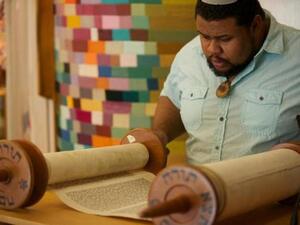
Bitter Herbs And Collard Greens: An African-American Seder Plate For Passover

by Michael Twitty

Bitter Herbs And Collard Greens: An African-American Seder Plate For Passover

Michael Twitty
On chef and culinary historian Michael Twitty's Seder plate, the traditional charoset, a paste of fruits and nuts, is made from sorghum molasses and pecans, symbols of his African-American heritage.

On chef and culinary historian Michael Twitty's Seder plate, the traditional charoset, a paste of fruits and nuts, is made from sorghum molasses and pecans, symbols of his African-American heritage.

Brycia J. Kiewlak/iStockPhoto

How do you say the Four Questions of Passover in Mende, a language of Sierra Leone?

I've been wondering this in preparation for tonight, the eve of Passover. The ritual of the Four Questions kicks off the first Seder dinner by asking, "Why is this night different from all other nights?" to begin the story of how Israelite slaves escaped Egypt to freedom.

Chef and culinary historian Michael Twitty writes frequently about what he calls

Chef and culinary historian Michael Twitty writes frequently about what he calls "koshersoul," his African-American and Jewish heritage.

Courtesy Michael Twitty

But tonight, I'd like to ask the Four Questions in a different way. I want to say the words in Mende, one of the languages of my enslaved West and Central African forebears.

This year, Passover week happens to coincide with the 150th anniversary of my ancestors' liberation from American chattel slavery: the surrender of Lee's army at Appomattox on April 9, 1865. On that day, when the waters parted and the 240-year nightmare was finally over, my ancestor Elijah Mitchell, a house servant about 15 years old, was standing near the battlefield with his older brother George. As the terms of surrender were negotiated, the brothers' slave holder told them they were free.

It's a happy coincidence that this anniversary falls during the Jewish festival of freedom, a calendrical crossing of the streams, and I'm looking for a special way to mark the occasion.

I've always mixed my African-Americanness and Jewishness on the Seder plate, a ritual dish with six foods that symbolize the story of Passover. First of all, in the place of bitter herbs, a reminder of the bitterness endured by the enslaved Israelites, I place collard greens. Collards can certainly be bitter, and in slave days they kept us healthy and alive despite a diet mostly of salt pork and dried corn.

Tonight, I want to ask the Four Questions of Passover in Mende, a language of my enslaved West African forebears.

The roasted lamb shank bone, which symbolizes the temple sacrifice, becomes a roasted chicken leg, the sort packed into shoe box lunches by Southern black travelers heading north by train on the Great Migration, sacrificing their homes for the promise of freedom. Chickens were also among the few types of livestock that black slaves were allowed to keep for their own meals.

The horseradish, with its nose-opening bite, is another reminder of slavery's sting. On my Seder plate, it's replaced by a spicy red pepper. White corn hoecakes, the hardtack of slavery, replace matzoh, and the spring vegetable is not parsley or white potato but a boiled sweet potato on a bed of fresh sweet potato leaves.

My version of charoset, a sweet paste of nuts and fruit that recalls the bricks from which the pyramids were built, is made from sorghum molasses and pecans, showing how my people married the gifts of Africa with the bounty of America to build a new culture of sweetness and strength.

A couple of the traditional Seder items work as they are. The boiled egg recalls African creation myths, and the salt water, the waves of the Middle Passage.

Collard greens stand in for bitter herbs on Twitty's Seder plate.

Collard greens stand in for bitter herbs on Twitty's Seder plate.

Brent Hofacker/iStockPhoto

Passover honors the story of all people who seek the simple freedom to live their potential. As Jews in India, Ethiopia, Iraq, Poland and China have done before me, I render the ancient codes in my own image and story.

This year, the anniversary of my own family's liberation, I wanted to invite to my table my sixth great-grandmother, brought to Charleston before the Revolutionary War from Mende areas of Sierra Leone. A couple of days ago, I came across a book called 300 Ways to Ask the Four Questions, and was delighted to find one of those 300 is a version in Mende:

Gbei kpškši ngi gba kpškši kpeema? Kpškš gbi, ma lewei mon gši lo meh; keh kpškši ngi, matsui lea mia.

It's hard to pronounce, but I've been practicing, and I think I got it down. Tonight, with the foods of the African Diaspora before us, mixed and fused with Jewish food from around the world, I'll welcome my ancestors to the table of freedom so that we might all enter the Promised Land together, as a family.

Michael W. Twitty blogs at Afroculinaria, exploring African-American and African Diaspora culinary history and culture. He is working on his first book, The Cooking Gene, for HarperCollins.

Copyright 2015 NPR. To see more, visit http://www.npr.org/.
01 Apr 21:57

Daily Feminist Cheat Sheet

by Maya Dusenbery
Anja

For the things my male tech colleagues have actually said to me.

Are your religious liberties being violated? Find out using this helpful chart based on an article by Rev. Emily H. Heath.

Four women who experienced sexual abuse while on active military duty have sued the Pentagon alleging that the military created and condoned a sexually hostile environment

Just ban all frats already.

“Things my male tech colleagues have actually said to me.”

This is awful.

“Dear White folks who are mad at Michelle Obama for saying Black Girls Rock.”

More than 100 people were killed by police in the US in March.


31 Mar 15:19

On the Street…Piazza del Duomo, Milan

by The Sartorialist

22515agenB4293

25 Mar 23:24

On the Street…Les Tuileries, Paris

by The Sartorialist

3715parisC7939

20 Mar 18:03

The Time A Cartoonist Was Told To 'Lighten Up' A Character

by Kat Chow

The Time A Cartoonist Was Told To 'Lighten Up' A Character

Cartoonist Ronald Wimberly was told to

Cartoonist Ronald Wimberly was told to "lighten up" a Mexican and African-American character.

Ronald Wimberly/The Nib

In a beautifully illustrated comic over at The Nib, cartoonist Ronald Wimberly relays the story of working with an editor who asked him to lighten the skin tone of a character he was working on, Melita Garner, who has been described as Mexican and African-American, a reporter, and Wolverine's ex-girlfriend.

Given her ethnicity, Wimberly figured he'd "make her some kind of brown." But he got a request from the editor to use a much lighter color instead. "Melita's changed over the years," his editor wrote to him. "i've been told that she is latina and white."

Melita Garner is a character who is described as Mexican and African-American.

Melita Garner is a character who is described as Mexican and African-American.

Ronald Wimberly/The Nib

But Wimberly didn't know what to make of that, either. Latinas, he points out in his work, can look very different depending on where they're from. He draws images of three women, an Arab Mexican (hexidecimal ID #ebb8ac), a Japanese-Brazilian (hexidecimal ID #d8b983) and a Dominican (hexidecimal ID #503636) — to show the wide range of skin tones needed to illustrate them.

" 'Latina' refers to an ethnicity with a broad range of possible nationalities, appearances and skin tones," Wimberly writes.

Ronald Wimberly/The Nib

"Why is it important to change the skin tone of this character a few degrees? What purpose does it serve?" Wimberly wonders. "I wondered if a black editor would have asked me to change her skin tone. I'll keep wondering. After 12 years working in comics, I've yet to have a black editor."

To see and read his entire cartoon essay, visit The Nib.

Copyright 2015 NPR. To see more, visit http://www.npr.org/.
18 Mar 22:22

On the Street…Rue Scribe, Paris

by The Sartorialist

3615parisC7352

13 Mar 05:25

Also.Also.Also: These Approved Catcalls Are Pretty Perfect and Other Stories We Missed

by Laneia
Anja

just check out the catcalls

SAMIRA WILEY READING TO A BABY, catcalls we'd actually be ok with hearing under certain circumstances, a much-needed history on the origins of the term "women of color," Buffy the Vampire Slayer: still got it, Hannah Hart as Dyna Girl, did I say Samira Wiley reading a book to a baby? And so much more!!
12 Mar 01:16

Tame Impala: "Let It Happen"

by Ian Cohen

Innerspeaker, Lonerismto put it mildly, Kevin Parker will admit to being an introvert and an obsessive. And that was true when Tame Impala was starting out merely as a mid-font festival concern and likened to Wolfmother with a straight face. So imagine the effect of spending the past three years playing to increasingly larger crowds and being told you've made a modern masterpiece. Parker probably heard "let it happen" countless times in the interim, a variation of "easy does it," "keep it simple," and other aphorisms that perfectionists pay to hear from therapists, gurus, Rick Rubin, and other people who command an outrageous hourly fee just to tell you the same shit your first-grade teacher did.

Thanks but no thanks. Nothing just happens on the first single from Tame Impala's upcoming third LP, and not coincidentally, the title's implications are that Parker's very much aware of the stakes here—when he actually sings "let it happen," it could either be read as a reaction to taking flight or plunging to his death. And yeah, it's a glittery, 8-minute "single" lit by a disco ball rather than blacklights, with no lead guitars and no indication that the new record is even done. But this is a guy who welcomed comparisons to Pink Floyd and the Beatles and is now featured on one of the year's biggest pop records.

Parker emerges only when a challenge is worth his efforts. Here he's reframing Tame Impala as a band who can not only do Daft Punk and Darkside—acts who looked to recreate a pre-MTV period when rock bands, pop acts, and dance producers had access to untold cash and studio time (and drugs)—but do it better. Parker has been praised as a classic rock voice with an electronic producer's mind and that's even more pronounced here, as "Let It Happen" seems to be editing itself in real time with all manner of filters, manipulated vocals, swirling ambience, and a startling midsection where he mashes down the looper button and holds it. He's an expert at conveying the unexpected joy of beginner's luck behind the boards. But there's still the introvert and obsessive, singing, "all this running around trying to cover my shadow." Yeah, people of this sort tend to have a distorted perspective on themselves: Even if Parker feels like he only goes backwards, people tend to overlook the next line—"every part of me says, go ahead." As if anyone really needed to tell him, "let it happen."

24 Feb 03:26

Peter Pilotto Fall / Winter 2015

by The Sartorialist

22315PPWeb

19 Feb 21:49

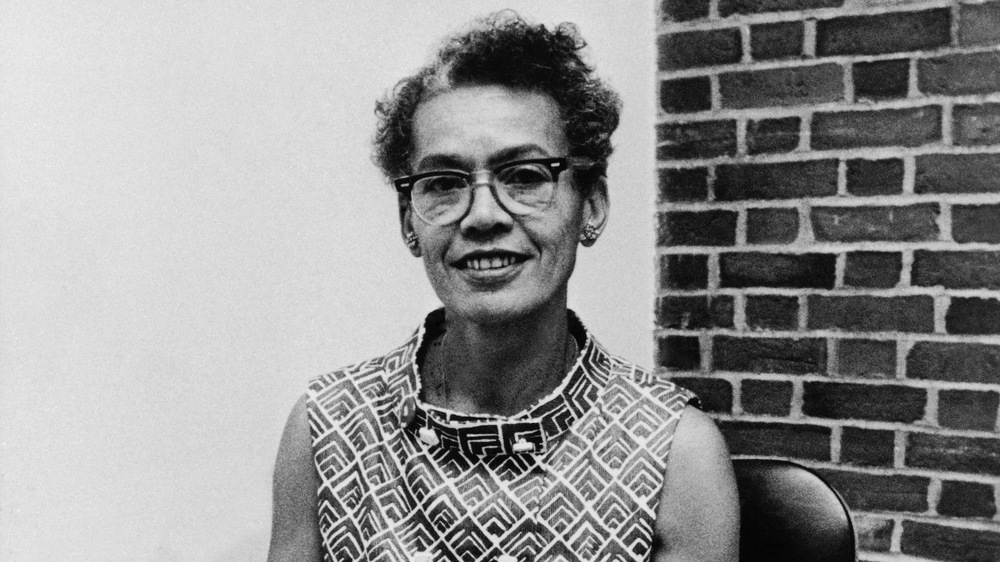
The 'Black, Queer, Feminist' Legal Trailblazer You've Never Heard Of

by NPR Staff

The 'Black, Queer, Feminist' Legal Trailblazer You've Never Heard Of

Kenya Downs
Dr. Pauli Murray was an unheralded pioneer who argued civil rights cases challenging discrimination based on race and gender.

Dr. Pauli Murray was an unheralded pioneer who argued civil rights cases challenging discrimination based on race and gender.

AP

Dr. Pauli Murray is hardly the household name that Supreme Court Justice Ruth Bader Ginsburg is, but a recent profile in Salon argues she should be. As Salon's Brittney Cooper explains, Murray, who graduated from the Howard University School of Law in 1944, was one of the first lawyers to argue that the Equal Protection Clause's approach to racial discrimination should apply equally to gender-based discrimination.

Ginsburg credits Murray's work as the inspiration for her 1971 brief in Reed v. Reed, which ruled that women could not be excluded as administrators of personal estates based on their gender. The Supreme Court case marked the first time that the Equal Protection Clause was applied to sex discrimination, and has served as precedent for many arguments in the decades since then. Ginsburg found Murray's prior arguments so important to her own that she elected to put Murray down as an honorary co-author on the milestone brief.

In Cooper's piece and other profiles, there's no end to examples of Murray's trailblazing, both in the legal world and far beyond:

  • She was arrested in 1940 for refusing to move to the back of a bus, protesting a Virginia law requiring segregation on public transportation — 15 years before Rosa Parks' similar protest sparked a bus boycott in Montgomery, Ala.
  • In 1944, Murray graduated at the top of her class from the Howard University School of Law, where she encountered gender discrimination from faculty and fellow students. It was there that she coined the term "Jane Crow" to refer to sex discrimination — the sister of Jim Crow.
  • Mademoiselle magazine named her "Woman of the Year" in 1947.
  • The NAACP, then led by Thurgood Marshall, used arguments from a law school seminar paper by Murray as part of the organization's legal strategy in Brown v. Board of Education. He later called her book States' Laws on Race and Color "the Bible for civil rights lawyers."
  • She was appointed to President John F. Kennedy's Commission on the Status of Women.
  • She co-founded the National Organization for Women in 1966.
  • She was the first African-American woman to be ordained a priest in the Protestant Episcopal Church in 1977.

A black feminist lesbian who "favored a masculine-of-center gender performance during her 20s and 30s," she dedicated her work to challenging preconceived notions of race, gender, sexuality and religion. But, as Cooper notes, Murray isn't well-known or celebrated outside academic circles:

"The civil rights struggle demanded respectable performances of black manhood and womanhood, particularly from its heroes and heroines, and respectability meant being educated, heterosexual, married and Christian. Murray's open lesbian relationships and her gender nonconforming identity disrupted the dictates of respectability, making it easier to erase her five decades of important intellectual and political contributions from our broader narrative of civil rights."

Learn more about Dr. Pauli Murray by checking out Cooper's article here.

Editor's note at 1:45pm, February 19: After publishing this piece, we realized we neglected to credit Salon in the headline of the piece. We've added quotes to fix this.

Copyright 2015 NPR. To see more, visit http://www.npr.org/.
13 Feb 21:42

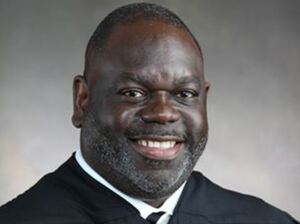
A Black Mississippi Judge's Breathtaking Speech To Three White Murderers

by NPR Staff

A Black Mississippi Judge's Breathtaking Speech To Three White Murderers

NPR Staff
Carlton W. Reeves, U.S. District Court judge for the Southern District of Mississippi

Carlton W. Reeves, U.S. District Court judge for the Southern District of Mississippi

Courtesy of cleoinc.org

Here's an astonishing speech by U.S. District Judge Carlton Reeves, one of just two African-Americans to have ever served as federal judges in Mississippi. He read it to three young white men before sentencing them for the death of a 48-year-old black man named James Craig Anderson in a parking lot in Jackson, Mississippi one night in 2011. They were part of a group that beat Anderson and then killed him by running over his body with a truck, yelling "white power" as they drove off.

The speech is long; Reeves asked the young men to sit down while he read it out loud in the courtroom. And it's breathtaking, in both the moral force of its arguments and the palpable sadness with which they are delivered. We have decided to publish the speech in its entirety below:

One of my former history professors, Dennis Mitchell, recently released a history book entitled, A New History of Mississippi. "Mississippi," he says, "is a place and a state of mind. The name evokes strong reactions from those who live here and from those who do not, but who think they know something about its people and their past." Because of its past, as described by Anthony Walton in his book, Mississippi: An American Journey, Mississippi "can be considered one of the most prominent scars on the map" of these United States. Walton goes on to explain that "there is something different about Mississippi; something almost unspeakably primal and vicious; something savage unleashed there that has yet to come to rest." To prove his point, he notes that, "[o]f the 40 martyrs whose names are inscribed in the national Civil Rights Memorial in Montgomery, AL, 19 were killed in Mississippi." "How was it," Walton asks, "that half who died did so in one state?" — My Mississippi, Your Mississippi and Our Mississippi.

Mississippi has expressed its savagery in a number of ways throughout its history — slavery being the cruelest example, but a close second being Mississippi's infatuation with lynchings. Lynchings were prevalent, prominent and participatory. A lynching was a public ritual — even carnival-like — within many states in our great nation. While other States engaged in these atrocities, those in the deep south took a leadership role, especially that scar on the map of America — those 82 counties between the Tennessee line and the Gulf of Mexico and bordered by Louisiana, Arkansas and Alabama.

Vivid accounts of brutal and terrifying lynchings in Mississippi are chronicled in various sources: Ralph Ginzburg's 100 Years of Lynching and Without Sanctuary: Lynching Photography in America, just to name two. But I note that today, the Equal Justice Initiative released Lynching in America: Confronting the Terror of of Racial Terror; apparently, it too is a must-read.

In Without Sanctuary, historian Leon Litwack writes that between 1882 and 1968 an estimated 4,742 Blacks met their deaths at the hands of lynch mobs. The impact this campaign of terror had on black families is impossible to explain so many years later. That number contrasts with the 1,401 prisoners who have been executed legally in the United States since 1976. In modern terms, that number represents more than those killed in Operation Iraqi Freedom and more than twice the number of American casualties in Operation Enduring Freedom — the Afghanistan conflict. Turning to home, this number also represents 1,700 more than who were killed on 9/11. Those who died at the hands of mobs, Litwack notes, some were the victims of "legal" lynchings — having been accused of a crime, subjected to a "speedy" trial and even speedier execution. Some were victims of private white violence and some were merely the victims of "Nigger hunts" — murdered by a variety of means in isolated rural sections and dumped into rivers and creeks. "Back in those days," according to black Mississippians describing the violence of the 1930's, "to kill a Negro wasn't nothing. It was like killing a chicken or killing a snake. The whites would say, 'Niggers jest supposed to die, ain't no damn good anyway — so jest go an' kill 'em.'...They had to have a license to kill anything but a Nigger. We was always in season." Said one white Mississippian, "A white man ain't a-going to be able to live in this country if we let niggers start getting biggity." And, even when lynchings had decreased in and around Oxford, one white resident told a visitor of the reaffirming quality of lynchings: "It's about time to have another [one]," he explained, "[w]hen the niggers get so that they are afraid of being lynched, it is time to put the fear in them."

How could hate, fear or whatever it was that transformed genteel, God-fearing, God-loving Mississippians into mindless murderers and sadistic torturers? I ask that same question about the events which bring us together on this day. Those crimes of the past as well as these have so damaged the psyche and reputation of this great State.

Mississippi soil has been stained with the blood of folk whose names have become synonymous with the Civil Rights Movement like Emmett Till, Willie McGee, James Cheney, Andrew Goodman, Michael Schwerner, Vernon Dahmer, George W. Lee, Medgar Evers and Mack Charles Parker. But the blood of the lesser-known people like Luther Holbert and his wife, Elmo Curl, Lloyd Clay, John Hartfield, Nelse Patton, Lamar Smith, Clinton Melton, Ben Chester White, Wharlest Jackson and countless others, saturates these 48,434 square miles of Mississippi soil. On June 26, 2011, four days short of his 49th birthday, the blood of James Anderson was added to Mississippi's soil.

The common denominator of the deaths of these individuals was not their race. It was not that they all were engaged in freedom fighting. It was not that they had been engaged in criminal activity, trumped up or otherwise. No, the common denominator was that the last thing that each of these individuals saw was the inhumanity of racism. The last thing that each felt was the audacity and agony of hate; senseless hate: crippling, maiming them and finally taking away their lives.

Mississippi has a tortured past, and it has struggled mightily to reinvent itself and become a New Mississippi. New generations have attempted to pull Mississippi from the abyss of moral depravity in which it once so proudly floundered in. Despite much progress and the efforts of the new generations, these three defendants are before me today: Deryl Paul Dedmon, Dylan Wade Butler and John Aaron Rice. They and their coconspirators ripped off the scab of the healing scars of Mississippi...causing her (our Mississippi) to bleed again.

Hate comes in all shapes, sizes, colors, and from this case, we know it comes in different sexes and ages. A toxic mix of alcohol, foolishness and unadulterated hatred caused these young people to resurrect the nightmarish specter of lynchings and lynch mobs from the Mississippi we long to forget. Like the marauders of ages past, these young folk conspired, planned, and coordinated a plan of attack on certain neighborhoods in the City of Jackson for the sole purpose of harassing, terrorizing, physically assaulting and causing bodily injury to black folk. They punched and kicked them about their bodies — their heads, their faces. They prowled. They came ready to hurt. They used dangerous weapons; they targeted the weak; they recruited and encouraged others to join in the coordinated chaos; and they boasted about their shameful activity. This was a 2011 version of the Nigger hunts.

Though the media and the public attention of these crimes have been focused almost exclusively on the early morning hours of June 26, 2011, the defendants' terror campaign is not limited to this one incident. There were many scenes and many actors in this sordid tale which played out over days, weeks, and months. There are unknown victims like the John Doe at the golf course who begged for his life and the John Doe at the service station. Like a lynching, for these young folk going out to "Jafrica" was like a carnival outing. It was funny to them—an excursion which culminated in the death of innocent, African-American James Craig Anderson. On June 26, 2011, the fun ended.

But even after Anderson's murder, the conspiracy continued...And, only because of a video, which told a different story from that which had been concocted by these defendants, and the investigation of law enforcement — state and federal law enforcement working together — was the truth uncovered.

What is so disturbing...so shocking...so numbing...is that these Nigger hunts were perpetrated by our children...students who live among us...educated in our public schools...in our private academies...students who played football lined up on the same side of scrimmage line with black teammates...average students and honor students. Kids who worked during school and in the summers; kids who now had full-time jobs and some of whom were even unemployed. Some were pursuing higher education and the Court believes they each had dreams to pursue. These children were from two-parent homes and some of whom were the children of divorced parents, and yes some even raised by a single parent. No doubt, they all had loving parents and loving families.

In letters received on his behalf, Dylan Butler, whose outing on the night of June 26 was not his first, has been described as "a fine young man," "a caring person," "a well mannered man" who is truly remorseful and wants to move on with his life...a very respectful...a good man...a good person...a loveable, kind-hearted teddy bear who stands in front of bullies...and who is now ashamed of what he did. Butler's family is a mixed-race family: for the last 15 years, it has consisted of an African-American step-father and step-sister plus his mother and two sisters. The family, according to the step-father, understandably is "saddened and heart broken."

These were everyday students like John Aaron Rice, who got out of his truck, struck James Anderson in the face and kept him occupied until others arrived.... Rice was involved in multiple excursions to so-called "Jafrica", but he, for some time, according to him and his mother, and an African-American friend shared his home address.

And, sadly, Deryl Dedmon, who straddled James Anderson and struck him repeatedly in the face and head with his closed fists. He too was a "normal" young man indistinguishable in so many ways from his peers. Not completely satisfied with the punishment to which he subjected James Anderson, he "deliberately used his vehicle to run over James Anderson—killing him." Dedmon now acknowledges he was filled with anger.

I asked the question earlier, but what could transform these young adults into the violent creatures their victims saw? It was nothing the victims did...they were not championing any cause...political...social...economic...nothing they did...not a wolf whistle...not a supposed crime...nothing they did. There is absolutely no doubt that in the view of the Court the victims were targeted because of their race.

The simple fact is that what turned these children into criminal defendants was their joint decision to act on racial hatred. In the eyes of these defendants (and their coconspirators) the victims were doomed at birth...their genetic make-up made them targets.

In the name of White Power, these young folk went to "Jafrica" to "fuck with some niggers!"—Echos of Mississippi's past. White Power! Nigger! According to the Fifth Circuit Court of Appeals, that word Nigger is the "universally recognized opprobrium, stigmatizing African-Americans because of their race." It's the nuclear bomb of racial epithets—as Farai Chideya has described the term. With their words, with their actions—"I just ran that Nigger over"—there is no doubt that these crimes were motivated by the race of the victims. And from his own pen, Dedmon, sadly and regretfully wrote that he did it out of "hatred and bigotry."

The Court must respond to one letter it received from one identified as a youth leader in Dylan Butler's church, a mentor, he says and who describes Dylan as "a good person." The point that "[t]here are plenty of criminals that deserve to be incarcerated," is well taken. Your point that Dylan is not one of them — not a criminal...is belied by the facts and the law. Dylan was an active participant in this activity, and he deserves to be incarcerated under the law. What these defendants did was ugly...it was painful...it is sad...and it is indeed criminal.

In the Mississippi we have tried to bury, when there was a jury verdict for those who perpetrated crimes and committed lynchings in the name of WHITE POWER...that verdict typically said that the victim died at the hands of persons unknown. The legal and criminal justice system operated with ruthless efficiency in upholding what these defendants would call WHITE POWER.

Today, though, the criminal justice system (state and federal) has proceeded methodically, patiently and deliberately seeking justice. Today we learned the identities of the persons unknown...they stand here publicly today. The sadness of this day also has an element of irony to it: each defendant was escorted into court by agents of an African-American United States Marshal; having been prosecuted by a team of lawyers which includes an African-American AUSA from an office headed by an African-American U.S. Attorney — all under the direction of an African-American Attorney General, for sentencing before a judge who is African-American, whose final act will be to turn over the care and custody of these individuals to the BOP — an agency headed by an African-American.

Today we take another step away from Mississippi's tortured past...we move farther away from the abyss. Indeed, Mississippi is a place and a state of mind. And those who think they know about her people and her past will also understand that her story has not been completely written. Mississippi has a present and a future. That present and future has promise. As demonstrated by the work of the officers within these state and federal agencies — black and white; male and female, in this Mississippi, they work together to advance the rule of law. Having learned from Mississippi's inglorious past, these officials know that in advancing the rule of law, the criminal justice system must operate without regard to race, creed or color. This is the strongest way Mississippi can reject those notions — those ideas which brought us here today.

At their guilty plea hearings, Deryl Paul Dedmon, Dylan Wade Butler and John Aaron Rice told the world exactly what their roles were...it is ugly...it is painful...it is sad...it is criminal.

The Court now sentences the defendants as follows: [The specific sentences are not part of the judge's prepared remarks.]

The Court has considered the advisory guidelines computations and the sentencing factors under 18 U.S.C. § 3553(a). The Court has considered the defendants' history and characteristics. The Court has also considered unusual circumstances — the extraordinary circumstances — and the peculiar seriousness and gravity of those offenses. I have paid special attention to the plea agreements and the recommendations of the United States. I have read the letters received on behalf of the defendants. I believe these sentences provide just punishment to each of these defendants and equally important, I believe they serve as adequate deterrence to others and I hope that these sentences will discourage others from heading down a similar life-altering path. I have considered the Sentencing Guidelines and the policy statements and the law. These sentences are the result of much thought and deliberation.

These sentences will not bring back James Craig Anderson nor will they restore the lives they enjoyed prior to 2011. The Court knows that James Anderson's mother, who is now 89 years old, lived through the horrors of the Old Mississippi, and the Court hopes that she and her family can find peace in knowing that with these sentences, in the New Mississippi, Justice is truly blind. Justice, however, will not be complete unless these defendants use the remainder of their lives to learn from this experience and fully commit to making a positive difference in the New Mississippi. And, finally, the Court wishes that the defendants also can find peace.

Reeves is a U.S. District Court judge for the Southern District of Mississippi. He made waves last November when he ruled Mississippi's same-sex marriage ban unconstitutional. That case is currently under appeal in the Fifth Circuit Court.

Copyright 2015 NPR. To see more, visit http://www.npr.org/.
12 Feb 21:46

Hot Chip: "Huarache Lights"

by Jamieson Cox

Hot Chip's longevity is proof positive that you can build a band around the concept of "emotional intelligence." Blow the phrase up into its components, and the descriptors still apply: whether singing with a smirk or writing intense, personal reflections on every possible kind of love, this is not a band that's ever been afraid of sentiment. Their appetite for influence can only be called omnivorous, and their catalogue of reference points and clever quips is encyclopedic at this point. But it's truer to Hot Chip's mission if you keep the phrase intact. Loneliness, platonic adoration, questions of faith and reverence, the complicated dynamics of the creative process: they're all treated with maturity and evaluated with a real sincerity and gentleness, from uptempo quasi-club cuts to bleary, tea-steam ballads.

"Huarache Lights" is the first single from their sixth album, Why Make Sense?, and it strikes the same balance between smart and semi-sappy that Hot Chip have been honing for over a decade. At a glance, it's a standard-issue mid-tempo banger with seared synths and a classic First Choice reference via a DJ Rashad sample; poke beneath the surface, and you'll uncover a meditation on the alternating comfort and anxiety that stem from getting older. For a song whose title references a line of fashion-forward sneakers, it's surprisingly resonant and dense; for Hot Chip, it's par for the course.

12 Feb 07:08

Speedy Ortiz: "Raising the Skate"

by Paul Thompson

As the chorus of "Raising the Skate"—our first taste of Speedy Ortiz' sophomore set Foil Deer—crashes in around her, Sadie Dupuis wants to make one thing perfectly clear: "I'm not bossy," she stresses, "I'm the boss." Trifling exes? Toxic comment-section trolls? Every balding sound-guy who's ever directed Dupuis—the brains behind one of the sharper indie rock bands in recent memory—towards the merch table? If you've ever even dreamed of diminishing Dupuis or her formidable talents, "Raising the Skate" quickly puts you and your bullshit to rest.

So Dupuis, as she does, spends "Skate" showing and proving. "Skate" finds Speedy at their Speediest: sidewinding guitars, generously applied distortion, and a vocal turn from Dupuis—conversational one minute, convulsive the next—that pulls approximately zero punches. After a quick walk around the block to gather her thoughts, Dupuis spends the rest of "Skate" chucking truth-bombs at anything or anyone standing in her way. "Just because I let you kill time dangling me from the quarry," she remembers of some waste-of-time or another she's long since left in the rearview, "doesn't mean that I won't land on my feet." "Raising the Skate" joins a long line of songs—from "Sacred Trickster" to "Bossy" and beyond—by rad, talented women fed up with being treated as anything but. You don't have to love Sadie; you don't even have to like her. But you will respect her.

11 Feb 22:08

Saudi Arabian historian claims ban on women drivers protects them from rape

by Katie Halper

In an unintentionally viral video, a Saudi Arabian historian justified his nation’s ban against women drivers by arguing that it protects them from roadside rape.

Saudi Arabia’s prohibition on women driving instituted in 1990, has been defied several times in recent years by women who have filmed themselves driving in protest. The government has responded with a crackdown, arresting women who break the law and even sending two women to a the Specialized Criminal Court in Riyadh which handles terrorism cases.

But don’t worry. There’s a good reason for this ban.

In a recent TV interview, historian Saleh Al-Saadoon claimed that the reason women are allowed to drive in Europe, America and parts of the Arab world is because women there don’t care about getting raped if their car breaks down: “They don’t care if they are raped on the roadside, but we do,” Al-Saadoon said on Saudi Rotana Khalijiyya TV.

The understandably incredulous host, who isn’t named, responds by saying, “Hold on. Who told you they don’t care about getting raped on the roadside?” To which Al-Saadoon replies, “In our case, however, the problem is of a social and religious nature.” When the host pointed out that the two other guests were shocked by the historian’s comments, he said, “They should listen to me and get used to what society thinks, if they are really so out of touch with it.”

Never fear — the women of Saudi Arabia may not be allowed to drive, but they are waited on by a gaggle of male relatives who have nothing to do but serve them: “Saudi women are driven around by their husbands, sons and brothers,”Al-Saadoon explained. “Everybody is at their service. They are like queens. A queen without a chauffeur has the honor of being driven around by her husband, brother, son and nephews. They are at the ready when she gestures with her hands.”

The host then wondered about the risk of being raped by these drivers, asking, “You are afraid that a woman might be raped by the roadside by soldiers, but you are not afraid that she might be raped by her chauffeur?”

“Of course, I am,” replied the concerned historian. And then he dropped a radical policy recommendation that could forever change the transportation system of Saudi Arabia: “There is a solution but the government officials and clerics refuse to hear of it. The solution is to bring female foreign chauffeurs to drive our wives.” No, he didn’t! He then asked the host, “Are you with me on this?”

Her response was a face palm, followed by laughter.

So, to summarize: the solution is to bring in foreign female drivers who may very well get raped on the side of the road if their car breaks down. But it’s all good, because it’s no big deal for them.

10 Feb 16:27

On the Street….Accessories Today, Paris

by The Sartorialist

12415CatB6907Web12215ParisB4674Web

10 Feb 02:15

On the Street….Rue Saint-Honoré, Paris

by The Sartorialist

12415kneesB6493web

10 Feb 00:07

Unknown Mortal Orchestra: "Multi-Love"

by Ian Cohen

The progression of Unknown Mortal Orchestra could work as science fiction—alien entity crashes to earth, progressively exhibits human emotions to fascinated onlookers. By the time the Portland band released their debut in 2011, Ruban Nielson had dropped the anonymity ploy; the lo-fi production was next to go on II. Judging from "Multi-Love", UMO is threatening to do away with the six-string wizardry that often distinguished them but also occasionally bogged down their otherwise taut, psych-funk songwriting. And so there's less than ever standing between the listener and what lay at the core of previous standouts "How Can U Luv Me" and "Swim and Sleep (Like a Shark)"—a very, very bummed guy and his record collection.

On "Multi-Love", Nielson sings of the titular entity crashing his heart and trashing it like a hotel room—a common rock'n'roll image that hasn't quite been used this way, and those are the most powerful ones. Whatever "multi-love" might be, they had all the fun knowing Nielson would be responsible for paying the bill. This metaphor fits in a musical sense as well: as a melodicist and an arranger, Nielson is constantly trying to fit odd, cracked parts back together, and this is his most complex display of craftsmanship yet, keeping a falsetto and newfound synth fetish in line with brisk breakbeats, while doing a damage assessment of his broken heart—revealing that UMO have always been a funk band in both senses of the word.

09 Feb 17:52

Chart of the Day: Male profs are “geniuses,” female ones are “bossy”

by Maya Dusenbery

A Northeastern University professor has created an interactive chart that reveals the gendered biases in students’ evaluations of their profs on RateMyProfessors.com. You can input any word — like, say, “genius” or “bossy” — and see how often it’s used by gender and academic department. 

To continue with those examples, take a wild guess about how those two words broke down. Here are the results for “genius”:

genius-e1423329745570

And for “bossy”:

bossy chartAs the The Upshot sums up: “Men are more likely to be described as a star, knowledgeable, awesome or the best professor. Women are more likely to be described as bossy, disorganized, helpful, annoying or as playing favorites. Nice or rude are also more often used to describe women than men.” I’m sure if you spend a little time playing around with it, you’ll find even more depressing results.

These biases appear in job performances evaluations too. Meanwhile, a recent study of online course evaluations showed that students who thought they were being taught by women gave them worse marks than students who thought they were being taught by men, regardless of the actual gender of the instructor.


07 Feb 21:56

Feministing Jamz: Black Girl Genius Music

by Sesali B.

In November I wrote a profile about the magic that was Black Girl Genius Week, a week of events, creation, and celebration of Black girlhood. This week-long event was presented by SOLHOT (Saving Our Lives Hear Our Truths) as an anti-conference and represented an opportunity to engage in SOLHOT sessions at middle and high schools in Champaign-Urbana. But more visible was the participation in next-level SOLHOT practices, like collaborating with musical group We Levitate. Our studio session was a sacred space where we left some of ourselves and took something more important with us. When I first wrote about the event I described our musical process like this: “Using sound and lyrics we addressed patriarchy, anti-blackness, sexism, hoe shaming, violence, death, oppression, capitalism, racism, and a range of other issues that Black girls resist. We also utilized this time to embrace freedom, sisterhood, love, light, movement, resilience, and survival.”

You can listen to some of the songs here:

This music represents the proverbial clapping back and epitomizes the creative potential of Black girlhood. I am so excited to share these three tracks and open you up to envisioning new ways of practicing feminism and activism. We transformed spaces and perverted dominant narratives in our creation of music and accompanying visuals.

Here is a quick breakdown of each track:

Black Girl Genius: Something like a love song, the track was produced by Rynea Soul and honestly brought many of us face to face with vulnerability openness before we even wrote a lyric. Speaking to our nieces, our best friends, ourselves, and each other, this track documents the processes, mantras, and

SOLHOTEWF: This track was produced by Danitra Pope and is about practicing SOLHOT, and thus celebrating an unapologetic Black girlhood. You can always watch the video here

Miss Me Remixxx: This drill track is our right to be angry: about street harassment, fat shaming, hoe shaming, homophobia, misgendering, fuck boys (and girls), people who don’t text back, the scam that is higher education, and Black male misogyny. You can watch the video here.

BONUS

On her new project, Eve EP,  local FeMC T.R.U.T.H. included this Black girl genius anthem which was inspired by her participation in #BGGW!

06 Feb 19:08

A New Textbook Could Revolutionize the Way Law Students Learn About Reproductive Rights

by Jill E. Adams
The lack of reproductive rights instruction in law school doesn’t just fail budding advocates eager to learn; it also minimizes the importance  of the subject area in the minds of law students who will go on to wield significant power and authority in various areas of practice—particularly in elected office.

Far too many students graduate from law school with little to no academic exposure to reproductive rights law. Fewer yet get introduced to the reproductive justice framework. And an even smaller subset have the opportunity to take a full, comprehensive course that covers the range of law-related issues that shape our reproductive lives. This month’s publication of the first legal textbook on the subject, however, could aid in addressing that problem and establish reproductive rights as a vital component of a robust law school curriculum.

Typical law students, in my experience, get a fairly superficial brush with Roe v. Wade, and perhaps its progeny Planned Parenthood v. Casey or Gonzales v. Carhart, in a constitutional law or family law class that can dedicate only a sliver of the extensive syllabus to any given subject within its expansive reach. The average student is not as likely to be exposed to other important topics related to sex, reproduction, and families, including state-imposed sterilization of people with presumed developmental disabilities in Buck v. Bell, prosecution of a substance-using pregnant woman for child abuse in Whitner v. South Carolina, or mandatory sex offender registration for sex workers in Doe v. Jindal, just to name a few. Overall, the conventional approach to reproductive rights topics in much of legal education—as in other realms—is to treat them as narrowly, exceptionally, and peripherally as possible. Some instruction approaches reproductive rights as a “women’s issue” or “special interest,” discrete and separate from other areas of law and policy. Even where Roe v. Wade is concerned, instructors often focus on the weakness of the right to privacy enshrined in that case, or go further to accuse the Supreme Court of judicial activism and to suggest that it’s only a matter of time before the precedent is overturned.

This lacking, limited, and misleading academic model is dangerous. It doesn’t just fail budding reproductive rights advocates eager to learn; it also minimizes the importance and complexity of the subject area in the minds of law students who will go on to wield significant power and authority in various areas of practice—particularly in elected office. Throughout history, 57 percent of U.S. presidents have been lawyers. In the 114th Congress, 53 percent of senators and 37 percent of representatives have JDs. The national average of state legislators holding law degrees in 2011 was 17.2 percent. One may wonder whether legislative efforts to restrict reproductive health-care access at the state and federal level would have been quite as successful, had more of the lawyers-turned-politicians been exposed to more reproductive rights cases while in school.

We’ll never know about the past, but there are reasons to hope the situation will improve in the future. First, reproductive rights and justice courses are on a slow and steady rise. Law Students for Reproductive Justice (LSRJ), which trains and mobilizes new lawyers and law students on 100 campuses throughout the country, has been tracking the growth of these courses since the organization’s establishment in 2003. LSRJ has recorded 76 reproductive rights courses, which vary considerably in scope but usually cover a range of issues related to sex, pregnancy, and parenting, taught a total of 199 times at 46 law schools in the United States in the last 12 years. On this account, 23 percent of all ABA-approved law schools have offered courses of this kind between 2003 and 2015.

Still, LSRJ reports, based on feedback from its 1,000 active members, that student demand for these courses far exceeds supply. While some exceptionally ambitious faculty and practitioners have compiled their own teaching materials from scratch, other would-be instructors have been stymied by such a time-consuming and labor-intensive task. Most law school classes are taught using casebooks or other bound materials that don’t require as much preparation on the part of the instructor; up until this point, there has existed no such text where reproductive rights are concerned. Furthermore, faculty and practitioners who have expertise in certain areas of the law but not others—like constitutional theorists who, like many of us, are boggled by the Affordable Care Act implementations, Hobby Lobby v. Burwell, and other related claims—may have felt ill-equipped to teach a course that covers such a wide range of legal topics.

This month, however, Foundation Press has published the first legal textbook available on the subject, which can aid instructors and assist students campaigning for courses on their campuses. Berkeley Law professors and faculty directors at the Center on Reproductive Rights and Justice Melissa Murray and Kristin Luker co-authored Cases on Reproductive Rights and Justice to fill the gap in existing educational materials, define the parameters of the field, and upend the conventional treatment of the topics by consciously exploring both rights- and justice-based frameworks.

The casebook’s authors and editors purposefully structured the book in such a way as to disrupt the existing instructional pattern in an effort to expand and complicate the framework to be more aligned with the ways people encounter these rights and restrictions throughout their reproductive lives. The casebook covers the gamut of issues related to state regulation of sex, bodies, families, and reproduction, highlighting the various areas of law and policy involved and examining their impact on various, particularly marginalized, communities. By showcasing the breadth and intersectional nature of reproductive rights issues, and by introducing the reproductive justice framework, the casebook provides a complex—and therefore, in terms of legal academia, revolutionary—picture of this rich subject.

Furthermore, the legal textbook legitimizes reproductive rights and justice as an area of scholarly inquiry, subject of study, and field of professional practice. Of course, far more students will take these courses than will forge careers in this practice area. Nevertheless, it’s beneficial for lawyers pursuing a range of professional paths to understand reproductive issues so they can recognize them and know how to respond when related situations arise for their clients in their paid and pro-bono work. And, should these law students go on to serve in public office, it is crucial that they understand the underlying motivations and overlaying oppressions that determine how even seemingly innocuous laws on the books can have devastating, demeaning, and cruel effects on people’s lives.

Image: Shutterstock

The post A New Textbook Could Revolutionize the Way Law Students Learn About Reproductive Rights appeared first on RH Reality Check.

06 Feb 16:19

On the Street….La Fortezza, Florence

by The Sartorialist

11515PittiB1959web

05 Feb 21:55

On the Street….Beppe Modenese, Milan

by The Sartorialist

11715BMC9908Web