Shared posts

31 May 23:48

Ask Your Doctor if This New Anti-Islamophobia Medication is Right for You

by Reina Gattuso

Suffering from blatant bigotry? Filled with irrational hatred? Seduced by Trump? The Council on American Islamic Relations (CAIR) has the product for you: Islamophobin, the new anti-Islamophobia chewing gum.

CAIR recommends the product for people who:

  • Fear and hate Muslims

  • Are suspicious of people who don’t look like you, sound like you, dress like you, or believe as you

  • Get abnormally nervous when you see a Muslim or someone who you think is Muslim

  • Pray that a Muslim is not on your flight

Islamphobin (an actual chewing gum) is part of CAIR’s most recent anti-Islmophobia awareness campaign, and part of the group’s broader efforts to track and counter anti-Muslim bigotry in the United States. Considering the national (and global) rise of hatred against Muslims and the blatant fear-mongering at play this election season, it would be awesome if there were actually a medicine that could guarantee decent human behavior. But awareness campaigns like this are a good start. And of course, important for any kind of feminist work, in which anti-Islamophobia must occur alongside opposition to all other forms of racial and cultural discrimination

Check out the campaign’s video, below:

27 May 21:34

Hokule'a, The Hawaiian Canoe Traveling The World By A Map Of The Stars

by Sara Kehaulani Goo
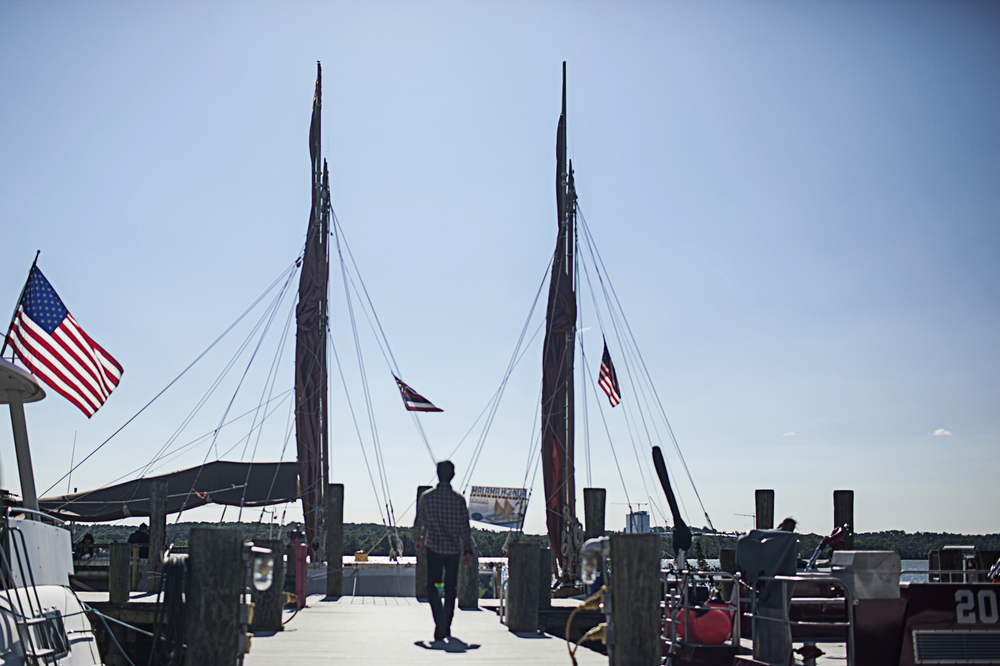
The Hokule'a, a voyaging canoe built to revive the centuries-old tradition of Polynesian exploration, makes its way up the Potomac River in Washington, D.C. Sailed by a crew of 12 who use only celestial navigation and observation of nature, the canoe is two-thirds of the way through a four-year trip around the world.

The Hokule'a, a voyaging canoe built to revive the centuries-old tradition of Polynesian exploration, makes its way up the Potomac River in Washington, D.C. Sailed by a crew of 12 who use only celestial navigation and observation of nature, the canoe is two-thirds of the way through a four-year trip around the world.

Bryson Hoe/Courtesy of 'Oiwi TV and Polynesian Voyaging Society

She sails by the memory of the stars.

Her bones are lashed together with 6 miles of rope. Her twin wooden masts are lowered and outstretched only by the power of muscled arms. And once fully extended, the red, V-shaped sails announce who she is.

She is the Hokule'a, Hawaii's famous voyaging canoe, built in the double-hulled style used by Polynesian navigators thousands of years ago to cross the Pacific.

Now, she's on a journey to make history, traversing the globe by wayfinding — an ancient Polynesian skill that requires memorizing hundreds of stars and where they rise and set on the ocean horizon. She has already crossed 26,000 miles of ocean and still has a year left to go.

"As a navigator, your job is to look at the shape of the ocean," said Nainoa Thompson, the architect of the worldwide tour and president of the Polynesian Voyaging Society. "You have to be on your feet, and to be able to feel one wave when it comes through from one foot to another. You only know where you are by memorizing where you come from."

Additional Information:

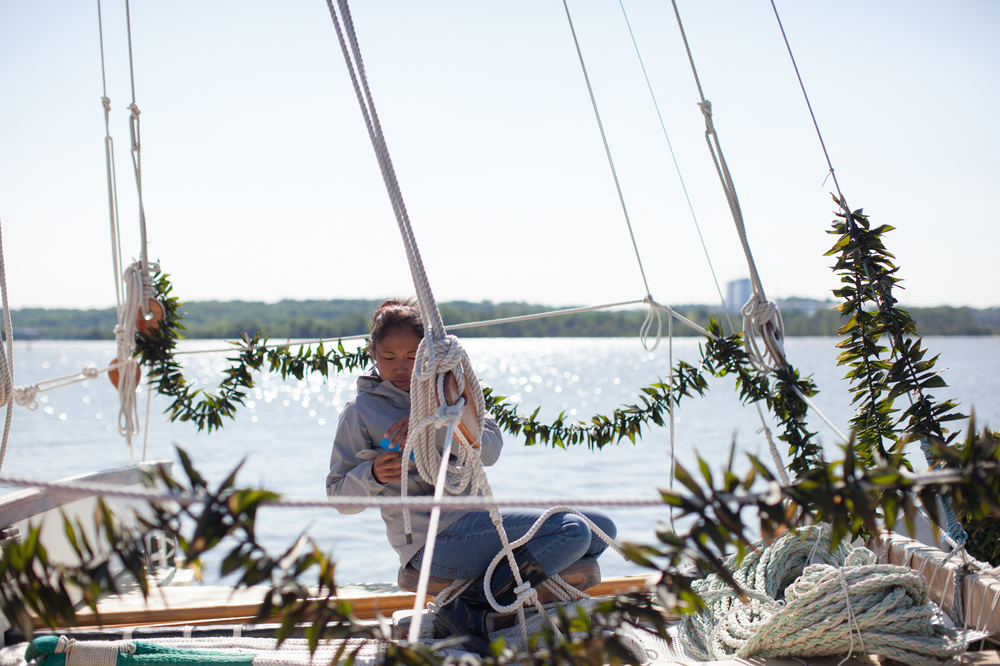
Kala Tanaka marks

Kala Tanaka marks "stays" at the front of the canoe so they can go back in the same place after the mast is taken down to fit under the George Washington Bridge. The garlands of ti leaves, a Hawaiian tradition, were placed on the Hokule'a by well-wishers.

Claire Harbage/NPR

Onboard this East Coast leg is a 12-member crew, a mix of veteran native Hawaiian navigators and young, lean apprentices who have taken time off their jobs as pro surfers, educators and executives for the chance of a lifetime: sailing for weeks on a 61-foot catamaran-style canoe in the open ocean. And the promise of returning with a stronger sense of themselves.

Many are part Native Hawaiian and were inspired to connect to their roots. With Hokule'a (ho-koo-lay-ah), they want to spread a message about what the world could learn from island people about how to live sustainably and care for the ocean.

"She has the ability to transform," said Na'alehu Anthony, 36, who is navigating this leg of the trip but also serves as chief executive of 'Oiwi TV, a Native Hawaiian television company.

"This floating island is a representation of the values people should have for the islands we all live in — whether that's Hawaii, the U.S. mainland or Tangier Island. It's been really interesting to see how people see themselves in that message. They get it."

Additional Information:

Behind the canvas on both sides of the boat are the small, 6-foot

Behind the canvas on both sides of the boat are the small, 6-foot "holes," or cubbies, which are the sleeping quarters for crew members. They have a sleeping bag, clothes and a few personal effects for the journey. Underneath the sleeping mat is storage space for food, water and other supplies.

Claire Harbage/NPR

Hokule'a's trip around the world is ambitious. But it's nothing compared with her maiden voyage. That was a moonshot.

Forty years ago, a group of Native Hawaiians and anthropologists built the Hokule'a to revive the ancient art of Polynesian wayfinding, which had been forgotten.

No one knew how to build a canoe in the style of their ancestors, whose oral stories spoke of setting forth across vast oceans like astronauts of their day, exploring an ocean that is bigger than Russia.

At the time, no one in Hawaii knew how to build a voyaging canoe — none had existed for at least 600 years. No one in Hawaii knew how to navigate by the stars. But they found a man named Mau Piailug in Micronesia, a wayfinder on a tiny island who agreed to teach them how to sail using cues from nature — not only by watching the stars, but by noticing the swells and bird species, and the smallest of details, like shifts in the wind pressing against their bodies.

Left: Apprentice navigator Kala Tanaka (right) talks to students from the Alexandria Seaport Foundation about how the boat is navigated, during one of many educational tours offered while the boat is in port. Right: Na'alehu Anthony took leave from his job as chief executive of a television company to train for and join the voyage.

Left: Apprentice navigator Kala Tanaka (right) talks to students from the Alexandria Seaport Foundation about how the boat is navigated, during one of many educational tours offered while the boat is in port. Right: Na'alehu Anthony took leave from his job as chief executive of a television company to train for and join the voyage.

Claire Harbage/NPR

In 1976, a group of Native Hawaiians and anthropologists, and Mau, bet their lives that they could sail from Hawaii to Tahiti without any modern-day navigational equipment. They wanted to prove a theory that the original people who settled the islands of Hawaii did so not by accident, but with the intention of finding the islands and settling there.

And when the team safely reached its destination, after more than a month at sea, its triumph sparked a revival of Hawaiian identity and culture. Soon after, Native Hawaiians demanded that the state begin teaching the Hawaiian language in schools again. A group occupied the uninhabited island of Kaho'olawe, in protest of the U.S. Navy's use of it as a target for bombing practice.

"There was a time when the Hawaiian culture wasn't valued," said Kalepa Baybayan, who was part of that first generation of crew members aboard the Hokule'a. "In the '70s, it all changed."

Additional Information:

Na'alehu Anthony's hand rests over a small black mark on the rail of the boat. Marks like this create a grid on the entire boat to help orient the navigator in the direction which they are heading.

Na'alehu Anthony's hand rests over a small black mark on the rail of the boat. Marks like this create a grid on the entire boat to help orient the navigator in the direction which they are heading.

Claire Harbage/NPR

The Hokule'a gave the Native Hawaiian people an identity; it became a symbol of hope for the survival of their culture.

Now they call Hokule'a the mother ship because she spawned a new generation. Since that 1976 voyage, 25 more deep-sea-voyaging canoes have been birthed across 11 countries. More than 180 crew members have taken a turn aboard the Hokule'a on its global trip. More impressive is the number who trained, applied but for whom there was no room: 4,000.

It's her mana, or spirit, as well as her history, that attracts people, crew members say. On her first voyage, to Tahiti, she was greeted by a crowd of 17,000 who walked into the water with their clothes on to see her; to touch her; and to drape leis around the necks of men who were onboard. And when she arrived along the shores of Alexandria, Va., last week, visitors waited as long as an hour for the chance to step onboard and touch her bow.

Modern updates include this rope rather than the coconut fiber that was used on Hawaiian canoes in the past. The small flag (right) that flutters above the canvas is one tool that navigators use when they can't see the stars. Knowing the direction the wind is blowing and watching the waves helps them to understand their direction when it is cloudy.

Modern updates include this rope rather than the coconut fiber that was used on Hawaiian canoes in the past. The small flag (right) that flutters above the canvas is one tool that navigators use when they can't see the stars. Knowing the direction the wind is blowing and watching the waves helps them to understand their direction when it is cloudy.

Claire Harbage/NPR

The navigator's place is at the back corner of the Hokule'a, standing at all times with feet wide apart on the deck.

"There's the motion that the canoe makes as it climbs up over the wave," said Baybayan. "And you have to internalize that as the rhythm, the pulse of the canoe. And when that rhythm changes, either you've steered off course or the conditions have changed."

When you're doing it for the first time, you're double-guessing yourself, he said. But once you make your first landfall, you understand that the process you went through got you there.

"Once you're in the zone, you've reached a different plateau of metaphysical thinking," he said. "It just builds confidence in yourself. You start to understand nature."

The mast must come down in the next part of the journey to get past the bridges on the Potomac River on the way to the Washington, D.C., stop. The lei at the very top is color coded; traditionally each captain had his own color so the boats could recognize who was on it from afar.

The mast must come down in the next part of the journey to get past the bridges on the Potomac River on the way to the Washington, D.C., stop. The lei at the very top is color coded; traditionally each captain had his own color so the boats could recognize who was on it from afar.

Claire Harbage/NPR

Being on a 61-foot vessel with no engine in the middle of the ocean is, indeed, as tough as it might seem. All crew members train for weeks to prepare their bodies mentally and physically and must take courses on celestial navigation to prepare for the voyage.

Once onboard, crew members are assigned a 6-foot-long plywood plank that runs along the inside of one of the boat's two hulls, which are connected by boards that serve as Hokule'a's deck. Most put a waterproof foam pad on top, like the kind you float on in a swimming pool.

The rookies get a "hole," or 6-foot sleeping spot in the front of the canoe, where it's wettest and coldest. The elder crew members get the back where it's warmer and dry. They all sleep head-to-toe, in a line, inside the twin canoe hulls.

"It's like a one-man tent, but like, elongated, " said Kala Tanaka, 34, who sleeps in the front while her father, one of the most seasoned navigators, sleeps in the back. "You have situations where it's so rough that the water splashes in between the canvas [overhead] and it gets wet. But I like to think of this as exciting!"

Additional Information:

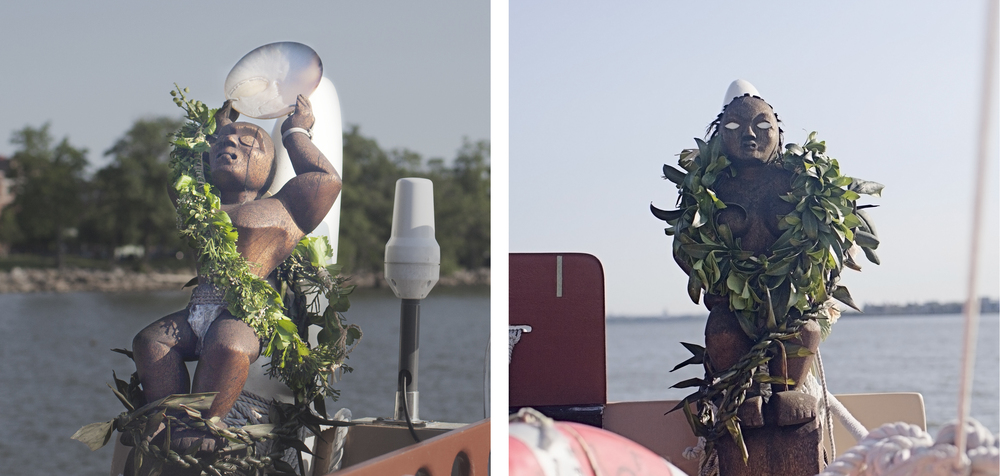
Ki'i, statues that help guide the vessel, are on either side of the boat. Only the female (right) has eyes because she sees the way while the male counterpart stands guard.

Ki'i, statues that help guide the vessel, are on either side of the boat. Only the female (right) has eyes because she sees the way while the male counterpart stands guard.

Claire Harbage/NPR

Aside from a canvas over their head, the crew members are exposed to the wet cold, the relentless sun or rain. They take saltwater showers. The sunscreen onboard is gallon-size, with a pump on top. The navigator and his or her apprentices are expected to remain awake for 18 to 22 hours a day, keeping an eye on the conditions to ensure they stay the course.

But their rewards, of course, are many. They are counted in mahi-mahi, which the cook prepares sashimi-style, and in the sightings of whales, penguins and sunrises that they will never forget.


Additional Information:

This leg of Hokule'a's journey is moving slowly; she's her most graceful out in the open ocean.

On this trip, she has braved new challenges of the mid-Atlantic: She took on unexpected whipping winds while sidestepping the onbeat of Navy and fishing boat traffic up the Chesapeake Bay to Alexandria, Va. Then she had to limbo under a series of concrete bridges up the Potomac River to Washington, D.C.

The Hokule'a has traveled 26,000 miles to deliver a message that, in typical fashion of this city, is often calculated through a political lens. Her message is Malama Honua. In Hawaiian, it means taking care of Island Earth.

"Not everyone believes in climate change, but we do," said Thompson, one of the architects of the worldwide tour. "We're islanders; we see it. We come from small islands in the Pacific who have nothing to do with [causing] climate change but we are the ones who will suffer the most, first."

The Voyage Of Hokule'a, Beginning And Ending In Hawaii

Map of the canoe trip's path

Source: Polynesian Voyaging Society

Credit: Alyson Hurt/NPR

Hokule'a left Hawaii in 2013 and headed west across the South Pacific and across Australia, Indonesia, the Indian Ocean and down around Cape of Good Hope in South Africa. Then, she crossed the Atlantic to Brazil and headed north. At each stop, she has been greeted by first-nation people and like-minded organizations that want to create a sense of urgency about climate change and keeping the oceans clean.

In that cause, the Hokule'a has attracted some high-profile supporters. Before setting sail three years ago, the Dalai Lama blessed her and, on a stop in Samoa in 2014, U.N. Secretary-General Ban Ki-moon came aboard in a show of support.

Additional Information:

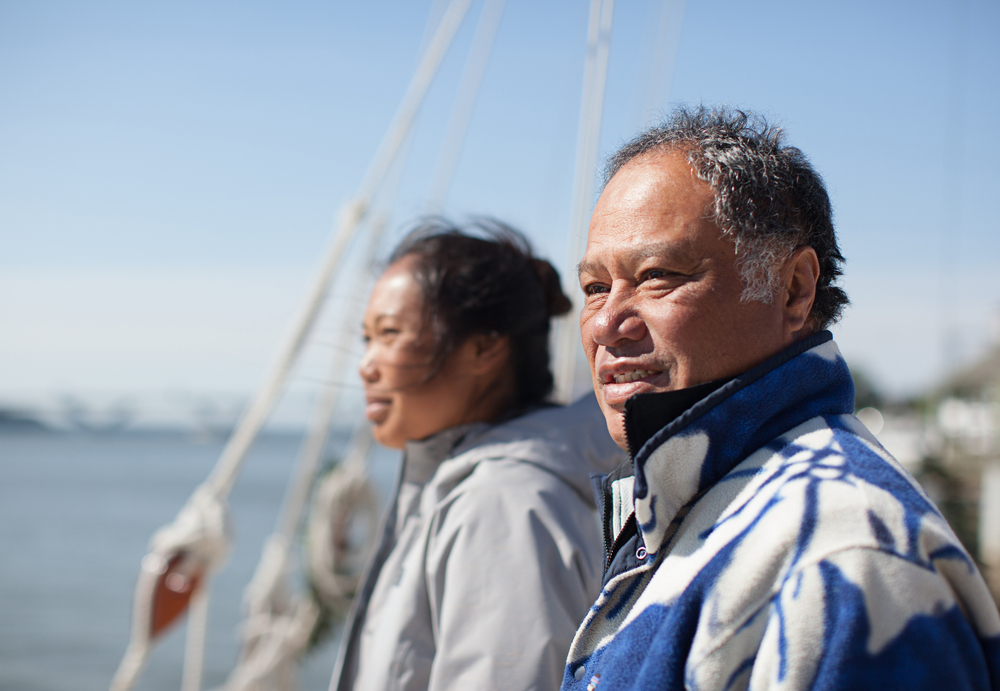
Kalepa Baybayan (right) and his daughter Kala Tanaka. Kalepa is training Kala as an apprentice navigator.

Kalepa Baybayan (right) and his daughter Kala Tanaka. Kalepa is training Kala as an apprentice navigator.

Claire Harbage/NPR
Hokule'a, The Hawaiian Canoe Traveling The World By A Map Of The Stars
  • Download
  • Embed
    Embed "> iframe src="https://www.npr.org/player/embed/479468130/479647103" width="100%" height="290" frameborder="0" scrolling="no" title="NPR embedded audio player">

When Ban came aboard the Hokule'a, he brought her a gift of a message in a bottle: a handwritten note pledging that the top environmental issue was to protect the world's oceans and a commitment to take action. Thompson said Hokule'a has been collecting other pledges from around the world and added 40 more messages to the bottle. He plans to return it to the secretary-general at the United Nations next week for World Oceans Day.

For 40 years, Thompson's life has been tied to the Hokule'a. Now, she is reaching middle age and, at age 63, he has nearly passed it. This trip is a bookend for him, but not likely for her.

"This canoe is a school that's about relearning the genius of our ancestors, and about our reconnection to our ocean," said Thompson. "This voyage is not my vision. It's that of my teachers. I'm just a bridge between between them and" — he points to his young crew — "them."

After New York, the Hokule'a will attempt to make it as far north as Nova Scotia, which, at 50 degrees north of the equator, would mark the northernmost point she has ever sailed. After that point, though, she will turn around. And every minute will be that much closer to returning home.

Hokule'a will go up the St. Lawrence to the Great Lakes, then turn back down the East Coast and across the Panama Canal where she will return to her ocean, the Pacific.

Thompson, Baybayan and the other elder crew members made a deal that this would be their last voyage. Anyone over age 32 will have to come off the boat as Hokule'a re-enters Polynesia at the last stop before home, in Rapa Nui. There, a new generation of wayfinders will come onboard and decide where she goes next.

Additional Information:

Hokule'a stops in Alexandria, Va., on the way up the Potomac River to Washington, D.C.

Hokule'a stops in Alexandria, Va., on the way up the Potomac River to Washington, D.C.

Claire Harbage/NPR

Reporter Adam Cole contributed to this report. @sarakgoo @cadamole

Copyright 2016 NPR. To see more, visit NPR.
27 May 21:33

Hedy Epstein, Holocaust Survivor and Anti-Violence Activist, Dies at 91

by Mahroh Jahangiri

We lost a dear friend this week. Hedy Epstein, who escaped Nazis as a child in Germany and spent the rest of her life fighting similar state violence in Palestine and near her home in St. Louis, died Thursday. She was 91.

Born in 1924 in Germany, her lifelong commitment to anti-violence activism was formed by the brutality she and her family endured under the Nazi regime. Unable to secure travel documents for themselves, Hedy’s parents arranged for their 14-year-old only child to escape Germany in 1939. Her parents died at Auschwitz in the summer of 1942. Most of her other relatives were also killed in the Holocaust.

Leaving Europe in 1948, it wasn’t long before Hedy was confronted again by state violence: this time against Black Americans in the United States. Retelling her first few weeks in St. Louis, Hedy shares:

The first time I really remember being shocked about my own lack of information was when I came to this country in May 1948, and I started working a few days later. The person who told me what I was supposed to do in my job was an African American woman. Shortly before lunchtime she said, ‘We go to lunch at noon. Did you bring your lunch?’ And I said, ‘No.’ She told me all the different restaurants in the neighborhood. This was in New York City. So, I said, ‘Well, can we go together?’ And she said, ‘No.’ And I didn’t really think anything about it. Maybe she’s made some arrangement with somebody else. ‘OK, well, maybe tomorrow?’ ‘No.’ I waited a few days, and I asked again, ‘Well, can we go to lunch together?’ ‘No.’ By that time, I was beginning to wonder, ‘Is there something about me that’s bothering you? Please tell me.’ She said, ‘Well, you know why.’ ‘No, I don’t know why.’ I said, ‘Please tell my why. I honestly don’t know why.’ ‘Well, you’re White, and where you can go to lunch, I cannot. I’m Negro. And where I go, White people don’t go there.’ I said, ‘What? I read the Good Book, and Lincoln freed the slaves, and this is 1948, and you can’t go to eat where I go? Isn’t somebody doing something about this?’ She said, ‘Yeah, well maybe the Urban League and the NAACP.’ I said, ‘Well, how about I get in touch with them?’ I’d only been in this country less than two weeks. Finally, I went to where she went to eat. I asked her, ‘Can I please go with you?’ And I ate chitlins for the first time. I never heard of chitlins before. That was the beginning of me getting involved in civil rights issues.”

Her involvement in the movement for Black lives continued for decades. At 90, she was arrested in St. Louis for “failure to disperse” while protesting Gov. Jay Nixon’s deployment of the National Guard to violently quell protests in Ferguson, Missouri. “I’ve been doing this since I was a teenager. I didn’t think I would have to do it when I was 90,” Hedy told The Nation shortly after her arrest. “We need to stand up today so that people won’t have to do this when they’re 90.”

Her activism also centered on efforts to end the Israeli occupation of Palestine. She traveled to the West Bank and attempted on multiple occasions to sail to Gaza to protest Israel’s blockade of the Strip. She co-founded the St. Louis Palestine Solidarity Committee and the St. Louis chapter of Jewish Voice for Peace and used her authority as a Holocaust survivor to name and condemn American and Israeli oppression, often happening in her name:

If we don’t try to make a difference, if we don’t speak up, if we don’t try to right the wrong that we see, we become complicit. I don’t want to be guilty of not trying my best to make a difference.

St. Louis, all of us you met, and many of those who never got a chance to, are eternally grateful for all the difference you did make, Hedy. Rest peacefully. We’ll keep fighting.

Images via HuffPost

24 May 03:00

After Hunger Strike to #EndTransDetention, Santa Ana City Council Votes to End ICE Contract

by Tina Vasquez

After months of pressure from activists to stop contracting with Immigration and Customs Enforcement (ICE) and to end the detention of transgender immigrants, the Santa Ana City Council in California unanimously voted on May 17 to end its contract with ICE after the contract expires in June 2020.

Santa Ana City Jail has detained undocumented immigrants since 1997. ICE officials in 2011 began transferring queer and trans immigrants from detention centers all over the country and funneling them to Santa Ana City Jail’s segregated unit, the only place in the country with “pods” exclusively for detaining queer people and trans women, as Rewire reported last week.

The goal was to create a “model facility for the nation” using ICE’s Transgender Care Memorandum as a blueprint. Released in 2015, the memo outlined instructions for the care of trans detainees.

The Orange County Register reports that there are 182 undocumented immigrants detained inside of Santa Ana City Jail, 26 of whom are queer and 31 of whom are transgender.

The day before the city council voted to end the contract, three undocumented queer and trans activists—Deyaneira García, Jennicet Gutiérrez, and Jorge Gutierrez—launched a hunger strike demanding that the city of Santa Ana stop profiting from the detainment of queer and trans immigrants. Santa Ana City Jail receives as much as $105 per detainee per day, and is making $7 million each year from the detainment of immigrants, according to advocates.

The contract with ICE was an attempt by the city to pay off the jail’s debt, “estimated at $27 million through 2024,” the Orange County Register reports.

The City of Santa Ana could end its contract with ICE before its 2020 expiration date, but not without first finding another income stream to pay off the jail’s debt. At Tuesday’s city council meeting, a city official said it is “not possible to keep the jail open without the use of federal dollars.”

There was a contentious public comments period at Tuesday’s city council meeting during which 38 people addressed the city’s contract with ICE. Speakers ran the gamut from an immigrant-identified community member who asserted “illegal immigrants” do not have civil rights and a trans woman formerly detained at the Santa Ana City Jail who urged city council members to continue contracting with ICE, to members of the organizations behind the hunger strike, including Orange County Immigrant Youth United (OCIYU), FAMILIA: TQLM (Trans Queer Liberation Movement), and DeColores Queer OC.

One of the hunger strikers, Garcia, addressed the city council. The senior at Santa Ana’s Segerstrom High School said she stood in solidarity with her trans sisters and that if she had to starve herself for another year, she would.

DeColores Queer OC organizer Roberto Herrera, who wore a sweatshirt emblazoned with the word “maricón,” also addressed the city council. DeColores has attended city council meetings to speak out against the ICE contract since February. On Tuesday, Herrera reminded council members it was an election year and that his organization would continue to “show up and disrupt until all queer and trans people are free from detention.”

The hunger strike ended May 19. In an emailed press release from Familia: TQLM, Gutierrez said, “the fight to end the ICE contract with the city of Santa Ana is not over. We will continue to organize and escalate.”

The post After Hunger Strike to #EndTransDetention, Santa Ana City Council Votes to End ICE Contract appeared first on Rewire.

22 May 17:18

Things I Read That I Love #202: My Body Was The Grand Canyon, Vast and Hollowed Out

by Riese
Anja

For two superb articles. The short corridor and Gender-Segregated Public Bathrooms

shutterstock_279658988

Topics include oxycontin addiction, RENT, sporting goods stores, the science of love, Arby's, Jodie Foster, the history of gender-segregated public bathrooms and more!

The post Things I Read That I Love #202: My Body Was The Grand Canyon, Vast and Hollowed Out appeared first on Autostraddle.

19 May 03:01

It's Gotten A Lot Harder To Act Like Whiteness Doesn't Shape Our Politics

by Gene Demby
It's Gotten A Lot Harder To Act Like Whiteness Doesn't Shape Our Politics
  • Download
  • Embed
    Embed "> iframe src="https://www.npr.org/player/embed/477803909/478432461" width="100%" height="290" frameborder="0" scrolling="no" title="NPR embedded audio player">
  • Transcript
Supporters of Republican presidential candidate Donald Trump shout at the media prior to a rally at the Charleston Civic Center on May 5 in Charleston, W.Va.

Supporters of Republican presidential candidate Donald Trump shout at the media prior to a rally at the Charleston Civic Center on May 5 in Charleston, W.Va.

Mark Lyons/Getty Images

Ahead of our forthcoming podcast, I've been heads-down in some reading and interviews about the way we talk about, well, white people. Whiteness has always been a central dynamic of American cultural and political life, though we don't tend to talk about it as such. But this election cycle is making it much harder to avoid discussions of white racial grievance and identity politics when, for instance, Donald Trump's only viable pathway to the White House is to essentially win all of the white dudes.

And indeed, the roiling civil war between the Republican Party's elites and a huge swath of its base has prompted an unusually candid public grappling with whiteness. Take this paragraph from a post by Bloomberg's Sasha Issenberg on "Hillary Clinton's Appalachian Problem:"

"This is all a reminder of how circumstantial Clinton's position as tribune of the white working class was during her first presidential campaign. (Thought exercises: what would Clinton's 2008 coalition have looked like had it been John Edwards, not Obama, who had won the Iowa caucuses that year? And what would it look this year if her liberal challenger were Deval Patrick instead of Sanders?) Perhaps now that she is no longer running against an African-American candidate—and has anointed herself a crusader against the 'challenges of racism, of sexism, of discrimination against the LGBT community'—Clinton no longer has much of a connection with those 'hard-working Americans.' "

This is much closer to Saying The Thing than we normally get, an acknowledgment that the reason "hard-working Americans" — the quotes underscoring the euphemism — don't really rock with Hillary Clinton is a sense that some of the concerns she's championing are, if not anathema to them, then at least not theirs. And that this time around, there isn't a black candidate to ensure that some white voters will vote for her, however grudgingly, despite her platform.

But then, there's the liberal commentator Jonathan Chait's recent essay at New York Mag, "The Real Reason We All Underrated Trump," in which he openly wonders whether Republican voters who've fallen for Trump are "idiots":

"Most voters don't follow politics and policy for a living, and it's understandable that they would often fall for arguments based on faulty numbers or a misreading of history. ... As low as my estimation of the intelligence of the Republican electorate may be, I did not think enough of them would be dumb enough to buy his act. And, yes, I do believe that to watch Donald Trump and see a qualified and plausible president, you probably have some kind of mental shortcoming. As many fellow Republicans have pointed out, Donald Trump is a con man. What I failed to realize — and, I believe, what so many others failed to realize, though they have reasons not to say so — is just how easily so many Republicans are duped."

It's telling that Chait finds it easier to imagine that huge swaths of Republican primary voters are childlike and naive, rather than folks who quite rationally dig Trump's direct appeals to their interests — their racial interests. Among Trump's most notorious policy proposals is a moratorium on Muslims entering the country. He has called Mexican immigrants "rapists." Maybe we should concede that these declarations are not incidental to his appeal among his supporters, but central to them. Calling them "idiots" posits that they've been duped, when perhaps Trump is saying precisely what they want to hear.

When Trump's supporters aren't being written off as intellectually incapable of knowing a huckster when they see one, their motivations are often ascribed to their being "working class." But the working class today is nearly 40 percent people of color — and among people of color, Trump is profoundly unpopular. His coalition is nearly entirely white. Even the class part of the "working class" narrative is inaccurate; Trump's supporters are wealthier than most Americans, and have higher incomes than supporters of Hillary Clinton and Bernie Sanders. The "working class revolt" explanation for Trump's rise is overstated — and it can be a useful dodge to avoid talking about explanations involving racial grievance.

There have been outlets and pundits this election cycle who've shown they're willing and able to dig into the role that racial grievance plays in How Trump Happened. Others haven't, and continue not to. And that's a problem. When we don't grapple with whiteness in our politics directly and explicitly — to talk about the fact that not-insignificant numbers of white voters are motivated more by identity politics than by ideology or faith — we're essentially agreeing to misidentify some of the most important dynamics of this cycle.

Copyright 2016 NPR. To see more, visit NPR.
19 May 03:01

Study Shows Deep Canvassing Can Efficiently Change Anti-Trans Attitudes

by Laura Mandanas
shutterstock_233619916

"Deep canvassing" methods can have a strong impact on transphobic attitudes, according to a new study.

The post Study Shows Deep Canvassing Can Efficiently Change Anti-Trans Attitudes appeared first on Autostraddle.

13 May 02:59

Mama Outsider: Learning Black Zen in a White House

by Asha
shutterstock_347290052

"Why some people mean? One income that isn't a livable wage plus racism will do that to you, and you can't imagine the rage until you've lived it."

The post Mama Outsider: Learning Black Zen in a White House appeared first on Autostraddle.

08 May 20:19

New PAC Asks Mediocre White Men Running for Office: “Can You Not?”

by Dana Bolger

“There is an epidemic of overly confident, under qualified white dudes crowding out America’s elections.”

So explains the Can You Not PAC, recently created to “dis/empower and dis/incline” the powerful and privileged (“specifically straight white men”) to lose their outsized ego and swollen sense of entitlement  — and not run for office.

There is a tsunami of mediocre white men running for office.  Our self-inflating sense of ability and talents has convinced many of us to run in the face of overwhelming empirical evidence that we are in fact not the most qualified. We’re fighting back against the notion that looking like a Ken doll is a qualification for elective office.

Started “by white men, for white men,” the Can You Not PAC is meant to complement existing organizations, like EMILY’s List, that support women, people of color, and LGBTQ folks running for office, by telling white men to take a step back. The PAC’s advisory board — made up of progressive women, LGBTQ folks, and people of color — will be issuing endorsements and (dis)endorsements in the upcoming November election, with the aim of defeating mediocre white dudes and elevating candidates from marginalized communities.

pasted image 640x446


What I appreciate about the PAC — which was started as a joke but is now “100% serious!” — is its recognition that allyship/solidarity/living one’s progressive politics demands more than nominal support of a candidate from an underrepresented community. As the PAC’s creators told MSNBC, “We know of groups that are doing such great work recruiting women and people of color and LGBT people. And we know white men who will give donations to those groups while simultaneously running against them in primaries.” In a world rife with sexism and racism, in which our successes and failures are shaped by systems working for or against us, the Can You Not PAC declares it’s on the powerful and privileged to reflect on the ways in which they advance through the world — and then to do something (meaningful and substantive and probably difficult) about it. I wonder how the PAC’s thesis might apply to folks outside of electoral politics — say, in academia or law or business. What might our responsibility as mediocre white people, or overconfident, under-qualified cis dudes, look like there?

While I genuinely don’t have any easy answers here, I’m grateful for Can You Not’s intervention.

Maybe you, too, know a handsome upwardly mobile upper-middle class cis dude who is well intentioned and *super progressive.* We’re happy go buy him a locally brewed craft beer and tell him to take a step back instead. We are not the heroes that Gotham needs.

Snaps to that.

Header image via.

24 Apr 20:20

Everybody Has A Prince Story (Or Should). Here Are Ours

by Code Switch team
Anja

The video at the end is ridiculous

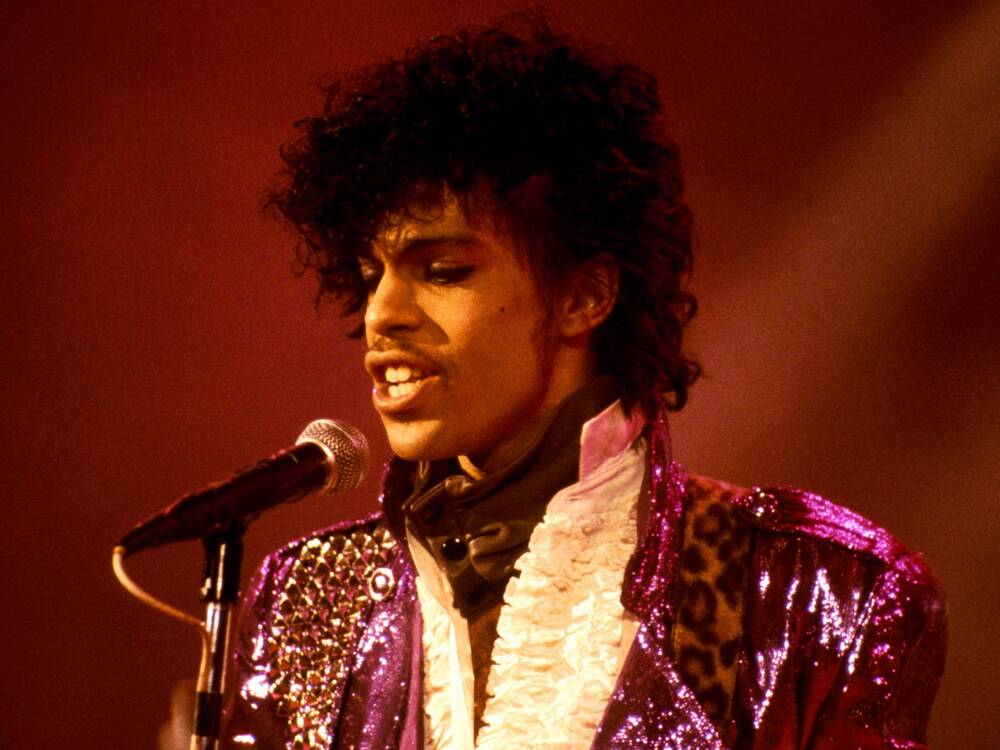
Prince performs at the Ritz Club during his

Prince performs at the Ritz Club during his "Purple Rain" tour on Sept. 13, 1985.

Ebet Roberts/Redferns/Getty Images

The Code Switch team was sitting in our daily team meeting when our editor looked up from Twitter and broke the news that Prince was gone.

The rest of the hour was given over to reminiscing about our favorite memories of Prince: shrieking as he climbed into a limo in Greenwich Village, angering a Suge Knight-lookalike to snap a shot of The Purple One for Instagram, risking permanent foot damage for the perfect pair of purple Prince pumps.

Since Thursday, everyone from Prince's bandmates to his superfans has been reflecting on what he meant to them. The New York Times is collecting reactions from fans around the world, as are our colleagues over at All Songs Considered.

So here's ours. These are our stories, from the delightedly tawdry to the sublime, of the ways Prince affected us. (And as you might expect, some of these stories contain, ahem, strong and colorful language.)

Walter Ray Watson, producer of the upcoming (!!) Code Switch podcast:

Dig if you will, a picture...

It's the '80s, I'm a college kid on a long weekend turned loose on New York City. Hanging, in the not yet summer. I wandered the streets, distracted and inundated by dull droning noise.

And there he was, flashing across my peripheral vision on that sun-splashed day. The color streaked by, bright phosphorescent green...like the stuff in a lightning bug, his suit glowed, matching his shirt, tie, and the high heel shoes too. His eyes sheltered behind fly sunglasses. His petiteness skittered by, click-clack-clacking for seconds and gone into one of two double-parked black limos in Lower Manhattan.

In Greenwich Village, and I'm looking at this scene, those cars idling in the heat.

In the haze of that afternoon, I took a beat. Not even a breath. What I just witnessed, happened so brief, like a dragonfly or a hummingbird you sense, not visible for very long.

Then, I figured it out, and I just knew... It. was. him!

I LOST IT.

I shrieked 20, 30 feet from the cars, "IT'S......PRIIIIINNCE!!!"

Like a teenage girl losing it just when James Brown left the Apollo stage.

"IT'S......PRIIIIINNCE!!!"

New Yorkers on the street, minding their biz, men, women every last one, CHILL.

NOT ME. I'm having my little fan girl seizure. Screaming.

So, Uncool, man.

Prince didn't sing. Didn't drop down into a split for it. Didn't bat his flirty big doe eyes to the blinding sun of that New York afternoon.

Yeah but boy, did I ever scream like a little girl ANYWAY. And I'm still not sorry.

Karen Grigsby Bates, Code Switch reporter:

Truth be told, Stevie Wonder was the Prince of my day, but that didn't stop me from appreciating Prince's energy and look: First time I saw him, I thought two things: "how cute is he?!" and "I probably weigh more than he does." (Sadly, I probably did. And do.) I also marveled at how he presented himself — so immaculately tailored, so coordinated and accessorized! One year, in double-breasted white wool flannel, he looked like what would happen if Savile Row and Marlena Deitrich had a baby. On another tour he looked like a very, very baddisco king. (These would be the assless pants. You remember.)

And in other years, he dazzled in lace jabots, ruffled cuffs and brocade frock coats that would not have been out of place in Louis XIV's court. Beauty mark, heels and all. Foppish and sexy — very hard to pull off. A lot have tried over the years, but "nothing compares, nothing compares 2 u." Good night, sweet Prince.

Shereen Marisol Meraji, Code Switch reporter:

Sam Sanders and I went to see Prince at this "secret-ish" show at the Hollywood Palladium in March of 2014. We were like 5 people in from the stage and right in the middle, BEST VIEW EVER, except for this dude we kept referring to as Suge Knight (he had the bald head, diamond earring) kept elbowing Sam out of the way and stepping on our toes. And, Sam got kicked out toward the end of the show for taking photos. (Prince was not down with that.) But, Sam took one of the most bad-ass Prince photos ever.

Regardless of Suge and the fact that I spent the last hour without Sam (he graciously waited in the car until it was over) ... it was the greatest night of music I've ever experienced.

There was a brass band on stage, dancing and playing back up to Prince's amazing voice and guitar licks. And, it went on for 4 hours ... 4 hours of Prince and there were only 1,000 people in a space that can hold nearly 4K. We were dancing and singing at the top of our lungs and screaming requests. He played more than 50 songs that night. No doubt he played one of your favorites: "Purple Rain," "Raspberry Beret," "Diamonds and Pearls," "Let's Go Crazy." But, I'll have to wait til the afterlife to hear Prince play mine: "Gett Off."

#latergram best show ever. Photo by @samsanders

A photo posted by mirage_e (@mirage_e) on

Sam Sanders, NPR Washington Desk reporter:

I can second [Shereen's] story.

In many ways, this should have been the worst concert of my life.

It was crowded. We had to wait hours for Prince to get on stage.

Some Suge Knight-lookin' MUTHA***** tried to fight me.

AND I GOT EJECTED FOR TRYING TO SHOOT AN IPHONE VIDEO.

But here's the thing; it was all worth it for Prince. A 12-piece horn section. HOURS of performance. Dozens of songs. The sheer ENERGY of the crowd. Prince's artistry!

After I got kicked out that night, and went to my car to wait for Shereen, I was still on cloud nine. Yes, even after being forcibly removed from a venue by a burly-ass security guard.

I took a nap while I waited. Woke up when the show was over, still on cloud 9. Still humming the song Prince was singing when they threw me out.

I distinctly remember dreaming I was still at the concert while I napped in my car. It was weird but amazing. Wish I could dream that same dream, today and every night.

Alicia Montgomery, Code Switch editor:

Every phase of every romance I've ever had — from high school to middle age — is connected to at least one Prince song in my memory. But the one that connects them all is "The Beautiful Ones." For me, it's about the moment you realize that — no matter how strong your feelings are — it's just not going to work. It's a lush, gorgeous symphony of pain and longing, and it's a song that I've played — often on repeat — during every break-up. I've played it on vinyl, cassette and CD (still on CD for me), in my childhood bedroom, on my Walkman, in college walk-up apartments, city bachelorette studios, and in the very Mom-ish Honda I've been driving for 10 years. Like every wine has a right temperature, every song has a right volume. And for "The Beautiful Ones," that changes depending on the stage of the break-up: at "11" in the first days and weeks so that those final shrieks could shatter glass, and gradually down, down back to normal as you figure out that the broken heart won't actually kill you. It's the first song I played after hearing this terrible news.

Gene Demby, Code Switch reporter:

I was barely out of diapers at the apex of Prince's reign as the world's biggest pop star — at one point in 1984, he simultaneously had the No. 1 movie, album and single in the country at the same time — and for most of my childhood, I mostly understood him as the weird dude with the ill perm and the ass-less chaps. I came to him much later, post-college, when all of my favorite recording artists would diligently name-check him as one of their influences. I'd miss how discomfiting Prince was at his peak — in the '80s, at the same time hip-hop was gaining a foothold in the broader cultural consciousness, the black dude who most scandalized and titillated America was this diminutive, high-yellow cat with a 24-inch-waist who hailed from some place called Minnesota.

But it was my 30-something, music nerd friends who were his most ardent proselytizers; they talked about him in a tone that was reverential and also maybe a little unhinged. They'd tell stories about their first Prince experiences. (No matter how old they were in these retellings, his music was never age-appropriate as Prince was always too grown.) Rock fans, soul fans, hip-hop fans, Recovering Oddball Black Kids — they all did that hand-on-heart, Isweartogod thing when they talked about him, lowering (or raising) their voices and no longer blinking and tilting their heads before walking me through the arc of their very specific feelings whenever they listened to, say, "When You Were Mine." They'd tell stories about their close encounters — the way he'd invite the folks who frequented his official message boards to watch him do his soundchecks before his concerts, the times they saw him when he would randomly materialize at some smallish club and perform for hours and conscript some other rapt, nervous pop stars in attendance to hop onstage to perform with him. Whenever folks got into this trance, I'd ask: Uh, so how many times have you seen Prince perform? Their answers were usually somewhere in the low millions.

So: my favorite Prince-related memory. My good friend Robyn was always down the rabbit-hole about this dude, ready to pause an unrelated conversation to make sure I properly understood the genius of "Joy In Repetition." On one of those PRN digressions, we watched this insane, grainy, old video that someone put on YouTube of James Brown jamming in concert. It's a display of casual, mind-belting virtuosity — James Brown summons Michael Jackson, who happens to be in the audience, to the stage to perform with him. (Jackson's voice is lovely, as always.) Then when Michael is done, he whispers something to James Brown. James Brown then summons Prince to the stage. And Because he's Prince, he doesn't just walk onto the stage — no, he is carried to the stage on the back of what appears to be a giant, who sets him down. Prince then proceeds to shred on the guitar, perform some James Brownsian tricks with the mic stand, and I think fornicate with the souls of the entire audience. (He also accidentally — or I think accidentally — destroys part of the stage set when he leaves.)

It's unreal. And that's the thing: whenever I tell people about this video, they think I'm making it up — because surely, if this s*** were real, it we'd all have seen it and watching it would be an official part of Kwanzaa or something. It seemed to sum up the whole Prince thing perfectly: the dude who could somehow overshadow both James Brown and Michael Jackson at the same time, and even when there was concrete evidence of it happening, it seemed too preposterous be totally believable.

YouTube
Copyright 2016 NPR. To see more, visit NPR.
24 Apr 19:13

Daily Feminist Cheat Sheet

by Sesali B.
Anja

For restoration of voting rights!

Remembering Prince’s life, work, and fluidity.

Virginia Governor restores voting rights to more than 200 citizens with felonies.

President Obama criticizes anti-LGBTQ laws passes in North Carolina and Mississippi.

In probably the most obvious attempt at banning abortion in a while, Oklahoma approves a bill that would strip doctors of their license for performing abortions.

22 Apr 02:16

PayPal’s All Male Panel to Discuss Gender Inclusion in the Workplace

by Dana Bolger

You know who I want to hear from about how men and women can work together to address the gross gender disparity in the tech industry? Not the ladies, that’s for sure.

In this week’s installment of You Can’t Make This Shit Up, PayPal is hosting a panel on “gender equality and inclusion in the workplace” with a — you guessed it — all male panel.

The invite reads:

Please join us for a discussion with our senior male leaders Edwin Aoki, Sri Shivananda, Jonathan Auerbach, Franz Paasche[,] moderated by Karthik Suri[,] about how men and women can partner to achieve a better workplace.

Lest you assume that these five men be particularly qualified to speak about gender equity in the workplace, I’ll just note that, according to its website, PayPal counts three women — three whole women! — on its leadership team of 18. That’s a whopping 17 percent. With parity like that, these senior male leaders must know what they’re talking about.

13076506_10154240001953313_8519485456610204240_n


I nominate this one for Feministing tumblr favorite, “Congrats, you have an all male panel!”

Header image via.

22 Apr 02:15

Daily Feminist Cheat Sheet

by Dana Bolger
Anja

For the first link. Frank Ocean really puts it right.

“He made me feel more comfortable with how I identify sexually simply by his display of freedom from and irreverence for obviously archaic ideas like gender conformity.”

Another day, another great Maggie Nelson profile.

Berkeley students are demanding access to on-campus abortions.

Trans Muslims fight bigotry on two fronts.

After North Carolina law, trans suicide hotline calls double.

Where the boys are.

21 Apr 01:22

This Passover Young Jewish Americans are Organizing Against the Occupation

by Mahroh Jahangiri

This morning, If Not Now DC leaders held this week’s first ‪#‎LiberationSeder, committing civil disobedience while blocking the doors of Hillel International’s headquarters.

13062074_1020523768034591_3162583089006007927_n

Image via If Not Now

Hillel International has long excluded individuals and groups who criticize Israel from Jewish communities on campus and been a part of the maze of financing and social action that supports efforts to suppress and block pro-Palestine activism in the US. In response, these young leaders from If Not Now, a movement to end the American Jewish community’s support for the occupation, joined thousands of other young folks organizing across the country this Passover to take on the American Jewish establishment and it’s support of the occupation. Their efforts come a week after the Bernie Sanders campaign responded to Zionist establishment demands to suspend its young newly-hired Jewish outreach coordinator, Simone Zimmerman, over her social media posts criticizing the occupation.

That the most left-leaning presidential candidate this election is not ready to challenge Zionist support of the occupation speaks to why these actions are so urgently needed—and how much progressive America needs to move on the occupation. Thankfully, Simone and other young women like her are drawing on a long tradition of women – especially those who are Palestinian and most impacted – at the forefront of this organizing.

If Not Now activists are hosting a series of liberation seders in five cities this week to say “Dayenu! Enough,” and to make sure that the next U.S. president faces a powerful youth movement to end the occupation. Follow the efforts of other super rad young women like Simone here and sign their pledge here.

Header Image via

11 Apr 02:25

"Boyfriend" Is Tegan and Sara's Best Song Yet

by Jenn Pelly

Over 22 years and eight records, it would be hard to argue that 35-year-old twin sisters Tegan and Sara have ever made anything but perfect pop songs. In 2013, Heartthrob put their mainstream ambitions on the line with speaker-busting '80s synth-pop—but it only served to prove how ahead of their time Tegan and Sara have been all along.

Bear in mind, this band opened for Cyndi Lauper nearly a decade ago. Razor-sharp intimacy and supreme catchiness have always been their trademarks—you could imagine anyone from Sky Ferreira to Katie Crutchfield cooly lamenting over a proto-@sosadtoday line like "I wouldn't liiiike me if I met meee." Their unassuming deep cuts like 2002's "Not Tonight" or 2007's "Nineteen"—songs about privately harbored emotions—could easily be reworked as stadium-sized ballads. Heartthrob's stunning "Now I'm All Messed Up" heeded that call, but the first single from the upcoming Love You to Death raises the stakes even higher.

"Boyfriend" is peak Tegan and Sara. More than anything on Heartthrob, its sleek bubblegum fits neatly into our current pop landscape and its debt to Robyn. "Boyfriend," in turn, is like a sister-song to "Call Your Girlfriend"—tearing at harrowing friend-zone emotional abstractions with a lucid message—but it's unmistakably queer. (And it makes 2015's "Cool for the Summer" sound dated already.) In a recent interview, Sara explained that "Boyfriend" was written about the beginning of her current relationship—her girlfriend had never dated a woman before, and was still involved with another guy. "You call me up like you would your best friend/ You turn me on, like you would your boyfriend," goes the chorus as it plants itself firmly into your skull, "But I don't wanna be your secret anymore." It is inspiring to hear a band that's existed so long come into their own like this, finding new ways to manifest their identities into song. "Boyfriend" rides on a kind of victory: the ecstasy of telling the truth.

03 Apr 15:30

Sad Excuse – Brittany Loar

by Basement Babes

Sad Excuse

Last time I checked, my resumé didn’t feature

A nude-pic, boob-shot, a pure sexual creature.

My vagina isn’t listed as an award or skill.

It didn’t earn me my diploma or give me ambition and will.

So I’m wondering why you’re upset at my reaction

When I refused to accept your comment and give you satisfaction

In claiming I was offered a position that is greater

Purely because I’m a woman. Some type of sexual favor.

See what your limited mind and pathetic pride doesn’t understand

Is although your comment meant to hurt, the result was unplanned.

I agree I am here because I’m a woman.

And as such I’m a resilient, capable human.

I’ve been judged and tested like no man will ever face.

So get used to the back of my head in this race.


Poem and photography by Britanny Loar

Featured in Basement Babes, Issue 14

02 Apr 17:13

Boss Babe and Bossy – J. Olinger

by Basement Babes
boss babe bossy

Drawings Boss Babe and Bossy by J. Olinger

Featured in Basement Babes, Issue 14

02 Apr 16:54

Architects’ Ethics Panel to Consider Boycott of Execution Chambers and Prison Design

by David Reutter
Loaded on April 1, 2016 by David Reutter published in Prison Legal News April, 2016, page 54

An advocacy group composed of architects, building designers and planners is hailing a decision by the National Ethics Council of the American Institute of Architects (AIA) to reconsider a proposal to prohibit its members from designing “execution chambers and spaces intended for torture or cruel, inhuman, or degrading treatment.”

The decision marked a significant reversal of the AIA’s position on the issue of building and designing execution chambers and facilities that hold prisoners in solitary confinement. The organization’s Board of Directors had outright rejected the proposal as recently as 2014, and the decision to reconsider means the AIA National Ethics Council will review the proposal for the first time.

“We salute AIA’s 2015 and 2016 Presidents for taking another look at this vitally important issue,” said the Architects/Designers/Planners for Social Responsibility (ADPSR) in a February 24, 2016 statement.

In a letter to the ADPSR in late October 2015, the president of the AIA announced the organization’s intent to reconsider the proposal.

“In the letter, President Elizabeth Chu Richter informed us that the AIA’s National Ethics Council will be considering our ethics proposal as well as other public statements that AIA could make in ...

02 Apr 16:33

Did You See This?

Anja

For the czech and polish cat movie posters

Eraserhead_large Uncover the forgotten female stars of early-twentieth-century action serials. The women of these films, writes Radha Vatsal for the Atlantic, “exhibited traditionally ‘masculine’ qualities like 'physical strength and endurance, self-reliance, . . .

Read More

02 Apr 16:27

Federal Government Targeting Muslims in ‘Mass Deportation’ Slated for Monday

by Tina Vasquez

On Monday, immigration authorities, working with the U.S. Department of State and the Department of Homeland Security (DHS), will deport at least 500 South Asian detainees, along with migrants from India, Pakistan, and Africa, advocates told Rewire. The reason behind the anticipated mass deportation remains unclear, but advocates believe a bulk of those being deported are Muslim.

Many of those expected to face deportation have escaped political persecution in Bangladesh and could face death upon their return, advocates charged.

#Not1More, a campaign to expose, confront, and overcome unjust immigration laws, last week released a statement reporting that immigration authorities have begun transporting South Asian detainees to a detention center in Florence, Arizona, in preparation for a “mass deportation.” The South Asian detainees are primarily from Bangladesh, the same population that participated in the #FreedomGiving hunger strike that launched the day before Thanksgiving.

The hunger strike took place at detention centers across the country with the goal of bringing “attention to the prolonged, unjustified, and discriminatory detention of Muslim and South Asian migrants,” according to #Not1More.

Fahd Ahmed, executive director of Desis Rising Up and Moving (DRUM), a New York-based organization of youth and low-wage South Asian immigrant workers, told Rewire he learned authorities were transferring South Asian Muslims to Florence, Arizona, over the weekend of March 26, and that deportations of groups of two or three people have already begun.

Because of the anti-Muslim climate currently in the United States, DRUM organizers “anticipated something like this would happen,” Ahmed told Rewire, “but we didn’t know exactly where or when.”

DRUM helped coordinate the #FreedomGiving hunger strike. Those who worked with the organization during the strike are already being affected by the anticipated deportations. One of the detainees who organized with DRUM notified Ahmed that he had been transferred to Florence along with hundreds of South Asian detainees.

This was also confirmed by Katherine Weathers, a visitor volunteer with the Etowah Visitation Project, an organization that enables community members to visit with men in detention at the Etowah County Detention Center in Gadsden, Alabama. The Etowah facility has large Muslim and African populations, Weathers said.

The 14-day #FreedomGiving hunger strike ended at Etowah when Chief U.S District Judge Karon O. Bowdre authorized officials to force-feed one of the hunger strikers because of his “deteriorating health,” as Rewire reported last year.

Weathers told Rewire that she received a call last week from a Bangladeshi detainee at Etowah who had been in the United States for years and had avoided deportation many times, but had recently been transferred from Etowah to a detention center in Louisiana, and then finally to Florence, Arizona.

Weathers said the detainee “indicated that immigration officials are arranging charter flights from Arizona to transport a large number [of detainees] to their countries of origin.”

Ahmed said the South Asian and Muslim populations being targeted for the mass deportation have “always suffered an elevated level of scrutiny, restriction, and obstacles” within the U.S. immigration system.

Bangladeshi migrants have seen bond amounts set anywhere from $25,000 to $40,000, Ahmed said. Immigration bond amounts, set by immigrations judges or U.S. Immigration and Customs Enforcement (ICE), usually start at $1,500 and can increase to $10,000 should the detainee be deemed a flight risk.

“We’re also seeing that South Asian detainees are being held for prolonged detention. All of this brings up a lot of questions about racial and religious profiling,” said Ahmed.

DRUM’s executive director said he is troubled by the involvement of the state department in the anticipated mass deportation. The U.S. Embassy in Bangladesh gave the detainees’ names and personal information to the Bangladeshi government, which the campaign reports is in violation of international law, according to #Not1More. Bangladeshi media leaked and published the names of the detainees, putting the men in more danger.

“In violation of their [ICE’s] own protocols, the detainees may be expelled despite being witnesses and victims to civil rights violations that are under open investigation by the Office of Civil Rights and Civil Liberties within DHS,” #Not1More reported.

Ahmed said giving over names of detainees to a government is not unusual because names have to be used to obtain the travel documents necessary for deportation. What is unusual is that the names of the detainees were leaked by the Bangladeshi government, which Ahmed said confirms the concerns raised by the Bangladeshi migrants about their government’s “level, extent, and tactics of oppression.”

“When the hunger strikes happened and again when those names were turned over and leaked by the media, a lot of the detainees’ families were visited by intelligence agencies in Bangladesh who didn’t just ask about their name or where they lived, but they asked about their asylum claims, asked about the hunger strikes, asked why they were giving the country a bad name,” Ahmed said.

The Bangladeshi men escaped because of their affiliations and activities with the Bangladesh Nationalist Party (BNP), the opposition party in Bangladesh. Being affiliated with this party, advocates said, has made them targets of the Bangladesh Awami League, the country’s governing party.

Last year, DHS adopted the position that BNP, the second largest political party in Bangladesh, is an “undesignated ‘Tier III’ terrorist organization” and that members of the BNP are ineligible for asylum or withholding of removal due to alleged engagement in terrorist activities. Many advocacy groups came to the defense of the BNP, including the National Immigration Project of the National Lawyers Guild, asserting the BNP is not a terrorist organization.

Advocates told Rewire that if this population is deported, they may face death in Bangladesh, which is why immigrant rights organizations are trying to raise awareness about the mass deportation using the #Deported2Death hashtag.

“As their government employs more extensive oppressive measures, it’s caused a lot of people to leave and flee violence,” Ahmed said. “If deported, these men would have already been at risk, but now that their names have been leaked and the Bangladeshi government and media affiliated with the government are talking about them as hunger strikers and asylum seekers, they are in even more danger. There has been documentation of disappearances, torture, and death in Bangladesh of opposition activists.”

Lisa Moyer, an organizer with Shut Down Etowah, a grassroots organization fighting for the closure of the detention center, said she believes anti-Muslim sentiment in the United States is fueling the mass deportation. She said she doesn’t know why the state department and DHS are working together, bypassing ICE, for the mass deportation.

In an emailed statement to Rewire, a state department official wrote:

An individual who is not a U.S. citizen or national may be subject to deportation following arrest and conviction of certain crimes. An individual’s religion is not a consideration in the decision to deport. Yes, we have been in contact with the Government of Bangladesh as part of U.S. Government efforts to uphold our immigration laws, but as a matter of policy we do not discuss details of our diplomatic discussions with other countries. For questions about deportation policy or proceedings, we refer you to the Department of Homeland Security.

Like Moyer, Ahmed is uncertain why the state department is getting involved in matters of immigration, but asserts it is merely an extension of the Obama administration’s policies around the deportation of asylum seekers, particularly those who are Muslim.

“We’ve been hearing a lot of rhetoric from Republicans about building walls, about deporting Muslims, about kicking Muslims out, so what we’re seeing is the current administration implementing policies in line with that kind of rhetoric,” he said. “So many asylum seekers are being denied their claims and being deported, only to be killed, which sadly confirms they had valid claims. Our system didn’t allow them to properly raise those claims. It may not be a physical wall, but it’s a legal wall being erected to kick Muslims out.”

Weathers said most of the Bangladeshi men in Etowah speak Bengali, but one Bangladeshi detainee knows English and writes letters for the other men. The letter writer told Weathers that like many of the detainees from Bangladesh, he was tortured by the Awami League and his family was threatened. His family sold their belongings and property to buy him passage to South America, where he made the long journey through several countries in South and Central America to present himself at the United States-Mexico border as an asylum seeker, only to be placed in ICE detention.

In one letter to Weathers, an Etowah detainee shared that he left Bangladesh to avoid being locked up in “deplorable conditions” to come to the United States seeking safety—and giving up everything to do that—only to find himself in “worse conditions” than his country would have had. The detainee said that his treatment at Etowah has been more degrading and harmful.

Moyer said it’s routinely repeated by new detainees at Etowah that the Alabama-based detention center is the worst of all the detention centers they have been held, with many complaining of too little food of very poor quality, inadequate clothing and blankets in cold weather, no access to the outside, unreasonable charges for commissary items and phone calls to family members, and inadequate medical care.

In a group letter written to Weathers by detainees and shared with Rewire, the Bangladeshi detainees inside Etowah explained their situation, writing:

Bangladesh is a small country that has huge political problems. There, our life is not safe. We are opposition political supporters and leaders of the ruling party want to kidnap, kill, and threaten us. As a result, we escaped our country to save our lives. We crossed the borders of several countries and we climbed lots of mountains without any food to get to U.S. immigration police and seek asylum, but unfortunately the Department of Homeland Security considers us terrorists, denies our bonds and our asylum. We have no criminal records; we have not committed any crimes in any countries. There is no security in our country and that is why we cannot go back.

Weathers, who continues to keep track of the former hunger strikers being transferred to other detention centers, possibly for the mass deportation, said that as an American citizen, she is “outraged” by the United States’ treatment of asylum seekers.

“Sadly, because of our current political climate, I think there will be a lot of indifference to this [mass deportation],” she said. “That’s a sad commentary on where we are as a country.”

The post Federal Government Targeting Muslims in ‘Mass Deportation’ Slated for Monday appeared first on Rewire.

02 Apr 16:01

In California, A 'Welcome Home' For The Japanese-American Queer Community

by Hugh Ryan
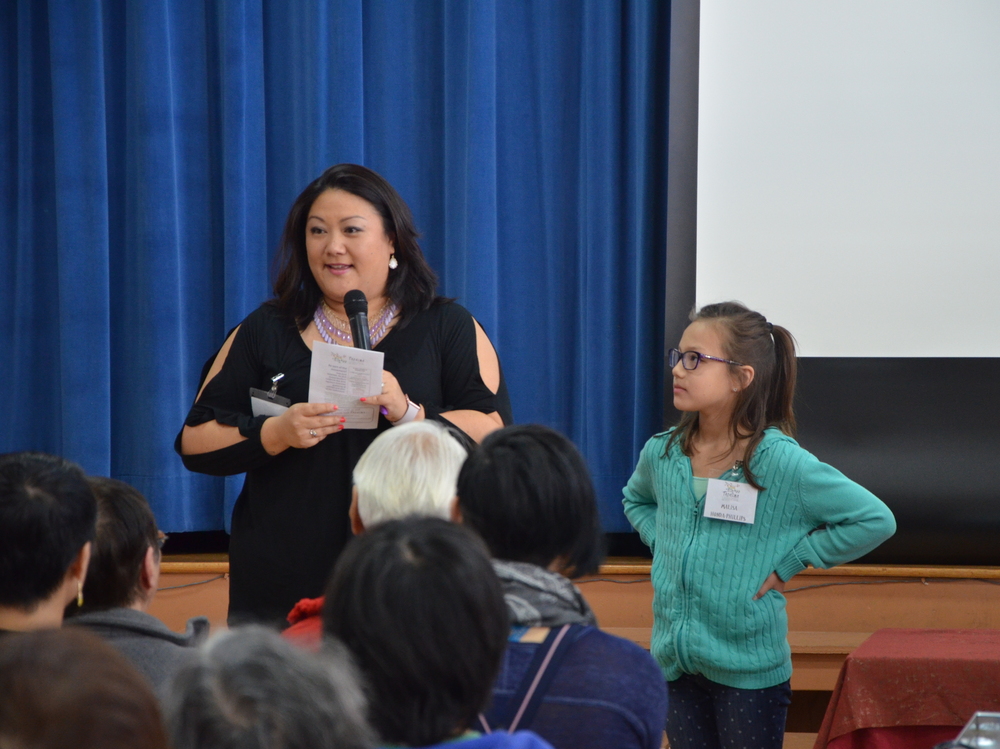
Michelle Honda-Phillips stands with her transgender daughter, Malisa, at a pre-event for Tadaima in Berkeley, California.

Michelle Honda-Phillips stands with her transgender daughter, Malisa, at a pre-event for Tadaima in Berkeley, California.

Tadaima Bay Area 2016

Tadaima. Okaeri.

Paired together, these two Japanese words are a common greeting-and-response. Tadaima means "I'm home," and okaeri means "welcome." But recently, these terms have taken on new significance as the names for a series of California-based conferences for the Japanese-American queer community and their allies: Okaeri in Los Angeles in 2014, and Tadaima on April 2nd in the Bay Area.

"The Okaeri conference was started by straight allies welcoming people back into the community when they felt ostracized," explained Bonnie Sugiyama, Director of both the PRIDE and Gender Equity Centers at San Jose State University, and one of Tadaima's lead organizers. With Tadaima, she says, northern California Japanese-American queer people are saying, "We exist, and we want to be part of the community. Are you going to say okaeri and welcome us?"

Coke Tani will lead

Coke Tani will lead "All of Me for All of You," a creative movement and poetry workshop at Tadaima.

Tadaima Bay Area 2016

Okaeri was the brainchild of author and activist Marsha Aizumi, who became a major proponent of LGBTQ rights after her son Aidan came out, first as a lesbian, then as a transgender man.

"When Aidan came out, the first thing I thought was, what did I do wrong?" Aizumi admitted over the phone, describing her journey to becoming a board member of PFLAG, the national group for families and friends of LGBTQ people. "Because white people were more visible and talked about. In literature I would see Caucasian faces, but hardly any API [Asian Pacific Islanders], and absolutely no Nikkei!"

So Aizumi founded the first API-specific chapter of PFLAG, which soon began to host events for specific ethnic groups under the API umbrella. "And I thought – I'm Japanese! I have to do something for the Japanese community." The fifteen people who showed up for her first afternoon tea soon spiraled into the 200-person strong Okaeri conference.

Aizumi was struck by the age range of those who showed up. "People could look around and say, that could be my grandparent, that could be my aunties and uncles, that could be my children." She estimated that attendees ranged from five years old to the mid-eighties.

Afterwards, Aizumi was contacted by numerous participants who were inspired by the conference to come out to their own families, or who used the conference as a time of reconciliation with family members who had ostracized them in the past.

Queer Taika, a group directed by Kristy Oshiro, to perform at Tadaima.

Queer Taika, a group directed by Kristy Oshiro, to perform at Tadaima.

Tadaima Bay Area 2016

Lynn Sugihara, a fifty-nine year old dental hygienist from the Bay Area, has attended two of the three "lead-up" events to the Tadaima conference: A panel on coming-out stories, and a moderated discussion on LGBTQ rights in a post-same-sex-marriage world. She too was struck by the diversity of the participants.

"This is the first such event I've been to where it is intergenerational," she said in a phone interview. For Sugihara, this matters because it's important "to hang on to part of our history." In fact, at one of the panels, she met a woman who had been her father's next-door neighbor in their WWII internment camp.

Sugihara was also struck by the vocal participation of many straight allies, who came to learn about issues facing their queer friends and family. "They didn't quite understand," she said, "but they came." This was an encouraging change from her youth, she said, when her family took a "don't ask, don't tell" approach to sexuality and gender.

To meet the needs of such a diverse audience, the organizers of Tadaima have planned a wide variety of events over the course of the one-day conference. Marsha and Aidan Aizumi will be speaking, as will Dr. Amy Sueyoshi, the associate dean of Ethnic Studies at San Francisco State University and a founding curator of the San Francisco GLBT History Museum.

Melvin Fujikawa, the director of 88 Keys Choir, to perform at Tadaima.

Melvin Fujikawa, the director of 88 Keys Choir, to perform at Tadaima.

Tadaima Bay Area 2016

"When I hear that a JA [Japanese-American] community of straight people want to do something around queer JA issues, it makes my heart melt around the edges," said Dr. Sueyoshi. "It feels momentous."

But while straight organizing around queer issues might be a new phenomenon, Dr. Sueyoshi pointed out that there is a long history of support for social justice in the Japanese-American community. In part, Dr. Sueyoshi said, this is the legacy of the internment camps and other acts of nativist discrimination the Japanese-American community has endured over the last two centuries. It's also part of a larger nationwide turning of the tides, in which LGBT issues have gone from niche concerns to items of general interest.

Given the expected diversity of the conference, organizers have planned break-out discussion sessions to allow different identity groups to meet and talk openly about their specific issues.

"It's hard to explore [these issues] on your own because you only have your single experience," said Sugiyama, the conference organizer. Until recently, Japanese-American queer people have had few spaces in which to gather. Sugiyama hopes that Tadaima will allow folks to network with one another and to begin to figure out the commonalities between their experiences, and how to address the issues they share. She's excited that over the course of organizing the conference, that's already beginning to happen.

"I've been involved with queer API groups for a while now, and there's just not very many of us JA's," Sugiyama said. "Helping to bring people out of the woodwork...it's been a really great experience."

Copyright 2016 NPR. To see more, visit NPR.
24 Mar 01:42

Solo Sexx – EP

by Dan Shea

Well, it finally happened.
Old year transitioning to new year. We break it all up into digestible yearly morsels. It’s how we humans organize our history. I, and we, being humans, put periods at the end of every 12 months of music, art, film, whatever. At the Hassle we do Year End lists, and I always, fer sure do a list of my very fav local releases. And then also, fer sure, there’s a record or two or more that I hear early in the next year that I wish I had heard before that period was put in place so that I could have fucking included it.

SOLO SEXX and their EP is one of those records. Came out right before Thanksgiving, 2015. 6 tracks. Two MCs and a DJ. Vulga Vulva (Heather), Julez (Velvet Vulture), and DJ Casio Brass (Slim Tim). And it is a truly shockingly awesome batch of underground hip hop. From right here in Boston.

Hmmmmm… maybe this gang is the spark to light the ever sleepy Boston underground rap scene.* Never mind what they might be though, here on their EP they are a very, very fun, living collage of some of the best facets of hip hop over the last 30 years. MISSY ELLIOT, DEATH GRIPS, PUBLIC ENEMY, SALT N’ PEPA, MIA and plenty of other groups pop and underground show up as part of the DNA of SOLO SEXX. It’s a really potent mix all projected through a female fronted counterculture prism of now.

One of my fav tracks has got to be the take down track “Hipster Chick”, chock full of the sirens and funk of TERMINATOR X and DJ PREMIER. Meanwhile Heather & Julez spit all about phonies while spreading real class consciousness. “Jacket Girl” is also incredible, reminiscent of MISSY’s flow (with occasional well placed soulful asides) over DEATH GRIPS vibe production, wobbly bass colliding with psychedelic feels. This one is probably my favorite of the bunch when it comes down to it. Honestly though, all six tracks point to an insanely bright future for this trio. Can’t wait to hear more and see this crew live.

Some choice slices from within:
“I aint’ a cracker cuz I’m fried like a frito” from “Drugz (Do You Have It)”

“My indie playlist… Catch you all off guard.” also from “Drugz (Do You Have It)”

&

The DEVO samples throughout “Party Muzik (Baile Funk)”

ALSO, check out the band’s About @ https://solosexx.wordpress.com/?utm_source=rss&utm_medium=rss:
“Solo Sexx are 2 rip-rollin’ riotous girls from Boston & Amherst, MA. We’re ready to get your brains fried and your no-no spots electrified, Solo Sexx is a big middle finger to a consumerist, male-driven circle jerk of a hip hop game that’s been played against itself for far too long.

With a fearless sense of humor and a no-holds barred attitude, Solo Sexx turns the hip-hop hypocrites on their head and leads fans to a whole new horizon: with homemade beats and outta sight rhymes! Solo Sexx proves that the alternative to the add-water-and-stir rap chumpitude is funkier, fresher, and just plain sexxier than ever before.”

*I honestly hope that I am so wrong, and that I am just somehow ignorant of a thriving Eastern MA rap scene. So let that hate email rain!! I’d love to know what I’m missing.

EP by Solo Sexx

22 Mar 13:30

10 Adorable and Terrifying Things My Girlfriend Said While Playing a Post-Apocalyptic Lesbian in Fallout 4

by Heather Hogan
cait

"Unlike TV shows, no lesbians die in this game, motherf-cker!"

The post 10 Adorable and Terrifying Things My Girlfriend Said While Playing a Post-Apocalyptic Lesbian in Fallout 4 appeared first on Autostraddle.

22 Mar 03:13

Three POC Artists You Can’t Sleep on This Year

by Hassle Staff

By Andisa

Bbymutha

Hailing from Chattanooga, TN, Bbymutha is one of my favorite rappers in the game right now. She’s seriously dope. But as she’d tell you she’s just having fun. If you follow her Instagram (@Bbymutha) you’ll too discover that Bbymutha isn’t only a catchy moniker. Photos of her daughters, similarly adorned with her trademark, rainbow-inspired box are proudly shared along with videos of the ‘Lisa Frank of the trap’ raising her kids. Balancing motherhood and being an underground icon isn’t always easy, but it’s most certainly inspiring. Expressed in her lyrics, Bbymutha explores her lived experiences.

Paloma Valenzuela

Paloma Valenzuela, one of the most entertaining guests to appear on the show, is a writer and filmmaker with roots in the Dominican Republic and, locally, Jamaica Plain, MA. She creates a sensational YouTube series titled, The Pineapple Diaries, named for the natural hairstyle. The Pineapple Diaries explores, with humor and sharpness, the experiences of a twenty-something woman of color. The dialogue is expressive and full and did I mention the series was shot in Jamaica Plain? Look for familiar places while watching!

Watch the whole series, first released weekly, here.

Fadil “HiFadility’ Cantave

HiFadility is a Boston based composer, producer, and jazz pianist with the chops to create a spiritual depth and mystic realness. His music, a contemplation on consciousness, collaboration, generosity, and growth, has the ability to make us feel like we’re in a whole other place. Combining electronic sounds with Caribbean, hip-hop, and jazz foundations HiFadility is worth a listen.

[Andisa Montez is Bae. She is what you would call a mover and a shaker. She’s carving her unique style into Boston’s art and nightlife scenes. She creates, lives and documents (see her Instagram page). When she is having fun (and especially with you) is when she’s the most happy. Her recent accomplishments include hosting Sweety’s Radio, a monthly program in which she interviewed the most awesome artists of color in front of a live audience.]

For more info, check out Andisa’s Instagram/ Twitter: @innercitywitch
Listen to Sweety’s Radio*: soundcloud.com/Sweetysradio

*Sweety’s Radio is a live monthly podcast hosted at the Subsamson gallery that seeks to provide a forum where people of color (PoC) can be heard.

22 Mar 03:13

Where is Daniel Holtzclaw?

by Alexandra Brodsky

Last December, former Oklahoma City police officer Daniel Holtzclaw was convicted of raping and sexually abusing black women while on duty. This month, seven victims filed a civil lawsuit seeking monetary damages from Holtzclaw and city officials.

Here’s the problem: the victims can’t find Holtzclaw. In order to move forward with the law suit, the plaintiffs need to serve all defendants with a copy of the complaint. But, according to For Harriet and the Associated Press, prison officials won’t tell them where Holtzclaw is. Three victims who brought a separate lawsuit earlier this year successfully served Holtzclaw while he was in an Oklahoma maximum security prison, but he has since been moved to a prison out of state due to safety concerns.

A spokesperson for the Oklahoma prison system told the AP that Holtzclaw’s lawyers and the state’s Department of Corrections are “going to work it out.” Oh, ok.


16 Mar 23:23

The Pace of Queer Time

by Lila
shutterstock_271124447

"I’ve been thinking recently that queer time for me is a self-declared snow day. A chance to stay in bed and explore ourselves unhindered by the outside world. A chance to exist, to play — free from the hetero pillars of career, marriage, and lineage."

The post The Pace of Queer Time appeared first on Autostraddle.

04 Mar 02:51

Outsourcses: Setting the Table with Michael Twitty – Food, History, and Sexual Identity in the South | KGNU News

by michaelwtwitty

http://news.kgnu.org/2016/02/outsourcses-michael-twitty-food-history-and-sexual-identity-in-the-south/

I have rarely had the opportunity to do in person radio interviews that significantly involve or incorporate my identity as an openly gay man and discuss how lgbt issues impact my work. Well, here she goes! I sat down with Sean Kenney after a fantastic night of feasting and discourse at the University of Colorado in Boulder to discuss the intersections of my personal identity and my work. I am very impressed by Brother Sean’s interviewing skills–he touched on so many salient issues and made me feel at home in my mind. I hope you enjoy this conversation as much as I did!

image


04 Mar 02:51

Don't Miss Jay Caspian Kang On Asian-Americans, Whiteness And Peter Liang

by Hanna Choi
Protesters attend a rally in the Brooklyn borough of New York on Feb. 20 in support of a former NYPD Officer Peter Liang.

Protesters attend a rally in the Brooklyn borough of New York on Feb. 20 in support of a former NYPD Officer Peter Liang.

Craig Ruttle/AP

Over at the New York Times Magazine, Jay Caspian Kang recently had a really sharp essay on protests by Asian-Americans over the conviction of Peter Liang, the New York City police officer who was involved in the 2014 fatal shooting of unarmed Akai Gurley, an unarmed black man. Protesters have called Liang a "scapegoat," pointing out that many white officers involved in previous killings of unarmed black men have not faced similar consequences. In fact, as Kang notes, Liang is "the first N.Y.P.D. officer convicted in a line-of-duty shooting in over a decade."

"It's easier to hang an Asian, because Asians, they don't speak up," is how one Asian-American critic of Liang's verdict recently put it.

But on Feb. 20, in cities across the United States, large numbers of Asian-American protesters did speak up, and turn out for public protests. They were there both to show support for Liang and to fight "the institutional racism and failures of our system," said New York State Assemblyman Ron Kim, the first and only Korean-American elected official in New York and an active advocate for minorities.

But as Kang points out, the fact that this movement has been triggered by the death of an unarmed black man at the hand of an Asian-American cop rests uneasily with many Asian-Americans and others alike, and reflects a sometimes — or often, depending on where you live — painful history of relations between Asian and black communities in the U.S.:

"The Liang protests mark the most pivotal moment in the Asian-American community since the Rodney King riots, when dozens of Korean-American businesses were burned to the ground. The episode is often said to have been precipitated by the horrific killing of Latasha Harlins, a 15-year-old black girl who was shot in the back of the head by Soon Ja Du, a Korean store owner, after a confrontation over a bottle of orange juice. In reality, the tensions between Asian store owners and the black neighborhoods they served had been simmering for years; they began well before Rodney King became a household name, and they continue today."

In his essay, Kang explains the Liang protests as a reaction by a community unaccustomed to taking the spotlight, one more used to opting for political silence. He recounts, from firsthand experience, seeing low participation by Asian-Americans in modern social justice movements. But he emphasizes that this lack of participation doesn't necessarily stem from apathy. He says many Asian-Americans simply haven't known know what to say, or how to say it — and the Liang protests make that clear.

"This is the stunted language of a people who do not yet know how to talk about injustice," Kang writes. "The protesters who took to the streets on Saturday are trying, in their way, to create a new political language for Asian-Americans, but this language comes without any edifying history."

Of course, Kang notes, the protests don't change the fact that a man was killed, or undo Liang's actions on the day he shot Gurley: not performing CPR on a dying man, and failing to radio his supervisors immediately. "No amount of nuance or qualification or appeal to Martin Luther King will change the fact that the first massive, nationwide Asian-American protest in years was held in defense of a police officer who shot and killed an innocent black man," he writes.

Kang's full essay over at New York Times Magazine is well worth a read.

Copyright 2016 NPR. To see more, visit NPR.
04 Mar 02:44

Daily Feminist Cheat Sheet

by Dana Bolger

Aria Dean asks, “What could be a workable theory of auto-expression that takes into account the temporally, spatially, experientially flattened act of looking and being looked at?”

Meet Tara Houska, Bernie’s new Native American advisor.

Maya Schenwar talks prison abolition.

26 Feb 01:31

On the Street…La Fortezza, Florence

by The Sartorialist
Anja

Is that a jumpsuit? I think I like it. Pairs well with umbrella and overcoat on this fellow.

11416pitti1510