Cowboy Who?
Shared posts
Texas Standard for Jan. 27, 2026: Gun rights debate resurfaces after Minneapolis shooting

The technical person here at the show has done ...
The technical person here at the show has done something or other to stop those interuption so the show can continute. #CowboyWho

WATCH: Nicki Minaj says she's Trump's No. 1 fan, won't let him be bullied

In Texas Cities, Let a Hundred Mamdanis Bloom
The ascent of Zohran Mamdani, a 34-year-old socialist Muslim, to New York City’s mayoralty once seemed an almost absurdist dream. Yet, propelled by an army of 100,000 volunteers who took on the city’s political machine from below, the question now is not whether someone like Mamdani can win but whether his victory can carry beyond the borders of the Big Apple.
Here in Texas, to the Republicans and the billionaires whose power they entrench, the prospect of the Lone Star State being swept up in a similarly insurgent candidacy still sounds like its own far-fetched fantasy. Perhaps fearful that movements here might recover our state’s buried but rich left-populist past, the GOP has spent decades building fail-safes against the emergence of grassroots power anywhere under these big blue skies.
Indeed, it would be implausible to say that Mamdani’s municipal victory bears directly on our infamously repressive state as an abstract unit. But Texas and the State of Texas are not exactly one—this sprawling place we call home contains five of the 15 most-populous cities in the country. They lean to the left, see their power currently suppressed, and are where the lessons of Mamdani can apply.
I have spent more than 10 years organizing in localities across this great state, participating in grassroots issue campaigns, labor union drives, voter registration and turnout efforts, and multiple legislative sessions. I’ve come to know hundreds of community organizers, from Denton to the Rio Grande Valley and everywhere in between. I’m a co-founder of a statewide nonprofit, and I’ve co-chaired a Democratic Socialists of America (DSA) chapter. More than mere credentialing, I share this background so you’ll know my optimism has survived the trenches—and to explain how I know there is a Texas Left out there waiting to be cohered, a disjointed chorus that could one day speak as one.
What Mamdani’s victory reveals for me, once stripped of novelty, is not really a suspension of political gravity but an alignment of forces that were waiting for the opportunity. Electoral success followed social organization. The campaign operated squarely inside a Democratic primary while rejecting the assumption that party politics must be donor-driven, consultant-managed, or ideologically thin. Independent organizations stepped into roles once filled by mass parties. Tenant unions, labor locals, socialist chapters of the DSA, and community groups built a base, trained leaders, disciplined messaging, and turned people out at scale. The formal party remained hollow; the social party did not.
This distinction matters because Texas Democrats have been attempting the inverse maneuver for a generation: trying to win elections without taking into account the eroded civic foundations of the state.
The last time Democrats won statewide office in Texas was 1994. That year coincides closely with an important index of organizational power: peak union density in the state. Since then, union membership has declined, along with one of the few remaining sites where ordinary people routinely practice collective decision-making. Unions do not simply bargain wages and benefits. They’re democracy in practice. When this erodes, campaigns lose their most reliable partners and are forced into a position of paltry substitution: mere messaging for the credible threat of deep organization.
Even the still-too-rare candidates who adopt a populist bent in their speeches can get only halfway there—naming Texas hardships but missing the link with organizations undertaking class formation to call upon. Calls to “get involved” are too vague. We need candidates who implore voters to form unions, who can teach the hows and whys of that process, precisely because they see themselves as organizers bound to a theory of change and not just as leaders pursuing their own ascent.
Texas is not truly devoid of forces like the tenant organizers and taxi drivers’ union of New York; they’re at work now, often in isolation from electoral politics. Starbucks workers striking across the state. Unite Here members walking out of Hilton hotels in Houston. Airport workers in the DFW region picketing for higher pay. Alongside them, community organizations are fighting against everything from omnipresent debt traps and predatory fines to voter intimidation and language exclusion. These are not sideshows of the Texas political scene, distractions from turning the state blue. They’re the nerve endings of Texans’ shared experience, yet they pass through election cycles largely unacknowledged.
This frequent gap between organizers and candidates sharpens into a set of questions that Mamdani’s victory makes salient: Do Texas candidates regularly embrace these fights as their own? Who has treated them as the base of a campaign rather than as background noise? Who has said plainly that winning office means carrying these struggles forward, co-planned the actions, and even engaged in civil disobedience?
The stakes of these questions could hardly be higher. We lead the nation in the share of residents without health insurance. After the state’s abortion ban took effect, hospitals reported sharp increases in severe pregnancy complications. These are not marginal injustices. They are life in Texas, and they demand a different politics than that offered by most of the state’s fleeting Democratic stars.
In reorienting the left politics of this state, we need to learn to use our history, as Mamdani did in hearkening back to his city’s earlier struggles over housing, labor, and public provision. Texas campaigns often shy away from this, yet our state has a deep and usable political history.
“Red Tom” Hickey gave Texas socialism a public voice through journalism and agitation when class politics still carried mass meaning. Emma Tenayuca helped lead the 1938 pecan shellers’ strike in my hometown of San Antonio, organizing thousands of Mexican-American women against starvation wages and brutal conditions. Jovita Idar used journalism and organizing along the border to confront segregation and build institutions for Mexican-American dignity. La Raza Unida Party and San Antonio’s Committee for Barrio Betterment demonstrate that independent political vehicles have been built when existing parties refused representation. Barbara Jordan and Ann Richards stand as reminders that movement pressure has, at moments, translated into governing power without surrendering moral clarity.
This historical reframing is especially crucial here. As Mamdani showed, you must love a place to lead it—and so you must love its story, yet Texas mythmaking has long reinforced the state’s reactionary spirit despite its long history of insurgence.
Mamdani’s strategy artfully mined New York City’s complexity, past and present, its richness and its diversity. People did not come together because they shared one identity. They came together because they were all trying, and often failing, to make ends meet as New Yorkers. Texas cities live inside the same reality. People may worship in different buildings and speak different languages, but they shop at the same grocery stores, ride the same buses, and open the same overdue bills.
The lesson worth carrying forward is not necessarily, then, about a city or a candidate but about what might be called syncretism. Mamdani’s campaign made clear that unlikely victories are built by bringing together things that are usually still avoided in mainstream politics. Texas politics has been organized to frustrate efforts at getting those same elements to ever meet. Union-busting, zealous preemption, and bootstrap austerity have hollowed out civic life, leaving campaigns and movements each adrift and bereft of one another. The affordability crisis is placed neatly into policy silos instead of being treated as the class war that stands between us and better lives. History is conceded, books are banned, and the grassroots is kept at arm’s length.
And yet the raw material remains: cities full of people facing the same costs, workers organizing against long odds, and a past that shows Texans have fought together before. The idea that a Mamdani-esque politics cannot happen here is not an iron law; it is a disbelief locked in place by power. It will break when candidates truly come from the rank and file and believe, as testified through consistent action, that they will accomplish little unless the ranks behind them grow alongside their electoral wins.
The post In Texas Cities, Let a Hundred Mamdanis Bloom appeared first on The Texas Observer.
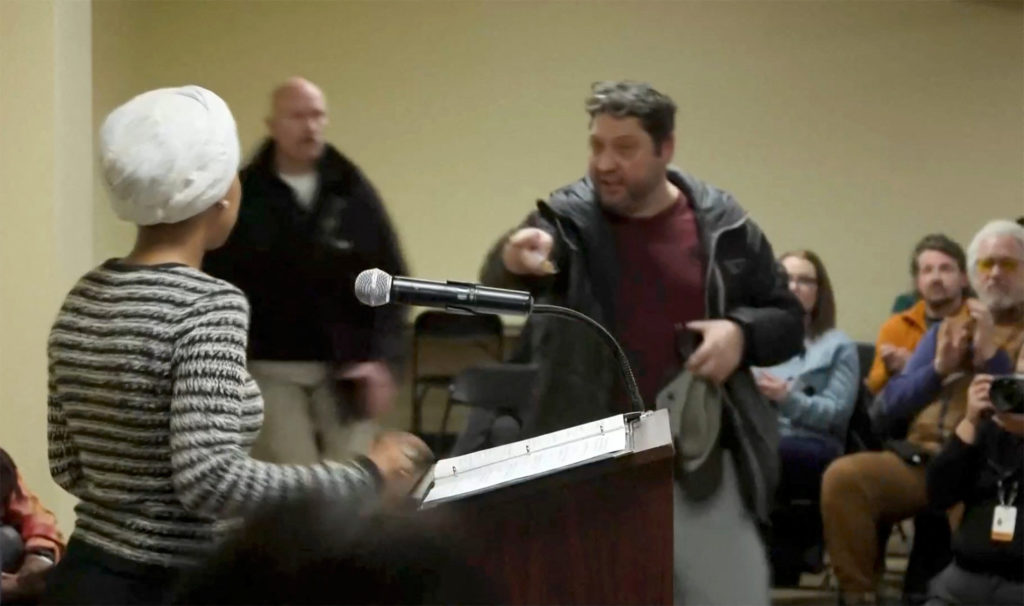
Man arrested after spraying unknown substance on Rep. Ilhan Omar at Minneapolis town hall
I’m gonna put a stop to your sending away for stuff to sell. It’s for your own good.


I’m gonna put a stop to your sending away for stuff to sell. It’s for your own good.
Manslaughter Honked At
The post Manslaughter Honked At appeared first on The Onion.
Trump Claims U.S. Used ‘Discombobulator’ Weapon In Maduro Raid
President Donald Trump said the U.S. used a weapon he referred to as “the discombobulator” to capture former Venezuelan President Nicolás Maduro, claiming it made the enemy equipment “not work.” What do you think?

“Every nation has a sovereign right for their head of state to remain combobulated.”
Gina Montes, Yam Peeler

“Our military contracts with Dr. Ballyhoo’s Fantabulous Gizmo Emporium are paying off big time.”
Otis Zefran, Netting Specialist

“Cut the technical jargon, college boy.”
Ben Goff, Retired Jeweler
The post Trump Claims U.S. Used ‘Discombobulator’ Weapon In Maduro Raid appeared first on The Onion.
Man Unrecognizable After Full 8 Hours Of Sleep
BOSTON—Prompting exclamations of astonishment from colleagues and supervisors, local man Joshua Lingard reportedly appeared entirely unrecognizable Wednesday after enjoying a full eight hours of sleep. “Oh my gosh, I didn’t even realize it was Josh without those dark bags under his eyes and his usual lifeless monotone,” said Lingard’s coworker Alison Conners, who gasped in surprise as she witnessed the utterly transformed 43-year-old enter their office after an unbroken night of rest, smile with genuine enthusiasm, and greet her with an uncharacteristic sense of mental clarity. “It’s not just that his skin isn’t all puffy and pale, either. There’s something about his personality—I think it’s that he isn’t constantly staring into the distance in a mixture of confusion and pain. Plus, he’s actually getting work done. At first I thought Josh had a more handsome brother whose brain functioned normally, but it’s actually him. Incredible.” Coworkers later expressed relief when Lingard drank caffeine after 2 p.m., ensuring he would return to his typical dysfunctional self the next day.
The post Man Unrecognizable After Full 8 Hours Of Sleep appeared first on The Onion.
 ALT
ALTWhat was the secret sauce that allows for a faster restart of Windows 95 if you hold the shift key?
Commenter Otul Osan wondered what was happening when the user held the Shift key when restarting Windows. Windows displays the message “Windows is restarting” rather than doing a full cold restart of the system.
The behavior you’re seeing is the result of passing the EW_ flag to the old 16-bit ExitWindows function.
What happens is that the 16-bit Windows kernel shuts down, and then the 32-bit virtual memory manager shuts down, and the CPU is put back into real mode, and control returns to win.com with a special signal that means “Can you start protected mode Windows again for me?”
The code in win.com prints the “Please wait while Windows restarts…” message, and then tries to get the system back into the same state that it was in back when win.com had been freshly-launched.
One of the things it has to do is to reset any command line options that had been passed to win.com. This is largely clerical work, but it is rather cumbersome because win.com was written in assembly language. And some global variables need to be reset back to the original values.
You might recall that .com files are implicitly given all of the remaining available convention memory when they launch. Programs can release that memory back to the system if they want to make it available to other programs. In win.com‘s case, it releases all the memory beyond its own image back to the system so that there is a single large contiguous block of memory for loading protected-mode Windows.
If somebody had allocated memory in the space that win.com had given up for protected-mode Windows, then convention memory will be fragmented, and the “try to get the system back into the same state that it was in back when win.com had been freshly-launched” is not successful because the expected memory layout was “one giant contiguous block of memory”. In that case, win.com says, “Sorry, I can’t do what you asked” and falls back to a full reboot.
Otherwise, everything looks good, and win.com jumps back to the code that starts protected-mode Windows, and that re-creates the virtual machine manager, and then the graphical user interface launches, and the user sees that Windows has restarted.
Bonus chatter: A common trick in assembly language back in this era when you counted every byte was to take the memory that holds functions that will no longer be called and reuse them as uninitialized data. It’s free memory!
In the case of win.com, the original code reused the first bytes of the entry point as a global variable since the entry point executes only once. Once you get past the entry point, it’s dead code, so you can put a global variable there! Fortunately, the “fast-restart” case doesn’t jump all the way back to the entry point, so the fact that those instructions were corrupted is not significant.
Bonus bonus chatter: Otul Osan also noted that the fast-restart wasn’t perfect: If you try two fast-restarts in a row, the second one crashes. I wasn’t able to reproduce this. I was able to fast-restart four times in a row without incident. My guess is that some device driver did not reset itself properly, so when the system restarted, the second instance of the driver saw a slightly weird device, and the weirdness finally caught up to it at shutdown. (Maybe it corrupted some memory that didn’t cause problems until shutdown.)
The post What was the secret sauce that allows for a faster restart of Windows 95 if you hold the shift key? appeared first on The Old New Thing.
Microspeak: On fire, putting out fires
Remember, Microspeak is not necessarily jargon exclusive to Microsoft, but it’s jargon that you need to know if you work at Microsoft.
When something has gone horribly wrong and requires immediate attention, one way to describe it is to say that it is on fire. The obvious metaphor here is that the situation is so severe that it is as if the office building or computer system was literally on fire.
Here are some citations I found.
I’ll be back in Redmond on Monday. Is anything on fire?
This person is just checking in to see if there are any emergencies.
I think the Nosebleed branch is still on fire.
This person is saying that they think that the Nosebleed branch is still in very bad shape. My sense that being on fire is worse than being on the floor. If a branch is on the floor, then that probably means that there’s a problem with the build or release process. But if the branch is on fire, it suggests that they have identified some critical issue in the branch, and everybody is scrambling to figure it out and fix it.
While looking for citations, I found the minutes for a meeting titled “What’s on Fire Meetings”, which I guess is a regular meeting to report on whatever disaster is currently unfolding this time.
I even found some citations from my own inbox.
That’s my top item once I can wrap up the work I’m doing for the Nosebleed feature, but Nosebleed is always on fire.
Even the fires are on fire.
There is a channel on our team called “Fires” which is where people report on anything on fire and collaborate on putting out that fire. Putting out fires is the preferred way to say that someone is trying to fix whatever is on fire.
Bonus chatter: Note that this is not the same as saying that a person is “on fire”, which is slang for saying that they are doing exceptionally well.
The post Microspeak: On fire, putting out fires appeared first on The Old New Thing.
Beware of freezing fog this morning as cool temperatures continue for the region
In brief: In this morning’s post we discuss the phenomenon of freezing fog, which parts of the region are experiencing this morning. We also talk about Houston’s brief warm-up over the next two days before another Arctic front surges in for the weekend. At least there’s no freezing precipitation this time.


Freezing fog
You’re familiar with fog. But are you familiar with freezing fog? It’s not something we have to contend with too often in Houston, but conditions are such that fog is forming this morning (light winds, dewpoints near air temperatures, etc.) Freezing fog occurs when tiny droplets of fog freeze instantly on exposed surfaces outside, including windshields and walkways. If it’s freezing at your location this morning, which it is for large areas outside of Houston’s urban core, you may notice a slight sheen of frost or ice this morning. It will be slippery so take care.
Wednesday
After a chilly start to the morning, we are going to see highs this afternoon push up into the mid-50s for most of the region. Winds, from the north, will be light. Low temperatures tonight will be a couple of degrees warmer than Tuesday night, but for outlying areas a light freeze (and freezing fog) will again be possible.
Thursday
This will be the warmest day of the week, with high temperatures reaching up to near-normal levels for late January, in the low- to mid-60s for most locations. Some clouds will build on Thursday night, but there likely won’t be enough moisture to support any precipitation as a cold front passes through after midnight. Lows will be in the upper 30s as this front moves through.
Friday
Expect a cold day with partly cloudy skies and brisk northerly winds, gusting up to 20 mph or perhaps a bit higher. High temperatures will top out at around 50 degrees. As skies clear overnight the region, away from the coast, is likely to see a light freeze. I’d expect lows of about 30 degrees in Houston and most suburbs.
Saturday
A secondary push of Arctic air will arrive on Saturday, and this will accordingly be a rather cold day despite sunny skies. Expect highs perhaps only around 40 degrees, with overnight lows falling into the 25 to 30 degree range in Houston. A hard freeze is possible along and north of a line from Katy to The Woodlands, although temperatures should be a little warmer than what we experienced during this most recent Arctic cooldown.
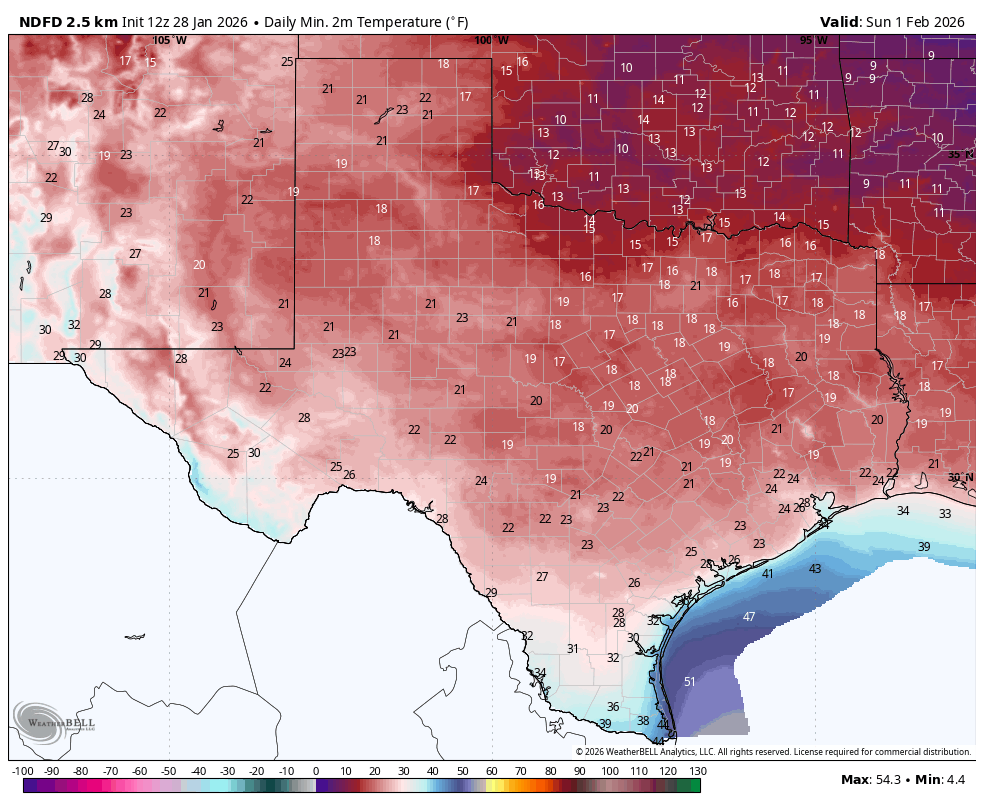
Sunday
Highs will rebound to around 50 degrees on Sunday, so still cold, but not as cold. I expect Houston to remain slightly above freezing on Sunday night, but a light freeze will be possible for inland areas. If you’re wondering, Sunday night appears to be the region’s last chance for a freeze until at least mid-February.
Next week
Temperatures will rebound into the 60s next week, with nights generally in the 40s. The combination of a coastal low pressure system and a cool front should bring a decent shot of rain into the area beginning Tuesday night into Thursday, details to be determined.

Whistleblower responds after DOJ confirms DOGE mishandled Social Security data
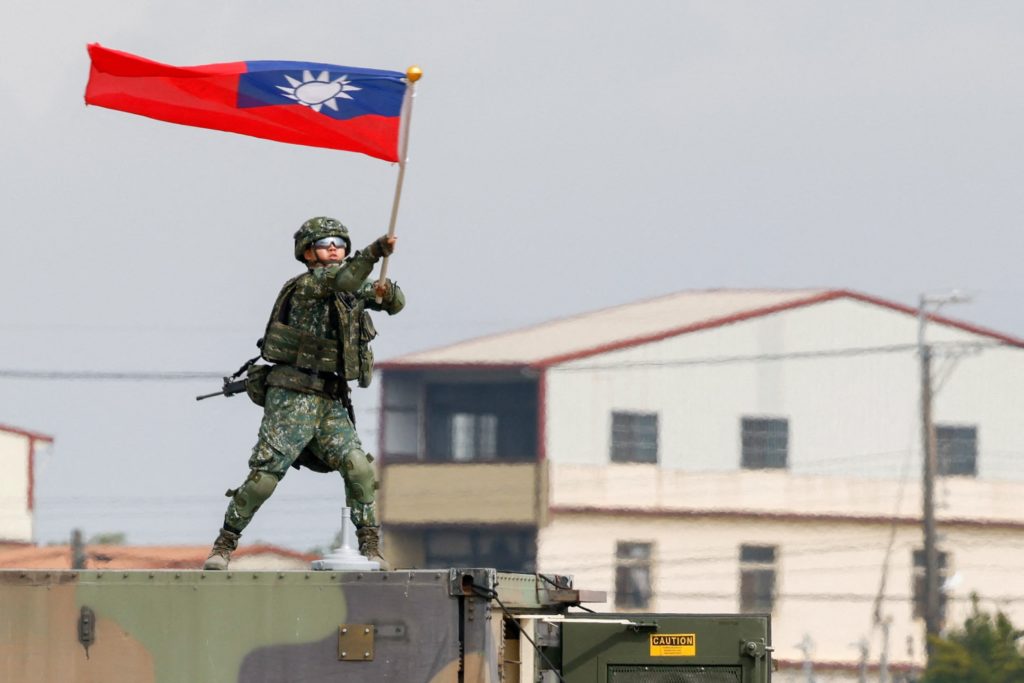
Taiwan fears U.S. ouster of Maduro may embolden China to mimic the move
Look, wouldja just bring me my meatloaf?

Look, wouldja just bring me my meatloaf?
The Onion’s Exclusive Interview With Gregory Bovino
Gregory Bovino, who was responsible for immigration enforcement operations in Minnesota, has been ousted as the U.S. Border Patrol’s “commander at large.” The Onion sat down with Bovino to discuss his career at the agency.
The Onion: What would you say to people who call you Gestapo?
Bovino: I’d ask why they aren’t speaking English.
The Onion: What are you most proud of?
Bovino: The collection of children’s backpacks mounted on my wall.
The Onion: How do you respond to people who say your coat looks like an SS coat?
Bovino: It’s not an SS coat. It’s a Wehrmacht M42 Greatcoat.
The Onion: How did you get started in law enforcement?
Bovino: Border Patrol scouted me after they heard I was making other people at the gun range uncomfortable.
The Onion: Do you regret the killings in Minnesota?
Bovino: Yes. Our mission has always been to spread terror, and due to our recklessness, there are now two less people who can feel it.
The Onion: What’s next for you?
Bovino: I’ve accepted a position grabbing kids’ legs from under their beds at night.
The post The Onion’s Exclusive Interview With Gregory Bovino appeared first on The Onion.
Alex Honnold Successfully Free Solos Taipei 101 Skyscraper
Climber Alex Honnold successfully scaled the Taipei 101 skyscraper, the 11th tallest in the world, without a harness, ropes, or any other safety equipment. What do you think?

“We’ve finally put a man on the roof.”
Grant Lazzara, Recipe Developer
“Anyone could do that if they were the best climber in the world.”
Kevin Woelfel, Podcast Ranker

“This guy would love REI. They’ve got a climbing wall inside the store!”
Judith Moyers, Lumber Relocator
The post Alex Honnold Successfully Free Solos Taipei 101 Skyscraper appeared first on The Onion.
Carney opens Quebec speech by saying “We all agree Maurice Richard was overrated right?”
“I’m just saying: he wouldn’t even make the league today.” Luke and the Panel (Clare Blackwood and Ian MacIntyre) are joined by Edmonton’s own Henry Sir (Current Events Chirped by a Canadian) for a live podcast taping, as part of the Winterruption Festival. Live on stage in front of a sold out crowd we talk […]
The post Carney opens Quebec speech by saying “We all agree Maurice Richard was overrated right?” appeared first on The Beaverton.
Man who wouldn’t wear mask to protect people fine wearing mask to shoot them
MINNEAPOLIS, MN – A man who refused to wear a mask to protect other people in 2020 has declared he has no problem wearing one while shooting them. Kyle Weekes, 31, was staunchly anti-mask during the COVID-19 pandemic, despite its importance in protecting his fellow citizens. “Masks infringed upon my civil rights,” says Weekes, who […]
The post Man who wouldn’t wear mask to protect people fine wearing mask to shoot them appeared first on The Beaverton.
Please Don’t Say Mean Things about the AI That I Just Invested a Billion Dollars In
“[Nvidia CEO] Jensen Huang Is Begging You to Stop Being So Negative About AI” — Headline from Gizmodo
Guys, enough is enough. Bullying is a serious issue, and it’s time for me to speak out. There’s an extremely hurtful narrative going around that my product, a revolutionary new technology that exists to scam the elderly and make you distrust anything you see online, is harmful to society. This slander is totally unwarranted, and I would really appreciate it if everyone would stop being so mean about this thing I just invested a billion dollars in.
As someone who desperately needs this technology to work out, I can honestly say it is the most essential tool ever created in all of human history. Don’t mercilessly ridicule it just because it steals the joy out of your hobbies and creates sexually explicit images of women without their consent. Seriously, please stop! It really hurts my feelings.
It’s easy to throw stones if you think about the job displacement and ecological destruction caused by this pointless technology. But such black-and-white, not-wanting-billionaires-to-get-richer thinking is, quite frankly, cruel. You can’t just measure the value of something in terms of “whether or not it makes everything worse for everyone.” The world is much more complicated than that.
This technology is going to fuel innovation across industries and solve all problems of feminism and equal rights. Yes, it’s expanding the surveillance state, and yes, it’s destroying the education system, and yes, it’s being trained on copyrighted work without permission, and yes, it’s being used to create lethal autonomous weapons systems that can identify, target, and kill without human input, but… I forget my point, but ultimately, I think you should embrace it.
Lately, I feel like I just can’t win with you guys. Please, just use my evil technology. What’s so wrong with that? Just use it. I’m begging you. I want to continue living my immoral technofascist life without any criticism.
Saturday Morning Breakfast Cereal - Friend

Click here to go see the bonus panel!
Hovertext:
What's really sad is he already bought a selection of nail polishes, knowing he didn't even have nails.
Today's News:
The flip chart easel

Show some respect for the flip chart easel.
The post The flip chart easel appeared first on Bad Machinery.
‘Dad’s Under A Lot Of Pressure At Work,’ Says Woman Of Husband Who Spends Half Day Playing ‘Clash Of Clans’
TACOMA, WA—Urging her kids to cut their dad some slack amid the added stressors of his work life, area woman Ashlyn Bergman reportedly informed her children Tuesday that their father, who typically spends half his workday playing Clash Of Clans on his phone, was “under a lot of pressure at work.” “He doesn’t love you any less—he just has a lot on his plate at the office lately and needs some space,” Bergman said of her husband, Jake, who had spent a majority of the day at his desk on the popular fantasy-themed mobile game raising an army of small cartoon peasants and springing for the occasional in-app purchase of additional gems to trade for new elixirs and hero skins. “He might snap at you sometimes, but he doesn’t mean it. He’s just has a very stressful job and works really hard to provide for us all.” According to sources, Bergman’s husband later called home to explain that he had been forced to stay at work late due to an unexpectedly heavy goblin attack.
The post ‘Dad’s Under A Lot Of Pressure At Work,’ Says Woman Of Husband Who Spends Half Day Playing ‘Clash Of Clans’ appeared first on The Onion.
letters from Minneapolis
Some letters from Minneapolis:
For the past several weeks, the Twin Cities, and the state of Minnesota overall, has been under siege by federal agents. My friends and coworkers are scared to leave their homes. Every day we see and hear about another innocent person being harassed, detained, and spirited away by plane and kept from their family, friends, pets, and lawyers. Neighbors exercising their constitutional rights are gassed and beaten. Victims emerge from detention centers with horrifying accounts. My friend was on the scene when Renee Good was murdered. In some of the coldest weather of my life, we stood outside for hours screaming for ICE to leave. People are not exaggerating with their comparisons to the gestapo. The streets crawl with them.
And yet I’m at an employer that has kept largely quiet about it. We’re a nonprofit (though not the kind that provides a public service) headquartered in Minneapolis, and after the execution of Alex Pretti the C-suite sent another email that they don’t make position statements unless it has to do with our mission.
My expectations of my org’s leaders were already in the toilet thanks to their previous poor decisions, but my coworkers, passionate people who took lower paying jobs at a nonprofit to do good in the world, are repeatedly infuriated by this. There are constant conversations about “what to do” and “how could they do this”? My personal solution is to not give a fig about this place and put my energy into activities outside of my job, but I won’t tell my coworkers to stop caring.
How am I supposed to work when what little motivation I muster evaporates upon hearing the frustration of my coworkers? How can we take anything seriously for this org at all? I just need to get the bare minimum done so that I don’t find myself needing to stay late to finish whatever task and never think about my job after 4 pm hits. I even dropped out of a job candidacy because I just cannot handle interview prep with this actively happening. This feels so very different from Covid, or even George Floyd, where most people in government at least tried to deescalate things. Now the federal government is actively lying and making calculated decisions to attack us even more, and many of us that are in the midst of it have no idea how many people outside Minnesota truly get what’s going on.
* * * * *
I live in Minnesota. I don’t live inside Minneapolis/St. Paul but grew up there and I have many friends and immediate family there. As you can imagine, life is difficult right now. The news feels constant and unrelenting. I am doing what I can to support my community, but no one knows when the occupation will end and it feels like things are escalating. I worry about my community and my country, I have friends who have been targeted by ICE, and in the midst of this I have to carry on for my young children.
I work for a large multinational corporation. We have a massive office here but I work from home permanently. My boss, my line of leaders, and everyone on my team lives elsewhere. And it feels impossible to work now, which is unfortunate because this is a busy time of year and I have many things to get done. Telling my coworkers that I’m under stress is hard because what is happening has been politicized, so I don’t know how it will be received or how people will respond. And everyone else seems to be going along just fine with their days, discussing projects and deadlines, while I stare at my screen, unable to form sentences.
I have a therapist and I’m not in a mental health crisis, I’m just struggling to work while the world falls down around my community. I know the answer is “take time off’ but how do I explain this to my leaders, who are expecting me to deliver on high-profile projects?
* * * * *
I work in Minneapolis. Renee Good and Alex Pretti were murdered here.
My employer has not acknowledged the murders. They have not acknowledged that the office’s collective mental health is in the gutter. There are wind chills of -35F today, with frostbite of exposed skin in 10 minutes or less, but we are still expected to go in to the office in person. We all are. I have been grabbed by ICE multiple times and demanded that I turn over my passport to them, as well as my work ID, trying to get to the office. They don’t care. They’re more afraid of speaking up than of something happening to any of us. We’re just dead weight to them.
I don’t know what to do anymore about any of it.
* * * * *
I work full-time as an admin assistant for three different professionals. There is a central office I work out of that I commute to by bus, but the people I support are elsewhere (one in another city in the same state, two together in the same office out of state). I don’t currently have the ability to work from home. I also live in south Minneapolis, literally blocks from where Alex Pretti was recently killed.
Needless to say, this is affecting me on multiple levels. On a logistical level, I’ve had to request PTO on short notice due to the ongoing volatile situation. On a cognitive and emotional level, I’ve been making mistakes at work due to stress. My job requires consistency, strong communication, and a high level of attention— all of which I have! Normally.
I’m doing my best to keep work and emotions separate, but there’s some inevitable bleed and it’s showing up in ways that make me look careless. I’ve only had this position for six months, and although my three-month review was glowing and the professionals I support have had overwhelmingly positive feedback for me so far, I’m worried I don’t have enough of a track record established for what’s going on right now not to cause problems for me down the line.
How transparent should I be about what’s going on? I’m sure the people I support have a general idea of the situation, and they know I live in Minneapolis, but I’m not sure they’re aware how literally and figuratively close to home all this is for me.
If it was a personal issue, I wouldn’t hesitate to let them know in appropriately vague terms that I was dealing with temporary extenuating circumstances that I am doing my best to mitigate. As it is, though, I work in a somewhat conservative industry and I worry even introducing the topic runs the risk of being inappropriately “political” at work. But also, my city is under armed occupation and my neighbor was just shot in the street in broad daylight, so I am (understandably I think) extremely not okay!
It is okay that you do not feel okay. We just watched our government brutally murder a man in the street.
None of us should feel okay. None of this is okay.
You don’t need to pretend that it is. You are allowed to be human.
It is normal not to be your usual productive self right now. You, like many of the rest of us, are exhausted, distracted, overwhelmed, sickened, and scared.
It is okay to scale back the expectations on yourself and your coworkers to just the minimum right now.
If you need to spell it out for colleagues who aren’t in the area, do: “It’s really rough here right now. We’re right in the middle of everything that’s on the news.” … “People are being accosted on the streets going to and from work, and we’re terrified. No one here is at 100% right now.” … “People are being pulled out of their cars for driving down the wrong street. We’re working in what’s essentially a war zone, so some of this will need some extra time.”
If you do have like-minded colleagues, think about banding together to demand that people in a position to do more — your company’s leadership — do more. There is safety in numbers, and there is power in numbers.
Maybe that means calling out your leadership for staying quiet and expecting business as usual from you and your colleagues and not actively working to keep employees safer. It could mean asking them to do things like:
• explicitly giving people permission to do what they need to feel safe, including working remotely or delaying travel
• covering hotel rooms for people who can’t safely go home
• providing more mental health days and breaks
• pulling back on expectations while you’re under siege
• sharing detailed instructions for scenarios involving ICE that might come up at or near work, including contact information for legal help
And it could also mean calling on them to use their influence with higher levels of government to demand that ICE leave your city.
We have more power than they want us to think.
The post letters from Minneapolis appeared first on Ask a Manager.
my office bully told her class we’re in a relationship
A reader writes:
I have the oddest situation. I have given my notice at a healthcare nonprofit (let’s call it the Wellness Alliance). I’ve been a part of Wellness since the very early days. One of the people I mentored, Katy, went into leadership, became the lead social worker, and turned people against me when our last CEO left. I recently gave notice because Katy got the leadership team to bully a young staff member out of Wellness after they asked for my help on a case, even though Katy had ignored their request, and that was the final straw for me.
Katy had a sessional gig at our local college, and I recently met one of her students, Fergus. Fergus was looking for an unpaid internship placement required for school and wanted to know if I could serve as his supervisor and secure a placement at Wellness (placement supervision is Katy’s job).
I laughed and told him I was leaving Wellness and, besides, Katy would never allow it. Fergus was surprised and said, “But isn’t Katy your girlfriend?” And I sputtered, “Oh no, Katy hates me.” Apparently, in the class Katy taught, every non-white student wrote in to complain about how she was racist in the social work class and targeted non-white students specifically. I explained that I wasn’t surprised given what I saw at Wellness. (Katy is every bad trope of the Liberal White Woman, and I am a white woman.)
But I asked Fergus why they thought Katy and I were romantically involved. And it’s because Katy told her class, “I’m a lesbian and met my partner Jen at my organization,” and I’m the only Jen here. Fergus was very relieved to know I wasn’t dating Katy, and said he had been reluctant to even ask for my help for the last couple of months because I was Katy’s girlfriend. I cannot have young people in our profession hesitant to reach out to me.
The only reason I can think of is that she’s aligning herself with me to increase her credibility. I am highly respected in our community, and I’ve received awards and accolades. And Katy has definitely pushed to take over my jobs.
I don’t think Wellness cares about any of this because of all of my attempts to fix issues caused by Katy have been ignored. However, it’s quite shocking to hear that her racism is much worse than I thought and is turning off potential hires (especially ones who would bring much needed diversity to the organization). And allowing people to infer an intimacy that only benefits her and possibly alienates people from getting my support is deeply upsetting.
What should I do? I want Katy to stop saying we’re dating, but we haven’t spoken in months, and that is such a weird accusation to level at someone who has everyone’s ear. Also, it’s very sad that Wellness is alienating the broader community, and this time it isn’t just me seeing the problem. I’ve been considering asking to do an exit interview with the board because of the way racism impacts our work, but what could they even do about the weird relationship allegation thing?
This is extremely strange, but I’m not sure it’s really actionable or that you need to find a way to address it.
First, though, is it possible that Katy does have a partner named Jen and met her at a different organization? “I met my partner at my organization” could mean “I met my partner at the organization I was working at three years ago, before I started my current job” or “I met my partner at the volunteer organization I run in my spare time.” Both of those seem more likely than Katy lying and saying she’s involved with a specific person who she’s actually worked to turn others against! It’s possible that if you discreetly asked around, you might find that Katy does have a partner named Jen, at which point I’d assume the rest of this theory explains what happened.
Obviously, though, if Katy is telling people you’re her partner, that’s incredibly bizarre. There are really only three things you could do about it, though:
1. Do you have the kind of relationship with Katy where you could just ask her if she’s dating someone named Jen and explain there’s a case of mistaken identity, and see what she says? I realize you might not, but you did used to mentor her and if there aren’t open hostilities, you could probably just mention it the same way you would if you thought it was a genuine miscommunication.
2. Do you have the kind of rapport with Fergus where you could tell him you’re concerned that he was reluctant to contact you because he thought you were Katy’s girlfriend and that you worry others in the class might feel the same, and ask that he correct the record with classmates he talks to, at least if it comes up organically?
3. Alternately, you could do … nothing. Yes, this is weird and unsettling to hear, and you don’t want to be affiliated with a racist jerk (ever, and especially when that affiliation may turn people off from approaching you). But this just might not be something you have the ability to widely correct, short of taking out “I’m not dating Katy Mulberry” ads in industry publications.
My vote is for #3 (minus the ads), and maybe #1 if you’re up for it, while making a point of being warm and approachable to people in your field and demonstrating through your behavior that you aren’t like Katy.
Separately, you could ask for an exit interview with the board, but if you do that, stay focused on the racism concerns; the board isn’t the right forum to raise the strange relationship thing.
The post my office bully told her class we’re in a relationship appeared first on Ask a Manager.
Dove Finally Admits Some People Ugly
HOBOKEN, NJ—In a major shift from the company’s decades-long focus on inner beauty, personal care product brand Dove finally admitted Tuesday that some people are ugly. “Despite years of claims that people of all shapes and sizes are beautiful, we are now prepared to agree that there are some butterfaced uggos out there whose looks cannot be fixed by any amount of attitude or personal style,” said Dove brand overseer Fabian Garcia, telling reporters Dove officially recognized many asymmetrical faces and unsightly blemishes could cause a person’s appearance to fall far short of any reasonable beauty standard. “We’ve striven to promote body positivity and confidence with our ad messaging, but we have to be honest and own up to the fact that there are some total twos out there who should probably put a bag over their head for everyone’s sake and, even then, only go out at night. While we will continue to offer our signature collection of body care products to everyone, we want to be clear that a great deal of our consumer base has at least one or two physical characteristics—be it a pig nose, a protruding forehead, or eyes that are too close together—that make them totally unfuckable.” Garcia added that in acknowledgment of this reality, Dove would be introducing a new soap for users to spray directly into their eyes after witnessing these heinous freaks.
The post Dove Finally Admits Some People Ugly appeared first on The Onion.
Police Ask For Public’s Help In Falsifying Report
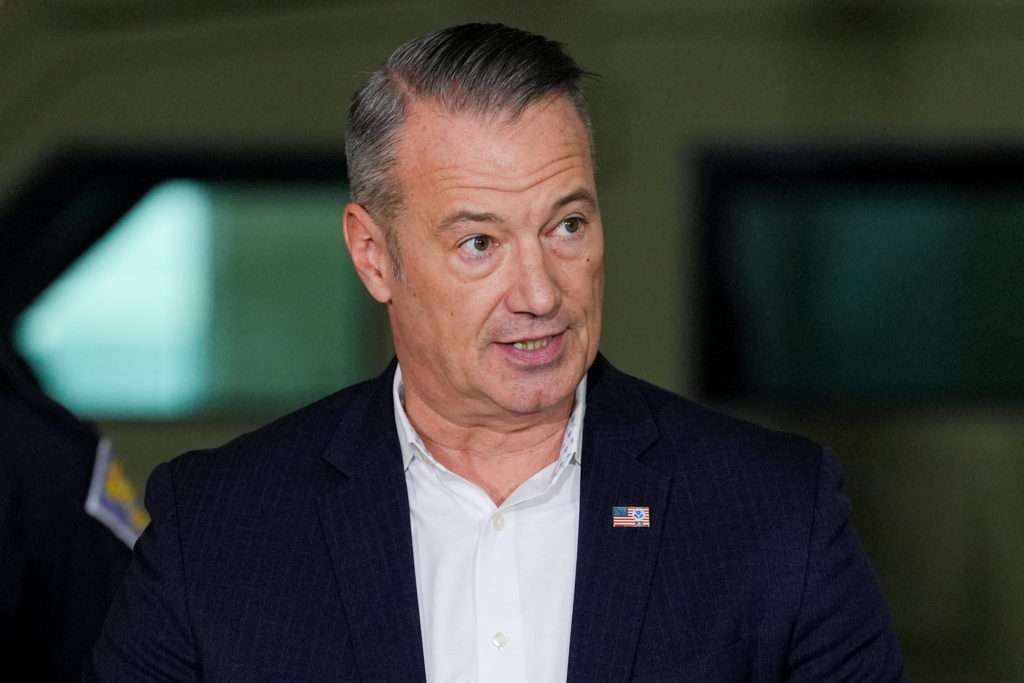
ICE chief ordered to appear in court to explain why detainees have been denied due process
JD Vance Places Candle Outside Hooters Where ICE Agents Were Heckled
The post JD Vance Places Candle Outside Hooters Where ICE Agents Were Heckled appeared first on The Onion.