Nature Reviews Chemistry, Published online: 18 February 2021; doi:10.1038/s41570-021-00255-8
Structures and activities of classical heterogeneous catalysts, electrocatalysts and photocatalysts can evolve over time. This Review compares such systems and emphasizes characterization of the true active sites.Robby Vroemans
Shared posts
17 Mar 10:37

Structural transformations of solid electrocatalysts and photocatalysts
by Lichen Liu
Juanjuan likes this
24 Feb 18:21

Cover Feature: Atroposelective Synthesis of Isoriccardin C through a C−H Activated Heck Type Macrocyclization (Eur. J. Org. Chem. 9/2021)
by Lisa Marx,
Daniel Lamberty,
Sabine Choppin,
Françoise Colobert,
Andreas Speicher
The Cover Feature shows a chiral sulfinyl auxiliary in the ortho‐position of a biaryl axis inducing a C–H activated atroposelective macrocyclization with final transformation to the configurationally stable natural Isoriccardin C. More information can be found in the Communication by S. Choppin, A. Speicher et al.
24 Feb 11:10

Author Correction: An all-to-all approach to the identification of sequence-specific readers for epigenetic DNA modifications on cytosine
by Guang Song
Nature Communications, Published online: 23 February 2021; doi:10.1038/s41467-021-21726-y
Author Correction: An all-to-all approach to the identification of sequence-specific readers for epigenetic DNA modifications on cytosine
24 Feb 11:09
Recent Advances in Transition-Metal-Free (4+3)-Annulations
by Lam, Heather
Synthesis
DOI: 10.1055/s-0040-1706023

(4+3)-Annulations are incredibly versatile reactions which combine a 4-atom synthon and a 3-atom synthon to form both 7-membered carbocycles as well as heterocycles. We have previously reviewed transition-metal-catalyzed (4+3)-annulations. In this review, we will cover examples involving bases, NHCs, phosphines, Lewis and Brønsted acids as well as some rare examples of boronic acid catalysis and photocatalysis. In analogy to our previous review, we exclude annulations involving cyclic dienes like furan, pyrrole, cyclohexadiene or cyclopentadiene, as Chiu, Harmata, Fernándes and others have recently published reviews encompassing such substrates. We will however discuss the recent additions (2010–2020) to the literature on (4+3)-annulations involving other types of 4-atom-synthons.1 Introduction2 Bases3 Annulations Using N-Heterocyclic Carbenes3.1 N-Heterocyclic Carbenes (NHCs)3.2 N-Heterocyclic Carbenes and Base Dual-Activation4 Phosphines5 Acids5.1 Lewis Acids5.2 Brønsted Acids6 Boronic Acid Catalysis and Photocatalysis7 Conclusion
[...]
Georg Thieme Verlag KG Rüdigerstraße 14, 70469 Stuttgart, Germany
Article in Thieme eJournals:
Table of contents | Abstract | Full text
24 Feb 11:08
 Open Access
   This article is licensed under a Creative Commons Attribution 3.0 Unported Licence.

Classic highlights in porphyrin and porphyrinoid total synthesis and biosynthesis

Chem. Soc. Rev., 2021, 50,4730-4789
DOI: 10.1039/C7CS00719A, Review Article
DOI: 10.1039/C7CS00719A, Review Article
Open Access  This article is licensed under a Creative Commons Attribution 3.0 Unported Licence.
Mathias O. Senge, Natalia N. Sergeeva, Karl J. Hale
The development of porphyrin synthesis is illustrated, using classic and modern-day examples, which attempt to provide insights, including mechanistic ones, into the most used methods for porphyrin ring-construction and selective functionalization.
The content of this RSS Feed (c) The Royal Society of Chemistry
The development of porphyrin synthesis is illustrated, using classic and modern-day examples, which attempt to provide insights, including mechanistic ones, into the most used methods for porphyrin ring-construction and selective functionalization.
The content of this RSS Feed (c) The Royal Society of Chemistry
23 Feb 07:40


[ASAP] A Decade of FDA-Approved Drugs (2010–2019): Trends and Future Directions
by Dean G. Brown and Heike J. Wobst

Journal of Medicinal Chemistry
DOI: 10.1021/acs.jmedchem.0c01516
23 Feb 07:39

[ASAP] A Carbodiimide-Mediated P–C Bond-Forming Reaction: Mild Amidoalkylation of P-Nucleophiles by Boc-Aminals
by Paraskevi Kokkala, Thayalan Rajeshkumar, Anastasia Mpakali, Efstratios Stratikos, Konstantinos D. Vogiatzis, and Dimitris Georgiadis

Organic Letters
DOI: 10.1021/acs.orglett.1c00155
Damián likes this
23 Feb 07:39

[ASAP] Pillar[6]arene: Light Cleaves Macrocycle to Linear Oligomer Biradical to Initiate Photopolymerization
by Shuai Zhao, Tanlong Xue, Di Pei, Qiuyan Song, Zhichao Pei, Jun Nie, and Yincheng Chang

Organic Letters
DOI: 10.1021/acs.orglett.1c00131
22 Feb 07:38

The Winding Road towards an Atropo‐enantioselective ‘ARYNE Coupling’
by David Augros,
Corinne Comoy,
Yves Fort,
Frédéric R. Leroux,
Armen Panossian
The enantioselective addition of aryllithiums onto arynes, leading to axially chiral biaryls in the absence of transition metals, was investigated by means of chiral ligands of lithium. Biaryls with a high degree of steric congestion around the aryl–aryl bond could be obtained.
Abstract
For the first time, the challenging atropo‐enantioselective coupling of in‐situ generated arynes and aryllithiums in the presence of a chiral ligand of lithium was investigated. This preliminary study demonstrates the feasibility of this concept, by affording enantioenriched axially chiral biaryls even in the case of products showing a high degree of steric congestion around the newly created aryl−aryl bond.
19 Feb 16:05

Phthalocyanine as a Bioinspired Model for Chlorophyll f‐Containing Photosystem II Drives Photosynthesis into the Far‐Red Region
by Ally Aukauloo,
Jorge Follana-Berná,
Rajaa Farran,
Winfried Leibl,
Annamaria Quaranta,
Ángela Sastre-Santos
A phthalocyanine chromophore absorbing in the far-red region with a tyrosine residue hydrogen bonded to an imidazole moiety provides the first example of a bioinspired model for the recent discovery that chlorophyll f-containing Photosystem II absorbing in the far-red limit at 727 nm can drive the four-electron water oxidation.
Abstract
The textbook explanation that P680 pigments are the red limit to drive oxygenic photosynthesis must be reconsidered by the recent discovery that chlorophyll f (Chlf)-containing Photosystem II (PSII) absorbing at 727 nm can drive water oxidation. Two different families of unsymmetrically substituted Zn phthalocyanines (Pc) absorbing in the 700–800 nm spectral window and containing a fused imidazole-phenyl substituent or a fused imidazole-hydroxyphenyl group have been synthetized and characterized as a bioinspired model of the Chlf/TyrosineZ/Histidine190 cofactors of PSII. Transient absorption studies in the presence of an electron acceptor and irradiating in the far-red region evidenced an intramolecular electron transfer process. Visible and FT-IR signatures indicate the formation of a hydrogen-bonded phenoxyl radical in ZnPc II-OH. This study sets the foundation for the utilization of a broader spectral window for multi-electronic catalytic processes with one of the most robust and efficient dyes.
19 Feb 15:53

Spotlight on Photoinduced Aryl Migration Reactions
by Marie Huynh,
Maxime De Abreu,
Philippe Belmont,
Etienne Brachet
All smiles: This review summarizes recent reports on photoinduced aryl migration reactions to allow the access to a broad range of functionalized structures. These transformations occur by remote rearrangements and functional‐group modifications. The use of such a strategy opens the way to a plethora of structures under mild and efficient conditions.
Abstract
Rearrangement reactions are certainly one of the most useful approaches towards complex structures in organic chemistry. With efficient conditions, it is indeed possible to convert simple substrates into highly functionalized products. Moreover, combining this approach with an attractive initiation process, such as visible‐light catalysis, makes these reactions particularly powerful. Recently, tremendous improvements have been made, owing to a better understanding of photoredox mechanisms. In this review, recent progress on visible‐light aryl migration reactions is discussed, focusing especially on Smiles rearrangement and related reactions.
chgra27 likes this
19 Feb 07:32

Design and Applications of a SO2 Surrogate in Palladium‐Catalyzed Direct Aminosulfonylation between Aryl Iodides and Amines
by Xiuwen Jia,
Søren Kramer,
Troels Skrydstrup,
Zhong Lian
A SO2 surrogate (SOgen) is reported, which is cheap, bench‐stable, and accessible in just two steps from bulk chemicals. SOgen releases SO2 in just a few minutes when heated in the presence of a styrene. The compatibility of this gas‐releasing method with eight previously reported sulfonylation reactions was demonstrated in a two‐chamber system. Direct aminosulfonylation between aryl iodides and amines is reported.
Abstract
A new SO2 surrogate is reported that is cheap, bench‐stable, and can be accessed in just two steps from bulk chemicals. Essentially complete SO2 release is achieved in 5 minutes. Eight established sulfonylation reactions proceeded smoothly by ex situ formation of SO2 by utilizing a two‐chamber system in combination with the SO2 surrogate. Furthermore, we report the first direct aminosulfonylation between aryl iodides and amines. Broad functional group tolerance is demonstrated, and the method is applicable to pharmaceutically relevant substrates, including heterocyclic substrates.
Robby likes this
19 Feb 07:26

[ASAP] Olive-Shaped Organic Cages: Synthesis and Remarkable Promotion of Hydrazone Condensation through Encapsulation in Water
by Yan-Yan Xu, Hong-Kun Liu, Ze-Kun Wang, Bo Song, Dan-Wei Zhang, Hui Wang, Zhiming Li, Xiaopeng Li, and Zhan-Ting Li

The Journal of Organic Chemistry
DOI: 10.1021/acs.joc.0c02792
19 Feb 07:26

[ASAP] Electrochemically Enabled Selenium Catalytic Synthesis of 2,1-Benzoxazoles from o-Nitrophenylacetylenes
by Lin-Wei Wang, Yu-Feng Feng, Hong-Min Lin, Hai-Tao Tang, and Ying-Ming Pan

The Journal of Organic Chemistry
DOI: 10.1021/acs.joc.1c00012
19 Feb 07:26
Synthesis of N-perfluoroalkyl-3,4-disubstituted pyrroles by rhodium-catalyzed transannulation of N-fluoroalkyl-1,2,3-triazoles with terminal alkynes
by Olga Bakhanovich, Viktor Khutorianskyi, Vladimir Motornov and Petr Beier
Abstract
The rhodium-catalyzed transannulation of N-perfluoroalkyl-1,2,3-triazoles with aromatic and aliphatic terminal alkynes under microwave heating conditions afforded N-perfluoroalkyl-3,4-disubstituted pyrroles (major products) and N-fluoroalkyl-2,4-disubstituted pyrroles (minor products). The observed selectivities in the case of the reactions with aliphatic alkynes were high.
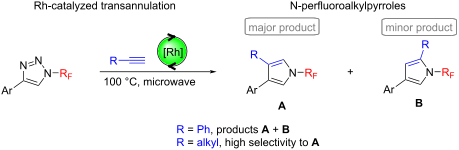
Beilstein J. Org. Chem. 2021, 17, 504–510. doi:10.3762/bjoc.17.44
18 Feb 08:42

[ASAP] Synthesis of Benzothienobenzofurans via Annulation of Electrophilic Benzothiophenes with Phenols
by Akhil Krishnan R., Sheba Ann Babu, Nitha P. R., Jagadeesh Krishnan, and Jubi John
Organic Letters
DOI: 10.1021/acs.orglett.1c00219
MRV likes this
17 Feb 17:08

α‐Diazo Sulfonium Triflates: Synthesis, Structure, and Application to the Synthesis of 1‐(Dialkylamino)‐1,2,3‐triazoles
by Xiangdong Li,
Christopher Golz,
Manuel Alcarazo
A radically new approach to the synthesis of 1‐(dialkylamino)‐1,2,3‐triazoles via addition of diazomethyl radicals to hydrazones is described. This reactivity confirms the utility of the α‐diazosulfonium salts herein introduced as synthetic equivalents of the diazomethyl cation.
Abstract
The one‐pot synthesis of a series of sulfonium salts containing transferable diazomethyl groups is described, and the structure of these compounds is elucidated by X‐ray crystallography. Under photochemical conditions, reaction of these salts with N,N‐dialkyl hydrazones affords 1‐(dialkylamino)‐1,2,3‐triazoles via diazomethyl radical addition to the azomethine carbon followed by intramolecular ring closure. The straightforward transformation of the structures thus obtained into mesoionic carbene–metal complexes is also reported and the donor properties of these new ligands characterized.
17 Feb 13:58

[ASAP] DMAP Catalyzed Domino Rauhut–Currier Cyclization Reaction between Alkylidene Pyrazolones and Nitro-olefins: Access to Tetrahydropyrano[2,3-c]pyrazoles
by Nimisha Bania, Buddhadeb Mondal, Sounak Ghosh, and Subhas Chandra Pan

The Journal of Organic Chemistry
DOI: 10.1021/acs.joc.0c02871
Víctor likes this
17 Feb 12:52
Deoxygenative C2-heteroarylation of quinoline N-oxides: facile access to α-triazolylquinolines
by Geetanjali S. Sontakke, Rahul K. Shukla and Chandra M. R. Volla
Abstract
A metal- and additive-free, highly efficient, step-economical deoxygenative C2-heteroarylation of quinolines and isoquinolines was achieved from readily available N-oxides and N-sulfonyl-1,2,3-triazoles. A variety of α-triazolylquinoline derivatives were synthesized with good regioselectivity and in excellent yields under mild reaction conditions. Further, a gram-scale and one-pot synthesis illustrated the efficacy and simplicity of the developed protocol. The current transformation was also found to be compatible for the late-stage modification of natural products.
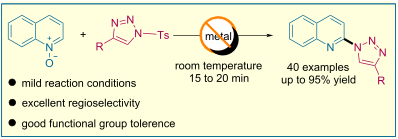
Beilstein J. Org. Chem. 2021, 17, 485–493. doi:10.3762/bjoc.17.42
17 Feb 07:17

[ASAP] Degradation of Organophosphates Promoted by 1,2,4-Triazole Anion: Exploring Scaffolds for Efficient Catalytic Systems
by Juliano M. Fernandes, Rafael N. Soek, Thalita C. do Nascimento, Leociley R. A. Menezes, Guilherme L. Sassaki, and Renan B. Campos
The Journal of Organic Chemistry
DOI: 10.1021/acs.joc.0c02809
17 Feb 07:16

[ASAP] Transition-Metal-Free and Base-Promoted Carbon–Heteroatom Bond Formation via C–N Cleavage of Benzyl Ammonium Salts
by Long Liu, Yuanyuan Tang, Kunyu Wang, Tianzeng Huang, and Tieqiao Chen

The Journal of Organic Chemistry
DOI: 10.1021/acs.joc.0c02992
16 Feb 13:40
Visible-Light-Driven Phosphonoalkylation of Alkenes
by Jiang, Yue-Ming
Synlett
DOI: 10.1055/s-0040-1706681

Phosphonylation of alkenes is important for the generation of valuable organophosphines. However, redox-neutral difunctionalization of alkenes with readily available H-P(O) compounds remains underdeveloped. Herein, we report the first visible-light-driven redox-neutral phosphonoalkylation of alkenes. A variety of organophosphorus-containing three-membered carbocyclic scaffolds are synthesized from alkene-bearing alkyl sulfonates with H-P(O) compounds. The transition-metal-free protocol displays good functional group tolerance, broad substrate scope, high yields, and mild reaction conditions.
[...]
Georg Thieme Verlag KG Rüdigerstraße 14, 70469 Stuttgart, Germany
Article in Thieme eJournals:
Table of contents | Abstract | Full text
16 Feb 12:44
Synthetic strategies of phosphonodepsipeptides
by Jiaxi Xu
Abstract
Phosphonodepsipeptides are phosphorus analogues of depsipeptides and phosphonate-linked analogues of naturally occurring peptides. They are more stable than phosphonopeptides and have been widely applied as enzyme inhibitors, haptens for the production of antibodies, biological agents, and prodrugs. The synthetic strategies towards phosphonodepsipeptides are reviewed, including the phosphonylation of hydroxy esters with phosphonochloridates, the condensation of phosphonic monoesters and hydroxy esters, the alkylation of phosphonic monoesters with 1-(alkoxycarbonyl)alkyl halides or sulfonates, multicomponent condensation of amides, aldehydes, and dichlorophosphites followed by alcoholysis with hydroxy esters, the phosphinylation of hydroxy esters with phosphonochloridites followed by oxidation, and the carbene insertion of N-protected amino acids with 1-diazoalkylphosphonates. This review includes the synthesis of α-, β-, and γ-phosphonodepsipeptides and phosphonodepsipeptides with C-1-hydroxyalkylphosphonic acids.
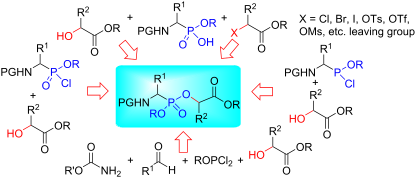
Beilstein J. Org. Chem. 2021, 17, 461–484. doi:10.3762/bjoc.17.41
13 Feb 07:38

Anion Templated Supramolecular Structures Assembled using 1,2,3‐Triazole and Triazolium motifs
by Émer M. Foyle,
Nicholas G. White
This Minireview describes the use of 1,2,3‐triazole and triazolium groups, as well as their halogenated and chalcogenated derivatives, for anion templated self‐assembly. Recent advances in the areas of foldamers, supramolecular polymers and interlocked structures are described including the use of these architectures for anion recognition and catalysis applications.
Abstract
The use of 1,2,3‐triazole and triazolium motifs to construct anion templated supramolecular structures has grown rapidly over the past decade and has enabled a range of complex structures to be synthesised. In this Minireview we highlight the significant advances that have been made in areas such as foldamers, polymers and interlocked systems.
Robby likes this
13 Feb 07:29

[ASAP] A Multicomponent Approach toward Angularly Fused/Linear Bitriazoles: A Cascade Cornforth Rearrangement and Triazolization
by Santhini Pulikkal Veettil, Shandev Pookkandam Parambil, Max Van Hoof, and Wim Dehaen
The Journal of Organic Chemistry
DOI: 10.1021/acs.joc.0c03014
Mathias Daniels, Robby likes this
12 Feb 07:11

[ASAP] Organophotoredox-Catalyzed Three-Component Coupling of Heteroatom Nucleophiles, Alkenes, and Aliphatic Redox Active Esters
by Shotaro Shibutani, Kazunori Nagao, and Hirohisa Ohmiya

Organic Letters
DOI: 10.1021/acs.orglett.1c00211
Peter Bellotti likes this
12 Feb 07:10
The Bruylants and related reactions
ARKIVOC Volume 2021 - Part (i): Special Issue 'Reviews and Accounts'
The Bruylants and related reactions (21-11349FR)
Jean-Marc Robert Mattalia
Full Text: PDF (1,761K)
Supplementary Material: PDF (0K)
pp. 1 - 19
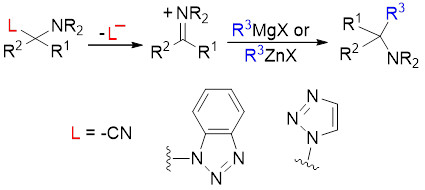
received Aug 31 2020; accepted Nov 11 2020; published Jan 5 2021;
The Bruylants and related reactions (21-11349FR)
Jean-Marc Robert Mattalia
Full Text: PDF (1,761K)
Supplementary Material: PDF (0K)
pp. 1 - 19
received Aug 31 2020; accepted Nov 11 2020; published Jan 5 2021;
12 Feb 07:10
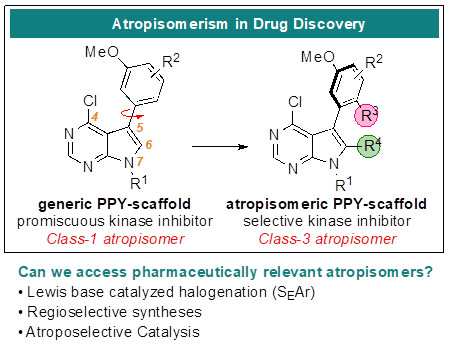
Atropisomerism as inspiration for new chemistry
ARKIVOC Volume 2021 - Part (i): Special Issue 'Reviews and Accounts'
Atropisomerism as inspiration for new chemistry (21-11382LU)
Mariel M. Cardenas, Ashley D. Nguyen, Zachary E. Brown, Beeta S. Heydari, Bahar S. Heydari, Sagar D. Vaidya and Jeffrey L. Gustafson
Full Text: PDF (1,900K)
Supplementary Material: PDF (0K)
pp. 20 - 47
received Sep 23 2020; accepted Nov 11 2020; published Jan 5 2021;
Atropisomerism as inspiration for new chemistry (21-11382LU)
Mariel M. Cardenas, Ashley D. Nguyen, Zachary E. Brown, Beeta S. Heydari, Bahar S. Heydari, Sagar D. Vaidya and Jeffrey L. Gustafson
Full Text: PDF (1,900K)
Supplementary Material: PDF (0K)
pp. 20 - 47
received Sep 23 2020; accepted Nov 11 2020; published Jan 5 2021;
12 Feb 07:06
Open Access
   This article is licensed under a Creative Commons Attribution-NonCommercial 3.0 Unported Licence.

Functionalized heterocycle-appended porphyrins: catalysis matters

RSC Adv., 2020, 10,42388-42399
DOI: 10.1039/D0RA08603G, Paper
DOI: 10.1039/D0RA08603G, Paper
Open Access  This article is licensed under a Creative Commons Attribution-NonCommercial 3.0 Unported Licence.
Inna A. Abdulaeva, Kirill P. Birin, Daria A. Polivanovskaia, Yulia G. Gorbunova, Aslan Yu Tsivadze
The condensation of labile 2,3-diaminoporphyrins with aromatic aldehydes is a versatile technique for the elaboration of functionalized porphyrins. The acidic catalyst in the reaction is a tool that allows the reaction path to be switched.
The content of this RSS Feed (c) The Royal Society of Chemistry
The condensation of labile 2,3-diaminoporphyrins with aromatic aldehydes is a versatile technique for the elaboration of functionalized porphyrins. The acidic catalyst in the reaction is a tool that allows the reaction path to be switched.
The content of this RSS Feed (c) The Royal Society of Chemistry
11 Feb 14:37
1,2,3-Triazoles as leaving groups: SNAr reactions of 2,6-bistriazolylpurines with O- and C-nucleophiles
by Dace Cīrule, Irina Novosjolova, Ērika Bizdēna and Māris Turks
Abstract
A new approach was designed for the synthesis of C6-substituted 2-triazolylpurine derivatives. A series of substituted products was obtained in SNAr reactions between 2,6-bistriazolylpurine derivatives and O- and C-nucleophiles under mild conditions. The products were isolated in yields up to 87%. The developed C–O and C–C bond forming reactions clearly show the ability of the 1,2,3-triazolyl ring at the C6 position of purine to act as leaving group.

Beilstein J. Org. Chem. 2021, 17, 410–419. doi:10.3762/bjoc.17.37
Robby likes this