27 Jul 16:26
Chem. Soc. Rev., 2021, 50,9540-9685
DOI: 10.1039/D1CS00311A, Review Article

Open Access
Jonathan D. Bell, John A. Murphy
Visible light-activated reactions continue to expand and diversify. The example shown here is a Birch reduction achieved by organophotoredox reagents.
The content of this RSS Feed (c) The Royal Society of Chemistry

27 Jul 16:24
by Artem N. Fakhrutdinov, Bogdan Ya. Karlinskii, Mikhail E. Minyaev, and Valentine P. Ananikov

The Journal of Organic Chemistry
DOI: 10.1021/acs.joc.1c00943

27 Jul 16:21
by Teruo Umemoto, Yuhao Yang and Gerald B. Hammond
Abstract
This review deals with the historical development of all N-F fluorinating agents developed so far. The unique properties of fluorine make fluorinated organic compounds attractive in many research areas and therefore fluorinating agents are important. N-F agents have proven useful by virtue of their easy handling. This reagent class includes many types of N-F compounds: perfluoro-N-fluoropiperidine, N-fluoro-2-pyridone, N-fluoro-N-alkylarenesulfonamides, N-fluoropyridinium salts and derivatives, N-fluoroquinuclidium salts, N-fluoro-trifluoromethanesulfonimide, N-fluoro-sultams, N-fluoro-benzothiazole dioxides, N-fluoro-lactams, N-fluoro-o-benzenedisulfonimide, N-fluoro-benzenesulfonimide, 1-alkyl-4-fluoro-1,4-diazoniabicyclo[2.2.2]octane salts, N-fluoropyridinium-2-sulfonate derivatives, 1-fluoro-4-hydroxy-1,4-diazoniabicyclo[2.2.2]octane salts, N-fluorodinitroimidazole, N-fluoro-trichloro-1,3,5-triazinium salt, N-F ethano-Tröger’s base derivatives, N-fluoro-methanesulfonimide, N-fluoro-N-arylarenesulfonamides, bisN-F salts such as N,N’-difluorobipyridinium salts and N,N’-difluoro-1,4-diazoniabicyclo[2.2.2]octane salts, and their many derivatives and analogs, including chiral N-F reagents such as optically active N-fluoro-sultam derivatives, N-fluoro-alkaloid derivatives, DABCO-based N-F derivatives, and N-F binaphthyldisulfonimides. The synthesis and reactions of these reagents are described chronologically and the review also discusses the relative fluorination power of each reagent and their mechanisms chronicling developments from a historical perspective.
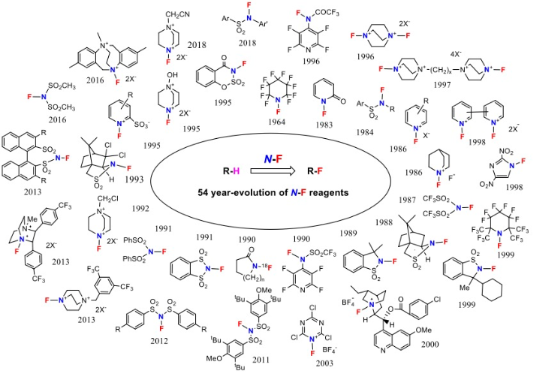
Beilstein J. Org. Chem. 2021, 17, 1752–1813. doi:10.3762/bjoc.17.123
26 Jul 06:04
RSC Adv., 2021, 11,14941-14955
DOI: 10.1039/D0RA06872A, Review Article
Open Access
Rzgar Tawfeeq Kareem, Bayan Azizi, Manzarbanou Asnaashariisfahani, Abdolghaffar Ebadi, Esmail Vessally
Both trifluoromethyl and halide groups are widely found in medicinally and pharmaceutically important compounds and, moreover, organohalides are commonly used as versatile intermediates in synthetic organic chemistry.
The content of this RSS Feed (c) The Royal Society of Chemistry

23 Jul 05:32
by Seunghyeon Kim, Alejandra Martínez Dibildox, Alan Aguirre-Soto, and Hadley D. Sikes

Journal of the American Chemical Society
DOI: 10.1021/jacs.1c04236

23 Jul 05:29
by Scanlon, S. T.
22 Jul 07:57
Chem. Commun., 2021, 57,7997-8002
DOI: 10.1039/D1CC02604F, Feature Article
Chong Li, Juan Wang, Shang-Dong Yang
Different strategies and new P-radical precursor induced C–P bond formation by visible light photocatalysis were summarized.
The content of this RSS Feed (c) The Royal Society of Chemistry

22 Jul 07:49
by Shang-Shi Zhang, Yi-Chuan Zheng, Zi-Wu Zhang, Shao-Yong Chen, Hui Xie, Bing Shu, Jia-Lin Song, Yan-Zhi Liu, Yao-Fu Zeng, and Luyong Zhang

Organic Letters
DOI: 10.1021/acs.orglett.1c01832

19 Jul 08:23
Chem. Commun., 2021, 57,8178-8181
DOI: 10.1039/D1CC02902A, Communication
Sainan Liu, Ying Zhou, Chunling Hu, Lihan Cai, Zhendong Liu, Maolin Pang
Porphyrin-incorporating covalent organic frameworks synthesized at room temperature showed excellent sonodynamic effects.
The content of this RSS Feed (c) The Royal Society of Chemistry

16 Jul 06:05
by Snyder, B. E. R., Bols, M. L., Rhoda, H. M., Plessers, D., Schoonheydt, R. A., Sels, B. F., Solomon, E. I.
Catalytic conversion of methane to methanol remains an economically tantalizing but fundamentally challenging goal. Current technologies based on zeolites deactivate too rapidly for practical application. We found that similar active sites hosted in different zeolite lattices can exhibit markedly different reactivity with methane, depending on the size of the zeolite pore apertures. Whereas zeolite with large pore apertures deactivates completely after a single turnover, 40% of active sites in zeolite with small pore apertures are regenerated, enabling a catalytic cycle. Detailed spectroscopic characterization of reaction intermediates and density functional theory calculations show that hindered diffusion through small pore apertures disfavors premature release of CH3 radicals from the active site after C-H activation, thereby promoting radical recombination to form methanol rather than deactivated Fe-OCH3 centers elsewhere in the lattice.
15 Jul 09:56
by Qi-Kai Kang,
Yunzhi Lin,
Yuntong Li,
Lun Xu,
Ke Li,
Hang Shi

A rhodium-catalyzed hydroxylation of aryl fluorides via η6-coordination was achieved. This method was also applicable in the alkoxylation. A Meisenheimer-type intermediate was successfully isolated and well characterized. Density functional theory calculations and mechanistic studies suggested a stepwise or stepwise-like energy profile for the SNAr reaction.
Abstract
Nucleophilic aromatic substitution (SNAr) is a powerful strategy for incorporating a heteroatom into an aromatic ring by displacement of a leaving group with a nucleophile, but this method is limited to electron-deficient arenes. We have now established a reliable method for accessing phenols and phenyl alkyl ethers via catalytic SNAr reactions. The method is applicable to a broad array of electron-rich and neutral aryl fluorides, which are inert under classical SNAr conditions. Although the mechanism of SNAr reactions involving metal arene complexes is hypothesized to involve a stepwise pathway (addition followed by elimination), experimental data that support this hypothesis is still under exploration. Mechanistic studies and DFT calculations suggest either a stepwise or stepwise-like energy profile. Notably, we isolated a rhodium η5-cyclohexadienyl complex intermediate with an sp3-hybridized carbon bearing both a nucleophile and a leaving group.
15 Jul 09:48
by Eduard Matito,
Irene Casademont,
Eloy Ramos-Cordoba,
Miquel Torrent-Sucarrat,
Raúl Guerrero-Avilés

The correct assessment of the aromaticity of a 78π-electron six-porphyrin nanoring hinges upon the choice of the computational method. Density functional approximations with a low percentage of long-range Hartree–Fock exchange commit large delocalization errors and suggest the presence of an aromatic ring current. The transition from the porphyrins to the bridging butadiyne linkers is responsible for the absence of an aromatic ring current.
Abstract
Large conjugated rings with persistent currents are novel promising structures in molecular-scale electronics. A six-porphyrin nanoring structure that allegedly sustained an aromatic ring current involving 78π electrons was recently synthesized. We provide here compelling evidence that this molecule is not aromatic, contrary to what was inferred from the analysis of 1H-NMR data and computational calculations that suffer from large delocalization errors. The main reason behind the absence of an aromatic ring current in these nanorings is the low delocalization in the transition from the porphyrins to the bridging butadiyne linkers, which disrupts the overall conjugated circuit. These results highlight the importance of choosing a suitable computational method to study large conjugated molecules and the appropriate aromaticity descriptors to identify the part of the molecule responsible for the loss of aromaticity.
14 Jul 11:27
Chem. Soc. Rev., 2021, 50,9715-9740
DOI: 10.1039/D0CS00806K, Review Article
Open Access
Vladimir A. Larionov, Ben L. Feringa, Yuri N. Belokon
An overview about the principles, applications and perspectives on the catalytic use of chiral metal-templated complexes that operate as “chiral organocatalysts in disguise” is presented.
The content of this RSS Feed (c) The Royal Society of Chemistry

14 Jul 05:36
Chem. Commun., 2021, 57,7970-7973
DOI: 10.1039/D1CC02801D, Communication
Gargi Chakraborti, Tirtha Mandal, Charles Patriot Roy, Jyotirmayee Dash
A [3+2] cycloaddition, 1,2-acyl migration and hydrolysis cascade is delineated for the synthesis of 2H-1,2,3-triazoles via the regioselective formation of N2-carboxyalkylated triazoles using a prolinamide ligand in water.
The content of this RSS Feed (c) The Royal Society of Chemistry

14 Jul 05:35
by Arup Mukherjee,
Pallavi Singh,
Kishor Kumar Chouhan

This review article describes the ruthenium-catalyzed C−X (X=C, N, O, S) bond formation via intramolecular C−H functionalization that leads to the generation of various cyclic and heterocyclic molecules in good to excellent yield. Additionally, the substrate scope and brief mechanistic discussions of these reactions were also covered in this article.
Abstract
Ruthenium catalyzed C−H activation is well known for its high tolerance towards the functional group and broad applicability in organic synthesis and molecular sciences, with significant applications in pharmaceutical industries, material sciences, and polymer industry. In the last few decades, enormous progress has been observed with ruthenium-catalyzed C−H activation chemistry. Notably, the vast majority of the C−H functionalization known in the literature are intermolecular, although the intramolecular variant provides fascinating new structural facet starting from the simple molecular scaffolds. Intramolecular C−H functionalization is atom economical and step efficient, results in less formation of undesired products which is easy to purify. This has created a lot of interest in organic chemistry in developing new synthetic strategies for such functionalization. The focus of this review is to present the relatively unexplored intramolecular functionalization of C−H bonds into C−X (X=C, N, O, S) bonds utilizing versatile ruthenium catalysts, their scope, and brief mechanistic discussion.
12 Jul 06:09
by Yuxi Wang, Bo Qiu, Lingfei Hu, Gang Lu, and Tao Xu

ACS Catalysis
DOI: 10.1021/acscatal.1c02480

12 Jul 06:06
by Peng Su
Journal of Porphyrins and Phthalocyanines,
Volume 25, Issue 10n12, Page 958-965, October & December 2021.
Two BOPYIN dyes (W-1 and W-2) were synthesized, and their structural and photophysical properties were investigated. The absorption bands of both dyes located at ca. 350 and 500 nm in diverse solvents. The absorption profiles are a linear combination of those of the BOPYIN core and the boranil or anil subunits. Their emission spectra were observed at ca. 565 and 540 nm with 14.2% and 77% quantum yield in CHCl3, respectively. The absorption, excitation and emission spectra for both dyes confirm that the boranil or anil moieties could be used as an input energy antenna for cascade energy transfer to the fluorescent BOPYIN residue at 540 nm. Subsequently, ESIPT process of W-1 is fast and more likely to occur in non-polar solvent investigated by DFT calculation.
12 Jul 06:02
ARKIVOC Volume 2021 - Part (ix): Special Issue 'Reviews and Accounts'
A concise review on the stereoselective synthesis of chiral ?-bisamides using stereoselective Ugi-type reaction (21-11519FR)
Ramakrishna D. S. and Ankita Pradhan
Full Text: PDF (3,552K)
Supplementary Material: PDF (0K)
pp. 1 - 41
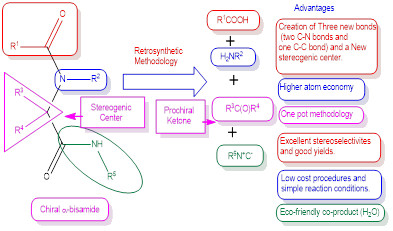
received Mar 23 2021; accepted May 29 2021; published Jul 6 2021;

09 Jul 07:17
by Harry C. Sample,
Ganapathi Emandi,
Brendan Twamley,
Nitika Grover,
Bhavya Khurana,
Vincent Sol,
Mathias O. Senge

Herein the synthesis of two novel tetra-BODIPY tetraphenylethylene (TPE) conjugates is presented. We find differing AIE responses dependent upon the linkage between the TPE and BODIPY cores, as well as differing singlet oxygen generation of the synthesized conjugates.
Abstract
Tetraphenylethylene (TPE) and its derivatives exhibit excellent aggregation-induced emission (AIE) properties. The TPE unit is easily accessible, and many functional groups can be introduced in a facile manner to yield effective luminescent materials in both solution and the solid-state. It is because of this, several TPE-based compounds have been developed and applied in many areas, such as OLEDs and chemical sensors. Boron dipyrromethenes (BODIPYs) are a class of pyrrolic fluorophore of great interest with myriad application in both material science and biomedical applications. Through the combination of Pd-catalyzed cross-coupling reactions and traditional dipyrromethene chemistry, we present the syntheses of novel tetra-BODIPY-appended TPE derivatives with different distances between the TPE and BODIPY cores. The TPE-BODIPY arrays 6 and 9 show vastly differing AIE properties in THF/H2O systems, with 9 exhibiting dual-AIE, along with both conjugates being found to produce singlet oxygen (1O2). We presume the synthesized BODIPY-appended TPE scaffolds to be utilized for potential applications in the fields of light-emitting systems and theranostics.
07 Jul 13:02
by Barbora Vénosová
Molecules, Vol. 26, Pages 4139: Ni Oxidation State and Ligand Saturation Impact on the Capability of Octaazamacrocyclic Complexes to Bind and Reduce CO2
Molecules doi: 10.3390/molecules26144139
Authors:
Barbora Vénosová
Ingrid Jelemenská
Jozef Kožíšek
Peter Rapta
Michal Zalibera
Michal Novotný
Vladimir B. Arion
Lukáš Bučinský
Two 15-membered octaazamacrocyclic nickel(II) complexes are investigated by theoretical methods to shed light on their affinity forwards binding and reducing CO2. In the first complex 1[NiIIL]0, the octaazamacrocyclic ligand is grossly unsaturated (π-conjugated), while in the second 1[NiIILH]2+ one, the macrocycle is saturated with hydrogens. One and two-electron reductions are described using Mulliken population analysis, quantum theory of atoms in molecules, localized orbitals, and domain averaged fermi holes, including the characterization of the Ni-CCO2 bond and the oxidation state of the central Ni atom. It was found that in the [NiLH] complex, the central atom is reduced to Ni0 and/or NiI and is thus able to bind CO2 via a single σ bond. In addition, the two-electron reduced 3[NiL]2− species also shows an affinity forwards CO2.
07 Jul 10:28
RSC Adv., 2021, 11,23922-23942
DOI: 10.1039/D1RA02764F, Review Article
Open Access
Yuhong Huang, Xiuling Ji, Zhanling Ma, Mateusz Łężyk, Yaju Xue, Hai Zhao
Progress and strategies towards the green chemo/bio-synthesis of cadaverine with special attention to their environmental, economic, and applicable impact are reviewed.
The content of this RSS Feed (c) The Royal Society of Chemistry

07 Jul 07:17
by Briana R. Schrage, Victor N. Nemykin, and Christopher J. Ziegler

Organic Letters
DOI: 10.1021/acs.orglett.1c01776

07 Jul 05:51
by Jie Wang, Xiaotian Qi, Xiao-Long Min, Wenbin Yi, Peng Liu, and Ying He

Journal of the American Chemical Society
DOI: 10.1021/jacs.1c04400

06 Jul 15:23
Green Chem., 2021, 23,5972-5980
DOI: 10.1039/D1GC01109J, Paper
Dongqiao Zhang, Jia Zeng, Weifeng Liu, Xueqing Qiu, Yong Qian, He Zhang, Yi Yang, Meng Liu, Dongjie Yang
Pristine lignin could completely prevent fire from destroying PU foam through growing protective thermal char, dilution of oxygen and radical scavenging.
The content of this RSS Feed (c) The Royal Society of Chemistry

05 Jul 15:22
RSC Adv., 2021, 11,23644-23653
DOI: 10.1039/D1RA02611A, Review Article
Open Access
Marya Baloch, Jalel Labidi
Lignin, an aromatic polymer, offers interesting electroactive redox properties and abundant active functional groups.
The content of this RSS Feed (c) The Royal Society of Chemistry

02 Jul 10:36
by Enrico Bergamaschi, Christopher Weike, Victor J. Mayerhofer, Ignacio Funes-Ardoiz, and Christopher J. Teskey
![TOC Graphic]()
Organic Letters
DOI: 10.1021/acs.orglett.1c01703

02 Jul 10:29
by Alberto Massarotti, Francesca Brunelli, Silvio Aprile, Mariateresa Giustiniano, and Gian Cesare Tron

Chemical Reviews
DOI: 10.1021/acs.chemrev.1c00143

01 Jul 05:42
by Ting Liu, Li Wei, Baoli Zhao, Yunyun Liu, and Jie-Ping Wan

The Journal of Organic Chemistry
DOI: 10.1021/acs.joc.1c00862

30 Jun 10:00
by Jovica D Badjic,
Vageesha W. Liyana Gunawardana,
Tyler J Finnegan

Nerve agents are lethal organophosphorus compounds (OPs), posing a serious threat to military and civilians. In spite of decades invested toward developing detoxifying systems acting as prophylactics or therapeutics, there has been insufficient progress. In this critical review, we posit that examining molecular recognition of nerve agents shall help constructing more effective scavengers of OPs.
Abstract
Nerve agents are tetrahedral organophosphorus compounds (OPs) that were developed in the last century to irreversibly inhibit acetylcholinesterase (AChE) and therefore impede neurological signaling in living organisms. Exposure to OPs leads to a rapid development of symptoms from excessive salivation, nasal congestion and chest pain to convulsion and asphyxiation which if left untreated may lead to death. These potent toxins are prepared on a large scale from inexpensive staring materials, making it feasible for terrorist groups or states to use them against military and civilians. The existing antidotes provide limited protection and are difficult to apply to a large number of affected individuals. While new prophylactics are currently being developed, there is still need for therapeutics capable of both preventing and reversing the effects of OP poisoning. In this review, we describe how the science of molecular recognition can expand the pallet of tools for rapid and safe sequestration of nerve agents.

   This article is licensed under a Creative Commons Attribution 3.0 Unported Licence.


