21 Apr 08:36
by M. Arruabarrena, A. Leonardo, M. Rodriguez-Vega, Gregory A. Fiete, and A. Ayuela
Author(s): M. Arruabarrena, A. Leonardo, M. Rodriguez-Vega, Gregory A. Fiete, and A. Ayuela
Structural, electronic, and magnetic properties of bulk ilmenite CoTiO3 are analyzed in the framework of density functional theory, using the generalized gradient approximation and Hubbard-corrected approaches. We find that the G-type antiferromagnetic structure, which consists of antiferromagnetica…
[Phys. Rev. B 105, 144425] Published Wed Apr 20, 2022
21 Apr 08:33
by Xiang Xu, Tingting Zhong, Nian Zuo, Zexin Li, Dongyan Li, Lejing Pi, Ping Chen, Menghao Wu, Tianyou Zhai, and Xing Zhou

ACS Nano
DOI: 10.1021/acsnano.2c01470
21 Apr 08:32
by Qinwen Lu
npj Quantum Materials, Published online: 20 April 2022; doi:10.1038/s41535-022-00456-4
Photoinduced evolution of lattice orthorhombicity and conceivably enhanced ferromagnetism in LaMnO
3 membranes
10 Apr 19:26
by Jue Wang, Qianhui Shi, En-Min Shih, Lin Zhou, Wenjing Wu, Yusong Bai, Daniel Rhodes, Katayun Barmak, James Hone, Cory R. Dean, and X.-Y. Zhu
Author(s): Jue Wang, Qianhui Shi, En-Min Shih, Lin Zhou, Wenjing Wu, Yusong Bai, Daniel Rhodes, Katayun Barmak, James Hone, Cory R. Dean, and X.-Y. Zhu
Charge separated interlayer excitons in transition metal dichalcogenide heterobilayers are being explored for moiré exciton lattices and exciton condensates. The presence of permanent dipole moments and the poorly screened Coulomb interaction make many-body interactions particularly strong for inter...
[Phys. Rev. Lett. 126, 106804] Published Thu Mar 11, 2021
10 Apr 19:26
by Natanael C. Costa, Kazuhiro Seki, and Sandro Sorella
Author(s): Natanael C. Costa, Kazuhiro Seki, and Sandro Sorella
Despite being relevant to better understand the properties of honeycomblike systems, as graphene-based compounds, the electron-phonon interaction is commonly disregarded in theoretical approaches. That is, the effects of phonon fields on interacting Dirac electrons is an open issue, in particular wh...
[Phys. Rev. Lett. 126, 107205] Published Fri Mar 12, 2021
10 Apr 19:26
by T. T. Han, L. Chen, C. Cai, Z. G. Wang, Y. D. Wang, Z. M. Xin, and Y. Zhang
Author(s): T. T. Han, L. Chen, C. Cai, Z. G. Wang, Y. D. Wang, Z. M. Xin, and Y. Zhang
Artificially created two-dimensional (2D) interfaces or structures are ideal for seeking exotic phase transitions due to their highly tunable carrier density and interfacially enhanced many-body interactions. Here, we report the discovery of a metal-insulator transition (MIT) and an emergent gapped ...
[Phys. Rev. Lett. 126, 106602] Published Fri Mar 12, 2021
10 Apr 19:26
by Lingjie Du, Ziyu Liu, Shalom J. Wind, Vittorio Pellegrini, Ken W. West, Saeed Fallahi, Loren N. Pfeiffer, Michael J. Manfra, and Aron Pinczuk
Author(s): Lingjie Du, Ziyu Liu, Shalom J. Wind, Vittorio Pellegrini, Ken W. West, Saeed Fallahi, Loren N. Pfeiffer, Michael J. Manfra, and Aron Pinczuk
Flat bands near M points in the Brillouin zone are key features of honeycomb symmetry in artificial graphene (AG) where electrons may condense into novel correlated phases. Here we report the observation of van Hove singularity doublet of AG in GaAs quantum well transistors, which presents the evide...
[Phys. Rev. Lett. 126, 106402] Published Fri Mar 12, 2021
10 Apr 19:25
by Xiaodong Zeng and M. Suhail Zubairy
Author(s): Xiaodong Zeng and M. Suhail Zubairy
The transmission of a two-level quantum emitter in its ground state through a graphene nanosheet is investigated. The graphene plasmons (GPs) field distribution, especially the opposite orientations of the vertical electric field components on the two sides of the graphene nanosheet, produces a sign...
[Phys. Rev. Lett. 126, 117401] Published Tue Mar 16, 2021
10 Apr 19:25
by Elliot Snider, Nathan Dasenbrock-Gammon, Raymond McBride, Xiaoyu Wang, Noah Meyers, Keith V. Lawler, Eva Zurek, Ashkan Salamat, and Ranga P. Dias
Author(s): Elliot Snider, Nathan Dasenbrock-Gammon, Raymond McBride, Xiaoyu Wang, Noah Meyers, Keith V. Lawler, Eva Zurek, Ashkan Salamat, and Ranga P. Dias
A new synthesis technique pushes high-temperature superconducting materials a step closer to ambient pressure.
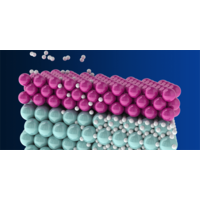
[Phys. Rev. Lett. 126, 117003] Published Fri Mar 19, 2021
10 Apr 19:24
by Yves H. Kwan, Yichen Hu, Steven H. Simon, and S. A. Parameswaran
Author(s): Yves H. Kwan, Yichen Hu, Steven H. Simon, and S. A. Parameswaran
We uncover topological features of neutral particle-hole pair excitations of correlated quantum anomalous Hall (QAH) insulators whose approximately flat conduction and valence bands have equal and opposite nonzero Chern number. Using an exactly solvable model we show that the underlying band topolog...
[Phys. Rev. Lett. 126, 137601] Published Tue Mar 30, 2021
22 Mar 09:49
by Bo Li
Nature Materials, Published online: 01 March 2021; doi:10.1038/s41563-021-00927-2
CrSe2 nanosheets grown on WSe2 show no apparent change in surface roughness or magnetic properties after months of exposure in air. Calculations suggest that charge transfer from the WSe2 substrate and interlayer coupling within CrSe2 play a critical role.
22 Mar 09:47
by Ipsita Das
Nature Physics, Published online: 01 March 2021; doi:10.1038/s41567-021-01186-3
In magic-angle twisted bilayer graphene, topological Chern bands that are driven by electron–electron interactions appear at all the integer fillings of the moiré unit cell. The Rashba-like higher-energy bands also show Landau-level crossings.
23 Feb 08:56
by Jan Ravnik, Yevhenii Vaskivskyi, Jaka Vodeb, Polona Aupič, Igor Vaskivskyi, Denis Golež, Yaroslav Gerasimenko, Viktor Kabanov, Dragan Mihailovic
Forcing systems though fast non-equilibrium phase transitions offers the
opportunity to study new states of quantum matter that self-assemble in their
wake. Here we study the quantum interference effects of correlated electrons
confined in monolayer quantum nanostructures, created by femtosecond
laser-induced quench through a first-order polytype structural transition in a
layered transition-metal dichalcogenide material. Scanning tunnelling
microscopy of the electrons confined within equilateral triangles, whose
dimensions are a few crystal unit cells on the side, reveals that the
trajectories are strongly modified from free-electron states both by electronic
correlations and confinement. Comparison of experiments with theoretical
predictions of strongly correlated electron behaviour reveals that the
confining geometry destabilizes the Wigner/Mott crystal ground state, resulting
in mixed itinerant and correlation-localized states intertwined on a length
scale of 1 nm. Occasionally, itinerant-electron states appear to follow quantum
interferences which are suggestive of classical trajectories (quantum scars).
The work opens the path toward understanding the quantum transport of electrons
confined in atomic-scale monolayer structures based on
correlated-electron-materials.
16 Feb 09:26
by Oguzhan Can
Nature Physics, Published online: 04 February 2021; doi:10.1038/s41567-020-01142-7
Two monolayers of bismuth-containing cuprate will form a high-temperature topological superconductor when stacked with an approximately 45° rotation between the layers.
16 Feb 09:19
by Lingjie Du, Ziyu Liu, Shalom J. Wind, Vittorio Pellegrini, Ken W. West, Saeed Fallahi, Loren N. Pfeiffer, Michael J. Manfra, and Aron Pinczuk
Author(s): Lingjie Du, Ziyu Liu, Shalom J. Wind, Vittorio Pellegrini, Ken W. West, Saeed Fallahi, Loren N. Pfeiffer, Michael J. Manfra, and Aron Pinczuk
Flat bands near M-points in the Brillouin zone are key features of honeycomb symmetry in artificial graphene (AG) where electrons may condense into novel correlated phases. Here we report the realization of flat bands of AG in GaAs quantum well transistors where the electron density is tuned by appl...
[Phys. Rev. Lett.] Published Mon Feb 15, 2021
16 Feb 09:18
by Bing Liu, Lede Xian, Haimen Mu, Gan Zhao, Zhao Liu, Angel Rubio, and Z. F. Wang
Author(s): Bing Liu, Lede Xian, Haimen Mu, Gan Zhao, Zhao Liu, Angel Rubio, and Z. F. Wang
The two-dimensional (2D) twisted bilayer materials with van der Waals coupling have ignited great research interests, paving a new way to explore the emergent quantum phenomena by twist degree of freedom. Generally, with the decreasing of twist angle, the enhanced interlayer coupling will gradually ...
[Phys. Rev. Lett. 126, 066401] Published Fri Feb 12, 2021
16 Feb 09:16
by Xiong Huang
Nature Physics, Published online: 15 February 2021; doi:10.1038/s41567-021-01171-w
Twisted bilayers of WS2 and WSe2 have correlated states that correspond to real-space ordering of the electrons on a length scale much longer than the moiré pattern.
11 Feb 10:54
by Aaron L. Sharpe, Eli J. Fox, Arthur W. Barnard, Joe Finney, Kenji Watanabe, Takashi Taniguchi, Marc A. Kastner, David Goldhaber-Gordon
We have previously reported ferromagnetism evinced by a large hysteretic
anomalous Hall effect in twisted bilayer graphene (tBLG). Subsequent
measurements of a quantized Hall resistance and small longitudinal resistance
confirmed that this magnetic state is a Chern insulator. Here we report that,
when tilting the sample in an external magnetic field, the ferromagnetism is
highly anisotropic. Because spin-orbit coupling is negligible in graphene such
anisotropy is unlikely to come from spin, but rather favors theories in which
the ferromagnetism is orbital. We know of no other case in which ferromagnetism
has a purely orbital origin. For an applied in-plane field larger than $5\
\mathrm{T}$, the out-of-plane magnetization is destroyed, suggesting a
transition to a new phase.
08 Feb 11:59
by Aline Ramires, Jose L. Lado
Twisted van der Waals materials have been shown to host a variety of tunable
electronic structures. Here we put forward twisted trilayer graphene (TTG) as a
platform to emulate heavy fermion physics. We demonstrate that TTG hosts
extended and localized modes with an electronic structure that can be
controlled by interlayer bias. In the presence of interactions, the existence
of localized modes leads to the development of local moments, which are Kondo
coupled to coexisting extended states. By electrically controlling the
effective exchange between local moments, the system can be driven from a
magnetic into a heavy fermion regime, passing through a quantum critical point.
Our results put forward twisted graphene multilayers as a platform for the
realization of strongly correlated heavy fermion physics in a purely
carbon-based platform.
08 Feb 11:59
by Valerio Vitale, Kemal Atalar, Arash A. Mostofi, Johannes Lischner
Twisted bilayers of two-dimensional materials, such as twisted bilayer
graphene, often feature flat electronic bands that enable the observation of
electron correlation effects. In this work, we study the electronic structure
of twisted transition metal dichalcogenide (TMD) homo- and heterobilayers that
are obtained by combining MoS$_2$, WS$_2$, MoSe$_2$ and WSe$_2$ monolayers, and
show how flat band properties depend on the chemical composition of the bilayer
as well as its twist angle. We determine the relaxed atomic structure of the
twisted bilayers using classical force fields and calculate the electronic band
structure using a tight-binding model parametrized from first-principles
density-functional theory. For homobilayers, we find that the two highest
valence bands exhibit a graphene-like dispersion and become flat as the twist
angle is reduced. In contrast, not all heterobilayers have flat valence bands.
Specifically, we find that those systems in which the highest valence band
derives from K or K' states of the constituent monolayers do not exhibit flat
bands, even at small twist angles. In all systems, qualitatively different band
structures are obtained when atomic relaxations are neglected.
01 Feb 09:04
by Yokoi, M., Fujiwara, S., Kawamura, T., Arakawa, T., Aoyama, K., Fukuyama, H., Kobayashi, K., Niimi, Y.
We report a negative resistance, namely, a voltage drop along the opposite direction of a current flow, in the superconducting gap of NbSe2 thin films under the irradiation of surface acoustic waves (SAWs). The amplitude of the negative resistance becomes larger by increasing the SAW power and decreasing temperature. As one possible scenario, we propose that soliton-antisoliton pairs in the charge density wave of NbSe2 modulated by the SAW serve as a time-dependent capacitance in the superconducting state, leading to the dc negative resistance. The present experimental result would provide a previously unexplored way to examine nonequilibrium manipulation of the superconductivity.
01 Feb 09:03
by Towfiq Ahmed, Jinkyoung Yoo, Rohit Prasankumar, Jian-Xin Zhu
We studied femtosecond laser driven electronic response of monolayer NbSe$_2$
using state-of-the-art computational methods, synthesis and optical
characterization. Earlier studies have found distinct signatures of charge
density wave (CDW) ordered phases in the ground state ($\sim$ 0 K) of NbSe$_2$
monolayer, in co-existence with superconducting phase. Driving such systems
with ultra-short (femtosecond) laser pulse can provide the highly sought
knowledge on how to effectively control various exotic phases (e.g. CDW) of
monolayer NbSe$_2$ with external control parameters such as pulse intensity.
This will not only provide a fundamental understanding of non-equilibrium
phase-transitions in NbSe$_2$, but also will open path-forward to revolutionize
quantum information technologies such as valleytronics. Inspired by this, we
have studied higher harmonic generation (HHG) in monolayer NbSe$_2$ under
various intensities of femtosecond laser pulse using real-time time-dependent
density functional theory (RT-TDDFT). Our computation predicted distinct
signatures in HHG spectra for some higher harmonic modes in the presence of CDW
orders in monolayer NbSe$_2$. Excitation energies under strong pulse, and
power-law behavior of HHG spectra are also reported.
01 Feb 09:03
by Yu Chen,
Lishu Wu,
Hai Xu,
Chunxiao Cong,
Si Li,
Shun Feng,
Hongbo Zhang,
Chenji Zou,
Jingzhi Shang,
Shengyuan A. Yang,
Kian Ping Loh,
Wei Huang,
Ting Yu

Prominent suppression of the charge density wave (CDW) orders in graphene/NbSe2 heterostructures is observed by Raman spectroscopy and scanning tunneling microscopy/spectroscopy. The findings propose a new criterion to determine the T
CDW through monitoring the line shape of the A1g mode. First‐principles calculations imply that interfacial electron doping suppresses the CDW states by impeding the lattice distortion of 2H‐NbSe2.
Abstract
Metallic layered transition metal dichalcogenides (TMDs) host collective many‐body interactions, including the competing superconducting and charge density wave (CDW) states. Graphene is widely employed as a heteroepitaxial substrate for the growth of TMD layers and as an ohmic contact, where the graphene/TMD heterostructure is naturally formed. The presence of graphene can unpredictably influence the CDW order in 2D CDW conductors. This work reports the CDW transitions of 2H‐NbSe2 layers in graphene/NbSe2 heterostructures. The evolution of Raman spectra demonstrates that the CDW phase transition temperatures (T
CDW) of NbSe2 are dramatically decreased when capped by graphene. The induced anomalous short‐range CDW state is confirmed by scanning tunneling microscopy measurements. The findings propose a new criterion to determine the T
CDW through monitoring the line shape of the A1g mode. Meanwhile, the 2D band is also discovered as an indicator to observe the CDW transitions. First‐principles calculations imply that interfacial electron doping suppresses the CDW states by impeding the lattice distortion of 2H‐NbSe2. The extraordinary random CDW lattice suggests deep insight into the formation mechanism of many collective electronic states and possesses great potential in modulating multifunctional devices.
01 Feb 09:02
by Corinna Stumm,
Manon Bertram,
Maximilian Kastenmeier,
Florian D. Speck,
Zhaozong Sun,
Jonathan Rodríguez‐Fernández,
Jeppe V. Lauritsen,
Karl J. J. Mayrhofer,
Serhiy Cherevko,
Olaf Brummel,
Jörg Libuda

Atomically defined model electrocatalysts consisting of cobalt oxide nanoislands on Au(111) are prepared in ultrahigh vacuum and their stability is investigated in an electrochemical environment in situ. The nanoislands show surprising structural dynamics as a function of the applied potential. The structural transformations are associated with the dissolution processes, which determine the stability of the electrocatalyst.
Abstract
Cobalt oxide is a promising earth abundant electrocatalyst and one of the most intensively studied oxides in electrocatalysis. In this study, the structural dynamics of well‐defined cobalt oxide nanoislands (NIs) on Au(111) are investigated in situ under potential control. The samples are prepared in ultra‐high vacuum and the system is characterized using scanning tunneling microscopy (STM). After transfer into the electrochemical environment, the structure, mobility, and dissolution is studied via in situ electrochemical (EC) STM, cyclic voltammetry, and EC on‐line inductively coupled plasma mass spectrometry. Cobalt oxide on Au(111) forms bilayer (BL) and double‐bilayer NIs (DL), which are stable at the open circuit potential (0.8 VRHE). In the cathodic scan, the cobalt oxide BL islands become mobile at potentials of 0.5 VRHE and start dissolving at potentials below. In sharp contrast to the BL islands, the DL islands retain their morphology up to much lower potential. The re‐deposition of Co aggregates is observed close to the reduction potential of Co2+ to Co3+. In the anodic scan, both the BL and DL islands retain their morphology up to 1.5 VRHE. Even under these conditions, the islands do not show dissolution during the oxygen evolution reaction (OER) while maintaining their high OER activity.
21 Jan 11:11
by Shengxue Yang,
Tianle Zhang,
Chengbao Jiang

van der Waals (vdW) magnets are very important in the fields of low‐dimensional physics and spintronics. A thorough summary of the latest advances in this area is provided, including the material families, various methods used in the detection and modulation of their magnetism, their potential applications in spintronics, and the opportunities and challenges in the future.
Abstract
van der Waals (vdW) materials exhibit great potential in spintronics, arising from their excellent spin transportation, large spin–orbit coupling, and high‐quality interfaces. The recent discovery of intrinsic vdW antiferromagnets and ferromagnets has laid the foundation for the construction of all‐vdW spintronic devices, and enables the study of low‐dimensional magnetism, which is of both technical and scientific significance. In this review, several representative families of vdW magnets are introduced, followed by a comprehensive summary of the methods utilized in reading out the magnetic states of vdW magnets. Thereafter, it is shown that various electrical, mechanical, and chemical approaches are employed to modulate the magnetism of vdW magnets. Finally, the perspective of vdW magnets in spintronics is discussed and an outlook of future development direction in this field is also proposed.
21 Jan 11:09
by Marc‐André Rose,
Břetislav Šmíd,
Mykhailo Vorokhta,
Ivetta Slipukhina,
Michael Andrä,
Hendrik Bluhm,
Tomáš Duchoň,
Marijana Ležaić,
Scott A. Chambers,
Regina Dittmann,
David N. Mueller,
Felix Gunkel

The combined role of ionic and electronic charge transfer in oxide heterointerfaces (LaAlO3/SrTiO3) is investigated. New near‐ambient‐pressure X‐ray photoelectron spectroscopy data proves a reversible Sr cation reconstruction under thermodynamic treatment to be responsible for lowered interface conductivity and enhanced magnetism under low temperatures. Ionic movement is found to be considerably higher and more influential than in the bulk.
Abstract
The ability to tailor oxide heterointerfaces has led to novel properties in low‐dimensional oxide systems. A fundamental understanding of these properties is based on the concept of electronic charge transfer. However, the electronic properties of oxide heterointerfaces crucially depend on their ionic constitution and defect structure: ionic charges contribute to charge transfer and screening at oxide interfaces, triggering a thermodynamic balance of ionic and electronic structures. Quantitative understanding of the electronic and ionic roles regarding charge‐transfer phenomena poses a central challenge. Here, the electronic and ionic structure is simultaneously investigated at the prototypical charge‐transfer heterointerface, LaAlO3/SrTiO3. Applying in situ photoemission spectroscopy under oxygen ambient, ionic and electronic charge transfer is deconvoluted in response to the oxygen atmosphere at elevated temperatures. In this way, both the rich and variable chemistry of complex oxides and the associated electronic properties are equally embraced. The interfacial electron gas is depleted through an ionic rearrangement in the strontium cation sublattice when oxygen is applied, resulting in an inverse and reversible balance between cation vacancies and electrons, while the mobility of ionic species is found to be considerably enhanced as compared to the bulk. Triggered by these ionic phenomena, the electronic transport and magnetic signature of the heterointerface are significantly altered.
21 Jan 11:08
by Yan Zhang,
Keisuke Shinokita,
Kenji Watanabe,
Takashi Taniguchi,
Masato Goto,
Daisuke Kan,
Yuichi Shimakawa,
Yutaka Moritomo,
Taishi Nishihara,
Yuhei Miyauchi,
Kazunari Matsuda

Optically excited states in semiconductors are highly sensitive to the physical properties of the materials underneath. In article number 2003501, Kazunari Matsuda and co‐workers demonstrate modulation and control of the excitonic states (excitons and trions) in a novel van der Waals heterostructure of a monolayer semiconductor on the strongly correlated electron system of perovskite manganese oxide with a thin insulating layer, wherein manganese oxide transforms from a paramagnetic insulator to a ferromagnetic metal.
21 Jan 11:07
by Yan Zhang,
Keisuke Shinokita,
Kenji Watanabe,
Takashi Taniguchi,
Masato Goto,
Daisuke Kan,
Yuichi Shimakawa,
Yutaka Moritomo,
Taishi Nishihara,
Yuhei Miyauchi,
Kazunari Matsuda

A novel van der Waals heterostructure consisting of monolayer MoSe2, Mn oxide, and a buffer layer (h‐BN) demonstrates magnetic proximity and charge transfer effect for the excitonic states due to phase transition of Mn oxide from ferromagnetic metal to paramagnetic insulator. The controllable thickness of h‐BN reveals a characteristic length scale of several nanometers in magnetic proximity and charge transfer.
Abstract
Optically generated excitonic states (excitons and trions) in transition metal dichalcogenides are highly sensitive to the electronic and magnetic properties of the materials underneath. Modulation and control of the excitonic states in a novel van der Waals (vdW) heterostructure of monolayer MoSe2 on double‐layered perovskite Mn oxide ((La0.8Nd0.2)1.2Sr1.8Mn2O7) is demonstrated, wherein the Mn oxide transforms from a paramagnetic insulator to a ferromagnetic metal. A discontinuous change in the exciton photoluminescence intensity via dielectric screening is observed. Further, a relatively high trion intensity is discovered due to the charge transfer from metallic Mn oxide under the Curie temperature. Moreover, the vdW heterostructures with an ultrathin h‐BN spacer layer demonstrate enhanced valley splitting and polarization of excitonic states due to the proximity effect of the ferromagnetic spins of Mn oxide. The controllable h‐BN thickness in vdW heterostructures reveals a several‐nanometer‐long scale of charge transfer as well as a magnetic proximity effect. The vdW heterostructure allows modulation and control of the excitonic states via dielectric screening, charge carriers, and magnetic spins.
21 Jan 11:07
by Gyula Eres,
Shinbuhm Lee,
John Nichols,
Changhee Sohn,
Jong Mok Ok,
Alessandro R. Mazza,
Chenze Liu,
Gerd Duscher,
Ho Nyung Lee,
Daniel E. McNally,
Xingye Lu,
Milan Radovic,
Thorsten Schmitt

The fabrication of binary oxide superlattices is undertaken as a general approach for exploring novel concepts and phenomena in reduced dimensionality systems of strongly correlated oxides. In article number 2004914, Gyula Eres, Milan Radovic, Thorsten Schmitt, and co‐workers achieve a wide range of tunability of the metal insulator transition in VO2 while reducing oxygen vacancy formation that is detrimental to electrical properties. The design was prepared by Yun‐Yi Pai and Gyula Eres both of ORNL.
21 Jan 11:06
by Corinna Stumm,
Manon Bertram,
Maximilian Kastenmeier,
Florian D. Speck,
Zhaozong Sun,
Jonathan Rodríguez‐Fernández,
Jeppe V. Lauritsen,
Karl J. J. Mayrhofer,
Serhiy Cherevko,
Olaf Brummel,
Jörg Libuda
Atomically defined model electrocatalysts consisting of cobalt oxide nanoislands on Au(111) are prepared in ultrahigh vacuum and their stability is investigated in an electrochemical environment in situ. The nanoislands show surprising structural dynamics as a function of the applied potential. The structural transformations are associated with the dissolution processes, which determine the stability of the electrocatalyst.
Abstract
Cobalt oxide is a promising earth abundant electrocatalyst and one of the most intensively studied oxides in electrocatalysis. In this study, the structural dynamics of well‐defined cobalt oxide nanoislands (NIs) on Au(111) are investigated in situ under potential control. The samples are prepared in ultra‐high vacuum and the system is characterized using scanning tunneling microscopy (STM). After transfer into the electrochemical environment, the structure, mobility, and dissolution is studied via in situ electrochemical (EC) STM, cyclic voltammetry, and EC on‐line inductively coupled plasma mass spectrometry. Cobalt oxide on Au(111) forms bilayer (BL) and double‐bilayer NIs (DL), which are stable at the open circuit potential (0.8 VRHE). In the cathodic scan, the cobalt oxide BL islands become mobile at potentials of 0.5 VRHE and start dissolving at potentials below. In sharp contrast to the BL islands, the DL islands retain their morphology up to much lower potential. The re‐deposition of Co aggregates is observed close to the reduction potential of Co2+ to Co3+. In the anodic scan, both the BL and DL islands retain their morphology up to 1.5 VRHE. Even under these conditions, the islands do not show dissolution during the oxygen evolution reaction (OER) while maintaining their high OER activity.
