DOI: 10.1039/D0NR03704D, Paper
Our work not only reports the discovery of a novel TNL material, but also builds the link between the TNL and thermoelectric properties.
The content of this RSS Feed (c) The Royal Society of Chemistry
Nature Nanotechnology, Published online: 03 August 2020; doi:10.1038/s41565-020-0746-x
Spillover hydrogenation is facet specific and occurs on atomically dispersed Pd catalyst on Cu(100). Knowing this, cost-effective catalysts with extremely low Pd loading are fabricated that successfully catalyse the semi-hydrogenation of a broad range of alkynes with high activity and selectivity.


Nature Electronics, Published online: 27 July 2020; doi:10.1038/s41928-020-0444-6
An atomically thin high-κ gate dielectric of Bi2SeO5 can be formed via layer-by-layer oxidization of an underlying two-dimensional semiconductor, allowing high-performance field-effect transistors and inverters to be fabricated.Nature Physics, Published online: 27 July 2020; doi:10.1038/s41567-020-0974-x
The flat electronic bands that are associated with ordered phases in twisted bilayer graphene at a magic twist angle have been imaged using angle-resolved photoemission spectroscopy.Nature Nanotechnology, Published online: 20 July 2020; doi:10.1038/s41565-020-0720-7
Gene brushes patterned as synthetic operons on two-dimensional silicon compartments with defined geometry allow the investigation and regulation of nanoscale multi-protein assemblies.Nature Materials, Published online: 27 July 2020; doi:10.1038/s41563-020-0737-1
Photo-excited gold nanoparticles are shown to provide ultrafast and efficient hot-hole injection to the valence band of p-type GaN, substantially altering hot-electron dynamics in the nanoparticles and forming a basis to design hot-hole-based optoelectronics.Nature Materials, Published online: 28 July 2020; doi:10.1038/s41563-020-0781-x
Author Correction: Configurable phonon polaritons in twisted α-MoO3Author(s): Guolin Zheng, Wen-Qiang Xie, Sultan Albarakati, Meri Algarni, Cheng Tan, Yihao Wang, Jingyang Peng, James Partridge, Lawrence Farrar, Jiabao Yi, Yimin Xiong, Mingliang Tian, Yu-Jun Zhao, and Lan Wang
Increasing the proton numbers in a van der Waals magnet leads to increased interlayer coupling, opening the possibility of controlling the coupling for applications.
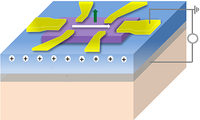
[Phys. Rev. Lett. 125, 047202] Published Wed Jul 22, 2020
Nature Materials, Published online: 17 July 2020; doi:10.1038/s41563-020-0762-0
Author Correction: Evidence of higher-order topology in multilayer WTe2 from Josephson coupling through anisotropic hinge statesNature Materials, Published online: 20 July 2020; doi:10.1038/s41563-020-0773-x
Author Correction: Excitons in strain-induced one-dimensional moiré potentials at transition metal dichalcogenide heterojunctionsNature Materials, Published online: 23 July 2020; doi:10.1038/s41563-020-0733-5
Flat sub-bands induced by moiré patterns and correlation effects are demonstrated in a twisted bilayer of the transition metal dichalcogenide WSe2 through a series of transport experiments.Nature Materials, Published online: 23 July 2020; doi:10.1038/s41563-020-0776-7
Author Correction: Electrical switching in a magnetically intercalated transition metal dichalcogenideNature, Published online: 20 July 2020; doi:10.1038/s41586-020-2520-5
A spin–orbit-entangled exciton state in the van der Waals material NiPS3 is observed, and found to arise from many-body states of a Zhang–Rice singlet.Nature Materials, Published online: 17 July 2020; doi:10.1038/s41563-020-0762-0
Author Correction: Evidence of higher-order topology in multilayer WTe2 from Josephson coupling through anisotropic hinge states