ACS Nano
DOI: 10.1021/acsnano.7b02182


The alloying behavior between FAPbI3 and CsSnI3 perovskites is studied carefully for the first time, which has led to the realization of single-phase hybrid perovskites of (FAPbI3)1−x(CsSnI3)x (0<x<1) compositions with anomalous bandgaps. (FAPbI3)1−x(CsSnI3)x perovskites exhibit stable, homogenous composition/microstructure at the nanoscale, as confirmed by microscopic characterization. The ideal bandgap of 1.3 eV for single-junction solar cell operation is achieved in the rationally-tailored (FAPbI3)0.7(CsSnI3)0.3-composition perovskite. Solar cells based on this new perovskite show power conversion efficiency up to 14.6 %.

Thin-film photovoltaics: Significant progress has been made on the formation of mixed cation-stablized Pb–Sn alloy perovskite materials made from FAPbI3 and CsSnI3 halide perovskites (FA=formamidinium). Solar cells based on an alloy in this system with an ideal bandgap show power conversion efficiencies up to 14.6 %.

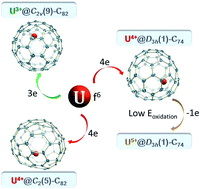
Ion-encapsulated fullerenes constitute a new family of endohedral fullerenes having potential applications in material science. Despite that, their reactivity is so far poorly understood. By means of the activation strain model of reactivity in combination with quantitative molecular orbital theory, the influence of the encapsulated ion on the exohedral reactivity of the C60-fullerene cage is analyzed in detail. More information can be found in the Full Paper by I. Fernández et al. (DOI: 10.1002/chem.201701506).


 Open Access
   This article is licensed under a Creative Commons Attribution 3.0 Unported Licence.

Although substantial and rapid progress has been made in the building and properties of all-weather solar cells in the last two years, developing better energy converting materials and more detailed fundamental studies of their properties have a level of urgency, as there is still a lot of room for improvement. Read about the latest developments in this field in the Concept article by Q. Tang on page 8118 ff.
Hybrid halide perovskite solar cells (PSCs) giving over 22 % power conversion efficiencies (PCEs) have attracted considerable attention. Although perovskite plays a significant role in the operation of PSCs, the fundamental theories associated with perovskites have not been resolved in spite of the increase in research. In this Minireview, we assess the current understanding, based on the first-principles calculations, of structural and electronic properties, defects, ionic diffusion, and shift current for CH3NH3PbI3 perovskite, and the effect of ionic transport on the hysteresis of current–voltage curves in PSCs. The shift current connected to the possible presence of ferroelectricity is also discussed. The current state-of-the-art and some open questions regarding PSCs are also highlighted, and the benefits, challenges, and potentials of perovskite for use in PSCs are stressed.

Better by calculation: First principles calculations of CH3NH3PbI3, including structural and electronic properties, defects, ionic diffusion, and shift current, can provide valuable support for further developing perovskite solar cells (PSCs).
Simultaneous occurrence of energy and electron transfer events involving different acceptor sites in a newly assembled supramolecular triad comprised of covalently linked free-base porphyrin–zinc porphyrin dyad, H2P−ZnP axially coordinated to electron acceptor fullerene, has been successfully demonstrated. The dyad was connected through the β-pyrrole positions of the porphyrin macrocycle instead of the traditionally used meso-positions for better electronic communication. Interestingly, the β-pyrrole functionalization modulated the optical properties to such an extent that it was possible to almost exclusively excite the zinc porphyrin entity in the supramolecular triad. The measured binding constant for the complex with 1:1 molecular stoichiometry was in the order of 104 m−1 revealing moderately stable complex formation. An energy level diagram constructed using optical, electrochemical and computational results suggested that both the anticipated energy and electron events are thermodynamically feasible in the triad. Consequently, it was possible to demonstrate occurrence of excited state energy transfer to the covalently linked H2P, and electron transfer to the coordinated ImC60 from studies involving steady-state and time-resolved emission, and femto- and nanosecond transient absorption studies. The estimated energy transfer was around 67 % in the dyad with a rate constant of 1.1×10⁹ s−1. In the supramolecular triad, the charge separated state was rather long-lived although it was difficult to arrive the exact lifetime of charge separated state from nanosecond transient spectral studies due to overlap of strong triplet excited signals of porphyrin in the monitoring wavelength window. Nevertheless, simultaneous occurrence of energy and electron transfer in the appropriately positioned energy and electron acceptor entities in a supramolecular triad was possible to demonstrate in the present study, a step forward to unraveling the complex photochemical events occurring in natural photosynthesis and its implications in building light energy harvesting devices.

Formation of a supramolecular triad featuring β-pyrrole connected free-base porphyrin–zinc porphyrin self-assembled to C60, and occurrence of competitive energy and electron transfer processes from transient absorption studies is demonstrated.
DIBAL-H-mediated demethylation provides a novel method to access secondary-rim functionalized γ-cyclodextrin. 2A,3B-Dihydroxyl-per-O-methylated-γ-cyclodextrin has been obtained, whose conjugation with C60 allows access to the most water-soluble C60 conjugate described so far. The water solubility of 0.12 m (550 mg mL−1) is 150 times higher than that of the native γ-CD/C60 complex. Its singlet oxygen (1O2) quantum yield is 0.39, an increase of one to two orders of magnitude compared to that of α(β)CD–C60 conjugates.

DIBAL-H was used as molecular scalpel to provide an elegant entry to secondary-rim functionalized γ-CD, such as 2A,3B-dihydroxyl-per-O-methylated-γ-cyclodextrin. The conjugation of this diol with C60 allows access to the most water-soluble C60 conjugate described so far.
The deprotonation of a corannulene-based bisazolium salt allowed the preparation of a corannulene-based NHC di-AuI complex. The prepared di-AuI-complex was tested in the recognition of fullerene-C60, demonstrating good binding affinity in toluene solution, and producing a host–guest complex with 3:1 stoichiometry, as evidenced by a combination of NMR spectroscopy and ITC titrations. The experimental results are fully supported by DFT calculations. The binding of C60 with the di-AuI complex in toluene solution is enthalpically and entropically favoured. Remarkably, the entropic term is the dominant parameter in the binding process. The good complementarity that exists between the concave shape of the corannulene-di-gold complex and the convex surface of the fullerene, together with the presence of tBu groups and the AuCl fragment are key factors for the measured high affinity between host and guest. The obtained results indicate that fullerene may be acting as a template for the formation of a self-assembled aggregate involving up to three molecules of the di-AuI complex.

The super bowl: Excellent binding affinity is found between a corannulene-based di-N-heterocyclic carbene (NHC) gold complex and fullerene-C60, producing guest–host complexes of 1:3 stoichiometry.
We describe the synthesis as well as the electronic and photophysical characterization of novel N-heterotriangulene derivatives decorated with methoxycarbonyl- and methyl-sulfanyl-substituted dithiafulvenyl moieties. The association of these electron-rich compounds with fullerene C60 as electron acceptor was investigated by means of photophysical, voltammetric, and mass spectrometric methods and rationalized by DFT calculations. Importantly, light-induced interactions between the dithiafulvene-substituted N-heterotriangulene bearing methoxycarbonyl substituents with C60 leads to cooperative fluorescence. Quantitative Job plot analyses by means of fluorescence spectroscopy and voltammetry confirm a 1:1 association with binding constants in the order of 104 m−1. Supportive results for the supramolecular assembly of both N-heterotriangulenes with C60 were obtained by ESI mass spectrometric investigations in the gas phase.

Enlightened association: Electron-rich N-heterotriangulenes featuring dithiafulvenyl moieties were synthesized and their association with C60 resulting in cooperative fluorescence was studied by photophysical, voltammetric, and mass spectrometric methods and rationalized by DFT calculations.
Solid-state chlorophyll solar cells (CSCs) employing a carboxylated chlorophyll derivative, methyl trans-32-carboxypyropheophorbide a, as a light-harvesting dye sensitizer chlorophyll (DSC) deposited on mesoporous TiO2, on which four zinc hydroxylated chlorophyll derivatives were spin-coated for hole transporter chlorophylls (HTCs), are described. Key parameters, including the effective carrier mobility of the HTC films, as determined by the space charge-limited current method, and the frontier molecular orbitals of these DSCs and HTCs, as estimated from cyclic voltammetry and electronic absorption spectra, suggest that both charge separation and carrier transport are favorable. The power conversion efficiencies (PCEs) of the present CSCs with fluorine-doped tin oxide (FTO)/TiO2/DSC/HTCs/Ag were determined to follow the order of HTC-1>HTC-2>HTC-3>HTC-4, which coincided perfectly with the order of their hole mobilities. The maximum PCE achieved was 0.86 % with HTC-1. The photovoltaic devices studied herein with two types of chlorophyll derivatives as dye sensitizers and hole transporters provide a unique solution for the utilization of solar energy with a view to truly realizing “green energy”.

Naturally sensitive: Solid-state chlorophyll solar cells can be used that employ a carboxylated chlorophyll derivative, methyl trans-32-carboxypyropheophorbide a, as a light-harvesting dye sensitizer chlorophyll (DSC) deposited on mesoporous TiO2, upon which four zinc hydroxylated chlorophyll derivatives are spin-coated as hole transporter chlorophylls (HTCs; see figure).

Open Access  This article is licensed under a Creative Commons Attribution 3.0 Unported Licence.
Nature advance online publication 26 April 2017. doi:10.1038/nature22072
Authors: Amita Ummadisingu, Ludmilla Steier, Ji-Youn Seo, Taisuke Matsui, Antonio Abate, Wolfgang Tress & Michael Grätzel
Optimizing the morphology of metal halide perovskite films is an important way to improve the performance of solar cells when these materials are used as light harvesters, because film homogeneity is correlated with photovoltaic performance. Many device architectures and processing techniques have been explored with the aim of achieving high-performance devices, including single-step deposition, sequential deposition and anti-solvent methods. Earlier studies have looked at the influence of reaction conditions on film quality, such as the concentration of the reactants and the reaction temperature. However, the precise mechanism of the reaction and the main factors that govern it are poorly understood. The consequent lack of control is the main reason for the large variability observed in perovskite morphology and the related solar-cell performance. Here we show that light has a strong influence on the rate of perovskite formation and on film morphology in both of the main deposition methods currently used: sequential deposition and the anti-solvent method. We study the reaction of a metal halide (lead iodide) with an organic compound (methylammonium iodide) using confocal laser scanning fluorescence microscopy and scanning electron microscopy. The lead iodide crystallizes before the intercalation of methylammonium iodide commences, producing the methylammonium lead iodide perovskite. We find that the formation of perovskite via such a sequential deposition is much accelerated by light. The influence of light on morphology is reflected in a doubling of solar-cell efficiency. Conversely, using the anti-solvent method to form methyl ammonium lead iodide perovskite in a single step from the same starting materials, we find that the best photovoltaic performance is obtained when films are produced in the dark. The discovery of light-activated crystallization not only identifies a previously unknown source of variability in opto-electronic properties, but also opens up new ways of tuning morphology and structuring perovskites for various applications.
To investigate the intrinsic reactivity of atomic nitrogen, which had previously been accomplished only by examining its decay in the gas phase using special equipment, a nitrogen atom was inserted into a series of molecule-encapsulating C60 and C70 fullerenes. Among the studied endofullerenes, H2@C70 was able to encapsulate an additional nitrogen atom within the fullerene cage under radiofrequency plasma conditions. The product was analyzed by ESR spectroscopy and mass spectrometry in solution, which revealed that the nitrogen atom with a quartet ground state does not react but weakly interact with the H2 molecule, thus demonstrating the utility of such fullerenes as “nanoflasks”.

A weak interaction: Atomic nitrogen was encapsulated in a series of molecule-encapsulating endohedral C60 and C70 fullerenes in order to investigate the intrinsic reactivity of the N atom. Among the studied endofullerenes, H2@C70 accommodated an additional N atom within its fullerene cage under radiofrequency plasma conditions. The obtained product was analyzed by ESR spectroscopy and mass spectrometry in solution.

Adamantylidene (Ad) additions to endofullerenes M3N@Ih-C80 (M=Sc, Lu) and Sc3N@D5h-C80 are described. Notably, two Ad added bis-adducts of Lu3N@Ih-C80 were obtained, of which the structure of one isomer was determined by X-ray crystallography. The experiments showed that the second Ad addition took place at a position close to an internal Lu atom, thus indicating that the regiochemistry of exohedral additions is influenced by the encaged cluster. More information can be found in the Full Paper by M. M. Olmstead, A. L. Balch, S. Nagase, T. Akasaka et al. (DOI: 10.1002/chem.201700049).

Non-innocent ligand transition metal complexes are appealing due to their remarkable redox properties imparted by the presence of extensive metal(dπ)–ligand(π) bonding. The non-innocent character derived from the mixing of ruthenium dπ and oxyquinolate or N-carboxyamidoquinolate π orbitals generates hybrid metal–ligand frontier orbitals that play a major role in contributing to an improved power conversion efficiency in a Ru non-innocent ligand sensitized DSSC device. More information can be found in the Full Paper by J. Rochford and co-workers on page ▪▪ ff. (DOI: 10.1002/chem.201605991).
Recently, fully covered and smooth perovskite films could be fabricated by optimized coating methods; however, it is still hard to prepare perovskite films with large grain sizes and high crystallinity. Given the fact that thermal energy can promote crystallization, we combine high-temperature crystallization with the application of a solvent featuring a high boiling point, in order to produce high quality perovskite films with micrometer-sized grains. We further investigated the temperature dependence of the thermally induced synthetic strategy, whereby the grains become larger as the temperature is elevated. After solar cell device fabrication, the efficiency of the best cell can attain a high value of 15.53 % with reduced hysteresis behavior.

Hot stuff: A hot sequential deposition method using α-terpineol as the solvent is applied to the deposition of perovskite films; a mean crystal size of over 1500 nm could be obtained. Experimental results clearly illustrate that thermal energy can promote the formation of large perovskite crystals and enhance the efficiency of solar cells (see figure).
Polyoxometalates (POM) have already been confirmed to act as effective electron-transfer mediators for improving the power conversion efficiency (PCE) of dye-sensitized solar cells (DSSCs) based on previous studies. However, the improvement may be limited by the agglomeration of the polyoxoanions. In this paper, the previous synthesis strategy is improved upon by breaking the metal-organic frameworks (MOFs) with POMs as the secondary building units ([Ni(bpp)(H2O)2]3[P2W18O62]⋅24 H2O (1) (bpp=1,3-bis(4-pyridyl)propane) and H6[Cu3(H2O)6(P2W18O62)2(3-dpye)6]⋅28 H2O (2) (3-dpye=N,N′-bis(3-pyridinecarboxamide)-1,2-ethane)) to design and synthesize small sized and highly disperse POM nanoparticles by means of compositing with TiO2, through calcination to remove the organic ligand. TEM and element mapping confirm that P2W18O626− (denoted as P2W18) nanoparticles with the diameter of ≈1 nm are uniformly distributed in TiO2 composites. The loading amount (wt. %) of POM in MOFs reaches 75.67 %. The small sized and highly disperse P2W18 nanoparticles may provide more active sites and specific surface areas for improving the PCE of DSSCs. Finally, the investigations indicate that the PCE of composite P2W18⋅NiO@TiO2 photoanodes is up to 7.56 %, which was 26 % higher than the pristine TiO2 based photoanodes.

Breaking bad: Polyoxometalate-based MOFs were broken to obtain small sized and highly disperse POM nanoparticles, P2W18⋅CuO@TiO2 and P2W18⋅NiO@TiO2, for application in the photoanode of dye-sensitized solar cells.
Impact of the enantiopurity on organic photovoltaics (OPV) performance was investigated through the synthesis of racemic and enantiomerically pure naphthalimide end-capped helicenes and their application as non-fullerene molecular electron acceptors in OPV devices. A very strong increase of the device performance was observed by simply switching from the racemic to the enantiopure forms of these π-helical non-fullerene acceptors with power conversion efficiencies jumping from 0.4 to about 2.0 % in air-processed poly(3-hexylthiophene)-based devices, thus highlighting the key role of enantiopurity in the photovoltaic properties.

Unprecedented enantiopurity impact on OPV performance was observed with racemic and enantiomerically pure naphthalimide end-capped helicenes as non-fullerene molecular electron acceptors. Blended with P3HT donor polymer, a fivefold increase of the cells efficiency was recorded going from the racemic to the enantiomerically pure electron acceptor, highlighting the key role of the enantiopurity of the π-conjugated backbone on the self-assembly, charge transport, and therefore the overall photovoltaic properties.

Synthesis of fluorene-based conjugated polyelectrolytes was achieved via Suzuki polycondensation in water and completely open to air. The polyelectrolytes were conveniently purified by dialysis and analysis of the materials showed properties expected for fluorene-based conjugated polyelectrolytes. The materials were then employed in solar cell devices as an interlayer in conjunction with ZnO. The double interlayer led to enhanced power conversion efficiency of 10.75 % and 15.1 % for polymer and perovskite solar cells, respectively.

Fluorene-based conjugated polyelectrolytes were prepared by using a green synthetic route with polymerization in water and in air. High-performance polymer and perovskite solar cells were fabricated using the polyelectrolytes in the cathode interlayer giving power conversion efficiency of 10.75 % and 15.1 %.
The chemistry of a giant fullerene, C104, has been extended by the synthesis and structural study of several chloro derivatives of three isolated pentagon rule (IPR) isomers of C104 nos. 234, 812, and 811. In the structure of C104(234)Cl16/18, two molecules with 16 and 18 attached Cl atoms occupy the same crystallographic site with an occupancy ratio of 61/39. The structures of C104(812)Cl12 and C104(812)Cl24 demonstrate substructure relationships of their chlorination patterns with single and double Cl attachments to 12 cage pentagons. The structure of C104(811)Cl28 is compared with the known C104(811)Cl24 thus revealing dramatic changes in the chlorination pattern, which occur with relatively small increases in the degree of chlorination.

Standing on the shoulders of giant fullerenes: New insight into the reactivity of a giant fullerene, C104, was achieved by the structure elucidation of chloro derivatives C104(234)16/18, C104(812)Cl12/24, and C104(811)Cl28. In C104(234)Cl16/18 two molecules with 16 and 18 attached Cl atoms are present. The structures of C104(812)Cl12/24 reveal substructure relationships of the chlorination patterns. The C104(811)Cl28 molecule has an essentially different chlorination pattern in comparison with C104(811)Cl24.