Shared posts

27 Aug 22:44

Why police encouraged a teenager with a gun to patrol Kenosha’s streets

by Zack Beauchamp
James.galbraith

Because he was a white kid with a gun.

Officers standing behind handheld shields, one that reads “sheriff” and one that reads “police.” Police in Kenosha, Wisconsin, during the current protests. | Tayfun Coskun/Anadolu Agency/Getty Images

Police in Wisconsin told armed militia members that “we appreciate you guys.” Some new research helps us understand the racial roots of their irresponsible behavior.

Kyle Rittenhouse, the 17-year-old charged with murder in the shooting deaths of two people during the violent protests in Kenosha, Wisconsin, had a run-in with the police earlier in the night — an extremely friendly one.

In footage from about 15 minutes before the shootings pieced together by the New York Times’s Visual Investigations team, you can see Rittenhouse walk up to an armored police vehicle and chat with officers. A police officer pops out of one vehicle’s hatch and tosses bottles to Rittenhouse’s associates, members of an armed militia. “We appreciate you guys, we really do,” the officer says before driving off.

The young-looking Rittenhouse is under the legal age for firearm ownership and was carrying an assault rifle, which appears to be a misdemeanor under Wisconsin law. Instead of stopping him and asking for proof of age, the police give him water and an attaboy. And when he tried to surrender after the shootings, the police went right by him, even as bystanders were telling them that Rittenhouse had shot people.

How can we understand this behavior? Why do the police in Kenosha seem perfectly fine with armed militia members patrolling the streets — behavior that, just minutes later, ended with two people dead? Shouldn’t police want to be the only ones with guns?

A recent paper by University of Arizona sociologist Jennifer Carlson offers some insight into the police’s behavior. She conducted dozens of hours of interviews about guns with 79 police chiefs in three states — Michigan, California, and Arizona — to try to better understand the way police see armed civilians.

Carlson found that police leaders tended to see armed civilians as allies, maybe even informal deputies — provided they fit a set of racially coded descriptors.

“Police chiefs articulated a position of gun populism based on a presumption of racial respectability,” Carlson writes. “‘Good guys with guns’ were marked off as responsible in ways that reflected white, middle-class respectability.”

This helps us understand what happened in Wisconsin as not a bug in the code of American policing, but a feature. There’s a reason anti-police violence protesters have been met with crackdowns, while armed anti-lockdown protesters could menace the Michigan Capitol without incident.

Police — who are heavily white, heavily male, and overwhelmingly conservative politically — see guns as a scourge when they’re in the wrong hands. But the “wrong hands” tend to be Black and brown ones. When respectable-seeming white people arm themselves, police welcome their intervention — even, or perhaps especially, in a tense situation where the potential for escalation to violence is really high.

This is not a new phenomenon; there’s a long history of deeply racialized gun politics in America. In 1967, a group of Black Panthers carried guns in a demonstration outside the California statehouse; shortly thereafter, then-Gov. Ronald Reagan signed a bill banning open carry of loaded firearms.

Carlson’s study illustrates how this racial gun politics operates at the level of the streets as well as the statehouse. Officers have significant discretion in how they choose to react to different situations; this discretion is often used in racist and violent fashion. The way the police seemingly encouraged Rittenhouse’s vigilantism is a microcosm of some of the most fundamental problems in American policing.

The “gun populism” of American police

In her research, Carlson distinguishes between two kinds of attitudes police have toward civilian ownership of firearms.

The first, “gun militarism,” sees armed individuals as a threat to blue lives. “It favors a state monopoly on legitimate violence, whereby police both protected and expanded their own access to firearms while policed and delimited gun access among the racialized, urban populations targeted by the War on Crime,” she writes.

At other times, the police chiefs she interviewed embraced “gun populism”: the idea that “rather than a threat to stability (as under gun militarism), armed civilians may be imagined as generative of social order.” Gun populism is an “embrace of ‘the people’ and a deep suspicion of elites, especially elite lawmakers who aim to regulate gun access in the United States.” In essence, it’s the National Rifle Association view of gun rights.

These two frames might seem contradictory. How can you believe both that widespread gun ownership poses a threat to your officers and oppose regulations that aim to limit it?

Typically, officers got around this dilemma by reference to legal and illegal uses of firearms. The chiefs supported throwing the book at armed criminals, believing that anyone who uses a gun in commission of a crime should face serious jail time. But gun ownership itself should be permitted and maybe even encouraged.

But here’s the thing: When they talked about gun-wielding criminals, the racialized nature of the language was unmistakable. The criminals they were worried about were described as “urban terrorists,” “gangbangers,” and “illegal immigrants”; their descriptions of respectable gun owners had a very different racial valence.

“I am not worried about the people who just want an assault weapon for the hell of it, or a military guy who had an M16 and wants one because it reminds him of his old gun,” one California police chief said. “I’m worried about the gangster who brings in guns and then it gets into the hands of people who have hatred for America”

This bifurcation, between minority-coded bad guys and presumptively white good guys, led chiefs to take a generally positive view of civilian gun owners who didn’t fit their criminal stereotypes. In Michigan, which borders Wisconsin and has similar gun laws, police chiefs embraced a vision of gun populism that saw civilian gun owners as their allies.

“Michigan chiefs insisted that even the best-resourced police cannot protect all victims at all times and thus opted to devolve some prerogatives onto private civilians as part of their overall crime-fighting mission,” Carlson writes. “They understood the capacity among civilians for private legitimate violence as supplementing public legitimate violence.”

A comment from one Michigan police chief, who works in a majority-white neighborhood, crystallized the sentiment.

“I believe that citizens need to be able to protect themselves. We cannot protect them — we just can’t. It’s impossible,” the chief said. “The government cannot save people from danger. That is just ridiculous. So people should be allowed to defend themselves.”

 Jeff Kowalsky/AFP/Getty Images
Armed protesters attending the “Michiganders Against Excessive Quarantine” demonstration at the state Capitol in Lansing this April.

As with all forms of right-wing populism, however, the real action is in the definition of “the people.” Certain kinds of people tend to be seen as legitimate rights-bearers, as people who presumptively deserve the benefit of the doubt when carrying weapons.

Others don’t. And that’s where things get dicey.

How “gun populism” helps us understand the police reaction in Wisconsin

In November 2014, Cleveland police officers shot 12-year-old Tamir Rice, who was Black, from point-blank range. The police, who had described Rice as “maybe 20” on the radio, claimed they feared for their life because he was holding a “black revolver.” It was actually a toy gun.

The contrast between the treatment of Rice and Rittenhouse couldn’t be clearer. Rice scanned to police as a threat, despite being a child with a toy gun. Rittenhouse, a teenager with an actual rifle, did not.

Now, Cleveland and Kenosha are different places with different police officers; there are lots of reasons the ending to these two stories wasn’t the same. But there’s ample reason to believe that the mental shortcuts and stereotypes officers have for what kinds of people with guns are threats really do affect the way they treat people — for whether they default to “gun militarism” or “gun populism” in how they treat an armed civilian.

The reasons are rooted in basic human psychology. Police officers work a difficult job for long hours, called upon to handle responsibilities ranging from mental health intervention to spousal dispute resolution. While on shift, they are constantly anxious, searching for the next threat or potential arrest.

Stress gets to them even off the job; PTSD and marital strife are common problems. It’s a kind of negative feedback loop: The job makes them anxious and nervous, which damages their mental health and personal relationships, which raises their overall level of stress and makes the job even more taxing.

According to Phillip Atiba Goff, a psychologist at John Jay College and the CEO of the Center for Policing Equity think tank, it’s hard to overstate how much more likely people are to be racist under these circumstances. When you put people under stress, he said, they tend to make snap judgments rooted in their basic instincts. For police officers, raised in a racist society and socialized in a violent work atmosphere, that makes racist behavior all but inevitable.

“The mission and practice of policing is not aligned with what we know about how to keep people from acting on the kinds of implicit biases and mental shortcuts,” he says. “You could design a job where that’s not how it works. We have not chosen to do that for policing.”

American police have a distinctive culture and ideology: a set of attitudes and biases that shapes the way they treat civilians. “Gun populism” is one part of that ideology. And in Kenosha, it seems to have influenced their decision-making — apparently leading them to encourage an underage gun owner to go into a dangerous situation, with predictable and tragic results.


New goal: 25,000

In the spring, we launched a program asking readers for financial contributions to help keep Vox free for everyone, and last week, we set a goal of reaching 20,000 contributors. Well, you helped us blow past that. Today, we are extending that goal to 25,000. Millions turn to Vox each month to understand an increasingly chaotic world — from what is happening with the USPS to the coronavirus crisis to what is, quite possibly, the most consequential presidential election of our lifetimes. Even when the economy and the news advertising market recovers, your support will be a critical part of sustaining our resource-intensive work — and helping everyone make sense of an increasingly chaotic world. Contribute today from as little as $3.

27 Aug 22:25

FDA gives go-ahead to fast $5 coronavirus test that doesn't require lab equipment

by David Lim
James.galbraith

Great, though issued by medical provider still is a significant bottleneck.


The Food and Drug Administration has authorized emergency use of a coronavirus test that costs $5 and can produce results in 15 minutes without the use of any lab equipment.

Test-maker Abbott says it could soon manufacture 50 million of the rapid antigen tests per month, which could ease the country's testing bottleneck by greatly increasing overall capacity and the speed at which results arrive. The United States has tested about 22 million people in the last month.

Abbott's test is designed for use within seven days of the onset of symptoms. It gives results on a card reminiscent of the stick used in many over-the-counter pregnancy tests. If one line appears on the card, the patient is negative for the coronavirus; two lines indicates a positive result.

Health care providers still must administer the test but it can be done in point-of-care settings like offices.

Former FDA Commissioner Scott Gottlieb told POLITICO the test will help democratize testing in areas of the country with less access to health care and could also boost testing in schools and workplaces. “This is the kind of innovation we badly need,” Gottlieb said.

Jeff Shuren, the FDA's head medical device regulator, said the test's quick turnaround and easy-to-read results card "means people will know if they have the virus in almost real-time."

Data that Abbott submitted to the FDA show that the test accurately detects 97.1 percent of positive samples and 98.5 percent of negative samples.

The company says it plans to ship “tens of millions” of the tests to customers beginning in September, and is on track to manufacture 50 million tests a month from October on.

Abbott is also releasing a smartphone app that could allow people to display test results from their health care provider via a QR code when entering a public space.


“It’s exciting to see something come on the market that’s fast, easy to use, can be made by the millions and is inexpensive,” said Scott Becker, CEO of the Association of Public Health Laboratories.

The FDA's announcement that it authorized the test comes hours before Vice President Mike Pence, who has led the U.S. government’s coronavirus response, is set to address the Republican National Convention.

Abbott CEO Robert Ford hinted that the test was on its way to market during the company’s July 16 earnings call, but declined to give specifics on when the company expected FDA to authorize the test.

Meanwhile, the federal government has taken action in recent days to expand use of antigen tests like the Abbott product. The FDA said Monday that health providers can use antigen tests, which are less accurate than lab tests, to screen people without coronavirus symptoms on an “off-label” basis if lab turnaround times are too long.

The agency cautioned that negative results from such tests should be considered as presumptive negatives, and that different approaches, like repeated testing of the same person, should be considered.

The FDA recommendation came out the same day that CDC updated testing guidelines to state that people who have been exposed to the virus, but aren't showing symptoms and don't have underlying risk factors, don't necessarily need to be tested. The change, made at the behest of White House coronavirus task force officials, frustrated public health experts who say it runs counter to current science.

27 Aug 22:22

Want to vote in 2020? Do it early.

by Jen Kirby
James.galbraith

and use a drop box, since USPS is less trustworthy by the day

Whose vote counts, Explained/Netflix

A realist’s guide to voting — by mail or in person — this election season.

The presidential election is underway, and here’s what America is dealing with: a raging pandemic, a crisis at the United States Postal Service, the threat of foreign meddling, and lots of misinformation, including from the president’s Twitter account.

All of this raises a serious question: How can you make sure your vote will count in 2020?

Voting in the middle of a pandemic was always going to look different. For those who choose to vote in person, voters and poll workers will likely have to social distance and wear masks. A lot of people might forgo in-person voting altogether; the number of Americans voting by mail is expected to double compared to 2016.

And then came the controversy at the United States Postal Service. A series of cost-cutting measures sparked delays in mail delivery, which critics feared could undermine the USPS’s ability to sort and deliver ballots in time to be counted, potentially disenfranchising millions of voters. The USPS has since suspended these changes, and Postmaster General Louis DeJoy assured lawmakers in August that the November election is his “number one priority.”

But primary season amid the Covid-19 pandemic didn’t exactly go smoothly. The Washington Post reported that some half a million mail-in ballots were rejected in the primaries, a combination of late delivery and voter error.

All this is eroding faith in the exercise of democracy this November — and, potentially, in the election results themselves.

The United States’ voting system had significant problems before the pandemic and will after, unless there’s reform. There should be. But that’s not going to happen in time for November 3. Indeed, people are already voting in many states.

So here’s a guide on how voters can better navigate the election and, in the process, make the voting system better for everyone. The biggest takeaway: Don’t wait.

“If you do you want to simplify it down to the easiest thing, it’s two words: Plan early,” David Becker, executive director and founder of the Center for Innovation & Election Research, told me. “That’s it, that’s everything.”

Make a plan, and do it early

There’s been a lot of talk about making a “voting plan.”

“Make a plan right now for how you are going to get involved and vote,” former President Barack Obama said during his address at the Democratic National Convention. “Do it as early as you can, and tell your family and friends how they can vote, too.”

There is one guiding principle to this plan, and you have maybe guessed it: Do everything — everything, everything, everything — early.

The very first step is the most critical: Make sure you can vote. Find out if you are registered. Even if you think you are, you can double-check and make sure your information is up to date. Do this now at your state or local election website, which you can look up here.

Seriously, do it right now. Some registration deadlines have already passed, and others are coming soon, and this may be your last chance.

(Note: We’ve included some voting rules maps below, but the rules can change. The best way to find information and deadlines for voting is with your state or local election board, which, again, you can track down here.)

Since you’re now hanging out on the web page belonging to your area’s election officials, it’s probably worth checking all the voting deadlines and requirements. That can help you decide which way you can and want to vote: by mail or in person.

Registration checklist:

Should I vote by mail? If you can and you want to, you need to do it early.

Many more states are going to offer voters the option to send in their ballots this year. Some states are sending ballots to every registered voter — either because they’ve been doing it that way for a long time or they’ve adopted these policies because of Covid-19. In total, nine states (plus Washington, DC) are mailing ballots to all eligible voters: California, Colorado, Hawaii, Nevada, New Jersey, Oregon, Utah, Vermont, and Washington.

About 35 other states will allow voters to mail in absentee ballots without having to give a reason, or will accept Covid-19 as an excuse. Some of those states, like Delaware, are sending everyone applications for mail-in ballots. In others, you must request a ballot directly from your local election office. There are still a handful of states where you must cite a specific reason for voting absentee: Indiana, Louisiana, Mississippi, Tennessee, and Texas.

Map: “In 2020, most states are letting everyone vote by mail” Tim Ryan Williams/Vox

Maybe you’re thinking: Okay, I can vote by mail, but should I? What about all this stuff about the post office? And all these ballots getting rejected?

The bottom line: If you’re going to rely on the mail to vote, do everything early. That means request your ballot right away if you need to request one. And when you get it, fill it out and mail it back as soon as possible.

“Despite all the talk and hullabaloo about the post office, what’s going to happen — as long as you allow enough time — your ballot should get there,” Trey Hood, director of the Survey Research Center at the School of Public & International Affairs at the University of Georgia, told me.

That hullabaloo mostly has to do with the new postmaster general, Louis DeJoy, a Trump ally and donor appointed in June. Since he arrived, the USPS has rolled out cost-cutting measures that generated serious lag times in the mail. As Recode’s Adam Clark Estes reported, those measures included a major staff shake-up at the agency, limiting overtime, scaling back the number of trips mail trucks could take each day, and decommissioning sorting machines, which are used to sort millions of pieces of flat mail per hour, including ballots.

DeJoy distanced himself from some of the changes, saying that some predate his arrival, but he has defended others as necessary to keep the Postal Service sustainable in the long term. The Postal Service has for years faced serious financial problems, and the coronavirus pandemic made it worse, disrupting the mail and depleting the workforce as employees became sick or had to take leave.

The pandemic and DeJoy’s moves led to legitimate fears about the USPS’s capacity to deliver millions more mail-in ballots in November. The USPS had also warned 46 states and Washington, DC, that it could not guarantee all ballots would be delivered in time to be counted.

The USPS does have the capacity to handle surges of mail, and even if millions more Americans vote by mail this year, it will probably still be less volume than what the Postal Service sees during the holidays. But the coronavirus crisis and operational changes at the USPS raised questions from Democrats and voting groups, who feared DeJoy was trying to sabotage the agency.

In response to this pressure, DeJoy has said he was suspending any operational changes until after the election “to avoid even the appearance of any impact on election mail.” He also assured lawmakers that he will prioritize mail-in voting, but he will not reverse any changes (such as bringing sorting machines back online).

But when it comes to you, the voter, just focus on doing everything early. Even if the USPS were working perfectly, if you wait until right up to the deadline to request a ballot or mail in your vote, you’re probably too late.

Experts said the best practice is to mail your ballot back immediately, but if you insist on procrastinating, definitely give yourself at least a full week before the deadline. And do check the deadline carefully; some states require ballots to be received before or by Election Day, while others require a postmark before or by that date. And some states with postmark rules have tight deadlines for receipt near Election Day.

“If [voters] have an opportunity to vote earlier in the system, that increases the chance that it’ll get there on time and be processed properly,” Quentin Palfrey, chair of the Voter Protection Corps, told me. “And just like with any other important piece of mail, you’re better off if you put it in the mail earlier. That’s the system as a whole.”

However: If you’re really worried about the USPS, just because you get a mail-in ballot does not always mean you must literally mail it back. Voters can drop off ballots at their local election boards. Many states and localities offer secure drop boxes, and voters can often drop off ballots at polling places. (At the risk of sounding like a broken record: To find out what options are available to you, check with your local election board.)

Map: “Strict mail ballot deadlines could be a problem this fall” Tim Ryan Williams/Vox

Still, every year, not just in 2020, many mail-in ballots get rejected. This is not, as President Trump would have you believe, because of voter fraud. That’s quite rare, including in mail-in voting. Sometimes it is because ballots arrive too late to be counted. Other times, voters just make innocent mistakes, like forgetting to sign their ballot or accidentally damaging it.

“We’ve known that a fair number of absentee ballots get rejected because they’re late or missing a signature or the person didn’t check a box on the envelope — for a variety of seemingly minor technical things,” David C. Kimball, a voting expert and professor at the University of Missouri St. Louis, told me.

“When only 5 percent of the people vote absentee, that’s a small, manageable amount,” he said. “But when you ramp up absentee voting so that now maybe half or more people vote absentee, now we’re talking a bigger number of voters who might effectively be disenfranchised.”

This is a real concern, so voters do need to carefully read the instructions. If you’re confused about any step of the process, call up your local election office. Doing everything early does not mean this should be a rush job. Becker said mail-in voting is a great option, “but it also requires voters to really read the ballot envelope carefully to return it on time and to make sure they don’t make any mistakes in filling out the ballot. And some voters might not feel comfortable in that.”

Many states or counties allow you to track your ballot now, kind of like how you track an Amazon or UPS package. How much information your state gives you varies (which means — yep, you know the drill — check!), but some can alert you when your ballot is printed and once it’s mailed to you. You can also follow its return journey: when election officials receive it, and sometimes whether your ballot has been counted or rejected. And if it is rejected, some states have ways for you to remedy that so your vote can be counted.

“That’s another reason to turn your absentee ballot in early,” the University of Georgia’s Hood told me, “because if there is a problem, most states have what’s called a ‘cure process’ whereby you can fix the problem — like I forgot to sign my security envelope or my absentee ballot. There is a way to fix that.”

Experts also emphasized that, at any stage of the process, if something goes awry, call your local board of elections. That’s what they’re there for. If you request a ballot and don’t get one, call. If you are confused about a deadline or rule, call. Problems are going to arise, but they’re going to be much easier to resolve now in mid-October than, say, on November 2.

Voting by mail checklist:

  • Check your state’s rules. If you are eligible to vote by mail, review the deadlines and make sure they work for you.
  • If your state does not automatically send you a ballot or ballot application, request a ballot as soon as possible.
  • Sign up to track your ballot, if possible.
  • Once you get your ballot, read the instructions. Call your local election officials if you have any questions. Fill out your ballot carefully. In several states, you may need a witness.
  • Decide how you’re going to get it back to election officials. If you’re putting it in the mail, do it as soon as possible. If you plan to drop it off, check what locations might be available in your state, and also do that as soon as possible.
  • If you request a ballot and don’t get one, call your local election officials.
  • If you plan to vote by mail but you’re afraid you might not meet the deadline, call your election officials and see what your other options are.

What about voting in person?

Voting in person is still going to be an option on Election Day. The decision about voting in person in the pandemic is ultimately a personal one. There are always risks, but election officials around the country are taking steps to make in-person voting as safe as possible.

Polling locations around the country are likely going to implement social distancing measures and will likely require personal protective equipment for poll workers. Expect lots of disinfectant, hand sanitizer, and even extra pens. Some sports teams have offered up their local arenas to give voters plenty of space. Ideally, the primaries gave local officials a test run on how to work safely, securely, and swiftly.

But if you’re planning to vote in person, the same rule applies: Do it early. About 40 states offer some form of early in-person voting (see a recent mobile-friendly map). The dates and rules vary by state and county, so check them. Some states have changed their rules — Texas, for example, extended its early voting by six days because of Covid-19 — and polling stations change year to year, so check all that now.

“Once you’ve decided what method you want to vote, the next step is do everything early,” Becker said. “In almost every state, some form of early voting is available. If you decide to vote in person, go vote early.”

Voting in person checklist:

  • Decide whether you feel comfortable voting in person. Check with your election board if you want more information about safety protocols. This is also going to vary state by state, county by county.
  • Check your polling location.
  • Vote early.

You may want to vote early. But don’t expect early results.

Just because you vote early, that doesn’t mean election officials are going to return the favor. Americans are not going to find out who won on election night. Probably not the morning after the election, either.

“That’s just not a realistic expectation this year, and maybe not anymore, with more and more people voting absentee,” the University of Missouri St. Louis’s Kimball said. While this is less of an issue in some states out West that have robust mail-in voting systems, many states are doing this for the first time and will never have experienced this volume of mail-in ballots.

Counting mail-in ballots is a much more labor-intensive process. “It just takes longer, literally, to process an absentee or by-mail ballot. Even taking it out of the envelope, separating, unfolding it. I mean, all that just takes time,” Hood said.

But not having results right away is not a bad thing — the opposite, in fact.

As Myrna Perez, director of the voting rights and elections program at the Brennan Center for Justice, told me, there could be very good reasons for the slowdown. We want states to give voters until the last possible minute to drop off their mail-in ballot. We want to be able to correct glitches and technical errors, and to give voters the chance to fix a mail-in ballot if it’s been rejected. We want to be able to do things like audits — verifying the vote count with paper ballots, say — if needed. All of that takes time.

Add to this the unprecedented changes the pandemic has brought: States are overhauling their systems to accommodate mail-in ballots. They need to recruit and train poll workers. They need to buy personal protective equipment.

“There are more changes in this election cycle, with more concern about the pandemic, and more enthusiasm about voting, all coming together at the same time, more than we’ve ever seen before,” Becker, with the Center for Innovation & Election Research, said. “So we’ve got more voters, fewer poll workers, fewer polling sites, and strained resources.”

The federal government could do more to help, though: namely, providing resources to states and localities so they can safely and effectively administer elections, and to help communicate any changes in election rules to their voters.

The HEROES ACT, the House Democrats’ $3 trillion stimulus bill, included $3.6 billion for state and local governments to prepare and plan for elections. But the talks on that bill have stalled in the Senate, and that’s where it remains.

“There is no amount of money that will be wasted on good public education,” Perez said. “Even if it were at the last minute. There’s so much disruption and changes that are happening to our elections. Letting folks know good information about the who, what, when, where, why, and how of voting will be money well spent.”

Voting early is good for you — and for democracy

Voting, with or without the pandemic, has always had its problems in the United States. There are long lines at polling stations. Voting machines break down.

We expect those things to happen. And the pandemic will exacerbate them. States that have never done universal vote-by-mail are about to implement it for the first time. Shortages in poll workers might mean fewer polling stations and longer lines. The voting process might take more time because of social distancing and disinfecting.

So basically, Americans can’t all vote at the last minute if we want our democracy to work. “If you want to vote by mail, the earlier you get it in, the more it’s likely to get processed on time. If you’re voting in person, and if you vote early, if there’s a big glitch, you can go back,” Perez said.

Some people might not have made up their minds yet on whom to vote for, and they may not until Election Day. But if you have made up your mind — and if you know there is nothing at all that Joe Biden or Donald Trump (or the congressional candidates on the ballot!) could do to sway you differently — then please, vote early if you can.

It’s not just to guarantee that your vote counts. It’s also to help all of your fellow Americans who are busy, have inflexible work schedules, or are late deciders, wafflers, and swing voters who have every right to cast their ballot when they’re certain of their choice. It would also help all those procrastinators out there (you know who you are).

Because voting early, Perez said, has a smoothing effect — not just for you but for everyone else. If voting is spaced out over days, for example, and everyone goes at different times, then there won’t be that crush of ballots or crowds. If there are glitches, it will affect fewer people, making it easier to correct.

It also helps protect against other voting concerns, like misinformation or even foreign meddling. As Becker pointed out, those online propaganda efforts tend to have a maximum impact the closer they happen to Election Day — when there’s less time to fact-check or debunk, and the window of time narrows to the point where if someone is deterred from voting, they won’t have another chance.

If you’ve planned and voted early, you’re going to be less susceptible to Russian trolls. And if we all vote early, well, then we’ll all be less susceptible.

Think of it a little bit like mask-wearing, but for democracy. Planning and voting early offers you more confidence that your vote counted, and the more people who do that, the more likely other voters participate in — and poll workers and election officials manage — a much more efficient and fair election for everyone. And everyone can be a little more confident that their vote counted.

“Not only does doing things early maximize the chance that your ballot will be successfully processed and counted, it maximizes the chance everybody’s ballot will be successfully processed and counted, because you’re allowing election officials to spread out the work over more time,” Becker said. “It’s a very patriotic thing to get this done early.”

Correction, August 27: An earlier version of the vote-by-mail map mischaracterized New Jersey’s and Montana’s rules. New Jersey will send ballots to all registered voters; Montana is allowing counties to decide whether to send mail-in ballots.


New goal: 25,000

In the spring, we launched a program asking readers for financial contributions to help keep Vox free for everyone, and we set a goal of reaching 20,000 contributors. Well, you helped us blow past that. We are extending that goal to 25,000. Millions turn to Vox each month to understand an increasingly chaotic world — from what is happening with the USPS to the coronavirus crisis to what is, quite possibly, the most consequential presidential election of our lifetimes. Even when the economy and the news advertising market recovers, your support will be a critical part of sustaining our resource-intensive work — and helping everyone make sense of an increasingly chaotic world. Contribute today from as little as $3.

27 Aug 20:23

New Dragon Age still on track to exist, no release date given

by Kate Cox
James.galbraith

oooh that'd be a lovely surprise

Solas, accompanied by a very large wolf, looking angry and glowing blue.

Enlarge / May the Dread Wolf take you! (credit: BioWare)

Fans of BioWare's Dragon Age series got a nice little surprise today, as the studio dropped a four-minute highlight reel at the all-virtual Gamescom 2020 promising players that the next game is still in development, and that it's still going to be Dragon Age, even if we do have to keep waiting for approximately a million more years.

Dragon Age enthusiasts (me) have been waiting for concrete news about the next game in the series since 2015, when the Trespasser DLC for Dragon Age: Inquisition all but literally offered itself up as a prologue. Although the existence of some kind of Dragon Age 4 was an open secret, it took years for the studio even to admit publicly there was indeed a new game in development. Instead, BioWare focused on science-fiction properties like Mass Effect: Andromeda and Anthem.

  • Given what we know from Trespasser and Tevinter Nights, odds are high this city is in Tevinter. Minrathous, perhaps?

The four-minute video features an array of studio leadership talking in very high-level terms about the game's development. Everyone featured promises that the game will be chock-full of characters we'll love, hate, or love to hate; epic boss fights; sweeping scenery; and all the fanciest technology the next console generation has to offer, all of which you'd expect to hear.

Read 4 remaining paragraphs | Comments

27 Aug 20:00

The Violence Could Get Much Worse

by Elaine Godfrey
James.galbraith

The cops' behavior in letting this murderer go through is appalling. The cops aren't there to protect, they're counterprotestors and they're happy to align with militia.

The killings in Kenosha, Wisconsin, represent an alarming escalation of the fight over police violence that has consumed the country this summer: It wasn’t an agent of the state who shot two Americans dead this week. Instead, an American man turned his weapon on other civilians during a protest—and law enforcement let him walk right by them and out of town. Police and political leaders have failed for years to take the actions necessary to prevent this kind of violence. Without serious, sustained intervention, more bloodshed could soon follow.

Late Tuesday night, a young white man with an AR-15-style rifle slung over his shoulder sprinted down a darkened street. He had, according to the narrative later pieced together from cellphone footage, just shot a person in the head and left them to bleed out in the parking lot of a car dealership. As he ran, a scattered group of people gave chase, and he fired at them, hitting at least one. A bystander called out to the police stationed at the end of the block: “Hey, dude right here shot them!” Yet the officers did nothing. When the shooter reached the squad cars, his arms raised in surrender, they let him pass.

Seventeen-year-old Kyle Rittenhouse, who has described himself as a militia member and appeared in videos that night next to other armed men linked to a local militia group known as the Kenosha Guard, has since been arrested and charged with killing two people. (He hasn’t yet entered a plea.) Rittenhouse and the other men, who claimed to be protecting local businesses, are not the first armed right-wing counterprotesters to evade police scrutiny this summer. In May and June, such extremists appeared on 187 occasions at protests around the country, according to the Institute for Research and Education on Human Rights, a left-leaning organization that tracks extremist groups. Vigilantes appeared to receive the support or approval of police in about two dozen of those instances, says Alexander Reid Ross, a researcher at the Center for Analysis of the Radical Right and the author of Against the Fascist Creep.

[Read: White nationalism’s deep American roots]

On June 2, amid the nationwide demonstrations to protest the killing of George Floyd, officers in Philadelphia allowed men armed with bats to linger outside a police station past curfew, then looked on while members of the group beat protesters. Around the same time, authorities in Curry County, Oregon, seemed to welcome “local boys” defending the community against a rumored appearance from the left-wing group antifa. A constable in Texas called on members of a far-right paramilitary organization called Oath Keepers to guard a hair salon from threats of looting and arson. A police officer in Salem, Oregon, was filmed politely asking a group of armed men to disperse ahead of curfew “so we don't look like we're playing favorites.”

But deferential treatment of armed counterprotesters suggests that police are playing favorites. When law enforcement reacts leniently to far-right militant organizations, those groups tend to believe any violence on their part is authorized, says Michael German, a retired FBI agent who spent months in the early 1990s working undercover among white supremacists and right-wing militants. Consistent leniency, he told me, “has created a monster that’s going to be hard to contain.”

This week’s violence suggests that “you’re going to see more people arming themselves and deciding they’re going to police the environment,” Erroll Southers, the director of Homegrown Violent Extremism Studies at the University of Southern California’s Price School of Public Policy, told me.

Vigilantes have recently appeared in situations beyond anti-police-violence protests too. Authorities have allowed men and women wielding assault rifles to storm state capitol buildings in protest of the mask mandates and stay-at-home orders instituted during the coronavirus pandemic. Armed militias, under the watch of police, have demonstrated against the removal of Confederate statues. (Left-wing groups have used intimidation tactics and violence too, but their relationship to law enforcement is different and their presence has been much less frequent at public events this year.)

President Donald Trump and his allies have not condemned armed vigilantism. "How shocked are we that 17-year-olds with rifles decided they had to maintain order when no one else would?" Tucker Carlson asked on his Fox News program. At the Republican National Convention last night, Vice President Mike Pence decried the “rioting and looting” occurring in America’s cities and vowed to stand up for law enforcement. But he didn’t reference Rittenhouse, or the police shooting of Jacob Blake that triggered the Kenosha protests in the first place. When he denounced the murder of federal officer Dave Patrick Underwood in Oakland in May, Pence failed to mention that he was murdered by a man with ties to a far-right extremist group; instead, Pence implied that the officer’s death was caused by “the riots.” Trump similarly omitted details about the Kenosha protests when he announced yesterday that he planned to send federal law enforcement and the National Guard to Wisconsin “to restore law and order.” Over the summer, Trump has repeatedly referred to Black Lives Matter protesters as “thugs,” and in June ordered peaceful demonstrators to be tear-gassed and shot with rubber bullets.

[Read: What does Tucker Carlson believe?]

Trump’s messaging empowers right-wing extremists, German, now a fellow at the Brennan Center for Justice, told me. “The president has [treated] protesters as his political enemies,” he said. “It’s easy to see how these groups feel that Donald Trump is their champion, at least for the short term.”

Civilians taking up arms during periods of social unrest is a familiar phenomenon in America: During the Rodney King riots in Los Angeles in 1992, for example, armed citizens defended their stores from looting and vandalism. But 30 years ago, the very nature of vigilantism was different: Americans didn’t have such easy access to the military-grade weapons that are now prevalent in this country. The Los Angelenos guarding their businesses brandished pistols, not AR-15s. This kind of firepower necessarily means that the potential for mass injury and death is much greater. One-third of American adults own a gun, and 43 percent of adults in Wisconsin have a gun in their home, according to a recent estimate from the Rand Corporation, a nonprofit policy think tank. (It is legal for an adult to carry firearms openly in public places in Wisconsin.)

Another difference: Historically, many militia groups have been anti-police and anti-government. But some of those in action today are outright supporters of law enforcement and conservative politicians. The groups that protested mask restrictions and stay-at-home laws this summer echoed Trump's opposition to both measures, and as the president has decried antifa on Twitter, these groups have appeared at protests to beat back far-left activists. Rittenhouse himself is a Trump supporter who attended one of the president’s rallies earlier this year, according to BuzzFeed.

Yet the partisan nature of these groups also means that Republican leaders can help put a stop to their vigilantism. Political violence tends to increase during election years, German said, and that’s especially true in periods when rhetoric is heated and political polarization is at record levels. A consistent message from Trump and other elected officials at both the local and national levels could help calm the turmoil. “You will not be the police,” Southers advises officials to tell community members. “Anybody breaking the law will be arrested and prosecuted, whether they are destroying property or aggressively going after protesters.” That message would require the cooperation of local police—and a commitment to enforce laws equally. Officers’ hands are often tied in places where open carry is legal, but they can still enforce curfews and other laws regulating protest. State leaders, too, could be doing more to check these paramilitary groups, Southers noted. All 50 states have laws on the books that allow them to restrict militia presence in public places, according to a 2017 report from Georgetown Law’s Institute for Constitutional Advocacy and Protection.

[Read: An oral history of Trump’s bigotry]

If there is little change, including in the Trump administration’s rhetoric, the country should expect many more instances of far-right vigilantism to accompany protests and other public events in the future, experts told me. Pete Simi, a sociology professor at Chapman University who studies extremist groups, warned that violence could—and likely will—extend beyond Election Day. If the president and his allies don’t turn the temperature down, far-right groups may feel even more emboldened during a second Trump term. And if Joe Biden defeats Trump in November, “a segment of [Trump’s] base will view this as grounds for no other choice but to revolt and revolt violently,” Simi told me. In either scenario, it will be up to local law enforcement to decide whether to prevent violence.

In video footage taken before the shooting began on Tuesday night, Rittenhouse and a few other men carrying weapons and wearing tactical vests strapped to their chests can be seen gathered in the darkness near a cluster of armored police vehicles. One officer, coming in fuzzy over a loudspeaker, orders protesters to disperse. At the same time, another officer tosses water bottles to Rittenhouse and his compatriots. “We appreciate you guys,” he says. “We really do.”

27 Aug 19:44

Fairphone users can buy new camera without replacing the phone itself

by Jim Salter
James.galbraith

It's a really cool idea

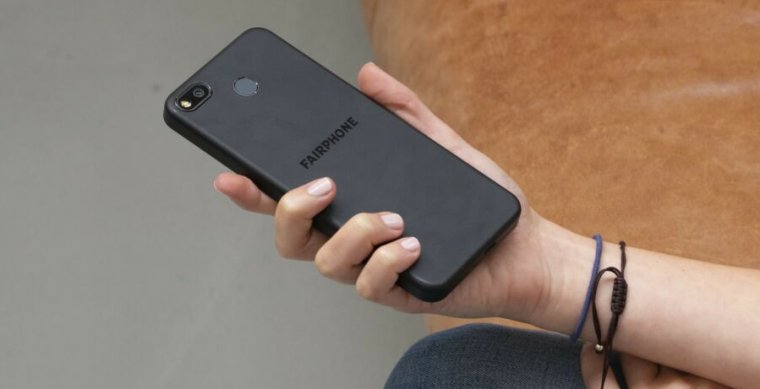
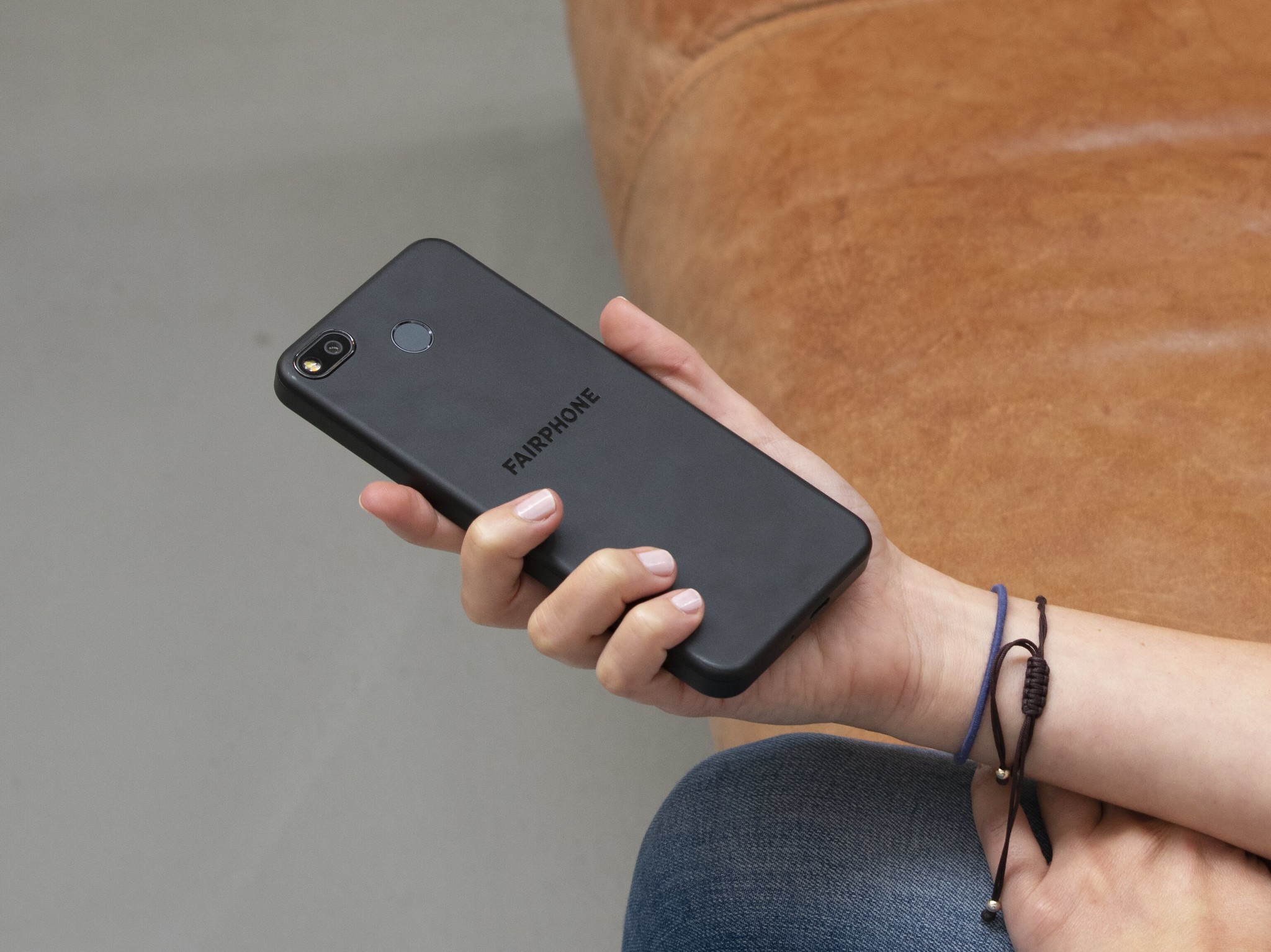
The Fairphone 3+ pictured here is a bit bulkier than a standard smartphone—but that bulk makes it far more repairable, and as of today's news, even upgradeable.

Enlarge / The Fairphone 3+ pictured here is a bit bulkier than a standard smartphone—but that bulk makes it far more repairable, and as of today's news, even upgradeable. (credit: Fairphone)

Last year, repair guide site iFixit tore down the Fairphone 3 and gave the modular-designed phone a rare perfect 10/10 repairability score. Today, Fairphone demonstrated just how far its philosophy of modular phone design can take its users by offering the massively upgraded cameras from its newly released Fairphone 3+ model to owners of the earlier Fairphone 3.

Fairphone designs are noticeably bulkier than typical smartphone designs—but they have a reason to be. Its components have been split into seven replaceable modules in order to extend the service life of each Fairphone. Battery getting weak? It's replaceable. Dropped your phone and broke the screen? Not only replaceable, but guaranteed replaceable—and for reasonably technical end users, user-replaceable—with easily purchased parts from the factory.

The original Fairphone 3 launched with a 12 megapixel rear camera and an 8 megapixel front camera. The newly released Fairphone 3+ is essentially the same phone, but it offers a refresh on the camera modules, bringing the rear camera to 48 megapixels and the front to 16 megapixels. Owners of the original Fairphone 3 can upgrade by simply purchasing replacement modules from the Fairphone store and replacing them.

Read 2 remaining paragraphs | Comments

27 Aug 19:41

Rapid $1 Covid-19 tests exist. Why can’t we get them?

by Katherine Harmon Courage
James.galbraith

Seems like this should be a huge priority

A sign advertising a rapid coronavirus test on the new Abbott ID Now machine at a ProHEALTH center in Brooklyn, New York, on August 27. | Spencer Platt/Getty Images

A new testing strategy prioritizes infectiousness instead of infections.

To get the US pandemic under control, a growing number of health and medical experts are making a clarion call for an additional testing approach to Covid-19.

What we need, they argue, are at-home rapid tests that look for antigens, proteins the live virus makes. These kits would allow anyone to test themselves for the coronavirus any time (and anywhere) for between $1 and $5, and get results in about 15 minutes. No doctors, labs, expensive machines, or special chemicals required.

“I see these [antigen] tests as a solution that’s literally sitting in front of us,” says Michael Mina, an epidemiologist at the Harvard T.H. Chan School of Public Health, who has led an effort to get these rapid tests authorized by the Food and Drug Administration. “We could be getting massive outbreaks down to nothing. ... It’s a no-brainer to me.”

Back in April, Deborah Birx, the White House coronavirus response coordinator, actually called for just this sort of solution in an interview on Meet the Press. “We have to have a breakthrough innovation in testing,” she said. “We have to be able to detect antigen.”

Several small companies have been developing these simple tests, and the conglomerate 3M is working with MIT on another one. (The new BinaxNOW test from Abbott, authorized August 26, is different — it requires a health professional to administer it, and the patient must have symptoms to get a prescription.)

And some of these at-home tests are ready to go. But they have been sitting on the shelf, unused, for months. Why?

 Spencer Platt/Getty Images
People line up on August 13 to take a Covid-19 test in the Sunset Park neighborhood in Brooklyn, New York, which has seen a spike in coronavirus cases.

The holdup is that rapid, over-the-counter antigen tests are not nearly as sensitive to the coronavirus as the molecular PCR (polymerase chain reaction) tests currently used for most Covid-19 testing. In fact, by PCR standards, some at-home antigen tests might catch only half or a third of people who test positive on a PCR test.

But that’s because they’re looking for different things in different ways. A PCR test, designed to diagnose an individual with infection, can catch very low levels of viral material before or after a person spreads the virus. An over-the-counter antigen test, meanwhile, relies on high levels of the virus to be able to detect it. These high levels, though, also happen to coincide with when a person is most likely to transmit the virus to others.

“The antigen test is maximally sensitive at the same time that you are maximally infectious,” says David Paltiel, a professor of public health and health policy at the Yale School of Public Health. “The antigen test is picking up the infections I want. Because I don’t care about infections, I care about infectiousness.”

Since at-home antigen tests would be fast and cheap, they could allow people to test themselves regularly. Currently, PCR testing is relatively expensive (about $100) and often experiences processing delays that hamstring efforts to stop transmission.

PCR tests’ sensitivity, however, is the current benchmark by which the FDA judges new tests for emergency authorization.

This pre-pandemic framework, Mina and others argue, is a problem as we look for the most effective tools to fight the coronavirus right now. So they are calling for a new way to evaluate these tests, one based in public health terms rather than individual diagnostic ones — in other words, widely accessible tests that are well tuned to find those who are most likely to spread the virus.

Let’s take a look at how and why this potential solution has gotten sidelined in the pandemic battle — and what might be done to get these tests off companies’ shelves and out to the public.

A test to find infectiousness, not infection

To understand the stalemate around antigen tests, it’s helpful to first understand what they are, how they differ from classic PCR tests, and the trajectory of coronavirus infections.

First: An antigen test looks for a particular protein from a live virus. (Not to be confused with an antibody test, which finds immune cells your body has made after mounting a defense against the virus.) These tests need a lot of viral material to generate a positive result.

Second: A PCR test looks for the virus’s genetic material — its RNA — making copies of itself until it reaches a detectable level. As a result, it has a fairly low (although not perfect) false-negative rate, or the proportion of time it would tell someone who has the virus that they don’t.

Finally: One of this new coronavirus’s superpowers is its ability to spread from people before they start to experience symptoms. In fact, people tend to carry the most live virus the day or so before they begin feeling sick, and the amount tends to quickly trail off in the several days after symptom onset.

So proponents of at-home antigen testing say that PCR tests, while useful in determining whether an individual is infected with Covid-19, are actually a poor tool in finding people who are most likely to spread the virus. That’s because PCR tests are so sensitive, they are excellent at picking up traces of the virus even after someone has beat it back and is no longer infectious.

Thomas Tsai, a health policy expert at the Harvard T.H. Chan School of Public health, compares the two types of testing this way: PCR tests are reactive tests, usually used for people who either have symptoms, a close contact with the virus, or other reason to think they are likely to have caught it. Rapid, widespread antigen tests are proactive tests, designed to find cases before they spread the virus more widely.

And as the Center for Evidence-Based Medicine noted earlier this month, “while an infectious stage may last a week or so because inactivated RNA degrades slowly over time, it may still be detected many weeks after infectiousness has dissipated.”

To look a little bit deeper at how this works, an August 7 preprint report which hasn’t been peer reviewed proposes that people with 10,000 copies of the virus detected in their airways are unlikely to spread the virus to someone else, even with sustained contact (according to their models, it would happen about 0.002 percent of the time). Once that viral load climbs to 10 million copies (which happens quickly, potentially in about a day), they have about a 40 percent chance of transmitting it to a close contact — and about 80 percent chance at 100 million viral copies (it’s worth noting that when they first reach this level they still might not have any symptoms).

By the time someone has had Covid-19 symptoms for several days (which might currently be about the time they receive results from a PCR test), however, the amount of virus in their system has likely waned to the point of actually being less transmissible. As the authors of the study note, “transmission after the first week of infection is quite rare.”

At that point, says Mina, it’s more likely that “they just have residual [virus] RNA hanging about.” So although many of these people would get a positive PCR test — and a negative at-home antigen test — they are much less likely to transmit the virus than someone who feels fine now but will develop symptoms in a day or two.

“The PCR is being fooled all the time,” Paltiel says. “The PCR is just picking up strands of viral junk.” If your goal is to slow an outbreak, he notes, this sort of data is not actually that useful. “Outbreak control is all about figuring out who’s actually spreading this stuff.”

This could also help explain why so many people continue to get positive PCR test results weeks after getting over most of their symptoms. One small JAMA study, for example, found that one in six former Covid-19 patients with no symptoms tested positive for the virus via PCR test four to 24 days after being discharged from the hospital. As an author of a commentary about that paper noted about these long-tail positive test results, “the clinical significance and infectivity are minimal. These PCR tests likely are responding to noninfective RNA fragments and do not represent detection of viable virus.”

Antigen tests, however, need a much higher level of the virus to register a positive result because they don’t rely on multiplying their target.

This, experts argue, make them well matched for finding people with Covid-19 at precisely their most infectious points rather than potentially long after symptoms have arrived and infectiousness has faded, as is more likely now with the long delays in PCR results and contact tracing. As Paltiel describes it, the concept is pretty simple: “The more viruses around your airway, the more likely you are to be a risk to others.”

According to an analysis from the June preprint (on which Mina was a co-author), this crucial time period is precisely where the antigen test is most sensitive: detecting viral load at around 10,000 copies, which is just before someone’s infectiousness skyrockets. PCR tests, on the other hand, can pick up about 1,000 copies of the virus, which gives them about a day’s head start at finding the virus. Although with a lag of more than a day in returning results, that benefit is lost.

To put it in other terms, these tests could be “superspreading detectors,” Mina says, locating many of those who would otherwise go on to unknowingly infect many other people before they know they have the virus.

“Their whole goal is to capture the 90 percent of people who might be transmitting the virus,” Mina says. So if they were to be evaluated in this population — those with high levels of the virus — he says, the sensitivity for these tests would soar from 30 or 50 percent (as measured against PCR) up to 95 percent. (They also have very low false-positive rates, in which they would tell someone they had the virus when they actually didn’t.)

Another selling point to antigen tests, proponents argue, is that they would give people their results much faster than PCR tests. Since delays of more than a day or so in getting PCR results back make containment and tracing much less effective, being able to have results back in 15 minutes or so would be a vast improvement.

“Of all the variables that we control, the frequency of screening is the most important”

Because these tests would be fast and affordable, people could also test frequently, which could help overcome worry about the tests being less sensitive than PCR — especially in the very small window early in an infection when a PCR test might catch the virus but an antigen test wouldn’t.

And such frequent testing would be far superior to the still relatively rare PCR testing that we’re currently doing, Paltiel says. “Of all the variables that we control, the frequency of screening is the most important,” he says. Even if the antigen-based test only caught half of all cases (regardless of infectiousness level), he says, if it’s “between a test that is missing 50 percent [but rapid and easy] and a test that is getting everyone that is so expensive or so cumbersome or has such a long turnaround time that it takes a week, I’ll take what’s behind door No. 1.”

In the June preprint study, the researchers found the sensitivity of a test made little difference in the rate at which it could bring viral transmission down. For example, running either of these tests, PCR or at-home antigen testing, on a population weekly could lower the spread of the virus by about 60 percent, they posit.

So, Mina suggests, we shouldn’t just be asking what level of sensitivity a test has, but rather, what it’s sensitive to. PCR tests are great at finding traces of the coronavirus but, he says, “it’s going to have a 0 percent sensitivity to detect elephants.” And if what we want is to start finding elephants — or people who are most infectious — we should look for new testing options, he argues.

The FDA’s job is to help keep us safe, but it might lack a pandemic public health protocol

One of the FDA’s essential responsibilities is to make sure dangerous medications, ineffective vaccines, or misleading diagnostic tests don’t make it to US consumers. So it applies rigorous standards to make sure new products are reliable before they are allowed on the market.

And the FDA has applied this same rubric when it has evaluated new tests for the coronavirus this year.

“Tests are still being considered first and foremost as diagnostic tools,” Mina says. This is evident in how the FDA has required antigen tests to perform at PCR-levels in detecting traces of the virus in people’s systems, he notes. For example, a new test might need to detect the virus in 80 or 90 percent of emergency room patients who’ve received a positive PCR test.

So when you compare the numbers and see a test that catches half or a third of the positive cases a PCR test does, it makes sense for the FDA to worry about a huge number of Covid-19-positive people thinking they are negative.

And Mina says he gets that. “If I’m a doctor, which I am, and I have a patient in front of me, I would want the absolute best and most sensitive molecular test to make sure I don’t miss something,” he says.

But he is also an epidemiologist. “For public health, it’s totally different. It requires a really different type of thinking.” One that targets minimizing spread of the virus among people.

“Unfortunately, the FDA just doesn’t have that,” he says. “They don’t even have a lens with which to think about it.”

And so, he says, they’re still evaluating at-home antigen tests as individual medical diagnostic tools rather than “as a virus control tool at the population level.”

The FDA has already authorized four antigen-based tests, including ones from Quidel (in May), BD Veritor (in July), LuminaDX (in August), and the new one from Abbott. To meet the FDA’s current sensitivity standards, however, the first three of these use proprietary machines to read results. (Some of these machines are now being allocated by the Centers for Medicare & Medicaid Services to nursing homes around the country.)

But an over-the-counter antigen test, the sort that Mina and others are advocating for, simply can’t be authorized under the current standards.

This gets at the essential tension between the FDA’s individual-based medical diagnostic framework and the broader public health needs of the pandemic. And, says Tsai, “We really need to shift gears.”

Concerns remain about at-home antigen testing

Beyond the sensitivity question, the FDA and others also have hesitations about these sorts of tests being done outside of the health care setting.

Current Covid-19 tests require a health care professional to order them and provide the results, allowing for them to give patients medical advice. If people are taking these tests on their own at home or before entering a business, a nurse won’t be on hand, for example, to advise them to isolate if necessary or take other steps to prevent spread.

“Due to the lack of healthcare professional supervision, FDA believes it is important for over-the-counter non-lab diagnostic tests to have a low rate of false negative results,” Emma Spaulding, a spokesperson for the FDA wrote to Vox in an email. “For example, an individual with a false negative result from an OTC diagnostic test may be less likely to quarantine despite symptoms, putting others in the community at risk,”

This is one reason they are recommending such tests catch 90 percent of the PCR-positive cases, she says. They would lower this to 80 percent if the tests required a prescription and were done under the supervision of a health care worker (such as via telemedicine).

Others worry about individual compliance. Rebecca Lee Smith, an epidemiologist at the University of Illinois, notes that this sort of testing would probably be most readily adopted by people who are already putting in the most effort to avoid catching and spreading Covid-19, such as those regularly wearing masks and practicing physical distancing.

“But the people who aren’t concerned about the virus may not choose to do at-home testing — they’re also the people who are not taking the precautions. So the same people we would absolutely want to be checking for the virus, then, would be the people less likely to do it at home.”

She also has concerns about at-home tests being used to clear people for work, school, or other activities. If someone needed to produce a negative test result, they could theoretically get someone else to take the test for them but still gain entry to, say, their college classes for the day. That was a point of discussion at her university, where they eventually opted for supervised (rather than collected-at-home) saliva-based PCR testing. “We decided that it was more important that we know, for sure, that the person who checked in for testing is the person giving the sample,” she says.

Administering these tests out in the community as a way to enter a workplace or a restaurant, for example, could also help alleviate this issue — as well as the concern about those with higher chances of contracting the virus not taking the test.

The newly approved Abbott test, BinaxNOW, is a step toward more accessible antigen testing. It doesn’t require a machine to read the results — and still, according to data presented to the FDA, has a 97 percent specificity level compared with PCR tests. It is also $5 for one test, and the company says they will be able to ship 50 million of them a month this fall.

The downside is it is only available with a prescription, and it needs to be given by a health care professional or other trained individual (such as a pharmacist or workplace health specialist). The test requires a nasal swab and a small amount of specialized chemicals known as reagents. And it is only to be used for people who developed Covid-19 symptoms within the past week, making it inapplicable for broader population-wide screening.

With an over-the-counter test, we might also lose a lot of important public health disease surveillance data. If people are testing positive at home — or even in a public setting — and not following up with a health care worker or public health department, their case might not get counted or their contacts traced. “You would need to have a link back to public health,” Smith says. They would also want to get information on the test that was performed so they could properly interpret the results.

This is where our existing PCR testing capacity could run backup. Smith explains that a positive antigen test result could be a trigger to get a PCR test to confirm the infection. It could also possibly reduce the number of PCR tests that are run, potentially speeding up delivery of those results as well.

“In a perfect world,” Smith says, “we would have this cheap, at-home test that anybody could take, as frequently as they want, that would give them a quick result. If there is a reason — if they have symptoms, if they’ve been exposed, or the at-home test comes back positive — then they report for PCR.”

Tsai agrees PCR tests would still be important. “It’s really thinking about how we use the pros and cons of all the different tests in a more comprehensive strategy,” he says. “Let’s put these pieces together.”

How could at-home antigen tests get authorized?

With over-the-counter antigen tests at a regulatory stalemate in the FDA’s current authorization system, experts are spitballing alternative routes to getting these tests to the public.

First and foremost, says Mina, government involvement in authorizing new tests is essential to make sure that those that do reach the market work in the way they are supposed to.

One route for this, he proposes, is a new standard by which the FDA could authorize tests, setting a different benchmark for test sensitivity at levels of the virus that are most likely to be transmissible rather than at very low detectable levels. In other words, he notes, the FDA could adjust their language from looking at sensitivity to the virus broadly to “sensitivity during peak infection.”

“I think Americans, including policymakers, are having a hard time coming to terms with the idea that there’s actually something bad happening to us”

The FDA could also reframe the way it characterizes these tests, he says. Instead of being evaluated as an individual diagnostic test, he says, “it would essentially be indicated as a transmission-detecting test ... [or] a public health diagnostic test, where the real reason of doing that diagnostic test is one of public health.”

Another option would be to designate these tests as surveillance tools rather than diagnostic tests. Under that category, they fall outside the FDA’s purview and would more likely be overseen by the CDC and local health departments.

This plan has a big hitch, though. Surveillance test results are aggregated and are not shared back with the individual taking the test. Diagnostic tests, on the other hand, are those which have results given back to the individual so that they might take a specific action. The latter is, of course, the goal here (to let people know, for example, if they need to start self-isolating).

“It’s this awful catch-22 that could easily be changed if there was a will,” Mina says. “There just doesn’t seem to be much of a will.” Or a regulatory framework for thinking about things differently — even in the midst of a pandemic, he says.

The FDA has recently conceded that they would consider authorizing a less sensitive test if it were part of a high-frequency testing plan, with each person being tested multiple times (which they call “serial testing”), Spaulding says.

This, to Mina and others, seems like a step in the right direction, and he is hoping the FDA will provide more detailed guidance on what this would look like in practice.

But the FDA also notes that it would require an application for this sort of serial testing to “include the capacity to manufacture a sufficient supply of tests with which to conduct multiple tests per person,” Spaulding says.

Mina suggests that this is an arbitrary ask. For other authorized tests, like those using PCR or machine-based antigen detection, the agency has not required makers to show manufacturing capacity — or even the supply chain to turn results around in a certain amount of time (which is a key aspect to slowing transmission of Covid-19). “They’re perfectly fine approving tests that might take a year to return results, but that’s a 100 percent useless test,” Mina says.

Mina also worries that as some of these companies with at-home antigen tests wait for the government to greenlight them, they will decide to make them more complex to meet the current (PCR-based) requirements for diagnostic viral detection.

He calls this going from the sort of “instant coffee model” of testing (where anyone can take a test, cheaply, pretty much anywhere) to the “Nespresso model” (where you need access to a specialized machine to get a result).

And slowdowns in rolling out these machine-based antigen tests are already happening. Both BD and Quidel, two companies making rapid antigen tests, are now facing supply chain issues as they try to fulfill orders for their machines and tests, the Wall Street Journal reported.

Tsai notes that public health officials in Florida have been advised to use the Quidel antigen tests only for symptomatic, older adults. Which, he says, makes sense in targeting those most at-risk for complications from the virus, but “in some ways also defeats the purpose of the frequent testing strategy.”

 Chandan Khanna/AFP via Getty Images
Cars line up at a rapid antigen coronavirus testing site at Hard Rock Stadium near Miami, Florida, on August 5.

Mina has been challenging those who are still on the fence about rapid, at-home antigen testing to say whether, in hindsight, it would have been good to have five months ago.

“Almost all of them say, ‘yes, that would have been great.’ Compared to what has happened, of course it would have been great.” Now, he says, “we’re in an almost worse spot today, we’re hitting up against September and October, when coronaviruses can start spreading like crazy. We have to cut our losses and say, ‘okay, we didn’t do it five months ago, but we can do it today.’”

Like the old tree-planting aphorism: The best time to plant a tree may have been 20 years ago, but the second-best time is now. “We could potentially save ourselves from ourselves in the fall. But I don’t know if it’s going to happen, frankly,” he says.

Part of that reason, he notes, has to do with our general national mindset. “I think Americans, including policymakers, are having a hard time coming to terms with the idea that there’s actually something bad happening to us.”

Just adding this new type of testing on its own, however, won’t be enough to get us out of the pandemic. “We can’t test our way out of it,” Smith says. “We also need masks, we need distancing.”

But, she says, many presymptomatic and asymptomatic cases are not being detected with our current testing strategy. “And those people are able to spread the infection further without knowing it. If we can’t identify these cases, we are never going to get out of this.”

Katherine Harmon Courage is a freelance science journalist and author of Cultured and Octopus! Find her on Twitter at @KHCourage.


New goal: 25,000

In the spring, we launched a program asking readers for financial contributions to help keep Vox free for everyone, and last week, we set a goal of reaching 20,000 contributors. Well, you helped us blow past that. Today, we are extending that goal to 25,000. Millions turn to Vox each month to understand an increasingly chaotic world — from what is happening with the USPS to the coronavirus crisis to what is, quite possibly, the most consequential presidential election of our lifetimes. Even when the economy and the news advertising market recovers, your support will be a critical part of sustaining our resource-intensive work — and helping everyone make sense of an increasingly chaotic world. Contribute today from as little as $3.

27 Aug 18:14

The latest chaos at the convention reveals Trump as a miserable failure

by Greg Sargent
James.galbraith

Yeah, Wednesday was shockingly out of touch, even for the GOP

The GOP show offers a wildly implausible big-picture depiction of this national moment.
27 Aug 18:12

A second Trump term would mean severe and irreversible changes in the climate

by David Roberts
James.galbraith

Yeah, if there's 4 more years, get the fuck out of the country

SFChronicleCalifWildfires Flames erupt from brush along the road near Lake Berryessa, California. | Carlos Avila Gonzalez/The San Francisco Chronicle via Getty Images

No joke: It would be disastrous on the scale of millennia.

This piece was originally published August 27, and has been lightly updated.


During the final presidential debate, both candidates were asked how they would combat climate change and support job growth. President Donald Trump offered few specifics, merely saying that that, “We have the Trillion Trees program. We have so many different programs. I do love the environment.”

But let’s be clear: If Trump is reelected president, the likely result will be irreversible changes to the climate that will degrade the quality of life of every subsequent generation of human beings, with millions of lives harmed or foreshortened. That’s in addition to the hundreds of thousands of lives at present that will be hurt or prematurely end.

This sounds like exaggeration, some of the “alarmism” green types are always accused of. But it is not particularly controversial among those who have followed Trump’s record on energy and climate change.

“As bad as it seems right now,” says Josh Freed of Third Way, a center-left think tank, “the climate and energy scenario in Trump II would be much, much worse.”

The damage has not primarily been done, and won’t primarily be done, by Congress, except through inaction (which is no small thing). Under Majority Leader Mitch McConnell, the Senate has effectively abdicated its duty as a legislative body; it now mostly exists to approve far-right judges to the federal bench.

In what follows, I’ll assume that if Trump wins, Republicans keep the Senate — and that the situation remains as is, with Congress divided and gridlocked, unable to pass major legislation or effectively restrain Trump. (It is possible that Trump wins and Democrats take both houses of Congress, but thinking about that breaks my brain.)

I’m going to do a quick review of Trump’s record so far on climate and energy. By necessity, it is not comprehensive. The amount of damage done, not only on high-profile issues but through unceasing daily efforts to weaken and degrade the federal bureaucracy, could fill volumes. I’ll just look at the highlights, with a focus on what Trump wants to do and is more likely to get away with in a second term.

First, though, let’s talk about the main thing, which is that a Trump victory would make any reasonable definition of “success” on climate change impossible.

(Note: I asked lots of people for their thoughts on a second Trump term, and for the most part, they did not want to speak on record or in specifics, for fear of giving Trump ideas. The sense of dread is palpable.)

More Trump will ensure the continued escalation of global temperatures

We know from the latest IPCC report that the climate target agreed to by nations — no more than a 2° Celsius rise in global average temperatures — is not a “safe” threshold at all. Going from 1.5° to 2° means many more heat waves, wildfires, crop failures, migrations, and premature deaths. We know that every fraction of a degree beyond 2° means more still, along with the increasing risk of tipping points that make further warming unstoppable.

Hitting the 1.5° target would require the world to reduce its greenhouse gas emissions 50 percent by 2030 and to net zero by 2050. Doing so would require industrial mobilization beginning immediately. Even hitting 2° would be desperately difficult at this point. There is no longer any time for delay; this is the last decade in which it is still possible.

We know that the US doing its part to reach net zero by 2050 would not be enough, in itself, to limit global temperature rise. By the same token, we know it is wildly unlikely that the rest of the world will be able to organize to meet that goal without US leadership. And in the face of active US undermining and opposition, it will be all but impossible.

Climate policy is complicated, but in the end, it comes down to replacing everything powered by fossil fuels with zero-carbon alternatives, and we know beyond any doubt that the Trump administration is devoted to the interests of its allies in the fossil fuel industry. Everything the administration has done since taking office reflects a single-minded zeal to release fossil fuel industries from regulatory restraints and to subsidize them through public policy.

US carbon emissions have been declining, down roughly 12 percent since 2004. That’s almost entirely due to the market-driven decline of coal in the electricity sector, a trend that analysts expect to continue. The Trump administration disingenuously takes credit for it. But it won’t be enough, on its own, to reduce emissions fast enough to stay on track for net zero by 2050. Not even close.

The US needs to completely transition off electricity generated by coal and natural gas, vehicles powered by gasoline and diesel, and buildings heated by natural gas and oil — and quickly.

Everything Trump has done pushes in the opposite direction. Four more years of Trump, backed by a Republican Senate, will mean a heavy drag on global efforts to control carbon. Progress on decarbonization will slow in the US, and the example America sets will slow other nations’ progress as well, making the aforementioned 10-year mobilization all but impossible. That is a difference that will reverberate for centuries.

Now let’s look at his record.

Trump has steadily rolled back regulations on fossil fuel companies

“When I think about the horrors of a Trump term two, I think about lock-in of domestic policies,” says Sam Ricketts of Evergreen Action, “buttressed — and in places even made permanent — by his continuing to stack the courts.”

In his first term, Trump has blocked, weakened, or rolled back 100 environmental, public health, and worker safety regulations. Among them are virtually all the steps Obama took to address climate change, from the Clean Power Plan for the electricity sector to tighter fuel economy standards for transportation, emissions standards on methane for oil and gas operations, efforts to integrate a “social cost of carbon” for agency decision-making, reform of fossil fuel leasing on public land, and energy efficiency standards on light bulbs. (Trump also wants to go after toilets and showerheads.)

Every one of those decisions would have the effect of increasing greenhouse gas emissions.

Environmentalists have sued over all of them, and thus far, Trump has lost more cases than he has won. Many of the rule changes pushed through by his agencies are being rejected by courts for being rushed and shoddy.

Given another term, Trump’s agencies will have more time to fill out those arguments and resubmit those rules; almost any rule can be justified eventually. Meanwhile, the federal bench will be packed with more sympathetic Trump appointees ready to rubber-stamp those rules.

And if federal judges object, the administration can appeal the cases to the Supreme Court, where Trump will almost certainly have had the opportunity to replace a justice or two. With a solid 6-3 or 7-2 majority on the Court, virtually anything the administration wants will end up being approved.

For example, Trump’s Department of Interior tried to rescind Obama’s 2016 rules limiting methane emissions from oil and gas operations on public land; the court recently rejected the attempt, calling it “defectively promulgated” and “wholly inadequate.” Given time and a friendlier court, the rule would be doomed. (Here’s a comprehensive tracker of all the rule changes so far, and their status.)

The administration is also going after other methane rules on oil and gas operations, and in the process, trying to change the EPA’s rulemaking process to make future regulations more difficult. That brings us to a key point.

A natural gas power plant near Ventura, California. Shutterstock
A natural gas power plant near Ventura, California.

The Trump administration is stacking the deck to advantage fossil fuels

Aside from all the rules the administration has eviscerated, is eviscerating, and plans to eviscerate, it is also pushing several changes to agency procedures that will make it more difficult to regulate in the future.

Under administrator Andrew Wheeler, the EPA has proposed to alter the way it does cost-benefit analysis to exclude consideration of a rule’s “co-benefits” — reductions in other pollutants that come as a side effect of reducing targeted pollutants. (A coalition of environmental groups has opposed the change, which violates EPA precedent, statutory intent, and common sense.) If the change goes into effect — as it surely will given another term and friendlier courts — all future air quality rules will be weakened.

The EPA has also promulgated a “secret science rule” that would exclude from consideration a wide swath of studies demonstrating the danger of air pollution (including its danger in helping spread Covid-19). Without those studies to rely on, justifying public health regulations would be more difficult going forward. The EPA’s own independent board of science advisers said the change would “reduce scientific integrity” at the agency.

Speaking of independent science advisers, starting under Pruitt, the EPA began pushing out science advisers who had received grants from the agency (which includes most of them) and replacing them with fossil fuel cronies. Amusingly, even a science board packed with Trump appointees has said that three of the agency’s major recent rule changes flew in the face of established science. Still, given another term to finish the job, Wheeler could effectively eliminate independent scientific review at the agency.

The administration has also gutted the National Environmental Protection Act (NEPA), which requires the federal government to rigorously assess the effects of its actions on the environment and local communities, and is one of the principal avenues through which communities of color and other vulnerable communities communicate their interests to the federal government.

In July, the White House Council on Environmental Quality released a proposed rule that would dramatically limit the range of federal agency actions to which NEPA applies, limit consideration of cumulative and indirect impacts (like climate change and environmental justice), and curtail public involvement in the decision-making process and judicial review. Given another term to see the change through, the White House could shape every major federal agency decision going forward.

The administration is also trying to revoke California’s waiver under the Clean Air Act, which allows the state to set its own (typically more ambitious) emissions standards. If it succeeds, it would sabotage not only California’s standards but those of the 13 states (and Washington, DC) that have adopted them.

And it won’t be the only way a vindictive Trump could go after his perceived enemies. “Blue states will be starved of federal funding, which means massive cuts that inevitably lead to a degradation in environmental enforcement and investment in cleaner energy,” says Freed, “but also likely big reductions in mass transit funding and aid to cities that will push more people into cars and more emissions.”

Over at the Federal Energy Regulatory Commission (FERC), Trump appointees have pushed through a Minimum Offer Price Rule (MOPR). It’s quite technical (I explain it here), but the net result is that state policies meant to support clean energy will be cancelled out in regional energy wholesale markets. It would cost consumers billions of dollars and prop up uneconomic coal power plants.

The MOPR is also under litigation from multiple groups. Again, given four more years and a compliant Supreme Court, it will probably stick. And FERC’s Republican commissioners have said they want to expand its use.

FERC also recently pushed through reforms to PURPA (the Public Utilities Regulatory Policies Act) that would disadvantage small-scale clean energy projects. And it has long pushed an argument for ending net-metering programs (which incentivize rooftop solar) nationwide; that and other steps against distributed energy resources will likely feature in a second term.

At least in this term, the administration chose not to go directly after the EPA’s 2009 Endangerment Finding, which classifies greenhouse gases as pollutants subject to the Clean Air Act. Rumors abound that the administration will go after it in a second term, given a friendlier Supreme Court. That would take one of the only major existing regulatory tools against greenhouse gases in the US off the table.

Speaking of the Supreme Court, an emboldened conservative majority is likely to go after the Chevron doctrine, which gives federal agencies wide latitude in interpreting congressional directives. “I don’t think it’s a matter of if Chevron would be overturned,” says Lori Lodes, executive director of Climate Power 2020, “just a matter of what case gets them to do it.”

Supreme Court Justices Brett Kavanaugh and Neil Gorsuch have recently been making noise about radically limiting the ability of federal agencies to regulate at all, under a hyper-conservative interpretation of the “nondelegation doctrine.”

“It’s impossible to exaggerate the importance of this issue,” my colleague Ian Millhiser writes. “Countless federal laws, from the Clean Air Act to the Affordable Care Act, lay out a broad federal policy and delegate to an agency the power to implement the details of that policy. Under Kavanaugh’s approach, many of these laws are unconstitutional, as are numerous existing regulations governing polluters, health providers, and employers.”

There may already be five conservative votes on the court for this radical lurch backward. If Trump gets another two SCOTUS appointments, it is all but a certainty.

 Scott Dickerson/Getty Images
Aerial view of the Okpilak River in the coastal plain of the Arctic National Wildlife Refuge, part of which was opened in August for oil and gas development.

Land, water, and wildlife are also getting the shaft

I’ve mostly been focusing on the EPA and energy, but Trump’s damage is omnidirectional.

Earlier this year, the administration gutted Obama’s Waters of the US (WOTUS) rule, removing pollution protections from a wide swathe of wetlands and streams.

Over at the Department of Interior, Trump’s first appointee, Ryan Zinke, went on an industry-friendly bender, weakening land and species protections, ramping up oil and gas leasing on public land, and purging senior staff and 4,000 jobs. He eventually resigned amid a hail of ethics investigations — so many the New York Times had to put together a guide — and some are ongoing.

Zinke was replaced by oil lobbyist David Bernhardt, who managed to get as far as rolling back a bunch of wildlife protections before also coming under investigation for conflicts of interest. He has held on so far, though, and has a long wish list (there’s a tracker here), with almost every proposed change devoted in one way or another to weakening wildlife protections and expanding oil and gas drilling on public land.

A second Trump term will almost certainly see a renewed push for more offshore oil and gas drilling, expanding on the recent opening of the Arctic National Wildlife Refuge. A plan to open virtually all the nation’s coastal waters to drilling was put “on hold” after pushback from courts and coastal communities last year, but it will return, as will further delays for offshore wind projects.

Bernhardt also moved the headquarters of DOI’s Bureau of Land Management to Grand Junction, Colorado (a fossil fuel hub), and gave DC staff 30 days to decide whether to follow. Predictably, and by intent, the move resulted in an enormous brain drain, as about half of the experienced staff left.

Agriculture Secretary Sonny Perdue did something similar, moving the USDA’s Economic Research Service and National Institute of Food and Agriculture — research agencies investigating, among other things, lower-carbon regenerative agriculture — to Kansas City. Critics saw the move as an obvious bid to make filling positions and coordinating with other federal researchers more difficult, thus strengthening the influence of big, carbon-intensive industrial agriculture.

There is no telling how many more agencies Trump could gut given four more years. Many staff, at EPA and other agencies, have been holding on to hopes of a new president. If Trump is reelected, there’s likely to be a huge exodus of knowledge and talent from the federal government.

Russian nuclear powered icebreaker Yamal traveling through the Arctic Ocean on its way to the North Pole. The icebreaker is a ship for use in waters continuously covered with ice. Photo taken on July 3, 2007 (Photo by Nery Ynclan/NBC/NBCU Photo Bank via Getty Images) Nery Ynclan/NBC/NBCU Photo Bank via Getty Images
A Russian icebreaker traveling through the Arctic Ocean on its way to the North Pole. The icebreakers are creating new routes for oil and gas shipping through the Arctic.

Trump’s foreign policy is entirely devoted to fossil fuels

Promoting fossil fuels has been one of the few consistent themes of Trump’s foreign policy.

He announced early on, amid a flurry of misinformation, that the US would withdraw from the Paris climate agreement. (That decision will go into effect on November 5, regardless of the election outcome.) Though some State Department staffers are still attending international climate meetings and participating in lower-level dialogues, top US leadership has spurned the entire process and shows no sign of reengaging.

Instead, Trump is trying to manage oil prices by making deals with cartels, bullying other countries to buy US oil, seeking to export liquid natural gas to India, and jostling with Russia and China over trade routes through the melting Arctic.

In a second term, Trump is unlikely to rejoin Paris; he’s much more likely to remove the US from the United Nations Framework Convention on Climate Change entirely. It is an open question whether the Paris framework could survive that at all.

Four more years of Trump would leave democracy, and hope for a safe climate, in tatters

The above constitutes a highly selective list, a small portion of the damage Trump has done to climate and energy progress across federal agencies and international agreements. There are plenty of other examples to cite, including his beloved trade wars, which he will undoubtedly expand in a second term. A recent analysis found that his solar tariffs to date have cost 62,000 jobs in the solar industry and blocked 10.5 gigawatts of new solar from coming online. (If you can stomach a more comprehensive list, check out this piece from the Global Current.)

The main bulwark against Trump’s changes so far has been the courts, but that bulwark will not hold against an administration with four more years to bolster its legal cases and appoint sympathetic judges.

Under Trump and McConnell, the Senate has already appointed 200 federal judges, almost a quarter of the total number. If McConnell keeps the Senate, the next four years could see half of federal judges being Trump appointees and a 7-2 conservative majority on the Supreme Court. That would likely mean a rapid return to pre-New Deal jurisprudence, radically curtailing the reach of foundational environmental laws. Trump — or, more precisely, the Federalist Society — would be utterly unrestrained.

And that’s not even accounting for the possibility that Trump could simply ignore court judgments he doesn’t like, which seems to be the logical next step for an administration that has faced so little accountability for its law-breaking.

In a second term, especially if Republicans keep the Senate, there would be few tools left to use against Trump’s march into the fossil fuel past. Big businesses and financial institutions might exert some influence. The EU might impose a border adjustment tax. But most hope would fall on direct activism.

Yet activism is only going to get more difficult, as it tends to under authoritarian states. “It’s impossible to separate the massive, vicious assault on democracy and civil rights Trump would prosecute in a second term from the actions he would take on climate and energy,” says Freed. Many states have been passing laws ramping up the scope and severity of penalties for direct activism, increasingly being redefined as “domestic terrorism.” Trump’s use of federal forces to brutalize protesters in Portland is likely a preview of a much more extensive crackdown on civil disobedience in a second term. Some environmental groups are already having serious discussions about how to prepare their members.

There’s no sugarcoating it: If Trump wins the election and Republicans keep the Senate, democracy in America might not survive. At the very least, any hope of public policy to rapidly decarbonize the US is off the table. The US will push actively in the opposite direction.

I often think about this passage from a 2016 commentary in the journal Nature (signed by 22 noted climate scientists):

Policy decisions made during [coming years] are likely to result in changes to Earth’s climate system measured in millennia rather than human lifespans, with associated socioeconomic and ecological impacts that will exacerbate the risks and damages to society and ecosystems that are projected for the twenty-first century and propagate into the future for many thousands of years.

Thousands of years.

Trump’s damage to the climate is not like his damage to the immigration system or the health care system. It can’t be undone. It can’t be repaired. Changes to the climate are, for all intents and purposes, irreversible. They will be experienced by every generation to come.

It is a cliché by now to call this the most important election of our lifetimes, but even that dramatic phrasing doesn’t capture the stakes. From the perspective of the human species as a whole, the arc of its life on this planet, it may be the most important election ever.


New goal: 25,000

In the spring, we launched a program asking readers for financial contributions to help keep Vox free for everyone, and last week, we set a goal of reaching 20,000 contributors. Well, you helped us blow past that. Today, we are extending that goal to 25,000. Millions turn to Vox each month to understand an increasingly chaotic world — from what is happening with the USPS to the coronavirus crisis to what is, quite possibly, the most consequential presidential election of our lifetimes. Even when the economy and the news advertising market recovers, your support will be a critical part of sustaining our resource-intensive work — and helping everyone make sense of an increasingly chaotic world. Contribute today from as little as $3.

27 Aug 17:49

Hurricane Laura sweeps inland with 150 mph winds, but storm surge is smaller than expected

by Mark Sumner

Hurricane Laura reached the Louisiana coast in the early hours of Wednesday as a Category 4 storm carrying winds in excess of 150 mph. Hours later, it was still a Category 2 storm bringing hurricane-force winds far inland. At 8 AM CT, the eye of the storm was near the center of Louisiana, still carrying 100 mph winds, intense rain, and the threat of both flash floods and tornadoes. Though the storm is weakening, it may still be a hurricane when it crosses into Arkansas on Thursday evening.

With daylight, the catalog of damage caused by the storm’s passage is only starting to be assembled. At least 500,000 people are without power in Louisiana alone, damage to buildings in Lake Charles, Louisiana, is extensive. Images from areas around the town of Sulphur, 60 miles inland, show extensive damage with trees uprooted, homes destroyed, and some buildings absolutely flattened.  What has happened along the coast remains unclear. At this point it appears that the “unsurvivable” 20-ft storm surge failed to materialize, which is a huge relief, though the threat of storm surge has definitely not passed. However, the storm actually did one good thing—taking care of a issue that Republican leaders in the area had refused to address.

In Lake Charles, Hurricane Laura appears to have plucked a Confederate statute from the top of its pedestal and sent it … somewhere. As divine signs go, consider that one a “get out.” Still, even though this is satisfying, it’s certainly not worth the other results of the storm’s passage.

Lake Charles and Calcasieu Parish has been filled with controversy and tension after our parish government by a vote of 10-5 refused to take down the Confederate South’s Defenders Monument. Hurricane Laura had other plans and brought it down herself. pic.twitter.com/HmyCVlJF8k

— Davante Lewis (@davantelewis) August 27, 2020

All over Lake Charles, the damage to buildings large and small has been extensive. Residents emerging from their homes have described some areas as “unrecognizable,” in both Lake Charles and in towns closer to Port Arthur, like Orange and Sulphur.

- First light is revealing the incredible damage #HurricaneLaura did here in #LakeCharles #Louisiana over night... #Laura #CapitolOneTower pic.twitter.com/WSlP0MIZ0K

— WeatherGoingWILD (@WeatherGoinWILD) August 27, 2020

Tornado chaser Reed Timmer was on hand for the storm’s passage through Lake Charles and captured video that seems almost as intense as that other form of vertex.

EYE WALL of powerful #HurricaneLaura in Lake Charles, LA with the Dominator Fore and HERV taking some debris. Sadly there is a lot of damage, likely catastrophic to the south. We are waiting for sunrise to drive to Holly Beach and retrieve windy palms @MikeTheiss pic.twitter.com/WwNUjwfruu

— Reed Timmer (@ReedTimmerAccu) August 27, 2020

A storm surge warning from the National Hurricane Center remains in effect on Thursday morning, with potential for significant additional surge along a line from High Island, Texas, to the mouth of the Mississippi. No one should be thinking of returning to these areas at this point. It is definitely not safe, and will remain that way for some time. It will be days before the threat of surge and flash floods from the storm is passed.

In any case, the surge at the center of the storm appears to have been closer to 9 ft than what the NHC had warned was an “unsurvivable” 20 ft. Areas along a 100-mile line that had been expecting as much as 15 ft have, at this point, experienced surge levels more like 4-6 ft. Overall, the storm appears to have simply dragged along much less water than was feared, and for that everyone can be grateful.

Still, the level of surge is likely to have devastated communities closer to the coast. Search and rescue teams are just beginning to head into the area, looking for anyone who stayed behind over evacuation warnings and determining the level of structural damage. 

27 Aug 17:36

Those who like government least govern worst

by Ezra Klein
James.galbraith

In any sane world this would be obvious

President Donald Trump attends Mike Pence’s acceptance speech for the vice presidential nomination during the Republican National Convention on August 26, 2020. | Drew Angerer/Getty Images

From the Iraq War to the coronavirus: why Republicans fail at governance.

The GOP stands for Grand Old Party, but there is no past on display at the 2020 Republican National Convention: No previous Republican presidents, or previous Republican presidential nominees, are speaking. History, for this Republican Party, began on June 15, 2015, when Donald J. Trump descended a golden escalator. That suits both sides just fine. The Bush family, and the Republicans who admire them, view Trump and his followers with horror. In turn, Trump and his allies look upon the Bush wing of the party with contempt.

Trump’s rise has driven a rehabilitation of the George W. Bush brand. Bush’s personal decency, his impulse toward tolerance and inclusivity, glows against the backdrop of Trump’s casual cruelty and personal decadence. But the catastrophic misgovernance in which George W. Bush ended his presidency, and Trump ends his first term, reveals the continuity between the two administrations.

When George W. Bush left the White House in 2009, the Iraq War was a recognized debacle, with thousands of Americans, and hundreds of thousands of Iraqis, casualties of its chaos. The global economy was in collapse, driven by a calamitous void of regulatory oversight of Wall Street, and the disastrous decision to let Lehman Brothers fall. Fewer than 10 years later, the next Republican president is ending his first term with more than 200,000 Americans dead of the coronavirus — the worst pandemic performance, by far, of any rich nation — and an economy in shambles.

Bush and Trump are so personally different, and their administrations so temperamentally opposite, that it feels awkward to compare them, like trying to find the symmetries between a car crash and a spontaneous combustion. But in his new book, To Start A War, Robert Draper chronicles the internal deliberations and dynamics that led the Bush administration into Iraq. In doing so, Draper reminds us of the through-line between the two administrations: A toxic contempt for the government itself.

Draper’s narrative starts in the hours after 9/11 when Deputy Secretary for Defense Paul Wolfowitz demands an assessment of Iraqi involvement in terrorism since the Gulf War. The missive, time-stamped 1:26 am on 9/12, was carried to Gary Greco, a senior Defense Intelligence Agency officer, by a deputy, who asked, “What the hell does it mean?” Greco knew exactly what it meant. “It means we’re going to war in Iraq,” he replied.

Draper conducted interviews with more than 300 people involved in the run-up to the Iraq War, and the stories they tell, assembled one after the other, find a grim, repetitive tempo. Over and over, intelligence analysts and regional experts tried to talk Bush administration leadership out of their belief that Iraq was somehow involved in 9/11, that it sought an alliance with al-Qaeda, that it posed a threat to the United States, that it would be easy to invade and rebuild, that there was firm evidence of WMD stores. And over and over again, Bush administration leaders dismissed them as hidebound bureaucrats whose obsession with process blinds them to the threat posed by Saddam Hussein.

Vice President Cheney With President George W. Bush Photo by Smith Collection/Gado/Getty Images
President George W. Bush and Vice President Dick Cheney sit in the Oval Office of the White House, in 2002.

Take the links, or lack thereof, between Iraq and al-Qaeda. The intelligence community kept shooting down the theories — and the frequently fabricated pieces of evidence — connecting the two entities. Senior Bush officials asked again and again, and the answer kept coming back the same. To Doug Feith, the undersecretary of defense for policy, it was proof that “no one at the CIA had an open mind.”

His colleague Wolfowitz reached out to the UK’s Ministry of Defense. “Surely your intelligence people have got stuff on this,” he begged. They turned him down. So Wolfowitz and Feith formed their own small team to make the argument that the intelligence agencies wouldn’t. Their team put together a briefing to show Defense Secretary Donald Rumsfeld, who loved it — in part because one slide accused the CIA of neglecting a favorite adage of his, that “absence of evidence is not evidence of absence” — and asked that it be shown to the CIA.

The meeting between the actual intelligence analysts and the ad hoc team assembled to come to the conclusions they wouldn’t is darkly comic. “This is your intelligence,” Feith tells the assembled CIA analysts — the implication being that the CIA gathered the data, but they were either too dim or too cautious to understand what it said. “They were connecting dots that weren’t even there — things we’d dismissed and which, in hindsight, never took place,” recalled one analyst in attendance. Bureaucrats, right?

Draper’s book is full of stories like this, where the catalytic ingredient is contempt for the government employees who actually had the expertise — the State Department officials who knew what it would mean to leave a power vacuum in Iraq, the UN weapons inspectors who had scoured suspected WMD sites in the country, the generals who understood that keeping the peace would be harder than routing Saddam’s forces, the foreign intelligence agencies who had discredited the sources the administration was relying on, the regional experts who warned against disbanding Iraq’s army and civil service. Tragically, the Bush team’s contempt for the weapons inspectors was such that when they didn’t find weapons, it became, inside the administration, part of the case for war: it just showed how canny and deceptive Saddam really was, and how little you could trust the UN to contain him.

In some cases — particularly speeches given by Dick Cheney — the Bush team was simply lying about what was known, or not known. On this, Draper’s reporting is clear: Key members of the Bush administration were obsessed with invading Iraq long before 9/11. There was no intelligence, no argument, that would have shaken their conviction. But often, the truth really was unclear, the intelligence really was uncertain, the decision-maker at least somewhat open to persuasion. In those cases, trust became the crucial question, and the Bushies always found it easy to mistrust anyone they could dismiss as a bureaucrat.

This was particularly true in the Department of Defense, where Rumsfeld saw any dissent as evidence of the military’s fear of his modernization agenda. “The second a question is raised about any current policy or any current process, the response is immediate and violent,” he wrote in a memo. “‘You must not change anything.’” There was likely truth to this assessment when it came to abandoning old weapons programs, but it proved disastrous in planning for a post-war Iraq.

2016 Concordia Summit Convenes World Leaders To Discuss The Power Of Partnerships - Day 2 Photo by Bryan Bedder/Getty Images for Concordia Summit
Former Secretary of Defense Donald Rumsfeld speaks at the 2016 Concordia Summit.

In February of 2002, Army chief of staff Eric Shinseki told the Senate Armed Services Committee that occupying Iraq would require “several hundred thousand soldiers.” Furious, Rumsfeld deployed Wolfowitz to the Hill to rebut Shinseki. Wolfowitz said the four-star general’s estimate was “wildly off the mark” (it wasn’t) because the Iraqis “will greet us as liberators, and that will help us to keep requirements down.” He added the war would be near costless, because Iraq’s oil exports would pay for the bulk of reconstruction. Shinseki was shortly thereafter forced into retirement.

Wolfowitz’s rebuttal reflected Bush’s views. The president thought the bureaucrats misunderstood human nature. They were obsessed with how to rebuild bureaucracy, share power, deliver services. Bush believed all people yearn for freedom, and warnings of a bloody aftermath were an insult to the Iraqi spirit. Planning for post-war governance wasn’t needed because America wouldn’t need to engage in much post-war governance.

Liberals often wonder how conservatives can think the government too inefficient to offer health insurance, but capable of invading and rebuilding foreign countries. The answer to the riddle is simple: Bush, at least, didn’t think the American government would have to do the hard work of governance in a foreign land. All it had to do was destroy the existing government.

The Bush team’s contempt for government took a different form than the Trump team’s contempt for government. The Bushies saw themselves as reformers who knew better than the government they led. They were capable, experienced, steeped in the values of the private sector. They wanted to remake the government in their own image. But their administration was a disaster in part because they didn’t know better than the intelligence officials they dismissed, the financial regulators they later ignored, the FEMA staffers they left under incompetent leadership. They didn’t respect the institution they ran enough to listen to what it knew.

The Trump team is more outrightly hostile to the government they lead. They fear “the deep state” too much to try and reform it. They don’t want to remake federal agencies so much as corrupt them for their own gain. Where the Bush team was, at times, too interested in the minutia of the agencies they led, second-guessing even the smallest decisions from civil servants, the Trump team is detached from the agencies they run, unaware, annoyed, or threatened by the workings and responsibilities of the executive branch.

But the coronavirus disaster highlights the way different manifestations of contempt for the government can end in the same place. Like the Bush administration before it, the Trump administration is led by a president who thought he knew better than the experts, and didn’t. Like the Bush administration before it, the Trump administration sidelined internal critics, silencing those who said the administration was doing insufficient planning and committing insufficient resources. Like the Bush administration before it, the Trump administration has been dismissive of the concerns and models offered by foreign governments and contemptuous of international organizations. And like the Bush administration before it, the Trump administration’s misjudgments have led to a shocking casualty count and an economic crisis.

There are many differences between Bush and Trump as individuals, and many differences between the administrations they led. But both of them represent a Republican Party soaked in contempt for, and mistrust of, the federal government. When you don’t respect, or even like, the institution you lead, you lead it poorly. When that institution is incredibly, globally important — as the US government is — leading it poorly can invite global catastrophe. And sure enough, under the last two Republican administrations, it has. There is continuity here, of the most consequential sort: a continuity of terrible outcomes.


New goal: 25,000

In the spring, we launched a program asking readers for financial contributions to help keep Vox free for everyone, and last week, we set a goal of reaching 20,000 contributors. Well, you helped us blow past that. Today, we are extending that goal to 25,000. Millions turn to Vox each month to understand an increasingly chaotic world — from what is happening with the USPS to the coronavirus crisis to what is, quite possibly, the most consequential presidential election of our lifetimes. Even when the economy and the news advertising market recovers, your support will be a critical part of sustaining our resource-intensive work — and helping everyone make sense of an increasingly chaotic world. Contribute today from as little as $3.

27 Aug 17:36

Cartoon: Trump caught actually killing COVID patients

by RubenBolling
James.galbraith

Pretty much

The two Tom the Dancing Bug books, Tom the Dancing Bug: Into the Trumpverse, and The Super-Fun-Pak Comix Reader, are now available. Information about the books, including how to order, and special offers here.

"I am a HUGE fan of Tom the Dancing Bug! It makes me laugh and think of course but it makes me feel better. No kidding, I read it and I think, someone else thinks like me, only funnier and better informed and I feel good. Thank you Ruben Bolling for giving us Tom the Dancing Bug. (Can't decide whether to capitalize 'the.')" -Gary Gulman

JOIN Tom the Dancing Bug's INNER HIVE. Get exclusive access to comics before they are published, sneak peeks, insider scoops, juicy gossip, tasty recipes, dank memes, and lots of other stuff. JOIN TODAY.

FOLLOW @RubenBolling on the Twitters and a Face Book perhaps some Insta-grams, and even my/our MeWe.

27 Aug 17:34

strip for August / 26 / 2020 - Dog E-Mail

27 Aug 17:11

Kanye West Accused of Plundering Trade-Secret Tech To Fund His Internet Church

by BeauHD
James.galbraith

perfect to run under the GOP banner

Kanye West is being sued for pulling the tried-and-true Silicon Valley tactic of allegedly stealing trade tech secrets. Gizmodo reports: First spotted by TMZ, the suit is being spearheaded by small, Pennsylvania-based ecommerce company MyChannel (MYC, for short). MYC allege that after pouring millions of dollars and half a year's worth of work into mocking up a spiffy new site for Ye's online clothing store, the rapper stepped out on their contract. According to the lawsuit, West then took the company's ideas for himself, and from the sound of things, just... ghosted them -- breaking multiple promises, violating NDAs, and acting like a huge tool in the process. According to the [30+ pages of MYC's complaint], West initially contracted MYC back in the spring of 2018 with the promise that if the company created a juiced-up video platform for his e-commerce site, he'd not only, y'know, pay the company for its services, but would invest a hefty $10 million into the business. MYC also had West sign an NDA just to make sure that the company's proprietary video tech wouldn't be "ripped off" without any payment. Probably assuming that Kanye would keep his word, MYC says its team spent the next six months clocking 80 hour workweeks on the project, spending tens of thousands on the proposed video software in the process. Not only that, but because Kanye "demanded" that the team move its HQ from its home in Philly over to California, and later Chicago, living expenses sunk them even deeper into the hole. All told, MYC claims to have spent spent $7 million of its own funds before confronting West and telling him to make good on his end of the deal. Instead of fulfilling his side of the bargain, the suit describes how West -- who it's worth pointing out is a literal billionaire -- came up with some "untrue perceived slight," and cut all ties with MYC's team, leaving them stranded and in a mountain of debt. Meanwhile, West spent the months immediately afterward using what MYC describes as a near-carbon copy of their platform as part of the promotion for "Sunday Service," West's so-called pop-up church experience.

Read more of this story at Slashdot.

27 Aug 00:15

House Republicans urge 'outside groups' to attack Democratic candidate's sexual orientation

by Hunter
James.galbraith

They're never going to grow up

The National Republican Campaign Committee, the Republican political organization with members who demand absolute fealty to a tax-dodging charity-embezzling rapist, intends to campaign against a Democratic Iraq War veteran through ad campaigns repeatedly emphasizing to their rapist-worshipping base that the Democratic candidate is gay.

The NRCC's website "instructs outside groups to include reminders of [Texas candidate Gina Ortiz Jones]’ sexual orientation" in their advertising, reports HuffPost. That is what, in the year 2020, Republicanism is clinging to as their top-tier attack fodder. Our fine Republican candidate may have embraced corruption, embezzlement, rape, and incompetence on such a scale as to cause 180,000 American deaths and counting, but watch out, our Republican voters. We hear tell that other candidate is gay.

It seems pointless to even bother condemning the NRCC here. The group has long been at the forefront of political grotesqueries; racism, misogyny, homophobia, religious exclusion, and bigotries of all other types have long been staples of Republican national campaign mailers. "Instructing outside groups" to run with ads and mailers showing pictures of Jones with her partner is the typical means by which the NRCC hopes to encourage the sort of unhinged, vitriolic attacks from far-right organizations and hate groups that the NRCC cannot quite get away with running itself.

It just seems odd, is all. This focus on sex, and implication of impropriety, hauled out yet again in the same exact manner it always is, untethered from the rest of the national reality.

This is the same week, after all, that the biggest evangelical advocate for Donald Trump specifically and Every Last Republican in general was exposed as allegedly having a "business partnership" with a strapping young poolboy that included the prominent decider of morality watching from a corner as the poolboy repeatedly had sex with his similarly evangelical wife.

Oh, but a Democratic candidate is gay. That's what House Republicans are going on about this particular day and week.

Mind you, the Republican Party's currently worshipped leader, the one the party has gutted principles for and reformed itself to support, still stands credibly accused of raping a woman in a public space. He has admitted to a pattern of sexual assaults. He paid off a pornographic film actress, illegally, to hide a sexual encounter that itself bordered on assault while his wife was home with his newborn child. Not only do all House Republicans know these charges—they have gone out of their way to protect Trump from them.

Oh, but some other American is gay. The Texas base will surely be alarmed by this assault on the traditional heartland values, the party values that the poolboy guy and the rapist represent. Make sure to put it in the mailers, says the team that demands absolute fealty to the rapist.

There was Roy Moore, of course. You might remember Republican Roy Moore, a perpetually lawbreaking religion-obsessed ex-judge who ran for office yet again in the Trump era and who was an accused stalker of underage girls. A pedophile, one accused of assaulting one teenager in a cabin, and another in an alley-parked car. National Republicans had not much to say about Moore, as Moore's Republican allies held press conferences to declare that lawbreaking alleged pedophile Moore was a religious man and therefore Good, and that attempting to have sex with underage girls was, in fact, a proper conservative and Biblical tradition.

The base was supposed to look past those things. Because Moore may have been a pervert, a lawbreaker, and would-be child rapist, but not gay.

Dennis Hastert comes to mind. Republican Speaker of the House Dennis Hastert was a power figure, the very personification of anti-Clinton Republicanism and political power. And he was sent to prison as a serial child molester in 2016 after admitting that as a high school wrestling coach he molested multiple young boys in his care.

It was simply presumed that the Republican base would look the other way on that. That they would learn of it, but think nothing in particular of it. Draw no lessons. Probe no further.

It's Americans who engage in long-term commitments with partners they love who are supposed to angry up conservative blood. That’s the thing the NRCC is confident will angry up conservative blood.

And indeed, the emphasis of the NRCC is look the other way. It might as well be the party motto at this point. One of the newest power brokers among House Republicans is Rep. Jim Jordan, who stands accused as a college wrestling coach of looking the other way after his athletes complained to him of molestation by the team's doctor. There are witnesses who say Jordan was told, and knew, and did nothing.

This is not a Hastert case, an after-the-fact revelation. House Republicans elevated Jordan to his current omnipresent position as shouting, semi-official House Trump defender after these allegations came to light. The charges were not just ignored; Jordan's blustering, furious denials of the abuse his athletes faced became the new face of Republican crime-denial—a symbol of Republicans accused of crimes, with witnesses to back up the crimes, thumbing their noses at the accusations and simply, collectively, deciding that their new movement is immune to such scrutiny.

Jordan wouldn’t be in his current position in the party if he had not been credibly accused of enabling a pedophile. It was his ability to deny, his ability to simply declare that he didn’t care how many accusers he had or what the evidence was, that provided his qualifications for similarly shouting down other Republican crimes and scandals. He is House Republicanism.

So child molestation is allowed, and rape is allowed, and entering a financial arrangement by which a wealthy man's poolboy can be coaxed into a threesome with the movement's self-declared arbiter of moral righteousness is reflective of nothing in particular, but the NRCC does think their conservative base will get worked up over an American being ... gay. They believe the conservative base to be exactly that shallow and depraved, and far be it from us to argue that point. They are a professional organization, after all. They no doubt have more data on their base than we do.

There's nothing to be surprised about. It is the essence of fascism, after all. Fascism declares that it is the foreigners, the wealthy Jews, the homosexuals, and the social advocates who are the true enemies, the ones who will bring down the nation and its values. All of those things are now hallmarks of the conspiracy-laced party. Fascism also declares that people of good standing in the movement, people who are not the targeted other, can freely break both laws and the movement's own supposed rules of propriety because their value to the movement—their attained power—simply nullifies such concerns.

I mean yes, the political arm of House Republicans is inhabited entirely by human shitstains; that goes without saying. Bigots, criminals, and outright traitors to the nation can find plentiful election support in this crowd. But that the Trump-enabling fascists would still seize upon "my opponent is gay" as the central focus of an actual political campaign is not surprising. We find ourselves here every other week, after all. This is how the party of justified assault, ignorable rape, and patriotic extortion spends its days. They comment on how their own biracial children are "statistically" more likely to be criminals. They shout speeches from within other planes of reality, ones in which a national pandemic is a hoax of the elites and Dear Leader’s greatness is sweeping away all that is frightening and bad. They break federal laws on campaigning from government perches with abandon, and mock those who object. They do crimes, and get caught, and get pardoned as reward.

Have fun with your little mailers, kids. Have fun egging your always-eager "outside groups" and hate-mongers into grotesque attacks that even you know you can't quite get away with, from your own perch. And God help you.

26 Aug 23:55

Standard Model Changes

James.galbraith

god I love xkcd

Bugs are spin 1/2 particles, unless it's particularly windy.
26 Aug 23:46

Registered foreign agent Pam Bondi and her large lobbying fees attacks Biden for ... corruption?

by Walter Einenkel

Former Florida Attorney General and corrupt government official Pam Bondi was one of the speakers on Tuesday night’s fear and terror revisionist history broadcast by the RNC. As with every single person speaking for the Trump administration, the cosmically lazy writing of their personal narrative brings to mind the phrase “the banality of evil.”

Bondi spent her convention time telling viewers that Joe Biden had only enriched his family during his many decades in public office. She said this while the chyrons below her literally promoted the next three speakers for the RNC being Tiffany Trump, Eric Trump, and Melania Trump. The irony of Pam Bondi telling anyone anything about other people being corrupt was not lost on anyone with at least three brain cells to rub together.

More specifically, Pam Bondi’s Fox News’-level expertise on the matter of corruption, according to her, makes her uniquely qualified to point fingers at Joe Biden and his son Hunter Biden. Of course, Pam Bondi’s job for the past year or so has been to act as a lobbyist for foreign business and government interests. She gets paid to bring political power and influence into our government on behalf of people and organizations that are not citizens of our country. That’s what she does. For money. In fact, according to the Foreign Agent Registration form, filled out by the White House, Ms. Bondi has pulled in almost $1.5 million in lobbying fees from these foreign entities over the past year.

Of course, the government interest for whom she works on behalf of, Qatar, was just implicated, along with Russia, by Trump’s own Department of Justice in an enormous corruption scandal involving the 2018 World Cup.

According to the prosecutors, representatives working for Russia and Qatar bribed FIFA executive committee officials to swing votes in the crucial hosting decisions of world football’s governing body.

After coming from her work on behalf of the government of Qatar to help with the sewage plant that is the Trump White House, Bondi was somehow able to leave this past March to restart her work with that government. In an utterly unsurprising turn of events, Donald Trump’s supposed executive order banning former administration officials from lobbying on behalf of foreign governments doesn’t apply to Bondi. Pam is right when she says she’s knows all about corruption.

26 Aug 22:22

iOS 14 privacy settings will tank ad targeting business, Facebook warns

by Kate Cox
James.galbraith

Seems like a competitive benefit to the Apple platform

iOS 14 privacy settings will tank ad targeting business, Facebook warns

Enlarge (credit: Chesnot | Getty Images)

Facebook is warning developers that privacy changes in an upcoming iOS update will severely curtail its ability to track users' activity across the entire Internet and app ecosystem and prevent the social media platform from serving targeted ads to users inside other, non-Facebook apps on iPhones.

The next version of Apple's mobile operating system, iOS 14, is expected to hit an iPhone near you this fall. Along with its many new consumer-facing features, iOS 14 requires app developers to notify users if their app collects a unique device code, known as an IDFA (ID for Advertisers).

The IDFA is a randomly generated code that Apple assigns to a device. (Google assigns similar numbers to Android devices.) Apps can then use those codes to tie together user activity. For example, Facebook, a local shopping app, and a local weather app might all access that identifier. Facebook and other advertising businesses can then use that cross-app use data to place targeted ads for advertisers on other apps, which is what Facebook does with its Audience Network program.

Read 9 remaining paragraphs | Comments

26 Aug 22:04

People in a position of power always want everyone else to shut up about abuse of that power

by Mark Sumner
James.galbraith

Just another spineless hack

When white collar criminals want to break a law, they always find it trivial and inconvenient. After all, tax fraud, misuse of charities, and plain-old duping people out of their savings are all minor affairs that can be settled with, at worst, a fine. So it should come as absolutely no surprise that when it comes to the Hatch Act, White House chief of staff Mark Meadow has this to say in a Politico interview: “Nobody outside of the Beltway really cares.” Meadows went on to call complaints about the illegality of Republican actions “a lot of hoopla” and to suggest that everything they did was just fine. But the RNC didn’t wander into a minor technical violation. Trump’s convention broke the Hatch Act in every possible way. That includes not just the civil portions of the act. Trump and others made multiple criminal violations that exceed even the sizable carve-outs that the law allows executives. 

Still, according to Meadows, nobody outside the Beltway cares. Just like no one who isn’t on Wall Street cares about insider trading. Just like no one who isn’t on a corporate board cares about corporate fraud. Just like how everyone in a position of power is convinced that they are not just privileged to be in that position, but that their privilege extends to ignoring the law.

Meadows has it backward. The people who really care about the Hatch Act are the people outside the Beltway. Because those are the people directly affected by abuses of the act. The only ones who don’t care are the people who benefit from not caring. Oddly enough, Meadows used to know that. Because the guy who wrote some of the toughest penalties around the act was Mark Meadows.

When my mother worked as a secretary at a government agency, she was forbidden from wearing a political pin or having a bumper sticker on her car. Millions of Americans, whether they’re at the FBI or the Post Office, know and follow the law as defined in the Hatch Act. And there’s a very good reason—access to government power and resources means that government employees, top to bottom, have the ability to affect elections in ways that far exceed normal citizens. Also, there’s tremendous value in creating a government where someone can pay their property tax, or stand in line for a driver’s license, with a fair degree of assurance that they won’t be subject to penalties or harassment because of political beliefs.

Joe Biden had it exactly right at the Democratic convention: Politicians run for office as representatives of their party; they are expected to govern as representatives of the people.

As The Daily Beast reports, Meadows’ disregard for the Hatch Act comes now, when it’s an inconvenience to him personally. But in the past, Meadows signed on as co-sponsor for legislation that increased the punishments for violations of the act. 

And while Meadows now says that people “expect that Donald Trump is going to promote Republican values and they would expect that Barack Obama, when he was in office, that he would do the same for Democrats,” that hasn’t always been the case. When Obama was in office and Meadows was in Congress, he conducted multiple investigations of possible Hatch Act violations, even by low-ranking members of Obama’s administration.

April Sands, who served as an attorney for the Federal Election Committee, was forced to resign after participating in a political internet forum from an office inside an FEC building. Meadows called the action “troubling” and used Sands’ actions as an example in increasing fines for violations of the act (in the Deep Irony department, that bill, which Meadows helped to create, also included expanded protections for whistleblowers). 

The truth is: No one who is determined to be a criminal is a big fan of the law. Burglars wish no one cared about theft. Murderers wish no one cared about murder. And in particular, people who want to use their position of power to their advantage, always wish that those outside of that power would just shut the f#ck up and take it. 

Mark Meadows, Donald Trump, Mike Pompeo, and other members of the White House staff have repeatedly broken a law that millions of others are required to follow under pain of prosecution and punishment. It is a gross abuse of their position of power, and everyone should care.

26 Aug 21:48

Trump’s corruption of the election just took a hit. But there’s still a problem.

by Greg Sargent
James.galbraith

about fucking time

Intelligence officials challenge the president's claims about vote-by-mail.
26 Aug 21:38

17-Year-Old ‘Blue Lives Matter’ Vigilante Charged with Murder After 2 People Killed, 1 Wounded During Tense Jacob Blake Protests in Kenosha: VIDEOS

by Andy Towle
James.galbraith

Seriously, and let's remember that if he were 12, black, and holding a toy gun, he'd be gunned down immediately. But white? sure, carry an AR-15 around wherever you want even though it's illegal at your age.

Police have charged Kyle Rittenhouse, 17, of Antioch, Illinois, with first-degree murder after two people were killed and one wounded amid protests Tuesday night in Kenosha, Wisconsin. Social media photos and videos showed a young man toting an assault rifle, said by some online to be a member of a vigilante white supremacist “boogaloo” group called upon by its members to defend the city against protesters outraged by the police shooting of unarmed black man Jacob Blake earlier this week.

Other reports said a militia/domestic terrorist group called the Kenosha Guard had posted a “call to arms” to its followers Facebook, writing, “Any patriots willing to take up arms and defend our city tonight from the evil thugs?”

The Verge reports: “The event was also promoted by Infowars, which posted a screenshot of the Facebook event listing. The listing is no longer publicly accessible but, reached on Facebook, the Kenosha Guard account confirmed to The Verge that the screenshots were authentic. The group’s Facebook page has also been taken down, but it boasted more than 3,000 members as of this morning.”

The Daily Dot reports: “According to the Lake County, Illinois Clerk of Courts public records, obtained by the Daily Dot, Rittenhouse has been charged with first-degree murder in Kenosha, Wisconsin, and labeled a ‘fugitive from justice.’ The complaint states that Rittenhouse ‘fled the state of Wisconsin with intent to avoid prosecution for that offense.'”

The Daily Dot adds: “A Facebook profile purportedly belonging to the teen is rife with pro-police content. In his profile pic, he poses with a high-powered rifle that appears identical to the Kenosha shooters. The image’s frame reads, ‘Duty Honor Courage Blue Lives Matter.’ Other videos online purportedly show the shooter hanging out with heavily armed civilians at last night’s protest and being given water and thanked by police. This was presumably prior to the shooting. ‘We appreciate you guys, we really do,’ an officer says in the video. In yet another video the alleged shooter says that he and the other armed men are there to protect lives and property.”

The NYT noted earlier that much of the activity at the location of the shootings centered around a gas station near a park from which protesters had been forced by police: “There, a group of men with guns stood outside, promising to protect the property and verbally sparring with the arriving protesters. As the night stretched on, the gas station became a tense gathering spot, with bystanders watching from parked cars and people milling around in the street, arguing and occasionally shoving each other.”

The Washington Post earlier reported on the killings after video and photos were posted to social media: “Two people were killed and one was seriously wounded by gunfire late Tuesday at a protest over the police shooting of Jacob Blake Jr., Kenosha police said early Wednesday. … Kenosha County Sheriff David Beth told the Milwaukee Journal Sentinel that police are searching for a man seen in video footage holding a long gun.”

The Guardian reported on alleged footage of Rittenhouse: “Social media users posted a series of images including video that appeared to show the same individual at key points during the confrontation, including interacting with police in a tactical vehicle who say they ‘appreciate’ the alleged vigilantes’ help and give them bottled water. … In these pictures, the man, who appears to be in his late teens or early 20s, carries an assault-style rifle, a distinctive black and orange shoulder bag, wearing what appear to be purple nitrile gloves of the kind used by first aiders and hospital staff. … The footage shows the same individual with the same distinctive bag and gloves appearing holding a weapon and approaching the spot where a young white man without a shirt has fallen with a gunshot wound to the head. … Other footage, from different angles, then shows what appears to be the same man jogging down a street being pursued by others. … The alleged gunman is finally seen heading north towards several police tactical vehicles, with his arms raised as the tactical vehicles drive by him.”

Warning: some of the footage is graphic.

The post 17-Year-Old ‘Blue Lives Matter’ Vigilante Charged with Murder After 2 People Killed, 1 Wounded During Tense Jacob Blake Protests in Kenosha: VIDEOS appeared first on Towleroad Gay News.

26 Aug 21:31

The End of the Oil Age Is Upon Us

by msmash
James.galbraith

Good riddance

A new report suggests that over the next 30 years, at least 80% of the oil industry will be wiped out. From a news report: The oil industry is on the cusp of a process of almost total decimation that will begin over the next 30 years, and continue through to the next century. That's the stark implication of a new forecast by a team of energy analysts led by a former US government energy advisor, seen exclusively by Motherboard. 2020, the forecast suggests, will go down in history as the final point-of-no-return for the global oil industry -- a date to which we will look back and remember how the production of oil, as well as other fossil fuels like gas and coal, underwent a slow, but inexorable and largely irreversible decline. Along the way, some 80 percent of the industry as we know it is going to be wiped out. Of course, the COVID-19 pandemic is likely to be recognized as a principal trigger for this decline. The new era of oscillating social distancing rules and remote working has crushed once rocketing demand, at least temporarily. But in reality, the broad contours of this decline were already set in motion even before the pandemic hit. And the implications are stark: we are in the midst of a fundamental energy transition which will see the bulk of the fossil fuel industry gradually eclipsed in coming decades.

Read more of this story at Slashdot.

26 Aug 21:31

5G in US averages 51Mbps while other countries hit hundreds of megabits

by Jon Brodkin
Illustration with the word

Enlarge (credit: Getty Images | zf L)

Average 5G download speeds in the US are 50.9Mbps, a nice step up from average 4G speeds but far behind several countries where 5G speeds are in the 200Mbps to 400Mbps range. These statistics were reported today by OpenSignal, which presented average 5G speeds in 12 countries based on user-initiated speed tests conducted between May 16 and August 14. The US came in last of the 12 countries in 5G speeds, with 10 of the 11 other countries posting 5G speeds that at least doubled those of the US.

The US's average 5G speed is 1.8 times higher than the country's average 4G download speed of 28.9Mbps. User tests in neighboring Canada produced a 4G average of 59.4Mbps and a 5G average of 178.1Mbps. Taiwan and Australia both produced 5G averages above 200Mbps, while South Korea and Saudi Arabia produced the highest 5G speeds at 312.7Mbps and 414.2Mbps, respectively.

In the US, average download speeds for users who accessed 5G at least some of the time was 33.4Mbps—that figure includes both their 4G and 5G experiences. This was the second lowest of the 12 countries surveyed by OpenSignal, with the highest speeds coming in Saudi Arabia (144.5Mbps) and Canada (90.4Mbps). The US fared better in 5G availability, the percentage of time in which users are connected to 5G; the US figure in that statistic is 19.3 percent, fifth best, with Saudi Arabia placing first at 34.4 percent and the UK placing last at 4.5 percent.

Read 8 remaining paragraphs | Comments

26 Aug 21:29

In alarming move, CDC says people exposed to COVID-19 do not need testing [Updated]

by Beth Mole
James.galbraith

this whole thing is ludicrous

Huge facade for CDC headquarters against a beautiful sky.

Enlarge / Signage outside the Centers for Disease Control and Prevention (CDC) headquarters in Atlanta, Georgia, on Saturday, March 14, 2020. (credit: Bloomberg | Getty Images)

Second update 8/26/2020 3:00pm: In a press briefing Wednesday afternoon, Admiral Brett Giroir—Assistant Secretary for Health at the Department of Health and Human Services and lead for COVID-19 diagnostic testing efforts—emphatically defended the changes to the CDC’s testing recommendation, saying that it came from public health experts at the CDC and was evidence based. There was “no direction” from the president, vice president, or other top Trump Administration officials, he said.

As for the changes themselves, Adm. Giroir said the decision to not recommend testing for COVID-19 exposed individuals without symptoms was intended to avoid testing too early after an exposure. This could provide a negative result before an infection has had enough time develop and register as positive on a test, thus giving an exposed person a false-assurance of being uninfected.

It’s still unclear why the CDC did not instead provide a recommended time-frame for asymptomatic testing after an exposure, particularly given that some infected people may never develop symptoms. A positive test result is necessary to ensure COVID-19 patients receive proper care, isolation instructions, and appropriate follow-up. Identifying patients through testing is also critical for contact tracing. After a person tests positive, contact tracers can inform people who may have been exposed to the COVID-19 positive person before they tested positive and/or went into quarantine.

Read 10 remaining paragraphs | Comments

26 Aug 21:26

Trump asked for fewer Covid-19 tests. Now the CDC is recommending less testing.

by German Lopez
James.galbraith

Hacks and idiots

A digital sign on a street reads “Covid-19 testing next right. Appointment required.” | John Paraskevas/Newsday via Getty Images

The CDC released new guidance pushing fewer people to get tested for the coronavirus.

A couple of months ago, President Donald Trump said he told federal officials to “slow the testing down, please.”

Now the Trump administration is taking a step that would, in effect, slow down testing.

On Monday, the Centers for Disease Control and Prevention (CDC) updated its testing guidelines to no longer recommend people get tested even when they’ve come into close contact with someone who’s infected.

The previous guidelines stated, “Testing is recommended for all close contacts of persons with SARS-CoV-2 infection. Because of the potential for asymptomatic and pre-symptomatic transmission, it is important that contacts of individuals with SARS-CoV-2 infection be quickly identified and tested.”

The updated guidelines claim, “If you have been in close contact (within 6 feet) of a person with a COVID-19 infection for at least 15 minutes but do not have symptoms: You do not necessarily need a test unless you are a vulnerable individual or your health care provider or State or local public health officials recommend you take one.”

CDC Director Robert Redfield said in a statement that “testing may be considered for all close contacts of confirmed or probable Covid-19 patients.” But that still doesn’t explicitly recommend testing for close contacts of people with Covid, as many experts say is needed.

When I asked the CDC about the changes earlier this week, they referred the question to the Department of Health and Human Services — which struck me as unusual, since it suggested the CDC wasn’t overseeing the guidelines. An HHS official told me that the recommendations were “revised to reflect current evidence and the best public health interventions.”

HHS didn’t provide or explain that evidence when pressed further, or explain why someone who’s been exposed to a person with Covid-19 shouldn’t always try to get tested. Experts widely agree that more testing is crucial to stopping the coronavirus pandemic, with some already calling the guidelines change misguided and dangerous.

The change appears to have come from the White House’s coronavirus task force. Anthony Fauci, head of the National Institute of Allergy and Infectious Diseases, told Sanjay Gupta at CNN he was under anesthesia for surgery when the task force met to finalize the changes.

He added, “I am concerned about the interpretation of these recommendations and worried it will give people the incorrect assumption that asymptomatic spread is not of great concern. In fact, it is.”

Testing is crucial to stopping outbreaks. But Trump has called for less of it.

We don’t how involved Trump was in the guideline change, if he was at all. But we do know Trump has repeatedly complained about the US testing too much. He’s argued that “testing is a double-edged sword,” adding that “when you do testing to that extent, you’re going to find more people — you’re going to find more cases.” The implication is that testing makes the US look bad, since it will have more confirmed coronavirus cases.

Experts counter that this is absurd: Whether testing confirms Covid-19 cases or not, those cases are there, leading to more infections, sickness, and deaths.

And it’s important to catch those cases. Paired with contact tracing, testing lets officials track the scale of an outbreak, isolate those who are sick, quarantine their contacts, and deploy community-wide efforts as necessary to contain the disease. It’s been successfully deployed in Germany, New Zealand, and South Korea, among other countries, to control Covid-19 outbreaks.

Successful testing includes asymptomatic and presymptomatic people. People who don’t show any or serious symptoms can still spread the disease, and there’s no way to verify whether they’re potentially infectious without a coronavirus test.

But the US has struggled to build its testing capacity to match the full scope of its outbreak. To gauge this, experts rely on the percentage of tests that come back positive. If a place tests enough, it should have a low positive rate because it should be testing lots and lots of people, including those who don’t have serious symptoms. High positive rates indicate that only people with obvious symptoms are getting tested, which suggests a need to ramp up testing to match the scope of an outbreak.

While the US has increased its testing capacity in the past few months, America’s positive rate for the past week was more than 6 percent — above the recommended 5 percent, and higher than the rates of Germany (less than 1 percent), New Zealand (less than 0.1 percent), and South Korea (about 2 percent). In some states, the positive rate is still above 15 percent or even 20 percent.

A map of coronavirus test positive rates. German Lopez/Vox

Given America’s ongoing testing problems, some experts have suggested that the US should be smarter about how it rations tests, which could include deprioritizing those who don’t have symptoms. But HHS said that’s not what’s going on here, telling the New York Times, “Testing capacity has massively expanded, and we are not utilizing the full capacity that we have developed. We revised the guidance to reflect current evidence and the best public health interventions.”

Brett Giroir, the administration’s testing czar, denied Trump’s involvement and said politics weren’t involved in the CDC’s new guidance. “We’re trying to get appropriate testing, not less testing,” he told reporters.

So we don’t really know exactly why the CDC changed its guidelines. But it conveniently accomplishes what Trump has asked for: potentially fewer people getting tested for Covid-19.


New goal: 25,000

In the spring, we launched a program asking readers for financial contributions to help keep Vox free for everyone, and last week, we set a goal of reaching 20,000 contributors. Well, you helped us blow past that. Today, we are extending that goal to 25,000. Millions turn to Vox each month to understand an increasingly chaotic world — from what is happening with the USPS to the coronavirus crisis to what is, quite possibly, the most consequential presidential election of our lifetimes. Even when the economy and the news advertising market recovers, your support will be a critical part of sustaining our resource-intensive work — and helping everyone make sense of an increasingly chaotic world. Contribute today from as little as $3.

26 Aug 21:24

The RNC and the subtle rot of Trump’s reality TV presidency

by Zack Beauchamp
James.galbraith

This whole thing is appalling

President Trump signs a document granting clemency to Jon Ponder during the second night of the Republican National Convention. | Republican National Committee via Getty Images

Why the RNC’s broadcasted naturalizations and pardon ceremony felt so wrong.

In theory, the president presiding over a naturalization ceremony should be a good thing: a way of signaling that our country is open to immigrants. But when President Trump did it during Tuesday’s Republican National Convention events, it felt like exploitation.

It wasn’t just the hypocrisy, the fact that Trump put on that display despite being the president most hostile to immigration, legal or otherwise, in modern history. It wasn’t even just the ethics of the thing, what appeared to be a blatant violation of the law prohibiting federal employees from engaging in electioneering.

At root, it was the way in which real live human beings — five people, new Americans achieving something they’ve wanted for years — participating in what should be a moving and deeply personal ritual, were reduced to bit players in a very special episode of the Trump show. They were being deployed for a specific purpose: to pull the wool over America’s eyes about who Donald Trump is. The scene was meant to reassure: Trump isn’t a xenophobe; look at these immigrants he’s welcoming — people of color to boot!

And what’s worse, it was done without their full consent. At least two of the new citizens, Sudha Narayanan and Neimat Awadelseid, “found out only minutes before the ceremony that President Trump would attend, and they didn’t know it would be aired during the Republican convention that night,” according to the Wall Street Journal.

 Republican National Committee via Getty Images
President Trump hosts a naturalization ceremony for new citizens in a pre-recorded video broadcast during the virtual convention.

It was pure exploitation for a mendacious political production. And there have been other scenes like it — of the RNC using people and places as mere props for the Trump show — throughout the convention.

The problem isn’t that the RNC featured regular people. Every convention, including last week’s DNC, features stories of non-political figures who have been helped by the candidate or find them inspiring.

No, this is something different: the conscription of civic rituals and functions of state, things that should be nonpartisan and deeply meaningful for everyone, for purely political purposes. It epitomizes the way that Trump sees the presidency as primarily an exercise in image-making and ego-boosting — and treats Americans less as citizens than contestants or cameos on Trump’s long-running reality TV extravaganza.

How the reality TV presidency is warping our politics

It feels like forever ago, but back in February, President Trump delivered a State of the Union speech that featured one particularly notable and surprising moment: right-wing shock jock Rush Limbaugh receiving the Presidential Medal of Freedom on live television.

As with most things Trump, the highest purpose here was to own the libs. Limbaugh is a particularly offensive broadcaster — he once referred to the last president as “Barack the Magic Negro” — so giving him America’s highest civilian honor was bound to trigger all of the right people.

But what’s notable here isn’t just the content, but the format. The State of the Union is a fulfillment of constitutional duty, the only speech the president regularly gives to both chambers of Congress in the Capitol building. In reality, the State of the Union has always been infused with politics. But there have been limits as to what’s done; even in our heated partisan times, presidents treated it as an opportunity to speak to all Americans, not just the ones who voted for the incumbent.

Elevating Limbaugh in that way wasn’t just another signpost of the GOP’s descent into pure resentment politics — it also marked a low point for a traditionally sober and high-minded event. Congress became a campaign stop, just another venue for rallying the base and dividing the country.

And it wasn’t the only thing Trump did on this occasion in the name of political showmanship.

President Trump Gives State Of The Union Address Mario Tama/Getty Images
Rush Limbaugh receiving the Presidential Medal of Freedom at the 2020 State of the Union.

During the speech, the president highlighted Amy Williams, a guest at the speech whose Army husband had been deployed to Afghanistan. He then revealed a surprise: Her husband, Sgt. First Class Townsend Williams, had been brought back home. The whole country watched as the two were reunited.

There wasn’t anything wrong with bringing the Williamses together, any more than there was anything wrong with naturalizing these five new American citizens. What rankled was the way that the genuine emotion of real people was transmuted into a Trump campaign ad. These moments all but turned network cameras into a Bravo film crew working for the Great America PAC.

Similarly, at the RNC, Trump chose to pardon Jon Ponder — a felon turned activist helping convicts get jobs. Pardoning Ponder, who appears to be a genuinely admirable person, seems like the right thing to do. But whether it was the right thing to do or not isn’t what this White House is really thinking about. To their mind, it was good TV that made the president look good.

By broadcasting it, Trump debased a good act. He made Ponder into a political prop, the pardon ceremony into the climax of a reality TV show episode. These ordinary Americans became secondary to their own narratives.

The story was really about Trump’s personal greatness and munificence — covering for everything that he’s done to hurt the country in general, and African Americans and immigrants in particular.

All the world’s a stage

Nor is it just Americans treated this way. Secretary of State Mike Pompeo, in flagrant violation of electioneering rules that he himself just issued, made the case for Trump’s foreign policy record from Jerusalem — the Old City, home to the Western Wall and Dome of the Rock, in the background.

At first glance, this might not seem like the same sort of thing as the naturalization and pardon ceremonies. Incumbent Cabinet-level secretaries have spoken at party conventions before; why does it matter that Pompeo is doing so while on a business trip?

The answer is that, for a secretary of state, “a business trip” is actually diplomacy on behalf of the United States. The politics of the Middle East are in flux; Pompeo is in Israel, in part, to help broker and smooth the country’s negotiations with nearby Arab and Muslim states. Pompeo’s decision to so nakedly conscript this significant diplomatic trip into a political narrative, to use some of the Abrahamic world’s holiest sites as a backdrop for pro-Trump electioneering, shows how thoroughly the interests of the United States have been linked to the interests of the Trump presidency.

The Jerusalem backdrop told a story to evangelical voters: that Trump moved the US embassy to Jerusalem and shares your hardline view of the conflict. But in the process, real Israelis and Palestinians were flattened in service of reminding Trump-supporting Christians that they’re getting what they wanted from him.

It was “Israel not as a real country but as fantasyland, backdrop for Christian myth,” the Israeli journalist Gershom Gorenberg writes. “We who live here are not people; we are hobbits or orcs, extras in crowd scenes of their story.”

 2020 Republican National Committee via Getty Images
Pompeo speaks from Jerusalem.

Melania’s speech, one of the least objectionable on substantive grounds, had a similar optics problem. Delivered from the White House’s Rose Garden, the first lady enlisted the solemnity and the dignity of the White House for campaign purposes. This is ours, the staging of the speech said — the Hatch Act be damned.

Now it’s possible that, as with the Limbaugh medal, the RNC’s crass showmanship is designed, first and foremost, to make people like me angry — to get “the media” to highlight some actual good things that Trump has done, like Ponder’s pardon, and make his critics sound unhinged in the process.

“He’s going to get them to attack him for pardoning a black ex-felon & naturalizing five immigrants of color on primetime television,” as the conservative journalist Guy Benson put it.

But this kind of thinking is exactly the problem. The fact that Trump adequately performed functions of his job — pardoning someone who deserves it, welcoming new immigrants into the country — doesn’t mean that it’s right for him to do so in a way that turns the entire thing into the Trump Show.

But it’s worse than that. If we allow everything to be turned into politics, if we refuse to maintain that it’s wrong for the president to treat the state as merely a means to score political points, we become complicit in the whitewashing of Trump’s record.

While presidents have always used people as props to a degree, Trump has taken that trope and turned it up many notches. And he has done so with the express purpose of making his record out to be something it’s not — to make Mr. “Shithole Countries” seem like a friend of immigrants, to make the leader who referred to neo-Nazis as “very fine people” seem like a friend of the Black community. These exercises in performative empathy work to erase the cruelty Trump has displayed routinely during his presidency and normalize his twisting of the nonpartisan tools of state into tools of his reelection campaign.

Many observers have noted that the RNC has been devoid of policy ideas and political vision beyond veneration of Trump as a person. The use of people as props reveals the deep logic that underpins that: that Trump sees himself, and not any set of ideals or values or civic obligations, as the purpose of his presidency. If you are not Donald Trump, you can be used by him as seen fit.

Five immigrants have just become Americans and Jon Ponder has been pardoned — all to the good. But their TV appearance wasn’t about them. It was about him. It always is.


New goal: 25,000

In the spring, we launched a program asking readers for financial contributions to help keep Vox free for everyone, and last week, we set a goal of reaching 20,000 contributors. Well, you helped us blow past that. Today, we are extending that goal to 25,000. Millions turn to Vox each month to understand an increasingly chaotic world — from what is happening with the USPS to the coronavirus crisis to what is, quite possibly, the most consequential presidential election of our lifetimes. Even when the economy and the news advertising market recovers, your support will be a critical part of sustaining our resource-intensive work — and helping everyone make sense of an increasingly chaotic world. Contribute today from as little as $3.

26 Aug 21:24

Trump failed on the opioid crisis — and Democrats are letting him get away with it

by German Lopez
James.galbraith

Pity dems aren't capable of playing politics

President Donald Trump applauds as he listens to Melania Trump at the Republican National Convention on August 25, 2020. | Alex Wong/Getty Images

Trump’s RNC has already given more attention to the overdose crisis than Biden’s DNC.

The Republican National Convention on Tuesday spent more time on the opioid epidemic than the entirety of the Democratic National Convention.

In a touching speech, Ryan Holets, a police officer in New Mexico, told a story about how he adopted a child from a person struggling with homelessness and drug addiction. “Today, our beautiful daughter, Hope, is a thriving 2-year-old,” Holets said. “Crystal [the biological mother] is approaching three years of recovery. She is a dear friend and a constant inspiration to me and others.”

Since this was a political convention, Holets used the speech to support President Donald Trump’s reelection, boasting about Trump approving $3 billion a year in new funding to help combat opioid misuse and launching efforts to reduce opioid painkiller prescriptions.

“And it’s having an impact,” Holets claimed. “Drug overdose deaths decreased in 2018 for the first time in 30 years. Many of the states hardest hit by the opioid crisis are seeing the largest drop in deaths. We’re seeing that doctors are writing fewer prescriptions for opioid pain drugs. These are significant improvements that have a meaningful impact.”

The reality, however, is not so great. While drug overdose deaths did dip from a record high from 2017 to 2018, preliminary federal data shows overdose deaths increased in 2019, and local and state data suggests that 2020 will be even worse due to problems caused by the Covid-19 pandemic and the continued spread of fentanyl, a dangerous synthetic opioid, in illegal drug markets.

In fact, experts broadly agree that Trump and the federal government simply haven’t done anywhere near enough to address the opioid crisis. Referring to the 2018 drop in overdose deaths, Stanford drug policy expert Keith Humphreys recently told me, “I’m not sure that’s because of anything we did.”

Instead, the same structural problems that led to the opioid crisis and allowed it to fester remain: America still doesn’t support addiction treatment anywhere near enough, the treatment facilities that do exist are often detached from evidence and even fraudulent, harm reduction services like needle exchanges remain underused, and there’s still far too much opioid prescribing. For years, experts have called for a significant investment — including health care reform and tens of billions of dollars — to fix these problems, but nothing from the federal government, including under Trump, has approached the scale warranted.

So overdose deaths increased again in 2019 and are set to increase further in 2020.

But you wouldn’t know Trump’s failure from the Democratic National Convention. Based on the transcripts for all four nights of the DNC, Democrats didn’t mention “addiction,” “opioid,” or “overdoses” a single time at their convention.

It’s not because they don’t have a plan. Former Vice President Joe Biden, the Democratic nominee, has a very good plan — one that would make a serious investment into treatment and harm reduction as well as crack down on opioid prescriptions.

It’s also not because the issue isn’t politically salient. Several swing states, including Ohio and Pennsylvania, are among the most affected by the drug overdose crisis. An analysis by historian Kathleen Frydl found that the Ohio and Pennsylvania counties that flipped from Barack Obama to Donald Trump in the 2016 presidential election were hit particularly hard by opioid overdose deaths.

Yet Democrats seem ready to let Trump own the issue, even as many experts and activists say Trump has failed on it.

Trump’s approach to the opioid crisis has failed

Based on the preliminary federal data, drug overdoses spiked in 2019 to more than 72,000. That was higher than the previous record high for a single year, of less than 72,000 in 2017, meaning, if the early data is right, that all of the gains from 2018’s decline were erased and then some.

At the same time, there are several signs that things will be even worse in 2020. Fentanyl, which has increasingly supplanted heroin in illegal drug markets, appears to be spreading to the West of the US — a huge point of concern because fentanyl, as a more potent opioid than heroin, is more likely to cause overdoses. Overdoses involving stimulants, like cocaine and meth, are also going up.

All of this, experts say, is a result of federal inaction. It’s not that Trump and Congress have done literally nothing, but what they’ve done has been far too little: The single-digit billions they’ve put toward the issue fall short of the tens of billions experts say is needed, and their regulatory tweaks to improve access to treatment amount to too little, too late. The addiction treatment system remains not just underfunded but under-regulated, allowing fraud and abuse to take root in many facilities and a failure to follow any evidence-based practices in others.

Leana Wen, a health policy expert at George Washington University, summarized much of the expert consensus when she described the federal moves so far as “tinkering around the edges.”

On these fronts, Trump hasn’t suggested going much bigger — and has at times proposed significant cuts to agencies involved in fighting the opioid epidemic.

So the crisis continues and, in most years, keeps getting worse, contributing to a decline in life expectancy in recent years.

The other actions Trump has proposed wouldn’t do much about the issue, either. He’s said his wall at the US-Mexico border would help keep drugs out, but the evidence suggests it wouldn’t. He’s called for tougher prison sentences and the death penalty for high-level drug dealers, but that’s discredited by a body of research finding that tougher criminal penalties don’t slow the flow of drugs into the US.

In fact, Trump has put out multiple proposals that would make the overdose crisis worse. For one, he’s repeatedly called for repealing the Affordable Care Act (“Obamacare”) and advocated for cutting Medicaid. The ACA alone expanded access to health care, including addiction treatment, to hundreds of thousands of people with addictions. A recent study in JAMA Network Open linked Obamacare’s Medicaid expansion to a 6 percent reduction in opioid overdose deaths.

Trump did declare a national emergency over the opioid crisis. But that led to almost nothing, as the Government Accountability Office concluded in a report. (The emergency declaration lapsed for nine days in January, as Dan Diamond reported for Politico, and no one seemed to notice.)

These failures were in some ways a prelude to the Covid-19 pandemic. The opioid crisis is an issue Trump should have taken seriously — it’s important to the country, but particularly his base of white voters without a college education, whom the crisis has hit especially hard. Yet Trump simply hasn’t taken the issue seriously or made it a major priority throughout his administration. As with Covid-19, the political incentives are there, but the president’s magical thinking and refusal to do the tough work of policymaking and governing has left a void of federal inaction on a serious public health issue.

Democrats aren’t talking about the opioid epidemic. They should.

Meanwhile, Democrats aren’t bringing attention to Trump’s failures. At their convention last week, they didn’t mention the opioid crisis at all.

Biden does have a plan. It would put $125 billion over 10 years — the largest commitment of any 2020 campaign — to scale up addiction treatment and other prevention and recovery programs, paid for with higher taxes on pharmaceutical companies’ profits. It would take steps to stop the overprescription of opioid painkillers while encouraging better care for chronic pain, and it would try to slow the flow of illicit drugs from China and Mexico. It would also move to “reform the criminal justice system so that no one is incarcerated for drug use alone.”

It’s a plan that could help a lot of people. It could help from a purely cynical political perspective: Ohio and Pennsylvania, two swing states, are among the hardest hit by the crisis in recent years.

It’s also a plan that could actually happen. While Democrats have spent a lot of the campaign talking about sweeping health care reform, a Green New Deal, and massive economic investments, these are proposals that are, frankly, not very likely to become law even if Biden wins the White House, especially if Republicans keep control of the Senate.

The opioid crisis is different. Several Republican senators, including Rob Portman (OH) and Shelley Moore Capito (WV), have shown a lot of interest in getting work done on the crisis. It’s telling that one of the few major pieces of legislation Trump has done was related to the opioid epidemic, even if experts agree it was too little, too late.

Simply put, starting from a place in which some Republicans and all Democrats are willing to work on an issue is certainly much better than a place in which no Republicans and not even all Democrats are willing to do something significant.

The issue could become even more relevant in the next few years. As Covid-19 (hopefully) fades, the overdose crisis will, unfortunately, stick around — and, based on the data, may even get worse as fentanyl spreads and stimulants make a comeback. With the right leadership, that could push the federal government to more action.

There are good reasons to be skeptical about whether Biden could get the full $125 billion he’s proposing to fight the opioid crisis. One thing I’ve heard consistently from sources in Congress is Republicans in particular are skeptical of spending too much money on addressing the overdose crisis. That will continue into a Democratic administration, likely even more so as Republicans become resistant to giving a Democratic president a victory.

But that’s all the more reason for Democrats to highlight the issue. There are substantial differences here between the parties, on top of Biden versus Trump, that could make a big difference in people’s lives.

Democrats so far aren’t doing that. So Trump gets to own the issue, despite his poor performance.


New goal: 25,000

In the spring, we launched a program asking readers for financial contributions to help keep Vox free for everyone, and last week, we set a goal of reaching 20,000 contributors. Well, you helped us blow past that. Today, we are extending that goal to 25,000. Millions turn to Vox each month to understand an increasingly chaotic world — from what is happening with the USPS to the coronavirus crisis to what is, quite possibly, the most consequential presidential election of our lifetimes. Even when the economy and the news advertising market recovers, your support will be a critical part of sustaining our resource-intensive work — and helping everyone make sense of an increasingly chaotic world. Contribute today from as little as $3.

26 Aug 21:17

Alexander Vindman was attacked for telling the truth, the same thing is happening to his brother

by Mark Sumner
James.galbraith

Fucking appalling

When Lt. Col. Alexander Vindman testified at Donald Trump’s impeachment hearing, he reassured his Soviet-born father that he would be fine. “Dad, I’m sitting here today, in the U.S. Capitol talking to our elected professionals,” said Vindman. “It’s proof that you made the right decision 40 years ago to leave the Soviet Union. Do not worry, I will be fine for telling the truth." As it turns out, his father was right to worry. Alexander Vindman left the military in July after expertise in Eastern Europe was discarded and his career was crushed in an act of petty revenge by Donald Trump. 

And now it seems that Trump’s revenge wasn’t limited to Alexander Vindman, because his twin brother is the subject of a letter between four House committee chairs and the acting inspector general of the Department of Defense. Yevgeny Vindman is also a Lt. Colonel. He also worked in the Trump White House. And it seems that, during the course of the last two years, he has also voiced concerns—though he did so quietly, through channels, dealing with the attorneys at the National Security Council and Department of Defense (DOD). Even so, the Trump White House appears to have come down on Yevgeny Vindman hard. Hard in the sense of writing a demeaning evaluation designed to destroy his career. 

What’s particularly interesting about the letter is not just how much Trump continues to be driven by revenge. The letter from the House also reveals part of the complaint that Yevgeny Vindman filed earlier with the DOD Office of General Counsel. Because that complaint goes beyond just Trump and anything he said in a phone call. Both Vindman brothers provided information in what were supposed to be protected environments—but there is no real protection from corruption.

Chair of the House Oversight Committee Carolyn Maloney, Chair of the Intelligence Committee Adam Schiff, Chair of the Armed Services Committee Adam Smith, and Chair of the Subcommittee on National Security Stephen Lynch all signed onto the letter formally asking the DOD acting inspector general to open an investigation into whether one or both Vindman brothers had been persecuted for disclosing information through protected channels.

In the case of the new information on the complaint filed by Yevgeny Vindman, these were serious violations of rules that he was required to report. In fact, failure to report these violations would have made Vindman subject to punishment. His concerns included passing along what he called “reasonable and in good faith concerns” about the phone call that Donald Trump placed to the president of Ukraine on July 25, 2019. But much of what he sent to the DOD was not directly connected to Trump’s phone call, or even to the broader attempt to suborn false allegations against Joe Biden.

Several complaints concerned Assistant to the President for National Security Affairs Robert O’Brien. Specifically, Vindman raised concerns that:

  • O’Brien, along with National Security Counsel (NSC) Chief of Staff Alex Gray, “engaged in demeaning and demoralizing sexist behavior against … female NSC professionals” including comments on their appearance and excluding women from meetings.
  • O’Brien was using government resources for his personal business, traveled for personal business on the government dime, used government staff to perform personal errands, and became “agitated and angry” when informed that he shouldn’t be accepting gifts from private entities related to his role in government.

Yevgeny Vindman’s complaint details violations committed by White House officials that he personally witnessed, as well as events that he was informed about as a legal advisor to the NSC. As a result of what he was seeing, Vindman wrote a note to the DOD saying: “I remain gravely concerned that the climate in the NSC is toxic and that leadership does not have regard for rules and standards. If this situation persists, personnel will depart and national security will be harmed.” 

In short, Yevgeny Vindman appeared to understand the importance of allowing laws and regulations  to govern the behavior of those working for the government. O’Brien and others at the Trump White House did not. 

The result of Vindman providing what was supposed to be protected information following the actual law had a definite result—but not on the people violating the law. Here’s Yevgeny Vindman’s review from just before Trump’s phone call to Ukraine.

Yevgeny is the epitome of an Army officer and lawyer. He is a hardworking, disciplined, tough-minded team player who manifests the Army Values. He is unremittingly honest in delivering legal advice, without concern of repercussions. Yev does the right thing and is approachable and personable. … Yev is a top 1% military attorney and officer and the best LTC with whom I have ever worked. Functioning at the executive level, he advises White House senior staff with skill, tact, and judgment on matters of geostrategic importance. Sought by White House staff regularly, he can do any job in the legal field under unusual and constant pressure and scrutiny. Select now for Senior Service College and promote immediately to Colonel. Absolutely unlimited potential!

Here is the evaluation that Yevgeny Vindman received just eight months later.

During the prior reporting period and early portions of the reporting period, LTC Vindman performed his duties satisfactorily. Over time, LTC Vindman displayed increasingly poor judgment and failed to learn from his mistakes. On multiple occasions,his unprofessional demeanor made NSC staff feel uncomfortable. Despite express guidance from his supervisor, he continued to add himself to meetings with senior NSC staff where he did not add value. LTC Vindman’s substandard performance—his lack of judgment, failure to communicate well with his superiors, and inability to differentiate between legal and policy decisions—caused him to lose the trust of NSC senior leadership. … With additional counseling and experience, LTC Vindman’s performance may improve. He would benefit from additional experience in a slower paced work environment subject to less pressure and scrutiny. In time, he may become a better attorney

It shouldn’t be surprising that everyone who had already ignored all the other rules also ignored the rules about retaliating against information that was relayed in what was supposed to be a protected space, by someone who was trying to explain the importance of being consistent and honest.

The two evaluations actually say the same thing: Vindman is “unremittingly honest in delivering legal advice, without concern of repercussions.” The only thing that changed was the people getting the advice.

26 Aug 21:15

Meadows dismisses Hatch Act concerns at RNC: 'Nobody outside of the Beltway really cares'

by Matthew Choi
James.galbraith

Time to make it fucking criminal and see if they care


White House chief of staff Mark Meadows on Wednesday dismissed accusations that Trump administration officials violated federal law by speaking at the Republican National Convention, arguing that critics have overstretched the bounds of the Hatch Act.

"What it's really designed to do is to make sure people like myself and others do not use their political position to try to convince other employees other federal employees that they need to vote one way, need to register one way or need to campaign in one way," Meadows said. "We take it on well beyond the original intent of the Hatch Act."

"Nobody outside of the Beltway really cares. They expect that Donald Trump is going to promote Republican values and they would expect that Barack Obama, when he was in office, that he would do the same for Democrats," he continued. "So listen, this is a lot of hoopla that's being made about things, mainly because the convention has been so unbelievably successful."

Trump administration officials, including Secretary of State Mike Pompeo, National Economic Director Larry Kudlow and counselor to the president Kellyanne Conway, have come under scrutiny for accepting speaking roles at the RNC, positions which critics claim violate federal law banning most executive branch employees from political activity. The White House has largely ignored those concerns.

Pompeo's speech, delivered from Jerusalem during an official trip to the Middle East by the secretary, has been the subject of particular criticism. Pompeo has insisted his speech was delivered in his personal capacity and on his own time, away from his official duties as the nation's top diplomat. But critics have complained that the secretary's speech came while he was on taxpayer-funded official travel and that it broke with State Department guidance barring employees from publicly backing political candidates.

Democrats in Congress said they would investigate the legality of Pompeo's participation in the RNC while on an official trip.

Meadows echoed Pompeo's reasoning and also defended the president's decision to deliver his RNC speech from the White House, a step that breaks with decades of precedent dictating that the trappings of the executive mansion are reserved for official government business, not politics.

The Office of Special Counsel, which investigates violations of the Hatch Act, asserted Wednesday that certain areas of the White House grounds are traditionally exempt from the ban on political activity. Those include the Rose Garden, where First Lady Melania Trump gave her keynote address Tuesday night at the RNC, and the West Lawn.

Special Counsel Henry J. Kerner, a Trump appointee, said in a statement Wednesday that the office is not charged with prosecuting violations or "grandstanding or holding press conferences about potential violations." Still, Kerner said the office increased its Hatch Act Unit staff due to the growing number of complaints around the election.

"OSC will continue to vigorously and even-handedly enforce the Hatch Act, consistent with its statutory authorities," his statement said.

26 Aug 21:06

How Mike Pence slowed down the coronavirus response

by Dan Diamond and Adam Cancryn
James.galbraith

Again, surprise


Mike Pence had just accepted the biggest assignment of his political life, overseeing the nation’s response to the emerging Covid-19 virus, when White House officials confronted the vice president with an urgent question: what to do about the cruise ships?

It was the last weekend of February, and the nation’s top health officials had concluded that cruise lines were a major factor in spreading the virus — each vessel a potential hothouse of invisible infections. Hundreds of passengers already had been sickened on cruises; efforts to evacuate Americans from two virus-infested ships had become logistical nightmares; and in the health experts’ emerging consensus, the Centers for Disease Control needed to issue an immediate “no-sail” order, keeping ships in port.

The looming decision would test the vice president, pulled off the campaign trail and tapped by President Donald Trump to lead the coronavirus task force in a major shake-up of the U.S. response. “Mike is going to be in charge, and Mike will report back to me,” Trump said on Feb. 26 — before a single reported Covid-19 fatality in the United States. “He’s got a certain talent for this.”

But weighing the cruise ship question, Pence hesitated to act. The White House’s economic experts were worried about preemptively shuttering an industry that employed or subsidized hundreds of thousands of Americans — a message echoed by the cruise industry itself, which drives billions of dollars to the key swing state of Florida and is led by executives close to Trump.


As Pence and his new team carefully deliberated, weighed administration arguments and negotiated with the cruise industry, the virus spread unimpeded as each hour and day ticked by. It wasn’t just the cruise ship question. Other initiatives that were in the works when Pence replaced health secretary Alex Azar as the leader of the task force were placed on hold while the vice president pondered next steps.

“We definitely lost time,” said one health official familiar with the inner dealings of the task force. “How much, I can’t say … but it was disruptive to slam the brakes when we should’ve been going full speed ahead.”

How Pence approached the challenges of his first weeks on the job foreshadowed how he would pursue the next six months of the coronavirus crisis — the most important and hands-on role of his tenure.

Pence's office did not make him available for an interview, and declined to comment for this article. But interviews with 21 people involved with Pence’s coronavirus task force painted a detailed picture of the vice president, who will formally accept his renomination at the Republican National Convention Wednesday, as he steered the administration’s evolving response to the pandemic.

Many gave Pence high marks as a listener, and state and local officials praised him for being more responsive to their concerns than the president or his inner circle. All acknowledged that Pence was dealing with a complicated dynamic — trying to please Trump while wrestling with a demoralized health bureaucracy.

But Trump’s mercurial behavior was not solely responsible for what amounted to a slow response to the deadliest pandemic in a century, they said, pointing to Pence’s own leadership style as a force for delay. Many said Pence’s consensus-building approach drained urgency from the mission, pitted interests against each other and gave inappropriate weight to opinions outside the public health realm.

For instance, Pence quickly expanded the size of the task force, roping in agencies and officials who had little connection to public health. He then initiated a process in which each participant had roughly equal opportunity to air their views, while the vice president and his staff — who had little experience in public health — struggled to chart a way forward amid the competing interests. In some cases, they said, Pence felt pressure to appease Trump as well.

Nudged by the president, Pence met face-to-face with the cruise industry’s leaders on March 7 and offered them a chance to come up with a plan to self-regulate. But eventually, after days of contentious debate and Pence’s own evolving thinking as the outbreak worsened, the administration delivered the shutdown that the cruise industry feared.

To many public health officials, the cruise ship episode provided an early indication that Pence and his deputies were the wrong match for the urgency of the moment.

When the CDC ultimately issued its no-sail order on March 14, it was more than two weeks after some officials had argued to Pence that it was necessary — and after dozens of additional cruises had set sail in the intervening days around the globe, further spreading the virus and sickening Americans.

“By the time we locked down the cruise ships, it was too late,” said one former official involved in the task force meetings. “The entire country was seeded with virus.”



Yet Pence went on to steer the task force much as he had the initial cruise ship crisis. In doing so, he’s continued to be seen as a force for moderation and fact-based decision-making within a White House that’s often been plagued by infighting while struggling to develop a comprehensive strategy. He’s provided an open door to industry leaders, state governors and top officials, a welcome contrast for those who view the president as unreliable.

But in the face of a historic pandemic, Pence’s leadership style has often resulted in decisions that health experts view as too slow, too consensus-oriented and too focused on public perception. The task force he’s led has been unwieldy — and over time has evolved into more of a communications forum than a decision-making body.

Even officials who say they cheer the vice president struggled to identify examples of Pence taking bold, potentially unpopular actions to curb a virus that has left more than 177,000 Americans dead and innumerable more struggling with its indeterminate long-term effects.

“Mike’s the ultimate good soldier,” said a senior administration official. “He’s not going to be pounding his fist on the table, demanding a change … that’s not Mike Pence.”

‘He inherited a mess’

When Trump abruptly tapped Pence to lead the White House coronavirus task force, it was effectively a battlefield decision. Azar, whose 29-day tenure as task force chair was marked by revolts that had spilled into public view, was seen as a general who had lost command of the troops — a problem that wouldn’t afflict Pence, who possessed the gravitas of the vice president’s office.

The president’s decision also forced a reassessment of the government’s emerging strategy. Pence hadn’t been closely involved in the coronavirus response before Trump installed him as the new leader; the day prior, he had been campaigning in Michigan when his team began to get wind of a possible shake-up, one official said.

Pence’s allies quickly decided that the task force’s efforts were being skewed by the government’s disjointed messaging, highlighted by CDC official Nancy Messonnier’s statement to reporters on Feb. 25 that Covid-19 was set to disrupt Americans’ daily life — a warning that would be swiftly borne out but enraged the White House at the time.

Meanwhile, it had become increasingly clear that the United States didn’t have the necessary supplies or testing to deal with the global pandemic — even as senior officials routinely assured Americans that the risk was low.

The vice president “had a lot of clean-up work to do,” said an individual who attended task force meetings at that time. “He inherited a mess.”

That mess extended to task force pecking order. In numerous meetings, Azar had clashed about next steps with the national security team, economic experts and White House officials like then-chief of staff Mick Mulvaney and then-domestic policy chief Joe Grogan, who generally viewed Azar's warnings as alternately too alarmist or not urgent enough, according to seven people who were involved in the response.

“Pick a person around the room who didn’t work for him,” said one former official who attended task force meetings. “Azar probably fought with them.”

And within Azar’s own department, there were deep ruptures about how best to proceed. The CDC had split with the health department’s emergency-preparedness division over its focus on repatriating Americans who were in China, where the virus was fast-spreading. Azar himself was deeply frustrated over CDC’s delays in developing tests to detect the coronavirus. Meanwhile, earlier fights and turnover had left Azar isolated from some of his key deputies, including Medicare chief Seema Verma and FDA Commissioner Stephen Hahn.

Pence moved quickly to shake up the task force by adding new members who had worked for him when he was governor of Indiana, including Verma and Surgeon General Jerome Adams, and made overtures to officials like CDC Director Robert Redfield, who some officials said had often been steamrolled in previous meetings. Meanwhile, scientist Deborah Birx was tapped as the White House coronavirus coordinator and quickly emerged as a key adviser to Pence.

But the turnover caused confusion, especially with Azar asserting that he was still running the task force — only to be contradicted by Pence at subsequent meetings, or have the two men issue joint statements that left task force members unsure where to go to seek approval. “It was this week of ‘who’s on first, who’s in charge,’” said one former official who joined task force meeting calls, including the initial Pence-led session that was held in Azar’s own conference room on Feb. 27. “That filtered down and had us spinning our wheels.”

Other officials said that some of the confusion about the chain of command was because Pence was trying to delicately handle the transition and help Azar save face after his public demotion.

“It was a show of support and a show of respect for Alex Azar when we had done the first task force at HHS in the secretary’s conference room,” said an administration official, insisting that it was evident to other staff that Pence was now in charge of the effort.


Meanwhile, Pence and key members of his team, like chief of staff Marc Short and senior adviser Olivia Troye, needed to be brought up to speed on issues that task force members had already spent weeks debating.

The confusion and handoff had a practical cost: Four people said that the task force’s agenda was effectively frozen for several days to accommodate the additional briefings and the leadership handoff, even as the virus continued to silently spread across the United States.

“We spun our wheels at a time when we should’ve been going full speed ahead,” said one official who attended task force meetings.

Pence’s office also temporarily reined in media appearances for task force members, including the nation’s top infectious disease expert, Anthony Fauci, as the vice president’s team assessed the communications strategy. That prompted charges in the media that Fauci was being “muzzled” by the White House — an allegation that Fauci quickly denied as a “real misrepresentation.”

While some officials acknowledged that canceling Fauci’s media appearances may have hindered public awareness at a crucial stage of fighting the pandemic, they said that Pence was grappling with problems that ran deeper than communications strategy.

“I think the ‘messaging’ pause was really a ‘lack of preparedness’ realization,” a former official said.

Pence couldn’t control all of the administration’s statements or strategy. Trump spent much of late February and early March issuing wild and inaccurate claims about the outbreak, such as repeatedly telling the nation that the virus would soon disappear — a promise that his vice president would find impossible to keep.

Meanwhile, Trump heaped praise on Pence as a gifted leader who was stabilizing the response.

“I want to thank Mike because he’s been working 24 hours a day, just about,” Trump said at a press conference on March 9. “He has been working very, very hard, very diligently, and very professionally.”

But even as Pence settled into his new role, the coronavirus outbreak was exploding. On March 3, there were about 100 confirmed cases in the United States. By March 12, there would be more than 1,500 confirmed cases and about 40 confirmed deaths — with tens of thousands of other infections going undetected, scientists now believe.


Bringing order to chaos

Amid the chaos and competing messages, Pence and his team sought to impose order on the White House’s fractious response.

Task force meetings under Pence became regimented affairs, with pre-set agendas and a process designed to give everyone around the table an opportunity to contribute. Generally, Pence kicked off the meetings by asking for an update from Birx and then reaction by Fauci before diving into other issues. After facilitating discussion and seeking a range of viewpoints, Pence would then summarize what he’d heard around the room.

Following task force meetings, Pence’s team would then help select which attendees should join the president and vice president at that day’s coronavirus press briefing.

It was a sharp contrast to the often disorganized decision-making process elsewhere in the White House, which people involved in the task force sessions characterized as a welcome reprieve.

“Mike was very, very effective in that way, in that there was always a discussion and then there was a decision,” said Tomas Philipson, who was acting chair of the Council of Economic Advisers before leaving the White House in late June.

Pence also took pains to coordinate with senior adviser Jared Kushner, who by mid-March was running a separate effort to speed tests and supplies. While the relationship was sensitive — with Kushner, the president’s son-in-law, possessing his own political power center — and the projects at times overlapped, four officials said that the two men were in frequent contact, speaking as often as several times per day and taking care not to embarrass the other. For instance, Pence would lead regular, small meetings across the spring with Kushner, Birx and other senior officials to discuss ongoing efforts to boost the nation’s supply chain for coronavirus care. The sessions, while focused on a key strategic priority, also allowed the two men to stay closely informed on the other's portfolio.

Meanwhile, Pence elevated some decisions to Trump’s attention — like how to proceed on travel restrictions — but didn’t consult the president on every matter, officials said. Trump also made the call on announcing social distancing measures on March 16, effectively shutting the nation down, after Pence and other senior officials presented arguments and new data to him in the Oval Office.

Pence “knows when to bring something to the president and when not to,” one official said.


But the vice president’s focus on coordinating meetings and soliciting feedback often went too far, especially as task force membership ballooned under his watch and the coronavirus death count continued to rise, current and former officials said.

“Everything had to go through the task force so people who should not have had a voice at the table — Homeland Security, CBP, Education, Commerce, all these other people who don’t have a reason — are suddenly killing ideas from health experts during a pandemic,” said a former official who attended the meeting. “Everyone had an equal say when they shouldn’t have. And it slowed the process.”

“The task force in its own right isn’t a decision-making body. It’s a communication body. It’s a 50-person or 60-person board,” a senior administration official added. “It’s not possible to make decisions with a group like that.”

Pence also allowed Homeland Security officials — backed by powerful White House adviser Stephen Miller — to use the task force meetings to successfully argue for new immigration restrictions during the pandemic, which three current and former health officials characterized as an unnecessary distraction from the public health priorities facing the group.

Two people involved in the task force’s development of new public health guidance also described a process in which Pence’s office frequently stepped in to revise guidance that was already being revised by other agencies, leading to days of delays as the documents ping-ponged back and forth. That’s continued across the summer and hampered the ability to speed the ever-evolving public health advisories to Americans, they said.

“They’re making edits on edits,” one individual said. “I don’t know if Pence knows how often White House officials spend weeks fighting over CDC guidance.”

A receptive voice

As coronavirus cases soared across the spring, nervous governors increasingly found themselves bringing complaints and requests to Pence — their former colleague and often their only point of access to a White House that was openly feuding with state leaders.

During regular group conference calls that began in March and private one-on-one discussions with Pence, governors laid out their demands as their states scrambled for protective equipment and testing supplies. Many pushed Pence to fast-track their issues within key agencies like FEMA and HHS as they waited on test kits and other materials, often receiving the vice president’s pledge to “look into it” rather than outright guarantees.

Others eagerly tuned into Pence’s calls, four state officials told POLITICO, because it was their only consistent way to be informed on the federal government's response — outside of watching Trump's rambling press briefings with the rest of the general public. That dynamic has continued through the summer, with Pence serving as a sort of Trump translator for state officials, although the vice president never betrays any hint of disagreement with the president.

At times, the vice president — who was a governor before entering the White House — has been a helpful partner, some state officials allow. Unlike Trump, who publicly mocked and belittled Democrats like New York Gov. Andrew Cuomo and Washington Gov. Jay Inslee, Pence worked to resolve conflicts with state leaders or tried to head them off before they reached Trump's attention.

For instance, Pence quickly sought to make peace between Trump and Maryland GOP Gov. Larry Hogan in April when the two men began publicly sparring over access to Covid-19 testing. After Hogan criticized the administration for failing to provide sufficient tests — while touting his own state’s acquisition of 500,000 tests from South Korea — Trump said at an April 20 press conference that Hogan “didn’t understand” the White House’s strategy.

The conflict threatened to ensnare Trump in a high-profile war of words with a prominent Republican who’d shown little fear of challenging the president before. That’s when the vice president stepped in.

"Pence was really the guy who tried to arbitrate that situation," one person with knowledge of the episode said, "by effectively telling Hogan's people, 'you need to do what you can,’ while also trying to soothe the president's ego."

Pence’s peacemaking efforts didn’t last; Trump and Hogan returned to feuding across the summer, with Hogan writing a book — excerpted in a Washington Post op-ed — that blames Trump for his handling of the virus.

But those sorts of attempts are why governors in both parties credit Pence as a mild-mannered backchannel into an otherwise vindictive White House during the pandemic.

“It really is important that we’ve had Mike Pence to call, because at the end of the day, we can’t call the president’s office,” said one blue state official, who characterized Trump's White House aides as "the f------ worst” for refusing to engage on any requests.

“If we have an issue, we can call [Pence] and at a minimum it means we’ll get a response that takes the issue seriously on its face," the official added.

Yet Pence’s amiability is not enough for Democrats and some Republicans who complain that the vice president’s actions and plans continue to be lacking.

"We are looking to the White House for more than a sympathetic ear," said Charles Boyle, a spokesperson for Oregon Gov. Kate Brown. "We need a comprehensive federal strategy and particularly additional federal support."

Sending the wrong message

Pence also came to embody the Trump administration’s months of resistance to what’s emerged as scientific consensus: that wearing masks can help stop the spread of the coronavirus.

“Let me be very clear,” Pence intoned at a press conference on Feb. 29, shortly after being installed as the task force’s leader. “The average American does not need to go out and buy a mask.”

At the time, Pence was far from alone in this assessment. The vice president was relying on advice from top health officials like Fauci and the surgeon general, who also publicly warned against the rush on masks in late February and into March. Their fear: that encouraging average Americans to buy up scarce equipment would deprive doctors and nurses of necessary protection.

But the vice president emerged as a particular laggard on masks, missing opportunities to promote face coverings or wear one himself, even as other officials began to realize their value to curb the coronavirus.

For instance, a plan suggested at the task force meetings in March by Robert Kadlec, the health department’s top emergency preparedness official, would have involved partnering with manufacturers like Hanes and potentially mailing cloth masks to every American, along with instructions on how to wear them.

While the idea had public health promise — “how different would the outbreak be if every American in April got a cloth mask from the government,” mused one former senior administration official — the plan died under Pence’s watch, with some task force attendees arguing they thought Kadlec’s proposal was too costly or not necessary at that stage of the outbreak.

The plan would have been “a waste of resources,” said one individual who attended the discussions and noted that the outbreaks were still concentrated in a handful of states. “At that point, we didn’t need every American to wear a mask.”

Studies have shown that widespread wearing of masks can significantly reduce transmission of Covid-19, although that was less established at the time of the debate over Kadlec’s proposal.

Pence also missed opportunities to model good public health behavior, instead sending dangerous signals as the outbreak worsened.

On April 28, Pence made a much-scrutinized visit to Mayo Clinic where he flouted the hospital’s policy on wearing masks. In press photos and video, a maskless Pence toured patient wards and met with doctors as the lone person without face protection. The controversial appearance was nationally criticized and led to backlash within Mayo Clinic, with staff angry that the hospital didn’t enforce the mask policy and that the vice president could have put patients and workers at risk.


Pence’s maskless visit highlighted “a lack of understanding or respect of even the most basic principles of public health,” tweeted New York City emergency physician Craig Spencer, one of the few Americans to contract Ebola during the 2014 outbreak. “And 'reopening' will ONLY succeed if built on public health principles.”

After several days of shifting explanations — with hospital staff insisting that Pence knew about the policy, and Pence’s team and wife claiming he did not — the vice president subsequently apologized on May 3.

“I should have worn a mask at the Mayo Clinic,” Pence said sheepishly at a Fox News town hall.

But it would take Pence nearly two more months before he started more regularly wearing a face mask at the end of June and urging other Americans to listen to advice to do the same.

Officials said that Pence’s posture on masks was hampered by Trump’s own public refusal to be seen wearing a mask. The president would not fully embrace wearing masks until the middle of July, after weeks of suggesting that masks weren’t necessary and even appearing to mock Democratic rival Joe Biden for wearing a mask in public, fueling a backlash against masks by some of Trump’s conservative supporters.

Doubting the second wave

By late May, officials like Birx were advising Pence that the U.S. had turned a corner on fighting the virus, and the task force operations seemed to become less urgent. Inside the White House, officials grew confident that the worst was over, for now — and began to increasingly think about a reelection campaign that had been largely disrupted by the virus.

But the task force’s optimism about the pandemic wasn’t reflected by the grim headlines about the team’s work, such as the flurry of news coverage when the nation topped 100,000 confirmed coronavirus deaths around Memorial Day.

In the eyes of White House officials, those reports missed part of the story: the number of new U.S. cases were dropping by the day. Meanwhile, some states were beginning to reopen after weeks of lockdowns. Administration officials were increasingly convinced that the media was misleading the nation about the effectiveness of the Pence-led response and overly focused on a possible “second wave” of coronavirus cases.

They despised in particular a CNN coronavirus map that showed the nation covered in red, which officials worried was making outbreaks look far more widespread than the actual data suggested. In one task force meeting, an administration official said, Birx argued the administration needed to specifically push back on graphics like the CNN maps that fed into a narrative that nowhere was safe.

"Only a small percentage of counties were actually experiencing a significant increase in cases, but the map was being presented to the American people as though you couldn't go anywhere in the country without possibly being infected,” the official added.

Birx referred a request for comment to Pence's office.


The frustration helped prompt Pence’s team to hit back in the pages of The Wall Street Journal. “There isn’t a coronavirus ‘second wave,’” Pence wrote in an op-ed on June 16. Taking an early victory lap, the vice president claimed that the nation was “winning the fight against the invisible enemy,” pointing to declines in cases and deaths. For instance, Pence argued, the number of new coronavirus cases had fallen to about 20,000 per day, down from about 30,000 per day at the height of the crisis in April.

“The media has tried to scare the American people every step of the way, and these grim predictions of a second wave are no different,” Pence wrote. “We’ve slowed the spread, we’ve cared for the most vulnerable, we’ve saved lives, and we’ve created a solid foundation for whatever challenges we may face in the future.”

Pence’s op-ed came as a surprise to other officials who attended task force meetings and thought it was premature. “I learned about the op-ed when I read it in The Wall Street Journal,” one official said.

And Pence’s central claim — that the media was fear-mongering because cases were on a downward trajectory — was almost instantly debunked by health experts, as states instead began to report record surges in coronavirus cases.

“In The Wall Street Journal 10 days ago, you said 20,000 cases was a good number relative to where they've been. This week, there've been 40,000 cases,” CBS “Face the Nation” host John Dickerson pressed Pence on June 28. “Your level of concern ... seems insufficient to the alarm from governors and experts.”

“Let me be very clear that we are focused,” Pence responded. “Our entire team is focused on working with governors to make sure that we meet this moment.”

Pence’s office declined to comment on why the op-ed was written, saying that the vice president has addressed the topic in interviews. Pence last week defended the decision on CNN by claiming most of the task force's health officials "believed that we were well on our way toward lowering cases," but also allowed that "things changed" around Memorial Day.

Public health experts, though, contend that no matter the original purpose, Pence’s op-ed sent the worst signal at the worst time.

"It was so clearly wrong back then and has turned out to be so clearly wrong since that I hope there's some part of him that's embarrassed," said Ashish Jha, the head of the Harvard Global Health Institute, adding that it was widely expected the virus would continue to circulate through the country. "I had already been seeing data for a good week that things were really heading in the wrong direction."

Heading toward the fall

As Pence prepares to take the stage at the Republican National Convention, there’s a growing sense inside his coronavirus task force that it’s outlived its initial purpose.

The once-daily meetings are now held only a few times per week. They’re no longer used as a prelude to a joint daily press briefing led by task force members; these days, Trump generally gives coronavirus press briefings on his own.

The task force meeting guest list continues to balloon, with some attendees lacking a clear portfolio or responsibilities. Scott Atlas, a neuroradiologist who caught the attention of top Trump aides after downplaying the coronavirus threat on Fox News, began attending the meeting this month.

Heading into the fall, the administration’s coronavirus strategy increasingly rests on separate power centers that have sprung up instead.

“The task force is less and less important for making strategy,” said one official who’s regularly attended its meetings. “The future is Operation Warp Speed” — the joint HHS-Defense effort to rush coronavirus treatments and vaccines to market, and an increasing focus of Trump’s own attention.

Pence also has effectively handed off some responsibility to Kushner and his allies, who reemerged across July and August as part of the coronavirus effort, stepping back into prior roles that involved boosting testing and helping shape strategy. Kushner is also part of a smaller group of White House officials that includes Birx and has begun holding separate meetings to discuss the pandemic response. While Pence doesn’t go to the meetings, his chief of staff Short attends in his place.

Meanwhile, the White House has reabsorbed some of the messaging responsibilities that once rested with Pence’s team, adding a string of communications aides to the coronavirus response effort.

Asked what Pence should have done differently — and whether he was the best choice to lead the coronavirus response, in retrospect — administration officials generally praised Pence as the default option but panned the structure of his response.

“My suggestion is don’t have 500 f------ people at the task force meetings. That would challenge anyone, and the VP’s a quite effective leader,” a senior administration official said. “If I went back in time, I wouldn’t have that meeting, or maybe I’d coordinate a separate smaller meeting — and give Mike a very good COO.”

“Next time, don’t worry about playing so nice during a pandemic,” a former official added. “History won’t care who got overruled during a meeting.”

As his work on the task force recedes and November draws closer, Pence has increasingly been getting back to his agenda on the day before he was pulled into Trump’s coronavirus response: stumping on the campaign trail and trying to make the case for reelection.

“Get used to seeing us,” Pence promised in a visit to Wisconsin last week. “President Donald Trump and I are going to be back to Wisconsin again and again and again to earn four more years in the White House.”