James.galbraith
Shared posts
Biden now leads in Pennsylvania, and a thousand narratives die
James.galbraithYup
Trump Legal Adviser: ‘We’re Waiting for SCOTUS — of Which the President Has Nominated 3 Justices — to Step in And Do Something. Hopefully Amy Coney Barrett Will Come Through’ — WATCH
James.galbraithThey're using their out loud voices again

With the Trump campaign frantically attempting to challenge vote-counting procedures in several battleground states where the president’s early leads have evaporated, a prominent conservative attorney and co-chair of Lawyers for Trump openly admitted in a television interview Thursday that the campaign’s ultimate hope is for newly confirmed Supreme Court Justice Amy Coney Barrett to “come through” and decide the election.
Harmeet Dhillon, a legal adviser to the Trump campaign, said in an appearance on Fox Business that “we’re waiting for the United States Supreme Court—of which the president has nominated three justices—to step in and do something.”
“And hopefully Amy Coney Barrett will come through and pick it up,” added Dhillon, who parroted the president’s baseless claims of suspicious activity by election officials in Pennsylvania and elsewhere. “There’s no guarantee of that… so we have to fight this on the ground and make sure that we challenge in every place, and we are.”
Watch:
Trump campaign legal adviser: "We're waiting for the United States Supreme Court – of which the President has nominated three justices – to step in and do something. And hopefully Amy Coney Barrett will come through" pic.twitter.com/Z4bfBqsks5
— Jason Campbell (@JasonSCampbell) November 5, 2020
Dhillon’s remarks were viewed as a frank admission by a Trump campaign surrogate that the incumbent, with his path to victory through the democratic process narrowing rapidly, is desperately counting on the high court—and, in particular, a justice he and the Republican Senate installed just over a week before Election Day—to intervene and secure his reelection.
Trump himself said as much in the early hours of Wednesday morning, declaring, “We want the law to be used in the proper manner. So we’ll be going to the U.S. Supreme Court.”
“The GOP is telling the nation, on cable television, that it installed its 6-3 Supreme Court majority in order to steal elections,” tweeted Rep.-elect Mondaire Jones (D-N.Y.). “Believe them.”
Brian Fallon, executive director of advocacy group Demand Justice, said Dhillon’s comments represented further evidence that “Republicans consider the Supreme Court their insurance policy for when they lose elections.”
The problem for the Trump campaign’s stated last-ditch strategy of relying on the Supreme Court, as Buzzfeed‘s Zoe Tillman explained Thursday, is that “the lawsuits filed by the campaign so far don’t present the kind of election-defining legal questions the court would be likely to take up; plus, it wasn’t clear if the one case already pending before the court would be relevant to who wins.”
“Pennsylvania Republicans are challenging a state Supreme Court order that extended the deadline for election officials to accept absentee ballots, from Election Day to Nov. 6,” Tillman noted. “Trump’s campaign filed a request this week to join the case at the U.S. Supreme Court to back the state GOP’s position. But that case would only become another Bush v. Gore… if the election comes down to Pennsylvania’s 20 electoral votes, and if the number of ballots that arrived between Nov. 3 and Nov. 6 are large enough to affect the final tally.”
Other legal challenges the Trump campaign has brought thus far have been laughably weak, coming nowhere close to substantiating the president’s claim of a sprawling Democratic conspiracy to deny him the election through mass ballot fraud.
The Washington Post summarized the outcomes of a pair of suits the campaign filed after Election Day in Georgia and Michigan:
“In Georgia, a local judge in Chatham County, home of Savannah, denied the Trump campaign’s effort to disqualify ballots that a Republican poll watcher claimed may have arrived after the 7 pm deadline on Election Day. In court, the poll watcher offered no evidence that the ballots had arrived late, and county election officials testified that they had arrived on time.
“And in Michigan, a Court of Claims judge said she would deny the campaign’s request for an emergency halt to the counting of votes in the state. She noted that the request made little sense, given that the counting has essentially been finished in the state, with former vice president Joe Biden ahead by about 150,000 votes. He has been declared the winner of the state by national news organizations. Michigan Secretary of State Jocelyn Benson’s office described Trump’s request as an “attempt to unring a bell.”
On Thursday, a federal judge in Pennsylvania—where the president holds an increasingly slim lead as counting continues—dismissed a Trump campaign lawsuit alleging that Philadelphia officials are not allowing Republican election observers sufficient access during the ballot tabulation process.
Judge Paul Diamond of the U.S. District Court for the Eastern District of Pennsylvania, a George W. Bush appointee, made little effort to hide his annoyance with the Trump campaign’s flimsy complaint throughout a hearing on the suit Thursday.
When Diamond pressed a Trump campaign lawyer on whether Republican observers are currently present at the counting site, the attorney responded: “There’s a non-zero number of people in the room.” Asked once more to provide a clear answer, the Trump campaign attorney said, “Yes.”
“I’m sorry,” Diamond responded, “then what’s your problem?”
Story licensed under (CC BY-SA 3.0)
The post Trump Legal Adviser: ‘We’re Waiting for SCOTUS — of Which the President Has Nominated 3 Justices — to Step in And Do Something. Hopefully Amy Coney Barrett Will Come Through’ — WATCH appeared first on Towleroad Gay News.

America’s anti-democratic Senate, by the numbers
James.galbraithYep. Some animals are WAY more equal than others.
 Republicans will control at least 50 seats in the incoming Senate. | Jon Cherry/Getty Images
If the United States chose its leaders in free and fair elections, Republicans would be firmly out of power.
Democrats defeated Republican senators in Arizona and Colorado this year, while Republicans gained a Senate seat in Alabama.
That means that Republicans will control at least 50 seats in the incoming Senate, out of 100 total, assuming Republican incumbent Sens. Thom Tillis (NC) and Dan Sullivan (AK) keep their seats, as seems likely. Both of Georgia’s Senate seats are likely to be decided in runoff elections in January.
Wins in North Carolina and Georgia would give Republicans the Senate majority — something they would hold only because Congress’s upper house is malapportioned to give small states like Wyoming exactly as many senators as large states like California, even though California has more than 68 times as many people as Wyoming.
In the incoming Senate, Democratic senators will represent at least 20,314,962 more people than their Republican counterparts — and that’s if we assume that Republicans win both runoff elections in Georgia. If the two Georgia seats go to the Democrats, the Senate will be split 50-50, but the Democratic half will represent 41,549,808 more people than the Republican half.
I derived these numbers using 2019 population estimates by the United States Census Bureau. In states where both senators caucus with the same party, I allocated the state’s entire population to that party. In states where the Senate delegation is split, I allocated half of the state’s population to each party. Although Sens. Bernie Sanders (I-VT) and Angus King (I-ME) identify as independent, both Sanders and King caucus with Democrats. So I coded them as Democratic senators.
You can check my work using this spreadsheet.
One other fact is worth noting. In the current Senate, Democrats control a majority of the seats from the most populous half of the states (26-24). Republicans owe their current majority to a crushing 29-21 lead in the least populous half of the states. In the new Senate, Democrats will control between 27 and 29 seats from the most populous half, depending on who prevails in the Georgia runoffs.
Republicans, in other words, would not be in the majority now — and they certainly would not be in the majority next year — if not for malapportionment.
The implications of this malapportionment are breathtaking. Among other things, Justices Neil Gorsuch, Brett Kavanaugh, and Amy Coney Barrett were all nominated by a president who lost the popular vote and confirmed by a bloc of senators who represent less than half of the country. If the United States chose its leaders in free and fair elections, none of these individuals would serve on the Supreme Court — and it is likely that Democratic appointees would have a majority on the Court.
Similarly, if Republicans control the Senate in 2021, and if Joe Biden is president, the GOP will have the power to prevent Biden from confirming a Cabinet, to block everyone Biden nominates to the federal bench, to prevent Biden from signing any legislation, and even to shut down the government.
This is not what the American people voted for in November. But it is what a deeply broken Constitution, which effectively gives extra Senate seats to white conservatives in small states, has given us.
What Would We Experience If Earth Spontaneously Turned Into A Black Hole?
James.galbraithSeems like an appropriate thought exercise for 2020


Read more of this story at Slashdot.
The T-Cell Immune Response To COVID-19 Lasts At Least Six Months
James.galbraithbetter than 3 at least
Read more of this story at Slashdot.
Coronavirus cases skyrocket: Over 116,000 new cases, 53,000 hospitalized
James.galbraithjesus
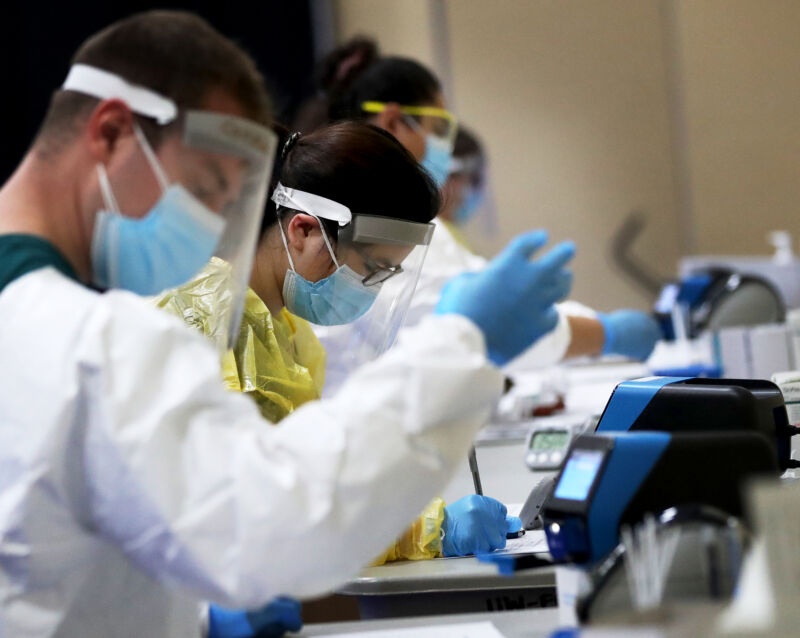
Enlarge / Coronavirus testing in Wisconsin, November 2. (credit: Getty | Star Tribune)
The United States on Wednesday reached an alarming milestone in its failed pandemic response: a day’s tally of new coronavirus cases reached over 100,000 for the first time. But the record was short-lived. Today, Thursday, new cases surpassed 116,000.
The country’s third spike in cases is now towering over those before it, which saw peaks of daily new cases no higher than around 76,500. It’s unclear how high the new peak will ultimately get, but it’s likely that Friday will see yet another frightening record.
Overall, the country has seen a 20-percent jump in cases since last week, according to The COVID Tracking Project. While nearly every state in the country is seeing cases increase to some extent, the areas propelling the rise are the Midwest and the Mountain West. In fact, the Midwest’s current number of cases per capita are well above that of any other region during the pandemic, the Project notes in a blog post Thursday.
Read 4 remaining paragraphs | Comments
Biden Appears On The Verge Of Overtaking Trump In Pennsylvania
James.galbraithHere's to hoping
In this installment of the FiveThirtyEight Politics podcast, the crew shares an update on where votes are still coming in and what to make of the overall results at this point.
'Do my rights not matter': Children detained by CBP share horrific experiences in their own words
James.galbraithGut it
Alejandra said she’d never been apart from her brother when the two were separated and put in different cells by U.S. border officials. “We had never been separated before,” the Honduran girl said. “We were always together. I did not like seeing him cry. That was the worst moment.” To make matters worse, they were held for at least a week—days longer than the maximum 72-hours permitted by law.
She’s among the more than one dozen children interviewed at-length in 2019 by non-profit legal organization Americans for Immigrant Justice, as part of its comprehensive report on treatment by Customs and Border Protection (CBP) and conditions within its facilities. “Unfortunately, although many of these children come seeking refuge, they often suffer an inhumane and cruel experience in their first encounter with the US government that leads to further trauma,” the report said. These children, in their own words, share their ordeals.
“Children described being held in frigid rooms, sleeping on concrete floors, being fed frozen food, with little or no access to medical care,” AI Justice said in its report, which also found that hundreds of children interviewed by the organization have been subjected to verbal abuse by officers. Nearly 150 others said they were physically assaulted. But children also described being cruelly denied necessary, basic needs.
“The worst was being hungry and that we did not shower, did not brush our teeth, and could not change our clothes,” Teresa, who came from El Salvador, told advocates. Recall that a court last year unanimously had to inform the federal government that, yes, detained children do in fact need toothbrushes and soap. “We also could not call our families,” Teresa continued. “I only spoke to them twice at the beginning.”
Katty, originally from Honduras, told AI Justice that “[t]he worst was having to sleep on the floor with the cold.” For years, detained migrants and their advocates have referred to border facilities as hieleras, or iceboxes, because of how freezing cold they can be. “The most common complaint was that the border facilities are kept at frigid temperatures that leave the children cold and uncomfortable,” the report said.
“I [felt] scared at the time; [the experience] made me question why I came [to the United States],” Letitia, also from Honduras, said in the report. When asked by advocates from AI Justice what they would say to CBP or the federal government about their treatment, many of the children said the same thing: to be treated like human beings.
“I would ask the government, why do you mistreat the people in detention centers?” Cesar, originally from Guatemala, said in the report. “People come suffering along the journey, and then have to come to a place where it’s cold, or where the food is not good, where children are separated from their mothers.” He told advocates that there was a boy next to him “who would cry for his mother” after being separated from her.
“I would tell them that I am a mother of a child, and it is very bad for [the officers] to tell mothers that they were going to take away their children,” Letitia continued. “They should not take children away from their mothers.” Sintia, a 17-year-old from Honduras, said “I would tell them it is not a place for a kid. I would ask them: Do my rights not matter or have value while I am detained [in their custody]?”
They matter, and the 2020 presidential election represents our chance to finally hold this out-of-control agency, along with Immigration and Customs Enforcement (ICE), accountable for their abuses. “Congress should halt any additional funding for CBP in any future appropriations bill,” AI Justice said in one of its recommendations, “until CBP ensures existing resources are not misused and are allocated to significantly improving detention facilities, medical access and language access.”
We cannot allow the abuses against children detained on our watch to go unanswered for. “We hope this piece uplifts their voices as AI Justice continues to advocate for the just treatment of migrant children and families in the United States,” AI Justice said in the report.

Trump’s desperate White House rant was everything people feared about his presidency in a nutshell
James.galbraithYup. It's a mess
 Trump speaks in the White House on Thursday. | Brendan Smialowski/AFP via Getty
There’s no evidence of widespread voter fraud. Trump is lying.
If anyone was hoping that President Donald Trump would gracefully acknowledge the increasingly likely chance that he will lose the presidency to Joe Biden, the dishonest press event he held Thursday evening at the White House indicated he still has little respect for democracy.
With Biden now in striking distance of the 270 electoral votes he needs to become president-elect — as this is written, he is narrowly trailing Trump in 20-electoral vote Pennsylvania, with a large number of votes in heavily Democratic areas still to be counted — the president stood behind the White House podium and tossed out baseless accusations that he was the victim of election fraud.
Trump began with a whopper, saying, “If you count the legal votes, I easily win. If you count the illegal votes, they can try to steal the election from us.” In fact, even the Trump campaign has failed to provide evidence that fraud played any role in Trump seemingly coming up short in key states like Arizona and Nevada.
Trump then tried another argument, claiming that the media conspired to interfere in the election against him, “getting it knowingly wrong” by inflating Biden’s popularity in an attempt to demoralize Trump supporters. He contradicted himself by framing efforts to count all the votes in places like Michigan and Wisconsin as part of a plot to steal the election from him, while in the next breath insisting that all the votes in Arizona must be counted so he can continue closing the gap in a state that Fox News has already called for Biden (though Vox’s partner Decision Desk has not yet).
Insane -- after arguing that Michigan, Pennsylvania, and Wisconsin were rigged against him because all the votes were counted, Trump calls for all the votes to be counted in Arizona. He's blatantly trying to have it both ways. pic.twitter.com/UoAvMCqvOW
— Aaron Rupar (@atrupar) November 5, 2020
Trump wrapped things up by calling for the Supreme Court to save him — “it’s going to end up, perhaps, at the highest court of the land” — then essentially tried to call dibs on certain states before walking out of the room without taking questions, seemingly oblivious to the reality that it doesn’t work like that.
"As you know, I've claimed certain states," Trump says, as though calling dibs means he's won. He then walks off without taking any questions. pic.twitter.com/q0V2bIhipY
— Aaron Rupar (@atrupar) November 6, 2020
The takeaway from Thursday’s event was basically the same as the widely panned one Trump held early Wednesday morning, when the election results were still in more doubt — the president thinks only the votes cast for him should be counted and is hoping a Supreme Court that he’s reshaped with three conservative justices will save him.
The problem, however, is that Trump hasn’t yet come up with a convincing argument that anything amiss happened during the election. His campaign has already filed a number of lawsuits challenging the vote-counting process in states like Georgia and Michigan, but as my colleague Ian Millhiser explained, “At least some seem to rest on dubious or incomplete allegations. And it’s not clear what legal benefits Trump would gain if his campaign prevails.”
So unless institutions like the Supreme Court prove to be corrupted beyond repair, it’s highly unlikely that any legal challenge the Trump campaign would mount would change anything. And as more votes are tallied, it appears Biden has a good chance of sweeping Nevada, Pennsylvania, and possibly even Georgia. That means that when all the votes are counted (and likely recounted in Georgia), he could have a very comfortable margin in the Electoral College.
But beyond the specifics (or lack thereof) behind Trump’s allegations, the fact that the president of the United States is using his platform to undermine American elections is a spectacle without precedent. It’s why international observers are starting to talk about the US in a manner we’re used to hearing with regard to failed states in other continents.
Findings by international observers:
— Brett McGurk (@brett_mcgurk) November 5, 2020
“Baseless allegations of systematic deficiencies, notably by the incumbent president ... harm public trust in democratic institutions.”
"Making sure that every vote is counted is a fundamental obligation for all branches of government."
The contrast between Trump’s speech and one Biden gave earlier Thursday was jarring. Instead of trying to delegitimize the process in states he lost, Biden urged people to have patience and alluded to the US’s long history of stable transitions of power.
Biden: "Democracy is sometimes messy. It sometimes requires a little patience as well, but that patience has been rewarded now for more than 240 years with a system of governance that has been the envy of the world. We continue to feel very good about where things stand." pic.twitter.com/gTgN1UKEel
— Aaron Rupar (@atrupar) November 5, 2020
The Biden campaign responded to Trump’s Thursday press event by calling his remarks “desperate, baseless, and a sure sign he’s losing.” Even Fox News’s Martha MacCallum noted that the allegations Trump made lacked evidence to back them up.
Claire McCaskill’s MSNBC comments revive a tired argument over the Democratic Party’s future
James.galbraithAnd this is why the real 'murica schtick is really tired.
 Claire McCaskill attends the Common Good Forum & American Spirit Awards 2019. | Photo by Sylvain Gaboury/Patrick McMullan via Getty Images
We’re going to argue about “pocketbook issues” versus “social issues” again, it would seem.
So Claire McCaskill, a former senator from Missouri, said some bullshit on MSNBC last night.
I probably shouldn’t start this article that way. I should probably start with something like: “In the wake of a better-than-expected election performance by Republicans and President Donald Trump, Democrats are wondering just what path to take to ensure better performance for their candidates in the future, even as former Vice President Joe Biden looks likely to win the presidency. Republicans’ built-in advantage in the Electoral College continues to be a massive headache for the Democratic Party (which has now won the popular vote in seven of the past eight elections). But a schism the party perpetually faces in the eyes of pundits who informally advise the party is whether it needs to refocus on so-called pocketbook issues over social issues like LGBTQ rights and abortion rights.”
Then I should say something like, “On MSNBC Wednesday night, after anchor Brian Williams asked former Democratic Sen. Claire McCaskill what her party could do to appeal more to blue-collar voters, she offered an answer that played exactly into this line of punditry”:
Around cultural issues, the Republican Party, I think, very adroitly adopted cultural issues as part of their main theme. Whether you’re talking guns or issues surrounding the right to abortion in this country or things like gay marriage and the right for transsexuals and other people who we as a party have tried to look after and make sure that they’re treated fairly.
As we circle those issues, we’ve left some voters behind, and Republicans dove in with a vengeance and grabbed those voters. You’ve seen this shift. You see it in the South. I see it in the rural areas of my state. So we’ve gotta get back to the meat-and-potatoes issues. We’ve gotta get back to the issues where we are taking care of their families, and we’ve gotta stop acting like we’re smarter than everybody else. Because we’re not.
Then I should embed the video clip, which I would do anyway, so here it is:
Claire McCaskill: "Whether you are talking guns or...abortion...or gay marriage and rights for 'transexuals' and other people who we as a party 'look after' and make sure they are treated fairly. As we circled the issues we left voters behind and Republicans dove in." pic.twitter.com/bMh9JALAxg
— Waleed Shahid (@_waleedshahid) November 5, 2020
But, as mentioned in my actual lead paragraphs, this framing of the choice the Democratic Party faces as being between economic issues and social issues is some bullshit, and it keeps coming up. (See here and here and here and here and here. And that’s just for LGBTQ issues. You could find even more if you went looking for similar articles on, say, abortion rights.)
Here I should note that McCaskill apologized on Twitter this morning, particularly for using the term “transsexuals,” which should be replaced by “trans people” or “transgender people” in statements that seek to turn us into a monolith for one reason or another.
I’m so sorry I used hurtful term last night.I was tired,but never a good excuse.People have misinterpreted what I was trying to say.Our party should never leave behind our fight 4 equality for trans people or anyone else who has been marginalized by hate. My record reflects that.
— Claire McCaskill (@clairecmc) November 5, 2020
Briefly: Transsexual is an outdated term that is still used by some trans people to describe themselves on an individual basis but that should be replaced with “trans people” in almost all instances when referring to us as a group. And regardless, it should be used with great care by a cisgender person, unless it’s referring to a specific person who you know prefers to use the term. McCaskill’s use of the term, apology notwithstanding, suggests to me she’s very detached from this conversation.
What’s more, the ways Democratic pundits and candidates too often stumble over trans nomenclature plays into a larger fear many in the trans community have that the Democratic Party wouldn’t hesitate to cut us out of its policies if it meant passing, say, the Employment Nondiscrimination Act, because that literally happened. Even Kamala Harris, the current vice presidential nominee, has a problematic past when it comes to trans issues.
From her apology, it seems clear McCaskill genuinely believes the Democratic Party can make room for trans people and rural voters, and that her larger point was that the Democratic Party should combat Republican demagoguery on social issues by pointing to its economic positions. That she seemed to play into a framing that harms trans people was likely an accident. She was on cable TV. It was late. She just glossed over her larger points.
But the fact that she jumped to this particular framing in answering Williams’s question underlines how ubiquitous that framing has been for the party throughout the 21st century. (Remember Howard Dean getting in trouble for saying he wanted to be the candidate of “guys with Confederate flags on their pickup trucks” in 2003?) And even though the party increasingly seems to include LGBTQ rights as a fairly mainstream part of its platform, pundits continue to advise reconsidering this in the hopes of reaching some mythical blue-collar voter who could be persuaded to vote Democratic by the party’s economic policies if the party just sacrificed the “right” social issues.
But as the National Women’s Law Center’s Gillian Branstetter points out, the only people who’ve clearly lost elections for being particularly interested in trans people are Republicans:
It's a beautiful day to remember the only people who have lost an election because they talked too much about transgender people have been Republicans--Pat McCrory in 2016 and Matt Bevin in 2019. https://t.co/d2mBYdKeJs
— Gillian Branstetter (@GBBranstetter) November 5, 2020
Any framing that presents choices on social issues as either-or is a false choice, I think. So-called bathroom bills — which seek to ban trans people from using bathrooms congruent with their genders — were largely a Republican Party invention to attempt to paint Democrats as being “for” trans people in bathrooms. (Yes, we use bathrooms.) Yet bathroom bills haven’t been particularly popular, and indeed, North Carolina’s bill ended up backfiring massively for the state.
That framing also creates a false conclusion that there are, say, no working-class people who are trans or who require an abortion. I don’t even need to link to data to prove to you that there are working-class trans people and working-class people who have had abortions, because those statements are obviously true on their face.
So who, exactly, is supposed to be appeased by the idea of, say, the Democratic Party performatively tossing trans people out of the coalition? And how will doing that not suggest that Democrats will cave on a whole bunch of other social issues in the name of chasing some mythical white guy in a pickup truck who would vote for Democrats if they just stopped reminding him LGBTQ people exist? Considering the rates at which Republicans backed Donald Trump in this election, I’m not holding my breath.
The Democratic Party has been the “big tent” party for decades now, and the problem with having a big tent is that you have a whole bunch of people underneath it who often have different ideas they hold as particularly important. But that’s also what makes the Democratic Party so big that it has, again, won the popular vote in seven of the past eight elections.
When the party boasts increased energy on its leftward flank, particularly from younger voters, who tend to be more supportive of LGBTQ rights, it feels very silly to revisit the “Well, if you just did this and this and this, it would appease this extremely narrow slice of voters in Pennsylvania.” But why is that the assumption so many pundits (especially those associated with the Democratic establishment) leap to, instead of the assumption that pushing people out of the big tent would make the tent smaller?
So anyway, Claire McCaskill, probably accidentally, said some bullshit that played into a very old schism the Democratic Party itself seems to have moved past. I hope the argument over “pocketbook issues” versus “social issues” doesn’t consume Democratic punditry or even the Democratic Party itself, particularly if — as seems increasingly likely — Joe Biden were to win the election.
TV absolutely has to get rid of “election night”
James.galbraithYeah, this needs to change
 Wolf Blitzer announces CNN’s election night coverage. | CNN
The election is in an anxiety-inducing holding pattern, and TV doesn’t know what to do.
“What are we doing?” Stephen Colbert kept asking his producer as his 2020 election special on Showtime wound its way toward a chaotic conclusion.
In 2016, the late-night host’s live election special had felt a little like a wake for America as Colbert attempted to cope in real time with a country that had voted by a slim majority to elect Donald Trump as its commander in chief. It was surprisingly electrifying television. His 2020 special — which aired while America waited for votes to be counted, with no immediate end in sight — was much less electrifying.
Colbert was already filming in the midst of a pandemic, a performer who’s at his best when he has other people to play off of interacting only with a handful of people in the studio (most notably his wife, sitting off to his side) and then a variety of guests beamed in via videoconferencing software. Though he’s gotten very good at doing his show without a live audience laughing for every joke, the rhythms of an episode of late-night TV produced with Covid-19 safety protocols in place will always feel a little awkward.
But a newly revealed and even bigger challenge is that the era of live late-night election specials has largely been confined to the Obama and Trump administrations. The results of both Obama elections were known or almost certain by the time those specials launched in the 11 pm hour on the East Coast, and the 2016 election was clearly tilting toward Trump (if not over yet) by the time Colbert’s special aired. In 2020, the fact that results were going to be delayed — something that all of America had been conditioned to expect — didn’t really matter. The show had to go on because that’s what shows like this do.
TV abhors a vacuum, but the 2020 election, especially, occurred in a vacuum. Even once all of the votes are counted, the urge to fill hours and hours of airtime on election night and beyond will linger with viewers who thought they needed information and instead got a steady dose of anxiety.
This week’s nonstop coverage of the vote count has only served to underscore that election TV — both in late-night and on cable news — has long been broken. Maybe it should go away forever.
Cable news just isn’t equipped for an election whose results aren’t immediately clear
/cdn.vox-cdn.com/uploads/chorus_asset/file/22015607/wolfblitzertrumpbiden.png) CNN
CNN
For weeks now, Americans have known one thing about the 2020 election: We probably wouldn’t know official results for days or even weeks after Election Day because holding an election in a pandemic means lots of votes arriving via mail, and some states wouldn’t count mail-in ballots until polls had closed.
But even if that simple likelihood hadn’t been discussed over and over and over again by politicians and pundits (here’s Bernie Sanders talking about it), a quick glance at recent history could have guided our expectations regarding when we’d find out who won. Of the five presidential elections of the 21st century before the 2020 election, only two — 2008 and 2012 — were called before midnight on the East Coast, and the 2000 election dragged on for over a month.
Even extremely recent history — which is to say, the 2018 midterms — took weeks to fully understand, particularly when it came to the extent of Democratic gains in the House.
It’s true that many elections of the TV era — roughly 1952 on — were called well before midnight on the East Coast. But those elections took place in a less polarized time, where landslide wins were much more common. In the 21st century, the ossification of Democrats’ and Republicans’ respective bases has led to electoral maps that largely look the same, with minor variations, in election after election after election.
And yet to watch TV coverage on election night — not to mention social media reactions to said TV coverage — was to watch a full-blown meltdown over the fact that nobody really knew anything yet, something that continued to play out across Wednesday and Thursday as all involved waited for official vote counts. In the case of Democrats, much of that meltdown was driven by Trump’s stronger-than-expected performance in Florida, a mirror of 2018 when Democrats’ early hopes seemed to have foundered on the shores of the Sunshine State before the overall picture ended up far rosier for the party.
Easy to say now, but imagine if MI and WI got called first, and then FL later.
— Jonathan Tamari (@JonathanTamari) November 4, 2020
Would completely change the way everyone reacted to the news, and the way many are still reacting at this moment.
As of Thursday afternoon, an official winner still hasn’t been declared (though it seems likely that Joe Biden has won the presidency), and 24-hour cable news is still focused solely on the dribs and drabs of information seeping in from the handful of outstanding battleground states as the vote count crawls forward in Pennsylvania and Georgia, in Arizona and Nevada. Every once in a great while, a quick burst of information about the latest Covid-19 numbers will break through, but otherwise, it’s all election all the time. (The Covid-19 numbers have been bad! I don’t know if you’ve heard!)
The election results have largely been in the same holding pattern since midday on Wednesday when Michigan and Wisconsin were called for Biden, making his path to victory easier to see. So the cable news just keeps repeating the same information, even as MSNBC’s poor Steve Kornacki (the guy who does the network’s vote breakdowns on a giant map) looks as though he’s slept for maybe a half-hour since Tuesday.
A frequent narrative told about American presidential elections is that each successive one is “the most important of our lifetimes.” I think there’s truth to that during this period when Democrats and Republicans have such divergent visions of what America might look like. But the fashion in which cable news treats each presidential election like it is the only piece of news in a given year has created a uniquely terrible recipe that undervalues actual useful information and overvalues anything that might produce anxiety and/or dopamine hits.
As such, cable news faces the same dilemma that Stephen Colbert did on Tuesday night: It simply doesn’t know what to do with an election that occurs over several days, not several hours. You never know when the development that changes everything might arrive, so keep watching! Tuning in feels like clinging to a constantly unraveling rope, building and building and building tension without ever breaking. By the time a winner is finally declared, we’ll all be wiped out.
The “just keep talking until we know something” approach underserves viewers and creates endless amounts of anxiety
One of the biggest flaws of 24/7 cable news coverage in this moment is that it largely obscures the actual story of the election. And all week long, it has poked at what basically everybody knew would be the story going in. Counting the votes would take a while. We wouldn’t have results for a few days. But the demand for more, more, more led to a long election night and then, after the election, long days of single tea leaves being extrapolated into an entire plant without much thought given to how that approach might sway public opinion or how it might fail viewers.
For instance: Several networks — CNN in particular — used a light shade of pink to indicate states where Trump was leading but that hadn’t yet been called, and a light shade of blue to indicate states where Biden was leading but that hadn’t yet been called. And Trump was leading in, say, Michigan and Wisconsin on Tuesday night, and held that lead until the states’ largest urban centers were counted on Wednesday morning. For as long as it lasted, the pink hue of those states created unwarranted anxiety in Democratic viewers and unwarranted optimism in Republican viewers.
This is not a new complaint about cable news. On the whole, cable news is empty and sensationalistic, and it provides little information that is actually necessary except in situations where a story is truly unfolding at a rapid clip. (The terrorist attacks of September 11 are the most obvious example.)
But ongoing coverage of the 2020 election has highlighted just how little information there was to share in the immediate aftermath of the polls closing, and it has heightened the ultimate uselessness of increasingly vague talking heads waiting for something like real data.
The way the American media covers elections seems so deeply entrenched as to be unchangeable, but 2020 shows just how badly we need to rethink how television reports on them. The UK’s laws on how an election can be covered (which ban coverage while polls are open) might be a good starting point for finding workable reforms. There has to be a better way. By 2024, let’s hope we’ve found one.
Trump's especially low-caliber legal team tells us exactly where Trumptanic is headed
James.galbraithlol
In a matter of several years, Rudy Giuliani has gone from being America's mayor to the serial butt of its jokes. That's what makes him the perfect figurehead of Donald Trump's farcical multi-pronged legal effort to claw back the will of The People and invalidate enough legally cast votes so that Trump can retain the presidency.
Rudy, more plugged into Ukrainian corruption than U.S. election law, is no James Baker, the attorney who led the successful legal bid by the George W. Bush campaign in 2000 to end the Florida recount and claim the presidency for the GOP. Team Trump had hoped for a Baker-like figure but has instead rolled out Giuliani, partisan hack Pam Bondi, and a handful of other miscreants willing to jump aboard the Trumptanic right as it's hitting the iceberg. Trump's low-caliber team is also a sign that every conservative attorney who has a reputation worth preserving for a post-Trump era is steering clear of this legal dumpster fire.
As Baker himself notes, this is nothing like 2000.
“For one thing, our whole argument was that the votes have been counted and they’ve been counted and they’ve been counted and it’s time to end the process. That’s not exactly the message that I heard on election night. And so I think it’s pretty hard to be against counting the votes,” Baker told The New York Times.
“We never said don’t count the votes,” Mr. Baker added, calling it an indefensible position in a democracy.
Meanwhile, Trump's twitter feed includes a steady refrain of "STOP THE COUNT!"
Another aspect that makes this wildly different from 2000 is the fact that Trump would have to prevail in multiple lawsuits instead of just one. So even if he were to prevail in Pennsylvania, for example, and stop the count there, he would also have to deploy some pretty fancy legal jiu-jitsu to turn back the counts in Michigan and Wisconsin while also winning other cases he dreams up in Georgia and Nevada.
Instead, so far, all we’ve seen is a lot of posturing by subpar legal talents, blindfolded and wildly swatting at a hollowed-out piñata.

David Perdue and Jon Ossoff advance to Georgia Senate runoff
James.galbraithThat's a lot of pressure on Georgia. I assume they'll screw it up, but maybe there'd be a less horrifying surprise.
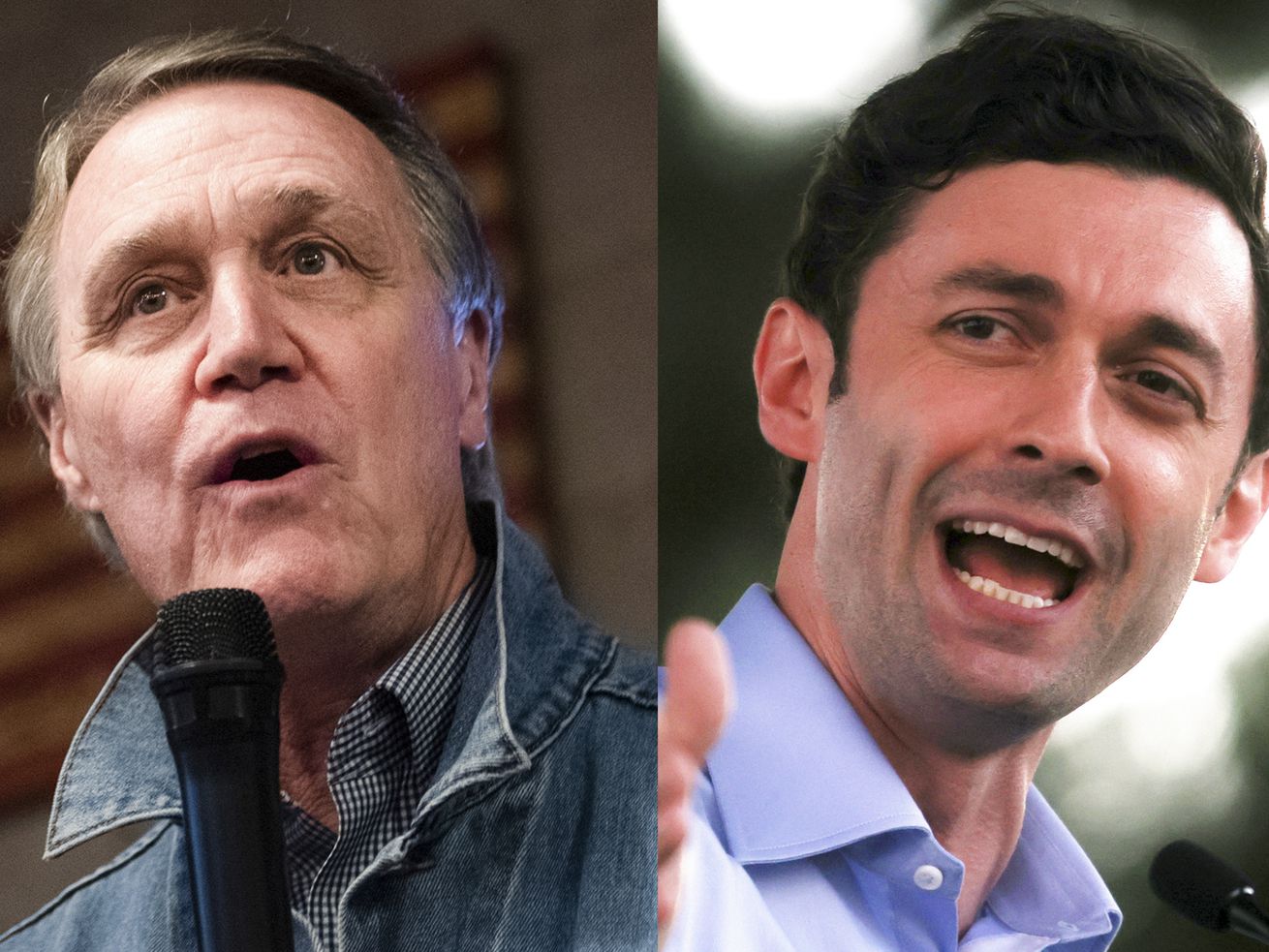 David Perdue, left, and Jon Ossoff are headed to a Senate runoff. | Tom Williams/CQ-Roll Call via Getty Images; Justin Sullivan/Getty Images
Georgia now has two Senate runoffs that will be decided in January.
Republican Sen. David Perdue and Democrat Jon Ossoff are headed to a Georgia Senate runoff after both candidates failed to clear the state’s 50 percent vote threshold to win outright.
Georgia now has two Senate runoffs, both to be decided on January 5, 2021. Republican Sen. Kelly Loeffler will face Democrat Rev. Raphael Warnock in the runoff for Georgia’s special election Senate race.
These runoffs underscore just how competitive the traditionally Republican state has become for both parties.
“When I got in this race over a year ago, I said Georgia is the most competitive state in the country, and there were some that doubted that,” Ossoff told a crowd of supporters Friday morning. “People are now seeing change is coming to Georgia and Georgia is part of the change that’s come to America.”
The races also could represent Democrats’ last remaining path to securing a Senate majority. Democrats had a disappointing result for congressional races during the general election, losing some seats in the House as well as key Senate races including Maine. The result in the North Carolina Senate race has not yet been called, as election officials there are still counting ballots, potentially into next week.
The runoff could become difficult for Democrats; the party’s strategy involved harnessing the large voter turnout that typically accompanies presidential elections. It could be hard for the candidates to muster the same level of enthusiasm for these runoff elections, which has often given Republicans the edge in past years.
“Perdue will finish this election in first place with substantially more votes than his Democrat opponent,” Perdue campaign manager Ben Fry said in a statement Thursday. “Currently, Perdue’s lead is double the margin of defeat that Stacey Abrams faced for governor just two years ago.”
Perdue, the millionaire former CEO of Reebok and Dollar General, entered the cycle viewed as one of the safer GOP senators up for reelection. The race tightened in large part due to President Donald Trump’s lagging poll numbers and Georgia’s diversifying electorate. Georgia’s Black voter turnout was higher than in 2016, and Democratic strength came from the booming Atlanta suburbs.
Still, it’s clear Trump was popular with a large segment of Georgia voters; the state split pretty evenly for the president and Biden — Biden leads by a little over 1,500 votes as of Friday afternoon. With Trump losing the presidency and potentially losing Georgia, it’s unclear how much effort he will put into campaigning for Perdue and Loeffler there over the next few months.
On a Friday morning call with reporters, Ossoff campaign manager Ellen Foster reiterated that Democrats harnessing the political power of a changing electorate is what made the state competitive.
“Let me be clear, the changing nature of Georgia is what made this possible,” Foster said, adding the electorate is “very different” from 2008, the last time there was a Senate runoff in Georgia in which Democrats did not prevail.
“We feel good about the electorate going into the runoff,” Foster told Vox.
Throughout the Senate campaign, Democrats primarily tried to cast Perdue as an out-of-touch elitist who had failed over his term to stay connected to regular voters. The Ossoff campaign centered anti-corruption reforms — including a ban on stock trading by lobbyists — as the candidate’s top priority.
“We are confident that Jon Ossoff’s historic performance in Georgia has forced Senator David Perdue to continue defending his indefensible record of unemployment, disease, and corruption,” Foster said Thursday afternoon, before the race was called.
Both Perdue and Loeffler have taken heat for stock trades made after they received classified briefings on the Covid-19 pandemic while they were in office. Both have denied allegations of wrongdoing, and say that the trades were made by outside advisers, without their knowledge.
“The necessity of anti-corruption reforms also cuts through the partisan divide because everyone recognizes the political system is corrupt,” Ossoff said in a recent Vox interview. “Everyone recognizes that it’s a systemic issue more than it’s a partisan issue.”
Democrats had good reason to invest in Georgia. Perdue broadcast his concerns about his race on an off-the-record April call obtained by CNN. On it, the senator issued a warning to Republican activists: “Here’s the reality: The state of Georgia is in play. The Democrats have made it that way.” The senator also highlighted the demographic trends that made the political environment friendlier to Democrats.
As the New York Times reported, “white residents now make up fewer than three in five voters in Georgia, and a wave of migration to the Atlanta area over the past decade has added roughly three quarters of a million people to the state’s major Democratic stronghold.”
Voter enthusiasm in Georgia was high this year. Long lines reported during the early voting period were a sign of both voter excitement and longstanding disinvestment in election infrastructure, particularly in predominantly Black neighborhoods. As of October, the state had hit record registration levels, with about 7.6 million registered voters. At least 1 million Black voters cast ballots in 2020, an increase from 712,000 in 2016.
“Georgia has by far the largest percentage of Black voters of any battleground state,” said 2018 gubernatorial candidate Stacey Abrams, also the founder of the voting rights group Fair Fight, in an email the week before the election. “We’ve already had half a million more Georgians cast their ballots than did for the entire early voting period of 2016.”
Trump’s lagging statewide poll numbers did not help Perdue. In 2016, Trump won Georgia by 5 points. That lead evaporated in the runup to the 2020 election. Early polls this year showed Trump leading former Vice President Joe Biden by nearly 4 points in Georgia. In the final week before Election Day, the two candidates were in a statistical tie. And as final ballots were counted, it appeared the winner’s margin of victory could be as small as a few thousand votes.
As the battle for two Georgia Senate seats continues, Democrats and Republicans alike are likely to pour heavy resources into these races — two that could make or break a Senate majority. But both parties will have to wait a little longer to know the final outcomes.
Update, November 6: This piece has been updated with statements from the Perdue and Ossoff campaigns.
MAGA crying leads to one of the most fun Twitter threads ever recorded
James.galbraithlol
Most Twitter threads consist of people supporting or not supporting the original tweet. Many of them are very funny, some are deadly serious, some are angry, some are sad. It’s a cornucopia of the human emotional spectrum! But every so often, a Twitter thread comes along that employs humor, justice, and the human spirit.
A small corner of the internet in a Twitter thread—one that took place as the election results began to unfold and the enormity of Donald Trump’s loss became clearer and clearer to MAGA types across the internet—brought people from all over the world (and possibly the galaxy) together. An account mostly known for following both American and European rules football and that also likes trolling libs posted: “Oooohhhh NOOOOO. WHAT ARE WE DOING. WAKE UP Y’ALL!!!! TRUMP IS HERE TO SAVE US. My heart can’t take this any longer. I’m leaving. I’ll be headed to Mexico. They will take care of me. Thanks for nothing USA. IM DONE. MY HEART HURTS. THESE KIDS!!!!” The fun began there.
Someone began by replying that they were in Mexico and did not want him, passing him over to Canada. That person passed him on to the U.K., the U.K. passed him over to the Middle East, and so on and so forth, traveling out into the galaxy until finally ending up traveling through time.
Enjoy.
safe to say this is the best twitter thread I’ve ever participated in hopefully it ages well#Biden2020 #ByeByeTrump #AmericaDecides pic.twitter.com/ek8luZJfCX
— james sonder (@vkrogue) November 5, 2020
Was he kidding? Yes and no. It’s hard to say if he was parroting MAGA types and their whining as his account seems to have something like a libertarian feeling of someone who doesn’t like Trump, but eases his own discomfort by making the generalization that both Democrats and Republicans are identical, while courageously saying anything approaching an opinion on his part is a joke.
But maybe he’s in on the joke! (Not likely, but maybe.)

AMD’s Zen 3 CPUs are here—we test the blistering-fast 5900X and 5950X
James.galbraithSpeak of the devil lol

Enlarge / Brand-new CPUs look so pretty before you put the thermal paste on and hide them under a cooler. (credit: Jim Salter)
| Specs at a glance: Ryzen 5000XT CPUs, as tested | |
|---|---|
| OS | Windows 10 Professional |
| CPU | Ryzen 9 5950X (16c/32t) Ryzen 9 5900X (12c/24t) Ryzen 9 3900XT (12c/24t)—$455 at Amazon |
| RAM | 2x 32GB Corsair Dominator Platinum RGB DDR4 3200—$180 ea at Amazon |
| GPU | MSI GeForce 2060 RTX Super—formerly $450 at Amazon |
| HDD | Samsung 860 Pro 1TB SSD—$200 at Amazon |
| Motherboard | ASUS ROG Crosshair VIII Hero (Wi-Fi)—$380 at Amazon |
| Cooling | NZXT Kraken X63 fluid cooler with 280mm radiator—$150 at Newegg |
| PSU | EVGA 850Ga Modular PSU—$140 at Amazon |
| Chassis | Primochill Praxis Wetbench test chassis—$200 at Amazon |
| Price as tested | ≈$1,500 as tested, excluding CPU |
A month ago, AMD announced the arrival of the Zen 3 desktop CPU architecture. The announcement included new AMD internal benchmarks that implied Intel had lost its last desktop performance trophy—pure single-threaded performance.
Last week, Ars got samples of the two highest-end models in the new CPU lineup—the $800, 16-core/32-thread Ryzen 9 5950X, and the $550 12-core/24-thread Ryzen 9 5900X. And we can confirm most of AMD's benchmark claims—IPC has improved, along with both single and multi-threaded performance, across the board, beating Intel soundly on nearly all fronts.
The only quibble we have with AMD's claims regards power consumption, not performance—and to be fair, it's almost certainly not AMD's fault. The system's desktop idle power consumption increased about 10W—but the increase affected our older Ryzen 9 3900XT CPU, as well as the two new Zen 3 parts. Knowing that, we expect the increase comes from the mandatory BIOS upgrade we had to perform on the ROG Crosshair VIII Hero motherboard, rather than the new CPUs themselves.
Read 16 remaining paragraphs | Comments
How to check if your ballot was rejected — and possibly fix it if it was
James.galbraithVery important deadlines
 Election workers process ballots in the final stretch of absentee ballot counting in Detroit on November 4, 2020. | Kent Nishimura/Los Angeles Times via Getty Images
In Georgia, the deadline to “cure” your ballot is Friday.
The 2020 presidential election is going to come down to a few thousand votes in a handful of states. If you’re a voter in one of them, you might be eager to know whether your ballot will be counted in the total that might decide the race.
Right now, most of what’s still left to be counted are mailed or absentee ballots. Pennsylvania still has to count hundreds of thousands of mail-in votes because the state could not begin processing mail ballots until Election Day. Arizona, Georgia, Nevada, and North Carolina, are still tabulating ballots in close races.
Beyond these swing states pivotal to the Electoral College, there are still many millions and millions more absentee ballots to be counted. Those will change the popular vote tally in the coming weeks (mostly thanks to California) and the margins of victory in some states, but probably won’t determine who becomes president.
But every vote should be counted, and as much as maybe it would be nice if Nevada could speed things up, the process takes time, and for good reason. Mail-in ballots take longer to process — envelopes to open, signatures to check — and tabulate. Also, in many states, officials give voters opportunities to correct, or “cure,” their ballots, usually for mismatched or missing signatures.
Not all ballots can be cured; ballots, for example, that arrive past the deadline will be rejected. But at least 18 states require election officials to contact voters if there’s a problem with their ballot and give them a chance to correct it, according to the National Conference of State Legislatures. Other states have adopted new procedures to cure ballots starting with this election.
If you’ve been tracking your ballot (which you can do in most places, so find your state elections website and check there), and you discover your ballot has been rejected, check your state elections page for options, or, if you can’t find the information there, contact your local election officials. (Look that up here, but remember: To say these people are busy is an understatement, so you may have to wait or try a few times.) Do this as soon as possible since states typically offer just a limited window to correct signatures.
But in those swing states where the margins are tight and getting tighter, every single ballot matters a lot more. It may not be the difference in a race (hopefully, for everyone’s sakes, not), but every vote still counts.
With that, here’s how to fix your ballot in some of the key remaining states — though we’re probably not going to be much help on Pennsylvania.
Arizona
Cure deadline: Tuesday, November 10
In Arizona, voters can check the status of their ballot here. If a voter submits a mail-in ballot and officials determine the signature doesn’t match, they are required to make a “reasonable” effort to contact the voter and tell them how that might be corrected.
Obviously, “reasonable” leaves a lot open to interpretation; the Maricopa County Recorder’s Office has said voters should put their phone number on their voter registration file for this reason.
If election officials don’t have your information, or you were not contacted and you see that your ballot was not accepted for some reason, call your local election office, which you can find here. Arizona gives voters five business days after any federal election to correct their signatures, which means voters have until Tuesday of next week.
One thing to note: Arizonians can fix mismatched signatures, but if voters forgot to sign their ballots, they no longer have the chance to correct that.
Georgia
Cure deadline: Friday, November 6
In Georgia, voters can cure an absentee ballot if there is a signature missing or if the signature doesn’t match the one on file. In those circumstances, the county is required by law to promptly notify the voter in the easiest way possible, which would either be by email or cellphone if it’s available, according to the Georgia Secretary of State’s Office.
Voters can also cure provisional ballots — that is, if you had to cast a provisional ballot at your polling place on Election Day because of an ID or registration issue, you must provide valid documentation by that same Friday deadline to have it possibly count.
Georgia voters can track the status of their ballot and see whether it’s been received and accepted here. Again, in Georgia, county officials are supposed to notify voters if their ballots are fixable. However, if your ballot has been rejected and you haven’t been contacted, or you don’t have an updated email or phone number attached to your registration, then follow up with your local election office, which you can look up here.
Nevada
Cure deadline: Thursday, November 12
Nevada voters can track the status of their ballots here. Election officials in Nevada are supposed to notify voters if their ballot has been rejected for a missing or mismatched signature, and voters have until seven days after the election to remedy any issues, according to the National Conference of State Legislatures. (Vox reached out to the Nevada Secretary of State, and we’ll update if we hear back, but we figure they’ve got a lot of stuff going on.)
All the same caveats apply, though. Nevada officials are supposed to reach out to voters, but if you have any concerns, reach out to your local election officials here.
As of Wednesday afternoon, Nevada’s secretary of state’s office reported approximately 3,400 ballots statewide that still require a signature cure; ballots belonging to registered Democrats, registered Republicans, and other or nonpartisan voters each accounted for about a third of those outstanding ballots. In total, the state has successfully cured more than 4,600 ballots so far.
North Carolina
Cure deadline: Thursday, November 12
North Carolina’s procedures were the subject of some litigation, but the latest guidelines were issued October 17. According to North Carolina’s State Board of Elections, if a voter returns a ballot envelope with a problem, including if it isn’t signed or is signed in the wrong place, or if it’s missing the printed name or address of a witness or assistant (if a voter got help filling out the ballot), the county board is supposed to send that voter a certification to sign and return.
The good news is that North Carolina doesn’t do signature verification, so as long as the ballot is signed and appears to be the name of the person voting, then even if it’s your terrible credit-card-keypad scrawl, it should count.
County officials are supposed to contact voters within one business day to fix it, but again, caveats apply: Get the status of your absentee ballot here, and if you need to contact your local officials, look them up here. (Vox reached out to the North Carolina Board of Election, and we’ll update if we get any additional guidance.)
Pennsylvania
Pennsylvania is a weird one, as different counties followed different procedures, with some contacting voters to fix their ballots while others did not.
The Pennsylvania Supreme Court decided in October that the state didn’t need to require signature matching after Republicans challenged the rule, so the state isn’t going to be tossing ballots if signatures don’t match — which will likely cut down on the number of possible rejected ballots overall.
The Pennsylvania Secretary of State’s office said prior to Election Day, in an email to Vox, that if any voter had their absentee ballot rejected for something like a missing signature or naked ballot (if voters don’t use the outer “secrecy” envelope), that they should vote by provisional ballot.
Election officials in Pennsylvania are supposed to decide on the validity of provisional ballots within seven days after Election Day; according to the secretary of state’s office, that provisional ballot will be counted as long as the voter is eligible. (Vox reached out to Pennsylvania’s Secretary of State for additional information, and we’ll update if we hear back.) And, as a reminder, you can check on your ballot status here and reach out to your local election office if you have any questions.
Republicans, in a few lawsuits, are currently trying to challenge these cure procedures in an attempt to disqualify ballots cast by voters who were trying to fix errors. Republican lawyers are basically arguing that these cure processes are invalid because there’s nothing in the law that says they’re allowed. In one lawsuit, in Montgomery Country, GOP lawyers are alleging that the cured ballots should be disqualified because other counties didn’t follow similar procedures, a violation of the equal protection clause. How many ballots this might be affected if any of these lawsuits prevail is not really clear, but it’s not clear any of these challenges will prevail.
If Trump loses, the recriminations are going to get very ugly
James.galbraithAnd fun
Ticket-splitting is for fools
James.galbraithNo shit.
Nevada Became the First State to Protect Same-Sex Marriage in its Constitution on Tuesday
James.galbraithVery nice

Nevada became the first state to protect same-sex marriage in its constitution on Tuesday, with voters approving a ballot measure by 61.2 percent to 38.8 percent.
“Marriage would be defined as between couples, regardless of gender, though religious organizations and clergypersons would have the right to refuse to solemnize a marriage. Question 2 would repeal a 2002 amendment stating that marriage between a male and female is the only type of marriage recognized by the state,” the NYT reported.
Said Sean Savoy, Founder & Director of the Northern Nevada LGBTQ Leadership Alliance, to KOLO: “It’s utter joy and it’s relief. We want to be treated equally so that we can just live our lives in peace. The state is saying we recognize you and you will be treated equally under the law.”
The post Nevada Became the First State to Protect Same-Sex Marriage in its Constitution on Tuesday appeared first on Towleroad Gay News.


The final implosion of Trump’s Fox News propagandists
James.galbraithYup
Uber and Lyft in driving seat to remake US labor laws
James.galbraithpublic expense, private profit

Enlarge / Uber signs are seen August 20, 2020 at Los Angeles International Airport in Los Angeles, California. - Rideshare service rivals Uber and Lyft were given a temporary reprieve on August 20 from having to reclassify drivers as employees in their home state of California by August 21. (Photo by Robyn Beck / AFP) (Photo by ROBYN BECK/AFP via Getty Images) (credit: Robyn Beck | Getty Images)
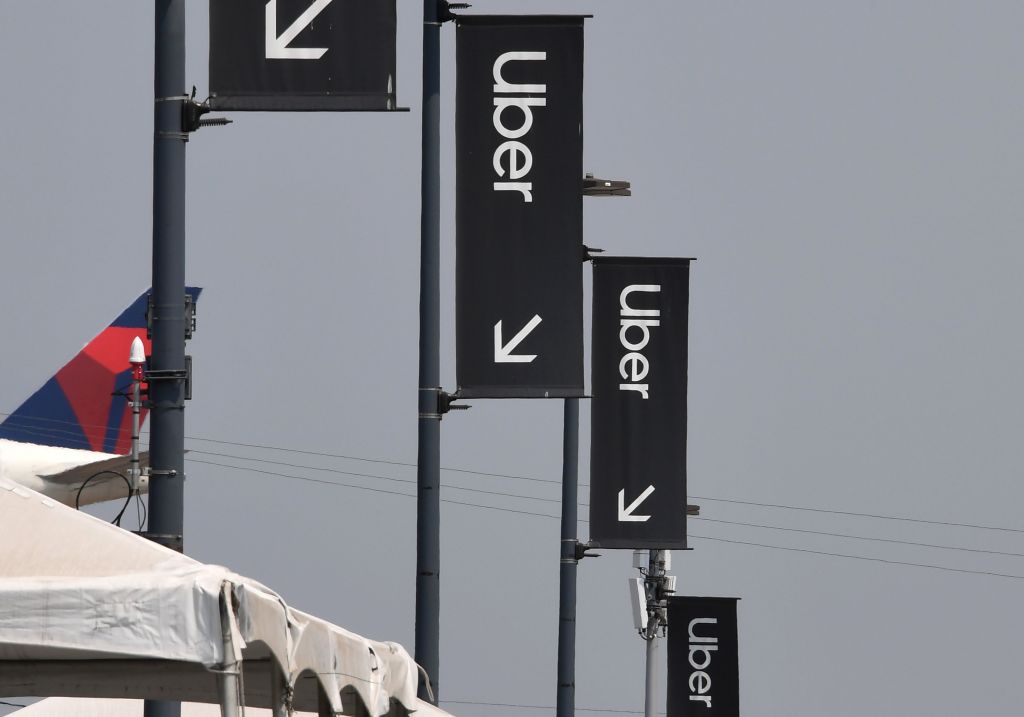
California voters’ decision to let Uber and other gig-economy companies continue to treat their workers as independent contractors has dealt a crushing blow to campaigners and legislators and paved the way for the companies to remake labor laws across the US.
Voters in the state overwhelmingly approved Proposition 22 on Tuesday, exempting the companies from a new employment law passed last year. As a result, drivers in the state will not be classed as employees but can draw upon limited healthcare provisions and will earn a minimum rate of pay.
The victory paves the way for similar legislation to be put in place across the US where, according to research from the investment bank Cowen, as many as 17 states are considering how to regulate the gig economy.
Read 21 remaining paragraphs | Comments
Alcohol and carbs got America through election night
James.galbraithno shit
 Americans reached for classic comfort foods on election night. | The Washington Post/Getty Images
Americans ordered comfort foods — fries, cheese, and tons of alcohol — to self-soothe during 2020 election night.
On Tuesday, November 3, Americans hunkered down at home and waited to hear the results of the 2020 election. While in years past, election night meant election parties, this year, the process has been fraught with an extra layer of tension, and due to the coronavirus pandemic, many people watched alone, or in small social bubbles.
Many have described themselves as having “election trauma” from the events of 2016. We knew we would likely not see a final result for days or weeks, but still we sat down in front of the television, waiting for something — anything — to happen. As we doomscrolled, we ordered delivery and drank ourselves through the night; searches for “fries near me” and “liquor store near me” reached record highs. Vox reached out to delivery services around the country to find out what Americans ate and drank on election night.
Alcohol sales soared, and blue states drank way more than red states
According to Drizly, an alcohol delivery company, the blue states it services saw a 75.32 percent increase last night, when compared to the previous four Tuesdays. These states include California, Oregon, Washington, Illinois, Massachusetts, Rhode Island, Connecticut, New Jersey, New York, Vermont, Maryland, and Washington, DC. In the seven red states where Drizly operates (Idaho, Wyoming, Oklahoma, Missouri, Louisiana, Tennessee, and Kentucky), sales were only 33 percent higher (perhaps because states such as Louisiana have “daiquiri drive-thrus,”). In swing states like Colorado, Florida, Minnesota, North Carolina, Ohio, Arizona, Georgia, Pennsylvania, and Texas — which has its own drive-thru rum chain, unfortunately named Eskimo Hut — Drizly sales were up 54.84 percent.
Most of Drizly’s election sales were of wine (42.38 percent) and liquor (40.84 percent). People had little interest in beer, which accounted for only 14.67 percent of sales (so far in 2020, beer has made up 19 percent of Drizly sales). Red wine was the most popular choice, comprising 45.88 percent of the wine Drizly sold on election night. White wine trailed behind at 25.98 percent, with 19.48 percent champagne and sparkling wines and a mere 5.49 percent rosé making up the remainder. In swing states, people preferred liquor over wine and beer, accounting for 45.84 percent of alcohol purchases (41 percent of Drizly sales in 2020 came from liquor, and wine is at 38 percent).
In New York City, sales spiked 110.41 percent, a figure only outdone by DC, which had a 132.57 percent increase in sales. In Boston, where a curfew is set to go into effect on November 6 due to the coronavirus, sales were 83.41 percent higher than the average of the previous four Tuesdays.
Comfort food carried us through
According to data from DoorDash, fried and carb-filled foods were popular on election night. The most ordered food was french fries, which is perhaps not a surprise, as they pair well with copious amounts of alcohol. In general on election night, people retreated to their basest instincts and ordered items like chicken fingers (#2), mozzarella sticks (#10), and hot fudge sundaes (#13). These foods are familiar classics from childhood that are easy to self-soothe with and panic-cry into.
In addition, it seems like cheese reigned supreme — many people ordered cheeseburgers (#3), chicken quesadillas (#4), nachos (#7), mac and cheese (#12), and cheesesteaks (#14). Orders of shareables like “margherita flatbread” and “cheese pizza” were up 825 percent and 80% percent, respectively, compared to the previous Tuesday. The gap between the two is, frankly, extremely funny; perhaps hosts thought a “flatbread” would be more impressive to serve guests?
On the sweet side, people indulged in baked goods like cinnamon rolls (#8) and apple pie (#9). Two milkshake flavors made it into the 20 most ordered items: chocolate (#11) and strawberry (#15).
With votes still being counted in several states, his election night is going to stretch into several election days and nights, so we can expect our diets to suffer in the weeks to come with numbers like these.
Puerto Ricans have voted in favor of statehood. Now it’s up to Congress.
James.galbraithgreat, but have you met the GOP? lol.
 Christina Animashaun/Vox
Congress hasn’t taken steps to admit Puerto Rico as the 51st state.
Puerto Ricans have again voted in favor of making their island home a US state and they’re hoping that, this time around, their decision will carry actual weight.
Puerto Rico, which has been a US territory for 122 years and is the world’s oldest colony, has held five previous non-binding referendums on the issue. In 2012 and 2017, the island’s 3 million citizens overwhelmingly backed statehood, but Congress never took further action to admit Puerto Rico into the union.
This year, they were asked: “Should Puerto Rico be immediately admitted into the Union as a state?” A majority of voters answered “yes,” according to the AP, New York Times, and the island election commission, as of Wednesday afternoon. With 95 percent of precincts reporting, the margin stood at 52 percent for, and 48 percent against.
As the Times noted, the turnout figures are complicated. But Puerto Ricans are hoping that sends a clear message to Congress regarding their desire to attain the rights and privileges associated with statehood. Though Puerto Ricans are American citizens and pay into federal programs like Social Security and Medicare, they do not hold seats in Congress and cannot cast votes for president. They do vote for a resident commissioner who can introduce legislation and vote on committees in the House of Representatives, but that’s a far cry from full voting privileges.
Congress isn’t under legal obligation to abide by the outcome of the referendum — congressional lawmakers could have passed legislation that would have conferred the island with statehood depending on the outcome of the referendum, but they didn’t.
Statehood proponents hoped for higher turnout than in past referendums, feeling that would make it difficult for US lawmakers to ignore the issue after years of claiming that Puerto Ricans should decide their own fate. Less than a quarter of eligible voters cast ballots in the 2017 referendum, which was boycotted by opposition parties that support either maintaining the status quo or independence. That raised questions about the legitimacy of the vote and allowed US lawmakers to punt the issue.
Puerto Rico has a lot to gain from becoming a state. In addition to having a say in presidential elections, the new state would have two seats in the Senate and five representatives in the House. It would also likely gain federal funding; it would be a lot harder for the federal government to withhold aid, as President Donald Trump, who previously mulled selling the island, did after Hurricane Maria.
But critics have warned that it would also increase federal taxes. (Puerto Ricans and corporations headquartered on the island currently only pay federal taxes in limited circumstances.)
If Puerto Rico becomes a state, it could shake up the political dynamics in Congress. Most Puerto Ricans who have moved to the US mainland have historically backed Democrats. But it’s not clear that the island would be reliably blue. Experts say it’s more likely that it would be a swing state.
Spike past 100k Covid-19 cases in a day
James.galbraithOh look, it hasn't gone away.

Meanwhile… based on estimates from The COVID Tracking Project, the United States had an all-time high for daily counts yesterday, at 103,087. And 1,116 people died.
Tags: coronavirus, COVID Tracking Project, record
Nevada voters seal renewable energy goals in their state constitution
James.galbraithGood.
 Christina Animashaun/Vox
The state will target 50 percent renewables by 2030.
As was widely expected, Nevada voters approved Question 6 on the ballot, which amends the state constitution to mandate that the Nevada’s electricity providers shift to at least 50 percent renewable energy by 2030, according to the New York Times and the Associated Press.
The initiative is less about voters changing where their electricity comes from than putting an exclamation point on a decision they’ve already made — Nevadans passed the exact same initiative in 2018. It just so happens that, to amend the state constitution, voters must pass an initiative twice, which landed the issue back on the ballot this year.
There’s been a significant push in recent years for Nevada to quickly move toward renewable energy — one that has seen some setbacks. In 2017, the state legislature passed a bill that would have mandated 40 percent renewable energy by 2030, but then-Gov. Brian Sandoval (R) vetoed it. In 2019, the bill was bumped up to 50 percent, passed again, and newly elected Gov. Steve Sisolak (D) signed it.
The success of Question 6 means there’s now a bill and a constitutional amendment mandating 50 percent renewables.
Given that the target is already law, the most substantial opposition to the initiative came from those leery about inscribing a specific target into the state constitution, not only from those who thought the target was too high, but also from those who thought it was too low — like the Center for Biological Diversity, which opposed the measure.
Nonetheless, most backers will be happy to have a target that can’t be overturned by subsequent administrations, and now, the state’s target appears to be very secure.
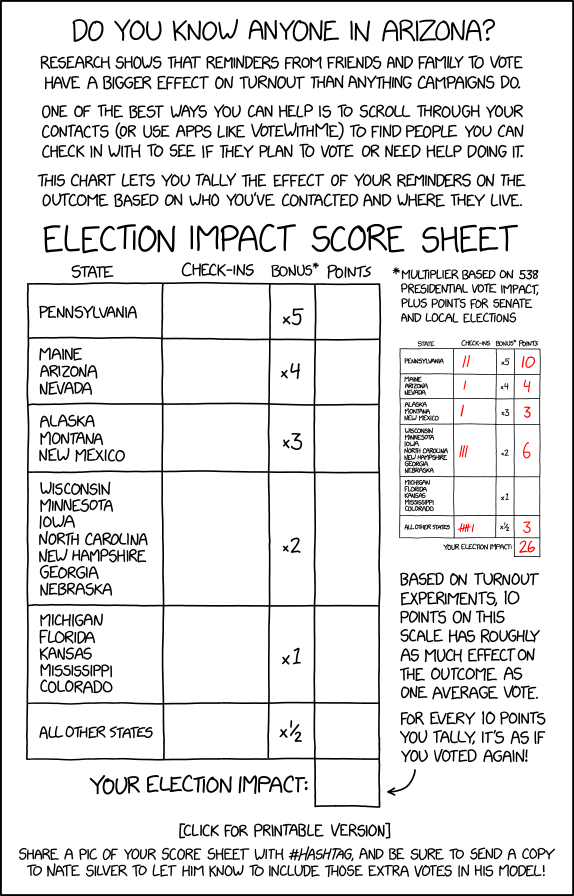
Election Impact Score Sheet
James.galbraithlol nice
Configuration Snafu Exposes Passwords For Two Million Marijuana Growers
James.galbraithwell shit lol
Read more of this story at Slashdot.
November 4 COVID-19 Test Results; Over 100,000 Cases Reported Today
James.galbraithWell that's terrifying
The US is now averaging close to 1 million tests per day. Based on the experience of other countries, for adequate test-and-trace (and isolation) to reduce infections, the percent positive needs to be well under 5% (probably close to 1%), so the US still needs to increase the number of tests per day significantly (or take actions to push down the number of new infections).
There were 966,851 test results reported over the last 24 hours.
There were 103,087 positive tests. (New record)
Over 3,500 US deaths have been reported so far in November. See the graph on US Daily Deaths here.
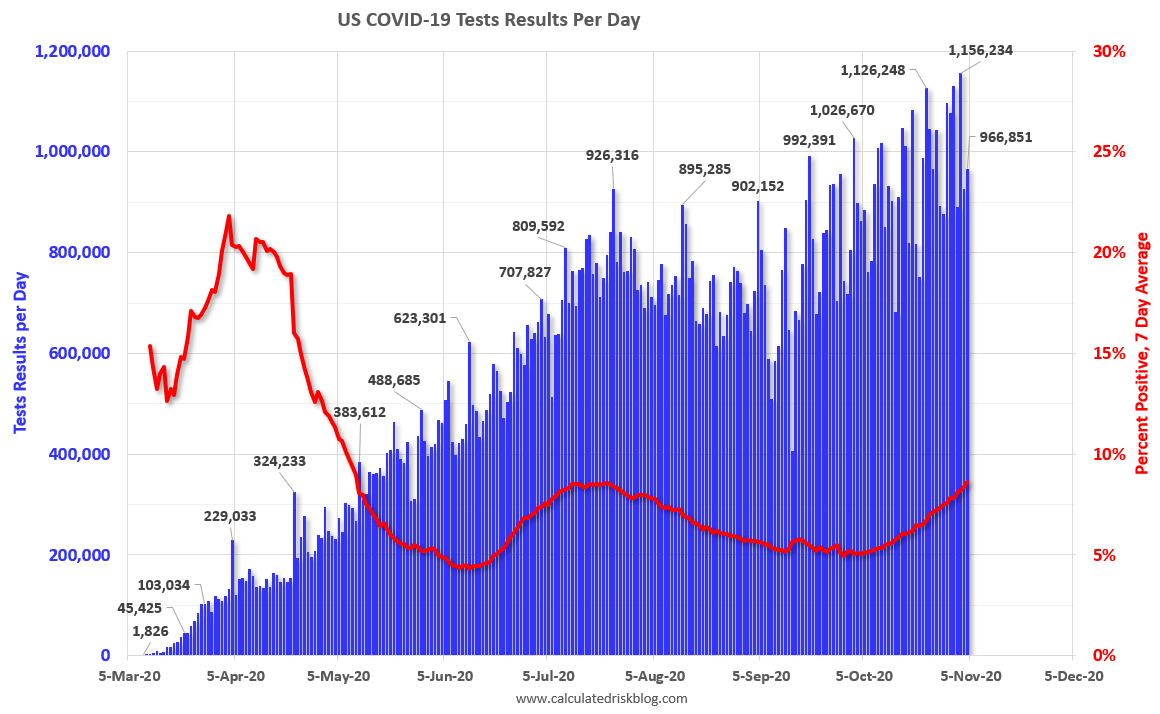 Click on graph for larger image.
This data is from the COVID Tracking Project.
The percent positive over the last 24 hours was 10.7% (red line is 7 day average).
For the status of contact tracing by state, check out testandtrace.com.
And check out COVID Exit Strategy to see how each state is doing.
 The second graph shows the 7 day average of positive tests reported.
The dashed line is the July high.
Note that there were very few tests available in March and April, and many cases were missed (the percent positive was very high - see first graph). By June, the percent positive had dropped below 5%.
This is a new record 7-day average cases for the USA.
Colorado voters approve compact seeking to neutralize the Electoral College
James.galbraithevery bit helps
 Hillary Clinton speaks during a press conference the day after the 2016 election. | Matt McClain/The Washington Post via Getty Images
The National Popular Vote compact scores a win.
Colorado voters have backed the National Popular Vote Compact, a nationwide effort that would effectively neutralize the Electoral College and ensure that the presidential candidate who receives the most votes in the nation as a whole becomes president.
The issue was on the ballot as Proposition 113, which passed according to the Associated Press and New York Times. For the moment, Colorado’s decision to enter the compact will have no effect, but it could prove consequential if several more states join this agreement.
The Electoral College is the Rube Goldberg-like device that the United States uses to choose a president. Each state is assigned a certain number of electoral votes, equal to the number of lawmakers it sends to the Senate and House of Representatives. Constitutionally, the District of Columbia gets three electoral votes. To secure the presidency, a candidate must win a majority of these electors, or 270 in total.
Most states assign all of their electoral votes to the candidate who wins the state as a whole. But the Constitution permits states to assign electors “in such manner as the Legislature thereof may direct.” The core insight of the National Popular Vote Compact is that, if a bloc of states that controls 270 electoral votes all agree to assign their electors to whoever wins the national popular vote, rather than the candidate who wins their state, then whoever wins the national popular vote will become president in every election.
The compact does not take effect until enough states to add up to 270 electoral votes have joined it. Including Colorado, a group of 15 states plus the District of Columbia — totaling 196 electoral votes — are parties to the compact. So several more states will need to join the compact before it takes effect.
Colorado enacted legislation joining the compact in 2019, but opponents of the compact invoked a rarely used procedure that subjects a state law to a popular referendum if opponents of that law collect 150,000 signatures. As it turns out, however, a majority of Colorado voters do not wish to leave the compact.
Though Colorado’s vote is good news for the National Popular Vote Compact, the compact’s supporters still have a long road ahead of them if they hope to negate the Electoral College in the future. For one thing, they still need to convince several more states to join the compact before it can take effect. While some states with a large number of Electoral College votes — like California and Illinois — have joined, other consequential states — like Texas and Florida — have not done so thus far.
And the Constitution also provides that a compact among the states may not take effect “without the consent of Congress.” Though there is a plausible argument that the National Popular Vote Compact does not require such consent, it is uncertain how this argument will fare in court — especially if brought before a Supreme Court with a 6-3 Republican majority. So the compact would stand on much firmer ground if it receives congressional approval.
Some constitutional scholars have also argued that the compact itself is unconstitutional. Though their argument is difficult to square with the text of the Constitution — again, the Constitution provides that presidential electors shall be determined “in such manner as the Legislature thereof may direct” — Republicans tend to support the Electoral College because it allowed them to win two recent presidential elections where the Republican candidate lost the popular vote.
There is a real risk, in other words, that a Supreme Court dominated by Republicans would strike down the National Popular Vote Compact even if it receives congressional approval.
Nevertheless, if the Supreme Court follows the text of the Constitution, it will likely uphold the compact. And the vote in Colorado brings the compact one state closer to the threshold where it could take effect.
Mitch McConnell’s Senate might be where the Biden presidency goes to die
James.galbraithYep. Tyranny of the minority continues