Shared posts

28 Mar 02:26

‘Not a hope in hell’: Undercover investigation is latest proof of racist housing discrimination

by Ian Reifowitz

Over a half-century ago, and only seven days after the assassination of the Rev. Dr. Martin Luther King, Jr., President Lyndon Johnson signed the Fair Housing Act (FHA). The law banned discrimination in the renting, financing, or purchasing of a home based on race, national origin, religion, and gender (later, it was amended to include ability and family status). The law was enacted almost four years after the Civil Rights Act of 1964 which, one might have thought, had already prohibited such discrimination. LBJ called it “among the proudest [moments] of my presidency.” He predicted “Negro families [will] no longer suffer the humiliation of being turned away [from housing] because of their race.”

LBJ’s optimism has long proven to be unfounded: Research shows our country has made only limited progress on residential segregation since the FHA took effect. According to Brown University sociology Professor John R. Logan, “we still have a very, very segregated society, in terms of housing and [by extension] schools." He noted some “pockets” exist where things have gotten better, typically in liberal cities, but added that "there's also been some backsliding" when it comes to enforcing existing federal and local laws.

When signing the American Rescue Plan (ARP), President Joe Biden proclaimed that it would “change the paradigm” on economic policy, in a way not seen since the Johnson administration. However, LBJ proved unable to “change the paradigm” when it came to housing. The improvements we’ve seen since his time are certainly nowhere near what he or housing justice activists expected, and far short of what we have a right to demand. The reasons for this are manifold, but one of the most important is something too many Americans don’t know about (or willfully ignore): Americans of color still face some of the same discrimination that was outlawed in April 1968.

We know that housing discrimination contributes significantly to the racial and ethnic wealth gaps in our country. Demos issued a report in 2016 that documented just how much it would mean if Black and Latino households owned homes at the same rate as white ones: “median Black wealth would grow $32,113 and the wealth gap between Black and white households would shrink 31%. Median Latino wealth would grow $29,213 and the wealth gap with white households would shrink 28%.”

But that’s just the impact of equalizing homeownership rates. Discrimination—such as redlining, which was carried out by our government as well as the private sector—has also cost families huge sums, even if they were able to buy and keep a home. What would happen if the differences between racial groups, in terms of the returns on their homes, were equalized? As per Demos, “median Black wealth would grow $17,113 and the wealth gap between Black and white households would shrink 16%. Median Latino wealth would grow $41,652 and the wealth gap with white households would shrink 41%.”

The value of one’s primary residence is the largest source of wealth for U.S. households—over one-quarter of net worth.

Getting screwed on the purchase of a home means a loss that typically has a decades-long impact on a family, and in many cases is never reversed—although Evanston, Illinois, just became the first municipality to take active steps to do so. Building generational wealth without home ownership has proven to be virtually impossible.

In 2014, Ta-Nehisi Coates brilliantly humanized the theft from Black families in the decades leading up to the Fair Housing Act. Separate from the argument he made on reparations more broadly, Coates brought the receipts on the multiple billions of dollars (at least) stolen from African Americans. Much of the theft was legal, if sickeningly immoral, at the time the reverse Robin Hoods of real estate were doing the actual stealing.

In her new book, former Demos president and author Heather McGhee told the stories of Black families who were illegally discriminated against after 1968, and even after the 1977 Community Reinvestment Act that was supposed to have ended redlining once and for all. She pointed out that this continued discrimination signaled that serious problems existed in the mortgage industry long before the 2008 crash—if white Americans had been paying attention. Additionally, the mortgage industry’s malfeasance is just one of many arenas where racial discrimination didn’t just harm Americans of color; it harmed middle-class and lower-income whites as well, all to the benefit of the economic elite. For a comprehensive history, see Race for Profit: How Banks and the Real Estate Industry Undermined Black Homeownership by Princeton professor of African American studies Keeanga-Yamahtta Taylor, who discussed her book in a 2019 interview with Vox.

It also hasn’t helped that Donald Trump and HUD Secretary Ben Carson actively sought to reverse whatever progress on residential segregation we had actually achieved. Their efforts were clearly motivated by electoral politics. During the 2020 campaign, The Man Who Lost The Popular Vote (Twice) tried to strike fear into the hearts of “suburban housewives” about an “invasion” of “low-income people” who would be moving into “their neighborhood.”

In July 2020, Trump reversed a rule issued by the Obama-Biden administration, known as Affirmatively Furthering Fair Housing, that aimed to bring about greater residential integration. The twice impeached former president falsely accused Democrats of seeking to “abolish the suburbs'' and wanting to force “low-income housing down [suburban residents’] throats.” Not exactly subtle. Trump and Carson even published an op-ed piece in the Wall Street Journal with the headline “We’ll Protect America’s Suburbs.” The unwritten part: “from dark-skinned people.”

Separate from efforts by the government to counteract (or not, in the case of Trump) residential segregation, the discrimination that fed it in the past continues right up to the present. On March 15, the Housing Rights Initiative (HRI), a nonprofit watchdog organization, filed a lawsuit alleging pervasive discrimination in the New York City rental market. The lawsuit specifically addressed potential tenants with Section 8 rent vouchers; under the program, the tenant pays approximately 30% of their gross income each month toward rent, while the federal government pays the rest. In order to qualify, one must have a monthly gross income that is less than 50% of the Area Median Income for the location where the rental apartment is located.

The lawsuit named names that include some pretty big fish: Century 21, Compass, and Corcoran Group. Take a listen to Exhibit A.

In this recording, a broker tells our undercover investigator there’s “not a hope in hell” they’d accept her housing voucher: 5/ pic.twitter.com/3kbVtz2NAg

— Aaron Carr (@aaronAcarr) March 15, 2021

In another example, a woman said she was calling on behalf of herself and her boyfriend about an apartment renting for $1,751 a month on Manhattan’s Upper East Side. The real estate broker told her that a visit to the place was the next step, and he’d be thrilled to arrange it. She’d be using a Section 8 voucher, the woman then informed the broker, and asked if the landlord would accept it. “If she accept what? Oh, no, she would not. She just doesn’t. She wants well-qualified people.”

That is against the law. Period.

HRI’s founder and executive director, Aaron Carr, laid the hammer down at a presser when his organization, working with the Legal Aid Society, officially filed the suit: “Our goal here is simple: it is to get real estate companies to abandon their discriminatory housing practices and to follow the damn law. They are the gatekeepers of housing and get to decide where families live, where they work and where children go to school. Housing discrimination goes beyond the walls of housing.” Carr added: “This investigation didn’t target any one real estate company, it targeted an entire real estate sector. Housing discrimination is exacerbating racial and economic segregation.”

As Carr notes, this goes beyond housing. The connection between residential segregation and de facto segregation in many schools is vitally important, and shows another way that injustices in housing have a multi-generational impact.

Nancy Padilla

The HRI investigation documented 88 landlords and real estate agents who basically refused to rent apartments to people who said they had a Section 8 voucher. More than half of HRI’s testers were denied, demonstrating the ubiquity of this injustice. Again, most of those who try to use the vouchers in New York City are Black or Latino, which means that discriminating against those with vouchers has the effect of discriminating against those groups. One New Yorker, Nancy Padilla, shared her personal experience with this discrimination.

Every time a landlord or broker saw my voucher their whole face expression changed. Immediately they turned me away even though I passed the background check and credit check. Being discriminated against over and over and being rejected puts a toll on a person who is trying. I hope this lawsuit can stop anyone else from having to experience what I experienced.

Remember, people with Section 8 vouchers can pay the rent. In fact, the federal government is guaranteeing that, no matter what, a good chunk of the rent will be paid each month. If anything, that makes such tenants a very solid bet, even if their own income isn’t that high. But either way, the kind of discrimination documented in this suit is simply illegal in New York City and New York state. Clearly, existing enforcement mechanisms are doing little to prevent it.

Similarly, the law is failing to prevent massive discrimination in the home-buying market. Newsday carried out an extensive investigation over the course of three years on Long Island, utilizing 25 trained testers who engaged with a total of 93 real estate agents. The results, published in late 2019, provide evidence that America has a long way to go. Nineteen percent of Asian testers, 39% of Latino testers, and a whopping 49% of Black testers received different treatment from the white tester with whom they were paired. Here’s the methodology Newsday used:

The findings are the product of a paired-testing effort comparable on a local scale to once-a-decade testing performed by the federal government in measuring the extent of racial discrimination in housing nationwide.

Regularly endorsed by federal and state courts, paired testing is recognized as the sole viable method for detecting violations of fair housing laws by agents. Two undercover testers – for example, one Black and one white – separately solicit an agent’s assistance in buying houses. They present similar financial profiles and request identical terms for houses in the same areas. The agent’s actions are then reviewed for evidence that the agent provided disparate service.

Different treatment means that, for example, while the white tester was shown housing options in overwhelmingly white neighborhoods, the testers of color were shown options in more diverse ones. In even more egregious cases of different treatment, the agents imposed harsher financial tests on the non-white testers in order to be shown a home. The white tester would be accepted as a customer and the non-white tester—with the same financial situation—would be turned away. The racial discrimination was blatant, obvious, and very common.

George Washington University public policy professor Greg Squires said exactly what I was thinking when reading the investigation’s findings: "This is something that didn’t happen in the deep South. It happened in one of the most educated, most liberal regions of the country. These are significant numbers.”

One agent told a Black tester who asked to see houses, despite not having secured a pre-approved mortgage, “I won’t do it.” To a white tester who also lacked pre-approval, she asked, “When can you start looking at houses?” Discriminatory treatment doesn’t get much more blatant.

A pair of testers, one white and one Black, reached out about housing options in Brentwood. That town’s residents are 79% Black and brown, and at the time the area was going through a spate of murders committed by MS-13—a gang cited repeatedly by Trump and Republicans as a threat caused by supposedly lax immigration policies. The agent in question was happy to show houses in Brentwood to the Black tester: “Every time I get a new listing in Brentwood, or a new client, I get so excited because they’re the nicest people.” The message to the white tester?: “Please kindly do some research on the gang related events in that area for safety.”

If you’ve got the stomach for it, you can read the entire article. What it makes clear is that far too many Long Island real estate agents are actively working to preserve or even worsen racial segregation in housing, and thus are damaging the prospects of their customers of color.

This last incident reflects a practice known as “racial steering,” which refers to agents sending customers to a particular area because of their race or ethnicity, and because of the area’s demographic makeup. The Long Island investigation ended a couple of years ago, but there’s evidence that steering is happening even more often today, thanks in part to COVID-19. The executive director of the National Association of Real Estate Brokers, Antoine M. Thompson, characterized the pandemic as “the perfect storm for people that want to discriminate against folks, whether it’s in renting, or ownership.” He added: “[Steering] limits choice. Someone is choosing for you, as opposed to you choosing for yourself. The other thing is that it fosters a distrust in the real estate industry.”

What can you do if you think you have been steered to or away from particular housing options because of your race or ethnicity (or gender, religion, national origin, ability, or family status)? You can take action and file a complaint. Here’s a list of organizations that can help.

Residential segregation remains a widespread problem in our country, and the continued existence of discrimination in the present is one of the causes. The laws must be changed—there’s no federal law against discriminating on the basis of having a housing voucher, for example—and a greater investment in low-income housing is needed, especially in underserved urban and rural areas. The government also, clearly, has to do a hell of a lot better at enforcing the anti-discrimination laws already on the books—and make sure anyone who even considers discriminating thinks better of it because they fear real consequences.

We who seek justice and equality must challenge the lie that racism is a thing of the past, that we as a society no longer discriminate, and that the lasting effects of historic inequities will simply rectify themselves over time. The fact that a majority of Republicans have their heads in the sand—or, if you prefer, up their asses—on this obvious reality is just one more reason the advancement of justice and equality depends on Democrats gaining enough power to push through these crucially important changes. Our job is to keep up the pressure and make sure they follow through.

Ian Reifowitz is the author of The Tribalization of Politics: How Rush Limbaugh's Race-Baiting Rhetoric on the Obama Presidency Paved the Way for Trump (Foreword by Markos Moulitsas)

28 Mar 02:24

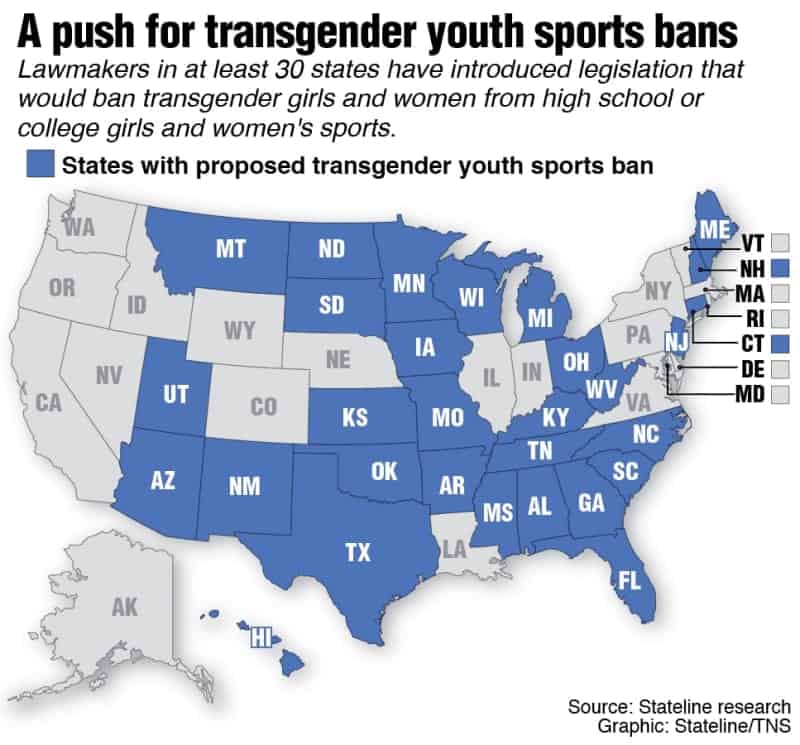
Arkansas Lets Docs Refuse LGBTQ; 30 States Face Trans Sports Bills; Border Spin; Georgia Voting: Whose Agenda Last Week?

by Michael Goff
James.galbraith

Fuck the GOP

This image has an empty alt attribute; its file name is 452905-origin_1.jpg
News with homosexual tendencies — WTF? Whose Agenda Edition?


Arkansas governor signs law allowing doctors to refuse treatment to LGBTQ people

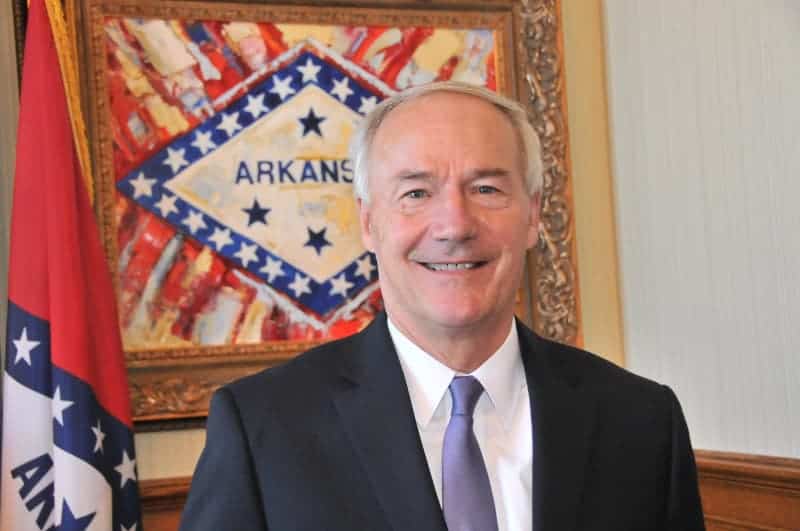
Just a day after Arkansas Gov. Asa Hutchinson became the second U.S. governor to sign an anti-trans sports bill this year, he signed into law a bill that allows doctors to refuse treatment to anyone because of religious or moral objections. On Friday, Hutchinson signed into law the Medical Ethics and Diversity Act, which allows health care professionals to deny any nonemergency services to patients according to their “conscience.” It also protects health care institutions from “discrimination, punishment, or retaliation as a result of any instance of conscientious medical objection. Human righ… Read More

Fight over Georgia election reforms now heads from Legislature to new fronts

ATLANTA — The battle over Georgia’s sweeping rewrite of election rules now shifts to the courthouse, the campaign trail and the halls of Congress after Gov. Brian Kemp quickly signed into law the Republican-backed overhaul that imposes new voting restrictions. Voting rights groups filed a lawsuit in federal court challenging the constitutionality of the changes hours after Kemp’s closed-door signing of the measure, claiming they amount to a “grab bag of voting restrictions” that violate the federal Voting Rights Act. With promises to exact revenge at the ballot box next year, potential Democra… Read More

Families say athletic bans would exact toll on rural transgender youth

CLARKSDALE, Miss. — Katy Binstead’s 13-year-old transgender daughter, Emily Wilson, enjoyed playing basketball recreationally this past summer. When school reopened, she decided to try out for the girls basketball team at her middle school on the Mississippi Gulf Coast. The school denied Emily the chance, her mother recalled, telling her to try out for the boys team instead, because her birth certificate identified her as male. As dozens of states consider legislation that would restrict transgender girls’ participation in sports, Emily and her mom are advocating for other families who may fac… Read More

Will Bunch: President Biden’s ‘mistake’ at US southern border isn’t what clueless pundits, GOP think it is

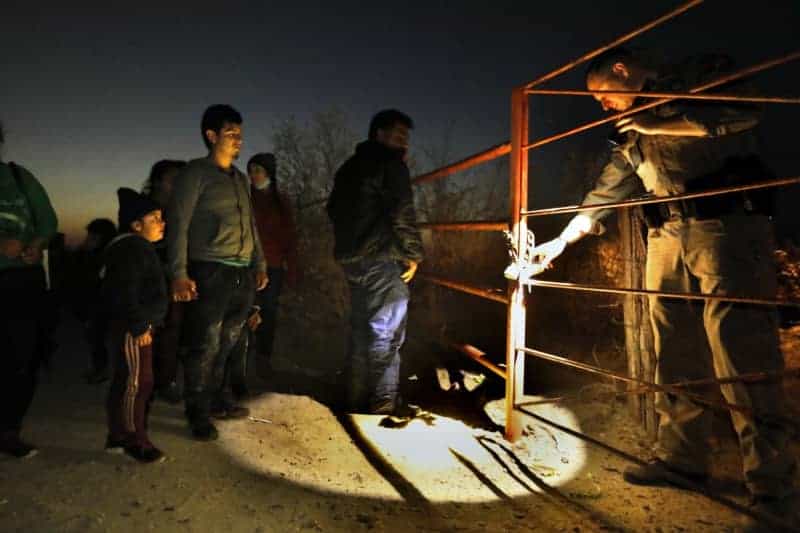
As a political leader whose defining moment has been the mass shooting of 20 kindergartners and first graders in his home state in 2012, and his aggressive push for stricter gun laws ever since, Connecticut Sen. Chris Murphy has never been one to mince words about either the welfare of children or human rights hypocrisy, either at home or abroad. A strong supporter of his fellow Democrat, President Joe Biden, Murphy was candid this weekend in admitting that he was troubled by the scenes he witnessed on a bipartisan congressional tour of a U.S. Customs and Border Protection processing center in… Read More

Trump Says Ending The Senate Filibuster Would Be ‘Catastrophic’ For Republicans

Former President Donald Trump said that any effort to abolish the Senate filibuster would cause irreparable damage to the Republican Party. Trump discussed Senate Minority Leader Mitch McConnell‘s attempt to fight off talk from progressives to eliminate the longstanding filibuster rule during an interview on the podcast The Truth with Lisa Boothe. “Look, he’s hanging by a thread right now with respect to the filibuster,” Trump said of McConnell. “And if they get the filler, he’s hanging on [Democratic Sen.] Joe Manchin, who always goes with the Democrats. Joe talks, but he ends up going with t… Read More

Out Georgia State Rep. Park Cannon Arrested For Trying To Observe Signing Of Voting Restriction Law

Georgia state Rep. Park Cannon was pulled out of the state’s Capitol building and arrested on  Thursday for trying to observe the signing of the state’s new suite of voting restrictions hastily passed through the Senate this week. A video shows several police officers pushing Cannon while she is retrained. Cannon was knocking on Gov. Brian Kemp‘s door while he signed the voting restrictions into law. The governor decided to sign the bill behind closed doors in a highly irregular process. In a statement Thursday night, Georgia State Patrol wrote that at 6:33 p.m. Rep. Cannon “was beating on the… Read More

‘Bathroom bill 2.0’: Effort to bar transgender athletes in Texas schools gets hearing

This image has an empty alt attribute; its file name is 452914-origin_1.jpg

AUSTIN, Texas — A bill that would bar transgender athletes from participating in school sports based on their gender identity is set to spark a passionate debate at the Texas Legislature over an issue that some in the transgender community are comparing to the “bathroom bill” fight of 2017. Ricardo Martinez, CEO of Equality Texas, said he knows of at least 70 people who were planning to testify against the bill at a Senate committee hearing Friday. He said the bill has had a deep emotional impact among transgender Texans on top of the collective trauma of the COVID-19 pandemic. “We’re going th… Read More

28 Mar 02:23

'Monopolists and Oligopolists' May Be Devastating the Lives of Recording Artists

by EditorDavid
James.galbraith

May? Try definitely are

"The platforms have driven the price of content to zero," says William Deresiewicz, author of The Death of the Artist. "This demonetized content is still generating a fortune. But the artists aren't getting that money." "Artists today are beset on all sides by monopolists and oligopolists," argues a 7,000 word analysis in The American Prospect. "Like so many sectors of our economy, government inaction has allowed the music business to consolidate, with devastating effects on musicians. Radio is to a shocking degree in the hands of one company, Liberty Media. Two companies, Live Nation and Anschutz Entertainment Group (AEG), control a large number of venues and artist management services, with Live Nation dominating ticketing. The major labels have been whittled down to three. Record stores, alt-weeklies, and other elements that nurtured local music scenes are largely gone. Dwarfing all that in significance is streaming, which has become the industry's primary revenue source, despite giving a pittance to the vast majority of artists. For the main streaming companies — YouTube and Spotify — music is really a loss leader, incidental to data collection, the advertising that can be sold off that data, and the promise of audience growth to investors... This radical upending of the industry's business model has benefited a few stars, while the middle-income artist, like so much of the middle class in America, struggles to survive... Chris Castle, an entertainment attorney who used to work at A&M Records, could see it coming when he caught wind of an advertisement for a rebooted version of Napster that operated as a primitive streaming service. The tagline was: Own Nothing, Have Everything. Castle recalled: "I thought right there, that's the end." David Lowery, lead singer of Camper van Beethoven and later Cracker, who now lectures at the University of Georgia in addition to making music, described the internet as reassembling all the gatekeepers that kept artists away from fair compensation. "We celebrated disintermediation, and went through a process of re-intermediation," he said. The article points out that in 2018 YouTube already accounted for 47% of all on-demand playtime globally, according to figures from a nonprofit trade group — while RIAA figures show that streaming now accounts for 83 percent of all recorded income in the U.S, while digital music downloads now earn even less than vinyl records. It remains to be seen whether movement building from all stakeholders, from musicians to fans, will be able to force platform monopolies to give creators just compensation. But the winds are shifting in Washington around Big Tech, and a united front of artists could prove key to raising public sympathies against exploitation and toward basic fairness. Artists would rather think of themselves as outside the system. "The wonderful thing about the DIY vision is also its weakness," noted Astra Taylor, a writer, filmmaker, and activist whose husband, Jeff Mangum, fronts the lo-fi rock band Neutral Milk Hotel. (Astra has occasionally played with the group.) But the system has come for them, and toppled the structures that allowed them to create. Everyone loves music, and most of us now have the capacity to listen to anything, anywhere, at any time. We can't hear through the noise that the people who brought us this musical bounty are in trouble. In the article Marc Ribot, a guitarist who has played with Tom Waits and Elvis Costello, complains that "The same neoliberals in anarchist drag boosting indie labels in the '90s are now boosting Bandcamp. I love Bandcamp. I love the food co-op too. They've been around since the 1930s, they're 3 percent of the market, will never be any bigger... We need to either tear the whole thing down and create real socialism where I get an apartment for my good looks, or a functioning market."

Read more of this story at Slashdot.

26 Mar 22:51

The optics of the Georgia voter suppression bill signing are even worse than they first appeared

by Jen Hayden
James.galbraith

The modern GOP in all its glory

On Thursday, Georgia Gov. Brian Kemp signed a viciously anti-voter law that would, among other things, penalize people for simply handing out water or snacks to people waiting in hours-long lines. (Lines that are long by design.) In fact, the bill is so blatantly designed to suppress the vote in Georgia that it includes nearly 100 pages of new voter restrictions.

There is no question these restrictions are racist in nature, from the first to the last. As Nsé Ufot of The New Georgia Project told Kos and Kerry Eleveld on an episode of The Brief, this bill and others like them are a “whitelash” response to the success of Stacey Abrams, The New Georgia Project, Fair Fight, and the campaigns of Sens. Reverend Raphael Warnock and Jon Ossoff. 

As bad as this bill is, there is another sinister element to this bill signing, which took place as six white men looked over the shoulder of Kemp. Philadephia Inquirer columnist Will Bunch noticed the painting behind Kemp and rattled off a Twitter thread about the historical significance of that painting and the plantation depicted in it. Buckle up, folks—this is going to be infuriating.

2. Notice the antebellum-style portrait behind Kemp as he signs the suppression law? Thanks to Twitter crowdsourcing and particularly @TheSeaFarmer, I can report the measure to limit Black voting was signed under the image of a notorious slave plantation in Wilkes County, GA

— Will Bunch Sign Up For My Newsletter (@Will_Bunch) March 26, 2021

4. Today, the Callaway Plantation is a 56-acre historic site where -- as the ExploreGeorgia website cheerily notes -- tourists can get "a glimpse into the by-gone era of working plantations in the agricultural South." https://t.co/BslVZYLSC4

— Will Bunch Sign Up For My Newsletter (@Will_Bunch) March 26, 2021

6. The harsh reality of life for slaves in the era of the Callaway Plantation is captured in this oral-history "slave narrative" of Mariah Callaway, a woman who was born into slavery on the plantation in 1852. In her account, she notes that... https://t.co/oW8Pq5tf0y

— Will Bunch Sign Up For My Newsletter (@Will_Bunch) March 26, 2021

8. Visitors today to the Callaway Plantation say this legacy of inhumanity is downplayed. One wrote on Trip Advisor the slave cabin "is hidden in some trees and mentioned as an afterthought and something you can go to and look at yourself." https://t.co/RYtMkpwif1

— Will Bunch Sign Up For My Newsletter (@Will_Bunch) March 26, 2021

10. ...enacted a series of harsh Jim Crow laws to segregate all public facilities and block Black people from voting. The state, for all of Atlanta's "Too Busy To Hate" bluster, was a KKK hotbed in the 1960s' civil rights era, and in the 1980s...

— Will Bunch Sign Up For My Newsletter (@Will_Bunch) March 26, 2021

12. ...of Kemp signing this bill -- that makes it illegal to give water to voters waiting on the sometimes 10-hour lines that state policies create in mostly Black precincts -- under the image of a brutal slave plantation is almost too much to bear.

— Will Bunch Sign Up For My Newsletter (@Will_Bunch) March 26, 2021

14... that took place behind the placid scenery of Brickhouse Road in Wilkes County, to the suppression now hidden behind a phony facade of "voter integrity." This legacy is a crime against humanity, and it cannot stand - 30 -

— Will Bunch Sign Up For My Newsletter (@Will_Bunch) March 26, 2021

So there you have it. Kemp and a gaggle of white men signed a bill that is a legal monument to white supremacy under a painting of a plantation that is a monument to white supremacy, slavery, and Georgia’s (as well as America’s) painful past. 

Sign and send the petition: Corporations that allowed Georgia's voter suppression law to pass must be held accountable

26 Mar 22:20

Montana Gov. Greg Gianforte trapped and killed a collared Yellowstone wolf without a permit

by Mark Sumner
James.galbraith

Psychopath

Killing things without bothering to obey the law appears to be a signature move for Republican Greg Gianforte. In 2017, the Missoulian reported that then-candidate Gianforte had confessed to killing a bull elk. He got off with a $70 fine and a warning from a Montana Fish, Wildlife and Parks game warden. And of course, Gianforte doesn’t limit his violence to animals. He may be best known for his assault on reporter Ben Jacobs after Jacobs had the gall to ask Gianforte a question about Obamacare. That unprovoked beating earned Gianforte a conviction for misdemeanor assault and another $385 fine.

Now it seems that Gianforte’s record of breaking laws for pocket change has continued. Boise State Public Radio reports that Montana’s sitting governor trapped and shot—in that order—a black wolf that had wandered outside the boundaries of Yellowstone Park. And not just any wolf. This was Wolf No. 1155. It was a 6-year-old adult male, born inside Yellowstone, who had been tracked by biologists for the last three years as part of the Wapiti Lake Pack. This was a wolf who was wearing a tracking collar.

Exactly how Gianforte trapped the wolf isn’t clear. What is clear is that he didn’t have a permit and didn’t take a required class on how to trap wolves ethically. The Washington Post reported that such violations can result in fines up to $500 and a permanent loss of hunting rights. But Gianforte is getting off for the low, low price of $0 and no consequences at all. He’s even being allowed to keep the wolf’s hide and skull. Because who wouldn’t want the skull of an animal he shot while it was writhing in a trap?

Others interviewed by Boise State Public Radio make it clear that Gianforte should definitely have been aware of the required course and certification needed to trap wolves. It’s been almost a decade since wolves were deprived of protections under the Endangered Species Act, which has resulted in numerous poorly thought out rules for trapping—including allowing snares, which are especially cruel and painful considering wolves’ powerfully muscled necks.

Relaxing the rules about killing wolves has also led to incidents such as the recently conducted wolf hunt in Wisconsin, where The Washington Post reports hunters killed almost twice as many wolves as were supposed to be allowed, eliminating almost 20% of the state’s tiny wolf population in a day. As Native News Online notes, Chippewa tribal officials blasted the poorly planned and controlled hunt as a threat to the continued existence of wolves in the state, and stated that considering the state of wolf pelts at this time of year, it was clear this is about “simply killing.”

In the case of Gianforte’s illegally killed wolf, not only did he shoot a collared wolf within 10 miles of the Yellowstone boundary, this killing wasn’t done out of some claim to protect Gianforte’s cattle or sheep. In fact, it wasn’t even on Gianforte’s land. 

Gianforte trapped the wolf on a private ranch belonging to Sinclair Broadcasting owner Robert Smith. Not only is Smith behind conservative messages that are distributed across the nation (often distributed through supposedly local news), he is also a major contributor to Republican campaigns. That includes giving thousands to Gianforte. So Wolf No. 1155 wasn’t killed because it was threatening cattle, or for any other reason than the one that propelled hunters out to trap and execute wolves in Wisconsin: It’s about the killing.

There are hunters who legitimately hunt for food or pelts to supplement either their family’s food or income. There are also hunters who hunt for sport, but do so with species—like eastern White-tailed Deer—where populations are extremely high (because the predators of that species, like wolves, have been killed off). There are also hunters who see a challenge in pursuing difficult game through challenging conditions over a period of days. Some of those reasons may not seem admirable to everyone, but at least their motivations can be understood. 

But there are “hunters” like Gianforte who trapped a wolf, then shot it. There’s no challenge in shooting an animal in a trap. There’s certainly no excess of wolves. But there is an excess of cruelty.

Of course, when it comes to demonstrating his willingness to showcase that cruelty in the company of other Republicans, this is not a first for Gianforte. As the Associated Press reported at the time, Gianforte joined Donald Trump Jr. on a challenging hunt agains that most fierce of Montana’s wildlife: the prairie dog. 

“What can be more fun than to spend an afternoon shooting the little rodents?” said Gianforte.

A 2013 study showed that prairie dogs have a complex language, one in which they can describe not just the various predators that threaten their “towns,” but individual humans they spot.  "They're able to describe the color of clothes the humans are wearing, they're able to describe the size and shape of humans, even, amazingly, whether a human once appeared with a gun," said one researcher. Prairie dogs encode this information into short but distinctive chirps. “In one 10th of a second, they say 'Tall thin human wearing blue shirt walking slowly across the colony.'" 

Even so, prairie dogs are considered a non-game species in Montana. There are no limits on how many can be shot, and no season when they are safe from killing. As the AP notes, “Killing them is a popular pastime among some hunters who looking to keep their shooting skills sharp during the offseason when they can’t hunt wild animals like deer and elk.”

A New York Times update in 2017 showed that research was continuing, and that the possibility of actually communicating with prairie dogs seems real. They should have a lot to say about Greg Gianforte.

26 Mar 22:06

Biden blasts Republicans' voter suppression, while Manchin gives credence to their Big Lie

by Joan McCarter
James.galbraith

Brought to you exclusively by the GOP.

Here's what President Joe Biden had to say about the Republican states' onslaught against voting rights, exemplified by the law enacted in Georgia Thursday: "What I'm worried about is how un-American this whole initiative is. It's sick. It's sick."

Biden added more in a statement Friday: "This is Jim Crow in the 21st Century. It must end. We have a moral and Constitutional obligation to act. I once again urge Congress to pass the For the People Act and the John Lewis Voting Rights Advancement Act to make it easier for all eligible Americans to access the ballot box and prevent attacks on the sacred right to vote." He promised, "I will take my case to the American people – including Republicans who joined the broadest coalition of voters ever in this past election to put country before party."

Attempting to instill a little shame into Republicans (probably an exercise in futility), Biden said, "If you have the best ideas, you have nothing to hide. Let the people vote." In Thursday's press conference, Biden said he would do "everything in my power" to stop these restrictions, but wouldn't elaborate. "I'm not going to lay out a strategy in front of the whole world," he told a reporter in a follow-up. But what that strategy has to entail is the filibuster, specifically eliminating it as a roadblock to democracy.

Campaign Action

Biden addressed that, too, Thursday, though somewhat obliquely. He once again endorsed the talking filibuster, saying that it would force senators "to stand there and talk and talk and talk and talk until you collapse" if they wanted to opposed a bill. "I strongly support moving in that direction," Biden said. Once again pressed on strategy and whether it should take 60 votes or 51 to break a filibuster, he demurred but suggested he would do whatever he needed to on critical issues like voting rights. "If we have to, if there's complete lockdown and chaos as a consequence of the filibuster, then we'll have to go beyond what I'm talking about," Biden said.

Never mind that we've seen lockdown and chaos from Republicans since Mitch McConnell took the helm of the Senate, and that he'd nuke the filibuster in a heartbeat if he saw an advantage to it. Having the filibuster in place was actually advantageous for him while Donald Trump was around. McConnell could put ridiculous bills that appeased Trump on the floor, without any chance of them passing and angering the public. He simply had to refuse to bring any House-passed or Democratic bills to the floor, and was fine doing nothing but passing tax cuts and approving federal Trump-appointed judges. That's the only reason the legislative filibuster still exists.

The showdown over the filibuster is coming sooner rather than later and it will likely be over voting rights. Also on Thursday, Majority Leader Chuck Schumer announced he was bringing the bill to the floor as soon as next month. "Across the country, the Republican Party seems to believe that the best strategy for winning elections is not to win more voters but to try and prevent the other side from voting," Schumer said in a speech on the Senate floor Thursday. "That's not America. That's not democracy. And this Senate will take action to protect the voting rights of tens of millions of Americans. The Senate will vote on the For the People Act."

"When the Senate returns, our agenda will be no less ambitious than it was over the past few months," Schumer said Thursday. "This Senate will once again be the forum where civil rights are debated and historic action is taken to secure them for all Americans." That includes S.1, the For the People Act, the John Lewis Voting Rights Advancement Act, Biden's infrastructure and stimulus bills, gun safety legislation, and hate crimes legislation from Sen. Mazie Hirono, a Hawaii Democrat, to focus on anti-Asian hate crimes.

Meanwhile, self-declared king Sen. Joe Manchin has issued his decree on what he would find acceptable in a law, proving that bipartisanship is more important to him than protecting voting rights. He says that he will only support legislation that is bipartisan because that's what's essential "to restore faith and trust in our democracy."

In that statement, the worst part of Manchin's posturing is revealed. He is granting legitimacy to the Big Lie, arguing that Republican legislatures have a valid interest in voter suppression because there was something in the 2020 election for Republicans voters to distrust. He insists that some of the minor provisions of S.1 could get "bipartisan" support, so says those are the ones he'd agree to, including a mandated 15 days of early voting which Republicans have routinely rejected. He ignores most of the major and critical provisions to restore democracy including gerrymandering reform,  voter registration expansion and improvements, vote-by-mail access, voter purge prevention—all the things that Republicans have attacked in their voter suppression efforts.

Manchin is not acting in good faith here, not by a long shot. That he felt the need to issue this statement is at least something to take heart in—the pressure he's feeling over this issue is real.

26 Mar 21:57

New Android malware with full range of spying capabilities has been found

by Dan Goodin
James.galbraith

Did anyone need a reason to never touch Android again?

New Android malware with full range of spying capabilities has been found

Enlarge (credit: Getty Images)

Researchers have discovered a new advanced piece of Android malware that finds sensitive information stored on infected devices and sends it to attacker-controlled servers.

The app disguises itself as a system update that must be downloaded from a third-party store, researchers from security firm Zimperium said on Friday. In fact, it’s a remote-access trojan that receives and executes commands from a command-and-control server. It provides a full-featured spying platform that performs a wide range of malicious activities.

Soup to nuts

Zimperium listed the following capabilities:

Read 5 remaining paragraphs | Comments

26 Mar 19:34

One of America's $135.8 Million Fighter Jets Shot Itself

by msmash
An F-35B Joint Strike Fighter shot itself in the skies above Arizona earlier this month, doing at least $2.5 million in damage. The pilot was unharmed and successfully landed the jet. The Pentagon isn't quite sure how or why the jet shot itself and the incident is still under investigation. From a report: As first reported by Military.com, the F-35 was flying in a training mission at night on March 12 at the Yuman Range Complex in Arizona when it shot itself. This particular F-35 has an externally mounted gatling gun that fires a 25mm armor piercing high explosive round. Sometime during the training, the gun discharged and the round exploded, damaging the underside of the jet. The pilot landed the jet and a Navy investigation classified the accident as Class A. Class A accidents are the most severe, it's a classification used when someone in the weapon dies, the whole jet is lost, or the property damage is $2.5 million or greater. "The mishap did not result in any injury to personnel, and an investigation of the incident is currently taking place," Marine Corps spokesperson Captain Andrew Wood told Military.com. The F-35 is the most expensive weapon ever built. Just one of the B variants, flown by the U.S. Marine Corps, costs around $135.8 million. The total cost for the entire F-35 program is estimated to be more than a $1 trillion over the course of the program's lifetime. The expensive jet has been plagued by problems since Lockheed Martin began manufacturing them in 2006. In May 2020, an F-35 costing $175 million landed too hard and "rolled, caught fire, and was completely destroyed," according to an Air Force accident report. The accident report gave several reasons for the crash, including the F-35's speciality helmet and its inability to deliver oxygen properly to the pilot.

Read more of this story at Slashdot.

26 Mar 17:52

Why Georgia’s New Voting Law Is Such A Big Deal

by Perry Bacon Jr.
James.galbraith

The GOP is a threat to democracy, not a participant

From November 2020 to January 2021, the story of the state of Georgia was pro-Democratic: Democratic candidates for president and the U.S. Senate all won. But more importantly, it was pro-democratic. Joe Biden, Jon Ossoff and Raphael Warnock won in part because of aggressive efforts by grassroots groups in the state to increase the number of people who voted compared with past Georgia elections. Two of the state’s top Republican elected officials, Gov. Brian Kemp and Secretary of State Brad Raffensperger, rejected a major push from then-President Trump and other Republicans to effectively overturn the results of the state’s presidential election because Biden had won. The events in Georgia, along with a similar rejection of Trump’s false fraud claims in Arizona by Republican Gov. Doug Ducey, were perhaps the clearest examples of how America’s democratic systems had held firm and prevented Trump from cheating his way to a second term.

A lot has changed since then.

Watch: https://abcnews.go.com/fivethirtyeight/video/pollster-ratings-polling-101-fivethirtyeight-76661630

Now, Georgia’s democratic stand in 2020 looks more like a temporary victory in a broader fight over American democracy that remains very much contested. On Thursday, Kemp signed a major election law pushed through by Georgia Republicans. Among other things, the law strips some of the power to run Georgia elections from the secretary of state and local counties and transfers it to a state board that is likely to be dominated by conservative Republicans. It includes a ban on providing food and water to people waiting in line to vote. And Kemp justified the new law by suggesting that there were unresolved questions about whether the election in Georgia was conducted fairly

In short, Trump lost Georgia in 2020. But his narrative about that election — that it was stolen from him — has won among state Republicans and has now effectively been codified in state law.

A scene from the Jan. 6 insurrection, with a person wearing a flag mask standing above people in disarray and fighting; there’s some sort of smokey substance in the air.

related: In America’s ‘Uncivil War,’ Republicans Are The Aggressors Read more. »

Republicans are trying to enact laws making it harder to vote across the country, and it’s not clear that Georgia’s will be among the most aggressive when all of them are finalized. But considering what happened in Georgia from November to January, the enactment of this law in that state is a particularly alarming sign that the Republican Party’s attacks on democratic norms and values are continuing and in some ways accelerating. 

Democrats flipped a swing state, and the Republican Party in that state has responded by enacting a law designed to make it harder for Democratic-leaning voters to cast ballots and have them counted. A state from the former Confederacy changed its election laws after a heavily Black coalition of voters played a big role in electing their preferred candidates for president and the U.S. Senate, which included the historic election of an African American senator in the state. A Republican official (Raffensperger) put country over party and was then stripped of some of his authority.  

There has already been a lawsuit filed to prevent this Georgia provision from going into effect. And even if the law does take effect, it’s hard to say exactly how this would affect Republican and Democratic electoral prospects in Georgia — it seems clearly designed to make it harder for Democratic-leaning voters to exercise that right, but Democrats might still be able to win. So we don’t know exactly what this law will mean in an electoral sense. But in a democratic sense, there is already one clear result: America is a country with a declining democracy, because it has one major party that increasingly does not respect the results of elections that it loses or the right to vote of people who oppose it. 

Put another way: Georgia Republicans didn’t come out of the 2020 elections with a goal of finding new messages or policies to appeal to Georgia’s growing population of people of color. They instead opted to imply that these voters participated in the Georgia elections in improper ways that should be prevented in the future. The Washington Post suggests in its motto that “Democracy Dies in Darkness.” But based on the actions of much of today’s Republican Party, it might be more accurate to say it’s dying right out in the open daylight.

Watch: https://abcnews.go.com/fivethirtyeight/video/atlanta-attacks-activate-asian-americans-politically-76622257

Watch: https://abcnews.go.com/fivethirtyeight/video/joe-biden-lucky-2020-fivethirtyeight-politics-podcast-76397986

26 Mar 16:46

A scorching reply to Georgia’s vile new voting law unmasks a big GOP lie

by Greg Sargent
James.galbraith

This stuff is appalling

Republicans are ramping up voter suppression precisely because they lost the last election legitimately.
26 Mar 16:41

On Trump's watch, COVID-19 agriculture relief was mainly for white farmers only

by Kerry Eleveld
James.galbraith

Of course

While the Trump administration doled out some $26 billion last year to farmers under the Coronavirus Food Assistance Program, Black farmers received just $20.8 million of it, according to Agriculture Secretary Tom Vilsack. That represented just .1% of the Trump administration's total coronavirus relief for American farmers.

“We saw 99% of the money going to White farmers and 1% going to socially disadvantaged farmers and if you break that down to how much went to Black farmers, it’s 0.1 percent,” Vilsack told the Washington Post. “Look at it another way: The top 10% of farmers in the country received 60% of the value of the COVID payments. And the bottom 10% received 0.26%.”

The country's 45,000 Black farmers account for just 1.3% of the 3.4 million U.S. farmers overall. It's a dramatic drop from the 1 million Black farmers who existed a century ago. During that period, systemic racism and a punishing cycle of debt led to Black farmers also losing 90% of their land. The latest farm census found that the average farm run by an African American is roughly a quarter of the size of the national average for farms—about 100 acres versus some 440 acres.

But provisions included in the American Rescue Plan aim to help make up for some of the disparities Black farmers have faced for decades. Of the $10.4 billion set aside in the bill to support agriculture, about $5 billion of it will be targeted at farmers of color.

Vilsack said the money was intended to help address the many longterm hardships socially disadvantaged farmers have dealt with along with the inequities in how the Trump administration distributed COVID-19 relief.

"One, you’ve got this systemic racism that basically put these people behind and they’ve never caught up. This is beginning of addressing that issue," he said. "And second is the gap in the way the COVID relief was distributed." 

26 Mar 16:16

strip for March / 26 / 2021 - Tortoise and the Hare

James.galbraith

lol goddamn

26 Mar 04:49

The Big Reveal

Aurelia…

26 Mar 04:48

In House hearing on extremism, Republican reveals he's been duped by military version of 'The Onion'

by Aldous J Pennyfarthing

Most of us don’t think Bill Gates has uploaded Windows Vista into the COVID-19 vaccine, and we won’t give credence to inanities burped out by semi-ambulatory heaps of knob cheese who listen to demon sperm doctors instead of world-renowned infectious disease experts. Why? Because we’re astute consumers of media.

But Republicans, by and large, are not. My own sister is an anti-vaxxer now, and if I ever deign to don a hazmat suit so I can safely visit her in her benighted Northeast Wisconsin redoubt, I’ll let her know that the vaccine is safe, effective, and … oh, my God, why is a baby arm growing out of my abdomen, and why does it keep slipping strawberry Yoo-hoo into my parachute pants while I’m searching for loose-leaf tea?

Okay, just kidding. I don’t drink loose-leaf tea. See how easy it is to fool people on the internet, though? I mean, just ask Republican Rep. Pat Fallon, who hails from—oh, Jesus Christ; this again—Texas.

During a Wednesday House Armed Services Committee hearing on extremism in the military, Fallon asked Lecia Brooks, chief of staff at the Southern Poverty Law Center (SPLC), if the group had named the VFW and American Legion as hate groups. (Spoiler alert: It hadn’t.)

The Washington Post:

“Has your organization named the American Legion as a hate group?” Fallon asked a puzzled Lecia Brooks, chief of staff at the Southern Poverty Law Center.

“Were you aware that the organization named the VFW, the Veterans of Foreign Wars, as a hate group?” he continued. “You had in the past.”

Needless to say, Brooks was not aware of that, because it wasn’t true. In fact, Fallon’s incredible claims had actually appeared in Duffel Blog, a satirical website focused on fake military stories. In other words, Fallon got snookered by the military equivalent of an Onion article. And he wasn’t the only one.

Brooks contested that claim immediately, but it wasn’t until about half an hour later, after she drew similar questions from Rep. Scott DesJarlais (R-Tenn.), that she pointed out the satirical source of Fallon’s error.

After the “confusion” was cleared up, committee chair Rep. Adam Smith, a Washington Democrat, stated the, well, obvious: “That’s why we have these hearings, is to try to get to the facts. Then we can debate what to do with them, but we can’t be throwing out a bunch of misinformation.”

No, no. We can’t. But they still do. ALL. THE. TIME.

Of course, if Fallon had studied Duffel Blog a bit more closely, he would have seen headlines like “Kim Jong-Un seen outside Mar-a-Lago blasting 'In Your Eyes' on boombox” and “Army mandates quarterly 'don’t invade the Capitol' training.” So, yeah, this is pretty clearly satire.

A spokesperson for the SPLC confirmed to The Washington Post that it has never listed either veterans organization on its “hate map,” a much-cited, sometimes challenged list of extremist groups. 

To be fair, this isn’t the first time a Republican has been taken in by Duffel Blog. According to the Post, in 2012 Yertle McTurtle himself was fooled by a Duffel Blog story claiming prisoners at Guantanamo Bay were receiving G.I. Bill benefits. In fact, then-Senate Majority Leader Mitch McConnell was so concerned he sent an inquiry about the story to the Pentagon.

Then again, Moscow Mitch isn’t as stupid as the rest of them. He may have thought (quite accurately) that Republicans would believe anything. 

I mean, they pretty much always have, right?

”This guy is a natural. Sometimes I laugh so hard I cry." — Bette Midler on author Aldous J. Pennyfarthing via TwitterNeed a thorough Trump cleanse? Thanks to Goodbye, Asshat: 101 Farewell Letters to Donald Trump, Dear F*cking Lunatic, Dear Pr*sident A**clown and Dear F*cking Moron, you can purge the Trump years from your soul sans the existential dread. Only laughs from here on out. Click those links, yo!

26 Mar 04:47

House panel votes to repeal 19-year-old Iraq war authorization

by Andrew Desiderio
James.galbraith

Good. Get rid of it


The House Foreign Affairs Committee on Thursday advanced a measure to repeal a nearly two-decade-old authorization for the use of military force in Iraq, lawmakers’ first effort to claw back their war-making powers under President Joe Biden.

The panel’s action, which sailed through with support from Democrats and Republicans alike, scraps the 2002 authorization for the use of military force (AUMF) against Iraq, which at the time was led by Saddam Hussein. A similar push is already underway in the Senate, where Sens. Tim Kaine (D-Va.) and Todd Young (R-Ind.) have proposed repealing the 2002 AUMF, in addition to a 1991 measure that also authorized military force in Iraq during the first Gulf War.

Rep. Gregory Meeks (D-N.Y.), the committee’s chair, said the outdated authorizations serve no operational purpose and argued that existing threats can be addressed by the 2001 authorization, which dealt with terrorist groups in the aftermath of the Sept. 11 attacks.

“There are continuing threats from Iranian-backed militants. There are threats from ISIS and al Qaeda. That said, the 2002 AUMF doesn’t help us deal with any of these threats,” Meeks said. “Our forces would stay under Iraq under the 2001 AUMF, and the president can always defend America and our forces under Article II [of the U.S. Constitution].”

Democratic leaders in both the House and Senate have already committed to moving legislation to replace the 2001 authorization with one that is better aligned with the threats in the region, after presidents from both parties have used it to expand U.S. military activity not specifically authorized by Congress. In the meantime, with the support of a significant cohort of Republicans, Democrats are moving forward with a clean repeal of the 2002 authorization, which passed during George W. Bush's presidency.

Biden invoked his Article II powers last month when he ordered retaliatory airstrikes against Iran-backed militant groups in Syria that were responsible for attacks on U.S. interests and citizens in the region. But progressives criticized Biden’s decision, noting that Congress hadn’t authorized the strikes and arguing that they were likely to further inflame tensions with Iran.

In response, the White House said Biden supports getting rid of the outdated AUMFs and working with Congress on replacement measures, though talks are in the very early stages.

The Republicans who opposed repealing the 2002 authorization said that like with the 2001 measure, it should be replaced because Iraq is still home to terror groups that threaten the U.S.

“I think we have the same goal in mind, we just have a different way of getting there,” Rep. Michael McCaul of Texas, the committee’s top Republican, said of the effort to scrap the 2002 authorization.

McCaul called for consultations with executive branch officials and the Iraqi government first in order to craft a replacement.

“Real AUMF reform requires Congress and the administration working together on actual text to replace the aging 2001 and 2002 AUMFs to provide authorities needed to keep the American people, and, most importantly, our deployed troops, safe from terrorists,” McCaul said.

The House has already passed measures to repeal both the 2001 and 2002 authorizations as part of annual defense and spending bills, but those provisions were eventually removed due to opposition from the Senate and the Trump administration.

The 2002 authorization has not been used to justify significant military operations in Iraq, with the exception of former President Donald Trump’s invocation of the AUMF last year after he ordered a strike that killed Iranian military commander Qassem Soleimani.

26 Mar 04:37

LG’s new 2021 OLED TVs will start at $1,300

by Samuel Axon
James.galbraith

well then ;)

  • LG's 2021 OLED lineup. [credit: LG ]

LG has been releasing new information about its 2021 lineup of OLED TVs in bits and pieces ever since the Consumer Electronics Show in January, but all those press releases and presentation left out the basics before now: pricing. Today, we learned the price points of each TV in the lineup, from the new, lower-end A series to the ultrapremium G series.

This year, LG's OLED TVs will range between $1,300 and $6,000, depending on the specific product line and screen size.

At the bottom end is the LG A1, which omits costly, mostly gaming-specific features—like 120Hz panels, variable refresh rate (VRR), and the HDMI 2.1 connection that makes those possible—to get OLEDs more accessible (and more competitive with the cheaper-to-produce LCD TV alternatives) than before. Available in 48-, 55-, 65-, and 77-inch sizes, the A1 will ship with a suggested retail price of $1,300, $1,600, $2,200, or $3,200, respectively.

Read 3 remaining paragraphs | Comments

26 Mar 04:36

Researchers put a number to the lives lost due to Trump's mishandling of the pandemic: 400,000

by Mark Sumner
James.galbraith

More lives to lay at the GOP's feet

From the beginning, it was clear that Donald Trump was handling the COVID-19 pandemic poorly … where “poorly” can be read as any synonym for “in the worst way possible.” Trump disbanded agencies meant to deal with pandemics, ignored the outbreak long after it was a clear threat to the nation, failed to make tests available, failed to provide nation standards for social distancing, failed to create a national system of testing and case management, promoted phony cures, discouraged the use of masks, undercut health officials, and even encouraged his supporters to engage in armed insurrection against governors who were trying to take effective action. And that’s just a select list of ways Trump screwed this thing up, down, and sideways.

That Trump failed massively was obvious. But while it was nice to fantasize about how much better things might have gone under a President Hillary Clinton, it’s not really been possible to put a number to just how much of the disaster in the U.S. comes down to Trump’s mishandling. 

As Reuters reports, a conference at the Brookings Institute this past week included the introduction of a series of research papers on the handling of the COVID-19 pandemic in the United States. The conclusion of those researchers: “The United States … could have avoided nearly 400,000 deaths with a more effective health strategy ...” And it could have done so while spending billions of dollars less.

The researchers aren’t actually claiming that Trump is responsible for over 4 out of every 5 deaths, because they’re projecting that 400,000 lives saved against an expected total for the pandemic—which they believe will end up being around 670,000 lives lost. Had Trump taken prompt action, they believe the total would have been under 300,000. 

What would have made this difference? All the things Trump failed to do: mandating mask use, enforcing social distancing, and a program of uniform testing. As one of the researchers pointed out, the way the the rules were put in place—with each state adopting its own regulations, and a tendency to drop those regulation at the first sign of improvement—was a system that was almost purpose-built to drive the caseload ever higher, while making the public more and more frustrated with both state and federal action.

The other major finding of the research is that by not addressing the pandemic quickly and consistently, the end cost is enormously higher in dollars, as well as lives. The American Rescue Plan, recently passed through Congress without Republican help, is just the latest of three massive attempts to stabilize an economy rocked by the pandemic and its secondary effects. The total tab on those attempts is now in excess of $5 trillion.

Had the scope of the pandemic been reduced at the outset, its price tag in terms of the national debt would have been much lower, and bills like the American Rescue Plan may not have been necessary. If there had been an adequate medical response to the pandemic—say, a national program of testing and case management—that might have been paired with a financial program that paid people who were forced to be away from work in isolation or quarantine. The impact on both individuals and companies might have been reduced, at huge savings.

Researchers reported that the big spending bills that were produced did what they intended. They shored up incomes, propped up spending, and helped to both buffer the nation against lost jobs and shuttered businesses. But some programs, such as the Payroll Protection Plan, got decidedly mixed reviews. Which isn’t hard to understand, considering the number of issues that have surfaced since the secrecy began to fall away from who got PPP payments. (Note: Daily Kos obtained a loan through the Payroll Protection Plan Act.)

The other big finding on the economic front wasn’t just that the cost of the reacting to the pandemic was much higher than the cost of getting out in front of COVID-19. The cost of every dollar spent on stimulus was less effective than had that same dollar gone to a project such as improving infrastructure or addressing climate change. The dollars that pass into those programs are expected to generate both more jobs, more spending, and more long term benefits that the checks mailed out as stimulus.

Which makes it nice that President Biden has made it clear—infrastructure is up next. And it’s getting more than a week.

26 Mar 04:36

Microsoft begins removing paid Xbox Live requirement for free-to-play games

by Kyle Orland
James.galbraith

About fucking time

Xbox Live gamers will soon have a new reason to rejoice.

Xbox Live gamers will soon have a new reason to rejoice. (credit: Xbox)

Xbox owners soon won't need to pay for an Xbox Live Gold subscription to enjoy otherwise free-to-play games on their consoles. Wednesday's update to the Xbox Alpha Insiders Update Preview program (version 2104.210323-0000) notes that "Multiplayer in Free-to-play games, Looking 4 Groups and Party Chat on Xbox no longer requires an Xbox Live Gold membership." These features are being tested with Insiders "ahead of general availability," according to the update.

Microsoft first announced this move back in January as the company was busy rolling back a controversial planned increase in Xbox Live Gold prices. Back then, Microsoft said the free-to-play change was coming "as soon as possible in the coming months," but the rollout to Insiders suggests it will be reaching all Xbox players imminently.

Microsoft's decision here brings the service in line with its major console competitors. When Sony started charging for multiplayer gameplay on PlayStation Network in 2014, it included a specific carve-out for "a selection of free-to-play multiplayer titles [that] will be available without a PS Plus membership." Nintendo included a similar carve-out for free-to-play titles like Fortnite when it started charging for its Switch Online service in 2018.

Read 3 remaining paragraphs | Comments

26 Mar 04:29

Biden now promises 200 million vaccine shots in 100 days. The US is already on track for that.

by German Lopez
James.galbraith

Competence has positive consequences

President Joe Biden holds his first news conference at the White House on March 25, 2021. | Chip Somodevilla/Getty Images

The new goal really isn’t that ambitious.

President Joe Biden on Thursday set a new goal for Covid-19 vaccines in the US: 200 million shots in his first 100 days in office. That’s up from Biden’s original goal of 100 million in 100 days. “I know it is ambitious — twice our original goal,” Biden said.

But the goal of 200 million shots in 100 days is really not that ambitious; it’s achievable if absolutely nothing changes with America’s current vaccine rollout.

That’s a testament to how much America’s vaccine campaign has improved since Biden took office. Before Inauguration Day, the country administered less than 1 million shots a day. Today, the US is at 2.5 million shots a day, on average.

At the current rate, the country could hit Biden’s goal of 200 million shots in 100 days — hitting the goal as soon as April 28, a couple days before Biden’s 100th day in office.

Things stand to improve beyond the current rate. As vaccine manufacturers ramp up production, they’ve already made deals with the federal government to deliver enough vaccines for every adult in the summer. At the very least, that should address questions about the supply of vaccines, though not about distribution or willingness to take them.

Biden previously pledged that the US will have enough vaccines for every adult in the US by the end of May. Getting all of those vaccines into arms will require a distribution boost: At the current rate of 2.5 million shots a day, only about 180 million adults, of roughly 255 million, will be fully vaccinated by the end of May. The US has to do more than 4 million shots a day, on average, by then to fully vaccinate every adult in the US before June.

That will be a challenge, with lots of potential factors involved: whether drug companies can ramping up manufacturing, whether the federal government can ship those vaccines out, whether local and state governments can turn those doses into shots in arms, and whether vaccine hesitancy is sufficiently addressed to get all adults to want the vaccine.

That’s a lot that could go wrong. Biden, for his part, has vowed to get ahead of these issues, dedicating more money to vaccine distribution and public education and awareness efforts, funded in part by the recently enacted Covid-19 relief package.

Now Americans waiting for a shot will have to wait and see if Biden can turn those promises into reality.

26 Mar 04:23

The filibuster’s racist history, explained

by Zack Beauchamp
James.galbraith

Yup. When white supremacy is the status quo, defending the status quo is defending white supremacy :P

Senate Republican leader Mitch McConnell, defender of the filibuster’s honor. | Getty Images

“It’s been a tool used overwhelmingly by racists,” says Kevin Kruse, a historian of race and American politics at Princeton University.

The question of what to do about the filibuster — the once-arcane Senate rule that creates a de facto 60-vote threshold for major legislation — is arguably the most important topic in Washington, DC, right now. It is the main thing blocking Senate Democrats from approving President Joe Biden’s sweeping policy agenda on party lines; as such, it has become a subject of fierce partisan (and intraparty) dispute.

Most recently, this debate has centered on racism in the filibuster’s history.

Prominent Democrats, including former President Barack Obama and Sen. Elizabeth Warren (D-MA), have argued that the filibuster has been a tool used by racists to protect white supremacy. In a Tuesday floor speech, Senate Minority Leader Mitch McConnell denied this entirely — accusing Democrats of lying about history for political purposes.

“These talking points are an effort to use the terrible history of racism to justify a partisan power grab in the present,” McConnell said.

Some of this argument is purely a partisan stalking horse, a proxy for a debate over what to do about the filibuster today. But there is an actual historical dispute here — and a close look at the actual record suggests that Democrats are far closer to correct on this one.

While the filibuster’s origins in the early American republic have little to do with race, the practice has changed substantially over time. And the modern version, created in 1917, really does have a racist history.

“You start to see civil rights bills pass the House in the 1920s, and it was consistently used to block them,” says Adam Jentleson, a former aide to Sen. Harry Reid (D-NV) and the author of Kill Switch (a history of the filibuster and Senate dysfunction). “If there was any ambiguity in the antebellum era, it certainly shed that during the Jim Crow era — where it was widely taken for granted that the filibuster was directly tied to [blocking] civil rights.”

This history really matters. One of the most fundamental justifications for the filibuster offered by McConnell and conservative thinkers is that the practice protects minority rights, preventing the Senate majority from running roughshod over its political opponents.

The Jim Crow history of the filibuster shows that this defense relies on a philosophically impoverished notion of what “minority rights” means. It misunderstands what kind of minorities need protecting in a democracy, and from whom.

The actual history of the filibuster and race

The Senate and the House are different in many ways by design. But the filibuster is not one of them: In fact, its earliest origins are almost accidental.

In 1805, Vice President Aaron Burr laid out a series of proposals for streamlining congressional rules. One suggestion was that both chambers remove something called the “previous question” motion, which allowed a simple majority to end debate on a topic and force a vote. The Senate took Burr’s advice; the House didn’t.

At the time, neither Burr nor anyone else thought that scrapping the previous question rule would create a 60-vote threshold for passing legislation through the Senate (something the Constitution’s framers explicitly rejected). In fact, the case for getting rid of the previous question rule was more or less that it was redundant.

“it was a simple housekeeping matter,” writes Molly Reynolds, a senior fellow at the Brookings Institution. “The Senate was using the motion infrequently and had other motions available to it that did the same thing.”

This thinking turned out to be wrong. Absent the previous question rule, it became possible for a senator to speak indefinitely and hold up the Senate’s business for as long as he or she wanted. A single determined senator could block any piece of legislation for as long as they could speak.

At this point in history, it’s not obvious that the filibuster is especially racist by the standards of the time. There’s no doubt that pro-slavery senators like John C. Calhoun of South Carolina employed the filibuster to protect southern interests; some experts, like Jentleson, argue that Calhoun should actually be credited with its invention. But this is still a matter of debate among historians.

What’s not especially controversial among scholars is that the modern filibuster is inextricably bound up with Jim Crow.

“It’s been a tool used overwhelmingly by racists,” says Kevin Kruse, a historian of race and American politics at Princeton University.

Richard P. Russell;Lister Hill Paul Schutzer/The LIFE Picture Collection/Getty Images
Sen. Richard Russell (L) meeting with southern senators during a filibuster battle.

In 1917, the Senate finally decided to reform the filibuster, adding a provision that would allow two-thirds of senators to vote on a “cloture” motion that would end debate — interrupting an individual senator who won’t stop talking.

This provision, called Rule 22, was designed to make filibustering harder. But it actually had the opposite effect: It was now possible for a minority of senators to block bills by voting down cloture motions. This is how the filibuster works today (albeit with a three-fifths threshold for cloture rather than the original two-thirds, thanks to a 1975 reform).

The defenders of Jim Crow pioneered this new filibuster, successfully deploying it again and again to block civil rights bills. Richard Russell, a leading filibuster practitioner and staunch segregationist, said in 1949 that “nobody mentions any other legislation in connection with it.”

Two political scientists, Sarah Binder and Steven Smith, identified every bill between 1917 and 1994 that they believe died purely because of the filibuster. Among these, half were civil rights bills, including anti-lynching bills proposed in 1922 and 1935.

They also found that the senators’ view on filibuster reforms was tightly linked to their view on civil rights: Pro-reform senators tended to support civil rights bills, while anti-reform legislators opposed them.

“In three-quarters of the reform efforts, senators’ positions on civil rights shaped their votes on reform — even after taking account of other forces that might influence their votes,” Binder writes in the Washington Post. “Only after senators defeated civil rights filibusters in the 1960s did attitudes toward rule reform become less tied to attitudes on civil rights.”

So while the early republic’s “talking filibuster” may not have had racist origins, the modern filibuster — the one that allows Mitch McConnell to impose a 60-vote requirement on anything Biden and Democrats propose — clearly does.

Why the debate over the filibuster matters

It’s fair to wonder why any of this matters. The mere fact that the filibuster as we know it is a “Jim Crow relic,” as Obama once put it, doesn’t necessarily say anything about whether it’s desirable to keep around today.

To understand why the history of the filibuster matters, let’s take a closer look at the arguments in favor of keeping the 60-vote threshold. Of these, the most prominent by far is that the filibuster is necessary to protect minority rights. National Review’s Dan McLaughlin made this point clearly in a recent essay:

What the enemies of the filibuster are arguing is that the American political system should contain fewer protections for minorities against popular majorities. If you were designing a political system from scratch knowing that it would contain unpopular minority groups that require protection from oppression, wouldn’t you want more protections against pure majority power?

The racial history of the filibuster shows the flaw in McLaughlin’s logic. While it’s true that the filibuster protects the power of the minority in the Senate, those senators may not actually represent “unpopular minority groups that require protection from oppression.”

When political theorists talk about minority rights protections, the general purpose of these legal guarantees is to protect against human rights abuses and guarantee equal access to the political system. Hence, free speech protections like the First Amendment and the equal protection guarantee in the 14th Amendment — both are designed to create legal protections that directly vindicate the rights of demographic minorities with limited political power.

The filibuster is qualitatively different. It doesn’t ban the government from engaging in some kind of persecution against unpopular groups or even give those groups outsized political power. There’s never been a case when actual minorities like African Americans or Jews control 41 seats in the Senate, for obvious demographic reasons.

Instead, the filibuster allows people who already have power to prevent changes to the political system. On civil rights issues, this effect almost always tends to redound to the benefit of people who want to preserve the racial status quo. There’s a reason why late 20th century liberals and groups like the NAACP repeatedly called for filibuster reform or abolition: They knew it would always stand in the way of fundamental system reforms.

“It is not a coincidence that the tool that blocks civil rights continues to be the tool that blocks progressive change today,” Jentleson says. “Even after the civil rights era, as the filibuster started to be used by both parties, it still consistently favored the party of established corporate power and the entrenched status quo.”

Right now, state-level Republicans are pursuing a series of bills disproportionately likely to disenfranchise nonwhite voters, an effort that Brennan Center’s president Michael Waldman calls “the most significant attempted cutback of voting rights since the Jim Crow era.” Senate Republicans are protecting this offensive, blocking federal legislation like HR-1 and the John Lewis Voting Rights Act that could militate fair elections at the state level.

One could imagine all 50 Democrats voting for some version of these bills. So long as the filibuster remains intact, state-level Republicans are free to infringe on the rights of actually-vulnerable minorities to their heart’s content.

This is the modern filibuster working as it always has.

“It is the preferred choice of southern conservatives, in whatever era and whatever party, who are trying to slow down civil rights and trying to deny equal protection for African Americans,” says Kruse.

26 Mar 04:20

New research finds 'no crisis or surge' as a result of Biden immigration policies

by Aldous J Pennyfarthing
James.galbraith

No shit. Stop letting the GOP play assignment editor

An analysis of what’s been happening at the southern border shows that the current immigrant “surge” is actually just the result of seasonal shifts and the past year’s pandemic—not anything Joe Biden has done or failed to do.

When I tuned in to ABC’s This Week on Sunday and saw that they were doing their entire show from El Paso, Texas, I thought, “Well, I guess this must really be a serious crisis, huh?” Turns out the only actual crisis was that Biden and congressional Democrats had just passed a landmark COVID-19 relief bill, and Republicans desperately needed to change the subject. So they worked the refs a bit and—voila!—instant controversy.

I almost wish Biden would don a tan suit and start whipping nonbinary, gender-fluid anthropomorphized tubers at Mitch McConnell’s head, so conservatives would have something real to whine about.

But, alas, just as there’s no outrage that could have spurred Republicans to seriously rebuke the Michelin Yam, nothing is too picayune or made up with which to smear our new president.

In a new research study, Tom K. Wong, an associate professor and director of the U.S. Immigration Policy Center at the University of California at San Diego, determined that “no crisis or surge ... can be attributed to Biden administration policies. Rather, the current increase in apprehensions fits a predictable pattern of seasonal changes in undocumented immigration combined with a backlog of demand because of 2020’s coronavirus border closure.”

Hmm, and I thought it was because Biden was luring people in with surplus hoards of free Obama phones. The Washington Post:

[T]he CBP’s numbers reveal that undocumented immigration is seasonal, shifting upward this time of year. During fiscal year 2019, under the Trump administration, total apprehensions increased 31 percent during the same period, a bigger jump than we’re seeing now. We’re comparing fiscal year 2021 to 2019 because the pandemic changed the pattern in 2020. In 2018, the increase is about 25 percent from February to March — somewhat smaller but still pronounced.

Look at the graphics! (The blue line is 2021.)

Migrant increase may be mostly seasonal trends with delayed migrants due to COVID who intended to come last yearhttps://t.co/PUaDDgzeMG pic.twitter.com/FQyAW1iKb5

— Matt Grossmann (@MattGrossmann) March 23, 2021

Of course, there has been a surge in unaccompanied minors being taken in at the border, but that might have something to do with not sending them back into the desert to fend for themselves. 

And then there’s this:

The CBP has indeed reported apprehending more migrants in February 2021 than in the same month in previous years. But that too doesn’t mean it’s a surge or a crisis. In the first figure, above, the blue trend line for fiscal year 2021 is above the orange trend line for fiscal year 2019. But 2020 was the pandemic, when movement dropped dramatically. Countries around the world closed their borders. Here in the United States, the Trump administration invoked Title 42, a provision from the 1944 Public Health Act, to summarily expel migrants attempting to enter the United States without proper documentation.

In other words, in fiscal year 2021, it appears that migrants are continuing to enter the United States in the same numbers as in fiscal year 2019 — plus the pent-up demand from people who would have come in fiscal year 2020, but for the pandemic. 

Now, this isn’t to say what’s happening at the border isn’t a problem. Too many children are being kept in spaces that were never designed to house as many kids as they’re currently housing. But, for one thing, the Biden team’s transition period was artificially truncated because the former guy had the gravitas of a gonorrheal prairie chicken.

Significantly, Biden isn’t tearing children away from their parents, despite conservatives’ numerous attempts to accuse the “liberal” media of hypocrisy, vis-à-vis their immigration coverage. 

And while the Biden administration needs to step up its game and get these kids taken care of, at least I can sleep at night knowing he’s not going out of his way to do harm so he can win the votes of people who actually love and cherish the cruelty.

That’s a huge step in the right direction, as far as I’m concerned.

”This guy is a natural. Sometimes I laugh so hard I cry." — Bette Midler on author Aldous J. Pennyfarthing via TwitterNeed a thorough Trump cleanse? Thanks to Goodbye, Asshat: 101 Farewell Letters to Donald Trump, Dear F*cking Lunatic, Dear Pr*sident A**clown and Dear F*cking Moron, you can purge the Trump years from your soul sans the existential dread. Only laughs from here on out. Click those links, yo!

26 Mar 04:18

Right-wing pundits denounce Pentagon’s anti-extremist initiative as an attack on conservatives

by David Neiwert
James.galbraith

Of course conservatives are freaking out, since they know that these seditionists are their base and believers.

Predictable as ever, conservatives are gearing up to defend their increasingly extremist voter base in the wake of the Jan. 6 Capitol insurrection by trotting out their timeworn “bloody shirt” trope—you know, the one that “makes a victim out of the bully and a bully out of the victim”—even as government officials try to grapple with the fallout from the manifest reality of a far-right-wing insurgency on our doorsteps. As always, the problem isn’t far-right seditionist violence, the problem is the people calling it out and trying to reel it in.

Right-wing pundits are currently attempting to repeat the travesty of 2009, when conservative media claimed a Department of Homeland Security memo warning of an increase in far-right organizing and recruitment, particularly directed at military veterans, was proof of plans to persecute conservatives. This time, they’re directing the same sort of self-owning complaints at the military’s announced efforts to root out far-right extremists—the kind who would participate in an armed insurrection—from their ranks.

In the aftermath of Jan. 6—and the realization that one in five of the riotous insurgents arrested for their roles in it were military veterans—the Biden administration, led by Defense Secretary Lloyd Austin, announced that it would tackle the long-running issue of radicalization within the ranks of the U.S. military, first by ordering a 60-day stand-down in all six branches of the service to attempt to assess how far-reaching the problem really is. Exactly how those orders will play out remains up in the air, but leaders at every military base are currently figuring that out.

However, some conservative pundits are already jumping to sound the alarms over the early iterations of the anti-extremist training being provided to the troops:

  • At PJ Media, J. Christian Adams hysterically claimed that the Pentagon’s “shocking” new training materials are “targeting conservatives.”
  • The Family Research Center’s Tony Perkins chimed in with the claim that the program is intended to “drive conservative and Christian members of the military either underground or out of the service altogether.”
  • The right-wing Washington Examiner asked Pentagon officials if conservatives were being targeted, and obtained a denial—which was then denounced in the same piece by QAnon-loving Colorado Congressman Lauren Boebert as a “political litmus test.”

As researcher Jared Holt observed, Adams’ article “says more about the author than anything else.” Notably, its thesis deliberately erases any line between far-right extremists and mainstream conservatives, saying the military’s materials contained “warped characterizations of fellow citizens who believe in constitutional principles.” It also directly identifies attempts to root out extremist members as “part of a radicalized political agenda.”

At one point, he describes it as a “racialist agenda”:

And if there was any doubt, the presentation makes it clear the armed forces are to be integrated into the Biden administration’s racialist agenda. “If we don’t eliminate extremist behaviors from our Navy, then racism, injustice, indignity and disrespect will grow and keep us from reaching our potential.” The materials do not cite a single instance of racism, injustice, indignity, or disrespect. Those are left to the imagination.

Actually, there is no need to leave anything to the imagination here. Not only was the problem of far-right infiltration into the ranks of the U.S. military a serious and mounting issue well before January 2021—with multiple documented examples of servicemen turning their military training into organizing neo-Nazi terrorism cells, for instance—but several of the arrests made in the Jan. 6 Capitol insurrection itself provide clear illustrations of its manifestation:

  • One U.S. Army reservist charged in the Capitol siege, Timothy Hale-Cusanelli, was widely known among his colleagues at a New Jersey-based naval facility as a white supremacist, one who openly discussed his hatred of Jews in the workplace, according to federal prosecutors.
  • Jacob Fracker, 29, was an infantry rifleman in the Marine Corps, according to the Pentagon, who deployed to Afghanistan twice, and served in the Virginia National Guard. He also was a police officer in Rocky Mount, Virginia—until he was fired for his participation in the insurrection.
  • Air Force veteran Larry Rendall Brock Jr., was wearing a military-style helmet and tactical vest carrying flex cuffs aimed to “take hostages,” prosecutors claim. He posted on Facebook that he was preparing for a "Second Civil War," and in the weeks after Joe Biden's victory, Brock posted that "we are now under occupation by a hostile governing force."
  • Another insurrectionist arrested for invading the Capitol is a 35-year-old Marine veteran who once was crew chief of the presidential helicopter squadron at the White House named John Daniel Andries.

Overall, one in every five persons arrested for their roles in the Jan. 6 insurrection served in the U.S. military.

Adams also misleads his readers by claiming that the military’s warning in the anti-extremist briefing material—namely: “Speech that incites violence or criminal activity that threatens to undermine our government and Constitution is not protected by the First Amendment”—is “flatly wrong.”

Adams claims that “speech that ‘threatens to undermine our government’ is completely protected by the First Amendment. The Pentagon’s grotesque characterization of the law is borrowed from the criminal codes of dictatorships,” adding that the “whole concept of ‘undermining’ is the flimsy legal standard that sent millions to the Gulags and guillotine.”

He may be correct about this when it comes to ordinary citizens, but the Pentagon materials are directed entirely at serving members of the military, for whom in fact “freedom of speech” is entirely circumscribed, and has been so for most of its existence—with the full support of U.S. courts. Both the Uniform Code of Military Justice (UCMJ) and Defense Department Directives can and do place strict limits on soldiers’ speech. The UCMJ, passed by Congress in 1950, includes such “Punitive Articles” as “Contempt Toward Officials” and “Failure to Obey Order or Regulation,” as well as “Conduct Unbecoming an Officer and a Gentleman.”

Near the end of the piece, Adams lets his transphobic flag fly, complaining that a ban on “liking any material that promotes discrimination based on … gender identity” means that “if you believe in biological sex, you might be involuntarily separated or court-martialed.” He also claims that references to constitutional equal protection for transgender members are “full of legal errors. Again, the Fourteenth Amendment says nothing about biological males who consider themselves to be women, yet the training says otherwise.”

Adams wraps up his screed by assuring military members that “the materials are imaginary bunk. It is a part of a radicalized political agenda to undermine the basic principles of the nation—equality before law regardless of race, and treating people impartially in tribunals or day-to-day affairs.”

Some may recall Adams’ initial foray into national media as a conservative darling in 2010, when as a Bush holdover in the Obama Justice Department, he began claiming that prosecution of a voter-intimidation case against the New Black Panthers Peoples Party was derailed because of anti-white racial discrimination, and resigned in protest. That would-be right-wing scandal fell apart when Adams' claim that the Voting Section didn’t intervene on behalf of white voters was proved conclusively false.

Since then, he’s gone to work for the right-wing Public Interest Legal Foundation (PILF), and was appointed to Donald Trump’s ill-fated “election integrity commission,” where he was known to talk about an “alien invasion” at the polls. He created an uproar in 2017 when PILF released a two-part report titled "Alien Invasion" that identified 5,556 voters as non-citizens, on the basis of having their voter registrations cancelled at one point over citizenship concerns—even though fully half the voters who had been called out were currently active voters who had fixed their registrations. More recently, Adams testified before Congress that mail-in voting invited fraud, and that voting-rights restoration represented a power grab by the federal government.

Tony Perkins’ attack on the military is similar in nature, casting the Pentagon’s anti-extremist training as “an excuse to silence speech.” He says “it's only logical to assume their definition [of a hate group] is even broader—including every Bible-believing Christian and conservative.”

Perkins also asserts that the Pentagon’s motives are clear: “to drive conservative and Christian members of the military either underground or out of the service altogether.” He concludes: “The tentacles of religious hostility run deep in this administration. Anyone who doesn't embrace the Left's ‘new morality’ will be a target, including the men and women fighting for the freedom they want to deny us.”

And the Examiner cited Boebert—who not only is a QAnon conspiracy-cult follower, but has been targeted for investigation by her congressional colleagues for her behavior around the insurrection, though the story mentions none of that—as a critic of the Pentagon’s training plans.

“This is nothing but a political litmus test of our brave men & women. It is obscene & dangerous to use soldiers who risk their lives for America as political pawns,” tweeted Boebert, described by the Examiner as “a gun rights advocate.” “We can hardly be surprised by these political litmus tests given Biden’s political vetting of the 26,000 National Guard troops in DC for his inauguration.”

The Capitol arrests provide startling examples of a disturbing trend within the ranks of both enlisted military members as well as veterans—namely, the increasing presence of far-right extremism and ideologies frequently connected to domestic terrorism (and most recently, a mass insurrection). Perhaps its most disturbing aspect is how easily it has grown within those ranks because of a high level of tolerance—if not outright sympathy—for it, both within the broader military culture as well as among the higher-ranking officers responsible for overseeing it.

This extremism runs in a spectrum, from the overtly threatening white supremacists and neo-Nazis who both infiltrate military ranks and are sometimes recruited and radicalized from within them, to the seemingly more temperate “Patriots,” militiamen, and “constitutionalists” whose ideology and rhetoric embrace a surface kind of patriotic jingoism that at its core is violently antidemocratic and seditionist. As we saw on Jan. 6, it can be no less dangerous in terms of the kind of terroristic threat it poses, not just to the public but to the nation’s democratic institutions. All of them pose a potential but real national-security threat.

The role of vigilante groups such as the Oath Keepers, Three Percenters, and Proud Boys in the insurrection also points to a significant gap in the military’s current policy regarding far-right extremists. The wording of the prohibition on such activities in the military focuses primarily on participation in hate groups that discriminate against minorities—such as white-nationalist, neo-Nazi, or skinhead organizations—but does not come close to including the far-right conspiracists of the “Patriot” movement and their antidemocratic activities.

Cassie Miller, an analyst for the Southern Poverty Law Center, noted to Daily Kos that “currently, the military does not ban troops from participating in antigovernment groups and militias.”

“There are regulations that ban members of the military actively participating in groups that discriminate based on ‘race, creed, color, sex, religion, ethnicity or national origin,’ but they are clearly poorly enforced,” Miller said. “Not only are new screening procedures and regulations sorely needed, the military also needs to enforce the regulations it already has.”

Terrorism expert Zakir Gul explained the particular nature of the threat posed by “Patriot”-style extremists for Homeland Security Today:

The number of radicalized individuals within the ranks of the U.S. military may not be known even by Pentagon officials unless the individuals showed some signs of their violent extremist ideology. The number of such individuals, however, is a minor issue for two reasons. First, the ideology is so toxic that a small number of individuals can spread and influence others and quickly turn those small numbers into big numbers. Second, these individuals are highly trained, well-equipped with the skills and knowledge needed to plot violent acts, and have easier access to military vehicles and weaponry than other terrorists. Even a small number of such individuals, therefore, are capable of committing mass killings and causing significant destruction of buildings and infrastructure. In one sense, an individual with these characteristics is like a one-person army.

A good example is Timothy McVeigh, a Gulf War veteran and the recipient of several military-service awards—and the person responsible for bombing a federal building in Oklahoma City in 1995 that left 168 people dead and numerous others wounded and became the deadliest homegrown terrorist attack in U.S. history. For a fictional example, imagine this: An F-35 fighter aircraft pilot who adheres to a violent extremist ideology and is filled hatred of the United States terrorizes, attacks, and kills a massive number of people with that single aircraft. Such a catastrophe would be no different than the tragic 9/11 attacks and their consequences. These highly trained individuals are not and should never be put into the same category of threat assigned to ordinary terrorists.

Left unchecked, such one-person armies could damage the reputation of the most trusted institution in the United States—the U.S. military—for generations and be difficult to rebuild. Some might even find it appropriate to attach fascist label to the U.S. military, hindering its ability to effectively defend one of the world’s leading democracies. It is essential, therefore, that the U.S. military and the federal government work to prevent the actions and consequences of violent extremists and to respond swiftly should any of these groups breach the military’s carefully crafted preventive measures.

As former Marine Corps Commandant James L. Jones wrote in The Atlantic:

States armed services and their counterparts in allied countries must close off all means by which white supremacists, anarchists, or fascists enter our national institutions and social mainstreams. The members of the U.S. armed forces have an obligation to defend our nation from all enemies, “foreign and domestic”—including those who would divide us from within.

Retired U.S. Army Colonel Jeff McCausland, in a piece for NBC News, noted that the lack of attentiveness to the problem has originated at the top and filtered down. In 2018, for example, the Defense Department found only 18 members of the 1.8 million Americans serving had been disciplined or discharged in the previous five years for engaging in extremist activities—and then used those low figures to justify deprioritizing it.

But there is no internal law enforcement task force monitoring extremist networks or generating comprehensive data within the military at all, and sharing of intelligence on such groups across federal agencies is extremely limited. A former Defense investigator described the U.S. government’s lack of a concerted effort to gather intelligence on extremist groups as a black hole. Another observed: “Every year they get a report based on what they were never looking for.”

Daryl Johnson, a former DHS analyst who authored the 2009 bulletin, told USA Today that conservative attacks back then created a missed opportunity to raise awareness about radical white supremacist groups looking to recruit within the military culture.

“For one of the few times in recent American history, we had accurately predicted a threat, given ample warning and people just ended up bickering and fighting about it and the message got lost,” Johnson said. “We’ve suffered the consequences of that.”

25 Mar 07:57

A massive ship is stuck in the Suez Canal, disrupting trade and inspiring hilarious memes

by Jariel Arvin
James.galbraith

lol amazing

In this photo released by the Suez Canal Authority, a cargo ship, named the Ever Given, sits with its bow stuck into the wall on March 24, 2021, after it become wedged across Egypt’s Suez Canal and blocked all traffic in the vital waterway. | Suez Canal Authority via AP

The 1,300-foot-long ship has been lodged sideways in the busy waterway for over 24 hours.

A massive container ship stuck sideways in Egypt’s Suez Canal has been blocking one of the world’s busiest waterways for over 24 hours, disrupting global trade and launching a tidal wave of memes on social media.

On Tuesday morning local time, the Ever Given, a 1,312-foot-long container ship capable of carrying more than 220,000 tons, was traveling from China to the Netherlands through the canal when Egyptian authorities say a dust storm brought low visibility and heavy winds that caused the ship to run aground.

With the bow of the ship touching the eastern wall of the canal and the stern against the western wall, the vessel completely blocked the waterway, leaving dozens of smaller ships stranded for hours on both sides.

Ever Given’s technical manager Bernhard Schulte Shipmanagement (BSM) said in a statement that all the ship’s crew members are “safe and accounted for” and that “There have been no reports of injuries, pollution or cargo damage.”

Shipping traffic also appears to be moving slowly again; the New York Times reports that the canal authority is diverting ships through an older section of the canal to help ease the backup.

But real-time satellite imagery from the online shipping tracker Vessel Finder showed the Ever Given still lodged firmly in the narrow channel as of late Wednesday.

The blocked canal is causing headaches for global trade

Completed in 1869, the Suez Canal provides one of the shortest maritime routes between Asia and Europe by connecting the Mediterranean and Red Seas and allowing ships to avoid having to go around the Horn of Africa.

Some 80 percent of the world’s trade travels by sea, and around 12 percent moves through the Suez Canal. The Suez Canal is also an important route for tankers transporting fossil gas and oil.

In an effort to increase traffic, the Egyptian government undertook an $8 billion expansion of the Canal back in 2015, extracting 260,000 tons of sand to build a new channel and deepen and widen sections of the old canal. In 2020, 19,000 ships passed through the canal — more than 50 ships per day.

Which means a giant ship blocking the canal for over 24 hours has the potential to cause major disruptions in global trade. For instance, experts warn the blockage could have a knock-on effect on ports in other regions in the world that depend on cargo passing through the Suez Canal.

“It increases the risk that we might see additional port congestion in European ports in the next week,” Lars Jensen, chief executive at SeaIntelligence Consulting, which analyzes the shipping industry, told Reuters.

Canal authorities are working furiously to try to refloat the stranded vessel, using tugboats to attempt to dislodge it while earthmovers dig out sand on the canal bank where the ship is stuck.

“The Suez Canal will not spare any efforts to ensure the restoration of navigation and to serve the movement of global trade,” Osama Rabei, head of the Suez Canal Authority, said, according to the Associated Press.

“Once we get this boat out, then that’s it, things will go back to normal. God willing, we’ll be done today,” Rabei added.

Experts have warned, though, that the operation could take days. In the meantime, the internet is having a field day over the incident.

The ship memes, they are good

In the midst of a global pandemic that has caused untold tragedy for millions around the world, the internet will take any excuse to make good-natured jokes about an incident that, while certainly unfortunate and potentially disruptive to global trade, has still been relatively innocuous, all things considered.

And the jokes have been very good.

Many, many, many people compared the situation to a scene in the movie Austin Powers in which the titular character, played by Mike Myers, attempts a three-point turn while driving a cart in a narrow hallway, with hilarious results.

Others saw the ship as a metaphor for — well, a lot of things, really.

Others sympathized with the boat’s captain, who is presumably not having a great couple of days.

While others lamented the herculean task faced by what seemed to be just a couple of guys with an excavator.

Finally, some people bent their minds toward coming up with creative ideas for how to free the ship:

So far, though, none of these suggestions seem to have done the trick.

25 Mar 00:07

It’s been 20 years since the launch of Mac OS X

by Samuel Axon
Promotional image from Apple event.

Enlarge / When presenting a new path forward, Apple CEO Tim Cook put the ARM transition up with the Mac's other big transitions: PowerPC, MacOS X, and Intel. (credit: Apple)

It was two decades ago to the day—March 24, 2001—that Mac OS X first became available to users the world over. We're not always big on empty sentimentality here at Ars, but the milestone seemed worthy of a quick note.

Of course, Mac OS X (or macOS 10 as it was later known) didn't quite survive to its 20th birthday; last year's macOS Big Sur update brought the version number up to 11, ending the reign of X.

But despite its double life on x86 and ARM processors and its increasingly close ties to iOS and iPadOS, today's macOS is still very much a direct descendant of that original Mac OS X release. Mac OS X, in turn, evolved in part from Steve Jobs' NeXT operating system—which had recently been acquired by Apple—and its launch was the harbinger of the second Jobs era at Apple.

Read 6 remaining paragraphs | Comments

25 Mar 00:02

The filibuster has fewer and fewer defenders

by Paul Waldman
James.galbraith

Good riddance

Even moderates are saying the time has come for change.
25 Mar 00:02

Sinema's schtick is wearing thin in Arizona

by kos
James.galbraith

We'll see if Sinema actually pays attention or if she's just going to continue to be a contrarian jackass just for fun.

Arizona Sen. Kyrsten Sinema was the first Democrat elected to the Senate in her state in 30 years. The birthplace of the modern conservative movement, her 2018 victory was considered a massive coup for Democrats. 

Yet two years later, Democrats comfortably won the other Senate seat while Joe Biden narrowly won its presidential electoral votes. This isn’t Barry Goldwater’s Arizona. Yet Sinema doesn’t seem to have realized that, acting as if her state is akin to Joe Manchin’s West Virginia. She has gleefully courted coverage like this: “Kyrsten Sinema's defense of the Senate’s age-old rules is likely to frustrate progressives eager to use every tool at their disposal to advance their priorities.” She didn’t just oppose a minimum wage hike, she did so with utter glee, with the thumbs-down heard around the world. 

As a result, we have one Arizona Democrat who is a solid and safe Democratic vote, and the other one who is a pain in the ass. And now we have polling that conclusively shows that Sinema’s popularity is being pummeled by her obstinance. 

Details below.

Look at Sinema’s trendline in the two years she’s been in the Senate: 

She went from 41% favorable, 35% unfavorable at the start of February, to 29% favorable, 40% unfavorable—a dramatic overnight 17-point net drop. As you might imagine, her numbers among Democrats have dropped precipitously: 

That’s a +23 net favorability rating, down from +53. Now if you were to ask Sinema, she’d likely laugh this off. She thinks Arizona is a bunch of Republicans, hence no need to keep Democrats happy. But here’s her problem—her antics aren’t just pissing off Democrats. She’s also losing ground among Independents. 

She is now deeply underwater among independents, going from a +6 net favorable rating, to -20 today. As for Republicans? They never liked her and still don’t, she’s gone from 16% favorable, 57% unfavorable, to 15-53 today. No wonder her overall numbers have cratered to that extent! 

So how does freshman Sen. Mark Kelly compare? Note, he’s been a reliable Democratic vote, hasn't caused any waves, isn’t creating any problems. Voted for the $15 minimum wage. So what does Arizona think of him? 

Woah, 48% approve, 41% disapprove. Remember, for Sinema, it’s 29-40. 

It’s even better among independents! 

Kelly is at 49-38 among independents, while Sinema is at 24-44. And this is after establishing a reliably liberal voting track record, including that fateful minimum wage hike. 

To summarize: 

Favorability Kyrsten Sinema Mark Kelly Overall Democrats Independents Republicans
29-40 48-41
48-25 90-4
24-44 49-38
15-53 7-80

Sinema appears oblivious to her state’s changes. We're no longer talking about the Arizona that birthed the modern conservative movement. Rather, it’s the Arizona with rapidly growing and politically engaged Latino and American Indian communities, as well as shifting educated suburbs. 

About the only good news for Sinema is that she doesn’t face reelection for another four years. But at this current trajectory, her reelection is nowhere near assured, much less surviving what should be an inevitable primary. 

25 Mar 00:01

Slack pledges update to “Connect DM” after realizing harassment exists

by Kate Cox
James.galbraith

Oh for fucks sake

Shadowy Slack usage.

Enlarge / Shadowy Slack usage. (credit: Pavlo Gonchar | SOPA Images | LightRocket | Getty Images)

Ubiquitous work-chat platform Slack this morning rolled out a new feature, Connect DM, that allows users to send direct messages to people they don't work with. Hours later, the company is already saying "our bad" and promising an update after users demonstrated almost immediately how easy it is to use Connect DM to abuse or harass others.

Slack first rolled out Slack Connect last year, which allowed for companies to create channels shared between multiple Slack servers to facilitate business operations. Basically, if you work for Widget Film Production Inc. and you are collaborating on a project with Venue Studio Corp., Widget employees and Venue employees can both join a shared Slack channel to discuss location scouting for their upcoming project.

Today, however, Slack added a feature that allows anyone in the world with a paid account to send a direct message request to any other Slack user in the world (even if they do not have a paid account). Ilan Frank, Slack's VP of product, told tech news site Protocol that Slack is deliberately positioning itself to become the chat platform of choice for the business world. "When someone opens up their phone, if they're connecting with their friends, they click on Facebook or WhatsApp," Frank said. "If they're connecting with someone they work with, regardless of where that person works, they should be clicking on Slack."

Read 5 remaining paragraphs | Comments

24 Mar 23:57

Admit it, Republicans. You don’t care how many Americans are killed by guns.

by Paul Waldman
James.galbraith

No shit. Because they'd rather fantasize about overthrowing the government someday, so buy all the weapons of war that you want.

It's just not a problem they think we should do anything about.
24 Mar 23:50

The massive Republican push to ban trans athletes, explained

by Katelyn Burns
James.galbraith

Because the GOP exists only to promote white people's privilege, rage, and bigotry

About 30 states have introduced bills to prevent trans kids and women from playing sports. It’s the GOP’s latest attempt to force trans people into hiding.

Grace Walker wants you to know that she is just an average athlete. “I’m going to be entirely honest, when it comes to me and my athletics, I am strictly middle of the road. I’m far from exceptional,” the 17-year-old from Minnesota told Vox.

She’s being modest. She’s captain of her school’s cheerleading and tennis teams and hopes to continue her athletic career when she goes off to college next year. Walker says she wasn’t drawn to sports before her transition, citing the alienating masculine atmosphere often baked into boys’ sports. But the moment she transitioned, the idea of sports was suddenly on the table. Being part of a team seemed fun, inclusive, a way not just to challenge her athletic ability but to also be part of something.

“I joined tennis and cheer specifically for the culture,” she said. “I joined cheer to be a cheerleader and be able to walk into school in a uniform that my parents never would have let me wear outside the house. I joined because we had fundraisers and sleepovers where we would sneak out and go get food, or we would do, like, henna tattoos. I joined all these sports just to be surrounded by a bunch of people like me.”

But what Walker and many see as a normal part of creating teenage camaraderie is criminal to others. A Republican lawmaker in her state, Rep. Eric Lucero, introduced a bill this legislative session that would classify trans girls and women playing sports as a petty misdemeanor, roughly equivalent in the state to possessing a small amount of marijuana. Minnesotan trans athletes like Walker could end up having to appear in juvenile court just for playing tennis.

It’s perhaps the harshest in a wave of state-level anti-trans legislation aimed at barring trans girls and women from playing girls’ and women's scholastic sports. About 30 states have introduced anti-trans athlete bills this year, and two of those became law this month: Mississippi and Arkansas. Tennessee’s ban, meanwhile, is awaiting the governor’s signature. Idaho passed a similar law last year, which was later enjoined by a federal court.

The crusade against trans athletes has been the most successful effort to introduce transphobic discrimination into state law, after numerous states failed to pass larger-scale bathroom bills and puberty blocker bans in recent years. Trans athleticism is a seemingly complicated issue that has found success largely due to a mishmash of cultural attitudes and generally incorrect assumptions, particularly about trans girls’ bodies.

It first gained attention in 2017 when far-right media began waging a campaign against a small handful of trans athletes, most notably two Black trans sprinters who dominated Connecticut girls’ track. Under the Trump administration, the Education Department joined a lawsuit against the Connecticut high school athletics governing body brought by the anti-trans legal group Alliance Defending Freedom and several cisgender girls who lost in track events to the Connecticut trans girls (before later beating them).

The case — along with Cece Telfer’s Division II national hurdling championship in 2019 and Veronica Ivy’s 2018 and 2019 world masters sprint cycling championships — has been held up by conservative media as proof that all trans girls and women have a “biological advantage” at sports, and should therefore be banned.

Anti-trans doomsayers often claim that simply allowing trans women and girls to compete at sports would “destroy women’s sports.” “If the A.C.L.U. gets its way, women’s sports will no longer exist,” Roger Brooks, senior counsel for the Alliance Defending Freedom, told the New York Times. “There’ll be men’s sports and there’ll be semi-coed sports, and women and girls in Connecticut will be losers.”

But that narrative largely fails to hold up to real-world evidence — trans athletes have been allowed in girls’ high school and women's college sports for years and no school has had to make “co-ed teams,” a dig that misgenders trans girls and women. Meanwhile, science has found that trans girls who hormonally transition at younger ages do not necessarily have a “biological advantage” athletically. And none of it justifies banning middle school trans girls from the local girls’ soccer team.

Transgender advocates say that using a handful of examples of trans girls succeeding at sports to push widespread and exclusionary legislation is a solution in search of a problem. An Associated Press investigation into these athletic bans found that most lawmakers supporting such bills cannot name a single trans athlete competing in their state. A New York Times report indicated that out of about 200,000 women taking part in NCAA women’s sports at a given time, about 50 are transgender.

“This is a manufactured fear that the politicians pushing hope will be emblematic of a too-swiftly changing culture,” Gillian Branstetter, a spokesperson for the National Women’s Law Center, told Vox. It’s “simply a wedge issue to drive between voters of one party or another. My concern is that the wedge that these bills will drive is not between voters and a political party, but between parents and their children.”

Advocates say that laws that exclude and punish trans kids — and messaging that classifies young trans girls as “biological boys” — is scare-mongering and unfair, and only seeks to reinforce ugly stereotypes about trans girls and women to an uninformed public. It’s another attack on trans kids that potentially threatens not just their school life but also their relationship with their parents — which, advocates say, is ultimately the goal for anti-trans conservatives: forcing trans kids back into the closet.

The science shows many trans women athletes lose strength after hormonally transitioning

At the heart of the issue is an assumption that male bodies are born with an innate biological athletic superiority. It deems anyone born with a penis to be better at sports than anyone born with a vagina. And this assumption not only drives many issues marginalizing women’s sports — which are frequently underfunded, underdeveloped, and largely ignored in a culture that equates “best” with “male” — it is the narrative driving the push to ban trans girls from competing in girls’ sports, too.

In fact, nearly all of the sweeping legislation to ban trans kids from playing sports primarily focuses on trans girls, with language misgendering them as “biological boys.”

But this “biological male is best” assumption, as with so many other trans issues, is a gross overgeneralization. Children frequently play coed sports until puberty begins, and only then does there begin to be a separation in athletic performance between boys and girls. The existence of girls like Walker, however, further complicates matters. She largely avoided male puberty to begin with, thanks to her middle school puberty blockers and hormonal transition. Taking a look at her slight physique would render absurd the idea that she’s some genetically giant super-athlete compared to her cis peers.

“I wouldn’t even have a shot on the boys’ team,” said Walker. “I don’t have that testosterone. If we really want to talk about fairness and athletics, putting a person like myself or a transgender female on a men’s team would not be fair. I’m a girl, and in no way, shape, or form does my blood work, physique, muscle mass, BMI, or anything like that reflect a man.”

Even for trans women athletes, many experts agree that trans women at least lose some performance ability when they hormonally transition, even if it’s after puberty has been completed, rendering it unlikely that they would be able to keep up — or stay safe — competing against their cis male counterparts.

Estrogen is much less efficient at building and maintaining muscle than testosterone, and early research indicates that trans women lose significant strength through their transition-related hormone replacement therapy regimen. So for trans women athletes, that means they need to take longer to recover between workouts than they did before transition, causing muscle loss.

While some studies have suggested that trans women do retain at least some of their previous pure strength advantage even after a year on estrogen, with further drops past the one-year mark, how this exactly translates to more complicated athletic movements beyond pure strength and endurance tests remains to be proven.

There are physical traits that cannot be changed through hormone replacement, such as height, which is critical in many sports including basketball and volleyball. But human bodies aren’t cleanly split into two distinct types like store mannequins. In my own social circle, I know a 5-foot trans woman and a 6-foot-4 genderqueer person who was assigned female at birth. It would be odd to ban trans women on the basis of height while not holding unusually tall cis women to the same standard.

Part of the problem on the anti-trans side is that they’re starting from the base assumption that trans women are men, and substitute cis male physical traits when discussing whether trans women may have competitive advantages. They’ll argue that men have bigger hearts and more lung capacity, or produce more red blood cells on average than cis women, and then assume trans women’s bodies would be the same.

But initial scientific findings don’t necessarily support that, according to Loughborough University PhD student Joanna Harper, who has spent the past decade researching trans athletes. Harper noted that a trans athlete she previously studied at Arizona State University saw the ejection fraction rate of her heart drop significantly after HRT, meaning less blood was pumped with each beat. “The heart itself might be the same, but the muscles may not work as well,” she told Vox. “And if the ejection fraction goes down, who cares about the size of the heart? It’s how much blood you can pump that matters.”

According to Harper, there are myriad physical traits that may impact a trans woman’s athletic ability, but we yet don’t know enough specific science about trans women’s bodies to draw broad policy conclusions for trans athletes.

“Cis people see a lot of the instantaneous results of the coming-out process, so they assume it’s just a snap decision,” said Canadian sportswriter A.J. Andrews, a trans woman. “They don’t see the years of hormone therapy and the changes it does to a body; they just see the moment of public change and fear some giant bodybuilder is going to do the same thing.”

While conservatives have used Telfer and Ivy for outrage fuel in this debate, neither has competed at the very highest levels of their sport. Ivy won a master’s championship, which is an age-restricted category, meaning she was only competing against other women in their late 30s. She is not a world elite rider and is not a likely competitor to make an Olympic appearance.

Ignored in right-wing media coverage are decidedly average trans performances, like 28-year-old Megan Youngren, who attempted to qualify for the 2020 US Olympic marathon team last February, finishing in 200th place in the qualifying race. Trans women were allowed to begin competing as women in the Olympics if they’d had bottom surgery beginning in 2004. The surgery requirement was lifted in 2016 and replaced by guidelines stating that trans women must lower their testosterone levels for an entire year before eligibility. Despite the more open stance, no openly trans woman has ever qualified to compete as a woman in the Olympics.

Similarly, the NCAA instituted a similar hormone requirement in 2011, and thus far, Telfer has been the only openly trans national champion at any of the association’s three divisions of competition.

Even debating who is allowed into elite athletic sporting competitions like the Olympics is a far cry from legislating whether trans kids can take part in school sports. And caught in the middle are trans kids like Walker.

Far-right conservatives are using this debate to classify trans women and girls as male under law

Speaking with Vox, Walker continuously stressed how average she is, particularly in tennis, where she says she alternated between first and second singles on the team and was voted captain not because of her talent, but because she is likable. But later in the interview, Walker revealed just how hard she’d worked to both make and succeed on the team. She mentioned going to cheer and tennis camp and growing up playing tennis like her mom.

But girls like Walker shouldn’t have to justify their right to play sports by proving how mediocre their results are — and the panic over supposed athletic dominance of trans girls is a convenient lead-in for conservatives and radical feminists to draw distinctions between cis and trans girls in law that they can later build on.

Rep. Lucero’s public comments about his bill belie the endgame of such legislation. “The last several years have been witness to a rise in the number of confused boys and men mistakenly believing themselves to be girls and women when the science says otherwise, yet demanding to play on female sport teams, use female bathrooms, and even shower with females, causing outrage and concern among parents by the threat to their daughters’ safety,” Lucero told the Minnesota television station KTSP earlier this month.

In other words, Lucero and his conservative peers see this as an extension of the bathroom bill debate and are seeking to classify trans girls and women as men under the law, which would then open the door to all sorts of legal exclusions down the road.

So far, just Mississippi, Arkansas, and Idaho have signed such bills into law, and the latter state’s bill is caught up in court. Any other bill that gets signed into law will likely be challenged in court, too.

In the meantime, these statehouse debates have once again forced trans adults, trans kids, and parents of trans kids to turn out to legislative hearings debating their right to exist. In touching testimony in Missouri, Brandon Boulware, the parent of a trans girl, patiently explained to lawmakers his evolution in supporting his daughter’s transition.

“I had a child who did not smile,” Boulware said about his daughter before her social transition. Boulware said he had forbidden his daughter from wearing girls’ clothes or growing her hair out for years, against the advice of teachers, doctors, and therapists. “My daughter was equating being good with being someone else. I was teaching her to deny who she is. As a parent, the one thing we cannot do is silence our child’s spirit.”

Sports — and, ultimately, being part of a team — are a normal part of kids’ socialization. Studies have shown that athletic participation provides all sorts of positive effects on children, from reduced rates of depression to positive physical health outcomes. But more importantly, high school and college sports are a common space for community-building. Small towns often gather at the local high school’s athletic events and socialize and build a common identity. By excluding trans girls from these spaces, it sends a clear message to all trans kids that they don’t belong.

And that’s the thing about this and all debates over trans issues happening in the US and the rest of the world. Behind all the grand pronouncements, Twitter trolls, and armchair experts are the very real lives of trans kids like Grace Walker, who merely want to live a normal life without their transness making things weird or difficult.

“We encourage students to engage in sports,” said Walker. “We know it makes students happier. It makes them more healthy. It makes them more involved in their school environment. We encourage children to be part of sports. For me, it’s so shocking because it’s taking away a core foundation that we have put in place for such a long time. We’re going after the kids.”

24 Mar 23:49

One Good Thing: The Lord of the Rings trilogy is the perfect late-quarantine binge

by Rebecca Jennings
James.galbraith

It's always perfect. Still an amazing achievement

Gandalf and Frodo.
Who cares, watch the Lord of the Rings. | New Line/WireImage

Why Peter Jackson’s masterpiece is still the one trilogy to rule them all, 20 years later.

There’s a quote from Peter Jackson’s 2001 film The Fellowship of the Ring where Gandalf says, “All we have to decide is what to do with the time that is given to us.” (If you want to be a real nerd about it, in the original J.R.R. Tolkien novel the last “to” isn’t there, but whatever.) I used it as my high school senior quote, because I was very cool, and while certainly appropriate for an occasion in which one’s path in life feels suddenly mapless, I also think it applies to right now — for Americans, collectively.

According to our new president, we’ve got about two months left before most adults in the US will have access to at least one of three available coronavirus vaccines. Summer, we are told, might be somewhat close to normal. After an entire year of misery and despair, there is, literally and figuratively, a light at the end of the tunnel.

So now is the perfect time to decide that what you are going to do with the time that is given to you is watch The Lord of the Rings. Do you really need a recommendation to watch one of the most widely beloved film trilogies ever made, which is itself based on one of the bestselling books in history? Of course not. Hundreds of people are watching The Lord of the Rings at every minute of every day, all of their own volition.

Right now is different, though. This year marks the 20th anniversary of the release of The Fellowship of the Ring, which is being celebrated by an (in-theaters-only!) three-part reunion hosted by noted Tolkien head Stephen Colbert, as well as several online articles discussing crucial subjects such as which orcs are the sexiest. Plus, the bulk of the events that compose The Lord of the Rings take place, canonically, in March (the Battle of Helm’s Deep begins around midnight on March 3; the One Ring is destroyed on March 25).

To be honest, I had to stop myself from submitting to a Lord of the Rings binge in the earliest days of lockdown, when that’s what seemingly everyone else was doing. (“One does not simply get through quarantine without watching Lord of the Rings was Esquire’s delightful headline.) Audiences return to it in times of extreme boredom: Google searches for the films tend to peak in December, when many of us are presumably enjoying some time away from normal life and possibly searching for something to occupy the endless non-days between Christmas and New Year’s. It was almost as if I was saving it for something, maybe a particularly gray day or a bout of pandemic despair.

Instead, I held out until the darkest time of the year: late winter and early spring, which where I live is even worse than late winter because it seems like it should be getting warmer but never actually does.

The Fellowship of the Ring premiered on December 19, 2001. It had been in development for years before that, of course, but the timing was such that Jackson’s recreation of Middle-earth provided a perfect escape from what was happening in the aftermath of 9/11, a soaring tale of good versus evil taking place in a universe that was equally foreign and familiar. Yet Jackson, just like Tolkien did, vehemently resisted his audience’s natural inclinations to compare the story to anything historical.

In a 2003 interview, Jackson said, “It is not fixed to a particular moment in time, whether it’s post-September-11 or pre-September-11 or World War Two or World War One or any of these cataclysmic times in our age. They’re not related to current events, they’re just timeless themes.” (Despite online petitions, the film version of The Two Towers was not renamed.)

There are analogies one could make about how suited the Lord of the Rings trilogy is for any moment in history, anywhere on the globe. Here is my best case for why you should watch it at this particular one: You have been living through a pandemic for a year, endured unthinkable political and social upheavals, and have possibly not been touched by another human being in [redacted] months. You have maybe forgotten what you used to do on the weekend or what people talked about in normal times. You are almost certainly, in one way or another, burnt out.

In short, you are primed to watch The Lord of the Rings, where a lot of bad things happen but ultimately the good ones win out, and in the meantime you get to go on a zillion adventures and meet a bunch of interesting-looking characters in cool places that, if you grew up learning about Western mythology and Christianity or consuming any kind of high-fantasy fiction, will feel comfortingly familiar. In Middle-earth, your mostly melted brain can exist for a total of almost 12 hours (if we’re talking extended editions, and of course we are) using only its most basic functions: eating, napping during the Battle of Helm’s Deep, and getting horny for Aragorn.

This brings me to another reason why The Lord of the Rings belongs at the top of your watch list: Despite the fact that there are basically three female characters (not counting the terrifying giant spider and iconic #girlboss Shelob), only one of whom is a fleshed-out human being, The Lord of the Rings offers plenty in the way of entertainment For Women™.

Anecdotally, all of the people with whom I discuss The Lord of the Rings are my female friends, which likely has something to do with the fact that the films do a much better job than Tolkien’s novels in telling the women’s stories. (Liv Tyler’s Arwen is barely present in the books, for instance — could it be because the films wanted to give Tyler more to do or because two women co-wrote all three screenplays? Who can say!). Without falling too far into the trap of gender essentialism, I personally could barely stay awake reading what felt like endless descriptions of military strategy in the books, descriptions of the sort that are irrelevant to a film in which you can simply show people chopping the heads off of orcs rather than describe it. Also, it is an inarguable fact that every woman regardless of sexual orientation can be classified as either a Legolas Girl or an Aragorn Girl.

Life is tough right now, and to be clear, life in Middle-earth seems pretty depressing too, unless you’re an elf in the mystical treehouses of Lothlorien or a hobbit whose daily schedule involves clogging at the pub with your extended family. It is basically still winter in many parts of the country, a lot of us are still mainly spending our free time indoors, and everything is still technically bad. There are still some miserable hours left to fill, cold and rainy Sundays that demand roughly a dozen hours of classic high fantasy. You might not get another proper excuse to indulge until next fall, and who even knows what the world will look like by then.

Hollywood doesn’t really make films like The Lord of the Rings anymore. The Vox Media site Polygon has been cataloging the lesser-discussed aspects of the trilogy for its 20th anniversary, and Susana Polo, herself a Tolkien expert, has written beautifully about the delicate optimism that can be found in both the books and films as a counterweight to more recent fantasy projects:

Blockbuster film didn’t embrace the sincerity of the Lord of the Rings movies — the way they elevated deep and pure emotions to the level of an adult epic — in the same manner. There are still a few films of that kind that break into the cultural consciousness, either as cult favorites (Pacific Rim) or unexpected successes (Mad Max: Fury Road), but they are the exception to the Marvel Studios/DC Films/Sony Pictures/HBO rules of self-referential, self-effacing, sometimes-even-fully-cynical fantasy and hero tales.

The Lord of the Rings is, in other words, pleasant to watch without attempting to subvert that pleasantness into something supposedly more cerebral. Whether the forthcoming billion-dollar Amazon series will honor the precedent set by the original films remains to be seen, but for now, the trilogy is a welcome reprieve from what sometimes feels like “gotcha!” cinema, where the audience is made to search for meaning via surprising plot twists rather than the intangible nature of how we feel when experiencing film. The Lord of the Rings, to me, feels at the same time easy and exciting to experience no matter how many times I watch it. And that, ultimately, is what I want from art right now.

Plus, Tolkien is one of the rare fantasy authors who created a beloved universe and then wisely died before Twitter was invented. Therefore, his absolute worst takes — and he probably had some bad ones! — are lost to time. All you have to decide is what to do with the time that is given to you. I can think of no better way than this one.

Peter Jackson’s The Lord of the Rings trilogy is streaming at HBO Max. For more recommendations from the world of culture, check out the One Good Thing archives.