Still smarting from last month's dump of phone numbers belonging to 500 million Facebook users, the social media giant has a new privacy crisis to contend with: a tool that, on a massive scale, links Facebook accounts with their associated email addresses, even when users choose settings to keep them from being public.
A video circulating on Tuesday showed a researcher demonstrating a tool named Facebook Email Search v1.0, which he said could link Facebook accounts to as many as 5 million email addresses per day. The researcher—who said he went public after Facebook said it didn't think the weakness he found was "important" enough to be fixed—fed the tool a list of 65,000 email addresses and watched what happened next.
"As you can see from the output log here, I'm getting a significant amount of results from them," the researcher said as the video showed the tool crunching the address list. "I've spent maybe $10 to buy 200-odd Facebook accounts. And within three minutes, I have managed to do this for 6,000 [email] accounts."
A new Washington Post report provides a reminder that we still don't know the full details of many (many, many) of the most deplorable actions of the venomous Trump administration and its assemblage of, quite literally, the least capable and most unethical Republican hacks the now-fascist party was able to provide him.
The Post was provided documents showing that the Trump-appointed Department of Homeland Security inspector general, Joseph Cuffari, rejected staff recommendations to investigate the Secret Service's level of involvement in the tear gassing and beatings of demonstrators in the White House-adjacent Lafayette Square last year. Also canceled was a requested inquiry into whether the Secret Service's numerous internal COVID-19 outbreaks were being caused by the service intentionally ignoring COVID-19 safety measures—for example, due to the reported unwillingness of agents to wear masks while providing security to the mask-hating Tantrum von Clownbaby.
Both refusals were part of what Post sources described as Cuffari’s fear of investigations that would land too close to Trump himself—in the case of the proposed COVID-19 probe, Cuffari instead proposed limiting the probe's scope only to how the infections were affecting "investigative work," not the security teams actually coming down with the disease after being jetted around the country to provide protection at Clownbaby's pandemic-mocking rallies. (Everyone around Trump was getting sick, with multiple White House outbreaks, Mar-a-Lago outbreaks, and outbreaks among those staffing his rallies; it was a given that a probe would determine the cause of Secret Service infections to be agents' required proximity to Typhoid Hitler. It takes some impressive faux-obtuseness to propose investigating everything except that.)
It's the lack of investigation into the Lafayette Square gassing and forcible seizure of a nearby church to provide the Trump Team’s photo-op, however, that is especially galling. To this day, all of the relevant details about how the attack on protesters came about remain intentionally obscured. The "official" explanation is still that, as President Swamp Gas prepared to give a televised address on the protests, the U.S. Park Police coincidentally decided that they would clear the park with immediate force, resulting in an attack on protesters that boomed through the area at exactly the time designated for Rapeguy's televised appearance, only a short time after Trump's feverish ally William Barr was seen to be coincidentally talking to a security team, upon which Bank Defrauder coincidentally announced that he would be going for a walk through the park with whatever members of his administration felt coincidentally fascist enough to parade through the still-reeking area so that a traitor could hold up a borrowed Bible at the entrance of a church whose staff had just been coincidentally removed from the property through paramilitary force.
All of this was a grand set of coincidences, with absolutely nobody in charge and was certainly not a planned attack on peaceful American demonstrators that deprived them of all rights so that Biff Shitforbrains could occupy a private church that did not want him there. That remains the story, one of innumerable Trump administration acts to appear brazenly criminal but which were buried under the muck of Cabinet-level co-conspirators.
It is possible that the White House Crime Server, the system used by the White House legal team to improperly classify President Recalled Airbag's ever-embarrassing conversations with foreign leaders, had its data scrubbed before Biden's team was ever allowed in the building—we wouldn't necessarily know. A multitude of things still remain secret from those times, and we have been getting new hints only in a trickle.
A few months into the Biden administration, we finally learn that the pipeline of key internal campaign data did indeed go from the now-pardoned Trump ally Paul Manafort to an agent of Russian intelligence to the Russian services that carried out disinformation campaigns specifically targeting the voters the Trump campaign itself would most want targeted. This smoking gun managed to evade Trump-era investigators for four years, only to reappear now, after pardons have been dispensed.
It is a near-certainty that Trump himself ordered the violent attack on Lafayette Square protesters, that William Barr used his authority to ensure it was carried out, that Secret Service agents were informed of it, that numerous Trump allies knew of it, and that a campaign of brazen bullshittery by all involved was concocted immediately afterward once stunned reporters and pundits noted, on the television screens, that it certainly looked like Trump and crew had just Done A Crime. Trump's lust for violence on his behalf has been well-documented since his early campaign rallies, and would lead eventually to the Crepuscular Winnebago in Chief sitting ogle-eyed in front of a television screen as violent sedition played out in the U.S. Capitol while the man who had stoked it with bile and conspiracy theories refused to take action. There is no possible way these acts were not initiated by the toad always quick to offer praise for authoritarian leaders elsewhere.
There are some things investigators will still be able to tease out in the coming year, and some things that may remain hidden forever because the Republican Party is now an authoritarian-minded crime family with utter contempt for any law that might bind them, seditionists to a person, traitors to democracy who are now focused on preventing probes of a genuine (if spectacularly dimwitted) insurrection fomented entirely by their own falsehoods. If there's to be any justice from here on out it will come only after federal criminal investigators have axed their way through every Republican-built barricade intended to keep them out.
Facebook wants you to believe that the scraping of 533 million people's personal data from its platform, and the dumping of that data online by nefarious people, is something to be "normalised." The Register: A blundering Facebook public relations operative managed to send a journalist a copy of an internal document detailing the social network's strategy for containing the leaking of 533 million accounts -- and what the memo contained was infuriating though unsurprising. Belgian tech journalist Pieterjan van Leemputten asked the Mark Zuckerberg-owned company some questions about the theft and dumping online of account data earlier this month.
Miscreants had helped themselves to 70GB of names, phone numbers, dates of birth, email addresses, and more from people's Facebook profiles, thanks to a security weakness in the platform. Having stolen the data in 2019, crims bought and sold it among themselves before one shared it via a Tor-hidden site in early April, inviting anyone to come and help themselves to it all. Yet when van Leemputten asked Facebook's mouthpieces to respond, what he got in return was quite unexpected. As he told The Register: "Facebook accidentally sent me an internal email where they literally state that they will frame the recent 533 million data leak as a 'broad industry issue' and that they want to normalize this." The memo added, "To do this, the team is proposing a follow-up post in the next several weeks that talks more broadly about our anti-scraping work and provides more transparency around the amount of work we're doing in this area."
Geico, the second-largest auto insurer in the U.S., has fixed a security bug that let fraudsters steal customers' driver's license numbers from its website. From a report: In a data breach notice filed with the California attorney general's office, Geico said information gathered from other sources was used to "obtain unauthorized access to your driver's license number through the online sales system on our website." The insurance giant did not say how many customers were affected by the breach but said the fraudsters accessed customer driver's license numbers between January 21 and March 1. Companies are required to alert the state's attorney general's office when more than 500 state residents are affected by a security incident. Geico said it had "reason to believe that this information could be used to fraudulently apply for unemployment benefits in your name." Many financially driven criminals target government agencies using stolen identities or data. But many U.S. states require a government ID -- like a driver's license -- to file for unemployment benefits. To get a driver's license number, fraudsters take public or previously breached data and exploit weaknesses in auto insurance websites to obtain a customer's driver's license number. That allows the fraudsters to obtain unemployment benefits in another person's name.
Participants spelling out #TaxTheRich in Times Square at a demonstration in March 2021. | Erik McGregor/LightRocket via Getty Images
The color of America’s tax system.
Dorothy Brown spent years stumped by what was going on with her parents’ tax returns — she couldn’t figure out why they paid so much, even though they were filing their taxes jointly, which the tax code is supposed to favor. A deep dive and a bit of detective work led the Emory University law professor to her answer: The federal tax code does favor married couples where one partner makes the lion’s share of income; it disfavors those with more of an even split. The former scenario has historically been more common for white couples, the latter for Black couples, including Brown’s parents. Her father, James, was a plumber, and her mother, Dottie, a seamstress and nurse, and they made similar amounts of money.
The first time Brown heard her mother breathe the word “reparations” was after she read Brown’s chapter about taxes and marriage. “I have never heard my mother use the ‘R-word,’” Brown recounted in an interview with Vox. “She was so upset, because she knows how hard she and my father tried to save and how hard it was.”
Brown’s book, published in March, lays out a compelling case that the tax code is stacked in favor of white Americans and against Black Americans in myriad ways — in housing, education, work, investing, and inheritance — using both data and anecdotes from her family and others. (For a while in the drafting process, the book was focused on the Obamas, but she later scrapped the idea.) She argues it’s all played a role in the disturbingly persistent racial wealth gap, where the median white family in the US has eight times the net worth of the median Black family.
“I wrote the book so Black people could understand how screwed up the system was, that they weren’t winning because of any fault of their own,” she said. The task wasn’t an easy one, in large part because the IRS doesn’t publish tax data by race — something the Bronx-born Brown says must change. “When we start talking about tax reform, we have to include a racial analysis. We have to connect racial inequality to tax policy.”
Vox recently spoke with Brown about the way color has helped white people get richer in America’s economy and tax policy’s role in it. She also talked about policy fixes she does and doesn’t believe would make the tax code fairer (Brown would like to do a sort of backdoor form of reparations through taxes and is skeptical of many progressive housing proposals) and what Black and white Americans can do to help in the meantime. “A lot of white Americans blame Black Americans for their state. They think, ‘I pulled myself up by my bootstraps,’” she said. “Well, no, you really didn’t.”
Our conversation, edited for length and clarity, is below:
Emily Stewart
One of the last times I talked to you, it was about Donald Trump’s tax returns and revelations about how little he paid in taxes. But what you said to me at the time was that tax advantages weren’t really a Donald Trump thing — they are a white, wealthy thing. How is the tax code stacked in white people’s favor?
Dorothy Brown
So let’s take marriage. We have this thing called a joint return that we got because a rich white couple wanted to pay less in taxes before we had a joint return. They filed a tax return that wasn’t legitimate. The IRS said you can’t do that. They filed suit, it went all the way to the Supreme Court, and they won. [The case was Poe v. Seaborn, where the Court ruled in 1930 that a Washington man named H.G. Seaborn, who worked for a shipping company, and his wife, Charlotte, who was a stay-at-home spouse, could split his income jointly on their tax return because they lived in a “community-property state.” Years later, in 1948, Congress created the ability for married couples to file joint returns everywhere.]And as a result of that, eventually, Congress passed the joint return provisions.
What that does is it gives a tax cut to married couples where one person contributes all or almost all of the total household income. And in 1948, when this came into being, about 85 percent of white married couples had that kind of marriage. But Black Americans did not — the typical Black American marriage is one where both spouses contribute roughly equal amounts. So the joint return vision was never designed with Black Americans in mind, it was designed with white Americans in mind, because Black wives have always worked more in the paid labor market than white wives. [To be clear, married couples have the option of filing their taxes separately.]
“The joint return vision was never designed with Black Americans in mind, it was designed with white Americans in mind, because Black wives have always worked more in the paid labor market than white wives”
Emily Stewart
And this is something that happened to your parents, right?
Dorothy Brown
I was doing their tax returns and my tax returns, and something wasn’t adding up in my head. I should have been paying a lot more taxes than they were, and I wasn’t and didn’t understand why. It wasn’t until I became an academic, years later, that I figured it out. They were paying too much in taxes because they were paying a marriage penalty because they were married to each other and they made roughly equal amounts.
Emily Stewart
What about housing?
Dorothy Brown
If you sell your home for more than you paid for it, you can make up to $500,000 from the sale tax-free if you’re married and $250,000 if you’re single. If you sell your home at a loss, you can’t take a deduction.
Emily Stewart
And all of this has ramifications today — when people live in heavily white neighborhoods, the value of their house goes up; when they live in more diverse neighborhoods, that’s often not the case.
Dorothy Brown
We have a 21st-century racist housing market that is built on preferences of white homeowners who are the majority of homebuyers, and white homeowners prefer to live in homogeneous white neighborhoods — that’s the homes they value the most. Researchshows, the higher the percentage of Black neighbors, the lower the value of the house.
So who’s most likely to get up to half a million dollars of tax gains? Married white homeowners who live in virtually all-white neighborhoods. Who’s most likely to sell a home at a loss that’s, let’s recall, not deductible? Black Americans, Black homeowners who live in racially diverse or all-Black neighborhoods.
We still have tax subsidies subsidizing white homeownership in ways it’s not subsidizing Black homeownership.
Emily Stewart
One of the things that you get into in the book is that we don’t really know what’s happening, race-wise, in taxes because the IRS doesn’t say. It doesn’t release that data. So how have you been able to figure out what’s going on?
Dorothy Brown
That was the first wake-up call: The IRS doesn’t collect and publish statistics by race. I had to become a detective.
Anything I read that had race statistics I would look at through tax eyes. I saw this statistic in a 1990 US Commission on Civil Rights report that said the typical Black wife contributes 40 percent of household income and the typical white wife contributes 29 percent. That probably meant nothing to anybody else who read the report, but to me, it was tax gold, because that told me that Black married couples are more likely to pay a high marriage penalty. That’s why my parents were paying so much in taxes. So it taught me to look for a proxy.
“We have a 21st-century racist housing market that is built on preferences of white homeowners”
Emily Stewart
One person you talk about in the book is a white woman in her 60s named Susan who has managed to build a multimillion-dollar fortune in part because of some luck with stocks. She bought a single McDonald’s stock years ago that she’s made some $60,000 on, and through some friends got some guy to teach her about the market and learned to invest. Susan, like all of the white people in your book, didn’t want their last name to be used in the book. What did you make of that?
Dorothy Brown
They said they didn’t want their family to be associated with this, they didn’t really want to talk about their privilege for attribution. And to me, it’s just a function of privilege. White people are vested in us not knowing the advantages that they have, because it then becomes a conversation about merit and hard work, and not luck and who my parents were, which are things we can’t control.
A lot of white Americans blame Black Americans for their state. They think, “I pulled myself up by my bootstraps.” Well, no, you really didn’t. A friend of a friend taught you the stock market — that’s not pulling yourself up by your bootstraps. So it keeps the meritocracy myth going. Part of what I want the book to do is to help white Americans who want to be allies decide to start talking about their fortune, their luck, and their family financial transfers.
Emily Stewart
What are some policy solutions you think would address these issues?
Dorothy Brown
The first thing is that the IRS has to start publishing statistics by race, period, full stop. That’s number one. When we start talking about tax reform, we have to include a racial analysis. We have to connect racial inequality to tax policy.
What my ideal tax system would be, which would not advantage white people or disadvantage Black people, is one where pretty much all income is taxed under the same progressive rate system; we get rid of these deductions and exclusions that are overwhelmingly benefiting white Americans. And then we would create one deduction — I call it a living allowance — that’s based on what you would need to live in the geographical area you’re in. It’s not minimum wage, because in many places, that’s not enough, but it’s what you would need to live. Any amount in excess of that, you would pay tax at the progressive tax rate. Any amount below that, the government sends your check. You can make an analogy to an expanded earned income tax credit.
And then I want to compensate Black Americans for all the decades of higher taxes we’ve paid. My ideal would be a reparations tax credit; unfortunately, the Supreme Court would find that unconstitutional [because the tax code’s discriminatory impact alone would likely not be able to sway the Court, and proving the explicit intent to make Black taxpayers pay more would be difficult]. So my next best alternative would be a wealth tax credit that would apply to any taxpayer, regardless of race, that was in a household with below-median wealth. And that’s going to disproportionately benefit Black Americans because of the racial wealth gap. Another way to look at it is that people are talking about a wealth tax. I look at it from the other end — I want to put money in the hands of low-wealth households.
Emily Stewart
And you’re critical of some of the proposals already out there. Can you talk about some and what you think they’re getting wrong?
Dorothy Brown
So take the baby bonds proposal [which gives children a savings account and puts money into it depending on the family’s income]. I don’t like it tied to income, I want it tied to wealth. When it’s tied to income, you will exclude six-figure-income Black Americans who have virtually no wealth. Research shows that college-educated Black Americans are more likely to be sending home money to their parents; they can’t save the way their white peers can.
I am skeptical of all homeownership programs, because they are encouraging Black people to spend money in a racist market that the only way we get our money out is if we live in an all-white neighborhood. That subjects us to neighbors calling the cops, to fighting with school officials when they tag our children as unruly for the exact same behavior as white kids.
In Richard Rothstein’s The Color of Law, a great book, he takes the hypothetical example of Levittown, New York, which has a history of race discrimination and high wealth — you’re making money if you buy a home in Levittown. He says he would want several homes there to be bought by the government and basically transferred to Black Americans with some built-in wealth so that they could be on the path of having homeownership work for them the way it does for white people. What that proposal ignores is the folks in Levittown live in Levittown, in part, because there are very few Black people there. If you sold the next X number of homes to Black people, they would leave. Bye-bye, wealth. It ignores the current-day racist behavior of white homeowners. A lot of proposals on the left around homeownership do the same thing.
Having said that, the median wealth of a Black homeowner is significantly higher than the median wealth of a renter. I get that homeownership helps Black Americans build wealth. But it doesn’t really solve the racial wealth gap, because we are buying homes in neighborhoods that don’t appreciate.
Emily Stewart
Beyond policy proposals, in the meantime, what can Black people do to try to navigate the system as it exists?
Dorothy Brown
Be intentional. If you’re going to get married, don’t get married on New Year’s Eve, get married on January 1, so that you can delay not getting a tax cut one more year. If you want to buy a home in a racially diverse or all-Black neighborhood, do not be house-poor, do not put all of your money into a house. And whatever you do, do not take out home equity loans. If you want to make your home a good financial investment, then buy in an all-white neighborhood. In that neighborhood, you can stretch, you can be house-poor, but recognize you’re going to have to engage in what I call “racism triage.” You’re going to have to deal with some things you wouldn’t have to deal with if you’d lived in the all-Black or racially diverse neighborhood.
Say you buy a house in a racially diverse neighborhood and you’re not house-poor, so you have extra money. Where do you put it? I would tell you to make sure you max out on your retirement account. If you have children, think about starting a 529 college savings account and investing some in the stock market. If you work for an employer that has a retirement account and can’t afford it right away, what about when you get a raise? This is a lesson my mother taught me: You didn’t have the money the day before you got the raise; once you get the raise, put the raise in your retirement account.
I wrote the book so Black people could understand how screwed up the system was, that they weren’t winning because of any fault of their own, and that there are ways to be a defensive player until we fix the system.
“When you talk about tax, it’s very abstract if you don’t show how it actually shows up in somebody’s life”
Emily Stewart
So what about white people who are looking at this and thinking, how can I be a good ally here?
Dorothy Brown
White Americans ought to argue for getting tax return statistics by race. You should support individual filings, because for all these decades, white Americans’ taxes went down. Well, it’s only fair that that not continue off the backs of Black people. Be intentional about where you buy a house. Do you want to buy a house in an all-white neighborhood and say I’m an ally? Or do you want to make a different choice? White Americans who live in gentrifying neighborhoods, how do you interact when you arrive in the neighborhood? Do you decide to take it over?
How can you game the system to help Black people? Where do you send your child to college; what are the graduation rates for Black students? Are they equal? Are they not equal? Does that matter to you? Do you want to agitate? Those of you writing checks to not-for-profit institutions, what are you asking for in return? Do you want to get a building named after you? Shouldn’t you also want to see that Black students are thriving there?
If at a company you’re a manager, make sure you pay white employees and Black employees at the same level the same amount. When you negotiate a hiring package, let’s say the last person you hired was white and they got five things, and now the person you’re negotiating with is Black and they don’t ask for those five things. Give them the five things.
Emily Stewart
One of the things that really struck me with this book was that you told the story through families, including your own, to explain what’s going on. Why choose this approach?
Dorothy Brown
When you talk about tax, it’s very abstract if you don’t show how it actually shows up in somebody’s life. So for me, talking about the stories helps the reader understand the importance of this dull policy I’m about to describe. Suddenly it’s not so dull. It’s, oh, my gosh, that’s hurting the Browns, that’s hurting the Alexanders. That’s why I wanted to tell the story. And it was my parents’ tax return that started me, subconsciously, on this road to begin with. My parents should get all the credit for my 25 years of research because it was their puzzle that was driving me crazy.
Emily Stewart
At the close of the book, you talk about your mother, Dottie’s, reaction to reading your chapter on the marriage penalty, saying for the first time you’d heard that she felt she and your father were owed reparations. What’s her reaction been to all of this?
Dorothy Brown
I have never heard my mother use the “R-word.” And I looked at my phone and thought, well, go, Miss Dottie! She was so upset, because she knows how hard she and my father tried to save and how hard it was. She was just like, “I can’t believe they did this. Somebody has to fix it.”
Washington Gov. Jay Inslee has signed into law legislation that phases out the use of for-profit jails in the state by 2024, including one facility federally contracted to detain immigrants and that was last year the target of a lawsuit for its treatment of detained people amid the pandemic. “Washington has not supported use of private prisons, and this bill continues that policy by prohibiting private detention facilities from operating in the state,” Inslee said according to the Associated Press.
Following Inslee’s signature last week, the state now joins California and Illinois in passing a ban that includes private immigration jails, in a victory for advocates. “The enactment of this bill is an important step towards rejecting the privatization and profiteering model of immigration detention centers that has pushed the massive expansion of immigration detention,” Northwest Immigrant Rights Project (NWIRP) Legal Director Matt Adams told the AP.
The bill would prevent a contract renewal between Immigration and Customs Enforcement (ICE) and the GEO Group-operated Northwest Detention Center in Tacoma, which has capacity to detain more than 1,500 people. Both GEO Group and the Tacoma facility have long been criticized by detained immigrants and their advocates, with NWIRP and other organizations suing the facility last year for the immediate release of detainees at serious risk of health complications or death in the event of COVID-19 infection.
“The new law in Washington state, which is likely to face a legal challenge, would allow GEO to continue operating the jail until its contract with ICE expires in 2025,” the AP reported. The private prison profiteer has already filed a lawsuit against another state for enacting similar legislation, suing California over its ban last year. While a judge largely upheld the law in a major loss for GEO Group, it’s now being appealed. “Last month, the Biden administration filed a brief with the court adopting the arguments of the previous administration, challenging California’s law on constitutional grounds,” the AP reported.
The AP report said that a spokesperson for a trade association of private prison profiteers warned that closing the Tacoma facility “could result in migrants being transferred to local jails or ‘moved far from family and friends,’” which is the exact same argument that ICE has made in opposing California’s legislation. They know they’re watching out for each other’s dollar, and survival.
“If this law takes effect, ICE would simply have to transfer individuals a greater distance from their arrest location to other facilities outside the state,” ICE warned in 2019. “Thus, the impact would be felt by residents of California who would be forced to travel greater distances to visit friends and family in custody, and not by ICE.” Or, ICE could just not detain people because it has every power to just let people fight their cases from their own homes and communities. Like activist Maru Mora Villalpando of advocate La Resistencia told KNKX, “[t]here's no need for people to be detained.”
Breaking News: We are thrilled to announce that today, April 14th, @GovInslee signed HB1090 to ban for-profit private prisons and detention into law! pic.twitter.com/0XZvVinyps
In a series of tweets, La Resistencia said that while the new law means that Tacoma’s contract ends in 2025, it will be pushing Inslee to close the facility as soon as possible. “For five plus years we have fought to close the Northwest Detention Center and we will not stop until the doors are opened and
everyone is free,” the group’s website read. The organization is encouraging messages to Inslee here.
Yesterday at @ResistenciaNW solidarity event outside the NWDC. Thank you @ResistenciaNW for holding this event and all those who showed up for those inside. HB1090 has passed, however it will not shut its doors until the end of its contract in 2025. pic.twitter.com/eBek9COyF9
There’s more President Biden can be doing right now too, and that can be done with the stroke of a pen. Advocates have called on the president to include ICE facilities in his executive action ordering the Justice Department not to renew contracts with private prisons. ICE jails the vast majority of its detainees—80% of detained immigrants, according to United We Dream—in for-profit facilities like Tacoma. ICE wastes massive amounts of cash even when beds go empty, adding to the case for ending for-profit contracts altogether.
File under "You can't do this with 32-bit addressing": 1,600 projects and about 300,000 individual files open at once in VS 2022. [credit:
Microsoft
]
Earlier today, Microsoft offered us a peek at Visual Studio 2022, which will offer its first public preview builds later this summer. If you're into the Visual Studio ecosystem, this looks like a killer upgrade.
Visual Studio enters the 64-bit world... finally
With Visual Studio 2022, you'll finally be able to take advantage of all of your system RAM. Earlier versions of Visual Studio are 32-bit applications, thereby hobbling VS to a maximum of 2GiB RAM.
The new VS2022 is fully 64-bit—without which the first GIF in the gallery above wouldn't be able to open a whopping 1,600 projects and roughly 300,000 files at once.
Late in the evening of Wednesday, March 3, ahead of the domestic terror attacks threatening the Capitol the next day, the House of Representatives passed two essential bills: the For the People Act to reconstruct voting rights, and the George Floyd Justice in Policing Act, to try to just keep the damn cops from killing Black and brown bodies. As of now, that bill is stuck, facing a Senate Republican blockade and confusion on the part of Democratic leadership.
And while a jury is deliberating the fate of George Floyd's killer, a cop, the nation remains convulsed by the killings by police of 13-year-old Adam Toledo, a Latino who was shot by police on March 29, and 20-year old Daunte Wright, both killed by a cops in extremely questionable circumstances. Toledo was shot by a cop in the chest after a chase, shot with his hands in the air apparently immediately after dropping a gun, as a body cam on the officer showed. Wright was killed in a traffic stop for expired plates. Or maybe for an air-freshener dangling from the review mirror. A valid thing to get stopped for, says former Minneapolis police Officer Mylan Masson, retired director of the Law Enforcement Program at Hennepin Technical College, where they train cops. "Often, it's people with handicapped parking placards who forget to take them down who get pulled over," she said. "So yes, it's a reason to stop somebody. But, heavens to Betsy, not everybody gets stopped for that."
Only the Black drivers get stopped for something hanging off the mirror? Is that the answer? How many get killed for that? What about selling loose cigarettes? How many people—Black and brown people—get the death sentence from cops for that one? Or for walking on the street and not the sidewalk? "Yes, it's a mundane reason for stopping somebody," Masson said of the traffic stop that ended in Wright's murder. "But I think we need to wait until we know what really happened before we pass judgment. It's tragic on both sides."
It was only fatal, however, on one side.
Since January 1, 2021, there have been just 3 days in which one or more people have not been killed by police. That's 319 people in three and a half months. The same as it ever was, according to Mapping Police Violence.
Police have been killing people at a consistent pace as far back as we can track. 1,100 people per year. 3 people on average per day. Like clockwork. https://t.co/GfRHZzTZvPpic.twitter.com/THoge9rqos
Since George Floyd's nationally televised murder, more than 30 states have passed more than 140 new laws to reform and oversee the police, according to an analysis from The New York Times. They range from limiting immunity for cops in four states, requiring or funding body cameras in 10 states, restricting the use of neck restraints in 16 states, and restricting no-knock warrants in five states. Most of these states are Democratic or swing states. Some of the laws are getting bipartisan support—limiting neck restraints passed in Utah.
But the state and local bodies making these new ordinances and laws are stymied by the sway that cops and police unions have locally. Activist DeRay Mckesson, one of the founders of Campaign Zero, told the Times that in some places, like Maryland, lawmakers have become less influenced by police. “They were like, ‘We know what’s right and we won’t be swayed by the police just saying it’s going to cause fear,’” he said. Democratic lawmakers there have passed a sweeping reform package and rescinded the Law Enforcement Officers' Bill of Rights. They were able to override Republican Gov. Larry Hogan's veto. But states like Maryland are few and far between when it comes to standing up to the police and their union.
"Most of our members across the country are finding that you have state legislatures that are including law enforcement in on the discussion," said Patrick Yoes, the national president of the Fraternal Order of Police. "Then you have those that are pretty much freezing them out and have already made up their mind about the direction they're going—because they believe that this reform somehow is going to save the day." When what the lawmakers are really talking about is saving lives.
The answer is federal standards, like the House bill that passed last month. It includes the creation of national standards for policing, bans on chokeholds and some no-knock warrants. It has measures to prevent racial and religious profiling, creates a registry of officers dismissed for excessive use of force, and eases standards for prosecution of officers. It also overhauls qualified immunity, which protects police and other officials from facing lawsuits over abuses they commit in their official capacities.
These federal reforms could save lives. They could be saving 1,100 people per year. But as so many of those lives are Black and brown, the Republican death cult isn't going to allow that. It's on Senate Democrats, then, to do the right thing. Do it without them. Abolish the filibuster.
Seriously. One party is totally fine with daily mass shootings. How is that not a bigger deal?
Many things stopped or dramatically slowed in the United States starting in March 2020. Gun deaths were not among them. In fact, 2020 set a 20-year high for gun violence. What stopped—for a while—were the kind of attention-grabbing mass shootings that make headlines, usually because they affect white people in public places for reasons other than domestic violence. The “it could happen to me” shootings, where the “me” in question is writing the headlines.
That kind of mass shooting returned in March 2021, starting with the Atlanta spa shootings—which, while six of the eight people killed were Asian women, were in businesses where more customers (white ones) could have been killed—then moving to the Boulder, Colorado, supermarket shooting that killed 10 people, and most recently to the eight people killed in an Indianapolis FedEx facility. But while those have made the headlines, they’re far from the sum total of gun violence—or even of mass shootings—in the U.S. during this time.
And none of it has been enough to shift Republican lawmakers to be willing to vote for even the most modest and popular gun law reforms, like universal background checks.
There were four other mass shootings that killed four or more people between Boulder and Indianapolis, Eric Boehlert points out at Press Run. Five people killed in Essex, Maryland, on March 28; four in Orange, California, on March 31; six in Rock Hill, South Carolina, on April 7; six in Allen, Texas, on April 13. In the just over a month since the Atlanta shootings, there have been at least 50 mass shootings in the U.S., which are defined as shootings that injure or kill four or more people not including the shooter.
And mass shootings are not the only way people are killed by gun violence, even terrifyingly random gun violence. On Sunday, a 7-year-old girl was shot and killed in a car at a McDonald’s drive-thru in Chicago, and a 29-year-old man in the same car was also shot.
Over the course of the same weekend, three people were shot and killed in one incident in Austin, Texas, but, hey, it’s okay because it was an isolated “domestic situation.” The suspect in that case is a former sheriff’s office detective who was charged last year with sexually assaulting a child. Three people were killed and three were wounded in a shooting in a bar in Kenosha, Wisconsin. One person was killed and five people were wounded in a shooting at a vigil for a shooting victim in Columbus, Ohio. One person was killed and another was wounded in a shooting at a mall in Omaha, Nebraska. Six people were injured in a shooting at a 12-year-old’s birthday party in LaPlace, Louisiana.
That’s one weekend.
“We can’t give up. One hundred Americans are shot and killed every day. Hundreds more are wounded,” Moms Demand Action co-founder Shannon Watts told The Washington Post. “This isn’t something where anyone can afford to sit on the sidelines and just say, ‘This is the way it is.’”
Voters are divided on that, though. The vast majority favor some changes to gun laws, like universal background checks. But decades of campaigning by gun lobby groups have left us in a situation where, depending how you word the poll question, 34% to 42% of people think current gun laws are, you know, fine. If you ask people about background checks they say yes, but it’s not a high-intensity position, and the people who want even looser gun laws are the most likely to see guns as one of their top political priorities.
But we can’t just give up and say this is the way it is on public opinion, either. Again, there has been a very well-funded, decades-long campaign by gun lobby groups to get us to this point. That campaign has given people a big pile of readily available talking points in favor of unfettered, unregulated gun sales and ownership, while the arguments for more limits and regulation aren’t as well aired. Like, say, this:
This is a true fact. There are also more consumer safety regulations for toy guns than real ones. https://t.co/PPoUmE3VO0
Then, of course, you have a unified Republican Party, and a media not eager to advertise “the fact that a key reason Republicans don’t face a ‘backlash’ is because the press routinely portray GOP's obstruction as mere ‘gridlock,’ or ‘Washington’ being unable to pass laws,” as Boehlert points out.
That Republican unity on the issue gets us back to that pro-gun campaign: “By the way, how radical of a shift is today's GOP behavior on guns? Note that in 1999, 31 Senate Republicans voted in favor of mandating background checks at gun shows,” Boehlert writes. “And in 1994, 42 House Republicans voted for the Crime Bill, which included a ban on assault weapons. But all of that context gets left out of gun reform coverage today, as the press pretends Republicans have always been uniformly opposed to new laws to protect citizens.”
The United States didn’t get to this level of gun violence problem by accident. Getting us out of it will take serious work—and part of that work is being entirely clear about who is standing in the way of improvement.
If you are a lawyer representing, say, a voting machine manufacturer suing the Trump-centric propagandist conspiracy network known as OAN, you probably already have today's New York Times story on the network printed out, all the interesting bits highlighted. In an examination of OAN's continued misinformation, disinformation, and genuine frontier gibberish, Times reporter Rachel Abrams drops a few intriguing little tidbits from inside Fort Alwaystrump. The part that will have lawyers feeling peppy is this one:
"In interviews with 18 current and former OAN newsroom employees, 16 said the channel had broadcast reports that they considered misleading, inaccurate or untrue."
In other words, if the Dominion legal team throws a dart at old and current OAN corporate org charts and subpoenas whoever the dart picks, the odds are 80% or so you'll have found a witness to testify that OAN broadcasts information even its own employees believe to be "untrue." And it doesn't sound like they'd necessary be hostile to testifying, either.
"Mr. Golingan, the producer, said some OAN employees had hoped Dominion would sue the channel. “A lot of people said, ‘This is insane, and maybe if they sue us, we’ll stop putting stories like this out,’” he said."
You'd think! But no. No, OAN has found it exceedingly difficult to just not broadcast the untrue things they are being sued for. An ex-producer told the Times "more than a dozen" network employees quit after the insurrection at the U.S. Capitol spurred by the network's provably false voter fraud claims, presumably because their own ambitions did not align with goading violent and gullible nitwits into attempting to overthrow the government.
That producer also claimed that "many people" raised concerns about the networks craptacular claims, but "when people speak up about anything, you will get in trouble."
So what we have here, then, is a pretty clear picture. OAN's employees knew full well that the network was promoting false claims about voter fraud. The network's owners and top brass insisted on the falsehoods anyway, either because the top brass are true conspiracy theory believers or, more likely, because their intent was to propagandize and titillate to begin with. Not only does Dominion have an ironclad case that the company's fictions substantially harmed their future prospects as a voting machine manufacturer, the FBI might want to have a look at the network’s internal emails to see if stoking full-on sedition was also an intended outcome of their coverage.
Given this Times story? It seems more possible than not.
A joint, a lighter; what more could a smoker need? | Getty Images/iStockphoto
Marijuana-related products are proliferating and expensive. Do weed smokers even want all this?
Stoners have long had the reputation for ingenuity. We’ve honed the ability to turn almost any object into a smoking device (see the iconic apple-as-pipe, here in ceramic form), and are well-versed in using common items, like straightened-out bobby pins to clear the bowl in said pipe or a mortar and pestle to break up sticky icky, before grinders became widely available. Rolling joints in Bible pages — although not recommended — became a trope because it became so common. Smoking was illicit, and solutions were homemade. For a long time, marijuana enthusiasts weren’t a desirable market, and we got by.
It’s hard to pinpoint exactly when cannabis and the people who smoke it became so mainstream. Maybe it was when Colorado and Washington legalized weed in 2016 or maybe it happened even earlier in 2008, when the queen of commercial clean Martha Stewart publicly befriended Snoop Dogg, a rapper and weed business bro considered reefer royalty. By 2018, you could cop artisanal hemp kombucha from your city’s bougiest bodega as well as tincture for CBD (a non-psychoactive cannabinoid found naturally in the plant, credited with aiding everything from body pains to insomnia) from the local 7-11.
As the stoner umbrella continues to cast shade over the entire United States, there has been a proliferation of products aimed specifically at weed-doers. It’s unclear, however, if they’re all really filling pothead needs — do we have to have, say, at-home luxury apparel especially made for us?
For some products and services, of course, the answer is yes. Stoners have a need for specific cannabis and cannabis-related products/services. For example, Eaze, a cannabis product delivery service — UberEats for weed. Not only do they bring strains right to your door, they use confirmation and promo codes never exceeding six characters and typically easy-to-remember words or phrases. (The stereotype has some truth: Regular pot-doers have impacted short-term memories.) Obviously, this service wouldn’t be of use to someone who doesn’t partake, but for the average stoner, it could be essential.
Similarly, no one but stoners would have a reason to shop designer bong company Session Goods, which sells pieces clearly designed by people who take toking seriously. Its flagship design features an ergonomic neck so it’s easy to use (and feels less phallic than many other options out there), and features a rubber base that makes it harder to crack on accident. Shattering a smoking device is a woe potheads know all too well, as pipes and bongs once hawked at music festivals and the back of seedy sex shops were almost always flimsy glass; at some point, the user would inevitably be so mellow or in outerspace that the clumsy conclusion was basically promised.
Crafting niche supplies for niche interests with usability in mind is a logical approach for businesses targeting narrow groups of people. Serious weightlifters would benefit from a power belt that promotes the Valsalva breathing method maneuver; bowed string musicians often prefer to use rosin with a grip for easier application to their instruments. But with cannabis usage at what sure seems like an all-time high, how probable is it to even address such a broad group?
Weed smokers aren’t all alike. There’s the poet with the crystal in their bra who might regularly shop for pink rolling papers. Also, the new dad who hits a pocket vape while his toddler naps and he thumbs through Twitter. As well as the 50-something lounge pianist who steeps her nightly mint tea with a spike of sativa. But don’t forget the ambitious backpackers carefully rolling a blunt while pitching camp in a redwood forest. It can be hard to envision a singular way to reach them all in a way that separates their money from their wallets.
Is there a perceived vs. actual need for a 420-friendly dating site, for example? What about a 4:20 clock app? What is so unique about stoners we need our versions of everyday products and services? Why hasn’t the surge in craft beer popularity over the past decade sparked a scramble to design the perfect briefcase for the IPA connoisseur?
Brittany Olson, longtime grass-smoker and current sales and business development professional at a vape company, says maybe the urgency for stoner-specific product and services isn’t quite there — but the market is. “I mean, you see mascaras that say ‘CBD-infused.’ There’s 4/20 eye makeup that caters to the stoner,” Olson says, admitting products of that ilk do appeal to her. “They got me, they sold me. They’re trying to reach that market, and I don’t blame them.” She notes that, as long as the quality is there, it doesn’t so much matter if there’s a stoner-specific feature to attract customers.
Late last year, Forti Goods rolled out its offerings: solely furniture meant to appeal to folks who toke. The only difference between the Scandinavian-inspired minimalist furniture and its cheaper IKEA equivalent is lockable drawers, presumably to keep your stash safe. (To be fair, the brand also offers a cartridge block akin to cosmetic organizers, presumably for keeping a large collection of ganja accouterments straight.)
I can’t make an argument for such an expenditure. If the product or service in question offers a unique net-positive — like an at-home luxury apparel option fortified with a fireproof coating (I can’t tell you how many burn marks my favorite bathrobe sports) or a bedside table featuring a built-in, easily cleanable ashtray — then there is function. And, therefore, there’s a reason to buy it over the alternative available before this budding industry opened up the promise of cashing in on a new demo with disposable income.
When actor and weed advocate Seth Rogen introduced the cannabis shop Houseplant in the US recently, he included a lighter with a leather base big enough that it can park comfortably and cutely on your coffee table. The design and execution of this good help solve a problem, in this case, the constant refrain of losing your lighter.
Other products have a similar raison d’être. Swiss army knife for stoners, the Nuggy, offers an alternative to the straightened-out bobby pin of yesteryear. College dorm residents today will never know the struggle of stuffing a dryer sheet into a paper towel tube and exhaling through that, because now there are devices such as the Smoke Buddy Personal Air Filter to eliminate the need for ingenuity. Skunk Urban has for sale a smell-proof backpack, which can help diffuse super-odiferous gas to divert potential leerers while commuting (plus a lock in case you have kids or snooping housemates).
The unique functionality Rogen captures is what brands need to pinpoint and execute if they hope to stick around past this initial popularity, Olson says. “I think that’s what’s really going to set these brands and these companies apart from the others who are just along for the ride,” she adds. Scores of pothead dating apps exist, aiming to offer symbiotic stony love without the old stigma. However, as this stigma thins, these apps might not offer anything new than more generalist predecessors, in which you can leave a note in your bio hinting at an affinity for herb.
But stoner-specific lifestyle companies are sprouting up, with some aimed at helping the new-to-weed.
Anyone can virtually drop into the Bay area-based Ganja Yoga classes, its vinyasas not explicitly designed to clear lung gunk in smokers so much as a fun excuse to get high before bending. Multi-city Puff, Pass & Paint is a stoned spin on wine-fueled group art outings. Bud and Breakfast is an Airbnb alternative for travelers who prioritize accommodations in which blazing up is at least allowed if not deliberately designed as the center of the experience.
You could encourage guests to bring their own vape or hope someone spikes the cocktail dispenser with THC tincture at your party — or you could hire a bespoke 420-friendly event planning service like Love and Marij to map out features like a wedding reception flower bar (with or without an associated budtender) and table centerpiece bouquets including actual cannabis leaves.
As mainstream as it may now be, cannabis remains a new, unknown experience for many. Your great aunt might know three champagne flutes is her sweet spot, Love and Marij Founder Niki McDonald says, but that doesn’t mean she has the same familiarity of her limits and preferences when approaching the bud bar at the wedding reception. Plus, the company’s services can help conjure a specific atmosphere.
“With alcohol, you don’t really have the ability to control the vibe,” McDonald says, “but ... different strains can bring different feelings and emotions.” She’s talking about the plant’s intricacies; how the tiny crystals called trichomes produce the billions of cannabinoids that write the blueprint for your experience. “If you’re having a dance party, you might want to choose different strains than if you’re going to be watching films versus … doing yoga,” McDonald continues. In this case, the service solves the problem of attendees who aren’t the most seasoned, while also serving the traditional wedding need of handling day-off stresses.
Still, like most of the existing, enormous, and encompassing cannabis industry, largely those who stand to profit — and it’s a very small sliver: is white folks. The ACLU continues to release surveys that find Black people consistently more likely to get arrested on cannabis-related charges (despite basically identical usage among white populations).
Sweeping state legalization is great news for clemency efforts, but many states necessitate cost-prohibitive licensing in order to operate legally, which in turn keeps out lots of people of color. For example, in Portland, Oregon, growers can expect a $10,000 non-refundable classification fee to be considered “legit” and therefore legal. Should we even get into the weeds of what happens when federal legalization sets in place a series of mandates in order to operate? Such bills would push out innumerable smaller family farms — many of which led by brown and Black folks — thus breeding a Mary Jane monopoly akin to Monsanto privatizing seeds in the agricultural space.
Those who can clear the barriers to entry continue to pole-vault into it with fat pockets bloated further with VC capital. And the same mechanisms fund the wealthy white folks entering the weed product space. Of course, this isn’t always the case and — hopefully — continued state and federal efforts to set up some order (via clemency efforts, among others) in the racial injustice synonymous with cannabis’s history in the United States.
“I think more and more people will join the party, I guess you could say,” Olson says about consumers as well as niche companies, “as far as being more comfortable and open with their consumption and expressing their style ... I don’t know, it’s really cool to see ... new things that are coming up.”
Despite all this rush to cash in, though, some stoner needs go unmet: Even though now I use ribbed rubber plugs for my weekly bong cleanings, I have yet to find a long-necked brush with bristles hard enough to remove stubborn resin, soft enough it doesn’t scratch up the clear glass — so I use packaging tape to fix a soft-bristle toothbrush to a wooden spoon and use that to do the job. Pot-doers have deep familiarity with the world around them adjusting. So we keep persisting.
Since I have yet to try any solution specially made to get smoking devices squeaky clean again that actually works, I continue crafting my own bizarre cocktail of isopropyl alcohol, kosher salt, some water, and a couple drops of essential oil to shake through my bongs.
Does it matter if stoners can’t be considered a singular demographic? The needs still come down to just a few commonalities, but mostly individual tastes and desires, even amid all this corporatization. Perhaps, like buying anything else, it’s okay to buy something you just like. A chic blue-sky Zippo-style lighter might go missing just as easily as your trusty Bic, but if you like it more than a tabletop alternative, go forth and shop it. After all, what good is weed or anything weed-adjacent if it can’t be chill? Well, alright alright alright.
Wait, you mean bad things happen when private enterprises completely take over government? Public costs and private profit. Surprise.
A CAFO, or concentrated animal feeding operation, outside of Rockwell City, Iowa. The proliferation of CAFOs has transformed the state in the past 30 years; lifeless pigs in dumpsters are now a common sight. | Photos by Kathryn Gamble for Vox
How Iowa’s largest hog producer courted power, turned farming into a numbers game, and transformed the American heartland.
Jeff Hansen, who owns Iowa’s largest hog operation, brought about 5 million pigs to market last year. Each one spent its entire life in a windowless metal shed called a confinement. Passing clusters of the massive sheds on the rural highways, you wouldn’t imagine that a standard confinement holds almost 2,500 pigs — unless the wind wafted the thick stench of manure in your direction. The manure drops through a shed’s slatted floors and collects in a deep pool below. Often, that pool will run through a pipe to a manure pond or lagoon that holds the overflow.
Hansen’s company, Iowa Select Farms, employs more than 7,400 people, including contractors, and has built hundreds of confinement sheds in more than 50 of Iowa’s 99 counties. Since they began to arrive in the 1990s, these sheds have provoked controversy. Citing damage to health, livelihoods, property values, the environment, and the farm economy, rural communities in Iowa have campaigned fiercely against them.
While their efforts have yielded small victories, they have lost the war: The state’s hog industry, led by Hansen, has cultivated close relationships with state politicians on both sides of the aisle to roll back regulations, and confinements have flooded the countryside. The Hansen family’s charitable efforts have seemingly solidified these ties; it’s not unusual for a sitting governor to attend a charity gala thrown by the Hansens.
A 24,000-square-foot Iowa Select warehouse and conference center opened in 2020 in tiny Rockwell City. The three-shed complex houses nearly 7,500 pigs.
Since Iowa Select was founded in 1992, the state’s pig population has increased more than 50 percent — while the number of farms raising hogs has declined over 80 percent. In the last 30 years, 26,000 Iowa farms quit the long-standing tradition of raising pigs. As confinements replaced them, rural communities have continued to hollow out.
While other states have placed regulations on the hog industry out of concern for the environment and economy, Iowa has peeled them back. It now raises about a third of the nation’s hogs, about as many as the second, third, and fourth-ranking states combined. As the largest pig farmer in a state that both the American hog industry and export market depend on, Hansen is an agricultural force with international influence.
Pigs in Iowa outnumber human residents by a ratio of more than 7 to 1, and they produce a volume of waste equivalent to nearly 84 million people, more than the population of California, Texas, and Illinois combined. In theory, this manure, when spread on nearby crop fields, is a useful fertilizer, but residents and scientists alike point to evidence that this “Mt. Everest of waste,” as one University of Iowa water quality researcher describes it, is frequently mismanaged. It filters through soil to underground pipes that discharge directly into rivers, and when manure is over-applied, rain and snowmelt can sluice it into waterways.
As confinements have come to dominate farming, they’ve worsened Iowa’s water quality: Watersheds that are dense with livestock have a higher nutrient overload, and last summer the state closed half of its state park beaches to swimming for at least a week, citing the health risk of toxins or bacteria. Closer to the sheds, many rural residents say they’ve been plagued — and others pushed out — by the stench, the flies, and the health hazards that seem to accompany the facilities.
Hansen likely can’t see — or smell — any hog buildings from his 7,000-square-foot mansion, which is nestled inside a gated community in suburban Des Moines. His view is most likely dominated by the golf course at the Glen Oaks Country Club, which abuts his backyard.
In a year when Covid-19 sickened thousands of workers — and killed 11 — in Iowa hog slaughterhouses owned by Tyson, one of Iowa Select’s exclusive contractors, Hansen’s company jet recorded over 200 flights, including several trips to Naples, Florida, where until recently he owned multiple homes on the coast.
Meanwhile, back in Iowa, Gov. Kim Reynolds, who has received $300,000 in campaign contributions from Iowa Select, fought to keep plants open, prioritizing farmers like Hansen, who would lose millions as barns became overloaded with market-ready animals. And in mid-July, when Iowa Select’s administrative headquarters in West Des Moines had an outbreak scare, the company reached out directly to the governor’s office, which sent a rapid-response team to test 32 office employees. The governor’s rapid allocation of testing resources to political donors such as the Hansens has stirred controversy, prompting an investigation from the state auditor. (Reynolds has argued that the state also offered testing to dozens of other businesses.)
As the pandemic disrupted food chains, and Americans read headlines about farmers plowing vegetables into the ground and exterminating animals by the millions, they probably weren’t thinking of jet-setting millionaires like Jeff Hansen. But businesses like his are increasingly the norm in farm country: huge, regional-scale corporations owned by just one or a few families who, many believe, use their political connections to overpower both local democracy and local businesses. The story of Hansen and how he came to wield so much power reveals how decades of deregulation shaped the hog industry — and by extension, the farming methods used to produce the vast majority of the pork that America eats.
Iowa Select Farms denied multiple requests for interviews and visits over a period of five months. It declined to comment on the findings of this story and referred Vox to the company’s website for information.
Jeff Hansen and his wife, Deb, grew up in Iowa Falls as typical farm kids. They graduated from the local high school in 1976, and soon married. Both went straight to work: Jeff helped his father farm, while Deb worked in a local farm insurance office.
During the Hansens’ childhoods, Iowa’s rich soils had supported a constellation of diversified single-family operations. Farmers grew corn and soybeans, but many also raised a flock of chickens, milked a small dairy herd, or grazed beef on pasture. As with many long-term portfolios, diversity was a farm family’s lifeline.
Many considered pigs to be the keystone of these small farms’ survival. Farmers raised a variety of breeds in barns and in pens. While many kept hogs in every stage of the life cycle, others specialized in “farrowing,” breeding sows and raising the litters. Others bought “feeder” pigs, fattening them to maturity and then auctioning them at sale barns spread in a grid across the Iowa countryside. It was likely at just such a sale barn that newlywed Jeff Hansen bought his first three sows, which he kept in a converted barn on his father’s property.
As the herd grew, the couple found the work grueling — particularly Deb, who had quit her office job to manage the pigs. To lighten her load, Jeff purchased labor-saving equipment: “elevated farrowing crates with steel slats, a feed pan and automatic waterers,” according to National Hog Farmer,a trade magazine. Quickly grasping the potential of mechanized livestock equipment, Hansen sought a loan to build a business around these automated systems. By the early ’90s, he was bringing in $90 million a year assembling the confinement sheds that would take over Iowa’s hog industry: concentrated animal feeding operations, known as CAFOs.
CAFOs had already transformed the poultry industry in the mid-South during the ’50s and ’60s and were first extensively used in the late 1980s with hogs in North Carolina. CAFOs allow operators to farrow thousands of pigs in one barn, a model that depends on liberal use of antibiotics to prevent diseases that thrive in crowded conditions. After weaning, the pigs are transferred to a finishing operation. Their next transfer is their last — to the slaughterhouse. These two trips in a packed semi are the only daylight the pigs will ever see.
Iowa Select Farms owns hundreds of hog-feeding sheds across the state and brought 5 million pigs to market last year, even amid a pandemic. An aerial view of the Iowa Select CAFOs in Rockwell City shows how sprawling the operations can be.
In the sheds, powerful exhaust fans constantly suck out the ammonia rising from the manure lagoons. Shut off the fans and hogs would die within hours, cut off from ventilation and left to overheat and ultimately suffocate, as whistleblowers say they did last year when the pandemic disrupted slaughterhouse operations and Iowa Select needed to quickly kill hundreds of thousands of animals.
While Hansen continued expanding his CAFO business, farm economists signaled that if Iowa were friendly to corporations that wanted to expand hog CAFOs, the growth potential was enormous: Trade agreements that cut tariffs and import restrictions in Asia and Mexico had swung open the world market for livestock products — particularly eggs and pork.
CAFOs were also attractive because the big meatpackers, which purchased, slaughtered, and packaged pork, were now offering contracts with locked-in prices. The prospect of a guaranteed buyer at prices immune to market fluctuations appealed to farmers made skittish by the volatility of the ’80s. For meatpackers, buying from CAFOs was vastly more profitable than buying from a patchwork of independent growers, who sold pigs of varying breeds and sizes at local auctions. CAFOs provided a steady stream of pigs in predictable sizes that were ready for slaughter on an exacting schedule.
Hardin County, where the Hansens were raised, was the perfect place to take advantage of the CAFO-powered hog boom. While nearly 90 percent of Iowa’s land area is devoted to agriculture, its north-central region, smoothed by glaciers, has the flattest, richest cropland, which meant that it could receive copious amounts of manure and produce huge quantities of cheap feed. The region also has abundant groundwater (hogs are thirsty). “At that point, there were two things I knew for sure,” Hansen told National Hog Farmerin 2013. “Iowa was best suited to build an integrated pork production system and, second, I knew I could figure out how to do it.”
After steadily expanding his CAFO-building business, Hansen decided, in 1992, that he could also make money with his own hogs. He incorporated a new company, Iowa Select Farms, signed a contract with a meatpacker, and started with a herd of 10,000 sows. In its first four years, Iowa Select more than quintupled its herd to 62,000, enough to crack the top 10 largest pork producers in the country. By 1999, Iowa Select, with 96,000 sows, was selling 1.7 million pigs in a year.
Today, two-thirds of Iowa hogs are grown on contract with big meatpackers. Iowa Select Farms is now the fourth-largest hog producer in the country, and owns about 15 percent of the pork production in Iowa. Its sow herd is 242,500, and growing.
As confinement buildings and their manure ponds spread rapidly across the Iowa countryside through the late 1990s, a passionate rural backlash emerged, sparking a prolonged battle over the future of farming in Iowa. Protesters packed gymnasiums and crowded hallways in the statehouse. Coalitions held rallies — one drew 1,000 supporters to a town of 2,700 — and lobbied legislators to enact a state moratorium on new confinement construction, or at least give counties the option to deny the necessary building permits.
Hogs raised in hoop barns outside of Iowa Falls. An alternative to CAFOs, the barns are said to keep animals healthier and the environment cleaner.
Pushback came from all directions. Right-wing commentator Pat Buchanan even made his opposition to confinements a key part of his 1996 presidential campaign in Iowa. “Farmers talk about it everywhere I go,” he told the Los Angeles Timesafter the Iowa caucuses. “Whenever I bring it up, the audience explodes.” According to the New York Times, Buchanan’s surprising close-second finish in the Republican Iowa caucuses— to Kansas Sen. Bob Dole — elevated him from protest candidate to legitimate contender.
Iowa Select and industry leaders knew these movements could defeat them. Confinements were already being regulated and prevented from expanding in North Carolina, and while Iowa’s cheap corn was attractive, its lax regulatory standards were — and remain — the hog barons’ sine qua non. While most big corporate CAFO networks operated in multiple states, Hansen staked his entire operation in Iowa, but you’d be hard-pressed to say that he was welcomed. The fierce debate over confinements made the front page of the Des Moines Register year after year in the mid-’90s. National newspapers frequentlycoveredthestory. Even Hansen’s home county proposed a moratorium on new confinements.
Scientists also began to document negative health effects among people who lived near confinements. One study of North Carolina residents who lived within a few miles of clustered confinements found that they had lower life expectancy and higher rates of infant deaths, asthma, kidney disease, tuberculosis, and blood poisoning than those who lived further away. Dangerous levels of ammonia, which causes burning in the eyes and respiratory tract as well as chronic lung disease, have been measured near massive hog sites in Iowa since the early 2000s.
Communities near hog operations also report higher rates of headaches, sore throats, runny noses, coughs, and diarrhea than comparable areas without hog confinements. A 2012 study found higher rates of neurobehavioral and pulmonary impairment in people living within 1.9 miles of a massive hog facility and manure lagoon in Ohio than in a control group in Tennessee.
In Iowa, confinements are often as close as a quarter-mile from homes, schools, and businesses. As of 2017, the EPA still hadn’t acted even to estimate air emissions from confinements in order to regulate them under the Clean Air Act — even after instances of workers falling into manure pits and dying from the fumes. Confinement applications sometimes promise to plant tree barriers to reduce air pollution, but the trees take several years to mature enough to be effective. That is, if they are planted in the right place, or planted at all.
In interviews with Vox and in years of news coverage, Iowans living in confinement-dense areas have complained about the air quality being too poor for their kids to play outside; the clouds of flies attracted to the giant manure pits and lagoons; the exploding population of rats, drawn by the vast stocks of animal feed, that infest homes; and the vultures that snatch discarded carcasses from CAFO dumpsters, then drop pig parts in backyards.
Hog farming has transformed Iowa in the past 30 years, and now pigs outnumber residents 7 to 1. Neighbors complain about flies, rats, and vultures that circle carcasses like these, discarded along a major highway.
Despite the popular resistance to CAFOs, legislators faced pressure from business leaders to invite in even more of them. In the summer of 1993, a report called “Project 21” was presented to the Des Moines business leaders who had commissioned it. The 111-page paper, authored by a Virginia-based consulting firm, chided Iowa’s politicians and business leaders for “complacency” with the state’s relative economic health and low unemployment. Iowa needed to do more to distinguish itself, the report said, and boost growth. And to do that, the family farm needed to die. “Although it is politically popular to defend and protect the concept of family farms,” read the report, “legislation limiting corporate investment is economic folly.”
The sentiment touched a nerve. “We’re really tired of this type of nonsense,” a leading organizer for a group called Prairiefire told the Des Moines Registerin response to the plan. “And if they want a fight in the Legislature, we’ll show them a fight they’d never imagined.”
Forced to address the heated controversy, confinement operations marshaled their political power to fend off regulation. In 1994, the newly formed Iowa Pork Alliance enlisted Robert Ray, a beloved Republican former governor, to remind Iowans of hogs’ economic importance in statewide TV ads. (The state’s governor at the time, Republican Terry Branstad, also appeared in an Iowa Select TV promo that year.) Iowa Select emphasizedrepeatedly in the press that any efforts to stifle the growth of hog confinements would send production and jobs out of state. Iowa Select staff and employees donated $41,000 to Branstad’s campaign that year and hired his former chief of staff, Doug Gross, as a lobbyist.
The relationship seemingly paid off: In 1995, Branstad signed a law that would prove to be pivotal for Hansen, restructuring local democracy to clear the way for his industry’s development.
The law, known as H.F. 519, offered token protections to neighbors of confinements: New buildings had to be sited at least a quarter-mile from residences, and owners had to write plans — approved by the state — for disposing of their manure. But it also handed CAFO operators a huge victory by stripping county Boards of Supervisors of their long-standing authority to deny construction permits to confinement operators. Jeff Hansen described the law as a “fair compromise” and judged it sufficient to keep his business in the state. “We’re going to keep growing in Iowa,” he told the Des Moines Register.
The issue became a prominent topic in the 2002 governor’s race between Republican Doug Gross and Democrat Tom Vilsack. While campaigning, Vilsack — who would later serve as agriculture secretary for Presidents Obama and then Biden — derided Gross as a “champion of corporate hog lots.” But as a state senator, in 1995, Vilsack had voted for H.F. 519. His second term, from 2002 through 2006, witnessed the largest confinement-building boom in Iowa’s history.
When Julie Duhn joined the fight against CAFOs in 2016, activists and politicians had been campaigning — unsuccessfully — for more than twenty years. She got involved after retiring from her office job and experimenting with a new sport: kayaking. Duhn lived in Eldora, home to Pine Lake State Park, a collection of campgrounds and trails ringing two small lakes that trickle into the Iowa River, a popular tubing destination.
Duhn, 70, remembers her first kayak outing mostly for its aftermath. It was a hot afternoon in mid-August, and when she got home from paddling her arms began to itch. They grew red and raw. After three weeks, she consulted a doctor who, after learning she’d had contact with the lake, blamed the rash on the water.
The state Department of Natural Resources had considered the lake unsafe for human contact since 2012: A sign on the beach discourages visitors from wading in. The problem is an overgrowth of algae, which feed on the phosphorus that continually flows into the lake from farm fields spread with fertilizer and manure. A state report concluded that the waste produced by 10,000 hogs in the lake’s watershed was a clear contributor.
One recent summer, Julie Duhn tried taking up kayaking at Pine Lake State Park in Eldora, Iowa. But soon, an itchy rash appeared on her arms.
The eponymous lake at Pine Lake State Park had been on a state “impaired waters” list, marked as unsafe for human contact because of fertilizer and manure runoff.
A stream near an Iowa Select CAFO complex in Rockwell City.
Iowa’s Department of Natural Resources rubber-stamps permits for medium and large CAFOs and levies paltry fines for manure spills, but the department is so critically underfunded that rigorous enforcement of management plans is all but impossible. Implementation of state-sanctioned “best management practices” to reduce manure runoff is voluntary, and such efforts have not stopped the problem from worsening: 61 percent of Iowa’s rivers and streams and 67 percent of its lakes and reservoirs do not meet basic water quality standards, according to the latest assessment by the Iowa DNR.
Manure spills are semiregular occurrences. Iowa Citizens for Community Improvement, an organization opposed to confinements, estimates that there have been at least 150 manure or ammonia leaks from Iowa Select operations since its founding — each of which resulted in only a small fine.
Bob Havens, now in his 70s, learned to swim in Pine Lake and built his house there 20 years ago. Now, he says, in the summertime, “the lake turns into this slimy green sludge. You [can’t] even canoe through it, let alone fish,” and billows of foam course through local culverts. Both are signs of a dangerous nutrient imbalance.
Havens sees the pollution as a matter of equity. “A lot of folks in Hardin County can’t afford a three-week vacation in the Bahamas,” he says, but they used to have Pine Lake for excellent swimming, fishing, and boating. Now, he says ruefully, “they just can’t do it.”
That’s what frustrated Duhn. It hurt her to know she’d never take her grandkids swimming at Pine Lake. After her rash cleared up — it took a month of topical treatments — Duhn started going to meetings of the county board of supervisors and organizing people to oppose permits for proposed hog buildings. She thinks they managed to stop one: After a zealous campaign last year over a particular confinement, Iowa Select withdrew its application without saying why.
“People don’t want to recognize that factory farming affects the water,” says Duhn, who helped organize some opponents of the CAFOs but has found that many want no part of the fight.
But in a town where hog farming underpins much of the economy, many keep their opinions to themselves. “People don’t want to recognize that factory farming affects the water,” Duhn says. “Because then life gets complicated.”
It’s no secret that rural American economies have struggled for decades with high poverty rates and anemic job growth. But have CAFOs been a good deal for their host counties? Ask Iowa Select and the company will likely point to a 2017 study it commissioned from Dermot Hayes, an Iowa State University economist with a longrecord of supporting agribusiness. In the report, Hayes credits the company with “reversing economic decline” in rural communities where it builds giant sow barns.
Dave Swenson, an economist who studies regional development at Iowa State University, says he believes that for all the jobs Iowa Select provides, the overall economy has continued to degrade.
“There’s no evidence that [confinements] have slowed population drain in my opinion. They’re actually one of the key mechanisms for driving people out of rural areas, despite the claims to the contrary.”
According to Mark Buschkamp, director of the Iowa Falls Area Development Corporation, Iowa Select is the largest employer in the area — along with the Jeff Hansen Family Hospital (yes, that Jeff Hansen). But as Duhn puts it, “Is a job with Iowa Select what you want for your kids?”
Iowa Select is the area’s largest employer — along with the Hansen Family Hospital.A billboard for Iowa Select Farms sits across the street from the Hansen Family Hospital in Iowa Falls.
The jobs are tough: Employees at sow farms monitor food, water, and ventilation; castrate, euthanize, artificially inseminate, and perform pregnancy checks on the animals; remove the dead; power-wash facilities; and wean litters. One former Iowa Select driver told the Guardian in 2019 that he earned $23,000 a year for 12-hour days with no overtime pay.
It’s easy to see why communities across the state revolted — and many continue to revolt — against this particular type of economic development. A recent poll found that nearly two-thirds of respondents favor a moratorium on new corporate hog facilities.
In January 2018, Thomas Burkhead learned that Iowa Select had applied for a permit to build its largest-ever sow complex a mile from his family’s farm near Rockwell City, in Calhoun County. He launched into action.
The proposal was for a veritable hog mothership, a three-shed breeding complex covering an area larger than four football fields and housing 7,498 pigs — 5,200 of them gestating sows. Manure pits would underlie each shed; combined, they’d hold enough waste to fill three Olympic-size swimming pools.
Despite residents’ complaints, Iowa Select and the Hansens have won friends in high places in the state, through political investments and their growing power as the state’s largest hog farmers.
Once weaned, the offspring of those sows would need to be fattened, and that meant even more confinements would soon need to be built. Calhoun County already had more than 150 facilities housing north of 300,000 pigs, and residents say the smell of their manure was already making the area unlivable. “There are a lot of days where I don’t go outside, because it stinks enough to make you vomit,” Burkhead says. “I mean, it will knock you on your knees.”
Burkhead rallied neighbors and community groups, among them Food and Water Watch and Iowa Citizens for Community Improvement, to fend off the sow-barn proposal. But he figured they had almost no chance.
But the opponents persisted, eventually finding a mistake in Iowa Select’s application. The group rallied people to a special supervisor’s meeting and convinced the board to decline to recommend the proposal to the Department of Natural Resources. The DNR then kicked the proposal to the Environmental Protection Commission, an oversight board, which waved the company’s application through. Both the commission and the DNR leadership are appointed by the governor.
In Iowa, counties have virtually no policy avenue for blocking confinements that meet the state’s requirements. Activists have resorted to leaning on a public scandal to shame companies into withdrawal. They create Facebook pages, write op-eds and letters to local officials and newspapers, crowd hearings held by county supervisors, and testify for hours — anything to chip away at CAFO operators’ standing with local leadership.
Every year since 2018, Iowa politicians, cheered on by activists, have introduced a bill in the Iowa legislature to stop CAFO expansions, and they’ve convinced Sen. Cory Booker (D-NJ) to introduce a bill that includes a long-term phaseout of large CAFOs nationwide. But neither has the support to reach the floor.
Coming up on its 30th anniversary, Iowa Select is still expanding, along with the rest of the hog industry in Iowa. The state is now home to at least 13,000 confinements, and applications hit the DNR office at a steady clip.
The 2016 spring gala for the Deb and Jeff Hansen Foundation was a glittering event, packed with smiling faces and powerful personalities. Iowa’s then-governor, Terry Branstad, was in attendance, as was the current president of Iowa State University. The university, following a $2 million Hansen family donation, had dedicated the Jeff and Deb Hansen Agriculture Student Learning Center less than two years earlier.
This guest list was typical for the charity’s annual fundraiser. For the 2019 gala, Republican Iowa Gov. Kim Reynolds contributed to the auction an afternoon’s tour of the capitol and governor’s mansion, led by Reynolds herself. Iowa Select requested her presence at the gala the day after Reynolds won her election — likely aided by the Hansens’ six-figure campaign contribution.
The Hansen Foundation has a long and well-publicized history of charitable giving. It donates thousands of pork chops to food banks, gives vouchers for ham to dozens of schools, and organizes “Operation Christmas Meal,” a series of drive-through pork handouts. In 2018, it gave away about $600,000 per year, accompanied by streams of photos uploaded to Facebook of smiling employees, occasionally joined by a governor or US senator.
In December, Reynolds, who is up for reelection in 2022, spent a frigid day handing out Iowa Select pork packages at an Operation Christmas Meal drive-through event in Osceola, Iowa. But the Hansens weren’t there to help. Their jet had landed a few days earlier in sunny Naples, Florida.
Hog CAFOs along highway D-41 near Iowa Falls. The Hansens no longer live near the CAFOs that have made them wealthy.
Charlie Mitchell is a journalist living in Chicago. His work has appeared on The New Republic, The Baffler and elsewhere. Austin Frerick is an agriculture and antitrust expert at Yale.
Kathryn Gambleis an independent photographer in Des Moines, Iowa.
An early voting poll location for the 2020 presidential elections in Houston. | Callaghan O’Hare/Bloomberg/Getty Images
Texas is already one of the most restrictive states in the country. Republicans want new rules that would make things worse.
Texas has, by one measure, the harshest voting rules of any state in the country. Now the Republican-controlled state government is working to make voting even harder — pushing legislation, similar to Georgia’s SB 202, that appears designed to suppress votes in Democratic-leaning areas of the increasingly purple state.
One of the two big bills, SB 7, has already passed the Texas Senate. The other, HB 6, has been approved for a floor vote by the House Elections Committee. Together, these two bills contain a series of provisions that seem likely to suppress voter turnout.
The Senate bill imposes new rules limiting precinct placement that only apply to large urban counties. It punishes county registrars who don’t sufficiently purge the voter rolls, threatening a repeat of a 2019 fiasco in Texas in which nearly 100,000 recently naturalized citizens were pushed off the rolls. And it prohibits practices pioneered in Democratic-leaning counties designed to improve ballot access during the pandemic, like 24-hour voting.
The House bill, meanwhile, makes it nearly impossible to kick partisan poll watchers, who have historically been used to intimidate Black voters, out of precincts.
“SB 7 looks at what made it easier for people to vote in 2020, particularly communities of color — and then with a laser focus goes and removes those [rules],” says Thomas Buser-Clancy, a staff attorney at the Texas ACLU.
LM Otero/AP
Voters line up outside Vickery Baptist Church in Dallas on Election Day in 2020.
Whether these bills will succeed at giving the GOP an advantage is an open question. Some provisions likely would hurt Democrats, while others might have little effect or even backfire against Republicans. But the anti-democratic intent of the Texas bills is clear: They are at once an attempt to codify Trump’s “Big Lie” about a stolen election — a conspiracy theory widely embraced by Texas Republicans — and an effort to give the state GOP a leg up in future elections.
In the wake of the Georgia fight, Texas legislators are facing a preemptive backlash — with major corporations based in the state weighing in against SB 7 and HB 6. The biggest question now is whether the pressure will be sufficient to get Texas Republicans to back off before it’s too late.
The Texas bills mount assaults on ballot box access
The Senate and House bills both contain a large number of revisions affecting different aspects of state election law — some trivial, others potentially significant.
One of the most notable, according to experts and activists, are the Senate bill’s new rules about the placement of voting precincts and the allocation of election resources, like staff and voting machines.
Under current law, Texas counties have significant discretion about where to set up precincts and where to put their resources. The Senate bill changes these rules, but only for counties with more than 1 million residents. There are five such counties in Texas, all of them urban Democratic strongholds: Harris County (Houston), Dallas County (Dallas), Tarrant County (Fort Worth), Bexar County (San Antonio), and Travis County (Austin).
In these five counties, SB 7 would require that precincts and resources be allocated proportional to the percentage of the county’s eligible voters living in specific areas. This method has two major features that are likely to make voting in Democratic-leaning areas harder.
First, any measure of “eligible voters” would have trouble accounting for very recent population change — likely undercounting younger, heavily minority areas with high growth rates while overcounting older, whiter ones. Second, many Texans vote near their place of work in the city center, so allocating resources by population would underserve urban areas with lots of offices.
“There’s a real partisan skew as to who benefits from drying up the pool of new voters”
The end result? In the big Democratic-leaning counties, precincts will be less conveniently located and more likely to have long lines. This could have an effect on outcomes: studies of elections in California and Texas have found that cutting the number of precincts in a county leads to a measurable decrease in local voter turnout.
“Harris County and Travis County did a good job at distributing polling places in areas there was a high number of potential voters and where there was a likelihood of higher turnout among ethnic and racial minorities,” says Brandon Rottinghaus, a political scientist at the University of Houston. If SB 7 is passed, “that’s going to change.”
Another important provision of SB 7 requires county registrars to check their voter logs against state data on individuals “determined to be ineligible to vote because of citizenship status.” The registrar must remove voters on these lists from the voter registration lists; they would be personally fined $100 for each name they left on the voter rolls.
Voting rights activists worry that this is a backdoor effort to revive a 2019 voter purge struck down in court, an effort that tried to kick tens of thousands of recently naturalized voters off the rolls by using outdated citizenship status for them. The provision would also serve as a deterrent to people working as volunteer registrars — nobody wants to be fined hundreds of dollars for simple mistakes — which would significantly undermine the in-person voter registration drives that depend on their work.
“It’s kind of underrated, but might be the biggest provision of SB 7,” says Joseph Fishkin, an election law expert at the University of Texas-Austin. “There’s a real partisan skew as to who benefits from drying up the pool of new voters.”
The two bills would also significantly expand the powers of poll watchers, partisan operatives who observe the voting process to protect the party’s interests.
SB 7 allows poll watchers to film voters while they are getting assistance from poll workers, potentially intimidating disabled voters and non-English speakers. They are nominally prohibited from distributing their footage publicly, but there’s no enforcement mechanism or punishment — so there’s nothing really stopping them from sending misleading footage to fringe-right websites and claiming they prove “fraud.”
HB 6 makes matters worse by making it impossible to kick poll watchers out for any reason other than facilitating voter fraud, even if they are disrupting the voting process in other ways. The experts I spoke to said this applies even in extreme cases: a drunk and disorderly poll watcher, for example, or a jilted spouse who starts a fight when their ex shows up to vote.
It’s hard to say how these provisions would affect elections; poll watchers have had little impact on recent American elections. But the history of the practice gives us reasons to be skeptical about expanding their powers: watchers have historically menaced Black voters trying to exercise their rights.
And there are many other notable aspects of the two laws.
SB 7 extends voter ID requirements to absentee ballots, requiring voters to submit information like their driver’s license number or the last four digits of their Social Security number on their mail-in ballot application. HB 6 requires voting assistance volunteers to take an oath foreswearing telling voters which candidates to vote for “by word, sign, or gesture.” Violating this oath, even unintentionally, is a felony comparable to criminally negligent homicide.
From these provisions, you can get a clear sense of what SB 7 and HB 6 are all about: making it harder for voters to access the ballot box and harder for election workers to do their jobs, often in ways that seem designed to hand Republicans a partisan advantage.
Trump’s “Big Lie” and the war on Houston
Ostensibly, SB 7 and HB 6 are about preventing voter fraud. “In the 2020 election, we witnessed actions throughout our state that could risk the integrity of our elections and enable voter fraud,” Gov. Greg Abbott said in a press conference.
This is a phantom problem. There is only one case of criminal fraud in the 2020 election currently pending out of the 11 million ballots cast in Texas in 2020, according to data from the state attorney general’s office reported by the Houston Chronicle.
The better way to understand the Texas bill, like its cousin in Georgia, is as a ratification of Trump’s Big Lie: a formal codification of the conspiracy theory that the 2020 election was stolen from the former president.
Paul Ratje/AFP/Getty Images
Campaign posters outside an early voting location in El Paso on October 24, 2020.
HB 6’s lead sponsor, Texas’s House Elections Committee Chair Briscoe Cain, flew to Pennsylvania after the 2020 election to assist in Trump’s efforts to overturn the results via litigation. SB 7’s author, state Sen. Bryan Hughes, argued that his bill was necessary to address a lack of public confidence in electoral results. (Neither responded to a request for comment.)
“This bill is designed to address areas throughout the process where bad actors can take advantage, so Texans can feel confident that their elections are fair, honest and open,” Hughes said in a Senate address.
It’s true that 73 percent of Texas Republicans, per a February 2021 poll, believed that the national election results were inaccurate. But this is a problem entirely of the GOP’s making: if it weren’t for Trump crying foul, after years of Republicans both in Texas and nationally warning their voters of the threat of voting fraud, their rank-and-file wouldn’t be particularly concerned.
“The latest efforts by Texas Republicans seem another manifestation of a well-established case of political Munchausen syndrome by proxy,” the University of Texas’s Jim Henson and Joshua Blank write. “Having spent the better part of the last few years trumpeting unverifiable signs of a non-existent illness in the body politic, they are once again making herculean efforts to administer various cures to a symptom that they have created along the way: a lack of trust in the system.”
You can see the influence of Trump’s lies in the way SB 7 targets Harris County’s pandemic voting innovations.
In 2020, Houston and its environs led the way in facilitating mail-in voting. Election officials instituted 24-hour early voting, proactively sent vote-by-mail applications to elderly residents, and invented a drive-through voting method allowing citizens to cast ballots from their cars.
Sergio Flores/Getty Images
A poll worker helps a voter at a mail-in ballot drop-off location in Austin, Texas on October 13, 2020.
SB 7 undoes these innovations. It sets a 12-hour-per-day limit on early voting, bans drive-through voting with limited exceptions, and prohibits election officials from proactively providing vote-by-mail applications to voters (HB 6 also does this).
There’s no evidence that any of these Harris County initiatives facilitated fraud in any way. Surprisingly, banning them might not even be good for Republicans on pure partisan grounds: A New York Times analysis found that “in Houston’s 245 precincts with the largest share of Latinos, turnout was up sharply from 2016, and Mr. Trump won nearly two-thirds of the additional votes.”
It seems plausible that, if the Harris County innovations had any clear partisan effect, it was facilitating turnout from a more conservative segment of the Latino population. That’s something Republicans should obviously want, especially in a state where the rapidly rising Hispanic population is widely seen as a threat to GOP political hegemony.
But the Trump narrative is that the mail-in voting rules created for the pandemic facilitated fraud, especially in cities with high minority populations. This requires a crackdown on Covid-related innovations specifically — so Hughes put them in SB 7, as did dozens of Republican state legislators in bills restricting early voting around the country.
Texas, democracy, and the stakes of what happens next
Some anti-democratic state bills, like Georgia’s SB 202, have already passed into law. But Texas is at an inflection point: SB 7 and HB 6 could be still be stopped — or made even worse.
Texas political observers expect each legislative chamber will prioritize its own bill: the House will pass HB 6 before it passes SB 7, forcing the Senate to consider the House legislation before SB 7 is enacted. Given that the two bills overlap in a number of areas, it’s unlikely that both laws will pass in their current forms. The most likely result is that a conference committee works to combine them.
“The legislature has shown it has an appetite to pass extreme voter suppression bills and we don’t know their limit”
That means there’s plenty of time for amendments that could substantially alter the bills’ effects. Members of the Republican legislative majority have proposed a number of dangerous standalone election bills that could be added to the final product.
“Often these are fodder for amendments to election bills later on,” says James Slattery, a senior staff attorney at the Texas Civil Rights Project. “Remember in Georgia, the bill was two pages long — and then all of a sudden it was 90 pages.”
HB 329 would allow the Texas Secretary of State to suspend funding for voter registration in specific counties “in amounts determined by the secretary of state based on the registrar’s compliance with this code and the secretary of state’s directives.” HB 1026 would go even further by turning the secretary of state into the county registrar for every county in the state, effectively giving an appointed Republican power over the registration process and voter roll maintenance.
“It’s hard to see these bills as anything but a blatant power-grab by Republicans who don’t want to see Democrats win any more elections,” says Charlotte Hill, a PhD candidate at the University of California-Berkeley who studies elections.
Other bills enlist Texas police in bizarre voter intimidation schemes. HB 895, for example, would allow poll workers to photograph “the entire face of a voter” if they have questions about their authenticity of their ID, and allows police to use the photographs in criminal investigations. HB 3080 would require voters to submit a thumbprint as part of the vote-by-mail process — which, according to Slattery, may require voters to get fingerprinted at a police station.
Strange as some of these proposals seem, there’s no guarantee that they won’t end up becoming law.
“I wouldn’t sleep on these other bills,” says Buser-Clancy, the Texas ACLU attorney. “The legislature has shown it has an appetite to pass extreme voter suppression bills and we don’t know their limit.”
One crucial difference between this round of Texas legislation and past ones, however, is that it’s happening directly after the national furor surrounding Georgia’s voting law. The backlash to that law ranged from top Democrats to corporate America to professional sports. Delta Air Lines, which uses Atlanta as a major air travel hub, condemned the law; Major League Baseball pulled the All-Star Game from Atlanta in protest.
But while this mostly happened after the fact in Georgia, the criticism in Texas is coming in before the bill is passed. Two major corporations headquartered in the state, American Airlines and Dell Computing, have condemned SB 7 and and HB 6 (respectively). A new statement from hundreds of corporations and business leaders, including Starbucks and Amazon, denounced the wave of voter suppression bills sweeping the country.
So far, Texas politicians have been defiant. Gov. Abbott, for example, refused to throw the ceremonial first pitch at the Texas Rangers’ home opener in protest of MLB’s stance on the Georgia bill. Lt. Gov. Dan Patrick threatened Texas corporations who get involved in the voting rights battle with unspecified financial punishments: “if they think they’re going to attack the legislature on issues they have no knowledge about and come to us with their hand out, well that’s just not going to be the way we do business.”
Jim Watson/AFP/Getty Images
Former President Donald Trump speaks with Texas Gov. Greg Abbott (right) and Lt. Gov. Dan Patrick (left) in 2017.
The next few weeks will show whether this is mere bluster; whether the national backlash to Georgia’s law, both from activists and big corporations, actually has the potential to change the GOP’s calculus over voting rights.
The Republican Party has been engaged in a long-running, at times systematic attempt to change the rules in their favor. Not every tactic they’ve used in the fight has been equally effective; gerrymandering, at both the state and national level, has a much clearer partisan effect than voter ID laws. But overall, there’s been a clear effect on electoral fairness — academic research has found a large and measurable decline in the quality of democracy in GOP-controlled states between 2000 and 2018.
After Trump’s attempt to overturn the election, this partisan split on democracy itself became fully solidified. Democrats doubled down on their belief that the fraud is a non-problem and access to the ballot box should be expanded; Republicans became even more convinced that widespread fraud demanded more restrictions on the franchise. This makes state laws like those in Georgia and Texas seem a fait accompli: at the national level, virtually nothing has been able to derail the power of partisan polarization and group identity.
Texas’s state government, like Georgia’s, is dominated by Republicans; Democrats don’t have any real power to stop them.
But if the fight in Texas ultimately sees the corporate pressure and national attention that Georgia did, Republicans would face a potentially unprecedented level of pressure over proposed voting reforms. The bigger question is whether that pressure would work.
"The mania that drove crypto assets to records as Coinbase went public last week turned on itself on the weekend," report Bloomberg — as the price of bitcoin took a big dive:
The world's biggest cryptocurrency plunged as much as 15% on Sunday, just days after reaching a record of $64,869. It subsequently pared some of the losses and was trading at about $56,440 at around 8:25 a.m. in Tokyo Monday. Ether, the second-biggest token, dropped as much as 18% to below $2,000 before also paring losses. The volatility buffeted Binance Coin, XRP and Cardano too.
Dogecoin — the token started as a joke — bucked the trend and is up 7% over 24 hours, according to CoinGecko.
The weekend carnage came after a heady period for the industry that saw the value of all coins surge past $2.25 trillion amid a frenzy of demand for all things crypto in the runup to Coinbase's direct listing on Wednesday. The largest U.S. crypto exchange ended the week valued at $68 billion, more than the owner of the New York Stock Exchange... Dogecoin, which has limited use and no fundamentals, rallied last week to be worth about $50 billion at one point before stumbling Saturday. Demand was so brisk for the token that investors trying to trade it on Robinhood crashed the site a few times Friday, the online exchange said in a blog post.
There was also speculation Sunday in several online reports that the crypto plunge was related to concerns the U.S. Treasury may crack down on money laundering carried out through digital assets... Besides the "unsubstantiated" report of a U.S. Treasury crackdown, Antoni Trenchev, co-founder of crypto lender Nexo, said factors for the declines may have included "excess leverage, Coinbase insiders dumping equity after the direct listing and a mass outage in China's Xinjiang province hitting Bitcoin miners."
Idaho and their sanctimony is big revenue for other states :)
ONTARIO, Ore. — When Brandon St. Germain got in line to apply for a marijuana dispensary license inthis town of 11,000 people along the Idaho border in November 2018,he brought armed guards.
“We're talking ex-military veterans,” St. Germain said. “They're standing there with M-16s. They’ve got bulletproof vests on; they’ve got pistols on their hip.”
Hehad his reasons for the extraordinary security precautions: No one quite knew how many pot shops could ultimately be permitted, making his spot worth millions of dollars in potential sales.
That’s because this small agricultural town — best known for Ore-lda’s creation of the tater tot in the 1950s—is justa 50-minute drive from Boise, Idaho. It sits at the edge of the Treasure Valley, where more than 700,000 people — 40 percent of Idaho’s population — reside.
Marijuana remains illegal in Idaho. In fact, it is one of only two states left in the nation that bans all forms of cannabis, including hemp and CBD products. But drive across the border into Oregon, and Idahoans can purchase every conceivable type of cannabis product, from THC infused artisan grape taffy to 1.5 gram pre-rolled joints.
In the year and a half since Ontario began allowing weed sales, nine dispensaries have opened. It’s estimated that the city will generate $120 to $130 million in annual sales when the cannabis industry is fully up and running — that’s more than 10 percent of Oregon’s sales in 2020.
“We're talking millions of dollars in revenue to stand in this spot in line,” said St. Germain, who, like many other applicants, camped out overnight to file his paperwork.
It paid off. Once the city opened up the licensing process, the company St. Germain worked for — Spokane, Wash.-based chain Cannabis & Glass — got a license. And St. Germain himself got a new job out of the experience: Jeremy Archie, co-owner of Treasure Valley Cannabis Company, poached him while they stood in line together.
Ontario City Manager Adam Brown estimates that Idahoans make 1,600 “unique trips” across the border each day to shop in the town’s dispensaries and tax-free big box stores like Home Depot — that’s a total of 11,200 trips each week, with the highest trafficon weekends.
Ontario is just one of dozens of border communities around the country that have been transformed into marijuana boom towns thanks to the country’s patchwork quilt of cannabis laws. Eighteen states now embrace full legalization, and all of them but California and Alaska share a border with at least one state where cannabis is illegal. Spokane, Wash., Sauget, Ill., Trinidad, Colo., and Great Barrington, Mass., are just a few towns where marijuana entrepreneurs have found fertile ground in these border regions betweenlegal and non-legal states.
Big traffic, small town
Get off Interstate 84 and head easton a weekend, and you will immediately get tied up in a snarl of cars bearing into a large shopping center with a Home Depot, a Walmart, a smattering of fast food restaurants — and four cannabis dispensaries. Most license plates are from Idaho, and many locals avoid the area on the weekend.
“Our nice quiet town has become complete chaos,” said Rachel Quaid, 39, a lifelong Ontario resident who dislikes the huge increase in traffic that cannabis legalization has brought to her town. “[Idaho] needs to legalize it. That way people will stay in their state.”
Ontario is the only city in Malheur County that allows weed sales. The county of about 32,000 residents had $92 million in cannabis sales in 2020, according to Portland Business Journal. By contrast, 48,000-resident Lincoln County, a popular tourist area for legal weed, generated about $21 million. Ontario’s nine dispensaries sold an eye-popping $2,857 of cannabis per county resident in 2020. In Multnomah County — the state’s most populous county, which encompasses much of Portland, amarijuana powerhouse — the cannabis industry sold only $378 per resident last year.
That’s led to a significant financial windfall for the city. In 2020, Ontario took in $1.5 million in tax revenue from weed, and is expecting close to $3 million in 2021 — about 9 percent of the city’s $35 million annual budget. And a lot of that additional tax revenue is coming from Idahoans.
People are willing to travel far for legal cannabis, even if illicit products are available in their hometown. Michelle drives four hours from southeastern Idaho every few months to visit Hotbox in Ontario. She said it’s worth the trip for the peace of mind.
“The problem is, you don't know what you're getting [in the illicit market],” said 46-year-old Michelle — who asked that her last name be left out because she planned to take products back across the border into Idaho. There’s less risk in consuming the Oregon products, she added, because you know “it didn't get transported in a gas tank.”
On a recent Friday night, 11 of the 15 cars in the Treasure Valley Cannabis Company parking lot were from Idaho. At 2 p.m. on Saturday, the Hotbox parking lot had 20 cars, 17 with Idaho plates.
Strained state budgets fuel legalization wave
The fear of losing out on tax revenues to neighboring states is motivating legislatures around the country to consider cannabis legalization.
In the last five months, Arizona, South Dakota, Montana, Virginia, New Mexico, New York and New Jersey have all legalized marijuana. Those new laws have created more than 20 regions potentially rich with border-crossing cannabis business.
Pennsylvanians will likely soon be popping into Camden, N.J., to partake in the Garden State’s newest crop, as will shoppers from Maryland and Delaware — all depositing tax dollars into New Jersey’s coffers.
On the other endof the state, the race is now on to see how Hoboken and Manhattan compete — at least for a little while — on cannabis-driven PATH traffic as they stand up their marijuana industries.
“Colorado to our north [and] Arizona to the west has already done it,” New Mexico Senate President Pro Tempore Mimi Stewart said of legalization in January, just three months before her own state followed through with passing legalization. “If we don't do it pretty soon, then Texas will do it too, and we will have less revenue.”
When Virginia greenlit marijuana earlier this month, it reignited the debate inNorth Carolina, where lawmakers introduced a long-shot legalization bill last week. “I fully expect that our citizens in border counties will cross over to Virginia to purchase marijuana for medical and recreational purposes, and that means lost tax revenues,” said North Carolina state Sen. Jay Chaudhuri (D), the lead sponsor of the bill. “Virginia farmers will have a leg up on North Carolina farmers.”
Lawmakers are not the only ones with an eye on border markets. Cannabis companies also see big opportunities.
Jushi Holdings, which has operations in seven states, has opened two shops in southern Illinois, just across from St. Louis, Mo. Erich Mauff, the company’s co-president, points out that even when two bordering states both have legal cannabis, differences in regulation — a lower tax rate or a higher potency limit for edibles, for example — can stilllure shoppersinto going the extra mile.
“Where you have a dissymmetry of regulatory policy, be it [medical] versus adult use or be it [the sales] tax rate, one [state] will benefit more than the other,” said Mauff. “I don't think it's uncommon in business, period, to have this type of location.”
Destination Ontario
While the marijuana boom madeOntario flush with cash, the town initially rebuffed the drug when Oregon legalized it in 2015. In fact, until 2016, Malheur and nearby Baker County had no legal dispensaries. Every town in the conservative county — which former President Donald Trump won with 70 percent of the vote in 2020, and madenational headlines in 2016 when the Bundy family staged an armed takeover of a local wildlife refuge — had opted out of the business.
A 2016 initiative to allow sales failed in Ontario, but Huntington —just30 miles farther into Oregon — approved a legalization measure. Huntington was soon receiving $100,000 in tax revenue from a singlemarijuana shop — half the 400-person city’s annual budget. In 2018, Ontario tried again, and legalization passed.
Tracy Hammond, who owns Rose Vintage home goods shop in downtown Ontario, wasn’t initially in favor of legalization. “When I watched what was happening to Huntington, and our city was struggling [and] didn't have any money, then I became for it,” said Hammond, 60, from behind the shop’s counter.
She wishes the city had let at least one dispensary open in Ontario’s historic downtown. While the shopping center on the east side of the highway is packed with people every weekend, downtown Ontario on the west side is nearly empty.
But Hammond says she still sees some benefit from the influx of weekend weed shoppers.
“Several of the cannabis places send people here when they say, ‘Hey, we're from Idaho, we're looking for something to do,’” said Hammond. “I think that the dispensaries have brought people in.”
City officials know, however, that the border phenomenon may not last. Despite Idaho’s reticence to legalize, Ontario cannot depend on $3 million in tax revenue every year in perpetuity.
A group of activists in Idaho are pushing to get a legalization initiative on the ballot in 2022. Though Idaho may not be ready for legalization just yet, many in Ontario are prepared for the day that their neighbor goes green.
The impermanence of the dissimilar state laws leaves a question mark over how to allocate the extra revenue. Ontario has decided not to fund any permanent positions, because they don’t want to lay off employees in the event that Idaho legalizes. Instead, city officials are putting the money toward infrastructure projects like sidewalks and a riverfront park, and paying down the town’s debt.
“We tried to put ourselves in a position where we're a very desirable city when the revenue is gone, and we are more sustainable,” said Brown.
Traffic jams and 'bizarre behavior'
Ontario’s embrace of weed hasn’t been without headaches. It can get so much traffic on weekends that it overwhelms the town’s infrastructure. Locals complain about huge traffic snarls, and the police department says it’s stretched too thin.
“We need more law enforcement officers,” said Brown. “It's not directly attributable to the marijuana — just the fact that our city grows [and] swells during the day to much larger capacity than our tax base can support.”
Ontario Police Chief Steven Romero agrees that the revenue is good for the city, but says the increase in traffic has brought other problems. He points to spikes in drugged driving, domestic violence calls where drugs or alcohol are involved, increased public weedconsumption, and what he calls “bizarre behavior in public” related to drug use — where someone is irrational or violent. Domestic violence andhomelessness have increased nationally during the pandemic, but Romero correlates the rise in Ontario to the dispensaries.
“I’m not convinced that — at least for us — $3 million dollars a year [in revenue] … is a consolation prize for the grief that marijuana [has caused],” Romero said.
And then there are the Idaho police. Ontario blends seamlessly into the town of Fruitland, Idaho. Keep driving east from the highway, past the four dispensaries, the Walmart and the Home Depot, and you’ll see the “Welcome to Idaho” sign at the head of a bridge spanning the Snake River.
But returning to Idaho with tax-free 2x4s from Home Depot has very different legal implications from returning with a bag of edibles.
Locals say they often see Idaho police camped out just across the border, ready to pull people overand search their vehiclesfor illegal cannabis.
“I always try and go the speed limit,” said Will, a 26-year-old Treasure Valley Cannabis Company customer who did not want to give his last name since he planned to return to Idaho with his purchases.
Like many other Boise-area commuters, Will stands out from Ontario’s local population. Their new sport utility vehicles, Patagonia zip-ups and “Black Lives Matter” bumper stickers scream “outdoorsy urban millennial,” and fill parking lots in one of the most conservative regions of the Pacific Northwest.
Will says he has not had run-ins personally with the police, but explains there is always discussion about border police activity in a subreddit he belongs to.
“I've thought about taking alternate routes … to try and avoid the police,” he said. ”There are a couple other bridges that go through Payette [Idaho] or smaller towns.”
And then there was Snoop
Of all the changes that have occurred in Ontario since weed sales began, nothing quite compares to the time that Snoop Dogg came to town.
When Hotbox Farms opened in Ontario, co-owner Steve Meland wanted to make a big splash. They were planning to do an event with some fireworks, but then a friend reached out.
“He offered that we could bring Snoop Dogg in for the grand opening concert,” Meland explained.
And suddenly, Hotbox had just 48 hours to put on a concert by the famously weed-loving hip-hop legend.
People started showing up in the early morning hours on Saturday, Oct. 6, 2019. By concert time, the town of 11,000 people had grown by an additional 3,000 to 10,000 people, depending on who you ask. Every parking space at Walmart and Home Depot was full, Meland said, and fast food restaurants ran out of food. At first, everyone was standing around in an empty field because the stage didn’t even go up until midday.
The city didn’t actually give them permission for the concert but Hotbox went ahead anyway.
“It wound up costing them quite a bit of money to have the additional police and firefighters and everything,” Meland explained. “They were really mad.”
Meland said that for other residents of this small farm town, though, the Snoop Dog concert was a once-in-a-lifetime experience, and one more example of how the cannabis industry has transformedthe area.
“Lots of people certainly thanked us,” Meland said. “[They] were crying, and said just that they would have never had an opportunity to see a concert of that nature.”
One Ontario resident named Brittan Buhrig summed it up on Twitter later that day: “Snoop put Ontario, Oregon on the map.”
I’m not sure if I liked Republicans better when they were secretly racist or if it’s better now that they’ve decided to wear their racism on their sleeves. Seriously, the way Tucker Carlson is going lately, I expect him to show up on the air in a Waffen SS uniform any day now. (I assume he’s already wearing the vintage Eva Braun Underoos.)
So here’s my advice to my fellow white people. Before you speak on anything related to race, or race relations, or the history of racial oppression in the U.S., or—good God in heaven—slavery, think about what you’re saying before you say it. Then, just to be safe, don’t fucking say it. Maybe listen for once.
So in episode No. 10,342 of Republicans Behaving Badly, we encounter Colorado state Rep. Ron Hanks, a white man (natch) who doesn’t think the infamous Three-Fifths Compromise is what we can all clearly see it was: an attempt to categorize Black people as something less than a full a person.
The newly elected lawmaker, who was part of the insurrectionist mob that marched on the U.S. Capitol on Jan. 6, was mistakenly introduced as Rep. Lynch during debate on a bipartisan bill to strengthen civics education in Colorado public schools. (There is a Colorado lawmaker named Mike Lynch).
“Being called Mr. Lynch might be a good thing for what I’m about to say. No, just kidding,” Hanks began.
Clearly, Hanks knew he was about to say something awful … but he did it anyway.
During debate on Civics bill, GOP Rep. Ron Hanks brought up the 3/5ths compromise. He was initially called up as "Rep. Lynch" (Mike Lynch is a lawmaker). "Being called Mr. Lynch might be a good thing for what I'm about to say, no, just kidding." #coleg#copoliticspic.twitter.com/8T70vFxeFU
Okay, really fucking terrible start. I mean, really terrible. As bad as it gets. Surely he’s reached his nadir. Everyone mark April 15, 2021, on their calendars as the day Rep. Ron Hanks bottomed out, because it can’t possibly get any wor …
“Going back to the founding, and going back to the three-fifths, and I heard the comments and I appreciate them, and I respect them. But the Three-Fifths Compromise, of course, was an effort by non-slave states to try to reduce the amount of representation that the slave states had,” he said. “It was not impugning anybody’s humanity.”
Hearing dissent in the chamber, Hanks asked, “Is this really racist to be talking about what the Three-Fifths Compromise was?”
Shut up shut up shut up shut up shut up shut the FUCK up!
Yeah, it’s so hard to wrap one’s head around the idea that counting Black people as three-fifths of a person during slavery might just possibly be a tad dehumanizing. What’s wrong with all these woke snowflake liberals?
Needless to say, there was blowback.
“The fact that Representative Hanks thought it would be appropriate to make a ‘joke’ about lynching―especially at a time when we’re seeing a rise of racially motivated assaults on people of color across our country―is utterly despicable,” said Halisi Vinson, executive director of the Colorado Democratic Party. Vinson also noted that Hanks was attempting to “whitesplain the historical experience of Black people in our country.”
Meanwhile, Shenika Carter, chair of the African Diaspora Initiative of the Colorado Democratic Party, also issued a statement: “To call the comments made by Mr. Hanks today disgusting and ignorant would be a gross understatement. For him to downplay the indisputable, historical fact that enslaved Black people were treated less a person’s worth both in law and in practice is offensive and beneath the dignity of our state legislature. Mr. Hanks needs to apologize immediately, and he needs to educate himself before he makes ignorant comments with such recklessness in the future.”
Say, didn’t Kevin McCarthy just say, in response to the Hitler Boof Caucus that Marjorie Taylor Greene and Paul Gosar are starting, that the GOP is “not the party of nativist dog whistles?” He’s right. It’s the party of nativist train whistles. And we all live next to the tracks. And the train comes through every 15 minutes or so. It’s kind of hard to miss, frankly.
Again, to some degree it might be a good thing that people are getting their racism out in the open. On the other hand, the inevitable backlash doesn’t appear to teach them anything.
Maybe they should just keep their mouths shut, now and forever. We’d all sleep better.
Following the recent withdrawal of a bill that would have allowed GOP lawmakers to redraw Texas' appellate court districts to Republicans' advantage, state Senate Republicans have surfaced a different approach to limiting the power of Democratic judges. Legislators passed a bill this week that would leave the current appeals court districts in place but create an entirely new appeals court with five judges elected statewide who would seize the existing court's purview over lawsuits that challenge state laws or are directed at state agencies.
Such cases are currently heard mostly by the state's 3rd Court of Appeals in Austin, a district Republicans drew back in 2005 in part to dilute the impact of Democratic voters in Austin by combining them with rural, heavily Republican counties. But subsequent population growth in the suburbs, combined with a profound shift to the left among urban and suburban voters during the Trump era, saw Democrats gain control over this court district in 2018, which now has a 5-1 Democratic majority.
If this bill becomes law, those five new statewide judges would likely be Republicans, given that Democrats haven't won a statewide election for any office in Texas since 1994. That may not last, however: The trends that saw the Austin court district shift from red to blue are playing out across the state as a whole, so switching to statewide elections could eventually backfire on the GOP. But before that day comes, Republicans could simply enact yet another change to keep the courts on their side.
Some people just never learn. After being released pretrial, Rachel Powell, known as “bullhorn lady” for using a megaphone during her participation in the Jan. 6 Capitol riot, has once again gone viral for posting a picture of herself in a Pennsylvania bookstore while wearing a mesh mask. The video, originally posted to Facebook on March 31 and reported by Law & Crime, was deleted by the bookstore but re-uploaded to Twitter by HuffPost’s Ryan J. Reilly on April 9.
In response to the video, a federal judge ordered the Pennsylvania woman to show why she should not be jailed pending trial or be held in contempt of court for allegedly violating the requirement that she wear a mask when leaving her home. “The court does not take the defendant’s willingness to flout the court’s order lightly,” U.S. District Judge Royce C. Lamberth wrote. Lamberth added that her noncompliant mask “mocks’ her initial agreement to be released.
Chief U.S. District Judge Beryl A. Howell approved Powell’s conditional home release on Feb. 11 pending trial on the conditions that she “wear a mask whenever she leaves her residence.” After the video surfaced last week, officials noted that Powell appeared to be mocking the court order. She even posted on social media apparently showing off her “see-through mesh mask” which had big enough holes to make her nose and mouth completely visible.
“Defendant’s decision to appear in a video wearing a mask with holes in it mocks compliance with the Court’s Order,” Lamberth wrote. He also said that no reasonable person would think that such a mask would comply with the condition the court ordered for the defendant and believe that such a mask “would not pose a risk to the health and safety of the community when she left her house.”’
Mesh masks are not effective in preventing the spread of COVID-19 and have often been worn by those refusing to wear masks or trying to find loopholes in state mask mandates.
Her workplace has now removed the video. Rare that thumbing your nose at a judge involves an actual nose! pic.twitter.com/Bp5cwPL2qq
But this isn’t the first video that helped Powell make headlines. A video of her during the Capitol insurrection depicted her with a bullhorn yelling at others. “People should probably coordinate together if you are going to take this building,” she said in the video. According to The Washington Post, the FBI had formerly stated that Powell also helped shatter a window with a battering ram and appeared to direct others at the scene. Powell pleaded not guilty to eight counts including felony destruction of federal property and obstruction of a congressional proceeding after allegedly carrying an ice ax and large wooden pole into the Capitol.
Powell clearly knew this and was intentionally wearing such a mask to mock the judge’s orders. According toThe New Yorker, in December she posted a Facebook post in which she called herself "unashamedly a 'super spreader.'” In an interview with the outlet she also acknowledged herself as the viral "bullhorn lady" but declined to comment on further involvement at the riots. Additionally, she gloated about not intending to take a COVID-19 vaccine.
Powell has also protested pandemic closures and job and business losses along with the owners of the bookshop in which the video was taken, The Sharon Herald reported. The outlet also shared a photo of her from a protest against COVID safety regulations holding a sign that read “The mask is a symbol of our enslavement."
According to the judge’s order, Powell has 10 days to submit a written response arguing why she should not be put in jail pending trial.
Conservatives may be having a hissy fit over the Pentagon’s post-Jan. 6 efforts to examine and counter the extent of infiltration by right-wing extremists within the ranks of America’s military forces. But a recent NBC News report on a secret Facebook group for elite forces members suggests that the problem is much deeper than a fringe problem.
Indeed, the Pentagon’s anti-extremism campaign—announced in January by Defense Secretary Lloyd Austin, who ordered a 60-day stand-down on recruitment by military forces in order to improve safeguards, and for commanders to examine the presence of extremists already within their ranks—is apparently fueling the fears and animus of far-right members of those elite forces. And Austin, the first African American defense secretary, is the focus of their hatefulness.
These are among the terms used by members of the secret Facebook forums for current and former Rangers, Green Berets, and other elite soldiers, when describing Austin: “Racist punk,” “pus-gut maggot,” and “bubba.” Others suggest he was elevated to his current position only because he's Black, and questioned whether he deserved his Silver Star.
“This fuck is an embarrassment to the military and everything it stands for! And how many senior officers are gathering around to kiss his ass for another star?” wrote one. “I simply can’t say enough about my distaste for this racist fraud! He has risen to the peak of his profession, riding along on the color of his skin!”
NBC’s Carol E. Lee obtained access to the posts from four private Facebook groups that were restricted to members of special operations forces, and vetted participants accordingly. Two of the groups—SF Brotherhood-PAC and US Special Forces Team Room—have more than 5,000 participants, with some overlapping.
"The story of radicalization in special operations is a story that needs to be told," ex-Green Beret Jack Murphy told Lee. "It has shocked and horrified me to see what's happened to these guys in the last five or six years."
The rhetoric in these groups in the aftermath of the Jan. 6 insurrection has been particularly charged. In addition to the attacks on Austin, some members openly ridicule President Joe Biden, comparing him unfavorably to Russian President Vladimir Putin and calling him "senile."
A number of posts are devoted to election-related conspiracy theories, including claims that the Jan. 6 insurrectionists were not Trump supporters but in reality secret antifa and Black Lives Matter infiltrators.
"Trump was sabotaged once again!" one of the US Special Forces Team Room members posted the day after the insurrection. The presence of such infiltrators, he added, meant that "trying to get to the bottom of the obvious election fraud now looks like it doesn't have a chance."
"Well said!" responded one member. "They will do anything to destroy Trump and Pence in order to prevent them from exposing their vile plans," another added.
Conspiracy theories are not just common in the groups, they are often the primary driver of political conversations. The US Special Forces Team Room is especially rife with references to the cultish QAnon theories.
"If you have been following Q for a while you know that Q taught many of us lurkers how he was going to communicate with us to by pass the mainstream media," one member wrote. “SB2 has one of the original followers as I was a year ago. He's a mathematician by trade and had a brilliant aptitude to pick up Gematria code early in which the Cabal used to communicate with each other on SM [social media] … SB2 has done many decodes which have proven highly accurate [and] even getting a shout-out from Q.”
“SB2,” as extremism researcher Mike Rothschild notes, is known on QAnon boards as “SerialBrain2,” where he was a major influencer among the cult’s gurus.
A former special forces commander named Robert Wilson told Lee that members of the special forces community "are radicalizing themselves online, just like many of these lone-wolf ISIS terrorists did."
"It's a problem, and it's an internal threat to the United States," said Wilson, a former military counterterrorism director.
"I am concerned about active duty," Wilson added. "I don't think special operations forces just develop these ideas in their head when they get out and are in their late 40s. So I think it starts in the military and probably gets worse when they're out."
As Lee notes, the Facebook forums “shouldn't be seen as reflective of the overall views of the whole special operations forces community.” After all, while there appear to be several thousand participants in these groups, U.S. Special Operations Command includes some 70,000 personnel, and there are tens of thousands more retired members of special operations forces.
Heidi Beirich, a co-founder of the Global Project Against Hate and Extremism, praised Lee for getting access to the Facebook groups, calling it "an incredible find."
"But also it's giving you on the ground real information about the most dangerous people in the military, right?" she said. "These are the exact troops who we do not want involved with things like QAnon."
Murphy explained that one of the pernicious effects of allowing extremist conspiracism to spread within the ranks of the military is that it has the potential to create parallel chains of command within the forces that compete with existing authority. He noted that QAnon followers swear fealty to the movement, and that in their worldview, the military’s role involves rounding up the nefarious pedophiles and human traffickers—identified mainly as liberal politicians and media figures—at the center of their conspiracy theory.
"If you really believe that sort of thing and you're a special forces guy, explain to me why you wouldn't pick up a gun and do something about it," he said. Murphy noted that the sergeant on his own special forces team became a QAnon cultist and was present at the insurrection.
"It's not just the occasional private in the 3rd Infantry," he said. "There are senior officers and noncommissioned officers in the military who believe this."
Do not—Do. Not.—dismiss this as just a handful of Republicans: Reps. Marjorie Taylor Greene and Paul Gosar are starting an “America First Caucus” in the House of Representatives, and they might as well go ahead and call it the You Will Not Replace Us Caucus or get real honest and call it the White Supremacist Caucus, because the introductory description of the group’s purpose, as reported by Punchbowl News, is breathtaking.
The group is forming around a “common respect for uniquely Anglo-Saxon political traditions.” That string of words comes from the discussion of immigration, and apparently that common respect for uniquely Anglo-Saxon political traditions strengthens the border somehow. Maybe because the Anglo-Saxon political traditions they have in mind are guns and racism? (They may be overselling the uniqueness here.)
While immigration may increase the nation’s “aggregate output,” they acknowledge, it’s still unacceptable because of “the long-term existential future of America as a unique country with a unique culture and a unique identity being put at unnecessary risk.”
IT’S UNIQUE, PEOPLE. UNIQUE.
Oh, and they have ideas about infrastructure. Yes, white supremacist ideas about infrastructure. “The America First Caucus will work towards an infrastructure that reflects the architectural, engineering and aesthetic value that befits the progeny of European architecture, whereby public infrastructure must be utilitarian as well as stunningly, classically beautiful, befitting a world power and source of freedom.” (Do they know that stunningly beautiful infrastructure costs money?)
The progeny of European architecture pretty much puts it right out there, just in case you’d missed the Anglo-Saxon bit: We’re talking about white people, and nobody but. The United States of America is unique … but in a very European way.
So. Why should you not dismiss this as just a handful of Republicans? Punchbowl reports that Greene and Gosar are being joined by Reps. Louie Gohmert and Barry Moore, but that’s still just four. Yeah. Four people elected to the United States Congress creating or signing on to a group intended to bring stunningly, classically white supremacist ideas to Congress. Four is not a lot of people to embrace white supremacy if the four people are random schmoes in a population of millions. Four is a lot of people when you’re talking about a pool composed of those elected to the national government in one of two major parties. There are 212 Republicans in the House and it’s not hard to think of a few more of them who are probably thinking seriously about joining this caucus.
This is also significant because it’s not coming out of nowhere. A “certain intellectual boldness is needed amongst members of the AFC to follow in President Trump’s footsteps, and potentially step on some toes and sacrifice cows for the good of the American nation.” There are footsteps for them to follow in when they sketch out this white supremacist vision of the U.S.—footsteps that went into the White House.
For years the Republican Party as a whole has gotten the benefit of the doubt about its far-right members. It’s just a few, people said. It’s the fringe. But the party as a whole keeps moving toward that fringe, making the fringe of a decade ago the center of the party now. It is never safe to assume that Republicans will cleanse themselves of the racists or the conspiracy theorists or the sex pests in their party. We’ve watched them refuse to do so again and again, and if we don’t learn from that, it’s a guarantee of disaster.
Last week, the Arkansas state House of Representatives passed a bill that would amend state education law to allow teachers in public schools to teach creationism as "a theory of how the earth came to exist." As it stands, the act promotes blatantly unconstitutional behavior as made clear by a precedent set in a 1982 case involving the Arkansas Board of Education. Despite that, the bill passed 72-21, and it already has a sponsor in the state Senate.
The body of the bill is mercifully short, consisting of two sentence-long amendments to the existing Arkansas code:
A teacher of a kindergarten through grade twelve (K-12) science class at a public school or open-enrollment public charter school may teach creationism as a theory of how the earth came to exist.
This section is permissive and does not require a teacher to teach creationism as a theory of the earth came to exist.
But those two sentences are enough to land teachers and their local school system in a world of trouble, in that the permission given runs afoul of a lot of legal precedent. In a key case that involved Arkansas itself,McLean V. Arkansas Board of Education, a group of plaintiffs banded together to challenge a state law that mandated the teaching of "creation science" in public schools. The judge in that case correctly recognized that creation science was actually religious in nature, and it therefore violated the constitution's prohibition against the establishment of state religion.
What’s driving this shift? In part, it’s about people who still identify with a religious tradition opting not to be a member of a particular congregation. Only 60 percent of Americans who consider themselves religious are part of a congregation, compared to 70 percent a decade ago, according to Gallup. But the bigger factor, Gallup said, is the surge of religiously unaffiliated Americans — people who are agnostics, atheists or simply say they are not affiliated with a religious tradition. The rise of this group — sometimes referred to as “nones” because they answer “none” when asked about their faith (and, you know, it’s a play on words) — isn’t new. But the Gallup survey is part of a growing body of new research on this bloc (that includes a recent book by one of us, Ryan’s “The Nones: Where They Came From, Who They Are, and Where They Are Going”).
related:
Why QAnon Has Attracted So Many White Evangelicals Read more. »
Let’s look at some of the new insights about the nones:
The nones are growing, but it’s hard to know exactly how many there are.
By nearly all measures, the nones now represent at least a fifth of all American adults, rivaling Catholics and evangelical Christians as the nation’s largest cohort in terms of religious faith (or lack thereof). They are the fastest-growing religious/nonreligious cohort — the nones went from 12 percent of American adults in 1998 to 16 percent in 2008, to 24 percent in 2018, according to data from the General Social Survey. Gallup puts this group at about 21 percent. Pew Research Center says 26 percent. The Cooperative Election Study suggests their ranks are even larger, at about 32 percent.
Why the confusion about the exact number? First, there’s no universal method by which researchers ask people about their religious beliefs. For example, the GSS only offers one response option for the nones (“no religion”), while the CCES offers three (atheist, agnostic, “nothing in particular”). Secondly, Americans are still sorting out exactly how disengaged they are from religion, so even small changes in the way these questions are asked can affect the results.
The nones aren’t just young, highly educated, liberal white people.
The decline over the last decade in the share of Black (-11 percentage points) and Hispanic adults (-10 points) who are Christians is very similar to the decline among white adults (-12 points), according to Pew. The number of college graduates leaving the faith (-13 points) is similar to those without degrees (-11 points). The decline in organized religion is indeed much bigger among Democrats (-17 points) than Republicans (-7 points) and among Millennials (-16 points) compared to Baby Boomers (-6 points), but the trend is very broad.
The growing diversity of nones explains a lot of dynamics we see in America today. For example, unlike the civil rights movements of the 1950s and ’60s, Black Lives Matter didn’t emerge from Black Christian churches and is not principally led by Black pastors. Part of the story there is that some activists involved in BLM view Black churches as too conservative, particularly in terms of not being inclusive enough of women and LGBTQ people. But another part of the story is simply that the Black Lives Matter movement was largely started by Black people under age 50. Many Black Americans under 50, like their non-Black counterparts, are disengaged from religion. About a third of Black Millennials are religiously unaffiliated, compared to 11 percent of Black Baby Boomers, according to Pew.
The nones can generally be broken down into three groups: agnostics, atheists and a third bloc that is much larger than the first two and doesn’t ascribe to a label — the “nothing in particular” bloc. According to CCES data from 2020, about 6 percent of American adults are atheists and 5 percent are agnostics, while 21 percent of Americans describe their religious beliefs as “nothing in particular.” Agnostics and atheists in particular tend to be disproportionately male, white, college-educated and Democratic-leaning. Atheists in particular have fairly negative views about churches and religious organizations.
In contrast, the “nothing in particular” bloc is more diverse — more people of color, more women, more Republicans, fewer people with college degrees. They tend not to have strongly negative views about churches and religious organizations. Also, people in this “nothing in particular” group, unlike the overwhelming majority of atheists and agnostics, sometimes join (or rejoin) religious denominations. About a quarter of those who were nothing in particular joined religious denominations from 2010 to 2014, while only about 13 percent became atheist or agnostic, according to an analysis of CCES data. (Most of them remained nothing in particular.)
And again, these numbers help explain some things happening in American culture and politics. The BLM movement has coordinated with Black churches and Black religious people — and that collaboration is likely eased by the fact that Black nones are rarely atheists or agnostics and therefore don’t have the negative feelings about churches and religious organizations that people in those groups often do. (About 12 percent of non-religious Black people are atheists or agnostics, compared to about 39 percent of religiously unaffiliated white people.)
Religiously unaffiliated Republicans usually aren’t agnostics or atheists either — probably making it easier for them to remain in a party with a powerful evangelical wing. Only about 20 percent of Democrats are atheists or agnostics — which means they are fairly comfortable with an openly religious politician like President Biden as their party’s leader.
People are leaving mainline Protestant churches and Catholicism in particular.
There are about as many evangelicals (22 percent of American adults), Jewish Americans (2 percent), Black Protestants (6 percent) and members of smaller religions in the U.S. like Islam and Hinduism (6 percent) as there were a decade ago, according to GSS data. It’s really two groups in particular that are declining: mainline Protestants (think Episcopalians or Methodists) and Catholics.
related:
The Issues That Divide People Within Each Party Read more. »
Part of that decline is about young people — elderly members of these denominations who die are not being replaced by a younger cohort. But older people are now increasingly shifting from Christian to unaffiliated too — particularly older people who lean left politically. As a result, mainline Christianity is not only declining but becoming more conservative. Between 2008 and 2018, three of the largest mainline traditions (the United Methodists, the Episcopalians and the United Church of Christ) all became more Republican.
Nones aren’t just leaving religion because of the Christian right.
People who leave Christianity often cite the politics of the Christian right turning them off. But some of the evidence here suggests that probably isn’t the only explanation. There is a general disengagement of Americans from organized religion — people who are religious no longer identifying as members of congregations. Republicans are becoming less religious, but they seem just fine voting for candidates who court the Christian right. And the people leaving Christianity aren’t usually members of conservative evangelical congregations in the first place.
So what else is going on? Well, nations with fairly high per capita GDPs (such as Germany, Japan and the United Kingdom) tend to have fairly low levels of religiosity. The U.S. has long been an outlier: a high-income, highly religious nation. But America may have always been destined to grow less religious.
Other polling bites
64 percent of American adults said they approve of how President Biden is handling the government response to the coronavirus pandemic, compared to 29 percent who disapproved, according to a Quinnipiac University poll conducted April 8-12 and released this week. (Per FiveThirtyEight’s average of all polls asking about Biden’s handling of COVID-19: 63 percent approve and 31 percent disapprove.) Biden had lower marks on other issues, such as the economy (50 percent approve, 42 percent disapprove), gun policy (39-49), climate change (48-35) and the situation at the border (29-55).
About 47 percent of adults said that stress or worry about the coronavirus has negatively affected their mental health, according to a new Kaiser Family Foundation poll conducted March 15-22. That number was highest in July 2020 (about 53 percent) and has ticked down since then. In the most recent Kaiser survey, the demographic groups that were most likely to say the virus outbreak had negatively affected their mental health were people ages 18-29 (61 percent), mothers (58 percent) and women in general (55 percent).
About 30 percent of adults said they are better off financially than at the start of the pandemic, according to an AP-NORC survey conducted from Feb. 12 to March 3 and released this week; 15 percent said they are worse off and 55 percent said their financial situation hadn’t changed that much.
48 percent of Americans said they supported canceling up to $50,000 in student loan debt for individual borrowers, according to a new Daily Kos/Civiqs pollconducted April 9-12. Forty-four percent opposed this idea.
The same Daily Kos/Civiqs poll found that raising taxes on corporations and the wealthy to fund an infrastructure bill — as Biden is proposing — is fairly popular (54 percent approve, 40 percent disapprove).
Opinions were more mixed on getting rid of the filibuster, as some Democrats are proposing. The Daily Kos/Civiqs survey found 39 percent support getting rid of the filibuster, 14 percent want it reformed but not eliminated, 38 percent want to keep the filibuster and 10 percent are unsure.
According to a new poll from Vox and Data for Progress, conducted April 2-5, most adults support ideas involving police reforms. Eighty-four percent support requiring that officers wear cameras, 71 percent favor banning chokeholds and 59 percent support banning no-knock warrants. At the same time, 63 percent of Americans said “most police officers can be trusted,” compared to 31 percent who chose the other response, “you can’t be too careful in dealing with police officers.” And 77 percent said regular police patrols of their neighborhood would make them feel more safe, compared to 14 percent who said less safe.
Biden approval
According to FiveThirtyEight’s presidential approval tracker13, 52.8 percent of Americans approve of the job Biden is doing as president, while 40.8 percent disapprove (a net approval rating of +12 points). At this time last week, 53.2 percent of Americans approved of Biden, while 39.9 percent disapproved (a net approval rating of 13.3 points). One month ago, 53.8 percent of Americans approved of Biden, compared to 40.2 percent who disapproved.







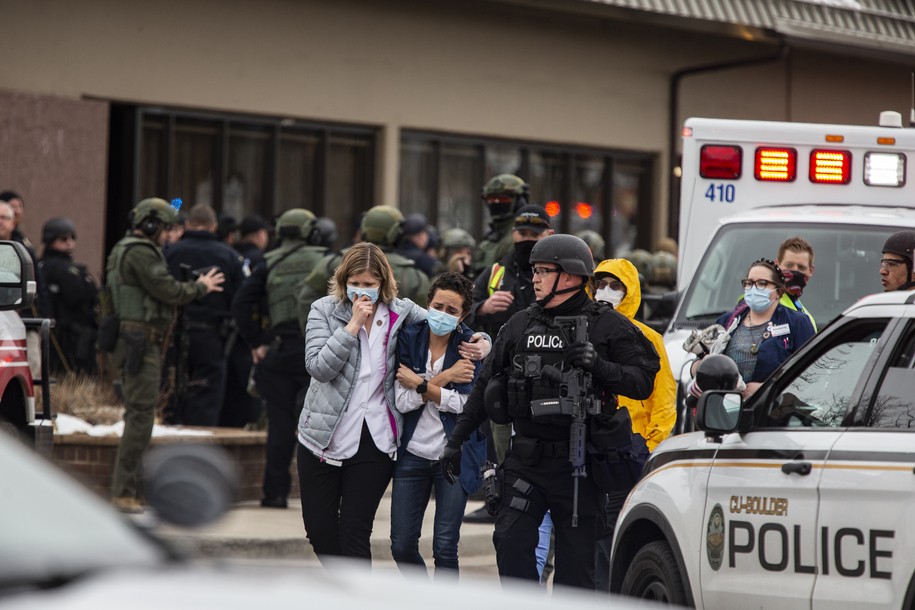


/cdn.vox-cdn.com/uploads/chorus_asset/file/21899595/VOX_The_Highlight_Box_Logo_Horizontal.png)
/cdn.vox-cdn.com/uploads/chorus_asset/file/22406305/Kathryn_Gamble_7701_desaturated.jpg)
/cdn.vox-cdn.com/uploads/chorus_asset/file/22406318/KathrynGamble_7054_desaturated.jpg)
/cdn.vox-cdn.com/uploads/chorus_asset/file/22406323/KathrynGamble_8227_desaturated.jpg)
/cdn.vox-cdn.com/uploads/chorus_asset/file/22406544/KathrynGamble_7213_desaturated.jpg)
/cdn.vox-cdn.com/uploads/chorus_asset/file/22406326/KathrynGamble_7291_desaturated.jpg)
/cdn.vox-cdn.com/uploads/chorus_asset/file/22406306/KathrynGamble_9901_desaturated.jpg)
/cdn.vox-cdn.com/uploads/chorus_asset/file/22406307/KathrynGamble_0029_desaturated.jpg)
/cdn.vox-cdn.com/uploads/chorus_asset/file/22406311/Kathryn_Gamble_7687_desaturated.jpg)
/cdn.vox-cdn.com/uploads/chorus_asset/file/22406314/KathrynGamble_9971_desaturated.jpg)
/cdn.vox-cdn.com/uploads/chorus_asset/file/22406333/KathrynGamble_7056_desaturated.jpg)
/cdn.vox-cdn.com/uploads/chorus_asset/file/22406331/KathrynGamble_0041_desaturated.jpg)
/cdn.vox-cdn.com/uploads/chorus_asset/file/22406329/KathrynGamble_0059_desaturated.jpg)
/cdn.vox-cdn.com/uploads/chorus_asset/file/22406652/KathrynGamble_7312_desaturated.jpg)

/cdn.vox-cdn.com/uploads/chorus_asset/file/22449900/AP_20308493924057.jpg) LM Otero/AP
LM Otero/AP
/cdn.vox-cdn.com/uploads/chorus_asset/file/22449932/GettyImages_1229266336.jpg) Paul Ratje/AFP/Getty Images
Paul Ratje/AFP/Getty Images
/cdn.vox-cdn.com/uploads/chorus_asset/file/22449937/GettyImages_1229054446.jpg) Sergio Flores/Getty Images
Sergio Flores/Getty Images
/cdn.vox-cdn.com/uploads/chorus_asset/file/22449962/GettyImages_866377716.jpg) Jim Watson/AFP/Getty Images
Jim Watson/AFP/Getty Images