Click here to go see the bonus panel!
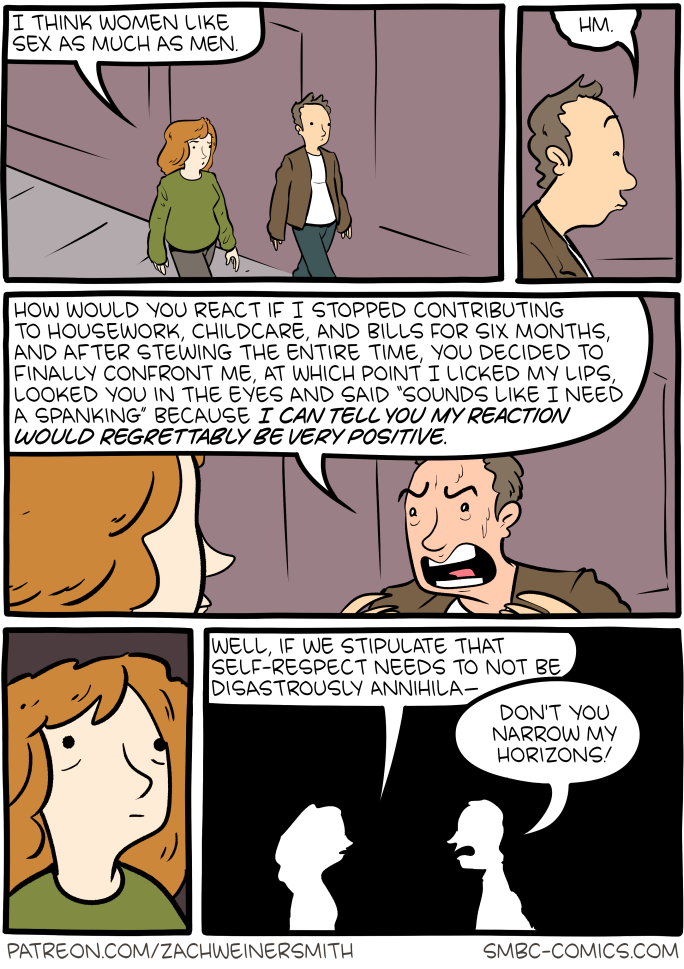
Hovertext:
Is this the one that gets the hatemail? I keep waiting.
Today's News:
(No bonus panel today because of a missing file, it will be posted later.)
James.galbraithLOL
Hovertext:
Is this the one that gets the hatemail? I keep waiting.
(No bonus panel today because of a missing file, it will be posted later.)
James.galbraithFuck Texas
Texas Gov. Greg Abbott appeared on Fox News Friday, where he was asked about his recent threats to withhold funds from cities that display positive LGBTQ+ or Black Lives Matter messaging on public streets.
“Listen, this was a mandate that came down from the United States secretary of Transportation, threatening funds to any state that doesn't enforce this. And so, of course, we're going to enforce it,” Abbott said.
He went on to make the bogus claim that they’re removing Pride flags from crosswalks as a safety measure.
“Listen, we need people to see what the traffic signs are, know what to do at a crosswalk, as opposed to diverting their eyes to something else. But it's more than that,” Abbott said. “Again, this is something that the federal secretary of Transportation is saying, ‘These are the requirements. If you're going to be receiving federal funds, you have to do this.’”
Rather than addressing real infrastructure issues, Abbott—true to his long history of bigotry—is focused on banning rainbows.
James.galbraithAnd the market drops 900 points because of this petulant twat
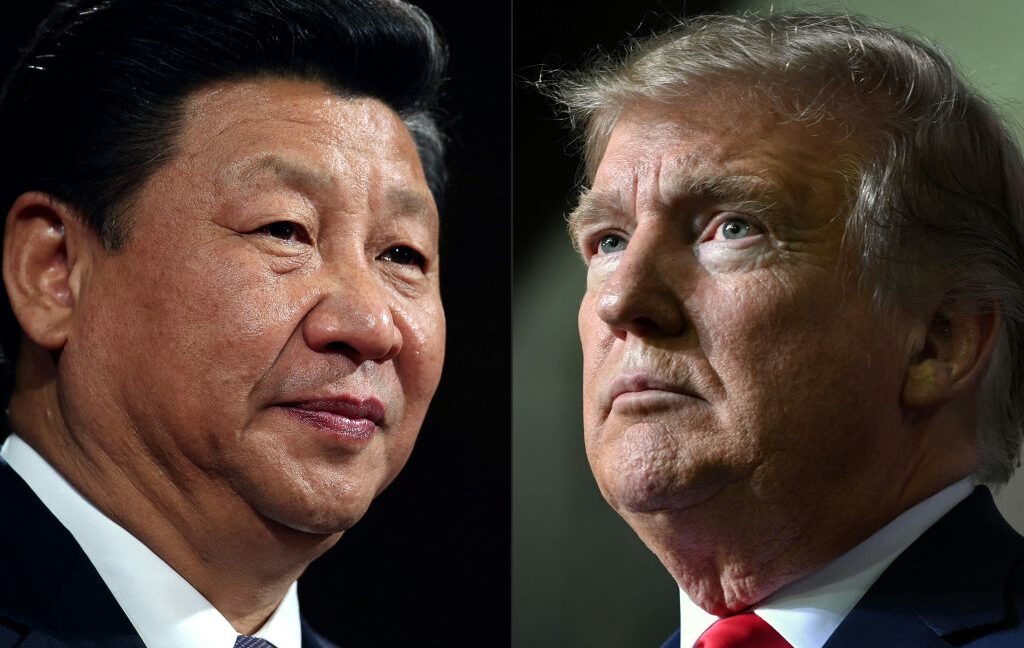
Donald Trump threatened China with a "massive increase" on tariffs and may cancel his upcoming meeting with Chinese President Xi Jinping after China spent the past two days making "very hostile" trade moves—including aggressive rare-earths export restrictions and an attack on a key US semiconductor company.
In a Truth Social post, Trump accused China of trying to "clog" markets by restricting not just access to rare earths but also by placing export controls on "foreign companies that use Chinese rare earth equipment or material."
These rules are intended to take effect December 1, with many outlets reporting the rules will give China more leverage ahead of the Trump-Xi trade talks that are supposed to take place in South Korea in two weeks.
James.galbraithobvious bribery, and jesus whoever does his his makeup should be fired
The Trump administration announced on Friday that it would allow Qatar to operate a military facility in Idaho. This follows the Qatari government giving President Donald Trump a multimillion-dollar passenger jet and giving his company a deal to develop a golf course there.
Scandal-plagued Secretary of Defense Pete Hegseth made the announcement during a press event with Qatar’s defense minister, Saoud bin Abdulrahman Al Thani.
“Today we’re signing a letter of acceptance to build a Qatar Emiri Air Force facility at the Mountain Home Airbase in Idaho,” he said, after crediting Qatar with helping to negotiate a ceasefire deal in Gaza.
The U.S. and Qatar have been in talks to have some sort of military training capacity in Idaho for years, but this announcement comes after the foreign government has thrown millions of dollars at Trump.
In May, Qatar gifted Trump a luxury jet, which the military is converting to become Air Force One. Trump was widely criticized for taking in a foreign gift worth millions. The plane is expected to transfer to his future presidential library after he leaves office.

On Thursday, Senate Democrats attempted to block defense funding for the jet conversion process, but the measure was defeated by Republicans.
Following the airplane gift, Trump signed an executive order in September that promised to provide support—including militarily—to Qatar in the event of an armed attack against the Middle Eastern nation.
The Trump Organization, Trump’s private company, announced in April that it had made a deal with Qatar’s government to build a luxury golf resort there. Noah Bookbinder, who leads the nonprofit group Citizens for Responsibility and Ethics in Washington, slammed the arrangement, telling Associated Press at the time, “You want a president making decisions that are in the best interest of the United States, not his bottom line.”
Trump’s coziness with Qatar is even more suspicious since he has previously criticized that nation for having ties to terrorist organizations.
“The nation of Qatar has historically been a funder of terrorism at a very high level,” Trump said in June 2017.
One of his most high-profile supporters, racist conspiracy theorist Laura Loomer, slammed the Qatar facility announcement on Friday.
“Never thought I’d see Republicans give terror financing Muslims from Qatar a MILITARY BASE on US soil so they can murder Americans. I don’t think I’ll be voting in 2026,” she wrote. “I cannot in good conscience make any excuses for the harboring of jihadis. This is where I draw the line.”
Trump has normalized open bribery in the presidency, raking in millions in exchange for political favors and agreements. Now, American security is seemingly for sale—no matter what the consequences are for the public.
James.galbraithDenmark had the right approach here: make it illegal for the rich to opt out of public education. When everyone's in the same system, support for investment goes way up.

Last week, Zohran Mamdani revealed that, if he wins the mayorship this fall, he will end New York City’s “gifted and talented” program for kindergartners.
This triggered a minor firestorm. Mamdani’s chief mayoral rival, Andrew Cuomo, decried the socialist sensation’s proposal as “destructive.” In Cuomo’s account, when a city eliminates separate classes for its most intellectually sophisticated 5-year-olds, “the one possibility that your child might get a really first-class education in public schools goes with it.”
The Washington Post’s editorial board denounced Mamdani’s position in similar terms, deriding it as a scheme to “hold back gifted students in the name of equity.”
These criticisms are overheated. It is extremely unusual for schools to sort students by ability at the kindergarten level. In abandoning that practice, New York City would not be embracing a novel, communistic approach. To the contrary, Mamdani’s current education plan — which would retain gifted classes beginning in third grade, as well as the city’s selective high schools — entails far more advanced programming than is seen in a typical American school district.
That said, the adamance of Mamdani’s critics is understandable. His announcement came in the context of a much broader — and more consequential — debate within the Democratic Party about education policy.
For decades, some progressives have fought to restrict gifted programs, even at higher grade levels. This movement contends that “tracking” — the practice of sorting students into separate classrooms or schools, on the basis of their academic abilities — deepens racial inequities, while providing little to no benefit to high achievers. These arguments have led some blue states and cities to pare back advanced programming in recent years.
Yet “detracking” efforts have proven controversial. And many Democrats have called on their party to abandon such policies and unequivocally endorse tracking, at least in some grade levels.
On this broader question, I think the Cuomos of the world are largely correct. The Democratic Party can likely advance better educational outcomes for all children — as well as its own political interests — by championing some forms of ability grouping.
Opposition to tracking — both in New York City and beyond — has often centered on the concern that it perpetuates racial injustice. Gifted programs and advanced classes tend to overrepresent white and Asian students, while underrepresenting Black and Hispanic ones.
Sign up here for more stories on the lessons liberals should take away from their election defeat — and a closer look at where they should go next. From senior correspondent Eric Levitz.
In New York City, for example, 42 percent of public school students are Hispanic, 20 percent are Black, 19 percent are Asian, and 16 percent white. Yet white and Asian students account for 75 percent of students in the city’s gifted and talented programs. Meanwhile, at New York’s elite high schools — which screen applicants by standardized test — just 10 percent of admission offers this year went to Black and Hispanic students.
To some critics of tracking, any policy that generates such statistics is inherently illegitimate: Large racial disparities, they argue, are dispositive evidence of bias.
This view is understandable. The disparities in New York City’s selective programs are stark and concerning. And it is reasonable to worry that they may reflect biases in selection processes. In theory, the wording of standardized tests could confer an advantage on students from certain cultural backgrounds, irrespective of their academic abilities. And racial prejudices could influence whom teachers choose to nominate for gifted programs.
Further, there is evidence that advanced education programs in other jurisdictions have under-identified gifted students from disadvantaged backgrounds, in part by relying on tests that parents must opt into. It’s therefore vital to scrutinize the fairness and accessibility of any tracking program’s selection process.
Still, there is no reason to expect that a perfectly impartial measure of student ability would avoid racially disparate outcomes. On the contrary, the opposite expectation follows from two of the left’s own premises, namely that:
Both these ideas are sound. Of course, a child’s academic performance is not dictated by their household’s income. Parents can abet their kids’ scholarly achievement through non-financial means. And good schools can foster the abilities of impoverished students. But there is both theoretical and empirical cause to believe that material privilege aids intellectual development. In other contexts, some organizations critical of tracking emphasize this point.
Meanwhile, it is unquestionably true that America’s white and Asian populations have higher median incomes and net worths than its Black and Hispanic ones. The median household income among Asian households in 2023 was $112,800 a year; among non-Hispanic white households, it was $89,050; among Hispanic households, it was $65,540; and among Black families, it was $56,490.
Racial gaps in wealth follow the same rank order but are even more profound:

Thus, the fact that a gifted program or selective high school underrepresents Black and Hispanic students does not necessarily mean that its admissions process is racially biased. So long as economic privilege is conducive to student achievement — and Black and Hispanic households’ remain economically underprivileged — sorting students by ability is going to produce racial disparities.
In fairness, one could reasonably oppose tracking on precisely these grounds. After all, racial integration is desirable. The fact that sorting by ability makes classrooms less racially diverse is a point against such sorting.
Nonetheless, it is difficult to argue that schools should prioritize the racial diversity of their classrooms above the educational attainment of their students. If tracking academically benefits both those admitted into accelerated programs — and those who aren’t — then it would be hard to oppose it in the name of racial justice. In that case, there would surely be better ways to promote integration than detracking — approaches that would not undermine all students’ intellectual development. For one thing, we could try distributing wealth and income in a less wildly unequal manner.
Ultimately, then, the case against tracking hinges on its implications for student performance, rather than its consequences for classroom demographics.
There are legitimate reasons to fear that those implications could be negative, particularly for lower performers. Children who are not selected for “gifted” programming may suffer a loss in self-esteem. Isolating them from more academically advanced students could rob them of opportunities to learn from their peers. What’s more, since high achievers are disproportionately economically privileged, concentrating them in separate classrooms or schools could theoretically lead to an inequitable distribution of resources: Through their outsize political influence or direct giving, high-achievers’ parents might secure better equipment, funding or teachers for their kids’ learning environments.
These risks would be worrisome in any context. In a world where less advanced students disproportionately suffer from racial and economic disadvantage, they are particularly concerning.
And some studies suggest that tracking provides little benefit to high achievers while harming less advanced students.
Nevertheless, we have more reason to believe that separating students by ability works for all students – when done right – than we do to doubt that notion.
To start, there is a strong theoretical basis for thinking that tracking would benefit students in general and high achievers in particular. American classrooms tend to feature pupils with vastly different abilities. One recent study suggests that a typical fifth-grade class includes students who have yet to master second-grade math and those who’ve already mastered the eighth-grade variety.
It’s hard to see how this could be academically optimal. Providing instruction that simultaneously challenges advanced students — and aids struggling ones — seems inherently more difficult than doing either of those things in isolation.
And a substantial body of research affirms this intuition. A 2016 review of 100 years of research on ability grouping found that gifted programs and various other forms of tracking conferred benefits on high achievers, medium achievers, and low achievers alike. Many (though not all) previous meta-analyses — which are analyses of analyses, in other words — have produced similar results.
Further, there is evidence that advanced education programs can specifically help academically gifted Black and Hispanic students realize their potential. A 2016 study of one large urban school district’s gifted or high-achieving program found that it significantly increased math and reading scores for high-achieving Black and Hispanic fourth-graders. These gains came at no discernible cost to students who remained in non-advanced classrooms.
Meanwhile, an experiment conducted in over 100 primary schools in Kenya found that tracking benefited lower-achieving students by enabling teachers to tailor curricula to their level.
It remains true that not all studies of ability-grouping show substantial benefits. But this may reflect the highly variable quality of advanced education programs. Merely separating students by ability will have little impact if instruction isn’t adjusted to meet the particular needs of sorted classrooms. Tracking programs in which curricula are heavily modified tend to show positive results, while those with less customization have little benefit.
Beyond its direct impacts on learning, tracking offers one other substantive benefit: It can prevent affluent families from abandoning your public school system.
Oddly, critics of tracking have sometimes criticized the practice for serving this function. The Century Foundation’s Eishika Ahmed writes that, “By not solving for equity,” New York City’s gifted and talented program “essentially continues to function as originally intended: as a way to keep [w]hite middle-class families in the public school system.”
Obviously, this should not be the sole objective of any educational program. But if Democratic policymakers in New York — or any other major city — want to maximize the resources available to disadvantaged students, then they need to satisfy the educational demands of affluent parents.
After all, when a high-income family leaves Brooklyn for a more class-segregated suburb, that reduces revenue for the city’s government — and therefore, the funds available to its public schools. More indirectly, middle-class families sending their kids to private academies can reduce political support for school funding. And in either case, socioeconomic integration declines.
In theory, tracking can help avert these outcomes, since it provides affluent families with a way to access accelerated learning opportunities for their more gifted children — without needing to abandon public schools or move to a rich suburban district. And this does seem to hold up in practice: A recent study of Texas public schools found that districts with higher levels of tracking have a lower share of students enrolled in private schools.
The case for Democrats to embrace tracking is not only substantive but political.
The Democratic Party has historically boasted a strong advantage on the issue of public education. But this edge has declined significantly in recent years, disappearing entirely in some polls. In 2024, the Democratic data firm Blue Rose Research found voters narrowly favoring the Republican Party on education. Two years earlier, two separate polls of voters in battleground areas — one by a pro-education reform group, one by the American Federation of teachers — each found a slim plurality of voters leaning towards the GOP on the issue.
Democrats appear to have regained the upper hand in more recent surveys, although even these show the party’s advantage is much smaller than it once was.
There are surely multiple explanations for this. Republican governments were generally faster to reopen schools after Covid. And some red states have recently posted impressive gains in student performance, with Mississippi fourth-graders now demonstrating greater literacy than their peers in California.
But opposition to Democrat-led detracking efforts may be part of the story.
In New York, a 2022 NY1/Siena College poll found voters opposed the elimination of the city’s gifted and talented programs by a 67 percent to 28 percent margin. In San Francisco, policymakers barred algebra instruction in middle schools in 2014, so as to delay tracking in math instruction. A ballot referendum to reverse this decision passed last year with 81.75 percent of the vote.
It is difficult to find national polling on tracking from disinterested parties. But a 2024 poll from Morning Consult and the education reform organization EdChoice found nearly 60 percent of parents opposing the elimination of academically advanced classes.
Of course, the best way for Democrats to restore their reputation on education policy is to deliver better outcomes, not take dictation from opinion polling. At present, blue states do not consistently boast higher test scores than red states, despite typically charging parents higher taxes. Changing that will principally require the universal adoption of evidence-based teaching techniques (such as phonics) along with measures to hold school and students accountable for their performance.
But expanding the most effective forms of tracking could also help substantively, while combating the politically harmful perception that Democrats would rather promote a tendentious conception of “equity” than academic excellence.
James.galbraithICE must be dismantled and everyone involved prosecuted. Blatantly illegal and unconstitutional conduct must have consequences.
The Trump administration is desperate to hide any record of state violence—all the way down to the identities of its federal agents.
The Chicago Sun-Times has identified four unmarked cars carrying federal agents—three of which had no license plates and one with only a back plate. Illinois law requires both front and back plates, with no exceptions for law enforcement or, in this case, roving bands of stochastic terrorists who enjoy harming immigrants.
But according to Department of Homeland Security spokesperson Tricia McLaughlin, that’s definitely nothing to be worried about.

“To be clear: Our vehicles meet federal regulations for law enforcement,” she said.
No, she won’t say which regulations. No, she won’t answer any follow-up questions. Just trust her … regulations.
Ahead of the Trump administration’s siege of the city, Chicago Mayor Brandon Johnson issued an executive order barring law enforcement officers from wearing masks and requiring them to wear ID badges and activate body cameras during arrests.
Of course, Johnson—unlike President Donald Trump—understands that this order does not bind people who are not under his jurisdiction, so at best, he can only urge federal agents to comply.
Spoiler: They are not complying.
McLaughlin made the obligatory statement about how the “heroic law enforcement officers” have to wear masks or they will be murdered by Tren de Aragua, but they “clearly identify themselves as law enforcement.”
Perhaps McLaughlin could watch this video and explain how the heroic law enforcement officer in a plain white shirt, jeans, and a ski mask is identifiable as a member of law enforcement before he joins a bunch of other masked heroic guys dogpiling someone they dragged out of a car.
And, of course, if no one can identify your secret police, then really anyone can pretend to be your secret police—which is precisely what has happened.
CNN found two dozen examples of people posing as ICE officers in 2025—that’s more than every incident in the prior four presidential terms combined. The Trump administration has created a situation where you can never really know if you’re being accosted by an actual officer or just by someone who wants to rob you.

And good luck avoiding those ICE agents—real or fake—as both Google and Apple have eagerly acquiesced to Trump’s demands to remove ICE-tracking apps.
Last week, Apple removed ICEblock, a free crowdsourcing app that allowed users to report ICE activity, from its app store. Gotta work in the shadows if you want to avoid any consequences.
It also removed Eyes Up, which didn’t have any location or tracking features but just archived videos of ICE’s lawlessness. So even knowing where ICE once was is somehow too dangerous.
DeICER, another ICE-tracking tool, is also gone, and the story behind that removal is bleak. The developer was told that posting information about ICE violated Apple’s ban of “defamatory, discriminatory, or mean-spirited content” directed at “religion, race, sexual orientation, gender, national/ethnic origin, or other targeted groups.”
According to Apple, DeICER violated that rule because “its purpose is to provide location information about law enforcement officers that can be used to harm such officers individually or as a group.”
This is a gross warping of Apple’s own guidelines on hate speech, and it makes heavily armed and masked officers—who are literally terrorizing residents—a protected class in need of special protection.
So to recap: You can’t know what ICE drives. You can’t know who they are. You can’t know where they are. And now you can’t even know where they’ve been or what they’ve done.
Surely they have nothing to hide!
James.galbraithAnother excuse to give a platform to nazis, vaccine denialists, and other republican constituencies


Read more of this story at Slashdot.
James.galbraithIf you needed a reminder that MAGA is just pure white supremacy and grievance
Turning Point USA is hosting its own Super Bowl halftime alternative after MAGA had a full-blown meltdown over the NFL tapping Latino artist Bad Bunny to perform.
On Thursday, the conservative think tank founded by late far-right activist Charlie Kirk, announced “The All American Halftime Show.”

Little details are known at the moment, but the flyer states that, as opposed to the very American football event, that TPUSA’s show will celebrate “faith, family, and freedom.”
Bulwark reporter Will Sommer shared via X that Creed has been floated as a potential performer.
TPUSA has set up a survey to find out just what kind of music anti-Bad Bunny fans would want to hear.
The options range from worship music to classic rock and hip-hop, but one option really stands out. At the top of the list, which doesn’t include Bad Bunny’s reggaeton genre, has “Anything in English” as an option.
Bad Bunny, whose full name is Benito Antonio Martínez Ocasio, records music that is almost exclusively in Spanish. Despite the artist becoming an international success, this seems to be crossing a boundary for MAGA supporters.
More so, MAGA talking heads seemingly forgot that Puerto Rico, where Bad Bunny is from, is a part of the U.S.
Last weekend, right-wing commentator Tomi Lahren humiliated herself after saying that the musician isn’t American before being swiftly corrected by her guest.
“He’s Puerto Rican. ... That’s part of America, dear,” journalist Krystal Ball explained.

Republicans have shared plenty of hot takes on why they think Bad Bunny is a disrespectful choice, including that his music is inappropriate given that it’s not in English.
They’ve also lambasted him for his anti-ICE rhetoric and for canceling a show in the U.S. out of fears that ICE would target fans at his concert.
Of course, ICE has already made it clear that they intend to be patrolling the Super Bowl instead.
But with all of this hate for the Grammy-winning artist, MAGA supporters seem to think older musicians who haven’t released new music in years would fit the bill as a culturally relevant replacement. House Speaker Mike Johnson, for example, suggested country artist Lee Greenwood after saying that Bad Bunny wasn’t a great role model for children. Greenwood, who’s known for his patriotic 1984 hit “God Bless the USA,” told the New York Post that he would love to replace Bad Bunny. The country artist played at Charlie Kirk’s memorial service and is scheduled to sing the halftime show for the Dallas Cowboys, according to the outlet.
Calls for Kid Rock to take over the halftime show came about after a fake, AI slop video of the singer came out. The fake video showed Kid Rock lambasting Bad Bunny for being a “man in a dress,” which, according to the many voices on X, fueled enough anger from people online who didn’t know any better.
Related | Ay, Dios mio! The Super Bowl goes 'woke' with Bad Bunny.
Overall, the right’s obsession with who performs at the Super Bowl seems to boil down to language and U.S. “heritage” of the Caucasian variety.
And while Fox News—a primary source for right-wing thoughts—has a track record of not knowing much about geography when it comes to Latinos (hello, “three Mexican countries”), the U.S.—up until this year—never had an official language. And, whether they like it or not, Puerto Rico is a part of the states.
James.galbraithFucking insanity. The FCC and Carr need real consequences, not a cushy Verizon job once the GOP loses.
Read more of this story at Slashdot.
James.galbraithSeriously. .89 EUR and still falling
Consider supporting my work so I can continue creating it:
Substack: https://nickanderson.substack.com/
James.galbraithhow cool
Easter Island is famous for its giant monumental statues, called moai, built some 800 years ago and typically mounted on platforms called ahu. Scholars have puzzled over the moai on Easter Island for decades, pondering their cultural significance, as well as how a Stone Age culture managed to carve and transport statues weighing as much as 92 tons. One hypothesis, championed by archaeologist Carl Lipo of Binghamton University, among others, is that the statues were transported in a vertical position, with workers using ropes to essentially "walk" the moai onto their platforms.
The oral traditions of the people of Rapa Nui certainly include references to the moai "walking" from the quarry to their platforms, such as a song that tells of an early ancestor who made the statues walk. While there have been rudimentary field tests showing it might have been possible, the hypothesis has also generated a fair amount of criticism. So Lipo has co-authored a new paper published in the Journal of Archaeological Science offering fresh experimental evidence of "walking" moai, based on 3D modeling of the physics and new field tests to recreate that motion.
The first Europeans arrived in the 17th century and found only a few thousand inhabitants on the tiny island (just 14 by 7 miles across) thousands of miles away from any other land. In order to explain the presence of so many moai, the assumption has been that the island was once home to tens of thousands of people. But Lipo thought perhaps the feat could be accomplished with fewer workers. In 2012, Lipo and his colleague, Terry Hunt of the University of Arizona, showed that you could transport a 10-foot, 5-ton moai a few hundred yards with just 18 people and three strong ropes by employing a rocking motion.
James.galbraithExcellent
State Rep. Justin Pearson, the Memphis lawmaker who rose to prominence in 2023 as part of the “Tennessee Three,” announced on Wednesday that he’s challenging Democratic U.S. Rep. Steve Cohen—joining a wave of younger progressives calling for generational change inside the party.
In his launch video, Pearson described himself as a “Memphian, born and raised, who understands how to build bridges across race, identity, ethnicity, and generations in order to build the future that we want to live into.”
“We always stand up against those who try to silence us, push us to the periphery, push us to the back, in the places that should represent us,” he added. “Now, I am ready to fight for us in the United States Congress.”

The challenge marks the latest flashpoint between young activists and long-serving incumbents. Pearson, 30, is still a relative newcomer with deep roots in Memphis organizing, while Cohen, 76, has represented the city since 2007.
Pearson told The New York Times he isn’t framing the race around age, but around urgency—arguing that Memphis needs bolder leadership at a time when President Donald Trump has dispatched federal agents and is now sending National Guard troops to address crime in the city.
“This is about us being able to fight for our families, for our values, for our future, in this moment in time,” he said.
Pearson became a national figure after he and fellow lawmaker Justin Jones were expelled by Tennessee’s GOP-dominated legislature in 2023 for joining gun control protests on the House floor. Both were reinstated days later, while their colleague, state Rep. Gloria Johnson, who is white, narrowly survived her own expulsion vote. The trio became known as the “Tennessee Three,” raising hundreds of thousands of dollars from supporters nationwide. Johnson later ran unsuccessfully for the U.S. Senate.
Cohen’s seat—Tennessee’s 9th Congressional District—is safely Democratic, meaning the August primary will almost certainly decide the winner. The congressman, a member of the House Progressive Caucus and Tennessee’s lone Democratic representative in Washington, has already said he intends to run again.
Last fall, Cohen told Axios he was “not worried” about a primary challenge, calling it “a mistake” for anyone to run against him.
Pearson’s launch video leans on his activist roots and his message of inclusion.
“You can’t spell us without you,” he said.
Related | Democrats have exciting young leaders—if the torch ever gets passed
The son of a teacher and a preacher, he began organizing in high school, lobbying his district for new textbooks. He later led a grassroots campaign against a proposed oil pipeline that would have cut through historic Black neighborhoods in Memphis—a fight that drew support from Al Gore and Justin Timberlake, and ended in victory.
Now, according to The Guardian, Pearson is running on a progressive platform that includes a plan to lower health care costs, make housing more affordable, and tighten gun laws. But his central pitch is clear: Democrats can’t keep doing politics the same old way
He’s also taken aim at billionaire tech titan Elon Musk’s plan to build a massive xAI supercomputer complex in southwest Memphis, as well as the federal task force Trump sent to the city. Cohen has opposed the National Guard deployment but has voiced support for helping local police reduce violent crime.

Pearson’s campaign has the backing of Leaders We Deserve, the youth-focused PAC co-founded by gun control activist David Hogg, which pledged to spend $1 million to help him unseat Cohen—the group’s largest investment to date, according to NBC News.
“Justin Pearson is a transformational leader who can inspire a new generation,” Hogg said, urging Cohen to “pass the torch.”
He’s also got the backing of Justice Democrats, the group that powered New York Rep. Alexandria Ocasio-Cortez’s win in 2018.
“This district does not have time to wait or keep going with the same status quo leadership that has governed for decades,” Alexandra Rojas, the group’s executive director, said in a statement to the Times and other media outlets.
These groups are banding together as part of a bigger movement of young candidates hoping to take down the Democratic Party’s old guard. Some longtime lawmakers, like New York Rep. Jerry Nadler, have already announced plans to step aside to make room for the next generation.
Related | Democratic stalwart exits Congress—and says it’s time to pass the torch
As that movement gathers steam, Pearson’s campaign is testing whether the Democratic establishment is ready to hand over the reins—or if another fight for the future is about to begin.
James.galbraithno shit
President Donald Trump detailed his desire to punish people for burning American flags, which the Supreme Court has considered legally protected speech for over 35 years.
During what the White House called a roundtable on "antifa” on Wednesday, Trump discussed his administration’s attempt to circumvent Supreme Court precedent on flag burning.
“We’ve made it one-year penalty for inciting riots,” Trump said. “We took the freedom of speech away, because that's been through the courts. And the courts said, ‘You have freedom of speech.’”
“But what has happened is when they burn a flag, it agitates and irritates crowds,” he continued. “They've never seen anything like it on both sides. And you end up with riots. So we're going on that basis. We're looking at it from, not from the freedom of speech, which I always felt strongly about, but never passed the courts.”
In August, Trump and Attorney General Pam Bondi claimed they’d found a loophole to the long-standing legal protections for flag burning. They say they’ll prosecute people because burning the U.S. flag supposedly incites violence—a paper-thin justification to strip Americans of their free-speech rights if there ever were one.
As always, Trump’s rambling revealed his true motive: silencing dissent.
James.galbraithgod fuck the FCC
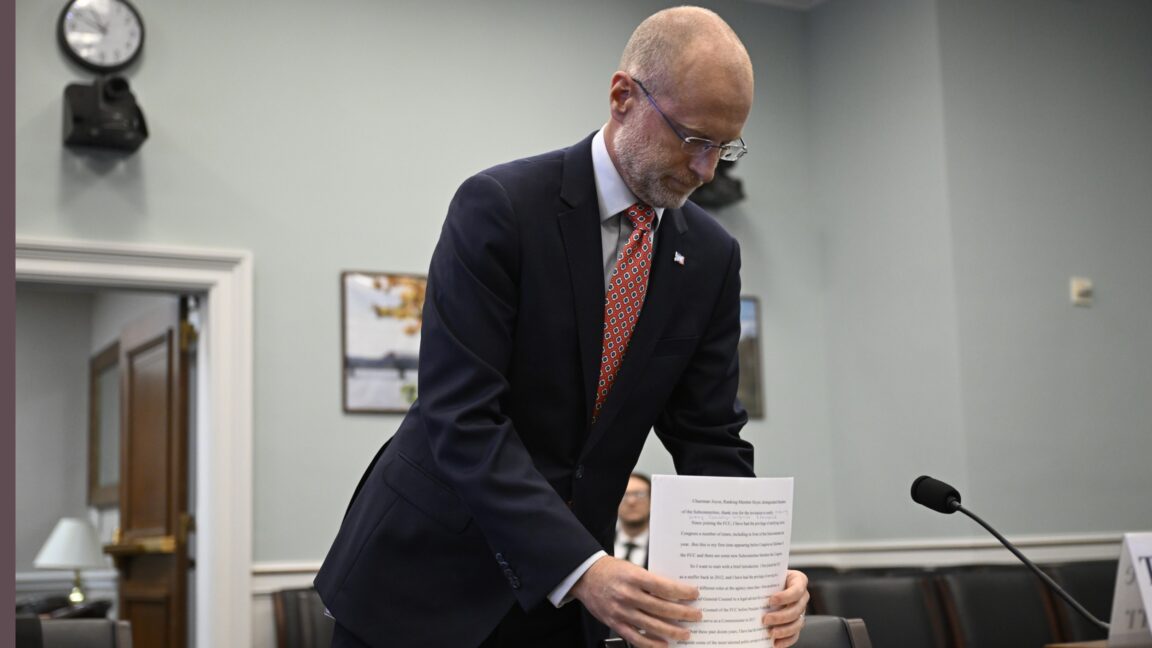
Federal Communications Commission Chairman Brendan Carr says Internet service providers shouldn't have to list every fee they charge. Responding to a request from cable and telecom lobby groups, he is proposing to eliminate a rule that requires ISPs to itemize various fees in broadband price labels that must be made available to consumers.
The rule took effect in April 2024 after the FCC rejected ISPs' complaints that listing every fee they created would be too difficult. The rule applies specifically to recurring monthly fees "that providers impose at their discretion, i.e., charges not mandated by a government."
ISPs could comply with the rule either by listing the fees or by dropping the fees altogether and, if they choose, raising their overall prices by a corresponding amount. But the latter option wouldn't fit with the strategy of enticing customers with a low advertised price and hitting them with the real price on their monthly bills. The broadband price label rules were created to stop ISPs from advertising misleadingly low prices.
James.galbraithdoing heroic work
Cards Against Humanity, the often-vulgar card game, has launched a limited edition of its namesake product without any instructions and with a detailed explanation of each joke, "why it’s funny, and any relevant social, political, or historical context."
Why? Because, produced in this form, "Cards Against Humanity Explains the Joke" is not a game at all, which would be subject to tariffs as the cards are produced overseas. Instead, the product is "information material" and thus not sanctionable under the law Trump has been using—and CAH says it has obtained a ruling to this effect from Customs and Border Patrol.
"What if DHS Secretary and Dog Murderer Kristi Noem gets mad and decides that Cards Against Humanity Explains the Joke is not informational material?" the company asks in an FAQ about the new edition. (If you don't follow US politics, Noem really did kill her dog Cricket.) Answer: "She can fuck right off, because we got a binding ruling from Trump’s own government that confirms this product is informational and 100% exempt from his stupid tariffs."
James.galbraithYeah, they can fuck off. Once they've shown a willingness to fleece their customers, a bit of weasel language in a patch note isn't going to restore trust.
If you were considering the purchase of a Synology NAS but were leery of the unreasonably high cost of populating it with special Synology-branded hard disk drives, you can breathe a little easier today. In a press release dated October 8, Synology noted that with the release of its latest Disk Station Manager (DSM) update, some of its 2025 model-year products—specifically, the Plus, Value, and J-series DiskStation NAS devices—would "support the installation and storage pool creation of non-validated third-party drives."
This unexpected move comes just a few months after Synology aggressively expanded its "verified drive" policy down-market to the entire Plus line of DiskStations. Prior to today, the network-attached storage vendor had shown no signs of swerving from the decision, painting it as a pro-consumer move intended to enhance reliability. "Extensive internal testing has shown that drives that follow a rigorous validation process when paired with Synology systems are at less risk of drive failure and ongoing compatibility issues," Synology previously claimed in an email to Ars.
Synology first released its own brand of hard disk drives back in 2021 and began requiring their use in a small but soon-to-increase number of its higher-end NAS products. Although the drives were rebadged offerings from other manufacturers—there are very few hard disk drive OEMs, and Synology isn't one of them—the company claimed that its branded disks underwent significant additional validation and testing that, when coupled with customized firmware, yielded reliability and performance improvements over off-the-shelf components.
James.galbraithI can't imagine trying to do the underwriting on a policy like that
OpenAI and Anthropic are considering using investor funds to settle potential claims from multibillion-dollar lawsuits, as insurers balk at providing comprehensive coverage for the risks associated with artificial intelligence.
The two US-based AI start-ups have traditional business insurance coverage in place, but insurance professionals said AI model providers will struggle to secure protection for the full scale of damages they may need to pay out in the future.
OpenAI, which has tapped the world’s second-largest insurance broker Aon for help, has secured cover of up to $300 million for emerging AI risks, according to people familiar with the company’s policy.
James.galbraithtime for police to actually protect people. If they can't do their jobs, time for them to find new ones.
President Donald Trump on Wednesday called for Illinois Gov. JB Pritzker and Chicago Mayor Brandon Johnson to be jailed—ratcheting up his retribution campaign against his perceived enemies.
"Chicago Mayor should be in jail for failing to protect Ice Officers! Governor Pritzker also!" Trump wrote in a post on Truth Social.
Trump made the comment as National Guard troops from Texas are preparing to deploy onto the streets of Chicago to guard Immigration and Customs Enforcement agents from protesters demonstrating against the agents’ violent behavior toward city residents.
Pritzker quickly responded to Trump’s call for his arrest, saying he “will not back down.”

“What else is left on the path to full-blown authoritarianism?” Pritzker said in a post on Bluesky. “His masked agents already are grabbing people off the street. Separating children from their parents. Creating fear. Taking people for ‘how they look.’ Making people feel they need to carry citizenship papers. Invading our state with military troops. Sending in war helicopters in the middle of the night. Arresting elected officials asking questions. We must all stand up and speak out.”
Given that Trump has gotten yes-men in his corrupt administration to indict at least one of his enemies—former FBI Director James Comey—Democrats say everyone should take Trump’s demand to imprison Pritzker and Johnson seriously.
"Trump said this stuff all the time in the first term and people blew it off because [the Department of Justice] ignored him. But with the Comey indictment and other investigations into his enemies list this term, [we] have to take these threats deadly seriously," Matthew Miller, who served in the Department of Justice under former President Barack Obama, wrote in a post on X on Wednesday, the day Comey is expected in federal court. "He means it, and so does the bureaucracy.”

Meanwhile, all the evidence on the ground shows that it's Pritzker and Johnson, not Trump and ICE, who are trying to protect Illinois residents from danger. Trump's ICE goons have been violent toward peaceful protesters and other residents of the city.
Multiple instances of ICE's horrific behavior have been caught on video.
For example, ICE was caught on camera assaulting Democratic congressional candidate Kat Abughazaleh, who was peacefully protesting at a nearby ICE facility.
One video shows federal agents throwing tear gas in a busy neighborhood, near a grocery store and an elementary school. And another recent video shows masked federal officers shooting a praying priest in the head with a pepper ball.
The video of this incident is just as bad as it sounds. The priest is standing there, not doing anything remotely illegal, and without warning a masked DHS agent on the roof shoots him in the top of his head with a pepper ball. https://t.co/uSerg1H5oX pic.twitter.com/UvP3bZ7yJn
— Aaron Reichlin-Melnick (@ReichlinMelnick) October 8, 2025
Johnson and Pritzker have both condemned the Trump administration's violence toward Illinois residents, and even filed a lawsuit to try to stop Trump from inflaming tensions more by sending in the National Guard.
"ICE's abusive tactics have no place in our city, and our elected officials will continue to stand with residents against this attempt to stoke fear and intimidation," Johnson wrote in a post on X earlier this month.
Federal agents have been so violent that a group of journalists and others filed suit on Tuesday against the Trump administration, saying that federal officers' violent behavior in Chicago is an attempt to silence them through fear, against their First Amendment rights.
From the complaint:
There is no legitimate law enforcement purpose for these actions. The protesters do not take actions that threaten the federal officers. The federal officers’ brutality is not a response to the violation of any previously given order to disperse or to desist. Rather, the brutality described in the prior paragraphs is deployed solely to silence dissent, to intimidate, and to instill fear.
Meanwhile, Trump and the bloodthirsty dopes in his administration have claimed that ICE agents are the actual victims.
"Enough is enough. The Department ofJustice will stand strong when federal law enforcement officers are attacked or threatened for doing their sworn duty on behalf of the United States government," Homeland Security Secretary Kristi Noem wrote in a Sept. 29 memo in which she said she authorized federal officials to "suppress all unlawful rioting and arrest every person suspected of threatening or assaulting a federal law enforcement officer or interfering with federal law enforcement operations."
Yet even a grand jury—which almost never fails to return indictments when prosecutors seek them—refused to indict two protesters Noem accused of assaulting ICE officers.
It’s the latest grand jury to refuse to indict people whom the Trump administration has accused of assaulting federal law enforcement officers.
As Trump acts more and more lawless, we have to hope the legal system continues to hold against his assaults on Americans’ basic freedoms.
James.galbraithjesus fucking christ
In a move that reaches a breathtaking level of WTAF even for the Trump administration, the deputy director of the Central Intelligence Agency, Michael Ellis, just sidelined the agency’s general counsel in favor of … himself.
Does it even need to be mentioned that no, Ellis will not be leaving his role as No. 2 at the agency but will instead be doing both jobs? So Ellis, the general counsel, will review the actions of Ellis, the deputy director, to determine if they are legal.
This is, of course, unhinged.
One doesn’t need to be a lawyer to know that this is ridiculous and makes a mockery of actual legal advice and oversight. However, if one is a lawyer, like one Michael Ellis is, one does know that there are at least two ethical rules this violates.

First, any lawyer who represents an organization, which is precisely what Ellis is doing as general counsel, has to make decisions in the best interest of the organization overall. Since Ellis the lawyer isn’t very likely to overrule Ellis the deputy director, there’s no credible way to say he’s putting the agency first.
Next, it’s a conflict of interest if a personal interest of the lawyer would limit the representation of a client. Ellis, the lawyer, can’t fairly and ethically represent the CIA because he has a personal interest in approving the actions of Ellis, the deputy director.
There’s also the fact that the CIA’s Office of General Counsel is an independent office, so Ellis will be working for the independent office and the CIA itself at the same time. Sure, why not.
Ellis’ move, besides being comedically unethical, is also weirdly timed. The general counsel role, which requires Senate confirmation, has been officially vacant since President Donald Trump took office in January, following the departure of President Joe Biden’s appointee. Hence, an unnamed career lawyer has been in the role since then.
When The New York Times asked the CIA for comment, you will not be surprised to learn officials had nothing to say about how this dual role wouldn’t be a conflict of interest. Instead, a CIA spokesperson told the Times that Trump had nominated Joshua Simmons, currently a principal deputy legal adviser at the State Department, for the role, with a hearing before the Senate Intelligence Committee scheduled for Wednesday.
Related | Trump is breaking the law—and he wants you to know that
Besides that answer having nothing to do with Ellis’ conflicts of interest, it also inadvertently highlights how weird this whole situation is. If Simmons is already teed up for the job and could apparently be confirmed relatively soon, why not just leave the career attorney in the role until then? If there was some concern about that attorney, put a different career lawyer in the role until Simmons is confirmed. There are any number of solutions that are not “make yourself your own general counsel.”
Things get weirder when you learn that Trump had been expected to tap Ellis for the general counsel role months ago, before he was named deputy director instead.
Perhaps this type of doubling-up actually makes sense. The Trump administration isn’t interested in any oversight, because oversight means telling these lawless lackeys they can’t do something. So why bother with general counsels who will evaluate whether an agency action is lawful? Just have a loyalist sit on one side of the table with their “deputy director” hat on and slide whatever horrific illegal plan is in the works across the table, and then switch seats and toss on a “lawyer” hat and rubber-stamp the thing.
The administration could streamline things even more by letting deputy White House chief of staff and Santa Monica’s finest Joseph Goebbels impersonator Stephen Miller decide what the law is. He thinks that when judges rule against the administration, they are committing “legal insurrection,” whatever on Earth that might mean.
Related | Trump team thinks if you can’t see a law, it no longer exists
To be fair, like most Republicans, Miller remains steadfastly perplexed about what constitutes an insurrection, because if they thought about it for very long, they’d have to acknowledge that was exactly what Jan. 6 was. But no, for Miller, the real insurrection is a judge telling Trump “no.” This is in keeping with Miller’s other recent legal claim, which is that the Supremacy Clause means that if Trump feels like it, one state’s troops can invade another state. That is, to put it charitably, a novel interpretation.
Unlike Ellis, Miller is not a lawyer, but really, who needs legal training for any of this? The Trump administration is loudly, proudly lawless, and real attorneys with any sense of ethics just get in the way.
James.galbraithWhat a piece of shit
The Boston Globe got its hands on Defense Secretary Pete Hegseth’s master’s thesis from his time at Harvard University—and the fact that he attended the Ivy League school does not, mind you, make him an effete elite, because that is reserved for baristas with blue hair who annoy conservatives.
But back to Pete. Did you know that Mr. Unbridled Warfighter of Woke was, uh, kinda woke when he was a Harvard grad student? Or at least was willing to write an entire master’s thesis to that effect?
Hegseth’s thesis focused on setting up a high-performing public school with a STEM focus in Minnesota, his home state. Concerned that bright young Minnesotans of all stripes were being shut out of quality science, technology, engineering, and math education, he proposed a school for the “best and the brightest” (god, he was a cliché machine even then) but also cautioned that the school would need to “ensure a balance of race, class, gender and geography.”
Poor kids? Black kids? Come one, come all to Petey’s STEM school!
Related | In the Trump administration, merit-based hiring really means lying
“Ensuring low-income and minority children have the same opportunities as more affluent majority students is an essential goal and worth pursuing with vigor and substantial investment,” the young Hegseth insisted.
Man, that is some woke shit, Pete. “Substantial investment”? As in give them money?
2025 Pete Hegseth is gonna call up 2013 Pete Hegseth and scream at him for this, isn’t he?
Hegseth interviewed Minnesota state Rep. Melissa Hortman extensively, and the thesis refers to her extensively. In fact, Hegseth’s plan to make the Pete Hegseth’s Center For Kids Who Can STEM Good school a reality relied upon partnering with Hortman, a longtime champion of the idea.

You can search high and low, and you will not find one official word from Hegseth about Hortman after she was assassinated in July, along with her husband, in a politically targeted killing. Pretty cool how you made someone do free labor for your Harvard thesis, but you can’t say one word about their murder.
Instead, Hegseth stayed mum even while President Donald Trump did his “I don’t know her” bit in excusing his failure to lower flags for her while racing to make murdered conservative activist Charlie Kirk an honorary founding father or whatever.
As much as this is easy to mock or call out as hypocrisy, it isn’t quite that. Indeed, it’s in keeping with Hegseth’s worldview. His paper was based on the idea that kids like him—kids from Minnesota who were not the richest of the rich—might be left behind in STEM, so there should be programs to fix that gap.
These days, Hegseth’s worldview is still that people like him need and deserve special treatment, regardless of their qualifications. So, he’s pretending that killing programs for women or creating bigoted grooming standards designed to eliminate Black men from military service are just neutral things. But they’re not. Not only are these moves wildly discriminatory, but they are also about Pete Hegseth wanting to create an army of Pete Hegseths.
Related | Hegseth’s racism is hidden in plain sight
Hegseth can surround himself with like-minded types, all vicious, all fueled by petty grievances and a deep and abiding racism and misogyny. Lord knows the Trump administration is full of them. But they’re all, at root, painfully aware they are deeply unqualified and only there as the ultimate diversity hires.
Worst DEI plan ever.
James.galbraithyup
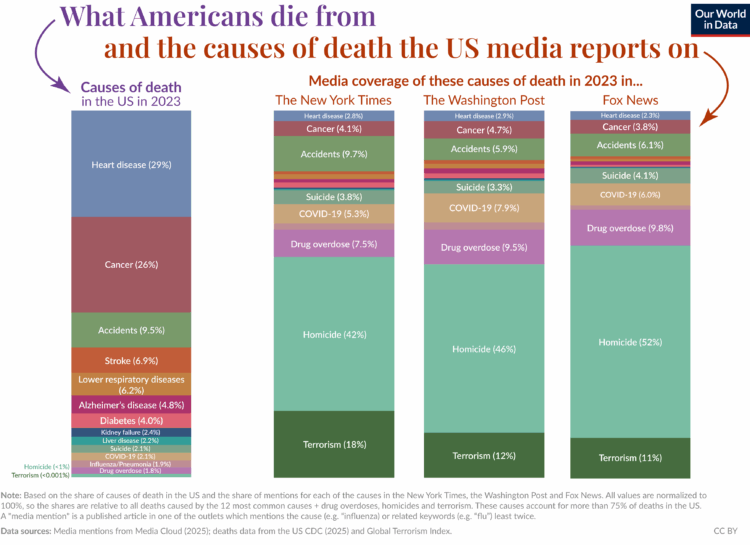
Our World in Data compared causes of death in the United States against how much those causes are covered by the New York Times, Washington Post, and Fox News. The results are about what you would expect, based on coverage data from Media Cloud.
Rarer events, like homicide and drug overdose, are reported more heavily, whereas everyday causes, like cancer and heart disease, are reported less.
This, of course, is because the news covers things that are out of the ordinary, which is what readers and viewers are looking for on a by-the-minute timeline. Not many people care that mortality rates, which take more time to estimate than reporting on single events, are the same as yesterday.
But, as residents of this planet, it is beneficial to know that life is not always getting worse. It’s good to get a reminder sometimes.
Tags: mortality, news, Our World in Data
James.galbraithNo shit. This Court always prioritizes religious bigotry over LGBTQ existence

On Tuesday, the Supreme Court broke from its increasingly common practice of deciding important cases without holding an oral argument or even explaining the reasoning of its decision, to hear a case about whether states may ban a practice known as “conversion therapy” — therapy sessions which seek to change someone’s sexual orientation or gender identity.
About half of the states have laws banning conversion therapy for patients under the age of 18, including Colorado, whose law was before the Court on Tuesday.
Realistically, there was never any chance that this Supreme Court, which has a 6-3 Republican supermajority, would uphold the Colorado law at issue in Chiles v. Salazar. When this Court hears cases that place the interests of queer Americans against the claimed rights of religious conservatives, it consistently rules in favor of the religious right.
That said, two uncertain questions did emerge from the Chiles argument. One is whether the Supreme Court will immediately strike down Colorado’s ban on conversion therapy, or whether it will send the case back down to lower courts to apply a test known as “strict scrutiny,” which nearly all laws fail.
The more important question is to what extent the Court will strip state governments of their longstanding power to regulate health care and other professionals, at least when those professionals give dangerous advice to their patients and clients.
The Chiles case turns on two competing theories of the First Amendment. The plaintiff in the case is a therapist represented by a prominent anti-LGBTQ law firm known as the Alliance Defending Freedom. Her lawyer, James Campbell, said at oral argument that she wants to have “full conversations exploring issues of identity and gender,” and that “includes considering chang[ing]” a patient’s identity.
He also makes a fairly intuitive argument: Talk therapists talk to their clients. Talking is protected by the First Amendment. Therefore, Colorado cannot prevent her from providing conversion therapy.
Colorado, meanwhile, points to the long history of states regulating the advice that licensed professionals give to their clients. A lawyer cannot tell a client that it is legal to rob banks, for example, even though this bad legal advice is just speech. Similarly, a doctor risks a malpractice suit or professional sanctions if they advise a patient to engage in unhealthy conduct.
Thus, in its brief to the justices, Colorado proposes a legal standard similar to the one used in many professional malpractice cases: The First Amendment permits states to regulate speech between a licensed professional and their client to ensure that the professional’s behavior aligns with the accepted standard of care within the profession.
Under that rule, Colorado’s ban on conversion therapy is lawful because, as one federal appeals court explained, “every major medical, psychiatric, psychological, and professional mental health organization opposes the use of conversion therapy.”
None of the six Republican justices appeared to buy the state’s argument, however. At least two of them seemed to doubt whether medical expertise is actually something that can be relied upon at all.
In one of the most dramatic moments in the Chiles argument, Justice Samuel Alito compared Colorado’s ban on conversion therapy to an infamous Virginia law calling for “feeble minded” individuals to be sterilized. He pressed Colorado Solicitor General Shannon Wells Stevenson on whether the consensus within the medical profession is sometimes “politicized.” And he even quoted his Court’s statement in Buck v. Bell (1927) that forced sterilization laws are acceptable because “three generations of imbeciles are enough.”
Just in case there is any doubt, this comparison is facile. Buck involved a woman who was confined in a state-run “Colony for Epileptics and Feeble Minded” and who was sterilized by order of the government. A law instructing a state to physically mutilate a person that it has incarcerated is a far cry from a law that attempts to ban a practice that mental health professionals widely view as harmful — even though it is true that eugenics was broadly supported by the scientific community in the 1920s.
Justice Neil Gorsuch, however, did raise a more sophisticated version of the “can we really trust health care professionals?” question. As he noted, back in the 1970s “homosexuality” was considered a disorder by the mental health profession. So, under Colorado’s proposed rule, which permits states to ban treatments that do not align with the standard of care within a profession, couldn’t states have banned therapists from affirming their gay patients’ sexual orientations in the 1970s?
Stevenson conceded that they could have back then. And she was right to do so. One uncomfortable consequence of relying on experts is that sometimes experts are wrong. And if you root the law in the consensus among experts, the law will sometimes do harmful things if that consensus is erroneous.
But what is the alternative? Relying on people who don’t know what they are talking about?
As even some of the Republican justices conceded, state malpractice laws have long punished licensed professionals who do not meet the standard of care within their profession. And this rule in malpractice cases is widespread for a very good reason. Even if experts aren’t right 100 percent of the time, they are correct far more often than they are wrong. And they are far more likely to be correct than lay people.
Significantly, the mental health profession abandoned its erroneous view of homosexuality decades ago.
Unlike Alito and Gorsuch, Justice Amy Coney Barrett seemed to accept that malpractice laws are valid during some of her questioning. And even Gorsuch seemed to concede that licensed professionals should be subject to a lawsuit if they offer disastrous advice to a client.
But Gorsuch also tried to distinguish malpractice suits from the Colorado law at issue here by labeling the Colorado law a “prior restraint,” a term that refers to laws that attempt to ban speech before it is uttered. Malpractice suits, by contrast, typically arise after a doctor, lawyer, therapist, or other professional gives substandard advice to a patient or client.
Thus, the Court could potentially decide Chiles relatively narrowly by striking down affirmative bans on conversion therapy, while still allowing patients who are harmed by this discredited treatment to sue their therapists.
For what it is worth, Stevenson argued that it’s not clear that Colorado’s law actually functions as a prior restraint. The law is only triggered if a patient files a complaint with the state’s licensure board, and the board can sanction a therapist much like a judge in a malpractice suit may order a bad therapist to compensate their client. Both of these procedures occur after the substandard care has been provided.
So, even if the Court accepts the distinction between malpractice suits and more precisely drawn bans on professional misconduct like Colorado’s, it may find it difficult to police this line in future cases.
One other question that came up is whether the lower courts should be given another chance to look at this law before it is struck down. Ordinarily, when the Supreme Court announces a new legal rule in a case, it “remands” the case to a lower court to determine how to apply the rule to that case. And, in this case, a majority of the justices appeared ready to impose a new rule: Bans on conversion therapy must overcome strict scrutiny.
For a law to survive strict scrutiny, the government must show that it is “narrowly tailored” to achieve a “compelling” interest. Stevenson argues that, had Colorado known it had to overcome this very difficult test to defend its law, it would have introduced more empirical studies into the record demonstrating why the law is justified. And she said the state should be given a chance to provide that evidence to a lower court before the law is struck down.
But, of the Court’s six Republicans, only Barrett appeared open to this argument — though Justice Brett Kavanaugh was silent during the argument. So it’s far from clear that there are five votes who would support remanding the case to a lower court. (Notably, Justice Elena Kagan, an Obama appointee, asked some questions at the end suggesting that she may be willing to join the Republicans in applying strict scrutiny if they agree to a remand).
This Supreme Court is often sloppy when it hands down decisions that pit the religious right against LGBTQ Americans. So there is a serious risk the justices will hand down a decision that sweeps far beyond conversion therapy. If they interpret the First Amendment to bar any specific restrictions on what professionals can tell their clients, then states could lose the power to prevent doctors from giving dangerous advice to their patients.
Bans on conversion therapy were almost certainly doomed the moment this Supreme Court took an interest in this case. But now, the most important question is whether the Court will concede that medical expertise has some role to play in regulating speech between health providers and patients.
James.galbraithThese hearings are a joke. No consequences for any of these goons means they're just going to keep telling the Senate to go fuck itself.
Attorney General Pam Bondi on Tuesday wouldn’t say where a reported bribe paid to a top Trump official ended up.
In September 2024, Tom Homan, who currently serves as the administration’s “border czar,” reportedly took a $50,000 cash bribe from undercover FBI agents who were posing as businessmen. In turn, Homan reportedly agreed to help them obtain border-security contracts from a potential Donald Trump administration.
However, once Trump took office, his politicized Department of Justice closed an investigation into the matter, seemingly allowing Homan to get off scot-free.
As if that weren’t bad enough, it still leaves the question about where the $50,000 is now.
Sen. Sheldon Whitehouse, Democrat of Rhode Island, probed Bondi at a Tuesday Senate Judiciary Committee about that very matter.
"What became of the $50,000 in cash that the FBI delivered, evidently in a paper bag, to Mr. Homan?" Whitehouse asked Bondi.
"The investigation of Mr. Homan was subjected to a full review,” Bondi replied, avoiding the question. “They found no evidence of wrongdoing.”
"What became of the $50,000? Did the FBI get it back?" Whitehouse asked, not letting Bondi off the hook.

"You're welcome to talk to the FBI," Bondi said, again deflecting, even though the FBI reports to Bondi.
After Bondi kept refusing to answer, Whitehouse replied, “I can see I'm not going to get a straight answer from you to a very simple question.”
The question should have been easy for Bondi to answer: Either Homan kept the money, or he gave it back. If he gave it back, Bondi could have easily said so. But if Homan kept it, did he report the earnings on his tax filings? If he didn't report it, Homan would have committed a second crime—tax evasion.
“On top of the Epstein files, she needs to release EVERYTHING on the Tom Homan investigation, including the video,” Democrats on the House Homeland Security Committee wrote Tuesday in a post on X, referring to a reported video of the bribe. “Where is the $50k?”
It’s unclear if we will ever get the answer. Democracy Forward, a group seeking to stop corruption in the executive branch, sued the Trump administration on Monday for refusing to release the recording of Homan accepting the bribe.
“The Trump-Vance administration continues to erode public trust and weaken accountability with the American people,” Skye Perryman, president and CEO of Democracy Forward, said in a news release. “These law enforcement agencies must follow the law and release this critical recording without delay. The public deserves answers about why this investigation was closed and whether senior Trump officials are being shielded from scrutiny that would apply to anyone else.”
This case is the latest in which Trump has let his allies break the law, while at the same time seeking to punish his perceived enemies with sham charges.
Already, Trump’s corrupted DOJ successfully sought an indictment against former FBI Director James Comey, even though federal prosecutors do not believe Comey committed a crime.
And MSNBC reported on Monday that federal prosecutors are bracing for a top colleague to be fired once she tells her boss, interim U.S. Attorney Lindsey Halligan, that there is no reason to charge New York Attorney General Letitia James, another enemy of Trump’s.
James.galbraith"conservative-leaning" wildly understates the right-wing position of Weiss. CBS is toast.
Read more of this story at Slashdot.
James.galbraithGlad CNN actually did the bare minimum and followed up
A House Republican’s efforts to defend his party’s government shutdown on Thursday quickly unraveled under a basic line of questioning.
CNN host Erin Burnett asked Rep. Rich McCormick of Georgia what the GOP plans to do to prevent health care costs from skyrocketing if they refuse to extend expanded subsidies, which otherwise will run out at the end of the year.
“We have the most expensive health care system in the world. It's even close,” McCormick said. “Anybody who's been overseas and been to an emergency room—”
“Address the subsidy, please,” Burnett interrupted. “Can you address the subsidy extension?”
“I'm going to address that,” McCormick snapped back. “But you got to allow me to address this. I'm a physician. I'm a health care expert on the [GOP] Doctors Caucus.”
Things didn’t improve after Burnett followed up, asking what McCormick’s blathering health care commentary meant for the people whose subsidies are set to expire under the GOP-led government. Without offering specifics, he said he wanted a large-scale reworking of the U.S. health care system.
“Can you do it by January?” Burnett asked.
“You're not letting me finish the explanation,” McCormick stammered before launching into the widely debunked GOP talking point that “waste, fraud, and abuse” are the root of all America’s problems.
“I don't think that many people would argue that they think the health care system works as they would like for it to work,” Burnett responded. “But at this point, you have 500,000 people in your state who are looking at maybe losing their insurance because these premiums are going up at the new year. And the remedy that you're talking about is not going to fix that.”
McCormick’s refusal to provide a clear answer underlines the GOP’s lack of a serious plan to protect and expand affordable health care. The Republican motto at this point is: political theater, finger-pointing, deflection … and don’t mention the Epstein files.
James.galbraithchrist
Read more of this story at Slashdot.
James.galbraithNo surprise that the oligarchs are attacking anyone that publicizes their abuses. ADL and SPLC serve a vital function
There’s a popular saying about a pot and a kettle, but it doesn’t seem like Elon Musk has heard it.
The Tesla CEO took to his social media kingdom, X, on Thursday to smear the Southern Poverty Law Center, a civil rights advocacy group, as a hate-filled propaganda machine.
“The SPLC is an evil organization that spreads hate propaganda relentlessly,” Musk wrote. “It needs to be shut down.”
His latest verbal attack on the SPLC was in reaction to a separate post by far-right influencer Mike Cernovich, who falsely blamed the SPLC’s tracking of domestic extremism for “incit[ing] a mass shooting” against right-wing activist group Family Research Council in 2012.

It makes sense why Musk would hate an extremism-tracking group, given that he himself regularly advocates for far-right extremism.
In January, Musk threw up his arm in a Nazi-style salute during a rally celebrating Trump’s inauguration. And in July, the multibillionaire’s artificial intelligence program, Grok, called itself “MechaHitler” and spewed other antisemitic drivel.
In 2024, the father of 14 known children said his transgender daughter Vivian Wilson was figuratively “dead, killed by the woke mind virus.” That same year, Wilson alleged Musk regularly harassed her as a child for being feminine.
Beyond Musk, the right is pushing a narrative that leftist activists are largely violent and dangerous. Trump has repeatedly labeled liberal activists as “radical” and as “terrorists.” However, research has consistently found that right-wing extremists have carried out far more violence than left-win extremists in recent history.
There’s another proverb that Musk seemingly hasn’t heard: People in glass houses shouldn't throw stones.
James.galbraithNo shit. the hacks in black will do anything to favor religious bigots

Are therapists protected by the First Amendment during talk therapy sessions with their clients? And are these free speech protections so robust that they prevent the government from regulating talk therapy to ensure that it does not harm patients or depart from professional standards of care?
That’s the central question in Chiles v. Salazar, which the Supreme Court will hear on October 7. And, while the idea that incompetent or even abusive talk therapists may be immune from regulation altogether may seem extreme, there is a very real chance that this Court will embrace that uncompromising position.
That’s because the Chiles case also involves one of the bitterest cultural disputes in US politics: whether the rights of conservative Christians trump the rights and interests of LGBTQ Americans. And this Court’s Republican majority routinely hands broad victories to the religious right when confronted with this dispute.
Chiles concerns “conversion therapy,” a practice where therapists attempt to change their patient’s sexual orientation or gender identity. According to a federal appeals court, “every major medical, psychiatric, psychological, and professional mental health organization opposes the use of conversion therapy.” The American Psychological Association, for example, says that conversion therapy “puts individuals at a significant risk of harm,” and is not effective in changing a patient’s sexual orientation or gender identity.
About half of US states ban “conversion therapy” for patients under age 18, including Colorado, whose law is at issue in Chiles. That law prohibits licensed therapists from engaging in “any practice or treatment … that attempts or purports to change an individual’s sexual orientation or gender identity.” The law also includes an exception for counselors “engaged in the practice of religious ministry.”
The plaintiff in Chiles is a therapist represented by Alliance Defending Freedom (ADF), a conservative Christian law firm that frequently brings cases seeking to limit LGBTQ rights. And, for what it is worth, ADF’s core argument in Chiles is fairly intuitive. The First Amendment protects free speech. Colorado’s law limits what talk therapists are allowed to say to their patients. Therefore, ADF argues, the law is unconstitutional.
Historically, however, states have been permitted to regulate professional advice that licensed professionals give to their patients or clients. A lawyer who tells a client that “it is legal to rob a bank” may be sued for malpractice or disbarred. A physician who tells a patient to cure their Covid-19 infection by injecting themselves with household bleach may be charged with murder if their patient follows the doctor’s orders.
Certainly, the First Amendment should provide some protections to talk therapists. A state could not, for example, require licensed therapists to tell their patients to vote for the incumbent governor in an upcoming election. But the amendment has not historically been understood to prevent states from sanctioning professionals who provide counsel that falls far below the standard of care within their profession.
Yet, when the Christian right knocks on this Supreme Court’s door, the Republican justices rarely seem to consider whether ruling in their favor would harm important institutions. Just last term, for example, those justices handed down a sweeping decision requiring public schools to notify parents before their child is taught any lesson that the parent might object to on religious grounds. As Justice Sonia Sotomayor noted in dissent, this decision is likely to cause “chaos” and “impose impossible administrative burdens” on educators, who cannot possibly anticipate in advance which parents might object to which books or lessons.
In the past, parents sued schools because they objected to lessons touching on topics as varied as divorce, interfaith couples, “immodest dress,” evolution, pacifism, magic, women achieving things outside of the home, and “false views of death.”
Drawing an appropriate line dividing professionals’ statements that should enjoy full First Amendment protection from statements that states may regulate in order to protect patients and clients, is not an easy task. And even a very capable panel of judges would likely struggle with where to place this line.
But Chiles will be heard instead by six justices with a history of damaging important institutions to serve partisan and ideological goals. And that means that there is a real danger that they will draw the line in a completely nonsensical place.
As a general rule, the First Amendment prohibits viewpoint discrimination by the state. The government may not, for example, arrest anti-abortion protesters who vandalize a sidewalk, while allowing pro-abortion protesters who do the same to go free. It cannot admit Republicans, but not Democrats, to a public forum. And it typically cannot deny someone a license to practice therapy because it disagrees with that person’s political views.
In its brief to the justices, ADF attempts to paint Colorado’s law as a form of viewpoint discrimination. The law, they argue, permits their therapist client “to speak if she helps them embrace a transgender identity.” But they claim it doesn’t allow her to express the opposite viewpoint to her clients.
Colorado, it’s worth noting, says that ADF is misreading the law. The law, they argue, only forbids two things: therapy that seeks to “change” someone’s sexual orientation or gender identity. It does not require therapists to affirm someone’s identity, nor does it even forbid them from disparaging transgender people. It merely forbids them from attempting to convert a trans person into something else.
Two of the Supreme Court’s most important precedents on professional speech arose in abortion cases. So they are infected with politics.
But let’s take ADF’s characterization of the law at face value, and assume that it does prefer some viewpoints over others. One problem with ADF’s argument is that some degree of viewpoint discrimination is inherent in professional regulation. A doctor who tells their patients that antibiotics are an effective way to fight bacterial infection, for example, will not face professional sanction. But a doctor who tells a patient the opposite — that they must not take antibiotics to treat such an infection — risks a malpractice lawsuit or other professional sanctions.
Colorado’s brief points to a long list of state laws and court decisions that regulate speech by professionals, including an Alabama law prohibiting physicians from making “any untruthful or deceptive or improbable statements concerning … the effects or results of his or her proposed treatment”; an Arkansas law prohibiting physicians from “representing to a patient that a manifestly incurable condition of sickness, disease, or injury can be permanently cured”; and an Oklahoma Supreme Court decision requiring doctors to tell patients of the risks and benefits of a particular treatment — even when the doctor’s proposed treatment is to do nothing.
Colorado also proposes a framework that can govern when states are allowed to regulate speech between licensed professionals and their clients or patients. Malpractice laws and similar professional regulations, the state argues, have historically been permitted to “require professionals to comply with their discipline’s standard of care” as determined by the “evidence-based consensus of the professional community.” And this is true regardless of whether a professional is performing a surgery or speaking to a client.
Thus, under Colorado’s proposed framework, the important question in Chiles is whether a therapist provided “substandard treatment” as determined by the consensus among other mental health professionals. That may lead to tough First Amendment cases, if a state tries to ban a practice that is contested within a profession. But Chiles is not such a case because of the overwhelming consensus among professional organizations that conversion therapy is dangerous and ineffective.
Unfortunately, two of the Supreme Court’s most important precedents on professional speech arose in abortion cases. So they are infected with politics.
The first is a famous case, Planned Parenthood v. Casey (1992). Although the case is mostly known for its (now overruled) conclusion that the Constitution protects the right to have an abortion, that decision also limited the First Amendment rights of abortion providers — and that part of the Casey opinion remains good law.
Ordinarily, the First Amendment prohibits the government from compelling someone to speak, but Casey upheld a Pennsylvania law requiring abortion providers to make several disclosures to their patients, including requiring them to inform the patient of materials printed by the state that seek to encourage adoption and discourage the patient from having an abortion.
In National Institute of Family and Life Advocates (NIFLA) v. Becerra (2018), however, the Republican justices struck down a California law that was the mirror image of the Pennsylvania law upheld in Casey. The California law required many “crisis pregnancy centers” — anti-abortion clinics that often provide some health care services but try to discourage pregnant people from having abortions — to inform their patients of state programs that help make abortion more widely available.
It is hard to come up with a principled explanation for how these two decisions can coexist. As Justice Stephen Breyer wrote in his NIFLA dissent, “if a State can lawfully require a doctor to tell a woman seeking an abortion about adoption services, why should it not be able, as here, to require a medical counselor to tell a woman seeking prenatal care or other reproductive healthcare about childbirth and abortion services?”
Unsurprisingly, ADF relies heavily on NIFLA in the Chiles case, pointing to a line in NIFLA stating that “States may regulate professional conduct, even though that conduct incidentally involves speech.” As ADF sees it, the Pennsylvania law at issue in Casey was constitutional because it regulated “the performance of a ‘medical procedure,’” and only required doctors to provide patients with certain information to gain their “informed consent” to that procedure. Talk therapy, by contrast, does not concern a medical procedure — it is just speech — and thus may not be regulated under the First Amendment.
But if this argument is correct, that means that all kinds of misconduct and malpractice by professionals may not be sanctioned. A doctor who tells their patient to take poison, or a lawyer who advises their client to commit a crime, does not engage in any conduct on their own outside of speech. Indeed, if mere speech between a therapist and a patient cannot be regulated by the state, then there can be no legal consequences for a therapist who encourages a suicidal patient to take their own life, or for one that bullies a patient into self-harm.
Realistically, there is little chance that this Supreme Court, with its 6-3 Republican supermajority, will uphold Colorado’s law. Just as the five Republicans who decided NIFLA applied a more favorable rule to anti-abortion clinics than the Court applied to abortion providers in Casey, the Court’s current majority is likely to reach a result in Chiles that aligns with their personal political beliefs.
But, if they aren’t careful, they could wind up gutting longstanding regulations of medical, legal, mental health, and many other professionals in the process. As Colorado argues in its brief, states have long sanctioned professionals who fall far below the standard of care within their profession. And it is difficult to draw a principled line between a lawyer who gives incompetent advice to a client, and a therapist who provides treatment that is wildly inconsistent with the standard of care established by every professional organization of mental health care providers.
James.galbraithgood article, but looks grim

This story was originally published in The Highlight, Vox’s member-exclusive magazine. To get early access to member-exclusive stories every month, join the Vox Membership program today.
Anti-establishment parties and politicians are surging in Western Europe and Japan. In the United States, the MAGA movement, led by President Donald Trump, has seized power. Political violence is rising and by several measures — violent riots, anti-government demonstrations — the US is now experiencing its highest level of social turbulence and political conflict in the last 100 years. What lies ahead? How do we navigate our societies through the turbulent waters without sliding into a bloody civil war?
Our current predicament is not unprecedented. We can learn from how past societies survived through, and ended, their crisis periods.
The collapse of ancient empires, the revolutions that convulsed early modern Europe, or the tensions tearing apart today’s democracies are often treated as products of unique historical circumstances. But my analysis of more than a hundred past crises spanning the last two millennia shows that these outbreaks of societal instability are driven by a mechanism that operates with surprising regularity across different historical eras and places: the wealth pump. The term describes a set of conditions — economic and political — that transfer wealth from the broad base of the population to the elite, a small proportion of people who concentrate power in their hands.
The wealth pump consists of various means by which the fruits of economic growth are, instead of being shared equitably, siphoned upward the social ladder. In the past, this was from peasants to landlords; today, from workers to business owners and corporate executives. First, economic inequality rises. Then political inequality follows, as the wealthy convert their riches into influence. This development erodes democratic institutions, making it harder for the non-elite majority to defend their interests through formal politics. Eventually, systemic stability is threatened.
The wealth pump undermines the stability of societies in three ways.
The obvious effect of the wealth pump is that it enriches the upper strata and increases their numbers via upward economic mobility — for example, enabling CEOs of large companies to enter the ranks of uber-wealthy. However, this happens at the expense of the majority. To understand this, consider the relative wage, defined as the wage earned by typical workers (technically, the median wage) relative to the GDP per capita. When the relative wage declines, non-elite workers receive less and less of the fruits of economic growth. This decline in relative wages means that while wages stagnate, the costs of housing, education, and healthcare soar.
In the United States, for example, the relative wage began falling from the 1970s onward. Even as the economy grew, most Americans fell behind. This results in anger and increased mass-mobilization potential.
This is most clear when we consider that some top wealth holders are interested in translating their economic power into political office (think Trump, but also Michael Bloomberg, Steve Forbes, and so on). There are 10 times as many decamillionaires today (and the number of billionaires has increased even more), but still the same number of political positions — one president, 100 senators, and so on.
Increasing the number of elite wannabes (stemming from the overproduction of both wealth-holders and degree-holders) who compete for a fixed number of power positions results in a game of musical chairs. As the proportion of aspirants who are frustrated in their quest for power positions swell, many are tempted to start breaking the rules of the game.
This all creates an explosive mixture: raw energy and mass action, coupled with organization and charismatic leaders. We are thus left with a paradoxical coalition: alienated elites from above, and angry masses from below. Historical revolutions — from the late Roman Republic to 18th-century France to the Russian Revolution — have often emerged from this volatile combination. It is not just the poor who revolt; revolutions are incubated among those who are downwardly mobile or shut out of power despite their elevated status and aspirations.
Of course, human societies are complex systems and the road to state breakdown is affected by other factors. And this dynamic — wealth concentration, elite overproduction, mass immiseration — does not lead to collapse overnight. But there is a point at which the contradictions can no longer be contained. Eventually, something gives.
We can trace this cycle through history. In ancient Rome, the wealth pump destroyed the class of independent citizen farmers, while the elite class ballooned with equestrians and senators jockeying for position. The result was a century of civil wars that ended with the Republic’s death and the rise of autocracy. The original populist party (populares in Latin), was launched by the Gracchi brothers, and its most successful (for a while) leader was Julius Caesar. The careers of Roman populists, who channeled the discontent of non-elite Romans, are eerily similar to the modern populists, most notably Trump.
In 17th-century England, decades of population growth, declining wages, and dramatic expansion of the landed gentry numbers led to civil war, regicide, and a revolutionary reordering of the political economy. In pre-revolutionary France, the aristocracy and clergy entrenched their privileges while the rural and urban poor bore the burden of taxation — until the whole system exploded in 1789.
These were not isolated incidents. They are manifestations of a recurring structural dynamic. To end a crisis, a society, first and foremost, needs to shut down the wealth pump.
Once a society steps on the road to crisis, it resembles a massive ball rolling down a narrow valley with steep slopes. It’s very difficult to stop or even deflect its rush to an impending disaster. But when the ball arrives at the crisis point — for example, when counter-elites seize power — the valley opens up.
In the past, most exits from crisis had to pass through a lengthy period of disintegration and disunity, lasting many decades and sometimes longer than a century. An example is the early modern crisis in France, which began in 1562 with the Wars of Religion and ended with the start of Louis XIV’s personal rule in 1661. The next disintegrative period in France, the Age of Revolutions, also lasted many decades — from 1789 to 1870.
Most commonly, wealth pumps were turned off by a major epidemic, calamitous civil war, or transformative revolution. “Death is the great leveler,” as the historian Walter Scheidel argued in his eponymous book. The Black Death in 14th-century Western Europe carried away half of the population. Collapsing labor supply drove up real wages, reversing the wealth pump. In France and England, this was followed by many decades of internecine wars, in which overproduced elites partly exterminated themselves, driving large swaths into the commoner class. In the next cycle, known as the General Crisis of the 17th century, the Thirty Years’ War (1618–1648) killed off more than one-third of German population, also resetting the structural conditions that then ended the crisis.
But there are other ways to exit the crisis and some trajectories manage to avoid a revolution or a civil war. Analysis by my research group suggests that at the cusp of the crisis the massive ball of the state can be nudged to achieve better outcomes. This insight is highly relevant to us today — in fact, a high degree of unpredictability and historical contingency is grounds for optimism. It means that we collectively can really shape the future.
We should be ready for years and perhaps even decades of social turbulence and political infighting (and I hope we will avoid hot civil war).
My colleagues and I review several examples that successfully avoided revolution or civil war. In one article, we discuss the Conflict of the Orders in ancient Rome, which brought the Roman Republic to the brink of civil war, but was resolved when the patricians agreed to share power with the plebeians.
During the reform period in England (1838–1857), political reforms removed “rotten boroughs,” thus shifting the balance of power away from the landed gentry in favor of the upwardly mobile commercial elites. Later reforms increased the electorate by broadening who could vote. Another key legislation that alleviated immiseration was the repeal of the Corn Laws that had imposed tariffs on the import of grains, which benefited large landowners but inflated the price of staple food in domestic markets.
The Great Reforms in the Russian Empire (1861–1874) not only abolished serfdom, but also relaxed censorship of the media and revamped the judicial system. Other reforms include military modernization, local self-government, education reforms, reform of the Russian Orthodox Church, and economic modernization.
The US was in crisis before the New Deal (1933–1938). But the New Deal instituted a broad array of redistributive policies: steeply progressive tax rates, strong labor rights, regulation of finance, large-scale investment in infrastructure and education, and the expansion of social safety nets. These reforms didn’t happen overnight. They were the product of hard-fought political struggles (beginning during the early decades of the twentieth century), often driven by mass movements and reform-minded segments of the elites who recognized that continued extraction risked systemic collapse. Social Democratic movements in northern and western Europe, such as Denmark, did an even better job of turning off their wealth pumps, over the same period of time.
Unfortunately, analysis of 150 of past crises showed that they avoided substantial bloodshed only in about 10 to 15 percent of cases. But it is encouraging that successful crisis resolutions, rare in the distant past, become more frequent as we get closer to today.
Our societies are different from Imperial Rome and from even our mid-20th century predecessors. But the principles behind a successful exit from crisis remain relevant. While the specific policies will differ across societies, the overarching goal remains the same: to rebalance the distribution of wealth and power in a way that promotes long-term stability, not short-term elite enrichment.
One principle is the need to emphasize the importance of productive, and not just extractive, economic activity. In recent decades, financialization and monopolization have shifted the economy’s center of gravity away from industries that produce real goods and services toward those that merely rearrange ownership or extract rents. To reverse this, we need tax and regulatory structures that reward innovation, job creation, and sustainable enterprise — while discouraging speculative asset bubbles, predatory lending, and corporate hoarding.
Progressive taxation is another cornerstone of any effort to slow the wealth pump. This may include not just higher income tax rates on the top brackets, but also wealth taxes, inheritance taxes, and the closing of loopholes that allow billionaires to pay lower effective tax rates than their employees.
Equally important is the restructuring of the labor market from below. For decades, the decline of organized labor has weakened the bargaining power of the majority, resulting in wage stagnation. When workers are empowered to demand their fair share of economic gains, the upward suction of wealth slows — and the society becomes both more equitable and more resilient.
Another key front may be the regulation of political power itself. As wealth has concentrated, so has influence — often in ways that distort democracy. Campaign finance reform, lobbying restrictions, anti-corruption measures, and increased transparency in government are all essential to ensure that public policy serves the broad citizenry rather than narrow elite interests. A democracy dominated by oligarchic donors is a contradiction in terms — and a recipe for social unrest.
But policies alone are not enough. The wealth pump is also sustained by narratives: the belief that extreme inequality is the price of progress, that markets always know best, that poverty reflects moral failure rather than structural disadvantage. These cultural frames must be challenged and replaced with a new ethic of social solidarity and reciprocal obligation. No society can thrive when it abandons the idea of a common good.
The thoughts above should not be taken as a concrete reform program. Historically, different societies used a variety of ways to end their disintegrative periods. Often, finding a way out requires many decades of experimentation and political conflict. The main problem is that the continuing operation of the wealth pump is extremely lucrative for most elites. Institutional inertia and vested interest will resist every step of the rebalancing. This is why I wouldn’t expect rapid action. Instead we should be ready for years and perhaps even decades of social turbulence and political infighting (and I hope we will avoid hot civil war). But the longer we fail to tame the wealth pump, the longer our own disintegrative period will be.
James.galbraithWhat a dishonest weasel
House Speaker Mike Johnson appeared on ABC News Wednesday, during which George Stephanopoulos asked him about President Donald Trump’s recent fascistic remarks to military leaders.
“I don't serve in the Pentagon. I run the House of Representatives,” Johnson replied, before attempting to pivot to Republican spin on their government shutdown.
Stephanopoulos then interrupted Johnson, pressing him to answer the question.
“Hold on a second,” he said. “As speaker of the House, do you believe it's appropriate to use American cities as ‘training grounds’ for the U.S. military—calling those people in the American cities the ‘enemy within’?”
“I'm not going to comment on your characterization of what the president said,” Johnson responded.
“Those are quotes,” Stephanopoulos pointed out. “They’re not a characterization.”
“Well, you can take his quotes out of context, which you often do, and I don't think that's fair to the president,” Johnson said.
Johnson’s refusal to acknowledge Trump’s alarming rhetoric underscores his willingness to defend authoritarianism rather than his constituents.