Tom Roche
Shared posts
Globalisation: the rise and fall of an idea that swept the world
Tom Rocheoriginal article/transcript by Nikil Saval @ https://www.theguardian.com/world/2017/jul/14/globalisation-the-rise-and-fall-of-an-idea-that-swept-the-world
Matthew Gillis, “Heresy and Dissent in the Carolingian Empire: The Case of Gottschalk of Orbais” (Oxford UP, 2017)
Tom Rocheexcellent, well worth 45 min of your time
Go with the flow: Using nature to help fight climate change
Tom Rocheskippable
God Intoxicated Man - The Life and Times of Benedict Spinoza
Tom Rochemerely celebratory--not much biography, not much philosophy, some modern influences. Goldfarb does pretty radio, but this is also pretty empty.
Searching for the secret Fusion GPS Democratic client. @ThadMcCotter @MaryKissel
How climate change scepticism turned into something more dangerous – podcast
Tom Rocheoriginal article/transcript by David Runciman @ https://www.theguardian.com/environment/2017/jul/07/climate-change-denial-scepticism-cynicism-politics
Traitors in our midst
Tom RocheTruly excellent, though the description above is quite misleading.
Study Finds Relationship Between High Military Casualties and Votes for Trump Over Clinton
Tom RocheSSRN preprint archived @ https://web.archive.org/web/20170723221727/https://papers.ssrn.com/sol3/papers.cfm?abstract_id=2989040
A new study suggests that Republican presidential candidate Donald Trump won more votes from communities with high military casualties than from similar communities which suffered fewer casualties.
Recall that Trump campaigned as a somewhat antiwar candidate who would break with bipartisan pro-war consensus (a promise he has not lived up to, and which didn’t exactly match his past record). His Democratic opponent Hillary Clinton, on the other hand, ran a campaign more or less embracing the war status quo — with the emphasis occasionally, as with the case of Syria, on more.
Boston University political science professor Douglas Krinera and University of Minnesota Law professor Francis Shen studied the relationship between military casualties and pro-Trump votes. Comparing the 2012 and 2016 presidential elections, they concluded that regions that had seen high concentrations in casualties over the past 15 years of warfare saw a swing in support towards Trump.
They demonstrated this relationship in a scatterplot:

The researchers controlled for a number of other factors, including race, income, and education; they also controlled for the percentage of the population that lives in rural areas and the military veteran population — both populations tended to support Trump overall, so controlling for these variables means that the number of military casualties was still a statistically significant driver of the vote, even in rural areas that share many of the same characteristics.
Their model also suggests that three swing states — Wisconsin, Pennsylvania, and Michigan — could very well have been winners for Clinton if their war casualties were lower.

In an interview with The Intercept, Shen speculated that this angle of the election has not been explored as much because academics and the media are not from communities that have been besieged with war deaths.
“Those writing both in universities and in most of the media are not regularly experiencing the cost of war. It’s not, again, on average their communities who are seeing as many deaths and it is more likely on average communities that are poorer, less educated, and are more rural,” he said. “And I think its plausible, it’s certainly plausible I think that the … rhetoric of Trump’s campaign may have resonated with that group.”
Towards the end of their paper, Krinera and Shen suggest there are a number of political implications from their conclusion — one of which is that Trump does not deviate from the pro-war consensus, it may very well cost him in 2020. That is, they write, if the Democrats offer an alternative:
Our results also have important implications for Democrats. Currently the Democratic Party is engaging in a period of fitful soul searching in a quest to understand its inability to connect with many working class and rural voters who abandoned the party of Roosevelt for Trump. Much of this introspection has focused on the party’s position on trade policy, economic inequality, and emphasis on identity politics. However, Democrats may also want to reexamine their foreign policy posture if they hope to erase Trump’s electoral gains among constituencies exhausted and alienated by fifteen years of war.
Top photo: A United States flag that covered the casket of a U.S. army sergeant is folded by members of the burial team during the soldier’s burial service at Arlington National Cemetery on Dec. 5, 2016.
The post Study Finds Relationship Between High Military Casualties and Votes for Trump Over Clinton appeared first on The Intercept.
Fate of the West: the battle to save the world's most successful political idea [Audio]
Tom Rochecontent is good (surprisingly progressive for a Economist/FT guy) but unoriginal, and delivery is plodding
Naomi Klein: how power profits from disaster – podcast
Tom Rocheoriginal article/transcript by Naomi Klein @ https://www.theguardian.com/us-news/2017/jul/06/naomi-klein-how-power-profits-from-disaster
Behind the News: China, Climate, and the Paris climate accord; Nancy Maclean on the Right's War on Democracy
Tom RocheMaclean interview (2nd segment) is excellent; Gordon interview can be skipped.
The Dig: Left Power and Environmentalism in Ecuador
Tom Rocheexcellent
Jacobin Radio w/ Suzi Weissman: Democrats and the New Working Class, Organizing Amazon and Whole Foods
Tom Rocheboth segments excellent
Democracy Now! 2017-07-18 Tuesday
Tom RocheLori Wallach on TPP and NAFTA is great as usual.
Democracy Now! 2017-07-18 Tuesday
- Headlines for July 18, 2017
- The Ultimate Hypocrisy? Trump Plan to Renegotiate NAFTA Resembles TPP Deal He Withdrew From
- Amnesty Accuses U.S. Coalition of War Crimes in Mosul: Scale of Death Much Higher Than Acknowledged
- Still Not Free: New Documentary "Life on Parole" Follows Former Prisoners Navigating Early Release
<a href="http://traffic.libsyn.com/democracynow/dn2017-0718-1.mp3">Download this show</a>
Patrick N. Hunt, “Hannibal” (Simon and Schuster, 2017)
Tom Rocheexcellent, though much more of a military history of the 2nd Punic War than a biography
The age of banter – podcast
Tom Rocheoriginal article/transcript by Archie Bland @ https://www.theguardian.com/society/2017/jun/30/the-age-of-banter
Legal Issues of the Russian Investigation
Tom Rochehttps://kpfa.org/episode/letters-and-politics-july-12-2017/
1. legal issues around Russiagate. Stephen Spaulding is the Chief of Strategy and External Affairs for Common Cause.
2. Kim Phillips-Fein about her book Fear City; New York’s Fiscal Crisis and the Rise of Austerity Politics.
America’s War for the Greater Middle East
Tom Rochehttps://kpfa.org/episode/letters-and-politics-july-10-2017/ Good show, but virtually nothing about US or Middle East
Democracy Now! 2017-07-13 Thursday
Tom RocheGlenn Greenwald for the hour
Democracy Now! 2017-07-13 Thursday
- Headlines for July 13, 2017
- A Further Blow to Democracy in Brazil? Glenn Greenwald on Conviction of Lula Ahead of 2018 Election
- Glenn Greenwald: Donald Trump Jr.'s Emails Aren't a "Smoking Gun" or Evidence of Criminal Collusion
- Whistleblowers Shouldn't Be Prosecuted Like Spies: Greenwald on Alleged NSA Leaker Reality Winner
<a href="http://traffic.libsyn.com/democracynow/dn2017-0713-1.mp3">Download this show</a>
Intriguing experiment reveals a fundamental conflict in human culture
Tom Rocheoriginal paper @ http://dx.doi.org/10.1038/s41562-017-0142 . quote from this article:
majority of subjects were not averse to eliminating rank. When given the opportunity to redistribute money so the "rich" person had the same amount as the "poor" person, roughly 76% of people chose to do it. This is essentially the same number who were willing to redistribute money as long as rank was preserved. Zhou and his colleagues conclude, "We find that participants are averse to rank reversals but are not averse to the elimination of rank."
This is a tantalizing discovery for people who would like to eliminate income inequality. It suggests that people might be more open to reducing income inequality if there were a guarantee that nobody's fortunes would reverse. "Our equality condition shows that people would accept the elimination of hierarchies," write Zhou and his colleagues. "It is only when winners become losers and losers become winners that people object."
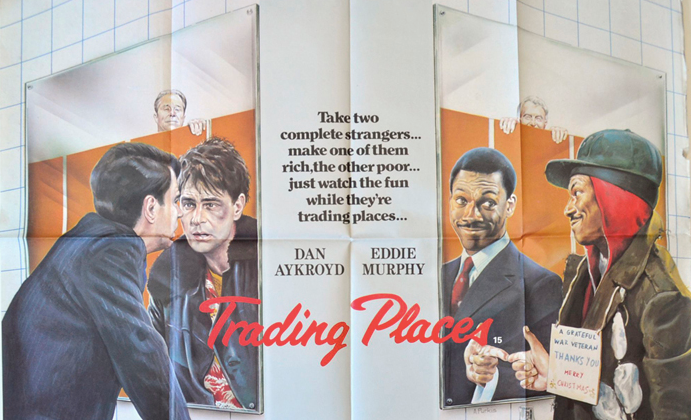
Enlarge / Hey remember this movie from the 1980s about rank-reversal aversion? (credit: Paramount Pictures)
It's well known among economists that most people don't like income disparities, especially when they're on the lower rungs of the economic ladder. This is reflected in polls and scientific studies, but also just everyday common sense. Yet many of our societies suffer from a widening gap between the haves and have-nots. If we hate economic inequality so much, why do humans keep supporting institutions that concentrate wealth in a tiny percentage of the population? A new cross-cultural study led by economists working in China suggests one possible reason: people are not willing to redistribute wealth if they think it will upset the social hierarchy.
Zhejiang University business school professor Zhou Xinyue and his colleagues conducted a simple experiment using a game that allows players to redistribute income between two people. They describe the results in Nature Human Behavior. Players were shown pictures of two people and told that one has randomly been given a large amount of money and the other a small amount. Then players were asked whether they would be willing to allow the money to be redistributed under two basic conditions: one, if the redistribution leaves the "rich" person still richer than the other; and two, if the redistribution reverses the roles and leaves the "rich" person poorer than the other.
Zhou and colleagues did tests on subjects in China and continued their tests with Indian and Caucasian subjects via Mechanical Turk. They found that responses were surprisingly uniform: 76.87% of people were willing to redistribute money if the rich person remained slightly wealthier than the poor person, thus keeping "social ranking" intact. But only 44.8% of people were willing to redistribute the money if it meant reversing the fortunes of the "rich" and "poor" people.
Read 11 remaining paragraphs | Comments
NPR’s ‘Varied Mix’ Spotlights Right-Wing Advocacy, Not Progressive Populism
Tom Rocheanother look at how NPR manages the Overton Window
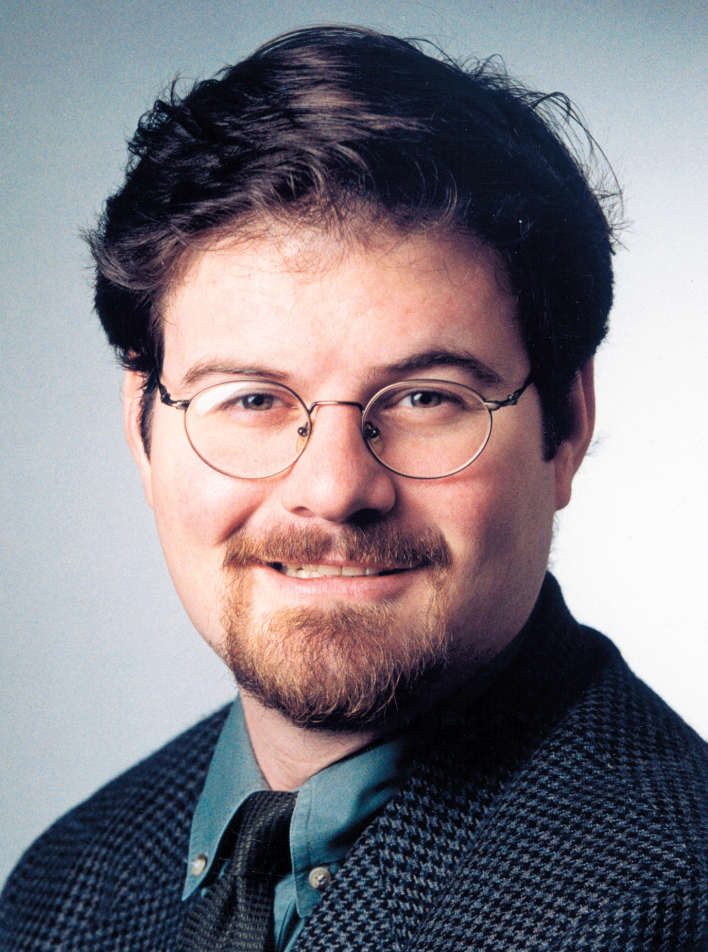
Jonah Goldberg: “No liberal commentator has had such a recurring platform,” according to NPR‘s ombud.
Jonah Goldberg is the founding editor of the National Review Online, a fellow at the right-wing American Enterprise think tank, and a widely distributed conservative columnist. He first gained the spotlight, and began writing for National Review, in 1998, when his mother Lucianne Goldberg helped promote the Monica Lewinsky scandal.
To give you an idea of how he built his career as a “provocative” conservative thinker, he opened a 2001 column thus (Jewish World Review, 10/15/01):
Suddenly, serious people are rethinking an old idea that’s time has come again: colonialism. For years, colonialism has been discredited. It was considered racist on the left to point out that many people lived better and more productive lives under, say, British rule than they have without it.
The core theme of his punditry has always been complaining about “liberals”: His two books, from 2008 and 2012, are titled Liberal Fascism and The Tyranny of Cliches: How Liberals Cheat in the War of Ideas.
Why has he appeared as a guest on National Public Radio’s most widely distributed news hours (primarily Morning Edition) 25 times since April 2016—making him one of the network’s most regularly consulted commentators?
A number of NPR’s listeners have written in to complain about Goldberg’s prevalence on the airwaves. NPR ombud Elizabeth Jensen acknowledged in a response column (NPR.org, 4/11/17) that “no liberal commentator has had such a recurring platform, and Goldberg is not always identified by his political views, leaving listeners to guess.” She also defended their frequent use of Goldberg: “I appreciate Goldberg’s commentary and rarely find it following predictable talking points.”
Based on FAIR’s review of all of Goldberg’s NPR appearances since 2015, it is easy to see his value as a pundit to NPR’s editors and producers. He is always an easy interview; he never contradicts NPR hosts and usually confines his commentary to mundane observations on the political horserace between Democrats and Republicans. He is willing to critique Republican strategy and lawmakers. Most significantly, he refused to endorse (or vote for) Donald Trump, sharing what we may assume is most NPR staffers’ distaste for Trump’s style and rhetoric. (NPR’s other most frequent conservative commentator, David Brooks, is also a well-known “Never Trumper.”)
Offering the anti-Trump Goldberg a platform is NPR’s way of providing a “counterbalance” to its widely perceived liberal worldview, while also drawing a distinction between good right-wingers (establishment conservatives) and bad right-wingers (Trump). But promoting Goldberg is a misguided move: The liberal/conservative balancing act has always been a misleading quest for a false “center,” and Goldberg’s brand of conservatism is not an antidote to Trumpism, but rather its close relative and natural precursor.
‘A Conservative Voice’ and the False Center

Jerry Maguire: The key to understanding Reince Priebus?
When Jensen praises Goldberg for “rarely…following predictable talking points,” it is clear that the apparent unconventionality of Goldberg’s commentary is what appeals to NPR. She writes further about political commentary (NPR.org, 10/6/16): “My sense is that the vast majority of listeners are hoping to hear a commentary perspective that makes them consider an issue from a different angle.”
But Goldberg’s unconventionality is superficial. It consists primarily of irreverence towards politicians and the occasional stale pop culture reference (Morning Edition, 5/22/17):
You know, Mitch McConnell, who’s got a gift for understatement, said we could all use a little less drama. That’s code for, dear God, please cut it out. I have these visions of Reince Priebus doing a sort of Jerry Maguire with Trump—you know, help-me-help-you kind of thing.
Meanwhile, Goldberg’s views on policy are conventionally right-wing. His take on Rep. Steve Scalise’s shooting (National Review, 6/16/17), which included his trademark “I can see both sides” posture, concluded that the shooting teaches us…that we need to reduce the size and scope of government. (A glance at Goldberg’s past writings—e.g., Townhall, 3/7/13—on the necessity of cutting “entitlement” programs like Social Security provides a clue as to how he envisions shrinking the government.)
His writings in the past month include an essay on how PC-culture “snowflakes” pose a threat to free speech (Commentary, 6/19/17). He entered the AHCA debate (Townhall, 5/31/17) with the edgy idea that people don’t really need health insurance, parroting a Ted Cruz and Rick Perry talking point from 2015 that’s long been debunked (Factcheck.org, 7/10/15). Elsewhere (Baltimore Sun, 5/5/17), he asks the question: Is empathy a distraction in the healthcare debate?
Goldberg’s views on Israel/Palestine, and US Mideast policy more broadly, can be gleaned from a 2007 column (Townhall, 6/20/07) that complains that “the assumption behind the push for democracy in Gaza and in Iraq is that Arabs can be trusted to handle political freedom.”
It’s tough to see what precious spice Goldberg adds to the mix on NPR; his contributions range from the absurdly equivocal (Morning Edition, 7/20/16):
Oh, Roger Ailes is a colossal figure. And he—the list of people who owe their careers to Roger Ailes is very, very long, including many politicians. And this is a thunder clap, and we don’t know where it’s going to go, but it’s complicated.
…to the hopelessly slanted (Morning Edition, 4/10/17):
There are some people, including some of my colleagues at National Review, that basically see Syria as just a hot mess. It’s basically like the Spanish Civil War, where you had two bad guys fighting each other.
Goldberg, the author of Liberal Fascism, sees the democratically elected left-wing Spanish government and the Hitler-backed fascist coup as “two bad guys.”
His views would only be unconventional if racism, celebration of US militarism and a constant drone of warnings about budget deficits—where the solution is always to cut programs that support poor and marginalized US Americans—were unconventional among right-wing pundits. They’re not; this is the same conservative cocktail that has been served to the Republican base for years, scapegoating immigrant populations, people of color and the poor to provide cover for policies that do little but further concentrate wealth and power upward. It is in the shadow of such policies—the brand of conservatism endorsed by Goldberg—that the white nationalist and proto-fascist tendencies encouraged by Trump have established their foothold, as a population encouraged to blame scapegoats for economic and social problems looks for ever more extreme solutions.
It is strange to think that promoting such a conservative voice—which he will continue to use in service of the same deceptive and exploitative project—would provide clarity or even a clarifying “balance.” From their vantage point amid the Washington, DC, political class, Morning Edition decision-makers may feel that hosting an acknowledged “conservative ideologue” (Morning Edition, 3/24/17) provides the needed balance for a news organization often maligned as “liberal” (ABC News, 2/15/11).
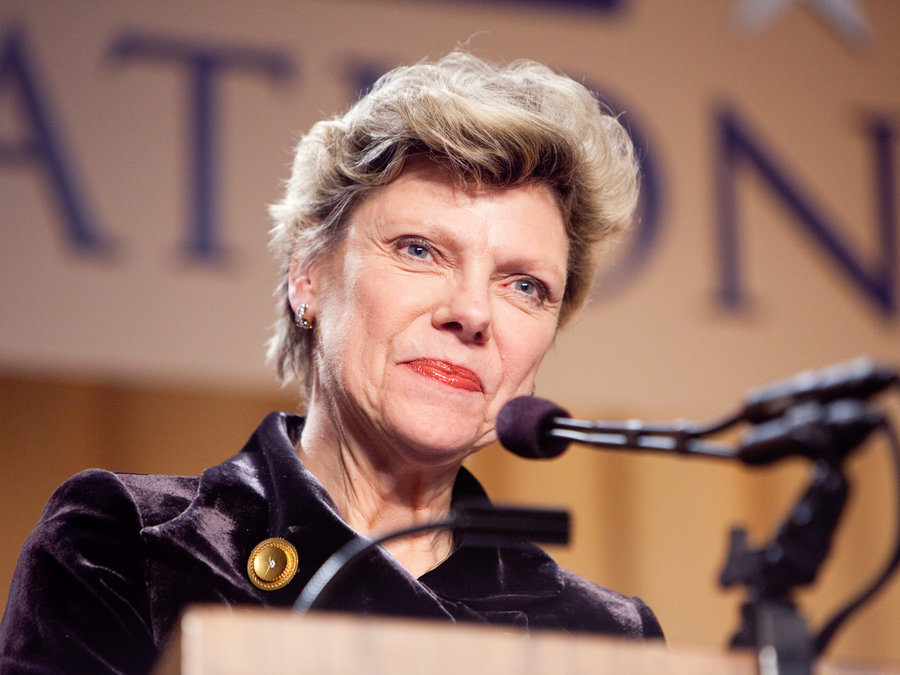
Cokie Roberts: NPR‘s idea of a balance to Jonah Goldberg.
Meanwhile, the inherent conservatism of that same DC milieu would make it extremely uncomfortable for Morning Edition to regularly host a left-wing ideologue of any kind—so they don’t. Conservative ideologues, more often than not, are “balanced” by the voices of Democratic Party loyalists and centrist liberals. In 2016, Goldberg was often paired with former NPR reporter Cokie Roberts as a commentator—someone who claims that she has an ideology that “does not exist” (NPR.org, 10/5/16), but who for decades has consistently been warning the Democratic Party that it needs to move to the right (Extra!, 7–8/98).
The foreign policy realm offers instructive examples of how this balancing act often plays out at NPR. When President Trump ordered an airstrike on a Syrian airbase in March, Morning Edition hosted a series of guests to air their reactions. Among these were Goldberg (4/10/17) along with other conservative supporters and opponents of the strike (Will Hurd, 4/10/17, Chris Buskirk, 4/7/17, Cory Gardner, 4/10/17), plus two ostensibly liberal voices—Democratic senators Tim Kaine (4/7/17) and Adam Schiff (4/7/17)—both of whom approved of the strike, but wished the president had asked congressional permission first.
Any distinctly left-wing guest could have questioned the motives of the United States government and its military’s interventions in the Middle East; at the very least, such a guest could have provided a basic principled anti-war argument against the punitive strike. Somehow, such common sense perspectives were not among the “different angles” that Morning Edition wished its listeners to consider.
Seeing through Goldberg’s surface-level willingness to part with GOP orthodoxy, we perceive Morning Edition reaching to a sometimes extreme right-wing voice in order to balance out a left-wing voice that doesn’t, in fact, exist.
Knowing Better

Cenk Uygur “looks pretty good in retrospect,” says NPR‘s media correspondent. (cc photo: Gage Skidmore)
The 2016 election results belied the predictive punditry of NPR and most other mainstream outlets, where Clinton’s win had seemed a near certainty. This misstep forced a moment of reflection; David Folkenflik, NPR’s media correspondent, wrote:
Cenk Uygur, the leftist host of the Young Turks and a supporter of Bernie Sanders, predicted in July that Trump would beat Clinton, based on a populist appeal tapping into voter anger against the establishment. He looks pretty good in retrospect. But he has for years been considered outside the acceptable norm of media voices….
The conservative political columnist Salena Zito…has been writing for months about the depths of Trump’s support. One such column in August was titled: “Stumped by Trump’s Success? Take a Drive Outside US Cities.”
This can be a period of great reconsideration by the press of how it operates, even as the stories arise all around us.… It is a time for humility and taking stock. It is a time for listening to voters who unexpectedly turned to Trump and those who envision a very different form of America.
Christopher Turpin, NPR’s vice president of news programming, told Jensen (11/15/16):
NPR was “a little slow to spot the two mass movements in this campaign,” the ones behind Trump and Sanders. He added, “As an organization, if the election has taught us one thing it is to really think about how broad the political spectrum is in this country.”
It was clear to some at NPR that ping-pong reporting that bounced between establishment liberal and conservative voices was failing NPR’s listeners, in much the same way that the political establishment was failing the whole country. The powerlessness, suffering and struggle of multitudes of US Americans had been ignored, in favor of the competition constructed between powerful political factions.
The mass movements “behind Trump and Sanders” that NPR was “slow to spot” were both partly built around economic populism. Jonah Goldberg is an establishment conservative voice whose problem with Trump, in part, was the latter’s occasional rhetorical flirtation with traditionally left-wing economic and social policies (Morning Edition, 3/2/16):
A lot of people on the right believe that he will be actually a huge victory for liberalism if he wins the presidency, because he’s in favor of all sorts of ideological heresies on the right—you know, on sort of single-payer healthcare, on trade protectionism…. And you hear him last night talking—singing praises about Planned Parenthood.
Now that Trump, in power in making policy, has ditched his lip-service to, for example, single-payer healthcare, Goldberg has softened towards him, and calls for us to “give him a fresh start” (Morning Edition, 11/09/16).
Sticking with Goldberg is evidence that NPR is resistant to really acting on the lessons of 2016. It shows every sign that it will continue to be “slow” to leave behind the traditional gatekeepers of the left and right, and cling to a particularly conservative notion of the “center.” When Jensen addressed Goldberg’s presence in her ombud column in April, she spoke to Sarah Gilbert, Morning Edition’s executive producer:
Gilbert said the show is “careful to make sure we have a varied mix of perspectives on our air, of course,” and that it will include a more complete identification of Goldberg’s views in the future.
Goldberg has been a commentator on the show four times since then, and only once (4/28/17) did the hosts identify him as a right-winger. And that “varied mix of perspectives” has failed to include any commentator who advocates for progressive populism the way that Goldberg speaks up for establishment conservatism.
You can contact NPR ombud Elizabeth Jensen via NPR’s contact form or via Twitter: @EJensenNYC. Please remember that respectful communication is the most effective.
Cricket dispute
Tom Rochegood on global sports economics generally
The Dig: Bringing Down the Trump Brand with Naomi Klein
Tom Rocheunusually weak from the usually-excellent Naomi Klein
Is the big business of scientific publishing bad for science? – podcast
Tom RocheVery excellent summary of the issues, if a bit dismissive of open-access publishing. Original article/transcript @ Stephen Buranyi @ https://web.archive.org/web/20170711105040/https://www.theguardian.com/science/2017/jun/27/profitable-business-scientific-publishing-bad-for-science
The Decline Of Good Jobs In America / Sharon Horgan Of 'Catastrophe'
Tom RocheWartzman piece is typical NPR pseudo-progressivism: unions were great but globalization doomed them and There Is No Alternative to corporate rule. Pearls are clutched ...
Democracy Now! 2017-07-11 Tuesday
Tom Rocheunfortunately weak Venezuela debate
Democracy Now! 2017-07-11 Tuesday
- Headlines for July 11, 2017
- Battle For the Net: Mass Day of Action Aims to Stop Trump's FCC from Destroying Free & Open Internet
- Former FCC Commissioner on How Greater Media Consolidation is a Threat to Democracy and Free Speech
- As the Pope Calls for Dialogue, a Debate on How to Resolve Venezuela's Political & Economic Crisis
<a href="http://traffic.libsyn.com/democracynow/dn2017-0711-1.mp3">Download this show</a>
Are News Outlets Obligated to Do Propaganda for Trade Deals?
Tom Rochequick summary of basic anti-TPP (et al) talking points
Regular readers of the NYT and other leading outlets might well get that impression. The one-sided nature of the discussion of these deals (invariably dubbed "free" trade agreements, because no one can be opposed to freedom) is hard for careful readers to miss.
We got yet another example with a column warning that Donald Trump may kill the bourbon boom with his trade policy. The piece uses the example of bourbon to tell us all the ways in which Trump's decision to pull back from the Trans-Pacific Partnership and other trade deals can harm people in the United States and be bad for the world generally.
Starting at the basics, it tells us:
"Take Vietnam, a TPP member that increased American spirits imports by 173.9 percent between 2015 and 2016, to $45.9 million, making it the category’s fastest-growing importer. Under the trade deal, the country is expected to drastically increase its American whiskey consumption.
"Without American membership in the TPP, a 12-nation pact that created zero tariffs for American products, Vietnam’s 45 percent duty on bourbon and other distilled spirits will no longer be phased out, putting those expectations on ice."
There are several points worth noting here. First, apparently, our whiskey exports to Vietnam appear to be doing just fine even with the 45 percent tariff. Perhaps U.S. whiskey is considered a luxury in Vietnam and the people who buy it are not that concerned about the price. I have no idea whether that is the case, but is possible that the reduction or elimination of the tariff may not affect sales very much.
The second point is that the implicit assumption in this story is that the people in Vietnam have no interest in getting cheaper whiskey. The piece assumes that they will continue to impose a 45 percent tax on the whiskey they buy from the United States for the indefinite future. This is, of course, possible, but it's also possible that Vietnamese with access to textbooks on public finance, or who like U.S. whiskey, will push their government to reduce the 45 percent tax with or without a trade deal.
Finally, we should be asking how people in the United States feel about paying more for their whiskey. After all, there is a limited amount of whiskey that U.S. distilleries can produce, at least in the short-term. If Vietnam and other countries will buy more, then there is less left for us whiskey drinkers back in the United States.
Small town bar brawls and microwave Mac 'n Cheese!
Tom Rochererun from 2015
Boss Paying $9.25 an Hour Sometimes Wishes There Was a Higher Unemployment Rate
Tom RocheThe NYT link (archived to https://web.archive.org/web/20170707161842/https://www.nytimes.com/2017/07/07/business/economy/jobs-report-june-unemployment.html ) is some great neoliberal reporting: noting empirical realities like
“This is not a market we have typically seen,” said Michael Stull, senior vice president at the staffing company Manpower North America. “We have not before seen unemployment drop, low participation rates and wages not move. That tells you something’s not right in the labor market.”
(et al!) but absolutely refusing to question neoliberal economic orthodoxy.
Yes, that is what he said. You can read about it in the NYT. The annualized rate of wage growth in the last three months compared with the prior three months was just 2.0 percent. So, if there is a problem with getting qualified workers it seems to be primarily in the human resources department.
How the MoD’s plan to privatise military housing ended in disaster – podcast
Tom Rocheoriginal article/transcript by Holly Watt @ https://www.theguardian.com/news/2017/apr/25/mod-privatise-military-housing-disaster-guy-hands