Guests: Aaron Hale-Dorrell, Kristy Ironside, and Samantha Lomb on the collective farm system in the USSR.
The post The Collective Farm appeared first on SRB Podcast.
Tom RocheSamantha Lomb is great as usual
Guests: Aaron Hale-Dorrell, Kristy Ironside, and Samantha Lomb on the collective farm system in the USSR.
The post The Collective Farm appeared first on SRB Podcast.
Tom Roche[Ryan Grim @ The Intercept](https://theintercept.com/staff/ryangrim/), author of [We’ve Got People](https://strongarmpress.com/catalog/weve-got-people/), on the long fight between insurgents and establishment in the Democratic party • Jenny Brown @ National Women's Liberation, author of [Without Apology](https://www.versobooks.com/books/3095-without-apology), on the history and politics of abortion in the US (check out [National Women’s Liberation](http://womensliberation.org/) and [Redstockings](http://redstockings.org/)) • both excellent!
Tom Rocheoriginal article/transcript @ https://www.theguardian.com/world/2019/oct/24/western-liberalism-failed-post-communist-eastern-europe (archived @ https://web.archive.org/web/20191117153627/https://www.theguardian.com/world/2019/oct/24/western-liberalism-failed-post-communist-eastern-europe )
Tom Roche404s as of 0515 UTC 17 Nov 2019
Tom Roche404s as of 0510 UTC 17 Nov 2019
Tom Rochedefinitely look @ [psession](https://github.com/thierryvolpiatto/psession) for Emacs session persistence
It was a cold winter back in December 2014. If memory serves me well, it was time spent at tinkering with old hardware and obscure window managers, reading my first books on functional programming, and dealing with something about text editors I can’t quite put my finger on.
I was also reading about Helm and the praises everywhere in the Emacs community for this package: it can do this, it improves that, it will take you closer to Emacs Nirvana. So yeah, I believed the hype, because it came from trusted sources, especially the Nirvana-guy. Soon Helm took over my configuration and I was using it for everything: switching buffers, selecting bookmarks, in-buffer and per-project searches. Anything involving candidates completion was in the wise hands of Helm.
After a while Ivy came along, and the rest is history. I have been using Ivy/Counsel for such a long a time I might as well say they have become the central drivers of my Emacs setup. Along with the likes of counsel-projectile, these are the packages I use the most during the day.
Lately I’ve been following some conversations about completion-styles, and when I learned that Thierry Volpiatto was working on leveraging Helm for this I just could not resist. Note that Thierry is still devising the implementation, so there is no need to rush at opening issues and scream at him. Anyway, Helm was back in my radar now, and so I took the chance to see if I could come up with a setup which would mirror my everyday workflow with Ivy/Counsel.
I immediately noticed that the theme I use lacked proper support for some Helm
faces, but nothing stopped me to do something about
it. Much
like Ivy/Counsel, Helm provides its own version for common operations such as
helm-M-x, helm-find-files, helm-mini, helm-recentf, helm-bookmarks,
helm-show-kill-ring, and helm-resume. These are the core features for me,
and they work as expected. I also enabled helm-adaptive-mode and
helm-autoresize-mode, fixing the Helm window height to my preferences.
As I did with Ivy/Counsel, I made buffer switching (i.e., helm-mini) ignore
some files:
(require 'helm-buffers)
(setq helm-ff-skip-boring-files t)
(dolist (regexp '("\\`\\*direnv" "\\`\\*straight" "\\`\\*xref"))
  (cl-pushnew regexp helm-boring-buffer-regexp-list))
My projects are all Git-versioned, hence I installed
helm-ls-git, which superseded
Projectile and the related helm-projectile in an instant. In order to make
per-project lookups with Helm as easy as they were with Ivy/Counsel, I went with
helm-ag and
helm-xref. To make it even better,
I added psession and configured
it to persist the things I need from my Emacs sessions. The only goodies I put
on top of this setup are helm-bibtex
and helm-tramp.
Back in the day, Helm felt heavier and more bloated than Ivy/Counsel, but that is nonsense and was probably due to me being still young and inexperienced at Emacs tweaking. In fact, it still takes less than one second for my Emacs to boot, and so far there is nothing in terms of functionalities I have been missing from my previous configuration. We could argue about UI minimalism and design choices as long as we want, or we could simply try what the Emacs ecosystem offers and decide for ourselves what suits our text editor best.
Tom Roche[Quinn Slobodian @ Wellesley](https://www.wellesley.edu/history/faculty/slobodian) makes a return appearance to talk about neoliberals: their opposition to the EU (essay in [Mutant Neoliberalism](http://www.fordhampress.com/9780823285723/mutant-neoliberalism/)), their [hatred](https://www.researchgate.net/publication/325623410_Germany's_1968_and_Its_Enemies) of the [1960s](https://www.academia.edu/39530020/Anti-68ers_and_the_Racist-Libertarian_Alliance_How_a_Schism_among_Austrian_School_Neoliberals_Helped_Spawn_the_Alt_Right), their embrace of racial and culturalist politics
Tom Rochevery excellent! Blakeley gives concise summations (necessarily incomplete, given episode length < 40 min, but pretty damn good) of (1) financial capitalism, and (2) "lexit" aka the left critique of the EU and left motivations to leave it.
Tom Roche404s as of 1605 UTC W 13 Nov 2019
Tom RocheStarts very weak, gets better but host and esp guest need more fluency. This should have been a first take rather than a release.
For his debut as an interviewer rather than as a guest on the podcast, Jeremy Salkeld (/u/EnclavedMicrostate) is joined by flaired user /u/dandan_noodles to discuss warfare and its changes and continuities from the mid-eighteenth century and the wars of Frederick the Great up to the early nineteenth century and the wars of Napoleon. Why were wars fought? Who joined the armies? How did they fight? Did the revolution in French politics create a revolution in French warfare? Find out all this and more in this episode.
(Total length: 102 minutes)
Follow @AskHistorians on Twitter and everywhere else!
Tom RocheGrace Blakeley @ New Statesman and Institute of Public Policy Research, author of [Stolen](https://repeaterbooks.com/product/stolen-how-to-save-the-world-from-financialisation/), on where financialized capitalism came from and how we could get out of it • Emmanuel Saez @ [UC Berkeley](https://eml.berkeley.edu/~saez/), co-author of [The Triumph of Injustice](https://wwnorton.com/books/the-triumph-of-injustice), on how the rich got richer while paying less of their income in tax than the working class (Tax Justice website [here](https://taxjusticenow.org/))
Tom Rochepix and video @ https://arstechnica.com/?p=1594873
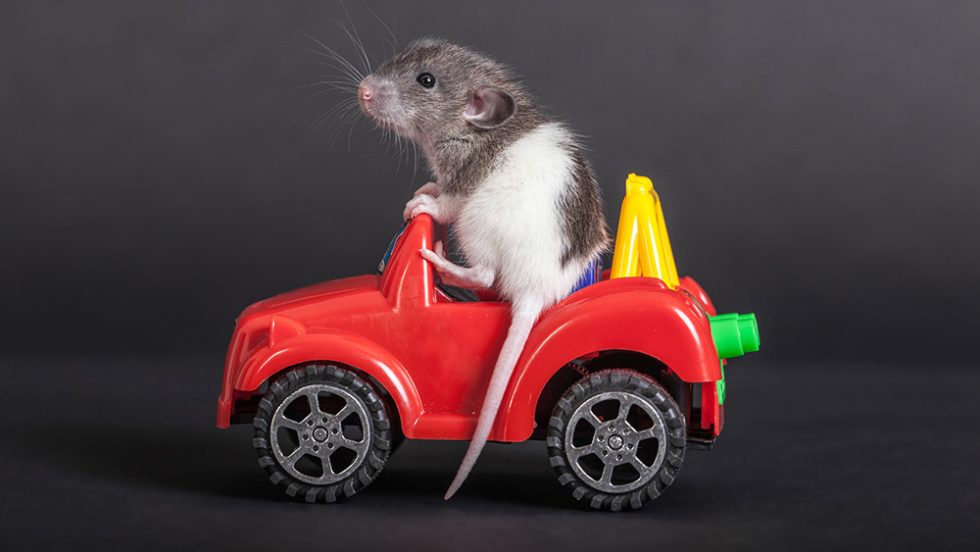
Since the dawn of the car age, humans have dreamed of teaching rats to drive. Well, perhaps not, but that is what happened in a recent study on enriched environments. [credit: Getty Images ]
Rats that learn to drive are more able to cope with stress. That might sound like the fever-dream of a former scientist-turned-car writer, but it's actually one of the results of a new study from the University of Richmond. The aim of the research was to see what effect the environment a rat was raised in had on its ability to learn new tasks. Although that kind of thing has been studied in the past, the tests haven't been particularly complicated. Anyone who has spent time around rats will know they're actually quite resourceful. So the team, led by Professor Kelly Lambert, came up this time with something a little more involved than navigating a maze: driving.
If you're going to teach rats to drive, first you need to build them a car (or Rat Operated Vehicle). The chassis and powertrain came from a robot car kit, and a transparent plastic food container provided the body. Explaining the idea of a steering wheel and pedals to rats was probably too difficult, so the controls were three copper wires stretched across an opening cut out of the front of the bodywork and an aluminum plate on the floor. When a rat stood on the plate and gripped a copper bar, a circuit was completed and the motors engaged; one bar made the car turn to the left, one made it turn to the right, and the third made it go straight ahead.
Rat steering compilation.
If proof were needed that many existing psychology tests are too simple, rats did not take long to learn how to drive. The driving was conducted in a closed-off arena (1.5m x 0.6m x 0.5m) where the goal was to drive over to a food treat. Three five-minute sessions a week, for eight weeks, was sufficient for the rats to learn how to do it. The placement of the treat and the starting position and orientation of the car varied throughout, so the rats had more of a challenge each time. At the end of the experiment, each rat went through a series of trials, conducted a day or two apart, where they were allowed to drive around the arena but without any food treats to see if they were only doing it for the food.
Read 3 remaining paragraphs | Comments
Tom Roche404s as of 2040 UTC U 3 Nov 2019, also is not listed @ LSE Player webpage (?!?)
Tom Rochererun from 2006
Tom RocheMargaret Kimberley is great as usual
Guest: Margaret Kimberley. On this Halloween special episode, we discuss the prospects for a “ghoulish rematch” in 2020 between Donald Trump and Hillary Clinton. We mainly focus on Hillary Clinton, recent events and various signs that she is considering making another run for president and why that would be a disaster.
FOLLOW Margaret on Twitter @freedomrideblog Find her work at the Black Agenda Report.
Around the Empire is listener supported, independent media. Pitch in at Patreon: patreon.com/aroundtheempire or paypal.me/aroundtheempirepod. Find all links at aroundtheempire.com.
SUBSCRIBE on YouTube. FOLLOW @aroundtheempire and @joanneleon. SUBSCRIBE/FOLLOW on iTunes, iHeart, Spotify, Google Play, Facebook or on your preferred podcast app.
Recorded on October 29, 2019. Music by Fluorescent Grey.
Reference Links:
Tom Rochesee SymPy @ https://en.wikipedia.org/wiki/SymPy
Yesterday I wrote about Householder’s higher-order generalizations of Newton’s root finding method. For n at least 2, define
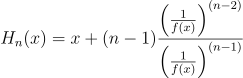
and iterate Hn to find a root of f(x). When n = 2, this is Newton’s method. In yesterday’s post I used Mathematica to find expressions for H3 and H4, then used Mathematica’s FortranForm[] function to export Python code. (Mathematica doesn’t have a function to export Python code per se, but the Fortran syntax was identical in this case.)
Aaron Muerer pointed out that it would have been easier to generate the Python code in Python using SymPy to do the calculus and labdify() to generate the code. I hadn’t heard of lambdify before, so I tried out his suggestion. The resulting code is nice and compact.
    from sympy import diff, symbols, lambdify

    def f(x, a, b):
        return x**5 + a*x + b

    def H(x, a, b, n):
        x_, a_, b_ = x, a, b
        x, a, b = symbols('x a b')
        expr = diff(1/f(x,a,b), x, n-2) / \
               diff(1/f(x,a,b), x, n-1)
        g = lambdify([x,a,b], expr)
        return x_ + (n-1)*g(x_, a_, b_)
This implements all the Hn at once. The previous post implemented three of the Hn separately.
The first couple lines of H require a little explanation. I wanted to use the same names for the numbers that the function H takes and the symbols that SymPy operated on, so I saved the numbers to local variables.
This code is fine for a demo, but in production you’d want to generate the function g once (for each n) and save the result rather than generating it on every call to H.
Tom Rocheexcellent dissection and deprecation of US military/foreign policy and -makers (aka the blob, deep state) since ~1990
Tom Rocheyet another Democrat In Name Only
Rep. Cheri Bustos, chair of the Democratic Congressional Campaign Committee, is advocating internally for Democrats to wave through the House President Donald Trump’s renegotiated NAFTA, without any of the revisions demanded by labor unions and environmentalists — and despite concerns that it locks in high prescription drug prices.
Bustos has argued to House Speaker Nancy Pelosi that approving Trump’s free trade deal is important for vulnerable House Democrats who recently flipped Republicans seats, according to multiple sources with knowledge of the Bustos strategy. The argument goes that those vulnerable Democrats would be able to demonstrate to constituents that while they may be pursuing impeachment, they are also willing to work across party lines with the president. Inside the House caucus, the messaging is referred to as showing the ability to “walk and chew gum at the same time.”
Pelosi’s office said the speaker did not intend to allow the trade agreement to move forward without addressing concerns from environmental, labor, and patients’ rights groups. A spokesperson for Bustos emphasized the Congresswoman’s support for labor and environment issues: “She and the speaker have taken meetings together with stakeholders to discuss these issues. The Congresswoman has faith in her colleagues currently working with our trade groups to resolve these issues – and has withheld her position on the trade deal until we see this process reach its conclusion – which she hopes is a trade deal that has support from a broad set of stakeholders. As she has said for months, there is still work to be done before we reach that point.” Publicly, Bustos has called for the trade deal to be strengthened in the key areas where progressives are pushing. “We’ve got to make sure that our workers are treated fairly and we have to make sure that the environmental concerns are addressed … and the enforcement of all of this,” Bustos said at a public event this summer. “If those things can get worked out, I think we can get to a ‘yes.’” A House leadership aide suggested that Bustos and the centrists pushing for a vote have an uphill climb, because the fall and spring floor schedule is crowded, and Bustos currently lacks the sway to work her will.
Bustos has help in making the DCCC’s argument to the caucus: former caucus Chair Joe Crowley, who was ousted by Rep. Alexandria Ocasio-Cortez and is now a paid lobbyist for Trump’s revised NAFTA, known as the United States-Mexico-Canada Agreement. He’s joined in the effort by former Sen. Heidi Heitkamp of North Dakota, who has also become a lobbyist for Trump’s trade deal.
Bustos said labor unions and progressive Democrats “will have to get over it.”
Republicans, too, are urging the strategy on. Rep. Kevin Brady, R-Texas, the top-ranking Republican on the Ways and Means Committee, told CNBC viewers on Friday that he was optimistic Democrats would soon sign off on Trump’s deal. “I think we’re a couple weeks from getting a green light,” he said. Pelosi, he argued, needed a political win for moderates in the context of the impeachment fight, echoing the Bustos argument.
“This new trade agreement is everything Democrats dreamed of for labor and environment,” he said. “They have never sniffed the kinds of reforms you’re seeing in this agreement, and for her moderate and competitive members, they can’t go home with just impeachment in their pocket. They’ve got to have some economic growth.”
The push represents a remarkable gamble: that it is worth undermining key constituencies by signing a subpar agreement on the chance that it could help a handful of Democrats in swing districts win reelection. In addition, the assessment itself is questionable; if a voter is angry that a Democrat voted to impeach Trump, it’s difficult to see how that anger would be lessened by learning that the representative also voted for Trump’s trade deal. Endorsing bad Republican policy for uncertain political gain may be a hallmark of Democratic centrism, but supporting Trump’s unrevised trade deal is an unusually extreme example.
Rank-and-file House Democrats are worried that the poorly negotiated deal would lock in lower wages, environmental destruction, and higher drug prices for decades. USMCA is a renegotiated version of NAFTA, but only goes into effect if and when it is approved by Congress. The legislative branch is negotiating changes to the deal that would then need to be agreed to by Canada and Mexico. Without a new agreement, the old NAFTA remains in effect indefinitely.
Instead of rubber-stamping Trump’s trade deal to prove they can legislate, Rep. Rosa DeLauro argued, the party should point to its own record of passing legislation that McConnell has proudly obstructed.
Though the Bustos strategy has not previously been publicly reported, it is widely known among Democrats following the trade pact closely that Bustos is pursuing it and causing significant internal tension. Those tensions bubbled to the surface, in a coded way, in an op-ed published recently in The Hill by Rep. Rosa DeLauro, a Connecticut Democrat who is a longtime ally of Pelosi’s, but a strong opponent of the trade deal in its current form. She began her op-ed, which called for revising the trade deal, with a rebuttal of the argument being made by Bustos, without naming Bustos. “The U.S. House of Representatives has been busy doing the people’s work, passing 387 bills to date addressing American’s greatest challenges,” she wrote. “Sadly, Senate Majority Leader Mitch McConnell (R-Ky.), has killed them all, celebrating his role as a ‘Grim Reaper’ against efforts to decrease skyrocketing prescription drug prices, to reduce gun violence, and more.”
Readers unfamiliar with the internal debate would have noticed nothing significant about her opening, but insiders locked in the fight saw it clearly: Instead of rubber-stamping Trump’s trade deal to prove they can legislate, DeLauro argued, the party should simply point to its own record of passing legislation that McConnell has proudly obstructed.
Bustos has been blunt in speaking about USMCA to corporate allies at fundraisers, saying that labor unions and progressive Democrats “will have to get over it,” sources said. That posture, though, has put her at odds not only with progressives, but also with the Congressional Black Caucus. At a recent private meeting between CBC members and Bustos, focused largely on how the DCCC can do better when it comes to diversity and advocacy for people of color, CBC members raised Bustos’s aggressive push for an unrevised USMCA. Enflaming the left, they argued, gives energy to progressive primary challengers, who many of them are currently facing or worried about potentially facing. The message to House leadership, said one source close to the CBC, was: “We get what your focus is” — fortifying moderates in swing districts — ”but you have to take into consideration other folks who are getting primaried from the left.” The reticence of the CBC to embrace the leadership push for a quick vote is another indicator of the power of primary challenges to reshape the political terrain, even if most of them fail.
Rep. Richard Neal, D-Mass., the chair of the Ways and Means Committee, has been making a similar argument to Bustos’s, but less for protection of vulnerable members and more because he believes that the deal is good enough. Unions, he has argued internally, will just have to go along. He has proposed a divide-and-conquer strategy, by appending pension reform — a high priority of the Teamsters and a handful of other unions — to the deal in the hopes of splitting a few unions off from the labor movement and winning their support. That would allow House leaders to say that labor is divided on the question, so the party might as well vote yes.
The three areas in which the agreement faces the most resistance are in environmental protections, labor rights, and drug prices. Unions in particular are worried that there are no serious enforcement mechanisms that would require Mexico to raise labor standards and extend protections to union organizers. “I hear a lot of the frontliners want to see it passed,” texted one House Democrat nervous that the deal will get rammed through. “But if the final text doesn’t have real labor and environmental standards, AND WITH REAL ENFORCEMENT, then we shouldn’t even bring it up for a vote.”
The push from centrist Democrats began quietly in the summer, with 14 Democrats signing a letter to House leaders. “We write in support of continued negotiations through the upcoming recess, to ensure a vote on a bipartisan agreement by the end of this year. It is imperative that we reach a negotiated agreement early in the fall,” read the letter signed by Scott Peters, chair of the New Democrat Coalition, the corporate wing of the party, as well as Reps. Collin Allred, Kendra Horn, Haley Stevens, Anthony Brindisi, Joe Cunningham, Lizzie Fletcher, Ben McAdams, Josh Harder, Lou Correa, Sharice Davids, TJ Cox, Susie Lee, and Greg Stanton.
Reps. Abigail Spanberger, D-Va., Henry Cuellar, D-Texas, and other centrist and conservative Democrats have continued insisting publicly on the need for quick action throughout the summer and fall. “We gotta make this happen,” insisted Rep. Jim Costa, D-Calif., at an event with Trump’s agriculture secretary.
There is currently a working group hashing out revisions to the pact, going back and forth with the White House’s top trade official, U.S. Trade Representative Robert Lighthizer. Bustos’s staff has signaled to members of Congress concerned that she is trying to give the agreement away that Bustos supports the working group process, but the pressure from Bustos and the moderates to move quickly gives the White House the upper hand in negotiations where they’d otherwise be on the defensive. After all, if Democrats do nothing and win the White House, they would be able to negotiate a much stronger agreement.
“The Democrats and Congress seem to be making progress with the USTR. Now is not the time to do anything but continue to ensure what is passed by the House helps drive down drug prices in the United States,” said Jonathan Kimball of the trade group the Association for Accessible Medicines.
If Democrats do nothing and win the White House, they would be able to negotiate a much stronger agreement.
The trade group, which represents generic drug companies, is pushing against big pharma over provisions that would extend and expand drug company monopolies on patented drugs, blocking cheaper generics from the market. The treaty also expands the definition of what makes a biologic drug, which would put many more medicines off limits to generics for a longer stretch of time, keeping prices high. The treaty would block Congress from doing anything significant legislatively to lower drug prices, even as Democrats ran their 2018 campaign significantly on a promise to lower drug prices.
Unions, meanwhile, are pushing to strengthen provisions that would push Mexico to enact and enforce labor reform and raise wages for Mexican workers, which would make it easier for American workers to compete. Labor officials note that Mexico has neglected to fund its stated commitment to labor reform, and Neal recently traveled to Mexico to try to extract concessions from the Mexican government on enforceability. He came away with a letter of assurance from the Mexican president, which unions have dismissed as unserious.
The Sierra Club has been weighing in on the agreement for the last three years, Ben Beachy told The Intercept, and opposes it in its current form. He directs the group’s “A Living Economy” initiative, which advocates for green economic policy. “The deal as it stands is a pro-polluter deal any way you slice it,” Beachy said. “It not only fails to mention climate change, but would actively contribute to the climate crisis. Trump’s NAFTA 2.0 would perpetuate NAFTA’s outsourcing of pollution and jobs while giving new handouts to fossil fuel corporations.” The group has put out numerous statements regarding concerns that the current deal lacks binding environmental standards, and recently signed a letter along with 110 members of Congress calling for the new deal to address the climate crisis in a meaningful way.
And though Bustos is working in their name, not all front-line Democrats are united on putting through the deal. “We shouldn’t just ram anything through,” said one. “If we don’t get it right, we never get it back.”
Update: October 29, 2019, 11:20 a.m.
This story was updated to include additional comments from Bustos.
Update: October 29, 2019, 10:00 p.m.
After publication, Rep. DeLauro sent the following statement: “Congresswoman Bustos stands up for workers and the environment when it comes to the ongoing NAFTA renegotiation. She knows that Democrats on Speaker Pelosi’s Trade Working Group like myself are working to remove giveaways to pharmaceutical companies that will lock in high prescription drug prices. She also knows strong, enforceable labor and environmental protections must be included in the deal in order to stop outsourcing of American jobs. She is a strong ally in this fight.”
The post Centrist Democrats Have a New Idea to Win Reelection: Ignore Labor and Give Trump a Major Trade Deal appeared first on The Intercept.
Tom Rocheoriginal/transcript By Samira Shackle @ https://www.theguardian.com/society/2019/sep/27/anxiety-mental-breakdowns-depression-uk-students (archived @ https://web.archive.org/web/20191024181918/https://www.theguardian.com/society/2019/sep/27/anxiety-mental-breakdowns-depression-uk-students )
Tom Rochevery excellent! all monologue, mostly quirky stories
Tom RocheGabriel Winant (U Chicago), author of [this article](https://nplusonemag.com/online-only/online-only/professional-managerial-chasm/), on the professional–managerial class and its decomposition (the 1977 Ehrenreich papers are [here](https://library.brown.edu/pdfs/1125403552886481.pdf) and [here](https://library.brown.edu/pdfs/112497719366862.pdf); their 2013 follow-up is [here](http://www.rosalux-nyc.org/wp-content/files_mf/ehrenreich_death_of_a_yuppie_dream90.pdf)) • Alan Beattie (FT) author of [this paper](https://www.chathamhouse.org/publication/can-world-economy-find-new-leader) on the US-led global order and its decomposition
Tom Rochepullquotes (mildly edited):
> The U.S. has now betrayed the Kurds a minimum of eight times [since WW1]. The reasons for this are straightforward[:] the Kurds are a perfect tool for U.S. foreign policy. We can arm the Kurds in whichever of [Turkey, Syria, Iran, and Iraq] is currently our enemy[. But] we don’t want the Kurds we’re utilizing to ever get too powerful. If that happened, the other Kurds — i.e., the ones living just across the border in whichever of these countries are currently our allies — might get ideas about freedom and independence.
instances in article:
1. 1920s: 1923 Treaty of Lausanne, and subsequent US-backed UK crushings of Kurdish Kingdom of Kurdistan in Iraq and Republic of Ararat.
2. 1958-1963: US armed Iraqi Kurds to oppose Abdel Karim Kassem, then supported 1963 Baathist coup, then armed the Baathists against the Kurds.
3. 1970s: US and Pahlavi Iran armed Iraqi Kurds to bleed Saddam's Iraq, then supported Shah-Saddam reconciliation, ignoring Kurds while Iraq crushed them.
4. 1980s: during Iran-Iraq war, Saddam's ally US ignored Saddam's genocide of Kurds.
5. 1991 1st Iraq War: Bush I urges Shias and Kurds to overthrow Saddam. On war's end, US ignores bloody Iraq crackdown. Great pullquotes from [Thomas Friedman](https://www.nytimes.com/1991/07/07/weekinreview/the-world-a-rising-sense-that-iraq-s-hussein-must-go.html)
> Mr. Bush never supported the Kurdish and Shiite rebellions against Mr. Hussein, or for that matter any democracy movement in Iraq [because Saddam’s] iron fist simultaneously held Iraq together, much to the satisfaction of the American allies Turkey and Saudi Arabia. [What the U.S. wanted was for the Iraqi military (not its people) to take charge:] then, Washington would have the best of all worlds: an iron-fisted Iraqi junta without Saddam Hussein.
6. Clinton 1990s: US allows UK to protect Iraqi Kurds. Neighboring Turkish Kurds started getting uppity, so US armed Turkey and ignored subsequent ethnic cleansing.
7. 2007 (during 2nd Iraq War): US allows Turkey to bomb Iraqi Kurds.
8. Trump 2019.
The White House announced Sunday night that the United States is giving Turkey a green light to invade northern Syria, with the U.S. troops there now apparently pulling back to another area of the country. This is the scenario that Syrian Kurds have long feared. It will almost inevitably lead to a Turkish attack on Kurdish militias in Syria — fighters who loyally helped the U.S. destroy the Islamic State, but whom Turkey bogusly claims to be terrorists.
On Monday morning, New York Times columnist Paul Krugman asked why Donald Trump made this decision:
So did Trump just betray the Kurds because
(a) He has business interests in Turkey
(b) Erdogan, being a brutal autocrat, is his kind of guy
(c) His boss Vladimir Putin told him toRemarkable that all three stories are perfectly plausible.
— Paul Krugman (@paulkrugman) October 7, 2019
What Krugman left out, however, is the most likely explanation: (d) Trump is president of the United States. Nothing in this world is certain except death, taxes, and America betraying the Kurds.
The U.S. has now betrayed the Kurds a minimum of eight times over the past 100 years. The reasons for this are straightforward.
The Kurds are an ethnic group of about 40 million people centered at the intersection of Turkey, Syria, Iran, and Iraq. Many naturally want their own state. The four countries in which they live naturally do not want that to happen.
On the one hand, the Kurds are a perfect tool for U.S. foreign policy. We can arm the Kurds in whichever of these countries is currently our enemy, whether to make trouble for that country’s government or to accomplish various other objectives. On the other hand, we don’t want the Kurds we’re utilizing to ever get too powerful. If that happened, the other Kurds — i.e., the ones living just across the border in whichever of these countries are currently our allies — might get ideas about freedom and independence.
Nothing in this world is certain except death, taxes, and America betraying the Kurds.
Here’s how that dynamic has played out, over and over and over again since World War I.
1 — Like many other nationalisms, Kurdish nationalism blossomed during the late 1800s. At this point, all of the Kurdish homeland was ruled by the sprawling Ottoman Empire, centered in present day-Turkey. But the Ottoman Empire collapsed after fighting on the losing side of World War I. This, the Kurds understandably believed, was their moment.
The 1920 Treaty of Sèvres completely dismembered the Ottoman Empire, including most of what’s now Turkey, and allocated a section for a possible Kurdistan. But the Turks fought back, making enough trouble that the U.S. supported a new treaty in 1923, the Treaty of Lausanne. The Treaty of Lausanne allowed the British and French to carve off present-day Iraq and Syria, respectively, for themselves. But it made no provision for the Kurds.
This was America’s first, and smallest, betrayal of the Kurds. At this point, the main Kurdish betrayals were handled by the British, who crushed the short-lived Kingdom of Kurdistan in Iraq during the early 1920s. A few years later, the British were happy to see the establishment of a Kurdish “Republic of Ararat,” because it was on Turkish territory. But it turned out that the Turks were more important to the British than the Kurds, so the United Kingdom eventually let Turkey go ahead and extinguish the new country.
This was the kind of thing that gave the British Empire the nickname “perfidious Albion.” Now America has taken up the perfidious mantle.
2 — After World War II, the U.S. gradually assumed the British role as main colonial power in the Mideast. We armed Iraqi Kurds during the rule of Abdel Karim Kassem, who governed Iraq from 1958 to 1963, because Kassem was failing to follow orders.
We then supported a 1963 military coup — which included a small supporting role by a young Saddam Hussein — that removed Kassem from power. We immediately cut off our aid to the Kurds and, in fact, provided the new Iraqi government with napalm to use against them.
3 — By the 1970s, the Iraqi government had drifted into the orbit of the Soviet Union. The Nixon administration, led by Henry Kissinger, hatched a plan with Iran (then our ally, ruled by the Shah) to arm Iraqi Kurds.
The plan wasn’t for the Kurds in Iraq to win, since that might encourage the Kurds in Iran to rise up themselves. It was just to bleed the Iraqi government. But as a congressional report later put it, “This policy was not imparted to our clients, who were encouraged to continue fighting. Even in the context of covert action ours was a cynical enterprise.”
Then the U.S. signed off on agreements between the Shah and Saddam that included severing aid to the Kurds. The Iraqi military moved north and slaughtered thousands, as the U.S. ignored heart-rending pleas from our erstwhile Kurdish allies. When questioned, a blasé Kissinger explained that “covert action should not be confused with missionary work.”
When questioned, a blasé Kissinger explained that “covert action should not be confused with missionary work.”
4 — During the 1980s, the Iraqi government moved on to actual genocide against the Kurds, including the use of chemical weapons. The Reagan administration was well aware of Saddam’s use of nerve gas, but because they liked the damage Saddam was doing to Iran, it opposed congressional efforts to impose sanctions on Iraq. The U.S. media also faithfully played its role. When a Washington Post reporter tried to get the paper to publish a photograph of a Kurd killed by chemical weapons, his editor responded, “Who will care?”
5 — As the U.S. bombed Iraq during the Gulf War in 1991, George H.W. Bush famously called on “the Iraqi military and Iraqi people to take matters into their own hands, to force Saddam Hussein, the dictator, to step aside.” Both Iraqi Shias in southern Iraq and Iraqi Kurds in northern Iraq heard this and tried to do exactly that.
It turned out that Bush wasn’t being 100 percent honest about his feelings on this subject. The U.S. military stood down as Iraq massacred the rebels across the country.
Why? New York Times columnist Thomas Friedman soon explained that “Mr. Bush never supported the Kurdish and Shiite rebellions against Mr. Hussein, or for that matter any democracy movement in Iraq” because Saddam’s “iron fist simultaneously held Iraq together, much to the satisfaction of the American allies Turkey and Saudi Arabia.” What the U.S. wanted was for the Iraqi military, not regular people, to take charge. “Then,” Friedman wrote, “Washington would have the best of all worlds: an iron-fisted Iraqi junta without Saddam Hussein.”
6 — Nevertheless, the dying Iraqi Kurds looked so bad on international television that the Bush administration was forced to do something. The U.S. eventually supported what was started as a British effort to protect Kurds in northern Iraq.
During the Clinton administration in the 1990s, these Kurds, the Iraqi Kurds, were the good Kurds. Because they were persecuted by Iraq, our enemy, they were worthy of U.S. sympathy. But the Kurds a few miles north in Turkey started getting uppity too, and since they were annoying our ally, they were the bad Kurds. The U.S. sent Turkey huge amounts of weaponry, which it used — with U.S. knowledge — to murder tens of thousands of Kurds and destroy thousands of villages.
7 — Before the Iraq War in 2003, pundits such as Christopher Hitchens said we had to do it to help the Kurds. By contrast, Pentagon Papers whistleblower Daniel Ellsberg had this dour exchange with neoconservative William Kristol on C-SPAN just as the war started:
Ellsberg: The Kurds have every reason to believe they will be betrayed again by the United States, as so often in the past. The spectacle of our inviting Turks into this war … could not have been reassuring to the Kurds …
Kristol: I’m against betraying the Kurds. Surely your point isn’t that because we betrayed them in the past, we should betray them this time?
Ellsberg: Not that we should, just that we will.
Kristol: We will not. We will not.
Ellsberg, of course, was correct. The post-war independence of Iraqi Kurds made Turkey extremely nervous. In 2007, the U.S. allowed Turkey to carry out a heavy bombing campaign against Iraqi Kurds inside Iraq. By this point, Kristol’s magazine the Weekly Standard was declaring that this betrayal was exactly what America should be doing.
With Trump’s thumbs-up for another slaughter of the Kurds, America is now on betrayal No. 8. Whatever you want to say about U.S. actions, no one can deny that we’re consistent.
The Kurds have an old, famous adage that they “have no friends but the mountains.” Now more than ever, it’s hard to argue that that’s wrong.
The post The U.S. Is Now Betraying the Kurds for the Eighth Time appeared first on The Intercept.
Tom Rochesalient example of how 1% captures NGOs and "corporate Democrats"
For decades, Coca-Cola has burnished its public image as an environmentally caring company with donations to recycling nonprofits. Meanwhile, as one of the world’s most polluting brands, Coke has quietly fought efforts to hold the company accountable for plastic waste.
Audio from a meeting of recycling leaders obtained by The Intercept reveals how the soda giant’s “green” philanthropy helped squelch what could have been an important tool in fighting the plastic crisis — and shines a light on the behind-the-scenes tactics beverage and plastics companies have quietly used for decades to evade responsibility for their waste. The meeting of the coalition group known as Atlanta Recycles took place in January at the Center for Hard to Recycle Materials in Atlanta’s south side.
Among the topics on the agenda for the recycling experts was a grant coming to Atlanta as part of a multimillion-dollar campaign Coke was launching “to boost recycling rates and help inspire a grassroots movement.” But it quickly became clear that one possible avenue for boosting recycling rates — a bottle bill — was off the table.
Here’s John Seydel, director of the Atlanta Mayor’s Office of Resilience:
Seydel was right. If they were truly interested in increasing the recycling rate, a bottle bill or container deposit law, which requires beverage companies to tack a charge onto the price of their drink to be refunded after it’s returned, would be well worth looking at. People are far more likely to return their bottles if there’s a financial incentive. States with bottle bills recycle about 60 percent of their bottles and cans, as opposed to 24 percent in other states. And states that have bottle bills also have an average of 40 percent less beverage container litter on their coasts, according to a 2018 study of the U.S. and Australia published in the journal Marine Policy.
But bottle bills also put some of the responsibility — and cost — of recycling back on the companies that produce the waste, which may be why Coke and other soda companies have long fought against them.
That’s Gloria Hardegree, executive director of the Georgia Recycling Coalition, an organization that receives funding from Coca-Cola. And she was sure that her organization’s longtime benefactor would be dead set against a bottle bill:
The World Without Waste program, which Hardegree mentioned, is what Coke calls its “holistic plan” to recycle every bottle and can it produces by 2030. It’s a lofty goal, and many would say it’s unrealistic, especially without state or national deposit laws. But Hardegree made it clear she didn’t expect Coke to budge — and that the money was contingent on not pushing for this effective recycling strategy.
Kanika Greenlee, executive director of the Keep Atlanta Beautiful Commission and the vice chair of Keep America Beautiful, which receives Coke funding, agreed that the Atlanta-based company would likely pull the funds if the group decided to support a bottle bill. Greenlee also serves as director of environmental programs for the city of Atlanta.
Coke isn’t the only soda company that would likely oppose work on a bottle bill. Here’s Hardegree again, answering a question posed by Seydel:
Asked about his comments in the meeting, Seydel said he stands by them. He also praised Coke’s recent efforts to make bottles from plastics found in the ocean. “It’s really cool that they’re thinking out of the box,” Seydel said. “Things are changing and they have to change.”
In an email, Gloria Hardegree wrote that the purpose of the January meeting was to review the group’s annual work plan. “The policy question was brought up out of context by another person present.” The discussion about bottle bills, Hardegree wrote in another email, “was a very small part of an annual planning meeting addressing goals + projects for the group supporting comprehensive recycling for the city.”
Kanika Greenlee did not respond to requests for comment. A spokesperson for Keep America Beautiful said that Greenlee was representing the city of Atlanta and the Keep Atlanta Beautiful Commission at the meeting.
In an emailed response to questions from The Intercept, a representative of Coca-Cola said that the company awarded a grant to the Recycling Partnership to support a community recycling program in Atlanta that was designed to increase curbside recycling rates, improve collection, expand recycling in multi-family residents and increase recycling on college campuses. The email noted that no one from the company was present at the meeting and that “company views on public policies are independent of the charitable giving by The Coca-Cola Foundation.”
While other soda companies have opposed bottle bills, Coke should know better than almost anyone how successful deposits can be in getting customers to return their bottles: They pioneered the system. For decades, Coca-Cola was available only in returnable glass bottles. In 1948, when Coke drinkers put down a small deposit — almost half of what they paid for the drink — they returned some 96 percent of the distinctive fluted bottles, according to a study done that year by the United States Resource Conservation Committee.
But all that changed after Coke began a shift to plastic bottles in the 1950s. As the waste piled up, the public began to push the company to take responsibility for it. Coke pushed back hard with a double-edged strategy attacking efforts to make the industry deal with its waste while pushing forward the message that consumers were instead to blame for the problem. Both were accomplished largely through generic-sounding organizations that worked on behalf of Coke and other soda and bottle companies while keeping their brand names out of the public eye.
In 1953, right after Vermont passed the country’s first bottle bill, a group of beverage and packaging companies along with Philip Morris founded the anti-litter organization Keep America Beautiful. “Keep America Beautiful was a direct response to what happened in Vermont,” said Susan Collins, president of the Container Recycling Institute, a California-based nonprofit devoted to studying and improving recycling in North America.
Coke’s strategy of using other organizations to convey its messages proved useful. In 1968, when state and federal legislation was proposed that would have made deposits on nonreturnable containers mandatory, Coke didn’t lobby against it, at least not publicly. Instead, it was the National Soft Drink Association, funded by Coke, that did the work to defeat the bill. At the same time, Keep America Beautiful was letting people know that “keeping America beautiful is your job.” Those who failed at that job were “litterbugs,” or, as the nonprofit organization made disturbingly clear in a video that year, pigs.
In response to questions for this article, Noah Ullman, a spokesperson for Keep America Beautiful, wrote in an email that “KAB is not against bottle bills. We believe all options to address recycling, including deposit legislation, needs to be on the table and evaluated. This is not a new position for KAB.”
Meanwhile Coke was fashioning itself a folksy, Earth-friendly corporate image. In 1971, sandwiched in between two legislative fights in which lobbyists funded by Coca-Cola and other beverage companies defeated federal bills that would have banned nonreturnable beverage bottles, Coke put out its now infamous “hilltop” ad. Even as the trade association it supported was quietly blocking the creation of a national system that might have managed the massive waste it would go on to produce, publicly, Coke was permanently fusing its brand name to “apple trees and honey bees and snow white turtle doves.”
Coca-Cola now makes 117 billion plastic bottles a year, according to its own estimates, untold billions of which end up being burned or dumped in landfills and nature. Coke was responsible for more waste than any other company in a 2018 global plastic cleanup conducted by the advocacy group Break Free From Plastic, with Coke-branded plastic found along the coasts and in the parks and streets of 40 out of 42 participating countries.
On the political front, its advocacy against bottle bills has largely succeeded. Only 10 states now have bottle bills on the books, most of which passed in the 1970s and ’80s. Georgia, where the meeting of recycling leaders was being held, isn’t one of them. Like most of the country and the world, the state finds itself inundated with plastic. In the first six months of this year alone, Georgia exported 21.6 million kilograms of plastic waste, most of which went to poor countries with little ability to manage it, including India, Indonesia, Malaysia, Pakistan, Senegal, Thailand, Turkey, and Vietnam.
Why have Coke and the other beverage companies fought so hard against bottle bills? “At the heart of it is a commitment to not being responsible for their packaging,” said Collins of the Container Recycling Institute. “It really all just comes down to this is an expense, and they would prefer if someone else pay for it.”
According to Collins, industry funding for local nonprofit organizations has been an important tool for defeating bottle bills. “Coca-Cola and other beverage companies fund to some extent the recycling organizations in every state and use those funds in influential ways,” she said. “They exert pressure on those organizations to speak out against beverage container deposit laws.” Were Coke openly making the case against bottle bills, it would be perceived as acting out of self- interest. “But when the words come out of the mouths of the recycling professionals,” Collins said, “especially statewide recycling organizations, then those words carry some weight.”
Coke’s decades of behind-the-scenes efforts have succeeded in shifting the cost of waste management from Coke and other beverage companies to municipal recycling programs, according to Bartow Elmore, a historian and author of “Citizen Coke: The Making of Coca-Cola Capitalism.” Coke “took something the company had to manage and pay for and really put it on the public,” said Elmore, who described the taxpayer-funded curbside recycling that’s emerged in the absence of a nationwide deposit system as “a massive subsidy we ended up giving the beverage industry.”
Beverage and plastic industry-funded nonprofits have gotten in the way of other meaningful attempts to address recycling, according to Mitch Hedlund, executive director of the nonprofit Recycle Across America. Hedlund met with the board of Keep America Beautiful in August to discuss the use of standardized labels for recycling bins. The labels help prevent contamination of the waste stream, which is part of the reason that only about a fifth of our trash is recycled. Used in school districts, national parks, and throughout the state of Rhode Island, the standardized labels brought about reductions in trash hauling expenses and increased recycling rates, according to external audits. Nevertheless, Keep America Beautiful decided not to use the labels, as Hedlund learned from an email a few days later.
Hedlund said she wasn’t surprised that Keep America Beautiful — whose board members include executives from Coca-Cola North America, the American Chemistry Council, and Dow, the world’s biggest plastic producer — ultimately opted not to use the standardized labels. “They all benefit from recycling not working,” said Hedlund, whose organization developed but doesn’t financially benefit from the labels. But she said she was surprised when the organization’s executive director, Helen Lowman, admitted several days later that some of the corporate members of her board were standing in the way of Keep America Beautiful improving the recycling process.
In a call Hedlund scheduled with Lowman to debrief the meeting, “I said, Helen, you and your organization are highly compromised by these conflicts of interest,” Hedlund recalled. “And she said ‘You’re right. You’re 100 percent right.’” Hedlund said she went on to spell out the reasons she thought the plastics producers on the board of Keep American Beautiful might object to strategies that meaningfully increase the recycling rate.
“It’s just clear that the Recycling Partnership and Keep America Beautiful are really influenced heavily by the virgin plastics industry,” Hedlund remembered telling Lowman. “There will be no place for the society-wide standardized label solution because they know it works and when it works, they know it will dramatically reduce the amount of virgin plastic production that they would be producing in the U.S. and globally.” Lowman also agreed to this assessment, according to Hedlund.
Through Ullman, the Keep America Beautiful spokesperson, Lowman said that “she has no recollection of that quote or the context of the conversation” with Hedlund. Ullman also wrote in an email that Keep America Beautiful “is not against standardized labels. We think that clear communication and standardization is part of the solution to a very complex problem.”
Ulmann also wrote that “We have aligned goals with [Recycle Across America], [Container Recycling Institute], and others. We all want to encourage and improve recycling. But we also believe in a tri-sector approach to accomplish this, with non-profits, manufacturers and government working together. We get it that some people don’t agree with that approach. We see it as the best way to accomplish our similar goals. We’d like to get past all these semantical arguments and get some things accomplished.”
Coca-Cola appears to have deployed a similar strategy around the world. The company supports environmental and recycling organizations in dozens of countries, including Keep New Zealand Beautiful, Ukraine Without Waste, Keep Britain Tidy, Ciudad Saludable in Lima, and Keep Australia Beautiful.
Several months ago, Coke came out in support of a bottle deposit program in Australia. And, in 2017, the company announced that it would be backing a similar plan in Scotland. That announcement followed the release of a leaked document by Greenpeace showing that the company had been lobbying against deposit systems and “refillable quotas” in Europe for years.
In its email, Coke said “The Coca-Cola System participates in deposit systems around the world and has done so for 40 years including throughout Australia, Norway, Sweden, Germany, Austria and throughout Europe.”
Still, much of the company’s international largesse seems designed to encourage a sense of personal responsibility for waste. In 2017, the Coca-Cola Foundation gave $345,000 to the American India Foundation Trust to support recycling competitions and “quarterly awareness raising walks,” for instance, and $209,379 to support a cleanup of marine debris on the canals of Amsterdam and Rotterdam by 3,600 school children.
Among the Coca-Cola Foundation grants in Indonesia was a $172,129 gift to an organization called Yayasan Greeneration Indonesia to “educate tourists about responsible and sustainable tourism and empower locals to start managing and reducing waste to keep their surroundings clean,” according to the foundation’s list of grants paid in 2017.
But the island nation continues to be overrun with plastic, much of it from Coca-Cola, according to Nina van Toulon, founder and director of the Indonesian Waste Platform. “You go to the most remote village here, hours from anywhere, and there is bottled water and Coke. But then the people in the village burn it,” said van Toulon, who is based on the island of Flores. “These companies have made the effort to get their products to these villages, but they don’t make the effort to get the plastic back from the villages.”
Philanthropic giving that encourages incremental solutions and gives the beverage industry a “green image” is part of the problem, van Toulon said. “All these NGOs are very vulnerable because they have no funds.
“These companies have made the effort to get their products to these villages, but they don’t make the effort to get the plastic back from the villages.”
The residents of Hulhumalé, Maldives, have run into a similar problem. Plastic bottles litter the streets and beaches of the one-and-a-half-mile-long island in South Asia. Cleaning them up costs more than a million dollars each year. So four residents teamed up to address the problem, getting a grant from the U.N. Development Program and a local telecommunications company, Ooredoo Maldives. Their pilot project, a deposit-refund plan for plastic bottles that ended in May, resulted in 81 percent of plastic bottles being returned.
But that success was in spite of obstructionism from Coca-Cola, according to Ahmed Afrah Ismail, a member of the team that created the pilot program. Although a local Coke representative said in an initial meeting that the company would support the project, Ismail said it later refused to provide its production data, which was necessary to set targets for recycling. The team met with the three biggest sellers of bottled water in the Maldives, including Coke, which owns the local brands Bonaqua and Aquarius.
“Out of the three companies, they were the least responsive,” said Ismail, who noted that the company’s local representatives were unfamiliar with Coca-Cola’s pledge to recycle all the bottles it produces by 2030. “Our whole team felt they were trying to delay the pilot. We felt they tried to sabotage the whole thing.”
Coca-Cola did not comment on Ismail’s description of his experience with the company, but pointed to its support of “collaborative action on packaging collection” with a grant to the Packaging and Recycling Alliance for Indonesia Sustainable Environment, which “supports sustainable and integrated packaging waste management solutions in Indonesia.”
It may not ultimately matter whether Coke helps or stands in the way of the small island’s bottle deposit plan. The Maldives has announced its intention to phase out single-use plastic as a nation by 2023. In the meantime, it will introduce extended producer responsibility schemes, such as bottle deposits.
Maldives is not alone in moving toward this simple and effective approach to the bottles mounting around the world. In the past two years, there has been an international resurgence of enthusiasm for bottle bills. In January 2017, just under 300 million people lived in places that had deposit laws, according to a recent article in Resource Recycling magazine. Since then, container deposits have been put in place in Romania, the U.K., India, and Turkey, among other countries. By 2021, once the new programs are up and running, the number of people with deposit laws will have doubled to 600 million. And by 2030, the number is expected to reach at least 1 billion.
Here in the U.S., we seem to be going in the opposite direction. Container redemption programs have been closing recently. And beverage industry-funded nonprofits, including Keep America Beautiful and its 707 local affiliates, have a commanding role in how plastic waste gets cleaned up — or doesn’t.
Their money is particularly influential in the wake of China’s decision not to accept plastic waste, which has made recycling prohibitively expensive in a growing number of towns. “There’s a check hanging above everyone’s head,” said Hedlund of Recycle Across America. Despite the reality behind the scenes, the beverage and plastic industries’ vast resources allow groups they fund to convey that they are leading the charge to improve recycling. “Publicly they say they’re for anything that works,” said Hedlund. “But bans work, redemption programs work, and standardized labels work, and they’re against all of that.”
In Atlanta, plastic won’t be subject to a bottle bill anytime soon. After Seydel brought up the idea, the room broke out into a heated argument.
In the end, the group decided to take the money, with plastic strings attached.
The post Leaked Audio Reveals How Coca-Cola Undermines Plastic Recycling Efforts appeared first on The Intercept.
Tom Rochecorrect URI is
http://cbc.mc.tritondigital.com/CBC_IDEAS_P/media/ideas-Pa90XKOd-20191004.mp3
not
http://cbc.mc.tritondigital.com/CBC_IDEAS_FROM_CBC_RADIO_HIGHLIGHTS_P/media/ideas-Pa90XKOd-20191004.mp3
Tom Rochetranscript @ https://www.npr.org/2019/10/17/770812863/geography-of-risk-calculates-who-pays-when-a-storm-comes-to-shore (archived @ https://web.archive.org/web/20191019171710/https://www.npr.org/2019/10/17/770812863/geography-of-risk-calculates-who-pays-when-a-storm-comes-to-shore )
Tom Rochererun of episode#=644 from 2018
Though originally panned by many critics, the Rolling Stones' 1972 album Exile on Main St. is now considered a masterpiece. Hosts Jim DeRogatis and Greg Kot serve up a classic album dissection for the deeply influential recording.


