Shared posts

19 Oct 02:01

Austerity Created the 'Joker' with Connor Kilpatrick

by Jacobin magazine
Tom Roche

excellent, but now I *gotta* see the movie

'Joker' is not an ode to the alt right. It is a film about the devastating consequences of austerity. This is an objective fact, which I spoke with Jacobin story editor Connor Kilpatrick about.
You can read my review of 'Joker,' which touches on many of the themes we talk about in this discussion, for the Guardian: https://www.theguardian.com/commentisfree/2019/oct/10/joker-far-right-warning-austerity Eileen Jones's piece about 'Joker' and America's long history of movie moral panics is here: https://www.jacobinmag.com/2019/09/joker-and-the-long-history-of-movie-moral-panics
18 Oct 23:35

Fresh audio product

by Doug Henwood
Tom Roche

very excellent! quite revised my position on Thomas

18 Oct 01:17

Chris Hedges on Impeachment, Plus Matt's Take on Whistleblowers

Tom Roche

Chris Hedges (great as usual, but much more raconteurish and less Jeremiah-ac) 1 of 2

Journalist Chris Hedges joins the show to talk about impeachment and war reporting, plus Matt talks about his column on the Ukrainegate "whistleblower"

Learn more about your ad choices. Visit megaphone.fm/adchoices

17 Oct 19:05

The Dig: Worker Freedom with Alex Gourevitch

by Jacobin magazine
Tom Roche

very long (150 min) but very excellent (though unduly negative regarding philosophical republicanism today)

Dan interviews Alex Gourevitch about how 19th century US labor radicals remade the idea of freedom into a principle of working-class social transformation.

If you want more on the debate over Lexit, which they only touched on briefly, check out this June interview with Chris Bickerton and Jerome Roos www.thedigradio.com/podcast/the-european-situation-with-chris-bickerton-and-jerome-roos

Thanks to Verso. Check out their huge selection of left-wing titles at www.versobooks.com

Please support this podcast with money at Patreon.com/TheDig

15 Oct 22:46

"The Federal Government Actually Paid Him": How Steve Mnuchin Profited from the Housing Bust

In his new book “Homewreckers,” investigative reporter Aaron Glantz looks at the devastating legacy of the housing bust and the key players who benefited as millions of people lost their homes and savings. A prominent figure in the book is Steve Mnuchin, Donald Trump’s current treasury secretary, who at the time ran OneWest Bank and oversaw so many foreclosures he would later be dubbed “the foreclosure king.” Glantz says Mnuchin’s bank was even “subsidized by us, the taxpayers,” for kicking people out of their homes. “He struck a deal with the federal government where the federal government actually paid him when he foreclosed on families to mitigate his losses. We paid him, his group, more than $1 billion.” Glantz says there were many “very senior people” inside the Obama administration who pushed for an alternative response to the housing bust, one that bailed out homeowners rather than Wall Street, but he says that advice was consistently ignored.
15 Oct 22:37

Democracy Now! 2019-10-15 Tuesday

Democracy Now! 2019-10-15 Tuesday

  • Headlines for October 15, 2019
  • Botham Jean, Then Atatiana Jefferson: Outrage in Texas as Police Kill Another Black Resident at Home
  • Homewreckers: How Wall Street, Banks & Trump's Inner Circle Used the 2008 Housing Crash to Get Rich

Download this show

14 Oct 19:36

Irreal: Uses This Interview with Chris Wellons

by jcs
Tom Roche

[Elfeed](https://github.com/skeeto/elfeed): if you’re an Emacs user and have an RSS feed, you should take a look"

Uses This has an interview with Chris Wellons. I’ve written about Wellons many many times and consider him an outstanding engineer. I especially liked his post on Mutable String and Emacs Buffer Passing Style, which explains a method of dealing with mutable strings in Emacs. I’ve used the technique he describes several times in my own Elisp programming.

His major contribution to my workflow—including finding the Uses This interview—is the excellent RSS reader Elfeed. I use it every day to read the nearly 70 feeds that I’m subscribed to. It has excellent search and stores all the links so you can always go back to them. As I say every time I mention Elfeed, if you’re an Emacs user and have an RSS feed, you should take a look at Elfeed.

For reasons that he explains in the interview, Wellons mostly uses Vim these days except when he’s working on an Emacs project. He’s spent a lot of time working on his configuration and keeps it all under Git (and GitHub) so he can move it to any machine he’s using easily. He even has a live image that boots directly into his preferred environment. That’s really handy when if you find yourself using a temporary machine that runs Windows or some other system that you don’t normally use.

I like Uses This—it’s in my RSS feed so it comes up in Elfeed whenever there’s a new interview—and often find Handy tips from the work flows described in their interviews.

14 Oct 16:00

Our groundwater use is destroying freshwater ecosystems

by Cathleen O'Grady
Our groundwater use is destroying freshwater ecosystems

Enlarge (credit: World Meterological Organization)

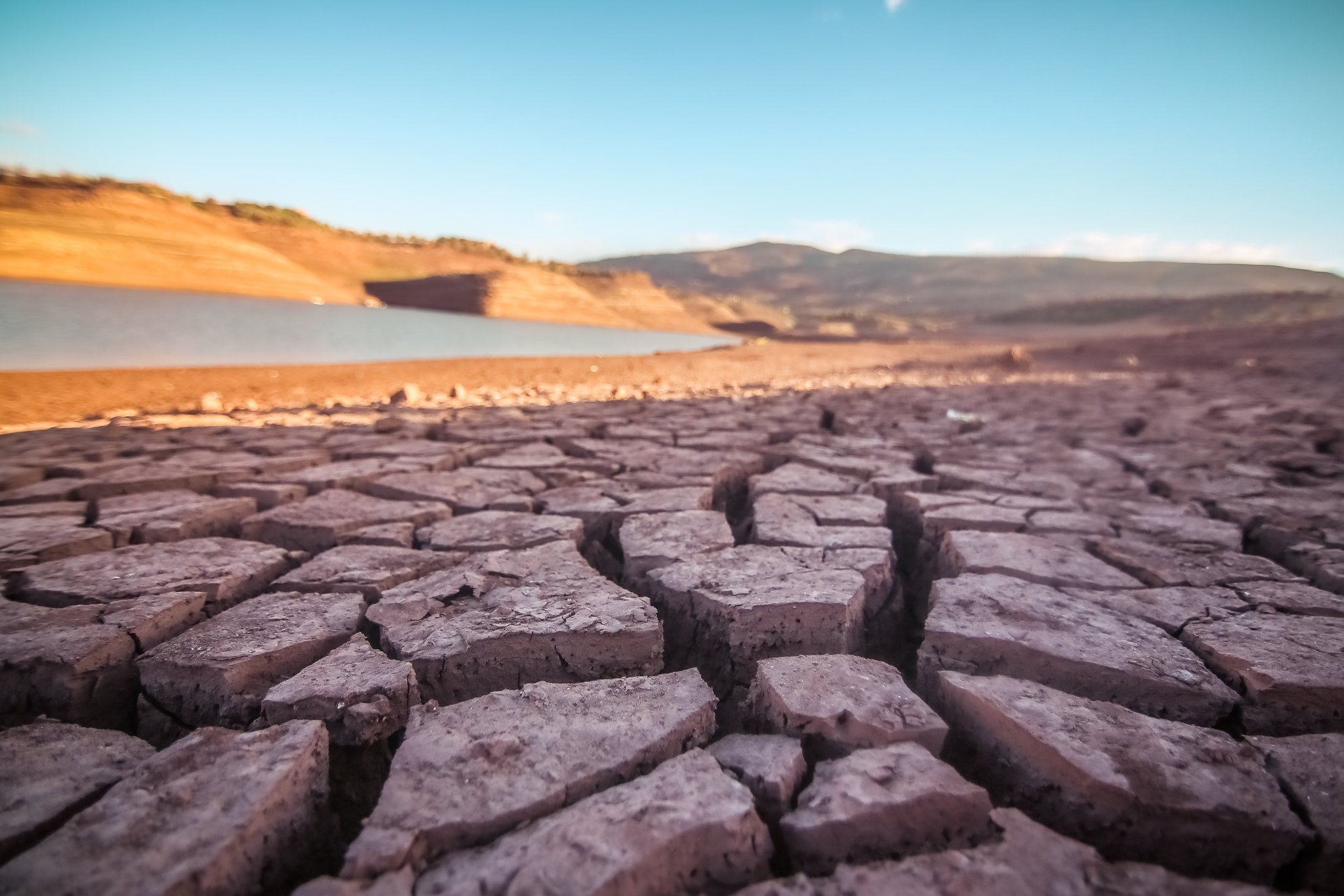
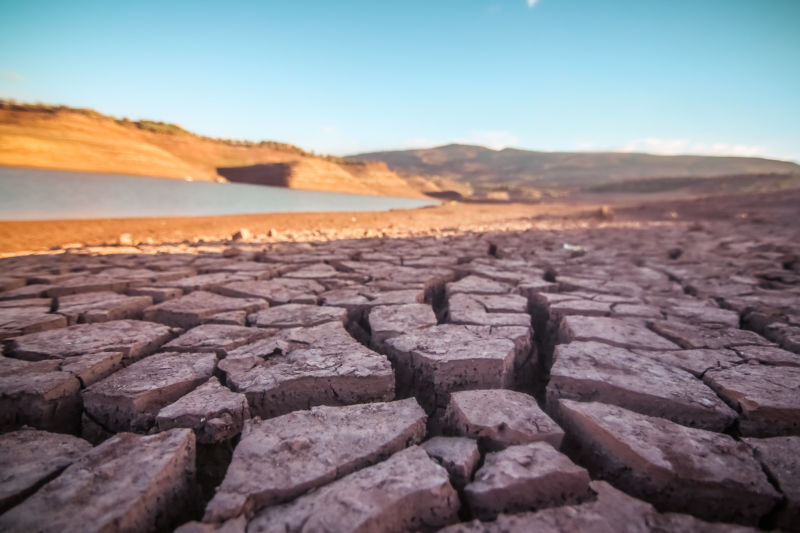
Huge numbers of people depend on water drawn from the ground, especially in drier regions, but these water resources are being steadily depleted. Less water in the ground doesn't just mean less water for us—it also means less water to flow into the rivers and streams that support freshwater ecosystems.

These dwindling supplies are set to have a devastating impact. A paper in Nature this week takes a close look at the use of groundwater around the world, estimating the point at which it becomes unsustainable. The news is dire: in many places, we're already there, and for many more, the limit will be hit within the next thirty years.

A delicate balance

Groundwater "is the world's largest freshwater resource," write hydrologist Inge de Graaf and her colleagues. It's used heavily in agriculture, which means it's important for food security, and it plays a particularly crucial role for people in arid areas or during droughts.

Read 12 remaining paragraphs | Comments

14 Oct 15:48

Volatile Times: The Political History of the Civil War Part VII.

14 Oct 15:46

Volatile Times: The Political History of the Civil War Part VI

14 Oct 15:45

Volatile Times: The Political History of the Civil War Part V

14 Oct 15:42

The Dig: Palestine and the Law with Noura Erakat

by Jacobin magazine
Tom Roche

2 hours, but well-detailed

Dan interviews Noura Erakat, the author of Justice for Some: Law and the Question of Palestine, a new book that analyzes the history of settler-colonialism in Palestine and the Palestinian struggle for liberation from just before the British mandate to the present through the lens of the law.

Thanks to Haymarket Books. Check out their huge selection of left-wing titles at haymarketbooks.org

Please support this podcast at Patreon.com/TheDig. We need those of you who can support us to do so because we provide every episode free to all.

14 Oct 03:32

Anti-Racism and the Politics of Diversity

Tom Roche

quite bizarre: claims (explicitly!) that anti-Zionism is "selective antisemitism"

How should anti-racism work in ‘super-diverse’ societies?

For as long as humans have lived together, we have grappled with questions about difference, identity, and tolerance – but what we really mean by these things must continue to be evaluated as the makeup of society and the degree of interconnection between its members change. Anti-racist politics of recent decades have been important in making a case for a cosmopolitan future – but, argues sociologist Keith Kahn-Harris, the rhetoric of anti-racism has often hindered, rather than helped, efforts to address the difficult questions about how to live together, particularly in increasingly diverse societies

This event was recorded live at the RSA on Thursday 10th October 2019. Discover more about this event here:https://www.thersa.org/events/2019/10/anti-racism-and-the-politics-of-diversity

14 Oct 01:52

Krystal Ball on Why Centrism Sucks

Tom Roche

excellent

Journalist Krystal Ball joins the show to talk about why centrism sucks, responding to Bill Maher's Klobuchar for president suggestion, her time at MSNBC, and more

Learn more about your ad choices. Visit megaphone.fm/adchoices

14 Oct 01:49

Episode 303 - The History of the Geisha

Tom Roche

excellent

Finally, a long overdue look at one of the most romanticized and exocitized parts of traditional Japanese culture. What are geisha? Where do they come from? Aren't they basically fancy prostitutes? And haven't I learned everything I need to know about them from reading Memoirs of a Geisha?


10 Oct 00:38

Ep 126 Magnitsky Myth feat Lucy Komisar

Tom Roche

VERY detailed!

Guest: Lucy Komisar. A deep dive into the story behind the “Magnitsky Hoax”. Lucy tells the story of Bill Browder, Hermitage (his hedge fund) and how he managed to create a massive political weapon called the Magnitsky Act to protect himself and his benefactors and to use against others. The story also involves shell companies, tax havens, money laundering, Mikhail Khodorkovsky, Robert Maxwell, Gazprom, HSBC, Natalia Veselnitskaya, the Trump Tower meeting, the resurgence of the Cold War with Russia, Russiagate, the Mueller Report, and more. 

Lucy Komisar is a New York City-based journalist with a long history of investigating offshore banks and corporate secrecy and abuses. One of her current long term projects is the investigation of the Browder/Magnitsky hoax. 

FOLLOW Lucy on Twitter @LucyKomisar where there is lively and active participation in this investigative work and find her work at her website TheKomisarScoop.com

Around the Empire is listener supported, independent media. Pitch in at Patreon: patreon.com/aroundtheempire or paypal.me/aroundtheempirepod. Find all links at aroundtheempire.com

SUBSCRIBE on YouTube. FOLLOW @aroundtheempire and @joanneleon.  SUBSCRIBE/FOLLOW on iTunes, iHeart, Spotify, Google Play, Facebook or on your preferred podcast app.

Recorded on September 24th and 27th, 2019. Music by Fluorescent Grey.

Reference Links:

  1. The Komisar Scoop
  2. The Man Behind the Magnitsky Act, 100Reporters, Lucy Komisar
  3. The BBC and the European Court get the Magnitsky story wrong, Lucy Komisar
  4. The Man Behind the Magnitsky Act: Did Bill Browder’s Tax Troubles in Russia Color Push for Sanctions?, Lucy Komisar
  5. Documentary: The Magnitsky Act: Behind the Scenes, Andrei Nekrasov

Timestamps:

2:00 Intro, Lucy’s background, how she met Bill Browder, investigating money laundering, Khodorkovsky, Avisma, Browder, Yukos, Peter Bond, Russia

9:00 The Magnitsky Hoax, how Browder/Magnitsky ties into other things like Russiagate, resurgence of the Cold War, Robert Maxwell, etc. 

11:30 Bill Browder background, Robert Maxwell, Salomon Brothers, telecom Peter Star, Edmond Safra, IMF funds, Beny Steinmetz, Hermitage hedge fund, Mossack Fonseca, Ziff Brothers

16:30 Offshore shell companies, fall of USSR, “shock therapy”, shares/vouchers, Cyprus, Gazprom, Russia-Cyprus double taxation treaties, fraud, Kalmykia region in Russia, Browder tax evasion

23:45 Sergei Magnitsky (Browder’s accountant) investigated 2006, Browder lost Russian visa 2005, Putin, 2007 Browder companies docs seized, Firestone Duncan, Browder says companies stolen

31:00 Magnitsky interrogated 2008, prepares to flee, arrested & imprisoned, HSBC (trustee for Hermitage fund), tax refund fraud, Renaissance, Prevezon, OCCRP, Browder media stenographers, Rimma Starova blew the whistle, Russian reporter Oleg Lurie met Magnitsky in prison, Magnitsky doesn’t mention abuse to Lurie or human rights orgs, Browder doesn’t mention to US House Human Rights Committee,  Magnitsky dies in prison in Nov 2009 poor medical treatment, Russian authorities investigate and report terrible prison conditions, medical neglect

46:00 Russia still pursuing Browder for tax evasion, Jonathan Winer worked for John Kerry’s State Dept and later APCO, Khodorkovsky also client of APCO, Winer helps Browder craft a new story & strategy (“Magnitsky Hoax”) of Magnitsky murder, forgeries, used by media and govt for The Magnitsky Act, in his fraudulent document Browder names new culprits

54:30 Browder and Magnitsky Act help advance US anti-Russia foreign policy, OCCRP (Organized Crime and Corruption Reporting Project) helps Browder create docs, Magnitsky Act includes a section protecting Khodorkovsky

1:01:00 Documentary “The Magnitsky Act: Behind the Scenes” debunks Browder’s story, banned from broadcast 

1:03:00 Ken Dilanian’s May 2016 reporting on Magnitsky and Browder was killed by NBC, Robert Otto State Dept emails leaked

1:11:45 Trump Tower meeting, Natalia Veselnitskaya, Rob Goldstone, Prevezon case, Russiagate narrative, Fusion GPS, Glenn Simpson

1:32:30 Trump-Russia investigation, The Mueller Report repeats Browder’s Magnitsky hoax story

1:43:00 in 2016 Browder found guilty in Russian court and new embezzlement charges filed as a result of his tax refund fraud

1:51:00 Complexity of tax havens, shell companies, money laundering, purpose of Global Magnitsky Acts campaign as a political weapon


08 Oct 03:38

Volatile Times: The Political History of the Civil War Part IV

08 Oct 03:33

Volatile Times: The Political History of the Civil War Part III

08 Oct 03:32

Volatile Times: The Political History of the Civil War Part II

08 Oct 03:30

Volatile Times: The Political History of the Civil War

07 Oct 12:21

Democracy Now! 2019-09-26 Thursday

Tom Roche

Snowden "for the hour." Part 1 of 2: 2nd is @ http://www.democracynow.org./shows/2019/09/30 (also for the hour)

Democracy Now! 2019-09-26 Thursday

  • Headlines for September 26, 2019
  • "Financial Censorship Is Still Censorship": Edward Snowden Slams Justice Dept. Lawsuit Against Him
  • Edward Snowden Condemns Trump's Mistreatment of Whistleblower Who Exposed Ukraine Scandal
  • Permanent Record: Why NSA Whistleblower Edward Snowden Risked His Life to Expose Surveillance State

Download this show

07 Oct 12:21

Democracy Now! 2019-09-30 Monday

Democracy Now! 2019-09-30 Monday

  • Headlines for September 30, 2019
  • Edward Snowden: Private Contractors Play Key Role in U.S. Intelligence's "Creeping Authoritarianism"
  • Snowden Reveals How He Secretly Exposed NSA Criminal Wrongdoing Without Getting Arrested
  • Whistleblower Edward Snowden on Trump, Obama & How He Ended Up in Russia to Avoid U.S. Extradition

Download this show

05 Oct 21:12

Behind the News: Impeachment; Sanders's Climate Plan

by Jacobin magazine
Tom Roche

Athanasiou (2nd seg) is skippable, but Moyn is quite good

Samuel Moyn (author of this article and this) on the political snares of impeachment. Then, Tom Athanasiou on the Sanders climate plan and the need for a global Green New Deal (article here)

03 Oct 16:35

Rep Schiff favors dangerous Russian provocations, visits Armenia; Iran & Russia in Armenia; with Dr Brenda Shaffer.

by The John Batchelor Show
Tom Roche

as of 1630 UTC 3 Oct 2019, link gets error 410 (text='Gone'). However, Shaffer 1 of 2 (below) works.

Image:  A Russian-Armenian volunteer unit, 1915.  Public domain.
.
Dr Brenda Shaffer, Georgetown University,  on how Armenia meddled with Azerbaijan’s telephone lines.  Young soldier was killed and telephone lines killed; this is not a frozen conflict. Russia and Iran are both heavily involved. Intentional provocations.  The whole tragedy dates to the end of the Soviet Union, when Armenia was encouraged by Moscow to take over 25%  of Azerbaijan’s territory.  A lifetime for the 900,000 Azerbaijanis who lost their homes.  International law has done zip.  Several times, Armenia and Azerbaijan were at the edge of signing an agreement – and Moscow intervened heavily to keep the conflict going.   A nuclear power plant near Erevan sends 30% of the electricity it produces to Iran in exchange for natural gas.  Mirabile dictu: Rep Schiff goes to Nagorno-Karabakh and advocates for aid to Armenia and cessation of US aid to Azerbaijan.

30 Sep 07:19

The Solution to the Country’s Debt and Deficit Problem

Tom Roche

excellent as usual. pullquotes (slightly edited):
> [Patents] and copyrights [allegedly provide] incentives for innovation and creative work. However, unlike direct spending, which adds to our deficit and debt, no one ever includes any measure of future patent and copyright rents in our deficit or debt figures. [Since] these monopolies are a free monopoly, let’s [monetize them.] Suppose the government were to auction all sorts of valuable patents. We can start with the wheel. That should be worth a good chunk of money. Whoever owns the patent on a wheel can force the auto industry, the bicycle industry, and even manufacturers of wheelbarrows and toy cars to pay a big licensing fee on every one of their products they sell.

> But the wheel is just the beginning. We can auction off patents on fire, ice, even chicken soup. This is a way to raise an almost infinite amount of money for reducing the deficit and debt. [And] if we aren’t getting enough money from patent sales, the government can also auction off copyright monopolies.

...

> [Free speech be damned: regarding] a copyright law written to ensure that Mickey Mouse did not pass out of copyright protection, the Supreme Court [ruled](https://en.wikipedia.org/wiki/Eldred_v._Ashcroft) that it was fine to extend copyrights retroactively, giving more incentive for people to do creative work seventy five years ago.

> Sure, this proliferation of patents and copyrights is incredibly wasteful, but we know that people involved in policy debates don’t give a damn. After all, how many politicians, columnists, or reporters ever point out that the only reason that a life-saving cancer drug might cost $300,000 is that the government has given the company producing it a patent monopoly? That basic fact almost never appears in public discussions, nor is anyone so rude as to point out that the drug would likely just sell for a [few hundred dollars](https://www.thebodypro.com/article/1000-fold-mark-up-for-drug-prices-in-high-income-c)[archived @ https://web.archive.org/web/20190821073034/https://www.thebodypro.com/article/1000-fold-mark-up-for-drug-prices-in-high-income-c] in a free market.

...

> If [opioids were] generic drugs in a free market, Purdue Pharma and the rest would have had much less reason to mislead doctors about the safety and effectiveness of their drugs.

...

> [US] policy types have no interest in the inefficiency and corruption that results from patent and copyright monopolies. They don’t want to talk about these issues and will not allow their media outlets to be used for this purpose. Since they are concerned about debt and deficits then this policy seems an obvious winner for them. After all, I’m proposing a sure fire way to eliminate the debt and deficits. The only cost is that we get some more waste and corruption. Since these issues don’t register on the deficit hawks’ radar screen, [what's the downside]?

...

> What about the burdens created by [US public] debt? Yes, the debt does imply future interest payments, and this can divert resources from other uses. People who own bonds have more spending power as a result of their interest income. However, there are three important qualifications.

> 1) If the economy would be operating below its capacity with a lower deficit, then the deficit is likely increasing the economy’s future potential through higher investment and keeping workers employed developing new skills. If the larger debt causes another 1.0 percent of GDP to go to interest payments, but GDP is 3.0 percent higher than it would have been otherwise, then even the non-interest earners are better off as a result of the higher debt and deficit.

> 2) A large debt does not necessarily mean high interest payments. Interest as a share of GDP is considerably lower now than in the early and mid-1990s, even though the debt to GDP ratio is much higher today. The reason for the difference is that interest rates are much lower today. In spite of its enormous debt to GDP ratio (over 250 percent), the I.M.F. [projects](https://www.imf.org/external/pubs/ft/weo/2019/01/weodata/weorept.aspx?pr.x=33&pr.y=7&sy=2019&ey=2024&scsm=1&ssd=1&sort=country&ds=.&br=1&c=158&s=GGXCNL_NGDP%2CGGXONLB_NGDP&grp=0&a=) that Japan will have a negative interest burden in 2021. The reason is that much of its debt carries a negative nominal interest rate.

> 3) If someone is discussing the interest burden of the debt, and they ignore the burden of patent and copyright rents, then they are not being serious. The latter form of government created burdens is far larger. Anyone who is genuinely concerned about how we burden ourselves in the future based on current and past actions must add in these rents. Otherwise, they are not making any sense.

For most people, the country’s national debt and annual deficit are not major concerns. However, for a substantial portion of the policy types who make, write, and talk about economic and budget policy, debt and deficits are really big deals. And, the fact that our budget deficit and debt are both large by historic standards, and growing rapidly, is an especially big deal.

The list of people in this category is lengthy. It starts with the Peter J. Peterson Foundation (which displays the debt in big numbers right on its home page) and the many groups funded by them. The most important is the Committee for a Responsible Federal Budget, which is virtually guaranteed prominent placement in stories on the budget by major news outlets.

The Washington Post (both its news and opinion sections) has a high standing in deficit hawk circles. House Speaker Nancy Pelosi and other members of the Democratic leadership have at least one foot in the deficit hawk camp. And, of course, Republicans are big deficit hawks when a Democrat is in the White House.

In order to make these deficit hawks happy, I have a proposal – we’ll call it the “Baker Budget Fix” – that can eliminate debts and deficits forever. It’s fun, simple, and can give us balanced budgets for all eternity.

The basic point is that the government can sell off all sorts of patent and copyright monopolies and collect massive amounts of revenue. Regular readers know that I am not a big fan of patents and copyrights, but since I’ve made little headway in getting these policies questioned in public debate, why not just embrace them? After all, since everyone who matters seems to be just fine with ever longer and stronger patent and copyright protection, let’s use them to raise a ton of money for the government and make the deficit hawks happy.

Read More ...

25 Sep 20:24

Irreal: Tags and Categories in Org Mode

by jcs
Tom Roche

see Voit's UOMF (Using Org Mode Features) series @ https://karl-voit.at/2019/09/25/using-orgmode/

Karl Voit has a very nice post on Tags versus Categories in Org-mode. I’d completely forgotten about categories, even though I’ve written about them before, so I was glad to get a refresher. Categories, for those who don’t know, are the names in the left of the agenda listing. I always thought of them as just the name of the file the item was from but that’s just the default. It turns out that that name is really the category and you can set it to anything you want.

The question that Voit considers is when to use categories versus when to use tags. There is, of course, no hard and fast rule but Voit explains what he does and why he does it. Generally, he just uses the default category but sometimes he may have several files related to a single “thing” and he uses a single category for the files so that all the items have the same name in the agenda. That’s more important than you might think because you can filter the agenda on a category so you want related items to have the same name.

Whereas each item can have only one category, it can have several tags. Voit recommends using a limited number of tags but emphasizes that that’s just what works best for him. I tend to use tags as a list of keywords to help me find an entry. Thus I might tag a journal entry containing the magic spell to compile Emacs with emacs and compile. I try not to go crazy and use more than, say, five tags per entry but I haven’t found that to be limiting.

The moral here is that there are many systems for tagging and using categories and you should choose one that best fits your workflow. Be sure to take a look at Voit’s post. It covers all the details and is very informative.

25 Sep 15:49

Democracy Now! 2019-09-25 Wednesday

Tom Roche

Billy Bragg (last segment) is 1st of 2 (web exclusive)

Democracy Now! 2019-09-25 Wednesday

  • Headlines for September 25, 2019
  • "We've Reached Critical Mass": Rep. Al Green on Pelosi Vow to Impeach Trump for "Dastardly Deeds"
  • Trump Lashes Out at Iran, China & Venezuela in Nationalist Address to U.N. General Assembly
  • Billy Bragg: What the U.K. Supreme Court's Historic Ruling Against Boris Johnson Means for Brexit

Download this show

24 Sep 21:44

Secret: The making of Australia's security state

Tom Roche

excellent

Brian Toohey's history of the uses and abuses of intelligence agencies in Australia.
24 Sep 18:21

The Problem With Switching to Electric Cars

by Andrew Small
Tom Roche

pullquote:
> Since 1990, [California’s] Corporate Average Fuel Economy (CAFE) standards have helped reduced tailpipe emissions by 5 million metric tons, and fuel efficiency has grown by 35 percent from 1990 to 2016. But emissions still rose by 21 percent over that period. Why? Because driving—as measured in vehicle miles traveled, or VMT—increased by 50 percent, more than cancelling out the technological gains.

Earlier this month, in their seven-hour climate town hall, CNN had its anchors put the same incredulous question to the 2020 Democratic presidential candidates: Are we all going to have to drive electric cars now?

The short answer was: Yes, indeed, and quickly. “We have to take combustion engines vehicles off the road as rapidly as we can,” Vice President Joe Biden said. Senator Bernie Sanders called for “heavily subsidizing the [electric vehicle] industry.” Senator Elizabeth Warren expressed her goal to switch all light-duty cars and trucks to electric power by 2030, following the blueprint laid out by erstwhile climate candidate Governor Jay Inslee. (Senator Kamala Harris sets her EV objective to 2045.) And entrepreneur Andrew Yang responded to Wolf Blitzer’s question with his typical techno-optimism. “Electric cars, it’s not something you have to do. It’s awesome,” Yang said. “You feel like you’re driving the future. And I did not just say that because Elon Musk endorsed me just the other week.”

There’s a problem with that rosy response: If Americans drive their electric cars anywhere near as much as they do with their current gas-guzzlers, it would cancel out the carbon reduction brought on by electrification.

The lines drawn for climate activists have become much sharper on reducing emissions. With the Intergovernmental Panel on Climate Change (IPCC) giving the world about a decade to switch over to an emission-free future, de-carbonizing transportation now has a CNN-countdown-clock-level urgency. Still, the Democratic candidates remain vague on how to they will fund or build a carbon-free transportation network.

It’s a common refrain that the transportation sector is now the greatest contributor to greenhouse gas emissions, making up 29 percent of the U.S. in 2017. Of the 1.8 billion tons of greenhouse gases produced by transportation in the United States in 2017, 59 percent of it came from passenger cars and light-duty trucks. Add heavy-duty trucks (23 percent) and that number goes up to about 82 percent of transportation emissions.

Part of that story is actually a success: Electricity generation used to hold the dubious honor of being the biggest contributor to climate change, until the combination of advancements in wind and solar and cheaper natural gas gave cleaner alternatives to coal power. Indeed, carbon-free transportation will eventually require a carbon-free grid, with that latter goal set by 2045 or 2050.

With 75 percent of Americans still driving to work by themselves, changing over to electric cars looks like a promising step for reducing emissions. But a host of timing and technical challenges stand in the way. Electric vehicles accounted for just two percent of the 5.3 million cars sold last year, and Americans are holding on to their cars longer than ever; at current rates, it would take about 15 years for the current 263 million vehicle fleet to turn over. Ramping up EV sales would require radically ambitious incentives. Many EV skeptics note that the vehicles themselves are resource-intensive to manufacture, and electric cars take about twice as much energy to build than a traditional internal combustion car. And before mass electrification of cars and decarbonizing the grid, Americans will need to reckon with two big facts: The population is growing and people are driving more.

Just look at California, which has been battling the Trump administration over raising fuel economy standards. Last Thursday, the federal government revoked California’s waiver to require auto fleets to get 51 miles to the gallon by 2025. And on Friday, California and 22 other states, along with D.C., and the cities of Los Angeles and New York City, sued the Trump administration over their right to set pollution limits, as the administration eyes freezing the federal fuel standards to 37 miles to the gallon. In California, 41 percent of the state’s greenhouse emissions are transportation-related.

Even with increased fuel efficiency, climate targets prove difficult to reach. Since 1990, the state’s Corporate Average Fuel Economy (CAFE) standards have helped reduced tailpipe emissions by 5 million metric tons, and fuel efficiency has grown by 35 percent from 1990 to 2016. But emissions still rose by 21 percent over that period. Why? Because driving—as measured in vehicle miles traveled, or VMT—increased by 50 percent, more than cancelling out the technological gains.

“California expects to have 50 million people by 2050, we’re just shy of 40 million today,” says Steve Cliff, deputy executive director of California Air Resources Board (CARB). “If VMT were to grow at the same rate relative to today, it would be completely unsustainable—not only from a climate and air-quality perspective, but for congestion and fiscal obligations, too.”

To reduce the state’s carbon emissions from transportation another 20 percent by 2035, CARB outlines three things that need to happen: more electric cars, greater use of less-carbon-intensive fuels, and fewer miles driven. That means putting about 5 million electric vehicles on the road, reducing carbon intensity of fuel by 20 percent by shifting to renewable sources such as hydrogen and biodiesel, and reducing driving by about 20 percent.

But that last part doesn’t have to sound so daunting. CARB estimates each Californian would have to reduce their average daily VMT by 4.7 miles*—a small shift for the average 23 miles person driven daily in, say, the Bay Area. “This translates into something like, for [someone who commutes by car], taking transit one day a month, or riding a bike one day a month, or carpooling one day a month,” Cliffe says. “Those are all fairly straightforward options, but it needs to be convenient and it needs to not be seen as taking away or curbing people’s ability to get around.”

With 46 percent of vehicle trips under three miles, reducing VMT could be sped by infrastructure and public transit improvements that encourage more people to take trips without a car. “Electrification is important,” says Scott Goldstein, the policy director of Transportation For America (T4A), a program by Smart Growth America that pushes for more state and federal investment in public transportation. “But if you trust the scientists who say we have only 11 years to avoid the worst effects of climate change—not to stop it but just get it under control—then we can’t wait until 2030.”

Urbanization itself reduces driving. To that end, T4A argued last week that federal funding that expands roads instead of improving transit undermines progress on climate policy. One study found that urban Millennials travel on average 24 miles per day by car, compared to 35 miles a day among rural peers. And more densely developed housing means fewer vehicles miles traveled per household, so rethinking land use—and resisting sprawl—has to be part of any decarbonization regime.

“The easiest and cheapest thing to do is drive just a little bit less,” Goldstein says. “We could do that today. We could build our communities, suburbs, and cities to be safer, more convenient for people to get around without having to drive. You can build downtowns where you only have to park once. Or breaking up big roads with smaller streets can reduce the length of driving trips.”

Reducing the number and length of trips doesn’t even have to involve a complete overhaul of suburban car culture overnight. Small tweaks can help. “It can be something as simple as creating more cross streets in a suburban development, so people don’t have to drive the whole way around,” Goldstein says. “Or a grocery store can build parking behind the store, away from the street, so people are more inclined to walk in rather than drive.”

Electric vehicles could have an important role to play in this transition. While Minneapolis famously undid its restrictive single-family zoning laws in a bid to boost residential density, it is also teaming up with St. Paul to launch the first municipally owned electric car-sharing system in the Twin Cities, one designed to complement transit and lure commuters out of their cars.

“We really think car-sharing will shed single-occupant, self-owned cars and postpone the buying of an individual vehicle,” says Will Schroeer, the executive director of East Metro Strong, a transit advocacy group in the Twin Cities. “One shared vehicle takes about eight to 11 private cars off the road.”

Schroeer also sits on the board of Hourcar, the nonprofit that operates the city’s car-share program. Their EV service is set to go live in 2020, with a network of 70 public EV charging stations and a fleet of 150 battery-electric vehicles close to transit stops and mobility hubs. The idea is to quickly get more people to drive a lot less. And when they do drive, they’ll be doing it in a (rented) zero-emissions vehicle.

“Once you don’t have the car in your driveway, you tend to walk or you ride transit, or the more you trip-chain and use a car for less of your journey. ”

CORRECTION: A previous version of this story used an incorrect figure for CARB’s recommended reduction of daily vehicle miles traveled for Californians: The 1.6 mile reduction is based on projected 2035 levels of driving, not present day.

24 Sep 03:22

Behind the News, 9/19/19

Tom Roche

excellent, esp the Einhorn (2nd) segment

Behind the News, 9/19/19 - Sam Gindin on the UAW, GM, and green repurposing; Robin Einhorn on slavery and taxation in the US - Doug Henwood