Tom Roche
Shared posts
Andrea: An Elisp snippet to dowload YouTube videos transcripts
Tom Rocheuntried, but illustrates not only a means to access YouTube transcripts directly, but also wrapping Python in Elisp. post @ https://ag91.github.io/blog/2022/03/27/an-elisp-snippet-to-dowload-youtube-videos-transcripts/ , archived @ https://web.archive.org/web/20220328020212/https://ag91.github.io/blog/2022/03/27/an-elisp-snippet-to-dowload-youtube-videos-transcripts/
The Franks: everything you wanted to know
Tom RocheEXCELLENT: necessarily thin addition to the big-topic-overview 'everything you wanted to know' series, but Cooijmans covers the people, place, and period c300-987 well
See acast.com/privacy for privacy and opt-out information.
Matthew Wright: Using requests and BeautifulSoup in Python to scrape data
Tom RocheHTML scraping and parsing
Sometimes pandas.read_html doesn't work for scraping website data, but you can try using requests and BeautifulSoup to do it yourself.
The post Using requests and BeautifulSoup in Python to scrape data appeared first on wrighters.io.
Alvaro Ramirez: Plain Org v1.2.1 released
Tom Rochewhere is the Android equivalent? (Not that I'd welcome much typing on my phone, but I can definitely see the usecase.)
27 March 2022 Plain Org v1.2.1 released
Plain Org v1.2.1 is now available on the App Store. The update receives minor features, bug fixes, and improvements.
If you haven't heard of Plain Org, it gives you access to org files on iPhone while away from your beloved Emacs.
I love org markup, but we (iPhone + org users) are a fairly niche userbase. If you're finding Plain Org useful, please help support this effort by getting the word out. Tell your friends, tweet, or blog about it.
On to v1.2.1 release notes…
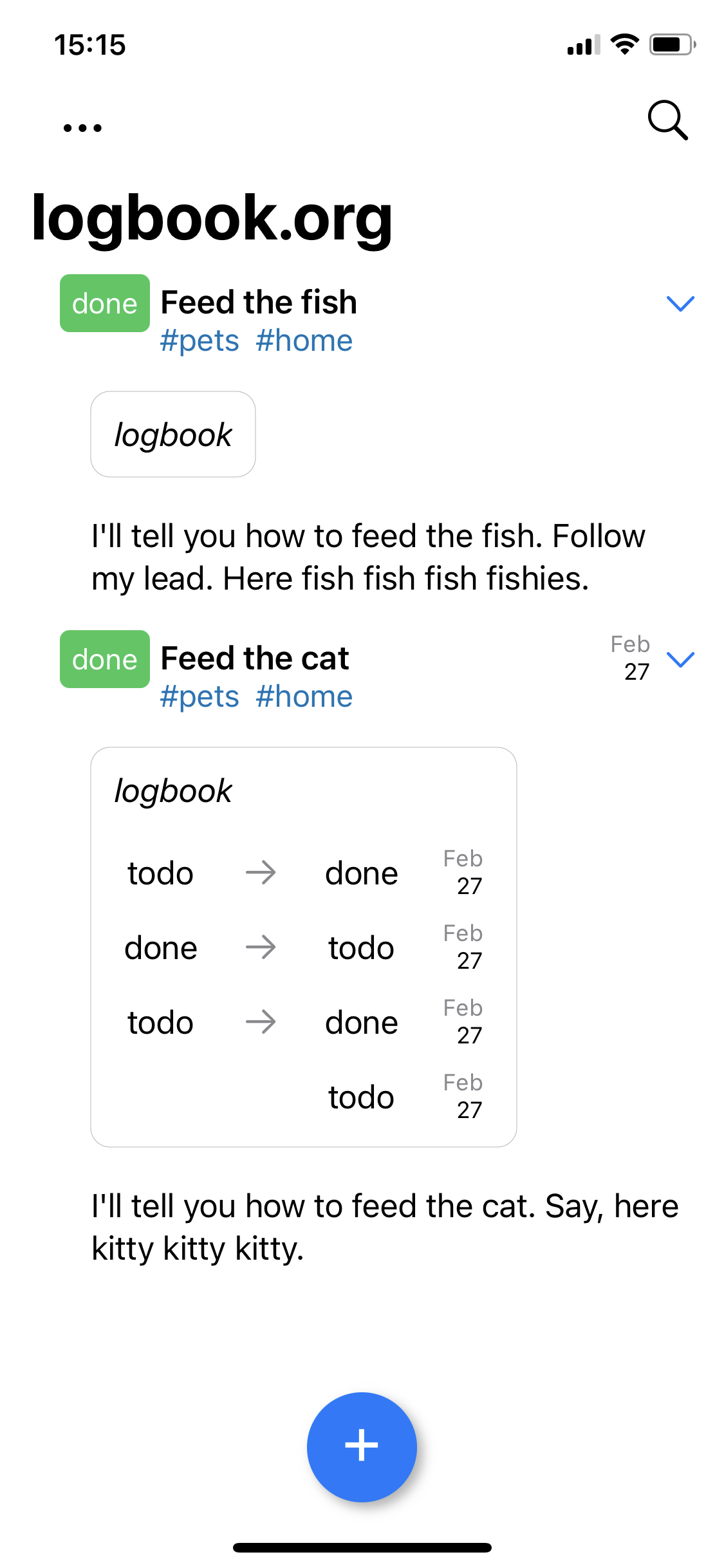
Render LOGBOOK
State transitions and LOGBOOK drawers are now recognized and rendered as such.
Either of the following snippets are rendered as togglable LOGBOOK drawers.
* TODO Feed the fish
- State "DONE"       from "TODO"       [2022-03-11 Fri 12:23]
* TODO Feed the cat
:LOGBOOK:
- State "DONE"       from "TODO"       [2022-03-11 Fri 12:23]
:END:
Add task to top/bottom
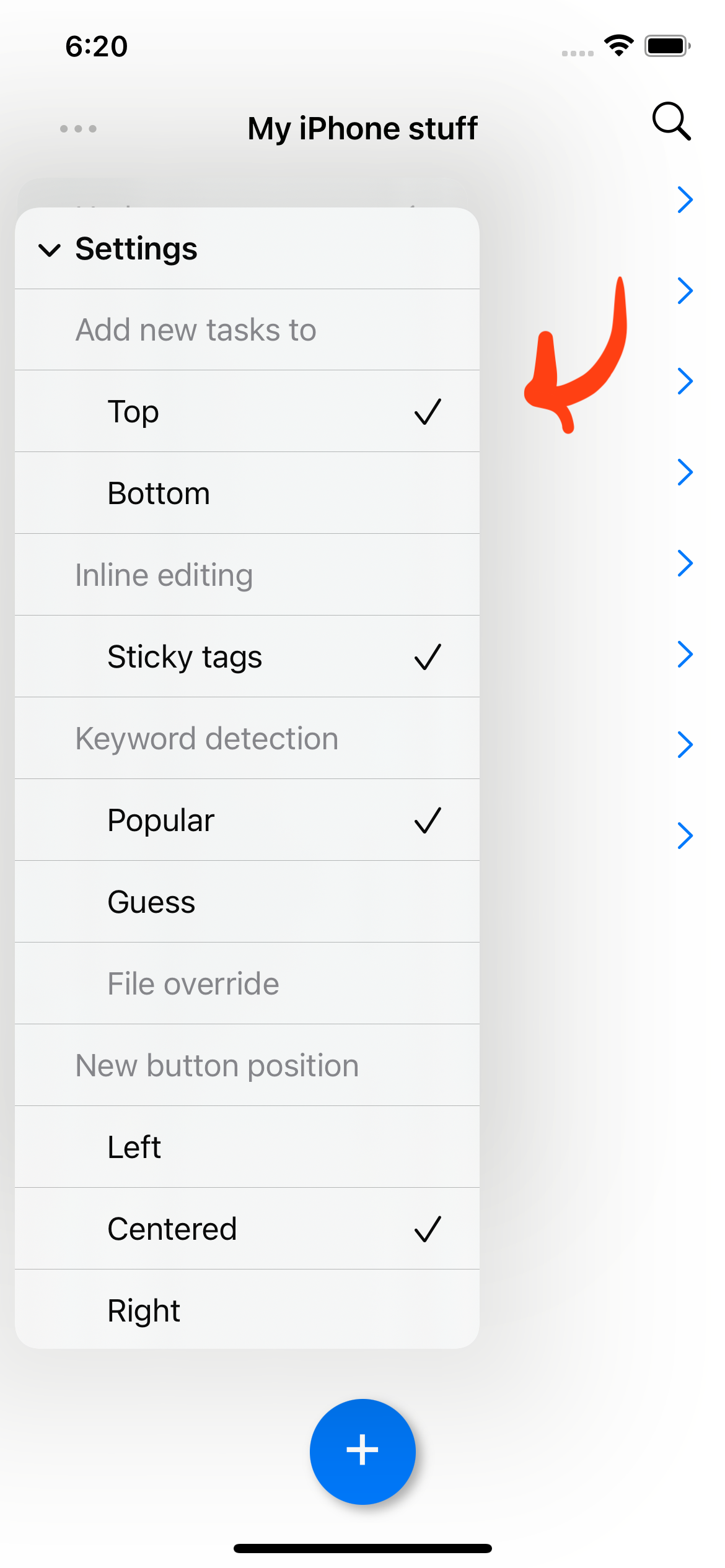
Up until now, tasks were always appended to the bottom of things. This didn't work so well if you like seeing recent items bubbling up to the top.
This version adds a new setting: Settings > Add new tasks to > Top/Bottom, giving you the choice.
Note: Top is the new default value, please change this setting if you'd like to keep the previous behaviour.
Checking for changes
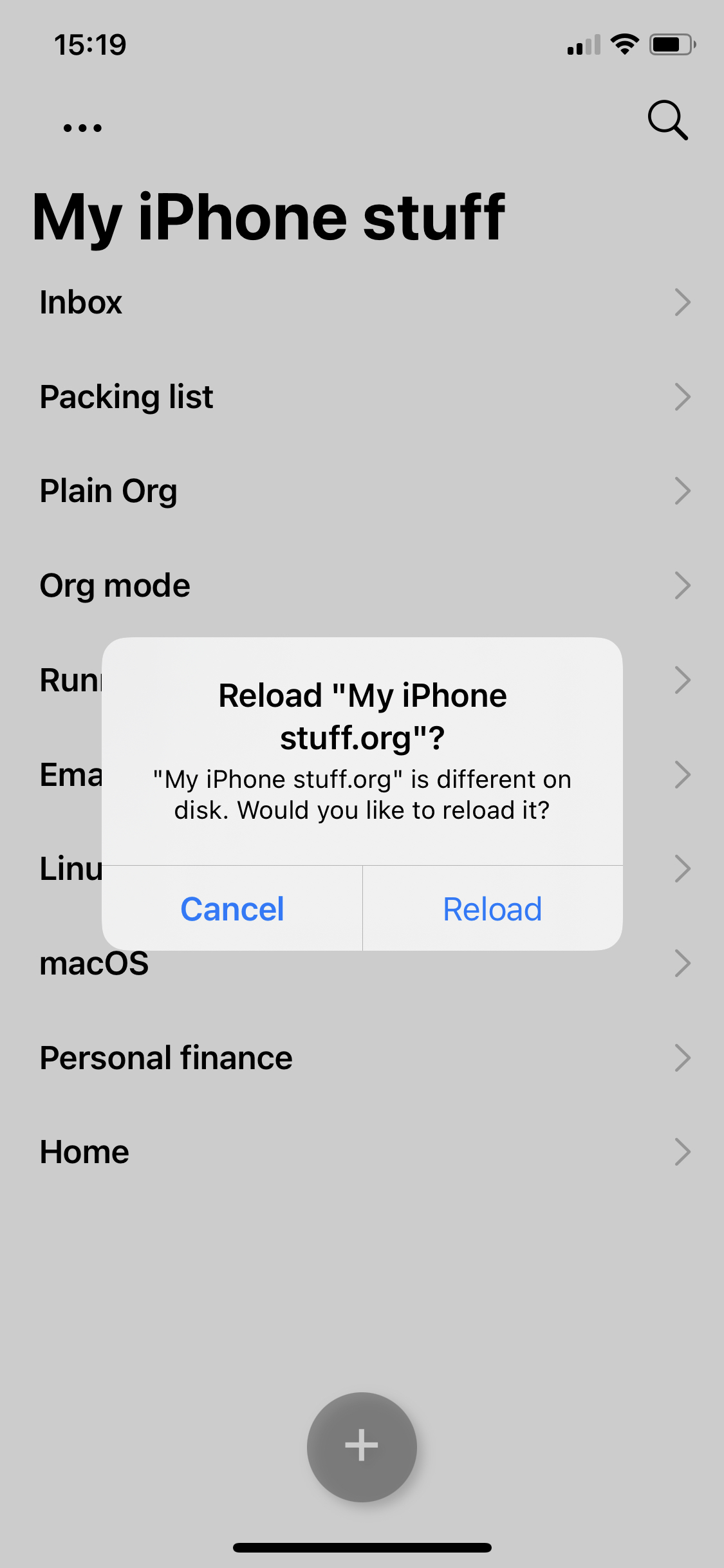
Local file changes aren't always detected via state change notifications, so additional checks are now in place to offer reloading files.
Open inactive files
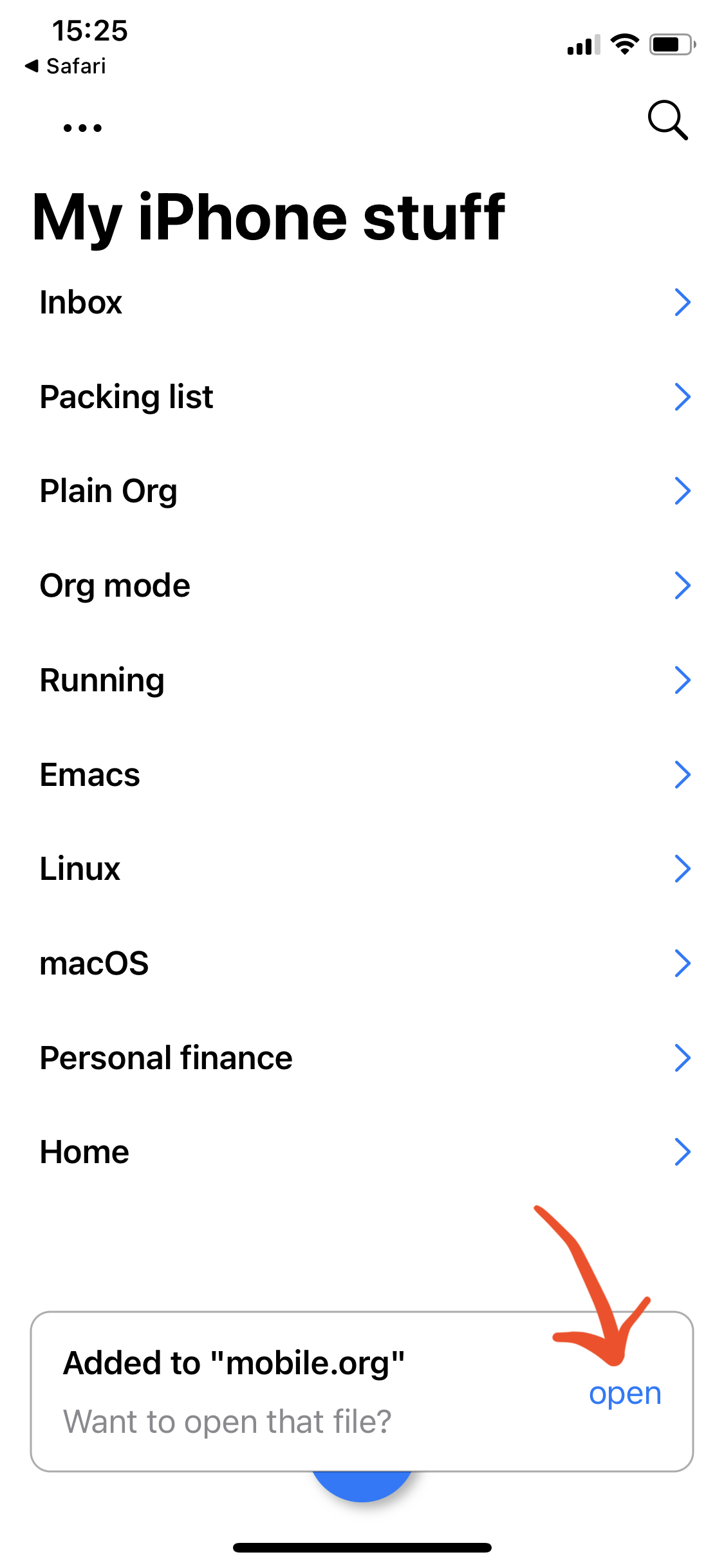
After adding new tasks via iOS's share sheet, if the item was added to a file other than the active one, offer to open that instead.
Other improvements
- Color keyword red/green depending on #+TODO: position.
- Round-trip planning order (SCHEDULED, CLOSED, DEADLINE).
- Improve tag alignment to match org mode behaviour (best effort, sorry).
- Improve vertical spacing prior to lists.
- Improve share sheet reliability.
- Fix opening local links from list items.
- Fix indent for list items without previous content.
- Fix race condition in adding TITLE and ID to new files.
- Fix incorrect keyword color selection in search toolbar.
- Fix menu inadvertently closing.
- Fix menu tapping for iPad.
Radio War Nerd EP 322 — Chechen Wars, Pt. 2: 1722-1991 + Ukraine-Russia War Update
Tom RocheThis episode (recorded 24 Mar 2022) doesn't start well. The Nerds Russia-Ukraine war-status checkup is definitely less credulous (WRT Anglophone {corporate-funded, state-aligned} media) than last week's, but still takes those reports as their starting point, and remains rather speculative.
However, 'after the musical break' @ 52:38, they (except it's overwhelmingly Mark Ames) start on part 2 of their Chechen Wars series, where they do the kinda history at which they excel. Contrary to the show notes, they start with the 1st known Russian-Chechen contact (forces of Ivan IV) c1559, and continue with the history of Chechnya, the Vainakh peoples (of whom the Chechens are but one), the northern Caucausus (and its other peoples), Russia (mostly as it involves itself in the region, esp Russian armies), and the USSR, ending just on the eve of Russian independence (but crucially /not/ Chechnya independence--Ames discusses that, and how that emerges from Yeltsin's defeat of Gorbachev) in Dec 1990.
Probably still worth 104 min of your time, but feel free to skip to 52:38 and halve the time requirement.
Sanctions on Mofa feat. Ben Aris
Tom RocheBen Aris @ BNE Intellinews (or bne Intellinews, not sure about their branding) is an odd guy (in the following sense--I know nothing about him as a person) who's been on several excellent podcasts lately, pushing the same line. 1st, he's very good on the size and complexity of the Russian economy, and its integration into the global economy. E.g., Aris will mock the old John McCain line about how Russia is 'a gas station with an army'. (Not unlike the newer Saagar Enjeti line about it being 'a dying petrostate'.) But /then/ he turns around (figuratively speaking) and says that US-NATO-EU sanctions on Russia, and 3rd parties trading with it, will crater that economy. Which is just /ridiculous/: too much of the global economy is both
- too dependent on Russia (esp for bulk materials) to give it up
- too large (or otherwise important) for US-NATO-EU to sanction them
And we're already seeing this: India, for example, is already--post-sanctions--buying Russian wheat, oil, and coke (i.e., metallurgical coal). Furthermore, to a 1st approximation, the PRC, Japan, and Germany (3 of the world's 5 largest economies) are export-led manufacturers: they import relatively-large amounts of relatively low-economic-value (LEV) bulk materials, and export relatively-small amounts of relatively high-economic-value (HEV) manufactured goods. (It's a /very/ simple model of these complex economies, but useful.) The PRC will /not/ forego Russian LEV materials: not only do their manufacturers need them, but the PRC wants a stable, friendly Russia on its northern border (and BTW will therefore fight any US-EU-NATO regime change there). And eventually, Germany and Japan will realize that
- observing US sanctions is a choice (not enforceable by the US-EU-NATO, because Germany and Japan are too big to sanction)
- that choice is forcing /their/ manufacturers to consume more expensive LEV materials from the rest of the world
- ... while competing with PRC manufacturers, who are effectively being subsidized (since the prices for Russian LEV materials will decline to the extent sanctions decrease demand)
- as well as losing exports /to/ Russia, which is 3.1% of the global economy in PPP terms
... at which point German and Japanese economic elites (who dominate their polities, much like, though less than, US economic elites dominate US politics) will slowly, quietly, but firmly walk away from the US-EU-NATO "international order" and resume trading with Russia.
We spoke with founder and editor of BNE Intellinews, Ben Aris, on the sanctions on Russia, Russia's economic role in the world and Europe and the big question, is there any coming back from this? Also Nick says MOFA and Rob thinks its funny (correct).
WHERE TO FIND OUR GUEST:
https://www.bne.eu/
https://twitter.com/bneeditor
HOW TO SUPPORT US:
https://www.patreon.com/cornerspaeti
HOW TO REACH US:
Corner Späti https://twitter.com/cornerspaeti
Julia https://twitter.com/KMarxiana
Rob https://twitter.com/leninkraft
Nick https://twitter.com/sternburgpapi
Ciarán https://twitter.com/CiaranDold
I Want You Back: Getting My Personal Data From Amazon Was Weeks of Confusion and Tedium
Tom RocheTODO: close/restart account @ Amazon, et al. Pullquote:
> periodically start fresh, via Amazon’s ever-helpful [Request the Closure of Your Account and the Deletion of Your Personal Information"](https://www.amazon.com/gp/help/customer/display.html?nodeId=GDK92DNLSGWTV6MP) page. [archived [here](https://web.archive.org/web/20220120015253/http://www.amazon.com/gp/help/customer/display.html?nodeId=GDK92DNLSGWTV6MP)]
You can view the information that various websites — like Facebook, Google, and LinkedIn, to name a few — have about you by submitting a data request. A corporate data request is a curiously asymmetrical notion: These companies don’t request your information, they just take it (sometimes even if you don’t use their services), yet you have to request your own information from them. It’s a bit like if you have a stalker who’s been shadowing you around, meticulously documenting everywhere you go, everyone you talk to, and everything you do, who’s now handing you a form to fill out if you want to see the boxes of files they’ve been keeping on you. I decided to request my data from Amazon, which courteously affords me the opportunity to join the ranks of the numerous third parties that can also get my data from Amazon.
The Roach Motel
The first thing I learned is that Amazon is in no hurry to give you your data, nor does it really encourage you to ask for it in the first place. I couldn’t even figure out how to navigate to the request page without turning to a search engine. In fact, Amazon seems keen to discourage data requests, as making one is a labyrinthine endurance test of being bounced from one webpage to the next, waiting for weeks, and then downloading, extracting, and combing through dozens of files. Requesting your data from Amazon is an exhausting procession that feels a little bit like a text adventure game designed by Franz Kafka.
Once you’ve actually made it to the preliminary “Request Your Personal Information” page, Amazon suggests that you can also access “a lot of your personal information in Your Account.” This is the first iteration of a refrain that you will run into multiple times throughout the protracted data request process, repeated every step of the way.

Amazon’s “Request My Data” selection menu.
Screenshot: The Intercept
After you click on “Request My Data,” you’re taken to a page with a drop-down menu where you can “select the data that you want,” with the option “Request All Your Data” in the 16th position, at the very bottom of the menu. And in case you’ve forgotten that you can also see some of your data in your account settings, Amazon offers a helpful reminder: “Don’t forget you can access a lot of your data instantly, as well as update your personal information, from Your Account.”
Once you submit your request, you’re taken to the “Data Request Creation” page, which thanks you and informs you that “You’re almost done…” but now need to click a verification link in your email. Amazon at this point makes some intonations about how this email verification step is necessary because your privacy and security are the company’s top priority, though considering that when your data is available you’ll need to check your email anyway, it’s not clear how checking your email twice adds any security. And by the way, in case you’ve forgotten already, Amazon also reminds you on this page that “You can access a lot of your data instantly, as well as update your personal information, from Your Account.”

Amazon’s “Data Request Creation” message.
Screenshot: The Intercept
At this point, you’ll need to pop over to your email and click the “Confirm Data Request” link. Doing so will take you to the “Data Request Confirmation” page, which informs you that Amazon has “received and [is] processing your request to access your personal data.” This feels a little strange, as you don’t recall ever making Amazon jump through this many hoops when it wanted to access your data. (This page again reminds you that you can get “a lot of your data … from Your Account.”)
The “Data Request Confirmation” page also informs you that you may be in for a bit of a wait. Though Amazon says that it will “provide your information to you as soon as we can,” “soon” is apparently meant to be interpreted on a monthly time scale, as the page further states that “usually, this should not take more than a month.” Though of course, “in exceptional cases, for example if a request is more complex or if we are processing a high volume of requests, it might take longer.” This protracted time frame forms an intriguing juxtaposition to the otherwise universal emphasis on speed that facilitates shopping on Amazon. “If you have to click multiple buttons, if you have to wait for too long, if you have to answer a lot of information — all of those things create friction, and friction exponentially kills the joy of shopping,” Nadia Shouraboura, a former member Amazon’s management board, said in the 2014 CNBC documentary “Amazon Rising.”

Amazon’s “Data Request Confirmation” message.
Screenshot: The Intercept
Given Amazon’s obsession with speed and eliminating friction to foster faster consumerism, the dawdling data solicitation process seems like it just might be intentional, designed to dissuade requests. A far simpler explanation comes through an invocation of Hanlon’s razor, the old adage to “never attribute to malice that which is adequately explained by stupidity.” Amazon whistleblowers cited by Politico have said that the company “has a poor grasp of what data it has, where it is stored and who has access to it.” If that’s the case, then it stands to reason that it can take a month or more for Amazon to process a data request. As former Amazon chief information security officer Gary Gagnon succinctly put it in an interview with Reveal, “we have no fucking idea where our data is.”
Asked whether the company takes a long time to fulfill data requests because it doesn’t have a good grasp on where customer data is kept, Amazon spokesperson Jen Bemisderfer said the company “strongly reject[s] the assertion that we don’t keep track of customer data. Producing [customer data] reports requires that we know where data is stored. Amazon maintains multiple and complementary tools and processes to systematically identify where personal data is stored and how it flows.”
Bemisderfer did not directly address a question about whether Amazon intentionally makes the data request process difficult, instead writing, “We are committed to providing customers with access to their information and are always looking for ways to improve the customer experience.”
It ultimately took about 19 days for Amazon to fulfill my data request, in stark contrast to its reported median time of 1.5 days to process a data request, as per the company’s California Consumer Privacy Act disclosure for 2020. There was no option for expedited Amazon Prime data delivery and no button equivalent to an instantaneous Buy Now (née 1-Click) option when selecting my data. When the data was finally ready, Amazon sent me an email expressing outright jubilation at the fact that it had managed to find my information, stating: “We are happy to confirm that we have completed your data request.” And since it’d been a few weeks, Amazon also understandably thought that I could use another reminder that I could “find all the available information” related to my Amazon profile (“including reviews”) on my profile page.

Amazon’s “Your personal data is ready to download” email.
Screenshot: The Intercept
Clicking the link to download the data in the arrival email in turn took me to the “Download your Amazon Data” page, which once again (for the sixth and, mercifully, final time) helpfully reminded me that “You can access a lot of your data instantly, as well as update your personal information, from Your Account.”
On the data download page, under the veneer of endless consumer choice, I was presented with a total of 74 separate zip files that had to be downloaded individually (though enterprising users have built scripts to help automate the process). This turn toward extreme granularity is doubtlessly not unappreciated by the ever-discerning consumer who, despite explicitly requesting all of their data from the drop-down menu earlier in the request process, may nonetheless now only wish to download the cryptic Advertising.1.zip and Advertising.3.zip but may studiously want to avoid Advertising.2.zip, and is therefore thankful to be spared the burden of being saddled with two additional kilobytes of extraneous data.

The Amazon data download page that Nikita Mazurov received.
Screenshot: The Intercept
Amazon is here employing a kind of reverse dark pattern: Instead of irksome layout gimmicks designed to trick users into inadvertently doing things (like subscribing to mailing lists), Amazon is using an irksome layout pattern to discourage you from downloading all of your data. Specifically, this is kind of a “roach motel” model reminiscent of when Yahoo presented users with more than 300 buttons to individually press to opt out of third-party data collection from its partners. Except in Amazon’s case, you have to go through this process to merely view your data, not opt out of it.
“You Can Access a Lot of Your Data”
Once you’ve gone through and painstakingly downloaded all of the zip files, you need to extract the contents of each one either using a program included with your operating system or (if you can’t find one already on your computer) a free tool like 7-Zip. The extracted data is predominantly in the form of CSV files, which can be opened in a spreadsheet editor like Calc, included with the free office productivity suite LibreOffice. (Microsoft Excel will work too.)
While Amazon’s reminders that you can access “a lot” of your data by looking around your account and profile settings is doubtlessly true (given that “a lot” is a nebulous quantifier), what becomes apparent when looking over your requested Amazon data is that the company collects a lot of information that you cannot view in those settings.
In skimming over this trove, one thing became very clear right away: Amazon sure seems to love to retain information. Though the company states that it is legally required to keep certain data like order history, other information like search keywords seems to be retained at Amazon’s discretion. The company intricately logs chat and email interactions you’ve had with buyers, sellers, and Amazon; your cart history; your orders, returns, and reviews; and your searches (for the past three-and-a-half years), or at least those made while logged into your account. The spreadsheet that lists your search history (Retail.Search-Data.Retail.Customer.Engagement.csv in Retail.Search-Data.zip) contains 65 fields with information like search terms, your IP address, how many search results you clicked on, how many search results you added to your basket, and how many search results you ended up buying. The file also includes fields with unclear titles. For instance, one column marked “Shopping Refinement” sporadically lists cryptic strings of numbers like “26,444,740,832,600,000” for various search queries.
Aside from keeping a meticulous ledger of all your site activity, Amazon also takes the liberty of holding on to data you may have had the mistaken impression you deleted. If you click “Remove” on any address you have stored in the “Your Addresses” portion of your Amazon account, this in fact only removes the address from that page, not from Amazon’s records. Addresses that you have removed from your account are merely labeled as “Is Address Active: No” in Retail.Addresses.pdf (within Retail.Addresses.zip). On its “Add and Manage Addresses” customer service page, Amazon makes no mention of the fact that deleted addresses are only deleted from being visible to you on your account page and are not actually deleted from Amazon’s servers. Given that account recovery security questions for various services can be along the lines of “What’s the name of the first street you lived on?” or the fact that people sometimes use their old house or apartment numbers as their PINs, gaining access to a user’s comprehensive list of old addresses can be particularly advantageous for someone who has access to your Amazon account and wants to expand their reach.
Amazon’s advertising data on you is inexplicably divided across three zip files. Advertising.3PAudiences.csv (in Advertising.1.zip) lists “Audiences in which you are included via 3rd Parties.” It’s not explained how Amazon acquires this third-party audience data, but according to this dataset I apparently am a homeowner, in possession of a luxury sedan and SUV, and in the 45 to 54 age range. This was all news to me, as I am none of those things. It genuinely feels good to know that Amazon is wasting resources on harvesting inaccurate audience demographic information from third parties.
The two Advertising.AdvertiserAudiences.csv files (in Advertising.1.zip and Advetising.2.zip), meanwhile, list “Advertisers who brought audiences in which you are included.” It’s not clear what this field actually means — for instance, if “brought” is a typo for “bought” — but at any rate, my data is apparently somehow linked to a total of 167 advertisers, including Carrington College, Clever Cutter, Fitbit, HCA Healthcare, the Leukemia & Lymphoma Society, and something called Animal Friends. Three Canadian banks — Bank of Montreal, Royal Bank of Canada, and Scotiabank — are disproportionately represented in this list of advertisers that have hoovered up my data; I don’t know why, though I did several times order gifts to Canada.
There are also zip files dedicated to other Amazon services like Alexa, Amazon Games, Amazon Music, Kindle, and Prime Video. I don’t make use of those, so mine were empty, though it does at this point come as no surprise that Amazon keeps track of, for example, how long you watch individual Prime Video offerings and which country you are in when viewing them, or which books you read on your Kindle, down to which pages you look at.
Overall, from my Amazon data request I learned that I never did find a good “DIY plasma ball kit” or a decent “summer watermelon recipes” book, but I am decidedly happy that Amazon thinks I’m a 45 to 54-year-old luxury sedan-driving homeowner and that multiple Canadian banks have a competing interest in me.
Minimizing Data Exposure
There are numerous steps one could take to minimize the amount of information Amazon is able to collect. You could be sure that you’re using ad-blocking software like uBlock Origin to reduce the chance of advertisers tracking your browsing habits and buying or selling that information. You can also peruse Amazon through the private mode in your browser, or at least while being logged out of your Amazon account. And if you don’t want Amazon to have your IP address, home address, phone number, and credit card information, you could always use a virtual private network for browsing, a Post Office box for shipping, a temporary burner phone number for account verification, and a temporary or virtual credit card number. It may also not be an entirely bad idea to periodically start fresh, via Amazon’s ever-helpful “Request the Closure of Your Account and the Deletion of Your Personal Information” page.
The post I Want You Back: Getting My Personal Data From Amazon Was Weeks of Confusion and Tedium appeared first on The Intercept.

Jeremy Friesen: Using a File as a Template in Emacs
Tom RocheTODO:
- start automating/elisp setup of templates, only instead (as I mostly use them) for blocks/sections within files
- look at linux equivalents of [Hammerspoon](https://www.hammerspoon.org/) for driving multi-app/OS automation
Minor Automation to Facilitate End of Week Reporting
At Forem, one of my responsibilities is writing up an end of week status report for the projects assigned to my team. Sometimes I delegate that responsibility (if there’s someone with more information for the week’s update).
I’ve found that I enjoy writing these reports. I spend about thirty minutes per project writing up the report. During that time I gather what’ve we done, what we’re planning to do next week, and write up any risks to the project.
Earlier this week, Allison, our head of engineering, provided an adjusted template to help facilitate writing consistent reports for tracking issues.
I figured I’d go ahead and automate Emacs 📖 to help me use that template.
Forem End of Week Status Update
The following emacs-lisp creates a buffer, from an existing template, to help kick off writing my end of week status reports.
(defvar jf/forem-eow-template
  "~/git/forem-internal-eng/.github/epic-progress-update.md"
  "The location of the template to use for end of week reporting.")

(cl-defun jf/forem-prepare-end-of-week-status-update (&key (template jf/forem-eow-template))
  "Create a buffer for writing up an Engineering End of Week Status Update.

TODO: Consider pulling down the latest version of that template."
  (interactive)
  (let* ((body (with-temp-buffer
		 (insert-file-contents template)
		 (buffer-string)))
	 (eow-buffer (get-buffer-create "*Forem EoW Update*")))
    (switch-to-buffer eow-buffer)
    (erase-buffer)
    (markdown-mode)
    (hammerspoon-edit-minor-mode)
    (insert body)
    (beginning-of-buffer)
    (kill-line)
    (insert (concat "## " (format-time-string "%Y-%m-%d")))))
Details
The above code:
- copies the contents of the template
- creates a new buffer titled
*Forem EoW Update* - sets it as Markdown type content
- enables Hammerspoon (see below)
- pastes the contents into the new buffer
- sets the first line to today’s date
I use Hammerspoon and the editWithEmacs.spoon to help me use Emacs for editing Emacs text areas. I wrote about that in Send Anything in OS X to Emacs for Editing. .
Conclusion
This little bit of automation ensures that I’m using the consistent template and am writing using my favorite computer tool. It’s a quick bit of automation, but one that I need to leverage at least once a week for the foreseeable future.
613 - Rise of the Unblooded: Curse of the Mad King Job, Part 4 (3/24/22)
Tom Roche4th/final segment in Chapo's D&D saga
The dramatic conclusion of our Rise of the Unblooded saga. Our heroes infiltrate the Alabaster Palace, confront the Mad King, and unveil the truth of their bloodlines.
Guided by DM Patches (@senator_gun)
Written by DM Patches & Jack Walden (@meanunclejack)
Series art by Artyom Trakhanov (@vor_bokor)
Democracy Now! 2022-03-25 Friday
Tom RocheDN! again returns to (excellent) form
Democracy Now! 2022-03-25 Friday
- Headlines for March 25, 2022
- Yanis Varoufakis: The West Is "Playing with Fire" If It Pushes Regime Change in Nuclear-Armed Russia
- Start of a New Cold War? U.S. Hawks "Want to Jack up the Military Budget and Use Ukraine as an Excuse”
- Meet Francia Márquez, the Afro-Colombian Land Defender Running to Be Colombia's First Black VP
We Need a Peace Settlement: Ukrainian Scholar Volodymyr Ishchenko on Russia's Invasion
Tom Rochepart 2 of interview: part 1 was segment 3 of 3 in 2022-03-22 broadcast
Democracy Now! 2022-03-22 Tuesday
Tom Rochenote @ end Goodman promises upcoming part 2 with Volodymyr Ishchenko (guest for 3rd of 3 segments)
Democracy Now! 2022-03-22 Tuesday
- Headlines for March 22, 2022
- Ketanji Brown Jackson Vows to Uphold Equal Justice Under Law at Historic SCOTUS Confirmation Hearing
- "Absolute Hellscape": Human Rights Watch Decries Russian Bombing & Siege of Mariupol
- Ukrainian Pacifist in Kyiv: All Sides Have Fueled the War. Only Comprehensive Peace Talks Can End It
Democracy Now! 2022-03-21 Monday
Tom Rocheone of the better recent DN!
Democracy Now! 2022-03-21 Monday
- Headlines for March 21, 2022
- "Russia & China, Together at Last": Historian Al McCoy Predicts Ukraine War to Birth New World Order
- "U.S. Hypocrisy on Ukraine": Biden Admin Remains Silent on Morocco's Occupation of Western Sahara
- Exclusive: Sahrawi Activist Sultana Khaya Speaks from Moroccan-Imposed House Arrest in Western Sahara
George Fouracres: Black Country Gentlemon
Tom RocheVERY EXCELLENT, quite funny, well worth 30 min of your time.
At one level, this is a bog-standard BBC celebration of regional subculture, esp dialect: the sort of thing they've been doing for literally /decades/ now. It can be done rather lowkey, conversational, sketch-format, like (say) Tudur Owen; or more uptempo and joke-oriented, like the incomparable [Mark Steel](https://www.bbc.co.uk/programmes/b00rtbk8/episodes/player). George Fouracres is not quite Steel-level (Steel does the whole damn country, Fouracres is just doing his home town (Wolverhampton) and region (the [Black Country](https://en.wikipedia.org/wiki/Black_Country))) but, like Steel, Fouracres is energetic, has a great voice for impressions (also singing and sound effects!), and writes excellent material. It gets more-than-a-little cheesy/sentimental at the end, but, hey, that's also part of the genre.
Vijay Prashad on Ukraine, Russia, NATO & The Media
Tom RocheEXCELLENT interview (with Vijay Prashad @ Globetrotter and LeftWord and Tricontinental), but too short: less than 30 min minus {intro, outro}, basically just a teaser (and in fact ends like a Joanne Leon 'bonus question' on why NATO did what it did in 1990s Yugoslavia). Mostly this is about
- how US-NATO corporate-funded media propagandizes its empire's activities and history, esp WRT NATO's 2011 war on Libya
- with a discussion of how that [[https://foreignpolicy.com/2016/03/22/libya-and-the-myth-of-humanitarian-intervention/][regime-change operation]] employed a no-fly zone, with applications to current (dangerous and foolish) calls for a NATO NFZ in Ukraine
- whataboutism and its history (inc a teaser about its origins in the UK empire's attempt to manage reporting on its wars in Ireland--which may be how William F. Buckley came to know and later use the term)
- eastern Europe deep history, esp the influence on Ukraine history of both Russia and the Polish-Lithuanian commonwealth
Can one sleep too much? Gavin Stephens doesn't think so. Unless his toenails grow too much of course.
Tom RocheTodd Graham ... is an acquired taste. Which I have not yet fully acquired (sometimes he WFM but not this time), so I advise skipping to 13:18 in the audio for the Gavin Stephens set, which is FUNNY.
Fresh audio product
Tom Roche2nd half (Giachino and Seidman from Private Equity Stakeholder Project on US private-equity over-investment in, and political support for, fossil fuels) is EXCELLENT.
1st segment (with Lieven from QIRS--see [transcript](https://lbo-news.com/2022/03/07/anatol-lieven-on-the-roots-of-disaster/)) is good on IR, but Lieven (who is fundamentally a Cambridge guy--his opposition to the Anglophone Empire, admirable as it is, obviously tests the limits of his willingness to antagonize his social set) keeps dropping Russophobe tropes in a rather obvious effort to maintain his viability in mainstream/orthodox discourse (i.e., to stay within the Overton Window). E.g. (and this is just a paraphrase, though it's not far off his actual remarks), Lieven will say something like "Putin's invasion is obviously unprovoked and inexcusable," immediately before or after remarks which explain that
- Russian state policy is not wholly determined by Putin--they have politics, and foreign/military politics, much like that of the mixed plutocratic/democratic hybrid state that runs the Anglophone Empire.
- Russian foreign/military actions, including the Ukraine invasion, are very much provoked by, and very much a rational response to, actual NATO expansion, actual NATO aggression, and the actual fact (ask, e.g., Libya and Iran) that US elites as a whole are currently (and have been for years now) *mostly* unwilling to stick to most international agreements, since ratifying actual *treaties* requires a 2/3 vote in the US Senate. (Excepting international agreements which most of the US elite backs (though some only tacitly), e.g., the "Abraham Accords." Aggressive Zionist settler-colonialism is not gonna be confronted by any US-governing elite faction anytime soon.)
Just added to my radio archive (click on date for link):
March 3, 2022 Anatol Lieven on Russia’s invasion of Ukraine • Alyssa Giachino and Derek Seidman, among the authors of this report, on private equity and fossil fuels
Radio War Nerd EP 321 — Ukraine-Russia War Update + Intro to Chechen Wars
Tom RocheVery good, very informative Nerdery ... but not great, because (IMHO, ICBW) Ames and Dolan are still over-influenced by the pro-Ukraine ideological hegemony in the Anglosphere. After the usual banter, they do
1. Russia-Ukraine war status, consideration of which leads to a larger discussion of ...
2. tactical change necessitated by the growth/extension of more autonomous (notably, drones), smaller (e.g., MANPADs, MANPATs), and powerful weapons. Nerds illustrate with 2020 Artsakh-Karabakh war.
3. Russian politics as context c1980-2022. As usual, the Nerds are esp good/informative here.
They then move (after music break ~69 min) to 1st of a series they pledge to do on the Chechen Wars. This "1st episode" (overwhelmingly given by Ames) contains
1. overview of Chechnya, esp geography, demography, and recent history (from c1800)
2. overview of Russian state (i.e. federal/national), south Russian (regional) and Chechnya history c1991-c2011, including overview of both Chechen Wars. Ames shines here.
3. how Yeltsin (with the active backing of the US, EU, and western Big Finance) stumbled into his 1994 invasion of Chechnya. The Nerds claim this has major and informative parallels to 2022 Ukraine: I suspect not, but ICBW.
Michael and Us: Contract With America
Tom RocheVERY EXCELLENT, and funny, both as usual
She's a Democrat. He's a Republican. They're speechwriters on warring campaigns... But can they fall in love??? That's the premise of the Michael Keaton/Geena Davis romcom SPEECHLESS (1994), which drew inspiration from the real-life romance between Clinton strategist James Carville and Bush advisor Mary Matalin. We discuss a movie that could only have been made in the '90s.
"John Cleese Had Thoughts on Slavery at SXSW and It Was Super Cringey" by James Hibberd - https://www.hollywoodreporter.com/news/general-news/john-cleese-sxsw-panel-1235109668/
"Bedfellows Make Strange Politics" by Gore Vidal - https://www.nytimes.com/1994/09/18/books/bedfellows-make-strange-politics.html
Michael and Us is a podcast about political cinema and our crumbling world hosted by Will Sloan and Luke Savage.
See acast.com/privacy for privacy and opt-out information.
IPCC warning over impact of climate change on Australian agriculture
Tom Rochevery good, unfortunately does not get into *why* global heating decreases agricultural productivity: too many folks don't understand that plants have temperature tolerances separate from needs for water, nutrients, etc
This is Sus: Queer as Folk feat. Sam Biederman
Tom RocheThis episode of Felix's TV odyssey (which may be the last, as FB states several times) is nominally about the 2000-2005 US soap-sitcom hybrid (not the original 1999 UK 'Queer as Folk') set in late-1990s gay Pittsburgh. Fortunately, as usual, this ep instead discusses
- LGBT-ness in US life and pop culture, informed by Felix's older gay brother Sam
- changes in US life and culture between 2022 and the show's late 1990s
- material and creative changes in how small-screen, non-movie video art (what once was just 'TV', but is now streaming, cable, downloads, etc--basically everything 'not shown in theatres')
- US class relations
- the Biederman family
- Chicago from the 1990s (when/where Sam and later Felix grew up) to 2022 (almost-post-COVID-19 )
We cap off this season of This is Sus with a show both host and guest actually enjoyed. Felix is joined by his brother Sam to discuss the gay soap sitcom Queer As Folk (2000).
611 - Rise of the Unblooded: Curse of the Mad King Job, Part 3 (3/17/22)
Tom RochePart 3 (possibly penultimate, per outro) of Chapo's Excellent D&D Adventure continues to entertain. Since beenaminute since part 2 (~10 weeks! like you'll probably say to future children, part 2 'was Before The War') they start with a helpful recap. As previous, this one mixes Tolkien with {NYC, DC} x {culture, politics} plus COVID-19 and 6 Jan 2021.
Part 3 of our fantasy adventure series in the world of Dungeons & Dragons. The boys make their way through the Black City, and on to the Alabaster Palace in the Capital.
Guided by DM Patches (@senator_gun)
Written by DM Patches & Jack Walden (@meanunclejack)
Series art by Artyom Trakhanov (@vor_bokor)
TAONAW: Org ID, Org Attach & Better Folder Names
Tom RocheOrg filehandling and its improvement!
You might have heard of org-mode headers IDs. By default, these are Universally Unique Identifiers (UUIDs). In this post, I want to talk about what they are, why I use them (and you should, too), and how to make them into slugs - human-readable IDs that make sense. This will be a bit of a long explanation of what I discovered in org-mode, so buckle up..!
What are UUIDs and why Should I Care?
The org-mode manual doesn’t exactly point at header IDs unless you know where to look. Because of this, a casual user of org-mode might overlook these powerful organizational tools.
Referencing to a header as itself in a link in org-mode, such as myorfile.org/myproject/subproject-task is risky because we refile headers all the time. The org-mode workflow is built on moving headers around: from capture templates to a generic project to journal entry, these move from their original files and parent headers on a regular basis. This means that any links using a path like the one above will break1.
For this reason, we have header IDs. They require that we include org-id in our init (as part of org-mode’s modules), and then we can generate them for any header by calling org-id-get-create: “create an ID for the current entry and return it. If the entry already has an ID, just return it.”
By default, org-id-get-create creates a string of random numbers and letters: our UUID. Now, every time we want to reference the header, we link to the UUID instead of the header’s path, like so: [[id:our UUID here][description here]].
This is great, but the problem with these UUIDs is that they are a string of random characters that make no sense to us. There’s no way a header with an ID like 05576976-a33c-11ec-9da6-020017000b7b tells us anything. We will return to this problem in a bit, because first I want to discuss another great (and perhaps overlooked) org-mode feature that makes this even more problematic.
Referencing to files with Org-Attach
Org-mode comes with a built-in attachment mechanism called org-attach. You can summon it with C-c C-a when inside or-mode under a header. Org-attach was one of the features I always knew existed but never used, and I suspect the reason for that is the same for many others.
The problem is that we already have a system to navigate and organize our files ingrained deep into our mind, be it Finder, Windows Explorer, or whatever GUI version is on your Linux distro. For us dedicated Emacs users, there’s of course the excellent Dired, which blows them all out of the water.
What’s more though, org-attach is using some seemingly weird system to store our files deep in folders that don’t make sense to us, and the only way to find them later is to use org-attach again to summon these attachments. At least, that’s what I thought.
Assuming you haven’t tweaked around with your org IDs, org-attach will nest an attachment under three folders. First, the default “data” folder, which is where all the attachments are stored. Second, under it, a folder with the first two characters of the header’s UUID. Then, third, a folder with the rest of that UUID as its name.
This is a bit confusing, so let’s break it down a bit. Again, the following workflow assumes you don’t have any settings affecting org-attach. Launch Emacs -q if you have any doubts:
- Go visit an org file, and navigate to one of its headers.
- Summon org-attach with
C-c C-a. This will bring up a menu. For now, just use the first option,a. - Next, org-attach will ask you which file you want to attach. Navigate to one and select it. Don’t' worry, this will create a copy; the original will stay where it is.
- Standing on the header you just worked with, which should now have an :ATTACH: tag, summon org-attach again, but this time call option
F, which will open the directory the file is in with Dired.
What you’re going to see is that you’re inside your org file’s folder, inside a data folder, and then inside a weird two-letter folder, and then inside a long string of the rest of the UUID. Something like this: /home/user/orgfiles/data/ab/f4b2cf-4b38-45ec-9333-346b42861d24.
With this default org-attach behavior in place, no wonder you’d prefer to use other methods to store your files. That’s too bad because you’re missing out on org-mode’s excellent ability to organize your projects with their files attached right to them.
This is a huge miss. Think of all the data you can organize this way if you could only make these folders make sense. Well… You guessed it. you can. It just needs a bit of tweaking.
From Org-IDs to Timestamp Slugs
By now, you can probably see where I’m going with this (and if not, you’ve guessed from the sub-title). timestamp org-mode header IDs.
The idea is simple: change how these IDs are created in org-mode by modifying org-id-method. By default, its value is a UUID, which was explained previously. We can change it to ts2: (setq org-id-method 'ts). That’s it. The next time we’ll create an ID using org-id-get-create, it will produce something like 20220315T083403.413614. Still a bit confusing to read, but much better than UUIDs! year, month, date, followed by T for time, and then the current time down to the fraction of the second. I believe it’s broken down to these tiny time fragments to reassure a unique ID.
This will set up our unique IDs as timestamp3, but we still need to configure org-attach to use it. Because org-mode is set up to use UUIDs by default, org-attach is set to create directories that are meant to work with UUID. The functions that create directories for org-attach are defined in another function, org-attach-id-to-path-function-list. Specifically, it points to two functions: org-attach-id-uuid-folder-format and org-attach-id-ts-folder-format. You can go into org-attach.el and see that they break down the folder structure in a pretty straightforward way: the UUID function (which is the one used by default) takes the first two characters of the UUID and makes a parent folder out of those (as seen above), while the ts function takes the first six. The first six characters make sense because they include the year and the month.
By default, if we use the above example of 20220315T083403.413614 as a timestamp, we will get the following directory structure:
/home/user/orgfiles/data/20/220315T083403.413614. Not very useful: you will need to keep using org-mode until the year 2100 for a new sub-folder to be created! This is exactly what happened to me, and it required some head-scratching and diving into org-attach to figure out. I tried to mess around with the functions in org-attach directly, but that didn’t go well until someone on IRC pointed me at what I missed: what needs to be changed is org-attach-id-to-path-function-list. It is as simple as changing the order of the functions on this list, so org-attach will know to use the function first.
Together with org-id-method, which we defined above, we can write the whole thing like so:
(setq org-id-method 'ts)
(setq org-attach-id-to-path-function-list
'(org-attach-id-ts-folder-format
org-attach-id-uuid-folder-format))
Now when you use org-attach, it will use the ts function and create the following directory (to use the example above): /home/user/orgfiles/data/202203/15T083403.413614. This makes much more sense. You could also build your own function that would look like org-attach-id-ts-folder-format, but perhaps using the first 4 characters, to create a parent directory for the year only. You will just need to make sure your custom function shows up first in org-attach-id-to-path-function-list.
A few Extra Things
I mentioned I used an excellent package called org-super-links. In a nutshell, this package automates creating org-IDs, linking them to an org-header, and creating a backlink from that header to the one linking from it. You should read Karl’s post about it and how he uses it to get a better idea than what I’m letting on here if you haven’t yet. As a matter of fact, if you want to get some more background, read the previous post mentioned above and you’ll see I’ve been trying to change org-IDs into timestamp slugs for a while. So much so, in fact, that I wrote my own function to do that for me until I discovered org has a system built-in already. As it goes with Emacs though, there’s no wrong answer. The previous attempt took me deeper into elisp, which was a fun learning experience in itself.
With org-super-links, the process above is quicker, since I don’t need to bother with org-id-get-create. I just search for the header I want to link to, and everything’s created automatically: an ID for the header I’m on, an ID for the header I’m linking to, a link linking to that ID at my marker, and a backlink at the header I am linking to pointing back to the header I’m on. You’d probably need to read that last one again. The bottom line is that if you’re serious about header IDs, you should probably take a look at that wonderful package.
Another post that’s been floating around since 2016 by Matthew Lee Hinman approaches org-mode IDs from a different angle, that of publishing to HTML. In the post, Hinman explains that if you use IDs in your org-file, you will also benefit when you export it to an HTML file: the header links you will use will link where you need them to go, and that’s even after you moved headers around.
I’m actually using HTML more and more at work when I want to explore my org-mode files into KB articles that go into wikis. This is especially helpful with you include a table of contents: the headers the TOC will connect to will not break if you use IDs. This is maybe a bit more of a niche use, but having a TOC in a how-to article makes a lot of sense, and org-mode creates one for you automatically because it’s amazing like that. I don’t understand why will anyone want to use something like Word and transfer these docx files over to a wiki by copy-pasting and seeing all the spaces and broken bullet lists and…. ugh. OK OK, Emacs is not exactly something your coworkers all know about. But with something like what I just described above, doesn’t it make you feel sorry for them sometimes?
Footnotes
-
As a matter of fact, I think breaking links to headers and losing information is one of the reasons for org-roam’s popularity. Of course, the new versions come up with a lot more than just linking notes across a huge database, but at its core, this is why people started adopting it. ↩︎
-
Emacs documentation specify a third method, org: “Org’s own internal method, using an encoding of the current time to microsecond accuracy, and optionally the current domain of the computer. See the variable ‘org-id-include-domain’.” This generates what seems to be a random string of text that is also not human-friendly. I’m not sure about the computer’s domain part, but this might be interesting for folks who have several computers on a domain using emacs. ↩︎
-
giving headers unique IDs as timestamps is useful also because it leaves “clues” to help locate lost information later. For example, when you create a project with this unique ID, and later on you forgot what it was, you can use the date to clue you in. It gives you another layer of search on your agenda (“202203” for example) to show all the projects created in March, provided you create an ID for each project, which you totally should. Because this is a simple text string, you can also use this outside of Emacs with other scripts to automate tasks that will look for this ID. It opens a world of options now that you have a range of unique IDs that you understand in your head, AKA, slugs. Also, it just looks better. ↩︎
Manuel Uberti: Eglot and Eclipse JDT for Java
Tom Roche[Eglot](https://github.com/joaotavora/eglot) is LSP magic
Last time I
mentioned that I helped making it possible for Eglot to use jdtls, the Python
helper script packaged with Eclipse JDT to start the language server with sane
defaults. The only problem I had during my work on this is that jdtls requires
Python 3.9 or later, why my Ubuntu 20.04 machine comes with the 3.8.10 version.
Since changing the default Python on Ubuntu can bring pain1, I decided to
have Emacs work with Python 3.9 only for my Java projects.
First, I installed the required Python packages:
$ sudo apt install python3.9 python3-9-venv
Then, in my Java project root directory I ran:
$ python3.9 -m venv env
Finally, I had to tell Emacs how to interact with this new Python environment.
In the root directory of my project I added a .dir-locals.el file with the
following content:
((nil . ((buffer-env-command . ">&2 . \"$0\" && env -0")
         (buffer-env-script-name . "env/bin/activate")
         (python-shell-virtualenv-root . "./env"))))
I am using Augusto Stoffel’s buffer-env
to pick up the activate script and run it automatically for me. Checking the
Python version with M-! /usr/bin/env python3 -V RET told me I was
doing the right thing. Keep in mind that you don’t have to set
buffer-env-command like I do. Here I am setting it back to its default value
because I changed it in my init.el to specifically deal with direnv. Anyway,
with everything in place Eglot correctly interfaced with jdtls for a smooth
Java developing experience.
A note to myself: I will probably need to revisit this setup as soon as I move to the new Ubuntu LTS which, I guess, will provide a more recent Python by default.
Notes
-
Trust me on this. ↩
Irreal: Webjump
Tom Rochecontrolling (default) webbrowser from within emacs: [Webjump](https://wikemacs.org/wiki/Webjump) (built-in since Emacs 19.31??? so much emacs, so little lifetime :-), [Bookmark+](https://www.emacswiki.org/emacs/BookmarkPlus)
How could I not know about this? It’s been in Emacs since Emacs 19.31 so it’s been around for at least 26 years. In case you, too, aren’t familiar with it, Bhaskar Chowdhury has a video that explains and demonstrates it.
The TL;DR is that Webjump allows you to call your default browser and jump to any of several preconfigured Web sites directly from Emacs. Webjump comes with several sites already defined but you can, of course, add your own or otherwise edit the list. You can even specify a function to build a site’s URL for complicated situations. See the National Weather Service entry in the default list for an example of this.
I get similar functionality with bookmark+. I’ve been using it for years since I read about it on abo-abo’s blog. It allows you to set a bookmark for any Website you like. I use it to quickly open the Irreal site all the time. Of course, bookmark+ is a separate package while Webjump is built in.
If you already have bookmark+ installed and don’t need complex processing, like the National Weather Service example, I’d just stick with that. It’s quick and easy and doesn’t involve a menu. If your needs are more complex or you don’t want to install another package, Webjump is flexible and simple to use.
Former top Pentagon advisor Col. Doug Macgregor on Russia-Ukraine war
Tom RocheSINGULAR military and geopolitical analysis of the Russia-Ukraine war (et al) of the sort that the US-NATO empire party wants to deny to (esp Anglophone) media consumers in this piece, where Max Blumenthal and Aaron Maté interview (former US Army colonel) [[http://www.douglasmacgregor.com/][Douglas Macgregor]]. Macgregor is very socially rightwing, so he takes some shots at "cultural Marxism," but his analysis of
- the military situation of Russian and Ukrainian forces on the ground
- Russian, Ukrainian, and US-NATO geostrategic objectives
- US Corporate Party (i.e., the offstage alliance of the Corporate Democrats and Corporate Republicans--what Macgregor calls 'the uniparty') politics, and how it's propagandized by US corporate-funded media (CFM)
appears correct to me at present (16 Mar 2022), and the entire episode is quite information-rich (i.e., it's not just takes :-). Macgregor is esp good on
- the extent to which the Ukraine military has already, 2014-2022, been 'NATOized' by US weapons and training (more below)
- how Trump self-sabotaged his proclaimed less-interventionist foreign/military policy by hiring empire tools of long standing. (Macgregor seems to believe that Trump's campaign statements were sincere reflections of Trump's preferences/intent; I suspect Trump was just playing to his crowd, but ICBW.)
- how Russian forces' apparent objective of minimizing damage inside Ukraine is being spun by empire media to claim that (e.g.) "Ukrainian forces have halted Putin's aggression."
The Macgregor interview ends ~55 min. It's the best part of this episode, but after that Blumenthal and Maté (to use the USCFM cliché) "have a wide-ranging discussion" extending the above topics, including (not necessarily in order of appearance in the audio):
- evils of US CorpDem empire policy
- 2014 Maidan coup as an imperial color revolution, and how its participants are now Biden's foreign/military-policy staff
- US-NATO plans for a Ukraine insurgency à la Afghanistan and Syria
- how Ukraine was escalating toward a major offensive on the DNR and LNR before Russia invaded
- predictions of war (by, e.g., Stephen F. Cohen, William J. Burns) and precursors to war (e.g., Lindsey Graham, John McCain)
- the irrational claim (made by Zelensky et al) that Ukraine "gave up" nuclear weapons in 1994. These were /Soviet/ weapons to which Ukraine lacked the keys or any means of operation, and for which /in exchange/ Russia enabled expansion of Ukraine's civilian nuclear program. (Blumenthal and Maté don't mention this, but it's my understanding that this agreement was brokered by the US precisely to avoid a Russian invasion /in 1994/, since even Yeltsin would have gone to war to re-acquire their nukes.)
- the roles of oligarch like George Soros (international funder of neoliberal regime-change subversion), Ihor Kolomoisky (Ukrainian oligarch who formerly employed Zelensky--Kolomoisky owns the network running Zelensky's TV show--and remains his main financial backer), and Pierre Omidyar in promoting conflict with Russia.
- (Maté begins ~82:20) how Zelensky and his party [[https://thegrayzone.com/2022/03/04/nazis-ukrainian-war-russia/][made peace with Ukraine's neo-Nazis]]. This is an empirical fact, and occurred despite the fact that Zelensky and Kolomoisky are Jewish, which USCFM (and some others who should know better, like 'Breaking Points') claim makes the empirical fact of their agreement impossible.
- USCFM suppressing anti-empire information, esp channels like RT America
- the potential for US-NATO ratlining-out Ukrainian Nazis (e.g., Azov Battalion) after Russian victory, in the manner that the US and Canada ratlined Ukrainian Nazis and collaborators after WW2
- growing power of rightwing Ukrainian lobby in US. Though B&M don't use this term, this is yet another illustration of what Yasha Levine calls "weaponizing immigrants."
- how many US so-called "progressives" have turned warhawk on Ukraine (e.g., Ro Khanna, AOC), though others (e.g., Ilhan Omar, Cori Bush) have not (yet, anyway)
BTW, the interview that Blumenthal mentions being part of (84:18 into this audio) was on CGTN America 11 Mar 2022, and is currently available [[https://america.cgtn.com/2022/03/11/the-heat-ukraine-conflict-enters-third-week][here]]. The interview also includes
- Anton Fedyashin @ American U (in DC)
- Fred Teng @ America China Public Affairs Institute
- Inna Sovsun, Ukraine parliament member
As Blumenthal states (~85 min, et al), Sovsun is /truly/ unhinged (including urging a no-fly zone, which Blumenthal swats down); Fedyashin is less over-the-top racist nuts, but he's very DC-brained. Teng, however, presents a much more moderate position--yet another indication of the longterm, tacit PRC-Russia alliance currently in formation.
The Ticket w/Special Guest Kath Barbadoro
Tom RocheEXCELLENT (though filesize is excessive)
610 - Live at SXSW: Pod Tank (3/15/22)
Tom RocheNot top-drawer Boyz, but, hey, they're riffing live: mostly Texas politics, US makes pro-Ukraine propaganda (on Tiktok), and the debut of 'Podcast Shark Tank'
Our live show from the South by Southwest festival in Austin, TX.
3/15/22: Ukraine Diplomacy, Economic Fallout, China's Crossroads, Anti-War Protests, & Media Propaganda feat. Matt Taibbi!
Tom RocheThis Breaking Points episode continues the recent (for the past month, at least) trend:
- mostly low-quality analysis of global affairs, esp geopolitics, global economy, and especially the Russia-Ukraine war
- mostly high-quality analysis of US domestic politics
- mostly-smart radar/monolog from Krystal Ball
- mostly-stupid radar/monolog from Saagar Enjeti
- occasional nuclear-power nuttery (nutjob-ery? not sure of the appropriate term) Not sure why, but both KB and SE (mostly SE, though) have been hard-on for nukes for the past month.
- ends with interview of variable quality
... but this episode ends with an excellent interview with Matt Taibbi on US-Russia relations 1989-2022. Still, it's hard to ignore major flaws like ...
1. Saagar Enjeti (SE) continues to push (though sans the 'dying petrostate' line he's parroted for ~2 years) the notion that Russia has a globally-insignificant economy. Specifically, at 61:05 in the audio he says (and this is a direct quote)
Russia, after all, is only the world's 11th largest economy, and they mostly just export petroleum products.
The 11th-largest thing is based on nominal currency value (i.e., NCV comparison/ranking): if one uses (as most macroeconomists prefer) purchasing-power parity (aka PPP) Russia is 6th, and literally just behind Germany. Moreover, Russia is literally the world's largest exporter of wheat (and some other grains), nitrogenous fertilizer (and among the top 5 exporters of potash et al fertilizers), and several important metals (e.g., iron, nickel, palladium, titanium). Russia is /much/ more important to the global economy (esp export-led manufacturing economies like the PRC, Japan, and Germany) than SE is able or willing to recognize.
2. SE also wants us to believe (~30 min into the audio) that PRC stock markets are as important to their elites (e.g., the CCP) as US stock markets are to our elites ... which they are not. (US elites are massively invested in US equities because they know they have no downside risk. The PRC elites meanwhile have been telling their population that their stock markets are mostly a casino; moreover said markets (Hong Kong etc) are /tiny/.) SE then infers from that false premise the hilarious claim (@ 30:29)
China is in a very precarious situation economically. They cannot risk even one-tenth of the sanctions that we've levied upon Russia.
3. Krystal Ball follows SE's bizarre analysis (FWIW, she seems to defer to him on geostrategics and global economy, not sure why) with this ridiculous take (@ 33:05), where KB (in another direct quote--SE is definitely more disciplined WRT verbal fillers/stumbles like 'sort of' and 'you know') speaks in the voice of some hypothetical PRC decisionmaker:
So, do we really want to be in this place of being part of the sort of pariah bloc of the world, with, you know, Europeans and the US sort of more aligned and more united than they've been in a long time. Do we really want to be explicitly on the other side of that ledger?
KB ignores the fact (as noted above) that Russia is a major producer of bulk materials in which the global economy is currently in short supply. Does she really believe that the PRC will refuse access to that? Does KB believe that India and Pakistan will deny 1.2-billion-ish wheat-eaters what is almost-literally their 'daily bread' (or chapatis, or naan), just to be "on the US side"? And, remember, Europe is still--right now--consuming large quantities of Russian coal, gas, and oil. Does that make them "pariahs"? And do they care?
Krystal and Saagar break down the NATO leaders going to Kyiv for diplomacy, Russia's economy tanking, China at a crossroads, anti-war protests in Russia, Biden blaming Putin for inflation, wartime authoritarianism among liberals, the end of globalization, the case for nationalizing US oil, and an extended interview with Matt Taibbi on all things US propaganda and Russian history!
To become a Breaking Points Premium Member and watch/listen to the show uncut and 1 hour early visit: https://breakingpoints.supercast.com/
To listen to Breaking Points as a podcast, check them out on Apple and Spotify
Apple: https://podcasts.apple.com/us/podcast/breaking-points-with-krystal-and-saagar/id1570045623
Spotify: https://open.spotify.com/show/4Kbsy61zJSzPxNZZ3PKbXl
Merch: https://breaking-points.myshopify.com/
Matt Taibbi: https://taibbi.substack.com/
Learn more about your ad choices. Visit megaphone.fm/adchoices