Shared posts

23 Aug 12:26

UNSTART

by George Lazenby

HELLO. WE LIVE IN A WORLD THAT IS HEALTHY ONLY TO THE EXTENT THAT WE DISSECT IT. THIS IS UNSTART, A NEW COLUMN BY GEORGE LAZENBY.


On Saturday July 8th 1688, an Irish landowner sat down and composed a letter to an English doctor. The landowner’s name was William Molyneux. Ten years earlier he had married a woman named Lucy. After bearing him three children, she had become ill and was struck blind. But Molyneux’s letter to the doctor wasn’t about his wife. The doctor’s name was John Locke and the letter was the first statement of a very profound neurological question. The letter asked the following:


• Imagine a man, blind from birth.

• Imagine that he is asked to hold out his hands. Into one hand a sighted person places a sphere and says “This is a sphere.” A cube is placed into the blind man’s other hand and the sighted person says “This is a cube.”

• Imagine the sphere and the cube are placed on a table and the blind man is invited to sit at its edge with his hands in his lap.

• Imagine that the man’s blindness is instantly cured.

• Can the man say from sight alone which object is the sphere and which is the cube?


This is an example of how important stories are to human beings.


We cannot experience the world as a newly-sighted person can, but we can get an idea of what it must be like from people whose hearing has been restored with cochlear implants. The most common word used to describe the way things sound after the devices are switched on is noise. To a person who has never heard before, the sense of hearing is so irritating that a significant percentage of those who receive the implants stop using them. But here again we run into the problem of imagining what it must be like to be different than we are. No one born with the capacity to hear can imagine giving it up and becoming deaf.


This is because we have different stories in our head compared to those in the head of someone who is deaf.


The power of stories can be demonstrated by a recent attempt to answer what eventually came to be called Molyneux’s Problem. In 2007, a doctor from MIT named Pawan Sinha went to India to cure poor children of their blindness. From the large number of children he treated he selected five whose blindnesses were special. All had been born blind. In the eyes of four, the lenses were densely clouded by cataracts. In the fifth the outermost layer—the cornea—of both eyes was totally opaque. Each child’s ability to see was restricted to perceiving light or darkness. None of the children could distinguish objects of any kind by sight.


People whose eyes are equally impaired usually have corrective surgery done one eye at a time. Each of the children had one eye restored to sight and, after no more than forty eight hours, Sinha performed the experiment with them. A child was shown a very large drawing of two pairs of Legos. At the same time, one of the pairs represented in the drawing was placed in the child’s hands. The child was then asked to point to the pair of drawn Legos that matched the pair in their hands.


All the children did terribly. By Sinha’s count, they were correct only slightly more often than if they had simply guessed.


This is because none of the children knew what they were looking at. Because a person who has had their blindness cured may be able to see, but sight is more than that. Sight is knowing how to look, and none of these children had ever learned.


Sinha did follow-up tests. These showed that in a matter of days, during which the children did nothing but exist, their ability to match the Legos placed in their hands with those on a drawing put in front of them leapt by a factor of ten.


The children had learned the story of how to relate the things their hands felt with the things their eyes saw. With no help. Simply by being in the world, they had learned to order its confusion and to see objects instead of noise. At the most fundamental level, this is what stories do for human beings.


Why do babies cry so much? Nobody asks this question, because as we grow from children into adults we forget that babies are what we would be without the stories that comfort us. Babies are sheaves of nerves that protrude into bedlam. These nerves are constantly raked raw by a sensory chaos to which no shape can be given. Babies are tortured for years by the mindless and meaningless precision of what their senses report. Think about the last time you broke down into tears of frustration. That bottomless well of confusion and shame that fills and overflows down your face when the world makes no sense. That was all of us for at least ten years. It still is sometimes.


In 1929, Ludwig Wittgenstein found himself staring at a baby as it cried and thought—”Anyone who listens to a child’s crying with understanding will know that psychic forces, terrible forces, sleep within [children], different from anything commonly assumed. Profound rage & pain & lust for destruction.”


In this sense babies have something in common with the mentally ill: both of them are just like us, only moreso.


The stories in our head create a world from the sensory din in which our bodies are immersed. And this need for stories, a need for something that can crystallize meaning out of noise, is felt by every level of our existence. Indeed, sometimes the need to square off chaos by telling a story becomes so powerful that the stories end up escaping our minds and telling us instead.


Two good examples of this are nuclear weapons and science.


Nuclear weapons exist because of a story we told ourselves during the Second World War. One group of people looked at Hitler’s Germany and Imperial Japan and became convinced that they were so brutal, so remorseless, so fanatical, that only indiscriminate death and unbridled power could subdue them. How many people were evaporated by the light of those weapons because of that story’s usefulness?


And being what we are—animals who spend our formative years subjected to unimaginable torture and confusion—we quickly discovered the profit in manipulating the power of stories. A Japanese empire was built on the strength of a story about its racial superiority. Later, millions of white people were made not only to accept, but even applaud (as at the end of a play) the annihilation of two fully populated Japanese cities. Because their story’s conclusion could not be reached in any other way.


Science is a story too. Or rather, a series of stories that permit us to understand the octaves of sensation far above and far below the grasp of our own nerves. The theory of gravitation is much the same as a newly-sighted child learning how to connect a shape they feel with an object they see. If we could look much more closely at our own skin, we would see the innumerable and identical objects that compose it. “Science” is the story in which those objects become cells, just as “seeing” is the story in which a confusing visual sensation becomes the Lego you hold in your hands.


But as soon as we get out of our heads and into the world, our stories become complicated. They can be manipulated by the wealthy and powerful for their own benefit, or simply pruned back to make them easier to understand. A good way of seeing this last one is the difficult and incomplete birth of modern science out of what came before.


For example,


From 1779 to 1785, an English bishop called Samuel Horsley brought out five very large volumes of Isaac Newton’s complete works. The series was called Isaaci Newtoni Opera quae extant Omnia (“Everything that Exists of Isaac Newton’s Works”). This was the first time Newton’s works had ever been collected and it included the books that you’d expect to find, things like his Opticks and the Principia, along with lesser known things like Newton’s commentaries on the Temple of Solomon and his interpretation of the Book of Revelations. What Horsley’s edition notably did not include, and which in length far outnumbered everything Newton ever published, were his magical writings. Horsley didn’t think it seemly to publish what amounted to number mysticism and alchemy alongside the most important works of Enlightenment science. And so he simply put them in a drawer. A hundred and fifty years later in 1936, Newton’s mystical and alchemical writings reemerged at Sotheby’s in London, where they were bought by the economist John Maynard Keynes.


Keynes had eagerly collected Newton’s occult manuscripts all his life and he stated the situation in a very stark way. He said that Newton “was not the first of the age of reason. He was the last of the magicians.”


This is important because scientists and magicians seem to tell very different stories about the world. The stories that science tells are meant to interlock with each other, like Legos. Every scientific story has certain features in common with every other scientific story. These features, like the use of mathematics or logic or the conceit that matter is atomic, allow explicit connections to be made between them, even if their subjects are widely separated. This availability for interconnection is one of the things that makes science a powerful force in our world.


The stories that magicians tell would seem to be very different. The word occult means “hidden;” this tends to describe the types of stories whose logic is not readily apparent. However, the important thing to remember is not that magical stories “don’t make sense” or that alchemy “doesn’t work,” but that Newton thought they did. This primordial connection between science and magic in a person like Newton allows us to tell a more interesting story about science than we otherwise might.


This story is that the occult is still present in science, and not in a shallow sense either. The act of connecting one scientific story to another, as when the connection between a falling apple and the moon is made, is an occult activity. This doesn’t mean that it is magical in the superficial sense of violating physical law, but magical in the deep sense that Newton believed the world to be. Which is to say, existing in a way that can be narrated by our stories up to a point, and not at all thereafter.


“There are, indeed, things that cannot be put into words. They make themselves manifest. They are what is mystical.” I think that Wittgenstein would have had a lot to say to Newton. And that both of them would have immediately grasped the mystical element at work in being able to recognize a sphere simply by looking at it.


The first OMNI told a very nice story about the progress of science. This story braided the innumerable threads of scientific advance into a rope. One end of which was anchored in the present as the rest of it stretched out into the future. Where Captain Picard held the other end. And all we needed to do, the magazine said, was climb.


The first OMNI I ever read was the topmost issue in a stack kept on a bedside table. The stack was in the guest bedroom of the Boston townhouse next to the one I grew up in. The subscriber was a woman I call my godmother, because that’s the only easy way of describing her relationship to me. She was and is a computer programmer, whose first job out of MIT was helping Raytheon make the Apollo Guidance Computer. On top of the stack of OMNIs was the remote control for a Zenith set so old that the remote’s hard, plastic buttons made a loud click when you pressed them. Whenever my parents were out of town, that guest bedroom and that stack of OMNIs were where I went.


To me, OMNI, The Next Generation and Jacob Bronowski were the things that crystallized what science was for. Getting off this rock.


I still want badly for Picard to be on the other end of that rope, but I think we’ll be bringing a number of things with us as we climb it. Not least of which is our reliance on stories. And so also our weakness, when those stories are exploited.


My point here is that as technology becomes more and more miraculous, and asymptotically approaches anything Gene Roddenberry imagined, I think that we will have to know ourselves in deeper and deeper ways in order to remain human.


Otherwise, the future is just going to be another stageset, on which the darker sides of human ambition will play its plays. And the stories we need but do not understand will tell us instead. Making sure we stay Earth-bound and blind—even to the objects we hold in our own hands.


Like always.


op. cit.

• Held, R, Ostrovsky, Y, deGelder, B, Gandhi, T, Ganesh, S, Mathur, U, & Sinha, P 2011, “The newly sighted fail to match seen with felt,” Nature Neuroscience, 14, 5, pp. 551-553
• Keynes, John Maynard “Newton, The Man,” in The Royal Society Newton Tercentenary Celebrations 15-19 July 1946, Cambridge: University Press, 1947, pp. 27-34
• Molyneux, W., 1688, Letter to John Locke, 7 July, in The Correspondence of John Locke (9 vols.), E.S. de Beer (ed.), Oxford: Clarendon Press, 1978, vol. 3, no. 1064.
• –––, 1693, Letter to John Locke, 2 March, in The Correspondence of John Locke (9 vols.), E.S. de Beer (ed.), Oxford: Clarendon Press, 1979, vol. 4, no. 1609.
• Wittgenstein, Ludwig, G. H. Von Wright, and Heikki Nyman. Culture and Value. Chicago: University of Chicago, 1980. (MS 107 116 c: 1929,) pp. 4-4e
• –––, David Pears, and Brian McGuinness. Tractatus Logico-philosophicus. London: Routledge, 2001. (6.522)

22 Aug 18:52

Pi as music

by David Pescovitz
Piiiii

[π] is a lovely and simple page that "explores the musical rhythm within 100,000 digits of π, an irrational number. #1 = Day | #0 = Night | #2–9 = La Musica." [π] (3.14-pi.net)


22 Aug 18:49

HEADPHONES: The best 15 seconds of my day. glossylalia: Ohno!...


HEADPHONES: The best 15 seconds of my day.

glossylalia:

Ohno! I am CRYING.

22 Aug 15:11

I needed this. We all needed this. uproxx: This Photo Of...

21 Aug 14:49

Monsterparts (attribute-less D&D)

by Pearce Shea


You are all children. No younger than 7, no older than 14. You live on the same block or nearby and you probably attend the same school. Something is wrong and only children and animals can see it.

The night is longer than it ought to be, the temperature drops and there are wolves bigger than cars in the streets. At night, the shutters clap against the house, brushed aside by the enormous grey-black, craggy knuckles of a vast and careless hand, the sidewalk is wet with ropey drool. "Always so rainy," the adults say, as the step over the puddles.

Something goes from house to house, tapping at the windows. It has large reflective eyes, like an owl. The adults do not see and they do not understand why they must not open the windows. Next door, they are all different. They are cold and you saw one killing a squirrel while its parents watched. Next door, all the windows are always open.

Childhood rhymes hold new secrets, open doors. Crouch down in hiding places and the branches grow wide and long, the bush becomes a knot of trunks, the trunks roads and everywhere they go strange and terrible, full of knights dead in their armour and beautiful women in beautiful dresses covering spider legs and they will try to drown you in a vat full of other small, floating bodies or wear you like earings or walk you like a dog.

There are signs and symbols. A threadbare shirt worn by your grandfather, a riddle in Latin, a saying in Greek. The broach in your mother's sock drawer. You present them against the dark and the worst things to turn them aside for a time.

And still things change. The world grows dark and shadows lengthen, take on new forms. From the trunks of passing cars, voices call your name. Under the floorboards, scratches. Things want to be let out, they want to be let in and they are always hungry, curious, violent, terrible.

Characters
Roll d8+6. This is your age.

Choose a character class/type: there are Tough, Studious and Truant.

Tough characters have 6 Endurance Points. 0 Secrets. Damage die: d6. Starting stuff: clothes, 2 other things.

Studious characters have 4 Endurance Points. 1 Secret. Damage die: d4. Starting stuff: clothes, books, notebooks, 2 other things.

Truant characters have 5(4) Endurance Points. 2 Secrets. Damage die: d6. Starting stuff: clothes, cigarettes and/or a key to a safe place or one other thing.

Stuff
Jelly or Jam & Toast (heals EP when eaten at leasure)
Compass (works as normal, goes crazy around some bad things)
Vintage Nimrod Pipe Lighter w/ fluid
Whittling/carving knife
empty glass milk jug with twine around the neck for carrying
pet cricket, salamander or turtle
an old, tattered book of Latin verbs with your Father's name in the front cover
notebooks
old, reliable, favourite pen
a really good sweater
a really good scarf
a really good pair of shoes
galoshes
really sticky tape
a dusty plastic ink well full of holy water, stoppered
chalk
glasses frames
twine
10' rope
A long stick
your backpack
golf club
baseball bat
swiss army knife

Secrets/Rewards
Secrets are rumours you hear whispered during recess or things you see out your window at night, clutching bedsheets. They are strange facts you overhear recounted on the news or They are the things in your weird Aunt's basement and they are the reason it's spring and none of the trees have grown any leaves. None of the adults will believe you. You can only know one Secret before they start weighing on you. Every Secret known past the first does Endurance Points damage (ie, if you learn a second secret, subtract 1 from your EP). For each of these additional Secrets resolved, restore one to your EP. Truants start with 1 point of EP damage.

Every week in the game or so, you learn of a new secret.

Resolve Secrets
Resolving secrets is also something only you can do, so things will just get worse, more families going missing or strange, until you do something about them. If you don't do something about what's happening, you'll slowly fall into darkness, despair, anxiety.

Resolving secrets usually gets you some kind of in-game reward. At least one special thing each. You also get better at doing something tricky or you know something special or you've made some kind of connection with something special. Discuss with the GM and write it down on your character sheet.

Special Things
d4 uses each.
Box with the body of your cat/hamster. Hamster ghost can unlock doors or find secret places if you point it in the right direction. Cat can unlock doors or defend you against a single attack (takes the attack instead of you).

Urn of Great Aunt Edna. Held aloft, produces light as bright as the sun. All bad things are held in place for a turn.

Old Flute. When played, will open a door or lock one against any force.

Cape from the School Play. When worn, may hide you in shadows as if invisible.

Anything that is really good will keep you safe against something bad, but only that one time. Afterwards, it's just normal, whatever was special or awesome about it has been ruined or effaced by the bad things and dark places.

Safe Places

Your fort, your bed, your friend's house.

If you're here, you can't be got at by the bad things.

Endurance Points
Tick down 1/round while in bad places, being pursued by bad thing or in combat. At 0, you can no longer forestall any attacks and start taking wounds, are exhausted. You can take a single wound. A second and you're dead.

A Warm, Square Meal
Restores all EP to current max. You can choose to forget extra secrets and restore all EP lost that way too.


Some Secrets
1. The neighbours were meant to come back a week from now, but they showed up in the middle of the night. But where's their car? They also don't go to work or school, they just stand around, looking out the windows as their house gets dirtier and their clothes more filthy.

2. Mr. Jensen's been staring into space ever since that trip to the museum and they've taken his wife away. They say his house smells terrible, like rotten fish.

3. All the cats are missing and all the single women in town are carrying fashionable, fur-lined gloves. Do they all know?

4. All the dogs won't go near the principal's house. He's friendly enough but they say there isn't any furniture inside.

5. Paul's parents go every night to that old factory but we've not seen Paul in weeks. One of your parents were just invited to some club that meets at the factory...

6. Put your ear against a pipe to hear the next person to go missing. You can't quite make it out, but it sounds like the name of your little brother.

7. Mirrors are doors and they break the doors when they climb through them. There are broken mirrors everywhere...

8. There are two of Judy. The one the adults see and the one we see. Both are pale and so cold and falling apart. The one we see is begging for help but she can't do much because the other Judy has her all tied up.

9. So many people have a little worm sticking out of the back of their neck. Pull on it and the person dies. Everyone with the worm spends the night in graveyards or old cellars, stuffing dirt into their mouths.

10.  The giant animals that stalk the night are all going to one specific place in the woods that only exists at night. The floor rattles with human bones and a talking big with a crown of fire sits on a throne of thorns and bones.

11. There are weird lights out on the mountain. The dead are dancing and holding an enormous celebration. Terrible things happen when the party ends.

12. Every night, a horn sounds right outside your window. It used to be so loud that it shook the panes, but it's getting quieter and quieter. You can hear things outside, climbing the walls now too, they get closer and closer.

Imagines: Donn/John Kenn and Edward Gorey.

21 Aug 13:40

FROM THE OMNI ARCHIVE: DUNE

by Jeff Love

FRANK HERBERT CALLED HIM THE ONLY ARTIST TO HAVE VISITED DUNE. DECADES AFTER THEIR PUBLICATION IN OMNI, JOHN SCHOENHERR’S ILLUSTRATIONS ARE AS MELANCHOLY AND POWERFUL AS EVER.


If there’s anywhere the old axiom about judging a book by its cover holds true, it’s science fiction. Few authors and the artists employed to visualize their stories achieve a real dialogue; more often than not, throughout the history of science fiction, literature of real depth is sold with flashy aliens and cosmic exaggerations. An extraordinary illustrator, however, is capable of contributing to a piece of literature just as meaningfully as its author. In the case of an artist like John Schoenherr, he becomes the work’s joint architect–and leaves a mark no less indelible.


Dune10


Schoenherr’s illustrations are among the most celebrated of science fiction artworks; he showed, like Richard M. Powers, that science fiction art could be mature and painterly, worlds away from the lurid pulp exaggerations the genre had cultivated since its inception. The first artist to tackle the desert planet Arrakis, his Dune illustrations in particular have become archetypes by which Frank Herbert’s universe is visualized.


Schoenherr was born in New York City in 1935, studied at the Art Students’ League, and graduated from the Pratt Institute in the late 1950s. After initial sales to magazines such as Infinity, Amazing, and other pulps of the day, he found a home in the pages of Astounding (later renamed Analog), arguably the most important magazine in the history of science fiction, under the reign of science fiction’s ur-editor, John W. Campbell.


I can envision no more perfect visual representation of my Dune world than John Schoenherr’s careful and accurate illustrations.

–Frank Herbert

His partnership with Analog was where he was most visibly active. Illustrating Gordon R. Dickson, Clifford D. Simak and Anne McCaffrey, Schoenherr’s artwork dominated the covers and interiors of the magazine for almost two decades, continuing well into the early 1980s. During his tenure at Analog, he also produced full-color paperback covers for publishers such as Ace and Pyramid–covers of classic science fiction novels like Starship Troopers, The Stainless Steel Rat, and Galactic Patrol. By the early 1970s, he’d begun to explore new subjects, and found a second wave of critical acclaim for his animal paintings and children’s books. It was this subject matter that focused his attention until his death in 2010.


Dune3


Schoenherr’s association with Dune had its genesis in the pages of Analog. He illustrated Herbert’s serialized stories: the three-part Dune World (December 1963 through to Februrary, 1964) and the five-part Prophet of Dune (January to May, 1965) with highly detailed scratchboards and acrylic drybrush drawings. It was this work that won him the coveted Hugo for best professional artist, an award for which he was nominated eleven times.


Dune4


He revisited Dune again when Herbert’s third novel in the series, Children of Dune, was serialized in Analog in 1976, and again in 1978 for a handful of super-rare LP sleeves featuring excerpts from the novels read by Herbert on Caedmon Records (Sandworms of Dune, The Truths of Dune, Battles of Dune and Heretics of Dune) and most prominently; The Illustrated Dune (1978, Berkley Windhover), an almost legendary volume containing 33 black and white scratchboards and 8 full-color paintings. Reportedly, the paintings were commissioned separately, originally created for an even rarer collector’s item: the 1978 Dune Calendar.


OMNI generously exhibited this series of Schoenherr’s iconic Dune paintings in its July 1980 issue, including two not present in the actual book. The series of images seen here have never been reproduced in their entirety since their appearance in OMNI, and remain touchstones of the Dune universe. Sadly, and somewhat bizarrely, these remarkable paintings have lingered in relative obscurity. Although iconic to those in the know, the Dune acolyte must practice a little archaeology–time spent in musty bookshops or scouring online sources–to unearth these hidden treasures. Owning them is expensive, whether original (his 11×15” watercolor painting used on the 1967 Ace Dune paperback sold for $26,000 in 2011) or in regular book form. The publications in which they were presented have been out of print for three decades.


Schoenherr’s artwork perfectly corresponded with his subject matter: visionary, unique, extraordinary. His renditions are timeless and impressionistic while remaining so carefully drawn from Herbert’s descriptions that they become the perfect companion, an illuminating template for the reader intent on visualizing Herbert’s desolate world. Dune is a work of depth and often excruciating detail, but Schoenherr’s accompanying artwork is ambiguous and abstract. Devices, machinery and costumes are elegant in their simplicity. Its technologies are instantly recognizable, organic, and convincing, while still seeming like conventions of an environment set 21,000 years in the future. Utterly alien concepts are rendered fluently; 400 meter-long Sandworms erupt from the desert as though they always existed, and other demanding conceptions–the Ornithopter flying machines, Stillsuits, Sarduakar warriors and the 200 kilo Baron Harkonnen–leave little doubt as to their authenticity.


Admittedly, Schoenherr could be technologically unsophisticated–numerous 20th century mechanical parts hide, like Easter eggs, in his work–but as his emphasis was on form, not function, the results were more often than not unobtrusive. His timeless renditions of Arrakis are the perfect reader’s companion.


John Schoenherr’s artwork brought a sense of credibility to his medium, trading the lurid canvases of yesteryear for authoritative, atmospheric composition. At the height of his popularity, his association with Dune was as intimate as Herbert’s, helping to bring the world of Dune to life. Herbert once gave Schoenherr the ultimate praise: he called him “the only artist who has ever visited Dune.”

21 Aug 13:28

Party at the NSA

by Rob Beschizza
The new song from YACHT is available as a direct download for 99 cents. Proceeds from the sales (and from T-Shirts) will go to the EFF, writes the band's Claire Evans (who is also editor of Omni Reboot): "The song features an awesome guitar solo by comedian and podcaster Marc Maron, another strong advocate of digital rights."


21 Aug 13:23

Prince Joins Twitter, Twitter Immediately Improves

21 Aug 13:01

Sheer Brilliance: Star Wars' Emperor voiced by Mark Hamill's Joker

by Charlie Jane Anders

www.youtube.com/watch?v=agcc7w8YmHob Mark Hamill is best known for being the voice of the Joker in various Batman animated TV shows. But long before that, he played another role, that of Luke Skywalker in Star Wars. But what if the two Mark Hamills met?

Read more...


21 Aug 12:34

Lulu Eightball

by Emily Flake
21 Aug 12:24

Ahh, Tucker

by John Cole

So the Obama’s got a beautiful new dog named Sunny, and here is my favorite reaction so far, and it comes from the Daily Caller:

With the addition of Sunny, the Obamas now have two black Portuguese water dogs.

The Obamas do not have any white dogs.

You seriously can not make this shit up.

Share

21 Aug 11:27

Tick…tick…tick…

by Peter Watts

A reader going by the handle Sylvain linked me to a cool paper a few days back; it’s something I would have killed to have had back when writing Blindsight. Are you ready for this?

A tick that turns its victims into vegetarians.

Photo credit: CDC

If this eats you…

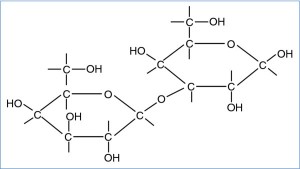
Look to Commins et al for the peer-reviewed details; the tl;dr version is that a bite from Amblyomma americanum provokes a delayed allergic response to a certain  monosaccharide found only in red meat. Meaning that if one of these little fuckers bites you, nothing happens for a month or two. Then you go into anaphylactic shock the next time you bite a hamburger.

Of course, it’s not that simple or that unambiguous (we are talking tl;dr, after all). There are nuances— one of which is, galactose-alpha-1,3-galactose isn’t found in avian flesh, so bird meat is still okay. Another is, it’s not found in primate flesh either— which means that if you’ve really got a taste for red meat, you don’t have to give it up just because some nasty bloodsucker bit you. You can always resort to cannibalism. And if eating within your exact species is problematic, you can still get away with it so long as you keep it in the Family.

...don't eat this.

…don’t eat this.

You can see why Sylvain read this and thought of me; set that alpha-gal allergy back fifty thousand years, give it a genetic component, and voilà: a far more elegant rationale for the obligate cannibalism of vampires than I ever managed with my overwrought handwaving about gamma-protocadherin (which has, as some of you know, painted me into a bit of a retconny corner). Too late for that now.

But, thought I, what a great secret weapon for PETA to fall back on when they get tired of waiting for vat-grown meat to pass the smell test, when they finally admit that all the Paul McCartney documentaries in the world aren’t ever going to dent rib-consumption in the heartland. All you have to do is seed ticks— or hell, tweak bedbugs; they’re way more ubiquitous in urban environments, and most governments don’t even regard them as a health hazard because they don’t vector human diseases. Tweak bedbugs for alpha-gallergy induction, set them loose throughout the Bedrooms of the Bourgeoisie, wait for all of Texas to topple facedown into their rib-eyes. Now there’s a great idea for a story.

In fact, it’s such a great idea for a story that some upstart named Leigh Cowart already beat me to the punch, combining a throwaway thriller scenario with a kickass nonfiction account of the background biology (warning: don’t know if you’ll be able to get through to that last link. It seems to be on some kind of time lock). Even worse, she’s a really good writer with actual veterinary credentials; she did a better job than I could have.

So, late to the party (Commins et al came out two years ago), all that’s left for me is to spread the word. And to add perhaps one new element to the story potential arising from this discovery, one small fictive twist that I don’t think anyone else has yet beat me to: perhaps PETA’s solution, even if enacted, wouldn’t be so final after all. Maybe you don’t have to go back to the Pleistocene to envision tough decisions being made in the name of keeping red meat on the table. Maybe there are places where, even today, proscriptions against cannibalism might be— loosened a bit— in the name of maintaining an old and honorable tradition. And those ecovegan nutbars are nothing more than tewwowists anyway, pure and simple; we can’t let them win, no matter what the cost.

There’s a reason they call it the Lone Star tick.

19 Aug 20:33

Meanwhile in New Zealand of the Day: Pilot's Permit for Personal Jetpacks Approved!

Meanwhile in New Zealand of the Day: Pilot's Permit for Personal Jetpacks Approved!

After putting 30 years of hard work into completing a prototype jet pack, New Zealand's aerospace manufacturer Martin Aircraft may finally be able to take its baby on a test flight with a human pilot. Earlier this week, the New Zealand Civil Aviation Authority issued an experimental flight permit for development test flying, which would allow a human pilot to fly the aircraft for the first time ever, as opposed to an operator on the ground with a remote control. If all goes well with test flights, Martin Aircraft says that the first consumer-grade jetpack ever, which can float as high as one kilometer and travel at a top speed of 43 miles per hour, could become available for purchase as early as 2015.

Submitted by: Unknown (via ABC News)

09 Aug 14:49

The Moxie Cocktail: For the sophisticated summer drinker, Cynar enters the amaro cocktail resurgence

by David Graver
The Moxie Cocktail
If you're into cocktails, it's likely you've come across the amaro Cynar—either on menus or in your drink. There's a global resurgence in the popularity of amaros, a sub-genre of bitters, extending beyond the Aperol Spritz...
Continue Reading...
05 Aug 16:46

futuresocks: Let’s hear it for Michel Fiffe’s COPRA,...

Zackc43

This cover art is amazing!


futuresocks:

Let’s hear it for Michel Fiffe’s COPRA, everybody!

I love COPRA. Let’s celebrate with a bunch of covers,

Buy em here: http://www.etsy.com/shop/whitehaus/search?search_query=copra&order=date_desc&view_type=gallery&ref=shop_search

Michel Fiffe: http://michelfiffe.com/

05 Aug 13:41

Hello Good Morning.  via


Hello Good Morning. 

via

29 Jul 18:13

I Like It

by noreply@blogger.com (Zak S)
I like when players get captured.

I like when new players have to be recruited to rescue old players from ingenious goblins.

Severen (elf druid), Miloux (elf cleric), Laney (halfling ranger)

I like when beastmen show up.

I like when everybody thinks they won but then the last beastman standing drags an unconscious PC into the forest saying "Any closer and I cut her throat".

I like when the new players let the beastman go because they don't want her to die but then think to have their animal companion cobra bite the beastman while he's distracted by another players' flying squirrel animal companion.
I like being there when it's the first time a girl casts Summon Monster and she closes her eyes and reaches down into the box full of dozens of monsters and pulls out a fucking unicorn.

I like getting to describe Cobalt Reach to people for the first time.

I like getting to show people this map...

I like when they save the pope of Vornheim from a cage and I get to do his voice.

I like when they get to the shores of the Sea of Ignorance and Pain and I roll to see if there's a ship and there is, and it's full of bards and they get them drunk and they steal their ship.

I like when everyone recognizes bards suck.

I like when the party fights an aspidochelone.

I like when the druid turns into an octopus.
I like when people are like "THIS GAME IS SO COOL!"


i like that.
I like the after-action reports.


I like the videos the girls made...

I like it all very much.
_
-
-
26 Jul 14:46

CAT SNIPER, GET DOWN!

by noreply@blogger.com (How to Carve Roast Unicorn)
*BANG!*
25 Jul 23:36

GQ Investigates: How #YOLO is Yolo, California? Did you know...


GQ Investigates: How #YOLO is Yolo, California?

Did you know there’s a place called Yolo? There is. It’s a county in Northern California, with a population of 200,000. The University of California at Davis is there! Thomas Hayden Church (that guy from Sideways) was born there! They have tons of Starbucks there too, like any other American county (though Starbucks employees won’t talk to reporters). But here’s the important question: Do Yolo residents live by the tenets of the most popular philosophy of modern times, #YOLO (You Only Live Once)? Lauren Bans cold-called three Yolo residents to find out, because, you know, #YOLO.

22 Jul 13:11

Texas: the America of America tee

by Cory Doctorow


Spotted at Comic-Con: Saturday Morning Breakfast Cereal's "Texas: The America of America" tee. Don't mess with it. $19, designed by Shawn Coss.

Texas shirt


19 Jul 17:32

How to Make the Perfect Lobster Roll

I had previously thought of the lobster roll as a monstrosity, a giant heap of lobster-flecked mayonnaise overloaded onto a maimed hot dog bun. The lobster roll Dr. Claw created, and which I have improved upon, is a different arthropod altogether, and I a


19 Jul 17:23

After playing in just one game, Derek Jeter is back on the DL with a strained quad.

by Tom Ley

After playing in just one game, Derek Jeter is back on the DL with a strained quad. This probably could have been avoided if the Yankees hadn't been so dumb. [ESPN]

Read more...


19 Jul 15:31

I Love This

by John Cole
19 Jul 15:13

The Most Astounding Cosplay We've Seen at Comic-Con (So Far)

by Charlie Jane Anders

The Most Astounding Cosplay We've Seen at Comic-Con (So Far)

Hot damn, there is some amazing cosplay in San Diego this weekend. In just the first two nights, we've seen dozens of eye-popping costumes and clever concepts. Here's all of our favorite cosplay from Preview Night and the first night.

Read more...


19 Jul 12:02

Parkour goat is tired of your bullsh*t fence

by Robert T. Gonzalez

Five-foot fence? Please. Parkour goat's got this.

Read more...


18 Jul 13:28

The Charlotte Hornets Are Coming Back

by Barry Petchesky

The Charlotte Hornets Are Coming Back

Today's the day: after a decade of existence as the Bobcats, the franchise will officially receive league approval to change its name, and bring the Charlotte Hornets back to the NBA in 2014.

Read more...


18 Jul 13:18

BOND, PURR BOND

by noreply@blogger.com (How to Carve Roast Unicorn)
Just too cool...
18 Jul 12:54

And, In Another Dog Bites Man Headline, Our Blogfather Was Wrong

by Tom Levenson

I’ve been holding off on this for a little — didn’t want to snark John before there was real reason to believe he might think life worth living again.  Now, with Not-Mongo in the fold, I have hope for our fearless leader.

So, let’s talk.

John may have his own catalog of things he got wrong, very wrong, catastrophically wrong, this-ship-is-unsinkable wrong, but for my money, the leader of Balloon Juice truly hit the acme of wrongness when he declared the Wingularity Peak Wingnut (per Bumper @1)

That announcement came before John recklessly handed the keys to the blog to yours truly, so I’m not sure of the date, but I was talking to Tim F. (last night, as it happened) and he recalled that it was just after Obama won in 2008.  The reasoning, I guess, is that after all the crap dumped during the campaign there was nowhere crazier to go.

Well, we all know how that turned out, which is the Wingularity is an ironic category here.

But every now and then you get a glimpse into the soul of the feral crazy so pure, that satori strikes.  It’s like the moment Cantor grasped there are infinities beyond infinities.  It’s could drive the sane mad, or at least to the liquor cabinet, there to wonder whether mixing bourbon, peppermint schnapps and doloroso sherry is as bad an idea as it sounds.

Thus it was today when I learned…

…oh hell.  Read it and weep (via TPM):

Compulsory education laws have resulted in parents disengaging themselves from the responsibility to oversee the education of their children and have caused schools to falter under the burden of being all things to all people.

Those points are among the arguments made by Sen. Aaron Osmond, R-South Jordan, in an article posted Friday on the blog of the Utah State Senate, in which Osmond called for the end of compulsory education in the state.

“Osmond told the Deseret News that there is a need to shift the public mindset to viewing learning as an opportunity as opposed to an obligation, while also reinforcing the idea of liberty and choice.

“Let’s let them choose it, let’s not force them to do it,” he said. “I think that’s when you start seeing the shift.”

Theodore_Bernard_de_Heuvel_The_classroom_1872

Buried in the Deseret News story linked above is the tell.   A brief disapproving mention of school based sexytime education, which suggests that Senator Osmond wants parents to be unfettered by the state as they teach their precious ones about aspirin between the knees and all that.

But Osmond’s crazy runs deeper than just the usual obsession with the moist bits.

I love — and I mean that — the utter clarity that comes whenever someone from the Wingnut side lets the mask slip just a bit too far..  The problem with education isn’t that we’ve under resourced our schools, or that we ask them to do to much.  It’s that too many people are being forced, Forced I Tell You, to get down with that book-learning stuff.

In other words, your modern Republican party:  Life — and the simulacrum of democracy — would be so much easier if more voters were more ignorant.  Fastest way to get there?  Less schoolin’

There is no wingularity.  There cannot be.  No Schwarzschild radius of stupid/vapid/batshit crazy exists.  It’s turtles all the way down.

May the Flying Spagetti Monster Bless These United States.

Image: Theodor Bernard de Heuvel, The Classroom, 1872.

Share

17 Jul 12:13

Navigating a Maze of Real Lasers is Harder Than You'd Think

by Chris Person on Kotaku, shared by Tommy Craggs to Deadspin

Look — We all love lasers. And we all agree that mazes made out of lasers, a la the movie Entrapment, are awesome. What you may not realize is that navigating a laser maze in real life is harder than you’d think.

Read more...

    
16 Jul 14:14

reebsterk: yup


reebsterk:

yup