The Iraq war rationale shifted - and pundits made up their own - but not hourly.
US Defense Secretary Pete Hegseth said today that the US strikes on Iran is not meant to be “regime change,” while he acknowledged that the leadership in the country has changed.
“This is not a so-called regime change war, but the regime sure did change and the world is better off for it,” Hegseth said.
President Donald Trump has, however, pushed for regime change.
I see the Trump administration nearly achieved two of its goals simultaneously (imperialist belligerence, crashing planes):
The pilot of a JetBlue flight reported on Friday that he narrowly avoided colliding with a U.S. military aircraft over the Caribbean after an Air Force refueling tanker passed in front of the commercial plane without broadcasting its position, according to air traffic control radio communications.
“They don’t have their transponder turned on, it’s outrageous,” the JetBlue pilot told an air traffic controller, after identifying the type of plane he had encountered. “We almost had a midair collision up here.”
The radio transmissions detail the experience of JetBlue Flight 1112, bound for New York after leaving Curaçao, a small island in the southern Caribbean about 40 miles off the coast of Venezuela. Twenty minutes after takeoff, the aircraft suddenly leveled off midclimb, according to flight tracking data. On the radio, the JetBlue pilot said he was forced to stop the plane’s ascent to its cruising altitude to avoid a collision with the tanker.
It’s unclear whether the pilot saw the military aircraft with his own eyes or if he was alerted by a sensor on the aircraft. He told the air traffic controller in Curaçao that the tanker was only two or three miles away — less than 20 seconds flying time at its speed.
The air traffic controller said he couldn’t see the tanker on his radar screen either, but suggested the unknown military aircraft was part of a trend. “They’ve been outrageous with the unidentified aircraft within our airspace,” the controller told the pilot.
Just a day later, on Saturday night, air traffic controllers in Curaçao told at least three other pilots, including those for American Airlines and Delta Air Lines, to be aware of unidentified aircraft in their vicinity, an apparent reference to other planes flying without their transponders on. The recordings were posted on LiveATC.net, a website that publishes radio feeds from air traffic control towers around the world, and on social media by radio hobbyists.
The skies over the Caribbean have become increasingly crowded in recent weeks, as the U.S. military has sent more aircraft and equipment to the region as part of the military buildup against Venezuela. Elsewhere in the Caribbean, military aircraft are flying missions from Puerto Rico, the U.S. Virgin Islands, the Dominican Republic and the U.S.S. Gerald R. Ford, an aircraft carrier deployed to the region.
I’m sorry if you still don’t understand the non-interventionist mindset.
China: We will never speak with this hideous pig-monster, Trump. We will do everything in our power to hasten the collapse of this foul nation, which we expect will take approximately 7 weeks.
Stock market: 😐
Bessent: We think China's going to remember our phone number soon!
Appropriate for Chotiner to filet him, so I'm not criticizing that, but I must ask why, a couple of summers ago, the NYT had multiple prominent stories that were, basically, "people on Martha's Vineyard are mean to Dershowitz, now."
There is never a monocausal explanation for why media organizations do the things they do, but, especially now, versions of "for the clicks" or "it's popular" rarely provide much of the correct explanation. Maybe "a small group of weirdos in New York want to hear about Dershowitz" is true, but that small group of weirdos is basically, "New York Times reporters/editors and their friends," and it is important to remember that when they try to explain Real America to you.
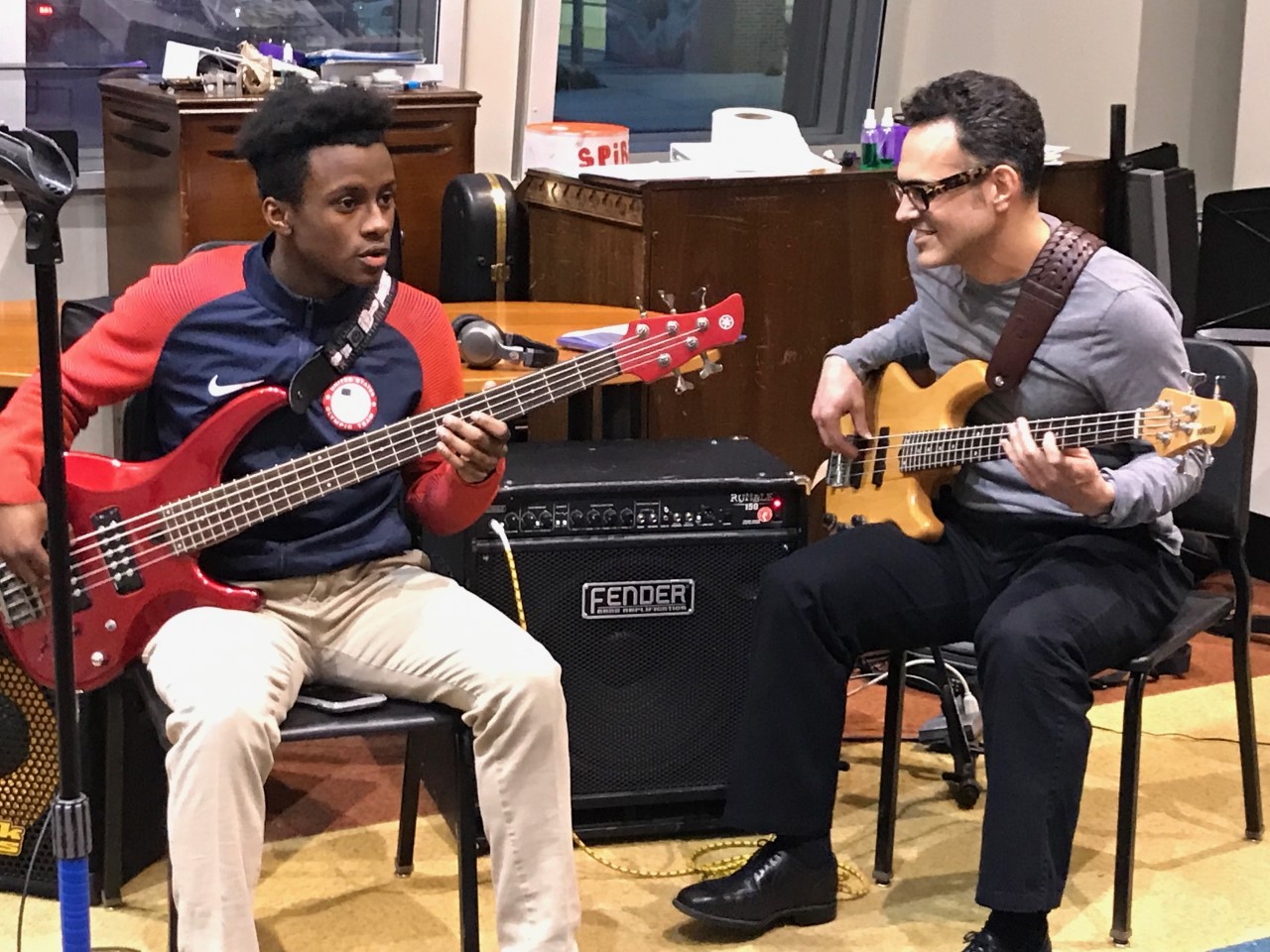
As an individual who has spent the past two decades working in the field of education policy, I know too well how diabolical and difficult a problem it is to provide equal access to students nationwide through our criminally under-resourced public school system. But I don’t know it as well as William Corrin, Director of K-12 education at the storied New York City-based research firm MDRC. In a follow-up to a previous interview, I talked to Corrin about the manifold challenges to underserved communities following the pandemic, as well as his perspectives on how the lost school year of 2020 might change the face of education moving forward. (Full disclosure: William is my boss, and may or may not have been conscripted into playing bass on the new Paranoid Style LP which we’re recording in August.)
EN: I guess the logical thing is to start out where we are currently. I wonder about the pandemic year and what it has meant to underserved students in particular. I also wonder what it implicates for public education moving forward, even as we move towards a post-coronavirus world. Are you of the impression that public education will be different in the long-term as well as the immediate term? If so in which ways, positive or negative?
WC: That’s a lot of wondering that you’re doing. You’re in good and plentiful company. “Public education” encompasses a whole lot of education. It’s a pretty broad brush. As we engage in summer programs and transition into the next school year, it’s important to recognize that there was a lot of variation across the country in terms of the pandemic education experience. Thus, the near-term implications of the transition out of this experience will vary. In communities where schools have relied entirely or almost entirely on distance education, one focus will be on how to prepare school facilities and processes for a return to in-person schooling that both educators and families are comfortable with. In communities that have suffered high rates of COVID deaths, schools may be focused on how to support students who are struggling with the loss of loved ones or who come from families with one less bread winner, creating economic stresses at home. So, nearer term, there are likely varied, more acute needs that schools and school districts will need to navigate. And some of these challenges may have less obvious longer-term implications.
My tarot skills are nothing to brag about, so predicting what might happen long term is a dubious exercise. However, this past year-plus has focused us on unfinished learning: what did we expect students to master in terms of knowledge and skills that we could not get them through under pandemic conditions? It has also focused us on inequities of access to education—both those that affected students immediately in the pandemic, like differential access to suitable electronic devices for learning and reliable internet, and those longstanding inequities, like under-resourced schools struggling to provide services beyond classroom instruction, including providing meals. We now have an opportunity to change education on all these dimensions thanks to a pile of education funding in the American Rescue Plan. How adept can we become at accelerating learning for students? How can we improve education systems and structures to reduce inequities of access and, in turn, support stronger outcomes for all students?
For this to happen, we need to be thoughtful about learning from what we do these next few years. While there is urgency in the moment, rushing to just do a bunch of stuff is less likely to be helpful. How you design new programming or plan adaptations to prior practices matters—and creates a foundation for preparing educators to implement change well. The plan has to address the “hows” and “whys” and provide justification for the actions a school or district plans to take. Ideally those justifications are based on prior research evidence, but they can also be based on strong theory or rationale. Does the plan include milestones or other markers for monitoring implementation? Are there “look fors” that teacher leaders or school administrators can pick up when they visit classrooms or programs to assess how implementation is going? Are there data already being collected that would speak to some aspects of implementation or interim student outcomes? This kind of information can be used by school teams to adjust what they’re doing.
Also, are districts willing to use some systematic decision-making processes to determine what programs or strategies are tried for which schools and students? For example, high-dosage tutoring is getting a lot of attention currently. If I don’t have enough people to provide in-person tutors for all students who might benefit, I could implement a mix of in-person and virtual tutoring in my school or district. If I gave all students or all schools the same shot at in-person versus virtual tutoring support, I could equitably determine via coin flip, so to speak, who participates in which version of tutoring. Everyone would have the same shot at each type of support, and I would create conditions, like an experiment, under which I could learn whether one or the other proved more effective. This in turn can inform future decisions about how I might want to expand tutoring in my district. Systematic decision-making like this can help districts better assess whether some approaches are more helpful to students than others—or even similarly helpful but at a lower cost—freeing up resources for other support for students.
The point is that to really benefit from what we do in response to the pandemic, we must be thoughtful in how we plan for executing programs and strategies and in how we simultaneously prepare to learn from what we try.
EN: A recent Politico profile of schools in Connecticut chronicled the onerous difficulties of distance learning as a model for student-teacher interaction. Despite their best efforts, school districts lost track of students entirely in some cases due to a lack of online engagement. I’m wondering what this tells us about the future of distance learning, which will seemingly play at least some role in education moving forward.
WC: Although different communities varied in how much in-person schooling versus virtual learning they experienced, almost everyone got a taste of distance learning, and it shined a spotlight on the digital divide. In some cases, that divide is about whether students have access to devices that give them the ability to do online school well, like laptops or tablets. In other cases, the divide is driven by limited access to reliable, broadband internet—for example, in rural areas. Let’s think about distance learning in two frames: optional and required.
If we think that having the option for students to access distance learning is important, then we must recognize that that option is not available equitably to all students. Some families rely on distance learning to make home schooling possible or to have educational choice other than their local public district schools or private schools. Students may count on distance learning to supplement their education, taking classes that their school doesn’t offer—like an advanced math class or perhaps a specific AP course. In other cases, they may engage in experiences that better prepare them for life after high school. For example, virtual internships offer opportunities for students to engage in work-based learning in fields that might not be represented in their local economy. If we care about students and families having these options, then we must take action to remove barriers to access to reliable internet and usable technology tools. Why should these options be available only to some, driven heavily by circumstance, if we think that they may be potentially beneficial to all who might be interested?
If we think that more schools will employ at least some distance learning as a required part of schooling, then we must ensure that all students have access. And while we hope not to experience another pandemic, there may be other circumstances under which distance learning could provide a necessary temporary solution. Maybe a school building can’t be used for a short period. Perhaps a district turns to distance learning to support individual students dealing with temporary circumstances that make daily attendance hard for them. So, while there may be lots of teachers and students eager to get back to in-person education, there might still be reasons why districts and schools use distance learning.
In short, if distance learning is to play some role in how we educate children moving forward, it would be really, really important to address the barriers to access regardless of whether we see distance learning as a choice or a requirement. I’d even say that it’s necessary to do so.
EN: I’m also wondering what the implications are for those kids who lost an entire year without terrestrial schooling? How do we avoid ending up with a lost generation of pandemic kids born at the wrong time?
WC: “Terrestrial schooling?” Nice phrase. It does make me think of the delightful odd-time “Celestial Terrestrial Commuters.” But I digress. While there are some differing opinions about the magnitude of the problem, nearly everyone believes that students, on average, are not as far along as we would normally expect, particularly in math. In response, there is plenty of conversation about accelerated learning and catching students up. Fortunately, we have rigorous research evidence that both group formats and individualized supports have helped students behind in reading or math. For example, high school students have benefited from supplemental reading courses and double dosing on math courses like algebra. Several evaluations have shown that high-dosage tutoring makes a difference for kids in reading and math. However, per usual, there’s a caveat. Programs with evidence sometimes don’t work under new circumstances or didn’t demonstrate impacts in all contexts in which they were originally evaluated. As districts and schools consider accelerating learning, they should pay attention not only to whether an approach has been demonstrated to make a difference for students in the past, but also to its potential fit to their context. We have an example on our website of how a district might think through whether Reading Partners’ elementary tutoring model might be a fit for them.
The term “lost generation” obscures a lot of variation and buries within it quite a few assumptions. I’m less worried about losing a whole generation than I am about a subset of kids who disconnected from school during the pandemic whom we should fight to re-engage. Not all students will require the same level of attention as we transition out of the pandemic. Which students were most affected? How do we address their needs?
Several organizations have been compiling resources for districts and schools on accelerating learning and re-engaging students, including the Annenberg Institute at Brown University’s EdResearch for Recovery series and the Education Trust’s Strategies to Solve Unfinished Learning, to which colleagues of mine at MDRC contributed.
EN: What has surprised you about how the pandemic impacted the educational system, either for good or ill? As tragic as the past year was, is it possible that the vulnerabilities it revealed in our system might prove a benefit moving forward?
WC: For me it’s been less about being surprised and more about the things that the pandemic revealed to us more clearly about education in this country. For example, the centrality of schooling in our lives broadly was made ever more apparent. As I mentioned in our prior conversation last year, schools are not just where we send our children to learn, but also where they have valuable social experiences and where services are provided to some who face additional challenges. And so many of us count on schools as safe places for our children to be while we work. In addition, the inequities in our educational system, many tied to zip code and economic circumstances and correlated with race, ethnicity, and native language, were made more apparent. The onus now is on us, as citizens and educators, to not look away from these inequities when schooling returns to more traditional modes. Can we challenge ourselves to be more ambitious in our efforts to address these inequities? This is where the potential benefit lies from this pandemic experience.
EN: President Biden has recently introduced a plan to expand funding for education by historic orders of magnitude with an emphasis on schools in underserved communities. Biden’s plan calls for ostensibly a seventeen-year promise of government funded education from Pre-K through community college. This represents a historic expansion of the federal government’s oversight. I’m wondering how you feel about this kind of top-down emphasis given the specific needs of individual communities? We’ve seen ambitious federal leadership initiatives like No Child Left Behind fail to grasp the complexity of district-by-district rollouts. What advice would you have for making these new programs more effective?
WC: Education laws on the books constrain the ability of the federal government to dictate much at all in terms of what happens in education at the state and local levels. The federal levers of control are limited and often connect to incentivizing particular choices at the state and local levels through the provision of funds.
That said, the new administration’s interest in federal investment in education before and after K-12 recognizes that early education and college yield benefits. Sometimes, however, access to these early and postsecondary education opportunities are constrained by factors that affect some students and families more than others, namely being able to pay for them. I don’t think the interest in supporting more years of education necessarily blows away choices that are made locally about education. As I mentioned before, current federal education law constrains how hard the federal government can push specific programs or activities, so states and districts will continue to hold a lot of cards in terms of how they might try to support more students for a longer stretch of their education.
No matter who controls education policy, I care about evidence and using research to inform the decisions we make. How could we make programs more effective? It goes back to what I mentioned before about trying to start or expand programs with good evidence behind them or at least very strong rationale. It’s about paying attention to the potential applicability or suitability to one’s own context and simultaneously planning to learn from our implementation of these programs, including the adaptations we may make so we understand better for whom they make a difference, why, and how.
Corrin on a site visit to Stax Music Academy
EN: Now let’s get down to what’s really important — do you have any ambitions to play live music again? Any interest in joining the Paranoid Style on a mini-tour?
WC: Ah, the good stuff! Most definitely have ambitions to play music live on stage again. All of us in one current project are vaxxed and plan to return to rehearsing soon to knock the rust off. Is this a serious invite to roll with The Style?! Alright, full disclosure, I’ve got a P bass primed and ready to give the ambassador his morning lift, help rock and roll get its memory back, and save the world from turpitude. Send me the set list. The thrill is back! And my green room expectations are much lower than Nigel Tufnel’s.
New HuffPost/YouGov poll on the second debates: Elizabeth Warren had another very good night. https://t.co/uKNroKIBt9
(Now the question is: will that help her to strengthen her standing in the primary, either temporarily or in the long term?) pic.twitter.com/YvyGLy2ADu
Impressive that the “star” of the debates was thought less well of after the debates than before, while the candidate who talks about policy (BOR-RING!) was thought of much more favorably. It’s almost as if theater critic punditry is just projection and tautology all the way down, and pundits and actual voters have very different priorities!
This is the grave of Paul Revere. No, not that one.
Paul Revere Dick was born in Harvard, Nebraska in 1938. At some point, his family moved to Idaho. In his early 20s, Revere evidently owned at least one restaurant in Caldwell, Idaho (real biographical details are sketchy; Wikipedia says he owned several restaurants but this doesn’t much pass the smell test to me. Seems more than a bit overstated for a kid) and met Mark Lindsay while buying hamburger buns for it or them. Revere was very interested in the new rock and roll, even though he was far away from the action. He and Lindsay formed a band called the Downbeats in 1958, but in 1960, they changed it to Paul Revere and the Raiders (wisely leaving out his unfortunate last name). The band kicked around a bit before recording “Louie Louie” in 1963. Although The Kingsmen way outsold them on their version of the song the same year, Paul Revere and his band would have a series of top 10 hits in the 1960s, including “Kicks,” “Hungry,” “Good Thing,” and “Him or Me, What’s It Going to Be?” They had one single top the pop charts–their cover of John Loudermilk’s “Indian Reservation (The Lament of the Cherokee Reservation Indian” in 1971. Throughout this period, the band got a name for mimicking the British Invasion, working that up even more with the Revolutionary War uniforms the band wore on stage to build on Revere’s name. A good gimmick, no question. The band’s most influential song was not written by Revere at all, but rather by Lindsay and Keith Allison–“Freeborn Man,” which has been used by country artists such as Jimmy Martin and Junior Brown as an excuse to show off their guitar skills. And while no one really talks about Paul Revere and the Raiders as one of the great rock and roll bands, their songs have been covered a lot by artists including David Bowie, Joan Jett, and The Sex Pistols. Let’s listen to some of the band’s hits:
Lindsay left the band in 1975 and at that point, if not before, whatever artistic vision the band had faded. But Revere put on a good act, between the garage rock and the Revolutionary War uniforms, and so he and a constantly shifting set of musicians in what was now his band remained a good concert draw for aging listeners of his generation for the rest of his life. Revere’s health was declining by 2014 but he refused to stop touring, against doctor’s orders. He died that fall at the age of 76.
Paul Revere is buried in Morris Hill Cemetery, Boise, Idaho.
If you would like to contribute to this series visiting more people who came, rocked, and left, you can donate here. My first LGM supported cemetery visit will take place with a day trip tomorrow, with a longer and more comprehensive trip coming this spring. Previous posts in this series are archived here.
"'A dumb, slightly annoying pile of glop'? Well, fuck you too, Peter Sobczynski!"
FADE IN:

INT.  NICEST NURSING HOME EVER

JAMES GARNER visits GENA ROWLANDS.

                              JAMES GARNER
               How’s you, baby?  I brought this
               movie’s title justification and I’m
               going to read it to you for six straight
               hours.

                             GENA ROWLANDS
               I’m here for a reason necessitating
               copious quantities of pills, right?

                              JAMES GARNER
               Most likely.

                             GENA ROWLANDS
               Not copious enough.
                 (downs fifth of bourbon)

                              JAMES GARNER
               “Once upon a time, in a land called
               Idyllic North Carolina Town #37B...”

EXT.  IDYLLIC NORTH CAROLINA TOWN #37B

RYAN GOSLING spots RACHEL MCADAMS at a carnival with SOME GUY and
stalks approaches her.

                              RYAN GOSLING
                 (actual line)
               You wanna dance with me?

                             RACHEL MCADAMS
               Get away from me, you psycho.  I’ll take
               Some Guy’s pornstache over your
               Hollywood grubbiness any day.

She and SOME GUY get on the FERRIS WHEEL.  RYAN jumps into their SEAT.

                              RYAN GOSLING
               Date me.

                             RACHEL MCADAMS
               No.

                              RYAN GOSLING
               Date me.

                             RACHEL MCADAMS
               No!

                              RYAN GOSLING
               Date me!

                             RACHEL MCADAMS
               NO!

                              RYAN GOSLING
               DATE ME!

                             RACHEL MCADAMS
               God, FINE!  You’re lucky Some Guy is
               completely inconsequential.

                                SOME GUY
                 (yanked off-screen with comically
                 large hook)

                              JAMES GARNER
               “So Rachel dated Ryan, despite the fact
               that his nuts would be inside his ribcage
               if he didn’t look like Ryan Gosling.  It
               was a magical summer of poetry, swimmin’
               holes, and not having sex.”

INT.  DECREPIT HOUSE

RYAN leads RACHEL inside.

                              RYAN GOSLING
               I’m going to restore this house to its
               proper grandeur.  You know, from when
               slave owners lived here.

                             RACHEL MCADAMS
               HOLY CATS THAT GETS ME DTF.

They DON'T HAVE SEX.  RYAN’s friend KEVIN CONNOLLY runs in.

                             KEVIN CONNOLLY
               Dude!  Rachel’s parents are freaking the
               fuck out!  She was supposed to be home at
               11 and it’s already 11:01!...  Oh, uh,
               sorry to interrupt, buddy.

                              RYAN GOSLING
                 (through gritted teeth)
               You didn't.
Complaining about Trump is pretty goddamn rich, given how reprehensible GOP foreign policy advice has been over the past fifteen years or so. Many of the contributors to this letter are deeply implicated in the most incompetent and immoral foreign policy decisions of the Bush administration; describing Trump as some kind of unique danger is, in this context, absurd.
There’s no effort among these folks to grapple with how the arguments they’ve made have laid the foundations for the Trump. These are people who, by and large, have argued that vaguely coherent bluster is the best kind of foreign policy. The central critique of the Obama administration from this quarter has been that he doesn’t do enough bluster; a “bluster gap” has opened that enables Putin to steal Crimea, etc. Trump just drops the “vaguely coherent” part and keeps the bluster.
There are components of Trump’s foreign policy ejaculations that are abjectly sane compared to what the Establishment GOP is just fine with. Yglesias alerted me to this one this morning; how do you watch this and NOT conclude that Donald Trump is the most reasonable guy in the room?
More broadly, I’m of various minds regarding the future of the #nevertrump movement. I strongly believe that Trump is a weaker general election candidate that Rubio; Cruz might be a special case, but I think that even he would have less trouble drawing the disparate elements of the GOP together than Trump. But then, the quality of my prognostication skills is in deep question [ed- is Farley finally admitting that he was brutally, hopelessly wrong about Trump winning the nomination? Not yet!!!]. I also strongly concur with Scott that the practical difference between the evil done by a Trump presidency and a Rubio presidency is small-too-non-existent; this is one reason the Establishment types dislike Trump so much.
I think that it will be fun to watch as many of the #nevertrump folks determine that Hillary. Has. Just. Gone. Too. Far. after some milquetoast statement of policy and decide that they need to vote for Trump after all. At the same time, I think it will be extremely difficult for people like Rubio, Bush, and Romney to walk back what they’ve been saying about Trump in time for the general. What Marco has said so far, and what Mitt is apparently primed to say this afternoon, should provide nice fodder for a long series of attack ads against Trump.
This is primary benefit of outsourcing work and supplies from the United States. That goods are produced far, far away from the eyes of consumers benefits the corporations tremendously. It means that when the Rana Plaza factory in Savar, Bangladesh collapses, no Americans see the deaths that result from a system that provides them cheap clothing at Wal-Mart, Gap, and other retailers. That’s very different from the Triangle Fire, when New Yorkers were outraged when they personally saw the deaths of the women who made their clothing. They acted and conditions in the textile factories improved. Today, most of us have absolutely no idea what the conditions of work are in the places that make our clothing, that grow our food, that produce our paint and glass and steel and auto parts. That’s exactly how companies want it. When it comes to meat production, you have states like Idaho passing ag-gag bills, making it a crime to document what happens in a meat production factory. Knowledge is indeed power and the meat producers want to make sure that you have none of it so they have all the power.
One of the complexities of modern capitalism though is that American business don’t just want to outsource production. They also want to open up new markets for their products. That’s certainly true for fast food corporations, who have vastly expanded around the world over the past two decades. This means that in at least some places, production and consumption takes place in the same country and thus when the supply chain system inevitably fails as the big corporations want to push down costs and the suppliers respond through cutting corners on safety, outrage results:
The Chinese outlets of McDonald’s and KFC have stopped using meat from a Shanghai company after a local television news program accused the supplier of using chicken and beef past their expiration dates, setting off an investigation by food-safety officials.
The program, broadcast Sunday evening on Dragon TV, showed hidden-camera footage of workers at a meat-processing plant operated by Shanghai Husi Food using out-of-date chicken and beef to make burger patties and chicken products for McDonald’s and KFC. In some cases, workers were shown scooping up meat that had fallen onto the assembly line floor and throwing it back into a processing machine.
In response, the Chinese units of McDonald’s and KFC said in news releases posted from their official Sina Weibo social-media accounts that they had halted use of all products from Shanghai Husi, which is owned by the OSI Group, based in Aurora, Ill. Starbucks also said it had pulled sandwiches with chicken from Shanghai Husi from the shelves of its stores in China. Starbucks said a supplier for the sandwiches had used the meat.
When people see footage of horrors they act. That is what has happened in China. It’s what happened at Triangle and when the Cuyahoga River burned and during the Santa Barbara oil spill in 1969. Thus, the corporate strategy becomes making sure you see nothing. In this case, the curtain was pulled back, but just in one factory. McDonald’s and KFC have no intention of running a tighter ship with their meat suppliers and they certainly don’t want to run their own meat production sites, although this is an entirely reasonable solution for them. Rather, they want the problem to go away. Such disgusting conditions could be taking place in 100 Chinese meat production factories, just as they could be (and are) in the United States meat industry. It is precisely this kind of information getting out that leads to ag-gag bills here and I’d be shocking if the fast food companies aren’t having behind the scenes talks with Chinese authorities to clamp down on such information becoming public there. That this production facility is owned by an company based in the United States should remind you that there’s no reason to think what you eat is safer, not in a system dominated by exploitative New Gilded Age era capitalism without proper regulatory frameworks and vastly underfunded inspection agencies.
You see, says Sam Tanenhaus, it’s not just that Thomas Piketty may be right, or that he’s been doing this research for years, or even that he’s tapping into widespread concerns about inequality. No, it’s that every decade, America needs an icon of ideas, who embodies in her person (rather than merely her arguments), the dream life of the nation. In the 1960s, it was Susan Sontag. In the 1970s, it was Christopher Lasch. In the 1980s, it was Allan Bloom. In the 1990s, it was Francis Fukuyama (who wrote his essay in 1989, but decades will be decades). In the 2000s, it was Samantha Power. Yes, Robert Putnam was a “gifted thinker,” but remember the Rule of Decades: you can only have one every ten years. And, sure, Tanenhaus says you can have two or three, but you definitely can’t have two whose last names start with P. And Power has a “flowing red mane”—like Sontag had a flowing black mane, and then a flowing black mane with a silver streak—so she was the better choice. And now there’s Piketty. And he’s French, you see, which means he’s kind of like Sontag. And he’s good-looking like Sontag and Power. And he has hair too. And on Twitter they’re debating whether he’s hot or not. Which they would have done with Sontag back in the Sixties, but there was no Twitter then. And, oh shucks, let the man speak for himself:
All of which is to say that however original Mr. Piketty’s economic argument may be, he is the newest version of a familiar, if not exactly common specimen: the overnight intellectual sensation whose stardom reflects the fashions and feelings of the moment.
And that, my friends, is how we do intellectual history—no, sorry, “cultural studies” (they really use that phrase, right above the headline, which is “Hey, Big Thinker”; where is Dwight Macdonald when you need him?)—at the New York Times.
People sometimes ask the Antiplanner if smart growth is just a plot by liberal Democrats to force more people to live in cities, where they will become liberal Democrats. Normally my answer is that people don’t become liberal because they live in cities; instead, they live in cities because they are liberal. After all, I […]
Obviously Obamacare isn't responsible for all of the ills of our health insurance/health care system, but it didn't succeed in coming close to fixing them all either. The Dems generally will own the health care system for some time. They'd better get used to it.