Facebook’s video-on-demand service Facebook Watch is getting a trio of familiar classics: Buffy the Vampire Slayer, Angel, and Firefly. The social network is teaming up with 20th Century Fox to bring every episode of the shows to Facebook starting today.
The shows aren’t exclusive to Facebook — you can purchase episodes from a variety of places, and the episodes can be streamed on Hulu — but earlier this week, Facebook rolled out its Watch Party feature to everyone, so groups of people can watch something at the same time.
Facebook wants to replicate those times you watch TV with your friends
Facebook’s head of video Fidji Simo says in a blog post that she thinks a fan-favorite show like Buffy or Firefly will be a good way for “avid...
Nice - this is the exact version of Minesweeper I've played for years. :)
I recently got an ad for Solitaire 95 on Instagram. I don’t know what I did to piss Instagram off so much it put me in the demographic of ‘people who play Bejeweled Blitz on non-timed mode,’ but the ad worked, because I downloaded the game. I enjoyed the novelty of the classic Windows 95 tabs and the iconic pixelated palm tree cards for one game before I forgot about it, but the experience did get me thinking about when I moved to New York City three years ago from South Korea, and the first time I saw someone on the subway playing Solitaire on their phone.
Trains in South Korea run with impeccable precision, the subways are spotless, and there’s fast Wi-Fi onboard on every line. Things are different in New York City. One time, a rat...
"To some experts, this delay was expected. According to Harold Feld at Public Knowledge, the FCC’s net neutrality order can only be challenged in the D.C. circuit. The pending litigation on the California law, if challenged, would have to be brought to the state’s district court, violating the Hobbs Act. Therefore, waiting for a decision on the federal rule is both parties’s safest bet.
“Ultimately it doesn’t matter how much trash talk you have before the game. Let’s see what happens in the DC circuit,” Feld said."
California has agreed to delay the enforcement of its “gold standard” net neutrality bill, according to a statement from the law’s sponsor Sen. Scott Wiener. The net neutrality rules were set to go into effect next year, but California officials have agreed to wait until the courts have resolved any pending litigation over the Federal Communications Commission’s roll back of the federal rules late last year.
California has agreed to delay the enforcement of its “gold standard” net neutrality bill
FCC Chairman Ajit Pai cast the delay as a victory for the Commission. “This substantial concession reflects the strength of the case made by the United States earlier this month,” Pai said. “It also demonstrates, contrary to the claims of the...
Earlier this year, Apple updated iOS to block passcode cracking tools like GrayKey (used by police and government law enforcement officers). But the original iOS 11.4.1 patch wasn’t perfect, with researchers still finding ways around it. That seems to have changed with the release of iOS 12 last month, which a recent Forbes report notes appears to have completely blocked the GrayKey tool, preventing it from cracking the password of any devices running the latest software.
It’s not clear what Apple’s done to lock out GrayKey
GrayKey first made waves earlier this year as a tool specifically developed and sold to police departments to break passwords on iPhones for use in investigations. But now, instead of brute-forcing passwords, GrayKey...
If you’ve ever played a first-person shooter on a computer, you’ve probably used the WASD key configuration to move your character.
How did it become a standard?
As the above video shows, the roots of WASD go back to the 1990s and one gamer in particular: Dennis “Thresh” Fong. His trailblazing history as one of the first pro gamers made him influential for years to come — including on the keyboards of millions of players.
Today, mobile games and consoles have taken a share of the gaming market. But it’s safe to say that on keyboards, WASD will stick around for a while.
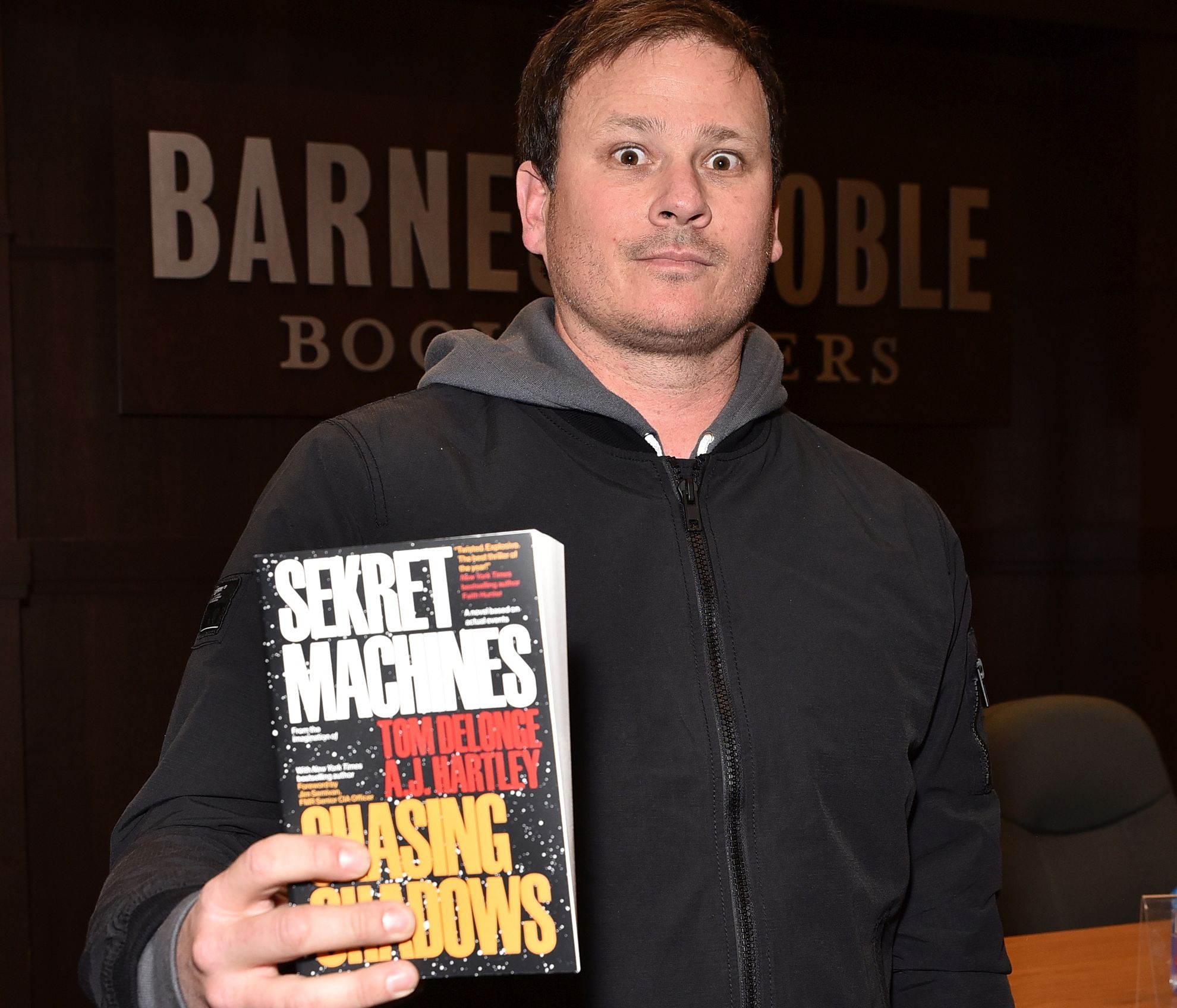
Enlarge / Tom DeLonge with one of his new novels about "The Phenomenon." (credit: Brandon Williams/Getty Images)
A couple of years ago, I received a review copy of a book titled Sekret Machines: Gods, which was billed as an "investigation of the UFO phenomenon." The lead author was Tom DeLonge, a founder of the rock band Blink 182 and its former long-time lead singer.
I'd been a fan of the irreverent band in my younger days, and my now-wife and I had attended a few concerts and enjoyed ourselves. It was difficult for me to imagine that the former lead singer of a band with an album titled Take Off Your Pants and Jacket had engaged in any kind of serious scholarship or research. Queen guitarist Brian May, however, went on to earn a PhD in astrophysics, so you never know.
I made it about half way through the book before I gave up. The authors, DeLonge and Peter Levenda, spent most of the pages I slogged through cherry-picking ancient cultures and religion to find curious or unexplained things. Then, they attribute these experiences to mysterious alien influences.
Enlarge / We double dog dare you to eat those bugs. (credit: John Tlumacki, Boston Globe/Getty Images)
A few years ago, French chef David Faure traveled to Asia. The many different bugs routinely offered for consumption in that part of the world inspired him to create an insect-based tasting menu at Aphrodite, his Michelin-starred restaurant in Nice. Adventurous diners could sample "crickets in a whiskey bubble with cubes of French toast and pears," or "squares of peas, carrot foam, and mealworms."
According to a new study by Swiss scientists, Faure's marketing strategy to make bugs more palatable to Western diners was a good one: present insects as an exotic delicacy or a luxurious indulgence, rather than a healthy protein source that is more environmentally responsible than consuming meat. These findings have been published in Frontiers in Nutrition.
This is part of a broader push toward accepting insects as an alternative protein source in Western diets, since food production accounts for as much as 25 percent of greenhouse gas emissions—with much of that due to livestock. Farming insects could reduce those emissions significantly. But how to overcome the strong revulsion most Westerners feel upon encountering insects in their food?
There was a striking difference in style — and substance.
There were several noticeable differences between the Senate testimony of Supreme Court nominee Brett Kavanaugh and the woman accusing him of sexual assault, Christine Blasey Ford.
The most obvious was the tone each took. Ford was polite and quiet in recounting her accusation against Kavanaugh; he was angry and loud in his denials of the allegations against him.
Beyond the style of their testimonies, there was a striking difference in the content of their words. Both Ford and Kavanaugh fielded questions from senators and the prosecutor hired by Republicans, Rachel Mitchell.
But only Ford made an effort to answer every single question.
Kavanaugh actively dodged questions. He often repeated the same non-answer over and over. Other times, he insisted on answering a question with “context” — which inevitably was a long story about his childhood — but never actually answered the question.
We went through the transcript of the hearing and noted every single time a question was asked of Ford and Kavanaugh. (We didn’t include the times a questioner didn’t ask an explicit question.) Then we noted every instance in which answered the question or said they didn’t know the answer — and we also noted every time they either refused to answer or gave an answer that didn’t address the question. Here are the results:
After more than a century of slicing tiny, inflamed organs from people’s guts, doctors have found that surgery may not be necessary after all—a simple course of antibiotics can be just as effective at treating appendicitis as going under the knife.
The revelation comes from a large, randomized trial out of Finland, published Tuesday, September 25, in JAMA.
Despite upending a long-held standard of care, the study’s finding is not entirely surprising; it follows several other randomized trials over the years that had carved out evidence that antibiotics alone can treat an acute appendicitis. Those studies, however, left some dangling questions, including if the antibiotics just improved the situation temporarily and if initial drug treatments left patients worse off later if they did need surgery.
Four years ago a viral campaign wooed the world with a promise of fighting climate change and jump-starting the economy by replacing tarmac on the world’s roads with solar panels. The bold idea has undergone some road testing since then. The first results from preliminary studies have recently come out, and they’re a bit underwhelming.
A solar panel lying under a road is at a number of disadvantages. As it’s not at the optimum tilt angle, it’s going to produce less power and it’s going to be more prone to shading, which is a problem as shade over just 5 percent of the surface of a panel can reduce power generation by 50 percent.
The panels are also likely to be covered by dirt and dust, and would need far thicker glass than conventional panels to withstand the weight of traffic, which will further limit the light they absorb.
Ah, fall! It’s the time of year when a horde of fashion editors, store buyers, and social media influencers travel to New York, London, Milan, and Paris for each city’s fashion week. This time around, pockets are big on the runways. Literally, they are very big.
On the runway at Fendi, models wore leather coats that bulged with pockets of all sizes, which looked like they could easily fit a phone, an iPad, and a few packs of Rolos, or tampons. At Alberta Ferretti, there were outsize cargo pockets ballooning off of miniskirts and vertically stacked on denim jackets.
Designers have played with the proportion of pockets before; Ferretti’s cargo skirts, for example, resemble ones that Marc Jacobs showed in September 2014. But it’s a micro-trend that’s worth paying attention to, because pockets are the site of a centuries-old gender divide in fashion — one that has deep political implications.
Victor Virgile/Getty Images
A model walks the Alberta Ferretti runway at Milan Fashion Week.
Victor Virgile/Getty Images
A model walks the Alberta Ferretti runway at Milan Fashion Week.
Despite most women’s insistence that they do want pockets, a lot of clothing is entirely lacking this feature. And sometimes clothes do have pockets, but they’re tiny and therefore useless, save for storing a few individual sticks of gum.
exec: So what do we think women want in fashion? women: Pocke-- exec: Cold shoulder tops in pastels. Got it. women: Pock-- exec: Clothes with pre-made holes in delicate fabrics. women: Po-- exec: Cut-outs in flabby areas. Good. women: POCKET-- exec: Shapes that require new bras!
This is something women have railed against for a long time. As Chelsea G. Summers reported for Racked, the Rational Dress Society, which was founded in 1891 with the aim to ditch corsets and get women into more movement-friendly clothing, was all about pockets. Suffragette suits had pockets in spades.
Women and men used to wear pockets equally, Summers writes: Everyone wore belts with satchels hanging from them in medieval times. But in the late 17th century, sewn pockets migrated into men’s trousers and coats, while women kept wearing external pouches concealed under a slit in their skirts. When in the late 18th century full gowns gave way to slimmer empire waist dresses — popularized in the west by Joséphine de Beauharnais, the first wife of Napoleon — those pouches had nowhere to go. So women started carrying small purses called reticules.
This, writes Summers, had the effect of limiting women’s freedom. “Take away pockets happily hidden under garments, and you limit women’s ability to navigate public spaces, to carry seditious (or merely amorous) writing, or to travel unaccompanied,” she writes.
Thus, when women started wearing visible pockets in the early 20th century, women reignited the fear that their pockets “could carry something secret, something private, or something deadly.”
Victor Virgile/Getty Images
Fendi’s runway show on September 20, 2018, featured some huge pockets.
Victor Virigle/Getty Images
Fendi’s runway show on September 20, 2018, featured huge pockets, seen here on Bella Hadid.
At Fendi’s runway show in Milan on Thursday, designer Karl Lagerfeld did a tidy job mashing up historical pocket trends. While walking the runway, model Bella Hadid wore black bicycle shorts, a creamy button-down shirt with pockets hanging to her hips, and a belt with a number of dangling pouches (an accessory that, like the fanny pack, has been trending elsewhere, too).
Hadid’s belt looks like a modern-day utility belt, but it also mimics the look of a medieval belt strapped with pouches. Her shirt’s big, swaggy pockets, however, looked totally modern. Lagerfeld could have stopped there, but he also gave Hadid a leather purse to carry. That makes perfect business sense — luxury brands rely on handbag sales — and perhaps it only bolsters the look of a woman on the go. But it also complicates the historical narrative told by the rest of Hadid’s outfit.
Though, it should be noted, even Hadid’s purse had extra pockets sewn on the side.
The condiment wars are heating up. Enter Mayochup.
Ketchup is a good condiment. It is humble. It is red. It is not, for most American palates, particularly challenging. It is salty but also sweet, with what National Geographic correctly identifies as “just the right amount of puckering twang.”
The king of ketchup is Heinz, which owns 60 percent of the ketchup market in the US and 80 percent in Europe. It is the red standard of ketchup. It is exactly as good as it needs to be and no better, which makes it perfect.
Yet ketchup is not, in fact, the reigning champion of American condiments. That honor goes to the rival spread mayonnaise. Though mayo sales have been down in the past several years, falling 6.7 percent between 2012 and 2017, the US still consumes a stunning $2 billion worth of mayo. That’s compared to a mere $800 million of ketchup — a fact Quartz attributes in part to the multitudinous uses of mayo. It is not just a dip or a spread but an ingredient, a staple in all kinds of dishes, most of which are available at picnics. The supreme ruler of mayonnaise is Hellmann’s, which controls just over 50 percent of the US mayo market, according to the Wall Street Journal.
Mayo is also an ingredient in Heinz’s latest product: “Mayochup,” which, as it sounds, is a mayo-ketchup hybrid and which, after much buildup, is set to hit grocery shelves this fall. As a ploy for virality, Mayochup has already worked, sparking controversy, as Grub Street explained, from people upset because they feel a prepackaged mayo-ketchup combo should not exist, and from people upset because it already does.
It’s obviously a play for attention in a cutthroat field of condiments, which is only growing more cutthroat as condiment innovation (and gentrification) reaches an ever more feverish pitch.“Condiments are more competitive than they’ve ever been,” Jennifer Healy, head of marketing for the Heinz brand, told the Wall Street Journal. “Ten years ago, it was much more simple.”
Ten years ago, maybe, you could get away with being plain mayonnaise and basic ketchup. Mayochup is evidence, though, that Big Condiment can’t get away with just offering the basics. Do people want Heinz Mayochup? We ... don’t know. What we do know, based on what Heinz called “unprecedented passion surrounding this product,” is that consumers demand the option.
Mayochup’s American expansion started as something of a marketing stunt
This particular story — not the story of mayo-ketchup in general, but the story of Heinz’s Mayochup in America — began back in April, as Hellmann’s and Heinz both made plays for each other’s turf. Hellmann’s, champion of America’s actual favorite condiment, was introducing a product called “Real Ketchup,” billing it as a “reimagining” of the classic, with a more minimalist ingredients list, no high-fructose corn syrup, and no GMOs. (Heinz has a version with a very similar ingredients list as of 2010, but it is not the company’s flagship product.)
But then shortly before the launch, Heinz started to notice a conversation bubbling on Twitter about Mayochup, which it had just launched in the Middle East.
”We immediately changed course once we saw the news of Mayochup gaining momentum with U.K. media and on social media,” Nicole Kulwicki, director of marketing for Heinz, told PRWeek. “Our goal was to jump in on the trending story as quickly as possible to take part in a relevant conversation for the brand and debut Heinz mayonnaise.”
On Twitter, Heinz posted a poll teasing the idea of Mayochup to American audiences.
Want #mayochup in stores? 500,000 votes for “yes” and we’ll release it to you saucy Americans.
“Saucy Americans” voted in favor of Mayochup. This week, Heinz announced the product will arrive on American shelves this month. (This was also announced with a poll, about where to launch first.)
Mayochup isn’t new, and it wasn’t invented by Heinz
As many, many people have pointed out, mayo-ketchup sauces widely exist already, especially in Latin America. According to Eater, the first incarnation of the stuff might be the Argentinian salsa golf — possibly invented by biochemist and future Nobel Prize winner Luis Federico Leloir (his 1970 prize was for something else — the Nobel committee has yet to recognize condiments) — but it is hardly the only incarnation.
If you want a mayo-ketchup product, you can already get it, in the form of Goya’s Mayo Ketchup or Stephen’s Gourmet or any number of “fry sauces.” Thousand Island dressing is mayo and ketchup plus a handful of other ingredients. Russian dressing is mayo and ketchup plus a different handful of other ingredients.
And that’s okay! Not-new things come to market all the time. Mayo-ketchup sauces aren’t a novelty product, even if Heinz’s particular mayo-ketchup sauce is coming stateside because of a viral Twitter campaign intended to promote something else.
So perhaps it’s not fair to call Mayochup an attempt to reinvent ketchup. It already exists and has a history of not being ketchup. But what it does do is underline the overwhelming consistency of the ketchup industry; despite a boom in artisanal ketchup companies, the majority of Americans are still using Heinz.
The struggle to develop new classic condiments
In 2004, Malcolm Gladwell took on the issue in the New Yorker: Mustard had evolved, so why hadn’t ketchup? Things have changed since then, as smaller, more artisanal brands have started to come for Big Condiment. But while it is true the piece predates the rise of artisanal condiments — brownstone Brooklyn, for example, did not even get its artisanal mayonnaise store until 2012 — it is also true that no ketchup, even now, has come close to threatening Heinz’s hold.
Perfection is a dead end. Where do you go from perfection? Nobody wants Heinz ketchup to be better. “When I order my burger, I’m picturing the Heinz I’m going to bathe it in,” argued Ben Robinson at Thrillist in a screed against artisanal variations. “That very specific, very expected flavor element is part of why I ordered the burger in the first place — it’s just part of the deal. Ketchup should be a constant, not a variable.”
I have tasted artisanal ketchups. Sometimes, they are bad. Mostly, they are also good. I am against neither progress nor innovation. But Robinson’s point stands: Artisanal ketchup variations, with restaurant-specific twists, have never felt like an improvement. You could call this ketchup conservatism.
It’s possible, Gladwell suggests, that a new ketchup is just waiting for its moment — that a ketchup entrepreneur will stumble upon a ketchup variation people didn’t even know they were waiting for. “But it is also possible,” he suggests, that the rules that hold true for “virtually everything else in the supermarket don’t apply to ketchup.” There are the five core human tastes — sweet, salty, sour, bitter, and umami — and Heinz ketchup hits all of them.
So we got what we wanted, and soon we’ll have Heinz Mayochup. And if it’s a hit, someday, it will spawn a sea of more upscale versions, and Heinz will have to move on to selling us back a new new thing, something that — like mayo-ketchup — we probably already have.
Scythe is a heavy German-style board game that combines worker placement, area control, resource management, a little combat, and a point salad scoring with a setup so ornate that Alice Waters wanted to put it on her menu (read our original review of the game to see for yourself.) Scythe has been among the top-rated games on BoardGameGeek since its 2016 release thanks to an extremely well-balanced design, very little randomness, and the use of many different mechanics in a single game. But it comes with a steep learning curve—both for rules and strategy—which makes the game ideal for a digital adaptation.
Asmodee Digital, which has established itself as the premier developer for high-end ports of board games, has just released its version of Scythe: Digital Edition to Steam (for both Mac and Windows), and it is unsurprisingly superb. Scythe can easily take two-plus hours on tableto, but it's now accessible to more players through an excellent tutorial and a clever UI that keeps the screen clear while ensuring that key information is available to players.
That's important because Scythe requires you to track a tremendous number of things: you’re producing and spending four different resources, collecting three forms of currency (gold, power, and popularity), and trying to achieve six out of about a dozen possible objectives (such as getting to eight workers, building all four buildings, or reaching 16 power within a turn). The digital Scythe handles all of this accounting for you, keeping track of what you can do, what you still have left to do, and oh by the way did you forget you were entitled to this? There’s nothing intuitive at all about the rules of Scythe, and it’s the kind of game that will likely keep even experienced players peeking at the rule book. The app handles all of that quite smoothly, offering mouse-over prompts so you know what each option does and a series of questions and confirmation dialogs for each set of actions you can take.
I'm sure lots of folks wished they had this font in College... haha
As someone who is ostensibly a professional writer, I can say with some authority that sometimes, writing is hard. And when you’re staring at page three of an essay that your professor has insisted should be at least five pages, single-spaced, in size 12 Times New Roman font... sometimes, you need a little help.
Any skiving student worth their salt knows the usual tricks to make an essay look longer: use larger punctuation marks and spaces, mess around with the margins, maybe even try to creep up to a larger font size. But now, there’s an easier solution: Times Newer Roman, a font from internet marketing firm MSCHF (which you may remember from the Tabagotchi Chrome extension). Times Newer Roman looks a lot like the go-to academic font,...
Linux creator Linus Torvalds has apologized for years of rants, swearing, and general hostility directed at other Linux developers, saying he's going to take a temporary break from his role as maintainer of the open source kernel to learn how to behave better.
For many years, Torvalds has been infamous for his expletive-filled, aggressive outbursts on the Linux Kernel Mailing List (LKML), chewing out developers who submit patches that he believes aren't up to the standards necessary for the kernel. He's defended this behavior in the face of pushback from other developers, insisting that people being nice to one another was an American ideology.
But that may be coming to an end. In a lengthy email posted to the LKML on Sunday night, Torvalds expressed a change of heart. Taken to task over attacks that he recognizes were "unprofessional and uncalled for," he says he now recognizes that his behavior was "not OK" and he is "truly sorry." He's going to step back from kernel development for a while—something he's done before while developing the Git source control system—so that he can "get help on how to behave differently."
He is denying that 3,000 people in Puerto Rico died from the storm.
President Donald Trump kicked off his Thursday morning by contesting the validity of rigorous, independent research on the death toll from Hurricane Maria, saying instead that these numbers were the work of Democratic opponents trying to smear him.
In a pair of tweets, the president said that 3,000 Americans did not actually die from Hurricane Maria in Puerto Rico last year, and that the research showing they did was part of a Democratic conspiracy to make him “look as bad as possible.”
Of all Trump’s conspiracies theories and false tweets, these are particularly heinous:
3000 people did not die in the two hurricanes that hit Puerto Rico. When I left the Island, AFTER the storm had hit, they had anywhere from 6 to 18 deaths. As time went by it did not go up by much. Then, a long time later, they started to report really large numbers, like 3000...
.....This was done by the Democrats in order to make me look as bad as possible when I was successfully raising Billions of Dollars to help rebuild Puerto Rico. If a person died for any reason, like old age, just add them onto the list. Bad politics. I love Puerto Rico!
It’s bad enough that the president denied responsibility for his administration’s failed emergency response to the Category 4 storm, but now he is denying that thousands of Americans died from lack of oxygen, food, water, and medical attention, and by suicide.
Research shows he’s wrong.
Trump wants people to believe reality is not real
Trump is trying to make the case that the initial death toll of 16 is the accurate one. But it was clear to journalists and medical responders from the start that that number was way off. All you had to do was scan local news reports to find evidence — and Vox easily found 81 cases of people who drowned, were crushed by storm debris, or died because they couldn’t get medical care shortly after the storm hit.
While it’s true that many, many people died after Trump left Puerto Rico, they still died because of the hurricane and the destruction it brought, and because the government failed to respond quickly or effectively enough to keep them alive.
The island-wide blackout that lasted for months meant people couldn’t get clean water or prescription drugs. They couldn’t refrigerate their diabetes medication or hook up their oxygen tanks. They are not people who “died of old age,” as Trump suggests. Researchers consider them indirect hurricane deaths, and they are normally counted in a disaster’s official death toll.
The latest death estimates, released last month by researchers at George Washington University, showed that 2,975 people likely died directly and indirectly from the storm. The findings are consistent with estimates from scientists at Harvard and Penn State.
And to be clear, these were all independent research projects by some of the world’s top universities, not the result of some sort of Democrat-led conspiracy, as Trump posits.
Trump doesn’t like criticism
It seems very possible that the president tweeted about these absurd theories to deflect criticism about the administration’s disaster readiness ahead of Hurricane Florence.
Trump says the federal government is “ready” for the hurricane, whose Category 4 winds are barreling toward Virginia and the Carolinas.
And on Tuesday, he said the government’s “incredibly successful” response to Hurricane Maria in Puerto Rico last year is proof that he has everything handled.
Trump made these remarks at the White House during a public briefing on the hurricane with Brock Long, head of the Federal Emergency Management Agency. A reporter had asked Trump what lessons he learned from Hurricane Maria and how he has applied them to the government’s emergency plan for Hurricane Florence.
From his response, it’s clear that Trump doesn’t think there were any lessons to learn from one of the deadliest natural disasters in US history. He definitely didn’t mention the nearly 3,000 Americans who died from the storm, or FEMA’s delay in approving crucial disaster aid to Puerto Rico, or the fact that FEMA hired inexperienced contractors, including one that failed to delivermillions of emergency meals to hurricane survivors.
The president now wants people to believe in an alternate reality — one in which no real disaster even happened.
How a cheesy joke from the 1830s became one of the most widely spoken words in the world.
OK (or okay, ok, or k) might just be the most widely spoken word in the world. We use it so often, we barely notice it’s there: It’s in our speech, our writing, and even our computers. It feels like it’s been around forever, but it actually dates back to an obscure language fad in the 1830s where people facetiously misspelled abbreviations.
Young Boston intellectuals in the early 1800s used a humorous code of abbreviated phrases, like “KC,” or “knuff ced”; “KY,” “know yuse”; and “OW,” “oll wright.” And while most of them eventually fell out of fashion, one abbreviation persisted: “OK,” or “oll korrect.”
All correct, a cousin of all right, was a common 19th-century affirmative that indicated everything was in order. Thanks to a series of lucky breaks, its jokey abbreviation, “OK” survived — and even ended up being (arguably) the first word spoken on the moon.
Watch the video above to follow OK’s unlikely rise, and subscribe to Vox’s YouTube channel for more videos.
by Beth Skwarecki on Vitals, shared by Beth Skwarecki to Lifehacker
When you’re depressed, any little thing—from filling a prescription to making yourself a sandwich—can seem impossible. Writer Molly Backes recently tweeted about what she calls “The Impossible Task,” and if you’ve ever struggled with your mental health, you probably know exactly what she’s talking about.
Anyone know why we shouldn't just go all-in with Mail-in ballots?
The United States isn’t ready to hold elections online now or in the foreseeable future, a new report says. Not until the technology is good enough to ensure the votes are kept private and aren’t tampered with.
The recommendation is part of a massive new National Academies of Sciences, Engineering, and Medicine report that lays out dozens of recommendations for an election system the report calls “accessible, reliable, verifiable, and secure.” A big one is to phase out voting machines that don’t leave a paper trail, and only use paper ballots that humans can double-check — ideally by the 2018 midterm elections, but for sure by the presidential election in 2020.
“The most significant threat to the American elections system was coming...
Wire Hon is a Malaysian toy collector and photographer who has been shooting creative photos of himself and his family with Marvel superheroes by carefully posing tiny figurines and using forced perspective.
Here’s what a behind-the-scenes look typically looks like (Hon captures all his photos using his smartphone and its deep depth-of-field):
…and here’s the photo that resulted from the above setup:
Hon’s imaginative photos come with a dose of humor. He, his wife, and his son can be seen bossing Marvel superheroes around and being found in strange scenarios with them.
Today marks the seventh anniversary of the late Steve Jobs resigning as CEO of Apple. In a letter addressed to Apple's Board of Directors, dated August 24, 2011, Jobs strongly recommended then-COO Tim Cook be named his successor.
To the Apple Board of Directors and the Apple Community:
I have always said if there ever came a day when I could no longer meet my duties and expectations as Apple’s CEO, I would be the first to let you know. Unfortunately, that day has come.
I hereby resign as CEO of Apple. I would like to serve, if the Board sees fit, as Chairman of the Board, director and Apple employee.
As far as my successor goes, I strongly recommend that we execute our succession plan and name Tim Cook as CEO of Apple.
I believe Apple’s brightest and most innovative days are ahead of it. And I look forward to watching and contributing to its success in a new role.
I have made some of the best friends of my life at Apple, and I thank you all for the many years of being able to work alongside you.
Steve
Apple's Board of Directors approved the request, effective immediately, with Jobs elected Chairman of the Board. Jobs reportedly remained closely involved with Apple's strategic decision-making until passing away October 5, 2011.
An extensive, important study has confirmed something women have known—and have been shouting about—for some time: the pockets on our jeans are bullshit. Though concrete, empirical data doesn’t change the reality of the sexist pocket gap that exists in fashion today, we have to start somewhere, and I can’t help but…
“Millennial” has become a meaningless generational label. It’s time to find a new one for a whole new group of young people!
If you had to name the generation that Parkland, Florida, high school students turned gun control activists Emma Gonzalez and David Hogg belong to, which would it be? Baby boomers? Generation X? Millennials?
What about the various middle schoolers of Netflix’s hit show Stranger Things? Or the high schoolers of The CW’s Riverdale? (This last question is a trick, since like most teens on TV, the actors on Riverdale are older than their characters.)
How would you classify somebody who just turned 30? Or somebody who just turned 40? What generation would you place them in?
On one hand, this is a silly question. By definition, generations are big, broad cohorts; the US government defines the baby boom, for example, as the 18-year span from 1946 to 1964. That means it encompasses both Donald Trump (born in 1946) and Barack Obama (born in 1961), who don’t just have different politics but sometimes seem to have different frames of reference for the world entirely.
Now, giving a broad name to a generation is far too often just a way to revamp marketing to teens and 20-somethings by pretending that every new wave of them is subtly different from the last, as anybody who saw magazine cover stories about the laziness of Gen Xers reheated to describe millennials over the past 10 years could tell you. And trend pieces too often use these generational theories as a way to assign personal agency to things that happen as natural functions of changes in economics and history. Or, put another way, millennials aren’t killing mayonnaise, or country clubs, or chain restaurants. The twin tidal waves of a diversifying US population and rampant income inequality are.
On the other hand, the more that people seem to define “millennials” as “anybody younger than a baby boomer,” the more irritating I find the lackadaisical application of the term. Generations might be broad-based, but they’renot that broad-based. We don’t need a hard-and-fast definition of the term “millennial,” but whatever it’s supposed to signify loses all meaning when we apply it willy-nilly to everybody from 40-somethings to teenagers.
So let’s dig into where the term comes from, what it means, and who isn’t one. And maybe we’ll name this upcoming generation along the way.
Millennials, explained
Jemal Countess/Getty Images for Time
The Parkland student activists probably aren’t millennials either.
Broadly speaking, millennials are most people in their 20s and 30s right now. There are a few edge cases here and there, mostly people in their late 30s or early 20s, and mostly depending on which definition of the term you’re using, but by and large, if you want to call a 25-year-old or a 35-year-old a millennial, go nuts.
There’s no single accepted set of years that bind the “millennial generation,” beyond a vague sense that they should have been somewhere in the process of growing up when the clock struck 12 and 1999 rolled over into 2000. (Insert pedantic disclaimer about how the millennium actually started in 2001 here.) A handful of definitions place the beginning of the generation as early as 1977 (meaning it would include 41-year-olds), but most place it somewhere in the first three years of the 1980s, with the endpoint falling somewhere in the mid-1990s.
The US government, holding with its 18-year generation policy, defines the millennial generation as people born between 1982 and 2000. But a variety of surveys by polling firms have defined the generation’s starting year as 1980 or 1981, with its concluding year sometime between 1994 and 1996. Meanwhile, when CBS aired a season of Survivor dubbed Millennials vs. Gen. X, it defined millennials as people born between 1984 and 1997 — and if you can’t trust Survivor, who can you trust?
The term was coined in 1987, to describe a generation of children who were as numerous in number as their baby boom parents. And while there were several attempts to dub the generation “Generation Y” or “the echo boomers,” the term millennial stuck, probably because it instantly defined the generation by its place in history, with the new millennium approaching, as opposed to its relative contrast to other generations. (We’ll come back to this in a moment.)
Some have attempted to subdivide the generation between people who came of age in the wake of 9/11 and those who came of age in the wake of the 2008 economic crash. Others have attempted to define subsets of the generation based on the rise of various forms of technology. Still others have attempted to break out the people born between 1977 and 1983 as their own micro-generation, since they fit uneasily into both Generation X and the millennial generation.
But all of that is neither here nor there. What I’m really trying to get at is that we need to stop saying millennials when we’re talking about people who are currently teenagers.
Millennials were mostly born in the ’80s and ’90s, which means that the vast majority of teens today — basically everybody under 18, even by the most lenient definitions of “millennial” — aren’t millennials. They’re their own thing. (Similarly, when writer Sandy Hingston defined 1976-born author Drew Magary as one of the millennials killing mayonnaise in her Philly magazine article on the topic, she was probably wrong too.)
The simplest reason “millennial” has come to define “everybody younger than a baby boomer” for so many people is that it’s easy shorthand. On top of that, Generation X is comparatively small when stacked up against both the baby boom and the millennials, as well as more evenly split, politically, than the heavily left-leaning millennials and right-leaning baby boomers. All of that makes it absurdly tempting to frame most American conflicts as a warbetween the baby boom and the millennials.
But that framing is about to become a lot less useful as the generation after millennials starts to enter adulthood.
Whatever comes after the millennials, explained
Isaac Brekken/Getty Images for Virginia Black
Sadly, Logan Paul probably is a millennial. But his core audience is the generation under millennials.
One of the reasons it’s easy to define today’s teens, or even today’skids, as millennials is that they haven’t really started asserting their consumer preferences in ways that will be obvious to the broader American marketplace.
We know they watch a lot of YouTube and are absurdly tech-savvy. It seems like their politics might be even more left-leaning than their older siblings in the millennial generation (unless they’ll be wildly reactionary and right-leaning). But they’re also young enough that when some of their pop culture crosses over into the mainstream — as when YouTube prankster Logan Paul wound up in hot water for showing the dead body of someone who died by suicide on his channel — it’s understandably easy for most people older than 25 to wrinkle their brows and say, “What the fuck is going onnn?!”
But as these youths grow older, they’re entering most valuable consumer demographics out there — their 20s and 30s. Advertisers will start targeting them, journalists will start trying to define them, and suddenly we’ll be at the dawn of a whole new era where we worry about how the Kids Today are changing everything, because aging keeps happening, babies keep being born, and death is inevitable. (Alive on this planet right now is a 3-year-old who will someday write a smug magazine cover story about how the generation just below hers doesn’t have its priorities in order.)
The larger point here is that until these young people really start making their preferences known, we’re not going to have a handy generational label to slap on them. Generation Z won’t work because, again, it’s difficult to define a new generation by terms better applied to an old one (and also because Generation Y never took hold). Similarly, the briefly floated “perennials” — which technically refers to all people of all ages who embrace a younger mindset, but sure Jan dot gif — won’t work because it sounds too much like “millennials.” I keep trying to make “Generation YouTube” happen, but tying a whole generation to a specific piece of technology is probably a bad idea too.
But there are already people trying to come up with a solution to this very problem. I talk to a lot of people in the TV industry, and those who work for networks aimed at kids have been thinking about how to attract these younger viewers for more than a decade now. And when I spoke to some folks at Cartoon Network a few years ago for a different story, they used a term that, I think, defines this new generation just about perfectly.
Cartoon Network has come to define the generation just entering college and the workplace in terms of what might be the most defining element of its relationship to technology. Having grown up with multiple screens, these kids are really, really, really good at dividing their attention among multiple sources. They can be looking at a phone, watching a TV, poking away at homework, and listening to a parent tell them to take out the trash all at the same time, while mostly keeping all of that information straight.
As such, the network dubbed this generation the “plurals.”
I like that term both because it describes something fundamental about the post-millennial generation — a love of lots of different sources of information streaming at once — and because it sounds a little like a post-apocalyptic street gang. (I would also accept “the multiples,” if you think “plurals” sounds too sinister.) But you know what? If nobody else does and collectively decides to call them “the teenyboppers” or “the scourge” or “the last generation ever,” that’s fine too. Just stop. Calling teenagers. Millennials.
And please, please, please stop calling newborn babies plurals. They are the augments, and everybody knows this. Thanks.
I know I've heard Abinadi, in in times past, talk about his admiration for Newt Gingrich; I'm wondering if Abinadi still likes Newt and the things he's done. And also, I'm curious what Abinadi thinks about the tweet storm in this article.
“The embryo of Trumpism [was] lurking within ’90s conservatism.”
Is President Donald Trump a perversion of the American conservative movement — or simply an honest reflection of what it’s been for decades?
Ever since Trump’s victory in the Republican primary, this has been one of the big questions hanging over American politics. If Trump’s anti-intellectual and race-baiting brand of politics is a parasite on the American right, then it’s possible the Republican Party can be cleaned up after him. That’s the premise of the so-called Never Trump movement,a small group of Republican elites and conservative intellectuals who have denounced the president and his allies in no uncertain terms.
But it’s possible the Never Trumpers are wrong. It could be that they’re the ones who have been deluding themselves into thinking that the conservative movement is a higher intellectual calling, when in fact it’s been a cover for a shallow and vicious brand of white identity politics for decades. If that’s true, then there’s no coming back from Trumpism. The conservative movement and its core institutions need to be radically reformed, if not outright abolished and rebuilt.
One of the most prominent Never Trumpers, former George W. Bush speechwriter David Frum, posed precisely this question at the end of an Atlantic essay on conservative polemicist and convicted felon Dinesh D’Souza. “Did they really change so much?” Frum muses about his Trump supporting allies, “Or did I?” Seth Cotlar, a professor of American history at Willamette University, set out to answer Frum’s question in a lengthy and extremely worthwhile Twitter thread — and suggested an answer the Never Trumper won’t like.
Cotlar, who grew up in a Republican household and teaches a course on the history of American conservatism, suggests that Frum is, in fact, the one who changed. He claims that for at least two decades, back when Frum was a mainstream conservative in good standing, the Republican Party and the conservative movement were already in the grips of a kind of proto-Trumpism. Here’s Cotlar’s argument, which I encourage you to read in full:
1. I would love to read a sympathetic (yet critical) essay that assessed a central claim made by Never Trumpers like @davidfrum--that conservatism today is an embarrassing bastardization of what conservatism once was. https://t.co/PpTn36jfT9
2. Let me start by saying that I take Frum and other Never Trumpers to be acting in good faith. I appreciate and respect the principled stand they have taken against Trumpist conservatism. But I have questions.
3. First, the declensionist narrative. "Once conservatism was an intellectually robust political phenomenon, but now it is anti-intellectual pap." I'm willing to be convinced of this...but it's going to take some work. pic.twitter.com/uuZM8BVjB0
4. For example, let's rewind to the early 1990s, a time when today's Never Trumpers were unapologetic conservatives, and a time when a brash young Congressman from Georgia, Newt Gingrich (PhD in History), carried the mantle of "the conservative politician with the big ideas."
5. In 1995 Newt taught a course called "Renewing American Civilization," a mix of history, sociology, and politics designed to chart a course forward for the @gop and the nation. It was a shambolic mess, to put it politely. https://t.co/uwydnftXQ9
6. In 1995 I was a graduate student in American history and was curious what one of our major political leaders thought about the subject, so I opened up Netscape and downloaded the full text of Newt's lectures via 56K modem. They're still accessible at https://t.co/Uv3C7fLmHv
7. They read like the transcript of a Trump campaign rally, only with a 12th grade vocabulary instead of a 5th grade vocab. It's stream of consciousness gobbledygook. Like this gem. No one w/ a rudimentary knowledge of American History or social science could take Newt seriously. pic.twitter.com/FDF07qWjgc
8. Looking back at Newt's 1995 lectures from the vantage point of 2018, it's easy to see many of the building blocks of Trumpism--the disdain for elites, the faux populism, the culture war BS, etc. "2018 Trumpist Newt" doesn't seem like a departure from "1995 galaxy brain Newt."
9. In the 1990s I was no "raving leftist." I had two Republican voting grandparents and was educated in public schools in a conservative small town where my parents were small business owners.
10. Sure, I went to Brown for college, but my primary US history prof was Gordon Wood, a man known to dine with Antonin Scalia. Despite that background, in 1995, at the age of 27, it only took me about 20 minutes to figure out Newt was full of sh*t. Because I had read some books.
11. Newt is full of the same anti-intellectual sh*t today as he was in 1995, when he was the conservative "man of the hour." So I ask (& I really do mean this as an open question despite my snarky tone)...what did Frum et. al. see in Newt ca. 1995 that is unlike Trump ca. 2018?
12. The other great conservative "intellectual" of the early 1990s was Dinesh D'Souza. The Never Trumper declensionist narrative rests upon the distinction between the once respectable Dinesh and the now clownish Dinesh. pic.twitter.com/LBiiETnrVi
13. I will grant that D'Souza's 1991 book "Illiberal Education" is a less ludicrously clownish book than his most recent productions. But that would be akin to saying that the comedy stylings of Chevy Chase were more intellectually robust than those of Adam Sandler. True, but...
14. Illiberal Education benefited from a few generous reviews written by credentialed but curmodgeonly white male academics like C. Vann Woodward. Woodward's peers took him to task at the time. https://t.co/1P8vAKWcTb
15. The scholarly work that D'Souza (and Woodward) pilloried in the early 90's has stood the test of time. The 1990s work of D'Souza's reactionary defenders like Eugene Genovese and Woodward, however, has fared less well.
16. Like Gingrich's lectures, D'Souza's Illiberal Education was a laughing stock amongst those who actually knew the universities and scholarly fields he claimed to expose. His stock and trade then was reactionary oversimplification. Same goes for today.
17. Can we also just recall some of the greatest hits of Reaganite conservatism? Like the Laffer curve? Or EPA director James Watt, who thought we needn't protect the environment because the rapture was imminent? Or super-patriot Ollie North?
18. Voodoo economics is alive and well in Trumpist conservatism, Scott Pruitt was like James Watt redux, climate change denial is the 2018 version of the @gop's anti-science foot dragging on tobacco regulation, and Ollie North is back as the head of the GOP's favorite gun club.
19. We might also remember that Dick Cheney and other "serious conservatives" defended our support of apartheid South Africa, and Reagan was pretty tolerant of dictators like Pinochet. More than a few echoes of Trumpian foreign policy here. https://t.co/VQTx18W1bh
20. When Never Trumpers express shock and dismay at what Trump has made of the Republican Party, it's hard for me not to wonder "how can this come as a surprise to you?"
21. As this excellent thread shows, the progressives of the mid-90s called much of this. They saw the embryo of Trumpism lurking within 90s conservatism. Yet at the time, conservative "intellectuals" supercilliously dismissed such critiques as hysterical. https://t.co/s4KLVUQRsc
22. Apologies if this has come off as "I told you so-ism." That's not how I mean it. I guess I just want to read a few articles that are less "I'm shocked, shocked that the @gop has become authoritarian & racist" and more "here's how I regretfully helped build this."
23. The Never Trumpers are important voices in our national conversation. They can grant us an insiders' perspective on how Trump was so easily able to co-opt the conservative movement. If there is truly daylight between Trumpism and conservatism, they can help us see it.
24. Progressives will just say "see, Trumpism is what conservatism was all along. It's just now shown its true face." I suspect most Never Trumpers would disagree with that. So please, show us the receipts!
25. Speaking as someone who teaches a course on the history of conservatism that tries to treat that history on its own terms and with respect, I'd love to see a Never Trumper memoir or essay that started from the presumption that Trump is not a black swan, not an alien invasion.
27. First, if people wonder why there are so few conservatives in the academy, just read Gingrich's lectures and then compare them with some of Robert Reich's writings. Reich was arguably the Democrats' intellectual answer to Gingrich in the 90s.
28. It's not that Reich was correct on everything. But he was a genuine intellectual, someone who cared about evidence & argumentation. It was pretty inconceivable in the 90s that a rigorous intellectual could stomach Gingrich. That's Gingrich's fault, not the academy's.
29. So why are there so few conservative professors and intellectuals? In part because conservatism became so associated with jingoistic anti-intellectualism that it became nearly impossible for an educated person to defend it.
30. This points to another thread in the history of conservatism that dates all the way back to Bill Buckley...conservatism has often defined itself largely AGAINST a phantom "left" that doesn't really exist as they think it does.
31. Not only do conservatives tend to see that "left" as monolithic, they also see it as posing an existential threat to "western civilization" or "our way of life."
32. Without the slippery slope argument, conservatism loses much of its rhetorical punch. Want Medicare? You're secretly a commie. Support gay right? You hate the nuclear family! Support the rights of transgender people? There's no biological truth anymore!
33. This is not just a rhetorical device conservative politicians deployed to gin up votes. It's also been an essential piece of conservative intellectual thought as well. "Standing athwart history yelling stop," and such.
34. We see both of these tendencies in Trumpism--from Michael Anton's "Flight 93 election" essay to TPUSA's dire warnings about the communist brainwashing that happens on college campuses. Without a scary, phantom "left" to bash, conservatives wouldn't have much to talk about.
35. For a fuller explication of this argument about how the right, from the beginning, has defined itself against a phantom, monstrous "left," read this article. h/t @DavidAstinWalshhttps://t.co/2F2DPXKZuX
Perhaps Frum and his fellow travelers in the Never Trump movement have compelling answers to Cotlar’s critique. But it’s one they need to grapple with if they hope to pull the Republican Party back from the abyss.
Attendance might be low, but we can learn a lot from the rally, counter-protests, and the broader response
On Sunday, “white civil rights activist” Jason Kessler will lead an undetermined number of alt-right, far-right, and white supremacist individuals and organizations in Unite the Right 2, gathering in Washington, DC on the first anniversary of the group’s disastrous rally in Charlottesville, Virginia that claimed the life of a young woman.
It’s not clear how many people will attend Unite the Right 2 — many white nationalists have already said they have no interest in going, while others who might otherwise attend are enmeshed in legal troubles stemming from last year’s rally. Meanwhile, organizers of the coalition DC Against Hate have told at least one outlet that they expect at least 1,000 counterprotesters to attend events aimed against Unite the Right 2 under the banner “Shut It Down DC.”
But no matter the number of rally-goers present, Unite the Right 2 — taking place on the first anniversary of much of America’s first experience of the alt-right’sracism and anti-Semitism — will have a lot to tell us.
On projected attendance, organizer admits, “I just pulled it out of a hat.”
When Kessler applied for a permit to rally in Lafayette Square, directly across from the White House, he stated that he expected roughly 400 people to attend — a number he has since admitted in court he just “pulled out of a hat.”
Zach D Roberts/NurPhoto via Getty Images
Neo Nazis, Alt-Right, and White Supremacists encircle counter protestors at the base of a statue of Thomas Jefferson after marching through the University of Virginia campus with torches in Charlottesville, Va., USA on August 11, 2017.
In a movement that is largely disintegrating, many of the biggest names in the alt-right and white supremacist far-right are staying far away from Unite the Right 2. That’s both because of the aftermath of last year’s rally and because of a debate embroiling the alt-right about whether or not “optics” — like chanting “Jews will not replace us” before marching under a Nazi flag — matter, and whether they should even be rallying in public in the first place.
And not only are many within the alt-right and white nationalist movement not attending Unite the Right 2 — because of last year’s rally, “optics,” or Jason Kessler — but those who are attending are facing the ramifications of Kessler’s own poor planning:
...coordinating this event has seemingly been chaotic at best, as revealed by recent internal Facebook chats from Unite the Right planners (obtained from an anonymous source by the media collective Unicorn Riot, a left-leaning investigative journalism nonprofit). The chats appear to show Kessler arguing with other planners about a wide range of issues. Those include basic logistics like transportation and housing; whether or not a nonwhite speaker would give them “political cover” to have major white supremacist figures speak as well; and whether there’s a good way to “normalize” anti-Semitism without appearing to do so (in other words, without using anti-Semitic memes).
Attendance numbers, then, won’t tell us everything about how strong (or how fragmented) the alt-right has been since Charlottesville, but they will give us a snapshot of a part of the current movement.
The police response — from local officers to the Secret Service — will be telling
In the wake of the violence of the Unite the Right rally in Charlottesville — to which an independent investigation showed the response of Charlottesville Police contributed — Washington, DC Mayor Muriel Bowser, DC Chief of Police Peter Newsham, and regional police announced on Thursday that the city had already deployed its Emergency Operations Center in advance of the rally, and other city officials told the media that regional police — including departments in Maryland and Virginia — were prepared for the rally. After a man fired a shot at a counter-protestor in Charlottesville, no guns will be permitted at Unite the Right events or counter-demonstrations in Washington, with or without a permit.
And as the groups participating in Unite the Right 2 plan to travel to and from the rally using Washington’s Metro system, the Metro Transit Police are coordinating with local police and officials. Sharon Bulova from the Fairfax County Board of Governors tweeted that rally-goers will be meeting at the Vienna Metro Station to ride into Washington, and that law enforcement would have “an increased presence at the station.” The town of Vienna is located within Fairfax County.
One advantage Washington enjoys in advance of the rally is significant experience with large-scale marches and events, from presidential inaugurations to the 2017 Women’s March on Washington. In addition, the site of the rally, Lafayette Park, is also federal land, under the jurisdiction of the National Park Service, which is joining forces with DC Police and the US Secret Service (as the park is so close to the White House) to prevent any violence. National Park Service spokesperson Mike Litterst told ABC7 in Washington, “The park police and the law enforcement partners are looking at any lessons that may be learned from previous demonstrations to ensure there is no violence.”
Chip Somodevilla/Getty Images
A statue of Andrew Jackson at the Battle of New Orleans occupies the center of Lafayette Square on the north side of the White House January 20, 2018 in Washington, DC.
Why what they wear (and carry) matters
The decision by many who attended the tiki torch-lit rally that launched Unite the Right last summer to dress in polo shirts and khaki pants was a purposeful one. As neo-Nazi organizer Andrew Anglin wrote on his Daily Stormer website in advance of the rally in 2017, rally-goers should avoid shorts, wear button-downs, and above all:
“It is very important to look good.... I cannot stress the point hard enough – I’m hitting italics again – we need to be extremely conscious of what we look like, and how we present ourselves. That matters more than our ideas. If that is sad to you, I’m sorry, but that is just human nature. If people see a bunch of mismatched overweight slobs, they are not going to care what they are saying.”
But since the chaos of Charlottesville, the alt-right has been divided among those who want to attempt to look mainstream while advocating for white nationalism and anti-Semitism, and those who view such concerns over appearance as “optics cucking.” As I wrote on Friday:
Even before this year’s rally was announced, the alt-right had already been embroiled in a debate about whether caring about looking less like hardened fascists and neo-Nazis and more like everyday white American citizens is a goal or, as the Daily Beast first reported, an example of weakness or even “optics-cucking” — “cuck” being a reference to a pornography genre in which a man watches another man have sex with his wife.
Kessler has taken the mainstream position, expressly forbidding any flags besides the American flag and the Confederate flag from being flown at the rally. But others who may be in attendance could be from the latter camp, and far more willing to wear alt-right and far-right regalia and display fascist and neo-Nazi symbols.
White nationalists, neo-Nazis and members of the ‘alt-right’ attempt to guard the entrance to Emancipation Park during the ‘Unite the Right’ rally August 12, 2017 in Charlottesville, Virginia.
The media will help shape the impact
How national media outlets depict the groups and individuals attending Unite the Right, the counter-protestors, and the rally itself will be critical to understanding the wider cultural impact that the alt-right movement is having. Part of the goal of the white supremacist alt-right is to push their opinions into the mainstream via mainstream media outlets. And many of those outlets, in their efforts to explain alt-right and white supremacist views, have been accused by some of “normalizing” them.
Media outlets should think long & hard before granting white supremacists a platform that can reach millions. This piece was not a general story quoting Kessler for a few seconds, among others--it was a one-on-one interview. No experts, no debunking or exposure of mistruths. https://t.co/14UdrDAvdJ
The most important reactions to Unite the Right won’t be from rally-goers, or even from the media — they’ll be from politicians, including President Donald Trump, whose muted reaction to Charlottesville (saying there were “very fine people on both sides” at Unite the Right, for example) was widely criticized. On Saturday in advance of Unite the Right 2, Trump tweeted, “I condemn all types of racism and acts of violence. Peace to ALL Americans.”
The riots in Charlottesville a year ago resulted in senseless death and division. We must come together as a nation. I condemn all types of racism and acts of violence. Peace to ALL Americans!
The Unite the Right 2-related activities have already kicked off in DC. Videos posted on Gab show neo-Nazi Patrick Little and former Phillies' "Pistachio Girl" Emily Youcis, who reinvented herself as a white nationalist, getting in arguments with people by the White House.
In contrast, former Republican president candidate and current Senate candidate Mitt Romney shared a blog post on his campaign website on Saturday entitled, “As I See It: Race and Equality,” in which he denounced Unite the Right 2 rallygoers and the alt-right (alongside Donald Trump’s “both sides” rhetoric), adding:
There are some besotted and misguided souls who long for a population that is more homogeneous—more white. They even disparage legal immigration, ignoring the fact that nearly all Americans are immigrants or descendants of immigrants. But can they not at least recognize—whether or not they like it—we are, in fact, a highly diverse population? And given this reality, “united we stand and divided we fall.”
The equality of the intrinsic worth of every person is a truth fundamental to our national founding and moral order. Here are my thoughts on the one-year anniversary of Charlottesville: https://t.co/9wC4is38q2
Enlarge / A sign for the Sinclair Broadcast buildings seen on October 12, 2004 in Hunt Valley, Maryland. (credit: Getty Images | William Thomas Cain)
Tribune Media Company today terminated its merger agreement with Sinclair Broadcast Group and sued Sinclair for breach of contract.
Tribune's move to kill the merger comes three weeks after the Federal Communications Commission voted unanimously against approving Sinclair's proposed acquisition of Tribune Media.
There was still a slim chance that Sinclair could save the merger because the FCC referred the deal to an administrative law judge. But Tribune announced today "that it has filed a lawsuit in the Delaware Chancery Court against Sinclair for breach of contract. The complaint seeks compensation for all losses incurred as a result of Sinclair's material breaches of the merger agreement."
If you’re totally stumped on a page of Where’s Waldo and ready to file a missing persons report, you’re in luck. Now there’s a robot called There’s Waldo that’ll find him for you, complete with a silicone hand that points him out.
Built by creative agency Redpepper, There’s Waldo zeroes in and finds Waldo with a sniper-like accuracy. The metal robotic arm is a Raspberry Pi-controlled uArm Swift Pro which is equipped with a Vision Camera Kit that allows for facial recognition. The camera takes a photo of the page, which then uses OpenCV to find the possible Waldo faces in the photo. The faces are then sent to be analyzed by Google’s AutoML Vision service, which has been trained on photos of Waldo. If the robot determines a match with 95...
A massive new study confirms a national energy grid would pay for itself.
The US does not have a national energy grid.
Instead, functionally speaking, it has three grids: the Eastern Interconnection, ERCOT (a Texas grid, basically), and the Western Interconnection. Though there are a few small ties between them, very little energy is exchanged. They mostly operate in isolation.
NERC
This doesn’t make sense. If there is one thing almost every climate or clean-energy analyst agrees on, it’s that, when it comes to grids, bigger is better. Sharing energy over a wider geographic area improves efficiency, smooths out peaks and troughs in demand, reduces the use of duplicative backup resources, allows for the integration of more renewable energy, and reduces power prices.
Virtually every scenario that has the US hitting ambitious decarbonization goals involves a massive build-out of transmission to eventually create a national grid.
The virtues of grid expansion apply on every level. Even within the three big grids, coordination and interconnection could certainly be improved. (California is currently deciding whether to link up with a larger Western energy market, in part due to the lure of savings from operating a bigger grid.)
But those virtues especially apply at the national level. If there was any doubt about that, it has been put to rest by the release of a massive new study from the National Renewable Energy Laboratory (NREL).
The Interconnections Seam Study (“Seams”) was conducted in partnership with three other national labs, Iowa State University, three regional grid operators (the Southwest Power Pool, Midcontinent Independent System Operator, and Western Area Power Administration), and a technical committee with dozens of utilities and energy companies. Preliminary results were released earlier this month.
It examined the costs and benefits of linking up America’s three big grids into a single, functional national grid.
Spoiler: It’s a good idea!
A national grid has been discussed for years, but it might finally be time
Of course, a national grid is an obviously good idea, which is why people have been talking about doing it for decades. Seams cites national-grid studies going all the way back to 1923. Here’s a Federal Power Commission study from 1967 (not long after the November 1965 blackout) that recommends greater coordination of bulk power resources over a larger area. Here’s 2002 Department of Energy study “to examine the benefits of establishing a national electricity transmission grid and to identify transmission bottlenecks and measures to address them.”
So why believe it might actually happen this time? What’s changed?
NRELThe “seam” between the Western and Eastern interconnections. Current HVDC ties shown.
Well, the grid has gotten more vulnerable to weather, which itself is getting weirder, with more heat waves, and more extreme events.
New technologies have commercialized — both solar and wind power, which increase the grid’s need for flexibility and size, and high-voltage transmission lines, which are capable of providing flexibility by carrying power over large distances.
Alongside that, computing power has advanced in leaps and bounds, seeing rapid recent advances in artificial intelligence and parallel computing. “Exa-scale computing” means that “100,000 node transmission models can be simulated for an entire year, in a single day,” the researchers wrote. Put more simply, researchers are now able to model transmission proposals with a level of detail and granularity that was unthinkable even a few years ago.
Plus, the imperative to decarbonize the electricity system has made the challenge of accommodating more renewable energy more pressing. So regional grid operators and utilities are talking more about the need to coordinate. There are many available partners in the effort, as Seams shows.
In short, it might finally be time to finally do this thing. (Hope springs eternal!)
NREL modeled 3 transmission-expansion plans; all were “very attractive”
First, a quick refresher on transmission lines: Alternating current (AC) lines are generally used for shorter distances. High-voltage direct-current (HVDC) lines are more expensive, but carry more power with less loss, so they are typically used for long-distance lines.
So, NREL ran modeling on four different plans for a national transmission system and assessed their costs and benefits from the period of 2023 to 2038.
The first plan, Design 1, does not stitch the interconnections together. The existing HVDC ties between the Eastern and Western Interconnections are replaced at their current capacity. However, a bunch of new AC lines are added on either side.
Important note: The study uses Design 1 as a control scenario, against which to compare the benefits of the other scenarios. But keep in mind, Design 1 is pretty ambitious on its own — it’s a lot of new AC lines! The benefits of the other three plans, discussed below, aren’t so much their benefits relative to doing nothing, but their benefits relative to an AC-only plan.
The three other scenarios are:
Design 2a: increases the capacity of current HVDC ties across the seam, plus adds a bunch of AC lines.
Design 2b: adds new HVDC lines across the seam, and adds a few AC lines.
Design 3: builds a full-on national HVDC grid, along with some AC.
There’s a great deal of discussion in the study of assumptions and modeling methodology, along with a great many caveats. My favorite is, “results are known to be imperfect, yet informative.” (We should all accomplish as much!)
I will spare you most of those details. The one thing to know is that all four scenarios were run under two separate policy environments, one consisting of current policy, and one with a rising carbon tax that reaches $40 a ton by 2038.
All the scenarios, under both policy environments, meet demand and reliability requirements. They all make energy trading more efficient and smooth out fluctuations in supply and demand. They all reduce the cost of electricity, enough to more than pay for their costs. All designs were deemed “very attractive” by the research team.
In other words, almost any step in the direction of a national grid pays for itself.
One striking result: The cost savings from a national grid rise substantially under a carbon price.
Under current policy, $1 of investment in scenarios 2a, 2b, or 3 yields $1.26, $1.13, and $1.14 of benefits, respectively, relative to the benefits of an AC-only system.
But under carbon policy, the same $1 yields $2.48, $3.30, and $2.52 respectively. The benefits of stitching the country’s grids together rise along with the price on carbon.
And it should be noted that these are conservative estimates, calculating the “net present value” of benefits for only 15 years. As the researchers note, however, investment in a national grid will pay dividends for much longer than that. These are investments in infrastructure meant to last 50 years, 80 years, or even longer.
If we calculated the ratio of costs to total benefits — benefits over the full lifespan of these transmission assets — then the investment would look so doggone obvious it would seem criminal not to do it.
But we have difficulty looking that far ahead. We’re not very good ancestors.
Maybe the US will have national carbon policy in the next 15 years or maybe it won’t, but it will have something in the next 50. And whether it ever has any or not, a national grid is a no-brainer.
Seams captures neither the full benefits nor the full difficulty of transmission expansion
There are other benefits to a national grid that NREL did not attempt to capture in the Seams research. A national grid could make electricity markets broader and more competitive. It could bring resilience and reliability benefits that are difficult to quantify in advance. And it could spur economic development and jobs.
Many previous studies of grid interconnection and expansion, some of which cover those other benefits, also find a large net present value in grid investments, and many organizations have endorsed the idea:
But if NREL doesn’t capture the full benefits of a national grid, it also doesn’t begin to capture the difficulties and roadblocks, which are social and political rather than technological — and make the technological challenges look easy. One of the caveats in the study made me chuckle: “All cases imagine a future where it is feasible to build multi-region transmission.”
It is quite difficult to build multiregion transmission. Allocating costs is devilishly difficult and done differently in different states and regions. Zones of transmission planning are balkanized and inefficiently small. Local and state interests opposed to transmission lines are often more motivated to organize than supporters are.
A national grid is, in many ways, a perfect representative of humanity’s difficulties in the age of climate change. We know perfectly well, over the long term, in the big picture, that we need one. It makes economic and environmental sense. But we have enormous trouble organizing around long-term, big-picture goals, at least in a way that overcomes the many jurisdictional complications and parochial interests that impede them.
It’s difficult to think over the horizon, to organize for the future — to be good ancestors. Doing so means pushing against elements of human nature, the greed of wealthy incumbents, and the sheer inertia of anachronistic mechanisms of governance.
But it’s difficult to see how the barriers to a national grid are going to be overcome without a bottom-up, organized political push. Modeling and analysis, however impressively done, will never be enough.
Democrat Beto O’Rourke is closing in on Cruz in Texas — but people still don’t know who he is.
There’s a Beto surge in Texas.
Democrat Rep. Beto O’Rourke is within single digits of beating Republican Sen. Ted Cruz, two recent polls find — a development that has pushed the Cook Political Report to change the state’s partisan rating from “Likely Republican” to “Lean Republican.”
A new poll from Quinnipiac University released Wednesday put O’Rourke just 6 points behind Cruz. Cruz drew the support of 49 percent of registered Texas voters; 43 percent of registered voters backed O’Rourke. The poll, which has a 3.5-point margin of error, shows the Texas Senate race tightening since an earlier poll in May when O’Rourke was 11 points behind Cruz.
Another poll from Texas Lyceum, with a slightly smaller sample size, had Cruz up by just 2 points — a statistical dead heat. Cruz had the support of 36 percent of registered voters, and O’Rourke had the support of 34 percent. The Real Clear Politics polling average has Beto behind by 6.5 points.
Put simply: It’s becoming a very real possibility that Cruz could lose reelection to a Democrat — an upset that would seriously imperil Republicans’ hold on the Senate majority. Texas has not had a Democratic senator in more than 20 years.
“Congressman Beto O’Rourke has done a good job making the race competitive. With three months until Election Day, he is clearly in contention,” Peter Brown, the assistant director of the Quinnipiac poll, said. “A Democratic victory in the Lone Star State would be a serious blow to GOP hopes of keeping their US Senate majority.”
O’Rourke, a third-term Congress member who represents El Paso, a largely remote and isolated district in Texas, was an unrecognizable name in national politics only a year ago.
He hasn’t hired a political consultant or pollster on his campaign; he live-streams almost every aspect of his life, from his kids eating breakfast to his morning runs with voters. He brags that he’s not taking any money from PACs. His campaign still raised more than $10 million in the past three months, more than double what Cruz pulled in.
O’Rourke’s team released its first campaign ad this week. Shot completely on an iPhone, the short spot is far from the viral campaign video sensations put out by other long-shot Democratic congressional candidates like Amy McGrath in Kentucky or M.J. Hegar in Texas. It shows O’Rourke driving through every single Texas county, and is called “Showing Up.”
Just launched our first ad. Entitled "Showing Up," it's filmed using an iPhone and was created entirely with live stream footage from our travels to all 254 counties of Texas. Watch and RT to share. pic.twitter.com/INmmjlXX4Y
The video is emblematic of O’Rourke’s biggest obstacle in this race: Texas is a big state, and despite his having won the hearts of liberals across the country through countless features in the national media market, voters in Texas still don’t know who this Democrat is.
O’Rourke notably underperformed in the Texas primaries; he won the primary and avoided a runoff but still lost some crucial border counties to a complete political unknown, Sema Hernandez. In March, it was a sign that O’Rourke didn’t have name recognition. Now, in July, the Quinnipiac poll finds 43 percent of voters still haven’t heard enough about O’Rourke to form an opinion about him. Only 7 percent of voters said the same of Cruz.
This can be read two ways: Either Texas is too big for O’Rourke’s in-person style of campaigning or, with still slightly more than three months until Election Day, O’Rourke has a lot of room for growth in what is already a very close race. With Cruz, on the other hand, voters have largely already decided what they make of him.
Some things are clearer. O’Rourke has a lot of money, and voters who do know him overwhelmingly like him. The Quinnipiac poll shows black, Hispanic, and women voters prefer him to Cruz.
It’s still a long shot, but as one strategist told Vox of O’Rourke’s campaign in October of last year, “sometimes a Hail Mary works.”







/cdn.vox-cdn.com/uploads/chorus_asset/file/13132109/GettyImages_1040940466.jpg) Victor Virgile/Getty Images
Victor Virgile/Getty Images
/cdn.vox-cdn.com/uploads/chorus_asset/file/13132131/GettyImages_1040940436.jpg) Victor Virgile/Getty Images
Victor Virgile/Getty Images
/cdn.vox-cdn.com/uploads/chorus_asset/file/13132187/GettyImages_1041083648.jpg) Victor Virgile/Getty Images
Victor Virgile/Getty Images
/cdn.vox-cdn.com/uploads/chorus_asset/file/13132207/GettyImages_1041083412.jpg) Victor Virigle/Getty Images
Victor Virigle/Getty Images

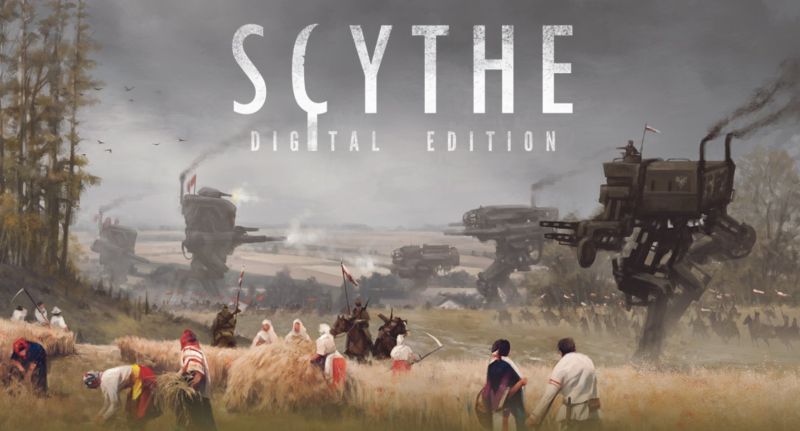




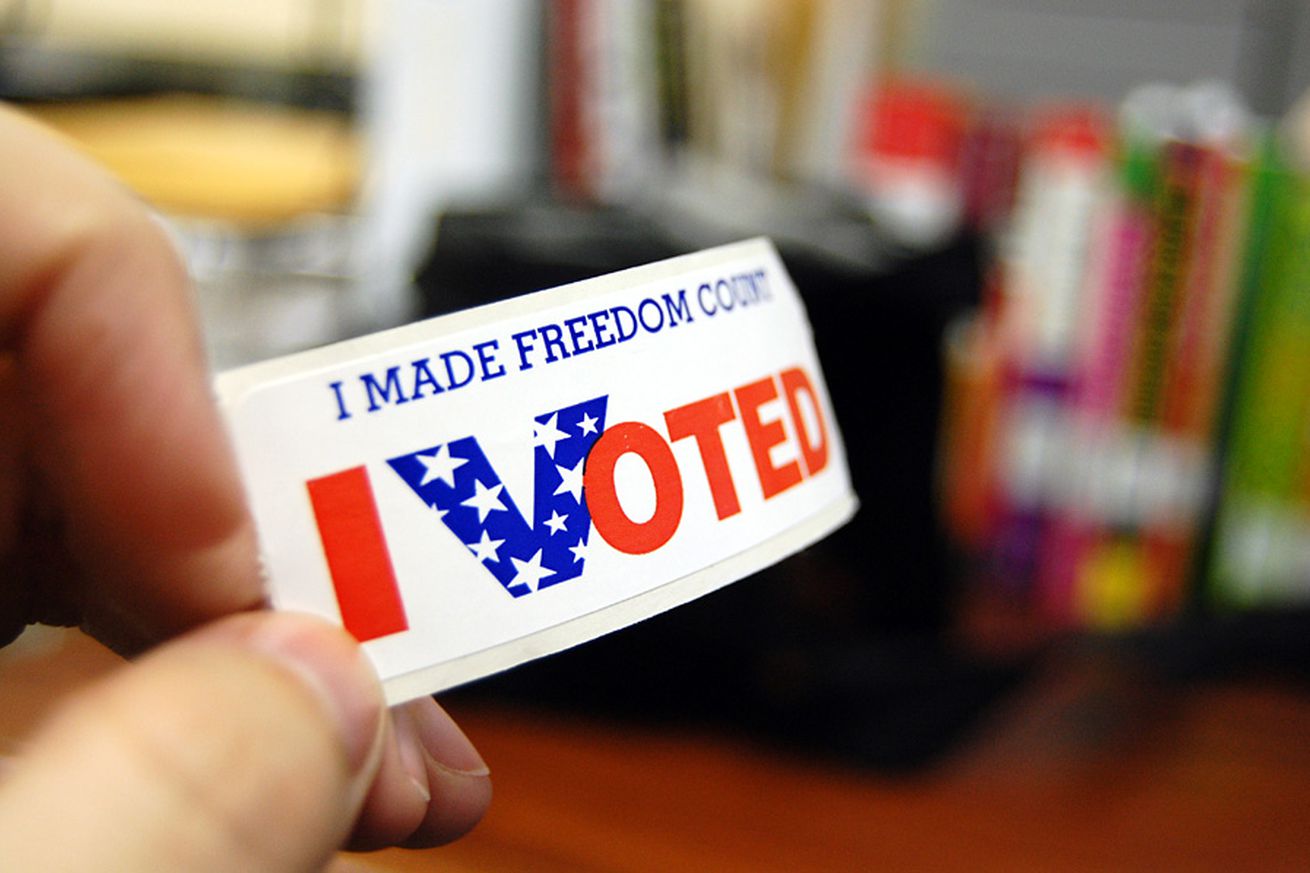
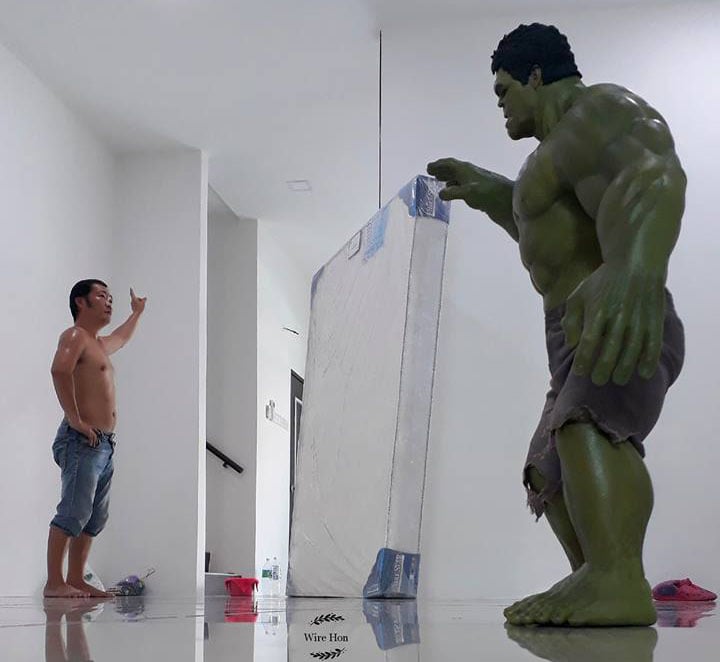







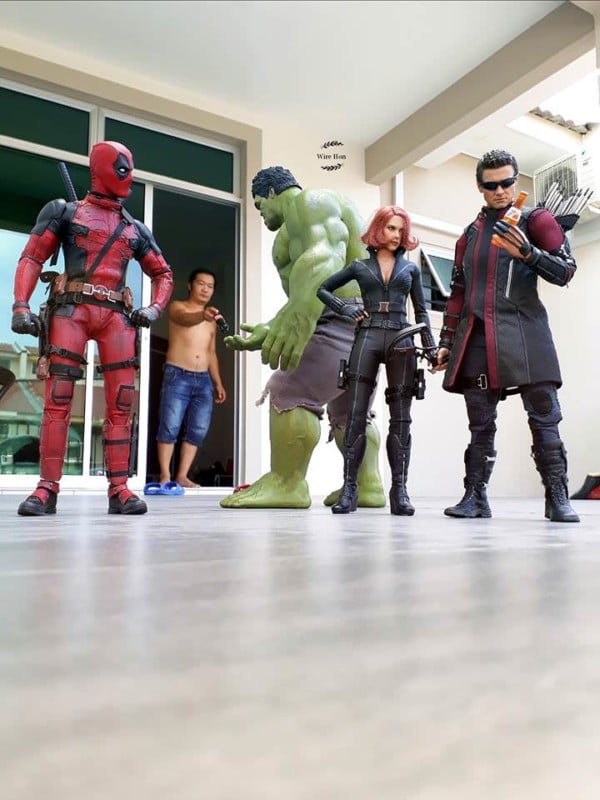


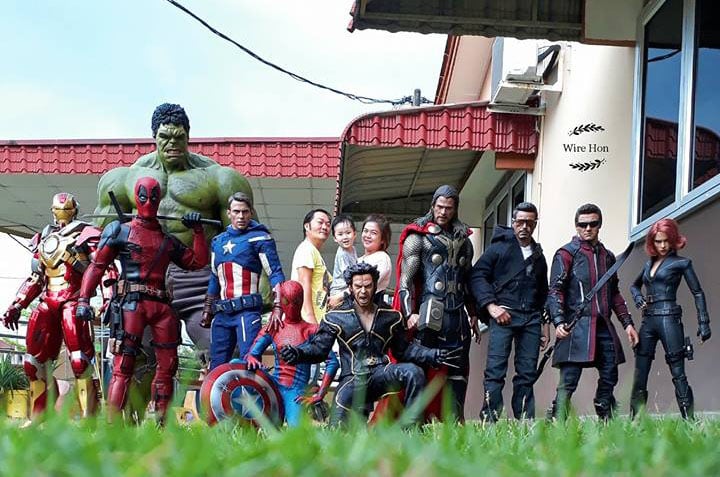
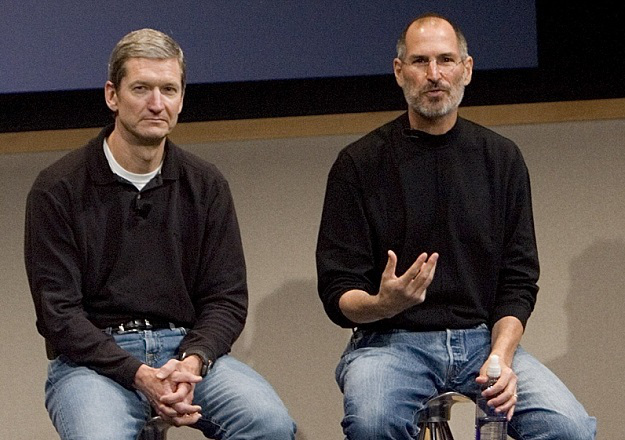


/cdn.vox-cdn.com/uploads/chorus_asset/file/12055001/950915742.jpg.jpg) Jemal Countess/Getty Images for Time
Jemal Countess/Getty Images for Time
/cdn.vox-cdn.com/uploads/chorus_asset/file/12055003/686586648.jpg.jpg) Isaac Brekken/Getty Images for Virginia Black
Isaac Brekken/Getty Images for Virginia Black


/cdn.vox-cdn.com/uploads/chorus_asset/file/11974767/tiki_toned.jpg) Zach D Roberts/NurPhoto via Getty Images
Zach D Roberts/NurPhoto via Getty Images
/cdn.vox-cdn.com/uploads/chorus_asset/file/11974725/_lafayette_park_toned.jpg) Chip Somodevilla/Getty Images
Chip Somodevilla/Getty Images
/cdn.vox-cdn.com/uploads/chorus_asset/file/11974783/neo_nazi_toned.jpg)



/cdn.vox-cdn.com/uploads/chorus_asset/file/11904883/NERC_Interconnections_Color_072512.jpg) NERC
NERC
/cdn.vox-cdn.com/uploads/chorus_asset/file/11909755/nrel_seams_hvdc_ties.jpg)
/cdn.vox-cdn.com/uploads/chorus_asset/file/11905077/nrel_seams_designs.jpg)