As part of last month’s Cybersecurity Awareness Month, I was traveling around the globe to provide organizations actionable tips on how to strengthen their cybersecurity posture and allow for accelerated recovery from cyberattacks. Through my conversations with hundreds of analysts, system integrators, and security professionals one thing became apparent – many of them understand that it’s no longer a ma
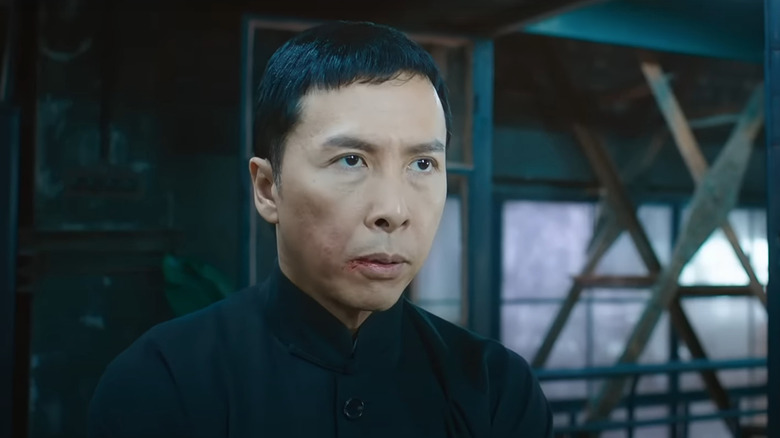
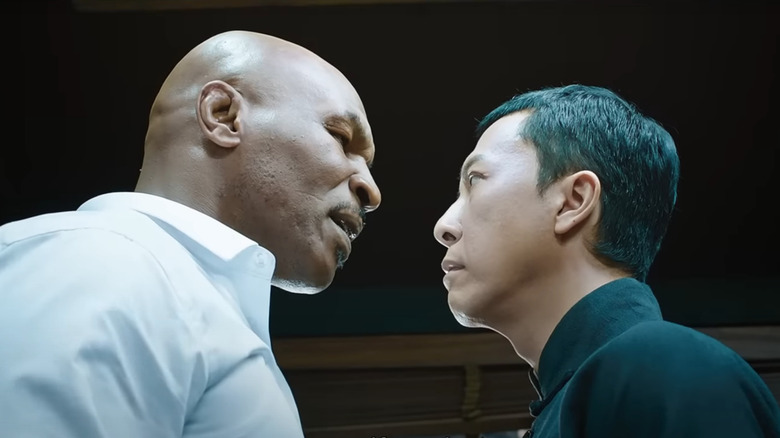
Since 2008, Donnie Yen has been dispatching all manner of foes in the Ip Man franchise. But his most dangerous encounter may well have been when he faced off against Mike Tyson in the third installment.
Based on the life of Wing Chun grandmaster Ip Man, the franchise stars Yen in the title role and loosely tells Ip Man's story. The first film, which earned its place as one of the great kung fu movies, depicts his early days in Foshan during the Sino-Japanese War, while "Ip Man 2" finds Yen's hero in 1940s Hong Kong where he faces down British police. By the time it came to the third film, Yen, who also appeared in "Rogue One" and Disney's live-action "Mulan" remake needed something a little more formidable to face down. Enter Iron Mike.
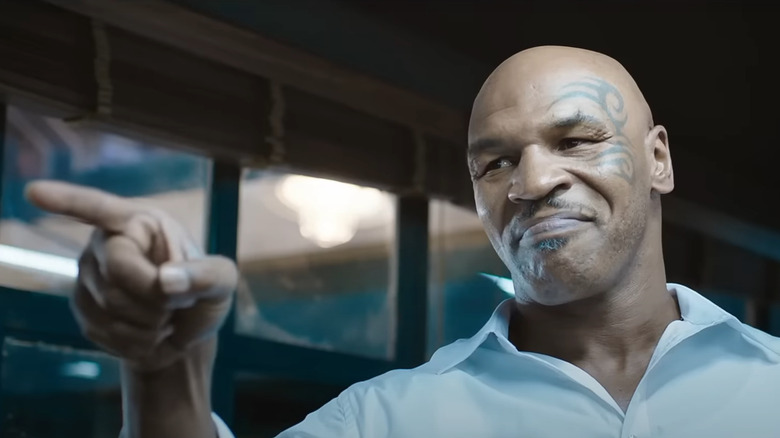
"Ip Man 3" is set in the late 1950s, and also stars Danny Chan as esteemed martial artist (and Ip Man's protégé) Bruce Lee. This time around, the grandmaster is forced to defend his school against a host of threats, one of which is Tyson. Appearing as a western property developer known only as Frank, the boxing legend provided a suitably menacing adversary for Yen's Wing Chun master, who'd already seen off the Japanese and the British. The franchise makes no mention of the real Ip Man being an officer of the Kuomintang party who actually opposed the communists. But who needs actual events when your martial arts school is being threatened by the former Heavyweight Champion of the World.
Unsurprisingly, it seems the 165-pound Yen, all too aware of the stakes, was slightly nervous to take on the roughly 230-pound boxer.
'I Was Worried That He Might Not Hold Back'
In the movie, Yen and Tyson come to blows in a three-minute fight that is as notable for its fast pace as it is for Tyson's attempts to speak Cantonese. As it turns out, Yen was a Tyson fan and knew all too well the power of his notorious swing. Talking to the South China Morning Post, the "Ip Man" star said:
"I am a fan who watched his boxing matches until 4 or 5 am on TV in Hong Kong when I was a child ... I was worried that he might not hold back in using force as he is not an actor. I had to be very cautious. I saw it as a life-and-death boxing match. Just a little carelessness and it could be fatal."
Reporting back from his experience on-set, Yen recalls having to duck one of Tyson's punches before his opponent's fist landed in a sandbag next to him. The actor recalled how he "felt like a big truck was rushing towards [him]" and felt a real "sense of danger" at the moment. For a man who'd previously taken on Jet Li and felt "enormous pressure," that's a strong statement.
A Life-Threatening Experience
Tyson's appearance in "Ip Man 3" is notable for being his first appearance as a fictional character rather than himself. And it's a decent one at that. The fight is well choreographed, if slightly unbelievable, and Tyson seems to have been committed to learning the beats, as shown in a behind-the-scenes clip where he and the production team pay close attention to the dailies.
Tyson would, of course, take on the real grandmaster in the form of Steven Segal in 2017's "China Salesman," while Yen is set to join Keanu Reeves in 2023's "John Wick: Chapter 4." But Tyson might well maintain the title of Yen's most formidable opponent, with the actor expanding on his experience during promotion for "Ip Man 3." He recalled feeling as though the fight was "life-threatening" and being worried that Tyson wouldn't hold back, saying to himself "'Wow, what if he doesn't remember the choreography. What if he comes in and instead of 1, 2, 3 he goes 2, 3, 1.' So it was enjoyable but at the same time it was truly life-threatening." As it turns out, Tyson was the one who actually got hurt, stating in an interview post-shooting that he "broke [his] finger."
Unfortunately the follow-up, 2019's "Ip Man 4," proved controversial, with Hong Kong protestors boycotting the next installment due to Yen, Danny Chan, and producer Raymond Wong's pro-China leanings. But "Ip Man 3" remains a successful chapter in the franchise, making $157 million at the global box office on a budget of $36 million.
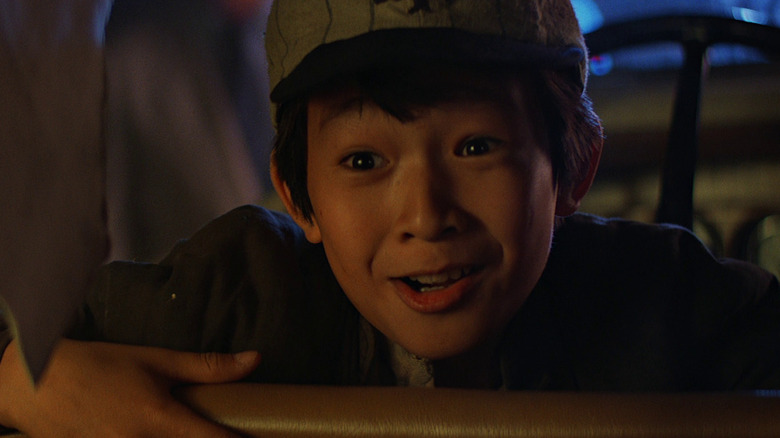
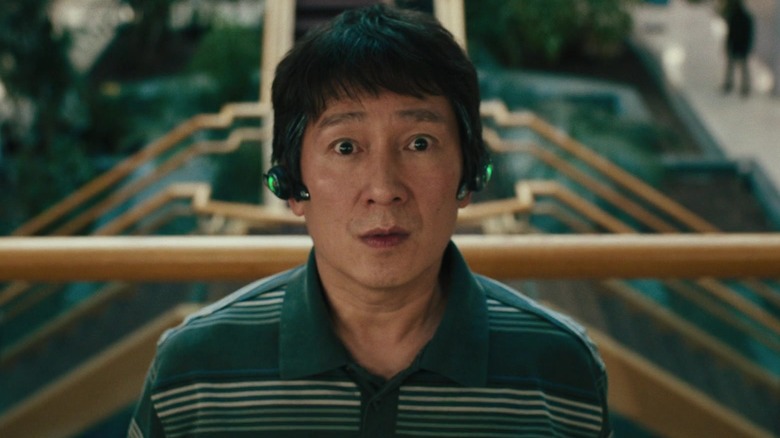
It's always heartwarming to see a familiar face return to the big screen after disappearing from the industry, such as Brendan Fraser with "The Whale." The start of the year, however, reacquainted us with another familiar face in Ke Huy Quan with "Everything Everywhere All at Once." Prior to his return to the screen, the actor had been most associated with his childhood roles in "The Goonies" and "Indiana Jones and the Temple of Doom." But with Oscar season coming up, there's a great chance he could be nominated, and rightly so.
Quan may have officially returned to movies last year with a Netflix adventure flick called "Finding 'Ohana," but "Everything Everywhere" is where the actor showed what he's been capable of. The lack of opportunity initially led him to leave the industry, and now it's his time to shine. He's already got projects lined up for Disney's "American Born Chinese," in addition to the second season of "Loki." It's an extremely exciting time to see an actor who should have been drowning in good roles finally receive his due.
Quan most recently had a happy reunion with Harrison Ford at D23 after so many decades. I dare you to look at that photo and not smile. When it comes to his other "Temple of Doom" connection, Quan revealed an even more heartwarming story that came out of making the film, in which he routinely receives the gift that keeps on giving.
Merry Christmas, Mr. Spielberg
In an interview with The Guardian, Quan talks about how director Steven Spielberg, one of our greatest cinematic minds, also moonlights as one jolly gift giver. Getting presents from Santa is cool and all, but receiving yearly Christmas presents from a friend like Spielberg is even cooler. "He gave me my first job and, so many years later, he has not forgotten me [...] Every time I needed help, he's always there," says Quan.
In an industry where child actors are either abused, manipulated, or abandoned by the industry, it's really sweet to know that Spielberg has been a good egg. After all, the man hired Quan as one of the central leads in "Temple of Doom," a role he's still remembered fondly for to this day:
"Spielberg was the first person to put an Asian face in a Hollywood blockbuster. Short Round is funny, he's courageous, he saves Indy's ass. That was a rarity then. For many years after that, we were back to square one."
To give the young actor a boost, he also helped Quan nab the role of the gadget-savvy Data in "The Goonies," of which Spielberg was an executive producer. Given how well his performance has been revered in "Everything Everywhere," it's Quan's time to live the Hollywood dream that he should have been living for decades now. Seeing how close he still is with Spielberg, I would love to see the two properly reunite on another project together at some point.
"Everything Everywhere All At Once" is currently available to rent or purchase on most streaming platforms.
There's nothing like a bit of writer's block to halt your creativity (and waste plenty of time). But for most of us, the worst we've ever been blocked was when working on some sort of essay for school — things get a lot scarier when you're a household name, renowned for your writing, and still can't figure out the words you want to put on a page. Still, even the biggest writers aren't safe — just look at horror novelist Stephen King and comedy writer Bill Hader, both of whom have seen great success but have also struggled to put words on the page.
As a lot of writers could tell you, one of the biggest challenges is simply getting started. It's relatively easy to keep the writing going once you manage to start, but getting those first words flowing can be a challenge. However, while reading Ernest Hemingway's letters, Quentin Tarantino learned a great trick to overcome this early writer's block — one that he recently shared while chatting with Howard Stern: give yourself a jumping-off point at the end of each writing session. You've probably got an idea of where the story is going. Rather than putting it on paper today, save it for the next session:
"Don't finish the thought. You know what the thought is. You're not gonna forget it. So when you pick it up the next day, or two days later, you're writing again because you know exactly how to finish the thought. And now by the time you've finished the thought, you're in writing mode."
Suffering From Success
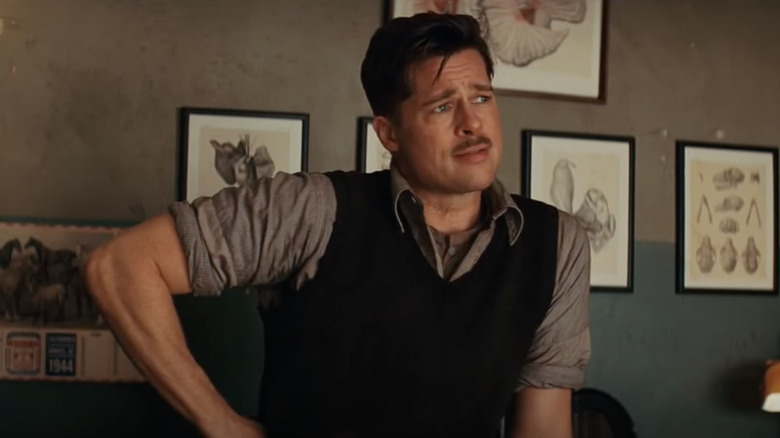
It's nice to immediately get into the flow of writing, but for Tarantino, that might come with its own set of challenges. The writer-director's movies are known for packing in a lot of details, a habit that's been long in the making: when Tarantino studied acting, he frequently indulged in putting his own twist on existing scripts. In fact, as he shared on an episode of "The Q&A with Jeff Goldsmith," the still-unfinished first draft of "Inglourious Basterds" took years to write, largely because Tarantino couldn't stop coming up with new ideas:
"I was literally writing it for about 2 years with no end in sight. It was like some weird tome that some guy in prison writes. ... There were rumours going around that I wasn't working, I was suffering from writer's block. I was doing the exact opposite of suffering from writer's block. I could not stop writing. ... I think the first two chapters were 200 pages. And I just couldn't shut my brain off, like, a new twist, a new character, a new sub-story to throw in there just kept coming into my brain ... There was no end in sight. I couldn't even figure out what [the characters were going to do] because I just couldn't stop introducing everybody."
Given the fact that Tarantino is already prone to adding a lot of different threads into his scripts, keeping an idea open between writing sessions might give him more time to think of new plot complications — a welcomed side-effect for most writers, one that maybe isn't helpful if he's already struggling to contain his scripts' length. On the other hand, the ability to always jump right back into writing is certainly tempting — and might just be worth the extra editing time.
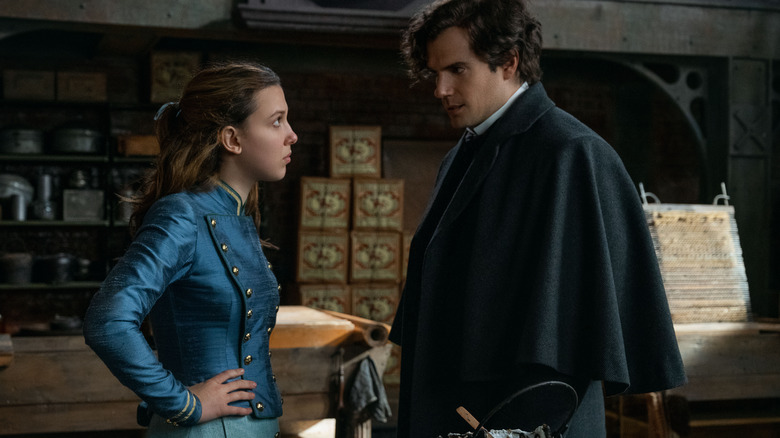
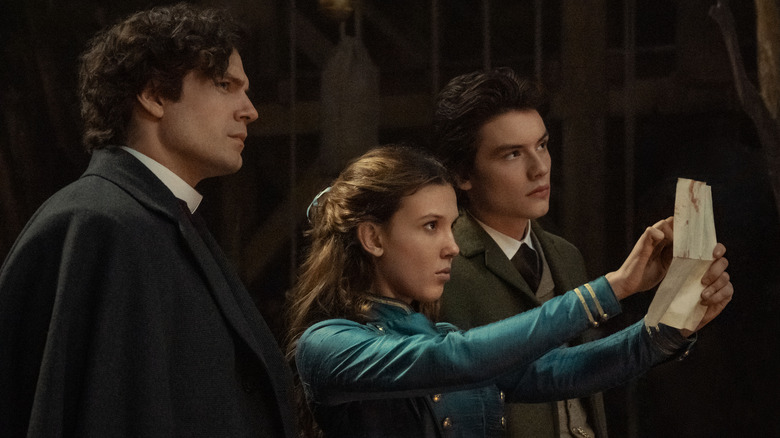
Sherlock and Mycroft are old news — the new star of the Holmes family is their forgotten teenage sister. Based on the Nancy Springer young adult book series, "Enola Holmes" features Millie Bobby Brown as both star and producer, putting her charisma on full display as the super smart, norm-shattering, corset-loathing detective who's taking Victorian London by storm. And while she is the undeniable star of this franchise, she must occasionally share the spotlight with her famous older brother, Sherlock Holmes (Henry Cavill) — an addition that makes Enola's adventures extra exciting.
This is Sherlock Holmes as we've never seen him before: navigating the endless struggle of being a middle child, with his little sister always on the verge of outsmarting him. (Technically, BBC's "Sherlock" also did a secret little sister plot, but we don't speak of that.)
Together, Enola and Sherlock are this franchise's most exciting duo. Once you're done swooning over her every interaction with the fanciful Lord Tewkesbury then prepare for the utter chaos of watching these two siblings clash. Sometimes this requires Enola to haul her drunk brother home and other times, it means shooting down his silly notion that she should stay out of trouble and leave the deductions to him. And when they do team up in earnest? They have a way of bringing out the best in each other.
Usually, when it comes to making Sherlock Holmes a better person, there's a special someone who rises to the occasion. It may take a full 2 movies, but in the closing moments of "Enola Holmes 2," he finally gets his grand entrance.
Minorspoilersfor "Enola Holmes 2" are ahead.
Two Holmes' Are Better Than One
After solving their mystery and saving the day, Enola turns down an offer to move in with her brother and become one-half of a crime-solving team (if she did that, she would always exist in his shadow). But just because she can't keep him company, doesn't mean Sherlock should be alone. So Enola finds him a roommate, which marks the introduction of Hamish Patel as John Watson.
Naturally, this got fans wondering — could "Enola" be laying the groundwork for a "Sherlock Holmes" solo film? Henry Cavill seems to have already offered an answer to that question and while it might disappoint the campaign for a spinoff, his perspective is pretty damn touching. According to Cavill, just because Sherlock has John, doesn't mean he won't need Enola.
"This universe is very much Enola's, so she'll always be involved," Cavill said in an interview with The Wrap. "I think it's important to make that connection between the two characters."
Enola didn't really grow up with her older brothers. As we see in the first film, the disappearance of their mother Eudoria (Helena Bonham Carter) is what brings them together. But while Mycroft resents his sister for not being a proper lady, Sherlock is charmed by her brilliance and quickly comes to regret the 16 years they spent apart. By the end of the film, he takes her on as a ward — but Enola is past the age of needing to be raised. That's the beauty of their relationship: she's already an independent spirit and once they finally reunite, they both have wisdom to pass on to the other.
The Trio We've Been Waiting For?
In "Enola Holmes 2," Sherlock learns a lot from his sister about staying connected to his humanity. She's empathetic and never coldly rational, but still succeeds as a detective. It shows him that there isn't just one detached way of thinking. That's what sets this version of Sherlock apart from all the others — Enola becomes a catalyst for his growth and ultimately, changes the brooding detective for the better.
"In all the literature and all the other mediums, he doesn't have an Enola," Cavill points out. "He has a Watson, but that's very different from having an Enola." The actor added:
"There's a strong emotional connection to Enola there, there's a similarity in how they're raised. It allows for a slightly different viewpoint. When it comes to Enola, there's always this emotionality with the connection, which is otherwise unique to the Enola universe."
While having Watson will certainly be a plus for Sherlock, it won't change his relationship with his sister. For better or worse, that means when we see Cavill's Sherlock again (if we see him again), he won't be on his own nor will he take center stage. This franchise belongs firmly and wonderfully to Enola. But that doesn't mean she can't find time to team up with her favorite brother and his beloved roommate.
Showtime's "The Offer" chronicled the true story of how "The Godfather" made the unlikely leap from Mario Puzo's bestseller to a sweeping family epic that reinvented the crime genre and went on to win three Oscars. Centered around the day-to-day dealings and improbable situations that producer Albert Ruddy (Miles Teller) had to navigate to get Francis Ford Coppola's classic made, "The Offer" also highlights the glamorous and tumultuous life of legendary producer Robert Evans (Matthew Goode), the man responsible for helping Paramount Pictures become a major Hollywood player after taking a big risk on the romantic drama "Love Story" starring Ryan O'Neal and Ali MacGraw.
MacGraw and Evans married each other in 1969, a year before "Love Story" became a smash hit, sending MacGraw's star soaring. She went on to accept an unlikely role opposite Steve McQueen in "The Getaway," the Sam Peckinpah-directed high-flying heist movie written by Walter Hill. MacGraw and McQueen eventually started a torrid love affair that would last for the better part of five years in the late '70s. Walter Hill and Amy Holden Jones went on to write the screenplay for the 1994 remake of "The Getaway" starring another power couple, Alec Baldwin and Kim Basinger.
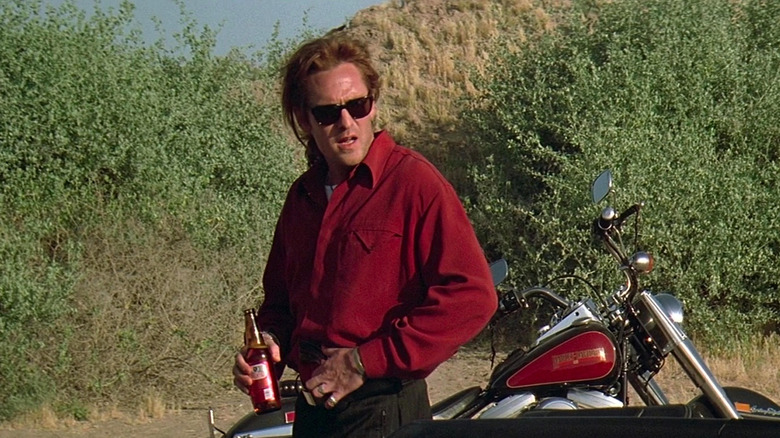
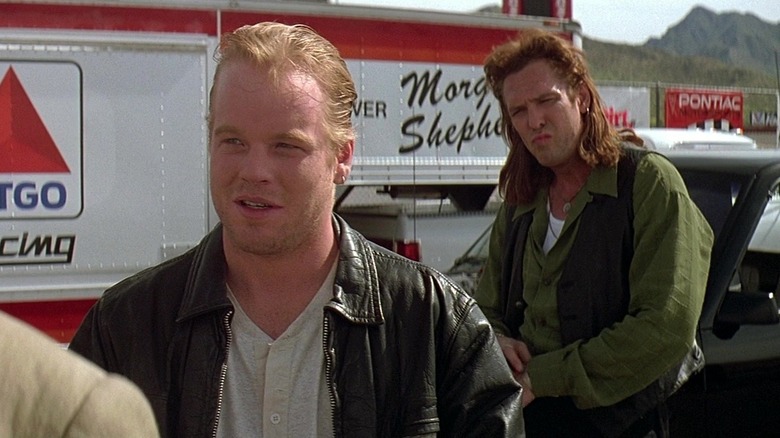
The remake is a fairly middling road trip adventure that leans much more into sultry sex scenes and over-the-top gunplay than McQueen's version, but it does feature two early performances from Michael Madsen and Philip Seymour Hoffman that hinted at greater things to come. Madsen had already made a name for himself as the unstable psychopath Mr. Blonde in "Reservoir Dogs" and his character Rudy Travis in "The Getaway" channels that same energy into a killer criminal who winds up handing Hoffman his first onscreen death.
Killing Truman Capote
In a 2015 interview with AV Club focusing on the lesser-known roles of famous actors, Madsen talked about watching "The Getaway" years later only to realize that he actually got to kill a future Oscar winner when Hoffman was virtually unknown as an actor:
"You know, it's funny: When you watch something like now, so long afterwards, it seems so much better than it was when you first saw it. I mean, there's Philip Seymour Hoffman! I kill him. We're driving down the freeway, and I shoot him and kick him out of the car, or to the side of the road. He was a completely unknown actor, and I don't think he even had more than two or three lines of dialogue in the film, but it's funny to watch that scene and realize that years later he's going to win an Academy Award for playing Truman Capote."
Madsen also said: "'The Getaway' is probably one of the best times I've had making a picture. You know, fun-wise."
In 1993, Hoffman and Madsen actually did appear in the fun John Cusack caper "Money For Nothing" but they never shared a scene together until Madsen boots him out of a moving automobile in "The Getaway." Seeing Madsen in small parts in earlier films like "WarGames" is always unexpected and surprising. Spotting actors before they were famous can be a fun game to play, one that Madsen himself also gets a kick out of. "It's so funny how these things evolve," Madsen reflected. "You never know what's going to happen with people down the road."
Revisiting the '90s version of "The Getaway" recently, it's actually more enjoyable to watch now mainly because of the unhinged performance that Madsen gives. It feels like an unofficial sequel to "Reservoir Dogs" where Mr. Blonde changes his name and goes on a rampage across Texas. For that alone, "The Getaway" is definitely worth a rewatch or a first-time discovery.
Sign up here to get What’s in my NOW? a week early in your inbox.
My name is Mekkel Richards. I am 30 and own a home in Detroit, MI. I work in the field of IT services. Really interested in New Deal politics, music, history, and the outdoors.
Physical
Dell Latitude laptop
Since 2014, when I started in the IT field, I have only purchased Dell Latitude laptops for both work & personal use. They are extremely durable, repairable, and cost-effective. Right now, I am using a model 7390 that was purchased new in early 2018. It’s been dropped on concrete a few times (and does have some chips), sandwiched in very tight bags, and overall not well taken care of, and yet, it continues to serve me daily without a single hardware issue. The Latitude line is a business-class line of laptop, and since businesses often upgrade their fleets of computers pretty often (between 2-5 years), there are tons available used on eBay at a very high discount. I never recommend a friend/family member that they purchase a new consumer-grade laptop when these are an option.
For only $7, you can’t beat this ratchet/socket 40 piece set. I have bought 4 of these. One to leave in my car, one for my shed, one for my basement, and one spare. Many times I have been somewhere and needed to work on my car (replace air filter, tighten battery terminals, etc.) or was helping out a friend with yard equipment and just having this set in my car was a massive help. The quality is not the greatest, but for the price and convenience, there is no match.
Having one tool that can accomplish the tasks of many is often beneficial. I am a guy who prefers to use a spoon over any other utensil. You can eat soup or cereal with it, cut tender meat, or scoop up vegetables with one. BUT, there comes a time when having a fork is almost necessary. The spork tackles both duties pretty well. I used a few different brands of spork until I settled on this brand because they are a good size, not too big, not too small, and they are also magnetic steel.
There are two important eras of humanity. The time when Google Reader was around and the time after. InoReader is an RSS Reader that allows you to add a website’s feed (or subreddit, twitter feed, Facebook page, Google News page, newsletter, Telegram channel, etc) to your feed list. As the website publishes new posts, they appear in your list. This makes for very efficient news consumption. It’s a lifesaver during my breaks at work. You can add up to 150 feeds with the free ad-supported version and up to 500 feeds if you cough up $1.67 per month. The ads are mostly non-intrusive and the paid option is very fair if needed. I have tested out every RSS reader out there, and InoReader seems to be the closest to what Google Reader was.
Not a day goes by where I don’t use Greenshot for taking screenshots on my PC. The app makes it very easy and satisfying to select a portion of your screen using a keyboard shortcut, and a menu instantly appears once selected that allows you to: copy the image to clipboard, open with an image editor, or instantly upload to Imgur (and auto-copy the Imgur URL!). These features are invaluable for someone like me in the IT field. I can see this being useful for most office jobs.
Invisible
Do the easy stuff now, and do 80% the rest as soon as you can.
Let’s say you have a to-do list of 10 things. Knock out the 5 easy tasks that will take you less than 1hour immediately, immediately. Now you have 5 hard tasks, which is still a daunting number. I have found that if I work on a few of the tasks now and take them to 80% completion pretty quickly. The last 20% takes a long time, but have the first 80% done will make the tasks seem like much less work. This has helped me a lot as a homeowner.
Asking a filmmaker to name their favorite movie tends to be a dead-end line of inquiry. Directors don't see their films the same way we do. They can't. They spent months to a year or more piecing the work together. They've seen it in fragments, as a rough assemblage, and in various other incarnations. Some directors don't even watch their movies with an audience. They finish and move on to the next one.
Quentin Tarantino, however, is a different breed. When he's not making a movie, he's watching movies. When he's making a movie, he's watching movies. He is acutely aware of where his movies land in the continuum of film history and loves to pontificate as to how his run measures up to the oeuvres of greats like Howard Hawks and Brian De Palma. So when you ask him to name his favorite movie, you can rest assured that he has given his answer a great deal of thought. And because you are not Quentin Tarantino, you should feel to disagree — especially when he's wrong, as he was recently on The Howard Stern Show.
Separating The Lesser Tarantino Entries From The Triumphs
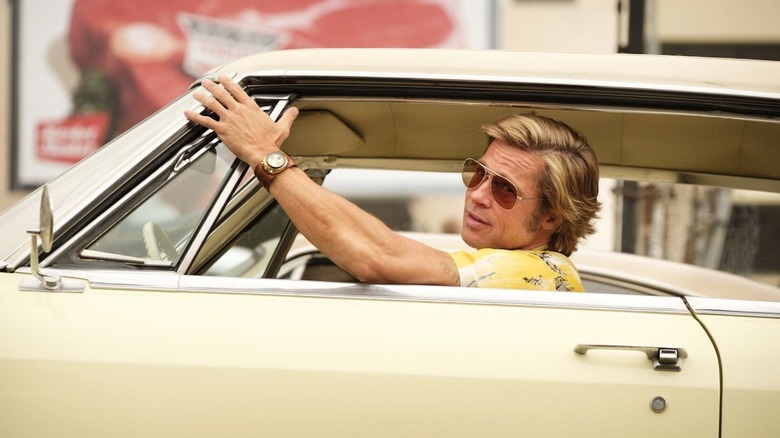
While promoting his fascinating book "Cinema Speculation," which might be the most provocative collection of film criticism since Pauline Kael surrendered her sword, Tarantino dropped by the candid radio host's show to stir up trouble. Stern kicked off their chat by asking Tarantino which of his films is his favorite. "For years people used to ask me stuff like that," he said. "And I would say something like, 'Oh, they're all my children.'" But then he delivered a definitive answer. "I really do think 'Once Upon a Time in Hollywood' is my best movie."
There isn't a great gulf of quality between Tarantino's best film and his worst. Most people hold that "Death Proof," in either its truncated "Grindhouse" form or 127-minute standalone cut, is his weakest movie, but I'm not sure I agree. At three hours, "The Hateful Eight" is a distended, thematically uncertain riff on Sergio Corbucci's "The Great Silence." It's specifically referential. There's a smattering of John Carpenter's "The Thing" in the mix, but Tarantino never shakes the specter of Corbucci's snowbound masterpiece, which boasts one of the bleakest conclusions in film history.
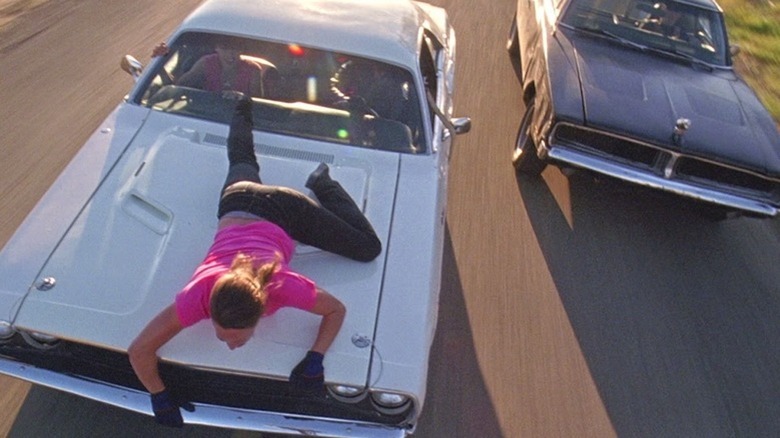
It's worth noting that Tarantino's screenplays often get leaked to the internet ahead of production, and he typically shrugs it off. When the "Hateful Eight" script turned up online, he threw a bonafide hissy. I think this was because the script needed more time in the oven, or to not get made at all. At least "Death Proof" is defiantly its own thing. The "final girl" noodling feels ported over from Carol J. Clover's "Men, Women, and Chainsaws: Gender in the Modern Horror Film," but at least he paves over his undernourished conclusion with a spectacular car chase. It's an invigoratingly feminist work.
A Grindhouse Adherent With A Deep Sentimental Streak
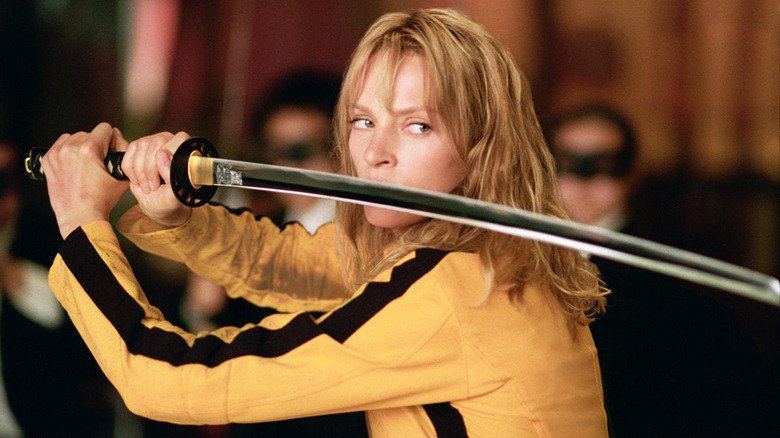
As to his best movie, there are four titles that I believe are in play: "Pulp Fiction," "Jackie Brown," "Kill Bill: The Whole Bloody Affair," and "Once Upon a Time in Hollywood." I suspect there are rights issues with Miramax keeping Tarantino from releasing "Kill Bill" in its full, unexpurgated glory, because, having seen this cut at Tarantino's New Beverly Cinema in West Hollywood, it is clearly the definitive version. We are supposed to learn that The Bride's daughter is still alive at the moment it is revealed to her. Tarantino was commercially wise to capitulate to Harvey Weinstein's insistence on two volumes, but by giving away that late twist, he compromised a masterpiece.
"Pulp Fiction?" It's a perfect movie, but cold around the heart. I prefer Tarantino the sentimentalist, and he's still too much the eager-to-impress video store brat here.
"Once Upon a Time in Hollywood" is a cinephilic feast. After 15 years in the city, Tarantino's Los Angeles was achingly familiar to me. That third-act montage scored to The Rolling Stones' "Metamorphosis" variation on "Out of Time" made me homesick for a place I'd left abruptly under tremendous duress. It was the prelude to a prayer for a 1970s devoid of curdled, Manson Family hippie horses***, where a scuffling star like Rick Dalton could've found a home in the New Hollywood firmament. It's a lovely fantasy.
I'll Send You A Postcard
But "Jackie Brown" is how life works out more often than not. It's a lonely-heart yarn about a bibliophile bail bondsman who falls for a gun-running flight attendant. Okay, that's not your life specifically, but the affectionate relationship that develops between two middle-aged cogs in the capitalistic wheel was wise beyond Tarantino's 34 years at the time. That's real, and it slices your heart wide open like Hanzō steel. He took Elmore Leonard's "Rum Punch," and crafted a film that expands upon the author's brisk 297-page novel.
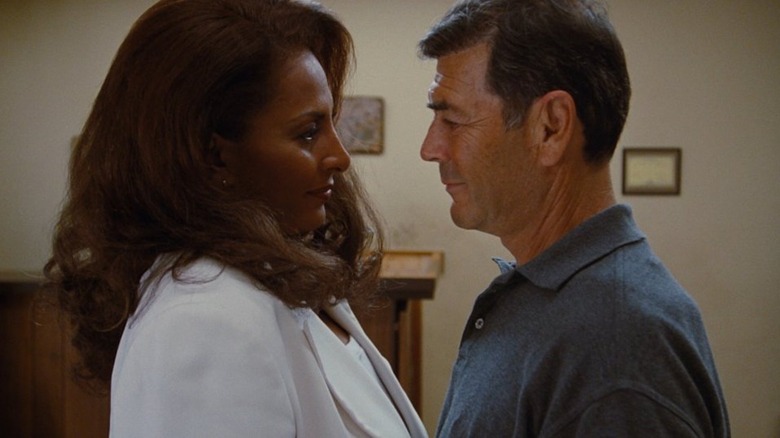
Tarantino generally takes great pains to draw out his characters' quirks, but there is still nothing in his filmography that compares to the complex, melancholy interactions between Max Cherry (Robert Forster) and Jackie Brown (Pam Grier). Since the wouldn't-it-be-nice fantasy of "Inglourious Basterds," Tarantino has been peddling celluloid fantasies wherein Nazis and bigots and brainwashed hippies reap the whirlwind. I dig it, but we're never going to live in that world. I do, however, know what it's like to drive through Hollywood singing forlornly along to Bobby Womack's "Across 110th Street." It doesn't feel great, but I treasure the commiseration.
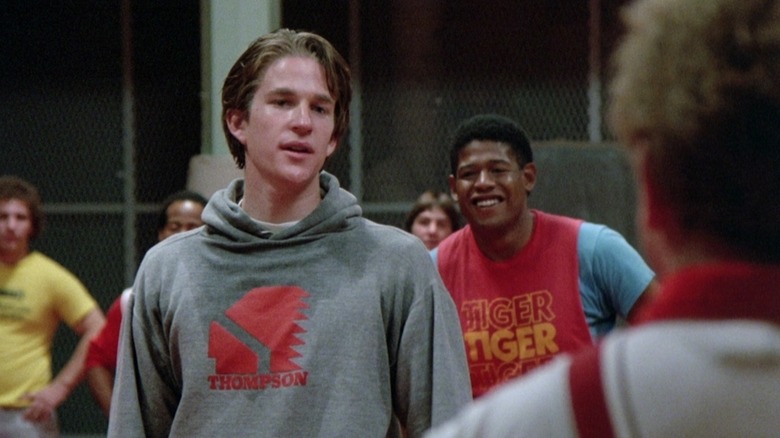
World Wrestling Entertainment (formerly WWF) was enjoying a peak Golden Age in the 1980s with primetime spots featuring larger-than-life wrestlers like Hulk Hogan and Ultimate Warrior who were treated like the rock stars of the day. In a peculiar attempt to possibly capitalize on the sports craze, 1985's "Vision Quest" stars Matthew Modine as a high school wrestler who goes through intense physical training to challenge the undefeated state champion. The film has become a sports cult classic but, at the time, Warner Bros. Pictures may have been a little concerned about the mainstream appeal of a story about tournament-style wrestling that really had nothing to do with the entertaining stage fights of the WWF that were dominating the airwaves.
In what now looks like a savvy move, the soundtrack for "Vision Quest" nabbed a handful of songs from Madonna and the film features a quick but memorable cameo of the legendary pop singer showing off her trademark fashion sense just before it became the preferred aesthetic of every teenage girl on the planet. Tangerine Dream, the atmospheric composers behind "Risky Business" and "Firestarter" were already on board, but Madonna's hit "Crazy for You" and Journey's anthemic "Only the Young" managed to push the soundtrack to modest success.
"Crazy for You" went on to sell over 2 million copies in the U.S. during the '80s, but when Matthew Modine first heard the song, he honestly didn't think much of it and didn't see Madonna's star power quite yet. Thankfully, the producers did.
'She Looked Like Boy George'
The soundtrack to "Vision Quest" also had the instantly forgettable Madonna song "Gambler" on the track listing, and "Crazy for You" doesn't ever come close to showcasing Madonna's raw club energy that "Into the Groove" would harness later in '85 when "Desperately Seeking Susan" came out. Telling Yahoo! in 2017 about his reaction the first time he heard "Crazy for You," Matthew Modine said, "We thought, 'Oh, that's a sweet song.'"
Not knowing that "Crazy for You" would quickly become the go-to song for awkward side-stepping slow dances among shy suburban kids across the country, Modine also didn't really get Madonna's look either. "She looked like Boy George," Modine thought. "The producers were saying this girl was going to be such a big star, but I remember people not really being impressed."
In April of 2020, Boy George even joked about being Madonna's stylist in the early '80s on Instagram. The two were actually friends for a short time during the '80s until competition and jealousy led to a long-standing feud. Boy George was already enjoying the spotlight with hits "Karma Chameleon" and "Do You Really Want to Hurt Me" before Madonna's hit factory revved up, so naturally Modine would assume the young pop singer was emulating the new London queer fashion that Boy George was making famous. If anything, Modine should have said that both artists actually looked like London performance artist Leigh Bowery, who heavily influenced both artists.
Who Was The Real Star Of Vision Quest?
Madonna also had the good fortune of running into the French artist Maripol at the legendary NYC club, The Roxy, in Chelsea one night with Fab Five Freddy in attendance. Yahoo! spoke with Maripol in 2018 where she reluctantly copped to her influence on Madonna's fashion choices from jelly wrist bracelets to appearing onstage that night wearing only a bra. "Whatever, yes — I did create a legend," she conceded. About a year later after the encounter at The Roxy and Madonna's glorified cameo in "Vision Quest," Matthew Modine was walking down a busy street in Rome when he stumbled on a giant-face poster of the pop singer with the words "Crazy for You" printed in Italian. Looking a little closer, he noticed that the poster was also pulling double duty as a very small advertisement for "Vision Quest." Checking his ego, Modine acquiesced to the fact that maybe Madonna had become a bigger star almost overnight. He recalled to Yahoo!:
"I thought, 'Oh, she must be doing a concert here.' But then I looked at the poster a little bit closer and at the bottom I saw myself [in a scene from the film] with my arms in the air. The movie had gone from being a Matthew Modine movie that Madonna was in, to a Madonna movie that Matthew Modine was in! That's how fate would have it."
Of course, Modine went on to continued success and a career resurgence fueled by '80s nostalgia in "Stranger Things." So where's the "Vision Quest" Easter egg in the Duffer Brothers' hit Netflix show, already?
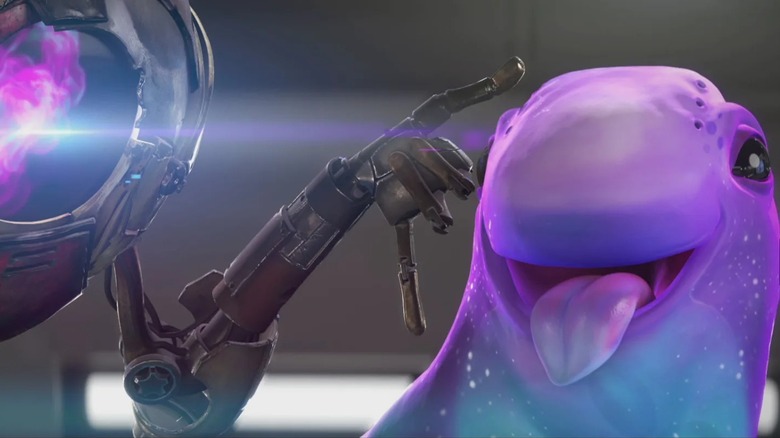
Dee Bradley Baker is one of the lucky voice acting legends who's been blessed enough to work on two of the biggest pop culture juggernauts of them all: the galaxy far, far away of "Star Wars" and the optimistic futuristic universe of "Star Trek." He's most notably the voice of all the clone troopers and the Fetts in "Star Wars: The Clone Wars," as well as the lovable sentient blob Murph in "Star Trek: Prodigy."
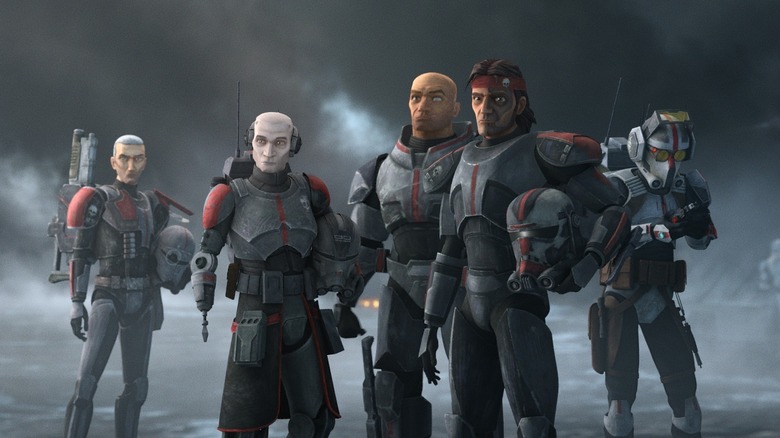
Baker has a broad and vast array of voice acting credits, but he's mostly known for his vocalizations of different types of monsters and animals, which makes him a natural fit for these respective franchises. Outside of the many creatures and background characters he voices in the infinite "Star Wars" universe, the range of his talent is fully demonstrated in "Clone Wars" spinoff "The Bad Batch," in which he voices five different Clone characters who often bounce off of each other. His time voicing creatures helped him find the adorable voice of Murph in "Prodigy," though the show is more explicitly aimed at children compared to the animated "Star Wars" series, it's still loved and accepted by Trekkies.
This week, /Film's own "Star Trek" expert Witney Seibold spoke with Dee Bradley Baker and asked how the fandom of "Star Trek" and "Star Wars" differed in any notable way. Baker's answer was sophisticated and mature, stressing that "there's a different flavor to these mythologies."
Star Wars Is About Conflict, Star Trek Is About Unity
"Well, that's an interesting question. Is there a different tone or a different source of gravity for the enthusiasm of these two different mythologies?" Baker said, "To me, they're very related, because 'Star Trek' and 'Star Wars' are both space-oriented fantasies that are angled to an ultimately hopeful horizon. So there is that."
Though "Star Trek" is a decade older with its original '60s TV series, it didn't reach the big screen until 1979. The overwhelming success and popularity of the original "Star Wars" in 1977 paved the way for "Star Trek: The Motion Picture" to be made. Thanks to the ongoing release of the "Trek" movies and Lucas's "Star Wars" trilogy, they existed simultaneously in the public consciousness as dueling visions of space fiction.
But "Star Wars" and "Star Trek" could not be more philosophically different. "For me, 'Star Wars' is, ultimately, about resisting tyranny. And 'Star Trek' is about democracy trying to work." Baker explained, "And so it's like these two political polarities. I think they draw a different character of fan and I don't know how to describe that yet."
Though they both start with the word "Star," the second half of these titles sum up their fundamental differences well. "Star Wars" is a story of everlasting generational violence, while "Star Trek" is inherently concerned with discovery and empathy through diplomacy. It's certainly possible to enjoy both, but there's an inherent conflict at play, leading to two distinct fan bases.
Science-Fiction Versus Science-Fantasy
Baker continued:
"There's a different flavor to these mythologies. 'Star Trek,' it's really more science fiction and science-based. Some of it is very science-based. 'Star Wars' is not science — it's more human interaction and morality. And then facing off against this daunting tyranny that sets in when the Emperor Palpatine [executes] Order 66."
Even if the Empire casts a shadow over the galaxy in "Star Wars," it largely finds its adventure and emotional essence through the mold of a coming-of-age tale. It's defined by Luke Skywalker journeying outward from his small town to meet people of new perspectives and find his purpose in life. "Star Trek" shares more in common with a workplace procedural. The spirit of the franchise lies in a group of skilled individuals interrogating the philosophy of new technology in a world where humans have put their differences aside to advance as a species.
We've ultimately reached a place in pop culture where nerd fandom is so normalized that there's plenty of space for both "Star Wars" and "Star Trek." Baker shared he doesn't find there to be much friction between the two fandoms these days. "It's an interesting question. It's like, how are these fan bases different? I've never seen them not be accepting of each other or be rejecting of each other." Baker admits, "But yeah, there's probably a different character there at work."
When Netflix presents an upcoming German mystery from the creators of 2017’s Dark, you know you’re in for a gripping ride. In 1899’s case, it will be a nautical ride traversing the horrors of the open water and we reveal if 1899 is based on a true story and confirm the show’s episode count.
Dark dipped into science-fiction and ran for three seasons on Netflix surrounding a child’s disappearance in the village of Winden, Germany. The series met critical acclaim and was considered to be one of the notable shows of the decade.
Created by Jantje Friese and Baran bo Odar, the German mystery 1899 follows a group of European migrants traveling from London to New York on a steamship within the titular year when their journey turns supernatural and stars Emily Beecham, Andreas Pietschmann, Miguel Bernardeau, Maciej Musia? and more.
Yes, Netflix’s 1899 is loosely based on a famous voyage transporting European migrants to America during the early 1900s.
Even though the plot’s summation is based on history, writer Friese has clearly attached a supernatural layer to the narrative.
Shown in the trailer and artwork, a nod to the urban legend, the Bermuda Triangle, is present, where one of the characters is falling within a mirrored image of the sea in the shape of a triangle.
The Bermuda Triangle, also known as the Devil’s Triangle, is a mythical phenomenon that apparently dwells in the western part of the North Atlantic Ocean, stretching from Florida to Bermuda and Puerto Rico. It is reportedly the cause of various unexplained disappearances of ships and aircrafts, but its existence has never been proven.
NETFLIX estrena en 4 DÍAS la nueva serie de los creadores de DARK: 1899. Y sus primeras críticas son alucinantes, catalogándola como una especie de Titanic meets Black Mirror con dosis de terror, ciencia ficción, misterio y puzzles que te hará pensar mucho en su primera temporada pic.twitter.com/fJPsd6VfjH
The European Migrant Crisis and Brexit Influenced 1899
The mystery was first announced during the European migrant crisis – when a number of Middle-eastern and African citizens were seeking refuge abroad – and this topic not only influenced the plot, but it also encouraged the team to shoot the series multilingual.
Speaking to Deadline, Friese explained the importance of honing this European influence:
“The whole European angle was very important for us, not only story wise but also the way we were going to produce it,” says Friese. “It really had to be a European collaboration, not just cast but also crew. We felt that with the past years of Europe being on the decline, we wanted to give a counterpoint to Brexit, and to nationalism rising in different countries, to go back to that idea of Europe and Europeans working and creating together.”
A suspected Chinese state-sponsored actor breached a digital certificate authority as well as government and defense agencies located in different countries in Asia as part of an ongoing campaign since at least March 2022.
Symantec, by Broadcom Software, linked the attacks to an adversarial group it tracks under the name Billbug, citing the use of tools previously attributed to this actor. The
Few cinematic cows are more sacred than Francis Ford Coppola's "The Godfather" trilogy. Largely considered one of the greatest films ever put to screen, the mob drama is a staple of American film and a mainstay in Italian-American culture. Becoming obsessed with "The Godfather" is a generational rite of passage, and despite the film's constant analysis ranging from the presence of oranges to the ridiculously true circumstances surrounding the film's production process, "The Godfather" continues to pop up as a reference point in other forms of entertainment.
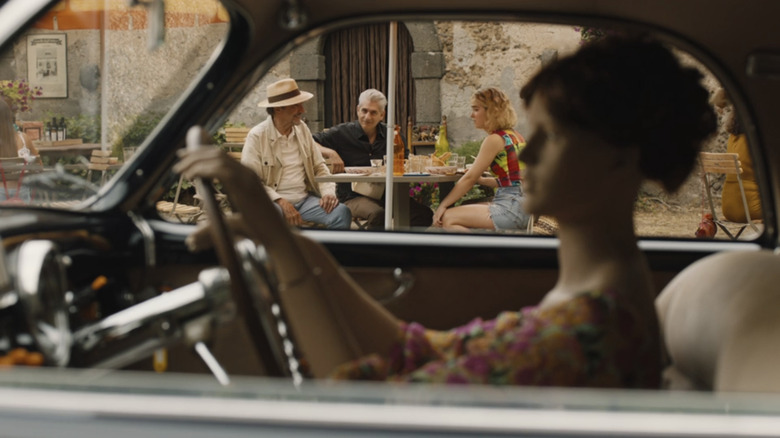
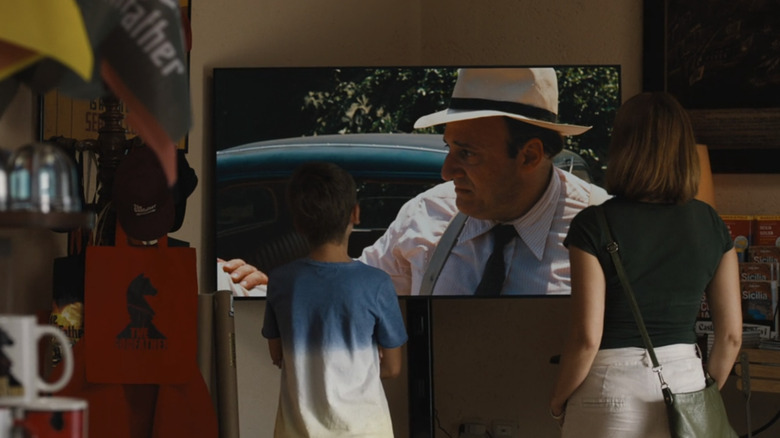
As someone with a last name so Italian-sounding I'm a syllable shy of sharing the name of one of the "Teenage Mutant Ninja Turtles," it wasn't until my mid-20s that I was able to watch "The Godfather" in an objective way. In the "Italian Dream" episode of Mike White's "The White Lotus," new light was shed on a memorable quote from "The Godfather," where the show's plotline gave new meaning to the phrase, "In Sicily, women are more dangerous than shotguns." Now, in the episode "Bull Elephants," the three generations of rotting masculinity known as the Di Grasso family take a day trip to visit the Sicilian shooting locations of "The Godfather," enjoying lunch next to a dummy dressed like Apollonia Vitelli-Corleone in a car, a reference to the infamous scene where she is killed by a car bomb planted for her husband, Michael Corleone.
The family brings along Portia (Haley Lu Richardson), who has never actually seen "The Godfather," but doesn't find the idea of sitting next to a spot where a woman was blown to smithereens particularly exciting. This disconnect allows "The White Lotus" to spark a fascinating conversation surrounding the assessment of classic art from a different time, and how it reflects the way we also view people from a similar generation.
'Nostalgic For The Solid Days Of The Patriarchy'
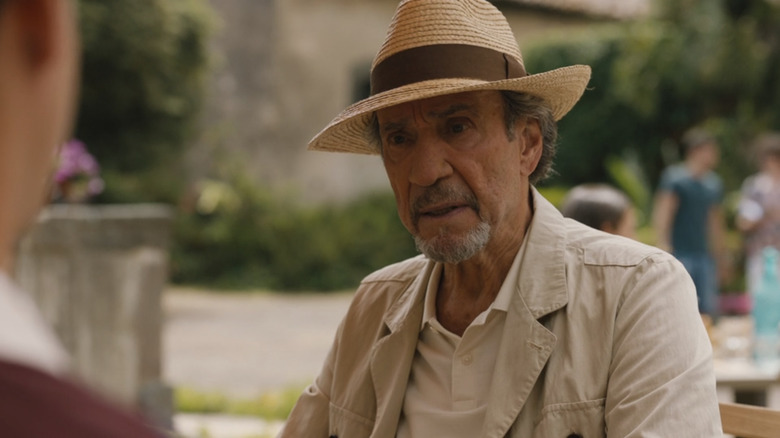
Grandpa Bert Di Grasso (F. Murray Abraham) planned the trip to get in touch with the family's Sicilian roots, including worshipping at the altar of "The Godfather." He lights up with absolute glee when telling Portia why their lunch location is so important, reveling in how Al Pacino cries out "Apollonia!" as the Corleone character watches his wife explode before his eyes. "It's a great scene," Bert declares. Portia, having zero nostalgia or cultural kinship to the film pushes back. "She blows up? Like, blows up? It's a little tasteless maybe," she says.
Bert immediately tries to double down by saying, "Well, look, they're trying to make a buck. They own the house where they shot the best American movie ever made," but Portia finds a (possible incel) softboi ally in grandson Albie, who confidently disagrees with his grandpa about the film's brilliance, telling him he only likes it because "you're nostalgic for the solid days of the patriarchy." Look, I know Albie is trying his hardest to be the living embodiment of #NotAllMen, but his assessment of "The Godfather" is fundamentally inaccurate:
"Men love 'The Godfather' because they feel emasculated by modern society. It's a fantasy about a time when they could go out and solve all their problems with violence and sleep with every woman and then come home to their wife who doesn't ask them any questions and makes them pasta."
Albie, you moronic little bambino, that is not what "The Godfather" is about, but it is absolutely delightful watching him deliver this scene in front of his dad, Dominic, who is played by Michael Imperioli of "The Sopranos" fame, a series that only exists because of "The Godfather."
Is The Godfather A Male Power Fantasy?
Bert and Dom Di Grasso then go on to say that "The Godfather" is a "normal male fantasy," which Albie disagrees with and instead says, "No, movies like that socialize men into having that fantasy." His father pushes back: "Movies like that exist because men already do have that fantasy. They're hard-wired," and Bert agrees. "Mm-hmm, comes with the testosterone." Albie can't let it go, and either because he genuinely believes what he's saying or because he's trying to impress Portia by coming off as "one of the good ones," he declares, "No. Gender is a construct. It's created."
The scene is magnificent because it's a circle of three generations of men being so loudly wrong about the message of "The Godfather," while simultaneously nailing why conversations surrounding classic films are never-ending and consistently complicated. All three of the Di Grasso men were introduced to "The Godfather" in different eras, and their relationships to masculinity are completely different because of not only the changing social climate, but the types of masculinity modeled for them by the men in their lives. Albie is the product of a lecherous grandfather and a philandering father, so it makes complete sense that he'd be constantly looking for reasons to explain away his own internalized feelings on toxic masculinity.
Or he's just a manipulative tryhard who has learned that leaning into the complicated aspects of masculine expression will get him laid less than parroting progressive talking points, like conservative men who write "I'm not political" on their Tinder profiles instead of admitting they drink the sweet fascist nectar of the MAGA regime.
Reminders Of An Offensive Past
As is the case with all storylines on "The White Lotus," the discussion about "The Godfather" is not actually about "The Godfather." No, it's about the generational divide between Albie, Dom, and Bert. "You spent all that money on Stanford, and he comes back brainwashed," Bert says, "Do we embarrass you, Albie?" He replies, "No, it's just, I don't think you realize how you sound sometimes." Bert, as is usually the case, has the final word: "They used to respect the old. Now we're just reminders of an offensive past." He's clearly talking about himself, but he could very easily also be talking about "The Godfather."
Film is often a perfect time capsule of societal mindsets at the time of release, and as such, freezes a specific culture in celluloid. Albie's dislike of "The Godfather" is what happens when shallow, surface-level theorizing through a modern sense of morality is applied without taking into consideration the historical and cultural context of when the story was crafted (and what it was trying to capture). At the same time, Bert and Dom's blind-faith defense of the film is devoid of any nuance, and a reflection of two men who clearly intertwine their love of "The Godfather" with who they fundamentally are as people.
Assessing classic art from a different time period often sounds like people trying to make caveats for their elderly relatives, because it seems like in order to avoid upsetting the applecart of viewers (like Portia) who have no context for the film, we have to spend as much time adding asterisks or preemptive statements to lay the groundwork of a different era as we do actually assessing. This isn't necessarily a bad thing — we just, as a whole, tend to be really bad at it, and all end up sounding like three different very loud, very wrong assessments of "The Godfather" in the process.
Sure, we all want NVIDIA's RTX 4090, but it's tough to stomach its $1,599 starting price (if you can even find it at that price) or its massive power demands. That leaves impatient PC gamers with only one other new NVIDIA option this year: the $1,199 RTX 4080 with 16GB of VRAM. While $400 isn't exactly a huge discount in the world of high-end PC gaming (certainly not as significant as the $899 12GB RTX 4080 that NVIDIA "unlaunched."), it may tempt some gamers.
After all, it's faster than the RTX 3080 Ti that launched at the same price earlier this year, and it works with NVIDIA's powerful new DLSS 3 upscaling technology (which is limited to 4000-series GPUs). If you can live without the bragging rights of having a 4090, the RTX 4080 is a powerful GPU that'll satisfy anyone who wants to game in 4K with ray tracing. For those stuck with lower resolution monitors, though, you're probably better off waiting for the eventual 4070 and 4060 cards, as well as AMD's upcoming RDNA 3 GPUs.
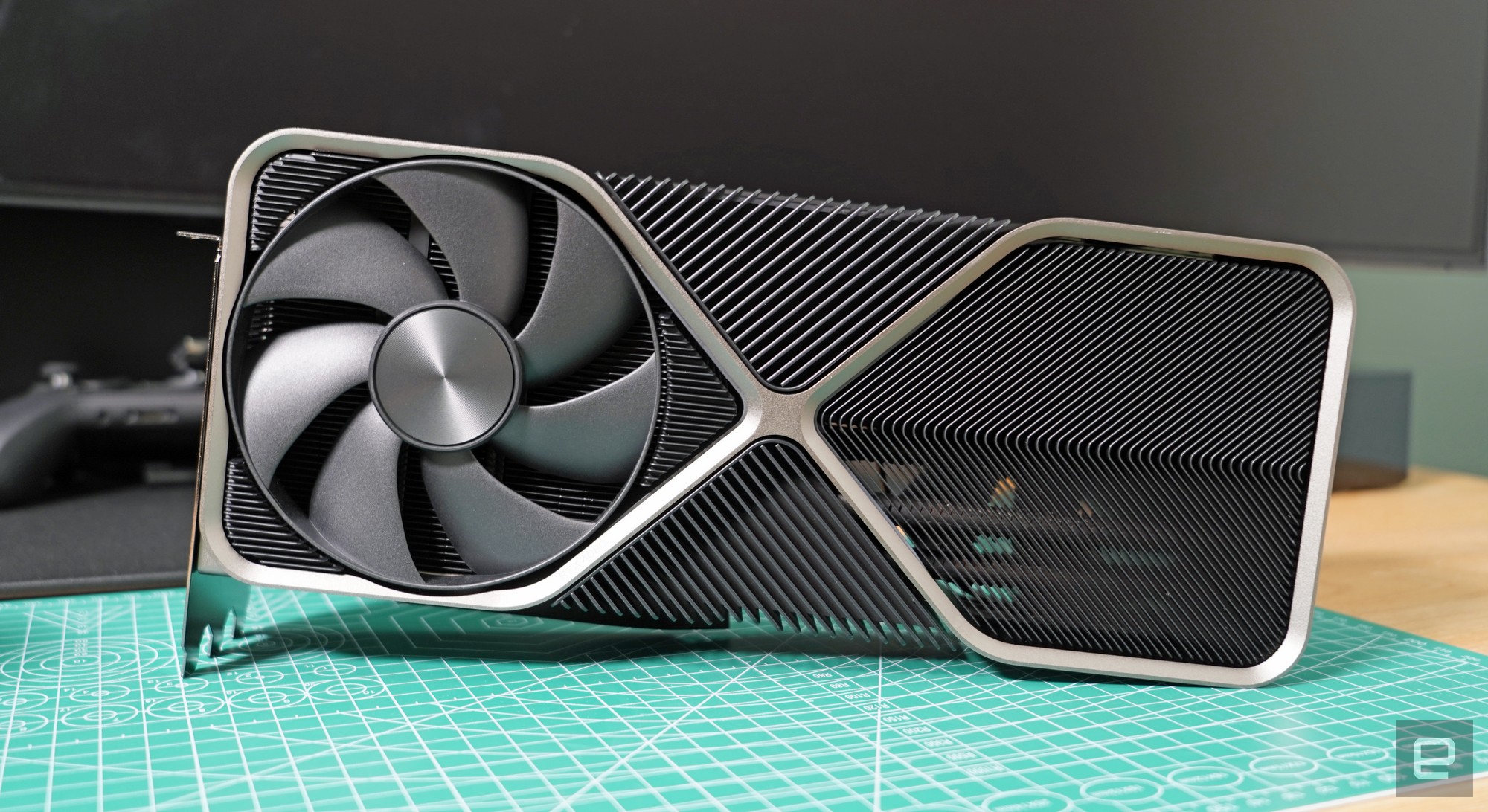
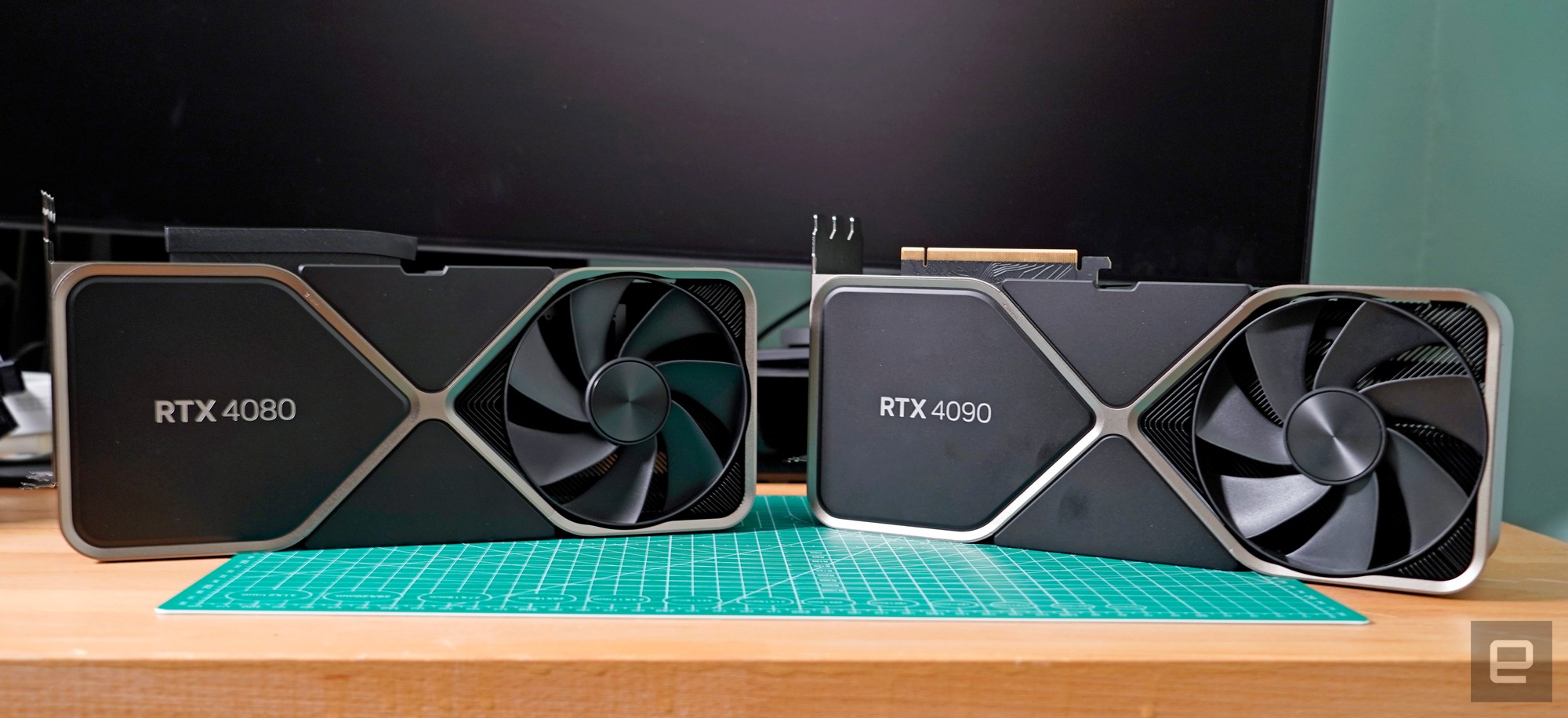
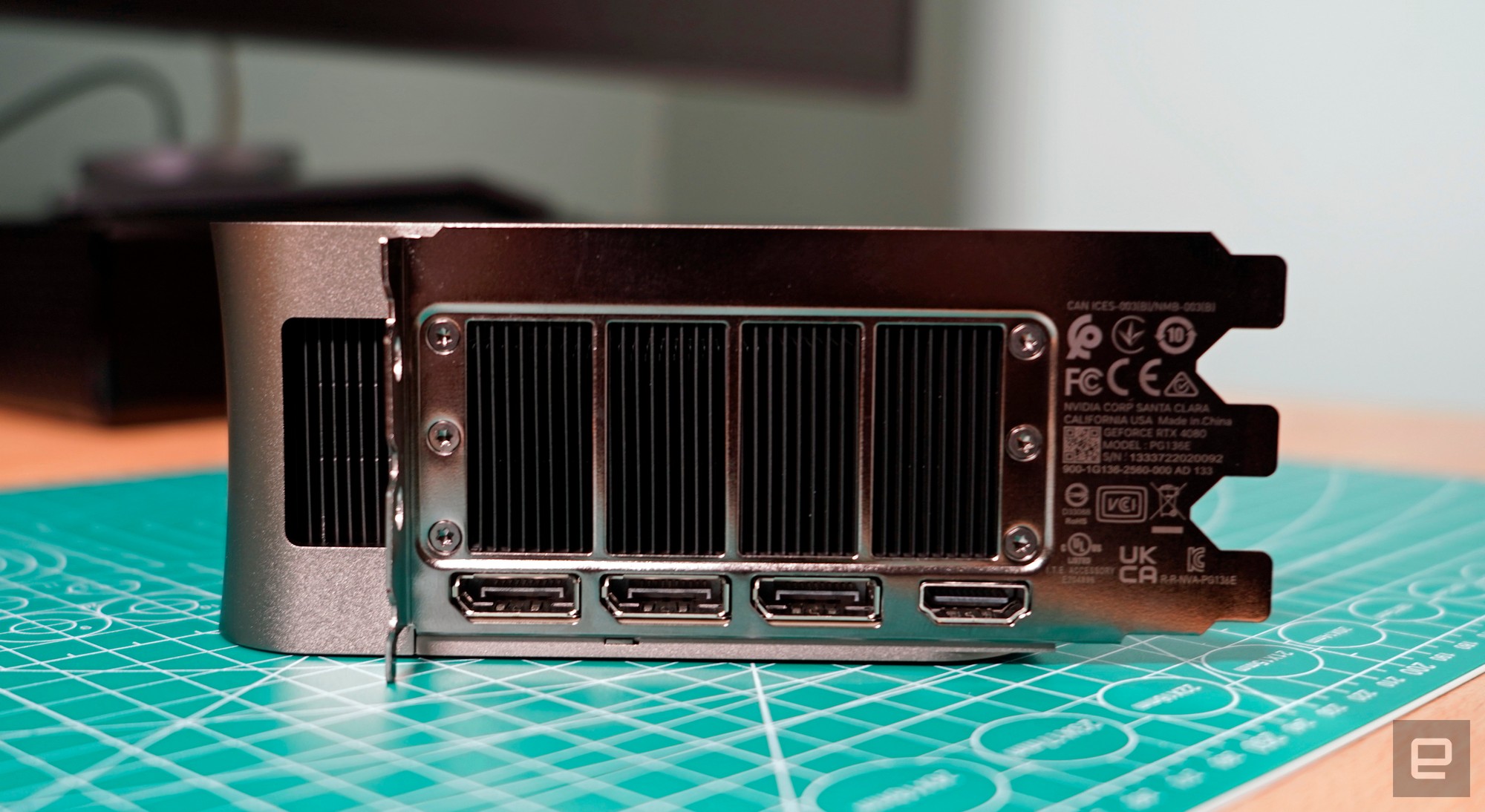
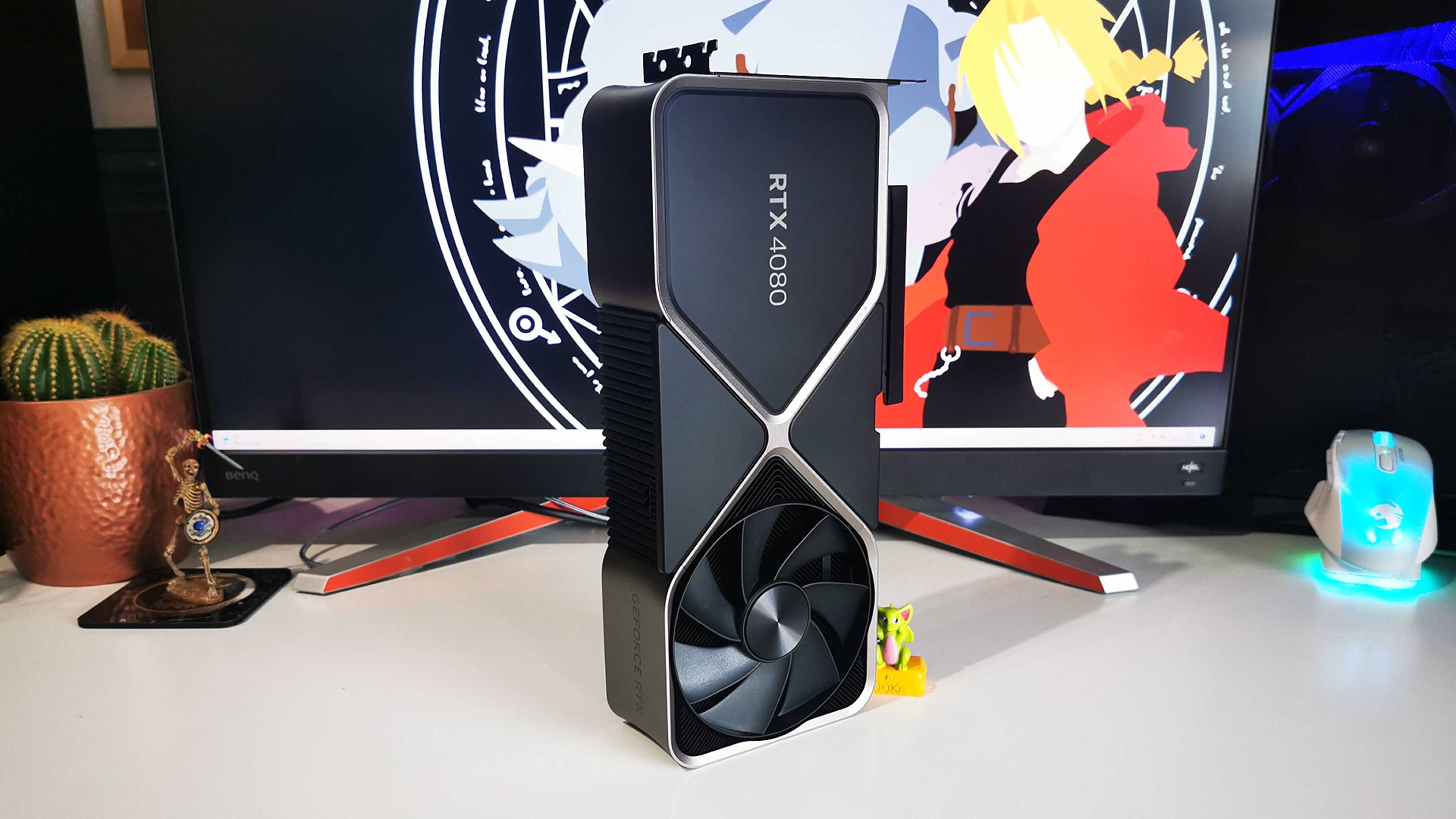
Surprisingly enough, the RTX 4080 Founders Edition we reviewed shares the exact same design as the 4090. They both take up three PCI-e slots, sport massive vapor chambers, and they retain the unique pass-through fan design from NVIDIA's previous GPUs. I was expecting something a bit smaller, to be honest. At least the 4080 only needs three 8-pin PSU cables to function, whereas the 4090 demands four. (Both cards can also be powered by a single PCIe 5.0 PSU cable, but those power supplies are pretty rare at the moment.)
Devindra Hardawar/Engadget
The 4080's power cables also hint at one of its major advantages: It has a 320-watt thermal design profile (TDP) and requires a 750W PSU, whereas the 4090 has a far more demanding 450W TDP. Unless you already have an 850W power supply, upgrading to the 4090 may involve getting a new unit and rewiring power throughout your entire system. These cards won't always use their maximum power loads, but you'll still need to be ready for the rare moments when they need more juice.
While it may look just like the 4090, the RTX 4080 is a dramatically different beast under the hood. It's powered by 9,728 CUDA cores, 16GB of GDDR6X VRAM and offers a base clock speed of 2.21GHz (with boost speeds to 2.51GHz). The 4090, on the other hand, has 16,384 CUDA cores, slightly higher clock speeds and a whopping 24GB of VRAM. Compared to the 3080 Ti, the 4080 wins out with NVIDIA's new Ada Lovelace architecture, significantly faster speeds and 4GB more VRAM. (The 3080 Ti technically has around 500 more CUDA cores, but they're also inherently slower and less efficient than NVIDIA's new platform.)
So what do these numbers mean in practice? The RTX 4080 scored around 3,500 fewer points in 3DMark's TimeSpy Extreme benchmark compared to the 4090. But if that more powerful card didn't exist, the 4080 would be the most capable GPU we've ever reviewed. Its TimeSpy Extreme score was about 50 percent higher than the 3080 Ti, and it reached a comfortable 130fps while playing Halo Infinite in 4K with all of its graphics settings maxed out. Seeing Cyberpunk 2077 hit 74fps in 4K with ultra ray tracing settings (and the help of DLSS 3) nearly brought a tear to my eye.
None
3DMark TimeSpy Extreme
Port Royal (Ray Tracing)
Control
Blender
NVIDIA RTX 4080
12,879
17,780/82fps
4K (Native) High RT: 42 fps
9,310
NVIDIA RTX 4090
16,464
25,405/117.62 fps
4K (Native) High RT: 107 fps
12,335
NVIDIA RTX 3080 Ti
8,683
12,948/59.95fps
4K (Native) Med RT: 43 fps
5,940
AMD Radeon RX 6800 XT
7,713
9,104/42.15fps
4K (Native) No RT: 28-40 fps
N/A
A word on DLSS 3: It's NVIDIA's latest AI solution that can take lower-quality imagery and upscale it to higher resolutions. But in addition to intelligently sharpening edges and upgrading textures, DLSS 3 can also inject interpolated frames to smooth out 4K gameplay. While I can occasionally spot issues with particularly low quality DLSS upscaling, I didn't notice any unusual framerate hiccups while testing Cyberpunk and A Plague Tale: Requiem with the technology enabled.
The only real downside to the RTX 4080 is that I can't help but compare it to the 4090. That same Cyberpunk ray tracing benchmark was almost twice as fast on the 4090, reaching an eye-watering 135 fps. It also hit a 40-fps-higher average framerate in the 3DMark Port Royal ray tracing benchmark. Still, these are the sorts of gains only the most dedicated gamers will notice, the exact market for the 4090. When it comes to actual 4K gameplay, even with ray tracing in demanding games like Control, I never felt held back by the RTX 4080.
Devindra Hardawar/Engadget
And if you're looking for more performance, overclocking is always an option. I didn't have a chance to do so myself, but the 4080's thermal performance makes me think there's plenty of room for pushing things harder. It never climbed beyond 61 celsius during my testing, around 10 degrees cooler than the 4090. That's a testament to NVIDIA's excellent cooling setup (and perhaps partially due to my office being slightly cooler this month).
The real question: Is it worth settling for the 4080 if there's a chance you'll actually be able to buy the 4090 for $1,599? At the moment, most online retailers are selling 4090 cards for well above $2,000. It sounds crazy to say it, but the $1,199 card seems like a steal with that gulf. But, of course, who knows how long you'll be able to find the RTX 4080 at its launch price. It likely won't be too long before it creeps towards the 4090's higher tag.
And if paying more than $1,000 for a video card seems insane to you — and let's be clear, it should — sit tight to see what NVIDIA's future cards look like. We're definitely expecting RTX 4070, 4060 and 4050 cards eventually, but the the question is when. (Also, what the heck will NVIDIA do with its planned $899 4080 GPU? Does that become the 4070?) AMD's flagship RDNA 3 GPUs will launch below $1,000, and at the entry level, Intel's new Arc GPUs are surprisingly compelling.
All in all, the RTX 4080 is exactly what I'd want from an RTX 3080 Ti successor. It's faster and has plenty of new features to make it a demonstrable leap from the previous cards. I'm not saying you should be upgrading your 3080 anytime soon, but if you somehow stumble onto $1,199, I wouldn't blame you for being tempted by the 4080.
The Nvidia RTX 4080 has finally rolled up to the graphics card scene, and its next-gen abilities are a GeForce to be reckoned with. Sadly, while it stands tall next to its RTX 4090 sibling, it's probably not the 80-class successor you've been waiting for, as it flies a bit too close to the premium price point sun.
Movies from Hong Kong-based filmmakers have been treating action as art for decades, and martial arts movies have always big business in China, South Korea, and Indonesia, even as directors have begun blending liberal doses of gunplay and maybe even a car chase or two into the action. American action movies used to…
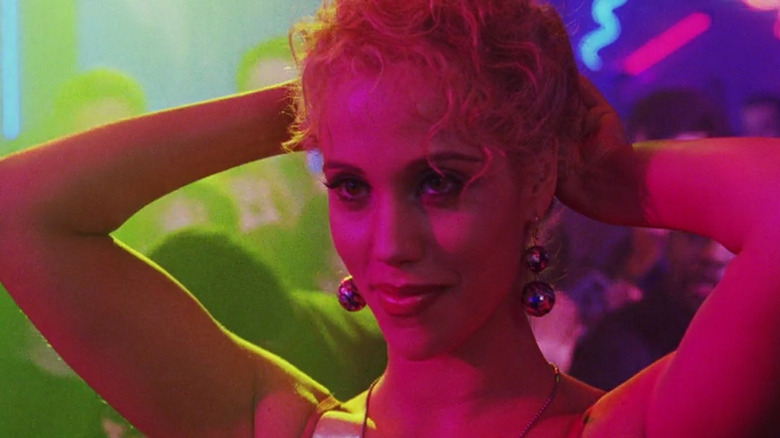
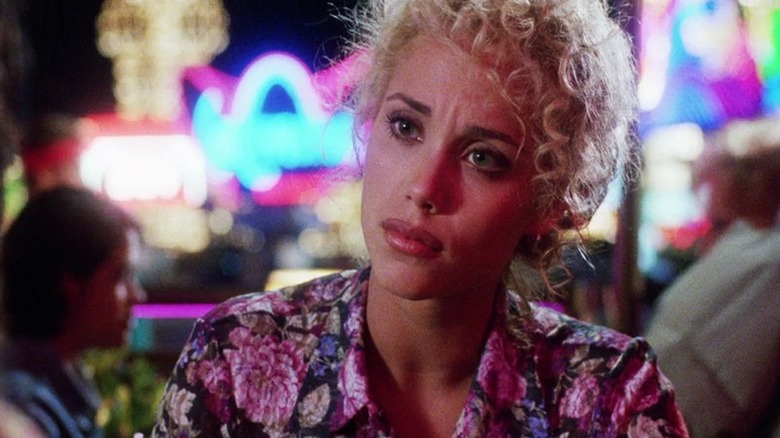
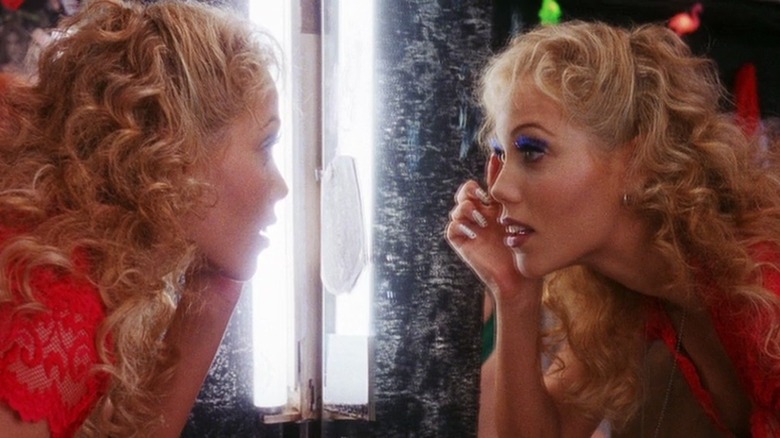
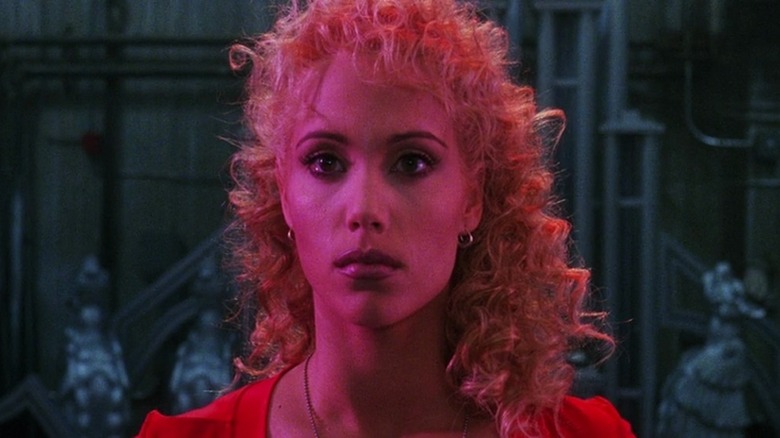
Paul Verhoeven's 1995 sex-tastic schlockfest "Showgirls" has finally earned cult status after years of reappraisal, but unfortunately, it's too little too late for some of the film's stars, especially Elizabeth Berkley, whose career never quite recovered from the film's disastrous reception. Verhoeven has been vocal over the years about Berkley's performance, repeating in multiple interviews that he felt like she shouldered far too much blame because he had asked her to be as over-the-top as possible. (Verhoeven? Over-the-top? Never.)
While Berkley's performance is way too much all the time, it makes sense that Verhoeven had asked that of her and was well aware of the effect while calling the shots. There are plenty of other big and ridiculous performances in the film, and the entire thing is an exercise in excess, but Berkley has frequently been the target of the film's harshest criticisms. After all, not only did she give a performance that didn't meet expectations, but she starred as a sexed-up stripper who bared all, which was more than enough reason for a female performer to be written off in 1995. There are plenty of careers that didn't end with "Showgirls," and it's unfair that Berkley took the brunt.
'I Was The One Who Asked Her To Exaggerate Everything'
In an interview with Rolling Stone in 2015, Verhoeven made it explicit that he felt as if he was to blame for Berkley's performance:
"People have, of course, criticized her for being over-the-top in her performance. Most of that comes from me. I pushed it in that direction. Good or not good, I was the one who asked her to exaggerate everything — every move — because that was the element of style that I thought would work for the movie."
Many of the other performances in "Showgirls" are also pretty over-the-top, adding to the heightened, campy Vegas setting. The movie follows Berkley's character Nomi as she tries to become a leading Vegas showgirl, leaving behind a career of stripping, and her obsession with fame and fortune led her to ridiculous behavior that seemed unrealistic to some viewers. In an interview with the New York Daily News, Verhoeven explained that he had hoped reveals in the film that Nomi had struggled with drug use would also explain some of her behavior, but unfortunately, most audiences didn't seem to care and instead went after Berkley's acting chops.
Unfair And Uneven Treatment
In that same interview with the New York Daily News, Verhoeven spoke out against the unfairness of Berkley taking the heat when his own career suffered far less:
"Showgirls certainly ruined the career of Elizabeth Berkley in a major way. It made my life more difficult, but not to the degree it did Elizabeth's. Hollywood turned their backs on her. [...] I asked Elizabeth to do all that — to be abrupt and to act in that way, but people have been attacking her about for that ever since. [...] I did consider that people would think she had a borderline personality, but that was because her character had history of drug abuse, so I tried to express that through her abruptness."
Berkley's career had just been gaining momentum and "Showgirls" ended that almost entirely. She was even dropped by her agent and became somewhat of an outcast in the Hollywood circles she had just been breaking into. Verhoeven said that she was relatively happy on set and that the two of them simply had a vision for the character that critics couldn't appreciate. In part, he blamed the nudity, and said that she was given an unfair shake because she pushed the limits farther than "any actress." She was shunned for her performance and for being secure enough to bare it all, and as a result, we never really got a chance to see what else Berkley could do.
Berkley's Not Bitter
It would be easy to be bitter about being blacklisted for one movie role, especially when the rest of the cast continued their careers uninterrupted, but thankfully Berkley doesn't have any harsh feelings about the way things turned out. She told Vanity Fair that she didn't mind revisiting the character or the experience:
"I never have had a hard time speaking about it, revisiting it, talking about it. Maybe certain journalists or press wanted to create their own narrative around it, but that's not my narrative."
Nomi is a confusing character whose motivations are never all that clear, but that lays at Verhoeven's feet as surely as it does Berkley's, and it's good the director at least recognizes his responsibility. He's never been shy about controversy or criticism, but it's unfortunate that one of his actors ended up faring so much worse as a result.
Keeping their tradition alive of launching a new graphics architecture every two years, this year, NVIDIA introduces its Ada Lovelace GPU. The Ada GPU is built upon the foundation set by Turing. NVIDIA terms the Ada Lovelace GPUs as a quantum leap over Ampere, and the GeForce RTX 4090 Founders Edition based on NVIDIA Ampere GPU excels at everything versus the previous gen.
The Ada GPU architecture has a lot to be talked about in this review, but so does the new RTX lineup. The Ada lineup offers faster shader performance, faster ray tracing performance, and faster AI performance. Built on a brand new process node and featuring an architecture designed from the ground up, Ada is a killer product with lots of numbers to talk about.
The fundamental of Ada was to take everything NVIDIA learned with its Turing & Ampere architectures and not only refine it but to use its DNA to form a product in a completely new performance category. Tall claims were made by NVIDIA when they introduced its Ada lineup last month with up to 4x performance claims & we will be finding out whether NVIDIA hit all the ticks with its Ada architecture as this review will be your guiding path to see what makes Ada and how it performs against its predecessors.
Today, we will be taking a look at the MSI GeForce RTX 4080 SUPRIM X & RTX 4080 Gaming X Trio. These cards were provided by MSI for the sole purpose of this review & we will be taking a look at their technology, design, and performance metrics in detail.
NVIDIA GeForce RTX 40 Series Gaming Graphics Cards - The Biggest GPU Performance Leap in Recent History
Turing wasn't just any graphics core, it was the graphics core that was to become the foundation of future GPUs. The future is realized now with next-generation consoles going deep in talks about ray tracing and AI-assisted super-sampling techniques. NVIDIA had a head start with Turing & Ampere and its Ada generation will only do things infinitely times better.
The Ada GPU does many traditional things which we would expect from a GPU, but at the same time, also breaks the barrier when it comes to untraditional GPU operations. Just to sum up some features:
New Streaming Multiprocessor (SM)
New 4th Gen Tensor Cores
New Real-Time Ray Tracing Acceleration
New Shading Enhancements
New Deep Learning Features For Graphics & Inference
New GDDR6X High-Performance Memory Subsystem
New HDMI 2.1 Display Engine & Next-Gen NVENC/NVDEC
The technologies mentioned above are some of the main building blocks of the Ada GPU, but there's more within the graphics core itself which we will talk about in detail so let's get started.
Let's take a trip down the journey to Ada. In 2016, NVIDIA announced their Pascal GPUs which would soon be featured in their top to bottom GeForce 10 series lineup. After the launch of Maxwell, NVIDIA gained a lot of experience in the efficiency department which they put a focus on since their Kepler GPUs.
Four years ago, NVIDIA, rather than offering another standard leap in the rasterization performance of its GPUs took a different approach & introduced two key technologies in its Turing line of consumer GPUs, one being AI-assisted acceleration with the Tensor Cores and the second being hardware-level acceleration for Ray Tracing with its brand new RT cores.
Then came Ampere with its brand new Samsung 8nm fabrication process, NVIDIA added even more to its gaming graphics lineup. In the Ampere GPU architecture, NVIDIA provided its latest Ampere SM along with next-gen FP32, INT32, Tensor Cores, and RT cores. The focus was to boost both rasterization and ray tracing capabilities to new heights.
Now enter Ada, a brand new architecture that aims to take everything from the first two RTX GPUs and perfect it. The graphics architecture is designed for speed and that it excels at. So let's see the architecture in detail. Following are the few main highlights of the Ada Lovelace GPU architecture:
Revolutionary New Architecture: NVIDIA Ada architecture GPUs deliver outstanding performance for graphics, AI, and compute workloads with exceptional architectural and power efficiency. After the baseline design for the Ada SM was established, the chip was scaled up to shatter records. Manufacturing innovations and materials research enabled NVIDIA engineers to craft a GPU with 76.3 billion transistors and 18,432 CUDA Cores capable of running at clocks over 2.5 GHz while maintaining the same 450W TGP as the prior generation flagship GeForce RTX 3090 Ti GPU. The result is the world’s fastest GPU with the power, acoustics, and temperature characteristics expected of a high-end graphics card.
New Ada RT Core for Faster Ray Tracing: For decades, rendering ray-traced scenes with physically correct lighting in real-time has been considered the holy grail of graphics. At the same time, the geometric complexity of environments and objects continues to increase as 3D games and graphics continually strive to provide the most accurate representations of the real world. The Ada RT Core has been enhanced to deliver 2x faster ray-triangle intersection testing and includes two important new hardware units. An Opacity Micro map Engine speeds up ray tracing of alpha-tested geometry by a factor of 2x, and a Displaced Micro-Mesh Engine generates Displaced Micro-Triangles on-the-fly to create additional geometry. The Micro-Mesh Engine provides the benefit of increased geometric complexity without the traditional performance and storage costs of complex geometries.
Shader Execution Reordering: NVIDIA Ada GPUs support Shader Execution Reordering which dynamically organizes & reorders shading workloads to improve RT shading Introduction efficiency. This improves performance by up to 44% in Cyberpunk 2077 with Ray Tracing Overdrive Mode.
NVIDIA DLSS 3: The Ada architecture features an all-new Optical Flow Accelerator and AI frame generation that boosts DLSS 3’s frame rates up to 2x over the previous DLSS 2.0 while maintaining or exceeding native image quality. Compared to traditional brute-force graphics rendering, DLSS 3 is ultimately up to 4x faster while providing low system latency.
The NVIDIA Ada Lovelace AD103 GPU features up to 7 GPC (Graphics Processing Clusters). This is one more SM compared to the Ampere GA103 GPUs. Each GPU will consist of 6 TPCs and 2 SMs which is the same configuration as the existing chip. Each SM (Streaming Multiprocessor) will house four sub-cores which is also the same as the GA102 GPU. What's changed is the FP32 & the INT32 core configuration. Each sub-core will include 64 FP32 units but combined FP32+INT32 units will go up to 128. This is because half of the FP32 units don't share the same sub-core as the IN32 units. The 64 FP32 cores are separate from the 128 INT32 cores.
So in total, each sub-core will consist of 16 FP32 plus 16 INT32 units for a total of 32 units. Each SM will have a total of 64 FP32 units plus 64 INT32 units for a total of 128 units. And since there are a total of 84 SM units (12 per GPC), we are looking at a total of 10,752 cores. Each SM will also include two Wrap Schedules (32 thread/CLK) for 64 wraps per SM & their own L0 i-cache. This is a 33% increase in Wraps/Threads vs the GA102 GPU. The Register file size is 16,384 across a 32-bit lane. Each SM also carries its own 128 KB of L1 data cache and shared memory so that's 18 MB of L1 cache.
Moving over to the cache, this is another segment where NVIDIA has given a big boost over the existing Ampere GPUs. The L2 cache will be increased to 64 MB as mentioned in the leaks. This is a 16x increase over the Ampere GPU that hosts just 4 MB of L2 cache. The cache will be shared across the GPU. The GPU will also feature up to 112 ROPs for the full-die.
There are also going to be the latest 4th Generation Tensor and 3rd Generation RT (Raytracing) cores infused on the Ada Lovelace GPUs which will help boost DLSS & Raytracing performance to the next level. Overall, the Ada Lovelace AD102 GPU will offer (versus the GA103 GPU):
16.6% More GPCs (Versus Ampere)
40% More Cores (Versus Ampere)
50% More L1 Cache (Versus Ampere)
16x More L2 Cache (Versus Ampere)
16.6% More ROPs (Versus Ampere)
4th Gen Tensor & 3rd Gen RT Cores
The full die has not been featured on any GPU so far since the RTX 4080 features a cut-down layout and it is likely that as yields progress, we will eventually see a gaming and workstation product using the full-fat AD103. Till then, the RTX 4080 is the top gaming graphics card based on this GPU.
49 TFLOPS of peak single-precision (FP32) performance
98 TFLOPS of peak half-precision (FP16) performance
390 Tensor TFLOPS
780 Tensor TFLOPs with sparsity
113 RT-TFLOPs
At the heart of the NVIDIA GeForce RTX 4080 graphics card lies the Ada Lovelace AD103 GPU. The GPU measures 608,4mm2 and will utilize the TSMC 4N process node which is an optimized version of TSMC's 5nm (N5) node designed for the green team. The GPU features an insane 45.9 Billion transistors.
NVIDIA Ada GPUs - AD102, AD103, AD104 For The First Wave of Gaming Cards
NVIDIA is first introducing three brand new Ada GPUs which include the AD102, AD103 & AD104. The AD102 GPU is going to be featured on the GeForce RTX 4090, the AD103 is going to be used by the GeForce RTX 4080 16 GB graphics cards and the AD104 GPU is going to be featured on the GeForce RTX 4080 12 GB graphics cards.
The Ada GPUs are based on the TSMC 4N process node which is a custom process designed exclusively for NVIDIA. It is essentially an optimized version of the N5 (5nm) process, offering drastic increases in transistors, cores, and frequency. The top AD103 GPU packs 16% more cores and also offers 45.9 Billion transistors while offering over 2x the performance per watt.
NVIDIA Ada AD103 GPU
The full AD103 GPU is made up of 7 graphics processing clusters with 12 SM units on each cluster. That makes up 84 SM units for a total of 10752 cores, 76 RT cores, 304Tensor Cores, 320 Texture Units, and a 256-bit bus interface in a 45.9 billion transistor package measuring 378.6mm2.
NVIDIA has also introduced its 4th Generation Tensor core architecture and 3rd Generation RT cores on Ada GPUs. Now Tensor cores have been available since Volta and consumers got a taste of it with the Turing & Ampere GPUs. One of the key areas where Tensor Cores are put to use for AAA games is DLSS. There's a whole software stack that leverages Tensor cores and that is known as the NVIDIA NGX. These software-based technologies will help enhance graphics fidelity with features such as Deep Learning Super Sampling (DLSS), AI InPainting, AI Super Rez, RTX Voice, and AI Slow-Mo.
While its initial debut was a bit flawed, DLSS in its 2nd iteration (DLSS 2.x) has done wonders to not only improve gaming performance but also image quality.
Let's dive into the technological advancements that allow these incredible achievements. To begin with, NVIDIA engineers started with DLSS Super Resolution and added something called Optical Multi Frame Generation based on Ada's Optical Flow Accelerator.
2 of 9
This accelerator analyzes two sequential frames from a particular game, capturing pixel details such as particles, reflections, lighting, and shadows.
On top of that, NVIDIA DLSS 3 also takes into account conventional game engine information such as motion vectors. The DLSS Frame Generation AI convolutional autoencoder network will then decide how to use each of the four inputs (current and prior frames, optical flow field, and motion vectors) to recreate intermediate frames in the best possible way.
NVIDIA DLSS 3 is said to reconstruct 3/4 of the first frame with DLSS Super Resolution and the full second frame with the help of the aforementioned DLSS Frame Generation. Overall, NVIDIA DLSS 3 reconstructs 7/8 of the two total frames displayed, which explains the massive performance uplift.
Additionally, the new version of the Deep Learning Super Sampling image reconstruction technique also includes the latency-lowering NVIDIA Reflex technology.
Cyberpunk 2077 has been shown running NVIDIA DLSS 3, the brand new Ray Tracing Overdrive, and NVIDIA Reflex with up to 4x improved performance and up to 2x reduced latency. That's not all, as NVIDIA is even promising benefits for CPU-bound games, which generally didn't run much faster with DLSS 2.0. For example, the notoriously CPU-heavy Microsoft Flight Simulator gets up to 2x improved performance with the new DLSS.
Overall, NVIDIA said the following over 35 games and apps already pledged support to NVIDIA DLSS 3.
A Plague Tale: Requiem
Atomic Heart
Black Myth: Wukong
Bright Memory: Infinite
Chernobylite
Conqueror's Blade
Cyberpunk 2077
Dakar Rally
Deliver Us Mars
Destroy All Humans! 2 - Reprobed
Dying Light 2 Stay Human
F1 22
F.I.S.T.: Forged In Shadow Torch
Frostbite Engine
HITMAN 3
Hogwarts Legacy
ICARUS
Jurassic World Evolution 2
Justice
Loopmancer
Marauders
Microsoft Flight Simulator
Midnight Ghost Hunt
Mount & Blade II: Bannerlord
Naraka: Bladepoint
NVIDIA Omniverse
NVIDIA Racer RTX
PERISH
Portal with RTX
Ripout
S.T.A.L.K.E.R. 2: Heart of Chornobyl
Scathe
Sword and Fairy 7
SYNCED
The Lord of the Rings: Gollum
The Witcher 3: Wild Hunt
THRONE AND LIBERTY
Tower of Fantasy
Unity
Unreal Engine 4 & 5
Warhammer 40,000: Darktide
The green company also released a performance chart on some of those games running on NVIDIA DLSS 3; check it out below.
3rd Gen RT Cores, RTX, and Real-Time Ray Tracing Dissected
Next up, we have the RT Cores, which are what will power Real-Time Raytracing. NVIDIA isn't going to distance itself from traditional rasterization-based rendering but instead follow a hybrid rendering model. The new 3rd Generation RT cores offer increased performance and offer double the ray/triangle intersection testing rate over Turing RT cores.
the Third-Generation RT Core found in Ada GPUs includes dedicated units known as the Opacity Micromap Engine and the Displaced Micro-Mesh Engine. The Opacity Micromap Engine evaluates Opacity Micromaps (represented by the triangle with foliage on the bottom left), which are used to accelerate alpha traversal. The Displaced Micro-Mesh Engine generates meshes of micro-triangles that are known as Displaced Micro-Meshes (represented by the triangle on the bottom right in the diagram below). Displaced Micro-Meshes allow the Ada RT Core to ray trace geometrically complex objects and environments with significantly less BVH build time and storage costs. Finally, ray-triangle intersection testing is 2x faster in Ada’s Third-Generation RT Core compared to the Ampere GPU generation.
NVIDIA engineers have developed three new features in the Ada RT Core to enable high-performance ray tracing of highly complex geometry:
First, Ada’s Third-Generation RT Core features 2x Faster Ray-Triangle Intersection Throughput relative to Ampere; this enables developers to add more detail to their virtual worlds.
Second, Ada’s RT Core has 2x Faster Alpha Traversal; the RT Core features a new Opacity Micromap Engine to directly alpha-test geometry and significantly reduce shader-based alpha computations. With this new functionality, developers can very compactly describe irregularly shaped or translucent objects, like ferns or fences, and directly and more efficiently ray trace them with the Ada RT Core.
Third, the new Ada RT Core supports 10x Faster BVH Build in 20X Less BVH Space when using its new Displaced Micro-Mesh Engine to generate micro-triangles from micro-meshes on-demand. The micro-mesh is a new primitive that represents a structured mesh of micro-triangles that the Ada RT Core processes natively, saving the storage and processing compared to what is normally required when describing complex geometries using only basic triangles.
Taken together, these three advances incorporated into the Ada RT Core enable order-of-magnitude increases in richness without commensurate increases in processing time or memory consumption.
2x Faster Ray-Triangle Intersection Testing
Ray-triangle intersection testing is a computationally expensive operation that is commonly performed when rendering a ray-traced scene. Recognizing the importance of this function, with each new RTX GPU NVIDIA engineers have strived to improve intersection testing performance and efficiency. The Third-Generation RT Core in the Ada architecture provides double the throughput for ray-triangle intersection testing over Ampere (and 4x faster than the first-generation RT Core used in Turing GPUs).
2x Faster Alpha Traversal Performance with Opacity Micromap Engine
Developers frequently use a texture’s alpha channel to economically cut out complex shapes or more generally to represent translucency. A leaf might be described using a couple of triangles, employing a texture’s alpha channel to economically capture the complex shape. A flame’s complex shape and translucency can also be approximated by alpha.
Prior to Ada’s RT Core, a developer could incorporate these kinds of content into a ray-traced scene by tagging them as not opaque. When a leaf is hit by a ray, a shader is invoked to determine how to treat the intersection, even if the ray is simply characterized as a hit or a miss. This incurs a noticeable cost. Specifically, when a warp of rays is cast towards non-opaque objects, individual ray queries may require multiple shader invocations to resolve, while other rays terminate immediately. The result is lingering live threads and commensurate inefficiency.
To efficiently handle these kinds of content, NVIDIA engineers have added an Opacity Micromap Engine to Ada’s RT Core. An opacity micromap is a virtual mesh of micro-triangles, each with an opacity state that the RT Core uses to directly resolve ray intersections with non-opaque triangles. Specifically, the barycentric coordinates of an intersection are used to address the corresponding micro-triangle’s opacity state. The opacity state may be opaque, transparent, or unknown. If opaque, then a hit is recorded and returned. If transparent, the intersection is ignored and the search for an intersection continues. If unknown, then the control is returned to the SM, invoking a shader (“anyhit”) to programmatically resolve the intersection.
The new Opacity Micromap Engine evaluates the opacity mask, which is a regular triangular mesh defined using the barycentric coordinate system used for reporting ray/triangle intersections. These meshes may be sized from one to sixteen million micro-triangles, with one or two bits associated with each micro-triangle. As a simple illustrative example, consider a detailed maple leaf described using two triangles and an alpha texture
10x Faster BVH Build in 20X Less BVH Space with Ada’s Displaced Micro-Mesh Engine
Geometric complexity continues to rise with every new generation. Ray tracing performance scales attractively with increases in scene complexity. When we ray trace complex environments, tracing costs increase slowly, a one-hundred-fold increase in geometry might only double tracing time.
However, creating the data structure (BVH) that makes that small increase in time possible requires roughly linear time and memory; 100x more geometry could mean 100x more BVH build time and 100x more memory. Ada’s Third-Generation RT Core with Displaced Micro-Meshes (DMM) helps significantly with both of the challenges of high geometric complexity - BVH builds performance and memory/storage footprint. Asset storage and transmission costs are reduced as well.
Secondary rays are generated at each primary ray hit point in the middle scene. Starting at the primary hit surfaces they shoot off in different directions, hitting different objects. Secondary hit shading tends to be less ordered and less efficient when executing on the GPU, because different shader programs are running on different threads, and often must serialize execution. Examples of secondary rays that can benefit from SER include those used for path tracing, reflections, indirect lighting, and translucency effects.
Shader Execution Reordering adds a new stage in the ray tracing pipeline which reorders and groups the secondary hit shading to have better execution locality, thus much higher overall ray-traced shading efficiency. SER can often provide up to 2X performance improvement for RT shaders in cases with a high level of divergence (such as path tracing). In testing with Cyberpunk 2077 running in RT: Overdrive Mode, we’ve measured overall performance gains of up to 44% from SER.
The Micron GDDR6X memory brings a lot of new stuff to the table. It is faster, doubles the I/O data rate, and is the first to implement PAM4 multi-level signaling in memory dies. With the Geforce RTX 3090 class products, Micron's GDDR6X memory achieves a bandwidth of up to 1 TB/s which is used to power next-generation gaming experiences at high-fidelity resolutions such as 8K.
Micron GDDR6X graphics memory doubles input/output (I/O) performance while minimizing the cost of memory. Working with AI-innovation leader NVIDIA, Micron delivers higher bandwidth by enabling multi-level signaling in the form of four-level pulse amplitude modulation (PAM4) technology in this memory device via Micron
The new GDDR6X SGRAM:
Doubles the data rate of SGRAM at a lower power per transaction while enabling the breaking of the 1 Terabyte per second (TB/s) system memory bandwidth boundary for graphics card applications;
Is the first discrete graphics memory device that employs PAM4-encoded signaling between the processor and the DRAM, using four voltage levels to encode and transfer two bits of data per interface clock.
Can be designed and operated stably at high speeds and built-in mass-production.
As mentioned, GDDR6X features the brand new PAM4 multilevel signaling techniques, which help transfer data much faster, double the I/O rate, pushing the capability of each memory dies from 64 GB/s to 84 GB/s. The Micron GDDR6X memory dies are also the only graphics DRAM that can be mass-produced while featuring PAM4 signaling.
What is interesting is that Micron quotes that its GDDR6X memory can hit speeds of up to 22.4 Gbps whereas we have only got to see 21 Gbps in action on the GeForce RTX 3090 Ti. It is likely that AIBs could utilize higher binned dies as they are available. Micron does has faster chips but those aren't coming to NV 40 series graphics cards for now.
It's not just faster speeds but Micron's GDDR6X provides higher bandwidth while sipping in 15% lower power per transferred bit compared to the previous generation GDDR6 memory. PAM4 signaling is a big upgrade from the two-level NRZ signaling on the GDDR6 memory.
Instead of transmitting two binary bits of data each clock cycle (one bit on the rising edge and one bit on the falling edge of the clock), PAM4 sends two bits on each clock edge, encoded using four different voltage levels. The voltage levels are divided into 250 mV steps with each level representing two bits of data - 00, 01, 10, or 11 sent on each clock edge (still DDR technology).
Micron GDDR6X Memory
Feature
GDDR5
GDDR5X
GDDR6
GDDR6X
Density
From 512Mb to 8Gb
8Gb
8Gb, 16Gb
8Gb, 16Gb
VDD and VDDQ
Either 1.5V or 1.35V
1.35V
Either 1.35V or 1.25V
Either 1.35V or 1.25V
VPP
N/A
1.8V
1.8V
1.8V
Data rates
Up to 8 Gb/s
Up to 12Gb/s
Up to 16 Gb/s
19 Gb/s, 21 Gb/s,
>21 Gb/s
Channel count
1
1
2
2
Access granularity
32 bytes
64 bytes
2x 32 bytes in pseudo 32B mode
2 ch x 32 bytes
2 ch x 32 bytes
Burst length
8
16 / 8
16
8 in PAM4 mode
16 in RDQS mode
Signaling
POD15/POD135
POD135
POD135/POD125
PAM4 POD135/POD125
Package
BGA-170
14mm x 12mm 0.8mm ball pitch
BGA-190
14mm x 12mm 0.65mm ball pitch
BGA-180
14mm x 12mm 0.75mm ball pitch
BGA-180
14mm x 12mm 0.75mm ball pitch
I/O width
x32/x16
x32/x16
2 ch x16/x8
2 ch x16/x8
Signal count
61
- 40 DQ, DBI, EDC
- 15 CA
- 6 CK, WCK
61
- 40 DQ, DBI, EDC
- 15 CA
- 6 CK, WCK
70 or 74
- 40 DQ, DBI, EDC
- 24 CA
- 6 or 10 CK, WCK
70 or 74
- 40 DQ, DBI, EDC
- 24 CA
- 6 or 10 CK, WCK
PLL, DCC
PLL
PLL
PLL, DCC
DCC
CRC
CRC-8
CRC-8
2x CRC-8
2x CRC-8
VREFD
External or internal per 2 bytes
Internal per byte
Internal per pin
Internal per pin
3 sub-receivers per pin
Equalization
N/A
RX/TX
RX/TX
RX/TX
VREFC
External
External or Internal
External or Internal
External or Internal
Self refresh (SRF)
Yes
Temp. Controlled SRF
Yes
Temp. Controlled SRF Hibernate SRF
Yes
Temp. Controlled SRF Hibernate SRF
VDDQ-off
Yes
Temp. Controlled SRF Hibernate SRF
VDDQ-off
Scan
SEN
IEEE 1149.1 (JTAG)
IEEE 1149.1 (JTAG)
IEEE 1149.1 (JTAG)
With each new generation of graphics cards, NVIDIA delivers a new range of display technologies. This generation is no different, and we see some significant updates to the display engine and the graphics interconnect. With the adoption of faster GDDR6X memory, which provides higher bandwidth, faster compression, and more cache, gaming applications can now run at higher resolutions, supporting more details on the display.
The Ada Display Engine supports two new display technologies, HDMI 2.1 and DisplayPort 1.4a with DSC 1.2a. HDMI 2.1 allows up to 48 Gbps of total bandwidth and up to 4K 240Hz HDR and 8K 60Hz HDR.
DisplayPort 1.4a allows for up to 8K resolutions with 60Hz refresh rates and includes VESA's display stream compression 1.2 technology with visually lossless compression. You can run up to two 8K displays at 60 Hz using two cables, one for each display. In addition to that, Ampere also supports HDR processing natively with tone mapping added to the HDR pipeline.
Ada GPUs take streaming and video content to the next level, incorporating support for AV1 video encoding in the Ada eighth-generation dedicated hardware encoder (known as NVENC). Prior generation Ampere GPUs supported AV1 decoding but not encoding. Ada’s AV1 encoder is 40% more efficient than the H.264 encoder used in GeForce RTX 30 Series GPUs. AV1 will enable users who are streaming at 1080p today to increase their stream resolution to 1440p while running at the same bitrate and quality, or for users with 1080p displays, streams will look similar to 1440p, providing better quality.
Ada GPUs are also equipped with dual NVENC encoders. This enables video encoding at 8K/60 for professional video editing or four 4K/60. (Game streaming services can also take advantage of this to enable more simultaneous sessions, for instance.) Blackmagic Design’s DaVinci Resolve, the popular Voukoder plugin for Adobe Premiere Pro, and Jianying — the top video editing app in China — are all enabling AV1 support, as well as a dual encoder through encode presets. Dual encoder and AV1 availability for these apps will be available in October. NVIDIA is also working with the popular video-effects app Notch to enable AV1, as well as Topaz to enable support for AV1 and the dual encoders.
2 of 9
In addition to NVENC, Ada GPUs also include the fifth-generation hardware decoder that was first launched with Ampere (known as NVDEC). NVDEC supports hardware-accelerated video decoding of MPEG-2, VC-1, H.264 (AVCHD), H.265 (HEVC), VP8, VP9, and the AV1 video formats. 8K/60 decoding is also fully supported. In the future, NVIDIA is also working to enable high-quality video production using AI.
NVIDIA RTX IO - Blazing Fast Read Speeds With GPU Utilization
As storage sizes have grown, so has storage performance. Gamers are increasingly turning to SSDs to reduce game load times: while hard drives are limited to 50-100 MB/sec throughput, the latest M.2 PCIe Gen4 SSDs deliver up to 7 GB/sec. With the traditional storage model, game data is read from the hard disk, then passed from the system memory and CPU before being passed to the GPU.
Historically games have read files from the hard disk, using the CPU to decompress the game image. Developers have used lossless compression to reduce install sizes and improve I/O performance. However, as storage performance has increased, traditional file systems and storage APIs have become a bottleneck. For example, decompressing game data from a 100 MB/sec hard drive takes only a few CPU cores, but decompressing data from a 7 GB/sec PCIe Gen4 SSD can consume more than twenty AMD Ryzen Threadripper 3960X CPU cores!
Using the traditional storage model, game decompression can consume all 24 cores on a Threadripper CPU. Modern game engines have exceeded the capability of traditional storage APIs. A new generation of I/O architecture is needed. Data transfer rates are the gray bars, and CPU cores required are the black/blue blocks.
NVIDIA RTX IO is a suite of technologies that enable rapid GPU-based loading and decompression of game assets, accelerating I/O performance by up to 100x compared to hard drives and traditional storage APIs. When used with Microsoft’s new DirectStorage for Windows API, RTX IO offloads dozens of CPU cores’ worth of work to your RTX GPU, improving frame rates, enabling near-instantaneous game loading, and opening the door to a new era of large, incredibly detailed open-world games.
2 of 9
Object pop-in and stutter can be reduced, and high-quality textures can be streamed at incredible rates, so even if you’re speeding through a world, everything runs and looks great. In addition, with lossless compression, game download and install sizes can be reduced, allowing gamers to store more games on their SSD while also improving their performance.
NVIDIA RTX IO plugs into Microsoft’s upcoming DirectStorage API, which is a next-generation storage architecture designed specifically for state-of-the-art NVMe SSD-equipped gaming PCs and the complex workloads that modern games require. Together, streamlined and parallelized APIs specifically tailored for games allow dramatically reduced IO overhead and maximize performance/bandwidth from NVMe SSDs to your RTX IO-enabled GPU.
Specifically, NVIDIA RTX IO brings GPU-based lossless decompression, allowing reads through DirectStorage to remain compressed and delivered to the GPU for decompression. This removes the load from the CPU, moving the data from storage to the GPU in a more efficient, compressed form, and improving I/O performance by a factor of two.
GeForce RTX GPUs will deliver decompression performance beyond the limits of even Gen4 SSDs, offloading potentially dozens of CPU cores’ worth of work to ensure maximum overall system performance for next-generation games. Lossless decompression is implemented with high-performance compute kernels, asynchronously scheduled. This functionality leverages the DMA and copy engines of Turing and Ampere, as well as the advanced instruction set, and architecture of these GPU’s SM’s.
The advantage of this is that the enormous compute power of the GPU can be leveraged for burst or bulk loading (at level load, for example) when GPU resources can be leveraged as high-performance I/O processors, delivering decompression performance well beyond the limits of Gen4 NVMe. During streaming scenarios, bandwidths are a tiny fraction of the GPU capability, further leveraging the advanced asynchronous compute capabilities of Turing and Ampere. Microsoft is targeting a developer preview of DirectStorage for Windows for game developers next year, and NVIDIA Turing & Ampere gamers will be able to take advantage of RTX IO-enhanced games as soon as they become available.
The NVIDIA GeForce RTX 4080 will use 76 SMs of the 84 SMs for a total of 9728 CUDA cores. The GPU will come packed with 64 MB of L2 cache and a total of 112 ROPs which is simply insane. The clock speeds for the graphics card are rated at 2210 MHz base and 2510 MHz boost clocks and we have already seen over 3 GHz speeds with overclocking which you can read more about here.
As for memory specs, the GeForce RTX 4080 features 16 GB GDDR6X capacities that will be adjusted at 22.5 Gbps speeds across a 256-bit bus interface. This will provide up to 720 GB/s of bandwidth. This is still a tad bit slower than the 760 GB/s bandwidth offered by the RTX 3080 since it comes with a 320-bit interface but a lowly 10 GB capacity. To compensate for the lower bandwidth, NVIDIA could be integrating a next-gen memory compression suite to make up for the 256-bit interface.
As far as the power consumption is concerned, the TBP is rated at 320W. The card will be powered by a single 16-pin connector which delivers up to 600W of power. Custom models will be offering higher TBP targets.
As for the performance of these monster GPUs, NVIDIA shared the computational and gaming performance figures and it looks like the GeForce RTX 4080 will be sitting slightly ahead of the GeForce RTX 3090 Ti with around 50 TFLOPs of Compute power.
Based on a boost clock speed of 2.5 GHz, you get up to 49TFLOPs of compute performance and you can definitely squeeze out a lot more with an overclock as we had demonstrated with the RTX 4090. One should remember that compute performance doesn't necessarily indicate the overall gaming performance. Even so, it will be a huge upgrade for gaming PCs and an 8.5x increase over the current fastest console, the Xbox Series X.
FP32 Compute Horsepower Comparisons (Higher is Better)
Last month, Epic Games released a preview version of Unreal Engine 5.1. And today, we are happy to report that Unreal Engine 5.1 has been officially released to all developers. Unreal Engine 5.1 adds several features to improve efficiency for developers of games and other large-scale interactive projects, helping teams be more productive. For instance, … Continue reading Epic Games has officially released Unreal Engine 5.1 →
Oculus Quest 2 (now Meta Quest 2) remains VR’s most dominant headset, but we’ve seen increased competition in recent years. ByteDance subsidiary Pico recently challenged Quest 2 with Pico 4, a new standalone VR headset. However, despite solid pre-orders, it’s reportedly not hitting sales expectations.
Henriquejr spotted that modders are adding Deep Learning Super Sampling, FidelityFX Super Resolution 2 and Xe Super Sampling to Skyrim:
Skyrim modders are adding DLSS, FSR2, and XeSS support
Upscale your Dragonborn
Canny members of the Skyrim modding community are working on a plugin to enable support for DLSS, FSR2, and XeSS upscaling in the Special and Anniversary Editions of Bethesda's sprawling RPG....
Roald Dahl's beloved novel "Charlie and the Chocolate Factory" has been re-imagined countless times over the years. The first film adaptation, titled "Willy Wonka and the Chocolate Factory," was released in 1971 and starred Gene Wilder as the eponymous chocolatier. Decades later, director Tim Burton put his own spin on the children's tale with "Charlie and the Chocolate Factory," starring Burton's long-time friend and collaborator Johnny Depp. The movie was a critical and financial hit, but not everyone was a fan. In fact, Wilder himself spoke out against the 2005 film.
Dahl's original story was a huge inspiration to Burton, but the director was let down by the '70s cinematic interpretation. "I didn't feel as daunted by the [first] movie," he told Blackfilm.com in 2005. Instead of using the 1971 film as a point of reference, Burton instead used Dahl's source material as a "blueprint" to guide his movie. "Our goal, except for the little bit of back story, was to try to be a bit more true to the spirit of the book."
One of the issues Burton had with the 1971 film was Wonka's warmth toward the children. "Willy Wonka is not a father figure, I'll tell you right now," he insisted. The filmmaker was adamant that Wonka "can't stand" children, which would explain his harsh punishments for their overindulgences.
This is not to say that Burton totally hated the 1971 movie. He even praised Wilder's lead performance. "I think he was great. None of us on the production were ever trying to top it," the director explained. He knew that fans of the '70s film might be resistant to his interpretation, but he never imagined that Wilder would be among them.
Wilder Didn't Care For Burton
Wilder was not a fan of Burton's "Charlie and the Chocolate Factory," and he wasn't afraid to speak out against it. "I think it's an insult," the actor told The 92nd Street Y in 2013. "And it's probably Warner Bros.' insult. I like Warner Bros. for other reasons, but to do that with Johnny Depp –- who I think is a good actor, and I like him –- but I don't care for that director. And he's a talented man, but I don't care for him for doing stuff like he did."
It is unclear exactly where Wilder places the blame for this "insult," although the bulk of it seems to fall on Burton's choice in casting Depp as the lead. The pair had previously collaborated on hit films like "Edward Scissorhands" and "Sleepy Hollow." For Burton and Warner Bros. alike, casting Depp was a total no-brainer. "It was the first time that I didn't have to talk anybody into [casting Depp]," Burton revealed to Blackfilm.com. "Before I could even open my mouth, it's like the studio goes 'What about Johnny Depp?' And I go, 'Well, okay if you're going to force him on me.'"
Despite Wilder's resistance to the project, the remake was still a massive success. "Charlie and the Chocolate Factory" was lauded as "director Tim Burton's best film for years" by The Guardian upon its release. The film's innovative set and costume design brought Dahl's eccentric visions to life with Burton's characteristically cartoonish spin, and Depp's lead performance was unforgettably unsettling.
Some Original Cast Members Enjoyed The Remake
Not everyone in the "Willy Wonka" cast was opposed to Burton's "Chocolate Factory." Julie Dawn Cole, who played Veruca Salt in the 1971 film, was a fan of Burton's re-interpretation. "I think it's extraordinary and it's great that there's room for all of us. It keeps the interest going," she told Collider in 2021. Still, Cole enjoys being part of the first-ever on-screen adaptation of Dahl's work. "What I like and that nobody can take away is that we were the first."
The 2005 film was far from the last time that "Chocolate Factory" would be re-imagined. The story has since been adapted into a Broadway musical and even an opera. It has also inspired an endless slew of pop culture references, as Paris Themmen (Mike Teevee in "Willy Wonka") pointed out to Collider. "There's always something happening, and that's a good thing. We all have very positive associations with the film, so we welcome more and more."
Fans of the franchise also have "Wonka" to look forward to in 2023. "Wonka" is described as an origin story for the mysterious candy connoisseur, with a star-studded cast that includes Timothée Chalamet as the titular lead. The film will also feature several original musical numbers. Themmen told Collider he is personally "hopeful" about the movie.
Adaptations and remakes are always going to risk upsetting fans of the original works, but it's unfortunate that Wilder — a cinematic legend in his own right — was so angered by Burton's "Chocolate Factory." The actor sadly passed away in 2016, so there's no telling how he might have reacted to the latest developments concerning the Wonkaverse. Would he have seen "Wonka" as an insult, too? It's a question that will simply have to remain unanswered.
Superhero stories are saturating the market, there is no denying it. While this is mostly an American thing, it also impacts Japan, where one of the biggest manga and anime franchises today centers around superheroes: "My Hero Academia." The show is essentially "Sky High" the anime, as it takes place in a world of superheroes and focuses on a group of young students at an academy for future heroes. From the onset, "My Hero Academia" stands out because it doesn't make powers special but commonplace, with 80% of the global population having some sort of "quirk" or power (some mundane and useless, some powerful and deadly). Here, a hero is not an outlaw, but a profession you need to study for, a police force-like government-sanctioned organization with rules and limitations.
While the show is generally very entertaining, it sometimes suffers from being a bit repetitive in its following of classic shōnen tropes, as it spends most of its runtime on school stuff — exams, tournaments, festivals, etc. But what makes "My Hero Academia" special and worth watching is the way it crosses its school stories with the adult world of heroes and villains, as we see with a plot thread that involves the rise of a villainous organization.
Now, after five seasons, the sixth season of "My Hero Academia" is finally unleashing chaos and embracing its American comic book influences by giving us the anime version of "Avengers: Endgame" we've been waiting for. This is the first season in years that has felt like a must-watch event. It's a season about an all-out war full of stakes and danger -- one where heroes die, heroes rise up, and students put their lessons to practice.
All-Out Hero War
It's been a long road to this point, with the thread of the League of Villains and the artificially made Nomus starting all the way back in episode 8 of the anime's first season. It would have been easy to simply forget about them and introduce new and better villains — though we have gotten new and stronger villains with every new story arc — but "My Hero Academia" smartly kept going back to Shigaraki, the young would-be villain and his gang of misfits, murderers and friends, and the mystery of the Nomus. The show has continuously added to this mythology, tying it to the story of its world's greatest hero, All Might, and his biggest enemy, All For One.
This culminated last season, with Shigaraki forming and leading the Paranormal Liberation Front, a group of super-powered individuals looking to break the hero system and make a society where those with the strongest powers are in charge. An attack on hero society has been a long time coming, especially since the show introduced Stan: the vigilante Hero Killer who fought to unmask the hypocrisy of heroes becoming fixated on sponsorships and money rather than doing their job.
In many ways, the sixth season of "My Hero Academia" feels like the culmination of years' worth of stories, bringing to a head the collision course of Shigaraki Tomura and his army of villains, and the heroes who have been preparing for the return of organized villains for a while. When the season begins, the heroes are preparing for an assault on the villains' headquarters, and it feels like the portal scene in "Avengers: Endgame," with every single hero we've ever met on the show, and a bunch we hadn't met before, all prepared to fight.
Heroes Will Live, Heroes Will Die, And Nothing Will Ever Be The Same
"My Hero Academia" has given us moments of tension, and moments of danger before, but it always felt somewhat sanitized and contained until now. It's not just that we're seeing a lot of deaths, though there are a number of those, and gruesome ones at that. It's that the sixth season is taking the story to its natural boiling point. We have seen our young students grow and learn, we've seen them face real horrors and work with real heroes, so it feels earned that the students of U.A. High School are now fighting alongside the adult heroes.
Still, they are kids, and watching a group of kids on the front lines with seasoned heroes, facing down against an army of villains willing to not just kill but annihilate anyone that stands against them, feels both important dangerous. In the first few episodes of the season, we see hordes of heroes dying by disintegration due to Shigaraki's powers, and we see a hero outright assassinate a villain. This story arc feels like the end of one version of "My Hero Academia" -- where the heroes are excited about their future, where the fights end before they get serious, where the villains go to jail and the heroes save the day. This is the beginning of the version of "My Hero Academia" where heroes die, where villains go free, and where you realize you can't save everyone. But nothing feels out of place or rushed, because this is where the story has been leading all along.
"My Hero Academia" has always been about training young heroes to one day go out into the world and face the bad guys, and we've reached that stage. We're in an endgame where people can actually die where choices matter and have consequences that will impact the story going forward, where it's hard to know what happens next. It is the best the anime has been in years, and this is only the start.
Making a movie with Stanley Kubrick could be an exhausting experience. The perfectionist filmmaker was notorious for subjecting actors to take after take until he'd drained the acting out of the scene. He still holds the Guinness World Record for racking up 148 takes with Scatman Crothers and Danny Lloyd for the "shine" sequence on the set of "The Shining." And people generally put up with this because it was an honor to work with the reclusive director, whose every movie was treated as a cinematic event.
For his 1987 classic "Full Metal Jacket," Kubrick rounded up a group of young actors who worshiped him, and flung them into two separate hells: a Parris Island boot camp and Da Nang during the Vietnam War. Kubrick shot the Vietnam half at the abandoned Beckton Gas Works in London. The sprawling location had been used in films before (it's where James Bond disposes of Blofeld at the outset of "For Your Eyes Only"), and if you thought it looked like a grim setting from the air, the cast of "Full Metal Jacket" discovered that it was much more desolate on the ground. Worse than that, it was actually one big health hazard.
War Is Hell, And So Was The Beckton Gas Works
In a 2020 interview with The Hollywood Reporter, Modine called the Beckton Gas Works "one of the most toxic places I've ever been to in my life." In fact, they shot the Vietnam portion of the film first because the entire facility was due for demolition. Modine describes the conditions at the location thusly:
"If you Wikipedia Beckton Gas Works, you'll see that there were probably 30 or more known carcinogens that were in the soil. There was also asbestos everywhere, and when you went home from work and took a bath, the tub would literally turn a kind of cobalt blue with all this dirt and chemicals that came off of your body. It was a sickening place, and after we finished up at Beckton, we all needed an opportunity to relax and cleanse that crap out of our bodies."
This opportunity unexpectedly presented itself when R. Lee Ermey cracked his ribs in a car accident. The production was paused for four-and-a-half-months to allow the actor time to rest up for his physically and emotionally demanding role as drill instructor Gunnery Sergeant Hartman (Modine reveals that Ermey was still in a great deal of pain when shooting resumed). Fortunately, there aren't reports of cast and crew taking ill after their experience at Beckton, but you wonder if Kubrick would've been able to get away with using the plant today.
An Unshakable Cinematic Experience
No one should risk their health to make a movie, but on a purely aesthetic level, the Beckton Gas Works offers a hauntingly surreal backdrop for the hellish street combat sequences. As Modine told The Guardian in 2017, "It would have been a completely different film if we'd gone to the jungles and shot Vietnam that way. The street fighting, I think, is one of the things that makes the film timeless. It looks like Afghanistan or Iraq today."
Francois Truffaut once said there is no such thing as an anti-war film, but I have no idea how anyone can watch "Full Metal Jacket" and want to enlist in the military. It's a film about complete and total dehumanization that ends with the surviving soldiers marching dead-eyed while singing "The Mickey Mouse Club" theme. You can wash off the toxins of the Beckton Gas Works, but the residue of war is permanent.
An anonymous reader quotes a report from Ars Technica: After a journey of nearly five months, taking it far beyond the Moon and back, the little CAPSTONE spacecraft has successfully entered into lunar orbit. "We received confirmation that CAPSTONE arrived in near-rectilinear halo orbit, and that is a huge, huge step for the agency," said NASA's chief of exploration systems development, Jim Free, on Sunday evening. "It just completed its first insertion burn a few minutes ago. And over the next few days they'll continue to refine its orbit, and be the first cubesat to fly and operate at the Moon."
This is an important orbit for NASA, and a special one, because it is really stable, requiring just a tiny amount of propellant to hold position. At its closest point to the Moon, this roughly week-long orbit passes within 3,000 km of the lunar surface, and at other points it is 70,000 km away. NASA plans to build a small space station, called the Lunar Gateway, here later this decade. But before then, the agency is starting small. CAPSTONE is a scrappy, commercial mission that was supported financially, in part, by a $13.7 million grant from NASA. Developed by a Colorado-based company named Advanced Space, with help from Terran Orbital, the spacecraft itself is modestly sized, just a 12U cubesat with a mass of around 25 kg. It could fit comfortably inside a mini-refrigerator.
The spacecraft launched at the end of June on an Electron rocket from New Zealand. Electron is the smallest rocket to launch a payload to the Moon, and its manufacturer, Rocket Lab, stressed the capabilities of the booster and its Photon upper stage to the maximum to send CAPSTONE on its long journey to the Moon. This was Rocket Lab's first deep space mission. [...] CAPSTONE will not only serve as a pathfinder in this new orbit -- verifying the theoretical properties modeled by NASA engineers -- it will also demonstrate a new system of autonomous navigation around and near the Moon. This Cislunar Autonomous Positioning System, or CAPS, is important because there is a lack of fixed tracking assets near the Moon, especially as the cislunar environment becomes more crowded during the coming decade. The mission is planned to operate for at least six months in this orbit.
X. INSTALLATION
1. Install the game
2. Patch the game (if not already done)
3. Config the game (config.exe, IMPORTANT!)
4. Optional: IWD2FIXPACKv4
5. widescreen-v3.07 (1360x768)
6. setup-ddrawfix (Wine3D)
7. setup-IWD2-SpecialEdition.exe
1. GENERAL FIXES
* Heroic Inspiration unique new icon
* Talos' Destructive Blow duration fix and icon
* Tempus Strength icon
* Helm's Watch icon
* Helm's Shield icon
* Eagle's Splendor duration fix
* Treant race to Myconid
* Shambling Mound race to Myconid
* Lore and price fixed for some items
* Restore missing non-existing items to game
* Restore missing Bard's instruments
* Fixes to armor categories
* Fixes to icons
* Added higher palette (256 colors)
* More hair and skin colors
* Alchemy lore values fixed
* Added portrait icon for weapons of Speed
* Minor Fortitude bonus to basic helmets
* Handaxe speed factor fixed
* Half-Orc specific hair and skin colors
* Added missing spell ids
* Deep gnome starting xp fix
* Druid wild shape stat fixes
* Wild shape attack names visible
* Fixes to spelltables
2. NEW WEAPON ANIMATIONS
* Scimitar animations restored
* BG1 flaming swords
* BG1 shield animations (except Large shield)
3. EXOTIC WEAPONS AND NEW ITEMS
* Falchions (EW, Bastard Sword with scimitar animation): Falchion, Masterwork Falchion, Falchion of Festering +1, Brightblade +2, Stormblade of Djinni +4, Weaponmaster's Edge +5
* Katanas (EW, Bastard Sword with katana animation): Katana, Masterwork Katana, Katana +1, The Lost Sword of Kara-Tur +4
* Rapiers (SW, Small Sword with longsword animation): Rapier, Masterwork Rapier, Duellist Rapier +1, Jarlaxle's Stinger +2, Mr. Gobrigold +3, Xormor the Soulpiercer +4
* Shortspears (MW, Polearm with spear animation and throwable): Shortspear, Masterwork Shortspear, Ghoulbone +1, Hunter's Dream +2
4. UNUSED ICONS FOR VARIOUS EXISTING WEAPONS
* This includes 80 icons for existing weapons that were in the game database, but were not used in anywhere in the game.
* Now almost every magic weapon and armor has an unique icon.
5. BG2 HUMAN MONK ANIMATIONS
* Restored Human Monk animations (kicks and punches).
6. IMPROVED UNARMED ATTACK
* This applies to all races
* Fist attacks animations now do more punches and less "bud-spencer slaps".
* Weapon Finesse made available for unarmed attack by changing the category to Small Sword
* Fist initiative speed lowered slightly to make Improved Initiative apply
7. MONK PSIONIC FIST ABILITY
* As the monk increases in levels, the damage his fists inflicts does as well:
Lvl 1-3: 1-6 (1 psionic charges)
Lvl 4-7: 1-8 (2 psionic charges)
Lvl 8-11: 1-10 (3 psionic charges)
Lvl 12-15: 1-12 (4 psionic charges)
Lvl 16-20: 1-20 (5 psionic charges)
Lvl 21-25: 1-20 + 1-6 (6 psionic charges)
Lvl 26-30: 1-20 + 1-10 (7 psionic charges)
* Psionic Fist: Psionic Fist: Monk may focus on psionic powers 1/Day, which grant additional +1-4 electricity damage. Each successful hit costs one charge and when the charges are depleted the fists return to normal attack (or 10 turns has passed).
* 4th level: Psionic Ghost Attack. The monk Psionic Fist attacks do additional +1-6 damage to the undead.
* 8th level: Greater Psionic Fist. The monk does +2-12 Eletricity damage with Psionic Fist attacks.
* 12th level: Unavoidable Psionic Strike. The monk Psionic Fist attacks ignore targets shield and armor bonuses. Unarmored movement speed increases.
* 21th level: Epic Psionic Focus. The monk does +4-24 Eletricity damage with Psionic Fist attacks.
8. IMPROVED INITIATIVE HACK
* By default, Improved Initiative feat does actually nothing
* Henghelm sells now potion called Improved Initiative, which actually gives the player the real effect
9. IMPROVED COMBAT ANIMATIONS FOR DIFFERENT WEAPONTYPES
* This fixes the three fight moves (overhead, backhand and thrust) for most of the weapon types, so that spears will now thrust, but 2-h axes will use overhead smash.
10. GREATER WEAPON FOCUS AND IMPROVED MAXIZED ATTACKS
* When fighter puts three stars (+++) to gain Weapon Specialization (+2 to damage), it will now grant also extra +1 to Hit as Greater Weapon Focus is included
* Maximized Attacks becomes Improved Maximized Attacks at 15th level and duration increases to 20 seconds.
11. RANGER TRACKING ABILITY
* Rangers may use Tracking at outdoors and enter a special hunting state for 1 turn where their senses sharpen. During this time rangers gain +3 to hit and +3 Reflex saves, but also suffer -40% penalty to movement unless make Fortitude save (DC-20).
* 3rd level: Endurance. Rangers less often suffer Tracking movement penalty (Fortitude Save is lowered to DC-15). Tracking 2/Day.
* 7th level: Woodland Stride. Tracking rangers gain immunity to effects of Entagle, Web and Grease while hunting.
* 8th level: Swift Tracker. Rangers is able to spot the tracks fast and Tracking starts almost instantenously. If Fortitude Save fails, they only suffer -20% penalty to movement.
* 13th level: Camouflage. While Tracking outdoors camouflaged rangers gain +5 Hide skill and further increase to hit bonus to +5.
* 21th level: Epic Endurance. Epic level rangers no longer suffers any Tracking movement penalty. Tracking 3/Day.
* 27th level: Legendary Tracker. Rangers masters Tracking and bonuses thereof now grant +7 to hit and +5 Reflex saves.
12. ROGUE DEATH ATTACK ABILITY
* 5th level: Death Attack. The rogue gain the fearful Death Attack 1/Day, which can instantly paralyze the target for 4 rounds. The rogue must first study the victim for a weakness (3 rounds) and try to remain hidden in the shadows (Reflex Save DC-15) before the attack. Afterwards the death attack is done with a special throwing knife that has 75% chance to hit and paralyze the poor victim (Fortitude Save negates). Difficulty Class for save is 10 + 1 per every attacker level after 5th (maximum of DC-25 at 20th level). Additionally, the successful hit always do the sneak attack damage (3-18 at 5th level).
* 9th level: Bane of Enemies. The rogue may Death Attack 2/Day and the victim stays paralyzed for 6 rounds.
* 17th level: Death of Enemies. The rogue may Death Attack 3/Day and the victim stays paralyzed for 10 rounds.
* 23th level: Improved Death Attack. Death Attack chance to Hit increased to 85% and the Fortitude Save against the attack is at Difficulty Class 27.
* 27th level: Legendary Assassin. Death Attack Difficulty Class is set to 30.
13. BREW POTION ABILITY FOR BARD AND WIZARD
* Wizards (5th level) and Bards (7th level) gain the ability to brew magic potions. The brewer creates a potion of spell (1st, 2nd and 3rd level spells). Afterwards alchemy is required to identify to the potion, since occasional the newly created potions turn out be poisons.
14. PALADIN DETECT EVIL ABILITY
* Paladins may use Detect Evil 3/Day.
* Detect Evil reveals all evil creatures in the area.
15. VAMPIRE
* Character may drink Vampire's Blood potion and turn into an undead vampire
* New attributes, abilities and penalties are from D&D 3rd edition ruleset
* New vampire abilities: Blood Drain, Children of The Night, Wild Shape Vampire Bat and Gaseous Form
* Vampire is vulnerable to sunlight at outdoors and suffers penalties against piercing attacks
16. WEREWOLF
* A character afflicted with lycanthropy will gain new abilities and banes per D&D 3rd Edition ruleset
* Werewolf gain Darkvision, attribute bonuses and -penalties
* Werewolf Form which increases with levels: 1-4) Lesser Werewolf, 5-10) Werewolf, 11-17) Greater Werewolf, 18-24) Werewolf Lord and 25-30) Loup Garou
* The lycanthropy can be cured with Remove Curse spell
17. DRAGON WILD SHAPE
* Druid gains Dragon Wild Shape at epic 26th level
* Color and characteristics of the dragon are based on alignment: Blue Dragon (NG), Green Dragon (LN), White Dragon (N), Black Dragon (CN) and Red Dragon (NE).
* Dragon Shape gain Dragon Breath abilitity, which does damage based on dragon color, eg. Blue Dragon breathes lightning and White Dragon breathes ice.
18. PnP HEAL AND HARM
* Healing spells will now damage undead
* Harm spells will on the otherhand heal undead
19. ADDITIONAL MINOR LEVEL SPELLS FOR RANGER AND PALADIN
RANGER
1 - Goodberry
2 - Cat's Grace
2 - Spike Growth
20. NEW ITEMS AND NEW SPELLS
New spells:
* Bear's Endurance (Clr 2, Wiz 2)
* Bless Water (Clr 1, Pal 1, Lathander 1)
* Clairvoyance (Brd 3, Wiz 3, Oghma 3)
* Control Plants (Drd 4, Rgr 3)
* Detect Animals and Plants (Drd 1, Rng 1)
* Detect Evil (Clr 1)
* Detect Snares and Pits (Drd 1, Rng 1)
* Detect Undead (Clr 1, Pal 1, Sor/Wiz 1)
* Energy Drain (Clr 9, Sor/Wiz9, Ilmater 9)
* Foresight (Clr 9, Sor/Wiz 9, Oghma 9)
* Gaseous Form (Bard 3, Sor/Wiz 3)
* Know Alignment (Clr 2, Wiz 2)
* Liveoak (Drd 6)
* Legend Lore (Brd 4, Wiz 6, Oghma 7)
* Longstrider (Drd 1, Rng 1)
* Magic Fang (Drd 1, Rng 1)
* Rusting Grasp (Drd 4)
* Shield Other (Clr 2, Pal 2, Helm 2)
* Snare (Drd 3, Rng 2)
* Song of Discord (Brd 5)
* Sound Burst (Brd 2, Clr 2)
* Teleport (Wiz 5, Mask 5)
* Virtue (Pal 1, Helm 1)
* Word of Recall (Clr 6, Drd
New items:
* Vampiric Dagger +4
* Keen Mithral Light Pick +3
* Icingdeath +2
* Nightbringer +3
* Ring of Nature's Love
* Hoopak +2
* Staff of Magius +2
* Staff of Mishakal +3
* Dragonlance +4
* Glasses of Arcanist
* Thieves' Hood
* Wizard's Hat
* Bloodcrier's Hammer +1
* Skullwhip +1
* The Kingpriest's Crown
* Piilukirves +2
* Helm of Spiders
* Blunderbuss (xbow/sling)
* Aegis-Fang +4
* Knight's Bracers
* Katar
* Padded Armor
* Scale Mail
* Adamantine Breastplate +4
* Mithral Chainmail +4
* Alchemist's Robe
* Mage's Robe
* Sorcerer's Robe
* Scale Mail +2: Old Spiky
* Winter Wolf Robe
* Robe of God
* Warlock's Robe
* Bracers of the Blinding Strike
* Fencing Gloves
* Iron Helmet
* Hunter's Helm
* Helmet of Salvation
* Veil of Vengeance
* Robe of Moon and Stars
* Breastplate
* Breastplate +2: The Mageslayer
* Breastplate +3: Lloth's Daughter
* Plate of the Black Rose +3
* The Corruptor Axe +2
21. PNP MONSTER XP GAIN TABLE
* Always get some Xp from kill even in high level
22. NEW SOUNDSETS AND PORTRAITS
* Artemis Entreri, Drizzt Do'Urden, Bupu Bulp and Strahd von Zarovich soundsets
* Character from Dragolance, Forgotten Realms and Ravenloft
* Eight new starting parties and characters from various Player's Handbooks
23. COMBAT SCRIPTS
* Updates most of the existing scripts and fixes issues
* Adds three new scripts: Assassin, Rogue Scouting and Fighter Specialist.
24. SPECIAL GRAPHICS INTERFACE
* NOTE! This only works for HD Ready resolution (1360x768)
v8
- Added Dragon Wild Shape for high level druid
- fixed some more integration issues
- Vampire immunities fixed, as some spells miss undead check
- Werewolf colors added per form
v7
- Shield Other fixed to only work with allies and non-undead
- The party scripts and stats updated
- Magic Fang spell fixed
- integration regression fixes
- added missing store items
v6
- new items and portraits
- fixed script typos
- changed helmet Morale bonus to Fortitude bonus
- Half-Orc specific hair and skin colors
- Added three starter parties (1st or 2nd level)
- Added two Heart of Furty parties (~15th level)
- Added vampirism, many vampiric abilities and items
- Lots of undead related updates, including new items and icons
- healing and harm spells changed to work like in 3e rules
- druid shapes fixed missing attributes
- druid natural weapon missing names fixed
- added lycanthropy and werewolfs with new special abilities
- added new spells and items
v5
- new Icewind Dale 2 logo for SE
- Rusting Grasp made to non-cumulative
- updated throwing spear animation to real spear
- throwing spears can be stacked now (10 spears)
- more unused icons to existing items
- added classic animations for small/mediumn shields
- handaxe speed factor corrected
v4
- dynamic loot update for spellscrolls
- new icons for hands like Shocking Grasp
- polished many existing portrait icons
- new spells added
- mod fixes to cleric domain spells
v3
- renamed mod executable
- portrait icon for extended spell effect
- new portraits and party setups
- alchemy (lore value) fixed for spell potions
- new spells
- fixed possible conflict with Bard Song and new abilities
- drinkable bottles of wine
- new potions
- added Brew Potion ability for Wizards (5) and Bards (7)
- added Morale bonus to basic helmets
- typo fixes
- added sound effects to some spells
- added yet more unused icons
- mod scripting fixes and refactoring
v2
- Added katana to Hengheim's store
- typo fixes for mod
- bigger colorpalette
- new hair- and skincolors
- predefined colors for new portraits
- psionic fist portrait icon issue fixed
- human monk now has monk animations right at the startup
- added armors and fixed some of the existing
- fixed typos in the original game
- more unused icons added
- many new items
- new creature Spider Queen (summonable)
- fix to teleport spell
- more new portraits
v1
- Initial release
"And He that sat upon the throne said: 'BEHOLD, I MAKE ALL THINGS NEW'. And He said unto me: 'WRITE: FOR THESE WORDS ARE TRUE AND FAITHFUL'." -- Book of Revelation XXI:5
I recently posted to LinkedIn, asking my network for their input regarding the value proposition of RegRipper; specifically, how is RegRipper v3.0 of "value" to them, how does it enhance their work? I did this because I really wanted to get the perspective of folks who use RegRipper; what I do with RegRipper could be referred to as both "maintain" and "abuse". Just kidding, but the point is that I know, beyond the shadow of a doubt, that I'm not a "typical user" of RegRipper...and that's the perspective I was looking for.
Unfortunately, things didn't go the way I'd hoped. The direct question of "what is the value proposition of RegRipper v3.0" was not directly answered. Other ideas came in, but what I wasn't getting was the perspective of folks who use the tool. As such, I thought I'd try something a little different...I thought I'd share my perspective.
From my perspective, and based on the original intent of RegRipper when it was first released in 2008, the value proposition for RegRipper consists of:
Development of Intrusion Intel When an analyst finds something new, either through research, review of open reporting, or through their investigative process, they can write a plugin to address the finding, and include references, statements/comments, etc.
For example, several years ago, I read about Project Taj Mahal, and found it fascinating how simple it was to modify the Registry to "tell" printers to not delete copies of printed jobs. This provides an investigator the opportunity to detect a potential insider threat, just as much as it provides a threat actor with a means of data collection. I wrote a plugin for it, and now, I can run it either individually, or just have it run against every investigation, automatically.
Extending Capabilities Writing a plugin means that the capabilities developed by one analyst are now available to all analysts, without every analyst having to experience the same investigation. Keep in mind, as well, that not all analysts will approach investigations the same way, so one analyst may find something of value that another analyst might miss, simply because their perspectives and backgrounds are different.
Over the years, a number of folks in the community have written plugins, but not all of them have opted to include those plugins in the Github repo. If they had, another analyst, at another organization, can run the plugin without ever having to first go through an investigation that includes those specific artifacts. The same is true within a team; one analyst could write a plugin, and all other analysts on the team would have access to that capability, without having to have that analyst there with them, even if that analyst were on PTO, parental leave, or had left the company.
As a bit of a side note, writing things like RegRipper plugins or Yara rules provides a great opportunity when it comes to things like performance evaluations, KPIs, etc.
Retention of "Corporate Knowledge" A plugin can be written and documented (comments, etc.) such that it provides more than just the basic information about the finding; as such, the "corporate knowledge" (references, context, etc.) is retained and available to analysts, even when the plugin author is unavailable. The plugin can be modified and maintained across versions of Windows, if needed.
All of these value propositions lead to greater efficiency, effectiveness and accuracy of analysts, providing greater context and letting them get to actual analysis faster, and overall reducing costs.
Now, there are other "value propositions" for me, but they're unique to me. For example, all I need to do is consult the CPAN page for the base module, and I can create a tool (or set of tools) that I can exploit during testing. I've also modified the base module, as needed, to provide additional information that can be used for various purposes.
I'm still very interested to understand the value proposition of RegRipper to other analysts.
(Welcome to The Daily Stream, an ongoing series in which the /Film team shares what they've been watching, why it's worth checking out, and where you can stream it.)
The Movie: "Brick" (2005)
Where You Can Stream It: Starz; available to rent on other digital platforms
The Pitch: It was May 2006. After -- wisely, I might add -- deciding to pass on the newly-released "X-Men: The Last Stand" on the advice of others, some friends and I visited our closest arthouse theater to see "Brick." All that we really knew about the film going in was that it was some kind of noir-style murder mystery set in high school. That and it starred Joseph Gordon-Levitt, who we hadn't seen on the big screen since he was still a wee dorky cutie in "10 Things I Hate About You" (a touchstone movie for anyone who came of age in the 1990s).
"Brick," as we soon found out, is far more than your average indie quirkfest. It's a full-throated love letter to Golden Age noir films in which teenagers trade hard-boiled zingers in between going to class and awkwardly rehearsing the new school play. Gordon-Levitt stars as Brendan, a cynical loner drawn in the style of Sam Spade, save for the whole being a high schooler thing. After receiving a panicked phone call from his ex-girlfriend Emily (Emilie de Ravin), Brendan finds himself pulled into a sinister maelstrom involving drug kingpins, a missing "brick" of heroin, and a popular rich girl named Laura (Nora Zehetner).
Can Brendan crack the case before things turn deadly? In keeping with the fatalism of noir, the movie's haunting opening shot alone makes it clear: Happy endings aren't on the menu.
Why It's Essential Viewing
"Brick," of course, is the movie that shot writer/director Rian Johnson to fame, starting with its Special Jury Prize win at the 2005 Sundance Film Festival. Even with the limitations of a $450,000 budget, Johnson's stellar sense of craft is on full display in the film. The "Last Jedi" helmer fills every frame with striking compositions and makes clever use of the high school setting to integrate noir motifs like mirrors, smoke, and people conversing in dimly-lit areas where no decent soul would dare to venture. (In this case, my own former stomping grounds in the school library.) Other scenes nod to classic noir moments like the legendary foot chase in "The Third Man."
This being a Johnson joint, "Brick" tap-dances its way through different tones. The movie is littered with priceless deadpan jokes like a stone-faced Brendan tying a henchman's straw into a knot or an oblivious mother cheerfully handing out snacks to the members of rival drug gangs on the verge of going to war. But for all of its idiosyncratic elements (like when a teen drug boss waxes poetic about "the hobbit books"), "Brick" never struggles to amble between scenes of comedy and drama. Whenever the film takes a turn for the serious, it does so with the utmost conviction.
In a sense, this makes "Brick" the perfect metaphor for what high school life is like for teenagers. From the outside looking in, this world of kids playing at being grown-ups is often silly and low-stakes. But to those on the inside? Nothing else could be more important.
'She Called Me A Dirty Word'
It would've been easy for "Brick" to feel like a one-note joke stretched to fill a feature-length film, had it failed to do right by its core murder mystery plot and characters. Instead, there are times when you forget you're watching a movie where high schoolers talk and act like they're the world-weary adults in "The Maltese Falcon." This also allows "Brick" to reframe the juvenility and sexism of certain noir conventions as a wry form of social commentary. Here, for example, the femme fatale isn't a woman who does cruel things for the sake of it, they're a privileged, wealthy teenager who's never had to concern themselves with anyone or anything beyond their own self-interests.
When you lay out its individual ingredients -- a strong grasp of visual storytelling, off-beat humor, "eat the rich" themes, and a story involving foul play -- you realize "Brick" holds the key to not only the "Knives Out" films but also Rian Johnson's love of whodunits and murder mysteries in general. In hindsight, we probably should've realized that he would be the one to help bring this subgenre roaring back to life long before he did. As for those who've yet to watch "Brick," what better time to correct that misstep than in the midst of Noirvember itself?