Shared posts

23 Nov 03:20

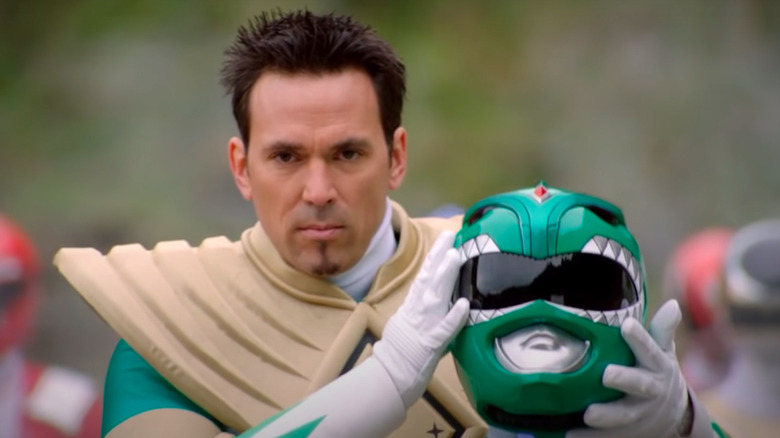
Power Rangers' Jason David Frank Once Had A Playground Brawl With Fellow '90s Icon Steve Urkel

by Cameron Roy Hall

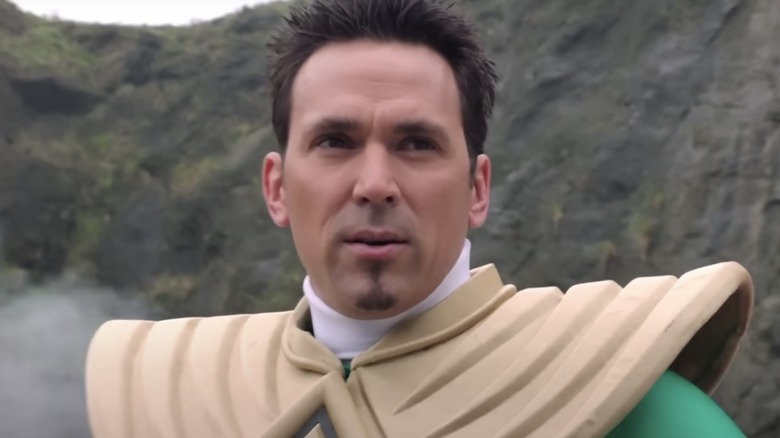
Tragedy breeds fond reminiscence. In November 2022, Jason David Frank, who starred as Tommy Oliver in the 1993 live-action superhero series "Mighty Morphin Power Rangers" and almost every subsequent "Power Rangers" story, died at the age of 49. Other Rangers came and went with each fantastical iteration, but fans could confidently rely on the Green Ranger — or the White Ranger. The man bore a million monikers — always present whenever the world was in peril. No official cause of death has been reported, although speculation has been unkind in its stead. In the wake of such a sobering moment, craving gentle comfort is only natural. 

That's where we can help. The original run of the "Mighty Morphin Power Rangers" ran concurrently with a number of popular family sitcoms, like "Boy Meets World" and "The Fresh Prince of Bel-Air." Only one of them, though, saw Frank don a set of night-black baggy clothing, not too distantly related from his more familiar gee, to do glorious battle with the legendary Jaleel White. Doesn't sound familiar? That's fair, it was almost 30 years ago. Stick around for a second so that we can remember a very strange episode of "Family Matters" together. 

Sci-Fi Meets Martial Arts When Skull Meets Urkel

"Family Matters" is a memorable family sitcom that originated as a spinoff from "Perfect Strangers," a family sitcom from the mid-1980s. Hollywood's always been doing spinoffs, friends. It's nothing new. The story was supposed to center around the Winslow family but their squeaky little neighborhood — who was only supposed to appear in one episode — ended up stealing the show right out from under their feet. Kind of an odd beginning for Steve Urkel, the loveable trainwreck, right? Played by Jaleel White, Urkel was ... a lot. Endearing and witty and hellishly destructive, Urkel's shenanigans were quite literally boundless. 

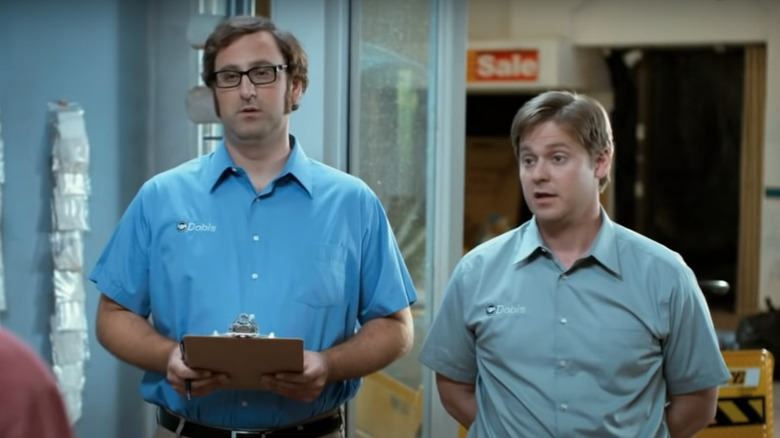
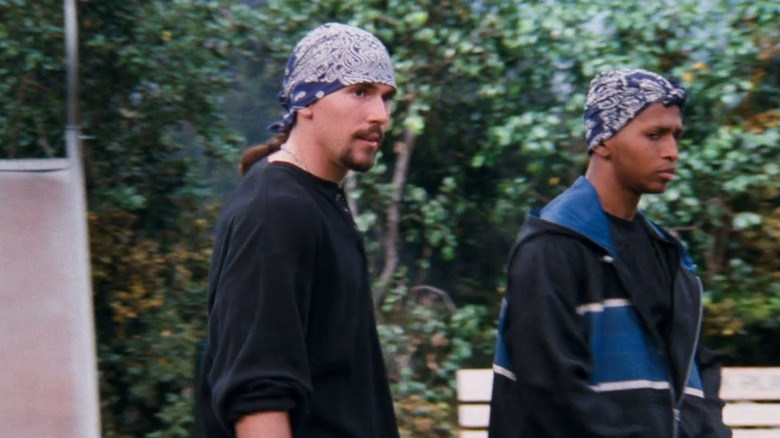
In season 8 episode 8, entitled "Karate Kids," Urkel steps into his transformation chamber (Oh yeah, "Family Matters" is pretty much science fiction) to become a variant of Bruce Lee so that he and his friends can fight a street gang that has taken over a local park. Any guesses as to who is part of that street gang? Jason David Frank portrays Skull, a member of the villainous street gang. We'd say that the name is a reference to a character that Tommy Oliver dealt with in the earliest days of "Mighty Morphin Power Rangers" but everything and everyone in the 1990s was seemingly named like a cringey gamertag, so it's hard to really say for sure. 

Jason David Frank Knows How To Fall With Style

The ensuing brawl was just as ridiculous as it sounds. "Family Matters" let Jason David Frank flex his acrobatic and martial arts abilities in a space where he didn't have to look cool. Frank understood the assignment, too, because he sold his shameless takedowns with the same intensity that he would pilot the Megazord. He crashed into a bench, toppling the whole thing. He crashed into a concrete building and he crashed into a spring rider (one of those outdoor rocking horse things). Between hits, he spun and kicked like a human tornado, but Urkel outmaneuvered him at every turn with the magic of plot armor and a dash of painfully outdated racial stereotypes. 

The poor guy took a cartoon-esque beating, complete with silly sound effects. He even managed to perfectly imitate the "a protagonist beat me up so badly that my head is spinning" head ... spin ... thing before sprawling on the ground, dazed and defeated. Is there even a name for that? There should be. 

It might have been a bit part for Frank, one that maybe he even left on the cutting room floor of memory, but those fleeting seconds of screen time are still enough to elicit a warm smile from a fan base in mourning. Hopefully, we'll get to see Frank in action one last time, if his final movie ever gets released, that is. 

Read this next: The 15 Best '90s Comedies Ranked

The post Power Rangers' Jason David Frank Once Had a Playground Brawl With Fellow '90s Icon Steve Urkel appeared first on /Film.

23 Nov 03:20

Jim Carrey Pitched Daniels Directing Duo A Wild Idea For A Found-Footage Horror-Comedy

by BJ Colangelo

The directing duo known as Daniels (Daniel Kwan and Daniel Scheinert) are two of the most exciting voices working in cinema today. After getting their start directing evocative music videos like "Turn Down For What" by DJ Snake and Lil Jon, the two have evolved their incomparable styles into some of the most compelling feature films in years.

Their first, "Swiss Army Man," was promoted as "the Daniel Radcliffe farting corpse movie," but turned out to be one of the most moving examinations of humanity and why life is worth living even when things feel absolutely hopeless. Their latest, the stunning "Everything Everywhere All At Once," is already a front-runner for Oscar contention, even with scenes including hotdog fingers and a martial arts fight scene with visible buttplug flares. It seems as if there's nothing too weird or too out of left field for Daniels, which is probably why funnyman Jim Carrey once pitched them a found-footage horror-comedy.

During a recent interview with Entertainment Weekly, Daniels spoke about the time they briefly considered making a film about the making of "Dumb and Dumber" through the lens of found-footage horror. Daniel Kwan says that Carrey reached out to the two, very early in their careers, with a ridiculous (and yet possibly brilliant) idea for a horror film:

"He had just seen 'Paranormal Activity' and was like, 'Guys, it's found-footage and it's horror — have you seen it?' And we were like, 'Uh-huh, we've heard of it. Where is this going?' And he was like, 'I haven't seen anyone do that — but with comedy. And I have this great idea.'"

'So You're Telling Me There's A Chance!'

"Dumb and Dumber" is a certifiable comedy classic at this point, starring Jim Carrey and Jeff Daniels as two imbecilic best friends who travel to Aspen, Colorado to return a lost suitcase that turns out to contain a ransom payment, putting the duo unwittingly in the crosshairs of some perilous people. The film's climax takes place at a beautiful resort, which also happens to be The Stanley Hotel, the allegedly haunted locale that inspired Stephen King to write "The Shining." After watching "Paranormal Activity," Jim Carrey felt inspired and called up Daniels to pitch his idea.

"Basically, the set of 'Dumb and Dumber' was famously a haunted set," Daniel Kwan tells Entertainment Weekly. Carrey reported that objects broke, people were injured, and things were moving on their own during production. "Dumb and Dumber To" was about to start production, and Carrey wanted Daniels to film a found-footage horror comedy on the set. As Kwan recalls, Carrey wanted the duo to make a feature-length, behind-the-scenes film that slowly transforms into a horror film. "We're like, 'OK, we're in. This is amazing.' We wrote a whole outline and were really excited," Kwan says.

Unfortunately, the duo pitched the idea to the producer who wasn't nearly as enthused. "I'm sorry, Jim got really excited, but there's no way the studio is going to let us do a movie while they're shooting 'Dumb and Dumber To,'" Kwan remembers the producer saying.

Probably For The Best

The idea of a behind-the-scenes featurette transforming into a found-footage horror film, especially one that would have starred Jim Carrey, Jeff Daniels, Rob Riggle, Laurie Holden, Kathleen Turner, and containing a Bill Murray cameo, is a genuinely brilliant idea. Daniels could have sincerely changed the game of both found-footage horror and horror-comedies in one fell swoop, which could have potentially brought them the financial security to make whatever weird and heartfelt stories struck their fancy.

Of course, everything happens for a reason, and it's possible that the success of a "Dumb and Dumber" found-footage horror-comedy would have changed the timeline that allowed them to create "Swiss Army Man" and, perhaps more importantly, "Everything Everywhere All At Once." Additionally, the production of "Dumb and Dumber To," while not haunted, was plagued with problems of its own.

It was declared by the United States government that "Dumb and Dumber To" and "Daddy's Home" were financed by stolen, foreign money. The U.S. Justice Department said millions of dollars in illicit cash were channeled through Red Granite Pictures, one of the production companies that helped produce the film. The studio denied knowingly accepting the money but eventually paid $60 million in a settlement. Thank the Everything Bagel that Daniels didn't get tied up in that mess.

Read this next: The Best Movies Of 2022 So Far

The post Jim Carrey Pitched Daniels Directing Duo a Wild Idea for a Found-Footage Horror-Comedy appeared first on /Film.

23 Nov 03:19

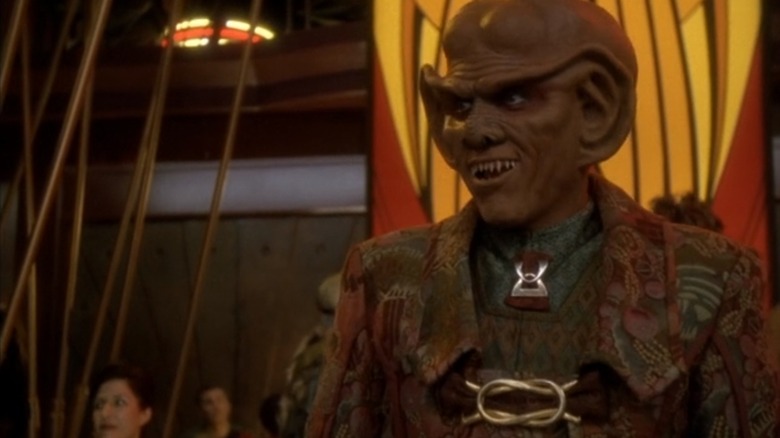
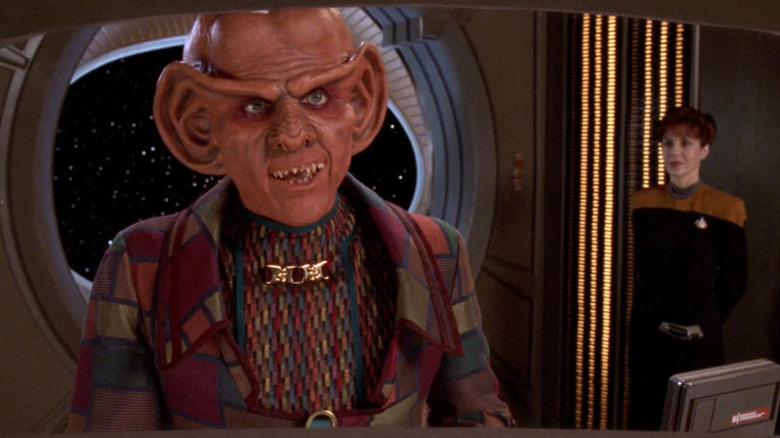
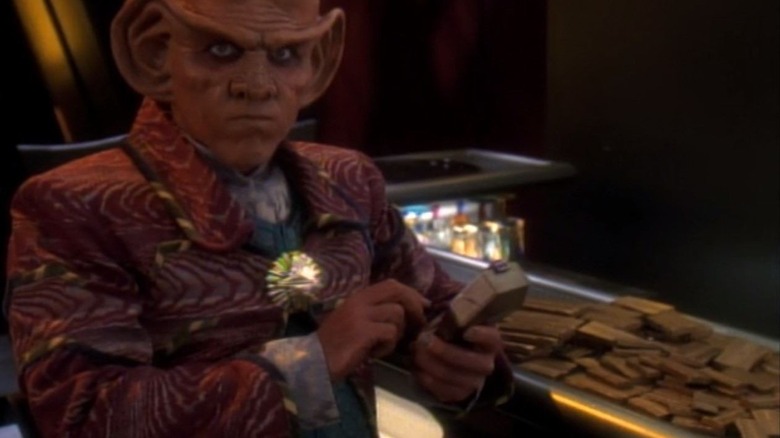
Why Deep Space Nine's Quark Is The Greatest Star Trek Character

by Witney Seibold

When it first began airing in 1993, "Star Trek: Deep Space Nine" was instantly considered a notable oddball in the broader "Star Trek" canon. For one, it was the first Trek project that was made completely outside of the auspices of Trek creator Gene Roddenberry. Also, being set on a space station, there was going to be considerably less trekking on "Deep Space Nine" than had been previously seen in the franchise. Additionally, the show was to follow the politics and social intricacies of worlds that did not belong to Trek's famed United Federation of Planets. That meant the franchise's notable and vaunted post-war, post-religion, post-capitalist utopia was going to be challenged by those who believed in war (the Cardassians), in theocracy (the Bajorans), and in capitalism (the Ferengi). "Deep Space Nine" stood as a deliberate challenge to the Treks that preceded it. Can Roddenberry's ideals stand when those who abide by them are outnumbered?

The lessons from "Deep Space Nine" were more forthrightly multicultural than the relatively mannered "Star Trek: The Next Generation." While NextGen was populated by diplomats and open-minded explorers of cultural differences, it was rare that any of them were pushed too far outside of their comfort zones; how strange, Counselor Troi might find, that a new species enjoys chocolate so much. On "Deep Space Nine," the Starfleet characters had to face the notion that people bearing opposite values to their own were going to remain deeply and strictly adherent to them. A soft version of easily-acquired arbitrage would have to be abandoned for the notion of having to live with someone you fundamentally disagree with ... and do not necessarily hate. 

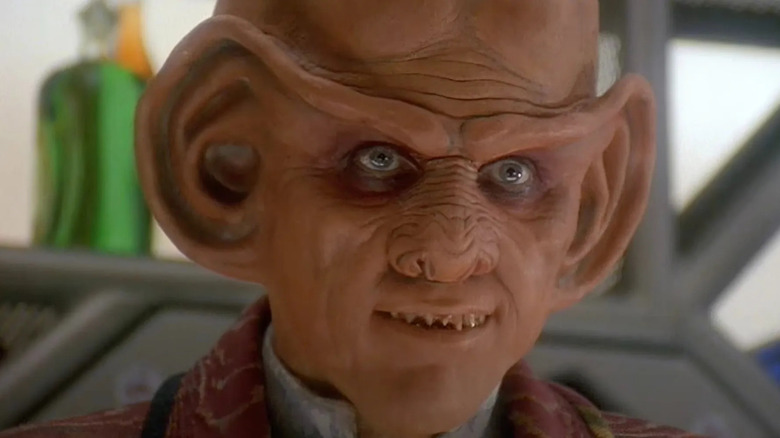
No character on DS9 was more deeply principled than Quark (Armin Shimerman), the Ferengi bar owner on the station's high-traffic Promenade. 

Quark

For the uninitiated, the Ferengi are a species that has devoted every aspect of their society to commerce. Money is deeply involved in every aspect of their lives. When friends come to visit a Ferengi, they have to drop money into coin boxes in every room in the house. When a Ferengi dies, their ashes are sold inside miniature collectible discs. Even their central religion is based on profit, as a Ferengi will not be able to buy their way into the afterlife unless they have acquired enough wealth in this one. Their most widely read holy book is simply a list of 285 Rules of Acquisition. Needless to say, devotion to wealth also carries with it a tendency toward both labyrinthine accounting and a propensity toward confidence schemes. Cutting corners, buying cheap materials, and underpaying employees is a great virtue in Ferengi society. The most grievous sin is charity. 

Additionally, Ferengi society is staggeringly sexist. Only men are allowed to earn wealth, whereas women are not allowed to speak to any men other than their immediate family. They are also not allowed to wear clothing. Over the course of "Deep Space Nine," Ferengi sexism will be challenged time and time again, with Quark having to face the fact that his mother Ishka (Andrea Martin, then Cecily Adams) has been secretly leading the charge toward a women's liberation movement back on their home planet. 

Quark, throughout the series, is deeply devoted to these Ferengi principles. They may seem backward and even gross to a human viewer, but Quark never once winks at the camera, nor does Shimerman plays the character as wicked. Devious, perhaps. Criminal, to be sure. But not sadistic or cruel. Indeed, Quark is typically either upbeat (when business is booming) or annoyed (when it isn't). 

Criminal, But Not Evil

Quark is perpetually annoyed, incredibly shrewd, and often called out on his bad behavior. But — and here's what makes his character so appealing — he never abandons the fundamental things that make him who he is. His personal beliefs are dearly held, and he will not — will not — abandon them. In a true science fiction sense, Quark provides an outsider perspective on humanity, looking to their habits of charity and their baffling abandonment of capitalism as strange and offputting. 

Something magical happens on "Star Trek" when two nonhuman characters interact. Humans, in subsequent discussions, become ineffable and confusing. Our culture is just as strange to them as theirs is to us. Starfleet may be making a perpetual effort to include and understand others, but Ferengi have no such compunction, choosing to criticize and deconstruct some of our own fineries. In one of the best scenes of the entire series, Quark has a conversation with Garak (Andrew Robinson) a Cardassian tailor who once served the war effort. Neither character has spent much time with humans, and each bemoans the fact that so many of them have just moved onto the station. As an example of how bad humans reflect on his business, Quark serves Garak a glass of root beer. Garak hisses that it's vile. "I know," Quark says, disgusted. "It's so bubbly, and cloying, and happy."  

"Just like the Federation," Garak says.

"But you know what's really frightening? If you drink enough of it, you begin to like it," Quark says. "Just like the Federation."

Being bubbly and eager to please, the two aliens note, shows a grievous lack of character. The Federation, Quark says out loud, has a lot to be wary of.

Quark's Moment

Quark and the other Ferengi characters on "Deep Space Nine" were often treated like comic relief, and one can bet that a "comedy" episode was likely about Quark and his family (his brother Rom, played by Max Grodénchik, often had "dim bulb" scenes). It took "Deep Space Nine" a while to decide just how intelligent Quark was meant to be (a frustration for Shimerman), often seeing him vacillate between crafty and clueless. It took "Deep Space Nine" several years to allow the Ferengi characters to grow. Rom was revealed to be a decent, kind man with sharp engineering skills, and Rom's son Nog (Aron Eisenberg) wanted to become a Starfleet officer. 

Quark, meanwhile, was eventually allowed to be intelligent and deeply righteous. Even honorable. The character's best moment probably came in the penultimate episode of the show, "The Dogs of War" (May 24, 1999) wherein Shimerman gets to express the deep, glorious beliefs of the character. "As far as I'm concerned," he says, "the Ferenginar that I knew doesn't exist anymore." He says "This establishment will be the last outpost of what made Ferenginar great: the unrelenting lust for profit." 

What he is standing for might look petty to the human audience, but after seven seasons with Quark, they have most assuredly come to sympathize with him. So when Quark says he won't preside over the demise of Ferengi civilization, we see a man standing up for himself. We see a man eager to keep his ideals. "The line has to be drawn here!" he shouts. "This far and no further!" 

Quark is willing to exploit, but he is also willing to play by his own rules. And what is "Star Trek" if not strong-willed adults articulately standing up for what they believe in?

Read this next: 14 Underrated Star Trek: The Next Generation Episodes

The post Why Deep Space Nine's Quark is the Greatest Star Trek Character appeared first on /Film.

23 Nov 03:15

Jason David Frank Turned A 10-Episode Contract Into A Nearly 30-Year Career

by Rafael Motamayor

"Power Rangers" was one of the biggest franchises of the '90s — it brought tokusatsu to the West, it was a franchise with some of the coolest theme songs, and it also introduced superheroes to a whole generation. Despite its cheap look and extremely corny dialogue and storylines, "Power Rangers" always offered big excitement, lots of cool costumes and robots, and a (sadly) rare superhero team with diversity. There is at least one ranger that looks like you in the show.

Because of the neverending nature of "Power Rangers," and its revolving door of cast members and characters, we rarely see a ranger evolve beyond your typical "shy person gets confident, gains power, then disappears by season's end." There have been over 500 rangers and over 900 episodes across three decades' worth of seasons, but there's no denying that "Power Rangers" has been defined by a single face, the one that got the most character development over the years: Tommy Oliver, as played by the late Jason David Frank.

What started as a one-time villain evolved into a fully-fledged member of the team, then a leader, and a legend. Tommy is one of the most endearing characters on the show, its most iconic, and the purest representation of what a Power Ranger is. The MCU had Robert Downey Jr.'s Tony Stark, and the "Power Rangers" had Jason David Frank's Tommy. This is a tribute to the man that was the face of a franchise, the man who turned a tiny 10-episode guest-starring role into a 30-year career.

A Redemption Story

Tommy Oliver was first introduced in the original series's five-part episode "Green with Evil" as a new student at Angel Grove High School. Right from the get-go, Tommy was the epitome of the show's idea of "teenagers with attitude" who are meant to be the best candidates to be Power Rangers. He exudes coolness, is better at martial arts than even the Red Ranger, flirts with the Pink Ranger, and is a bit of an overconfident rebel.

This made him a perfect candidate to be the very first evil Ranger when he gets kidnapped by Rita Repulsa and enchanted to become her servant. As the show's first big villain who wasn't a goofy, alien-looking creature, but a teenager, Tommy was threatening, he was charismatic, he was dangerous. 

And even when he got freed from Rita's magic, and despite not really being in control of himself while acting as the Green Ranger, Tommy fought and worked to atone for his sins by helping the Rangers. Even as he found out his powers could disappear at any minute, he still fought alongside the Rangers. Years before Zuko in "Avatar: The Last Airbender," Tommy Oliver had the best redemption story in an American children's show.

As a reward for his actions, Tommy later becomes the White Ranger, the new leader of the team. He would remain the leader for a few years, as some of the original Rangers left and new ones arrived, even as the show turned away from dinosaurs into sci-fi and shortly before it left Earth to go to space. All throughout this time, Jason David Frank played Tommy as a bonafide superhero, a teenager with great bravery who had gone through hell and come back the other side wiser and stronger.

A Leader

While the franchise kept changing and introducing new elements, Tommy remained the only constant. It was only when Tommy was sent to college that he gave up the mantle of Ranger, as "Power Rangers" gave us something extremely rare for a franchise like it: closure. His story was done, he accomplished everything that could have been accomplished, and he was getting a normal life as a reward.

But Jason David Frank wasn't done, because seven years after his departure from the franchise at the start of "Power Rangers: Turbo," he made a surprising and triumphant return in "Power Rangers: Dino Thunder." What could have easily been a desperate attempt at bringing attention to a declining franchise instead became the show's best use of Frank since his stint as a villain, and Tommy's best role: as a mentor.

You see, after earning a Ph.D. in paleontology at MIT, Tommy becomes a sort of new Zordon, creating a new set of zords and waiting to recruit the next generation of Power Rangers. He still fights as a member of the team — not losing any of his martial arts skills — while providing knowledge, wisdom, and tech to the new Rangers.

A Mentor

This was pretty significant, both to the franchise and to its young audience. While "Power Rangers" had a revolving door of actors that seemed to leave just before they turned old or dull, having Jason David Frank return as an older but still badass Ranger was significant. It showed kids that being a hero isn't like being an athlete, and it doesn't stop in your 30s. Jason David Frank could have been just another guest star, a cool villain to be defeated by the Power Rangers, never to be seen again. Instead, he became the best Ranger ever, a leader, a team player, a mentor, and a legend. Jason David Frank wasn't there when "Power Rangers" first began, but he became an intrinsic part of the franchise, and the epitome of what a Power Ranger can be.

Read this next: The Best Movies Of 2022 So Far

The post Jason David Frank Turned a 10-Episode Contract Into a Nearly 30-Year Career appeared first on /Film.

23 Nov 03:14

Microsoft Promotes Windows Subsystem For Linux "WSL" To GA Status

While the Windows Subsystem for Linux (WSL) has been around for six years now and with WSL2 is on to running graphical Linux apps with GPU acceleration and a wide array of capabilities, including the ability to run systemd and the like, only today has Microsoft promoted WSL to "general availability" status on Windows 10 and Windows 11...
23 Nov 03:13

Tim And Eric Had A Hilarious Method For Convincing Bob Odenkirk To Work With Them

by Joe Roberts

Believe it or not, before Bob Odenkirk became mega-famous as Saul Goodman on "Better Call Saul" or an older, gruffer version of John Wick in "Nobody," he had quite a career in comedy. In fact, the actor, who is gearing up for his new series "Straight Man," won a couple of Emmys for his writing on "Saturday Night Live" and "The Ben Stiller Show." He even influenced arguably a whole generation of comedians with his and David Cross' sketch show "Mr. Show with Bob and David." Two such people were Pennsylvania natives Tim Heidecker and Eric Wareheim who, as it happens, reached out to the man himself when they were looking to break into the business.

Now better known as Tim and Eric, the pair have become idols of alt-comedy, creating a whole comedic style that would pervade much of popular culture in the wake of their seminal "Tim and Eric Awesome Show, Great Job!" But before any of that could happen, they had to get Odenkirk's attention. Luckily, they had a crafty, and hilarious, way of doing so.

Billing Bob Odenkirk

Since meeting in College, Tim Heidecker and Eric Wareheim had been making sketches together for some time, even compiling them on self-made DVDs. It was one of those DVDs that the pair decided to mail to Bob Odenkirk, who at the time was all the way in Los Angeles. As Odenkirk told Pedestrian, he received the DVD in the mail and whereas he would usually "throw it in the garbage," he actually opened it. But it wasn't just the DVD that caught his attention. As the actor recalled: "there's a video, a DVD, and along with it they had an itemized bill for the DVD and mailing [it] and everything."

The invoice sealed the deal for Odenkirk, who flew the boys out to Los Angeles, beginning their journey towards becoming comedy legends and starting their own production company: Abso Lutely Productions. The story of the invoice has gained a kind of legendary status in Tim and Eric lore, and Odenkirk himself included the whole episode in his biography "Comedy Comedy Comedy Drama: A Memoir."

These days you can still find Odenkirk dipping his toes back into the comedy pool with appearances on Tim Robinson's exceptionally funny "I Think You Should Leave" — a show that has also seen Heidecker show up a couple of times. Odenkirk has also appeared in innumerable Tim and Eric sketches, shows, and even their 2012 movie "Tim and Eric's Billion Dollar Movie." Who'd have thought that if it weren't for the boys billing their hero for the privilege of receiving their DVD, none of that would ever have come to fruition? Great Job!

Read this next: 20 Underrated Comedy Movies You Need To Watch

The post Tim and Eric Had A Hilarious Method For Convincing Bob Odenkirk to Work With Them appeared first on /Film.

23 Nov 03:13

Why Viggo Mortensen Fought Fiercely To Get A Can Of Coca-Cola Into The Road

by Matt Rainis

Adapting a movie from a novel can be a monumentally difficult task. While in the print medium, an author has almost complete freedom to write what they want, films are far more collaborative efforts, filtering the vision of one person into the work of many. 

This challenge is only amplified when you're handling the works of Cormac McCarthy, one of the greatest living authors. McCarthy's work is dark and uniquely written, making adaptations complicated, if not impossible. "Blood Meridian," one of McCarthy's most notable works, has been in production purgatory for years and is considered by some to be unfilmable. Even with the McCarthy stories that have been successfully adapted, for every massive success, like the Coen brothers' "No Country for Old Men," there's been an abysmal failure, like Billy Bob Thornton's "All the Pretty Horses."

John Hillcoat's adaptation of "The Road" is generally one of the better-received of these films. While, like any adaptation, the film makes changes and takes liberties with its source material, it manages to very adequately capture the book's mood and tone. The film has a silent tension to it, with scarce dialogue and a dark setting that reflects the book it's based on.

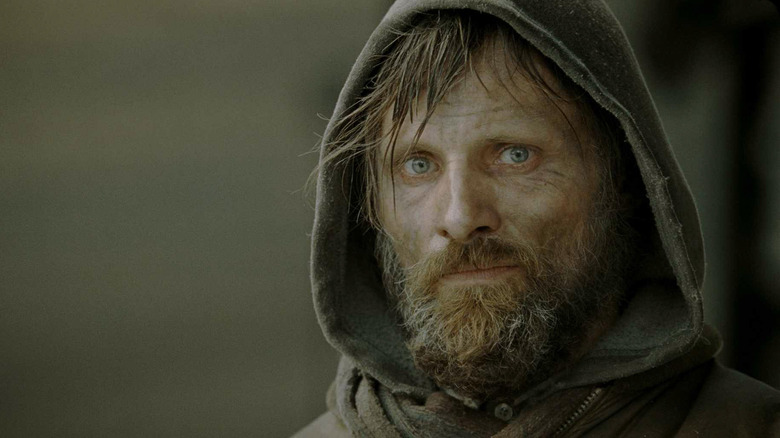
In one specific case, the film was able to stay loyal to the book due to the persistence of its star, Viggo Mortensen. According to a 2009 Today interview, Mortensen asked special permission from the Coca-Cola Company to include a can of their soda in the film in an attempt to stay loyal to a pivotal scene in the novel that also featured a can of Coke.

An Iconic Brand

At the risk of offending the vocal portion of our reader base who are staunch Pepsi loyalists, Coca-Cola is one of the most iconic brands on the planet. A Fortune 500 company with a massive market share of over 46 percent, and massive advertising campaigns that feature the likes of Martin Scorsese, there's hardly anybody in the world who wouldn't recognize the company's logo.

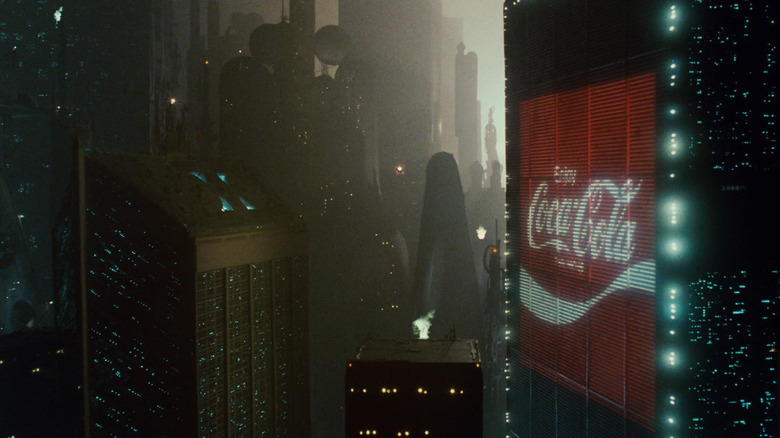
Because of the corporation's success and longevity, Coca-Cola has long been a symbol of American excellence and happiness. Its sentimental advertising campaigns have spent years making sure Americans associated the brand with warmth and familiarity. Its bottle is a pop culture icon in its own right, a staple in American media that has accompanied legends from Elvis Presley to Marilyn Monroe. Coca-Cola's ubiquity has also long been reflected in popular culture. Coca-Cola signs have appeared in both 1978's "Superman" and "Blade Runner," while "E.T. the Extra-Terrestrial'' features many different cameos by the drink.

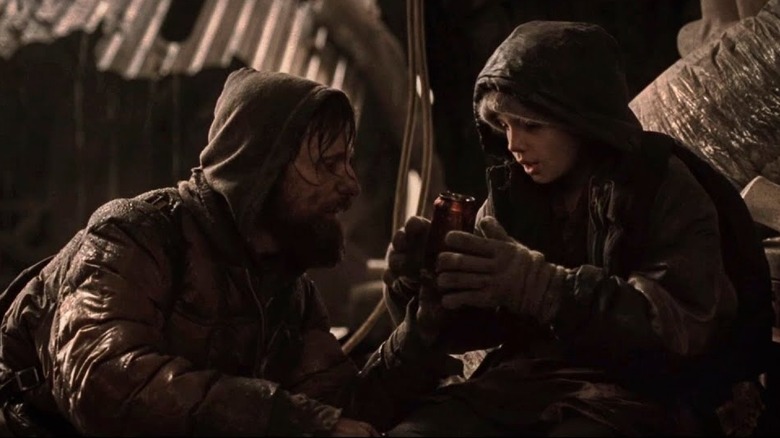
But according to the Today interview, when "The Road" called for a can of Coca-Cola to be featured, the production hit a roadblock. Even a company that's been all over our films and television has rules, and the Coca-Cola Company did not want their drinks featured in R-rated movies. This created a problem for the film, as the scene where the protagonists come across a can of Coke is one of the most affecting in the novel, a symbol for the rediscovery of the simple comforts of a world long gone. Without it, the scene would lose some of its prescience. Viggo Mortensen wouldn't stand for that.

The Last Vestige Of American Empire

"The Road" centers on a father and son, who travel the road after an apocalyptic event that leaves most of the world's plant and animal life dead. The two wander around, seeking refuge from the cannibalistic gangs that roam around. When the two find a can of Coke, it leads to a scene of wistful reflection, a reminder of the world before it ended.

According to the Today interview, Viggo Mortensen, fresh off "The Lord of the Rings" and ready to shift courses in his acting career, was shocked they were not going to use actual Coca-Cola in the scene.

"We were approaching the day we were going to shoot that scene, which I was looking forward to, and they said, 'we're not going to be able to use Coke. We'll have to use ... Brand X soda or something.' I said that's not the same thing. Coke is so iconic around the world. It's a symbol of America, of a certain way of life."

So, Mortensen took it upon himself to contact an executive of the Coca-Cola Company, explaining the brand's necessity to the scene and the potential free advertising the film could provide the company. Ultimately, they got approval, and the Coke can appeared in the film.

And thank goodness Mortensen did fight for it because it truly does make the scene. That can of Coke isn't just another resource the father and son scavenge. It's one of the last vestiges of their previous lives, a product representative of the bounty and excess of the United States that has now fallen. The Coke can is the symbol of a country that no longer exists, a piece of the ruins of a fallen empire.

Read this next: The 20 Best Dystopian Movies Of All Time

The post Why Viggo Mortensen Fought Fiercely to Get a Can of Coca-Cola into The Road appeared first on /Film.

23 Nov 03:12

The perfect $16 USB-C tester for your repair kit (and how to use it)

This tester is everything you need to test USB-C ports, chargers, and power banks, and at a price that's not going to break the bank.
23 Nov 03:11

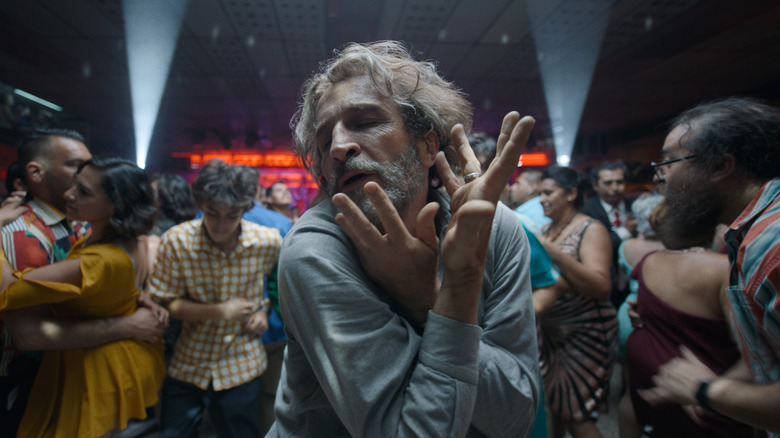
Guillermo Del Toro Is Flabbergasted By The Reactions To Alejandro González Iñárritu's Bardo

by Mike Shutt

From the time "Bardo: False Chronicle of a Handful of Truths" premiered at this year's Venice International Film Festival, it was met with a ton of resistance. /Film's own Marshall Shaffer called the film "an incoherent grab-bag of visual metaphors delivered with all the subtlety of a sledgehammer" in his 3-out-of-10 review. While the critical community has been generally averse to the latest film by two-time Best Director winner Alejandro G. Iñárritu, the film has found many supporters within the filmmaking community. Directors like Lulu Wang and Barry Jenkins have expressed their great admiration for Iñárritu's surreal auto-fiction epic. The latest supporter of the film is one of the director's old pals and a fellow Best Director winner, Guillermo del Toro.

The co-director of "Guillermo del Toro's Pinocchio," another film produced by Netflix this year, recently moderated a Q&A for "Bardo" with Iñárritu at the Academy Museum and said of the picture [via IndieWire], "The movie is undeniably one of the most powerful things I've seen in terms of cinema, pure cinema." That's a hell of a statement to make, and it doesn't sound like it comes from a place of wanting to butter up his friend.

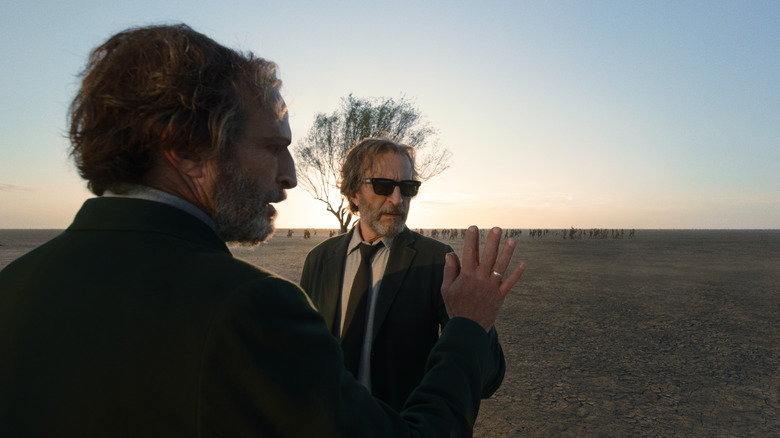
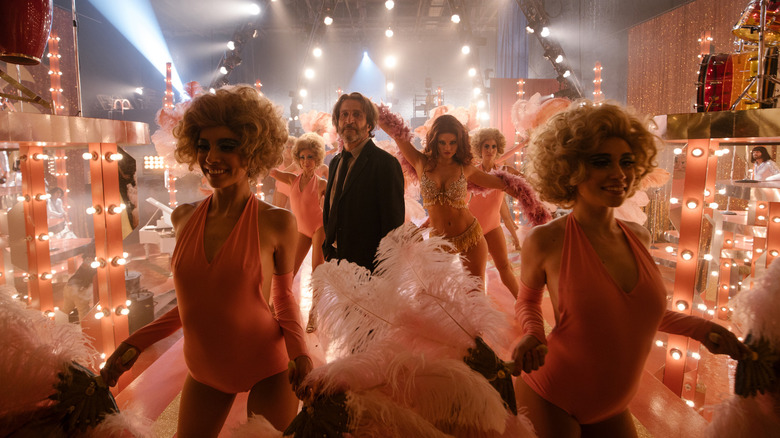
I wouldn't go nearly as far as del Toro in how I feel about "Bardo," but I did find myself quite engrossed in the images Iñárritu put on the screen. I agree with Marshall about their subtlety, but for me, that is not necessarily a bug in a film that is operating so boldly and brashly as "Bardo." Film is, after all, primarily a visual medium, and in terms of composition, lighting, color, and camera movement, I understand why del Toro would speak so highly of the picture.

Plot Isn't Everything

While I understand some being turned off by the perceived self-indulgence of "Bardo," I don't understand those who resist the film because they can't grasp what is going on. Abstraction, symbolism, and surrealism are not new concepts in filmmaking, and on the spectrum of hard-to-decipher stories, "Bardo" is fairly straightforward. It just tells the story of a documentary filmmaker and journalist (Daniel Giménez Cacho) struggling with personal and professional imposter syndrome through an ethereal and dreamlike lens. 

It seems that Guillermo del Toro has similar feelings about this, saying at the Q&A:

"To anyone that is confused about the plot and what it is about, my condolences. The fact is the movie's called 'Bardo,' which means limbo, and it starts with a guy that tries to fly but the path weighs him down, and ends with him finally flying, and they don't f***ing get it? I'm amazed."

Both in story and theme, "Bardo" is fairly simple. Now, for some people, the film's simplicity is part of the problem, thinking that Alejandro G. Iñárritu's massive canvas and implementations of abstraction aren't justified by what the film is about. On some level, I agree with that. However, my appreciation for "Bardo" goes beyond what the film is about. Plot is only part of what makes cinema the special art form that it is. Sometimes, the pleasure comes purely from aesthetics and the work that went into crafting it.

The Craft Is The Substance

So much of film discourse these days surrounds the "what" of a picture. What is this film about, and what is it saying, politically and personally? But the thing about film — or any medium of artistic expression — is that the craft of it is just as important. I cannot tell you how sick I am of seeing countless films every year unwilling to take any chances in creating vibrant images that will linger in the mind. I don't even mean the intricate Steadicam long takes or warping of environments that "Bardo" implements. I just mean an image that is well-lit and uniquely composed, where the frame itself stands as something interesting beyond delivering a story beat. 

At the Q&A, Guillermo del Toro likened this to painting and how the picture itself barely scratches the surface of its beauty:

"Seeing a Van Gogh and asking for an opinion, and the opinion is, 'Well, it's about some flowers in a pot.' The flowers are OK, the pot is nice, but nobody talks about the brushstrokes, the colors, the thickness of the paint, the color palette. It's astounding to me."

When I hear someone say, "Yeah, it looked good, but ...," I want to stop them right there because film is a visual medium. How it looks couldn't be more important. The same goes for how it sounds. It's okay if you don't like the movie as a whole, but completely brushing aside the things that are inventive and beautiful because they aren't what the film is "about" takes away so much of the joy of what cinema can be. Alejandro G. Iñárritu tapped into that part of my brain to great effect with "Bardo," and I hope more people join me in appreciating the painting for the brush strokes.

Read this next: The Best Movies Of 2022 So Far

The post Guillermo del Toro Is Flabbergasted By The Reactions To Alejandro González Iñárritu's Bardo appeared first on /Film.

22 Nov 18:29

Don’t Just Roast Your Turkey, Roulade It

by Allie Chanthorn Reinmann

Wrestling a whole turkey body into a roasting pan (or rather, onto a wire rack), isn’t for everyone. Even I, a seasoned professional, have to steel myself for the gory moments of cutting through bone when I spatchcock a bird, and I would be totally OK with never having to smash in a breast bone again. If you have…

Read more...

22 Nov 18:29

Wednesday: Season 1 – Netflix Review

by Karina "ScreamQueen" Adelgaard
22 Nov 18:28

Everything You Ever Need To Know About Life...

by noreply@blogger.com (Jason Adams)
... you can learn from:

Pusher (1996)

Tonny: I once ejaculated a girl in the face,
and she wanted me to piss it off.
Frank: Wait a minute, wait a minute.
You ejaculated a girl in the face,
and she wanted you to piss it off?
Tonny: Yeah.
Frank: [laughing] Pervert! That's fucking sick!
Tonny: It is not?
Frank: It's fucking sick, man. Who was she?
Tonny: Your mother.

Oh, do we love a good "your mama" joke. And
Nicolas Winding Refn's Pusher trilogy is full of them. 
A happy birthday to Mads Mikkelsen today! I love
that Hannibal Lecter's birthday's so close to Thanksgiving.


22 Nov 18:27

Vulnerable SDK components lead to supply chain risks in IoT and OT environments

As vulnerabilities in network components, architecture files, and developer tools have become an increasingly popular attack vector to leverage access into secure networks and devices, Microsoft identified such a vulnerable component and found evidence of a supply chain risk that might affect millions of organizations and devices.

The post Vulnerable SDK components lead to supply chain risks in IoT and OT environments appeared first on Microsoft Security Blog.

22 Nov 12:49

SDL 2.26 Released, SDL3 Development Now Underway

SDL 2.26 has been officially released as the latest version of this widely-used library by cross-platform games and other software wishing to abstract various hardware/software differences between systems. With the release of SDL 2.26 out, SDL 3.0 is now officially under development...
22 Nov 12:43

Jason David Frank Had A Heart-Warming Interaction With Reservoir Dogs Star Michael Madsen

by Joshua Meyer

The untimely death this week of Jason David Frank at the age of 49 has led to an outpouring of stories about the late actor and mixed martial artist, best known for his role in over a hundred episodes of the original "Mighty Morphin Power Rangers" TV series from 1993 to 1996. Frank played Tommy Oliver, who started out as the villainous Green Ranger before becoming the heroic team leader, the White Ranger. It was a role that carried over into "Mighty Morphin Power Rangers: The Movie," which thrust Frank into the spotlight even more and gave him the chance to meet other famous actors like Jean-Claude Van Damme and Michael Madsen.

In a 2019 interview with TheHipHop Lab, Frank recounted his memory of the premiere of "Mighty Morphin Power Rangers: The Movie." Van Damme was not in the film, but he attended the premiere, and Frank said he had been excited to meet him, only to be pushed back by his security and told that he had five minutes. "It ruined my movie premiere," Frank said. He was so disappointed that he left the premiere, whereupon he encountered a young Power Rangers fan and a dad who "looked like a gangster." He recalled:

"So I went outside, this little kid — in dirty pajamas, I'll never forget it — came out of the bushes in like these dirty White Ranger pajamas. [...] And this kid's like, 'Hey, man, can I have your autograph?' And I said, 'Sure, man.' And then, you know, this dad came up [...] and he said, 'Thanks, man, I appreciate it. Thanks for taking care of my kid.' So, 'Oh, no, no problem, sir.' I took care of his kid, and they said, 'You know who that was? That was Michael Madsen.'" 

Frank And Madsen Reunited

Above, you can see Frank's HipHop Lab appearance; the question leading up to the Van Damme and Madsen story begins around the 19:20 mark. Madsen's 1995 film, "Species," would hit theaters a week after "Mighty Morphin Power Rangers: The Movie," and he was already well-known at the time for his signature role as Mr. Blonde in "Reservoir Dogs" along with his performances in films like "The Getaway" and "Wyatt Earp."

Frank said that he didn't know who Madsen was at the time, but later came to regard  "Donnie Brasco" as one of his favorite movies. Years later, Frank and Madsen reconnected at the Wizard World fan convention, and Madsen still remembered Frank's kindness to his son. Frank's final film, "Legend of the White Dragon," would give him the chance finally to act opposite Madsen, with the added twist that Madsen was now playing his character's dad.

Read this next: 20 Movies About Time Travel Ranked Worst To Best

The post Jason David Frank Had a Heart-Warming Interaction With Reservoir Dogs Star Michael Madsen appeared first on /Film.

22 Nov 05:43

Everything You Ever Need To Know About Life...

by noreply@blogger.com (Jason Adams)

... you can learn from:


Marcilla
: You must die! Everybody must die!

The icon Ingrid Pitt was born 85 years ago today.

22 Nov 05:42

Don’t Roll Out Your Pie Crusts and Do This Instead

by Allie Chanthorn Reinmann

Rolling out a flaky pie crust is a pain in the ass. It’s temperature sensitive, needs beauty rest in the fridge, and even under the best conditions, it might crack under pressure. Well, good news: You never need roll out another pie crust. You can stop the precarious transfer of dough from counter to pie plate.…

Read more...

22 Nov 05:39

Do This to Seamlessly Connect Guests to Your Wifi

by Jake Peterson

Anytime you have someone new over your house, one of the first questions they’ll ask is, “What’s the wifi?” Sure, you could tell them, but do you even know? To be honest, I don’t. If you’re like me, you have some convoluted wifi name and password combo on the bottom of your router you need to consult every time it’s…

Read more...

22 Nov 03:47

Interactive Fiction Competition 2022 winners announced

by Andy Baio
70% of the top 20 are choice-based instead of parser-based, continuing the trend of the last few years #
22 Nov 03:40

You Can't Afford to Miss This Gripping Horror Anthology Series - CNET

by Erin Carson
22 Nov 01:49

The Walking Dead Brought Back Two Old Friends For The Series Finale

by Hannah Shaw-Williams

This post contains spoilers for the "Walking Dead" series finale.

After 11 seasons of blood, guts, and long walks, "The Walking Dead" has come to a close with its series finale, which is appropriately titled "Rest in Peace." But while the original flagship series may have been laid to rest, the "Walking Dead" TV franchise is another matter. 

The first spin-off, "Fear the Walking Dead," is still going. Another spin-off, the anthology series "Tales of the Walking Dead," aired earlier this year (no word yet if we'll be getting a second season). And there are three more spin-off shows still to come: "The Walking Dead: Dead City," which focuses on Negan and Maggie and is set in New York; "Daryl Dixon," which will follow (you guessed it!) Daryl Dixon as he wakes up somewhere on the European mainland and has to figure out how he got there and how to get home; and an untitled six-episode spin-off series about Rick and Michonne (originally planned as a movie trilogy after Andrew Lincoln's departure).

So, while "Rest in Peace" was wrapping up the main storyline of "The Walking Dead," it also had to move the pieces into place for these three spin-offs. Daryl and Carol said a moving goodbye to one another, and Maggie and Negan both hit the road -- but most intriguingly, we got a glimpse of what Rick and Michonne have been up to.

'No Escape For The Living'

"Rest In Peace" initially made it appear that Rick and Michonne were together: both are seen sitting by firelight, writing, their voices alternating. During this moment we got the "Walking Dead" version of the "In Memoriam" segment of the Oscars, with sepia-toned clips of the many, many characters who have died over the course of the show. Rick says that he still thinks about them every day, "their faces, what I learned from them, how they made me who I am -- so much more than all this made me who I am." While Rick focuses on the dead, Michonne primarily addresses their two surviving children, Judith and R.J., and her longing to see them again. 

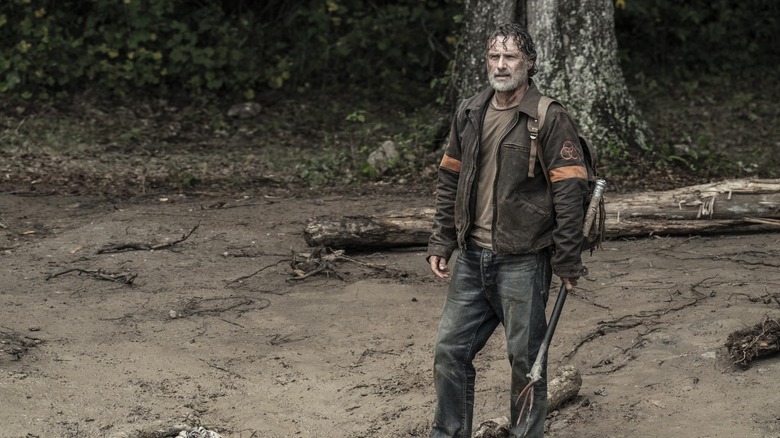
But just as it appears that Rick and Michonne are gazing romantically at each other over the fire, the ending reveals that they're still separated, and aren't even writing at the same point in time. Rick is hiding out from the Civic Republic Military (or CRM, for short), and we see him hide his journal, boots, and phone in a bag. It's the same bag that was later found by Michonne in "The Walking Dead" season 10, episode 13 -- cluing her in to the fact that Rick is still alive, and inspiring her to go on a quest to find him. 

Rick rolls up his letter and tucks it into a bottle, walking out onto a beach fall of helplessly gnashing walkers stuck in the sand, and flinging the bottle into the water. That's when a CRM helicopter arrives and orders him to surrender, referring to him as "Consignee Grimes" and cryptically telling him, "Come on, Rick, it's like she told you: There's no escape for the living."

'We're The Ones Who Live'

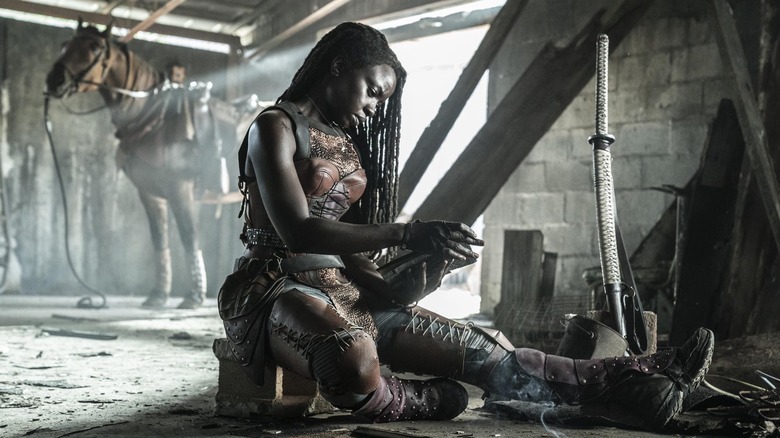
Michonne seems to be doing a lot better than Rick (though she does have the advantage of being a few years further down the timeline). Not only does she still have shoes, she has stylish boots to go with a badass new post-apocalyptic outfit, a horse, and her trusty samurai sword. Let's hope her new protective gear is up to the task, because Michonne is last seen riding directly towards a vast horde of walkers, sword raised. Meanwhile, Rick's scene ends with him kneeling in surrender in front of the ruins of Philadelphia, after a montage of flashback clips that repeat the mantra: "We're the ones who live."

It's a clear bid to get fans onboard for Rick and Michonne's next big adventure, and it wouldn't be at all surprising if these scenes were eventually released separately as a teaser for Rick and Michonne's series. The show's ratings had already nosedived by the time Andrew Lincoln left in season 9, but took another deep blow with Rick's departure. There are probably plenty of lapsed fans out there who lost interest in "The Walking Dead" due to its revolving door of new characters, but could be won back by the promise of a more focused story that sees Michonne and Rick reunited -- first with each other, and then with their children. If "An American Tail" taught us anything, it's that "family members get separated and have to find each other again" is a pretty compelling hook.

What we're left with is a trifecta of upcoming shows, each focused on the show's most popular surviving characters, and each giving them a mostly fresh start so that fans who drifted away can get back onboard. It's a bold strategy, AMC. Let's see if it pays off.

Read this next: The 15 Best Horror TV Shows Of All Time

The post The Walking Dead Brought Back Two Old Friends For The Series Finale appeared first on /Film.

22 Nov 01:45

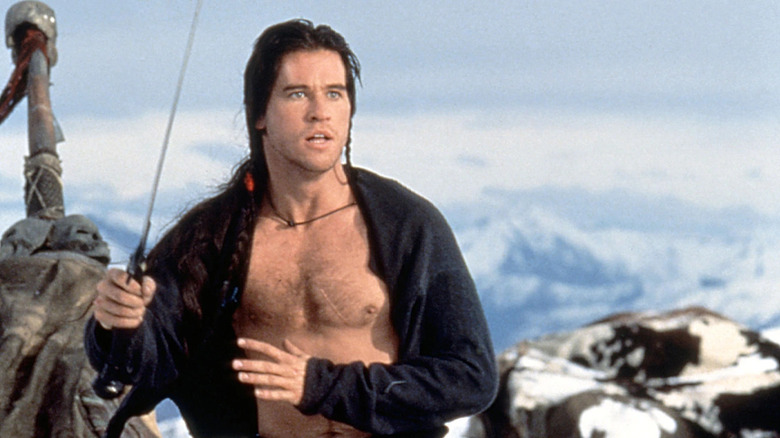
Val Kilmer Not Returning For The New Willow Series Was Never An Option

by Cameron Roy Hall

Disney+ is reviving "Willow," another '80s nostalgia flick, from its peaceful resting place in the Walmart five dollar DVD bin (do not mourn, all stories find their way to the blessed tub in the electronics section). Its new life will take the form of an episodic adventure in the same fashion that both Marvel and "Star Wars" found a second, serialized wind. 

But let's rewind for a minute because there are adults in their 30s younger than the movie in question. "Willow" is a dark fantasy that follows the titular Willow (Warwick Davis), an aspiring sorcerer, as he sets out to find a lost child a home. Along the way, he becomes embroiled in a mighty war and what can only be described as a Tolkien-esque reinterpretation of the story of Moses -- the origin bits with the child murder, not the plagues.

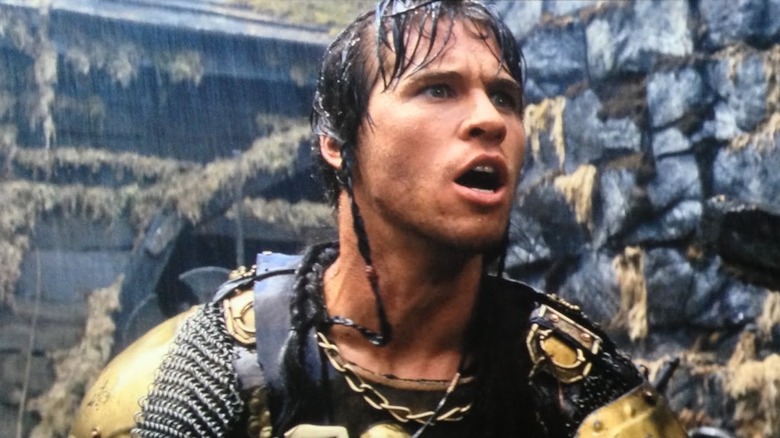
Fortunately for our protagonist, he's not alone! Amongst many others, Willow is joined on his arduous trek by Madmartigan (Val Kilmer), a copyright safe Han Solo. Yeah, George Lucas, who created both "Star Wars" and "Willow," didn't really branch out with that particular character but, hey, if it ain't broke, repeat it a thousand times until the world drowns in charmingly lawless men. Regardless of originality, Madmartigan is as much "Willow" as Willow is "Willow" and we're going to run with the assumption that everyone understood that. 

Let's fast forward to the present, where Davis is now a man in his 50s and Kilmer is not only a man in his 60s, but also a man forever changed by a long battle with throat cancer. With that in mind, how does the "Willow" series expect to recapture the old magic? Would Kilmer's return be practical, or even possible? 

Willow Was Crafted To Protect And Utilize Kilmer

In November 2022, in the days leading up to the release of "Willow" (the series shares its name with the original film), Vanity Fair released an explorative piece that chronicles the journey Jonathan Kasdan underwent to bring his favorite childhood film back for another epic story. Kasdan reveals that Kilmer's condition was immediately taken into consideration once the project gathered enough steam to take form. Specifically, he said, "I approached Val the moment there was any momentum around this. I told him instantly that I wanted him to be a part of the story. He really wanted to be, and he was determined to be. And like a lot of things that happened, COVID made him flying to Wales in that moment very hard."

But, even then, writing Madmartigan out of the script was out of the question. Kasdan continued, saying, "it seemed too sad to all of us, and frankly not right for the story we were telling, that Madmartigan was dead. And as a result, he is not in this world. He comes back by the end of the season in as meaningful a way as we felt we could, while leaving the door open to continue to build it out." 

The story of "Willow" the series was molded to protect both Kilmer's health and interests, as well as the interests of the narrative Kasdan desired to write. It's a compromise, certainly (that lead to the creation of a role for Christian Slater), but maintaining important connections will never be without complications, and there was simply no return for "Willow" without Madmartigan. 

Read this next: Every Main Character In Lord Of The Rings: The Rings Of Power, Ranked Worst To Best

The post Val Kilmer Not Returning for the New Willow Series was Never an Option appeared first on /Film.

22 Nov 01:41

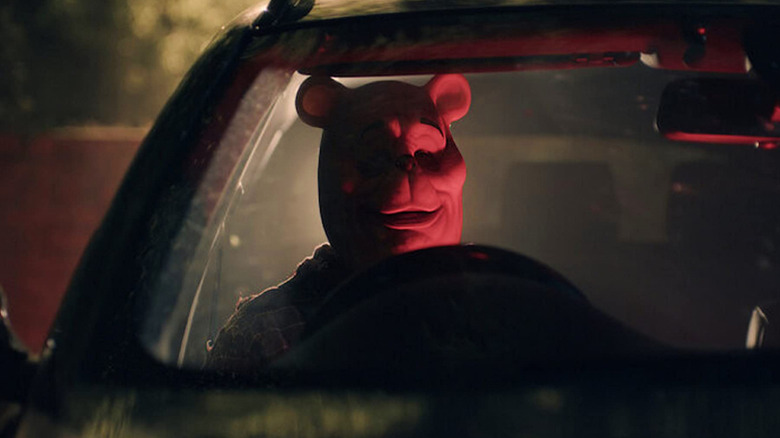
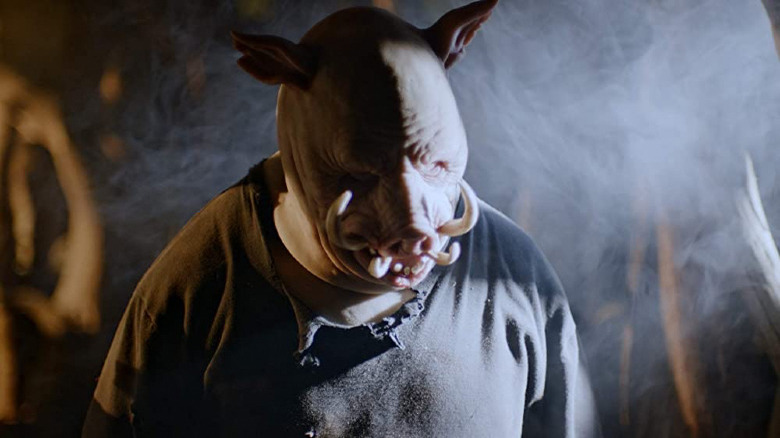
How Winnie The Pooh: Blood And Honey Turned Pooh And Piglet Into Killers

by Sandy Schaefer

When author A. A. Milne and illustrator E. H. Shepard created their 1926 children's book "Winnie-the-Pooh," one assumes it never crossed their minds that the titular character and his neighbors in the Hundred Acre Wood would be re-imagined as sadistic killers nearly 100 years later.

Inspired by the real-life teddy bear and other toy animals owned by A.A. Milne's son Christopher Robin Milne, the "Winnie the Pooh" franchise was synonymous with wholesome family entertainment up until 2022. Spanning books, stage plays, radio shows, films, and TV series both animated and live-action, "Winnie the Pooh" centers on the daily activities of the titular honey-loving bear. A naive yet gentle creature, Pooh spends most of his time learning valuable life lessons while getting in and out of trouble with his friends. Their ranks include the plucky Piglet, anxious Rabbit, downbeat Eeyore, boisterous Tigger, and their sole human companion: An ever-patient, soft-spoken boy by the name of Christopher Robin.

Outside of A.A. Milne's original books, most people likely associate "Winnie the Pooh" first and foremost with the many TV shows, shorts, and feature films Disney has made since it gained the rights to the property in 1961. Most of these projects have taken on the form of pleasantly-colored animated works full of cheerful songs and whimsical merriment, save for one-off moments of spooky strangeness like the "Heffalumps and Woozles" musical number from the 1977 movie "The Many Adventures of Winnie the Pooh." Compared to the upcoming slasher film "Winnie the Pooh: Blood and Honey," however, that infamously surreal tune is as harmless and soothing as Pooh napping against a tree on a sleepy summer afternoon.

Christopher Robin Goes To College

"Winnie the Pooh: Blood and Honey" was announced in early 2022, shortly after A. A. Milne and E. H. Shepard's original novel entered the public domain at the start of the year. While the Mouse House still retains the exclusive rights to its specific version of Winnie the Pooh and his friends, "Blood and Honey" writer/director Rhys Frake-Waterfield and production company Jagged Edge Productions are free to revamp the characters as they deem fit. And how have they chosen to do so?

"Blood and Honey" sees a grown-up Christopher Robin (played by Nikolai Leon) heading off to college in a plot that, at first, seems like it was lifted right out of "Toy Story 3." But where that film saw its characters undergo a touching, poignant emotional journey, Waterfield's horror movie has Pooh and Piglet "going on a rampage." The filmmaker explained the logic behind this story in a May 2022 interview with Variety, stating:

"Christopher Robin is pulled away from them, and he's not [given] them food, it's made Pooh and Piglet's life quite difficult. Because they've had to fend for themselves so much, they've essentially become feral. So they've gone back to their animal roots. They're no longer tame: they're like a vicious bear and pig who want to go around and try and find prey."

Waterfield shot "Blood and Honey" in 10 days near Ashdown Forest, itself the real-life inspiration for the Hundred Acre Wood. Tonally, of course, the movie couldn't be further removed from A.A. Milne's original vision, with trailers and images showing a decidedly un-cuddly iteration of Pooh and Piglet attacking people in hot tubs and slaying them with cars. There's even a shot of Eeyore's tombstone, implying that the gloomy donkey was devoured by his pals at some point.

A Balance Of Horror And Comedy

If "Winnie the Pooh: Blood and Honey" sounds as dour as Rabbit on a blustery day, Rhys Frake-Waterfield assured Variety that the movie has a sense of humor about itself. "When you try and do a film like this, and it's a really wacky concept, it's very easy to go down a route where nothing is scary and it's just really ridiculous and really, like, stupid," he noted. "And we wanted to go between the two."

There are, in fact, some legally-imposed limits to the film's depravity. Characters like Tigger are still under copyright and could not be included in "Blood and Honey" -- in case anyone was afraid the movie would feature your favorite springy feline bouncing someone to death à la the notorious pogo stick kill in "Leprechaun." Pooh will also be swapping out his famous red top for a lumberjack shirt to better set him apart from the Disney version, much like Piglet will be dressed all in black. "No one is going to mistake this [for Disney]," Waterfield added. "When you see the cover for this and you see the trailers and the stills and all that, there's no way anyone is going to think this is a child's version of it."

"Winnie the Pooh: Blood and Honey" is scheduled to open in theaters on February 15, 2023. Will anyone actually have a strong opinion about the film once the initial shock of seeing their childhood faves behaving like Michael Myers and Jason Vorhees wears off? Even the Silly Old Bear himself could probably tell you the answer to that one.

Read this next: Horror Movies That Make Us Root For The Villain

The post How Winnie the Pooh: Blood and Honey Turned Pooh and Piglet Into Killers appeared first on /Film.

22 Nov 01:11

Evil West Review – Ungodly Hand

by Kai Powell

Evil West

Flying Wild Hog is a developer that I have a very hard time siloing into one genre that they're known for. From Shadow Warrior to Trek to Yomi, there's a diverse range of action titles that each bring something new to the table. With Evil West's take on the Weird West, this hours-long journey across the American Frontier is wrought with vampire hunting and a stylish combat system that fits right at home with Shinji Mikami and his work with Capcom Production Studio 4.

The time and setting of Evil West are both ripe for a deep dive into mythology and the supernatural. Based around the end of the 19th century when America was still recovering from wars and skirmishes (both in the literal sense and that of the ongoing fight between humans and vampires) and technology was progressing beyond the steam engine at a rapid rate. Much of the iconic imagery of Evil West is centered around the aesthetics of your typical Western town and saloon, often with a worn down and broken exterior hiding something supernatural beneath the surface. Even the main base of operations for Jesse Rentier and his team after his home burns down is hidden within the basement of a saloon, locked away behind a giant barrel-turned-vault door. Take the Weird West of the Deadlands role-playing system, replace Ghost Rock with electricity, and you'll have a similar invention to the worldbuilding of Evil West.

As the majority of what embodies Evil West's cadre of occultic foes exists of vampires, werewolves, and grotesque abominations of all shapes and sizes, it only makes sense to give a regular human an edge when it comes to survival. That's where the Rentier Institute comes in, taking the form of a more successful Mad Scientist of Doomtown fame. From the electrically-charged gauntlet emblazoned with the family business across the knuckle duster to a wide variety of guns and tools, everything that Jesse Rentier picks up in his quest to hunt vampires builds right into his survival kit and becomes integral to the combat.

Evil West's combat is the single greatest part of the frontier journey and might even be the sole reason that I would recommend this title. With a forced over-the-shoulder viewpoint, Flying Wild Hog is clearly trying to draw inspiration from Shinji Mikami's fight against the Four Devas. Starting the adventure off with only a pistol and his own right hand, Jesse Rentier's arsenal of demon-slaying tools quickly expands far beyond your typical Western-themed shotgun and long rifle to electrically charged crucifixes, grappling hooks, flamethrowers and more. Each and every tool that Jesse picks up is strapped to his back like some oversized travel souvenir and, more importantly, becomes an integral part of his fighting style.

Perhaps the easiest way to pitch Evil West to someone that's already game-savvy is 'Doom Eternal with more punching'. There's a delicate dance of death that the player has to approach Evil West with that requires so many tools in the arsenal to work together in tandem. Early on, the flow to Evil West hints at being simplified down to 'use guns for long range and your fists when up close' but even a chapter in, the combat switches up the formula to become a dynamic masterpiece. Despite a limited skill tree that takes far too long to unlock new nodes and abilities, the tools that Jesse wields all feed back into one another and can allow the player to attack relentlessly without stopping.

Evil West's melee system is centered around using the four shoulder buttons to punch and guard, and while it takes some getting used to the control system that Flying Wild Hog has come up with, it does make sense as the player gains access to more tools. From blocking and a contextual hook to pull/dash into enemies on L1 to a light/heavy punch depending on how long the player holds R1 to a different selection of guns, whether the player taps R2 to fan the hammer and unload an entire revolver load of bullets into an enemy for a midair juggle to the combination of L2 and R2 to aim and then fire his rifle, there's a lot of abilities to constantly swap and string together in combos that your fingers might cramp up even a couple of chapters into Evil West.

Much of Jesse's arsenal is built off of cooldowns. Each brings a tool that can change how Jesse approaches a certain enemy. Pesky oversized flying bugs might be a pain to try and snipe with your rifle as they zip around the arena, but a single yank of Jesse's electrified grappling hook will reel them in and finish them off with an automatic punch. For those giant enemy attacks that glow orange and indicate that they're unblockable, that's nothing a solid kick forward can't solve to knock the enemy off balance (and the shotgun with its additional perks to deal double damage against attacking enemies can be even more effective). Across Evil West, there's nothing that I would say is a useless addition to the arsenal, as even making a choice between rifle and crossbow for your medium-ranged attack brings a dynamic choice to the flow of combat. Perhaps the only thing missing from Evil West is a scoring system to show how stylish your fighting style becomes.

The supernaturally-affected Western frontier towns all feed into that setting of modern-day mythology and unspoken horrors that corrupt and overtake the landscape if not held at bay. There's a wide variety of locales to explore, sometimes even if they just feel like Jesse's being sent off to some random corner of America to track down a specific person or crucial document before returning back to the base of operations and venturing off to a completely unrelated town or sawmill. Many of these locales are built around a single, often blinding color pallet. The first time players guide Jesse Rentier by the hand is through a canyon stained with the dusk sunset with a permanent shade of orange that muddies the views, Similarly, expect overrun swamps and jungle areas to be excessively green to the point where it can be hard to make out the landscape at times.

Much of the path through each level in Evil West is a linear bit of exploration with some light puzzle-solving or platform pushing to reach the next objective. Any time there's the possibility of a branching path, take it. These almost always lead towards gold to invest in gear upgrades, cosmetic enhancements, unique skill unlocks, and very occasionally an overcharge health pickup that gives Jesse a shield lasting his entire health bar, which typically means there's a boss fight coming up soon. Glowing chains and posts often indicate a one-way forward to reach the next destination, but players can go back and replay previous levels just by jumping into the Lore menu, so nothing left behind is truly lost or missable.

If it weren't for Flying Wild Hog's fantastic combat in Evil West, I could have chalked this up to being a mediocre tale of vampire hunting at the mercy of the US Government through various flavors of the American Frontier. However, that sentiment is gracefully saved with a solid right hook and a shotgun in the left hand. Even if vampires, werewolves, and Teslapunk weaponry aren't your thing, give this ungodly hand a fair shake and see what's so special about the Rentiers after all.

Reviewed on PS5 (code provided by the publisher).

The post Evil West Review – Ungodly Hand by Kai Powell appeared first on Wccftech.

22 Nov 01:01

iCloud For Windows Users Report of Corrupted Videos, Photos From Strangers

by BeauHD
There are ongoing issues apparently affecting the iCloud for Windows app, particularly in regards to photo and video storage. According to a number of online complaints from users, iCloud for Windows is corrupting certain videos. There are also reports of a more worrying problem: photos from strangers popping up in people's iCloud Photo library. 9to5Mac reports: MacRumors rounded up some of these complaints via complaints posted to their forums. According to an affected user, videos taken with the iPhone 13 Pro and iPhone 14 Pro models aren't being properly synced with iCloud for Windows. When certain videos are recorded and the synced with iCloud for Windows, they then turn "black with scan lines, rendering the videos unwatchable." While that problem is bad enough, some other users say they are seeing photos and even videos they do not recognize in their photo libraries. The speculation here is that these photos or videos could be from other people's iCloud libraries, though nothing has been confirmed yet. [...] These problems appear to be affecting the dedicated iCloud for Windows app itself, not the recently-launched iCloud Photos integration in Windows 11. The culprit seems to be the handoff of certain file types between the iPhone and iCloud rendering on Windows. The problem certainly appears to be a server-side issue on Apple's side, rather than something on Microsoft's side.

Read more of this story at Slashdot.

22 Nov 01:00

Amazon Alexa Is a 'Colossal Failure,' On Pace To Lose $10 Billion This Year

by BeauHD
An anonymous reader quotes a report from Ars Technica: Amazon is going through the biggest layoffs in the company's history right now, with a plan to eliminate some 10,000 jobs. One of the areas hit hardest is the Amazon Alexa voice assistant unit, which is apparently falling out of favor at the e-commerce giant. That's according to a report from Business Insider, which details "the swift downfall of the voice assistant and Amazon's larger hardware division." Alexa has been around for 10 years and has been a trailblazing voice assistant that was copied quite a bit by Google and Apple. Alexa never managed to create an ongoing revenue stream, though, so Alexa doesn't really make any money. The Alexa division is part of the "Worldwide Digital" group along with Amazon Prime video, and Business Insider says that division lost $3 billion in just the first quarter of 2022, with "the vast majority" of the losses blamed on Alexa. That is apparently double the losses of any other division, and the report says the hardware team is on pace to lose $10 billion this year. It sounds like Amazon is tired of burning through all that cash. The BI report spoke with "a dozen current and former employees on the company's hardware team," who described "a division in crisis." Just about every plan to monetize Alexa has failed, with one former employee calling Alexa "a colossal failure of imagination," and "a wasted opportunity." This month's layoffs are the end result of years of trying to turn things around. Alexa was given a huge runway at the company, back when it was reportedly the "pet project" of former CEO Jeff Bezos. An all-hands crisis meeting took place in 2019 to try to turn the monetization problem around, but that was fruitless. By late 2019, Alexa saw a hiring freeze, and Bezos started to lose interest in the project around 2020. Of course, Amazon now has an entirely new CEO, Andy Jassy, who apparently isn't as interested in protecting Alexa. The report says that while Alexa's Echo line is among the "best-selling items on Amazon, most of the devices sold at cost." One internal document described the business model by saying, "We want to make money when people use our devices, not when they buy our devices." That plan never really materialized, though. It's not like Alexa plays ad breaks after you use it, so the hope was that people would buy things on Amazon via their voice. Not many people want to trust an AI with spending their money or buying an item without seeing a picture or reading reviews. The report says that by year four of the Alexa experiment, "Alexa was getting a billion interactions a week, but most of those conversations were trivial commands to play music or ask about the weather." Those questions aren't monetizable. Amazon also tried to partner with companies for Alexa skills, so a voice command could buy a Domino's pizza or call an Uber, and Amazon could get a kickback. The report says: "By 2020, the team stopped posting sales targets because of the lack of use." The team also tried to paint Alexa as a halo product with users who are more likely to spend at Amazon, even if they aren't shopping by voice, but studies of that theory found that the "financial contribution" of those users "often fell short of expectations." In a public note to employees, Jassy said the company still has "conviction in pursuing" Alexa, but that's after making huge cuts to the Alexa team. One employee told Business Insider that currently, "There's no clear directive for devices" in the future, and that since the hardware isn't profitable, there's no clear incentive to keep iterating on popular products. That lack of direction led to the internally controversial $1,000 Astro robot, which is basically an Amazon Alexa on wheels. Business Insider's tracking now puts Alexa in third place in the US voice-assistant wars, with the Google Assistant at 81.5 million users, Apple's Siri at 77.6 million, and Alexa at 71.6 million.

Read more of this story at Slashdot.

22 Nov 01:00

What It Was Like To Film The Mist's Legendarily Dark Ending [Exclusive]

by Michael Boyle

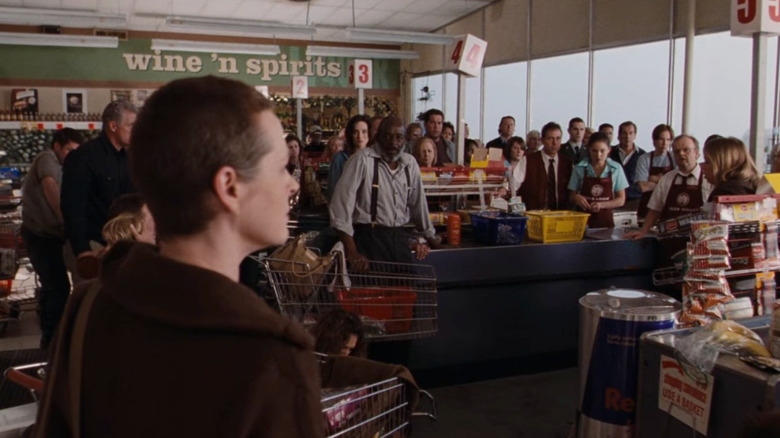
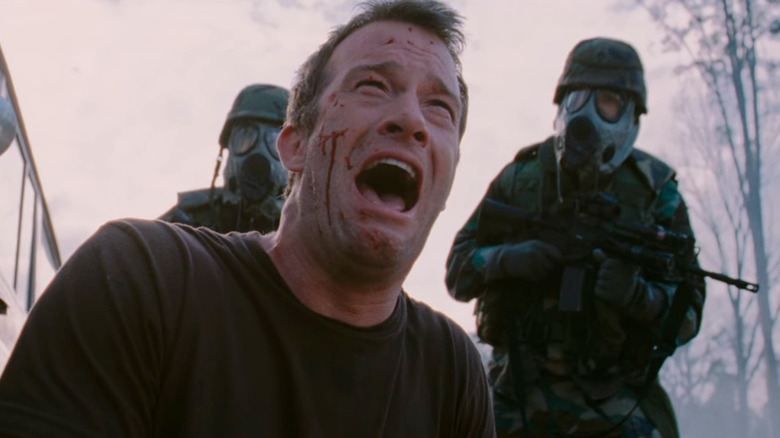
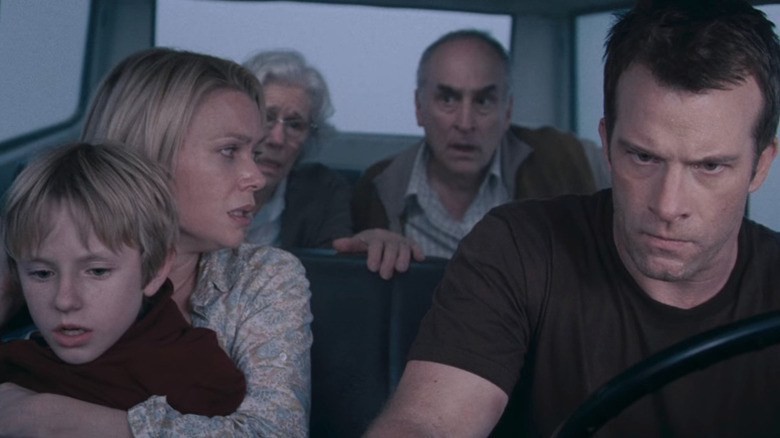
It's been 15 years since the movie premiered, and people are still talking about that ending to "The Mist." It's an ending that almost seems happy on the surface: The storm turns out to not be nearly as all-encompassing as it originally appeared, and the military is now swooping in to save the day. David Drayton (Thomas Jane) will not be eaten by Lovecraftian monsters after all, and the world will presumably go back to normal pretty soon. The only problem is that he just shot his child and the other survivors in his car. For the rest of his life, David will have to deal with the fact that his eight-year-old son would've been perfectly fine if he'd just waited a few more minutes. 

It's a gut punch of an ending — one that shocks you to the core the first time around and makes rewatches nearly unbearable. As you watch that final scene again, you can't help but hope in vain that maybe this time David will wait a little bit longer before giving up hope altogether, but he never does. It's a frustrating ending, but an undeniably powerful one. /Film's own Eric Vespe got to talk to the cast and crew of "The Mist" about how they went about filming such a devastating, climactic scene. Every quote in this article comes from Vespe's wonderful, in-depth reporting on the movie's production.

The Car Scene
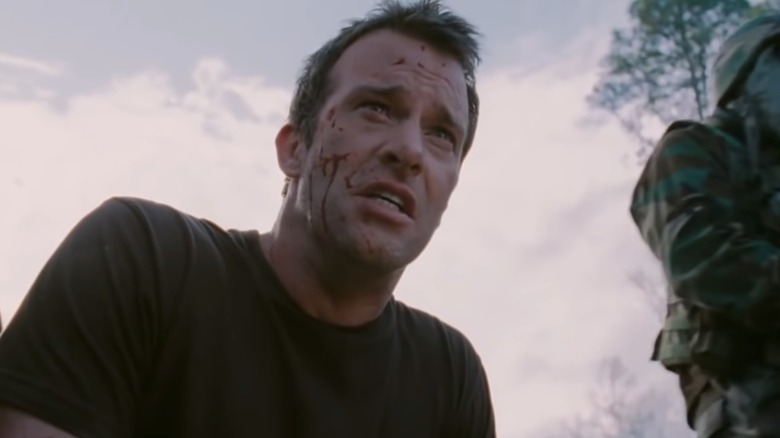
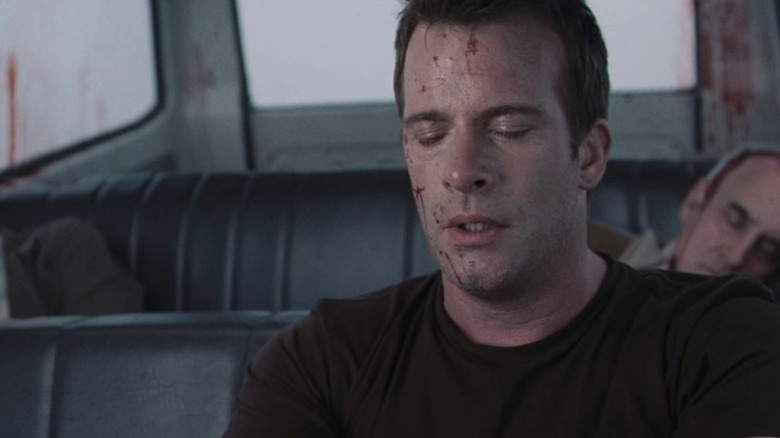
For Thomas Jane, his performance in those final few minutes was easily the most important of the film. He had to make it believable that he as David had sunk to the point where he was willing to kill the others to protect them from a worse fate, and then he had to capture the unimaginable level of regret his character feels when the mist clears up. It was an incredibly dark place Jane had to get to, and it took a lot out of him off-camera. "That was a day where I told the first AD that if he needed to find me, I'd be out in the woods," Jane said. "I spent the entire day by myself sitting on a log, waiting in-between takes."

The ending scene was split into two main set-ups: Inside the car and outside of it. The interior scene, where David had to make the choice to kill everyone, was actually the easier one for Jane. "We had three other actors and the pressure wasn't all on me and I had other people to feed off of," he explained. One of the toughest parts was filming the moment where the son, Billy (Nathan Gamble), woke up as his father was about to shoot him. In the movie, all we see is the son's reaction as he starts to realize what's about to happen. The deaths themselves happen off-screen.

"We shot a couple of takes with Billy waking up and the gun wasn't there, just as a practice and a warm-up," explained cinematographer Rohn Schmidt. "I think this was [director Frank Darabont's] idea, and then we gave the gun to Thomas. So that reaction that you get with the gun right there aiming at him, you could never have acted that. That really is surprise on his part there."

Pointing A Prop Gun At An Eight-Year-Old
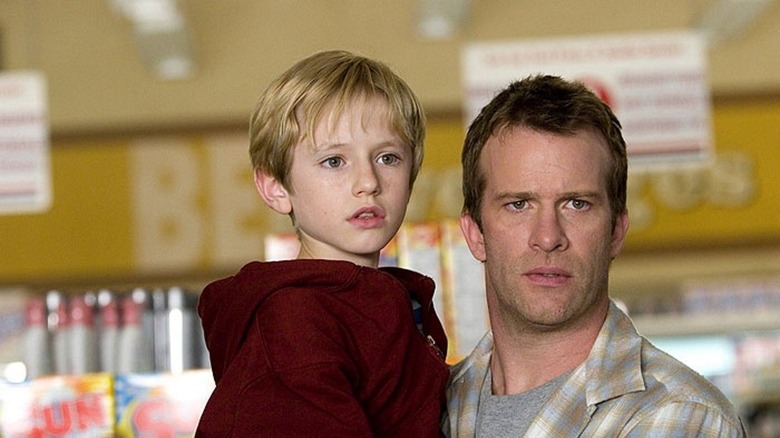
It's always an extra challenge to direct a child actor in an adult horror film, and the decision to surprise young Nathan Gamble with the gun pointed at him did not seem to be made lightly. Ron Schmidt explained that Gamble's parents were "on board with that idea," and knew about it ahead of time. But for Gamble, according to Schmidt, his reaction on set was "the most absolutely true and pure reaction ... I feel like his eyes dilate uncontrollably."

For Gamble, the scene was unique in how bare-bones it was. "Obviously everyone in the car, [director Frank Darabont], the camera guy, maybe one or two other people there when we were rehearsing it," he said. "I remember when we were rehearsing this particular thing, when Frank asked me to wake up, 'Slowly wake up and look at your dad and look scared, look shocked.' Tom would be holding the gun at me on the other side of the camera." It's a different approach than some of the other King adaptations have taken with their child actors; whereas Danny Lloyd didn't even know he was filming a horror movie while on-set for "The Shining," Gamble seemed to be fully aware of how dark the story of "The Mist" was getting.

Gamble recalls how shaken Thomas Jane was when the scene ended: "When they yelled 'cut,' Tom laughed afterwards because he couldn't believe how ridiculous his life was at the moment, 'I'm holding a fake gun on a child right now,'" Gamble said. "I can see his brain working. It was just like, 'Wow, in all my years, I would've never guessed that this scene I would ever shoot.'"

As Little Takes As Possible
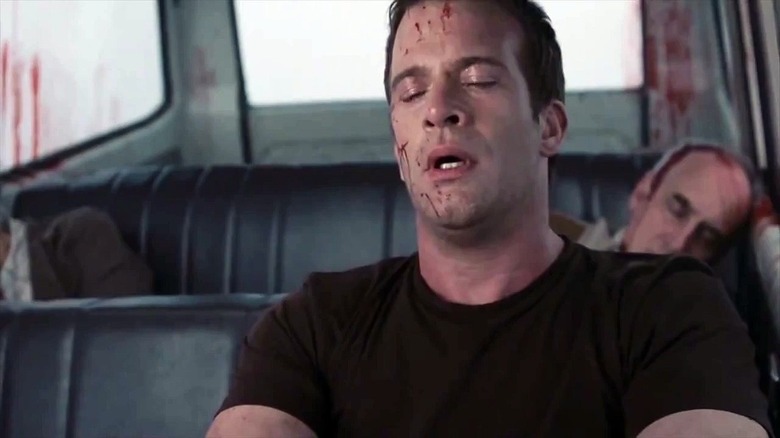
It's the moments immediately after the shooting, when David is screaming and crying in his car, that were truly difficult for the cast and crew. Even Gamble, who was no longer on set for this part, could still hear him screaming through the walls. "I had the school room where I did school on the other side," he said, "and I could hear the screaming from him and it was pretty sad."

For producer Denise Huth, the scene was torturous. "There's something about the visual of seeing him with the gun in his mouth and he just keeps pulling the trigger and praying for a bullet that's not there. It's crushing. It's the lowest moment. And he really committed to it." They didn't take many takes of the scene due to how draining it was to film them. Sometimes, when the scene requires so much of the actor and the actor's fully embracing it, once or twice is enough. 

For the final gut punch, the reveal of the mist parting and the military coming in, the crew moved to an exterior location. The beginning of the scene needed to be shot early in the morning, and because of all the mist, they had to hope the wind would be cooperative. As was the case for the rest of the movie, dealing with the mist was a total hassle, but they made it through. 

Driving A Tank Through The Fog
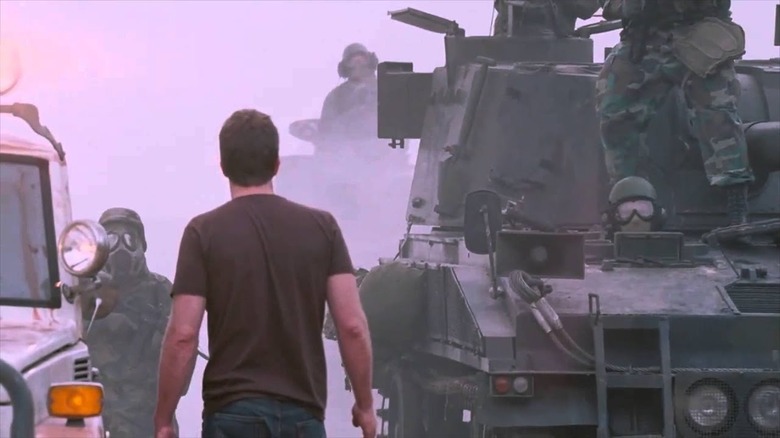
As Schmidt put it, "After the first take, the tank driver said, 'Well, I can't see where I'm driving.'" The lack of visibility wasn't great from a safety perspective, especially since he was driving 25 miles an hour in a tank directly at the cast and crew. "What we ended up doing was lining him up where it was safe and then him driving straight back and not touching the steering at all ... he just had to travel forward on faith."

With the tank, the fog, the cameras, and all the soldiers and other minor cast members in the scene, it was a lot of pressure for everyone involved. It wasn't just that Thomas Jane had to do everything perfectly; everyone else needed to be perfect as well. Director Frank Darabont also made the choice to include a crane shot, which is one of the most difficult shots to pull off. "There's so many moving parts," Jane said. "You have to be on, but so everybody else has to be on, which means that you have to be on more than once." 

In the end, the shot that made it into the final cut wasn't even Jane's best performance. According to Schmidt, they went with the take where they "got lucky with the wind," the one where everything else in the shot turned out great as well.

Stephen King-Approved
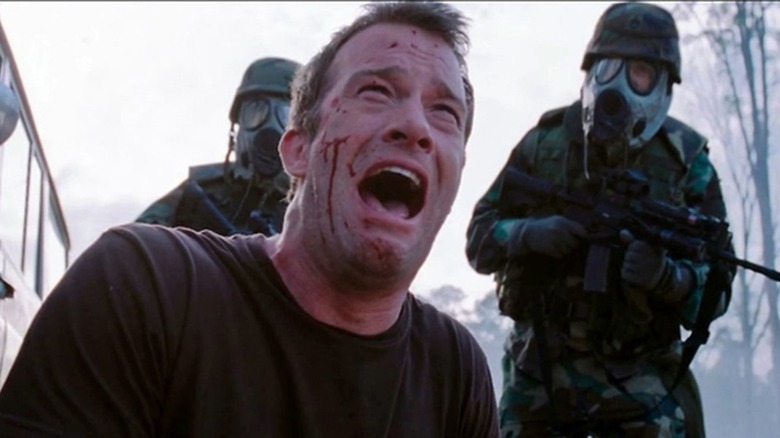
It's easy to underappreciate just how much work went into this final scene, because it's the sheer weight of the plot twist that seems to stick out to me the most. Even if Jane wasn't giving the performance of his career in that final scene, the sheer enormity of what's being revealed to us is so devastating that it might've even worked with a bad actor. The way the movie makes it so easy for us to imagine how we'd feel in the same situation is what makes the ending so haunting.

Even when only the script was available, the twist was good enough for King to love and support it. Back before the movie was released in theaters, King told fans that the movie has "the most shocking ending ever and there should be a law passed stating that anybody who reveals the last five minutes of this film should be hung from their neck until dead."

But it's that extra effort made by the cast and crew — the standout performances, the inspired direction — that raises "The Mist" from a strong film to a modern classic. "[Jane's] performance was so strong," producer Denise Huth said. "He was that man who had been completely destroyed by the events of the last couple of days. Nothing was going to put him back together." For the crew, just as much as the viewers, "The Mist" has an ending that will stick with you forever.

Read this next: The Saddest Character Deaths In Horror History

The post What It Was Like to Film The Mist's Legendarily Dark Ending [Exclusive] appeared first on /Film.
22 Nov 00:59

Thomas Jane's The Mist Character Making Every Single Wrong Choice Was Entirely By Design [Exclusive]

by Matt Rainis

Stephen King is one of the most prolific and efficient writers of our time, seemingly putting out new books at a pace faster than they print new editions of the New York Times. And when an author of King's stature puts out quality books at a speed that would make George R.R. Martin blush, movie adaptations are bound to come. Movies like "The Shining," "Misery," and "The Shawshank Redemption" all originated from novels by King, though their adaptations have gained ample acclaim in their own rights.

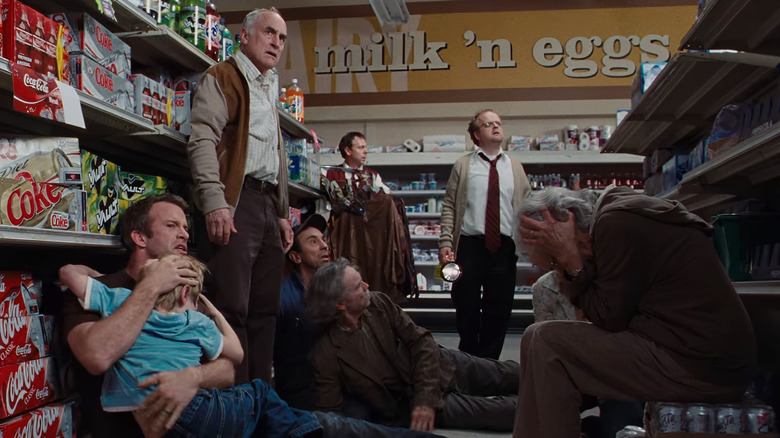
Among the most beloved of the films based on King's writing is "The Mist," a 2007 horror film directed by Frank Darabont, of "The Shawshank Redemption" and "The Walking Dead" fame. The film focuses on a group of ordinary people who become trapped in a grocery store when a mysterious mist envelops the whole town. The people then spend the movie grappling with their extraordinary circumstances and the horrible beasts that reside within the mist.

The movie's ensemble cast excels, creating an environment reminiscent of a more devastating "Lord of the Flies." The film's main character, portrayed by Thomas Jane, spends the movie protecting his 8-year-old son and attempting to navigate the increasingly tribalistic dynamic of the people trapped in the store. Jane's character is a classic everyman, an artist, and a father thrust into extremely strange circumstances, forced to act as a hero in a time of supernatural danger. What sets "The Mist" apart, however, is how often it seems to punch Jane's character right in the face, metaphorically speaking. Whereas other, similar, movies would have the hero doing the right thing and achieving success, Jane's character was more of a hapless Charlie Brown figure, with all of his decisions immediately coming back to bite him — a decision Darabont made intentionally.

Eroding Morality

/Film now celebrates the 15th anniversary of "The Mist" with an oral history of the film by Eric Vespe, where we were able to hear from Frank Darabont himself about the fruitless nature of the film's protagonist's efforts. According to him, it was a choice he made to be provocative and run against the nature of a normal movie:

"When I was writing the script, I thought, this guy is making every right decision for every right reason, and every decision he makes turns into a disastrous choice and I thought, this is really interesting. This is really provocative because it runs counter to what we expect from a movie. In most movies. You see your hero, even if he's encountering obstacles or barriers or things kind of go bad, but ultimately they keep making the right decisions and it winds up with the right choices. This is the opposite. And I thought this is a radical departure from how most movies work and how most movie heroes work. In a sense, it is a mirror to reality because sometimes with our best intentions and our best actions, we get screwed anyway because the world is such a messed up place."

Darabont's filmography has seen him deal with issues of the effectiveness of morality before. While something like "The Shawshank Redemption" held a more optimistic view of human nature, "The Walking Dead" was an entire series predicated on the idea that, in extraordinary apocalyptic circumstances, traditional morality will be the first thing to go out the window. "The Mist," which he directed years before he took the helm of the AMC series' launch, acts as a pressurized version of the post-civilized setting of "The Walking Dead," with the enclosed setting of the grocery store only further exacerbating the deterioration of the people within.

Facing Extremism

Even Frank Darabont admitted, in the oral history, that the change in tone between "The Shawshank Redemption" and "The Mist" was partially due to his personal dissent into cynicism. "What you had actually was an older filmmaker who was just a little more pissed off than the younger filmmaker who was so full of optimism and hope that he made 'Shawshank Redemption,'" said the director. "Now I'm just kind of a pissed-off older guy, and that's what I wanted to express."

"The Mist" came out in 2007, near the end of the George W. Bush administration. The Iraq War was at its deadliest point, and the president's approval ratings were dropping rapidly. As political polarization within the American public became more and more prominent, Darabont wrote "The Mist" partially as a criticism of what he saw as the increasing prominence of radical voices in society.

"Most of us are in this reasonable mass middle of things, but at the edges on both sides, you have this incredibly radicalized, extremist element that is driving the conversation, and it's no longer even a conversation. Now it's a shouting match. Now it's a duel to the death. The extremists are driving the bus and the rest of us have no choice but to ride along and scream in horror as things get more and more crazy and extreme and that was my everyman in that movie. That was David Drayton. That was the character Tom Jane played."

While Darabont's take is a bit too "both sides are equally bad" for my taste, it's no question that, in extreme circumstances, those who offer extreme solutions tend to end up in charge. These are the issues that Jane's character faces during the movie, a man trying to maintain reasonableness in an unreasonable scenario.

A Harsh Conclusion

Thomas Jane's character, David Drayton, spent the movie finding himself as the lone voice of reason among increasing amounts of mob mentality, violence, and panic. Whether it was him dealing with the increasingly violent religious sect that emerged among the survivors, who began sacrificing people to appease the monsters or the people who straight up refused to believe that anything had gone wrong, eventually walking willingly into the mist and meeting their doom. Drayton tries his best to act reasonably among such escalating foolishness, but at every turn, his decisions go wrong and cost people their lives.

This pattern of futility comes to a head during the movie's shocking and impactful ending sequence. The ending, which differs from the ending of Stephen King's original novel, features Drayton and a few others finally having escaped from the grocery store, finding shelter in a car. With only four bullets left in his gun, the group accepts their impending fates, and they decide to die by suicide rather than be victims of the horrors around them. As the fifth man with four bullets, Drayton kills the four other survivors, including his young son, and then awaits his fate. Not long after he makes this agonizing choice, the army arrives on the scene, and it appears the day has been saved, but not before he made an unnecessary sacrifice.

The divisive ending has been praised by King himself. It's the ultimate example of Drayton making what appears to be a noble choice, putting others out of his misery and sacrificing himself, only to have the rug swept from under him, realizing they were mere minutes away from rescue. It's a final gut punch that cements the theme of the fruitlessness of rationality in crisis.

Futile Heroism

15 years later, Frank Darabont is still very proud of the choice he made with the movie's ending. To him, this final horrible twist of the knife was necessary to emphasize his message against what he saw as rising extremism in society, which he spoke about in the oral history:

"The movie worked as a warning shot, as a flare sent up from a concerned storyteller. And I love movies that do that. I love movies that can shake us up a little bit. So that dynamic of [David Drayton] making all the right decisions, but it's going to go in the sh***er was a very conscious thought in my head."

Whether or not you completely agree with Darabont's condemnation of political polarization, the fate of David Drayton can still resonate with anybody who's envisioned themselves being forced to make big decisions in a crisis. Most of us would like to believe that, like Drayton, we would keep our heads about us and make morally correct choices in these apocalyptic scenarios. We want to think that we could muster up the courage required to do what Drayton does. What Darabont argues is not that people aren't capable of maintaining their morals in these scenarios, but that even when someone does so, there's still a massive likelihood that everything goes wrong regardless of your choices. Even those that can act like individual heroes are still victims of the tidal whims of the masses and the cruel randomness of tragedy.

Read this next: The 31 Scariest Movie Scenes Ever

The post Thomas Jane's The Mist Character Making Every Single Wrong Choice Was Entirely by Design [Exclusive] appeared first on /Film.
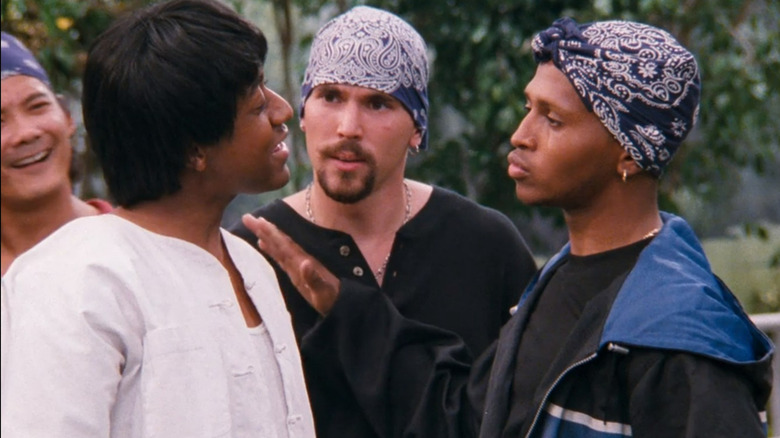
21 Nov 17:22

Review: GLASS ONION - A KNIVES OUT MYSTERY, Daniel Craig's Super-Sleuth Takes on the One Percent (Again)

Over the last several weeks, the cult of personality centered on onetime tech “genius” (and billionaire) Elon Musk suffered a major setback, a self-inflicted wound that threatened to take down one of the largest, most popular social media platforms. Beware, apparently, not the Ides of March, but of tech billionaires promising to “disrupt” new industries and remake the world in their own, narcissistic, egotistical image. Nobody really knows what will happen tomorrow, next week, or next month, but at a minimum, it should serve as an object lesson and confirm the need to reorient ourselves away from the idea that tech billionaires, stable geniuses or not, won’t save us. We have to save ourselves. Unfortunately, that might be an object lesson many will continue to...

[Read the whole post on screenanarchy.com...]

21 Nov 16:01

You Should Add Tofu to Your Meatballs

by Allie Chanthorn Reinmann

Dense meatballs got you down? Despite your attempts at rolling well-mixed yet tender meatballs, do you end up with rubber super balls every time? All that’s about to change, and it starts with the mix. To help encourage a crumbly blend, use tofu.

Read more...