Shared posts

15 May 15:17

Season Your Food Gently With Sea Salt Spray

by Allie Chanthorn Reinmann

Giant salt flakes are the cool kids of food pop culture. It makes sense, they make a great snacking salt, but they’ve managed to siphon away attention from the other, more subtle forms of sodium chloride. You don’t always have to flaunt your flakes. Sometimes big flakes are too aggressive, or a sprinkle of table salt…

Read more...

15 May 15:15

Industrial Cellular Routers at Risk: 11 New Vulnerabilities Expose OT Networks

by info@thehackernews.com (The Hacker News)
Several security vulnerabilities have been disclosed in cloud management platforms associated with three industrial cellular router vendors that could expose operational technology (OT) networks to external attacks. The findings were presented by Israeli industrial cybersecurity firm OTORIO at the Black Hat Asia 2023 conference last week. "Industrial cellular routers and gateways are essential
15 May 00:13

How Off-Grid Solar Power Transforms Remote Villages

by EditorDavid
775 million people around the world didn't have electricity last year, according to the International Energy Agency. But the Associated Press points out that's changing in some of the world's most remote places — thanks to off-grid solar systems. Here's a typical example from the world's fourth most-populous country... Before electricity came to the village a bit less than two years ago, the day ended when the sun went down. Villagers in Laindeha, on the island of Sumba in eastern Indonesia, would set aside the mats they were weaving or coffee they were sorting to sell at the market as the light faded. A few families who could afford them would start noisy generators that rumbled into the night, emitting plumes of smoke. Some people wired lightbulbs to old car batteries, which would quickly die or burn out appliances, as they had no regulator. Children sometimes studied by makeshift oil lamps, but these occasionally burned down homes when knocked over by the wind. That's changed since grassroots social enterprise projects have brought small, individual solar panel systems to Laindeha and villages like it across the island... Around the world, hundreds of millions of people live in communities without regular access to power, and off-grid solar systems like these are bringing limited access to electricity to places like these years before power grids reach them... Indonesia has brought electricity to millions of people in recent years, going from 85% to nearly 97% coverage between 2005 and 2020, according to World Bank data. But there are still more than half a million people in Indonesia living in places the grid doesn't reach. While barriers still remain, experts say off-grid solar programs on the island could be replicated across the vast archipelago nation, bringing renewable energy to remote communities.

Read more of this story at Slashdot.

14 May 15:47

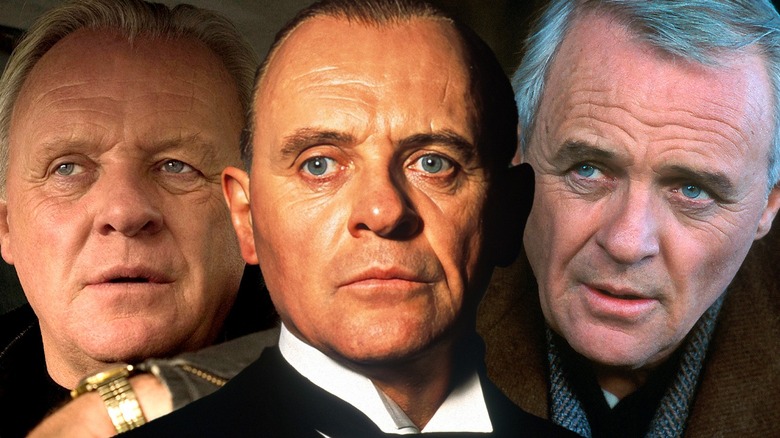
12 Underrated Anthony Hopkins Movies You Need To See

by Rachel Ho

With over 100 acting credits to his name, many of which are bonafide legendary performances, Anthony Hopkins has proven himself time and again as one of the best actors of his generation, and possibly of all time. After graduating from London's famed Royal Academy of Dramatic in 1963, Hopkins began his career on the stage, tackling the bard, as well as classic and modern plays at the Royal Court Theatre and The Old Vic. He also regularly appeared on British television, taking on episodic guest roles in shows like "The Man in Room 17" and "Department S."

In 1968's "The Lion in Winter, " Hopkins had his cinematic breakout role as Richard the Lionheart. Often remembered for the best actress tie between Katharine Hepburn (as Eleanor of Aquitaine) and Barbra Streisand (for "Funny Girl") at the Academy Awards, "The Lion in Winter" saw Hopkins more than hold his own against stalwarts Hepburn and Peter O'Toole. It would be a sign of things to come for the Welsh actor, who has since brought to life some of history and cinema's most enduring characters, including Zorro, C.S. Lewis, John Merrick, and of course, Hannibal Lecter.

Given the number of performances he has delivered across nearly 60 years, it's no surprise that a number of Hopkins' films have been overlooked by audiences and some even under-appreciated by critics. To help fill those gaps, here are 12 underrated Anthony Hopkins movies that you need to see.

Meet Joe Black

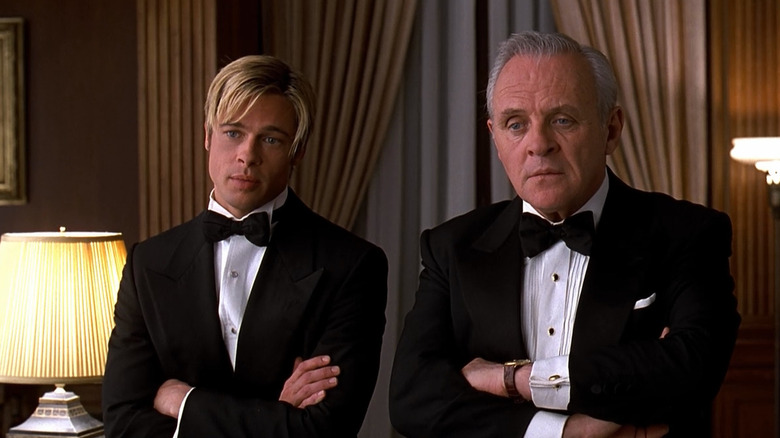
It has always baffled me how much this touching and poignant film was derided by critics when it was released. Directed by Martin Brest, "Meet Joe Black" tells the story of Bill Parrish, a soon-to-be 65-year-old media mogul whose time on Earth is coming to an end. Death appears to Bill in the form of a handsome young man (Brad Pitt), who strikes a deal with Bill after being enamored by Bill's relationship with his daughter, Susan (Claire Forlani). In exchange for more time in this life, Bill will act as Death's guide on Earth.

Sure, there are far too many saccharine moments and the film moves at a snail's pace, but beneath all that languid syrup is a movie rich in thoughtful dialogue about life and our place in the world. The idea that Death painstakingly wants to learn about what makes life worth living is fascinating, and Pitt and Hopkins' performances elevate the script to undeserving heights. "Meet Joe Black" isn't a perfect film by any stretch of the imagination, but its meditation on life, loss, and love warrants a lot more attention and praise than it was given.

The Remains Of The Day

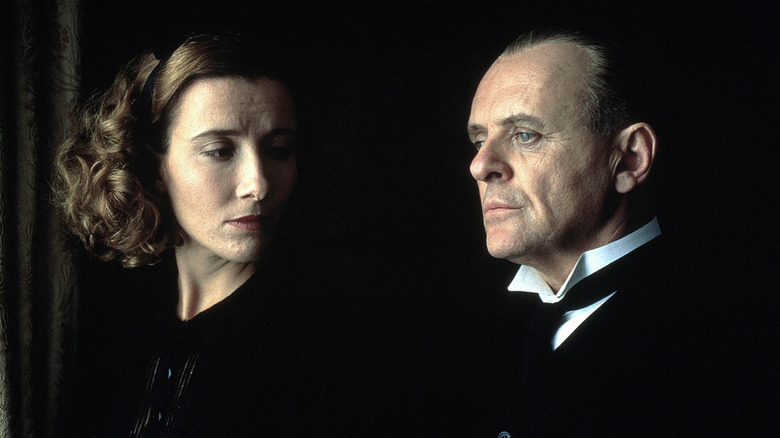
Admittedly, "The Remains of the Day" is an odd choice for a list like this. The James Ivory-directed film was a box office success, nominated for eight Academy Awards (including best picture and best actor for Hopkins), and was named by the British Film Institute as one of the 100 best British films of the 20th century. Its inclusion on the list is simply due to the fact that this film has somehow been lost to time.

"The Remains of the Day" is adapted from Kazuo Ishiguro's impossibly gorgeous novel of the same name, which itself has been well recognized (including winning the Booker Prize in 1989). Perhaps one of the reasons this film has become under-appreciated in the years since its 1993 release is because not much happens across 2 hours. The movie is wildly subtle in its storytelling, mostly existing in Mr. Stevens' (Hopkins) unreliable head -- the butler with a blind devotion to his household to the degree where reality is bent in the name of service. A movie that received its flowers in its day, but whose recognition faded with time, "The Remains of the Day" remains a jewel in Hopkins' crown.

The Edge

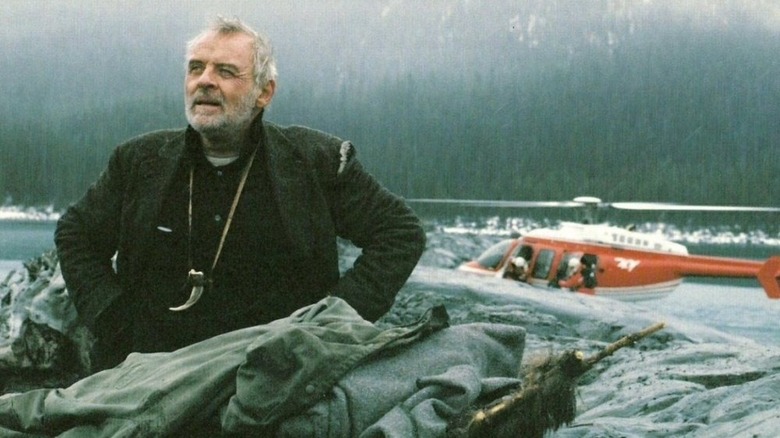
Before Cocaine Bear terrorized campgrounds, Hopkins and Alec Baldwin attempted to outsmart a Kodiak bear after crash-landing in Alaska. A survival thriller, "The Edge" is directed by Lee Tamahori and written by David Mamet, best known for writing "Glengarry Glen Ross." We follow billionaire Charles Morse (Hopkins) and photographer Bob Green (Baldwin), as they face numerous obstacles on their way to reuniting with civilization. Chief among them is a fearsome bear keen on ripping them apart.

"The Edge" offers moments of nerve-racking tension as the elements of the Alaskan wilderness come down on our survivors. What separates the film from others of its ilk, though, is the personal drama and associated revelations that transpire between Charles and Bob. Tamahori and Mamet balance these aspects of the film with a layered nuance, resulting in an action-packed story with a grounded heart. "The Edge" made a minor ripple upon its release, but it's well worth the brawny ride.

The Bounty

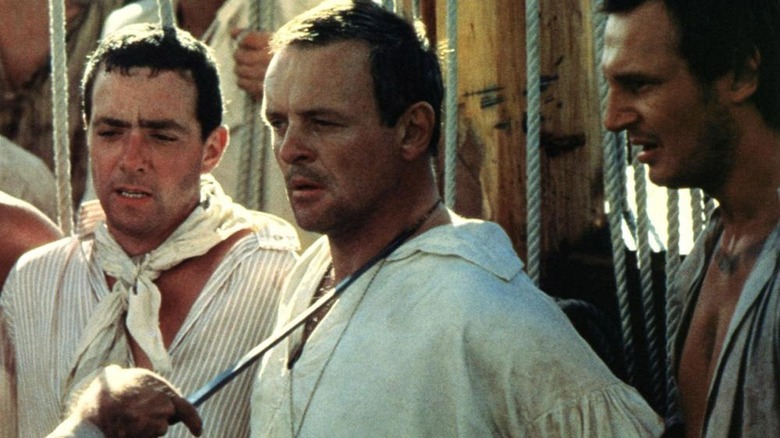
"The Bounty" is a prime example that assembling a cast of the day's best and brightest actors does not a successful movie make. It almost seems impossible today that a historical drama from the 1980s starring Hopkins, Mel Gibson, Laurence Olivier, Daniel Day-Lewis, and Liam Neeson wasn't a draw for audiences (granted, the latter two were just beginning their careers). But alas, while the film earned decent reviews, it simply didn't garner enough interest from ticket buyers -- "The Bounty" was cast out to sea by audiences in 1984, and undeservingly so.

A retelling of the infamous mutiny on the HMS Bounty, "The Bounty" is a film epic in scale, using a fully functional replica of the vessel and shooting locations around the world. An interesting twist lent to "The Bounty" was in Hopkins' portrayal of Lieutenant William Bligh, the ship's commander. Rather than villainizing the officer as had been done in previous cinematic iterations of the event, Robert Bolt's script is far more sympathetic to Bligh. Hopkins is positively brilliant in the part, and while in supporting roles, the charisma and potential of Day-Lewis and Neeson are glaringly evident. 

Fracture

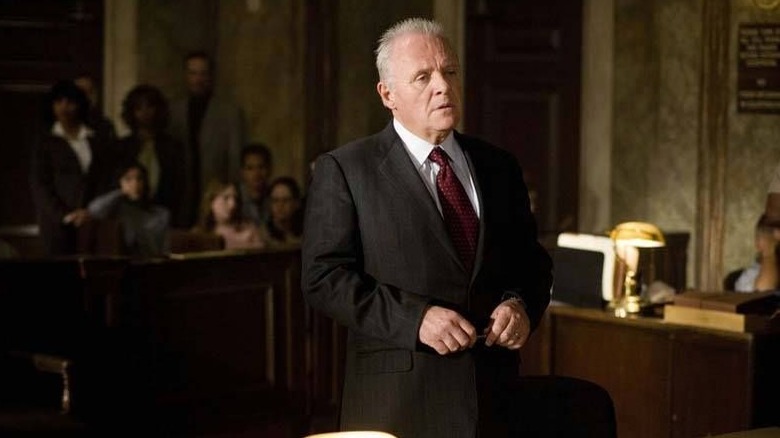
It's without argument that Hopkins is one of the best in the business at delivering sinister. Hannibal Lecter is an obvious example, but Hopkins' turn as Ted Crawford in 2007's "Fracture" is worthy of a mention. Played in a stoic and solemn manner, the character's cruelty is increased ten-fold because of Hopkins' talent at unnerving audiences. A two-hander with Ryan Gosling, the Gregory Hoblit-directed psychological legal thriller sees Gosling as Assistant District Attorney Beachum engaging in a game of cat and mouse with Ted, a man who kills his wife in the opening moments of the film.

Similar to Hannibal Lecter, there isn't any question or mystery surrounding Ted's innocence or lack thereof, but even so, Hopkins' choice to pepper his performance with an amusing playfulness has us second-guessing ourselves. The contrast between Beachum's renewed desire to find justice and Ted's astounding arrogance in the face of criminal proceedings builds an enticing tension that's bolstered by tremendous performances from Hopkins and Gosling. "Fracture" was well-received by critics and made a respectable return at the box office, but for both actors, this is one film that too often goes under the radar.

The World's Fastest Indian

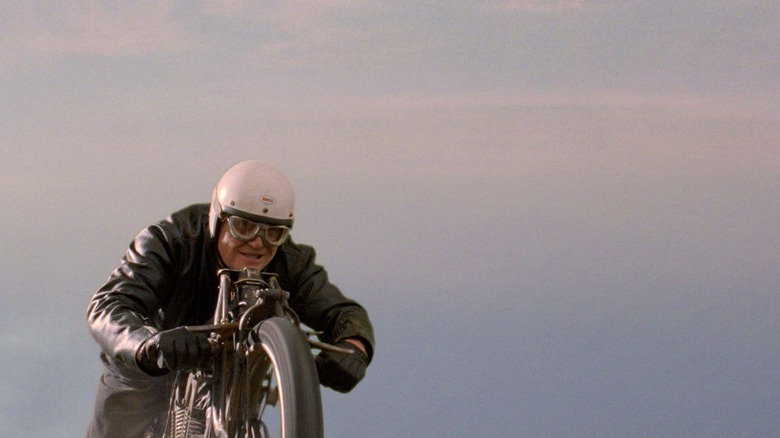
Reuniting Hopkins with his "The Bounty" director Roger Donaldson, "The World's Fastest Indian" is a charming, feel-good sports film about New Zealand speed bike racer Burt Munro. Munro had spent many years modifying his Indian Scout motorcycle and found success in New Zealand and Australia's racing circuits. By 1967, when the film picks up, Munro is ready to realize his dream of conquering the U.S. -- with his eyes set on the Bonneville Speedway.

"The World's Fastest Indian" was well-received in New Zealand (in spite of Hopkins deciding not to adopt a Kiwi accent and instead using his native Welsh lilt), but failed to make a splash elsewhere. Accent choices aside, Hopkins lights up the screen as the New Zealand folk hero. Maybe because we're too used to seeing Hopkins take on heavy (and often darker) characters, one of my favorite aspects of the film is seeing the lightness and unabashed joy the actor clearly takes in bringing Munro to the screen. There's a refreshing coziness to his performance that endears the racer to audiences unfamiliar with his story, making it a movie well worth the effort to seek out.

Magic

The legacy of Hopkins' Hannibal Lecter really can't be understated enough. He's a character so terrifying and so perfectly portrayed by Hopkins that, in a career with too many impeccable performances to count, one greatly overshadows the others. This is the only reason I can attribute to Richard Attenborough's "Magic" not getting the love it deserves.

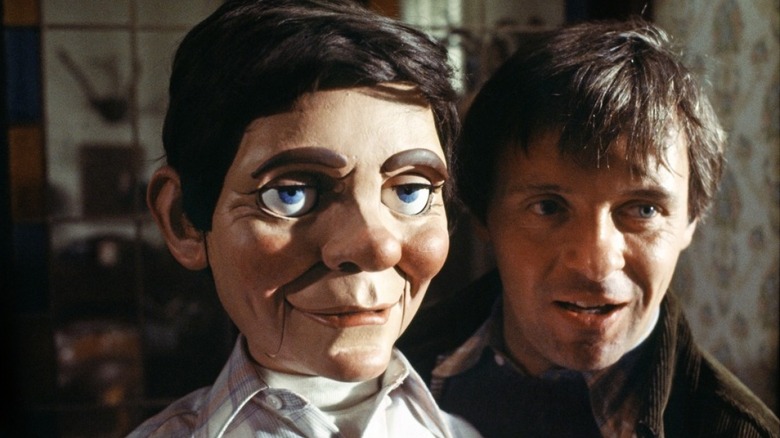
A film that I watched at a too-young age, "Magic" scared me to the point that I still feel uneasy about ventriloquists and their dummies. Hopkins plays a failed magician, Corky, who turns to ventriloquism to revive his career. Corky and his dummy, Fats, begin to find some success, even being offered a television spot. When Corky duplicitously rekindles his romance with a former sweetheart (played by the renowned Ann-Margret), Fats becomes jealous and displeased. A strange movie that explores mental illness and the ego to an extreme, "Magic" is a delirious tale with Hopkins delivering a unique turn.

Nixon

Four years prior to "Nixon," Oliver Stone released "JFK," exploring the titular president's assassination and garnering criticism for embracing the many conspiracy theories surrounding the event. Conceivably, this left audiences wary of what Stone's treatment of former President Richard Nixon would entail. It would appear that Stone did learn something from "JFK," as he begins "Nixon" with a disclaimer that the film is "an attempt to understand the truth" -- carefully, and pointedly, separating itself from the actual truth.

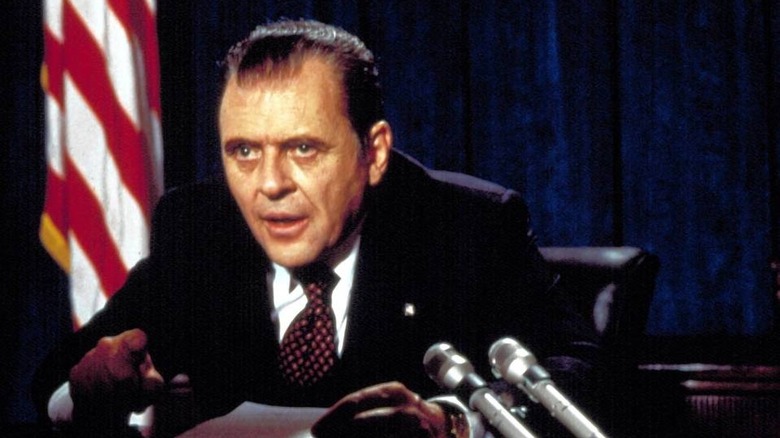
Regardless, Stone's attempts to understand Nixon as a man, warts and all, rubbed many the wrong way with statements given by the Richard Nixon Library and even Walt Disney's daughter. The film would go on to receive four nominations at the Academy Awards, including one for Hopkins' performance as Nixon, but only grossing $13.6 million domestically against a reported $44 million budget. Although the accuracy of "Nixon" has been skewered many times over, it remains a fascinating depiction of a controversial figure, backed by an impressive performance by Hopkins.

Amistad

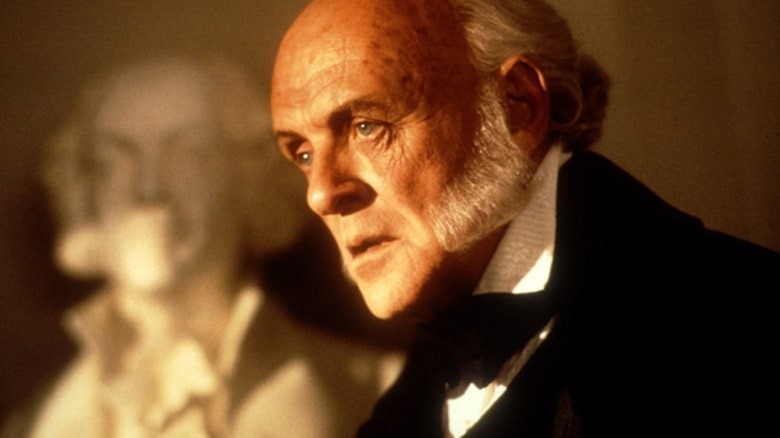
Hopkins received yet another Academy Award nomination for his turn as former president John Quincy Adams in Steven Spielberg's historical courtroom drama "Amistad." Telling the story of the Spanish slave ship, La Amistad, and the slave revolt that took place on board by Mende captives, "Amistad" concerns itself mostly with the legal battle that occurred afterward. The U.S. wanted to bring piracy and murder charges against the slaves, but the Spanish government supported two of their citizens in the case as owners of these individuals, creating a potential diplomatic incident.

Although "Amistad" became a critical darling and was acknowledged by various awards bodies and critics groups, it failed to have much of an impact at the box office. Given the run Spielberg was on in the '90s, it's understandable that at least one of his films may not appeal to the masses. In a sense, the same issue is at play when considering "Amistad" in the years since its release: both Spielberg and Hopkins have developed such illustrious careers, films like "Amistad" fall by the wayside.

International Velvet

A timeless classic, 1944's "National Velvet" is a certified tear-jerker that introduced the world to Elizabeth Taylor. As is usually the case, a sequel wasn't necessary, but happened anyway, albeit 34 years later. The follow-up, "International Velvet," focuses on Sarah Velvet Brown (Tatum O'Neal), who is forced to move to England from Arizona to live with her Aunt Velvet Brown (the role Taylor originated and played by Nanette Newman in the sequel) after the untimely death of her parents.

While "International Velvet" didn't quite hit the emotional notes or dramatic overtures in the same way as its predecessor, the film remains an old-fashioned family film with plenty of heart and joy to go around. Hopkins takes up the role of Captain Johnson, Sarah's coach on the British Olympic team, and Christopher Plummer rounds out the ensemble playing John, Velvet's partner. It may not be a classic in its own right, but the strong cast, beautiful cinematography, and moving score make "International Velvet" an endearing coming-of-age tale.

The Bunker

This one may be cheating, as Hopkins won an Emmy for his performance in "The Bunker" as Adolph Hitler, but it's precisely because it is a made-for-TV movie that the film qualifies for this list. Given the nature of television in 1981 (i.e. not streaming), following the initial broadcast, a film like "The Bunker" would need to be caught on re-runs. And what a shame for those who missed it, as "The Bunker" features one of Hopkins' finest performances.

The story takes place between January and May 1945, reenacting key events from within the Führerbunker in the last few months of Hitler's life. What impresses the most about "The Bunker" isn't the accuracy of the production or even the accuracy of Hopkins' disturbingly visceral performance. Where the film excels is the glimpse into the psyche of one of humanity's most inhumane inching towards inevitable failure. Hopkins brings to the fore the cracks and vulnerabilities of the Führer in his final days as he descends into a desperate madness.

Legends Of The Fall

It seems that whenever Anthony Hopkins and Brad Pitt join forces, they create under-appreciated magic that divides audiences and critics. Directed by Edward Zwick, "Legends of the Fall" follows the lives of the Ludlow brothers, Alfred (Aidan Quinn), Tristan (Pitt), and Samuel (Henry Thomas), and their father Colonel William Ludlow (Hopkins) across multiple decades as they confront love, life, and brotherhood together and apart.

There is an eloquence to Susan Shilliday and William D. Wittliff's script that is echoed and lifted by the truly exemplary performances from the entire ensemble with Pitt and Hopkins once again leading the way. The stunningly gorgeous film (for which John Toll won the Academy Award for best cinematography) can fall on the side of schmaltzy and corny at times, but ultimately, its dissection of a family's struggle with their circumstances and each other is moving and affecting in all the right moments.

Read this next: 12 Best Performances In Steven Spielberg Movies

The post 12 Underrated Anthony Hopkins Movies You Need to See appeared first on /Film.

13 May 18:09

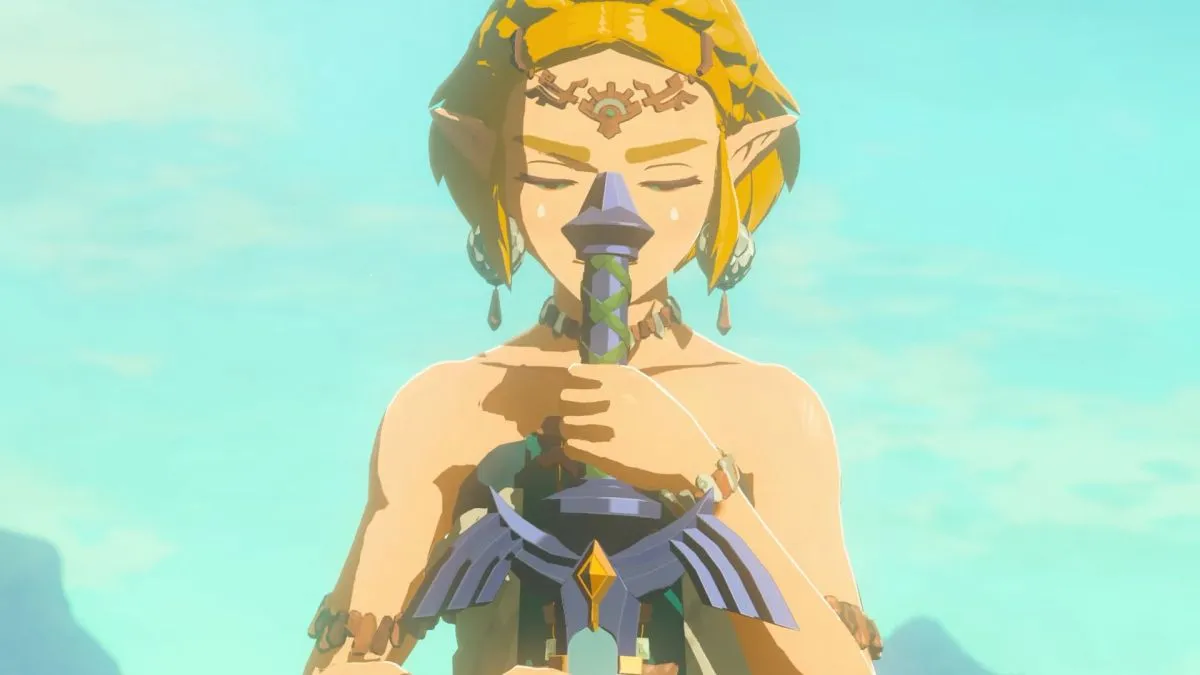
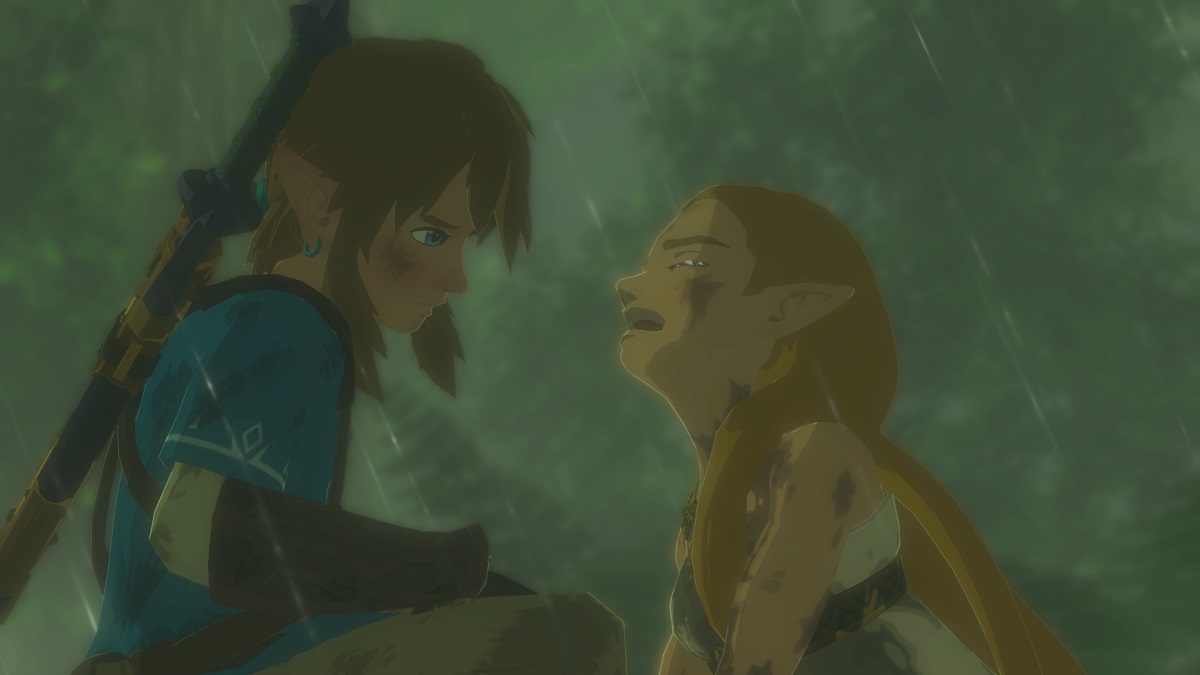
The titular princess deserves better in The Legend of Zelda

by Zoey Handley

Cartoon Monarch

Drop the monarchy

As the prophecy has foretold, evil will rise, time and time again, and a hero will show up to make it stop. Their job would be a lot easier if there wasn’t also a third person in the prophecy who, time and time again, makes everything worse.

Princess Zelda is one of the most vexing supporting characters in video game history. Being type-cast is bad enough, but when the narrative actually does have her in a more prominent role, it's almost always her duty to screw up and make the problem bigger. She's there simply to give Link more problems to solve. The Legend of Zelda may have her name in the title, but the series would be a lot better off completely rethinking the character or simply dropping her completely.

While The Legend of Zelda: Majora’s Mask is one of my favorite stories ever told in a video game, I generally don’t hold the series in high regard in terms of storytelling. Don’t get me wrong, it’s one of my favorite properties in gaming, having been the initial spark for my passion for the hobby back with the NES original. However, that’s largely due to a myriad of other reasons and not because it tells good narratives. It rarely does, and that’s partly the fault of Princess Zelda.

From here on out, I’m going to be talking about the plot of various titles in the series in vague terms. Consider this your spoiler warning.

[caption id="attachment_374983" align="alignnone" width="640"]Best The Legend of Zelda music Image via Nintendo[/caption]

Spoiler Warning

I’m not going to victim blame here. Getting kidnapped seems to be the most common pastime of princesses, right alongside dating and animal husbandry. I’m not going to blame her for starting her career by being kidnapped. Nor do I have a problem with her being asleep for the entire next title. It gets a little absurd in A Link to the Past when she’s kidnapped, saved, then quickly kidnapped again, which might be why she was omitted from The Legend of Zelda: Link’s Awakening.

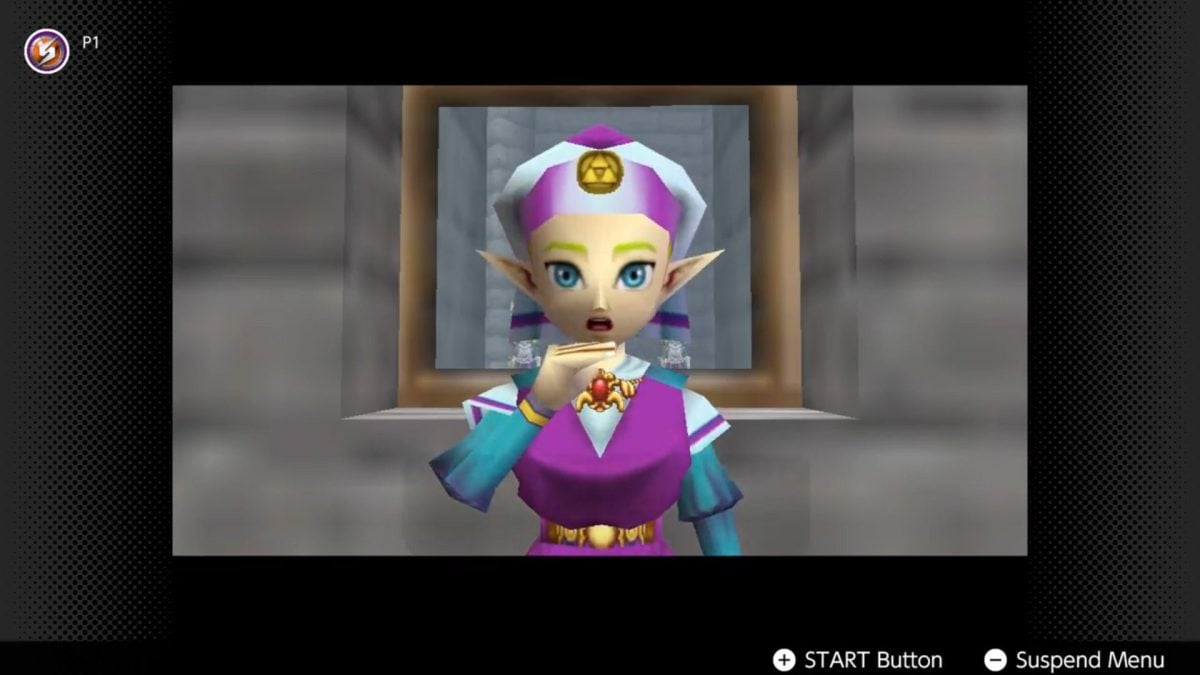
But when we get to 1998’s The Legend of Zelda: Ocarina of Time, Princess Zelda is shown as the key factor in the Kingdom of Hyrule’s woes. She enlists a child to steal three sacred artifacts, who then opens the door so the main bad guy gets unlimited power. She says that dreams made her do it, which was exactly my excuse when I was found next to the charred remains of Old Man O’malley’s barn with a pack of matches. The only reason the world wasn’t doomed for certain is because of Link and a clause in the Triforce’s contract.

Since then, Ganon has been running rampant, and she hasn’t really done much to stop that. Everything falls on Link, which is his job. I don’t even know why she’s even part of the prophecy. The best she really does to help is hold the bad guy still for free shots. She’s sort of the conduit for the wisdom of the Gods, even though the Gods don’t really seem that helpful either.

For all we know, it’s a case of the telephone game. The Gods tell her one thing, and she passes the absolutely wrong information along to the eternally suffering hero. Maybe that’s why, in Breath of the Wild, the Gods are done talking to Princess Zelda. Why would they bother? She only takes the wrong meaning and makes things worse. She can do that on her own. And she did.

[caption id="attachment_291177" align="alignnone" width="640"]Playing The Legend of Zelda: Ocarina of Time on Nintendo Switch Image via Nintendo[/caption]

A touch-up

The Legend of Zelda is a series with a tonne of great female characters, and Zelda herself isn’t one of them. Wind Waker was perhaps the first time they attempted to give her a more adventuresome, less damsel-y side, but she only stays that way for about half the game. The moment she puts on her traditional dress (and make-up, weirdly), she turns into a personality-devoid damsel.

In Breath of the Wild, she spends the whole backstory fucking around and subsequently finding out. Bizarrely, this is Zelda at sort of her best, as she at least has some humanity. She’s realistically flawed, which is more depth than she’s been previously provided. It just seems like a bizarre course correction by changing from a hapless victim to the ultimate screw-up and then still reverting her back into the exact same damsel she was the whole game.

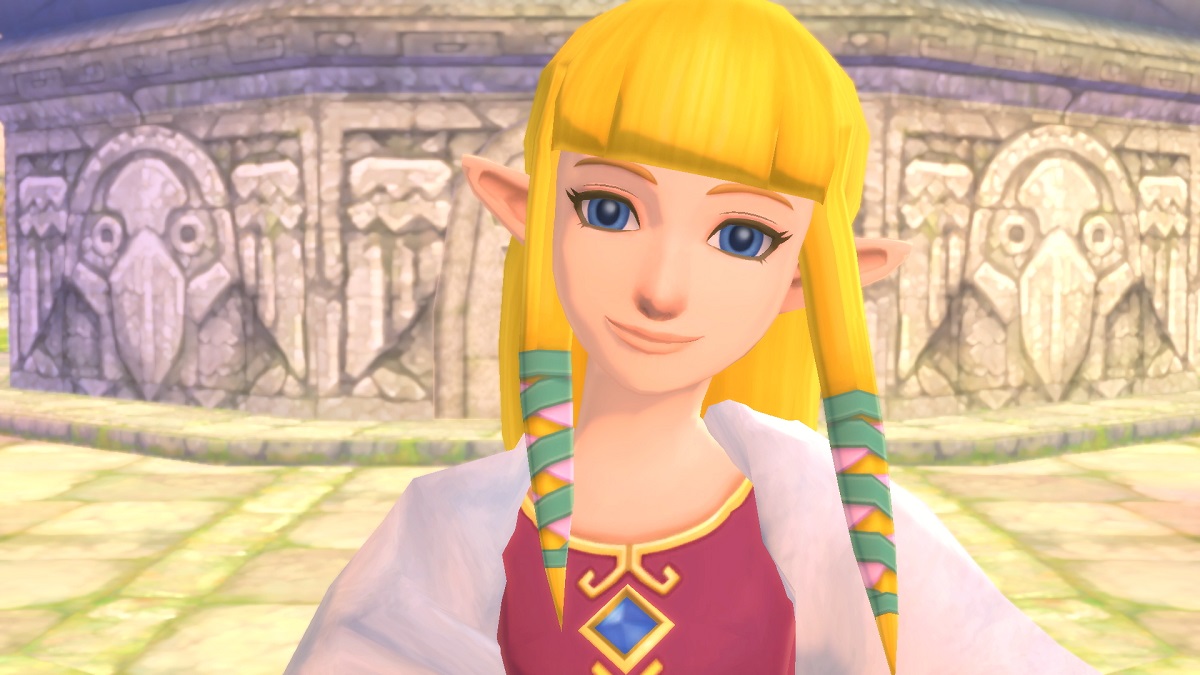
Skyward Sword perhaps had her at her most capable, but even there, she winds up just acting like a key. And then things still don’t go according to plan, and the very thing she’s trying to prevent from happening occurs anyway. She’s dependable in that regard, at the very least.

[caption id="attachment_373865" align="alignnone" width="640"] Image via Nintendo[/caption]

The cyclical symptom

If we’re being honest, the major issue with the narrative of The Legend of Zelda isn’t Princess Zelda herself, but she’s a visible symptom of the issue. She’s the bubons of the black death. The real issue with the series is its steadfast adherence to cyclical storytelling, which wasn’t even established until maybe Wind Waker at the earliest.

I hate prophecy as a storytelling mechanic unless it’s being subverted. Telling people what is supposed to happen is predictable by design, and I don’t know why anyone would opt for that. However, in The Legend of Zelda, we’re stuck with the three factors of Courage, Power, and Wisdom, and it seems that Wisdom is constantly calling in sick.

But even within the confines of those restrictions, Princess Zelda doesn’t need to always be such a screw-up. She could be framed as the hero or even the villain. Wisdom isn’t always wielded for the better of others. Maybe there could be a Zelda title where she manipulates Link and fools Ganondorf for her own gain. Having the Wisdom part of the Triforce always needing to be saved kind of just makes it seem like the series is calling the smart person a nerd.

[caption id="attachment_373604" align="alignnone" width="640"]The Legend of Zelda Tears of the Kingdom Imagve via Nintendo[/caption]

Where does Princess Zelda go from here?

There are some exceptions to this. The Legend of Zelda: Spirit Tracks allowed her to be a more active participant in the story, as much of the game has her adventuring alongside Link. Mostly. Her body is taken from her, but her spirit is able to participate in her own rescue, and she manages to avoid making things worse. Though interestingly, Ganondorf isn't present, meaning the cyclical prophecy angle isn't involved in the narrative.

There are also the more notorious examples on the CDi where she took the lead role. Zelda: The Wand of Gamelon and Zelda's Adventure were both developed without Nintendo's involvement. While they're both unique in the way they swap Princess Zelda to be the primary protagonist, they're both victims of being developed for a platform that wasn't very well suited to games. They're hardly a good metric to judge the potential of a hero Zelda.

I’d rather just have the series move away from including her altogether. Having her here means that the games always have some sort of connection to the Royal Family of Hyrule and the kingdom itself. I’ve always sort of wanted to see what’s out beyond.

It could be argued that it’s hard to call the series “The Legend of Zelda” when she’s not included, but it’s always been a bit of a misnomer. The narrative often puts the emphasis on the three central characters and not just her, with Link being the primary focus. We’ve also had titles like Majora’s Mask and Link’s Awakening where she plays little or no role at all.

I also know that moving away from the prophecy angle would likely meet resistance because that’s also right there in the title. And yet, again, not every Zelda game has a prophecy, once again showing how vestigial it is. None of this is required in the same way that there’s nothing final about Final Fantasy. Old standards are being clung to, even when they’re detrimental.

[caption id="attachment_370384" align="alignnone" width="640"]The Legend of Zelda Breath of the Wild Anime Image via Nintendo[/caption]

Fine, just fine

As I said, I love The Legend of Zelda, but I’ve had my frustrations with the series. My most monumental gripe is with its constant fumbling of narratives. The fact that there’s a published timeline trying to tie all the games together causes the bile to rise in the back of my throat every time I think of it.

There’s a lot of possible freedom in the game’s fantasy universe that hasn’t been tapped, could still be tapped within the restrictions the series’ various storytellers have erected, but could be better explored if they dropped them entirely. Majora’s Mask was far and away the best story the series ever had, and it didn’t even take place in Hyrule. Link’s Awakening, while being simplistic in a way that was common for the time period and platform it came out on, still had more emotional depth and mystery than a lot of the more complex attempts.

At the same time, if the series never gets any better at telling stories, that’s fine, I guess. I play Zelda games because they make glass bottles seem like the most useful item in the universe. I don’t play them to have my thoughts provoked. For that matter, I’m even of the mindset that Breath of the Wild was the best the series has been since Wind Waker, but storytelling isn’t part of it.

I just want the series to move closer to whatever might be perceived as perfection, and to start with, they should drop the Monarchy.

The post The titular princess deserves better in The Legend of Zelda appeared first on Destructoid.

13 May 17:39

Microsoft Aims For Greater Script Execution Control On Linux

This week alongside several other Linux Foundation events in Vancouver was the Linux Security Summit. Commanding a significant presence at the Linux Security Summit was Microsoft...
13 May 17:35

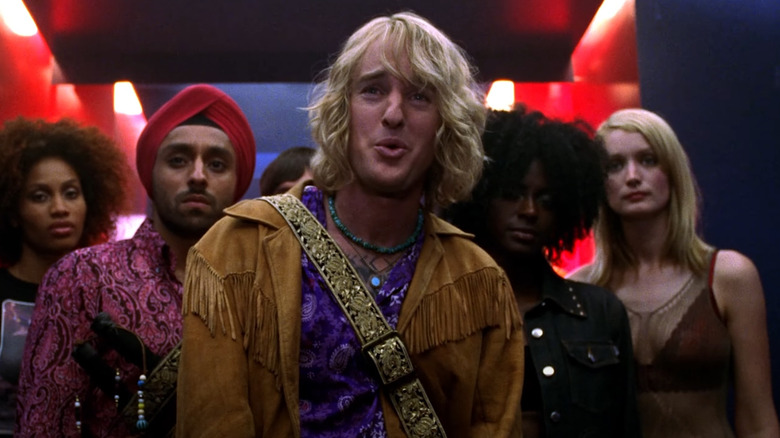
12 Best Owen Wilson Movies, Ranked

by Jeff Ames

Who doesn't love Owen Wilson? In the late '90s, the blond star burst on the scene in Wes Anderson's "Bottle Rocket," snuck into big productions like "The Haunting" and "Armageddon," and then hit the big time when he teamed with Jackie Chan for the blockbuster "Shanghai-Noon" and its sequel. Since then, Wilson has expanded his portfolio with instant classics like "Zoolander," "Wedding Crashers," and "Midnight in Paris," and continues to show off his knack for lighthearted comedy in films such as "The French Dispatch," and the Marvel Disney+ series, "Loki."

Wilson even has his own animated franchise, Disney/Pixar's "Cars," in which he plays Lightning McQueen, a role he's returned to various times, including the California Adventure theme park ride. There's nothing he can't do, and his careful project selection typically ensures quality despite a small handful of duds during his nearly three-decade stay on the Hollywood A-list.

Which of his films is the best? I'm glad you asked because I put together a list of my favorite Owen Wilson movies, ranked from worst to best. Let's do this!

Marley & Me
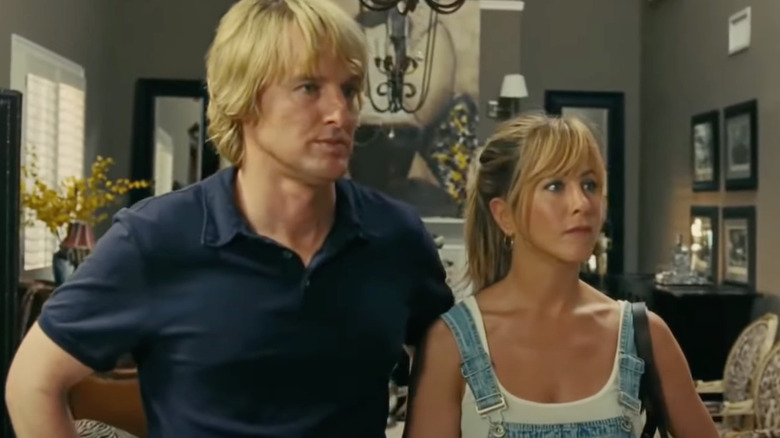
Owen Wilson lends his quirky humor to "Marley & Me," a good-natured comedy about a family's life-long relationship with their pet Labrador. On the surface, this David Frankel-directed pic is little more than your average by-the-numbers dog comedy, ala "Beethoven." Writers Scott Frank and Don Roos (adapting from John Grogan's memoir) hone in on Wilson's character, exploring his triumphs and failures as a budding newspaper columnist, father, and pet owner. We see him struggle early on as a news reporter before a flash of inspiration leads him to write stories about his neurotic dog, Marley, a move that results in fame and success.

Sporting a terrific supporting cast, including Jennifer Aniston and the always dependable Alan Arkin, "Marley & Me" dishes out a plethora of life lessons that every parent and pet owner can identify with. A terrific montage zips through two years of Wilson's life and perfectly captures his frustrations and joy. It's rather illuminating. 

That said, "Marley" is, perhaps, a little too conventional for its own good. Dramatic story beats, such as Aniston's miscarriage, are quickly glossed over. The script crams a lot of material into a 115-minute runtime, resulting in something akin to whiplash. At times, director David Frankel veers into sitcom territory and leans too hard on broad humor.   

Regardless, Wilson is in fine form and displays amazing chemistry with Aniston. It may not be a great comedy, but "Marley & Me" delivers where it matters most.

Armageddon
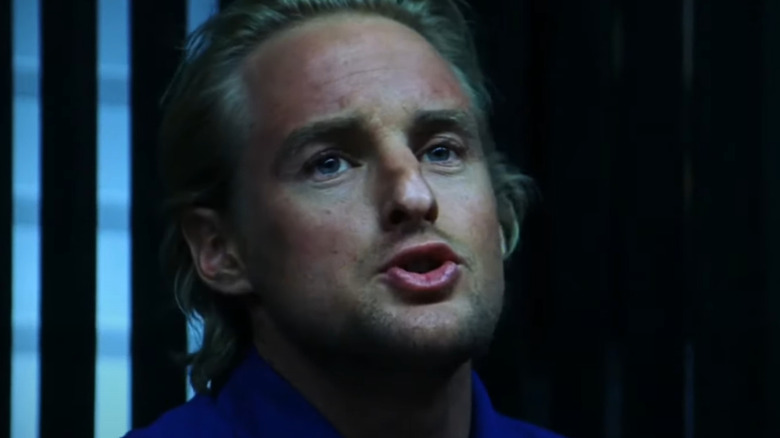
Depending on who you talk to, "Armageddon" is either a rambunctious example of everything wrong with Hollywood or the most awesome blockbuster ever made. I sit in the latter camp and consider Michael Bay's disaster epic one of my great guilty pleasures. This relentless, high-octane thrill ride knocks the brain with infectious energy and overt stupidity.

"Armageddon" is big, loud, dumb fun — the highest example of "check your brain at the door" cinema. Where else will you find a group of blue-collar oil drillers, led by Bruce Willis and Ben Affleck, sent into space to stop an asteroid? Say what you will about its clunky script, but "Armageddon" deserves high praise for executing its goofy premise with a straight face.

Wilson has a small-ish part as Oscar, the slow-talking, cowboy-hat-wearing member of Willis' party, who bites the dust early but still makes an impact thanks to a couple of significant comedic bits. Speaking with Affleck's character during one of the numerous montages, Wilson suggests he's the Han Solo of the group. "If anybody's Han Solo, it's me," Affleck retorts. "And you're Chewbacca." "Chewy," Wilson says incredulously. "Have you ever seen 'Star Wars'?"

"Armageddon" may be little more than an overproduced blockbuster. Still, it's a good time. So sit back, relax, and enjoy the Bayhem.

Masterminds
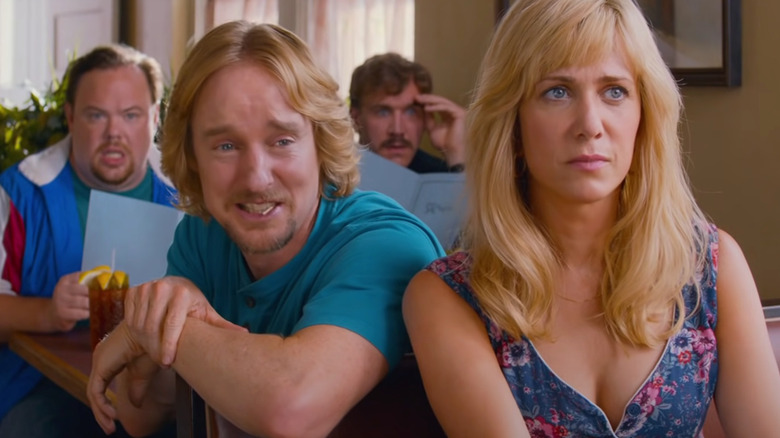
When it comes to quirky comedies, you won't find one much odder than "Masterminds." Deploying the same outlandish humor that made "Napoleon Dynamite" and "Nacho Libre" memorable, director Jared Hess introduces audiences to a colorful cast of dimwitted criminals who team up to rob a bank. 

Starring Zach Galifianakis, Kristen Wiig, Owen Wilson, and Jason Sudeikis, "Masterminds" failed to generate much heat at the box office and wasn't exactly a hit with critics (just 34% awarded the pic with a positive score on Rotten Tomatoes), which says to me they didn't get the joke. While far from perfect and a little too weird for casual audiences, this 2016 comedy is excellent. Galifianakis and Wiig have a field day as the "brains" of the operation, while Wilson plays a sleazy partner who attempts to have his teammates whacked by Sudeikis' hitman. 

It's all wacky fun for those who can stomach Hess' style. So count me among those who consistently return to "Masterminds" for a lighthearted farce to sweep the blues away.

Cars
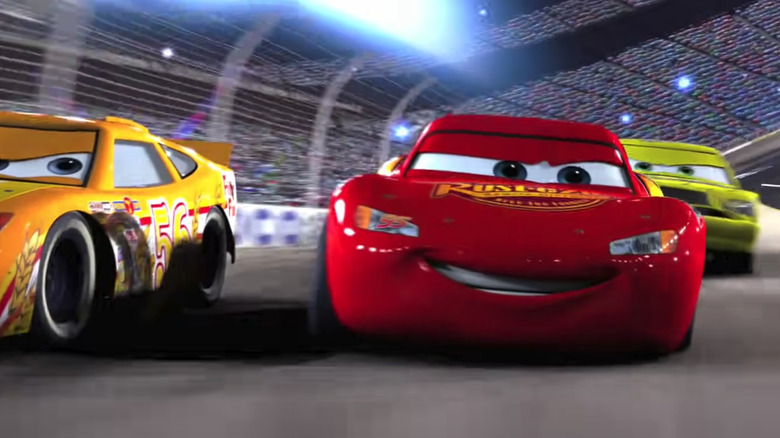
It was only a matter of time before Owen Wilson lent his voice to an animated feature. Thankfully, the clever folks at Pixar Animation Studios found the perfect role to capture his offbeat mannerisms — the 2006 adventure "Cars." While not as memorable as the studio's best efforts, this adorable four-cylinder tale charms as a robust, brightly colored, beautifully animated character study of one car's quest for relevance.

Wilson voices Lightning McQueen, the brash up-and-coming superstar of the racing circuit in a world populated by automobiles. After a random detour lands him in a small town hidden in the American wilderness, McQueen must overcome his selfish instincts to become his generation's greatest racer.

"Cars" boasts an all-star cast (namely Wilson, Paul Newman, Bonnie Hunt, Larry the Cable Guy, and Michael Keaton) with beautiful designs and a simple but positive message kids can digest without much effort. In short, this "Rocky"-esque picture delivers where it matters most.

Bottle Rocket
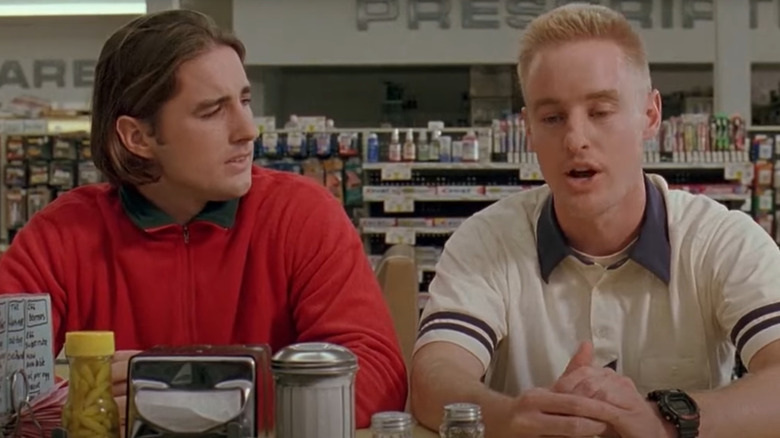
Compared to Wes Anderson's more notable efforts, "Bottle Rocket" is a relatively straightforward character dramedy with a few stylistic quirks. The story revolves around a group of would-be criminals who plan a series of heists to secure their future. Featuring Anderon's distinct brand of humor, a sharp script, and stellar performances from Luke and Owen Wilson (making his film debut), "Bottle Rocket" is a novel bit of indie filmmaking.

Wilson displays his natural acting chops and deft comic timing, delivering his dialogue as though he were making it up on the spot. Interestingly, his style has stayed the same over the last several decades. Still, he's so great at playing himself that it doesn't matter. His character means well but doesn't have what it takes to accomplish the task, mainly because he lacks the intelligence to make crucial decisions. Regardless, he's a lovable guy who cares about his friends. It's easy to see why the actor rose to stardom so quickly.

Meet The Parents
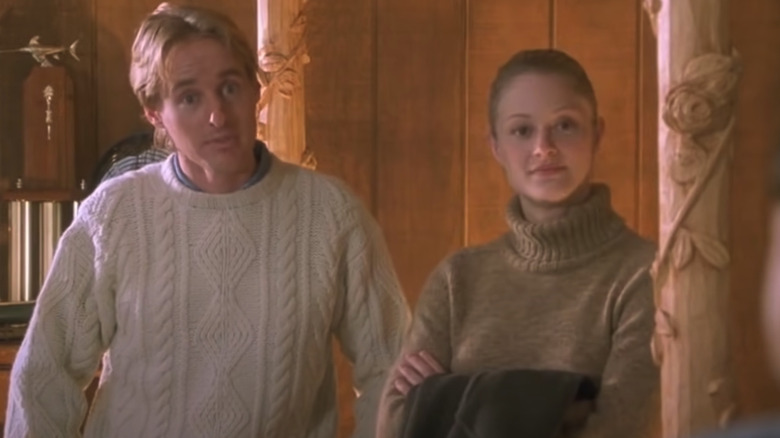
Remember that 2 to3 year span when every movie starred Ben Stiller? "Meet the Parents" kicked off the Stiller phenomenon in style, delivering a hilarious examination of the awkwardness between a stiff father (excellently played by Robert De Niro) and the kind but socially inept man (Stiller) set to marry his daughter. Clever hijinks ensure, primarily a result of misunderstandings, leading to a side-splitting affair with enough heart to resonate on a personal level.

Owen Wilson co-stars as an ex-lover who still pines for Stiller's girl and seemingly has an in with her dad. He crafts an altar by hand to show his affection and undermines Stiller at every turn. Again, Wilson's role is more of an extended cameo than a star turn. Still, he is one of the few who can take something small and mold it into a memorable piece of cinema.

Overall, "Meet the Parents" is a simple, crowd-pleasing comedy jam-packed with hilarious gags. Sure, all the problems resolve themselves far too quickly, and director Jay Roach's inability to frame a joke without some low-brow sexual innuendo gets annoying. Still, when "Meet the Parents" hits, which is often, it hits big and should satisfy those in search of a good time at the movies.

The Royal Tenenbaums
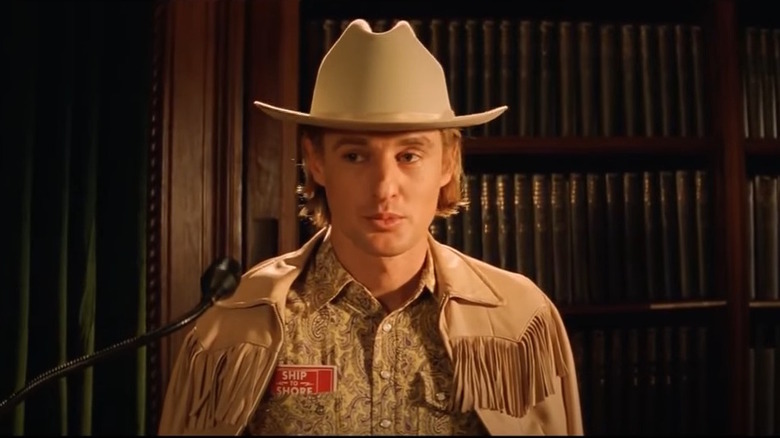
Following his critical successes with "Bottle Rocket" and "Rushmore," Wes Anderson returned in 2001 with his most ambitious project yet, "The Royal Tenenbaums." This profound, albeit humorous, exploration of family includes the director's lavish quirks and absurdist style but lacks the mainstream appeal of "Rushmore" and "The Grand Budapest Hotel." In other words, you either love or hate his approach.

Count me in the former group as one who admires Anderon's distinct filmmaking style. "The Royal Tenenbaums" is a smart yet sad look at the effects bad parenting can have on children. In this case, Gene Hackman's immature and selfish Royal leaves his three brilliant children, Chas (Ben Stiller), Richie (Luke Wilson), and Margot (Gwyneth Paltrow), stuck in a perpetual state of arrested development, leading to a series of unfortunate events that nearly destroys the Tenenbaum family.

Owen Wilson co-stars as Eli Cash, an envious neighbor who noses his way into the family's legacy but realizes he must address his various problems. Wilson is great in the role, using his easy-going charm to gloss over his inner sadness until he hits rock bottom. His part is small but no less critical to the overall story.

Shanghai Noon
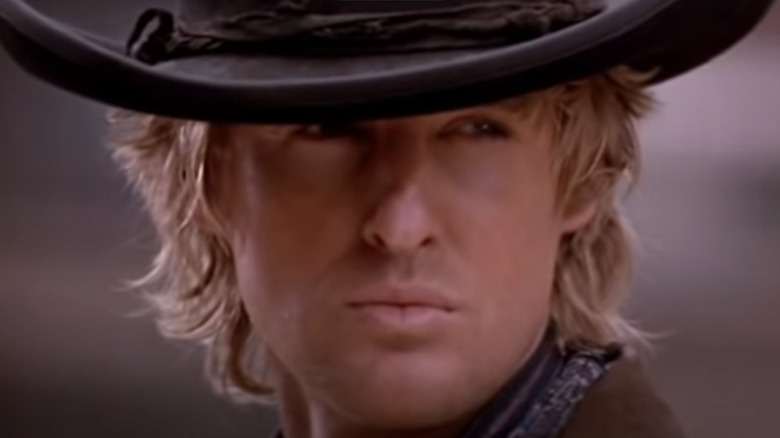
Following small parts in films such as "The Cable Guy," "Anaconda," and "Armageddon," Owen Wilson shot to superstardom in the endlessly entertaining "Shanghai Noon." The action comedy pairs him with iconic martial artist Jackie Chan and plays like a Western version of "Rush Hour." The premise may be thin. Chan teams up with a train robber to find a kidnapped princess, but the laughs come fast and furious thanks to the splendid chemistry between the two stars and Chan's impressive array of tricks.

In one great scene, Wilson and Chan, aka Roy and Chon, get stuck in jail and must devise a scheme to break out. As Roy fumbles about, Chon rips off his shirt, pees on it, and uses the wet cloth (and a piece of wood) to bend the prison bars. Roy watches skeptically, then leaps to help, pressing down with a finger. Then, he squeezes through the metal and exclaims, "See ya, sucker!" before returning to reply, "I'm just kidding. I can't leave my old pal behind bars."

The rest of the film follows suit: Roy and Chon get in hot water, Roy cowers and offers a little help, and Chon ultimately saves the day. The formula may grow old after an hour or so. Still, there's no denying "Shanghai Noon" is a perfectly entertaining, old-fashioned buddy comedy.

The Life Aquatic With Steve Zissou
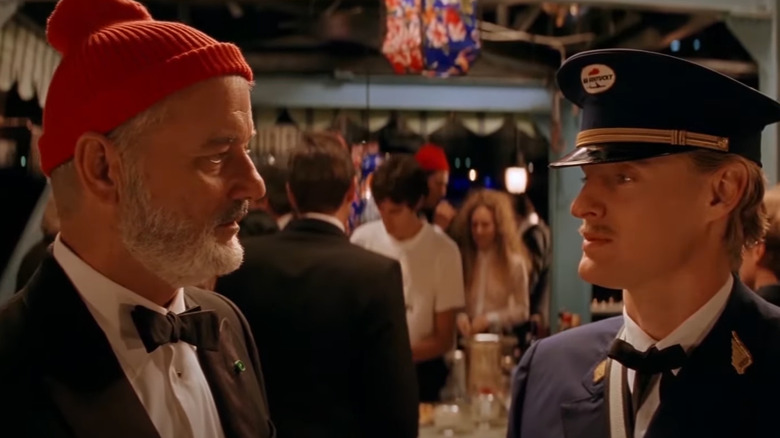
"The Life Aquatic" finds Wes Anderson digging into his bag of tricks to tell the thrilling story of Steve Zissou (Bill Murray) and his efforts to find and kill the jaguar shark that killed his friend. Owen Wilson co-stars as Zissou's (supposed) long-lost son, who accompanies him on the journey, along with a wild cast of characters, including Cate Blanchett, Anjelica Houston, and Jeff Goldblum, and scene-stealing Willem Dafoe.

Packed with incredible visuals, quick-witted dialogue, and deeper themes about life and love, "The Life Aquatic" stands as one of my favorite Wes Anderson films. Where else will you see Bill Murray take on a hoard of seafaring pirates to the music of Iggy Pop? 

Critics didn't get the film when it hit theaters in 2004, and it's easy to see why. This is a weird film that ventures into some crazy territory. At first, I was disappointed, but subsequent viewings made me appreciate the craft, the performances (notably Murray and Wilson), and Anderon's overarching vision. It's brilliant. 

Midnight In Paris
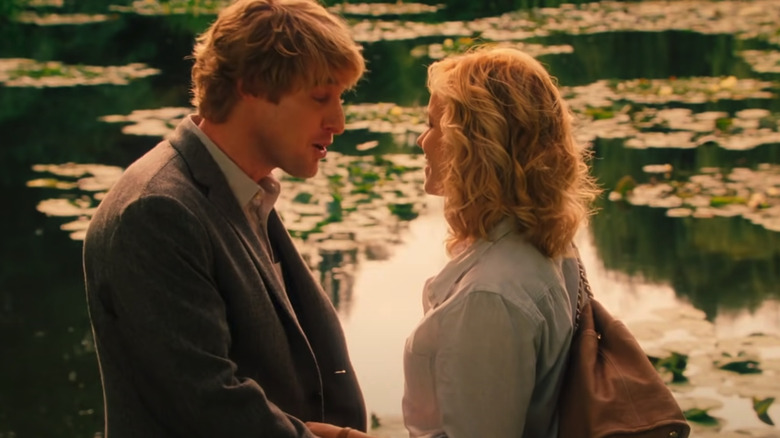
Owen Wilson and Woody Allen make a terrific team. Outside of the brilliant "Midnight in Paris," the duo hasn't collaborated on more projects. No matter. We'll always have Paris. This whimsical study of art and relationships transports Wilson's wayward writer to the 1920s, where he mingles with the greats like F. Scott Fitzgerald (Tom Hiddleston), Ernest Hemingway (Corey Stoll), Gertrude Stein (Kathy Bates), and T.S. Elliot (David Lowe) among others. He also finds love in the form of Marion Cotillard's Adriana, and together they attempt to overcome their desire for nostalgia. The past so entrances Wilson's character that he doesn't notice his modern-day fiance (played by Rachel McAdams) cheating on him. He is shocked to discover the likes of Hemingway and Eliot likewise pining for past artistic triumphs while bemoaning their current age.

"Midnight in Paris" is a fascinating, magical viewing experience, layered with sophisticated themes, good drama, winning humor, and an easy-going tone that reflects Wilson's strengths as an actor.

Zoolander
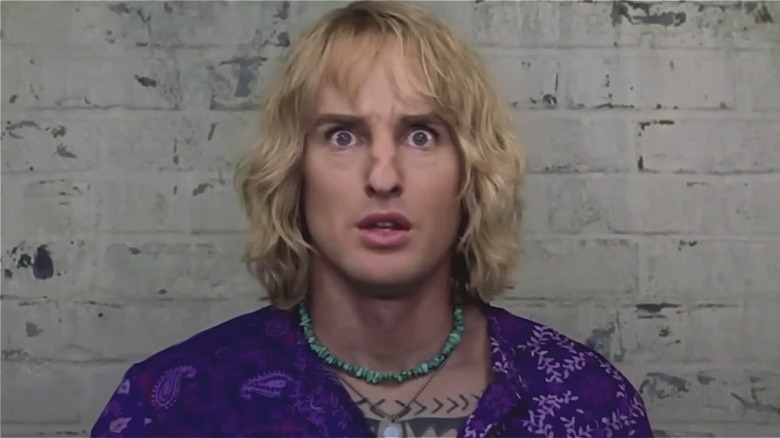
Owen Wilson and Ben Stiller teamed up so many times over the years that it's easy to forget how novel the pair's initial collaboration, "Zoolander," was upon its release. The legendary comedy duo shared the screen in "Permanent Midnight" and "Meet the Parents," but "Zoolander" was the first to feature them as co-leads. Lucky for audiences, the gamble paid off. 

"Zoolander" is a riotous, side-splitting examination of male models and the entertainment industry. Stiller plays the titular Derek Zoolander, a popular model whose place atop the modeling world comes under fire when Wilson's Hansel arrives and steals the spotlight. The two rivals must eventually join forces to stop the diabolical Mugatu (a scene-stealing Will Ferrell) from using them as assassins. 

Ripe with sight gags, quotable dialogue ("How can we teach kids how to read if they can't even fit inside the building?"), and Stiller's brand of weird, zany, even dark humor, "Zoolander," is one for the ages. Unfortunately, everyone decided to make a sequel. The magic that makes the original such a classic is severely lacking in round two.

No matter, we can still watch the original "Zoolander" and appreciate the incredible creativity that went into crafting this unique comedy. I don't think Wilson has ever been better, though I'd be hard-pressed to call it his best film. That honor goes to ... 

Wedding Crashers
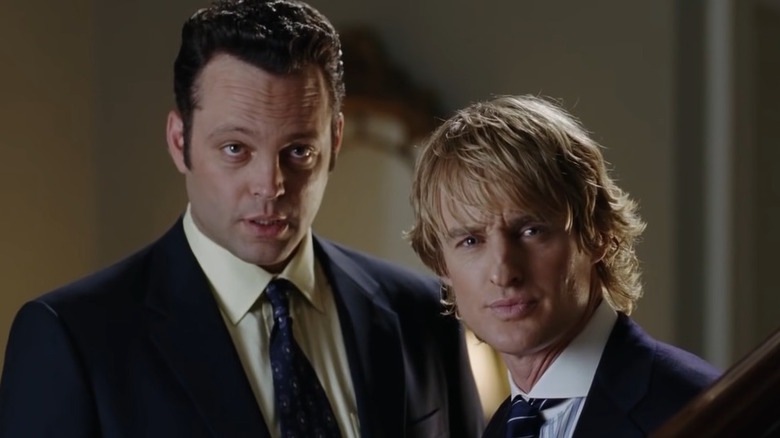
For all of Wilson's commercial and artistic triumphs, none of his movies match the outright hilarity of 2005's "Wedding Crashers," a side-splitting comedy about two laid-back pals (played by Wilson and Vince Vaughn) who spend their days, well, crashing weddings in the hopes of finding vulnerable women to sleep with. However, Wilson's character John grows tired of the juvenile antics and seeks to settle down, especially after he bumps into the beautiful Claire (Rachel McAdams). Unfortunately, Claire only knows John and Vaughn's character, Jeremy, by their fake identities established to crash her sister's wedding. Now they must continue their deception and dodge the prying eyes of Claire's brutish fiance, Sack (Bradley Cooper).

That's quite a lot to digest, but director David Dobkin keeps the comedy firing on all cylinders and even finds time for a little old-fashioned romance. Wilson and Vaughn are at their comedic peak, their electrifying chemistry producing laughs aplenty. McAdams turns in a solid performance, while Isla Fisher steals the show as Claire's rambunctious sister who locks eyes with Jeremy. Oh, and Will Ferrell turns up as a deplorable (and legendary) funeral crasher and almost runs away with the film.

Sure, some humor falls flat, and the by-the-numbers finale may leave viewers rolling their eyes. Still, aside from some minor nitpicks, "Wedding Crashers" easily ranks as Wilson's best effort. It's a shame we never got a sequel!

Read this next: The 20 Best Bill Murray Movies Ranked

The post 12 Best Owen Wilson Movies, Ranked appeared first on /Film.

13 May 17:33

Use Baking Soda to Get Rid of Moss Growing on Your Sidewalk and Driveway

by Elizabeth Yuko

Not everyone is a fan of the rustic look of moss growing on their driveway, sidewalk, or patio. But, appearance aside, it’s a safety hazard. When moss covers materials like concrete, brick, wood, and paving stones, it can make these high-traffic surfaces extremely slippery, increasing the risk of someone falling.

Read more...

13 May 10:49

Zelda: Tears of the Kingdom Dynamic FPS Mod Smooths Out Performance Considerably, Even On Steam Deck

by Francesco De Meo

The Legend of Zelda: Tears of The Kingdom

The Legend of Zelda: Tears of the Kingdom is now available worldwide on Nintendo Switch, but those with a powerful enough system can enjoy the latest entry in the series on PC thanks to the Ryujinx and Yuzu emulators. Performance, however, may not be stable, but a new mod that is now available for download can smooth it out considerably, improving the experience on Steam Deck as well.

The Dynamic FPS mod, created by ChucksFeedAndSeed, makes it so the game doesn't heavily slow down when framerate dips, which is great for those using the 60 FPS mod as well as for those with systems that have trouble running the game at a stable framerate. As the Steam Deck is currently not capable of running the game with stable performance, this mod is a godsend, as it essentially improves Tears of the Kingdom's playability on the system. As the Dynamic FPS mod is still in an early stage of development, however, it has some issues, and cutscenes still run faster than intended, so you will still need to switch back to a 30 FPS cap if playing at a higher framerate for the best possible experience.

The quick release of the Dynamic FPS mod for The Legend of Zelda: Tears of the Kingdom is mighty impressive, considering the game has only been out for a day, so it will be very interesting to see what mods developers will make in the future. As of now, the modding scene seems to be incredibly dynamic already, as other developers have released mods that introduce Xbox and DualSense button prompts and some quality-of-life improvements, such as faster teleporting.

The Legend of Zelda: Tears of the Kingdom is the direct sequel to Breath of the Wild and, as such, features the same open-world experience that made it one of the most celebrated games of all time. Thankfully, Nintendo did not rest on its laurels, expanding and improving the experience with new mechanics that set Tears of the Kingdom apart from its predecessor, as highlighted by Nate in his review.

The Legend of Zelda: Tears of the Kingdom is now available on Nintendo Switch worldwide.

Written by Francesco De Meo
12 May 20:54

If Mosquitoes Love You, Maybe Switch Soaps

by Beth Skwarecki

Mosquitoes really do like some people more than others. Some of the features that make you a mosquito magnet aren’t ones you can easily alter—your body size, for example, or the natural smell of your skin. But now, a study has found that scented soaps may also make a difference, and that’s something you can easily …

Read more...

12 May 19:09

Zelda Week: Fear Itself

by Noir

[As Zelda Week winds down here at Destructoid, I wanted to dig back into the archives and resurface an oldie-but-goodie. This 2011 piece from Noir seems like a fitting companion to the weird shenanigans of Tears of the Kingdom, and it's also a good blog. So we're bumping it up the feed again today, in 2023, to celebrate that. Happy Zelda Week! - Eric]

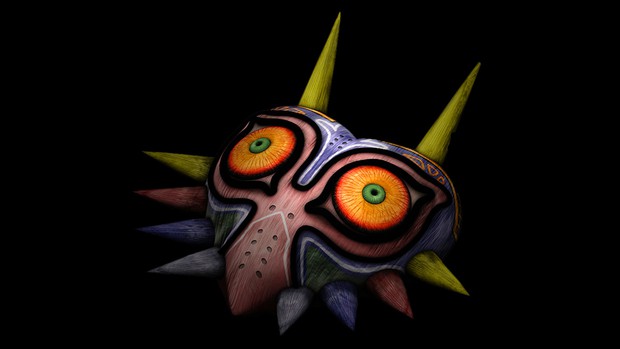
Many people's first Legend of Zelda game was Ocarina of Time or A Link to the Past, but me? Majora's Mask stole my Zelda virginity. I remember seeing a trailer with this kid putting on masks that made caused him to go through a painful looking transformation into something else. I remember a boss that commanded a swarm of moths, an insane looking man with masks, an even more insane looking moon, and of course the enigmatic Majora's Mask itself. I don't know where I saw this trailer, I still can't find it to this day. I know I had to have the game after seeing it though, even if those eyes filled me with terror.

As a child I was frightened of Majora's Mask. I didn't want to look at it, doing so filled me with anxiety. I thought I would die just from looking at those massive eyes that stare endlessly into the depths of my soul. I was also fascinated by them though, so I asked my parents to rent it for me. I even got an Expansion Pak just for it, which became another useless peripheral a week later. The point is that I needed this game, the odd nature of it just drawn me to it. It wasn't like my other games. It wasn't bright and light hearted like Kirby 64: The Crystal Shards or Banjo-Tooie, no. This game was different and I could feel it in my bones. Mind you, I was only about 8 years old at this time. I only had a few N64 games and they were mostly happy, child friendly games rated E for Everyone by the young ESRB system.

So I eventually acquired this accursed game and my standards were met. The game starts up again and there it is, the epitome of my nightmares - Majora's Mask. This was before I played any actual horror games, so I was easily scared by something as simple as a mask. Resident Evil 3's Nemesis and the psychological horror of Silent Hill wasn't something I was aware of at this point. Majora's Mask was my definition of fear, but that didn't stop me from playing the game. This "thing" was all over the game, seeing it was practically unavoidable if you wanted to play the game so I pressed on.

The beginning of Majora's Mask is better than any Zelda game when it comes to hooking the player and forcing them to explore. Your horse is stolen by a masked kid who curses you, turning you into a Deku scrub. After that you encounter the disturbing Happy Mask Salesman who may seem a bit too happy despite his predicament. No. He's not happy, not happy at all. He's downright pissed, pissed off to the point where he snatches up Link and shakes him repeatedly. Then your quest to defeat Majora's Mask begins in Termina. It's like an acid trip that ends with "Where am I? Why do I look like this?" and you're forced to find out who's fault it is.

In every other Zelda game the first ten minutes of the game is fairly peaceful and light hearted, awful things just don't happen one after another. Majora's Mask isn't like that though, it beginning pushes the situation from bad to worse and doesn't care how you feel. Then you're finally faced with the fact that the moon is going to crash down on Termina and annihilate everything in sight, including you. This moon...it has the same beating eyes that filled me with the same dread that Majora's Mask did. It was an unstoppable force that continually looked down on you during the entire game with those eyes because it knew you couldn't stop it.

You're able to reverse time fairly early in the game, but I was not a smart child so I never got that far when I had this game. Thus I was faced with this feeling of dread that everything was going to be destroyed, everything I was doing felt purposeless. I made my way around Clock Town, but was never able to stop the destruction. This was before I had access to the vast internet, so I grew mad at the game for forcing an impossible task on me. It was at least six years before I played the game again, but in that time I still thought about it from time to time. It was merely a rental (that I for some reason never bought), but I'd say it affected me more than any of the other games on the N64.

Eventually I did beat Majora's Mask, with a little help from the internet, and all was right with the world. As a teenager I had journeyed through Majora's Mask and discovered that it was a dark game in ways I didn't know. The citizens of Clock Town all had their own stories, along with everyone else in the vast land of Termina. The apocalyptic situation I had on my hands seemed even worse after learning of the problems around Termina, many of which were caused by the mask wearing Skull Kid. Skull Kid's story is one of the grimmest out there despite seeming to be the mastermind behind everything. Skull Kid was originally a child who wanted to have fun, but that desire was twisted into a form of destructive behavior after being controlled by Majora's Mask. At that point Skull Kid becomes a puppet, though he retains his mischievous personality.

Skull Kid himself represents what the Legend of Zelda: Majora's Mask truly is. It is a twisted reincarnation of a children's game that presents itself as a dark and nightmarish experience. Behind the mask Majora's Mask is not as bad as an M-rated horror game, but the mask it dons still manages to make itself appear menacing. As a child this mask is all that appears and that's what I saw. While I wouldn't say that Majora's Mask as a game and an object has scarred me, but it's done something definitely. It thrust me into the Zelda series, imbued in me a love for the strange, and made me wish I had a replica of Majora's Mask itself in my home. As long as it remains out of sight most of the time!

The post Zelda Week: Fear Itself appeared first on Destructoid.

12 May 19:08

The Legend of Zelda: Tears of the Kingdom Runs at 8K and Locked 60FPS on PC via Yuzu

by Alessio Palumbo

The Legend of Zelda: Tears of the Kingdom

Today, Nintendo launched The Legend of Zelda: Tears of the Kingdom for the Nintendo Switch. The long-awaited game is out now on the console, although it's been playable on Switch PC emulators like Yuzu and Ryujinx for a few days.

While the performance was less than great at first, the new version of Yuzu Early Access appears to run the game very smoothly. Here's an example of The Legend of Zelda: Tears of the Kingdom running at 8K resolution and nearly locked 60 frames per second. Granted, the YouTube video was captured on a PC among the most powerful you could buy, equipped with the following specifications:

  • O.S: Windows 11 Pro
  • CPU: I9 13900K P Core@5.9GHz E Core@4.6GHz
  • GPU: RTX 4080 Founders Edition
  • Motherboard: ASUS Z690-PLUS TUF Gaming
  • Power Supply: Corsair RM1000x
  • System Memory: 64GB G.Skill Trident Z RGB DDR4 4000MHz
  • Boot Drive: Samsung 970 Evo 500GB NvME

Still, it is an impressive feat on launch day, although Yuzu and Ryujinx have often surprised their users by providing optimized versions of Nintendo Switch exclusives on day one. Needless to say, being able to play the game at a higher resolution and frame rate is a very appealing proposition.

The Legend of Zelda: Tears of the Kingdom was hailed by most critics as one of the best games ever made, with an average score of 96 on Metacritic and 97 on OpenCritic. Our reviewer, Nathan Birch, was slightly less enthusiastic and rated the game 9 out of 10.

Ultimately though, despite the number of 10 out of 10 reviews the franchise has received over the decades, most Zelda games aren’t immaculate, perfectly-consistent adventures. They’re fantastic overall experiences, each with their own quirks and issues. The same can be said about The Legend of Zelda: Tears of the Kingdom, which has its brief rough patches but pulls off the “make a new game using an existing map” gambit better than anything I’ve played before.

Still, you do start to feel the strain of everything Nintendo is trying to load onto the BotW framework. As much as I enjoyed the vast majority of my time with Tears of the Kingdom, toward the end of my playthrough, I felt something I don’t often feel with a Zelda game – a desire to wrap things up. To be done. I didn’t feel that with BotW, which I played for far longer than I had to before I finally tackled Ganon, because I was just so immersed. Some of the enchanting, indelible moments I experienced exploring this Hyrule the first time around just aren’t replicated in this sequel, but perhaps expecting that of TotK isn’t realistic given the nature of the project.

If you're just entering The Legend of Zelda: Tears of the Kingdom today, make sure to check out our beginner FAQ. Look forward to more guides soon.

Written by Alessio Palumbo
12 May 17:46

'The Legend of Zelda: Tears of the Kingdom' Embraces Mad Scientist Discovery

by Megan Farokhmanesh
The new Ultrahand feature builds on Breath of the Wild’s open world and lets you build almost anything—once you get the hang of it. Even the game’s creators made “terrible things.”
12 May 17:44

Let’s Address the Cybersecurity Careers Gap

by Lenny Zeltser

Too many people are unsure how to enter or grow in the cybersecurity industry. It's a relatively young field, and we haven’t done a good job of defining what it means to have a career in it. Hiring managers who are worried about finding candidates because of the much-discussed cybersecurity skills gap should consider the underlying issue, which we might call the cybersecurity careers gap.

The cybersecurity careers gap is the idea that it’s hard for security professionals to enter and progress in the field of cybersecurity. The shortage of qualified security professionals probably isn’t due to insufficient training options–many free and commercial learning opportunities exist. Instead, it’s finding a first job to apply and expand skills over the years people find difficult. It’s also hard to determine how to turn a series of successive jobs into a career.

Addressing the Careers Gap

To address the cybersecurity careers gap, established practitioners should:

  • Think outside the box. Develop an approach that allows organizations to hire people with non-technical backgrounds for entry-level roles–musicians, hospitality workers, teachers, and so on.
  • Explain what a cybersecurity career entails. Define and communicate pathways for progressing in the field, helping individuals get started and progress in their career journeys.
  • Offer career counseling to people already in the field. Help practitioners map their strengths and aspirations to career pathways to help ensure their professional journey is fulfilling.

Those just entering the field should put effort into understanding their interests and how they map to various career options. Becoming a Chief Information Security Officer (CISO) might not make sense for everyone in the field, and that’s okay. Depending on your interests and goals, you might not want to manage a team, and, instead, might want to spend your career on the hands-on technical side.

Non-Traditional Practitioners Welcome

We need all types of people in cybersecurity because of the variety of challenges we’re solving. If you are deeply analytical or uncommonly creative, we can use your help. If you excel in human or computer communications, we can use the help. For example, at my former job, we loved hiring former bartenders who had an interest in security and tinkered with IT gadgets as a hobby–they were strong at multitasking and interacting with people.

By allowing non-traditional practitioners to fill entry-level cybersecurity roles, organizations can increase the number of people entering the career funnel. Many of them will develop advanced expertise with the right mentorship and training. This requires adjusting job requirements for entry-level roles, reaching out to people outside the traditional talent pool, and making them feel welcome.

Cybersecurity Career Pathways

How should people progress in their cybersecurity careers? There are so many different roles, titles, and responsibilities. They differ across companies, geographies, and industries, and confusion regarding the best approaches to climbing the career ladder probably discourages many individuals from attempting to enter the profession in the first place. Moreover, such uncertainty leads to current cybersecurity personnel failing to progress in their professional journey.

Today, resources are starting to appear that can guide new and existing professionals. For example, SANS Institute, which offers cybersecurity training, published a skills roadmap that outlines several possible career paths and associated skills. Various government organizations also offer detailed guidance, including:

  • The National Initiative for Cybersecurity Education (NICE) Framework, created by the National Institute of Standards and Technology (NIST), defines the lexicon for discussing cybersecurity roles. Candidates and HR managers can explore the framework’s content to understand security roles on the Cybersecurity and Infrastructure Security Agency (CISA) website.
  • Cyber Seek Security Career Pathway has an interactive website that lets candidates get details about each role and see how it fits into the appropriate career path. For each role, it shows salary information, related certifications, and associated NICE Framework skills.
  • The European Cybersecurity Skills Framework (ECSF) document, published by the European Union Agency for Cybersecurity, details common cybersecurity roles. It’s not as comprehensive as NICE, but it offers more information about each role, including titles, mission, responsibilities, deliverables, skills, etc. 

Those new to the industry, or those wondering whether cybersecurity would work for them, will also benefit from the book by Alyssa Miller, Cybersecurity Career Guide.

These resources can help new and experienced professionals navigate cybersecurity career paths. They can also help with hiring managers and HR professionals recruit and retain talent.

Career Guidance and Mentorship

Even more experienced professionals can get lost in their career journey without the right support and guidance, given the many types of positions under the cybersecurity umbrella. It’s even more likely for those who are new. Consider:

  • How might a person with a network security background get into incident response?
  • What awaits those who get tired of working in a security operations center (SOC)?
  • What paths exist for technical people who don’t want to become managers?

These questions are hard to answer alone.

People need to understand their capabilities and strengths to progress in their careers. They also need people around them to whom they can turn for advice. Those seeking guidance can turn to professional security organizations that offer educational and networking opportunities. There are also mentorship initiatives, such as Women in Cybersecurity (WiCyS) and Cyversity, which pair mentors with mentees and facilitate fruitful interactions.

By being open to newcomers, exploring different career paths, and supporting each other, we can grow the number of cybersecurity professionals and chart professional development paths for each other to cover the cybersecurity careers gap.

12 May 17:31

Four Strategic Simulations Inc. games getting re-released on PC

by Zoey Handley

Strategic Simulations Inc. Star General

Get your tiles drawn out

SNEG is soon releasing an absolute buffet of classic Strategic Simulations Inc. DOS games onto GOG and Steam. Four, to be specific. Do you remember when GOG was all about preserving retro PC games? They still do. It just isn’t as much of a focus anymore. It’s always exciting to see when classic games get ported over.

The first is Veil of Darkness. Originally released in 1991 by Strategic Simulations Inc., it’s not a strategic simulation. It’s actually an isometric adventure game with RPG elements. It’s exploration-heavy, which kind of makes it feel like a pioneer of the survival horror genre, just without most of the survival horror hallmarks.

Next is Star General, which is part of the 5-Star General series that Strategic Simulations Inc. published. Catware developed this one and released it in 1996. Star General features hexagonal, turn-based combat that takes place both in the horrific vacuum of space, as well as on the horrific terrain of alien planets.

https://youtu.be/Vl9Z4j8Kbe0

Then we have The Summoning, which is a fantasy RPG with multiple endings. Developed by Event Horizon Software, The Summoning originally released in 1992. It’s rather narrative-heavy, and the graphics and audio just scream MSDOS.

Finally, we have Dark Legions. This was a 1994 title by none other than Silicon Knights, who would later release cult classics such as Eternal Darkness: Sanity’s Requiem. This one is an action-strategy game that has battles taking place in a board game format. This one was a bit more well-received than the others back in the day.

New audiences for old games

Personally, I haven’t played any of these Strategic Simulations Inc. games, but I always get excited when a publisher brings back retro titles. While none of these are certifiable classics, they deserve the chance to live on and potentially find new audiences. Maybe I'll even play and enjoy them, who knows?

All the games listed above will be available on GOG and Steam. The only listed release date is “May 2023,” so it could be any day now.

The post Four Strategic Simulations Inc. games getting re-released on PC appeared first on Destructoid.

12 May 17:26

Toyota Japan Exposed Data on Millions of Vehicles For a Decade

by msmash
Toyota Japan has apologized after admitting to leaving millions of customers' vehicle details on the public internet for a decade. From a report: The car maker said in a notice that it will notify about 2.15 million customers whose personal and vehicle information were left exposed to the internet after a "cloud misconfiguration" was discovered recently in April. Toyota said that the exposed data includes: registered email addresses; vehicle-unique chassis and navigation terminal numbers; the location of vehicles and what time they were there; and videos from the vehicle's "drive recorder" which records footage from the car. Toyota said the data spilling from its Connected Cloud (TC) was initially exposed in November 2013, but pertains only to vehicles in Japan, according to the company. The company's connected service provides Toyota customers with information about their vehicle, provides in-car entertainment services, and helps to notify authorities in the event of an accident or breakdown.

Read more of this story at Slashdot.

11 May 16:33

Senators Push Overhaul of Classification Rules After Trump, Biden Cases

by Associated Press

Senators introduce bill to reform security classification system in the US to prevent mishandling of classified information and promote better use of intelligence.

The post Senators Push Overhaul of Classification Rules After Trump, Biden Cases appeared first on SecurityWeek.

11 May 16:33

The Legend of Zelda: Tears of the Kingdom review: A familiar but fresh adventure

by Nathan Ingraham

Games like The Legend of Zelda: Breath of the Wild don’t come along often. The 2017 title came 31 years into the franchise’s history and somehow felt familiar while simultaneously remixing or entirely removing core tenets of the series. To put it mildly, the changes worked. Breath of the Wild is the biggest-selling Zelda game of all time and was an unqualified success with critics and players alike.

What in the world do you do for an encore?

Internally, Nintendo decided to get right on that, announcing a direct sequel was in development only two years after Breath of the Wild arrived. The result is The Legend of Zelda: Tears of the Kingdom, a game that is not a complete reinvention. Instead, after successfully blowing up the Zelda format, Nintendo is giving players even more – more of Hyrule to explore, and more freedom to dream up how to tackle the many, many challenges the game throws at them.

Perhaps even more than its predecessor, though, Tears of the Kingdom demands patience. There’s an overwhelming amount of things to do, locations to see, puzzles to solve and enemies to defeat here. And as I tried to play through it as quickly as possible, to see as much of the world as I could for this review, I ended up more frustrated than satisfied. Fortunately, I then decided to slow down and indulge my curiosity, a decision that made the game far more rewarding and made me eager to explore at my own pace, without worrying about getting to the end.

Screenshots from Nintendo's The Legend of Zelda: Tears of the Kingdom.
Nintendo

Tears of the Kingdom kicks things off in a fashion that’ll be familiar to anyone who played Breath of the Wild. A quick prologue reveals the dark wizard Ganondorf and a calamity known as the Upheaval – events that leave Link grievously injured and Zelda missing (stop me if you’ve heard this one). The twist comes when Link awakes in a sky kingdom populated by ancient and powerful technology, courtesy of the Zonai clan. Lest you think, like me, that Nintendo just invented a new mysterious culture with a new set of powers to replace the Guardians from Breath of the Wild, the Zonai were actually briefly mentioned in the previous game.

The first few hours of the game take place entirely in the sky, a fascinating setting with a host of new challenges and enemies. But here the game retreads the prior entry here as you need to journey to a handful of shrines to get a new set of abilities, just like you did on the Hyrule plateau in Breath of the Wild. Once that’s done, you’re able to descend to Hyrule proper and get exploring.

Screenshots from Nintendo's The Legend of Zelda: Tears of the Kingdom.
Nintendo

Tears of the Kingdom gently guides you towards a few locations to get you started – but you can go anywhere you want, if you’re intrepid enough to try. The game definitely doesn’t hold your hand, and it took me a surprisingly long time to get my bearings and feel confident against the many monsters you’ll come across. At the start, Link is woefully underpowered, which makes finding the dozens of shrines dotting Hyrule crucial, as this is the quickest way to get more hearts, stamina and learn new fighting techniques.

I was also eager to find the numerous towers that dot the land, as those are how you reveal more of the Hyrule map. Six years later, Hyrule still feels positively massive, and navigating it without filling in the map is an exercise in frustration. In retrospect, though, I probably was too aggressive about journeying beyond the first few areas the game reveals to you, as I ran into numerous enemies I was simply not powerful enough to take on. My advice: stick to the game’s script and focus on the first few quests it gives you before going into full explorer mode.

In addition to the many shrines, the game will quickly implore you to search out four regions of Hyrule to investigate disturbances affecting the areas. (If you played Breath of the Wild, you can surely guess where those areas are.) This is where you’ll find the game’s four areas that harken back to the dungeons in Zelda games of yore. Just like before, you’ll need to help the citizens of each region before you can advance – but to keep things fresh, all the big dungeons are in the sky.

As much as I enjoyed revisiting the vast Hyrule overworld, the different gameplay elements and scenery of the sky areas made this feel novel. These main dungeons feel more similar to the Divine Beasts from Breath of the Wild than the levels found in Zelda games of old, but this time out they’re more visually distinct and connected to the region of Hyrule you’re visiting. The bosses of each are also a lot more creative and interesting than the variations of Calamity Ganon from last time out, too.

Screenshots from Nintendo's The Legend of Zelda: Tears of the Kingdom.
Nintendo

Another thing that will be familiar to Breath of the Wild players is the game’s presentation. As a direct sequel, there’s no noticeable change to how Hyrule and its inhabitants are rendered this time. Obviously, the sky islands and underground caverns were not present in BotW, so those areas gave the designers a chance to come up with impressive new visuals. The sky areas were particularly striking to me, though the underworld has a creepy, alien atmosphere that adds a whole new vibe to the game.

Nintendo’s art direction is impeccable, as usual, but six years on from Breath of the Wild it’s fair to say I sometimes wanted a bit more. I’ve been playing the Horizon Forbidden West expansion Burning Shores – that series has a similarly vast open world to these recent Zelda games, and having that in the back of my mind made me imagine what Hyrule could look like on more powerful hardware. I’m not saying I want a fully photorealistic Zelda game; the semi-cartoonish style has always been part of the charm. But it’s hard not to imagine just how spectacular this game could look on more powerful hardware. Of course, that’s not Nintendo’s strategy and it hasn’t been for years – but one can dream.

That said, the Switch hardware does show its age in one significant area. Frame rate drops are a bit more common in Tears of the Kingdom than I’d like. To be clear, this isn’t a major issue that renders the game unplayable by any stretch of the imagination. Generally, things run solidly at 30 fps, but the more advanced physics at play here occasionally causes some stutters. You’ll also get some dropped frames if too much is happening on screen, like big battles with multiple enemies in the rain. I never felt like these problems were enough to keep me from playing, but they are noticeable and show that Nintendo is pushing the Switch as hard as it can here.

Screenshots from Nintendo's The Legend of Zelda: Tears of the Kingdom.
Nintendo

You may be wondering what makes Tears of the Kingdom more than just a Breath of the Wild remix. There are two major components that make it stand out. First are the two new areas above and below Hyrule proper. Both the sky islands and underworld add completely new challenges and gameplay elements. For example, one set of sky islands has less gravity than everywhere else in the game, so jumps carry you further. It may sound like a little thing, but it actually changes the way you go about fighting enemies – for example, a jumping slash attack can deliver multiple blows as you slowly float back to the ground. But it also leaves you more vulnerable, since you can’t pull out your shield in the middle of this move. If you time it wrong, you can take serious damage in a counter-attack.

The underworld areas are perhaps the most treacherous you can visit in Hyrule. That’s thanks to the persistent gloom enveloping those regions, something that makes the monsters below even more powerful. If you get hit, not only do you lose hearts from your health bar, but those hearts actually “break” – they can’t be refilled unless you use a special elixir or visit particular waypoints scattered throughout the map. Naturally, since it’s pitch-black underground, navigating is a challenge as well. You’ll want to come well-stocked with brightbloom seeds, which can be found in caves throughout Hyrule. Dropping those illuminates the area, and you can also take special potions that make you glow on your own.

The underworld quest line provides a second set of tasks beyond the ones found in the Hyrule overworld. There aren’t any dungeons underground as there are up in the sky, but there are still significant quests and enemies to find below the surface. And from what I’ve played so far, these aren’t just side quests – they intersect with the main goal of finding Zelda. It’s easy to forget about the underworld while journeying through Hyrule proper, looking for shrines and helping residents in all corners of the map, but you’ll gain valuable skills and progress the story in major ways by diving underground as well. If you’re getting stuck or running out of steam, delving into the deeps is a good way to change things up.

Screenshots from Nintendo's The Legend of Zelda: Tears of the Kingdom.
Nintendo

But easily the most significant change is in the abilities Link has, thanks to his “Purah Pad” (a new name for the Sheikah Slate from BofW). Two of the abilities, Ascend and Recall, are useful but don’t fundamentally change the way the game is played. Ascend lets you dive straight upwards through roofs or rocks to reach new areas quickly, while Recall rewinds time on specific objects to move them backwards. They can be handy for sure, but you’ll need to master the other two powers to get anywhere in Tears of the Kingdom. One is called “Fuse,” which lets you stick objects you find around the world onto your weapons or arrows to enhance them. This is a requirement, because most of the weapons you find in the world have been decayed by Ganondorf’s emergence.

The good news is that you can stick all the monster parts you find around the world onto these weapons to greatly increase their power. For example, you can stick bokoblin horns on to your swords to make them stronger, but you can also fuse the tail of an ice lizard to a weapon and get its freezing power. However, these weapons still break far too often, so you’ll constantly want to be stocking up your inventory and investigating what combos of weapons and additional items work best. This goes for arrows, too: instead of being able to find or buy fire arrows, for example, you’ll need to attach a fire fruit to your arrow to set things aflame.

And then there’s Ultrahand. This takes the Magensis power from BotW, which let you move metallic objects around, and supercharges it. Now, you can pick up almost anything you see – and you can stick objects together to build basically anything you want. What really makes your creations useful are the Zonai tools you’ll find around the world, things like fans, wheels, flame-emitting objects and much more. If you have a board and a fan, you can fashion a makeshift hovercraft, for example. Or if you need to reach a far-off location, try building a bridge.

As the game goes on, it does a great job of nudging you towards building more complex and useful tools. The possibilities are near-limitless, and I’m really looking forward to seeing videos of all the ridiculous things that people try to build. (For example, the hilariously flammable war cart that my colleague Sam Rutherford built.) I was initially worried that I wouldn’t be quite creative enough to fully take advantage of the potential that Ultrahand provides, but totally wild creations are rarely required. Usually, it’s a matter of sticking two or three things together to achieve a goal, and the game makes it pretty clear what you need to do. The quick shrines, most of which you can get through in five or 10 minutes, also are good at showing you what kinds of things are useful to combine.

You can also use Fuse to combine Zonai objects together with your weapons and shields. One of my favorite combos is sticking a springboard to a shield – so when enemies hit it, they go flying, giving you a chance to counter-attack or run away. Attaching a fire device to your weapon, meanwhile, lets it spew flames as you swing it. Again, the possibilities are vast, and it’s going to be a lot of fun seeing what kinds of weapons and other contraptions people come up with to suit their own play styles.

Screenshots from Nintendo's The Legend of Zelda: Tears of the Kingdom.
Nintendo

This all adds up to a game that, despite significant shared DNA with Breath of the Wild, feels new and vital. I have fond memories of my time traversing Hyrule in BotW, and I was eager to jump back into the world again. The overworld map may be the same, but plenty of the locations have changed significantly, which provided a distinct feeling of time passing between the games as well as offering new puzzles and challenges. The frequent dips into the sky or underworld, meanwhile, provide plenty of fresh, all-new areas to explore and challenges to overcome.

All this said, I also would be remiss if I didn’t mention the difficult, sometimes unforgiving challenge this game can occasionally present. Since there’s minimal guidance as to where you can and should go, it’s easy to find yourself in enemy encounters where you’re totally overmatched. And while most of the shrines are well done, there are some that are absurdly difficult for no apparent reason.

My “favorite" so far is one where you lose all your items and armor and have to figure out how to defeat enemies with just the tools provided to you. In this case, there were about eight high-powered machines, and while there were some little war machines to create, there’s also no shield in the shrine. Even with 10 hearts, making two mistakes was enough that I would die and lose my progress. It was incredibly frustrating, and there was no reason for it to be so hard.

And the impact of Fuse and Ultrahand cannot be overstated. These new tools make experimentation a hallmark of Tears of the Kingdom in a way it hasn’t been before. Now, in addition to exploring every corner of Hyrule, you’ll also need to try lots of different combinations of tools, weapons, found objects and Zonai devices to find the solution a puzzle demands. Or you can fritter away hours making contraptions from whatever you find laying around. In a lot of ways, Breath of the Wild was already a creative sandbox that let gamers tackle the various adventures it offered in any order and any fashion they chose. In Tears of the Kingdom, that’s even more true.

If you want to spend all your time spelunking in the underworld, feel free. If you’d rather hunt down shrines at the expense of all else to maximize your stamina and hearts, that works too. If you only want to engage in building objects with Ultrahand when the game requires it, that’s fine – it makes it clear when you need to build various contraptions to advance. There’s enough guidance to set you on your path when you get started, but you can also ignore that and just roam the wilds. Do so at your own risk, though – it’s rough out there.

Tears of the Kingdom isn’t the series reinvention that we got in 2017, but that’s OK. There’s more than enough here to justify revisiting the Hyrule that we first saw with Breath of the Wild — I've "only" put in about 35 hours at this point, and there's no end in sight to my journey. If you’re one of the millions who delighted in that game’s freedom, chances are you’ll love Tears of the Kingdom too.

This article originally appeared on Engadget at https://www.engadget.com/the-legend-of-zelda-tears-of-the-kingdom-review-a-familiar-but-fresh-adventure-120035307.html?src=rss
11 May 16:32

Review: The Legend of Zelda: Tears of the Kingdom

by Chris Carter

Tears of joy or sadness? You decide

It didn't take long for Zelda: Tears of the Kingdom to kick into overdrive. That's sort of its modus operandi: it partially assumes you've played Breath of the Wild, and already know some of this particular timeline's shtick and gameplay.

That's a good thing for Tears; given how all of the improvements clean up a lot of the mechanics from its predecessor while adding a whole new layer of creativity.

The Legend of Zelda: Tears of the Kingdom (Switch)
Developer: Nintendo
Publisher: Nintendo
Release: May 12, 2023
MSRP: $69.99

[caption id="attachment_377848" align="alignnone" width="640"] Screenshot by Destructoid.[/caption]

This is one of the best Zelda worlds to date

Having played every game in the series, I've witnessed every different take on Zelda: from the sprawling to the more intimate. What Tears of the Kingdom really has going for it is variety. In addition to all of Hyrule at ground level, you also have a sky region (which doesn't take up nearly as much space as Hyrule itself but is peppered throughout the map with some larger areas to explore), as well as underground.

I'm letting you know upfront that I'm a sucker for floating islands. But to say I felt overwhelmed at any given time playing through Tears of the Kingdom is an understatement. Rocks can fall from the sky, allowing you to "rewind" them back upward to explore more aerial ruins, and there are holes in the ground to drop into the aforementioned chasm. While exploring Hyrule I was often presented with multiple paths to discover, rather than aimlessly (and slowly) walking through just Hyrule itself.

The world has sort of entered a "WoW Cataclysm"-like state, in that it's similar, but reinvented (as a result of being messed up by another cataclysmic event). Some towns that existed in Breath of the Wild were reduced to ruins, and some new establishments have popped up. Key locations have been shifted around a bit, new areas are in, and many old areas are remixed to the point where they feel different. Then you have the entire sky map and the underground zone.

The addition of two whole new areas should alleviate a lot of the complaints that Breath of the Wild's world is "boring," but the real magic sauce is that Nintendo completely changed up how you interact with the game world.

[caption id="attachment_377849" align="alignnone" width="640"] Screenshot by Destructoid.[/caption]

Durability matters less, but it's still in

Here are the big new powers that Link has at his disposal following the tutorial:

  • Ascend: Rise upward into solid ground and come out the top
  • Ultrahand: Manipulate objects (similar to stasis but much more interactive, and you can stick things together like glue or tinker toys)
  • Fusion: Combine items to create new arrows, craft new weapons, or bolster existing ones
  • Capsules: Think of them like "inventions," like fire hydrants that spout water, or dragon heads that operate like flamethrowers

Recall is also in (which lets you rewind objects), but Ultrahand is true rocket fuel for the creative fire. To be blunt, I was blown away at how many opportunities there were to create your own tools, vehicles, bridges, and more. When you combine the ability to glue together objects like you were playing World of Goo alongside the collective new kit of Link in Tears of the Kingdom, he's a force to be reckoned with even with just the three hearts he starts with. On the flip side of failure, I had many, many Home Alone 2 "like a rock, huh Marv" moments when I spent 15 or more minutes creating a contraption (like stairs or a bridge) to try and get to a new location: only to slowly watch in horror as it rolled down a mountain or sank into an abyss. It was a blast.

Fusion helps cut down on some of the frustration many fans had regarding weapon durability, but it doesn't solve the situation outright. Remembering to fuse things constantly can be annoying, and there is a trial and error aspect in terms of trying to find "optimal" results. Sometimes fusing items into a combo you think will turn out great just allows a wet paper towel item to morph into a slightly less damp paper towel, which isn't a good feeling. The best news is that if you didn't really mind durability in the original (that's me), you'll feel right at home here. If you hated it, it's a little less feel-bad depending on how you get on with Fusion.

Without spoiling all of the new unlocks, combat is much more dynamic with Fusion-based shenanigans and capsule toys. Elemental attacks are at the forefront of Tears of the Kingdom's fighting system, and there are more opportunities to mix and match playstyles due to Fusing items into arrows and weapons. I ended up using my bow roughly twice as much in Tears of the Kingdom as I did in Breath of the Wild, which added a lot more depth to combat beyond the typical "block/dodge/flurry" system of the latter.

[caption id="attachment_377850" align="alignnone" width="640"] Screenshot by Destructoid.[/caption]

So are there dungeons or what?

They're called "temples," but they're basically framed like Divine Beasts. After entering them (following a questline to actually discover them), you'll be tasked with unlocking four~ locks: attached to a door that houses the final boss.

I can hear the yawns now, but the temples are a step up from the Divine Beasts solely because of how many puzzle solutions are available with the new powers and inherent game mechanics. The sequence-breaking options alone are sick: if you put 10 people in a room and make them solve any given dungeon, everyone would do at least one lock or puzzle differently. Ascend and Ultrahand are the big fun culprits, and the Divine Beast "do any of the locks in order" sequencing works far better now that there are more ways to approach each individual problem.

I had a very similar experience with finishing shrines, which return in Tears of the Kingdom and are similarly linear. Shrines as a whole are a lot more dynamic as a result, and I've encountered far less frustrating puzzles compared to Breath of the Wild. The designs, in general, are looser, which not only helps get your creative juices flowing; they're also less obtuse, and more fun.

Again, I cannot stress this enough: the powers in Tears of the Kingdom are indeed empowering. Instead of slowly climbing up a tower, you can Ascend. If there's no land mass to Ascend to, you can typically build a bridge or a way to help cut down on a taxing climb.

[caption id="attachment_377853" align="alignnone" width="640"] Screenshot by Destructoid.[/caption]

The story is still in the background, and your narrative mileage may vary

The framework of the game's main story is going to be one of the bigger sticking points as we move into the Tears of the Kingdom discourse. The faster setup helps a lot, as a lot of the pageantry of the world is not needed given the nature of Tears' existence as a sequel.

But a lot of the narrative is still told through flashbacks (which are part of another Zelda-linked sidequest chain), and the structure itself is also similar to how Breath of the Wild's story plays out. That said, it does kick off very quickly, in the way a direct sequel should, and it does ramp up to deliver an array of lore-heavy material. There's some tutorializing here (especially when it comes to the new powers), but there's a lot more urgency with the story upfront, and a little more intrigue when it comes to two major facets: the lore, and Zelda herself.

We learn about the ancient Zonai civilization, prior wars with the dark forces of Hyrule, and how Link and Zelda fit into all of it. There's very little I can say about the story without going into spoiler territory, but suffice it to say I did enjoy the narrative a bit more this time around: even if some of its beats are humming along a little too quickly or are out of the way.

[caption id="attachment_377851" align="alignnone" width="640"] Screenshot by Destructoid.[/caption]

It's Breath of the Wild plussed up, which is going to do different things for different people

Depending on your perspective, some of the features present in Tears of the Kingdom are either a comfy return home or caveats. It's very similar to Breath of the Wild not only in structure, but in terms of core mechanics. Although "Zelda games are the same" is a criticism that's been levied at the series since its "teenage years" so to speak, some fans see that as a boon, not a burden.

Me? I loved nearly every minute of Tears of the Kingdom. From zooming up into the sky to spelunking in the depths, there's way more to explore here, and I feel like I haven't even scratched the surface outside of the main story and some key sidequests. But the real kicker that helps separate Tears from Breath of the Wild is its big swing power set. I felt like I was in control at all times, and had the ability to create my own path. For a series known for sequence-breaking that's not just a perk; it's a strong argument for why Tears of the Kingdom will be talked about for years on end, and may even top some favorite Zelda lists.

[This review is based on a retail build of the game provided by the publisher.]

The post Review: The Legend of Zelda: Tears of the Kingdom appeared first on Destructoid.

10 May 22:57

There's A Big Problem With The Zune In Guardians Of The Galaxy Vol. 3

by William Bibbiani

In November 2006 Microsoft introduced the Zune, a digital music player designed to compete with Apple's iPod, which already had a five-year head start in the marketplace. But I don't have to tell you that. If there's one thing history has taught us, it's that you should never underestimate the appeal of a good old-fashioned Zune. The Zune's dominance of the digital marketplace continues today, and it's a very safe bet that every single person reading this article has a Zune in their pocket right now, probably playing all the latest hit songs from Puddle of Mudd and Sugar Ray.

Yes, yes, I kid, I kid. The Zune was discontinued in 2011 after lackluster sales, and seemed destined to fade into near-total obscurity until filmmaker James Gunn resurrected it as a cheap joke in 2017 at the end of "Guardians of the Galaxy Vol. 2." After two whole feature films scored predominantly by old-fashioned audio cassette mixtapes, Peter Quill (Chris Pratt) received a new(ish) digital music device capable of holding hundreds of songs. And instead of the good one, or at least the one that sold really well which everyone remembers, he got himself a Zune. 

It's a funny gag and, let's be honest, a clever way to get around giving Peter a branded device that would reek of shameless product placement, because the product that's being placed is completely defunct. And yet, while the Zune may have been a funny reveal and a subversive way to get around one of the crassest forms of cinematic commercialism, seeing the Zune in action in "Guardians of the Galaxy Vol. 3" reveals quite concretely that there's something wrong with it.

Unlike the first two mixtapes, the Zune doesn't mean anything.

Peter's Mom Is Why It's Going On

Peter Quill's first mixtape wasn't just the soundtrack to the original "Guardians of the Galaxy." Heck, it wasn't just the soul of the movie either. It was an entire character.

The mixtape, bequeathed to Peter by his dying mother Meredith (Laura Haddock) at the beginning of the movie, was full of songs with very specific messages. They were songs that she loved and wanted to share with him. They represented her passion and dreams. Songs like The Five Stairsteps' "O-o-h Child" and Norman Greenbaum's "Spirit in the Sky" aren't just blockbuster retro pop tracks ironically juxtaposed against a futuristic sci-fi backdrop, they're messages to Peter Quill from a parent who loved him, who wouldn't get to see him grow up.

Lyrics like, "Ooh child, things are gonna get easier," are recontextualized when delivered from a dying or dead mother to her young son. "When I die and they lay me to rest, I'm gonna go to the place that's the best," is very specifically, in the context of the film, a message of comfort for a grieving child.

These aren't just songs, they're love notes, and by carrying that love note with him throughout the vast reaches of space, Peter Quill is taking every single one of his incredible journeys with his mother right there with him. Every needle drop is Meredith contributing to the ensemble, right alongside Gamora, Drax, Groot, and Rocket.

Peter Can't You See That It's Just A Zune To Me

The first "Guardians of the Galaxy" movie ended with Peter receiving a second mix tape from his mother, full of more messages and deeper connections with his past. That second film continued in the tradition of keeping Meredith front and center, her songs commenting on all the action like she was right there with Peter. But when Peter's father, Ego (Kurt Russell), revealed he killed Meredith and then broke Peter's Walkman, Meredith left the picture.

It was a shocking moment in "Guardians of the Galaxy Vol. 2," and arguably quite powerful. By destroying Peter's conception of his father, and retroactively changing his knowledge of his mother's past, Peter was forced to rethink his identity and his relationships with others around him. If Peter's birth father was a monster, then that made it all the clearer that Yondu (Michael Rooker), a problematic but at the very least invested father figure who raised Peter after Meredith's death, was the person who deserved to be called his dad.

But while all these revelations may have recontextualized Peter's past, they don't change his relationship with his loving mother, whose music would no longer be present in the series after "Vol. 2." Instead, Peter gets a Zune from his friend Kraglin (Sean Gunn), containing hundreds of songs that weren't curated for Peter the way his mixtape was. They're a bunch of tunes, really, with no guarantee that any of them would be any good, and no connection whatsoever to the character the previous mixtapes represented. Or to anyone else, except the total stranger who used to own that Zune.

I Know It Might Be Wrong But This Soundtrack Needed Peter's Mom

"Guardians of the Galaxy Vol. 3" tries to make a big deal out of Peter's new Zune, using it to drive the eclectic soundtrack, spark quibbles between Peter and Rocket, and educate other members of the film's vast ensemble in Earth music. (Why no other planet seems to have good music is a question left unanswered).

Of course, all these new songs mean something to the film because they're curated by James Gunn and specifically selected to underscore the film's many dramatic beats. And while it's a great soundtrack, and needle drops like "Dog Days Are Over" by Florence + The Machine might very well bring a tear to your eye (heck, it brought a tear to Florence Welch's eyes), they're missing a layer that the soundtracks from the first two "Guardians" movies boasted.

This new soundtrack is just a soundtrack. The first two soundtracks were Meredith Quill.

And I miss Meredith Quill. There was something heartbreakingly beautiful about the idea that, after someone leaves your life, you take them with them in a tangible way, and the things you loved about their life still have a meaningful impact. The "Guardians" movies were about traveling the universe with a beloved member of the family, and while Peter Quill certainly found a new sort of family, the way Gunn's new film tries to act like its soundtrack has the same impact as the other feels a bit phony.

Imagine if Rocket died and in the next film they teamed up with an anthropomorphic panda with the same personality, who was treated just like Rocket. They'd look similar but we'd know they're not the same, and I just don't care as much about a replacement as I do for a character I've grown to love.

"Guardians of the Galaxy Vol. 3" is currently in theaters.

Read this next: MCU Superpowers That Don't Quite Make Sense

The post There's a Big Problem with the Zune in Guardians of the Galaxy Vol. 3 appeared first on /Film.
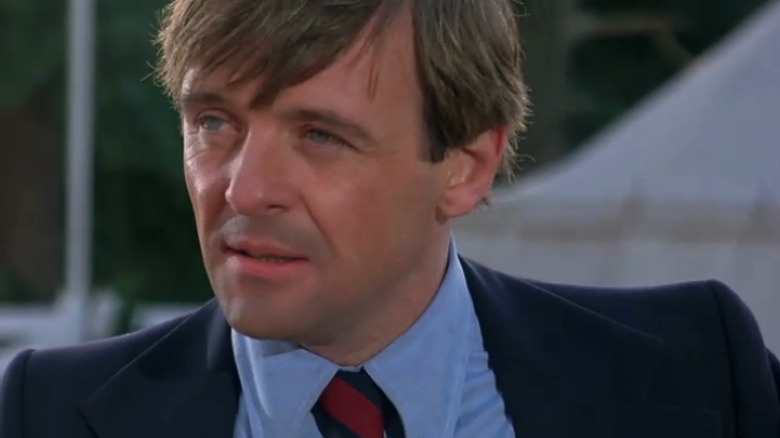
10 May 22:57

How to Tell Your Frozen Food Has Gone Bad (Without Tasting It)

by Jeff Somers

It’s difficult to imagine modern life without access to refrigeration. Not only does it make grocery shopping a lot easier to plan, being able to freeze our food and leftovers allows us to take advantage of bulk discounts and reduce food waste. Plus, having a freezer means you can literally enjoy a burrito whenever…

Read more...

10 May 18:51

Fallout creator reveals the true purpose of the vaults

by Ed Smith
Fallout creator reveals the true purpose of the vaults

Fallout vaults are unusual. On the surface, they’re basically sophisticated bomb shelters designed to help US citizens survive the eponymous fallout of the 2077 war. But if you’ve played Fallout 3, New Vegas, or Fallout 4 - or the classic isometric RPG games from Interplay and Obsidian - you know that the vault’s creator, Vault-Tec, is up to something more sinister. Now, Tim Cain, co-creator of the original Fallout way back in 1997, shares the true, original meaning behind the vaults.

MORE FROM PCGAMESN: Fallout 4 console commands, Fallout 4 mods, Fallout 4 System Requirements
10 May 18:34

The Creator Of Cowboy Bebop Made A Netflix Anime Predicting The Dangers Of A.I. Art

by Rafael Motamayor

Artificial intelligence has been a sci-fi villain for about as long as the concept has existed, but in the past few months, we've seen the issue of AI become timely, present, and poignant. There is AI taking over journalism, AI being used to replicate actors' voices, and AI making a whole OASIS album. Artificial intelligence is also part of the negotiations that led to the Writers Guild of America's strike, as concerns about AI's role in the creative arts become more and more urgent. 

It used to be a common belief that robots would take over technical jobs like programming, not the arts. This is a development few saw coming, but "Cowboy Bebop" creator Shinichirō Watanabe was one of those few. Back in 2019, Watanabe made a new anime in commemoration of the 20th anniversary of the famed studio, Bones ("Fullmetal Alchemist," "Mob Psycho 100," "My Hero Academia"), called "Carole & Tuesday." 

The show's basic premise is that it takes place in the future after humanity has colonized Mars. We follow two young girls, one who escapes a repressed life of wealth as the daughter of a prominent politician; the other an orphan refugee from Earth. The two meet and instantly form a connection as they decide to become a singer-songwriter duo. The problem is, no one cares about original music made by people anymore, because all art is created by powerful algorithms and AI.

The Meaning Of Art

From the very first episode, we meet what is essentially the third main character, Angela, a former child actor and model who is transitioning into a career as an idol. Her mother gets her a famed manager named Tao, who uses artificial intelligence and high tech to elaborately manufacture pop stars, engineer hit songs, and craft the ideal image of stardom. At first, Tao is annoyed by Angela, as he is used to working purely with AI, while the singer serves as little more than a puppet. 

AI is so prominent in the world of "Carole & Tuesday" that two girls simply jamming and singing a very rough draft of a song they came up with hours earlier is enough to blow the minds of everyone who listens. Despite what Tao and other producers say throughout the anime, there is such a thing as a human element in art. Even songs as perfectly constructed and thought out by AI as the Mermaid Sisters' entry to the singing competition, Mars' Brightest, can't hit quite as hard as the simple songs by two teenage girls. 

Shinichirō Watanabe is hugely and unequivocally speaking from a place of skepticism when it comes to technology, giving us not only cold and soulless AI art, but also robots that direct music videos as a front for a scam, and a Pinocchio-looking investing advisor robot who steals crypto from rich jerks. That's not to say that technology has no place in our lives, but to lose a human touch is to lose something in ourselves. Watanabe argues that music is an equalizer — a low-budget, lo-fi piano and guitar performance by two young girls can have as big if not a bigger resonance than the biggest and most expensive pop song created by a team of dozens. 

The Power Of Art

Sure, Angela still rises to superstardom thanks to her AI-made songs, while Carole and Tuesday struggle financially the entire anime, but as the opening narration of every episode tells us, it is a song made by the two girls that changes the world.

Shinichirō Watanabe may get a bit too simplistic in the way he portrays politics and social issues, but there is no denying how effective "Carole & Tuesday" is at what it does. This is because the second half of the show ramps up other timely commentaries, like the rise of right-wing fear-mongering and an anti-immigration movement on Mars — complete with Martian ICE. Meanwhile, time and time again, the anime shows the power of music to transcend barriers and bring catharsis, and to connect with people in powerful ways, like a performance at Mars' SXSW (really) inspiring an aging singer to return to her non-AI-driven music roots. 

The show culminates in a phenomenal final performance of a protest song done in support of Earthian immigrants on Mars, a performance that supposedly inspires a wave of change all throughout the red planet by bringing empathy and understanding. Sure, it is cheesy and easy, but it is the perfect summary of Watanabe's ideas in "Carole & Tuesday" — that art made by human souls has something intrinsically special that can never be replicated by any machine, any corporation, or any marketing department. Not all problems can be solved by song, but art definitely has the potential to change minds, and at times even the world. With AI, however, we lose that potential.

Read this next: Anime Shows Like Cowboy Bebop That Are Worth Your Time

The post The Creator Of Cowboy Bebop Made a Netflix Anime Predicting The Dangers Of A.I. Art appeared first on /Film.
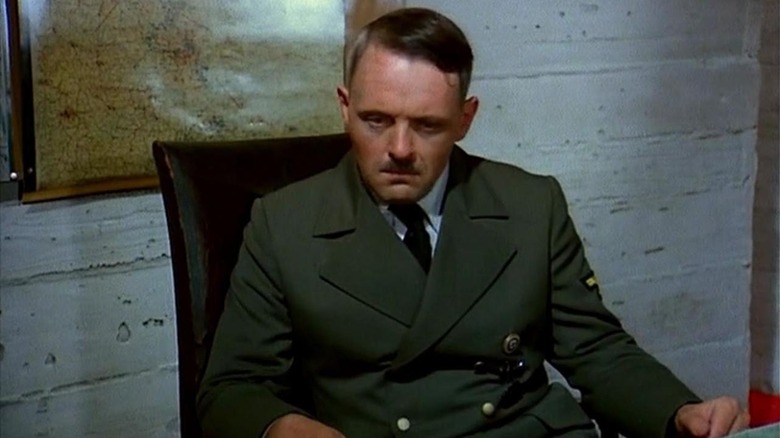
09 May 22:06

Product Security: Harnessing the Collective Experience and Collaborative Tools in DevSecOps

by The Hacker News
In the fast-paced cybersecurity landscape, product security takes center stage. DevSecOps swoops in, seamlessly merging security practices into DevOps, empowering teams to tackle challenges. Let's dive into DevSecOps and explore how collaboration can give your team the edge to fight cyber villains. Application security and product security Regrettably, application security teams often intervene
09 May 17:28

Why Anakin Killed The Younglings In Star Wars: Revenge Of The Sith

by Sandy Schaefer

Anakin Skywalker murdering Younglings in George Lucas's "Star Wars: Episode III -- Revenge of the Sith" might be both one of the most brutal and darkly ridiculous "Star Wars" moments ever ... from a certain point of view. (*adapts Darth Vader voice* All too easy.) 

Upon arriving at the eleventh hour to assist Darth Sidious/Palpatine in defeating Mace Windu (sending Samuel L. Jackson's purple lightsaber-wielding Jedi out like the badass he is), Anakin pledges his loyalty to the Sith lord. Our "Chosen One" then proceeds to march an army of Clone Troopers over to the Jedi Temple on Coruscant. Not long after, we cut to Anakin cornering a group of Younglings in the Jedi Council's chambers. Cue Anakin extending his lightsaber as he prepares to mow down a room of wide-eyed and terrified children.

In context, of course, this scene is extremely effective in showing just how far gone Anakin is from that young man who once cried after killing a bunch of Tusken Raiders for kidnapping his mother and letting her die. (Not that this was, in any way, a justified course of action.) Whatever part of him was still capable of feeling remorse has been banished to the deepest recesses of his mind. Once you've crossed the line into executing children on your boss' orders, you've truly committed yourself to the whole bad guy thing.

What makes this moment borderline comical is that, right before it happens, we see Clone Troopers battling fully-grown Jedi in an intense firefight spread throughout the Temple. Is the implication that Anakin beelined for the closest potential Younglings hiding spot, leaving the clones to do all the heavy lifting? And why bother killing a bunch of kids barely strong enough to pick up a lightsaber in the first place? The film doesn't really offer an explanation, but we may find the answers elsewhere.

Look To The Sacred Texts

"Star Wars" movie novelizations have always been an invaluable resource for anyone seeking greater insight into the films' plots and the motivations of their characters. Sure, we can quibble over whether they're strictly canonical or not, but the general rule of thumb is that as long as they don't directly contradict anything in the movies, they're fair game. 

In the case of "Revenge of the Sith," there's a key difference between what Palpatine tells Anakin after dubbing him Darth Vader in the film and what he says to Anakin in the official novelization by Matthew Stover. In the movie, Palpatine states:

"The Jedi are relentless. If they are not all destroyed it will be civil war without end. First, I want you to go to the Jedi Temple. We will catch them off-balance. Do what must be done, Lord Vader. Do not hesitate. Show no mercy. Only then will you be strong enough with the dark side to save Padmé."

In Stover's novel, however, Palpatine's command leaves even less wiggle room when it comes to his full meaning:

"The Jedi are relentless. If they are not destroyed to the last being, there will be civil war without end. To sterilize the Jedi Temple will be your first task. Do what must be done, Lord Vader. Do not hesitate. Show no mercy. Leave no living creature behind. Only then will you be strong enough with the dark side to save Padmé."

Terms like "sterilize" directly evoke the fascist regime of Nazi Germany and the Holocaust. Moreover, Palpatine demanding that Anakin "leave no living creature behind" makes it horribly clear: the Sith lord was calling for nothing less than the complete and utter eradication of the Jedi Order and its members, regardless of their age or training.

Revisiting Order 66

One of the best things about the "Star Wars" television series are their capacity to do things the prequel films never could, like depicting paradigm-shifting events through the eyes of different characters. In "The Mandalorian," we see Order 66 from Din Grogu's perspective (yes, we're using his new name now, get used to it), revealing how he escaped Anakin's assault on the Jedi Temple. The "Obi-Wan Kenobi" series further reveals that Inquisitor Reva was once a Youngling who survived the Temple attack, making her one of the few individuals aware that Anakin and Vader are the same person.

Those "Obi-Wan Kenobi" flashbacks to Order 66 also serve the purpose of clarifying that yes, Anakin fought side-by-side with the clones as they steamrolled through the Temple on his way to the Jedi Council's chambers. The "Revenge of the Sith" novelization makes it equally explicit that Anakin killed many of the Temple's Jedi himself, starting with the Gate Master Jurokk. A description of their encounter reads as follows:

"Anakin," he said slowly, "what's going on? Something's happened. Something horrible. How bad is it—?"

The last thing Jurokk felt was the emitter of a lightsaber against the soft flesh beneath his jaw; the last thing he heard, as blue plasma chewed upward through his head and burst from the top of his skull and burned away his life, was Anakin Skywalker's melancholy reply.

"You have no idea ..."

Obviously, we're meant to intuit what Anakin does prior to the infamous Younglings scene in "Revenge of the Sith." Still, as this passage illustrates, simply showing the start of Anakin's murderous rampage makes his eventual killing of the Younglings impactful in a way that the movie, with its curious editing of the events leading up to this moment, does not.

The Downfall Of Anakin Skywalker

Nobody goes from a cheerful kid who loves podracing to committing genocide overnight, and Anakin Skywalker is no different. The "Star Wars" prequels, however, skip over a lot of important steps while charting Anakin's downfall, leaving it once again to their novelizations and the "Star Wars" TV shows to fill in the blanks. 

The animated "Clone Wars" series, in particular, goes a long way in showing how Anakin earned his reputation as a cunning warrior. At the same time, it uses a far subtler hand than the prequels when it comes to exploring the darkness looming beneath his noble exterior. There may be no better example of this than in the episode where Anakin ends a standoff between Obi-Wan, the Mandalorian Duchess Satine Kryze, and the treacherous Kalevalan prince Tal Merrik by sneaking up and stabbing Tal in the back:

The way Anakin casually shrugs off his actions ("What? He was gonna blow up the ship."), combined with composer Kevin Kiner integrating a few notes from Darth Vader's iconic theme, foreshadows the slippery slope Anakin was on well before he started butchering children. It certainly applies a much finer touch than his meme-spawning, "Actually, I'm kind of cool with dictatorships" comments from "Attack of the Clones."

That's not to suggest the prequels are devoid of understated storytelling. Arguably the best moment in "Revenge of the Sith" -- and maybe even the entire prequel trilogy -- is the scene where Anakin silently contemplates whether or not to align himself with Palpatine. But for the most part, those movies tend to favor something of a sledgehammer approach. And nothing gets your point across quite like showing your story's supposed hero (reluctantly but willingly) pulling out their weapon to massacre a bunch of kids.

Read this next: The Most Brutal Moments In The Star Wars Franchise, Ranked

The post Why Anakin Killed The Younglings In Star Wars: Revenge Of The Sith appeared first on /Film.
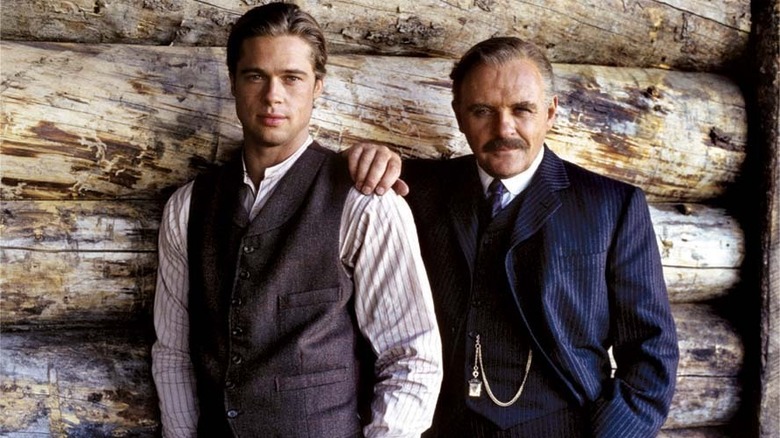
09 May 17:24

The government is very hackable, and they have your data

by Katie Malone

Data breaches and security failures happen everyday. There’s little we can do about that if we want to participate in modern society, except maybe switch out the companies we interact with for their competitors if we presume one to be more secure. There’s one service that we don’t have a choice on whether to interact with, no matter how high profile its security incidents become: the federal government.

A breach of the Office of Personnel Management announced in 2015 it had leaked background investigation records, impacting 21.5 million individuals, according to the agency. The highly publicized Solarwinds hack discovered in 2020 exposed government and business records to Russian insiders. Earlier this year, the US Marshals Service division of the Department of Justice became a target, when hackers stole personal information about investigation targets, personnel and more.

The attacks were targeted, usually seeking out some type of sensitive state information. But we all have sensitive information stored throughout federal agencies like our social security numbers or home addresses. Probably even more information is at stake if you utilize federal services like Medicare, student loans or SNAP benefits. We have no choice but to give the federal government access to our personal information in exchange for certain services, unless you’re reading this while living off grid.

“If we want to live in the information age, and we're using some of these systems, we are inherently giving up control,” Kevin Cleary, clinical assistant professor of management science and systems at University at Buffalo, told Engadget. “You have to trust that agency has put forward all the best controls and practices.”

In response, the federal government has developed agencies like the Cybersecurity and Infrastructure Security Agency to lead better security initiatives across departments. In part, this is intended to help you feel a little bit better about storing your data within federal servers by setting higher standards for how it safeguards your data. According to Michael Duffy, associate director of the cybersecurity division at CISA, since the agency’s establishment in 2018, it’s spearheaded the most progress he’s seen in his federal cybersecurity career.

So, things are improving, and you can probably trust the federal government to keep your data safe in the same way you trust the companies you interact with everyday. What makes the government so different, though, is that it’s a high profile target. Adversarial countries want in on state secrets while, at the same time, it’s hard to prioritize spending on security measures. Getting tax-payer funds to fill a pothole on your local highway is hard enough when the damage is tangible and obvious, while security is hard to quantify the benefits of until an attack occurs. In other words, the value of security investments aren’t proven until it’s already too late.

This has gotten better. Security investments in the federal government largely trend upwards. Still, it’s not enough. “Sometimes their budgets don't allow them to take every step or to everything that they would like to do, because you just simply don't have the money,” Marisol Cruz Cain, director of information technology and cybersecurity at GAO, said.

But the reason why the federal government may appear less secure is because of its obligation for transparency. There’s a responsibility to share lessons learned after an incident, and make sure citizens know what happened. That’s actually a big part of CISA’s job. “We are really looking at ways that we are making it more acceptable to raise the hand and say this is the way that we were attacked or an incident occurred,” Duffy said.

The government also interacts with a ton of outside businesses. So, say a government contractor experiences a breach or security incident, that means that data held in federal tech could be exposed. This opens up a slew of new attack vectors, and possibilities for malpractice.

You can actually see how secure certain agencies are thanks to the Government Accountability Office (GAO) and legislation like the Federal Information Technology Acquisition Reform Act. The latter documents tech modernization efforts across major agencies, including cyber readiness. GAO, for its part, audits cybersecurity efforts and develops privacy impact assessments that are publicly available descriptions about what information the agency collects, how they use it and more.

But with all these audits come a relatively bleak conclusion. Agencies aren’t evaluating their policies and procedures to make sure that high profile incidents don’t happen on a regular basis, Cruz Cain said. Your information will be on those servers whether you like it or not.

This article originally appeared on Engadget at https://www.engadget.com/the-government-is-very-hackable-and-they-have-your-data-163034576.html?src=rss
09 May 16:13

Saints Row The Heist & The Hazardous Released

by Blue
It's time to open a Corona and wax on about the importance of family. The Heist & The Hazardous is now available for Saints Row on PC and consoles, adding the first DLC to the open-world action game...
09 May 14:46

The SBOM Bombshell

by Matt Honea

SBOMs can be used for managing risk and determining vulnerability impact, but it’s very hard to build holistic risk models when the data is not standardized across multiple platforms.

The post The SBOM Bombshell appeared first on SecurityWeek.

09 May 14:43

I Learned To Hold My Breath Like The Actors In Avatar: The Way Of Water

by Jenna Busch

"Avatar: The Way of Water" is out on digital. Perhaps you've heard of it? The long-awaited sequel to 2009's "Avatar" by James Cameron made almost $2.5 billion at the box office. It continues the story of the Sully family as they hide out from the humans of the RDA, who have returned to Pandora after years away. The family finds sanctuary with the Metkayina, a water-based group of Na'vi who have developed physical adaptations for swimming.

You may have heard the stories on-set of the actors holding their breath underwater, aka freediving, for a very long time. This includes Kate Winslet — who played Ronal, one of the Metkayina — holding her breath for a whopping seven minutes and 15 seconds. In fact, all the swimming scenes were done "wet for wet," meaning that they were all shot underwater. That meant the actors had to learn to swim under the surface for a long time without scuba gear, which would cause too many bubbles. Those bubbles read on a camera, similar to the motion capture dots that the VFX artists need to render the final shots. 

There is a method to this breath-holding freediving technique, and it's fascinating. I recently attended an event at a local Los Angeles swimming pool to celebrate the digital release of the film, and Kirk Krack, Marine Unit and consultant on "Avatar: The Way of Water," taught us the same techniques that the actors learned. We started on land, then moved into a pool. 

Do not try any of this at home. We were being supervised, and there were a lot of safety precautions, including not doing this alone. If you want to attempt freediving and breath holds, please check in with Krack's company, Performance Freediving Academy to see where to get trained. 

Overcoming Your Brain

Kirk Krack created the first Breath-Hold Surf Survival (BHSS) course. He worked with Tom Cruise and Rebecca Ferguson on underwater techniques for "Mission: Impossible — Rogue Nation," with Margot Robbie and her stunt double for "Suicide Squad, and even magician David Blaine. He also brought along his teen daughter Kaila (right under the monitor screen in the picture above), who doubled for Trinity Jo-Li Bliss, the actor who played Tuk, Jake (Sam Worthington) and Neytiri's (Zoe Saldaña) youngest daughter in the film. 

Krack was on set every day and in most of the underwater scenes for safety, though you can't see him in the final shots. He wasn't wearing motion capture dots but was on set to aid the actors he trained. He was assisted at the event I attended by Jurgen Heitmann and Andy Walshe from The Liminal Collective, a company that works to expand the limits of human potential and athletic performance. 

He began with a presentation about how it all works, and the idea of overcoming primal fears like drowning and the body's response to lack of oxygen. We were told that the world record for breath-holding is over 11 minutes and that Krack himself had done it for seven. We learned about how the body responds to carbon dioxide building up in the body and how it creates carbonic acid. Our brains notice this acid and tell us to breathe to move it through. Nothing terrible will happen if we hold our breath for that long (with all safety precautions in place, and again, do not try this without instruction). What we were learning is how to overcome the body's normal signals. Let me tell you, it wasn't easy, but it's wild to try. 

Breathing ... So You Don't Have To Breathe

We began by doing a series of sets of something called a "breathe up." You breathe into your diaphragm, then into your lower lungs and ribs. You breathe in, hold for a count of two, breathe out slowly for 10 seconds with an audible sound, then hold for two. You do this for a while, depending on how long your ultimate breath-hold goal is for. We did it for a minute for some, and two minutes for others. Then we did a "purge," which was a deep breath into the diaphragm, then the lower lungs and ribs, then we top it up to the point that your shoulders rise up. Then you release it for four pushed exhales. You breathe normally for 10 seconds, then take a deep inhale and begin your breath-hold. All of this is to manipulate your system into being calm and relaxed enough not to breathe for an extended period. 

We did a one-minute hold, then a two-minute, and then a two-and-a-half-minute hold while lying on yoga mats on the ground. As we held our breath, Krack took us through relaxation techniques, inviting us to relax individual body parts as well as the mind. 

I was pretty good at it on the yoga mat! Oddly enough, the shorter holds cause your body to give you more signs to breathe. My body twitched in the one-minute hold, but not in the longer ones. In the longest hold, it felt like I could have gone on with little problem. Of course, that didn't mean anything to my brain in the water, and there are several reasons for that. 

Water Is Not The Same

For the next phase of the class, we partnered up and put on our wetsuits. Look, I am a baby about the cold. I have something called Raynaud's Phenomenon, which basically means I have crappy circulation. I get cold very easily, and my fingers and toes just go white and numb when it's below 68 degrees. That's all to say that the wetsuit didn't keep me warm. 

My partner went first as we stood in the pool. We were instructed in buddy safety, which includes getting full signals from the other person from underwater, holding your hand in front of their face so they don't bang their face on the side of the pool, and doing the counts for them. 

My partner's final hold was cut short because of the cold temperature, leading Andy Walshe — who was behind us in the pool — to tell us that once the shivering starts, your body's need for oxygen goes up 500 percent! When I began my own attempt, I was already shivering like mad. I was able to hold for one-and-a-half minutes underwater, but it wasn't anything like it was on land. Put me on a yoga mat, and I can relax the rest of my body, but in the water, shivering and watching, it's incredibly difficult. 

It didn't occur to me until I returned from the event that I hadn't been swimming with my head underwater since I had a near-death experience which led to two surgeries. This is a primal fear I didn't have before, that sort of kicked in when I had to let go and float without breathing. 

Taking It Into The Dry World

One thing Krack told us is that the segmented breathing technique that involved breathing into the diaphragm and the lower ribs, holding for two, exhaling for ten seconds, then holding for two again, was beneficial to attempt every day. Now, when I say this, I don't mean in the water. (Yes, that was another safety warning.) He spoke about doing this during the day twenty times, doing some in the morning and the evening split into sets of ten, as it calms the nervous system and helps you relax. Setting aside time to calm down and relax is something I'm familiar with since I meditate daily. I can speak to its benefits, which include reduced anxiety and better technique when I exercise. 

I'm also a marathon runner, and even though I do meditate, doing something like this where you hold your breath for a long time was really strange for my body. I spend a lot of time running long distances, where the big thing is breathing and not holding your breath (the same goes for my gym training). 

To be completely truthful, I was a little frustrated with myself for not being able to hold my breath as long underwater. That led me to attempt it again at home. (I was practicing on land, and there was someone with me. Safety warning again, friends.) I was able to get my breath hold up to three-and-a-half minutes. This was on land, not in the water, though, which I would love to attempt again ... with an instructor. I also think I was able to do it because I wasn't in the water, floating with nothing to hold onto, because I didn't feel as helpless (which reminded me of the surgeries).

Respect For The Actors Who Did This

The way the human body works is fascinating to me. The idea that we can manipulate our own systems to do things we wouldn't normally do and override signals that we don't need at the moment is crazy. I mean, I was familiar with how breath can change moods and feelings from both meditation and running (which is the one thing I can always count on to calm me down), but this is a whole new level of it. 

One thing Krack mentioned several times was that the techniques becoming almost second nature after extensive training allowed the actors to stop thinking about them and focus on acting. Some of them, he said, were so into the whole thing so much that they didn't want to stop. He said that Sigourney Weaver, who played Kiri, would be over at the tank even when she wasn't shooting. Bailey Bass, who played Tsireya (Reya), started out by not holding her breath for long and being at the bottom of the pack. After a while, she ended up being able to hold her breath for a long time and wanted to stay in the tank as well. 

Having attempted this, I have an enormous amount of respect, not just for the actors who learned the techniques, but for Krack, who makes this seem very easy and comfortable. I may admit to having a few nightmares the day before, but despite my failed attempt to become a Metkayina, I'm pretty proud of holding my breath on land for three-and-a-half minutes. I'm definitely going to look for more instruction, and I'm going to try the breathe-up technique each day to get better at this. 

"Avatar: The Way of Water" is out on digital right now. 

Read this next: The 15 Most Influential VFX Artists In Movie History

The post I Learned To Hold My Breath Like The Actors In Avatar: The Way Of Water appeared first on /Film.
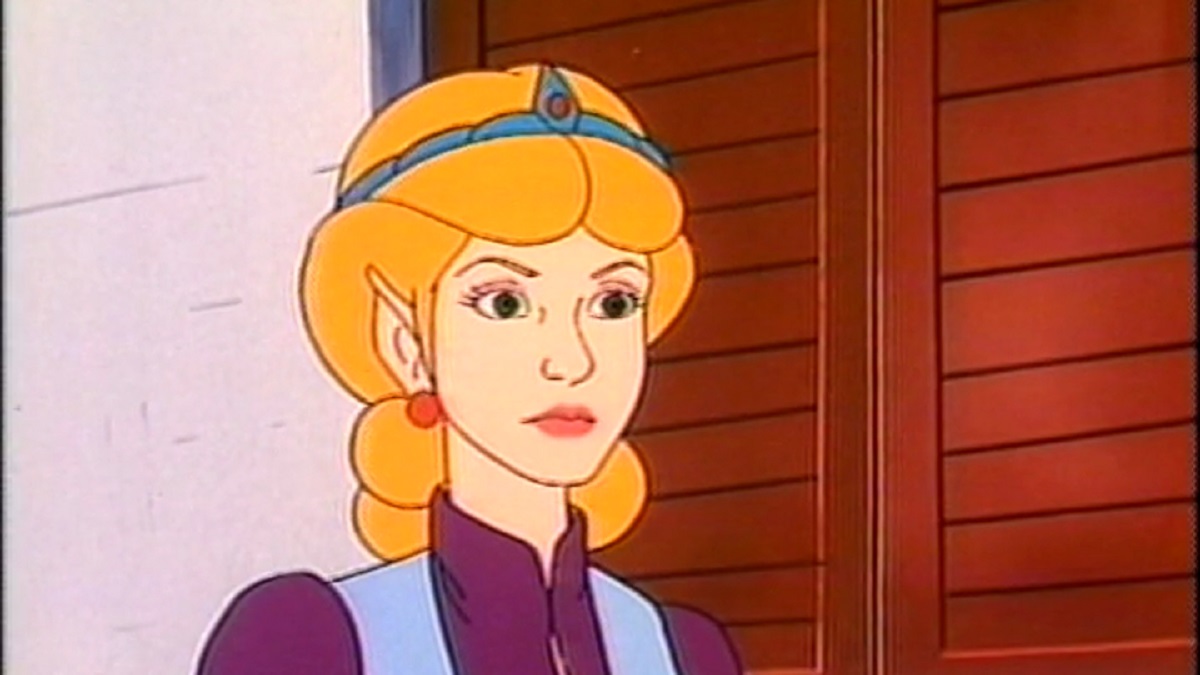
09 May 14:42

Doom 2 RPG has been unofficially ported to PC

by Kaan Serin

During the noughties, developer ID Software adapted some of their iconic shooters into curious mobile spin-offs with Doom RPG, Doom 2 RPG, and Wolfenstein RPG. These mixed Doom with old-school dungeon-crawler design, letting you shoot monsters at a considerably slower pace. Over a decade after their initial releases, developer GEC.inc unofficially ported Doom RPG onto PCs and now the team is back with a port for the sequel.

Read more