Ronald.phillips
Shared posts
NASA recruits explorers for yearlong simulated Mars mission on Earth - CNET

The Gap in Your Zero Trust Implementation
A guide to combatting human-operated ransomware: Part 1
This blog is part one of a two-part series focused on how Microsoft DART helps customers with human-operated ransomware. For more guidance on human-operated ransomware and how to defend against these extortion-based attacks, refer to our human-operated ransomware docs page.
Microsoft’s Detection and Response Team (DART) has helped customers of all sizes, across many industries and regions, investigate and remediate human-operated ransomware for over five years. This blog aims to explain the process and execution used in our customer engagements to provide perspective on the unique issues and challenges regarding human-operated ransomware. We will also discuss how DART leverages Microsoft solutions such as Microsoft Defender for Endpoint, Microsoft Defender for Identity, and Microsoft Cloud App Security (MCAS) within customer environments while collaborating with cross-functional threat intelligence teams across Microsoft who similarly track human-operated ransomware activities and behaviors.
Human-operated ransomware is not a malicious software problem—it’s a human criminal problem. The solutions used to address commodity problems aren’t enough to prevent a threat that more closely resembles a nation-state threat actor. It disables or uninstalls your antivirus software before encrypting files. They locate and corrupt or delete backups before sending a ransom demand. These actions are commonly done with legitimate programs that you might already have in your environment and are not considered malicious. In criminal hands, these tools are used maliciously to carry out attacks.
Responding to the increasing threat of ransomware requires a combination of modern enterprise configuration, up-to-date security products, and the vigilance of trained security staff to detect and respond to the threats before data is lost.
Key steps in DART’s approach to conducting ransomware incident investigations
To maximize DART’s efforts to restore business continuity while simultaneously analyzing the details of the incident, a careful and thorough investigation is coordinated with remediation measures to ensure that the root cause is determined. These efforts take place as we assist and advise customers with the task of getting the organization up and running again in a secure manner.
Every effort is made to determine how the adversary gained access to the customer’s assets so that vulnerabilities can be remediated. Otherwise, it is highly likely that the same type of attack will take place again in the future. In some cases, the threat actor takes steps to “cover their tracks” and destroy evidence, so it is possible that the entire chain of events may not be evident.
The following are three key steps in our ransomware investigations:

Figure 1. Key steps in DART’s ransomware investigations.
1. Assess the current situation
This is critical to understanding the scope of the incident and for determining the best people to assist and to plan and scope the investigation and remediation tasks. Asking these initial questions is crucial in helping us determine the situation being dealt with:
What initially made you aware of the ransomware attack?
If the initial threat was identified by IT staff (like noticing backups being deleted, antivirus (AV) alert, endpoint detection and response (EDR) alert, suspicious system changes), it is often possible to take quick decisive measures to thwart the attack, typically by disabling all inbound and outbound internet communication. This may temporarily affect business operations, but that would typically be much less impactful than an adversary deploying ransomware.
If the threat was identified by a user call to the IT helpdesk, there may be enough advance warning to take defensive measures to prevent or minimize the effects of the attack. If the threat was identified by an external entity (like law enforcement or a financial institution), it is likely that the damage is already done, and you will see evidence in your environment that the threat actor has already gained administrative control of your network. This can range from ransomware notes, locked screens, or ransom demands.
What date/time did you first learn of the incident?
Establishing the initial activity date and time is important because it helps narrow the scope of the initial triage for “quick wins.” Additional questions may include:
- What updates were missing on that date? This is important to understand what vulnerabilities may have been exploited by the adversary.
- What accounts were used on that date?
- What new accounts have been created since that date?
What logs (such as AV, EDR, and VPN) are available, and is there any indication that the actor is currently accessing systems?
Logs are an indicator of suspected compromise. Follow-up questions may include:
- Are logs being aggregated in a SIEM (like Microsoft Azure Sentinel, Splunk, ArcSight) and current? What is the retention period of this data?
- Are there any suspected compromised systems that are experiencing unusual activity?
- Are there any suspected compromised accounts that appear to be actively used by the adversary?
- Is there any evidence of active command and controls (C2s) in EDR, Firewall, VPN, Proxy, and other logs?
As part of assessing the current situation, DART may require a domain controller (DC) that was not ransomed, a recent backup of a DC, or a recent DC taken offline for maintenance/upgrades. We also ask our customers whether multifactor authentication (MFA) was required for everyone in the company and if Microsoft Azure Active Directory was used.
2. Identify line-of-business (LOB) apps that are unavailable due to the incident
This step is critical in figuring out the quickest way to get systems back online while obtaining the evidence required.
Does the application require an identity?
- How is authentication performed?
- How are credentials such as certificates or secrets stored and managed?
Are tested backups of the application, configuration, and data available?
Are the contents and integrity of backups regularly verified using a restore exercise? This is particularly important after configuration management changes or version upgrades.
3. Explain the compromise recovery (CR) process
This is a follow-up engagement that may be necessary if DART determines that the control plane (typically Active Directory) has been compromised.
DART’s investigation always has a goal of providing output that feeds directly into the CR process. CR is the process by which we remove the nefarious attacker control from an environment and tactically increase security posture within a set period. CR takes place post-security breach. To learn more about CR, read the Microsoft Compromise Recovery Security Practice team’s blog CRSP: The emergency team fighting cyber attacks beside customers.
Once we have gathered the responses to the questions above, we can build a list of tasks and assign owners. A key factor in a successful incident response engagement is thorough, detailed documentation of each work item (such as the owner, status, findings, date, and time), making the compilation of findings at the end of the engagement a straightforward process.
How DART leverages Microsoft security solutions to combat human-operated ransomware
DART leverages cross-functional teams, such as internal threat intelligence teams, who track adversary activities and behaviors, customer support, and product development teams behind Microsoft products and services. DART also collaborates with other incident response vendors the customer may have engaged and will share findings whenever possible.
DART relies heavily on data for all investigations. The team uses existing deployments of Microsoft solutions, such as Defender for Endpoint, Defender for Identity, and MCAS within customer environments along with custom forensic data collection for additional analysis. If these sensors are not deployed, DART also requests that the customer deploy these to gain deeper visibility into the environment, correlate against threat intelligence sources, and enable our analysts to scale in speed and agility.
Microsoft Defender for Endpoint
Microsoft Defender for Endpoint is Microsoft’s enterprise endpoint security platform designed to help enterprise network security analysts prevent, detect, investigate, and respond to advanced threats. As shown in the image below, Defender for Endpoint can detect attacks using advanced behavioral analytics and machine learning. DART analysts use Defender for Endpoint for attacker behavioral analytics.

Figure 2. Sample alert in Microsoft Defender for Endpoint for a pass-the-ticket attack.
DART analysts can also perform advanced hunting queries to pivot off indicators of compromise (IOCs) or search for known behavior if a threat actor group is identified.

Figure 3. Advanced hunting queries to locate known attacker behavior.
In Defender for Endpoint, customers have access to a real-time expert-level monitoring and analysis service by Microsoft Threat Experts for ongoing suspected actor activity. Customers can also collaborate with experts on demand for additional insights into alerts and incidents.

Figure 4. Defender for Endpoint shows detailed ransomware activity.
Microsoft Defender for Identity
DART leverages Microsoft Defender for Identity to investigate known compromised accounts and to find potentially compromised accounts in your organization. Defender for Identity sends alerts for known malicious activity that actors often use such as DCSync attacks, remote code execution attempts, and pass-the-hash attacks. Defender for Identity enables our team to pinpoint nefarious activity and accounts to narrow down our investigation.

Figure 5. Defender for Identity sends alerts for known malicious activity related to ransomware attacks.
Microsoft Cloud App Security
MCAS allows DART analysts to detect unusual behavior across cloud apps to identify ransomware, compromised users, or rogue applications. MCAS is Microsoft’s cloud access security broker (CASB) solution that allows for monitoring of cloud services and data access in cloud services by users.

Figure 6. The Microsoft Cloud App Security dashboard allows DART analysis to detect unusual behavior across cloud apps.
Microsoft Secure Score
The Microsoft 365 Defender stack provides live remediation recommendations to reduce the attack surface. Microsoft Secure Score is a measurement of an organization’s security posture, with a higher number indicating more improvement actions taken. Refer to our documentation to find out more about how your organization can leverage this feature to prioritize remediation actions that are based on their environment.
Understand your business risks
Beyond the immediate risk of encrypted files, understanding the disruption to business operations, data theft, extortion, follow-on attacks, regulatory and compliance reporting, and damage to reputation fall outside technical controls. Microsoft DART recommends each organization weigh these risks when determining the appropriate way to respond based on the organization’s policies, risk appetite, and applicable regulatory requirements.
Microsoft Defender for Endpoint, Microsoft Defender for Identity, and MCAS all work seamlessly together to provide customers with enhanced visibility of the attacker’s actions within and investigate attacks. Given our vast experience and expertise in investigating countless human-operated ransomware events over the past few years, we have shared what we consider best practices.
Learn more
Want to learn more about DART? Read our past blog posts.
To learn more about Microsoft Security solutions, visit our website. Bookmark the Security blog to keep up with our expert coverage on security matters. Also, follow us at @MSFTSecurity for the latest news and updates on cybersecurity.
The post A guide to combatting human-operated ransomware: Part 1 appeared first on Microsoft Security Blog.
Catching the big fish: Analyzing a large-scale phishing-as-a-service operation
In researching phishing attacks, we came across a campaign that used a rather high volume of newly created and unique subdomains—over 300,000 in a single run. This investigation led us down a rabbit hole as we unearthed one of the operations that enabled the campaign: a large-scale phishing-as-a-service operation called BulletProofLink, which sells phishing kits, email templates, hosting, and automated services at a relatively low cost.
With over 100 available phishing templates that mimic known brands and services, the BulletProofLink operation is responsible for many of the phishing campaigns that impact enterprises today. BulletProofLink (also referred to as BulletProftLink or Anthrax by its operators in various websites, ads, and other promotional materials) is used by multiple attacker groups in either one-off or monthly subscription-based business models, creating a steady revenue stream for its operators.
This comprehensive research into BulletProofLink sheds a light on phishing-as-a-service operations. In this blog, we expose how effortless it can be for attackers to purchase phishing campaigns and deploy them at scale. We also demonstrate how phishing-as-a-service operations drive the proliferation of phishing techniques like “double theft”, a method in which stolen credentials are sent to both the phishing-as-a-service operator as well as their customers, resulting in monetization on several fronts.
Insights into phishing-as-a-service operations, their infrastructure, and their evolution inform protections against phishing campaigns. The knowledge we gained during this investigation ensures that Microsoft Defender for Office 365 protects customers from the campaigns that the BulletProofLink operation enables. As part of our commitment to improve protection for all, we are sharing these findings so the broader community can build on them and use them to enhance email filtering rules as well as threat detection technologies like sandboxes to better catch these threats.
Understanding phishing kits and phishing-as-a-service (PhaaS)
The persistent onslaught of email-based threats continues to pose a challenge for network defenders because of improvements in how phishing attacks are crafted and distributed. Modern phishing attacks are typically facilitated by a large economy of email and false sign-in templates, code, and other assets. While it was once necessary for attackers to individually build phishing emails and brand-impersonating websites, the phishing landscape has evolved its own service-based economy. Attackers who aim to facilitate phishing attacks may purchase resources and infrastructure from other attacker groups including:
- Phish kits: Refers to kits that are sold on a one-time sale basis from phishing kit sellers and resellers. These are packaged files, usually a ZIP file, that come with ready-to-use email phishing templates designed to evade detection and are often accompanied by a portal with which to access them. Phish kits allow customers to set up the websites and purchase the domain names. Alternatives to phishing site templates or kits also include templates for the emails themselves, which customers can customize and configure for delivery. One example of a known phish kit is the MIRCBOOT phish kit.
- Phishing-as-a-service: Similar to ransomware-as-a-service (RaaS), phishing-as-a-service follows the software-as-a-service model, which requires attackers to pay an operator to wholly develop and deploy large portions or complete phishing campaigns from false sign-in page development, website hosting, and credential parsing and redistribution. BulletProofLink is an example of a phishing-as-a-service (PhaaS) operation.

Figure 1. Feature comparison between phishing kits and phishing-as-a-service
It’s worth noting that some PhaaS groups may offer the whole deal—from template creation, hosting, and overall orchestration, making it an enticing business model for their clientele. Many phishing service providers offer a hosted scam page solution they call “FUD” Links or “Fully undetected” links, a marketing term used by these operators to try and provide assurance that the links are viable until users click them. These phishing service providers host the links and pages and attackers who pay for these services simply receive the stolen credentials later on. Unlike in certain ransomware operations, attackers do not gain access to devices directly and instead simply receive untested stolen credentials.
Breaking down BulletProofLink services
To understand how PhaaS works in detail, we dug deep into the templates, services, and pricing structure offered by the BulletProofLink operators. According to the group’s About Us web page, the BulletProofLink PhaaS group has been active since 2018 and proudly boasts of their unique services for every “dedicated spammer”.

Figure 2. The BulletProofLink’s ‘About Us’ page provides potential customers an overview of their services.
The operators maintain multiple sites under their aliases, BulletProftLink, BulletProofLink, and Anthrax, including YouTube and Vimeo pages with instructional advertisements as well as promotional materials on forums and other sites. In many of these cases, and in ICQ chat logs posted by the operator, customers refer to the group as the aliases interchangeably.

Figure 3. Video tutorials posted by the Anthrax Linkers (aka BulletProofLink)
BulletProofLink registration and sign-in pages
BulletProofLink additionally hosts multiple sites, including an online store where they allow their customers to register, sign in, and advertise their hosted service for monthly subscriptions.
Over the course of monitoring this operation, their online store had undergone multiple revisions. The source code for the site’s pages contained references to artifacts elsewhere on the site, which included ICQ chat messages and advertisements. While those references are still present in newer versions, the sign-in page for the monthly subscription site no longer contains service pricing information. In previous versions, the sites alluded to the cost for the operator to host FUD links and return credentials to the purchasing party.

Figure 4. BulletProofLink registration page
Just like any other service, the group even boasts of a 10% welcome discount on customers’ orders when they subscribe to their newsletter.

Figure 5. BulletProofLink welcome promotion for site visitors’ first order
Credential phishing templates
BulletProofLink operators offer over 100 templates and operate with a highly flexible business model. This business model allows customers to buy the pages and “ship” the emails themselves and control the entire flow of password collection by registering their own landing pages or make full use of the service by using the BulletProofLink’s hosted links as the final site where potential victims key in their credentials.
The templates are designed to evade detection while successfully phishing for credentials, but may vary based on the individual purchasing party. Likewise, the wide variety of templates offered does not guarantee that all BulletProofLink facilitated campaigns will look identical. Instead, the campaigns themselves can be identified with a mixture of phishing page source code, combined with the PHP password processing sites referenced therein, as well as the hosting infrastructure used in their larger-scale campaigns. These password-processing domains correlate back to the operator through hosting, registration, email, and other metadata similarities during domain registration.
The templates offered are related to the phishing pages themselves, so the emails that service them may seem highly disparate and handled by multiple operators.
Services offered: Customer hosting and support
The phishing operators list an array of services on their site along with the corresponding fees. As other researchers noted, the monthly service costs as much as $800, while other services cost about $50 dollars for a one-time hosting link. We also found that Bitcoin is a common payment method accepted on the BulletProofLink site.
In addition to communicating with customers on site accounts, the operators display various methods of interacting with them, which include Skype, ICQ, forums, and chat rooms. Like a true software business dedicated to their customers, the operators provide customer support services for new and existing customers.

Figure 6. Screenshot of the BulletProofLink site, which offers a wide array of phishing services impersonating various legitimate services

Figure 7. DocuSign scam page service listed on the BulletProofLink site
The hosting service includes a weekly log shipment to purchasing parties, usually sent manually over ICQ or email. Analysis of individual activity on password-processing replies from the collected infrastructure indicates that the credentials are received on the initial template page and then sent to password-processing sites owned by the operator.

Figure 8. An advertisement from BulletProofLink that showcases their weekly log shipment
At the time of this report, BulletProofLink continues to operate active phishing campaigns, with large volumes of redirections to their password-processing links from legitimate web hosting providers. In the next section, we describe on such campaign.
Tracking a BulletProofLink-enabled campaign
As mentioned, we uncovered BulletProofLink while investigating a phishing campaign that used the BulletProofLink phishing kit on either on attacker-controlled sites or sites provided by BulletProofLink as part of their service. The campaign itself was notable for its use of 300,000 subdomains, but our analysis exposed one of many implementations of the BulletProofLink phishing kit:

Figure 9. End-to-end attack chain of BulletProofLink-enabled phishing campaigns
An interesting aspect of the campaign that drew our attention was its use of a technique we call “infinite subdomain abuse”, which happens when attackers compromise a website’s DNS or when a compromised site is configured with a DNS that allows wildcard subdomains. “Infinite subdomains” allow attackers to use a unique URL for each recipient while only having to purchase or compromise one domain for weeks on end. It is gaining popularity among attackers for the following reasons:
- It serves as a departure from previous techniques that involved hackers obtaining large sets of single-use domains. To leverage infinite subdomains for use in email links that serve to redirect to a smaller set of final landing pages, the attackers then only need to compromise the DNS of the site, and not the site itself.
- It allows phishing operators to maximize the unique domains they are able to use by configuring dynamically generated subdomains as prefix to the base domain for each individual email.
- The creation of unique URLs poses a challenge to mitigation and detection methods that rely solely on exact matching for domains and URLs.
The phishing campaign also impersonated (albeit poorly) the Microsoft logo and branding. The impersonation technique used solid colors for the logo, which may have been done intentionally to bypass detection of the Microsoft logo’s four distinct colors. It is worth noting that later iterations of the campaign have switched to using the four colors in the Microsoft logo.

Figure 10. Phishing lure from a recent credential phishing campaign
These messages also used a technique called zero-point font, which pads the HTML of the message with characters that render as invisible to the user, to obfuscate the email body and attempt to evade detection. This technique is increasingly used by phishers to evade detection.

Figure 11. HTML showing zero-point font date stuffing in an email
We found that the phishing URL in the email contained Base64-encoded victim information along with an attacker-owned site where the user is meant to be redirected. In this campaign, a single base domain was used for the infinite subdomain technique to initiate the redirects for the campaign, which leveraged multiple secondary sites over several weeks.

Figure 12. The format and an example of the phishing URL, which when decoded redirects to the compromised site.
The compromised site redirected to a second domain that hosted the phishing page, which mimicked the Outlook sign-in screen and is generated for each user-specific URL. We found that the page is generated for any number of email addresses entered into the URI, and had no checking mechanisms to guarantee that it wasn’t already used or was related to a live phishing email.
There can be one or more locations to which credentials are sent, but the page employed a few obfuscation techniques to obscure these locations. One attempt to obfuscate the password processing site’s location was by using a function that decodes the location based on calling back to an array of numbers and letters:

We reversed this in Python and found the site that the credentials were being sent to: hxxps://webpicture[.]cc/email-list/finish-unv2[.]php. The pattern “email-list/finish-unv2.php” came in one of these variations: finish-unv2[.]php, finish-unv22[.]php, or finish[.]php. These variations typically used the term “email-list” as well as another file path segment referencing a particular phishing page template, such as OneDrive or SharePoint.
Occasionally, multiple locations were used to send credentials to, including some that could be owned by the purchasing party instead of the operator themselves, which could be called in a separate function. This could be an example of legacy artifacts remaining in final templates, or of double-theft occurring.

Figure 13. The final site’s format comes in either of these pattern variations
Analyzing these patterns led us to an extensive list of password-capturing URIs detailed in an detailed in an independent research about the BulletProofLink phishing service operators. We noticed that they listed patterns similar to the ones we had just observed, enabling us to find the various templates BulletProofLink used, including the phishing email with the fake Microsoft logo discussed earlier.
One of the patterns we noted is that many of the password-processing domains used in the campaigns directly had associated email addresses with “Anthrax”,” BulletProofLink”, “BulletProftLink” or other terms in the certificate registration. The email addresses themselves were not listed identically on every certificate, and were also tied to domains not used exclusively for password-processing, as noted in other investigations.
From then on, we drew even more similarities between the landing pages seen in the infinite subdomain surge campaign we were tracking and the existing in-depth research on the adversaries behind the BulletProofLink operations.
This process ultimately led us to track and expand on the same resources referenced in the other research, as we uncovered even more information about the long-running and large-scale phishing service BulletProofLink. Furthermore, we were able to uncover previous and current password-processing sites in use by the operator, as well as large segments of infrastructure hosted on legitimate hosting sites for this operation’s other components.
“Double theft” as a PhaaS monetization effort
The PhaaS working model as we’ve described it thus far is reminiscent of the ransomware-as-a-service (RaaS) model, which involves double extortion. The extortion method used in ransomware generally involves attackers exfiltrating and posting data publicly, in addition to encrypting them on compromised devices, to put pressure on organizations to pay the ransom. This lets attackers gain multiple ways to assure payment, while the released data can then be weaponized in future attacks by other operators. In a RaaS scenario, the ransomware operator has no obligation to delete the stolen data even if the ransom is already paid.
We have observed this same workflow in the economy of stolen credentials in phishing-as-a-service. With phishing kits, it is trivial for operators to include a secondary location for credentials to be sent to and hope that the purchaser of the phish kit does not alter the code to remove it. This is true for the BulletProofLink phishing kit, and in cases where the attackers using the service received credentials and logs at the end of a week instead of conducting campaigns themselves, the PhaaS operator maintained control of all credentials they resell.
In both ransomware and phishing, the operators supplying resources to facilitate attacks maximize monetization by assuring stolen data, access, and credentials are put to use in as many ways as possible. Additionally, victims’ credentials also likely to end up in the underground economy.
For a relatively simple service, the return of investment offers a considerable motivation as far as the email threat landscape goes.
How Microsoft Defender for Office 365 defends against PhaaS-driven phishing attacks
Investigating specific email campaigns allows us to ensure protections against particular attacks as well as similar attacks that use the same techniques, such as the infinite subdomain abuse, brand impersonation, zero-point font obfuscation, and victim-specific URI used in the campaign discussed in this blog. By studying phishing-as-a-service operations, we are able to scale and expand the coverage of these protections to multiple campaigns that use the services of these operations.
In the case of BulletProofLink, our intelligence on the unique phishing kits, phishing services, and other components of phishing attacks allows us to ensure protection against the many phishing campaigns this operation enables. Microsoft Defender for Office 365—which uses machine learning, heuristics, and an advanced detonation technology to analyze emails, attachments, URLs, and landing pages in real time—recognizes the BulletProofLink phishing kit that serves the false sign-in pages and detects the associated emails and URLs.
In addition, based on our research into BulletProofLink and other PhaaS operations, we observed that numerous phishing kits leverage the code and behaviors of existing kits, such as those sold by BulletProofLink. Any kit that attempts to leverage similar techniques, or stitch together code from multiple kits can similarly be detected and remediated before the user receives the email or engages with the content.
With Microsoft 365 Defender, we’re able to further expand that protection, for example, by blocking of phishing websites and other malicious URLs and domains in the browser through Microsoft Defender SmartScreen, as well as the detection of suspicious and malicious behavior on endpoints. Advanced hunting capabilities allow customers to search through key metadata fields on mailflow for the indicators listed in this blog and other anomalies. Email threat data is correlated with signals from endpoints and other domains, providing even richer intelligence and expanding investigation capabilities.
To build resilience against phishing attacks in general, organizations can use anti-phishing policies to enable mailbox intelligence settings, as well as configure impersonation protection settings for specific messages and sender domains. Enabling SafeLinks ensures real-time protection by scanning at time of delivery and at time of click.
In addition to taking full advantage of the tools available in Microsoft Defender for Office 365, administrators can further strengthen defenses against the threat of phishing by securing the Azure AD identity infrastructure. We strongly recommend enabling multifactor authentication and blocking sign-in attempts from legacy authentication.
Microsoft 365 Defender Threat Intelligence Team
Indicators of compromise
Password-processing URLs
- hxxps://apidatacss[.]com/finish-unv22[.]php
- hxxps://ses-smtp[.]com/email-list/office19999999/finish[.]php
- hxxps:// ses-smtp[.]com/email-list/onedrive25/finish[.]php
- hxxps:// ses-smtp[.]com/email-list/office365nw/finish[.]php
- hxxps://smtpro101[.]com/email-list/onedrive25/finish[.]php
- hxxps://smtpro101[.]com/email-list/office19999999/finish[.]php
- hxxps://plutosmto[.]com/email-list/office365nw/finish[.]php
- hxxps://smtptemp[.].site/email-list/office365nw/finish[.]php
- hxxps://trasactionsmtp[.]com/email-list/finish-unv2[.]php
- hxxps://smtptemp[.]site/email-list/office365nw/finish-unv22[.]php
- hxxps://apidatacss:com/finish-unv22[.]php
- hxxps://smtptemp.site/email-list/otlk55/finish[.]php
- hxxps://smtptemp.site/email-list/onedrive25/finish[.]php
- hxxps://plutosmto[.]com/email-list/kumar/finish[.]php
- hxxps://laptopdata.xyz/email-list/office365nw/finish[.]php
- hxxps://jupitersmt[.]com/email-list/office365nw/finish[.]php
- hxxps://plutosmto[.]com/email-list/onedrive25/finish[.]php
- hxxps://plutosmto[.]com/email-list/sharepointbuisness/finish[.]php
- hxxps://ghostsmtp[.]com/email-list/sharepoint/finish[.]php
- hxxps://jupitersmt[.]com/email-list/otlk/finish[.]php
- hxxps://earthsmtp[.]com/email-list/onedrive25/finish[.]php
- hxxps://earthsmtp[.]com/email-list/office365nw/finish[.]php
- hxxps://trasactionsmtp[.]com/email-list/defaultcustomers/johnphilips002021/finish[.]php
- hxxps://trasactionsmtp[.]com/email-list/office365nw/finish[.]php
- hxxps://trasactionsmtp[.]com/email-list/universalmail/finish[.]php
- hxxps://trasactionsmtp[.]com/email-list/onedrive25/finish[.]php
- hxxps://moneysmtp[.]com/email-list/office365nw/finish[.]php
- hxxps://moneysmtp[.]com/email-list/otlk/finish[.]php
- hxxps://moneysmtp[.]com/hxxp://moneysmtp[.]com/email-list/office365nw/finish[.]php
- hxxps://feesmtp[.]com/email-list/office365rd40/finish[.]php
- hxxps://feesmtp[.]com/email-list/onedrive25/finish[.]php
- hxxps://Failedghostsmtp[.]com/email-list/sharepoint/finish[.]php
- hxxps://bomohsmtp[.]com/email-list/office365-21/finish[.]php
- hxxps://bomohsmtp[.]com/email-list/onedrive25/finish[.]php
- hxxps://foxsmtp[.]com/email-list/onedrive25/finish[.]php
- hxxps://dasmtp[.]com/email-list/dropboxoffice1/finish[.]php
- hxxps://rosmtp[.]com/email-list/onedrive23/finish[.]php
- hxxps://ghostsmtp[.]com/email-list/adobe20/finish[.]php
- hxxps://josmtp[.]com/email-list/onedrive23/finish[.]php
- hxxps://ghostsmtp[.]com:443/email-list/onedrive23/finish[.]php
- hxxps://ghostsmtp[.]com/email-list/onedrive23/finish[.]php
- hxxps://winsmtp[.]com/email-list/excel/finish[.]php
- hxxps://linuxsmtp[.]com/email-list/adobe20/finish[.]php?phishing-processor
- hxxps://gpxsmtp[.]com/email-list/office1/finish[.]php?phishing-processor
- hxxps://gpxsmtp[.]com/email-list/onedrive23/finish[.]php?phishing-processor
- hxxps://gpxsmtp[.]com/email-list/excel5/finish[.]php
- hxxps://gpxsmtp[.]com/email-list/adobe3/finish[.]php
- hxxps://gpxsmtp[.]com/email-list/office1/finish[.]php
- hxxps://gpxsmtp[.]com/email-list/onedrive23/finish[.]php
- hxxps://panelsmtp[.]com/email-list/onedrive-ar/finish[.]php
- hxxps://mexsmtp[.]com/email-list/onedrive23/finish[.]php?phishing-processor
- hxxps://racksmtp[.]com/email-list/domain-au1/finish[.]php
- hxxps://racksmtp[.]com/email-list/finish[.]php
- hxxps://racksmtp[.]com/email-list/sharepoint/finish[.]php
- hxxps://mainsmtp[.]com/email-list/onedrive23/finish[.]php
- hxxps://prvtsmtp[.]com/email-list/onedrive23/finish[.]php?i-am-a-phishing-processor
- hxxps://prvtsmtp[.]com/email-list/onedrive23/finish[.]php?this-is-a-phishing-processor
- hxxps://prvtsmtp[.]com/email-list/office1/finish[.]php
- hxxps://prvtsmtp[.]com/email-list/onedrive23/finish[.]php
- hxxps://apiserverdata1[.]com/email-list/office1/finish[.]php
- hxxps://webpicture.cc/email-list/excel/finish[.]php
- hxxps://webpicture.cc/email-list/office1/finish[.]php?this-is-a=phishing-processor
- hxxps://valvadi101[.]com/email-list/office1/finish[.]php
- hxxps://moneysmtp[.]com/email-list/finish-unv2[.]php
- hxxps://foxsmtp[.]com/email-list/finish-unv2[.]php
- hxxps://bomohsmtp[.]com/email-list/finish-unv2[.]php
- hxxps://rosmtp[.]com/email-list/finish-unv2[.]php
- hxxps://linuxsmtp[.]com/email-list/finish-unv2[.]php?phishing-processor
- hxxps://voksmtp[.]com/email-list/finish-unv2[.]php?phishing-processor
- hxxps://gpxsmtp[.]com/email-list/finish-unv2[.]php?phishing-processor
- hxxps://gpxsmtp[.]com/email-list/finish-unv2[.]php
- hxxps://webpicture.cc/email-list/finish-unv2[.]php
- hxxps://Faileduebpicture.cc/email-list/finish-unv2[.]php
- hxxps://Failedsendapidata[.]com/email-list/finish-unv2[.]php
- hxxps://webpicture.cc/email-list/finish-unv2[.]php?phishing-processor
- hxxps://prvtsmtp[.]com/email-list/finish-unv2[.]php
- hxxps://webpicture.cc/email-list/finish-unv2.ph
- hxxps://apiserverdata1[.]com/email-list/finish-unv2[.]php
- hxxps://sendapidata[.]com/email-list/finish-unv2[.]php
Password-processing domains:
- hxxps://apidatacss[.]com
- hxxps://apiserverdata1[.]com
- hxxps://baller[.]top
- hxxps://datacenter01.us
- hxxps://f1smtp[.]com
- hxxps://ghostsmtp[.]com
- hxxps://gpxsmtp[.]com
- hxxps://gurl101[.]services
- hxxps://hostprivate[.]us
- hxxps://josmtp[.]com
- hxxps://link101[.]bid
- hxxps://linuxsmtp[.]com
- hxxps://migration101[.]us
- hxxps://panelsmtp[.]com
- hxxps://racksmtp[.]com
- hxxps://rosmtp[.]com
- hxxps://rxasmtp[.]com
- hxxps://thegreenmy87[.]com
- hxxps://vitme[.]bid
- hxxps://voksmtp[.]com
- hxxps://winsmtp[.]com
- hxxps://trasactionsmtp[.]com
- hxxps://moneysmtp[.]com
- hxxps://foxsmtp[.]com
- hxxps://bomohsmtp[.]com
- hxxps://webpicture[.]cc
- hxxps://Faileduebpicture[.]cc
- hxxps://Failedsendapidata[.]com
- hxxps://prvtsmtp[.]com
- hxxps://sendapidata[.]com
- hxxps://smtptemp.site
- hxxps://plutosmto[.]com
- hxxps://laptopdata[.]xyz
- hxxps://jupitersmt[.]com
- hxxps://earthsmtp[.]com
- hxxps://feesmtp[.]com
- hxxps://Failedghostsmtp[.]com
- hxxps://dasmtp[.]com
- hxxps://mexsmtp[.]com
- hxxps://mainsmtp[.]com
- hxxps://valvadi101[.]com
- hxxps://ses-smtp[.]com
The post Catching the big fish: Analyzing a large-scale phishing-as-a-service operation appeared first on Microsoft Security Blog.
3 trends shaping identity as the center of modern security
I recently returned from Kenya, where I visited our Microsoft Nairobi development center. Like many of you, I’ve mostly worked from home for the past year and more, so it was refreshing to meet members of our global team and inspiring to feel their passion for our mission: delivering identity solutions that secure access to everything for everyone.
This mission has never been more important, given that identity has become the focal point of our digital society. Identity enabled us to rapidly shift to remote models when the pandemic first hit, and identity will help sustain the trend toward more permanent remote and hybrid models moving forward. But other emerging trends will also have a major impact on our digital society. Our team at Microsoft, as well as the identity community at large, is working hard to make sure you have the tools and technologies you need to navigate them safely and securely.
1. Cybercrime has become cyberwarfare
The sophistication and pervasiveness of cyberattacks have culminated in a moment of reckoning for our industry. Attacks from nation-states and global syndicates are on the rise, putting our economies and our very lives at risk as they target critical infrastructure. These attacks are methodically organized and exploit multiple vulnerabilities to gain access to trusted technologies and valuable data.
A Zero Trust security approach with identity as its foundation is the only way to survive this onslaught. Many of you have already started adopting Zero Trust principles, but blocking advanced, ever-evolving attack vectors requires applying these principles across your entire digital estate. It’s on the security ecosystem, including the identity community, to ensure that our services share signals and interoperate well with your entire infrastructure to enable an end-to-end Zero Trust strategy, with identity as a cohesive security control plane.
2. Multi-cloud is the new normal
As the cyber battle has escalated, so too has the complexity of your infrastructure. On-premises has given way to hybrid, then cloud-first, and now multi-cloud as a new normal. Cloud-based tools have enabled unprecedented automation and scale, as well as the exponential growth of non-human identities—but not without risk. A one-line automated script can topple your infrastructure in milliseconds. Machine objects and scripts can now elevate access privileges to complete administrative tasks, but if compromised, they can be misused.
Since each non-human entity has its own identity, access management becomes a key factor for protecting complex multi-cloud environments. We need services that ensure automation is trustworthy, easily managed, and fully visible so we can assess and control risk. To meet this challenge, the discipline of Cloud Infrastructure Entitlement Management (CIEM) has emerged to help manage the lifecycle and governance of multi-cloud environments. Microsoft has embraced this new category by acquiring CloudKnox.
3. Ubiquitous, decentralized computing requires a new trust fabric
As identity steps up to solve new challenges in an evolving security landscape, the core model for identity itself will become decentralized. This shift is part of a larger evolution to ubiquitous decentralized computing, where datacenters serve as the intelligent cloud facilitating interaction with smart devices and services on the intelligent edge. A decentralized identity model is the only way to achieve the speed required to authorize so many services and things at scale.
The independent nature of a decentralized model makes identity portable. When individuals can take their identities (and the personal information attached to them) with them wherever they conduct digital transactions, they gain more control over their privacy while benefiting from faster and more trustworthy transactions. This will change the world for so many industries, including finance, retail, healthcare, and others. Just a few years into this journey, proofs of concept have already accelerated demand for more convenient, secure, and private ways to interact at work, at home, and at play.
Looking forward
This is our commitment to you: the identity community will continue to collaborate closely in the coming years to help organizations everywhere stay ahead of these trends, which are daunting but exciting.
I recently shared my thoughts on these trends and ideas on practical steps our community can take to continue progress on this monumental undertaking at the 2021 European Identity and Cloud Conference. Please watch my session Identity’s evolving role in cloud security to learn more.
To learn more about Microsoft identity solutions, visit our website. Bookmark the Security blog to keep up with our expert coverage on security matters. Also, follow us at @MSFTSecurity for the latest news and updates on cybersecurity.
The post 3 trends shaping identity as the center of modern security appeared first on Microsoft Security Blog.
Horror Icon Cassandra Peterson Comes Out In New Elvira Memoir
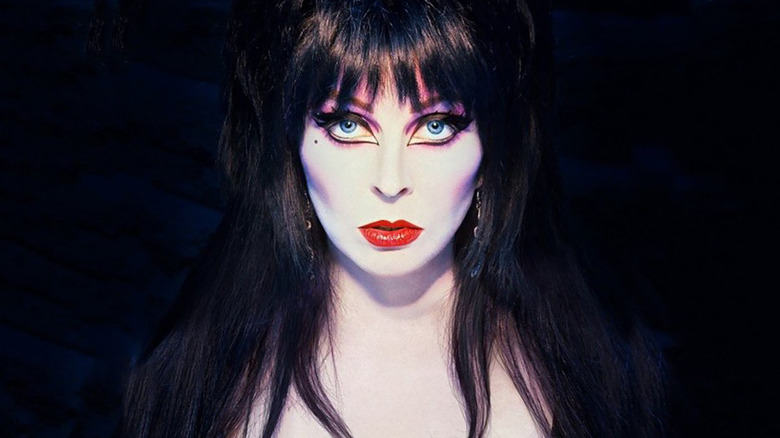
Today is now a holy day for queer goths everywhere as Cassandra Peterson's memoir, "Yours Cruelly, Elvira," was released, and in doing so, Peterson came out to the world by disclosing her nearly two decades long relationship with Teresa "T" Wierson. While Peterson hasn't disclosed how she identifies or if she even subscribes to any specific queer identity, this is a banner day for an already queer icon who we now know has been "one of us" all along.
The Drag Of Elvira

The populous at large is likely familiar with the art of drag thanks to the mainstream popularity of shows like "RuPaul's Drag Race" or "Dragula," but there are plenty that likely do not recognize that Elvira is the drag persona of actress Cassandra Peterson. A brash, larger-than-life, and evocative character with exaggerated features, Elvira, Mistress of the Dark would transition from late-night horror host to one of the most recognizable faces in horror history. She's the highest-selling female Halloween costume of all time and the face of a million-dollar merchandising line. From the moment she arrived on television screens in 1981 with "Elvira's Movie Macabre," this spooky, sexy, campy flirt won the hearts of millions, but was especially embraced by the LGBTQ+ community.
Cassandra Peterson has been a consistently outspoken advocate for LGBTQ+ rights throughout her entire career and has stated on numerous occasions that if anyone were to take up the mantle of her legacy, it should be a drag queen. Her perfect balance of presenting sass and sexuality while simultaneously rebuffing the normies who viewed her as debaucherous has always felt empowering to so many queer people around the globe who endure the same for just trying to exist. She's never been one to shy away from her legacy, and even guest judged episodes of both "Face/Off" and "RuPaul's Drag Race" as the world's most recognizable drag queen aside from RuPaul himself.
Back in 2009, Cassandra Peterson told The San Francisco Bay Guardian:
"I always tell people I was 'raised by a pack of wild drag queens.' I was around so many drag queens and gay men when I was young... These other two drag queens, Mr. Bobby and Tawny Tan, had me dress up as a woman—which I was—and we'd do The Supremes."
Peterson would later become a Vegas showgirl at The Dunes casino, now replaced by The Bellagio. Her drag background paired with her upbringing in her aunt's costume shop as a child was the perfect storm to turn her into a drag horror icon.
Elvira the character and Cassandra Peterson the person have always had our backs, and we've been worshipping at their altar because of it.
Cassandra Peterson Supports LGBTQ+ Film
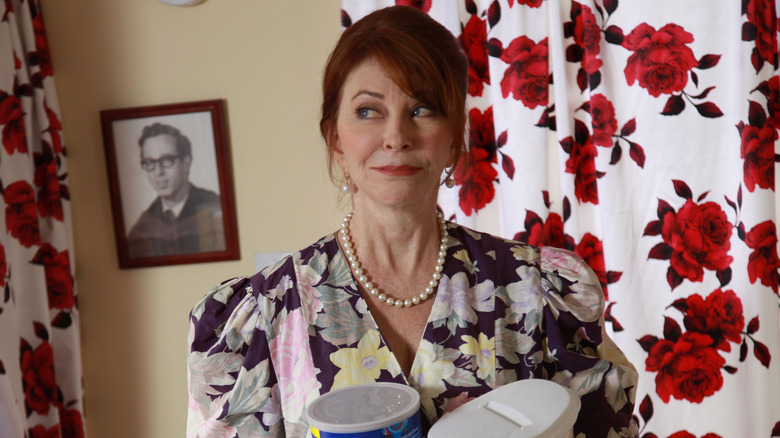
Outside of performing the Elvira character, Cassandra Peterson has had a pretty colorful acting career, with many roles in LGBTQ+ films. In the 2013 comedy "First Period," Peterson plays the mother of protagonist Cassie, a teen girl played by Brandon Alexander III in drag. It's a delightful reveal, especially considering most people don't actually know what Cassandra Peterson looks like without her iconic beehive wig and two big ... pumpkins easily on display.
Most notably, however, was her turn as Linda in the film "All About Evil" a midnight-madness horror film directed by and starring the legendary horror drag monster Peaches Christ, joining a cast of fellow queer icons Natasha Lyonne, Thomas Dekker, and Mink Stole. Peterson was able to marry her horror, camp, and queer backgrounds to give a dynamite performance in this woefully underseen indie film.
Why Does Her Queerness Matter?
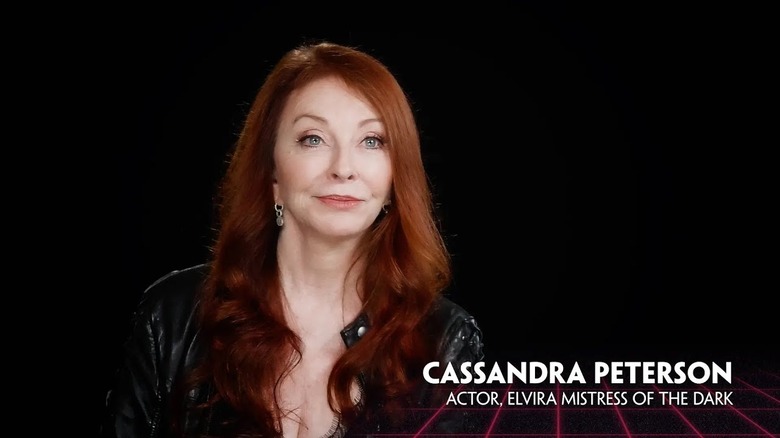
The queerness of Cassandra Peterson is incredibly important because she's doing something that is still unfortunately extremely hard to do and absolutely life-changing. Coming out is unfathomably difficult, leads to stigmatization, and can have absolutely detrimental outcomes depending on the person's situation. LGBTQ+ youth are 120% more likely to experience houselessness due to non-affirming home environments, and coming out has sincerely harmed the lives and careers of many performers from Peterson's generation. It took a lot of bravery for Peterson to finally come out, and her actions will absolutely change the lives of many queer fans who admire her.
"For the first time in my life," Peterson wrote, "I'm with someone who makes me feel safe, blessed, and truly loved."
It would be selfish to only view her coming out as a gift to the queer community because this is also something Cassandra herself deserves to commemorate. Peterson and Wierson have been together for more than 19 years, and this relationship no longer has to be one enjoyed in silence. As Peterson wrote in her memoir, "Would my fans hate me for not being what they expected me to be?" She continues, "I'm very aware that there will be some who will be disappointed and maybe even angry, but I have to live with myself, and at this point in my life, I've got to be truthful about who I am."
As a goth lesbian who went back into the closet for most of her 20s as her career in horror analysis began to take off, knowing that even motherf*cking ELVIRA was afraid to live her truth because of what some pissant horror fans might think of her is heartbreaking. No one deserves to feel like we have to live this way, and knowing Elvira finally feels safe enough to be open and honest is a cause for celebration.
We love you, goth mom.
Read this next: Elvira To Celebrate Her 40th Anniversary With Special Horror Marathon On Shudder
The post Horror Icon Cassandra Peterson Comes Out in New Elvira Memoir appeared first on /Film.
FBI Held Back Ransomware Decryption Key From Businesses To Run Operation Targeting Hackers


Read more of this story at Slashdot.
Daniel Craig On Female Bond: 'There Should Simply Be Better Parts For Women'
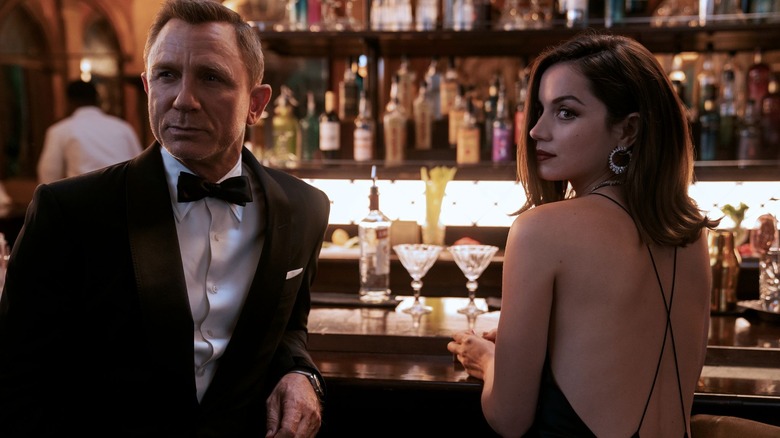
One thing's for sure: change is coming to the "James Bond" franchise, one way or another. After "No Time to Die" finally releases, Daniel Craig's remarkably lengthy stint as Bond will draw to a close (there are people watching these movies who probably can't even remember the "James Blonde?!" outrage when he was first cast in the role!) and the hunt for a new Bond will begin anew. Given the uncomfortably sordid history of the franchise when it comes to the treatment of women and people of color, however, it's only natural that questions would be raised as to how these movies could remain relevant these days.
Suffice to say, the easiest way to drag such a sleazy action hero into the 21st century -- a character repeatedly referred to as a "dinosaur" in the past -- would seemingly be to cast a woman or person of color as the next Bond. Though that idea has gained (some) steam among fans, Daniel Craig has some interesting and nuanced thoughts of his own.
A New Bond
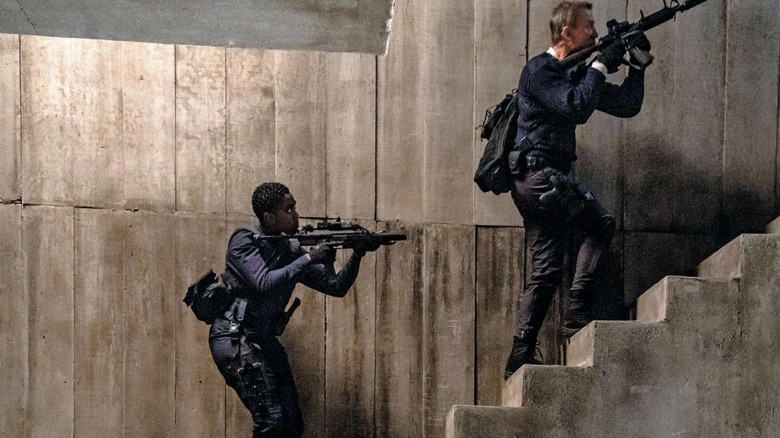
At a certain point, you've got to feel for Daniel Craig. Remember the narrative that sprung up after his widely-spread remarks (delivered right after a grueling production, mind you) about never wanting to play Bond again? He certainly does, alluding to precisely that during his otherwise heartwarming goodbye to the crew of "No Time to Die." But even after all that, the star has found himself at risk of inciting more controversy -- this time surrounding his latest quotes on the possibility of a female Bond. Delivered in an interview with Radio Times (via IndieWire), his full (but admittedly brief) quote is provided below and you can decide for yourself whether it's worth the fuss. When asked about the possibility of a woman taking over as Bond, Craig responded:
"The answer to that is very simple. There should simply be better parts for women and actors of colour. Why should a woman play James Bond when there should be a part just as good as James Bond, but for a woman?"
While it's easy to take this out of context and assume the worst about his intentions, Craig actually hits on a point that many women (and, speaking for myself, people of color as well) have raised previously.
Why settle for the hand-me-downs of established white characters, especially when all that effort could go towards creating new characters from the ground up who don't come loaded with quite as much baggage? While certain Bond fans would prefer to keep "politics" out of their entertainment, it's hard to ignore how a womanizing British Secret Service agent who travels across the globe with a license to kill in defense of the "Empire" raises, uh, certain questions in our day and age. Couching such brazenness as something only a white man could reasonably get away with adds important context for filmmakers who are willing to go there, as was the case with Martin Campbell's "Casino Royale" in directly confronting Bond's misogyny and reckless behavior through his relationship with Vesper (Eva Green).
In "No Time to Die," Lashana Lynch's character has already made waves for taking over the "007" moniker in the (brief) absence of Craig's retired James Bond. While the debate over whether a person of color and/or a woman would be more suited for going a step further and taking over the role of Bond isn't likely to die down anytime soon, the Broccoli family have already had the final word on the matter. Given the specific personality and characteristics of the famously flawed agent, it's hard for me to disagree with their reasoning or Craig's.
After spending so much time in pandemic-delayed purgatory, "No Time to Die" comes to theaters and officially ends Daniel Craig's run on October 8, 2021.
Read this next: Here's Where You Can Stream Or Rent Every James Bond Movie
The post Daniel Craig On Female Bond: 'There Should Simply Be Better Parts For Women' appeared first on /Film.
Every Sofia Coppola Film Ranked From Worst To Best

Sofia Coppola is an auteur. While the usefulness and validity of that term is up for debate, Coppola is a director that fits that description completely. Her films have a particular look, one that you can recall simply by hearing her name, and share many common themes. Coppola likes how the sun looks as it peeks through the leaves. She lingers on her characters' inner lives, and she finds herself returning again and again to the topic of fame, illuminating both its pressure and its allure.
Much has been said about Sofia Coppola's family, and while it's impossible to separate her career from her father's, her talent is undeniable. Like the best artists, Coppola's work is not for everyone. While her films vary in quality, they're usually leagues above the movies playing at your local theater. Coppola handles everyday topics with curiosity, and treats teenage girls with reverence. She respects her audience -- or might not even think of them at all, making films only for herself. Either way, the end results are movies that serve as sources of endless conversation. The film ends, but Coppola's work lingers. Here are all of Sofia Coppola's films, ranked from worst to best.
On The Rocks
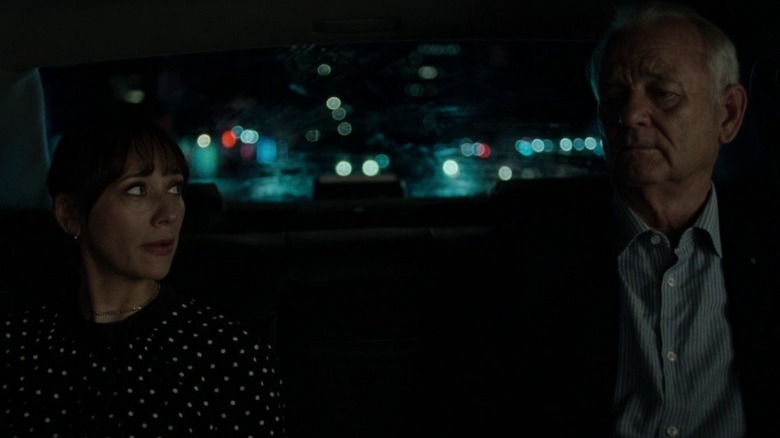
"On The Rocks" reunites Coppola with Bill Murray, and for that reason alone it's worth a watch. The film follows Laura (Rashida Jones) who reconnects with Felix (Bill Murray), her estranged father, after growing suspicious of her husband's behavior (Marlon Wayans). Laura is an author and is stuck in a creative and marital rut. With nothing better to do, she begins to believe that her husband is cheating on her. Her father, a playboy, convinces her that she's right.
"On The Rocks" is a midlife crisis movie, one that has fun with the schemes that the father and daughter come up with, and the places where they unexpectedly end up. The chemistry between Murray and Jones is great, although at times it's tough for Jones to keep up with her counterpart due to a mix of the script and Bill Murray's sheer magnetism. It's an okay film, although it's simpler than Coppola's other work. Despite featuring a great Bill Murray, who is grating and heartbreaking when needed, the film is too clear cut, and the conflict resolved too neatly. It's the one Coppola film that feels superficial, and even a little privileged, as if she really believes that life's problems can be resolved with Cartier jewelry.
Somewhere
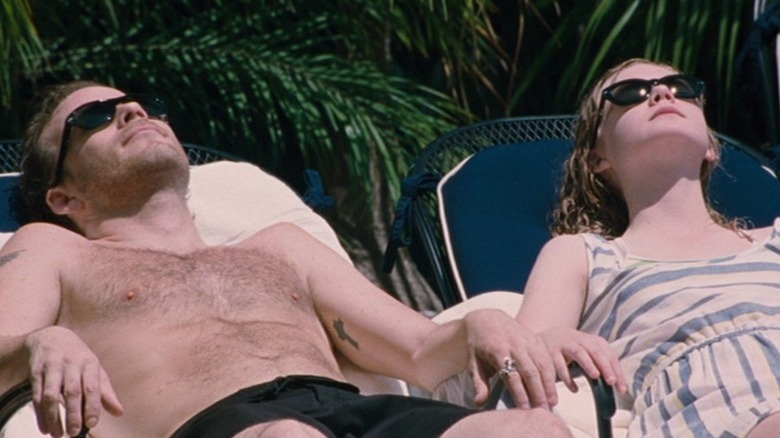
The relationship between fathers and daughters is a topic that Coppola keeps coming back to. "Somewhere" is about Johnny Marco (Stephen Dorff) a hotshot movie star who's unexpectedly tasked with taking care of his 11-year-old daughter, Cleo (Elle Fanning). It's a film that can't help but remind you of Coppola's personal life and her relationship with her own father, Francis Ford Coppola, one of the most emblematic figures of '70s Hollywood.
"Somewhere" is one of Coppola's quietest films. As someone who has minimalism drilled into her bones, Coppola fully succumbs to her impulses with "Somewhere," which, ironically, feels at times like it's going nowhere. But that's kind of the point. It's a polarizing film, one that's a lovely character study, with the repetitiveness keenly reflecting the life of its protagonist. Hollywood is obsessed with movies about the entertainment industry, but Sofia Coppola might be one of the few filmmakers that is capable of questioning fame, raising questions about how empty it can be.
Marie Antoinette
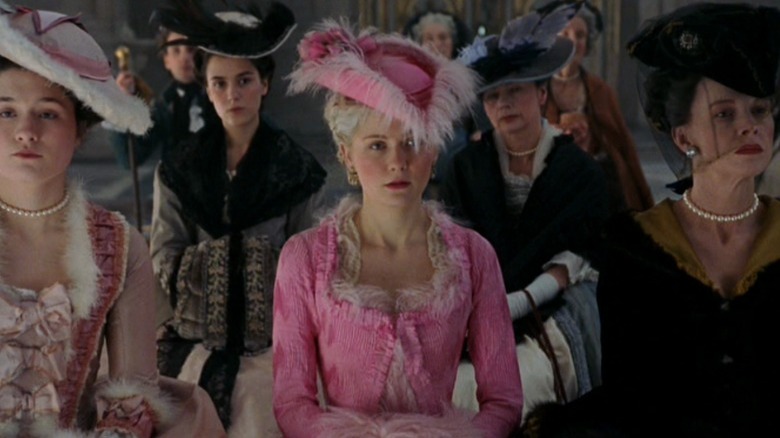
I picture "Marie Antoinette" as Coppola's rebellion. It's as if Coppola is reacting to every critic who has called her work "minimalist" or "fly in the wall," and is throwing that in their faces. The movie is perhaps Coppola's least-appreciated work, drawing negative reviews at the time of its release and still referred to as vain, but I can't help but be swept up in the delight that covers each frame. Coppola lovingly films the champagne spilling from coupe glasses, her camera lingering on pastries and luscious dresses. Despite how different "Marie Antoinette" is from the rest of Coppola's oeuvre, it contains many themes that recur in her work: the appreciation of youth and beauty, the luxury of fame, but also how lonely it is. No matter how the film is packaged, Coppola remains the queen of ennui.
"Marie Antoinette" is a biopic that follows 14-year-old Maria Antonia (Kirsten Dunst) as she grows up and marries Louis XV (a perfectly cast Jason Schwartzman). The film documents all of the partying and infidelities, as well as the birth of Maria's children and the start of the French Revolution. It's a weird movie, taking history and reshuffling it. Yes, you've read about Marie Antoinette and her infamous quote, "Let them eat cake," but it hits differently when Kirsten Dunst says it as she luxuriates in a bathtub.
The Bling Ring

"The Bling Ring" is an incredibly fitting project for Coppola, concerned with cringey teenagers and the famous -- or, in this instance, the fame-adjacent. "The Bling Ring" tells the story of a group of obsessed teens who decide to rob the houses of rich celebrities. Based on a true story that was reported in 2010, Coppola takes a satiric approach to a thoroughly American topic, crafting a narrative that could happen nowhere else. Shot in a bright and almost washed-out look, the film strikes the right balance between independent art films and trashy reality television.
The movie follows Bling Ring leaders Rachel (Katie Chang) and Frank (Israel Broussard) as they commit petty crimes and slowly come to terms with to the idea of robbing celebrities. They are then joined by Chloe (Claire Julien), Sam (Taissa Farmiga), and Nicki (Emma Watson), creating a gang of very stupid thieves. It's only a matter of time before they get caught. Emma Watson turns in a performance that's delightful, not only because of a California accent that's dialed up to 11, but also in the way that it plays with our perceptions of her work and persona.
The Beguiled
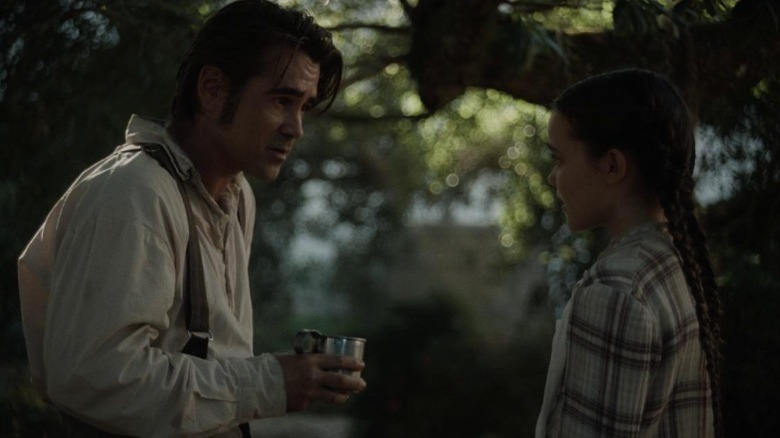
Coppola understands teenage girls -- shots of girls giggling together in bed is practically her trademark. She captures their neediness and their intensity with humor and affection. With "The Beguiled," Coppola tackles her darkest subject matter yet, without distractions and breaks. Still, she does it with a laugh.
"The Beguiled" follows a group of girls and their two teachers, isolated in their boarding school while the Civil War rages on outside. Amy (Oona Laurence) finds a wounded soldier (Colin Farrell) and takes him to the school, where Martha (Nicole Kidman) allows him to stay in a secluded bedroom, locked away and kept far from her girls. As the days pass, the women and girls become obsessed with the soldier, resulting in confessions of love, a growing sense of unease and danger, and, logically, a maiming.
Unlike the book the film is based on (and the 1971 adaptation starring Clint Eastwood) Coppola isn't interested in plot. She's having fun with the Southern Gothic setting, with the way that the girls react to Colin Farrell, and with how he shifts from a charming and handsome man into someone who's incredibly entitled. "The Beguiled" surprises us with Coppola's glee and her capacity to laugh in the face of the perverse, while following in the footsteps of great films that establish a feminine sense of safety and intimacy, only to violently disrupt the tranquility by introducing a man.
The Virgin Suicides
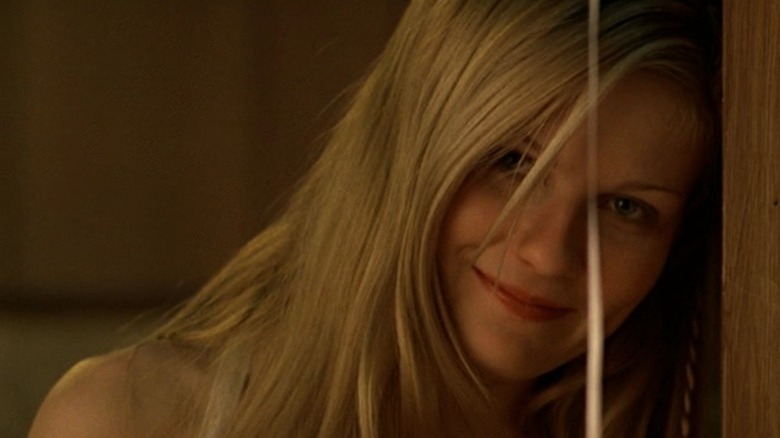
"The Virgin Suicides" kicked off Sofia Coppola's career on a high. It cemented much of her style: her long-running collaboration with Kirsten Dunst, her knack for mood and setting, and her ability to deconstruct the differences between men and women. While Coppola is usually associated with the feminine, her male characters are just as memorable and fully realized. In this case, to flesh them out, Coppola uses the women who surround them.
"The Virgin Suicides" follows a group of boys and their obsession with the Lisbon sisters, who commit suicide at the start of the movie, and with whom the boys are still in love with years later. Like all great high school films, "The Virgin Suicides" illustrates the complexities of growing up, and the awkwardness and sadness of becoming an adult. While the plot is extreme, Coppola's focus is on the normal. The film soars because it nails the feeling of having a teenage crush, how mean teen girls can be for no apparent reason, and the inner turmoil we experience for reasons that we don't have the language to explain.
Although the girls' suicides are the story's hook, Coppola provides no answers. While the girls have overbearing parents, they weren't driven to suicide. Like the fantasy projections of the boys, the girls are fairy tales. They weren't meant to be adults.
Lost In Translation
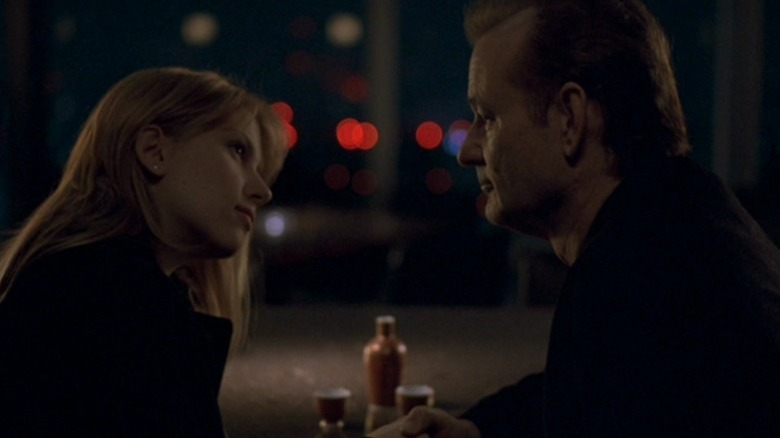
The first entry on this list was always going to be "Lost in Translation." While you can make an argument for why each of Coppola's films are great and special, there's something universal about her sophomore feature. The film follows Bob Harris (Bill Murray), a jaded actor on a work trip to Tokyo, where he meets Charlotte (Scarlett Johansson), a recent college graduate who's in town for her husband's job. They meet, connect, and, without having anything better to do or any knowledge of the place they're in, develop a relationship that resists categorization.
"Lost in Translation" feels as if it's the exact movie Sofia Coppola set out to make when she first started writing it. It's thoroughly realized and restrained, with Bill Murray and Scarlett Johansson knowing exactly what to bring to each scene. Coppola watches her characters react and unravel for each other, realizing that, despite their age differences and their unique career aspirations, they recognize their sameness. Coppola steers clear of Hollywood clichés; while "Lost in Translation" is a film about the connection that exists between a man and a woman, it resists being read as a romance. It allows us to make of the story what we want to make of it.
Read this next: The Best Female-Directed Movies Of The Decade
The post Every Sofia Coppola film ranked from worst to best appeared first on /Film.
Orson Welles' Directed Films Ranked Worst To Best
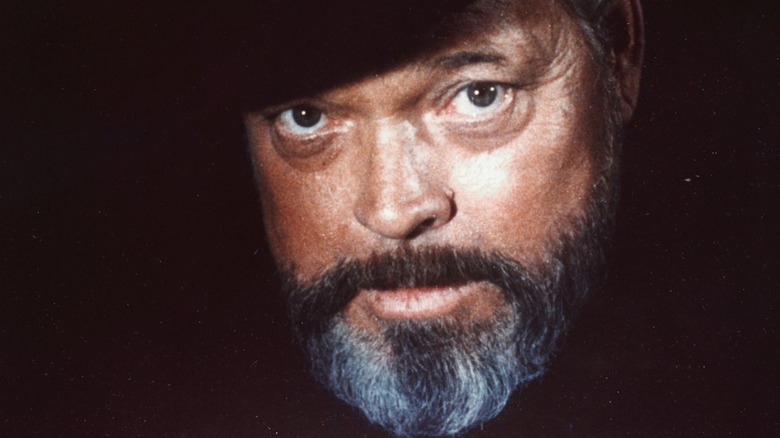
Surveying Welles' filmography as a whole, some trends emerge. It's easy to see that Welles was a fan of Shakespeare, particularly the Bard's characters who author their own undoing. Whenever Welles portrays relationships, his characters evince betrayal, hypocrisy, and deception. He returns to the turn of the 19th into the 20th century repeatedly, an unexpectedly early era for a man born in 1915.
He was also remarkably prolific. Even after winnowing his filmography down to the projects he directed, this article doesn't have room to consider all the short films and television productions Welles made, nor all the feature films he directed that never saw completion. In addition, while it might seem ironic given Welles' conflicted feelings about authorial attribution, I've separated out films directed by Welles that were decisively completed by other hands (to a larger degree than regular studio interference) by placing them lower on this list.
Don Quixote De Orson Welles
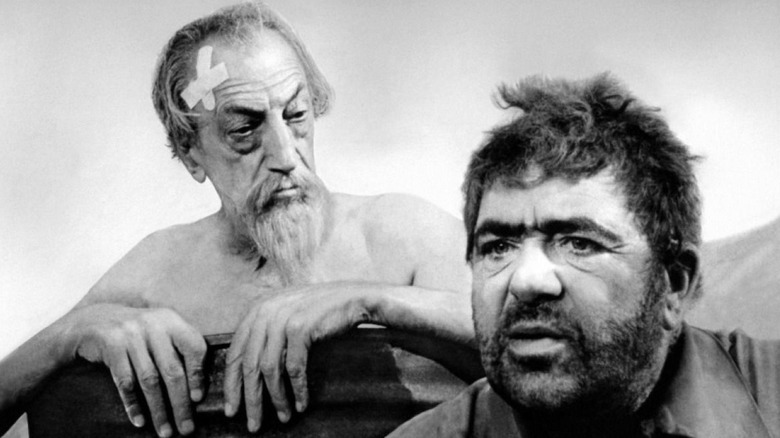
Stop me if you've heard this one before: Orson Welles had a brilliant idea, but it fell into other hands, then fell apart.
The novel conceit behind Welles' attempted adaptation of Miguel de Cervantes' novel "Don Quixote" was to bring the characters of Don Quixote and Sancho Panza into the modern day, since they were intended to be anachronisms even when Cervantes first published his novel in the early 1600s. Welles filmed test footage for "Don Quixote" as early as 1955, and second-unit photography as late as 1972, so he was in no hurry to complete this project, which he tinkered with until his death in 1985.
When Jesús Franco, who'd served as Welles' second-unit director on "Chimes at Midnight," released a "completed" version of the film in 1992, the disparity in the levels of quality of Welles' footage over the decades made its patchwork origins all too obvious. Only the scenes of Sancho Panza navigating a modern carnival and delighting neighborhood children with his dancing are at all watchable. Not recommended for anyone outside of die-hard historians.
Mr. Arkadin
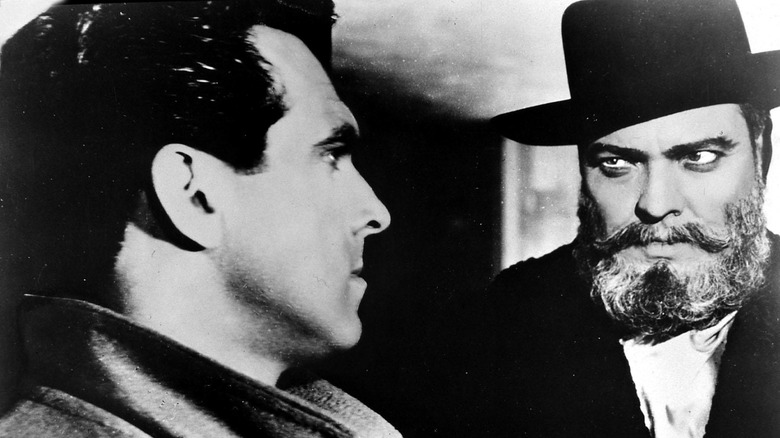
Nearly half a dozen edits of "Mr. Arkadin" were released during Welles' lifetime, but the Criterion edit of 2006 arguably comes closest to capturing his intent. It was worth the effort, because "Mr. Arkadin" spins a world-spanning mystery about a self-made man's need to conceal the nefarious backstory behind his fortune, with every step closer to the truth plunging our point-of-view investigator that much deeper into trouble.
As much as revealing Gregory Arkadin's disreputable connections and misdeeds might inconvenience his mutually beneficial dealings with polite society, Arkadin is driven more fiercely by his fears of losing the love of his good-hearted daughter Raina. Welles crafts both a compellingly overpowering persona in the globe-bestriding titan of industry and a precisely paced plot that allows both the film's narrator and audiences to realize the existential level of peril our protagonist is in.
Credit to Welles' former protégé, "The Last Picture Show" director Peter Bogdanovich, for contributing to the cohesion of the Criterion edit.
The Other Side Of The Wind
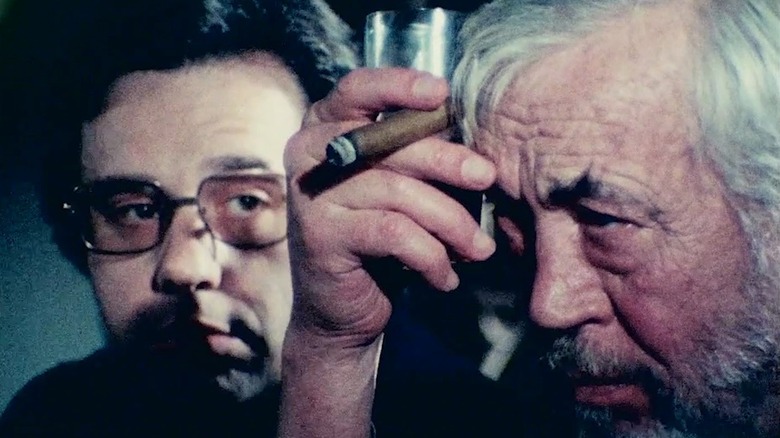
Bogdanovich also contributed to the completion of "The Other Side of the Wind," which would rank as one of Welles' best works if he'd been able to release the final cut himself.
Welles was on the edge of capturing 21st-century storytelling and media, constructing a highly improvised film-within-a-film narrative about a tyrannical director in decline and his final unfinished feature, using the premise of his poorly organized birthday party to assemble a fictional documentary out of "found footage" supposedly shot by other filmmakers in attendance. By casting John Huston as his half-mad, Zeus-like sky-father of an aging director, Welles sent up the self-styled machismo of old-school storytellers like Ernest Hemingway. By casting Bogdanovich as Huston's protégé, Orson exposed the codependent dynamic of his emotionally fraught relationship with Peter in real life.
The disjointed clips we see from the film-within-the-film, also named "The Other Side of the Wind," come across as an old dog director's attempts to emulate the tricks of the "New Wave" movement, with visually striking isolated scenes adding up to an incoherent (intentionally, on Welles' part) parody of contemporary arthouse cinema.
Journey Into Fear
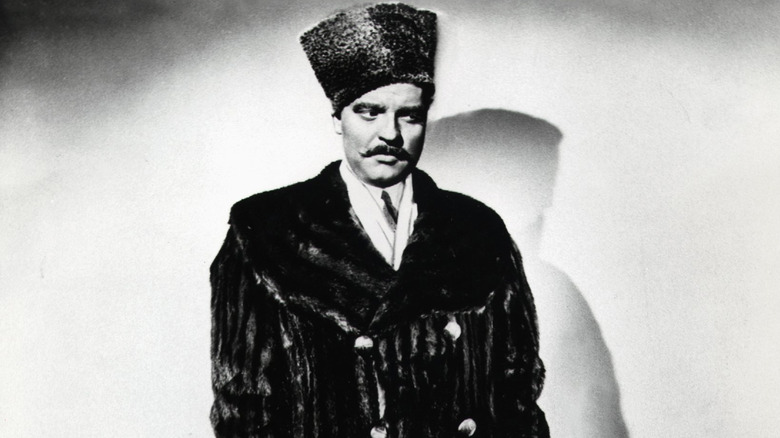
Welles was originally set to direct "Journey into Fear," and contributed to both its script and its casting, but his work on "The Magnificent Ambersons" forced him to step aside for Norman Foster to assume directing duties. The end result is a nifty Hitchcock-esque World War II-era espionage caper that's more clever than meaningful, with a tendency to telegraph its plot twists, except when employing questionably-merited tropes such as a misleading framing sequence.
Joseph Cotten again earns audiences' sympathies by playing one of fate's patsies, and the film rolls forward with the terrible, relentless momentum of that one bad day that never ends. It's solidly okay as Welles-lite fare, but it's hard not to notice that Orson as Col. Haki, head of the Turkish secret police, resembles a Joseph Stalin impression by way of Zsa Zsa Gábor, complete with silly hat; similarly, Dolores del Río's stage outfit appears to be lifted straight from the Cheetah in the Golden Age Wonder Woman comics.
The Immortal Story
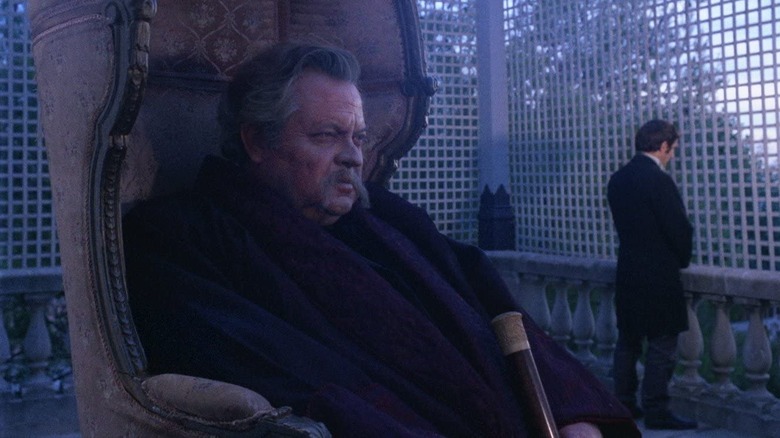
Based on a short story from the 1958 collection "Anecdotes of Destiny" by Danish writer Karen Blixen (aka Isak Dinesen), Welles planned for "The Immortal Story" to be released as a two-part anthology film, with the second half based on Blixen's "The Deluge at Norderney." As often happened with Welles' productions, things fell apart.
Welles trimmed his film down to a Bonsai-like tragedy in miniature, telling the story of a materially wealthy man as trapped by the limits of his imagination as by the debilitating physical conditions of his age. Mr. Clay, a merchant living alone in 19th-century Macao with only his studious bookkeeper to keep him company, is so literal-minded and devoid of more meaningful pursuits that he insists upon making an apocryphal sailors' tale come true. While his transgressions against his former business partner and the man's daughter unquestionably qualify as villainous, Welles paints Clay as a figure to be pitied, regardless of how little he merits our sympathies.
The Trial
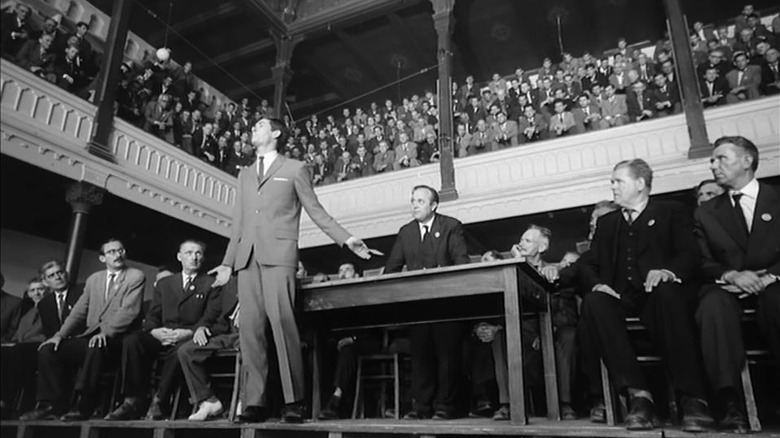
In adapting Franz Kafka's early 20th-century novel of the same name, Welles' revisions of the source text result in a film that feels ironically more authentic to the writing that inspired it. While Kafka wrote "The Trial" between 1914 and 1915, Welles reflects two major developments of the post-war 20th century by adding a room-sized UNIVAC-style computer to the workplace of accused office worker Josef K., who's executed not by a knife, as in the novel, but with a dynamite blast that forms a mushroom cloud, echoing a nuclear explosion.
Even as Welles retained the wrong-side-of-the-Iron-Curtain political flavor of Kafka's novel by filming much of it in Yugoslavia, he made the tale's setting nebulous by casting the all-American Anthony Perkins as our persecuted protagonist Josef K. Having actors with New York and California accents deliver lines from absurdist eastern European literature makes their gaslighting dialogue sound a lot like the laugh-track exchanges of "Seinfeld." Welles even told Perkins to treat "The Trial" like a black comedy, although the extended scenes of Josef K. seeking to escape the halls of government, whose ill-defined boundaries seem ever-present, are stifling enough to make me physically queasy.
Macbeth
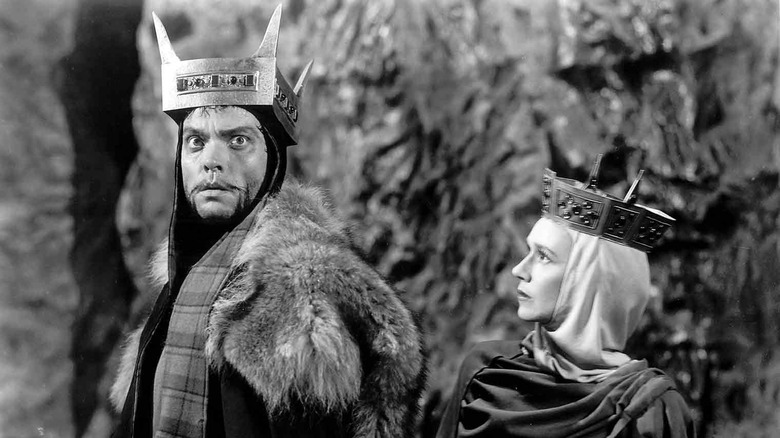
If Welles had filmed his legendary "Voodoo Macbeth" stage adaptation for the Federal Theatre Project in New York in 1936, I'd likely rank it higher on this list, but even with a tight production schedule and a paltry budget working against him, Welles summoned up an innovative, uniquely cinematic take on "Macbeth" for Republic Pictures in 1948. Welles adds scenes with the witches, arming them with a clay figurine of Macbeth upon which they cast spells like a voodoo doll, and the Thane of Cawdor's execution takes place on screen, as does Lady Macbeth's suicide and the battle between the forces of Macbeth and Macduff.
Even the crudity of the film's sets, leftovers from Republic's westerns, suited Welles' stated intent that the film's setting should be "a perfect cross between Wuthering Heights and Bride of Frankenstein," since the swirling mists and rough-hewn appearance of Macbeth's castle make it appear barely ascended from a subterranean Hell. Welles makes Macbeth's traumatized guilt agonizing to behold, even (especially) in silence, and his cast includes a pipsqueak-voiced Roddy McDowall as Malcolm, and future Irish genre villain Dan O'Herlihy in his first American film role as Macduff.
Othello And Filming Othello
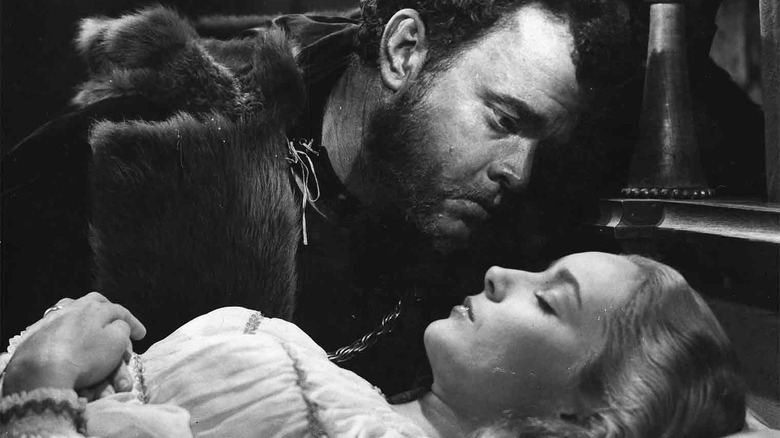
Given Welles' empathy for oppressed minorities, it's no surprise that he performed Shylock's monologue from "The Merchant of Venice" on "The Dean Martin Show" in 1968, nor that his 1951 film adaptation of "Othello" showed such sympathy for its title character, whom Welles portrayed as an outsider in Venetian society even beyond his Moorish heritage.
"Filming Othello" was recorded roughly a quarter-century after "Othello," but it's worth watching both films, not only for Welles' insights into the characters and their dynamics, but also to appreciate how Welles (unlike Jesús Franco) weaved together footage filmed years apart so well that the edited film plays as a seamless whole.
Welles achieved authenticity in "Othello" by using whatever settings were available, leading to Roderigo's murder unfolding in a Turkish bathhouse, a departure from Shakespeare's text, while also reflecting the deterioration of Othello's outlook by shooting the film's settings as progressively more encroaching and claustrophobic. And Welles invited his "Othello" costars Micheál Mac Liammóir (Iago) and Hilton Edwards (Brabantio) to dialogue over dinner in "Finding Othello," as they considered the intersections of tragedy and gender roles, with interpretations ranging from antiquated to avant-garde.
The Stranger
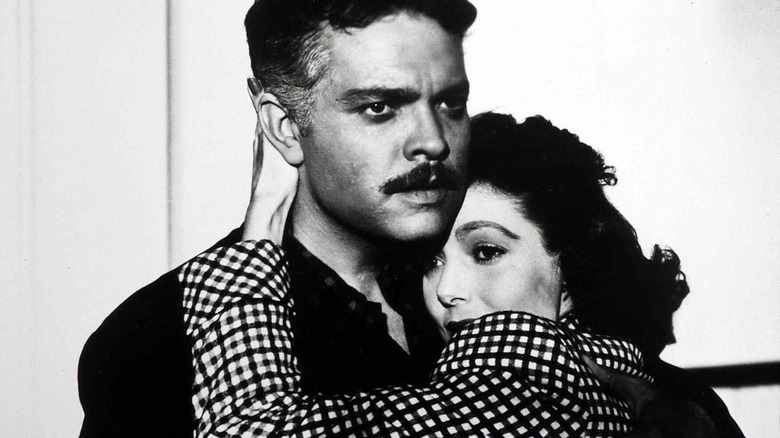
Few settings feel as safe and cozy as a small town in New England in the fall, just as the leaves are starting to turn. Welles successfully weaponized this comfortably folksy atmosphere in "The Stranger" by dropping a fugitive Nazi war criminal into the trusting fictional community of Harper, Connecticut and having him hide in plain sight, not only as a beloved teacher at a local prep school, but also as the fiancé of the daughter of a U.S. Supreme Court justice.
As the affable and genteel "Charles Rankin" comes closer to being found out as Franz Kindler, in part due to his fixation with timepieces, the autumn shadows of the sleepy burg are stretched beyond mere seasonality into emulations of German-style expressionism. Perry Ferguson, the production designer for "Citizen Kane," created a complete town square set for "The Stranger" to enhance its naturalism for deep-focus shots, but by the film's final act, its action is dominated by the stark church clock tower and its sparsely lit inner workings.
The Lady From Shanghai
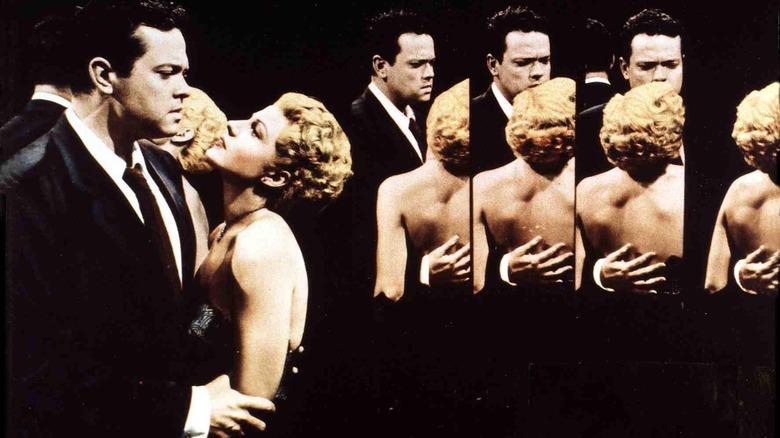
In spite of some glaring missteps, including Welles' cringe-worthy attempt at an Irish accent and Rita Hayworth ditching her ravishing red tresses for a bleached blonde bob, "The Lady from Shanghai" has only grown in critical esteem over time, and deservedly so. Not only was its ambience bolstered by being one of the first major films out of Hollywood to be shot almost entirely on location -- in Acapulco, Pie de la Cuesta, Sausalito, and San Francisco -- but the disintegration in real time of Welles and Hayworth's already estranged marriage lent an unintended frisson to the ill-advised affair between their star-crossed characters.
The succession of reveals and switchbacks in "The Lady from Shanghai" is well-timed and subtly seeded enough to qualify the film as a smart noir mystery, and its final-act funhouse visuals imbue the already dramatically heightened circumstances with a dreamlike surrealism, but its best and most class-conscious moments came from Welles' hired-hand wanderer taking stock of the casual cruelties that the rich inflict upon those whose rely on their favors to survive.
Touch Of Evil
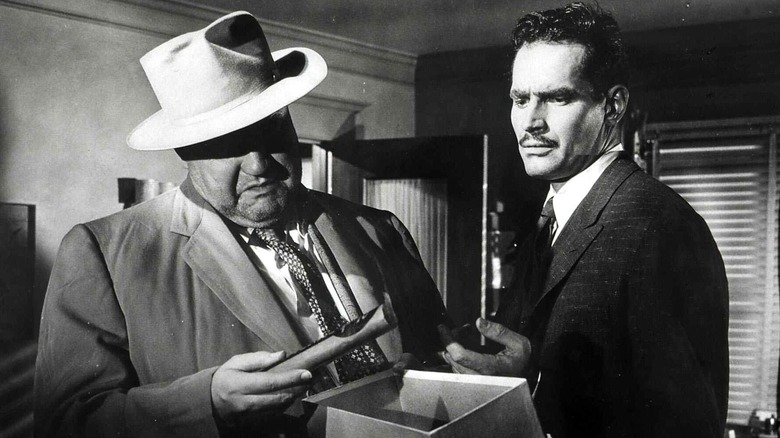
Welles' aggressively anti-charismatic performance as Hank Quinlan in "Touch of Evil" made no effort to conceal the dissolute police captain's unrepentant corruption, but in spite of the veteran lawman's racism and willingness to abuse his power, it becomes clear that his well-earned road to Hell was paved, at least initially, with some decent intentions.
Going sober for a dozen years has made Hank unrecognizable to his former lover, since he pulled the dry-drunk move of substituting one vice for another, stuffing his now-fat face with candy bars. Even when he dies by collapsing backward into filth, he's memorialized as "a great detective" and "a lousy cop" whose final suspect turned out to be guilty of the crime for which Hank had framed him.
As much as our national pop culture nostalgia has retroactively cast the '50s as the idyllic sock-hop era when Marty McFly's parents fell in love, 1956's "The Man in the Gray Flannel Suit" wasn't the only film from that decade to ask discomfiting questions, such as how much collateral damage we were willing to overlook in the ostensible pursuit of justice.
The Magnificent Ambersons
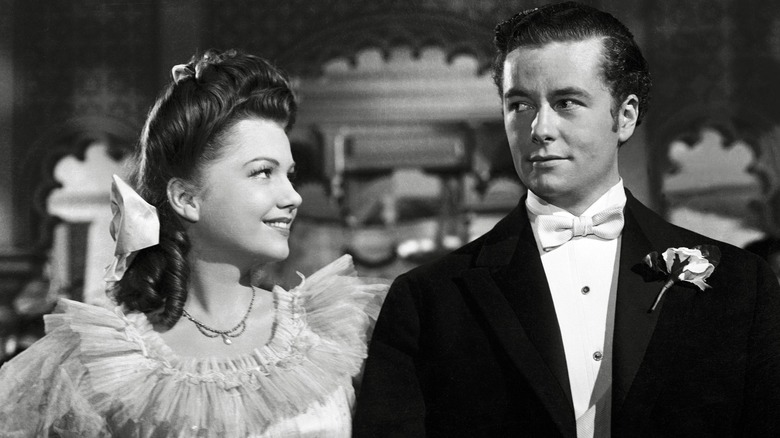
Welles harbored the wistful nostalgia of an old man even in his youth, so while his film adaptation of Booth Tarkington's Pulitzer Prize-winning 1918 novel functioned as a judgment upon the entitled culture of 19th century America's equivalent of the "landed gentry," so too did it serve as an elegy for what the film presents as the elegant simplicity of the pre-automobile era.
Tim Holt plays George Amberson Minafer as a self-centered, reactionary terror of a man-child, whose mulish refusal to concede the march of progress marks many of his follies and presages his downfall. But even Eugene Morgan (welcome back to the list, Joseph Cotten), the automobile manufacturer who courts George's mother, acknowledges that not all the changes wrought by motor vehicles are likely to be positive.
In retrospect, the studio-edited curtailments of Welles' intended narrative appear as crude as an "Itchy and Scratchy" title card reading "George Amberson Minafer died on the way back to his home planet," but there's a quiet grace in how George's long-awaited comeuppance only occurs when no one is left to see it -- even the audience is deprived of the sight of his face as it happens.
Chimes At Midnight
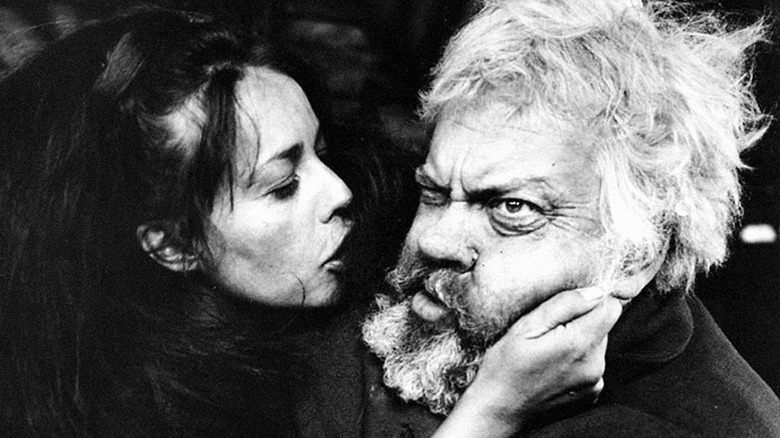
What's so wonderful about "Chimes at Midnight," beyond the excuse it affords us to spend more time hanging out with Welles as Sir John Falstaff, whom Orson himself deemed "a knightly dropout" and "a beautiful bum," is that it extends to audiences the conspiratorial sense of having snuck into a Shakespeare performance behind the scenes (or at least between them).
Like Tom Stoppard's "Rosencrantz and Guildenstern Are Dead," which was first staged in 1966, "Chimes at Midnight" plays out like a collection of interludes between the central scenes in Shakespeare's plays, a style of presentation well-suited to chronicling the idle misadventures of the carefree Crown Prince Hal and his merrymaking enablers. Indeed, Welles described "Chimes at Midnight" as a lament "for the death of Merrie England," represented in the expansive figure of Jack Falstaff, "misleader of youth" and human teddy bear.
As heartbroken as Falstaff is to be renounced by his surrogate son, his already broad chest swells with pride to see the newly crowned King Henry V finally maturing and growing beyond the silly, limited old man who once looked after him.
F For Fake
When Orson Welles presents a documentary about frauds and con artists, pay attention to his precise words, lest you discover that you've been duped.
What begins as a biography of Hungarian professional art forger Elmyr de Hory digresses into an examination of de Hory's biographer, Clifford Irving, who himself got caught hoaxing an autobiography of Howard Hughes. Along the way, Welles recalls how he got an acting job in Ireland by falsely claiming to be already famous in New York, and how he made misleading use of simulated news reports to make his 1938 "The War of the Worlds" radio drama seem more real, before he wraps up with an anecdote involving his protégé, Oja Kodar, and the Spanish painter Pablo Picasso.
It's up to you to keep track of which parts are true, but when Welles' interviews yield priceless lines like de Hory saying, "To be Hungarian, it is not a nationality, it is a profession," you'll find yourself glad just to bask in the milieu of their discourse.
Citizen Kane
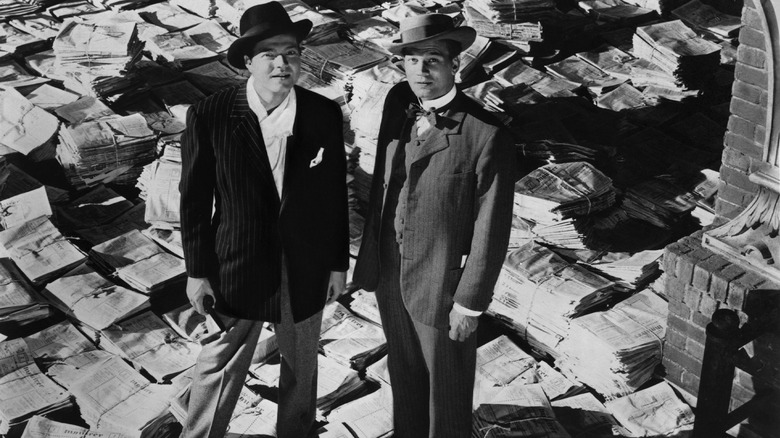
Yes, it's the obvious choice. No, I don't care.
Because "Citizen Kane" transcended its origins as a William Randolph Hearst hit-piece even before its script was finished. If "The Magnificent Ambersons" captures the death of the 19th century, "Citizen Kane" regales us with the ramp-up to the birth of the 20th.
Kane isn't just Hearst; he's every innovator of mass-media in our lifetimes, including Rupert Murdoch and Mark Zuckerberg. For the first act of his story, we're rooting for his schoolboy antics, even when he threatens to start the Spanish-American War on a whim, because he and his buddies are having so much fun. Which makes it all the more bittersweet when Kane betrays his wife, his best friend, and his stated principles, all to try and satisfy his ever-escalating need for more (of what, even he can't say).
"Citizen Kane" abandons linear chronology to show us how love can gradually leach out of a marriage, and how a self-appointed champion of the people can calcify into everything he hates. "Citizen Kane," in short, is the story of America.
Read this next: TCM To Help Fund Documentary Searching For Orson Welles' Original Cut Of 'The Magnificent Ambersons'
The post Orson Welles' directed films ranked worst to best appeared first on /Film.
CIA Director 'Fuming' After Havana Syndrome Strikes Team Member In India
Read more of this story at Slashdot.
Topher Grace 'Confirms' He's In Spider-Man: No Way Home And So Is Aquaman
Topher Grace's irreverent mentality is pretty well-known. He is, after all, the guy who in his spare time famously edited all three of George Lucas' "Star Wars" prequels into one short movie, and then subsequently gave the same treatment to Peter Jackson's "Hobbit" trilogy. But now the former "That 70's Show" star is making fun one of his most famous screen characters: Eddie Brock, aka Venom from 2007's "Spider-Man 3."
In a Reddit AMA (via Pajiba) to celebrate the return of his ABC sitcom "Home Economics," Grace "confirmed" that he has a multiverse cameo in Marvel Studios' forthcoming blockbuster "Spider-Man: No Way Home." He also revealed the entire plot of the movie and some of the other amazing cameos -- including Aquaman, Batman, and Han Solo!
Okay, there's a slight possibility that he was being sarcastic.
'Then Tom Hardy And I Pop Out And Battle Each Other.'
The appearance of J.K. Simmons' J. Jonah Jameson at the end of 2019's "Spider-Man: Far From Home" opened the floodgates for lots of multiverse madness in the follow-up, which is already confirmed to include the Raimi-verse version of Doctor Octopus (Alfred Molina) and the Marc Webb-verse version of Electro (Jamie Foxx), along with Green Goblin (Willem Dafoe...?) and more. And yeah, Tobey, we know you're in there somewhere too, don't even play. But Topher Grace's "bombshell" AMA answer reveals a whole truckload of cameo spoilers:
"Please keep it between us but yes, I am in it. The plot starts with Peter Parker (Tom Holland) bummed that everyone knows his identity and then some crazy sh*t happens with Dr. Strange and Dr. Octopus (Alfred Molina) comes into his dimension. Then Electro and the Green Goblin hop out of one of those 'energy circles' and they're like 'It's spider stompin time.'"Then Tom Hardy and I pop out and battle each other and I win (obvi), it's like not even a fight I just kick his ass immediately. Not to give too much away but there are also some actors from the original 70s Spiderman show, Aquaman and Batman (Affleck, not Keaton) crossover, and thanks to Disney Han Solo's ghost from Rise of Skywalker, and that Eve robot from Wall-E. Again, please keep between us."
So there you have it: All of Kevin Feige's precious ironclad NDAs couldn't keep this leak from getting out there. We can only pray that the scene where Peter Parker plays chess with Patrick Stewart's Professor X only to be interrupted by a flamethrower-wielding Boba Fett can be locked down from the public. In the meantime, you can see Tom Hardy's (equally bizarre) take on Eddie Brock return to theaters on October 1 in "Venom: Let There Be Carnage."
Read this next: What To Watch Before Venom: Let There Be Carnage
The post Topher Grace 'Confirms' He's in Spider-Man: No Way Home and So Is Aquaman appeared first on /Film.
Can You Watch The Many Saints Of Newark If You've Never Seen The Sopranos?
Next week, "The Many Saints of Newark" arrives in both theaters and on HBO Max. The feature film is a prequel to "The Sopranos," the groundbreaking HBO series that ushered in the era of peak TV. Younger versions of several characters from the show appear here, as do numerous locations. With all that in mind, you might be wondering: "Can I see this movie if I've never watched 'The Sopranos'?" Well, first of all, if you are asking that question, let me just say: you should really watch "The Sopranos." The hype is real – the show is as good as you've heard, if not better. Even if you don't like mafia-themed entertainment, the series goes beyond that – it's a deconstruction of that sort of story, while also serving as a commentary on toxic masculinity in America. That said, if you're hoping to catch this movie when it arrives next weekend, you're probably not going to be able to binge through all six seasons (86 episodes total) of "The Sopranos" by then. Luckily, I've seen the film – my review is right here – so I can tell you, dear reader, how well-versed in "Sopranos" lore you need to be beforehand.
The Many Saints Of Newark Story
First, here's what "The Many Saints of Newark" is about, according to the official synopsis.
Young Anthony Soprano is growing up in one of the most tumultuous eras in Newark's history, becoming a man just as rival gangsters begin to rise up and challenge the all-powerful DiMeo crime family's hold over the increasingly race-torn city. Caught up in the changing times is the uncle he idolizes, Dickie Moltisanti, who struggles to manage both his professional and personal responsibilities—and whose influence over his nephew will help make the impressionable teenager into the all-powerful mob boss we'll later come to know: Tony Soprano.
There's a lot of talk about young Tony Soprano in that synopsis, but I want to point out that the film really isn't about him. Instead, "The Many Saints of Newark" is primarily focused on Dickie Moltisanti, who serves as a mentor to Tony. Dickie is the father of Christopher Moltisanti, one of Tony's underlings on "The Sopranos." And, in true full-circle fashion, Tony became a mentor of sorts to Christopher just the way Christopher's father was a mentor to him. (Tony also killed Christopher, of course, so that mentorship only went so far). In "The Sopranos" timeline, Dickie is long dead, and Christopher – who was a baby when Dickie died – has no real memory of his dad.
Do You Need To Watch The Sopranos To Understand This Movie?
And now, back to the question at hand: can you watch this movie without having seen "The Sopranos"? The answer is yes. The movie takes great care to fill its audience in on what they need to know to follow the story. Right at the start of the film, we're told (via narration) about Dickie, Christopher, Tony, and their various connections. So if you're completely unaware of this stuff, "The Many Saints of Newark" will give you all the clues, much like the infamous serial killer The Snowman.
However, there are a lot of "Sopranos" references peppered throughout the film. So much so that it actually started to bug me, even though I'm a huge fan of the series. It starts to border on easter egg territory at times, with complete lines of dialogue from the show repurposed here. Still, you don't have to be aware of these things to enjoy and follow the film. Everything you need to know is right up there on the screen. But I will add that having watched "The Sopranos" beforehand does make "The Many Saints of Newark" a richer experience, simply because those who watched the series will be aware of how things eventually turn out for all of these characters. And that knowledge adds a certain weight to nearly everything that unfolds.
The bottom line: you don't need to watch "The Sopranos" to understand "The Many Saints of Newark." But you probably should.
Read this next: The Many Saints Of Newark Review: The Sopranos Prequel Is A Bloody Deconstruction Of The Mob Movie
The post Can You Watch The Many Saints of Newark if You've Never Seen The Sopranos? appeared first on /Film.
Canonical Extending Ubuntu 14.04/16.04 LTS Support To Ten Years
Microsoft’s updated PC Health Check app is now available for all Windows 11 enthusiasts
15 Must-See Movies About College, Ranked

College is a time to let loose, unfettered by the restraints that make high school such a prison. As a result, movies that revolve around the college experience have a tendency to embrace a wild atmosphere. Despite the general concept of university as a place to get an education, the focus in college movies tends to be on partying first, studying later.
That's the stereotype of a college film, anyway: toga parties and sororities and hazing as far as the eye can see. But the reality (much like the reality of college itself) is far more varied. We have the expected stories about college students going completely off the rails as soon as they get an ounce of freedom from parental supervision; we also have depictions of students defying the odds to succeed, or facing the sometimes terrifying consequences of said freedom. Get ready to take notes, because here are 15 movies about college you have to see.
15. Accepted
In a way, "Accepted" is the perfect college movie for millennials. Think about it: They were told their entire lives that their futures depended on college, only to have the rug swept out from under them during the recession and become the proud owners of a useless piece of paper that no longer guaranteed a well-paying job (to say nothing of record-breaking student loan debt.) So really, why shouldn't their college comedy be about how fundamentally broken the entire American university system is and revolve around a group of would-be students who design their own education in a way that makes sense for them?
At first, Bartleby (Justin Long) creates his own university in a bid to trick his parents into thinking that he's attending college. But it quickly takes on a life of its own as more students begin to show up to his fake school, necessitating dorm rooms, a curriculum, and even a school crest. Yeah, it's silly and dumb -- but hey, so is college.
14. The Skulls
You might be very willing to scoff at the inclusion of "The Skulls" on this list. It's a cheap college thriller about the legendary Yale secret society, the Skull and Bones, which includes amongst its number many members of the political elite: dozens of senators, representatives, governors, and even a president or two. You know, the sort of all-boy shenanigans that naturally occur when you're at a school that isn't going to let women into their undergraduate program until the late 1960s.
"The Skulls" focuses on one new initiate, played by Joshua Jackson, who comes from a more modest background than the majority of his wealthy and privileged peers. When his friend and roommate is found dead under mysterious circumstances, he begins to suspect foul play and wonders exactly how dangerous this organization might be. It's peak early-2000s entertainment, and although it was savaged by the critics, it struck a chord with young audiences, becoming profitable enough to launch two sequels and the careers of some of its stars, including Paul Walker and Leslie Bibb.
13. Old School
Who says you have to be a young adult to have the full experience of college? "Old School" tests the theory that, at any point in your life, you can suddenly revert to your frat boy days and have a little bit of fun with your buddies. (This is, of course, to suggest that you ever stopped living like a scummy college student, which many full-grown adults have not.)
When Mitch (Luke Wilson), recently broken up with his long-term girlfriend, moves into a house that's just a stone's throw from a college campus and is quickly informed that it needs to be used for student housing, he and his friends decide to start their own fraternity, complete with raucous parties and full-on freshmen hazing. Wild hijinks ensue, including an all-out battle with the college administration (led by a very oily Jeremy Piven), but despite the advanced age of the fraternity members, "Old School" nonetheless captures the spirit of an old-fashioned college comedy.
12. Real Genius
"Real Genius" is an affable 1980s science fiction comedy about a group of university students who have been brought in to work on a top secret defense project -- a laser powerful enough to target and kill individuals from space. But really, what "Real Genius" is best known for is launching the career of Val Kilmer, who was only beginning to develop a reputation as an in-demand young actor.
"Real Genius" was part of a trend of films depicting the advent of the computer age, where the stereotype of the science nerd was called into question. Much like "Revenge of the Nerds," which came out just a year earlier, it focused on sending the message that geeks, rather than being socially maladjusted losers, were actually way cooler than they seemed. If only they knew the levels of toxic nerddom that would develop within just a few short decades.
11. Pitch Perfect
Of all the extracurricular activities one can participate in at university, the a cappella singing group has to be the most cringe-inducingly collegiate. Everyone and their brother was in one: They were usually terrible, and they were apparently contractually obligated to have a bad pun in their name. But "Pitch Perfect" begs the question: What if a cappella groups were, dare we say, cool?
Anna Kendrick stars as Beca, a freshman reluctantly attending Barden University who is pressured into joining the Barden Bellas, an all-girls a cappella group on campus. They have an intense rivalry with the Barden Treblemakers, the boys' a cappella group -- a rivalry that is complicated by Beca's burgeoning relationship with one of the male singers. If you can overcome the idea of a bunch of groups of college kids hanging around having a "riff-off" as anything other than hopelessly lame, you'll likely find the songs and choreography of "Pitch Perfect" to be way more fun than you're expecting.
10. Black Christmas
Although "Black Christmas" takes place on a college campus and the majority of the characters are students, we don't really see them in an academic environment. Instead, most of the action is centered around the large, spooky house where the girls all live together -- and where many of them will die. Throughout the film they are targeted by a mysterious, malevolent figure, who begins with disturbing but fairly harmless phone calls and quickly escalates to violence, hiding within the walls of the house and picking the girls off one by one.
"Black Christmas" has remained a horror classic because of how well it depicts the vulnerability of the female characters, especially when they are in their own home, the one place where they expect to be safe. Perhaps its most iconic and horrific image is that of a victim wrapped in plastic, grotesquely positioned in a rocking chair in the attic for days without her roommates being any the wiser. And just like that, you can cross "attic space" off your real estate wish list.
9. L'auberge Espagnole
Studying abroad in college is a rite of passage and one of the only opportunities in life where it's socially acceptable to bum around Europe, live in a run-down flat with a bunch of other college students from all over the world, and basically survive on alcohol, coffee, and cigarettes.
"L'auberge espagnole" (or "The Spanish Inn") is a French film that cultivates a uniquely aspirational vibe. As we watch Xavier (Romain Duris) find himself while studying abroad in Spain, we are enthralled and just a tiny bit jealous. His experiences and his various relationships with an international crew of new friends are utterly charming and perfectly capture the joy and excitement of being out in the world for the first time as a young adult. "L'auberge espagnole" proved incredibly popular in France and would eventually spawn two sequels: "Russian Dolls" in 2005 and "Chinese Puzzle" in 2013.
8. Starter For Ten
If there's a key fundamental element of the British college experience, it's the constant presence of "University Challenge" -- a TV quiz show that pits teams of college students from different universities against one another to test their general knowledge. It's the ultimate dream for Trivial Pursuit enthusiasts everywhere and an activity guaranteed to make or break a college overachiever's entire year.
"Starter for Ten" revolves around a first-year student who is obsessed with "University Challenge" and makes it his mission to get on the Bristol University team. Along the way he struggles with class prejudice and romantic entanglements, both of which threaten his position on the team. "Starter for Ten" features a veritable murderer's row of up-and-coming actors who would be catapulted to stardom within a few short years of appearing in the film, including James McAvoy, Benedict Cumberbatch, Rebecca Hall, and Dominic Cooper. (Sadly, James Corden also makes an appearance, but hey, you can't have everything.)
7. Happy Death Day

"Happy Death Day" is like "Groundhog Day" but set in a sorority ... with murder. What more can you ask for than that? Tree (Jessica Rothe) wakes up in a stranger's dorm room, and her day doesn't get much better -- especially when it ends with her being murdered by an ominous figure in a creepy baby mask. Really, just about the worst possible way for your day to go.
That is, unless you consider the possibility of having to relive the day of your murder over and over and over again, which is what happens to Tree. She finds herself stuck in a time loop and becomes convinced that the only way to get out of it is to survive the night and uncover the identity of her attacker. "Happy Death Day" is inventive, with a sense of humor that elevates it above other films of its ilk. It also features a star-making performance from Rothe, who is put in a position to carry the entire film on her back and knocks it out of the park.
6. The Freshman
The college film has been around for much longer than most moviegoers probably realize -- essentially, since the very beginning of cinema itself. They were immensely popular during the silent era in the 1920s, and one of the greatest gems to come out of this period was "The Freshman" starring Harold Lloyd.
Lloyd was one of the best on-screen comedians of the day. Charlie Chaplin may have made more poignant films, and Buster Keaton was the best at putting his body on the line for physical comedy, but Lloyd managed to blend the two and was the most compelling in romantic comedies. In "The Freshman," Lloyd is a scrawny but very eager young student, desperate to join the school's football team despite his small stature, in the hopes that he will win over the girl of his dreams. He's treated more or less as a punching bag by his teammates, but he perseveres, creating one of the original inspirational sports moments and a very sweet love story at the same time.
5. Urban Legend
The biggest curse of "Urban Legend" is that it will forever remain overshadowed by "Scream." In the years following the release of Wes Craven's smart horror satire, everyone and their brother was trying to capitalize on its success, pushing dozens of high school and college slasher films into production. But among them all, "Urban Legend" is the one that has never gotten the credit it deserves as a horror movie that can exist on its own two feet rather than just as a knockoff of "Scream."
It revolves around a college campus that is plagued by a series of murders that evoke classic urban legends: the man with a hook for a hand who attacks a couple while out on a romantic drive; the motorist desperately trying to alert a fellow driver of the man hiding in her backseat; the college student coming home late at night and finding their roommate dead in the morning, along with the chilling message, "Aren't you glad you didn't turn on the light?" Just as much as "Scream" did, "Urban Legend" plays with what we know about and expect from horror movies, with a note-perfect late-1990s cast to bring it to life.
4. Sh*thouse
A lot of movies set in college make it seem like an endless party. And maybe it is, once you've found your people and are fully settled into your new environment. But they fail to acknowledge the crippling loneliness that many people experience during those first weeks of freshman year, when they don't know anyone, are sharing a bedroom with a stranger often for the first time in their lives, and are miles away from their family.
"Sh*thouse," despite its somewhat crass name, beautifully depicts the struggles of an introverted young man desperately trying to make connections with people when it feels like everyone else has already cultivated a circle of friends. In a genre full of loud hedonism, "Sh*thouse" is low-key and conversational as its lead character Alex (played by Cooper Raiff, who also wrote and directed the film) gradually comes out of his shell.
3. Animal House
Is it overstating things to say that "Animal House" is like the "Citizen Kane" of college movies? Maybe! But that doesn't make it any less true. "Animal House" is the story of the grossest fraternity on campus, Delta Tau Chi, perpetually on the brink of expulsion due to their increasingly wild and unruly antics. It highlights two freshmen who, upon realizing that they don't exactly have the best chance to get into a more prestigious fraternity, decide to rush. They will undoubtedly regret that decision.
At the time that "Animal House" came out, John Belushi was the only really established star in the cast, having shot to fame on "Saturday Night Live." But "Animal House" also features plenty of actors for whom this film would serve as a launching pad, including Kevin Bacon, Karen Allen, and Tom Hulce. Some of the humor in the film has arguably not aged in a 100% unproblematic way, but you really can't fight against Bluto's famous rallying speech or the sheer joy of the toga party.
2. Legally Blonde
Law school counts as college, okay? And it doesn't get a whole lot more collegiate than the ultra-competitive atmosphere of Harvard: Whether it's the undergraduate college, the law school, or any of their other institutions, they demand excellence.
You often think of the Harvard student as an over-achieving, unbuttered slice of plain white toast -- one in a long line of WASPs heading to the school as part of their birthright as a mere pit stop on the way to a law partnership or a congressional seat. That's what makes "Legally Blonde" so delightfully disarming: the fact that Elle (Reese Witherspoon), a perpetually sunny Beverly Hills native who aims to succeed at law school, does so out of sheer force of will. She's the sort of beautiful and put-together woman who almost seems intimidating, but what makes Elle so unique is that she has a genuinely kind-hearted and loving nature. Her vibrant personality is a balm against the cutthroat culture that law school generally cultivates and is a joy to watch.
1. Good Will Hunting

As much as Harvard is held up as one of the most prestigious universities in the country (if not the world), it's common knowledge that a lot of its students are there because of family connections, money, or both. You don't have to be a genius to go there, and there are so many incredibly intelligent people who will never be admitted into the school because of any number of circumstances. "Good Will Hunting" posits the question, "What if the smartest person at Harvard wasn't there as a student but a janitor?"
Will Hunting is a Boston townie, for whom a school like Harvard was never even on his radar. He was never encouraged in academics and as such was never able to reach his full potential. But one day, after solving a supposedly unsolvable problem written on the blackboard of a high-level math class, he catches the eye of a professor, who is stunned to realize that the man mopping the floors is potentially a math prodigy. Matt Damon puts in one of his strongest performances as Will, who is not only way smarter than anyone gives him credit for but is also desperately trying to crawl his way out of a lifetime of trauma that has stunted him emotionally.
Read this next: The 15 Best Debut Films From Directors
The post 15 Must-See Movies About College, Ranked appeared first on /Film.
Attacks Targeting OMIGOD Vulnerability Ramping Up
Attackers are increasingly targeting a remote code execution vulnerability in the Open Management Infrastructure (OMI) framework that Microsoft released patches for earlier this month.
Ubuntu 14.04 and 16.04 Each Get a Decade of Support from Canonical
Read more of this story at Slashdot.
Sopranos Creator David Chase Reveals Why He Picked *That* Song For *That* Scene
"Made in America," the series finale of "The Sopranos," delivered one of the more divisive yet memorable endings in the Golden Age of TV. Series creator David Chase recently appeared on the "WTF with Marc Maron" podcast (via THR) to promote his "Sopranos" movie prequel, "The Many Saints of Newark." Discussion came around to "The Sopranos" ending scene, and Chase finally revealed why he chose the song, "Don't Stop Believin'," by the band Journey, for that scene.
Here's what Chase said:
"I didn't know Journey was the answer. In preproduction [for the final season], there was going to be a song at the end [Tony] was going to play in the jukebox. I was in the scout van with the department heads ... and I had never done this before. I said, 'Listen, I'm going to talk about three songs that I am thinking about for ending the show.' "
Journey was one of the three possible contenders, with the Al Green song, "Love and Happiness," being another one. (Chase couldn't remember the third one.) It was Journey, however, that provoked the strongest reaction from Chase's crew. He continued:
"They went, 'Oh, Jesus Christ, no. Don't do that! Ugh. F**k.' And I said, 'Well, that's it. That's the one.' I wasn't saying that just to throw it in their face. That was kind of my favorite and it got a reaction of some kind. So I can make this song lovable, which it had been."
If you haven't seen "The Sopranos" or its finale and have somehow managed to avoid ever hearing about it, now's your chance to back out before we delve into spoilers.
That Abrupt Cut To Black
It's worth talking about the context in which that song, "Don't Stop Believin'," appears in "The Sopranos" finale. In the ending scene, crime boss Tony Soprano (James Gandolfini) and his wife and son, Carmela and A.J. (Edie Falco and Robert Iler), are sitting in a diner booth. The song is playing on the jukebox, and Tony looks around, not so much people-watching as being aware of his surroundings.
A man who has just walked into the diner moments before gets up from his nearby bar stool and heads to the restroom. The song continues to play and tension continues to build as Tony's daughter, Meadow (Jamie-Lynn Sigler), tries to parallel park outside and eventually succeeds. She walks up to the diner, the door dings, and Tony looks up. Then, the screen abruptly cuts to black, right as the song's chorus lands on the words, "Don't stop."
If you go back and watch the scene, it's implied that the man who slid past Tony to the restroom was pulling a Michael Corleone and retrieving a gun from there like in "The Godfather." The abrupt cut to black would then be Tony getting shot in the back of the head, having his life snuffed out by a mob hitman without seeing it coming.
Having "Don't Stop Believin' " play during this scene — in an episode titled "Made in America" — gives it another layer as commentary on the hollowed-out American dream, which even turns gangsters like Tony Soprano into dissatisfied therapy patients. Yet perhaps it's the very ambiguity of this scene that made it so memorable and has us still taking about it and "The Sopranos" all these years later.
"The Many Saints of Newark" hits theaters and HBO Max on October 1, 2021.
Read this next: The Many Saints Of Newark: Release Date, Trailer And More
The post Sopranos Creator David Chase Reveals Why He Picked *That* Song for *That* Scene appeared first on /Film.
The Alternate Ending In The Thing That Was Thankfully Cut
John Carpenter's "The Thing" is one of those classics that always gets cited as an example of a film that was an outward failure, initially, but that time has vindicated with a much-deserved reappraisal. It was not a critical or commercial success on its release, but in the years since then, it has come to be regarded as a monster movie par excellence.
Carpenter himself once said that his whole career would have been different had "The Thing" been a big hit. He was coming off "Escape from New York" and lower-budget horror films like "The Fog" and "Halloween" when he made it, and this was his first major studio feature.
"The Thing" opened in U.S. theaters on June 25, 1982, the same day as Ridley Scott's "Blade Runner," another science-fiction masterpiece that had a mixed reception at first. They were both competing with Steven Spielberg's "E.T. the Extra-Terrestrial," which was early into its record-breaking, 16-week run of #1 at the box office.
"The Thing," in particular, really went against the grain of "E.T." and the whole '80s blockbuster landscape, which was generally more hopeful and upbeat. Spielberg's film made its title alien lovable, whereas Carpenter turned his creature into an object of body horror.
Maybe part of the reason why audiences struggled with "The Thing" back in the day was because of its unhappy ending. That ending is classic and plays perfectly into the film's paranoid atmosphere, but we might have gotten one that was very different if some of Carpenter's collaborators had their way.
The Thing Could Have Ended In A Less Ambiguous Fashion
"The Thing" famously ends with MacReady (Kurt Russell) and Childs (Keith David), sharing an uneasy moment by the fire. Their Antarctic research station is burning to the ground and once the flames die down, they will freeze to death. They have no hope of rescue and they're also not sure if they can trust each other because one of them could be a shape-shifting monster. The Thing has already been shown as a writhing mass that can take on the form of humans or animals (or both, as evidenced by the human head that sprouts spider legs).
Den of Geek notes that Carpenter shot an epilogue, where MacReady escapes to another research station and takes a second blood test, proving he is human. This would have built on the first memorable blood test scene, where MacReady and the other men wait to see who among them is the alien in disguise. Yet it would have come at the expense of ambiguity, that feverish uncertainty that pervaded the character interactions throughout the whole movie.
Mental Floss cites editor Todd Ramsay as the catalyst for this epilogue. He was concerned that the other ending Carpenter had planned would not test well with audiences. Carpenter and editor Verna Fields also reportedly toyed with an ending that would have removed Childs from the equation altogether, leaving MacReady to sit by the fire alone.
In an interview with Deadline, Carpenter furthermore related how Sid Sheinberg, an executive at Universal Pictures, did a TV recut of "The Thing" without consulting him. This version, per IMDb, adds a voiceover and shows the Thing inhabiting a dog's body again, leaving the research station the way it came.
Ultimately, "The Thing" is about paranoia, and its open-ended conclusion — with MacReady and Childs resigned to their fate and distrustful of each other — works best the way it is.
Read this next: The 20 Best '80s Horror Movies Ranked
The post The Alternate Ending in The Thing That Was Thankfully Cut appeared first on /Film.
The Many Saints Of Newark Review: The Sopranos Prequel Is A Bloody Deconstruction Of The Mob Movie
Entertainment focused on the mafia has often been accused of glorifying that lifestyle, sometimes erroneously. When "The Sopranos" arrived on HBO in 1999, it served as a deconstruction of practically every popular mob story, showing wiseguys who weren't master criminals in cool clothes but instead low IQ slobs in tracksuits who sat around all day talking about things they didn't really understand. These were not the slick gangsters of the movies; they were idiots and creeps who just happened to command a lot of power because they all shared a distinct lack of anything even approaching empathy.
Now, nearly 15 years after the show ended and changed the face of TV as we knew it, we're invited to return to that deconstructed world with "The Many Saints of Newark." If "The Sopranos" was a post-modern take on the goodfellas of the 21st century, "The Many Saints of Newark" strives to take this approach even further, going back to "the good old days" of the late 1960s and early 1970s. The gangsters here are a bit cooler -- they're wearing well-tailored suits and cufflinks, unlike their dressed-down 21st-century counterparts. But they're just as dumb, just as brutal, just as heartless. There's nothing glamorous about this world. It's a cold, cruel, godless universe where funerals are abundant and no one has anything close to hope.
When it's focusing on the brutality and ugliness of its world, "The Many Saints of Newark" is something remarkable; a mob movie that still has all the familiar trappings of heavy food, tough guy accents, and Frank Sinatra songs. But there's a layer of grime coating everything; a sense that this is, in the end, a very small, nasty world full of low-lives who think they're hotshots. They may strike fear into their neighborhoods, but you get the sense that if these guys traveled a few blocks away from their houses absolutely no one would give a damn about who they were and what they were doing.
This is great stuff, but "The Many Saints of Newark" is also a "Sopranos" prequel, and the script, by "Sopranos" creator David Chase and Lawrence Konner, often gets way too cute with its winking references to the show. It's as if someone, somewhere, suggested that this film follow the lead of modern popular blockbuster entertainment and overload itself with easter eggs. Lines of dialogue we first heard in the show resurface. And some moments that were only discussed during the series run get fully brought to life here. It's not bad, exactly, and fans of the show might get a kick out of it all. But it's an approach that can often be distracting. Thankfully, it's not enough to sink the film.
"The Many Saints of Newark" opens with an unexpectedly creepy framing device that takes us through a graveyard. As the camera passes headstones we hear the ghostly voices of those buried beneath all that earth, fully aware that they're now deceased. The camera eventually settles on the grave of Christopher Moltisanti, a "Sopranos" character played by Michael Imperioli. Christopher is long dead, but that doesn't stop him from being our (occasional) narrator here, filling us in on the story of his father, the legendary wiseguy Dickie Moltisanti (Alessandro Nivola). Christopher will also tell us about the man who killed him, Tony Soprano. But this isn't Tony's story, not really -- although he is always on the periphery, picking up the various traumas that will turn him into the man we met on that HBO show in 1999.
Starting in 1967 and then jumping forward to 1971, "The Many Saints of Newark" introduces us to various underworld characters in the Newark area. Some of them we know from "The Sopranos," like the dimwitted Paulie "Walnuts" Gualtieri (played here by Billy Magnussen) and the toupee-sporting Silvio Dante (John Magaro, doing a fairly good impression of Steven Van Zandt). And then there are new characters, like Harold McBrayer (Leslie Odom Jr.), a Black man who starts off as a low-level hood working for Dickie Moltisanti, but who later dreams of becoming a big-time player himself. His solution is to start making moves in mafia-run neighborhoods, and he's far more successful than you might expect.
In The End, He'll Never Get Away
As for Dickie himself, he's a man at war with his own soul, his own corrupt nature. He wants to believe he's a good guy -- he coaches little league for blind kids; he takes an interest in raising his nephew Tony when Tony's father Johnny (Jon Bernthal) goes off to jail; he's free and loose with handing out $100 bills from the huge wad of cash he keeps in his pocket. But he's also a monstrous figure with a bloody temper. There are multiple occasions throughout the film where Dickie violently, and fatally, lashes out at people he's close to. Nivola does great work handling the character's unstable nature, playing Dickie not as a nutjob who can fly off the handle like Joe Pesci in "GoodFellas," but more like a man who wants to pretend he's calm and collected when he's anything but.
This is the inherent nature of many of the characters here. These are violent men who do terrible things, and then try to justify the terrible things they've done. In their minds, they're not bad guys -- they're just misunderstood. And they're often living double lives. Dickie is married, but he's also in the middle of an affair with his much, much younger stepmother (Michela De Rossi), an immigrant fresh off the boat from Italy. He also pays secret visits to his incarcerated uncle (Ray Liotta), another act he considers a good deed that washes away his sins. The conversations between Dickie and his uncle recall the conversations between Tony and Dr. Melfi on "The Sopranos" -- they're therapy sessions, where Dickie gets potentially helpful advice that he then ignores. He can't escape the violent existence he's ingrained himself into.
Bursts of that violence come frequently here, often with both shocking and ghastly results. Power tools are taken to mouths, heads rupture due to shotgun blasts, lives are snuffed out in the blink of an eye. And then there are more insidious moments. There's a truly brilliant sequence that starts off loving and charming, with two characters (I'm being vague to avoid spoilers) having a sexual tryst in a public bathroom while Van Morrison's "Astral Weeks" plays romantically over the soundtrack. It's sweet and light, and even a little sexy. But one wrong word from one of the two lovers triggers a burst of cold, bleak violence that saps away any good vibes the previous moments might have created.
As for the young Tony Soprano, he's played here by Michael Gandolfini, son of the late James Gandolfini, who originated the role on "The Sopranos," and turned the part into one of the greatest TV characters of all time. Those are huge shoes to fill, and it must not have been easy for the younger Gandolfini to channel his late father. The results are often eerie -- Gandolfini looks a heck of a lot like his dad, and he nails the older Gandolfini's mannerisms and diction to the point where there are times when it genuinely feels like we're just looking at a younger James Gandolfini up on the screen.
The Tony here isn't the full-blown monster we saw on "The Sopranos," but we can see he's already headed down that path. Tests from school indicate he's a bright kid, but he doesn't apply himself at all and would rather pull off petty crimes -- like when he and his friends steal a Mister Softee ice cream truck. ("We all do stuff like that when we're kids," Tony's father helpfully offers. "Beat up the Mister Softee man.")
It doesn't help that Tony's mother Livia (Vera Farmiga, sporting a fake nose that miraculously doesn't take away from her bleakly funny performance) is an abusive narcissist who is prone to causing a scene wherever she goes. But "The Many Saints of Newark" is smart enough to point out that Livia isn't an anomaly in this world -- she's just another borderline-sociopath who has found her place among murderous men. The ultimate tragedy is that we can see the tiniest glimmer of hope for Tony here, but we know it's a false hope. In the end, he'll never get away from this violent world. And he'll send those he claims to love straight to hell.
/Film Rating: 7.5 out of 10
Read this next: 'The Many Saints Of Newark' Trailer Breakdown: Who's Who In The 'Sopranos' Prequel Movie
The post The Many Saints of Newark Review: The Sopranos Prequel is a Bloody Deconstruction of the Mob Movie appeared first on /Film.
Does Your Organization Have a Security.txt File?
It happens all the time: Organizations get hacked because there isn’t an obvious way for security researchers to let them know about security vulnerabilities or data leaks. Or maybe it isn’t entirely clear who should get the report when remote access to an organization’s internal network is being sold in the cybercrime underground.
In a bid to minimize these scenarios, a growing number of major companies are adopting “Security.txt,” a proposed new Internet standard that helps organizations describe their vulnerability disclosure practices and preferences.

An example of a security.txt file. Image: Securitytxt.org.
The idea behind Security.txt is straightforward: The organization places a file called security.txt in a predictable place — such as example.com/security.txt, or example.com/.well-known/security.txt. What’s in the security.txt file varies somewhat, but most include links to information about the entity’s vulnerability disclosure policies and a contact email address.
The security.txt file made available by USAA, for example, includes links to its bug bounty program; an email address for disclosing security related matters; its public encryption key and vulnerability disclosure policy; and even a link to a page where USAA thanks researchers who have reported important cybersecurity issues.
Other security.txt disclosures are less verbose, as in the case of HCA Healthcare, which lists a contact email address, and a link to HCA’s “responsible disclosure” policies. Like USAA and many other organizations that have published security.txt files, HCA Healthcare also includes a link to information about IT security job openings at the company.
Having a security.txt file can make it easier for organizations to respond to active security threats. For example, just this morning a trusted source forwarded me the VPN credentials for a major clothing retailer that were stolen by malware and made available to cybercriminals. Finding no security.txt file at the retailer’s site using gotsecuritytxt.com (which checks a domain for the presence of this contact file), KrebsonSecurity sent an alert to its “security@” email address for the retailer’s domain.
Many organizations have long unofficially used (if not advertised) the email address security@[companydomain] to accept reports about security incidents or vulnerabilities. Perhaps this particular retailer also did so at one point, however my message was returned with a note saying the email had been blocked. KrebsOnSecurity also sent a message to the retailer’s chief information officer (CIO) — the only person in a C-level position at the retailer who was in my immediate LinkedIn network. I still have no idea if anyone has read it.
Although security.txt is not yet an official Internet standard as approved by the Internet Engineering Task Force (IETF), its basic principles have so far been adopted by at least eight percent of the Fortune 100 companies. According to a review of the domain names for the latest Fortune 100 firms via gotsecuritytxt.com, those include Alphabet, Amazon, Facebook, HCA Healthcare, Kroger, Procter & Gamble, USAA and Walmart.
There may be another good reason for consolidating security contact and vulnerability reporting information in one, predictable place. Alex Holden, founder of the Milwaukee-based consulting firm Hold Security, said it’s not uncommon for malicious hackers to experience problems getting the attention of the proper people within the very same organization they have just hacked.
“In cases of ransom, the bad guys try to contact the company with their demands,” Holden said. “You have no idea how often their messages get caught in filters, get deleted, blocked or ignored.”
GET READY TO BE DELUGED
So if security.txt is so great, why haven’t more organizations adopted it yet? It seems that setting up a security.txt file tends to invite a rather high volume of spam. Most of these junk emails come from self-appointed penetration testers who — without any invitation to do so — run automated vulnerability discovery tools and then submit the resulting reports in hopes of securing a consulting engagement or a bug bounty fee.
This dynamic was a major topic of discussion in these Hacker News threads on security.txt, wherein a number of readers related their experience of being so flooded with low-quality vulnerability scan reports that it became difficult to spot the reports truly worth pursuing further.
Edwin “EdOverflow” Foudil, the co-author of the proposed notification standard, acknowledged that junk reports are a major downside for organizations that offer up a security.txt file.
“This is actually stated in the specification itself, and it’s incredibly important to highlight that organizations that implement this are going to get flooded,” Foudil told KrebsOnSecurity. “One reason bug bounty programs succeed is that they are basically a glorified spam filter. But regardless of what approach you use, you’re going to get inundated with these crappy, sub-par reports.”
Often these sub-par vulnerability reports come from individuals who have scanned the entire Internet for one or two security vulnerabilities, and then attempted to contact all vulnerable organizations at once in some semi-automated fashion. Happily, Foudil said, many of these nuisance reports can be ignored or grouped by creating filters that look for messages containing keywords commonly found in automated vulnerability scans.
Foudil said despite the spam challenges, he’s heard tremendous feedback from a number of universities that have implemented security.txt.
“It’s been an incredible success with universities, which tend to have lots of older, legacy systems,” he said. “In that context, we’ve seen a ton of valuable reports.”
Foudil says he’s delighted that eight of the Fortune 100 firms have already implemented security.txt, even though it has not yet been approved as an IETF standard. When and if security.txt is approved, he hopes to spend more time promoting its benefits.
“I’m not trying to make money off this thing, which came about after chatting with quite a few people at DEFCON [the annual security conference in Las Vegas] who were struggling to report security issues to vendors,” Foudil said. “The main reason I don’t go out of my way to promote it now is because it’s not yet an official standard.”
Has your organization considered or implemented security.txt? Why or why not? Sound off in the comments below.
Creepshow Season 3 Episode 1 – Shudder Review (1/5)
The post Creepshow Season 3 Episode 1 – Shudder Review (1/5) appeared first on Heaven of Horror.
Stanley Kubrick's Most Iconic Characters Ranked

Stanley Kubrick had an incredibly impactful career. Despite working in the film industry for over 50 years, he only directed 13 feature films. His work was known for the amount of preparation it demanded, with Kubrick taking an average of four years to prepare each movie. As his career progressed, he took longer and longer between each project -- there was a 12-year gap between "Full Metal Jacket" and "Eyes Wide Shut," his last movie. Kubrick's work is associated with a variety of things, but for me, it's the drama of his films and how they embody the meaning of the word "cinematic" that makes Kubrick such a unique director. His films promise an intelligent and intriguing experience, with visuals unlike any other.
Kubrick was a perfectionist, sometimes to a problematic degree. He wrote or co-wrote the majority of his scripts, imbuing them with irony, detachment, and curious outlook on life. Kubrick and his collaborators developed characters with iconic looks and ambiguous morals who were capable of great atrocities and hilarious quips in equal measure. Here are 10 of Stanley Kubrick's most iconic characters, ranked.
William Harford — Eyes Wide Shut
Played by Tom Cruise with his usual determination and all-American squareness, William Harford is the lead of "Eyes Wide Shut." Perhaps, for this reason, he is also the most muted character in the film, the only one who can't ever see the full picture. Cruise plays William as a man who has everything going for him until his wife reveal a sexual fantasy that leaves him unmoored. To cope, William goes on a strange journey of sexual discovery, surrounding himself with women that can't help but remind him of his wife.
"Eyes Wide Shut" is my favorite Kubrick film. Shot in the style of a horror movie, it's is filled with a sense of unease and dread, but the viewer is unable to pinpoint the source or cause. The film probes marriage, fidelity, sex, and masculinity in ways that make us squirm. Much like William, we enter the world of the film with no understanding of it. By the time we're through with it, we may not see where all the pieces of the puzzle fit, but we've gained some clarity.
Lionel Mandrake — Dr. Strangelove
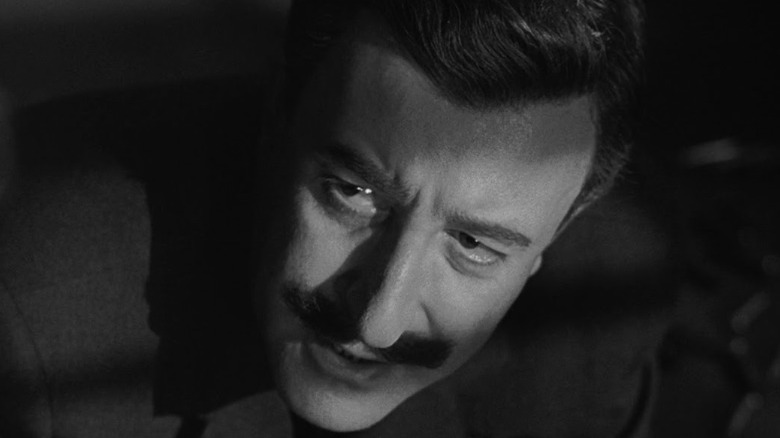
"Dr. Strangelove or: How I Learned to Stop Worrying and Love the Bomb" is one of Kubrick's collaborations with the legendary Peter Sellers. It's a strange film for Kubrick, made early in his career when he still hadn't developed the look and style that is now associated with him. While Kubrick's sense of humor is always present in his films, in "Dr. Strangelove" it's the leading impulse. The movie satirizes the Cold War, how ridiculous war planning is as a concept, and the fear that permeated that time period, pushing people to do stupid things. It also boasts one of Kubrick's sharpest scripts, one that continues to escalate in nightmarish and hilarious directions.
In "Doctor Strangelove," Sellers gives Mandrake -- one of three characters he plays in the movie -- a crisp English accent and a nervous and energy as the Captain struggles to prevent a nuclear attack. While the character of Dr. Strangelove is arguably the most memorable one in the movie, in playing the sane man of the film Sellers gets to show off his comedic and chameleonic skills and his ability to hit different dramatic notes, showing the growth that Mandrake fumbles through.
PVT. Pyle — Full Metal Jacket
In a film filled with impactful characters and sequences, few stand out as much as Vincent D'Onofrio as Private Leonard Lawson, cruelly nicknamed Gomer Pyle by Sergeant Hartmann. "Full Metal Jacket" is a film about the cost of meaningless war, and no character better illuminates this than Private Pyle. He is mocked and made fun of, with only Private Joker as his friend.
Once he's assigned to Joker's platoon, Pyle's clumsiness gets the better of him, resulting in the entire platoon beating him up in order to teach him a lesson. Pyle's mental breakdown is one of the most horrific scenes in the film. It marks a turning point for the story and for D'Onofrio's career; aside from maybe the Kingpin, Private Pyle is still D'Onofrio's best-known role, showing how capable he is as a character actor who can emote danger, pity, and sensitivity in equal parts.
Wendy Torrance — The Shining
Shelley Duvall's performance as Wendy Torrance is one that has been re-evaluated over the years. It was loathed at first sight. Stephen King, who wrote the novel the film is based on, famously despised Kubrick's adaptation, largely because of Wendy, who, in the film version, is crying and screaming throughout most of her scenes.
This is true. Still, it's unbelievable that people weren't able to appreciate Duvall's work. As the wife of Jack, who grows increasingly more distant and dangerous, Wendy represents the one sane character in the hotel. Jack Nicholson shines because his character is contrasted with Duvall; she gives him the room to be as terrifying as the film needs him to be. The sequence in which Jack breaks down the bathroom door wouldn't be half as effective if Duvall weren't around to scream, cry, and hobble away in exhausted fear. There's not one performance without the other (that Kubrick seemed more interested in fleshing out the male lead, as opposed to the far more sympathetic Wendy, is a different story).
Lady Lyndon — Barry Lyndon
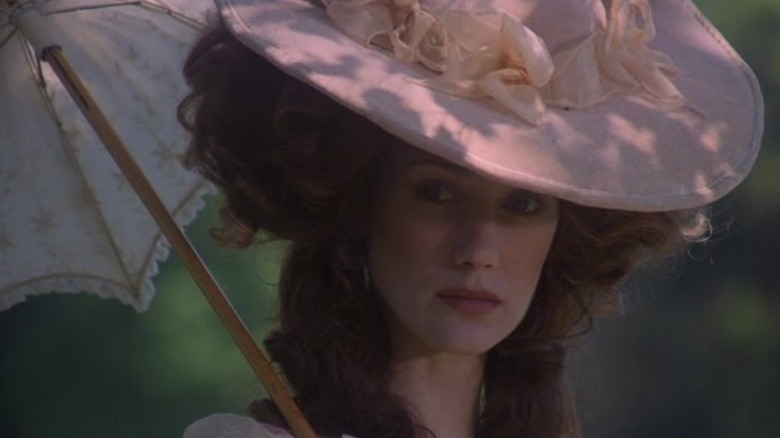
Kubrick is known for many things, but his ability to cast the right actors is sometimes hidden under his more eye-popping skills. Before Marisa Berenson starred in films like "Cabaret" and "Barry Lyndon," she was on the covers of Vogue and Time magazine. Berenson's allure, which could be expressed with a single glance, is one of the reasons why her role as Lady Lyndon remains iconic decades later (although the fact that she is the granddaughter of Elsa Schiaparelli and was considered the "it" girl of the '70s, classily posing nude in several magazines, certainly helps, too).
Lady Lyndon's introduction scene, in a gambling salon in Paris, has basically no dialogue. Like the rest of the film, the scene is beautifully shot, with the camera focusing on the way Barry and Lady Lyndon look at and analyze each other. It's one of the quickest examples of a character falling in love onscreen: She simply looks at Ryan O'Neal, and he begins chasing after her.
Alex DeLarge — A Clockwork Orange
Based on Anthony Burgess' novel, "A Clockwork Orange" is one of Kubrick's most famous films, and one that encapsulates much of Kubrick's outlook on the world, at least on the surface. It's also the film that best shows off Kubrick's talent at creating believable and striking settings -- in this case, a world that feels like our own, only tilted. The set designs, the outfits, and the mansions, while made in the '70s, feel as fresh today as they did when "A Clockwork Orange" debuted.
"A Clockwork Orange" follows Alex, a troubled 15-year-old living in a dystopian version of England. He's the leader of a gang and likes to steal, rape, and murder people in his spare time. When he's captured by the police, they attempt to rehabilitate him with aversion therapy, preventing him from acting on his worst impulses, yet robbing him of free will and the possibility of redemption.
Malcolm McDowell plays Alex as if the world is his stage, with endless theatricality and fearlessness. His performance is on the same wavelength as the film itself, a blend of the classical and the modern, with tilted angles and plenty of gruesomeness. As an older version of today's revered Joker, it's easy to see why people, especially young men, would be hypnotized by this character and performance. Still, no matter which way you look at it, McDowell earns the hype.
Alice Harford — Eyes Wide Shut
As the instigator of conflict in "Eyes Wide Shut," Alice's role is pivotal. In yet another great flourish of casting, Kubrick selected Nicole Kidman, Tom Cruise's then-wife, to play his on-screen spouse as well. The fact that Kidman and Cruise were married as they shot this film, one that's explicitly about infidelity and the complexities of marriage, makes the whole thing feel almost voyeuristic, as if the audience is somehow complicit in the events that follow.
Kidman plays Alice as a classic movie wife -- a little bit bored, and concerned with the fate of her marriage. After a night spent smoking marijuana, Alice resents William's certainty that she'd never cheat on him, and informs him that she considered leaving her husband, her daughter, and her life for a sailor that she once made eye contact with.
Kidman's performance worms into your brain, nailing a reality that couples like to avoid thinking about: Marriages are made out of two individuals, and there's no way to completely know another person. Kidman shows that we can feel several emotions at once and that, even when they represent opposite things, they can all be true. Women in Kubrick films rarely have the last word, but Alice does -- and she makes it count.
HAL — 2001: A Space Odyssey
Four decades after its release, "2001: A Spacey Odyssey" remains one of the most intriguing films ever made. Tracking human evolution over thousands of years, the film features a very charming and very evil computer. HAL is in charge of running Discovery One, the spaceship that serves as the setting of the middle section of the film. HAL is the kind of computer we'd love to see nowadays, capable of speech and facial recognition, with the ever-elusive additives of being able to interpret art, voice inflection, and facial expressions. HAL is what Alexa wishes it could be.
However, once HAL starts malfunctioning, things take a turn for the worse. Kubrick crafts great characters by fleshing them out; Instead of simply being an evil computer, HAL, voiced precisely by Douglas Rain, is capable of producing fear and empathy through voice acting and script alone. HAL's way of speaking is terrifying when compared to the humans on the ship, but most striking are the computer's closing moments, when it reaches its most human place and calmly begs to not be disconnected. "2001" doesn't give HAL a body like the Star Wars films, which make their robots worthy of empathy. HAL has one red eye and a voice. That's enough to make it one of the most iconic figures in cinema.
Barry Lyndon — Barry Lyndon
"Barry Lyndon" is a strange film. It's a miracle that it was made in the first place. Tracking the highs and lows of an Irish opportunist, "Barry Lyndon" fires on all cylinders, with Kubrick's signature meticulousness applied to every aspect. Made with an obsessive faithfulness to the time period in which it's set, including specially designed lenses that captures natural lighting, the film is a pivot following "A Clockwork Orange" although it's still undeniably a Kubrick movie. It's a period piece, a comedy, and a tragedy all at once.
The character of Barry, played by former soap opera star Ryan O'Neal, is a dumb yet incredibly lucky guy. He goes through his life, achieves fame, and loses it, all based on his looks and his luck. Still, after losing a son, a leg, and a fortune, the film ends with Barry traveling through Europe, with a closing shot of Lady Lyndon signing his annuity check.
Jack Torrance — The Shining
"The Shining" changed significantly when adapted from novel to film. While Kubrick kept the haunted hotel, the process by which Jack loses his mind is much less explained. With the book, Stephen King took pains to ensure that Jack retained some humanity, making his story into one about alcoholism and family. Kubrick is not concerned with this, making Jack a guy who is minutes away from boiling over. His temper is short and his cabin fever sets in quickly.
Jack Nicholson is an expert at this, creating a menacing character who seems to be having a good time as the world falls apart around him. Kubrick has never been interested in why characters do things and behave in certain ways; in his stories, even the most righteous of characters are seconds away from throwing away their morals. The hotel might be Jack's excuse, but really, his arc could easily appear in any one of Kubrick's films.
Read this next: The Films Of Stanley Kubrick Ranked: Noir, War, And The Outer Reaches Of Existence
The post Stanley Kubrick's most iconic characters ranked appeared first on /Film.
The 20 Best Dystopian Movies Of All Time
The differences between a dystopian story and an apocalyptic one are slight. It's common for a dystopia to set in after an apocalypse, and a dystopian world often hides its true nature, only revealing itself after subtle revelations pile up. H. G. Wells was one of the first writers to popularize dystopian fiction, with "The Sleeper Awakes" using what today's sci-fi fans may recognize as a Douglas Adams gag: A man falls into a coma and wakes up centuries later, his accrued financial interests making him the owner of the world. A nice fantasy. Meanwhile, a council of the elite uses his money to forge an authoritarian hellscape.
Dystopian movies are about broken worlds at the mercy of greedy or violent causes. Systemic social corruption is typical. Like most science fiction settings, dystopias are a way to reflect on the real and potential problems in our own society. Many of the movies chosen for this list are ones in which characters get a look at the causes of their dystopias -- some of these people even find ways to challenge their grim status quos. Maybe we can learn from the mistakes made by the inhabitants of these bleak worlds, before the same misfortunes befall us.
Daybreakers
"Daybreakers" is a slaphappy vampire movie in which Willem Dafoe chews the scenery. It's also about the fascinating topic of resource scarcity. The vampires won, overpowering the world of mortals and rebuilding society into a nighttime recreation of their former lives. But in this new world order, Big Blood replaces Big Pharma. It's not lost on the vampire leadership that world domination means that their once-plentiful walking meals just became scarce.
Ethan Hawke, who genuinely enjoys showing up in the unlikeliest places, works for the vampire equivalent of a hydroponics lab. They're working on new blood replacements to avert the impending food shortage. It's a great twist on a classic theme, and the only thing that holds it back is the movie's insistence on not getting too big-brained about its core conceit. By the third act, "Daybreakers" is a boilerplate action movie, complete with vampire hunters and a fairly novel take on reclaiming the world from the bloodsuckers. It's still great fun to watch.
High-Rise
Ben Wheatley adapted "High-Rise" for screens in 2015 with a shoestring budget and a terrific cast. The story is one of J.G. Ballard's most thematically insistent. Less garish than "Crash," "High-Rise" explores the eroding architecture of social hierarchy in a tower where the ultra-wealthy live, cutting themselves off from the rest of society. There's a sense that something's not quite right with the outside world, but since the tower can support all its residents' needs, those questions become unimportant. The tower is metaphor incarnate; social status is reflected by how elevated your apartment is. It's also disintegrating from the inside.
There's some "Dredd" in this cerebral and sometimes incoherent film. There's a kingpin with a psychological grip on the tower's inhabitants, the police are paid to not interfere, the protagonist must ascend the tower to get to the kingpin, and, gradually, there's a lot of violence and primal humanity on display. But Robert Laing, played by Tom Hiddleston, doesn't overthrow the tower's architect. Played by Jeremy Irons, the tower's godhead woos Laing to his side, making him part of the architect's grand experiment. Laing's reward for accepting his place in the architect's kingdom is a feral, dog-eating madness. At least he's got a great view off his balcony.
Equilibrium
For a few years after "The Matrix" came out, there was a race to see who could make the most stylish, most impenetrably arcane pseudo-philosophical movie featuring guns and martial arts. 2002's "Equilibrium" is the clear winner, because it had the audacity to just slam firearms and kickboxing together into "gun-kata." "Equilibrium" is a beautifully stupid film that turns the dehumanization of "THX 1148" and the authoritarian controls of "Fahrenheit 451" into Play-Doh and smushes them together with some white buttercream. Also, the fight choreography is so damn good for how dumb it all is.
Christian Bale pulls out his "American Psycho" face for most of the movie, a marble sculpture of gradually building emotions that gets one of the best "oh crap" moments in action film history when he decides that, yes, there will be an incident today. Bale spins himself into a destructive tornado, eventually making his way to the fascist leader of this anesthetized kingdom who is, of course, an utter hypocrite. The result is a perfectly bad movie we could rewatch every single day.
Scanners
The premise of "Scanners" is obscured by David Cronenberg's sheer weirdness, but in retrospect it is a prescient little chiller. What was once a body horror movie that put unique power in the hands of the next generation of political radicals has become a look at what would happen if private military corporations got their hands on psychics. The results are horrifying.
For some context, the film "The Men Who Stare at Goats" was based on a non-fiction book about the US military's attempts to harness hippie power and psychic phenomena to get an edge over our enemies in the Cold War. That's not a joke. That is a thing that happened in the real world, and it had enduring consequences. In "Scanners," the potential edge these men sought is privatized, weaponized, unregulated, and let loose in a society that's elevated the military-industrial complex into a shadow government. Worse, it's one easily manipulated by these new psychics -- the villainous Revok is a classic example of a bastard with a point.
THX 1138
Before "Star Wars" made him a titan, George Lucas directed "THX 1138." It's a strange film, almost Russian in its simplicity and layered philosophical conceits. It also reveals the same flaws that bedeviled Lucas when making the Star Wars prequel trilogy: The man has a hell of an imagination, but he can't create an emotional story without help. It's to the benefit of Lucas' debut film, then, that it's about a world without emotions. Even when off the medications that keep Robert Duvall's bland life under control, there's no deep connection. There's sex and violence, but not much love.
Religion has its part to play here, a mechanical and distant warning against sin. The confession booth is remade with a huge portrait of Jesus, renamed OMM. A shot of a lizard scurrying around inside the machine that runs OMM suggests that nature is slowly retaking everything, and that no one cares about what THX has to say.
Even the ending is a brutalist metaphor. THX succeeds in outrunning the robot police and walking off into the sunset, but only because the cost to recapture him is a redline on the budget chart. No one cares in the world of "THX 1138," not really, and whatever awe the sun holds for this free individual isn't clear. He may not be capable of appreciating it anymore. Are we?
Akira
Neo-Tokyo was rebuilt after a devastating event some 30 years earlier, but the forces that caused that destruction didn't learn jack from the experience. 1988's "Akira" is one of the tentpoles of anime, the film that proved the medium could tell a ripper of a story with some psychedelic moralization thrown in to boot. As in "Scanners," in "Akira" military forces seek to unlock a new army of psychics, with their few successes known as Espers. After their strongest creation, Akira, blew everything to hell decades before, the Japanese Defense Ministry buckled down and thought, "What the hey? Let's do it again." As the movie goes on to show, this doesn't go well.
There are a few testaments to the power of friendship in "Akira," and for body horror fans, Tetsuo goes through some of the most grotesque transformations we'll find outside of a straight-up guro film. The rest of society isn't holding up, either, with the sprawling city rocked by acts of terrorism and gang violence. Our protagonists are gang members, too, adding an ethical complexity to their behavior. The ending of the film is as symbolic and acid-trippy as the finale of Kubrick's "2001" -- for fans who want a deeper look at what's going on here, the manga series by Katsuhiro Otomo can be a big help.
The Running Man
The novella that "The Running Man" is based on is an angry affair. Author Richard Bachman was Stephen King's alter ego, and the pen name let the bestselling writer siphon off a lot of rage. The Arnold Schwarzenegger-led film adaptation trades in its fury with a world that's turned justice into a gameshow for a story that glorifies violence and showmanship. It also fleshed out a successful resistance movement, one that understands how to turn the medium back on its abusers.
The US Justice Department underwrites fatal game shows that turn criminals into prime-time television. Arnold's character, Ben Richards, is a former lawman turned into grist for the grinder. "The Running Man" is a ridiculous film that hasn't aged well, but the hold television has on its viewers and the way that the audience changes its view of truth depending on what's airing still feels relevant amid the cheesy one-liners. It has never stopped being "Black Mirror" levels of weird that the first response to this film's success was to start making reality shows about gladiators.
Minority Report
Watching "Law & Order" marathons won't make you a lawyer, but at least we understand the limits of the US legal system. We know, generally, our rights under the law and what the system should and shouldn't be allowed to do. "Should" being the operative word here. "Minority Report," based on Philip K. Dick's short story and starring Tom Cruise, mixes the philosophy of free will with the inevitable corruption of a "perfect" justice system. Here, the police are happy to assume that they're always correct to arrest a criminal before a crime is committed, because it's all been predetermined by fate. The concept is enough to frighten anyone.
The film doesn't dive into the philosophical quandaries of Dick's story, instead focusing on police corruption. Nonetheless, the themes of destiny versus free will continue to matter, culminating in a pretty good climax that keeps alternate interpretations of the themes alive. It helps that all the performances are excellent. Max von Sydow as the Director of Precrime is perfectly assured for the bulk of the film, crumbling at just the right times. It's a lesser Spielberg film, but a good look at a world where the possibility of a thoughtcrime is enough to make us fear our neighbors.
Soylent Green
Reading the original reviews for 1973's "Soylent Green" is a trip. Not a fun one, but great for some bitter laughs. The film, a murder mystery set amid extreme social disparity and a doomsday environmental scenario, was called melodramatic at the time. In The New Yorker, it was "pompously prophetic," with the reviewer sardonically asking where was the social uprising, where were our democratic leaders to push back against a disaster that's teetering all of human society on a final, starving brink?
It's true that "Soylent Green" is a melodramatic, often hammy film. With Charlton Heston grimacing his way along, that's an unavoidable critique. But Edward G. Robinson's beautiful farewell to the world that was is shattering to watch. Add an Attenborough narration, and Robinson's final moments becomes a part of our world today, with sea levels and temperatures rising, leading to an increase in product shortages. As for that New Yorker review, we've been shouting all along about our looming environmental disaster. The problem lies with those who choose not to listen. It's not too late to learn from this fictional world's mistakes, but it's getting there.
Logan's Run
Imagine a world run by the young, who dictate that anyone over the age of 30 is too old to get it -- oh, wait. That's much of today's social media. Fortunately, although that youthful exhaustion can be legitimate, we're not at risk of being thrown into the woodchipper. In the world of "Logan's Run," perfect social equilibrium is achieved by doing exactly that. Once a person turns 30, they're obligated to join the Carrousel, a rite of renewal that actually kills and recycles unprofitable peoples. Otherwise, they're free to live beautiful -- and nearly naked -- lives in a bounteous paradise.
This paradise only survives by virtue of careful resource management, creating a self-sustaining terrarium for humanity that inhibits intelligent growth. The dome's residents are basically children, living only to become their own livestock. But freedom reveals that the once-ravaged outside world has healed. There's room to live again, and an elderly man who thrives in his old age is something to marvel at. "Logan's Run" ends on hope, but fights hard to win it.
Total Recall
Philip K. Dick was a thinker, blending his drug-fueled mindbenders with big questions about what it means to be human, alive, and sane in a world that isn't. It's a little weird, then, that Arnold Schwarzenegger headlines two separate Dick adaptations. "We Can Remember It for You Wholesale" became "Total Recall," a hyperviolent, intensely macho blockbuster, but damn if it doesn't work. It takes a lot from the original story to set up its premise and its initial turn, and then it bolts on a lot of high-octane action before returning to Dick's familiar questions. The film's climax is also less bizarre than the original book's, which involves an invasion by Martian mice.
Paul Verhoeven's additions to the story include a return to one the best themes of "RoboCop," with mega-corporations empowering themselves through privatized paramilitaries and functionally absorbing governments. The film relies on the paranoia its nebulous Agency provides, and the fight for control of Mars is a proxy for the rights of the common people versus monolithic authority. Otherwise, "Total Recall" feels like today. It's a world loaded with dead end jobs, where staycations and false memories replace the need to go out and see the real world. The corporations like it that way.
Gattaca
Designer genetics were still science fiction when "Gattaca" released in 1997, but the ethical horrors of eugenics were already part of our lives. Andrew Niccol's big picture debut tells a bleak tale about a world where the limits of a person's future are decided by one's genetics. It's a premise that shows what happens when we ignore the potential of the human spirit in favor of a mathematical readout. Ethan Hawke plays an "in-valid," a genetic reject fated for menial pursuits and a brief life, but whose dreams of the stars drive him past algorithmic predictions. Jude Law was bred to be physically perfect, but his mind and spirit can't match those lofty expectations. Together, they obliterate the status quo.
As their story unfolds, we see glimpses of a world frozen by perfection. Sleek retrofuturism shows a society that's afraid of progress and failure. Instead, everyone sticks to the updated chrome showiness of Studebakers in space, stylish beyond time. The perfection of this world belies its empathetic imperfections. The humanity of Hawke's dreams reminds us that perfection is pointless if we don't have the heart to bring everyone along with us.
Escape From New York
John Carpenter is a director with opinions, and "Escape from New York" hides some sly commentary about corrupt politics and fascist means of control. Written by Carpenter as a response to a cynical post-Nixon world, the island of Manhattan is walled off into an open-air prison for dissidents, murderers, and gang lords. Ostensibly, this has been done as a response to a rapid increase in violent crime, but it also works to scare off any of the President's opposition. Of course, the plan backfires, and Air Force One crashes into the world's biggest prison. Enter Snake Plissken.
Snake is the cynicism of the late '70s incarnate. He has every reason to despise the system he once served, and by God, he looks fine as hell doing it. Only Kurt Russell can make Snake's flowing mullet look ageless, and his sneering exhaustion with the "one last job" cliché he's been forced into makes his confidence relatable. The raucous action and savage world inside New York set up the film's final gag. After all of the sacrifice and pain it took to reclaim him, the President simply doesn't care about anyone except himself. The attitude undoes him, as Snake is too jaded to have ever bought into the President's promises, and undermines his triumphant return.
Children Of Men
The source of infertility is never disclosed in "Children of Men," becoming a potent metaphor for a lack of humanity. It's easy to look at this collapsing society and suspect this is a response by an ecology that doesn't need us anymore. With the end of the world ticking closer with every stopped heartbeat, one of the last semi-stable societies has become even more insular and racist than ever. It's a ruinous kingdom of Herod, and the refugee girl, Kee, with her miracle pregnancy, is the exhausted carrier of hope's last chance.
There are some big changes to the original novel by P. D. James, but the film makes for an equally impactful experience. The taut fear dogging Kee and her unborn child is brought into the open in an awe-inspiring sequence that evokes World War II's Christmas Truce. Although "Children of Men" leaves the ending ambiguous, hope remains the key to surviving this dystopian future. Through the struggle of a few decent humans, Kee's son is born safely, and our species might just earn a second chance to thrive on Earth.
Mad Max
As a franchise, "Mad Max" takes a sardonic look at a world mid-apocalypse. Water is as scarce as gasoline, and as sacred. The tone was set in 1979, the first time Max Rockatansky mastered the crumbling roadways of Australia, and the last time he was a person fully in control of his mind.
The causes of global unrest aren't examined much, but the '70s were marred by an oil crisis, and it's clear that's an inspiration for "Mad Max." Gas rationing and a financial recession brought social changes. Add in some cinematic violence and the hot new actor Mel Gibson (whatever happened to that guy?), and baby, we have a stew going. "Mad Max" looks at its broken world through the lens of small people's struggles. Max isn't a superhero or a government official. He's a highway patrolman who falls into the deep end.
Max reflects the world he's trying to survive. Truculent but passionate, he holds it all together until he has no reason to care anymore. With his family destroyed by his nemesis, Max becomes the face of the next era of Australia's apocalypse. Max's new life is a simple one, relying on revenge and survival.
Videodrome
In 1985, the parental advisory sticker was introduced to notify parents of explicit content in audio recordings. In 1984, the motion picture industry caved to parental pressure and expanded its rating system, adding PG-13. In 1983, David Cronenberg released "Videodrome," in which the government weaponizes subversive and pornographic media to trap and destroy social deviants.
The protagonist of "Videodrome," not to be confused with its hero, is Max Renn, a sleazy TV executive looking for the next cheap thrill. He's lured by the mystery of a Malaysian signal broadcasting explicit torture porn. But after he discovers that the signal is being spoofed from Pittsburgh, and once his new lover disappears to experience it for herself, things get especially weird.
Max is kept several steps behind a deeper understanding of the war between a regime out to enforce social purity and its Marshall McLuhan-inspired resistance movement, but the audience learns the lesson he eventually dies for. The medium is the message, and those who control the medium get to control the message. "Videodrome" is a film that preceded a public internet, yet is as freshly relevant as ever. Long live the new flesh, indeed.
Strange Days
"Strange Days," released in 1995, dated itself with its fascination with the Y2K panic. That hasn't stopped the movie from being prescient. We haven't figured out how to jam a multi-sensory TikTok straight into our prefrontal cortex yet, but between improving VR tech and mental health therapies like transcranial magnetic stimulation, we're trying our hardest to get there. And yet, the most haunting aspect of the film is the race war the Los Angeles police nearly instigate with their fumbling, hateful execution of rapper Jeriko One.
When "Strange Days" was released, the LA riots, which ignited after a jury acquitted the four police officers involved in the murder of Rodney King, were only three years old. It wasn't a leap to realize that underneath the lost Lenore love story and the near-future SQUID tech was a much simpler tale about the hurt Black America still carried, and how the recording of Jeriko's brutal execution could burn California to the ground. It's a story that hasn't changed, and each year the neon-lit SF trappings of this film are further stripped away to reveal yet another murderous cop, and another dead Black man lying in the street.
The Matrix
"The Matrix" closely interweaves apocalyptic and dystopian themes, but the simulated reality in which the plugged-in remnants of humanity survive is too familiar. That the newly unplugged members of Zion go on to gird themselves in the trappings of counterculture movements is natural and deliberate. A theme of reclaiming our unique self persists throughout the franchise, culminating in the triumphant rebirth of the Wachowski sisters as the women they born to be. That is its own kind of victory against a social machine that treats its crucial fuel sources as less than bits and bytes. Are we still talking about the movie? It depends.
The desert of the Real is also ruined, but here humanity gets to feel a little freer. But when Zion is revealed in the second film to be split between an empathetic but sometimes ineffective governance and a rigid militant faction, it hits close to home. Morpheus toes the line between both, bringing both sides together through his spiritual humanism, but it's not as easy as he wishes. At the end of the original "Matrix" film, there was still the hope that Neo could break the cycle that chained the Matrix and the Real together. It's chilling to watch the trailer for "The Matrix Resurrections" and realize that he might have failed.
Blade Runner
There's a reason why "Blade Runner" is a science fiction phenomenon, and it's not because Harrison Ford was in his prime. He was one of the '80s best thirst traps, yes, but that's not the point. The point is that world-building in this future noir is par excellence, with every frame telling the viewer something crucial about this bleak new world.
Futuristic blimps exhort the virtues of a better life in the off-world colonies. Merchants hawk cheap replicant animals in filthy alleys, complete with trackable VINs. The police shrug off murder if there's a chance the victim is synthetic. And Eldon Tyrell lives like the Babylonian god Marduk, high atop a ziggurat where he's reshaping what it means to be human.
Tyrell's creation comes home to challenge his maker, and the results are an object lesson in playing God. Roy Batty's synthetic life is too brief, but his passion makes him immortal. What about him was less human than the people he drifted among? The final recuts of the film deliberately blur this question and transform it into another one: Who's more human? The replicant who fought to live in spite of his programming? Or the replicant who was programmed to kill? In the end, Batty teaches Deckard how to be human. It's Batty's passion that makes "Blade Runner 2049" possible, even as the sequel warps the riddle of Deckard's status as man or machine all over again.
A Clockwork Orange
In addition to the corruption of the state, a dystopia can also be marked by the death of our humanity. No movie illustrates both themes as clearly as Stanley Kubrick's "A Clockwork Orange." The authoritarian derangement of society makes a human stain like Alex possible; it's a world that lets its boys be boys so long as these toxic monsters don't upset the wrong people. The fear gangs like Alex and his droogs induce makes the job of the state easier, keeping the meek and the poor off the streets lest they get a taste of the old ultraviolence.
Alex runs afoul of these unspoken rules, and he takes it with remarkable calm. He doesn't enjoy his imprisonment, and he doesn't regret his actions, but he does understand that he drew the attention of someone who mattered. That's the only power in this new England, the ability to matter to the powers that be.
Some of Alex's former droogs join the police during his incarceration, using brute force and a lack of empathy to do exactly what they did before the milk bars and the canal crawls. What Alex learns from his trials, as he falls into yet another rape and torture fantasy to the violins of Ludwig Van, will probably make him a barrister someday, if not Prime Minister.
Read this next: 10 Amazing Dystopian Fiction Stories That Should Be TV Shows
The post The 20 best dystopian movies of all time appeared first on /Film.
Star Wars Editor Marcia Lucas Was Furious With Sequel Series, Cried Over The Prequels

When you watch enough movies, the dirty little secret that nobody ever really wants to acknowledge starts to emerge. The vast majority of films aren't terrible or masterpieces -- they're merely okay. Some good stuff, some bad, all combining to make an unspectacular 2.5 out of 5 star film. That's just the way it is! But when it comes to some diehard fans of blockbuster franchises like, say, "Star Wars," suddenly all of that conventional wisdom goes out the window and becomes replaced with charged responses that end up on either extreme of the spectrum.
But when we're talking about those with genuinely personal and invested stakes in the movies? That's a whole different story and one worth treating with nuance, as the internet has found out the hard way with both the Prequels and with Disney/Lucasfilm's recent Sequel Trilogy. Everyone from Mark Hamill to John Boyega has voiced strong opinions on the latest series of movies and, well, it should hardly be surprising that original "Star Wars" editor Marcia Lucas is no exception.
Struggling With The Sequels
Let's be clear right from the start: without Marcia Lucas, it's likely that there's no "Star Wars" franchise to speak of in the first place. Creator George Lucas' then-wife played an integral role as editor of the original film (not to mention "The Return of the Jedi" as well, along with her uncredited work on "The Empire Strikes Back"), stitching together seemingly discordant and jumbled bits of footage to assemble something special that far exceeded what existed on paper. Her Oscar-winning editing work went hand-in-hand with George Lucas' notoriously difficult-to-translate vision to bring this silly story of laser swords and soap opera drama (in space, no less!) to life, earning her a lifetime's worth of credibility in being allowed to say whatever the hell she wants to say about the direction the franchise has since taken under Disney's guidance.
That brings us to the present, where some choice quotes are being brought to light as a result of the publishing of the late J.W. Rinzler's book on "The Empire Strikes Back" and "Return of the Jedi" producer Howard Kazanjian, titled "Howard Kazanjian: A Producer's Life." According to IndieWire, Marcia Lucas didn't hold back whatsoever when asked about her thoughts on how Lucasfilm President Kathleen Kennedy and director J.J. Abrams approached "The Force Awakens" in 2015. After earnestly praising Kennedy as "really smart and really bright," Lucas went up and in on her storytelling choices:
"Now that she's running Lucasfilm and making movies, it seems to me that Kathy Kennedy and J.J. Abrams don't have a clue about 'Star Wars.' They don't get it. And JJ Abrams is writing these stories — when I saw that movie where they kill Han Solo, I was furious. I was furious when they killed Han Solo. Absolutely, positively there was no rhyme or reason to it. I thought, 'You don't get the Jedi story. You don't get the magic of Star Wars. You're getting rid of Han Solo?'"
Although it's worth noting that Harrison Ford himself had been campaigning for Han Solo's death for decades by that point, it's not hard to read between the lines somewhat and find the true drawbacks in how Han Solo was treated throughout the film: brought back into the story through eye-rollingly convenient means, reverted back to his pre-"A New Hope" ways, and then promptly killed off with little time or space given to truly mourn the loss of an icon. As these interviews took place after "The Last Jedi" but before the release of "The Rise of Skywalker," Lucas has lots to say about the death of another icon in Rian Johnson's 2017 film as well:
"They have Luke disintegrate. They killed Han Solo. They killed Luke Skywalker. And they don't have Princess Leia anymore. And they're spitting out movies every year. And they think it's important to appeal to a woman's audience, so now their main character is this female, who's supposed to have Jedi powers, but we don't know how she got Jedi powers, or who she is. It sucks. The storylines are terrible. Just terrible. Awful. You can quote me...JJ Abrams, Kathy Kennedy — talk to me."
While I still maintain that "The Last Jedi" is by far the biggest bright spot amid post-Disney "Star Wars," it certainly sounds like Luke's death and Carrie Fisher's tragic passing were the last straw for Lucas. Considering her perspective on the shaky ground that the new movies started with -- many of the popular complaints about "The Last Jedi" should more accurately be laid at the feet of "The Force Awakens" -- it stands to reason that her grievances would chiefly be with Abrams and Kennedy. I, for one, hope they actually take her up on her offer to get in touch with her!
Those Pesky Prequels
Meanwhile, The Direct brings the news on Marcia Lucas' opinions about the Prequels elsewhere in Rinzler's book. Her first reaction to watching an early screening of "The Phantom Menace" -- bear in mind that she had no involvement whatsoever with the Prequel Trilogy and her absence certainly shows -- is as honest and brutal as it gets:
"George is, in his heart and soul, a good guy and a talented filmmaker. I wish he would've kept directing [other kinds of] movies. But when I went to see Episode I—I had a friend who worked at ILM, who took me as a guest to a preview—I remember going out to the parking lot, sitting in my car and crying. I cried."
"I cried because I didn't think it was very good. And I thought he had such a rich vein to mine, a rich palette to tell stories with. He had all those characters."
While the tide has somewhat turned regarding the general consensus of the Prequels (let's just say I'd take the ambition of the Prequels over many, many blockbuster movies being produced today), Lucas taps into just how disappointing it remains that so much potential was left on the table. While it may seem shocking these days to see a creative talent so deeply involved in the franchise criticize it so harshly, it's not exactly a far cry from previous comments Marcia Lucas has made in the past about the impact and influence of the original "Star Wars."
While George Lucas has largely maintained his silence since selling the property to Disney (with some notable exceptions), both he and Marcia will have to continue to grapple with the legacy of their shared creation. As fans, we're in for plenty of exciting "Star Wars" projects -- some debuting very soon. But it doesn't hurt to sit back and carefully consider the points raised by the franchise's creators, as well.
Read this next: Star Wars Movie Villains Ranked Least To Most Powerful
The post Star Wars Editor Marcia Lucas Was Furious With Sequel Series, Cried Over the Prequels appeared first on /Film.
10 Superhero Shows You Should Watch After The Falcon And The Winter Soldier
"The Falcon and the Winter Soldier" was a revolutionary show that not only introduced us to new characters, but gave new roles to characters we already know and love. Sam Wilson (Anthony Mackie) left being the Falcon behind in order to become the first Black Captain America. Bucky Barnes (Sebastian Stan) was finally able to overcome his demons and forge a new friendship with Sam, akin to the one he had with Steve Rogers. Baron Zemo (Daniel Bruhl) become an anti-hero of sorts, working with Sam and Bucky in order to stop the terrorist group known as the Flag Smashers. Sharon Carter (Emily VanCamp), who had been in hiding following the events of "Captain America: Civil War," was revealed to be walking a thin line between good and evil as the notorious Power Broker. And John Walker (Wyatt Russell) made a bloody debut in the Marvel Cinematic Universe as U.S. Agent.
In a stark contrast to the fantastical "WandaVision," "The Falcon and the Winter Soldier" was a much more low-key affair. While there were plenty of action scenes, themes such as radical ideology, family, racism, and identity were frequently examined over the course of the six-episode series. The Flag Smashers weren't just terrorists; under the leadership of Karli Morgenthau (Erin Kellyman), the group believed that the world was better during the "Blip" and went to extremes to help return it that way.
If you enjoyed "The Falcon and the Winter Soldier," here are 10 more superhero shows you should watch.
Loki
This one may seem like a no-brainer, but you should definitely watch the Disney+ "Loki" series after "The Falcon and the Winter Soldier." Not only is it the next step in Phase 4, it also features the introduction of several new facets of the MCU. This is the series that really breaks down what the multiverse is and why it will play an important factor going forward. Additionally, in the season finale, we the potential next big bad for the Avengers. The show has also already been greenlit for a second season.
Loki (Tom Hiddleston) slid into the role of anti-hero quite nicely during the events of "Thor: Ragnarok" and "Avengers: Endgame," and continues to play that part in the Disney+ series named after him. It's a long story, but ultimately there is a secret agency that keeps track of a master timeline and works to prevent any deviations from it. Loki himself had caused a few branches on his own, so he's recruited by this agency to travel through time and right his wrongs. Having to atone for his previous sins is something Loki and Bucky definitely have in common.
Runaways
In "The Falcon and the Winter Soldier," we finally catch up with Sharon Carter, who has been on the run from the authorities and living off the grid in Madripoor. This is the first time she appears following the events of "Captain America: Civil War," in which she helped Captain America evade capture. We ultimately find out that Sharon has become the infamous Power Broker, a shadowy figure that deals in arms and weaponry.
The kids of "Runaways" know a thing or two about being forced to go underground -- literally, in their case. The Marvel Hulu series followed a group of teenage superheroes who find out that their parents are actually supervillains. Determined to stop them and clear their names of a crime they didn't commit, the kids go on the run, eventually ending up in an underground mansion.
"Runaways" shares some themes with "The Falcon and the Winter Soldier," mainly those of family and identity. Even though the kids love their parents, they have to fight them in order to save the world. Each teen also has a unique power set that they must learn to use and control. These teenagers go through a metamorphosis over the course of the show's three seasons, changing from fledgling heroes to capable young adults.
Iron Fist
Sam Wilson changes superhero identities by the end of "The Falcon and the Winter Soldier," setting a new precedent as the first African-American Captain America. Sam worked alongside Steve Rogers for years when they were both members of the Avengers, so it made sense for Steve to voluntarily pass the mantle of Captain America on to Sam. However, Sam wasn't the only hero who gained a new identity onscreen.
The popular consensus is that "Iron Fist" was the weakest of Marvel's Netflix shows, with a lackluster lead character, mediocre fight scenes, and predictable writing. Jessica Henwick's performance as Colleen Wing changed all of that, though. Charismatic, smart, and fearless, Colleen was the character most viewers gravitated towards. A fighter in her own right, she worked alongside Danny Rand to help him reclaim his life and become a hero.
The second season of "Iron Fist" was better than the first, especially its storytelling. It also helped that the season introduced the Daughters of the Dragon, the name that Colleen Wing and Misty Knight use when they team up. At the end of the season, Danny gives the power of the Iron Fist to Colleen, who he believes is more worthy and would put it to better use. One of the final scenes of the series is Colleen preparing to fight criminals in an alleyway as the new Iron Fist, complete with a glowing katana blade.
The Gifted
In addition to the power-hungry John Walker, Sam and Bucky also have to content with an international group of terrorists called the Flag Smashers. The Flag Smashers want to return the world to how it was following the Blip, when Thanos snapped half of all life out of existence. While their theology wasn't all that flawed, the ends didn't justify the means -- ie committing mass murder.
Although the show only lasted two seasons, Fox's "The Gifted" shed a new light on the world of the X-Men. Centered around the Strucker family, who discover that their teen children are mutants and go on the run from the government, the show featured the live-action introductions of several X-Men characters. Blink, Polaris, Thunderbird, Sage, and the Stepford Cuckoos all appeared on this high-octane series, with most being part of the "mutant underground" (basically, a stand-in team for the X-Men). "The Gifted" put a "normal" everyday family in the middle of a political and ideological war between mutants and humans.
The second season of "The Gifted" introduced a new Hellfire Club, an organization dedicated to mutant supremacy no matter what the cost. Several members of the mutant underground, including Polaris and Sage, eventually join the Club in order to take a more aggressive approach to defending mutants. Reeva Payge, the ruthless leader of the organization, went to all sorts of deadly lengths to ensure that mutants would be seen as the superior race to humans. Much like Karli Morgenthau, Reeva's unquenchable thirst for power ultimately leads to her own demise.
Black Lightning
In "The Falcon and the Winter Soldier," we were introduced to the Bradley family, which included Isaiah Bradley and Eli Bradley. Isaiah is an African-American Korean War vet who was wrongfully imprisoned and experimented on for 30 years. He is one of the earliest recipients of a super soldier serum prototype, yet his existence was erased from the history books. His grandson, Eli, would eventually grow up to be a member of the Young Avengers in the comic books, adopting the codename Patriot.
The sad fact is that seeing African-American superheroes, much less a whole family of them, is pretty rare in films and on television. However, The CW's "Black Lightning" features not only the superhero Black Lightning, but his daughters, Jennifer and Anissa, who are heroes as well. Jennifer and Anissa come into their powers throughout the course of the series, with their father helping them hone and perfect their abilities. In turn, the trio form a superhero team of sorts, defending their city of Freeland from crime and violence.
"Black Lightning" ran for four seasons and features a slew of other characters from the DC Comics universe, such as Grace Choi, Painkiller, and Looker. The series is unique in that it is just as much a family drama as it as a superhero action show, making it one of the few successful series to blend the two genres.
Cloak And Dagger
As seen in "Captain America: Civil War," Sam and Bucky became an unlikely but highly entertaining duo, and that same rapport continued through "The Falcon and the Winter Soldier." Bucky helped Sam finally accept his destiny as Captain America, and Sam helped Bucky open up to people again, wisecracking with each other the whole way.
Cloak and Dagger is another iconic Marvel duo, and were highlighted in their live-action Freeform series. While they primarily went by their civilian names, Tyrone and Tandy, the two teens formed a special bond after rediscovering each other years after they initially met. When they were younger, Tyrone and Tandy were in a car accident that exposed them to chemicals that ended up giving them superpowers. Tyrone suddenly had the ability to teleport and see other people's fears, while Tandy is able to generate daggers of light and see people's hopes and desires.
The two worked together to track down whoever was responsible for the accident that gave them their powers, as well as helping others. Season two had the duo working to rescue local girls who were being abducted at an alarming rate and facing off with the villain Mayhem. Cloak and Dagger formed a partnership not unlike Sam and Bucky. Tyrone was the strait-laced, optimistic one; Tandy was the cynical, yet resourceful, one.
Agents Of S.H.I.E.L.D.
"The Falcon and the Winter Soldier" saw Sam and Bucky travel the world to go toe to toe with the terrorist group, the Flag Smashers. Every fight scene between the heroes and villains was expertly choreographed, giving us some of the best action sequences in the MCU. The show also reflected on generational heroism, telling the story of the Bradley family and Steve passing the torch to Sam.
The highly underrated "Agents of S.H.I.E.L.D." did all of this on a recurring basis throughout the course of its seven-season run. While there is still plenty of debate on whether or not the show is canon, the fact remains that it gave us some of the best character development and storylines in the MCU. Every episode feels straight out of a comic book, and the show featured second-tier Marvel Comics characters like Ghost Rider, Mockingbird, and Quake heavily throughout its run. The show also introduced the Inhumans into the MCU -- no one counts that terrible tv show -- giving us some of the most powerful MCU characters yet.
The S.H.I.E.L.D. team frequently dealt with international terrorists, both of the human and supervillain variety, traveled to exotic locales, and even went to space to fight the Kree. The banter between Coulson and his team is very similar to how Bucky and Sam interact; they may not always get along, but they will always have each other's backs.
Jessica Jones

In "Captain America: Winter Soldier," it is revealed that Bucky is still alive, but has been brainwashed by HYDRA into becoming a killer named the Winter Soldier. Captain America was able to get through to Bucky during "Captain America: Civil War," which ended with Bucky coming to terms with the blood he had on his hands. However, it's not until "The Falcon and the Winter Soldier" that we see Bucky truly break free of his past and work towards making up for the damage he had caused.
Jessica Jones is an equally tragic hero in the MCU. While attempting to utilize her powers as a superhero, she comes across the villainous Killgrave, who has the ability to control others with his mind. Under his influence, Jessica commits an array of crimes, including killing Luke Cage's wife, Reva. Ironically, Reva's murder is what breaks Killgrave's hold over Jessica. She goes on to dedicate her life to helping others while dealing with the PTSD of her encounter with Killgrave.
Jessica goes through the wringer over the course of the show's three seasons, but proves she's absolutely the hero she never thought she would be. While Jessica ultimately acknowledges responsibility for the atrocities she committed while with Killgrave, her "recovery" isn't quite as thorough as Bucky's. She continues dealing with her own trauma the best way that she knows how -- by helping others.
Legends Of Tomorrow
Bucky and Sam turning to Baron Zemo in their time of need is one of the many unexpected turns to happen in "The Falcon and the Winter Soldier." The unlikely trio makes for some of the funniest moments of the series, including their time in Madripoor and a face-off with the Dora Milaje. While Zemo does provide a lot of comedic relief, the show also reminds the viewers that he is also a deadly criminal.
Similarly, the CW's "Legends of Tomorrow" is a trippy, time-traveling superhero series with a motley crew of characters. The roster is assembled from guest stars who appeared on previous Arrowverse shows, and, like the unlikely team of Bucky, Sam, and Zemo, is comprised of both heroes and villains. The heroes, which include White Canary and Atom, are initially distrustful of the villains, like Captain Cold and Heat Wave, but the two parties eventually come together and form a found family of sorts. Dysfunctional, sure, but definitely family.
As "Legends of Tomorrow" enters its seventh season, it's becoming extremely clear that the chemistry between the characters is what keeps the show going. It's fun to travel to different times and places, but it also depends on the company you're doing it with.
Raising Dion
"The Falcon and the Winter Soldier" emphasizes family throughout the course of the series. Details about Sam's past and his extended family, including his sister Sarah, are revealed for the first time since the character was introduced. Sarah and Sam are often at odds with each other, with Sam wanting to try and make the world a better place, and Sarah being a realist who just wants to get back to a normal life. There's also Isaiah Bradley, whose protective grandson, Eli, is wary about dealing with Sam.
Netflix's "Raising Dion" contains a lot of the same themes. Nicole is a single mother who struggles to take care of her son, Dion, after he develops special powers. Dion wants to use his powers to help people, but Nicole wants him to live a normal life. The young mother helps Dion figure out the origin of his abilities, as well as protect him from those who want to exploit him.
"Raising Dion" is a special series, in that it is both a coming-of-age story as well as a superhero origin story. The familial bond is the thing that holds the show together, while the plight of a young mother and her unique son will keep you glued to the screen. The first season is just nine episodes long, but the series was renewed for season two in January of 2020.
Read this next: While You Weren't Watching, 'Agents Of S.H.I.E.L.D.' Became One Of Network Television's Best Shows
The post 10 superhero shows you should watch after The Falcon and the Winter Soldier appeared first on /Film.
The New Halloween Kills Trailer Teases A Key Flashback To The 1978 Original

When we first revisited Michael Myers in "Halloween" (2018), he had been locked away in Smith's Grove Psychiatric Hospital for 40 years following his killing spree in Haddonfield. Retconning the storylines of the entire franchise meant that we never found out what happened when he vanished off of the lawn after being shot by Dr. Loomis, disappearing into the night.
2018's "Halloween" loudly declared that it was a direct sequel to John Carpenter's 1978 masterpiece of the same name. That said, the new trailer for "Halloween Kills" may not only answer one of the biggest questions remaining after the original but also serve as a direct connection between the first film and the original sequel, 1981's "Halloween II." Could David Gordon Green's new venture into Haddonfield be the missing link to solve the franchise's constantly conflicting canonical continuity?
The Return Of Haddonfield Memorial Hospital
1981's "Halloween II" is set at the Haddonfield Memorial Hospital immediately following the fateful encounter between Laurie Strode and Michael Myers. "Halloween Kills" kicks off after Laurie and Michael's fiery face-off in her survivalist home/bunker, and the trailer shows that the film will take place at least in part at, you guessed it, the Haddonfield Memorial Hospital. A weakened and bloodied Laurie Strode is shown inside the hospital in addition to shots of a massive protest outside the front doors.
How Did Michael Disappear Off The Lawn?
For a split second, we see a shot of Michael Myers standing in the front yard with Dr. Loomis holding guard on the front porch. Police have him surrounded, so it seems like we're finally going to get a real answer as to what happened after Laurie watched Michael disappear off the lawn all those years ago before arriving at Smith's Grove. Or will we?
Familiar Faces Re-Emerge
Jamie Lee Curtis returns as Laurie, along with Judy Greer as her daughter, Karen Nelson, and Andi Matichak as Karen's daughter, Allyson Nelson, but that's old news. What's exciting is that they'll be joined by a few familiar characters returning from Carpenter's original.
Charles Cyphers is back as Leigh Brackett, the father of Laurie's late best friend, Annie, and the sheriff working the night Michael unleashed his reign of terror back in 1978. Anthony Michael Hall will play a grown-up Tommy Doyle, despite the fact he's not the original actor, Brian Andrews, the cameo appearance by actor Danny Ray in "Halloween 4: The Return of Michael Myers," or most famously, the Tommy Doyle of "Halloween: The Curse of Michael Myers," Paul Rudd. Meanwhile, Robert Longstreet is playing a grownup Lonnie Elam, Tommy Doyle's bully in the original film. Now mostly known as one of the "The Real Housewives of Beverly Hills," former child star Kyle Richards makes her return as Lindsey Wallace, and Nancy Stephens is back as Nurse Marion Chambers. As Laurie Strode so wonderfully says in the trailer, "we are the survivors of Michael Myers."
Reuniting all of these characters offers multiple opportunities to explain what happened to the little town of Haddonfield after death paid a visit in 1978. The trailer shows a great moment of Lindsey Wallace screaming at children to run home to safety, knowing just how dangerous Michael Myers is on a night like Halloween after all these years. This can help dissect the generational trauma that has plagued an entire community for four decades, piecing together what everyone actually knows about Michael Myers.
What About That Split Second Young Myers?
Blumhouse and Universal clearly knew that us obsessive horror nerds would break apart this trailer frame by frame because, for a split second, there's a shot of a young boy holding a knife dressed like a clown lit up with the flashing lights of a police vehicle. "Halloween Kills" is clearly going to reference the events that predate Michael Myers' infamous babysitter murders, perhaps providing additional insight into what happened after Michael killed his sister, Judith, and how his relationship with Dr. Loomis came to be.
Read this next: Halloween Kills Trailer: Michael Myers Is Back, Again
The post The New Halloween Kills Trailer Teases a Key Flashback to the 1978 Original appeared first on /Film.
The Best Animated Film Of Each Decade

Animation has been a tried-and-true staple at theaters since the birth of cinema itself, and while the format has had its creative ups and downs, there are great animated films to be found through each decade of film history. While Disney has something of a monopoly on the entire field of children's animation, especially before some legitimate competitors began to surface in the '80s, there's a wealth of animated films that go far beyond your traditional Disney fare.
From the silent era, during which theatrical animation was still in its infancy, to the classic fairy tale adaptations that defined our childhoods, to the modern, innovative films that break new ground every day, animation is an incredibly expansive medium with much to offer audiences. It's well past time we treat animation with the respect it deserves; not just as children's entertainment, but as a legitimate art form in its own right.
The 1910s — Gertie The Dinosaur
Let's be real: The 1910s are sort of slim pickings for animation, with the genre just being developed and all. "Gertie the Dinosaur" is not just the best animated film from the decade. It's widely credited as the first animated film, period (whether that's actually true is beside the point). And it's very cute! Gertie herself is appropriately adorable, paving the way for Disney's well-documented penchant for sweet anthropomorphized animals.
Although the design of Gertie is very simple, little more than a black and white line drawing, animator Winsor McCay's work is surprisingly sophisticated. It's not long -- the entire cartoon only runs for about 14 minutes, and was initially created to serve as a brief novelty act as part of a vaudeville show. And yet, McKay gives Gertie lots of personality, taking special care to make her move naturalistically, lungs heaving and muscles flexing as she playfully responds to her master's commands.
The 1920s — The Adventures Of Prince Achmed
Walt Disney gets a lot of credit for his early animation work. But although "Steamboat Willie," the first film to feature Mickey Mouse himself, helped to establish a brand that came to dominate the animation industry, German animator Lotte Reiniger proved that animation was an artform in its own right a full two years before Mickey hit the screen.
On "The Adventures of Prince Achmed," Reiniger used a uniquely laborious style of animation, painstakingly cutting out all of her figures and background structures by hand. These cutouts were then manipulated frame by frame, a process that took Reiniger three years to complete, and tinted with color. The effect is strikingly beautiful. "The Adventures of Prince Achmed" feels full of life, and the gentle movements of her shadow puppets gives Reiniger's interpretation of a classic fairy tale an atmosphere and spirit unlike other piece of animation made before or since.
The 1930s — Snow White And The Seven Dwarfs
With "Snow White and the Seven Dwarfs," Walt Disney got his massive animation empire up and running in earnest, and it's a credit to the creative minds at Disney that it was firing on all cylinders pretty much right off the bat. This was the film that proved to Hollywood that there was profit to be made in feature-length animation, a fact that we take for granted now but that was very much still in question during the '30s.
Until that point, animated shorts were incredibly popular as a component of the overall cinematic experience, during which they were combined with newsreels and two longer films. But few studios were willing to take on the risk and expense of creating an entire full-length animated film. "Snow White and the Seven Dwarfs" changed all that, with its charming songbird princess, iconic evil queen, and lovable troupe of supporting dwarfs, who were each brought to life with their own unique and easily identifiable personality.
The 1940s — Bambi

Of all the films on this list, "Bambi" is probably the one with the least amount of replay value. That's not a commentary on its quality, though. Far from it. If people find it difficult to rewatch "Bambi," it's because it's too painful; "Bambi" was the Disney movie that taught us all that an animated film can make a powerful emotional statement. Just because it's a cartoon doesn't mean that it can't make you hurt.
"Bambi" starts as a cute romp starring anthropomorphic woodland animals, following a baby deer who grows up and befriends rabbits and skunks and other small critters. It's a smokescreen. Because then, with absolutely no warning, "Bambi" goes to the darkest place imaginable, forcing the audience to watch a child grieving its mother while casting humanity as the villain. With its gorgeous, Japanese-inspired backdrops and powerful emotional core, "Bambi" is perhaps the moving and artistic of Disney's early films.
The 1950s — Sleeping Beauty
"Sleeping Beauty" is the finest Western fairy tale adaptation in animated movie canon. The classic French story is familiar, of course: A young, cursed princess falls into a deathlike sleep, only to be woken by a handsome prince. Appropriately, the animation style has a timeless quality to it, and more than most Disney movies features an incredible attention to detail that makes each individual frame to look like a work of art. Even the backgrounds are gorgeous to look at.
Disney somehow manages to balance the fairy tale elements of the story with its traditional musical numbers, as well as some well-timed humor; even after all of these years, "Sleeping Beauty" never feels dated, just classic. "Sleeping Beauty" contains both stunning warmth and a malevolent, terrifying sense of darkness. It's a work of magic, pure and simple, and it's the epitome of what people mean when they talk about classic Disney animation.
The 1960s — 101 Dalmatians
There is no universe in which "101 Dalmatians" gets anywhere near the credit it deserves. In fact, when it first came out, a lot of people were critical of its sketchy animation, a far cry from the opulent, detailed landscapes featured in the Disney films of the previous decade. But "101 Dalmatians" gets the last laugh, because its charming puppies and wildly fiendish villain have stood the test of time.
Roger and Anita are one of Disney's sweetest couples, and Roger's pointedly passive-aggressive song about Cruella DeVil is a cheeky delight. But most of all, "101 Dalmatians" has great, understated set pieces scattered throughout, like the sequence in which Pongo watches the street, looking for a woman to be Roger's mate, and a series of women walk by with their pet dogs, all of whom bear a striking resemblance to their owners. Despite the dark storyline (they're planning on murdering a bunch of dogs) and the foggy London scenery, "101 Dalmatians" is a light-hearted jewel in the Disney vault.
The 1970s — The Aristocats
"The Aristocats" came out at a time when Disney had unquestionably lost a little bit of its luster. Nestled between the heyday of classic Disney but not quite part of the Disney Renaissance, "The Aristocats" sneaks under the radar. Basically, there's a beautifully regal cat (played by Eva Gabor) and her three stupidly adorable kittens who end up lost because their owner's butler catches wind that they're in line for a hefty inheritance and plots to dispose of them.
Ultimately, "The Aristocats" is just tons of fun animal hijinks set to a cool, jazzy soundtrack ("Everybody Wants to Be a Cat" is a banger, even if it is marred by the horrifically offensive Siamese cat character). But, let's be honest, "The Aristocats" is really here because it contains the single greatest Disney character ever created: Uncle Waldo, the comically drunken goose. An absolute treasure, he reflects a Disney that's willing to embrace the off-kilter and irreverent, and the movie is better for it.
The 1980s — An American Tail
Animator Don Bluth was on a pretty impressive run during the late '80s. After parting ways with Disney in 1979, Bluth went on to create some of the only animated films that were able to challenge the Mouse at the box office. And "An American Tail," released in 1986 as part of a collaboration with Steven Spielberg, was one of his absolute best.
A historical musical, "An American Tail" told the story of a young Russian mouse who emigrates with his family to New York City at the turn of the century to escape a dangerous pogrom led by cats, only to be separated from his parents and forced to face a brave new world all by himself. Fievel Mousekewitz is probably the sweetest, cutest, most endearing cartoon mouse ever committed to celluloid. His journey through New York City is terrifying and exhilarating in equal measure, held together by Fievel's ongoing sadness over his lost family, beautifully expressed by the devastating song, "Somewhere Out There." Even just thinking about it should make you emotional.
The 1990s — Beauty And The Beast
Disney animation has always been popular, but "Beauty and the Beast" was when its output began getting serious respect from the critical community. It was the first animated film ever to be nominated for best picture at the Academy Awards, and it heralded the peak of the Disney Renaissance, which began in earnest a few years earlier with "The Little Mermaid."
Its story about a bookish girl from a small French village who is held captive by a cursed prince trapped a monstrous form is perhaps not the most conventional of romances. However, audiences were won over by the magical castle, the servants who had been transformed into common household furniture, and some excellent music from Howard Ashman and Alan Menken (the duo won the Oscar for best song for the title track, although Ashman sadly died of AIDS before the film's release). Cynical audiences may raise an eyebrow at the idea of Belle falling in love with the man literally holding her hostage, but, on the other hand, you have the antics of Lumiere and Cogsworth. They're pretty difficult not to be charmed by.
The 2000s — Howl's Moving Castle
It required a pretty serious internal conversation not to make this list just a collection of Miyazaki films. So, just know that, for every movie included here, a Miyazaki movie could have easily taken its place. "Howl's Moving Castle" is perhaps less well-regarded than "Spirited Away," but it has a lighter touch and a vibe that isn't quite as unsettling, so it seemed like it deserves a little extra credit.
A young, mild-mannered hat-maker named Sophie is cursed, becoming a 90-year-old woman. In an effort to break the spell, she heads off on an adventure with a wizard named Howl, who is facing his own battles. "Howl's Moving Castle" is an immensely imaginative story, with a deep roster of fascinating side characters that flesh out the film wonderfully. Miyazaki's films are never what you might call pro-war, but his particular anger at the Iraq War (which was unfolding during production) is felt especially strongly here, creating an eccentric fairy tale with lots going on underneath the surface.
The 2010s — Spider-Man: Into The Spider-Verse
In the last few decades, we've had three different Spider-Man reboots. By the time "Spider-Man: Into the Spider-Verse" came out in 2018, it was hard to imagine anyone a fresh perspective to the lovable but well-worn superhero. Surprisingly, "Spider-Man: Into the Spider-Verse" may be the most unique and exciting film starring a Marvel character to arrive in ages.
Focusing on Miles Morales instead of Peter Parker was a smart decision, as Miles brings a youthful energy that makes the entire franchise feel new. "Into the Spider-Verse" also features a bold, frenetic animation style that pays homage to the character's comic book origins, and the way that the movie utilizes its different iterations of the Spider-Man character is inspired. Forget the weighty continuity that most Marvel films are born into: This Spider-Man outing is happy to simply be a fun, dynamic, and surprisingly poignant ride.
The 2020s — Wolfwalkers
The 2020s are still getting started, so there aren't too many animated films to choose from yet. However, even this early on, "Wolfwalkers" is still a strong contender for the best animated film of the decade. A gorgeously hand-drawn adventure combining Irish history with ancient mythology and a feminist tale of nonconformity, "Wolkwalkers" is as charming as it is beautiful.
The way that filmmakers Tomm Moore and Ross Stewart design the wolves and depict their unique sense of smell is lovely, and it is well grounded by the two voice actors who play Robyn and Mebh. Honor Kneafsey and Eva Whittaker were 15 and 12 years old, respectively, at the time of filming, but despite their young ages, they bring tremendous heart and spirit to "Wolfwalkers." In a society where girls have such rigidly defined expectations of behavior placed upon them, it's great fun to see Robyn and Mebh find the freedom to run and play in the forest together, unencumbered by rules of the world they live in.
Read this next: The 10 Best Animated Shorts Of The Decade
The post The best animated film of each decade appeared first on /Film.
The 14 Best Harrison Ford Movies Ranked
Few actors have played as many iconic roles as Harrison Ford. His return to Han Solo in "Star Wars: The Force Awakens" and Rick Deckard in "Blade Runner 2049" proved he could seamlessly slip back into his best characters, and expectations are high as he picks up the bullwhip once more for "Indiana Jones 5."
Outside of his flagship franchises, Ford has shown remarkable versatility throughout his career. Although he's known primarily as an action star, Ford is comfortable playing romantic leads and morally ambiguous anti-heroes, and is equally adept at playing dramatic or zany comic roles. He's a rare actor who is memorable even in bad movies; while projects like "Cowboys and Aliens" and "K-19: The Widowmaker" aren't among his best, he's easily the most compelling part of those films.
Narrowing down Ford's best movies is no easy task, although we're focusing on parts that have a major impact on their respective movies; Ford's brief appearance in "Apocalypse Now" or his deleted cameo in "E.T. The Extra Terrestrial" don't count. In addition, his most iconic franchises have been limited to one entry in order to diversify the selections. With that in mind, here are the 14 greatest Harrison Ford movies.
Force 10 From Navarone
Shortly after "Star Wars" made him one of the world's most recognizable stars, Ford appeared in the sequel to the 1961 classic "The Guns of Navarone." A throwback to old-fashioned serial adventures, the film follows a ragtag group of military commandos trapped behind enemy lines during World War II. The operation is led by British Intelligence Major Keith Mallory (Robert Shaw), and Ford joins the team as the American Lt. Col. Mike Barnsby.
The group is in frequent danger, but director Guy Hamilton keeps things light with comedic banter between the men. As one of the few Americans in the group, Barnsby is often called out for his non-traditional strategies. Ford provides some blunt humor as he grows frustrated with the precision of the British soldiers, and seeing the trust grow between Barnsby and his colleagues adds emotional stakes to the climactic final action sequence. Ford's physicality makes the military combat sequences realistic despite the breezy tone.
Given that George Lucas was inspired by the same World War II serials that influenced "Force 10 From Navarone," fans of "Star Wars" and "Indiana Jones" will want to check out this underrated film.
Frantic
Despite his fame, Ford is at his most convincing when playing ordinary characters caught in extraordinary situations. In "Frantic," his character, Dr. Richard Walker, is an expert surgeon who knows nothing about the world of crime, and is roped into a conspiracy when his wife Michelle (Emmanuelle Seigner) suddenly disappears during a Paris vacation.
Ford feels completely authentic as a fish-out-of-water; the language barrier fuels his frustration when the local authorities find no clues that can help them solve the kidnapping. Walker deals with potential suspects and vile criminals awkwardly, with Ford showing none of Han Solo's confidence. Still, he's believably smart, and the way that Walker employs his analytical mind, honed by years of surgical practice, makes him an engaging protagonist.
"Frantic" builds its suspense with an anxiety-inducing score by Ennio Morricone and brief moments of shocking violence, but the relentless paranoia doesn't detract from Walker's heartbreak. While inspired by classic film noir and Hitchcock thrillers, "Frantic" is a thoroughly modern thriller bolstered by Ford's nuanced work.
Working Girl
Ford shed his action star persona, but not his charisma, for one of the best rom-coms of the '80s. Mike Nichols's "Working Girl" follows overachieving secretary Tess McGill (Melanie Griffith) as she attempts to launch a business merger, only to have her credit denied by shrewd employer Katharine Parker (Sigourney Weaver). Ford's character, Jack Trainer, is initially skeptical of Tess's claims, but after hearing her side of the story decides to help her hatch a plan to achieve justice.
Trainer's initial cynicism develops into curiosity as he grows excited by Tess's idea, and as the two work together romance blossoms. Ford uses the contrast between Trainer's professional expertise and personal awkwardness to comedic effect; while Trainer can easily rattle off complex business terminology, he's unable to find the right words to admit his feelings to Tess. He's equally matched by Griffith; the two do a great job comedically passing off their shared attraction as a purely occupational arrangement.
"Working Girl" doesn't negate the challenges women face in a male-oriented business, either, and leaves some story threads dangling at the end. The soft kindness that Ford brings to Trainer feels more impactful as a result.
The Mosquito Coast
"The Mosquito Coast" was a novelty for Ford, tasking him with playing a character who is completely unlikeable. Ford transformed into Allie Fox, a radical anti-consumerist so convinced of his own genius that he takes wild chances to test out his inventions. Not only is Fox an irritating narcissist, but he also threatens his family's safety when he hastily drags his wife Margot (Helen Mirren) and sons Charlie (River Phoenix) and Jerry (Jadrien Steele) to Central America to launch his next business venture.
The American family has no concept of how to survive in the jungle, and they can't ensure basic safety because Fox refuses to ask for help. Fox becomes maddening due to his erratic behavior, his sneering aggressiveness devolving into paranoia as he refuses to accept their impending doom. Fox goes from being dogmatic to terrifying as his delusions grow, and Ford turns the pathetic man into a true villain.
Ford develops fantastic chemistry with River Phoenix, who would go on to play young Indy in the opening sequence of "Indiana Jones and the Last Crusade," and his pitch-perfect portrayal of a reprehensible character gives Phoenix's character room to develop into a mature adolescent, creating a fascinating father-son dynamic that drives the story.
Clear And Present Danger
While the first Jack Ryan film, "The Hunt for Red October," is a classic, the franchise took a hit when Ford took over the role from Alec Baldwin in "Patriot Games." The second Ryan film lacked the intelligence that elevated its predecessor. Thankfully, Ford got another shot with "Clear and Present Danger," which challenges Ryan's patriotism after he discovers that the U.S. government is covertly involved in the Columbian drug war.
Ford explores Ryan's idealism as he realizes that those leading the government don't share his dedication to doing the right thing. Unlike Baldwin, who depicted Ryan as a novice, Ford plays Tom Clancy's best-known character as an experienced CIA agent, one who is worldly enough to know the price of federal irresponsibility. Although they spend many scenes on opposite sides of a phone, Ford develops an interesting relationship between Ryan and Willem Dafoe's John Clark as they work together to crack the conspiracy. The final scene, in which Ryan interrogates the President, allows Ford to expel the anger that's built up as Ryan witnesses the violence overseas.
"Clear and Present Danger" achieves the mix of clever problem solving and riveting action that has made Tom Clancy's novels so beloved, and Ford perfectly embodies the veteran intelligence officer. The grounded approach of "Clear and Present Danger" makes Harrison Ford the definitive Jack Ryan.
Air Force One
Of all the '90s action films that reimagined the premise of "Die Hard" in different locations, "Air Force One" is among the best. When the titular plane is hijacked by a radical terrorist (Gary Oldman), US President James Marshall is forced to fend them off. Marshall may be among the most powerful men in the world, but in this situation he's alone in his mission to bring the passengers, including his family, to safety.
It's established that Marshall has a military background, so Ford's fight against the hijackers doesn't stretch believability. Despite his combat prowess, Marshall is still outmatched, forced to rely on creative traps to dispatch his enemies. He hasn't seen action in many years, and Ford uses Marshall's weariness to make him more vulnerable. "Get off my plane!" is still among the greatest action movie one-liners of all-time.
Ford tackled the challenge of making the President of the United States an engaging, relatable character, and succeeded by showing how Marshall takes personal responsibility for the lives under his command. "Air Force One" utilizes its intimate location to create a thrilling mix of action and suspense, and Ford is a worthy descendant to Bruce Willis' John McClane.
Presumed Innocent
"Presumed Innocent" features one of Ford's most complex roles. In the film, he plays a criminal prosecutor named Rusty Sabich, a leading attorney accused of murdering his mistress, Carolyn (Greta Scacchi). Circumstantial evidence indicates that Rusty is guilty, and rival lawyers pounce on his vulnerability, although the extent of Rusty's involvement with the crime isn't fully revealed until the jaw-dropping final scene.
Director Alan J. Pakula reveals details about Rusty gradually; the affair between Rusty and Carolyn is only one secret of many that Rusty's wife Barbra (Bonnie Bedelia) isn't privy to. For his part, Ford's brilliant performance ensures that viewer doesn't know if Rusty is guilty or innocent. Rusty isn't inherently threatening, and flashbacks reveal his genuine affection for Carolyn, but he's so well-versed in the legal process that he could feasibly conceive of a murder that would fool his experienced colleagues.
However, while Rusty knows enough courtroom conduct to appear unflustered when faced with inflammatory questions, his insecurity grows as his allies abandon him. The intimate character work from Ford and the rest of the cast elevates "Presumed Innocent" above more simple courtroom dramas.
The Conversation
While often the lead, Ford is also memorable in films in which he only briefly appears. As sinister federal clerk Martin Stett in "The Conversation," Ford has little screen time, but he's essential in heightening the suspense. Stett is a forceful presence who informs Harry Caul (Gene Hackman) that silence is critical, and without outwardly threatening him makes it clear that becoming a whistleblower will have deadly consequences.
Ford rarely plays villains, but his imposing demeanor provides a perfect counterbalance to Hackman's timid performance. What's scary about Stett is that he doesn't have a clear motivation; he's just a detail-oriented government servant who's used to making demands like these. "The Conversation" suggests that conspiracies are frequently hidden in plain sight. For Stett, covering them up is just part of the job, and Ford's normalcy is both realistic and unnerving.
The iconic closing scene of the 1974 masterpiece wouldn't be nearly as impactful without Stett, either; as Caul finds his home pillaged, it's Ford's sinister voice that tells him he's being watched. While "The Conversation" is regarded as a cinematic masterpiece, Ford's contributions to it remain underrated.
American Graffiti
"American Graffiti" is a time capsule, not only as a sample of '70s independent filmmaking and a representation of '60s teen culture, but as a very different stage in the careers of both writer-director George Lucas and Harrison Ford. Before "Star Wars" dominated both of their careers, Lucas showed that he could craft realistic characters, drawing on an adolescence spent cruising in cars and blasting rock and roll to write this coming-of-age film. Ford wasn't a household name yet, and didn't expect to become a movie star, so his eccentric comedic performance in the film serves as a stark contrast to where his career eventually headed.
In "American Graffiti," which follows a group of close friends on their last night together, Ford pops up as loudmouth hooligan Bob Falfa. Falfa challenges John (Paul Le Mat) to a race, drunkenly lambasting him with increasingly ridiculous insults. Falfa's weirdness gets under John's skin, and John decides that a decisive defeat is the only way to shut the guy up.
While comically written, Falfa does become more threatening as he stalks John throughout the night. His threats to John's twelve-year-old passenger, Carol (Mackenize Phillips), are menacing, and they're essential to show how John becomes empathetic despite his hotheaded nature. Avid Ford fans will definitely want to check out Lucas' extended cut, which includes Falfa's a cappella rendition of "Some Enchanted Evening."
Witness
Ford's lone Oscar nomination was for the poignant neo-noir thriller "Witness." As Detective John Book, Ford is tasked with investigating a secluded Amish community after he identifies an eight-year-old boy as the sole witness to a grisly murder. The urban cop is used to combating vicious criminals, but he's a fish out of water in a community that doesn't trust outsiders. Book cuts himself off from the police department in order to gain the respect of the locals, leaving him vulnerable to the sinister forces aiming to silence the child.
Ford balances sensitivity with brutality in his performance. Although he must rein in his intensity in order to communicate with the kid, Book gradually grows protective, as well as romantically interested in the boy's mother Rachel (Kelly McGinnis). His dismissive attitude towards the Amish falls away as he begins to empathize with their desire for isolation in the middle of a violent world.
However, a brutal showdown with the murderers shocks the nonviolent Amish, and seeing Book grow into his role as their protector makes for an interesting character study. Ford's humanity elevates "Witness," giving it a delicate emotional resonance that other procedural thrillers lack.
The Fugitive
In 1993, Ford stepped into the role of legendary "The Fugitive" protagonist Dr. Richard Kimble and made the classic television character his own. The original series, which debuted in 1963, was a landmark drama known for its extended storylines. Ford's adaptation condenses the whodunit mystery into a relentless cat-and-mouse thriller.
Tommy Lee Jones may have won an Oscar for his surprisingly sympathetic depiction of Deputy U.S. Marshal Sam Gerard, but it was Ford who made the doctor wrongfully accused of murdering his wife a relatable action star. Ford never loses the vulnerability he shows when Kimble discovers his wife's body, and his subsequent imprisonment is tough to watch. Kimble retains his shell-shocked state throughout the film, making his daring attempts at avoiding authorities more exciting.
Ford finds Kimble's inner strength over the course of his search for the culprit, and he dramatically handles the shift from heartbreak to anger when Kimble realizes that one of his own friends is to blame. The meticulous pacing makes Kimble's escape from the prison truck and his iconic jump into the waterfall stand out. It's a great performance; all of these years later, it still feels like Ford was snubbed when he wasn't nominated for an Academy Award.
Blade Runner
Despite disappointing at the box office, "Blade Runner" has fascinated movie fans for decades thanks to its compelling discussion of what it means to be human. Debate still rages about whether or not Ford's character Rick Deckard, a hard-boiled detective tasked with terminating rouge replicants, is artificial himself. Ford's nuanced performance suggests either option is a possibility, although the movie's open-ended conclusion doesn't overshadow his character development.
The beauty of "Blade Runner" is the irony of seeing Deckard's appreciation of life develop through his love of an android Rachael (Sean Young). Their tender romance infuses the gloomy dystopian Los Angeles with fleeting moments of intimacy, reimagining the neo-noir genre with a sci-fi detective and AI-powered femme fatale.
While the brilliance of "Blade Runner" makes it feel untouchable, "Blade Runner 2049" was a surprising sequel that expanded the world of the original while respecting its ambiguous ending. Returning as Deckard, Ford played a man forced to abandon his one true love with heartbreaking authenticity. The sequel's final moments are tear-jerking thanks to a wordless, powerful performance from Ford.
Raiders Of The Lost Ark
There are few character introductions as iconic as Indiana Jones' iconic first dash through that booby-trapped Peruvian temple. Dr. Henry Jones exemplifies the very best of Ford's abilities: He's a vulnerable hero whose nobility limits his fame. Indy never was just an ass-kicking action star. He's a brilliant professor with an anti-authority streak who outsmarts his opponents just as often as he beats them up.
Ford's mix of gravitas and humor is integral to making Indiana Jones the star he is. While Ford can pull off physical gags, such as Indy's quick kill of the haughty swordsman, he's also more than capable of tackling the more serious romantic moments with Marion Ravenwood (Karen Allen). His physicality seems believable, too, even when he's brawling with a muscle-bound mechanic outside of an airplane or being dragged through the dirt by a truck. Indy frequently gets his butt kicked; unlike other action heroes, he always seems like a real, regular person.
Ford is just as good in the rest of the series. Although Spielberg was dissatisfied with "Temple of Doom," Ford played up Indy's darker side, and the brilliant "The Last Crusade" gave him an excellent onscreen dad in Sean Connery. Ford even managed to maintain his dignity in the disappointing "Kingdom of the Crystal Skull," and expectations are high for the upcoming fifth installment from director James Mangold.
Star Wars

While an obvious choice for the top spot, there's a reason why Han Solo is one of the most beloved "Star Wars" characters of all time. In a film with rich mythology, the cynical perspective of a character who laughs at the idea of the Force and Luke Skywalker's heroic ideals is important. Ford brought wise-cracking humor to the series, and his weary ruthlessness was the perfect foil to Mark Hamill's wide-eyed innocence.
Han's final conversations with Luke are touching and prove that the scruffy antihero has a heart, and there aren't many moments in the "Star Wars" franchise quite as exciting as Han's return in the final space battle above the Death Star. Ford showed how much of Han's arrogant attitude was a persona disguising an inherently heroic character.
Ford's contributions to "Star Wars" grew as the series developed. The "I know" line became one of the most iconic moments of "The Empire Strikes Back," and Ford explored more of Han's comedic side in "Return of the Jedi." His return to the series in "The Force Awakens" only solidified how deeply this character resonates with different generations of fans.
Read this next: Where You Can Stream Every Indiana Jones Movie
The post The 14 Best Harrison Ford Movies Ranked appeared first on /Film.