Shared posts

30 Sep 14:50

Venom: Let There Be Carnage Review: A Goofy Romantic Comedy Disguised As A Superhero Sequel

by Chris Evangelista

Any enjoyment derived from the first "Venom" felt like an accident. Marketing for the flick played up a dark, shadowy, potentially violent antihero story. But the fun of the film came from how unusually silly it was for a modern-day comic book adaptation, with Tom Hardy going gonzo as he used weird voices and climbed into lobster tanks. Now, here's "Venom: Let There Be Carnage," a sequel that does away with any pretext of seriousness. Like "Evil Dead II," this is an off-the-wall, over-the-top, "Three Stooges" inspired freak show. The end result is a queer-coded rom-com about two very messy boys who love each other. Eddie Brock and his alien symbiote Venom are destined to be together; they're both losers who make each other winners in the end. Sure, a few heads get bitten off in the process, but love does funny things to us all. 

Yes, there are still a few dark and serious things here. But "Venom: Let There Be Carnage" is also refreshingly breezy. It flies by — probably because it's pretty clear multiple scenes ended up on the cutting room floor at some point. On top of that, the stakes are incredibly low. There's no threat of world domination here or mass extinction. In an era where we're inundated with superhero movies, and every single one of those movies is treated like A BIG EVENT, there's something oddly comforting about a movie like this that has very little on its mind, other than throwing big gooey monsters up on screen to scream at each other in surround sound. The bottom line: "Venom: Let There Be Carnage" does not want you to take any of this even remotely seriously, and there's nothing wrong with that. 

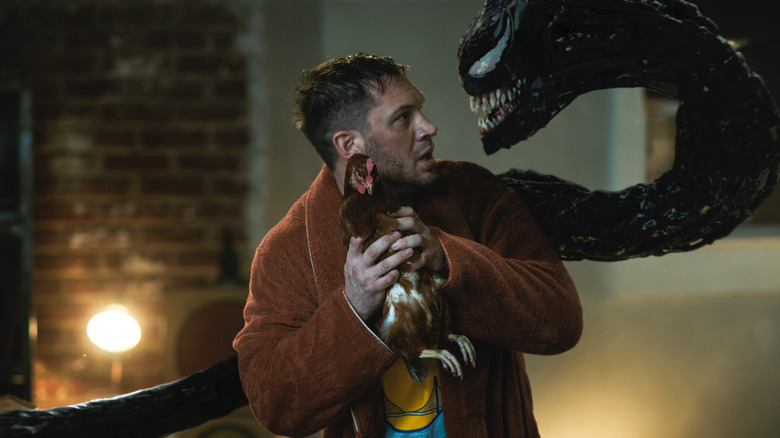
As "Let There Be Carnage" begins, Eddie Brock (Tom Hardy) and Venom (Tom Hardy doing a funny voice) have become something akin to an old married couple. They bicker, they make up, they bicker again. They have two pet chickens, Sonny and Cher, that were originally intended to be snacks for Venom. But Venom refuses to eat them — they're his friends, now. Besides, it's not chicken Venom wants. Instead, the alien is constantly begging Eddie to let him eat some bad guys, and Eddie is constantly shooting this request down. Eddie is also still trying to make a comeback as a journalist, and he gets a big break when serial killer Cletus Kasady (Woody Harrelson, having the time of his life here) requests an interview. "People love serial killers," Cletus says, and he has a point. 

With help from Venom, Eddie is able to figure out where many of Cletus' still-missing victims are buried. The outcry is so severe that we're told the governor of California has lifted the state's ban on the death penalty to make Cletus pay for his crimes. "Let There Be Carnage" was in production before the California recall, so it's unclear if we're meant to assume the governor putting Cletus to death is Gavin Newsom or a fictional equivalent. In any case, the idea that the state would up and reverse its death penalty stance on the basis of one creepy ginger guy is perhaps the most implausible thing in a movie full of goo monsters. 

Hammy, Undercooked Villains
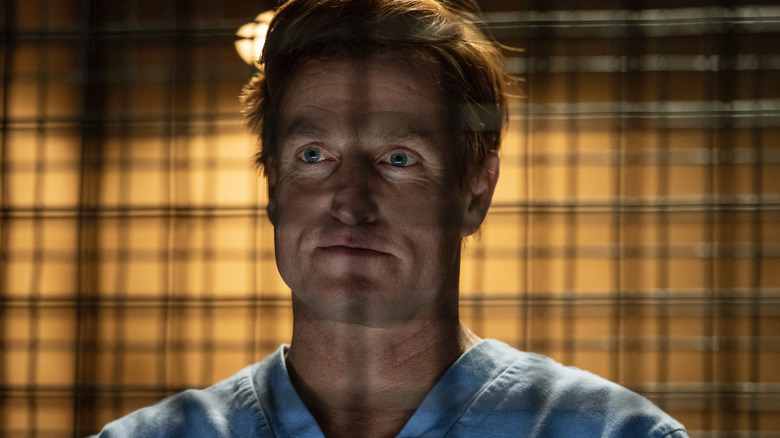
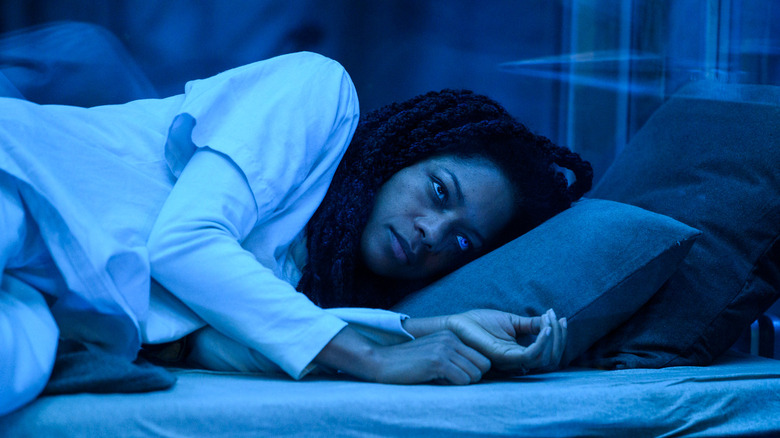
Like everything else in "Venom: Let There Be Carnage," Cletus Kasady is refreshingly simple. He's not a misunderstood tragic figure. He's not a good guy who just went bad. He's simply a creep who murdered his mother, grandmother, and a lot of other people. He's spent most of his life in and out of institutions, and the only real connection he ever made was with Frances Barrison (Naomie Harris), a character just as deranged as he is. Frances has a superpowered scream that can shatter glass and physically injure people, and she and Cletus really hit it off at the reform school they grew up together in. But Frances was eventually taken away to a top-secret facility, leaving Cletus pining for his true love for most of his life. 

Harrelson and Harris have as much fun as they possibly can with these characters, although it seems abundantly clear that they both had a lot more scenes that director Andy Serkis ultimately decided to cut. Harris' character is particularly ill-served here — we learn almost nothing tangible about her, and her characteristics change dramatically at the drop of a hat. She spends most of the film as a full-blown psycho willing to kill, and then at one point suddenly acts alarmed and says things have gone too far — only to then go right back to being cartoonishly evil again. It's this sort of messiness that keeps "Let There Be Carnage" from being fully successful, but it doesn't mean the movie isn't fun to watch, and indeed, there's plenty of fun to be had watching Harrelson and Harris ham it up, laughing and sneering as if they were mustachioed villains in a silent film. 

Right before he's about to be sent to the gas chamber, Cletus requests one final interview with Eddie. It doesn't go so well, and the serial killer ends up taking a bite out of Eddie's hand. Of course, Eddie has alien stuff running through his body, and Cletus ingests some of that without thinking too much about it (he's a crazy serial killer, so he's prone to decisions like that). And wouldn't you know it, that ingestion turns Cletus into an alien monster, too — the red, multi-limbed Carnage. Carnage is much deadlier, and meaner, than Venom, and Cletus uses his newfound powers to bust out of the gas chamber and go looking for his long-lost love, Frances. 

A Real Boy And An Amoeba
In the midst of all of this, Eddie and Venom go through a break-up. Things get so testy that Venom leaves — jumping out of Eddie and into other people. This leads to a silly-but-charming sequence in which Venom has a kind of coming-out party, wandering into a rave and giving an impassioned speech about how love is love and we should not judge others for their beliefs. Venom couches the conversation in the form of "being nice to aliens," but Andy Serkis and writer Kelly Marcel know exactly what they're doing here, all but shouting from the rooftops that Venom is here, and he's queer, and he's proud of it, goddamn it. And just in case you didn't pick up on it, there's even a quick moment where a female character at the rave attempts to come on to Venom, at which point the hulking alien replies, "Sorry, not my type." 

Ultimately, Venom realizes he misses Eddie, and Eddie misses Venom. They need each other, and Eddie has to turn to his ex, Anne (Michelle Williams), to help get Venom back. This scenario has all the trappings of a screwball rom-com, and we know it's only a matter of time before Venom and Eddie put aside their differences and get back together again. And when they do, they'll have to stop Cletus/Carnage and Frances, who also goes by the supervillain name Shriek. 

The villains don't seem to have a real plan other than "let's mess stuff up." Again, I get the distinct impression that an earlier version of this movie had much more development for the baddies. Hell, they might have even had a nefarious world domination plan. But if so, it's not here, and the movie is the better for it. Not all comic book movie villains need plots to take over the world; sometimes, it's okay for them to just be evil jerks who like to run around smashing things. 

On paper, Cletus and Frances are paper-thin. They merely exist. Even Carnage is kind of a dud here; he has none of the personality of Venom. He simply moves around screaming, and barely saying anything. This seems like a miscalculation because I imagine Harrelson could've had some fun delivering lines for Carnage. But perhaps everyone involved with the movie realized that the real heart and soul of "Let There Be Carnage" was the relationship between Eddie and Venom, and the promise of another unhinged performance from Hardy, who gets to deliver lines like, "I'm a real boy, and you're just an amoeba!" At one point, Venom causes Eddie to have a loud outburst in public, at which point Eddie tells stunned onlookers, "Sorry, I don't have an explanation for that." Hardy is the true glue that holds all of this together, and this franchise is lucky to have him. Without his go-for-broke approach to this material, "Venom" would be worse for wear. 

Who Needs Spider-Man?

"Venom: Let There Be Carnage" is choked with issues, from its nonsensical plot to its trimmed-down narrative. And yet, I find myself wanting to recommend this simply because it never once bored me the way some classier, bigger Marvel-centric movies have. Nothing in the main film feels like it's sticking to a formula or doling out fan service. Indeed, when a fan service-heavy post-credit scene arrives, it rings hollow, and needy, and false. The Venom of the comics might need Spider-Man to get by, but this weirdo movie version of Venom is perfectly fine standing on his own ground. 

I know there are fans who only want to see Venom in context with the world of Spider-Man, but I could care less. I don't need to see Tom Hardy meet up with Tom Holland's Spidey. All I need is for Venom and Eddie to continue their clumsy, sweet, occasionally deadly romance. There's a moment here where Eddie and Venom watch as Cletus fights against Carnage, leading Eddie to point out that while Cletus and Carnage aren't a good fit, Venom and Eddie are a match made in symbiote heaven. Moments like that are so unusually sweet that it's hard to judge "Venom: Let There Be Carnage" too harshly. 

There are countless superhero movies better than this. Better written, better directed, better acted, better made. And yet, "Let There Be Carnage" has a weird, quirky heart, and sometimes, that's exactly what you need to see. If we must be inundated with a never-ending stream of comic book movies, at least give us more oddities like this to keep things fresh. As long as Tom Hardy keeps wanting to make these movies, I'll keep watching them. 

/Film Rating: 7 out of 10

Read this next: 11 Marvel Comics Villains We Really Want To See In The MCU

The post Venom: Let There Be Carnage Review: A Goofy Romantic Comedy Disguised as a Superhero Sequel appeared first on /Film.

30 Sep 14:50

Squid Game Might Be Netflix's Biggest Show Ever

by Anya Stanley

Move over, "Tiger King," there's a new weirdo series in town. Hwang Dong-hyuk's Korean survival drama "Squid Game," which has captured the attention of audiences since it dropped on Netflix in mid-September, currently holds the No. 1 slot. The streaming service's co-CEO Ted Sarandos tells Variety that the show could very well become its biggest show ever. 

"We did not see that coming, in terms of its global popularity," Sarandos says. 

Netflix's second quarter has seen a stagnation in new subscribers, slowing to 1.5 million viewers globally. Following a price hike and a rise in streaming competition from Disney, HBO, and Peacock, a trickle in subscriber flow adds up to a mighty need to provide riveting content for their 209-odd million paid streaming subs.

Your Latest Obsession

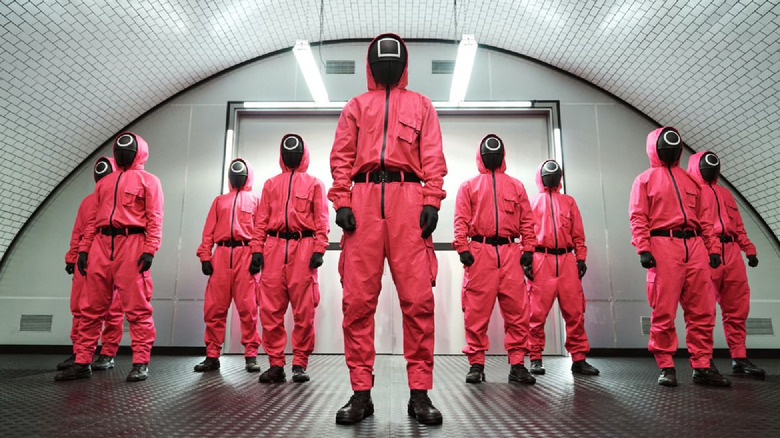
Just in time for the Halloween season, "Squid Game" is your latest obsession to binge. Writer-director Hwang Dong-hyuk helms his first series after a string of successful genre-spanning feature films, including the tragic 2011 account of abuse and atrocities at the Gwangju Inhwa School for the deaf, titled "The Crucible." "Squid Game," also titled "Round Six," follows a battle arena structure like "Battle Royale," Takashi Miike's "As The Gods Will," and the odd "Saw" sequel, pitting 456 desperate pawns against each other in an absurdist fight to the death over nine episodes.

Playing schoolyard matches and deadly territory quests like the titular Squid Game, Tug of War, and Red Light, Green Light, the contestants compete for millions in needed prize money; some are like the show's gambling-indebted star Seong Gi-hun (Lee Jung-jae), while others have a different flavor of pressure, like North Korean defector Sae-byeok (Jung Ho-yeon). Others still would simply prefer to control the place and manner of their death, like the terminally ill Oh Il-nam (Oh Yeong-su) who doesn't want to die in the cruel world outside of the competition. The show doesn't focus much on the motivations for joining the games, choosing rather to take the concept to its logical extreme and focus on the power dynamics among the players and the masked hosts, stopping for social commentary along the way.

The simple premise didn't deter Hwang, who tells Variety:

"I wanted to write a story that was an allegory or fable about modern capitalist society, something that depicts an extreme competition, somewhat like the extreme competition of life. But I wanted it to use the kind of characters we've all met in real life."

Egos were built and toppled on the playground, and with "Squid Game's" stakes so much higher than wounded pride or a skinned knee, it's no wonder why viewers are willing to roll the dice and press play.

Read this next: The 10 Best Sci-Fi Shows Currently On Netflix

The post Squid Game Might Be Netflix's Biggest Show Ever appeared first on /Film.
30 Sep 14:49

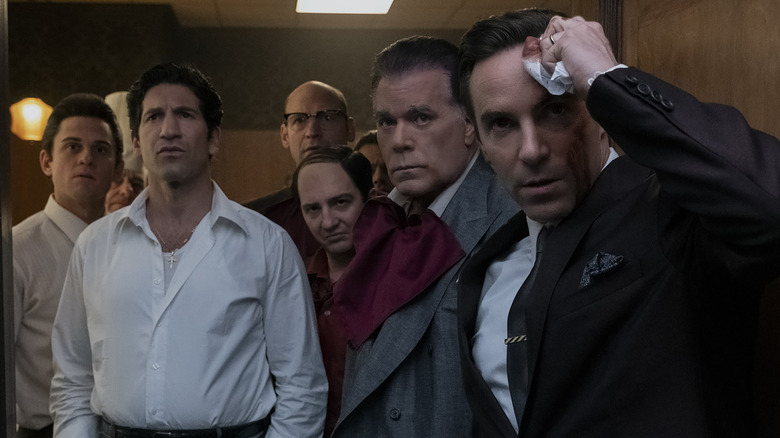
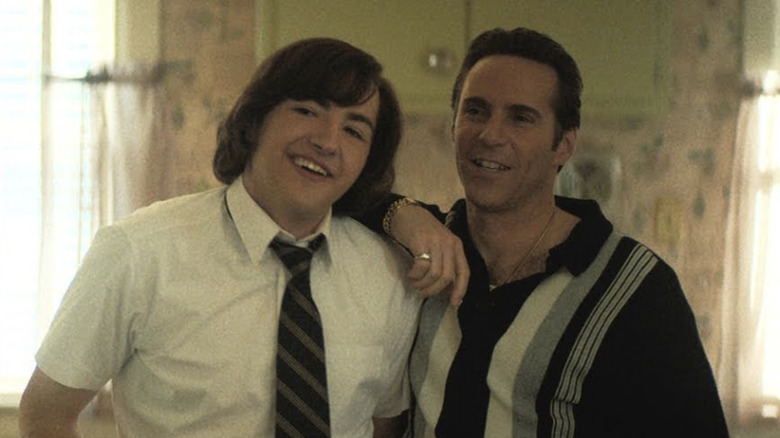
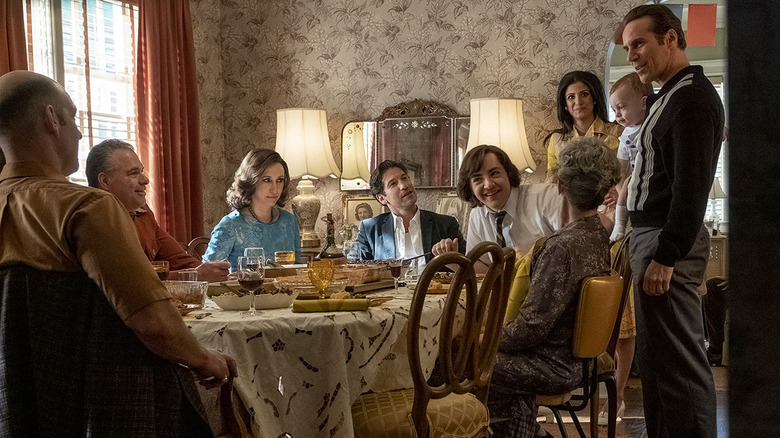
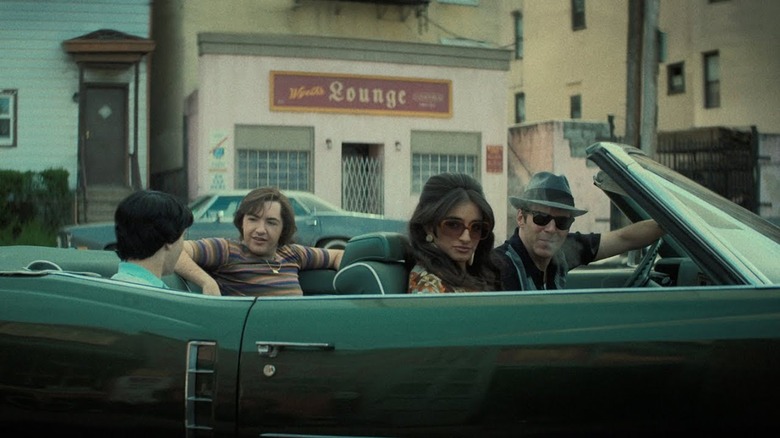
The Sopranos Creator David Chase Doesn't Believe In The Good Ol' Days [Interview]

by Jack Giroux

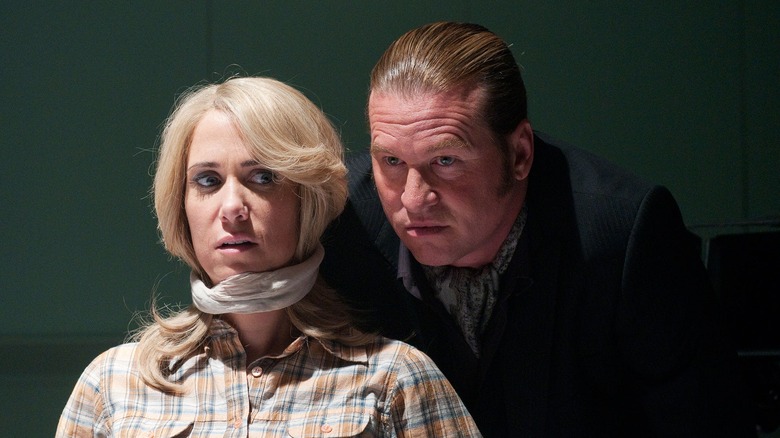
David Chase's laugh is infectious. The creator of "The Sopranos" and co-writer of its new prequel film, "The Many Saints of Newark," crafts great drama, but also real laughs. As violent and as gut-turning as his work can be, it's that sense of humor of his that helps make these grueling stories as entertaining as they are. So, it should come as no surprise that Chase appreciates a good joke. 

That's what I came away with after talking to Chase for "The Many Saints of Newark," which takes place during "the good ol' days," as Tony Soprano always called them. There's nothing good about them, though -- the prequel reaffirms history repeats itself. I recently sat down with Chase to talk about creating the world of the film (which he wants audiences to experience in a theater, not HBO Max) and how the good ol' days don't actually exist.

"I Loved Being With Those Characters Again."

I really enjoyed experiencing this movie in a theater.

I'm really glad to hear that. It would be great if you write about that. We want to make sure that people go to see it in the movies. Here in the states, it's being released on the same day as streaming. So we really need people to go see it in the theater, not on their couch,

Since the movie is set in the '60s, did you feel freedom with the characters' voices? Since they're younger, you didn't have to write them exactly how you did in the show?

No, I mean actually, and to a slight extent, we needed less freedom in 1967 than we did in 2007. It wasn't hard at all. I mean, they were just, for me anyway, and I guess for Larry too, they're just in my blood and it was just like being back there. Like I'd just done it yesterday.

So, those voices never leave you?

Well, they don't come to me at night and wake me up.

[Laughs] Right.

I just knew who they were and it was always fun for me to write "The Sopranos." And it felt that way from the very beginning. I'm not saying it wasn't difficult, writing a screenplay, but I loved being with those characters again.

They're still hilarious.

Oh, good. The same for me. I mean, the thing about "The Sopranos" was always a pleasure to write because anything that the characters said, wasn't true. They lied 98% of the time. So you would write something and you'd know that's not what he's thinking. He's thinking the opposite of that. It was still a lot of fun to think that way.

Dickie is a great example of that. He keeps saying he wants to do good deeds, but I don't think he wants to be as good as he claims.

I would agree with you. "I want to do a good deed, I want to be good." Nobody's stopping it. I think that's a very, very wise insight.

Thank you. When it comes to the comedy, do you often write a line, and without even considering it a joke, an actor's delivery makes it a laugh?

Absolutely. Oh, absolutely. I don't know if you write comedy or drama, but what happens all the time is that things you thought were funny, don't get a laugh and things you thought were just like nothing, get a laugh because the performances are so good.

"Crystal Clear. No Bullsh*t."

Needle drops are a big part of the show and the film. Do you listen to music when you write?

I go there for inspiration, but not while I'm doing the writing. I listen to a lot of music all the time, especially when I'm working, but not when I'm actually sitting there. I mean, later on during the night, I'll do it. A lot of these things are dredged up from memory. I'll go, "Oh, that was a really good song." Or I've kept this catalog in my head of so-and-so I've always wanted to use. And then a movie situation will come up in which they fit very well.

One of the great needle drops from the show was "Every Breath You Take" mixed with the Peter Gunn theme. Where did that come from?

My wife. We were listening to "Every Breath You Take," and my wife said, "That's the same song as Peter Gunn." And we played them and they worked. So, we did this mash up and she has credit on it. I thought it was an amazing insight and it worked really well in that case because it was about espionage. Domestic espionage, yeah.

Do you write song choices in your scripts?

It's very seldom. It never really works. Unless you can really plan the show around that or something. You can think about these things in the abstract, but when you see it on the screen, it's completely different than it was on the page. You wind up auditioning many songs.

You've said before you and Alan Taylor got on well during the tone meetings for the show. He'd pushback more than most directors. Did you have a similar tone meeting for the movie?

No. Not at all.

Why are those meetings excruciating for directors?

I really don't know, because I'm also a director. I'm trying to think if I was going through it. Well, if I was going through it with someone who was, where we creatively saw eye to eye, which I would think I would be or otherwise, why would I be on the show? If I was intelligent, I might look at that as an opportunity to pick things up or to try things out, but they never do. They're only pissed off and in a hurry and they forget most of it anyway. When the bullets start flying, that all goes out the window.

You originally planned on directing the movie. How does Alan Taylor's vision compared to what you had in mind?

Oh, I would like to think it was different, but what he did was, I think, very universal. Crystal clear. No bullsh*t. Just really beautiful, beautiful directing. No nonsense, no tricks. You know, really good.

Your mother would take you quite a bit to Newark as a child. Any memories from that time that influenced the movie?

Well, there's a scene out in front of an Italian delicatessen. I remember my mother dragging me to those Italian delicatessens when I was little, but that's gone on all my life. So those things still exist. I don't really think so. It doesn't remind me, truthfully, of the Newark I knew then. It's faithful to what it was, but it doesn't spark any memories for me.

"There's No Nostalgia."

Tony talked so much about the "good ol' days" on the show.

Yeah.

Walking out of the movie, I thought, those were the good ol' days?

[Laughs] That's great. That's great.

There's no sense of Tony's nostalgia for that time in this movie.

No, there was none, that's a good point. I never even thought of it, but you're right. There's no nostalgia. Maybe some of the music, some of it, maybe. Music does carry that, but no, there really wasn't.

Any key differences between writing a younger and older Tony Soprano?

I really can't say. Just trying to get into Tony's suit again, you know. We're the writers. Just make it up.

When you're writing, is it just more instinct? You don't always know exactly why you're doing it, but it just feels right, as a writer?

Yeah. That's true. Absolutely true. Absolutely true. I mean, that will be for every writer in the world ever. Otherwise, people would write nothing. Somebody sits down and starts to write imaginary characters. So, yeah. That's exactly true. It's just instinct, I say.

You've said Paulie is an incredibly difficult character to play. He's always been my favorite.

Everyone's favorite.

As funny as he is, though, the episode that was always one of my favorites was him thinking about death and the afterlife.

[Laughs] The reason I'm laughing is you reminded me of that. That he did think about that a lot. I think you can make the argument that "Sopranos" was about death and money. You could make that argument. So it wasn't only Paulie who was obsessed with death. He talks more about it. Somebody should go back and count the number of scenes we did in funeral homes or hospitals. We were always in and out of hospitals and funeral homes.

"Pine Barrens," death weighs heavy on that episode. Say for a tone meeting for an episode like that, what do you and [director] Steve Buscemi talk about?

I don't really remember anything particular. I mean, Steve was very, very professional, very knowledgeable and very easy to get along with. What happened was, we prepped the whole show, three weeks of it or whatever. We were supposed to come back from vacation and start shooting. And in between was a snow storm. That was just luck. And that made that episode. If it hadn't snowed, I don't know if it would've been as good. I don't think so.

Next year is the 10th anniversary of "Not Fade Away." I want to say, I'm a big fan of that movie. I saw it at an age where I really connected with it.

Oh, good. Really? How old were you?

I was 21, leaving home like the character around that time. How do you look back at that movie now?

I have a real case about that show. This gentleman named Tom Moore, who was really running Paramount, made sure that nobody saw it. And it was the centerpiece of the New York film festival. And then right after that, in October, they shut it down and they didn't, it sat on a shelf for two months. And then it came back in December with almost no marketing, no promotion. I'll say that. The other thing is, I believe I could have made a better movie.

Well, I really enjoy it.

Good. Well, I'm always happy to talk about it.

"The Many Saints of Newark" hits theaters and HBO Max on October 1st. 

Read this next: The Best Movies Of 2021 So Far

The post The Sopranos Creator David Chase Doesn't Believe in the Good Ol' Days [Interview] appeared first on /Film.
30 Sep 14:47

Xbox Boss Says Console Supply Issues Will Continue Into 2022

by msmash
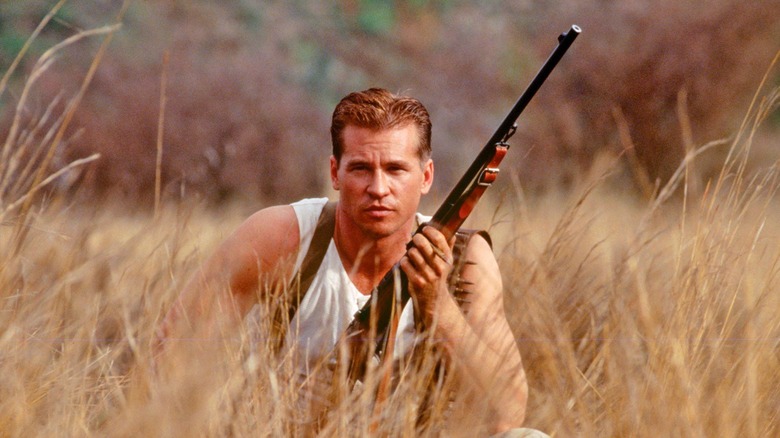
The head of Microsoft's games business told The Wrap that a shortage of chips wasn't the only thing stopping the company getting as many Xbox Series X/S consoles onto store shelves as it would like. From a report: "I think it's probably too isolated to talk about it as just a chip problem," he said. "When I think about, what does it mean to get the parts necessary to build a console today, and then get it to the markets where the demand is, there are multiple kind of pinch points in that process. And I think regretfully it's going to be with us for months and months, definitely through the end of this calendar year and into the next calendar year. The thing that's most disappointing is just the fan disappointment," Spencer continued. "People really want this new generation of consoles -- they're good consoles, both from us and the other platform holders -- and they want the new functionality. We're working hard to bring them to market but it's going to be a challenge that we'll work through for quite a while."

Read more of this story at Slashdot.

30 Sep 10:19

New Tomiris Backdoor Found Linked to Hackers Behind SolarWinds Cyberattack

by noreply@blogger.com (Ravie Lakshmanan)
Cybersecurity researchers on Wednesday disclosed a previously undocumented backdoor likely designed and developed by the Nobelium advanced persistent threat (APT) behind last year's SolarWinds supply chain attack, joining the threat actor's ever-expanding arsenal of hacking tools. Moscow-headquartered firm Kaspersky codenamed the malware "Tomiris," calling out its similarities to another
30 Sep 00:24

Prepare Your Closets for Fall Like a Goddamned Adult

by Sarah Showfety

It is time. The seasons have officially turned, the air has gotten that crisp morning edge, and the humidity has left the building. (At least where I live. Sorry, Florida). Which means? It’s time to flip those closets for fall. And we’re not just talking about clothes here. New seasons often call for new linens, new…

Read more...

30 Sep 00:23

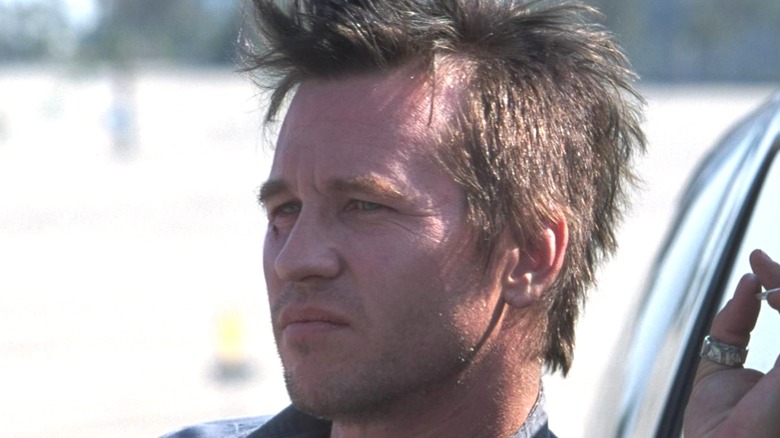
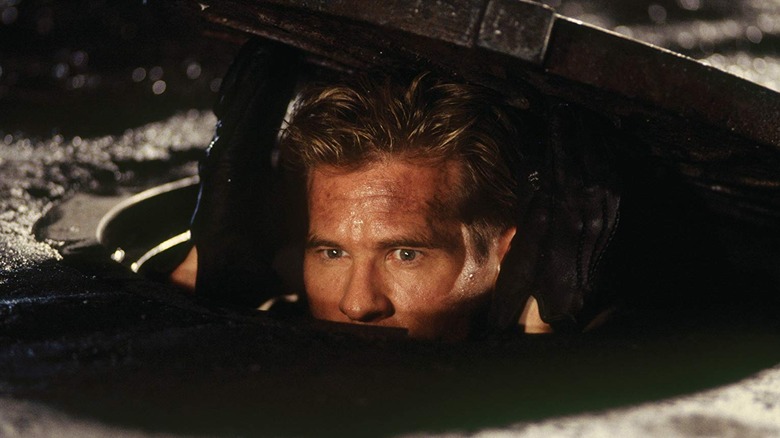
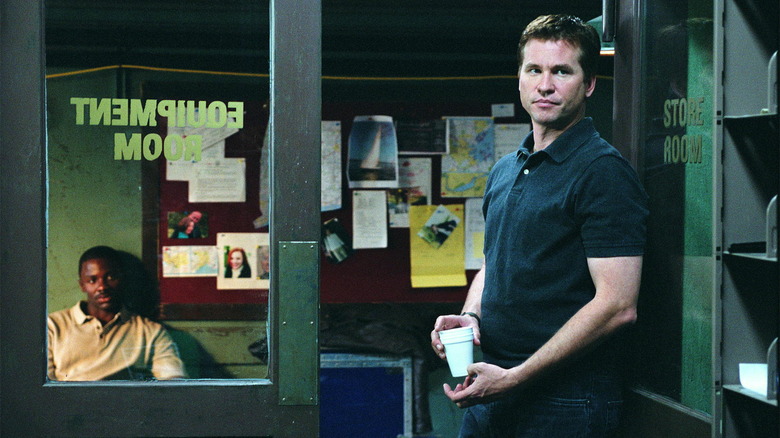
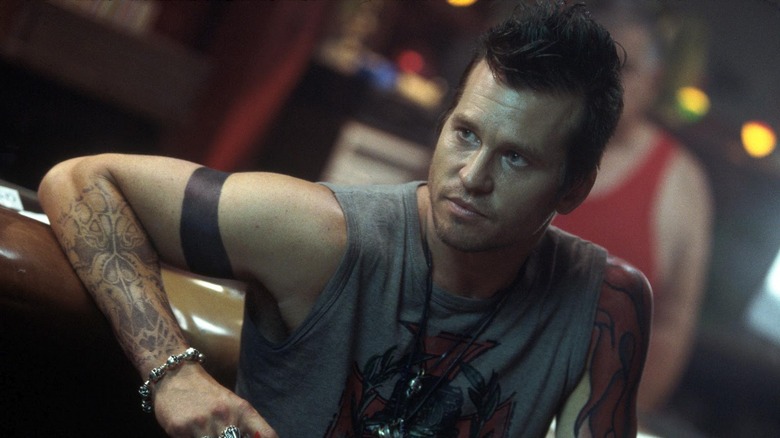
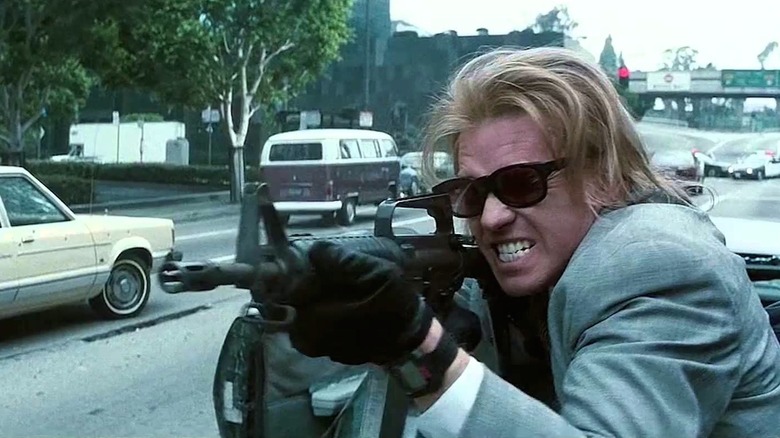
The 14 Best Val Kilmer Movies Ranked

by Matthew Monagle

In July 2021, A24 and Amazon Prime released "Val," a documentary about the life and career of actor Val Kilmer. Part behind-the-scenes look at Val Kilmer movies, part autobiography, the film delves into the controversies and tragedies that define Kilmer as an actor. It's a warm and affecting documentary, made even more powerful for the presence of son Jack Kilmer as narrator -- Kilmer recently lost his voice to throat cancer, and hearing the younger Kilmer provide voice over for the film is an uncanny way to turn back the clock.

But while "Val" shines a light on Kilmer's celebrity and methodology as a classically trained actor, the film is surprisingly light when it comes to his body of work. The truth is that Val Kilmer, difficult reputation and all, has worked steadily for over three decades to craft some of the best performances of his era. So, who better than an unapologetic Kilmer fan to help identify the best movies for your next actor-themed marathon? If you take nothing else away from this list, take this: Nobody plays a historical addict quite as well as Val Edward Kilmer.

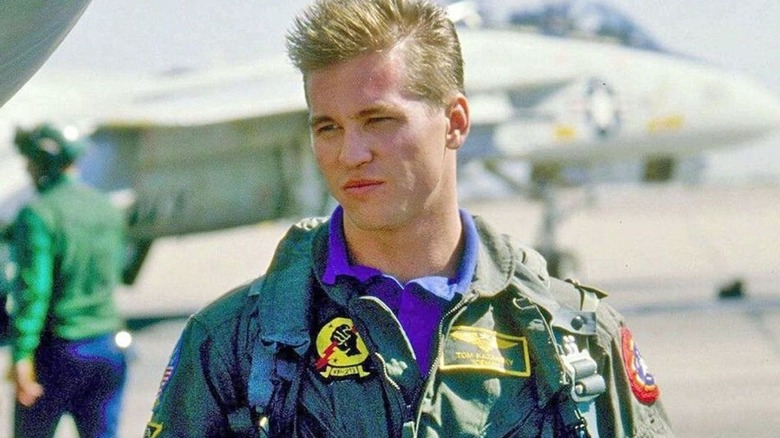
Top Gun

Considering how many doors "Top Gun" opened for Kilmer, it may be surprising to learn that Kilmer only accepted the role of "Iceman" Kazansky out of contractual obligations. But that was one of the big takeaways from "Val," which contains behind-the-scenes footage from several of his productions. Perhaps, then, it is better to be lucky than good. Iceman is nowhere near Kilmer's best role, but it is the one that oozes potential and future star power. He is a perfectly calibrated foible for Tom Cruise -- back when Tom Cruise was human enough to share the screen with anyone but his own stunts.

You know the scenes -- volleyball on the beach, snapping teeth in the locker room -- but the cultural impact of "Top Gun" may have overshadowed its quality as an action movie. Tony Scott would go on to establish himself as the maximalist version of his brother Ridley with films like "Days of Thunder" and "The Fan," but "Top Gun" remains a standout even on his impressive filmography. And with a sequel on its way (and a rumored cameo on the docket for Kilmer), we may yet see Iceman ride one last time before all is said and done.

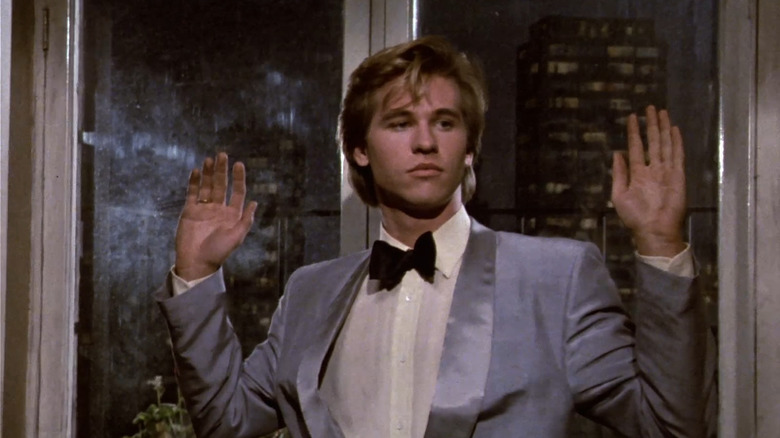
Top Secret!

In "Val," Kilmer described "Top Secret!" as a painful transition from acting in the theater to acting in movies, noting that he spent months learning to play the guitar only to be asked not to play seriously because it made for a better gag. Then again, what does he know? He's just the actor. For the rest of us, "Top Secret!" is an absolute banger of a comedy, on par with "Airplane!" and the films in "The Naked Gun" franchise. The bookcase gag alone -- an entire sequence filmed in reverse and played straight in every sense of the word -- justifies its spot on the list.

No small part of that success is due to Kilmer's wide-eyed rock star Nick Rivers. Kilmer performed each of the songs on the soundtrack, much like he would a few years later as Jim Morrison in "The Doors," and serves as a perfectly sincere (and charmingly generic) hero for each of the movie's hundreds of gags. When taken together with the following year's "Real Genius," "Top Secret!" shows that Kilmer is adept at being both the straight man and the class clown. And I dare you not hum "How Silly Can You Get?" after the credits roll.

The Saint

Kilmer's reasons for turning down a second "Batman" movie have gotten contested with time -- some claim he was fired from the sequel, Kilmer himself says that he hated the work -- but there's no denying that the production of "Batman & Robin" did present problems for Kilmer's work on "The Saint." So, if history decides to firm up the narrative that Kilmer chose "The Saint" over "Batman & Robin," who can blame him? If you are going to hitch your wagon to a big-budget Hollywood film, why not pick the one where you get to play 15 different characters (as opposed to playing one, stiffly, in a rubber suit)?

Modern critics often compare "The Saint" to Tom Cruise's "Mission: Impossible" movies -- both feature complex heists and plenty of disguises -- but the better comparison might be "GoldenEye," Martin Campbell's broad reboot of the Bond franchise. This is no method actor -- this is someone playing the debonair franchise lead. Maybe, just maybe, Kilmer wearing plastic teeth and bad accents was proof that the Serious Artist™ was not so serious after all. Oh, and compare "The Saint" to "GoldenEye," and tell me which one has aged better.

Red Planet

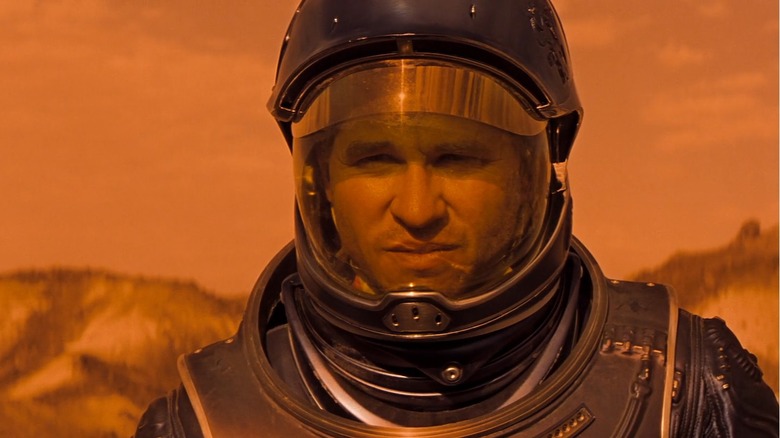
When it comes to science fiction, the best option for a filmmaker is to be the greatest director of your generation at the top of their game. But if you are not Stanley Kubrick and do not have a "2001: A Space Odyssey" up your sleeve, you can also do a lot worse than a sturdy, pulpy B-movie. "Red Planet" hit theaters the same year as Brian De Palma's "Mission to Mars," an incredibly sincere film about extraplanetary exploration and the origins of life on Earth. "Red Planet," by comparison, is a thriller about a crashed ship and a killer robot. Only one of them holds up.

Kilmer plays Robby Gallagher, a "space janitor" and engineer who is trapped on Mars when a terraforming expedition goes wrong. Rather than sell out on the science, however, the filmmakers opt for pulpy scares, having the survivors of the crash contend against an artificial intelligence gone rogue. In his review of the movie, Roger Ebert compared "Red Planet" to some of his favorite '50s science fiction, noting his appreciation for movies about scientists "trying to think their way out of a box that grows smaller every minute." When it comes to longevity, sometimes fun is better than smart.

MacGruber

If your career is balanced precariously between the work of prestige filmmakers and direct-to-video schlock, a feature-length adaptation of a "Saturday Night Live" skit might not be the most obvious move. Then again, "MacGruber" is no run-of-the-mill "Saturday Night Live" adaptation. Like so many other films by Jorma Taccone and Akiva Schaffer -- two-thirds of the Lonely Island team -- "MacGruber" is a cult classic, a series of gags so brilliantly stupid that it took audiences a decade to appreciate the comedy that was right in front of their eyes.

In the film, Kilmer takes a rare villainous turn as Dieter Von Cunth, an arms dealer and the arch-nemesis of Will Forte's title character. Despite having several comedic turns under his belt, Kilmer has described his motivation for doing "MacGruber" as an opportunity to claw his way back into doing comedies after years of dramas. "It's weirdly hard to get a comedy if you're serious actor," he told AMC in 2010. "They don't let you." For those who had forgotten the broad humor of "Top Secret!" and "Real Genius," "MacGruber" was a welcome reminder that Kilmer is a pretty funny comedian, straight man or otherwise.

The Ghost And The Darkness

With all due respect to the '70s, the late '90s were a golden age for animal-driven horror films. Audiences were treated to films like "Anaconda," "Deep Blue Sea," "Bats," and "Lake Placid" in short order; still, none of those films compare to the big-budget experience of Stephen Hopkins' "The Ghost and the Darkness." Produced by Gale Anne Hurd and shot by Academy Award-winning cinematographer Vilmos Zsigmond, "The Ghost and the Darkness" walks the line between prestige studio fare and old-school creature feature. It's a winning combination.

Kilmer plays John Patterson, a military engineer sent to Kenya to complete construction on a troublesome bridge. When a pair of lions begins to pick off the construction crew, Patterson takes it upon himself to protect his coworkers. Based on real-life events -- the Tsavo man-eaters are estimated to have killed as many as 135 people -- "The Ghost and the Darkness" made great use of its on-location shoot and squeezes genuine jump scares out of its cast of talented animal performers. It's not too much of a stretch to say that this is the mid-'90s equivalent of A24 horror. Just remember to give Kilmer a pass on his come-and-go Irish accent.

Spartan

While many might describe Kilmer as a '90s movie star, some of the actor's most interesting work did not happen until he had already begun to fade from public view. It was then that Kilmer worked with directors like Francis Ford Coppola ("Twist"), Werner Herzog ("Bad Lieutenant: Port of Call New Orleans"), and David Mamet, the last of whom cast Kilmer in his standout political thriller "Spartan." One could argue that "Spartan" was Kilmer's last truly great leading man performance -- that is, unless you count Kilmer's performance in Harmony Korine's segment of "The Fourth Dimension," which I absolutely do (it's now streaming in its entirety on VICE's YouTube channel, by the way).

For much of the first hour, "Spartan" operates like a procedural thriller, giving us a behind-the-scenes look at the lengths the Secret Service will go to recover a member of the president's family. This offers Kilmer some of his best moments; his character is one of discipline, and watching Kilmer adapt without question to uncertain scenarios elevates the already-sharp writing. When the movie pivots to paranoia and conspiracy, Mamet and Kilmer partner to deliver what film critic Matt Zoller Seitz once called "the richest post-9/11 treatment of revenge thus far."

The Salton Sea

If the late-'90s were the era of the Tarantino-inspired, then the early-'00s belonged to filmmakers influenced by the work of Guy Ritchie. "The Salton Sea," the first film by journeyman director D.J. Caruso, might be nothing more than an Americanized version of "Snatch," but a dynamic cast of character actors keeps the movie from ever feeling less than entertaining. Throw in Kilmer in a mode we now recognize as his best -- strung out and despondent -- and you might be surprised to see just how well "The Salton Sea" has aged.

In the film, Kilmer plays Danny Parker, a criminal informant who parlays his addictions into a series of high-profile busts. Or does he play Tom Van Allen, a grieving widower blinded by the need for vengeance? Regardless, Park-slash-Van Allen finds himself at the mercy of cruel drug dealer Pooh-Bear -- an unforgettable turn by Vincent D'Onofrio -- and in the debt of Jimmy (Peter Sarsgaard), his one true friend. Ostensibly a showcase for character actors and nonlinear storytelling, "The Salton Sea" is ultimately a film about the genuine friendships you find in life, even on your way to the bottom.

Heat

What could possibly be said about Michael Mann's "Heat" that hasn't already been covered? Not only has the film been the subject of countless essays and retrospectives, it was also the inspiration for a podcast that went minute-by-minute through the film over the course of 166 episodes. Hell, Mann himself appeared for the podcast's series finale, weighing on the final 60 seconds of his classic film. So, yes, in the one-in-a-million odds that you are reading through a list of the best Val Kilmer performances and still haven't seen "Heat," you should probably, like, do that.

But let us take a second and acknowledge the best moment in the movie. While the film is hailed as a showcase for stars Al Pacino and Robert De Niro, it is the final moment between Kilmer's Chris Shiherlis and Ashley Judd's Charlene Shiherlis that always breaks my heart. In that moment, when Charlene gives the signal and Chris drives off in a daze, the film's mantra is put to the ultimate test. In a movie with a lot of big emoting, it is a pair of silent facial expressions that drive the dagger down the deepest.

Real Genius

Not every '80s comedy worth watching was directed by John Hughes. "Real Genius," the 1985 comedy directed by Martha Coolidge, may have cast a teenage Gabriel Jarret in the central role, but much of the movie is about the perilous transition to adulthood. Kilmer plays Chris Knight, a Pacific Tech senior who realizes that his genius might send him down a few career paths he has no interest in traveling. And why would he? In the world of "Real Genius," the adults are either corrupt or outright murderous.

Knight is the kind of character that gets immortalized on posters in high school bedrooms around the world. Clever, creative, and with an anti-authority streak that puts John Cusack's characters to shame, Knight established Kilmer as the Hollywood heartthrob he never wanted to be. By never tipping too far into the sex comedy or nerd stereotypes that might have otherwise dated it, "Real Genius" remains a classic film about the moral burden of technology and the crushing expectations of early success. Oh, and yes, you most certainly can buy all of Knight's incredible t-shirts on the Val Kilmer website.

Kiss Kiss Bang Bang

Even without the benefit of hindsight, it would not be outrageous to say that Val Kilmer was the safest bet on the set of "Kiss Kiss Bang Bang." Shane Black was a Hollywood screenwriter who had never directed before and was nearly a decade removed from his last produced screenplay. Meanwhile, Robert Downey Jr. was still a recovering addict who was blacklisted by most Hollywood studios. That makes "Kiss Kiss Bang Bang" a film made by and with talent that had nothing left to lose, which is probably one of the reasons why it's so damn good.

The result is a sharp neo-noir and buddy comedy that digs into the artificial nature of the film industry. Neither Kilmer nor Downey are truly the straight man; both actors talk too fast for one to be labeled the comedic relief. Instead, "Kiss Kiss Bang Bang" allows the actors to play off of each other to great effect, with Downey playing dumb and Kilmer adopting a world-weary air that locks in the character. Black's script is wickedly funny, but the chemistry between the two leads makes the whole thing work. If you have a physical copy of the film, be sure to check out the DVD commentary for an extra layer of fun.

The Doors

Over the course of his career, Kilmer has demonstrated true skill at playing iconic characters that fall somewhere between a commercial and a critical success. One such character is Jim Morrison in "The Doors." It's hard to imagine another actor putting this much effort into a role and not emerging as a superstar capable of punching their own ticket anywhere they please. For Kilmer, though, this is just one of a handful of such roles, any one of which most actors would be lucky to call their own.

Much of "The Doors" is standard musical biopic stuff -- the fame, the fall, and the addictions that popped up along the way -- and Oliver Stone fails to mine many of the characters' relationships for any hidden depth. But Kilmer himself is a whirlwind, portraying Morrison across several time periods with uncanny physical and vocal accuracy. Where "The Doors" really shines is in the music; the scope and quality of these in-movie performances are so dynamic that it often feels like Stone has used actual concert photography in his narrative feature. When the songs start, "The Doors" is a truly special film.

Tombstone

If you were raised on '80s and '90s action movies, then "Tombstone" is pretty much the platonic ideal of a movie cast. And part of the appeal is that it should not exist; by all accounts, Kurt Russell pushed this one across the finish line almost single-handedly, rewriting the script and even ghost-directing most of the film when replacement director George P. Cosmatos failed to mesh with the cast and crew. The fact that "Tombstone" manages to be good -- if not a little old-fashioned by western standards -- is a borderline miracle.

But this miracle pales in comparison to Kilmer's performance as Doc Holliday, a role that eclipses everything and everyone in its orbit (and only relinquishes the spotlight in the moments when Kilmer is offscreen). Kilmer has spoken often about how everything flowed from the accent, a long-dead Southern dialect that informed his physicality as well, and it is the unusual performance in which every decision seems to further elevate the character on the screen. Holliday also seems to be the rare instance in which an actor's fandom is centered on some of his favorite work; one needs only to visit Kilmer's website to see how thoroughly the actor has embraced "Tombstone" as part of his legacy.

Wonderland

If there is one thing that connects Kilmer's otherwise eclectic body of work, it is his penchant for biography. The actor is never better than when he was asked to bring a historical figure to life; from Mark Twain to Jim Morrison, Kilmer seems to relish opportunities to inhabit spaces occupied by another (especially when that person struggled with the demons of addiction). This is why it's surprising that Kilmer's performance as adult film star John Holmes in "Wonderland" is so often overlooked. It is a gripping tale of stardom gone sour, a tale that is also Hollywood's favorite narrative preoccupation.

Set against the backdrop of the 1981 Laurel Canyon murders, "Wonderland" focuses on Holmes -- once one of the most recognizable, uh, "faces" in adult movies -- as he helps plan a drug-fueled heist. Director James Cox shoots the film from the perspectives of the police, the survivors, and even the wife and girlfriend that Holmes so often abuses, but it is Kilmer's performance that holds the entire film together. In his hands, Holmes is a man so skilled at manipulation that he convinces himself of his own lies. The resulting performance is arguably the highlight of Kilmer's career, equal parts charisma and cowardice played out in pure, late-disco splendor.

Read this next: Essential Movies About High School You Need To See

The post The 14 best Val Kilmer movies ranked appeared first on /Film.
29 Sep 23:24

Every Danny Boyle Film Ranked From Worst To Best

by Audrey Fox

Since beginning his directorial career in the early '90s, Danny Boyle has become one of the most famous and reliable filmmakers of his generation. Although some of his most successful films have a clear sentimental streak, plucking the heartstrings of the audience like a well-tuned guitar, his work has been surprisingly varied. And what's incredibly striking when looking at Boyle's filmography is that there's not a huge amount of daylight between his worst films and his best films. To be honest, they're all pretty good! 

So really, when we look at Boyle's movies, it's not so much a question of if they're high quality or low quality, but to what extent they were able to find an audience that would connect with their unique charms. And while not everyone may vibe with his particular style as a director, Boyle has tried his hand at enough different genres that there should be something for everyone -- he's one of the rare directors who doesn't have many stinkers hiding in his catalog.

Trance

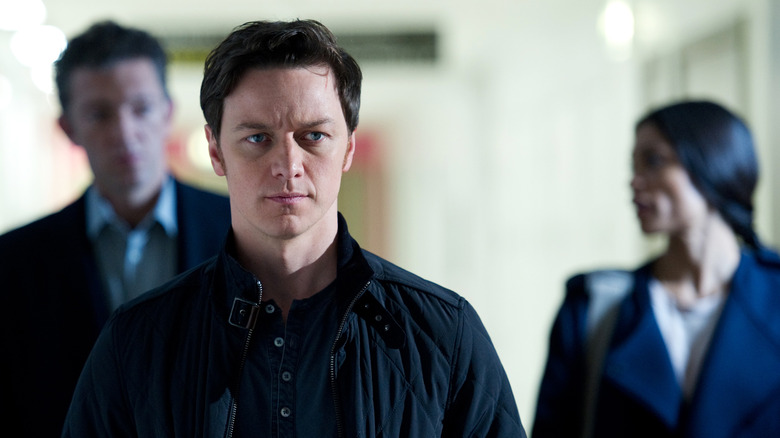
From a creative perspective, "Trance" represented a return to familiar territory, the fifth collaboration between Danny Boyle and screenwriter John Hodge, who worked on many of his early films and was responsible for developing this script after it was started by Joe Ahearne. "Trance" stars James McAvoy as an art auctioneer caught up in a heist, after a gambling problem induces him to help gangsters steal a very valuable piece of art to pay off some of his debts. 

But not everything is quite as it seems. Hypnotism plays an outsized role in the narrative, and as "Trance" goes on, we begin to wonder exactly what the reality of the situation is (James McAvoy's character is quite curious as well). "Trance" feels like the sort of trippy psychological thriller that performed really well in the early '00s, but it's damaged by the fact that it came out just a few years too late to capitalize on the popularity of the subgenre.

Millions

There are some Danny Boyle films that have an unabashedly sunny perspective, but "Millions" is the only one that's actually meant to be a family film. It centers around a young boy who is recovering from the recent death of his mother, and who finds a bag of money as he's playing near some local train tracks. He doesn't quite know what to do with the cash, but while his older brother wants to spend it on himself, he is determined to put it to charitable use.

"Millions" features appealingly naturalistic performances from Alex Etal and Lewis Owen McGibbon, who both feel like authentic children rather than self-aware child actors. And although the story is uplifting, it manages to avoid feeling cloyingly sweet, because it has just enough personality and quirkiness to keep it grounded. "Millions" reflects a genre that Danny Boyle should revisit more -- he clearly enjoys embracing its optimistic and heartwarming tone.

127 Hours

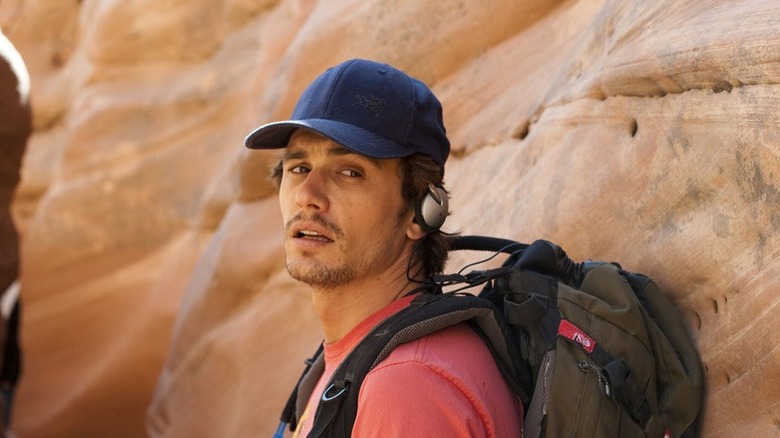
It's rare that Danny Boyle ventures into "inspiring true story" territory -- in fact, "127 Hours" may be his only real entry in that genre. It stars James Franco as Aron Ralston, an avid mountaineer who was pinned between a boulder and a rock wall, putting his very survival in jeopardy. After evaluating all his options, he was faced with a grim, "Saw"-like choice: to cut off his own arm, and potentially live to tell the tale, or remain stuck, alone, and slowly starve to death. 

Aron's story garnered massive media attention in 2003, and "127 Hours" is based on the memoir he wrote about his experiences during that disastrous expedition. Despite its gruesome content (the amputation scene is shown in all it's disgusting glory, and some audience members were reported to have fainted during the film's festival premiere), "127 Hours" was well-regarded, receiving six Oscar nominations, including Best Picture and Best Actor for James Franco.

Steve Jobs

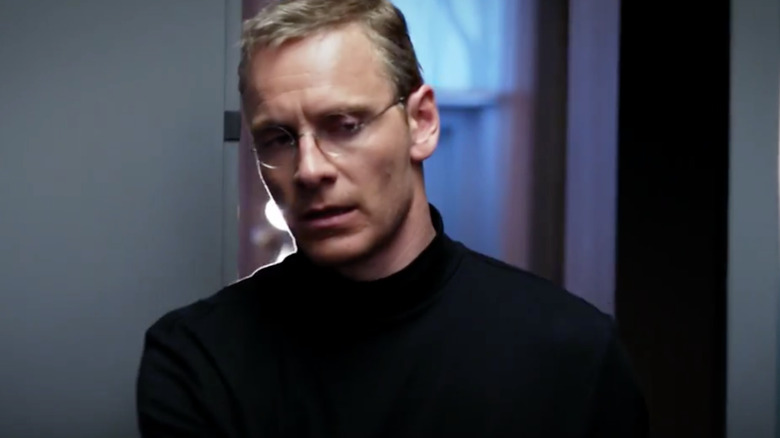
Although Danny Boyle occasionally draws from real life for inspiration, "Steve Jobs" is perhaps his first proper, traditional biopic (yes, "127 Hours" could technically be considered a biopic, but it's much more about the hellish experience Aron Ralston goes through than him as a person). Here, Boyle tackles the extraordinary and controversial life of Steve Jobs, the co-founder and creative visionary behind Apple who died from cancer in 2011. 

Although "Steve Jobs" is conventional and a bit dull at times, it succeeds on the power of Michael Fassbender as Jobs and Kate Winslet as marketing executive Joanna Hoffman, both of whom received Oscar nominations for their work here. Despite this, "Steve Jobs" was criticized for its historical inaccuracies and underperformed at the box office, although it did prove to be the superior Jobs biopic, beating out "Jobs," which was released two years earlier and starred Ashton Kutcher.

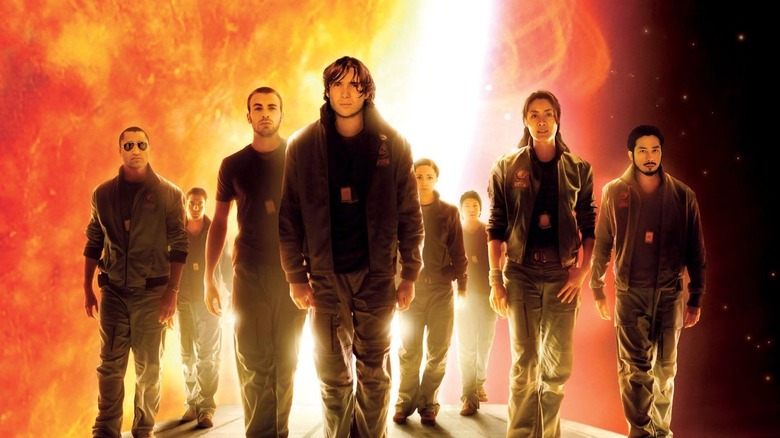
Sunshine

On the surface, "Sunshine" has a lot going for it. There's an excellent cast on board, featuring Cillian Murphy, Rose Byrne, Chris Evans, Benedict Wong, and Michelle Yeoh. Danny Boyle was reported to be creatively inspired by cinematic space classics, including "2001: A Space Odyssey," "Alien," and "Solaris," amongst others, the references to which should have built up a healthy sense of anticipation for film enthusiasts. 

But for whatever reason, "Sunshine" failed to connect with audiences, and although it received perfectly acceptable reviews from critics, it was largely regarded as a box office disappointment. Perhaps this psychological space thriller about a crew of astronauts on a desperate mission to stop the Sun from dying out wasn't grounded enough to win over moviegoers. After making "Sunshine," Danny Boyle swore off science fiction for good, a vow that he has stuck to in the 14 years since this film's release.

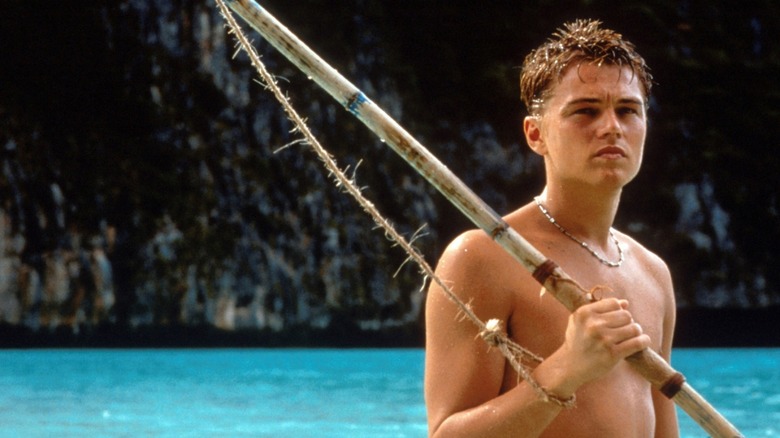
The Beach

"The Beach" is one of the most underrated Leonardo DiCaprio films ever made. It's treated like it's absolutely terrible, and it's not; it's just not all that amazing. But we also have to acknowledge that "The Beach" suffered from the expectations it faced. Danny Boyle was an acclaimed indie director in the late '90s, and after "Titanic" and "Romeo + Juliet," DiCaprio was one of the most in-demand young actors in all of cinematic history. It was expected that the die-hard fans would flock to cinemas to see their beloved Leo, easily earning back the money spent on this film. 

But "The Beach" wasn't quite what they, or other audiences, expected. A troubled production that was criticized for the damage it did to the Thai beach used as a primary location, 20th Century Fox was dragged through a lengthy court case that left a bad taste in pretty much everyone's mouth. But it's not all bad. The cinematography is gorgeous, and even when he's not at his best, Leo is one of the most charismatic actors of his generation. Maybe "The Beach" is ripe for a critical reevaluation?

T2 Trainspotting

What happens when you revisit an older group of characters so closely identified with the sort of drug-induced frenzy and anti-establishment attitudes of youth? Is it just like a really depressing high school reunion, where the coolest kids you knew have morphed into a bunch of health-conscious, chartered accountants? "T2 Trainspotting" reunites the cast of "Trainspotting" 21 years after the initial film was released, with the original characters now in their 40s. Did they choose life, as Renton famously says in "Trainspotting," or have they merely wasted theirs? 

"T2 Trainspotting" comes with a sense of melancholy, as the characters reflect on the past 20 years of their lives, but also the same energetic defiance that made audiences connect with the first film back in the '90s. If nothing else, it's a joy to see the actors, many of whom have since become household names, return to the characters that launched their careers.

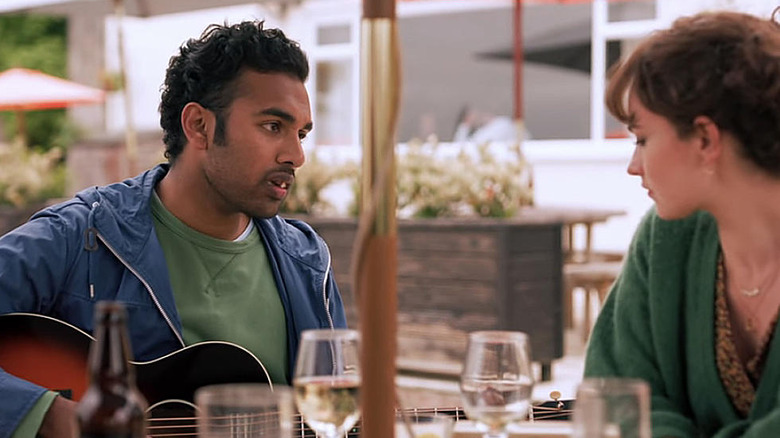
Yesterday

"Yesterday" explores the worst nightmare of every baby boomer: What if the Beatles never existed? Would we be as contemptuous of modern music without the Beatles serving as a benchmark to measure all other bands against? 

Slightly eye-rolling deification of the Beatles aside, "Yesterday" does manage to be a very sweet, feel-good movie. When a struggling musician (Himesh Patel) is knocked into a coma after a bike accident, he wakes up to discover the world is much the same as he left it, except in one important respect: No one has ever heard of the Beatles. In fact, it doesn't seem like they ever even existed. But all of their songs still exist in the man's head, which leads to an interesting ethical conundrum: If he were to claim them as his own creations, would that be, strictly speaking, stealing? 

"Yesterday" is Danny Boyle at his most sentimental, and while it may be a little much for more cynical audiences, it's undeniably a crowd pleaser.

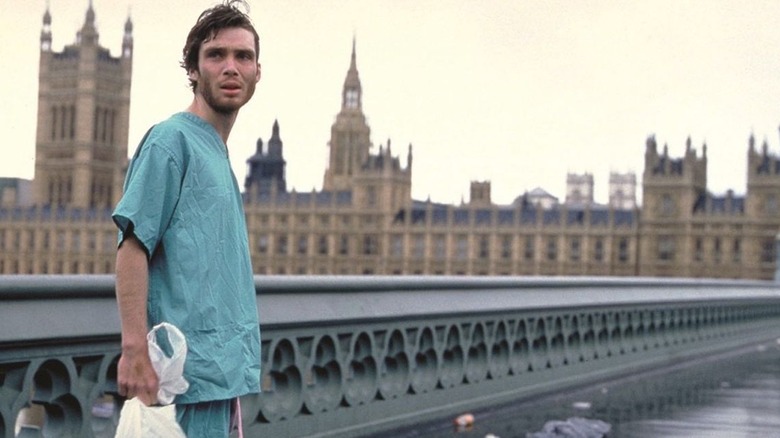
28 Days Later

Up until this point in his career, Danny Boyle hadn't really gone anywhere near a horror film. So, it was with a certain amount of surprise that he chose to tackle zombies with "28 Days Later." The movie stars Cillian Murphy as a young man who wakes up from a coma to a post-apocalyptic nightmare, in which a highly contagious virus has infected most of English society, reducing them to rage-filled zombies (the first of two times, interestingly enough, that Boyle would use the coma as a device to introduce a character to a changed world). 

"28 Days Later" is an emotionally charged horror film, as survivors of the epidemic struggle to both stay alive and cling to some vestiges of the society that has slipped away. Part of what makes "28 Days Later" so frightening is that it's grounded in reality, reflecting a chilling depiction of a scenario that we can all-too-easily imagine happening under certain circumstances.

A Life Less Ordinary

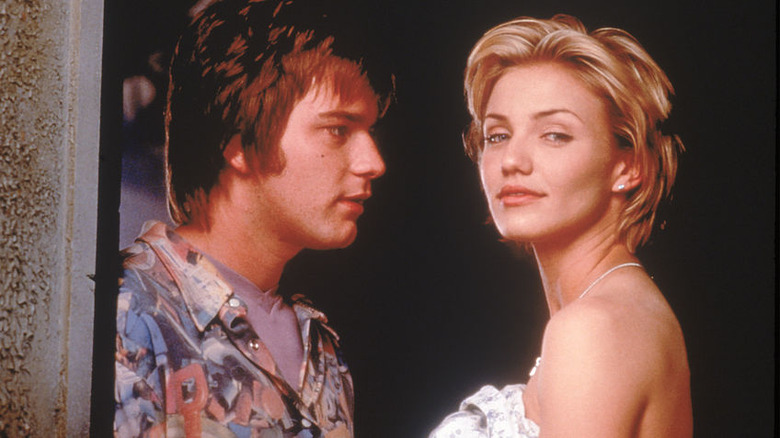
We'll just say it straight out: No one appreciated the vibe that "A Life Less Ordinary" was going for when it first came out. Watch it now and it's impossible not to be struck by how bold and beguilingly off-kilter it all is, and you'll wonder why it never got the credit it so clearly deserves. Ewan McGregor stars as a laid-off janitor who essentially moonwalks into kidnapping his boss' spoiled daughter, played by Cameron Diaz. It's not something that he really intends to happen, but hey, what's done is done. But that's not all: Holly Hunter and Delroy Lindo also appear as two angels who are tasked with making the couple fall in love. Listen to that plot synopsis and explain how that could not be one of the greatest movies ever made. 

"A Life Less Ordinary" has such a pitch-black sense of humor that makes it really tough not to love. Honestly, it deserves a pretty lofty place on this list by virtue of the incredible karaoke musical number alone, which has McGregor showing off his pipes a full four years before "Moulin Rouge!"

Slumdog Millionaire

"Slumdog Millionaire" was the sleeper hit that no one saw coming. Based on the novel "Q & A" by Viras Swarup, it tells the life story of Jamal (Dev Patel, in a star-making performance) through one extraordinary game of the Indian version of "Who Wants to Be a Millionaire?" Jamal's success on the show seems to be fated, as he learns the answers not through advanced education, but a series of life experiences that has given him the exact knowledge that will serve him best in this endeavor. 

Jamal's life is one of pain, fear, and danger, as he grows up a child of the slums in Mumbai, separated from his mother and desperately trying to evade opportunistic predators eager to take advantage of him. Despite this, there is a sense of hope in the form of Latika (Freida Pinto), the girl that Jamal has loved since childhood. It's a vivid, heartwarming story that captured the hearts of international audiences, and was rewarded with eight Academy Awards, including best picture and best director for Danny Boyle.

Shallow Grave

"Shallow Grave" is the first film that Danny Boyle ever directed, and in terms of pure nerve he's rarely matched its quality. It stars Ewan McGregor, Christopher Eccleston, and Kerry Fox as a trio of roommates on the hunt for a new person to share their apartment. However, when their new roommate unexpectedly dies, leaving behind a large sum of money in the form of a suitcase full of cash, things become a bit more complicated. What to do with the money? And, perhaps more pressingly, what to do with the body? 

"Shallow Grave" fits in perfectly with the violent dark comedies that were increasingly popular in the early '90s, and kickstarted Danny Boyle's career. Indeed, Boyle would forge a path through English cinema on the merits of this film, his star rising parallel to those of his two lead actors, McGregor and Eccleston, both of whom he would work with again in later years.

Trainspotting

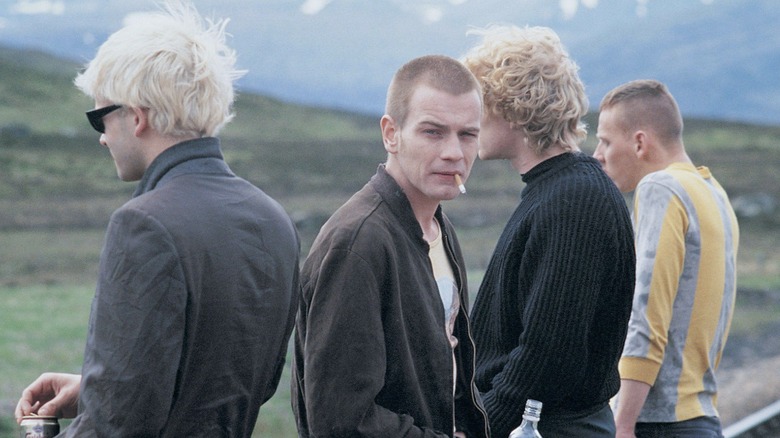
"Shallow Grave" is the film that started Danny Boyle's career, but "Trainspotting" is what really cemented his reputation as a director to watch throughout the late '90s and early '00s. It's the story of a group of unapologetic junkies in Edinburgh, led by a cast of truly remarkable actors who would go on to become some of the biggest stars of their day. "Trainspotting" is bold, inventive, and even grotesque in its depiction of their lives. 

Throughout the entire production, there's a vitality to "Trainspotting," a youthful energy that stands in defiance of not just traditional filmmaking but traditional society in general. Renton (Ewan McGregor) has a famous monologue that offers up a pretty succinct rejection of the sort of capitalist, boring, middle-class life that he is expected to lead, an existence that he considers nothing less than soul-crushing. Still, when offered the choice between that and the fleeting ecstasy and brutal emptiness of heroin addiction, it's not quite so easy to choose. "Trainspotting" is a seminal moment in British cinema, and may just be Boyle's masterpiece.

Read this next: Every Christopher Nolan Film Ranked Worst To Best

The post Every Danny Boyle Film Ranked from Worst to Best appeared first on /Film.
29 Sep 23:21

The Best Slashers Turning 40 This Year

by Joe Lipsett

There's no consensus about the origin of the slasher film. "Halloween," which came out in 1978, perfected the tropes, though 1974's "Black Christmas" came first. Many genre purists will point to 1960's one-two punch of "Psycho" and "Peeping Tom" as the beginning of the genre. However, regardless of how it started, the horror subgenre truly hit its stride in 1980 and 1981, when virtually every horror film aimed to capitalize on the financial success of 1980's "Friday the 13th."

But not every slasher is created equal, and 1981 proved to be something of a rollercoaster in terms of quality. This was the last year of the slasher boom -- it was the beginning of the end for the subgenre, as a wave of mediocre films led to audience exhaustion, as well as accusations of tawdriness from critics and politicians. As such, 1981 is the crest before the fallow period that lasted until "Scream" exploded onto the scene in 1996.

With that in mind, in celebration of the titles turning 40 this year, let's revisit the best American slasher films released in 1981. Spoilers follow.

The Burning

Slashers love to focus on pranks and urban legends, so it makes sense that "The Burning" would use both as its inciting incident. It begins with the legend of Cropsy, a caretaker (Lou David) who is inadvertently set ablaze by campers in a prank gone wrong. Five years later the man, now horribly burned, returns to camp to wreak revenge on both the counsellors and their new, young charges.

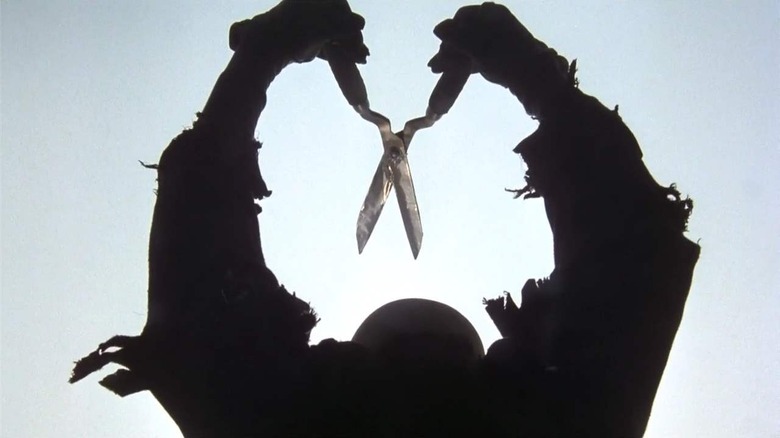
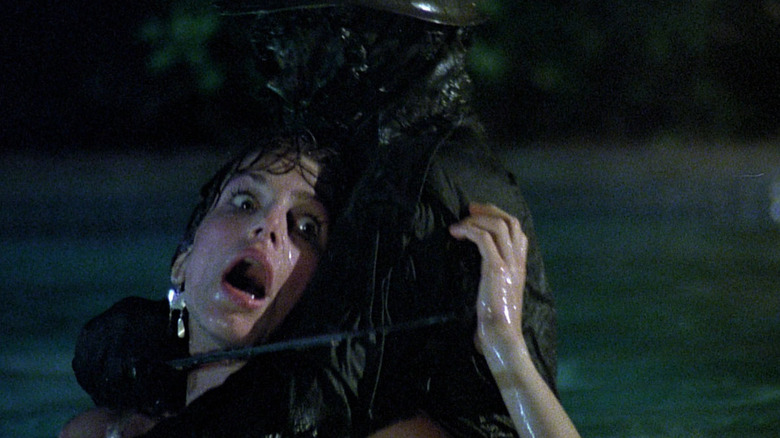
Some of those youngsters, including Jason Alexander, Holly Hunter, and Fisher Stevens, would become famous, but it is the gore and the practical effects that are the true heroes of the film. One fan favorite: the raft scene in which Cropsy lunges out of the shallow water with his iconic garden shears and begins hacking kids apart in glorious slow motion.

Sadly, this is the first of many films on this list that was heavily censored by the MPAA over concerns about violent media. While that stigma didn't hurt other films, "The Burning" was a flop at the time of its release, barely making back half of its $1.5 million budget. Thankfully the film has found new life as a cult classic in the interceding years. Just ignore the Weinstein connection.

The Fan

The '80s were defined by conservatism (thanks, Reagan), but in 1981, that was all still in its infancy. Ditto the mysterious illness that would eventually be known as HIV and AIDS. These sociopolitical elements, however, contribute to a legacy of negative depictions of the queer community (see, for example, Brian De Palma's 1980 slasher "Dressed to Kill," which uses a "man in a dress" reveal as a shock tactic).

"The Fan" is has similar problems. The film follows Douglas Breen (Michael Biehn), a queer-coded man who obsessively stalks aging Broadway star Sally Ross (Lauren Bacall), slashing anyone who gets in his way. It's actually a very silly, campy film, particularly Bacall's less than enthusiastic performance during her dancing and singing scenes, but a few key moments stand out in stark contrast.

One is a scene in which Breen, either acting on his latent homosexuality or using his good looks to murderous advantage, takes a man home for oral sex. This unfortunate gay man is killed and framed by Breen in order to misdirect the police. It's a startling case of a hate crime handled very nonchalantly; the murder is simply another set piece. "The Fan" is ridiculous fun and worth checking out for hunky young Biehn and his melodramatic fan letters. However, as a text that traffics in queer culture, it does have a harmful legacy.

Final Exam

One of the lesser-known entries on this list, Jimmy Huston's "Final Exam" is a different kind of slasher. The logline -- a madman stalks a college campus, killing coeds before he is ultimately defeated by a final girl -- looks identical to 1981's other slashers. In reality, though, the film has two unique characteristics.

The first is the film's lengthy, dialogue-heavy sequences as Lanier College student Courtney (Cecile Bagdadi) and her friends prepare for their exams. Oddly, this doesn't help make the film's characters three dimensional or well-rounded; in fact, the film often feels strangely dull and lifeless. That's surprising, considering that "Final Exam" also features a fake school shooting, as well as a ridiculous climactic moment during which the killer catches an arrow in mid-air.

Its second unique element is the identity and motivation of the killer. Unlike other slasher films, which prioritize unmasking the murderer, "Final Exam" never explains who the villain is or why they're killing coeds. The arbitrary and unknowable nature of the crimes is arguably the film's most fascinating component.

Friday The 13th Part 2

The original "Friday the 13th" is a classic for numerous reasons: It's the first entry in what would become a beloved franchise, it defines the formula (derived from selected aspects of "Halloween") for nearly all subsequent slashers, and it features a rare-for-the-genre female antagonist in Mrs. Voorhees (Betsy Palmer, in an iconic performance).

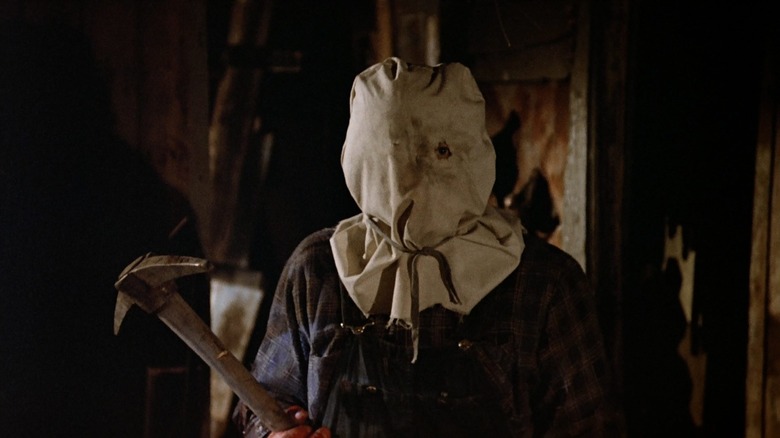
In much the same way that "Halloween 2" built out from "Halloween," "Friday the 13th Part 2" takes what worked in the original and runs with it. In addition to capitalizing on the sexy, sweaty teens of the first film, "Part 2" introduces the waterlogged son of Mrs. Voorhees and, in the process, forever changes the direction of the franchise.

While Jason Vorhees wouldn't come into possession of his iconic hockey mask until "Part 3," audiences ate up the new, unkillable monster to the tune of $21.7 million and, in the process, kickstarted one of the most inventive and enduring horror franchises of the 20th century. It's ironic that so many titles on this list never become a franchise, considering that several cost less and grossed more than "Friday the 13th Part 2." Perhaps that's just a testament to the enduring power of bag-head Jason!

The Funhouse

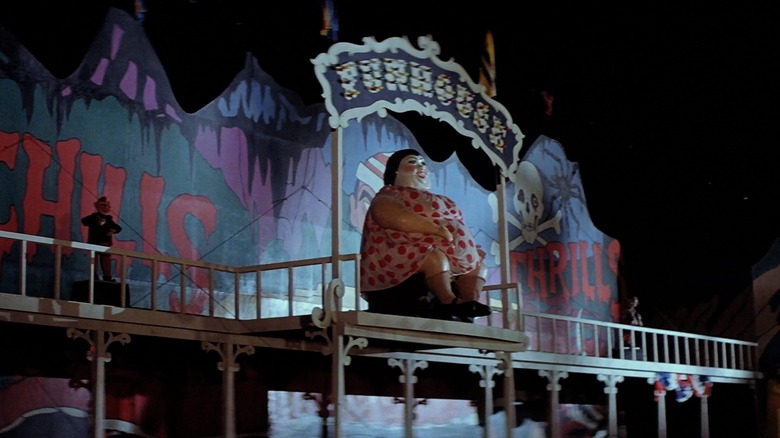
The setting of "The Funhouse" is undeniably a huge part of its appeal. Considering how visually memorable a carnival is and the setting's limitless potential for horror, it's surprising that so few films have featured murders under the big top.

Another strong selling point of the film is its director, Tobe Hooper. "The Funhouse" is only the second film the Master of Horror released after his trailblazing efforts on 1974's "The Texas Chainsaw Massacre," another film that is often overlooked in discussions of classic slashers. Unlike many of his contemporaries, Hooper's foray into '80s slasher territory was met with a warm reception from critics, many of whom argued that the film has a stronger visual style than the other "Friday the 13th" knockoffs. Audiences agreed, propelling the film to nearly $8 million in theatres, more than double its $3 million production budget.

It doesn't hurt that the setting is so evocative and its villain is so threatening. Although the film traffics in ableist tendencies in its treatment of a deformed killer (played menacingly by Wayne Doba), "The Funhouse" remains a genuinely atmospheric and tense slasher that deserves more credit and accolades. Seek this one out if you haven't seen it -- it's worth your time.

Graduation Day

Not every slasher film is created equal. "Graduation Day," about a killer who stalks a track and field team, highlights where the priorities of the subgenre were in 1981. The film follows Anne (Patch Mackenzie), the older sister of a high school athlete who dies in the film's opening sequence. As Anne investigates Coach Michaels (Christopher George), who notoriously pushes his athletes past their breaking point, various members of the team are killed off in inventive and gory ways.

It's no surprise that slasher films in 1981 were fixated on gory deaths -- this was the lesson studios took from the massive financial success of "Friday the 13th." What distinguishes "Graduation Day" from its contemporaries is the fact that nearly all of the deaths are sports-related, which results in some truly creative set pieces. A personal favorite is a javelin death, which makes perfect sense given the film's focus on track, but still manages to feel fresh and innovative.

Despite tepid reviews, "Graduation Day" was a huge success, grossing $24 million on a $250,000 budget. This fact serves to confirm just how popular the slasher subgenre was at the time. Like so many '80s films, the film has also gained a cult following over the years.

Halloween 2

1981 introduced sequels to two iconic slasher films. "Friday the 13th Part 2" is rightfully recognized as one of the franchise's best because it retains the original film's flavor while simultaneously introducing a mythology that takes the franchise in new and exciting directions.

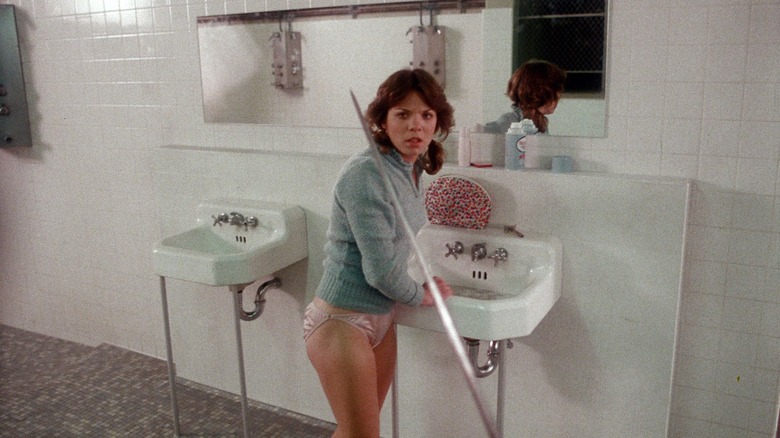
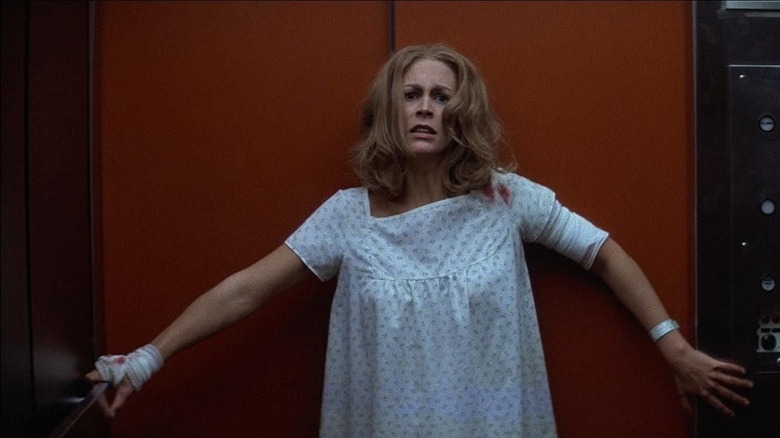
"Halloween 2" doesn't have the same goodwill from the audience as "Friday the 13th Part 2," in part because the Michael Myers sequel is the follow-up to one of the subgenre's most beloved entries. When the sequel arrived, sans Carpenter in the director's chair and with a near-comatose Laurie Strode (Jamie Lee Curtis) and gallons more blood, critics decried the franchise's shift into conventional slasher territory. Where "Halloween" was considered reserved and sophisticated, its successor is more aligned with "Friday the 13th" in terms of both aesthetics and ostentatious kills.

Regardless of complaints about the change in direction, the $2.5 million-budgeted film made boatloads of cash ($25 million) and features several outstanding, if mean, set pieces (poor Head Nurse Alves). As a sequel to the original, "Halloween 2" does feel more sensational, but much like "Friday the 13th Part 2," the sequel reflects how slashers became increasingly violent between 1978 and 1981.

Happy Birthday To Me

Actresses have been taking edgy film roles to help shed their nice girl personas for decades. Exhibit A: Melissa Sue Anderson's role in "Happy Birthday to Me." The slasher is one of many Tax Shelter Era films of the late '70s and early '80s, when Hollywood productions came to Canada to take advantage of tax breaks to make a quick buck. And nothing's cheaper than slashers, which is why so many stalk-and-slash films of this period have a distinctly Hollywood North vibe.

"Happy Birthday to Me" has a loose Freudian plot centered around Ginny (Sue Anderson), a member of Crawford Academy's popular crowd. Naturally, the group begins to get picked off one by one, which has everything to do with Ginny's repressed memories of a booze and water-related accident involving her deceased mother.

The film's movie poster and tagline are its greatest selling point. The former features Steve (Matt Craven) being orally penetrated by a kebab, while the latter promises "Six of the most bizarre murders you will ever see." This, Sue Anderson's attempt to break free of her "Little House on the Prairie" character, and the film's nonsensical ending, make "Happy Birthday to Me" one of the most unusual slashers of the decade. This wackadoodle gem truly has to be seen to be believed.

Hell Night

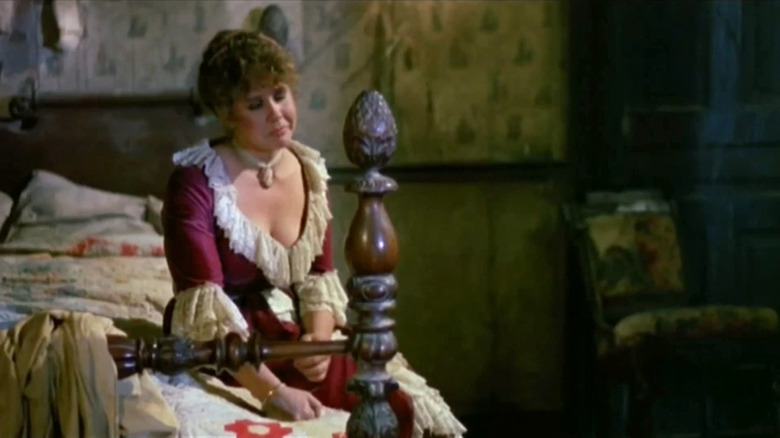
Don't let the fact that Linda Blair was nominated for a Razzie for her performance as Marti Gaines in "Hell Night" deter you from checking it out. The film, directed by Chuck Russell (pre-"Nightmare on Elm Street 3: The Dream Warriors" and "The Blob" remake), is actually really enjoyable.

Like a few other titles on this list, "Hell Night" features an urban legend, although it's one fabricated for the film. The pledges of Alpha Sigma Rho are sequestered in the deserted Garth Manor, which is infamous for the titular family's murder-suicide and alleged haunting. Naturally, there are also pranks: Marti and the three other pledges are locked in the manor at the behest of Peter Bennett (Kevin Brophy), who has set up numerous tricks and traps to scare them. Alas, things don't go to plan when an assailant begins trying to murder Marti and her friends.

To say much more would spoil the twist (which, ironically, also applies to the next entry), but "Hell Night" is a charming entry in this first cycle of slashers. Blair is a capable lead and the Victorian costumes lend the film a gothic vibe. Sure, the plot isn't great (something critics complained about at the time), but the film certainly deserved better than its $2.3 million gross. For shame, slasher fans -- go support this underdog entry!

Just Before Dawn

The line demarking a slasher from any other horror subgenre is fluid and extremely malleable. Case in point: hillbilly or rural films, in which characters are chased through the woods or abandoned Midwestern landscapes, as opposed to the city. Another distinguishing characteristic of this subgenre is that the villains are typically poorly educated and often inbred, which gives rural slashers a specific class-based reading. There's a lot to unpack in these films, but they're lumped into the broader slasher canon because they share many of the same tropes.

"Just Before Dawn" follows a group of friends on a camping trip who meet a young girl, Merry Cat Logan (Katie Powell), who tries to help them when they are attacked by wild persons living in the Oregon mountains. If that description seems familiar, director Jeff Lieberman claims on a DVD commentary that he hadn't seen "The Texas Chainsaw Massacre" or "The Hills Have Eyes" when he made his film.

While being set outside of the city and exploring different class relationships distinguishes "Just Before Dawn" from its contemporaries, the film is no less effective. In fact, it's really tense and exciting. The film also contains one of the absolute best climactic moments of any slasher film, although it rarely gets its dues in horror circles. If you haven't seen "Just Before Dawn," schedule a trip to the mountains immediately.

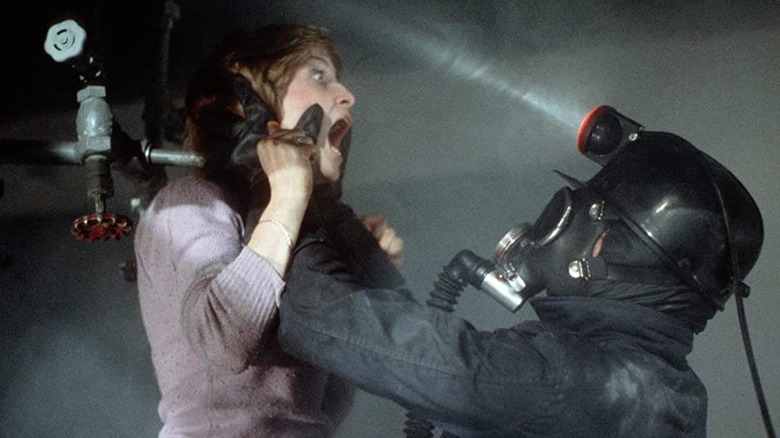
My Bloody Valentine

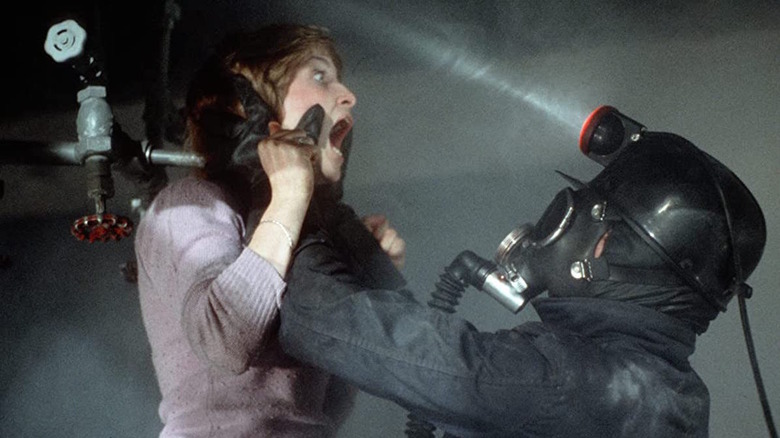
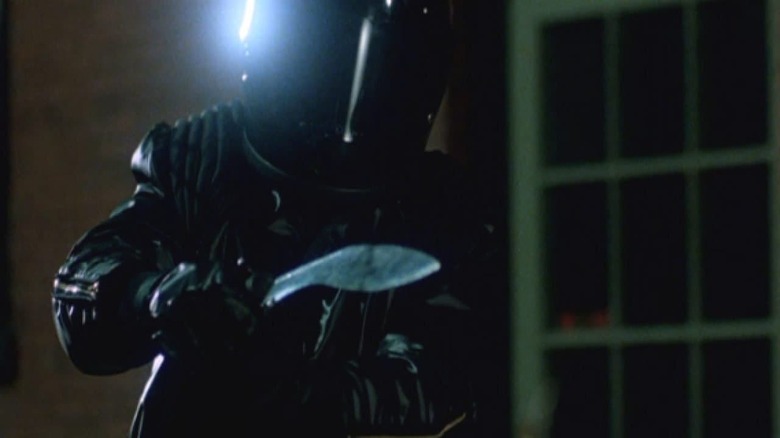
Bear with me as I hum "The Ballad of Harry Warden," the theme song for this quintessentially Canadian slasher. Like many films of its ilk, "My Bloody Valentine" takes a historical tragedy as its inciting incident -- in this case, it is a mine explosion that occurs when distracted employees abandon their posts in anticipation of a Valentine's Day dance. 

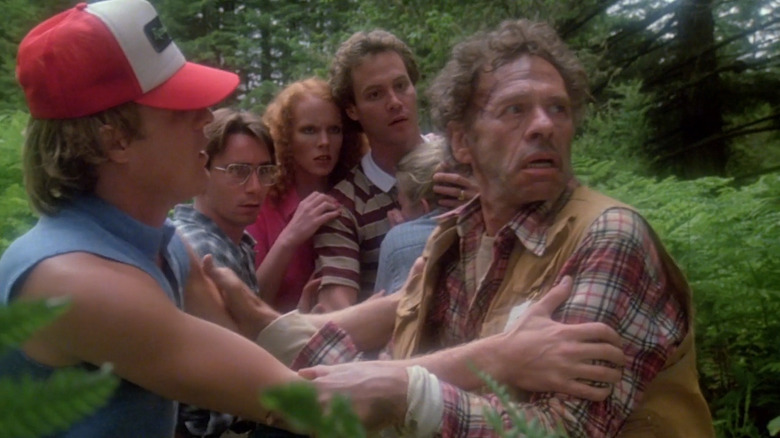
"My Bloody Valentine" centers its drama on a stilted romantic triangle between Sarah (Lori Hallier) and her two love interests, TJ (Paul Kelman) and Neil Affleck's Axel (in reality, the pair of dudes seem more interested in each other than in Sarah). Compared to other movies on this list, this is an unconventionally horny slasher film: Characters are interested in fornicating in mine shafts, and TJ is unable to do up more than half of the buttons on his shirts. Chalk these quirks up to the film's wholesome Canadian charm. Not only was "My Bloody Valentine" shot in a real Nova Scotia mine (which caused no shortage of production woes), it was seemingly sponsored by local brewery Moosehead.

Tragically, the film also suffers from some of the most aggressive MPAA cuts at the time. While the film broke even financially, it's unclear how much the edits hurt its box office. Thankfully, the gory footage is included in recent Blu-ray releases, so this classic slasher masterpiece is available in its full glory.

Night School

"Night School" has rightfully been described as a giallo thanks to its leather-clad killer, international cast, and police procedural elements. It's also inherently adult, with a cast of mature characters and a motivation driven by jealousy, as well as the murderer's desire to protect her burgeoning family.

The film follows Lieutenant Judd Austin (Italian actor Leonard Mann), a workaholic police officer who is investigating a string of decapitations around Boston. The killings are all tied to a women's night school -- more specifically, the school's womanizing anthropology professor, Vincent Millett (Drew Snyder). It's hardly a surprise when it is revealed that Millett's pregnant girlfriend, Eleanor Adjai (English-Australian actress Rachel Ward) is the killer cleaning up after her philandering baby daddy. A female killer is a rarity, although "Night School" awkwardly tows the line between female empowerment (Adjai has agency) and reductive conservative values (she's killing other women for her worthless man).

What works best about "Night School" is its mix of American and European sensibilities. The international cast, the sleazy exploitation vibes, and the stylish direction, particularly the aquarium shower room (a bloody favorite) makes the film memorable. "Night School" isn't the most innovative film, but it does feel unique among 1981 slashers.

The Prowler

There's a significant amount of overlap between "The Prowler" and "My Bloody Valentine." They both open with a murder that freezes their respective small towns in amber before jumping to the present day, when enterprising teens attempt to organize a dance that inevitably leads to disaster. 

Sadly, the rest of the film is bland and uninspired, especially the combative relationship between final girl Pam (Vicky Dawson) and her paramour, Deputy Mark (Christopher Goutman). The editing by Joel Goodman and flat direction by Joseph Zito makes for sluggish pacing. More frustratingly, the audience is stuck with Pam and Mark for long stretches. It's perplexing, because neither are interesting enough to justify their screen time.

Aside from some epic kills courtesy of Tom Savini, including an iconic slow-motion head explosion in the climax, there's simply not enough here. "The Prowler" may have its fans, but it's not the best that 1981 had to offer.

Read this next: The 20 Best '80s Horror Movies Ranked

The post The Best Slashers Turning 40 this year appeared first on /Film.
29 Sep 23:21

Is Your Credit Card Annual Fee Refundable?

by Mike Winters

It can be easy to overlook the annual fee when your credit card automatically renews for another year. Once you’ve gotten over the excitement of welcome bonuses and cash back perks, it’s easy to forget, as the fee becomes one line item among many on a monthly statement, only noticed long after the charge has been…

Read more...

29 Sep 23:19

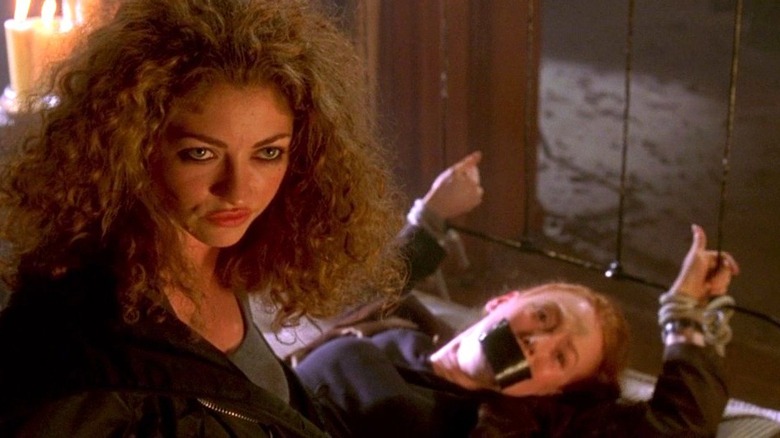
Knocking – Review [Fantastic Fest] (4/5)

by Karina "ScreamQueen" Adelgaard
29 Sep 23:19

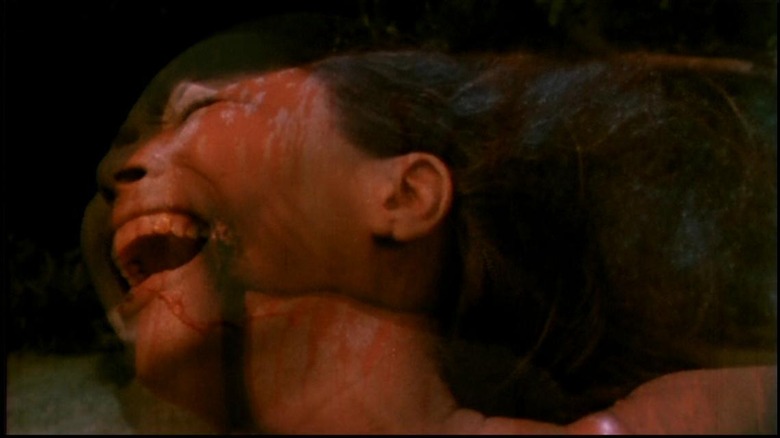
Let the Wrong One In – Review [Fantastic Fest] (3/5)

by Karina "ScreamQueen" Adelgaard
29 Sep 23:19

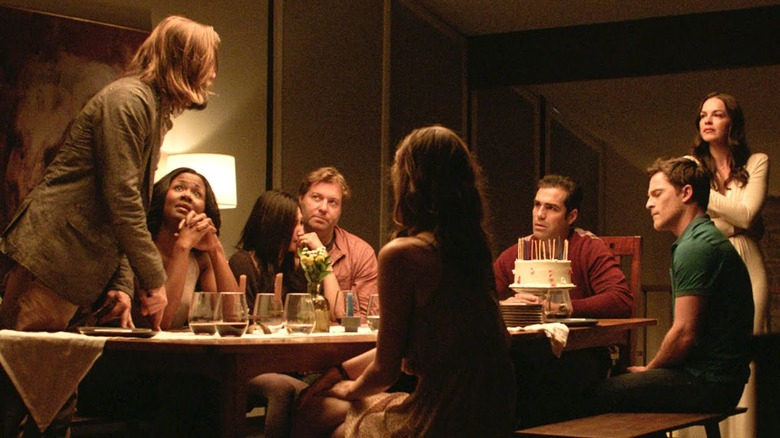
The Trip – Netflix Review [Fantastic Fest] (4/5)

by Karina "ScreamQueen" Adelgaard
29 Sep 23:19

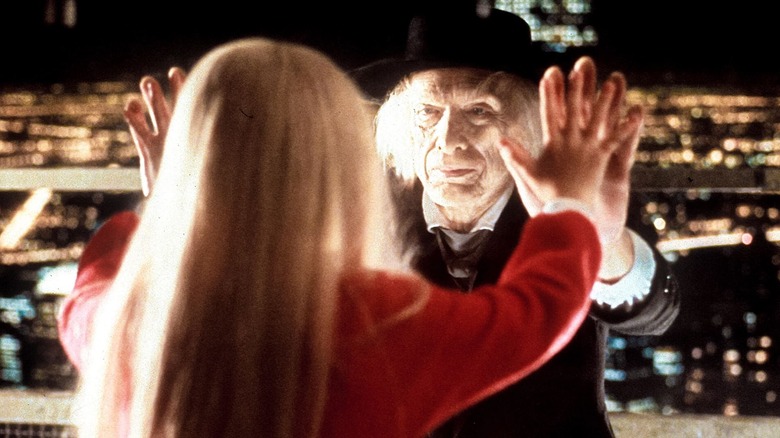
Alone with You – Review [Fantastic Fest] (3/5)

by Karina "ScreamQueen" Adelgaard
29 Sep 23:18

US Attempts To Slow China's Innovation Rate

by BeauHD
AltMachine writes: U.S. Commerce Secretary Raimondo wants the U.S. to work with Europe to slow China's innovation rate, while at the same time accusing China of ripping of western intellectual properties. "America is most effective when we work with our allies," Raimondo told CNBC's Kayla Tausche in an exclusive interview. "If we really want to slow down China's rate of innovation, we need to work with Europe. They're ripping off our IP, they are not playing by the rules. It's not a level playing field. And so we need to hold their feet to the fire to make sure that they do that." Raimondo invokes the ideological divide to justify the push. "We don't want autocratic governments like China, writing the rules of the road. We together with our allies, who care about privacy, freedom, individual rights, individual protection, we need to write the rules of the road," Raimondo said. Similar to innovation history of the U.S. which evolved from apprehending IPs of other countries before turning into a technological innovation powerhouse, China has in recent years greatly accelerated its R&D spendings and fortified IP protections. Of the more than 1,600 cases analyzed, IP owners won more than 80% of the time and permanent injunctions were issued by the Chinese courts in more than 90% of the cases. As noted by Judge Gang Feng of the Beijing IP Court in 2016, foreign corporations had a 100% win rate before that court in 2015. "We have to work with our European allies to deny China the most advanced technology so that they can't catch up in critical areas like semiconductors," Raimondo added. "We want to work with Europe, to write the rules of the road for technology, whether it's TikTok or artificial intelligence or cyber." Further reading: China's Growing Power Crunch Threatens More Global Supply Chain Chaos

Read more of this story at Slashdot.

29 Sep 22:23

The Daily Stream: Cure Will Give You The Creeps

by Chris Evangelista

(Welcome to The Daily Stream, an ongoing series in which the /Film team shares what they've been watching, why it's worth checking out, and where you can stream it.)

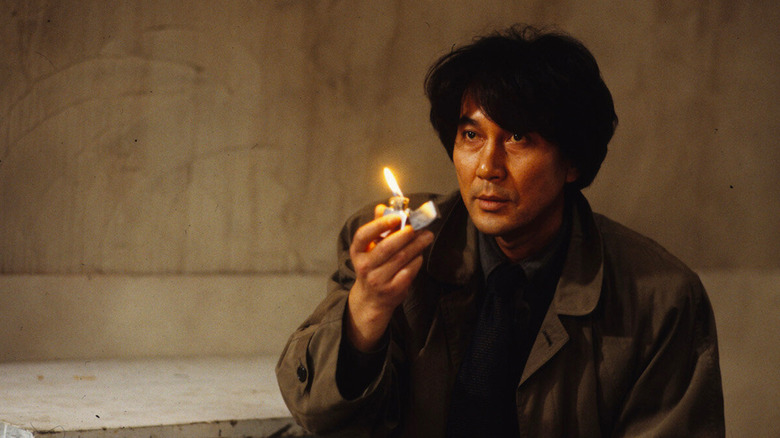
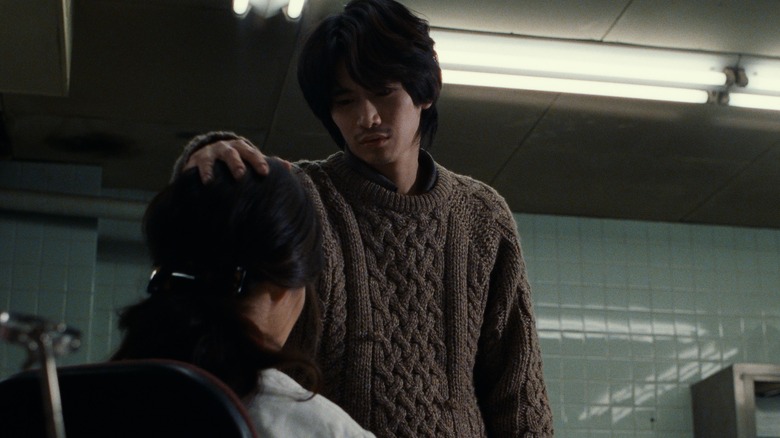
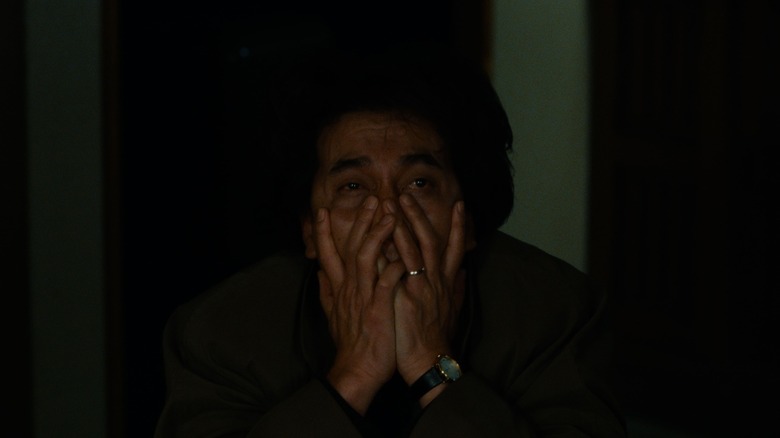
The Film: "Cure"Where You Can Stream It: The Criterion ChannelThe Pitch: Kenichi Takabe (Kōji Yakusho), an eerily calm police detective, is investigating a series of strange, seemingly connected murders. In each case, the victims were killed with a large X carved into their throats. But this isn't a whodunit. In each instance, the killer was caught – and it's been a different person every time. The killer never denies they've committed the crime; they confess while also saying they don't know why they did what they did. It just happened. That's weird enough on its own, then you throw in the fact that none of the killers knew each other, or of the other murders, and yet they have all been carrying out identical crimes. 

As the detective digs deeper into the case and grows more and more perturbed, we also meet an extremely strange man, Mamiya (Masato Hagiwara). Mamiya wanders into people's lives, seeming to have no memory of who he is or where he came from. After he departs, however, the people he's just met often end up killing someone they know – carving X's into their victim's throats. Eventually, Takabe and Mamiya cross paths and the detective becomes convinced that the weird amnesiac is somehow behind the murders, compelling people to carry them out via some form of hypnosis. It sounds like a somewhat silly set-up, and yet in the hands of filmmaker Kiyoshi Kurosawa, "Cure" becomes one of the scariest films you'll ever see. 

Why It's Essential Viewing

What makes "Cure" so scary? It's not the violence – although that is, indeed, disturbing, such as in a scene where a mesmerized killer indifferently peels a victim's face off. And there's nothing even close to a jump-scare in this movie. Instead, just as he did with the extraordinary "Pulse," filmmaker Kiyoshi Kurosawa conjures up horror with space and mood. The director often surrounds his actors with empty, dingy backdrops. Walls have a faded gray or brown color. Everything looks washed-out while seeming simultaneously unwashed. The mundane – a bathroom, an office, a hallway – suddenly becomes horrifying just through shadows and emptiness. There's loneliness trapped within all that empty space, and it radiates off the screen, drawing us in, enveloping us. 

A foreboding atmosphere prevails through "Cure," so much so that nearly every scene has an almost dream-like quality. This is only strengthened as the story unfolds and characters begin to lose control of their own senses. And that's perhaps the scariest element of all here - the loss of control. "Cure" suggests that we can be forced to abandon reason; to give up on our very sanity and become cold-blooded killers, simply by the power of suggestion. 

Masato Hagiwara's mysterious mesmerist is one of cinema's most chilling villains. A blank, soft-spoken figure who has no real motive other than his own sociopathic satisfaction. Every scene he occupies feels wrong, keeping us on edge as we await some terrible reveal. This is the stuff of great horror, and "Cure" is indeed one of the best horror movies ever made (so is "Pulse," and it's pretty damn amazing that one filmmaker made them both). The slow-burn nature won't appeal to those looking for cheap scares, but those in search of a smothering kind of dread that clings to you the way the smell of smoke lingers in your clothes will find true horrors here.

Martin Scorsese On Cure

Reader, I would hope that, by now, you've come to trust my suggestions. However, I also know I'm a total nobody, and you might not give two damns about what I have to say. That's fine! But if you won't listen to me, why not listen to Mr. Martin Scorsese? Pretty much no one knows more about movies than Scorsese, and he's an on-the-record fan of "Cure." Here's what he had to say: 

This is one of the very best films by the extremely talented Kiyoshi Kurosawa— for those of you who don't know the name or the work, he's no relation to Akira Kurosawa. He's an absolute master of light, framing and pacing, and he has so much control over all three that there are moments in his movies when the slightest gesture in the corner of the frame will send a shiver down your spine. Kurosawa doesn't exactly work in the horror genre. Rather, his films are filled with a strange dread. In many of them, something has arrived, no one knows exactly what or how or for what purpose: Reality is untouched except for a small, unsettling detail or two, which mutates into violence and irrationality.Kurosawa is a real student of cinema. Along with Shinji Aoyama, Makoto Shinozaki and a few other directors, he's the former pupil of the great Japanese critic and historian Shigehiko Hasumi. Each of them has absorbed the lessons of older American cinema and taken them to interesting and unusual places. Kurosawa, for instance, is a great admirer of Robert Aldrich, and if you didn't know it you'd never guess as much from simply looking at his movies. But it makes sense: They're both making movies about the world in a state of emergency, creating a troubling poetry of violence and upset. I can recommend every Kurosawa movie I've seen: Séance, Charisma, Doppelgänger, Bright Future and the more recent Retribution.Along with Pulse, which is about ghosts on the Internet, Cure is his most terrifying movie. The excellent Kôji Yakusho (he and Kurosawa have worked together many times) is a detective confronted with a seemingly inexplicable phenomenon: a series of murders in which the perpetrators are standing by unaware of how or why they did it, with red X's carved on the necks of the victims. There are startling images and moments in this picture that will haunt you for a long time to come, and I suppose I should say that it's not for the faint of heart. But be brave, because it's worth it. Kurosawa is a major filmmaker.

There's a new 4K restoration of "Cure" on the way. But in the meantime, you can watch the pre-4K version on The Criterion Channel right now! And you should.

Read this next: The Daily Stream: Midnight Mass Grapples With Big Questions Under The Guise Of Religious Horror

The post The Daily Stream: Cure Will Give You the Creeps appeared first on /Film.
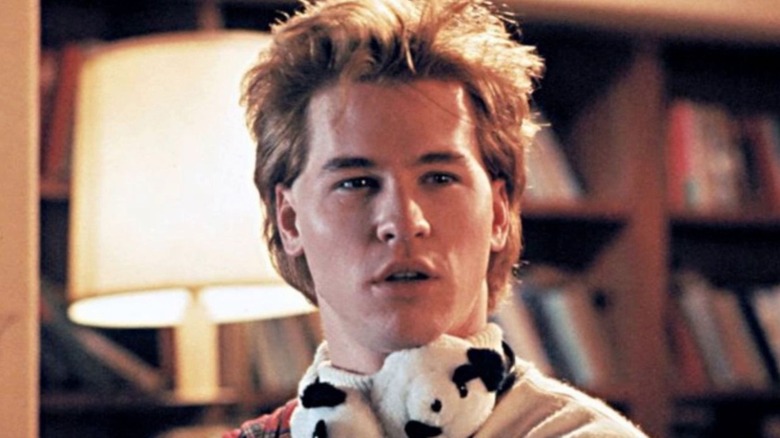
29 Sep 20:00

Defend against zero-day exploits with Microsoft Defender Application Guard

by Emma Jones

Zero-day security vulnerabilities—known to hackers, but unknown to software creators, security researchers, and the public—are like gold to attackers. With zero-days, or even zero-hours, developers have no time to patch the code, giving hackers enough access and time to explore and map internal networks, exfiltrate valuable data, and find other attack vectors.

Zero-days has become a great profit engine for hackers due to the imperil it poses to the public, organizations, and government. These vulnerabilities are often sold on the dark web for thousands of dollars, fueling nation-state and ransomware attacks and making the cybercrime business even more appealing and profitable to attackers.

Social engineering unlocks doors to zero-day attacks

With zero-day being the new constant, organizations must defend and protect themselves, paying special attention to the user applications as most of the zero-day vulnerabilities out there fall within this environment.

Attackers leverage social engineering tactics to gain users’ trust, deceive them, and influence their actions—from opening a malicious link attached to an email to visiting a compromised website. The malicious code executes when the application opens the weaponized content, exploiting vulnerabilities and downloading malware on the endpoint.

This combination of sophisticated social engineering attacks is a lethal weapon that leverages “the art of deception” combined with human-operated ransomware, allowing attackers to stay undercover while exploiting a system’s vulnerabilities. It creates the perfect scenario for a zero-day attack, allowing attackers to expertly spread and compromise more devices than ever before.

App isolation helps defend against zero-day exploits

In such a challenging environment, where application and web browser scans and filters on their own may not be able to stop attackers from tricking users and preventing malicious code to execute, isolation technology is the way forward to defend against zero-day exploits.

Based on the Zero Trust principles of explicit verification, least privilege access, and assume breach, isolation treats any application and browsing session as untrustworthy by default, adding multiple roadblocks for attackers attempting to get into users’ environments.

Isolation is fully embedded into Microsoft Windows chip to cloud security posture, enabling applications to apply and run in state-of-the-art virtualization technology, such as Microsoft Defender Application Guard (Application Guard), to significantly reduce the blast radius of compatible compromised applications.

With Application Guard, websites and Office files run in an isolated hypervisor (Hyper-V) based container, ensuring that anything that happens within the container remains isolated from the desktop operating system. This means that malicious code originates from a document or website which is running inside the container, the desktop remains intact, and the blast radius of the infection remains confined within the container.

This is the same virtualization-based security (VBS) technology that also powers other Windows security features like Credential Guard and Hypervisor Code Integrity (HVCI).

Presenting Hardware Isolation of Microsoft Edge and Microsoft Office products. Workflow being displayed at the bottom with Device Hardware being the focal point, flowing through Kernel, into the Windows platform before reaching Microsoft Office, Microsoft Edge, and Apps.

Today, the power of Application Guard local isolation is natively built into Microsoft Edge and Microsoft Office, providing seamless protection against malicious Word, PowerPoint, and Excel files and also malicious websites. We have extended this protection to Google Chrome and Mozilla Firefox via the Application Guard plugin, which allows untrusted websites to be opened in isolation using Microsoft Edge.

Application Guard delivers a great first line of defense for organizations—when users run an app or open email attachments and click on a link or an URL, if any of these have malware, it will be contained in the sandbox environment and won’t be able to access the desktop, its systems, or data. Additionally, every malicious attack contained by Application Guard helps inform and improve global threat intelligence, enhancing overall detection capabilities and protecting not only your organization but also millions of other Microsoft customers across the world.

Application Guard for Zero Trust

Isolation is an important part of any organization’s strategy in deploying Zero Trust and defending your system from being compromised without jeopardizing performance and productivity.

Based on the following principles of Zero Trust, isolation technology in Windows forms the backbone of Application Guard providing stronger protection and greater assurance to your users while empowering them to click anywhere.

  • Verify explicitly: Admins can also configure device health attestation policies in their organization using Microsoft Intune. Together with conditional access, these policies will ensure and attest that Windows boots with secure boot enabled—ensuring that the hypervisor booted correctly, and the App Guard container is secure.
  • Least privilege: The hardware isolated container used by Application Guard implements a secure kernel and user space and does not allow any access to the user’s desktop or other trusted resources in an enterprise.
  • Assume breach: For all purposes, this container is considered non-trustworthy and is used to run untrusted content. There is no user data or any identity present inside the container. It is assumed that the untrusted content may contain malicious code.

Learn more

For more information, check out:

To learn more about Microsoft Security solutions, visit our website. Bookmark the Security blog to keep up with our expert coverage on security matters. Also, follow us at @MSFTSecurity for the latest news and updates on cybersecurity.

The post Defend against zero-day exploits with Microsoft Defender Application Guard appeared first on Microsoft Security Blog.

29 Sep 19:55

Guy Ritchie's Spy Movie Starring Jason Statham And Aubrey Plaza Has A New Title And Release Date

by Ben Pearson

Do you like James Bond movies? How about the "Ocean's" films? What about Ben Affleck's "Argo"? What if I told you there's a new movie coming out that sounds like a fun combination of all three of those projects? Well, I have good news: there's a movie coming out that sounds like a fun combination of all three of those projects.

After working on this year's "Wrath of Man," Guy Ritchie is reteaming with his frequent collaborator Jason Statham ("Lock, Stock and Two Smoking Barrels," "Snatch") on a new thriller that just got an official title. Previously known as "Five Eyes," the movie will now be known as "Operation Fortune: Ruse de Guerre." That's a mouthful of a title, but the plot sounds like a total blast.

What Does "Ruse De Guerre" Mean?

The phrase "ruse de guerre" is a French term that means "ruse of war." But there's a better definition: according to author Adam Matuszczyk's 2012 book "Creative Stratagems: Creative and Systems Thinking in Handling Social Conflict," the term could also mean "acts against one's opponent by creative, clever, unorthodox means, sometimes involving force multipliers or superior knowledge." That sounds like it could result in the type of twisty, mind-blowing thriller we love to see. And here's what the movie is about:

In the film, super spy Orson Fortune (Jason Statham) must track down and stop the sale of a deadly new weapons technology wielded by billionaire arms broker Greg Simmonds (Hugh Grant). Reluctantly teamed with some of the world's best operatives (Aubrey Plaza, Cary Elwes, Bugzy Malone), Fortune and his crew recruit Hollywood's biggest movie star Danny Francesco (Josh Hartnett) to help them on their globe-trotting undercover mission to save the world.

As I've previously discussed, I love a ridiculous movie character name, and "Orson Fortune" is a perfectly ludicrous one, so that alone probably makes this worth seeing. Combine that with the fact that this has an excellent cast (Hugh Grant and Josh Hartnett rule across the board, and Aubrey Plaza in a Guy Ritchie movie? What does that look like?) and features a great meta connection about looping a movie star into this spy plot, and my interest is sufficiently piqued.

As for Ritchie himself, the director has had a spotty filmmaking record over the past few years. Since 2015, he's directed "The Man From U.N.C.L.E.," which has a rabid cult following; the forgettable "King Arthur: Legend of the Sword"; Disney's billion-dollar-grossing live-action remake of "Aladdin," which is fine if you like that kind of thing; "The Gentlemen," which was roundly despised even by many longtime Ritchie fans; and "Wrath of Man," which seemed like it was going to be another trashy action movie but ended up being surprisingly solid.

"Operation Fortune: Ruse de Guerre" will be in theaters on January 21, 2022.

Read this next: The 15 Best Spy Movies Of All Time

The post Guy Ritchie's Spy Movie Starring Jason Statham And Aubrey Plaza Has A New Title And Release Date appeared first on /Film.
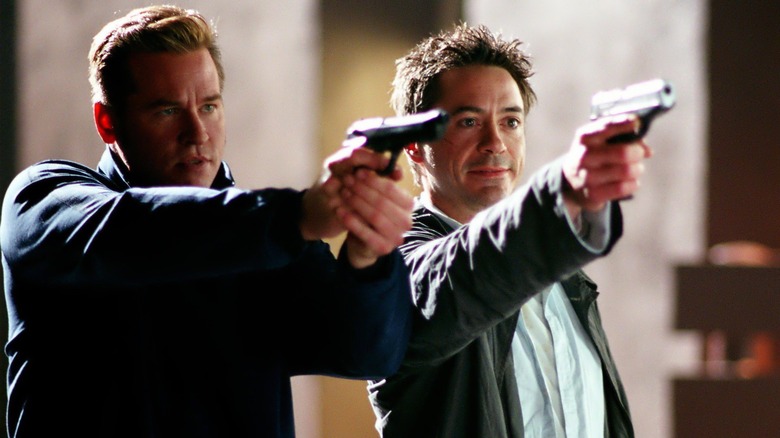
29 Sep 19:26

Prey 2017 Part 12: Meet the Technopath

by Shamus

Like I said in the last entry, Alex locked Morgan in Deep Storage for her own good. But as I’ve made clear in the past couple of entries, Alex’s help is often a huge liability. The situation here in Deep Storage is classic Alex: He’s trying to keep us safe, but he’s accidentally locked us in a relatively limited space with the dreaded…

Technopath

Sadly, the technopath does not use techno music as a weapon.

Sadly, the technopath does not use techno music as a weapon.

This guy is a bastard. The technopath can control machines, manipulate computers, and disable weapons. He’s not the highest on the alien org chart, and I don’t think the designers intended him to be the biggest threat, but this guy killed me more than the rest of the creeps combined.

Note also how this is yet another point in the story where our silent protagonist works against the story being told. Alex supposedly locked us in here to “keep us safe”, but he’s locked us in a small-ish space with a high-level threat. Morgan ought to be able to call Alex and tell him that he’s being a butthead.[1]

This game has turrets. You can find them, repair them, and reinforce them. They even carry their own (unlimited) ammunition. At the same time, they’re fragile and get broken or knocked over easily. They actually remind me a lot of the Combine turrets in Half-Life 2


You can leave turrets behind to guard stuff you care about, but then the game will auto-disable them while you're on another level. Boo.

In a game with such a strong focus on resource management, infinite-ammo turrets are a fantastic tool. A default turret is only mildly helpful, but if you’ve spent your skill points right you can make a turret pretty durable. That, along with clever placement[2] can kill tons of enemies for no additional cost and with very little personal risk. 

If anything, I kind of feel like turrets are a bit OP. My go-to strategy when facing a big foe is to round up a handful of turrets and let them do the work for me.

But not the technopath. The technopath will instantly possess the turret. The turret will levitate over to the technopath and orbit around him, making him even tougher to kill. That’s fine. It’s nice that some foes have a way to counter turrets. My problem is that the technopath is already a huge threat.

He summons balls of hovering lightning. These balls do massive damage and they disable your currently held weapon. The technopath can summon these things through walls. It doesn’t even need line-of-sight! He can create this shock attack every N seconds, and the shock will disable your weapon for N+1 seconds. So if you try to fight him in the open he can make it so you can never fire your weapon. 

Once he’s aware of you, just being in his general vicinity is extremely dangerous. Just to make things as dicey as possible, he might also have a turret or two guarding him. On top of all this, he has a ton of hitpoints. 

Oh yeah: He can also fly and he prefers to hover well above the ground, which means it’s hard to use grenades on him. 

The Nightmare is supposed to be the Big Bad of the game, but I’ll take a Nightmare encounter over a Technopath any day. The Nightmare is less dangerous, costs fewer resources to kill, and drops more loot.

A Rare But Potent Enemy

This energy ball appears next to you, disables your weapon, inflicts damage, and obscures your vision. The technopath can spawn one of these things right beside you, across large distances, without needing line-of-sight.

We don’t fight very many of these things during the course of the game, but when we do encounter a Technopath, it’s usually camping in front of something really important. 

The first available Technopath is in the Neuromod Division, which is where you appear at the start of the game. You really have to go out of your way to reach this one, but if you’re really determined and a bit suicidal then it is possible to face a Technopath right at the start, long before you’re equipped to deal with it. 

Neuromods – like all other technology in the game – can be fabricated at these 3D printers you find. Like I mentioned earlier in this series, this allows you to break down scrap items and turn them into neuromods. In a practical sense, you’re printing “skill points”. If you’re really thorough and you don’t mind a lot of extra running around, then you can eventually gather up a lot of extra resources, which will allow you to make a ton of extra neuromods.  However, that’s a bit game-break-y, so the designer didn’t want that to be too easy for you.

Here is what the designer intended: Perhaps an hour or so into the game, you’ll find the blueprint for neuromods so you can make them yourself as opposed to just scrounging for them in the world. Then maybe you’ll spend another hour printing out neuromods here and there as you progress through the game. After you print out N neuromods, you discover that your “license” has run out. Once you run into the license block, you’ll have to backtrack to the Neuromod Division so you can access the licensing computer and grant yourself unlimited licenses. And it turns out there’s a Technopath guarding this office. This makes sense. By this point in the game you’ve probably got the resources to deal with a Technopath, and it makes sense to have the player deal with a top-tier threat in order to gain access to printing unlimited neuromods. 

That’s the intended path, anyway. But if you’re a little crazy, then you can pick a fight with this guy almost as soon as you exit the tutorial. You need to climb up to a balcony, hack a door, and end up playing tag in the dark with a poltergeist, but if you’re just the right blend of tenacious and crazy, then you can eventually reach the Technopath and have him one-shot you over and over again as you save-scum your way through the encounter.

Have fun!

It sounds like I’m complaining, but I love that the game is open like this and allows you to go places you shouldn’t. You can stray off the “intended path” if you want. The path is there for people who want a nice curated set of encounters that provide the “intended experience”, and then a bunch of side paths that offer increased dangers and rewards for people willing to put the work in and be creative.

To talk about the next Technopath, we need to talk about…

The Marvel of Talos-1

It seems like this lift would be an obnoxious choke point for the 250 crew members trying to get to work in the morning. I think the station would be better served by three smaller parallel elevators rather than this single luxury car. Also, I guess it would be cheating if we tried to count these benches towards our tally of missing beds.

When the game starts, the main elevator is disabled due to some unexplained “problem” at the top floor where the car is. Later you’ll reach the top by other means and discover that the problem is (surprise!) a technopath.

Now, technically you don’t need the main elevator. It’s entirely possible to move around the station using the service tunnels[3] or by going on a spacewalk[4] if you don’t mind taking the long way around. But you can save yourself a lot of hiking and a lot of loading screens if you’re willing to fix the main elevator.

One of the really cool things about Prey is that the world features complete spatial continuity. If you could remove all the loading screens and shove the gameworld into one massive contiguous level, they would all fit together. There aren’t any cheats or gaps where loading screens are used to connect corridors that would otherwise be far apart or at different angles. This doesn’t sound like a big deal because we’re used to gameworlds like Half-Life 2 where there’s a single path through the space and the level designer just needs to make sure that the end of level 10 matches the start of level 11. But this becomes a bigger problem when you’ve got levels that connect back to each other in different ways. The outer hull of Talos-1 needs to be large enough to contain the volume of the maps inside of it, those maps need to fit together, and those maps need to provide airlock doors that match up with the positioning of the external airlocks. 

Unfortunately, modern engines usually require that the designer cut the world up into chunks, with loading screens between them. And sometimes those loading screens end up in nasty places.

Elevator

Since we only have 3 floors, we could have three small dedicated elevators, each assigned to constantly cycle between two floors. Lobby/Aboretum, Lobby/Support, and Aboretum/Support. Everyone would get a direct trip to their destination.

The low-effort way to design the main elevator would be to have the elevator itself be a loading screen. You’d walk up to the controls, push a button, and when the loading was over you’d be standing in the new location, having just “exited” the elevator you supposedly rode. But the Prey designer wanted the player to actually ride a real moving elevator. They made the walls of glass so that you could feel the sense of distance and scale as the elevator carried you up and down Talos-1. That’s a really admirable design goal and I’m glad they went to the trouble. It just wouldn’t be the same if this trip was hidden behind a loading screen.

But this design also means that the entire elevator shaft needs to be part of the same map, and that comes with its own set of problems. As you approach the elevator at the top, you must pass through a loading screen. On the other side, there’s a single waiting room. And a Technopath. You must kill this Technopath if you want to reclaim the elevator.

This is probably the worst Technopath in the game, since you’re basically locked in a single room with him. You can’t retreat and fight him through a doorway, because the door is a loading screen. There isn’t really anywhere to provide cover. You just have to YOLO into the fight, tank the hits, and bring him down as quickly as you can. Not a big deal if you’ve specced for combat. But if you’ve specced for engineering and hacking, then I hope you’ve got some grenades and medkits in your pockets. You’re going to need them.

Anyway, let’s get back to Deep Storage and the Technopath that lives there…

Dead End

It's slightly tricky to obtain in the early game, but once you have it the Q-Beam rife is a real problem solver.

Like I said, I think the Technopath is the most dangerous foe in the game. It’s certainly the most formidable for the engineer / scientist build I prefer. 

Way back in 2017, this encounter actually ended my first play-through of Prey.[5] I fired every bullet I owned at him, and he still wasn’t dead. 

Normally I’d backtrack in a situation like this. Go back, find a fabricator, and turn some of my unused resources into more bullets. But since Alex had locked the door behind me, that wasn’t an option. [6]

I didn’t have any useful grenades left. I’d been a little too free with them up until this point, spending them on low-tier foes that I could have defeated with less expensive means. (Not that grenades are terribly useful against this hovering foe. It’s tough to land a hit where he’s anywhere near the center of the blast zone. But with some luck and a little save-scumming you can probably soften him up with grenades.)

I couldn’t finish it off with my wrench, since Technopaths can kite you. Every wrench-blow will cost you a zap from their lightning ball attack, and that trade will kill you very quickly.

I couldn’t use turret spam, since Technopaths just capture turrets.

My last manual save was from many hours earlier and the last auto-save was just after getting locked in, so I couldn’t jump back to just before entering Deep Storage and try a different approach.

That was it. Game over.

Choices and Consequences

Energy ball spam is OP nerf pls.

Now, you can argue that this is a designer’s foul: The player shouldn’t be able to get themselves into a no-win scenario like this.

On the other hand, I made an underpowered build where all of my skills focused on looting and not on combat. I’d used too many bullets on mimics instead of being more conservative and fighting them with the wrench. I’d wasted too many grenades on low-stakes fights. I had lots of fabricator resources[7] but I hadn’t spent those resources on bullets, so those resources were just sitting in my inventory instead of contributing to my overall combat effectiveness.

The point is: I made a lot of mistakes, and this no-win fight was simply the consequence of those earlier choices. If you made it so that an underpowered, unprepared, underequipped player can beat this fight, then you’re making it so the foes in the game are toothless. If my lousy build could win, then it would be a pushover for a properly equipped player.

I think my problem with this fight isn’t that it was too hard, it’s that I didn’t get the impression that this particular difficulty spike was deliberate. It certainly wasn’t telegraphed. It’s not like this Technopath was built up in the story as some sort of terrifying nemesis. Deep Storage wasn’t designed to be one of the scary “We Don’t go to Ravenholm” style areas, like Psychotronics. This wasn’t some big “moment of truth” for Morgan as far as her character goes. It feels like the game designer just locked you in a box with a Technopath and expected it to be just another fight.

The game could have telegraphed or foreshadowed that Morgan was heading into a big confrontation, thus giving the player an incentive to stock up. The designer could have contrived some reason for January to warn you that getting in might be easier than getting out, thus encouraging the player to make a backup save before going in. The game could have given the player a bit more room to work with, so they didn’t begin the level already backed into a corner. The game could have provided a Recycler / Fabricator station at the entry to Deep Storage, so the player could try different strategies on the Technopath instead of just using whatever they happened to have in their pockets when Alex locked them in.

But instead the game locks you into a small space with the toughest foe in the game. It does this without giving you a way to resupply, and without warning you ahead of time. And in the end, the designer doesn’t seem to notice that they’ve created a serious obstacle. This will very likely be the toughest fight the player has to face, and nothing in the story acknowledges it. This isn’t a hidden side-quest for an overpowered gun or the door to the secret mega-happy ending. As far as the game designer is concerned, this is supposed to be just another monster fight.

Yes, my build was underpowered. But this still could have been handled better.

Power Creep

One of the things I love about these Space Station Games is how you grow in power. You start the game feeling weak and vulnerable. The game is very close to survival horror in terms of tone and pacing. Every bullet you fire counts, and every band-aid you find is treasure. The game is tense, scrappy, and unforgiving.

In most games, the enemies grow in power faster than the player so that the end of the game is more challenging than the start. But this curve is reversed in a SSG. You gather bigger weapons and more super powers as you go, while your foes stay more or less the same. This means the game starts out as survival horror, and gradually becomes action adventure.

I realize this design runs counter to the entire idea of a game as an escalating test of skill, but for whatever reason this progression really appeals to me. If the game started with the player as an overpowered munchkin then it would feel too self-indulgent. And an entire game of unrelenting resource starvation and death screens can be exhausting and tedious. But I like the sensation of slowly transitioning from underpowered to overpowered. When I get to the late game and I’m mowing down hapless mooks with impunity, it doesn’t feel too self-indulgent. I kinda feel like I earned this power by surviving those painful early hours of the game and being frugal with my resources. 

Escape

Morgan escapes by climbing into this data vault and ejecting it from the station.

Morgan escapes Deep Storage by launching herself into space and then flying over to the cargo bay to get back in. But that’s not the end of her problems. We’ll find out later that Alex didn’t just lock us in Deep Storage, he locked down the entire station. This is something the other survivors probably don’t appreciate.
29 Sep 19:26

Mayonnaise Makes an Excellent Egg Wash

by Claire Lower

A couple of days ago, I was making my beloved broccoli stem tart, and I realized I was out of eggs, and therefore did not have anything with which to make an egg wash. I cursed my lack of fridge awareness and stomped around the kitchen, unwilling to go to the grocery store, but not seeing any way around it—and then I…

Read more...

29 Sep 19:24

The epic Blood Omen: Legacy of Kain joins GOG.COM

Over the decades, gaming has expanded in ways people could never have imagined, but one genre that has continued to stand the test of time while still growing is the action-adventure genre.

For almost as long as there have been video games, action-adventure games and their real-time action, puzzles, and exploration have intrigued gamers all over the world. While we could spend years talking about our favorite ones, today, we wanted to focus on one that is close to our hearts – Blood Omen: Legacy of Kain.


With the game coming to GOG.COM during our Anniversary event, we wanted to take a trip down memory lane to look at what made this game so spectacular.

Blood Omen: Legacy of Kain tells an epic story


Blood Omen: Legacy of Kain takes place in Nosgoth, a fantasy world filled with humans and vampires. In this world, pillars are tied to the literal health of the world. The Pillars of Nosgoth are protected by humans, but prior to your introduction to the world, some bad things (to put it mildly) have happened, and now vampires are being hunted down.

Of course, the remaining vampires didn’t like this very much and retaliated, killing many of the guardians. One thing led to another as revenge plot after revenge plot takes place, eventually causing the Pillars and their guardians to become corrupted.


This is where you, Kain (voiced by Simon Templeman), come in. After being resurrected, you are tasked with putting an end to these corrupted guardians in order to, hopefully, bring order back to the world of Nosgoth.

So, as you can see, if you are a fan of big stories, Blood Omen: Legacy of Kain definitely has you covered!

Hack n’ slash, puzzle-solving goodness


While a great story can be enough to carry a game, thankfully, Legacy of Kain also excels in classic action-adventure gaming, fighting, and puzzle-solving!


Using a top-down perspective, you’ll explore large outdoor areas and crawl your way through dungeons, exploring, fighting off creatures and humans, and collecting new weapons and armor that change up your gameplay.

And because you are a vampire, your health will continuously (but slowly) decrease the longer you go without blood. You can top up your health meter by taking out humans and creatures with red blood, but make sure to avoid the tainted black blood because it will poison you!

In addition to plenty of weapons to choose from, you will also get some valuable spells to dispatch your enemies. Then, on top of that, you can even shapeshift into a couple of different forms to help with your quest.


Journey into the big world of Legacy of Kain


If you like top-down action games or just want something with an epic story and world-building, Blood Omen: Legacy of Kain could be exactly what you are looking for. It features a memorable story and characters and provides plenty of exploration and action for people that prefer that.

On top of that, you can celebrate GOG’s 13th anniversary with us by playing a true classic making a comeback on modern PCs.

What do you think? Plan on checking this game out now that it is on GOG.COM? Let us know down in the comments!


29 Sep 19:23

Prime Gaming Adds STAR WARS: Squadrons, Ghostrunner, Alien: Isolation and More

by Alessio Palumbo

Prime Gaming

Amazon announced October 2021's free games coming to Prime Gaming subscribers, and there are quite a few big ones such as STAR WARS: Squadrons, Ghostrunner, and Alien: Isolation.

Here's the full list:

  • STAR WARS: Squadrons 
  • Alien: Isolation
  • Ghostrunner
  • Song of Horror Complete Edition
  • Red Wings: Aces of the Sky 
  • Wallace & Gromit's Grand Adventures
  • Blue Fire
  • Tiny Robots Recharged
  • Whiskey & Zombies: The Great Southern Zombie Escape
  • Secret Files 3

While Alien: Isolation is an old title now having been released in 2010, STAR WARS: Squadrons and Ghostrunner only launched in late 2020; both were well received, too.

Of course, as usual with each monthly Prime Gaming drop, there are also a ton of in-game skins and items coming in October to a variety of popular titles, as you can read below.

Now Available on Prime Gaming

Brawlhalla - Shogun Bundle: Shogun Koji Skin (including Sword and Bow Weapon Skins), Koji Legend Unlock, Dumbbell Curls Emote, Destiny's Way Bow Skin 

Call of Duty - Bogged Down Bundle, World Series of Warzone Summer 2021 Bundle, World Series of Warzone Bundle 

Call of Duty Mobile - 1x Epic HBRa3 Assault Rifle with Moonstone, 1x Rare Abominable Calling Card 

Dauntless Arcslayer Chainblades Skin 

Destiny 2 - Dark Horse Exotic Bundle: Dark Horse Exotic Sparrow, The Bandwagon Exotic Ship, Rust Punk Shell Exotic Ghost, Hold On Legendary Emote 

Fall Guys - Merry Mastodon costume + 6,500 Kudos 

Free Fire - One-eyed Bundle (Costume) 

Genshin Impact - 1x Fragile Resin, 4x Mystic Enhancement Ore, 40,000 Mora 

New World - "Pirate Pack #1: Pirate Apparel, Pirate Stance Emote, 5K Marks of Fortune 

Paladins - Omega Dredge 

Rainbow Six Siege - Collab Drop - Fragment 

Rogue Company - Good Migrations Weapon Wrap Bundle 

Sea of Thieves - Cronch Pistol Pack: Cronch Pistol, The Ferryman Makeup, 5,000 gold 

SMITE - Sacred Arrow Rama 

Warframe - VERV EPHEMERA 

Last Chance to Claim Knockout City 

Soon Available on Prime Gaming

October 4 League of Legends - Mystery Skin Shard 

October 6 Epic Seven - 1x 4-5 Star Artifact Summon Ticket 

October 7 Grand Theft Auto Online - GTA $100k this week 

October 7 Last Day on Earth - Rank III Corgi Puppy 

October 8 Apex Legends - Electric Royalty Bundle for Wattson, new look for the Volt SMG  

October 12 Mobile Legends Bang Bang - Amazon Prime Chest 

October 13  Kapella (Character) 

October 13 ​​MLB Tap Sports Baseball '21 - Daily Box, In Game Currency 

October 14 Grand Theft Auto Online - GTA $100k this week 

October 14 World of Warships - 1x German Battleships container, 20x Black, White, Red camouflages 

October 15 Legends of Runeterra - Epic Wildcard 

October 18 Madden NFL 22 -  [INSERT OFFER DETAILS] 

October 21 Grand Theft Auto Online - GTA $100k this week 

October 27  Free Fire - Weapon Royale Voucher (x5)  

October 28 Grand Theft Auto Online - GTA $100k this week 

October 28 World of Tanks - High Voltage Bundle 

The post Prime Gaming Adds STAR WARS: Squadrons, Ghostrunner, Alien: Isolation and More by Alessio Palumbo appeared first on Wccftech.

29 Sep 19:19

What’s in my WFH setup? — Juris Kristobans

by Kevin Kelly

Sign up here to get What’s in my bag? a week early in your inbox.

Juris Kristobans is the creator of Modern Different. Modern Different is a resource and newsletter that lets you discover modern and practical products that can improve your home environment and help you get a better quality of life.


It is my first work from home setup. I like to add and remove things often. I have removed every unnecessary object from my desk and left with a bare minimum to do the work. And I love my massive desk (180 x 90cm) even though I don’t have much stuff on the desk. When I do research, I have a ton of books and magazines on my desk. It’s nice to have plenty of space so I can keep every magazine open.

5

Elgato Key Light Air ($110)
I thought it is ok to use a table lamp (or nothing) for Zoom and Skype calls, but Key Light Air has been instrumental. Lights are compact and easy to pack away if I don’t need them. I also like that I can easily adjust the height, brightness, and change color range. And they keep cool for a very long time, allowing me to work without breaking a sweat.

7

Casio TQ-140-1EF Wake Up Timer Alarm Clock ($14)
I bought this Casio clock as the second alarm if my phone wouldn’t wake me up on time. I keep it on my desk. When the alarm goes off, I must get out of the bed and walk to the other room to turn it off. And during the day it is helpful because I don’t have to reach for my phone to see the time. It is super loud and will wake me (and neighbors) up within seconds. It has a silent mechanism. I am not a big fan of the sound tik, tak, tik, tak … Fun Fact! My phone has never failed me.

3

Oak Monitor Stand (DIY)
I spent far too much time looking at monitor stands. It’s hard to get a beautiful monitor stand, and the biggest issue for me is that they are too low. I am pretty tall, and I noticed that my posture wasn’t great because I have to look down. Inspiration came from Jeff Sheldon (google: Jeff Sheldon monitor stand), and Dad made it for me. It is a combination of Ikea legs, a slab of oak, and matte varnish.

6

Hightide Marbled Desk Tray ($18)
There is a specific place on my desk for everything. Always! I keep all small things like pens, scissors, sharpies, and post-it notes in this tray. It is convenient because it has the right size, and it lets me organize everything nicely. And Hightide is a Japanese company. That’s a bonus.

29 Sep 19:18

Cyberespionage Implant Delivered via Targeted Government DNS Hijacking

by Ryan Naraine

Threat hunters at Kaspersky have intercepted a new cyberespionage implant being delivered via targeted DNS hijacking of government zones in Eastern Europe and published a new report Wednesday with clues linking the malware to the SolarWinds attackers.

read more

29 Sep 19:18

Massive 100-kid brawl breaks out at Six Flags. No word on how many Farkers were on the sidelines placing bets [Scary]

29 Sep 19:17

Fight Club Ending Explained: I Am Jack's Lack Of Confusion

by Danielle Ryan

The first rule of Fight Club is to never talk about it -- but rules are made to be broken. David Fincher's 1999 film "Fight Club," based on the 1996 novel of the same name by Chuck Palahniuk, was extremely controversial upon release and has become a cult classic in the years since. 

One thing that still polarizes audiences is the shocking twist ending, which isn't nearly as explicitly explained in the movie as in its source material. Buckle up, space monkeys, because it's time to break down the ending of "Fight Club."

Where Is My Mind?

In "Fight Club," the nameless narrator (Edward Norton) befriends a strange man named Tyler Durden (Brad Pitt). After his condo is destroyed by a freak explosion, the narrator moves in with Durden at his ramshackle abode on Paper Street, where they start making soap together. They also start having meetings in the basement of a local bar where they beat the crud out of one another. More men start joining in their "fight club," and soon they have a small army at their disposal. Tyler steps things up a bit with a new organization, Project Mayhem, which uses terrorist tactics to try to turn people away from capitalism. When the narrator tries to distance himself from Tyler, he discovers that's completely impossible. Why?

Because the narrator is Tyler. Tyler is the narrator. They are two personalities within one man, created because the narrator suffered a mental break and imagined his perfect alternate self: Tyler. The narrator suffers from insomnia, but in reality he is out Tyler's life while he thinks he's dozing on the couch. 

The narrator tries to stop Tyler's final destructive plan, which will wipe out all debt by blowing up ten skyscrapers that house servers for the world's largest banks. He and Tyler have a bizarre one-man fight that ends with the narrator putting a gun in his mouth and pulling the trigger - killing Tyler, but not himself. He's too late to stop Project Mayhem, however, and the buildings begin to collapse as the narrator/Tyler's girlfriend, Marla Singer (Helena Bonham Carter), finds him and takes his hand. 

The haunting notes of Pixies' "Where is My Mind?" play as Marla and the narrator watch the explosions, and the movie ends without much more explanation. But even after the credits roll, several major questions are left to linger in the minds of the audience.

How (And Why) The Narrator Created Tyler Durden

So why (and how) did the narrator invent Tyler Durden? In both the novel and the movie, the narrator says, "I know this because Tyler knows this" -- even before the reveal of their shared physical identity. While we could interpret this as Tyler and the narrator having a freakishly close friendship, it also hints at the fact that they are one and the same. In both Palahniuk's novel and Fincher's movie, the narrator suffers from an extreme, fictionalized version of dissociative identity disorder. People with this disorder develop alternate personalities completely separate from their main identity, usually as a response to trauma. In the narrator's case, he was simply so depressed and tired of life that he developed Tyler as a way to cope.

Tyler works night jobs, while the narrator works day jobs. Whenever the narrator sleeps, Tyler is awake, wreaking havoc and sowing the seeds of Fight Club and Project Mayhem. He even plants the explosives in the narrator's apartment that force him to move into the house on Paper Street. According to the narrator, "Tyler had been around for a long time before we met," which means he's been living a secret double life for quite some time. 

But why create this alternate identity? The narrator was miserable; the only way he could get to sleep at night was by attending support group meetings for the terminally ill. When he started running into Marla, another "tourist" at the support groups, his bizarre form of therapy stopped working. As a result, his mind split into Tyler. Tyler is everything the narrator isn't: he's sexy, he's charming, and he's not afraid to challenge the status quo. 

Marla Singer is the only person who gets close enough to both Tyler and the narrator to figure out there might be some kind of split, but even she's not sure. She hears them having conversations with one another and asks who Tyler is talking to, but she doesn't really question it further. In the novel Marla speaks to the dead through phone lines, so maybe she just chalks it up to Tyler being as unusual as she is. 

What Is The Purpose Of Project Mayhem?

Project Mayhem is an offshoot of Fight Club, created to take the teachings to another level. When the narrator no longer finds catharsis from visiting support groups, he needs some other way to feel. His neatly manicured, IKEA-catalogued life leaves him feeling numb, so when he and Tyler first fight, it brings new life into his meaningless existence. 

Tyler posits that men need to fight because they have been over-feminized by consumerism; Project Mayhem takes that a step further by trying to remove all aspects of consumerist life. Personal identity doesn't matter anymore, as the members of Project Mayhem move into the house on Paper Street and shave their heads to become like "space monkeys." Tyler repeats mantras like "you are not a unique and individual snowflake" while the members of Project Mayhem do his dirty work.

Both Fight Club and Project Mayhem allow outlets for these men's repressed emotions. They can take out their rage on one another and on "the system," losing themselves in Tyler's vision. Tyler eventually wants to remove all capitalism returning the world to a time he believes was more pure:

"In the world I see you are stalking elk through the damp canyon forests around the ruins of Rockefeller Center. You'll wear leather clothes that will last you the rest of your life. You'll climb the wrist-thick kudzu vines that wrap the Sears Towers. And when you look down, you'll see tiny figures pounding corn, laying stripes of venison on the empty car pool lane of some abandoned superhighways."

Why Does Tyler Die When The Narrator Shoots Himself?

One thing script writer Jim Uhls did when translating Palahniuk's novel for the screen was streamline the story. Durden's many gripes with society were reduced to a hatred for capitalism, the various members of their organizations became nameless, and Marla's story was heavily cut. While this makes for a more cohesive movie, it also removes some of the ways Palahniuk had ensured the story made sense. Some of what Tyler does in the movie was actually done by Angelface (Jared Leto) or Robert Paulson (Meat Loaf), which makes more sense since they're real people and not figments of the narrator's imagination/his alternate self. 

In the novel, the narrator fires the gun in his own mouth, but the bullet exits beneath his ear. Tyler disappears when Marla arrives because Tyler "was his hallucination, not hers." He is taken to a mental hospital, which he believes to be the afterlife, and Marla visits him sometimes. 

In the movie, Tyler dies the moment the narrator pulls the trigger because the narrator has made the conscious decision to destroy Tyler. Arguably more important than the act of shooting himself are the words he says to Tyler beforehand:

"Tyler, I want you to listen to me very carefully ... My eyes are open."

The death is more symbolic than literal, because Tyler is technically only a figment of the narrator's imagination. Telling Tyler that his eyes are open is the narrator's way of saying that he doesn't need Tyler any more (and, more importantly, meaning it).

The Complicated Legacy Of Fight Club

It's tough to talk about "Fight Club," in part because it's an indictment of toxic masculinity that also happens to make toxic masculinity look really, really cool. The film's mixed messaging and ultra-violence has made it a lasting source of controversy. No one can entirely seem to agree on whether it's a searing satire or if the glamorization of bad behavior makes it just as harmful as what it's allegedly satirizing. 

Palahniuk made things even more complicated with "Fight Club 2," a graphic novel that takes place after the narrator has been freed from the hospital and is married to Marla. They live in the suburbs, with a white picket fence and everything, when Tyler comes back to wreak havoc. The graphic novel received mixed reviews and doesn't give any concrete answers about the questions posited in "Fight Club," making it a frustrating read. 

No one has all of the answers about "Fight Club," but thanks to its controversial legacy, we'll always be breaking the first rule. 

Read this next: The 20 Best Dystopian Movies Of All Time

The post Fight Club Ending Explained: I Am Jack's Lack of Confusion appeared first on /Film.
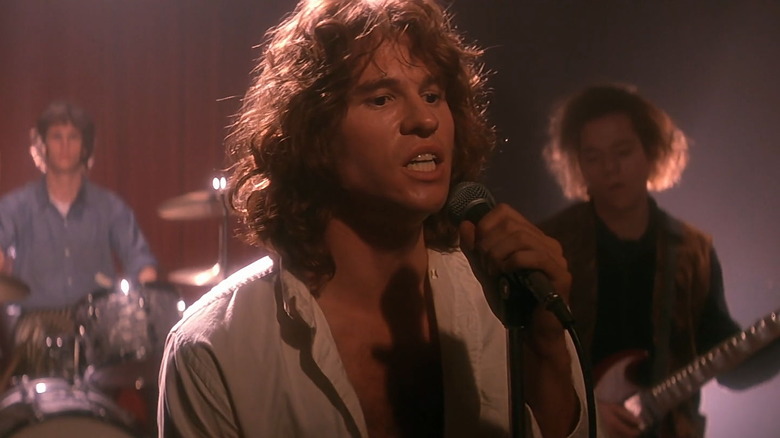
29 Sep 19:15

Because I Could Not Stop For Nanobots

by noreply@blogger.com (Jason Adams)

The first James Bond movie I ever saw was Casino Royale in 2006. The character as he stood in pop culture never held any sway for me -- a sexist murderer who loves cars and martinis, great! Right up my alley! But in 2006 Daniel Craig held a lot of sway for me. Fresh off of the killer triumvirate of Enduring Love (by the way RIP Roger Michell) and Munich and Layer Cake, with notable-to-me roles stretching back to Road to Perdition and Love is the Devil, he was becoming one of my favorite character actors at that point, and his 007 casting seemed so left-field you had to take notice. If it was angering the Bond lovers then maybe they were doing something right! And then this happened in the trailer:

And it was history from there. I became a Bond Person then and there, insofar as the Daniel Craig movies were concerned -- I have since gone back and seen several of the earlier installments, including almost all of the Connery ones, and... they're fun? Casino Royale remains my favorite of every Bond film I've seen though, and I can't write that statement as fact without name-dropping Eva Green either, my favorite Bond Girl. The chemistry those two had in that film was off-the-charts. Oh and Mads Mikkelsen! The chemistry Daniel Craig and Mads had was also off the charts. A repertory screening of Casino Royale at MoMA was one of the last films I saw on a big screen with an audience (and with Daniel Craig in attendance!) before the pandemic shut everything down and that movie continues to play like gangbusters. 

The Daniel Craig films since that high point have generally been a mixed-bag, but Craig -- even when it's been clear that he was fairly miserable being there -- has always been rock solid (and yes of course I mean that in multiple fashions). The plots got convoluted and who-cares but I always cared about his Bond, a surprisingly vulnerable and tender mass-murderer under all those abs. Which brings us to his fifth and they-say final film in the role, No Time To Die, finally hitting theaters this weekend after ten thousand months of delays. How is it? It's fine!

Don't ask me to narrate the plot or how that entirely relates to the previous films, because I'd be terrible at that -- most of them, Royale aside, I haven't seen a second time. I enjoyed them but these aren't exactly films I revisit. They're disposable pop entertainment to me, and No Time To Die has plenty of that to offer. In a good way. What struck me the hardest with No Time To Die was just that -- this was the first very expensive action film I've seen on a big screen since I saw Casino Royale in February of 2020, and there's something to be said for that spectacle in and of itself. The money drips off the screen -- the costumes and locations and cars and special-effects. I missed the feeling of all of that, and this film absolutely delivers on each one of those fronts. 

Does it deliver that stuff for far too long? For sure. You can feel the film dragging its heels toward its destination, nobody wanting to say their goodbyes to the franchise, and I'm generous enough and willing to grant them some leeway on that front because Daniel Craig's James Bond has earned it. He's just an absolute pleasure to watch play this role. But No Time To Die is maybe the first time it felt like he was playing it in a vacuum? There are terrific actors all around him -- Ben Whishaw and Ralph Fiennes and Lashana Lynch and Naomie Harris and Jeffrey Wright all get their little moments to shine, and Ana de Armas truly steals the show in her too-brief sequence -- but every role (except Armas) feels deferential to Bond in this film in ways that kind of suck the air out of it.

This is especially noticeable with the two main actors I didn't list above, Léa Seydoux as Bond's main squeeze Madeleine, and Rami Malek as the big villain. The film begins with Madeleine nodding her head towards how she has long felt the shadow of Eva Green's character over her relationship with Bond, and speaking for myself I felt it too -- Seydoux is in it a lot yet she leaves very little impression in the film, and she and Craig don't have anything approaching the crackling chemistry he had with Green. No Time To Die very much wants to be the great romance that Casino Royale effortlessly was, and comes up a hard short there.

Meanwhile Malek, perhaps (if I am being generous) inclined to tone down his usual parlor tricks after he inexplicably won an Oscar for turning Freddie Mercury into a chattering platter of eyeballs and tics, plays the villain  Lyutsifer Safin as if he's been doped down by his own supply -- heir to a poison throne (yes really), in the last reel Safin shows off his garden of deathly plants, one of which will turn anybody who touches it into a brainless zombie, and I couldn't help but think one of Safin's peons has been slipping that sucker into your tea, dude. It's a lifeless performance with absolutely no logic to his dastardly machinations. 

No Time To Die's plot, involving DNA-nanobots, is an utter gibberish disaster -- this isn't necessarily a problem, or it hasn't been a problem in the past, as gibberish can be Bond's stock-in-trade. There's fun to be had in such nonsense!  I get that. But without any through-line as to why Safin is doing the things he's doing -- and the movie literally offers none that I could find save a couple of tossed-off comments about "ehh, power, that's how they do" -- there's a great big cavernous rock-garden where its brain should be. If the movie can't even care why any of this is happening why should we?

But it looks great, it sounds great, and Daniel Craig is everything looking and sounding great one could ask for, and that all might be enough... for about half the movie No Time To Die is anyway. Nearly three hours is too much of an ask, but contradictorily I felt the urge to hang on with Mr. Bond for all of those extra minutes too. Depending on who gets the role next and what direction they take I can probably move on with my life now though, putting such double-oh things behind me, and maybe that's No Time To Die's biggest gift of all.


29 Sep 19:13

14 Films To Watch If You Loved Candyman

by Mary Beth McAndrews

The internet is buzzing with thoughts about Nia DaCosta's reboot of the legendary slasher film "Candyman." Told from the perspective of a Black filmmaker and produced by Jordan Peele, "Candyman" tells a complex story about cycles of Black trauma and the use of art as both a coping mechanism and a form of record keeping. 

Yahya Abdul-Mateen II plays Anthony McCoy, a struggling artist who discovers the myth of Candyman and uses the urban legend as the inspiration for his new exhibit. But, in treating the story as nothing more than a cash grab, McCoy becomes a victim of the bee-covered, hook-handed spirit. Blood covers the walls of art galleries, and the façades of gentrified Chicago neighborhoods are stripped away. DaCosta's vision is drastically different from the one Bernard Rose' crafted in the original 1992 film, as she is better equipped to tell a story about racial dynamics in Chicago that doesn't feel whitewashed.

After watching DaCosta's film, you may be hungry for more Black horror, or more horror films about the ghosts that haunt the dark corners of the city. From movies that examine urban legends to celebrations of Black voices in the horror, there is a wide range of choices that will satisfy any horror fan looking for something the deviates from the norm. Here are just a few.

Little Woods

This may not be a horror movie, but if you liked Nia DaCosta's "Candyman" then you need to watch her 2019 directorial debut, "Little Woods." The film stars Tessa Thompson as Ollie, a woman caught smuggling pills over the border to help care for her ailing mother. But when her mother dies, Ollie's estranged sister Deb (Lily James) appears at her front door with a little boy -- and another on the way. 

Deb is trying to escape an abusive ex, but has no money to feed her family or receive the medical care she needs. On top of everything else, the bank is foreclosing on their mother's house. Ollie devises a plan to lower the house's down payment and get the bank their money so that Deb can take the house and use it to provide a better life for her kids. 

"Little Woods" is a devastating film, and illustrates DaCosta's ability to create deeply emotional experiences that speak to the larger struggles of the human experience. "Little Woods" also features phenomenal performances from Thompson and James. While this film is incredibly different from "Candyman," both show DaCosta's talents as a director, and her the attention to detail she pays to her characters.

Candyman: Farewell To The Flesh

While the first two sequels to the original "Candyman" are not the peak of horror cinema, they're still worth watching. The second Candyman film, "Candyman: Farewell to the Flesh," finds the hook-handed spirit, played again by Tony Todd, in New Orleans. Candyman kills a professor who summons the ghost in the customary way: saying his name five times in the mirror. Ethan Tarrant (William O'Leary) is blamed for the murder, and must stand trial for the crime. 

Meanwhile, Ethan's sister Annie Tarrant (Kelly Rowan) begins hearing rumors about Candyman from her students. She recites his name to prove that he's just an urban legend, but her plan backfires, and Candyman appears and terrorizes her family during Mardi Gras. 

"Candyman: Farewell to the Flesh" doesn't share much in common with its predecessor -- Todd was the only member of the original cast to return to the franchise. But while the films feel very different, this sequel builds on the lore of Candyman and his legacy. Fans of the original will also be excited to know "Candyman: Farewell to the Flesh" is much gorier, leaning more heavily into bloody violence.

Candy: Day Of The Dead

Sadly, the "Candyman" films continued to have diminishing returns with the release of 1999's "Candyman: Day of the Dead." The film takes place in 2020, 20 years after the events of the second film. Caroline (Donna D'Errico), Annie's daughter (and a direct descendent of Daniel Robitaille, who became Candyman after his death), has grown up and works in the art world. After accidentally summoning Candyman, Caroline is haunted by the spirit, who wants her to experience the rage that courses through his paranormal veins. He begins to kill on her behalf, implicating Caroline in a string of horrific murders. 

Tony Todd returns again as Candyman, continuing to show off his acting chops as the memorable horror villain. "Day of the Dead" has a stronger connection to "Farewell to the Flesh" than the first sequel does to the original, with more tangible links between characters. It's also the weakest film in the franchise by a long shot, but it's a good watch for completionists, or those who are interested in Candyman lore.

Hellraiser

Just like "Candyman," the 1987 film "Hellraiser" was born from the haunted mind of Clive Barker, who also directed the film. Here, Barker gets weird with a group of sadomasochistic extra-dimensional beings called Cenobites who love both pleasure and pain. They are summoned by Frank Cotton (Sean Chapman), a man searching for his next sexual high. But Frank doesn't understand what he's about to unleash when he meets the creatures, led by the iconic Pinhead (Doug Bradley). 

While "Candyman" and "Hellraiser" are very different films, both feature lead characters who suffer from their own hubris, as well as assumptions about things they claim to understand but really don't. Just as Helen Lyle arrogantly investigates Candyman, Frank plunges headfirst into a world that's wilder than he could ever imagine. In addition, "Hellraiser" features incredible creature designs by Bob Keen, who also worked on "Candyman." Every one of the Cenobites is a grotesquely seductive being that is both repulsive and fascinating, sneering and chomping their teeth on screen.

The People Under The Stairs

If you're going to watch any movie on this list, make it "The People Under the Stairs." Wes Craven's 1991 film is a poignant commentary on not only the abusive power of landlords, but about the façade of the American dream as represented by the suburbs. 

Poindexter (Brandon Adams), nicknamed Fool, is a young boy who lives in a poor LA neighborhood with his family. Their apartment is small and rundown, but it's home -- at least until the landlords, a rich white family that lives in an affluent neighborhood, decide to evict them. Young Fool pairs up with Leroy (Ving Rhames) to break into the landlords' home, but what they find is incredibly disturbing. The couple, who call each other Mommy (Wendy Robie) and Daddy (Everett McGill) are not a married couple, but incestuous siblings who have left their cannibalistic progeny beaten and abused in their basement.

"The People Under the Stairs" is a wild ride that's horrifying, funny, and speaks volumes about how rich white folks see Black people as commodities rather than actual people. Such a wide array of tones would be disastrous in the hands of most directors, but for Craven this is just another exercise in the power of horror.

Get Out

"Candyman" producer Jordan Peele helped usher in a new era of horror cinema, one in which Black filmmakers are given the opportunity to tell their stories while making incredible movies. Peele himself, previously known primarily for his sketch comedy career, burst into the horror world with his 2017 directorial debut, "Get Out." 

The film follows an interracial couple, Chris (Daniel Kaluuya) and Rose (Allison Williams), as they visit Rose's parents for the first time. The kicker: Rose hasn't told her parents that Chris is Black. As they stumble their way through an awkward first meeting, Chris begins to realize something is off, and as the trip unfolds, Chris learns what Rose's family and their neighbors do to any Black person they manage to trap in their web. 

"Get Out" isn't afraid to call out the blatant racism, hypocrisy, and microaggressions that the Black community faces on a daily basis from white people who call themselves allies. It was one of the films that marked a massive shift in the world of horror, one that is slowly moving towards a more diverse and inclusive field.

Us

Peele's follow-up to "Get Out" is a much more cerebral and complex film that shows off his gifts for writing and worldbuilding. In "Us," Lupita Nyong'o plays Adelaide, an anxious mother on a vacation with her husband Gabe (Winston Duke) and kids Zora (Shahadi Wright Joseph) and Jason (Evan Alex). 

As the family settles into its waterfront home, a group of strangers descends upon them. But this isn't just a random group of masked assailants -- these are doppelgängers dressed all in red. They look exactly like each member of Adelaide's family, with Red (also played by Nyong'o) as her sadistic counterpart. As her husband and children fight for their lives, Adelaide uncovers a massive conspiracy right underneath their feet. 

Besides the wild twists and turns "Us" takes, it also is the rare horror film that puts a Black family at its center while not making their story solely about race. Instead, "Us" affords Black characters the same privileges white characters have always had in horror: survival.

Tales From The Hood

"Tales from the Hood" is an anthology that mixes horror and comedy, and that also grapples with issues faced by the Black community, including addiction, violence, poverty, and abuse. The story begins when four young dealers travel to a funeral home in search of drugs. There, the director Mr. Simms (Clarence Williams III) beckons them inside -- all they have to do to get their stash is follow him. He walks them past mangled bodies, and begins explaining how each poor soul ended up in his mortuary. 

This is where the individual segments come in. This is not an anthology that's interested in subtly; director Rusty Cundieff and producer Spike Lee create an in-your-face experience that's both incredibly entertaining and incredibly outspoken. For example, one story features a young boy trying to fight back against his mom's abusive boyfriend, while another is about a racist white senator getting what he deserves. In addition, Williams makes an incredibly creepy host as he guides his unsuspecting audience through a house of horrors.

Urban Legend

The release of "Scream" in 1996 unleashed an era of copycats that tried to capitalize on the hunger for meta-slashers that paid homage to the '80s classics while putting a modern twist on the genre. Enter "Urban Legend." Unlike Ghostface or a Michael Myers, the killer in "Urban Legend" doesn't have one single identity. Instead, it takes the form of different urban legend for each victim, including Bloody Mary, or the rumor that eating pop rocks while drinking soda will make your stomach to explode. There's no single motivation; for the killer, it's all a big show. 

If you're looking for a horror movie with an ending that goes completely off the rails, then this is the film for you. "Urban Legend" boasts a stacked cast of young '90s hotties, including Jared Leto, Tara Reid, Joshua Jackson, Alicia Witt, and Rebecca Gayheart. To up the horror cred, both Robert Englund ("A Nightmare on Elm Street") and Brad Dourif ("Child's Play") make guest appearances, serving up a delicious side of fan service for horror aficionados.

Ganja & Hess

Bill Gunn's experimental vampire movie "Ganja & Hess" is not just a movie, but an experience that oozes a tense, uncomfortable atmosphere. Hess Green (Duane Jones) is an anthropologist studying ancient African blood-drinkers. After his assistant George Meda (Gunn) stabs Green with one of the civilization's ceremonial daggers, he discovers that bacteria on the blade have transformed Hess into a vampire. When Meda's wife Ganja (Marlene Clark) comes looking for George, she and Hess engage in a passionate love affair. 

While Hess initially keeps his taste for blood a secret, Ganja discovers the truth -- but instead of running away in fear, she agrees to become a vampire and live forever. However, the life of a vampire is lonely, even with an undead companion. "Ganja and Hess" delves into vampire psychology, but not just through dialogue. Gunn also utilizes hazy, dream-like montages to depict Hess's own troubled mental state as he tries to reconcile his new station in life -- and death.

The Invitation

When your boyfriend invites you to dinner with his ex-wife and her new husband in the home where they used to live, you probably should say no. And yet, in Karyn Kusama's "The Invitation," Kira (Emayatzy Corinealdi) wins the girlfriend of the year award as she joins her partner Will (Logan Marshall-Green) for what is perhaps the most uncomfortable and deadly dinner party of all time. 

Once they arrive, Kira and Will immediately realize that something is wrong. Will's ex Eden (Tammy Blanchard) and her husband David (Michiel Huisman) are part of a cult called the Invitation, and they want their guests to join them. And no, I don't mean they want people to join the mailing list. Anyone who resists the Invitation faces a violent demise, but Kira and Will refuse to submit. They fight their way through wealthy cultists and a giant house, all while Will confronts his past trauma. 

But while Will is the film's central focus, not enough credit is given to Kira, who is one of the few who survives the dinner party from hell. In horror, Black characters are often among the first to die. But here, Kira is a survivor, making her a "final girl" of sorts.

Poltergeist III

This may be the dark horse on this list, but it's here for a reason. "Poltergeist III" is one of the few ghost stories that takes place in the city. Urban settings are not often the backdrop for tales about spirits, as they more often occupy isolated gothic mansions in the countryside. But cramped spaces, like an apartment building, with few places to hide from malevolent forces? Chef's kiss. 

That's why I love "Poltergeist III," which takes place in the Chicago high-rise where the adorable Carol Anne (Heather O'Rourke) is staying with her aunt (Nancy Allen), uncle (Tom Skerritt), and cousin (Lara Flynn Boyle). But the ghost trying to find her, Reverend Henry Kane, uncovers her location and possesses practically the entire building. Sure, "Poltergeist III" is not Tobe Hooper's "Poltergeist," but it's still a goopy good time that delivers on the franchise's signature scares. There's a particularly great scene involving a parking garage and a seemingly bottomless pool of water.

The Ring

Creepy spirits have a thing about numbers and rules. According to Samara in Gore Verbinski's "The Ring," for example, you have seven days to live after watching a cursed videotape. Rumors about the tape spread at a Seattle high school as students keep dying under strange and tragic circumstances. Journalist Rachel (Naomi Watts) begins to investigate after her niece's death. But as Rachel watches the tape, she discovers that she's been cursed herself.

Rachel quickly searches for the root of the evil, trying to save herself, her ex, and her son. In so doing, she uncovers the tragic history of a young girl named Samara, who is notorious for the long, wet, black hair that hangs over her face as she climbs out of a well. "The Ring" is a film that penetrated our collective consciousness in the early '00s, leading to group trauma as we saw the movie, heard about the movie, or even just watched its trailer. Simply whispering "seven days" is enough to throw any millennial into a panic.

My Bloody Valentine

Everyone loves a good urban legend. "My Bloody Valentine" is 1981 slasher film that takes place in the small Canadian mining town of Valentine Bluffs. Years ago, miners were left underground during the annual Valentine's Day dance after being trapped by an explosion. Henry Warden, the only survivor, ate his coworkers' remains to survive. After he was rescued, Warden slaughtered the supervisors who abandoned their posts to attend the dance, vowing to kill if the event was ever held again.

Now, 20 years later, the festivities have been reinstated, and the town's youth are bubbling with excitement. But a figure in a gas mask, armed with a pick axe, begins killing residents one by one. With each murder, the masked fiend leaves a macabre Valentine for the police, taunting them about their inability to find the culprit. 

"My Bloody Valentine" is a nasty little slasher that plays with our expectations regarding urban legends. Just make sure you seek out the gore cut, which really shows off the film's practical effects -- the theatrical release removed many of the big, bloody reveals, making the film feel flat and incomplete. 

Read this next: 14 Korean Horror Movies You Need To See

The post 14 Films To Watch If You Loved Candyman appeared first on /Film.
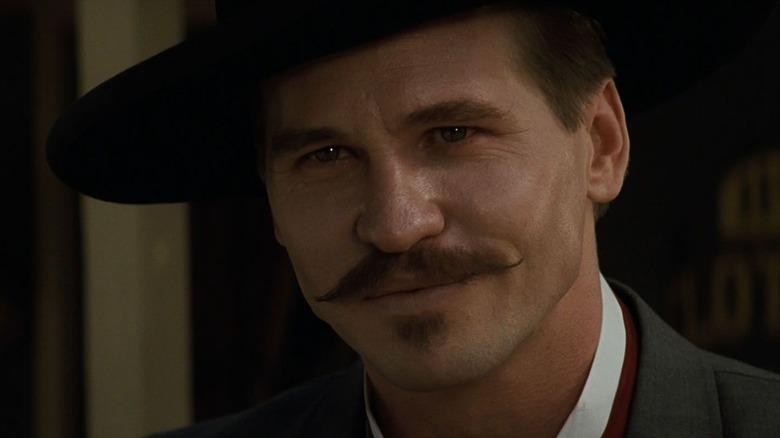
29 Sep 17:14

The Card Counter Director Paul Schrader Is Not A Fan Of Clint Eastwood's Cry Macho

by Max Evry

In a documentary on the home video release of his 1985 movie "Mishima: A Life in Four Chapters," director Paul Schrader talks about then being in a unique position to make a movie people knew wouldn't make money. After his early directorial success on "American Gigolo," that situation has proved to be the rule rather than the exception, with even Schrader's most critically acclaimed films like "Affliction" or "First Reformed" taking in $2 to $6 million apiece, and many of his lesser-appreciated pictures often grossing in the scant tens of thousands arena. 

So it seems a little bit in the "pot-and-kettle" realm that the director of the recent critical darling "The Card Counter" should choose to kick a fellow auteur while he's down, but in a new Facebook post (via IndieWire) Schrader has given Clint Eastwood a public spanking for his new film "Cry Macho." Yes, the movie where the 91-year-old legend plays an aging rodeo star who goes on a road trip through Mexico with a 13-year-old boy and a rooster is more of a turkey than his usual output, earning mixed-to-negative reviews for being hokey, with some claiming Eastwood was far too old to play the lead role. And more still, "Cry Macho" has unceremoniously died at the Covid-damaged box office with a measly $9 million worldwide take, what it was originally expected to make opening weekend. But what insight does Schrader bring to the table on this unfortunate misfire in Eastwood's sterling five-decade directing career?

'It Fails In Every Area'

Here is the opinionated Schrader's take on "Cry Macho":

"I can appreciate the inclination to give Clint Eastwood a pass but has an important American director made a film as bad as 'Cry Macho' since Howard Hawks' 'Man's Favorite Spot'? It fails in every area: screenwriting, lighting, locations, sets, props, wardrobe and casting. When, early on, Eastwood employs an under the car shot of a boot hitting the ground I thought, 'Great, he's going to riff on the stylizations of macho westerns' — but that was the last interesting composition in the film. Sure, Clint is given a few cliché ridden passages about the futility of machismo but these only have value because a shrunken 'Dirty Harry' is giving voice to them. These character insights had value thirty years ago. It was like listening to a criminal apologize to the family of his victims in hopes that the judge will cut him a lesser sentence."

Aside from the bluntness that Schrader is known for, the screenwriter/director who started his career as a film critic mentored by the great Pauline Kael is right to speak truth to power ... even when said power is a frail old man. Why should Eastwood be graded on a curve (except in his movie "Trouble With the Curve")? If Warner Bros. continues to provide Eastwood the luxury of making mid-range $33 million dollar dramas like "Cry Macho" in an era when other filmmakers (like Schrader) have to struggle to get projects of this type and scale financed for much less, then why can't we cry foul over "Cry Macho"? 

Still, Eastwood has made some true blue classics over the years, including "High Plains Drifter," "Bird," "Unforgiven," and "Mystic River," and maybe should be afforded a modicum of respect for going the distance the way he has, as our own Josh Spiegel pointed out in his review. We don't expect Clint's movies to not do well, but when he does make a loser like "Cry Macho" it's the exception, not the rule. 

Read this next: The 20 Best Westerns Of All Time

The post The Card Counter Director Paul Schrader is Not a Fan of Clint Eastwood's Cry Macho appeared first on /Film.
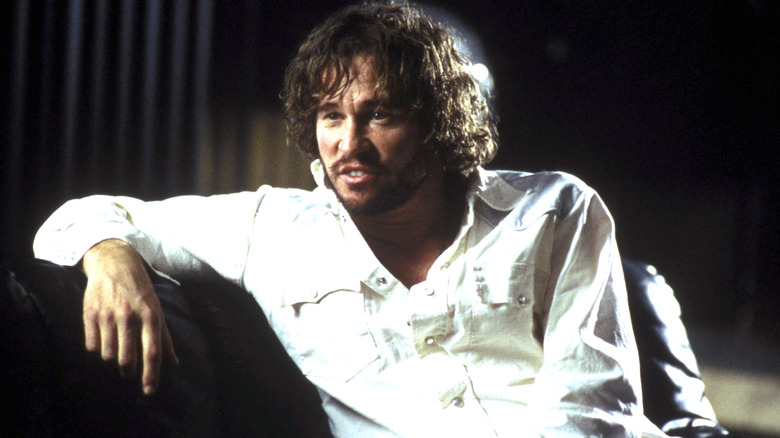
29 Sep 15:59

Ike Boys Review: A Love Letter To Anime And Outcasts [Fantastic Fest]

by Amelia Emberwing

Over the years, Fantastic Fest has become known for its "weird" genre films. While it's not all that screens at the fan-favorite film festival, the oddest entries have often been the most memorable of its respective programs. Eric McEver's "Iké Boys" is an admirable addition to that line-up, even with its (sometimes many) imperfections.

McEver's passion for Japanese fantasy is on full display here, particularly in the story's leads. The film follows Shawn Gunderson (Quinn Lord), Vik Kapoor (Ronak Gandhi) and Miki Shimizu (Christina Higa) as they all try to navigate life as kids obsessed with cultures that are not their own. Shawn and Vik are outcast at their school thanks to their obsessions with all things Japanese. Meanwhile, Miki is the enthusiastic exchange student from Japan who desperately wants to learn everything she can about Native American culture. Though what brings Miki into the boys' lives is a bit of a nose-scrunch worthy mix-up between Native Americans and Indians, it's a strange film from a long-lost Japanese anime legend that will connect the three forever.

It's not long before Shawn, Vik and Miki find themselves in the middle of a plot hatched by moon-scepter wielding cult members. To make matters worse, they suddenly find themselves developing new powers that they have no idea what to do with (and aren't very easy to hide). It's in these moments that "Iké Boys" shines the brightest. The strong OG "Power Rangers" vibes help the zany material feel pretty natural. Anyone who grew up watching the original five will feel right at home in the strangeness of "Iké Boys." And, more importantly for some, it will make the effects seem a little more natural. (They are not good. They are not pretty. But they are, at the very least, relatively fun.)

A Film That Knows What It Is

While not even adjacent to a perfect film, "Iké Boys" succeeds because it knows exactly what it is. The strange love letter to Japanese gundam anime and outcasts who don't feel at home in their own world hits the right notes because McEver and co-writer Jeff Hammer clearly connect with the kids their story is highlighting. Meanwhile, everyone involved clearly understood the over-the-top assignment. Lord, Gandhi and Shimizu nail the level of extra expected from each of the leads. They're not alone, either. "Iké Boys" features a couple hilariously unexpected guest stars ala Billy Zane and "Farscape" actor Ben Browder. Neither actor is unfamiliar with zany projects — not a pun — but both actors' entrances elicited a hearty "Ha!" of recognition from me upon their entrances.

If there's one glaring failure here, it's the lack of Japanese involvement in the film. The reverence is there. But it certainly would have benefited from creative inclusion from those actually a part of the culture it's revering.
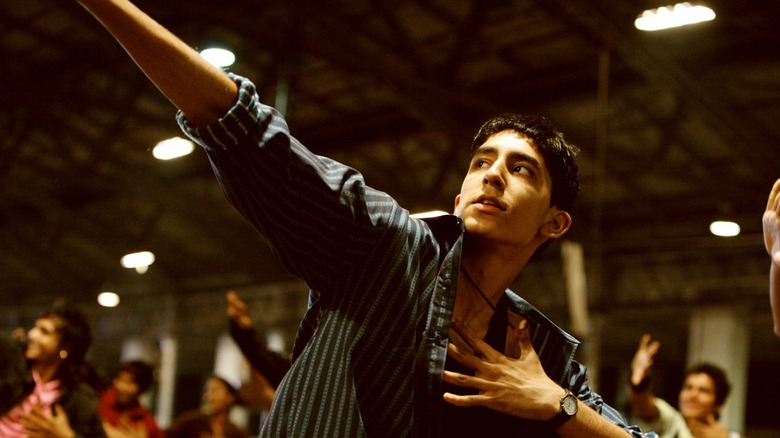
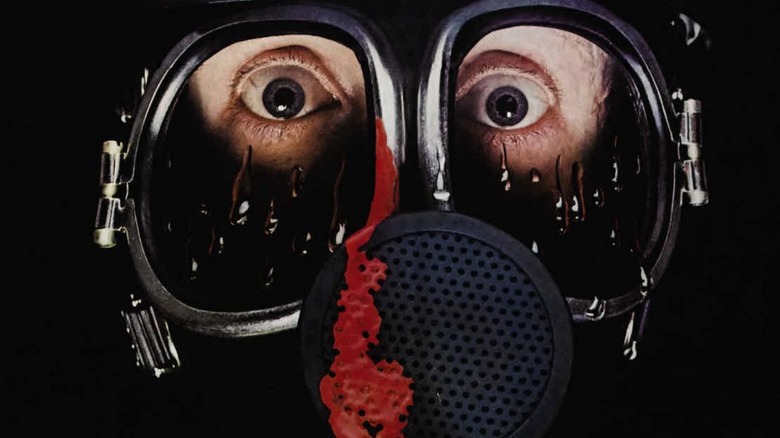

Go into "Iké Boys" expecting it to be what it is. The effects are never perfect, the performances are all extra, and the ending is like a warm, freshly made cheeseball. It's dorky! It's a silly, over-the-top love letter to weirdos written with all the earnestness of former weirdos. The earnest nature of the film is both its greatest strength and its greatest weakness. But I'll take dorky earnestness over cool glibness any day.

Read this next: 20 Movies About Aliens That You Definitely Need To Watch

The post Ike Boys Review: A Love Letter to Anime and Outcasts [Fantastic Fest] appeared first on /Film.