joshuark writes: Microsoft plans on killing OneDrive support for Windows 7, 8, 8.1 starting on March 1, 2022. "In order to focus resources on new technologies and operating systems, and to provide users with the most up-to-date and secure experience, beginning January 1, 2022, updates will no longer be provided for the OneDrive desktop application on your personal Windows 7, 8, and 8.1 devices," Microsoft's Ankita Kirti writes in the announcement post. "Personal OneDrive desktop applications running on these operating systems will stop syncing to the cloud on March 1, 2022. [And] after March 1, 2022, your personal files will no longer sync."
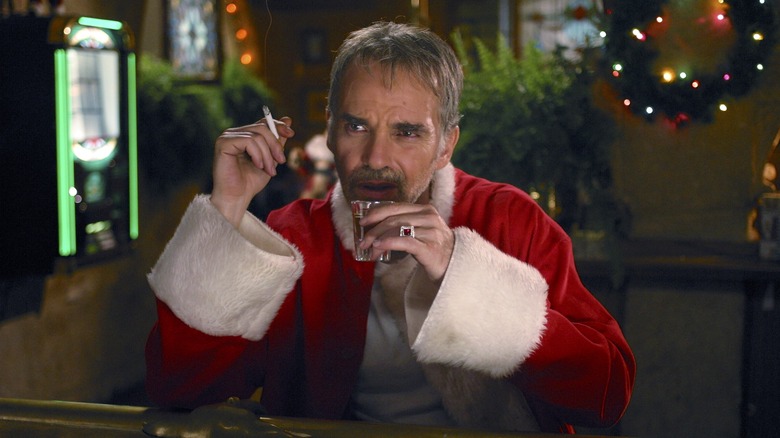
The festive season has recovered a little bit of its magic in our household since we've had kids, but overall I've had a total gutful of the whole Christmas thing. Whenever I feel particularly Scrooge-like, I find myself reaching for movies like "Bad Santa." Darker Christmas movies can provide a valuable service during the holidays, reassuring us that it's OK, this time of year can really suck for other people too.
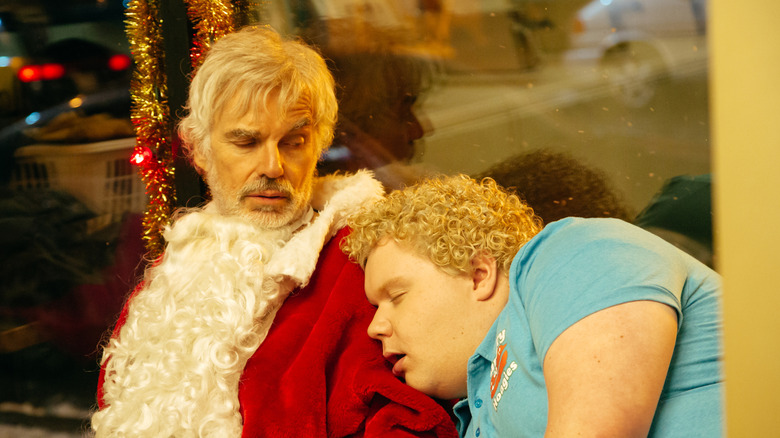
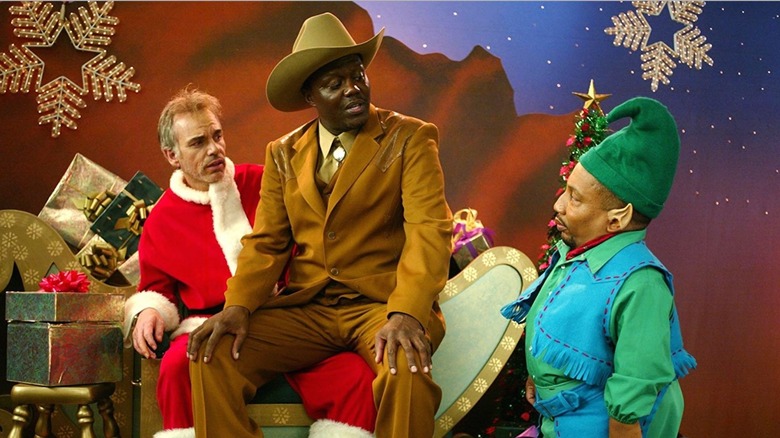
Around 18 years ago now, Terry Zwigoff's gleefully offensive comedy delivered a bulging sack of delicious bad cheer. It stars Billy Bob Thornton as Willie T. Soke, an alcoholic sex addict and safe cracker who uses his seasonal work as a department store Santa to rob the place, along with his partner in crime Marcus (Tony Cox) a bad-tempered dwarf who plays Willie's elf helper each year.
Willie gets a shot at salvation when he encounters Thurman Murman (Brett Kelly), a lonely bullied kid who lives with his senile grandma. Although Thurman is incredibly annoying, he stirs some vestige of paternal instinct in Willie, who puts his suicide attempt on hold to teach the kid how to defend himself. Along with Sue (Lauren Graham), a barmaid sleeping with Willie because she has a kink for guys dressed as Santa, they form an unconventional surrogate family as Christmas approaches. Yet there is still a safe in need of cracking, and the sleazy store detective is blackmailing Willie and Marcus...
Built around Thornton's brilliantly sour performance, "Bad Santa" consistently delivers scandalized laughs while also sneakily mining a feel-good story from these damaged misfits. Along with "Scrooged," "Die Hard" and "Krampus," it's perfect counter-programming as an antidote for the avalanche of schmaltz and commercialism heading our way over the coming weeks...
What Happened With Bad Santa 2?
As he also showed with "Crumb" and "Ghost World," "Bad Santa" director Terry Zwigoff has an affinity for outsiders, and his touch was sorely missed when it came to the belated sequel. It reunited Thornton, Cox and Kelly, while Octavia Spencer also returned as Opal, the long-suffering prostitute. There was no John Ritter or Bernie Mac, who both passed away. Lauren Graham, who gave the first film a lot of warmth, and Lauren Tom, who played Marcus' greedy wife, also didn't reprise their roles. The big incoming casting change was Kathy Bates, playing Willie's foul-mouthed mother, Sunny.
The film picked up 13 years later with Willie on the skids again. He's visited by Thurman, who is now 21. His father abandoned him and his granny died, making Willie the closest thing he has to family.
Willie receives a wedge of cash from Marcus, who is out of jail and lining up another job in Chicago. It turns out that the target is a charity and Marcus's contact is Willie's estranged mum. Naturally, the heist involves Willie and Marcus dressing up as Santa and Elf, and the usual off-color shenanigans ensue as they plan their heist, get into various scrapes, and try to help Thurman lose his virginity.
"Bad Santa 2" rehashes the same jokes, but no one looks like they're enjoying themselves this time around. It lacks the bite of the original, falling into the same trap as "Dirty Grandpa" from earlier in 2016. The screenwriters seem to think that vulgarity is funny in its own right, without emulating the genuine compassion that made Zwigoff's film such an unexpected heart-warmer.
"Bad Santa 2" was generally battered by critics and audiences stayed away in droves, resulting in the film failing to make back its $26 million budget.
Will There Be A Bad Santa 3?
After the disaster that was "Bad Santa 2," some people apparently want to see a third installment. There was talk about completing the trilogy back in 2016, before the second part bombed at the box office.
Talking to Entertainment Weekly, Thornton joked that "if they ever do another one" he and Cox had put in a request that it be filmed in Hawaii or Vegas after a very cold shoot in Canada.
Now 66, Thornton's quip about the next one being called "Bad Nursing Home" is looking increasingly apt. The actor has been notably quieter on the subject since the second film's release, and the bad box office and general stench of "Bad Santa 2" appears to have killed off any prospect of a third movie.
Even still, an article will emerge every now and then about the possibility of a "Bad Santa 3." In 2019, The Cinemaholic raised the idea again, discussing the direction a threequel might take. It was pure speculation, but it seems people out there are genuinely still wishing for a "Bad Santa 3" for Christmas. Another article dropped just yesterday on Looper, reasoning that it's a shame to leave the series on such a bum note after the first movie was so great.
For now, the prospect of "Bad Santa 3" looks deader than Jacob Marley. I for one will be forgetting "Bad Santa 2" ever existed and enjoying the original again this festive season, probably with a little scotch when the whole Christmas thing gets a bit too much.
Last week, while thinking about a particularly unimpressive turducken my family made one year, I asked what foods should be forever banned from the Thanksgiving dinner table. Quite the provocative question, considering holiday gatherings—and the food therein—is laden with childhood memories, nostalgia, and sentimental…
There are no hard rules to making a horror movie. Let’s dispel that idea right now. While there are conceits, concepts, and tropes, the genre is much more malleable than it’s given credit for. But, generally, it’s a good idea to not give away the ending fifteen minutes before the end.
LAIR, a horror-thriller where self-proclaimed occult expert and skeptic “Dr. Steven Caramore” is on a mission to prove the innocence on a gruesome murder charge of his colleague “Ben Dollarhyde” by renting out and spying on a family, revenge porn style, in a flat filled with proposed cursed and possessed items. It’s not a bad logline for a haunt movie. The Conjuring series and Insidious basically cornered the market on haunted homes, much like Poltergeist did in the ‘80s, and audiences have come to expect some form of the classic Conjuring vibe in any demon ghost movie. Taking that concept and flipping the occult expert to attempting to disprove the supernatural is a small but refreshing adjustment.
But, aside from the premise, LAIR makes no other attempts to flip the script on a classic horror trope. In fact, for most of the runtime, it’s not really a horror film at all.
Written and directed by Adam Ethan Crow, this being his first feature, LAIR acts as a thriller slowly revealing intrigue, introducing shadowy characters, and helmed by a lead (Corey Johnson as “Steve Caramore”) who’s less the skeptic version of Patrick Wilson’s “Ed Warren” and more a noir detective. In fact, nothing “horror” really happens until past halfway in the film and, even after that point, moments of fear and tension are far and few between. At least, for the audience. The characters display rising unease, stress, and possibly possession, or maybe everyone’s just a jerk. It’s truly hard to tell.
Courtesy 1091 Pictures
Because that’s the thing with shooting horror. It’s what the audience didn’t see… and what they thought they saw. Not just a monster in the closet. There are no true rules to horror, a horror movie doesn’t even have to be lit dark (Midsommar proved that with its perpetually sunlit despair) but a good horror movie remembers that the shots are the audience’s eyes, not just scenes. Films like The Conjuring, Insidious, Poltergeist, The Blair Witch Project, and all the way back to Kubrick’s The Shining took the viewer around the corner, whipped a shadow across the dresser, or popped open the eyes of a demon in the shadows just before we pan away. LAIR has very few (if any) of these touches, the moments that build the dread. Camera angles, the score, the lighting, even the editing all scream “thriller” not horror. Characters are shot to get them in frame, not to twist the audience’s perspective. Scenes are lit super dark with one light source or so bright the lightbox might as well have been in the shot. And creature scenes just… happen. Very little build-up, no fake-out. In and out, demon quick and dirty.
LAIR has some good moments. Something bursting out of the tub when the aforementioned character was having her dramatic bubble bath was great. The teenage daughter slipping in an unseen pool of blood, leaving a bloody handprint on the hallway wall as she runs away in panic. And, again, the concept of a skeptic occult expert leaving possessed items in a rental to see if anything will happen to vacationing family is really intriguing.
And then a time jump spoils the ending fifteen minutes before the end leaving the audience to live first in the future, seeing what happened, then sitting through the scene of it happening.
No, horror has no real rules and that’s what makes it great. Whether there’s no budget or high budget, an iPhone or Fujifilm X-T4, full-creature suits, or nothing seen at all; any direction can produce a decent scary movie IF there’s care to remembering who’s watching.
And not giving away the ending.
Adam Ethan Crow’s LAIR will be released on Digital and on Video on Demand on November 9, 2021
As long as I've been a thing on this planet who knew what movies were, they've meant the world to me. I vividly remember being a scared but enraptured youngster watching "FernGully," laughing with my family at "Anchorman," or seeing "Age of Ultron" with a friend twice in a row on the same day -- which was great, might I add. I'm beyond lucky that I get to review, think, and talk about films for a living, and can think of no cooler occupation than making them, and making people laugh, cry, think, or scream through them. This is my way of saying hello, I'm Jeff Ewing, and movies are my absolute jam.
It's tough to make a streamlined list of favorites when there are so many wonderful films that mean a lot to me for different reasons, often so different from each other. I did my best to capture films that I truly love and think are great, and that I actually genuinely watch often. I also changed the list almost every time I sat down to think about it, and if you ask me on a different day you'll get a different list (except for my Top 4, which of course are a sacred and objective account of cinematic perfection -- or something like that).
It's my hope that this little window into my brain gets you to think about the films you love, and to hopefully watch something new to you that's important to me (or to rewatch something you've forgotten). Hopefully you love it and it makes you happy. Of all the film lists on all the sites in all the world, you walk into mine ... and in the words of Dracula, I bid you welcome. Here's the list of my top 15 favorite movies of all time.
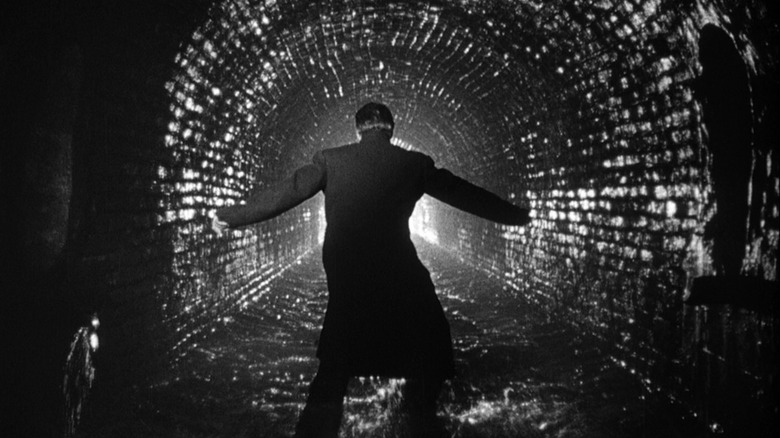
15. The Third Man (1949)
Carol Reed's 1949 British film noir is easily one of the greatest noir films of all time. It's a stunning exemplar of the post-war social chaos that fueled the genre, with all the themes that make the noir films great: political complexity, betrayal, love, and loss. The final shot is an absolute stunner -- loaded with meaning and emotion and easily one of the most gorgeous shots ever put on film. Seriously -- the first time I saw it I immediately rewound it and watched it seven more times in a row. Raw, beautiful power capping an incredible film.
14. Casablanca (1942)
"Casablanca" is one of the few films I consider absolutely flawless. Charismatic performances, stunning cinematography, exceptional writing ... there's nowhere it doesn't succeed. Smart. Political. Romantic. Everything you could want from a film, it has in spades. To top it all off, it's also one of the most quotable films of all time with line after line that are pure art. Every time I see it I find something new. Here's looking at you, kid.
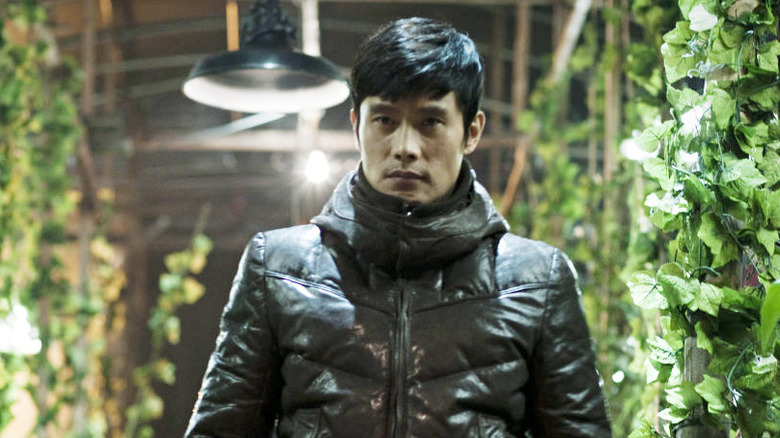
13. I Saw The Devil (2010)
I'm a huge fan of the contemporary wave of top-tier South Korean thrillers, and "I Saw The Devil" is easily one of my favorites. The increasingly volatile collision course between Kim Soo-hyun and serial killer Jang Kyung-chul is thrilling, and it's incredible to watch the former's unhinged descent. It's tense, at times frightening, and always suspenseful. More than anything, "I Saw The Devil" is the epitome of the Nietzsche warning to, "Beware that, when fighting monsters, you yourself do not become a monster," and there's no way to stop thinking of that ending for days afterwards.
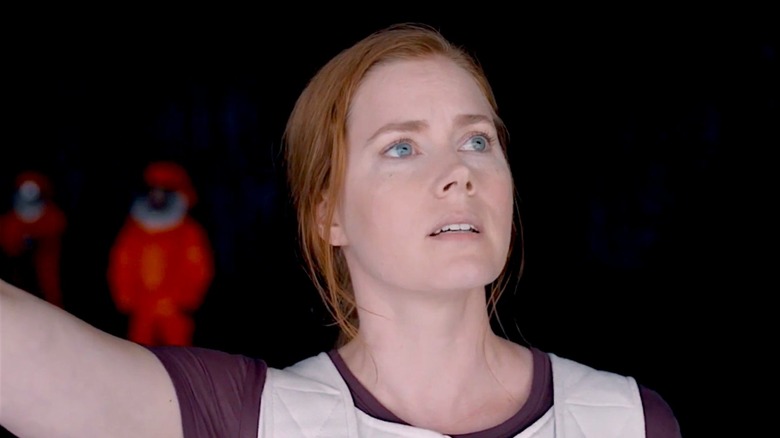
12. Arrival (2016)
"Dune" is in theaters, and while Denis Villeneuve's masterful love letter to sand is a major cinematic achievement in science-fiction filmmaking, his first sci-fi masterpiece is "Arrival," a magnificent and thought-provoking piece of sci-fi storytelling. It's smart and beautifully shot with a fantastic performance by Amy Adams, and one of the few films whose extraterrestrials feel completely distinct from ourselves in every way. The best high-concept science-fiction fires on all cylinders and makes you think AND feel at the same time, and "Arrival" absolutely lands on both these aspects.
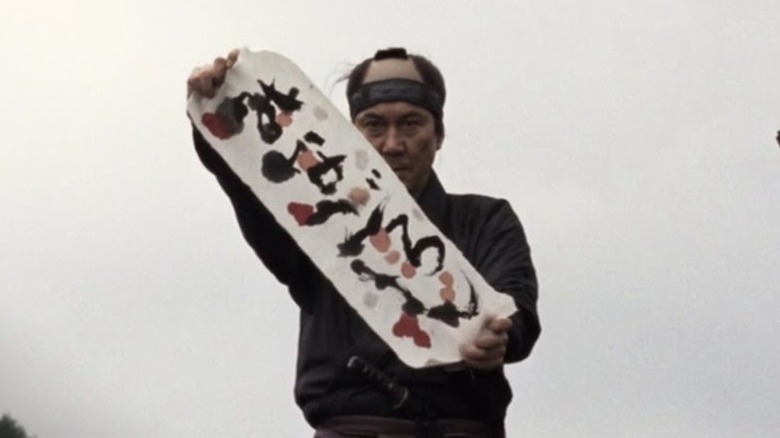
11. 13 Assassins (2010)
I love a good Takashi Miike film. They're perpetually imaginative and outlandish with a unique blend of humor, chaos, and the fantastical. While "13 Assassins" is one of his more grounded works, it's still a violent, excellent affair and one of the greatest samurai films of all time. A memorably evil villain alongside truly noble and well written protagonists. Wonderful set pieces and cinematography. The film's last 40 minutes is one of the greatest action sequences of all time -- an unending cavalcade of samurai against our few but mighty protectors, in a town rigged like the "Home Alone" house. I can watch this film endlessly and it lands every single time.
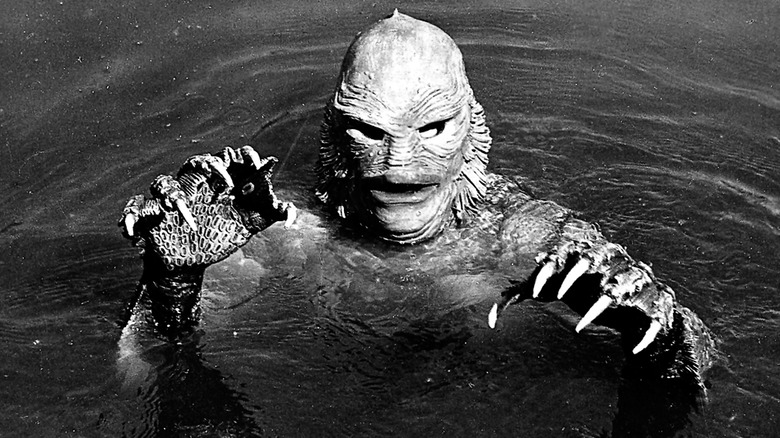
10. Creature From The Black Lagoon
I never get tired of classic films or monster movies, so of course the early Universal horror classics are always on rotation at my house. While "Frankenstein," "Dracula," "The Invisible Man," and more are all excellent, it's "Creature from the Black Lagoon" I find myself watching time and again. Milicent Patrick's Gill-man design is still one of the greatest creature designs of all time, and it's an intriguing early sci-fi film that explores the potential for our hubris to expose new forces we can't control. It's a stunner.
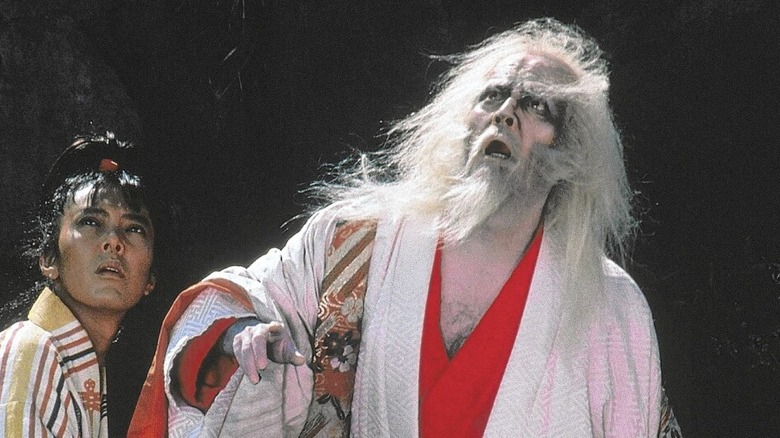
9. Ran (1985)
Akira Kurosawa is a master, and easily one of my favorite directors of all time. The complex perspectives of "Rashomon," the epic attributes of "Seven Samurai" or "Throne of Blood" ... Kurosawa has a nigh-magical knack for building epic stories that still feel richly emotional, and nowhere is this better exhibited than his "King Lear" adaptation "Ran." He effortlessly translates the classic material into a historical Japanese context in a way that feels modern but eternal in this colorful, complex, quick paced affair, and I love it deeply.
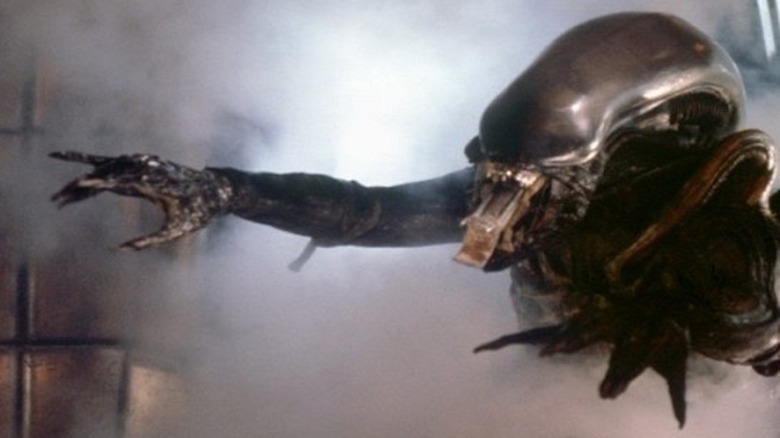
8. Alien (1979)
Between "Alien" and "Blade Runner," Ridley Scott is responsible for some of the greatest sci-fi films ever made. His vision provides so much layered depth in the making of these science-fiction worlds that they feel lived in. While the latter is also one of my favorites, the former is the one I watch the most. The film introduces us to one of the silver screen's best protagonists alongside one of the coolest movie monsters ever invented (shout out to H.R. Giger), and it's so smartly written that you can't help but be sucked in. Its a film that always holds up, with new details to discover every time you watch.
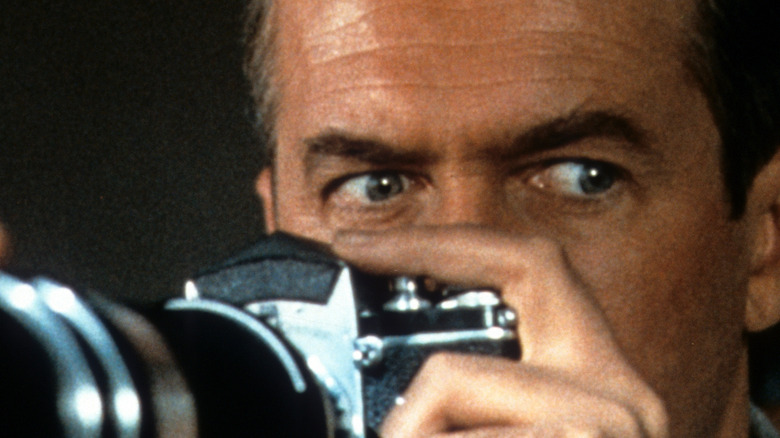
7. Rear Window (1954)
Nothing puts me in a good mood like a Hitchcock film. "Rope" is a messed up meditation on true villainy. "Shadow of a Doubt" and "Vertigo" boast strong suspense and great performances ... ask me on a different day and I'll give you a different favorite. "Rear Window," however, is the film I come back to time and again. It's elegantly contained, achingly paranoid, with Jimmy Stewart excelling as its glorified peeping tom of a protagonist ... one who happens to catch real villainy behind closed doors. People throw around "masterclass" too often, but it actually is a magisterial effort in creating suspense out of nothing at all.
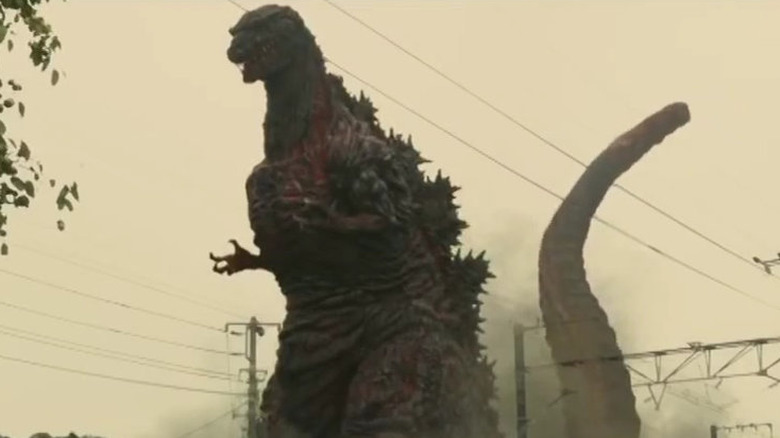
6. Shin Godzilla (2016)
1954's "Gojira" carries insightful social commentary backed by elegantly constructed horror, and the influential film literally invented a whole tradition in special effects. I love every entry in the long-running franchise, but "Shin Godzilla" takes the cake as a successful reboot of the original that doesn't lose its themes, restores the horror, but modernizes its look and feel. You can feel Godzilla's raw, unyielding rage. The Godzilla of "Shin Godzilla" wordlessly exudes a perfect, unequivocal hatred -- it attacks because that's all it wants in the whole wide world. It wants us dead. I can't think of anything scarier.
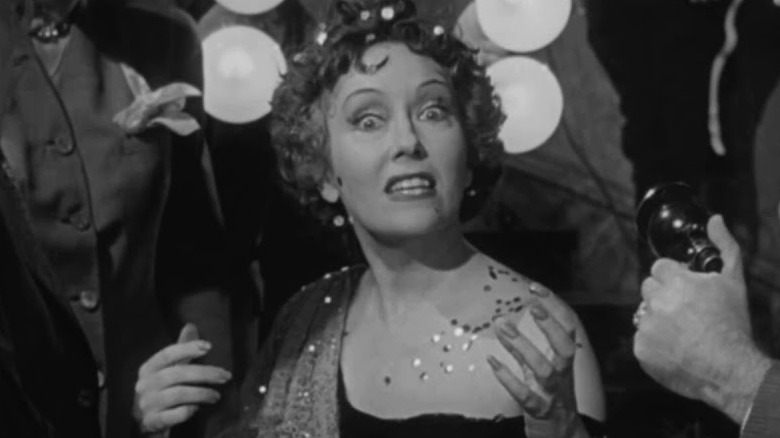
5. Sunset Boulevard (1950)
The noir genre boasts a number of classics I've watched innumerable times. The trio of noir films by the fantastic Billy Wilder, "Double Indemnity," "Sunset Boulevard," and "Ace in the Hole," are easily three of the finest in the genre. It's tough for me to choose between "Double Indemnity" and "Sunset Boulevard" ... both boast stunning performances, effectively flawless scripts, and lovely lighting. Ultimately, I chose "Sunset Boulevard" for its ability to capture the dirty underbelly of Hollywood better than any other film, and it never gets old.
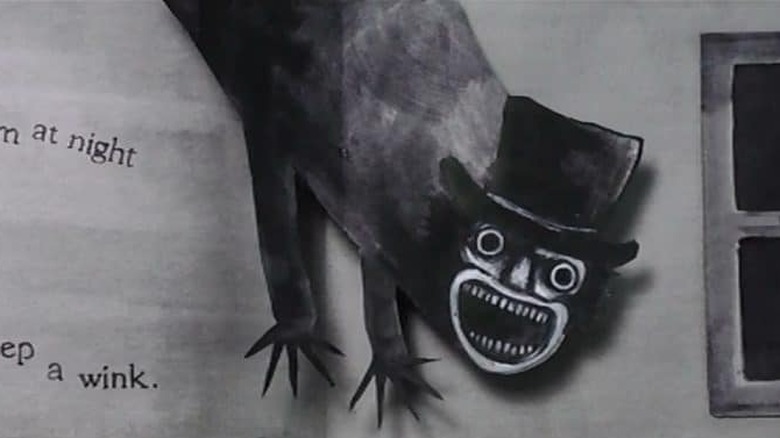
4. The Babadook (2014)
Jennifer Kent's 2014 horror masterpiece "The Babadook" quickly became one of my favorite horror films of all time for its novel and effective entity, stunning performances by Essie Davis and Noah Wiseman, and a its spectacular direction. I always find it effectively frightening, and its musings on grief, sorrow, and trauma continue to be compelling to me. Every time I watch it I'm stunned by the caliber of its lead performance and the continued effectiveness of its scares.
3. Parasite (2019)
The first Bong Joon-ho film I fell in love with was his 2006 monster masterpiece "The Host," revealing a director with an incredible command of tone, effortlessly switching between tension, fright, and humor. Nowhere do all these elements come together better than "Parasite," an incredible, class conscious genre-hopper of a film. All the performances land (Song Kang-ho is incredible), and every element from the exceptional production design and cinematography really pull me into story each time I watch it. It's just an exceptional, effectively perfect film that never gets old to me.
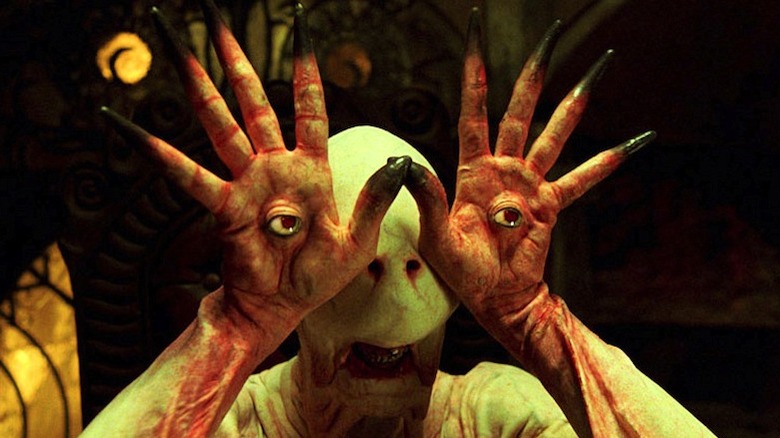
2. Pan's Labyrinth (2006)
My favorite thing about movies is their ability to grant us experiences that transcend our ordinary ones -- at their best, they're magic. No one excels at consistently evoking such sorcery as well as the master of the monstrous himself, Guillermo del Toro. Of his exceptional filmography (and I've watched each more times than I can count), if I have to pin one film down that feels like every frame is drenched in a sort of sacred power, that's easily "Pan's Labyrinth" and its use of fairy tale elements to tell an otherworldly, multi-layered narrative with a political edge.
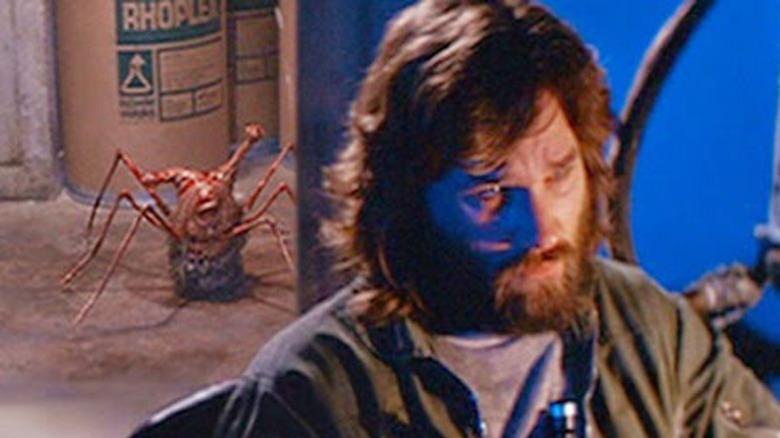
1. The Thing (1982)
If you were to ask what filmmaker I rewatch the most, it's easy: John Carpenter. The run of his films from "Halloween" to "In The Mouth of Madness" have such a perfect balance of high concept fun and scares (when horror) that I watch them all the time. Still, to me its "The Thing" that stands as his masterpiece (and in my estimation, the best horror movie of all time). It's a gorgeous, suspenseful, well performed, high stakes affair with stunning creature design and practical effects -- it's just perfect, and I love every minute of it.
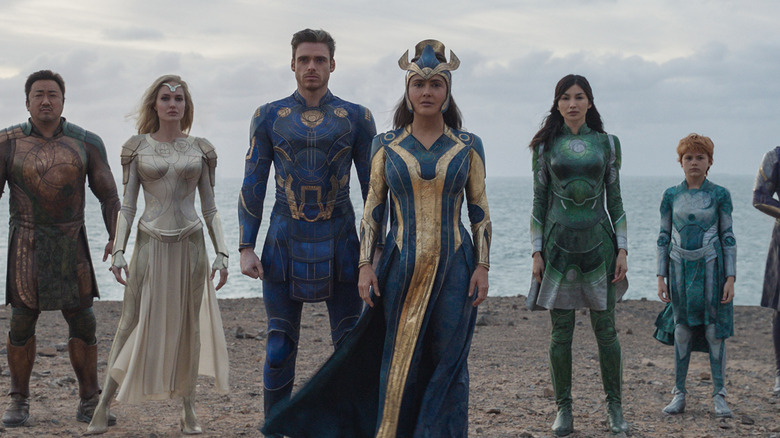
Compared to most other movies in the Marvel Cinematic Universe, "Eternals" puts the awe-inspiring and almost overwhelming might of super-powered beings at the forefront of the film. Whether it's the Eternals themselves or the monstrous Deviants or the omnipotent Celestials, one could point to nearly any character at random as someone who would likely pose a significant challenge to any other franchise hero or villain we've encountered before.
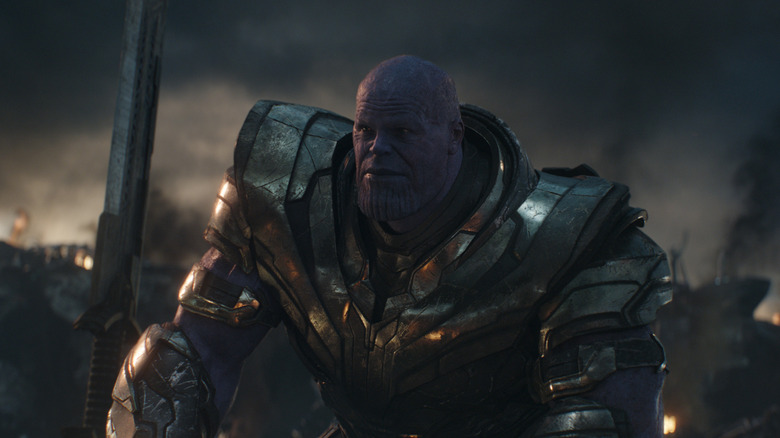
Naturally, the cosmic connections in "Eternals" lent themselves to the question of whether or not Thanos himself and his snap (which continues to be referred to as "The Blip" in-canon for some reason, terminology that I personally find hilarious) were powerful enough to turn any of the Eternals to dust along with much of the universe. Director Chloé Zhao has an answer to that, but be warned that her carefully-worded comments can be interpreted as major spoilers. So read on only if you've already seen "Eternals."
Once again, major spoilers for "Eternals" follow. Don't yell at me if you ignored these warnings and went on ahead anyway!
To Blip Or Not To Blip
As the early opening title cards lay out the origins of the Eternals and their centuries-spanning conflict with the Deviants, it wasn't exactly a huge leap to assume that most of that information would probably turn out to be a red herring. Wouldn't you know it, Sersi's (Gemma Chan) attempt to gain an audience with the powerful Celestial Arishem leads to the mid-film plot twist that the Eternals were engineered by the Celestials to deal with the out-of-control Deviants. In essence, they're not living beings at all, but merely artificial creations meant to resist natural evolution and fulfill their one and only purpose.
Armed with that knowledge, the issue of whether any of the team had been "blipped" by Thanos at the end of "Avengers: Infinity War" is kind of a moot point. As specified in "Avengers: Endgame," Thanos' actions only applied to biological life. "Eternals" director Chloé Zhao, a self-professed Marvel fan who clearly knows her stuff, brought up exactly this point in answer to the question posed by Cinema Blend:
"Well, I can't say this out loud, but if you think about... if you think about what the Celestials told them. If you think about what the Celestials told them about themselves, technically they can't get blipped."
Although this may feel like an underwhelming answer to that little mystery, it's also the most logical answer. I'm still not sure those involved with "Infinity War" and "Endgame" truly thought through the implications of having so much of the population snapped out of existence for five entire years and then abruptly restored, but this loophole at least sidesteps all that messiness and allowed Zhao to simply tell the story she wanted to tell with no other distractions. Although at the same time, this brings up its own little inconsistency. If not a single person on the team was snapped away into dust on a planet that saw 50% of its population vanish, wouldn't beating those odds be as ridiculously lucky as winning the lottery? Didn't that suggest that something to the team that their physiology was a little off?
That said, now we're getting into Cinema Sins territory. Most would probably agree that this minor logic nitpick merits anything more than some fun speculation, and that the proper response is, "Who cares?"
A series of 13 vulnerabilities identified in the Nucleus TCP/IP stack could be exploited to execute code remotely, cause a denial of service condition, or to obtain sensitive information, enterprise device security firm Forescout warns.
I like to think of myself as calm, normal, almost relaxed observer of Thanksgiving, but in truth, I’m kind of a tyrant. I hide my more tyrannical tendencies by volunteering to host and cook most of the meal, so I can make sure the turkey is moist, the cranberry sauce is sweet enough, and the Jiffy corn casserole is on…
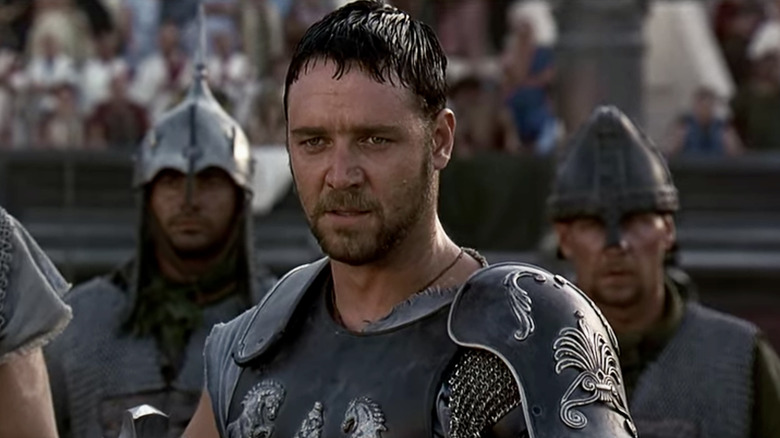
It's been over 20 years since the release of "Gladiator," Ridley Scott's sword-and-sandals epic starring Russell Crowe as the impressively named Maximus Decimus Meridius. Scott, however, is eager to return to the story of the Roman soldier turned slave and gladiator, and he's still talking up the potential sequel in the press.
"Gladiator" won Best Picture and Best Actor for Crowe at the Academy Awards, and with it, Scott picked up his second of four nominations for Best Director. In a BBC interview on The Zoey Ball Breakfast Show (via ScreenRant), Scott addressed "Gladiator 2," saying it is "ready to go" after "Kitbag," his Apple TV+ Napoleon movie.
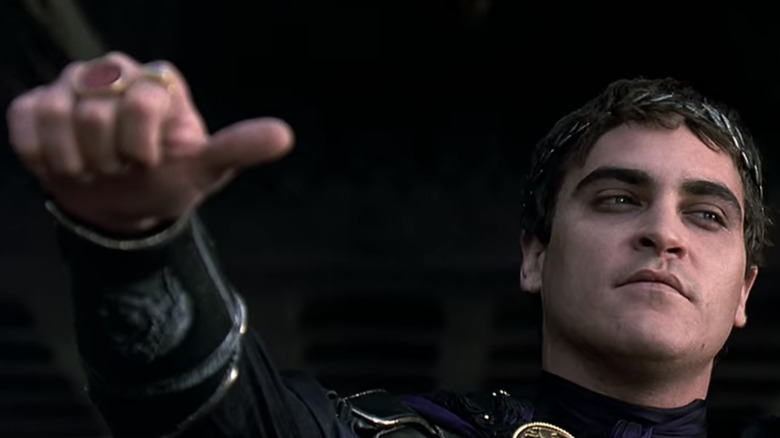
"Kitbag" reunites Scott with Joaquin Phoenix, who played the Roman emperor, Commodus, in "Gladiator." Like Siskel and Ebert in their heyday as film critics, Commodus held the power to save or condemn with his uber-dramatic, pollice verso thumbs up or thumbs down. "Gladiator" fans, fear not, because Scott himself gives "Gladiator 2" a big thumbs up. He said, "How could I not do that? It would be critically stupid of me not to do that, wouldn't it?"
All things considered, Scott is having a good year. Despite disappointing box-office returns for "The Last Duel," he earned positive reviews for the film and has already got another movie, "House of Gucci," starring Lady Gaga and Adam Driver, lined up for release later this month. It's not so different from 2017, when he juggled the release of both "Alien: Covenant" and "All the Money in the World," the latter of which required the last-minute replacement of Kevin Spacey with Christopher Plummer after Spacey's #MeToo downfall.
If you were hoping to see an "Alien Covenant" sequel with Scott at the helm, it sounds like "Gladiator 2" is a higher priority for him.
Maximus Will Have His Revenge
Scott is always juggling various projects, but "Gladiator 2" is one particular ball that he's had in the air for two decades now. One of the most memorable quotes from the film comes when Maximus, the victorious gladiator, removes his helmet in the arena and re-introduces himself to Commodus and the crowd, saying:
"My name is Maximus Decimus Meridius, commander of the Armies of the North, General of the Felix Legions and loyal servant to the true emperor, Marcus Aurelius. Father to a murdered son, husband to a murdered wife. And I will have my vengeance, in this life or the next."
The funny thing is, Maximus died at the end of "Gladiator," and one of the ideas that was being bandied about for the sequel would indeed have followed him through the afterlife. Nick Cave wrote the draft of a script called "Christ Killer, which featured Maximus in purgatory. He gets resurrected by the Roman gods to kill Jesus Christ and his disciples. Cursed with immortality, he then goes on to live through the Crusades, World War II, and the Vietnam War, before going to work at the Pentagon.
That bonkers script was ultimately rejected, and we don't know what shape the new iteration of "Gladiator 2" will take. But if and when this sequel does finally come together, it will be interesting to see how they approach it and what level of involvement, if any, Crowe will have.
(Welcome to Survey Says, a feature where we conduct a movie-related survey for a random group of people and explain why they're completely right, completely wrong, or somewhere in-between.)
Filmmaker David Cronenberg once said, "Christopher Nolan's best movie is 'Memento.' " This was after the release of "The Dark Knight Rises" back in 2012, and Cronenberg (who, it should be said, directed his own comic book movie, "A History of Violence") stated that he didn't think "formidable directors" like Nolan were making superhero films "an elevated art form."
Audiences would seem to disagree. The results are in for our latest survey, where we polled 590 U.S. respondents with one simple question: "What's the best Christopher Nolan movie?"
If you, like Cronenberg, think "Memento" should rank number one, you might be disappointed. Based on these results, people have a clear preference for Nolan's Batman films over most of his other movies — even "Dunkirk," which another one of Nolan's contemporaries, Quentin Tarantino, cited as his second favorite film of the 2010s.
Take a wild guess which Nolan movie ranked number one...
It's A Dark Knight For Nolan Movies Without Batman
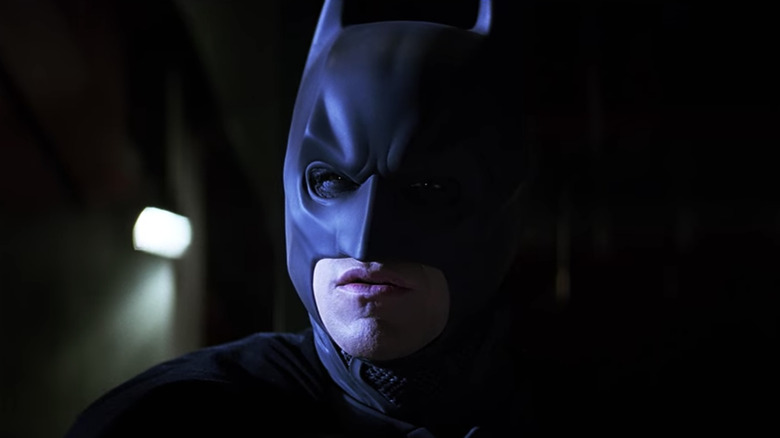
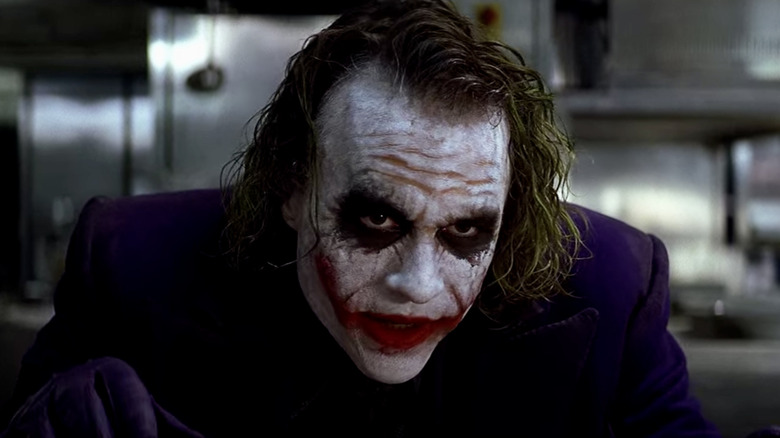
With 28.64% of the vote, the winner of our survey by a landslide was "The Dark Knight." Heath Ledger's Joker left his calling card on Nolan's filmography and on popular culture. "The Dark Knight" made a billion dollars at the box office, back when there were only a handful of other crowd-pleasers that had made that much worldwide, such as "Jurassic Park," "The Lion King," "Titanic," and "The Lord of the Rings: The Return of the King."
There are those of us who went to see "The Dark Knight" eight times in the theater. It's a thematically rich slice of blockbuster entertainment that inspired a whole 10th-anniversary legacy series of articles here on /Film. Ledger won a posthumous Academy Award for his performance as the Joker, and it was widely perceived as a snub when the film itself did not earn a Best Picture nomination. In response to the public outcry, the Academy of Motion Picture Arts and Sciences even expanded the Best Picture category from five to 10 nominees the very next year.
Weighing critical acclaim, commercial success, and cultural impact against Batman's sometimes risible, growly voice, it's tough to argue that "The Dark Knight" is Nolan's best movie.
Batman Begins And Inception Pull Off A Mind Heist
Coming in at second place, with 14.07% of the vote, is "Batman Begins." Nolan was arguably the quintessential filmmaker of the 2000s, but if we're being honest, the mid-2000s were when the moviegoing masses really began to sit up and take notice of his work. That's when he rescued the Batman franchise from the development hell where it had languished for years after Joel Schumacher's much-derided "Batman and Robin."
"Batman Begins" brought a new level of serious artistry to the comic book movie. It's the film that made reboots go boom as a business model in Hollywood, and it's the rare Batman movie that is truly focused on making Bruce Wayne the most compelling character. With these things in mind, you can't fault our respondents for saying it's the second best Nolan movie.
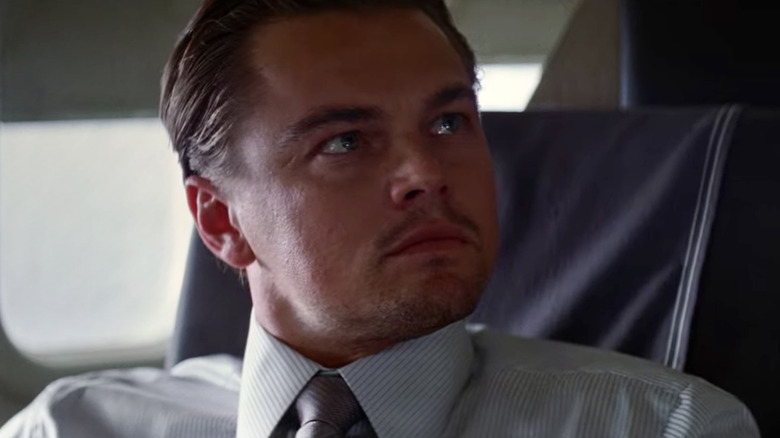
Where this survey starts to get wacky is in the third-place position. "Inception" and "The Dark Knight Rises" tied for third most popular Nolan film, with both of them taking in 10.17% of the vote. "Inception" did earn a Best Picture nom, and we ourselves highlighted it as one of the best films of the 2010s. Nolan ushered in the new decade by encouraging the audience to "dream a little bigger," beyond Batman. He took his penchant for cross-cutting to a new level — with action rippling across multiple dream levels — and left us with a totemic top spinning in the ultimate open ending.
"Inception!" It's a real solid choice. But "The Dark Knight Rises" at number three? C'mon.
The Dark Knight Of The Soul Rises
Forget about escalation, Lieutenant Gordon. The real question is, what about exposition?
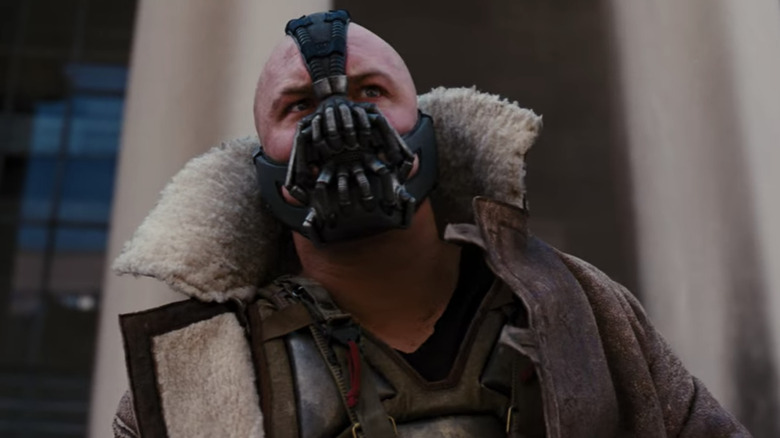
There are characters in "The Dark Knight Rises" that are completely disposable and exist solely to be receptacles for expository dialogue before dying. It's the movie that brought sound issues and mouths muffled by masks to the forefront of Nolan's filmography. Bane breaks Batman's back, but in no time at all, Batman is up and walking again, teleporting from the desert back to Gotham, which co-screenwriter Jonathan Nolan mistook for "A Tale of Two Cities" (or A Tale of Three-Plus Cities, since Gotham is now Pittsburgh and Manhattan instead of Chicago or Shepperton Studios in England).
Readers who think "The Dark Knight Rises" is a misunderstood masterpiece are certainly entitled to their opinion. The film goes for the "Inception" effect with its ending. (Is our hero really still alive in Europe, or is that just an old friend's fantasy of what could have been?) It's a clear favorite among fans, but the fact that it received so many votes for Nolan's objective "best movie" maybe just goes to show how deeply inception-ed certain Nolanites are.
The rest of us would sooner rewatch "Memento," which came away with 9.15% of the vote in our survey. It remains an indie triumph of non-linear storytelling and a movie about self-deception and the lies we tell ourselves (lies like "The Dark Knight Rises" being worthy of a bronze medal here?).
Everything Non-Batman Brings Up The Rear
Though it features the other great, dark-tinged Robin Williams performance of 2002 (next to "One Hour Photo"), Nolan's remake of the Norwegian film, "Insomnia," went to sleep with 8.14% of the vote. "Dunkirk," his back-to-basics bid for a long overdue Best Director nom, drowned like a soldier on a sinking ship with 7.29% of the vote.
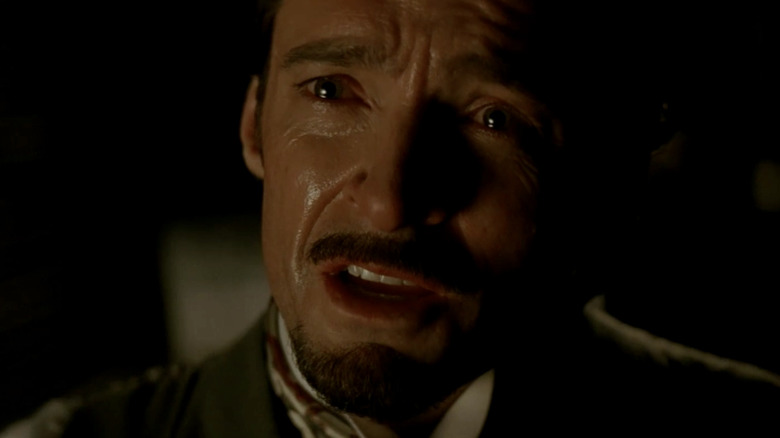
Second to last is "The Prestige," which secured 7.12% of the vote, perhaps because it has one too many plot twists. The Christian Bale twist is believable and worthy of an O. Henry short story, but then came the Hugh Jackman twist, which strains credulity even if it does work on a thematic level.
"Interstellar" arrives dead last with 5.25% of the vote. For all its visual and musical majesty, the film's spotty script and questionable third act left it floating in the space library, peering in envy through the cracks in the bookshelves at all the other Nolan movies that ranked higher than it.
"Tenet" has no place in this survey, either because it's too recent and not enough people have seen it, or because they've seen it but not enough people were willing to go to bat for it ... or because it's Nolan's lowest-rated movie on Rotten Tomatoes and wasn't included as an option in the survey in the first place.
One thing is certain: the denizens of geekdom prefer Nolan, the franchise filmmaker, to Nolan, the auteur of original, non-superhero stories. Jesus wept, and somewhere in the dark of night, Cronenberg is also weeping.
OWC has just announced their fastest PCIe Gen 4 SSD AIC to date, the Accelsior 8M2 which is compatible with PCs and Mac Pro platforms.
OWC Accelsior 8M2 Unleashed: World's Fastest PCIe Gen 4 SSD AIC With Speeds of Up To 26,000 MB/s & 64 TB Capacities
The OWC Accelsior 8M2 is technically a PCIe SSD expansion card that you can slot within a PCIe x16 slot. It is compatible with both PCIe Gen 3 and PCIe Gen 4 slots and provides up to 12,000 MB per second read speeds on the Gen 3 protocol while the Gen 4 protocol more than doubles the transfer speeds to 26,000 MB/s. The expansion card can hold up to 8 Gen 3 / Gen 4 SSDs and will be coming in several variants.
The base 2 TB variant of the OWC Accelsior 8M2 SSD features 8 240 GB NVMe M.2 SSDs and starts at $1299 US. The 4 TB variant costs $1699 US, 8 TB variant costs $2479 US, 16 TB variant costs $4299 US, 32 TB variant costs a whopping $7999 US while the 64 TB variant which features eight 8 TB NVMe M.2 SSDs costs a jaw-dropping $12,999 US. If you want to configure the OWC Acclesior 8M2 yourself, then you can also purchase the standalone expansion card that doesn't feature any SSDs by itself for $799.99 US. It can support either 8 Gen 3 or Gen 4 SSDs.
The OWC Accelsior 8M2 offers total performance gains in so many diverse ways that it lets you create without limits:
Edit and playback 16 streams of 8K ProRes444 without a glitch
Keep page scenery and textures looking sharp and flowing uninterruptedly in virtual reality environments
Experiment with larger formats and be closer to final work
Edit and store massive photo images and graphics files
Experience faster previews, renders, and processing in VFX programs
Effortlessly store and work with multiple production libraries and applications
Run more iterations in DevOps in less time
Quickly offload essential data to cloud archives for more advanced IoT management
OWC Accelsior 8M2 Highlights:
Revolutionary: The fastest drive available for 2019 Mac Pro, Windows, or Linux computers
Mind-blowing Performance: Up to 26,000MB/s real-world speed
Massive Space: Up to eight SSDs for jaw-dropping 64TB storage capacity
Easy RAID: Create, monitor, and manage RAID arrays with SoftRAID
Advanced RAID Capabilities: Supports multiple RAID levels and RAID sets for maximum flexibility
Quietly Cool: A highly efficient and quiet heat-dissipating design for consistent peak performance
Pre-tested and Certified: Full burn-in for assured performance and reliability
Plug and Play: No drivers are needed
Worry-free: Up to 5 Year OWC Limited Warranty and lifetime support for solutions 2TB and larger
As storage performance innovators, we know that bottlenecks cramp your style. The Accelsior 8M2 was purposely created to be the fastest drive you can use in any workflow. With eight onboard NVMe SSDs and speeds up to 12,000MB/s, video editors have the real-world speed for sustaining the most demanding VFX, color, and high-end video editing including seamless playback of:
16 streams of 8K ProRes444 in Final Cut Pro X
8 streams of 12K ProRes444 in Final Cut Pro X
9 streams of 4K 16bit EXR in DaVinci Resolve
As for the design itself, the expansion card measures 127x325x22mm and comes in a single-slot, full-length form factor with an active cooling solution. The whole solution features an aluminum shroud on top of it and has exhaust vents on the front. Since we are taking Gen 4 SSDs here, the AIC will require external power too and has a 6-pin power connector on the side. You can find the product links on this page.
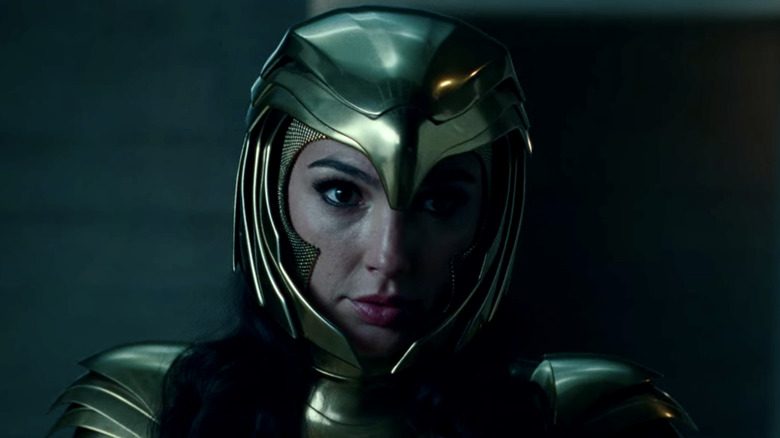
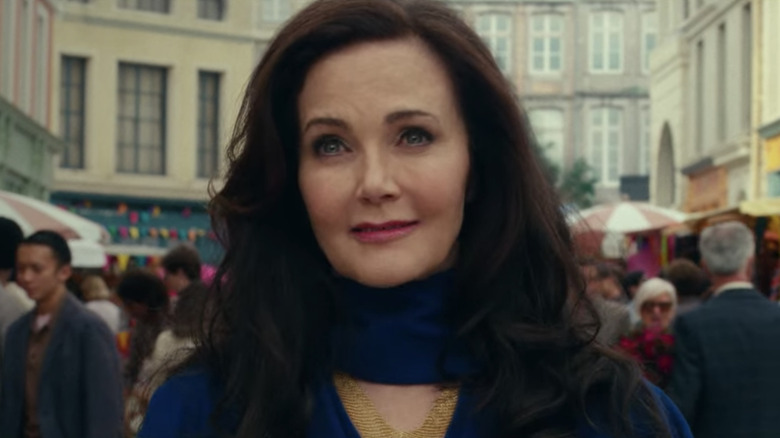
In "Wonder Woman 1984," Gal Gadot's titular super-heroine dons the gold armor of the legendary Amazonian warrior, Asteria. We hear Asteria's name, but we don't see her in the flesh until the film's mid-credits scene, where she's played by none other than the original Wonder Woman, Lynda Carter.
Carter played Wonder Woman for three seasons in the live-action CBS television series, which ran from 1976 to 1979. While Christopher Reeve was making audiences believe a man could fly in the 1978 "Superman" film, Carter was making them believe a woman could pilot an invisible plane and deflect bullets with her bracelets on TV. If you were hoping her "Wonder Woman 1984" appearance would be more than just a one-and-done cameo, you'll be happy to know that she is returning for "Wonder Woman 3."
After the recent DC FanDome event, Gadot spoke to The Hollywood Reporter about having Carter back and the mentorship she gave behind-the-scenes, even before walking onscreen in "Wonder Woman 1984." She told THR:
"First of all, Lynda has mentored me from the very first moment that I got cast as Wonder Woman. She was always there, talking to me, giving me tips and everything. She's a true champion of what Patty and I have been doing, and it was so great that we managed to find the right opportunity to bring her to the last movie and now to the third one."
The Wonder Woman Trilogy
"Wonder Woman 1984" will go down in movie history as the film that altered the theatrical landscape for all of 2021. When it hit theaters and HBO Max on Christmas Day of 2020, it led the way for Warner Bros. to give its whole slate this year a simultaneous release. My wife and I screened the film at home when it came to VOD, and we both enjoyed it despite the mixed reviews it received (our own Hoai-Tran Bui gave a more positive review).
There's no denying, however, that the general consensus was less favorable than it was for the 2017 "Wonder Woman" film, which won a Hugo Award and which the American Film Institute spotlighted as one of the 10 best films of that year. Director Patty Jenkins is returning for "Wonder Woman 3" with Gadot and Carter, and as her trilogy brings in the original Diana Prince alongside Gadot, we can only hope it regains its footing as a crowd-pleaser.
Speaking of Carter and "Wonder Woman 3," Gadot added, "It's even better this time. I love her very much. I love her dearly."
Gadot can currently be seen in "Red Notice" on Netflix. She also just signed on to play the Evil Queen in Disney's live-action "Snow White."
We'll be keeping a close eye on the development of "Wonder Woman 3," so stay tuned.
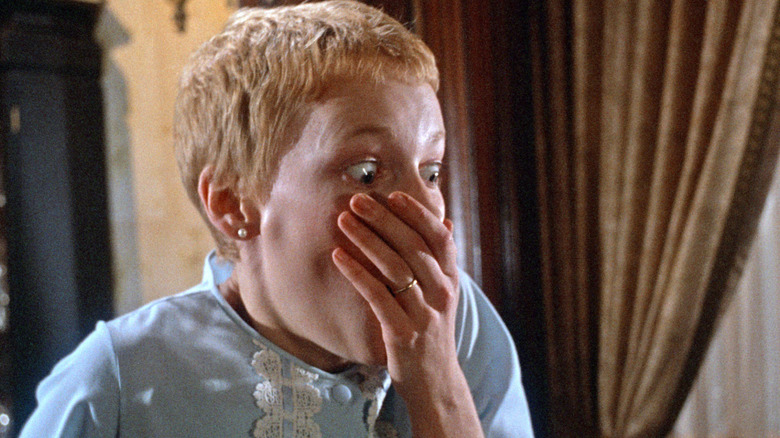
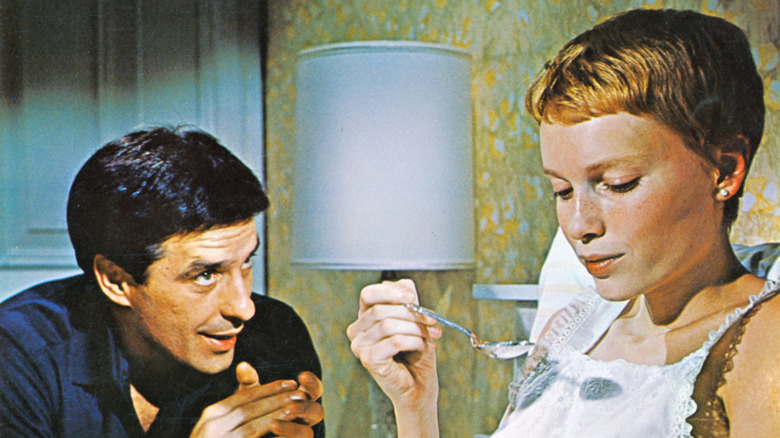
Five years before "The Exorcist" turned heads and had audiences puking in the aisles, there was another diabolical horror causing controversy due to its occult subject matter. Roman Polanski's "Rosemary's Baby," based on Ira Levin's best-selling novel, upset the Catholic church, picked up a curse, became one of the top grossing films of 1968, and catapulted the Polish director to Hollywood stardom.
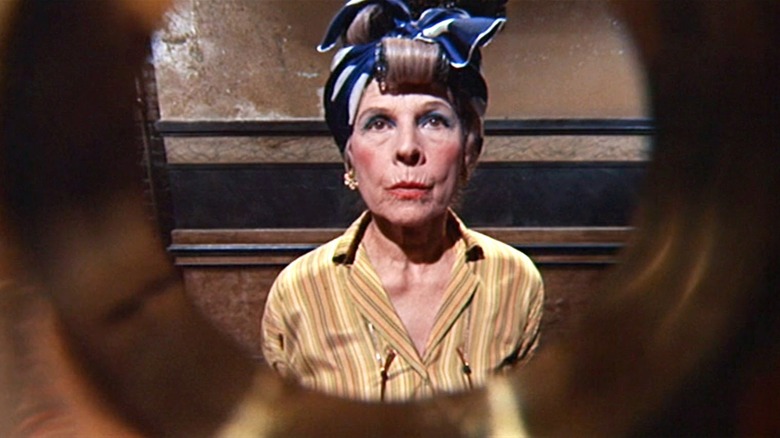
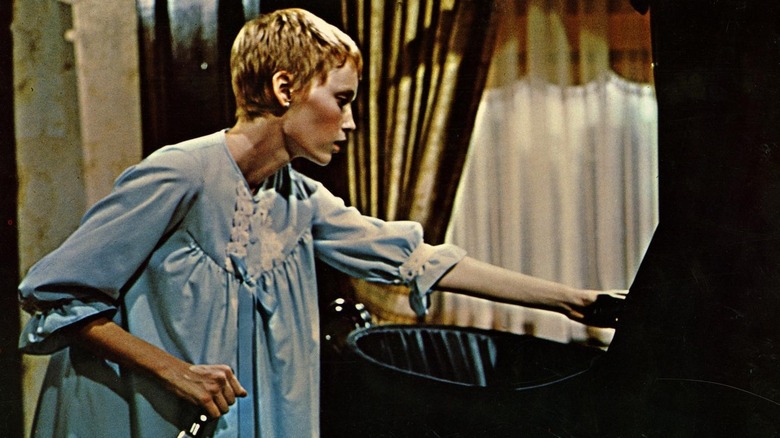
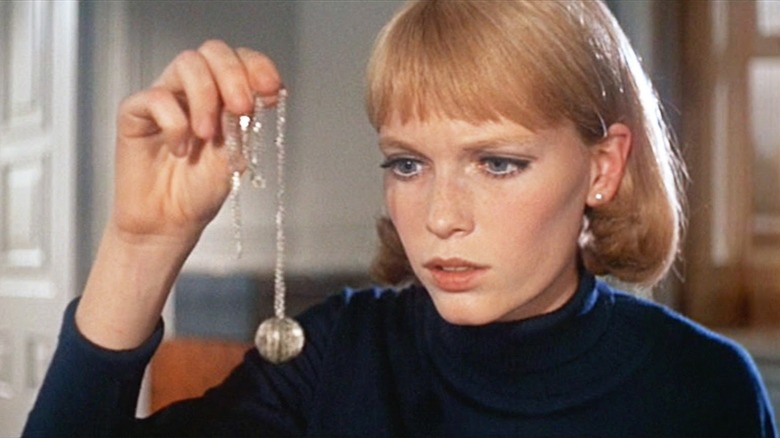
The film stars Mia Farrow and John Cassavetes as Rosemary and Guy Woodhouse, a handsome couple looking to start a family. In preparation, they move into a large apartment in a strange old building in New York, where their eccentric elderly neighbors seem all too willing to help them along with advice and their unusual herbal remedies. After Rosemary has a terrifying dream, she finds that she is pregnant, but begins to suspect a sinister conspiracy to use her unborn child as a satanic sacrifice. If only she knew the real truth...
"Rosemary's Baby" is a beautifully crafted film, exploring the trials of young motherhood from a horror perspective, sure to prompt a few shudders of recognition from anyone who has had children of their own. Polanski directs with complete assurance and keeps the scares low-key, while Farrow's excellent performance really puts us in Rosemary's head space before that chilling ending.
What Was The Inspiration For Rosemary's Baby?
Unlike some other famous horror novels inspired by real-life incidents, like Robert Bloch's "Psycho" and William Peter Blatty's "The Exorcist," Ira Levin's novel was a work of pure fiction.
Having observed that the most suspenseful part of a horror story was before, not after, the horror appears, I was struck one day by the thought... that a fetus could be an effective horror if the reader knew it was growing into something malignly different from the baby expected. Nine whole months of anticipation, with the horror inside the heroine!
He returned to the concept in the mid-'60s when he was looking for a great idea to help him bounce back from a Broadway flop. He went on to say:
I could imagine only two possibilities: my unfortunate heroine had to be impregnated either by an extraterrestrial or the devil. ETs had already fathered children in "The Midwich Cuckoos," a novel by John Wyndham, and though that book had dealt with several children growing up rather than their mothers bearing them, I nonetheless felt I was stuck with Satan.
In whom I believed not at all...
The idea became "Rosemary's Baby," which sold four million copies and was instantly hailed a horror masterpiece. William Castle, the low-budget producer and director best known for his schlocky gimmicks, like electrified seats and swooping skeletons to scare audiences, remortgaged his house to buy the book rights before it was even published. Paramount's Robert Evans, who would later produce "The Godfather" and "Chinatown," agreed about the book's potential, but wanted Polanski as director. Castle had to content himself with a producer credit and a cameo in the film.
The British Censorship Controversy
"Rosemary's Baby" was well-received by critics and did well at the box office, even though the Catholic church gave it a "C" rating for "Condemned." It was struck with further controversy when it crossed the pond to play in UK theaters. The kerfuffle arose when the British Board of Film Censors (BBFC) cut 15 seconds of the centrepiece horror moment, when Rosemary hallucinates about being raped by Satan in front of her husband and a group of onlookers.
The key omission removed a snippet of dialogue where a woman suggests that Rosemary have her legs tied down "in case of convulsions," to which Rosemary replies, "Yes, I suppose so."
Apparently, the BBFC were okay with the notion of a woman getting raped by Satan, and the subsequent icky admission from her husband that he had sex with her while she was passed out. Just so long as there was no "kinky" sex involved in the scene.
Polanski vigorously opposed the cuts, having fought with the BBFC over the number they wanted to make. The BBFC secretary, John Trevelyan, defended the decision, saying it was a "tricky scene since it contains elements of kinky sex which are, I believe, associated with black magic."
The argument rumbled on in the press for a few weeks. Polanski ridiculed the "kinky" reasoning, saying: "Some people find shoes stimulating. Does Mr. Trevelyan want actors to work in their bare feet?" Trevelyan batted the jibe back, claiming: "Black magic is not an insignificant thing, and it is connected with perverted sex."
The press generally piled into the argument on the side of Polanski. The controversy drove people to the cinema to see what all the fuss was about, although there was nothing to see: the cuts remained for the UK release.
The Curse Of Rosemary's Baby
Like "The Omen" or "Poltergeist" and other occult or supernatural movies, "Rosemary's Baby" also has a reputation for being cursed. Composer Krzysztof Komeda fell off a cliff and died after spending four months in a coma. William Castle fell ill with kidney stones and almost died. He recovered, but his career didn't -- he never made another hit movie. The film ended Mia Farrow's marriage to Frank Sinatra, who had divorce papers served to her on set.
The most high profile piece of misfortune tangentially related to the film was the fate of Polanski's wife, Sharon Tate. She was in the running for the lead role before Mia Farrow got cast, but she continued to hang around the set. She appears uncredited in one scene, and the film was still playing in some theatres when she was murdered by the Manson family, along with four friends and her unborn child. Some conspiracy nuts suggest that Polanski, like Guy Woodhouse in the film, offered Tate as a blood sacrifice to ensure the success of his career, even after he fled justice (and the United States) when he was arrested and charged with drugging and raping a 13-year-old girl in 1978.
The bizarre coincidences do pile up. "Helter Skelter," the title of the Beatles song, was written on the wall of the murder scene in blood; Charles Manson interpreted several songs from "The White Album" as a coded message calling for a race war. Mia Farrow was present while some of the album was written. 12 years after the film was released, John Lennon was fatally shot outside the Dakota in New York, the building where "Rosemary's Baby" was filmed.
Rosemary's Baby And #MeToo
Roman Polanski has been a controversial figure for over 40 years after fleeing the States and avoiding countries likely to extradite. The circumstances of his crimes were grotesquely foreshadowed by the rape scene in "Rosemary's Baby." With this in mind, it was inevitable that the director's oeuvre would enter the conversation during the #MeToo era.
There are many pieces of writing dedicated to the subject, but the general consensus seems to roundly vilify Polanski and his actions while defending his art's importance and continued relevance. As Anne Cohen summed up in her excellent article for Refinery29:
Still, no matter how much feminist leeway you give the film, it's hard to get around the big elephant in the room: that this nuanced, empathetic story with a female lead was written for the screen, and directed by a man accused of raping a teenage girl. And I don't think it's something we can get around. If you watch the film, it's something you have to face, and ponder, especially in scenes dealing with non-consensual sex, just as you can't watch Gone With The Wind without grappling with how it falsely portrays slavery as benevolent. But those considerations don't have to obscure the whole film, which remains a cinematic feat, and movie with tremendous impact on future works.
Despite the curses and the controversy, "Rosemary's Baby" remains widely regarded as a horror classic. It's a film that is very much of its era while also feeling timeless and ahead of the game in its progressive themes. Also selected for preservation by the National Film Registry, its reputation as a masterpiece will long survive its problematic creator.
The Chinese military has reportedly built massive models of a United States Navy aircraft carrier and other warships in the middle of the desert. Why? Possibly for target practice, according to the United States Naval Institute. From CNN:
Satellite images from China's northwest Xinjiang region appear to show a full-scale outline of a "Ford-class" aircraft carrier currently being constructed for the US Navy, and the shapes of at least two Arleigh Burke-class guided missile destroyers at a new target range complex in the Taklamakan Desert, according to the USNI, a private, non-profit, professional military association.
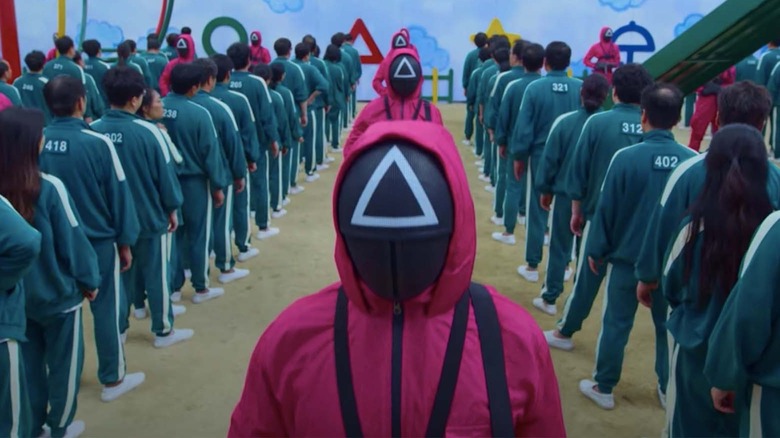
Nearly two months after the Netflix surprise megahit dropped into our lives, "Squid Game" is gearing up for round two! The universe must've sensed that we're all nostalgic for marble games because at long last, someone cornered series creator, writer, and director Hwang Dong-hyuk to pop the big question: will "Squid Game '' return for a season 2? If you binged through the entire season (which the numbers say you did), then you'll probably like his response. Dong-hyuk told the Associated Press:
"There's been so much pressure, so much demand, and so much love for a second season. So I almost feel like you leave us no choice. But, I will say there will indeed be a second season. It's in my head right now. I'm in the planning process currently. But I do think it's too early to say when and how that's going to happen."
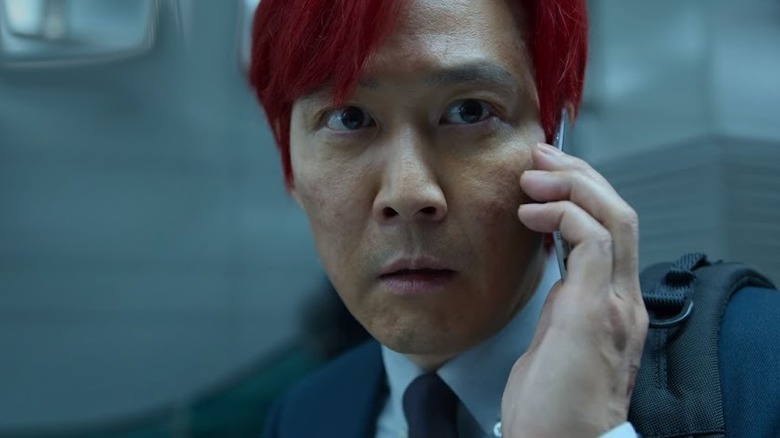
Dong-hyuk has obviously gotten this question plenty of times within the past few months and though he's openly speculated on what concepts he could explore with a second season, this is the first time he's offered true confirmation — more "Squid Game" is solidly in the works. Though he's still working through the planning process, fans now have more Gi-hun (Lee Jung-jae) to look forward to!
Now, the question is no longer if we'll see more "Squid Game," but what we'll see when it finally returns?
The Possibilities Of Season 2
Beware — spoilers for "Squid Game" season 1 are below.
As you likely know, the first season of the massively popular series follows a group of 456 strangers who gather to compete in a mysterious game for an enormous sum of money. The twist is that the schoolyard games guiding the competition are deadly — such as the singing doll that continues to haunt our nightmares. When the season ends, our lead character Gi-hun is the sole survivor of the games.
After leaving his prize money untouched for a year, Gi-hun uses it for good causes then sets off to see his daughter in America. But before boarding his flight, he's stopped in his tracks by the realization that the games will continue, with a new batch of unsuspecting victims. Wherever the second season picks up, we likely haven't seen the last of Gi-hun, who seems determined to bring the Squid Games to an end.
Creator Dong-hyuk has also talked through other season 2 ideas, indicating his interest in the Frontman and the role of the police. He said:
"I think the issue with police officers is not just an issue in Korea. I see it on the global news. This was an issue that I wanted to raise. Maybe in season two I can talk about this more."
While the first season used the games as a commentary on capitalism and exploration of class politics, that just scratches the surface of the social commentary seeded into the show. It's a bit of a cliche, but between the massive success of season 1, the effortlessly intriguing premise and the creative mind behind this whole thing? The possibilities for season 2 of "Squid Game" feel endless.
Microsoft introduced Windows Subsystem for Linux (WSL) a while back, which brought support for running Linux apps straight from your Windows installation. Being such a complex compatibility layer, WSL had some limitations. The initial implementation didn’t even use a full-fledged Linux kernel, so several applications faced compatibility issues. Version 2 made a lot of improvements, but something was still missing: Support for connecting physical USB devices.
If you’re an active user of Windows Subsystem for Linux and want to access USB devices right from the Linux instance running under WSL, then you’ll be happy to know that there has been a significant progress in this front. Thanks to Microsoft’s contributions to the open-source usbipd-win project, you can now enjoy USB passthrough access in WSL. It means end users can perform tasks like flashing Android devices under Windows Subsystem for Linux, which are otherwise not supported by the Linux subsystem.
What is usbipd-win?
The usbipd-win project is all about creating a solution for sharing locally connected USB devices to other machines, including Hyper-V guests and WSL2. However, the official WSL2 Linux kernel used to lack support for the USB/IP protocol, requiring users to build the kernel themselves.
Since WSL kernel version 5.10.60.1, the required parameters are configured out of the box, so no manual recompilation is needed. Microsoft has also contributed a command line interface to the project to both enable a USB device for sharing on Windows and seamlessly attach it from within WSL.
Connect USB devices under Windows Subsystem for Linux
Before starting, make sure that you’re running Windows 11 and have installed all WSL updates. As mentioned earlier, you need a WSL 2 Linux distro for this to work.
Run the following command from within WSL:
uname -a
It should report a kernel version of 5.10.60.1 or later, as shown below:
The latest version of usbipd-win supports silent driver installation, thanks to the Windows Hardware Compatibility Program certified drivers. It also supports Dev channel builds of Windows 11.
In addition to the release page on GitHub, you can install and update the app using Windows Package Manager CLI (AKA winget).
For other distros, consult the documentation of the relevant package management tool.
Now we need to modify the sudo options to allow the root user to find the usbip command. To do so, edit the /etc/sudoers file using sudo visudo and add /usr/lib/linux-tools/5.4.0-77-generic to the beginning of secure_path. It should look like the following:
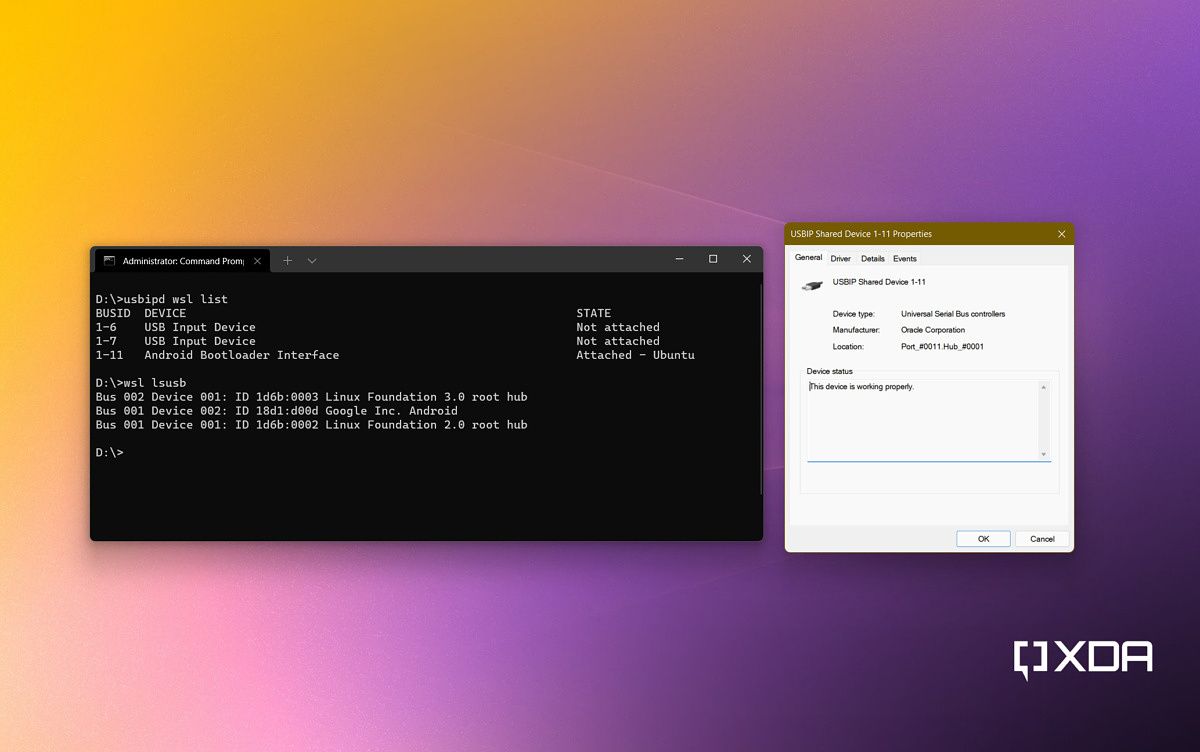
Open a new Terminal instance as Administrator and type the following command to list all the USB devices connected to Windows.
usbipd wsl list
Note down the BUSID value of the USB device you want to attach to WSL. Next, run the following command to initiate the attachment process. You’ll be prompted by WSL for a password to run a sudo command.
usbipd wsl attach --busid <busid>
For example, here we’re attaching an Android device’s Fastboot interface to WSL from the host Windows 11 instance:
Now open a new WSL 2 instance and run the lsusb command to see available USB devices. It should list the attached device(s).
That’s it! You can now work with your USB device right from WSL.
When you’re done, you can detach the device using the command shown below. Once again, run it from a Terminal instance running as administrator.
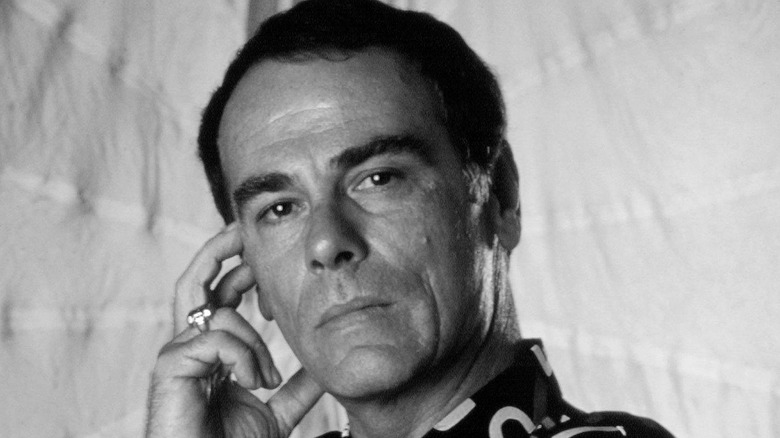
It is with great sadness that we must report (via Variety) that beloved character actor Dean Stockwell has passed away at age 85. The actor, who had been quietly retired and creating art at his residence in Taos, New Mexico since 2016, died peacefully in his sleep at his home.
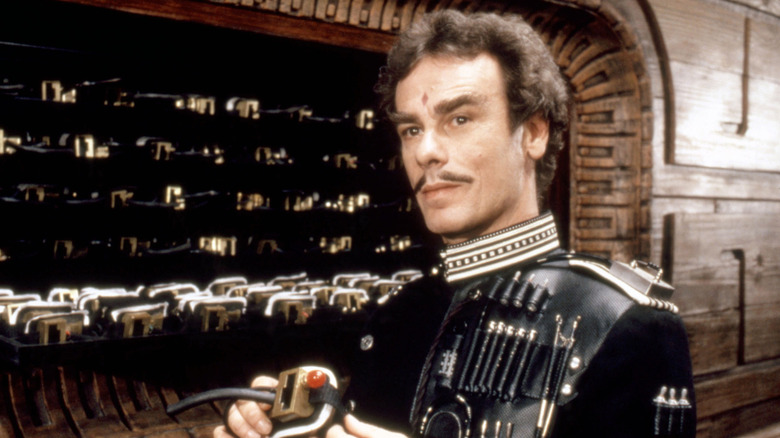
Born into a family of entertainers and a child actor on stage and screen since age eight, Stockwell built up a steady career as a working actor with over 200 credits. His fame peaked in the late eighties when he co-starred alongside Scott Bakula in the NBC sci-fi comedy series "Quantum Leap," which ran for five seasons and retains a cult following to this day. He won a Golden Globe in 1990 for playing the eccentric hologram character of Admiral 'Al' Calavicci in the show. Genre fans may also recognize him as originating the traitorous character of Doctor Wellington Yueh in David Lynch's 1984 movie of "Dune." He also earned fan recognition as the Cylon baddie John Cavil on three seasons of "Battlestar Galactica."
A 70-Year Career
Born in 1936, Stockwell was signed as an MGM contract player before age 10, appearing opposite Greer Garson and Gregory Peck in 1945's "The Valley of Decision." He appeared with Peck again in the 1947 message movie "Gentleman's Agreement," and also played Nick Charles' son in "Song of the Thin Man." He memorably played the title character in the 1948 cult classic "The Boy with Green Hair."
From the 1950's on, Stockwell fell in and out of acting, with some notable roles including "Compulsion" opposite Orson Welles and the 1962 film version of Eugene O'Neil's "Long Day's Journey into Night." In the mid-sixties, he dropped out to join the Topanga Canyon hippie subculture, which included fellow child actor Russ Tamblyn and musician Neil Young. Around this time he had a memorable lead role in AIP's adaptation of H.P. Lovecraft's "The Dunwich Horror" as Wilbur Whateley, a young man attempting to bring back "the Old Ones" through use of the Necronomicon. He would also appear in a 2009 made-for-TV "Dunwich" remake.
Stockwell continued to appear frequently in episodic TV and B-movies, but by the early '80's had grown despondent over his career and began working as a real estate agent. Urged on by his friend actor Harry Dean Stanton, Stockwell appeared opposite him in 1984's critically acclaimed "Paris, Texas" from director Wim Wenders. This led to memorable parts in Lynch's "Dune" and subsequently "Blue Velvet" (where he lip-synched to Roy Orbison's "In Dreams"), "To Live and Die in L.A.," "Beverly Hills Cop II" and "Married to the Mob," the latter of which earned him his one and only Oscar Nomination for Best Supporting Actor.
Other memorable roles before his retirement included Robert Altman's "The Player," Harrison Ford's action hit "Air Force One," and a lovely one-scene role in Roman Coppola's criminally under-seen "CQ." His final onscreen appearance was in Rick Alverson's 2015 dark comedy film "Entertainment."
In Syracuse, New York, firefighters rescued a fellow who had become trapped, naked, inside the bathrooms wall at a Landmark movie theater. An employee heard the man yelling and called emergency services who used a fiber optic camera to determine his exact location. — Read the rest
Printers compatible with Apple's AirPrint will print files from macOS and iOS devices without having to install printer-specific drivers. I have an old WiFi printer that doesn't work with AirPrint, which is too bad because I often want to print something from my iPhone. — Read the rest
Dean Stockwell, rare among child stars to achieve lifelong success as an actor, died Sunday at 85.
Stockwell was on the verge of a career change as he got a real estate license and packed up the family to leave Hollywood when he received a phone call from Harry Dean Stanton, who convinced him to join him on the set of Wim Wenders' film, Paris, Texas.
Finally, I was able to build a HX-DOS binary that works in real DOS, by setting up a different version of MinGW. The HX-DOS binary for DOSBox-X 0.83.19 is now available from:
It now also shows up in the DOSBox-X website. Hope this helps.
Wengier
> Thank you, but the LOADLIN versions are unsuitable for me. Not just that > they won't run on my system, but even if they did, they're, by concept, > fail to fit my needs. Most importantly, loosing my DOS session just in > order to run DOSBox is never an option for me, having many things resident, > including a suspended web browser, work, etc., and even temporary things on > my RAM-disk. Loosing all these things just to play a short game or run an > app that requires more conventional memory than available would be > counter-productive. Could you please post you binary you've mentioned > instead? > > Thank you!
It was recently reported that Intel Alder Lake CPUs will have trouble running a large list of games due to their hybrid design. But it looks like MSI has come up with a solution within the BIOS of its latest Z690 motherboards.
Can't Run Your Favorite Games on Intel Alder Lake CPUs Due To DRM? MSI Has A Solution For You!
The issue occurs when DRM (Digital Rights Management) software in a range of games mistakenly identifies the hybrid design on Intel's Alder Lake CPUs as two separate PCs. Intel's Alder Lake CPU lineup comes with two separate core architectures, the Performance Cores (P-Core) powered by Golden Cove architecture and Efficiency Cores (E-Core) powered by Gracemont architecture. DRM treats these two separate core packages as two different PCs whereas they are part of the same chip.
PCMag managed to get a hold of a list of games that were affected by this issue and there are at least 51 titles. There are some titles that should be patched by Mid of November while other titles on Windows 11/10 have no definite timeframe given for a fix. Motherboard manufacturers stated that they were working on offering a 'Legacy Game Compatible mode within the BIOS to address the issue.
Intel Alder Lake DRM Issue (Affected Games in Windows 10 and 11):
Should Be Fixed by Patch Mid November
No Definite Time Frame for Fix
Anthem
Assassin’s Creed: Valhalla
Bravely Default 2
Far Cry Primal
Fishing Sim World
Fernbus Simulator
Football Manager 2019
For Honor
Football Manager Touch 2019
Lost in Random
Football Manager 2020
Madden 22
Football Manager Touch 2020
Maneater
Legend of Mana
Need for Speed – Hot Pursuit Remastered
Mortal Kombat 11
Sea of Solitude
Tony Hawks Pro Skater 1 and 2
Star Wars Jedi Fallen Order
Total War: Warhammer 1
Tourist Bus Simulator
Intel Alder Lake DRM Issue (Affected Games in Windows 10 Only):
Ace Combat 7
Life is Strange 2
Assassin's Creed Odyssey
Madden 21
Assassin's Creed: Origins
Monopoly Plus
Code Vein
Need For Speed Heat
eFootball 2021
Scott Pilgrim vs The World
F1 2019
Shadow of the Tomb Raider
Far Cry New Dawn
Shinobi Striker
FIFA 19
Soulcalibur VI
FIFA 20
Starlink
Football Manager 2021
Team Sonic Racing
Football Manager Touch 2021
Total War Saga - Three Kingdoms
Ghost Recon Breakpoint
Train Sim World
Ghost Recon Wildlands
Train Sim World 2
Immortals Fenyx Rising
Wolfenstein Youngblood
Just Cause 4
Following are statements from MSI and ASUS to PCMag:
"Regarding Legacy Game Mode, this should be included in a future BIOS update...we have 0705 coming up and a couple of others scheduled for release. [We will] check with our HQ to see if this feature will be included in 0705." - ASUS via PCMag
"This functionality is not yet implemented into our BIOS or any board makers’ BIOS. Stay tuned for when it’s available in a new BIOS release." MSI via PCMag
We also talked to MSI from our own end and it looks like they have the feature implemented in all of their Z690 motherboard BIOS.
Legacy Game Compatibility Mode” is already available in our BIOS.
For Z690 Carbon WiFi, it’s available since beta BIOS v111. (The public BIOS on website is v100, which doesn’t have this option.)
via MSI
While we wait for other manufacturers to offer this feature, MSI has become the first major vendor to enable this feature on their motherboards. In the picture posted below, you can see that MSI has provided the Legacy Game Compatibility mode on their MPG Z690 Carbon WiFi motherboard. This is disabled by default so if you run into any DRM-related issues when running a game, it is better to enable this feature with hybrid Intel Alder Lake CPUs.
For those interested, the following BETA BIOS have the feature listed so if you want to try them out, you can give it a go:
Doing so will make your Intel Alder Lake CPU-based PC run the gaming title without any issues & is a very handy feature until these games get patched in by their developers.
OpenTTD v12.1 is released. OpenTTD is an open source simulation game based upon the popular Microprose game "Transport Tycoon Deluxe", written by Chris Sawyer. It attempts to mimic the original game as closely as possible while extending it with new features....More
I’ve been thinking about fossil fuels and fuel efficiency lately. We’ve been trying for years to make more fuel efficient vehicles and by now we’ve gotten all of the low-hanging fruit. From this point, most gains will require high-tech systems that will make vehicles more expensive to produce and maintain.
So I started thinking that what we really need is a radical innovation to shake things up. Right now the average vehicle gets about 25 miles per gallon of fuel. So I came up with a larger one-gallon gas can that holds about twice as much fuel as a standard gallon gas can. Using one of these new gallons will get you twice as far, thus boosting the average fuel efficiency up to 50 miles per gallon!
I admit that we’ll need to change all of our pumps and tools to accurately support this new Shamus-gallon. And this change will effectively halve the number of gallons you can store in your tank. But it will double our fuel efficiency. That’s worth it.
Building on this idea, I decided to apply it to this coding project I’ve been working on. The project works, but when I compile I get about 50 warnings. Warnings usually arise when you write something a bit sloppy or when the compiler is able to detect that something could go wrong.[1] The code will compile. It will run. But there’s a potential for things to go wrong. If you want to write good code, then you ought to clean up the warnings by making lots of small changes to make your intentions clear to the compiler.
The problem is that cleaning up warnings is dull busywork, and fixing all 50 warnings would take the better part of an hour.
But! I realized that the C compiler is open source. So what I did is I made a custom version of the compiler that starts counting warnings at -50. If you’ve got 51 warnings, then it will report just one. Since I have exactly 50 warnings, this special compiler now gives me a clean compile with zero problems!
I plan to push everyone to adopt my variant compiler. I know people won’t want to change to my new system, but they’re overlooking how much easier this makes things for people in my particular situation.
Also, I’ve always been disappointed that I didn’t make it to 6 feet tall. Six feet seems to be the magic number. If you can beat that, then women are more likely to find you attractive, you’ll be picked first for things in sports, and you’re generally more impressive and intimidating. Sadly, I stopped growing at 5’11 – one inch short! Worse, I’ve lost another inch over the last 30 years. So now I’m only 5″10.
But! I’ve come up with a solution. I just need everyone else in the world to adopt this new measuring system I’ve come up with, where a foot is 11 inches instead of 12. With this new system, I’m now a badass six feet, four inches tall!
Everyone else in the world needs to adopt this system. I know that changing measuring systems is annoying, but I personally benefit from this arrangement and so I need you to get on board with this. For those of you using the metric system, please update your conversion tables so that a foot is now 28 centimeters instead of 30.
Oh hey, this is the week when we switch everyone[2] over to Daylight Savings Time, where we change the position of all clocks because some people want to do stuff an hour later.
This is a completely sensible system and I have no objections.
But Seriously, This is Stupid
🎵 TIME! IS MARCHING ON! AND TIME... IS STILL MARCHING ON! 🎵
The sun does not care about your clocks. The moon is indifferent to the display of your Apple Watch. The Earth will not alter its spin in response to you mucking with the time settings on your phone. Fiddling with your timekeeping device will not make the sunrise prettier, it won’t make the day warmer, and it won’t give you more useful hours of daylight.
Clocks only matter to the millions of human beings trying to regulate their lives, keep healthy sleep schedules, and organize meetings across time zones. And it would be a huge help to us if you stopped creating this twice-yearly chaos and discomfort. If you want to do something an hour later in the day, then do it an hour later. Don’t force the rest of us to roll our clocks back so you can do it at the “same time”, because that’s not how time works and that’s not what clocks are for.
Daylight savings is the work of madmen and simpletons. Just stop.
STOP!
Okay, that’s the fall 2021 DST rant out of the way. See you again in six months.
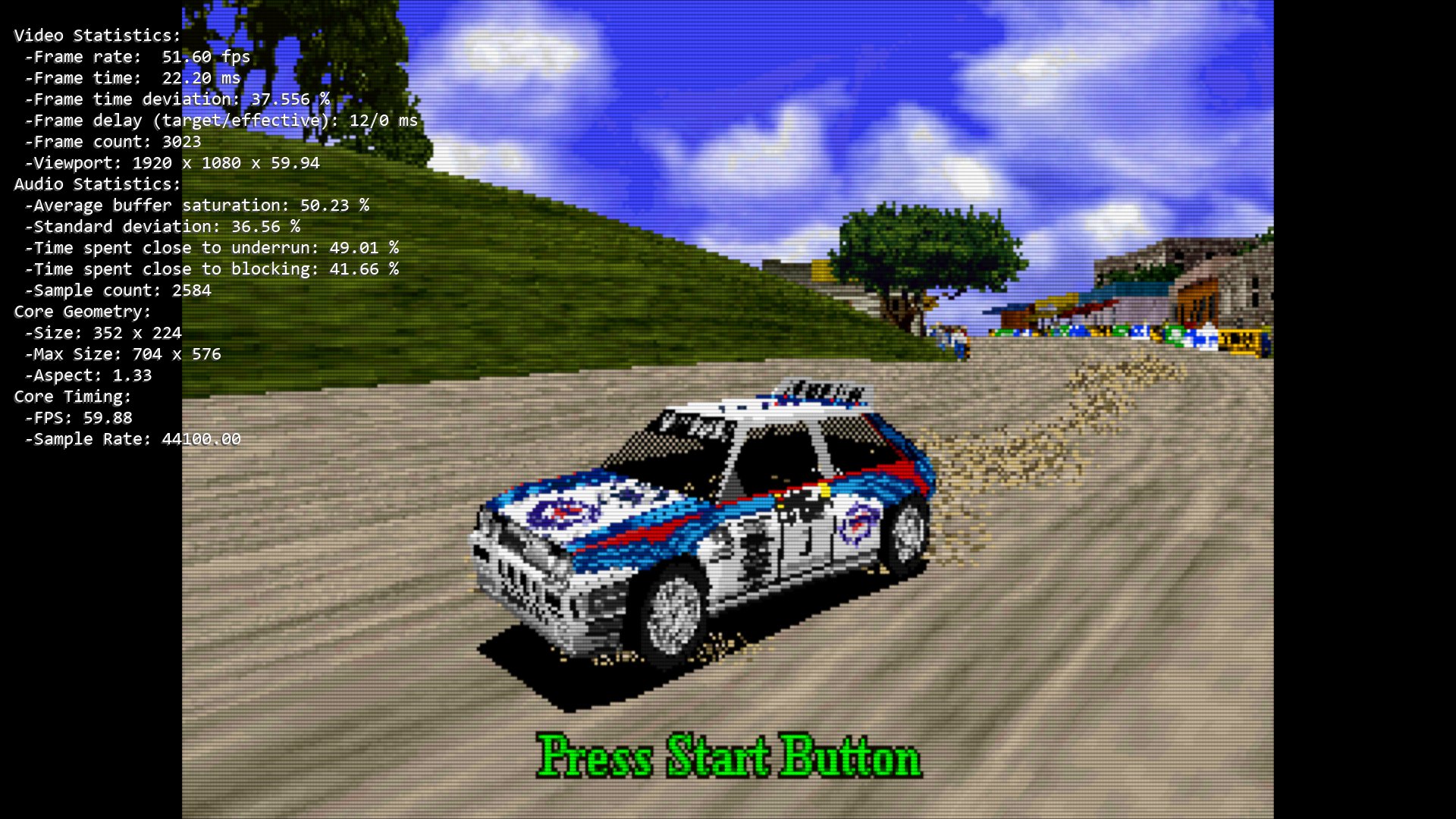
While emulation has dramatically improved over the years, low input lag is still one major advantage to playing old console games on original hardware on a CRT TV. Emulator developers have been finding creative ways to work around that problem for ages, and the devs behind the RetroArch frontend have been making those options more convenient for players to use. The latest push back against input lag is a particularly neat one: automatic frame delay.
Frame delay itself has been in RetroArch for years. It essentially allows you to push back the rendering of a frame to the last possible millisecond, so that your input comes as close as possible to when that frame is rendered on-screen. So at 60fps, a frame comes roughly every 16 milliseconds. If your computer is beefy enough to render that frame in, say, eight milliseconds, frame delay lets you get that extra half-frame of input latency back. A half-frame of input lag would be imperceptible to most, but combined with other types of lag reduction, it adds up.
The issue is that up to this point, RetroArch users have had to manually configure the frame delay setting in each emulator core, and in some cases, they'd need different configurations for individual games. RetroArch 1.9.13 makes that process unnecessary with automatic frame delay.
The noir genre first became popular in the 1940s thanks to the success of early hard-boiled detective cinema. Inspired by the dime store novels filled with mysterious private eyes, femme fatales, and illicit schemes involving deceit and murder, these films provided elevated entertainment for a mass audience. John Huston's 1941 classic "The Maltese Falcon" was one of the earliest examples of the best the noir genre could be.
Neo-noir cinema emerged in the '60s as a response to these early successes. These films were both visually and morally grey; instead of wrapping their stories up neatly in the style of an old-fashioned detective story, they hinted at themes of isolation, loneliness, and social disparity amidst a cruel world. The noir influence was particularly strong on New Hollywood and international cinema, and continues to inspire filmmakers to this day.
Neo-noir cinema is a tough genre to label, as while the elements of these classic stories are present, many neo-noirs also intersect with other genres, including westerns, action-thrillers, science fiction, and satire. With that in mind, here are the 12 greatest neo-noir films ever made, ranked.
The Long Goodbye
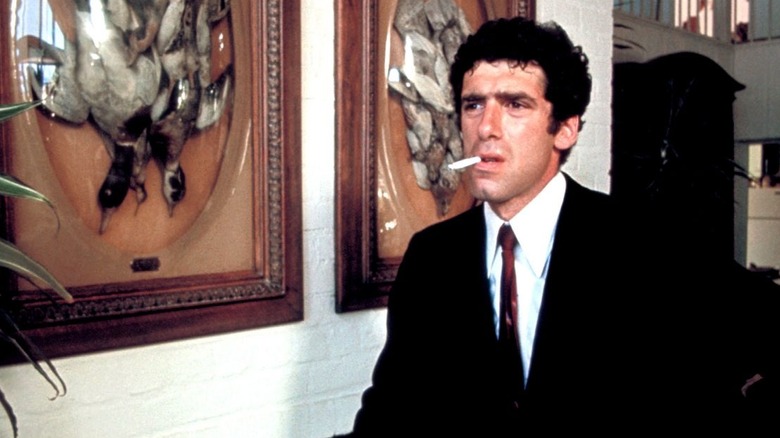
Robert Altman reimagined the novels of Raymond Chandler, which were mostly published during the '40s, in the context of 1973, capturing the comedic side of the noir private eye in the process. Altman is a master of tone; the events of "The Long Goodbye" are lurid and often disturbing, but as Chandler's famous detective Philip Marlowe, Elliot Gould finds an exasperated side to the character that is hilarious. Between his playful cats and light-hearted banter with his beautiful neighbors, Marlowe is hardly a traditional private eye. It's one of Gould's all-time greatest performances.
Marlowe receives a surprising visit from his old friend Terry Lennox (Jim Bouton), who enlists his help traveling to the Mexican border. Thinking nothing of it, Marlowe is later interrogated by detectives who accuse Terry of murder. Marlowe questions the validity of the accusations and decides to look into the case himself, leading to a series of misadventures involving pretentious authors, drug addicts, and local gangsters.
Memento
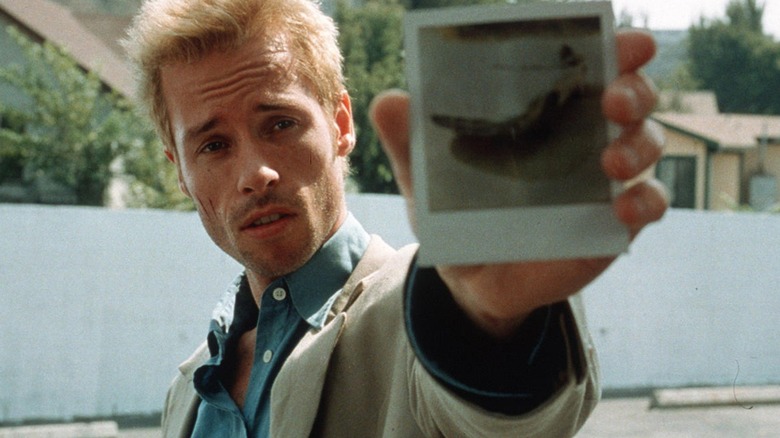
Christopher Nolan's second feature film, "Memento," is cleverly constructed. The film is told in reverse chronological order, as its main character, Leonard Shelby (Guy Pearce), has a psychological condition that leaves him unable to form new memories. Intermixed with black-and-white flashbacks that depict key details of his life, Leonard's investigation proceeds backwards until the film reaches the moment when the big crime is committed. Nolan is renowned for his complex narratives and shocking plot twists, and "Memento" holds up on repeated viewings.
Leonard looks to solve his wife's murder, and is only able to remember clues by tattooing them on his body. Pearce makes Leonard an emotionally engaging character; he's suffered a tremendous loss, and he's unable to trust anyone as he copes. Nolan doesn't deserve the reputation that he's earned for being humorless, as there are comedic elements to "Memento;" it's funny to see Leonard forced to reassess his location as he's being chased, and his contact, Teddy Gammell (Joe Pantoliano), is a fun side character. Although Nolan would go on to craft large, expensive spectacles, "Memento" proves that his ingenuity still flourishes when he's working with a lower budget.
L.A. Confidential
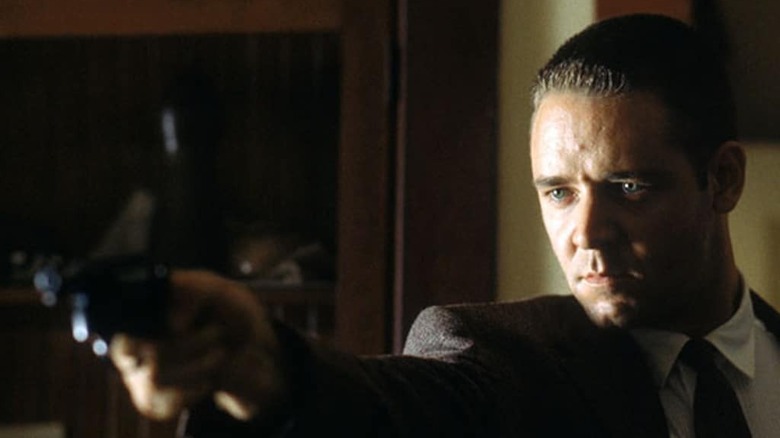
Nostalgia for classic Hollywood mysteries remains strong, but not every work of throwback filmmaking is well-handled. There's a reason why some genres fade, and modern films need to acknowledge that times have changed. "L.A. Confidential" avoids these concerns with its clever reimagining of 1950s Hollywood and detective stories; even though its style recalls classic noir, it acknowledges the genre's cliches, and addresses more themes like police brutality.
"L.A. Confidential" follows three very different cops with big personalities. Bud White (Russell Crowe) is a rough and violent menace, Ed Exley (Guy Pearce) is a geeky rule-follower, and Jack Vincennes (Kevin Spacey) is charismatic and well-connected in Hollywood. A series of murders unites the three officers when they discover that the LAPD is helping to cover up a sex scandal. It's fun to see each character's different method of questioning suspects, and they have fun banter throughout. Kim Basinger's Lynn Bracken is a much more complex femme fatale character than classic '50s stereotypes, too, and her hit-and-miss romance with Bud has real emotional weight.
The Conversation
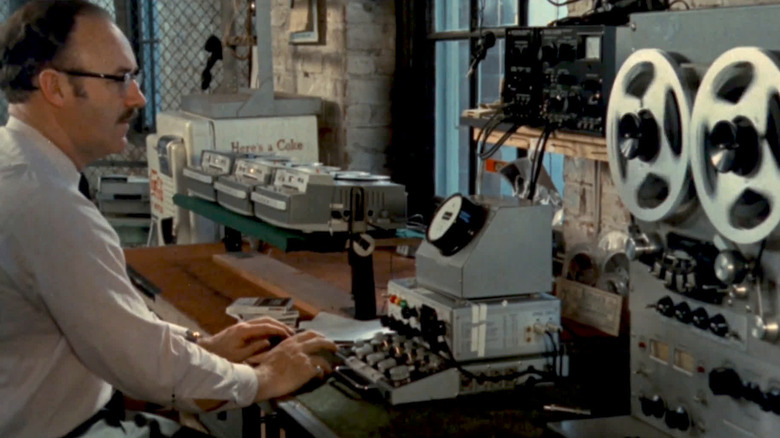
The rise of the "New Hollywood" generation in the 1970s coincided with a period of political uncertainty and increased anxiety over surveillance. The assassinations of John F. Kennedy, Bobby Kennedy, Martin Luther King Jr., and Malcolm X, coupled with the lies surrounding the Vietnam War, led to a state of public paranoia during which American citizens questioned the values of a nation they no longer recognized. While it was an understandably difficult period in national history, filmmakers of the era responded through neo-noir stories that tackled the issues on everyone's minds. 1974's "The Conversation" was released just as the Watergate scandal was breaking, and terrified viewers with its depiction of government spies.
Francis Ford Coppola's masterwork follows the independent privacy researcher Harry Caul (Gene Hackman), who meticulously built his life around avoiding detection. Harry discovers that he has a recording that could be linked to a government-related assassination and questions what his next steps could be; he feels obligated to turn over information that could be critical, yet is terrified that his seclusion will end if he becomes involved. His paranoia increases when the mysterious Martin Stett (Harrison Ford) pursues him; it's unusual to see the charismatic Ford in a villainous role.
While "The Conversation" is a work of political commentary, it's also gripping as a thriller. Harry becomes increasingly sympathetic as his sense of security vanishes, and his idiosyncratic safety precautions prove to be justified in the face of an actual conspiracy.
Brick
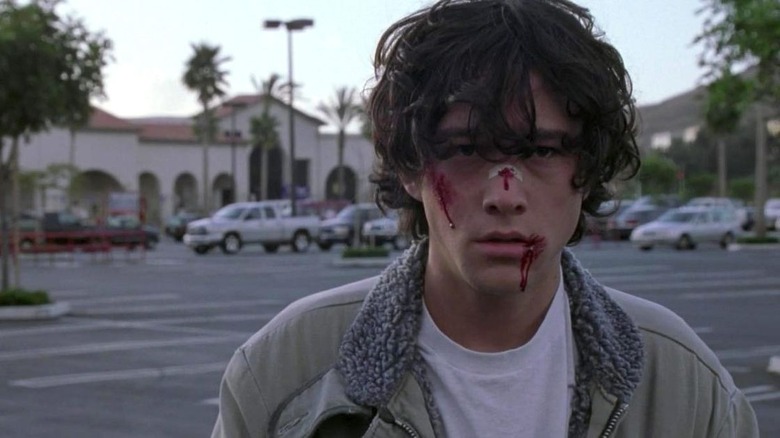
"Brick" took the hallmarks of hard-boiled detective stories and placed them in an unusual environment: a suburban Los Angeles high school. All of the elements of 1940s classics are reinvented to fit the culture of adolescence, but Rian Johnson's directorial debut is not a spoof. The mystery itself is intense and gripping, and it's actually more heartbreaking to see the younger characters forced to deal with the concerns of an adult genre.
Brendan Frye (Joseph Gordon-Levitt) is a social outcast with a knack for solving problems. He receives an emotional phone call from his ex-girlfriend Emily Kostich (Emilie de Ravin), who tells him that she's in danger and warns him to be wary of a "bad brick." When Emily is found murdered, Brendan decides to look into the names "Tug" and "The Pin," which she mentioned during their last conversation, leading him to a drug syndicate tied to the school's top dealer (Lukas Haas).
It's interesting to see how Johnson reinterprets different noir character archetypes. Brendan's sidekick is the geeky Brain (Matt O'Leary), who keeps track of the schools' various clubs and helps research the case. The school's assistant vice principal (Richard Roundtree) fills the overbearing police lieutenant role. Instead of a wealthy upper class, "Brick" uses the school's theater club, and the enigmatic actress Laura Dannon (Nora Zehetner) fulfills the femme fatale role. The details are spot on, including a steely voice over from Brendan, while the low budget only adds to the sense of grittiness.
Se7en
David Fincher's "Se7en" is a mystery that's so haunting that it often descends into straight up horror territory. While it's not a traditional slasher film, the grizzly murder investigation looks at the bleakest side of humanity through a case that pushes its heroes to their emotional breaking points. Fincher is a master of getting in the mind of tormented characters, and with "Se7en" he explores the psychology of both good men that do evil and a purely villainous man with no redeeming features.
Veteran police investigator William Somerset (Morgan Freeman) is assigned to work with the novice cop David Mills (Brad Pitt) in an investigation into a series of sadistic murders. The killer bases each crime on one of the seven deadly sins, teasing the detectives with clues. Somerset is about to retire and struggles with the severity of the case; Mills sees it as a chance to further his career. Somerset learns that Mills' wife Tracy (Gweynth Paltrow) is pregnant, and he warns his new partner about the personal costs inherent to their line of work.
The result is one of Freeman's most complex performances. He's deeply cynical, yet shows his compassionate side as he bonds with Tracy and offers her guidance. Pitt plays up Mills' hot-headed tendency, but he's still a knowledgeable investigator who is able to piece together the killer's clues. But it's Somerset who delivers the chilling final line: "Ernest Hemingway once wrote 'The world is a fine place and worth fighting for.' I agree with the second part."
No Country For Old Men
The Coen Brothers are masters of reinterpreting familiar genres in order to make them feel fresh again, and with "No Country for Old Men" they took on both the neo-noir and the western. An adaptation of the acclaimed novel by Cormac McCarthy, "No Country for Old Men" examines the futility at the heart of the American west, showing how greed breeds a cyclical nature of violence that is only destined to escalate. While the Coens are known for their quirky humor and idiosyncratic characters, "No Country for Old Men" is their most grim and disturbing work to date, although it does feature one of the greatest film villains of all time in the fearsome assassin Anton Chigurh (Javier Bardem).
Chigurh travels across small towns in Texas in search of a bag of stolen cash, ruthlessly murdering and tormenting the local law enforcement officers who attempt to stop him. Bardem is cold, showing no hint of remorse as he efficiently dispatches with his victims. Chigurh discovers that the money he's been contracted to find has been discovered by Llewelyn Moss (Josh Brolin). Llewelyn considers returning the cash after he's confronted by his wife Carla (Kelly MacDonald), but Chigurh has already massacred the other survivors. The local sheriff Ed Tom Bell (Tommy Lee Jones) tries to put the pieces together; calling back to the film's title, the older man can't understand the younger generation's brutality.
Chinatown
"Chinatown" had a notoriously troubled production that nonetheless produced a classic that endures to this day. As meticulously chronicled by author Sam Wasson in "The Big Goodbye," the film united four signature creative forces of the New Hollywood generation during moments of personal hardship. Director Roman Polanski was coping with the recent murder of his wife Sharon Tate, actor Jack Nicholson was combatting the pressure of his new stardom, producer Robert Evans was trying to make elevated films on a studio budget, and screenwriter Robert Towne tormented himself researching the California government's corrupt handling of the Los Angeles water system.
"Chinatown" follows an investigation by private eye Jake Gittes (Jack Nicholson) into Hollis Mulwray (Darrell Zwerling), the chief engineer at the Los Angeles Department of Water and Power. Mulrawy's wife, Evelyn Cross Mulwray (Faye Dunaway), courts Jake's expertise as he investigates her wealthy father, Noah Cross (John Huston), a powerful land baron. Jake is met with criminals attempting to silence him, but is simultaneously fascinated with both the case and Evelyn. He suspects that there's a strange connection between Evelyn, her father, and her young daughter Katherine (Belinda Palmer), but the truth isn't revealed until the film's shocking twist ending.
The final moments of "Chinatown" are among the grimmest in neo-noir history. Towne's screenplay is often cited as one of the greatest ever written, and Nicholson is engagingly cynical in one of his definitive screen roles.
Blow Out
Hitchcock was known as the "Master of Suspense," and his extensive filmography inspired many imitators who attempted to capture his signature filmmaking techniques. Few among these directors were able to develop a style that both paid homage to Hitchcock and incorporated new ideas — Brian De Palma was the exception to this rule. De Palma was one of the cornerstone figures of New Hollywood in the 1970s, and reinvented Hitchcock's meticulous sense of stylish suspense by infusing it with elements borrowed from Italian giallos, political thrillers, exploitation films, and psychological mysteries.
De Palma's masterpiece is the 1981 neo-noir classic "Blow Out." While "Blow Out" wasn't initially a box office success, it gained critical appreciation over the years and developed a cult audience. "Blow Out" follows the film sound technician Jack Terry (John Travolta), who works on cheap, low-quality horror films. One night, Terry ends up accidentally recording a fateful car accident that claims the life of a driver and leaves behind a sole survivor, Sally Bedina (Nancy Allen). Using his sound editing skills, Terry mines the evidence and delves deeper into the crash, which he now suspects to be part of a larger conspiracy. He grows close to Sally, and learns that she is the mistress to the corrupt Governor George McRyan.
Terry's filmmaking experience makes him unique among noir heroes, and De Palma uses the sordid movie sets to satirize the film industry. Just watch out: The ending of "Blow Out" is among the most tragic in film history.
First Reformed
It's fascinating when neo-noir films incorporate religion into their narratives. A noir mystery itself calls on the viewer to engage with the plot, but some questions loom larger than any one story beat. Discussions of fate, mortality, and spirituality are deeply personal, and not every filmmaker is mature enough to handle the weighty topics. However, screenwriter Paul Schrader is one of the signature writers of his generation, and included compelling considerations of faith in his scripts for "Taxi Driver," "Raging Bull," and "The Last Temptation of Christ."
Schrader has had a hit-and-miss record as a director, but he delivered the finest film of his career with the 2018 neo-noir masterpiece "First Reformed." Reimagining the visuals and storyline of "Taxi Driver" for a modern age, Schrader uses a crime subplot to question the ways in which religious fundamentalism is justified in the 21st century. He also looks at issues like environmental collapse and modern terrorism.
Ethan Hawke delivers his single greatest performance as the clinically depressed Pastor Ernst Toller. Toller is grieving over the recent death of his son in the Iraq War, and has taken to heavy drinking. He's sought out by Mary Mensana (Amanda Seyfried), who informs him that her husband is involved in a radical activist group that's planning a series of suicide bombings. The vulnerable Toller finds himself drawn to the radical beliefs, and considers taking a drastic course of action.
Blade Runner
The science fiction and neo-noir genres go hand in hand, as a visceral dystopian setting has the perfect gloomy atmosphere for a neo-noir crime mystery. Not only does the inclusion of sci-fi force filmmakers to be more creative in their worldbuilding, but it allows the viewer to question the advancements of technology while piecing together clues. "Blade Runner" is one of the greatest science fiction films ever made, and its themes of consciousness, self-worth, and the value of life itself are just as relevant now as they were in 1982.
"Blade Runner" takes place in a version of 2019 where humanoid robots known as "replicants" work in factories and colonies across the planet. Replicants are designed to be terminated after a set period of time, and the government enlists assassins known as "Blade Runners" to hunt down and eliminate any replicants that seek a longer life. Detective Rick Deckard (Harrison Ford) is tasked with tracking down the cult-like figure Roy Batty (Rutger Hauer), and questions a mysterious replicant named Rachael (Sean Young). Deckard and Rachael begin to fall in love; in a bit of thematic brilliance, an emotionless human learns how to feel through a romance with an artificial being.
"Blade Runner" is starkly beautiful, featuring groundbreaking visual effects and a haunting score by Vangelis. Fans have analyzed the film for decades, with some theories suggesting that Deckard himself may be a replicant. Several alternate cuts of the film exist that hint at different interpretations.
The Usual Suspects
"The Usual Suspects" is one of the most geniously crafted noirs ever made, and the rare mystery that leaves the audience guessing until the very end. Christopher McQuarrie's Academy-Award winning screenplay uses an unreliable narrator to explore a seemingly simple heist story from an engaging perspective; there are hallmarks of classics like Akira Kurosowa's "Rashomon" and Stanley Kubrick's "The Killing" here, but McQuarrie's script also sits nicely alongside the other gritty, independent crime thrillers of the 1990s.
The film follows police officer Dave Kujan (Chazz Palminteri) as he investigates the robbery of a $20 million shipment of cocaine on a dock in San Pedro Bay. The only witness to the crime was the coward Verbal Kint (Kevin Spacey), who Kujan presses for details on the origins of the heist. Verbal was part of a five-man lineup that included the career criminals Dean Keaton (Gabriel Byrne), Fred Fenster (Benicio del Toro), Todd Hockney (Kevin Pollock), and Michael McManus (Stephen Baldwin). Verbal recounts his involvement in the crime, hinting at the enigmatic villain known only as "Keyser Soze" that's been manipulating the events from the beginning.
The mythology of Soze gives "The Usual Suspects" a compelling mystery, but McQuarrie also incorporates dark humor into the dialogue. The performances are terrific, with the late great Pete Postlethwaite appearing as the shady lawyer Kobayashi. From a modern perspective, it can be hard to appreciate "The Usual Suspects" given the real-life allegations against director Bryan Singer and Kevin Spacey, but it's nonetheless a neo-noir masterpiece.
![[Steam] (Game) KEO](https://external-preview.redd.it/UlZ19HJQIH6wslpD7V-iFE7F2WIRx9Kyp6jnQpaZ03c.jpg?width=320&crop=smart&auto=webp&s=26b89da5586e9e746f44743a10c5a4364e499158 "[Steam] (Game) KEO")