Subscribe to the Cool Tools Show on iTunes | RSS | Transcript | See all the Cool Tools Show posts on a single page


Subscribe to the Cool Tools Show on iTunes | RSS | Transcript | See all the Cool Tools Show posts on a single page


A researcher has discovered that a Windows vulnerability for which Microsoft released an incomplete patch in August is more serious than initially believed.
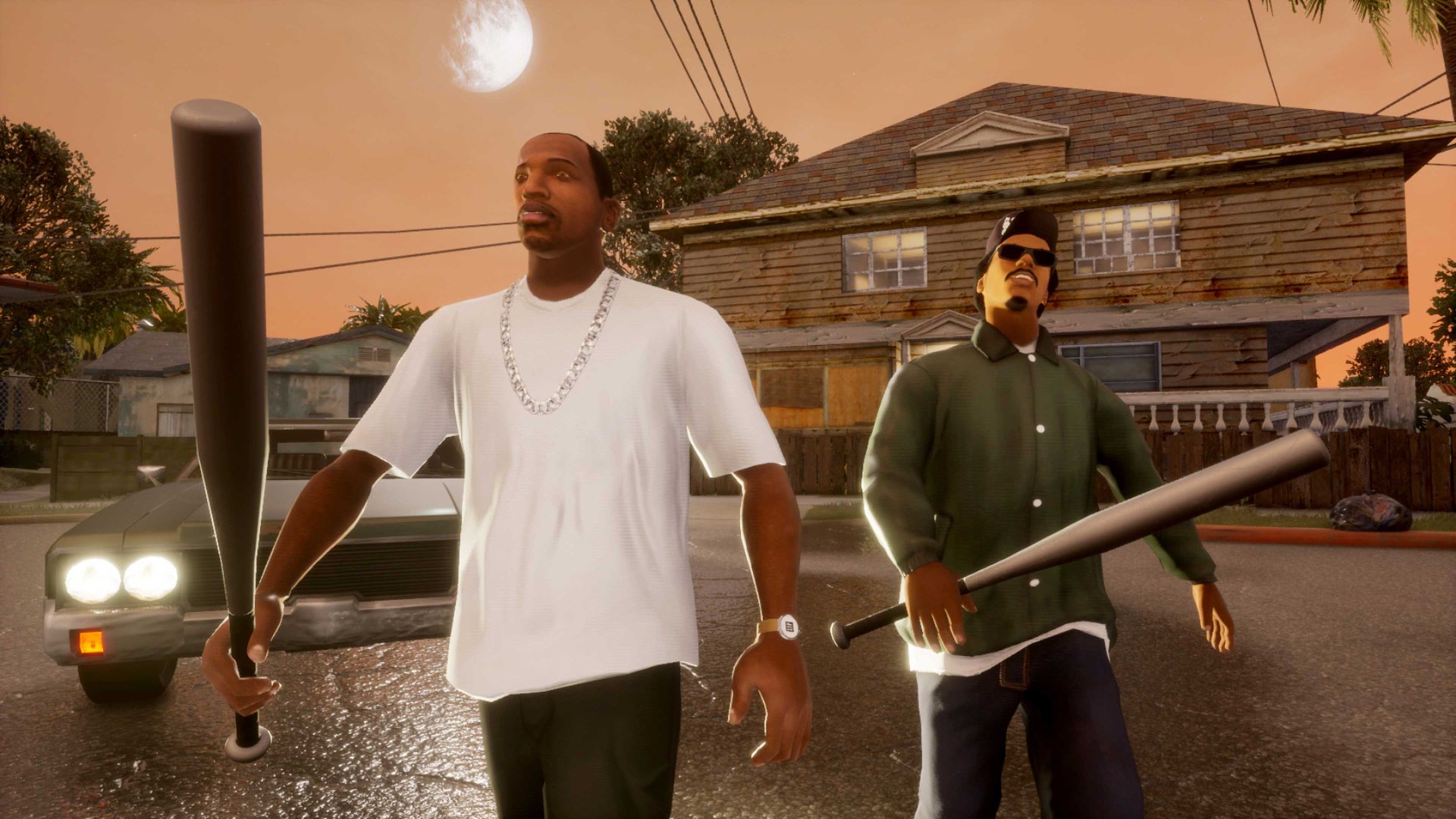
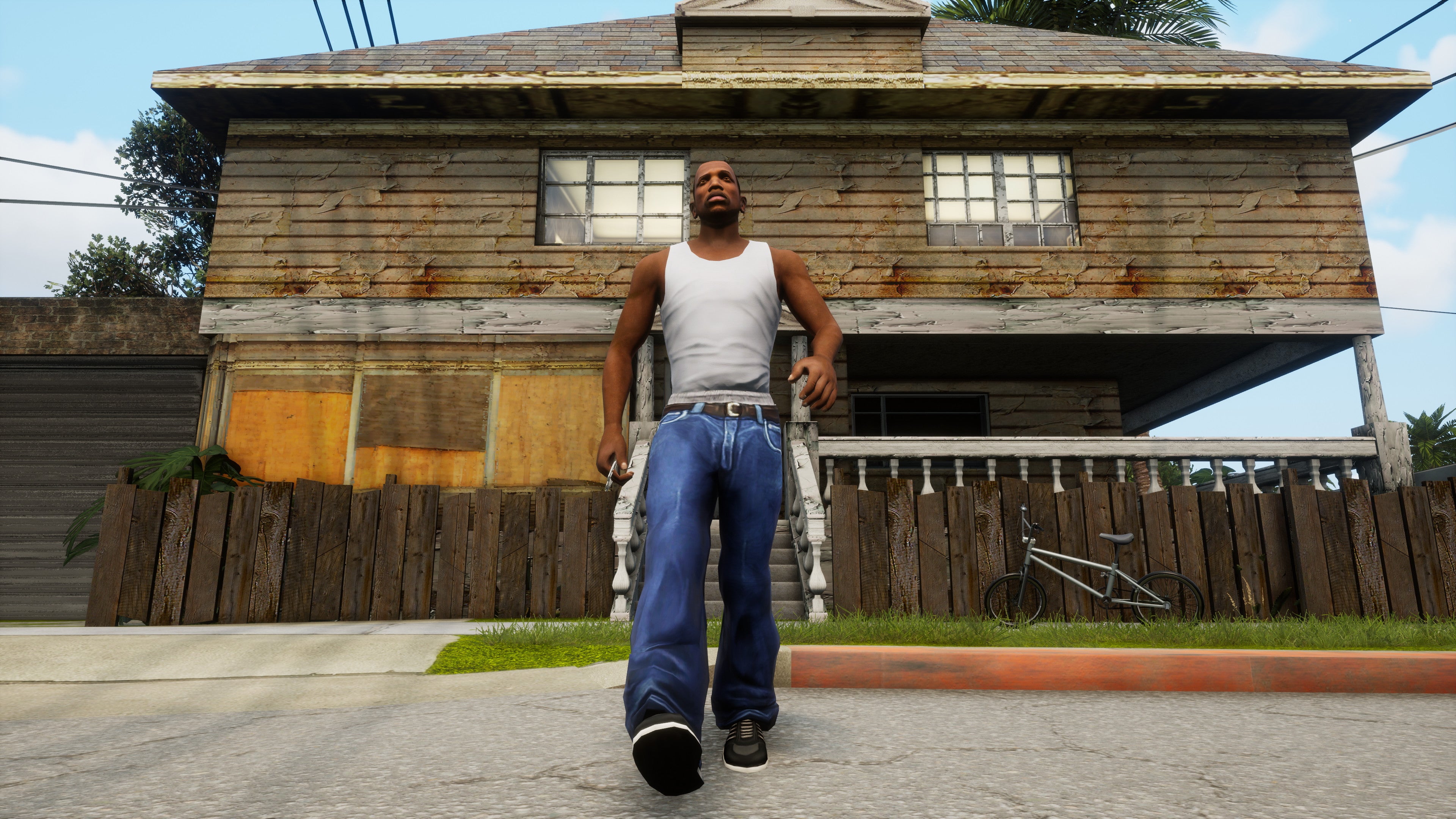
Rockstar yesterday launched the Grand Theft Auto: The Trilogy – The Definitive Edition, a collection of GTA 3, Vice City, and San Andreas rebuilt and remastered. Today, you cannot buy it at all on PC. Given that the Internet has been abuzz with screenshots of by how bad parts of the new versions look, it might be tempting to assume Rockstar pulled it from sale for being rubbo. However, they do seem to be having trouble with the launcher software which the game requires. Hmm! Either way, the game is a mess.

This is not a fun list.
No, this is not a compilation of movies you casually put on, hoping for a chill time on your couch. You don't watch the films on this list as much as the films on this list happen to you: they slip under your skin, slide into the folds of your brain, worm their way into your very soul. When the /Film team sat down to hammer out a list of the most disturbing movies of the century so far, we drew a hard line. Nothing could make it on the list unless we found it actively unpleasant to experience. There are no cornball haunted house movies or cheesy slashers contained here. This is the real nightmare fuel. The movies that pushed our buttons in profound ways.
Some of these movies are masterpieces. Some are trash we can't really recommend. But all of them are disturbing. Buckle up -- this is a rough one.
TRIGGER WARNING: this list contains descriptions of gratuitously graphic and disturbing movie scenes depicting sexual assault, self-harm, torture, murder, and literally anything and everything else you may find upsetting. Proceed with caution.

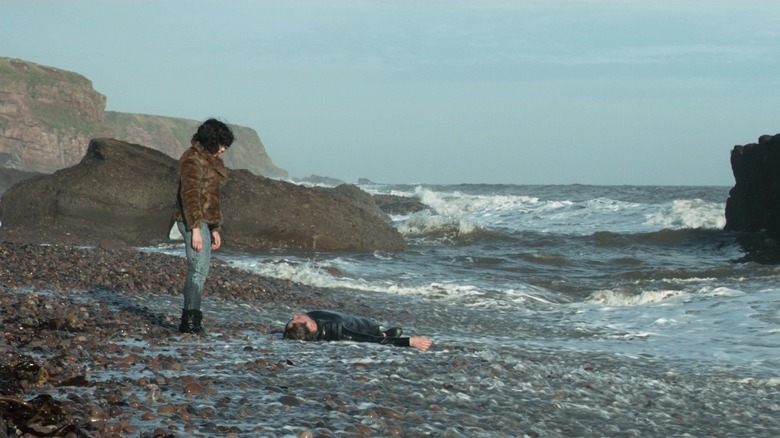
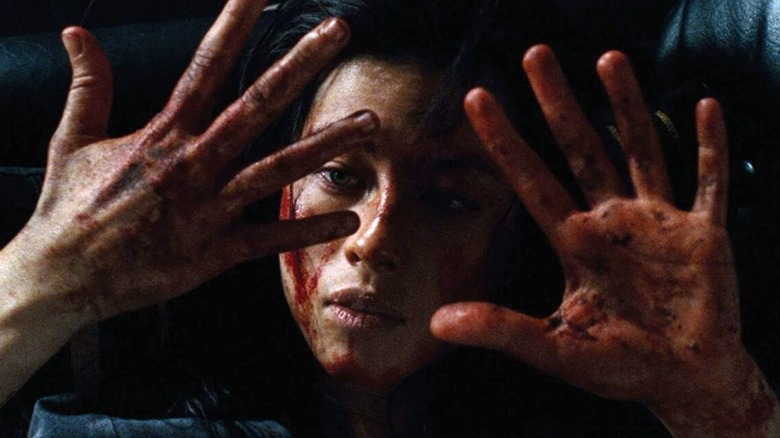
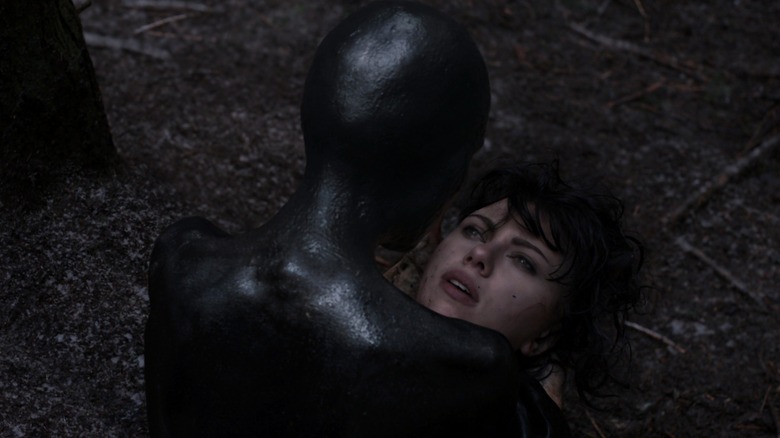
Jonathan Glazer's bleak sci-fi horror mash-up "Under the Skin" doesn't have much in common with its source material. In the similarly titled book, author Michel Faber paints a cold and cruel Scotland infiltrated by a strange alien race that is solely interested in breaking humans down into meat, a delicacy on their alien planet. It's a strange, long, and appropriately sad metaphor for factory farming, but "Under the Skin," the movie, truly cuts out all of the fat. Instead we're left with a film thats primary goal is to manufacture unease and dread.
Scarlett Johansson plays an unnamed woman who drives through Scotland, abducting male hitchhikers and trapping them inside the strange void within her house. Those scenes alone are disturbing, as the hitchhikers leer and make moves on Johansson's character. The audience knows she's essentially a venus fly trap about to swallow them whole, but they still act like they're the predators. In one particularly disturbing scene, a swimmer on a cold Scottish beach attempts to save a drowning couple as the pair's infant baby watches from the sand. After he fails, Johansson's character attacks him with a rock and drags his body off the beach, leaving the baby to succumb to the elements. Glazer lingers on the child, crying and alone on a cold, dark and rocky beach. Glazer never shows the baby's dead body, but those cries, those desperate screams, can't help but stay with you. (Kaylee Dugan)

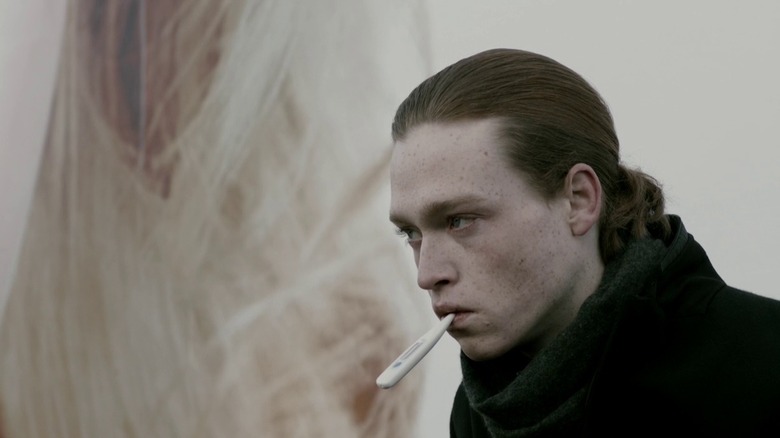
In the near future of Brandon Cronenberg's "Antiviral," celebrity obsession gets taken to its most extreme ends. Fans can purchase cloned meat of their favorite celebrity to cook up for the family barbecue, or if they're feeling especially adventurous, they can inject themselves with the illnesses taken directly from those same celebrities. That's right: they want to be so close to their celebrity idols that they willingly make themselves sick. In 2021, that seems even more insane than it did back in 2012, before the global pandemic.
An employee for the company that creates these products, Syd March (Caleb Landry Jones), tries to exploit the system and make a little extra money. He injects himself with some stolen product only to discover that it's the same disease that just killed international superstar Hannah Geist (Sarah Gadon). He is forced to solve the mystery behind the celebrity virus market, or else he'll meet the same fate.
"Antiviral" is shocking because it's not only gross (Cronenberg does his father proud, and there's plenty of body horror and practical effects on display), but the concept itself is innately disturbing. The idea of taking a parasocial relationship to the point of consuming your favorite stars or injecting their illnesses into your own body is a next-level dystopian nightmare. (Danielle Ryan)

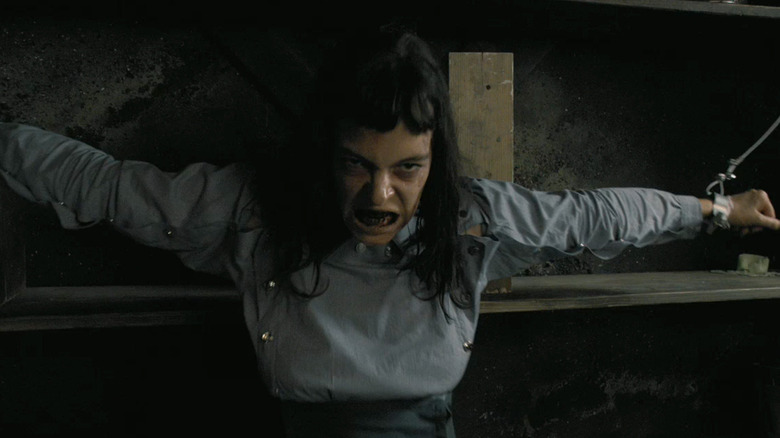
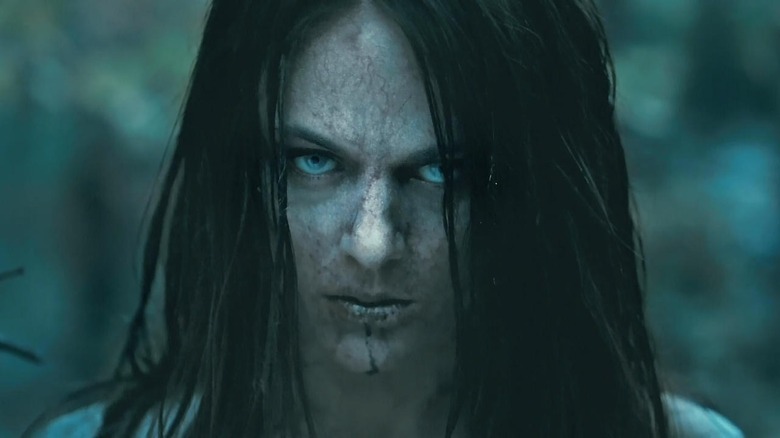
Lucky McKee earns a spot on this list because "The Woman" is a backwoods tale of relentless misogyny mixed with graphic cannibalism. McKee adapts his novel with co-writer Jack Ketchum — a sequel to McKee's 2009 film "Offspring" — into an imprisonment thriller about a feral cannibal imprisoned by an upstanding family in another pleasant-as-punch, picturesque community with dark, disturbing secrets. The Creek family essentially abducts The Woman, played by Pollyanna McIntosh, and desires to civilize her as this initial good samaritan idea. That is, which you can presume, not what occurs.
As revealed, the Creeks themselves have lessons to learn because once they're out of the public eye, their smiles turn crooked, and family members direct hatred onto the woman restrained on their property. Gingerbread cookies are offered only as a false olive branch to clamp nipples with pliers, for example. McIntosh's in-context innocent party is physically tortured, inappropriately abused, and treated like an animal captured by womanizing demons wearing flesh suits who otherwise act like pillars of society. There's a proper finale where The Woman finally gets her revenge, but the horrors of humankind are what make this tough-to-stomach torture flick so unsettling — a redefinition of the word "monster." You'll be sure to question what your neighbors are capable of behind their white picket fences and hospitable demeanor after watching this midnighter, which is one despicable life lesson. (Matt Donato)

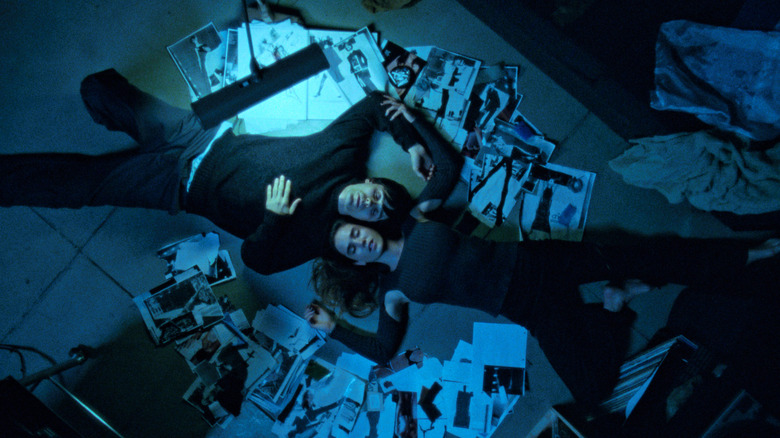
Darren Aronofsky's "Requiem for a Dream" is a horror movie where the demon eating away at its four core characters is addiction. This unflinchingly bleak portrayal of the different ways in which drug abuse can tear people's lives apart is disturbing not because of any extreme violence or gore, but because it might be one of the most depressing movies ever made.
"Requiem for a Dream" begins with Sara Goldfarb (Ellen Burstyn) locking herself in a closet while her heroin-addicted son, Harry (Jared Leto), steals her TV to sell for drug money -- and that's at one of the happier points in these characters' lives. By the end of the movie, Harry is lying in a hospital bed with his arm amputated, having contracted gangrene from infected injection sites. His friend Tyrone (Marlon Wayans) is suffering through withdrawals in jail. Harry's girlfriend Marion (Jennifer Connelly) is performing in degrading sex shows in exchange for her next hit of heroin. And Sara is near-catatonic after abusing amphetamines to lose weight for a television appearance that's never going to happen.
In conclusion: Drugs are bad, m'kay? (Hannah Shaw-Williams)

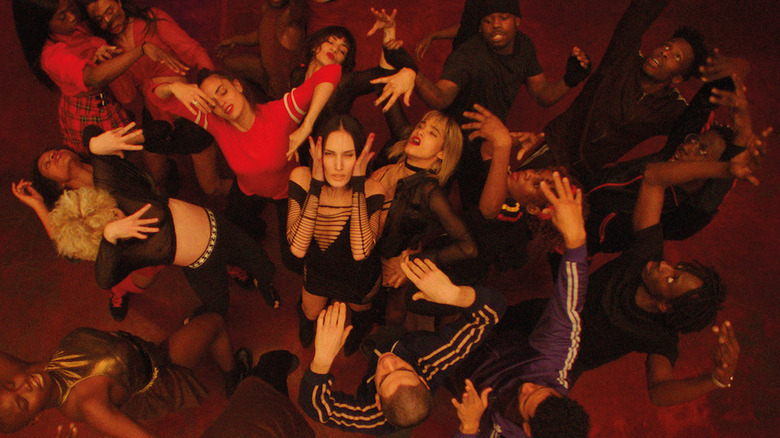
Gaspar Noe is known for his violent imagery and unsettling premises, but 2018's psychological horror "Climax" is a horse of a different color in the way it subverts the unexpected and the conventional at the same time. The film zeroes in on a stylish and wild French dance troupe who have taken up residency for the night in an abandoned school building — which allows them to get their party on all night long, should they choose to. The rager-cum-rehearsal takes a turn for the worse when the dancers realize their punch bowl has been spiked with LSD. In an effort to figure out the how and why, their night of fun spirals into a horrific and blood-spattered nightmare, which unfolds as tons of little vignettes filled with terror, betrayal, and rampant, unchecked human nature.
During one particular scene that will leave you harrowed, an agitated dancer brutalizes her pregnant cohort, whom she doesn't believe is with child. After being kicked repeatedly in the stomach, the pregnant dancer is taunted by the full group and, after punching herself repeatedly in the stomach and slashing her own face, encouraged to kill herself. There is validity in the adage that says inebriated musings are sober truths — but if it extends to nights like these, you can keep it, Mr. Noe. (Lex Briscuso)

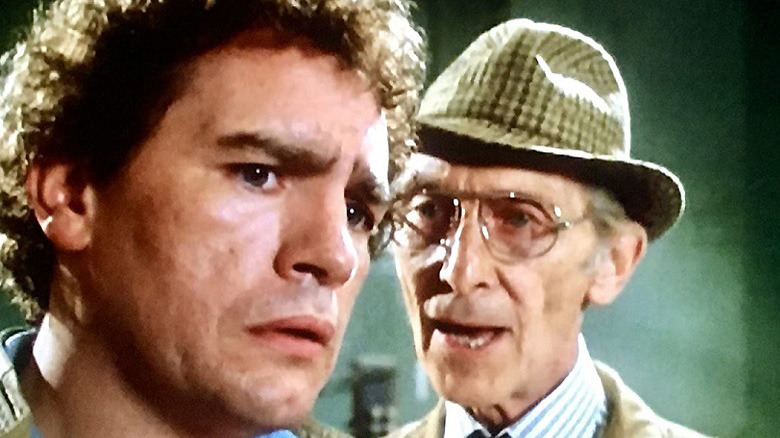
Director Jeremy Saulnier's horror/thriller "Green Room" is remembered by those who have seen it for a great many things. It is one of Anton Yelchin's final performances, Sir Patrick Stewart transforms into a murderous neo-Nazi, and it is unquestionably disturbing from the moment the plot truly kicks in. Centered on a punk band playing a gig at a Nazi club so that they can get gas money to drive home out of desperation, they unwittingly stumble upon a dead body, which leads to some of the most intimate and tense violence of recent memory.
It's the movie's intimate setting and Saulnier's use of the space that makes the audience feel trapped right along with the band that makes this all so difficult to watch. Several scenes will stick with the viewer long after the house lights go up. A man sticking his arm out of a door only to have it nearly hacked off by a machete, made oddly more disturbing by what we don't see. A dog ripping out a girl's throat and leaving her to gargle on her own blood rather than kill her quickly, simply because a later time of death is more convenient for the people who need to cover up these murders. And a girl who was relatively innocent earlier in the day reduced to cutting a man's stomach open -- very slowly -- top to bottom with a box cutter. It is all, in a word, brutal. (Ryan Scott)

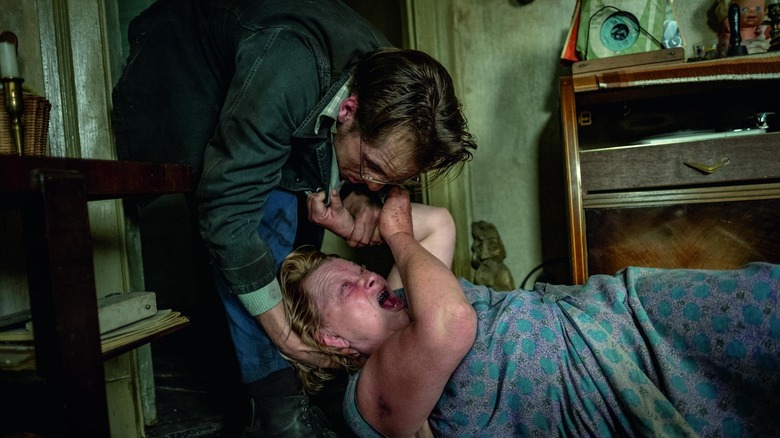
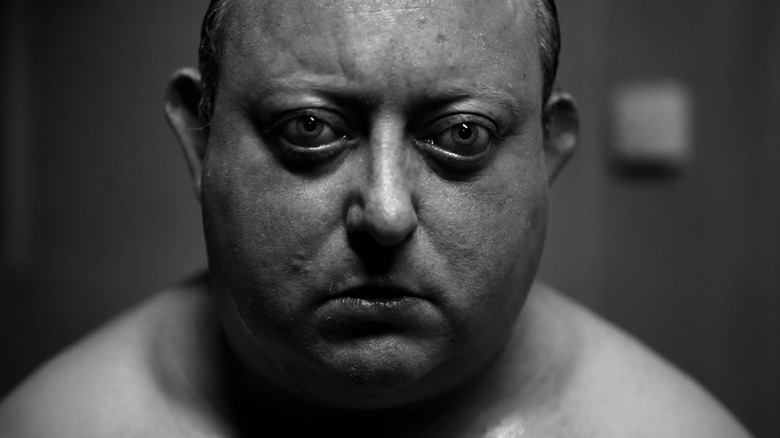
"The Golden Glove" enjoys a singular achievement in the drama genre, drawing its audience into a fully realized world -- behind a repellent character. It's a routine move in the horror genre, where storytellers are more insistent that we identify with monsters, or at least observe them in their natural habitat. Such is the case with Fatih Akin's adaptation of Heinz Strunk's novel "Der Goldene Handschuh," about German serial killer Fritz Honka.
Played by a hunched, lumbering Jonas Dassler under incredible prosthetics, Honka creeps through Hamburg's red-light district and picks up women victims, who are depicted wretchedly by Akin. What he does with them is captured by the film's unforgiving lens, which refuses to look away or give its victims dignity as they die -- one unmistakably soils herself as she's being strangled to death. There is nothing nice about the story because the story is not nice: a man chopped up sex workers and hid them in his apartment, and was only discovered when firefighters found a female torso while responding to a fire in his building. There is nothing "transcendent" about the violence, it just is, as well as the collective inherited trauma of post-WWII West Germany. "The Golden Glove" is an ugly movie about a foul man in a filthy, ashamed world. (Anya Stanley)

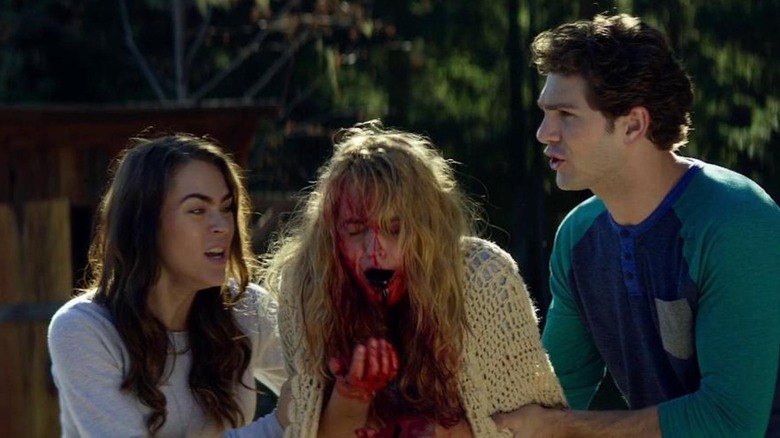
Eli Roth might not be your favorite horror director, but no one can deny the staying power of his gruesome romp "Cabin Fever." The sexy, bloody, and downright disgusting 2002 film was popular enough to power two sequels and a 2016 remake. While "Cabin Fever 2: Spring Fever" and "Cabin Fever: Patient Zero" don't quite capture the magic in the bottle that was the original, the remake sticks close enough to what made the 2002 film work that it feels almost as affecting.
The plot of both the 2002 and 2016 movies follows a group of conventionally attractive college students as they head into the woods to vacation in a cabin by a lake. They have a week of drinking, smoking, and sex ahead of them, but that dream is quickly cut short when they all begin to develop a mysterious flesh-eating disease. While both films are filled with more scenes of decaying limbs and oozing blood than you could ever want, there's one scene they share in particular that takes the cake. In it, one of the college girls draws a bath in an attempt to clean her bleeding sores. When she begins shaving her legs, her skin slides off with the razor, revealing a crimson slash of blood and muscle. It will 100% make you never want to shave again. (Kaylee Dugan)

"The Human Centipede" is about a deranged doctor obsessed with the idea of connecting humans who surgically attaches three people by the digestive tract, mouth to anus. "The Human Centipede 2" is about a man named Martin Lomax that is so obsessed with the film he sets out to make his own centipede consisting of 12 people, including Ashlynn Yennie, an actress from the first film. After kidnapping, knocking out teeth, and crudely attaching his victims in a centipede formation with a staple gun and duct tape, he injects them with liquid laxative causing, well, exactly the kind of explosion laxatives are made for.
Even today, "The Human Centipede 2" cannot be legally supplied anywhere in the UK after The British Board of Film Classification deemed it "sexually violent and potentially obscene" with "unacceptable material" that cannot be fixed with cuts. "The Human Centipede 2" is not for the faint of heart, but the most disturbing fact is that someone like Martin probably exists, meaning, there has to be someone out there absolutely obsessed with "The Human Centipede." Every movie is somebody's favorite movie, and that goes for "The Human Centipede." Thinking about that possibility is enough to make someone want to immediately take a shower. (BJ Colangelo)

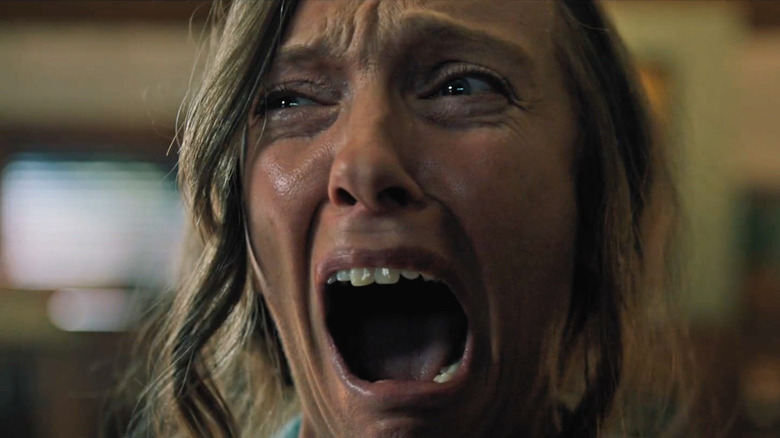
The difference between a scary movie and a deeply disturbing movie is all in tone, and "Hereditary" gets you from frame one. Ari Aster's slow push-ins and smooth camera moves underline the horror of "Hereditary" in much the same way Stanley Kubrick's technique made "The Shining" the iconic horror film it is.
Familial trauma is a common thread in Aster's films, and holy smokes is it front-and-center in this story about the shattering of a family already on thin ice. Toni Collette stars as the matriarch of the house, whose family is targeted by some kind of occult force after the death of her mother. The whole movie is a descent into madness for her character as she's hit by tragedy after tragedy that culminates in one of the tensest finales of any modern horror film.
There are precious few jump scares on display. Instead, Aster wants to work his way under the viewer's skin. He'd rather hold on a wide shot and let the audience spot something creepy as hell in the background than have something jump at the lens with a big musical stinger. Alex Wolff and Milly Shapiro are wonderful as brother and sister. Shapiro's Charlie is an odd duck even at the best of times, and her tic, which is a clucking of her tongue, becomes the creepiest movie sound this side of the croaking ghost in "Ju-On: The Grudge."
Wolff is the central focus of most of the disturbing moments in the movie, which isn't gory or hyper-edited. It's simply a long, slow push-in on his face as he's sitting in the driver's seat of a car, trying desperately not to look in the back seat.
"Hereditary" is top tier classy horror guaranteed to mess up your evening. (Eric Vespe)

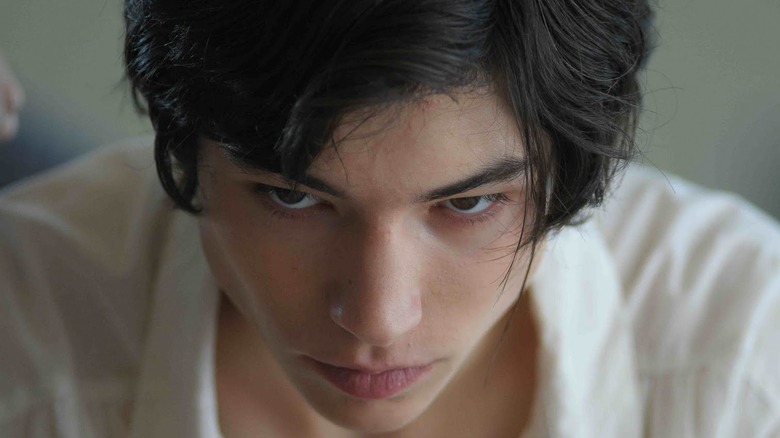
Horror movies trade in gradual, compounded ignorance of warning signs. Sometimes they'll even warn you in the title, as the '79 disco-horror "Don't Go In The House!" can attest (itself an honorable mention in the disturbing movies pantheon). In Lynne Ramsey's slow-burn psych-drama "We Need to Talk About Kevin," former writer Eva Khatchadourian (Tilda Swinton) is the one to look back on the signs that her son Kevin (played by Ezra Miller) is a sociopath in the wake of a school massacre he carried out that killed several classmates and faculty. Based on the 2003 epistolary novel of the same name by Lionel Shriver, the story unsettles not by its most salacious acts or any sort of gore -- quite the opposite. There is a banality to every sign of things to come, and with no accompanying score most of the time, Ramsey draws menace from the silence.
Eva has always struggled to connect to Kevin (she did not want to be a mother), but when things progress beyond late-stage bedwetting, a layer of dread fills the tonal space where jump scares and boogeymen normally dwell. The flags get red: one of Eva's motherly memories that live in cinema infamy is shocking not for the masturbatory act she witnesses, but for the simple thing Kevin does once he realizes he's caught.
A devastating climactic reveal that would normally get an orchestral crescendo is only accompanied by the quiet spritz of the lawn sprinkler system. In large part due to Miller's vacant-eyed, intense performance, "We Need To Talk About Kevin" stays on the mind post-credits not with a scream, but with an insistent whisper. (Anya Stanley)

"Deadgirl", written by Trent Haaga and directed by Marcel Sarmiento and Gadi Harel, follows two teenage boys (Noah Segan and Shiloh Fernandez) who discover a naked female zombie (Jenny Spain) and take her captive. One of them decides to keep her as a sexual object and starts bringing in other teenagers to have sex with her, despite the fact that she clearly cannot and does not consent. This puts a serious strain on the boy's friendship, and things come to a head when the question of making a new, less decomposed Deadgirl arises.
While "Deadgirl" is a harsh commentary on rape culture, it's also brutal to watch. There are several scenes with teenage boys forcing the zombie girl into sex acts, some of which are rather graphic. Sure, one of the boys ends up with his intestines decorating a bathroom stall, but the gore is not what's disturbing about "Deadgirl." Instead, the callous way the teenage boys treat their undead captive and the living women in their lives is what makes the movie so incredibly unpleasant. Each of them, even the one who seems like he's trying to do the right thing, has a completely damaged view on gender and sex. They don't see women as people, but as sex objects, and their experiences with Deadgirl only bring those horrific attitudes to a head. (Danielle Ryan)

Sion Sono's 2001 indie film "Suicide Club" exists at the intersection of two other contemporary Japanese horror movies. It shares DNA with the techno-horror "Pulse," which captured turn-of-the-millennium fears that the Internet could become a terrible force for evil (fears that were validated a few years later when Twitter was invented). And with "Battle Royale," it shares the theme of teenagers dying en masse in gruesome ways.
"Suicide Club" is as bizarre and hard to pin down as it is disturbing, which is perhaps why it never reached the same heights of popularity as either of the aforementioned films. The film follows a group of police officers and a curious hacker who investigate a series of violent suicides that are somehow connected to a mysterious website full of colored circles. In the opening sequence of "Suicide Club," 54 schoolgirls line up on a train platform, holding hands, and collectively jump in front of a train. It's an odd mix of the macabre and the cartoonish as the girls' bodies are shown being crushed under the train and giant waves of blood splash the gathered commuters.
In between these vignettes of violence, "Suicide Club" continually keeps the audience off-balance and guessing right up until the end. Who is leaving grisly rolls of stitched-together human skin at the scenes of mass suicides? Did the suicide victims consciously choose to die, or were they psychologically manipulated? Are the gang of glam-rock sociopaths that live in a run-down bowling alley responsible for the deaths, or are they simply a red herring? Ultimately, "Suicide Club" offers no easy answers. (Hannah Shaw-Williams)

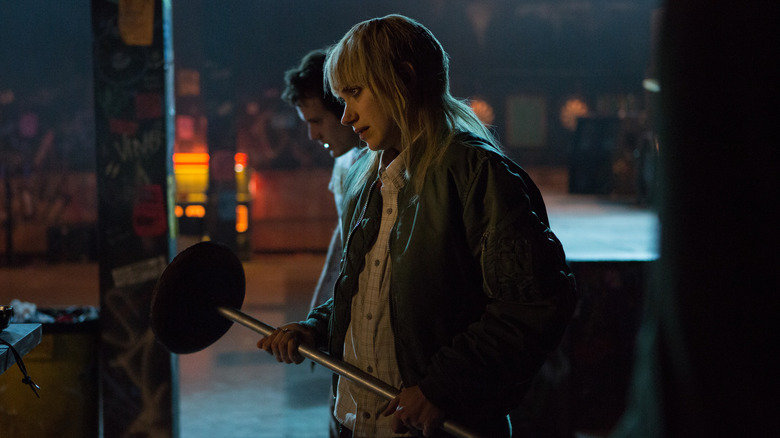
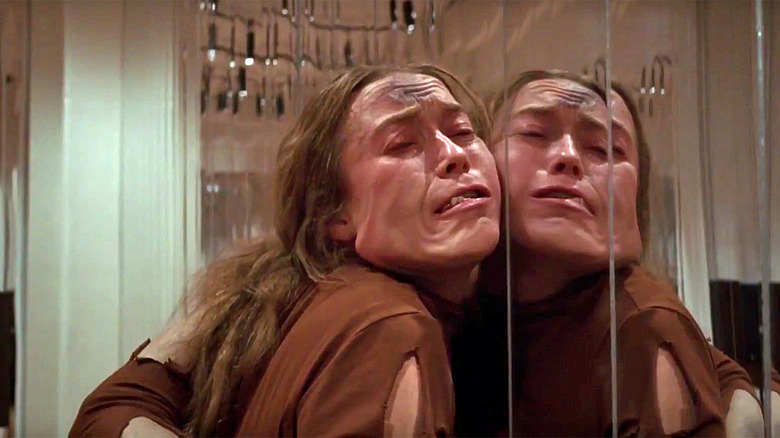
Any film about a cult of murderous witches who happen to be mentors at a dance company is sure to spark anyone's interest. I mean, read that sentence again. But where 2018's "Suspiria" remake takes things to the next level is in its ability to make that group of murderous witches terrifying, not campy. The film follows a dancer named Susie (Dakota Johnson) who comes to Berlin to audition for a renowned dance company helmed by Madame Blanc (Tilda Swinton). When Susie's cohorts start crying out witchery and disappearing, she takes it upon herself to figure out what exactly is going on.
This movie banks on the brutality of its antagonists — and if you've seen it, you already know what scene is the best example of this. Yeah, it's that messed up. One of Susie's groupmates accuses the matrons of the company of witchcraft and she storms out of a rehearsal ... only to be trapped in a room where she is unable to stop her body from being crushed and mangled by Susie's powerful (and seemingly magical) performance in the rehearsal above, which appears to be orchestrated by the company's coven. It is hypnotic and nauseating, and you will never look at body horror quite the same way again. (Lex Briscuso)

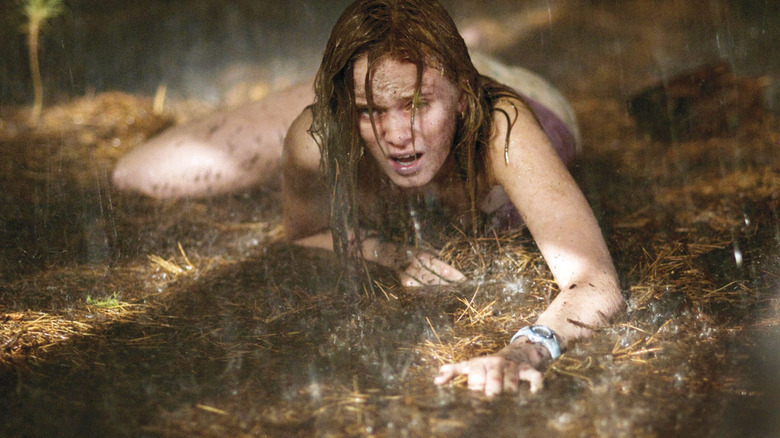
In this remake of Wes Craven's 1972 exploitation rape-revenge thriller of the same name, 2009's "The Last House on the Left" tells the story of a girl named Mari (Sara Paxton) and her friend Paige (Martha MacIsaac) who cross paths with escaped convict Krug and his crew of criminals who kidnap the girls, assault Mari, and leave them both for dead. In a twist of fate, the crew ends up seeking refuge at Mari's family lake home in the middle of a storm, and her parents John and Emma (Tony Goldwyn and Monica Potter) unwittingly offer them shelter. Once the duo discovers just who these strangers are, they decide to enact revenge on them for harming their daughter, taking justice into their own hands.
"The Last House on the Left" is disturbing not only for its subject matter which deals with rape, torture, and extreme violence but also the generational trauma that exists once we realize Krug is trying to convince his teenage son to join in on his sick and demented excursions of horror. Additionally, watching John and Emma process the truth of what has been done to their daughter is heartbreaking and forces the audience to witness not just a terrible event, but the ripple effects of the harm caused. The parents' vengeance is to be expected, but the performance of Sara Paxton after her character is assaulted is extremely difficult to watch, and a painful reminder that far too many people have survived similar attacks. (BJ Colangelo)

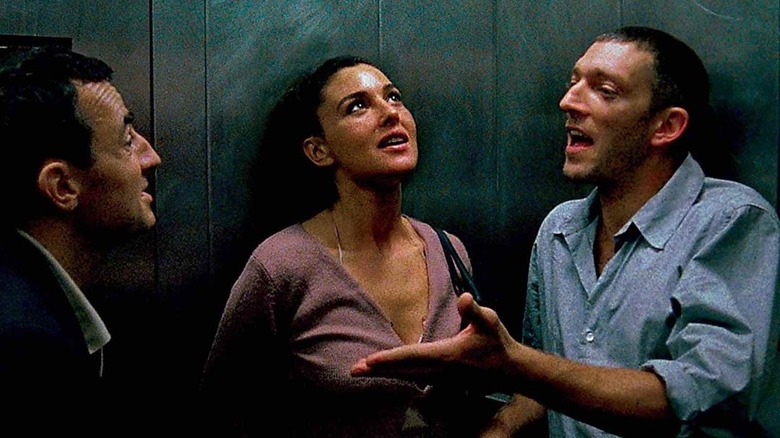
Gaspar Noé's "Irreversible" so disgusted the gathered audience when it premiered at the Cannes Film Festival that newspaper reports estimated 10% of the 2,400 gathered viewers walked out of the movie (according to Tim Palmer's retrospective on "Contemporary French Cinema of the Body").
Following closely on the heels of "Memento," which was released a couple of years earlier, "Irreversible" is similarly structured with its scenes shown in reverse chronological order. It begins with Marcus (Vincent Cassel) furiously hunting for the man who raped his girlfriend, Alex (Monica Bellucci), and beat her into a coma. The rape itself is depicted midway through the film in a single, grueling, unblinking take, and "Irreversible" is notorious for its similarly dispassionate depiction of a man gradually, brutally getting his face caved in by a fire extinguisher.
What makes "Irreversible" so unique, despite being so hard to watch, is the way in which it turns the usual rape-revenge tropes on its head. The "money shot" (of the supposed rapist's head being crushed) comes at the start of the film, and it's eventually revealed that the man who was killed was not even the man who raped Alex. There's no feeling of catharsis as the movie winds towards its incongruently serene ending -- only a growing sense of tragedy as we're shown what no amount of revenge will ever be able to restore. (Hannah Shaw-Williams)

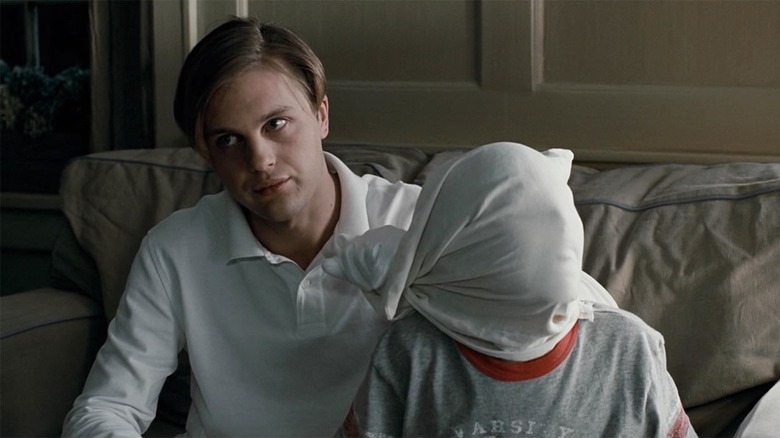
In both writer-director Michael Haneke's shot-for-shot remake of his 1997 horrorshow, the audience is taken down the rabbit hole when a suburban family gets taken hostage in their own home by two men they meet randomly amid their serene lakeside vacation. The captors (played by Brady Corbett and Michael Pitt) invite the family to engage in a bet as to whether or not they will be alive by 9:00 the next morning by taking part in a handful of sadistic games. Sounds pretty unsettling, no? Everything in the film hinges on the sheer terror of invasion, of someone unwanted and forceful taking over your sanctuary. On top of that, the occupation is coming at the hands of unsympathetic psychopaths.
One of the most chilling scenes in this movie revolves around a sickening game the Farbers are forced to play, called "cat in a bag." During the game, one of the assailants holds the family's son captive with a pillowcase over his head while they force his mother (Naomi Watts) to undress while her husband (Tim Roth) watches so they can inspect her body for imperfections. It's gratuitous and sadistic and puts the impulses of these villainous characters on full display. And, what's worse is it is easy to put yourself in the family's shoes. Ultimately, the film is a commentary on violence in media (if you've seen the film, you know why, but for those of you who haven't, I certainly suggest having a watch) — and Haneke makes sure we are haunted by that fact. "Why don't you just kill us?" the mother asks at one point. "You shouldn't forget the importance of entertainment," is the response she receives. (Lex Briscuso)

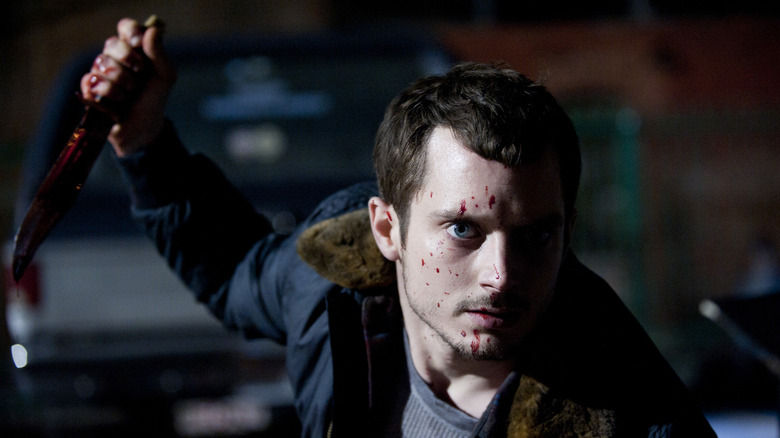
Franck Khalfoun's "Maniac" remake is somehow more disturbing than its 1980s original. William Lustig's "Maniac" is a cesspool of back-alley New York City sleaze and Tom Savini's practical goriness on its own pedestal. Still, Khalfoun — alongside writers Alexandre Aja and Grégory Levasseur — take an approach that's so vile, and so repugnant. Elijah Wood stars as Frank, a serial slasher with traumatic mommy issues who stalks women, viciously murders them, and steals their scalps for his mannequin collection. Hunting knives are plunged into mouths like an uppercut, hands constrict around necks as eyes bulge, and all because Frank is able to wear his "nice guy" personality like a mask in public.
The film employs first-person cinematography that inserts us into Frank's skin. We can hear his heavy panting, listen to his deranged thoughts, and become a slasher villain as asphyxiating, mutilating violence plays out with such unforgiving brutality on the screen. We're allowed into the inner workings of a madman, and dare I say there are brief, fleeting moments of empathy — I know, it's a nasty narrative trick. Expect the kind of horror experience that requires an acid bath afterward to feel clean again, which is intended as a compliment. It's as effective as it is revolting, which is precisely the intention of a remake that doubles the ante in the best-slash-worst ways. (Matt Donato)

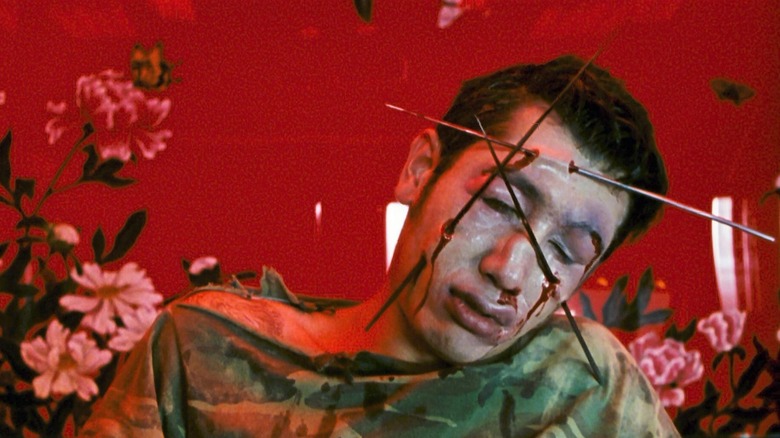
Hideo Yamamoto is enjoying some celebration lately. His seinen manga "Homunculus" is enjoying a vivid adaptation on Netflix, and is one of /Film's selections for Best Horror Movies of the year. But one of the author's most famous works, about an unstable killer who brushes up against a sadistic Yakuza enforcer, has been shocking people for 20 years. Prolific Japanese director Takashi Miike got his hands on it, and a new flavor of the old ultra-violence was brought to mainstream audiences in the early aughts in a way that most J-horror at the time wouldn't touch.
Like his contemporaries Sion Sono ("Suicide Club") and Kinji Fukasaku ("Battle Royale"), Miike was more interested in criminal underbellies and poking at taboos. He seems to be one of the few filmmakers working who has no problem translating brutalities in manga form (which has considerably different leeways than feature films do) to the screen, carrying tongue mutilations and mid-air suspension tortures from page to screen without batting an eyelash (to the disgust of audiences in 2001 and today). An interrogation scene has its victim tormented with boiling tempura oil and his cheek sewn through. A sex worker is mutilated before her death. Ichi himself gains sexual gratification from killing (though he's a pawn in several senses), and his nemesis carries snake-like slits extending from his mouth -- the business of these men is violence, through and through. But it's not entirely the violence that viewers are truly upset with; it's their own inability to look away. Miike knows it, too. (Anya Stanley)

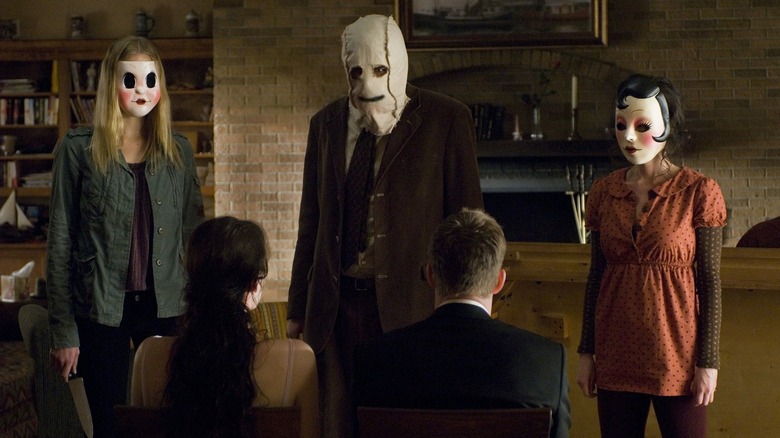
Home invasion horror is nothing new, but director Bryan Bertino gave the genre a particularly memorable entry, one that is disturbing on a purely psychological level with 2008's "The Strangers." Not that killers always need a good reason to do what they do, but at least a little reason helps set up some conflict for the audience. However, this movie becomes so distressing and gut-wrenching toward the end when it's explicitly said that the only reason Liv Tyler's Kristen and Scott Speedman's James became the subjects of a night of unimaginable torture and violence at the hands of three masked killers was simply because they were home.
While Bertino's slow-burn direction and slasher scenes work well, it's that line that re-contextualizes the entire movie for the audience and makes it truly stick. The fact that these three deeply violent people were on the hunt and the only reason those two people had to endure what they endured was that they made the mistake of being home. Few movies have ever made the "it could happen to you" thing stick quite as well. (Ryan Scott)

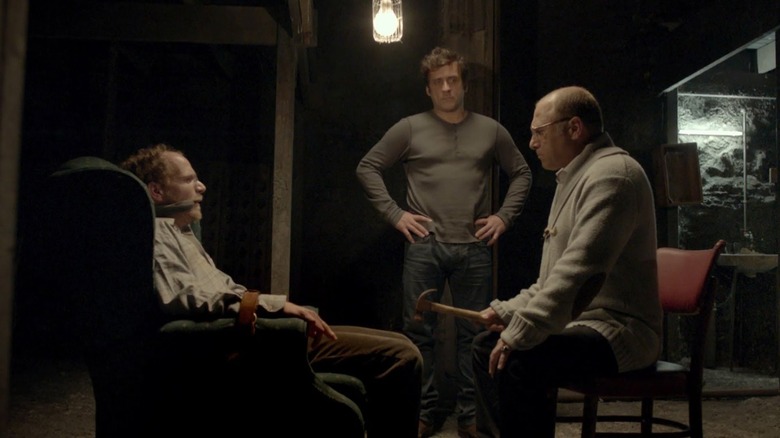
When a movie is stamped Quentin Tarantino's favorite of the year, you know it's going to be something a bit twisted. Aharon Keshales and Navot Papushado's Israeli tale of not-so-storybook revenge, "Big Bad Wolves," is about three men (and a later interrupter), a dead child, and a toolbox full of torture devices you can find scattered around any average homeowner's garage. It's a scenario of no escape, utter malice, and ignorable remorse when it comes to vigilante justice. There are no heroes in sight.
The father with nothing to lose who recently buried his headless kin. The renegade detective who'll skirt the system for bloody justice. They both believe the man they render immobile is a perverted kiddie killer, and there's no limitation to their methods of coaxing an ultimate admission. That's all "Big Bad Wolves" requires to summon the absolute worst characteristics of humanity pushed beyond their breaking points. It's never about "torture porn" gross-outs inflicted upon the suspect in question, who begs for mercy and cries about innocence. That's the sickest aspect. "Big Bad Wolves" is a devastating and unfathomably stone-cold vision of retribution that only sees red and ponders what good comes out of mending our broken souls with personal, intimate acts of exceptional rage. (Matt Donato)

Depending on who you ask, "Martyrs" was so obliteratingly disturbing and soul-crushing that it effectively ended the New French Extremity, or what may become its first cycle. It's as if all there was left to achieve in the politically and culturally charged subgenre had been accomplished. There was nowhere else to go.
"Martyrs" opens on Lucie Jurin (Mylène Jampanoï), a young girl, escaping a derelict warehouse where she was systematically tortured and abused for more than a year. She's taken in by a local orphanage where she befriends a girl named Anna Assaoui (Morjana Alaoui), also a survivor of child abuse. 15 years later, Lucie is convinced she's found her captors, and she and Anna scope out their home to make sure. Paranoia begets murder which leads to Lucie's mental and emotional annihilation, and Anna's discovery of facts that should have been left undisturbed.
With more tonal shifts than "From Dusk Till Dawn," "Martyrs" is disturbing not so much for its gore as for its bleakness and brutality. It anthropomorphizes intangible notions like guilt and fear, suggesting that the mind, once broken, is irreparable.
The power of "Martyrs" and the reason it's become one of the most infamous titles on this list lies not in the shock value of blood, guts, and gore. It wants to crush your soul and leave you hopeless, and it's more than up to the task. (Ariel Fisher)

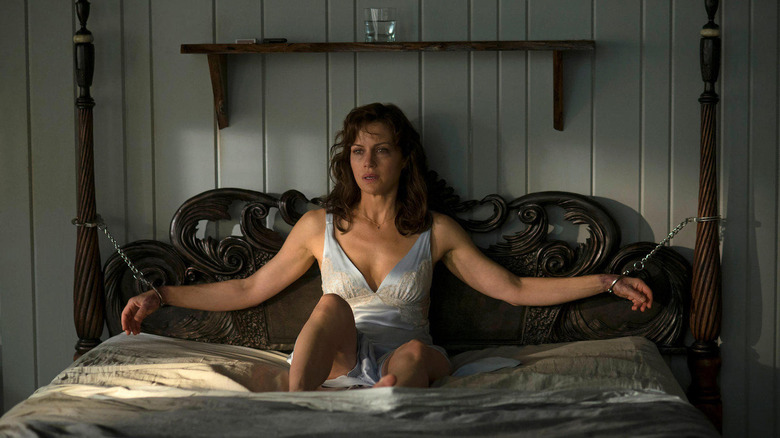
Jessie and her husband, Gerald, plan a sexy weekend getaway as a last-ditch attempt at rekindling the fire of their marriage. The only problem is Gerald has himself a heart attack while engaging in some light bondage, leaving Jessie handcuffed to her bed alone with the corpse of her husband and no neighbors within earshot. Can she get herself out of this situation before she dies of dehydration? And is that towering figure she sees in the shadows at night really there or just a delusion of her perpetually panicked mind?
Mike Flanagan's adaptation of what was assumed to be one of Stephen King's most unfilmable stories is a soaring success, thanks in no small part to Carla Gugino's strong central performance. Getting out of her current situation depends on her confronting some buried trauma from her childhood, which is disturbing in and of itself when shown in flashbacks. But when you add in a disfigured apparition that shows up in her room and the climactic, dizzyingly gory solution to get herself out of those handcuffs ... you get a movie that manages to get under your skin and stay there.
On a deeper emotional level, any time sexual trauma is tackled in a film, it's going to be difficult for the viewer, so "Gerald's Game" is a double threat in terms of putting you on edge. It'll hit you emotionally and then when the big gore moment comes in, you'll be squirming on your couch, daring yourself to look at the screen. The term "degloving" will forever skeeve you out after watching this movie. (Eric Vespe)

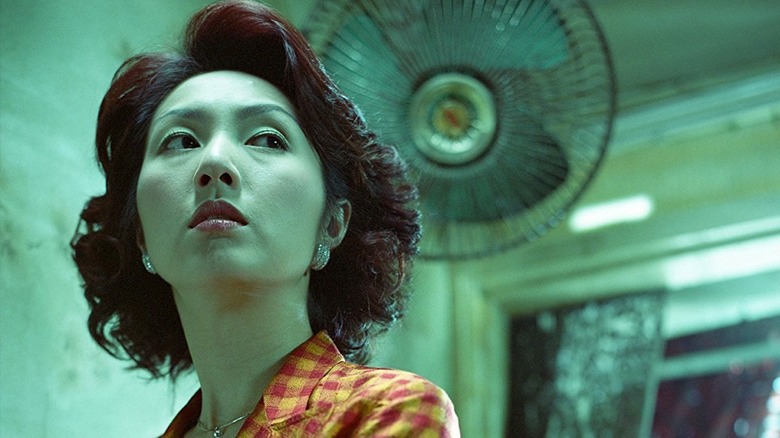
Fruit Chan's Hong Kong horror film "Dumplings" is one seriously twisted tale of the lengths women will go to in order to maintain the appearance of youth. The movie follows aging actress Mrs. Li (Miriam Yeung), who worries that her husband is losing interest in her and is having a hard time finding roles. She enlists the help of Aunt Mei (Bai Ling), a local woman renowned for her magical regenerative dumplings. The secret ingredient in her dumplings is a disturbing one: she uses human fetuses. Mei also moonlights giving people illegal abortions, which is where she gets her unusual magic ingredient.
Fetus dumplings are pretty horrific on their own, but the situations that drive characters to both provide for them and purchase them are what make the movie so disturbing. Initially Mrs. Li is repulsed by the dumplings, but once she thinks she sees results, she starts asking Mei for more potent recipes, which require even more ethical lines crossed. When one of Mei's patients dies after a botched abortion to "harvest" the most potent medicine for Mrs. Lei, it's hard to stomach more than just the idea of munching on pre-humans. The abortion scene is graphic, and the resulting suffering is even worse. By the time the credits roll, the horrors of anti-choice policies and patriarchal control seem much more disturbing than even this bizarre form of cannibalism. (Danielle Ryan)

The original 1978 rape-revenge film "I Spit On Your Grave" is one of the most infamous exploitation films in history. It's almost unthinkable to imagine remaking a film of this caliber, but that's exactly what happened in 2010. A novelist named Jennifer travels to Louisiana to work on her next book in peace, but is brutally attacked and raped by a group of men who felt embarrassed by her rejection of their flirtation. When Jennifer looks to law enforcement for help, the men reappear and instead of helping her, the sheriff joins in on her continued assault. The men leave Jennifer for dead, but she miraculously survives and begins stalking her assailants to plan her revenge. What follows is brutal and personalized retribution, with Jennifer fulfilling acts of brutality beyond imagination.
What makes the 2010 version of "I Spit On Your Grave" so disturbing is the fact the film's existence proves that there's still a need for the cathartic release of rape-revenge films over three decades from the original's release and that the situation surrounding Jennifer's attack is still alarmingly relatable. A man gets his eyes pecked out by birds, another has his face burned off with lye, another is emasculated and left to bleed to death, and the final two are killed by a shotgun inserted into a man's anus with the bullet exiting and landing into the chest of the other. Their deaths are horrific, but after seeing the harm they've caused, it's almost impossible not to wish them worse. (BJ Colangelo)

Some folks would have you believe that childbirth is all magical and beautiful. But it's also violent and horrifying. Alexandre Bustillo and Julien Maury's "À l'intérieur" (or "Inside" to English-speaking audiences) takes the turmoil and terror of childbirth, gives it uppers, and parades it around, drenched in blood, with all the lights on. The New French Extremity wasn't known for being subtle, but "Inside" became one of the genre's most definitive examples of how disturbing it could be.
It's Christmas eve (yep, this one's a Christmas movie), and Sarah (Alysson Paradis) is having her baby the next day, four months after surviving a car crash that killed her husband. She's home alone, depressed, reluctant to be a single mother, and terrified of labor (as evidenced by a particularly disturbing dream). Then she shows up.
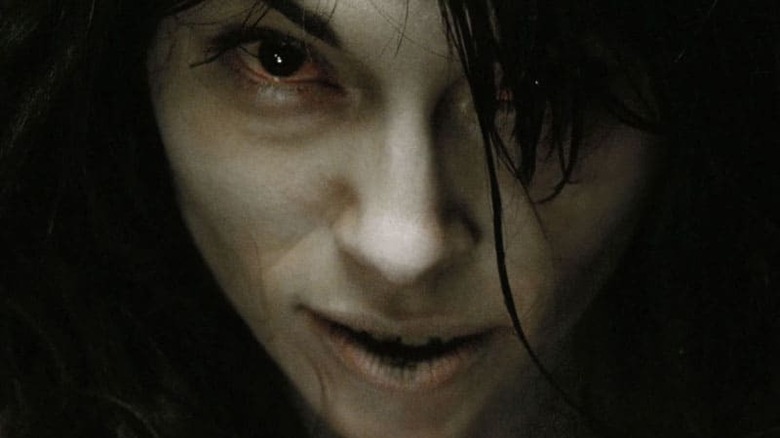
A strange woman known only as La Femme (Béatrice Dalle) has been stalking Sarah, and she wants to be let into the house. Why? To steal her unborn baby right from her womb with whatever implements are at her disposal.
What ensues is a psychotic, unpredictable bloodbath that's perhaps the most violent and provocative metaphor for the horrors of childbirth ever made. It stunned audiences at its Cannes world premiere and gave TIFF's Midnight Madness regulars a run for their money, raising the bar for disturbing content for years to come.
Some say giving birth is beautiful. "Inside" has other ideas. (Ariel Fisher)

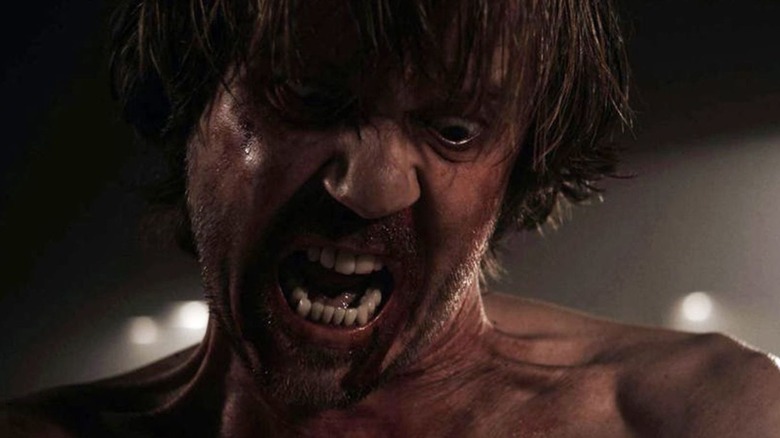
Where to even start with this one? "A Serbian Film" is one of the most difficult movies you will ever try to sit through. Not in terms of quality, mind you. It's a well-crafted film. In terms of content, though ... Hoo, boy.
The story revolves around a retired porn actor named Milos who takes one last high-paying job that is sold to him as the biggest, most artistic adult film ever made. This isn't to be a traditionally-shot film, but one that strives for naturalism above all else. Milos is just to live his life and at certain points "actors" will show up and initiate the sex scenes. Think of "A Serbian Film" as the most extreme version of David Fincher's "The Game" and you're close to the tone here. The weirdness escalates until lines are crossed. Like ... all the lines you think you know about and then a few more lines you never knew existed. All of them. Crossed
The most infamous scene in the movie, the one that probably cemented this film's position on this list, is when Milos realizes he's signed up for something he's in no way prepared for. His mysterious and rich benefactor shows him footage of a birth and then the subsequent rape of the newborn baby. Now, this all happens off-screen, but just the idea that it's portrayed at all was enough to get this movie banned in multiple countries.
Now, the craziest thing about "A Serbian Film" is that the infamous scene mentioned above isn't even the worst thing that happens in the movie. The ending is even harder to stomach. So bleak and disgusting and dehumanizing. "A Serbian Film" is a movie that is hard to sit through and impossible to recommend to just about anybody. It's the rare "extreme" film to earn its label. (Eric Vespe)
Read this next: The 15 Best '70s Horror Movies Ranked
The post These Are the 27 Most Disturbing Movies of the Century So Far appeared first on /Film.


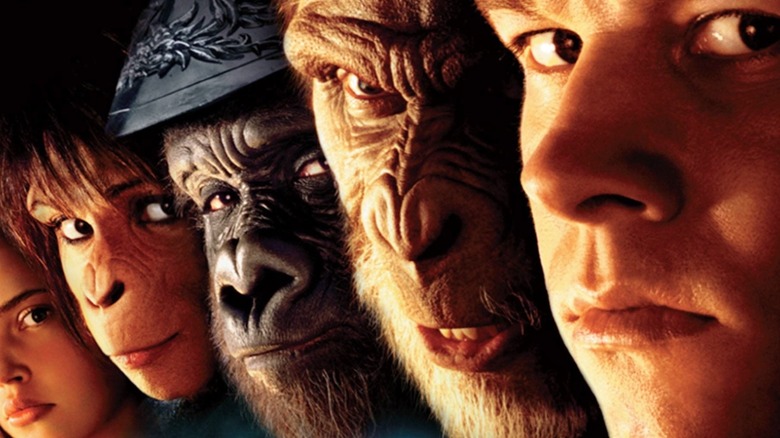
Remember when people got excited about Tim Burton movies? Okay, that's a bit harsh, but most of the eccentric, gloomy director's work over the last 15 years or so has lacked the wild spark that his earlier, more outlandish films had, as well as the depth of his most mature yet equally peculiar offerings like "Ed Wood" and "Big Fish." Arguably the first signs of trouble arouse with Burton's "Planet of the Apes," a re-imagining of the classic 1968 sci-fi film and the 1963 book by Pierre Boulle that inspired it.
On paper, "Planet of the Apes" and Burton read as a perfect match. No, really! Both the 1968 movie and Boulle's novel are social satires that create a fantastical setting — one where apes have evolved into the dominant species and adapted the manners and customs of humans — that serves as a funhouse mirror for the real world, reflecting humanity's foibles back at them. It's similar to what Burton achieved to great effect with his visions of 1980s yuppie culture in "Beetlejuice" and the '90s' American suburbs in "Edward Scissorhands."
Upon its release in 2001, however, Burton's "Planet of the Apes" was a financial hit (grossing well over three times its $100 million budget) yet earned decidedly middling reviews. The film drew criticism for various reasons, most notably its muddled plot and confusing ending. But would the alternate conclusion Burton had in mind have been any better?

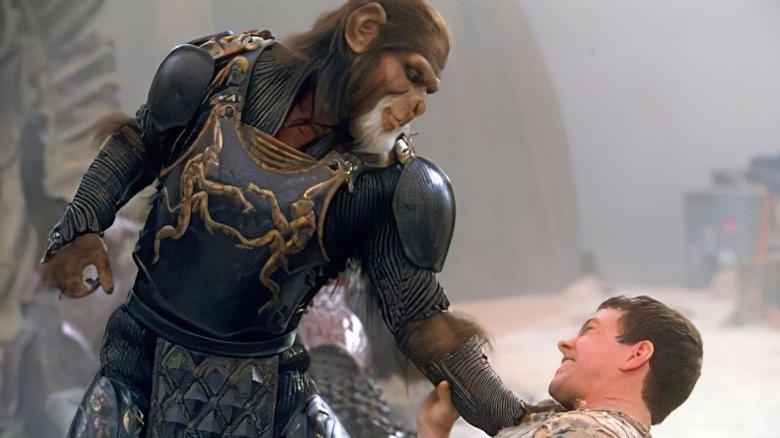
Mark Wahlberg starred in "Planet of the Apes" as Leo, an astronaut from the year 2029 who gets tossed several centuries into the future after traveling through an electromagnetic storm in space and crash-lands on Ashlar, a planet ruled by apes that act like humans, speak English, and enslave people. In time, though, Leo finds the now-ancient remains of the Oberon, the space station where he worked. As Marky Mark deduces, the Oberon (which had a crew that included trained primates) also got pulled into the electromagnetic storm yet crashed on Ashlar millennia before he did because wibbly wobbly, timey wimey stuff.
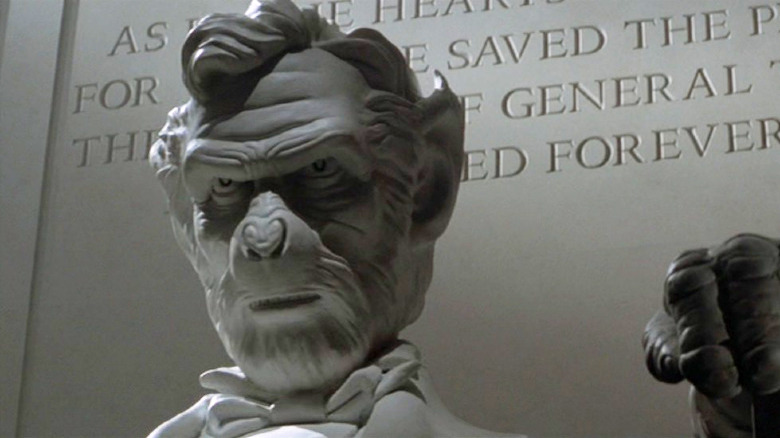
With Ashlar's people being descended from the Oberon's human crew, just like the planet's apes evolved from its simians, they've retained their intellectual capabilities and are able to rally around Leo to rebel against General Thade (Tim Roth), a cruel ape warrior who's driven to keep the truth about Ashlar's history secret, lest his fellow apes perceive humans as their equals. So, a revolution in the bag, Leo heads back through the same electromagnetic storm and lands on Earth, only to discover the Lincoln Memorial is now a monument honoring Thade and humanoid apes rule the planet.
Does the ending make sense? Not really, but that's the point. It was meant to be a giant cliffhanger leaving the door open for a sequel, which would've then explained how Thade escaped Ashlar and got to Earth long before Leo returned.

Burton's alternate ending to "Planet of the Apes" had Leo crash-landing in the Yankees' stadium, only to find the baseball team and onlookers are all humanoid apes. This conclusion would've hewed a little closer to the ending to Boulle's novel. There, the protagonist, a journalist named Ulysse Mérou, travels to Soror, a planet far, far away from Earth, where human-like apes rule over animalistic people. By the time Ulysse escapes and returns to Earth, many centuries have passed, and the world's apes have replaced humans as the dominant species. In an extra twist, the book also reveals the characters in its frame story, who are reading Ulysse's account of his journey, are actually gorillas.
Would the alternate ending have vastly improved Burton's film? Well, it might've restored some of the meaning of Boulle's original book, which acted as a cautionary tale about humankind's arrogance and belief in its inherent supremacy to other living beings. (The 1968 film's own twist ending also threw in a critique of the nuclear arms race.) That said, it doesn't skirt around the bigger issue, which is that Burton's "Planet of the Apes" tried to be a twisted sci-fi satire and straightforward action-adventure at the same time but wasn't fully satisfying as either of those things. In that regard, it's probably for the best the intended (threatened?) sequel never came to pass.
Read this next: Clint Eastwood's 14 Best Roles Ranked
The post The Alternate Planet of the Apes Ending Tim Burton Wanted Us to See appeared first on /Film.

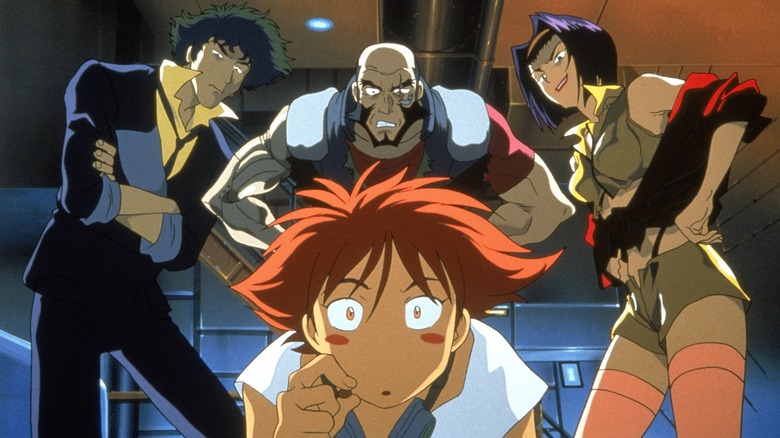
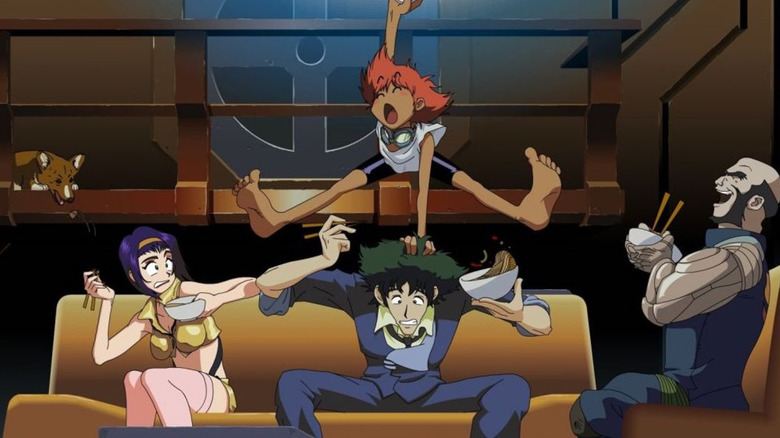
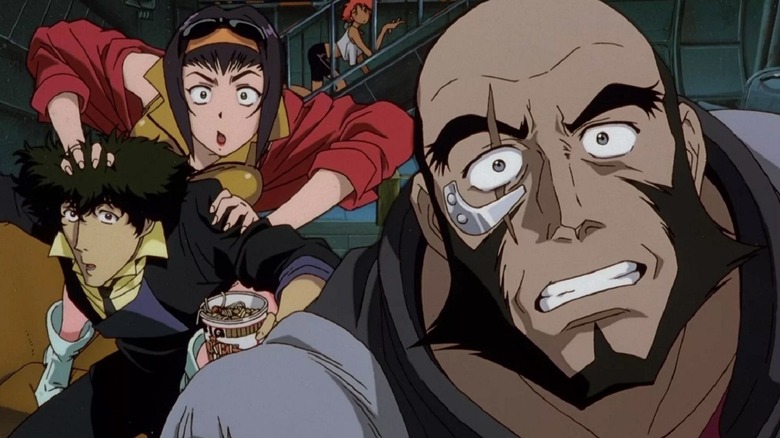
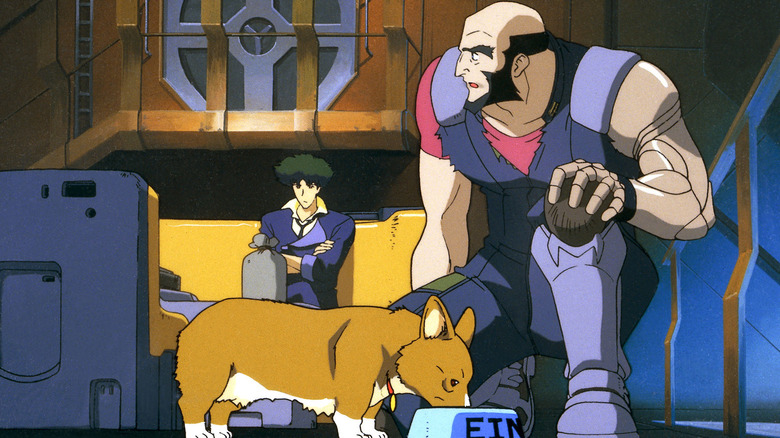
The classic anime "Cowboy Bebop" is having another big moment in the pop culture zeitgeist. Not only is there a big-budget live-action adaptation coming from Netflix on November 19, 2021, but fans are discovering and re-discovering the anime series on streaming services. (You can watch all 26 episodes on Funimation, Hulu, and Netflix right now.) The series debuted in the U.S. in 2000, and the localization and dubbing are considered some of the best in anime history. Created by Shinichiro Watanabe, the series follows space cowboys/bounty hunters Spike Spiegel (Steve Blum), Jet Black (Beau Billingslea), Faye Valentine (Wendee Lee) and Radical Edward (Melissa Fahn) as they try to exist in a rough-and-tumble galaxy where only the tenacious survive.
I had a chance to chat via Zoom with voice actors Blum, Billingslea, Lee, and Fahn about the lasting legacy of "Cowboy Bebop" and their incredible cast chemistry. And yes, hearing all their voices in conversation with me is as wild as you'd expect.
This interview has been lightly edited for clarity.

"Cowboy Bebop" really helped bring anime to America. It was the first series ever shown on Cartoon Network's Toonami, and it's still frequently very referenced and beloved. What do you think made "Bebop" stand the test of time?
Wendee Lee: We feel like we're repeating ourselves because this is the golden question we get with everyone, but it's so relevant. Do you guys want to hit on the bullet points? Because I think we've really condensed it down into some important points.
Beau Billingslea: Go for it Faye Faye!
Melissa Fahn: Go for it! It's interesting before you start, we've really been understanding this and discovering this through today, through this press junket. Even more so than ever. So go ahead and start. It's really powerful.
Lee: We're sort of drilling down in hindsight into what these factors are that all came together to create this perfect storm, like Steve says. And it's really a lot of elements, but I think what was going on is that the creators were making the story they wanted to create, honoring their influences that happen to be the rock and roll roots of the US, jazz, Motown, you name it. All the musical influences are woven into the fabric and tone of this series. And it sets a stage that allows characters to unveil, become, peel back the layers and you find out who they are and you stick with it, because there's so many little details that all come together to really reveal much deeper characters than you would think on the surface. And it broke the molds of many of these characters. They weren't stereotypical. They were very fluid.
We've been talking about Ed being like water and being sort of in between male and female and sort of not white and not black. And sort of not grounded, not entirely fairy-like. Relates to animals. But I mean, I don't even know if I'd heard of hacking at that point. That's something else I just thought of. Very ahead of its time in integration. So there's a lot of integration going on that seems to be very top down, being forced into entertainment today. But I think it's really the basis of how Bebop was woven and how it was spun into reality.

Steve Blum: I did a panel with some of the Japanese creators a couple of years ago, and I was shocked to hear that these guys kind of made this from the perspective of fans, for fans. They were big old nerds and they just put a lot of the elements of stuff that they loved. The stuff that was kind of hidden the way in the closets that they couldn't talk about with everybody. And their own machine in Japan didn't really understand what they had and how to market it. And from what I remember, I think they said that only six episodes initially aired in Japan before it was basically canceled. And then they thought, well, here's a junk show. Let's just license it to, whatever it was, Bandai, I guess at the time. And let's see what you guys can do with it. And fortunately they had the foresight to give us the time to really flesh it out and to really appreciate it for what these guys had created. This masterpiece that they had created.
And it just became our job not to screw it up. And fortunately we were able to put it on the air. Not we, I had nothing to do with it. But Cartoon Network at the time and Toonami had the foresight to put this thing out there on the air and give another venue for people to view this type of art making that they weren't used to. They had to pay 85 bucks for a single episode of stuff back then, if they were lucky enough to find it. So to put this out there to a wide audience and something of such quality. That we actually had the time to spend and actually honor the quality of the product that we were given. Once that got out there, a lot of it had to do with timing, but it had to do with all of these amazing elements from the music forward that really needed to be seen. And I'm just so grateful that it happened when it happened and how it happened. It was truly the perfect storm.

The chemistry between the crew of the Bebop is part of what makes the series sing. And I know a lot of the time you fit when you do voice acting, you recording your own booths. How did you manage to bring that much camaraderie when you were recording by yourselves?
Fahn: I think that was our director. She was our common thread. Mary... We would go in individually. We weren't even in the same building at the same time. If we're lucky, we would say, "Hi, are you going in, I'm leaving now." Or maybe we heard the playback if someone recorded before us. But I think the common thread was our director, Mary. She brought the chemistry to each of us for each of those characters and she channeled it into all of us. And I think it was great writing also. And we were so lucky to have this gem of a piece, that as soon as we were all introduced to it, we were all kind of enthralled with and impressed with and like, "Oh my God, what is this piece that I'm a part of"? Like, "What is this"? So I think there was a common like, "Wow, like I don't want to mess this up."
Like Steve said, it was ours to mess up and thank God we didn't. But I think that was the common thread. That's how I look at it. The chemistry. And we all kind of tapped into these characters and we really got into the dialogue and that's our job, but there was something very special and unique for each one of us. That made each character just flushed out even more. Because we all were able to connect on a deeper level. That doesn't always happen. And this is a very special, unique piece.

Lee: You often hear us talking about the musicality of the show. And that is so integrated into the pacing. So I think a lot of what really developed the characters between the cast, the chemistry in general, is that we were provided a lot of breath in the show. There was a lot of downtime to sort of take in and process what had just been said before a character reacts. It's not the... At the time I had been doing a lot of broadcast TV working for Fox and Saban productions and others. And we were really building a wall of sound at all times. It was, "Look over here. "Okay kids, don't change the channel. "Here's another. And here's a reaction and an explosion." And our job, especially with localizing, was to fill in the gaps and make it a constant wall of sound.
It was a technique that was just exacerbated. And it still carries on in many genres. But as we know, musically, music is nothing without the breaks and breath in the music. And that's what Bebop has. And it's the tonal time that you get. The quality for it to sink in. And that kind of always left me as an actor wondering, "Well, what is the next response going to be? "Let me look ahead." Because there's this long break between maybe a little Barb has been thrown out or a comment about a job, or what have you, and you're going to need to link it up the next time the next person speaks. And it's a deeper dive as an actor than the average time that we get on a fast pace show.
Billingslea: I felt that my career started on camera and there's a difference between television acting and feature film acting. Basically feature film acting, you have time. And as Wendy was saying, that TV is kind of almost like radio. Somebody's got to be talking all the time. Somebody's going to be talking all the time, but it was beautiful that with Bebop, we didn't have that. There'd be times where Jet is just sitting there, when Faye and Spike have gone. And he's trying to pretend he doesn't care. And he's talking to Ein, and we got silence and the audience can absorb what's going on. And to me, that's beautiful storytelling where you give the audience a chance to breathe and absorb what's going on.

Blum: We're talking about the relationship between the characters too. As the show progressed, I began to fall all in love with each of the characters. And I realized that the people who were portraying them, I was falling in love with too. Some of you... Beau and Melissa, I'm not even sure if I knew you before we started working on that show.
Fahn: Steve, we met.
Blum: Oh, we met because of Tommy!
Fahn: In the cave, like way back with "Guyver" and "Orguss" and all that. But that was maybe the last time I had seen you. I mean, that was ancient.
Blum: But you were off being a Broadway star and stuff too. So you were so far beyond our little community and Wendy, I think you were directing me on a couple of things before we did "Bebop." And I was super intimidated to actually work alongside you as an actor. I remember that, but it felt like such a safe space. And as we got to know the characters in the show, I felt like I got to know you guys as people. And I think Danielle, you've probably heard this before, but we really are family. We really look forward to getting together and doing these things. I love these people. They are my family. So that's not always the case. And especially in anime, we don't have that luxury to develop those relationships.
Billingslea: And we have an open ended text conversation that never ends. And remember, eat your bell peppers and beef!
Read this next: The 14 Best Directorial Debuts From Actors Ranked
The post The Cowboy Bebop English Voice Cast Chat About the Show's Legacy [Interview] appeared first on /Film.

In 1992, "The Silence of the Lambs" became the third movie to ever sweep the five major Oscar categories at the Academy Awards. As Jodie Foster, Anthony Hopkins, screenwriter Ted Tally, and director Jonathan Demme, accepted their awards on behalf of their work on the film, outside the Dorothy Chandler Pavilion, a protest raged on.
The demonstration outside of the Academy Awards was the culmination of non-stop protests throughout the year outside theaters across the country screening the film. Organizations like Queer Nation and ACT-UP had long spoken out about the problematic representation of the film, and felt awarding the film would have dire consequences. Hollywood A-Listers wore red AIDS ribbons on their gowns and suits throughout the night, and as Demme accepted his statue for Best Director, he was visibly shaken by the outrage surrounding the building.
To say "The Silence of the Lambs" is a beloved film is an understatement. In addition to its pop culture influence inspiring parodies everywhere from "Clerks 2" to "Family Guy," the film has also been turned into a spoof musical, spawned a successful franchise of films, and there surely would be no "Hannibal" TV series if it had not been for the success of this film, no matter how good Thomas Harris' books are. Since it's debut, "The Silence of the Lambs" has been a polarizing film for the LGBTQ+ community, and as our language evolved surrounding gender identity and the transgender experience, so too have our discussions surrounding Demme's masterpiece.

While today the conversations surrounding "The Silence of the Lambs" are focused on the "copaganda" of a film glorifying FBI Agent Clarice Starling or the blatant transphobia of the characterization of Jame Gumb/Buffalo Bill, the protests in 1991-1992 were actually centered on homophobia, with the Gay and Lesbian Alliance Against Defamation (GLAAD) and gay critics believing audiences would read Jame Gumb as a queer man, and treat gay people in real life accordingly.
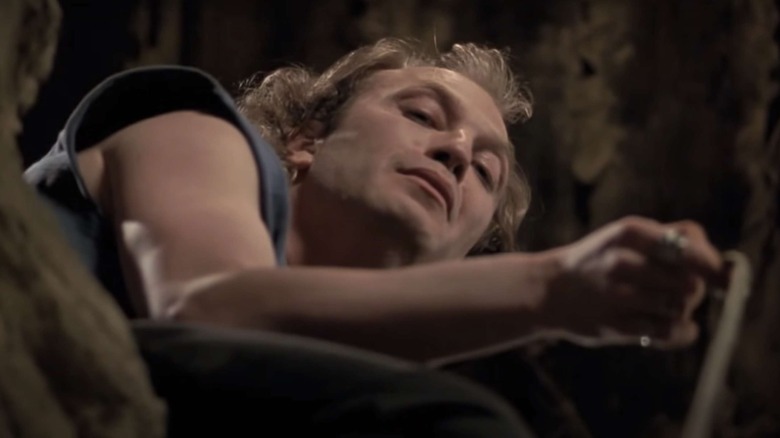
In Mark Dice's book "Hollywood Propaganda: How TV, Movies, and Music Shape Our Culture," he references a GLAAD leader who criticized the film saying, "The killer in the movie is a walking, talking gay stereotype." The leader continued, "He has a poodle named Precious, he sews, he wears a nipple ring, he has an affected feminine voice, and he cross-dresses. He completely promotes homophobia." Orion Pictures, the distributor of "The Silence of the Lambs" tried their best to calm things down by loaning out prints of the film for AIDS fundraisers, but continuing to promote a movie at a function filled with the very people feeling harmed by the film wasn't exactly the best way to put an end to the angry protestors.

Before his death in 2017, Demme spoke frequently on the characterization of Jame Gumb, with his opinions fortunately evolving over time. In a 1991 interview with Film Comment, he was at first quite combative regarding the criticism:
We knew it was tremendously important to not have Gumb misinterpreted by the audience as being homosexual. That would be a complete betrayal of the themes of the movie. And a disservice to gay people. [Gumb] is someone who is so completely, completely horrified by who he is that his desperation to become someone completely other is manifested in his ill-guided attempts at transvestism, and behavior and mannerisms that can be interpreted as gay.
The problem with that statement, however, is that Jame Gumb is transgender, regardless of what Jonathan Demme or Dr. Hannibal Lecter has to say about the matter, and in 1991, the film was released against a backdrop of heightened anti-Gay violence. Demme's following film, "Philadelphia" starred Tom Hanks as a gay lawyer living with AIDS. It was one of the first mainstream Hollywood pictures to mention AIDS, and while Demme has claimed the backlash to "Silence" was unrelated to his decision to make "Philadelphia," many of his critics view the film as a half-baked apology. Playwright and activist Larry Kramer wrote a harsh op-ed after the film's release, going as far as to say, "After these two films, I wish he'd just go away and leave us alone."

As the years went on, Demme owned up to the critiques of his two films, rather than fighting them. In 1994, he was quoted as saying:
It's the job of militants to demand more of anything. If these people were satisfied, change would be hard to get through. Every one of them is right. There could have been more of this, or more of that, but now, maybe another film will take it further.
A few years before he passed, he admitted his shortcomings with "Silence," stating in 2014:
Juan Botas, who was one of the inspirations for "Philadelphia" said, "You can't imagine what it's like to be a 12-year-old gay kid, and you go to the movies all the time and whenever you see a gay character, they're either a ridiculous comic-relief caricature, or a demented killer. It's very hard growing up gay and being exposed to all these stereotypes." That registered with me in a big way." It's now become a part of the dialogue on stereotypical portrayals of gays in movies.

Unfortunately, while Demme's mind may have changed, the public consciousness' view of trans people was greatly influenced by the portrayal of Jame Gumb. My own wife has experienced a great deal of trauma from "Silence of the Lambs" writing in an article for Shudder:
I was first exposed to the infamy of Buffalo Bill by my parents and our neighbors as they made jokes about a trans woman who lived down the street when I was little. I never met or even saw her, but there was never a shortage of jokes and references made towards 'shim' (as she was referred to) that I only fully understood after seeing 'Silence of the Lambs' in my teens.
Transgender writer, actress, producer, and activist Jen Richards painfully recounted the impact of Buffalo Bill in the Netflix documentary "Disclosure":
I was about to go through transition, and I worked up the courage to tell one of my colleagues. And she's a very, very smart woman, very, very talented musician, very well-educated, very worldly, and she looked at me and goes, "You mean like Buffalo Bill?" Her only point of reference was this disgusting, psychotic serial killer who hunts women in order to kill them and skin them, in order to wear their bodies — to literally appropriate the female form, which is exactly the feminist argument against the existence of trans women.
There are plenty of people even today that don't see "what the big deal is" with "Silence of the Lambs," likely because the harm this film has caused has never impacted their personal lives. It's important to remember that although "Silence of the Lambs" is an absolute masterclass in filmmaking, its problematic legacy still shines as brightly as all of the trophies it earned.
Read this next: All 59 Stephen King Movies Ranked From Worst To Best
The post The Silence of the Lambs Controversy Explained appeared first on /Film.

We can all agree that "Hocus Pocus" is the best Disney Halloween movie, right? I know there are some people out there who are probably yelling at their computers about "Halloweentown," but let's be real, "Hocus Pocus" is the best, which is why it's so wild that we're only now getting a sequel to that surprisingly morbid, adorably fun, and totally virgin-obsessed film.
"Hocus Pocus 2" began production on November 1, 2021, so while we still have a long ways to wait in terms of getting our hands on the final product, Disney is not letting us go hungry. A brand new look at "Hocus Pocus 2" arrived as part of Disney+ Day and you can revel in its spooky glory below.
Yep, those are the Sanderson sisters!
And while we appreciate Disney keeping us up to date on everything going on with the jauntily haunted town of Salem, here's a little refresher on all of the spooky, scary info we have about "Hocus Pocus 2." According to the Mouse, the sequel will take place 29 years after the first movie and involve a whole new batch of high schoolers taking on the Sanderson sisters.
While Max (Omri Katz), Dani (Thora Birch), and Allison (Vinessa Shaw) took them on in the first movie, the sequel will focus on Becca (played by Whitney Peak of "Chilling Adventures of Sabrina"), Cassie (played by Lilia Buckingham of "Crown Lake"), and Izzy (played by Belissa Escobedo of "American Horror Story"), who accidentally bring the Sandersons back to modern day Salem once again. On top of the new trio, Tony Hale ("The Mysterious Benedict Society") will be playing Salem's new mayor, and Hannah Waddingham ("Ted Lasso") and Sam Richardson ("Werewolves Within") will be popping up in supporting roles.
Things may look a little different for "Hocus Pocus 2," but a bunch of actors seem to be reprising their roles, which is crucial for a cult classic like this one. Bette Midler is, of course, back as the head witch in charge, Winifred. Joining her are Sarah Jessica Parker and Kathy Najimy, who are sliding back into their witch-y outfits as well as their roles as Mary and Sarah, respectively. On top of that, Doug Jones is diving back into the grave and returning as Winifred's jilted lover/zombie boyfriend William "Billy" Butcherson.
Halloween might be over, but that just means we have all year long to prepare for next Halloween and the return of "Hocus Pocus." Start planning your costumes, organizing your drinking games, and nailing down your friend's schedules, I have a feeling this movie is going to put a spell on us all.
"Hocus Pocus 2" is set to release in Fall 2022 on Disney+.
Read this next: The 25 Best Kids' Movies Of All Time
The post Hocus Pocus 2 First Look: Something Wicked This Way Comes, Decades Later appeared first on /Film.

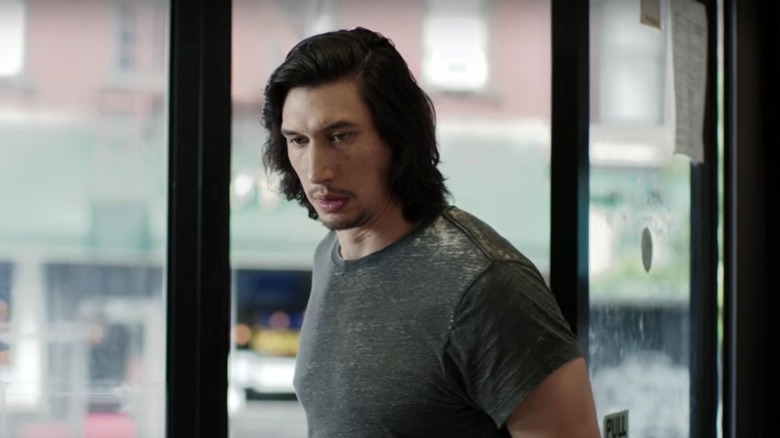
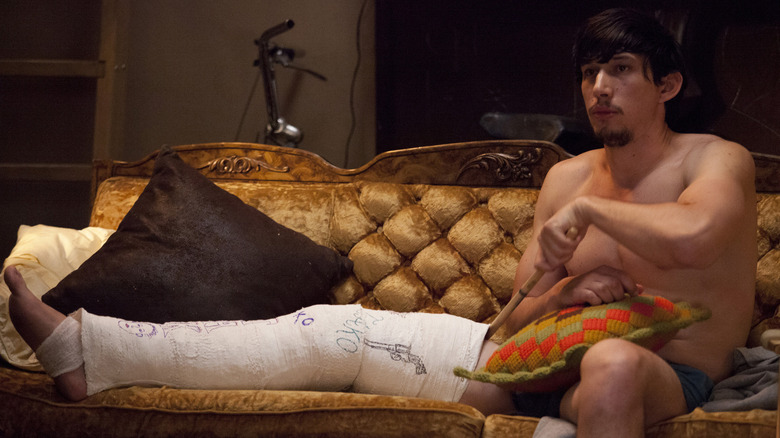
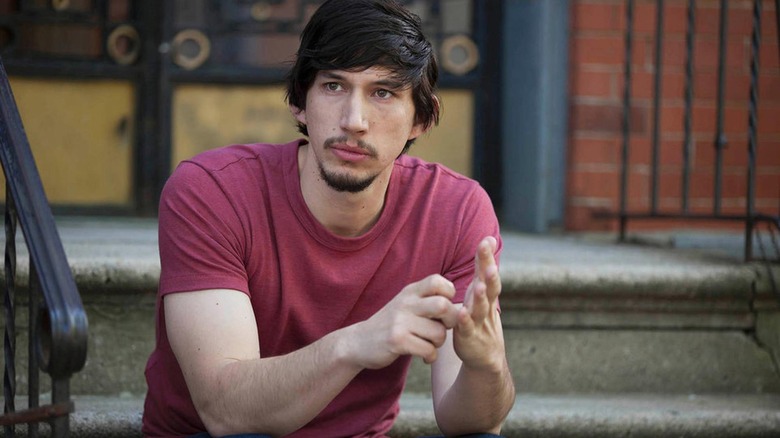
Lena Dunham's HBO series "Girls" has a rather complicated legacy, but one positive thing it did was launch the career of superstar Adam Driver, who has gone on to be one of Hollywood's most prolific and sought-after actors. Before he was Kylo Ren in "Star Wars: The Force Awakens" or singing with Marion Cotillard in "Annette," Driver was best known as the sweetly forlorn artist Adam on the HBO series, which ran for six seasons before ending in 2017. The role effectively kicked Driver's career into high gear, catching the attention of fans, critics, and casting agents alike.
There's just one little catch: Driver didn't want to audition for "Girls" initially. In fact, his agent had to convince him. Everyone owes that agent a thank you, because what kind of world would it be without Driver smoldering on our screens?

In an interview with ScreenRant to promote his new film, "House of Gucci," Driver was asked if he ever had to be convinced to take on a particular role. The actor had a somewhat surprising answer, given how important the role was in his career trajectory:
"I will say 'Girls.' I didn't understand it. I was doing a lot of theater at the time and I didn't really watch a lot of TV shows, which I hope doesn't sound like elitist, but I wasn't interested. And my agent convinced me to go in and read for 'Girls.' And I met Lena and got the job. And it changed the course of my life."
It's honestly a bit relatable that Driver didn't understand "Girls." The series has been critiqued for its narrow view of life as a twenty-something in New York City, and for good reason. For Driver, a young man who had just left the Marine Corps and was doing a lot of local theater, a series about the woes of a bunch of spoiled young women probably didn't appeal. It's a darn good thing that his agent convinced him otherwise, however, because Driver's character, also named Adam, is one of the brightest highlights of the series.

Adam is the main love interest for Dunham's lead character, Hannah, but he's also the heart and soul of the series. Despite the fact that the series is called "Girls," some of the most important characters are the show's men, including Adam. They provide a great juxtaposition to the petty problems of the titular girls, giving insight into just how narcissistic and ridiculous some of them are. While he wasn't perfect either (there's an episode that digs into consent in sex that's extremely difficult to watch), he gave the series a soul.
Driver would likely have garnered audience attention and fame at some point, but there's no telling how his career would have gone without his star turn in "Girls." Seriously, let's all find that agent and buy them a coffee.
Read this next: The 15 Best Anthology TV Series Ranked
The post Adam Driver Almost Passed on Girls Because He 'Didn't Understand It' appeared first on /Film.
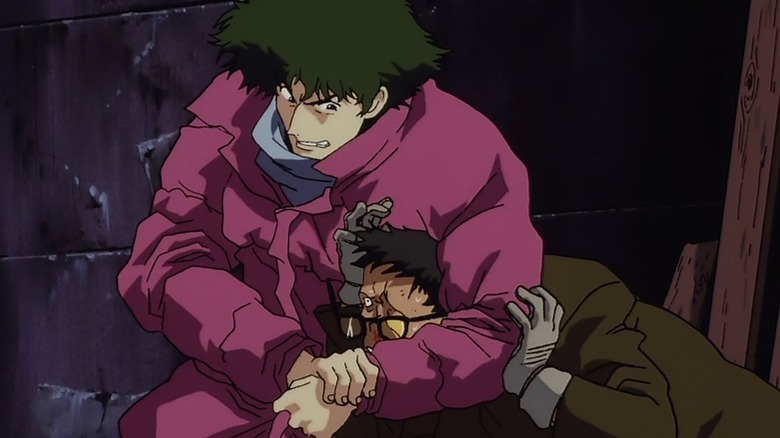
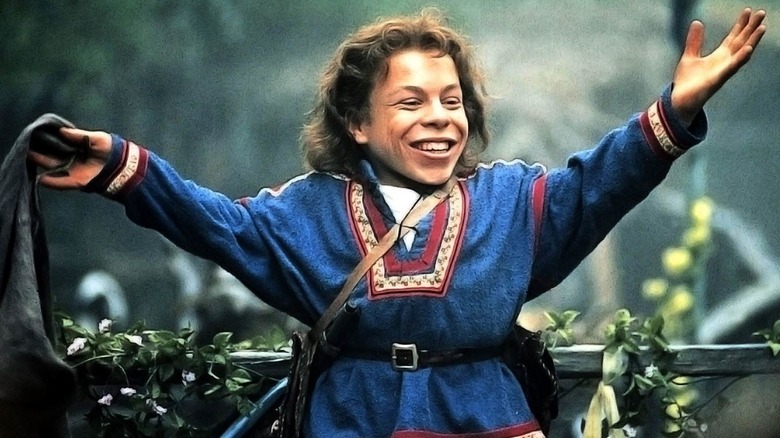
'80s kids will either be delighted or disturbed that Disney+ has made a sequel television series to the 1988 adventure fantasy film "Willow." Directed by Ron Howard and based on a story by George Lucas, the original film follows a humble farmer named Willow Ufgood (played by Warwick Davis) who discovers an abandoned baby that is prophesied to destroy evil Queen Bavmorda (Jean Marsh) and halt her plans to take over the world. He protects the baby girl to the best of his abilities and gets help from an unruly swordsman named Madmartigan (Val Kilmer) along the way. Set in a mythical land filled with evil creatures, fairies, and magic, "Willow" is one of those films that pushes the boundary of what is scary and sweet for kids who grew up in the golden age of practical effects.
Disney revealed a new look at the series as part of Disney+ Day, with Davis introducing us to the supporting cast of the new series, and you can check it out below.
Ron Howard serves as an executive producer alongside Lucasfilm president Kathleen Kennedy. Michelle Rejwan ("Star Wars: The Rise of Skywalker"), Wendy Mericle ("Arrow"), Jonathan Kasdan ("Solo: A Star Wars Story"), and Roopesh Parekh ("His Dark Materials") also executive produce. Initially, Jon M. Chu ("Crazy Rich Asians," "In the Heights") was set to direct the "Willow" show's pilot but dropped out in January 2021 due to production delays and personal reasons. Jonathan Entwistle ("The End of the F***ing World", "I Am Not Okay with This") stepped in to replace Chu but quickly left "Willow" due to scheduling issues. In July 2021, Stephen Woolfenden ("Outlander") filled Entwistle's spot and finished filming the first two episodes of the eight episode series.
Warwick Davis is reprising his role as Willow and acts opposite of Erin Kellyman ("Solo: A Star Wars Story", "The Falcon and the Winter Soldier"), Ellie Bamber ("Nocturnal Animals"), Ruby Cruz ("Mare of Easttown"), and Tony Revolori ("The Grand Budapest Hotel"). "Cruella", "Mad Max: Fury Road", and "The Favourite" assistant costume designer Sarah Young is on board as the series' lead costume designer. It's unclear if any other past cast members will reprise their role in the series, but it seems like the heart of the original story will carry on through Davis and Howard's involvement especially.
Few specific details have been released about the series' plot, but there will definitely be new creatures to battle, magic and sorcery abound, and plenty of excitement for Willow on his next epic adventure. Filming for the series takes place in remote areas of Wales where the original film was also shot. The sequel series will also take place years after the original tale told in the 1988 film. Some of the elements that make "Willow" a timeless classic are the character's courage and determination as well as themes of good versus evil. It appears as though the Disney + series will propel the storyline forward by enhancing the world instead of merely revisiting the '80s script through a modern lens.
Read this next: Fantasy Box Office Bombs That Deserve A Second Chance
The post Willow First Look: The Legend Continues in a New Disney+ Series appeared first on /Film.
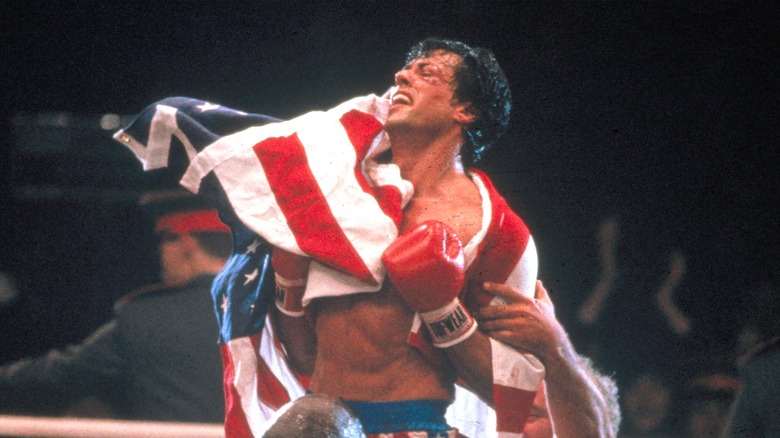
"Rocky IV" is the biggest box office hit in the "Rocky" franchise. It's also one of the sillier entries – an '80s-infused, MTV-adjacent film overloaded with montages and featuring a comic relief robot that Rocky's brother-in-law Paulie may or may not be having sex with. When Sylvester Stallone's recent production "Samaritan" had to shut down due to COVID-19, the actor and filmmaker realized he had a lot of time on his hands, and he wanted to keep busy. His solution: recut "Rocky IV" into something better. And the first step would be getting rid of that damn robot.
During a Q&A before the Philadelphia premiere of the "Rocky IV" director's cut – officially given the clunky title "Rocky IV: Rocky vs. Drago The Ultimate Director's Cut" – Stallone told the crowd that the robot was gone, and the news was met with moans of unhappiness from the crowd. Yes, the people love Paulie's robot. Back in the '80s, Stallone first spotted the robot in a pizza parlor and thought, "I gotta put that in a movie!" Now, with years of hindsight, he realized that the bot -- which starts out with a normal, digital robot voice only to later start talking like a sexy dame, suggesting Paulie is in some sort of love affair with this machine -- was a mistake. And he's right. As much of a kick as you might get out of a gigantic robot rolling around Rocky's spacious mansion, you have to admit it's very distracting.
But the robot isn't the only thing gone from this new cut. As Stallone tells it, when he was cutting the original "Rocky IV," he opted for speed. He wanted a fast, punchy (pardon the pun) experience that could appeal to the mid-80s audience. But times, and tastes, have changed. And Stallone has improved as a filmmaker since then. All of this inspired Stallone to go back, comb through all the unused "Rocky IV" footage he had, and create something not just better, but also more in line with today's sensibilities.

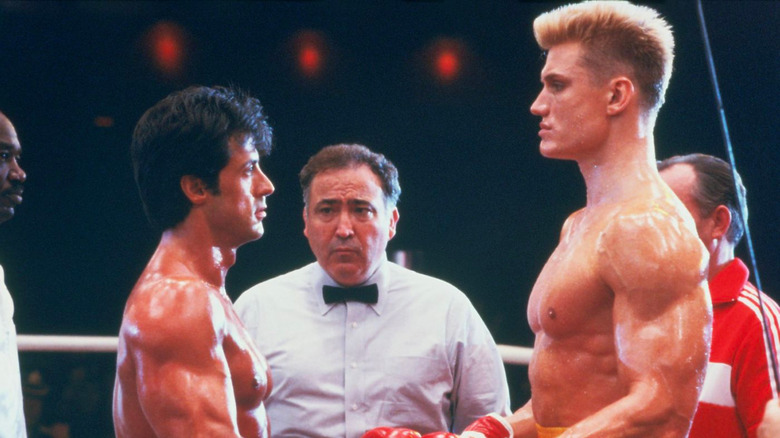
"Rocky IV: Rocky vs. Drago The Ultimate Director's Cut" has the same runtime as the theatrical cut, but it's a significantly different experience. Not a different movie, exactly, but the mood is vastly changed. To be clear: this is still very much a product of the '80s, when the Cold War was still on, and Russia was even more of a boogeyman than it is today. But this new cut is definitely a better movie. It's still not perfect -- while Stallone called out the original film's overuse of montage during the Q&A, the montages are still very much here. But this cut feels more earnest; more honest. It restores character moments. It even humanizes gigantic killer Russian boxer Ivan Drago, played so memorably by Dolph Lundgren.
Most of all, it does a better job of explaining why retired boxer Apollo Creed (Carl Weathers) is so eager to step into the ring with Drago -- a decision that will ultimately cost him his life. Creed was once the champ, but he lost that title to Rocky. At the start of "Rocky IV," after a recap of events from "Rocky III," Rocky and Apollo are good friends now. And Apollo has seemingly everything he needs -- he has a wife and kids and lots of money, and he's introduced chilling in his gigantic swimming pool with three adorable dogs swimming around him. But Apollo feels empty. He misses being the champ. He misses being relevant. He misses the fight. When he finally gets into the ring in what will be his final (and fatal) match, he says to himself, "I feel born again."
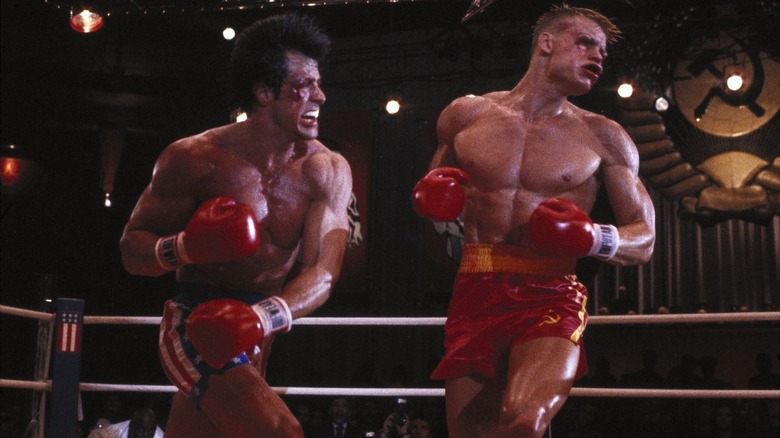
That feeling doesn't last long, because Drago pulverizes Apollo. Rocky wants to throw in the towel and end the fight, but Apollo insists the fight cannot be stopped. Which means Rocky has to look on in horror as his friend and mentor dies a bloody mess on the canvas. It's heartbreaking for Rocky, who weeps at Apollo's graveside later and mumbles, "I really loved you, man."

Rocky wants revenge. He agrees to fly off to Russia to fight Drago, but his loving wife Adrian (Talia Shire) doesn't want him to go, fearing that her husband can't defeat the Communist superman. But Rocky has something to prove. And that means he gets to partake in a training montage in snowy Russia (actually Wyoming). While Drago is seen using the most sophisticated, high-tech exercise equipment imaginable, Rocky trains off the land. He carries logs over his shoulders like Christ moving towards Calvary. He runs through the knee-high snow. He climbs craggy mountains. He deadlifts splintery wooden carriages. He screams "DRAGO!!!" a lot. The contrast is stark, and, yes, pretty funny. Drago is the fighter of the future, Rocky is a man of the earth. Who will win?!
If you're reading all this and thinking, "That sure sounds a lot like the theatrical cut," that's because it is. Again: this is the same movie. And yet ... it's not. By adding back in several quiet character moments, Stallone has created a less goofy, less cartoony film. Adrian has more heart-to-heart talks with Rocky. Tony "Duke" Evers, Apollo's former trainer played memorably by Tony Burton, also has more of a presence here, and it's a welcome one -- he's a great actor with a naturalism that you don't see too often.
And then there's Drago. He's still very much the villain of the piece, but a few clever edits -- mostly showing Drago looking bemused, confused, and completely out of his element on several occasions -- go a long way toward making the towering fighter seem less cruel. The theatrical cut presents Drago as something inhuman, but here, he looks more like a man being pulled in every direction by his country. As Stallone said during the Q&A, the years have made him realize that Drago wasn't pure evil; he was a propaganda tool, someone being used and abused by the Soviet Union to triumph over the American way of life. This point is hammered home even further in "Creed II," but underlining it here goes a long way toward making "Rocky IV" feel like it's still set in some semblance of the real world. Like Drago himself here, the movie feels more human.
There will be those who miss the fried '80s cheese that's caked into every frame of the original cut (as I said, the crowd at the premiere was very sad to see the robot go). But those who wanted a more soulful "Rocky IV" will find that this director's cut goes the distance.
/Film Rating: 6.5 out of 10
Read this next: The 20 Best Sports Films Of All Time Ranked
The post Rocky IV Director's Cut Review: Say Bye to Paulie's Robot, Say Hello To a (Mostly) Better Movie appeared first on /Film.
November 15, 2021 The GTA Trilogy is back on the Rockstar Launcher.
Rockstar has made Grand Theft Auto: The Trilogy - The Definitive Edition available for purchase on the Rockstar Launcher once again. The developer apologised for the inconvenience on its support page, and explained that performance fixes are on the way.
"Grand Theft Auto: The Trilogy - The Definitive Edition has been updated and is once again available through the Rockstar Games Launcher for play and purchase," the statement reads. "We sincerely apologise for the inconvenience. We are also working to improve and update overall performance as we move forward. We would like to thank everyone for their patience as we resolve these issues."
Not long after the game launched on November 11, Rockstar Games tweeted that services for the studio's launcher and supported games were temporarily offline for maintenance. That followed reports from multiple players that the launcher was down - meaning the new Trilogy was unplayable through it on PC at the time. We also tried to launch both Red Dead Redemption 2 and GTA V on PC here at PCGamesN and weren't able to hop in, with an 'activation required' error screen popping up on trying to boot them up.
RELATED LINKS: GTA 5 mods, GTA 6, Buy GTA V
Obsidian Entertainment's Josh Sawyer, the man primarily responsible for Pillars of Eternity, has been quietly working on an experimental medieval RPG in the vein of Disco Elysium for a while now. And thanks to this Windows Central article we now know that that game's working title is Pentiment, as well as some other details.
Here's a quick excerpt with a few of those:
I am told that Pentiment is being built by a small team of around 12 people, and is more of a narrative RPG adventure than something combat-oriented. The art asset above may represent some of the designs the game is gunning for. Jeff Grubb also mentioned that Pentiment is exploring "experimental" gameplay elements, too, although they may ultimately not make it into the final release. Speaking of which, Grubb also noted that Pentiment is indeed gunning for a 2022 launch.
PLAYISM has just released a new first-person shooter game on PC, Bright Memory Infinite. Powered by Unreal Engine 4 and developed by a small studio, the game takes advantage of Ray Tracing and DLSS. As such, we’ve decided to benchmark them and share our findings. Bright Memory: Infinite features DLSS, ray-traced reflections, shadows, caustic effects, … Continue reading Bright Memory Infinite – Ray Tracing & DLSS Benchmarks →
The post Bright Memory Infinite – Ray Tracing & DLSS Benchmarks appeared first on DSOGaming.

1980, early October. Nine-year-old me was supposed to be asleep, but wasn't. Loud dramatic music was playing downstairs, so I couldn't resist a surreptitious peep at what Mum and Dad were watching, and I was confronted by something that would stick with me forever: a children's birthday party, where all the young attendees were liberally covered with blood. Later in life, not sure whether I'd partly imagined it, I'd seek it out. It turns out that the scene was from an episode of "Hammer House of Horror," specifically the none-too-ambiguously titled "The House That Bled to Death."
That's where my interest in anthology television comes from. There's an elegant efficiency — and not a little magic — in condensing an entire coherent narrative into less than an hour. For the purposes of this feature, I'll only be including series where every episode stands alone, so we won't be considering anthology series like "American Horror Story" or "True Detective," great though they are. With that caveat, let's look at 15 of the absolute best.

As creators Tim Miller and David Fincher told IGN, they had originally intended to make a reboot of the popular 1981 science fiction film "Heavy Metal," based on the long-running magazine. This failed to get off the ground, but a re-imagining of the concept was released on Netflix under the title "Love, Death & Robots."
Each episode varies wildly in theme and tone, and it's a platform for a smorgasbord of directorial and animation styles from a worldwide pool of creators. Traditional hand-drawn art sits comfortably alongside CGI, with some episodes even combining live action with animation. The series does have a habit of veering into over-indulgent violence to mask a gossamer-thin plot, but overall, it's a formidable showcase of talent.
A particular highlight is "Ice Age," in which a couple discover a tiny thriving civilization in the ice compartment of their ancient refrigerator. It's no longer enough to wonder whether the light inside your fridge switches off when you close the door -- now you have to be concerned with whether you're in charge of the night and day cycle for an entire microscopic species.

Hammer Films' move into television dropped many of the trappings of its movie output -- dodgy European settings, even dodgier accents, and Gothic castles -- in favor of the suburbs, showing us that horror was equally at home in contemporary Britain as it was in Transylvania. Horse-drawn carriages were exchanged for Ford Escorts, and there wasn't a caped count in sight.
Thirteen episodes of "Hammer House of Horror" were broadcast through late 1980, bringing us witches, Nazi pet shop owners, werewolves, and devious doppelgangers. The aforementioned "The House that Bled to Death" was a particularly gruesome highlight for just one that scene alone, but every episode was well shot, well acted, and played with utmost sincerity.
With a certain irony, the series was sunk by the Titanic. The financiers had a cataclysmic cinema release in the flop "Raise the Titanic" and couldn't justify the expense of a second season. Like the unkillable Count, Hammer Studios would rise again in 1984 with the tamer "Hammer House of Mystery and Suspense," and then truly resurrected itself as a proper film studio some years later.

Influenced by '50s horror comics, "Creepshow" is based on the movie series of the same name, which debuted in 1982. Despite appearing to be a pale imitation of "Tales from the Crypt" (complete with gaunt skeletal host), it has a distinctive style all of its own -- every episode looks like an issue of a comic book, with introductions and scene transitions morphing from pen and ink into live action.
As with many anthology series, the quality can vary wildly between episodes — and, with two stories per installment, even occasionally between segments -- but it's clearly made with a lot of love for the genre by some of the best names operating in horror today. Like the comics on which they're based, there's a gleeful sense of mischief and the macabre to these stories, and, in the absence of "Tales from the Crypt," it's a worthy spiritual successor.
The standout episode has to be Josh Malerman's ("Birdbox") episode, "House of the Head," a tale about a haunting that almost feels too understated for Creepshow's gleefully broad strokes, but that stands out precisely because of that subtlety.

Alternate universe stories had been appearing in Marvel's comics under the "What If...?" title since the '70 (the first being "What if Spider-Man had joined the Fantastic Four?"), so it was inevitable that the series would be adapted to the screen eventually.
In a style that could be loosely described as three quarters traditional animation and one quarter motion-comic, the 1st season of the nine-episode series was released on Disney+ in 2021. At first approach, the episodes each appeared to be standalone, each involving a well-known character from the Marvel Cinematic Universe (some voiced by their cinematic counterparts, some not) and given an untraditional spin.
It was only towards the end of the 1st season that it became apparent that the stories were more connected than they initially appeared, building to a climax featuring many of the characters that had appeared before. As you'd expect from a Marvel series, there are plenty of Easter eggs to keep the fans happy, as well as plenty of payoffs for eagle-eyed viewers familiar with the source material.

The brainchild of director Mick Garris (best known for his TV adaptation of "The Stand" from 1994), "Masters of Horror" was intended as a showcase for the absolute best in worldwide horror directorial talent, with each episode being a standalone short film. As such, impressive names you wouldn't associate with television work, including the likes of Tobe Hooper, Takashi Miike, and Dario Argento, were involved.
Running for two seasons, with each composed of 13 episodes, many of the tales were original to this series -- however, some were adaptations of existing works (those of H.P. Lovecraft, Clive Barker, et al).
A particular standout episode was "Cigarette Burns" directed by horror maestro John Carpenter. In this atmospheric tale, Norman Reedus ("Walking Dead") plays Kirby, a heavily-in-debt film dealer tasked with finding the master copy of a 30-year-old film with somewhat of a jaded history. The trope of the cursed film is nothing new in horror, but it's done to particularly significant effect here, with a satisfying payoff in the final act.

Britain in the '80s saw the rise of what came to be known as alternative comedy, an acerbic counter to some of the '70s' worst legacies of sexism and racism. It was counterculture with violent slapstick and gags, often politically charged and left-wing, rallying against Prime Minister Thatcher's stranglehold at the time. Familiar names were beginning to make a scene on the comedy circuit, and they clubbed together to create a collective known as "The Comic Strip"
This series of standalone films, all of which featured pioneers of the new comedy scene, made its first appearance on the debut night of new British television station Channel 4. With a chaotic sense of style matching the talents involved, one week it would be spoofing the Famous Five from Enid Blyton's children's books of the '40s, while the next it might poke fun at Hollywood drama. Rock Band "Bad News" were the Comic Strip's own parody group, presented in mockumentary style a year before Rob Reiner would do the same with "This Is Spinal Tap."
The absolute highlight, though, has to be "Mr. Jolly Lives Next Door," an anarchic piece of slapstick featuring Ade Edmondson, the sadly missed Rik Mayall ("Drop Dead Fred"), and the legend that was Peter Cook ("Bedazzled").

A loving and loyal pastiche of the hugely successful feature films being produced by the likes of Hammer Studios and Amicus back in the '70s and '80s, "Doctor Terrible's House of Horrible" was a show loved by critics but watched by nobody, which is why it never achieved a second season.
"Doctor Terrible's House of Horrible" was largely a vehicle for comedian Steve Coogan (better known to audiences as the actor behind Alan Partridge), who starred in each of the six episodes. Gently mocking but always respectful of the rich source material, the series highlights were "And Now the Fearing...," featuring three tales of people recounting their recurring nightmares, and "Lesbian Vampire Lovers of Lust" featuring, well, lesbian vampires. Sophisticated humor, this ain't.
The jokes can often be crude and obvious, but there's no hiding co-writers Coogan and Graham Duff's obvious love for the genre. Each episode began and concluded with a short announcement by Doctor Terrible, again played by an almost unrecognizable Steve Coogan, wearing heavy makeup.

When he wasn't stabbing swindling secretaries in showers or bombarding Bodega Bay with belligerent birds, Alfred Hitchcock was introducing his own TV series in his own inimitable manner. The simultaneously sinister and playful theme tune, "Funeral March of a Marionette," played over a simple black and white drawing of the filmmaker's instantly recognizable silhouette, and the legendary director appeared and introduced each episode in his familiar jowly drawl. Hitchcock himself even directed a handful of episodes.
As you'd expect from its association with the great man, many of the stories in "Alfred Hitchcock Presents" leaned heavily on mystery and suspense, and the show was never afraid to show the bad guy getting away with it, albeit with a final reassurance from Alfred that they met their just desserts. Sometimes, he even sounded sincere.
One of the most popular installments (adapted again for "Tales of the Unexpected") was Roald Dahl's 1948 short story "Man from the South," a gruesome cautionary tale about gambling and amputated fingers. Starring both Peter Lorre and Steve McQueen, it's a classic example of the quality of the cast that this high-profile show could demand.

In each episode of "Night Gallery," Rod Serling could be found in the titular room as a curator, introducing a painting before segueing into the tale behind the picture. It was a darker series than Serling's "The Twilight Zone," each of the stories leaning more towards the horror end of the spectrum — these were largely macabre and supernatural tales, not science fiction.
It was a series that saw the professional directorial debut of Spielberg, who helmed the Serling-written story "Eyes," and also the final performance from actor John Crawford. The series was also noteworthy for having several adaptations of works by H.P. Lovecraft (namely "Cool Air" and "Pickman's Model") and his protégé August Derleth ("Logoda's Head").
The quality is established from the outset with a thoroughly effective and creepy opening segment in the pilot episode: "The Cemetery," in which an egotistical man ("Planet of the Apes" star Roddy McDowall), upon inheriting his uncles' estate, finds a painting that keeps changing, its corpse-like subject growing ever closer and closer. It's a wonderfully macabre little tale, and quickly establishes "Night Gallery" as a different and darker entity than Serling's previous show.

Modern audiences are more familiar with author Roald Dahl through his books (and many subsequent film adaptations) for children. In the '80s, he was a familiar face on British television, and the host of the late-night drama "Tales of the Unexpected."
Appearing at the start of each show beside his roaring fireplace with all the bearing and demeanor of a friendly uncle, Dahl would introduce each episode, his warm and comforting tones ill-preparing you for the macabre and twisted tale that would invariably follow. While earlier seasons featured tales written solely by Dahl, later ones started to include other writers as the short stories from Roald grew scarcer.
The stories featured a pantheon of British acting talent, with notable episodes being "Royal Jelly," in which a father feeds his newborn royal jelly, a substance used to feed bee larvae, with predictably nightmarish results, and "The Landlady," in which a traveler stumbles across the most sinister of hotels, which houses the quietest of fellow guests. The theme tune alone -- a repeating sinister calliope fairground-esque melody -- is enough to cause a Pavlovian reaction in adults of a certain age, instantly setting the hairs on the back of their necks on end as they recall the tension of the opening credits.

More sci-fi oriented than "The Twilight Zone," this show dipped its toes into horror for the 1st season but abandoned it in favor of hard science fiction for the 2nd. Each episode opened with an eerie voice-over from a disembodied voice claiming to have taken control of your television, and over several years it became a veritable showcase of writing talent of the age.
Two stories in particular ("Demon with a Glass Hand" and "The Soldier"), both written by influential (and litigious) science fiction author Harlan Ellison, gained notoriety in the '80s when they were the center of a lawsuit against director James Cameron. Ellison claimed that the "Terminator" director had stolen his ideas. When Cameron allegedly confessed as much in an interview, it resulted in a settlement for Ellison and an acknowledgement in the credits of the "The Terminator" VHS tape.
The original series died thanks to being ricocheted around the TV schedules, but was released in 1995 to great acclaim, lasting another seven seasons before eventual cancelation. Guess viewers got control of their television sets back, after all.

"Black Mirror" creator and writer Charlie Brooker was best known to British audiences as the creative force behind "Newswipe," a somewhat caustic look at world news, and "Nathan Barley," an equally vitriolic comedy about London scenesters. Brooker was renowned for his cynical world view, and this pessimism combined perfectly with the zeitgeist, resulting in the revolutionary "Black Mirror."
Setting out with a powerful and controversial opening episode involving the British prime minister being blackmailed into having sex with a pig, Brooker's "Black Mirror" hit the headlines and a phenomenon was born. With the title that refers to the reflection of ourselves we see on a blank screen, the series examines our often-unhealthy relationship with and reliance on technology, and how it is guiding us along new, treacherous, and unfamiliar paths.
With a flexible premise that allows for contemporary stories set in the present and the near and distant future, "Black Mirror" is an unflinching look at the uncomfortable aspects of humanity, namely how the ever-present boxes of wires in our lives are desensitizing or conditioning us. A particularly grim highlight is the season 3 episode "Shut Up and Dance," an episode as bleak as anything presented elsewhere on this list.

"Hello, boils and ghouls..."
An emaciated corpse with long hair, the Crypt Keeper was your sardonic (g)host for each episode of this series, introducing each frightening fable with congeries of puns so painfully poor that there are undoubtedly guidelines in the Geneva convention preventing their retelling. A memorable Danny Elfman theme played as the camera swooped through the Crypt Keeper's domain, settling on the wizened creature as he burst forth. Here was a host who was as funny as he was scary; the mood of the show followed suit.
"Creepshow" is inspired by old comics, but HBO's "Tales from the Crypt" literally adapted stories from the old source material. Airing on a premium cable channel helped too, allowing the series to be as gory and risqué as the makers dared. The show also proved to be almost as unkillable as its undead host (voiced by John Kassir), running for an incredible 95 episodes and spawning several films, a game show, and a children's cartoon series.

British viewers were already familiar with "Inside No. 9" creators Reece Shearsmith and Steve Pemberton through their work on the blacker-than-black ensemble comedy show, "League of Gentlemen." That show, due to its very dark nature, was something of an acquired taste, but the wealth of awards that Reece and Steve have received for "Inside No. 9" proves it to be more populist, albeit no less brave and daring.
There's a simple premise: Every episode involves the number 9. It's a hook that's grown looser with every subsequent season, but it's an interesting mechanism with which to tell varied tales across a plethora of genres. The tales range from the poignant ("The 12 Days of Christine"), to the brave and inspired ("A Quiet Night In," an episode performed without dialogue) to the utterly terrifying ("Dead Line," a Halloween episode that was performed live).
It's a show that's not afraid to take risks, yet every genre feels like a natural fit for Shearsmith and Pemberton's considerable talents. It's a show that will undoubtedly run for as long as the number 9 exists.

"You are about to enter another dimension, a dimension not only of sight and sound but of mind. A journey into a wondrous land of imagination."
The familiar theme tune, the spinning door that could take you anywhere, all accompanied by the familiar, dulcet tones of creator and host Rod Serling — really, what is there left to say about "The Twilight Zone," a series so popular that it's been revived no less than three times?
Creator Rod Serling was a strong advocate of human rights. Having worked in the entertainment industry for many years, he was only too aware that he'd never get the opportunity to write about social issues in a prime-time television slot, but had the cunning idea of introducing storylines about controversial topics through a palatable fantasy setting. Setting his stories in space or peppering them with robots gave him the freedom to talk about difficult subjects like race, human rights, immigration, and even the touchy subject of McCarthyism without the show ever feeling preachy.
It's telling that, to modern viewers, the series can feel derivative because of its visual storytelling tropes and twists that we're all too familiar with. What is, of course, worthy of note is that it's "The Twilight Zone" that introduced many of these twists and tropes to television's lexicon in the first place. Bold, brave, and ahead of its time, "The Twilight Zone" is often imitated and parodied, but has never been bettered. From bookworm Henry Bemis's cruel fate in "Time Enough at Last" to the shrewd pun of the alien cookbook in "To Serve Man," it's a worthy memorial to the works of Rod Serling, with his reassuring voice reminding us that everything would be okay — or would it?
Read this next: The 15 Best Horror TV Shows Of All Time
The post The 15 Best Anthology TV Series Ranked appeared first on /Film.
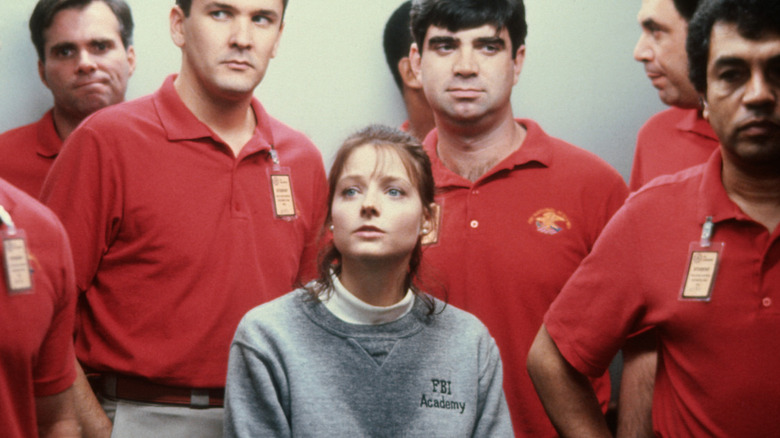
I've seen Road House 10000 times, it's one of the greatest pieces of trash ever made. And lord knows I love Jake. But I don't know how you divorce it from the 80s - it's the most 80s movie ever made. They'll have to make it entirely different. And yet it must include THIS pic.twitter.com/oR9QnvkIWL
— Jason Adams (@JAMNPP) November 11, 2021
Remaking Road House is probably folly, full stop. And yet... and yet. As I've said over the past few years, Luca Guadagnino's Suspiria really opened me up to the possibility of remakes not always being garbage. There were of course earlier examples -- The Thing or the Body Snatchers re-dos pop to mind -- but Luca's film felt special in a way, in how instead of just trying to do the same thing the original did but better and more modern it totally re-thought the original. I don't have any idea what it could be that would work for me here, but if Liman & Co do figure out something new... well I am just keeping an open mind for now. As I've also said time and again -- if it doesn't work we still have the original! Wise words, but not nearly this wise:

Fearing a winter surge of COVID-19 California health officials have said no provider should turn away any adult away who is seeking a booster.
This is more aggressive than the current CDC guidance which recommends the booster for a narrower set of US adults. — Read the rest
A trio of vintage crimeworlds returned rebuilt today with the launch of the Grand Theft Auto: The Trilogy – The Definitive Edition, bundling GTA 3, Vice City, and San Andreas into one collection with an long overly name. They look fancier and more modern (the originals being from 2001, 2002, and 2004, respectively), and have control schemes which are less damn old. Unfortunately, they have also cut some of my favourite songs from the radio, boooo.

Every viewer's definition of what makes a great "holiday classic" is different. Some film fans prefer their holiday fare to be earnest and heartfelt, while others enjoy seeing a darker take on the winter season expressed in thrillers, subversive comedies, and horror films. A great Christmas movie does more than just take place during the final days of December; it should comment on the holiday itself and tie the celebrations into the storyline. Some Christmas movies are worth revisiting throughout the year, while others necessitate a viewing on the day itself.
While some Christmas films have been popular holiday viewings since the Golden Age of Hollywood, new classics emerge every year. Streaming services continue to churn out Christmas films; Netflix's many Christmas movies include the groundbreaking "Klaus" and "The Christmas Chronicles" franchise. In addition, many of the most beloved holiday favorites, including "Rudolph the Red-Nosed Reindeer," the 2D-animated "How the Grinch Stole Christmas," and "A Charlie Brown Christmas" are actually TV specials — this list only considers theatrically released films.
While they're bound by their connection to the holiday, the Christmas movie label encapsulates many genres and pleases a variety of different audiences. Here are the 14 greatest Christmas films of all-time, ranked.

"The Man Who Invented Christmas" debuted only recently, but it's already announced itself as a future holiday favorite. There are many adaptations of "A Christmas Carol," but "The Man Who Invented Christmas" explores the origin of the beloved novel through the "real" characters and events that inspired Charles Dickens (Dan Stevens). Stevens is, as always, very charismatic, and perfectly captures the idiosyncratic nature of a talented, but tortured, writer.
Dickens is in a state of distress, as in the wake of "Oliver Twist," he's yet to write another hit. London's holiday festivities only dampen his mood, but after a series of familiar events, Dickens begins to piece together the narrative of "A Christmas Story." The character Ebenezer Scrooge (Christopher Plummer) appears in Dickens' mind and guides him throughout the writing process, while he learns to reconnect with his estranged father John (Jonathan Pryce). Dickens' own personal family reconciliations help retain the light holiday tone.

"Home Alone" is one of the most rewatchable Christmas movies — it may be known primarily for its slapstick gags, but John Hughes' clever screenplay actually has a lot of heart. The film delivered a breakout role for Macaulay Culkin, who delivers one of the best child performances of all time in a surprisingly unique film. You'll laugh at the comic pratfalls, and you'll tear up as John Williams' "Somewhere in My Memory" plays.
Eight-year-old Kevin McCallister (Culkin) is constantly scolded by his parents for his mischievous behavior, only to be accidentally left behind when his family embarks on their annual Christmas vacation. Kevin revels in his newfound freedom as he lives on his own, and when the wacky bank robbers Harry (Joe Pesci) and Marv (Daniel Stern) attempt to ransack the house, Kevin combats them by constructing dangerous inventions and traps. A heartfelt encounter with a reclusive old man named Marley (Robert Blossom) reminds the audience of the movie's Christmas themes, as Kevin inspires him to reconnect with his estranged son.

Romantic comedies set during the holidays can often be either unbearably sentimental or coldly cynical, yet screenwriter Richard Curtis finds the right balance between heart, humor, and playful absurdity with his ensemble comedy "Love Actually," although you can make a compelling argument that it hasn't aged particularly well. Still, while 136 minutes is a long running time for a rom-com, "Love Actually" remains engaging with its creative techniques for pulling together a variety of individual stories.
In "Love Actually," each set of characters comes to a realization that saves their holiday season. Eccentric rock star Milly Mack (Bill Nighy) realizes that his best friend Joe (Gregor Fisher) is a better companion than any party crowd. Similarly, Mark (Andrew Lincoln) learns to accept the love he once felt for his best friend Peter's (Chiwetel Ejiofer) bride, Juliet (Kiera Knightley). A depressed writer (Colin Firth) finds unexpected love with his Portuguese housekeeper (Lúcia Moniz), while the marriage between advertising director Harry (Alan Rickman) and Karen (Emma Thompson) ends in heartbreak.
Love appears in unexpected places; the prime minister (Hugh Grant) falls for his secretary Natalie (Martine McCutcheon), grieving father Daniel (Liam Neeson) helps his young son Sam (Thomas Sangster) impress his crush Joanna (Olivia Olson), and body doubles John (Martin Freeman) and Judy (Joanna Page) embark on a surprisingly PG relationship given the intimate sex scenes they film professionally.

Some Christmas films are so endearing that they can be enjoyed throughout the year; "The Nightmare Before Christmas" is a story worth revisiting during both the Halloween and Christmas seasons. It's among the most beautifully crafted stop-motion animated films ever made, and its dark fantasy elements contrast nicely with an animation style reminiscent of holiday classics like "Rudolph the Red-Nosed Reindeer" and "Santa Claus Is Coming to Town." The story is remarkably dark for a children's film, and while the premise (and some of the aesthetic) came from Tim Burton, director Henry Sellick deserves credit for the film's unique tone.
The film follows the residents of "Halloween Town," a city filled with vampires, ghouls, and monsters, including the "Pumpkin King" himself, Jack Skellington (Chris Sarandon and Danny Elfman). Jack has grown dissatisfied with the spooky holiday and soon finds himself in "Christmas Town." The dark creature is fascinated by the joyous season's greetings, and tries to recapture the Christmas spirit at home as he falls in love with the undead rag doll Sally (Catherine O'Hara).

Tim Burton often hints at Christmas themes in his films — see, for example, "Edward Scissorhands" — but his 1989 comic book adaptation of "Batman" had a distinct Halloween vibe, with its dark gothic atmosphere and haunted house elements. However, the 1992 sequel "Batman Returns" is set entirely during the Christmas season, and explores the ways in which the holiday forces each of its isolated characters to break out of their shells.
Bruce Wayne (Michael Keaton) has always been a solemn figure, and his responsibilities as Batman don't rest during Christmas, as he's forced to contend with a trio of villains. A formerly mousy secretary named Selina Kyle (Michelle Pfeiffer) has transformed into the latex-clad femme fatale Catwoman, and the abandoned and deformed orphan Oswald Cobblepot (Danny DeVito) has risen through the ranks of the Gotham underworld to become the supervillain known the Penguin. Perhaps crueler than them both is the cynical politician Max Shreck (Christopher Walken). "Batman Returns" is one of the darkest superhero movies ever made, and the Christmas noir elements make the story even chillier.

1983's "National Lampoon's Vacation" is one of the quintessential comedies of its era; the "family" adventure wasn't really family-friendly, but amidst the raunchy misadventures was an accurate depiction of familial bonding as the Griswold clan's summer plans go awry. The 1985 sequel "National Lampoon's European Vacation" unfortunately lost the original's charm, focusing too heavily on gags and not enough on relatable moments. A Christmas setting ended up being the perfect way for the series to redeem itself; "National Lampoon's Christmas Vacation" isn't only a holiday classic, but one of the greatest comedy sequels ever made.
Clark Griswold (Chevy Chase) is eager to receive a holiday bonus in order to surprise his wife Ellen (Beverly D'Angelo) and their children Audrey (Juliette Lewis) and Rusty (Johnny Galecki) with a swimming pool. Clark is also excited about decorating and planning for the holiday season, but his mood plummets when the extended Griswold family comes to stay with them for weeks on end. Cousin Eddie (Randy Quaid) proves to be a particularly obnoxious presence, and causes further chaos when he kidnaps Clark's boss to secure that aforementioned bonus.

For anyone who's ever bought or received a bad Christmas present, "Gremlins" is the ultimate holiday nightmare. Joe Dante's monster movie classic features some of the most incredible puppet and marionette work ever committed to screen, and Dante is a master at hiding visual gags in his movies that some viewers definitely won't catch on their first viewings. However, the Christmas setting helps ground the madcap narrative, and gives "Gremlins" a heartfelt emotional touch that's allowed it to stand the test of time.
Billy Peltzer (Zach Galligan) receives a mysterious Christmas present from his father Randall (Hoyt Axton): a small, furry creature named Gizmo. Billy is told to follow a series of specific rules to care for his new pet, but he accidentally exposes Gizmo to water and feeds him after midnight. More gremlins are spawned, and they spread havoc across the small town of Kingston Falls during the Christmas season. Along the way, Billy's crush Kate Beringer (Phoebe Cates) tells a hilariously dark Christmas story about her father's accidental death when he tried to sneak down their chimney as Santa Claus.

There's always a danger when major stars try to tone down their R-rated humor to make a family-friendly holiday comedy; look no further than Ben Affleck in "Saving Christmas" or Vince Vaughn in "Fred Claus" to see the disastrous results. However, in "Elf," Will Ferrell manages to sideline these frequent issues and create a beloved Christmas character who appeals to audiences of all ages. The story is genuinely heartfelt, and putting Ferrell under PG constraints results in one of his most earnest and hilarious performances ever.
Buddy (Ferrell) was a human orphan raised as an elf in the North Pole by one of Santa's oldest employees, Papa (Bob Newhart). When he learns of his real heritage, Buddy decides to travel to New York City to meet his real father, Walter Hobbs (James Caan). Hobbs is a cynical book publisher who is unaware of Buddy's existence, and he's forced to bring his long-lost son home and introduce him to his wife Emily (Mary Steenburgen) and their younger son, Michael (Daniel Tay). The fish-out-of-water comedy is uproarious. Buddy must adjust to a world that doesn't revolve around Christmas, and yet still needs to save the holiday for those that need the Christmas cheer.

Charles Dickens' classic novel "A Christmas Carol" has been adapted countless times for films and television specials, but, unsurprisingly, the Muppets did it the best. "The Muppets Christmas Carol" is remarkable in that it perfectly casts the beloved characters as Dickens' characters, and is surprisingly faithful to the original source material. Directed by original Muppet creator Jim Henson's son Brian, "The Muppets Christmas Carol" also boasts incredible production design that brings its depiction of 19th century London to vivid life.
What makes the film work is the genuinely powerful performance by the great Michael Caine as the signature grouch Ebenezer Scrooge. Caine doesn't see the material as beneath him, and he delivers what is perhaps the single greatest performance by a human in a Muppet film. Scrooge's journey exploring his tragic past, painful reality, and potentially dark future are humorous thanks to the Muppets' sense of comedy, but his redemption is treated seriously. The framing device of Gonzo explaining the narrative under the guise of Charles Dickens is also hilarious, and improves the film's pacing.

Christmas is a stressful time for many people, as the pressure to be happy and optimistic can lead to anxiety, and familial complications often rear their heads. No filmmaker captures internal pressure better than Stanley Kubrick, and in his final film Kubrick used the Christmas season as the spooky backdrop for his deconstruction of marriage, masculinity, and paranoia. Christmas is integral to the film's story, as holiday imagery is subverted into a nightmarish vision of surveillance. The film has a bright color pallet of red and green, with Christmas decorations frequently appearing in the background. In it, Kubrick satirizes consumerism, a particularly relevant topic amidst the Christmas holiday season.
Dr. Bill Harford (Tom Cruise) is a successful doctor within New York City who learns about a secret private ceremony from a long-lost friend during a Christmas party. Bill decides to attend the ceremony and discovers a ritualistic cult that performs graphic sexual activities. Bill is quickly identified as being out of place, and he's forbidden from joining the group again. Bill discovers that he's constantly being watched, and that the secret society can threaten him even within his own home. They leave a hidden mask for him as a dark Christmas present.

The debate rages every year as to whether or not "Die Hard" is a Christmas movie. There are certainly many action films set during the holiday season (such as nearly all of Shane Black's films), but "Die Hard" actually has themes that are relevant to Christmas. Ultimately, it's a story about everyday heroism and finding a purpose, and it explores the holiday-centric anxieties that many people feel. At the beginning of the film, Christmas is just another stressful burden in the life of John McClane (Bruce Willis), but by the end his hope is restored and has a reason to celebrate.
While whether or not "Die Hard" qualifies as a Christmas movie is in question, there's no debate about its merits as a film. There's a reason why "Die Hard" is so often cited as the greatest action film ever made, and why decades later new films are still pitched as "Die Hard on a...." McClane is the definitive action hero, an intelligent underdog who uses his ingenuity and wit to survive some of the greatest action sequences ever seen on screen. Willis has never been more relatable. It's also unbelievable that Alan Rickman's incredible performance as the scenery-chewing terrorist Hans Gruber was his screen debut, as he set the standard for a generation of screen villains. The 1992 sequel "Die Hard 2: Die Harder" retained the Christmas setting, but the later entries in the saga transitioned to the summer.

Santa Claus ranks alongside figures like Sherlock Holmes, Dracula, King Arthur, and Robin Hood as one of the frequently adapted on-screen characters, as he's often a key supporting character in Christmas films. While there are many Santa-themed films, including the entries in "The Santa Clause" and "The Christmas Chronicles" franchises, they generally appeal to younger viewers. However, the 1947 classic "Miracle on 34th Street" is the rare film that addresses the legend of Saint Nick in a way that appeals to audiences of all ages.
The film opens on Thanksgiving Day, when business director Doris Walker (Maureen O'Hara) finds herself desperate to find a replacement Santa Claus for the Macy's parade. A curious older man named Kris Kringle (Edmund Gwenn) shows up on a moment's notice, taking up the reins and delighting children with his seemingly magical knowledge and optimism. Doris sees Kringle's success as a great business opportunity, but doesn't want him to influence her young daughter, Susan (Natalie Wood). Doris has raised Susan without any fairy tales, and she's not about to let the idiosyncratic older man convince her that magic is real. Doris' next door neighbor Fred Gailey (John Payne), a successful lawyer, is concerned about Susan's well-being, but also desperately in love with her mother.
When Kringle's mental state becomes a public fixation, a media circus ensues as Fred defends him and makes the case that he's the real Santa Claus. It's inspiring to see how Kringle's Christmas spirit affects the reclusive mother-daughter pair.

When looking at the history of Old Hollywood musicals, few are as clever, poetic, optimistic, and insightful as 1954's "White Christmas." It's a film that boasts incredible musical numbers, as it's about the very power of show business and its ability to provide comfort to those in need of a boost. However, "White Christmas" isn't an idolization of Hollywood that tries to frame the holiday season from a celebrity perspective; it's a film about finding connections during the most wonderful time of the year.
The film begins in the middle of World War II, as American soldiers Bob Wallace (Crosby) and Phil Davis (Danny Kaye) put on an impromptu Christmas performance for the men in the service. They pay tribute to their beloved Major General Tom Waverly (Dean Jagger), the rare honorable man who treats every soldier as an equal. After a devastating attack, Phil saves Bob's life, and they form a lifelong friendship. They enter show business together, and a chance encounter introduces the pair to the talented musicians sisters Betty (Rosemary Clooney) and Judy Hayes (Vera-Ellen).
The four escape to Vermont where they discover that Waverly has become the manager of a failing hotel, and they concoct a plan to save the old man's dignity by honoring him with a Christmas concert. It's delightfully earnest, and often hilarious.

The phrase "holiday greetings" may mean different things to film fans of different backgrounds, but at its core the holiday season is all about hope. Hope isn't tied to one religion or creed, and although the theme is universal, it's very hard to capture on screen. Although there were significant systematic issues within Old Hollywood, there's an optimism about the human spirit present in many classic era films that's rarely captured by the modern studio system. Frank Capra stands among the great cinematic formalists, and his ability to capture genuine emotion was never more present than in the definitive holiday classic, "It's a Wonderful Life."
Capra had many great collaborators, but none more genuinely pleasant and likeable as James Stewart. Here, Stewart shines as the embodiment of goodness. Stewart's George Bailey has no shred of hatred within his body, and he's bound by his commitments to his family and community. He's seen his dreams of traveling overseas dissipate as he takes over the struggling family business and watches his brother Harry (Todd Karnes) become a war hero, even as he has settled down with his wife Mary (Donna Reed) to raise a family.
As George's situation grows worse and he's convinced he has no value, his guardian angel, Clarence (Henry Travers), presents him with a dark vision of a world where he's never been born. George's realization of the lives he's touched and the joyous Christmas celebration that follows are touching moments worth revisiting each and every holiday season.
Read this next: Ranking All Eight Muppet Movies On The First Film's 40th Anniversary
The post The 14 Best Christmas Movies Ranked appeared first on /Film.
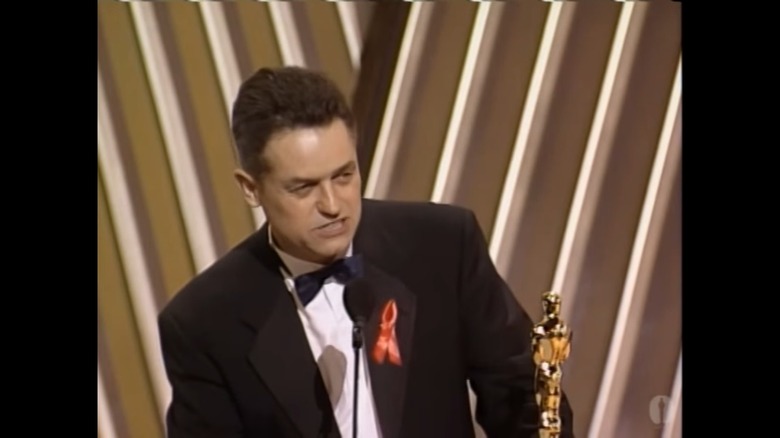
When the second season of "Solar Opposites" came around back in March, the finale teased an upcoming holiday special for the raunchy sci-fi comedy from "Rick and Morty" co-creator Justin Roiland and writer Mike McMahan. What seemed like a hilarious meta gag actually turned out to be a legitimate tease as the show's creators confirmed that they were working on a legitimate "Solar Opposites" holiday special for Hulu. Thankfully, we won't have to wait much longer to see what Christmas shenanigans the Solar Opposites get up to, because the special will arrive before Thanksgiving, and there's a whole music video to celebrate its impending arrival.
To tease "A Very Solar Holiday Opposites Special," Hulu has released an original song called "WTF is Christmas?" that's sung by the alien leader Korvo (Justin Roiland), who can't seem to get a grasp on the holiday, despite some help from "Glee" star Darren Criss.
Plenty of Christmas specials have explored the "true" meaning of the holiday, but I'm willing to bet that no one has done it like "Solar Opposites" will. Even this music video takes a unique stylistic approach by having a live-action version of Korvo in a festive cabin with stop-motion animated gifts and ornaments voiced by the rest of the cast. Plus, Korvo's mouth is made to look like claymation with the help of digital effects.
As for what we can expect from the special, Roiland has set expectations pretty high. Back in March, after the second season premiered, Roiland had this to say about the holiday special (via SyFy):
"It's amazing. I know that doesn't say anything. I said before that's the first time I've laughed in the booth to the point where it took me 10 minutes to get through a line of dialogue. The last time that happened was on the 'Pickle Rick' episode of Rick and Morty. I don't know if it was just the mood I was in, combined with that line hitting me a specific way. But it's just such an absurd concept. It's so Christmas-y and holiday [themed]. It's so f***in' awesome. No sh**, I think it might be my favorite episode of the entire Season 2... The other thing I can say about it is that it introduces a specific sci-fi tech that if we wanted to, we could do a lot more with it. It's just great."
Having said that, fans should keep their expectations in check when it comes to The Wall. Unfortunately, that compelling part of a typical "Solar Opposites" season won't be included in the holiday special. It's just going to be Korvo, Yumyulack (Sean Giambrone),Terry (Thomas Middleditch) and Jesse (Mary Mack) getting in the Christmas spirit. Just make sure you keep the kids as far away from this thing as possible. As Mike McMahan previously said:
"On the surface, it seems pretty f***in' Christmas-y at first. I fear a family sitting down and being like, 'What other Christmas things does Hulu have?' And then they start watching this and then at one point, they have to slam the TV down. 'Children! Run to your rooms and pray!'"
If you haven't watched the first two seasons of "Solar Opposites," you're missing out on a totally demented and hilarious animated series. Though it does seem similar to "Rick and Morty" on the surface, this series is a different kind of twisted and dark comedy that riffs on the family sitcom in shocking and wild ways. Plus, it also features that element fans simply refer to as "The Wall," and if you're unaware of what that means, you should just watch the show and discover it for yourself. "Solar Opposites" has already been renewed for a third and fourth season, so you don't have to worry about the show suddenly getting canceled.
The first two season of "Solar Opposites" are on Hulu now, and the holiday special arrives on November 22, 2021.
Read this next: 14 Shows Like Rick And Morty That Are Worth Your Time
The post Watch the Demented Solar Opposites Holiday Special Music Video to Get in the Spirit of Christmas appeared first on /Film.
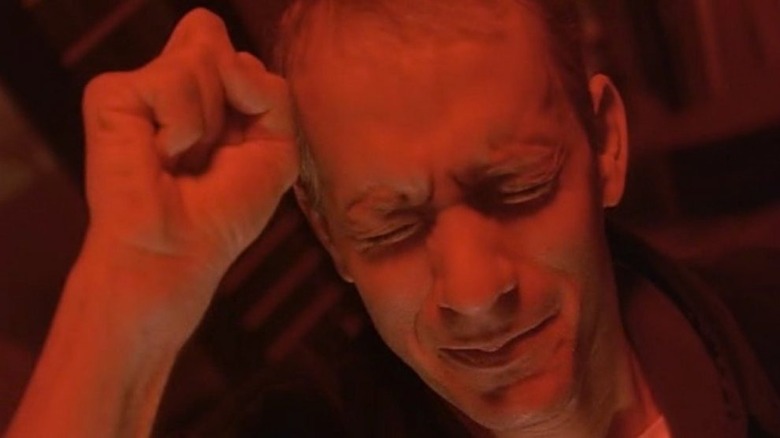
The "Home Alone" franchise is getting a subversive new sequel with "Home Sweet Home Alone," coming to Disney+ tomorrow. The streaming movie stars Ellie Kemper and Rob Delaney as a married couple who come up on hard times. When a bratty neighborhood kid named Max (Archie Yates) seemingly steals an antique doll that could be the answer to their financial woes, they are forced to break into Max's home to retrieve the doll. Naturally, Max has been left home alone, and he sets up a slew of traps for the would-be home invaders.
/Film's Jacob Hall interviewed "Home Sweet Home Alone" director Dan Mazer and asked the burning question on the minds of fans of the 1990 original: Why not bring back Kevin McCallister? The fan-favorite character, played by actor Macaulay Culkin, has become a cultural touchstone, screaming as he slaps aftershave on his cheeks. Culkin is still acting and is having a bit of a career renaissance, so why not bring him back for the first sequel to acknowledge its origins?

While other "Home Alone" sequels after 1992's "Home Alone 2: Lost in New York" aren't tied directly to the first film, this one takes place in the same town as the original. Characters reference the McCallisters and others remember the events of the first movie (including one very familiar face with firsthand knowledge of the franchise), so this is a very much a continuation of the original story. Returning to the same town but not bringing back the original trapmaking genius himself seems like it could be a missed opportunity.
Mazer explained that there were not only casting and timing situations to consider, but he wanted the movie to stand on its own and let Yates shine as the new home-protecting kid on the block:
I think we did realize it wasn't going to happen and actually didn't necessarily push too hard because then that's what it would be about in a weird way. I was very eager that this lived on its own terms and stood on its own two feet and didn't feel too much of a callback fest. Hopefully we've struck the balance where there's enough in there where adults will watch it and go, "Oh yeah, I get that. That's good. Oh, that's funny. That's clever." And, as you say, there's I think a really clever callback to the original, with one part in there which I think seems intelligent and fresh, and not too arbitrary a token. The challenge was to make a film that lived independently. I didn't want to lean too much on that old stuff.
"Home Sweet Home Alone" streams exclusively on Disney+ starting November 12, 2021.
Read this next: Ranking Every Ron Howard Feature Film From Worst To Best
The post Why Home Sweet Home Alone Doesn't Bring Back Kevin McCallister [Exclusive] appeared first on /Film.
(Superhero Bits is a collection of stories, updates, and videos about anything and everything inspired by the comics of Marvel, DC, and more. For comic book movies, TV shows, merchandise, events, and whatever catches our eye, this is the place to find anything that falls through the cracks.)
In this edition of Superhero Bits:
Spider-Man swings into "Marvel's Avengers"
"Hawkeye" gets a new poster
Jared Leto addresses those infamous "Suicide Squad" gifts
An Avenger has been bestowed a sexy real-world honor
All that and more!
Here's the official promo for the sixth episode of the third season of "Batwoman " on The CW:
An unnerving discovery in a garden shed sends Renee Montoya (Victoria Cartagena) rushing to Ryan (Javicia Leslie) to ensure the city is on high alert. Her terrifying theory – a Bat Trophy has entangled a new host, and her thorny ways are weaving their way through Gotham. Alice (Rachel Skarsten) is suspiciously eager to help the Bat Team (Nicole Kang, Camrus Johnson), and Sophie (Meagan Tandy) seeks vengeance for an incident involving her sister.
Robert Duncan directed the episode, which was written by Jerry Shandy and Natalie Abrams.

We don't need to open up a whole discussion about Jared Leto's take on the Joker in "Suicide Squad," but we do know that the actor committed to the part pretty hard, especially given his relatively limited screen time. So much so that he allegedly sent his fellow castmates some pretty bizarre gifts. Now, in an interview with Entertainment Weekly, the Oscar-winner has attempted to set the record straight.
"Any of the very few gifts that were ever given were given with a spirit of fun and adventure and received with laughter, fun, and adventure. It's all filmed! They filmed it all! People were dying. We were just having a goof. The only gifts I ever gave Margot were cupcakes. I think I gave her a mouse, and some of the other guys got gifts that you'd get as a joke at a party... I'm playing a guy called the Joker, it's okay to play some jokes. Nothing ever crossed any lines, and it's not up to other people on the internet to create those lines... I'm an artist at the end of the day. If I do something risky and you don't like it, basically, you can kiss my ass."
So that's that. We can only hope he didn't get as, shall we say, creative with his gifts on "Morbius."
People has named Paul Rudd, the ageless star of "Ant-Man," as this year's Sexiest Man Alive. The internet collectively congratulated the actor on his accomplishment, often in hilarious fashion, as illustrated by Mark Ruffalo's tweet above. Director Peyton Reed, who is currently working with Rudd on "Ant-Man and the Wasp: Quantumania," got in on the fun as well.
Keep it sexy, Mr. Rudd.

We're getting ankle-deep into the rumor pool right now. Writer David Hayter ("X-Men," "Watchmen") may have just confirmed a "Daredevil" reboot. Let's not get too excited just yet, but Comic Book Resources says Hayter recently appeared at MCM London Comic Con and said the following:
"You know, they're doing a reboot of Daredevil, and Daredevil was always a very important character to me, and I loved the first way they did it. But there's certain things that I want to adapt from the Frank Miller run on Daredevil that really meant a lot to me. Yeah, I mean, that's really the one."
Make of that what you will but that's intriguing at the very least. Maybe someone should call Charlie Cox.
The folks at Marvel Studios have shared a new poster for "Hawkeye," which is making its way to Disney+ very soon. The image goes heavy on the holiday cheer, while also highlighting both Jeremy Renner's Clint Barton and Hailee Steinfeld's Kate Bishop. The first two episodes of the show debut on November 24, 2021, and it sounds like the show is pretty good.

"Spider-Man: No Way Home" star Tom Holland recently addressed that bombshell post-credits scene attached to "Venom: Let There Be Carnage." While we won't spoil it here, let's just say it could mean big things for the future. In speaking with Total Film (via The Direct), the actor addressed it head-on, though he really didn't say all that much, likely because he can't or won't.
"I genuinely don't know. It was really exciting to be a part of that film. Obviously, Tom Hardy is one of the greatest actors in the world. I'm happy to say that he's a lovely bloke. But I haven't really given it very much thought."
We'll have to see what comes of it in "Spider-Man: No Way Home" and possibly even "Venom 3."
The folks at ScreenCrush have released a new video discussing Marvel's "Eternals" following its opening weekend release. The movie has proved to be critically divisive, which warrants a larger discussion. This video dives into many different areas, including whether or not it actually is the worst MCU movie, theories about a possible sequel, and whether or not Zack Snyder would have been a better fit in the director's chair. Check it out for yourself above.
Just ahead of Disney+ Day tomorrow, which figures to be a day packed with big reveals and new goods, Marvel has been given a makeover on the streaming service. In particular, as we can see above, Disney has provided a new banner image for its Marvel section on Disney+, with Sam Wilson's Captain America right out front. This may be the first of many, many things Marvel fans should be on the lookout for over the next 24 hours or so. Keep an eye out as we'll be bringing all of the Disney+ Day goods your way as they come.
Lastly, we have a brand new trailer for "Marvel's Avengers" ahead of the game's forthcoming update on November 30. Specifically, this trailer finally brings Spider-Man into the mix, as we can see in the video above, teaming him with his fellow heroes. While this is great news for some players, as we previously reported, only PlayStation players will get Spidey in the "With Great Power" Hero Event. That is brutal for those currently enjoying the game on Xbox Game Pass, or anywhere not on a PlayStation.
Read this next: Joker's Wild: Ranking The Cinematic Versions Of The Clown Prince Of Crime
The post Superhero Bits: Ant-Man Is the Sexiest Man Alive, Spider-Man Arrives in Marvel's Avengers & More appeared first on /Film.
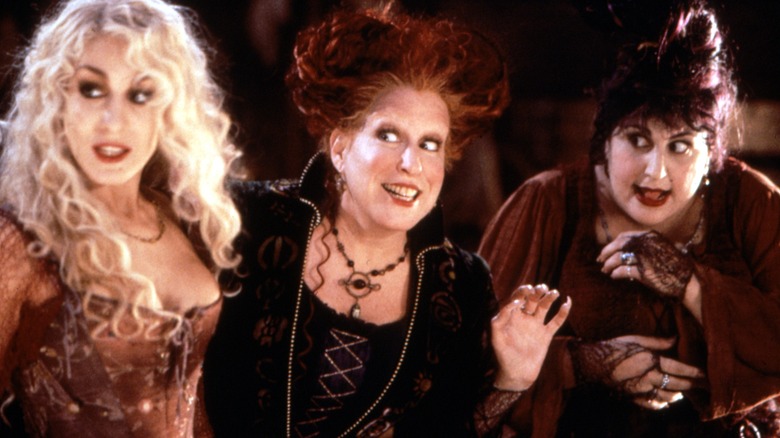
Skyrim: Anniversary Edition is here, and with it, the event that the community has taken to calling the 'modpocalypse'. An update to Skyrim Special Edition changes the game in such a way that some mods - those which directly interact with the game's code - would break. The worst of the issues have been averted thanks to early work from the community, but for now there's still work to be done. Here's what you need to know to keep your favourite Skyrim mods running.
On PC, Skyrim: Anniversary Edition is a DLC upgrade for Skyrim Special Edition which includes all previously-released Creation Club content. A free update for Special Edition includes some of that content, and makes changes to the base game which render native code mods incompatible.
Skyrim Script Extender, otherwise known as SKSE and required for many mods, has already been updated to work with the Anniversary Edition update. This was the biggest concern players had regarding the incoming 'modpocalypse'. Creator Extrwi received early access to the Anniversary update from Bethesda, and published a new version of SKSE on Reddit earlier today. "Due to the large amount of manual code rewrite required for this release, the possibility for bugs is higher than usual," Extrwi says. "That said, things seem to be working better than expected."
RELATED LINKS: Skyrim mods, Play Skyrim, Games like Skyrim
Watch out! Big spoilers for "Eternals" ahead.
Easter eggs are the part of Easter most children remember. After all, it's fun to hunt for brightly-colored treasures. Cinematic Easter eggs function largely the same way. They're not essential to the plot, but they are treats for die-hard fans, who love to hunt for them while viewing and often begin discussing them as soon as the movie ends. But Easter eggs didn't begin as a game. As academic and historian Carole Levin tells Time, they were first eaten at pagan festivals, or "possibly buried into the ground to encourage fertility."
That definition seems to have nothing to do with Marvel movies. And yet, look at how the studio uses Easter eggs. More than anything, Marvel plants Easter eggs in its films to tease what's next, or to help inspire the future filmmakers who will be crafting new franchise tentpoles. In essence, Marvel's Easter eggs (and I can't believe I'm writing this) are buried in a project to encourage creative fertility.
As ridiculous as that seems, it's hard to argue that Chloe Zhao's "Eternals" isn't primed to catalyze the creation of new Marvel projects, or to recontextualize older ones. And while the film is packed to the gills with hidden pieces of fan service, the idiosyncratic scope of Zhao's film and its characters' origins make its Easter eggs stranger and more grounded in the real world than usual. Here, then, are the 10 best Easter eggs you might have missed while watching Marvel Studios' "Eternals."

"Are you sure you want to do that, Mr. Whitman?" With these 10 words, the daywalker Blade arrives in the MCU. The vampire hunter made famous by Wesley Snipes is now played by Oscar-winner Mahershala Ali, and looks set to receive a solo film sooner rather than later. It's pretty exciting!
That said, you'd be forgiven for missing Blade's debut, given that he speaks his first MCU dialogue off-screen at the tail end of the second post-credits scene in "Eternals," one which finds Dane Whitman (Kit Harington) in front of a mysterious sword. According to Harington, even he didn't know about the big reveal. "[Chloé] texted me about that a couple of weeks ago and it sort of blew my mind," he told Fandom. "I didn't know that that would be the case, so it's pretty exciting for me."
All of which makes Blade's arrival an Easter egg in the truest sense. It isn't speculative. It's birthing new stuff, and fans had to genuinely dig for information after having seen it.
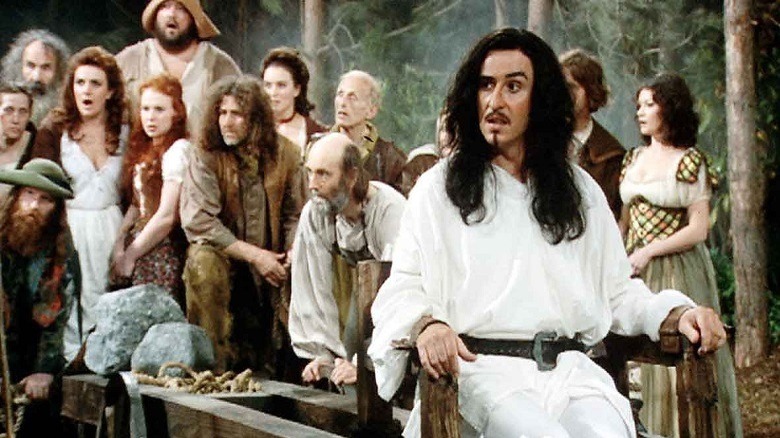
When "Eternals" screened for critics, spoilers for its first mid-credits sequence leaked quicker than Quicksilver doing wind sprints. But that scene, while fun, doesn't have as much meat on its bones as sequence number two, which finds Dane Whitman standing pensively in front of a case bearing his family's crest. He opens the case. A sword lies within, an eerie, obsidian liquid swirling almost imperceptibly on its surface. Dane notes that an inscription in the case reads, "Death is my reward," before saying, "I'm sorry, I have to try." Blade arrives; audience gasps.
There's a lot to unpack here, so let's begin with the obvious. Dane is in possession of the Ebony Blade, a magical weapon forged by Merlin from a meteorite. The weapon prevents the death of its wielder, yet comes with a curse: Whoever uses it will lust for violence, bloodshed, and death -- and will likely cause all three. In the comics, Dane Whitman is just one of the people who has wrangled the Ebony Blade, taking on his family's generational mantle of the Black Knight while doing so.
Further proof that this appears to be where Marvel's heading: In the short-lived but celebrated 2008 comic "Captain Britain and MI-13," the Black Knight and Blade are both part of a makeshift team that battles the forces of mystic darkness. Speaking of which...

One of the most charming traits of "Eternals" is how essential its throwaway lines are. A glib joke by Sprite about Ikaris and the Greek myth he inspired winds up revealing the film's thematic core. Kro brings Gilgamesh's sweet nothings back in sinister fashion while fighting his love, Thena. Because Kingo doesn't age, Karun once assumed he was a vampire, and tried to stab him with a wooden stake. It's a funny image. It's also a telling one.
While it seems obvious to assume Blade would battle the infamous monsters he's known for hunting, it has remained a question, given Marvel's affinity for PG-13 ratings and the ever-expanding scope of the MCU. Would Feige really add vampires to the fold? This is the latest suggestion that, yes, he would and will. In episode 4 of "Loki" (another cornerstone of Marvel's Phase Four), Mobius claims that the TVA has successfully arrested "Kree, Skrulls, and vampires," among other creatures. "Morbius," the Spider-Man spin-off starring the so-called "living vampire," arrives this January, with an appearance by the MCU's Vulture himself, Michael Keaton.
There's no telling what this will add up to, but it isn't hard to imagine a film in which Dane Whitman is the audience's guide to a dark, heretofore unseen corner of the MCU, or a post-credits scene in "Morbius" that reveals Blade on-screen. All the throwaway lines are adding up.

Okay, it's possible to argue that the "Eternals" line confirming that "Star Wars" exists in the MCU isn't an Easter egg in the strictest sense, given that Peter Parker, cinephile, already made an oblique reference to "The Empire Strikes Back" during "Captain America: Civil War." That said, Jack's reference to Superman when he meets Ikaris (both glib and slyly on the nose, given what Chloe Zhao has to say) is new and totally head-spinning.
Mentioning Superman in a Marvel movie is like, to reference another movie that may or may not exist in the MCU, crossing the streams from a proton pack — you're not supposed to do it. The Big Two and their properties have historically existed in a state of tenuous separation. That being said, in the comics, they have crossed over before: notably, "Superman vs. The Amazing Spider-Man" was released in 1976, while 1996's "DC vs. Marvel" miniseries yielded the short-lived Amalgam Comics.
And while a reference to DC Comics in a Jack Kirby-created property makes more sense than, say, dropping a nod in "Guardians of the Galaxy," Jack knowing who Superman is raises questions. Did his iconic red and blue outfit inspire Captain America's (Superman was created in 1938, years before the super soldier serum)? Has the MCU's version of DC Comics shifted its storytelling since superheroes started to exist in the real world? I have a headache just beginning to think about it, making this an Easter egg best left unexplored further.

It's easy to miss, but there's a subplot in "Eternals" that plumbs how easily knowledge can lead to evil deeds, and how heroism is as much about confronting deep truths as it is leaping tall buildings. These lessons are primarily explored through Thena (Angelina Jolie) and Kro (Bill Skarsgård).
The former is an Eternal who inspired Greek legends, and the latter is the Deviants' leader. In the film, Thena is driven to near insanity by the mahd w'yry, in which the collective volume and weight of an Eternals' memories rip their consciousness from the present moment, often with dire consequences. Kro, meanwhile, absorbs the memories of Gilgamesh (Don Lee) when he beats him in combat, and uses them to attack Thena's already fragile psyche. The ensuing confrontation is frightening and uncomfortably sensual.
That sensuality isn't as random as it might appear at first glance. Though Jolie and Skarsgård's performances only hint at it, the tension between these two characters does, in fact, have loaded and romantic origins. In "Eternals" volume 2, Thena and Kro meet, fall in love, and eventually procreate, forming a nuclear family unit during their time on Earth. Like the gender-swapping of Makkari or Kingo's new origin, the battle between Thena and Kro represents a deliberate nod to and a subversion of the source material.

The reveal of the Domo, a ship the Eternals use to journey from their home world of Olympia to Earth, is one of the more visually stirring moments of "Eternals." In comics lore, however, Domo has an equally stirring history. Domo is an administrator on Olympia who answers to the city's Prime Elders, most frequently Zuras. If that name resembles Zeus, as in "Zeus of Greek mythology," to you, keep reading.
In Earth-616 canon, the Greek gods Zeus and Athena form an alliance with both Zuras and his daughter Azura: The Eternals will act as emissaries of the Greek gods on Earth, better enabling them to both conduct their rule and to be worshiped from afar. As a token of respect, Azura takes the name Thena. Given that Thena survives the film, her history with Zeus, and the Easter egg referencing Zuras, a reunion between Thena and Zeus seems imminent -- especially since that latter is set to appear in "Thor: Love & Thunder." Thor was last seen amongst the space-faring Guardians of the Galaxy, and the first "Eternals" credits scene finds Thena headed into the cosmos herself. A collision seems inevitable.
In addition, the Eternals talk about wrestling with Thor as children during the family dinner sequence, directly implying that these characters have a history in the MCU as well as in the comics.

Now that tentpole films filled with Easter eggs are the rule rather than the exception, a certain type of scene has become commonplace: one overloaded with background details that double as references. These are scenes designed for pause buttons, or inspiring Reddit thread after Reddit thread. I call it the "cabin cellar" scene, inspired by the sequence in "Cabin in the Woods" where the film's teenage heroes descend into the titular cabin's cellar and find a melange of objects, each one promising a different storytelling possibility. Even "Eternals," which is meant to exist somewhat apart from the usual Marvel machinery, has a cabin cellar scene, and boy howdy is it loaded.
A decent amount of time into the movie, the Eternals unearth the Domo from its desert lodgings and board to find Makkari, surrounded by both pop culture ephemera and ancient artifacts. Two of the most visible objects in her possession are Excalibur and the Emerald Tablet. Excalibur, of course, is the fabled sword of King Arthur, which opens the door to both the famed Marvel villain Morgan LaFey and also the superhero team known as Excalibur. In that same sequence, Druig also points out that Makkari has the Emerald Tablet, meant to bear resemblance both in power set and appearance to the philosopher's stone, the basis for all alchemy. But that's not all that's on the ship...

By the time you read this, we may have our first official look at Oscar Isaac in the highly anticipated "Moon Knight" series on Disney+. If not, however, "Eternals" may offer our biggest clues yet as to both that show's aesthetics and where a portion of it might be set.
While aboard the Domo, Makarri is seen perusing various tomes. In the right-hand corner, you can glimpse a statue adorned with ancient Egyptian clothing. In the statue's right hand rests a silver staff. Around its neck is an ankh, an essential symbol of Egyptian culture, and one deeply connected to Moon Knight and his origin story. Furthermore, the silver staff was one of the Fist of Khonshu's first and most iconic weapons.
All of this points to a deliberate Moon Knight tease, the sort that Marvel has been doing for years now, but is coming at a faster clip as of late -- and one that strongly indicates that an Eternals and Moon Knight crossover might not be too far off.

Phase Four has introduced many unexpected elements to the MCU, ranging from witches to sentient timepieces. However, the most surprising addition is musical numbers. Musical numbers. If you'd suggested five years ago that Marvel would be cranking out Emmy-award winning bops and staging fictional Broadway shows in its shows and movies, someone would've directed you to "Spider-Man: Turn Off the Dark" while chortling.
Now, it's a reality, which, perhaps, makes it little surprise that Kingo has incorporated Captain America shields into his latest Bollywood epic, one whose filming is interrupted when the Eternals come to inform him that Ajak is dead. While it isn't clear if Kingo's project is a direct retelling of Captain America's origin story, Kingo's backup dancers can be seen holding Steve Rogers' iconic shield, suggesting some kind of major connection.
Even stranger, though, is that Kingo appears to possess Steve's original shield from "Captain America: The First Avenger," which can be seen on his private plane when he takes the crew to retrieve Gilgamesh and Thena. Is Kingo owning the shield representative of a character quirk? Or does his staging of the show and his possession of the shield suggest that a larger design is at play? Either way, here's hoping someone sings about it sooner rather than later.

More often than not we, as audience members, watch Marvel planting seeds for the future. Recently, however, Marvel films have also started digging deep into the studio's past. "Avengers: Endgame" made a point to send its heroes back in time, retconning "Thor: The Dark World" in the process. "Loki" broke time itself. So, it's little wonder that "Eternals," which deliberately spans thousands of years, manages to retcon a major moment in Joss Whedon's "Avengers: Age of Ultron" in a blink-and-you'll-miss-it sequence.
When Ajak details the arrival of the Deviants post-blip for Ikaris, the film cuts to the moment they collectively crash onto Earth. If that looks familiar, it appears to be by design. Recall that, during "Avengers: Age of Ultron," Thor enters the Water of Sight in an attempt to understand how he and his companions might stall Ultron's rise. Among the many things he sees: a large mass colliding with Earth.
While viewers at the time assumed that "extinction" event was referencing Thanos (who the MCU was clearly building up as its big bad), it appears now that it was actually the Deviants' arrival which, in turn, preceded Taimut's birth and the extinction of the planet. Given that the Eternals and Thor appear destined to meet sooner rather than later, this nifty bit of retconning is likely to improve with time. For Marvel, both the past and the future look bright.
Read this next: Every MCU Post-Credits Sequence Ranked From Worst To Best
The post Easter Eggs in Eternals You Might Have Missed appeared first on /Film.