Shared posts

14 Dec 21:04

The Morning Watch: Venom: Let There Be Carnage Honest Trailer, Bloopers, Rom-Com Remix & More

by Ethan Anderton

(The Morning Watch is a recurring feature that highlights a handful of noteworthy videos from around the web. They could be video essays, fan-made productions, featurettes, short films, hilarious sketches, or just anything that has to do with our favorite movies and TV shows.)

In this "Venom: Let There Be Carnage" edition, check out the Honest Trailer for the completely bonkers sequel starring Tom Hardy and Woody Harrelson. Plus, watch as the two co-stars and the rest of the "Venom" sequel's cast flub their lines and crack each other up. Get a look at a VFX breakdown for all the symbiote goop that gets thrown around between Venom and Carnage. And finally, see what "Venom: Let There Be Carnage" might look like if it were a holiday romantic comedy.

Venom: Let There Be Carnage Honest Trailer

First up, the "Venom: Let There Be Carnage" Honest Trailer doesn't hold back when pointing out the full-on romance in this sequel that has gone way beyond your average bromance. However, where the Honest Trailer really succeeds is proving how weird it must be for everyone else to wait for Eddie Brock to be finished with the little inner-monologue arguments that he's always having with his parasite companion. 

Venom: Let There Be Bloopers

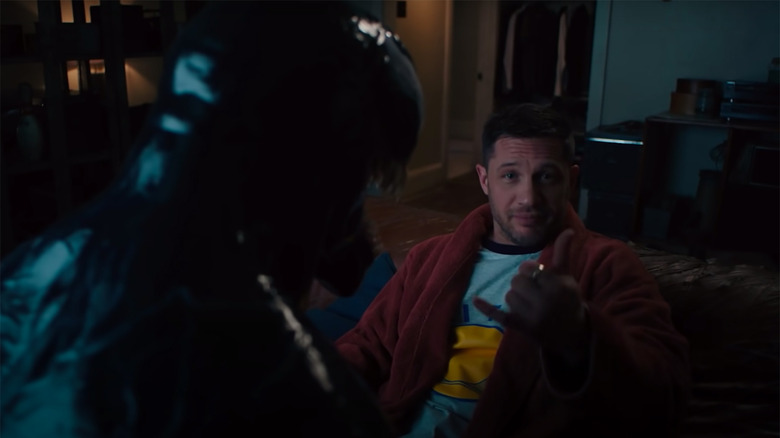
Next, Sony Pictures has released a little round-up of bloopers with "Venom: Let There Be Carnage" stars Tom Hardy, Woody Harrelson, Stephen Graham, Michelle Williams, and more. First of all, it's hilarious to see Tom Hardy acting opposite an on-set maquette of Venom. Second, it's interesting to hear Hardy seamlessly go from his Eddie Brock performance back into his normal voice. And finally, we see Harrelson's emotional side get some artificial assistance from a crew member. See a few more bloopers over here too.

Venom: Let There Be Visual Effects

Even more "Venom: Let There Be Carnage" movie magic comes in the form of a new visual effects breakdown from DNEG. Obviously, Venom and Carnage are the most prominent visual effects throughout the film, but here you also get to see the entirely digital environments created for some of the film's biggest set pieces, including the church from the sequel's climax, and much of the prison in which Cletus Kasady was being kept.

Venom: Let There Be Smooches

Finally, while fans are loving the romance between Eddie Brock and Venom, Sony Pictures had a little trouble reading the room when creating a romantic comedy parody trailer for "Venom: Let There Be Carnage." Instead of crafting a trailer surrounding the love between Eddie and Venom, this holiday rom-com trailer focuses more on Eddie and his ex-flame Anne Weying, with only a nod to the romance blooming between Eddie and the alien symbiote. Weird!

Read this next: Every Pre-MCU Marvel Movie Ranked

The post The Morning Watch: Venom: Let There Be Carnage Honest Trailer, Bloopers, Rom-Com Remix & More appeared first on /Film.

14 Dec 21:03

The Most Haunting Scene In The Ring Two Didn't Need Any CGI

by Fatemeh Mirjalili

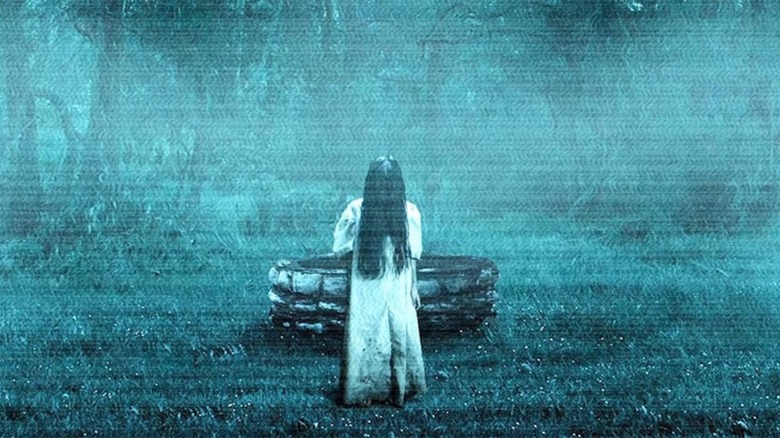
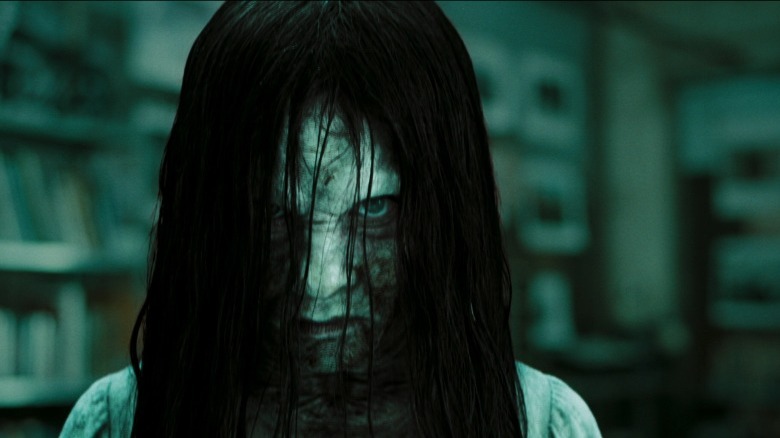
Few horror villains are as nightmare-inducing as Samara from "The Ring'' movie franchise. The vengeful ghost of a young girl who harbors a tragic past, she is known for brutally murdering her victims seven days after they've watched the infamous tape, a playback of her own life. Samara resembles a Japanese onryo (a wrathful spirit focused on vengeance) who is a staple of J-horror films. She has long black hair which is always soaking wet, and it conceals most of her waterlogged face that has turned grey.

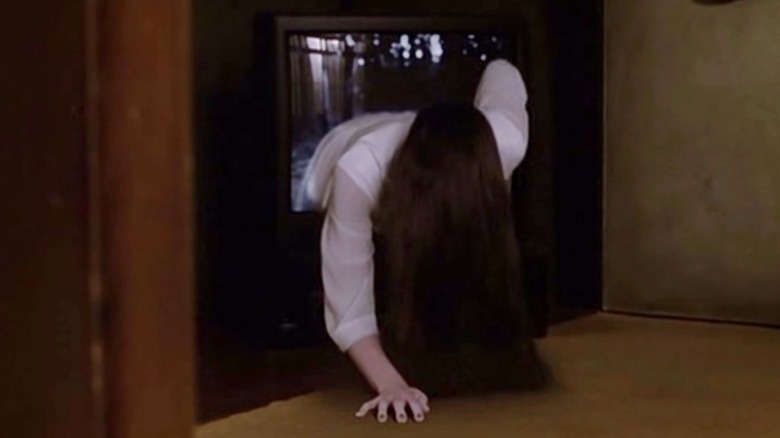
"The Ring" and its sequel, "The Ring Two" are both packed with seriously chilling scenes that will scare the daylights out of anyone. I still remember when I watched it for the first time; seeing Samara crawl out of the television haunted me for days. But there's another scene in the film's sequel that is a lot more frightening, and equally implausible to believe because, at first glance, anyone would assume it's CGI. As it turns out, it's not.

Meet Bonnie Morgan, The Woman Behind The Spider Walk

In the first two films, different actresses portrayed Samara. While Daveigh Chase took on the role in "The Ring" (2002), Kelly Stables played the part in "The Ring Two" (2005). But neither actress could pull off the scene that unfolds during Rachel's (Naomi Watts) confrontation with Samara in the well, after she witnesses a flashback of the ghost as a little girl, who struggled to stay alive in the very same well for seven days. Samara "spider walks" up the well in an eerie, gruesome manner, following Rachel as she attempts to escape.

Here's the scene (if you're lucky enough not to remember it every day):

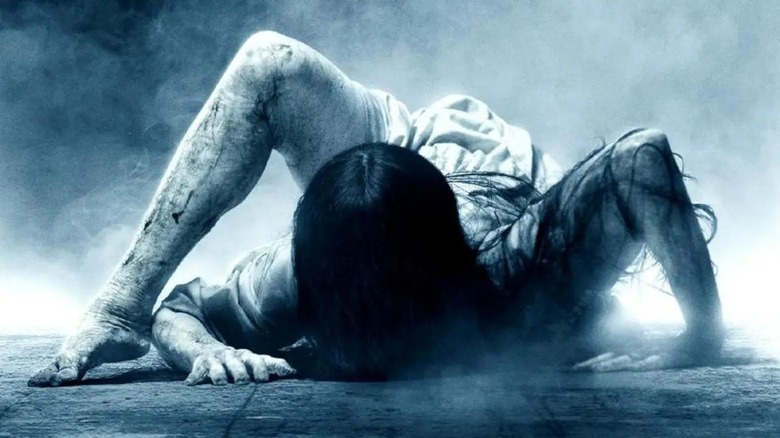
While the film's director, Japanese filmmaker Hideo Nakata wanted to use CGI to depict the spider walk, stunt contortionist Bonnie Morgan was eventually brought in to portray Samara for the scene, thanks to her experience as a hypermobile contortionist. Her performance was unforgettable, and over a decade later, landed her the role of Samara in 2017's "Rings," the third installment in the film franchise helmed by F. Javier Gutiérrez.

In an interview with BloodyDisgusting, Morgan said, "It's been a thrill for me to go from creating Samara's iconic spider crawl as stunt contortionist in The Ring Two to now being brought in to take over the role of Samara in her entirety in Rings and introduce her to a whole new generation of horror fans."

"I'm honored to be a part of her iconic history, and it's exciting and challenging to step back into Samara's soggy skin and bring her from the analog to the digital age," she added.

"The Ring" subverted audience's expectations of what a horror movie looks like. It doesn't have as many jump-scares as say, "The Conjuring," but what it does excel in is building suspense, an atmosphere of fear, and an unnerving feeling of the impending doom that awaits its characters.

Read this next: The 15 Best Japanese Horror Movies Of All Time

The post The Most Haunting Scene in The Ring Two Didn't Need Any CGI appeared first on /Film.

14 Dec 21:00

Everything Everywhere All At Once Trailer: Michelle Yeoh Enters The Multiverse In The Latest From The Directors Of Swiss Army Man

by Chris Evangelista

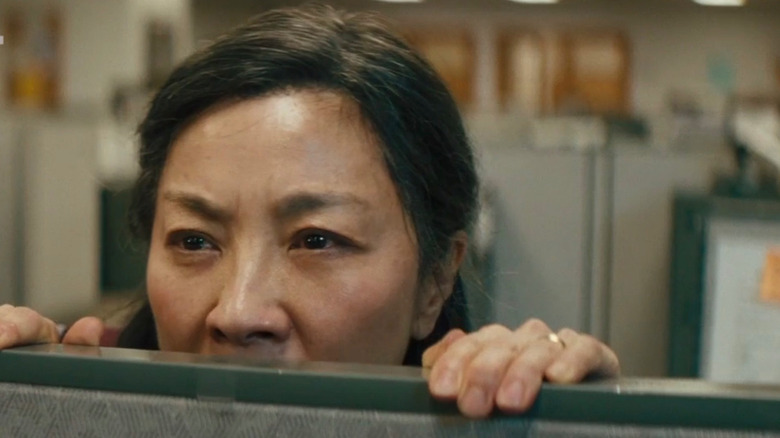
Daniels, the filmmaking team of Daniel Kwan and Daniel Scheinert, are back with what looks like another strange, wonderful movie. The latest from "Swiss Army Man" directors is called "Everything Everywhere All At Once," and it sends Michelle Yeoh on a wild journey through several alternate dimensions, or multiverses, if you will. The first "Everything Everywhere All at Once" trailer just dropped, and folks, it looks all kinds of fantastic. This is a wonderful trailer – it's full of strange, eye-catching moments, but it never gives too much away. Plus, Jamie Lee Curtis shows up wearing a questionable wig. Watch the "Everything Everywhere All At Once" trailer below. 

Everything Everywhere All At Once Trailer

"Swiss Army Man," aka the movie about a farting corpse played by Harry Potter, was a wonderful, weird surprise. And now the filmmakers behind that flick are back with something that looks just as wonderful and weird. The film, "Everything Everywhere All At Once," has a cast that includes Michelle Yeoh, Stephanie Hsu, Ke Huy Quan, James Hong, Jamie Lee Curtis, and Jenny Slate. And, like "Spider-Man: Far From Home," it involves the multiverseThere's clearly a lot more going on here, but the wonderfully vague synopsis only offers us this info: 

Directed by Daniel Kwan and Daniel Scheinert, collectively known as Daniels, the film is a hilarious and big-hearted sci-fi action adventure about an exhausted Chinese American woman (Michelle Yeoh) who can't seem to finish her taxes.

There's so much to enjoy here. The multiverse angle opens the film up to all sorts of possibilities, and having Michelle Yeoh front and center of it all makes this all the more exciting. Also, I could be wrong, but I'm pretty sure I spotted a direct callback to Yeoh's role in "Crouching Tiger, Hidden Dragon" in this trailer, and that's neat! "Everything Everywhere All At Once" will have its world premiere as the opening night film at the 2022 SXSW festival. It will then arrive in theaters on March 25, 2022. I can't wait, and only wish I could see it sooner. 

Read this next: The Best Movies Of 2021 So Far

The post Everything Everywhere All At Once Trailer: Michelle Yeoh Enters the Multiverse in the Latest From the Directors of Swiss Army Man appeared first on /Film.

14 Dec 20:56

10 American Horror Movies You Didn't Realize Were Adapted From Japan

by Chad Collins

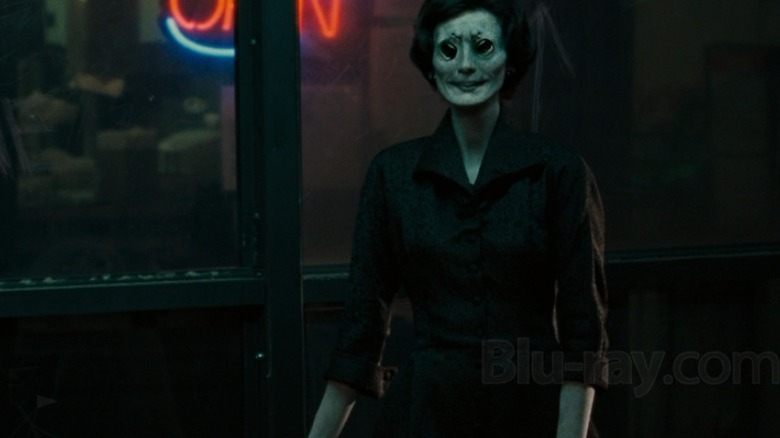
It may seem like a distant memory now, but there was a time when Japanese horror, colloquially known as "J-horror", dominated the horror landscape. If there wasn't a black-haired ghost girl with a pale face popping up from out of frame, it likely wasn't getting released. The early aughts saw an enormous influx of Asian horror remakes, with titles from Japan, South Korea, Thailand, and beyond getting the good old-fashioned American treatment. Often, the results were lackluster, with some outlets such as FilmDaily describing the remake machine as "murder" with regard to the originals.

Indeed, Asian horror, though especially Japanese horror, was imbued with so many distinct cultural touchstones and nuances, translation was inexorably difficult. Still, among the quick jolts and haunted faces, there was still stuff worth seeing. Here, we'll be looking at 10 American horror movies you may not have realized were adapted from Japan. These range from higher-profile genre outputs to smaller indie releases, though all of them, in one way or another, were adapted from Japanese originals.

Dark Water

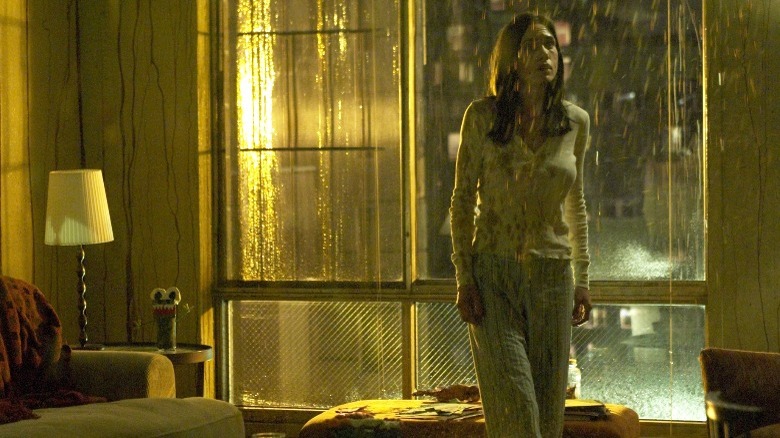
The original Japanese "Dark Water" is one of the dourest, oppressive ghost stories ever made. Hideo Nakata's urban ghost story follows Yoshimi Matsubara (Hitomi Kuroki), a woman in the midst of a custody dispute over her young daughter, Ikuko (Rio Kanno). Consigned to a derelict apartment building with a perennial leak, Yoshimi soon discovers a supernatural presence in the building, most prominently the appearance of a young girl. 2005's "Dark Water" is an American remake that, for the most part, keeps the plot the same. Oscar-winner Jennifer Connelly lends her considerable talents as the mother, with Ariel Gade taking on the role of Cecelia, the young daughter.

What's most curious is that, at a time where horror was starting to shift toward more extreme output ("Dark Water" released the same year "Wolf Creek" did), "Dark Water" scaled things back. Even compared to the original, "Dark Water" is less concerned with scaring its audience than distressing them. While the supernatural goings-on remain, they're less prominent, with remake director Walter Salles more interested in exploring Connelly's young mother and the oppressive nature of unemployment and tenuous custody. It remains just as dour, though it is the rare remake that endeavored to do its own thing.

Pulse

Where "Dark Water" endeavored to do its own thing to its credit, "Pulse" borrowed elements from Kiyoshi Kurosawa's Japanese classic cyber-thriller to its detriment. Where Kurosawa's original featured one of the century's scariest conceits -- loneliness in the digital age is like a ghost -- Jim Sonzero's remake, confoundingly written by genre maestro Wes Craven, bludgeons nuance to death. The general framework remains the same (ghosts from the internet spill over into the real world) and there are several shot-for-shot replications, but the tempered approach is eschewed in favor of conventional American thrills.

Expect plenty of jumps, jolts, and digital ghosts, rendered in "Scooby-Doo" effects and fuzzy, blue things like television static -- a far cry from Kurosawa's realistically realized apparitions. The general mood is so different, in fact, that general audiences wouldn't be remiss for missing the connection to one of this century's scariest J-horror outings. The American remake had it all but a pulse of its own.

One Missed Call

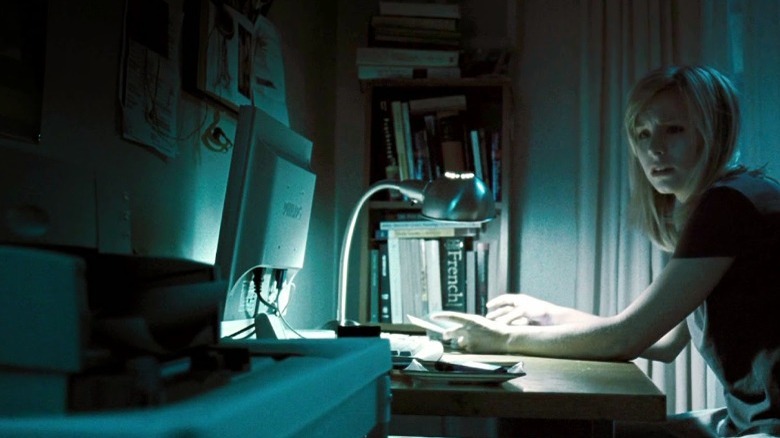
"One Missed Call" is not a good movie. It's not even so-bad-it's-good. "One Missed Call" is simply bad. Parallel with "Pulse," it's similarly adapted from an early-aughts J-horror classic, one whose resonance and impact extends far beyond its year of release. Takashi Miike of "Audition" fame delivered a cruel, grisly piece of millennium cyber horror here, high-concept stuff delivered with all of Miike's subversive technical flourishes and cinematic depravity, and the climactic televised exorcism all but cements its classic status.

Eric Valette's remake came five years after the original, right at the tail end of the J-horror craze. It missed both the critical and commercial success of a dying subgenre ("One Missed Call" grossed a meager $45 million against a $20 million budget) and condensed the original in the worst way. Like "Pulse," lovingly crafted specters are rendered as little more than CG-ghosties that could belong to any horror property. There's no identity of its own, and even a committed Shannyn Sossamon isn't enough to save it. Still, it remains a curious Hollywood case study in Japanese remakes, even if it is a call ultimately worth missing.

Apartment 1303

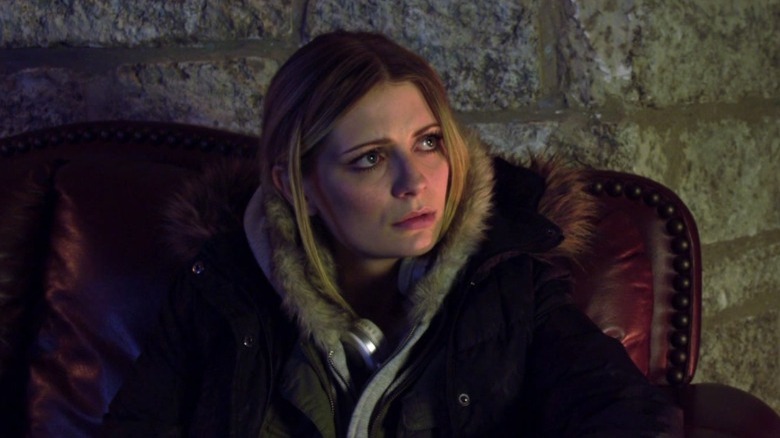
"Apartment 1303" is likely (definitely) less remembered than the aforementioned entries. An almost unknown remake of an almost unknown Japanese original, it stars a post-"The OC" Mischa Barton and Julianne Michelle as sisters, the latter of whom moves to a new apartment that, naturally, is haunted. When Michelle's Janet ostensibly kills herself, Barton's Lara goes to investigate and uncovers a series of mysterious suicides in the building. Soon, the same vengeful spirit is targeting her.

It's a lackluster, semi-exploitative shocker, one that defies common sense frequently and whose narrative developments further confound. The original Japanese movie wasn't particularly well-received, and were it not adapted from "Ju-on" author Kei Oishi's original novel, it likely never would have seen a green light at all. It's not terrible, strictly speaking; it just kind of exists. It has all of the conventional haunted house tropes, though -- like the previous entries on this list -- similarly sacrifices what little behavioral nuance the original had for flatter, louder scares. In other words, it's not an apartment worth renting.

Don't Look Up

Before "Ringu," Hideo Nakata terrified the world with "Don't Look Up" (There's a solid argument to be made that this list be retitled "American Horror Movies You Didn't Realize Were Adapted from Hideo Nakata," though I digress). In "Don't Look Up," a young director (Yūrei Yanagi) shooting a war film discovers strange footage involving a pale woman with long black hair -- a trope was born.

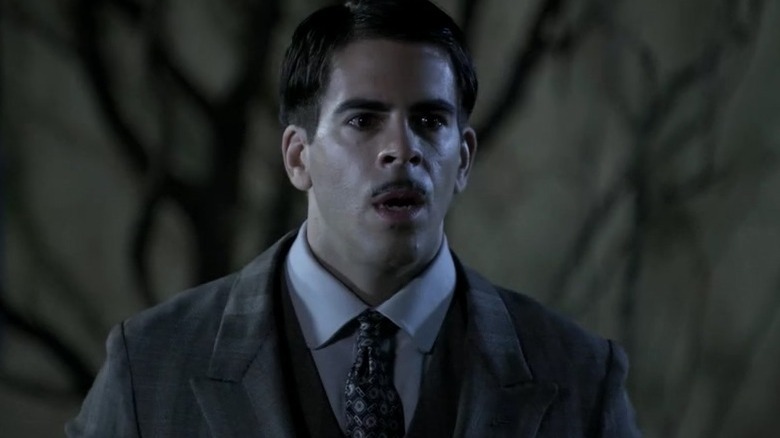
Hideo Nakata's own "Ghost Theater" was promoted as a remake of "Don't Look Up," though that isn't actually the case. In fact, Hollywood and Hong Kong producer/director Fruit Chan had produced a remake of their own. Rachael Murphy, Eli Roth, and Ben DiGregorio star in the basest of remakes. As is common at this point, the general conceit has been Xeroxed to death. Here, evil spirits trapped in old celluloid film cause a film crew to go insane, though similarities are nonexistent beyond that. Like "One Missed Call," it arrived too little, too late. It's a shallow, loud, artistically anemic remake, one that yields none of Nakata's artistry or penchant for the macabre.

The Secret

"Secret," titled "Himitsu" in Japan, isn't exactly a horror movie. Yôjirô Takita's film is a fantastical drama with horror shadings, not unlike 2017's criminally underrated "The Keeping Hours." Never scary, the supernatural elements are enough to elevate it to a genre-adjacent place. In it, a man discovers that his wife's mind has been transferred to their daughter's body after the two of them are involved in a deadly car crash where only their daughter survived. It's not exactly heartwarming material -- it's hard to move past the central conceit -- though it's bold enough to work at times. 

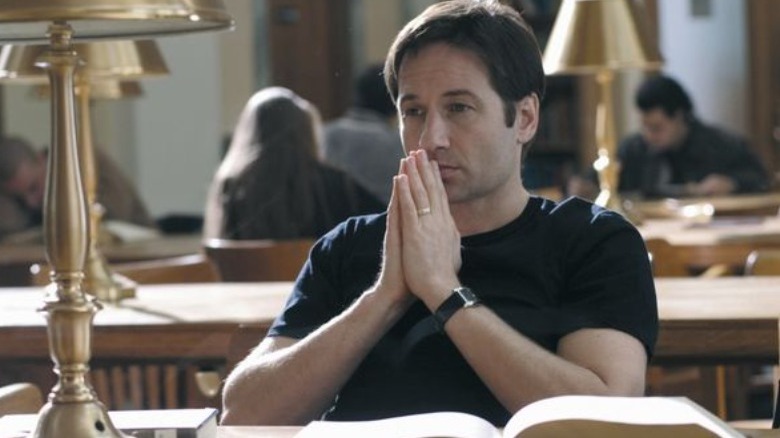
The English-language remake amps up the horror elements while removing any trace of what made Takita's film unique. It stars David Duchovny and is directed by Vincent Perez, a director with only three credits to his name, if that's indicative of anything (it is). It's a movie destined to be forgotten, so thoroughly removed from its source material that it feels like an entirely different movie, one that poses the question -- why remake it in the first place? This one should remain a secret no one knows.

Black Swan

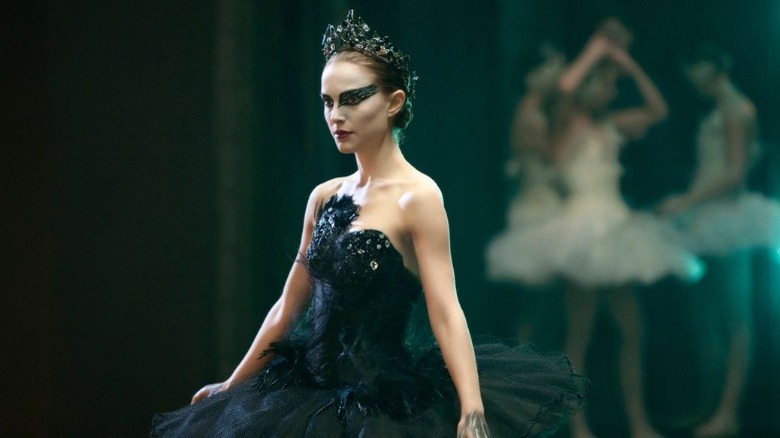
"Black Swan's" inclusion here might register to some as cheating, though just because something is said often enough, it doesn't make it true. Basically, "Black Swan" director Darren Aronofsky has repeatedly denied that his Oscar-nominated hit is in any way, shape, or form a remake of Satoshi Kon's "Perfect Blue." "Perfect Blue" follows a retired musician, Mima Kirigoe, who loses her grip on reality after she is enveloped in a series of stalk-and-slash murders. "Black Swan" is the story of a ballet dancer who loses her grip on reality after vying for the lead in her company's production of Tchaikovsky's Swan Lake. Both feature female artists caught in a tailspin, with hazy hallucinations, tenuous conceptions of reality, and austere horror elements. Aronofsky additionally owns the American rights to "Perfect Blue." Do with that what you will.

Whether Aronofsky intended for it to be or not, "Black Swan" is nonetheless a stellar companion to Kon's "Perfect Blue." Where "Perfect Blue" is animated, "Black Swan" is live-action, though both detail two stunningly crafted and culturally distinct portraits of artists on the decline. Fame and talent corrupt and horrify, and if nothing else, it's thrilling to see two modern auteurs tackle similar material.

Death Note

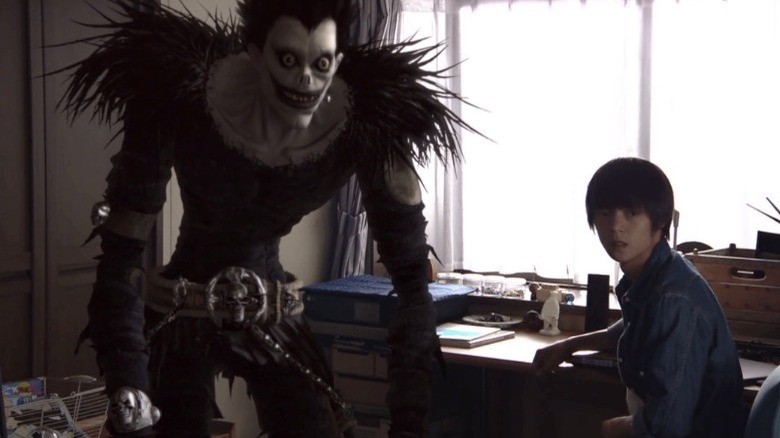
"Death Note" attracted a lot of controversy before it was even released. Indeed, Adam Wingard's adaptation of the famous Japanese manga of the same name seemed poised to fail from the start. In it, a young man finds himself in possession of the "Death Note," a supernatural notebook that kills anyone whose name is written in it. Wingard's take on the material was described as "thoughtless" and "lazy," a whitewashed adaptation that -- get ready for this -- replaced every and all distinct cultural touchstone for conventionally American iconography and staging. In other words, "Cowboy Bebop" isn't Netflix's first rodeo with live-action anime flops.

For less discerning viewers, it would be easy to bundle "Death Note" in with dozens of other weekly Netflix releases, the kind of movies developed to be seen, forgotten, and never returned to. In effect, not the kind of movie to inspire a deep dive into the original. "Death Note" at least has the decency to feature some of Wingard's signature style and frenetic filmmaking. Additionally, the deaths are suitably grim, and while it's no substitute for the manga, it has plenty of style to spare. It's one of the stronger remakes of Japanese source material, even if the bar itself isn't particularly hard to clear.

Godzilla (2014)

At its core, Ishirō Honda and Toho's "Godzilla" franchise has always belonged to the horror genre. The tale of a giant Kaiju terrorizing Japan and triggering fears of nuclear destruction in the post-war era created an enduring cinematic icon in Godzilla (Gojira). It is the longest-running film franchise according to Guinness, with several American remakes and crossovers through Legendary pictures continuing to dominate the box office. There is a chance, however, that as the crossovers increase (Godzilla has taken on Kong, who's next?), the connection to the original Japanese franchise will grow more tenuous.

That is most evident in the rebooted Monsterverse's first entry, Gareth Edwards' aptly titled "Godzilla," which arrived in 2014. A radically different beast -- or kaiju -- than the films that came before, Edwards' remake departed from the franchise formula, conceiving a distinctly American story with humans, not giant lizards, at its center; Godzilla himself only appears in about eight total minutes of footage. Horror bleeds through the periphery, especially during a claustrophobically shot aerial descent into a war-torn San Francisco, and among the current crop of remakes, it's the title that feels most like its own thing. While the franchise grew bigger and bolder as it went on, it's easy to forget that Edwards' Godzilla is modeled after Japan's own little kaiju that could.

The Ring

Gore Verbinski's "The Ring" is the movie that ignited the J-horror craze. A videotape, a phone call, and seven days of agony were all it took for Verbinski's remake of Hideo Nakata's "Ringu" to become a sensation, a techno-horror-thriller that took in an unprecedented $250 million when it opened in October of 2002. It featured some of the scariest scenes this side of "The Exorcist," and has an ending that's shocked and awed audiences for years.

The most obvious American remake of a Japanese classic (both of which inspired series of their own), it's likely there are still audiences that miss the Japanese connection, especially as the movie approaches its two-decade anniversary. Newer audiences who stumble upon it on streaming platforms or in Walmart DVD bins might miss its remake status. The classic tale of a haunted video cassette, its ostensibly dated qualities endure. There's little else quite like it, "The Ring" having far outlived its ties to the analog era. It will haunt audiences long after seven days.

Read this next: 14 Korean Horror Movies You Need To See

The post 10 American Horror Movies You Didn't Realize Were Adapted From Japan appeared first on /Film.

14 Dec 20:54

Spider-Man: No Way Home Was Originally Going To Be Sold As Spidey Vs. Doctor Strange

by Joshua Meyer

The cats, or in this case, octopus and goblin and such, are long since out of the bag regarding the villains of "Spider-Man: No Way Home." If nothing else, we've known definitively since the first official trailer that Alfred Molina was returning via the mighty Marvel multiverse to reprise his role as Doctor Octopus from "Spider-Man 2."

The most recent trailer and subsequent character posters have put the villains of "No Way Home" right out front, showing us Molina as Doc Ock, Willem Dafoe's Green Goblin in his old Power Ranger armor (from Sam Raimi's first "Spider-Man"), and Jamie Foxx's Electro (from "The Amazing Spider-Man 2"") in a new, non-blue costume.

Spidey himself, Tom Holland, has occasionally been known to let spoilers slip during his movie promotions. While he and his co-star, Zendaya, were speaking to Yahoo Movies UK, Holland acknowledged, "We're pretty tired of constantly lying and deceiving people. I feel like conscience is weighing on me now. It's tough."

Holland also revealed that the original marketing plan for "No Way Home" would have de-emphasized the villains in favor of Doctor Strange (Benedict Cumberbatch). He said, "The initial plan was to make the film seem like a civil war between myself and Doctor Strange and they were gonna keep everything a secret. That is impossible."

The Not-So-Mysterious Mystery Box Of Villains

With "Spider-Man: No Way Home," it's actually refreshing to see Marvel forego the whole secretive song-and-dance that it and other studios have done with their blockbuster villains. Cumberbatch, if you remember, was once tapped to play a villain named "John Harrison" in "Star Trek Into Darkness," and look what happened there.

We all suspected he was really going to play Khan Noonien Singh, the classic baddie from "Star Trek: The Wrath of Khan," but while promoting "Into Darkness," people involved with the movie swore up and down that this was not the case. Then, the movie came out, and lo and behold, it revealed Cumberbatch as Khan, surprising no one.

J.J. Abrams directed "Star Trek Into Darkness," and years before everyone started saying "Thank you for coming to my TED Talk," Abrams gave an actual TED Talk where he outlined his famous (or infamous) "mystery box" philosophy. The gist of it is that it's better not knowing what's in the mystery box sometimes because of the way that the build-up or anticipation for something fires the imagination.

When applied to movie marketing, however, this can backfire, as we saw with Khan in "Star Trek Into Darkness," not to mention Christoph Waltz's not-so-mysterious baddie, Franz Oberhauser, aka Ernst Stavro Blofeld, in the James Bond film, "Spectre," a few years later. It feels like it's gotten to the point where studios might as well just be upfront about who the villains are going to be in their tentpoles.

"Spider-Man: No Way Home" undoubtedly still has surprises in store for us, but instead of burying the lede with its villains, it's using them as a hook. The movie opens in theaters this Friday, December 17, 2021.

Read this next: The 14 Greatest Movie Musicals Of The 21st Century

The post Spider-Man: No Way Home Was Originally Going to Be Sold as Spidey vs. Doctor Strange appeared first on /Film.

14 Dec 20:51

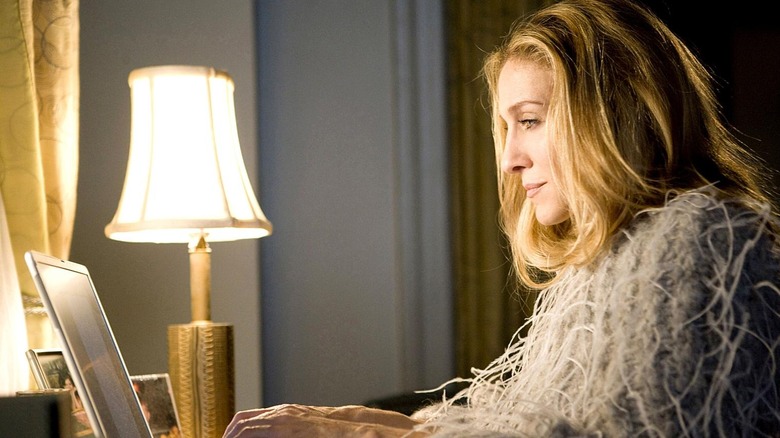
And Just Like That, Michael Patrick King Explained The Necessity Of That Big Twist

by Marisa Mirabal

If you're not caught up on "And Just Like That", consider this your warning because this post contains spoilers. If you are caught up, let's discuss that big twist (pun intended), shall we?

In a recent interview with Variety, creator and executive producer Michael Patrick King discussed the death of lead character John "Big" James Preston (played by Chris Noth). Living a life of luxury alongside Carrie, the couple decided to skip their road trip, which led to Carrie attending Charlotte's daughter's piano recital while Big stayed home to complete his Peloton goal. Later, a text from Big prompts Carrie to return back to their apartment early only to find Big collapsed and dying on the floor from a heart attack. Carrie cradles him in his arms as his takes his last breath ... just like that. 

King stated:

"The reason I did it is because it's shocking, but also because it's great for Carrie's character, because she's always never been able to have him. She only got him at the end of the series and she's only had him really a little bit of time. Now he's taken away, but not by another lady on the Upper East Side or by divorce — but by something she can never rationalize, which is a death."

Audiences were justifiably shocked and the tone of the series quickly became dark, somber, and grief-stricken in a very realistic manner. King elaborated that "we believe Carrie Bradshaw is devastated. So, we will have her heal and mourn and go back and go on. I have no interest in taking the audience into a dark woods and leaving them there without a flashlight. We're not going to just leave Carrie by herself."

The creative team is strictly avoiding a straight continuation of the "Sex and the City" source material. King continued explaining that "Carrie has no overview. I destroyed her world. She has one sentence at the end of every show, that's it. And it's right in the moment." The jokes, tone, and struggles are all different. Dated conversations about shoes, the hottest clubs, and one-night stands are now replaced with topics like ageism, gender, and race. There's also discourse on sexual identity, diversity, grief and addiction with the added layer of their children now in their early and late teens. These decisions propel the characters into a modern age while leading audiences to essentially expect the unexpected.

Carry On, Carrie

Hot take: Big never deserved Carrie. Y'all, their relationship was pretty damn toxic and Carrie spent years trying to get Big to settle down with her. Sure, she enjoyed being single and fabulous at times but after all of her sexual encounters and semi-serious romances, Carrie always came back to Big. In a way, we've probably all been there before, so it makes her storyline seem relatable. However, Carrie deserved better than how Big treated her and how he prioritized his career, other (and younger) women over her, and, of course, himself. He knew he had Carrie under his thumb and he took advantage of it.

When "Just Like That" started, it was nice to see her happy and Big finally commit. But, the guy stood her up on their wedding day. On their wedding day! If I remember correctly, the girl had a spread in Vogue donning her wedding gown and this guy straight up did not come through for her. It's wild how many passes Big got throughout the show's six seasons and two-feature film run. And now, Carrie is still sad over him because he is dead. She can't catch a break with this guy and I feel for her; I really do. I hope the writers give Carrie the happy ending that she deserves after she goes through the hell of permanently losing a loved one and years of unrequited love. Maybe this tragedy will inspire her to pick up writing again and use her grief, anger, and regret as a propellent to compose deeper, more complex stories about life experiences. Either way, I hope she can step back into whatever unnecessarily expensive pair of heels that she owns, down a few martinis, and returns to the successful, quirky woman we all know and love. Scars and all.

Read this next: 15 Shows Like Brooklyn Nine-Nine You Need To See

The post And Just Like That, Michael Patrick King Explained The Necessity Of That Big Twist appeared first on /Film.

14 Dec 20:49

The King's Man Review: The Kingsman Prequel Maketh For A Brutal And Bizarre War Movie

by Hoai-Tran Bui

The "Kingsman" series is perhaps our weirdest ongoing popular franchise. Matthew Vaughn's sleek adaptations of the obscenely violent Mark Millar comics turned a misanthropic send-up of the gentleman spy thriller into star-studded entertainment whose flashy action sequences made you overlook how secretly conservative it is. (The Big Bad villains of the first movie were environmentalists!)

So what happens when you take the "spy" part out of the spy movie, in a prequel story that chronicles the creation of this super secret spy service that operates out of a posh tailor shop? Something that's a cross between a somber war movie and a "Downton Abbey"-inspired soap, while maintaining the cartoonishly violent and sneakily nasty elements of the first two "Kingsman" films. "The King's Man" is a tonally off-kilter action flick that gets graver and more solemn than its two predecessors, but its self-serious riff on the World War I film makes it harder for Vaughn to hide its deeply troubling plot.

A War Of Tones

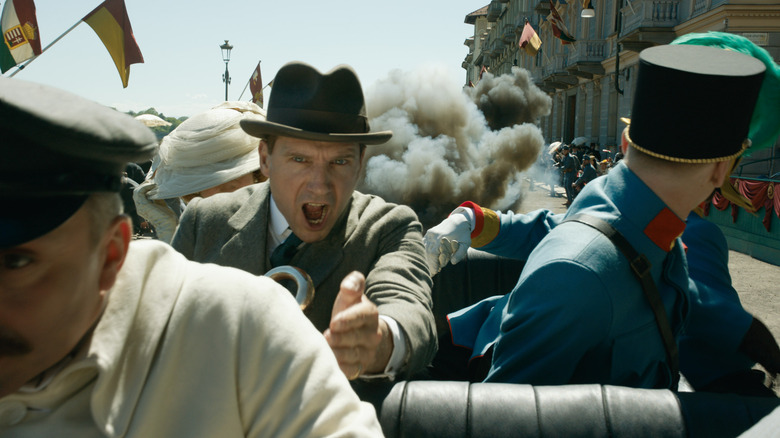
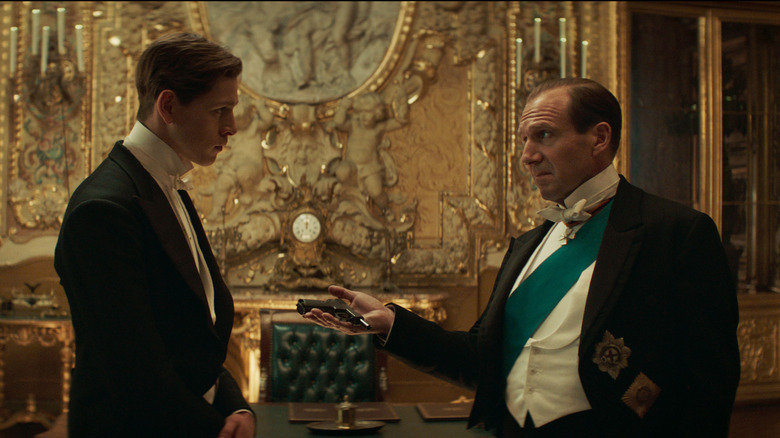
A decade before the Great War breaks out, Ralph Fiennes' Lord Orlando Oxford and his wife (Alexandra Maria Lara) and adolescent son Conrad are delivering Red Cross supplies to a British Army camp in South Africa at the height of the Second Boer War. Fighting breaks out and Orlando's wife is fatally shot, pleading with Orlando to prevent Conrad from ever seeing war again before dying in his arms. But as Conrad (a suitably noble-browed and naïve Harris Dickinson) grows into a young man, war is hard to avoid: it's 1914 and tenuous international alliances mean that conflict is on the horizon. Orlando is called out of his semi-retirement by his former commanding officer Herbert Kitchener (Charles Dance, playing the first of the film's many real-life historical figures) to escort the Archduke Franz Ferdinand of Austria on his visit to Sarajevo. (Yes, we're going there.) Both Orlando and Conrad are on hand to stop a first assassination attempt on Ferdinand, but fail to stop the shot that starts the Great War, which plunges the world into the worst international conflict it had ever seen.

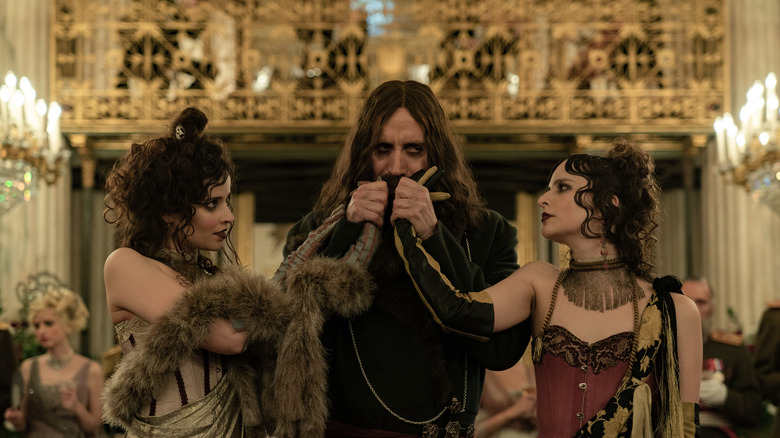
"The King's Man" then Forrest Gumps its way through early 20th century history, but without any of the well-intentioned sentimentality of that Robert Zemeckis drama. This is a World War I movie as an edgy comic book: playing out as a straightforward war drama at times, only to break out into those "Kingsman"-style excesses of hyperviolence. But "The King's Man" loses the tongue-in-cheek satire of the first two films — whose veneer of satire was already thin to begin with — making its moments of outrageous comedy all the weirder. How can a movie that adopts the grim tone of a World War I movie also feature a scene where Rhys Ifans' hedonistic Rasputin licks Ralph Fiennes' leg then twirls around with a knife like some kind of deranged supervillain? "The King's Man" does, but whether it does that well is another question.

Vaughn does have a knack for pulling off dazzling action sequences, and the added griminess of World War I gives him a chance to display his saturated comic-book hyperviolence in a new and exciting way. Gemma Arterton and Djimon Hounsou in particular shine during these sequences, joining Fiennes and Dickinson's father and son in one rushed mission that goes hilariously wrong. Fiennes makes for a thrilling and unusual kind of hero, weighed down by past traumas and his own age, which makes it all the more exciting to see him at the center of such high-octane action scenes. But as stylish as Vaughn's direction continues to be, it can't make up for the film's disjointed and overlong narrative.

I Spy A Conspiracy

Unlike what the marketing would have you believe, "The King's Man" isn't a spy movie. At least, not the "James Bond in the Edwardian era" spy movie that it has been presented as. And in a way, that is for the benefit of "The King's Man," which proves to have a certain charm in the way its characters stumble through massive historical events, conspiracies, and even personal dynamics beyond their control. Fiennes' Orlando Oxford is an overly protective father to Conrad, shielding him from the horrors of the world within their palatial mansion, all the while training him to be an impeccable fighter, for some reason. So when Conrad insists on enlisting in the Army to fight in the Great War, Orlando refuses, blocking Conrad's every attempt to join the war. This of course doesn't stop Conrad who, with the help of an oblivious soldier played by Aaron Taylor-Johnson (reuniting with his "Kick-Ass" director in a shockingly minor role), tricks his way to the front lines.

The plot meanders as "The King's Man" suddenly transforms into a "1917" redux, even recreating that film's famous battlefield run, and deals with its war scenes with such heft that I wondered if the "Kingsman" franchise was turning a new page and growing up. Reader, it wasn't.

While the father-son conflict between Orlando and Conrad — exacerbated and made all the more tragic by a great war coming in between them — is genuinely heartfelt and probably the best part of this messy film, "The King's Man" can't shake the gross immaturity and sneakily conservative messaging of the franchise.

Without giving too much away, "The King's Man" is an imperialist nightmare, a film that nostalgically advocates for the "stability" of monarchy and the time of powerful empires. The way it weaves in real-life historical figures and tragedies, and offers up a conspiratorial answer to them, is the stuff of a 4chan thread's dreams. As charismatic as its stars are, and as refreshing as its period setting is, the wildly inconsistent tone and overstuffed runtime loses whatever was left of the shine of the first "Kingsman."

/Film Rating: 5 out of 10

Read this next: 14 Sequels That Truly Didn't Need To Happen

The post The King's Man Review: The Kingsman Prequel Maketh for a Brutal and Bizarre War Movie appeared first on /Film.

14 Dec 20:49

Mike Flanagan Thinks Netflix Should Release More Of Their Work On Physical Media – And He's Right

by BJ Colangelo

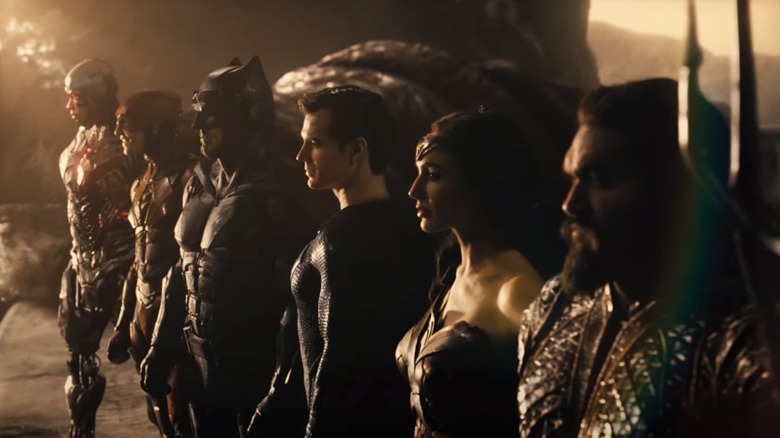
The elusive and exclusive content offered by a streaming service is the dominant way of convincing new subscribers to sign up, and keep current subscribers from canceling. Peacock recently solidified a killer deal with Universal, becoming the streaming home for most of their 2022 releases after a 45-day theatrical window, and Zack Snyder's "Justice League" was a huge selling point to convince people to join HBO Max. Netflix is the undisputed streaming king of the hill, where shows like "Squid Game" and "Stranger Things" permeate the cultural landscape so deeply, they become almost mandatory viewing just to understand what all of the memes and watercooler conversations are about.

Due to that allure of exclusivity, very few shows or movies on Netflix make the jump to a physical release. One of Netflix's own content superman, Mike Flanagan, recently took to Twitter imploring the service to rethink their stance on physical media, after a fan tweeted about their desire to see a bBu-ray release of Flanagan's "Midnight Mass."

He also cleared up the confusion some may have about why his projects "The Haunting of Hill House" and "The Haunting of Bly Manor" were given the physical media treatment compared to the lack of plans for "Midnight Mass."

While exclusivity is the key to streaming, Flanagan is right, and here's why.

Believe It Or Not, Not Everyone Has Netflix

In the current age, it is more surprising than not when someone admits they aren't subscribed to Netflix. There's a multitude of reasons why someone might not be a subscriber, but the biggest one is due to access. People all around the globe, and America in particular, experience something called the digital divide, which refers to the growing gap between marginalized members of society (especially the poor, rural, elderly, and handicapped) who do not have access to computers or the internet compared to those that do. Netflix also runs between $8.99-$17.99 a month which for some people, is not financially feasible.

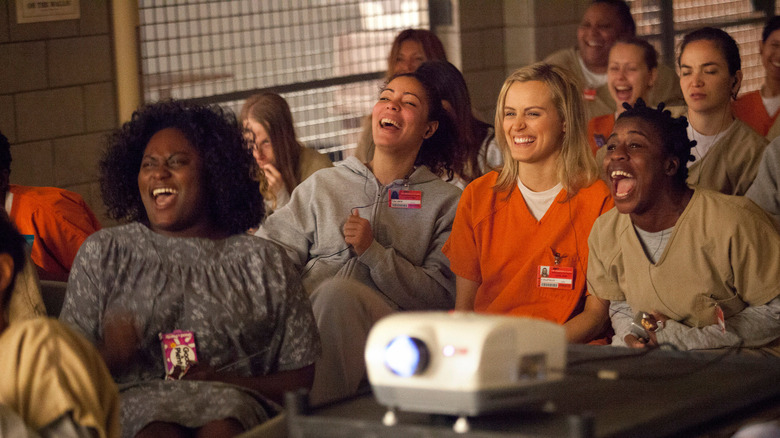
Streaming services are the digital entertainment version of shopping at a warehouse club like Costco. Yes, it is cheaper in the long run to pay $20 for 10 bags of chips than it is to pay $5 for one bag of chips at the gas station, but sometimes you only have $5. Not everyone is able to spend the monthly fee for access to Netflix's massive catalog, but they may be able to splurge on the purchase of a film on DVD or a box-set of that series everyone keeps talking about. Admittedly, I gifted my own mother a few seasons of "Orange is the New Black" on DVD for Christmas one year because she didn't have Netflix, and that purchase is what inspired her to sign up. The existence of physical media is not also a cost-effective option for some, but it can also be used as an additional sales tactic.

Physical Media Accessibility Is Profitable

The average Netflix subscriber is not going to throw a tantrum if a show or movie becomes available on physical media, because with few exceptions, they're not paying for access to one singular film or series -- they're paying for access to the whole kit and caboodle. The benefit of physical media is that it allows an additional medium to spread and share the content, and one that isn't locked to the need for a reliable internet connection or a login.

It's also an additional revenue stream for Netflix that isn't being explored, which seems silly. Snyder's "Justice League" absolutely destroyed the competition in Blu-Ray sales at the time of its release, because if people want something bad enough, they will pay for it. Looking at something like "Midnight Mass" in particular, Netflix is simply leaving money on the table by not providing a collection of Mike Flanagan's work. Is there overhead in creating packaging, and producing the actual physical media? Of course. But the beauty of physical media is that it won't magically disappear into the ether of ones and zeroes, and Netflix will undoubtedly see a return on their physical media investment.

There Is Power In Physical Media

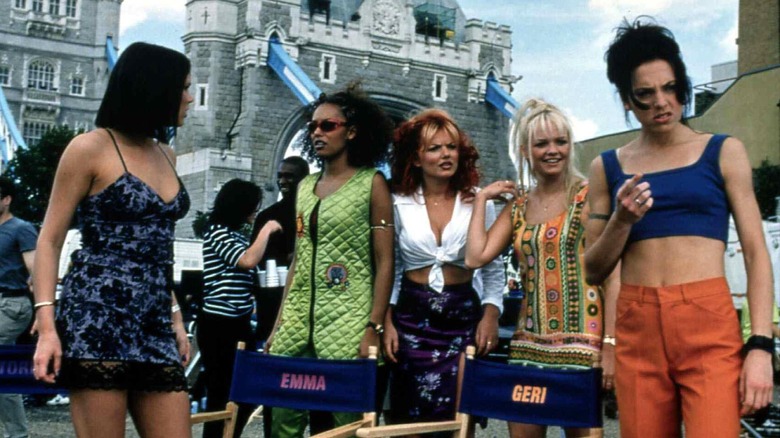
There's no way to predict how technology is going to evolve in the future, as we've changed more in the last 20 years than in the last 300 years before it, but there's a permanence in physical media. So many films released on VHS that never made the jump to DVD or Blu-Ray have been somewhat lost to time, which is why distribution labels like Vinegar Syndrome, Arrow, Criterion, and Synapse (just to name a few) are so important to the history of cinema. Hell, I've been trying to cover the Spice Girls movie "Spice World" on my own podcast for over a year, but the DVD goes for about a hundred bucks on eBay and the film is impossible to find through legal means. This means there's an entire generation of people who have next to no access to a film that made $100 million globally at the box office, which gives any of us who still have that limited run DVD copy or VHS we got for our birthdays in 1998 an immense amount of power.

What happens if, heaven forbid, Netflix shudders its doors? It's easy to think that Netflix is too powerful to fail, but that's exactly how we felt about Blockbuster and look what happened there. This isn't a matter of choosing one or the other, but offering both. Netflix knows better than anyone that there's money in evolving with the times. The pendulum swing from physical media to digital streaming has finally shifted back to the middle. Looking at the big picture, there's really no reason why Netflix shouldn't be considering adding more options for physical media.

Read this next: The Best Movies Of 2021 So Far

The post Mike Flanagan Thinks Netflix Should Release More of Their Work on Physical Media - And He's Right appeared first on /Film.

14 Dec 20:39

14 Underrated Fantasy Movies You Need To Watch

by Liam Gaughan

Fantasy films have never had quite the same universal appeal as other films that fall under the "genre" label. Science fiction films have been box office successes since "Star Wars," and the current popularity of the superhero genre is often based on sci-fi elements. Horror films have never disappeared from the market, and both bigger franchises and low-budget indies are routinely successful. Westerns may not be as popular today as they were in the Golden Age of Hollywood, but the genre has gradually made a resurgence.

Fantasy films, however, have historically been a tougher sell. Getting an audience to accept complex mythology, and crafting believable creatures and magical elements can be a challenge. That said, when fantasy films succeed, the bets pay off big time. Two of the biggest franchises of the 21st Century have been "Harry Potter" and "The Lord of the Rings," and Disney routinely sees success with their fantasy animated films and live-action remakes.

With that in mind, here are 14 underrated fantasy movies you need to watch.

Werewolf Of London
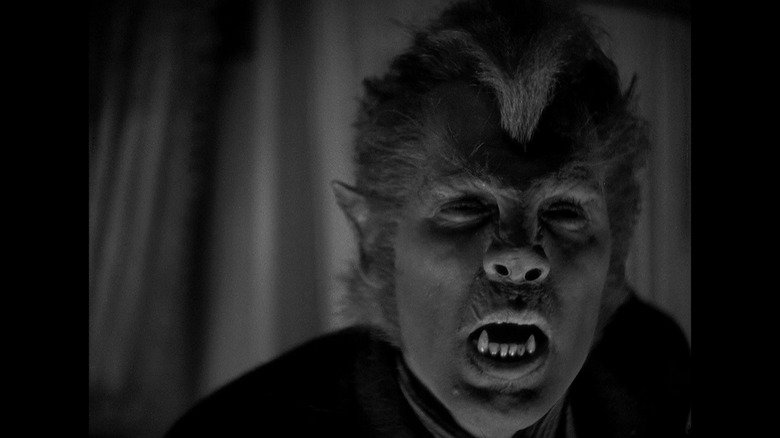
Beginning in the early 1930s, Universal Pictures launched several key iconic franchises under the Universal Monsters label. Long before the notorious failure of the "Dark Universe," these critical early films combined horror and fantasy with the definitive depictions of characters like Frankenstein, Dracula, The Mummy, The Blob, The Invisible Man, and The Creature From The Black Lagoon.

However, the cinematic werewolf was a much harder character to crack, and 1941's "The Wolf Man" proved to be the most iconic version of the character. Prior to Lon Chaney Jr.'s iconic performance, Universal first attempted to capture the essence of the character with 1935's "Werewolf of London." Although the later version would be the one Universal used in their subsequent crossover films, "Werewolf of London" has an important place in both horror and fantasy film history. The film follows Dr. Wilfred Glendon (Henry Hull), an English scientist who travels to Tibet to visit an archeological research facility.

While investigating the area for a rare plant, Glendon is attacked by a werewolf at night and bitten. It's not until he returns home to London that he realizes what that bite entails, and struggles to suppress his new werewolf transformations. Compared to other Universal horror films, "Werewolf of London" is less focused on body horror and pays closer attention to Glendon's anxieties about bringing harm to others. The film was iconically parodied in 1981 in John Landis's classic "An American Werewolf in London."

Always
Steven Spielberg is often thought of as one of Hollywood's best creators of cinematic magic, and he's frequently incorporated fantasy within his projects. One of the reasons Spielberg is such a consistently engaging filmmaker is his dexterity; Spielberg's work can't be pinned to just one genre or style. The fantasy films Spielberg has delivered over the years frequently intersect with other genres, which has afforded him a number of interesting methods for introducing audiences to magical concepts.

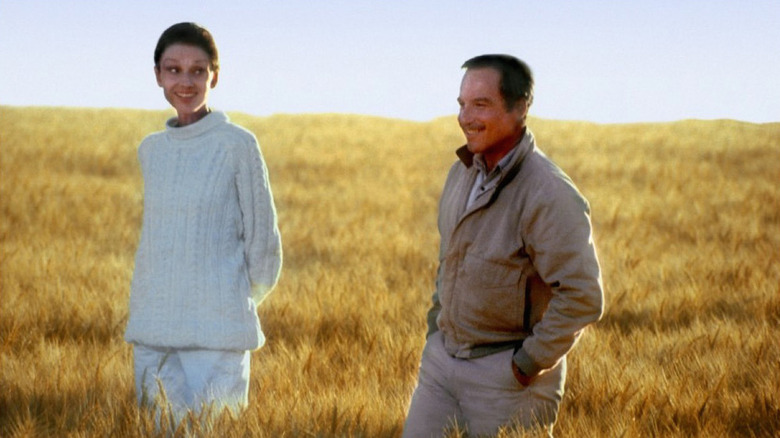
1989's "Always" is generally thought of as one of Spielberg's lesser films, but the completely earnest romantic fantasy adventure deserves another look from film fans. Spielberg's remake of the 1943 romantic drama "A Guy Named Joe" is wholly sincere, featuring a gorgeous score by John Williams and stunning cinematography from Mikael Salomon. Spielberg often tells dramatic stories from a child's perspective, and "Always" is a film about serious adult themes whose story is still told with an innocent aura.

"Always" centers around aerial firefighting pilot Pete Sandich (Richard Dreyfuss), who frequently undertakes dangerous missions. Pete's girlfriend Dorinda Durston (Holly Hunter) constantly worries about his safety, and her anxieties prove to be justified when he is killed amidst yet another perilous operation. Pete's essence is able to survive to observe Dorinda during her healing process, and he watches over her. While his presence is comforting, Spielberg doesn't make Pete's new role complete wish fulfillment, as he's unable to communicate with the woman he loves. Dreyfuss and Hunter have terrific chemistry, and John Goodman delivers a standout supporting comedic performance.

The Hudsucker Proxy
The Coen Brothers are two of the most essential American filmmakers, and in the decades since "Blood Simple" debuted, they've graduated from "best of a generation" status to "all-time great" consideration. The Coens are simply unpredictable, but there are recurring hallmarks in all of their films, specifically quirky dialogue, strange characters, shocking moments of violence, and chaotic non-sequiturs. The Coens tackle many genres, but there is an element of fantastical bewilderment within them all.

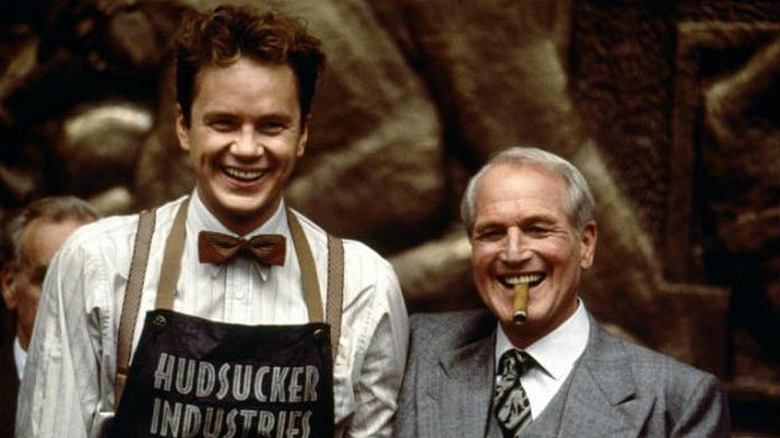
While the Coens have found continued success throughout their filmography, 1994's "The Hudsucker Proxy" is the rare box office bomb within their career. The Coens often homage older films and genres, and "The Hudsucker Proxy's" is a tribute to both classic Hollywood capers and slapstick comedies. The film follows the endearing (but generally clueless) businessman Norville Barnes (Tim Robbins), who works in the mailroom at the malicious company Hudsucker Industries.

Due to his lack of ambition and naive nature, Norville is selected by the senior board member Sidney J. Mussburger (Paul Newman) as the company's new leader. Sidney plots to set the company on a course for failure as part of an insurance scam. While he thinks having a dim-witted executive is the key, he's shocked to find that Norville is a success. Reporter Amy Archer (Jennifer Jason Leigh) attempts to expose Norville as corrupt, but becomes charmed by his warm personality. Strange elements of fantasy begin to appear through the presence of a large, magical clock tower.

Dogma
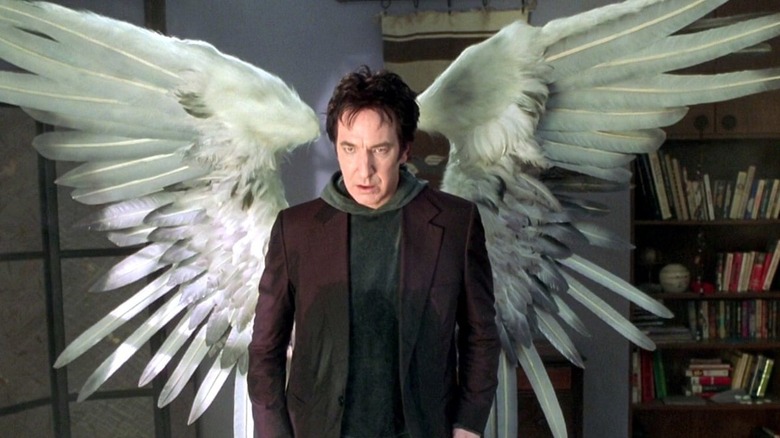
Kevin Smith's films include interesting references to pop culture and established fantasy franchises, and Smith has gradually grown the interconnected View Askewniverse throughout his career. Recurring characters appeared in "Clerks," "Mallrats," and "Chasing Amy," but 1999's "Dogma" was the most overt genre vehicle of the franchise. While his earlier films saw Smith's movie-obsessed characters talking about fantasy films, "Dogma" actually brought them into the fantasy world.

The film centers on two angels, Bartleby (Ben Affleck) and Loki (Matt Damon), who are kicked out of heaven by God and forced to live among mortals. Bartleby and Loki aim to get back into heaven by being absolved of their sins via a loophole created by the strange new cardinal (George Carlin), who offers absolution to anyone who enters his New Jersey church. While Bartleby and Loki's return would return them to heaven, it would mean circumventing the word of God, and thus casting all of existence into chaos.

The Voice of God (Alan Rickman) calls upon abortion clinic worker Bethany (Linda Fiorentino) to help stop Bartleby before he thrusts the world into oblivion, and she's joined by the forgotten apostle Rufus (Chris Rock) and the signature Jay (Jason Mewes) and Silent Bob (Smith) on a road trip adventure. Smith playfully tackles issues of faith, loss, and disillusionment, and the entire ensemble has great chemistry. Although it was very controversial during its release, "Dogma" is fairly sensitive in its approach to different perspectives.

Lemony Snicket's A Series Of Unfortunate Events
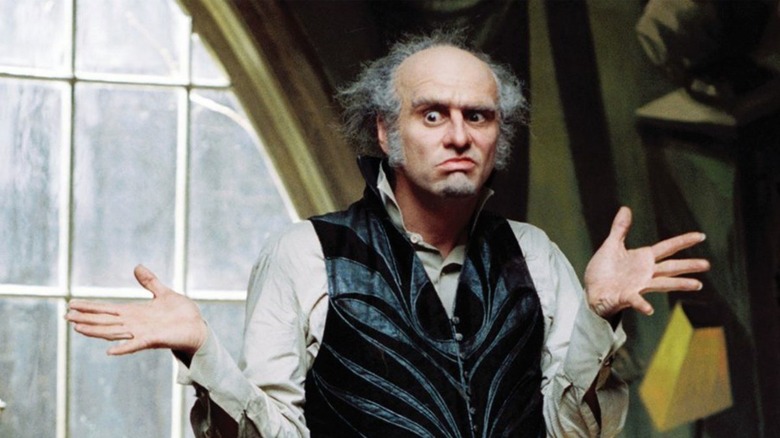
The popular YA adventure series "A Series of Unfortunate Events" was turned into an also-popular Netflix series starring Neil Patrick Harris, but the madcap fantasy adventure stories were first adapted to the screen in a 2004 film from director Brad Silberling. While the show was able to flesh out the characters in greater detail, the film successfully captured the unique blend of eccentric side characters, creative problem solving, and shocking plot twists that made the books so beloved among young readers.

The Baudelaire children -- Klaus (Liam Aiken), Violet (Emily Browning), and the infant Sunny -- are left orphaned after their parents are tragically killed in a fire. The three are forced to live with their only living relative, the eccentric Count Olaf (Jim Carrey), who lives in an enigmatic mansion and conducts strange experiments. Olaf forces the trio to carry out laborious tasks while plotting to steal the fortune Violet will receive once she reaches adulthood. The story is narrated by a version of the author Lemony Snicket, here played by Jude Law.

Carrey delivers one of his zaniest performances ever (which is no small task), and makes for a comically entertaining villain that places the children in increasingly ridiculous dangers. It's fun to watch the children work together to survive each scenario.

Dracula Untold
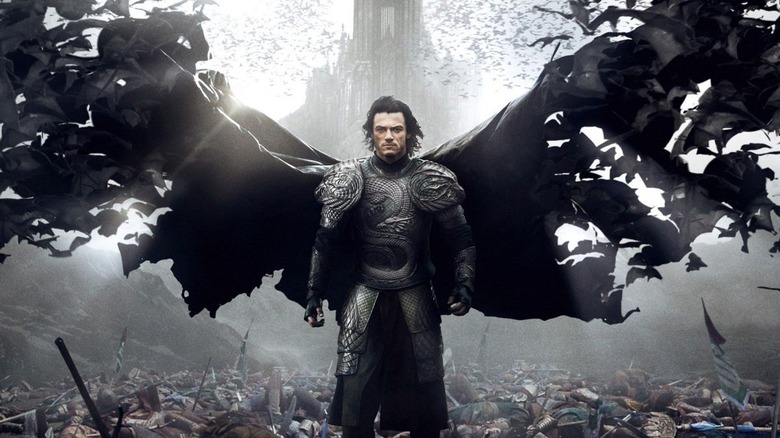
Dracula is one of the most frequently adapted characters in cinematic history, appearing in literally hundreds of films. It is, therefore, quite the challenge for any new Dracula film to offer a fresh take on Bram Stoker's iconic gothic horror character. And nevermind the ones everyone's already forgotten about -- the 1922 German expressionist film "Nosferatu," 1931 Universal Monsters film "Dracula," 1958 Hammer horror film "The Horror of Dracula," and 1992's gothic epic "Bram Stoker's Dracula" are all considered to be cinematic classics.

However, 2014's "Dracula Untold" offered an original take on the character by returning to the historical context of Stoker's original novel. Rather than using Dracula as a horror villain who pops up in jump scares, "Dracula Untold" followed Vlad the Impaler (Luke Evans) during his mortal days as Prince of Wallachia and Transylvania. A heroic warlord who defends his people from invaders, Vlad is forced to bear a curse from the Master Vampire (Charles Dance) in order to ward off the threat of Sultan Mehmed II (Dominic Cooper).

A Monster Calls

Fantasy stories often have the power to heal, and can be used to help people process their grief, sadness, and confusion. Fairy tales with simple imagery can contain powerful subtext, and just because a film has unbelievable elements doesn't mean it can't have powerful emotional weight behind it. J.A. Bayona's 2016 fantasy drama "A Monster Calls" highlights the challenging adolescence of a young boy who turns to fantasy as a means of coping with his reality.

Conor O'Malley (Lewis MacDougall) struggles to deal with his mother's (Felicity Jones) terminal illness, as they are separated from his irresponsible father Liam (Toby Kebbell) and no-nonsense grandmother (Sigourney Weaver). Conor is bullied relentlessly at school because of his sensitive nature, but he's given a window of hope each night when he's given visions of an organic monster (Liam Neeson) that inspires him to find inner strength. Bayona weaves in this dreamlike sequences among serious scenes between Conor and his mother, and MacDougall gives a standout child performance that captures his fragile emotional state.

The Secret Life Of Walter Mitty
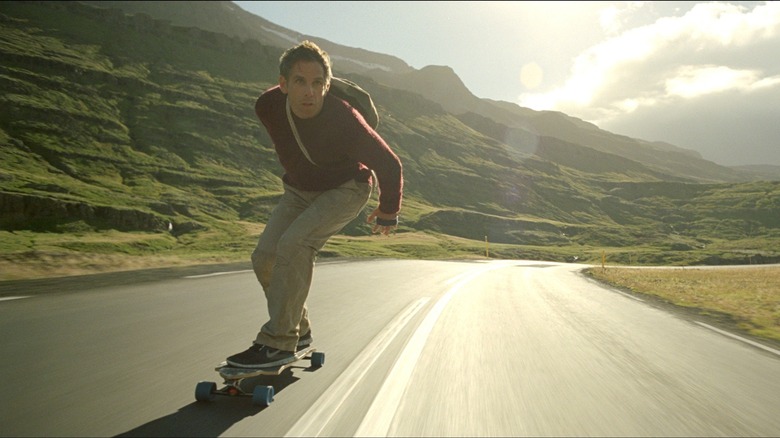
Ben Stiller is known as one of the most popular comic actors of his generation, but Stiller has also consistently proven himself to be a great filmmaker. Since "The Cable Guy," Stiller has brought the same talent and comedic zaniness he has as a performer to films like "Zoolander" and "Tropic Thunder." However, 2013's "The Secret Life of Walter Mitty" was a more dramatic fantasy adventure that saw Stiller show his range as both an actor and director.

In an adaptation of the classic 1939 short story by James Thurber, the film follows a shy photojournalist at LIFE Magazine who is tasked with gathering materials ahead of the publication's final issue. Walter Mitty (Stiller) works with the legendary photographer Sean O'Connell (Sean Penn), but when he goes missing, Mitty sets out on an adventure of his own. The introverted man has never done much traveling, and only imagines what grand adventures would look like through his vivid imagination.

The Illusionist
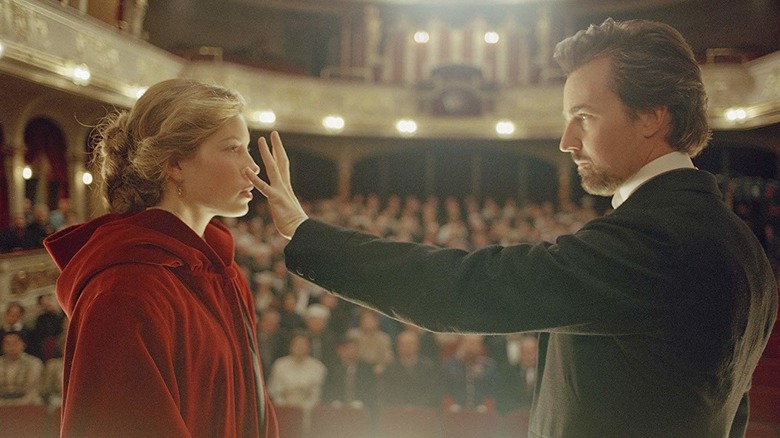
The 2006 magical fantasy film "The Illusionist" suffered from unfortunate timing, as it was released within only a few months of another period-piece mystery film centered on the world of magicians: Christopher Nolan's "The Prestige." Critics were quick to note the comparisons between the two, and most tended to favor Nolan's mind-bending deconstruction of two rival performers desperately trying to outdo each other. However, "The Illusionist" and "The Prestige" had different goals, and the former is successful as an emotional romantic epic.

"The Illusionist" is set at the end of the 19th Century in Vienna, and follows the performances of stage magician Eduard Abramovich (Edward Norton). Eduard yearns for the love of his childhood flame, Duchess Sophie Von Teschen (Jessica Biel), but the pair are separated by their socioeconomic differences. Eduard attempts to gain the favor of the upper class, but he's pursued by authorities. Like "The Prestige," "The Illusionist" is beautifully crafted in period detail, and both films received Academy Award nominations for best cinematography.

Stardust
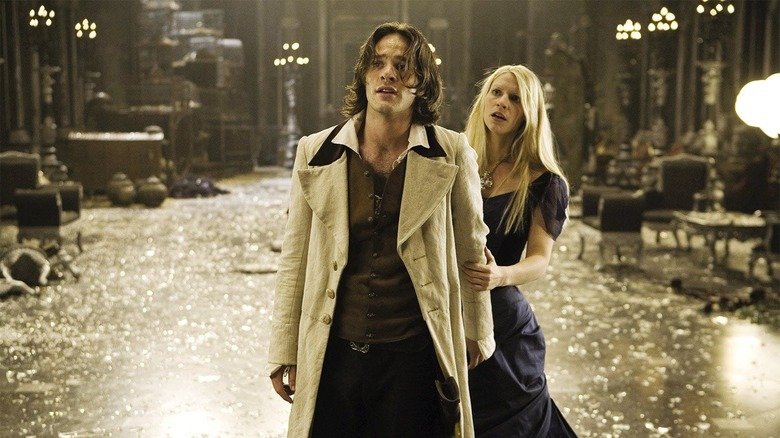
Matthew Vaughn is a filmmaker who enjoys deconstructing genres and exploring why they continue to resonate. Vaughn famously lampooned the comic book movie genre with "Kick-Ass" before he took on a more serious deconstruction with "X-Men: First Class," and he continues to explore a satirical take on the James Bond universe with his ongoing "Kingsman" franchise. Vaughn was a natural fit for the source material of author Neil Gaiman, who famously crafts complex fantasy worlds with idiosyncratic stories and fun characters. Gaiman takes his stories seriously, but there is an element of winking satire that makes all of his work enjoyable.

Vaughn adapted one of Gaiman's most beloved novels with his 2007 film "Stardust," and unfortunately the film was not the franchise starter that it was intended to be. Set within medieval England, the film follows the young hero Tristan (Charlie Cox), who dreams of traveling beyond his secluded village of Stronghold. Tristan yearns for his childhood crush Victoria Forester (Sienna Miller), and attempts to court her by capturing a fallen star. The star itself has taken human form as the girl Yvaine (Claire Danes), and Tristan ventures out to take her back to Stronghold.

However, Yvaine is also the target of the villainous Prince Septimus (Mark Strong), who wants to use her power to claim the throne of the entire kingdom for himself. It places Tristan in danger, and it's fun to see the quirky hero grow throughout the adventure. Tristan gradually realizes his real love is Yvaine.

Nine Days
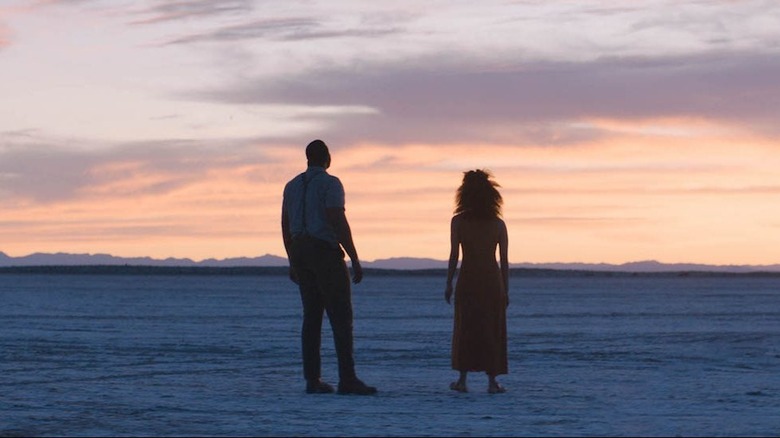
Fantasy films are often thought of as epic adventures about faraway places, but some of the greatest films within the genre are smaller and more intimate. A fantasy film doesn't have to center around a quest or preventing a villainous plot -- some focus on more serious issues such as faith, hope, and the meaning of life using metaphorical fantasy elements. This year's stunning independent drama "Nine Days," for instance, is a brilliant work of existentialist storytelling that explores the eternal question of who has the right to exist.

The film is set within an arbitration home where souls travel before they take human form on Earth. The arbiter, Will (Winston Duke), is tasked with interviewing potential candidate souls before they make their way to the surface. Will is joined in the decision-making process by Kyo (Benedict Wong), who -- unlike his co-worker -- never lived on Earth. They're tasked with watching footage of the potential souls and living with them, and the decision becomes more difficult for Will when he becomes emotionally connected to a candidate named Emma (Zazie Beets).

Love And Monsters

The impact of COVID-19 meant that many interesting genre films intended for wide theatrical release were either pushed back or sent directly to streaming or digital rental, which unfortunately means that many of them have slipped under the radar among film fans. 

2020's "Love and Monsters" wasn't just a refreshing fantasy adventure film that deserved a much larger audience, but a surprisingly perfect film for isolation viewing. Its playful approach to a post-apocalyptic environment tells a relatable story about struggling to find a connection amidst a global crisis (an angle that many viewers may have been able to relate to), but features enough comedic elements to not hit too close to home.

The film takes place amidst a chemical fallout in which Earth has been ravaged by mutant, monstrous creatures. Humanity's survivors live in small sects isolated from one another, and during the crisis, Joel Dawson (Dylan O'Brien) is separated from his girlfriend, Aimee (Jessica Henwick). Joel ventures out from the protection of his group to find his girlfriend, and he's accompanied by the dog, Boy.

Meet The Robinsons
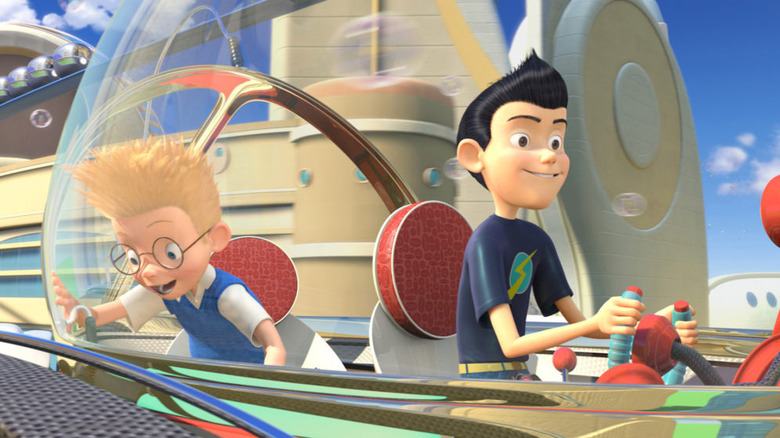
"Meet the Robinsons" is a highly underrated animated film from Disney, and unfortunately the film was greeted with mixed reviews and an underwhelming box office performance. It's unfortunate, because the film combines fantasy and science fiction in an engaging way, and explores more serious concepts of destiny, kindness, and responsibility. It's rare for a mainstream family adventure film to be so focused on potentially confusing elements such as time travel, but "Meet the Robinsons" is a pleasant story of familial bonding that ends on an optimistic note about the future.

Lewis (Jordan Fry) is a 12-year-old inventor and orphan who desperately tries to find his birth mother while living in an adoption home. Lewis crafts all types of inventions, and one day he's mysteriously visited by an adolescent stranger named Wilbur Robinson (Wesley Singerman), who asks for his help in repairing a time machine. Wilbur brings Lewis to the future, introducing him to his idiosyncratic family of mystical and genetically-enhanced creatures. The pair attempt to stop the villainous Bowler Hat Guy (Stephen Anderson) from using another time travel device to wreak havoc on the future.

Rise Of The Guardians
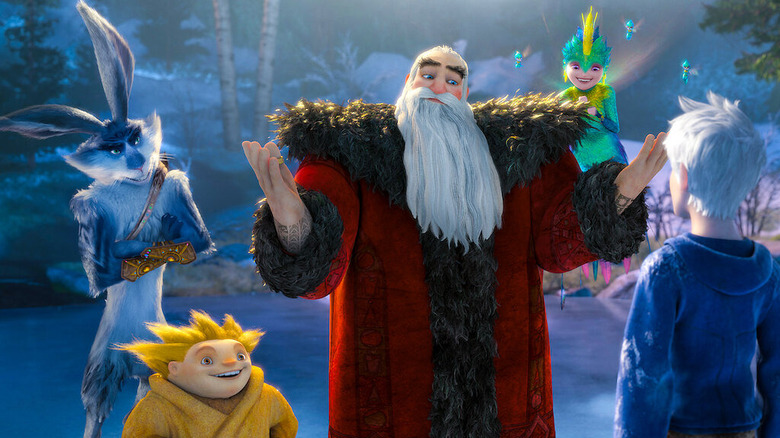
Holiday films often incorporate fantasy to tell heartwarming stories, and there are many Christmas classics within the realm of animation. It's hard for a new animated Christmas movie to stand up against beloved favorites like "How The Grinch Stole Christmas," "Rudolph the Red-Nosed Reindeer," "Santa Claus Is Coming To Town," and "Frosty the Snowman," but occasionally a new holiday favorite announces itself as a modern classic.

2012's "Rise of the Guardians" combines a heartfelt message about believing in kindness within an exciting adventure premise. In an "Avengers" style team-up, the young Jack Frost (Chris Pine) joins the team of Santa Claus (Alec Baldwin), the Easter Bunny (Hugh Jackman), the Tooth Fairy (Isla Fisher), and the Sandman to stop the villainous Nightmare King (Jude Law). The film delightfully subverts the expectations about these classic fantasy characters by putting them within an action movie premise, and the voice performances are all quite entertaining.

Read this next: The 14 Greatest Science Fiction Movies Of The 21st Century

The post 14 Underrated Fantasy Movies You Need to Watch appeared first on /Film.
14 Dec 20:38

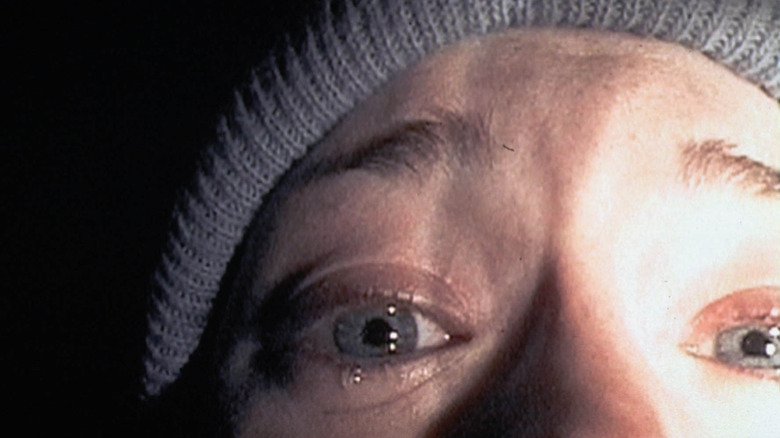
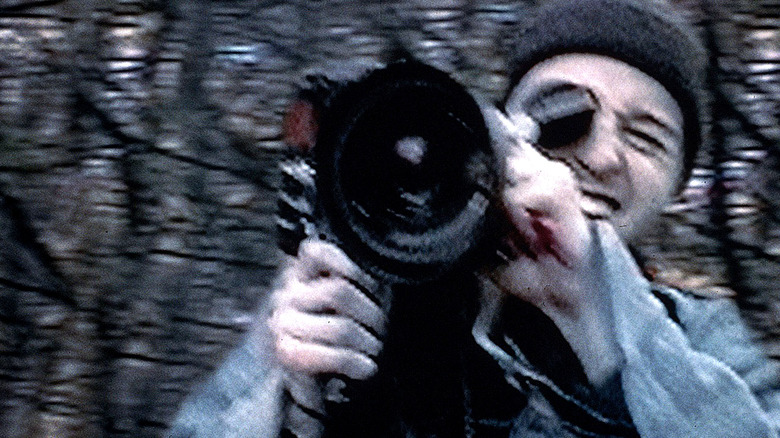
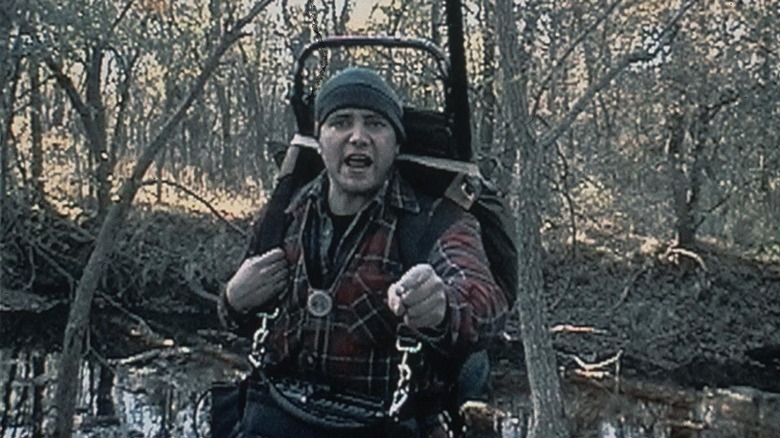
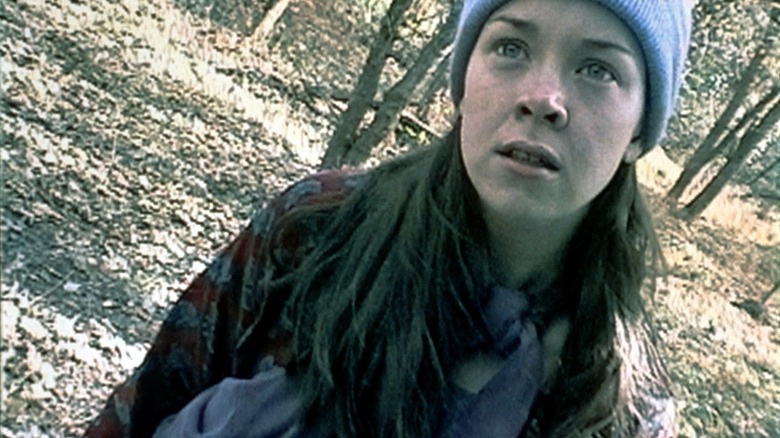
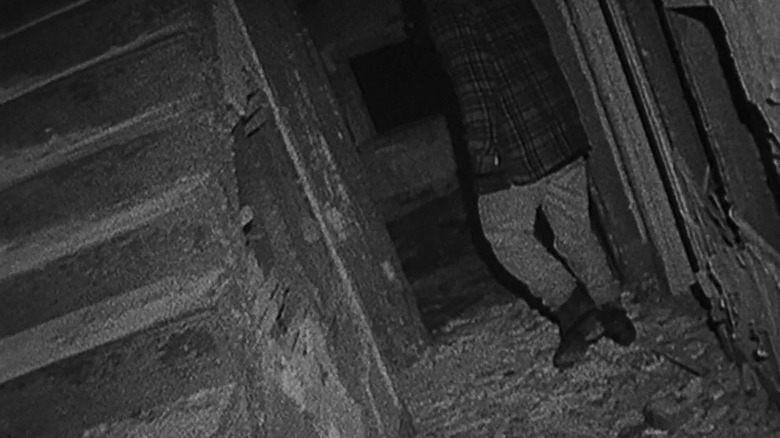
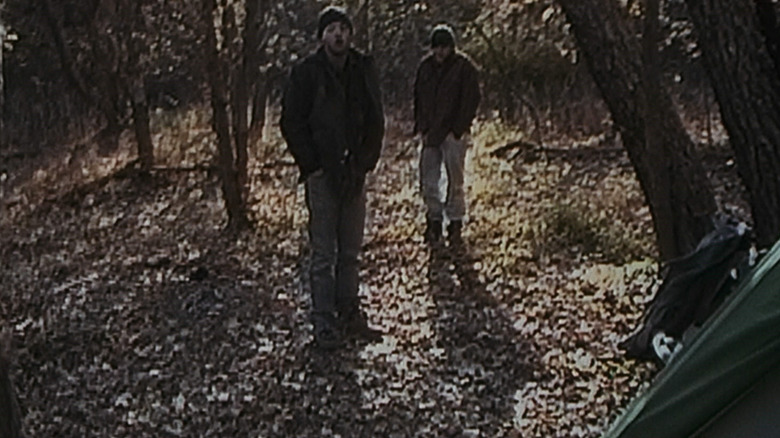
Why The Blair Witch Project Was A Nightmare To Film

by Witney Seibold

The story of "The Blair Witch Project" is the stuff of indie movie legend. Made in 1999 for a mere $60,000 and shot by the actors in the woods, the film went on to be an enormous box office sensation and zeitgeist-rattling horror touchstone, earning over $250 million worldwide. 

Directed by Daniel Myrick and Eduardo Sánchez, "The Blair Witch Project" was shot in a documentary style, and purported to be the real footage of real people who actually got lost in the woods and who perhaps encountered the bizarre supernatural leavings of a real witch. They heard eerie noises at night, and a mysterious unseen figure hung effigies around their tents, and left them little bundles that contained ... well, that should remain hidden for those who haven't yet seen it.

A big reason for the film's success can be attributed to its marketing, most notably, the then-novel use of its website, blairwitch.com. On it, the filmmakers perpetuated rumors that "The Blair Witch Project" was real, that the subjects of the film had really died, and that the footage had indeed been found and edited together after the fact. There were also tie-in mockmentaries, meant to grow the myth of the Blair Witch, leading some visitors of the website to conclude that it was actually real. "The Blair Witch Project" was a prank of the highest order, and an amazing horror film to boot.

But making "The Blair Witch Project" was a nightmare. Actually filming in the woods, guerilla-style, turned out to be harrowing for the filmmakers. 

The Auditions Were Unusual

In testimonials given to Vice Magazine, the directors shared their strange way of auditioning actors. When an actor entered the room, unusual questions would immediately begin, meant to test any potential cast members abilities to think on their feet and to improvise. Some actors were taken off-guard by this. Others rolled with it. Actress Heather Donahue said that the first question asked her at the audition was not about her experience as an actress, but "You have served half of your sentence for killing your baby. Why should we let you out?" Donohue said "I don't think I should." She got the part.

Another requirement of the part was camera operation, as the actors would also serve as the film's cinematographers. Actor Joshua Leonard chalks his winning of the role up to his camera experience. 

Camping In The Woods With Actual Specters

In order to maintain authenticity, and to keep the budget down, "The Blair Witch Project" was actually filmed in the woods on Maryland with the actors filming each other and improvising a lot of their dialogue. The directors would give them instructions as to what they wanted to happen to the characters during the day, and then leave them all alone, shadowing them all the while. The cast also slept overnight in the very tents they were carrying on camera. It was as close to an actual documentary as one could get. 

At night, the directors would sneak over to the actors' tents and shake them without warning. They would play spooky sounds on boomboxes out in the woods. And it was the directors who would leave the piles of rocks and stick figures for the cast to discover. All the reactions are pretty authentic. Director Myrick likened the filming to staging an improvised play that was running 24 hours a day for five days. 

Heather Donahue was warned by her family not to make a movie in the woods with a bunch of guys she didn't know; a reasonable fear. Josh Leonard, high on the experimental works of Maya Deren and Kenneth Anger, was just eager to push the edge of experimental filmmaking himself. He also admits that he was also high on marijuana. The actors understood that they would be safe 100% of the time ... but that they would not be comfortable. 

How Real Was It?

Luckily for everyone, the actors were game, and willing to be uncomfortable, scared, and unglamorous. Donahue was criticized at the time for being so willing to scream, to be scared, to ugly-cry on camera. She was awarded a Razzie that year for her efforts. As usual, however, the Razzies were merely being mean-spirited, piling upon a backlash to the film's extreme success. 

Donahue, Lucas, and Michael C. Williams, the three actors, were so convincing in their performances that rumors about the Blair Witch's reality flared up time and time again. When the actors began making press tours, revealing that they had indeed survived the events of the film, and that "The Blair Witch Project" was indeed fiction, new rumors arose that the directors had actually convinced the cast that The Blair Witch was indeed real. As such, many audiences may have known that the footage was faked, but some believed that the actors believed it was real. The performances were so authentic and the filmmaking style so raw, surely they felt they were actually in danger. One might become intensely concerned about the ethics of that.

As it turns out, portions of the film were actually shot in a more traditional way, with the filmmakers coming in to do work with the actors in person, arrange proper lighting setups, and do multiple takes. The final sequence of the movie, set in a mysterious, rotting house in the woods -- some would say the scariest part -- was filmed this way. Donahue carried the camera and screamed a lot, but it required more cinematic choreography than the improvised portions in the woods, allowing the directors to come in and oversee. 

Was It Safe?

That's not to say there wasn't some deliberate discomfort. Myrick admits that the directors deliberately scaled back the cast's food supply over the course of the shoot, ensuring that the actors would be grumpy. Not malnourished, mind you, but cantankerous. 

But everyone played safe, even to the point of having a safe word. If the actors ever felt that they were in danger, or were uncomfortable to the point of wanting to stop filming, the cast merely needed to say "Bulldozer." The actors also had to play some incredibly intense scenes of fear and anger, and if the scene got too intense, or the yelling perhaps began to feel a little bit too real, they could use the safe word "taco."

Donahue, however, recalls the one time the safe word was used didn't work. It was raining on the day in question, and the actors were cold and miserable. They set up their own tents and found they were filling with water. Donahue felt that actors shouldn't have to deal with such conditions, and radioed the safe word to the directors ... who were having dinner in a restaurant. The cast had to walk away from the "set" and find a local cabin to make a phone call back to the directors (Donahue was assigned the task, as the other actors felt she was the least intimidating to a stranger). The stranger in question gave them hot chocolate and they made their way to a hotel. 

The Nightmare After Release

After the harrowing shoot and miserable conditions, and after all the intense days of improv came to an end, the above-mentioned marketing began, and it aided "The Blair Witch Project" in becoming one of the most successful films of all time. But the nightmare wasn't over, at least not for the actors. Since part of the marketing for "The Blair Witch Project" was maintaining the myth that it was actual found footage, the rumors that the actors had indeed died was perpetuated (Artisan Entertainment -- who handled the marketing and took credit for the website -- even altered the IMDb entries of the actors to say they had died). Hollywood acting agencies didn't reach out to the cast because, well, everyone thought they were dead. The actors' parents started getting flowers and cards offering condolences. Donahue was frustrated by how effectively she "died," and, after a decade of appearances in a few raunchy comedies and low-budget horror movies, retired from acting to become a marijuana farmer. She even wrote a book about her experiences called "Growgirl: The Blossoming of an Unlikely Outlaw."

There was also a pretty severe backlash to "The Blair Witch Project" that the denizens of 1999 recall well. Critics praised the film, but many audiences left feeling cold -- when one is promised the scariest film in a generation, and they get an experimental improv exercise with a lot of screaming and shaky-cam, one may walk away upset that there wasn't more gore, more monsters, more ... something. The extreme success of "The Blair Witch Project" was ultimately an albatross around its neck, leading it to Razzie nominations, and a several-years-long round on internet forums calling it unscary and overrated. Donahue likened the film's success to a tumor or a regrettable facial tattoo. 

The legacy of "The Blair Witch Project," however, is ultimately positive. It was a film that showed how success could be mined from a minuscule budget and some clever marketing, and the aesthetic of the film remains novel and bracing. It's often seen as the forerunner to a slew of found-footage horror movies that dominated the movie landscape for the better part of a decade -- ushered in by "Paranormal Activity," a film that borrows heavily from "Project," and saw a similar success. 

"Blair Witch" also ensured that future found-footage films would be union jobs. Safe words are, one might assume, no longer needed.

Read this next: The 12 Best Tom Hardy Movies Ranked

The post Why The Blair Witch Project Was a Nightmare to Film appeared first on /Film.
14 Dec 20:32

Microsoft is pushing some Office customers towards annual subscriptions to avoid price increases

by Kareem Anderson
Microsoft may once again be overstepping the goodwill it's been recently awarded through tireless iteration of its Office 365 productivity service by raising subscription prices by 20 percent. To clarify, Microsoft has gone to its partners recently and informed them ... Read more
14 Dec 20:32

How to turn off Game Mode to conquer performance issues on Windows 10 or Windows 11

by Dave W. Shanahan
Windows 10 and Windows 11 include a "Game Mode" that automatically optimizes your PC to run games at the best performance possible when it detects a game in progress. It usually works well, but it can cause performance issues on ... Read more
14 Dec 20:29

Prey gets the “HD Remaster” treatment thanks to this mod

by John Papadopoulos

Modder ‘y2keeth’ released a 2.85GB HD overhaul mod for the first Prey game. This mod attempts to improve the graphics of the game by improving its textures and 3D models, as well as adding full shadows map files. In order to showcase this graphics overhaul mod, the modder released the following screenshots and video. The … Continue reading Prey gets the “HD Remaster” treatment thanks to this mod →

The post Prey gets the “HD Remaster” treatment thanks to this mod appeared first on DSOGaming.

14 Dec 20:28

Logistics Firm Hellmann Scrambling to Recover From Cyberattack

by Ionut Arghire

International logistics company Hellmann Worldwide Logistics is scrambling to restore operations after a cyberattack forced it to isolate its central data center from the rest of its environment.

read more

14 Dec 20:28

Industrial Organizations Targeted in Log4Shell Attacks

by Eduard Kovacs

Log4Shell attacks target industrial companies

Industrial organizations are exposed to attacks leveraging a recently disclosed — and already exploited — vulnerability affecting the widely used Log4j logging utility.

read more

14 Dec 20:28

Cybersecurity is Under Assault, And It's Growing Worse

by Marie Hattar

You don’t have to look very far for evidence of just how widespread cybercrime has become. Unfortunately, many of us don’t even have to look beyond our own inboxes. And sadly, the situation is getting worse. It is now bad enough that in April, the U.S. proposed a bipartisan lawmaker group form a “Civilian Cybersecurity Reserve,” to create a surge capacity of cyber expertise, patterned after the National Guard, that would respond to incidents affecting government networks. 

read more

14 Dec 20:28

Connect: The Fourth Pillar of Industrial Cybersecurity

by Yaniv Vardi

Recent attacks on U.S. critical infrastructure and actions by the U.S. government, including the July 28, 2021 National Security Memorandum, have added urgency to the need to modernize industrial control systems’ cybersecurity capabilities.

read more

14 Dec 20:28

Ransomware, Trojans, DDoS Malware and Crypto-Miners Delivered in Log4Shell Attacks

by Eduard Kovacs

Log4Shell attacks deliver malware

Several types of malware are being delivered in attacks exploiting the recently disclosed Log4j vulnerability named Log4Shell and LogJam.

read more

14 Dec 20:28

Officials: Virginia IT Agency Hit With Ransomware Attack

by Associated Press

The information technology agency that serves Virginia’s legislature has been hit by a ransomware attack that has substantially affected its operations, state officials said Monday.

read more

14 Dec 20:28

Log4Shell Tools and Resources for Defenders - Continuously Updated

by Eduard Kovacs
14 Dec 20:24

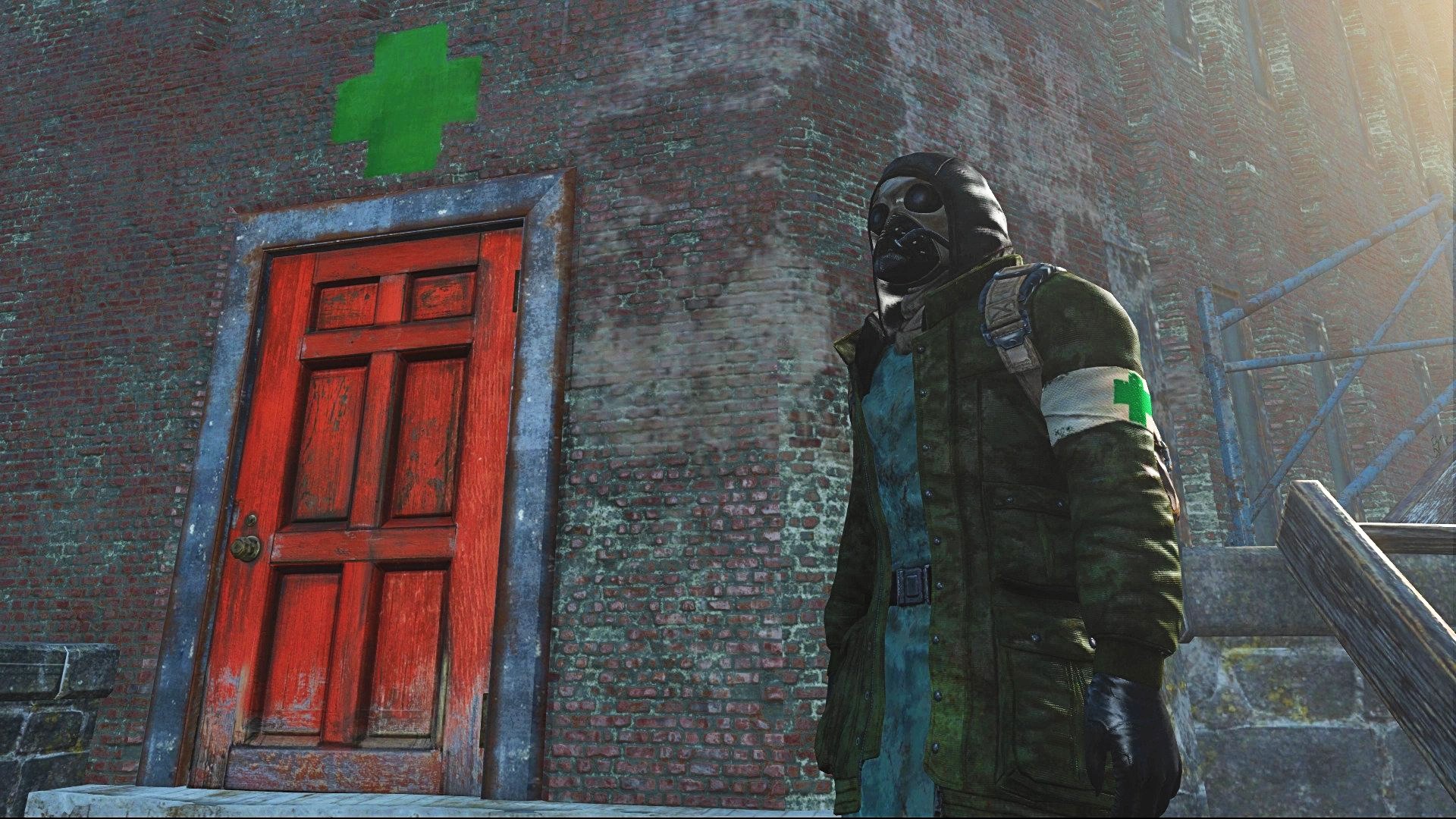
One of Fallout 4’s best mods has got a “DLC-sized expansion”

by Iain Harris
One of Fallout 4’s best mods has got a “DLC-sized expansion”

One of the more popular Fallout 4 mods this side of The Commonwealth has got a meaty new update. Sim Settlements 2 is the follow up to an equally warmly embraced mod that reimagined the building system so NPC settlers could construct their own darn homes under your supervision. Sim Settlements 2 has a similar sense of community, though it's very much a story-driven affair, and that's ever-present in Chapter 2.

Sim Settlements 2's Gunner Outbreak expansion continues the mod's story, adding three new additional side-quests for you to check out alongside some other neat new features. In short, you're still on your quest to rebuild The Commonwealth, though Chapter 2 expands further on the backstory of the Gunners.

There are new groups to meet, too. The CPD has come together under the banner of pre-war police departments to oppose the growing Gunner threat. It's up to you, though, to lead the group towards peace and justice or brutality and vengeance. The Nightingales, meanwhile, is a more peaceful sort, bringing with it a knowledge of old medicine and healing arts. The group is neutral and believes in helping everyone, though you can try to sway the Nightingales to take a side.

RELATED LINKS: Fallout 4 console commands, Fallout 4 mods, Buy Fallout 4
14 Dec 20:23

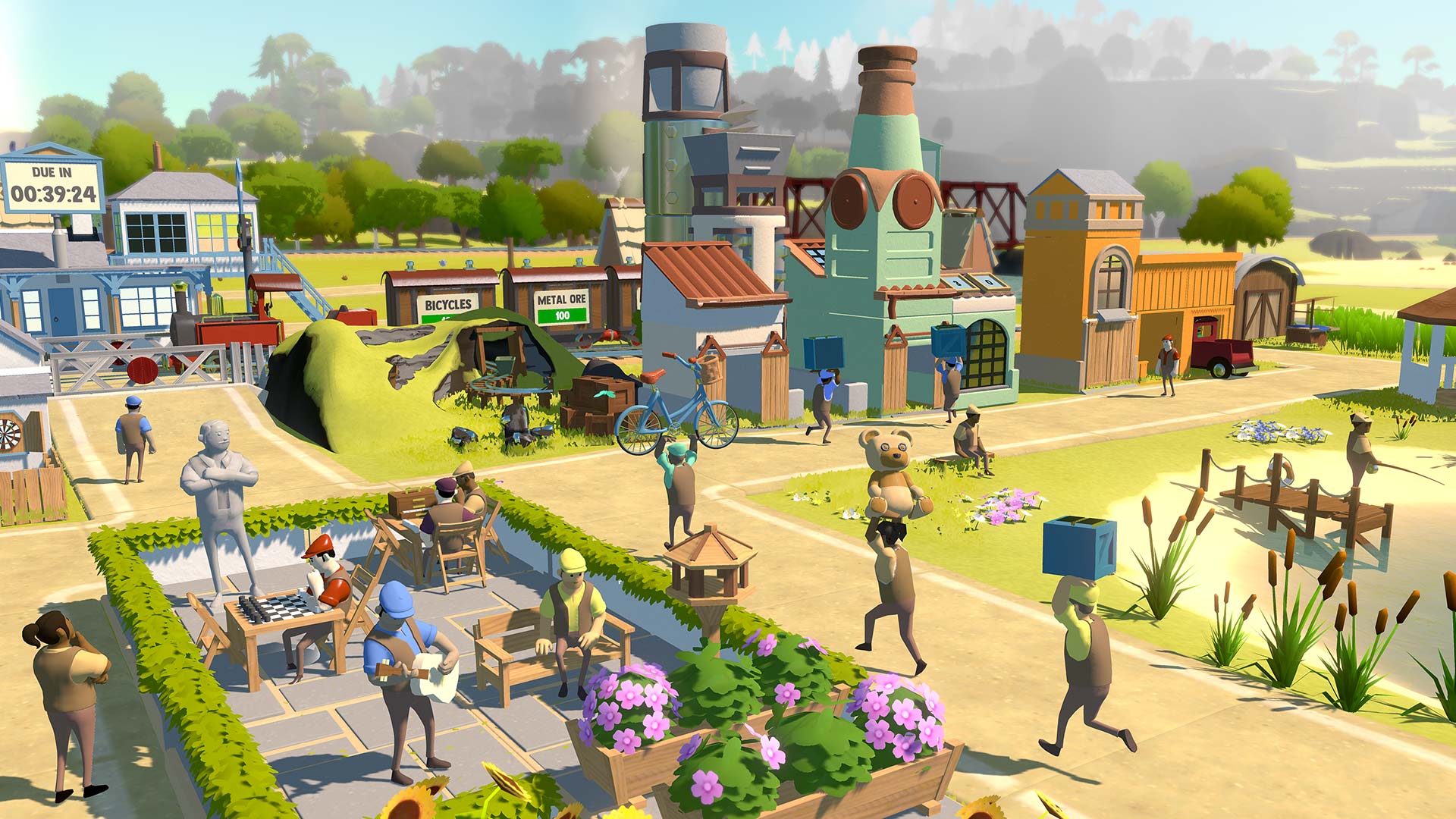
Peter Molyneux's next game has sold £40 million in NFTs

by Georgina Young

Peter Molyneux's 22cans studio have sold around £40 million of NFTs for their "blockchain business simulator" Legacy, before it's been released. The town management game has its own cryptocurrency, of course, and this weekend they sold NFTs of virtual land for real money. The hope for crypto land barons is that they would be able to earn money back from other players through in-game business partnerships.

Read more

14 Dec 19:59

The Antarctic is Signaling Big Climate Trouble

by msmash
Around the frozen continent, a vast current circles the world. New science is revealing the power it holds over the future. Ice shelves are in retreat, and researchers are alarmed at what they're learning. From a report: The immense and forbidding Southern Ocean is famous for howling gales and devilish swells that have tested mariners for centuries. But its true strength lies beneath the waves. The ocean's dominant feature, extending up to two miles deep and as much as 1,200 miles wide, is the Antarctic Circumpolar Current, by far the largest current in the world. It is the world's climate engine, and it has kept the world from warming even more by drawing deep water from the Atlantic, Pacific and Indian oceans, much of which has been submerged for hundreds of years, and pulling it to the surface. There, it exchanges heat and carbon dioxide with the atmosphere before being dispatched again on its eternal round trip. Without this action, which scientists call upwelling, the world would be even hotter than it has become as a result of human-caused emissions of carbon dioxide and other heat-trapping gases. "From no perspective is there any place more important than the Southern Ocean," said Joellen L. Russell, an oceanographer at the University of Arizona. "There's nothing like it on Planet Earth." For centuries this ocean was largely unknown, its conditions so extreme that only a relative handful of sailors plied its iceberg-infested waters. What fragmentary scientific knowledge was available came from measurements taken by explorers, naval ships, the occasional research expeditions or whaling vessels. But more recently, a new generation of floating, autonomous probes that can collect temperature, density and other data for years -- diving deep underwater, and even exploring beneath the Antarctic sea ice, before rising to the surface to phone home -- has enabled scientists to learn much more. They have discovered that global warming is affecting the Antarctic current in complex ways, and these shifts could complicate the ability to fight climate change in the future. As the world warms, Dr. Russell and others say, the unceasing winds that drive the upwelling are getting stronger. That could have the effect of releasing more carbon dioxide into the atmosphere, by bringing to the surface more of the deep water that has held this carbon locked away for centuries.

Read more of this story at Slashdot.

14 Dec 19:55

CISA Tells Federal Agencies To Patch Log4Shell Before Christmas

by msmash
The US Cybersecurity and Infrastructure Security Agency has told federal civilian agencies to patch systems affected by the Log4Shell vulnerability by Christmas Eve. From a report: The agency has added yesterday the Log4Shell bug (CVE-2021-44228) to its catalog of actively-exploited vulnerabilities, along with 12 other security flaws. According to this catalog, federal agencies have ten days at their disposal to test which of their internal apps and servers utilize the Log4j Java library, check if systems are vulnerable to the Log4Shell exploit, and patch affected servers. All of this must be done by December 24, according to a timeline provided in the catalog. In addition, CISA has also launched yesterday a dedicated web page providing guidance to the US public and private sector regarding the Log4Shell vulnerability.

Read more of this story at Slashdot.

14 Dec 09:16

Euphoria Season 1 Ending Explained: Into That Good Night

by Jamie Gerber

"I put up a good fight, but I lost. For the first time, but not the last." This is how Rue Bennett describes her journey into this world from her mother's womb. As the audience watches with bated breath over the course of eight episodes and two specials, Rue does a whole lot of fighting, and also, a whole lot of losing. After all, it's easier to fight than it is to surrender, or at least it seems that way when the fight is all you've ever known.

Loosely based the Israeli series of the same name, "Euphoria" isn't easy to classify. The show's staggering visuals belie the soul-crushing pain at its core, but it's hardly a case of style over substance. I'll be honest, that was my initial reaction upon watching the first couple episodes. I thought the show looked amazing, but beyond that, I wasn't sure "Euphoria" knew exactly what it was trying to say. However, it only took a few more installments for me to realize just how wrong I was.

"Euphoria" follows several teens doing their best to navigate the hazardous waters of adolescence, but at the center of it all is always Rue, our ever-unreliable narrator. Zendaya's Emmy award-winning performance (as well as the rest of the fantastic cast) is one of the most effective aspects of the series. The actress imbues Rue with such a magnetic mixture of vulnerability and charm that it's impossible to take your eyes off her. Rue has struggled with addiction throughout her short life and "Euphoria" creator Sam Levinson (who wrote all the episodes and directed most of them) is in recovery himself. His experience is obvious in all the care and depth he gives not only to Rue, but to his other characters as well. Regardless of their actions, Levinson never feels like he's judging them, making them all that much easier to relate to.

"Euphoria" may be aimed at Gen Z, but like the best teen dramas, it appeals to a much wider audience. Many of us are happy to leave high school in our rearview mirror, having barely survived. Even still, we can't help but inevitably be shaped by those experiences, which is why "Euphoria" resonates with pretty much anyone who remembers how difficult it is to be a teenager. The series can sometimes be hard to watch, and yet, I found myself unable to look away.

"Euphoria" wrapped season 1 back in 2019 and has since released two special episodes. It was recently revealed that the show's sophomore outing will begin airing weekly January 9, 2022. While we wait, let's dive into that bananas (in the best possible way) season finale and discuss what it all means. So, how does Euphoria season 1 end?

Do Rue And Jules Wind Up Together?

Rue and Jules had quite a tumultuous season-long romance, with the lines of love and friendship constantly blurred between them. It wasn't always healthy. Rue's sponsor Ali made parallels between their relationship and her addiction, and it's not like he was wrong. Jules found herself crushed under the weight of Rue's expectations, while Rue came to see Jules as the only thing in her life worth staying clean for. It was unsustainable for both of them.

Much of the season finale, "And Salt the Earth Behind You" takes place at the Winter Formal. Jules had recently returned from a weekend away during which she had begun to fall for someone else. Terrified of losing her, Rue suggests the two of them run away to the city. However, Rue quickly loses her nerve, realizing she can't bear to put her family through any more pain. Jules follows through, getting on the train, and leaving a completely destroyed Rue standing alone on the platform.

What Happened To Everyone Else?

"Euphoria" may share some DNA with other teen dramas, but only one couple got anything resembling a sweet rom-com ending: Ethan (Austin Abrams) and Kat (Barbie Ferreira). After expending a lot of energy to hurt Ethan, Kat finally gains the confidence to tell him the truth, leading to what is probably the most hopeful moment of the entire finale. They share a sweet kiss and it's implied they are actually going to try having a real relationship.

Cassie (Sydney Sweeney) spends the dance with her sister, Lexi (Maude Apatow), as opposed to McKay (Algee Smith). She also undergoes an abortion in the finale in a heartbreaking scene set to Arcade Fire's "My Body is a Cage." We also see Fez (Angus Cloud) stealing money from a crooked doctor -- and almost beating him to death -- in order to pay off his supplier, Mouse, after he had to flush his entire stash thanks to a raid, courtesy of Nate (Jacob Elordi, as the show's most one-dimensional character). Fez's fate is unknown, but Mouse didn't look happy when he accepted the bloodstained cash.

Speaking of Nate, he brings another date to the dance, but still ends the night with Maddy (Alexa Demie), who, try as she might, cannot seem to extricate herself from their toxic relationship. They both know it needs to end, but whether or not either is capable of walking away is anyone's guess. Maddy also made a pretty disturbing discovery when she stole one of Cal's (Nate's dad) DVDs and watched it. We'll have to see what she does with that info.

Is Rue Alive?

After a haunting trip down memory lane, the last time we see Rue, she relapses. It's a heartbreaking moment, as she's just chosen her mom and sister over her own interests, but in the end, it's all just too much. Rue's mother was asked to write a letter about the effects of Rue's addiction (likely either for rehab or a twelve-step fellowship), which she reads throughout the episode. Though both of her daughters were listening as she read it aloud, some theorized Rue wasn't really there at all and that it was actually a eulogy. A popular fan theory was that Rue was dead and had been narrating the series from the grave.

Levinson debunked this idea when speaking with THR, explaining that while he enjoyed reading about various theories, "I think Rue has a big journey ahead of her, and a tough one. It's not something I want to cut short because of who Rue means to me as someone who has battled with addiction and come out the other side, and because I think that there's a lot more to delve into and unpack in terms of the effects of addiction on Rue and on her family and those around her." Rue was also shown to be alive in both specials, which took place after the season 1 finale.

What Does That Musical Number Mean?

"Euphoria" has always been more about showing than telling, concerning itself with how something feels, more so than how it actually is. Levinson told Vulture that realism held "zero interest" for him, which is interesting because the show resonates so deeply with fans. While "Euphoria" may be unrealistic at times, the feelings it's rooted in are quite real. The near-constant presence of music only serves to add to this depth of emotion.

Music has been woven into the series' foundation since the pilot, with an incredible soundtrack featuring everyone from Bobby Womack to Megan Thee Stallion to Fiona Apple, and so many more. Let's also not forget about Labyrinth's amazing score, which I am listening to as I write this. With music being so vital to the show (not to mention Zendaya's unbelievable pipes), it makes perfect sense that "Euphoria" ended with a major musical number.

As the drugs hit Rue's system, she falls back onto her bed, until she is pulled up by an unseen force. She stumbles around her home, interacting with her mother and sister (who don't notice her) and her father (who does). Zendaya sings a reworked version of Labyrinth's "All for Us," backed by a choir wearing Rue's signature hoodie (which we learned belonged to her dad) and a marching band. The final shot is Rue climbing the choir, which has become a mountain of bodies, before jumping out of frame.

With this closing moment, it's easy to see why some thought Rue had suffered a fatal overdose. However, an examination of Labyrinth's lyrics might reveal something more encouraging: "I hope one of you come back to remind me of who I was / When I go disappearing / Into that good night." That last line echos Dylan Thomas' famous poem, "Do not go gentle into that good night." Yes, it's a poem about dying, but it's certainly not about submitting quietly to that inevitable fate. Rue may have stumbled, but her journey is far from over.

Read this next: The Best Movies Of 2021 So Far

The post Euphoria Season 1 Ending Explained: Into That Good Night appeared first on /Film.
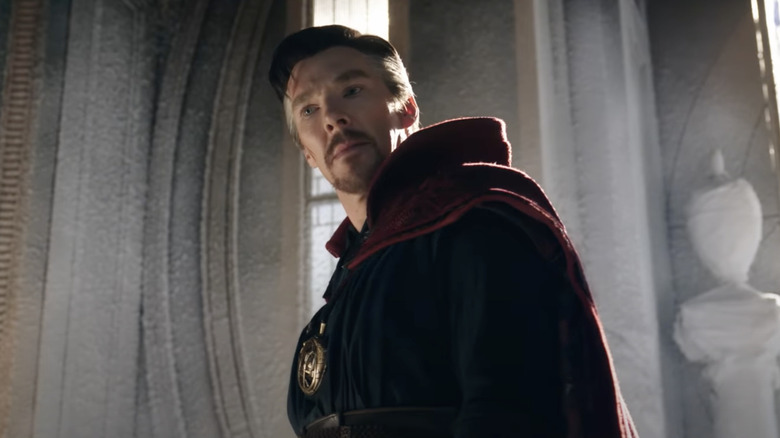
14 Dec 08:52

The 15 Best Cary Grant Movies Ranked

by Audrey Fox

Handsome, suave, charming: Cary Grant is pretty much the poster boy for what we now think of as the classic movie star from the Golden Age of Hollywood. With a captivating screen presence, he made for a perfect leading man, but his success was also a testament to his surprising versatility as an actor. Grant could play the smoldering romantic lead, but he also had impeccable comic timing that allowed him to engage in verbal battle with some of the finest actresses in screwball comedy. 

As he aged, Grant transitioned into darker fare, becoming one of Alfred Hitchcock's favorite male stars. (The famously prickly director, who made his dislike of actors perfectly clear, once confessed that, "Cary is the only actor I ever loved in my whole life.") He's arguably one of the most celebrated actors never to win a competitive Oscar (although he was nominated for two, "Penny Serenade" in 1942 and "None But the Lonely Heart" in 1945, and received an honorary award in 1970). Still, Grant left a long legacy, and to this day is one of the best remembered movie stars from old Hollywood.

Monkey Business

Just because Cary Grant was a little older when he made "Monkey Business" in 1952 doesn't mean that he needed to let go of the youthful energy that had always been a key component of his screen presence. In this light science fiction comedy, Grant stars as Barnaby Fulton, a middle-aged scientist who has invented a new serum that makes someone feel decades younger. 

When he tests it on himself, things go swimmingly, at least at first. He's able to do a cartwheel for the first time in years, and he takes the opportunity to indulge in a flirtation with a 20-something secretary played by Marilyn Monroe (to the visible consternation of his wife, Edwina, played by Ginger Rogers). But things quickly spiral out of control when the elixir causes Barnaby, Edwina, and the other scientists who try it out to revert to a second childhood, wreaking havoc on everything they come across. "Monkey Business" is hardly one of Cary Grant's more intellectually rigorous films, but it has a light touch that makes it thoroughly entertaining.

She Done Him Wrong

You don't just walk right onto a movie set and become the leading man (well, not usually, anyway). When Cary Grant was first starting out, he sometimes played second fiddle to more dominant female performers, such as the incomparable Mae West in "She Done Him Wrong." She is the incontestable star of the show in this 1933 crime comedy from Lowell Sherman, and her racy double entendres push the limits of even pre-Code cinema. 

Here, Grant plays Captain Cummings, a leader of the local temperance league and one of West's many suitors. There's more to his character than it seems, however, as we eventually learn that he's an undercover federal agent, establishing a dichotomy of romance and danger that would frequently show up throughout Grant's career. Even in this supporting role, Grant's charms were obvious, and his star would quickly rise in Hollywood.

I Was A Male War Bride

In the aftermath of World War II, thousands of American soldiers brought home foreign wives who they met and fell in love with while serving overseas. "I Was a Male War Bride" flips the script, starring Cary Grant as a French army captain who begrudgingly becomes involved with a Women's Army Corps officer, Catherine Gates (Ann Sheridan). 

In order to obtain a visa and travel to the United States, Grant's character has to be the spouse of an American soldier, so plans are made for them to be married. Of course, things go awry, as one might expect in a screwball comedy that so thoroughly subverts gender roles in a post-war landscape. After some cross-dressing hijinks on the part of Grant, they get their happy ending, but in doing so, "I Was a Male War Bride" completely deconstructs the anxiety over the masculine and feminine social expectations that were rampant at the time.

Gunga Din

When you think of Cary Grant, the first films that come to mind are his screwball comedies, usually witty romances where he's starring opposite a feisty leading lady. There isn't a ton of dude energy in the films that most often define his career. But, for a while, Grant was actually making a number of action-adventure films in tandem with the softer, gentler fare. One of the most memorable of these is "Gunga Din," where Grant stars as a British sergeant in India alongside Douglas Fairbanks Jr. (the son of silent-era matinee idol Douglas Fairbanks) and Victor McLaglen. Together, the trio team up with the courageous Gunga Din (Sam Jaffe), an Indian water bearer, to fight against the Thuggee, a dangerous band of murderers and thieves. 

Although "Gunga Din" features some problematic brownface, it nonetheless remains one of the most famous and well-executed adventure movies of the 1930s, with strong performances from its likeable cast and an empathetic approach to an Indian character, who would have been little more than caricature in most other films from the same era.

Sylvia Scarlett

A gender-bending vehicle for rising star Katharine Hepburn, "Sylvia Scarlett" is the first and undoubtedly least known of the four collaborations between the three-time Oscar winner and Cary Grant. Hepburn plays Sylvia, a con artist who dresses as a boy to elude the police. Cary Grant is a fellow rogue, here just beginning to develop a rough-around-the-edges version of the debonair persona that would make him a Hollywood star. 

"Sylvia Scarlett" suffers from a lack of polish, but it's also an intriguing look at the start of one of the most famous on-screen pairings in cinematic history. It's also unique for the amount of queer subtext in the film, with Hepburn appearing in drag far more often than she dresses as a woman, stretching the romance between her and her love interest beyond what was traditionally acceptable. This is especially interesting given the rumors that swirled around both Hepburn and Grant at a time when bisexuality had to be kept secret, even in Hollywood.

His Girl Friday

One of the most famous screwball comedies of the 1940s, "His Girl Friday" stars Cary Grant and Rosalind Russell as a pair of divorced journalists who fight over their workaholic habits and try to ignore their undeniable romantic chemistry. Grant plays an editor for a major newspaper who is thrown for a loop when he learns that his ex-wife Hildy (Russell), a reporter formerly in his employ, is poised to marry a dull man and give up her career to become a small-town wife and mother. Determined to win her back, he orchestrates an opportunity for them to work together on one last story before she resigns herself to matrimony. 

"His Girl Friday" broke new ground with its incredibly fast-paced dialogue, with characters frequently speaking over one another in a way that had been relatively uncommon up until this point. Most films feature dialogue spoken at around 90 words per minute; Howard Hawks had his actors in "His Girl Friday" speak at an astonishing 240 words per minute. The almost chaotic wit defines "His Girl Friday," and made it one of the most famous films of the era.

An Affair To Remember

A classic Hollywood romance, "An Affair to Remember" has had an outsized impact on media, influencing films like "Sleepless in Seattle" and episodes of "30 Rock" and "Family Guy." Itself a remake of a 1939 romance called "Love Affair," "An Affair to Remember" stars Cary Grant and Deborah Kerr as two individuals who meet while aboard a transatlantic ocean liner. 

They have an immediate spark, but both are involved with other people, so they are unable to act upon their feelings. Still, they make a pact to meet atop the Empire State Building in six months, theoretically having freed themselves from previous romantic entanglements. Unfortunately, circumstances transpire that complicate their reunion, but where there's love, there's hope. "An Affair to Remember" would ultimately receive four Academy Award nominations in 1958, and was included in the American Film Institute's list of the greatest love stories of all time.

The Awful Truth

The first film pairing Cary Grant with Irene Dunne (they collaborated on two other films: "My Favorite Wife" and "Penny Serenade"), "The Awful Truth" has a slightly slower pace than "My Girl Friday," but no shortage of wit. The two star as a wealthy couple on the verge of divorce, furious at one another for perceived slights but at the same time desperately plotting to sabotage their relationships with new suitors. It would become one of the most celebrated romantic comedies of the 1930s, earning six Academy Award nominations and winning for best director.

But all of this is quite frankly ignoring the true highlight of "The Awful Truth," and that is the singularly impressive performance of Skippy, a Wire Fox Terrier who steals the show from his illustrious human costars. He features as the subject of a custody battle between Grant and Dunne, and who could blame them? His impeccable comedic timing in this, as well as in "Bringing Up Baby" and "The Thin Man," would set a new standard for animal performances.

Arsenic And Old Lace

Cary Grant was often at his best when allowed to fully embrace absurdity, and that's what we get in "Arsenic and Old Lace." Like many of Grant's comedic roles, the humor in his performance comes from being the much put-upon straight man who begins to lose his grip in the face of so much chaos. In "Arsenic and Old Lace," he's a nice, normal man just trying to get married to his nice, normal fiancée when he learns that his two seemingly harmless aunts are actually serial killers. 

"Arsenic and Old Lace" purposefully underplays the morbid elements of its story, making this one of the most surreal comedies in Grant's filmography. It features more of an ensemble cast than we're used to seeing in his films, but Grant blends into the production effortlessly. He allows other actors to step into the spotlight and proves more than willing to take on the thankless role of the character who is reacting to the wild events that unfold around him.

North By Northwest

The fourth and final collaboration between Cary Grant and Alfred Hitchcock is also one of their very best, with "North by Northwest" giving the director an opportunity to take advantage of Grant's screen persona in new and creative ways. Here, Grant stars as Roger Thornhill, an ordinary white-collar executive who is mistaken for secret agent George Kaplan, kidnapped, and left for dead. 

In an effort to save himself and find the real Kaplan, Thornhill ends up engaging in some seriously spy-like activities, which give "North by Northwest" the thrilling action sequences it is known for. In particular, a scene in which Thornhill waits for a meeting with Kaplan at a rural bus stop only to be attacked by a crop duster is one of the most iconic images in film history. "North by Northwest" is considered by many to be a precursor to the "James Bond" franchise, and would ultimately be nominated for three Academy Awards in 1960.

Charade

You would be forgiven for assuming that "Charade" was yet another collaboration between Cary Grant and Alfred Hitchcock. Most people do. But the mystery film with more twists and turns than a corn maze is actually the work of director Stanley Donen; it just features many of the same dramatic techniques that were part of Hitchcock's toolbox. 

Audrey Hepburn stars as an interpreter who returns from a vacation in the Alps to find that her husband has emptied their Parisian apartment and gotten himself unceremoniously murdered while leaving town, putting her in the middle of a classic suspense thriller. Her co-star is Cary Grant, a charming ne'er-do-well whose true motivations are obfuscated throughout the majority of the film. Their chemistry is undeniable, despite the fact that, at 59, Grant was some 25 years Hepburn's senior, and their clever repartee harks back to romantic comedies that defined Grant's early career.

The Philadelphia Story

For a film that starred Cary Grant, Katharine Hepburn, and James Stewart, there certainly were a lot of people expecting "The Philadelphia Story" to fail. It features Hepburn as a wealthy socialite who has her wedding plans thrown into chaos by the unexpected arrival of not just a pair of cynical journalists (James Stewart and Ruth Hussey) hoping to capture her in the worst possible light, but also her estranged ex-husband (Cary Grant).

After a string of commercial failures, Hepburn was declared "box office poison" in 1938, and was badly in need of a hit. Studio executives were so nervous about the prospect of her headlining a film that, according to the documentary "MGM: When the Lion Roars," they brought Grant and Stewart on board in the hopes that their star power would balance out any ill will audiences had towards Hepburn.

It turns out that they had no reason to worry. "The Philadelphia Story" was a commercial and critical success, ultimately nominated for six Academy Awards and taking home the statuettes for best actor (James Stewart) and best adapted screenplay.

Holiday

Once again, Cary Grant finds himself in a screwball comedy alongside Katharine Hepburn, only this time there are no antics that almost seem to take place in a heightened reality. It's just a man almost getting married to the wrong woman. In "Holiday," Johnny (Cary Grant) meets the girl of his dreams while on vacation, and they quickly fall in love. Before they return home to New York, they're already engaged. There's just one problem: They were two very different people on holiday than they are in ordinary life, and it turns out that they may not be particularly well-suited for one another. Johnny, having worked from a very young age, is determined to retire early, while his fiancé Julia (Doris Nolan) is a socialite who can't process the idea of her husband not having a respectable job.

Julia may not be a perfect fit, but she has a sister named Linda (Katharine Hepburn) who has instant chemistry with Johnny. The more he tries to patch things up with Julia, the more he becomes enamored with Linda. Grant and Hepburn are like lightning on screen together, and "Holiday" gives them a subtler, more low-key romance than usual, which is utterly charming.

Notorious

It is possible that Cary Grant, one of the most famously charming and handsome actors in classic Hollywood, never had more sex appeal than when acting opposite Ingrid Bergman in "Notorious." Indeed, the Hitchcock spy noir is known for the steamy sequence between Grant and Bergman. At the time, studio films were under the thumb of the Hays Production Code, which limited any onscreen kiss to mere seconds -- Hitchcock got around this by having Grant and Bergman's embrace intermittently broken up by sultry conversation, allowing their kissing scene to last for three whole minutes.

"Notorious" is so much more than the combined allure of its leads, however. This is a post-war story about a German-American woman (Bergman) who is convinced by the U.S. government to seduce a Nazi war criminal (Claude Rains) hiding out in South America and infiltrate his organization, a task complicated by the fact that she falls in love with her handler (Cary Grant). If there's one thing that Hitchcock loves, it's a bit of intrigue, and "Notorious" is packed full of enough gorgeously shot spy fodder to keep an audience entranced for hours.

Bringing Up Baby

In screwball comedies, you tend to see a lot of scruffy little dogs getting in on the action, but there's only one film that features the comedy stylings of a leopard, and that's "Bringing Up Baby." Cary Grant stars as David Huxley, a paleontologist triumphantly nearing the completion of a brontosaurus skeleton. He's just missing one bone, the intercostal clavicle, and for that he'll have to team up with the wildly chaotic socialite Susan Vance (Katharine Hepburn). It isn't long, however, before he's sucked into her cloud of entropy, as mishap after mishap befall the misbegotten scientist. 

"Bringing Up Baby" represents Hepburn at her most fearlessly and endearingly chaotic, going toe-to-toe not only with her more comedically experienced costar Cary Grant but an actual leopard. Although the film was widely considered to be a flop at the time of its release, it has since gone on to become regarded as a comedy classic.

Read this next: The 14 Best Noir Movies Ranked

The post The 15 Best Cary Grant Movies Ranked appeared first on /Film.
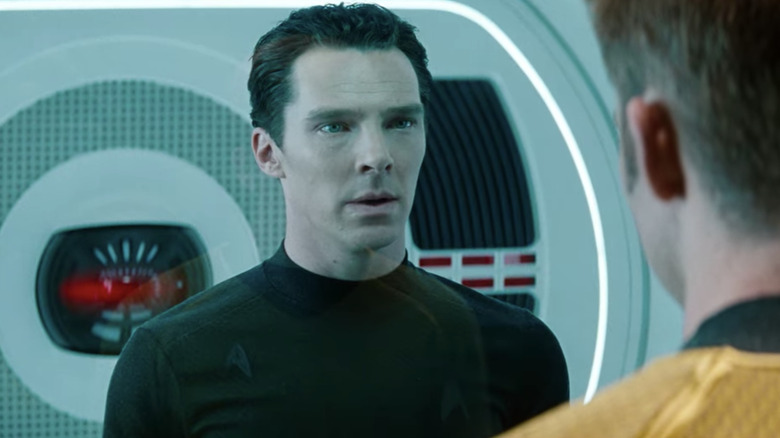
14 Dec 08:48

Steam Deck games take just “a second or two” to load when resumed from sleep

by Samuel Willetts
Steam Deck games take just “a second or two” to load when resumed from sleep

As fast as the best SSDs for gaming are at quickly getting you back into the best PC games, they still can't best the Xbox Series consoles and PS5's ability to jump right back into a game right where you left off. However, the Steam Deck’s ‘Fast Suspend / Resume’ feature could be just what gaming PCs have been waiting for, taking just "a second or two" to get you back into the action.

According to Peter “Durante” Thoman, the Steam Deck’s "suspend / resume got way faster in the last system update. It’s now literally a second or two". When asked how stable the feature is, Durante transparently replied that while they’re "not running the tests you'd need to do (i.e. suspending/resuming 100s of games all the time), I can say that since the update that made it fast, it has worked 100% of the time for me".

They also observed "how generally, 'better' (Windows) ports run much better in Proton on Deck, even if they are more demanding games", citing that Valkyria Chronicles 4 runs "perfectly" with super sampling set to 150%.

RELATED LINKS: Best SSD for gaming, How to build a gaming PC, Best gaming CPU
14 Dec 08:48

Vote for the best single-player game of 2021 in the PCGamesN users’ choice award, powered by Fanatical

by Network N
Vote for the best single-player game of 2021 in the PCGamesN users’ choice award, powered by Fanatical

2021 has been yet another fantastic year for games. No matter how you like to spend your time in digital worlds, there's been something for everyone, from explosive shooters and fantastical RPGs to the quieter, more contemplative indie titles and utterly terrifying horror adventures.

And now, in partnership with online game retailer Fanatical, we're looking to hear from you, our magnificent readers, to find out what your favourite games of the year have been. Here, we're looking specifically at the best single-player experiences of 2021 – the games that hold a special place in your heart, with moments only you experienced, and all you can share are the stories of your time (or screenshots if you have them).

You can get your vote in by using the widget at the bottom of the page, and everyone who votes will receive a free gift from Fanatical by entering your email – there's discount codes and even free games like Resident Evil Village and Outriders up for grabs. And if you haven't had a chance to play some of these fantastic games, check them out on Fanatical, with savings on some of our chosen favourites available until voting ends.

14 Dec 08:40

13 Movies Like The Martian That Are Definitely Worth Watching

by Liam Gaughan

When it came out in 2015, "The Martian" filled a huge void in modern filmmaking. While the past few decades have produced many modern science fiction classics that take a cynical look at the future and humanity's eventual decline. "The Martian" thankfully offers a more optimistic sci-fi spectacle, showing how humanity grows more connected as alliances are formed between nations to save one man's life.

"The Martian" is also a refreshing film because it's a big blockbuster that isn't attempting to start a franchise. It's not an original story, as it's based on a novel by Andy Weir, but the self-contained nature of its narrative makes it more satisfying than a slew of post-credit teasers ever could. Screenwriter Drew Goddard did an excellent job adapting the unique voice of Weir's novel, capturing highly specific scientific details as well as the defiant, comedic perspective of astronaut Mark Watney (Matt Damon).

Watney is a botanist on a six-person NASA crew collecting samples on Mars. The team is forced to unexpectedly leave the planet during a devastating storm, and Mark is critically injured and presumed dead. After he awakens to find that he's now completely alone on the planet, Mark desperately tries to find a way back home. If you loved "The Martian," check out these movies too.

First Man

"The Martian" captures the reality of space travel and life at NASA in such specific detail that it almost doesn't feel like science fiction. The advancements made in space travel technology feel like the natural progression of science, and all of Watney's cutting edge techniques to survive his dangerous circumstances are grounded in actual scientific principles.

For more like that, check out Damien Chazelle's 2018 biopic "First Man," which explores early achievements in outer space travel by telling the story of Neil Armstrong (Ryan Gosling), a figure who Watney himself comedically references in "The Martian." Obviously, Armstrong is one of the most famous figures in U.S. history, but "First Man" gives rare insights into the crippling personal issues that he dealt with during his pivotal mission. Armstrong's young daughter died of a rare disease early in his service to NASA, and much of his lunar launch was spent coping with the loss.

Armstrong's wife (Claire Foy) fears for his safety, as she doesn't want her two sons to grow up without a father. Armstrong himself is secluded and often silent, struggling to communicate his feelings to his family and crew alike. One of the main themes of "The Martian" is isolation, as Watney reflects that he is the loneliest man in the universe. Armstrong feels similarly isolated in "First Man," as he's burdened with unprecedented expectations. Like Damon, Gosling gives a sensitive performance that captures the gravity of Armstrong's mission.

Elysium

Matt Damon is one of the most fascinating leading men in Hollywood, as despite the fact that he's been a world-famous celebrity since the success of "Good Will Hunting" over two decades ago, he regularly takes risks on a wide variety of projects. His performance as Watney in "The Martian" combined all of the aspects that make him such an endearing personality; he's confident and charismatic, and although he's accumulated many specialized skills through hard work, he is a relatable character placed in a difficult situation. It's a shame that Damon has appeared in only a few science fiction films, as he does a great job keeping otherworldly concepts grounded in reality.

However, Damon did deliver one very underrated performance in the 2013 sci-fi thriller "Elysium." Directed by "District 9" filmmaker Neil Blomkamp, the film takes place in the 22nd century, after the Earth has been ravaged by crippling pollution and disease. Medical resources are scarce, so when Max Da Costa (Damon) is accidentally exposed to radiation, things look grim. He finds that his disease can only be cured on Elysium, a space station that only wealthy clients have access to, and enlists a team of smugglers to help him break into the station.

Prometheus

Ridley Scott is one of the most important science fiction filmmakers in the history of cinema. Shortly after his directorial debut "The Duellists" in 1977, Scott helmed one of his most defining works, 1979's "Alien." By basically moving "Jaws" to space, Scott launched a brand of outer space horror that is still replicated to this day. Like "The Martian," "Alien" explored the reality behind space travel; it wasn't an epic, heroic adventure, but rather an extension of the same working conditions on Earth. "Alien" was refreshing in the post-"Star Wars" era of sci-fi; "The Martian" was similarly novel in 2015, when it went up against the likes of "Jupiter Ascending" and "The Force Awakens."

Scott handed off the "Alien" sequels to James Cameron, David Fincher, and Jean-Pierre Jeunet, but he returned to the universe in 2012 with "Prometheus." Like "The Martian," "Prometheus" told an exploratory story about scientists who embark on a noble mission, yet are challenged by the perils of a new environment. Elizabeth Shaw (Noomi Rapace) is an archeologist on the Prometheus spacecraft, which is dispatched to the distant moon LV-223 by the Weyland Corporation.

Like Watney, Shaw is a highly relatable character. She is very intelligent but remains modest about her skills, and she truly cares about making a critical discovery that could aid future generations. Shaw is given depth by both her faith and her inability to have children; both give her a reason to seek out the origins of life itself.

Oblivion

Watney's isolation is well handled throughout "The Martian," as he feels increasingly lonely as a result of being the only man on an entire planet. The early sequences that establish Watney's friendship with his crew, particularly Commander Lewis (Jessica Chastain), make his absence more devastating. Watney's crew is more than just a team of scientists — it's more like a family that he's forced to live without. Damon captures his character's fragile emotional state with a sensitive performance that earned him an Academy Award nomination for best actor.

Another one of Hollywood's most popular leading men showed similar emotional vulnerability in an underrated science fiction adventure. Compared to his more action-centric roles, Tom Cruise was much more understated with his performance in the 2013 film "Oblivion." In the film, he stars as Jack Harper, a technician who repairs drones on the remnants of Earth following a cataclysmic event that wiped out most life. The rest of humanity lives in colonies and spacecraft far away, with Harper and his partner Victoria Olsen (Andrea Risenborough) left on the planet alone.

Like Watney, Harper is forced to live apart from the people he cares about the most. Although his memory was wiped, Harper gradually begins to remember moments from his past after meeting the resistance leader Malcolm Beech (Morgan Freeman), and is tormented by visions of his wife, Vika (Olga Kurylenko).

Sunshine

"The Martian" is one of the best modern films about space travel, as it focuses on the routines that a crew goes through as they venture on a dangerous mission. Space travel isn't lionized by action-packed adventure. The heroes of "The Martian" are scientists, workers, and military personnel who are simply doing their jobs. This more realistic take on space travel didn't make the film's narrative less exciting, as it's still inspirational to see realistic characters working together to solve a crisis, allowing the audience to connect with the ensemble on a more emotional level.

Beyond "The Martian," there have been many great recent films exploring the perils of space travel. Danny Boyle's 2007 feature "Sunshine" is one of them. Set in 2057, the film follows the crew of the Icarus II spacecraft as they travel to re-energize the dying sun. The team is tasked with commandeering the first failed mission, Icarus I, and know that, in all likelihood, they won't return home safely.

Signs

"The Martian" is a grounded science fiction film that gradually introduces the viewer to more fantastic elements. As Weir, the author of the novel, was a programmer before he became a writer, he meticulously explores what life on the Martian surface looks like. None of Watney's innovations are created overnight, and he's careful about testing out different food sources, communication techniques, and escape preparations.

M. Night Shyamalan is known for his "elevated" approach to genre storytelling, characterized by a methodical and insightful examination of genre cliches and how they relate to more realistic characters. 2002's "Signs" isn't just a great combination of science fiction and horror, but an emotional drama about a family that comes together to cope with a loss. Mel Gibson stars as the former Father Graham Hess, who abandoned his faith following the death of his wife. Graham's brother Merrill (Joaquin Phoenix) helps to raise his two young children, Morgan (Rory Culkin) and Bo (Abigail Breslin). Merrill is also coping with an uncertain future, as he was expected to be a baseball star, but never committed himself fully to the sport. In addition, Graham struggles to forgive veterinarian Ray Reddy (Shyamalan), who was involved in the car accident that killed his wife, Colleen.

Then the early stages of an alien invasion begin, and the family is forced to heal together. "Signs" works by isolating the characters and telling an intimate story instead of focusing on the big global events.

Star Trek: The Motion Picture

"Star Trek" is one of the foundations of modern science fiction. Almost all sci-fi released since the debut of the original series in 1966 is indebted to it in some way. Gene Rodenberry's optimistic look at humanity's future is stuffed with actual scientific logic, relevant social and political commentary, a great ensemble of characters, and a believable sci-fi world, all things that are also integral to "The Martian."

The "Star Trek" franchise has had its ups and downs on the big screen, but 1979's "Star Trek: The Motion Picture" from director Robert Wise was the one that started it all. Compared to the science fiction films of the era, such as "Star Wars," "Superman: The Movie," and "Moonraker," "Star Trek: The Motion Picture" is a straightforward drama that has more in common with "The Martian" than the big, action-packed adventures. Rather than pitting the crew against a fearsome villain, the "Enterprise" team searches for a mysterious series of messages from a being called "Vger."

Over a decade had passed since the conclusion of the original "Star Trek" series, so the actors had to adjust to playing more mature versions of their characters. James T. Kirk (William Shatner) is now an Admiral in Starfleet, but he returns to the captain's chair, which he takes from its current inhabitant, William Decker (Stephen Collins). Spock joins his old crew after taking time away to spend on his home planet, where is undergoing an ancient Vulcan practice to purge himself of emotion.

Apollo 13

The realistic depiction of space travel in "The Martian" helps highlight and honor the achievements of real astronauts, and both Weir and Scott paid tribute to these real-life heroes through references and homages. Watney shares many qualities with these prominent historical figures, and not just because of his profession. Due to the unforeseen circumstances, Watney is forced to rely on unreliable technology and bet his life on last-minute changes to the plan.

Watney's survival mission in "The Martian" has a lot in common with the exploits of the Apollo 13 crew, which were depicted brilliantly in Ron Howard's 1995 film of the same name. Commander Jim Lovell (Tom Hanks), Lunar Module Pilot Fred Haise (Bill Paxton), and Module Pilot Jack Swigert (Kevin Bacon) are dispatched on a lunar mission that goes awry when an explosion derails their path to the Moon. The crew is forced to make last-minute adjustments in order to circumvent the Moon and return safely to Earth.

Like "The Martian," "Apollo 13" is equally centered on the heroism of the astronauts and the ground crew. Ed Harris received an Academy Award nomination for his brilliant performance as White Team Flight Director Gene Kranz, who desperately tries to communicate with the Apollo 13 crew from NASA headquarters.

The Black Hole

There are notes of intergalactic existentialism in "The Martian," as both Mark and the NASA crew are forced to question the nature of what they do and the benefits that it provides. Mark's time in isolation makes him question why he chose such a dangerous profession, and while he reflects on his love of natural science, he's forced to ask Commander Lewis to talk to his parents in case he doesn't return. Hermes flight commander Mitch Henderson (Sean Bean) voices one of the most powerful ideas in the film, stating that the international alliances and resources poured into rescuing Watney will make everything worth it.

The 1979 science fiction adventure film "The Black Hole" tackles similar existential questions about the survival of humanity, our reliance on technology, and the finality of destiny. Like "The Martian," it centers on a group of scientists who are forced to make decisions that will impact future generations back on Earth. Captain Dan Holland (Robert Forster), Dr. Hans Reinhardt (Maximilian Schell), Dr. Alex Durant (Anthony Perkins), Lieutenant Charlie Pizer (Joseph Bottoms), and Dr. Kate McCrae (Yvette Mimieux) lead their vessel, the Palomino, in a search for the crew of the Cygnus, which is lost in deep space. McCrae has a particular emotional tie to the mission, as her father was on the Cygnus.

The Abyss

"The Martian" is an impressive achievement in visual effects; the computer-generated imagery was incorporated seamlessly into the adventure. The special effects aren't flashy, but there are many small details in both the various spacecrafts and the Martian surface that many audience members won't even pick up on. Modern CGI is indebted to the work of James Cameron, who has been a pioneer of photo-realistic visual effects throughout his career.

One of Cameron's earliest achievements in CGI came in 1989's "The Abyss," a science fiction adventure that has a similar premise to "The Martian." The film centers on a team of scientists who are searching for a submarine caught in a conflict between the U.S. and the Soviet Union. Along the way, they discover an extraterrestrial creature that threatens their mission. Both "The Abyss" and "The Martian" focus on the personal dynamics of their crews, as they're forced to make critical, life-or-death decisions.

Forbidden Planet

The science fiction films of the 1950s were pivotal to the growth of the genre. While outer space adventures have been part of cinema since "A Trip to the Moon," the '50s films depicted voyages beyond our solar system years before the Apollo 11 mission even began. Although many of these films feature outlandish aliens, flying saucers, and magic, they also previewed real developments in the space program. Hopefully, the optimistic vision of the future depicted in "The Martian" is similarly predictive.

One of the most important early sci-fi classics is 1956's "Forbidden Planet." Set during the 23rd century, the film focuses on the United Planets starship C-57D as it searches for a lost crew on the planet Altair IV. Walter Pidgeon's conflicted performance as the team's commander Dr. Edward Morbius is similar to Damon's work as Watney, as Morbius struggles with the pressures that come with such a dangerous mission.

Gattaca

"The Martian" is a particularly entertaining work of science fiction because it incorporates elements of actual science. Watney's biological tests and the physics of the rescue mission were inspired by actual developments in theoretical science, and the film captures life at NASA very realistically. By grounding so much of the story in a world that actually exists, "The Martian" feels more realistic.

Another science fiction film that combines real concepts with fictitious ones is the 1997 classic "Gattaca." Andrew Niccol's directorial debut is set in a biopunk future where destiny is predetermined by genetic makeup, and only the select elite have the agency to rule society. Vincent Freeman (Ethan Hawke) is discriminated against because he was born naturally and not within the eugenics program, and as a result he's unable to realize his lifelong dream to join the space program. In order to realize his goals, Freeman uses the DNA of an injured man, Jerome Eugene Morrow (Jude Law), to falsify his identity.

Close Encounters Of The Third Kind

"The Martian" wrings a lot of drama out of its story by showing events from multiple points of view. While Watney's perspective is obviously the most dominant, the film takes time to explore how each of the groups involved in his rescue approach their tasks differently. While they're separated and on different assignments, Watney, the Ares III team, NASA headquarters, and international space programs all have an important part to play in bringing the lost astronaut home.

1977's "Close Encounters of the Third Kind" is one of the quintessential science fiction films, and Steven Spielberg brilliantly depicts how different characters respond to and interact with an upcoming alien visit. The landing of the extraterrestrial vessel doesn't occur until the film's third act, and the majority of the film is filled with moments of wonder as the early signs of a supernatural event appear. The ensemble cast includes Richard Dreyfuss, François Truffaut, Teri Garr, Melinda Dillon, Bob Balaban, and Robert Blossoms.

Read this next: 12 Awesome Sci-Fi Movies That Never Got Sequels

The post 13 Movies Like The Martian That Are Definitely Worth Watching appeared first on /Film.

14 Dec 08:27

Facebook Exec Blames Society for COVID Misinformation

by msmash
Longtime Facebook veteran Andrew Bosworth insists that political and COVID-19 misinformation are societal problems rather than issues that have been magnified by social networks. From a report: Critics say Facebook and other social networks have played a significant role in vaccine hesitancy and the spread of political misinformation. "Individual humans are the ones who choose to believe or not believe a thing. They are the ones who choose to share or not share a thing," Bosworth said in an interview with "Axios on HBO." "I don't feel comfortable at all saying they don't have a voice because I don't like what they said." Bosworth has been leading Facebook's hardware efforts, including those in virtual and augmented reality. Next year he will become CTO for Meta, Facebook's parent company. Asked whether vaccine hesitancy would be the same with or without social media, Bosworth defended Facebook's role in combatting COVID, noting that the company ran one of the largest information campaigns in the world to spread authoritative information.
Read more of this story at Slashdot.