Shared posts

16 Dec 01:42

The Best Roles The Cast Of Lost Has Landed Since The Show Ended

by Margaret David

When "Lost" first aired in 2004, it quickly became the TV topic of choice at the watercooler for the next several years. We were invested in the lives of these crash survivors, and eager to understand the mysteries of the island they'd landed on. Jack, Kate, Hurley, and dozens more became our friends; we mourned their losses and feared for their lives during their clashes with Ben Linus and his Others.

Years later, debates about the quality of the final episodes of "Lost" can still get heated. But rather than focus on whether or not the show stuck the landing (it didn't, but what a great ride), let's enjoy seeing where our old buddies have turned up since. While no actor should be defined by a single character, it's often interesting to compare their roles to see how the actor's approach has changed. Have they gotten away from their big, signature role? Have they embraced it? Let's take a look at the "Lost" cast and talk about the best things they've done since leaving that weird island.

Naveen Andrews — Sense8's Jonas Maliki
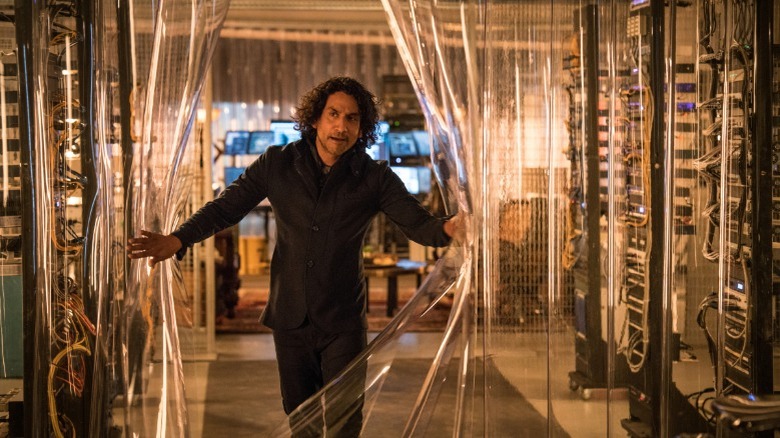
Still riding critical acclaim from his role in "The English Patient," Naveen Andrews ended up being our navigator through some touchy post-crash topics. Sayid Jarrah was a member of the Iraqi guard, pulled into post-9-11 and Saddam-era turmoil. He's both empathetically, painfully human, and also forced to be the island's strongman and interrogator. Sayid takes a number of tragic turns throughout "Lost," losing himself to the Man in Black and taking a long road towards peace in the afterlife. It's tough stuff, but Andrews skillfully avoids some ugly Islamic tropes.

In 2015, Andrews joined the cast of "Sense8" as Jonas Maliki. Jonas first introduced himself as a mentor to the fledgling sensates, helping us understand what they are. But the series also gave Andrews another showcase with an artfully complicated role. Jonas' personal goals are less clear than Sayid's, but a similar empathy rings through his connections to his lost sensate cluster, particularly his former lover, Angelica. Like Sayid, Jonas becomes the antagonist's catspaw, but here he retains his agency. Jonas' fate is just as bittersweet as Sayid's, and Andrews makes Jonas' mistakes matter. He's a standout in this gem of a series.

Nestor Carbonell — Bates Motel's Sheriff Romero
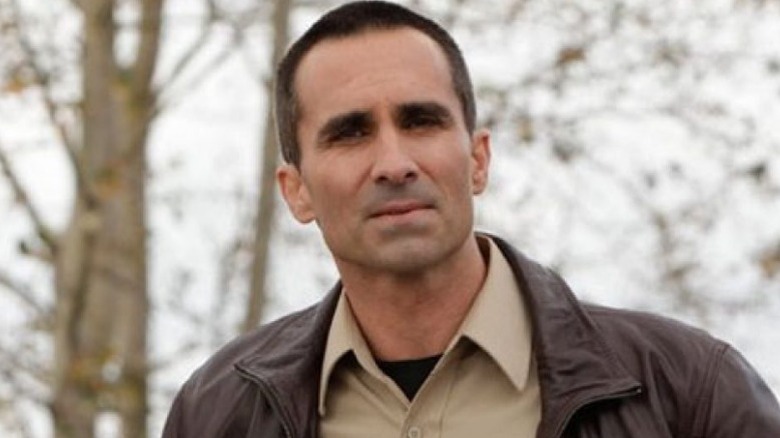
Richard Alpert was a man of many secrets, and it wasn't until late into "Lost" that we found out who this ageless figure really was. Made quasi-immortal by Jacob, Richard, formerly a Spanish slave from the Black Rock, became the loyal spiritual leader of the Others.

Nestor Carbonell imbued Alpert with a stoic moral center that gradually crumbled when conflict arrived. It's similar to what Carbonell brought to "Bates Motel" as the equally moralistic and shattered Sheriff Alex Romero. In this loose adaptation of "Psycho," Romero replaces the film's original abusive stepfather and plays hero for most of the series. But Romero can't hold it together when Norman tries to take responsibility for his crimes. Carbonell isn't much like Alpert by the end, but the role is a good, meaty one that highlights his gifts. For Carbonell, it's been a long road since Batmanuel, but a great one.

Jorge Garcia — Hawaii 5-0's Jerry Ortega
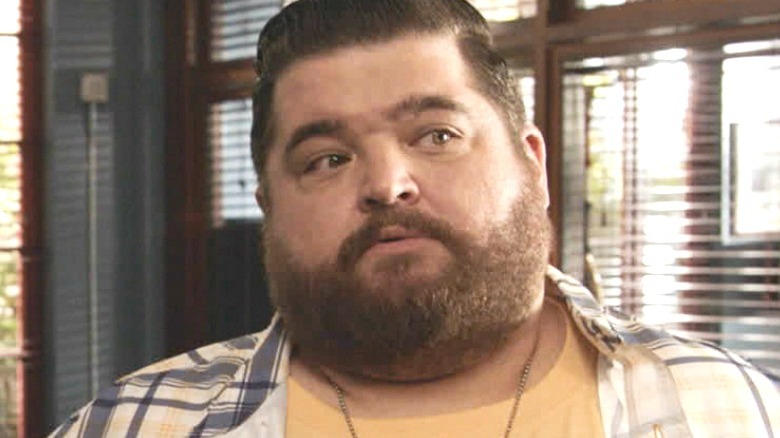
Hugo Reyes, better known as Hurley, was the goofy, cuddly, and sometimes broken heart of "Lost." A twist of destiny eventually made the former fast-food employee into the island's new protector. It's not anything that this humble guy would have wished for himself, and that's exactly what made him the right person to replace the too-confident and sometimes cruel Jacob. Jorge Garcia made sure Hurley was never just a joke to the audience, and by the end of the series he was a fan-favorite.

When "Hawaii 5-0" was rebooted in 2010, it became a hangout for several "Lost" alumni. Jorge Garcia arrived as a recurring character in its 4th season. As Jerry Ortega, a conspiracy theorist with a gift for finding the right hunch, it felt like bringing Hurley home. Towards the end of the series, the still-beloved Garcia became a series regular, bringing his brand of cheer into living rooms on a weekly basis. Though Garcia ended up leaving "Hawaii 5-0" before its final season, Jerry Ortega later appeared on another reboot of a classic, "MacGuyver." Overall, the role wasn't a stretch for Jorge Garcia, but it was just plain nice to have him back.

Maggie Grace — Fear The Walking Dead's Althea
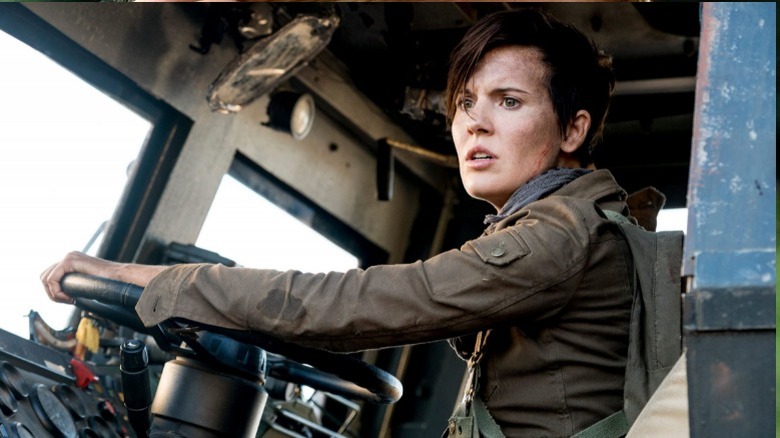
With a cast of dozens, a few characters inevitably get the short shrift. Though actor Maggie Grace did solid work, her character, Shannon Rutherford, was stuck in a rut for the bulk of her time on "Lost." Emotionally tangled with her emo stepbrother, Boone, she spent her first couple of seasons sidelined as a beach babe. Shannon does gradually build a relationship with Sayid Jarrah, but she's unfortunately fridged just as she's becoming a full and interesting character.

It's a brilliant contrast to see Grace take on a confident role in "Fear the Walking Dead." As the journalist Althea, Grace isn't stuck as someone pretty to look at. She's an active participant and smart observer, one who quickly began collecting survivor stories as the zombie outbreak occurred. She's also a survivor in her own right, and a testament to Grace's abilities, which she wasn't given the opportunity to showcase on her earlier show.

Jeremy Davies — American Gods' Jesus Christ
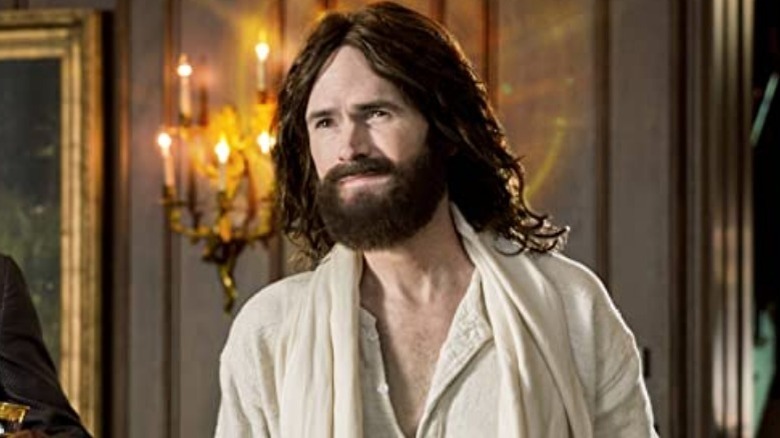
Jeremy Davies joined "Lost" in its 4th season as Daniel Faraday. Secretly the son of Eloise Hawking and Charles Widmore, this eccentric scientist not only had a heartbreaking arc of his own, but also set the tone for "The Constant," the series' best episode. As Faraday, Davies was heartbreakingly genuine, never confident in who he was, and it's poignant that he too ended up needing a constant of his own to survive his jumps through time.

Davies was already an acclaimed actor before this series, with roles in "Solaris" and Werner Herzog's acclaimed war drama "Rescue Dawn." He brings an erratic imbalance to his characters, and is by turns terrifying and heartwarming. Somehow, he embodied both of these in a small but perfect turn as Jesus in "American Gods." There are a lot of Jesuses in that Easter-themed episode, but Faraday's is implied to be the "Prime," or truest incarnation of the Holy Son. He's a calm but deeply strange presence, a Jesus that you both believe in and fear. It's the sort of small but remarkable appearance that uplifts an entire show — and it's that same strange, deep terror that Davies also granted to Baldur, the antagonist of 2018's hit video game, "God of War."

Terry O'Quinn — Resident Alien's Peter Bach
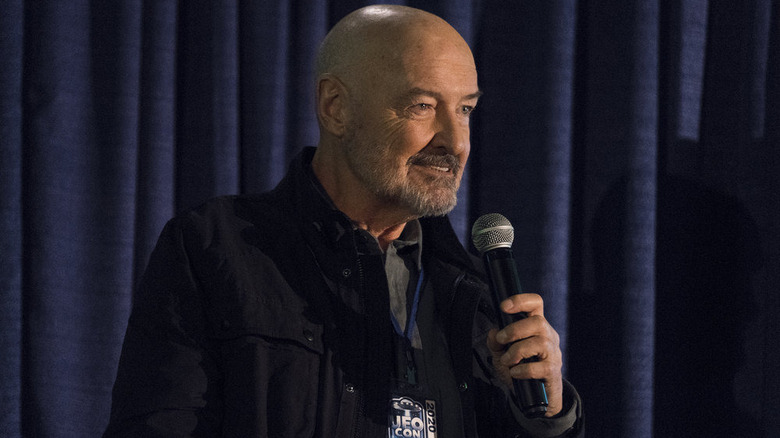
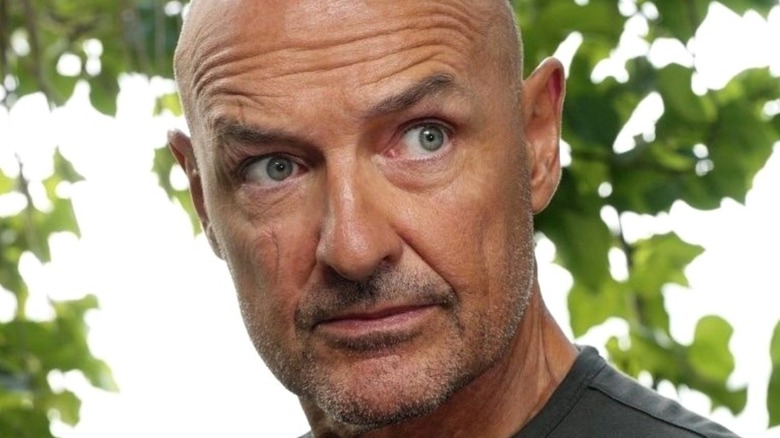
It's impossible to take "Lost" as anything but a crowning moment for veteran actor Terry O'Quinn. After playing everyone from fathers to FBI agents with the same smiling gusto, Terry made John Locke a magnet. Locke wasn't always patient, but he was always passionate, and, in the show's last seasons, he's terrifyingly unhinged as a vessel for the island's shadowy antagonist, the Man in Black. It's a slowly realized tragedy, and some of the finest work of O'Quinn's career.

Finding something as unique in the post-"Lost" era for O'Quinn is difficult, but like Davies, he has a show-stealing appearance in a single episode of a longer show. As Peter Bach in Syfy's "Resident Alien," O'Quinn doesn't only get to pay homage to John Locke's manic passion, but also riffs on his previous appearance on cult sci-fi series "Millennium." Peter Bach is a podcaster obsessed with extraterrestrial experiences, and as Alan Tudyk's undercover alien, Harry, finds out, he has good reason to be. The Greys (not to be confused with Harry's people) stole Peter's child and left him with implants. This terrific episode pits Tudyk against O'Quinn, giving both a chance to show off who their characters are under duress.

Henry Ian Cusick — MacGyver's Russ Taylor
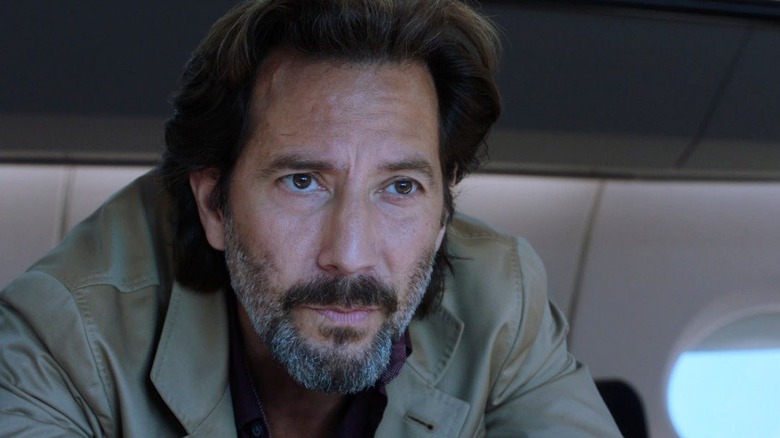
Desmond Hume is the human key to some of the biggest secrets in "Lost." He's the man in the hatch, the person accidentally responsible for downing Oceanic 815, and a living constant. In life, his love guides him through time. In death, his kindness helps many former islanders let go and move on. Henry Ian Cusick garnered the fandom's adoration for his character's emotional connection to Penny Widmore, and earned not a little critical acclaim as well.

In 2020, Henry Ian Cusick joined the main cast for the last two seasons of the "MacGuyver" revival. As Russ Taylor, Cusick gets to put a twist on his sometimes haunted former role. Taylor is a former intelligence agent, and he starts his own private military company with hopes of actually doing the right thing and avoiding institutional corruption. It's iffy stuff, but Cusick sells it well. And after years of living in a hole and a small private boat, it's good to see him getting to enjoy the finer things in life.

Emilie De Ravin — Once Upon A Time's Belle
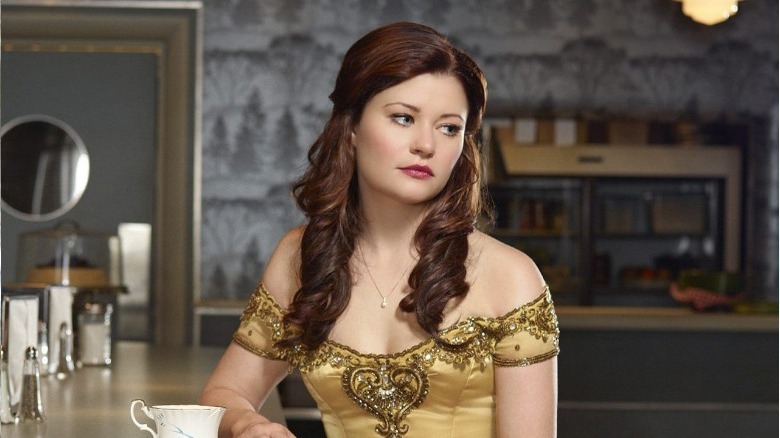
Claire Littleton managed to avoid some of the ugliest tropes that often surround a mother in danger, even earning a chance at a happy ending. But the road she took to get there was a hard one. Emilie de Ravin gave Claire a necessary, stable humanity, even as the show made her a storybook princess for Charlie to pout over. Like Sayid, Claire is drawn into the Man in Black's darker machinations, but she overcomes his influence and eventually goes home.

Emilie de Ravin has a gift for playing waifish, but not weak, characters. Originally only meant to make a few brief appearances in the 1st season ABC's "Once Upon a Time," de Ravin quickly gave the bookworm princess of "Beauty and the Beast" a life of her own. Belle soon became a popular series regular, but the intricate fairy tale nightmares of Storybrooke gave the former island princess new complications to unravel. Claire never got a chance to embrace her inner evil, but Belle's impulsive other side, Lacey, is a great showcase for de Ravin's other talents.

Josh Holloway — Yellowstone's Roarke
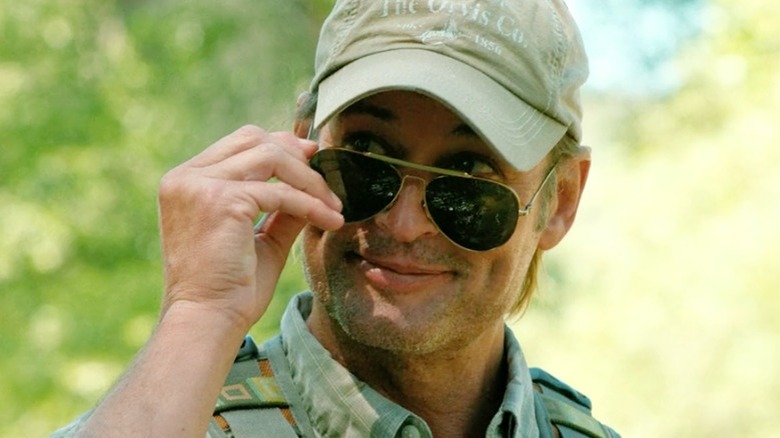
"Lost" thrived on the variety of its characters, but it was still a surprise when good ol' boy James "Sawyer" Ford began to pull focus from Matthew Fox's Jack Shephard. Sawyer is pitted against the island's ad hoc leader early on, locked in a love triangle we either tolerated or hated. But Sawyer earns a truckload of depth over the course of the series, and by the end he's far less of a knock-off Wolverine to Jack's Cyclops than when he started.

Josh Holloway exudes a cowboy sensibility, which made him the perfect fella for a turn on Kevin Costner's western-styled drama "Yellowstone." But Holloway isn't a charming con man with an "aw shucks" attitude here. Roarke is an evolved con man, a high-stakes sleaze machine with an eye on buying out the Dutton family ranch, all to create some sort of all-American Dubai of his own. 

Roarke's deft moves let Holloway keep his charisma at the forefront, weaponizing it so that we can't wait to see more of what he does and what will happen to him next. Unfortunately, the premiere of "Yellowstone" season 4 answered that conclusively, and now we'll have to look elsewhere for the next dose of Holloway's snakebite charm.

Daniel Dae Kim — Raya And The Last Dragon's Benja
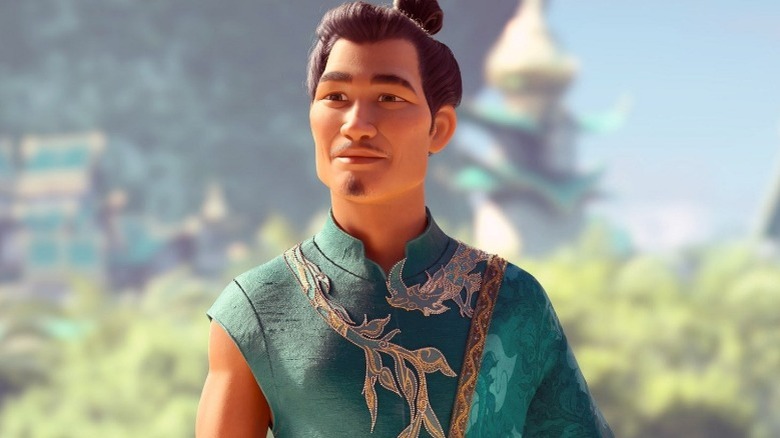
Nothing's perfect, and "Lost" had loads of flaws by the time everyone showed up for a bizarre church finale. Daniel Dae Kim, as the reformed Korean gangster Jin-Soo Kwon, received a storyline that started off too narrow and too heavy-handed, with a lot of troubling stereotypes. Jin gets more depth as the series continues, transforming from a potential antagonist into a guy who just wants to be a good dad. Unfortunately, the flaw I'm talking about isn't the depiction of Jin. It's that both he and Sun get unceremoniously killed off on the cusp of their happiness.

Daniel Dae Kim has a strong post-"Lost" career, from headlining "Hawaii 5-0" to playing Johnny Gat in "Saints Row," the gleefully anarchic gang-to-galactic-heroes video game series. But most poignantly, Daniel Dae Kim finally got his chance to be a great dad in "Raya and the Last Dragon." Benja is the chief of the Heart tribe, and Raya's father. He's doing his best to bring his people together through love, and he succeeds by virtue of teaching his daughter how to be kind. It's that lesson that saves them all by the end, making Benja a classic hero.

Michelle Rodriguez — The Fast Saga's Letty Ortiz
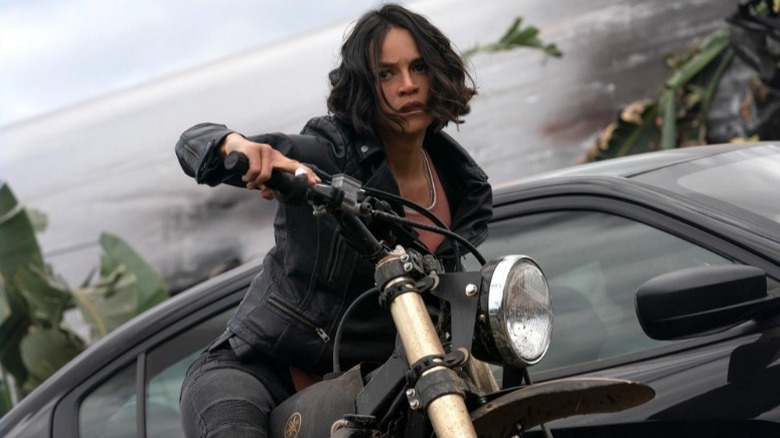
Speaking of the flaws of "Lost," Ana Lucia is a hot-button topic for fans of the series. Abrasive and controlling, the former LAPD cop played by Michelle Rodriguez never earned the sympathy that her backstory indicates that she needed. Somewhere in there is a scared young woman who is terrified of being made a victim again, but all that the series really showcased was her brutality. A regular for one season, Ana Lucia never gels with the rest of the cast, and her killing of Shannon Rutherford sealed fandom's opinion of her. She doesn't even get to move on at the end of the series. Blegh.

It's a misuse of Rodriguez's talents as an on-screen tough with a secretly soft heart, but fortunately she found the family she needed. Letty Ortiz is Dom's other half in the crash 'em smash 'em The Fast and the Furious franchise, a mechanic with a lead foot that surpasses most of the boys'. Letty goes through a streak of mishegoss in the middle of the series. She's temporarily dead, then brainwashed, then goes back to the family. It's all a vastly better showcase for Rodriguez's strengths than Ana Lucia ever was.

Evangeline Lilly — Ant-Man And The Wasp's Hope Van Dyne
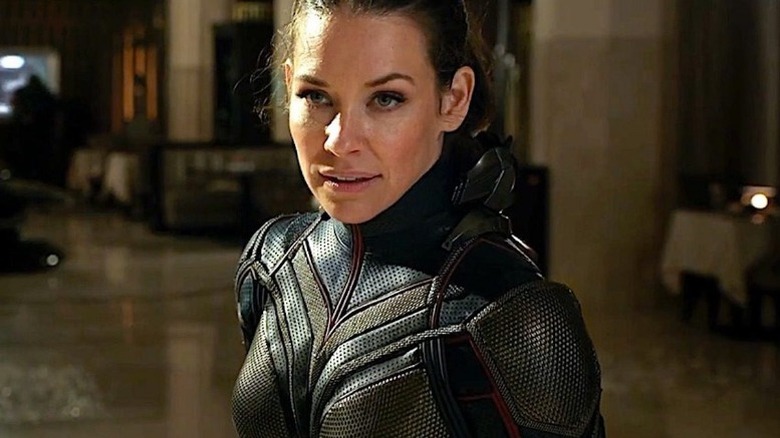
If "Lost" had skipped the love triangle between Kate, Jack, and Sawyer. The fault doesn't lie with Evangeline Lilly, who makes the untrustworthy Kate into someone to root for despite the burdens the writers weighed her down with. Cagey enough to survive on the Man in Black's side and smart enough to know it was time to turn on him, Kate's a better series lynchpin than Jack, who mostly just yelled at everyone about what to do next.

Evangeline Lilly was a newcomer when she was cast as Kate, and she got plenty of chances to show off what she was capable of. Though "The Hobbit" didn't do right by her, another big franchise gave her exactly what she needed. Hope van Dyne is the Wasp, a classic Marvel superhero who gets her own wings by the end of "Ant-Man." Despite being flanked by her engineer beau and her mad scientist dad, Hope is sometimes the caretaker of the only brain cell in the room. She's a spotlight-stealer, and a great addition to the Marvel Cinematic Universe.

Michael Emerson — Person Of Interest's Harold Finch
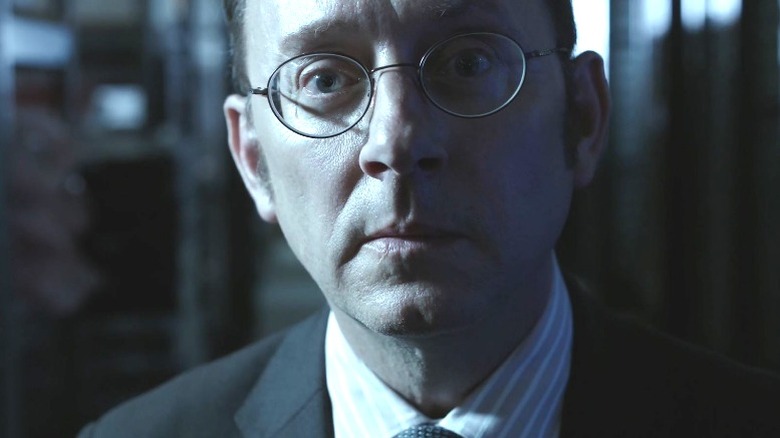
Ben Linus infiltrated the survivors' group as smoothly as he stole our hearts. Michael Emerson made Ben into something special. He's a smooth-talking, seemingly unflappable terror, too calculating to be easily tricked, and too emotional to be written off as a psychopath. Deep down, he's just a scared kid. One who abuses his own ideas of control, sure, and one who kills, but also one who isn't, after all, irredeemable. But it's Emerson's often genteel performance that made him the show's unlikely villainous star.

"Person of Interest" gave Emerson a five-season chance to put a twist on the formula that made him a legend. Harold Finch seems like Ben at first. He's cunning, urbane, and keeps himself at an emotional distance. But, like before, it's a façade. Harold cares deeply; in fact, he cares so much that he's willing to challenge his own morals when the situation calls for it. It's another performance that uplifts the whole show, transforming another nice piece of genre TV into something worth remembering. That's a specialty of Emerson's, who is now starring as the villain on "Evil." Good or bad, he remains a treat to watch.

Dominic Monaghan — Himself

We can't pretend that Charlie Pace is the biggest role in Dominic Monaghan's career. That is, of course, Merry Brandybuck in "The Lord of the Rings." But "Lost" let Monaghan be someone entirely new, avoiding a future of typecasting. Charlie's a troubled junkie with a pretty good voice, and he grows from being a self-centered loser into someone willing to sacrifice himself for his friends. Death isn't the end for Charlie, either, and his afterlife grants him the happy ending he was looking for.

Monaghan snuck into a small role in the Star Wars sequel trilogy, a nice bookend to his career in big fantasy franchises. But Monaghan's success has also given him the chance to create something personal. Unfortunately, the British documentary series "Wild Things" isn't well known in the United States. In it, Monaghan's passion for the world around us is not only visible, but stirring. Even episodes that feature the creepiest of crawlies draw his enthusiasm, and it's hard not to learn to love nature a little more just by watching.

Read this next: The 15 Best Horror TV Shows Of All Time

The post The Best Roles the Cast of Lost Has Landed Since the Show Ended appeared first on /Film.

16 Dec 01:40

15 Underrated War Movies You Need To Watch

by Liam Gaughan

War films have an important place in cinema history, and the genre itself is much more diverse than some may expect. War films are exciting because they don't all fit under a single label. Throughout the course of cinematic history, there have been many films based on numerous conflicts. Some of these battles actually happened, some are only inspired by actual history, and some are completely imaginary, but regardless, it's always fascinating to see history play out on screen, as well as to watch filmmakers wrestle with the ramifications of the life-or-death events their films depict

There's a very fluid definition to what is considered a "war film," as it's a genre that often intersects with others. Sometimes, a comedic perspective is the best way to approach the subject material. Other war films incorporate elements from documentaries, science fiction, horror, fantasy, westerns, or romance. For example: Is "Star Wars" a war movie? The title certainly indicates that it is.

For both war movie buffs and film fans who love a good story, these 15 underrated war films are definitely worth watching.

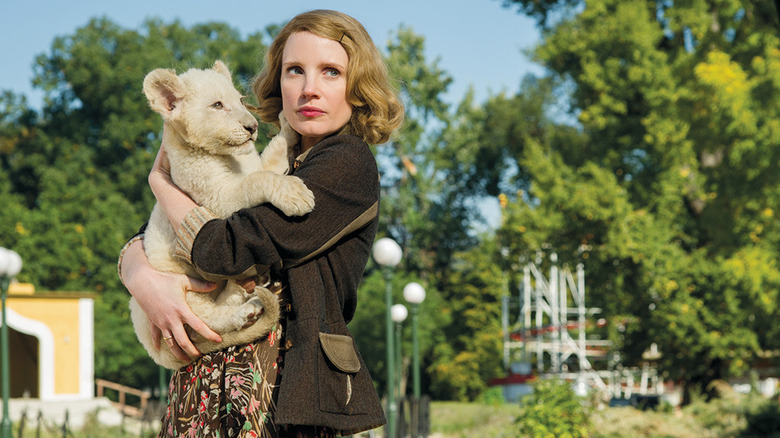
The Zookeeper's Wife

World War II is probably the most well-documented war in film history. Newsreels that played at theaters during WWII helped keep civilians informed of what was happening abroad, while films like "The Great Dictator," "Casablanca," and "The Mortal Storm" were actually produced during and touch on the conflict. More modern filmmakers often return to World War II, and some of the greatest films of all time highlight the achievements of the brave soldiers who put their lives on the line.

However, the complex nature of WWII also means that there are many heroes whose stories aren't as well known, and historical films have since helped spotlight these underrepresented figures. "The Zookeeper's Wife" is a fascinating film about the reality of living under fascism. Based on the novel by Angela Workman, it tells the true story of Jan (Johan Heldenbergh) and Antonina Żabińska (Jessica Chastain) as they operate the Warsaw Zoo in Poland during the 1930s. During the Nazi invasion, the zoo is occupied by Third Reich officer Lutz Heck (Daniel Bruhl). Heck intends to use the animals for Nazi experiments, but the two zookeepers try to protect the innocent creatures; before long, they begin to help escaping Jews as well. When Jan departs for the war, Antonina must stay behind with Heck.

Chastain delivers one of her most underrated performances in the film, capturing the struggles that Antonina goes through as she deceives Lutz. In a genre that is often dominated by men, it is refreshing to see a female perspective from director Niki Caro.

Official Secrets

Films about modern warfare tackle the challenges of capturing an ever-growing definition of what a "war" even is. The fragile state of international politics creates a world in which many violent conflicts are either underreported or not officially recognized, and great films have explored the grey morality of these complex topics. Films about whistleblowers are particularly fascinating, and while the political thrillers of the 1970s best define the subgenre, plenty of new classics deal with more recent events.

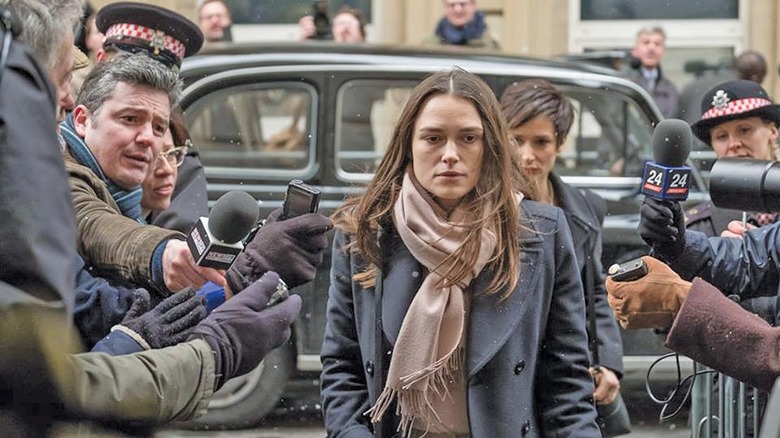
2019's "Official Secrets" explores the incredible true story of GCHQ analyst Katharine Gun (Keira Knightley). Gun discovers a report that reveals a joint espionage operation into Cameroon, Chile, Bulgaria, and Guinea by United States and British spies. The purpose of the operation was to uncover suspicious details that could support the movement to invade Iraq and influence the United Nations Security Council's decision to support the war. Gun is shocked by her discovery and becomes burdened by the weight of the secret information. Feeling helpless as she watches the war continue, she leaks the information to journalist Martin Bright (Matt Smith).

Gun immediately finds herself targeted by government forces that attempt to silence her, and Bright must find the best way for the story to be taken seriously. The extent of the government cover-up that appears in the resulting court cases is so extreme that it would feel ludicrous in an original film; thankfully, "Official Secrets" director Gavin Hood helps highlight these shocking true events.

13 Hours: The Secret Soldiers Of Benghazi

Michael Bay is often the butt of jokes, but, despite his reputation, he is a talented filmmaker. Bay is unquestionably a director who understands spectacle, and who can create astounding action sequences even in his worst films. Despite the success of "The Rock," "Bad Boys," and "Armageddon," Bay's later career became dominated by the "Transformers" franchise, films that are, unfortunately, known for their terrible characters, confusing storylines, and cartoonish sense of humor.

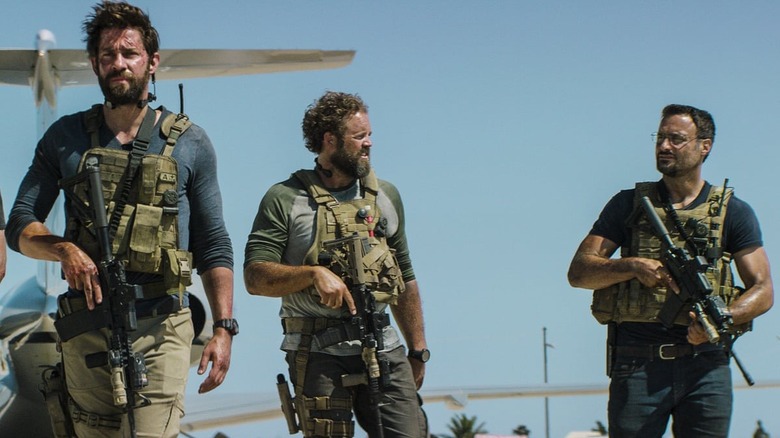
Bay had attempted to make a serious war drama earlier in his career with "Pearl Harbor," but, unfortunately, his three-hour World War II epic was a critical failure that only disrespected the real heroes of the conflict. However, Bay tried his hand at the war genre again in 2016 with "13 Hours: The Secret Soldiers of Benghazi." The film tells the real story of the Annex Security Team that defended the American diplomatic base in Benghazi during the infamous 2012 attacks.

Surprisingly, Bay's bluntness helps cut back on the surrounding political controversy and focuses on the conflict itself. Working on a lower budget, Bay creates realistic action sequences that capture the chaotic frenzy of the situation. In addition, ahead of his later performances in "A Quiet Place" and "Jack Ryan," John Krasinski showed his range as a dramatic actor with his role as U.S. Navy Seal Jack Silva. Silva is a new member to the team, and proves his merit as he chooses to stay with the other soldiers to defend the base.

Man Down

Although some war films lionize military service, others show the devastating consequences that some men and women face as they deal with post-traumatic stress disorder. This sensitive subject material can easily be mishandled, but when dealt with successfully, these films capture how wartime experiences shape the soldiers' points of view in powerful detail. Dito Montiel's 2016 film "Man Down" takes a unique approach to the subject by utilizing elements of science fiction.

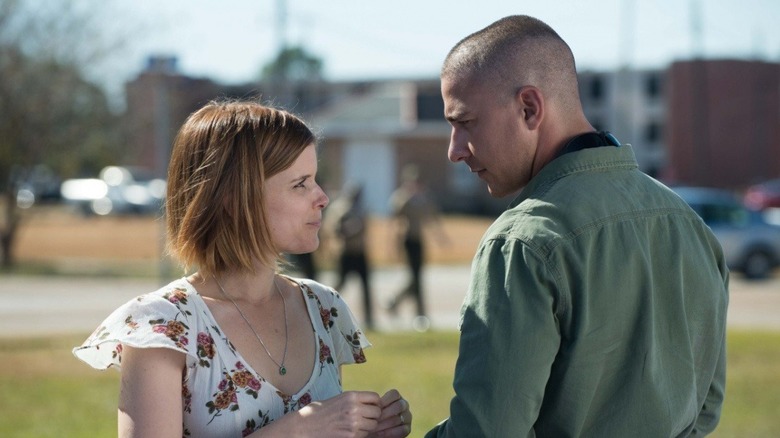
The film follows U.S. Marines Gabriel Drummer (Shia LaBeouf) and Devin Roberts (Jai Courtney) as they train together while stationed overseas in Afghanistan. Gabriel struggles with leaving his wife Natalie (Kate Mara) and their young child, and the situation grows even more complicated when Gabriel learns that Devin convinced Natalie to have an affair. While Gabriel wants to trust his best friend, he only gradually learns the details of his wife's infidelities. 

LaBeouf delivers one of his best and most nuanced performances in the film, and Gabriel is very different from the eccentric characters he generally plays. The tension only increases in the not-so-distant future, when Gabriel returns home to a war-torn post-apocalyptic landscape and searches for his family amidst the chaos.

Buffalo Soldiers

"Buffalo Soldiers" is an underrated war film that unfortunately suffered from one of the worst release windows in history. The film debuted to strong reviews at the 2001 Toronto International Film Festival, but given the close proximity to the 9-11 attacks, its satirical approach to American military service was seen as insensitive and unpatriotic. "Buffalo Soldiers" was unfortunately held from official release for two years, and debuted to low box office and underwhelming responses when it finally made its way to general audiences.

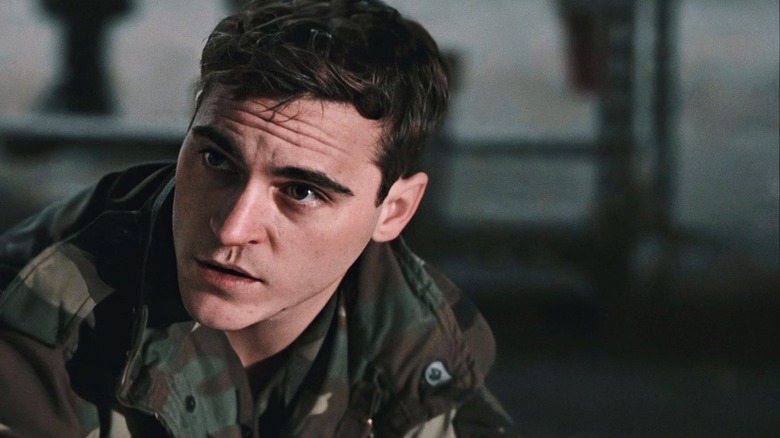
It's unfortunate that the film suffered from so many setbacks, because its comedic look at military spending and government indifference is an interesting way to tackle an issue that has unfortunately grown all too relevant. The film centers on Specialist Ray Elwood (Joaquin Phoenix), who is stationed at an American supply base in West Germany in 1989. Elwood enjoys partying, drinking, and acquiring illicit substances, and is able to get away with some wild behavior thanks to the ignorance of Colonel Berman (Ed Harris). Elwood's behavior grows more extreme as he begins illegally selling military technology, producing devastating results.

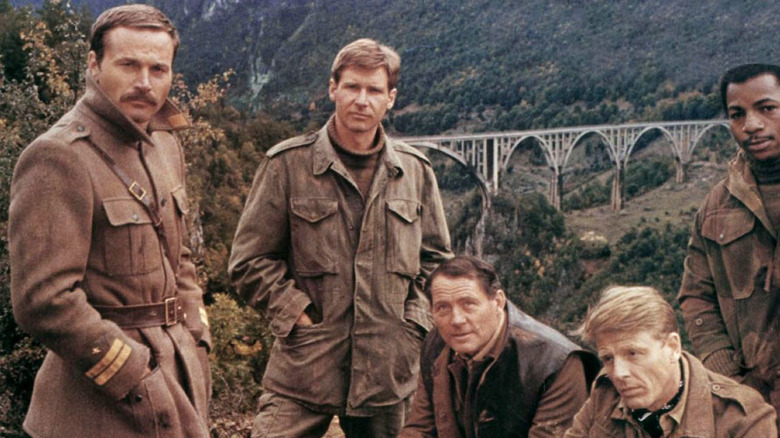
Force 10 From Navarone

1961's "The Guns of Navarone" is one of the quintessential World War II films. While many films tackling the conflict take a more serious approach, "The Guns of Navarone" was a throwback to classic serial adventures that portrayed the American soldiers as action heroes. Enough time had passed since the actual war that audiences were able to accept a more fun-spirited approach to the recent events, and "The Guns of Navarone" was considered untouchable within the genre. Thankfully, the belated sequel "Force 10 From Navarone" was a follow up worthy of the original film's reputation.

"Force 10 From Navarone" follows British Commandos Major Keith Mallory (Robert Shaw) and Lieutenant Colonel Mike Barnsby (Harrison Ford) as they search for a German spy in enemy territory. Shaw perfectly fits the template of a grizzled commando who delivers pithy one-liners, and it's particularly interesting to see Ford in this early role, which came shortly after the success of "Star Wars."

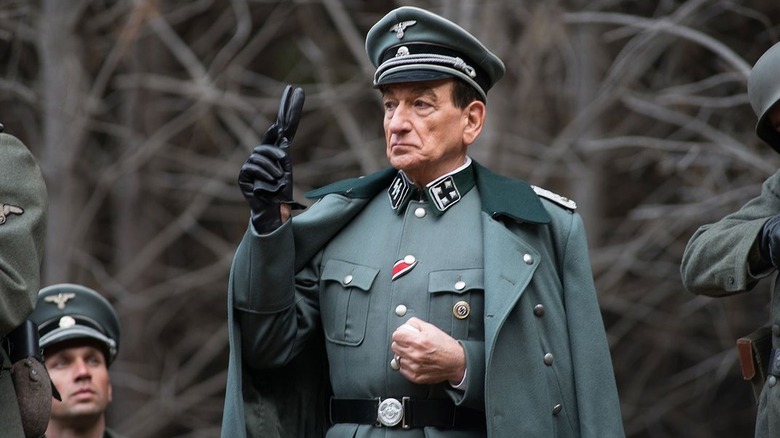
Operation Finale

Great war films don't necessarily have to take place during the actual conflict itself, as the post-war experience can be just as fascinating. The entire course of world politics was foundationally changed by World War II, as the public learned more about the Holocaust and survivors began to tell their stories. Chris Weitz's 2018 film "Operation Finale" follows Israeli military operatives who searched for the former Nazi officer Adolf Eichmann (Ben Kingsley) in 1960. The archival footage of Eichmann's actual trial shown during the film's ending is particularly powerful.

Eichmann's capture is of the utmost importance; he was a member of Adolf Hitler's inner circle, and was the architect of the "Final Solution." Mossad agent Peter Malkin (Oscar Isaac) has been hunting former Nazis in South America, and is eager to bring Eichmann to justice by trying him in Israeli courts. Kingsley delivers a terrifying performance as a real monster, and Malkin is a similarly nuanced character. He struggles not to kill Eichmann, even though he's charged with bringing him in alive.

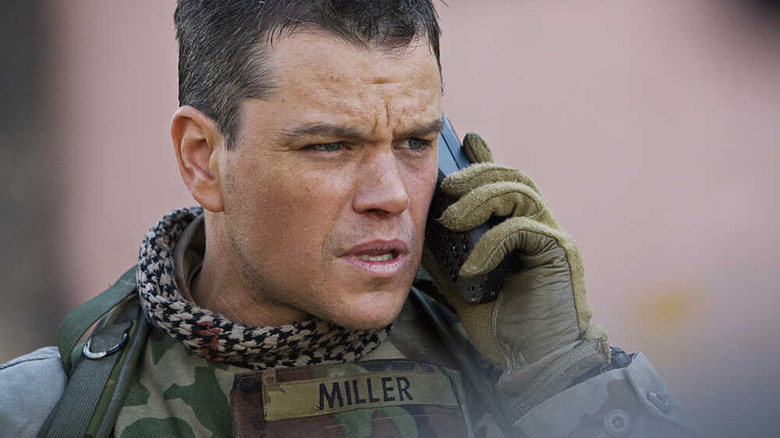
Green Zone

Director Paul Greengrass and Matt Damon changed the course of action movie history with the "The Bourne Supremacy" and "The Bourne Ultimatum," infusing realistic stunt choreography and relevant political commentary into adaptations of Robert Ludlum's novels. Their approach proved to be just as successful when used to tell a story of 21st century warfare. "Green Zone" doesn't only boast the types of excellent action sequences that one would expect from the pair, but it also tackles the weighty topic of American intervention in foreign conflicts.

In 2003, U.S. Army officer Roy Miller (Matt Damon) is tasked with a mission to find terrorists linked to weapons of mass destruction in Baghdad. Miller is shocked to find little evidence to justify American involvement, and, when he attempts to ask questions, his search is blocked by U.S. Department of Defense official Clark Poundstone (Greg Kinnear). While the events are fictitious, they were inspired by a real mission undertaken by Army Chief Richard Gonzales.

The Outpost

War films have the power to spotlight real, underreported stories. Rob Lurie's 2020 film "The Outpost" chronicles the Battle of Khamdesh, a conflict between American and Afghanistan insurgents in 2009 during which a small group of soldiers were tasked with defending an outpost from over 300 enemies. The film was inspired by Jake Tapper's 2012 nonfiction book "The Outpost: An Untold Story of American Valor," and the specifics of Tapper's writing help capture a gut-wrenching story of real heroism.

The film does a great job at making each of the characters feel individual, including Staff Sergeant Clint Romesha (Scott Eastwood), Specialist Ty Michael Carter (Caleb Landry Jones), and Captain Benjamin D. Keating (Orlando Bloom). Lurie captures the anxieties that the characters feel as they are forced to bide their time and remain at their post, only gradually learning that they won't receive any additional assistance. Jones delivers a particularly powerful performance as Carter deals with post-traumatic stress disorder.

The Yellow Birds

The 2017 war film "The Yellow Birds" debuted to very strong word of mouth at the Sundance Film Festival, but unfortunately the film's official release was held for over a year, and it was only released in select theaters and on-demand services. That's unfortunate, because the film is a sensitive look at how the idealism of young men who enlist changes throughout their service. "The Yellow Birds" is also one of the rare films that pays equal attention to the parents who watch their children engage in violent conflicts.

John Bartle (Alden Ehrenreich) and Daniel Murphy (Tye Sheridan) have been best friends since childhood, and choose to enlist together in the middle of the Iraq War. Bartle is three years older than Murphy, and feels particularly protective after Murphy's mother (Jennifer Anniston) urges him to bring her son home safely. However, Bartle finds it difficult to watch out for his friend when they're placed under the command of untraditional Staff Sergeant Sterling (Jack Huston).

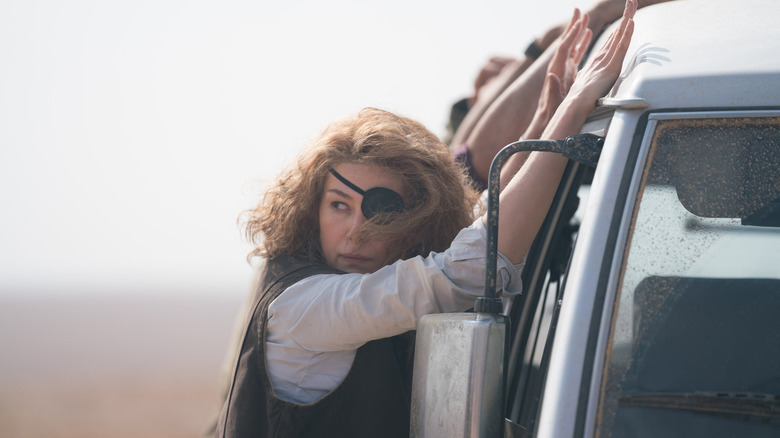
A Private War

The role of journalists is often undervalued in war films, and it's important not to take the value of good reporting for granted. Journalists often risk their lives to keep the public informed, and to spotlight important issues when official reports can't be trusted. The 2017 film "A Private War" tells the incredible true story of Marie Colvin (Rosamund Pike), a Sunday Times reporter who traveled to Sri Lanka, Iraq, and Libya to cover battles that were ignored by the mainstream media.

Pike delivers a physically transformative performance, as Colvin was injured during a skirmish with the Sri Lankan Army and forced to wear an eyepatch. Colvin's work helps expose the horrible experiences of child soldiers to international viewers, but leaves her scarred. Colvin also struggles to adjust to her role when returning home, as she's compelled to continue her work despite the frequent danger. Jamie Dornan delivers one of his best performances as Colvin's longtime photographer Paul Conroy, one of the only characters who can understand what she is going through.

Valkyrie

It's important to recognize the bravery of the Germans who stood up to the Nazi Party. Confronting fascism takes incredible courage, and many of the resistance efforts by German heroes have been buried by history. Bryan Singer's 2008 film "Valkyrie" explores the failed mission to assassinate Adolf Hitler by top members of the German military. Although Operation Valkyrie was obviously unsuccessful, it's fascinating to consider the political turmoil that was going on behind enemy lines in 1944.

Tom Cruise delivers one of his most underrated performances as Wehrmacht Colonel Claus von Stauffenberg, who grows skeptical of Hitler's tactics and comes into contact with the German Resistance movement. Despite the fact that he is one of the most famous movie stars on the planet, Cruise is able to shed his onscreen persona and fully assume the role of a grizzled veteran. The screenplay hails from Cruise's frequent collaborator Christopher McQuarrie, who is a master of creating suspenseful sequences through sharp dialogue.

The Book Thief

Markus Zusak's novel "The Book Thief" explores the horrors of war from a child's point of view. Films that explore a youthful perspective on war walk a difficult line, as they're often called on to show a loss of innocence as children are forced to grow up quickly. Elegantly written as both a historical adventure and a coming-of-age story, Zusak's novel offers heartbreaking insights into the lives of German civilians during World War II and the Holocaust.

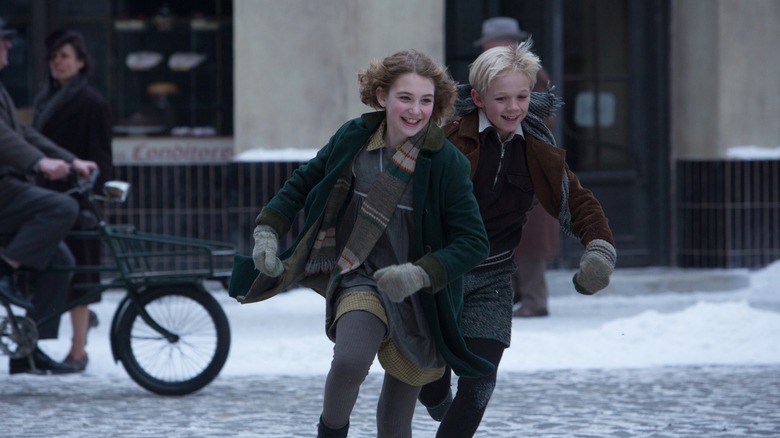
"The Book Thief" was adapted for the big screen in 2013 by director Brian Percival, and follows the novel's story about young orphan Liesel Meminger (Sophie Nélisse). Liesel is adopted by the kind Hans (Geoffrey Rush) and Rosa Hubermann (Emily Watson), who silently detest the fascist presence within their home country. Although Liesel is shy and introverted, Hans bonds with her as they learn to read together. However, the family comes under threat when Hans decides to hide a Jewish boy, Max Vanderburg (Ben Schnetzer), from authorities.

War Machine

It's hard for some war films to shake the reputation that they are "message" movies, as few audience members want to have a political argument slammed in their faces. That's why films that take a satirical approach to war are often successful, as exploring the ramifications of disturbing topics can be more palatable if they're approached from a comedic perspective. In addition, real events are often so unbelievable that they feel like satire, as is the case with the 2017 Netflix film "War Machine."

The film explores the leadership of U.S. General Glen McMahon (Brad Pitt), inspired by the actual behavior of General Stanley McChrystal during the Afghanistan War. McMahon is tasked with justifying the continued fighting in Afghanistan over the course of two presidencies, and becomes overwhelmed by the political complications, which differ from his more black-and-white perspective. Pitt captures a particular comic sadness in McMahon's lack of control over the situation.

Eye In The Sky

War is dependent on critical decisions made during the height of conflict, and the rise of the modern surveillance state has only made these choices more stress-inducing. The underrated 2015 film "Eye in the Sky" explores a plethora of ethical decisions that must be made while utilizing drones. Director Gavin Hood doesn't offer any easy solutions, instead forcing the audience to put themselves in the characters' shoes.

While tracking terrorists in Libya, USAF pilot Steve Watts (Aaron Paul) observes a child playing outside of a compound that is about to be raided. He conveys the information to the British Lieutenant General Frank Benson (Alan Rickman) and Colonel Katherine Powell (Helen Mirren), who are forced to decide whether or not to continue with a planned bombing. In his final screen performance, Rickman delivers the film's most devastating line: "Never tell a soldier that he does not know the cost of war."

Read this next: The 20 Best Westerns Of All Time

The post 15 Underrated War Movies You Need to Watch appeared first on /Film.

16 Dec 01:40

Grand Theft Auto 5 Title Update 1.55 released, full patch notes revealed

by John Papadopoulos

Rockstar has just released a brand new update for Grand Theft Auto 5 that focuses on its multiplayer mode, GTA Online. According to the release notes, Title Update 1.55 adds The Contract to GTA Online. Moreover, it comes with a number of tweaks, fixes, enhancements and improvements. Going into more details, The Contract includes 7 … Continue reading Grand Theft Auto 5 Title Update 1.55 released, full patch notes revealed →

The post Grand Theft Auto 5 Title Update 1.55 released, full patch notes revealed appeared first on DSOGaming.

16 Dec 01:40

Scientists Just Found a 'Significant' Volume of Water Inside Mars' Grand Canyon

by BeauHD
Scientists have discovered a world-historic discovery on Mars: "significant amounts of water" are hiding inside the Red Planet's Valles Marineris, its version of our grand canyon system, according to a recent press release from the European Space Agency (ESA). And up to 40% of material near the surface of the canyon could be water molecules. Interesting Engineering reports: The newly discovered volume of water is hiding under the surface of Mars, and was detected by the Trace Gas Orbiter, a mission in its first stage under the guidance of the ESA-Roscosmos project dubbed ExoMars. Signs of water were picked up by the orbiter's Fine Resolution Epithermal Neutron Detector (FREND) instrument, which is designed to survey the Red Planet's landscape and map the presence and concentration of hydrogen hiding in Mars' soil. It works like this: while high-energy cosmic rays plunge into the surface, the soil emits neutrons. And wet soil emits fewer neutrons than dry soil, which enables scientists to analyze and assess the water content of soil, hidden beneath its ancient surface. "FREND revealed an area with an unusually large amount of hydrogen in the colossal Valles Marineris canyon system: assuming the hydrogen we see is bound into water molecules, as much as 40% of the near-surface material in this region appears to be water," said Igor Mitrofanov, the Russian Academy of Science's lead investigator of the Space Research Institute, in the ESA press release. "The reservoir is large, not too deep below ground, & could be easily exploitable for future explorers," read a tweet on the announcement from ExoMars. That sounds basically great! But it's too soon for Musk to pack up his bags and fly to the site, since much work is left to be done. A study accompanying the announcement, published in the journal Icarus, shows that neutron detection doesn't distinguish between ice and water molecules. This means geochemists need to enter the scientific fray to reveal more details. But several features of the canyon, including its topology, have led the researchers to speculate that the water is probably in solid form (ice). But it could also be a mixture of solid and liquid. "We found a central part of Valles Marineris to be packed full of water -- far more water than we expected," said Alexey Malakhov, co-author of the study, in the ESA release. "This is very much like Earth's permafrost regions, where water ice permanently persists under dry soil because of the constant low temperatures." So while we don't yet know the specific form of water is lying under Mars' vast system of canyons, the first human mission to Mars may consider exploring this area a major priority.

Read more of this story at Slashdot.

16 Dec 01:39

US Surpasses 800,000 COVID-19 Deaths

by BeauHD
gollum123 shares a report from the BBC: More than 800,000 Americans have now died from the coronavirus, the highest recorded national death toll from the global pandemic. It comes as the US reached 50 million confirmed cases of Covid-19 on Monday. Most deaths have been recorded among the unvaccinated and the elderly, and more Americans died in 2021 than in 2020. The 800,000 total exceeds the populations of cities such as Boston or Washington DC. The milestone means nearly twice as many Americans have died during the pandemic as in World War 2. The last 100,000 deaths came in just the past 11 weeks, a quicker pace than any at other point aside from last winter's surge.

Read more of this story at Slashdot.

15 Dec 22:27

X.Org Server 21.1.2 Released With Security Fixes, Back To Pretending All Displays Are 96 DPI

Following yesterday's disclosure of four new X.Org Server security vulnerabilities that could lead to local privilege escalation, X.Org Server 21.1.2 is now available with those security fixes plus other changes...
15 Dec 22:20

Here's what would happen if Columbo was in Death Note

by Devin Nealy
Columbo in Death Note

Crossovers are all the rage these days. Growing up as a fan of comic books, the idea of a crossover isn't that uncommon to me, but seeing the mainstream get behind the concept has been bizarre. From the upcoming Waner Brothers' MultiVersus game—where players can make Shaggy throw hands with Arya Stark—to Spider-Man: No Way Home, crossovers are the gimmick that just won't quit. — Read the rest

15 Dec 22:20

[Article] Nightmarish Conjurings’ Fave Horror Films of 2021

by Sarah Musnicky

[Article] Nightmarish Conjurings’ Fave Horror Films of 2021
Nightmarish Conjurings’ Fave Horror Films of 2021
There has been no shortage of horror for viewing as we transitioned from 2020 into 2021. So many, in fact, that when it came down for Nightmarish Conjurings to gather around and discuss our faves, we had to remember what had actually been released this year. From smaller indie fare to blockbuster-style spectacles, we tried to tackle everything and everything viewing-wise this year. With how much was released all at once, especially during the Halloween viewing season, lots of horror films got lost in the shuffle. So some items on the list may come as a surprise. If they do, add them to your list and see whether or not these films become a new fave of yours too!

With all of this being said, take a look at our fave horror films of 2021 and let us know what you think and whether or not your favorites made the cut!

[Article] Nightmarish Conjurings’ Fave Horror Films of 2021
Courtesy IFC Midnight

THE FEAST

Director: Lee Haven Jones

Starring: Annes Elwy, Lisa Palfrey, and Caroline Berry

Synopsis: THE FEAST follows a mysterious young woman who arrives to serve affluent guests at a dinner party in a remote house in the Welsh mountains. What the privileged guests do not realize is that they are about to partake in their last supper.

“In a year that saw the release of a litany of fantastic horror films, picking one’s favorite was no easy task. However, one film has stood out from the rest and never once left my subconscious since seeing it back at the beginning of 2021. Lee Haven Jones’s THE FEAST is a quiet film that takes hold of its viewer and instills a feeling of anxiety and unpredictability. The journey is one that won’t be easily forgotten once the film reaches a feverish crescendo. Actor Annes Elwy gives a shattering performance that’ll never have you looking at glass the same. Best advice? Go into this film knowing very little and embrace the shocking rollercoaster ride that it’ll take you on.”Shannon McGrew

To learn more about this addition to our fave horror films of 2021 list, check out our review! The film is now available on Demand and Digital.

And, to learn more about bringing the film to life onscreen, check out our interview with co-writer/director Lee Haven Jones here!

[Article] Nightmarish Conjurings’ Fave Horror Films of 2021
Courtesy Netflix

BLOOD RED SKY

Director: Peter Thorwarth

Starring: Peri Baumeister, Kais Setti, Alexander Scheer, Dominic Purcell, and Graham McTavish.

Synopsis: Nadja and her ten-year-old son are on an overnight flight from Germany to New York when a group of terrorists violently take control of the plane and threaten the lives of the passengers. But the terrorists have no idea what they’re in for with Nadja on board – she has the power to protect her son and all the other passengers. But she faces an impossible choice – should she reveal her dark side and the inner monster she has kept hidden from her son for years in order to save him? The hunters become the hunted and everyone on the plane finds themselves in a perilous race against time – a fight for survival because there is one thing nobody knows: Nadja is the last vampire.

“BLOOD RED SKY is one of those films released by Netflix with not much fanfare, which is always a bummer. This vampiric film is the equivalent of being boiled slowly alive tension-wise. Viewers are kept on their toes with the writing decisions made. This makes it all the more exciting to watch as things play out. Peri Baumeister’s multi-faceted performance will induce empathy in the viewer while Alexander Scheer’s Eightball will have viewers going, ‘What the fuck?!’ It’s thrilling. Exciting. And the vampiric portrayal reminds us why those creatures should be feared.”Sarah Musnicky

To learn more about this addition to our fave horror films of 2021 list, check out our review! Available exclusively on Netflix.

[Article] Nightmarish Conjurings’ Fave Horror Films of 2021
Courtesy Netflix

THE FEAR STREET TRILOGY

Director: Leigh Janiak

Starring: Kiana Madeira, Olivia Scott Welch, Benjamin Flores, Jr., Julia Rehwald, Fred Hechinger, Ashley Zukerman, Maya Hawke, Darrell Britt-Gibson, Jordana Spiro, Jordyn DiNatale, Sadie Sink, Emily Rudd, Ryan Simpkins, McCabe Slye, Ted Sutherland, Gillian Jacobs, Chiara Aurelia, Elizabeth Scopel, Jeremy Ford, and Randy Havens.

Synopsis: In 1994, a group of teenagers discovers that the terrifying events that have haunted their town for generations may all be connected – and that they may be the next targets. Based on R.L. Stine’s best-selling horror series, the trilogy follows the nightmare through Shadyside’s sinister history.

“As an avid fan of the Fear Street book series by R. L. Stine, I experienced both joy and trepidation when the movie trilogy was announced for Netflix. It’s rare that a film exceeds expectations. Director Leigh Janiak, alongside a diverse cast, pays homage to the beloved series by refusing to cut and paste a story, but uses the inspiring tale of a small town plagued by misfortunes and weaves a social/political commentary in without being overbearing. Fear Street: Part One 1994 included chills, legit frights, gore and firmly established what to expect from its sequels. The curse is a real breathing thing, given life by the blasphemous existence of capitalism and white supremacy. Fingers crossed there is another Fear Street horror trilogy to come.”DarkSkyLady

To learn more about this addition to our fave horror films of 2021 list, check out our reviews of Part 1, Part 2, and Part 3! Available exclusively on Netflix.

And, to learn more about bringing the film to life onscreen, check out our interview with writer/director Leigh Janiak here!

Photo courtesy of RLJE Films.

SON

Director: Ivan Kavanagh

Starring: Andi Matichak and Luke David Blumm

Synopsis: After a mysterious group breaks into Laura’s (Andi Matichak) home and attempts to abduct her eight-year-old son, David (Luke David Blumm), the two of them flee town in search of safety. But soon after the failed kidnapping, David becomes extremely ill, suffering from increasing psychosis and convulsions. Following her maternal instincts, Laura commits unspeakable acts to keep him alive, but soon she must decide how far she is willing to go to save her son.

“I never heard of SON until I was randomly browsing the Shudder app to possibly have something on in the background. Immediately, the cover art utilized an image of actress Andi Matichak whom I recognized from the latest Halloween trilogy. I saw the word “cult” in the synopsis and that’s all the convincing I needed. What I ended up getting was an engaging thriller surrounding a mother on the run, but it’s the mystery of who she is running from that keeps you going. She has a history of potential sexual trauma involving a cult that’s initially ambiguous, but her truth proves to be something more demonic. SON carries an original concept with a captivating lead performance from Matichak that needs to be seen.”Jovy Skol

To learn more about the film, check out our review!

And, to learn more about bringing the film to life onscreen, check out our interview with writer/director Ivan Kavanagh here!

Still from TITANE

TITANE

Director: Julia Ducournau

Starring: Agathe Rousselle (Alexia/Adrien), Vincent Lindon (Vincent), Garance Marillier (Justine), Laïs Salameh (Rayane), Bertrand Bonello (Alexia’s Father), Myriem Akheddiou (Adrien’s Mother), and Adèle Guigue (Alexia, 7 years old).

Synopsis: A woman who has a metal plate in her head embarks on a bizarre journey.

“After Julia Ducournau exploded onto the scene with her lauded coming-of-age cannibal debut Raw, expectations were immediately high for what the French filmmaker would tackle next. With TITANE, her sophomore feature which earned the Palme d’Or at this year’s Cannes Film Festival, she continues to push genre boundaries in astonishing new ways. It’s a tremendous work that explores concepts such as gender and transformation, delivering one jaw-dropping set piece after the next. It effortlessly balances tricky moving parts while spinning an inventive, surprisingly sweet yarn about the human need to love and be loved. If this is what the future of body horror is like, we have a bright future ahead of us.”Tom Milligan

To learn more about this addition to our fave horror films of 2021 list, check out our review!

[Article] Nightmarish Conjurings’ Fave Horror Films of 2021
Courtesy Netflix

OXYGEN

Director: Alexandre Aja

Starring: Mélanie Laurent, Mathieu Amalric, and Malik Zidi

Synopsis: A young woman (Mélanie Laurent, 6 Underground, Inglourious Basterds), who wakes up in a cryogenic pod. She doesn’t remember who she is or how she ended up there. As she’s running out of oxygen, she must rebuild her memory to find a way out of her nightmare.

“Another Netflix release that got lost in the mix of digital releases, Alexandre Aja’s OXYGEN is a must-see. Easily on my list of the top 10 films to watch this year, Aja knows how to keep things tense and twitchy from beginning to end. While less overtly horror-filled compared to Aja’s previous films, there’s a lot to keep you on edge. Once the bigger picture comes into play, the horror of the situation hits like a battering ram thanks to Christie LeBlanc’s tight script. Mélanie Laurent’s performance wraps everything up into a neat bow. Highly recommend. After you finish this, go on over to watch Mathieu Turi’s Meander. Makes a great companion piece!”Sarah Musnicky

To learn more about this addition to our fave horror films of 2021 list, check out our review! Available exclusively on Netflix!

And, to learn more about bringing the film to life onscreen, check out our interview with director Alexandre Aja!

Still from PG: PSYCHO GOREMAN l CR: RLJE Films and Shudder

PG: PSYCHO GOREMAN

Director: Steven Kostanski

Starring:  Nita-Josee Hanna, Owen Myre, Adam Brook, Alexis Hancey, and Matthew Ninaber

Synopsis: Siblings Mimi and Luke unwittingly resurrect an ancient alien overlord who was entombed on Earth millions of years ago after a failed attempt to destroy the universe. They nickname the evil creature Psycho Goreman (or PG for short) and use the magical amulet they discovered to force him to obey their childish whims. It isn’t long before PG’s reappearance draws the attention of intergalactic friends and foes from across the cosmos and a rogues’ gallery of alien combatants converges in small-town suburbia to battle for the fate of the galaxy.

“Ah yes. The nostalgia of the early 90s. Power Rangers, Mighty Max, Polly Pocket. All of the joys of being a child in the 90s swam through my head as I was brought back to the living room of childhood sitting only inches away from the tube. This is the experience I had while watching my favorite film of the year, PG: PSYCHO GOREMAN. Not only was it goofy, campy, and nostalgic, it also contained a ton of gore! However, is that really surprising considering the title? From the practical effects to the costumes, I loved everything about this movie, the timing of the comedy, the nostalgic power rangers-esque fights scenes, and the fact that it was in many ways, similar to Monster Squad (yeah I said it okay!). So if you didn’t allow yourself to experience the joys of PSYCHO GOREMAN this year, grab a big bowl of popcorn, a tall glass of Surge, and maybe some Zagnut bars and open up your Shudder streaming app and let the beauty unfold upon you.” Devin March

To learn more about this addition to our fave horror films of 2021 list, check out our review!

Courtesy of NIGHTSTREAM

MY HEART CAN’T BEAT UNLESS YOU TELL IT TO

Director: Jonathan Cuertas

Starring: Patrick Fugit, Ingrid Sophie Schram, and Owen Campbell.

Synopsis: Dwight (Patrick Fugit) prowls the streets after dark. He searches each night for the lonely and forlorn, looking for people who won’t be missed. Dwight takes no joy in this, but he needs their blood. Without fresh human blood, his fragile young brother Thomas cannot survive. Each death takes a larger toll, the burden of his crimes weighing heavier each time, threatening to crack his spirit. But Thomas (Owen Campbell) and his sister Jessie (Ingrid Sophie Schram) are all the family Dwight has left, and as a fiercely private and close-knit family unit, they depend on him and the rituals they’ve learned in order to keep their secret. But while Dwight yearns for another life, Jessie needs them to stay together. And always the boy must feed.

“I love a good vampire film, but what I love even more is a vampire film that takes on the subject in such a fresh, intriguing way that it stretches the boundaries of the subgenre itself. Writer-director Jonathan Cuartas’s MY HEART CAN’T BEAT UNLESS YOU TELL IT TO is an elegiac portrait of a dysfunctional family. Blood is sustenance in this film, which never once uses the word “vampire,” but it is also a metaphor for shared trauma and resentful obligation. Cuartas’s film is a work of cinematic alchemy, transforming its highly specific and implausible-on-paper tale into a universal expression of the weight of familial bonds.”Jessica Scott

To learn more about the film, check out our review!

Lisa Trevor in Screen Gems RESIDENT EVIL WELCOME TO RACCOON CITY

RESIDENT EVIL: WELCOME TO RACCOON CITY

Director: Johannes Roberts

Starring: Kaya Scodelario, Hannah John-Kamen, Robbie Amell, Tom Hopper, Avan Jogia, with Donal Logue and Neal McDonough

Synopsis:  In RESIDENT EVIL: WELCOME TO RACCOON CITY, once the booming home of pharmaceutical giant Umbrella Corporation, Raccoon City is now a dying Midwestern town. The company’s exodus left the city a wasteland…with great evil brewing below the surface. When that evil is unleashed, a group of survivors must work together to uncover the truth behind Umbrella and make it through the night.

“It’s only been four years since Milla Jovovich said her final goodbye to Raccoon City, but the franchise needed a fresh start. While RESIDENT EVIL: WELCOME TO RACCOON CITY didn’t make much noise at the box office, director Johannes Roberts made good on his promise and delivered a film for the hardcore fans of the video games. The previous films delved into their action-packed universe, while Roberts focused on revisiting the original two games, placing viewers into the infamous Spencer Mansion and Raccoon Police Department. In true Roberts fashion, we get nostalgic pop songs blasting over flame-covered zombies and elaborate car sequences. Resident Evil is a franchise that gives room for rebirth in various mediums and this latest live-action film is the most Hollywood B-movie we’ve gotten in a long time.” – Jovy Skol

To learn more about this addition to our fave horror films of 2021 list, check out our review!

And, to learn more about bringing the film to life onscreen, check out our interview with writer/director Johannes Roberts!

Courtesy Netflix

THE 8TH NIGHT

Director: Kim Tae-hyoung

Starring:  Lee Sung-min, Park Hae-joon, Kim Yoo-jung, and Nam Da-reum

Synopsis: A life-or-death battle spanning eight days to prevent the breaking of the seal that restrains “That Which Must Not Awaken.” Once awakened, it can cross the stepping stones to wreak havoc on this world.

“THE 8TH NIGHT is a film that not many will think of in their end-of-year list building, but it’s a film that has stuck with me since viewing. As a warning, it may turn off some Western viewers as it heavily references Buddhism and serves as an exploration of the Four Noble Truths. Elements that aren’t typically referenced in American culture. However, writer/director Kim Tae-hyoung crafts a beautiful yet tragic tale, with the supernatural elements used effectively to get the point across without distraction. Given the United States’ newfound interest in Korean-specific cinema, I’d say add this to your plate for viewing to expand your horizons. There is something to take away for every viewer.”Sarah Musnicky 

To learn more about this addition to our fave horror films of 2021 list, check out our review! Available exclusively on Netflix in the US.

Nicolas Cage in WILLY’S WONDERLAND

Willy’s Wonderland

Director: Kevin Lewis

Starring: Nicolas Cage, Emily Tosta, Beth Grant, Ric Reitz, and Chris Warner

Synopsis: A quiet loner (Nic Cage) finds himself stranded in a remote town when his car breaks down. Unable to pay for the repairs he needs, he agrees to spend the night cleaning Willy’s Wonderland, an abandoned family fun center. But this wonderland has a dark secret that the “The Janitor” is about to discover. He soon finds himself trapped inside Willy’s and locked in an epic battle with the possessed animatronic mascots that roam the halls. To survive, he must fight his way through each of them.

“Willy’s Wonderland is a perfect horror release. It has everything you need: haunted animatronics, teen fodder, excessive energy drink consumption and Nic Cage being Nic Cage without ever saying a word. It’s funny and brutal while bringing back dark memories of Chuck E. Cheese circa 1994. “It’s your birthday and we want you to have fun. It’s your birthday. So let’s kill everyone.”‘ – D.D. Crowley

To learn more about the film, check out the review here. Or, if you want to learn about how the film came to be, check out our interview with screenwriter G.O. Parsons.


HONORABLE MENTIONS

Much like 2020, there was no shortage of horror to be had this year. This made it incredibly difficult to narrow down our faves, but we do have some honorable mentions below.

  1. MALIGNANT
  2. CAVEAT
  3. BOYS FROM COUNTY HELL
  4. WEREWOLVES WITHIN
  5. JAKOB’S WIFE
  6. SUPERHOST
  7. HONEYDEW
  8. MEANDER
  9. CENSOR
  10. THE NIGHT HOUSE
  11. THE LAST MATINEE
  12. A QUIET PLACE PART II

The post [Article] Nightmarish Conjurings’ Fave Horror Films of 2021 appeared first on Nightmarish Conjurings.

15 Dec 22:19

Spacecraft discovers 'hidden water' in Mars Grand Canyon - CNET

by Amanda Kooser
The water is likely in the form of ice, and it could make the canyon system a tempting spot for human exploration.
15 Dec 21:50

The 14 Best Documentaries Of 2021, Ranked

by Scott Thomas

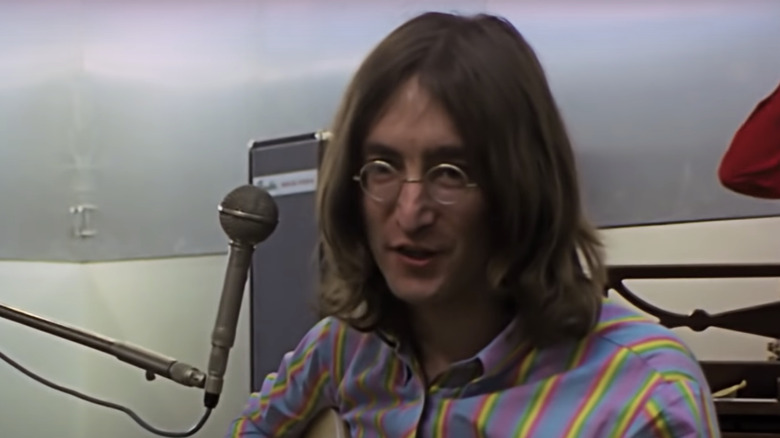
I did not expect The Beatles to trend on social media amongst "Annie!," "Sports," and "America's Favorite Thanksgiving Foods" in 2021, and yet there the lads were in the third week of November, receiving deafening Twitter buzz for a clip of Paul McCartney writing the iconic "Get Back" in Peter Jackson's "Get Back" in ~45 magical seconds. It was a real "Is this real life?" moment, the sort that confirms The Beatles are who we thought they were and then some, the kind that makes old heroes flesh, blood, and even more mythic all at once.

And it got at the heart of why documentary films mattered so much to so many this year. 

In 2021, truth was a difficult pill to swallow. Every day offered a confrontation between what was real and what wasn't, about everything from vaccines to Chris Pratt's latest voice casting. Sifting through the wreckage of a pandemic, it turns out, is almost as fraught as living through one -- and one would think films which confront the highs and lows of real life would be less palatable than escapism. That didn't prove true. If anything, this year's documentaries provided a sturdy, necessary frame for the complexities of human experience. This year, they were more important than ever. 

Here, then, are the 14 best documentaries of 2021, ranked. 

Framing Britney Spears

In 2007, a 19-year-old named Chris Crocker sat down in front of a camera. For two-plus minutes, he tearfully outlined why the media and the gossip-craving public needed to leave pop star Britney Spears alone. His most haunting thought was this: "Have we learned nothing from Anna Nicole Smith?"

As 2021's "Framing Britney Spears" proves, we haven't. Not really. Over 14 years after Crocker's impassioned screed, it's clear that he was right and that we, the people, understood far less about Spears' situation than we thought we did. Director Samantha Stark outlines Spears' conservatorship with stark clarity, establishing both the star and those who would dim her light in brief but scarring strokes. Her father is present. Allies like Crocker are present. The lens of #MeToo, which reinvigorated interest in Spears' situation, is also here -- clear-eyed and shocking to the point of pupil dilation. 

"Framing Britney Spears" cannot answer all the quandaries it outlines, but it also argues that the fame monster which chewed up stars before Spears and others since makes answers almost impossible. Real life isn't a pop song. It's angry and heartbreaking and redemptive. Like Britney being free, or the words of Chris Crocker. "Framing Britney Spears" is a 74-minute ballad that is well attuned to both. 

The Dissident

Some documentaries play almost like modern thrillers. The Oscar-nominated "Collective" comes to mind, or director Bryan Fogel's "Icarus," which unearths the world of sports doping with Richard Donner-worthy verve. Fogel's 2021 follow-up, "The Dissident," might be the most nerve-shredding watch of the bunch. That's all the more impressive given that its ending is never in doubt: "The Dissident" relays the granular details of journalist Jamal Khashoggi's murder, whose shocking demise made global headlines in 2018. 

Fogel's commitment to narrative suspense is both admirable and purposeful. "The Dissident" is never less than rivetingly structured, thatching classic narrative structure with Kashoggi's life and death (his courtship of Alaa Nassif, his late wife, has all the trappings of a Hollywood subplot). But it also makes Kashoggi's loss that more tragic. Somehow, despite the inevitable, Fogel instills hope for the journalist's survival. When both perish, "The Dissident" makes its audience righteously angry and aims them towards the path of justice. 

That's something Hollywood thrillers can't so easily accomplish, and watching "The Dissident" nail it so thoroughly makes it one of the year's most exciting and eye-opening films, regardless of genre. 

A Glitch In The Matrix

2021 was the year that an idea of a meta-verse became mainstream currency, one pounced upon by McDonald's (in the form of NFTs) and Facebook (through a name change). And after a year that found the real world burning and still firmly within the grips of a pandemic, the idea of an internet existence seemed less dystopian than borderline idyllic. 

It isn't, of course. What's more, the idea that humanity is just a simulation is old hat, decades-old and laced into cultures both popular and counter. Director Rodney Ascher of "Room 237" and "The Nightmare" tackles these notions head-on in "A Glitch In The Matrix," but rather than present the heady cocktail of conspiracy theory and philosophy which informs the arguments of true believers, he downs said cocktail and invites his audience to shotgun a few more with him. 

The result is a cinematic head-trip that continuously pushes at the visual boundaries nonfiction storytelling is accustomed to. Ascher realizes that the horror, wonder, and strangeness of simulated life are in discomforting concert with a real-world where a digital sandwich becomes as coveted as the real deal. Glitch or not, it's a set of connections worth documenting. 

Billie Eilish: The World's A Little Blurry

It took approximately three years for the Sphinx, one of the world's eight wonders, to be constructed. Later Egyptians worshiped it in conjunction with the sun god; some considered it to be a blasphemous idol. But no matter who revered or desecrated it, no one truly knows how the Sphinx was erected or why.

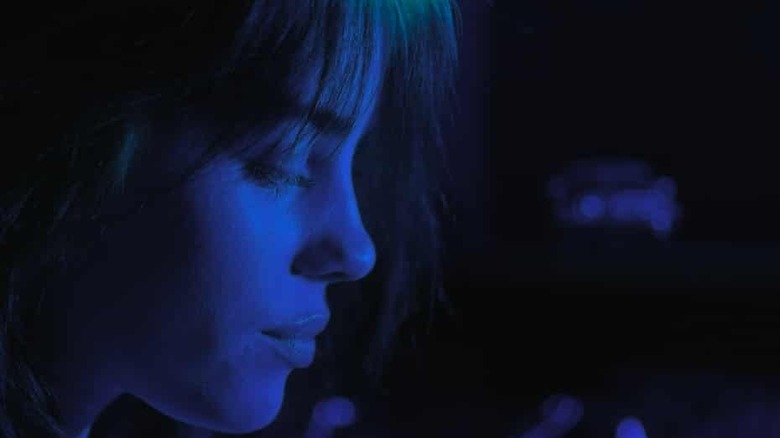
If you're wondering why I'm discussing the Sphinx in conjunction with Billie Eilish, purveyor of murder-pop, that's understandable. The reality is that "The World's A Little Blurry," which was released on Apple TV+ in February, concerns itself both with how modern idols are made and how quickly they become praised and disdained. Director RJ Cutler turns to Eilish as a narrative frame and conjures a portrait of a "The Office" super-fan who happens to emerge from artistic chrysalis before the camera's eyes, becoming a megastar in realtime. 

The results are funny, heart-shredding, and frequently gorgeous (Cutler jumps from the casual to concert-film-ready images with speed and clarity throughout). Just as importantly, "The World Is A Little Blurry" demystifies an icon before her narrative becomes toxically cannibalized by those who would wish her harm, and asks us to examine why we elevate pop stars in the first place. The world may be blurry, but Cutler's film is crystal clear. 

The Sparks Brothers

Edgar Wright is a narrative magician. To know his movies is to see every element of its spectacular tricks laid out -- the pledge, the trick, the prestige -- and get sucked into their larger story, anyway, knowing full well they'll still leave you surprised. That's especially true of Wright's Cornetto trilogy ("Shaun Of The Dead," "Hot Fuzz," "The World's End"). It was also true of this year's "Last Night In Soho." And it was even true of "The Sparks Brothers," the Edgar Wright film released this year that didn't tear Film Twitter apart. 

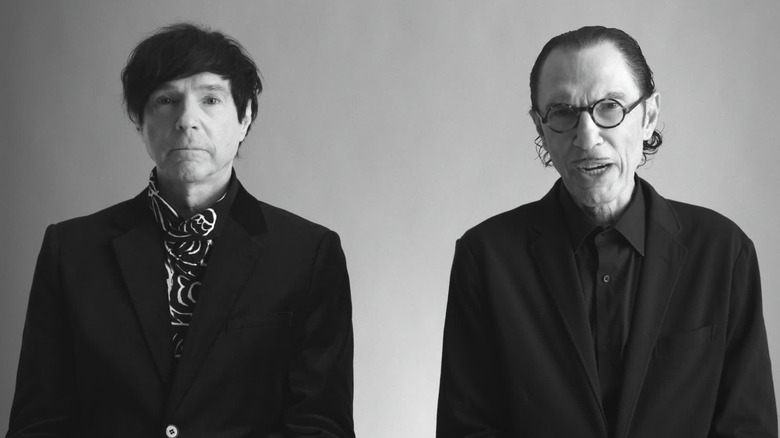
In reality, "The Sparks Brothers" feels like a film the British director was destined to make. Wright is an idiosyncratic storyteller turning his lens on an equally unique set of artists, Ron and Russell Mael, whose off-kilter pop songs as the group Sparks are a sort of skeleton key for successful modern music (As no less than Jack Antonoff claims during the film, "All pop music is rearranged Vince Clarke or rearranged Sparks. That's the truth."). 

Wright takes on the exploration of why Sparks' time never arrived by employing a visual language whose kaleidoscopic aims match that of the group's sound. There are animated sequences; ditto detours into puppetry. But neither of those nor any of their inherent playfulness dull the power of the trick Wright pulls over the film's admittedly too-long run time, one that you see coming but still hits like a life-affirming gut punch. Seeing is believing. 

Secret Base: The History Of The Atlanta Falcons

I'm cheating a little bit by including "Secret Base: The History Of The Atlanta Falcons" on this list, but hear me out. 

For one, Jon Bois Alex Rubenstein and Joe Ali's four-hour documentary opens on Tom Brady's New England Patriots -- cheating feels par for the course.

For another, documentaries are meant to elucidate not only our real-world experiences, but to bring soul, heft, and illumination to the way we discuss the world at large. What's remarkable about "The History Of The Atlanta Falcons" (and Secret Base, in general) is that it casts a new light on all the sports talk that is nothing more than white noise to those who don't care for it. To witness the somehow graceful barrage of charts, illustrations, and photos the film deploys against intelligent yet casual narration is to get plugged in to all of football's nonsense and elation, to understand that this silly game carries personal, economic, and cultural repercussions that are fault line shifts. More than any other film on this list, "The History Of The Atlanta Falcons" wires its audiences to see and hear differently, a generous gift for an era where listening has been as difficult as it's ever been. Even Tom Brady could appreciate that. 

Cusp

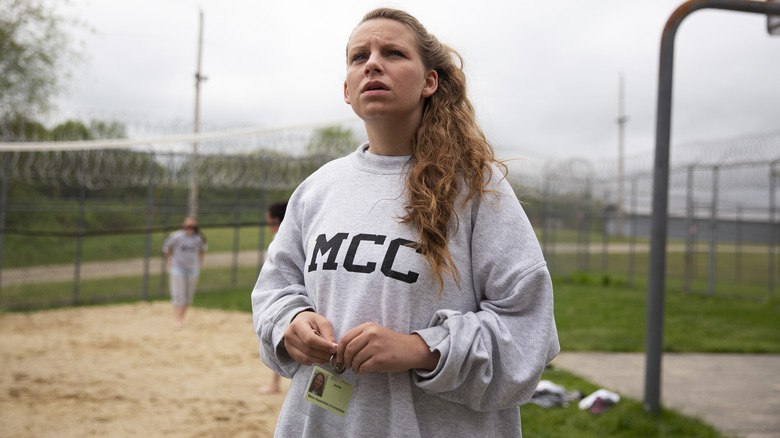
One of the year's finest television shows, Hulu's absurd and discomforting "Pen15," relies on audiences recognizing that the horror show of adolescence lingers long into adulthood. By contrast, Isabel Bethencourt and Parker Hill's "Cusp" (currently available on Showtime) cannot see the forest being grown for the trees of youth they're currently lost in. The two teenage, first-time feature directors turn the camera on themselves and their small-town Texas home to craft what is incidentally an insightful portrait of Gen Z but more deliberately a slice of life docudrama overflowing with revelations. 

To say more would spoil the many surprises of "Cusp," but it's worth noting that the film, like teenagers themselves, is both searing and nonchalant. This is a post-social media documentary. Subjects know what it means to share their inner worlds brazenly yet recognize that sharing isn't inherently brave. When "Cusp" becomes vulnerable (and it does, very often), it carries a power older filmmakers might struggle to harness correctly. Bethencourt and Hill are documenting truths, a world, and a way of being they know all too well, and "Cusp" invites adult life into that world, not the other way around. It is not a film on the cusp of greatness but in the throws of it. 

Gunda

If you Google the synopsis of "Gunda," it is as follows: "A glimpse into the raw and simple power of nature through encounters with farm animals, the eponymous Gunda, a mother pig, two cows and a one-legged chicken." 

There are very few worlds in which one can imagine a film described this way amassing wrecking-ball weight. Luckily, we're living in one of them. Viktor Kossakovsky's simple but gorgeous documentary sears its four protagonists into its audiences' memories through an experiential symphony of pure picture and sound. As it does, it questions the human conventions we often strap to these species for narrative purposes; I'm of a generation that vividly remembers 1995's "Babe" and E.B. White's award-winning novel "Charlotte's Web," both of which present animals with the capacity to speak."Gunda" takes those kid gloves off. 

"Gunda" shows how much emotion, heart, and life can simply be in farm animals when we look close enough. Once you've seen it, its impossible to look away. No synopsis can accurately convey that experience. See "Gunda."

The Rescue

To describe "The Rescue" as breathless filmmaking is an understatement. If anything, the latest film from "Free Solo" filmmakers Elizabeth Chai Vasarhelyi and Jimmy Chin communicates the value of a single breath with blood-drawing precision as it chronicles the rescue of a Thai youth soccer team and their coach that gripped the world in 2018. From the moment the movie begins, oxygen is of the essence. By the time the credits roll, you're more grateful for your lungs than ever.

More than anything, however, "The Rescue" is a testament to how incredible, odds-defying, and remarkable life can actually be. If it were a fictional film going before the studio for notes, it is likely executives would ask for the story and stakes to be toned down a notch. It defies plausibility. To actually witness it is to understand that some stories are more amazing than fiction, that we keep writing stories about superheroes not simply because they're commodifiable but because they make sense of the incredible men and women who brought this soccer team out of the darkness and back to the real world. Seeing truly is believing and, in the case of "The Rescue," seeing is a cinematic thrill-ride, to boot. 

In The Same Breath

In a recent article for The Atlantic, Christina Paz details the degrees to which Gen Z is done with the COVID-19 pandemic. "They haven't gotten sick; their parents haven't gotten sick; they don't know someone directly connected to them who has died ... and that's the general kind of invincibility of adolescence: 'Those bad things you're talking about, those are other people; that's not me.'"

I don't mean to indict Gen Z when writing of Nanfu Wang's "In The Same Breath." If anything, their increasing inability to see the cost of our almost two-year-long dark age is also increasingly understandable, the dissonance between being back and a quickly spreading variant reaching its apex.

This is why "In The Same Breath" is so good and necessary: Wang's film returns us to the pandemic's origins, chronicling COVID's initial spread through Wuhan but with a broader sociopolitical lens than last year's nerve-wracking "76 Days." It concerns itself deeply with how disinformation can be as contagious as any virus, how disinterest turns into one of its symptoms. That renders "In The Same Breath" something akin to film as medicine, a cure for the common burnout of living amongst COVID, hard to swallow but more necessary than ever. It's sharp, healing filmmaking. 

Procession

Robert Greene's "Procession" is going to be many viewers' first window into the world of "drama therapy," a burgeoning practice of therapeutic treatment. If Greene's film is any indication, their primary takeaway may be "unimaginable catharsis." 

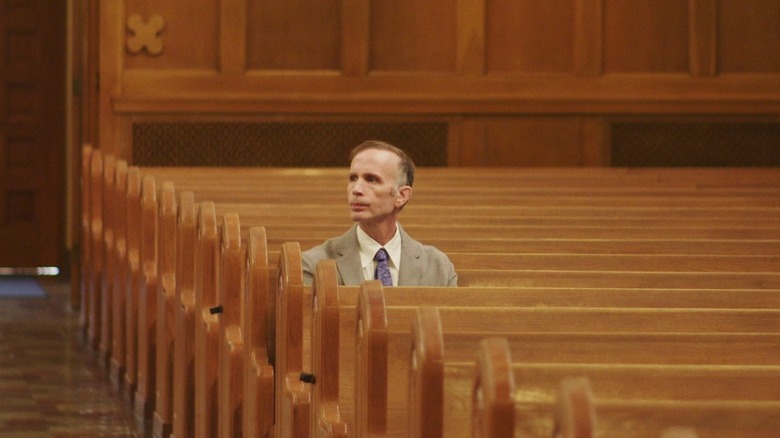
"Procession" is the story of six sexual abuse survivors who each incurred their trauma at the hands of the Catholic church. Green put the men in contact with  Monica Phinne, a "drama therapist" who specializes in utilizing theater conventions as a means to mold feelings of victimization into empowerment. "Procession" documents her and the men's work and it is never less than stunning.

The content of "Procession" alone will elicit visceral reactions in many (I won't spoil it here), but Greene's unwavering yet gentle lens deserves equal praise. The film is shaped with as much love and care as the difficult work of drama therapy itself, creating an ebb and flow relationship between those in practice and those bearing witness to it. That, in turn, encourages the audience to see and listen to stories from which many turn away.  More than any other movie released this year, "Possession" speaks to the steadfast and potentially healing power of true collaboration. Seek it out, stat. 

Jacinta

I've already had the honor of writing about the next two entries on this list for Slash Film's "The 12 Best Hulu Original Movies of the Year" list, but the incredible thing about "Jacinta" and "Summer Of Soul" is how much more there is to say about them. In the case of "Jacinta," it's worth discussing codependency. 

Addiction is forged from tensile-strength dependency. Sometimes that strength is powered-up by family. In other instances, it's alchemic. But what "Jacinta" highlights brightly yet heartbreakingly is how often codependency, defined as "excessive emotional or psychological reliance on a partner," can also be a part of the picture. Here's how Jacinta speaks of her mother Rosemary early on in the film: "I wanted to be like her ... Not that I wanted to pick up her mistakes, but if that's what it took, I was willing to do it."

We then witness that reliance in all its swooning joy and devastating disappointment, from the pair's reunion in New Hampshire to the moment where addiction takes hold once more. It's not just that "Jacinta" places a human face on a nationwide opioid crisis -- it's how much it reminds us that some of that crisis' fuel is familiar to our own hearts, that the terrifying fires which engulf and take so many start with a spark that's within all of us. That's what makes it one of the year's best and most important movies. 

Summer Of Soul

If you've read many "Best Of" lists this year, you may have noticed a theme where music is concerned: 2021 was a strange year.  With the exception of Adele, Olivia, and a 10-year-old Taylor Swift record, this year's blockbuster offerings were largely letdowns. And whether you think charting pop matters or not, it's hard to argue that, at its best, a brilliant song or album forges meaningful connection in relatively bite-size intervals. That was the joy of "Driver's License" blowing up in frigid January, heating our coldest month with the cauterizing fire of shared experience. 

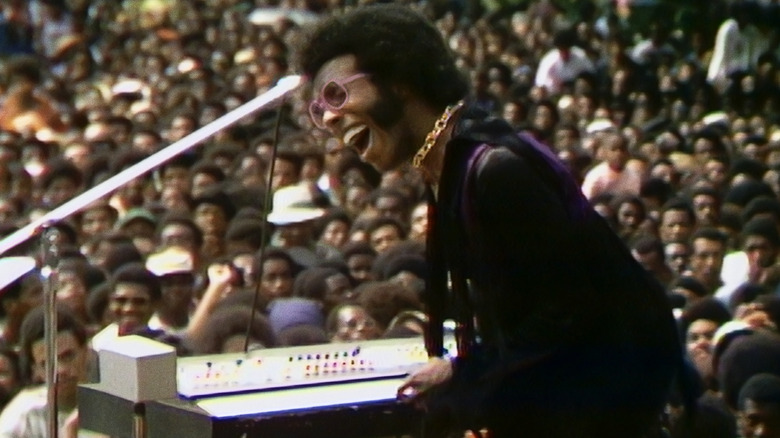
"Summer of Soul" documents a concert that, for all who attended, was both cauterizing and cathartic (I called it the year's most entertaining movie and, with many great December releases on the calendar, I stand by that assessment). But "Summer of Soul" is also a feature-length act of resurrection, one which restores and revitalizes mostly forgotten footage in an effort to remind us that knowing history is as much an act of spiritual healing as elder respect. 

To watch Stevie Wonder, Nina Simone, B.B. King, and countless others celebrate Black history at a moment when the Doomsday clock was halfway to midnight is to understand they are a mirror, not a metaphor, for our own, currently fraught moment. That's not just great documentary filmmaking -- that's an astonishing act of art. It's one "Summer of Soul" performs more succinctly than any pop tune which dropped this year. Listen to its message.

Flee

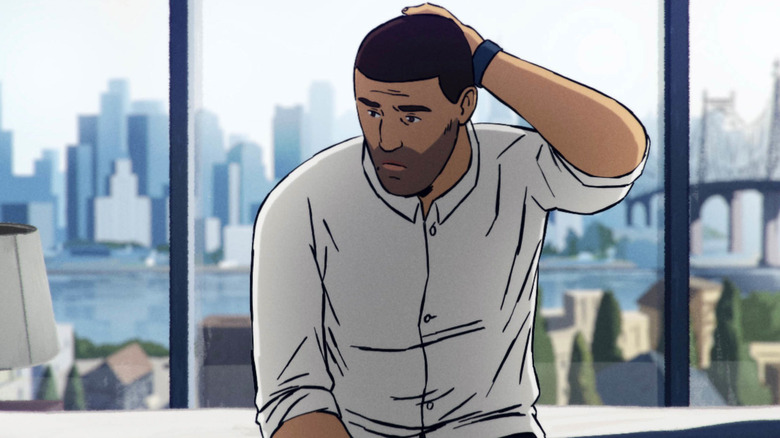
Animation provides an escape from real life, no matter its content. A Disney film about singing dogs on the New York streets may offer the same foundational break from flesh and blood naturalism as Richard Linklater's "Waking Life" or "A Scanner Darkly," yet none of those films can offer an audience (or its protagonist) the sort of freedom that "Flee" promises and then delivers on

Simply put: "Flee" is a movie that uses the medium of animation to shatter boundaries while telling a story about a man who crosses borders to find both himself and his independence. Its conceit is also its thesis. That alone would lend "Flee" a certain floor of artistic brilliance. What's even more remarkable about it, then, is how often Jonas Poher Rassmussen's film reaches its ceiling only to smash through it and aim higher. 

The story of Rasmussen's childhood friend, here known only as Amin, "Flee" traverses a number of landscapes both brutally and impressionistically, from those of the immigrant experience to memory itself. It does so with such fleet and unflinching grace that it feels like a landmark -- as both an animated and documentary effort. I can't say that about any other project released this year, much less the last few years, so "Flee" unquestionably takes the top spot of Best Documentary for 2021.

Read this next: The 14 Greatest Biopics Of The 21st Century

The post The 14 Best Documentaries of 2021, Ranked appeared first on /Film.
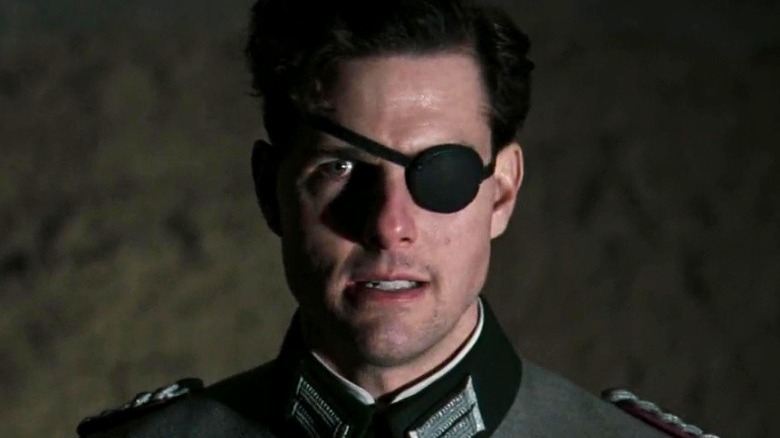
15 Dec 21:39

The 20 Best Italian Horror Movies Of All Time

by Jason Scott

Italian horror is most often associated with Giallo, a sub-genre containing gaudy color palettes, overly complicated plot lines, and flabbergasting reveals. While there are plenty of films within this entrancing cinema classification, Italian horror transcends this stylistic boundary. It also includes psychological terrors, ghost stories, straight-up slashers, tales about demons and the undead, and countless other varieties of nail-biting yarns.

Italian filmmaking pioneers like Mario Bava, Dario Argento, and Lucio Fulci established many of the horror conventions we've come to know and love 一 and often broke their own rules in the process. Sensible story structures are regularly sacrificed for style, mood, heightened surrealism, and garish cinematography that evokes a film's particular messaging. Set design and murder sequences sometimes emerge as characters themselves. Italian horror is nothing if not subversive, guiding the viewer through a trembling, cob-webbed house of horrors both beguiling and extravagant.

The unexpected is the expected. When a narrative doesn't make much sense, you can always rely on imagery to squirm like earthworms into your brain. The genre makes an oath: It will terrify you, and will give you nightmares for days, weeks, and months on end. Our selections for the 20 best horror movies in Italian cinema encompass everything from starkly-lit allegories about human existence to gore-drenched slashers and thrillers that will shake you to your core

Demons

The "Demons" soundtrack includes songs by Billy Idol, Motley Crue, and Rick Springfield, which should clue you into the tone of the film. It's a delicious banquet of sex, drugs, and rock 'roll, with some flesh-hungry demons thrown into the mix. With a script co-written with Dario Argento, based on a story by Dardano Sacchetti, Lamberto Bava (son of Mario Bava) uses the movie-going experience to stage a 1985 apocalyptic rager. From ghastly gore, including puss-filled gashes that pop like pimples, to visceral, colorful photography, it easily ranks alongside the likes of Lucio Fulci's "The Beyond," which is also on this list.

A group of strangers accept an invitation to attend a late-night preview for a new horror flick. As a band of 20-somethings unintentionally spark the end of the world onscreen, real life imitates art and soon all hell breaks loose. Trapped inside the theater, the movie-goers attempt to barricade themselves away from a swarm of demons, but their best efforts are for naught. They become a literal concession stand of flesh, bone, and blood, the single location feeling both limitless and claustrophobic. The imagery in this film is so nauseating that you may want to have a wastebasket handy.

Black Sunday

Mario Bava is credited as a director on three previous films, including 1958's "The Day the Sky Exploded." Due to numerous on-set fiascos, Bava often swooped in to take over the reins to finish filming — see, for example, "I Vampiri," which was originally directed by Riccardo Freda. As such, one could argue that "Black Sunday" is his proper directorial debut; his artistic fingerprints are present on his preceding works, but this haunted 1960 chiller is completely his own.

A vampiric witch, Asa (Barbara Steele), and her beloved Javutich (Arturo Dominici) are sentenced to death for sorcery and their faces impaled by a demon mask, an iron maiden-like contraption with spikes lining the interior. It's a surprisingly brutal opening scene that sets the tone for a downright bone-rattling entry into Italian cinema. As with many films of the era, "Black Sunday" relies upon the power of suggestion and disturbances in the human mind.

Two centuries later, Asa's descendent Katia, also played by Steele, must confront her troubled familial history. When a careless doctor and his protegee accidentally awaken Asa from her glass-encased tomb, Asa and Javutich seek to quench their bloodlust by dropping bodies in their wake, and reclaim lives long-extinguished. A delicate slow-burn, Bava's film immerses the viewer in startling images, the most arresting of all being Asa's newly-reborn face etched with dark crevices. It's the sort of nightmare fuel that doesn't go for immediate frights, but instead burrows into your skull.

Short Night Of Glass Dolls

Aldo Lado's first feature retools Giallo expectations and completely upends its usual structure to tell a gripping tale about human futility in the face of death. Having written scores of screenplays in his impressive career, Lado never leaves an impression quite like he does with "Short Night of Glass Dolls." When a young journalist named Gregory Moore (Jean Sorel) investigates the death of his girlfriend, he finds himself entangled in a sticky occult web.

Lado tells the story out of chronological order, often flipping between the present and the past as a way to keep viewers on the edges of their seats. In the opening scene, Gregory's body is discovered in a bustling plaza in Prague, assumed to be dead. When the mortician examines his body, all signs confirm that he is no longer alive, yet Gregory very much is. He's simply trapped inside his own mind, unable to move or utter a single sound. Left on a cold slab, he retraces the moments leading up to his grisly "death" and the discovery of what really happened to his darling paramour.

"Short Night of Glass Dolls" is far bleaker, both in story and style, than many of its contemporaries, but it's not without Aldo's tremendous thematic punches. As the final act closes in, and more revelations emerge regarding the cult, a comatose Gregory soon becomes an anatomy lesson for a group of students. The finale is among the most twisted and cruel endings in all of horror history.

Suspiria

When the topic of landmark Gialli is discussed, many cite "Suspiria" as a definitive standout. But here's the thing: Dario Argento's 1977 film is not a Giallo. It certainly lives among the stylish grandeur of many of Argento's other works, including "Tenebrae" and "The Bird with the Crystal Plumage," but its witchy, supernatural exterior shatters any possibility of it fitting within the Gialli box. "Suspiria" is among Argento's weirdest, most mind-melting explorations into human curiosity and womanhood, as it follows ingenue Suzy Bannion (Jessica Harper) upon her arrival at a German dance academy.

Volumes of style and composition frame buckets of blood, always hyper-stylized and surreal in a way that makes you think it's all a figment of Suzy's imagination. Is it? Or is it not? The truth of the matter is that bodies are falling all around her, and seemingly random disappearances hint that the school's mysterious history is firmly rooted in sinister practices. A coven of witches, beholden to founder Helena Markos, invites young women into its fold before offering up their lifeless corpses as sacrificial lambs. "Suspiria" also features an acting style that's nearly as over-the-top as the set design and cinematography. That's the charm. Everything in "Suspiria" is heightened to such a degree that you simply get lost in its twisted, blood-soaked wonderland.

A Bay Of Blood

Mario Bava's 1971 film "A Bay of Blood" (or "Twitch of the Death Nerve," as it's also known) plays generously in both the Giallo and splatter sandboxes. While borrowing the colorful dexterity of one of his previous works "Blood and Black Lace," the masterful filmmaker seems to take cues from such flicks as "Blood Feast," with graphic depictions of violence and buckets of blood. The bayside setting proves to be an essential ingredient as well, permitting Bava to lay the groundwork for many of the slasher era's biggest releases, including "Friday the 13th" and "Sleepaway Camp."

"A Bay of Blood" unfurls in classic Giallo fashion: murder, mystery, and mayhem. Count Filippo Donati (Giovanni Nuvoletti) strangles and hangs his wife, the wheelchair-bound Countess Federica Donati (Isa Miranda), in a murderous pact with real estate vultures Frank and Laura Ventura. But after Filippo has upheld his part of the deal, he is unceremoniously murdered and his body tossed into the lake. Frederica's death sparks salacious news coverage, leading a group of teenagers to invade the property for a little naughty time. The middle portion of the film almost reads as a long-lost Jason Voorhees saga, as each sinful teen commits horror's most egregious sin: having sex. Bava eventually brings the film full circle in the finale, and true to the convoluted nature of Giallo, it's a wild, yet totally well-earned, climax.

Stage Fright

Michele Soavi worked extensively with Giallo trendsetter Dario Argento, with credits as second assistant director for "Tenebrae" (1982) and director of 1985's documentary "Dario Argento's World of Horror." He took studious notes, as evidenced with his proper feature film directorial debut, "Stage Fright." Released in 1987, it's a very late bloomer in the overall slasher boom of the 1980s, but its Giallo flourishes elevate it far beyond its schlocky contemporaries.

An escaped mental patient sets his sights on a local troupe of actors, who are in the throes of rehearsing a musical about a mysterious murderer called the Night Owl. When one actor is found butchered in the parking lot, the ill-tempered director, Peter (David Brandon), insists that everyone go into lockdown and rehearse through the night. It's an outlandish premise only matched by the flamboyant owl mask, which was once worn by the actors onstage and then co-opted by the unseen killer. 

"Stage Fright" not only embraces the dramatic, it stitches in overacting and absurd plot points like sparkling rhinestones on a nudie suit. The film proceeds as all slashers do, but Soavi doesn't pretend it's anything but what it is. Shocking imagery — particularly when the killer poses as an actor and reenacts a murder from the show, with the rest of the cast looking on from the audience — turns the blood cold in a way that's truly unforgettable.

Don't Torture A Duckling

When you think about Giallo directors, Lucio Fulci's name is near the top of the list. His body of work is extensive, and zeroing in on his definitive films is always an arduous task. 1972's "Don't Torture a Duckling" turns the Giallo screws so tight they nearly shred apart, making it one of the defining masterpieces of the era. In addition to a story centered around child abduction and murder, a terrifying set-up, the legendary filmmaker tosses in witchcraft, drug addiction, and subtle religious commentary for good measure.

The disappearance of a young boy named Bruno sends his parents into hysterics and unleashes an unruly mob, as well as a media frenzy. When the parents receive an anonymous phone call that demands a ransom, the cops set a trap to capture the culprit. As it turns out, the scruffy-faced caller was simply an opportunist and didn't actually kill the kid; he only buried the body deep in the woods. This revelation triggers a harrowing series of events and several more child murders, including a drowning in a town square water trough. Fulci leaves you guessing (and second-guessing) the killer's identity until the last possible moment. No kidding: The final 20 minutes contains so many misdirects that you likely will have trouble keeping up.

Black Belly Of The Tarantula

The title alone is enough to send creepy-crawlies down your spine. Paola Cavara's 1971 Giallo "Black Belly of the Tarantula" more than lives up to its name. A masked stalker has a very particular way they prefer murdering woman, first paralyzing them with a wasp-like serum and then carving out their insides. Genre star and Bond girl Claudine Auger plays spa owner Laura, who finds herself in the eye of a blood-drenched cyclone with no way out. As her clientele drop like flies, every possible sign points to her as the killer.

But is she? The rubber-gloved psychopath weeds their way through sordid love affairs and those seeking to blackmail various adulterers. There might be a connection — at least Cavara wants you to think as much. With the body count rising, Inspector Tellini (Giancarlo Giannini) questions not only his ability to handle gruesome serial murders, but his own sleazy proclivities, now on full display. Cavara's creative decision to include sensual sighs and toe-curling moans in the score, primarily created by Ennio Morricone, creates a tantalizing treat, coating the entire picture with a provocative filter you could just die for.

Blood And Black Lace

Mario Bava wields the power of color with great effect. 1964's "Blood and Black Lace" blends the organic vitality of human blood (many of the set pieces are works of art in and of themselves) with the synthetic, highly manufactured beauty of posh fashion. Each frame is carefully constructed to evoke high-life glam, but still manages to root its glistening showpieces in a gnawing eeriness. And then, Bava perfectly wraps splashes of color and blood with a bow of intrigue and delight.

"Blood and Black Lace" flows with skin-tearing tension, low on story and high on visual feasts. It makes sense, then, that the story focuses on an upscale fashion boutique, the strenuous climate of competition among designers, seamstresses, and models mirroring the killer's pursuit for a missing diary that contains tawdry secrets about the firm's staff. Bava outlines human desperation with bright poignancy, using color to guide the rhythm and tone of the film. Story is superfluous to Bava's sheer elegance, and you won't second-guess his intentions once you behold each blood-curdling window display.

Lisa And The Devil

This must be what it was like to live inside Mario Bava's head. "Lisa and the Devil" is a nightmarish tumble down an "Alice in Wonderland"-like rabbit hole. A brilliantly strange specimen, this examination of Lisa's (Elke Sommer) grip on reality ends up becoming one of the genre's most relentless and fascinating exploits. Released one year after "The Exorcist," a global blockbuster success, film producers reportedly inserted additional footage, with Bava's son Lamberto Bava at the helm, to flesh out the supernatural elements and pepper in more explicitly exorcism-related themes; the film was later re-released under the title "The House of Exorcism."

While visiting Toledo, Spain, Lisa wanders away from her tour group and attempts to purchase a dummy from a local vendor before being spooked and running off. She eventually makes her way to a derelict mansion, the home of a cast of oddball aristocrats who harbor filthy secrets, including necrophilia. Moral lines blur, as well as those between reality and fantasy, when resident Maximilian claims that Lisa is actually his long-lost lover, Elena. Mentally disturbed, he dresses her in Elena's gowns and tries to rape her, provoking Elena's ghost to elicit chilling, resounding guffaws. "Lisa and the Devil" is as bonkers as it gets, leading into a "Carnival of Souls"-worthy crescendo.

Opera

Did "The Scottish Play" damn this film before it started? Perhaps. Infamously, the production of "Opera" in 1987 was marred by numerous tragedies and on-set difficulties. Director-writer Dario Argento's father died, his romance with principal player Dario Nicolodi ended, and another central actor, Ian Charleston, was involved in a car crash. Superstition or not, Argento's creative choice to include Verdi's "Macbeth," an opera based on the Shakespeare play, within the story may have been the harbinger for a series of unfortunate events.

In "Opera," Cristina Marsillach plays Betty, an understudy taking on the role of Lady Macbeth after starlet Mira Cecova (Daria Nicolodi) is hit by a car. The leather-gloved maniac makes their first appearance on opening night, peering through an empty box, and then kills a stagehand. Throughout the film, the murderer rips out pages from the "Macbeth" playbook; they appear driven by someone else's insatiable bloodlust, rather than their own carnivorous hungers. 

Later, Betty spends the night at her boyfriend Stefano's apartment, a decision she soon regrets. The unknown assailant breaks in, ties her up, and tapes her eyelids open with needles, forcing her to witness Stefano's brutal slaying. Argento reuses this scenario several more times throughout the film to chilling effect. It's a game of cat and mouse, and it all seems to indicate that the killer knows Betty, or at least has knowledge of her past. Often heralded as the last great Giallo, "Opera" is not for the faint of heart.

The Beyond

In "Splintered Visions: Lucio Fulci and His Films" (via Daily Grindhouse), Fulci says that to truly appreciate the mastery in "The Beyond" you have to understand that "it's a film of images." The filmmaker's 1981 feature draws upon Southern Gothic imagery, such as a sweeping, ethereal Louisiana estate, and supernatural frights to tell a story that may make some quite queasy. There's a reason why U.S. censors chopped the original version of the film down, cutting out violent sequences and many of its gorier scenes.

Unbeknownst to her, aspiring actor, fashion designer, and model Liza Merrill (Catriona MacColl) comes from a wealthy family. Upon the death of her uncle, she inherits a cursed piece of property down in New Orleans, a tract of land allegedly situated upon a gate to Hell. If we've learned anything from horror movies, it's that you never build a house on burial grounds or entries to the underworld. Respecting the dead, in general, is a good rule of thumb. 

But several warnings from a blind woman named Emily (Cinzia Monreale) fall on deaf ears, and Liza finds herself in the direct path of a horde of zombies, spiders, and other slithering creatures. She joins forces with Dr. John McCabe (David Warbeck) to put the puzzle pieces together from a book titled "Eibon" and one of her uncle's mysterious paintings. "The Beyond" is an excruciatingly stomach-churning experience — if you hate spiders, you may want to avoid one particular skin-crawling sequence in which arachnids eat a man's face.

All The Colors Of The Dark

Delusions born out of trauma are woven into the fabric of horror history. In Sergio Martino's 1972 "All the Colors of the Dark," forged in equal measure with Edwige Fenech's imposing performance and an effective application of light and shadow, Jane navigates the aftermath of a miscarriage. She's also still reeling from the childhood murder of her mother, so her emotional and psychological states are shaky at best. Her life in shambles, she seeks the confidence of new neighbor Mary, who suggests that she attend Black Mass, a ritualistic ceremony held by local Satan worshippers.

Martino baits you in with the promise of mystery and witchcraft. What you experience is so much more. "All the Colors of the Dark" submerges the viewer into the driver's seat of the unreliable narrator; we see what Jane sees, and you'll begin question your own sanity, or complete lack thereof. Her descent into madness is very much your descent, too. It's as if you took Roman Polanski's "Rosemary's Baby" and fed it into a colorful Giallo blender, tossed in a few supernatural elements with Gothic flakes, and set it on high. It's unexpected and thrilling and will leave you gasping for air.

What Have You Done To Solange?

Writer-director Massimo Dallamano conceals the identity of Solange (played by Camille Keaton, best known for her role in exploitation flick "I Spit on Your Grave") for nearly 80 minutes. Released in 1972, "What Have You Done to Solange?" is as much about lost innocence as it is about seduction, sex, and sisterhood. A group of young girls take part in a secret society, frequently throwing sex parties, and when a tragedy befalls one of them, an unspeakable act incites murderous retribution.

The girls pay a heavy price for what they've done, and their deceitful web ensnares gymnastics professor Mr. Enricho Rosseni (Fabio Testi), who has plenty of secrets of his own. His reputation as a philandering creep ignites suspicion with the local police, even though his illicit affair with a young girl named Elizabeth (Cristina Galbó) gives him an alibi for the film's first slaying. So, it can't possibly be him, right? Dallamano's feature spirals like a hypnotist's wheel, and once all is revealed about Solange, you'll be unshakably disturbed.

The Red Queen Kills Seven Times

We've all heard the urban legend of Bloody Mary — or perhaps you're more familiar with the one about the babysitter and the man upstairs. Emilio Miraglia's 1972 Giallo "The Red Queen Kills Seven Times" explores an urban legend about two royal sisters, the Black Queen and the Red Queen. Every 100 years, legend has it that the Red Queen, once slain by her envious sister, returns and seeks revenge by killing seven people.

A disturbed painting hung in aristocrat Tobias Wildenbrück's (Rudolf Schündler) lavish estate, depicting a dagger-wielding Black Queen and her bleeding sister, mirrors the relationship between Kitty (Barbara Bouchet) and Eveline. When Tobias dies 14 years later, he bequeaths property and immense wealth to his children, to be split evenly. However, his will stipulates that his heirs must wait one calendar year before cashing in their inheritance. It is his hope from beyond the grave that Eveline and Kitty will not suffer the same fate as those who came before, as his death marks the 100th anniversary of the urban legend. As the final film of Miraglia's career, "The Red Queen Kills Seven Times" is the murder mystery to end all murder mysteries.

The House With Laughing Windows

A Giallo by default, there are far fewer murders in "The House with Laughing Windows" than one might expect. Writer-director Pupi Avati supplies his 1976 film with a sensual sheen, almost otherworldly and displaced from any tangible truth. With an unreliable narrator that'll leave you questioning the story every step of the way, the Lino Capolicchio-starring feature depicts Stefano's arrival in a secluded, lagoon-side village. He's taken a job to restore a precious, albeit graphic, fresco portraying the sacrifice of St. Sebastian.

The painting's creator, a local artist named Legnani, went mad — or that's how the legend goes. But perhaps there's something far more sinister at play. As Stefano follows a series of clues that link back to the painting, he takes up residence in the same villa Legnani once called home, where the artist unceremoniously lost his mind. Rapidly, Stefano's world flips upside down, and he careens directly into the mouth of madness himself. While the film follows some traditional narrative beats and is etched with classic Giallo hallmarks, nothing will prepare you for one of the wackiest finales of all time.

The House By The Cemetery

"The House by the Cemetery" bookends Lucio Fulci's Gothic-horror trio, arriving in 1981 after "City of the Living Dead" and "The Beyond." Unlike those previous works, "The House by the Cemetery" appears like a ghost in the night, rattling poetically and poignantly about an unfulfilled existence and finding peace in the afterlife. Screenplay co-writer Dardano Sacchetti reportedly drew upon Henry James' novella "The Turn of the Screw," while Fulci sought to write a story that would easily fit into H. P. Lovecraft's spooky universe.

Norman Boyle (Paolo Malco) moves his wife Lucy (Catriona MacColl) and son Bob (Giovanni Frezza) into Oak Mansion, which was once owned by his mentor, the late Dr. Peterson, and determines to continue researching old, abandoned estates. Despite a warning that Bob receives from a ghost girl named Mae (Silvia Collatina), who haunts the property, the cozy little family settles into their new life. But things turn sour and they soon come under siege by a horde of oozing rotters. Fulci delivers a much more nuanced ghost story, framing themes of death, sorrow, and acceptance around bumps in the night and skin-chomping freaks.

Your Vice Is A Locked Room And Only I Have The Key

Another Sergio Martino classic, "Your Vice is a Locked Room and Only I Have the Key" (1972) wins not only the award for best title ever but for its genius reapplication of Edgar Allan's 1843 poem "The Black Cat." Perennially used in countless other horror films, including 1934's "The Back Cat" with Bela Lugosi and Lucio Fulci's 1981 feature of the same name, a black cat is the key to unlocking this film's mystery.

Luigi Pistilli plays alcoholic abuser Oliviero Rouvigny, a once prolific author. His disheveled, mistreated wife, Irine (Anita Strindberg, star of other Giallo staples like "A Lizard in Woman's Skin"), has had enough of her husband's wandering eye and begins a love affair of her very own (with the person you'd least expect). When his mistress is hacked to bits, Oliviero naturally becomes the prime suspect, and must convince the authorities, as well as his wife, of his innocence. Even Irine's furry feline companion named Satan isn't too keen on him, often snarling at him. 

"Your Vice is a Locked Room and Only I Have the Key" is a ball of yarn, its single thread a tattered and frayed means to a gloriously bonkers end. Misdirects bat the viewer around for most of the runtime, and as you vault into the third act, the killer's shocking identity is revealed with a purr and a hiss.

Deep Red

Many, including /Film, have proclaimed "Deep Red" as Dario Argento's finest hour. And for good reason. The 1975 film expertly defines what a Giallo should be, stretched like elastic with its overly complicated plot points, character arcs, and obscene gore. In the aftermath of a psychic's murder, jazz pianist Marcus Daly (David Hemmings), who witnessed the murder from the street below, stumbles into a figurative maze, alongside skilled reporter Gianna Brezzi, played by Daria Nicolodi in a star-making performance. You may think you know who committed the crime, but you'd be dead wrong (perhaps literally).

"Deep Red" entrances you with clever camera angles, particularly when revisited from a different perspective. That's the magic of Argento's playfulness. He gives you the entire reveal in the process of telling the story, but you don't realize that you already know what happens until the very end. Images of children's playthings, such as dolls, evoke a sense of whimsy and innocence while impressing the emotional urgency of the proceedings upon the viewer. A bloody, hanging doll is especially troubling, but not nearly as unnerving as the buck-toothed ventriloquist dummy. That's just pure nightmare fuel.

Death Walks On High Heels

Diamonds are not a girl's best friend. Luciano Ercoli's 1971 film "Death Walks on High Heels" marries Giallo conventions with a jewelry heist. When her father is murdered on a train, French stripper Nicole Rochard (Susan Scott) worries that his death might have been the work of a looter searching for a million dollars in diamonds. Well, her instincts are right. Soon after, a masked burglar stalks her apartment, and she receives a threatening phone call from a killer using a voice changer, demanding the location of the diamonds. She knows nothing — or so she claims — and makes a getaway to the London countryside with Dr. Robert Matthews (Frank Wolff) in the hopes of avoiding becoming the next victim.

Danger follows, as does a trail of bodies. Ercoli centers Nicole's desperation in the hurricane's eye, building the story with a smart, acrobatic balance between a crime thriller and a soapy drama. The killer inches closer and closer, each titillating layer crumbling under foot and revealing more moral rot underneath. It's only a matter of time, and Nicole knows it. Maybe she's a victim, or maybe she's part of a grander diabolic plot. Sleek and hypnotic, "Death Walks on High Heels" more than earns its heart-pounding finale.

Read this next: The 12 Best Vampire Movies Of All Time

The post The 20 Best Italian Horror Movies of All Time appeared first on /Film.
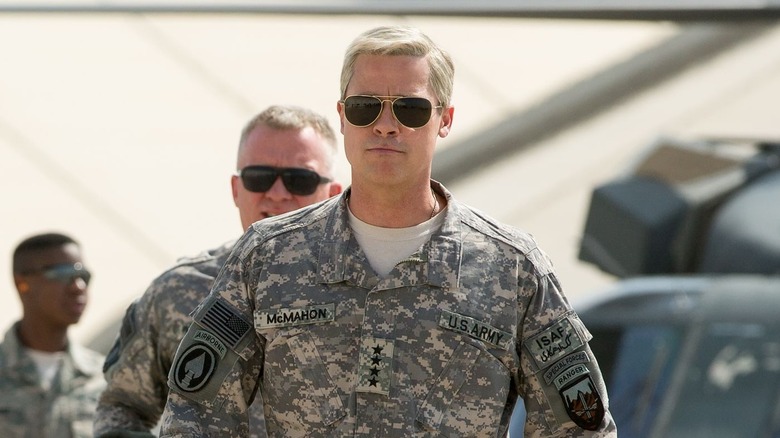
15 Dec 21:25

How Hawkeye Has Been Dropping Clues About The Villain All Along

by Danielle Ryan

The penultimate episode of the Disney+ series "Hawkeye" dropped, bringing massive reveals to set up next week's big finale. The episode's final moments divulge the identity of one of the series' secret villains, a titanic force that has been manipulating things behind the scenes without anyone realizing. Tiny clues and Easter eggs are a major part of the Marvel Cinematic Universe, however, so there have been plenty of hints along the way to make the reveal a satisfying mild surprise for the eagle-eyed fan. 

While comic book readers and fans paying careful attention might have caught on to the villain's identity, it's still a huge shock for Kate Bishop (Hailee Steinfeld) and Clint Barton (Jeremy Renner) that will have major repercussions for the series finale and the rest of the MCU. 

Spoilers for "Hawkeye" episode 5 after the cut.

A Murderous Mommy Dearest

In "Hawkeye" episode 5, Yelena Belova (Florence Pugh) shows up at Kate's secret hideout to talk to her about her mission: to kill Clint. She reveals that she was hired by someone to kill him, then later sends Kate a text with the information about the person who hired her: Eleanor Bishop, Kate's mom, was the one that paid Yelena to take out Clint. Not only that, but she's clearly in cahoots with Wilson Fisk/Kingpin (Vincent D'Onofrio, returning to the role after Netflix's "Daredevil"), one of the nastiest villains in the Marvel comics. While Kingpin's appearance in "Hawkeye" and the return of D'Onofrio in the role is big news, the reveal that Eleanor's involved in organized crime is also huge. 

Eleanor Bishop (Vera Farmiga), has been a bit of a mystery the entire season. In the comic books, Kate's mom dies and her dad raises her and her sister, but they switched things up a bit for "Hawkeye." In the Disney+ series, Kate's dad is dead and her mother is dating the shady Jack Duquesne. The season starts with Armand Duquesne III, Jack's uncle, getting killed by someone with a sword after he threatens Eleanor. That murder kicks off Kate's investigation and partnership with Hawkeye, and Kate ends up thinking Jack has something to do with it. Feeling abandoned by Clint after the rooftop fight with Echo and Yelena, Kate tells her mother about the information she and Clint dug up on Jack, including his shell company, Sloan, Inc. The police are called, Jack is arrested, and Eleanor seems rather calm about the whole thing despite Jack's protestations that he has no idea what's going on. 

Turns out Eleanor's actually responsible, and she's probably been using Jack's name to launder her own ill-gotten gains. If she's truly connected to Kingpin, she's near the top of a criminal enterprise that terrifies even the most hardened vigilante heroes. 

A Protective Parent Or Criminal Mastermind?

While Eleanor has shed plenty of crocodile tears fretting over her daughter, Farmiga has played her with a distant coldness from the start. The reveal that she's actually a corrupt criminal who had a hand in the murder of Armand isn't a huge shock, but it will have serious repercussions for Kate and Clint. Poor Kate has to reconcile the fact that her mother has been hiding all of this from her, plus the fact that Mommy Dearest hired someone to have her hero killed. Clint has to handle Yelena, and he can't exactly go after Eleanor for the hit when she's Kate's mom. It also opens up questions about what else Eleanor has hidden from Kate: we never see her father die and are only told he's gone, so could he secretly be alive as Eleanor was in the comics

We'll have to see what happens on December 22, 2021, when the finale for "Hawkeye" drops on Disney+, but Christmas at the Bishop house is going to be super awkward.

Read this next: 11 Marvel Comics Villains We Really Want To See In The MCU

The post How Hawkeye Has Been Dropping Clues About the Villain All Along appeared first on /Film.
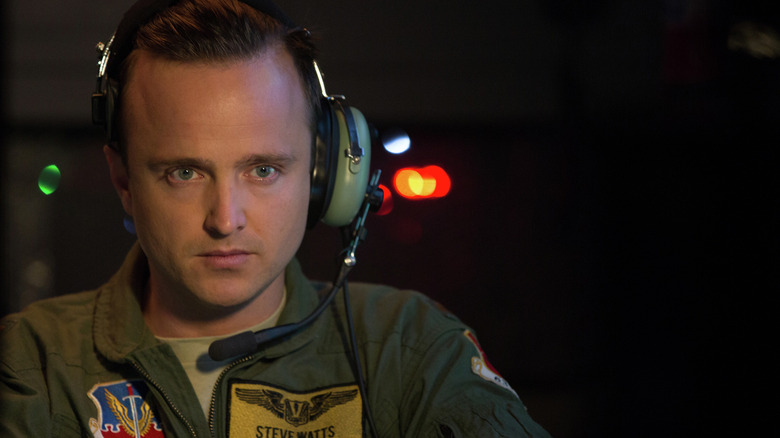
15 Dec 21:25

Why Adam Driver Was Hesitant To Take The Kylo Ren Role

by Fatemeh Mirjalili

When Adam Driver's Kylo Ren was first introduced as the newest "Star Wars" villain on the block in "The Force Awakens," some fans weren't entirely convinced. This guy with the perfect hairdo? A villain? 

Adam Driver didn't look like a quintessential "Star Wars" bad guy, even in his all-black wardrobe. Kylo Ren didn't have a frightening facial tattoo such as Darth Maul's, his power hadn't distorted his face like Emperor Palpatine's, and he wasn't half-machine like Darth Vader, even if he tried to emulate his presence with a signature helmet and vocal distortion. Instead, Kylo Ren had engaging eyes and that glorious mane of hair which made him look like a deeply flawed prince. Kylo Ren's actions, however, proved otherwise, and it's the character's story that convinced Driver to take the role, even though he was admittedly hesitant about being part of a galaxy far, far away.

Taking On The Role Of Kylo Ren Wasn't Easy For Adam Driver

Adam Driver embodied the brooding and formidable antagonist in three "Star Wars" movies, displaying Kylo Ren's angst and rage to his very best. But before that, Adam Driver wasn't particularly thrilled about big-budgeted movie franchises, especially since they didn't always take care of their characters and stories. Thankfully, writer and director J.J. Abrams' plan for "The Force Awakens" helped convince the actor to come on board.

In 2015, Adam Driver shared with Rolling Stone that accepting a role in the space opera franchise was "not an easy yes." The actor was concerned about his character and the story not being at the heart of the film, and he was holding himself back because he was worried about messing it up. When director J.J. Abrams spoke with Driver about Kylo Ren's role in the movie, the actor was able to brave his apprehensions and chose to move forward with the part. Driver recalled:

"Just because people can remake something, or revisit a world, doesn't necessarily mean they should. I've seen a lot of bigger-budget movies that sacrifice character and stories for spectacle, and I had no idea what it was going to look like or what the script was. But the first words out of J.J.'s mouth were about character and story. It was all really cool. And even then, you have doubts. Can I live up to that? I'm a fan of the movies. You don't want to f**k it up, by any means. It seemed that because I was scared of it, maybe it was a good reason to do it."

Driver went on to portray Kylo Ren in "The Last Jedi" (2017) and "The Rise of Skywalker" (2019). Despite mixed feelings from fans for each of the sequels, Driver's performance was well-received, and fans were fascinated by his intricate performance of the villain. Plus, he ended up getting some trademark battle damage like his fellow Sith, thanks to a scar across his face and body caused by the slice of a lightsaber at the hands of the defected Stormtrooper named Finn (John Boyega).

Kylo Ren was never a character who was easy to root for. He committed his fair share of crimes, including the murder of his own father, the smuggler-turned-hero Han Solo, and was somewhat responsible for Luke Skywalker's death. Kylo Ren also ordered the death of many innocent villagers and probed the minds of his victims against their will. But his consistent struggle between his desire to rule the dark side and his legacy that tied him to the light never went unnoticed, and it made him one of the most complex and satisfying characters in the new "Star Wars" trilogy.

Read this next: Star Wars Movie Villains Ranked Least To Most Powerful

The post Why Adam Driver Was Hesitant to Take the Kylo Ren Role appeared first on /Film.

15 Dec 17:12

Hackers Backed by China Seen Exploiting Security Flaw in Internet Software

by msmash
Hackers linked to China and other governments are among a growing assortment of cyberattackers seeking to exploit a widespread and severe vulnerability in computer server software, according to cybersecurity firms and Microsoft. From a report: The involvement of hackers whom analysts have linked to nation-states underscored the increasing gravity of the flaw in Log4j software, a free bit of code that logs activity in computer networks and applications. Cybersecurity researchers say it is one of the most dire cybersecurity threats to emerge in years and could enable devastating attacks, including ransomware, in both the immediate and distant future. Government-sponsored hackers are often among the best-resourced and most capable, analysts say. "The effects of this vulnerability will reverberate for months to come -- maybe even years -- as we try to close these doors and try to hunt down all the actors who made their way in," said John Hultquist, vice president of intelligence analysis at the U.S.-based cybersecurity firm Mandiant. Both Microsoft and Mandiant said they have observed hacking groups linked to China and Iran launching attacks that exploit the flaw in Log4j. In an update to its website posted late Wednesday, Microsoft said that it had also seen nation-backed hackers from North Korea and Turkey using the attack. Some attackers appear to be experimenting with the attack; others are trying to use it to break into online targets, Microsoft said.

Read more of this story at Slashdot.

15 Dec 13:24

Work at home, and tripped on your way down the hall from your bed to your office? Now you can sue your employer, because you were injured on your commute [Facepalm]

15 Dec 13:23

Halo Infinite Performance Analysis

The return of Master Chief. | After years of anticipation, Halo Infinite is finally out. We conducted our performance analysis to determine the system requirements.
15 Dec 13:17

15 gifts ideas for last-minute shoppers still available at Walmart, Target, Best Buy and more - CNET

by Max McHone
From digital gifts to in-store pickup, this list has your last-minute shopping needs covered.
15 Dec 13:13

Games N Moorer vs. GTFO

by jyan@gamingnexus.com

GTFO just became a full fledged game leaving Early Access and what better way to celebrate than to take four of us through this crazy co-op shooter. We're all fans of co-op games here at Gaming Nexus and a bunch of us are horror fans as well so this game sounded like it was up our alley.

We had a ton of fun with it and we're definitely going to do a few more sessions of this. There's a lot to take in as GTFO is not your typical run and gun type of game. You've got to be more strategic and stealth your way around, but you know with us in the end, we just ended up going guns a-blazing.

Check out our gameplay last night of GTFO!

15 Dec 13:11

What Are Windows Storage Spaces and Why Might You Need Them?

by Chifundo Kasiya

Our PCs have become a treasure trove of precious files that we want to keep indefinitely or can’t afford to lose. But these files pile up over time, forcing us to install bigger or multiple drives to increase capacity. Managing files across several drives can be cumbersome, but luckily, Windows has a solution: Storage Spaces.

15 Dec 13:11

The step-by-step guide for perfect PC cable management

by Karthik Iyer

PC cable management, both in and around your PC, is an important part of building and maintaining a computer. A clean PC case or a desktop devoid of any cable clutter makes the entire setup look that much better. While cable management is a therapeutic process that makes you feel good about the setup once you’re done, it’s often not as easy as, say, vacuuming or simply putting stuff away inside. There’s a lot that goes into proper cable management and you’ll need a proper plan in place to tackle the cable mess.

In this article, I’ll be taking you through a step-by-step guide for perfect PC cable management. It’s not going to be the same for all but I’ll try my best to explain how I manage the cable for my setup and how you can do too. Here’s a quick look at what my current setup looks like:

A PC setup with two display and RGB lights

I’ve made a few changes to this setup following some constructive criticism, but the cable management largely remains the same. Obviously, your setup will look entirely different but you can always use these cable management tips to make it better. The objective is to find out what makes you feel comfortable using your setup to do whatever it is that you do on a daily basis.

PC cable management tips

The whole idea of cable management is hiding all the cables away from the line of sight. You can achieve it either by tucking them in safely or simply gathering them in pile and hiding them under the desk. To each his own, but the idea is to safely hide them in a way the cables aren’t damaged. We’ll first be taking a look at PC cable management inside the case itself.

Cable management inside the PC case

Even if you don’t have a PC case with a transparent side panel, it’s still a good idea to manage and route the cables inside the case properly. This is an integral part of the PC building process. There’s always an option to stuff all your cables inside the case, but there are a few problems with that. First of all, the cables will obstruct proper airflow inside the chassis. Secondly, stuffing the cables inside the case will make it extremely difficult for you to find the right one when you need it. Imagine having to go through piles of cables when you want to replace a particular component sometime in the future? Sounds like a nightmare to me.

There are a few ways to tackle this situation. If you’re still in the early stages of planning a new build then I highly suggest you consider a PC case that offers dedicated cable routing channels inside the chassis. All the NZXT PC cases, for instance, have a cable management bar. A lot of Corsair PC cases come with proper cable channels and roomy space behind the motherboard for all the cables. My Cooler Master MasterBox MB511 ARGB doesn’t have one, so here’s a picture of the Corsair 5000D PC case I managed to find on Reddit from a fellow PC builder. The picture is a little gloomy, but it’s a good example to show exactly what I am talking about.

Corsair 5000D from CableManagement

Alternatively, you can also buy a case with a dual-chamber design to get more space for potential cable management options. The Lian Li O11 Dynamic would be a good pick for that. You can also check out our collection of the best PC cases to find some good options there.

    Lian Li PC-O11 Dynamic
    The Lian-Li PC-O11 Dynamic is arguably one of the best PC cases on the market right now.

      Features:

      Pros:

      Cons:

You can buy cable ties or zip-ties to organize the cable properly inside the chassis. The number of cables and the routing options varies for each case, so it’s not a “one solution that works for all” type of thing. The general idea is to gather all the small cables from your fans, rear IO, and front panel connectors, etc; route them through the back of your case. You can always tie the extra length and safely tuck them inside the PSU compartment or behind the motherboard. Figuring out where to tuck them is fairly simple because almost all cables have unobtrusive pockets.

Notably, you should also consider investing in a modular power supply over a non-modular one. Modular power supply units will allow you to install only the cable that you need. Choosing what you can plug-in streamlines the process and saves you a lot of time. You can check out our collection of the best power supply units to find some good options on the market. Here’s a link to one that’s on top of my head:

    Corsair RM850x PSU
    The Corsair RM850x is a reliable PSU for those looking to build a new PC, be it a gaming machine or a video editing workstation. It's a fully modular PSU with an 80 Plus Gold efficiency rating.

      Features:

      Pros:

      Cons:

If your PC case doesn’t have proper routing channels or any cable management features, then you can buy cable ties or even cable sleeves to club them into a single channel and hide them.

    Cable Zip Ties
    Cable ties are essential for PC cable management. They're reliable for gathering the cables together and safely routing them away from the line of sight.

Also, don’t forget to snip off any extra cable tie length. You can use scissors for this, but a wire cutter will make it super easy for you. It can also be used to cut off cable ties in case you messed up some routing. Sticking your fan and RGB controllers at the back, behind the motherboard using velcro tape is also something you might want to consider. Velcro tapes are good for those who like to keep moving things around instead of permanently fixing something.

    Cable/wire cutter
    A cable/wire cutter is an important tool to have at your disposal while building a PC. This will come in handy to either cut off extra wires or for getting rid of the zip ties in case you messed up something.

That being said, I recommend spending a good amount of time after building the PC to make sure all the cables are managed properly inside the chassis.

PC cable management for your setup

Managing the cable clutter outside of your PC case is just as important, if not more. Having a clean desk with no unnecessary clutter can put you in a good mental space for more productivity — be it for office work or a good gaming session. I personally think it’s more difficult to manage cables outside the PC case than it is inside. That being said, all of the same suggestions apply here too. Your main goal is to gather all the cables, route them safely behind the cover.

The amount of cable clutter entirely depends on the number of peripherals you’re working with. I recommend using cable ties to make a bundle of cables that you may not need. This includes the monitor and the system’s power cable, HDMI and DisplayPort cables, Ethernet cables, webcam cable, and more. You can also use cable sleeves to hide a bundle of cables that are running in the open. The best thing about using cables sleeves is that you can cut them off depending on the length you need for a particular channel and use the rest to hide more cables. As you can see, I use a lot of cable sleeves to hide big piles of cables of exposed cables running from the back of my monitor, PC case, and more.

A bunch of cables under cable sleeves behind the monitor

Using wireless peripherals over wired ones is an obvious method to save yourself a lot of work. Alternatively, you can also replace the stock cables with custom ones to add a touch of personalization if you don’t want to go the wireless way. I personally use wired peripherals including a wired keyboard, gaming mouse, and wired headphones. I use a black-colored table cloth for my setup and it nicely blends all the black-colored cables of these peripherals. Not to mention, white-colored peripherals on top of a black surface look incredible.

You can route these cables under your desk to keep them away from the line of sight. A lot of gaming and office desks now come with a cable management rack, allowing you to tuck them under the desk. You can also buy one from Amazon and use it on your existing desk.

    Cable management rack
    Cable management racks are great for holding extra cables and even a power strip.

Alternatively, you can also buy a cable management box to hide all the cables. These boxes can either be mounted on the table or can be rested on the floor. This will also keep your power strip and cables safe from your furry friends.

    Cable management box
    A cable management box is great for hiding cables and even power strips. It's a safe way to hide them and keep them safe from pets.

You can also use velcro sleeves to tie the cables under your desk. This is also a good way to not leave your USB docks and power strips unattended on the floor. I don’t use one personally, but here’s an image I found on Reddit that perfectly shows what I am talking about:

Rate my effort from DeskCableManagement

It’s best if you leave the mouse and keyboard cables separately, though. It’s not recommended to tie or tuck them in as they tend to restrict the movement. I instead suggest you buy custom cables to proudly off on your desk as opposed to hiding them.

Custom coiled cable with Keychron K2V2

For wired gaming mice, you can buy a mouse bungee to keep it from getting tangled. Here’s a good one I was able to find on Amazon:

    Glorious Gaming Mouse Bungee
    A mouse bungee is a handy accessory to have for your setup. It helps you manage your mouse cable properly and keep it from getting tangled.

Another simple hack I use is hiding some cables behind decors. I’ve hidden the power supply cable from my UPS behind this fake IKEA plant I bought from Amazon. You can use any of your decors or even the PC case itself to hide some unwanted cables from sight. The goal to is keep them from the line of sight, remember? Route each cable neatly, making sure not to create any tangles along the way.

PC cable management tips to hide cables behind decors

Routing the cables properly will also allow you to remember where each cable is. As somebody who’s been building PCs for a long time, I can tell you how important it really is. Good cable management isn’t going to magically improve the performance of your PC. However, it’ll keep you at peace in knowing all your cables are safely tucked in.

A gaming setup with two display and proper cable management

I’d love to hear from each and every one of you reading this article about managing the cables. Cable management, as I mentioned earlier, is going to be different for all depending on the setup and the components involved, so I’d love to see what your setup looks like. I also encourage you to share any other tips that I may have possibly missed. You can also join our XDA Computing Forums to have these discussions with fellow PC builders and get suggestions from them.

The post The step-by-step guide for perfect PC cable management appeared first on xda-developers.

15 Dec 13:09

Review: LAST WORDS, Final Reel at the End of the World

It's not hard to imagine the end of humanity these days; between the pandemic and environmental disaster, I'm sure I'm not the only one who has, at least in their head, made plans if those days shoudl arrive in their lifetime, where they would go, who they would want to be with, what they would do if there truly was no future. Would you stay where you are? Try to travel somewhere that meant something to you, or seek out loved ones? What would be the last memories you want to have? American filmmaker Jonathan Nossitor (Sunday, Signs & Wonders) is the latest director to tackle the apocalypse world in his first fiction feature in a decade. Last Words takes a somewhat intimate look at...
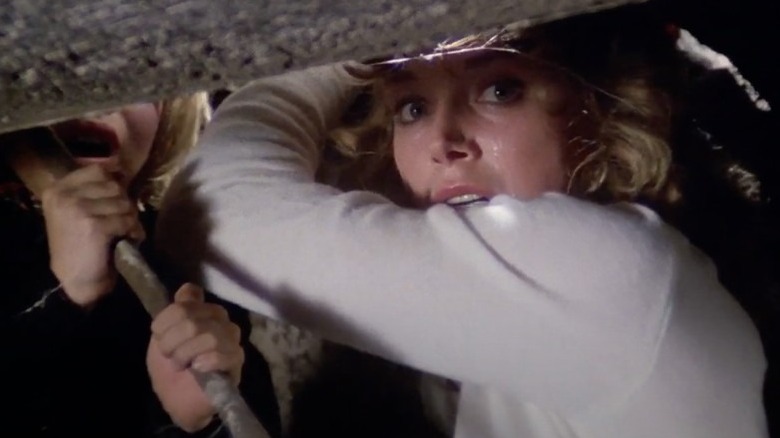
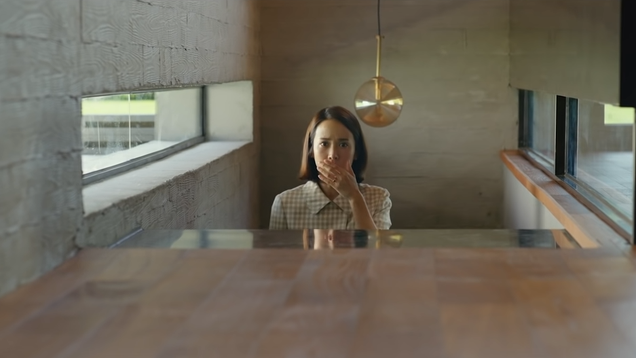

[Read the whole post on screenanarchy.com...]

15 Dec 13:07

14 Korean Movies to Watch Before an American Remake Ruins Them

by Ross Johnson

To quote Parasite director Bong Joon-Ho, “...once you overcome the 1-inch tall barrier of subtitles, you will be introduced to so many more amazing films.”

Fortunately, in the streaming area, a great many of those amazing films are more readily available than ever before—certainly there’s no shortage of great films…

Read more...

15 Dec 13:07

What Are NES Clones and Should You Buy One Over a Real NES?

by Justin Bennett-Cohen

Many of us often feel nostalgic for our first video game consoles. And for many of us, that first console was a Nintendo Entertainment System.

15 Dec 13:06

Windows 10 version 2004 is no longer supported after today

by Rich Woods

Today is Patch Tuesday, and as is the case every couple of months, there are a bunch of products that are no longer supported after today. In the case of Windows 10, version 2004 is getting its last update, and that goes for all SKUs of the OS.

The way that support has worked on Windows 10, at least for a very brief period, is that the fall update gets 18 months of support for consumers and 30 months of support for businesses. However, the spring update gets 18 months for both, and version 2004 was a spring update. This policy was brief, because it’s fairly new, and it’s going to be abolished next year when Windows 10 moves to an annual update cadence.

Note that this is a completely artificial change, and there’s no reason that Microsoft couldn’t continue to support Windows 10 version 2004 with zero additional effort. Since versions 20H2, 21H1, and 21H2 are all simply enablement packages that go on top of version 2004, they all get the exact same updates. They’re all the same bits, but newer versions have a few features lit up, which are hidden in the older versions.

That’s not to say that Microsoft should continue to support it. After all, the Redmond company is invested in keeping you on a newer version of the OS. And that’s what it’s going to do. The way that feature updates work these days is that Microsoft doesn’t force you to update, unless the version you’re on is nearing the end of support. That means that if you’re still on Windows 10 version 2004, you’re going to be automatically moved to something newer.

As of right now, Windows 10 version 2004 users are considered to be secure for another month, since it’s getting its final update today. By next month’s Patch Tuesday update, you should have moved to something that’s newer.

The post Windows 10 version 2004 is no longer supported after today appeared first on xda-developers.

15 Dec 13:03

How to Choose the Best HSA Provider for Your Lifestyle

by Andrea Basse

A health savings account (HSA) can be a practical part of your comprehensive money management strategy. HSAs provide a secure place to keep pre-tax money and let it grow tax-free. You can later use the cash in your HSA account for qualified health care expenses.

In addition to helping you save on medical costs, investing in an HSA can also benefit your finances in other ways. This article will provide an easy-to-understand overview of HSAs and why HSA contributions are worth incorporating into your budget or conscious spending plan. Finally, we give you an overview of your options in selecting an HSA.

What is an HSA account?

An HSA is a type of savings account where you can contribute money on a pre-tax basis, which you can subsequently use to pay for approved health care expenses. By spending pre-tax dollars from your HSA, you can ultimately save money on expenses like coinsurance, insurance copayments, and deductibles, reducing your overall medical bills.

However, to be eligible for an HSA, you must have a High Deductible Health Plan (HDHP). If you’re unsure whether your health plan qualifies, though, give your insurance provider a call. They’ll be able to tell you whether you have an HDHP and if you can pair an HSA with your account.

If you buy a health plan on the Health Insurance Marketplace, make sure to confirm that it’s labeled as HSA-eligible. HDHP plans usually only cover preventive care before the deductible. For 2022, the minimum deductible is $1,400 for individuals and $2,800 for families.

How do HSA accounts work?

When you contribute to an HSA, you have the chance to invest pre-tax dollars. This money can grow in your HSA without getting taxed, remaining in your account until you’re ready to use it for qualified medical expenses. 

Essentially, it acts like a checking account and you’ll get a debit card you can use for those qualified medical expenses. The HSA money in the account balance then rolls over each year if it’s not spent and can earn interest, which also isn’t taxed. While there are annual contribution limits, they tend to be high: For 2022, individuals can put in up to $3,650 and families can put in up to $7,300. 

What are the benefits of an HSA account?

The most obvious advantage of an HSA plan is that it can save you money on health care, which can be notoriously pricey in the United States. HSAs have financial advantages, too, including:

  • Similar to Roth IRA or 401(k) retirement accounts, HSAs allow you to take a tax deduction that can lower your income on your tax return. The money you put into the HSA isn’t taxed and reduces your annual earnings, meaning lower taxable income.
  • HSAs also offer tax benefits. Any investment gains made in an HSA, like interest, aren’t taxed. Withdrawals from the HSA likewise aren’t taxed if you use them for qualified health care expenses.
  • HSA funds never expire, so they can become a valuable component of your retirement savings. If you withdraw your funds for non-eligible expenses before age 65, you’ll be subject to a 20% penalty, plus, you’ll have to pay income taxes on the money you withdraw. However, after age 65, the penalty disappears. That said, you’ll still have to pay income tax on money you withdraw and use for non-eligible expenses. (Note that Medicare premiums are considered an eligible expense.)
  • Some HSAs allow you to invest and grow your money, for example, via mutual funds, stocks, and bonds. If you want to use this opportunity, make sure any HSA you open offers a broad array of investment opportunities, ideally low-cost funds. Also, check the administrative fees associated with investing.

How to choose the best HSA provider for you

Ideally, you’ll be able to qualify for HSA enrollment via your employer. That said, you can still leverage an HSA if you’re self-employed or a business owner. Regardless of your situation, there are a few things to consider when selecting an HSA, including:

  • Fees: Account fees might include investment fees, annual fees for maintenance, monthly fees for paper statements, and transaction fees, among others. Ask for a full schedule of fees. Some providers forego fees if you maintain a minimum cash balance.
  • Investment options: If you’re going to use your HSA to invest and grow your money, see which products are available. Options might include stocks, mutual funds, and bonds, among others. 
  • Accessibility: Your HSA should provide you with a debit card that you can use to access your funds. However, some HSA providers make it easier to manage your funds than others — for example, via mobile apps. When comparing HSA online portals, compare traits like online bill pay, mobile deposits, e-statements, and text banking. 
  • Insurance: If you opt for an HSA spending account, look for one with a federally insured bank or credit union (NCUA- or FDIC-insured). If the financial institution fails, you can get coverage for up to $250,000.
  • Interest rates: HSAs can grow interest, similar to a normal savings account. Compare interest rates between accounts to see what you can expect. 

Finally, consider customer service for the HSAs when shopping around. You should be able to assess this via interactions when doing research. For example, if you try to get a full schedule of fees, how long does it take to get a response? 

The best HSA accounts, by lifestyle

There is no one-size-fits-all HSA that’s perfect for everybody. For instance, a single person’s HSA needs may differ from a family’s. The great news is that there is a wide diversity of HSA options to suit different needs. Here’s a quick overview of the best health savings accounts.

Best no-fee HSA account

Lively has a noteworthy fee schedule and doesn’t ever charge for essentials like opening or closing accounts, transferring funds, or account maintenance fees. There’s no minimum balance required either. You also have the option to open a brokerage account with TD Ameritrade if you want to invest your HSA funds — no fees necessary.

Best HSA account for families

Further earns points for versatility, with three types of accounts: Premium, Value, and Select. This allows families to choose the option that fits their needs. Prices vary, with Further Value being the most cost-efficient (low fees of $1 per month). Further’s Learning Center creates transparency and makes it easy to discover HSA options.

Best investment HSA account

Fidelity offers varied HSA investment options, including bonds, ETFs, CDs, mutual funds, stocks, and more. You can manage your investments yourself or select a managed account. Fidelity also stands out for its low fees and accessibility. You can easily access your account via a mobile app or web platform.

Best no-minimum-balance HSA account

If you don’t want to stress about a minimum balance, HSA Bank is an option. However, there are other fees, such as for paper statements. HSA Bank also offers percentage-based investment fees. You can invest via TD Ameritrade or Devenir. Additionally, they offer flexible spending accounts (FSAs).

Best overall HSA account

The Fidelity HSA offers a good balance of security, transparency, and accessibility. There are no fees for basics like opening an account, overdrafts, or stopping payment. You can easily access your account via an online platform or mobile app. Plus, Fidelity’s deposits are FDIC-insured.

Fidelity also earns points for its comprehensive investment accounts. You can choose from a managed fund or handle your own investments. Additionally, U.S. ETF and stock trades are commission-free. You can also purchase fractional shares, giving you access to companies with pricier stock.

Take control of your financial future

Investing in a health savings account and leveraging the tax advantages is just one of the many ways you can make your money work for you. But just how much should you invest in an HSA? Drafting a conscious spending plan that’s tailored to your unique needs can help you figure it out.

Following this principle, you build a budget that isn’t about restriction but that lets you live a rich life with guilt-free spending on things you truly love. Find out more about how it works with the I Will Teach You to Be Rich six-week program. Get the knowledge you need to take the first step toward improved personal finances by downloading the first chapter of I Will Teach You To Be Rich for free below!

Download the first chapter of I Will Teach You To Be Rich FREE!
Please enable JavaScript in your browser to complete this form.
Name *
Email *
Get it now

100% privacy. No games, no B.S., no spam. When you sign up, we’ll keep you posted

How to Choose the Best HSA Provider for Your Lifestyle is a post from: I Will Teach You To Be Rich.

15 Dec 12:30

EXPLAINER: The Security Flaw That's Freaked Out the Internet

by Associated Press

Security pros say it’s one of the worst computer vulnerabilities they’ve ever seen.

read more

15 Dec 12:22

Leave the Generator, Take the Power Station - CNET

by Brian Cooley
Battery power stations make a compelling argument to replace generators in many cases.
15 Dec 12:21

Hackers Using Malicious IIS Server Module to Steal Microsoft Exchange Credentials

by noreply@blogger.com (Ravie Lakshmanan)
Malicious actors are deploying a previously undiscovered binary, an Internet Information Services (IIS) webserver module dubbed "Owowa," on Microsoft Exchange Outlook Web Access servers with the goal of stealing credentials and enabling remote command execution. "Owowa is a C#-developed .NET v4.0 assembly that is intended to be loaded as a module within an IIS web server that also exposes
15 Dec 11:59

History Lessons: Zelda II: The Adventure Of Link

by Waltorious

Other History Lessons posts can be found here. If you’re looking specifically for console games, those are here. As always, you may click on images to view larger versions.

When I wrote about the original Legend of Zelda, I discussed how it was inspired by earlier Japanese action role-playing games like Xanadu or Hydlide, but innovated by removing most of the classic role-playing mechanics such as experience points and leveling. But the sequel, which drops the “legend of” and opts simply for Zelda II: The Adventure of Link, is almost entirely different. This was on purpose. Other than the project lead and writer, the development team was entirely new, and the action gameplay shifted from the original’s top-down viewpoint to side-scrolling platforming. There’s still some top-down exploration in the form of a world map, similar to those in the Dragon Quest games, but the bulk of the game is played in the side-on view.

I remember this shift somewhat confounded my group of friends when we played it as kids, and the game never captured our imagination as strongly as the original did. One thing that I didn’t remember, however, is that Zelda II brings back some of the role-playing mechanics that its predecessor had excised. Titular protagonist Link earns experience points from defeating enemies, and upon accumulating enough can level up his attack, magic power, and defense. The series famous for establishing its own action-adventure genre, distinct from action role-playing games, had become an action role-playing game once more.

Zelda II released for the Famicom Disk System in Japan in 1987, and a version for the NES in North America arrived at the end of 1988. Like its predecessor, it had an iconic golden cartridge. The Famicom Disk System has extra features that the NES lacks, so the North American release is simplified in some ways, including its musical score. But like some other Famicom Disk System games that were brought to North America (including the original Zelda and Metroid), the NES version is in many ways an improvement, with extra colors and artwork for static screens.

I remembered playing Zelda II as a kid exactly twice. The first time was when visiting family, and an older cousin kindly let me play his copy. He showed me the controls, not just for basic jumping and sword thrusting, but also Link’s special moves like the downward thrust, which lets him leap onto enemies and land on them sword first. I happily gallivanted around the land of Hyrule, stabbing enemies or using my downward thrust to bounce off their heads like a deadly ball. The second time was when a good friend of mine got the game (or maybe just rented it?) and I excitedly told him all of the things I’d learned from playing it at my cousin’s house, only to discover that most of them didn’t work. It turns out my cousin was letting me use his saved game in which he’d nearly reached the end. Link’s downward thrust, among many other abilities, are things he must learn along the way during his adventure.

I barely remembered anything else about the game, but playing it again now I had moments of shocked familiarity. I recognized the elevators immediately, which meant I must have explored some of the six Palaces that are central to Link’s quest. Several of the bosses were familiar. Even a late-game location, where lizardmen hurled stones from a high wall in the background, stirred a memory. I was forced to conclude that I must have played, or watched friends play, much more of the game than I thought. Still, I doubt any of us managed to complete the game back then, because oh my, Zelda II sure is hard.

Having just played The Legend of Zelda and Metroid and noting the similarities in nonlinear design for the two games, it’s tempting to say that Metroid’s platforming action inspired Zelda II, but Link’s close-range fighting feels very different. And close range swordfights really are the order of the day; Link still possesses the iconic sword beam from the first game while at full health, but here it doesn’t fly far before fizzling out (and many enemies are immune to it anyway), and his other ranged tools like the boomerang and bow and arrows are conspicuously absent. Instead, it’s all about Link’s sword and shield. In the first game, Link could block incoming attacks from the front, as long as he didn’t lower his shield to launch an attack of his own. Here, Link’s attacks do not lower his shield, but he must choose whether to defend high or low. While standing, he’ll block attacks coming in at chest height, whereas crouching will block low attacks but leave Link’s head undefended. The most dangerous enemies, such as the armored Iron Knuckles who defend the Palaces, mimic this behavior, with their own shields that can block Link’s high or low strikes. At the same time, they launch their own attacks, with a brief windup animation the only warning as to where Link must put his shield. Duels against these foes are tense affairs, blows clattering off each other’s shields, and players trying to watch both the enemy’s shield and sword at the same time.

This is made tougher by the fact that there are no pickups that restore health, only ones that restore magic power. Until Link learns the Life spell partway through his adventure, there’s no way to heal at all, except by returning to a friendly town. Link has three “lives”, and if he loses them all, it’s game over, although some progress is preserved. Link will retain any items and spells he’s learned, as well as any abilities he’s leveled up, and any Palaces he’s conquered will remain conquered. But he begins all the way back at North Castle, where his adventure starts, and must travel back to wherever he was when he met his demise.

Constantly returning to North Castle at least serves as a reminder of the game’s story, which is otherwise pretty thin. It also doesn’t make that much sense. The evil Ganon is defeated, but his minions remain and are wreaking havoc. Link discovers the existence of a third Triforce, the Triforce of Courage, which was used by a king long ago in conjunction with the other two (which Link found in the first game) to rule the land in peace and harmony. But no heir was worthy of wielding this power, so the king hid it away, with powerful guardians in the six Palaces protecting the keys, so no evildoer might get their hands on them. In other words, all the deadly duels Link must engage in were actually put there by the good guys, as a test. Oh, and also there’s a Princess Zelda — the original, this time, not just one of the others in the royal line who all share her name — put into a magical sleep for… unclear reasons? Link must find the third Triforce, wake her up, and bring peace to the land. Or, much more likely, die a horrible death and bring about the return of Ganon, because this king sure was overzealous in guarding the Triforce.

Things are hardest early on, not just because Link doesn’t have his advanced abilities yet, but because he hasn’t leveled up at all either. Technically it’s possible to spend time grinding for experience, because straying from the roads on the top-down world map will spawn shadowy creatures that chase link, leading to a miniature side-scrolling battle if they catch him. These are cool at first, since they change based on the terrain and offer different enemies and platforming challenges, but they soon become tedious. The experience points granted for defeating these enemies is but a pittance, so using them as a way to level up is an exercise in boredom. At least they’re usually pretty easy to escape, by reaching one of the edges of the small area. No, the big experience rewards come from the tough enemies in the Palaces, but those are the same ones who are likely to kill Link. To make matters worse, if Link loses all his lives before he’s earned enough experience points to gain a level in one of his stats, all that experience is lost. After gaining the first few levels, I would routinely get about 80% of the way towards the next level up before losing all my lives in a Palace, and end up with nothing to show for it.

This is especially frustrating given that there are experience boost items to find out in the world, but each can only be picked up once. A cave off the side of the road might lead to a bag of experience worth a whopping 500 points, but if Link succumbs to his enemies before reaching the next level, he not only returns to zero experience points, he also cannot pick up that experience bag again. It’s gone. At one point midway through the game I managed to find two such bags in a row but still wasn’t quite at the next level, so I chickened out and just fought easy random encounters for a while to ensure I’d get there. I got into a groove and kept going for a few more levels too, although I probably didn’t need to. It does help though. Leveling up Link’s Life does not actually grant more health — only heart containers, found during his adventures, can do that — but it does make him take less damage. Leveling up his attack makes him do more damage, which can shorten difficult fights and therefore make them much easier. And leveling up his magic lowers the cost of spells.

Spells are very important, and another major change from the first game. Link’s original quest revolved around finding items which granted him new abilities and let him access new areas. There are still items like this to find in Zelda II, but much of that burden is now taken up by spells. In place of the rings that increased Link’s defense in the first game, Link now has the Shield spell which halves all damage he takes, but only within the current side-scrolling area. Leaving the area causes the spell to wear off, and since Palaces contain many interconnected areas, casting Shield becomes a tactical decision. Do players anticipate taking damage in the next fight? If so, Shield may be worth it, but it will use up some of Link’s magical reserves, and the magic jars that restore his magic only rarely drop from defeated enemies. And he might need to save some magical energy for the Jump spell that increases his jump height, or the useful (but highly draining) Life spell that restores his health. Many spells also act as key abilities needed to progress in the game, by passing a previously impassible cliff or other barrier.

Slowly gaining access to new areas is a big part of the game, but it happens in a much more linear fashion this time around. The first game is famous for its nonlinear design, with the various dungeons spread around the open world, and players able to stumble upon them out of order quite easily. In Zelda II, the Palaces are tackled in order, each containing an item needed to access the next. This means that in some ways, the world design in Zelda II feels like a step backwards. The world map is interesting for other reasons, however. It doesn’t just look similar to role-playing games like Dragon Quest, it functions similarly too. There are friendly towns to visit, explored in side-scrolling fashion of course, with townsfolk who can provide hints if you talk to them. There are locations that are far from roads, which means Link will have to survive a string of random encounters along the way. Key locations, like bridges or canyons, may lead to their own platforming sections to lend some challenge and variety to travel. Most interesting, however, is that there are a lot of hidden locations to find.

There aren’t as many secrets in Zelda II as there were in the first game, but some are pretty well hidden. I had to check the internet for hints when I couldn’t find any way to cross a certain river. It turns out that some of the forest tiles in the forest to the north were actually explorable locations, switching to a sides-crolling section when entered. There was no way to determine this without wandering through them randomly, or more realistically, getting hints from a magazine like Nintendo Power which all my friends read at the time. This isn’t the only time Zelda II uses this trick either, and while some of these secret locations hide optional bonuses like experience bags or perhaps a heart container, others are required to complete the game. There are hints that finding them is necessary, but no hints as to where they are hidden, so I found myself turning to the internet for help again. Overall, however, I was pleased with how much progress I was able to make on my own, even managing to find several cleverly hidden things just by using my wits. If only that extended to everything in the game. Some secrets are so well hidden that I doubt any player would stumble upon them without guidance.

For all these differences, Zelda II remains a compelling game. Difficult, yes, and often frustrating by modern standards. But the platforming and combat work surprisingly well, and the resource management decisions associated with spells make expeditions into Palaces interesting affairs. Occasionally Link will find a red magic jar which restores all of his magical energy, which often means getting to cast Life to heal up for free, as long as he still has enough energy for it before grabbing the jar. Strategic use of the Shield spell is often more effective than casting Life, but cast Shield too often and Link won’t have enough energy left for the Life spell when he needs it. Learning to balance this was an enjoyable process, as was seeing tough enemies fall before Link once he’d gained enough levels to cut them down in just one or two blows. The finale of the game is a great capstone to all of this too, offering an extra tough final Palace full of new enemies and devious traps, and mercifully letting Link restart from the Palace entryway after losing all his lives. It feels suitably climactic, a final, pure challenge without any more messing around.

Overall, however, I can see why the first game is remembered more fondly. Zelda II is a game that is tackled in a specific order, only occasionally letting players wander the world in more than one direction. After the revelation that was the original’s open, nonlinear exploration, full of secrets and oddities to find, Zelda II feels like a simpler, more action-focused affair. That action is tough but satisfying, adapting many of the enemies from the first game to the new side-scrolling format in imaginative ways, but Zelda II doesn’t have the same feeling of a free roaming adventure. Later games in the series would return to the top-down design of the original game, now considered a defining characteristic (except for the more recent 3D entries), and many players may be unaware that the series ever experimented with side-scrolling platforming. Zelda II did inspire many other games for the Famicom/NES, however, like Faxanadu (itself a spin-off of Xanadu, which was an inspiration for the original Legend of Zelda) and The Battle of Olympus. More generally, it was one of the first games to combine role-playing elements with platforming action, a concept that has since been used often.

As I’ve reported many times in this series, there’s no easy way to play Zelda II outside of emulation, which is what I used. Barring an original cartridge and original NES hardware, the only other official ways to get the game are via re-releases for the GameCube and Game Boy Advance, both of which are outdated as well. If you’d like to try emulation, I used Retroarch with the Mesen core, as I’ve done for other NES games in this series, and it worked nicely, even reproducing a slight slowdown when scrolling the world map. Prepare yourself for a tough adventure, but one that’s satisfying if you stick with it.

15 Dec 11:41

QEMU 6.2 Released With Intel SGX VM Support, Apple Silicon Compatible For macOS Hosts

QEMU 6.2 is now officially available as the newest feature release for this widely used key open-source component to the Linux virtualization stack...