Shared posts

30 Dec 14:24

Dénouement 2021 Part 4: The Best Stuff

by Shamus

And here they are, my top 3 games from 2021. Keep in mind that the usual disclaimer applies: I’m just one guy, I mostly play PC games with an occasional flirtation with Playstation, and I’m an old man. 

3. Prodeus

The menus have these placeholder options for choosing your campaign, which feels a little weird right now since there's only one to choose from.

Like contemporaries Dusk, STRAFE, Ion Fury, Amid Evil, Devil Daggers, and WRATH: Aeon of Ruin, Prodeus rummages through the big toybox of classic 90s gameplay, looking for what elements it wants to preserve and what it wants to change. 

Even a quarter of a century later, I remain a fan of run-and-gun shooters. At the same time, a lot of these throwback games have left me cold. I played Dusk back in 2019. I found it to be occasionally monotonous and hindered by dull keycard hunts. STRAFE was clearly a game that was intended to be played fast, but with a resource-starved permadeath design that punished aggression. The best way to make progress was to play cautiously, which was also the most boring way to play. Devil Daggers takes place on a single floating platform, which means it misses out on the level design of the era.

The game features an overworld map where you can choose your next level. 90s shooters never did this, but it feels like something they should / could have done.

Of all of these throwback games, I think Prodeus does the best job in capturing and distilling what made those classic titles work. The weapons feel powerful while still requiring skill to make the most of them. The enemies offer a good variety of sizes, speeds, and attack styles. The sounds are meaty, the music is banging, and the “story” is shoved into text boxes that you’re free to skip. 

The level design is where this game really shines. Each map is built around a clear theme or idea. One map has you hiding from a central sniper tower as you spiral your way inward, trying to get in behind the sniper. Another level has you crossing the same room several times, with the layout and loadout changing as you progress. Another is built around crossing lava moats. And so on. 

These spaces adhere closely to the “all killer, no filler” design philosophy. I never found myself lost, or wandering around looking for the next unopened door. The levels do a great job of leading you through the chaos and creating interesting encounters. 

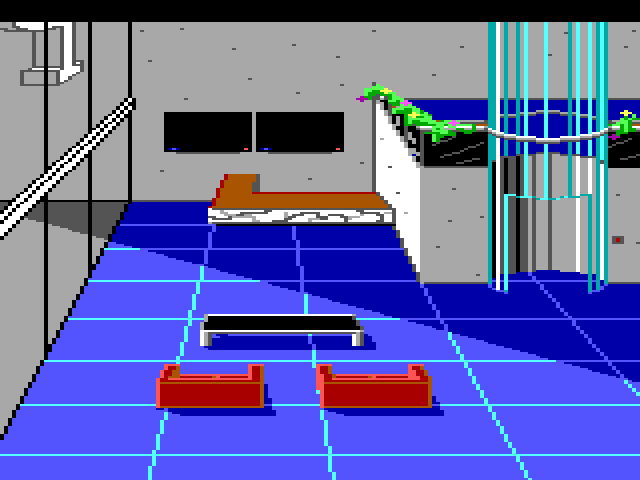
The levels lean heavily into the Quake school of industrial level design.

I also really dig the art style. This game is a weird blend of the new and old. The environments are chunky and covered in pixelated textures like an old 90s title, but the game also features realtime lighting, crisp shadows, bloom, and other modern rendering tricks. It manages to feel retro while avoiding the onslaught of beige and gunmetal grey that dominated the palette of so many mid-90s shooters.

2. New World

It's quite pretty.
It's quite pretty.

I wrote about this recently, so I don’t feel a strong urge to go over it again. The short version is that this a PvP-focused MMO about a world where Europe traveled to the New World, but instead of the Americas they discover a continent of supernatural monsters and weirdness. Travel to the continent is a one-way trip.

The usual MMO design has designated territories for every group: Horde to the West, Alliance to the East.  Red Team here, Blue Team over there. But New World has a different approach to this sort of thing. There are three factions in the game:

  1. Syndicate (Purple team, science-themed.)
  2. Covenant (Yellow team, Religion-themed.)
  3. Marauders (Green team, Military-themed.)

All three can roam freely around the map. The different factions can fight for control over individual cities. If your faction controls a city, then they get to collect taxes and make decisions about building infrastructure.[1] You get a discount when operating in a city controlled by your faction.

My favorite zone in the game is Brightwood, which felt a LOT like the Darkshire from World of Warcraft.

While this is an interesting approach to PvP, it isn’t really my thing. I dabbled in a few PvP battles to see what it was all about, and I found it as boring as every other PvP focused game. When you take players of all levels and throw them into a battle with each other, it generally turns into a maelstrom of chaos, noise, trash talk, and particle effects.  The meta-battle takes place on the forums, with everyone endlessly bitching about weapon balance, exploits, play styles, and griefing. 

Having said all that, New World has an open-ended approach to gathering and crafting that I thoroughly enjoyed. I spent several weeks running around gathering raw materials and crafting items for myself, while thousands of PvP folks murdered each other in the background. 

The economy was borked, so I couldn’t really buy raw materials or sell my crafted items. New World wound up being strictly single-player for me, without even an economic connection to the rest of the playerbase. 

The game was really pretty and I enjoyed the time I had with it. I stuck with it until I felt like my progress was being roadblocked by my aversion to PvP.

1. Cyberpunk 2077

How heartbreaking. Like everyone else, I watched those early preview videos with great excitement. The developers were promising us a massive and meticulously simulated open world. Cyberpunk 2077 was going to let us explore a dynamic living city and take part in a branching story filled with choices and powerful moments.

And then the game came out and we realized that they’d been marketing the game based on what they dreamed of building, not what they’d actually built. The game ran poorly, crashed often, and was full of visual glitches. The promised simulation turned out to be vaporware, giving us the fragile illusion of a city. Even when something worked, it still found a way to be disappointing. The story had lots of dialog and choices compared to contemporary titles, but it was actually a step down when compared to Witcher 3

And if you managed to overlook all of that, there was still the nagging thought that all of this had come at a tragic price, with the team working heavy crunch for months on end to bring us this half-baked pile of broken promises. 

So if this game is such a mess, then what is it doing at the top of my list? See, here’s the thing:

This game made me feel emotions. 

Evelyn Parker is way smarter than anyone gives her credit for. But she's also not quite as smart as she thinks she is.

The feeling of foolish optimism when starting the heist with my best-bud Jackie. The fear as everything unraveled. The frustration of trying to get Judy to stop being so bull-headed and let me look for Evelyn. The sense of dread when we realized how much danger Evelyn was in. The gut-wrenching confrontation in that chop-shop basement. The burning outrage when I realized what Placide had done. The irritation with the childish Johnny Silverhand and his tedious politics. The pity I felt as I realized what he was really going through and how this situation was unfair to both of us. The unease of meeting with the doll at that hotel in the desert.

And don’t even get me started on what it was like to attend The Funeral.

So many games struggle to just present a coherent chain of cause and effect. A few manage to give us some characters with clear motivations. But in Cyberpunk 2077 the characters punch through the noise and tropes of videogames and emerge as fleshed-out people with vibrant personalities, relatable flaws, and understandable goals and dreams. These folks aren’t just “pretty good, for a videogame”, the condescending half-praise we give when games manage to not screw up the basics of characterization. These folks can stand with the best of them, from any medium.

Even minor characters like Vic the ripperdoc manage to feel vibrant and full of detail.

Yes, Cyberpunk 2077 was buggy, slow, and janky. But so was Fallout 4, and that game featured Preston Garvey, the poster child for the atrocious state of characters in the AAA space. Fallout 76 was an even bigger technological disaster, and Bethesda released that game with no characters at all because writing is hard and money is fun when you can throw yourself into great big piles of it. 

How long has it been since BioWare really hit you in the feels? How many more failures before we’re forced to conclude that this “recent slump” is just their new normal?

When was the last time Ubisoft created a character that wasn’t an avatar of cringe? 

I sort of lost interest in Obsidian Games a few titles ago, but even in their heyday they were more focused on “interesting worlds and situations” than vibrant, richly detailed characters. Their games were often intellectually stimulating, but they rarely provoked a strong emotional reaction from me.[2]

The game does a brilliant job at hinting at the complicated politics and personal bonds between Panam and her Nomad buddies.

Yes, Cyberpunk 2077 was an overhyped pile of broken technology, but if that’s what it takes to get characters I can connect with then I’ll take it, bugs and crashes and all. If you told me right now that there was another game with moments as powerful as the ones in Cyberpunk 2077, but the game was also just as buggy, I’d still buy it. I’d buy it in a fucking heartbeat. This is what I’m looking for. I want people I can care about in a world I can believe in, and it’s been years since I’ve played a game that could give me that.

Having said that, imagine how much more amazing this game would have been if CDPR had released the game in suitable condition, and if they hadn’t spent years promising us stuff they weren’t sure they could give us. I love Cyberpunk 2077, but I’ll always mourn for the even more amazing game it should have been.


So that’s what I liked in 2021. Here’s hoping 2022 is better. Thanks for reading. Happy New Year everyone!

30 Dec 14:20

Americans stick their fingers in their ears and go "la la la la, I can't hear you, la la la la" when non-Americans point out these 25 things. Number 1 is the reason for number 6 [Obvious]

30 Dec 10:46

New iLOBleed Rootkit Targeting HP Enterprise Servers with Data Wiping Attacks

by noreply@blogger.com (Ravie Lakshmanan)
A previously unknown rootkit has been found setting its sights on Hewlett-Packard Enterprise's Integrated Lights-Out (iLO) server management technology to carry out in-the-wild attacks that tamper with the firmware modules and completely wipe data off the infected systems. The discovery, which is the first instance of real-world malware in iLO firmware, was documented by Iranian cybersecurity
30 Dec 01:29

15 Underrated Action Movies You Need To Watch

by Jeremy Herbert

Depending on who you ask, the action genre has either been around since Justus D. Barnes shot the audience in "The Great Train Robbery" or sometime in the 1980s, when car, war, and cop movies took a collective evolutionary step forward. Defining it has only gotten more difficult since, now that every dominant flavor of blockbuster (superhero, space epic, "Fast" and/or "Furious") has at least a little kiss-kiss-bang-bang in the mix. Unlike science fiction or fantasy, there are no monolithic definitions of the form. One of the best and broadest comes courtesy of Jean-Claude Van Damme, one of the most famous faces in the business and the most famous legs: "In an action film, you act in the action."

The following 15 films prove his point one way or another, all in ways deserving of more attention. Some cost entire studios dearly, others were made for the price of a high-end toaster. Vehicular ballets are interspersed with glorified stage plays that happen to include explosions. That's the beauty of action. It can mean just about anything. 

And that means there's always more to watch.

Drive

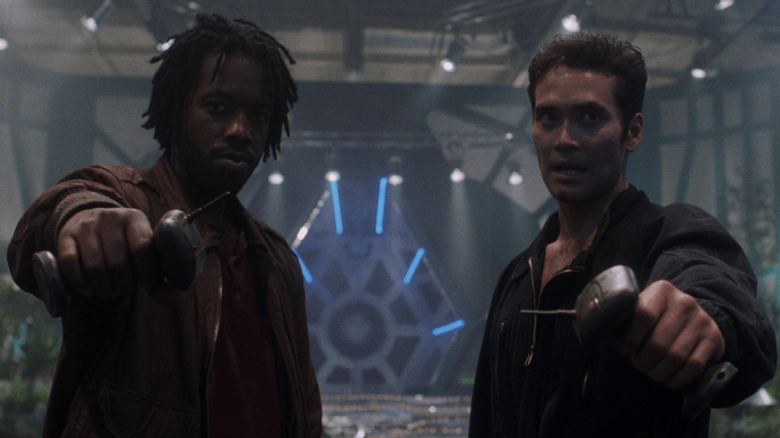
Mark Dacascos has a biological turbocharger implanted in his heart. Should anyone miss the finer points of that procedure -- it's explained once and interrupted by a "Leave It To Beaver" joke -- the rest of "Drive" doubles as a feature-length context clue. Dacascos moves at Mach 1 and the movie is never more than a step behind.

Dacascos' renegade cyborg (?) and luckless bystander Kadeem Hardison become buddies in record time. The company that owns the tech in his chest abandons its recovery efforts after two skirmishes in favor of sending a newer, faster cyborg to destroy him completely. As Dacascos beats a motel room full of stun guns with a boot on each fist, Hardison chainsaws off a gunman's arm and lets the spinning limb riddle the falling body with bullets. Ordinary TV in this supercharged universe is a sitcom about a frog doctor. The average dive bar is a Hard Rock Café monument to the Apollo program.

On an obviously tight budget, director Steve Wang hotwires a turbocharger of his own. Only takes one punch to feel it buzz in your chest.

Busting

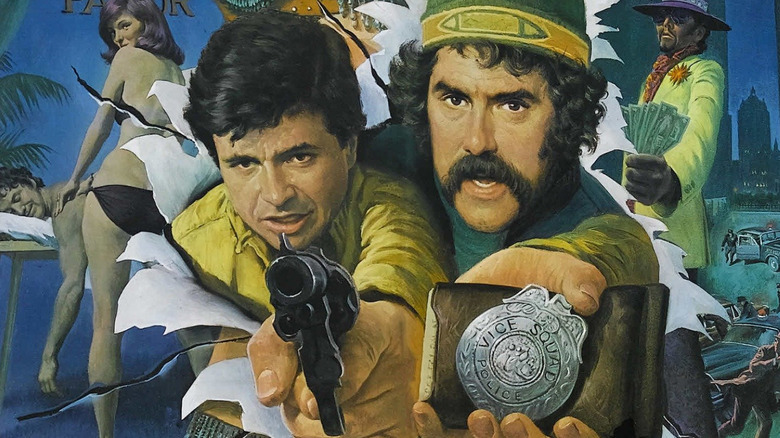
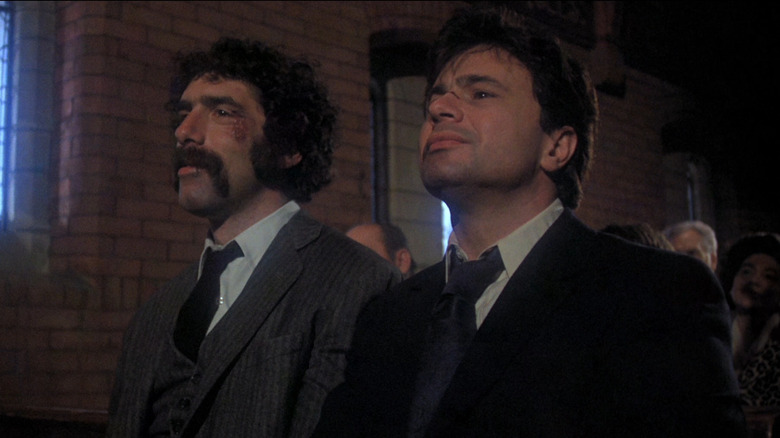
In retrospect, the first theatrical release from writer, director, and eventual cinematographer Peter Hyams plays like the missing link between '70s paranoia thrillers and '80s buddy comedies. When scrappy vice cops Elliott Gould and Robert Blake crack wise, for instance, there's no subliminal laugh track to answer them. Just another shift, a worse detail, and maybe a broken nose from the latest perp who doesn't get the joke.

It's gutter poetry that they hatch their off-duty scheme in a toilet, on a purgatorial stakeout for perverts. If they can just catch local kingpin Allen Garfield in the act, no amount of corrupt bureaucracy or judicial malaise could possibly kill the case. Right? Right?

Every step forward is answered by an equal shove back. Violence always leaves a mark, if not worse; a bravura shootout in a supermarket keeps one eye on a dying butcher. Most loose cannon stories side with the .44 Magnum, but "Busting" makes it poisonously clear that justice is a waste of time on either side of the badge. But bless 'em, they'll try, no matter how many ambulances they have to total.

Universal Soldier: Regeneration

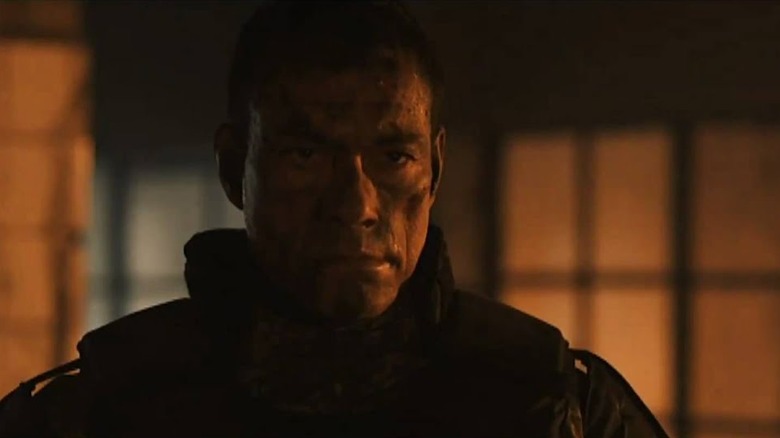
The original "Universal Soldier" was Jean-Claude Van Damme's called shot, an obvious "Terminator" riff for a pretender to Arnold Schwarzenegger's athlete-turned-actor throne. 17 years and a disastrous sequel later, "Universal Soldier: Regeneration" bests the original by giving him an adrenaline-poisoned spectacle that could star nobody else.

His former supersoldier is reintroduced in therapy, almost ready to rejoin civilian society. His first lines, three Rorschach answers -- escape, peace, shame -- tell a story the craters under his eyes have already covered. He only juices back up because there's nobody left who can do what he does. And boy, can he. The last 20 minutes, in which Van Damme single-handedly infiltrates occupied Chernobyl like a flesh-and-blood cruise missile, roar by with nary a word out of him. His physicality speaks for itself, and it can only scream.

Director John Hyams coaxes career-best work out of stars Van Damme and Dolph Lundgren while effortlessly rewriting the language of American action, all in the guise of a decades-late, direct-to-video sequel to a dead franchise. There are miracles and then there's "Universal Soldier: Regeneration."

Le Marginal

Five years before "Above The Law," Jean-Paul Belmondo cast the Steven Seagal mold in "Le Marginal." He walks the crime-ridden streets of Marseille in a strict dress code of baggy leather jackets and tight blue jeans. The ideal interrogation is held in a dusty dive, seconds before its destruction. Women love him. Superiors hate him. Henry Silva wishes he would just die already.

The crucial difference between Seagal and Belmondo is cool. Even in his prime, Seagal needed help to look it. Belmondo, here a fresh 50, simply is. Within the first 15 minutes, he sprints against highway traffic and leaps onto a speedboat from a pursuing helicopter. Not his stuntman. Not even, for all intents and purposes, his character. Commissioner Phillipe Jordan is merely his latest model of Belmondo supercop. The Ennio Morricone score warns of his unstoppable force like the "Jaws" theme played backwards -- instead of here he comes, there he goes. It's not the most novel entry on this list, but it's a singular thrill to see that indestructible smirk behind the wheel of a bulletproof '67 Mustang.

Hit!

"Hit!" is a long fuse with Billy Dee Williams as the slow, sure burn. He's an accomplished agent for some alphabet soup agency, but could care less about promotions -- he just wants to destroy the heroin industry that claimed his daughter. When the department refuses the sanction, Williams does it on his own time. Each recruit of his extracurricular squad gets their own tragic connection to the drug trade. Even as our hero charms, coerces, and deceives them to the cause, it's not clear exactly what he needs them for. And that's okay, because Billy Dee is in control.

In a role originally written for Steve McQueen at the height of his powers, Williams is nothing short of magnetic. He may laugh off defeat like a lost game of tag and strike a brotherly bond with frogman Richard Pryor, but he acts with ice in his veins. Using addictions as leverage. Opting for a bazooka when a rifle would've sufficed. It's a smoldering star turn in a smoldering action movie. Director Sidney J. Furie is in no hurry to get to the explosive stuff and that only makes the eventual blast that much more devastating.

Nemesis

Stop me if you've heard this one before. A cop in the near future is shot to sloppy joe and reassembled into a cybernetic being, forever questioning his augmented humanity. During surgery, the feds sneak in a literal ticking time bomb to squeeze One Last Job out of him. Along the way, he must contend with a shotgun-wielding android that, when blown to smithereens, persists as a stop-motion animated endoskeleton.

"Nemesis" may be a box of spare parts, but it's a box of spare parts that B-movie royalty Albert Pyun gator-clamped to a nuclear power plant. Kickboxing champion Olivier Gruner is a man sculpted by the gods to wear big trenchcoats and tiny sunglasses. Guns throw smoke like steam trains and shoot fireworks instead of lead. Nobody runs, jumps, or falls down in this microwaved post-apocalypse -- they sprint, front-flip, and plummet through bullet-carved holes in the floor like improvised waterslides. Pyun may get more love for the primordial Van Damme vehicle "Cyborg," but this is his analog hell to beat.

Who Killed Captain Alex?

The assault rifles are taped-up cartoons of PVC pipes and cardboard. The attack choppers are clip-art renderings with actors cropped into the cockpits. The best image quality possible is a bleary DVD rip because writer-director-producer-cinematographer-editor Nabwana I.G.G. needed the hard drive space for his next action epic. None of this matters, not to I.G.G. or his audience. All that matters in "Captain Alex" is raw, relentless entertainment.

There's only one credited kung fu master in the mix, deemed the Ugandan Bruce Lee or "Bruce U" for short, but everybody can hold their own with a spin kick. No chroma-keyed explosion is too overblown, no overlaid muzzle flash too overused. Rival factions march toward an ambush to a twinkly karaoke cover of "Mamma Mia." This is '80s action (I.G.G. cites Chuck Norris and Dolph Lundgren as his heroes) resurrected for $85 and reinvigorated by the go-for-broke Wakaliwood attitude. When VJ Emmie, a "Mystery Theater 3000"-style commentator baked permanently into the soundtrack, shouts "Movie-Movie-Movie!" over footage of a commando log-rolling off a cliff to escape digital dirt charges, it's hard to disagree. 

This is what movies were made for.

Short Time

"Short Time" takes the lazy '80s tendency to end comedies as action movies and gives it vibrant, occasionally ghoulish purpose. Dabney Coleman is not a natural action hero. But what would it take, the filmmakers wonder, to make him one?

Early on, he plays a Dabney Coleman type, a detective coasting through his last weeks before retirement. Then a surprise diagnosis reveals those are his last weeks period and insurance only pays out if he dies in the line of duty. To borrow the "Lethal Weapon" dialectic, Murtaugh becomes Riggs overnight.

Coleman's cop, once kept awake by nightmares of his son attending community college, is suddenly flipping double birds in a high-speed pursuit. Between spits into the Grim Reaper's eyeholes, he shops for his own casket and makes himself emotionally available to unaware wife Teri Garr for the first time ever. The action-comedy balance still tips toward the latter, but a blacker kind than its Touchstone sheen suggests. Still, it's a rare pleasure watching a car disintegrate with Dabney Coleman allegedly inside.

The Long Kiss Goodnight

When asked to list his five best movies on a recent Late Show appearance, Samuel L. Jackson, star of 120 movies and counting, did not hesitate with his first choice: "The Long Kiss Goodnight." The man has a point. 

"Cliffhanger" director Renny Harlin takes the hard-boiled pulp of "Lethal Weapon" screenwriter Shane Black and blows it up to airport-bestseller scale. But none of the amnesiac twists or rustic torture methods would work without a worthwhile pair of buddies in the middle of it all and this pair is among Black's best, though trio might be more apt. Geena Davis plays Jekyll and knife-throwing Hyde, a proud PTA mom and long-repressed assassin. In a just timeline, the transformation would've earned her a franchise. Instead, it plays out just this once, right in front of cheap P.I. Jackson's constantly wide eyes.

Though "Goodnight" has recuperated a Christmas cult since, its disappointing 1996 release rang a number of death knells. Of Renny Harlin as a speed-dial director. Of Shane Black as a speed-dial writer. But they found new grooves. The most tragic loss of all remains Geena Davis, action hero, here burning bright enough for an entire career.

The Seven-Ups

Fans of "The French Connection" had their choice of follow-up. Anyone hoping for Gene Hackman to finally catch his quarry got "French Connection II," the rare sequel that offers something different and undiminished from its predecessor. Anyone expecting more dirt-under-nail New York police work with Roy Scheider got "The Seven-Ups," an unofficial spinoff and closer creative cousin to the original.

"Connection" producer Philip D'Antoni steps in to direct. Between him and "Shaft" cinematographer Urs Furrer, the city is an overpopulated ghost town. The sky is an overbearing blank. Life exists only in complementary shades of brick and bruise. Somewhere in the rubble, there's a kidnapper. Scheider and his crew want them. At one point he even asks if a low-level hood wants to do things "the easy way or the hard way." The hood knows better. Scheider's only got one speed - mean. He pinches oxygen tubes, trashes antique stores, and rocks every last turtleneck to get his guy. "Connection II" shrewdly avoided car chase comparisons. "The Seven-Ups" drifts into the skid, with a ten minute odyssey that eventually ditches downtown entirely and ends with one of the most violent car accidents committed to celluloid.

The Hunted

In an interview with MovieWeb, director William Friedkin explained "The Hunted" in appropriately mythic terms: "The U.S. is the greatest creator of Frankensteins ever."

The doctor in this story is survivalist Tommy Lee Jones, effectively playing the film's technical advisor. Once upon a time, he trained soldiers to live by the knife. "Once you are able to kill mentally," he promises, "the physical part will be easy." His monster is his finest student, Benicio del Toro, now a haunted Delta Force veteran killing hunters in the Oregon wilderness. The FBI can't track him without Jones. Even if they could, del Toro wouldn't talk to anyone else.

"The Hunted" is as brutally simple as the stone-on-stone blades that Jones teaches his trainees to make. Friedkin and cinematographer Caleb Deschanel paint the woods alien, an all-consuming and impossible shade of green. Unnatural to man, camouflage for whatever these men have become. The action gets bigger -- see Jones riding an el train the wrong way above -- but never better than the final knife fight between creator and creation.

Hard Rain

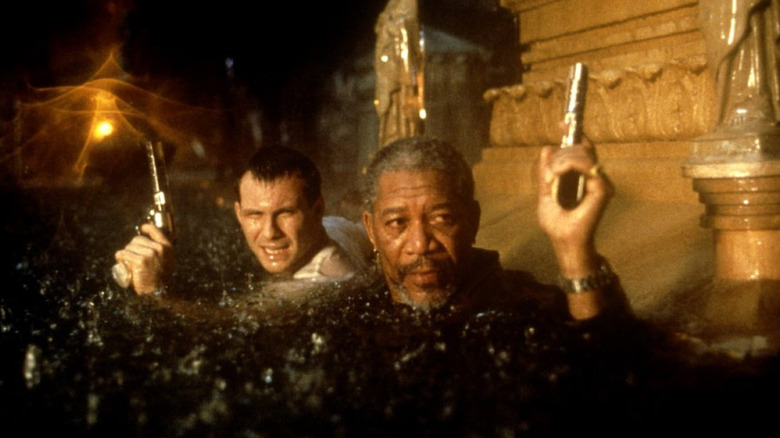
In the arithmetic-fueled age of '90s action (bomb plus bus equals $350 million worldwide), "Hard Rain" seems like a can't-miss equation. What do you get when you stage a heist movie in the middle of a disaster movie? $19 million domestic and a lot of "soggy" jokes in the trades. 

But "Hard Rain" is better than its non-reputation, and has aged into historical import as one of the last (largely) practical blockbusters. The dam that ultimately washes away the sleepy town of Huntingburg is a 100-foot miniature. Jet skis race down full-sized high school hallways. And then there's the standing water that creeps a little bit higher with each successive scene, turning the "Die Hard"-in-a-hurricane screws and reminding viewers just how miserable it must've been to shoot.

In trying to beat his own math, "Speed" screenwriter Graham Yost provides a missing link between those bomb-plus-bus thrills and the later country-fried crime of "Justified." This doesn't reach the heights of either, but those can't claim the stomach-turning suspense of Christian Slater trying to MacGyver his way out of a flooding jail cell.

Spartan

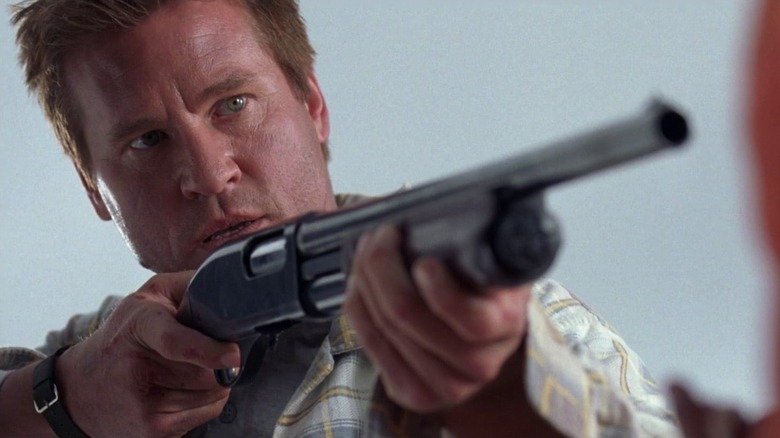
Somewhere toward the middle of "Spartan," already neck-deep in a conspiracy involving the president's kidnapped daughter, Delta Force instructor Val Kilmer commits a cardinal sin -- he talks like an action hero. Cover me. I'll get the girl. Get down. Etc. Anywhere else, it'd be par for the course. In a David Mamet movie, it's a sign of bone-deep weakness, as close as his hard souls come to admitting fear. His squadmate shakes him out of it: "You want to gossip or you want to shoot somebody?"

There's plenty of shooting here, but the rattle doesn't stop when the guns jam. Characters, highly and ambiguously trained all, speak exclusively in jargon, shorthand, and in-jokes we don't have the security clearance to get. They don't talk about what they do; they do. It affords viewers the same amoral advantage as Kilmer: "We don't ask why; that's not a cost, it's benefit." Before long, there are too many questions to stay comfortably ducked and covered. The answers and overriding philosophy double as Mamet's treatise on the genre -- think too hard at your own peril.

Surviving The Game

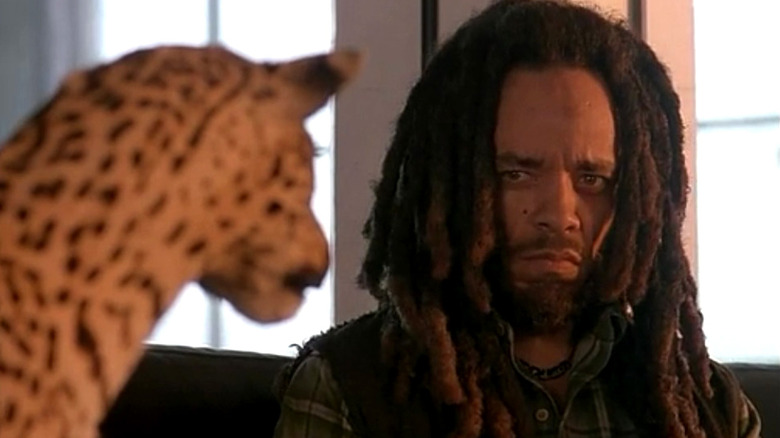
"When you're eating the flesh from the pig," says CIA psychologist Gary Busey as he turns a decapitated hog head toward homeless man Ice-T, "Look into his little, beady eyes." The joke here, besides CIA psychologist Gary Busey, is that there are two dead things at the table and Busey is looking at the other one.

That queasy sense of humor sets this apart from John Woo's bigger, brasher "Most Dangerous Game" adaptation, "Hard Target," released eight months earlier. This is explicitly, often uncomfortably about the Haves and Have-Nots. In the former category, character actor heavyweights Rutger Hauer, Charles S. Dutton, F. Murray Abraham, John C. McGinley, and Busey toe the hammy line between being rich and being insane. To Ice-T, the difference is negligible -- he can't afford to question their hospitality either way.

Cinematographer-turned-director Ernest Dickerson keeps the action lean, mean, and music-video pretty. Severed heads of past prey float in jars lit like mad scientist leftovers. At one point, the camera dollies all the way down the barrel of a sniper rifle. If any of it starts to seem outlandish, there's even a built-in defense mechanism -- Ice-T can't believe it, either.

Silent Trigger

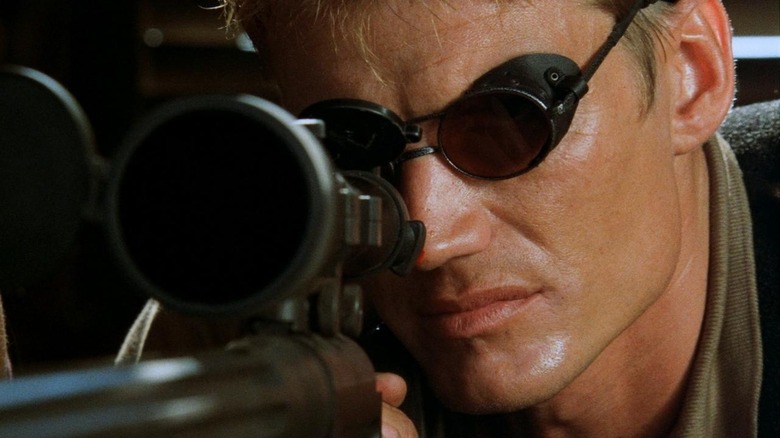
What if a sniper posted up on the roof of the hotel from "The Shining" and the hotel from "The Shining" was also the skyscraper from "Die Hard"? Such is the irresistibly top-heavy pitch for "Silent Trigger," a direct-to-video curiosity hiding like a landmine in the careers of star Dolph Lundgren and director Russell Mulcahy. It doesn't lean on the former's superhuman physique. It doesn't call for the latter's manic style forged in the fires of Duran Duran music videos and cult canon like "Highlander." By DTV standards of the time, this is downright contemplative.

Lundgren is the world's best shot for the low, low price of his mortal soul. He hesitated once, on a target holding an infant. One more time will earn him a nine-millimeter retirement. High atop the brutalist Algonquin building, there's not much else to do but wait for the next shot and brood over the ill-fated op where he first met spotter Gina Bellman. They also battle a sex pest security guard who hallucinates spiders, but that's more of a detour. What truly matters here is cold concrete, constant rain, and blood squibs the size of cantaloupes.

Read this next: 12 Awesome Action Movies That Never Got Sequels

The post 15 Underrated Action Movies You Need To Watch appeared first on /Film.

30 Dec 01:28

We Have A Crackpot Theory About The Book Of Boba Fett, Just Hear Us Out

by Ryan Scott

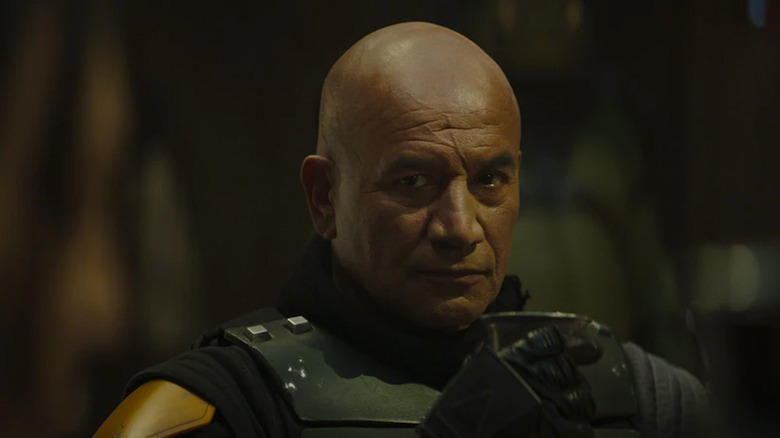
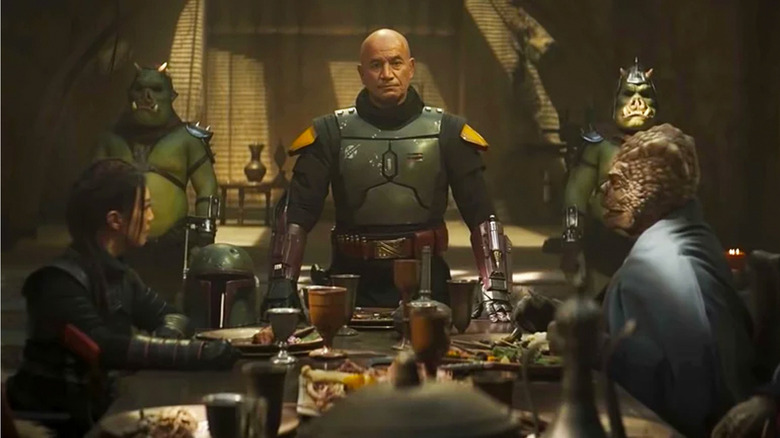
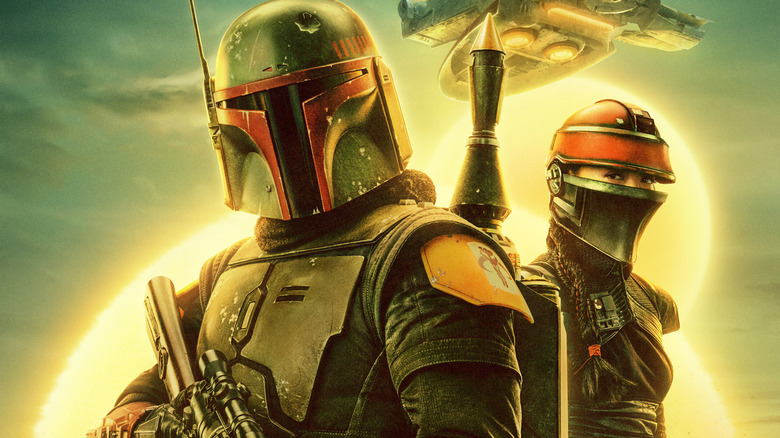
The time is now, "Star Wars" people. "The Book of Boba Fett" has made its long-awaited debut on Disney+, bringing back Temuera Morrison as the beloved bounty hunter. More than that, it finally gives the character a chance to shine in the spotlight after not one, but two different movies failed to get off the ground. Now, we're here, and we have some questions about where the show is headed. I, for one, am wondering if we're going to get a "Baby Yoda"-level reveal. And if we are, I have a theory about what that might be. I have no insider info, but just in case I'm right, I'll put a big ol' spoiler warning right here.

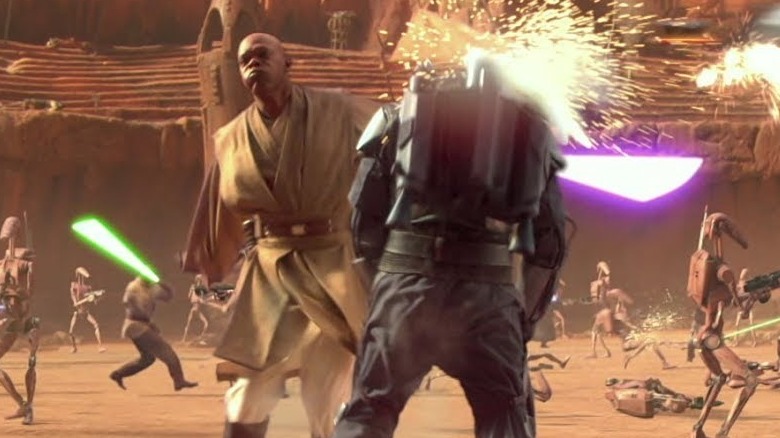
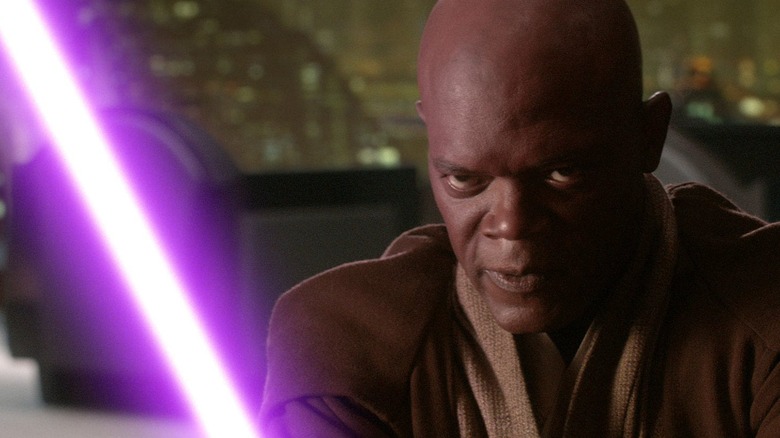
What if, and hear me out here, Mace Windu comes back? Yes, what if we finally get to see a confrontation between Boba Fett and the Jedi who killed his father, played by Samuel L. Jackson. But isn't Mace Windu dead? Wouldn't that be hard to keep a secret? Do we have anything at all to base this on? Let's look at the answers to those questions as I see it, shall we? Put on your tinfoil caps and get ready to take a trip to crackpot country -- it's fan theory time.

The First Episode Plants The Seed

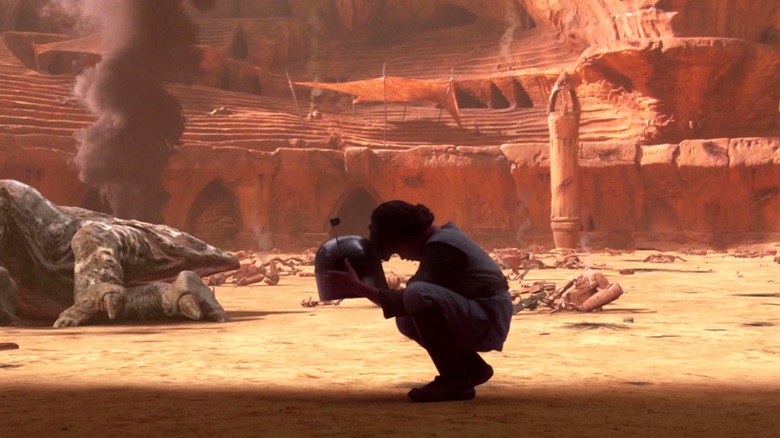
For starters, one of the very first things we see in "The Book of Boba Fett" is flashback to the pivotal moment in "Attack of the Clones" when a young Boba heads to the deserted battlefield to hold up his father's helmet, which also contains his head. This is because Mace Windu cut it off real good during the battle. For those who may need a refresher...

Yes, this is a big moment for Boba, but nothing else in the first episode truly deals with this very specific moment. That raises an eyebrow. Why remind us how his father died? Why bring us back to that moment so early on in the show? Especially when we consider that director Robert Rodriguez actually reshot the moment in question, as opposed to repurposing the footage from "Attack of the Clones."

This, to me at least, signifies the importance of framing this moment in just such a way for the purposes of the show. Boba Fett is a hell of a bounty hunter who now has more power than ever. Does it not stand to reason that he might want revenge? It's something to ponder, especially given some other things that have been said in the past.

Mace Windu May Not Be Dead

As fans may well recall, "Revenge of the Sith" sees Samuel L. Jackson's Mace Windu confront Palpatine and, were it nor for Anakin's intervention, he would have prevented the Empire as we know it. But Palpatine got the best of the exchange and lightninged Mace out of an incredibly high window, seemingly leaving him for dead. Be that as it may, Jackson kindly disagrees. Much in the same way that Boba Fett survived the Sarlacc pit, Jackson feels Mace, too, survived this ordeal.

While Jackson has remarked on the topic several times over the years, he put it together quite succinctly in a Twitter Q&A in 2016 (seen above). A fan asked about Mace Windu, and the actor explained that he is not dead in his mind, as Jedi can fall from great heights and not die:

"As in most Star Wars movies it was George Lucas' idea to kill Mace Windu. He said that he killed all of these other important characters in these other movies leading up to that. And he said the only person left to kill that would mean anything in Episode III would be me. I was trying to figure it out. 'Really? Can't you just like, injure me or whatever?' In my mind, I'm not dead. Jedis can fall from incredibly high distances and not die."

Speaking further, Jackson explained that he even got George Lucas to sign off on the idea. "George doesn't have anything to do with it anymore... George is like, 'I'm okay with that. You can be alive." So there we have it.

In truth, Jackson makes some strong points. Jedi have survived worse. Plus, given what happened by the end of Episode III, if Mace had survived, it would make sense for him to go into hiding, much like Obi-Wan and Yoda did. More recently, while promoting "Captain Marvel" in 2019, Jackson reiterated to Comicbook.com that he's game to reprise the role, explaining that the de-aging tech has gotten quite good:

"Well, we've got Lola [VFX], they've got Lola, it's theirs, let's see what happens. I'm down with it. I've still got my purple lightsaber, I'm ready."

To add a little more fuel to the fire, Jackson posted the following on Instagram a little while back, proclaiming that "Mace ain't done."

All of this to say, Jackson is game to return to the role, there is an explanation for how the character could have survived, and there would be a compelling story reason to bring him back into the fold now, with Boba Fett looking to settle old vendettas. The actual evidence is thin right now, but there is just enough circumstantial evidence to suggest this could be a thing.

Lucasfilm Can Keep Big Secrets

One's first thought might be that this would be far too big of a secret to keep. It's "Star Wars" and something this huge would be bound to make its way into the internet rumor mill, right? In some cases that may be true. Temuera Morrison's return as Boba Fett in "The Mandalorian" made it into the trades, why not this? It's not an unreasonable question, but let us not forget that Lucasfilm is capable of keeping huge secrets.

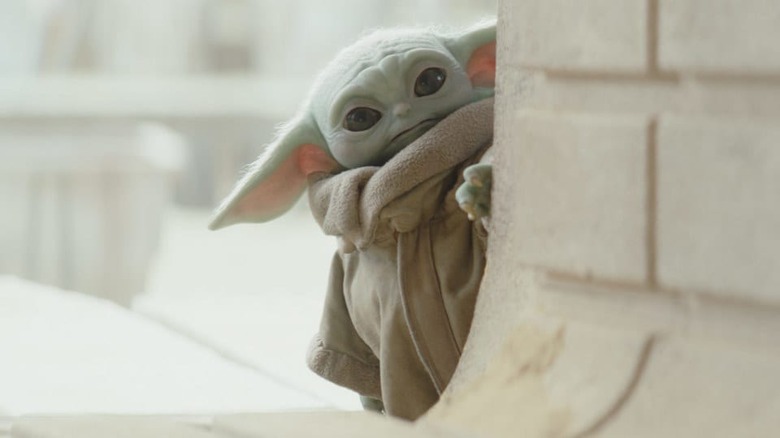
Look no further than "The Mandalorian," which managed to keep Grogu, aka Baby Yoda, a complete secret until the character was revealed at the end of the show's first episode. Given how big of a deal that was, it's downright amazing that didn't get leaked. So it's certainly possible that Lucasfilm could keep Mace Windu's return under lock and key. That's not to say they are, but at least we know something this big could be kept under wraps. We'll see what comes to pass over the next several weeks.

"The Book of Boba Fett" returns with new episodes Wednesdays on Disney+.

Read this next: The 12 Best Boba Fett Moments In Star Wars Shows And Movies

The post We Have a Crackpot Theory About The Book of Boba Fett, Just Hear Us Out appeared first on /Film.

30 Dec 01:28

"The general trend that I'm seeing is, if you're boosted and you get Covid, you really just at worst end up with bad cold symptoms. It's not like before where you were coughing, couldn't say sentences and were short of breath" [Obvious]

30 Dec 01:27

18 attacked in squirrel rampage

by Rob Beschizza

A "bloodthirsty" squirrel reportedly bit 18 people in a Welsh village over the course of a "two-day Christmas rampage" that ended only when the tiny animal was trapped and destroyed. The Evening Standard:

more than a dozen locals reported being attacked by the rodent with some posting gory images of bloody bite marks and deep scratches requiring tetanus jabs amid the two-day "rampage".

Read the rest
30 Dec 01:27

The Book Of Boba Fett's Theme May Hint At The Show's Main Villain

by Lyvie Scott

It's been a long time coming, but "The Book of Boba Fett" has finally made a main event out of one of the most hallowed minor characters in "Star Wars" history. Boba Fett has been overrun with theories and speculation since he was first introduced to the "Star Wars" canon, and his highly-anticipated turn to Disney+ is no different. With most of the series' plot details being kept under Disney-standard discretion, very few know exactly what Fett will be up against as he turns from bounty hunter to crime lord. Despite all the secrecy, the first episode of "The Book of Boba Fett" may have already teased the show's main conflict.

Ludwig Göransson, the composer known and loved for his work on "The Mandalorian," also tapped in to compose the themes for "The Book of Boba Fett." The show's main theme dials up the motifs that made Göransson's "Mandalorian" score so memorable, but also slips another lesser-known theme right into the midst: that of crime syndicate Crimson Dawn. The collective was first introduced in the oft-maligned "Solo: A Star Wars Story" and later appeared in the final season of "Star Wars: The Clone Wars." What stake could they have in "Book of Boba Fett"?

What Is Crimson Dawn, Again?

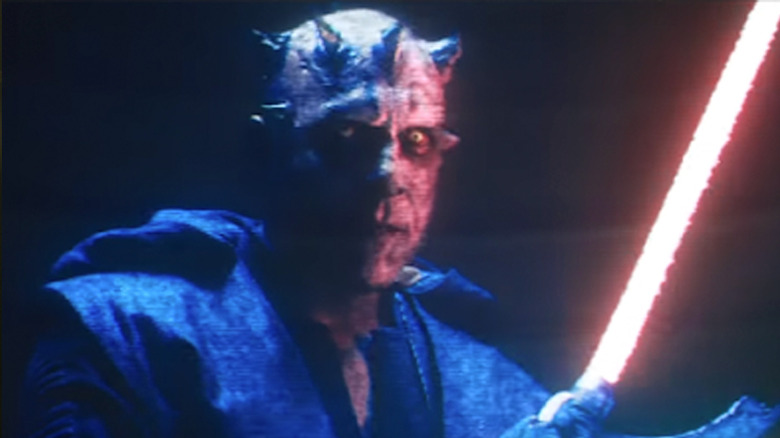
Leading up to the events of the original trilogy, Crimson Dawn was one of the most ruthless criminal empires the galaxy had ever known. The group was publicly headed by Dryden Vos during and after the Clone Wars, but Maul — former Sith apprentice, later part-time crime lord — called the shots behind the scenes. The organization had humble beginnings as a band of intergalactic thugs who hopped from planet to planet, stealing coveted resources and oppressing anyone who got in their way.

By the end of the Clone Wars, Crimson Dawn had joined the ranks of Maul's far-reaching Shadow Collective. Maul was collecting as many syndicates as he could get his hands on, and gunning for revenge against his former master Darth Sidious, and longtime rival Obi-Wan Kenobi, who sliced him in half that one time. His plans nearly ended the Clone Wars in a different way, until the infamous Order 66 forced both him and his syndicate leaders into hiding for years.

Crimson Dawn came back strong in the age of the Empire, terrorizing more planets and gaining more power than they ever had before. Dryden Vos still served as public figurehead, and Maul pulled strings in the shadows. But eventually, as seen in "Star Wars: Rebels," Maul was killed in a poetic duel against Kenobi, which essentially dissolved his Shadow Collective. By that time, Vos was also dead, and the keys to Crimson Dawn had passed to his formidable lieutenant, Qi'ra (because she murdered him #GirlBoss).

Crimson Dawn's New Leader

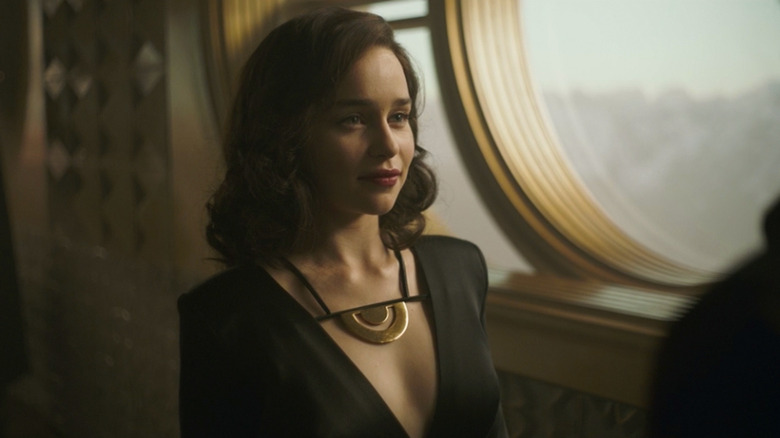
We haven't seen Qi'ra on the big screen since Emilia Clarke first portrayed her in "Solo," but she's been leading a busy life on the pages of Marvel's "Star Wars" comics in the meantime. After abandoning Han and Chewbacca for a higher rank in Crimson Dawn, Qi'ra became the group's definitive leader. The war between the Empire and the Rebellion might have slowed things down for the galactic crime bosses, but Qi'ra had a hand in a few key events that fans are already familiar with. After Han was frozen in carbonite and placed in Boba Fett's custody, Qi'ra actually intercepted his bounty and used Han to leverage more power for the syndicate. She even went toe-to-toe with Darth Vader, and though she didn't exactly triumph, she did survive the encounter — and how many can honestly say that?

Comic runs like "Crimson Reign" and "War of the Bounty Hunters" show just how formidable Qi'ra became after "Solo." At the height of the Civil War, Crimson Dawn established itself as a fierce contender to both the Empire and the Hutts, two of the most powerful entities in the galaxy. She also planned to kill both Vader and Emperor Palpatine... which we all know doesn't happen, but it's still nice to dream. When last seen in "Crimson Reign," Qi'ra was on her way to recruit the Rebel Alliance for a yet-unknown purpose, so she could have even more to do with the Rebellion's triumph over the Empire than previously thought.

Is Qi'ra Boba Fett's Next Rival?

Very little is known about Qi'ra or Crimson Dawn after the events of "Star Wars: Return of the Jedi." The plot of "Crimson Reign," which sees Qi'ra orchestrating all-out war between the rival syndicates, is still ongoing, but it's safe to say that she could have a role to play in the future — maybe even in "Book of Boba Fett." Qi'ra had tons of influence in the waning years of the war. And though she obviously didn't get the chance to personally destroy Palpatine, the dissolution of the Empire could have only made her stronger.

Given the fact that "Book of Boba Fett" is diving into the juicy lawlessness that a power vacuum can create, it makes sense for Crimson Dawn (and any other remaining syndicate) to make an appearance in the series. With the seeds of tension that Qi'ra planted in "Crimson Reign," we could see the aftermath of the Syndicate War and the effects it has on the New Republic. Plus, she and Boba Fett have pretty big beef over that whole Carbonite Han kerfuffle. As Fett takes control of Jabba's empire on Tatooine, he'll probably become an increasing threat to Crimson Dawn.

Read this next: The 12 Best Boba Fett Moments In Star Wars Shows And Movies

The post The Book of Boba Fett's Theme May Hint At The Show's Main Villain appeared first on /Film.

30 Dec 01:27

US Hits Record Number of New Covid-19 Cases

by BeauHD
The seven-day average of COVID-19 cases topped 280,000 this week, according to data from Johns Hopkins University's tracker. It's a record number of new cases in the country; the last time the number of cases hit a peak close to that was January. NPR reports: Public health officials including Dr. Anthony Fauci and Centers for Disease Control and Prevention Director Rochelle Walensky say the new variant appears to be less severe than ones in the past but still emphasize the need to follow public health protocols like getting vaccinated and wearing a mask to curb the spread of the virus. Data from the White House provided at a briefing Wednesday shows the seven-day average of hospitalizations is about 9,000 per day -- which is a 14% increase in hospitalizations from last week. However, there was a 60% rise in cases over the same time frame. The seven-day average of COVID-19 deaths is down from last week, at about 1,100 deaths per day. Officials say the difference is in part because omicron causes less severe symptoms for those who are vaccinated and especially for those who are boosted. Another reason for the wide gap between the increase in hospitalizations and cases, Fauci said, is that hospitalizations tend to lag behind recorded cases. Still, "all indications point to less severe illness with omicron than delta," he said. [...] Despite the seemingly lower severity of the omicron variant, Fauci emphasized the need for people to get vaccinated and boosted. On Monday, U.S. health officials from the CDC cut isolation restrictions for Americans who catch the coronavirus from 10 to five days, and similarly shortened the time that close contacts need to quarantine.

Read more of this story at Slashdot.

30 Dec 01:26

Tom Holland Surprised Chris Evans At His Marvel Audition In The Way Only A Spider-Man Can

by Shania Russell

Some actors stroll into an audition ready to run lines and others backflip onto the scene with the energy of 10 Billy Elliots. If the role in question happens to be a web-swinging superhero known for cool flips and wild stunts, then the acrobatics can come in handy. Such was the case for the MCU's current Peter Parker, Tom Holland. Now that "Spider-Man: No Way Home" is three weeks into a record-breaking theatrical debut and the MCU is many years into its world domination, it's hard to remember a time before Holland was swinging through CGI New York as our favorite webhead. But if you can manage to think back to the distant past of 2015, you'll remember that Holland was once an unknown entity. Long before his days of dancing in the rain and jumping off flying pirate ships, he was just another kid trying out for a life-changing role, and according to Marvel head honcho Kevin Feige, Holland earned his spot for a long list of reasons.

In a recent interview ahead of "No Way Home," Feige detailed Holland's audition process for his role in "Captain America: Civil War" and the "Homecoming" trilogy it would eventually kickoff. Securing the role involved chemistry reads with MCU stars Robert Downey Jr. and Chris Evans. Obviously, both went amazingly well for the young star. Feige said:

​​"We flew about five actors in and had them do readings with Robert Downey Jr and it was his graciousness — he's always so gracious, particularly with other actors, with his time. We narrowed it down with that reading and then we did one more with Chris Evans and it became very apparent that Tom Holland was not just an amazing Peter Parker but he incredibly was an amazing — no pun intended — Spider-Man."

Backflipping His Way Into The Role

At this point, we know all about Holland's bond with Downey Jr., and their boundless onscreen chemistry. But what of Captain America? How did the young star win Chris Evans over? Naturally, he did what anyone with his acrobatic skill set would — lots and lots of backflips. Feige said:

"He had both the abilities of a great actor and the abilities of a great gymnast and stunt performer, which was just an added bonus which continues to blow us away and surprise us. I remember he did a giant flip right in front of [Chris] Evans during that reading. He threw Evans off, he couldn't believe what he just saw in front of him."

Oh, to be in the room when Tom Holland inexplicably starts flipping in front of a shocked Chris Evans. The way Holland tells the story, all this flipping was very important throughout the whole process. It even played a key role in his audition tape which, in his words, went a little like this:

"I was like, 'Hi, I'm Tom Holland.' Backflip. 'I'm 5-foot-7.' Backflip. 'I'm 20 years old.' Backflip. 'I'm from London.' Backflip. Just to prove to them that I could. Every opportunity I got, I was flipping all over the place."

His second and final screen test with Evans involved a fight rehearsal which Holland saw as yet another opportunity to spice things up. He said:

"I didn't even do the routine. I was just somersaulting everywhere. Chris Evans had the first line of the scene and I was flipping. I think he was a little bit taken aback, so completely forgot his line. It was fun. And it worked out, obviously."

How Tom Holland Proved Himself

I like to imagine Chris Evans wearing a shocked Pikachu face while Holland somersaults through the room, and I desperately wish such a hilarious scene made it into the final product. And though it didn't, the screen test honestly sounds like a pretty accurate summation of the Peter Parker and Steve Rogers relationship we catch onscreen: Spider-Man pops in out of nowhere, catches Cap off guard, and performs some daring feats. 

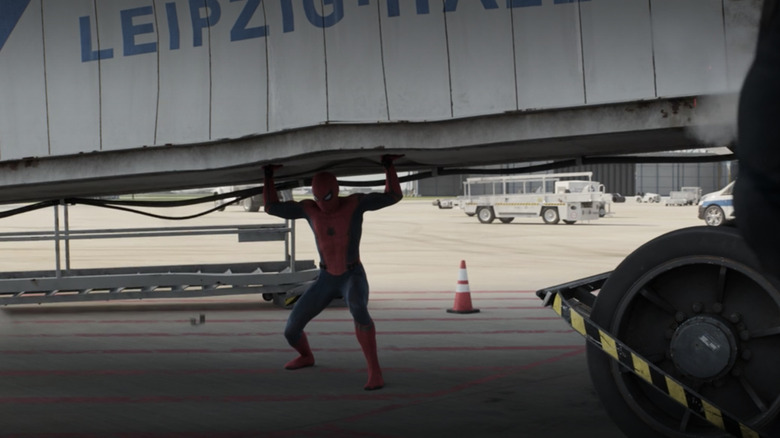
Thankfully, this audition story doesn't end with Chris dropping a multi-ton jetway on him. I know Holland has a reputation for wanting to do a ton of his own stunts, but I'm pretty sure he doesn't have Peter Parker's signature super strength. What he lacks in superpowers, however, he makes up in all the other aspects of the character! 

Who's to say which actor made the best version of Spider-Man? Certainly not us, nope. But who can deny the absolute joy of watching Holland's Peter grow up throughout his trilogy? This was the original vision for the "Homecoming" saga, according to Feige — to track Peter through his senior year as he grows into himself as a hero. Those initial screen tests were so important because of the role Tony and Steve ultimately played in the young hero's journey. And they ultimately proved why Holland was the best choice for the role:

"That dynamic between a very young Tom Holland interacting with Robert Downey Jr. for the first time was exactly the dynamic we wanted between a young Peter Parker interacting with Tony Stark for the first time. And seeing our Peter grow and grow out of that, the shadow of Iron Man, as we saw him start to do in "Far From Home." And which he completely does now in 'No Way Home,' and really becomes his own hero."

"Spider-Man: No Way Home" is now playing in theaters.

Read this next: Every MCU Post-Credits Sequence Ranked From Worst To Best

The post Tom Holland Surprised Chris Evans At His Marvel Audition in the Way Only a Spider-Man Can appeared first on /Film.

30 Dec 01:24

I've Traveled All Over the World. These Are 7 Things I Always Pack - CNET

by Geoffrey Morrison
These are the best travel gadgets for your next adventure.
30 Dec 01:21

The Best Adult Animation Of 2021

by Caroline Cao

"It's not enough to give people what they need to survive, you have to give them what they need to live." This quote from Netflix's "League of Legends" spin-off "Arcane" resonated particularly strongly in 2021. With the COVID-19 crisis still ongoing and the effects of rampant wealth inequality becoming more evident than ever, generations of adults — and a number of impending adults — are realizing that they deserve better than the bureaucratic systems they're saddled with. 

Animation crafted for an adult audience can offer an emotional experience by giving viewers an escape, providing them with coping mechanisms, validating their psychological struggles, and letting them release stress through comedy. At the same time, animation workers are fighting to change the industry, unleashing the #NewDeal4Animation campaign for fairer wages. After all, it's the talented writers, directors, storyboard artists, and animators who give us the entertainment that allow us to weather a succession of struggles, both worldly and personal, as the pandemic continues to storm.

From the humorous to the gravely serious, we've gathered a list of the best adult animation of 2021. The following projects are not to be viewed by kids' eyes, but if you're old enough, you'll find quite a bit to enjoy here. After all, these feature-length films and ongoing series are all united by one theme: Whether you're surrounded by the supernatural or not, how do you survive being an adult?

Honorable Mention: Dota: Dragon's Blood
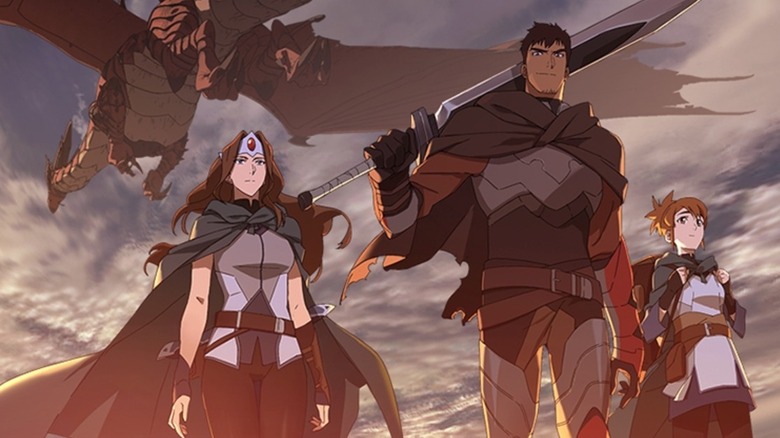
Similar to "Onyx Equinox," "Dota: Dragon's Blood" belongs to a league of adult animation that preserves the adventuring vibes of the "Avatar: The Last Airbender," although it's set in a European-inspired world. It helps that the series is worked on by Studio Mir, the same company that handled "The Legend of Korra," and that it shares a similar visual sense with the Avatar-verse.

Dragon Knight Davion was a respected dragon slayer, but after an encounter with an evil force, he's cursed and forced to endure uncontrollable bestial transformations. So, Davion teams up with the exiled Princess Mirana to search for a cure, all while she seeks out her goddess' possessions, which were stolen by an elf. "Dota: Dragon's Blood" earns an honorable mention on our list because of its untapped potential. With a compelling enough cast and an intriguing world full of precarious faiths and competing factions, the forthcoming 2nd season will hopefully address the series' shortcomings.

Where to Watch: Netflix

Honorable Mention: Rick And Morty
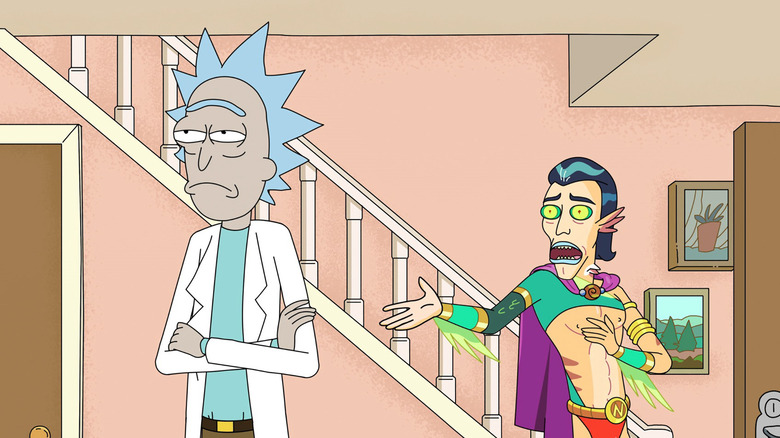
Season 5 of "Rick and Morty" did not slow down as it studied the toxic sludge that is Rick Sanchez. Despite a lapse in quality during the middle episodes, which had inventive premises that required a little more refinement in the lab, "Rick and Morty" still provided no shortage of shocking and entertaining scenarios, including Morty evolving into a sort of mythic "dragon" in a world where time flows differently, the cloned decoys of the Smith family warring for survival, and a trek through a dreamscape that uncovers secrets and offers deep insights into Rick's friendship with Birdperson. 

Through his cyclical self-destructive behavior, Rick is always bound to push away his loved ones, especially his accomplice, Morty. However, the season 5 finale, which brought back the nefarious Evil Morty, opened up the universe with the promise of even more interdimensional adventures. 

Where to Watch: Adult Swim

Inside Job
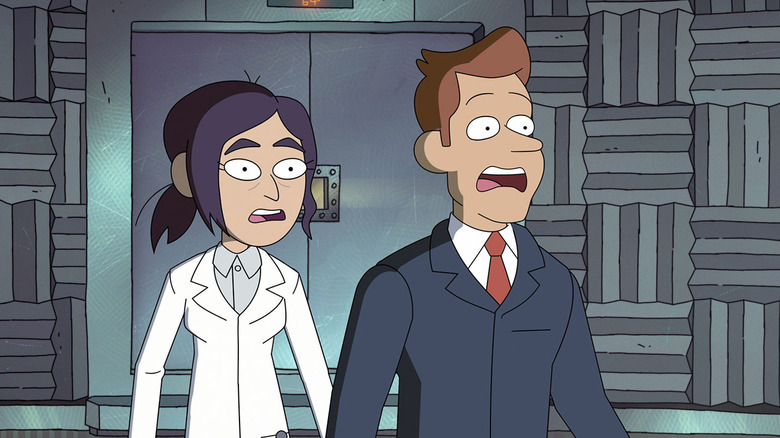
Led by Shion Takeuchi, a "Gravity Falls" alum, "Inside Job" takes place in a world where nearly every conspiracy theory is true. The president has a robot double, a secret clan of lizard people includes the likes of Taylor Swift and Queen Elizabeth, the Earth's crust is filled with sea creatures, and there's an entire town that's literally stuck in the '80s. That this all remains a secret is thanks to Cognito Inc., an organization that does the bidding of shadowy government officials.

Voiced with feverish vigor by Lizzy Caplan, Reagan Ridley is the overworked and undervalued brain behind many of those schemes. She deals with feeling unappreciated, her egoistical father (who once worked for the company), and her eccentric co-workers, which include a sapient alien, a quack doctor, a human-dolphin hybrid, a social media influencer, and a cheerful yes-man. As the architect of conspiracies in America and around the world, Cognito works hard to keep up appearances for the public, leading to a show filled with informants and spies, cover-ups, and a healthy amount of workplace drama.

Where to Watch: Netflix

Castlevania
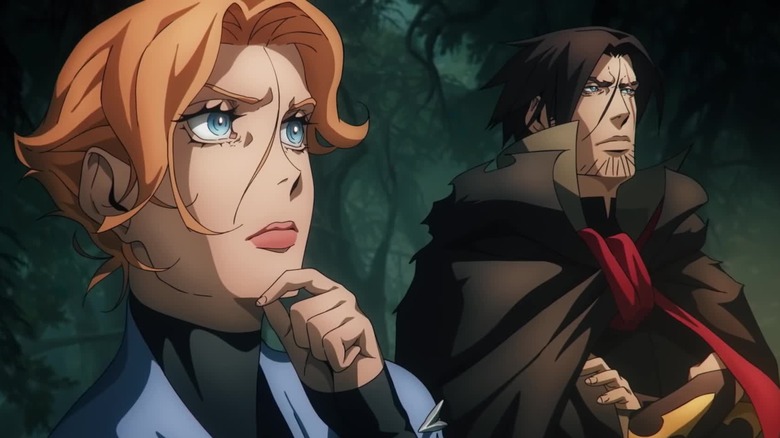
Based on the Konami video game franchise, the anime-styled "Castlevania, directed by Sam and Adam Deats of Powerhouse Animation, recently concluded its 4th season, tying up most of the loose ends. Despite the pessimistic musings of the 2020 episodes, the final season provides a counterpoint to the bleakness as the show's final 10 installments charge toward a promise of justice and growth. In spite of setbacks, Sypha rediscovers her purpose, and while he can't admit it, Trevor has more faith in the world than ever. Meanwhile, Alucard finds a new motivation in protecting villagers from vampire attacks, a cause that has links to his friends' distant mission.

In both grand and subtle ways, the characters of "Castlevania" — including some of its more villainous cast members — end their journeys as better versions of themselves. Although this is a medieval hellscape where demons, monsters, vampires, and morally repugnant humans exist, there is still good in the world, and the show's final season clearly lays out the foundations for change. Alongside a final battle that's an absolute spectacle, the show's ultimate themes can be summed up in a single quote: "It's time to give back the world to people who can build things."

Where to Watch: Netflix

The Witcher: Nightmare Of The Wolf
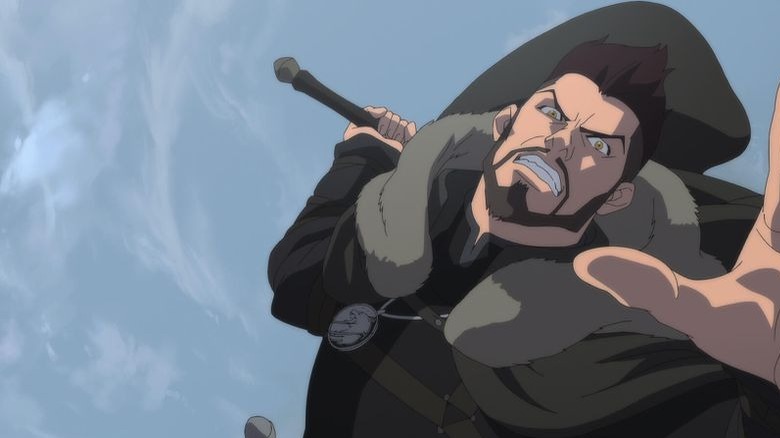
The feature-length animated prequel to "The Witcher," "Nightmare of the Wolf," makes a good case that live-action productions should invest in more high-quality animated spin-offs. "Nightmare of Wolf" follows the adventures of the Witcher Vesemir, the man who mentored Geralt, the lead of Netflix's live-action fantasy series. Living in the waning age of Witchers, the roguish Vesemir must solve a mystery to exonerate Witcher society. Of course, many nefarious complications make this much harder than it initially seems.

With Studio Mir's lush colors and cracking action by director Kwang Il Han ("Avatar: The Last Airbender"), "Nightmare of the Wolf" tells a self-contained tale about tragically separated childhood friends and a man who's more or less immortal coping with a life that has passed him by.

Where to Watch: Netflix

Summit Of The Gods
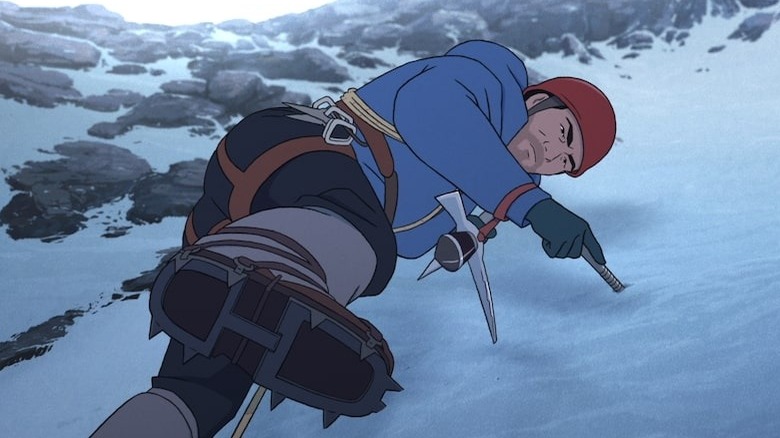
Do not sit through "Summit of the Gods" if you have a fear of heights or dangling from frosted cliffs. Several of the majestic long shots in "Summit of the Gods" shrink climbers down to diminutive specks as they cling to the sides of rugged mountains.

Based on the manga by Jiro Taniguchi, this French film follows an ambitious journalist who's charting the journey of Habu Joji, an enigmatic mountain climber who possesses a camera that might yield answers to some of mountain climbing's biggest mysteries. With heart-stopping suspense and composer Amine Bouhafa's tense, spiritual score, "Summit of the Gods" encapsulates the brutal realism that makes the sport so dangerous: spiked boots crashing down on ledges, frayed safety ropes, and the brain going haywire as the high altitude siphons away oxygen.

But there's more to it than that. By telling Habu's story, the photojournalist is chasing a dream — in a psychological way, he's also ascending. Similarly, his subject has a seemingly spiritual reflex to hunt for the next mountain to climb, searching for another apotheosis at its peak.

Where to Watch: Netflix

Beastars
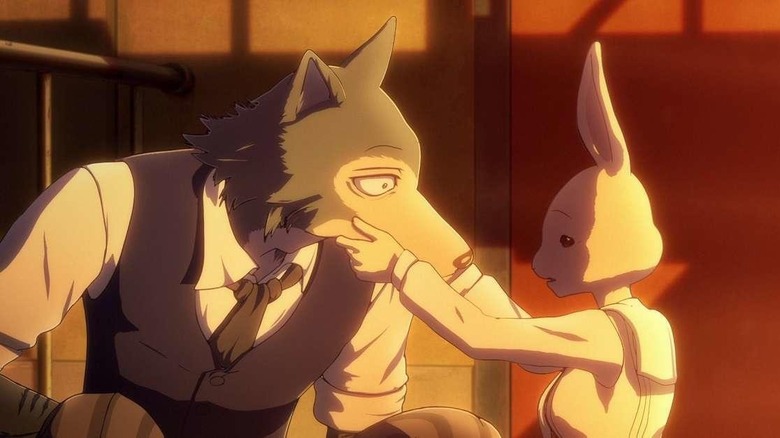
An anime populated by anthropomorphized animals, "Beastars" is a malleable allegory (it's sometimes referred to as "Zootopia" for adults) set right at the intersection of high school angst and film noir brooding. At Cherryton Academy, relations between predator and prey have been hanging by a thread since a member of the theater club, who also happens to be an alpaca, was eaten. Against that backdrop, Legoshi, a wolf on the cusp of manhood, navigates his anxieties, primal instincts, and his burgeoning love — and carnal hunger — for the dwarf rabbit Hal. 

In 2021, season 2 delved even deeper into the shadows as Legoshi subjected his body and mind to rigorous training in order to mold himself into an ideal protector. He is closer than ever to discovering who devoured his friend, but the identity of the culprit isn't as important as the mystery of the power within both Legoshi and his adversary.

A fantasy-fable with a forensic bent, "Beastars" examines the ever-shifting desire for power and control. Director Shin'ichi Matsumi regularly uses split screens to convey the drama, putting characters into their own boxes, where the audience can observe their movements, quirks, and internal worlds. Although it's actually cel-shaded CGI, the hand-drawn appearance of "Beastars" is one of its biggest advantages. When you catch sight of an obviously digital movement, you're reminded that these anthropomorphized creatures are puppets, mere approximations of our human selves.

Where to Watch: Netflix

Yasuke
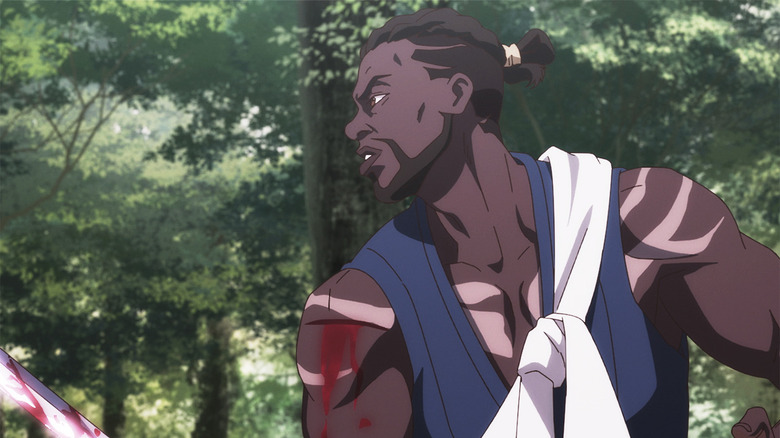
Feudal Japan is infused with magic and mecha in this fictionalized retelling of the life of Yasuke, one of the only known African samurai. Like the actual historical figure, the eponymous Yasuke served under Japanese daimyo Oda Nobunaga during the Sengoku period in 16th-century Japan. Embittered by his bygone samurai career, the world-weary Yasuke finds purpose in escorting a magical child, Saki, to safety — she may be the key to saving Japan from evil forces.

At the heart of the show are Lakeith Stanfield and Maya Tanida as the warrior and his young charge, respectively. With glossy animation by Studio MAPPA and a visual imagination that burns like wildfire courtesy of director LeSean Thomas, "Yasuke" is set to the tranquilizing beats of Flying Lotus, which soak up the mood and seep into the mind as Yasuke swings his katana.

Where to Watch: Netflix

Arcane
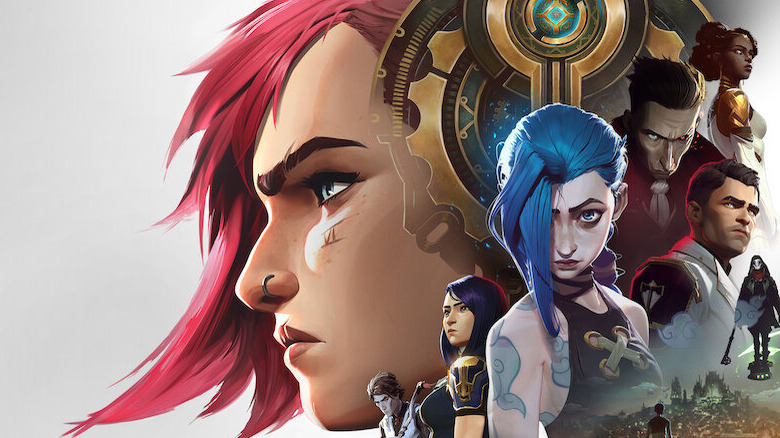
With an art style that resembles unfiltered concept art courtesy of Riot and Fortiche Production, "Arcane" is the next step in the evolution of adult animation. Based on the "League of Legends" video game, "Arcane" has a refreshing airbrushed palette not normally seen in CGI shows, with textures reminiscent of "The Mitchell vs. the Machines" and "Spider-Man: Into the Spider-Verse," a wide range of expressions, supremely choreographed fight scenes, and jaw-dropping background art.

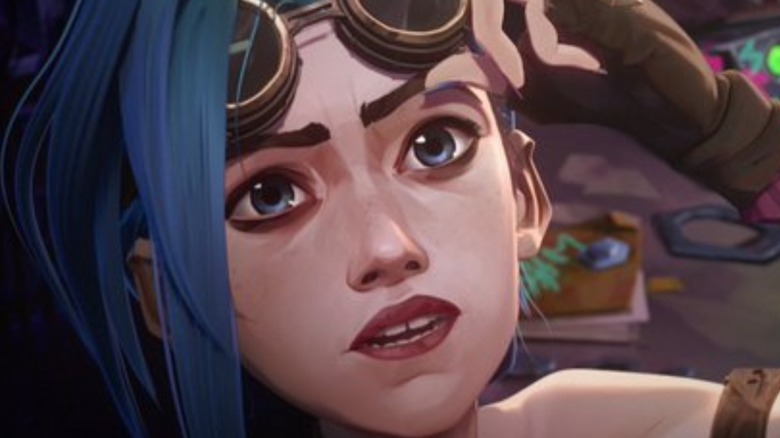
In "Arcane," there are two worlds: the polished, upper-crust Piltover and the impoverished Zaun. While Zaun languishes, Piltover is experimenting with cutting-edge magical advancements. As the class war simmers, numerous tragedies and a major quarrel lead two Zaunite sisters, Vi and Jinx, to go their separate ways. However, after Jinx is adopted by a crime boss, her theft of an explosive gem in Piltover rips the conflict between the two communities wide open. "Arcane" is not just a stunning, exciting series. Vi, Jinx, and the rest of the large cast are all extremely well fleshed-out, reacting accordingly to the way that class and various hardships have molded them.

Where to Watch: Netflix

Close Enough
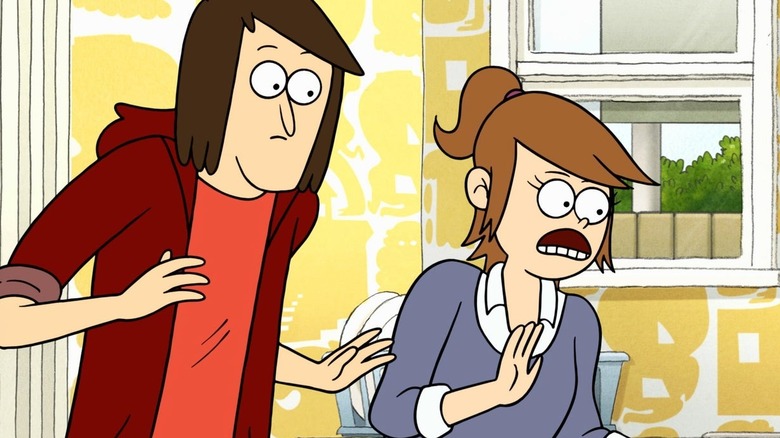
Given that it comes from J.G. Quintel, the creator of "Regular Show," it's no surprise that "Close Enough" resembles an acid trip. Like "Regular Show," it's characterized by seemingly mundane pursuits that quickly escalate into surreal shenanigans. However, unlike its kid-friendly predecessor, "Close Enough" also contains adult elements like explicit sex, graphic violence, and the pressure of having to pay bills. 

In the series, a pair of married 20-somethings, Josh and Emily, and their toddler Candice reside with two divorced roommates and tumble into a number of increasingly bizarre misadventures. Season 2 double downs on the weirdness with time travel, a plumbing catastrophe, hijinks involving romance book sales, a flight to the dictatorship of Cromania, and the oppressive presence of the World Wide Web.

Where to Watch: HBO Max

Invincible
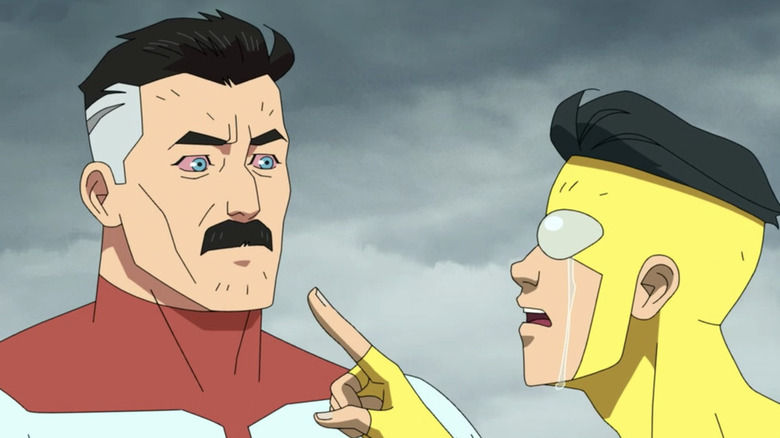
Mark Grayson is a product of a superpowered father and a human mother. When Mark's inherited powers emerge, he's eager to train with his dad. However, his father harbors unspeakable secrets, ones that will have grave ramifications for Earth and superhero society. But Mark doesn't know that. He dons a suit, subs himself "Invincible," and endures the trials of his early superhero career, even as he's unwittingly moving closer to discovering his father's ultra-secret identity. 

Even though the focus is scattered and the storylines are complex, "Invincible" toys with the viewer's expectations by defying the typical structure of a superhero television series. The emotional crux of "Invincible" is the dreaded unraveling of Omni-Man's actual motives, but along the way the show is drenched with gore, with imagery that will have traumatic consequences for Mark as he comes of age. Despite its title, "Invincible" takes place in a world where caped heroes can and will die without warning. It's also one of the rare animated productions with 40-minute-plus episodes, making for an incredibly wild ride.

Where to Watch: Amazon Video

Tuca & Bertie
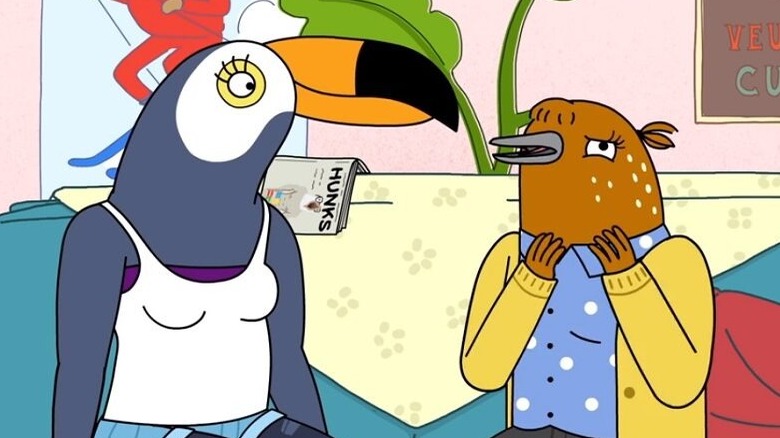
If you didn't see it during its 1st season, you'll wonder why Netflix canceled "Tuca & Bertie," a witty creation by cartoonist Lisa Hanawalt. You'll also sigh with relief that Adult Swim ended up commissioning another season.

Either way, the titular toucan and robin duo, voiced by Tiffany Haddish and Ali Wong respectively, are back for another adventure through cruddy adulthood. With her head full of doubts over her career and the lingering effects of sexual assault, Bertie spends season 2 auditioning a series of therapists as she confronts the shapeshifting nature of trauma. Meanwhile, Tuca is exploring both the high and lows of romantic commitment. Famous for its elastic animation, "Tuca & Bertie" gives intrusive thoughts, trauma, and anxiety monstrous shapes, leading to an exploration of adulthood and friendship that's only strengthened by scripts that are both quippy and rawly emotional.

Where to Watch: Adult Swim (season 2), Netflix (season 1)

Bombay Rose

Heartbreak and escapism go hand-in-hand in "Bombay Rose," a 2021 Netflix release. Inspired by the street dwellers in Bombay, animator Gitanjali Rao weaves together a vibrant tapestry of the day-to-day struggles faced by the Indian poor. 

A Hindu flower seller named Kamala finds herself falling for Salim, a Muslim refugee. While the star-crossed lovers figure out their lives, a widow dreams of her past as a movie star, and Kamala's younger sister befriends a child dishwasher. Embracing orange and red hues, with imaginative shifts into Mughal aesthetics, "Bombay Rose" combines slice-of-life tales with colonial haunts, dancing spirits, and class intersections to paint an emotional portrait of the everyday fight for survival in Mumbai's slums.

Where to Watch: Netflix

Flee
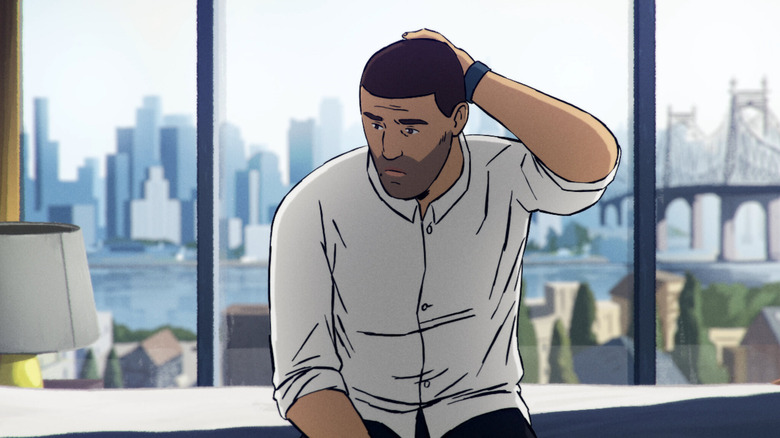
Anim is first introduced solemnly staring up at the camera while inhaling and exhaling. "Flee" is a documentary about the tribulations of a gay man recollecting his escape from Taliban-controlled Afghanistan.

Oscillating between Anim's past and his present, the choice to use animation does not detract from the importance of his story. Instead, it creates a sensitive emotional outlet through which the film can explore Anim's headspace as he wrestles with his helplessness against the environmental factors that threaten his arduous trek, his rage against the corrupt law enforcement agencies that exploit his family, and the crisis that comes with falsifying his family story so that he'll be "worthy" of asylum in Denmark. With footage from newsreels spliced in to flesh out the story, "Flee" contextualizes the uncertainty of memory and identity under the supervision of filmmaker Jonas Poher Rasmussen.

Observe, for example, the impressionistic sequence in which Amin's mother watches his father be seized by the Taliban, an event Anim was not present to witness. Note how the fading of the scenes forms wrinkles on the countenance of Anim's mother, drawing a logical link between the family separation and her aged appearance in the eyes of her son. "Flee" is a documentary elevated by animation that chisels away at the emotional truths that fill in memory's blanks.

Where to Watch: Limited theatrical screenings

Trese
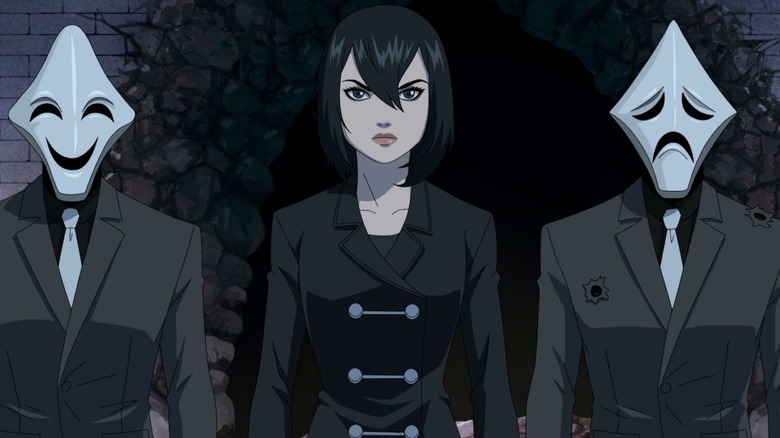
Based on from the Filipino comic series written by Budjette Tan and illustrated by Kajo Baldisimo, "Trese" is set on the streets of modern Manila, the capital of the Philippines, where supernatural creatures are sequestered away in abandoned properties and sewers, and serve as members of gangs and political offices. 

Armed with knowledge, incantations, informants, and a spirit on speed-dial, detective Alexandra Trese investigates the ill-doings of the supernatural as they target humanity — and vice versa. As the babaylan-mandirigma, the sixth child of the sixth child, Trese has inherited a great responsibility to ensure an amiable co-existence between the creatures and humanity, and her investigations lead to some truly heartbreaking reveals. 

The paltry six episodes available on Netflix do not do justice to the series' worldbuilding, which mixes topical themes about government corruption with the supernatural; hopefully, a second season will deliver more compelling chapters of this story.

Where to Watch: Netflix

Cryptozoo

Figures from myths and urban legends often serve as the basis for classic tales about being othered in society. Is it better to assimilate, or to live on the fringes? "Cryptozoo," Dash Shaw's Sundance-selected animated feature, tackles this question while layering cutouts on top of crayon-like backdrops in order to bring this story of legendary creatures to life. 

As the Vietnam War looms in the background, monster hunter Lauren Grey seeks to protect cryptids from the military, which is quashing all things counterculture. In order to do so, she constructs a "cryptozoo" that doubles as a profitable theme park, eliciting moral questions about the objectification of these creatures and whether or not they should join the public human world.

Although "Cryptozoo" has been criticized for its flat characters and garish look, it's a hypnotic, nearly hallucinogenic, experiment, with every set piece serving as an elaborate ecosystem of artistry. 

Where to Watch: Hulu

Evangelion: 3.0+1.0 Thrice Upon A Time

Hideaki Anno, a former animator for Studio Ghibli, has said that he is drawn to what's broken. His personal crises and depression are infamously baked into the classic anime "Neon Genesis Evangelion," a show about mechas, intergalactic threats, and psychological drudgery. On its debut, the series was a game-changer, disrupting and deconstructing the chipper fantasy of the mecha genre.

Since then, Anno has revisited the "Neon Genesis Evangelion" story a number of times, including with the "Evangelion Rebuild" tetralogy, which finally reached its end with "Evangelion: 3.0+1.0 Thrice Upon a Time." In this feature-length film, Shinji Ikari remains wracked with guilt and trauma over his actions, which essentially triggered doomsday. At first, Shinji and company are sequestered in a pastoral land of peace, a place of relative respite that allows him to reflect on his guilt, until he's called back into the field. 

When Shinji confronts his father's nefarious plan to force humanity into the Human Instrumentality project, what results is an apocalyptic therapy session between father and son, a conversation that ultimately allows Shinji and his friends to escape a vicious cycle and construct a new world order. For a saga known for its darkness and depression, it's a heavenly note of hope that reminds us why the "Evangelion" series made such an impression to begin with.

Where to Watch: Prime Video

Read this next: The Best Movies Of 2021 So Far

The post The Best Adult Animation of 2021 appeared first on /Film.

30 Dec 01:19

Millennials fast becoming heathens, lead shift away from religion as pandemic tests Americans' faith [Interesting]

30 Dec 01:13

Mesa 21.3.3 Released With Fixes For Old ATI R300~R500 GPUs, RADV Fixes Too

For those sticking to stable Mesa point releases, Mesa 21.3.3 is out today to close out the year. Notable with Mesa 21.3.3 is the large number of fixes for older ATI Radeon R300 through R500 (X1000 series) GPU fixes with the R300 Gallium3D driver...
30 Dec 01:12

Scientists Find Unexpected Trove of Life Forms Beneath Antarctic Ice Shelf

by msmash
A team of researchers from the Alfred Wegener Institute in Germany has discovered a whopping 77 seafloor-dwelling species beneath an Antarctica ice shelf -- a hint that this mysterious realm may be far more biologically rich than scientists realized. From a report: Little is known about the environment beneath Antarctica's floating ice shelves, the seaward extensions of the continent's glaciers that span 1.6 million square kilometers. It's a harsh, cold environment shrouded in continuous darkness, and previous studies of life beneath the ice have only documented a few dozen hardy life forms. The new research, published earlier this month in Current Biology, identified more species in a single spot than had previously been documented across all the ice shelves of the frozen continent. After drilling two holes through the Weddell Sea's Ekstrom Ice Shelf, the researchers collected seabed specimens in 2018. They found the biodiversity on this patch of seafloor to be "richer than many open water samples found on the continental shelf where there is light and food sources," according to a press release from the British Antarctic Survey. Four of the species studied experienced yearly growth rates "comparable with similar animals" in open water habitats.

Read more of this story at Slashdot.

30 Dec 01:12

Apple Ditched Intel, and It Paid Off

by BeauHD
An anonymous reader quotes a report from CNBC, written by Todd Haselton: Apple's decision to ditch Intel paid off this year. The pivot allowed Apple to completely rethink the Mac, which had started to grow stale with an aging design and iterative annual upgrades. Following the divorce from Intel, Apple has launched far more exciting computers which, paired with an ongoing pandemic that has forced people to work and learn from home, have sent Apple's Mac business soaring. It wasn't always a given. When Apple announced its move away from Intel in 2020, it was fair to question just how well Apple could power laptops and desktop computers. Apple has used in-house chips for iPhones and iPads but had been selling Intel-powered computers for 15 years. It wasn't clear how well its macOS desktop software would work with apps designed to run on Intel chips, or whether its processors would offer any consumer benefits and keep up with intensive tasks that people turned to MacBooks to run. Those fears were quickly quelled. The first M1 Apple chip was launched in 2020 in a MacBook Air laptop. It was more powerful than Intel's chip while offering longer battery life and enabling a fanless design, which helped keep Apple's new MacBook Air even quieter. It proved to be an early success. In April 2021, CEO Tim Cook said during the company's fiscal second-quarter earnings call that the M1 chip helped fuel the 70.1% growth in Apple's Mac revenue, which hit $9.1 billion during that quarter. The growth continued in fiscal Q3, when Mac revenue was up 16% year over year. That quarter, it launched the all-new iMac, which offered a redesigned super-thin metal body that looks like a screen propped up on a stand. It's slimmer than the Intel models that came before it, while offering other benefits, like a much better webcam, great speakers and a much sharper display than the models it replaced. And Apple made the launch more exciting by offering an array of colors for the iMac, which it hadn't done since it shipped the 1999 iMac. There was a slowdown in fiscal Q4, when Mac revenue grew just 1.6%, as Apple, like all manufacturers, saw a slowdown from the burst of sales driven by the start of the pandemic and dealt with supply chain woes. But fiscal Q4 sales didn't include revenue from its most exciting new computer of the year. Apple's fiscal Q1 earnings in January will give an indication of how well all its new computers are selling. But it's clear the move from Intel has allowed Apple to move full speed ahead with its own chip development, much like it does for iPhones and iPads, the latter of which has yet to be matched by any other tablet on the market. It's no longer beholden to delays that plagued Intel, which started to lag behind AMD with its new 7nm chips. And Apple has full control over its "stack," which means it can design new computer hardware and software together, instead of letting the power of another company's chips dictate what its computers can and can't do.

Read more of this story at Slashdot.

29 Dec 16:28

Why Streaming Movies Is More Expensive Than Buying The Blu-Ray Or DVD

by Valerie Ettenhofer

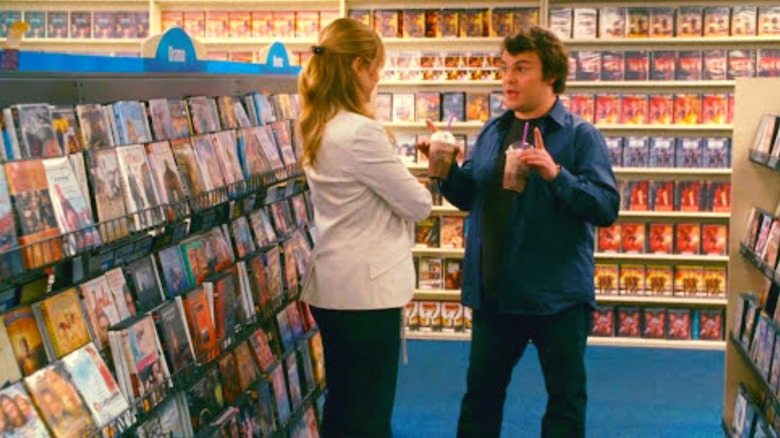
Once upon a time, we all had to go to a theater or video store if we wanted to watch a movie. Now, a vast catalog of film and television is at our fingertips, with options to stream, rent, or purchase a huge percentage of titles online. This boom period for streaming has led to an ongoing discussion about the role physical media holds in a digital world. Yet when weighing the pros and cons of our personal media libraries, debating picture quality and lasting power, one factor often goes unexamined: price.

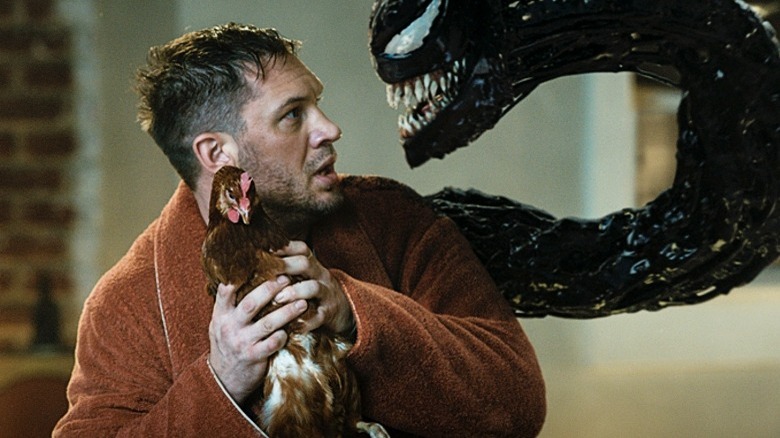
You might imagine that a streaming title will always be less expensive than its DVD or Blu-Ray counterpart, but that doesn't seem to be the case. Sometimes, the difference is small, as when Amazon sells a DVD copy of "Venom: Let There Be Carnage" for $17.96 while the digital copy costs $19.99. Often, with films that are more than a few years old, the price difference is much more significant. The 2015 Melissa McCarthy comedy "Spy," for example, is currently available on DVD through Amazon for an astoundingly low price of $2.99, while the site is selling a digital copy for $12.99 and competitor iTunes has it priced at $14.99. In many cases, brand new DVD and Blu-Ray copies are available from major retailers at a lower price point than digital copies.

Physical Media Is Subject To Price Slashing

Why is there a vast price difference between VOD (Video On Demand) movie options and physical media options? Well, there are several likely reasons. While data about the cost of physical media production isn't widely available, the factory cost of DVDs and Blu-Rays is widely speculated to be very low. Physical media is also beholden to the tenets of supply and demand in a practical way that digital media is not; DVDs and Blu-Rays take up storage space in warehouses and on shelves, so distributors are especially inclined to offload their inventory. Often, this is done through huge sales and slashed prices.

Big data has also changed the media-buying game. Amazon, in particular, is famous for its sophisticated price-changing tool. As Business Insider points out, the corporate giant uses its extensive collection of data points to change prices on items as frequently as every 10 minutes. These algorithms rely in large part on competitor's pricing, meaning if a specific DVD can be found cheaper elsewhere, Amazon's software may pick up on that and lower its DVD price as well. The result of this human-free approach to pricing is often items, including physical copies of movies, with prices that make no sense and may not even come close to matching the cost of a digital copy.

2020 Set A Lucrative VOD Precedent

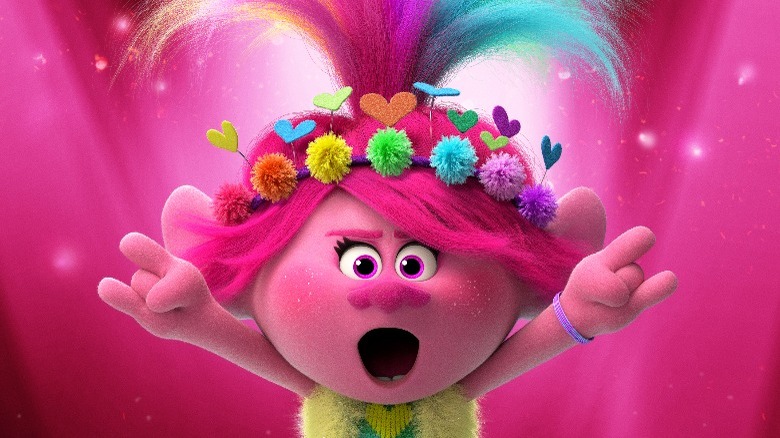
The pandemic economy has also set a lucrative precedent for the VOD industry. When movie theaters shut down completely in the spring of 2020, studios were forced to make unprecedented business decisions. Universal was among the first to make a major move, releasing "Trolls: World Tour" exclusively through VOD and quickly racking up $100 million in revenue from rental fees. The $19.99 fee for a digital copy of "Trolls: World Tour" didn't actually grant viewers their own digital copy to keep, but just gave them a 48-hour viewing window. Soon after, Disney's live-action "Mulan" took a similar path, with a $29.99 purchase price tag, and in doing so raked in more money domestically than "Tenet" did worldwide.

If these numbers are anything to go by, viewers who choose to purchase digital copies of movies have mostly accepted VOD prices, and may think of them as paying for immediacy. Just as food delivery apps add fees for the cost of bringing you a fresh, hot meal, additional expenses on websites like Amazon, Google Play, and iTunes could easily seem worthwhile for someone who doesn't want to make the trek to Best Buy or wait for a DVD to arrive by mail.

We're In An Immediacy-Driven Economy

Long before 2020's global pandemic economy, we were seeing a trend towards instant gratification influenced by at-your-fingertips streamers like Netflix. COVID-19 has only made this trend more inevitable, as people currently have a very good reason for seeking out at-home entertainment. As the demand for digital movies increases, it's easier for studios to try out higher-price models for individual films, and to gauge our interest as consumers as they go. These changes are already underway: Variety reports that a 2020 poll by the app TV Time shows that viewers have an expectation that superhero films should cost more on VOD, while arthouse films should cost less.

You can't put a price tag on a movie that's meaningful to you, but it's worth remembering that someone else always can. While streamers and corporations wage a seemingly endless war over how much art should cost, it's also worth noting that you can grab a DVD double-feature of two Michael Keaton "Batman" films for under $7 at big-box retailers, while they'd run you about $20 total on iTunes and Amazon. Does this solve any complex, disheartening, industry-wide problems? No, but hey, at least you would get two great "Batman" movies out of it.

Read this next: The Best Movies Of 2021 So Far

The post Why Streaming Movies is More Expensive Than Buying the Blu-ray or DVD appeared first on /Film.
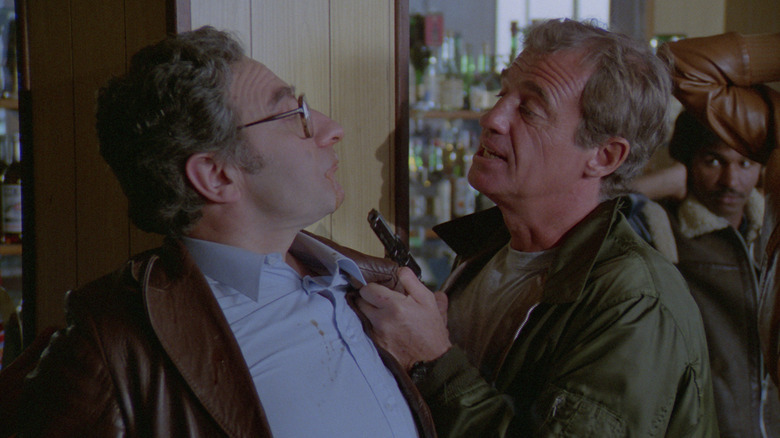
29 Dec 16:27

Why Sam Raimi Wanted Venom To Stay Out Of The Movies

by Fatemeh Mirjalili

Everyone has a lot of thoughts about "Spider-Man 3," which is universally accepted (by Sam Raimi, too) as the weakest entry in the superhero trilogy. It was overstuffed with too many subplots, one emo Peter Parker, and a few villains treated as sideshows. One of those villains in question, of course, is Topher Grace's Venom (Eddie Brock), a character that demanded a movie of his own.

Venom made his silver screen debut in the 2007 film, but its execution was rather flawed. Now "Spider-Man 3" wasn't easy to make. Raimi faced immense pressure after making his sequel, the faultless "Spider-Man 2." The story was intelligent, the villain was well-developed, and more than anything, it was true to Spider-Man and everything he stood for. It is one of the greatest superhero movies of all time.

Raimi's approach throughout his "Spider-Man" trilogy was to explore his favorite villains from the comics — Green Goblin, Doc Ock, and later, Sandman. Venom, however, was disliked by Raimi. He didn't particularly like the "lack of humanity" represented by Venom, but was forced to include him in the film after Avi Arad, the president of Marvel Studios at the time, encouraged him to.

For The Fans

While Raimi was focused on exploring stories that featured his favorite villains, Avi Arad reminded him that he wasn't paying enough attention to the fans. Spidey enthusiasts love Venom, and Arad thought Raimi needed to listen to what the fans wanted.

In an interview with Collider in 2007, Raimi explained that he had completed writing the script with his brother, when Arad voiced his concerns. It was only then that Raimi decided to dive deeper into the Spider-Man universe and vowed to learn more about Venom so he could make fans happy.

"But when we were done [writing the script], Avi Arad, my partner and the former president of Marvel at the time, said to me, Sam, you're so, you're not paying attention to the fans enough. You need to think about them. You've made two movies now with your favorite villains, and now you're about to make another one with your favorite villains. The fans love Venom, he is the fan favorite. All Spider-Man readers love Venom, and even though you came from '70s Spiderman, this is what the kids are thinking about. Please incorporate Venom, listen to the fans now. And so that's really where I, I realized okay, maybe I don't have the whole Spider-Man universe in my head, I need to learn a little bit more about Spider-Man and maybe incorporate this villain to make some of the real diehard fans of Spider-Man finally happy."

Unfortunately, Raimi's disconnect with Venom was reflected in the movie. Eddie Brock's scenes were quite weak, and the character was outshined by the emotional depth represented by Sandman's (Thomas Haden Church) story arc, and the built-up tension between Peter Parker and New Goblin (James Franco), which fans had seen evolve over two films. Venom's storyline appeared to have been rushed, and he wasn't given the time or material to connect with those watching.

He Wanted To Deliver Venom In The Best Way Possible

When Sam Raimi was asked if he ever desired to extend Venom's symbiote storyline in the film, because of how massive he was in the comic books, the filmmaker had an honest response.

He only wished to deliver Venom in a thorough manner, even if the character would only exist in one act of the movie. Raimi recognized that fans didn't want to be teased — they wanted to see what Venom was about, his origin story, and his relationship with Spider-Man. He did his best, but he also knew that extending Venom's story in the film would be unfair to fans of Spider-Man.

"I thought it would be unfair to -- the Venom storyline, unfortunately, has Eddie Brock -- the establishment of who he is and what he is -- the symbiote coming to Peter Parker first and you've got to go through his entire getting of the black suit, the dark Peter, the ridding of the black suit, before it even comes on to Eddie Brock. So the very nature of that story demands that you either do it two part, if you want to spend more time with Venom, which I didn't think was fair to the audience, to the fans of Spider-Man. I thought about it, I really did, and I kept reading the fans' emails that Avi would send me saying they'd better not just introduce him to tease us, that would be -- I felt that the fans didn't want that from the thousands of emails that were sent me. So I thought okay, they want -- cuz I tried to do that, and Avi said 'you're not giving me what I asked you' he said they want Venom, just give them Venom already. So, I said okay, but obviously, through the very nature of it, he's only going to be in half an act or one act. I'll just make it as thorough and the best that I can, deliver Venom in the most complete way that I understand the fans might want him. That was my desire. I was led there."

After "Spider-Man 3," it seemed like a fourth movie was a no-brainer. But the film was canceled because Raimi wasn't happy with how the project was turning up, and couldn't go ahead with a script he was pleased with. Along with Sony, Raimi finally decided it was best to abandon the film, despite the many requests from fans for the filmmaker to extend the "Spider-Man" trilogy.

It's impossible to imagine how "Spider-Man 4" could have changed the superhero genre as we know it. Would the films ever be rebooted? Would there be multiple Spider-Men in the movie? Could Raimi have introduced Rhino? We'll never know what could've happened, but at least we can take comfort in knowing that Raimi is about to make a lot, and I mean, a lot of fans smile, with his iteration of Doctor Strange.

Read this next: 11 Marvel Comics Villains We Really Want To See In The MCU

The post Why Sam Raimi Wanted Venom to Stay Out Of the Movies appeared first on /Film.
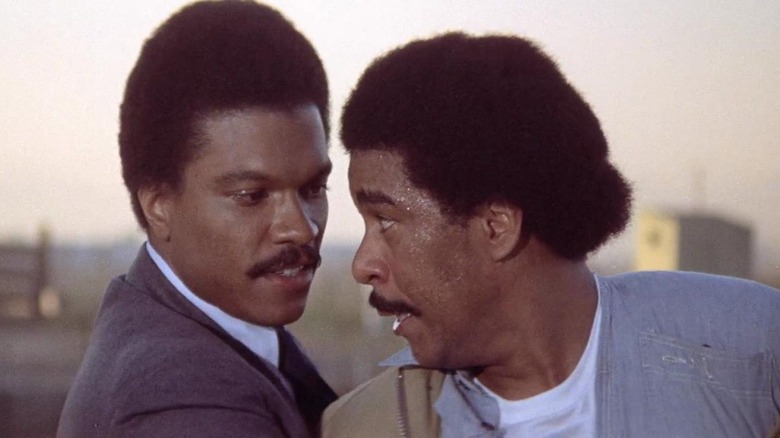
29 Dec 16:27

The Book Of Boba Fett Reshot A Key Scene From Attack Of The Clones

by Jeremy Mathai

Warning: spoilers for the first episode of "The Book of Boba Fett" follow!

The show that has been over four decades in the making is finally here. Though fans were given an unexpected surprise when Temuera Morrison popped up in season 2 of "The Mandalorian" as an older, more rugged, and very much alive Boba Fett, last night's premiere of "The Book of Boba Fett" represents a dream come true for many a "Star Wars" fan. Upon the character's first canonical appearance in "The Empire Strikes Back" -- although any Mandalorian lore-keeper worth their weight in beskar will know that his actual introduction took place during the infamous "Star Wars Holiday Special" a few years before -- audiences were immediately taken by the bounty hunter's distinctive (and dare we say iconic) armor, that pervasive aura of mystery surrounding him, and the instant cool factor that comes when none other than Darth Vader needs to remind him to chill out with one memorable line: "No disintegrations."

Of course, the release of another Disney+ "Star Wars" series means a fresh batch of new and surprising details to dig into, and the first episode of "The Book of Boba Fett," titled "Chapter One: Stranger in a Strange Land," continues that fine tradition. It's no spoiler to say that "The Book of Boba Fett" immediately catches viewers up on Boba Fett's past history in the universe, which includes his earliest in-universe appearance as a mere child in "Attack of the Clones." What's really interesting, however, is the fact that the first episode doesn't merely include a flashback to previously-seen moments from the 2002 "Star Wars" prequel ... it also includes lightly reshot footage specifically filmed for "The Book of Boba Fett."

Again, read on for detailed spoilers for the premiere of "The Book of Boba Fett."

Back To The Beginning

After years of the "Star Wars" prequels being treated as the butt of constant jokes, the post-Disney takeover of a galaxy far, far away has slowly but steadily reintegrated the divisive films into ongoing stories. Most (in)famously, "The Rise of Skywalker" brought back Ian McDiarmid as Palpatine himself ... somehow. But "The Mandalorian," the upcoming "Obi-Wan Kenobi" series, and other "Star Wars" media have made even greater strides in referencing that trilogy of maligned films. This trend comes to a head in "The Book of Boba Fett," beginning with the bounty hunter-turned-crime lord reliving some unpleasant memories while submerged in a regenerative bacta tank. Not only do we get flashes of Boba's early life on the waterworld of Kamino, but we then jump to the enduring image of a young Boba (Daniel Logan) cradling the familiar-looking helmet of his dead father, Jango (portrayed at the time by Temuera Morrison, thanks to all that cloning business), on the battlefield on Geonosis. But things look slightly different this time around, adding more of a personal touch for Boba Fett's unique origins.

In a neat development, director Robert Rodriguez and writer/creator Jon Favreau went a step further. Not only do we see scenes lifted directly from "Attack of the Clones," but a keen observation of the credits at the end of the episode confirms that some of these flashbacks were comprised of reshot footage, as well. Several Twitter users noticed the same thing, calling attention to the separate credits for both Daniel Logan, who originally portrayed young Boba Fett in "Attack of the Clones," and one for a young Boba double, as well. The Cinematic Captures Twitter account posted a helpful comparison between the original scene and the repurposed, reshot footage for "The Book of Boba Fett," detailing the small but important differences between the two. Check it out below.

Given how the episode dedicates almost equal screen time to both the present storyline and Boba Fett's memories of escaping the Sarlacc pitt, we can likely expect more return visits, however brief, to young Boba Fett's adventures in the Prequels. There's plenty of gaps to fill in based on where "The Book of Boba Fett" takes place in the "Star Wars" timeline, so we'll just have to wait and see how future episodes unfold. In the meantime, "Chapter One" of "The Book of Boba Fett" is currently streaming on Disney+.

Read this next: The 11 Best Star Wars Droids Ranked By Usefulness

The post The Book of Boba Fett Reshot a Key Scene From Attack of the Clones appeared first on /Film.
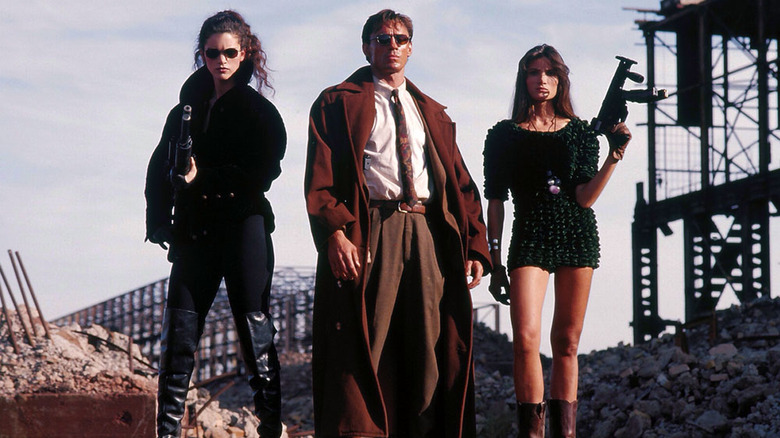
29 Dec 16:27

The New Batmobile Was Inspired By Stephen King's Christine

by Joshua Meyer

To the best of my knowledge, Batman has never named the Batmobile. However, if he did name it and if he followed the tradition of other guys with their cars, chances are, he would give it a woman's name — perhaps Betsy, since it sort of slant-rhymes with Batsy, or Kat, since its engine might purr like Catwoman. Maybe there's even an Elseworlds tale to be told in which Batman discovers the sexy thrills of mechanophilia with the Batmobile à la Julia Ducournau's "Titane."

As it is, the new version of the Batmobile, driving your way in "The Batman" in 2022, draws inspiration from a car named Christine. That's not just any car named Christine, but rather, the 1958 Plymouth Fury at the heart of Stephen King's 1983 novel, "Christine," which John Carpenter adapted into a cult-classic film that same year.

If "Christine" seems like a strange, slightly obscure comparison for a DC superhero film, it goes along with what director Matt Reeves sees as "the horror-genre aspect" of "The Batman." In the new issue of Empire magazine, on newsstands now, Reeves explains:

"[The Batmobile] has to make an appearance out of the shadows to intimidate, so I thought of it almost like Stephen King's 'Christine.' I liked the idea of the car itself as a horror figure, making an animalistic appearance to really scare the hell out of the people Batman's pursuing. There is absolutely a horror-genre aspect to this movie."

She Runs Like A Scream

After the DC Fandome trailer for "The Batman" dropped back in October, I sang the praises of the new Batmobile, with its muscle-car momentum, powered by a classic turbo booster and "some kind of sweet new Bat-hydraulics." This week brought another new trailer for "The Batman," which gave us a fresh look at the "Christine"-inspired Batmobile in action.

The very first image we see in the trailer is that of the turbo booster firing up, and much of what follows rides the same Batmobile momentum, intercutting imagery of a thrilling car chase where Robert Pattinson's Batman runs Colin Farrell's Penguin off the road. The way Reeves frames it — with the Penguin scoping the Batmobile in his side mirror and looking over his shoulder as it bursts through the flames — you can very much see how he might have been going for a horror-movie effect. 

Just imagine the Batmobile as a monster or killer in a slasher movie, relentlessly pursuing the guilty. This goes back to the idea of Batman as a night symbol meant to inspire fear in the "superstitious, cowardly lot" of criminals in Gotham City.

"The Batman" hits theaters on March 4, 2022.

Read this next: All 59 Stephen King Movies Ranked From Worst To Best

The post The New Batmobile Was Inspired by Stephen King's Christine appeared first on /Film.
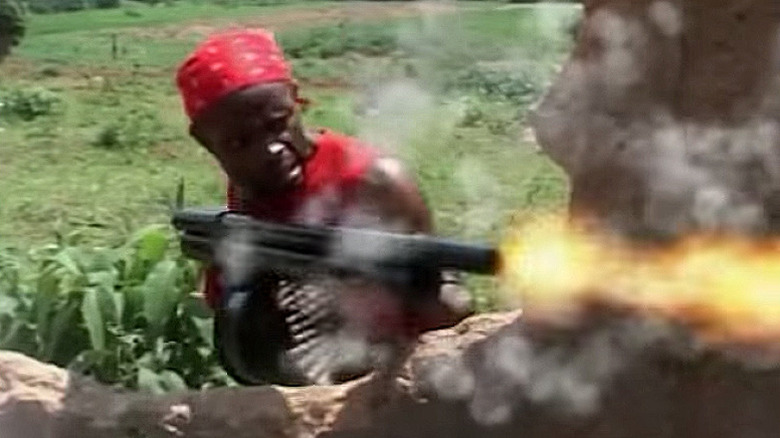
29 Dec 13:36

Compatibility with ancient hardware and software

by SHD

Even compared to fixing bugs in 25 year old DOS games, this is possibly the most useless thing I've done all year, yet to me also one of the most fun. During my time off for the holiday season, I set about making my most recent games run on two decade old hardware.

The Telescopium Incident running on a laptop with Windows Me and an underpowered ATi Rage Mobility M

As I started development of my homegrown adventure game engine in the early 2000s, people were most commonly running Windows 98 Second edition or Windows Millennium Edition, with some actually opting for Windows XP's daddy Windows 2000 instead. In fact, the laptop I was developing it on is the very same I've been using for these tests.

This particular laptop is powered by a 550MHz Intel Celeron, with 320MB of RAM (expanded from the original 64), a whopping 5GB hard drive, and for this story the most important thing: an ATi Rage Mobility M graphics chipset running at 800x600. Even in its day, this wasn't a graphics powerhouse. But I figured that, as the engine started life on this laptop, it might be fun to see whether I could run the games I created with it recently on that now more than 20 year old piece of kit.

What had to change to run on Windows Me?

Simply, nothing. I initially wrote the engine using Microsoft Visual C++ 5 and 6 using plain C++ and the bare Win32 API. Although current versions are compiled with Microsoft Visual C++ 2005, I've not made significant use of any Win32 functionality more recent than what is provided in that old API, simply because I've not had a need for it. The engine has even been programmed against DirectX 8 and that was readily available on Windows 9x (even a DirectX 9 is available for it).

Although I don't have a Windows 98 (or even Windows 95) installation, as long as DirectX 8 or better is installed, and a graphics device/driver combination that supports the DirectX 8 API, it should work. And indeed, others have reported running the games working on a 233MHz Pentium MMX with an ATi Rage XL on Windows 98. Performance isn't great on those old machines, but it is definitely playable.

What had to change to run on the old ATi card?

Despite targeting the DirectX 8 API (which can be expected to work properly with DX6 class hardware and later) there were a few shortcuts that I took over the years, mostly by virtue of having access to much better hardware than that mobile ATi Rage chipset, as my main machine at that time sported a GeForce 2MX and eventually a GeForce 3.

Whereas since DirectX 11 there are well-defined feature levels that specify what features a card must provide to be considered compliant with that version of the API, in the earlier versions it was all about the driver filling a large structure representing the capabilities of the hardware it could expose. Wanted to know whether cube maps were supported? Check D3DCAPS::TextureCaps for the flag D3D­PTEXTURE­CAPS_­CUBEMAP. Quite a lot of hardware allowed only textures that were square (D3D­PTEXTURE­CAPS_­SQUAREONLY) and/or had dimensions that were a power of 2 (D3D­PTEXTURE­CAPS_­POW2). Not even alpha blending or depth buffering is guaranteed to be available! Heck, prior to the original GeForce 256, the CPU was responsible for all the vertex processing calculations for transform and lighting.

DXCapsViewer displaying some of the ATi card's capability bits

The DirectX Caps Viewer that came with the SDK provided a convenient way to check the capabilities in a human readable manner as shown above. When coding, you'd have to check these programmatically and adjust your programme's behaviour to match (or just refuse to run at all).

There's a few things that, while working properly on modern hardware (anything more recent than, say, 2003), just weren't necessarily supported on the graphics hardware from the late 1990s. And, since I hadn't bothered to check those capabilities, the games would crash or glitch when trying to make use of those. Fortunately, almost all of them were easily worked around.

No hardware (or mixed) vertex processing

With the introduction of the GeForce, touting "hardware transform and lighting" a significant part of the 3D pipeline could be accelerated with specialised hardware, offloading the vertex calculations from the CPU. When creating a Direct3D device, you can specify whether you want to have vertex processing take place in hardware on the GPU, in software on the CPU, or a mix of the two. The ATi card does not have support for hardware T&L, so I added fallbacks from hardware to mixed and even software-only vertex processing.

No colour write masking

The backdrops in my adventure games consist conceptually of a visible 2D image, and 0 or more invisible layers of depth information. These depth layers are drawn into the graphics card's Z buffer as simple screen-sized quads with colour write disabled (so no visible pixels are drawn, only writes to the Z buffer are permitted).

Mouse over (or tap) the image above to see the layer structure.

The ATi card didn't have the D3D­PMISC­CAPS_­COLOR­WRITE­ENABLE capability bit set, so it would overlay the depth information over the visible image. The solution would have been to either write the visible image after writing the depth buffer, with Z test disabled, or to fake disabling the colour writes. I picked the latter and chose to set the blend function to just retain what was already in the colour buffer and zero out the incoming data.

This would have been a lot easier if things like depth textures had existed in DirectX 8. As it stands, this is actually one of the slowest aspects of the game engine, as there is potentially a lot of overdraw in this step and this hardware is capable of rendering a maximum of 75 million pixels/texels per second.

No stencil buffer

The engine supports clipping the rendering of text and sprites and uses the stencil buffer to allow arbitrary clipping areas. Unfortunately the ATi card supports only 16-bit depth buffers and no stencil buffers at all.

In practice, this functionality is used only to clip to a single rectangle at any one time and this can also be achieved by simply adjusting the viewport, which is what I ended up doing.

Can't render to 32-bit textures

Although the card isn't powerful enough to run the games in 32-bit colour mode, it can do 16-bit colour mode. The thumbnails for save games are generated by rendering to a texture and I had initially hardcoded the engine to render to 32-bit textures. This failed on the ATi card, but allowing for 16-bit render targets worked like a charm.

Why bother?

Just because it was fun to do. I find there is something inherently cool about new games running on old systems. And as a side effect, I ended up improving performance of my engine in general, as well as fixing a few minor bugs.

Of course, the chances of anybody actually running these games seriously, rather than just testing, on hardware and software that old is basically nil. I just figured: if I can support these old systems with just a few lines of code without compromising the ability to run on modern systems, why wouldn't I?

29 Dec 13:34

AMD Readies Radeon Super Resolution ‘RSR’ Technology, Could Be Enabled in Games Through Drivers

by Hassan Mujtaba

AMD FSR Might Be A Little Too Similar To NVIDIA's Lanczos Upscaler As Revealed Through Source Code

AMD is reportedly working on a new resolution scaling technology known as Radeon Super Resolution or RSR, reports Videocardz.

AMD Radeon Super Resolution 'RSR' Technology In The Works, Can Be Enabled In Almost Any Game Through Drivers

From what information has been published, it looks like AMD's Radeon Super Resolution 'RSR' technology is the red team's answer to NVIDIA's Image Scaling solution which was introduced a few months back. The technology will be based on the FSR 1.0 algorithm and is said to work with almost any game without any additional developer support.

With DLSS and FSR, the technology needs to be a part of the game engine pipeline to work within the game. NVIDIA's Image Scaling overcomes this restriction and enables scaling support in almost every title through driver-level support. In a similar fashion, AMD's Radeon Super Resolution will also be enabled through the Radeon Software driver suite.

AMD Radeon Super Resolution technology will enable image scaling support in games through Radeon drivers. (Image Credits: Videocardz)

The only catch is that AMD Radeon Super Resolution would only work with games that feature support for Exclusive Full-screen mode though that's not a big deal as most titles these days do that. Other than that, there might be some issues in scaling the game UI as is the case with driver-level support.

The AMD Radeon Super Resolution 'RSR' technology will work with both RDNA 1 and RDNA 2 GPU architectures though there's no support mentioned for NVIDIA or Intel GPUs. NVIDIA's Image Scaling technology on the other hand can be used with both AMD or Intel GPUs through lossless scaling and that might give them the edge though GPU support remains to be seen. The technology is said to be introduced soon and we may likely hear about it soon at AMD's CES 2022 virtual keynote which is next week.

The post AMD Readies Radeon Super Resolution ‘RSR’ Technology, Could Be Enabled in Games Through Drivers by Hassan Mujtaba appeared first on Wccftech.

29 Dec 13:32

A Weird Paper Tests The Limits of Science by Claiming Octopuses Came From Space

by noreply@blogger.com (Unknown)


 A round-up of decades of research into a fairly "external" idea with viruses from space begs the question of how scientific we can be when it comes to speculating about the history of life on earth. and nonconformist in describing the scientific fringes, but then articles like this one from 2018 pop up and make us blink like owls not knowing where to start.

In this review, which by. was published, a total of 33 names were listed as authors Advances in Biophysics and Molecular Biology (as of August 2018) The journal is peer-reviewed and fairly well cited.

 So not exactly a small or paid niche source for publication. Science writer Stephen Fleischfresser delves into  the backgrounds of two of the most famous scientists involved: Edward Steele and Chandra Wickramasinghe. Well worth reading.

 For a tl version; Dr. Steele is an immunologist known for his views on evolution based on the acquisition of genetic changes determined by the influence of the environment rather than random mutations in what he calls metalamarckism.

Wickramasinghe, on the other hand, has had a slightly less controversial career known for empirically confirming Sir Fred Hoyle's hypothesis that describes the production of complex carbon molecules in interstellar dust. Wickramasinghe and Hoyle were also  responsible for further space biology work. one is based on more than just the origins of organic chemistry. 

Hoyle Wickramasinghes (HW) thesis of cometary biology (cosmic biology) makes the rather simple claim that the direction of evolution was significantly influenced by biochemistry that did not begin on our planet. In Wickramasinghe's own words: “Comets are the carriers and distributors of life in the cosmos, and life on earth originated and developed as a result of input from comets.

 These inputs, argued Wickramasinghe, are not limited to a generous pinch of  amino acids that have been branded into the world. Neither do acids. Rather, they include viruses that infiltrate organisms and drive their evolution in completely new directions.

The report, entitled “Cause of the Cambrian Explosion: Terrestrial or Cosmic? and other viruses  to be released in meteoric debris may potentially add new DNA sequences to terrestrial genomes and cause further mutagenic changes within the germline and somatic genomes, ”the authors wrote.

 Before going any further, because that was the docile part during this period, a group of mollusks known as cephalopods first stretched  their tentacles under their shells and branched into an amazing variety of sizes and shapes in an amazingly short amount of time  and octopuses are as strange as the animals themselves,  in part because of their ability to manipulate their DNA in the blink of an eye.

 The authors of the article make the rather bold claim that these genetic oddities could be a sign of life from space, this time not from space viruses  but from the arrival of enter genomes frozen in stasis before they thaw in our warm waters.

"Thus the possibility that cryopreserved squid and/or octopus eggs, arrived in icy bolides several hundred million years ago should not be discounted," they wrote.

In his review of the article, University of Eastern Finland medical researcher Keith Baverstock admitted that there is much evidence  plausibly in line with HW's thesis, such as the strange timeline of virus emergence, but that is not how science comes Ahead. 

"I believe this paper justifies skepticism of the scientific value of stand alone theories of the origin of life," Baverstock argued at the time.

"The weight of plausible, but non-definitive, evidence, great though that might be, is not the point."

Although the idea is as new and exciting as it is provocative, nothing in the summary helps us better understand the history of life on earth than existing assumptions that give little  value to our evolutionary model.

 Perhaps science can handle a generous dose of madness from time to time. The magazine's editor, Denis Noble, admits that "more research is needed", which is a bit of an understatement.

 Room for discussion. "As space chemistry and biology grow in importance, it is appropriate for a journal devoted to the interface between physics and biology to stimulate discussion," said Noble.

"In the future, the ideas will surely become testable."

Just in case those tests confirm speculations, we recommend being well prepared for the return of our cephalopod overlords. Who knows when they'll want those eggs back?

29 Dec 00:27

Tiger King Producers Sued Over Use Of Ace Ventura 2 Clips

by Anya Stanley

The Tiger King changed his passion for glory, and now the producers of his docuseries will have to have the eye of the tiger. Netflix and Goode Films, LLC were hit with a copyright infringement lawsuit in California Central District Court on Monday; they'll have to rise up to the challenge of their rival, Morgan Creek Entertainment, which alleges that copyrighted film clips were used for promotional purposes in the popular, messy 2020 docuseries, "Tiger King: Murder, Mayhem, and Madness." The show concerns the strange, egocentric world of big cat breeding, the wild criminal underworld adjacent to it, and the bizarre cast of characters populating it that seem straight out of a Christopher Guest mockumentary. The star of this circus is big cat zoo owner Joseph Maldonado-Passage, known as "Joe Exotic" to friends and rivals alike. Joe Exotic, activist Carole Baskin, and a cadre of insecure predators captivated viewers in the spring of 2020, making "Tiger King" a hit.

The court case was filed by the Law Office of David Berke on behalf of Morgan Creek Productions, the entity that produced "Ace Ventura: When Nature Calls." The suit alleges that two unauthorized clips from the film were used in "Tiger King" episodes, a series that the lawsuit contends is "filled with sordid tales of animal abuse, voluminous guns and a quixotic bid for the U.S. presidency."

"Most significantly," the lawsuit alleges, "the program followed a murder-for-hire plot aimed at a competing animal sanctuary owner, hated by Joe Exotic, and seen as a threat to his 'big cat' empire." This is in reference to Carole Baskin, on whom Exotic attempted to put a hit out, and for which he is currently serving a 22-year prison sentence.

Alrighty Then...

According to the lawsuit, the two clips in question are among the tamer sections of "When Nature Calls." One clip shows Ace Ventura, played by star Jim Carrey, standing with a "monkey wrapped around his neck and shoulder" and the other has the lead actor "triumphantly riding an elephant." 

Because these clips, totaling five seconds of screen time, were intercut into a "Tiger King" sequence that includes exotic animals and had additional voice-over identifying the movie by name, Morgan Creek contends that "Plantiff [sic] is informed and believes, and thereupon alleges, that 'Ace Ventura' is the only film used in 'Tiger King' where more than one clip appears," and that unauthorized images were used to elevate the docuseries' commercial value. Morgan Creek asserts that it did try to resolve the dispute prior to filing the lawsuit, but now seeks statutory damages, attorney's fees, and a request that the defendants be permanently prohibited from using any clips owned by Morgan Creek.

Read this next: Top 15 Best Natural Disaster Movies

The post Tiger King Producers Sued Over Use of Ace Ventura 2 Clips appeared first on /Film.
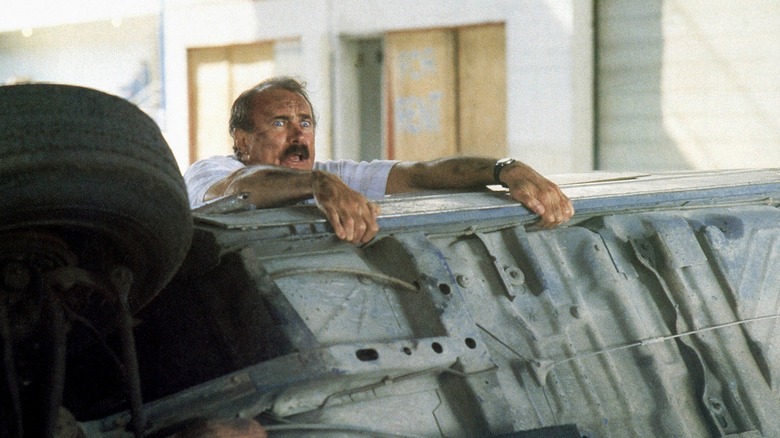
28 Dec 21:48

You Can Make Ultra-Impressive Party Food Without Spending a Fortune

by Amanda Blum

I’d bomb on Jeopardy. I am a ball and chain at trivia night. My brain does not retain facts or names unrelated to Wham songs. I cry when I land sports in Trivial Pursuit. I watch Wheel of Fortune, mouth agog, unable to complete a phrase missing only a Q. But I’ve always thought that I could excel on The Price is Right

Read more...

28 Dec 17:45

The Matrix Resurrections Co-Writers Reveal The New Morpheus Was Planned All Along

by Valerie Ettenhofer

Warning: This article includes frank discussion of spoilers from "The Matrix Resurrections."

"The Matrix" series has always been as cerebral as it is action-packed, with a penchant for leaving viewers with more than a few lingering questions after the credits have rolled. The Wachowski sisters have created an incredibly imaginative world, but in the franchise's latest entry, "The Matrix Resurrections," it can be tough to tell where creative choices end and practical ones begin. For example, when we see Morpheus, he's no longer played by Laurence Fishburne, but instead embodied by "Candyman" actor Yahya Abdul-Mateen II. What's the deal with that?

Morpheus 2.0 Was Always In The Blueprint

While viewers may have jumped to conclusions about Fishburne's willingness to reprise the role, the movie's co-writers, David Mitchell and Aleksandar Hemon, make it clear that there's more to this chapter of Morpheus' story than a simple casting decision. In an interview with Gizmodo, Hemon simply says that "a new Morpheus was there from the beginning."

The plot of the latest "Matrix" film takes place 60 years after the third entry, "The Matrix Revolutions," despite being filmed fewer than 20 years later. While Carrie-Anne Moss' and Keanu Reeves' characters have been in relative stasis, preserved in pods, Abdul-Mateen portrays an alternate version of Morpheus, just as Jonathan Groff is an alternate version of Agent Smith (Hugo Weaving). The rules for which characters age and which change seem to be inconsistent, but according to Mitchell and Hemon, it was mostly planned this way.

But There Was A Role Written For Another Actor

"We knew that Keanu Reeves and Carrie-Anne Moss would be involved. Without them, this thing would not have been possible," Hemon says, indicating that Trinity and Neo were the two characters filmmakers were most interested in capturing via original cast members. Hemon goes on to say that there was a character who might have been written with a different actor in mind than the one who ended up on screen, but they always knew that could be the case.

"I've learned that moviemaking, it's a world of contingency," Hemon says, revealing that the pair did write a role "for someone we thought would play [it] and then it was not possible." All signs indicate that this character wasn't Morpheus, but Agent Smith, as Hemon tells Gizmodo that Weaving was at one point in early talks to return. "It was not entirely resolved," Hemon says, but adds that the nature of "The Matrix" universe and this entry in particular make it possible for different actors to step into roles. "Agent Smith would have been different in some ways, no matter who played it," he says. Personally, I think Groff was a great addition to the cast, playing his part with a sinister edge viewers couldn't quite place until his identity was revealed.

Now that Yahya Abdul-Mateen II's presence in "The Matrix Resurrections" is done being questioned, we can get back to what we should've been doing all along: appreciating his obvious star power. In addition to his recent turn as Morpheus, fans of Abdul-Mateen II have upcoming projects to look forward to. He's set to appear in both Michael Bay's "Ambulance" and the DC sequel "Aquaman and the Lost Kingdom" in 2022.

"The Matrix Resurrections" is currently in theaters and streaming on HBO Max.

Read this next: The 14 Greatest Action Movies Of The 21st Century

The post The Matrix Resurrections Co-Writers Reveal the New Morpheus Was Planned All Along appeared first on /Film.
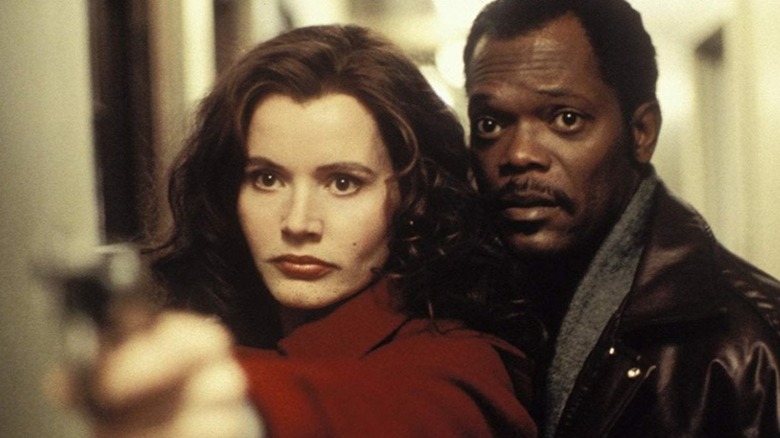
28 Dec 17:45

Demon Slayer Season 2: Character Development Edition!

by Deshawn "DeLa Doll" Thomas

We're officially four episodes deep into Demon Slayer's Entertainment District Arc, which has taken place almost exclusively in a fictionalized, demon-infested version of Japan's historic Yoshiwara Red Light District (which is now Tokyo, Japan). Where the first three episodes of the arc focused on setting the scene, pushing the narrative, and character development, episode 4 saw a return to action and actual demon slaying.

While my previous "Demon Slayer" reviews focused on one episode each, but due to the holidays and the fact that episode 3 felt criminally short anyway, I'm doing a juicy, double-stuffed review that goes over the events of the episodes 3 and 4. Let's get into it!

New Demon Reveal: Daki

In episode 3, titled "What Are You?" the demon that has been hiding out in Yoshiwara is finally revealed. Somewhat unsurprisingly, she has been working as an Oiran in the same house that Zenitsu was "sold" to. The demon's name is Daki, but she has been disguising herself as a beautiful human for decades, always choosing aliases that contain the word "hime." Her current alias is Warabihime. Interestingly, "hime" is the Japanese word for "princess" or a woman of nobility. It can also be used to describe beautiful women, so it makes sense that a demon as vain and narcissistic as Daki would choose to use it in all of her human disguises.

Much of episode 3 focuses on Daki's characterization, and we learn that in addition to her insane levels of vanity and obsession with beauty — she won't even eat humans that she considers "ugly," opting to simply kill them instead — she is also incredibly cruel. Even when she is working as an Oiran in her human disguise, her cruelty is so severe and legendary that she often drives those around her to run away or commit suicide in order to escape her malice.

The only individual she is shown to have any respect for so far is the demon lord himself, Muzan Kibutsuji, from whom she seems to crave praise and validation, even going so far as to become noticeably subservient in his presence — a far cry from cry from her interactions with literally everyone else we've seen her with.

Daki commands such authority that even the house owners bow to her, cowering in fear of her wrath. In fact, everyone who is forced to live under the same roof appears to be terrified of her, with the exception of a newly refocused Zenitsu.

Zenitsu Is Brave, Actually

Despite my long-held disdain for Zenitsu, I have to point out that he is a somewhat relatable character in that his emotions and reactions to things going on around him are realistic. I give him a lot of crap for his cowardice, but he has every right to be terrified. He readily admits to being afraid and is working on combating his fears in order to do what's right. Seeing that growth in his first encounter with Daki was awesome.

The yellow-haired electro-boy not only managed to regain his focus and remember the task at hand, but he does so just in time to defend a defenseless girl from Warabihime/Daki without hesitation. Where the Zenitsu of season 1 may have run away, the new and improved Zenitsu was ready to protect and attack if need be, and he didn't have to be unconscious this time to do it. It looks like he's growing up after all.

Given his current growth and borderline supernatural survival instincts that we saw in the Mugen Train Arc, Zenitsu stands a good chance of making it out of Daki's clutches alive and well, though I do wonder if Daki's aesthetic appeal will have any impact on his judgment or interactions with her in the coming episodes. Either way, Zenitsu is officially off my s**tlist. You know, for now.

Tanjiro Is Disobedient — Good!

As far as other characters, we get to learn a little more about each of them in episodes 3 and 4 as well. For Tanjiro, the impact of Rengoku's death is still strong, shown through his refusal to leave Yoshiwara even after Tengen tells both him and Inosuke that there's no shame in leaving, and that survival is the true victory at this point. Interestingly, this is also an example of Tanjiro being disobedient in order to serve the greater good, and there were several moments so far in this season that made a point to point out how Tanjiro's honesty and obedience were almost a hinderance for him and the mission. It looks like Zenitsu isn't the only one doing displaying meaningful growth and character development.

Tanjiro's strengthened resolve is even more clear during his battle with Daki. As someone who has their own struggles with fear and anxiety, it was really cool to see Tanjiro pull himself out of a defeatist mindset by addressing and countering the negativity and self-doubt that threatened to overtake him after Daki knocked the wind out of him.

The scene was particularly powerful to me on a personal level because his process for regaining his composure in the face of difficultly was not unlike my own. He recognized the root of the issue, got up, and ultimately decided to keep fighting despite the odds because survival was the only option. It was a very relatable moment, and perfectly illustrated the kind of heart and humanity that makes "Demon Slayer" stand out from other shonen anime. The elements of hope feel realistic as opposed to forced, as does the character growth.

Tegen & Inosuke

Since this has turned into an examination of character growth in the Red-Light District Arc, let's go ahead and look at Tengen and Inosuke. Where Tengen came off as an arrogant, inconsiderate douchebag in the first episode, by episode 4 he has proven to be caring and capable of remorse and humility. This is particularly evident in his merciful dismissal of and apology to Tanjiro and Inosuke when he informs them of Zenitsu's disappearance. He acknowledges that he has somewhat selfishly put their lives at risk because he was so focused n rescuing his wives, and he doesn't berate them for being weaker or seemingly incapable of handling the mission. Instead, he tells them that survival can also be a victory, and that he'd rather they return home to safety so he can complete the mission alone as opposed to further exposing them to danger in Yoshiwara. He also shows a very enthusiastic Inosuke some kindness by entrusting him with "muscle mice," which was really cute and reminded me that "Demon Slayer" is technically considered children's entertainment in its original country of Japan, despite the darker themes and violence that color so much of the story.

Speaking of Inosuke, his intelligence continues to become more apparent. He's not just a dual-wielding, impulsive wild boy with no home training; he's capable of more strategic thinking and thoughtful heroism than he was when he was first introduced in season 1. During the rooftop exchange with Tanjiro in episode 4, it becomes obvious that their friendship and experiences thus far have had a positive impact on Inosuke.

Overall, things are certainly picking up in Demon Slayer's Entertainment District Arc. While I'm grateful for the fact that we finally got another fight scene, I'm just as happy that so much time has been dedicated to showcasing the personal growth and depth of the characters we've come to know over the course of the series. That said ... when are gonna get some more Nezuko action? That poor girl has spent like 98% of this arc in a box, so I hope we get to see her again soon in the next episode.

Read this next: 15 Must-See Horror Anime Movies

The post Demon Slayer Season 2: Character Development Edition! appeared first on /Film.
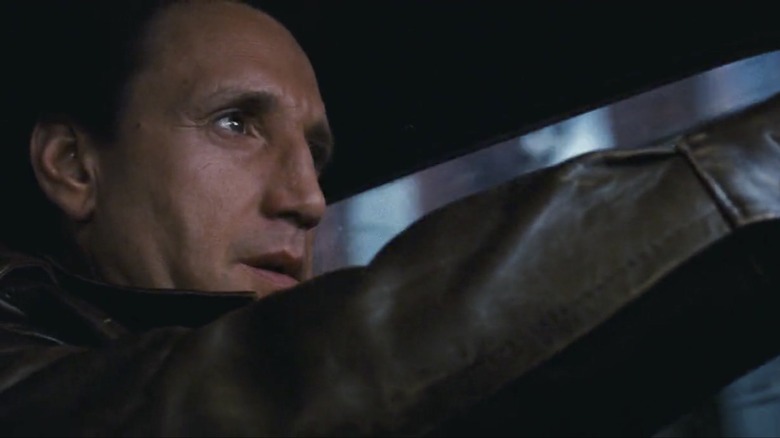
28 Dec 17:38

Hailee Steinfeld Loves Her Hawkeye Scenes With Florence Pugh As Much As You Do

by Sandy Schaefer

Spoilers ahead for all six episodes of "Hawkeye" season 1.

One of the best parts of any Marvel Cinematic Universe film or series is getting to see major characters interact with one another for the first time. Indeed, in the case of "Hawkeye," one highlight exchanges between Kate Bishop (Hailee Steinfeld) and Yelena Belova (Florence Pugh), both of whom only joined the franchise this year. As if getting to watch Emily Dickinson from "Dickinson" and Amy March from "Little Women" cross paths wasn't exciting enough for fans of those period pieces, it turned out Steinfeld and Pugh also have crackling chemistry onscreen.

In an interview with ET, Steinfeld named Kate's first meeting with Yelena as one of her two favorite moments from "Hawkeye" season 1, along with the big car chase from episode 3. The latter scene pit Kate and her reluctant mentor Clint Barton (Jeremy Renner) against the Tracksuit Mafia and was partly shot and edited to look like a single take. It culminated with Kate and Clint employing all kinds of trick arrows (including one infused with Pym Particles) to ward off their opponents, much to Steinfeld's delight.

Noting that she and Renner had "the absolute time of our lives" filming the scene, Steinfeld explained why it encompassed so much of what she had hoped to get out of joining the MCU:

"It was just so amazing, because this show is so beautifully balanced with these grounded characters and these very human emotional conversations, and of course, in the perfect MCU fashion, the car chases and the wild stunts and fight sequences. That was one of the first moments I had where I felt like, I had been in this very character-driven world, and then we were thrown in the middle of this car chase, and it was just the most epic thing."

Kate Bishop Yelena Belova Buddy Movie When?

After briefly crossing paths when Yelena tried to kill Clint at the end of episode 4, "Hawkeye" episode 5 began with Kate and Yelena meeting properly for the first time at Kate's apartment. However, in spite of their initial hostilities (y'know, over the whole Yelena trying to murder Kate's idol turned friend), the two amusingly ended up bonding while sharing some mac and cheese and hot sauce over the course of their subsequent conversation.

Here's what Steinfeld had to say about the pair's unexpected "little girls' night":

"That was some of the most fun I've had working and Florence is incredible in that scene. That was really special, and fun to play through."

Kate and Yelena would go on to have another equally memorable interaction in the "Hawkeye" finale, resulting in a comical elevator fight that spills out into an almost slapstick-y brawl between the duo across a mostly empty office building floor (much of which is captured in a smooth, horizontal tracking shot). It's enough to leave you wanting to see a full-blown buddy movie featuring Kate and Yelena on a mission to save the world together. (Clint can just chill at home with his family this time; it's what he wants to do, anyway.) Failing that, there's always the potential "Hawkeye" season 2, yes?

The entirety of "Hawkeye" season 1 is streaming on Disney+.

Read this next: The 15 Best Debut Films From Directors

The post Hailee Steinfeld Loves Her Hawkeye Scenes With Florence Pugh As Much as You Do appeared first on /Film.
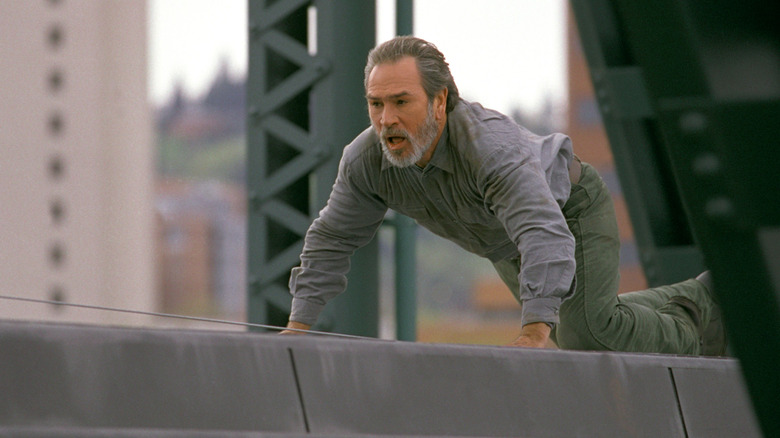
28 Dec 11:44

China Says SpaceX Satellites Nearly Collided With Its Space Station

by BeauHD
Chinese citizens lashed out online against billionaire Tesla and SpaceX CEO Elon Musk on Monday after China complained that its space station was forced to take evasive action to avoid collision with satellites launched by Musk's Starlink program. CNBC reports: The satellites from Starlink Internet Services, a division of Musk's SpaceX aerospace company, had two "close encounters" with the Chinese space station on July 1 and Oct. 21, according to a document submitted by China earlier this month to the U.N.'s space agency. "For safety reasons, the China Space Station implemented preventive collision avoidance control," China said in a document published on the website of the United Nations Office for Outer Space Affairs. The complaints have not been independently verified. In a post on China's Twitter-like Weibo microblogging platform on Monday, one user said Starlink's satellites were "just a pile of space junk," while another described them as "American space warfare weapons." SpaceX alone has deployed nearly 1,900 satellites to serve its Starlink broadband network, and is planning more. "The risks of Starlink are being gradually exposed, the whole human race will pay for their business activities," a user posting under the name Chen Haiying said on Weibo.
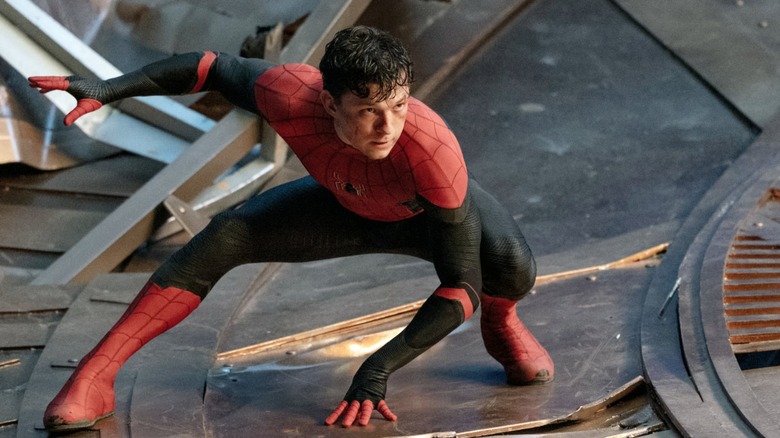
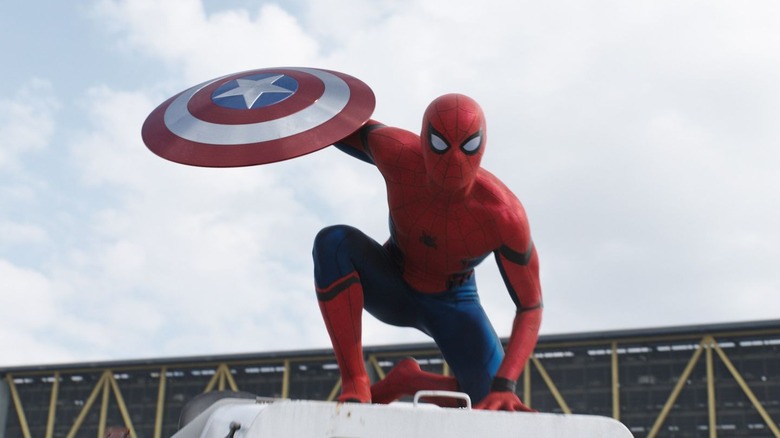
Read more of this story at Slashdot.

28 Dec 00:24

FreeDOS 1.3 RC5

Reply from Gordon228, 28.12.2021, 00:46:

[image]Here you go this is what i get note that this error i think is common on sata boards but everything is ide. forgot to add this happens when installing.