Ronald.phillips
Shared posts
Microsoft's Mesa D3D12 Driver Now Allows OpenGL 4.2
Stadia Neglect to Continue, Google Wants to License Tech to Bungie, Capcom, and Others

It isn’t exactly breaking news that Google’s Stadia game streaming service is not exactly in a great place. The company shut down their internal Stadia development studios early last year and the number of big games coming to the service has slowed to the crawl. Well, unsurprisingly, per a new report from Business Insider, Stadia has been “deprioritized” within Google, although the company isn’t willing to give up on the underlying tech just yet.
Apparently, Google is shopping Stadia tech to partners under the new name Google Stream. Word is, there were fairly high-level talks with Bungie, although those may have been scuttled by the recent Sony acquisition. There have also been talks with Capcom about setting up a system where people can play demos directly from the Capcom website. Reaching a bit further afield, Google may also partner with Peleton for game-like experiences on their exercise equipment.
Of course, take this with a small grain of salt, although Business Insider is usually a solid source. For their part, Google confirms they’re looking for new partners to license their streaming tech to, citing AT&T offering a free streaming version of Batman: Arkham Knight, but as you might expect, they aren’t commenting on the continuing neglect of Stadia itself…
We announced our intentions of helping publishers and partners deliver games directly to gamers last year, and have been working toward that. The first manifestation has been our partnership with AT&T, who is offering Batman: Arkham Knight to their customers for free. While we won't be commenting on any rumors or speculation regarding other industry partners, we are still focused on bringing great games to Stadia in 2022.
The rise (well, semi-rise) and fall of Stadia has always been a bit of a baffling story. The tech really is good! It’s just the business model that sucks. You’d think Google could fix the latter, while continuing to push the former, but I guess not.
What do you think? Could other publishers and developers end up making better use of the Stadia tech than Google itself did?
The post Stadia Neglect to Continue, Google Wants to License Tech to Bungie, Capcom, and Others by Nathan Birch appeared first on Wccftech.

Nick from Melrose Place dead at 70 from a heart attack. In other news, Melrose Place was on long enough ago that one of the actors on it was 70. In other, other news, you're old now, too [Sad]

Best Battery Maintainer for 2022 - CNET

Facebook To Bring in Mandatory Distances Between Virtual Reality Avatars


Read more of this story at Slashdot.
Google reportedly selling Stadia technology as “Google Stream” to Bungie, Peloton, and others
The Stadia streaming service has been an uphill battle for Google, and the company shutting down its only in-house game studio in early 2021 wasn’t a great sign. Stadia has continued to stick around, but a new report from Business Insider reveals how the platform’s priorities are shifting from a consumer product to a service for other businesses.
Google publicly confirmed in 2021 that it planned to sell Stadia’s technology as a service to select partners, allowing companies to build products that use Stadia streaming to varying extents. Business Insider reports that this technology is called “Google Stream,” and most of Google’s efforts with Stadia are now focused on striking deals to use Google Stream. Peloton is reportedly using Steam to power games on its fitness bikes, such as Lanebreak. Google was also in talks with game developer Bungie last year, which would have involved Bungie creating a Stadia-like streaming platform of its own and using Stream for the technical side, but it’s not clear if those plans will continue now that Sony is purchasing Bungie.
Meanwhile, Google’s plan for the Stadia-branded service is a “content flywheel” strategy, according to people familiar with the company’s plans. The idea is to retain a steady flow of new indie games and content from existing publishing deals, which is definitely noticeable — the Stadia Pro subscription service recently passed 50 included games, many of which are independent games. One source told Insider, “the key thing was that they would not be spending the millions on the big titles, and exclusives would be out of the question.”
Even though Stadia doesn’t appear to be in danger of shutting down, Google is definitely done trying to directly compete with Xbox Game Pass Streaming and Amazon Luna. It’s not all doom and gloom, though — Stadia is expanding to both LG and Samsung smart TVs, and more games are planned throughout this year.
The post Google reportedly selling Stadia technology as “Google Stream” to Bungie, Peloton, and others appeared first on xda-developers.

Billionaire space barons want to build 'mixed-use business parks' in low Earth orbit
The Space Race is no longer a competition between the global superpowers of the world — at least not the nation-states that once vied to be first to the Moon. Today, low Earth orbit is the battleground for private conglomerates and the billionaires that helm them. With the Mir Space Station having deorbited in 2001 after 15 years of service and the ISS scheduled for retirement by the end of the decade, tomorrow’s space stations are very likely to be owned and operated by companies, not countries. In fact, the handover has already begun.
“We are not ready for what comes after the International Space Station,” then-NASA-administrator Jim Bridenstine explained at a hearing of the Senate Commerce Committee’s space subcommittee in October. “Building a space station takes a long time, especially when you’re doing it in a way that’s never been done before.”
NASA is on board with this transference, having drafted and published its Plan for Commercial LEO Development (CLD) in 2019, which calls for “a robust low-Earth orbiteconomy from which NASA can purchase services as one of many customers,” as part of the Human Exploration and Operations Mission Directorate at Johnson Space Center. The CLD plan lays out the agency’s necessary steps towards establishing a commercial space station ecosystem. These start with allowing private corporations “to purchase ISS resources,” i.e. lease space on the station for commercial activities, “allow companies to fly private astronauts to the ISS,” which SpaceX did last April, as well as initiating “a process for developing commercial LEO destinations” and working to “stimulate demand” for those destinations and services.
“NASA by its very nature is an exploration agency,” the space agency wrote in 2019. “We like to challenge the status quo and discover new things. We like to solve impossible problems and do amazing things. NASA also realizes that we need help and do not know everything. We can only accomplish amazing things by teamwork. NASA is reaching out to the US private sector to see if they can push the economic frontier into space.”
Space exploration has been a public-private cooperative effort since the founding days of NASA. For example, the expendable launch vehicles that put satellites into LEO from 1963 to 1982 — the Titan by Martin Marietta, the Atlas from General Dynamics, McDonnell Douglas’ Delta rockets, and the Scout from LTV Aerospace Corporation — were all built by private aerospace companies as federal contractors but operated by the US government. “The US government essentially served as the only provider of space launch services to the Western world,” wrote the FAA. This changed in the ‘70s when the European Space Agency developed its own ELV, the Ariane, and NASA swapped out its own rockets for the Space Shuttle program, which became the nation’s default satellite launch system.
Private space launches, like what SpaceX and Northrop Grumman do, got their start in the US way back in 1982 when Space Services sent up its Conestoga rocket prototype, really the repurposed second stage of a Minuteman missile. The size, number and severity of hoops the company had to jump through to get launch clearance was enough to convince members of congress to introduce legislation streamlining the process, eventually leading then-President Ronald Reagan to declare expanding private sector involvement in civil space launches to be “a national goal.” We’ve seen a number of notable milestones in the decades since including the launch of the Pegasus rocket operated by the Orbital Sciences Corporation in 1990, which was the first fully privately developed and air-based launch vehicle to reach space, Dennis Tito’s ride aboard a Soyuz rocket to the ISS in 2001 to become the Earth’s first space tourist, and the first SpaceX Dragon Capsule mission in 2010, the first time a privately-operated spacecraft was both launched into and recovered from orbit.
The idea of letting private space companies build, launch and operate their own stations grew largely from these earlier cooperative arrangements as well as from partnerships made via the International Space Station US National Laboratory, which is managed by the non-profit organization, the Center for Advancement of Science in Space.
“We leverage our core competencies, facilitate public-private partnerships, and utilize the platform capabilities and unique operating environment of the space station,” the ISSNL’s mission statement reads. ”We create demand, incubate in-space business ventures, provide access for and awareness of fundamental science and technological innovation, and promote science literacy of the future workforce.” More than 50 companies have already partnered with the ISSNL aboard the space station and the agency is currently working with 11 others to “install 14 commercial facilities on the station supporting research and development projects for NASA.”
Axiom's ISS-grown space station
At the forefront of this commercialization effort is the Axiom Space corporation. The Houston-based company has been contracted by NASA to construct a habitat module for the ISS, install it aboard the station in September of 2024 and then detach the module for use as an independent space platform once the ISS is eventually deorbited by 2028.
“Axiom's work to develop a commercial destination in space is a critical step for NASA to meet its long-term needs for astronaut training, scientific research and technology demonstrations in low-Earth orbit,” NASA’s Bridenstine, said in a 2020 statement.
"We are transforming the way NASA works with industry to benefit the global economy and advance space exploration," he added. "It is a similar partnership that this year will return the capability of American astronauts to launch to the space station on American rockets from American soil."
Axiom has tapped Thales Alenia Space to build both the module itself and a meteoroid shield for the Axiom Node One (a pressurized segment that will connect the Axiom hub onto the ISS).
"The legacy of the International Space Station structure is one of safety and reliability despite huge technical complexity," Axiom Space CEO, Michael Suffredini, said in a 2020 statement. "We are thrilled to combine Axiom's human spaceflight expertise with Thales Alenia Space's experience to build the next stage of human settlement in low Earth orbit from a foundation that is tried and tested."
Axiom has also struck a deal with SpaceX to ferry four “Axionauts” — yes, that’s really what they’re calling them — up to the ISS to train for life in microgravity. The 8-day mission, dubbed Ax-1, was supposed to be led by former NASA astronaut Michael Lopez-Alegria, who would be joined by a trio of space tourists, each of whom shelled out $55 million to ride along. The trip was originally slated to take place in February, however, it was repeatedly delayed due to “additional spacecraft preparations and space station traffic” and is currently scheduled to take place on March 30th. The company is already at work on missions Ax-2 through -4 and has reserved a set of Dragon capsules, though the crew manifests have not yet been finalized.
In addition to the crew habitat, Axiom is building a secondary commercial capsule for Space Entertainment Enterprise (SEE), a startup co-producing Tom Cruise’s latest joint which will be shot at least partially in space later this year. The SEE-1 is scheduled for installation in December, 2024 and will host both a production studio and — somehow — a sports arena as well. Bring on the Battle Rooms.
Nanoracks’ Starlab
While Axiom Space is trying to bud its orbital platform from the ISS like a polyp, space service company Nanoracks is working to build a free-flying station of its own, with help from Voyager Space and Lockheed Martin, as well as a $160 million CLD contract from NASA. That contract runs through 2025 and “will be supplemented with customer pre-buy opportunities and public-private partnerships,” per a recent Lockheed press release.
Nanoracks is already deeply involved in commercial ventures to, from and on the ISS. Founded in 2009, the company has delivered some 1,300 research payloads and small satellites to the station and currently rents space for research modules aboard its Nanoracks External Platform on the outside of the ISS. Its wide-bore Bishop airlock was the first permanent commercial addition to the ISS.
The company is developing a line of smaller self-contained orbital platforms, dubbed Outposts, which could serve a variety of purposes from refueling stations for satellite constellations, to cubesat launchers and advanced technology testbeds to hydroponic greenhouses. The first iteration is expected to be launched by 2024.
The Starlab itself, which should be ready for business by 2027, will consist of an inflatable 340 cubic meter habitat built by Northrop (similar to the Bigelow Expandable Activity Module, or BEAM, that was demonstrated on the ISS in 2016) that can accommodate up to four crew members simultaneously. Four solar panels will generate 60 kW of power for the station to use.
With just under half the usable interior space as the ISS, Starlab’s operations will be centered around its cutting-edge George Washington Carver (GWC) Science Park which includes a biology lab space, plant habitation lab, materials research lab and an unstructured workbench area enabling the station to offer services ranging from fundamental research and astronaut training to space tourism. However, tourists will take a backseat to scientific endeavors aboard the station. “Space tourism is what captures the headlines, but to have a sustainable business model, you really do need to move beyond that,” Nanoracks CEO Jeffrey Manber told TechCrunch last October.
Blue Origin’s Orbital Reef
With the “pay NASA to pay us to ferry Artemis gear to the moon” plan having been thoroughly imploded by the US federal court system, Jeff Bezos’ Blue Origin has set its sights on a goal slightly closer to Earth. The space launch and tourism company has partnered with Sierra Space to build, launch and operate a "mixed-use business park" in space, dubbed Orbital Reef.
The 830 cubic meter structure is still in its early planning stages, having garnered a $130 million Space Act contract from NASA last December for its development, and isn’t expected to launch until at least the second half of the 2020s. Few other details have yet been confirmed.
"Now, anyone can establish an address in orbit," Blue Origin declared last October when unveiling the project. "Orbital Reef expands access, lowers the cost and provides everything needed to help you operate your business in space." This from the company that got $28 million for a single seat aboard last year’s inaugural New Shepard flight.
Northrop Grumman’s Cygnus-based space station
NASA’s third Space Act agreement recipient from last December is defender contractor Northrop Grumman, which plans to repurpose one of its existing Cygnus spacecraft for use as an orbital station.
Like Orbital Reef, Northrop’s as-of-yet unnamed design is still in its earliest stages of development, though the company does expect the new station to accommodate up to four permanent crew members once it does initiate operations and could at least double that number as the station is expanded throughout its estimated 15-year service life.
Under the terms of the $125 million agreement, "the Northrop Grumman team will deliver a free-flying space station design that is focused on commercial operations to meet the demands of an expanding LEO market," Steve Krein, vice president of civil and commercial space at Northrop Grumman, said in a statement last December. "Our station will enable a smooth transition from International Space Station-based LEO missions to sustainable commercial-based missions where NASA does not bear all the costs, but serves as one of many customers."
Of course, the US and its commercial constituents are far from the only parties interested in colonizing LEO for business interests. China launched the Tianhe core module of its new 3-crew member Tiangong space station into orbit this past April with the remaining Experiment Modules and separate space telescope going up between this year and 2024. Similarly, India’s space agency is developing a station of its own with plans to launch it by the end of the decade, following the country’s upcoming Gaganyaan mission, the first crewed orbital spacecraft to launch as part of the Indian Human Spaceflight Programme.
These propositions are only the start of humanity’s expansion into the stars from low Earth orbit, to the Lunar Gateway, to Mars and beyond. But the question isn’t so much of when and how we’ll do so, but rather, who will be able to afford to?
Wayland v. X.Org for NVIDIA Linux gaming performance on Ubuntu 22.04: Which one reigns supreme?

NVIDIA launches their 510 Linux driver series that pairs with the recent XWayland and a modern version of the Wayland compositor. This new compositor is similar to the current GNOME/Mutter packages. Now, NVIDIA and their (X)Wayland venture appear to deliver identical performance to the standard X.Org session.
NVIDIA Wayland support for the upcoming Ubuntu 22.04 LTS release shows hopeful results in benchmark comparisons to Intel and AMD's offerings
The NVIDIA Wayland support with GBM usage has leveled out and seems promising for Linux's approaching Ubuntu 22.04 LTS release. Phoronix offers a few benchmarks results about the NVIDIA 510 driver on Ubuntu 22.04 LTS in its latest state.
Wayland is a protocol that a backend compositor uses to communicate with its clients. It is also a C library implementation of that protocol. Weston is the reference implementation of the Wayland compositor. The platform supports Wayland and Weston. Check the Release Notes for specific versions supported.
— NVIDIA documentation
Contemporary Wayland support in KDE Plasma and GNOME Shell has produced positively within the open-source Radeon driver stack. With the newest NVIDIA drivers, Wayland support promises the next generation.
Phoronix benchmark testing utilizes the NVIDIA GeForce RTX 3090. It tests various games and graphical settings while confirming that the games were not hitting any walls on the graphics card. The new NVIDIA 510.47.03 Phoronix used a Linux driver compared to the latest Ubuntu 22.04 LTS daily packages with the most recent (X)Wayland code and the added GNOME Shell 41.3 along with other updated components.

Phoronix tested Linux gaming benchmarks using a combination of native Linux games and Steam Play titles under the GNOME Wayland session. Ubuntu users witnessed a close to identical default performance with the open-source Intel and AMD Radeon graphics drivers. Phoronix followed up with the duplicate games in the GNOME X.Org session to compare the (X)Wayland performance so that users can see the future once the crucial Ubuntu Long Term Support releases. The website states that after testing, it looks hopeful for Ubuntu 22.04 LTS and anticipates that this version will be the standard after its release.
The post Wayland v. X.Org for NVIDIA Linux gaming performance on Ubuntu 22.04: Which one reigns supreme? by Jason R. Wilson appeared first on Wccftech.

The Captain America Easter Egg You May Not Have Noticed In Shang-Chi

Helmed by Destin Daniel Cretton, "Shang-Chi and the Legend of the Ten Rings" marked the arrival of Simu Liu as Shang-Chi — Marvel Studio's first Asian superhero and features a predominantly Asian cast and crew. The film was a breath of fresh air in the latest slew of Marvel movies — the combination of martial arts, Chinese mythology, and folklore, and its dangerous-yet-empathetic villain made it one of the most engaging standalone movies we've seen from the studio in recent times. But like every oter Marvel movie, it's also packed with comic book references, cultural nods, and Marvel Cinematic Universe Easter eggs — they brought back Tim Roth's Abomination for the first time since "The Incredible Hulk" in 2008!
Although Abomination's reveal could be seen early on in the movie's marketing, there's another Easter egg planted into "Shang-Chi and the Legend of the Ten Rings" that you may have missed. Captain America's shield seems to make an appearance, though not in the way that you might think.
That's America's Shield

As children, Shang-Chi and his sister Xialing were given a set of emerald pendants known as The Eyes of the Dragon by their mother, which are used to reveal the safe passage into the magical village of Ta Lo. When the Ten Rings attack Shang-Chi and Katy (Awkwafina) on a moving bus, the superhero discovers that they had managed to steal his pendant. Worried that they'd attack his sister next, Shang-Chi travels to Macau, where he finds Xialing (Meng'er Zhang) running an underground fight club that she founded after escaping their father, Xu Wenwu (Tony Leung).
When Shang-Chi finds himself suddenly facing off with his sister, the camera rests on our hero as he prepares for battle. Through the chain cage in the background, you can see a certain disc-shaped vibranium object with a five-pointed star in its center. It's not the shield itself, but it appears to be graffiti on the wall. Though this is instantly recognizable as Captain America's shield, others wonder if it could be a representation of John Walker (Wyatt Russell), the new Captain America from "The Falcon and the Winter Soldier." We're not sure how the timeline of "Shang-Chi" and the Marvel series on Disney+ lines up, but that's an interesting proposal.
However, other fans think the Easter Egg may be a different reference to "The Falcon and The Winter Soldier." Since Xialing's fight club could be affiliated with the city of Madripoor (where Baron Zemo, Sam, and Bucky traveled for information on the super-soldier serum in the Marvel series), there are those who believe the shield is the flag of Madripoor.
In the comics, Madripoor is a safe haven for criminals and makes most of its appearances in X-Men stories. It was first introduced in the MCU as the location where Sharon Carter (Emily VanCamp), the Power Broker, was holed up during "The Falcon and the Winter Soldier." It's a corrupt, highly volatile city that is built on the foundation of gambling. If the Easter egg is, in fact, the flag of Madripoor concealed away for fans to speculate on, maybe we can expect to see the ties between the corrupt city and the Ten Rings. In the film's post-credits sequence, Xialing is seen running her father's Ten Rings organization despite promising her brother to disband it. However, even though the fictional country's red flag does feature a similar white crescent shape and star, the star is much smaller, and there's a lion icon that's much more prominent. So this might be a dead end.
Fortunately, "Shang-Chi" has a sequel in the works from filmmaker Destin Daniel Cretton, so we'll see if Madripoor continues to play a big part in the MCU sometime down the road.
Read this next: 11 Marvel Comics Villains We Really Want To See In The MCU
The post The Captain America Easter Egg You May Not Have Noticed in Shang-Chi appeared first on /Film.
Amazon Increases the Price of Prime To $139 Per Year
Read more of this story at Slashdot.
Best Dog Toys: Our Pups Picked Their Favorite Toys and Yours Will Love Them Too

The Best Cookware and Tools for Small Kitchens (2024): Storage, Cookware, and Other Tips
I can’t download vCenter Converter / Standalone Converter?
I tweeted about this yesterday, but as I had about 14 questions in 24 hours I figured I would do a blog post as well so that it gets indexed by Google properly. Many folks are asking where vCenter Converter / Standalone Converter has gone to as it has disappeared from the VMware Download website. Although the links are still there on the VMware website and for instance in VMware Workstation...
Microsoft's new Cyber Signals brief offers some really interesting insights into current cybersecurity threats
Why You Should Stop ‘Gamifying’ Your Health and Fitness

DHS Connects Government, Private Sector in New Cyber Safety Review Board
Long-awaited public-private initiative established to evaluate nation’s cybersecurity and improve resilience
.Net Framework 3.5 用に拡張実装があったらしいよ ・ω・
ところがどっこい、.Net Framework 4.0の機能をバックポートして 3.5 に再実装したアップデートが2011年2月にあったのです。
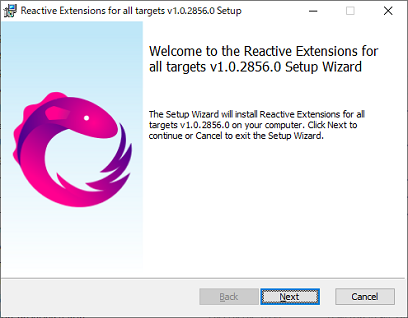
Download Reactive Extensions (Rx) v1.0.2856.0 from Official Microsoft Download Center
インストール後、System.CoreEx.dll と SystemReactEx.dll を参照に追加するだけで使えます。
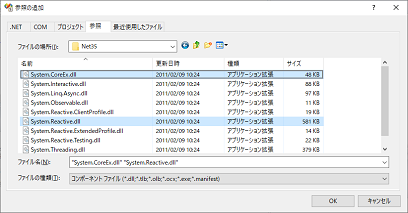
追加されるのは以下のコンポーネント
using System.Threading.Tasks
System.Observable.dll を追加すると
IEnumerable<int> みたいなのが使えるようになって
The Raiders Of The Lost Ark Boulder Chase Was More Real Than You Think

Indiana Jones has had his share of close calls. Whether it's dodging arrows or Nazis, luck is just as important to him as his trusty whip. The same may or may not be said for Harrison Ford whenever he stepped on-set to play the iconic hero. From tearing his ACL to actually getting punched by co-star Karen Allen, the actor took some hits during the filming of "Raiders of the Lost Ark."
One hit he luckily didn't take involves the colossal boulder that chases him out of the temple at the beginning of the movie. If there ever was a stunt that could've gone disastrously awry it was this one. And while it's an absolutely exhilarating scene that's become quintessential to Indy's daring spirit and the palpable danger he often finds himself in, Ford himself was right there with him: risking life-and-limb every time he put on that hat!
Ford Proved He Had Indy's Daring
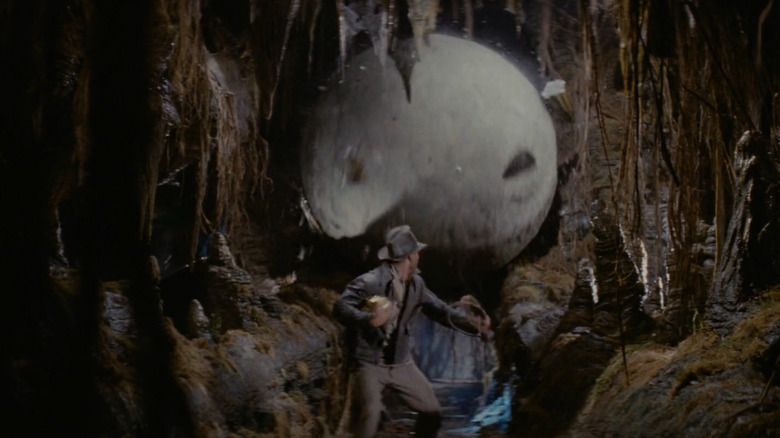
If Ford really does look like he's running from a 12-foot boulder in that scene, that's because he is. Or at least one made of fiberglass that weighed anywhere from 300 to 800 pounds. In a piece for American Cinematographer, Spielberg gave a detailed account of the effort that went into creating the realistic scene and keeping his lead actor from being flattened.
"The 12-foot rock which chases Harrison Ford in the cave sequence would have killed whoever it ran over — if it ever had. We went to great lengths to make a 12-foot rock out of fiberglass and wood and plaster precisely so that it wouldn't weigh as much as a real 12-foot boulder. So whether it weighed 300 pounds, which it did, or whether it weighed 80 tons, as it would have, it could still have done bodily harm to anyone falling beneath it — and Harrison was not doubled in those scenes. Not only that, but the sequence was shot in the second week of principal photography in London. I mean, the absolute worst time to eliminate your leading man is in the second week, but because the rock was more effective chasing Harrison with Harrison running toward camera, it just didn't work as well having him doubled. A double would have cheated his head down, so Harrison volunteered to do it himself. He succeeded. There were five shots of the rock from five different angles — each one done separately, each one done twice — so Harrison had to race the rock ten times. He won ten times — and beat the odds. He was lucky — and I was an idiot for letting him try it."
Maybe it wasn't a real boulder. But the fact that Ford raced from something that big and heavy -- let alone 10 times -- makes his stunt just as audacious as Indy's. Had anything happened to Ford it would've been a major setback on a film that Spielberg was already trying to cut costs on, but even if he could've found a way to get a double to work we doubt the actor would've gone for it. Ford almost always prefers to do his own stunts, something that's remained a constant even as he's gotten older. So while recent injuries on the sets of "The Last Jedi" or "Indiana Jones 5" have yet to slow him down, we're glad he's never had to cross "crushed by faux-boulder" off the game of Actors' Injury Bingo he's no doubt playing!
Read this next: 17 '80s Action Movies You Definitely Need To See
The post The Raiders of the Lost Ark Boulder Chase Was More Real Than You Think appeared first on /Film.
Zuckerberg Tells Staff to Focus on Video Products as Meta's Stock Plunges
Read more of this story at Slashdot.
Slackware, the Oldest Actively Maintained Linux Distro, Releases Version 15.0
Read more of this story at Slashdot.
Big Tech Should Reimburse Victims of Online Scams
Read more of this story at Slashdot.

.Net Framework 4.5アプリの 3.5への移植
|
key = string.Join(",", from n in item.Take(num).Select((string s, int i) => new
{
Content = s, Index = i }) where !ReplaseList.Contains(n.Index) select n.Content); |
|
key = string.Join(",", (string[])(from n in item.Take(num).Select((string s, int i) => new
{
Content = s, Index = i }) where !ReplaseList.Contains(n.Index) select n.Content).ToArray()); |
| ItemData itemData = Marshal.PtrToStructure<HedData>(ptr); |
| ItemData itemData = (ItemData)Marshal.PtrToStructure(ptr, typeof(HedData)); |
| public DLLPtr(IntPtr intPtr, string libName) { ptr = intPtr; name = libName; } |
| public DLLPtr(IntPtr intptr, string dllname) : this() { Ptr = intptr; Name = dllname; } |
Republican Senators raise concerns about IRS use of ID.me facial recognition
A group of Republican Senators led by Mike Crapo of Idaho has sent the Internal Revenue Service a letter expressing concerns about the agency's partnership with facial recognition service ID.me. Starting this summer, taxpayers will have to register for an ID.me account to be able to access the online services IRS offers, including the ability to file taxes through its website. To be able to sign up, they have to send ID.me a copy of their government ID, a utility bill and a video selfie of themselves. The Senators called the last one the "most intrusive verification item," since it's more than just submitting a picture of one's face and can't be easily replaced like a password.
In the letter, the group said that it's "deeply concerned for many reasons," starting with the government's "unfortunate history of data breaches." It mentioned the attacks on the Office of Personnel Management back in 2015 as an example. If you'll recall, two separate attacks on the agency compromised the information of millions of then-current and former federal employees and led to the theft of 21.5 million Social Security Numbers.
The group also cited an IRS report in 2019, wherein it estimated that it faces 1.4 billion cyberattacks a year. "It is highly likely, with personal information on a reported 70 million individuals, including biometric data, ID.me could be a top target for cyber-criminals, rogue employees, and espionage," the Senators wrote. They've asked the agency a series of questions meant to shed light on the partnership in the letter. The Senators want to know if the IRS did due diligence to ensure taxpayers' information would be protected before it approved the partnership and what kind of oversight the agency has over the company. they also asked IRS if it made sure ID.me's system had gone through an independent cybersecurity audit, among many other things.
The CEO of ID.me recently admitted that the system uses a more powerful method of facial recognition than previously claimed. In a statement, he said ID.me employes a 1:many approach, which means it matches images against those in a database. He previously said it only uses a 1:1 approach that compares one's face to a photo on their government ID. A Bloomberg report published after that said the Treasury Department is reconsidering the IRS's partnership with the company and is now looking for alternatives to its facial recognition software.
A New AI Traffic Light Could Help Shorten Your Commute Times
Read more of this story at Slashdot.
The 10 best zombies in PC games

When you become a game designer, you are handed a big book of antagonists to use as guilt-free bullet fodder. First among them is the reliable, stinky zombie. (Also found in this repertoire are Nazis and Slimes. They are beyond the scope of this listicle.) The zombie is a preternaturally killable being. It has already experienced mortality once, so this creature more than anyone is ready to suffer the ignominy of death. It has practice, it knows what's coming. Being a zombie is like having two degrees. You're extra qualified, and you probably groan a lot.
Here's a list of the best zombies in PC games.

