Shared posts

08 Feb 20:11

Dying Light 2 Dev Says Xbox Series S GPU Holds It Back from 60 FPS

by Alessio Palumbo

Dying Light 2

Dying Light 2 runs at a solid frame rate on consoles, according to Digital Foundry. However, the Xbox Series S version is limited to 1080p resolution and 30 frames per second (and doesn't even have ray tracing), which irked some users.

Techland's Dying Light 2 Lead Designer Tymon Smektala, whom we often interviewed ahead of launch, replied on Twitter that the very GPU of the console holds the game back from targeting 60 frames per second.

We’re fixing the coop issues first, the demand broke Sony/Microsoft/Epic servers. Motion sickness will be addressed in the first upcoming patch. FoV + motion blur will be considered for the next. 30fps on Series S will be looked at, but the console's GPU is holding us back.

As a reminder, the Xbox Series S GPU is indeed much less powerful than the one Microsoft picked for the Xbox Series X, having slightly more than a third of the Compute Units featured in the more expensive console. It's not the first time we heard developers complaining about the specifications of the Xbox Series S; early on, id Software complained about the lacking memory, whereas more recently 4A Games highlighted the GPU as a possible challenge for future titles.

At the same time, some Xbox gamers pointed out that other titles do offer 60 frames per second options on the Xbox Series S, unlike Dying Light 2. Smektala took the jab gracefully with his response.

Good but philosophical question, I guess no one can answer. We’d need to recreate the world, the AI, the traversal mechanics in a different engine and see. But I admit Assassin's Creed Valhalla is a piece of fantastic tech, I adore the game. Anyways we tried, and we’ll try even more.

The upcoming patch will include a 60+FPS unlocked mode on Xbox Series X for those using VRR (variable refresh rate) equipped displays.

The post Dying Light 2 Dev Says Xbox Series S GPU Holds It Back from 60 FPS by Alessio Palumbo appeared first on Wccftech.

08 Feb 20:11

The Unnerving Rise of Video Games that Spy on You

by msmash
Players generate a wealth of revealing psychological data -- and some companies are soaking it up. From a report: While there are no numbers on how many video game companies are surveilling their players in-game (although, as a recent article suggests, large publishers and developers like Epic, EA, and Activision explicitly state they capture user data in their license agreements), a new industry of firms selling middleware "data analytics" tools, often used by game developers, has sprung up. These data analytics tools promise to make users more amenable to continued consumption through the use of data analysis at scale. Such analytics, once available only to the largest video game studios -- which could hire data scientists to capture, clean, and analyze the data, and software engineers to develop in-house analytics tools -- are now commonplace across the entire industry, pitched as "accessible" tools that provide a competitive edge in a crowded marketplace by companies like Unity, GameAnalytics, or Amazon Web Services. (Although, as a recent study shows, the extent to which these tools are truly "accessible" is questionable, requiring technical expertise and time to implement.) As demand for data-driven insight has grown, so have the range of different services -- dozens of tools in the past several years alone, providing game developers with different forms of insight. One tool -- essentially Uber for playtesting -- allows companies to outsource quality assurance testing, and provides data-driven insight into the results. Another supposedly uses AI to understand player value and maximize retention (and spending, with a focus on high-spenders). Developers might use data from these middleware companies to further refine their game (players might be getting overly frustrated and dying at a particular point, indicating the game might be too difficult) or their monetization strategies (prompting in-app purchases -- such as extra lives -- at such a point of difficulty). But our data is not just valuable to video game companies in fine-tuning design. Increasingly, video game companies exploit this data to capitalize user attention through targeted advertisements. As a 2019 eMarketer report suggests, the value of video games as a medium for advertising is not just in access to large-scale audience data (such as the Unity ad network's claim to billions of users), but through ad formats such as playable and rewarded advertisements -- that is, access to audiences more likely to pay attention to an ad.

Read more of this story at Slashdot.

08 Feb 19:21

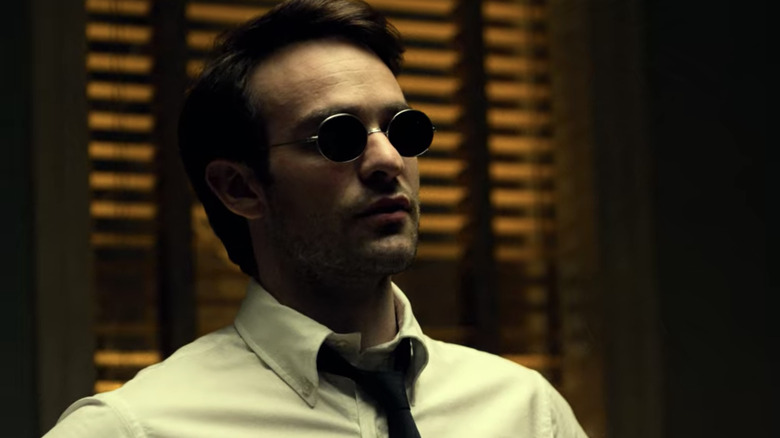
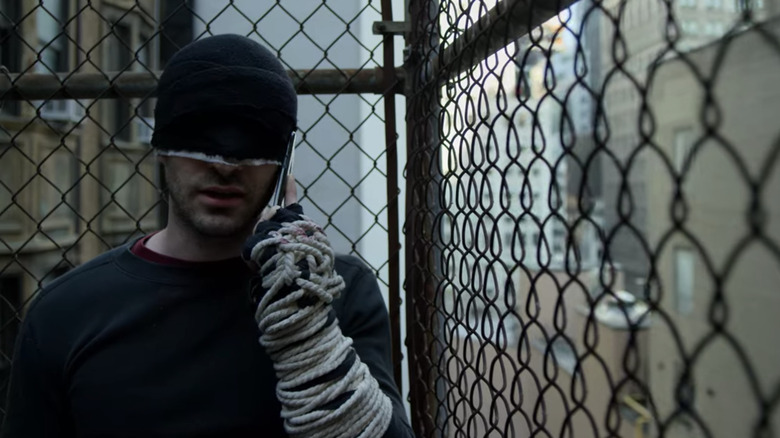
Charlie Cox Didn't Have To Lie About Spider-Man: No Way Home, Would Happily Return As Daredevil

by Joshua Meyer

Unlike certain other actors in "Spider-Man: No Way Home," Charlie Cox didn't always have to lie about his return as a Marvel character from another movie or TV show outside the mainline MCU. Cox only had one scene to reprise his role as Matthew Murdock from Netflix's "Daredevil" series, and apparently, he was as much in the dark as the rest of us, at least for a while, about Marvel's plans to bring him back.

"Daredevil" premiered in April 2015 and was Netflix's first Marvel show. It lasted three seasons, one more than any of the other street-level Defenders (Jessica Jones, Luke Cage, and Iron Fist), but Netflix canceled the show in November 2018. After that, Cox's future as the Man Without Fear seemed uncertain, and it was a full three years before he made his reemergence as Murdock in "No Way Home."

In an interview with Supernova, Cox explained that he genuinely thought his time as Daredevil was done. Apparently, Marvel brought him in at a late stage to film his one "No Way Home" scene, which enabled the actor to maintain plausible deniability, since he really didn't know at first that they were planning to introduce him into the MCU (along with his costar, Vincent D'Onofrio, who showed up on Disney+ as Kingpin in "Hawkeye.") Cox said:

"For years, I have been asked questions about returning as Daredevil, and the genuine truth was I 100% assumed that was gone, that ship had just sailed. I didn't hear from any of the folks at Marvel for a couple of years. It does now look like I was lying for a long time, I actually wasn't, I was only lying for a little bit of time. You still don't want to spoil it for people."

Cox On Daredevil's Future In The MCU

When Netflix scuttled its Marvel shows (not just "Daredevil," but the rest of the Defenders and their solo series, as well), we heard that Marvel Studios would have to wait at least two years before resurrecting any of those characters on Disney+, if it were so inclined. That two-year window has now passed, and Cox, for one, hopes to continue playing Daredevil far beyond his "No Way Home" cameo. He explained further to Supernova:

"I hope, I don't want to sound greedy, but I hope I get to do loads more. I hope I get to be involved way, way more for many years. I hope it never ends. I hope it gets to the point where people are like, 'You are too old to be playing this part.'

"I don't know what their plans are, but yes, my hope is that I get to do as much as I'm allowed to do, and to be involved. And it'd be really fun, the one thing that being in the MCU allows that we couldn't really do with the Netflix stuff, is that I can now interact with other MCU characters. So, that would be really cool. Crossovers is the thing I would like to do next. I don't know what that looks like, and I don't know what they're planning and all that kind of stuff. But there are some really interesting stories there that I'd love for the character to explore."

Will there ever be a "Daredevil" movie starring Charlie Cox? We'll just have to wait and see. In the meantime, "Spider-Man: No Way Home" is currently gaining on "Avatar" at the domestic box office, and you can still see Cox having epic hallway fights as Daredevil in the three seasons of his show on Netflix.

Read this next: Every Pre-MCU Marvel Movie Ranked

The post Charlie Cox Didn't Have to Lie About Spider-Man: No Way Home, Would Happily Return as Daredevil appeared first on /Film.

08 Feb 19:14

James Gunn Assures Steven Soderbergh That Yes, Some Superheroes Are Indeed F***ing

by Danielle Ryan

Until journalists stop asking directors what they think about superhero movies, we're unfortunately going to have to keep hearing about them. In the latest of a long line of "this again?" interviews with the great Steven Soderbergh, The Daily Beast asked him about his feelings on superhero cinema. Soderbergh explained that he didn't avoid superhero cinema because it was high or low-brow, but rather that he couldn't get himself in the mindset of a world where people weren't having sex. This sparked a debate about the lack of sex in superhero cinema on Twitter, in which resident superhero punk James Gunn had his own opinion to share. After all, Gunn's superhero stories for both Marvel and DC have had their fair share of horniness, and that should be celebrated. 

If You Can't Find Superhero Sex, You Aren't Looking Hard Enough

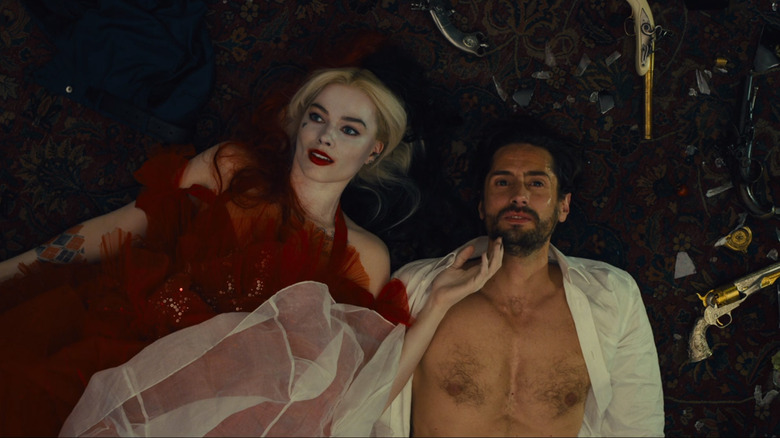
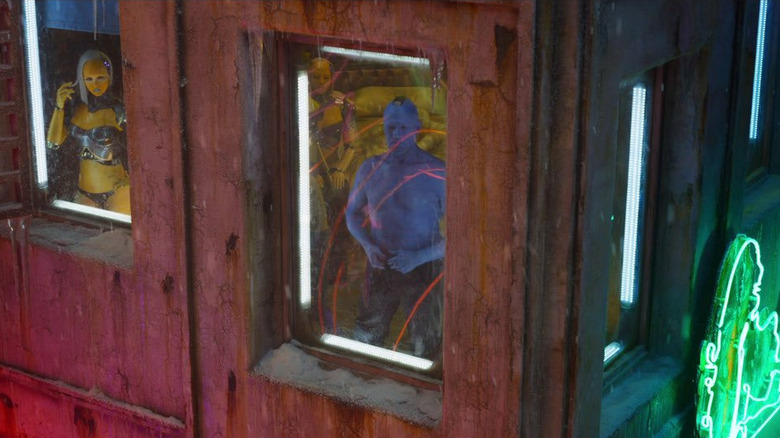
Gunn tweeted Tuesday morning "With all due respect, Steven Soderbergh, some people are f***ing," along with images of sex scenes from "The Suicide Squad," "Peacemaker," and "Guardians of the Galaxy Vol. 2."

Gunn's superhero output has had its fair share of sex, even if the Marvel franchises have to be more tempered for family audiences. When the discourse hit Twitter, my immediate thought was "has Soderbergh never seen a James Gunn superhero flick?" so Gunn's response is a delight. "Peacemaker" is deliciously filthy, featuring a graphic sex scene in the first episode and the aftermath of a threesome in the second. "The Suicide Squad" sees Harley Quinn hooking up with a hot despot, and even "Guardians" has Yondu (Michael Rooker) seeking out some extraterrestrial booty calls. While there isn't a ton of sex in most of the mainstream Marvel fare and some of the DCEU is similarly sterile, Gunn's output alone proves Soderbergh's statement false. That's not to say Soderbergh did something wrong, of course. The man is a GOAT and is deserving of our eternal love for "Logan Lucky" alone, and has an impressive filmography with something for everyone. It's just frustrating when people look at the most central Marvel stories and assume that's the be-all end-all for superhero cinema, because it's not. 

Superhero stories are insanely popular right now, and there are different kinds of stories for different audiences. If someone wants to know how the spandex-clad super-people get it on, all they have to do is look to some of the more subversive fare like "The Boys," "Peacemaker," or even the animated "Harley Quinn" series. While there is an argument to be made about the mostly antiseptic state of the Marvel Cinematic Universe, even that has moments of sexuality sprinkled throughout. There's a sex scene in "Eternals," after all, and Gunn's "Guardians" movies know all about "pelvic sorcery." Maybe it's time that we stop talking about superhero cinema as a monolith when it's made up of so many different kinds of stories and perspectives, and started talking about these films and shows within their own context.

By next week, another journalist will have asked the same boring question and the internet will be up in arms once more. Until then, maybe we can have an ounce of nuance. You know, as a treat. If you need me, I'll be over here writing about Bat nipples and questioning Peacemaker's sexuality until the next time someone calls superheroes sexless.

Read this next: Superman Movies Ranked From Worst To Best

The post James Gunn Assures Steven Soderbergh That Yes, Some Superheroes Are Indeed F***ing appeared first on /Film.

08 Feb 19:11

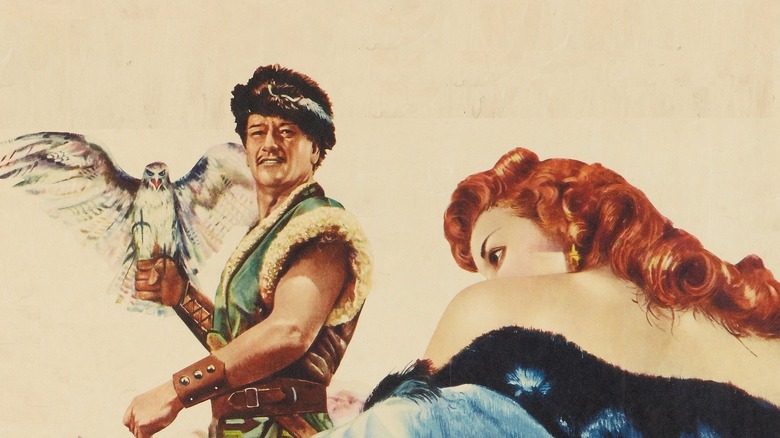
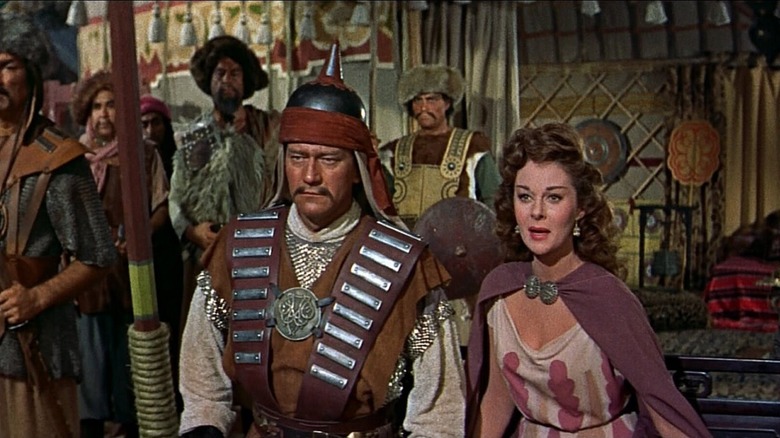
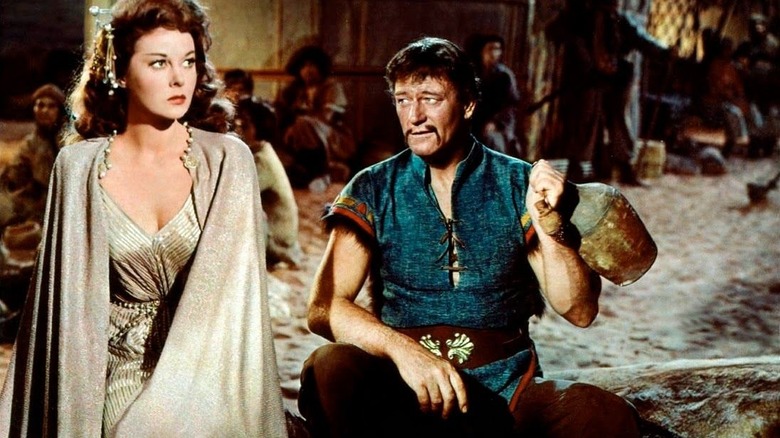
The Forgotten John Wayne Film That Left A Tragic Legacy

by Witney Seibold

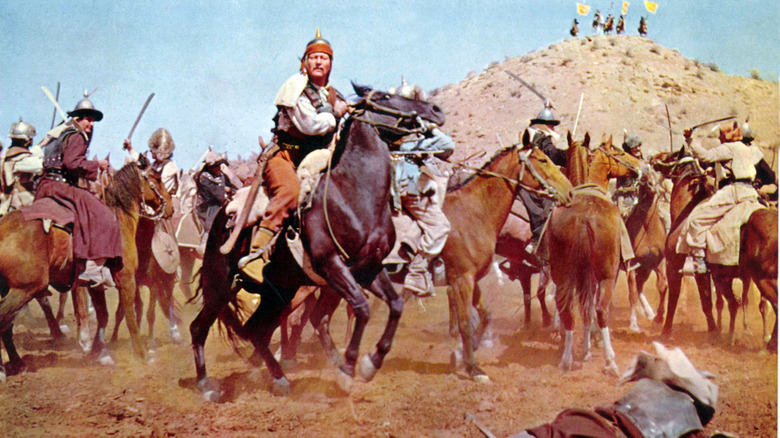
Dick Powell's 1956 historical epic "The Conqueror" is one of the more notorious duds of the 1950s. It went famously over-budget, and while it did manage to make its money back, it was lambasted by critics at the time, mostly for its grievous miscasting of John Wayne as Genghis Khan. If you ever wanted to hear the Mongol leader Temujin with a Southern drawl, this film is a gift to you and you alone. The New York Times cited its bad script as a source of unintentional comedy, and John McCarten in The New Yorker mentioned that the many, many horses who fall down in the movie are more entertaining than anything the human actors do. "The Conqueror" has appeared in books covering the worst films of all time (most notably in "The Fifty Worst Films of All Time" by Michael Medved, Harry Medved, and Randy Dreyfuss). It was also the second-to-last film produced by Howard Hughes, who, after production, reportedly paid $12 million of his own money to buy every print of "The Conqueror" and keep it comfortably out of the public eye. Universal would eventually buy the rights to the film in 1979. 

But it wasn't just its shameful critical reception that left "The Conqueror" radioactive. Additionally, the production was wracked by actual radiation. The exterior scenes for "The Conqueror" were filmed in the desert outside of St. George, Utah, which is a mere 137 miles downwind of the Nevada National Security Site U.S. Government's most-used nuclear testing facility. In the years after production, almost half of the film's cast and crew -- including Wayne, Susan Hayward, Agnes Moorehead, and director Powell -- contracted cancer. "The Conqueror" was literally filmed under a cloud.

Operation Upshot-Knothole

Between 1951 and 1962, over 100 atomic bombs were detonated at the Nevada National Security Site, with 11 being tested in 1953 alone as part of a special battery of tests called Operation Upshot-Knothole, which was an attempt to find a way to fire nuclear devices from a grounded cannon as opposed to dropping them from a airplane. To add a whiff of satire to the real-life devestation, the bombs in the test all had cute names like Annie, Ruth, and Dixie. Operation Upshot-Knothole was conducted the year before "The Conqueror" was in production. While the Atomic Energy Commission assured the studio, and local residents, that testing nuclear bombs was 100% safe, not a lot about the long-term effects of radiation were yet known, and the effects of nuclear fallout hadn't yet been studied. While "The Conqueror" was experiencing a difficult shoot, nuclear fallout was gently drifting over on the winds. The filmmakers were indeed aware of the nuclear testing, but the full effects of radiation wouldn't be known for years thereafter. A year later, we'd have to contend with Godzilla.

Howard Hughes, in order to save time and money, staged the reshoots for "The Conqueror" in Hollywood. To maintain visual consistency, however, Hughes shipped in 60 tons of dirt from the original Utah location, itself also irradiated. That soil is now spread around an industrial park somewhere in Culver City, CA.

The radiation levels from the NNSS was, according to some nuclear scientists, 10 times greater than that of the Chernobyl disaster. 

Downwinders

In the years following the filming of "The Conqueror," members of the cast and crew became very sick. Actor Pedro Armendáriz developed terminal kidney cancer in 1960 and, upon learning the condition was fatal, died by suicide in 1963. That same year, Dick Powell died of lymphatic cancer at the age of 53. Susan Hayward, over the course of the 1970s, developed skin, breast, and uterine cancers before dying of brain cancer in 1974 at the age of 56. Agnes Moorehead died of uterine cancer in 1974, and John Wayne grappled with lung, throat, and stomach cancer for years and died in 1979. 

An investigation by People Magazine in 1980 found that 91 of the 220 people on the set of "The Conqueror" had developed some form of cancer, and that 46 of them had died. While it's been argued that there is no direct connection between the nuclear testing and the national average of people contracting cancer, the leukemia rates in St. George were in fact five times higher than the national average. There were several attempts to sue the government over what they knew about the dangers of radiation, but it wouldn't be until 1990 that then-president Bush would begin paying financial reparations to those who were made sick by, or those who lost relatives to, nuclear testing. The victims of nuclear fallout caused by American weapons testing called themselves downwinders. As of 2018, downwinders have received over $2.2 billion in compensation. 

Howard Hughes' Guilt

It's been postulated that Howard Hughes bought up all the prints of "The Conqueror" out of guilt for having killed nearly half of the cast and crew, and that doesn't even include family members of the cast and crew; John Wayne's two sons visited the set, and both also eventually developed cancer. Advocates for downwinders have pointed out that radioactive damage can alter DNA, increasing risk for intergenerational infection as well. 

Hughes reportedly spent many years in isolation wrestling with mental illness and wracked by intense phobias of the world. Stories go that Hughes watched "The Conqueror" in his private screening room repeatedly. Perhaps Hughes was enacting a twisted form of penance for having made a notorious Hollywood turkey that actually killed almost 100 people.

"The Conqueror," perhaps unsurprisingly, is not available to stream anywhere online.

Read this next: Alfred Hitchcock's 20 Best Films Ranked

The post The Forgotten John Wayne Film That Left A Tragic Legacy appeared first on /Film.

08 Feb 19:10

Schindler's List Ending Explained: A Harrowing Reminder And A Stark Warning

by Lee Adams

Living in the Czech Republic, the Holocaust and its aftermath feels far more present than it ever did while I was growing up in the east of England. There, many people still indulge themselves in a weird nostalgia for the half-imagined World War II of Vera Lynn crooning about bluebirds over the white cliffs of Dover; dashing fighter pilots in blazers scrambling to their Spitfires to thwart the Luftwaffe; and bravely battling insurmountable odds until the Americans decided to show up.

Down the road from my apartment in Brno, there is a small park with a monolithic fountain dedicated to the city's Roma and Jewish citizens who fell victim to the Nazi regime. In the summer, you will often see young Romani children swimming in its waters, oblivious to the horror in their people's heritage that it commemorates. In 2015, the city marked the 70th anniversary of the end of the war with an apology for the Death March, where thousands of Germans were expelled from their homes and forced to walk to Austria. Along the way, many died before they even reached the border (via War History Online).

Around 30 miles north of Brno is Brněnec, where Oskar Schindler relocated over a 1,000 of his Jewish workers to his munitions factory, saving them from the extermination camps as the Third Reich fell to Allied forces.

With all these stark historical reminders reaching into the present, it's definitely not the stuff of bulldog spirit and sticking it to Hitler with his one ball, as the old British marching song goes.

I was 16 when "Schindler's List" came out, and our history teacher took the whole class to watch it at the cinema. We'd studied the Holocaust all term and the film brought those fuzzy old black-and-white photos from our textbooks to vivid life, and I was shocked and deeply upset. But I was also grateful to director Steven Spielberg for finding a note of hope amid all the unimaginable terror to make the film watchable, and it awakened me to both the atrocities of the Holocaust and wider prejudices suffered in the modern era, such as the genocide of Bosnian Muslims a few years later.

"Schindler's List" was a landmark film, a box office success that earned Best Picture at the Academy Awards and won Steven Spielberg his first Best Director Oscar. But it's also credited with bringing the Holocaust to a wider audience. Yet for all its acclaim, the film also received backlash and criticism, particularly regarding its ending and epilogue.

Let's take a look at that double-ending in a little more detail.

So What Happens In Schindler's List?

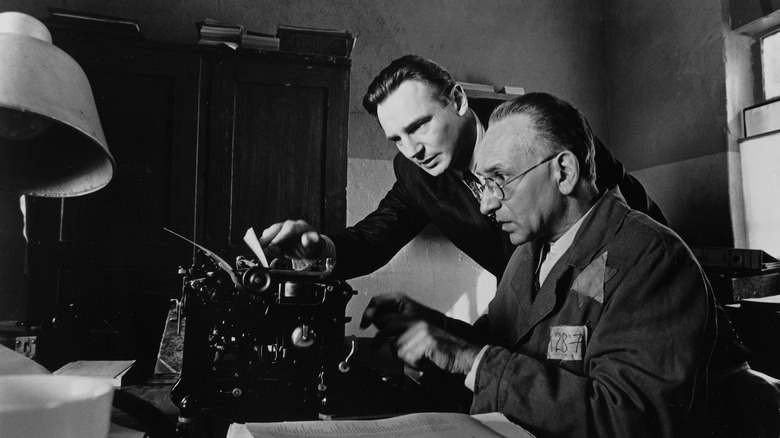
"Schindler's List" opens in 1939 after the Nazis defeat the Polish army and force Krakow's Jews to register and move into a cramped ghetto. We then meet Oskar Schindler (Liam Neeson), a German industrialist who, at first glance, seems an unlikely savior. He's a womanizing, hard-drinking Nazi party member who rolls into town viewing the war as a great way to make a fortune for himself. Through a mixture of tenacity, flattery, and bribery, he earns the favor of the local Wehrmacht and SS officials and sets up shop in an old factory, planning to produce enamelware using the abundant source of cheap Jewish labor. To this end, he employs Itzhak Stern (Ben Kingsley), a shred member of the Jewish council, to act as his accountant and help him establish contact with key figures in the community and get his business under way.

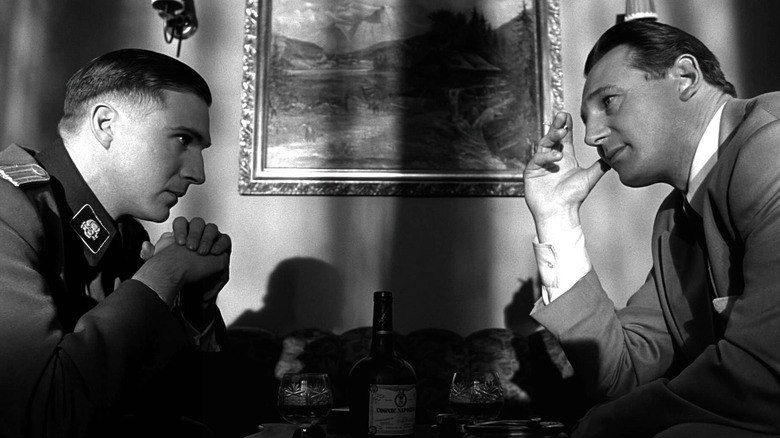
Skip forward to 1943, when SS man Amon Göth (Ralph Fiennes) arrives in Krakow to oversee the construction of a labor camp in the nearby Płaszów district. He rules over the camp with a cruel hand, arbitrarily shooting workers from the balcony of his villa, and is troubled by his feelings for his Jewish maid, Helen Hirsch (Embeth Davidtz).

After Schindler is profoundly affected by witnessing the brutal liquidation of the ghetto, he befriends Göth and offers bribes to carry on using his workers - now Göth's prisoners - and build a sub-camp for them near his factory. While Schindler's workers are treated significantly better than the other unfortunate Jews in Göth's camp, they are still not safe when the Nazis begin to implement the Final Solution and order all the city's remaining Jews to be shipped to Auschwitz.

Schindler approaches Göth with more bribes, paying a fee to keep each of his "skilled" workers and move them to the security of a new camp in the Sudetenland region of occupied Czechoslovakia. Schindler and Stern draw up a list of all the people he can afford to save, but a clerical error sees all his women and children redirected to Auschwitz...

The Final Scenes Of Schindler's List

The women and children's terrifying experience in Auschwitz, including the horrifying moment when they are herded into the showers naked, fully expecting to be gassed, plays a little like a typical Spielbergian suspense moment as the film's dramatic peak. Yet it really happened, although their gruelling ordeal was drawn out far longer in real life; before shipment to Schindler's new factory, the men went to the Gross-Rosen camp for inspection while the women were sent to Auschwitz. It took a month for them to be recovered, during which some were "lost in the system." In the film, Schindler went to rescue them himself, while the real Schindler dispatched a secretary instead.

The real-life Schindler had little to do with the drawing up of the famous list (via History Collection), which was a merger of lists drawn up by other co-conspirators, including Marcel Goldberg, a Plaszow camp orderly.

After the women and children are reunited with the men in Schindler's new camp, we move into the film's conclusion. Schindler bans Nazi soldiers from the factory floor and forbids summary executions, allowing his workers to resume some sense of normality and encouraging the rabbi to observe Sabbath.

Now supposedly manufacturing munitions, a rumor emerges that Schindler himself is sabotaging the production line. As Stern fears that they might get caught and shipped back to Auschwitz, Schindler resolves to buy weaponry to pass off as their own. A caption tells us that in seven months of production, Schindler spent millions of Reichmarks sustaining his workers and bribing officials.

As the war comes to an end, Schindler announces that at midnight he will be a criminal, as a Nazi party member and a profiteer. Knowing the German soldiers have received instructions to kill the workers, he invites them onto the factory floor and gives them the chance to fulfill their last orders or return to their families as men. Every last one takes the second option and quietly leave.

Schindler prepares to make his midnight getaway and receives a letter signed by all the workers in case he is caught. Stern presents him with a gold ring, bearing an inscription from the Talmud: "Whoever saves one life saves the world entire."

It's a perfect tagline for the film. Schindler breaks down, devastated that he couldn't have saved more, realizing that his car could have bought 10 more people, his Nazi lapel badge another two, one at least...

After a group hug, Schindler and his wife swap their fine threads for prison uniforms and flee. In the morning, the workers are liberated by a Red Army soldier, who points them in the direction of a nearby town. The last black-and-white sequence of the film shows them walking across the fields, before we dissolve into the color epilogue.

Here, we watch the actors and their real-life counterparts file past, laying a stone on Schindler's grave in Jerusalem as a mark of respect. Lastly, in a somewhat melodramatic touch, the shadow of Liam Neeson falls across the tomb, placing two roses.

Backlash Against Schindler's List

For all its undoubted historical and cinematic importance, "Schindler's List" received backlash from many critics and scholars, with their ire particularly reserved for its denouement. Criticism varied from the film representing a "Good German" narrative that perpetuated Jewish stereotypes to sexualizing their suffering, specifically Embeth Davidtz's wet t-shirt moment when Helen Hirsch's bath time is interrupted by Göth (via The Jewish Chronicle). 

Some of the more mean-spirited criticism leveled at Spielberg suggested that he was only making the film to win an Oscar. Spielberg, who had suffered Anti-semitic bullying while growing up and lost family members during the Holocaust, roundly rejected such claims. As he told the New York Times:

"There is nothing self-serving about what motivated me to bring 'Schindler's List' to the screen. I don't give any credit to other people's cynicism."

Universal acquired the rights to "Schindler's Ark," Thomas Keneally's source novel, over 10 years earlier, but Spielberg put off directing the picture because he worried that he wasn't mature enough to do the subject matter justice. Roman Polanski and Billy Wilder were two directors in the frame to make the film before Spielberg finally shot the film in early 1993. He lists his motivations for making the film as many-fold, including the necessity of providing a document of educational value, the rise of Neo-Nazism and Holocaust denial, and concern that the Holocaust survivors were ageing and might pass away before they had chance to tell their stories. The success of "Schindler's List" also allowed him to found the USC Shoah Foundation.

Despite this, the perceived Hollywood-ization of the Holocaust had its critics, as did the hopeful note that I so appreciated as a teenager for getting me through the film. Dr Nathan Abrams wrote in The Jewish Chronicle:

"Spielberg portrayed them [the Jews] as cardboard cut-outs, a monolithic mass of feebleness, lacking in psychological depth, to be saved or murdered at the whim of the non-Jews. From this point of view, then, Schindler's List is not about the Holocaust or the Jews at all, but a biopic of Schindler and his conversion from ambivalent antihero to righteous gentile."

He also took exception to the color epilogue:

"Meanwhile, on the soundtrack plays Yerushalayim Shel Zahav (Jerusalem of Gold), a post Six-Day War song, written 22 years after the Holocaust, and describing the Jewish people's 2000-year longing to return to Jerusalem. The song inscribed the film with an irrelevant Zionist, even religious narrative."

Critic J. Hoberman witheringly described the film as "a feel-good movie about the ultimate feel-bad experience" (via LA Times), while Omer Bartov, Distinguished Professor of European History, also battered its conclusion:

"Since it is a Hollywood production, 'Schindler's List' has a plot and a 'happy' end. Unfortunately, the positively repulsive kitsch of the last two scenes undermines much of the film's previous merits. Up to this point, Spielberg's intuition led him in the right direction, even if it went against the apparent (Hollywood) rules of his trade... But his desire to end the film with an emotional catharsis and a final humanization of his hero, coupled with his wish to bring the tale to a proper Zionist/ideological conclusion, once more raises doubts about the compatibility between the director and his chosen subject."

The Enduring Popularity Of Schindler's List

Several years after "Schindler's List'' was released, I visited Auschwitz with my girlfriend on a bitter snowy February day. I had a filthy cold and I was absolutely dreading it. Yet, as we walked through the various exhibits, I just felt totally numbed by the catalogue of horror on display. Silence emanated from the black-and-white photos on the wall and even the camp's most graphic "highlight," a glass case piled high with greying, matted hair cut from countless victims, left me cold. When we first laid eyes on it, I instinctively reached across to feel my girlfriend's hair, trying to gauge how many people's sheerings were in there. But still I couldn't connect.

What finally brought a sob from my throat were the shoes. Among the hundreds of dusty, forlorn pieces of mismatched footwear was a single red child's sandal. Judging by the size, it must have once belonged to a girl aged three or four.

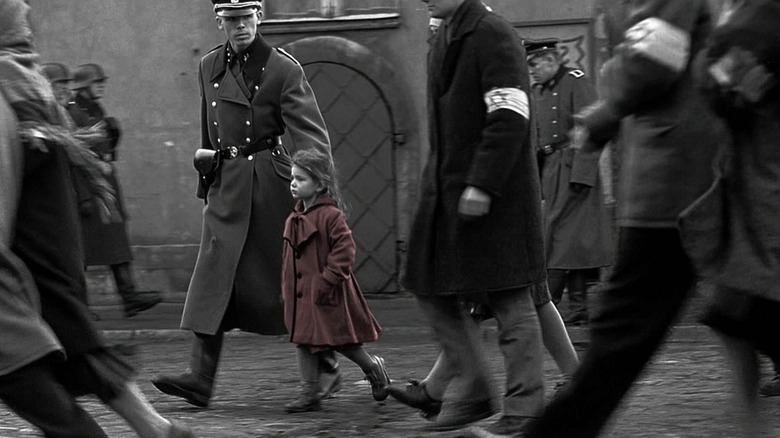
Of course, I was making the connection to the famous scene in "Schindler's List," where the little girl in the red coat makes her way through the carnage of the ghetto liquidation unscathed only to reappear later, dead, on a barrow-load of corpses. It is perhaps the film's most gimmicky, Spielbergian moment, but it is undeniably powerful. The real Schindler never experienced such an on-the-spot epiphany (via History Collection), his transition from avarice to altruism far more ambiguous, yet the scene takes liberties with the truth to distill the enormity of the Holocaust into terms we can relate to.

That's the emotional impact of "Schindler's List." While I fully appreciate the criticism leveled against it, would I have even spotted the red sandal among all those other shoes and made such a human connection to the unthinkable tragedy without Spielberg's film?

Spielberg's choices - the girl in the red coat, the color epilogue - bring the past into the present in a way that few films about the subject have managed, before or since. Claude Lantzmann's "Shoah" may be regarded as the definitive Holocaust film, but who among the general movie-going public has the endurance to tackle its nine-hour duration? Even as a serious lifelong film buff, I still haven't seen it. I plan to take a run at it in the future, but realistically, I'll probably see "Schindler's List" again before that day comes.

Ultimately, it took a director of Spielberg's fame and clout to make a film about such a harrowing subject that people actually wanted to watch. Surely that must only be a good thing, especially when you consider that a recent survey revealed that an astonishing two-thirds of Americans aged 18-39 were unaware that six million Jews were murdered in the Holocaust (via The Guardian). For its perceived faults, Spielberg's popularity will ensure that "Schindler's List" endures on TV schedules and gets passed down from generation to generation as a reminder, and a stark warning.

Read this next: The 20 Greatest War Films Of All Time

The post Schindler's List Ending Explained: A Harrowing Reminder and a Stark Warning appeared first on /Film.

08 Feb 19:08

We're Fine Without Facebook, German and French Ministers Say

by msmash
Meta Platforms' veiled threat to quit Europe because of blocked talks over privacy rules was more like music to the ears of two top German and French politicians. From a report: "After being hacked I've lived without Facebook and Twitter for four years and life has been fantastic," German Economy Minister Robert Habeck told reporters at an event alongside French Finance Minister Bruno Le Maire in Paris on Monday. "I can confirm that life is very good without Facebook and that we would live very well without Facebook," Le Maire added. "Digital giants must understand that the European continent will resist and affirm its sovereignty." The pair were responding to comments in Meta's annual report published Thursday, warning that if it couldn't rely on new or existing agreements to shift data, then it would "likely be unable to offer a number of our most significant products and services, including Facebook and Instagram, in Europe."

Read more of this story at Slashdot.

08 Feb 11:41

Windows 2000でマインクラフトを新規インストールして起動してみたよ

by blackwingcat
まず動作環境は、拡張カーネルの入った Windows 2000
Javaは JRE8u212

TL – лаунчер для Minecraft
ランチャーは TL Legacy ってロシアのアプリ使います。
公式クライアントだと強制アップデートされてしまうので・ω・

tl2
ここで TL.JAR というのをダウンロードして直接起動します。
日本語はないので英語で我慢します。

tl3
アカウント追加するとIE6起動するのでアクセスできるブラウザにURLをコピーします

tl4
他のPCで認証して local で始まるURLをIEに戻してもOKです

tl5
これで準備OK
なお、mojangのアカウント認証はうまく機能しない模様。

tl6
クライアントのバージョンを選んでダウンロード開始。

tl8
ダウンロードが終わったので早速遊んでみましょう

tl9
ここはうちの鯖です・ω・

tl10
問題ないですね( ˘ω˘ )

なお、1.16.5までは起動可能。


08 Feb 00:03

With You, a cute 15-minute co-op ‘date game,’ is free on Steam

by Jordan Devore

Valentine’s Day is coming up, you know! Not to discredit any of the other fine games sitting in Steam’s ever-shifting...

The post With You, a cute 15-minute co-op ‘date game,’ is free on Steam appeared first on Destructoid.

07 Feb 23:12

Blood 2 Extra Crispy version 6.0

Blood 2 Extra Crispy version 6.0
Well after 7 long years I finally got around to fixing a few glaring issues that this mod has had since the last release. Version 6.0 is here to rectify those issues and hopefully put this mod to rest with this last and final release.
07 Feb 23:11

Vampires In America: We Sink Our Teeth Into Vampire Lore With 'Real' Vampire Hunter Eric Streit [Interview]

by Jenna Busch

On February 1, 2022, Travel Channel and Discovery+ released the special "Vampires in America." I wrote a story about it here on /Film, and I had a whole lot of fun with the trailer. Afterward, I was contacted by one of the vampire hunters in the show, Eric Streit. He had a great sense of humor about it all, and I got a chance to speak with him in depth about the series. We talked about his theory of how long vampires have been here, disagreements with his hunting partner Marcel Von Tingen, and whether or not vampires are real. Oh, and we also chatted about vampires shopping for toothpaste. Hey, it's the Year of the Vampire on /Film, so it's the perfect time for a deep dive. 

I had a lot of fun with that article and you had a great sense of humor about it. So let's start with the show. You'd mentioned there haven't been a lot of promotions for the show. So tell me a little bit about it and what the production was like. 

Well, "Vampires in America" is basically a two-hour special that explores the legend, the myth, and the lore of vampirism and vampires. And basically, we're just seeking to find answers to longstanding questions that I've always had. We're kind of exploring the space between myth and reality. We've got some compelling stories and a possibility, and we're investigating that vampires may live among us today. I know people think I'm crazy. I've been on this journey since I was kid and people think it's nuts and that it's outrageous, but I just want to encourage people to explore the unknown and just be open to the possibility that there's so much more to discover in the world today. And who's to say vampires are not real?

What do you think about why people are so compelled by the idea of vampires?

Well, first of all, vampires are said to be immortal. That in and of itself is an enticing and alluring idea: It is it possible to become immortal and live forever? Because I think so many people would like to live forever. Vampires and ghost stories, and any story that has to do with immortality is kind of the flip side of the coin when it comes to religion. In religion, and you go back to ancient times, every civilization has had their place where when you pass from this life, you go on and you live forever. And the flip side of that, vampirism, or any other paranormal ideas, suggest that you don't have to wait 'till the afterlife. You can live forever right now.

But from a mythological standpoint, to do that, you have to give up your humanity. And you can only walk at night. Before the dawn of electricity and lighting, nighttime was a very scary place and people gathered around a campfire for safety and for warmth and for community. But vampires, they were hidden during the day -- they were buried, they were in caves, they were in shallow graves, they were hidden in hollow trees. So they never saw sunlight. And they were forced to walk at night and walk alone. So that was a trade-off: Life forever, but only at night.

What a question. What a quandary. You can live forever, but only at night. Sir Richard Burton, who wrote the first translation of "One Thousand and One Arabian Nights," before that, he discovered a book, "Vikram the Vampire," an ancient tale that was part of ancient Indian -- the continent of India, not the Native Americans -- this ancient tale of a vampire; "Vikram the Vampire." I'd encourage you to Google that and learn a little bit about Vikram, but that translation preceded "Bram Stoker's Dracula" by 25 years, I think. It was published in 1873, if my memory serves. So the idea of immortality and the trade-off that comes with that, I think, is something that draws people in. Sorry to be so long-winded, Jenna. I get so excited when I talk about this stuff.

Vampires And Religion
I watch vampire shows all the time. It's interesting that you bring up religion because I'd love to know your thoughts on why people choose to believe certain things, but push other things into the realm of myth.

Well, I think cultural conditioning. I don't think it's any more simple than that. It's cultural conditioning. Every different culture has its own religious beliefs. There's Hinduism, there's Christianity, there's Islam. Down here in Latin America, there's a lot of Santeria. And Santeria is a combination of Voodoo or Vodoun, which came from very early Africa and came across with the slave ships. It was in Haiti, the Dominican Republic, and South Carolina, and certainly New Orleans, and it made its way throughout Latin America. It's a combination of Catholicism, some very ancient, traditional African religious lore, and it's got its own take and it's kind of become its own thing. But it used to be a hodgepodge of different faiths and beliefs that were put together by people that weren't allowed to learn to read. So it was all storytelling, passed down from generation to generation. That's where Santeria comes from, which is very prominent in the Caribbean and in Latin America. It's a beautiful religion, but it also explores the dark side of the spiritual realm.

I'm curious because people love these shows so much. I mean, I actually went ghost hunting with the "Ghost Hunters" once.

Oh, wow. That's very cool.

It was. But people tend to wonder if these shows are real, if they're reenactments, if they're staged. So I'd love to hear your thoughts on that.

Well, I have a lot of thoughts on that. Stories covered are based on true life events, are they actors, are they real people? I would rather leave that for your own judgment. I want people to take this show how they want to take it. I hope that they're inspired to explore the possibility that vampires exist. I don't want to reveal too much, but I'm just very happy with how it turned out. We're getting a lot of viewership and a lot of people watching and a lot of people asking the right questions. And that is exciting.

Vampire Encounters

You know, it's funny. I don't believe in vampires, and yet I watch every show that has anything to do with them. So I get that. And I'd actually love to hear your personal history with vampires, because I know you said you saw one in 1988.

Sure. I did. I saw one in 1987. And look, it's very easy to lean in on the entertainment value of vampire shows. About every two years, it comes back around. We have such a resurgence right now, the vampire genre. "What We Do in the Shadows." The remake of "True Blood." I mean, the long Hollywood history of vampires. Drew Barrymore has a huge connection to the horror genre, particularly the vampire genre, through her grandfather, John Barrymore, who did one of the early silent era horror films. 

But for me, my personal journey with vampires, I grew up in Western Kentucky, a town called Paducah. I come from a family of storytellers, and I grew up around campfires and people telling stories about the legend and lore, and vampires were a big part of that. I grew up in a river town. Paducah, Kentucky is where the Ohio, the Tennessee, the Clarks River, and just a few miles down, it's where the Ohio River meets the Mississippi River. It's a river town, and I have uncles who were riverboat captains. My father was a sheet metal worker and he always worked at a building along the river. And the stories you would hear about post-Civil War era of traveling salesmen and runaway slaves and prostitutes that would just disappear. The newspapers are full of those stories. And my whole life growing up, I was told by the older generation, born before the turn of the 19th into the 20th century, that would say what was out there killing people along the river, they weren't human. People believed they were vampires. That was the old country tale that I grew up hearing from my babysitter, from my nanny, from my mother, my grandmother. They all told stories ... 

Years later, when I just became so fascinated with Dracula, on our local public broadcast station, there was a thing called the "Friday Night Fright." We had a host and he loved to do the old Bela Lugosi and Boris Karloff and Lon Chaney films. And the one that most fascinated me was "Dracula." I went to the library, I think I was eight years old, and I read "Bram Stoker's Dracula." And I was mesmerized. I was way too young to read the book, so I just read it over and over and over until I was old enough and really grasped what it was about. My mother would buy me the more condensed, dumbed down children's version. I really absorbed the book more than just read it, Jenna.

The only book that Bram Stoker is known for is "Bram Stoker's Dracula." I started to get my hands on some of his more obscure work, which, before the internet, was not easy to do and I had a lot of help. And it doesn't compare. It's not the same. Before "Bram Stoker's Dracula" was written, and after he wrote "Dracula," none of the style is the same. It's a completely different voice. It's a completely different style. When you read Agatha Christie, when you read Sir Arthur Conan Doyle and the other authors of that era, there's a consistency. But when you read Bram Stoker, there's one work that stands out and nothing else compares. It's a different voice. And I thought that was really strange. And it was always with me.

Even Vampires Need To Brush Their Teeth

Growing up, [I was] encouraged by my family to explore the unknown. Could werewolves be real? Is Bigfoot real? We had a thing called the Big Ol' Cat -- my father and grandmother told stories about this giant, big cat that lived in the woods, and there had been tales of it since at least the 1910s. I grew up in the '70s and you would hear movement through the woods and you were led to believe and encouraged to believe that the Big Ol' Cat was real and vampires were real, and don't dismiss things out of hand just because you can't see them. Look at it. Investigate it. Explore it. Find the truth, because the truth is not always what you see with your eyes.

That is the parallel to religion. In the Christian faith, people believe what they can't see, and the Catholic Church has done an amazing job over two millennia crafting this magnificent pageantry and symbolism and rituals. It's breathtaking and beautiful. There is a comparison. I'm not suggesting that vampires are religious or anti-religious, but there is a human need to explore and embrace the unknown and believe in something.

That makes sense. I know you had said that you believe that vampires have sort of dictated vampire fiction. But one of the things that your partner said was, he mentioned they could be priests or they could be in the grocery store or things like that, which I joked [about in the article].

Yeah. What you said in your article, I laughed, because this was a discussion that Marcel and I had. Vampires do walk among us. And there is a legend and a lore to vampires, and then there's the real -- what we believe. A vampire walking around a grocery store, he's also grocery shopping, but he's not grocery shopping for orange juice on aisle seven or pork chops in the meat section. He or she is shopping for the most delicious shopper who is alone at 2:00 AM, and basically stalking their prey. A grocery store is a great place to do it. In a city like Los Angeles, the grocery stores are open 24 hours. The vampires can go in a grocery store and do a little bit of shopping, shall we say.

I like the idea of a vampire shopping for toothpaste.

Yeah.

I mean, I suppose they need that.

[Laughs] Yeah. Well of course. It's funny. You never think of the mundane things. They're hominids. Vampires are hominids. They appear immortal because they can hibernate for 200 years, we estimate. So are you living forever or are you just hibernating like for a year or two, or 10, or 200? And then you come back rejuvenated and fresh, start over again. 

And I feel like you'd need the toothpaste after 200 years.

Sure. Well, look. A vampire, they have a mouth, they have teeth. They drink blood. They probably, I would say, they need a toothbrush every day.

Definitely.

Because if they're not derelict vampires, they're sanitary and brushing their teeth and doing the right stuff.

The Rules Of Vampirism

The priest thing [where Von Tingen says vampires "could be your priest"] was actually something that stuck out. And I wondered, because of what you said about vampires dictating fiction and whether or not they can be priests. There are all these rules for vampires in terms of crosses, and garlic, and light, and holy water, and things like that. What are the rules that you guys believe vampires have to follow?

It's funny. Marcel and I differ in opinion on a lot of that. Marcel is a devout Catholic and he has a strong faith and a strong belief that goes back generations in his family. He wears a crucifix and I carry one in my vampire hunting kit as well. Does that mean that we believe that vampires are going to be burned to death by a cross? No. But all vampires are not created equal. There are some vampires that actually will buy into the legend and the lore as they read it because maybe they don't have a vampire mentor. Maybe their knowledge of their people is cut off from the rest of the vampire community and their references are the same as our pop cultural references.

So they may well believe that a crucifix will hurt them. There's power in ritual. There's power in symbols. Do I believe a vampire will be burned by a cross? No. But I do believe that they may be thrown off their game a little bit, that it may make them uncomfortable. They have a powerful sense of smell. The whole legend that garlic will bother a vampire is because of their powerful sense of smell. Just like a dog doesn't like the smell of garlic. A lot of people who want to protect themselves from stray dogs or feral cats or any other predatory animals, they will squeeze garlic juice into a spray bottle with water and salt, and they will spray that at the animal. Remember, [vampires are hominids], but they have heightened senses. They have strength and they have a sense of smell and eyesight that's just beyond what we can imagine. So the smell of garlic and other powerful herbs is probably very uncomfortable for them.

You said a little bit about the history of vampires existing in 68,000 BCE. I was just curious about how that number came up and where you took that from.

68,000 years ago, the earth experienced a huge shift. It was called the Toba eruption. And the Toba eruption, it basically blanketed the Earth with a volcanic ash and we went into a miniature ice age. I think it's estimated by scientists that the Earth was down to about 500 breeding hominid couples, or a thousand people. Basically, humanity had to figure out how to survive. We believe that alongside human beings, there was an offshoot of hominid that became, instead of eating flesh and fruit and vegetables, they, like certain species of bats, certain mosquitoes -- there are a lot of different creatures that survive on blood, and they're nocturnal. Bats are an example. That's why bats are so closely related to vampires, because like a vampire, a bat is nocturnal, and they come out about five minutes after sunset, they go back into their cave or their tree or wherever they're hiding about five minutes before sunset, and vampires are the same way. And over 68,000 years, to survive, these formerly hominids, human beings, basically evolved and learned to adapt. To survive, they adapted to hibernation and living on blood.

Wait, HOW Long Have Vampires Been In The USA?
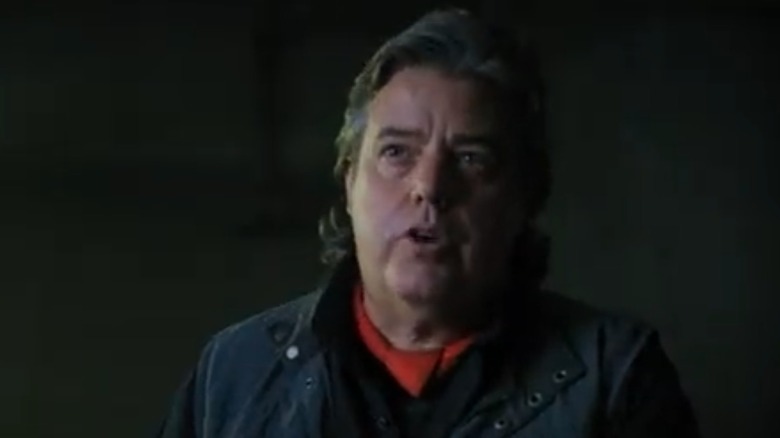
I know you had also mentioned in that same segment that you guys think that they came here en masse during the Civil War, and that we have about 20,000 vampires nationwide. So I'm curious about that because I know there was the New England vampire panic that happened before the Civil War.

There was. Look, I've got files of all the different vampires sightings that date back into, in what's now the United States, back to the, I think, 1600s. But those were isolated. Now, remember: Before mass transportation, the only way one got to the United States was on ships. Vampires were being hunted in Europe in the 19th century at a tremendous rate. And it was a dangerous journey, but suddenly, when Britain and France mastered the seas, they were able to ship themselves over in cargo holds and come to the New World. And certainly there were some vampires that came before, just like settlers came to Jamestown and different parts of the United States. But vampires made their way over in very small numbers. But when they were being hunted aggressively in the 19th century in Europe, that's when they started to make their way to the United States and Latin America, primarily Mexico.

I'm really interested in the idea of shooting this special, and what would happen if -- say you do find one. What would you do? Because if there are that many here, no one's obviously caught any that we know of, but what would you actually do?

Well, we talk about that a lot. My goal in meeting a vampire is to learn. I would want to sit and -- they're here. Vampires are here. It depends on the vampire. If he's an aggressive vampire, it's just like when there is a person on the run and they escape and people are looking for them. When you find that person, how do you approach them? It depends on the situation. It depends on the individual. My belief is that, if approached properly, you can sit and have a discussion with a vampire under certain circumstances. That would be my goal. My life's ambition is to sit down and have an on-camera interview with a genuine vampire.

I want to interview the same vampire that crafted the idea for "Bram Stoker's Dracula," that sat down with Anne Rice and did "Interview with the Vampire," but I don't want it to be fiction. I want to see them come out into the light and just coexist with humanity. It's time.

Could You Interview A Vampire?
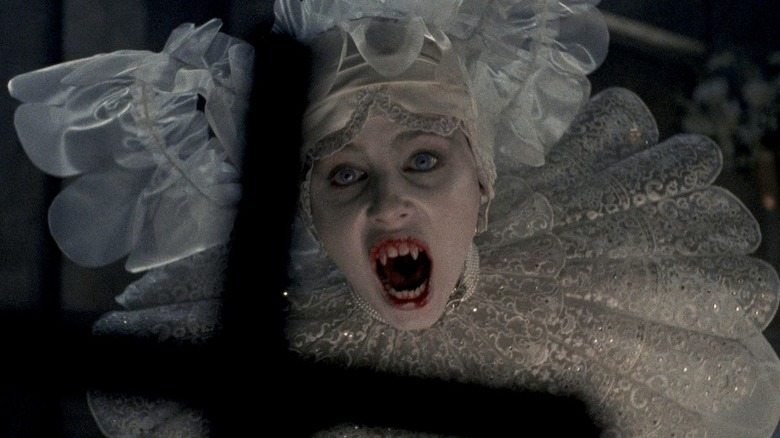
Say this could happen. If, say, this were possible. Do you think people would even believe it?

I don't know. Based on a lot of the comments we're seeing on the threads, I think people don't believe it. But every idea is ridiculed at first until it's proven. Galileo, Sir Isaac Newton, Thomas Edison. Anyone that's achieved a great leap forward for humanity has first received and been on the receiving end of ridicule. I've been made fun of and ridiculed my whole life for my research and belief in wanting to find proof that vampires exist. I was reluctant to actually do a show. But to have the opportunity to put that story out there into the public sphere, most people aren't going to believe it, probably, but a few might. And we'll see.

Television is a great way to reach an audience and reach people that might believe and see if they've got a story to tell. I like to believe that vampires want to be accepted and vampires want to be out of the shadows and live their life. Most humans function during the day. Vampires function at night. The same way birds fly around during the day, and then the birds roost five minutes before sunset, the vampires come out five minutes after sunset. There's no reason that I think we couldn't live together in a more harmonious way and bring these vampires out of the shadows. A lot of people think that's bats*** crazy.

But it's fun.

You know what? At the end, it is fun. Take my belief completely out of it. And I'm fine with everyone saying, "Eric Streit is a lunatic and he is a madman." I'm fine with that. But at the very least, I think there's an entertainment value to the show, and it's fun. You can believe it or you can watch it for entertainment and the fun of it. It can work on two levels. If you believe it, come along on that journey and help us explore. If you just think that we're two crazy guys that are wasting our time and are absolute mad men, I'm fine with that, too. It's liberating to have my story out there.

That makes sense. I know that you've done some production in terms of reality TV, like "The Great Food Truck Race."

Yeah!

So if you do another special, what would you, even from the producer's side, from the director's side, what would you want to see?

I was in the Navy for five years and I traveled the world. I was so fortunate to be on three different ships, and I traveled through the Mediterranean, the Middle East, and Africa. That gave me the opportunity, when I got shore leave, all the other guys would be hitting the bars and the clubs and wanting to meet girls, and I was out there looking for clues, finding out what can I discover about the unknown, about vampires, about the legends, the myth, the lore, and the reality of vampires.

When you get out of the military, your travel's not free anymore. You've got to pay for that. I've been very, very fortunate to find a career, and television has afforded me a career to travel all over the world doing productions. They pay for your room and board, and When you're done with production, you go and track your own interest at night. I've been really lucky to travel all over the world in the military and in the television industry, and it's given me the opportunity to explore vampires on someone else's nickel for the last 35 years.

The Best Portrayal Of A Vampire Goes To ...
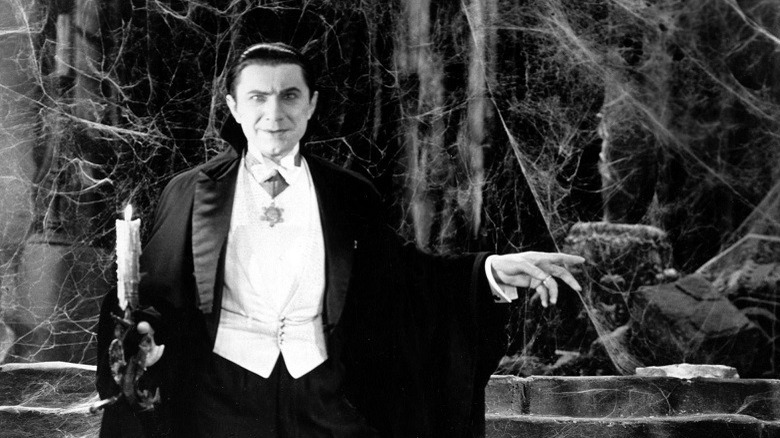
/Film's doing something this year for the anniversary of "Nosferatu" called Year of the Vampire. So I would love to know if you've got some favorite vampire films or shows.

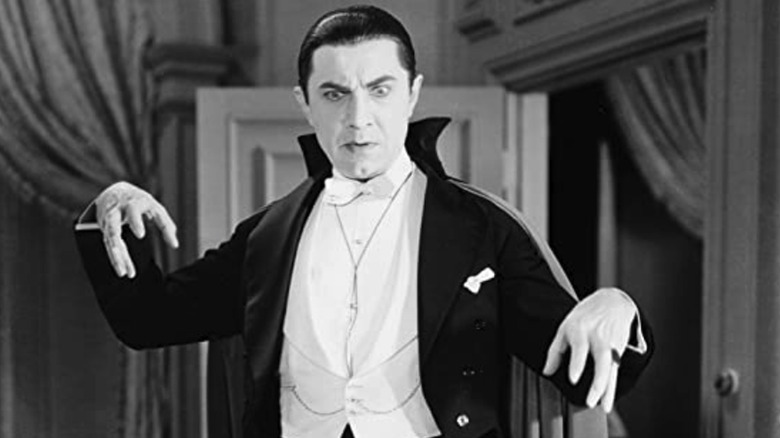
My favorite, favorite, favorite, favorite, favorite vampire film of all time will always be the one that touched me the most, is "Dracula," the original Universal Studios, 1931 [movie] starring Bela Lugosi as Dracula and based on "Bram Stoker's Dracula." I hear people argue that, "Oh, Nosferatu is a better film. It's a silent film and it's a lost classic." [Or] Peter Cushing was so much better than Bela Lugosi." I disagree. I think Bela Lugosi, he originated the role of Dracula, which is the vampire fiction that was masterminded alongside Bram Stoker by some vampire to craft the story so people would never believe in vampires again. And it worked. And to this day, most people don't believe in vampires because A) Bram Stoker took dictation and published "Dracula," which became a huge hit, and then just as people were forgetting and maybe starting to believe again, suddenly Bela Lugosi comes along. He had been on Broadway and he had played Dracula in his home country. Now he's at Universal making this movie and it is a super low budget B movie, but it catches on around the world. Then it starts to wane again and people have forgotten it. Then television comes along and you're seeing Bela Lugosi on Saturday morning, Friday nights, and Saturday nights. The ultimate portrayal of the vampires is Bela Lugosi.

And I think the feature film, "Interview with the Vampire," with Tom Cruise, Brad Pitt, and Antonio Banderas. When you look at that movie after reading the book, the book and the movie feel the same. The feeling I got reading "Interview with the Vampire" was the same feeling I got watching the movie. That's hard to do. 

"Vampires in America" is currently available on Travel Channel and Discovery+.

Read this next: 14 Awesome Horror Movies That Never Got Sequels

The post Vampires in America: We Sink Our Teeth Into Vampire Lore with 'Real' Vampire Hunter Eric Streit [Interview] appeared first on /Film.

07 Feb 22:22

Here’s How Much Sex (and What Kind) Everybody Is Having

by Beth Skwarecki

Take a minute to think about when you had sex for the first time, how much sex you have, and whether you think other people are doing it more or less than you. If this thought experiment makes you feel embarrassed about how much or how little you’re doing it, relax. Chances are, you’re more normal than you think.

Read more...

07 Feb 21:17

IoT/connected Device Discovery and Security Auditing in Corporate Networks

by noreply@blogger.com (The Hacker News)
Today's enterprise networks are complex environments with different types of wired and wireless devices being connected and disconnected. The current device discovery solutions have been mainly focused on identifying and monitoring servers, workstation PCs, laptops and infrastructure devices such as network firewalls, switches and routers, because the most valuable information assets of
07 Feb 21:17

Less Than 10% Of Firefox Users On Linux Are Running Wayland

Thanks to Mozilla's Telemetry capabilities, there is some interesting insight to how many Linux desktop users are still relying on an X.Org (X11) Server without Wayland...
07 Feb 21:17

Hackers Backdoored Systems at China's National Games Just Before Competition

by noreply@blogger.com (Ravie Lakshmanan)
Systems hosting content pertaining to the National Games of China were successfully breached last year by an unnamed Chinese-language-speaking hacking group. Cybersecurity firm Avast, which dissected the intrusion, said that the attackers gained access to a web server 12 days prior to the start of the event on September 3 to drop multiple reverse web shells for remote access and achieve
07 Feb 21:16

Surprised scientists catch chimps using insects to treat each other's wounds - CNET

by Monisha Ravisetti
The primates appear to care for one another using creepy crawlies.
07 Feb 21:14

The Morning Watch: VFX Artists React To Teenage Mutant Ninja Turtles II, The Sound Of Dune & More

by Ethan Anderton

(The Morning Watch is a recurring feature that highlights a handful of noteworthy videos from around the web. They could be video essays, fan-made productions, featurettes, short films, hilarious sketches, or just anything that has to do with our favorite movies and TV shows.)

In this edition, listen as the VFX artists from Corridor Crew bring in "Mythubsters" co-host and special effects expert Adam Savage to look at some of the impressive practical effects from "Teenage Mutant Ninja Turtles II: The Secret of the Ooze" and much more. Plus, take a deep dive into the creation of the sound for the sci-fi adaptation "Dune." And finally, listen as John Leguizamo has a 30-minute talk about his career as a Latino star in a new series from The Academy of Motion Picture Arts and Sciences.

VFX Artists React To Teenage Mutant Ninja Turtles II & More

First up, Corridor Crew brought in Adam Savage to take a look at some visual effects that aren't computer generated over a green screen. They dig into the impressive puppetry in movies like "Teenage Mutant Ninja Turtles II" and "Little Shop of Horrors," and they also focus on the bugs created for the original "Starship Troopers." Savage also provides some personal expertise regarding his work on a space shuttle miniature created for "Space Cowboys."

The Sound Of Dune

Next, Warner Bros. Pictures has released an extensive look behind the scenes at what director Denis Villeneuve created for the soundscape of "Dune." Listen as the filmmaker breaks down the creative benefits of early collaboration with supervising sound editors and sound designers Mark Mangini and Theo Green, as well as re-recording mixer Ron Bartlett. This is probably more than you ever thought you needed to know about the sound in "Dune."

John Leguizamo Is Seen

Finally, The Academy has launched a new web series called "Seen," featuring Nick Barili diving into the stories of artists with Latin American and Spanish roots exploring their craft, culture, and breaking down barriers in filmmaking. The first episode has a nearly 30-minute discussion with John Leguizamo, who is not just a start of stage and screen, but a writer and filmmaker as well. Listen to his thoughts on the rise of his career, tokenism, colorism, and what's left for him to accomplish.

Read this next: 14 Remakes That Are Better Than The Original

The post The Morning Watch: VFX Artists React to Teenage Mutant Ninja Turtles II, The Sound of Dune & More appeared first on /Film.
07 Feb 21:14

PlatinumGames CEO Wants Company To Develop Live Service Games That Can Be Enjoyed For a Longer Period of Time

by Francesco De Meo

PlatinumGames

PlatinumGames CEO wants the company to develop games that are different from those released by the studio in the past, and that can be enjoyed for a longer period of time.

Speaking with Famitsu in a new interview translated by VGC, Atsushi Inaba commented on the future of the company while talking about Hideki Kamiya's Project G.G, saying that the studio wants to focus on creating games that are different from the past, as well as on games that can be enjoyed and loved for a longer period of time, a.k.a. live service games.

Project G.G. is still in the stage of testing various things, so I can’t tell you much about it, but when it comes to future game production, we want to focus on creating games that are different from the past. I would like to focus on creating games that can be enjoyed and loved for a longer period of time

According to Inaba, PlatinumGames would like to continue creating smaller titles like Sol Cresta or games like Bayonetta, but he feels like the changes in the market over the next five years or so make it necessary for the studio to change its approach.

However, the projects that we are trying to create for the future will be different in terms of their structure. Considering the changes in the market over the next five years or so, I think it is absolutely necessary for us to do this. I’m sorry for being so vague, but I think that’s all I can tell you right now.

As PlatinumGames developed some of the best action games of all time, it is disappointing to learn that the studio will move in a completely different direction in the future. The developer is releasing its first live service game, Babylon's Fall, next month, so it will be interesting to see if the game's reception will somehow influence PlatinumGames' future.

The post PlatinumGames CEO Wants Company To Develop Live Service Games That Can Be Enjoyed For a Longer Period of Time by Francesco De Meo appeared first on Wccftech.

07 Feb 21:14

China Restores Fight Club's Ending, Originally Censored To Remove The Explosions

by Joshua Meyer

With Beijing in the midst of hosting the 2022 Winter Olympics, all eyes are on China right now, which may be part of the reason why the Chinese streaming platform, Tencent Video, has reversed its decision to censor the ending of "Fight Club."

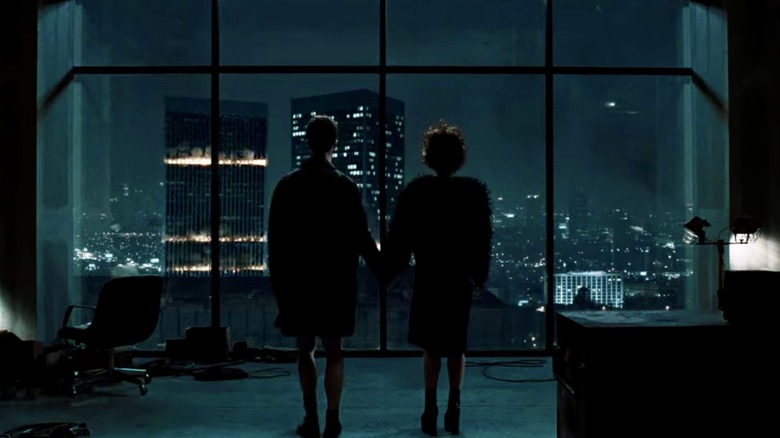
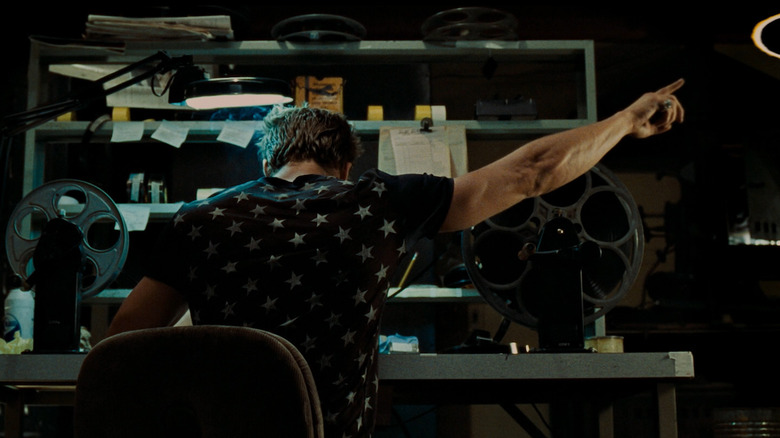
Late January brought news that Tencent had cut the film's original ending, in which the nameless narrator, nicknamed "Jack" (Edward Norton), holds hands with Marla (Helena Bonham Carter) and watches the towers of credit card companies explode. If you've seen the film, then you'll know that he planted the bombs that detonated the buildings while in the grips of his split personality, Tyler Durden (Brad Pitt). As the buildings fall, there are also flashes of male genitalia at the very end, in keeping with the joke about Tyler, the part-time projectionist and full-time anarchist, splicing frames of obscene footage into movies.

Per The Hollywood Reporter, one of the guiding principles of China's film censorship system is that "criminals must always be punished for their crimes onscreen and societal harmony restored." Owing to this, Tencent had inserted a caption in place of the usual "Fight Club" ending, reading:

"Through the clue provided by Tyler, the police rapidly figured out the whole plan and arrested all criminals, successfully preventing the bomb from exploding. After the trial, Tyler was sent to lunatic asylum receiving psychological treatment. He was discharged from the hospital in 2012."

Now, per THR, the streamer has done an about-face and restored 11 of the 12 minutes it cut from "Fight Club."

A Little Less 'Sport F***ing'

The only part of "Fight Club" that Tencent hasn't restored is about a minute of footage depicting Tyler and Marla's "sport f***ing," as he so charmingly calls it. Apparently, the film's anti-consumerist ending was deemed a lesser evil than the backlash to the censorship of it across the world.

Just last week, after the news broke of the changed ending, I revisited 'Fight Club" here in our Daily Stream column, and as I noted there, author Chuck Palahniuk had also spoken up about the censorship debacle. Screenwriter Jim Uhls and director David Fincher adapted "Fight Club" from Palahniuk's 1996 novel, and Palahniuk said that, ironically, the new Chinese ending adhered closer to his book, where Jack lands in a mental hospital at the end. Palahniuk also told TMZ (via Vanity Fair): 

"What I find really interesting is that my books are heavily banned throughout the U.S. The Texas prison system refuses to carry my books in its libraries. A lot of public schools and most private schools refuse to carry my books. But it's only an issue once China changes the end of a movie. I've been putting up with book banning for a long time."

As THR observes, however, China also has a history of imposing heavier censorship than the U.S. when it comes to such things as depicting homosexuality. Fox allowed the country to remove any mention of homosexuality in "Bohemian Rhapsody." When Chloé Zhao won the Academy Award for Best Director last year, China also censored any online mention of her film, "Nomadland" — despite the fact that she is a Chinese citizen and was the first Asian woman to win the award — because of an old 2013 interview where she criticized the country's draconian censorship policies.

Read this next: 14 Remakes That Are Better Than The Original

The post China Restores Fight Club's Ending, Originally Censored to Remove the Explosions appeared first on /Film.
07 Feb 21:13

After training for a year to become a DEA agent, a woman found out she was tricked — her teacher was an imposter

by Carla Sinclair

A woman in Portland, Oregon was working hard to become a DEA agent, but after about a year of going on ride-alongs, sporting an official-looking Drug Enforcement Agency badge, and helping a "federal agent" turn homeless people into informants, she found out she was duped. — Read the rest

07 Feb 21:13

Google reportedly aims to pivot Stadia into wider streaming market

by Chris Moyse

Struggling platform fights on The past week has seen various whispers and rumors regarding the fate of Google’s cloud gaming...

The post Google reportedly aims to pivot Stadia into wider streaming market appeared first on Destructoid.

07 Feb 21:13

FBI Publishes IOCs for LockBit 2.0 Ransomware Attacks

by Ionut Arghire

The Federal Bureau of Investigation (FBI) on Friday released indicators of compromise (IOCs) associated with the LockBit 2.0 ransomware.

LockBit 2.0, which is distributed as a Ransomware-as-a-Service (RaaS), makes detection and mitigation difficult, due to the use of a variety of tactics, techniques, and procedures (TTPs).

read more

07 Feb 21:13

How Ralph Bakshi Rescued The Animated Lord Of The Rings

by Jenna Busch

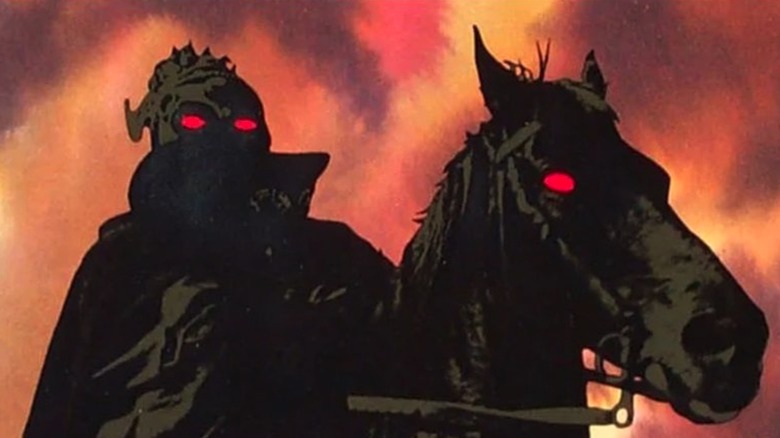
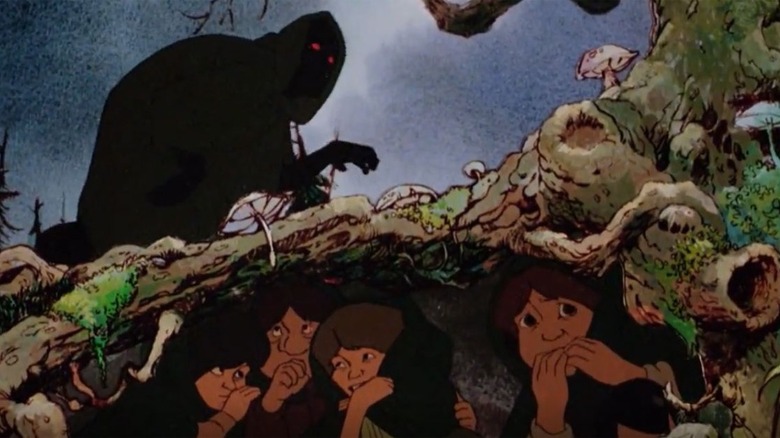
Ralph Bakshi's animated 1978 "Lord of the Rings" messed me up as a child. I still have nightmares about so many parts of it. As a kid growing up in the 1980s, the animation I saw was very pretty and clean and full of "life lessons." When I finally saw this, it was grimy and weird, and the music was strange. It was outside of my kid wheelhouse, and to this day, it has informed the way I think about movies. By that I mean, it taught me that things that are different, things that really stick out, are often the ones you remember.

Bakshi's work remains striking and terrifying. What you might not know is that Bakshi wasn't asked to do the film. He campaigned for "The Lord of the Rings" to save it from being made into a single live-action film. 

He said in an interview with The One Ring, "First of all — no one ever asked me to make 'The Lord of the Rings' ... " He said that he went from United Artists to MGM and tried to get the adaptation of the J.R.R. Tolkien book done in multiple films. (There only ended up being one.) He already had a script, but it got a negative response.

"It wasn't a major property in those days! No one knew it — everyone hated it ... They couldn't read all those books. And that's why I got it, because I knew it was great. The guy they gave it to couldn't do it; he didn't understand it. He took three books and tried to make one picture with new characters; maybe he put Superman in there too, I don't know..."

Where There's A Will, There's A Way

Oof. "The Lord of the Rings" is certainly a property that you cannot do if you think it seems too long to read. Squeezing it into a single, live-action film would have absolutely destroyed it. It certainly wouldn't have paved the way for the Peter Jackson trilogy. John Boorman, who wrote the single-movie script, made a great and very strange high-fantasy film in "Excalibur," but you just can't take this much material that means so much to people and squash it into two hours. Unfortunately, they way the animated film was advertised was odd.

Bakshi told IGN about the experience: 

I was doing it to save it for Tolkien, because I loved the 'Rings' very much. I had just finished 'Wizards.' 'Wizards' was my homage to Tolkien in the American idiom. I had read Tolkien, understood Tolkien, and wanted to do a sort of fantasy for American kids, and that was 'Wizards' and I love it very much. Of course it's American as opposed to Tolkien. 

But when I heard that United Artists was going to collapse the three books into one picture and there was a screenplay written by (John) Boorman, I thought it best that I go down and tell them they're out of their minds. Because I was nuts over Tolkien. I mean, Tolkien for me was one of the greatest fantasy writers of all time. But the amount of effort and time that I put into it, and then to have the advertising that gave the audiences the impression that it was a complete picture and not part of three, and the fact that I had to do it in a year and a couple of months – it burnt me out. It was the hardest thing I ever had to do, to do 2 1/2 hours of animation in a year. I think it took more out of me then I got back, yeah.

Speak, Friend, And Enter

I'm going to throw this out there: Is it worse to combine the entirety of "The Lord of the Rings" into a single film as Bakshi mentions, or to take a small book like "The Hobbit" and turn it into three very long films? I don't know which the lesser of two evils is, but "The Hobbit" films were a bit of a mess. Neither option is good. That said, back in the late '70s, doing a "Lord of the Rings" film outside of animation would have been, shall we say, a challenge. 

Bakshi spoke to It Came From ... and explained the process of what happened, from the $3 million the studio had paid Boorman for the single film script, to walking across the hall from United Artists to MGM to see if he could do it himself, to how he got the rights.

Our Hero

Bakshi explained:

"I thought, 'Wait a minute, why don't I go make the film?' So I call up Mike Medavoy and I go to United Artists, which in those days were on the same lot as MGM. In the main building on one side of the building was MGM — which Dan Melnick ran in those days — and on the other side was Mike Medavoy at UA. I went to see Mike in his office and he says, 'Look, I've got this script and I don't understand it. I never read the book. We don't want to make the picture. What do you want to do?' I said, 'I want to animate it. Three pictures.' He said, 'We don't want the picture. What we want is our three million dollars back for the screenplay that we paid Boorman. So I'll give you the rights, and if you can get our money back you can make the picture any way you want.' True story."

He attempted to convince Dan Melnick at MGM:

"We crossed the hallway to Medavoy's office and Danny says to Mike, 'Okay, I want to make the film with Ralph. What do you want?' And Mike says, 'Three million dollars for my screenplay back. And Melnick says, 'You got it.' They shake hands. Medavoy, whose job was just saved, gets on his feet and shakes my hand, almost crying. I got back his money. He was off the hook." 

A Vision That Influenced The Future

They made the deal that day. Bakshi said:

"So I've got the rights, I've got the film financing from MGM, Medavoy's off the hook, I'm going to make three pictures, and I've also got $200,000 to start the storyboards. It wasn't a bad day's work, right?"

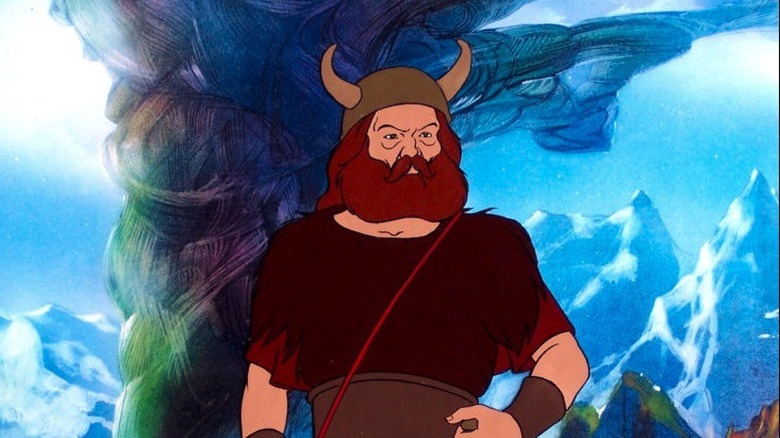
The film may have ended with the battle at Helm's Deep, and that confused audiences, but at least it got made. Not only did we get to see the adventures of Frodo and Gandalf, but we got it in a way that is burned into the brains of a generation. Bakshi also did this in a way that stayed very true to most of Tolkien's work. This animated film is what got me and so many other kids to read "The Lord of the Rings." A film getting kids to read books is a legacy all on its own.

Fun fact: Anthony Daniels, aka C-3PO, voiced the role of Legolas. Mull that over in your nugget for a bit. 

Read this next: The 14 Best Animated Movies (That Aren't Made By Disney Or Pixar)

The post How Ralph Bakshi Rescued The Animated Lord Of The Rings appeared first on /Film.
07 Feb 21:13

Severance Review: This Mind-Blowing, Unpredictable Series From Apple TV+ Is A Must-Watch

by Vanessa Armstrong

"Severance" is not a comedy. Those who hear that the show is executive produced/directed by Ben Stiller and stars Adam Scott might make that assumption, but as Apple TV+'s marketing materials keep reminding us, the show is a workplace thriller — no funny business found here.

But "Severance" does have funny moments, as great dramas often do, and it's also much more than a straightforward workplace thriller. The show, written and created by Dan Erickson, meets the qualifications for that genre with a gripping, ever-escalating plot that leaves you clambering for answers each episode. "Severance," however, is also a deep character piece and a commentary on capitalism — how much does where we work dictate our lives, and how far will a corporate conglomerate go to achieve their so-called strategic vision?

The crux of these issues is explored via the speculative premise of the series — Lumon Industries, a hundred-plus-year-old venerated corporation, has created a technology that severs a person's memories. Lumon then looks to hire people for "severed" positions, where the new Lumon employees willingly undergo a procedure where the company inserts a probe-like object into their brain that effectively cleaves their minds in two.

We're introduced to Lumon through Mark (Scott), a man who has faced great grief in his personal life and decides to be severed to escape his pain for at least eight hours a day. Through Mark, we get one answer to one of the many questions that come up on the show: What would drive someone to willingly cut their life in half?

The Terror Of Corporate Culture

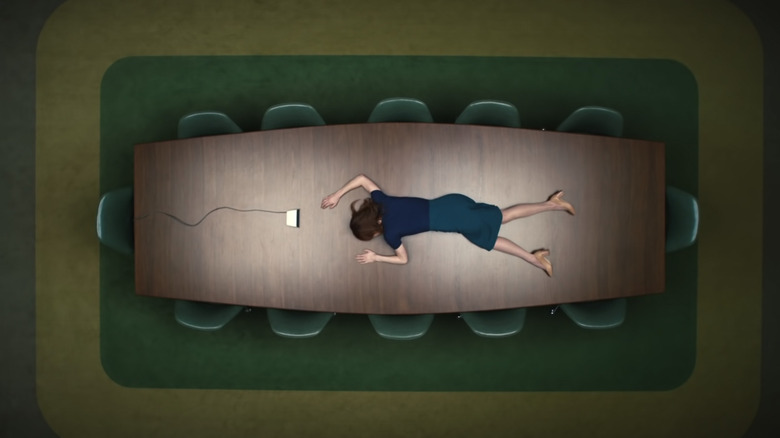
Mark's work persona, Mark S., has no memory of his past, and no knowledge of what goes on when he leaves the office. All Mark S. ever knows is his life inside Lumon's windowless corridors. He doesn't even know the respite and relief of sleep since his "outie" — the severed's nickname for their outside selves — takes on all the sleeping responsibilities. Conversely, Mark outside of Lumon's walls has no knowledge of his "innie's" life. Mark's workplace persona could be psychologically tortured all day and he'd be none the wiser. The commentary on capitalism here is pretty clear — in this world, your employer literally owns and controls you from 9 to 5 — and the show hammers this point home.

So why would anyone choose to do this? We get Mark's answer early on, but we don't know at first what drove Mark's severed colleagues, played by John Turturro, Zach Cherry, and Britt Lower, to undergo the same procedure. What we do see at the beginning of the season is their work environment. The four make up Lumon's Macrodata Refinement team, and spend their entire existence sitting in their own cubicles in a white-walled, windowless room undergoing computer tasks they don't understand.

The look of Lumon's severed floor is highly stylized, making for some stark and surreal imagery. One of the things that's so chilling about the show, however, is that the life for the innies at Lumon is too recognizable for comfort: the corporate-speak; the forced social functions; the endless identical corridors; the seeking of refuge and a veneer of privacy in a bathroom stall. Many who have worked a corporate job will see familiar flickerings of it here.

There are also moments when the stylization gets turned up a notch or three, and it's these scenes that showcase how effed up this all is. (Not that we needed that reminder, but those psychologically twisted moments, such as the sanctioned dance social replete with maracas and blinking colored lights, serve their purpose in profoundly freaking us the hell out).

The Emotional Underbelly Of Macrodata Refinement

What truly sets "Severance" apart, however, is when the show delves into the psyches of the series' ensemble cast. We get ample time with Mark, yes, but we also get deep emotional moments with his Macrodata Refinement co-workers.

And then there's the unsevered who supervise them. Mark's boss at Lumon is Patricia Arquette's Ms. Cobell, an intensely complex individual who contains multitudes. Arquette is masterful in this role, and I'll be surprised if she doesn't get all the awards for her performance. The way she softly says, "Mark," to Scott's character, for example, emotes a sinister faux-concern that chills you to the bone.

Arquette is only one of many fantastic performances in "Severance." Scott's conveyance of both Marks is uncanny, and Turturro, Cherry, and Lower also bring nuance to their severed characters. Dichen Lachman and Christopher Walken also touchingly play severed Lumon employees while Tramell Tillman plays another complex and intense unsevered supervisor. Rounding out the impressive cast is Mark's sister and brother-in-law, deftly portrayed by Jen Tullock and Michael Chernus.

As the episodes progress, we learn more about these characters and what may be going on at Lumon. What we find out, however, is never enough. "Severance" is a show that gets more mysterious the more it reveals, and the last two episodes of the season had me so anxious that my dog started whining at me in concern.

My biggest critique of the show, if you can call it that, is that the first season is incomplete — the first act in a much larger story that doesn't give you any closure or satisfaction on where things are left. If Apple TV+ doesn't pick this up for a second season, I will write a strongly worded letter to their manager.

Season 1 of "Severance" premieres on Apple TV+ on February 18, 2022.

Read this next: The 15 Best Anthology TV Series Ranked

The post Severance Review: This Mind-Blowing, Unpredictable Series From Apple TV+ is a Must-Watch appeared first on /Film.
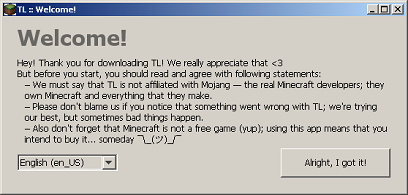
07 Feb 21:08

Everything You Should Do Now to Plan for a Winter Weather Blackout

by Becca Lewis

It’s can be frustrating enough when the power goes out, but when it happens because of ice or snow, it can be downright dangerous. Basic emergency preparedness is a good first step, but there are some specific things you should keep in mind when preparing for a potential winter blackout—before the storm hits—to keep…

Read more...

07 Feb 21:06

The Timeline Difference Between The Snowpiercer TV Series And Movie

by Lyvie Scott

TNT's "Snowpiercer" is in the middle of its third season, with a fourth (surprisingly) already on the way. The long-gestating adaptation of Bong Joon-ho's 2013 film had quite the uphill battle: "Snowpiercer" spent more than three years in development — and was passed from one director, showrunner, and network to the other — before finally landing on TNT. The series also had to contend with the skepticism of the #BongHive (the affectionate moniker for the filmmaker's most passionate supporters), some of whom saw the adaptation as a not-so-subtle attempt at capitalizing on Bong's recent overseas success.

For all the qualms there might be against the adaptation, it's important to note that the 2013 film was itself adapted from a French graphic novel of the same name. "Le Transperceneige" ("The Snowpiercer" in French) was created by Jacques Lob and Jean-Marc Rochette in 1982. In 2014, the publishing company Titan published an English-language version of the comic, and continued to expand the world with a prequel and sequel series. Titan even released a timeline for the "Snowpiercer" works, tying the film, the series, and the graphic novels into one big universe.

Where exactly do the adaptations fall on this timeline? Let's take a look.

The Semi-Comprehesive Timeline

It's helpful that each "Snowpiercer" project ties directly to the "Extinction Event." In this world, humanity's attempt to reverse the effects of global warming backfires spectacularly, sending the earth into a second Ice Age. An enigmatic inventor, Mr. Wilford, creates The Snowpiercer, a train that never slows down thanks to the power of his almighty engine. The surviving (ahem, affluent) members of humanity board Wilford's apocalyptic Ark and enjoy whatever comforts their status allows them. Those too poor to afford a ticket are relegated to the tail of the train, where quality of life is about as bleak as a "Lord of the Flies" adaptation.

The "Snowpiercer" series is set roughly seven years after the extinction event. Bong's "Snowpiercer" occurs 15 years post-extinction — and from here, things start to get messy. Both "Snowpiercer" adaptations are considered "loose" reimaginings of the graphic novels. The 2013 film pulls inspiration from only the first novel, now titled "Snowpiercer: The Escape." And though the TNT series was jointly influenced by Bong's film and the original source material, its continuity is completely different from either.

In a way, this might make it a bit easier for Bong fans to give the show a chance. Though it does draw some clear aesthetic and thematic influence from the "Snowpiercer" film, the story  is entirely separate from the gritty, gory, wacky world that Bong helped create. That may be disappointing for those of us in need of another Bong fix, but it's probably best to separate it from those that came before. Besides, Bong even gave the series his indelible blessing, so what more is there to quibble over?

"Snowpiercer" airs on Mondays on TNT.

Read this next: The 20 Best Dystopian Movies Of All Time

The post The Timeline Difference Between the Snowpiercer TV Series and Movie appeared first on /Film.

07 Feb 21:03

Microsoft disables the MSIX ms-appinstaller protocol handler to help stop the spread of malware

by Arif Bacchus
07 Feb 21:03

Microsoft Says Mac Trojan Becoming Stealthier, More Menacing

by Ryan Naraine

Malware hunters at Microsoft are calling attention to a nasty macOS malware family that has evolved quickly from a basic information-gathering trojan to a stealthy backdoor with more powerful capabilities.

read more

07 Feb 21:02

Phil Lord And Chris Miller On That Men In Black/Jump Street Crossover That Never Happened

by Sandy Schaefer

The "Jump Street" franchise has laid dormant since 2014's "22 Jump Street," though not for lack of trying on Sony Pictures' part. At one point, the studio even considered a crossover between its "Jump Street" and "Men in Black" movies — one that came "very close" to happening, according to "21/22 Jump Street" directors Phil Lord and Chris Miller.

The "Jump Street" and "Men in Black" crossover, also known as "MiB 23," first came to light as a result of the notorious Sony Pictures hack of 2014. It was later reported that James Bobin ("The Muppets," "Dora and the Lost City of Gold") was onboard to direct the film, with Channing Tatum and Jonah Hill reprising their respective roles as "Jump Street" buddy cop duo Greg Jenko and Morton Schmidt.

Speaking on the Happy Sad Confused podcast (via GamesRadar+), Miller described the "MiB 23" script as "very funny" and revealed that it picked up with Jenko and Schmidt after the pair had gone on an undercover mission to medical school. Those with good memories may recall the pair's med school adventure was the first of more than 20 fake "Jump Street" movie sequels (as well as a video game and toy line) teased in the famous end credits scene for "22 Jump Street."

Here Come The Men In Powder Blue

Miller went on to elaborate on how Jenko and Schmidt got tangled up with the Men in Black, and the artistic challenges of crossing over the two action-comedy properties:

"The idea was that Jonah and Channing, a thing happened while they were doing their medical school adventure that got them embroiled into the world of Men in Black, and they ended up teaming up to stop an alien takeover type of thing. It was very funny, it was very crazy trying to manage these two franchises and not drive them both into the ground seemed like a real challenge."

Lord added to that, noting, "One of my favorite ideas is that the Men in Black, the black suits were like martial arts belts that you had to work your way up to black, and [Hill and Tatum] were issued powder blue Men in Black suits."

Personally, I have mixed feelings about the "Jump Street" and "Men in Black" crossover being nixed. On the one hand, it sounds like it could've made for a far more interesting continuation of the "Men in Black" movies than "Men in Black: International" — the quickly-forgotten quasi-sequel to the earlier "MiB" movies that Sony released back in 2019. What's more, poking fun at crossovers and corporate synergy reads as the next logical step for the "Jump Street" films after Lord and Miller's first two movies cheerfully mocked their own existence. 

On the other hand, the "22 Jump Street" credits scene was so thorough in the way it satirized Hollywood's infatuation with running its cash cows into the ground that it would've been very hard for "MiB 23" or any other "Jump Street"-related sequel to top it. For that reason, the franchise might be better off remaining in stasis until further notice (if not permanently).

Lord and Miller will be back as writers and producers on this year's animated sequel "Spider-Man: Across the Spider-Verse (Part One)," which opens in theaters on October 7, 2022.

Read this next: 20 Underrated Comedy Movies You Need To Watch

The post Phil Lord and Chris Miller on That Men in Black/Jump Street Crossover That Never Happened appeared first on /Film.
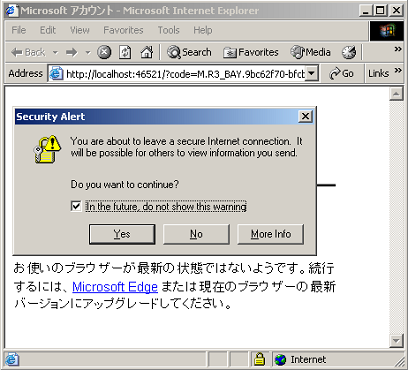
07 Feb 21:01

Detect active network reconnaissance with Microsoft Defender for Endpoint

by Pooja Parab

The Microsoft Compromise Recovery Security Practice has observed how the security industry has evolved over the last few years as consumers, businesses, and industry professionals continue to adapt to the changing landscape. We have seen the emergence of new frameworks, such as the Cybersecurity Framework by the National Institute of Standards and Technology (NIST), which can empower us to build scalable programs and accelerate the transition to a Zero Trust workplace. We have also witnessed the rise and prominence of human-operated ransomware, which continues to subvert traditional security defenses and assert control over our information assets.1

Many of our customers have placed their trust in Microsoft Defender for Endpoint in order to help them protect, detect, and respond to threats that have emerged throughout this period of change. It is a diverse landscape that forces us to reconsider how we protect our most prized assets from borderless threat actors in IT environments that can no longer remain exclusively protected behind a network perimeter.

Threat actor tactics and techniques

With the current levels of diversity and the continued evolution of IT services, it is important to take a moment and consider how attackers might think in terms of the tactics and techniques required to successfully target and infiltrate a network. For example, HAFNIUM performed active reconnaissance before choosing to exploit a zero-day vulnerability within Microsoft Exchange Server to assert control over their chosen target’s information systems.

Bar chart of Miter Att&ck Framework with first part highlighted in red showing impact.

The objective was to develop a network map or diagram of possible endpoints which could be successfully exploited as part of a targeted campaign. This highlights the significance of reconnaissance and demonstrates the critical role it plays in assisting threat actors in achieving their goals and objectives, such as active directory domain dominance.

Spending quality time on reconnaissance is guaranteed to pay dividends at subsequent stages of the cybersecurity kill chain and is a crucial indicator from which to detect malicious activity at the earliest possible stages of an attack. Unfortunately, it is also a focus area that is overlooked by security professionals in favor of exotic phases of an attack such as weaponization, delivery, and exploitation. This is because it can be notoriously difficult to detect reconnaissance attacks—as they are often passive—executed in the public domain and external to the victim’s network. Job postings, domain registrars, and financial reporting are great resources to gain context on a target, but due to their nature, it can be a challenge to even seasoned security operations teams to detect and investigate this type of attack. Fortunately, there is a certain point where passive activities can have diminishing returns as the data points produced can be too broad to act upon. This can drive an attacker to consider the use of active reconnaissance which has dependencies on the endpoint or human interaction. For defenders, this is good news as it increases the likelihood that security services will be able to capture indicators of attack (IOA) in event logs, providing intelligence that can be analyzed and used to execute an informed response. For the remainder of the blog post, we will look more directly at active network reconnaissance using a well-known utility.

Active network reconnaissance

Active network reconnaissance is an art form and a somewhat divisive topic. A typical approach is to perform network scanning against a network address range or host IP address to elicit information about the target under evaluation. A wide variety of utilities can scan and enumerate data from a network, but for many Nmap (Network Mapper) remains the premier choice in developing time-sensitive network intelligence. Originally released 24 years ago, Nmap has been actively maintained and is available for Microsoft Windows, Linux, and macOS making it accessible to network auditors and security professionals regardless of their preferred choice of operating system.
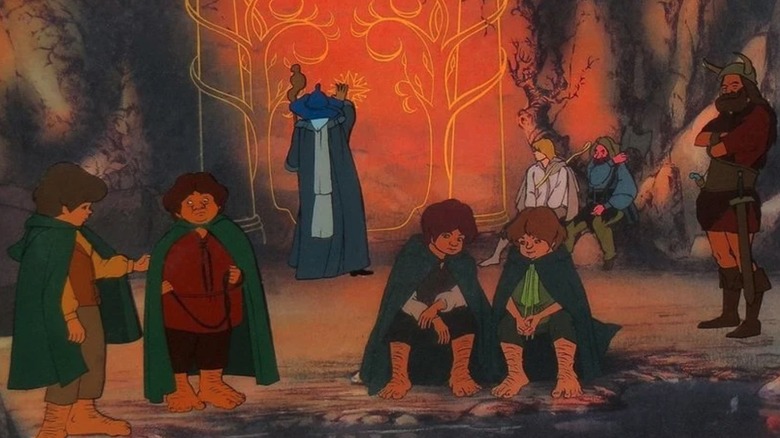
Nodes on a network can be probed for information using network scan utilities and services.
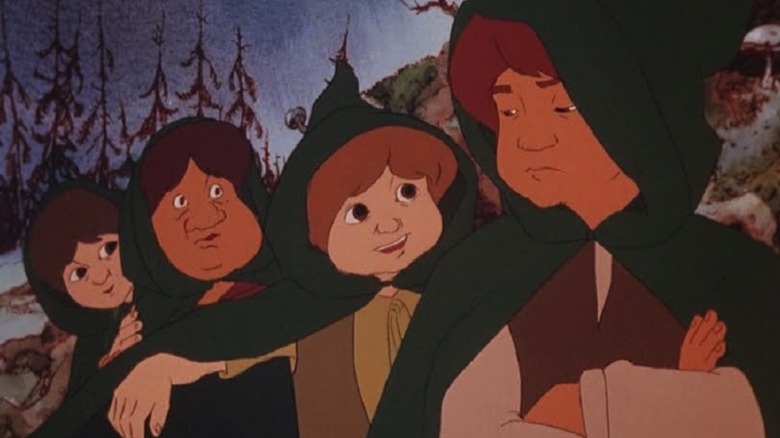
At its heart, the utility enumerates critical information about the target. It does this by sending specially crafted network probes to elicit a response from a scanned host. These responses are analyzed and provide data points about the ports, services, and operating system versions which exist on the target under evaluation. This information is valuable to a threat actor, as it defines how to approach the weaponization, delivery, and exploitation phases of the attack lifecycle, providing insight into critical areas of interest, such as determining what types of vulnerabilities can be exploited to gain entry. Equally, this can be of significant interest to a defender as it can be used to identify weaknesses in the attack surface which require further investigation to protect—often considered a pivotal component of threat and vulnerability management programs. The utility can also quickly determine which hosts may be active at any given time, ensuring that deeper analysis is performed directly on responding endpoints.

Knowing which hosts are online facilitates this narrowing of reconnaissance investigation effort to specific endpoints where more time and care can be taken to determine the most effective path to exploitation. Gaining intelligence on which hosts are online enables the development of a structured attack strategy, which significantly increases the chance of success and ensures energy is concentrated exclusively on these endpoints—leading to interesting information about their status and configuration. Let’s illustrate this in a real-world scan using Nmap in a controlled environment.

Nmap scan use case

In our lab environment, Nmap has been configured to send probes to an individual IP address from an unauthenticated client. The results, albeit constrained to a specific scan type, return a plethora of information that can aid an attacker in building a profile about a discovered host. An example scan can be seen in the screenshot below, which includes data points on:

  • The online status of a scanned endpoint.
  • The role or services, which are found to be running on the endpoint.
  • The possible version of the operating system installed on the endpoint.
Example of a real world N M A P scan within a controlled Lab Environment showcasing the metadata which could be of interest to Attackers and Defenders when performing active reconnaissance

This type of information is vital as it will help to steer an attacker towards further research on the specific vulnerabilities which can be exploited to successfully compromise the version of the operating system or combination of windows services running on the scanned endpoint.

The valuable point to take away is that whilst this information is of interest to a threat actor, the scan has a dependence on endpoint interaction which can leave behind breadcrumbs within security services such as Windows Defender Firewall with Advanced Security which can be reviewed for anomalous network traffic.

Defend against active network reconnaissance with Windows Defender Firewall

Windows Defender Firewall with Advanced Security is a service that is built directly into Windows and, given its proximity to the host, can detect active network reconnaissance attacks against an active network interface in real-time. Unfortunately for Microsoft’s Compromise Security Recovery Practice, the service is often found to be in a disabled state because of perceived complexity or operational overhead, but it is a proven solution that is effective in both the detection and prevention of active reconnaissance attacks and should not be overlooked as part of any defense-in-depth security strategy.

Returning to our lab, NMAP had been used to target an endpoint where the Windows Defender Firewall with Advanced Security service was active allowing for the capture of network events within localized log files. This file can be parsed to identify anomalies in network communications such as those of a singular IP being linked to a port scan against numerous TCP ports in a short time span. The Windows Defender Firewall with Advanced Security logfile confirms that the scan came from a host that is resident on the same network segment as the target endpoint.

Windows Defender Firewall log which is typically found here when enabled.

This is important as whilst enterprise firewalls provide visibility of threats at the outermost boundary of a company network environment, they are not always positioned to detect threats within the same network segment. In this case, it is possible that security operations will not be able to identify and act upon these types of threats. By ensuring that Windows Defenders Firewall is enabled and capable of collecting network security events, you will be able to perform effective host-based investigations, confirm the presence of active network reconnaissance, and take appropriate action to disrupt an attack at the start of the kill chain.

Enterprise-wide visibility with Microsoft Defender for Endpoint

Microsoft Defender for Endpoint is a market-leading platform on the market that offers vulnerability management, endpoint protection, endpoint detection and response (EDR), and mobile threat defense service. It is a true game-changer in the security services industry and one that provides visibility in a uniform and centralized reporting platform. Defender for Endpoint can be quickly scaled on-demand across heterogeneous network environments and to begin collating telemetry data directly from managed endpoints for true enterprise-wide visibility.

While we had highlighted the value of parsing Windows Defender Firewall with Advanced Security log files on an endpoint, the approach provides a somewhat limited view of the overall threat landscape. Microsoft Defender for Endpoint can overcome these constraints as it continuously collects a wide variety of telemetry data from all managed endpoints. A security operations analyst can use this telemetry data to create detailed custom reports which can scale across the enterprise, empowering the team to perform rapid and effective isolation of malicious hosts in the network.

Advanced threat hunting with Defender for Endpoint

The Microsoft Defender for Endpoint advanced threat hunting feature can be used to detect network reconnaissance by searching for common characteristics of a scan such as those of time, source address, destination address, TCP/IP port, and network type. For example, we can check whether a single IP address is attempting to connect to a wide range of ports on a specific host in a short period of time in much the same way as found within Windows Defender Firewall with Advanced Security—except we now have enterprise-wide coverage within an instant. It is an extremely flexible solution that can be tailored to support almost any use case.

If we look closely at the results, we can see that an endpoint is attempting to connect to endpoints on TCP/IP ports which are representative of a default Nmap scan. This type of detection method is useful when the attacker is using a workstation that is not managed within Microsoft Defender for Endpoint but resident on the network.

Advanced Threat Hunting Queries can be produced to provide enterprise-wide visibility on potential port scan threat activity.

In a situation where all hosts have been onboarded into Defender for Endpoint, you could detect the same threat using an alternative method such as running an advanced threat hunting query to detect all instances where the Nmap process has been invoked from the command line. In our example, the query references the DeviceProcessEvents table to generate a tabular report which can detect the invocation of nmap.exe from a parent process such as cmd.exe. The core value is that you customize advanced threat hunting queries within Defender for Endpoint to fit your threat scenario, truly ensuring that no stone is left unturned during your investigations.

As shown, the results table provides us with clear attribution towards suspicious endpoints without the need to drill down into the data to filter out legitimate versus malicious network traffic. The information provided accurately illustrates what type of scan <-sS, -T4> has been executed but provides a clear indicator of the targets of the attack such as the 172.16.0.0/24 subnet. This level of detail can be critical when looking to make an informed decision on how best to isolate, eradicate and recover from this type of attack scenario.

A simple query used within Advanced Threat Hunting to identify hosts which have executed n map from c m d within the last 30 days.

The results table provides us with clear attribution towards a suspicious endpoint which minimizes the need for further analysis. The information provided accurately illustrates what type of scan <-sS, -T4> has been executed by the suspicious workstation but also helps us concentrate our investigation on exposed targets of the attack <172.16.0.0/24>. This level of detail can be critical when looking to make an informed decision on how best to respond to the attack.

Screen view of parent and chile process command codes.

As shown in our lab examples, advanced threat hunting is a versatile and effective means to quickly detect active network reconnaissance attacks such as those performed using Nmap, and a great focus area to develop and mature your security operations capabilities. The queries can be tailored for almost any use case and can help us investigate an issue from multiple perspectives, allowing for a custom-specific target response to an attack. Defender for Endpoint includes a great number of useful queries to help you get started in the built-in repository but many more can be sourced from online communities or public repositories such as those from GitHub. These can act as great references that can help you to accelerate your development of the native Kusto Query Language (KQL) and are a fantastic point from which to start your journey in being able to detect and respond to advanced persistent threats.

Proactively seek out active reconnaissance

Back in 2020, it was reported that it can take up to 228 days to identify a breach. This is an incredible time period and one we all must aim to reduce to an absolute minimum to ensure the threat is contained at the earliest possible stages of the kill chain. Security operations teams must consider this when aiming to improve their operational performance along with adopting an assume breach mindset. To minimize the time-to-detect, one must place a greater emphasis on the detection of reconnaissance attacks through the adoption and use of continuous monitoring solutions like Defender for Endpoint. This means taking the initiative to proactively seek out active reconnaissance in all its forms, on the broadest possible scale, with the best tools available. It is, therefore, imperative to enable key log sources, like those found within Windows Defender Firewall to gain greater visibility into localized IOA for deep analysis while embracing Defender for Endpoint to scale on-demand and secure a complete horizontal view of the threats to your managed environment.

Microsoft Compromise Recovery Security Practice uses Defender for Endpoint every day as a part of our proactive and reactive investigations. It has proven to be critical to the fast and successful recovery of service for our customers and a significant contributor to our goal to assist our customers in accelerating transformation programs and achieving the desired target of a secure modern workplace.

Overview of the Cyber Security Kill Chain as aligned to the Mitre Att&ck Framework Tactic at the core of our blog posting.

Through this experience, we encourage our customers to act first, act fast, and prevent an attack at the earliest possible phases of the kill chain.  

We believe that Microsoft Defender For Endpoint is a great place to start and one which could prove to be the difference between disrupting an attacker from performing active network reconnaissance and being the victim of a malicious zero-day targeted attack.

Learn more

To learn more about Microsoft Security solutions, visit our website. Bookmark the Security blog to keep up with our expert coverage on security matters. Also, follow us at @MSFTSecurity for the latest news and updates on cybersecurity.


1 Human-operated ransomware, January 11, 2022

The post Detect active network reconnaissance with Microsoft Defender for Endpoint appeared first on Microsoft Security Blog.