×You need to sign in to continue.

Shared posts

21 Jun 19:31

1789 or 1866 is not 2024: Why historians have a difficult task in guiding Supreme Court justices as they decide today’s legal issues

by Amy Hart, Program Manager, Public Scholarship and Engagement, University of California, Davis
Historians are coming out of the archives and sharing their expertise. uschools/Getty Images

History matters at the U.S. Supreme Court, where most justices either embrace or occasionally rely on a form of interpretation called “originalism,” which holds that the original meaning of the Constitution should be sought, and relied on, to decide cases.

Historians matter at the Supreme Court these days, too.

In recent years, the court has increasingly taken on controversial cases, inserted itself into polarized electoral politics and overturned long-standing precedent, including the federal right to abortion.

This judicial aggressiveness, coupled with most justices’ championing of originalism, has thrust professional historians into the workings of the court, as well as into the public eye.

That’s because lawyers, advocacy groups and think tanks have been soliciting historians’ expertise on the history underlying certain cases.

New opportunities have arisen for historians to play a role in court cases, including the Brennan Center for Justice’s recently established Historians Council on the Constitution and consulting jobs for historians whose research intersects with hot-button political issues such as gun rights.

But the new relevance of historians has also raised fundamental questions about the role of history, and of historians themselves, in guiding the present.

When a particular conclusion is sought by lawyers, activists or politicians, does this expectation affect the way historians approach their research? How can historians meet the political demands of this moment without oversimplifying their research or tailoring their conclusions to respond to current legal arguments – skewing their analysis in the process?

A large white building with eight columns in front.
New opportunities have arisen for historians to engage with issues before the U.S. Supreme Court. lucky-photographer/iStock / Getty Images Plus

Meeting the moment

As a historian of 19th-century U.S. history and a program manager in the Office of Public Scholarship and Engagement at the University of California, Davis, I find the public demand for historians’ takes on these issues intriguing and exciting.

Yet this “history-for-hire” approach can complicate the incentives of historical inquiry.

For decades, historians have been writing amicus briefs, also known as “friend of the court” briefs, which are advisory documents submitted to the court by outside parties.

But the emphasis of this court on deciding cases by interpreting the original meaning of the Constitution, including recently relying on the original intent of the Second Amendment and Fourteenth Amendment, has brought more historians out of the shadows – and archives – to publicly contribute to the debates.

Some historians are getting broad media coverage, including Harvard scholar Jill Lepore and Yale scholar David Blight. They could be heard in a Jan. 31, 2024, interview on NPR highlighting their friend-of-the-court brief in the case that challenged Donald Trump’s presence on the Colorado ballot because he had engaged in insurrection. Lepore and Blight used their amicus brief to delve into the historical intent of Section 3 of the Fourteenth Amendment.

Contributing to the public discussion is part of the role of historians and arguably maintains their field’s relevance. The American Historical Association, the leading professional organization for historians, offers advocacy tips on its website that provide strategies for weighing in on public issues.

But when advocacy comes to mean applying historical research methods to high-stakes legal decisions, some historians can feel like they are venturing outside of their field and into the less familiar realm of legal argument.

Complicating the history

Gregory Downs, department chair and professor of history at the University of California, Davis, and a recent appointee to the Brennan Center’s Historians Council on the Constitution, says that historians’ methods can sometimes feel out of step with the methods and operations of the court.

While historians contextualize history to better understand the many differences between eras of the past, lawyers look for direct analogies between the past and present that can help illuminate their case. This can lead to oversimplifications. As Downs puts it, “Any argument that makes a direct analogy between a present moment and 1866 is inherently ahistorical.”

In addition, while historians approach a historical question without a preconceived conclusion, lawyers approach a case knowing they are supporting one side or the other.

The very avenues available for historians to contribute to these legal debates – amicus briefs – already shape historians’ argument into a series of responses to the legal questions of the case, instead of allowing for an open historical inquiry. While it is possible for a scholar to submit an amicus brief in support of neither side in a case, in general, historians are asked to provide historical reinforcement for only one side in these cases.

As Downs says: “Amicus briefs start from a premise that they are supporting one side or another … the court’s eventually going to have to decide.” At the Supreme Court, he says, “They are upholding or overturning a prior ruling, so they are in a binary outcome, and this is why the briefs can end up with a binary outcome.”

This approach stands contrary to historians’ impulse to highlight the complexity in history. Historians have a difficult time narrowing the many events and perspectives of history down to one side or the other.

Did the Supreme Court ignore history and historians in an important ruling? Two historians think so.

Instead, historians’ strengths lie in placing historical records in context and using historical events or individuals as a starting point to tell a coherent story of the past. These stories can evolve, expand or shift as new evidence and perspectives are uncovered and integrated into historical narratives.

The aim of historical research is not to convince a present-day jury or judge of a specific predetermined conclusion, but rather to collect evidence, explore diverse interpretations and challenge unprovable narratives about the past.

As Downs says, “The balancing act for historians is, how do we stay as true as we can” to these complexities and also “figure out if there is enough applicability – in our subjective judgment – to write a brief that still aims to be useful.”

“You could write a brief that says ‘everything is very complicated,’” he says, “but then there is no utility.”

Making the case

The current court majority champions the notion that the original intent of the Constitution should be conclusive in settling the pressing legal issues of today.

Yet historians see not just one intent in that document, but many “intents” expressed – and suppressed – throughout American society during the drafting of the Constitution and its amendments.

Which intent to settle on as authoritative is usually a political or judicial question, not a question asked by historians. The inherent complexity of history can undermine the search for clear and decisive jurisprudence.

Furthermore, in recent decades, history as a discipline has expanded its focus to include voices that were traditionally left out of authoritative histories. These include the voices of people of color and women, who were barred from providing input into the drafting of the Constitution. How should a court take into consideration the expansion of historical perspectives?

Perhaps because of this difficulty in parsing the most appropriate historical perspective to apply to a legal case, sometimes the historical narratives are simply overlooked by the Supreme Court.

This happened in the March 2024 decision in the case that determined Trump’s inclusion on the Colorado ballot.

Despite multiple amicus briefs submitted by historians who found historical evidence to justify removing Trump from the Colorado ballot under Section 3 of the Fourteenth Amendment, the justices’ unanimous opinion did not reference this historical context. History was largely ignored, as were the historians.

As originalism retains its influence in the Supreme Court, historians will likely continue to explore new opportunities to contribute to court cases. Historians are trying to meet this moment, but questions remain whether their research will be found useful in the adversarial environment of courts, and whether their analyses will have a meaningful effect on court decisions.

The Conversation

Amy Hart does not work for, consult, own shares in or receive funding from any company or organization that would benefit from this article, and has disclosed no relevant affiliations beyond their academic appointment.

21 Jun 19:21

Digital public archaeology: Excavating data from digs done decades ago and connecting with today’s communities

by Emily Fletcher, Ph.D. Candidate in Archaeology, Purdue University
Archaeologists excavate at the Gulkana Site in the 1970s. Dr. William Workman Photo Collection

The ancestors of Alaska Native people began using local copper sources to craft intricate tools roughly 1,000 years ago. Over one-third of all copper objects archaeologists have found in this region were excavated at a single spot, named the Gulkana Site.

This is the site I’ve studied for the past four years as a Ph.D. student at Purdue University. In spite of its importance, the Gulkana Site is not well known.

To my knowledge, it isn’t mentioned in any museums. Locals, including Alaska Native Ahtna people, who descend from the site’s original inhabitants, might recognize the name, but they don’t know much about what happened there. Even among archaeologists, little information is available about it – just a few reports and passing mentions in a handful of publications.

However, the Gulkana Site was first identified and excavated nearly 50 years ago. What gives?

Archaeology has a data management problem, and it is not unique to the Gulkana Site. U.S. federal regulations and disciplinary standards require archaeologists to preserve records of their excavations, but many of these records have never been analyzed. Archaeologists refer to this problem as the “legacy data backlog.”

As an example of this backlog, the Gulkana Site tells a story not only about Ahtna history and copperworking innovation, but also about the ongoing value of archaeological data to researchers and the public alike.

What happens after an excavation?

In the United States, most excavations, including those that have happened at the Gulkana Site, occur through a process called Cultural Resource Management. Since the 1960s, federal regulations in the U.S. have required archaeological excavations prior to certain development projects. Regulations also require that records of any finds be preserved for future generations.

One estimate suggests that this process has created millions of records in the legacy data backlog. Archaeological data is complex, and these records include many file formats, varying from handwritten maps to pictures and spatial data.

The problem is worst for datasets that were created before computers were in common use. Research suggests that archaeologists are biased toward digital datasets, which are easier to access and use with modern methods. Ignoring nondigital datasets means not only abandoning the product of decades of archaeological work, it also silences the human experiences those datasets are meant to preserve. Once a site is excavated, this data is the only way the people who lived there can tell their story.

Archaeologists aren’t sure how to resolve this problem. Many solutions have been proposed, including the creation of new data repositories, making new use of existing datasets whenever possible, and increasing collaboration with other disciplines and with public stakeholders. One of the more creative solutions, the Vesuvius Challenge, recently made headlines for awarding its US$700,000 grand prize to a team that successfully used artificial intelligence to read ancient text.

Digital archaeology excavates old data

Of course, such a complicated problem has no single miracle cure. In my work with the Gulkana Site, I’m employing many of these suggestions through a newer form of archaeology that some researchers are calling digital public archaeology. It combines digital archaeology, which uses computers in archaeological research, with public archaeology, which honors the public’s interest in the past.

For me, archaeology looks different than what people might expect. Instead of spending my days excavating in some fabulous location, my work involves being parked at a computer for hours on end. I dig through old information instead of digging up new information.

As a digital archaeologist, I apply modern methods like AI to bring new life to decades-old data about the Gulkana Site. I write software that converts 50-year-old handwritten excavation notes into a digital map that I can analyze with a computer.

Although it is less glamorous, this work is arguably more important than excavation. Excavation is merely a data collection technique; on its own, it can’t reveal much about a site. This is why there is still much to learn about the Gulkana Site, even though it was excavated decades ago.

Analysis is the way archaeologists learn about the past, and computers make more methods available to us than ever before. In my work, I use computational mapping techniques to study the copper artifacts recovered from the Gulkana Site. Studying where these objects were found will help us understand if they were used by all people at the Gulkana Site or reserved for a select few.

Connecting archaeology to communities today

I am also a public archaeologist; I believe that the past is made meaningful through the people connected to it. This means that my study of the Gulkana Site would be insufficient were it conducted solely by me, alone at my computer 3,000 miles away from Alaska. Instead, I have designed my research in collaboration with descendants of the people who lived at the Gulkana Site to ensure my research holds value to them, not just to archaeologists.

In my research, this means embedding opportunities for youth involvement throughout my project. Each year, I travel to Alaska to host a course about archaeology, Ahtna history, and technology in collaboration with Ahtna leadership and the local school district.

In the course, we take field trips to archaeological sites and the Ahtna Cultural Center. Kids learn about the artifacts found at the Gulkana Site and have an opportunity to make their own. Ahtna leaders share cultural knowledge with students. At the end of the course, students integrate what they’ve learned into a video game about the Gulkana Site.

The goal of my research is to bring new life to the Gulkana Site through digital methods and outreach. My experiences demonstrate that even a site excavated 50 years ago can reveal more to help us better understand the past. Perhaps more importantly, it can also help the next generation gain experience with technological skills and connect with their heritage. Old archaeological data is still meaningful in the digital age – we just have to pay attention to it.

The Conversation

The research described in this article is funded by the National Science Foundation (Award #2311356)

21 Jun 19:20

US laws created during slavery are still on the books. A legal scholar wants to at least acknowledge that history in legal citations

by Justin Simard, Associate Professor of Law, Michigan State University
Laws enacted during the U.S. slavery era are still being used by lawyers and judges in today's courtrooms. Getty Images

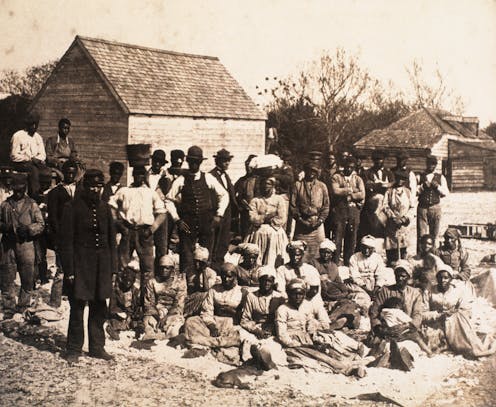
As the story of Juneteenth is told by modern-day historians, enslaved Black people were freed by laws, not combat.

Union Gen. Gordon Granger said as much when he read General Order No. 3 in Galveston, Texas, in front of enslaved people who were among the last to learn of their legal freedom.

According to the order, the law promised the “absolute equality of personal rights and rights of property between former masters and slaves.”

But the new laws guaranteeing legal protections for equal rights – starting with the Emancipation Proclamation in January 1863 and followed by the ratification of the 13th, 14th and 15th amendments after the U.S. Civil War had ended in April 1865 – did not eliminate the influence of slavery on the laws.

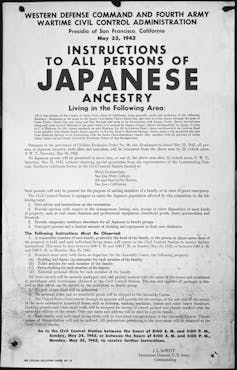
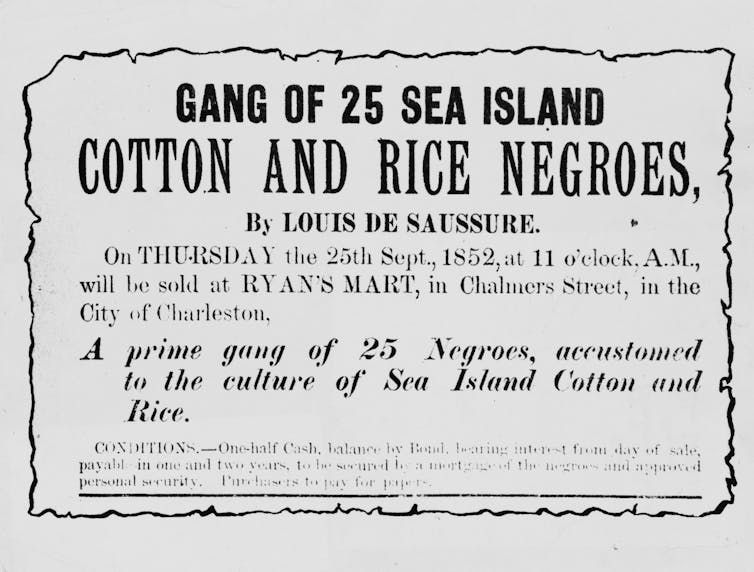
The legacy of slavery is still enshrined in thousands of judicial opinions and briefs that are cited today by American judges and lawyers in cases involving everything from property rights to criminal law.

For example, in 2016 a judge on the 3rd U.S. Circuit Court of Appeals cited Prigg v. Pennsylvania, an 1842 U.S. Supreme Court case that held that a state could not provide legal protections for alleged fugitive slaves. The judge cited that case to explain the limits of congressional power to limit gambling in college sports.

In 2013, a judge on the 9th U.S. Circuit Court of Appeals cited Prigg for similar reasons. In that case, involving challenges to an Indian tribe’s acquisition of land, the judge relied on Prigg to explain how to interpret a federal statute.

Neither of these judges acknowledged or addressed the origins of the Prigg v. Pennsylvania case.

That is not unusual.

What I have learned by researching these slave cases is that the vast majority of judges do not acknowledge that the cases they cite involve the enslaved. They also almost never consider how slavery may have shaped legal rules.

The Citing Slavery Project

To place these laws in historical context for modern-day usage and encourage judges and lawyers to address slavery’s influence on the law, I started the Citing Slavery Project in 2020. Since then, my team of students and I have identified more than 12,000 cases involving enslaved people and more than 40,000 cases that cite those cases.

A Black man is wearing a teeshirt that says Freeish since 1865.
A man displays a shirt celebrating the freedom of enslaved Black people during a Juneteenth celebration in Tulsa, Okla. Michael B. Thomas/Getty Images

We have found dozens of citations of slave cases in the 2010s. Such citations appear in rulings from the U.S. Supreme Court and in state courts across the country. Citation by lawyers in briefs is even more prevalent.

An ethical obligation?

Addressing slavery’s legal legacy is not just an issue for historians.

It is also an ethical issue for legal professionals. The code of conduct for U.S. judges recognizes that “an independent and honorable judiciary is indispensable to justice in our society.” The code further calls for judges to “act at all times in a manner that promotes public confidence in the integrity … of the judiciary.”

Lawyers share in this obligation.

The American Bar Association notes the profession’s “special responsibility for the quality of justice.” It also calls for lawyers to further “the public’s understanding of and confidence in the rule of law and the justice system.”

A white man wearing a black robe poses for a portrait.
U.S. Supreme Court Chief Justice Roger Taney wrote the majority opinion in 1857 that ruled African Americans could not be considered U.S. citizens. Heritage Art/Getty Images

Such actions are particularly important because of the rising importance of the Supreme Court’s history-and-tradition test, which uses analysis of historical traditions to determine modern constitutional rights. Courts risk undermining their legitimacy by paying attention to some legal legacies while ignoring others.

It is my belief that lawyers and judges must confront slavery’s legacy in order to atone for the legal profession’s past actions and to fulfill their ethical duties to ensure confidence in our legal system.

The Conversation

Justin Simard receives funding from Michigan State University, the Proteus Foundation Vital Projects Fund, and the Engagement Scholarship Consortium.

21 Jun 19:13

How Biden’s executive order to protect immigrant spouses of citizens from deportation will benefit their families and communities

by Jane Lilly López, Assistant Professor of Sociology, Brigham Young University
People participate in an immigration rally in Homestead, Fla., in June 2023. Joe Raedle/Getty Images

Rodrigo Salazar is a man who entered the U.S. without a visa and has been living in the country without legal status ever since. Because of this, Rodrigo, who asked that we not use his or his wife’s real names in order to protect their identity, cannot advance from low-paying jobs at restaurants and car washes.

His wife, Carmela, is a U.S. citizen, but she is also facing career limitations. Carmela doesn’t feel safe moving to a place where she could get a higher-paying job. She worries that Rodrigo’s lack of legal status would be more obvious in a city with a smaller Latino population, which would put him at risk for arrest and deportation.

The entire Salazar family, including their two children, live with the constant fear of family separation if Rodrigo is deported.

Immigrants like Rodrigo, who are living in the U.S. without legal status but are married to U.S. citizens, will now have protection from deportation, President Joe Biden announced on June 18, 2024. In order to qualify, they must have arrived 10 or more years ago and be married to a U.S. citizen. Those who meet these criteria will be able to get work permits and can get on the pathway to citizenship while working and living in the U.S. legally.

The Biden administration estimates that about 500,000 immigrant spouses of citizens will be protected from deportation with this policy change. The policy will also apply to approximately 50,000 U.S. citizens’ stepchildren who are living in the U.S. without legal immigration status.

We are migration scholars who study mixed-citizenship marriages – meaning some family members are citizens or have the legal right to stay in the U.S., while others do not – and the consequences of being undocumented. Our research shows that when one family member lacks legal immigration status in the U.S., the family as a whole assumes an undocumented status.

When one family member cannot safely travel, work or access health care, all family members suffer. The opposite is also true. When a family member is able to shift from living without legal status in the U.S. to getting legal status, the lives of the entire family improve.

A white man with white hair and a dark suit and sunglasses holds up his hand to the camera.
President Joe Biden prepares to board Air Force One in California on June 16, 2024. Mandel Ngan/AFP via Getty Images

A shift in immigration policy in the 1990s

Generally, having an immediate family member who is a U.S. citizen gives a foreign citizen the chance to live legally in the U.S. with permanent residency and a pathway to citizenship.

For most of the 20th century, all spouses of U.S. citizens who met the legal standards for qualified marital relationships were able to become citizens through a relatively straightforward process, but that changed in 1996.

A 1996 law called the Illegal Immigration Reform and Immigrant Responsibility Act imposed harsh penalties for people living in the U.S. without legal immigration status. One of the penalties is a 10-year “bar to re-entry” for anyone who has lived without a visa in the U.S. for one year or more. This ban goes into effect as soon as that individual leaves U.S. territory.

Technicalities create a divide

A consequence of this 1996 law was that getting a green card, which is an identity document that gives someone legal permanent residency in the country, became dependent on whether an immigrant entered – and remained in – the U.S. with or without a visa.

This change in the law produced a stark inequality in U.S. citizens’ ability to legally sponsor their immigrant spouses for permanent residency.

If an immigrant spouse of a U.S. citizen has overstayed a visa, this person can apply for legal immigration status – through their spouse – from within the U.S. In these cases, the spouse does not have to leave U.S. territory and is not subject to the 10-year ban.

In contrast, if a U.S. citizen’s spouse entered the U.S. without a visa or other legal permission, they must leave the country for the final step in their legal immigration application process. But when they leave the country, their 10-year ban automatically goes into effect.

This means that although every U.S. citizen’s spouse, including those lacking legal immigration status, technically qualifies for legal permanent residency, some of them will have to spend a decade or more outside the country before they can actually get a green card.

As a result, over the past few decades, millions of immigrants who were living in the U.S. without legal permission but were married to U.S. citizens have not gotten legal immigration status.

While the 10-year bar applies only to immigrants without legal status, in practice it also profoundly affects their citizen spouses, too.

In these cases, citizens married to immigrants without legal permission to be in the U.S. have two difficult options. They can resign themselves to a life of fear and limitations in the U.S., including the ever-present threat of their spouse’s deportation, or they can give up living in the U.S. altogether for a decade or more.

A man holds a small child, who holds an American flag. He stands next to a woman, who places her hands around the chest of a young boy.
A new U.S. citizen, originally from Mexico, poses with his family after a naturalization ceremony in November 2023 in Long Beach, Calif. Biden’s new policy will make it easier for undocumented immigrants with citizen spouses to become citizens. Mario Tama/Getty Images

The impacts of Biden’s immigration policy changes

The Biden administration has connected this new executive action on families to its recent announcement that it will heighten restrictions for seeking asylum, which scholars have called a ban on asylum.

The administration said in a press release that it both wants to “secure the border” and expand “lawful pathways to keep families together.”

Under this new policy, immigrant spouses who entered the country without a visa before June 17, 2014, will be allowed to “parole in place,” which is similar to a policy that benefits military veterans’ immigrant spouses who lack legal immigration status in the U.S. Parole in place means that these immigrants will have authorization to work and increased protection from deportation.

Parole in place will also allow immigrant spouses of U.S. citizens to have their immigration applications processed within the U.S., whether they arrived with or without a visa. This means they will no longer need to leave the country for 10 years or more if they entered the U.S. without a visa.

Having the legal right to work in the U.S. will allow these immigrant spouses to find jobs that better match their education and skills. Some estimates suggest that this could increase an immigrant’s wages anywhere from 14% to 40% more than what they currently earn.

The executive action will also yield economic benefits for the communities where mixed-citizenship families live.

Economic analyses measuring the impact of expanding work authorization and access to citizenship predict that this will create new jobs, boost incomes across communities, increase local and federal tax revenues and encourage ongoing economic growth.

As scholars of migration, we believe that this executive action is an important step toward guaranteeing that U.S. citizens who marry immigrants do not end up experiencing negative consequences because their spouses cannot legally live, work or vote in the U.S. It will also prevent the de facto deportation of U.S. citizens alongside their noncitizen spouses.

In essence, this policy change benefits American families and protects the rights of U.S. citizens to marry the person they love, keep their families together and even live in their own country. Beyond helping families, this change will have far-reaching economic benefits for the communities – and country – where they live.

The Conversation

Jane Lilly López's research on mixed-citizenship couples has received funding from the National Science Foundation, UC MEXUS, and the Center for US-Mexican Studies.

Kristina Fullerton Rico's research on the impact of long-term undocumented immigration status has received funding from the Russell Sage Foundation and Sociologists for Women in Society.

14 Jun 13:28

From Fire Hazards to Family Trees: The Sanborn Fire Insurance Maps

Created for US insurance firms during a period of devastating fires across the 19th and 20th centuries, the Sanborn maps blaze with detail — shops, homes, churches, brothels, and opium dens were equally noted by the company’s cartographers. Tobiah Black explores the history and afterlife of these maps, which have been reclaimed by historians and genealogists seeking proof of the vanished past.

14 Jun 13:20

USF Oracle writers are finalists for state journalism awards

by Oracle Editor
The Oracle’s Editor in Chief Camila Gomez and former Managing Editor Marcelene Pilcher are finalists for the 2024 Society of Professional Journalists’ Sunshine State Awards college contest. The competition “honors the best 2023 Florida journalism” and “recognizes the best writing, photography and design for both pros and students,” according to its website. It is the […]
10 Jun 19:24

I Tried This $3 Dresser Hack & My Clothes Have Never Smelled Fresher

by Blair Donovan
Using a surprising living room staple that you probably already own. READ MORE...
10 Jun 19:19

The Science of the Cuban Sandwich event returns to Tampa this September

by Andrew Harlan

Food enthusiasts and science lovers, mark your calendars! The highly anticipated Science of the Cuban Sandwich event is returning triumphantly to the Museum of Science and Industry (MOSI) in Tampa. Scheduled for September 28 from 6pm to 9pm, this unique evening promises a delightful blend of mouthwatering flavors and intriguing scientific insights.

The first 100 guests will receive complimentary swag bags, setting an exciting tone for the night. Attendees will also have the exclusive chance to sample Cuban sandwiches crafted by some of the city’s top chefs, making this a must-attend event for foodies and gastronomes alike.

Tickets are priced at $20 for MOSI members and $30 for non-members. Given the event’s popularity, tickets are expected to sell out quickly, so early booking is highly recommended.

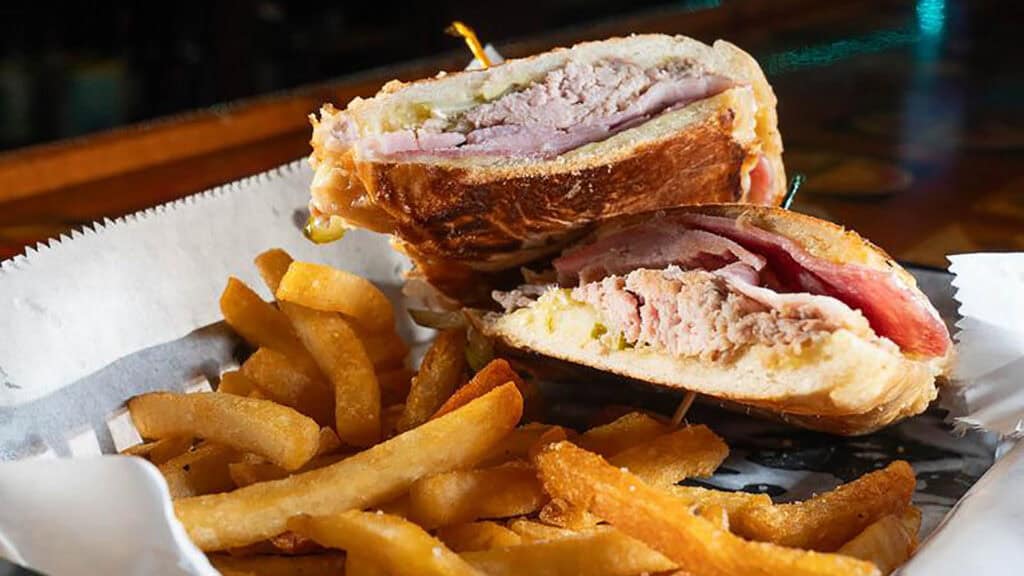
a cuban sandwich on a plate
The Cuban Sandwich at Tampa Taproom: Loaded with ham, spiced pork, Genoa salami, Swiss cheese, dill pickles, mustard and mayo on fresh Cuban bread.

An Educational Tasting Experience in Tampa

Prepare to be amazed as the event delves into the science behind the beloved Cuban sandwich. Discover the physics of bread baking, uncover the chemistry of savory fillings, and explore the fascinating biology of taste and flavor. This educational experience is as informative as it is delicious, with plenty of samples to keep your taste buds entertained.

Located at 4801 E. Fowler Avenue, MOSI provides the perfect backdrop for an evening of culinary exploration and scientific discovery. Don’t miss this extraordinary event that blends the art of sandwich-making with the wonders of science. 

Located at 4801 E. Fowler Avenue, MOSI provides the perfect backdrop for an evening of culinary exploration and scientific discovery. Don’t miss out on this extraordinary event that combines the art of sandwich-making with the wonders of science. Secure your tickets today and get ready for a night of flavor and fun.

The post The Science of the Cuban Sandwich event returns to Tampa this September appeared first on That's So Tampa.

07 Jun 14:47

Audubon Florida counts more than 100 flamingos in the Sunshine State

by Andrew Harlan

Audubon volunteers teamed up with the Florida Flamingo Working Group and the Caribbean Conservation Group for an epic flamingo census back in February. These bird enthusiasts spread out across the flamingos’ habitat, counting the iconic pink birds not only in the Bahamas, Cuba, Mexico, and Venezuela, where they typically reside but also in Florida, where they’ve been missing for nearly 125 years.

This was the inaugural formal count of the American flamingo, “Phoenicopterus ruber,” sparked by the unexpected arrival of hundreds of these flamboyant birds, blown into Florida by Hurricane Idalia last August. The final February tally? A modest 101. While it may seem small in a state that once boasted tens of thousands of flamingos, it’s a significant start for these majestic creatures making a potential comeback.

pink flamingos flying over the beach
Photo by Alyssa Marie

Flamingos begin to call Florida home again

“The largest group (50 plus) was spotted in Florida Bay; 18 were counted in the Pine Island area, with another 14 at Merritt Island National Wildlife Refuge (near Cape Canaveral),” an Audubon press release announced.

“We are thrilled that there are flamingos that have remained in Florida after being blown here in 2023 by Hurricane Idalia. I suspect that 100 flamingos is the floor of this new population, and there could be more that were not counted during the one-week survey. We are continually monitoring for breeding flamingos,” says Jerry Lorenz, PhD, State director of research for Audubon Florida.

Flamingos used to live and probably bred in Florida. Unfortunately, the 19th century plume trade—when an ounce of feathers was worth more than gold—decimated wading birds in South Florida. Even after legislation and Audubon wardens protected these birds, extensive draining and ditching of the Everglades destroyed their habitat.

Thank you to Tampa Bay artist Alyssa Marie for sharing these Flamingo photos with us. Make sure to follow her art page and website for even more stunning content.

Note: Please give flamingos their space. If you are affecting their movement or behavior, you are too close. Use binoculars or a zoom lens to see the birds from a safe distance.

The post Audubon Florida counts more than 100 flamingos in the Sunshine State appeared first on That's So Tampa.

07 Jun 14:45

Dinosaur World, Plant City’s wild 20-acre dog-friendly theme park

by Andrew Harlan

Nestled in the heart of Plant City, Dinosaur World stands out as Florida’s only pet-friendly theme park, offering a unique and family-friendly experience. Spanning 20 acres of wild jungle, this extraordinary attraction is located at 5145 Harvey New Road and is open daily from 9am to 5pm.

Admission prices are $23.95 for adults, $18.95 for children (ages 3-12), and $21.95 for seniors (ages 60+). Visitors are encouraged to book their tickets and experiences in advance online to ensure a seamless visit. The park is offering $5 off admission with code SUMMER through June 30.

Dinosaur World is dedicated to inclusivity and accessibility, proudly participating in the “Autism Friendly” initiative developed by the Center for Autism and Related Disabilities (CARD) at the University of South Florida. This ensures a welcoming environment for all visitors.

a group of people walking around park with giant dinosaur

Interact with giant dinosaurs along winding boardwalks

Guests can stroll along boardwalks that wind through natural areas shaded by centuries-old oak trees, providing a serene backdrop for the park’s hundreds of life-sized dinosaur models. For those looking to spend the day, coolers with healthy snacks and drinks are encouraged, allowing visitors to enjoy a picnic amidst the prehistoric giants.

One of the park’s main attractions is the new limited-time exhibit, “Doom of the Dinosaurs.” This exhibit features 16 authentic life-sized casts of dinosaur skeletons, along with authentic fossils and cast traces, offering a fascinating glimpse into the ancient world of dinosaurs.

a train set up inside a dinosaur park

Florida’s only outdoor museum dedicated to dinos

As Central Florida’s only outdoor museum dedicated to these prehistoric creatures, Dinosaur World offers a variety of add-ons to enhance the visitor experience. These include the Dino Express Train, a fossil dig, and a Dino gem excavation, making it a perfect destination for dinosaur enthusiasts of all ages. They’ve also recently added a mini golf course ($5 add on experience), and a splash pad for kid.

For a day filled with educational fun, outdoor adventure, and a step back in time, Dinosaur World in Hillsborough County is the place to be. Bring your family, friends, and even your pets to explore the wonders of the prehistoric era in a beautiful, natural setting.

a splash pad at a park
The Splash Pad at Dinosaur World
a mini golf course in a dinosaur park

The post Dinosaur World, Plant City’s wild 20-acre dog-friendly theme park appeared first on That's So Tampa.

07 Jun 14:34

Using a Proposed Library Guide Assessment Standards Rubric and a Peer Review Process to Pedagogically Improve Library Guides: A Case Study

by Sarah Moukhliss

In Brief

Library guides can help librarians provide information to their patrons regarding their library resources, services, and tools. Despite their perceived usefulness, there is little discussion in designing library guides pedagogically by following a set of assessment standards for a quality-checked review. Instructional designers regularly use vetted assessment standards and a peer review process for building high-quality courses, yet librarians typically do not when designing library guides. This article explores using a set of standards remixed from SUNY’s Online Course Quality Review Rubric or OSCQR and a peer review process. The authors used a case study approach to test the effectiveness of building library guides with the proposed standards by tasking college students to assess two Fake News guides (one revised to meet the proposed standards). Results indicated most students preferred the revised library guide to the original guide for personal use. The majority valued the revised guide for integrating into a learning management system and perceived it to be more beneficial for professors to teach from. Future studies should replicate this study and include additional perspectives from faculty and how they perceive the pedagogical values of a library guide designed following the proposed rubric.

A smiling librarian assists a student who is sitting at a computer located within the library.

Image: “Helpful”. Digital image created with Midjourney AI. By Trina McCowan CC BY-NC-SA 4.0

Introduction

Library guides or LibGuides are a proprietary publishing tool for libraries and museums created by the company Springshare; librarians can use LibGuides to publish on a variety of topics centered around research (Dotson, 2021; Springshare, n. d.). For consistency, the authors will use the term library guides moving forward. Librarians can use Springshare’s tool to publish web pages to educate users on library subjects, topics, procedures, or processes (Coombs, 2015). Additionally, librarians can work with teaching faculty to create course guides that compile resources for specific classes (Berić-Stojšić & Dubicki, 2016; Clever, 2020). According to Springshare (n. d.), library guides are widely used by academic, museum, school, and public libraries; approximately 130,000 libraries worldwide use this library tool (Springshare, n. d.). The library guides’ popularity and continued use may stem from their ease of use as it eliminates the need to know a coding language to develop online content. (Bergstrom-Lynch, 2019).

Baker (2014) described library guides as the “evolutionary descendants of library pathfinders” (p. 108). The first pathfinders were paper brochures that provided suggested resources for advanced research. Often, librarians created these tools for the advanced practitioner as patrons granted access to the library were researchers and seasoned scholars. As the end users were already experts, there was little need for librarians to provide instruction for using the resources (Emanuel, 2013). Later, programs such as MIT’s 1970s Project Intrex developed pathfinders that presented students with library resources in their fields of interest (Conrad & Stevens, 2019). As technology advanced, librarians created and curated pathfinders for online access (Emanuel, 2013). 

Today, due to the modernization of pathfinders as library guides and their ease of discoverability, students and unaffiliated online users often find these guides without the assistance of a librarian (Emanuel, 2013). Search engines such as Google can extend a library guide’s reach far beyond a single institutional website, drawing the attention of information experts and novice internet users alike (Brewer et al., 2017; Emanuel, 2013; Lauseng et al., 2021). This expanded access means a librarian will not always be present to help interpret and explain the library guide’s learning objectives. Stone et al. (2018) state that library guides should be built using pedagogical principles “where the guide walks the student through the research process” (p. 280). Bergstrom-Lynch (2019) argues that there has been an abundant focus on user-centered library design studies but little focus on learning-centered design. Bergstrom-Lynch (2019) advocates for more attention directed to learning-centered design principles as library guides are integrated into Learning Management Systems (LMS) such as Canvas and Blackboard (Berić-Stojšić & Dubicki, 2016; Bielat et al., 2013; Lauseng et al., 2021) and can be presented as a learning module for the library (Emanuel, 2013; Mann et al., 2013). The use of library guides as online learning and teaching tools is not novel; however, their creation and evaluation using instructional design principles are a recent development (Bergstrom-Lynch, 2019). 

A core component of an instructional designer’s job is to ensure that online course development meets the institution’s standards for quality assurance (Halupa, 2019). Instructional designers can aid with writing appropriate course and learning objectives and selecting learning activities and assessments that align back to the module’s objectives. Additionally, they can provide feedback on designing a course that is student-friendly—being mindful of cognitive overload, course layout, font options, and color selection. Additionally, instructional designers are trained in designing learning content that meets accessibility standards (Halupa, 2019).

Instructional design teams and teaching faculty can choose from a variety of quality assurance standards rubrics to reference to ensure that key elements for online learning are present in the online course environment. Examples of quality assurance tools include Quality Matters (QM) Higher Education Rubric and SUNY’s Online Course Quality Review Rubric or OSCQR, a professional development course refreshment process with a rubric (Kathuria & Becker, 2021; OSCQR-SUNY, n.d.). QM is a not-for-profit subscribing service that provides education on assessing online courses through the organization’s assessment rubric of general and specific standards (Unal & Unal, 2016). The assessment process is a “collegial, faculty-driven, research-based peer review process…” (Unal & Unal, 2016, p. 464). For a national review, QM suggests three reviewers certified and trained with QM to conduct a quality review. There should be a content specialist and one external reviewer outside of the university involved in the process (Pickens & Witte, 2015). Some universities, such as the University of North Florida, submit online courses for a QM certificate with High-Quality recognition or an in-house review based on the standards earning High-Quality designation. For an in-house review at UNF, a subject matter expert, instructional designer, and trained faculty reviewer assess the course to provide feedback based on the standards (CIRT, “Online Course Design Quality Review”, n. d.; Hulen, 2022). Instructional designers at some institutions may use other pedagogical rubrics that are freely available and not proprietary. OSCQR is an openly licensed online course review rubric that allows use and/or adaptation (OSCQR-SUNY, n. d.). SUNYY-OSCQR’s rubric is a tool that can be used as a professional development exercise when building and/or refreshing online courses (OSCQR-SUNY, n.d.).

Typically, library guides do not receive a vetted vigorous pedagogical peer review process like online courses. Because library guides are more accessible and are used as teaching tools, they should be crafted for a diverse audience and easy for first-time library guide users to understand and navigate (Bergstrom-Lynch, 2019; Smith et al., 2023). However, Conrad & Stevens (2019) state: “Inexperienced content creators can inadvertently develop guides that are difficult to use, lacking consistent templates and containing overwhelming amounts of information” (p. 49). Lee et al. (2021) reviewed library guides about the systematic review process. Although this topic is complex, Lee et al. (2021) noted that there was a lack of instruction about the systematic review process presented. If instructional opportunities are missing from the most complex topics, one may need to review all types of library guides with fresh eyes. 

Moukhliss aims to describe a set of quality review standards, the Library Guide Assessment Standards (LGAS) rubric with annotations that she created based on the nature of library guides, and by remixing the SUNY-OSCQR rubric. Two trained reviewers are recommended to work with their peer review coordinator to individually engage in the review process and then convene to discuss the results. A standard will be marked Met when both of the reviewers mark it as Met, noting the evidence to support the Met designation. In order for a standard to be marked as Met, the library guide author should show evidence of 85% accuracy or higher per standard. To pass the quality-checked review to receive a quality-checked badge, the peer review team should note that 85% of the standards are marked as “Met.” If the review fails, the library guide author may continue to edit the guide or publish the guide without the quality-checked badge. Details regarding the peer review process are shared in the Library Guide Assessment Standards for Quality-Checked Review library guide. Select the Peer Review Training Materials tab for the training workbook and tutorial.

Situational Context

The University of North Florida (UNF) Thomas G. Carpenter Library services an R2 university of approximately 16,500 students. The UNF Center for Instruction and Research Technology (CIRT) supports two online learning librarians. The online librarians’ roles are to provide online instruction services to UNF faculty. CIRT staff advocate for online teaching faculty to submit their online courses to undergo a rigorous quality review process. Faculty can obtain a High-Quality designation for course design by working with an instructional designer and an appointed peer reviewer from UNF, or they may opt to aim for a High-Quality review after three years of course implementation by submitting for national review with Quality Matters (Hulen, 2022). Currently, Moukhliss serves as a peer reviewer for online High-Quality course reviews. 

After several High-Quality course reviews, Moukhliss questioned why there are no current vetted review standards for the various types of library guides reviewed and completed by trained librarians as there are for online courses and thus borrowed from The SUNY Online Course Quality Review Rubric OSCQR to re-mix as the Library Guide Assessment Standards Rubric with annotations

Literature Review

The amount of peer-reviewed literature on library guide design is shockingly small considering how many library guides have been created. The current research focus has been on usability and user experience studies, although some researchers have begun to focus on instructional design principles. As Bergstrom-Lynch (2019) states, peer-reviewed literature addressing library guide design through the lens of instructional design principles is at a stage of infancy. Researchers have primarily focused on collecting data on usage and usability (Conrad & Stevens, 2019; Oullette, 2011; Quintel, 2016). German (2017), an instructional design librarian, argues that when the library guide is created and maintained through a learner-centered point of view, librarians will see library guides as “e-learning tools” (p. 163). Lee et al. (2021) noted the value of integrating active learning activities into library guides. Stone et al. (2018) conducted a comparison study between two library guides, one library guide as-is and the other re-designed with pedagogical insight. Stone et al. (2018) concluded that “a pedagogical guide design, organizing resources around the information literacy research process and explaining the ‘why’ and ‘how of the process, leads to better student learning than the pathfinder design” (p. 290). A library guide representative of a pathfinder design lists resources rather than explaining them. Lee and Lowe (2018) conducted a similar study and noted more user interaction when viewing the pedagogically designed guide vs. the guide not designed with pedagogical principles. Hence Stone (2018) and Lee and Lowe (2018) discovered similar findings.

Authors like German (2017) and Lee et al. (2021) have touched upon instructional design topics. For example, Adebonojo (2010) described aligning the content of a subject library guide to library sources shared in course syllabi. Still, the author does not expand to discuss any other instructional design principles. Bergstrom-Lynch (2019) thinks more comprehensively, advocating for the use of the ADDIE instructional design model (an acronym for Analysis, Design, Development, Implementation, and Evaluation) when building library guides. The analysis phase encourages the designer to note problems with current instruction. The design phase entails how the designer will rectify the learning gap from the analysis phase. The development phase entails adding instructional materials, activities, and assessments. The implementation phase involves introducing the materials to learners. The evaluation phase enables the designer to collect feedback and improve content based on suggestions. ADDIE is cyclical and iterative (Bergstrom-Lynch, 2019). Allen (2017) introduces librarians to instructional design theories in the context of building an online information literacy asynchronous course but does not tie in using these theories for building library guides.

As Bergstrom-Lynch (2019) focused on best practices for library guide design based on ADDIE, German et al. (2017) used service design thinking constructs to build effective instruction guides. The five core principles of service design thinking are “user-centered, co-creative, sequencing, evidencing, and holistic” (German et al., 2017, p. 163). Focusing on the user encourages the designer to think like a student and ask: What do I need to know to successfully master this content? The co-creator stage invites other stakeholders to add their perspectives and/or expertise to the guide. The sequencing component invites the librarian to think through the role of the librarian and library services before, during, and after instruction. German et al. (2017) advocates for information from each stage to be communicated in the library guide. Evidencing involves the librarian reviewing the library guide to ensure that the content aligns with the learning objective (German et al., 2017). Both authors advocate for instructional design methods but fall short of suggesting an assessment rubric for designing and peer-reviewing guides.

Smith et al. (2023) developed a library guide rubric for their library guide redesign project at the Kelvin Smith Library at Case Western Reserve University. This rubric focused heavily on accessibility standards using the Web Accessibility Evaluation Tool or WAVE. Although Smith et al. (2023) discuss a rubric, the rubric was crafted as an evaluation tool for the author of the guide rather than for a peer review process. 

Although Bergstrom-Lynch (2019), German et al. (2017), and Smith et al. (2023) are pioneering best practices for library guides, they take different approaches. For example, Bergstrom-Lynch (2019) presents best practices for cyclical re-evaluation of the guide based on instructional design principles and derives their best practices based on their usability studies. The Smith et al. (2023) rubric emphasizes accessibility standards for ADA compliance—essential for course designers but a component of a more comprehensive rubric. German et al. (2017) emphasizes a user-centered design through the design thinking method. Moukhliss intends to add to the literature by suggesting using a remix of a vetted tool that course developers use as a professional development exercise with faculty. This OSCQR-SUNY tool envelopes the varying perspectives of Bergstrom-Lynch (2019), Smith et al. (2023), and German et al. (2017). 

Strengths & Weaknesses of the Library Guide

As with any tool, library guides have their strengths and weaknesses. Positives include indications that library guides can play a positive role in improving students’ grades, retention, and overall research skills (Brewer et al., 2017; May & Leighton, 2013; Wakeham et al., 2012). Additionally, library guides are easy to build and update (Baker, 2014; Conrad & Stevens, 2019). They can accommodate RSS feeds, videos, blogs, and chat (Baker, 2014), are accessible to the world, and cover a vast range of library research topics. According to Lauseng et al. (2021), library guides are discoverable through Googling and integrated into online Learning Management Systems (LMS). These factors support the view that library guides hold educational value and should be reconsidered for use as an Open Education Resource (Lauseng et al., 2021).

However, there are no perfect educational tools. Library guide weaknesses include their underutilization largely due to students not knowing what they are or how to find them (Bagshaw & Yorke-Barber, 2018; Conrad & Stevens, 2019; Ouellette, 2011). Additionally, library guides can be difficult for students to navigate, contain unnecessary content, and overuse library jargon (Sonsteby & DeJonghe, 2013). Conrad & Stevens (2019) described a usability study where the students were disoriented when using library guides and reported that they did not understand their purpose, function, or how to return to the library homepage. Lee et al. (2021) and Baker (2014) suggest that librarians tend to employ the “kitchen sink” (Baker, 2014, p. 110) approach to build library guides, thus overloading the guide with unapplicable content.

Critical Pedagogy and Library Guides

In his publication titled “The Philosophy of the Oppressed,” Paulo Freire introduced the theory of critical pedagogy and asserted that most educational models have the effect of reinforcing systems of societal injustice through the assumption that students are empty vessels who need to be filled with knowledge and skills curated by the intellectual elite (Kincheloe, 2012; Downey, 2016). Early in the 21st century, information professionals built upon the belief that “Critical pedagogy is, in essence, a project that positions education as a catalyst for social justice” (Tewell, 2015, p. 26) by developing “critical information literacy” to address what some saw as the Association of College and Research Libraries’ technically sound, but socially unaware “Information Literacy Competency Standards for Higher Education” (Cuevas-Cerveró et al., 2023). In subsequent years, numerous librarians and educators have written about the role of information literacy in dismantling systems of oppression, citing the need to promote “critical engagement with information sources” while recognizing that knowledge creation is a collaborative process in which everyone engages (Downey, 2016, p. 41).

The majority of scholarly output on library guides focus on user-centered design rather than specifically advocating for critical pedagogical methods. Yet there are a few scholars, such as Lechtenberg & Gold (2022), emphasizing how the lack of pedagogical training within LIS programs often results in information-centric library guides rather than learner-centric ones. Their presentation at LOEX 2022 reiterates the importance of user-centered design in all steps of guide creation, including deciding whether a library guide is needed.   

Additionally, the literature demonstrates that library guides are useful tools in delivering critical information literacy instruction and interventions. For instance, Hare and Evanson used a library guide to list open-access sources as part of their Information Privilege Outreach programming for undergraduate students approaching graduation (Hare & Evanson, 2018). Likewise, Buck and Valentino required students in their “OER and Social Justice” course to create a library guide designed to educate faculty about the benefits of open educational resources, partly due to students’ familiarity with the design and functionality of similar research guides (Buck & Valentino, 2018). As tools that have been used to communicate the principles of critical pedagogy, the evaluation of institutional library guides should consider how effectively critical pedagogy is incorporated into their design.  

The Library Guide Assessment Standards (LGAS) Rubric 

For the remixed rubric, Moukhliss changed the term “course” from OSCQR’s original verbiage to “library guide,” and Moukhliss dropped some original standards based on the differences between the expectations for an online course (i.e., rubrics, syllabus, etc.) and a library guide. Likewise, several standards were added in response to the pros and cons of the library guides, as found in the literature. Additionally, Moukhliss wrote annotations to add clarity to each standard for the peer review process. For example, Standard 2 in the remixed LGAS rubric prompts the reviewer to see if the author defines the term library guide since research has indicated that students do not know what library guides are nor how to find them (Bagshaw & Yorke-Barber, 2018; Conrad & Stevens, 2019; Ouellette, 2011). Standard 7 suggests that the librarian provide links to the profiles of other librarian liaisons who may serve the audience using the library guide. Standard 9 prompts the reviewer to see if the library guide links to the library university’s homepage to clarify Conrad & Stevens’s (2019) conundrum that the library guide is not the library homepage. These additional standards were added to ensure that users are provided with adequate information about the nature of library guides, who publishes them, and how to locate additional guides to address the confusion that Conrad & Stevens (2019) noted in their library guide usability study. Additionally, these added standards may be helpful for those who discover library guides through a Google search. 

Moukhliss intends to use the additional standards to provide context about the library guide to novice users, thus addressing the issue of information privilege or the assumption that everyone starts with the same background knowledge. Standard 22 was added to negate adding unnecessary resources to the guide, which Baker (2014) and Conrad & Stevens (2019) cited as a common problem. Standard 27 encourages the use of Creative Commons attribution, as suggested by Lauseng et al. (2021). They found that not only faculty, staff, and students at the University of Illinois Chicago were using their Evidence Based Medicine library guide, but also a wider audience. Recognizing its strong visibility and significant external usage, they considered it a potential candidate for an Open Educational Resource (OER). As library guides are often found without the help of the librarian, Standard 28 suggests that reviewers check that library guide authors provide steps for accessing research tools and databases suggested in the library guide outside of the context of the guide. Providing such information may help to negate Conrad & Stevens’s (2019) findings regarding students’ feelings of disorientation while using a library guide and difficulty navigating to the library homepage from the guide. 

Standard 30 was added so that students have a dedicated Get Help tab explaining the variety of ways the user can contact their library and/or librarians for additional assistance. Standard 31 was re-written so that the user could check for their understanding in a way appropriate for the guide (Lee et al., 2021), such as a low-stakes quiz or poll. Finally, Standard 32 encourages the user to provide feedback regarding the guide’s usefulness, content, design, etc., with the understanding that learning objectives follow an iterative cycle and are not stagnant. Student feedback can help the authoring librarian update and maintain the guide’s relevancy to users and will give students the opportunity to become co-creators of the knowledge they consume.

UNF’s LGAS Rubric for Quality-Checked Review library guide includes an additional tab for a Quality-Checked badge (available on the Maintenance Checklist/Test Your Knowledge tab) and a suggested maintenance checklist (See Maintenance Checklist/ Test Your Knowledge tab) for monthly review, twice-a-year, and yearly reviews. Moukhliss borrowed and remixed the checklist from the Vanderbilt University Libraries (current as of 8/21/2023). The Peer Review Training Materials tab includes a training workbook and training video on the LGAS rubric, the annotations, and the peer review process. Moukhliss provides a Creative Commons license to the library guide to encourage other institutions to reuse and/or remix at the LGAS’s Start Here page

Methodology, Theoretical Model, and Framework

Moukhliss and McCowan used the qualitative case study methodology. Gephart (2004) stated, “Qualitative research is multimethod research that uses an interpretive, naturalistic approach to its subject matter. . . . Qualitative research emphasizes qualities of entities —the processes and meanings that occur naturally” (pp. 454-455). Moukhliss and McCowan selected the exploratory multi-case study so that they could assess multiple student user/learning perspectives when accessing, navigating, and digesting the two library guides. 

The theoretical model used for this study is the Plan-Do-Check-Act cycle. This quality improvement model has evolved with input from Walter Shewart and Dr. Edward Deming (Koehler & Pankowski, 1996). The cycle walks a team through four steps: Plan, Do, Check, and Act. The Plan phase allows time for one to think through problems such as the lack of design standards for library guides. During the “Do” phase, Moukhliss selected and made a remix of the quality review tool SUNY OSCQR. Additionally, she selected a “kitchen sink” (Baker, 2014, p. 10) library guide and redesigned it with the proposed rubric. Moukhliss’s aim was only to remove dead links and/or outdated information when restructuring the guide. The only items deemed outdated were the CRAAP test learning object and selected books from the curated e-book list. The CRAAP test was removed, and no substitution of similar materials was made. The list of selected books was updated in the revised guide to reflect current publications. As Moukhliss restructured the guide, she decided to use tabbed boxes to chunk and sequence information to appease Standards 11, 12, 13, and 15. You may view this restructuring by comparing the original Fake News guide and the revised Fake News guide. The “Do” phase includes Moukhliss recruiting participants to evaluate the two library guides — the original Fake News guide with the Fake News Guide 2 revised to follow the suggested standards and peer review process. Moukhliss and McCowan submitted the library guide study proposal to the Institutional Review Board in November 2023, and the study was marked Exempt. In December 2023, Moukhliss recruited participants by emailing faculty, distributing flyers in the library, posting flyers on display boards, and adding a digital flyer to each library floor’s lightboard display. The librarians added the incentive of 10-dollar Starbucks gift cards to the first 15 students who signed consent forms and successfully completed the 30-minute recorded Zoom session (or until saturation was reached).

Moukhliss interviewed one test pilot (P1) and ten students (P2-P11) for this study and she noted saturation after her seventh interview but continued to ten participants to increase certainty. Although some may view this as a low sample population, the data aligns with the peer-reviewed literature. Hennick & Kaiser (2019) discuss saturation in in-depth interviews and point to Guest et al.’s (2006) study. Guest et al. (2006) determined that after reviewing data from 60 interviews deemed in-depth, they determined that saturation presented itself between Interviews 7-12 “at which point 88% of all themes were developed and 97% of important (high frequency) themes were identified” (Hennick & Kaiser, 2019, para. 5). The Questionnaire framework for this study is centered around Bloom’s Taxonomy. This taxonomy provides a framework of action verbs that align with the hierarchical levels of learning. Bloom’s taxonomy includes verbiage for learning objectives that align with the level of the learning outcomes of remember, understand, apply, analyze, evaluate, and create. McCowan incorporated various levels of Bloom’s Taxonomy as she built the UX script used for this study. Moukhliss interchanged Fake News and Fake News 2 as Guide A and Guide B throughout the interview sessions. After each recorded Zoom session, Moukhliss reviewed the session and recorded the task completion times on the script, recorded the data to the scorecard, and updated data into the qualitative software NVivo. Both script and scorecard are available on the Library Guide Study page. Moukhliss created a codebook with participant information, assigned code names for everyone, and stored the codebook to a password protected file of her work computer to keep identifiable information secure. Moukhliss used the code names Participant 1, Participant 2, Participant 3, etc. and removed all personal identifiers as she prepared to upload the study’s data to a qualitative software system. For coding, the authors chose the NVivo platform, a qualitative assessment tool that can organize data by type (correspondence, observation, and interviews), enable the researcher(s) to easily insert notes in each file, and develop codes to discover themes. Moukhliss coded the interviews based on the LGAS (i.e., Standard 1, 2, 3, etc.). Additional codes were added regarding navigation and content. Moukhliss & McCowan reviewed the codes for themes and preferences regarding library guide design.

The “Check” phase guided Moukhliss and McCowan in considering the implementation of the LGAS rubric and peer review process for library guides at UNF. During this phase, they reviewed participants’ qualitative responses to the Fake News library guide and the Fake News 2 library guide. Data from the “Check” phase will drive Moukhliss & McCowan to make recommendations in the “Act” phase (Koehler & Pankowski, 1996), which will be discussed in the Conclusion.

Interviewees

Moukhliss worked with one test pilot and interviewed ten students for this study. The ten students’ majors were representative of the following: Nursing, Computer Science, Communications, Public Administration, Electrical Engineering, Information Technology, Health Sciences, Philosophy, and Criminal Justice. Participants included two first-year students, two sophomores, three juniors, two seniors, and one graduate student. Eight participants used their desktops, whereas two completed the study on their phones. When evaluating the familiarity of users with library guides, one participant noted they had never used a library guide before, two others stated they rarely used them, and another two students stated that they occasionally used them. Finally, five students stated they did not know whether they had ever used one or not. 

Findings & Discussion

Overall, students were faster at navigating the Fake News 2 Revised guide vs. the original guide except for listing the 5 Types of Fake News. This may be because the 5 Types of Fake News were listed on the original guide’s first page. The overall successful mean navigability for the original guide was 39 seconds, whereas the revised guide’s mean was 22.2 seconds for the successful completion of a task. Moukhliss noted a pattern of failed completion tasks often linked back to poorly labeled sections of the new and revised guides. 

Although the content was identical in both guides except for the removal of outdated information, dead website links from the original guide, and the updated list of e-books to the revised guide, the students’ overall mean confidence level indicated 4.2 for the original guide’s information vs a 4.4 for the revised guide. The mean recommendation likelihood level for the original guide is 6.4, whereas the mean recommendation likelihood level of the revised guide increased to 7.9.

Regarding library guide personal preferences for a course reading, one student indicated they would want to work off the old guide, and 9 others indicated wanting to work from the revised guide for the following reasons:

  • Organization and layout are more effective.
  • Information is presented more clearly.
  • There is a tab for dedicated UNF resources.
  • Easier to navigate.
  • Less jumbled
  • Easier to follow when working with peers.

Regarding perceptions of which guide a professor may choose to teach with, three chose the original guide, whereas the other seven indicated the revised guide. One student stated that the old guide was more straightforward and that the instructor could explain the guide if they were using it during direct instruction. Preferences for the revised guide include:

  • More “interactive-ness” and quizzes
  • Summaries are present.
  • Presentation of content is better.
  • Locating information is easier.
  • The guide doesn’t feel like “a massive run-on sentence.”
  • Ease for “flipping through the topics.”
  • Presence of library consult and contact information. 

Although not part of the interview questions, Moukhliss was able to document that eight participants were not aware that a library guide could be embedded into a Canvas course, and one participant was aware. Moukhliss is unaware of the other participant’s experiences with an embedded library guide. Regarding preferences for embedding the library guide in Canvas, one student voted for the old guide whereas nine preferred the revised guide. Remarks for the revised guide include the inclusion of necessary Get Help information for struggling students and for the guide’s ease of navigation. 

Although not every standard from the LGAS rubric was brought up in conversation throughout the student interviews, the LGAS that were seen as positive and appreciated by students to integrate into a guide’s design include the following Standards: 4, 7, 11, 12, 15, 21, 22, 28, 30, and standards 31. It was noted through action that two students navigated the revised guide by the hyperlinked learning objectives and not by side navigation (Standard 5), thus indicating that Standard 5 may hold value for those who maneuvered the guide through the stated objectives. Moukhliss noted during her observations that one limitation to hyperlinking the object to a specific library guide page is when that page includes a tabbed box. The library guide author is unable to directly link to a specific sub-tab from the box. Instead, the link defaults to the first page of the box’s information. Thus, students maneuvering the guide expected to find the listed objective on the first tab of the tabbed box, and they did not innately click through the sub-tabs to discover the listed objective.

Through observation, Moukhliss noted that six students struggled to understand how to initially navigate the library guides using the side navigation functionality, but after time with the guide and/or Moukhliss educating them on side navigation, they were successful. Moukhliss noted that for students who were comfortable with navigating a guide or after Moukhliss educated them on navigating the guide, students preferred the sub-tabbed boxes of the revised guide to the organization of the original guide. The students found neither library guide perfect, but Moukhliss & McCowan noted there was an overall theme that organization of information and proper sequencing and chunking of the information was perceived as important by the students. Three students commented on appreciating clarification for each part of the guide, which provides leverage for proposed Standard 28.

Additionally, two students appreciated the library guide author profile picture and contact information on each page and three students positively remarked on the presence of a Get Help tab on the revised guide. One participant stated that professors want students to have a point of contact with their library liaisons, and they do not like “anonymous pages” (referring to the original guide lacking an author profile). The final participant wanted to see more consult widgets listed throughout the library guide. Regarding the Fake News 2 Guide, two students preferred that more content information and less information about getting started be present on the first page of the guide. Furthermore, images and design mattered, as one student remarked that they did not like the Fake News 2 banner, and several others disliked the lack of imagery on the first page of the Fake News 2 guide. For both guides, students consistently remarked on liking the Fake News infographics. 

Those supporting the old guide or parts of the original guide, three students liked the CRAAP Test worksheet and wanted to see it in the revised guide, not knowing that the worksheet was deemed dated by members of the instruction team and thus removed by Moukhliss for that reason. One student wanted to see the CRAAP test worksheet repurposed to be a flowchart regarding fake news. Moukhliss noted that most of the students perceived objects listed on the original guide and revised guide to be current, relevant, and vetted. Eight participants did not question their usefulness or relevancy or whether the library guide author was maintaining the guide. Only one student pointed out that the old guide had a list of outdated e-books and that the list was refreshed for the new guide. Thus, Moukhliss’s observations may reinforce to library guide authors that library guides should be reviewed and refreshed regularly as proposed by Standard 22 —⎯ as most students from this study appeared to take for face value that what is presented on the guide to be not only vetted but continuously maintained.

Initial data from this study indicate that using the LGAS rubric with annotations and a peer review process may improve the learning experience for students, especially in relation to being mindful of what information to include in a library guide, as well as the sequencing and chunking of the information. Early data indicates students appreciate a Get Help section and want to see Contact Us and library liaison/author information throughout the guide’s pages. 

Because six students initially struggled with maneuvering through a guide, Moukhliss & McCowan suggest including instructions on how to navigate in either the library guide banner and/or a brief introductory video for the Start Here page or both locations. Here is a screenshot of sample banner instructions:
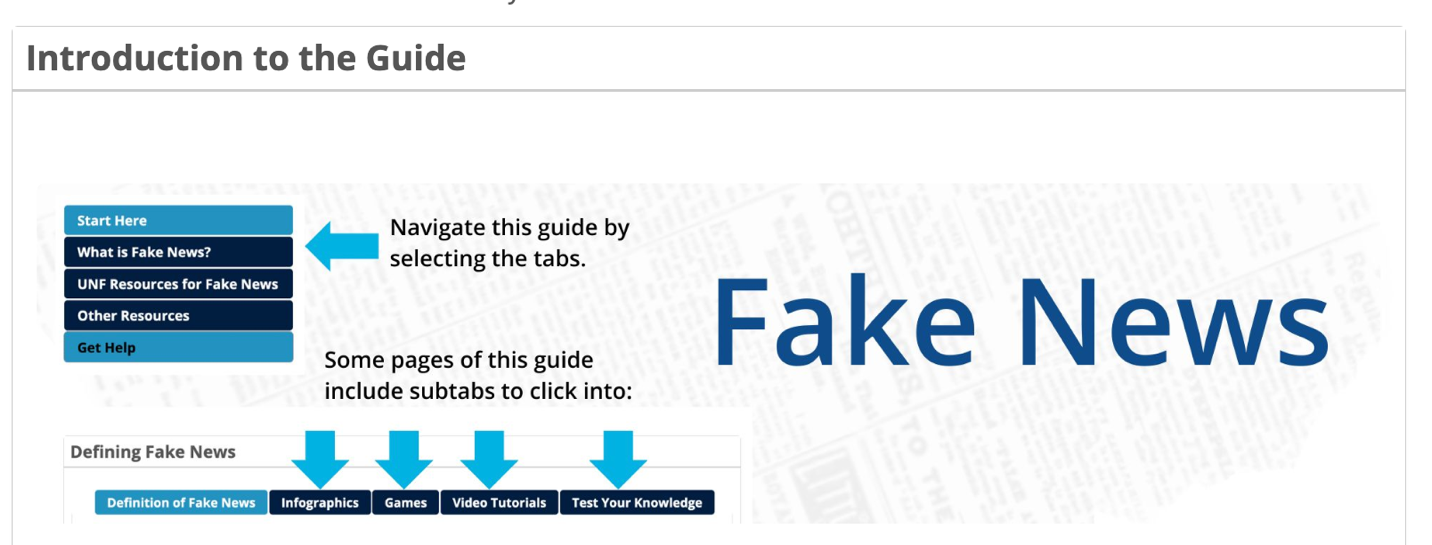
A sample Fake News library guide banner being used to point students to how to maneuver the guide. Banner states: "Navigate this guide by selecting the tabs." And "Some pages of this guide include subtags to click into."

As stated, Moukhliss noted that most students were not aware of the presence of library guides in their Canvas courses. This may indicate that librarians should provide direct instruction during one-shots in not only what library guides are and how to maneuver them, but directly model how to access an embedded guide within Canvas. 

Conclusion

Library guides have considerable pedagogical potential. However, there are no widely-used rubrics for evaluating whether a particular library guide has design features that support its intended learning outcomes. Based on this study, librarians who adopt or adapt the LGAS rubric will be more likely to design library guides that support students’ ability to complete relevant tasks. At UNF, Moukhliss and McCowan plan to suggest to administration to employ the LGAS rubric and annotations with a peer review process and to consider templatizing their institution’s (UNF) library guides to honor the proposed standard that was deemed most impactful by the student participants. This includes recommending to library administration to include a Get Started tab for guide template(s) and to include placeholders for introductory text, a library guide navigation video tutorial, visual navigational instructions embedded in the guide’s banner, and the inclusion of the guide’s learning objectives. Furthermore, they propose an institutionally vetted Get Help tab that can be mapped to each guide. Other proposals include templatizing each page to include the following: a page synopsis, applicable explanations for accessing library-specific resources and tools from the library’s homepage, placeholders for general contact information, a link to the library liaison directory, a placeholder for the author bio picture, feedback, assessment, and a research consultation link or widget as well as instructions for accessing the library’s homepage.

Following the creation of a standardized template, Moukhliss plans to propose to recruit a team of volunteer peer reviewers (library staff, librarians, library administration) and provide training on the LGAS rubric, the annotations, and the peer review process. She will recommend all library guide authors to train on the proposed LGAS rubric and the new library guide template for future library guide authorship projects and for updating and improving existing guides based on the standards. The training will cover the rubric, the annotations, and the maintenance calendar checklists for monthly, bi-annually, and yearly review. All proposed training materials are available at the LGAS’s Start Here page

Moukhliss and McCowan encourage other college and university librarians to consider using or remixing the proposed LGAS rubric for a quality-checked review and to conduct studies on students’ perceptions of the rubric to add data to this research. The authors suggest future studies to survey both students and faculty on their perspectives on using a quality assurance rubric and peer review process to increase the pedagogical value of a library guide. Moukhliss & McCowan encourage future authors of studies to report on their successes and struggles for forming and training library colleagues on using a quality-checked rubric for library guide design and the peer review process.


Acknowledgments

The authors would like to express our gratitude to Kelly Lindberg and Ryan Randall, our peer reviewers. As well, we would like to thank the staff at In The Library with the Lead Pipe, including our publishing editor, Jaena Rae Cabrera.


References

Adebonojo, L. G. (2010). LibGuides: customizing subject guides for individual courses. College & Undergraduate Libraries, 17(4), 398–412. https://doi.org/10.1080/10691316.2010.525426  

Allen, M. (2017). Designing online asynchronous information literacy instruction using the ADDIE model. In T. Maddison & M. Kumaran (Eds.), Distributed learning pedagogy and technology in online information literacy instruction (pp.69-90). Chandos Publishing.

Bagshaw, A. & Yorke-Barber, P. (2018). Guiding librarians: Rethinking library guides as a staff development tool links to an external site. Journal of the Australian Library and Information Association67(1), 31–41. https://doi.org/10.1080/24750158.2017.1410629

Baker, R. L. (2014). Designing LibGuides as instructional tools for critical thinking and effective online learning. Journal of Library and Information Services in Distance Learning, 8(3–4), 107–117. https://doi.org/10.1080/1533290X.2014.944423 

Bergstrom-Lynch. (2019). LibGuides by design: Using instructional design principles and user-centered studies to develop best practices. Public Services Quarterly, 15(3), 205–223. https://doi.org/10.1080/15228959.2019.1632245

Berić-Stojšić, & Dubicki, E. (2016). Guiding students’ learning with LibGuides as an interactive teaching tool in health promotion. Pedagogy in Health Promotion, 2(2), 144–148. https://doi.org/10.1177/2373379915625324

Bielat, V., Befus, R., & Arnold, J. (2013). Integrating LibGuides into the teaching-learning process. In A. Dobbs, R. L. Sittler, & D. Cook (Eds.). Using LibGuides to enhance library services: A LITA guide (pp. 121-142). ALA TechSource.

Brewer, L., Rick, H., & Grondin, K. A. (2017). Improving digital libraries and support with online research guides. Online Learning Journal, 21(3), 135-150. http://dx.doi.org/10.24059/olj.v21i3.1237

Buck, S., & Valentino, M. L. (2018). OER and social justice: A colloquium at Oregon State University. Journal of Librarianship and Scholarly Communication, 6(2). https://doi.org/10.7710/2162-3309.2231

CIRT. (n. d.) Online Course Design Quality Review. https://www.unf.edu/cirt/id-Quality-Review.html

 Clever, K. A. (2020). Connecting with faculty and students through course-related LibGuides. Pennsylvania Libraries, 8(1), 49–57. https://doi.org/10.5195/palrap.2020.215

Conrad, S. & Stevens, C. (2019). “Am I on the library website?: A LibGuides usability study. Information Technology and Libraries, 38(3), 49-81. https://doi.org/10.6017/ital.v38i3.10977

 Coombs, B. (2015). LibGuides 2. Journal of the Medical Library Association, 103(1), 64–65. https://doi.org/10.3163/1536-5050.103.1.020

Cuevas-Cerveró, A., Colmenero-Ruiz, M.-J., & Martínez-Ávila, D. (2023). Critical information literacy as a form of information activism. The Journal of Academic Librarianship, 49(6), 102786. https://doi.org/10.1016/j.acalib.2023.102786

Dotson, D. S. (2021). LibGuides Gone Viral: A Giant LibGuides Project during Remote Working. Science & Technology Libraries (New York, N.Y.)40(3), 243–259. https://doi.org/10.1080/0194262X.2021.1884169

Downey, A. (2016). Critical information literacy: Foundations, inspiration, and ideas. Library Juice Press.

Emanuel, J. (2013). A short history of LibraryGuides and their usefulness to librarians and patrons. In A. Dobbs, R. L. Sittler, & D. Cook (Eds.). Using LibGuides to enhance library services: A LITA guide (pp. 3-20). ALA TechSource.

Gephart, R. P., Jr. (2004). Qualitative research and academy of management journal. Academy of Management Journal, 47(4), 452–462. https://doi.org/10.5465.amj.2004.14438580

German, E. (2017). Information literacy and instruction: LibGuides for instruction: A service design point of view from an academic library. Reference & User Services Quarterly, 56(3), 162-167. https://doi.org/10.5860/rusq.56n3.162

German, E., Grassian, E., & LeMire, S. (2017). LibGuides for instruction: A service design point of view from an academic library. Reference and User Services Quarterly, 56(3), 162–167. https://doi.org/10.5860/rusq.56n3.162

Guest, G., Bunce, A., & Johnson, L. (2006). How many interviews are enough? An experiment with data saturation and variability. Field Methods, 18, 59–82. doi:10.1177/1525822X05279903

Halupa, C. (2019). Differentiation of roles: Instructional designers and faculty in the creation of online courses. International Journal of Higher Education, 8(1), 55–68. https://doi.org/10.5430/ijhe.v8n1p55

Hare, S., & Evanson, C. (2018). Information privilege outreach for undergraduate students. College & Research Libraries, 79(6), 726–736. https://doi.org/10.5860/crl.79.6.726

Hennink, M., & Kaiser, B., (2019). Saturation in qualitative research, In P. Atkinson, S. Delamont, A. Cernat, J.W. Sakshaug, & R.A. Williams (Eds.), SAGE Research Methods Foundations. https://doi.org/10.4135/9781526421036822322

Hulen, K. (2022). Quality assurance drives continuous improvements to online programs. In S. Kumar & P. Arnold (Eds.), Quality in online programs: Approaches and practices in higher education. (pp. 3-22). The Netherlands: Brill. https://doi.org/10.1163/9789004510852_001 

Kathuria, H., & Becker, D. W. (2021). Leveraging course quality checklist to improve online courses. Journal of Teaching and Learning with Technology, 10(1) https://doi.org/10.14434/jotlt.v10i1.31253 

Kincheloe, J. (2012). Critical pedagogy in the twenty-first century: Evolution for survival. Counterpoints, 422, 147–183.

Koehler, J. W. & Pankowski, J. M. (1996). Continual improvement in government tools & methods. St. Lucie Press.

Lauseng, D. L., Howard, C., Scoulas, J. M., & Berry, A. (2021). Assessing online library guide use and Open Educational Resource (OER) potential: An evidence-based decision-making approach. Journal of Web Librarianship, 15(3), 128–153. https://doi.org/10.1080/19322909.2021.1935396

Lechtenberg, U. & Gold, H. (2022). When all you have is a hammer, everything looks like a LibGuide: Strengths, limitations, and opportunities of the teaching tool [Conference presentation]. LOEX 2022 Conference, Ypsilanti, MI, United States.  https://vimeo.com/721358576 

 Lee, Hayden, K. A., Ganshorn, H., & Pethrick, H. (2021). A content analysis of systematic review online library guides. Evidence Based Library and Information Practice, 16(1), 60–77. https://doi.org/10.18438/eblip29819

Lee, Y. Y., & Lowe, M. S. (2018). Building positive learning experiences through pedagogical research guide design. Journal of Web Librarianship, 12(4), 205-231. https://doi.org/10.1080/19322909.2018.1499453

Mann, B. J., Arnold, J. L., and Rawson, J. (2013). Using LibGuides to promote information literacy in a distance education environment. In A. Dobbs, R. L. Sittler, & D. Cook (Eds.). Using LibGuides to enhance library services: A LITA guide (pp. 221-238). ALA TechSource. 

May, D. & Leighton, H. V. (2013). Using a library-based course page to improve research skills in an undergraduate international business law course. Journal of Legal Studies Education, 30(2), 295-319. doi: 10.11n/jlse.12003

OSCQR – Suny Online Course Quality Review Rubric (n. d.). About OSCQR. https://oscqr.suny.edu/

Ouellette, D. (2011). Subject guides in academic libraries: A user-centred study of uses and perceptions. Canadian Journal of Information and Library Science, 35(4), 436–451.10.1353/ils.2011.0024 

Pickens, & Witte, G. (2015). Circle the wagons & bust out the big guns! Tame the “Wild West” of distance librarianship using Quality Matters TM Benchmarks. Journal of Library & Information Services in Distance Learning, 9(1-2), 119–132. https://doi.org/10.1080/1533290X.2014.946352

Quintel, D. F. (2016, January/February). LibGuides and usability: What our users want. Computers in Libraries Magazine, 36(1), 4-8. 

Smith, E. S., Koziura, A., Meinke, E., & Meszaros, E. (2023). Designing and implementing an instructional triptych for a digital future. The Journal of Academic Librarianship, 49(2), 102672–106277. https://doi.org/10.1016/j.acalib.2023.102672

Sonsteby, A. & DeJonghe, J. (2013). Usability testing, user-centered design, and LibGuides subject guides: A case study. Journal of Web Librarianship, 7(1), 83–94. https://doi.org/10.1080/19322909.2013.747366

SpringShare (n. d.). LibGuides. https://springshare.com/libguides/

Stone, S. M., Sara Lowe, M., & Maxson, B. K. (2018). Does course guide design impact student learning? College & Undergraduate Libraries, 25(3), 280-296. https://doi.org/10.1080/10691316.2018.1482808

Tewell, E. (2015). A decade of critical information literacy: A review of the literature. Comminfolit, 9(1), 24-43. https://doi.org/10.15760/comminfolit.2015.9.1.174

Unal, Z. & Unal, A. (2016). Students Matter: Quality Measurements in Online Courses. International Journal on E-Learning, 15(4), 463-481. Waynesville, NC USA: Association for the Advancement of Computing in Education (AACE). Retrieved September 21, 2023 from https://www.learntechlib.org/primary/p/147317/.

Wakeham, M., Roberts, A., Shelley, J. & Wells, P. (2012). Library subject guides: A case study of evidence-informed library development. Journal of Librarianship and Information Science, 44(3), 199-207. https://doi.org/10.1177/0961000611434757 

06 Jun 13:23

OPINION: Dear USF students, put your phones away

by Allison R. Smith, Correspondent
Almost everywhere I look on campus, I have observed a tragic trend: Heads down, conversations to a minimum, earbuds in. Students are connected yet disconnected. Both students and adults appear to be missing out on life happening around them because they are constantly on their phones. These devices have turned into security blankets that few […]
04 Jun 17:02

Peer Review Week 2024: “Innovation and Technology in Peer Review”

by Roohi Ghosh, Maria Machado, Gareth Dyke, Maryam Sayab

We're delighted to reveal the eagerly awaited theme for this year's Peer Review Week, Innovation and Technology in Peer Review.

The post Peer Review Week 2024: “Innovation and Technology in Peer Review” appeared first on The Scholarly Kitchen.

04 Jun 16:55

YouTuber Has Video Demonitized Over Washing Machine Chime

by Dark Helmet

It should not be controversial to state that, as it stands today, YouTube’s ContentID platform for policing copyright on YouTube videos is hopelessly broken. The system is wide open to abuse from bad actors who might lay claim to content that simply isn’t theirs, sometimes to the tune of raking in millions of dollars. ContentID is also abused by some in law enforcement to prevent recordings of police from showing up on YouTube. And then of course there are all the times that ContentID simply flags content that it shouldn’t, such as the sound of a cat purring or plain white noise.

And so it isn’t much of a surprise that these issues keep popping up. YouTuber Albino took to social media to complain about how he received a copyright strike for a let’s play video because, well, a home appliance made a noise.

On May 27, 2024, Norwegian YouTuber ‘Albino’ revealed that one of his six-hour playthroughs of Fallout: New Vegas had been given a strike due to supposedly including the song ‘Done’ by music artist Aduego. 

However, this track was never actually in Albino’s video. Instead, the audio that plays at that particular point in his playthrough was the jingle from a Samsung washing machine, which plays when a wash cycle is complete.

Sadly, it’s even dumber than that. Apparently this recording by this particular “artist” isn’t a song at all, but just an upload of that same washing machine jingle that’s been on YouTube for nearly a decade. So, some rando records his washing machine jingle, uploads it to YouTube, then registers it with ContentID, and goes around demonetizing other YouTube videos where the jingle plays. And, because of how ContentID is policed — or not —, none of this is caught by anyone at all.

Albino also pointed out the myriad of comments criticizing Aduego underneath his video, with one viewer writing: “Did you record the Samsung washer, then upload it to YouTube with a content ID?” At the time of writing, it appears that Adeugo’s video has been either privated or removed from YouTube.

“This is the most egregious example of the MANY outright fraudulent content ID claims I’ve gotten over the years,” he wrote. “Are you guys doing anything to prevent this? It’s completely out of hand.”

YouTube’s response was of standard fare. It indicated that Albino could dispute the strike and then Adeugo would have 30 days to respond. This of course would open Albino’s channel to the risk of being bounced off the platform completely. Whatever this is, it is obviously not good and sound enforcement of valid copyrights.

But we’ve had a million of these posts on the site over the years and it doesn’t seem to be getting any better. At some point, YouTube is going to have to come to terms that its Content ID system is broken and come up with something better. If all of this can occur because of a washing machine, after all, there’s no hope for far more nuanced copyright claims and issues.

04 Jun 16:52

texas gothic revival

Sometimes I just want to get on my hobbyhorse, which for about a year now has been the middle ages but surely will soon be something else. (Please hyperfixation gods, make it financial literacy.) Anyway, I meandered around the nation (online) in search of another opportunity to play another round of America Does Medieval. It took me a while for fortune to reward me but it finally did in the long-running McMansion Hell of Denton County, Texas.

2007 McMansions are pretty rare and it’s even rarer for them to have the original interiors. This one, clocking in at 5 beds, 6 baths, and almost 7200 square feet will set you back a reasonable $2.3 million. We complain a lot about the hegemony of gray these days, but this is hindsight bias. Longtime readers will recall that the color beige walked so gray could run, and this house is emblematic of that fact.

It’s…uncommon to see ordinary contractors try their hands at gothic arches and for all intents and purposes, I think this one did a pretty good job rendering the ineffable in common drywall. Credit where credit is due. Unfortunately the Catholic in me can’t help but feel that this is the house equivalent of those ultra trad converts on Reddit who have Templar avatars and spend their days complaining about Vatican II.

Sometimes I still get the ever-dwindling pleasure of seeing the type of room that has never before existed in human history and definitely won’t ever exist again. Certain material conditions (oil, lots of it, a media ecosystem in which historical literacy is set primarily by cartoons, adjustable rate mortgages) brought this space into the world in a way that cannot be recreated organically. Let us marvel.

Christ might need to be invoked should I choose to make a sweet potato casserole.

You can tell that ornament is fabricated because they made precisely TWO of them that are IDENTICAL. You could have fooled us into thinking a craftsman did this by hand from local Texas marble (or whatever), but alas greed got in the way of guile.

As someone who writes fiction on the weekends, I often feel the acute pain of having an imagination greater than my talent and an artistic vision detached from being able to effectively execute it. In this respect, this room speaks to me.

RIP Trump btw. Don’t know if y'all saw the news yet.

I know a lot about medieval bathing for completely normal reasons (writing fiction, winning online arguments, stoned youtube binges)

I feel like most of my forms of social adaptation as a person on the spectrum comprise of sneaking in my holy autistic interest du jour into conversations as subtly as I can manage. I’m doing it right now.

Okay, so, there were no rear exterior photos of this house because, having used every square inch of lot, the whole thing is smashed up against a fence and there is simply no way of getting that desired perspective without trespassing and that’s a mortal risk in the state of Texas. So I’ll leave you with this final room, the completely medieval in-home theater.

That’s all for now, folks. Stay tuned for next month, where we will be going down a cult compound rabbit hole in the Great Plains.

If you like this post and want more like it, support McMansion Hell on Patreon for as little as $1/month for access to great bonus content including a discord server, extra posts, and livestreams.

Not into recurring payments? Try the tip jar! Student loans just started back up!

04 Jun 16:37

Guest Column: USF’s The Oracle deserves better. Here’s why it matters

by Candace Braun Davison
Candace Braun Davison is a former Oracle Editor in Chief. She worked at the newsroom from spring 2006 through fall 2009. Now, Braun is the vice president of editorial content at PureWow, where she oversees lifestyle stories and special projects for the brand. In 2023, she won USF’s Outstanding Young Alumni Award. Calling USF’s student […]
28 May 14:40

As COVID cases rise again, what do I need to know about the new FLiRT variants?

by Lara Herrero, Research Leader in Virology and Infectious Disease, Griffith University
Red-Diamond/Shutterstock

We’ve now been living with COVID for well over four years. Although there’s still much to learn about SARS-CoV-2 (the virus that causes COVID) at least one thing seems clear: it’s here to stay.

From the original Wuhan variant, to Delta, to Omicron, and several others in between, the virus has continued to evolve.

New variants have driven repeated waves of infection and challenged doctors and scientists seeking to understand this changing virus’ behaviour.

Now, we are faced with a new group of variants, the so-called “FLiRT” variants, which appear to be contributing to a rising wave of COVID infections around Australia and elsewhere. So where have they come from, and are they cause for concern?

A descendant of Omicron

The FLiRT variants are a group of subvariants of JN.1 from the Omicron lineage.

JN.1 was detected in August 2023 and declared a variant of interest by the World Health Organization in December 2023. By early 2024, it had become the most dominant variant in Australia and much of the rest of the world, driving large waves of infections.

As new variants emerge, scientists work hard to try to understand their potential impact. This includes sequencing their genes and assessing their potential to transmit, infect and cause disease.

In late 2023 scientists detected a range of subvariants of JN.1 in wastewater in the United States. Since then, these JN.1 subvariants, including KP.1.1, KP.2 and KP.3, have popped up and become more common around the world.

But why the name FLiRT? Sequencing of these subvariants revealed a number of new mutations in the virus’ spike protein, including F456L, V1104L and R346T. The name FLiRT was coined by combining the letters in these mutations.

A man in a supermarket wearing a mask.
COVID is still around. Maria Sbytova/Shutterstock

The spike protein is a crucial protein on the surface of SARS-CoV-2 that gives the virus its spiky shape and which it uses to attach to our cells. Amino acids are the basic building blocks that combine together to form proteins and the spike protein is 1,273 amino acids long.

The numbers refer to the location of the mutations in the spike protein, while the letters designate the amino acid mutation. So for example, F456L denotes a change from F (an amino acid called phenylalanine) to L (the amino acid leucine) at position 456.

What do we know about FLiRT’s characteristics?

The regions of the spike protein where the mutations have been found are important for two main reasons. The first is antibody binding, which influences the degree to which the immune system can recognise and neutralise the virus. The second is virus binding to host cells, which is required to cause infection.

These factors explain why some experts have suggested the FLiRT subvariants may be more transmissible than earlier COVID variants.

There are also very early suggestions the FLiRT subvariants could evade immunity from prior infections and vaccination better than the parental JN.1 variant. However, this research is yet to be peer-reviewed (independently verified by other researchers).

In more positive news, there’s no evidence the FLiRT variants cause more severe disease than earlier variants. Still, that doesn’t mean catching a COVID infection driven by FLiRT is risk-free.

Overall though, it’s very early days in terms of published research on these new FLiRT subvariants. We will need peer-reviewed data to understand more about FLiRT’s characteristics.

The rise of FLiRT

In the US, FLiRT has overtaken the original JN.1 variant as the dominant strain. The latest data from the US suggests the original JN.1 is making up less than 16% of cases.

While the FLiRT subvariants were detected in Australia more recently, they appear to be gaining traction. For example, NSW Health data up to mid May showed the proportion of KP.2 and KP.3 samples was continuing to increase.

A graph showing the estimated distribution of different COVID sub-lineages in NSW from August 2023 to May 2024.
The proportion of COVID cases caused by FLiRT subvariants is rising in NSW. NSW Health

In other parts of the world, such as the United Kingdom, the FLiRT subvariants are similarly on the rise.

In Australia, as temperatures continue to drop, and we head into the winter months, respiratory viruses commonly increase in circulation and case numbers peak.

So it is anticipated that the number of COVID cases will rise. And with the FLiRT subvariants showing evidence of increased “fitness”, meaning they present a stronger challenge against our body’s immune defences, it’s possible they will soon take over as the dominant subvariants circulating in Australia.

How can I stay protected?

As the FLiRT variants are descended from Omicron, the current booster on offer in Australia, against Omicron XBB.1.5, is likely to offer substantial protection. Although it’s not guaranteed to stop you becoming infected, COVID vaccines continue to provide strong protection against severe disease. So if you’re eligible, consider getting a booster to protect yourself this winter.

SARS-CoV-2 is now an endemic virus meaning it will continue to circulate around the world. To do this, the virus mutates – usually only slightly – to survive.

The new FLiRT subvariants are excellent examples of this, where the virus mutates enough to continue to circulate and cause disease. So far there is no suggestion these subvariants are causing more severe illness. It’s more likely they will cause people to catch COVID yet again.

While the information we have at this stage doesn’t give us significant cause for concern about the FLiRT variants specifically, we are nonetheless facing rising COVID infections once more. And we know people who are older or vulnerable, for example due to medical conditions that compromise their immune system, continue to be at greater risk.

The Conversation

Lara Herrero receives funding from NHMRC.

28 May 14:33

6 ways to encourage political discussion on college campuses

by Rachel Wahl, Associate professor of education, University of Virginia
Encouraging curiosity about people with opposing views can go a long way to engender mutual respect. Klaus Vedfelt via Getty Images

With deep divisions on college campuses – most recently over the conflict in the Gaza Strip and Israel – many observers fear that universities are not places where students can discuss divisive issues with people who disagree with them. In my research and teaching, I have seen that students in fact want to have difficult conversations across divides, but they need support from faculty and other facilitators in order for these discussions to go well.

Since early 2017, I have been observing events on college campuses in which students are brought together with peers with whom they disagree to talk about politics. In these sessions, facilitators provide students with guiding questions that help them to understand their peers’ political views.

I conducted follow-up interviews with students a few weeks afterward and, when possible, three years later.

My aim is to understand what happens in these conversations. I want to know: Who learns what from whom? Who feels satisfied or frustrated, and why? And what does this all portend for America’s democracy?

The conversations I observed have taught me that six practices help to support a better experience for all students.

1. Set norms and expectations

When people talk about setting norms for conversation, they usually assume it is an effort to mandate speech rules. But norm-setting accomplishes something better than rule-following: It allows students to become sensitive to their own and others’ hopes and fears for the conversation.

In my experience, opening the session with questions such as “What do you most hope will happen in this conversation?” “What worries you most about the conversation?” “What are you willing to give to it?” and “What do you hope to get from it?” can show students that they already share more than they anticipate.

Moreover, this discussion leads naturally into the question of “How can we interact in a way that is most likely to realize our aims?” Students typically volunteer their own guidelines, such as assuming good faith, objecting to a person’s idea rather than attacking the person, honestly conveying when and why they feel hurt, and listening generously.

2. Allow students to tell their personal stories

Beginning with students’ personal stories lowers the barriers to entry, so that students who are not experts on politics can contribute. It allows students to feel heard about their direct experience. And it allows for what I have found to be the most profound outcome of dialogue: the shifts in how students feel about each other.

For example, consider the “Can We Talk” campus dialogue series, which brings together ideologically diverse students for two-hour sessions in which facilitators provide a series of questions for students to ask each other. The sessions began with questions such as, “How were politics discussed in the home in which you were raised?” and “What is your earliest political memory?” before moving on to questions about students’ substantive views on relevant issues.

The focus of these sessions, which I observed in the 2017-2018 academic year at colleges throughout Pennsylvania and New Jersey, is on cultivating students’ understanding of each other’s views and how they came to be.

A college instructor leads a discussion in a lecture hall.
Allowing students to tell their personal stories can enrich the discussion. Morsa Images via Getty Images

If the dialogue is intended to focus on a specific issue, such as gun control, abortion or the war in Israel and Gaza, questions can be geared accordingly, such as “When did you first learn about this issue?” “How did it affect you at the time?” or “What about this issue draws you to this conversation?”

3. Encourage curiosity

Students are often afraid that they will end up validating views they oppose unless they try to discredit those views. But in follow-up interviews I conducted three years after their participation in a dialogue session, I found that those students who did eventually change their political views were prompted to do so through sincere and nonthreatening questions. “I remember one girl asked me, ‘If you say you believe this, then why did you vote like that?’ I’ve been asking myself that question ever since,” admitted one student, whose politics changed considerably in the years between our first and second interviews. It mattered most that she felt questioned, not attacked.

Questions can be encouraged throughout a conversation by reserving specific time for them in each round, as well as through directions such as “Think of one question you have always wanted to ask someone who thinks differently than you about this issue. Ask it now.”

4. Dig into disagreement

One risk of emphasizing personal experience at the start is that students hesitate to dig into their disagreements. They want to be supportive, and it’s hard to argue with personal experience. In my research, though, I found that students ended up with the deepest respect for each other when they gained understanding of the nature of their disagreements.

Clarifying what is at stake in their differences allowed students to see that their opposition was not caused by ignorance, malice or madness on the other side, but legitimate contrasts in views of what is good and possible.

After students have shared their views on issues and asked each other curiosity-oriented questions, they can be directed to ask each other questions such as “What is at the root of our disagreement?” and “What really matters to me, and to you, and is it the same thing? To the extent that it is not, why not?”

Students -- some who are sitting on desks while others are sitting at desks -- talk and review notes.
Students gain a better appreciation for opposing views when they probe what matters to them, and why. Kentaroo Tryman via Getty Images

5. Collaborate on next steps

Students tend to feel most satisfied when they can work toward a more concrete aim. Most ambitiously, this can involve real cooperative projects.

For example, the Sorenson Institute, a political leadership institute at the University of Virginia, convenes dialogues that conclude with students putting together a proposal for the Virginia state Legislature on a specific topic such as gun control.

Even one-off conversations can conclude with what students might do differently on social media, on their campuses and in their families. When I followed up with them, I learned that many students had enacted these changes and found that people changed their own behavior in response. One student found that her uncle started reading and thinking about the articles she would send him. Another student discovered that peers in her political science class who had been dismissive of her in the past became respectful when she expressed her views and seemed to attend to them more sincerely.

6. Debrief

Some students will flourish in these conversations, while others will struggle. In my research, I found that students whose rights are threatened by policy proposals of the other side understandably experience the most difficulty. However, these same students’ experiences can be improved by debriefing with a trusted mentor afterward.

For example, one student who identifies as queer felt shaken after a discussion with peers who opposed her marriage rights. But meeting with a professor afterward helped her to feel empowered by the conversation, equipped with new knowledge to help her fight for a more just society.

Listening to protest

Dialogue can deepen divides when it is presented as the only appropriate form of political communication, thereby silencing people who do not participate in these conversations. Students should be encouraged to also listen to messages conveyed through other means. For example, they can study protest movements – including ongoing, contemporary movements – and read the texts posted by activists who organize them.

It is important to convey to students that dialogue alone cannot solve all of what ails contemporary democracy. Protest, boycott and other forms of collective action matter, too.

The Conversation

Rachel Wahl has received funding from the Spencer Foundation and the National Academy of Education

28 May 14:33

Animals self-medicate with plants − behavior people have observed and emulated for millennia

by Adrienne Mayor, Research Scholar, Classics and History and Philosophy of Science, Stanford University
A goat with an arrow wound nibbles the medicinal herb dittany. O. Dapper, CC BY

When a wild orangutan in Sumatra recently suffered a facial wound, apparently after fighting with another male, he did something that caught the attention of the scientists observing him.

The animal chewed the leaves of a liana vine – a plant not normally eaten by apes. Over several days, the orangutan carefully applied the juice to its wound, then covered it with a paste of chewed-up liana. The wound healed with only a faint scar. The tropical plant he selected has antibacterial and antioxidant properties and is known to alleviate pain, fever, bleeding and inflammation.

The striking story was picked up by media worldwide. In interviews and in their research paper, the scientists stated that this is “the first systematically documented case of active wound treatment by a wild animal” with a biologically active plant. The discovery will “provide new insights into the origins of human wound care.”

left: four leaves next to a ruler. right: an orangutan in a treetop
Fibraurea tinctoria leaves and the orangutan chomping on some of the leaves. Laumer et al, Sci Rep 14, 8932 (2024), CC BY

To me, the behavior of the orangutan sounded familiar. As a historian of ancient science who investigates what Greeks and Romans knew about plants and animals, I was reminded of similar cases reported by Aristotle, Pliny the Elder, Aelian and other naturalists from antiquity. A remarkable body of accounts from ancient to medieval times describes self-medication by many different animals. The animals used plants to treat illness, repel parasites, neutralize poisons and heal wounds.

The term zoopharmacognosy – “animal medicine knowledge” – was invented in 1987. But as the Roman natural historian Pliny pointed out 2,000 years ago, many animals have made medical discoveries useful for humans. Indeed, a large number of medicinal plants used in modern drugs were first discovered by Indigenous peoples and past cultures who observed animals employing plants and emulated them.

What you can learn by watching animals

Some of the earliest written examples of animal self-medication appear in Aristotle’s “History of Animals” from the fourth century BCE, such as the well-known habit of dogs to eat grass when ill, probably for purging and deworming.

Aristotle also noted that after hibernation, bears seek wild garlic as their first food. It is rich in vitamin C, iron and magnesium, healthful nutrients after a long winter’s nap. The Latin name reflects this folk belief: Allium ursinum translates to “bear lily,” and the common name in many other languages refers to bears.

medieval image of a stag wounded by a hunter's arrow, while a doe is also wounded, but eats the herb dittany, causing the arrow to come out
As a hunter lands several arrows in his quarry, a wounded doe nibbles some growing dittany. British Library, Harley MS 4751 (Harley Bestiary), folio 14v, CC BY

Pliny explained how the use of dittany, also known as wild oregano, to treat arrow wounds arose from watching wounded stags grazing on the herb. Aristotle and Dioscorides credited wild goats with the discovery. Vergil, Cicero, Plutarch, Solinus, Celsus and Galen claimed that dittany has the ability to expel an arrowhead and close the wound. Among dittany’s many known phytochemical properties are antiseptic, anti-inflammatory and coagulating effects.

According to Pliny, deer also knew an antidote for toxic plants: wild artichokes. The leaves relieve nausea and stomach cramps and protect the liver. To cure themselves of spider bites, Pliny wrote, deer ate crabs washed up on the beach, and sick goats did the same. Notably, crab shells contain chitosan, which boosts the immune system.

When elephants accidentally swallowed chameleons hidden on green foliage, they ate olive leaves, a natural antibiotic to combat salmonella harbored by lizards. Pliny said ravens eat chameleons, but then ingest bay leaves to counter the lizards’ toxicity. Antibacterial bay leaves relieve diarrhea and gastrointestinal distress. Pliny noted that blackbirds, partridges, jays and pigeons also eat bay leaves for digestive problems.

17th century etching of a weasel and a basilisk in conflict
A weasel wears a belt of rue as it attacks a basilisk in an illustration from a 1600s bestiary. Wenceslaus Hollar/Wikimedia Commons, CC BY

Weasels were said to roll in the evergreen plant rue to counter wounds and snakebites. Fresh rue is toxic. Its medical value is unclear, but the dried plant is included in many traditional folk medicines. Swallows collect another toxic plant, celandine, to make a poultice for their chicks’ eyes. Snakes emerging from hibernation rub their eyes on fennel. Fennel bulbs contain compounds that promote tissue repair and immunity.

According to the naturalist Aelian, who lived in the third century BCE, the Egyptians traced much of their medical knowledge to the wisdom of animals. Aelian described elephants treating spear wounds with olive flowers and oil. He also mentioned storks, partridges and turtledoves crushing oregano leaves and applying the paste to wounds.

The study of animals’ remedies continued in the Middle Ages. An example from the 12th-century English compendium of animal lore, the Aberdeen Bestiary, tells of bears coating sores with mullein. Folk medicine prescribes this flowering plant to soothe pain and heal burns and wounds, thanks to its anti-inflammatory chemicals.

Ibn al-Durayhim’s 14th-century manuscript “The Usefulness of Animals” reported that swallows healed nestlings’ eyes with turmeric, another anti-inflammatory. He also noted that wild goats chew and apply sphagnum moss to wounds, just as the Sumatran orangutan did with liana. Sphagnum moss dressings neutralize bacteria and combat infection.

Nature’s pharmacopoeia

Of course, these premodern observations were folk knowledge, not formal science. But the stories reveal long-term observation and imitation of diverse animal species self-doctoring with bioactive plants. Just as traditional Indigenous ethnobotany is leading to lifesaving drugs today, scientific testing of the ancient and medieval claims could lead to discoveries of new therapeutic plants.

Animal self-medication has become a rapidly growing scientific discipline. Observers report observations of animals, from birds and rats to porcupines and chimpanzees, deliberately employing an impressive repertoire of medicinal substances. One surprising observation is that finches and sparrows collect cigarette butts. The nicotine kills mites in bird nests. Some veterinarians even allow ailing dogs, horses and other domestic animals to choose their own prescriptions by sniffing various botanical compounds.

Mysteries remain. No one knows how animals sense which plants cure sickness, heal wounds, repel parasites or otherwise promote health. Are they intentionally responding to particular health crises? And how is their knowledge transmitted? What we do know is that we humans have been learning healing secrets by watching animals self-medicate for millennia.

The Conversation

Adrienne Mayor does not work for, consult, own shares in or receive funding from any company or organization that would benefit from this article, and has disclosed no relevant affiliations beyond their academic appointment.

28 May 14:22

‘Everybody has not won’: trickle-down economics was an idiotic idea. How do we fix the inequality it causes?

by Carl Rhodes, Professor of Organization Studies, University of Technology Sydney
Maslowski Marcin/Shutterstock

In his 2024 State of the Union address, US president Joe Biden announced his plans for a bold set of tax reforms. Tax on corporations would go up. Deductions for high-income earners would come down. Tax breaks on corporate jets would take a hit. Low-income taxpayers would benefit, as would middle-income house buyers.
Most controversially, Biden called for a “billionaire tax”. He planned to raise US$500 billion over ten years by imposing a minimum 25% tax on Americans whose wealth exceeded $100 million. “No billionaire should pay a lower tax rate than a teacher, a sanitation worker, a nurse,” he declared.

Biden’s proposal was a reversal of Donald Trump’s Tax Cuts and Jobs Act, which was signed into law in 2017. The act involved significant reductions in tax rates on corporate profits, investment earnings and high personal incomes. Trump described the plan as “the rocket fuel our economy needs to soar higher than ever before”.


As Gods Among Men: A History of the Rich in the West – Guido Alfani (Princeton University Press); Limitarianism: The Case Against Extreme Wealth – Ingrid Robeyns (Allen Lane)


The polarisation of tax policy between Trump and Biden can be traced back at least 40 years. In the 1980s, the world’s economies were shaken up by the idea that if big corporations and wealthy individuals were taxed less and freed from the encumbrance of government regulations, they would grow the economy and people of all socioeconomic groups would be better off financially.

It was dubbed “trickle-down economics”. The story was that through a natural process, some of the wealth created by and for those at the top would trickle down through the rest of the economy, so everyone would benefit from liberating the economic might of the wealthy.

Of course, everybody has not won. Since the advent of the global neoliberal experiment in the 1980s, the world has become increasingly divided into rich and poor. Economic inequality has soared to new heights.

Things have got so bad globally that the World Bank declared 2023 “the year of inequality”. The losses people have suffered as a result of COVID-19, climate change, political conflict and inflation have fuelled the fire of raging inequality. Political populism around the world fans that flame.

Since 2017’s tax act, the collective wealth of American billionaires grew by a staggering $2.2 trillion. If reelected into the US presidency, Trump promises to do it again next year. He has committed to slashing billionaire tax rates even further.

While the US is an extreme example, it reflects the dominant trend in fiscal policy across the liberal-democratic world. Among the G20 countries, the highest tax rates have fallen by around a third over the past 40 years. Meanwhile, the share of national income sequestered by the wealthiest 1% has grown by 45%.

The systemic changes made to global economies since the heyday of trickle-down economics have created a world increasingly ruled by billionaires. These billionaires like to take credit for their wealth as “self-made men” (most of them are male). It is not so. Macho hubris aside, today’s billionaires are a consequence of devastating errors in government policy that were made decades ago and are still being prosecuted today.

Fortunately, an increasing number of people are speaking out against inequality and its overwhelming destructiveness. They are also proposing bold policy measures that can address it.

Two of these people are Guido Alfani, author of As Gods Among Men: A History of the Rich in the West, and Ingrid Robeyns, author of Limitarianism: The Case Against Extreme Wealth. Their books are very different, but complementary. They help to understand the problem of inequality that billionaires so conspicuously represent, and how the problem might be remedied in the name of justice and shared prosperity.

Gods among men

Alfani takes on the ambitious project of writing a history of the rich in the West from the Middle Ages to the present day. In doing so, he looks for the commonalities the economic elites shared during this time, as well as the social disquiet their existence provoked.

Alfani’s writing shows the detail and meticulousness one would expect from a historian. He painstakingly presents facts and arguments, setting out who the rich are, how they have attained wealth, and how society has regarded them through the ages.

The title of Alfani’s book is especially telling. He takes the phrase “gods among men” from 14th-century French philosopher Nicole Oresme. Oresme was particularly scathing of the rich, arguing that they should be expelled from democratically governed cities because their wealth enabled them to mobilise levels of power not available to other citizens. Indeed, they had so much power they could behave with the sovereign might of a god, unbeholden to earthy laws.

Wealth, Orseme recognised, is not just about economic inequality but also about political inequality.

The threat of extreme wealth to the political promise of democracy runs like a red thread through Alfani’s book. He demonstrates that, despite their power, rich people have been treated historically with suspicion and even disdain: considered dubious for their lack of a valuable social role or political contribution.

The wealthy generally lack understanding or sympathy for the struggles of the less fortunate, choosing instead to moralise their wealth through the pretence to good deeds or merit. As a result, Alfani concludes that wealthy people hold a fragile social position, always running the risk that the majority will turn against them.

In his book’s final pages, Alfani sums up how expecting benevolence from the rich is not a solution to political and economic inequality. The answer lies in taxation. Political representatives of democratic society must be put in charge of deploying excess resources for the common good. If not, the ultra-wealthy will act “as gods among men, wrecking democratic institutions”.

Are there no limits?

While the two authors do not reference each other, in many ways, Robeyns picks up where Alfani leaves off. The “limitarianism” she proposes is a political system that sets strict limits on how wealthy any individual can be.

Robeyns opens her book by asking, “can a person be too rich?” With this question, she delves into the ethics of excessive wealth, arguing it should not exist because it legitimatises extreme inequality. Limits should be set such that wealth is capped at a socially agreed amount.

Robeyns clearly states that her idea of limitarianism is not a specific proposal for public policy, but rather a “regulative ideal” that can inform policy direction. The idea is that the wealth held by any individual should be limited by democratic society through government regulation. It is a simple idea, as Robeyns makes clear, yet one that is not easy.

She proposes three types of action that can be taken to pursue her limitarian idea.

First, societies should ensure all citizens have decent living standards and genuine equality of opportunity through education, child care and anti-poverty strategies.

Second, taxation and benefits should be organised so everyone can live a dignified life and excessive economic inequality is prevented.

Third, societies need to adopt a “limitarian ethos”, so that social values adapt to recognise the value of the social and economic justice that is violated by the existence of extreme wealth.

Robeyns’ broad achievement is to stimulate a discussion about the need to take concrete action against the threat of inequality without limits. Importantly, she is not suggesting societies should aim to eliminate economic inequality altogether. To do so would remove the financial incentives that lead people to work hard, take on responsible jobs, and lead innovation.

The question is about how much inequality is desirable. Wherever one might stand on this matter, it is hard to argue with the proposition that the current state of the world is well beyond that limit.

Time for change

Taken together, Alfani and Robeyns yield two critical conclusions.

The first is that the extreme inequality represented by the ultra-wealthy is a significant social problem, and it is getting worse. The pivotal historical point at which this turn for the worse happened was the advent of globalised neoliberalism some 40 years ago.

Inequality has since become so ingrained in the contemporary world as “normal” that, for some, it is thought of as a natural outcome of a meritocratic system. For others, inequality is a sad reality that cannot be changed, no matter how unjust and undesirable.

Fortunately, reading Alfani and Robeyns together yields a second conclusion. Their work resists both neoliberal triumphalism and cynicism. Inequality, they show, is a social and historical phenomenon, therefore it is not immutable.

Change towards greater justice may be difficult, but there is no reason to believe it is impossible. We know now definitively that the idea of a trickle-down economy is as idiotic an idea as it seems on face value. That people ever accepted it is reason for embarrassment. That some people are still backing it is insulting to all.

Forty years of the neoliberal experiment have created a world of vast and increasing inequality rationalised by the false promises of a global free market. But this can change, and it should change. Most importantly, as these two books attest, there is a growing will to change and to create fairer societies, where the material benefits of the world’s wealth do not accrue to an extreme minority.

The Conversation

Carl Rhodes does not work for, consult, own shares in or receive funding from any company or organisation that would benefit from this article, and has disclosed no relevant affiliations beyond their academic appointment.

28 May 14:19

Eat a rock a day, put glue on your pizza: how Google’s AI is losing touch with reality

by Toby Walsh, Professor of AI, Research Group Leader, UNSW Sydney
Shutterstock AI Generator

Google has rolled out its latest experimental search feature on Chrome, Firefox and the Google app browser to hundreds of millions of users. “AI Overviews” saves you clicking on links by using generative AI — the same technology that powers rival product ChatGPT — to provide summaries of the search results. Ask “how to keep bananas fresh for longer” and it uses AI to generate a useful summary of tips such as storing them in a cool, dark place and away from other fruits like apples.

But ask it a left-field question and the results can be disastrous, or even dangerous. Google is currently scrambling to fix these problems one by one, but it is a PR disaster for the search giant and a challenging game of whack-a-mole.

Screenshots of Google AI Overviews recommending eating rocks and putting glue on pizza.
Google’s AI Overviews may damage the tech giant’s reputation for providing reliable results. Google / The Conversation

AI Overviews helpfully tells you that “Whack-A-Mole is a classic arcade game where players use a mallet to hit moles that pop up at random for points. The game was invented in Japan in 1975 by the amusement manufacturer TOGO and was originally called Mogura Taiji or Mogura Tataki.”

But AI Overviews also tells you that “astronauts have met cats on the moon, played with them, and provided care”. More worryingly, it also recommends “you should eat at least one small rock per day” as “rocks are a vital source of minerals and vitamins”, and suggests putting glue in pizza topping.

Why is this happening?

One fundamental problem is that generative AI tools don’t know what is true, just what is popular. For example, there aren’t a lot of articles on the web about eating rocks as it is so self-evidently a bad idea.

There is, however, a well-read satirical article from The Onion about eating rocks. And so Google’s AI based its summary on what was popular, not what was true.

Screenshots of results recommending putting gasoline in pasta and saying parachutes are ineffective.
Some AI Overview results appear to have mistaken jokes and parodies for factual information. Google / The Conversation

Another problem is that generative AI tools don’t have our values. They’re trained on a large chunk of the web.

And while sophisticated techniques (that go by exotic names such as “reinforcement learning from human feedback” or RLHF) are used to eliminate the worst, it is unsurprising they reflect some of the biases, conspiracy theories and worse to be found on the web. Indeed, I am always amazed how polite and well-behaved AI chatbots are, given what they’re trained on.

Is this the future of search?

If this is really the future of search, then we’re in for a bumpy ride. Google is, of course, playing catch-up with OpenAI and Microsoft.

The financial incentives to lead the AI race are immense. Google is therefore being less prudent than in the past in pushing the technology out into users’ hands.

In 2023, Google chief executive Sundar Pichai said:

We’ve been cautious. There are areas where we’ve chosen not to be the first to put a product out. We’ve set up good structures around responsible AI. You will continue to see us take our time.

That no longer appears to be so true, as Google responds to criticisms that it has become a large and lethargic competitor.

A risky move

It’s a risky strategy for Google. It risks losing the trust that the public has in Google being the place to find (correct) answers to questions.

But Google also risks undermining its own billion-dollar business model. If we no longer click on links, just read their summary, how does Google continue to make money?

The risks are not restricted to Google. I fear such use of AI might be harmful for society more broadly. Truth is already a somewhat contested and fungible idea. AI untruths are likely to make this worse.

In a decade’s time, we may look back at 2024 as the golden age of the web, when most of it was quality human-generated content, before the bots took over and filled the web with synthetic and increasingly low-quality AI-generated content.

Has AI started breathing its own exhaust?

The second generation of large language models are likely and unintentionally being trained on some of the outputs of the first generation. And lots of AI startups are touting the benefits of training on synthetic, AI-generated data.

But training on the exhaust fumes of current AI models risks amplifying even small biases and errors. Just as breathing in exhaust fumes is bad for humans, it is bad for AI.

These concerns fit into a much bigger picture. Globally, more than US$400 million (A$600 million) is being invested in AI every day. And governments are only now just waking up to the idea we might need guardrails and regulation to ensure AI is used responsibly, given this torrent of investment.

Pharmaceutical companies aren’t allowed to release drugs that are harmful. Nor are car companies. But so far, tech companies have largely been allowed to do what they like.

The Conversation

Toby Walsh receives funding from the ARC via a Laureate Fellowship, as well as a number of grants on AI for Good from google.org, the philanthropic arm of Google.

28 May 12:56

Redfin Reports Florida Home Prices Stagnate as Supply Soars

by Staff

On the west coast of Florida, housing supply is surging, sellers are cutting their asking prices and the time it takes to sell a home is soaring—all at a faster rate than anywhere else in the U.S. The story is similar in parts of Texas. The problem of Florida stagnation is according to a new report from Redfin.

Here’s how these trends showed up in U.S. housing-market data for March, which covers 85 major metropolitan areas:

Supply

Of the 10 metro areas that posted the largest year-over-year increases in supply, six are in Florida and two are in Texas. Cape Coral, FL saw the biggest jump in homes for sale (51%), followed by North Port-Sarasota, FL (48%), Fort Lauderdale, FL (30%), Tampa, FL (29%), McAllen, TX (25%), Orlando, FL (23%), Knoxville, TN (23%), Dallas (20%), West Palm Beach, FL (20%) and Cincinnati (17%).

Price drops

Of the 10 metro areas where sellers were most likely to cut their list prices, five are in Florida and two are in Texas. In North Port-Sarasota, 48% of listings had a price cut—the highest share in the country. Next came Tampa (44%), Indianapolis (43%), Cape Coral (41%), Denver (37%), Orlando (35%), Portland, OR (34%), Houston (33%), San Antonio (33%) and Jacksonville, FL (33%).

Prices

Median sale prices fell from a year earlier in three metros, one of which is in Florida and one of which is in Texas: North Port-Sarasota (-4.6%), Oklahoma City (-1.5%) and San Antonio (-0.3%). Prices climbed least in Austin, TX (0%), El Paso, TX (0.5%), Memphis, TN (0.7%), Tampa (1.1%), Salt Lake City (1.1%), Omaha, NE (1.2%) and Charleston, SC (1.2%).

Related: Program Helps Tampa Homebuyers Purchase Their First Home

Speed of sales

Of the 10 metros that saw the biggest upticks in median days on market, two are in Florida and two are in Texas: In Cape Coral, the typical home took 31 more days to sell than a year earlier—the largest jump in the nation. Next came North Port-Sarasota (20), McAllen (20), New Orleans (18), Tulsa, OK (13), Cincinnati (13), San Antonio (10), Greensboro, NC (8), Honolulu (7) and Knoxville (7).

Florida and Texas have been building more homes than anywhere else in the country, partly to accommodate the flood of newcomers that showed up during the pandemic homebuying boom. But the boom is over, in part because many people have been priced out. Now, homes are sitting on the market and price growth is stagnating.

“Out-of-town homebuyers no longer see Florida as a place to get amazing value. Now they’re moving to North Carolina or Tennessee to get a good deal. Many local blue-collar workers have been priced out of homeownership, too,” said Eric Auciello, a local Redfin sales manager. “Two years ago, the North Port metro was one of the most competitive housing markets in the country because it was affordable for remote workers and there was a shortage of homes for sale, but none of those things are true today. Sarasota, in particular, has been overvalued for decades, and the chickens have finally come to roost. The Tampa metro has been faring a bit better.”

Individual home sellers are having a tough time attracting buyers in part because builders are offering concessions that are hard for buyers to refuse. As a result, listings from regular sellers are sitting on the market. But homes are also sitting because many sellers are pricing their properties too high, and then being forced to cut later, Auciello said.

“The sharp ascent in Florida housing prices in recent years has driven a lot of homeowners to cash in on their equity, but some of them are having a hard time adjusting to the fact that it’s a buyer’s market,” Auciello said. “My advice to sellers is to price your home fairly; the comps from six months ago don’t exist now. And if you’re a buyer, know that the odds of getting an offer accepted below market value are pretty high.”

The insurance crisis in Florida is also throwing a wrench into home purchases and in some cases delaying deals. Nearly three-quarters of Florida homeowners say they or the area they live in has been affected by rising home insurance costs or changes in coverage, a recent Redfin survey found.

“One of our agents is representing a buyer who thought he’d be able to get insurance for $2,000 per year—the rate the existing homeowner has. But he found out at the eleventh hour that his insurance will be $4,000 because the house has had water damage. We’re seeing sellers offer a lot of concessions to hold deals together,” said Auciello, whose own home insurance is now $14,000 a year all in, up from around $8,000 two years ago. “We’re at an inflection point. A hefty insurance bill isn’t always a big deal for a luxury buyer, but it can be a really big issue for someone buying a waterfront home on a smaller budget.”

Connie Durnal, a Redfin Premier real estate agent in Dallas, said her market has also been sluggish.

“Last year was by far the slowest market I’ve seen in my 20 years as a real estate agent,” Durnal said. “Move-up buyers are almost nonexistent. Even though a lot of homeowners have built up a ton of equity, many don’t want to sell because their monthly payment would double or triple due to high mortgage rates.”

Nationwide, New Listings Slowed in March and Prices Rose From a Year Earlier

New listings dropped 6% month over month in March—the largest decline on a seasonally adjusted basis since January 2022. They rose 6% from a year earlier, but that marks a deceleration from the 14% annual gain in February.

New listings may have slowed because mortgage rates are staying higher longer than expected, which is exacerbating the lock-in effect. The average 30-year-fixed mortgage rate in March was 6.82%—the highest since December—and the Federal Reserve has warned that elevated inflation will probably delay the interest-rate cuts they had been planning this year.

Prices continued to rise, in part because there’s still a shortage of homes for sale. The median U.S. home sale price rose 5% year over year in March to $420,357, just 3% below the record high of $432,496 set in May 2022.

Home sales were roughly flat compared with a month earlier on a seasonally adjusted basis, and were down 3% from a year earlier.

The post Redfin Reports Florida Home Prices Stagnate as Supply Soars appeared first on ModernGlobe.

23 May 19:10

Where Did the Poor Man’s Copyright Myth Start?

by Jonathan Bailey

The myth of Poor Man's Copyright has been with us for decades. But where did the (bad) idea get its start?

The post Where Did the Poor Man’s Copyright Myth Start? appeared first on Plagiarism Today.

23 May 18:35

‘Woke’ and ‘gaslight’ don’t mean what you think they do – here’s why that’s a problem

by Robbie Morgan, Lecturer and Consultant in Applied Ethics, University of Leeds
Yummyphotos/Shutterstock

Words and phrases change their meaning often as language evolves.

In the past, something was “awful” if it was amazing (think “awesome” or “awe-inspiring”). A “naughty” person was poor rather than poorly behaved.

Only museum exhibitions could be curated, certainly not wardrobes, flats or social media pages. “Bimbo” meant “reckless man”, but is now a sexist word for a young woman, complicated by recent attempts to “reclaim” the term.

Some of these changes are benign, some more troubling. One worry is that when we have a precise term for something, and the meaning of this term changes, we might find ourselves unable to understand or communicate about whatever that thing is. To see why, it’s worth looking at three examples.

It’s difficult to say what “woke” means. It’s used variously as a positive, neutral or negative word for someone who has socially liberal views, with a lot of disagreement about which views count. But it used to mean something much more precise.

In the wake of the 1931 arrest of the Scottsboro Nine in the racially segregated US, blues singer Lead Belly told fellow African-Americans travelling through the area to “stay woke”, warning them to be aware of the pervasive threat of violent racism. From there, the term meant “alertness to racist injustice”.

The sociologist Arlie Hochschild coined “emotional labour” to mean the work that a person does in managing their own emotional state to provide a particular experience to others. For example, a waiter who remains friendly towards a rude patron performs emotional labour.

It is now used much more broadly. Housework, supporting friends and organising social occasions have all been called “emotional labour”. A quick search of TikTok reveals how widely emotional labour is used in ways that depart from what Hochschild meant.

Another word that is commonly used these days is “gaslighting”. Based on the events of the play Gas Light by Patrick Hamilton, “gaslighting” is a specific kind of abuse whereby someone is made to doubt their own ability to know about the world.

One person makes another doubt that what they perceive or remember is real to manipulate them. More recently, it is used to mean any kind of lying or disagreeing with someone.

Where’s the harm?

Language is a tool we use to understand and communicate the world. When we don’t have the words for something, it is difficult or impossible to properly understand that thing.

As an example, the philosopher Miranda Fricker discusses the experience of Wendy Sanford. Sanford experienced postpartum depression following the birth of her son, but didn’t have the language to describe what she was going through. When she discovered the term “postpartum depression”, she came to understand her experience as a medical condition, where previously she had mistakenly understood it as a personal failing.

A mother cowers over her child's crib.
The term ‘post-partum depression’ made a feeling mothers had been struggling with more solid and easier to communicate. Glinskaja Olga/Shutterstock

When precise terms change their meaning, we lose a tool for understanding and communicating about an idea or experience because the words that previously helped us to do this are no longer suitable. In my research, I call this process “hermeneutical disarmament”.

When “woke” just means “socially liberal”, Black speakers lose an effective way to communicate about being self-protectively aware of racist injustice. Simply talking about “alertness to injustice” will not do either. “Woke” communicates alertness to injustice as gaining consciousness, a radical change in a person’s perspective on the world.

Hochschild describes meeting workers who tell her that her research makes them feel seen, bringing to light an experience that was previously “invisible” by giving it a name. Changes to the meaning of “emotional labour” undermine these gains.

A waiter who comes across the phrase “emotional labour” as meaning any emotionally draining work usually performed by women misses out on a tool for understanding the effort that she puts into managing her own emotional state for her a job.

When “gaslighting” just means “lying”, we lose a tool for talking about this specific form of abuse. This could have serious implications for victims of this abuse, and for practitioners and activists working in this area.

Hermeneutical disarmament looks straightforwardly bad. However, it is sometimes desirable to change our language.

Consider changes to the meaning of “marriage”. Before this legal status is extended to same-sex couples, the term “marriage” refers to a relationship that is highly esteemed but exclusively heterosexual.

When same-sex marriage is legalised, we lose a term that presents heterosexual committed relationships as somehow superior to other committed romantic relationships. This represents a favourable linguistic change for people who are unjustly discriminated against.

Changes to language are hard to predict and even harder to control. So, it’s difficult to say what we can do to guard against the harmful instances.

But some people do have more influence than others over the way that language develops. Journalists who write for a large audience and influential figures on social media (“influencers”) can introduce specialist terms to their readership, staying true to their original meaning or proposing a new definition.

When using the kind of precise terminology that matters here, journalists, social media influencers, and so on, should take care to use these terms by accurately representing their original meanings.

The Conversation

Robbie Morgan does not work for, consult, own shares in or receive funding from any company or organisation that would benefit from this article, and has disclosed no relevant affiliations beyond their academic appointment.

22 May 18:09

Sunsetting Section 230 Will Hurt Internet Users, Not Big Tech 

by Aaron Mackey

As Congress appears ready to gut one of the internet’s most important laws for protecting free speech, they are ignoring how that law protects and benefits millions of Americans’ ability to speak online every day.  

The House Energy and Commerce Committee is holding a hearing on Wednesday on a bill that would end Section 230 (47 U.S.C. § 230) in 18 months. The authors of the bill argue that setting a deadline to either change or eliminate Section 230 will force the Big Tech online platforms to the bargaining table to create a new regime of intermediary liability. 

Take Action

Ending Section 230 Will Make Big Tech Monopolies Worse

As EFF has said for years, Section 230 is essential to protecting individuals’ ability to speak, organize, and create online. 

Congress knew exactly what Section 230 would do – that it would lay the groundwork for speech of all kinds across the internet, on websites both small and large. And that’s exactly what has happened.  

Section 230 isn’t in conflict with American values. It upholds them in the digital world. People are able to find and create their own communities, and moderate them as they see fit. People and companies are responsible for their own speech, but (with narrow exceptions) not the speech of others. 

The law is not a shield for Big Tech. Critically, the law benefits the millions of users who don’t have the resources to build and host their own blogs, email services, or social media sites, and instead rely on services to host that speech. Section 230 also benefits thousands of small online services that host speech. Those people are being shut out as the bill sponsors pursue a dangerously misguided policy.  

If Big Tech is at the table in any future discussion for what rules should govern internet speech, EFF has no confidence that the result will protect and benefit internet users, as Section 230 does currently. If Congress is serious about rewriting the internet’s speech rules, it needs to abandon this bill and spend time listening to the small services and everyday users who would be harmed should they repeal Section 230.  

Section 230 Protects Everyday Internet Users 

The bill introduced by House Energy & Commerce Chair Cathy McMorris Rogers (R-WA) and Ranking Member Frank Pallone (D-NJ) is based on a series of mistaken assumptions and fundamental misunderstandings about Section 230. Mike Masnick at TechDirt has already explained many of the flawed premises and factual errors that the co-sponsors have made. 

We won’t repeat the many errors that Masnick identifies. Instead, we want to focus on what we see as a glaring omission in the co-sponsor’s argument: how central Section 230 is to ensuring that every person can speak online.   

Let’s start with the text of Section 230. Importantly, the law protects both online services and users. It says that “no provider or user shall be treated as the publisher” of content created by another. That's in clear agreement with most American’s belief that people should be held responsible for their own speech—not that of other people.   

Section 230 protects individual bloggers, anyone who forwards an email, and social media users who have ever reshared or retweeted another person’s content online. Section 230 also protects individual moderators who might delete or otherwise curate others’ online content, along with anyone who provides web hosting services

As EFF has explained, online speech is frequently targeted with meritless lawsuits. Big Tech can afford to fight these lawsuits without Section 230. Everyday internet users, community forums, and small businesses cannot. Engine has estimated that without Section 230, many startups and small services would be inundated with costly litigation that could drive them offline. 

Deleting Section 230 Will Create A Field Day For The Internet’s Worst Users  

The co-sponsors say that too many websites and apps have “refused” to go after “predators, drug dealers, sex traffickers, extortioners and cyberbullies,” and imagine that removing Section 230 will somehow force these services to better moderate user-generated content on their sites.  

Nothing could be further from the truth. If lawmakers are legitimately motivated to help online services root out unlawful activity and terrible content appearing online, the last thing they should do is eliminate Section 230. The current law strongly incentivizes websites and apps, both large and small, to kick off their worst-behaving users, to remove offensive content, and in cases of illegal behavior, work with law enforcement to hold those users responsible. 

Take Action

Tell Congress: Ending Section 230 Will Hurt Users

If Congress deletes Section 230, the pre-digital legal rules around distributing content would kick in. That law strongly discourages services from moderating or even knowing about user-generated content. This is because the more a service moderates user content, the more likely it is to be held liable for that content. Under that legal regime, online services will have a huge incentive to just not moderate and not look for bad behavior. Taking the sponsors of the bill at their word, this would result in the exact opposite of their goal of protecting children and adults from harmful content online.  

22 May 18:07

EFF Urges Supreme Court to Reject Texas’ Speech-Chilling Age Verification Law

by Lisa Femia

A Texas age verification law will rob people of anonymity online, chill access to speech for privacy- and security-minded internet users, and entirely block some adults from accessing constitutionally protected online content, EFF argued in a brief filed with the Supreme Court last week.

EFF joined the Woodhull Freedom Foundation in filing a friend-of-the-court brief urging the U.S. Supreme Court to grant review of—and ultimately overturn—the Fifth Circuit’s decision upholding the Texas law.

Last year, the state of Texas passed HB 1181 in a misguided attempt to shield minors from certain online content. The law requires all Texas internet users, including adults, to complete invasive “age verification” procedures on every website the state deems to be at least one-third composed of sexual material. Under the law, adult users must upload sensitive personal records—such as a driver’s license or other photo ID—to access any content on these sites, including non-explicit content. After a federal district court put the law on hold, the Fifth Circuit reversed and let the law take effect.

The Fifth Circuit’s decision disregards important constitutional principles. The First Amendment protects our right to access protected online speech without substantial government interference. For adults, this is true even if that speech constitutes sexual or explicit content. The government cannot burden adult internet users and force them to sacrifice their anonymity, privacy, and security simply to access lawful speech.

EFF’s position is hardly unique. Courts have repeatedly and consistently held similar age verification laws to be unconstitutional due to these and other harms. As EFF noted in its brief, the Fifth Circuit’s decision is an anomaly and has created a split among federal circuit courts. 

In coming to its decision, the Fifth Circuit relied largely on a single Supreme Court case from 1968, involving a law that required an in-person ID check to buy magazines featuring adult content. But online age verification is nothing like flashing an ID card in person to buy a particular physical item.

For one, HB 1181 blocks access to entire websites, not just individual offending magazines. This could include many common, general-purpose websites, so long as only one-third of the content is conceivably adult content. “HB 1181’s requirements are akin to requiring ID every time a user logs into a streaming service like Netflix, regardless of whether they want to watch a G- or R-rated movie,” EFF wrote.

Second, and unlike with in-person age-gates, the only viable way for a website to comply with HB 1181 is to require all users to upload and submit, not just momentarily display, a data-rich government-issued ID or other document with personal identifying information. In its brief, EFF explained how this leads to a host of serious anonymity, privacy, and security concerns.

For example, HB 1181 may permit the Texas government to log and track user access when verification is done via government-issued ID. As the trial court explained, the law “runs the risk that the state can monitor when an adult views sexually explicit materials” and threatens to force individuals “to divulge specific details of their sexuality to the state government to gain access to certain speech.”

Additionally, a person who submits identifying information online can never be sure if websites will keep that information or how that information might be used or disclosed. EFF noted that HB 1181 does not require all parties who may have access to the data—such as third-party intermediaries, data brokers, or advertisers—to delete that data. This leaves users highly vulnerable to data breaches and other security harms.

Finally, EFF explained that millions of adult internet users would be entirely blocked from accessing protected speech online because they are not in possession of the required form of ID.

There are less restrictive alternatives to mass online age-gating that would still protect minors without substantially burdening adults. The trial court, in fact, outlined several of these alternatives in its decision, based on the factual evidence presented by the parties. The Fifth Circuit completely ignored these findings.

EFF has been a steadfast critic of efforts to censor the internet and burden access to online speech. We hope the Supreme Court agrees to hear this appeal and reverses the decision of the Fifth Circuit.

22 May 13:53

How to Deal with Florida Lubbers

by Staff

Florida may not see a lot of action this summer from the cicada broods emerging across the Eastern U.S., but that doesn’t mean we’ll be left in bug-free peace. It’s grasshopper season and these colossal, eye-catching Florida lubbers oddities are here to eat.

Eastern lubber grasshoppers, commonly referred to as lubbers, are native insects to Florida and the Southeastern Coastal Plain. The name “lubber” comes from the old English word “lobre” which means lazy or clumsy.

If you’ve ever spotted one or 50 in your yard, you know how slowly their winged, but flightless, bodies amble along. However, when it comes to feeding on your gardens and landscaping, they’re anything but lazy. On the contrary, these huge insects are highly motivated to chomp on your plants.

While lubbers do not need to be eradicated, some people choose to remove the grasshoppers in the hopes of sparing their plants from being nibbled on.

It’s all lubber control

So how do you save your lilies (a lubber favorite), vegetable garden, and fruit trees from being grasshopper snacks? Because these insects are mostly harmless to humans–they neither bite nor sting–they can be removed by hand. A simple and effective method is to simply brush them into a bucket of soapy water. You may prefer to wear gloves when doing so.

This method is especially useful when disposing of numerous baby lubbers which can often be found hanging together, chowing down on the same branch or leaf. Either shooshing the nymphs into the soapy water or picking the whole leaf and dropping it into the “bug bath” works.

Related: USF Launches Dashboard to Track Invasive Mosquito Population

Due to their large size and ability to detoxify natural toxins, mature lubbers are often resistant to insecticides. If treatment is applied to plants when the insects are still small, or soon after they hatch, you may be able to put a dent in their population.

Lubber lifecycle

In the summer, lubbers lay their eggs in soil, where they remain underground through fall and winter. In March and April, the eggs begin hatching and the nymphs often appear in clusters. It’s not uncommon to spot 10 or more small, black hoppers at once. If you want fewer lubbers in your yard, this is the ideal time to eliminate the bugs, when they’re vulnerable and too young to reproduce.

After several months of feeding, the grasshoppers hit their peak size around July and August. Adult, female lubbers, which grow larger than males, can reach three inches long. Brightly colored and almost alien-looking, this is when the insects start breeding and may be most problematic.

Removing the bugs before they can lay eggs is key to preventing them from multiplying. By minimizing the population, you may possibly spare your yard from being a lubber smorgasbord.

Bite marks on your plants aside, lubbers are a harmless component to Florida’s ecosystem. If you don’t mind sharing your garden or yard with these striking insects, residents are encouraged to simply let them be.

Story attributed to Hillsborough County.

The post How to Deal with Florida Lubbers appeared first on ModernGlobe.

22 May 12:48

For many American Jews protesting for Palestinians, activism is a journey rooted in their Jewish values

by Atalia Omer, Professor of Religion, Conflict and Peace Studies, University of Notre Dame
Activists with Jewish Voice for Peace gather to protest the Israel-Hamas war in Gaza and chain themselves to the fence outside the White House on Dec. 11, 2023. AP Photo/Susan Walsh

In April 2024, during Passover, a group of American rabbis approached a border crossing in Israel. Affiliated with Rabbis for Ceasefire, the group joined Jewish Israeli activists attempting to deliver food to Gazans.

It had been seven months since Hamas’ Oct. 7, 2023, attack and Israel’s subsequent assault on Gaza.

One of the American rabbis told reporters at Democracy Now! that this was the only way she could imagine marking Passover, a holiday that celebrates the story of liberation from oppression and slavery. Marching to the gates of Gaza with food for starving Palestinians was consistent with Passover’s imperative to invite the hungry to every table.

As of April 2, 62% of American Jews believe Israel has responded to Hamas’ attack in an “acceptable” way. Yet that support drops to 52% among U.S. Jews ages 18-34, with 42% saying Israel’s response has been “unacceptable,” according to Pew Research Center polling.

Many of those young people are involved in the variety of Jewish organizations that have mobilized for a cease-fire since October, such as IfNotNow and Jewish Voice for Peace. Public attention has focused on campus protests, which included many Jewish students – I am a member of Faculty for Justice in Palestine, which formed in response to concerns about freedom of speech for U.S. students mobilizing for Palestinian rights.

But as a peace and religion scholar, I know that some U.S. Jews’ involvement in Palestinian solidarity movements began years before the current war. In my ethnographic research, which included in-depth interviews and participant observation work, activists emphasized that they were inspired to act because of their Jewish identity and values, not in spite of them.

A woman speaks into a megaphone as other people hold a large white sign in Hebrew and English, which says 'Let all who are hungry come and eat.'
American and Israeli rabbis from Rabbis for Ceasefire march toward the Gaza Strip with food aid for civilians during Passover on April 26, 2024. AP Photo/Maya Alleruzzo

Journey toward activism

Many interviewees came to activism for Palestinian rights after wrestling with how to square their beliefs and ideals with the reality of Israeli policies they do not support – policies that they feel are often invoked in their name.

My 2019 book, “Days of Awe,” examines American Jewish critics of Israeli policy and Zionism – support for a Jewish state in the Middle East. Some activists focused on the Palestinian territories Israel has occupied since 1967, which they consider a departure from the country’s ideals as a Jewish democracy. Others found themselves in complete disagreement with the idea of Zionism, given how the creation of the new state necessitated Palestinian displacement.

Their activism has taken different shapes: from protests in the West Bank against the occupation, to forming anti-Zionist synagogues in the U.S., to rewriting Jewish liturgy to reflect solidarity with Palestinians and other oppressed people.

For example, one interviewee in his mid-20s shared an experience from a 2008 Birthright trip to Israel, a free tour designed to strengthen young Americans’ connection with the country. The trip coincided with Operation Cast Lead in Gaza, which lasted about three weeks and resulted in about a dozen Israeli deaths, approximately 1,400 Palestinian deaths and thousands of people displaced.

A tour guide was reluctant to respond to the young man’s questions about the conflict. This prompted the student, upon his return to campus in the U.S., to read about the Palestinian experiences of the Nakba – meaning “Catastrophe” in Arabic – of 1948, the year the state of Israel was established, when hundreds of thousands of Palestinians were forced off their lands or fled.

This interviewee and others say their journeys toward activism began because their understanding of Jewish values was inconsistent with what Israel was doing in the name of Jews’ safety. It was also a journey of “unlearning” or critique – challenging narratives that emphasize the concept of Jewish return to Israel or that downplay Palestinian displacement.

They were tapping into Jewish tradition in new ways – what I refer to as “critical caretaking.”

A group of protesters in coats hold white signs as they congregate on a sidewalk outside a city building.
IfNotNow protesting the American-Israel Political Action Committee’s 2017 conference in Washington, D.C. IfNotNow Movement/Wikimedia Commons, CC BY-SA

Take IfNotNow, an American Jewish group opposed to Israel’s occupation of the Palestinian territories. The movement was born during the 2014 Israel-Hamas War, when a group of young Jews organized a public recitation of the mourner’s kaddish, the Jewish prayer for the dead. By reciting both Jewish and Palestinian victims’ names, they hoped to use Jewish tradition to challenge the devaluation of Palestinian lives.

When I asked Rebekah – a pseudonym for a college student in the American South whom I interviewed for my book – how she understood her Jewishness, she told me: “I have always maintained that the basis for my activism was my Jewish ideals, the radical equality I had absorbed at home.”

Shadow of history

For Rebekah and many other American Jews, the cultural memory of the Holocaust, and the common refrain “Never Again,” inspires their activism for Palestinian rights.

“Growing up in Hebrew schools, you grow up with the nightmarish Holocaust films,” she stressed. “The conclusion of this education should have been clear: ‘You can’t do it to another group of people!’”

This lesson is reflected in the cry “Never again to anyone,” heard at demonstrations over the past few months.

Another interviewee likewise asserted that her solidarity with Palestinians is grounded in the legacy of the Holocaust: “For me, understanding the Holocaust was hard because of the enormity of it – it happened because masses of people made a conscious decision to do nothing. I didn’t want to do nothing.”

For these interviewees, discriminatory or violent policies contradict their understanding of Jewish values, which they assert by standing in solidarity with Palestinians.

A handful of people appear to chant while holding handwritten signs and standing on a sidewalk.
Protesters standing outside the Miami office of U.S. Sen. Rick Scott on Oct. 17, 2023, call for a cease-fire in Gaza. AP Photo/Rebecca Blackwell

Another interviewee told me: “I consider myself a spiritual Jew. I am able to separate Zionism from Judaism and I believe in equality. Because I am Jewish, I protest – I am informed by values of humanism, which is the main framework for organizing. The experience of doing solidarity work actually strengthened my Jewish identity. … My Judaism translates into my commitment to uphold universal humanist values.”

Here and now

In 2017, several dozen Americans gathered with other activists in the southern hills of Hebron, in the West Bank. They established what they called a “sumud” camp – a Palestinian concept denoting steadfastness – to protest the Israeli military’s decision to declare the area a “closed military zone,” meaning Palestinians must leave.

The activists wore shirts exclaiming “Occupation is Not My Judaism.” Occupation, they say, dehumanizes Palestinians and Jews alike – so they are seeking their own liberation, too. Therefore, their “critical caretaking” is not just about underscoring what Judaism is not. It is also about rewriting what they believe Judaism is.

For example, many of these organizations decenter Zionism’s role in Jewish texts and liturgies. Rather than emphasizing the idea that the “Jewish home” is in the historical region of Palestine and Israel, some emphasize “doykayt,” Yiddish for “hereness”: the concept that Jews’ true home is wherever they are in the world.

Doykayt is just one example of how these activists embrace often-overlooked aspects of Jewish history, including marginalized voices such as Arab Jews and Ethiopian Jews, as they discover new ways to live their Jewish values. Through their activism, they are trying to convey their understanding that Jews cannot be free until Palestinians are free.

The Conversation

Atalia Omer is affiliated with the Faculty and Staff for Justice in Palestine at the University of Notre Dame and Tzedek Chicago.

22 May 12:05

The Pumpkining. It begins.

by J.

I messed up.

I don’t know if you remember, or even read this bit last year, but I had a whole Thing where the front yard started growing some kind of mystery plant out of nowhere, the guy who helps us out with cutting the grass identified it as a kind of squash, and it ended up being a pumpkin vine that produced a large (large) number of beautiful and delicious little sugar pie pumpkins.

I didn’t save the seeds from those pumpkins because the flowers were open-pollinated and I am afraid of toxic squash syndrome. (Long story short, if you grow any cucurbits from seeds that you’ve saved, never eat any that taste weirdly bitter.) I did want to grow more pumpkins since they seemed to do so well, so I bought a little packet of seeds.

I figured I’d plant all of them just kind of wherever. Not all of the seeds would germinate, because nature is unpredictable like that. The ones that did would likely have to fight for survival, because I don’t spray for anything. I don’t even really water stuff. The most I do is wipe down leaves with pest eggs on ’em, and I barely even bother with that unless the eggs are from an invasive species.

So, knowing that these baby pumpkins would have to fight for their tiny lives, I planted all of the seeds.

And they’ve all sprouted.

A top-down view of several small pumpkin sprouts.
This was the day before yesterday. Their secondary leaves are now unfurled, ready to go, and looking for trouble.

And they’re gaining strength.

Their stems are plump and sturdy. Their secondary leaves are uncurling. They’ve started to develop the fine, stiff spines that protect their leaves and stems from predators.

A pumpkin sprout, secondary leaf unfurled.
Today.

Where one pumpkin vine gave me more pumpkins than I could handle myself (and pumpkin bread, pumpkin pie, pumpkin bisque, pumpkin sauce), I am now facing about twenty.
That could be hundreds of pumpkins.

I wish I could say that this is the first time that something like this has happened, but it isn’t. I have a track record of vastly underestimating plantlife. Just ask the Passiflora incarnata growing up my porch.

I could pinch off the weakest ones, but none of them actually seem… well, weak. They’re thriving. Living their best little green lives. Just absolutely vibing out here.

I might just have to let them have at it.
Let the yard be a little pumpkin Thunderdome for a bit. May only the strongest survive.

Failing that, I’ll be stealthily abandoning baskets of unwanted sugar pie pumpkins on people’s porches by August.

20 May 19:22

AI chatbots are intruding into online communities where people are trying to connect with other humans

by Casey Fiesler, Associate Professor of Information Science, University of Colorado Boulder
AI chatbots are butting into human spaces. gmast3r/iStock via Getty Images

A parent asked a question in a private Facebook group in April 2024: Does anyone with a child who is both gifted and disabled have any experience with New York City public schools? The parent received a seemingly helpful answer that laid out some characteristics of a specific school, beginning with the context that “I have a child who is also 2e,” meaning twice exceptional.

On a Facebook group for swapping unwanted items near Boston, a user looking for specific items received an offer of a “gently used” Canon camera and an “almost-new portable air conditioning unit that I never ended up using.”

Both of these responses were lies. That child does not exist and neither do the camera or air conditioner. The answers came from an artificial intelligence chatbot.

According to a Meta help page, Meta AI will respond to a post in a group if someone explicitly tags it or if someone “asks a question in a post and no one responds within an hour.” The feature is not yet available in all regions or for all groups, according to the page. For groups where it is available, “admins can turn it off and back on at any time.”

Meta AI has also been integrated into search features on Facebook and Instagram, and users cannot turn it off.

As a researcher who studies both online communities and AI ethics, I find the idea of uninvited chatbots answering questions in Facebook groups to be dystopian for a number of reasons, starting with the fact that online communities are for people.

Human connections

In 1993, Howard Rheingold published the book “The Virtual Community: Homesteading on the Electronic Frontier” about the WELL, an early and culturally significant online community. The first chapter opens with a parenting question: What to do about a “blood-bloated thing sucking on our baby’s scalp.”

Rheingold received an answer from someone with firsthand knowledge of dealing with ticks and had resolved the problem before receiving a callback from the pediatrician’s office. Of this experience, he wrote, “What amazed me wasn’t just the speed with which we obtained precisely the information we needed to know, right when we needed to know it. It was also the immense inner sense of security that comes with discovering that real people – most of them parents, some of them nurses, doctors, and midwives – are available, around the clock, if you need them.”

This “real people” aspect of online communities continues to be critical today. Imagine why you might pose a question to a Facebook group rather than a search engine: because you want an answer from someone with real, lived experience or you want the human response that your question might elicit – sympathy, outrage, commiseration – or both.

Decades of research suggests that the human component of online communities is what makes them so valuable for both information-seeking and social support. For example, fathers who might otherwise feel uncomfortable asking for parenting advice have found a haven in private online spaces just for dads. LGBTQ+ youth often join online communities to safely find critical resources while reducing feelings of isolation. Mental health support forums provide young people with belonging and validation in addition to advice and social support.

Online communities are well-documented places of support for LGBTQ+ people.

In addition to similar findings in my own lab related to LGBTQ+ participants in online communities, as well as Black Twitter, two more recent studies, not yet peer-reviewed, have emphasized the importance of the human aspects of information-seeking in online communities.

One, led by PhD student Blakeley Payne, focuses on fat people’s experiences online. Many of our participants found a lifeline in access to an audience and community with similar experiences as they sought and shared information about topics such as navigating hostile healthcare systems, finding clothing and dealing with cultural biases and stereotypes.

Another, led by Ph.D student Faye Kollig, found that people who share content online about their chronic illnesses are motivated by the sense of community that comes with shared experiences, as well as the humanizing aspects of connecting with others to both seek and provide support and information.

Faux people

The most important benefits of these online spaces as described by our participants could be drastically undermined by responses coming from chatbots instead of people.

As a type 1 diabetic, I follow a number of related Facebook groups that are frequented by many parents newly navigating the challenges of caring for a young child with diabetes. Questions are frequent: “What does this mean?” “How should I handle this?” “What are your experiences with this?” Answers come from firsthand experience, but they also typically come with compassion: “This is hard.” “You’re doing your best.” And of course: “We’ve all been there.”

A response from a chatbot claiming to speak from the lived experience of caring for a diabetic child, offering empathy, would not only be inappropriate, but it would be borderline cruel.

However, it makes complete sense that these are the types of responses that a chatbot would offer. Large language models, simplistically, function more similarly to autocomplete than they do to search engines. For a model trained on the millions and millions of posts and comments in Facebook groups, the “autocomplete” answer to a question in a support community is definitely one that invokes personal experience and offers empathy – just as the “autocomplete” answer in a Buy Nothing Facebook group might be to offer someone a gently used camera.

Meta has rolled out an AI assistant across its social media and messaging apps.

Keeping chatbots in their lanes

This isn’t to suggest that chatbots aren’t useful for anything – they may even be quite useful in some online communities, in some contexts. The problem is that in the midst of the current generative AI rush, there is a tendency to think that chatbots can and should do everything.

There are plenty of downsides to using large language models as information retrieval systems, and these downsides point to inappropriate contexts for their use. One downside is when incorrect information could be dangerous: an eating disorder helpline or legal advice for small businesses, for example.

Research is pointing to important considerations in how and when to design and deploy chatbots. For example, one recently published paper at a large human-computer interaction conference found that though LGBTQ+ individuals lacking social support were sometimes turning to chatbots for help with mental health needs, those chatbots frequently fell short in grasping the nuance of LGBTQ+-specific challenges.

Another found that though a group of autistic participants found value in interacting with a chatbot for social communication advice, that chatbot was also dispensing questionable advice. And yet another found that though a chatbot was helpful as a preconsultation tool in a health context, patients sometimes found expressions of empathy to be insincere or offensive.

Responsible AI development and deployment means not only auditing for issues such as bias and misinformation, but also taking the time to understand in which contexts AI is appropriate and desirable for the humans who will be interacting with them. Right now, many companies are wielding generative AI as a hammer, and as a result, everything looks like a nail.

Many contexts, such as online support communities, are best left to humans.

The Conversation

Casey Fiesler receives funding from the National Science Foundation for her research related to ethical speculation. In 2020, she was co-PI on a small unrelated research grant from Facebook.