I stumbled upon an online discussion criticizing Fabrizio Pregadio’s translation of gui 鬼 to “demon, devil” [in Encyclopedia of Taoism (2008)], calling this translation inaccurate and problematic. The commenters in that discussion thread preferred the translation of gui to “ghost,” emphatically declaring that gui as ghost is the right approach, and that equating gui to … … Continue reading →
One of the arguments sometimes made in defense of copyright is that without it, creators would be unable to compete with the hordes of copycats that would spring up as soon as their works became popular. Copyright is needed, supporters say, to prevent less innovative creators from producing works that are closely based on new, successful ideas.
However, this approach has led to constant arguments and court cases over how close a “closely based” work can be before it infringes on the copyright of others. A good example of this is the 2022 lawsuit involving Ed Sheeran, where is was argued that using just four notes of a scale constituted copyright infringement of someone else’s song employing the same tiny motif. A fascinating new paper looks at things from a different angle. It draws on the idea of “first-mover advantage”, the fact that:
individuals that move to a new market niche early on (“first movers”) obtain advantages that may lead to larger success, compared to those who move to this niche later. First movers enjoy a temporary near-monopoly: since they enter a niche early, they have little to no competition, and so they can charge larger prices and spend more time building a loyal customer base.
The paper explores the idea in detail for the world of music. Here, first-mover advantage means:
The artists and music producers who recognize the hidden potential of a new artistic technique, genre, or style, have bigger chances of reaching success. Having an artistic innovation that your competitors do not have or cannot quickly acquire may become advantageous on the winner-take-all artistic market.
Analyzing nearly 700,000 songs across 110 different musical genres, the researchers found evidence that first-mover advantage was present in 91 of the genres. The authors point out that there is also anecdotal evidence of first-mover advantage in other arts:
For example, Agatha Christie—one of the recognized founders of “classical” detective novel—is also one of the best-selling authors ever. Similarly, William Gibson’s novel Neuromancer—a canonical work in the genre of cyberpunk—is also one of the earliest books in this strand of science fiction. In films, the cult classic The Blair Witch Project is the first recognized member of the highly successful genre of found-footage horror fiction.
Although copyright may be present, first-mover advantage does not require it to operate – it is simply a function of being early with a new idea, which means that competition is scarce or non-existent. If further research confirms the wider presence of first-mover advantage in the creative world – for example, even where sharing-friendly CC licenses are used – it will knock down yet another flimsy defense of copyright’s flawed and outdated intellectual monopoly.
Howdy folks! Today’s McMansion is very special because a) we’re returning to Maryland after a long time and b) because the street this McMansion is on is the same as my name. (It was not named after me.) Hence, it is my personal McMansion, which I guess is somewhat like when people used to by the name rights to stars even though it was pretty much a scam. (Shout out btw to my patron Andros who submitted this house to be roasted live on the McMansion Hell Patreon Livestream)
As far as namesake McMansions go, this one is pretty good in the sense that it is high up there on the ol’ McMansion scale. Built in 2011, this psuedo-Georgian bad boy boasts 6 bedrooms and 9.5 baths, all totaling around 12,000 square feet. It’ll run you 2.5 million which, safe to say, is exponentially larger than its namesake’s net worth.
Now, 2011 was an anonymous year for home design, lingering in the dead period between the 2008 black hole and 2013 when the market started to actually, finally, steadily recover. As a result a lot of houses from this time basically look like 2000s McMansions but slightly less outrageous in order to quell recession-era shame.
I’m going to be so serious here and say that the crown molding in this room is a crime against architecture, a crime against what humankind is able to accomplish with mass produced millwork, and also a general affront to common sense. I hate it so much that the more I look at it the more angry I become and that’s really not healthy for me so, moving on.
Actually, aside from the fake 2010s distressed polyester rug the rest of this room is literally, basically Windows 98 themed.
I feel like the era of massive, hefty sets of coordinated furniture are over. However, we’re the one’s actually missing out by not wanting this stuff because we will never see furniture made with real wood instead of various shades of MDF or particleboard ever again.
This is a top 10 on the scale of “least logical kitchen I’ve ever seen.” It’s as though the designers engineered this kitchen so that whoever’s cooking has to take the most steps humanly possible.
Do you ever see a window configuration so obviously made up by window companies in the 1980s that you almost have to hand it to them? You’re literally letting all that warmth from the fire just disappear. But whatever I guess it’s fine since we basically just LARP fire now.
Feminism win because women’s spaces are prioritized in a shared area or feminism loss because this is basically the bathroom vanity version of women be shopping? (It’s the latter.)
I couldn’t get to all of this house because there were literally over a hundred photos in the listing but there are so many spaces in here that are basically just half-empty voids, and if not that then actually, literally unfinished. It’s giving recession. Anyway, now for the best part:
Not only is this the NBA Backrooms but it’s also just a nonsensical basketball court. Tile floors? No lines? Just free balling in the void?
Oh, well I bet the rear exterior is totally normal.
Not to be all sincere about it but much like yours truly who has waited until the literal last second to post this McMansion, this house really is the epitome of hubris all around. Except the house’s hubris is specific to this moment in time, a time when gas was like $2/gallon. It’s climate hubris. It’s a testimony to just how much energy the top 1% of income earners make compared to the rest of us. I have a single window unit. This house has four air conditioning condensers. That’s before we get to the monoculture, pesticide-dependent lawn or the three car garage or the asphalt driveway or the roof that’ll cost almost as much as the house to replace. We really did think it would all be endless. Oops.
by Christopher Pollard, Sessional Academic in Sociology and Philosophy, Deakin University
Shutterstock
Our cultural touchstones series looks at influential books.
The late David Graeber was an American professor of anthropology at the London School of Economics. His best-known writings challenged views in liberal economics about the origins of money, attempting to reconceive the historical relationship between debt and social institutions. He was also known for his political activism, notably as one of the original organisers of the Occupy Wall Street movement.
In 2013 Graeber wrote an article for obscure left-wing magazine Strike! entitled “On the Phenomenon of Bullshit Jobs”. He had no inkling it was about to cause something of a minor sensation.
The response from readers was unlike any he had experienced, prompting him to expand his ideas into a book, Bullshit Jobs: A Theory, first published in 2018.
A “bullshit job”, according to Graeber, is a job where even the person doing it secretly believes the job shouldn’t exist. But part of their conditions of employment is to pretend it’s not as pointless as they know it to be.
Bullshit jobbers, he writes, can include “box tickers”, “flunkies”, “goons” and “taskmasters” (more on them later). Such roles are prevalent in areas such as finance, admin, law, marketing and human resources. The book has been translated into many languages and while it has been criticised for some rather broad generalisations, he clearly struck a chord.
In the 1930s, economist John Maynard Keynes had suggested we were fast approaching a time where our new “labour-saving technology” meant we’d have to confront the issue of “technological unemployment”. Due to the prodigious gains in productivity, wrote Keynes, we’d soon be working half as much – or less. By the postwar period this had become a widely held belief.
Keynes, writes Graeber, was right. But rather than embrace more leisure time for workers, our response was “to make up a raft of new jobs ” resulting in “huge swathes of people, in Europe and North America in particular”, spending “their entire working lives performing tasks they secretly believe[d]” did not really need to be performed.
The “proliferation” of these “bullshit jobs”, Graeber suggests, is a significant part of the reason we don’t have a 20 – or even 15-hour work week.
Bullshit jobs, he argues, have bloomed in professions like finance (financial services); law (corporate law); administration (academic and health administration); as well as marketing, public relations, and human resources.
People in these jobs are often well paid, given a great deal of respect, and regularly viewed by family members as “the person who most made something of themselves”.
Graeber also analyses the “bullshitisation” of “real jobs”, such as in education, where new cultures of neoliberal “managerialism” have seen teachers and academics doing increasing amounts of administrative work, taking up more and more of the time that, most agree, would be better spent doing actual teaching or research.
Graeber’s book is conversational in style, drawing on history, literature, sociology, anthropology and pop culture to support his arguments.
Full of interesting observations and suggestions, the generalisations come thick and fast (with varying degrees of evidence to support them). It is more “groundwork” for a theory than a fully worked out one, and is America-centric, making some of its generalisations, at times, questionable.
Graeber’s article, and subsequent book, were criticised by some economic journalists – and resentful employers – for having an inadequate understanding of capitalist economies or contemporary firms. In the book, Graeber draws on “over 250” “firsthand testimonies” from the workers themselves. They, he argues, are the ones actually doing the work and, therefore the best placed to really know what’s going on.
These testimonies are informative descriptions of peoples’ experiences, expressed in their natural voices.
Some had me laughing out loud at the sheer absurdity of the individual’s predicament. The situation of “Eric”, for instance, farcically escalates like a P.G. Wodehouse story as he becomes more and more reckless in a bid to break the vocational pointlessness and absurdity of it all by getting himself fired … only to keep being offered more money!
We have usually associated “bullshit jobs” or “make-work”, writes Graeber, with the old Soviet Union and its “full employment ideology”. The current prevailing view is that market competition means such “inefficiencies” are not supposed to happen in a capitalist economy: a private firm would never hire and spend good money on someone they don’t need.
However a significant number of contemporary workers, he writes, firmly believe their employers do just this. Yet, somehow, this has not been seen as a significant social problem.
Box tickers, duct tapers
Graeber offers a humorous basic taxonomy of types in Bullshit Jobs.
“Box tickers” (such as survey administrators, corporate compliance officers, in-house magazine journalists), are meant to make a firm appear to be doing something it’s not actually doing.
“Betsy”, for example, was hired to “coordinate leisure activities in a care home”. She conducts elaborate surveys of the residents, asking what sorts of entertainment they would like. The surveys take up so much time she doesn’t have any left to actually entertain anybody.
“Flunkies” (receptionists, administrative assistants, door attendants, store greeters) serve to make their superiors feel important but don’t have much in the way of actual tasks to perform. For example, Graeber describes a small publishing firm that doesn’t really need a receptionist (“the phone rang maybe once a day”). But it hired one to be perceived as a “real company”.
“Duct tapers” are hired to manage the problems that ensue as a result of not fixing real problems. (They might include IT workers repairing shoddily written code, or coordinating badly chosen, poorly integrated software programs).
“Taskmasters” (such as some middle managers or leadership professionals) are people who supervise people who don’t need supervision. Certain middle managers complained to Graeber of being in the strange position of needing to either make up “box-ticking rituals” for their subordinates or to try and allocate more actual work for themselves on the sly.
“Goons” work in industries that don’t really need to exist, according to most that work in them. (They include PR specialists, telemarketers, lobbyists and corporate lawyers). They are goon-like in their aggressive and often deceptive or harmful practices. Basically, Graeber says, many companies feel they need such services because other companies have them.
The cult of work
Graeber roundly critiques the process of bureaucratisation in contemporary capitalism, suggesting a type of “managerial feudalism” has developed. Corporate managers are always downsizing blue collar or salaried workers on the grounds of poor productivity and maximising efficiency.
However, engaged in internal company power struggles, they also, like feudal lords, hire a “retinue” of “flunkies”. This inflates their own position, as their status, and often their pay, are connected to how many staff are under them.
He also explores the role of “supply-side economics” (the idea that tax cuts for the wealthy will increase savings and investment capacity, which “trickle down” to the overall economy), and the “financialisaton of the economy” (the large increase in size and importance of a country’s financial sector relative to its overall economy). The social and economic conditions created by these phenomena, Graeber argues, have contributed to the proliferation of BS jobs.
Why, he asks, do we as a society, not object to this growth in pointless employment?
A key part of the answer is the contemporary cult of work, where people “boast” about “how overworked they are”. Graeber traces this back to moral conceptions rooted in the puritan work ethic.
We see work as intimately bound up with our self-worth, tied to a conception of labour as a type of virtuous suffering. This explains why we haven’t advocated for reduced work simply because it is “good in itself” – it would be nicer to work less!
Spiritual violence
The “spiritual violence” caused by BS jobs is perhaps the core of the book. It is commonly assumed people would be happy to have such jobs – they would surely welcome such a “skive”. But while a small number of people Graeber spoke to were happy to put in the least amount of effort into their jobs, a far greater number report being “miserable”.
Interestingly, their misery is compounded by the fact that they don’t feel justified in being miserable and, so, become confused and disoriented. They report anxiety and depression. The fact that these folks can’t understand why their situation is upsetting them so much seems to further compound the problem.
Some report being haunted by the knowledge that if their job didn’t exist it wouldn’t matter – or that the world might even be better for it.
Graeber argues that by not being able to properly exercise their capacity to have effects in the world – to contribute to the world in a meaningful way – people in BS jobs have their basic “sense of self” undermined.
They feel guilt about others who are working harder, and fear how others view them. Might co-workers, for instance, attribute these work arrangements to personal scheming rather than structural issues? They fear being found out by higher ups and feeling like a fraud to co-workers – and those who praise them for being “high achievers”.
Graeber is very good at provoking the reader to reconsider many articles of faith of orthodox economic theory, such as inherited notions of “human nature”, “value” and the effects of “free market reforms”.
Traditional models of the market economy, he writes, are centred on the “production” of material goods and their “consumption”. But most “labour” is not actually about producing, he argues. As the role of manufacturing has declined, most workers are involved in “care-giving labour” – working at an essential task that enables others to thrive, whether assisting or taking care of people or taking care of animals, plants or machines.
According to Graeber, care-giving work involves any essential task that helps others thrive.
Simon L/unsplash
Our common conception of a care-giving job, such as nursing or early childhood education, is unjustifiably narrow, he argues, due to the dominance of production-centred models in economic theory. Even in the days of Marx and Dickens, he writes, the majority of workers were engaged in labour that took care of those around them, attending to the everyday essentials that keep the world running.
Thus, for Graeber, care-giving work also includes classic blue-collar working-class jobs. This allows him to talk of a possible “revolt of the caring classes” – those who do the necessary and important jobs yet are rewarded with low pay and cultural and political narratives that devalue them. He also suggests a Universal Basic Income is the best way to lower inequality while avoiding an increase in BS jobs.
Graeber died suddenly in Italy in 2020, aged 59. Some of his arguments in Bullshit Jobs may ultimately be “enjoyably overstated”, as one reviewer aptly put it. However, his thought-provoking ideas are timely and important, addressing questions as relevant today as when first raised.
Christopher Pollard does not work for, consult, own shares in or receive funding from any company or organisation that would benefit from this article, and has disclosed no relevant affiliations beyond their academic appointment.
by David M. Houston, Assistant Professor of Education, George Mason University
Education has long been a divisive topic in American politics. Getty Images
When Vice President Kamala Harris paid a visit to Florida in July 2023, she lambasted a state-approved Black history lesson that claimed “slaves developed skills which, in some instances, could be applied for their personal benefit.”
“Come on – adults know what slavery involved,” Harris said in Jacksonville. “How is it that anyone could suggest that in the midst of these atrocities, that there was any benefit to being subjected to this level of dehumanization?”
Donald Trump also delved into how race is dealt with in K-12 classrooms, but from a different angle. In January 2023, he called for eliminating federal funding for any school or program that pushes “critical race theory, gender ideology or other inappropriate racial, sexual or political content onto our children.” Critical race theory holds that racism is embedded in American society and law.
When U.S. presidents and presidential candidates inject themselves into K-12 education policy debates – as several have done over the course of the nation’s history – the results are often polarizing.
At least that’s what we found in our new study that examines the effects of presidents’ rhetoric on public education. We are researchers who study education politics and policy. We found that presidents are generally unable to persuade the public as a whole, but they are tremendously effective at sharpening divisions in public opinion along party lines.
There is, however, one key exception. When a president endorses a policy that is traditionally more popular with members of the other party, partisan polarization on that issue tends to lessen slightly. Also, public opinion as a whole tends to shift in the direction of the president’s position.
Education policy and presidential politics
There is no shortage of examples of presidents extolling the value of their respective education agendas.
For instance, at the signing ceremony of the Elementary and Secondary Education Act of 1965, which directed federal dollars to schools serving low-income students, Lyndon B. Johnson remarked, “I believe deeply no law I have signed or will ever sign means more to the future of America.” More than 20 years later, on the campaign trail in 1988, George H.W. Bush declared: “I want to be the education president. I want to lead a renaissance of quality in our schools.” In 2011, while discussing the Race to the Top program, which incentivized states to adopt reforms such as common academic standards and charter schools, Barack Obama claimed that “this is probably the most significant education reform initiative that we’ve seen in a generation.”
Even though attention from the Oval Office can make it seem otherwise, the federal government plays a relatively small role in K-12 education policy. The vast majority of spending and decision-making happens at the state and local levels. In the 2020-21 school year, only about 11 cents of every dollar spent came from federal sources. This figure holds even after accounting for the first wave of federal money allocated during the COVID-19 pandemic to help schools reopen safely and effectively.
But K-12 education policy plays an outsized role in presidential politics. Occupants and aspiring occupants of the White House angle to present their visions for public education. They explain why their approach will lead the nation into a more prosperous future while their opponent will lead the country into disaster. They often deploy K-12 education policy as a medium for clarifying their own distinct political identities.
George W. Bush used his position on education reform – a more assertive role for the federal government and more emphasis on school accountability – as part of an effort to cast himself as a “compassionate conservative.” On his second day in office, Bush laid out those priorities by delivering an outline of a bill to Congress that would go on to become the landmark No Child Left Behind Act.
George W. Bush signs the No Child Left Behind Act, an education reform bill, in Hamilton, Ohio, in 2002.
Tim Sloan via Getty Images
Trump and Joe Biden have similarly wielded their education policy platforms to burnish their political brands. Trump established the 1776 Commission to promote “patriotic education” with less emphasis on the role of slavery in early American history or ongoing racial inequalities. Biden, in an attempt to distance himself from Obama’s reform agenda, told delegates of the nation’s largest teachers union, “You will never find in American history a president who is more teacher-centric or more supportive of teachers than me.”
Presidents and public opinion
We wanted to know how the public responds when presidents engage in the politics of education. To answer this question, we analyzed the results of 18 experiments embedded in the annual, nationally representative Education Next poll from 2009-2021. In each experiment, the survey randomly assigned some respondents to receive the president’s position on a specific education policy before asking all respondents to indicate their support or opposition to that policy.
When we aggregated all 18 experiments, the average effect of a presidential policy endorsement on public opinion was zero. For the public as a whole, information about presidents’ positions on K-12 education policy appeared not to make a difference one way or another. However, when members of the president’s own party learned about the president’s position, they became more supportive of that approach by about nearly half a point on a five-point scale. Conversely, when members of the other party received the same information, their opposition intensified by about the same amount.
There was one key exception to this polarizing pattern. When presidents adopted a position that was more popular among members of the other party – such as when Obama endorsed charter schools, which have traditionally been more popular among Republicans – it helped close the partisan gap. Specifically, the result was a small but nontrivial reduction in the average difference between Democrats’ and Republicans’ views on that issue. In addition, such signals also tended to increase the public’s overall support for the president’s position. Presidents could reduce partisan polarization and move public opinion, but only when they took a stand that was politically surprising.
On the campaign trail
When presidential candidates advocate for positions typically associated with their own party – for example, when Trump argued that teachers ought to be allowed to carry concealed weapons or when Biden opposed policies that prohibit transgender students from using a bathroom aligned with their gender identity – Americans use those comments to learn what Democrats and Republicans generally believe. In some cases, people update theirown beliefs accordingly. In our contemporary political context, presidential engagement largely serves to reinforce partisan divisions.
But pay close attention when a candidate breaks from the party line. Those are the moments when presidential influence could shift the debate in a new direction.
For example, Trump has emphasized his support for historically black colleges and universities, which have not typically been a priority for Republican presidents. In the first few days of her presidential campaign, Harris has hewed closely to traditional Democratic Party priorities regarding education: increasing teachers’ salaries and forgiving student loan debt.
As the 2024 election draws near, we will be watching to see if the candidates double down on their parties’ education platforms or if they adopt new positions that scramble the party lines and reshape the public debate.
David M. Houston has received funding from the Harvard Program on Education Policy and Governance, where he is the survey director of the Education Next poll.
Alyssa Barone does not work for, consult, own shares in or receive funding from any company or organization that would benefit from this article, and has disclosed no relevant affiliations beyond their academic appointment.
by Duchess Harris, Professor of American Studies, Macalester College
Vice President Kamala Harris laughs with supporters after speaking in Jacksonville, Fla., about the implementation of Florida's abortion ban, May 1, 2024. AP Photo/John Raoux
“I call her ‘laughing Kamala,’” former President Donald Trump said at a rally in Michigan on July 24. “Have you ever watched her laugh? She is crazy. You can tell a lot by a laugh. … She is nuts.”
As a professor of American studies with a focus on race and politics, I know that Black women in the U.S. have a history of struggle against violence and oppression. And too often when we experience joy, and show it, ridicule follows. We are said to be too loud, too emotional – well, too “Black women.”
Invisibility has long haunted Black girls and women. In response, their choices, from dress to spirituality to activist groups, often center on making themselves visible. They do this to highlight injustice and to offer a vision of justice based on their experiences.
As I see it, Black women deserve for some of that visibility to be joyful. In this realm, Harris is paving the way.
Then-senator and presidential candidate Kamala Harris dances with a children’s group at the Des Moines Steak Fry on Sept. 21, 2019.
Elation in struggle
Many public views of Harris don’t reflect Trump’s framing. The vice president’s anecdotes, smile, laugh, and even – shocker – dancing in public have inspired a tidal wave of fan posts and videos celebrating her energy and what media scholar Jamie Cohen describes as her “endearing awkwardness.”
For these observers, Harris embodies the idea of Black joy – a national movement that started in 2020 after George Floyd was killed. As NAACP Legal Defense Fund senior writer Lindsey Norward explains:
Black joy is embodied in all kinds of actions, from personal fashion to sports to voting. It offers a powerful antidote to pervasive images of Black trauma.
Act of self-definition
In a book that I co-edited with Wake Forest University political science professor Julia Jordan-Zachery, we examined a related concept: Black Girl Magic. Our book described how Black girls and women maintain their humanity in the face of hostility by fostering community, countering invisibility and creating spaces for freedom.
Sometimes this means drawing attention to their struggles. One essay in the book cites African American Policy Forum executive director Kimberlé Crenshaw, explaining the hashtag #SayHerName, which was coined to raise awareness of Black women victims of police brutality and anti-Black violence.
“Although Black women are routinely killed, raped and beaten by the police, their experiences are rarely foregrounded in popular understandings of police brutality,” Crenshaw wrote. “Yet, inclusion of Black women’s experiences in social movements, media narratives, and policy demands around policing and police brutality is critical to effectively combating racialized state violence for Black communities and other communities of color.”
On July 23, 2024, Harris released a statement expressing grief at the “senseless death” of Sonya Massey, a 36-year-old Black woman who was fatally shot in her Illinois home by a sheriff’s deputy who responded to a report of a prowler. The deputy has been fired and charged with murder, based on bodycam footage from another deputy that showed him threatening Massey after she rebuked him and then shooting her.
“Sonya Massey deserved to be safe,” Harris wrote. “The disturbing footage released yesterday confirms what we know from the lived experiences of so many – we have much work to do to ensure that our justice system fully lives up to its name.” In other words, Harris said Massey’s name.
Writing her own story
Our book argued that in the age of Trump, whom Black women almost universally see as hostile to their interests, finding the balance between humanity and magic is more important than ever for Black girls and women.
As then-first lady Michelle Obama said in a speech at the March 2015 Black Girls Rock awards, young Black girls often hear “voices that tell you that you’re not good enough, that you have to look a certain way, act a certain way; that if you speak up, you’re too loud; if you step up to lead, you’re being bossy.”
Around this time, author and social media influencer CaShawn Thompson began tweeting “#BlackGirlMagic” because, she said, “magic is something that people don’t always understand. Sometimes our accomplishments might seem to come out of thin air, because a lot of times, the only people supporting us are other Black women.”
The hashtag went mainstream at the 2016 Black Entertainment Television Awards, where actor and activist Jesse Williams delivered an impassioned discourse about race in America. He ended with a subtle nod:
“(T)he burden of the brutalized is not to comfort the bystander. That’s not our job, alright – stop with all that … the thing is that just because we’re magic doesn’t mean we’re not real.”
Williams was respectfully referencing the #BlackGirlMagic movement, alluding to the fact that Black girls’ and women’s identities include resistance against narratives that exclude them and a willingness to define themselves for themselves.
Harris has confronted this challenge many times through her career as a district attorney, state attorney general, senator and vice president. Now she has to invent herself again as a presidential candidate. And even with a large campaign staff, Harris will have to do this for herself.
As Nobel laureate Toni Morrison observed, the Black woman has “nothing to fall back on: not maleness, not whiteness, not ladyhood, not anything. And out of the profound desolation of her reality she may very well have invented herself.”
Our book highlighted the emotional fortitude that Black women draw on to accomplish so many feats while breaking unfathomable barriers. It’s no exaggeration to call what they do magic.
Harris will need plenty of support for a successful campaign – from Black women and many others. There will be serious issues to debate, from border security to foreign policy to the economy. But Harris also has a real opportunity to contrast her humor and positive energy with a very dark vision from the GOP – without letting them dictate when it’s OK for her to laugh.
Duchess Harris is an advisory board member for The Kamala Harris Project, a group of scholars in politics, communications, history, and public policy dedicated to studying the term of America's first woman of color vice president in history. She is not related to Kamala Harris.
by Ciara Torres-Spelliscy, Professor of Law, Stetson University
Recent Supreme Court decisions have made it so that bribing a politician must be cartoonishly blatant to qualify as corruption. DigitalVision Vectors via Getty
The U.S. Supreme Court is deregulating corruption, with arguably grim consequences for American democracy.
The latest example of this troubling trend was the case known as Snyder v. United States. At first glance, this may have seemed like a narrow, wonky case about whether a part of the U.S. criminal code that outlaws bribery also covers “gratuities.”
Yet the court’s decision, issued on June 26, 2024, kneecaps federal prosecutors’ power to go after corrupt government officials.
Snyder follows a pattern of the current Supreme Court I’ve documented in three books. Since John Roberts became its chief justice in 2006, the court has made prosecuting corruption, especially at the state and local level, nearly impossible for federal prosecutors.
Gift, gratuity or bribe?
The Snyder case centered on a former mayor of Portage, Indiana, who was charged with violating federal anti-corruption law while he was mayor. He accepted US$13,000 from a truck company in 2014 after the city had signed a $1.1 million contract to buy trash trucks.
Mayor James Snyder showed up at the trucking business and said, “I need money.” He claimed the payment was a consulting fee, or gratuity.
In a 6-3 decision, along ideological lines, the court’s conservative majority overruled the lower court that convicted Snyder of bribery and the appeals court that had affirmed his conviction. The mayor should not have been prosecuted, the justices said, because federal anti-corruption statute Section 666 in question covers only bribes and not gratuities.
And bribes, it said, are paid before an official action, not after that official action is complete.
In his majority opinion, Justice Brett Kavanaugh explained why it’s not desirable for federal prosecutors to go after small-time local crooks. For one thing, he argued, many states and cities already have their own laws about politicians and gratuities; thus, the Department of Justice need not play Big Brother.
“Section 666 does not supplement those state and local rules by subjecting 19 million state and local officials to up to 10 years in federal prison for accepting even commonplace gratuities,” Kavanaugh wrote.
Deregulating campaign finance
The Supreme Court has also been narrowing what counts as corruption in campaign finance.
In a 2007 case called WRTL II, the court blew a huge hole in a federal campaign finance law called the Bipartisan Campaign Reform Act, also known as McCain-Feingold. Among other regulations, McCain-Feingold had barred “electioneering communication,” when corporations and unions buy campaign ads in the lead-up to voting.
In WRTL II, the court ruled that “corruption” in political campaigns must be “of the ‘quid pro quo’ variety, whereby an individual or entity makes a contribution or expenditure in exchange for some action by an official.”
This definition means that a briber must be cartoonishly bold in demanding a specific vote from a lawmaker in exchange for cash. Most bribery in the real world is more subtle, as the Supreme Court once recognized.
Under Roberts’ predecessor, Chief Justice William Rehnquist, the majority of justices – both left-leaning and right-leaning – saw efforts by political donors to set the agenda for political parties and elected officials as an improper corruption of the political process.
As the Rehnquist Court once concluded, corruption occurs “not only as quid pro quo agreements, but also as undue influence on an officeholder’s judgment, and the appearance of such influence.”
Money in politics
The Roberts Court’s most notorious acquiescence to money in politics was Citizens United. Issued in 2010, the Citizens United decision decided that corporations have a First Amendment right to spend as much money as they want on political ads in any American election.
Limiting corporate spending on political ads has “a chilling effect” on corporate free speech, Justice Anthony Kennedy wrote, and the government’s “anti-corruption interest” does not trump that concern.
The court reiterated this stance in 2014, when it threw out the federal limit of $123,000 in total donations per person to federal candidates over a two-year election cycle. In McCutcheon v. FEC, the court again insisted that campaign finance regulations must target only quid pro quo corruption – or “dollars for political favors.”
“Campaign finance restrictions that pursue other objectives impermissibly inject the Government” into deciding who wins an election, wrote Roberts in his majority opinion.
The chief justice was unswayed by arguments that strong campaign finance rules ensure rich and poor have an equal say in elections.
“No matter how desirable it may seem, it is not an acceptable governmental objective to ‘level the playing field,’” he wrote in McCutcheon.
Today, individual donors may sink unlimited funds into a federal election.
Redefining fraud
The Roberts Supreme Court has substantially narrowed the definition of corruption in white-collar crime cases, too.
In 2016’s McDonnell v. United States, the justices declared that Virginia Gov. Bob McDonnell did nothing wrong when he touted a dubious health product on behalf of a man who had paid for McDonnell’s wife’s clothes and his daughter’s wedding.
Four years later, the Supreme Court decided that the federal government could not prosecute a woman named Bridget Anne Kelly involved in the 2013 Bridgegate Scandal, when aides to New Jersey Gov. Chris Christie, including Kelly, intentionally caused a stifling traffic jam on the George Washington Bridge to punish one of Christie’s political opponents.
“Not every corrupt act by state or local officials is a federal crime,” wrote Justice Elena Kagan, typically considered a liberal justice, in Kelly v. United States.
Joseph Percoco, an aide to New York Gov. Andrew Cuomo, had been convicted of fraud in 2018 for accepting $315,000 from two New York-based corporations to promote policies that favored their businesses. The Supreme Court threw out the conviction, in large part because the money exchanged hands while he was working on Cuomo’s 2014 election campaign – meaning he was not technically in government.
Joseph Percoco leaves court in New York City after being convicted of fraud on March 13, 2018.
Mary Altaffer/AP
Yet, Percoco used a New York government phone approximately 837 times during that period, suggesting he wanted the outside world to perceive him as a government insider with access to political power.
Traditionally, private individuals found to have “dominated and controlled” government business, as Percoco was alleged to have done, could be guilty under federal law of what’s called “honest-services-fraud.” Since Percoco, that term now covers only bribery and kickbacks.
The Supreme Court’s lax stance on corruption endangers the integrity of American democracy, as I explain in my latest book, “Corporatocracy.” From McDonnell to Kelly to Percoco to Snyder, its rulings have eviscerated anti-corruption law. That sends a message to the corrupt: “You can be venal with few legal consequences.”
Corrupt people get a pass; good government takes another hit.
Ciara Torres-Spelliscy is affiliated with the Brennan Center for Justice at NYU School of Law as a fellow and is a board member of Citizens for Responsibility and Ethics in Washington (CREW).
by Caroline Leicht, Visiting Fellow, Politics and International Relations, University of Southampton
A “childless cat lady”. “Crazy”. “Dumb as a rock.” Those are just some of the insults that have been directed at Kamala Harris since she announced her intention to gain the Democratic nomination for president.
Harris, now the presumptive Democratic nominee, would only be the second woman to gain a major party’s nomination for president of the United States. The first woman in this position, Hillary Clinton, was labelled a “nasty woman” by her opponent Donald Trump in 2016.
If Germany, Serbia, Peru, Barbados, Iceland and Samoa can elect women as leaders, and a third of UN member countries overall, why is it still an issue in the US? And if a woman can be vice president in the US, surely she could also be president? After many other countries have elected women leaders, is the US really not ready for a woman president?
Last week, YouGov data sparked conversations about the US’ “woman problem” again. While more than half of respondents (54%) said the US was ready to elect a woman as president, this number is down from 2015. During the first month of Hillary Clinton’s campaign for the Democratic nomination, 63% said the country was ready to elect a woman to its highest office.
That Americans are feeling less confident about the issue now is hardly surprising and could be explained through cultivation theory. This suggests that when genderedstereotypes and sexist narratives persist in media coverage, voters are more likely to reflect these as well.
For many voters, Hillary Clinton’s loss in 2016 and the defeat of several female candidates in the 2020 and 2024 Democratic and Republican primaries may indicate that the country is simply not ready to elect a woman president. Surveys such as the recent YouGov data further reinforce this perception as journalists report on the declining support for a potential female president. But the issue is significantly more layered than that.
Despite a decrease in sexism against women politicians around the world, the US presidency remains a role which many voters associate with stereotypically “male”characteristics such as power, strength and assertiveness. This makes it more likely that women candidates will face negative gendered coverage and attacks when aspiring to this office.
Indeed, polling data suggests Harris is seen as weaker than Trump on stereotypically masculine issues such as foreign policy, inflation and crime. However, she is seen as the stronger candidate on issues such as abortion rights, tackling climate change, improving education and healthcare.
Those issues are currently at the top of the news agenda and consequently at the forefront of voters’ minds. If she continues to emphasise her experience and policy plans on these issues, Harris could win over a substantial share of the electorate.
Harris seen as stronger debater than Trump
Recent surveys include further promising data for Harris and her campaign team. Among US adults, she is seen as a slightly better debater than Trump. The sentiment has been amplified on social media, where younger voters in particular are expressing excitement over the prospect of a Harris-Trump debate, saying they look forward to seeing Harris outperform Trump.
The younger generation and social media are of high importance for Harris’s campaign, having created positive narratives around her through memes and “fancams” (fan videos) since she announced her campaign. Having noticed the momentum and its potential, Harris officially joined TikTok last week and enjoys her highest approval (favorability) ratings among voters under the age of 30.
For women candidates, however, a significant challenge lies in the stereotypical framing that their opponents use, and how to respond. As research has shown, coverage about women candidates is more likely to focus on their personal lives than it is for men.
This is also true for political attacks. In the few days that Harris has been in the race, attacks from her opponents have included criticising her personal life choices, attacking her family, and mocking her name by only using her first name and intentionally mispronouncing it.
So far, Harris’s team seems prepared to fight where necessary and to take the high road where appropriate. But Harris’s campaign has introduced a middle way as well – addressing comments without explicitly mentioning them, a strong political communication strategy for the digital age.
For instance, when Vance’s comments about Harris as a “childless cat lady” resurfaced, instead of going on the defence, her campaign hinted at the comments in a post about World IVF Day.
“The Harris campaign wishes a happy IVF Day to everyone except for @JDVance,” they captioned the post which included sharp criticism of Vance for “insulting couples struggling with infertility, demeaning women’s choices and their freedoms” before stating Harris’s stance on the issue.
As for mocking her name, Harris’s husband Doug Emhoff presented “good news” for Trump and others: “After the election, you can just call her Madam President.”
Caroline Leicht does not work for, consult, own shares in or receive funding from any company or organisation that would benefit from this article, and has disclosed no relevant affiliations beyond their academic appointment.
by Vahe Peroomian, Professor of Physics and Astronomy, USC Dornsife College of Letters, Arts and Sciences
The stars aren’t fixed and unchanging, unlike what many ancient people thought. Once in a while, a star appears where there wasn’t one before, and then it fades away in a matter of days or weeks.
The earliest record of such a “guest star,” named so by ancient Chinese astronomers, is a star that suddenly appeared in skies around the world on July 4, 1054. It quickly brightened, becoming visible even during the day for the next 23 days.
Astronomers in Japan, China and the Middle East observed this event, as did the Anasazi in what is now New Mexico.
In the second half of 2024, a nova explosion in the star system called T Coronae Borealis, or T CrB, will once again be visible to people on Earth. T CrB will appear 1,500 times brighter than usual, but it won’t be as spectacular as the event in 1054.
Art depicts the Roman Emperor Henry III viewing the supernova explosion of 1054.
I am a space scientist with a passion for teaching physics and astronomy. I love photographing the night sky and astronomical events, including eclipses, meteor showers and once-in-a-lifetime astronomical events such as the T CrB nova. T CrB will become, at best, the 50th brightest star in the night sky – brighter than only half the stars in the Big Dipper. It might take some effort to find, but if you have the time, you’ll witness a rare event.
What is a nova?
In 1572, the famous Danish astronomer Tycho Brahe observed a new star in the constellation Cassiopeia. After reporting the event in his work “De Nova Stella,” or “On the New Star,” astronomers came to associate the word nova with stellar explosions.
Stars, regardless of size, spend 90% of their lives fusing hydrogen into helium in their cores. How a star’s life ends, though, depends on the mass of the star. Very massive stars – those more than eight times the mass of our Sun – explode in dramatic supernova explosions, like the ones people observed in 1054 and 1572.
In lower mass stars, including our Sun, once the hydrogen in the core is exhausted, the star expands into what astronomers call a red giant. The red giant is hundreds of times its original size and more unstable. Eventually, all that is left is a white dwarf – an Earth-sized remnant made up of carbon and oxygen. White dwarves are a hundred thousand times denser than diamond. Unless they’re part of a binary star system, where two stars orbit each other, they slowly fade in brightness over billions of years and eventually disappear from sight.
T CrB is a binary star system – it’s made up of a red giant and a white dwarf, which orbit each other every 228 days at about half the distance between Earth and the Sun. The red giant is nearing the end of its life, so it has expanded dramatically, and it’s feeding material into a rotating disk of matter called an accretion disk, which surrounds the white dwarf.
Matter from the accretion disk, which is made mostly of hydrogen, spirals in and slowly accumulates on the surface of the white dwarf. Over time, this blanket of hydrogen becomes thicker and denser, until its temperature exceeds 18 million degrees Fahrenheit (10 million degrees Celsius).
A nova is a runaway thermonuclear reaction similar to the detonation of a hydrogen bomb. Once the accretion disk gets hot enough, a nova occurs where the hydrogen ignites, gets blown outward and emits bright light.
When will it occur?
Astronomers know of 10 recurrent novae – stars that have undergone nova explosions more than once. T CrB is the most famous of these. It erupts on average every 80 years.
Because T CrB is 2,630 light-years from Earth, it takes light 2,630 years to travel the distance from T CrB to Earth. The nova we will see later this year occurred over 2,000 years ago, but its light will be just reaching us later this year.
The accretion of hydrogen on the surface of the white dwarf is like sand in an 80-year hourglass. Each time a nova occurs and the hydrogen ignites, the white dwarf itself is unaffected, but the surface of the white dwarf is wiped clean of hydrogen. Soon after, hydrogen begins accreting on the surface of the white dwarf again: The hourglass flips, and the 80-year countdown to the next nova begins anew.
Careful observations during its past two novae in 1866 and 1946 showed that T CrB became slightly brighter about 10 years before the nova was visible from Earth. Then, it briefly dimmed. Although scientists aren’t sure what causes these brightness changes, this pattern has repeated, with a brightening in 2015 and a dimming in March 2023.
Based on these observations, scientists predict the nova will be visible to us sometime in 2024.
How bright will it be?
Astronomers use a magnitude system first devised by Hipparchus of Nicaea more than 2,100 years ago to classify the brightness of stars. In this system, a difference of 5 in magnitude signifies a change by a factor of 100 in brightness. The smaller the magnitude, the brighter the star.
In dark skies, the human eye can see stars as dim as magnitude 6. Ordinarily, the visible light we receive from T CrB comes entirely from its red giant, a magnitude 10 star barely visible with binoculars.
During the nova event, the white dwarf’s exploding hydrogen envelope will brighten to a magnitude 2 or 3. It will briefly become the brightest star in its home constellation, Corona Borealis. This maximum brightness will last only several hours, and T CrB will fade from visibility with the naked eye in a matter of days.
What the Los Angeles sky will look like on, as an example, Aug. 15, 2024, at 10 p.m. local time. The view will be very similar across the U.S., but T CrB will get closer and closer to the horizon and will be halfway between where it’s shown here and the horizon by early September. By early October, it will be right on the horizon.
Vahé Peroomian/Stellarium
Where to look
Corona Borealis is not a prominent constellation. It’s nestled above Bootes and to the west of Ursa Major, home to the Big Dipper, in northern skies.
To locate the constellation, look due west and find Arcturus, the brightest star in that region of the sky. Then look about halfway between the horizon and zenith – the point directly above you – at 10 p.m. local time in North America.
Corona Borealis is approximately 20 degrees above Arcturus. That’s about the span of one hand, from the tip of the thumb to the tip of the pinky, at arm’s length. At its brightest, T CrB will be brighter than all the stars in Corona Borealis, but not as bright as Arcturus.
To find Corona Borealis, locate Arcturus, and then look about a handspan above.
You can also use an interactive star chart such as Stellarium, or one of the many apps available for smartphones, to locate the constellation. Familiarizing yourself with the stars in this region of the sky before the nova occurs will help identify the new star once T CrB brightens.
Although T CrB is too far from Earth for this event to rival the supernova of 1054, it is nevertheless an opportunity to observe a rare astronomical event with your own eyes. For many of us, this will be a once-in-a-lifetime event.
For children, however, this event could ignite a passion in astronomy. Eighty years in the future, they may look forward to observing it once again.
Vahe Peroomian has previously received funding from the National Science Foundation (NSF) and from the National Aeronautics and Space Administration (NASA) for work on space weather and geomagnetic storms.
When picture postcards began circulating with a frenzy across the United States and Europe at the turn of the twentieth century, a certain motif proved popular: photographs of people posed with books. Melina Moe and Victoria Nebolsin explore this paradoxical sign of interiority and find a class of image that traverses the poles of absorption and theatricality.
Widely available generative artificial intelligence (AI) tools have now added a new layer of complexity to the cyber security landscape. Staying on top of your online security is more important than ever.
The rise of dark LLMs
One of the most sinister adaptations of current AI is the creation of “dark LLMs” (large language models).
These uncensored versions of everyday AI systems like ChatGPT are re-engineered for criminal activities. They operate without ethical constraints and with alarming precision and speed.
Cyber criminals deploy dark LLMs to automate and enhance phishing campaigns, create sophisticated malware and generate scam content.
To achieve this, they engage in LLM “jailbreaking” – using prompts to get the model to bypass its built-in safeguards and filters.
For instance, FraudGPT writes malicious code, creates phishing pages and generates undetectable malware. It offers tools for orchestrating diverse cybercrimes, from credit card fraud to digital impersonation.
FraudGPT is advertised on the dark web and the encrypted messaging app Telegram. Its creator openly markets its capabilities, emphasising the model’s criminal focus.
Another version, WormGPT, produces persuasive phishing emails that can trick even vigilant users. Based on the GPT-J model, WormGPT is also used for creating malware and launching “business email compromise” attacks – targeted phishing of specific organisations.
What can we do to protect ourselves?
Despite the looming threats, there is a silver lining. As the challenges have advanced, so have the ways we can defend against them.
AI-based threat detection tools can monitor malware and respond to cyber attacks more effectively. However, humans need to stay in the mix to keep an eye on how these tools respond, what actions they take, and whether there are vulnerabilities to fix.
You may have heard keeping your software up to date is crucial for security. It might feel like a chore, but it really is a critical defence strategy. Updates patch up the vulnerabilities that cyber criminals try to exploit.
Are your files and data regularly backed up? It’s not just about preserving files in case of a system failure. Regular backups are a fundamental protection strategy. You can reclaim your digital life without caving to extortion if you are targeted by a ransomware attack – when criminals lock up your data and demand a ransom payment before they release it.
Cyber criminals who send phishing messages can leave clues like poor grammar, generic greetings, suspicious email addresses, overly urgent requests or suspicious links. Developing an eye for these signs is as essential as locking your door at night.
If you don’t already use strong, unique passwords and multi-factor authentication, it’s time to do so. This combination multiplies your security, making it dramatically more difficult for criminals to access your accounts.
Our online existence will continue to intertwine with emerging technologies like AI. We can expect more sophisticated cyber crime tools to emerge, too.
By requiring companies to promptly report cyber incidents, authorities can act swiftly. They can mobilise resources to address breaches before they escalate into major crises.
This proactive approach can significantly mitigate the impact of cyber attacks, preserving both public trust and corporate integrity.
Furthermore, cyber crime knows no borders. In the era of AI-powered cyber crime, international collaboration is essential. Effective global cooperation can streamline how authorities track and prosecute cyber criminals, creating a unified front against cyber threats.
As AI-powered malware proliferates, we’re at a critical junction in the global tech journey: we need to balance innovation (new AI tools, new features, more data) with security and privacy.
Overall, it’s best to be proactive about your own online security. That way you can stay one step ahead in the ever-evolving cyber battleground.
The authors do not work for, consult, own shares in or receive funding from any company or organisation that would benefit from this article, and have disclosed no relevant affiliations beyond their academic appointment.
Many observers say a controversial U.S. Supreme Court decision from July 1, 2024, turns presidents into kings – but they underestimate how truly radical the ruling actually may be. In fact, though the court’s majority said it was honoring constitutional tradition, it appears to have created something entirely new: a legal tyrant, someone above the law, a privilege even kings never enjoyed.
But criticism was immediate. For instance, Justice Sonia Sotomayor dissented, declared: “In every use of official power, the President is now a king above the law.”
But as a historian of medieval power, I know there is a problem with Sotomayor’s argument. Kings were never above the law. Even the epitome of absolute monarchy, Louis XIV of France, who ruled from 1643 to 1715, did not stand above the law. He embodied the law. Known as “the Sun King,” the law flowed through him and spread over his realm like rays of light. He couldn’t break the law, because he was the law.
This line between being above the law and the actual embodiment of law is an admittedly fine one. One of the first European thinkers to try to explain this difference with precision was a brilliant 12th-century politician named John of Salisbury.
John wrote that a king is “a law unto himself,” but that at the same time he was “a servant of law.”
According to John, a king would always instinctively place the benefit of the whole community over his own private desires. If he acted otherwise, then he ceased to be a king and became a tyrant. Confusingly, tyrants were, for John, not entirely illicit: God sometimes used tyrants to punish an unrighteous people.
How to respond to a tyrannical king, legally, remained a nearly insoluble problem.
A concrete solution
John of Salisbury’s discussion of these issues stayed on the level of abstraction. However, only a few years after his death in 1180, in England, his theoretical writings became real political concerns. The mercurial King John, who reigned from 1199 to 1216, flirted with tyrannical behavior.
Specifically, he imposed fines on people for the purported crime of making him angry. There was nothing illegal about these fines. They were called “amercements” – literally, you paid money to the king for his mercy, so that he would cease being upset with you. John’s use of the practice, however, was so erratic and so transparently cruel that his barons revolted and threatened to dethrone him in favor of a prince from France.
In the Magna Carta, John accepted the barons’ demands that he regularize and limit his use of customary fines, among other punitive practices. To ensure that he would abide by his promises, the Magna Carta further established a council of 25 barons to inform him if he had exceeded his legal authority. If the king did not heed their advice, then “the whole community of the land” was empowered “to distrain and distress” him by attacking his castles and properties and making his life miserable.
The king had never been above the law, and now that concept was enshrined in the law.
At the end of the 14th century, the barons and Parliament overthrew Richard II, who likewise died in prison. Never above the law, kings found themselves increasingly constrained both by law and parliamentary practice.
By the time of the American Revolution, English kings had ceded all meaningful authority to Parliament. When Thomas Jefferson railed against George III in the Declaration of Independence, he was using the monarch as a symbol for the English government more generally.
“A Prince whose character is thus marked by every act which may define a Tyrant, is unfit to be the ruler of a free people,” Jefferson wrote in 1776. Despite historical distance and legal difference, John of Salisbury could not have put it better.
Unlike, apparently, future U.S. presidents, kings have never been immune from the law. In their official acts and the exercise of core powers, they have always been defined and constrained by legal precedent.
Jay Rubenstein does not work for, consult, own shares in or receive funding from any company or organization that would benefit from this article, and has disclosed no relevant affiliations beyond their academic appointment.
Terms of Service are a reality we deal with all the time with digital goods and services. And by “deal with”, I mostly mean we don’t read them and simply agree to whatever they say instead, assuming there is nothing crazy in them. But that also causes a lot of problems, with customers of these products suddenly having changes to them foisted upon them, or realizing that they can’t do with their purchase what they thought they could, all of which are covered by the ToS that was essentially unread.
As a result, there are some folks out there who like to dive into the ToS for targeted industries. YouTuber Miss Krystle’s channel, Top Music Attorney, is one example of this. She is an attorney and musical artist who dives into Terms of Service within the music industry, analyzing them and pulling out anything that would be of interest or concern to a customer of the product or service. For instance, she covered the ToS for Splice, which provides a catalogue of royalty-free music samples for musicians to use.
“I have a series where I go through the terms of service for these music businesses, and I tell you guys what these contracts say that you’re being forced to sign in order to use these platforms,” she explains.
Krystle claims she was handed a cease and desist order from Splice’s legal department, to which she suggested jumping on a phone call to clarify some of the stipulations of the company’s ToS, saying she wanted to create a followup video for her audience’s clarity.
She says the call was productive and that Splice had agreed to update its ToS to iron out flagged inconsistencies, and that she left feeling a positive resolution was had by all.
So far, this whole thing reads as annoying but not terribly surprising. Splice’s legal team likely came across Miss Krystle’s video and, because ToS are somehow afforded copyright protection, sent out a C&D claiming the reproduction of those ToS in her YouTube video was infringing. Again, Miss Krystle is an attorney, so I imagine the call she had with Splice included explaining how this use is likely to be covered under fair use provisions. After all, it’s not as though she were using Splice’s ToS to copy it for her own ToS, which is where copyright claims for Terms of Service tend to come from. In any case, she indicates the call ended on a positive note.
And then Splice issued a copyright strike against her channel.
It was only the next day that she discovered her Top Music Attorney YouTube channel had been issued a copyright infringement takedown notice at the request of Splice, resulting in a harmful copyright strike. If a YouTube user receives three copyright strikes in 90 days, their account and channel is permanently terminated.
And now Splice has a problem. For starters, the original video Splice complained about is still up on her channel. And because of both the C&D and moreso because of the copyright strike, a whole lot more attention is being paid to that original video, Miss Krystle’s follow up video in which she tells the story of the C&D and getting the copyright strike, and the issues surrounding Splice’s ToS as a whole. You have to assume that Splice took these actions because it wanted to limit the content of these videos’ critiques of its ToS from as much public attention as it could. In true Streisand Effect fashion, it achieved the exact opposite.
Which brings me to the question that everyone should be asking: just what is in these Terms of Service that Splice is so terrified its customers and potential customers will see?
Fortunately, a lot more people can get the answer to that question from Miss Krystle, all because Splice wanted to try to silence a critic to keep them hidden.
This dress was made by Mrs. G. R. (Dorothy) Overall of Caldwell, Kansas, in 1959 for the Cotton Bag Sewing Contest
Dear Rich: Would it be a violation of trademark or copyright law to take an empty livestock feed bag (with the name and/or logo of the company that produced the feed on it, along with usually a picture of an animal), cut it up, and sew it into a reusable grocery tote bag for sale? I have seen these items for sale on platforms like Etsy, but I know Etsy doesn't filter for IP law violations.
Unfortunately, we can't give you a green light, only a yellow one. Although we believe you will be fine under copyright law, trademark law is unclear regarding upcycling. On the one hand, anyone can recycle and resell authorized trademark goods under the principle known as trademark exhaustion (or the First Sale doctrine). This allows you to resell trademarked goods in their original form -- for example, a used Specialized bicycle or a vintage Gretsch guitar.
Upcycle ≠ Recycle. Upcycled goods -- because they deconstruct legitimate goods to create new products -- are in a different category than recycled goods. The trademark owner may have a legal gripe if the new products reflect poorly on the brand, if they trigger product liability issues, or if consumers are confused or harmed by the upcycled products. For example, the trademark owner of a distillery may have concerns about a lamp being constructed using its trademarked bottle. Consumers may not believe that the lamp comes from the distillery but the distillery still has the ability to threaten a lawsuit, something you don't want to deal with.
The real world. Upcycled goods are prevalent on Etsy because they have not yet come to the attention of the trademark owner or because the trademark owner doesn't believe it is worth pursuing the seller. Based on these "odds," you may avoid being hassled. You can improve your odds by avoiding the use of the trademark owner's name in your Etsy text (although that approach may cut into your sales). Keep in mind, though, that even if Etsy does not filter for infringing items, it responds to trademark owner complaints about items that violate its IP policy.
PS Dept. In the 1920s and 1930s, rural women prided themselves on repurposing feedbags as dresses. Once the feedbag companies were aware of this phenomenon, they competed with each other by offering more elaborate dress-friendly bags.
Strategic Property Partners LLC (“SPP”) unveiled plans for three new projects as part of the ongoing development of Water Street Tampa (WST) including a residential condominium building, a build-to-suit trophy office complex and an entertainment destination that builds on the energy and excitement of Amalie Arena.
Set to grace an extension of Water Street, presently undergoing construction north of the 900 and 1000 blocks of E. Cumberland Ave, the office and residential towers will soon rise. Positioned just north of Amalie Arena, nestled between S. Morgan St and S. Jefferson St, this mixed-use entertainment hub is primed to captivate. Alongside a select service hotel and event parking garage, expect an array of entertainment-focused attractions to enliven the area.
The upcoming residential condominium building promises to expand the array of residential options, perfectly complementing the Asher, Cora, and Heron residences situated to the south.
A joint venture between Shaw and KETTLER, Gasworx is located between the Ybor Historic District and Channel District The 40-acre development includes more than 300 units of affordable housing – the biggest private investment in affordable housing in the city’s history.
Canvas GWX’s townhouse units will be 2,100 to 2,400 square feet, with rooftop terraces and community green space. The industrial style architecture is influenced by the Ybor City warehouses and factories that have been converted into artist studios, lofts, and maker’s spaces. An existing commercial building on Nebraska Ave. is also being restored for future commercial use.
The City of Tampa is finalizing a multi-use trail along both sides of the Hillsborough River, backed by various funding sources. Key unfinished segments on the river’s west side include Tony Jannus Park, Plant Park, and the University of Tampa, among others. Over-water crossings beneath several bridges and additional improvements like new pavement, guard rails, lighting, and landscaping are planned to ensure safe and continuous passage.
Once completed, this trail will offer a scenic and secure route for pedestrians and cyclists, enhancing connectivity and recreational opportunities along the river. A primary goal of the project is to provide safe walk/bike connections to Downtown Tampa from adjacent neighborhoods, including North Franklin Street/”Yellow Brick Row”, Hyde Park, North Hyde Park, West Tampa, Riverside Heights, Bowman Heights, and Ridgewood Park.
A major transformative development is in the works for Historic Ybor City. A rezoning application for Ybor Harbor, a dynamic new 33-acre mixed-use waterfront development surrounding Ybor Channel and located just south of Adamo Dr., got the initial green light from Tampa City Council on April 11. The project, at the northern terminus of Ybor Channel, is an undertaking by Darryl Shaw.
“Ybor Harbor is a transformative new addition to the fabric stitching together our urban neighborhoods from Ybor City to the Channel District, Water Street, Gas Worx, and our downtown core. Our focus is on creating a vibrant neighborhood, enhancing connectivity, and bringing the public to our city’s cherished waterfront,” said Shaw.
At build-out, Ybor Harbor could include up to 6-million square feet of residential, office, hotel and retail space. Working with Port Tampa Bay, the Ybor Harbor plans envision opening a section of waterfront to the public that is currently restricted. Activation will include a boardwalk lined with restaurant and retail uses, piers, boat slips, floating docks and green space.
A look at the future of TPA | Rendering via Tampa International Airport
Tampa International Airport – Airside D
The new Airside D terminal will enable TPA to serve an additional 13 million passengers by 2037, according to a release by TPA. Airside D’s 16 gates will serve domestic and international flights, bringing TPA’s total gates to 72. The building will be about 563,000 square feet with vast concessions space, an outdoor terrace, state-of-the-art Customs and security facilities, as well as new screening, gate check-in and bag processing technologies.
This will be the fifth airside terminal at TPA, the first new one in more than 17 years, and will be paid for with a mix of federal and state grants, and airport-issued bonds.
The Airside D project is part of the Airport’s Capital Program and is the third and final phase of TPA’s Master Plan. The Master Plan is an FAA-required blueprint for development aimed at decongesting airport facilities and enabling future growth. Phases 1 and 2 included several major projects including the Main Terminal redevelopment, the Rental Car Center, SkyConnect Automated People Mover, roadway expansion, Central Utility Plant, the award-winning Blue Express Curbsides for passengers without checked luggage, and the new SkyCenter One office building.
Brightline’s Miami Terminal | Photo via Brightline
The Airside D project is part of the Airport’s Capital Program and is the third and final phase of TPA’s Master Plan. The Master Plan is an FAA-required blueprint for development aimed at decongesting airport facilities and enabling future growth. Phases 1 and 2 included several major projects including the Main Terminal redevelopment, the Rental Car Center, SkyConnect Automated People Mover, roadway expansion, Central Utility Plant, the award-winning Blue Express Curbsides for passengers without checked luggage, and the new SkyCenter One office building.
According to the Friends of Tampa Union Station, nearly 100,000 passengers boarded trains out of Tampa last year, underscoring the demand for expanded rail services. However, despite this demonstrated need, a $50 million funding request to expand Brightline was notably absent from this year’s budget.
It’s expected that the Tampa Brightline Station would be located somewhere in Ybor City.
The first time I saw a grackle, I mistook it for a crow for a split second. It was only when I noticed its long tail and absolutely furious facial expression that I was like, “Oh.”
While grackles are typically pretty gregarious birds, we have a single male boat-tailed grackle (Quiscalus major) that visits the back yard here. He’s very pretty — black at first blush, but iridescent shades of peacock blue, bronze, and violet when the sun hits just right. Unlike crows, he also has light eyes. (Which, I think, lends to the whole expression thing.)
A male grackle. Photo by Gabriel Espinoza on Pexels.com
He’s usually very difficult to get a picture of, since he’s nothing if not wary and easy to startle. Lately, he’s been coming closer to the kitchen window and displaying more curiosity. I thought it might be a good time to write a post dedicated to these beautiful, interesting birds.
Grackle Folklore
Most grackles move in large groups, called “plagues” or “annoyances.” This might seem unfair — worse than a murder of crows, even, or an unkindness of ravens — but it likely comes from their ability to decimate corn harvests. They’ll show up to follow behind plows in order to grab the turned-up worms, insects, and mice that wind up in the furrows (which isn’t really a bad thing, if you’re a farmer) but they’ll also descend on ripe corn to feast on the grain.
Grackles can be a bit of a problem for bird feeders, too. Smaller than crows, they’re quite happy to avoid the work of digging up worms and bugs and instead go for the nice, nutritious seed in a feeder. Where a crow or other, larger bird will ignore things like thistle and millet, grackles will dive right in. This can end up leaving nothing for seed-eating songbirds, so many people aren’t too stoked about seeing a crowd of grackles turn up in their yards.
Nonetheless, these birds have an important role. Unlike many small songbirds, which primarily feed on seeds and don’t dig up burrowing insects, grackles help control pests like invasive grubs and worms. During the time of year when seeds are the most abundant and make up a larger portion of their diet, they also help propagate them in their feces.
Not everyone finds these birds to be nuisances, either. In the late 1400s to early 1500s, the Aztec Emperor Ahuitztol purposefully introduced great-tailed grackles (Quiscalus mexicanus) into the capital Tenochtitlan and the Valley of Mexico. These birds were taken from the Aztec provinces of Totonacapan and Cuextlan in the Totonac and Huastec regions of Mexico, and received plenty of human intervention to help them establish themselves and grow their numbers in their new home. They were well protected and well fed, which allowed their population to take root. These birds were named teotzanatl, which roughly translates to “divine” or “marvelous grackle.” Certainly a far cry from calling them a plague or annoyance!
(This is far from the only case of something like this happening. Aztec emperors kind of had a thing for bringing in exotic plant and bird species, and even importing special gardening staff to help their new acquisitions thrive.)
Interestingly, these grackles were protected — not only by guards, but also by public shaming. It’s uncertain why this was so necessary, unless attempts to hunt the birds were legitimately an issue. This could have been because they’d become pests, or because their feathers were considered very valuable. Probably both.
Grackles are also the subject of an ancient legend. In it, Zapate the great-tailed grackle was unable to sing. Being a very clever, tricky bird, he stole songs from the sea turtle. This left the turtle without a voice, and the grackle filled with… well, all kinds of noises.
While they aren’t members of the corvid family, they share crow, raven, and magpie’s intelligence. They’re able to solve puzzles, catch fish, and will even clean the grills of cars in order to get at the tasty, tasty smushed bugs.
Grackles also seem to be uniquely equipped to detect the Earth’s magnetic field due to natural deposits of magnetite in their little heads. This may be helpful for navigation and migration.
The Symbolism of Grackles
In general, these birds are said to represent caution, resourcefulness, and community support. Be cautious, however — the appearance of a grackle is also considered a symbol of misfortune.
As with a lot of birds, you often have to pay attention to what they’re doing when you see them since their behavior can color their meaning.
For example, a bunch of grackles can represent friendship, community, and support. A single grackle, not so much.
A grackle foraging or stealing food can be a sign that you need to be resourceful. You may be entering a time when you’ll have to survive by your wits.
These birds also engage in a behavior called “anting.” There, they crouch and spread their wings over anthills. As the tiny insects scurry over them, they pick off mites and release formic acid, which helps repel pests. These birds will also fumigate themselves with everything from stolen moth balls to discarded cigarette butts — whatever keeps the feather mites away. If you see a grackle anting or fumigating themselves, it may be a sign that it’s time for some reflection, spiritual cleansing, or actual decluttering. You might need to schedule some time to take inventory, clear some of the chaos from yourself or your environment, and make a fresh start.
A female grackle. They lack the dark, iridescent feathers of the males, instead displaying beautiful shades of a rich brown. Photo by Connor kane on Pexels.com
No matter whether grackles are a welcome sight to you or not, these are brilliant, beautiful birds with a fascinating history. From dumpster scavengers to the protected birds of an imperial house, they have lived closely with humans and fulfilled many roles for ages.
by Kawser Ahmed, Adjunct Professor at the Political Science department, University of Winnipeg
Social media fuelled conspiracy theories often exist in echo chambers, where misinformation was amplified often without verification or critical examination. (Shutterstock)
“BlueAnon” theories suggested that the attack was staged to influence the upcoming election. BlueAnon, a play on QAnon, refers to conspiracy theories espoused by liberals.
The rapid dissemination of such theories has fuelled already existing echo chambers, where misinformation was amplified often without verification or critical examination.
However, the attempt of Trump’s life is hardly a novel phenomenon. Political violence, like assassinating political leaders, has repeatedly happened at regular intervals — particularly in the United States. What is new is the way technology, particularly social media, is amplifying conspiratorial rhetoric and making it harder to challenge.
What are conspiracy theories
Conspiracy theories are essentially misinformation advanced by a few individuals or groups to explain certain events. These theories aren’t based so much on objective facts, but rather through often loosely connected bits of information.
In recent years, for example, QAnon has emerged as a significant phenomenon, promoting ideas like a deep state controlling the United States government and aiming to maintain power. The COVID-19 pandemic saw a plethora of conspiracy theories about everything from the origin of the virus to the safety of vaccines. In Canada, conspiracy theories swirled during the so-called Freedom Convoy that occupied downtown Ottawa for weeks in 2022.
Today, social media platforms have become the primary avenue for the spread of such theories. Followers often exist in echo chambers where they draw and reinforce their beliefs from each other. Sometimes, information that appears harmless to share. However, once it’s shared, it can lead to significant negative consequences, including the radicalization towards violence.
Radicalizing People to Violence: Conspiracy theories provide individuals with the necessary ideology to justify violence. The radicalization process is often subtle, beginning with seemingly harmless content and gradually encouraging young people to move away from moderate, mainstream to more extreme beliefs and actions.
Harming innocent people: Conspiracy theories can harm innocent people who may have nothing to do with them. For example, an Italian sports commentator was falsely accused by conspiracy theorists of being behind the attempt on Trump’s life, claiming he was an “antifa extremist.” Such accusations could have tarnished his reputation and potentially put him at risk. People’s personal and professional lives can be severely impacted, leading to loss of employment, social ostracism and even threats to their life.
Transforming misinformation into disinformation: What starts as misinformation can often turn into deliberate disinformation with deadly outcomes. People might justify their actions by claiming they were ill-informed or joking, but such supposedly innocuous information can turn into harmful disinformation.
Nazi propagandist Joseph Goebbels infamously said: “Repeat a lie often enough, and it becomes the truth.” With the vast reach of social media, any piece of unverified information can be replicated millions of times, persuading even educated people to believe in manifestly false stories.
Fuelling racism and bigotry: Conspiracy theories can fuel racism against certain groups. The attack on Trump sparked a fresh round of antisemitism. Neo-Nazi and white supremacist groups have sought to blame Jews for the attack.
Undermining democratic institutions: Conspiracy theories often intentionally target democracy and its institutions. Following the assassination attempt, many on the American right and in right-wing media accused the U.S. Secret Service of being part of the conspiracy, claiming it failed to protect Trump. Some, including high-profile politicians, have called on the head of the Secret Service to resign.
Such theories erode trust in government and its institutions, and can have long-term damaging effects on democracy.
What can we do together?
The impacts outlined above are just a few among many that emerged following the recent assassination attempt. It has become increasingly clear that the words of political leaders, influencers, celebrities and even ordinary internet users carry significant weight, potentially radicalizing people and motivating them to consider violence as a means to achieve certain goals.
It is crucial for political leaders to show restraint and temper their language. Social media companies have an equal obligation to take down harmful content as soon as it appears.
Addressing the consequences of conspiracy theories requires a multifaceted approach. Governments and tech companies must collaborate to create and enforce policies that reduce the spread of harmful content while respecting freedom of speech. Community leaders need to promote dialogue and understanding, countering misinformation with facts and empathy.
By addressing these concerns, we can begin to mitigate the deadly consequences of conspiracy theories and work towards a more informed and cohesive society. Promoting truth and transparency in public discourse is essential to maintaining the health of our democratic institutions and ensuring a more just and peaceful world for current and future generations.
Kawser Ahmed has received funding from Community Resilience Fund, Public Safety, Canada for his Extremism and Radicalization to Violence Prevention in Manitoba (ERIM) project.
The intense scientific effort that long COVID sparked has resulted in more than 24,000 scientific publications, making it the most researched health condition in any four years of recorded human history.
Long COVID is a term that describes the constellation of long-term health effects caused by infection with the SARS-CoV-2 virus. These range from persistent respiratory symptoms, such as shortness of breath, to debilitating fatigue or brain fog that limits people’s ability to work, and conditions such as heart failure and diabetes, which are known to last a lifetime.
Over the first half of 2024, a flurry of reports and scientific papers on long COVID added clarity to this complex condition. These include, in particular, insights into how COVID-19 can still wreak havoc in many organs years after the initial viral infection, as well as emerging evidence on viral persistence and immune dysfunction that last for months or years after initial infection.
Early on in the pandemic, the SARS-CoV-2 virus seemed to be primarily wreaking havoc on the lungs. But researchers quickly realized that it was affecting many organs in the body.
Uma Shankar sharma/Moment via Getty Images
How long COVID affects the body
A new study that my colleagues and I published in the New England Journal of Medicine on July 17, 2024, shows that the risk of long COVID declined over the course of the pandemic. In 2020, when the ancestral strain of SARS-CoV-2 was dominant and vaccines were not available, about 10.4% of adults who got COVID-19 developed long COVID. By early 2022, when the omicron family of variants predominated, that rate declined to 7.7% among unvaccinated adults and 3.5% of vaccinated adults. In other words, unvaccinated people were more than twice as likely to develop long COVID.
While researchers like me do not yet have concrete numbers for the current rate in mid-2024 due to the time it takes for long COVID cases to be reflected in the data, the flow of new patients into long COVID clinics has been on par with 2022.
We found that the decline was the result of two key drivers: availability of vaccines and changes in the characteristics of the virus – which made the virus less prone to cause severe acute infections and may have reduced its ability to persist in the human body long enough to cause chronic disease.
Despite the decline in risk of developing long COVID, even a 3.5% risk is substantial. New and repeat COVID-19 infections translate into millions of new long COVID cases that add to an already staggering number of people suffering from this condition.
Estimates for the first year of the pandemic suggests that at least 65 million people globally have had long COVID. Along with a group of other leading scientists, my team will soon publish updated estimates of the global burden of long COVID and its impact on the global economy through 2023.
In addition, a major new report by the National Academies of Sciences Engineering and Medicine details all the health effects that constitute long COVID. The report was commissioned by the Social Security Administration to understand the implications of long COVID on its disability benefits.
It concludes that long COVID is a complex chronic condition that can result in more than 200 health effects across multiple body systems. These include new onset or worsening:
post-exertional malaise, a state of severe exhaustion that may happen after even minor activity — often leaving the patient unable to function for hours, days or weeks
Long COVID can affect people across the lifespan from children to older adults and across race and ethnicity and baseline health status. Importantly, more than 90% of people with long COVID had mild COVID-19 infections.
The National Academies report also concluded that long COVID can result in the inability to return to work or school; poor quality of life; diminished ability to perform activities of daily living; and decreased physical and cognitive function for months or years after the initial infection.
The report points out that many health effects of long COVID, such as post-exertional malaise and chronic fatigue, cognitive impairment and autonomic dysfunction, are not currently captured in the Social Security Administration’s Listing of Impairments, yet may significantly affect an individual’s ability to participate in work or school.
Many people experience long COVID symptoms for years following initial infection.
A long road ahead
What’s more, health problems resulting from COVID-19 can last years after the initial infection.
Such findings parallel other research showing that the virus persists in various organ systems for months or years after COVID-19 infection. And research is showing that immune responses to the infection are still evident two to three years after a mild infection. Together, these studies may explain why a SARS-CoV-2 infection years ago could still cause new health problems long after the initial infection.
Important progress is also being made in understanding the pathways by which long COVID wreaks havoc on the body. Two preliminary studies from the U.S. and the Netherlands show that when researchers transfer auto-antibodies – antibodies generated by a person’s immune system that are directed at their own tissues and organs – from people with long COVID into healthy mice, the animals start to experience long COVID-like symptoms such as muscle weakness and poor balance.
These studies suggest that an abnormal immune response thought to be responsible for the generation of these auto-antibodies may underlie long COVID and that removing these auto-antibodies may hold promise as potential treatments.
An ongoing threat
Despite overwhelming evidence of the wide-ranging risks of COVID-19, a great deal of messaging suggests that it is no longer a threat to the public. Although there is no empirical evidence to back this up, this misinformation has permeated the public narrative.
by Sarah Polkinghorne, Research Fellow, Social Change Enabling Impact Platform, RMIT University
La Trobe Reading Room, State Library of Victoria. Oriane Perrin/Shutterstock
For months now, the State Library of Victoria’s official explanation for the “postponement” of its Teen Writing Bootcamp workshops has been the need to ensure safety for all involved.
The bootcamps benefit youth across the country. The State Library hires writers with diverse expertise and experiences to teach them. In March, authors Omar Sakr, Alison Evans and Jinghua Qian, all of whom have all been vocal critics of Israel’s war in Gaza, were taken aback when they were informed their workshops had been cancelled, a week before they were due to give them.
The library explained the unexpected postponement was a result of it “taking its obligations for safety of participants, presenters and facilitators very seriously” in “a time of heightened sensitivities”. It has promised the bootcamps will be rescheduled, though there is still no indication when that might be.
This week, newly-released emails reveal that “safety” may not have been the main concern for senior management and board members. Rather, the emails focused on the authors contracted to teach the bootcamp workshops and, particularly, their views and statements on Palestine.
A consistent element in library communications, including the emails shared by The Age, is insistence on the “neutrality” of the library. “We must adhere to a policy of strict neutrality,” asserted former Labor MP and then board member Maxine McKew. “The Library is apolitical,” insists official communications.
Yet the emails corroborate the version of events consistently advanced by the authors who saw their teaching contracts cancelled. Over 100 library staff argued in a letter to management that the library committed “censorship and discrimination” with its decision.
The situation has left the library’s reputation tarnished and its community relations fractured. Writers, including Michelle de Kretser and Tony Birch, are boycotting the library, citing the damage to authors’ reputations and to the trust between authors and the library. It has reportedly degraded the library’s workplace culture, with morale suffering as management tightens its grip on permitted expression, including the “pins and badges” staff are allowed to wear.
Out of step?
The controversy is surprising to many familiar with the State Library of Victoria. Previously, the library has taken an unequivocal stand in support of drag storytimes. On that issue, CEO Paul Duldig called out the “chilling effect” on democracy when events celebrating literacy are threatened by harassment and violence.
In December 2023, the library hosted former American Library Association executive director Tracie D. Hall for a major lecture on opposing censorship and defending the right to read freely.
Given this track record, the emails released this week suggest why the Teen Writing Bootcamp program’s sudden need for a “Duty of Care Review” seemed out of step.
As The Age reports, the emails do not clarify precisely when the decision to cancel the Teen Writing Bootcamps was made, or by whom. But both The Age and the Guardian have revealed the authors’ beliefs and activities were discussed with library board members, funders and donors.
The library continues to insist the bootcamps have been postponed, not cancelled, while it conducts a Duty of Care Review. Whatever the future brings, upholding authors’ rights to free expression about the war on Gaza was something the library leadership chose not to support in this instance.
Redmond Barry Reading Room, State Library of Victoria.
Henk Vrieselaar/Shutterstock
The problem with neutrality
One possible explanation for the controversial decision may be beliefs around “library neutrality”. The rhetoric of neutrality can be used to avoid potential or perceived risks of events like the bootcamps, even though doing so implies certain views are too risky or dangerous for events to proceed.
Library neutrality is a concept dating back decades that still prompts deep disagreement among librarians. Proponents insist the proper role of libraries is not to “take sides” on issues. Rather, to meet their mandates, libraries must focus on providing information that meets community needs, without privileging viewpoints, including their own. As defenders of neutrality point out, this includes protecting the availability of information that is deeply unpopular or offensive.
Librarians who critique neutrality argue that when society faces polarisation, misinformation and backlash, alongside efforts to dismantle historical inequities, it becomes clear that libraries cannot be “neutral” information brokers.
Research shows librarians take care to represent perspectives fairly in their collections, programs and services, regardless of their personal views. Yet not all viewpoints are equally valid, and libraries have a responsibility not to propagate disinformation that proliferates in mainstream and social media.
Libraries are places where the realities of social and political debates come to life. As with book bans and the practice of weeding books from library shelves, librarians must make judgement calls. The stakes become heightened where there is significant public disagreement, including situations where external pressures are provided in bad faith or reflect bigoted views.
This means librarians are tasked with upholding values most people agree on in the abstract – such as freedom of information and expression – that can be challenging to apply in day-to-day decision making. It is critical for libraries to maintain the trust of their communities. But this can be a significant challenge when communities include divergent views, and when funders or donors exert pressure.
This has opened up recent discussions among librarians on post-neutrality, and questioning what “neutrality” means today. Given the challenges we face globally – from the climate emergency, to threats from disinformation and the need for sustainable development – many argue libraries must move beyond neutrality to acknowledge complex social issues and power imbalances, and help our communities navigate those issues.
The State Library of Victoria is nearly 170 years old. Leadership, staff and community members alike can take pride in its history as one of the first free public libraries in the world, built on a belief in the power of access to knowledge.
The postponement of the Teen Writing Bootcamps offers an opportunity for the library to reexamine its approach. Facing difficult issues head-on, with accountability to community, while ensuring authors – and their audiences – can engage in thoughtful and thought-provoking dialogue, is how the SLV can continue to position itself at the heart of a robust and informed society.
Sarah Polkinghorne has received funding from the Social Sciences and Humanities Research Council of Canada. She has worked as a librarian focused on public services and collections at the University of Alberta, and is a past President of the Canadian Association for Information Science.
Lisa M. Given receives funding from the Australian Research Council. She is a Fellow of the Academy of the Social Sciences in Australia and a past President of both the Association for Information Science and Technology and the Canadian Association for Information Science.
Since mindfulness it’s something you can practice at home for free, it often sounds like the perfect tonic for stress and mental health issues. Mindfulness is a type of Buddhist-based meditation in which you focus on being aware of what you’re sensing, thinking and feeling in the present moment.
The first recorded evidence for this, found in India, is over 1,500 years old. The Dharmatrāta Meditation Scripture, written by a community of Buddhists, describes various practices and includes reports of symptoms of depression and anxiety that can occur after meditation. It also details cognitive anomalies associated with episodes of psychosis, dissociation and depersonalisation (when people feel the world is “unreal”).
In the past eight years there has been a surge of scientific research in this area. These studies show that adverse effects are not rare. A 2022 study, using a sample of 953 people in the US who meditated regularly, showed that over 10% of participants experienced adverse effects which had a significant negative impact on their everyday life and lasted for at least one month.
According to a review of over 40 years of research that was published in 2020, the most common adverse effects are anxiety and depression. These are followed by psychotic or delusional symptoms, dissociation or depersonalisation, and fear or terror.
The western world has also had evidence about these adverse affects for a long time. In 1976, Arnold Lazarus, a key figure in the cognitive-behavioural science movement, said that meditation, when used indiscriminately, could induce “serious psychiatric problems such as depression, agitation, and even schizophrenic decompensation”.
There is evidence that mindfulness can benefit people’s wellbeing. The problem is that mindfulness coaches, videos, apps and books rarely warn people about the potential adverse effects.
Professor of management and ordained Buddhist teacher Ronald Purser wrote in his 2023 book McMindfulness that mindfulness has become a kind of “capitalist spirituality”. In the US alone, meditation is worth US$2.2 billion (£1.7 billion). And the senior figures in the mindfulness industry should be aware of the problems with meditation. Jon Kabat-Zinn, a key figure behind the mindfulness movement, admitted in a 2017 interview with the Guardian that “90% of the research [into the positive impacts] is subpar”.
In his foreword to the 2015 UK Mindfulness All-Party Parliamentary Report, Jon Kabat-Zinn suggests that mindfulness meditation can eventually transform “who we are as human beings and individual citizens, as communities and societies, as nations, and as a species”.
This religious-like enthusiasm for the power of mindfulness to change not only individual people but the course of humanity is common among advocates. Even many atheists and agnostics who practice mindfulness believe that this practice has the power to increase peace and compassion in the world.
Media discussion of mindfulness has also been somewhat imbalanced. In 2015, my book with clinical psychologist Catherine Wikholm, Buddha Pill, included a chapter summarising the research on meditation adverse effects. It was widely disseminated by the media, including a New Scientist article, and a BBC Radio 4 documentary.
But there was little media coverage in 2022 of the most expensive study in the history of meditation science (over US$8 million funded by research charity the Wellcome Trust). The study tested more than 8,000 children (aged 11-14) across 84 schools in the UK from 2016 to 2018. Its results showed that mindfulness failed to improve the mental wellbeing of children compared to a control group, and may even have had detrimental effects on those who were at risk of mental health problems.
Ethical implications
Is it ethical to sell mindfulness apps, teach people meditation classes, or even use mindfulness in clinical practice without mentioning its adverse effects? Given the evidence of how varied and common these effects are, the answer should be no.
However, many meditation and mindfulness instructors believe that these practices can only do good and don’t know about the potential for adverse effects. The most common account I hear from people who have suffered adverse meditation effects is that the teachers don’t believe them. They’re usually told to just keep meditating and it will go away.
Research about how to safely practice meditation has only recently begun, which means there isn’t yet clear advice to give people. There is a wider problem in that meditation deals with unusual states of consciousness and we don’t have psychological theories of mind to help us understand these states.
But there are resources people can use to learn about these adverse effects. These include websites produced by meditators who experienced serious adverse effects and academic handbooks with dedicated sections to this topic. In the US there is a clinical service dedicated to people who have experienced acute and long term problems, led by a mindfulness researcher.
For now, if meditation is to be used as a wellbeing or therapeutic tool, the public needs to be informed about its potential for harm.
Miguel Farias receives funding from the Templeton World Charity Foundation (TWCF 0595) for this work on meditation. He also receives royalties from two co-authored books on meditation.
High school sports teams start practices soon in what has been an extremely hot summer in much of the country. Now, before they hit the field, is the time for athletes to start slowly and safely building up strength and stamina.
Studies have found that the greatest risk of heat illness occurs in the first two weeks of team practices, while players’ bodies are still getting used to the physical exertion and the heat. Being physically ready to start increasingly intense team practices can help reduce the risk.
One of the biggest risk factors for developing dangerous exertional heat illnesses is your physical fitness level. That’s because how fit you are affects your heart rate and breathing, and also your ability to regulate your body temperature.
If an athlete waits until the first day of practice to start exercising, their heart won’t be able to pump blood and oxygen through the body as effectively, and the body won’t be as adept at dissipating heat. As a person works out more, their body undergoes changes that improve their thermoregulation.
That’s why it’s important for athletes to gradually and safely ramp up their activity, ideally starting at least three weeks before team practices begin.
Anything that is hotter than normal conditions can be risky, but it varies around the country. A hot day in Maine might be a cool day in Alabama.
If it’s significantly hotter outside than you’re used to, you’re more likely to get a heat illness.
To stay safe, avoid exercising outside in the hottest periods. Work out in the shade, or in the early mornings or evenings when the sun’s rays aren’t as hot. Wear loose clothing and light colors to dissipate and reflect as much heat as you can.
Hydration is also important, both drinking water and replenishing electrolytes lost through sweating. If your urine is light-colored, you are likely hydrated. Darker urine is a sign of dehydration.
Once team practices start, many states require heat acclimatization processes that gradually phase in activity, though their rules vary. Some states require 14 days of heat acclimatization. Some require six days or none. Some only require it for football.
Athletes who get a head start on acclimatization can help their bodies adapt faster and more efficiently to the heat. Regardless of what your state requires, all athletes participating in all sports should acclimatize carefully.
Heat acclimatization involves adding more strain during the workout every few days, but taking care not to add too much.
For example, instead of starting the first day of practice with full pads and full contact in football, players might start with just the helmets for the first few days.
Contact practices generate body heat, and full pads and helmets hold that heat in. More than 50 high school football players died from heat illnesses between 1996 and 2022.
AP Photo/Rogelio V. Solis
Acclimatization is also about limits: Holding practice only once a day in the beginning and capping how many hours players practice each day can help avoid putting too much strain on their bodies too fast. Coaches and athletic trainers must also keep an eye on the wet bulb global temperature – the combination of heat, humidity, radiation and wind speed – to gauge the heat risk to players and know when to limit or cancel practice.
This isn’t just for football. Whether it’s soccer, track and field, softball or baseball, heat illnesses do not discriminate. A Georgia basketball player died after collapsing during an outdoor workout in 2019 – she was accustomed to practicing indoors, not in the heat.
What are warning signs an athlete is overheating?
If a player starts to slow down or gets lethargic, that may be a sign that they’re overheating. You might see evidence of central nervous system problems, such as confusion, irritability and being disoriented. You might see someone stumbling or trying to hold themselves up.
Most of the time, someone with exertional heatstroke will be sweating. They might have red skin and be sweating profusely. Sometimes a person with heat stress can lose consciousness, but most of the time they don’t.
What should you do if someone appears to have a heat illness?
If someone appears to be suffering from heat illness, cool them down as fast as possible. Find a tub you can put the person in with water and ice. Keep their head out of the water, but cool them as fast as possible.
Immersion in a cool tub is best. If you can’t find a tub, put them in a shower and put ice around them. Even a tarp can work – athletic trainers call it the taco method: Put the patient in the middle of the tarp, put some water in with ice, and hold up the sides to oscillate them slowly so you’re moving the water from side to side.
Every sports team should have access to a cooling vessel. About half the states require it. As that expands, these safety practices will likely trickle down to youth sports, too.
If a player appears to be suffering from heatstroke, cool them down and call 911. Having a comprehensive emergency action plan ensures that all personnel know how to respond.
Athletic trainers are vital for sports programs because they are specifically trained to recognize and manage patients suffering from exertional heatstroke and other injuries. As hot days become more common, I believe all sports programs, including high school sports programs, should have an athletic trainer on staff to keep players safe.
Samantha Scarneo-Miller works for West Virginia University and consults for the Korey Stringer Institute, along with expert witness testimony on legal cases. She receives funding from various organizations for research, including the National Athletic Trainers' Association Foundation, National Institutes of Health (LRP award), American College of Sports Medicine, and the Mid-Atlantic Athletic Trainers Association. She is affiliated with the Korey Stringer Institute as a member of the Medical and Science Advisory Board.
We all know physical activity has many health benefits, including for mental health. It helps manage stress, ease joint or back pain, and boost energy levels.
Exercise can also improve brain function and sleep, and lift mood. In contrast, inactivity or spending too much time sedentary is a leading factor in developing a range of diseases.
The World Health Organization recommends we should do a weekly minimum of 150-300 minutes of moderate intensity physical activity, such as walking, or 75 minutes of vigorous physical activity, such as swimming, jogging or an exercise class – as well as regular strength training.
There is already evidence that when GPs give patients guidance and continued support to increase physical activity, this encourages them to be more physically active – at least in the short term. However, we don’t yet know the best way for doctors to communicate with patients to help them sustain these increased activity levels so the current guidance and support on offer to patients isn’t as effective as it could be.
For example, my latest research examines the “motivational interviewing” (MI) method GPs currently use to encourage patients to change their lifestyle. MI is a patient-centred, non-confrontational communication style that helps patients address any problem behaviour by exploring their ambivalence towards changing it. MI has been shown to help patients with a host of health problems, including addiction issues, eating disorders, smokers and those with diabetes to change their behaviour.
However, I found that while MI programmes can help patients increase their total amount of physical activity – the benefits are only short term.
Ten simple ways to be more physically active
If you want more physical activity in your life, then, there are many self-directed things you can do to help yourself, without joining a programme or seeing your GP.
Here are ten simple and effective ways to help you become – and stay – more physically active:
1) Don’t sit, stand
We sit a lot. In fact, it’s likely you’re sitting right now – and you needn’t be. Sitting for long periods has been linked with many adverse health outcomes, so try to stand more.
2) Take the stairs
Being physically active needn’t mean expensive gym memberships. Try building physical activity into your daily routine. One easy way to do this is by swapping the lift or escalator for the stairs.
3) Make it fun
If you like doing something, you’re more likely to continue doing it. Why not try an activity you liked doing as a child, or even something new? Who knows, you might enjoy it.
4) Phone a friend
Exercising with a friend or loved one is a great way to stay motivated, and it can make physical activity more fun too.
5) Do less, more often
“Snacktivity” – a term for breaking up your activity into shorter activity “snacks” – can help you increase activity in convenient, manageable bursts while reaping the health benefits.
6) Track your progress
Activity trackers aren’t a fad. There is evidence that just using an activity tracker such as a pedometer to count steps or a smart watch that logs activity can help increase your activity levels, reduce body fat and increase muscle mass – and increase your overall physical fitness.
7) Get into a habit
We know it takes about ten weeks to form a habit. Repetition is key – so stick with it and keep going. Once you’ve formed a physical activity habit, it will be hard to shake it off.).
8) Hold still
Try to incorporate isometric exercises like the plank or wall squats into your routine. These exercises, which need no equipment, require you to tighten muscles and hold still – and have been shown to lower your blood pressure.
9) Set a goal
Give yourself an achievable target to work towards – it will motivate you to reach your goal.
10) Reward yourself
And don’t forget to reward yourself when you meet that goal. You can also build in rewards to mark your progress along the way. After all, who doesn’t like to treat themselves when they’ve done well?
Nerys M Astbury receives funding from National Institutes for Health Research, Diabetes UK and Diabetes Research & Wellness Foundation. The views are those of the author and not necessarily those of the NHS, the NIHR, the Department of Health and Social Care, or its partners.
A new 16,000-square-foot indoor market, Larimar Treasure Hunt Indoor Market, is set to debut in New Port Richey at 5158 US Hwy 19N. This exciting venue invites the community to explore a diverse array of artisans, collectors, and local vendors every Friday starting at 3pm. Shoppers can enjoy the market’s air-conditioned comfort while browsing unique food trucks, fresh produce, beautiful plants and trees, and live music, according to the organizers.
The grand opening festivities, scheduled for July 12, promise an array of delightful experiences. Visitors can savor freshly squeezed lemonade from Urban Flavors and indulge in exquisite desserts from Beverly’s (chocolate chip cookie dough croissants).
Cookie Croissants will be on the menu at Delicious Creations by Beverly
Browse dozens of local vendors at the new indoor market
The celebration will also feature a variety of retail shops, showcasing local artists’ creations, crafts, and the best bargains in town, along with antiques and collectible goods. Entertainment will abound, culminating in the Pasco County Street Culture Car Show to cap off the evening.
Larimar Treasure Hunt Indoor Market will be open every Friday from 3 pm to 9 pm, and on Saturdays and Sundays from 10 am to 6 pm. This new market aims to provide a vibrant and engaging space for the community to gather, shop, and enjoy a variety of local goods and entertainment.
Follow the event on Facebook for updates on vendor opportunities.
It’s 2024, folks. Already, another election year is here before us. If you choose to exercise your right of democracy and plan to participate in the voting process, how do you get your information? What sort of factors determine who you choose as your top pick for office? No matter what side of the political […]
The clock is ticking with less than a month left to register by July 22 for this year’s primary election. With critical races like local school boards and Senate on the line, USF professors are urging students to make their voices heard this election season. Judithanne Scourfield McLauchlan is a political science professor and the […]
by Gábor Scheiring, Professor of comparitive politics, Georgetown University
The rise of populist leaders and movements is sometimes the partial result of people's economic insecurities and worries about the future. Getty Images
Populism is a political ideology that positions “the people” as a morally just, good group in society, in contrast with other people who are elitist and out of touch with society. Politicians such as former President Donald Trump have used this general approach to help propel their rise to power – and maintain their popularity among their supporters.
Trump, for example, described his political campaign in June 2024 as an “epic struggle to liberate our nations from all of the sinister forces who want to destroy them.” These “sinister forces” typically include everything from the media and international organizations to mainstream science and immigrants.
This unique experience has taught me one thing: Protecting democracy from populism requires first understanding its root causes.
Supporters of presidential candidate Donald Trump listen to him speak during a rally in Vandalia, Ohio, in March 2024.
Scott Olson/Getty Images
What’s behind populism
Many journalists and political scientists view populism as a “cultural backlash” of conservative white men who fear the loss of their privilege in a diversifying world.
Immigration, race and religion are three issues that are often central to many populists’ politics. There are also economic factors such as a poor economy, international trade, industrial robots and artificial intelligence that some experts think also contribute to the rise of populism.
This is because the growth of artificial intelligence, for example, has led to the reduction of stable jobs in sectors such as manufacturing, which once gave working-class people a pathway to social mobility.
Many pundits and scholars still question whether the economy plays a significant role in populism. This argument takes various forms, but it typically boils down to statements like this one, made by a prominent political scientist about the 2016 U.S. presidential election: “Status threat, not economic hardship, explains the 2016 presidential vote.”
In other words, the 2016 presidential vote was influenced by white voters’ fears about losing their dominant status in society rather than because of their financial struggles – at least according to this argument.
For example, Americans who lost their jobs in the manufacturing industry in the 2010s were especially likely to abandon the Democratic Party and vote for Trumpin 2016.
There is evidence that people’s anti-immigration attitudes are also fueled by their anxiety about their own jobs.
Research also shows that Europeans who lost their jobs or whose earnings were reduced because of competition with low-wage immigrant workers, for example, were more likely to feel threatened by globalization. They were also especially likely to embrace nationalism and vote for populist right-wing candidates throughout Western Europe.
Populist voters in the US
Still, research shows that not all populist voters can be lumped under the same umbrella. Populist voters are a diverse group with various motivations and concerns.
For example, artificial intelligence threatens jobs more in the U.S. and in Western Europe than in Eastern Europe, making Americans and Western Europeans more concerned about this issue than Eastern Europeans.
Race is another factor. Some white voters facing financial hardship may feel as if immigrants and people of color are responsible for taking the available jobs – and are to blame for their economic woes.
This voter realignment has been occurring since 2008. When Trump was elected in 2016, he not only increased his party’s support among the white working class by four percentage points from GOP presidential nominee Mitt Romney’s 2012 defeat, he also increased support among Black working-class voters by the same amount. This shift suggests that the Democrats have a working-class problem and not a white working-class problem. Economic factors, rather than just racial identity, are a major factor driving voters away from the Democratic Party.
Not all populist voters are extremists
Many media outlets tend to focus on core populist voters, who are masters of causing outrage with what one populism scholar calls “bad manners.” In this context, that means using inflammatory language or making politically incorrect statements, among other tactics, to draw attention to their cause.
The most successful populist political movements in places such as Italy and Poland, however, have grown by appealing to voters concerned with bread-and-butter issues. They combine the core group of populist voters, who are motivated by culture and racism, and an outer group of voters who are not primarily motivated by these issues.
Finally, voters’ support for populist leaders also depends on how nonpopulist, mainstream politicians appeal to them. Inclusive socioeconomic policies, such as expanding unemployment insurance, for example, can help stave off a populist surge.
There is no one-size-fits-all answer to the challenge of populism. For example, job guarantee programs help provide stable work, reducing the economic insecurity that often fuels populist sentiment.
In an economy characterized by gig work and people frequently moving from one job to another, portable benefits that workers carry from job to job – giving them continuous access to health care, retirement savings and other benefits – may help alleviate the anxieties that drive people to populism.
Boosting affordable housing and controlling rents can also promote more stable living conditions.
I think countering right-wing populism demands a concerted effort to tackle the economic insecurity that fuels this global phenomenon. The path forward may be challenging, but the alternative, a world where democracy is eroded and societies are polarized, is even more frightening.
Gabor Scheiring received funding from the European Union’s Horizon 2020 research and innovation program under the Marie Sklodowska-Curie grant agreement No 890187. He was a member of the Hungarian Parliament for the Greens between 2010 and 2014.
The heat wave that left more than 100 million people sweating across the eastern U.S. in June 2024 hit so fast and was so extreme that forecasters warned a flash drought could follow across wide parts of the region.
Prolonged high temperatures can quickly dry soils, triggering a rapid onset drought that can affect agriculture, water resources and energy supplies. Many regions under the June heat dome quickly developed abnormally dry conditions.
The National Oceanic and Atmospheric Administration’s hazard outlook map shows flash drought warnings in yellow and areas forecast to have a high risk of excessive heat in early July in red.
NOAA Climate Prediction Center
The human impacts of the heat wave have also been widespread. In Ohio and Pennsylvania, emergency room visits for heat-related illnesses surged. Several Massachusetts schools without air conditioning closed to protect kids and teachers. In New York and New Jersey, electric wires sagged in the heat, shutting down trains into and out of New York City and leaving commuters stranded.
It was caused by a large high-pressure system called a heat dome that extended from the ground more than 10 miles up through the atmosphere. A heat dome is both a cause and an effect of extreme heat. Very large and strong heat domes, like the Northeast event – which reached higher into the atmosphere than any previous June event – have a greater potential for higher temperatures impacting more people.
It was also part of a global outbreak of early season heat that put lives at risk in many countries around the world.
Heat is becoming a global problem
Record heat has hit several countries across the Americas, Europe and Asia in 2024. In Mexico and Central America, weeks of persistent heat, with temperatures as high as 125 degrees Fahrenheit (51.8 Celsius), combined with prolonged drought have led to severe water shortages and dozens of deaths.
Muslim pilgrims spent hours outside in extreme temperatures and humidity during the Hajj in June 2024 in Saudi Arabia. Over 1,000 people died in the heat.
AP Photo/Rafiq Maqbool
In Greece, where temperatures were over 100 F (38 C) for several straight days in June, at least several tourists died or were feared dead after going hiking in dangerous heat and humidity.
India also faced temperatures around 120 F (49 C) for days in April and May that affected millions of people, many of them without air conditioning.
The climate connection: This isn’t normal
Although heat waves are a natural part of the climate, the severity and extent of the heat waves so far this year are not “just summer.”
A scientific assessment of the U.S. heat wave estimates that heat this severe and long-lasting was two to four times more likely to occur today because of human-caused climate change than it would have been without it. This conclusion is consistent with the rapid increase over the past several decades in the number of U.S. heat waves and their occurrence outside the peak of summer.
These record heat waves are happening in a climate that’s globally about 2.2 F (1.2 C) warmer than it was before the industrial revolution, when humans began releasing large amounts of greenhouse gas emissions that warm the climate.
Global surface temperatures have risen faster per decade in the past 30 years than over the past 120.
NOAA NCEI
While a temperature difference of a degree or two when you walk into a different room might not even be noticeable, even fractions of a degree make a large difference in the global climate.
At the peak of the last ice age, some 20,000 years ago, when the Northeast U.S. was under thousands of feet of ice, the globally averaged temperature was only 10.8 F (6 C) cooler than now. So, it is not surprising that 2.2 F (1.2 C) of warming so far is already rapidly changing the climate.
Countries promised in 2015 as part of the Paris Agreement to keep warming well under 2 C, but current government policies around the world won’t meet those goals. Temperatures are on pace to continue rising, with the increase likely to more than double again by the end of the century.
If you thought this was hot
While this summer is likely be one of the hottest on record, it is important to realize that it may also be one of the coldest summers of the future.
Actions to reduce warming can limit a wide range of hazards and create numerous near-term benefits and opportunities.
National Climate Assessment 2023
There is much that humanity can do to limit future warming if countries, companies and people everywhere act with urgency. Rapidly reducing fossil fuel emissions can help avoid a warmer future with even worse heat waves and droughts, while also providing other benefits, including improving public health, creating jobs and reducing risks to ecosystems.
Mathew Barlow has received funding from the NOAA Modeling, Analysis, Predictions and Projections Program to study heatwaves.
Jeffrey Basara has received funding from the United States Department of Agriculture and the National Science Foundation to study flash drought and extreme temperatures.
“Situated in Pinecraft, an Amish neighborhood in Sarasota, Der Dutchman is a popular restaurant offering a daily buffet that combines quantity and quality,” writes USA Today’s editors. “Diners can enjoy a wide variety of options, including their unique dish of noodles over mashed potatoes.”
The Amish Market is famous for its donut | Photo via Der Dutchman
Level up breakfast, lunch and dinner at Der Dutchman
Their lunch buffet ($16.99) offers the family’s famous broasted chicken and homestyle meats, real mashed potatoes, green beans, salad bar, and more. The dinner buffet ($17.99) features broasted chicken, juicy roast beef, ham and turkey, stuffing, real mashed potatoes, creamed corn, green beans, homemade noodles, and a salad bar.
Der Dutchman’s broasted chicken is marinated, breaded, and broasted under pressure to create a crispy outside and juicy inside.
Der Dutchman’s famous cinnamon rolls
Famous cinnamon rolls and expansive seating
The real showstopper has to be the all-you-can-eat Amish Country Breakfast ($12.99). The menu includes favorites like fried mush, biscuits & gravy, scrambled eggs, bacon, sausage, cheesy potatoes, hash browns, pancakes, french toast, oatmeal, grits, fruit slush, yogurt, fresh fruit, and fresh pastries.
Der Dutchman is located at 3713 Bahia Vista St. See their full menu and hours online.
There’s a huge seating area to accommodate the droves of hungry customers | Photo via Der Dutchman






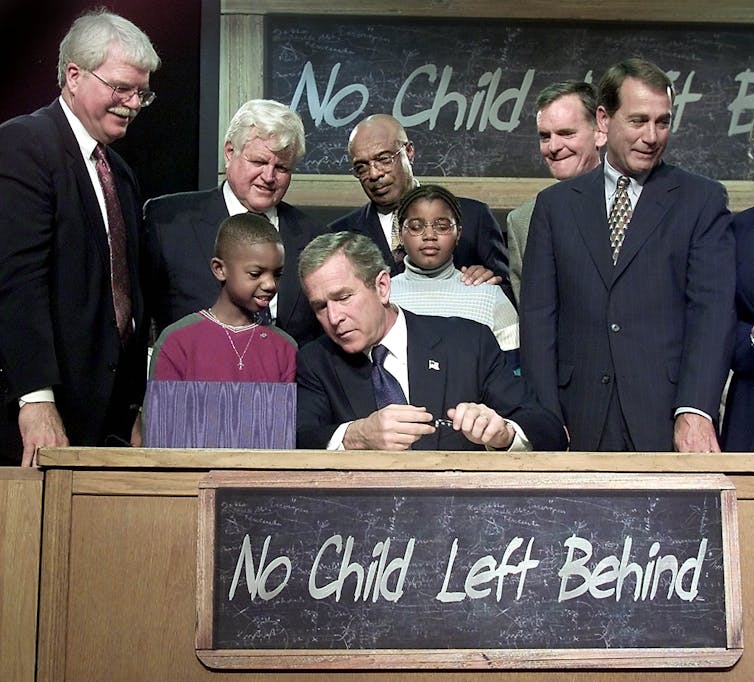


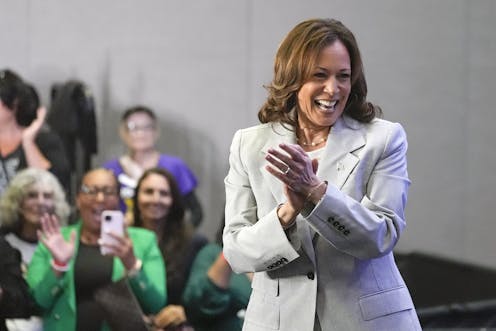

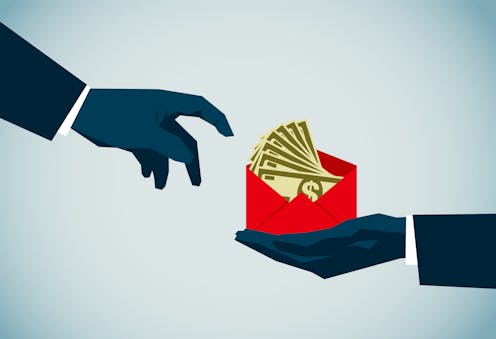

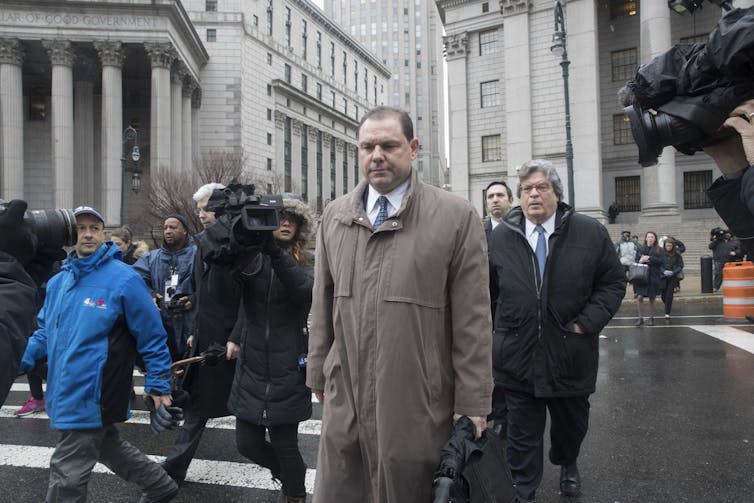






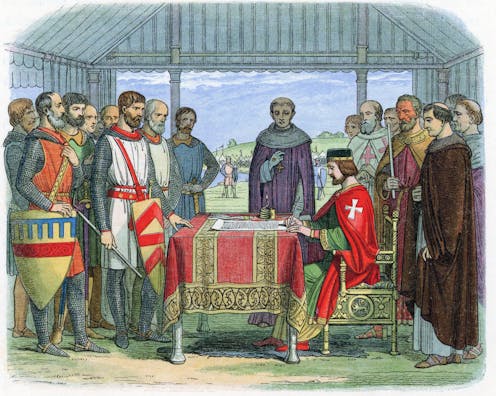
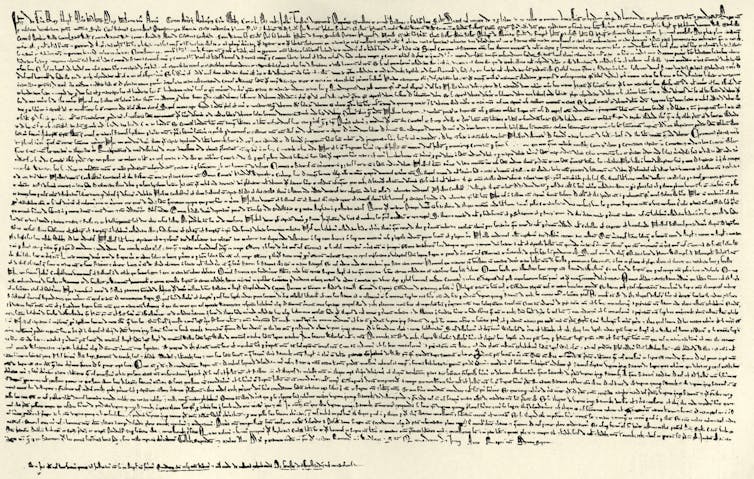









.jpeg)